EP3572434A1 - Hydrogel de cellulose nanofibrillaire - Google Patents
Hydrogel de cellulose nanofibrillaire Download PDFInfo
- Publication number
- EP3572434A1 EP3572434A1 EP18174279.2A EP18174279A EP3572434A1 EP 3572434 A1 EP3572434 A1 EP 3572434A1 EP 18174279 A EP18174279 A EP 18174279A EP 3572434 A1 EP3572434 A1 EP 3572434A1
- Authority
- EP
- European Patent Office
- Prior art keywords
- nanofibrillar cellulose
- ligand
- modified
- group
- azido
- Prior art date
- Legal status (The legal status is an assumption and is not a legal conclusion. Google has not performed a legal analysis and makes no representation as to the accuracy of the status listed.)
- Granted
Links
Images



Classifications
-
- D—TEXTILES; PAPER
- D21—PAPER-MAKING; PRODUCTION OF CELLULOSE
- D21H—PULP COMPOSITIONS; PREPARATION THEREOF NOT COVERED BY SUBCLASSES D21C OR D21D; IMPREGNATING OR COATING OF PAPER; TREATMENT OF FINISHED PAPER NOT COVERED BY CLASS B31 OR SUBCLASS D21G; PAPER NOT OTHERWISE PROVIDED FOR
- D21H11/00—Pulp or paper, comprising cellulose or lignocellulose fibres of natural origin only
- D21H11/16—Pulp or paper, comprising cellulose or lignocellulose fibres of natural origin only modified by a particular after-treatment
- D21H11/18—Highly hydrated, swollen or fibrillatable fibres
-
- C—CHEMISTRY; METALLURGY
- C08—ORGANIC MACROMOLECULAR COMPOUNDS; THEIR PREPARATION OR CHEMICAL WORKING-UP; COMPOSITIONS BASED THEREON
- C08L—COMPOSITIONS OF MACROMOLECULAR COMPOUNDS
- C08L1/00—Compositions of cellulose, modified cellulose or cellulose derivatives
- C08L1/02—Cellulose; Modified cellulose
-
- A—HUMAN NECESSITIES
- A61—MEDICAL OR VETERINARY SCIENCE; HYGIENE
- A61K—PREPARATIONS FOR MEDICAL, DENTAL OR TOILETRY PURPOSES
- A61K47/00—Medicinal preparations characterised by the non-active ingredients used, e.g. carriers or inert additives; Targeting or modifying agents chemically bound to the active ingredient
- A61K47/50—Medicinal preparations characterised by the non-active ingredients used, e.g. carriers or inert additives; Targeting or modifying agents chemically bound to the active ingredient the non-active ingredient being chemically bound to the active ingredient, e.g. polymer-drug conjugates
- A61K47/51—Medicinal preparations characterised by the non-active ingredients used, e.g. carriers or inert additives; Targeting or modifying agents chemically bound to the active ingredient the non-active ingredient being chemically bound to the active ingredient, e.g. polymer-drug conjugates the non-active ingredient being a modifying agent
- A61K47/56—Medicinal preparations characterised by the non-active ingredients used, e.g. carriers or inert additives; Targeting or modifying agents chemically bound to the active ingredient the non-active ingredient being chemically bound to the active ingredient, e.g. polymer-drug conjugates the non-active ingredient being a modifying agent the modifying agent being an organic macromolecular compound, e.g. an oligomeric, polymeric or dendrimeric molecule
- A61K47/61—Medicinal preparations characterised by the non-active ingredients used, e.g. carriers or inert additives; Targeting or modifying agents chemically bound to the active ingredient the non-active ingredient being chemically bound to the active ingredient, e.g. polymer-drug conjugates the non-active ingredient being a modifying agent the modifying agent being an organic macromolecular compound, e.g. an oligomeric, polymeric or dendrimeric molecule the organic macromolecular compound being a polysaccharide or a derivative thereof
-
- A—HUMAN NECESSITIES
- A61—MEDICAL OR VETERINARY SCIENCE; HYGIENE
- A61K—PREPARATIONS FOR MEDICAL, DENTAL OR TOILETRY PURPOSES
- A61K47/00—Medicinal preparations characterised by the non-active ingredients used, e.g. carriers or inert additives; Targeting or modifying agents chemically bound to the active ingredient
- A61K47/50—Medicinal preparations characterised by the non-active ingredients used, e.g. carriers or inert additives; Targeting or modifying agents chemically bound to the active ingredient the non-active ingredient being chemically bound to the active ingredient, e.g. polymer-drug conjugates
- A61K47/69—Medicinal preparations characterised by the non-active ingredients used, e.g. carriers or inert additives; Targeting or modifying agents chemically bound to the active ingredient the non-active ingredient being chemically bound to the active ingredient, e.g. polymer-drug conjugates the conjugate being characterised by physical or galenical forms, e.g. emulsion, particle, inclusion complex, stent or kit
-
- C—CHEMISTRY; METALLURGY
- C08—ORGANIC MACROMOLECULAR COMPOUNDS; THEIR PREPARATION OR CHEMICAL WORKING-UP; COMPOSITIONS BASED THEREON
- C08B—POLYSACCHARIDES; DERIVATIVES THEREOF
- C08B11/00—Preparation of cellulose ethers
- C08B11/187—Preparation of cellulose ethers with olefinic unsaturated groups
-
- C—CHEMISTRY; METALLURGY
- C08—ORGANIC MACROMOLECULAR COMPOUNDS; THEIR PREPARATION OR CHEMICAL WORKING-UP; COMPOSITIONS BASED THEREON
- C08B—POLYSACCHARIDES; DERIVATIVES THEREOF
- C08B11/00—Preparation of cellulose ethers
- C08B11/20—Post-etherification treatments of chemical or physical type, e.g. mixed etherification in two steps, including purification
-
- C—CHEMISTRY; METALLURGY
- C08—ORGANIC MACROMOLECULAR COMPOUNDS; THEIR PREPARATION OR CHEMICAL WORKING-UP; COMPOSITIONS BASED THEREON
- C08B—POLYSACCHARIDES; DERIVATIVES THEREOF
- C08B15/00—Preparation of other cellulose derivatives or modified cellulose, e.g. complexes
-
- C—CHEMISTRY; METALLURGY
- C08—ORGANIC MACROMOLECULAR COMPOUNDS; THEIR PREPARATION OR CHEMICAL WORKING-UP; COMPOSITIONS BASED THEREON
- C08B—POLYSACCHARIDES; DERIVATIVES THEREOF
- C08B15/00—Preparation of other cellulose derivatives or modified cellulose, e.g. complexes
- C08B15/05—Derivatives containing elements other than carbon, hydrogen, oxygen, halogens or sulfur
- C08B15/06—Derivatives containing elements other than carbon, hydrogen, oxygen, halogens or sulfur containing nitrogen, e.g. carbamates
-
- C—CHEMISTRY; METALLURGY
- C08—ORGANIC MACROMOLECULAR COMPOUNDS; THEIR PREPARATION OR CHEMICAL WORKING-UP; COMPOSITIONS BASED THEREON
- C08J—WORKING-UP; GENERAL PROCESSES OF COMPOUNDING; AFTER-TREATMENT NOT COVERED BY SUBCLASSES C08B, C08C, C08F, C08G or C08H
- C08J3/00—Processes of treating or compounding macromolecular substances
- C08J3/02—Making solutions, dispersions, lattices or gels by other methods than by solution, emulsion or suspension polymerisation techniques
- C08J3/03—Making solutions, dispersions, lattices or gels by other methods than by solution, emulsion or suspension polymerisation techniques in aqueous media
- C08J3/075—Macromolecular gels
-
- C—CHEMISTRY; METALLURGY
- C08—ORGANIC MACROMOLECULAR COMPOUNDS; THEIR PREPARATION OR CHEMICAL WORKING-UP; COMPOSITIONS BASED THEREON
- C08L—COMPOSITIONS OF MACROMOLECULAR COMPOUNDS
- C08L1/00—Compositions of cellulose, modified cellulose or cellulose derivatives
- C08L1/08—Cellulose derivatives
-
- C—CHEMISTRY; METALLURGY
- C12—BIOCHEMISTRY; BEER; SPIRITS; WINE; VINEGAR; MICROBIOLOGY; ENZYMOLOGY; MUTATION OR GENETIC ENGINEERING
- C12N—MICROORGANISMS OR ENZYMES; COMPOSITIONS THEREOF; PROPAGATING, PRESERVING, OR MAINTAINING MICROORGANISMS; MUTATION OR GENETIC ENGINEERING; CULTURE MEDIA
- C12N5/00—Undifferentiated human, animal or plant cells, e.g. cell lines; Tissues; Cultivation or maintenance thereof; Culture media therefor
-
- C—CHEMISTRY; METALLURGY
- C12—BIOCHEMISTRY; BEER; SPIRITS; WINE; VINEGAR; MICROBIOLOGY; ENZYMOLOGY; MUTATION OR GENETIC ENGINEERING
- C12N—MICROORGANISMS OR ENZYMES; COMPOSITIONS THEREOF; PROPAGATING, PRESERVING, OR MAINTAINING MICROORGANISMS; MUTATION OR GENETIC ENGINEERING; CULTURE MEDIA
- C12N5/00—Undifferentiated human, animal or plant cells, e.g. cell lines; Tissues; Cultivation or maintenance thereof; Culture media therefor
- C12N5/0068—General culture methods using substrates
-
- D—TEXTILES; PAPER
- D21—PAPER-MAKING; PRODUCTION OF CELLULOSE
- D21H—PULP COMPOSITIONS; PREPARATION THEREOF NOT COVERED BY SUBCLASSES D21C OR D21D; IMPREGNATING OR COATING OF PAPER; TREATMENT OF FINISHED PAPER NOT COVERED BY CLASS B31 OR SUBCLASS D21G; PAPER NOT OTHERWISE PROVIDED FOR
- D21H17/00—Non-fibrous material added to the pulp, characterised by its constitution; Paper-impregnating material characterised by its constitution
- D21H17/03—Non-macromolecular organic compounds
- D21H17/05—Non-macromolecular organic compounds containing elements other than carbon and hydrogen only
- D21H17/06—Alcohols; Phenols; Ethers; Aldehydes; Ketones; Acetals; Ketals
-
- D—TEXTILES; PAPER
- D21—PAPER-MAKING; PRODUCTION OF CELLULOSE
- D21H—PULP COMPOSITIONS; PREPARATION THEREOF NOT COVERED BY SUBCLASSES D21C OR D21D; IMPREGNATING OR COATING OF PAPER; TREATMENT OF FINISHED PAPER NOT COVERED BY CLASS B31 OR SUBCLASS D21G; PAPER NOT OTHERWISE PROVIDED FOR
- D21H17/00—Non-fibrous material added to the pulp, characterised by its constitution; Paper-impregnating material characterised by its constitution
- D21H17/03—Non-macromolecular organic compounds
- D21H17/05—Non-macromolecular organic compounds containing elements other than carbon and hydrogen only
- D21H17/07—Nitrogen-containing compounds
-
- D—TEXTILES; PAPER
- D21—PAPER-MAKING; PRODUCTION OF CELLULOSE
- D21H—PULP COMPOSITIONS; PREPARATION THEREOF NOT COVERED BY SUBCLASSES D21C OR D21D; IMPREGNATING OR COATING OF PAPER; TREATMENT OF FINISHED PAPER NOT COVERED BY CLASS B31 OR SUBCLASS D21G; PAPER NOT OTHERWISE PROVIDED FOR
- D21H17/00—Non-fibrous material added to the pulp, characterised by its constitution; Paper-impregnating material characterised by its constitution
- D21H17/03—Non-macromolecular organic compounds
- D21H17/05—Non-macromolecular organic compounds containing elements other than carbon and hydrogen only
- D21H17/09—Sulfur-containing compounds
-
- C—CHEMISTRY; METALLURGY
- C08—ORGANIC MACROMOLECULAR COMPOUNDS; THEIR PREPARATION OR CHEMICAL WORKING-UP; COMPOSITIONS BASED THEREON
- C08J—WORKING-UP; GENERAL PROCESSES OF COMPOUNDING; AFTER-TREATMENT NOT COVERED BY SUBCLASSES C08B, C08C, C08F, C08G or C08H
- C08J2301/00—Characterised by the use of cellulose, modified cellulose or cellulose derivatives
- C08J2301/02—Cellulose; Modified cellulose
-
- C—CHEMISTRY; METALLURGY
- C12—BIOCHEMISTRY; BEER; SPIRITS; WINE; VINEGAR; MICROBIOLOGY; ENZYMOLOGY; MUTATION OR GENETIC ENGINEERING
- C12N—MICROORGANISMS OR ENZYMES; COMPOSITIONS THEREOF; PROPAGATING, PRESERVING, OR MAINTAINING MICROORGANISMS; MUTATION OR GENETIC ENGINEERING; CULTURE MEDIA
- C12N2533/00—Supports or coatings for cell culture, characterised by material
- C12N2533/70—Polysaccharides
- C12N2533/78—Cellulose
Definitions
- the present disclosure relates to a nanofibrillar cellulose hydrogel.
- Nanofibrillar cellulose hydrogel is used in 3D cell culture, as the hydrogel provides a three-dimensional matrix in which cells can grow and with which they can interact.
- the nanofibrillar cellulose hydrogel is a relatively defined cell culture substrate and as such does not usually contain growth factors or other components intended to affect the growth, differentiation or adherence of cells thereto, apart from the nanofibrillar cellulose itself.
- the nanofibrillar cellulose hydrogel is typically delivered as a hydrogel dispersion with a viscosity and other rheological properties suitable for cell culture.
- a nanofibrillar cellulose hydrogel is disclosed.
- the nanofibrillar cellulose hydrogel may comprise azido-modified nanofibrillar cellulose.
- the azido-modified nanofibrillar cellulose may have a substituent represented by the formula -O-(CH 2 ) n -S(O) m -L 1 -N 3 , wherein n is in the range of 1 to 10; m is 0 or 1; and L 1 is a linker.
- the substituent may be attached to a carbon of one or more glucosyl units of the azido-modified nanofibrillar cellulose, thus forming an ether bond to the carbon.
- a nanofibrillar cellulose hydrogel comprising azido-modified nanofibrillar cellulose is disclosed.
- the azido-modified nanofibrillar cellulose has azido (-N 3 ) groups covalently bound thereto.
- nanofibrillar cellulose hydrogel comprising the azido-modified nanofibrillar cellulose to covalently link, i.e. conjugate, ligands to the nanofibrillar cellulose of the hydrogel.
- ligands such as growth factors or other biomolecules can be linked to the hydrogel.
- Suitable ligands may include e.g. proteins, peptides, glycans or nanofibrillar cellulose (cross-linked nanofibrillar cellulose).
- Such ligands may improve or support growth, differentiation and/or attachment of cells and/or tissues grown in contact with the hydrogel.
- the nanofibrillar cellulose hydrogel may be suitable for the culture of cells and/or tissues, for example pluripotent stem (PS) cells, such as induced pluripotent stem cells (iPS cells).
- PS pluripotent stem
- iPS cells induced pluripotent stem cells
- the nanofibrillar cellulose hydrogel can be provided in a form that allows linking one or more ligands of choice and/or one or more ligands in an amount of choice.
- the linking may be done by an end user shortly prior to use of the hydrogel.
- the rheological properties and/or gelling properties of the nanofibrillar cellulose hydrogel are not necessarily significantly affected by the modification(s).
- the azide modification according to one or more embodiments described in this specification does not seem to cause significant unwanted cross-linking of nanofibrillar cellulose, which might affect rheological or gelling properties adversely.
- the reactions for preparing the azido-modified nanofibrillar cellulose hydrogel and for linking the ligand thereto may be performed in an aqueous solution, so the properties of the hydrogel may not be significantly affected by the reaction conditions used when preparing the hydrogel.
- the reactions do not require e.g. harsh solvents.
- the chemistry used does not introduce potentially toxic components to the hydrogel. Therefore procedures for purifying the hydrogel after the reactions can be relatively light or may even be obviated.
- the modification of the nanofibrillar cellulose does not significantly interfere with enzymatic degradation of the nanofibrillar cellulose hydrogel, for example using one or more cellulases and/or hemicellulases.
- the ligands may also be distributed relatively uniformly within the hydrogel as compared e.g. to simple mixing of the ligands with a nanofibrillar cellulose hydrogel so that the ligands are in solution and not bound covalently to the nanofibrillar cellulose.
- the nanofibrillar cellulose may be prepared from cellulose raw material of plant origin.
- the raw material may be based on any plant material that contains cellulose.
- the raw material may also be derived from certain bacterial fermentation processes.
- the plant material is wood.
- Wood may be from a softwood tree, such as spruce, pine, fir, larch, douglas-fir or hemlock, or from a hardwood tree, such as birch, aspen, poplar, alder, eucalyptus, oak, beech or acacia, or from a mixture of softwoods and hardwoods.
- the nanofibrillar cellulose is obtained from wood pulp.
- the nanofibrillar cellulose is obtained from hardwood pulp.
- the hardwood is birch.
- the nanofibrillar cellulose is obtained from softwood pulp.
- the nanofibrillar cellulose may be made of plant material.
- the fibrils are obtained from non-parenchymal plant material.
- the fibrils may be obtained from secondary cell walls.
- One abundant source of such cellulose fibrils is wood fibres.
- the smallest cellulosic entities of cellulose pulp of plant origin, such as wood, include cellulose molecules, elementary fibrils, and microfibrils. Microfibril units are bundles of elementary fibrils caused by physically conditioned coalescence as a mechanism of reducing the free energy of the surfaces.
- the nanofibrillar cellulose is manufactured by homogenizing wood-derived fibrous raw material, which may be chemical pulp.
- Cellulose fibers may be disintegrated to produce fibrils which have a diameter in the nanometer range, which diameter may be up to 200 nm, or up to 50 nm, for example in the range of 1-200 nm or 1-100 nm, and gives a dispersion of fibrils in water.
- the fibrils may be reduced to a size in which the diameter of most of the fibrils is in the range of 2-20 nm.
- the fibrils originating from secondary cell walls may be essentially crystalline, with a degree of crystallinity of at least 55 %. Such fibrils may have different properties than fibrils originated from primary cell walls; for example, the dewatering of fibrils originating from secondary cell walls may be more challenging.
- non-nanofibrillar cellulose may refer to cellulose fibrils or fibril bundles separated from cellulose-based fiber raw material. These fibrils are characterized by a high aspect ratio (length/diameter): their length may exceed 1 ⁇ m, whereas the diameter typically remains smaller than 200 nm. The smallest fibrils are in the scale of so-called elementary fibrils, their diameter being typically in the range of 2-12 nm. The dimensions and size distribution of the fibrils may depend on the refining method and efficiency.
- Nanofibrillar cellulose may be characterized as a cellulose-based material, in which the median length of particles (fibrils or fibril bundles) is not greater than 50 ⁇ m, for example in the range of 1-50 ⁇ m, and the particle diameter is smaller than 1 ⁇ m, for example in the range of 2-500 nm.
- the average diameter of a fibril is in the range of 5-100 nm, for example in the range of 10-50 nm.
- unfibrillated microfibril units may be present in the nanofibrillar cellulose.
- the term "nanofibrillar cellulose” is not meant to encompass non-fibrillar, rod-shaped cellulose nanocrystals or whiskers.
- nanofibrillar cellulose cellulose nanofiber (CNF), nanofibril cellulose, nanofibrillated cellulose (NFC), nanocellulose, nano-scale fibrillated cellulose, microfibrillar cellulose, cellulose microfibrils, microfibrillated cellulose (MFC), and fibril cellulose.
- CNF cellulose nanofiber
- NFC nanofibrillated cellulose
- MFC microfibrillated cellulose
- fibril cellulose fibril cellulose
- Nanofibrillar cellulose is characterized by a large specific surface area and a strong ability to form hydrogen bonds. In water dispersion, the nanofibrillar cellulose typically appears as either light or turbid gel-like material. Depending on the fiber raw material, nanofibrillar cellulose may also contain small amounts of other wood components, such as hemicellulose or lignin. The amount is dependent on the plant source.
- Different grades of nanofibrillar cellulose may be categorized based on three main properties: (i) size distribution, length and diameter; (ii) chemical composition; and (iii) rheological properties. To fully describe a grade, the properties may be used in parallel. Examples of different grades may include native (or non-modified) NFC, oxidized NFC (high viscosity), oxidized NFC (low viscosity), carboxymethylated NFC and cationized NFC. Within these main grades, also sub-grades may exist, for example: extremely well fibrillated vs. moderately fibrillated, high degree of substitution vs. low, low viscosity vs. high viscosity, etc.
- non-ionic grades may have a wider fibril diameter (for example in the range of 10-100 nm, or 10-50 nm), while the chemically modified grades may be thinner (for example in the range of 2-20 nm).
- the distributions of the fibril dimensions may be also narrower for the modified grades. Certain modifications, especially TEMPO oxidation, may yield shorter fibrils.
- the non-ionic grades are prepared from bleached birch pulp, which may yield a high xylene content (25 % by weight).
- Modified grades may be prepared either from HW or SW pulps. In such modified grades, the hemicelluloses may also be modified together with the cellulose domain. The modification may not be homogeneous, i.e. some parts may be modified to a greater extent than others. Thus, a detailed chemical analysis may not be possible - the modified products are typically complex mixtures of different polysaccharide structures.
- a dispersion of cellulose nanofibers may form a viscoelastic hydrogel network.
- the gel may be formed at relatively low concentrations of, for example, 0.05-0.2% (w/w), dispersed and hydrated entangled fibrils.
- the viscoelasticity of the NFC hydrogel may be characterized, for example, by dynamic oscillatory rheological measurements.
- the nanofibrillar cellulose hydrogels may exhibit characteristic rheological properties. For example, they are shear-thinning or pseudoplastic materials, which means that their viscosity depends on the speed (or force) by which the material is deformed.
- the shear-thinning behavior is seen as a decrease in viscosity with increasing shear rate.
- the hydrogels show plastic behavior, which means that a certain shear stress (force) is required before the material starts to flow readily.
- This critical shear stress is often called the yield stress.
- the yield stress can be determined from a steady state flow curve measured with a stress controlled rheometer.
- the zero shear viscosity and the yield stress may be the most important rheological parameters to describe the suspending power of the materials. These two parameters may separate the different grades quite clearly and thus may enable classification of the grades.
- the dimensions of the fibrils or fibril bundles may be dependent on the raw material and the disintegration method.
- Mechanical disintegration of the cellulose raw material may be carried out with any suitable equipment such as a refiner, grinder, disperser, homogenizer, colloider, friction grinder, pin mill, rotor-rotor dispergator, ultrasound sonicator, fluidizer such as microfluidizer, macrofluidizer or fluidizer-type homogenizer.
- the disintegration treatment may be performed at conditions in which water is sufficiently present to prevent the formation of bonds between the fibers.
- the disintegration is carried out by using a disperser having at least one rotor, blade or similar moving mechanical member, such as a rotor-rotor dispergator.
- a rotor-rotor dispergator is an Atrex device.
- a device suitable for disintegrating is a pin mill, such as a multi-peripheral pin mill.
- a pin mill such as a multi-peripheral pin mill.
- US 6202946 B1 One example of such device is described in US 6202946 B1 .
- the disintegrating is carried out by using a homogenizer.
- the term “fibrillation” may generally refer to disintegrating fiber material mechanically by work applied to the particles, whereby cellulose fibrils are detached from the fibers or fiber fragments.
- the work may be based on various effects, such as grinding, crushing or shearing, or a combination of these, or another corresponding action that reduces the particle size.
- the energy taken by the refining work may normally be expressed in terms of energy per processed raw material quantity, in units of e.g. kWh/kg, MWh/ton, or units proportional to these.
- the expressions “disintegration” or “disintegration treatment” may be used interchangeably with “fibrillation”.
- the fiber material dispersion that is subjected to fibrillation may be a mixture of fiber material and water (or an aqueous solution), also herein called "pulp".
- the fiber material dispersion may refer generally to whole fibers, parts (fragments) separated from them, fibril bundles, or fibrils mixed with water, and typically the aqueous fiber material dispersion is a mixture of such elements, in which the ratios between the components are dependent on the degree of processing or on the treatment stage, for example number of runs or "passes" through the treatment of the same batch of fiber material.
- the disintegrated fibrous cellulosic raw material may be modified or nonmodified fibrous raw material.
- Modified fibrous raw material means raw material where the fibers are affected by a modification treatment so that cellulose nanofibrils are more easily detachable from the fibers.
- the modification may be performed to fibrous cellulosic raw material which exists as a suspension in a liquid, e.g. pulp.
- the modification treatment to the fibers may be chemical or physical.
- chemical modification the chemical structure of cellulose molecule is changed by a chemical reaction ("derivatization" of cellulose), for example so that the length of the cellulose molecule is not affected but functional groups are added to ⁇ -D-glucopyranose units of the polymer.
- the chemical modification of cellulose may take place at a certain conversion degree, which is dependent on the dosage of reactants and the reaction conditions, and often it is not complete so that the cellulose will stay in solid form as fibrils and does not dissolve in water.
- anionic, cationic, or nonionic substances or any combination of these may be physically adsorbed on cellulose surface.
- the modification treatment may also be enzymatic.
- the cellulose in the fibers may be particularly ionically charged after the modification, because the ionic charge of the cellulose may weaken the internal bonds of the fibers and may later facilitate the disintegration to nanofibrillar cellulose.
- the ionic charge may be achieved by chemical or physical modification of the cellulose.
- the fibers may have a higher anionic or cationic charge after the modification compared with the starting raw material.
- Commonly used chemical modification methods for making an anionic charge may include oxidation, where hydroxyl groups are oxidized to aldehydes and carboxyl groups, sulphonization and carboxymethylation.
- a cationic charge in turn may be created chemically by cationization by attaching a cationic group to the cellulose, such as a quaternary ammonium group.
- the azido-modified nanofibrillar cellulose may comprise further modifications, such as chemical modifications.
- Chemically or physically modified nanofibrillar cellulose may be used as the raw material for preparing the azido-modified nanofibrillar cellulose.
- the azido-modified nanofibrillar cellulose may be prepared prior to further chemical or physical modification, e.g. by conjugating an azide-containing compound with alkenylated nanofibrillar cellulose and subsequently modifying the azido-modified nanofibrillar cellulose chemically or physically.
- the nanofibrillar cellulose hydrogel may also be a mixture of the azido-modified nanofibrillar cellulose and one or more other nanofibrillar cellulose types or grades.
- the nanofibrillar cellulose comprises chemically modified nanofibrillar cellulose, such as anionically modified nanofibrillar cellulose or cationically modified nanofibrillar cellulose.
- the nanofibrillar cellulose is anionically modified nanofibrillar cellulose.
- the nanofibrillar cellulose is cationically modified nanofibrillar cellulose.
- the anionically modified nanofibrillar cellulose is oxidized nanofibrillar cellulose.
- the anionically modified nanofibrillar cellulose is sulphonized nanofibrillar cellulose.
- the anionically modified nanofibrillar cellulose is carboxymethylated nanofibrillar cellulose.
- the cellulose may be oxidized.
- primary hydroxyl groups of cellulose may be oxidized catalytically by a heterocyclic nitroxyl compound, for example 2,2,6,6-tetramethylpiperidinyl-1-oxy free radical, generally called "TEMPO".
- TEMPO 2,2,6,6-tetramethylpiperidinyl-1-oxy free radical
- At least some of the primary hydroxyl groups (C6-hydroxyl groups) of the cellulosic ⁇ -D-glucopyranose units may be selectively oxidized to carboxylic groups.
- Some aldehyde groups may also be formed from the primary hydroxyl groups.
- the cellulose may be oxidized to a level having a carboxylic acid content in the oxidized cellulose in the range of 0.6-1.4 mmol COOH/ g pulp, or 0.8-1.2 mmol COOH / g pulp, for example to 1.0-1.2 mmol COOH/ g pulp, determined by conductometric titration.
- the fibers of oxidized cellulose obtained in this manner are disintegrated in water, they may give a stable transparent dispersion of individualized cellulose fibrils, which may be, for example, of 3-5 nm in width.
- the nanofibrillar cellulose may also be characterized by the average diameter (or width), or by the average diameter together with the viscosity, such as Brookfield viscosity or zero shear viscosity.
- said nanofibrillar cellulose has a number average diameter of a fibril in the range of 1-100 nm.
- said nanofibrillar cellulose has a number average diameter of a fibril in the range of 1-50 nm.
- said nanofibrillar cellulose has a number average diameter of a fibril in the range of 2-15 nm, such as TEMPO oxidized nanofibrillar cellulose.
- the diameter of a fibril may be determined using several techniques, such as by microscopy.
- Fibril thickness and width distribution may be measured by image analysis of the images from a field emission scanning electron microscope (FE-SEM), a transmission electron microscope (TEM), such as a cryogenic transmission electron microscope (cryo-TEM), or an atomic force microscope (AFM).
- FE-SEM field emission scanning electron microscope
- TEM transmission electron microscope
- cryo-TEM cryogenic transmission electron microscope
- AFM and TEM may be well suited for nanofibrillar cellulose grades with narrow fibril diameter distribution.
- the viscosity of the nanofibrillar cellulose may be measured using a rheometer.
- a rheometer viscosity of the nanofibrillar cellulose dispersion is measured at 22°C with a stress controlled rotational rheometer (AR-G2, TA Instruments, UK) equipped with a narrow gap vane geometry (the vane having a diameter of 28 mm and a length of 42 mm) in a cylindrical sample cup having a diameter of 30 mm. After loading the samples to the rheometer they are allowed to rest for 5 min before the measurement is started.
- AR-G2 stress controlled rotational rheometer
- the steady state viscosity is measured with a gradually increasing shear stress (proportional to applied torque) and the shear rate (proportional to angular velocity) is measured.
- the nanofibrillar cellulose when dispersed in water, provides a zero shear viscosity ("plateau" of constant viscosity at small shearing stresses) in the range of 1000-100000 Pa ⁇ s, such as in the range of 5000- 50000 Pa ⁇ s, and a yield stress (shear stress where the shear thinning begins) in the range of 1-50 Pa, such as in the range of 3-15 Pa, determined by rotational rheometer at a consistency of 0.5% (w/w) by weight in aqueous medium.
- plateau zero shear viscosity
- yield stress shear stress where the shear thinning begins
- the nanofibrillar cellulose may have a storage modulus in the range of 0.3 to 50 Pa, when dispersed to a concentration of 0.5 w% in water.
- the storage modulus may be in the range of 1 to 20 Pa, or in the range of 2 to 10 Pa, when dispersed to a concentration of 0.5 w% in water.
- Turbidity is the cloudiness or haziness of a fluid caused by individual particles (total suspended or dissolved solids) that are generally invisible to the naked eye.
- the alternatively used Jackson Candle method (units: Jackson Turbidity Unit or JTU) is essentially the inverse measure of the length of a column of water needed to completely obscure a candle flame viewed through it.
- Turbidity may be measured quantitatively using optical turbidity measuring instruments.
- turbidometers There are several commercial turbidometers available for measuring turbidity quantitatively. In the present case the method based on nephelometry is used.
- the units of turbidity from a calibrated nephelometer are called Nephelometric Turbidity Units (NTU).
- NTU Nephelometric Turbidity Units
- the measuring apparatus turbidometer
- a nanofibrillar cellulose sample may be diluted in water, to a concentration below the gel point of said nanofibrillar cellulose, and turbidity of the diluted sample may be measured.
- the concentration in which the turbidity of the nanofibrillar cellulose samples is measured may be 0.1%.
- HACH P2100 Turbidometer with a 50 ml measuring vessel may be used for turbidity measurements.
- the dry matter of the nanofibrillar cellulose sample is determined and 0.5 g of the sample, calculated as dry matter, may be loaded in the measuring vessel, which may be filled with tap water to 500 g and vigorously mixed by shaking for about 30 s. Without delay the aqueous mixture may be divided into 5 measuring vessels, which are inserted in the turbidometer. Three measurements on each vessel may be carried out. The mean value and standard deviation may be calculated from the obtained results, and the final result may be given as NTU units.
- nanofibrillar cellulose One way to characterize nanofibrillar cellulose is to define both the viscosity and the turbidity.
- Low turbidity may correlate with a small size of the fibrils, such as small diameter, as small fibrils scatter light poorly.
- the viscosity increases and at the same time the turbidity decreases. This may happen, however, until a certain point.
- the fibrils may finally begin to break and cannot form a strong network any more. Therefore, after this point, both the turbidity and the viscosity may begin to decrease.
- the turbidity of anionic nanofibrillar cellulose is lower than 90 NTU, for example from 3 to 90 NTU, such as from 5 to 60, for example 8-40, measured at a consistency of 0.1% (w/w) in aqueous medium, and measured by nephelometry.
- the turbidity of native nanofibrillar may be even over 200 NTU, for example from 10 to 220 NTU, such as from 20 to 200, for example 50-200 measured at a consistency of 0.1% (w/w) in aqueous medium, and measured by nephelometry.
- these ranges may be combined with the viscosity ranges of the nanofibrillar cellulose.
- the starting material for the preparation process may be nanofibrillar cellulose obtained or obtainable directly from the disintegration of some of the above-mentioned fibrous raw material and at a relatively low concentration homogeneously distributed in water due to the disintegration conditions.
- the starting material may be an aqueous gel at a concentration of 0.2-10%.
- nanofibrillar cellulose may be understood as referring to nanofibrillar cellulose chemically modified such that it has azido (-N 3 ) groups covalently bound thereto.
- the azido-modified nanofibrillar cellulose of the nanofibrillar cellulose hydrogel comprises glucosyl units, one or more of which may be substituted.
- the azido-modified nanofibrillar cellulose may have a substituent represented by the formula -O-(CH 2 ) n -S(O) m -L 1 -N 3 , wherein n is in the range of 1 to 10; m is 0 or 1; and L 1 is a linker.
- the substituent may be attached to a carbon of one or more glucosyl units of the azido-modified nanofibrillar cellulose. The substituent thus forms an ether bond to the carbon.
- n is 1, 2, 3, 4, 5, 6, 7, 8, 9 or 10. In an embodiment, n is in the range of 1 to 2, or in the range of 1 to 3, or in the range of 1 to 4, or in the range of 1 to 5, or in the range of 1 to 6, or in the range of 1 to 7, or in the range of 1 to 8. In an embodiment, n is in the range of 3 to 10.
- Each glucosyl unit of the nanofibrillar cellulose comprises 6 carbon atoms numbered 1 to 6 according to the convention in the field.
- carbons 2, 3 and 6 have hydroxyl groups attached to them.
- Each of these carbons may have a single hydroxyl group attached to them.
- the substituent may thus be attached to any one of these carbons, in place of the hydroxyl group. In other words, the substituent may be considered to replace the hydroxyl group attached to the carbon.
- a carbon of one or more glucosyl units may be understood as referring to one or more carbons of one or more glucosyl units.
- one or more carbons of a single glucosyl unit may have the substituent according to one or more embodiments described in this specification attached thereto.
- one or more carbons of a plurality of glucosyl units may be substituted according to one or more embodiments of the substituent described in this specification.
- the cellulose fibrils of the nanofibrillar cellulose, or fibril bundles derived from cellulose raw material may contain cellulose molecules comprising chains of hundreds or thousands of glucosyl (typically ⁇ 1,4-D-glucopyranosyl) units. Individual glucosyl units of a cellulose chain may therefore be substituted independently of other glucosyl units of the cellulose chain.
- substituteduent may be understood as referring to a moiety represented by the formula -O-(CH 2 ) n -S(O) m -L 1 -N 3 , wherein n is in the range of 1 to 10; m is 0 or 1; and L 1 is a linker.
- the substituent may be attached to the carbon (i.e. one or more carbons) in place of the hydroxyl group that would otherwise be attached to the carbon of the glucosyl unit.
- the hydroxyl group on the carbon (i.e. one or more carbons) of one or more glucosyl units of the azido-modified nanofibrillar cellulose may thus be replaced by the substituent.
- the substituent represented by the formula -O-(CH 2 ) n -S(O) m -L 1 -N 3 as defined herein is covalently (directly) bound to the carbon; an ether bond is thus formed between the carbon and the substituent via the oxygen atom of the substituent.
- nanofibrillar cellulose In addition to the one or more glucosyl units, other saccharide units of the nanofibrillar cellulose have the substituent according to one or more embodiments described in this specification attached thereto.
- nanofibrillar cellulose may also contain other wood components, such as hemicellulose and/or lignin.
- the hemicellulose of the azido-modified nanofibrillar cellulose may also be substituted.
- Hemicellulose of the azide-modified nanofibrillar cellulose may therefore also have the substituent according to one or more embodiments described in this specification attached to a carbon of one or more saccharide units of the hemicellulose, in a similar manner as to the azido-modified nanofibrillar cellulose.
- the one or more saccharide units of the hemicellulose may be xylosyl units, glucuronoxylosyl units, arabinoxylosyl units, glucomannosyl units, xyloglucosyl units and/or any combinations or polymers thereof.
- the substituents may be represented by a mixture of substituents according to one or more embodiments described in this specification.
- individual substituents of the azido-modified nanofibrillar cellulose or of a single chain of the cellulose of the azido-modified nanofibrillar cellulose may, at least in some embodiments, be independently selected from one or more embodiments of the substituent described in this specification.
- Two or more different substituents may be introduced into the azido-modified nanofibrillar cellulose on purpose, and/or they may be introduced e.g. by different chemical reactions occurring during the preparation of the azido-modified nanofibrillar cellulose. All substituents of the azido-modified nanofibrillar cellulose are therefore not necessarily represented by the same formula.
- the presence of the sulfoxide structure may depend e.g. on the reagents and/or the conditions used for preparing the azido-modified nanofibrillar cellulose.
- the sulfoxide structure in UV catalyzed (activated) reactions, the sulfoxide structure is not necessarily formed, while in chemically catalyzed (activated) reactions, the sulfoxide structure may be formed in a significant proportion of the substituents present in the azido-modified nanofibrillar cellulose.
- L 1 represents -CH 2 -CH 2 (R 1 )-NH-L 2 -, wherein R 1 is absent or -COOH, and L 2 is a linker.
- the azido-modified nanofibrillar cellulose may have a substituent represented by the formula -O-(CH 2 ) n -S(O) m -CH 2 -CH 2 (R 1 )-NH-L 2 -N 3 , wherein n, m, R 1 and L 2 are as defined in this specification, wherein the substituent is attached to a carbon of one or more glucosyl units of the azido-modified nanofibrillar cellulose.
- the substituent may thus form an ether bond to the carbon.
- the azido-modified nanofibrillar cellulose may be represented by the following formula:
- R 1 and R 2 represent adjacent glucosyl units or chains of the nanofibrillar cellulose molecule joined together by glycoside links from carbon 1 and carbon 4 of the glycosyl unit.
- the substituent attached to carbon 6 of the ⁇ 1,4-D-glucose unit of the azido-modified nanofibrillar cellulose is represented by the formula -O-(CH 2 ) n -S(O) m -L 1 -N 3 , wherein n is 3; m is 1; L 1 represents -CH 2 -CH 2 (R 1 )-NH-L 2 -, wherein R 1 is -COOH, and L 2 represents C(O)-(CH 2 -CH 2 -O) o -CH 2 -CH 2 -, wherein o is 4.
- m may be 0; R 1 may be absent; and/or o may be 0, 1 or greater.
- the substituent forms an ether bond to the carbon 6 via the oxygen atom of the substituent.
- a "linker” in the context of this specification may comprise one or more linker groups or moieties and/or one or more spacer groups.
- the linker group may, in principle, be any linker group that can be incorporated in the azido-modified nanofibrillar cellulose according to one or more embodiments described in this specification.
- a large number of different linkers are known in the art and may be commercially available. It may also comprise one or more groups formed by a reaction between two functional groups.
- L 1 and/or L 2 groups or moieties comprised by L 1 and/or L 2 , for example sulfhydryl, amino, alkenyl, alkynyl, azidyl, aldehyde, carboxyl, maleimidyl, succinimidyl and/or hydroxylamino groups.
- a skilled person is capable of selecting the functional groups so that they may react in certain conditions.
- the linker may be hydrophilic.
- a hydrophilic linker may have the utility that it may be relatively well soluble in an aqueous solution.
- the linker may be a peptide linker, for example a peptide linker from 2 to 5 amino acids in length.
- the length of the linker is not particularly limited and may be selected e.g. depending on the size of the ligand.
- the linker and its length may be selected so as to reduce steric hindrances, optimize solubility of the azido-modified or ligand-modified nanofibrillar cellulose in aqueous solutions and/or optimize various properties of the nanofibrillar cellulose hydrogel.
- the linker including L 1 and/or L 2 , may comprise or be, for example, any one of the following groups or moieties:
- linkers or linker moieties are e.g. the spacer moieties described in WO2004100997 , for example the poly(ethylene glycol) moieties described therein.
- L 2 represents C(O)-(CH 2 -CH 2 -O) o -CH 2 -CH 2 -, wherein o is 0 or greater. In an embodiment, o may be 1 or greater. In an embodiment, o may be in the range of 0 to 100 or 1 to 100, or in the range of 0 to 20 or 1 to 20. o may be 1, 2, 3, 4, 5, 6, 7, 8, 9, or 10.
- This type of linker may be relatively biocompatible, hydrophilic and flexible. o, i.e. the number of (CH 2 -CH 2 -O)units in L 2 , may be selected depending e.g. on the size of the ligand.
- any one of the carbons of the glucosyl units of the nanofibrillar cellulose that would, without the azido modification (substituent) be directly linked to a primary or secondary hydroxyl group, may be modified such that the substituent is attached to a carbon in place of the primary or secondary hydroxyl group.
- One or more of the carbons 2, 3, and 6 of one or more ⁇ 1,4-D-glucopyranosyl units of the nanofibrillar cellulose may be modified as described in this specification.
- one or more of the carbons 2, 3, and 6 of one or more ⁇ 1,4-D-glucopyranosyl units of the nanofibrillar cellulose may have a substituent according to one or more embodiments described in this specification attached thereto.
- C6 carbon 6
- the modification to carbon 6 i.e. the primary hydroxyl group of D-glucopyranosyl residues in cellulose.
- at least one or more of the one or more glucosyl units may be ⁇ 1,4-D-glucopyranosyl units, and the carbon of the one of more ⁇ 1,4-D-glucopyranosyl units to which the substituent is attached to may be carbon 6.
- the azido-modified nanofibrillar cellulose may have a degree of substitution (DS) of at least about 0.0001, at least about 0.001, at least about 0.01, or at least about 0.05, or at least about 0.1, at least about 0.2, at least about 0.3, at least about 0.4, at least about 0.5, at least about 0.6, at least about 0.7, at least about 0.8, at least about 0.9, or about 1.
- DS is about 0.09.
- DS is about 0.06.
- the DS may specifically refer to a DS by a substituent according to one or more embodiments in this specification.
- degree of substitution may be understood as referring to the number or average number of the substituent groups attached per glucosyl unit of the azido-modified or ligand-modified nanofibrillar cellulose.
- a structural unit of nanofibrillar cellulose may be understood as having a mass of about 162.1 g/mol, which corresponds to the mass of a glucose residue, in other words an anhydroglucose.
- 1 mol of nanofibrillar cellulose may be understood as having a mass of about 162.1 g, and 1 g of nanofibrillar cellulose may be understood as having a molar amount of about 6.17 mmol.
- the degree of substitution of 0.01 may correspond to 10 mmol of the azido groups per 162.1 g of dry nanofibrillar cellulose, or 0.06 mmol/g.
- the DS may be such that the content or number of the azido groups is in excess of the content or number of the ligand(s) to be linked to the azido-modified nanofibrillar cellulose.
- a kit comprising the nanofibrillar cellulose hydrogel according to one or more embodiments described in this specification is also disclosed.
- the kit may further comprise instructions for use.
- a solid support comprising or containing the nanofibrillar cellulose hydrogel according to one or more embodiments described in this specification is also disclosed.
- the solid support may be e.g. a multiwell plate, a vessel, a bioreactor, a scaffold, or a 3-D microfluidic cell culture chip (organ-on-a-chip).
- the solid support may be suitable for culturing cells and/or tissues.
- the solid support may have a recess for receiving or containing the nanofibrillar cellulose hydrogel (azido-modified and/or ligand-modified).
- kits for preparing a ligand having a cyclic or acyclic alkyne group comprising a linker compound conjugable to a ligand and having a cyclic alkyne group.
- the kit may further comprise nanofibrillar cellulose hydrogel comprising azido-modified nanofibrillar cellulose according to one or more embodiments described in this specification.
- the kit may further comprise the solid support according to one or more embodiments described in this specification.
- the kit or the solid support may further comprise e.g. a reaction buffer and/or additional reagents.
- the kit may comprise the linker compound conjugable to the ligand and having the cyclic alkyne group in a dry form, so the kit may comprise an aqueous solution for reconstituting the dry linker compound.
- the kit or solid support may further comprise a cell culture medium.
- the kit may further comprise a ligand, although not necessarily.
- the ligand may be obtained separately.
- the kit may further comprise a ligand having a cyclic or acyclic alkyne group.
- the kit may further comprise a linker compound conjugable to a ligand, which linker compound may have a cyclic or acyclic alkyne group.
- the linker compound conjugable to a ligand may be any suitable linker compound described in this specification.
- the instructions for use may comprise instructions for preparing the nanofibrillar cellulose hydrogel comprising ligand-modified nanofibrillar cellulose according to one or more embodiments described in this specification.
- the term "ligand” may be understood as referring to a molecule that may form a complex with a biomolecule to serve a biological purpose.
- the ligand may be a biomolecule, e.g. a peptide, a protein (for example a glycoprotein), a glycan, or any mixture or combination thereof.
- the ligand may be capable of forming a complex with a molecule of a cell, for example a cell that may be suitable for being cultured in contact with the nanofibrillar cellulose hydrogel.
- the ligand may be capable of forming a complex with a molecule on the surface of the cell.
- the ligand may be capable of promoting the attachment/adhesion of cells to the nanofibrillar cellulose hydrogel and/or the growth of cells, for example a growth factor, an adhesion molecule or a ligand capable of binding to an adhesion molecule.
- the size of the ligand is not particularly limited.
- the term "ligand” or "a ligand” may also encompass one or more ligands, e.g. a mixture of ligands.
- the ligand may be or comprise, for example, an extracellular matrix (ECM) component, a lectin, S-type lectin, C-type lectin, P-type lectin, I-type lectin, a galectin, galectin-1, galectin-3, a galectin ligand, a lipid, a glycolipid, a glycoside, a galactoside, a proteoglycan, an oligosaccharide, a polysaccharide, a glycosamino-glycan, heparin, heparan sulfate, chondrotin, chondroitin sulfate, keratan sulfate, hyaluronan, transforming growth factor ⁇ 1 (TGF- ⁇ 1), basic fibroblast growth factor (bFGF), leukemia inhibitory factor (LIF), an integrin (for example, ⁇ V, ⁇ 1, ⁇ 5 ⁇ 5, or ⁇ 6 ntegrin
- GRGDSPC SEQ ID No: 1
- a collagen collagen type I, collagen type IV, or a domain, a fragment, or a modification thereof.
- ligand having a cyclic (or acyclic) alkyne group may be understood as referring to any ligand described in this specification, to which a cyclic (or acyclic) alkyne group is covalently bound, either directly or via one or more linkers and/or spacers.
- the cyclic or acyclic alkyne group may be capable of reacting with the azido groups of the azido-modified nanofibrillar cellulose.
- Acyclic alkyne groups may require a catalyst to react efficiently, for example a copper(I) catalyst.
- Cyclic alkyne groups may react with azido groups in a biorthogonal reaction, i.e. cycloaddition reaction in the absence of an exogenous metal (e.g. copper) catalyst.
- an exogenous metal e.g. copper
- the cyclic alkyne group may be DBCO (dibenzyl-cyclooctyne), OCT (cyclooctyne), MOFO (monofluorinated cyclooctyne), ALO (aryl-less octyne), DIFO (difluorocyclooctyne), DIFO2 (difluorocyclooctyne), DIFO3 (difluorocyclooctyne), DIMAC (dimethoxyazacyclooctyne), DIBO (dibenzocyclooctyne), DIBAC (dibenzoazacyclooctyne), BARAC (biarylazacyclooctynone), BCN (bicyclononyne), Sondheimer diyne, TMDIBO (2,3,6,7-tetramethoxy-DIBO), S-DIBO (sulfonylated DIBO), COMBO
- the cyclic alkyne group may be selected from the group consisting of DBCO, OCT, MOFO, ALO, DIFO, DIFO2, DIFO3, DIMAC, DIBO, DIBAC, BARAC, BCN, Sondheimer diyne, TMDIBO, S-DIBO, COMBO, PYRROC, and a modification or analog thereof.
- cyclic alkyne groups are shown below in Table 1.
- a skilled person will understand that any of the cyclic alkyne groups described herein may be bound to a ligand and/or to a linker via a suitable atom or group of the cyclic alkyne group, for example the N atom of DBCO or the O atom of DIBO.
- Table 1 Structures of cyclic alkyne groups.
- DBCO dibenzylcyclooctyne
- OCT cyclooctyne
- ALO aryl-less octyne
- MOFO monofluorinated cyclooctyne
- DIFO difluorocyclooctyne
- DIFO2 DIFO3 DIMAC diimethoxyazacyclooctyne
- DIBO dibenzocyclooctyne
- DIBAC dibenzoazacyclooctyne
- BARAC biasrylazacyclooctynone
- BCN bicyclononyne
- TMDIBO 2,3,6,7-tetramethoxy-DIBO
- S-DIBO sulfonylated DIBO
- COMBO carbboxymethyl-monobenzocycloctyne
- PYRROC pyrrolocyclooctyne
- the linker compound conjugable to a ligand may comprise one or more linker groups or moieties. It may also comprise one or more groups formed by a reaction between two functional groups. A skilled person will realize that various different chemistries may be utilized when preparing the compound, and thus a variety of different functional groups may be reacted to form groups comprised by the linker compound conjugable to a ligand. Furthermore, the linker compound conjugable to a ligand may comprise one or more functional groups conjugable to the ligand; the functional group(s) may be selected depending e.g. on the ligand.
- the linker compound conjugable to a ligand may comprise at least one of sulfhydryl, amino, alkenyl, alkynyl, azidyl, aldehyde, carboxyl, maleimidyl, succinimidyl, hydroxylamino groups.
- the linker compound conjugable to a ligand may comprise N-hydroxysuccinimidyl (NHS) or N-hydroxysulfosuccinimidyl (sulfo-NHS) ester.
- the linker compound conjugable to a ligand may comprise or be NHS-sulfo-DBCO (dibenzocyclooctynesulfo-N-hydroxysuccinimidyl ester) or NHS-DBCO (dibenzocyclooctyne-N-hydroxysuccinimidyl ester), wherein the NHS and DBCO may optionally be linked via a linker or spacer group.
- NHS-sulfo-DBCO dibenzocyclooctynesulfo-N-hydroxysuccinimidyl ester
- NHS-DBCO dibenzocyclooctyne-N-hydroxysuccinimidyl ester
- the linker compound conjugable to a ligand may comprise or be NHS-sulfo-DBCO (dibenzocyclooctynesulfo-N-hydroxysuccinimidyl ester) or NHS-DBCO (dibenzocyclooctyne-N-hydroxy
- a method for preparing the nanofibrillar cellulose hydrogel comprising the azido-modified nanofibrillar cellulose is disclosed.
- the method may comprise alkenylating of one or more glucosyl units of nanofibrillar cellulose with an alkenylating agent to obtain alkenylated nanofibrillar cellulose, and conjugating an azido-containing compound with the alkenylated nanofibrillar cellulose, thereby obtaining the nanofibrillar cellulose hydrogel comprising the azido-modified nanofibrillar cellulose.
- the method may comprise providing a nanofibrillar cellulose hydrogel comprising the nanofibrillar cellulose prior to alkenylating.
- n is 1, 2, 3, 4, 5, 6, 7 or 8. In an embodiment, n is in the range of 1 to 2, or in the range of 1 to 3, or in the range of 1 to 4, or in the range of 1 to 5, or in the range of 1 to 6, or in the range of 1 to 7.
- the alkenylating agent is allyl bromide.
- the alkenylated (i.e. allylated) nanofibrillar cellulose may be represented by the following formula:
- R 1 and R 2 represent adjacent glucosyl units or chains of the nanofibrillar cellulose molecule joined together by glycoside links from carbon 1 and carbon 4 of the glycosyl unit.
- the alkenylation may also be possible to selectively direct the alkenylation to the hydroxyl group of carbon 6 (C6), i.e. the primary hydroxyl group of D-glucopyranosyl residues in cellulose.
- C6 hydroxyl group of carbon 6
- at least one or more of the one or more glucosyl units may be ⁇ 1,4-D-glucopyranosyl units
- the hydroxyl group on the carbon of the one of more ⁇ 1,4-D-glucopyranosyl units that is alkenylated may be the hydroxyl group on carbon 6.
- Conjugating an azido-containing compound with the alkenylated nanofibrillar cellulose may be done in one or more steps.
- the method may comprise reacting a thiol group-containing compound with the alkenylated nanofibrillar cellulose, wherein the thiol group-containing compound further has an azido group, thereby obtaining the nanofibrillar cellulose hydrogel comprising the azido-modified nanofibrillar cellulose.
- the azido-containing compound may be a thiol group-containing compound which further has an azido group.
- the method may comprise reacting a thiol group-containing compound with the alkenylated nanofibrillar cellulose, wherein the thiol group-containing compound further has an amine group, thereby obtaining an amino-modified nanofibrillar cellulose, and reacting a compound having a functional group capable of reacting with the amino group with the amino-modified nanofibrillar cellulose, wherein the compound having the functional group further has an azido group, thereby obtaining the nanofibrillar cellulose hydrogel comprising the azido-modified nanofibrillar cellulose.
- the thiol group-containing compound may be cysteine, cysteamine, or a combination or a mixture thereof.
- the amino-modified nanofibrillar cellulose may be represented by the following formula:
- the thiol group-containing compound may be reacted with the alkenylated nanofibrillar cellulose in the presence of a radical initiator.
- the radical initiator is capable of catalyzing the reaction between the alkenyl group(s) of the alkenylated nanofibrillar cellulose and the thiol (sulfhydryl) group.
- “radical initiator” may be understood as referring to an agent capable of producing radical species under mild conditions and promote radical reactions.
- the term “radical initiator” may also refer to UV (ultraviolet) light. UV light irradiation is capable of generating radicals, e.g. in the presence of a suitable photoinitiator.
- Suitable radical initiators may include, but are not limited to, inorganic peroxides such as ammonium persulfate or potassium persulfate, organic peroxides, and UV light.
- the azido-modified nanofibrillar cellulose may be represented by the following formula:
- the substituent is in place of, i.e. replaces, the hydroxyl group on a carbon in carbon 6 of the ⁇ 1,4-D-glucose unit of the azido-modified nanofibrillar cellulose.
- the substituent is represented by the formula -O-(CH 2 ) n -S(O) m -L 1 -N 3 , wherein n is 3; m is 1; L 1 represents -CH 2 -CH 2 (R 1 )-NH-L 2 -, wherein R 1 is -COOH, and L 2 represents C(O)-(CH 2 -CH 2 -O) o -CH 2 -CH 2 -, wherein o is 4.
- m may be 0; R 1 may be absent; and/or o may be 0, 1 or greater.
- a suitable aqueous solution may be e.g. an aqueous buffer solution, which may have a pH of about 6 to 8.
- the nanofibrillar cellulose hydrogel to be modified may be diluted to a desired consistency for performing the method. Subsequently, the nanofibrillar cellulose hydrogel obtainable, comprising the azido-modified nanofibrillar cellulose, may be concentrated to a desired consistency for further use. The hydrogel may be concentrated e.g. by centrifuging or by filtering. If desired, the nanofibrillar cellulose hydrogel may be washed by diluting it in water or an aqueous solution and then concentrating.
- the azido-containing compound may be directly reacted with the alkenylated nanofibrillar cellulose, thereby obtaining the nanofibrillar cellulose hydrogel comprising the azido-modified nanofibrillar cellulose.
- the azido-containing compound may further have a thiol group. Further ways or routes to obtain the azido-modified nanofibrillar cellulose can also be contemplated.
- a nanofibrillar cellulose hydrogel comprising ligand-modified nanofibrillar cellulose is disclosed, wherein the ligand-modified nanofibrillar cellulose has one or more ligands covalently bound thereto.
- the one or more ligands may comprise at least one of a protein, a peptide, a glycan or a nanofibrillar cellulose molecule.
- the ligand-modified nanofibrillar cellulose may have one or more ligands covalently bound thereto via a group formed by a reaction between an azido group and a cyclic alkyne group.
- the group may be a triazole group, for example a 1,2,3-triazole group.
- the exact structure of the triazole group formed may depend on the structure of the cyclic alkyne group.
- the 1,2,3-triazolyl may thus be a group formed by click conjugation comprising a triazole moiety.
- Click conjugation should be understood as referring to a reaction between an azide and an alkyne yielding a covalent product - 1,5-disubstituted 1,2,3-triazole - such as copper(I)-catalysed azide-alkyne cycloaddition reaction (CuAAC).
- Click conjugation may also refer to copper-free click chemistry, such as a reaction between an azide and a cyclic alkyne group, such as dibenzocyclooctyl (DBCO).
- DBCO dibenzocyclooctyl
- "1,2,3-triazolyl” may thus also refer to a group formed by a reaction between an azide and a cyclic alkyne group, such as DBCO, wherein the group comprises a 1,2,3-triazole moiety.
- the cyclic alkyne group may be any cyclic alkyne group described in this specification.
- the cyclic alkyne group may be DBCO, OCT, MOFO, ALO, DIFO, DIFO2, DIFO3, DIMAC, DIBO, DIBAC, BARAC, BCN, Sondheimer diyne, TMDIBO, S-DIBO, COMBO, PYRROC, or a modification or analog thereof.
- the cyclic alkyne group may be selected from the group consisting of DBCO, OCT, MOFO, ALO, DIFO, DIFO2, DIFO3, DIMAC, DIBO, DIBAC, BARAC, BCN, Sondheimer diyne, TMDIBO, S-DIBO, COMBO, PYRROC, and a modification or analog thereof.
- the ligand-modified nanofibrillar cellulose may have a substituent represented by the formula -O-(CH 2 ) n -S(O) m -L 1 -D, wherein n is in the range of 1 to 10; m is 0 or 1; L 1 is a linker; and D represents the ligand covalently bound to the linker; wherein the substituent is attached to a carbon of one or more glucosyl units of the ligand-modified nanofibrillar cellulose.
- the substituent thus forms an ether bond to the carbon.
- D represents the ligand and a triazole group formed by a reaction between the azido group of the nanofibrillar cellulose of the nanofibrillar cellulose hydrogel according to one or more embodiments described in this specification and a cyclic or acyclic alkyne group of the ligand.
- n is 1, 2, 3, 4, 5, 6, 7, 8, 9 or 10. In an embodiment, n is in the range of 1 to 2, or in the range of 1 to 3, or in the range of 1 to 4, or in the range of 1 to 5, or in the range of 1 to 6, or in the range of 1 to 7, or in the range of 1 to 8. In an embodiment, n is in the range of 3 to 10.
- At least one or more of the one or more glucosyl units may be ⁇ 1,4-D-glucopyranosyl units, and the carbon of the one of more ⁇ 1,4-D-glucopyranosyl units having the substituent attached thereto may be carbon 6.
- the carbon may, in some embodiments, be carbon 6.
- at least one or more of the one or more glucosyl units may be ⁇ 1,4-D-glucopyranosyl units, and the carbon of the one of more ⁇ 1,4-D-glucopyranosyl units to which the substituent is attached may be carbon 6.
- the substituent in carbon 6 may not significantly interfere with enzymatic degradation of the nanofibrillar cellulose hydrogel.
- the ligand-modified nanofibrillar cellulose has a substituent represented by the formula -O-(CH 2 ) n -S(O) m -L 1 -D, wherein n is in the range of 1 to 10; m is 0 or 1; L 1 is absent or a linker; and D represents the ligand; wherein the substituent is attached to a carbon of one or more glucosyl units of the ligand-modified nanofibrillar cellulose.
- This embodiment may be prepared, for example, by reacting a ligand having a thiol group, for example a peptide or a protein ligand having a thiol group, directly with alkenylated nanofibrillar cellulose.
- the carbon may, in some embodiments, be carbon 6.
- n is 1, 2, 3, 4, 5, 6, 7, 8, 9 or 10. In an embodiment, n is in the range of 1 to 2, or in the range of 1 to 3, or in the range of 1 to 4, or in the range of 1 to 5, or in the range of 1 to 6, or in the range of 1 to 7, or in the range of 1 to 8. In an embodiment, n is in the range of 3 to 10.
- L 1 represents -CH 2 -CH 2 (R 1 )-NH-L 2 -, wherein R 1 is absent or -COOH, and L 2 is a linker.
- L 2 represents C(O)-(CH 2 -CH 2 -O) o -CH 2 -CH 2 -, wherein o is 0 or greater. In an embodiment, o may be 1 or greater. In an embodiment, o may be in the range of 0 to 100 or 1 to 100, or in the range of 0 to 20 or 1 to 20.
- the ligand-modified nanofibrillar cellulose may have a degree of substitution (DS) of at least about 0.0001, at least about 0.001, at least about 0.01, or at least about 0.05, or at least about 0.1, at least about 0.2, at least about 0.3, at least about 0.4, at least about 0.5, at least about 0.6, at least about 0.7, at least about 0.8, at least about 0.9, or about 1.
- DS is about 0.09.
- DS is about 0.06.
- the DS may specifically refer to a DS by a substituent according to one or more embodiments in this specification comprising the ligand (or one or more ligands).
- the one or more ligands comprise at least one of a protein, a peptide, or a glycan.
- the one or more ligands may comprise a nanofibrillar cellulose molecule.
- a second nanofibrillar cellulose molecule may be covalently bound to the ligand-modified nanofibrillar cellulose or to the ligand-modified nanofibrillar cellulose molecule.
- the ligand-modified nanofibrillar cellulose may therefore be cross-linked.
- Such a cross-linked ligand-modified nanofibrillar cellulose may be more stable and/or have desirable properties, for example viscosity or stiffness.
- the cross-linked nanofibrillar cellulose may be suitable e.g. for controlled release of active pharmaceutical ingredients or for 3D printing.
- Two or more ligands selected from a protein, a peptide, a glycan, a nanofibrillar cellulose molecule, or any mixture or combination thereof, may be covalently bound to the ligand-modified nanofibrillar cellulose. Further, other ligands may additionally be covalently bound to the ligand-modified nanofibrillar cellulose.
- Various types of ligands may be contemplated, for example any ligand described in this specification.
- a method for preparing a nanofibrillar cellulose hydrogel comprising ligand-modified nanofibrillar cellulose according to one or more embodiments described in this specification is disclosed.
- the method may comprise contacting the nanofibrillar cellulose hydrogel comprising the azido-modified nanofibrillar cellulose according to one or more embodiments described in this specification with a ligand having a cyclic or acyclic alkyne group.
- the method may comprise providing the nanofibrillar cellulose hydrogel comprising the azido-modified nanofibrillar cellulose prior to contacting it with the ligand having the cyclic or acyclic alkyne group.
- the ligand as such may have a cyclic or acyclic alkyne group, for example a synthetic ligand which has been prepared such that it has a cyclic or acyclic alkyne group.
- a synthetic ligand which has been prepared such that it has a cyclic or acyclic alkyne group.
- one may be covalently linked, i.e. conjugated, thereto. This may be referred to as activating the ligand.
- the method may therefore comprise conjugating a linker compound having a cyclic or acyclic alkyne group to the ligand, thereby obtaining the ligand having the cyclic alkyne group, and contacting the azido-modified nanofibrillar cellulose hydrogel with the ligand having the cyclic or acyclic alkyne group.
- One or more linker compounds may be conjugated to the ligand, such that the cyclic or acyclic alkyne group is covalently bound to the ligand via one or more linkers or linker groups.
- One or more ligands having cyclic or acyclic alkyne groups may be contacted with the nanofibrillar cellulose hydrogel comprising the azido-modified nanofibrillar cellulose.
- a suitable aqueous solution may be e.g. an aqueous buffer solution, which may have a pH of about 6 to 8.
- the nanofibrillar cellulose hydrogel to be prepared may be diluted to a desired consistency for performing the method. Subsequently, the nanofibrillar cellulose hydrogel obtainable, comprising the ligand-modified nanofibrillar cellulose, may be concentrated to a desired consistency for further use. The hydrogel may be concentrated e.g. by centrifuging or by filtering. If desired, the nanofibrillar cellulose hydrogel may be washed by diluting it in water or an aqueous solution and then concentrating.
- the number or content of the azido groups, or the DS may be in excess with respect to the amount of the ligand(s) or otherwise such that different numbers or amounts of ligands may be linked to the azido-modified nanofibrillar cellulose. This may allow e.g. preparing concentration series of the ligand, i.e. NFC hydrogels comprising ligand-modified nanofibrillar cellulose with different numbers or amounts of the ligand.
- a method for maintaining, transporting, isolating, culturing, propagating, passaging, differentiating or transplanting of cells, tissues, organoids or organs is disclosed.
- the method may comprise contacting the cells, tissues, organoids or organs with the azido-modified or ligand-modified nanofibrillar cellulose hydrogel according to one or more embodiments described in this specification or with the solid support according to one or more embodiments described in this specification.
- the cells may be any cells described in this specification, such as pluripotent stem cells, for example iPS cells.
- the amount of the ligand in the ligand-modified nanofibrillar cellulose hydrogel may be at least about 0.001 ⁇ g/ml by the volume of the growth medium in which the cells or tissues are maintained, transported, isolated, cultured, propagated, passaged, differentiated or transplanted.
- the growth medium may include the ligand-modified nanofibrillar cellulose hydrogel and optionally a second medium, for example a medium containing nutrients.
- Suitable second media may include e.g. various liquid media for cell and/or tissue culture.
- the amount of the ligand in the ligand-modified nanofibrillar cellulose hydrogel may be at least about 0.01 ⁇ g/ml or at least about 0.1 ⁇ g/ml.
- the amount of the ligand in the ligand-modified nanofibrillar cellulose hydrogel may be up to about 500 ⁇ g/ml, or up to about 1 mg/ml, or up to about 10 mg/ml.
- a well suited amount of the ligand in the ligand-modified nanofibrillar cellulose hydrogel may be 1 - 500 ⁇ g/ml by the volume of the growth medium, or 5 - 100 ⁇ g/ml.
- the azido-modified or ligand-modified nanofibrillar cellulose hydrogel or the solid support is used as a 3D culture matrix.
- the azido-modified or ligand-modified nanofibrillar cellulose hydrogel or the solid support is used for the growth of an organ or an organoid.
- a solid support that is a 3D microfluidic cell culture chip may be used for the growth of an organ or an organoid.
- HIO human intestinal organoids
- hPSC human pluripotent stem cell
- the interaction of cells with laminin in the nucleus pulposus (NP) region of the intervertebral disc (IVD) may promote cell attachment and biosynthesis.
- the incorporation of laminin type 111 (LM111) into the 3D cell culture matrix may be beneficial for promoting NP cell survival and phenotype.
- laminin 521 and laminin 111 Two key elements of the liver cell niche are laminin 521 and laminin 111.
- the human embryonic stem cell (hESC) organization, function, and differentiation to hepatocytes may improve significantly in the presence of laminin 521 and laminin 111.
- EXAMPLE 1 Generation of a nanofibrillar cellulose hydrogel comprising azido-modified nanofibrillar cellulose
- the term “GrowDex” or “GrowDex®” refers to nanofibrillar cellulose hydrogel.
- the GrowDex used in these examples is native nanofibrillar cellulose hydrogel.
- Figure 1 shows the generation of azido-modified and ligand-modified nanofibrillar cellulose schematically.
- the azido-modified material was autoclaved as about 1.5% solution without any visible changes in appearance.
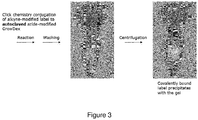
- Figure 3 shows that modified GrowDex® is functional after autoclaving. Alkyne-functionalized fluorescent label (DBCO-Alexa) was reacted with autoclaved azido-modified GrowDex®, after which the free unreacted label was washed away. The label precipitated together with the matrix during centrifugation, showing that it was covalently conjugated.
- DBCO-Alexa Alkyne-functionalized fluorescent label
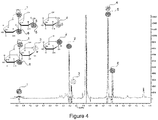
- allylated product was characterized by 1H-NMR spectroscopy after cellulase digestion to allow quantitation of allyl groups ( Figure 4).
- Fig. 4 shows 1H-NMR spectroscopy of allylated GrowDex®. Cellulase-digested allylated Growdex® generated in reaction in 1 M NaOH; data not shown for 0.25 M NaOH solution (final optimized reaction condition). Quantitation of the integrals showed 11:1 relationship between glucose units and allyl groups in the sample.
- the reference numbers 1, 2, 3, 4, 5, and 6 in Fig. 4 indicate specific hydrogen atoms and peaks in the NMR spectrum corresponding to them.
- EXAMPLE 2 Generation of a nanofibrillar cellulose hydrogel comprising protein-modified nanofibrillar cellulose
- ECA ECA (Sigma) was dissolved in phosphate-buffered saline (PBS) and alkyne-modified by adding 4:1 mol:mol NHS-DBCO reagent to ECA protein monomers and allowing to react in RT for 2 hours. Covalent conjugation of DBCO to ECA was verified by spectrophotometric analysis showing DBCO-derived absorbance signal at 309 nm after removal of free label by filtration (data not shown). The DBCO-ECA product was sterile-filtered and combined 100 ⁇ g/ml with 0.5% azido-modified GrowDex®. After 2 hours of reaction in RT, the ECA-modified GrowDex® was washed and transferred to iPS culture medium by centrifugation as above.
- PBS phosphate-buffered saline
- the glycan ligands in the present project were the tetrasaccharides LNT (lacto-N-tetraose) and LNnT (lacto-N-neotetraose), which are components of PSC surface glycoconjugates and similarly as ECA, promote stem cell adhesion to growth surface and 2D cell culture (Mikkola et al., unpublished observations).
- LNT lacto-N-tetraose
- LNnT lacto-N-neotetraose
- DBCO-LNT and DBCO-LNnT conjugates were synthesized at Glykos Finland Oy, purified with reversed-phase HPLC and characterized by MALDI-TOF mass spectrometry and 1H-NMR spectroscopy (data not shown).
- the DBCO-glycan products were sterile-filtered and combined with 0.5% azido-modified GrowDex® as above.
- EXAMPLE 4 Cell culture in nanofibrillar cellulose hydrogel comprising the modified nanofibrillar celluloses
- iPS cells were seeded in 0.5% hydrogel to a density of 1.0x10⁵ cells/100 ⁇ l hydrogel in Nutristem-medium (Stemgent) supplemented with 10 ⁇ M ROCK inhibitor (Y-27632 dihydrochloride, Calbiochem). Hydrogel with cells was aliquoted to 96-well plate and a 100 ⁇ l of Nutristem-medium supplemented with 10 ⁇ M ROCK inhibitor was added on top. Cells were cultured for 7-14 days with daily medium renewal.
- Cells were cultured for 8 days in GrowDex® and modified GrowDex® hydrogels, after which the hydrogels were degraded with 600 ⁇ g cellulase/mg cellulose overnight at +37°C.
- Cells were collected from 96-well plate into tubes and washed once with PBS.
- Spheroids were dissociated by treating with 0.5 mM EDTA (Invitrogen) for 2 minutes at +37°C and triturating with a pipette for 5-10 times. Cells were washed once with medium and counted. Three cell samples from every hydrogel condition were analyzed.
- PrestoBlue® reagent was added directly to the cell culture plate at 1:100 dilution and mixed. Cells were incubated at +37°C for 3.5 hours and absorbance was measured at 570 and 600 nm. Results were calculated according to the manufacturer's instructions. Briefly, the A600 was subtracted from A570 and the medium+hydrogel only control wells were averaged. The control average was subtracted from all sample wells and then the averages of triplicate samples were calculated.
- iPS cells were cultured for 5 days in 3D hydrogels, after which cells were cultured in the presence of 1.0 ⁇ Ci/mL [2- 14 C] thymidine (Perkin Elmer) for 6, 24 and 48 hours. Cells were then washed twice with cold phosphate-buffered saline (PBS) to get rid of free [2- 14 C] thymidine. To solubilize cells, Solvable was added to samples and incubated at +60°C overnight. Before counting, scintillation fluid was added to the samples and the amount of incorporated [2- 14 C] thymidine was measured with a liquid scintillation counter (Wallac).
- PBS cold phosphate-buffered saline
- iPS cells were cultured for 10 days in GrowDex® and modified GrowDex® hydrogels with Nutristem-medium. Culture medium on top of hydrogel was removed (a 100 ⁇ l) and cells were fixed by adding a 100 ⁇ l of 8% paraformaldehyde and incubating for 90 minutes at room temperature (RT). Cells were then washed twice; PBS was added on top of hydrogel, incubated for 5 minutes and centrifuged at 200xg for 1 minute. Permeabilization of cells was done with 0.1% Triton X-100 in PBS overnight at +4°C (Phalloidin samples) or 2 hours at RT (TRA-1-60 and SSEA-4 -samples).
- Cells were stained with anti-TRA-1-60 (R&D Systems) at 20 ⁇ g/ml and anti-SSEA-4 (Abcam) at 15 ⁇ g/ml concentration at +4°C overnight and washed twice with PBS as before.
- Secondary antibodies (DyLight488 anti-mouse IgM or AlexaFluor488 anti-mouse IgG) were added to a final concentration of 2 ⁇ g/ml and incubated at RT for 60 minutes.
- DAPI nuclear stain Invitrogen was added at the same time with secondary antibody to a final concentration of 2.5 ⁇ g/ml.
- DAPI nuclear stain (Invitrogen) was added at the same time with phalloidin to a final concentration of 2.5 ⁇ g/ml. Cells were washed twice with PBS as before and finally transferred to a black 96-well plate for confocal imaging and to microscope slides for fluorescence microscope imaging.
- the spheroids were observed and photographed with Zeiss Axio Scope A1 equipped with ProgRes C5 CCD camera (JENOPTIK) and 10x or 20x objectives (N-ACHROPLAN 10x/0.25 Ph1, Plan-Neofluar 20x/0.50 Ph2) using appropriate filter sets.
- Zeiss Axio Scope A1 equipped with ProgRes C5 CCD camera (JENOPTIK) and 10x or 20x objectives (N-ACHROPLAN 10x/0.25 Ph1, Plan-Neofluar 20x/0.50 Ph2) using appropriate filter sets.
- iPS cells After 9 days of culture in GrowDex® and modified GrowDex® hydrogels, iPS cells had formed small spheroids ( Figure 5).
- Fig. 5 illustrates iPS cells in the different 3D hydrogels after 9 days of culture.
- Cell proliferation in 3D hydrogel culture was measured with three different methods. First, a crude cell number assay was performed by counting the cells after 8 days of culture, degradation of hydrogel and dissociation of spheroids.
- Fig. 6 shows cell counts of iPS cells in different 3D hydrogels. Total number of cells in 3D hydrogel cultures after 8 days, averaged from triplicate samples.
- the counts are total cell number including also dead cells (cell viability was not determined).
- Fig. 7 demonstrates cell viability of iPS cells in different 3D hydrogels at time points 0 (day 0) and 7 (day 7). No difference in the viability between GrowDex® and modified GrowDex® hydrogels was observed. Incorporation of [2- 14 C] thymidine into cellular nucleic acids was used to compare the proliferation rate of iPS cells in GrowDex® and modified GrowDex® hydrogels.
- iPS cells grown in modified GrowDex® hydrogel samples did not incorporate higher amounts of [2- 14 C] thymidine in any time points compared to GrowDex® ( Figure 8 ), which is compatible with the results from the other proliferation assays.
- Fig. 9 shows anti-Tra-1-60 staining in spheroids grown in modified GrowDex®.
- FIG. 10 shows anti-SSEA-4 staining in spheroids grown in ECA-GrowDex®.
- SSEA-4 staining In some spheroids, a subset of cells showed SSEA-4 staining. By counting random spheroids (at 10x magnification) and their SSEA-4 staining, about 30%, 45%, 70%, and 50% of untreated GrowDex®, ECA-, LNT- and LNnT-modified gels, respectively, showed SSEA-4 staining (of 20-30 randomly selected spheroids). In general, intensity of anti-SSEA-4 staining was weaker compared to that of anti-Tra-1-60 staining.
- Phalloidin-Alexa488 staining was used to depict overall cellular morphology (phalloidin binds to actin). No gross changes were detected between the spheroids cultured in the unmodified or modified GrowDex®. The majority of spheroids were in range of small to medium but all gels included also "large" sized spheroids and their number was approximately the same (20, 9, 16 and 10 large spheroids in unmodified, ECA-, LNT- and LNnT-GrowDex®, respectively, when counted in a 96-well).
- Figures 11-14 show Alexa488-phalloidin stainings of the spheroids.
- Fig. 11 shows Alexa488-phalloidin staining in a "large" spheroid grown in ECA-GrowDex®, a confocal image.
- the spheroid length is approx. 220 ⁇ m (original magnification 20x).
- FIG. 12 illustrates Alexa488-phalloidin staining in a spheroid grown in glycan1-GrowDex®, a confocal image.
- Fig. 13 shows Alexa488-phalloidin staining in a spheroid grown in unmodified GrowDex®.
- Some spheroids also contained fragmented nuclei (without surrounding phalloidin staining) resulting either from normal cellular processes or from growth conditions not optimal for the spheroids (apoptosis).
- the fragmented nuclei were seen in spheroids of all gels and no effort was taken to quantify proportions of fragmented nuclei in spheroids or outside spheroids.
- the single cells are also counted in cellular assays.
- GrowDex® concentration in each sample was analyzed by colorimetric resorcinol assay, which correlates with the glucose monomer concentration. All samples were diluted to 0.5 % (w/v) concentration by comparison to 0.5 % (w/v) GrowDex® preparate.
- rheological measurements of the samples in the form of nanofibrillar cellulose hydrogels were carried out with a stress controlled rotational rheometer (ARG2, TA instruments, UK) equipped with 20 mm plate geometry.
- the stress sweep measurements of unmodified and modified nanofibrillar cellulose hydrogels were performed in 0.5 wt% to verify that the gel strength does not change due to modification.
- the stress sweep was measured in a shear stress range of 0.01 - 100 Pa at the frequency 0.1 Hz, at 22 °C.
- Figure 15 illustrates the visco-elastic properties of 0.5 % nanocellulose dispersions of unmodified sample (solid line) and modified sample (dotted line) by stress-sweep measurement. Stress dependence of G' (the storage modulus, ⁇ ) and G" (the loss modulus, ⁇ ) are presented.
- Samples 1. and 2. (GrowDex® and azido-modified GrowDex®) had the same level of viscosity, demonstrating that the azido-modification had no effect on viscosity.
- Sample 3. (ECA-modified GrowDex®) had a somewhat lower viscosity but was in the form of a gel.
- the embodiments described hereinbefore may be used in any combination with each other. Several of the embodiments may be combined together to form a further embodiment.
- a method, a product, a system, or a use, disclosed herein, may comprise at least one of the embodiments described hereinbefore. It will be understood that the benefits and advantages described above may relate to one embodiment or may relate to several embodiments. The embodiments are not limited to those that solve any or all of the stated problems or those that have any or all of the stated benefits and advantages. It will further be understood that reference to 'an' item refers to one or more of those items.
- the term "comprising" is used in this specification to mean including the feature(s) or act(s) followed thereafter, without excluding the presence of one or more additional features or acts.
Landscapes
- Chemical & Material Sciences (AREA)
- Health & Medical Sciences (AREA)
- Life Sciences & Earth Sciences (AREA)
- Engineering & Computer Science (AREA)
- Organic Chemistry (AREA)
- Medicinal Chemistry (AREA)
- Polymers & Plastics (AREA)
- Chemical Kinetics & Catalysis (AREA)
- Biochemistry (AREA)
- Bioinformatics & Cheminformatics (AREA)
- Materials Engineering (AREA)
- Biotechnology (AREA)
- Zoology (AREA)
- Genetics & Genomics (AREA)
- Biomedical Technology (AREA)
- Wood Science & Technology (AREA)
- General Health & Medical Sciences (AREA)
- Dispersion Chemistry (AREA)
- Cell Biology (AREA)
- General Engineering & Computer Science (AREA)
- Microbiology (AREA)
- Pharmacology & Pharmacy (AREA)
- Epidemiology (AREA)
- Animal Behavior & Ethology (AREA)
- Public Health (AREA)
- Veterinary Medicine (AREA)
- Polysaccharides And Polysaccharide Derivatives (AREA)
Priority Applications (7)
| Application Number | Priority Date | Filing Date | Title |
|---|---|---|---|
| EP18174279.2A EP3572434B1 (fr) | 2018-05-25 | 2018-05-25 | Hydrogel de cellulose nanofibrillaire |
| CA3101067A CA3101067A1 (fr) | 2018-05-25 | 2019-05-23 | Hydrogel de cellulose nanofibrillaire |
| US17/056,829 US20210214510A1 (en) | 2018-05-25 | 2019-05-23 | Nanofibrillar cellulose hydrogel |
| CN201980034947.5A CN112585170B (zh) | 2018-05-25 | 2019-05-23 | 纳米原纤纤维素水凝胶 |
| PCT/EP2019/063353 WO2019224314A1 (fr) | 2018-05-25 | 2019-05-23 | Hydrogel de cellulose nanofibrillaire |
| FI20206321A FI129962B (en) | 2018-05-25 | 2019-05-23 | Hydrogel of nanofibrillar cellulose |
| JP2020564758A JP2021524519A (ja) | 2018-05-25 | 2019-05-23 | ナノフィブリルセルロースヒドロゲル |
Applications Claiming Priority (1)
| Application Number | Priority Date | Filing Date | Title |
|---|---|---|---|
| EP18174279.2A EP3572434B1 (fr) | 2018-05-25 | 2018-05-25 | Hydrogel de cellulose nanofibrillaire |
Publications (2)
| Publication Number | Publication Date |
|---|---|
| EP3572434A1 true EP3572434A1 (fr) | 2019-11-27 |
| EP3572434B1 EP3572434B1 (fr) | 2022-08-17 |
Family
ID=62597309
Family Applications (1)
| Application Number | Title | Priority Date | Filing Date |
|---|---|---|---|
| EP18174279.2A Active EP3572434B1 (fr) | 2018-05-25 | 2018-05-25 | Hydrogel de cellulose nanofibrillaire |
Country Status (7)
| Country | Link |
|---|---|
| US (1) | US20210214510A1 (fr) |
| EP (1) | EP3572434B1 (fr) |
| JP (1) | JP2021524519A (fr) |
| CN (1) | CN112585170B (fr) |
| CA (1) | CA3101067A1 (fr) |
| FI (1) | FI129962B (fr) |
| WO (1) | WO2019224314A1 (fr) |
Families Citing this family (2)
| Publication number | Priority date | Publication date | Assignee | Title |
|---|---|---|---|---|
| CN120818489A (zh) * | 2024-04-15 | 2025-10-21 | 北京格林微纳科技有限公司 | 一种基于植物源的培养液及其制备方法、试剂盒和应用 |
| WO2025252819A1 (fr) * | 2024-06-04 | 2025-12-11 | Cellevate Ab | Procédé de culture de cellules souches |
Citations (3)
| Publication number | Priority date | Publication date | Assignee | Title |
|---|---|---|---|---|
| US6202946B1 (en) | 1997-01-03 | 2001-03-20 | Megatrex Oy | Method and apparatus of defibrating a fibre-containing material |
| WO2004100997A2 (fr) | 2003-05-12 | 2004-11-25 | Affymax, Inc. | Nouveau fragment espaceur de composes peptidiques modifies par du poly(ethylene glycol) |
| WO2015189478A1 (fr) * | 2014-06-13 | 2015-12-17 | Glykos Finland Oy | Conjugués charge utile-polymère-protéine |
Family Cites Families (7)
| Publication number | Priority date | Publication date | Assignee | Title |
|---|---|---|---|---|
| CN101981057B (zh) * | 2008-03-31 | 2013-07-24 | 旭化成纤维株式会社 | 纤维素衍生物微粒、该微粒的分散液、该微粒的分散体及诊断药 |
| EP2958933B1 (fr) * | 2013-01-28 | 2018-08-22 | Agency For Science, Technology And Research | Hydrogels de peptides réticulés |
| FI125758B (en) * | 2014-12-22 | 2016-02-15 | Upm Kymmene Corp | A method for reducing the viscosity of nanofibrillar cellulose hydrogel |
| FI125883B (en) * | 2014-12-22 | 2016-03-31 | Upm Kymmene Corp | Treatment of Catalytically Oxidized Nanofibril Cellulose Hydrogel |
| FI126120B (en) * | 2014-12-22 | 2016-06-30 | Upm Kymmene Corp | Process for the production of oxidized nanofibril cellulose hydrogel |
| CA2984598C (fr) * | 2015-05-04 | 2022-06-14 | Upm-Kymmene Corporation | Produit a base de cellulose nanofibrillaire |
| JP6727713B2 (ja) * | 2015-07-03 | 2020-07-22 | 株式会社Nbcメッシュテック | 殺菌・抗ウイルス性を有するセルロースナノファイバー |
-
2018
- 2018-05-25 EP EP18174279.2A patent/EP3572434B1/fr active Active
-
2019
- 2019-05-23 US US17/056,829 patent/US20210214510A1/en not_active Abandoned
- 2019-05-23 WO PCT/EP2019/063353 patent/WO2019224314A1/fr not_active Ceased
- 2019-05-23 CN CN201980034947.5A patent/CN112585170B/zh active Active
- 2019-05-23 CA CA3101067A patent/CA3101067A1/fr active Pending
- 2019-05-23 JP JP2020564758A patent/JP2021524519A/ja active Pending
- 2019-05-23 FI FI20206321A patent/FI129962B/en active
Patent Citations (3)
| Publication number | Priority date | Publication date | Assignee | Title |
|---|---|---|---|---|
| US6202946B1 (en) | 1997-01-03 | 2001-03-20 | Megatrex Oy | Method and apparatus of defibrating a fibre-containing material |
| WO2004100997A2 (fr) | 2003-05-12 | 2004-11-25 | Affymax, Inc. | Nouveau fragment espaceur de composes peptidiques modifies par du poly(ethylene glycol) |
| WO2015189478A1 (fr) * | 2014-06-13 | 2015-12-17 | Glykos Finland Oy | Conjugués charge utile-polymère-protéine |
Non-Patent Citations (3)
| Title |
|---|
| ANDREAS KOSCHELLA ET AL: "A click-chemistry approach to cellulose-based hydrogels", CARBOHYDRATE POLYMERS, vol. 86, no. 1, 12 April 2011 (2011-04-12), APPLIED SCIENCE PUBLISHERS, LTD. BARKING, GB, pages 154 - 161, XP028378205, ISSN: 0144-8617, [retrieved on 20110421], DOI: 10.1016/J.CARBPOL.2011.04.031 * |
| MIKKOLA ET AL., STEM CELLS DEV., vol. 22, 2013, pages 707 - 16 |
| ZHENG, JUNG, SCHMIDT, LODGE, REINEKE: "2-hydroxyethylcellulose and amphiphilic block copolymer conjugates form mechanically tunable and nonswellable hydrogel", ACS MACRO LETTERS, vol. 6, 30 January 2017 (2017-01-30), pages 145 - 149, XP002786706, DOI: 10.1021/acsmacrolett.6b00954 * |
Also Published As
| Publication number | Publication date |
|---|---|
| FI129962B (en) | 2022-11-30 |
| US20210214510A1 (en) | 2021-07-15 |
| CA3101067A1 (fr) | 2019-11-28 |
| CN112585170A (zh) | 2021-03-30 |
| FI20206321A1 (en) | 2020-12-17 |
| JP2021524519A (ja) | 2021-09-13 |
| CN112585170B (zh) | 2023-05-16 |
| WO2019224314A1 (fr) | 2019-11-28 |
| EP3572434B1 (fr) | 2022-08-17 |
Similar Documents
| Publication | Publication Date | Title |
|---|---|---|
| US11969505B2 (en) | Method for freeze-drying cells in a hydrogel comprising nanofibrillar cellulose and freeze-dried cells in an aerogel comprising nanofibrillar cellulose | |
| EP3292156B1 (fr) | Produit cellulosique nanofibrillaire | |
| Brumer et al. | Activation of crystalline cellulose surfaces through the chemoenzymatic modification of xyloglucan | |
| Mattos et al. | Accounting for substrate interactions in the measurement of the dimensions of cellulose nanofibrils | |
| US20210190765A1 (en) | Plant-derived nanofibrillar cellulose hydrogel for cell culture and chemical testing | |
| US11332714B2 (en) | Cell system and method for storing cells | |
| EP2900806A1 (fr) | Culture de cellules tridimensionnelles | |
| CN103354834A (zh) | 植物来源细胞培养材料 | |
| CN104105827A (zh) | 预处理纤维素浆料的方法 | |
| EP3572434B1 (fr) | Hydrogel de cellulose nanofibrillaire | |
| US20230258624A1 (en) | Ex vivo tumour immune microenvironment model, a method for preserving a tumour-specific immune cell profile in an ex vivo tumour immune microenvironment model and use of nanofibrillar cellulose | |
| Herburger et al. | Enzymically attaching oligosaccharide-linked ‘cargoes’ to cellulose and other commercial polysaccharides via stable covalent bonds | |
| Hu et al. | Water-soluble polysaccharides promoting production of redispersible nanocellulose | |
| Butchosa et al. | Stronger cellulose microfibril network structure through the expression of cellulose-binding modules in plant primary cell walls | |
| DK3237109T3 (en) | METHOD OF REDUCING THE VISCOSITY OF A NANOFIBRILLARY CELLULOSE HYDROGEN | |
| Zhou et al. | Xyloglucan and xyloglucan endo-transglycosylases (XET): Tools for ex vivo cellulose surface modification | |
| Yokota et al. | ADSORPTION OF CELLOBIOSE-PENDANT POLYMERS TO A CELLULOSE MATRIX DETERMINED BY QUARTZ CRYSTAL MICROBALANCE ANALYSIS. |
Legal Events
| Date | Code | Title | Description |
|---|---|---|---|
| PUAI | Public reference made under article 153(3) epc to a published international application that has entered the european phase |
Free format text: ORIGINAL CODE: 0009012 |
|
| STAA | Information on the status of an ep patent application or granted ep patent |
Free format text: STATUS: THE APPLICATION HAS BEEN PUBLISHED |
|
| AK | Designated contracting states |
Kind code of ref document: A1 Designated state(s): AL AT BE BG CH CY CZ DE DK EE ES FI FR GB GR HR HU IE IS IT LI LT LU LV MC MK MT NL NO PL PT RO RS SE SI SK SM TR |
|
| AX | Request for extension of the european patent |
Extension state: BA ME |
|
| STAA | Information on the status of an ep patent application or granted ep patent |
Free format text: STATUS: REQUEST FOR EXAMINATION WAS MADE |
|
| 17P | Request for examination filed |
Effective date: 20191220 |
|
| RBV | Designated contracting states (corrected) |
Designated state(s): AL AT BE BG CH CY CZ DE DK EE ES FI FR GB GR HR HU IE IS IT LI LT LU LV MC MK MT NL NO PL PT RO RS SE SI SK SM TR |
|
| GRAP | Despatch of communication of intention to grant a patent |
Free format text: ORIGINAL CODE: EPIDOSNIGR1 |
|
| STAA | Information on the status of an ep patent application or granted ep patent |
Free format text: STATUS: GRANT OF PATENT IS INTENDED |
|
| INTG | Intention to grant announced |
Effective date: 20220323 |
|
| GRAS | Grant fee paid |
Free format text: ORIGINAL CODE: EPIDOSNIGR3 |
|
| GRAA | (expected) grant |
Free format text: ORIGINAL CODE: 0009210 |
|
| STAA | Information on the status of an ep patent application or granted ep patent |
Free format text: STATUS: THE PATENT HAS BEEN GRANTED |
|
| AK | Designated contracting states |
Kind code of ref document: B1 Designated state(s): AL AT BE BG CH CY CZ DE DK EE ES FI FR GB GR HR HU IE IS IT LI LT LU LV MC MK MT NL NO PL PT RO RS SE SI SK SM TR |
|
| REG | Reference to a national code |
Ref country code: CH Ref legal event code: EP |
|
| REG | Reference to a national code |
Ref country code: DE Ref legal event code: R096 Ref document number: 602018039312 Country of ref document: DE |
|
| REG | Reference to a national code |
Ref country code: IE Ref legal event code: FG4D |
|
| REG | Reference to a national code |
Ref country code: AT Ref legal event code: REF Ref document number: 1512119 Country of ref document: AT Kind code of ref document: T Effective date: 20220915 |
|
| REG | Reference to a national code |
Ref country code: NL Ref legal event code: MP Effective date: 20220817 |
|
| REG | Reference to a national code |
Ref country code: LT Ref legal event code: MG9D |
|
| PG25 | Lapsed in a contracting state [announced via postgrant information from national office to epo] |
Ref country code: SE Free format text: LAPSE BECAUSE OF FAILURE TO SUBMIT A TRANSLATION OF THE DESCRIPTION OR TO PAY THE FEE WITHIN THE PRESCRIBED TIME-LIMIT Effective date: 20220817 Ref country code: RS Free format text: LAPSE BECAUSE OF FAILURE TO SUBMIT A TRANSLATION OF THE DESCRIPTION OR TO PAY THE FEE WITHIN THE PRESCRIBED TIME-LIMIT Effective date: 20220817 Ref country code: PT Free format text: LAPSE BECAUSE OF FAILURE TO SUBMIT A TRANSLATION OF THE DESCRIPTION OR TO PAY THE FEE WITHIN THE PRESCRIBED TIME-LIMIT Effective date: 20221219 Ref country code: NO Free format text: LAPSE BECAUSE OF FAILURE TO SUBMIT A TRANSLATION OF THE DESCRIPTION OR TO PAY THE FEE WITHIN THE PRESCRIBED TIME-LIMIT Effective date: 20221117 Ref country code: NL Free format text: LAPSE BECAUSE OF FAILURE TO SUBMIT A TRANSLATION OF THE DESCRIPTION OR TO PAY THE FEE WITHIN THE PRESCRIBED TIME-LIMIT Effective date: 20220817 Ref country code: LV Free format text: LAPSE BECAUSE OF FAILURE TO SUBMIT A TRANSLATION OF THE DESCRIPTION OR TO PAY THE FEE WITHIN THE PRESCRIBED TIME-LIMIT Effective date: 20220817 Ref country code: LT Free format text: LAPSE BECAUSE OF FAILURE TO SUBMIT A TRANSLATION OF THE DESCRIPTION OR TO PAY THE FEE WITHIN THE PRESCRIBED TIME-LIMIT Effective date: 20220817 Ref country code: FI Free format text: LAPSE BECAUSE OF FAILURE TO SUBMIT A TRANSLATION OF THE DESCRIPTION OR TO PAY THE FEE WITHIN THE PRESCRIBED TIME-LIMIT Effective date: 20220817 |
|
| REG | Reference to a national code |
Ref country code: AT Ref legal event code: MK05 Ref document number: 1512119 Country of ref document: AT Kind code of ref document: T Effective date: 20220817 |
|
| PG25 | Lapsed in a contracting state [announced via postgrant information from national office to epo] |
Ref country code: PL Free format text: LAPSE BECAUSE OF FAILURE TO SUBMIT A TRANSLATION OF THE DESCRIPTION OR TO PAY THE FEE WITHIN THE PRESCRIBED TIME-LIMIT Effective date: 20220817 Ref country code: IS Free format text: LAPSE BECAUSE OF FAILURE TO SUBMIT A TRANSLATION OF THE DESCRIPTION OR TO PAY THE FEE WITHIN THE PRESCRIBED TIME-LIMIT Effective date: 20221217 Ref country code: HR Free format text: LAPSE BECAUSE OF FAILURE TO SUBMIT A TRANSLATION OF THE DESCRIPTION OR TO PAY THE FEE WITHIN THE PRESCRIBED TIME-LIMIT Effective date: 20220817 Ref country code: GR Free format text: LAPSE BECAUSE OF FAILURE TO SUBMIT A TRANSLATION OF THE DESCRIPTION OR TO PAY THE FEE WITHIN THE PRESCRIBED TIME-LIMIT Effective date: 20221118 |
|
| PG25 | Lapsed in a contracting state [announced via postgrant information from national office to epo] |
Ref country code: SM Free format text: LAPSE BECAUSE OF FAILURE TO SUBMIT A TRANSLATION OF THE DESCRIPTION OR TO PAY THE FEE WITHIN THE PRESCRIBED TIME-LIMIT Effective date: 20220817 Ref country code: RO Free format text: LAPSE BECAUSE OF FAILURE TO SUBMIT A TRANSLATION OF THE DESCRIPTION OR TO PAY THE FEE WITHIN THE PRESCRIBED TIME-LIMIT Effective date: 20220817 Ref country code: ES Free format text: LAPSE BECAUSE OF FAILURE TO SUBMIT A TRANSLATION OF THE DESCRIPTION OR TO PAY THE FEE WITHIN THE PRESCRIBED TIME-LIMIT Effective date: 20220817 Ref country code: DK Free format text: LAPSE BECAUSE OF FAILURE TO SUBMIT A TRANSLATION OF THE DESCRIPTION OR TO PAY THE FEE WITHIN THE PRESCRIBED TIME-LIMIT Effective date: 20220817 Ref country code: CZ Free format text: LAPSE BECAUSE OF FAILURE TO SUBMIT A TRANSLATION OF THE DESCRIPTION OR TO PAY THE FEE WITHIN THE PRESCRIBED TIME-LIMIT Effective date: 20220817 Ref country code: AT Free format text: LAPSE BECAUSE OF FAILURE TO SUBMIT A TRANSLATION OF THE DESCRIPTION OR TO PAY THE FEE WITHIN THE PRESCRIBED TIME-LIMIT Effective date: 20220817 |
|
| REG | Reference to a national code |
Ref country code: DE Ref legal event code: R097 Ref document number: 602018039312 Country of ref document: DE |
|
| PG25 | Lapsed in a contracting state [announced via postgrant information from national office to epo] |
Ref country code: SK Free format text: LAPSE BECAUSE OF FAILURE TO SUBMIT A TRANSLATION OF THE DESCRIPTION OR TO PAY THE FEE WITHIN THE PRESCRIBED TIME-LIMIT Effective date: 20220817 Ref country code: EE Free format text: LAPSE BECAUSE OF FAILURE TO SUBMIT A TRANSLATION OF THE DESCRIPTION OR TO PAY THE FEE WITHIN THE PRESCRIBED TIME-LIMIT Effective date: 20220817 |
|
| PLBE | No opposition filed within time limit |
Free format text: ORIGINAL CODE: 0009261 |
|
| STAA | Information on the status of an ep patent application or granted ep patent |
Free format text: STATUS: NO OPPOSITION FILED WITHIN TIME LIMIT |
|
| PG25 | Lapsed in a contracting state [announced via postgrant information from national office to epo] |
Ref country code: AL Free format text: LAPSE BECAUSE OF FAILURE TO SUBMIT A TRANSLATION OF THE DESCRIPTION OR TO PAY THE FEE WITHIN THE PRESCRIBED TIME-LIMIT Effective date: 20220817 |
|
| 26N | No opposition filed |
Effective date: 20230519 |
|
| PG25 | Lapsed in a contracting state [announced via postgrant information from national office to epo] |
Ref country code: SI Free format text: LAPSE BECAUSE OF FAILURE TO SUBMIT A TRANSLATION OF THE DESCRIPTION OR TO PAY THE FEE WITHIN THE PRESCRIBED TIME-LIMIT Effective date: 20220817 |
|
| REG | Reference to a national code |
Ref country code: DE Ref legal event code: R119 Ref document number: 602018039312 Country of ref document: DE |
|
| REG | Reference to a national code |
Ref country code: CH Ref legal event code: PL |
|
| PG25 | Lapsed in a contracting state [announced via postgrant information from national office to epo] |
Ref country code: MC Free format text: LAPSE BECAUSE OF FAILURE TO SUBMIT A TRANSLATION OF THE DESCRIPTION OR TO PAY THE FEE WITHIN THE PRESCRIBED TIME-LIMIT Effective date: 20220817 |
|
| GBPC | Gb: european patent ceased through non-payment of renewal fee |
Effective date: 20230525 |
|
| REG | Reference to a national code |
Ref country code: BE Ref legal event code: MM Effective date: 20230531 |
|
| PG25 | Lapsed in a contracting state [announced via postgrant information from national office to epo] |
Ref country code: MC Free format text: LAPSE BECAUSE OF FAILURE TO SUBMIT A TRANSLATION OF THE DESCRIPTION OR TO PAY THE FEE WITHIN THE PRESCRIBED TIME-LIMIT Effective date: 20220817 Ref country code: LU Free format text: LAPSE BECAUSE OF NON-PAYMENT OF DUE FEES Effective date: 20230525 Ref country code: LI Free format text: LAPSE BECAUSE OF NON-PAYMENT OF DUE FEES Effective date: 20230531 Ref country code: CH Free format text: LAPSE BECAUSE OF NON-PAYMENT OF DUE FEES Effective date: 20230531 |
|
| REG | Reference to a national code |
Ref country code: IE Ref legal event code: MM4A |
|
| PG25 | Lapsed in a contracting state [announced via postgrant information from national office to epo] |
Ref country code: IE Free format text: LAPSE BECAUSE OF NON-PAYMENT OF DUE FEES Effective date: 20230525 |
|
| PG25 | Lapsed in a contracting state [announced via postgrant information from national office to epo] |
Ref country code: IE Free format text: LAPSE BECAUSE OF NON-PAYMENT OF DUE FEES Effective date: 20230525 Ref country code: DE Free format text: LAPSE BECAUSE OF NON-PAYMENT OF DUE FEES Effective date: 20231201 Ref country code: GB Free format text: LAPSE BECAUSE OF NON-PAYMENT OF DUE FEES Effective date: 20230525 |
|
| PG25 | Lapsed in a contracting state [announced via postgrant information from national office to epo] |
Ref country code: IT Free format text: LAPSE BECAUSE OF FAILURE TO SUBMIT A TRANSLATION OF THE DESCRIPTION OR TO PAY THE FEE WITHIN THE PRESCRIBED TIME-LIMIT Effective date: 20220817 Ref country code: FR Free format text: LAPSE BECAUSE OF NON-PAYMENT OF DUE FEES Effective date: 20230531 Ref country code: BE Free format text: LAPSE BECAUSE OF NON-PAYMENT OF DUE FEES Effective date: 20230531 |
|
| PG25 | Lapsed in a contracting state [announced via postgrant information from national office to epo] |
Ref country code: BG Free format text: LAPSE BECAUSE OF FAILURE TO SUBMIT A TRANSLATION OF THE DESCRIPTION OR TO PAY THE FEE WITHIN THE PRESCRIBED TIME-LIMIT Effective date: 20220817 |
|
| PG25 | Lapsed in a contracting state [announced via postgrant information from national office to epo] |
Ref country code: BG Free format text: LAPSE BECAUSE OF FAILURE TO SUBMIT A TRANSLATION OF THE DESCRIPTION OR TO PAY THE FEE WITHIN THE PRESCRIBED TIME-LIMIT Effective date: 20220817 |
|
| PG25 | Lapsed in a contracting state [announced via postgrant information from national office to epo] |
Ref country code: CY Free format text: LAPSE BECAUSE OF FAILURE TO SUBMIT A TRANSLATION OF THE DESCRIPTION OR TO PAY THE FEE WITHIN THE PRESCRIBED TIME-LIMIT; INVALID AB INITIO Effective date: 20180525 |
|
| PG25 | Lapsed in a contracting state [announced via postgrant information from national office to epo] |
Ref country code: HU Free format text: LAPSE BECAUSE OF FAILURE TO SUBMIT A TRANSLATION OF THE DESCRIPTION OR TO PAY THE FEE WITHIN THE PRESCRIBED TIME-LIMIT; INVALID AB INITIO Effective date: 20180525 |
|
| PG25 | Lapsed in a contracting state [announced via postgrant information from national office to epo] |
Ref country code: TR Free format text: LAPSE BECAUSE OF FAILURE TO SUBMIT A TRANSLATION OF THE DESCRIPTION OR TO PAY THE FEE WITHIN THE PRESCRIBED TIME-LIMIT Effective date: 20220817 |