EP3572525A2 - Procédé d'identification d'un site hors cible d'édition de bases par cassure de brin unique d'adn - Google Patents
Procédé d'identification d'un site hors cible d'édition de bases par cassure de brin unique d'adn Download PDFInfo
- Publication number
- EP3572525A2 EP3572525A2 EP18741209.3A EP18741209A EP3572525A2 EP 3572525 A2 EP3572525 A2 EP 3572525A2 EP 18741209 A EP18741209 A EP 18741209A EP 3572525 A2 EP3572525 A2 EP 3572525A2
- Authority
- EP
- European Patent Office
- Prior art keywords
- emx1
- target
- dna
- strand
- site
- Prior art date
- Legal status (The legal status is an assumption and is not a legal conclusion. Google has not performed a legal analysis and makes no representation as to the accuracy of the status listed.)
- Withdrawn
Links
Images


Classifications
-
- C—CHEMISTRY; METALLURGY
- C12—BIOCHEMISTRY; BEER; SPIRITS; WINE; VINEGAR; MICROBIOLOGY; ENZYMOLOGY; MUTATION OR GENETIC ENGINEERING
- C12N—MICROORGANISMS OR ENZYMES; COMPOSITIONS THEREOF; PROPAGATING, PRESERVING, OR MAINTAINING MICROORGANISMS; MUTATION OR GENETIC ENGINEERING; CULTURE MEDIA
- C12N15/00—Mutation or genetic engineering; DNA or RNA concerning genetic engineering, vectors, e.g. plasmids, or their isolation, preparation or purification; Use of hosts therefor
- C12N15/09—Recombinant DNA-technology
- C12N15/10—Processes for the isolation, preparation or purification of DNA or RNA
- C12N15/102—Mutagenizing nucleic acids
-
- A—HUMAN NECESSITIES
- A01—AGRICULTURE; FORESTRY; ANIMAL HUSBANDRY; HUNTING; TRAPPING; FISHING
- A01G—HORTICULTURE; CULTIVATION OF VEGETABLES, FLOWERS, RICE, FRUIT, VINES, HOPS OR SEAWEED; FORESTRY; WATERING
- A01G13/00—Protection of plants
- A01G13/20—Protective coverings for plants
- A01G13/21—Protective coverings for plants providing overhead protection, i.e. canopies
-
- C—CHEMISTRY; METALLURGY
- C12—BIOCHEMISTRY; BEER; SPIRITS; WINE; VINEGAR; MICROBIOLOGY; ENZYMOLOGY; MUTATION OR GENETIC ENGINEERING
- C12N—MICROORGANISMS OR ENZYMES; COMPOSITIONS THEREOF; PROPAGATING, PRESERVING, OR MAINTAINING MICROORGANISMS; MUTATION OR GENETIC ENGINEERING; CULTURE MEDIA
- C12N9/00—Enzymes; Proenzymes; Compositions thereof; Processes for preparing, activating, inhibiting, separating or purifying enzymes
- C12N9/14—Hydrolases (3)
- C12N9/16—Hydrolases (3) acting on ester bonds (3.1)
- C12N9/22—Ribonucleases [RNase]; Deoxyribonucleases [DNase]
-
- A—HUMAN NECESSITIES
- A01—AGRICULTURE; FORESTRY; ANIMAL HUSBANDRY; HUNTING; TRAPPING; FISHING
- A01G—HORTICULTURE; CULTIVATION OF VEGETABLES, FLOWERS, RICE, FRUIT, VINES, HOPS OR SEAWEED; FORESTRY; WATERING
- A01G13/00—Protection of plants
- A01G13/20—Protective coverings for plants
- A01G13/29—Arrangements for laying out or removing plant coverings
-
- C—CHEMISTRY; METALLURGY
- C12—BIOCHEMISTRY; BEER; SPIRITS; WINE; VINEGAR; MICROBIOLOGY; ENZYMOLOGY; MUTATION OR GENETIC ENGINEERING
- C12N—MICROORGANISMS OR ENZYMES; COMPOSITIONS THEREOF; PROPAGATING, PRESERVING, OR MAINTAINING MICROORGANISMS; MUTATION OR GENETIC ENGINEERING; CULTURE MEDIA
- C12N15/00—Mutation or genetic engineering; DNA or RNA concerning genetic engineering, vectors, e.g. plasmids, or their isolation, preparation or purification; Use of hosts therefor
- C12N15/09—Recombinant DNA-technology
- C12N15/11—DNA or RNA fragments; Modified forms thereof; Non-coding nucleic acids having a biological activity
- C12N15/113—Non-coding nucleic acids modulating the expression of genes, e.g. antisense oligonucleotides; Antisense DNA or RNA; Triplex- forming oligonucleotides; Catalytic nucleic acids, e.g. ribozymes; Nucleic acids used in co-suppression or gene silencing
-
- C—CHEMISTRY; METALLURGY
- C12—BIOCHEMISTRY; BEER; SPIRITS; WINE; VINEGAR; MICROBIOLOGY; ENZYMOLOGY; MUTATION OR GENETIC ENGINEERING
- C12N—MICROORGANISMS OR ENZYMES; COMPOSITIONS THEREOF; PROPAGATING, PRESERVING, OR MAINTAINING MICROORGANISMS; MUTATION OR GENETIC ENGINEERING; CULTURE MEDIA
- C12N15/00—Mutation or genetic engineering; DNA or RNA concerning genetic engineering, vectors, e.g. plasmids, or their isolation, preparation or purification; Use of hosts therefor
- C12N15/09—Recombinant DNA-technology
- C12N15/87—Introduction of foreign genetic material using processes not otherwise provided for, e.g. co-transformation
- C12N15/90—Stable introduction of foreign DNA into chromosome
-
- C—CHEMISTRY; METALLURGY
- C12—BIOCHEMISTRY; BEER; SPIRITS; WINE; VINEGAR; MICROBIOLOGY; ENZYMOLOGY; MUTATION OR GENETIC ENGINEERING
- C12N—MICROORGANISMS OR ENZYMES; COMPOSITIONS THEREOF; PROPAGATING, PRESERVING, OR MAINTAINING MICROORGANISMS; MUTATION OR GENETIC ENGINEERING; CULTURE MEDIA
- C12N15/00—Mutation or genetic engineering; DNA or RNA concerning genetic engineering, vectors, e.g. plasmids, or their isolation, preparation or purification; Use of hosts therefor
- C12N15/09—Recombinant DNA-technology
- C12N15/87—Introduction of foreign genetic material using processes not otherwise provided for, e.g. co-transformation
- C12N15/90—Stable introduction of foreign DNA into chromosome
- C12N15/902—Stable introduction of foreign DNA into chromosome using homologous recombination
-
- C—CHEMISTRY; METALLURGY
- C12—BIOCHEMISTRY; BEER; SPIRITS; WINE; VINEGAR; MICROBIOLOGY; ENZYMOLOGY; MUTATION OR GENETIC ENGINEERING
- C12N—MICROORGANISMS OR ENZYMES; COMPOSITIONS THEREOF; PROPAGATING, PRESERVING, OR MAINTAINING MICROORGANISMS; MUTATION OR GENETIC ENGINEERING; CULTURE MEDIA
- C12N9/00—Enzymes; Proenzymes; Compositions thereof; Processes for preparing, activating, inhibiting, separating or purifying enzymes
- C12N9/14—Hydrolases (3)
- C12N9/16—Hydrolases (3) acting on ester bonds (3.1)
- C12N9/22—Ribonucleases [RNase]; Deoxyribonucleases [DNase]
- C12N9/222—Clustered regularly interspaced short palindromic repeats [CRISPR]-associated [CAS] enzymes
-
- C—CHEMISTRY; METALLURGY
- C12—BIOCHEMISTRY; BEER; SPIRITS; WINE; VINEGAR; MICROBIOLOGY; ENZYMOLOGY; MUTATION OR GENETIC ENGINEERING
- C12N—MICROORGANISMS OR ENZYMES; COMPOSITIONS THEREOF; PROPAGATING, PRESERVING, OR MAINTAINING MICROORGANISMS; MUTATION OR GENETIC ENGINEERING; CULTURE MEDIA
- C12N9/00—Enzymes; Proenzymes; Compositions thereof; Processes for preparing, activating, inhibiting, separating or purifying enzymes
- C12N9/14—Hydrolases (3)
- C12N9/24—Hydrolases (3) acting on glycosyl compounds (3.2)
-
- C—CHEMISTRY; METALLURGY
- C12—BIOCHEMISTRY; BEER; SPIRITS; WINE; VINEGAR; MICROBIOLOGY; ENZYMOLOGY; MUTATION OR GENETIC ENGINEERING
- C12N—MICROORGANISMS OR ENZYMES; COMPOSITIONS THEREOF; PROPAGATING, PRESERVING, OR MAINTAINING MICROORGANISMS; MUTATION OR GENETIC ENGINEERING; CULTURE MEDIA
- C12N9/00—Enzymes; Proenzymes; Compositions thereof; Processes for preparing, activating, inhibiting, separating or purifying enzymes
- C12N9/14—Hydrolases (3)
- C12N9/24—Hydrolases (3) acting on glycosyl compounds (3.2)
- C12N9/2497—Hydrolases (3) acting on glycosyl compounds (3.2) hydrolysing N- glycosyl compounds (3.2.2)
-
- C—CHEMISTRY; METALLURGY
- C12—BIOCHEMISTRY; BEER; SPIRITS; WINE; VINEGAR; MICROBIOLOGY; ENZYMOLOGY; MUTATION OR GENETIC ENGINEERING
- C12N—MICROORGANISMS OR ENZYMES; COMPOSITIONS THEREOF; PROPAGATING, PRESERVING, OR MAINTAINING MICROORGANISMS; MUTATION OR GENETIC ENGINEERING; CULTURE MEDIA
- C12N9/00—Enzymes; Proenzymes; Compositions thereof; Processes for preparing, activating, inhibiting, separating or purifying enzymes
- C12N9/14—Hydrolases (3)
- C12N9/78—Hydrolases (3) acting on carbon to nitrogen bonds other than peptide bonds (3.5)
-
- C—CHEMISTRY; METALLURGY
- C12—BIOCHEMISTRY; BEER; SPIRITS; WINE; VINEGAR; MICROBIOLOGY; ENZYMOLOGY; MUTATION OR GENETIC ENGINEERING
- C12Q—MEASURING OR TESTING PROCESSES INVOLVING ENZYMES, NUCLEIC ACIDS OR MICROORGANISMS; COMPOSITIONS OR TEST PAPERS THEREFOR; PROCESSES OF PREPARING SUCH COMPOSITIONS; CONDITION-RESPONSIVE CONTROL IN MICROBIOLOGICAL OR ENZYMOLOGICAL PROCESSES
- C12Q1/00—Measuring or testing processes involving enzymes, nucleic acids or microorganisms; Compositions therefor; Processes of preparing such compositions
- C12Q1/68—Measuring or testing processes involving enzymes, nucleic acids or microorganisms; Compositions therefor; Processes of preparing such compositions involving nucleic acids
- C12Q1/6813—Hybridisation assays
- C12Q1/6827—Hybridisation assays for detection of mutation or polymorphism
-
- C—CHEMISTRY; METALLURGY
- C12—BIOCHEMISTRY; BEER; SPIRITS; WINE; VINEGAR; MICROBIOLOGY; ENZYMOLOGY; MUTATION OR GENETIC ENGINEERING
- C12Y—ENZYMES
- C12Y302/00—Hydrolases acting on glycosyl compounds, i.e. glycosylases (3.2)
- C12Y302/02—Hydrolases acting on glycosyl compounds, i.e. glycosylases (3.2) hydrolysing N-glycosyl compounds (3.2.2)
- C12Y302/02027—Uracil-DNA glycosylase (3.2.2.27)
-
- C—CHEMISTRY; METALLURGY
- C12—BIOCHEMISTRY; BEER; SPIRITS; WINE; VINEGAR; MICROBIOLOGY; ENZYMOLOGY; MUTATION OR GENETIC ENGINEERING
- C12Y—ENZYMES
- C12Y305/00—Hydrolases acting on carbon-nitrogen bonds, other than peptide bonds (3.5)
- C12Y305/04—Hydrolases acting on carbon-nitrogen bonds, other than peptide bonds (3.5) in cyclic amidines (3.5.4)
- C12Y305/04005—Cytidine deaminase (3.5.4.5)
-
- F—MECHANICAL ENGINEERING; LIGHTING; HEATING; WEAPONS; BLASTING
- F16—ENGINEERING ELEMENTS AND UNITS; GENERAL MEASURES FOR PRODUCING AND MAINTAINING EFFECTIVE FUNCTIONING OF MACHINES OR INSTALLATIONS; THERMAL INSULATION IN GENERAL
- F16B—DEVICES FOR FASTENING OR SECURING CONSTRUCTIONAL ELEMENTS OR MACHINE PARTS TOGETHER, e.g. NAILS, BOLTS, CIRCLIPS, CLAMPS, CLIPS OR WEDGES; JOINTS OR JOINTING
- F16B2/00—Friction-grip releasable fastenings
- F16B2/20—Clips, i.e. with gripping action effected solely by the inherent resistance to deformation of the material of the fastening
-
- C—CHEMISTRY; METALLURGY
- C12—BIOCHEMISTRY; BEER; SPIRITS; WINE; VINEGAR; MICROBIOLOGY; ENZYMOLOGY; MUTATION OR GENETIC ENGINEERING
- C12N—MICROORGANISMS OR ENZYMES; COMPOSITIONS THEREOF; PROPAGATING, PRESERVING, OR MAINTAINING MICROORGANISMS; MUTATION OR GENETIC ENGINEERING; CULTURE MEDIA
- C12N2310/00—Structure or type of the nucleic acid
- C12N2310/10—Type of nucleic acid
- C12N2310/11—Antisense
-
- C—CHEMISTRY; METALLURGY
- C12—BIOCHEMISTRY; BEER; SPIRITS; WINE; VINEGAR; MICROBIOLOGY; ENZYMOLOGY; MUTATION OR GENETIC ENGINEERING
- C12N—MICROORGANISMS OR ENZYMES; COMPOSITIONS THEREOF; PROPAGATING, PRESERVING, OR MAINTAINING MICROORGANISMS; MUTATION OR GENETIC ENGINEERING; CULTURE MEDIA
- C12N2310/00—Structure or type of the nucleic acid
- C12N2310/10—Type of nucleic acid
- C12N2310/20—Type of nucleic acid involving clustered regularly interspaced short palindromic repeats [CRISPR]
Definitions
- the present disclosure relates to a composition for inducing DNA single strand breaks in DNA, the composition comprising a cytidine deaminase, an inactivated target-specific endonuclease, and a guide RNA; a method for inducing a single-strand break in DNA, using the same; a method for analyzing a nucleic acid sequence of a base-editing-introduced DNA; and a method for identifying (or measuring or detecting) a base-editing site, base-editing efficiency at an on-target site, an off-target site, and/or target specificity.
- a base editor comprising a DNA-binding module and a cytidine deaminase enables targeted nucleotide substitutions or base editing in a genome without producing DNA-strand breaks.
- programmable nucleases such as CRISPR-Cas9 and ZFN (zinc-finger nuclease), which induce small insertions or deletions (indels) at a target site
- programmable deaminases convert C to T (C to G or A, to a lesser extent) within several nucleotides at a target site.
- Programmable deaminases can correct point mutations causing genetic diseases or can create single-nucleotide polymorphisms (SNPs) of interest in human cells, animals, and plants.
- BEs Base Editors
- dCas9 catalytically-deficient Cas9
- nCas9 D10A nickase
- rAPOBEC D10A nickase
- AID activation-induced cytidine deaminase
- CRISPR-X composed of dCas9 and sgRNAs linked to MS2 RNA hairpins to recruit a hyperactive AID variant fused to MS2-binding protein
- TALEs transcription activator-like effectors
- a means for analyzing genome-wide target specificities of a base editor and a means for analyzing off-target sites and off-target effects of the base editor through the analysis of genome-wide target specificities.
- An aspect provides a composition for producing single-strand breaks in DNA, the composition comprising: (a) a deaminase or a gene coding therefor (cDNA, rDNA, or mRNA); (b) an inactivated target-specific endonuclease or a gene coding therefor (cDNA, rDNA, or mRNA); and (c) a guide RNA or a gene coding therefor.
- the composition may not contain a uracil-specific excision reagent (USER).
- Another aspect provides a method for inducing a single-strand break in DNA, the method comprising a step of introducing into a cell or contacting with DNA separated from cells, (a) a deaminase or a gene coding therefor (cDNA, rDNA, or mRNA), (b) an inactivated target-specific endonuclease or a gene coding therefor (cDNA, rDNA, or mRNA), and (c) a guide RNA or a gene coding therefor.
- This method may not comprise a step of treating with a Uracil-Specific Excision Reagent (USER).
- Uracil-Specific Excision Reagent Uracil-Specific Excision Reagent
- Another aspect provides a method for analyzing a nucleic acid sequence of DNA to which base editing is introduced by deaminase, the method comprising the steps of:
- Another aspect provides a method for identifying (or measuring or detecting) a base-editing site, a single-strand break site, base editing efficiency at an on-target site, an off-target site, and target specificity of deaminase, the method comprising the steps of:
- Digenome-seq is modified to assess the specificity of a base sequence (e.g., Base Editor 3; BE3) composed of a Cas9 nickase and a deaminase in the human genome.
- Genomic DNA is treated with BE3 and a guide RNA in vitro to identify the production of a break in a single strand of the DNA double helix.
- BE3 off-target sites are then computationally identified from whole genome sequencing data by a method for inducing a single-strand break in DNA, using a deaminase and a method for analyzing a nucleic acid sequence, both provided in the present specification.
- compositions for inducing a single-strand break in DNA comprising (a) a deaminaseor a gene coding therefor (cDNA, rDNA, or mRNA), (b) an inactivated target-specific endonuclease or a gene coding therefor(cDNA, rDNA, or mRNA), and (c) a guide RNA or a gene coding therefor.
- the composition may not contain a uracil-specific excision reagent (USER).
- the encoding gene used in the present specification may be used in the form of cDNA, rDNA or a recombinant vector carrying the same, or mRNA.
- the deaminase may be cytidine deaminase.
- cytidine deaminase is intended to encompass all enzymes that have the activity of converting cytosine, which is a base existing in nucleotides (e.g., double-strand DNA, or RNA) to uracil (C-to-U conversion or C-to-U editing).
- cytosine which is a base existing in nucleotides (e.g., double-strand DNA, or RNA) to uracil (C-to-U conversion or C-to-U editing).
- the cytidine that the cytidine deaminase converts to uracil is present on a strand having PAM sequence in the sequence at an on-target site (on-target sequence).
- the cytidine deaminase may be derived from mammals including primates such as humans, apes, etc., and rodents such as rats, mice, etc., but is not limited thereto.
- the cytidine deaminase may be at least one selected from the group consisting of members of an APOBEC ("apolipoprotein B mRNA editing enzyme, catalytic polypeptide-like") family, AID (activation-induced cytidine deaminase), and CDA (cytidine deaminase; e.g., CDA1), and specifically from, but not limited to, the following group:
- target-specific nuclease also called programmable nuclease
- programmable nuclease is intended to encompass all forms of endonucleases that can recognize and cleave specific sites on target genomic DNA.
- the target-specific nuclease may be at least one of all the nucleases that has the activity of recognizing and cleaving at specific nucleotide sequences of target genes and thus can cause insertions and/or deletions (Indels) in the target genes.
- the target-specific nuclease may be at least selected from the group consisting of, but not limited to, RGENE (RNA-guided engineered nuclease; e.g., Cas9, Cpfl, etc.) derived from the microorganism immune system CRISPR.
- RGENE RNA-guided engineered nuclease; e.g., Cas9, Cpfl, etc.
- the target-specific nuclease may be at least one selected from the group consisting of endonucleases included in type I and/or type V of the CRIPR system, such as Cas protein (e.g., Cas9 protein (CRISPR (Clustered regularly interspaced short palindromic repeats) associated protein 9)), Cpfl protein (CRISPR from Prevotella and Francisella 1), etc.
- the target-specific nuclease may further comprise a target DNA-specific guide RNA for guiding to an on-target site in genomic DNA.
- the guide RNA may be one transcribed in vitro, for example, from an oligonucleotide duplex or a plasmid template, but is not limited thereto.
- the target-specific nuclease and the guide RNA may be used in the form of ribonucleic acid protein (RNP), and the ribonucleic acid protein may be used in a mixture of a target-specific nuclease or a gene coding therefor and a RNA or a gene coding therefor, or in a complex form in which a target-specific nuclease or a gene coding therefor is associated with a RNA or a gene coding therefor.
- RNP ribonucleic acid protein
- Cas9 protein is a main protein component of the CRISPR/Cas system, which can function as an activated endonuclease or nickase.
- Cas9 protein or gene information thereof may be acquired from a well-known database such as the GenBank of NCBI (National Center for Biotechnology Information).
- the Cas9 protein may be at least one selected from the group consisting of, but not limited to:
- Cpfl protein which is an endonuclease of a new CRISPR system distinguished from the CRISPR/Cas system, is small in size compared to Cas9, requires no tracrRNA, and can function with a single guide RNA.
- Cpfl can recognize thymidine-rich PAM (protospacer-adjacent motif) sequences and produces cohesive double-strand breaks (cohesive end).
- the Cpfl protein may be an endonuclease derived from Candidatus spp., Lachnospira spp., Butyrivibrio spp., Peregrinibacteria, Acidominococcus spp., Porphyromonas spp., Prevotella spp., Francisella spp., Candidatus Methanoplasma ), or Eubacterium spp.
- Examples of the microorganism from which the Cpfl protien may be derived include, but are not limited to, Parcubacteria bacterium (GWC2011_GWC2_44_17), Lachnospiraceae bacterium (MC2017), Butyrivibrio proteoclasiicus, Peregrinibacteria bacterium (GW2011_GWA_33_10), Acidaminococcus sp. (BV3L6), Porphyromonas macacae, Lachnospiraceae bacterium (ND2006), Porphyromonas crevioricanis, Prevotella disiens, Moraxella bovoculi (237), Smiihella sp.
- SC_KO8D17 Leptospira inadai, Lachnospiraceae bacterium (MA2020), Francisella novicida (U112), Candidatus Methanoplasma termitum, Candidatus Paceibacter, and Eubacterium eligens.
- the target-specific endonuclease may be a microorganism-derived protein or an artificial or non-naturally occurring protein obtained by a recombinant or synthesis method.
- the target-specific endonuclease e.g., Cas9, Cpfl, and the like
- the target-specific endonuclease may be a recombinant protein produced with a recombinant DNA.
- the term "recombinant DNA (rDNA)" refers to a DNA molecule artificially made by genetic recombination, such as molecular cloning, to include therein heterogenous or homogenous genetic materials derived from various organisms.
- the recombinant DNA may have a nucleotide sequence reconstituted with codons selected from among codons encoding the protein of interest in order to be optimal for expression in the organism.
- inactivated target-specific endonuclease refers to a target-specific endonuclease that lacks the endonuclease activity of cleaving a DNA duplex.
- the inactivated target-specific endonuclease may be at least one selected from among inactivated target-specific endonucleases that lack endonuclease activity, but retain nickase activity, and inactivated target-specific endonuclease that lack both endonuclease activity and nickase activity.
- the inactivated target-specific endonuclease may retain nickase activity.
- a nick is introduced into a strand on which cytosine-to-uracil conversion occurs, or an opposite strand thereto simultaneously or sequentially irrespective of order (for example, a nick is introduced at a position between third and fourth nucleotides in the direction toward the 5' end of a PAM sequence on a strand opposite to a strand having the PAM sequence).
- the modification (mutation) of such target-specific endonucleases may include substitution of a catalytic aspartate residue (for Streptococcus pyogenes-derived Cas9 protein, for example, at least one selected from the group consisting of aspartic acid at position 10 (D10), glutamic acid at position 762 (E762), histidine at position 840 (H840), asparagine at position 854 (N854), asparagine at position 863 (N863), and aspartic acid at position 986) with a different amino acid, and the different amino acid may be alanine, but is not limited thereto.
- a catalytic aspartate residue for Streptococcus pyogenes-derived Cas9 protein, for example, at least one selected from the group consisting of aspartic acid at position 10 (D10), glutamic acid at position 762 (E762), histidine at position 840 (H840), asparagine at position 854 (N854), as
- the expression "different amino acid” is intended to refer to an amino acid selected from among alanine, isoleucine, leucine, methionine, phenylalanine, proline, tryptophan, valine, asparagine, cysteine, glutamine, glycine, serine, threonine, tyrosine, aspartic acid, glutamic acid, arginine, histidine, lysine, and all known variants thereof, exclusive of the amino acid having a wild-type protein retained at the original substitution position.
- the Cas9 protein may be at least one selected from the group consisting of modified Cas9 that lacks endonuclease activity and retains nickase activity as a result of introducing mutation (for example, substitution with a different amino acid) to D10 or H840 of Streptococcus pyogenes-derived Cas9 protein (e.g., SwissProt Accession number Q99ZW2(NP_269215.1)), and modified Cas9 protein that lacks both endonuclease activity and nickase activity as a result of introducing mutations (for example, substitution with different mutations) to both D10 and H840 of Streptococcus pyogenes-derived Cas9 protein.
- modified Cas9 protein that lacks both endonuclease activity and nickase activity as a result of introducing mutations (for example, substitution with different mutations) to both D10 and H840 of Streptococcus pyogenes-derived Cas9 protein
- the mutation at D10 may be D10A mutation (the amino acid D at position 10 in Cas9 protein is substituted with A; below, mutations introduced to Cas9 are expressed in the same manner), and the mutation at H840 may be H840A mutation.
- the inactivated target-specific endonuclease may be a nickase (e.g., encoded by SEQ ID NO: 11) mutated from Streptococcus pyogenes (Streptococcus pyogenes )-derived Cas9 protein (SEQ ID NO: 4) by substituting D10 with A (D10A).
- the cytidine deaminase and the inactivated target-specific endonuclease may be used in the form of a fusion protein in which they are fused to each other directly or via a peptide linker (for example, existing in the order of cytidine deaminase-inactivated target-specific endonuclease in the N- to C-terminus direction (i.e., inactivated target-specific endonuclease fused to the C-terminus of cytidine deaminase) or in the order of inactivated target-specific endonuclease-cytidine deaminase in the N- to C-terminus direction (i.e., cytidine deaminase fused to the C-terminus of inactivated target-specific endonuclease) (or may be contained in the composition), a mixture of a purified cytidine deaminase or mRNA
- the cytidine deaminase and the inactivated target-specific endonuclease may be in the form of a fusion protein in which they exist in the order of cytidine deaminase-inactivated target-specific endonuclease in the N- to C-terminus direction or in the order of inactivated target-specific endonuclease-cytidine deaminase in the N- to C-terminus direction, or a single plasmid in which a cytidine deaminase-encoding gene and an inactivated target-specific endonuclease-encoding gene are contained to encode the fusion protein.
- any plasmid may be used.
- the plasmid contains elements for expressing a target gene, which include a replication origin, a promoter, an operator, and a terminator, and may further comprise an enzyme site suitable for introduction into the genome of a host cell (e.g., restriction enzyme site), a selection marker for identifying successful introduction into a host cell, a ribosome binding site (RBS) for translation into a protein, and/or a transcriptional regulatory factor.
- an enzyme site suitable for introduction into the genome of a host cell e.g., restriction enzyme site
- a selection marker for identifying successful introduction into a host cell
- RBS ribosome binding site
- the plasmid may be one used in the art, for example, at least one selected from the group consisting of, but not limited to, pcDNA series, pSC101, pGV1106, pACYC177, ColE1, pKT230, pME290, pBR322, pUC8/9, pUC6, pBD9, pHC79, pIJ61, pLAFR1, pHV14, pGEX series, pET series, and pUC19.
- the host cell may be selected from among cells to which base editing or a double-strand break is intended to introduced by the cytidine deaminase (for example, eukaryotic cells including mammal cells such as human cells) and all cells that can express the cytidine deaminase-encoding gene and/or the inactivated target-specific endonuclease-encoding gene into cytidine deaminase and inactivated target-specific endonuclease, respectively (for example, E. coli, etc.).
- the cytidine deaminase for example, eukaryotic cells including mammal cells such as human cells
- the guide RNA which acts to guide a mixture or a fusion protein of the cytidine deaminase and the inactivated target-specific endonuclease to an on-target site, may be at least one selected from the group consisting of CRISPR RNA (crRNA), trans -activating crRNA (tracrRNA), and single guide RNA (sgRNA), and may be, in detail, a crRNA:tracrRNA duplex in which crRNA and tracrRNA is coupled to each other, or a single-strand guide RNA (sgRNA) in which crRNA or a part thereof is connected to tracrRNA or a part thereof via an oligonucleotide linker.
- CRISPR RNA CRISPR RNA
- tracrRNA trans -activating crRNA
- sgRNA single guide RNA
- RNA sequences of the guide RNA may be appropriately selected, depending on kinds of the target-specific endonucleases used, or origin microorganisms thereof, and are an optional matter which could easily be understood by a person skilled in the art.
- crRNA When a Streptococcus pyogenes -derived Cas9 protein is used as a target-specific endonuclease, crRNA may be represented by the following General Formula 1: 5'-(N cas9 ) l -(GUUUUAGAGCUA)-(X cas9 ) m -3' (General Formula 1) wherein, N cas9 is a targeting sequence, that is, a region determined according to a sequence at an on-target site in a target gene (i.e., a sequence hybridizable with a sequence of an on-target site), 1 represents a number of nucleotides included in the targeting sequence and is an integer of 17 to 23 or 18 to 22, for example, 20; the region including 12 consecutive nucleotides (GUUUUAGAGCUA; SEQ ID NO: 1) adjacent to the 3'-terminus of the targeting sequence is essential for crRNA, X cas9 is a region including m nucleotides present at the 3'-terminal site of crRNA (
- the X cas9 may include, but is not limited to, UGCUGUUUUG (SEQ ID NO: 2).
- the tracrRNA may be represented by the following General Formula 2: 5'-(Y cas9 ) p -(UAGCAAGUUAAAAUAAGGCUAGUCCGUUAUCAACUUGAAAAAGUGGCACCGAGUCGGUGC)-3' (General Formula2) wherein, the region represented by 60 nucleotides (UAGCAAGUUAAAAUAAGGCUAGUCCGUUAUCAACUUGAAAAAGUGGCACCGAGUCGGUGC; SEQ ID NO: 3) is essential for tracrRNA,
- Y cas9 is a region including p nucleotides present adjacent to the 3'-terminus of the essential region, and p may be an integer of 6 to 20, for example, 8 to 19 wherein the p nucleotides may be the same or different and are independently selected from the group consisting of A, U, C, and G.
- sgRNA may form a hairpin structure (stem-loop structure) in which a crRNA moiety including the targeting sequence and the essential region thereof and a tracrRNA moiety including the essential region (60 nucleotides) thereof are connected to each other via an oligonucleotide linker (responsible for the loop structure).
- the sgRNA may have a hairpin structure in which a crRNA moiety including the targeting sequence and essential region thereof is coupled with the tracrRNA moiety including the essential region thereof to form a double-strand RNA molecule with connection between the 3' end of the crRNA moiety and the 5' end of the tracrRNA moiety via an oligonucleotide linker.
- sgRNA may be represented by the following General Formula 3: 5'-(N cas9 ) l -(GUUUUAGAGCUA)-(oligonucleotide linker)-(UAGCAAGUUAAAAUAAGGCUAGUCCGUUAUCAACUUGAAAAAGUGGCACCGAGUCGGUGC)-3' (General Formula 3) wherein, (N cas9 ) l is a targeting sequence defined as in General Formula 1.
- the oligonucleotide linker included in the sgRNA may be 3-5 nucleotides long, for example 4 nucleotides long in which the nucleotides may be the same or different and are independently selected from the group consisting of A, U, C, and G.
- the crRNA or sgRNA may further contain 1 to 3 guanines (G) at the 5' end thereof (that is, the 5' end of the targeting sequence of crRNA).
- the tracrRNA or sgRNA may further comprise a terminator inclusive of 5 to 7 uracil (U) residues at the 3' end of the essential region (60 nt long) of tracrRNA.
- the target sequence for the guide RNA may be about 17 to about 23 or about 18 to about 22, for example, 20 consecutive nucleotides adjacent to the 5' end of PAM (Protospacer Adjacent Motif (for S. pyogenes Cas9, 5'-NGG-3' (N is A, T, G, or C)) on a target DNA.
- PAM Protospacer Adjacent Motif (for S. pyogenes Cas9, 5'-NGG-3' (N is A, T, G, or C)) on a target DNA.
- the targeting sequence of guide RNA hybridizable with the target sequence for the guide RNA refers to a nucleotide sequence having a sequence complementarity of 50 % or higher, 60 % or higher, 70 % or higher, 80 % or higher, 90 % or higher, 95 % or higher, 99 % or higher, or 100 % to a nucleotide sequence of a complementary strand to a DNA strand on which the target sequence exists (i.e., a DNA strand having a PAM sequence (5'-NGG-3' (N is A, T, G, or C))) and thus can complimentarily couple with a nucleotide sequence of the complementary strand.
- a PAM sequence 5'-NGG-3' (N is A, T, G, or C)
- a nucleic acid sequence at an on-target site is represented by that of the strand on which a PAM sequence exists among two DNA strands in a region of a target gene.
- the DNA strand to which the guide RNA couples is complementary to a strand on which a PAM sequence exists.
- the targeting sequence included in the guide RNA has the same nucleic acid sequence as a sequence at an on-target site, with the exception that U is employed instead of T due to the RNA property.
- a targeting sequence of guide RNA and a sequence at the on-target site are represented by the same nucleic acid sequence with the exception that T and U are interchanged, in the present specification.
- the guide RNA may be used in the form of RNA (or may be contained in the composition) or in the form of a plasmid carrying a DNA coding for the RNA (or may be contained in the composition).
- composition and method described in the present specification may comprise or may not use a Uracil-Specific Excision Reagent (USER).
- Uracil-Specific Excision Reagent Uracil-Specific Excision Reagent
- uracil-specific excision reagent is intended to encompass any material that plays a role in excising uracil residues converted from cytosine residues by the cytidine deaminase and/or inducing DNA cleavage at the uracil-excised positions.
- the uracil-specific excision reagent includes uracil DNA glycosylase (UDG), endonuclease VIII, or a combination thereof.
- the uracil-specific excision reagent may comprise endonuclease VIII or a combination of uracil DNA glycosylase and endonuclease VIII.
- Uracil DNA glycosylase is an enzyme that functions to prevent mutagenesis eliminating uracil from DNA molecules and may be at least one selected from all enzymes that play a role in cleaving the N-glycosylic bond to initiate the base-excision repair (BER) pathway.
- the uracil DNA glycosylase may be at least one selected from the group consisting of, but not limited to, Escherichia coli uracil DNA glycosylases (e.g., GenBank Accession Nos.
- human uracil DNA glycosylases e.g., GenBank Accession Nos. NP_003353.1, NP_550433.1
- Endonuclease VIII acts to excise damaged uracil residues from double-stranded DNA while eliminating the uracil-excised nucleotides and may be at least one selected from among all enzymes that have N-glycosylase activity of releasing the uracil residues damaged by uracil DNA glycosylase, generating an apurinic site (AP-site) and AP-lyase activity of cleaving 3' and 5' to the AP site.
- the endonuclease VIII may be at least one selected from the group consisting of human endonuclease VIII (e.g., GenBank Accession Nos.
- mouse endonuclease VIII e.g., GenBank Accession Nos. BAC06477.1, NP_082623.1, etc.
- Escherichia coli endonuclease VIII e.g., GenBank Accession Nos. OBZ49008.1, OBZ43214.1, OBZ42025.1, ANJ41661.1, KYL40995.1, KMV55034.1, KMV53379.1, KMV50038.1, KMV40847.1, AQW72152.1, etc.
- Another aspect provides a method for inducing a double-strand break in DNA, the method comprising a step of introducing into a cell or contacting with DNA separated from cells, (a) a deaminaseor a gene coding therefor (cDNA, rDNA, or mRNA), (b) an inactivated target-specific endonuclease or a gene coding therefor (cDNA, rDNA, or mRNA), and (c) a guide RNA or a gene coding therefor.
- This method may not comprise a step of treating with a uracil-specific excision reagent (USER).
- the production (or introduction) of a single-strand break in DNA allows for analyzing sites of genomic DNA or on-target sites of DNA in which cytidine deaminase makes base editing (conversion from C to U) or produces (introduces) the single-strand break, and for base editing efficiency, whereby base editing efficiency in on-target sites, specificity for on-target sequences, and off-target sequences can be identified (or measured).
- Another aspect provides a method for analyzing a nucleic acid sequence of DNA to which base editing is introduced by deaminase, the method comprising the steps of:
- Another aspect provides a method for identifying (or measuring or detecting) a base-editing site, a single-strand break site, base editing efficiency at an on-target site, an off-target site, and target specificity of deaminase, the method comprising the steps of:
- the method for identifying, for example, base editing efficiency at an on-target site, and an off-target site
- the deaminase, the inactivated target-specific endonuclease, the guide RNA, and the uracil-specific excision reagent are as defined above.
- the methods provided in the present specification may be conducted in cells (which may be separated from a living body) or in vitro (extracellularly).
- the methods may be executed in vitro (extracellularly).
- all the steps of the methods may be conducted in vitro.
- step (i) may be conducted in cells while step (ii) and subsequent steps may be conducted in vitro (extracellularly) with the DNA (e.g., genomic DNA) extracted from the cells in which step (i) has been conducted.
- a deaminase or a gene coding therefor
- an inactivated target-specific endonuclease or a gene coding therefor
- a guide RNA are transfected into cells or are contacted (e.g., incubated) with DNA extracted from cells to induce base editing (base conversion, e.g., from cytosine to uracil) at an on-target site targeted by the guide RNA and the generation of nicks in a single strand of the DNA.
- the cells may be selected from among all eukaryotic cells to which base editing and/or single-strand breaks by deaminase are to be introduced, and from among, for example, mammal cells including human cells.
- the transfection may be performed using any typical method for introducing to cells
- the step (i) may be carried out by incubating a DNA extracted from cells (which is to be identified for the base editing (base-editing site, base editing efficiency, etc.) and/or single-strand break (cleavage positions, cleavage efficiency, etc.) by a deaminase and an inactivated endonuclease) with a deaminase and an inactivated target-specific endonuclease (e.g., a fusion protein containing both a cytidine deaminase and an inactivated Cas9 protein), and a guide RNA ( in vitro ).
- the DNA extracted from cells may be a genome DNA, a target gene, or a PCR (polymerase chain reaction) product inclusive of the target gene.
- a step of removing the deaminase, the inactivated target-specific endonuclease, and/or the guide RNA, all used in step (i), may be further comprised after step (i) and before step (ii).
- the method may further comprise a step of making blunt (or repairing) an end of the double-strand DNA fragment in which a single-strand break has been generated, after step (i) and before step (ii).
- the step of making an end blunt may include (b) a 3'-to-5' trimming step in which elimination (excision) is made of the overhangs at the 3'end of the uncleaved strand of the double-strand DNA fragment where a single-strand break has been induced and/or (c) a 5'-to-3' DNA synthesis step in which extension is made of the 3'-terminal nucleotide from the break point of the cleaved strand of the double-strand DNA fragment where a single-strand break has been induced (see diagram in Example 1).
- the 3'-to-5' trimming step may be carried out using a suitable typical exonuclease.
- the 5'-to-3' DNA synthesis step may be carried out using a suitable typical DNA polymerase.
- the method may further comprise, after step (i) and before step (ii), a step of amplifying the DNA fragment in which a single-strand break has been induced (of the DNA duplex, an oligonucleotide composed of 10 to 30 or 15 to 25 consecutive nucleotides inclusive of the cleavage site of the cleaved strand and/or an oligonucleotide composed of 10 to 30 or 15 to 25 consecutive nucleotides, corresponding (complementary) to the cleavage site, of the uncleaved strand in order to facilitate the nucleic acid sequence analysis of the DNA fragment in step (ii).
- a step of amplifying the DNA fragment in which a single-strand break has been induced of the DNA duplex, an oligonucleotide composed of 10 to 30 or 15 to 25 consecutive nucleotides inclusive of the cleavage site of the cleaved strand and/or an oligonucleotide composed of 10 to 30 or 15 to 25 consecutive nu
- the DNA fragment where a single-strand break has been induced may comprise an oligonucleotide composed of 10 to 30 or 15 to 25 consecutive nucleotides inclusive of the cleavage site of the cleaved strand and/or an oligonucleotide composed of 10 to 30 or 15 to 25 consecutive nucleotides, corresponding (complementary) to the cleavage site, of the uncleaved strand; and/or an amplification product of the oligonucleotide.
- the deaminase and the inactivated target-specific endonuclease show sequence specificity and, for the most part, act on target sites (on-target). Depending on the extent to which sequences similar to the target sequence exist in sites except the on-target site, however, the side effect of acting on off-target sites may occur.
- off-target site refers to a site which is not the on-target site of the deaminase and the inactivated target-specific endonuclease, but allows he deaminase and the inactivated target-specific endonuclease to be active therein, that is, a site, except the on-target site, in which base editing and/or cleavage is induced by the deaminase and the inactivated target-specific endonuclease.
- the off-target site is intended to encompass not only actual off-target sites but also potential sites which are likely to be off-target sites.
- the off-target site may include, but is not limited to, all sites, except the on-target site cleaved in vitro by the deaminase and the inactivated target-specific endonuclease.
- the deaminase and the inactivated target-specific endonuclease may be apt to work for non-target sequences (off-target sequences) which have high sequence homology to a target sequence due to a low level of nucleotide mismatch with the target sequence designed for an on-target site.
- the off-target site may be a sequence site (gene region) that satisfies at least one of the following conditions:
- a process of accurately detecting and analyzing an off-site sequence may be as very important as the activity of the deaminase and the inactivated target-specific endonuclease at an on-target site.
- the process may be useful for developing a deaminase and an inactivated target-specific endonuclease which both work specifically only at on-target sites without the off-target effect.
- the enzymes can be used in detecting in vitro an off-target site of DNA (e.g., genomic DNA). When applied in vivo, thus, the enzymes are expected to be active in the same sites (gene loci including off-target sequences) as the detected off-target sites.
- an off-target site of DNA e.g., genomic DNA.
- step (ii) in which a nucleic acid sequence of the DNA fragment cleaved (single-strand breaks) in step (i) is analyzed may be carried out using any typical nucleic acid analysis method.
- the nucleic acid sequence analysis may be conducted by whole genome sequencing.
- whole genome sequencing allows for detecting an off-target site actually cleaved by the target-specific nuclease at the level of the entire genome, thereby more accurately detecting an off-target site.
- the term “whole genome sequencing” refers to a method of reading the genome by many multiples such as in 10 X, 20 X, and 40 X formats for whole genome sequencing by next generation sequencing.
- Next generation sequencing means a technology that fragments the whole genome or targeted regions of genome in a chip-based and PCR-based paired end format and performs sequencing of the fragments by high throughput on the basis of chemical reaction (hybridization).
- a DNA cleavage site is identified (or determined) using the base sequence data (sequence read) obtained in step (ii).
- base sequence data sequence read
- an on-target site and an off-target site can simply be detected.
- the determination of a site at which DNA is cleaved from the base sequence data can be performed by various approaches. In the specification, various reasonable methods are provided for determining the site. However, they are merely illustrative examples that fall within the technical spirit of the present invention, but are not intended to limit the scope of the present invention.
- the site at which the 5' ends are vertically aligned may mean the site at which DNA is cleaved.
- the alignment of the sequence reads according to sites on genomes may be performed using an analysis program (for example, BWA/GATK or ISAAC).
- BWA/GATK or ISAAC an analysis program
- the term "vertical alignment" refers to an arrangement in which the 5' ends of two more sequence reads start at the same site (nucleotide position) on the genome for each of the adjacent Watson strand and Crick strand when the whole genome sequencing results are analyzed with a program such as BWA/GATK or ISAA.
- the vertically aligned site may be regarded as a site cleaved in step (i), which means an on-target site or off-target site cleaved by the inactivated target-specific endonuclease.
- alignment means mapping sequence reads to a reference genome and then aligning the bases having identical sites in genomes to fit for each site. Accordingly, so long as it can align sequence reads in the same manner as above, any computer program may be employed.
- the program may be one already known in the pertinent art or may be selected from among programs tailored to the purpose. In one embodiment, alignment is performed using ISAAC, but is not limited thereto.
- the site at which the DNA is cleaved by the deaminase and the inactivated target-specific endonuclease can be determined by a method such as finding a site where the 5' end is vertically aligned as described above, and the cleaved site may be determined as an off-target site if not an on-target site.
- a sequence is an on-target site if identical to the base sequence designed as an on-target site of the deaminase and inactivated target-specific endonuclease, and is regarded as an off-target site if not identical to the base sequence. This is obvious according to the definition of an off-target site described above.
- the method may further include a step of identifying (determining) the cleavage site to be an off-target site if the cleavage site is not an on-target site, after step (iii).
- the cleaved strands of DNA fragments cleaved by a base editor may have 5' ends vertically aligned.
- DNA read(s) with 5' ends vertically aligned refers to a DNA fragment or a set of DNA fragments which have 5' ends vertically aligned and the same nucleic acid sequence
- the number of cleavage sites can be identified. For example, when the number of a DNA read is 1, cleavage by the base editor can be determined to occur only at one site, that is, the on-target site.
- DNA reads the 5' ends of which the 5' ends are vertically aligned are 2 or greater, for example, 3 or greater, 4 or greater, 5 or greater, 6 or greater, 7 or greater, 8 or greater, 9 or greater, or 10 or greater, cleavage occurs at two or more sites, indicating that DNA was cleaved at at least one site which is not an on-target site (off-target site).
- DNA reads the 5' ends of which are vertically aligned can be identified (or determined) to be off-target sites if they are not an on-target site (that is, have nucleic acid sequences different from that of the on-target site).
- the step (iii) of identifying a site at which the single-strand is cleaved may comprise (a) identifying (or measuring) a number of DNA reads.
- the number of DNA reads the 5' ends of which are vertically aligned are 2 or greater, for example, 3 or greater, 4 or greater, 5 or greater, 6 or greater, 7 or greater, 8 or greater, 9 or greater, or 10 or greater, DNA cleavage can be identified (or determined) to occur at one or more non-target sites (off-target sites).
- the step (iv) of determining an off-target site may comprise a step of (iv-1) identifying (or determining) as an off-target site at least one of two or more DNA reads of which the 5' ends are vertically aligned if the one has a nucleic acid sequence different from that of the on-target site.
- determining whether the off-target site includes a PAM sequence can exclude a site at which cleavage has been made by error, but not by the target-specific endonuclease included in the base editor, thereby further increasing accuracy for off-target sites.
- the step (iii) of identifying a site at which a single-strand break has been induced may further comprise a step of (b) determining whether the off-target site includes a PAM sequence, for example, whether a PAM sequence specific for the target-specific endonuclease of the base editor is included in a complementary strand (a strand having a complementary sequence) to a DNA read of cleaved DNA fragments of which the 5' end is vertically aligned and which has a nucleic acid sequence different from that of the on-target site.
- a PAM sequence for example, whether a PAM sequence specific for the target-specific endonuclease of the base editor is included in a complementary strand (a strand having a complementary sequence) to a DNA read of cleaved DNA fragments of which the 5' end is vertically aligned and which has a nucleic acid sequence different from that of the on-target site.
- the step (iv) of identification as an off-target site may comprise a step of (iv-2) identifying (or determining), as an off-target site, a DNA read of cleaved DNA fragment of which the 5' end is vertically aligned and which has a nucleic acid sequence different from that of the on-target site when the DNA read includes a PAM sequence specific for the target-specific endonuclease of the base editor.
- the off-target site may be composed of a sequence having a homology to the sequence of an on-target site. More specifically, because a sequence at an on-target site is represented by a nucleic acid sequence on a strand including a PAM sequence, a sequence at an off-target site may be a nucleic acid sequence of a complementary strand (a strand having a complementary sequence) to a DNA read of cleaved DNA fragments of which the 5' end is vertically aligned and which is different in nucleic acid sequence from the on-target site.
- the sequence at on off-target site may have one or more nucleotide mismatches with the sequence at the on-target site, more particularly, 15 or less or 10 or less, for example, 1 to 15, 1 to 14, 1 to 13, 1 to 12, 1 to 11, 1 to 10, 1 to 9, 1 to 8, 1 to 7, 1 to 6, 1 to 5, 1 to 4, 1 to 3, or 1 to 2 nucleotide mismatches.
- the step (iii) of identifying a site at which a single-strand break has been induced may further comprise a step of (c) identifying (or measuring) a number of nucleotide mismatches between a complementary strand and a sequence at an on-target site, the complementary strand having a sequence complementary to a DNA read of cleaved DNA fragments of which the 5' end is vertically aligned and which has a nucleic acid sequence different from that at the on-target site.
- the number of the nucleotide mismatches is 15 or less or 10 or less, for example, 1 to 15, 1 to 14, 1 to 13, 1 to 12, 1 to 11, 1 to 10, 1 to 9, 1 to 8, 1 to 7, 1 to 6, 1 to 5, 1 to 4, 1 to 3, or 1 to 2, the occurrence of DNA cleavage at an off-target site can be identified (or determined).
- the step (iv) of identifying as an off-target site may comprise a step of (iv-3) identifying (or determining0 as an off-target site when a complementary strand (a strand having a complementary sequence) to a DNA read of cleaved DNA fragments of which the 5' end is vertically aligned and which is different in nucleic acid sequence from the on-target site has 15 or fewer or 10 or fewer nucleotide mismatches with the sequence at the on-target site, for example, 1 to 15, 1 to 14, 1 to 13, 1 to 12, 1 to 11, 1 to 10, 1 to 9, 1 to 8, 1 to 7, 1 to 6, 1 to 5, 1 to 4, 1 to 3, or 1 to 2 nucleotide mismatches.
- the step (iii) may include at least one of steps (a), (b), and (c) (for example, step (a) and at least one of steps (b) and (c)). When two or more of steps (a), (b), and (c) are included, they may be conducted at the same time or irrespective of the order thereof.
- the step (iv) may include at least of steps (iv-1), (iv-2), and (iv-3) (for example step (iv-1) and at least one of steps (iv-2) and (iv-3)). When two or more of steps (iv-1), (iv-2), and (iv-3) are included, they may be conducted at the same time or irrespective of the order thereof.
- the step (iii-1) of identifying whether base editing (e.g., conversion of cytosine (C) to uracil (U) or thymine (T)) is induced may include a step of identifying (determining) whether a nucleic acid sequence of a complementary strand (a strand having a complementary sequence) to a DNA read of cleaved DNA fragments of which the 5' end is vertically aligned and which is different in nucleic acid sequence from the on-target site contains base editing (conversion of at least one cytosine (C) residue to a uracil (U) or thymine (T) residue).
- base editing e.g., conversion of cytosine (C) to uracil (U) or thymine (T)
- the step (iv) of identifying as an off-target site may be a nucleic acid sequence of a complementary strand (a strand having a complementary sequence) to a DNA read of cleaved DNA fragments of which the 5' end is vertically aligned and which is different in nucleic acid sequence from the on-target site contains base editing (conversion of at least one cytosine (C) residue to a uracil (U) or thymine (T) residue).
- base editing conversion of at least one cytosine (C) residue to a uracil (U) or thymine (T) residue.
- the step (i) is conducted with regard to the genomic DNA to induce a single-strand break and after the whole genome analysis (step (ii), the DNA reads are aligned with ISAAC to identify alignment patterns for vertical alignment at cleaved sites and staggered alignment at uncleaved sites. A unique pattern may appear at the cleavage sites as represented by a 5' end plot.
- the site where two or more sequence reads corresponding to Watson strand and Crick strand are aligned vertically may be determined as an off-target site.
- the site where 20% or more of sequence reads are vertically aligned and the number of sequence reads having the same 5' end in each of the Watson and Creek strands is 10 or more is determined as an off-target site position, that is, a cleavage site.
- steps (ii) and (iii) of the method described above may be Digenome-seq (digested-genome sequencing).
- Digenome-seq digested-genome sequencing
- Base editing sites and/or single-strand break sites of the deaminase, base editing efficiency at on-target sites or target specificity (i.e., [base editing or cleavage frequency at on-target sites]/[base editing or cleavage frequency over entire sequence]), and/or off-target sites (identified as base editing sites of deaminase, but not on-target sites) can be identified (or measure or detected) by the method described above.
- the identification (detection) of an off-target site is performed in vitro by treating a genomic DNA with the deaminase and the inactivated target-specific endonuclease.
- this is merely an additional verification process, and thus is not a step that is essentially entailed by the scope of the present invention, and is merely a step that can be additionally performed according to the needs.
- off-target effect is intended to mean a level at which base editing and/or double-strand break occurs at an off-target site.
- the term “indel” insertion and/or deletion) is a generic term for a mutation in which some bases are inserted or deleted in the middle of a base sequence of DNA.
- the method for inducing a single-strand break in DNA, using a cytidine deaminase and the nucleic acid sequence analysis technique using the same can more accurately and effectively identify base editing sites, target specificity, and/or off-target sites of the cytidine deaminase.
- HEK293T cells (ATCC CRL-11268) were maintained in DMEM (Dulbecco Modified Eagle Medium) supplemented with 10% (w/v) FBS and 1% (w/v) penicillin/streptomycin (Welgene).
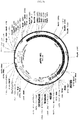
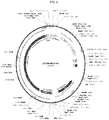
- HEK293T cells (1.5 x 10 5 ) were seeded on 24-well plates and transfected at ⁇ 80% confluency with sgRNA plasmid (500 ng) and Base Editor plasmid (Addgene plasmid #73019 (Expresses BE1 with C-terminal NLS in mammalian cells; rAPOBEC1-XTEN-dCas9-NLS; FIG.
- the sgRNA used in the following Examples was constructed by converting T to U on the overall sequence at an on-target site (on-target sequence; EMX1 on-target sequence; GAGTCCGAGCAGAAGAAGAAGGG (SEQ ID NO: 14)), except the 5'-terminal PAM sequence ((5'-NGG-3') wherein N is A, T, G, or C), and employing the converted sequence as the targeting sequence '(N cas9 ) l ' of the following General Formula 3: 5'-(N cas9 ) l -(GUUUUAGAGCUA; SEQ ID NO: 1)-(GAAA)-(UAGCAAGUUAAAAUAAGGCUAGUCCGUUAUCAACUUGAAAAAGUGGCAC CGAGUCGGUGC; SEQ ID NO: 3)-3' (General Formula 3; oligonucleotide linker: GAAA).
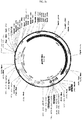
- the His6-rAPOBEC1-XTEN-dCas9 protein-encoding plasmid (pET28b-BE1; Expresses BE1 with N-terminal His6 tag in E. coli; FIG. 5 ) was generously given by David Liu (Addgene plasmid #73018).
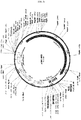
- the His6-rAPOBEC1-XTEN-dCas9 protein-encoding plasmid pET28b-BE1 was converted into a His6-rAPOBEC1-nCas9 protein (BE3 delta UGI; BE3 variant lacking a UGI domain) encoding plasmid (pET28b-BE3 delta UGI; FIG. 6 ) by site directed mutagenesis for substituting A840 with H840 in the dCas9.
- Rosetta expression cells (Novagen, catalog number: 70954-3CN) were transformed with the prepared pET28b-BE1 or pET28b-BE3 delta UGI and cultured overnight in Luria-Bertani (LB) broth containing 100 ⁇ g/ml kanamycin and 50 mg/ml carbenicilin at 37°C.
- LB Luria-Bertani
- the cells were cooled to 16°C for 1 hour, supplemented with 0.5 mM IPTG (Isopropyl ⁇ -D-1-thiogalactopyranoside), and cultured for 14-18 hours.
- cells were harvested by centrifugation at 5,000 x g for 10 min at 4°C and lysed by sonication in 5 ml lysis buffer (50 mM NaH 2 PO 4 , 300 mM NaCl, 1 mM DTT, and 10 mM imidazole, pH 8.0) supplemented with lysozyme (Sigma) and a protease inhibitor (Roche complete, EDTA-free).
- the soluble lysate obtained after centrifugation of the cell lysis mixture at 13,000 rpm. for 30 min at 4°C was incubated with Ni-NTA agarose resin (Qiagen) for 1 hour at 4°C.
- the cell lysate/Ni-NTA mixture was applied to a column and washed with a buffer (50 mM NaH 2 PO 4 , 300 mM NaCl, and 20 mM imidazole, pH 8.0).
- the BE3 protein was eluted with an elution buffer (50 mM NaH 2 PO 4 , 300 mM NaCl, and 250 mM imidazole, pH 8.0).
- the eluted protein was buffer exchanged with a storage buffer (20 mM HEPES-KOH (pH 7.5), 150 mM KCl, 1 mM DTT, and 20% glycerol) and concentrated with centrifugal filter units (Millipore) to give purified rAPOBEC1-nCas9 protein.
- Genomic DNA was purified (extracted) from HEK293T cells with a DNeasy Blood & Tissue Kit (Qiagen) according to the manufacturer's instructions. Genomic DNA (10 ⁇ g) was incubated with the rAPOBEC1-nCas9 protein (300 nM) purified in Reference Example 2 and an sgRNA (900 nM) in a reaction volume of 500 ⁇ L for 8 hours at 37 °C in a buffer (100 mM NaCl, 40 mM Tris-HCl, 10 mM MgCl 2 , and 100 ⁇ g/ml BSA, pH 7.9).
- a buffer 100 mM NaCl, 40 mM Tris-HCl, 10 mM MgCl 2 , and 100 ⁇ g/ml BSA, pH 7.9
- the used sgRNA was constructed by converting T to U on the overall sequence at an on-target site (on-target sequence; EMX1 on-target sequence; GAGTCCGAGCAGAAGAAGAAGGG (SEQ ID NO: 14)), except the 5'-terminal PAM sequence ((5'-NGG-3') wherein N is A, T, G, or C), and employing the converted sequence as the targeting sequence '(N cas9 ) l ' of the following General Formula 3: 5'-(N cas9 ) l -(GUUUUAGAGCUA)-(GAAA)-(UAGCAAGUUAAAAUAAGGCUAGUCCGUUAUCAACUUGAAAAAGUGGCAC CGAGUCGGUGC)-3' (General Formula 3; oligonucleotide linker: GAAA).
- uracil-containing genomic DNA was purified with a DNeasy Blood & Tissue Kit (Qiagen).
- the on-target site was amplified by PCR using a SUN-PCR blend and subjected to Sanger sequencing to check BE3-mediated cytosine deamination and USER-mediated DNA cleavage.
- Genomic DNA (1 ⁇ g) was fragmented to the 400- to 500-bp range using the Covaris system (Life Technologies) and blunt-ended using End Repair Mix (Thermo Fischer). Fragmented DNA was ligated with adapters to produce libraries, which were then subjected to WGS (whole genome sequencing) using HiSeq X Ten Sequencer (Illumina) at Macrogen. ( Kim, D., Kim, S., Kim, S., Park, J. & Kim, J.S. Genome-wide target specificities of CRISPR-Cas9 nucleases revealed by multiplex Digenome-seq. Genome research 26, 406-415 (2016 )).
- On-target and potential off-target sites were amplified with a KAPA HiFi HotStart PCR kit (KAPA Biosystems #KK2501) for deep sequencing library generation. Pooled PCR amplicons were sequenced using MiniSeq (Illumina) or Illumina Miseq (LAS Inc. Korea) with TruSeq HT Dual Index system (Illumina).
- a human genomic DNA was in vitro treated with the ribonucleic acid protein in which EMX1-specific sgRNA (see Reference Example 3; on-target sequence: SEQ ID NO: 14) is complexed with rAPOBEC1-nCas9 protein (BE3: purified in Reference Example 2), to induce C ⁇ U conversion on one strand and nick formation on the other strand at on-target and off-target sites, followed by performing Digenome-seq with reference to Reference Example 4.
- neither Uracil DNA glycosylase (UDG) nor DNA glycosylase-lyase Endonuclease VIII were used.
- the BE3-treated genomic DNA was subjected to whole genome sequencing (WGS).
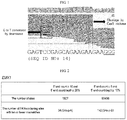
- FIG. 1 is a representative IGV image showing straight alignments of sequence reads at the EMX1 on-target site.
- N.A. - v EMX1-099 6 48 12.5 N.A. N.A. - v EMX1-100 6 48 12.5 N.A. N.A. - v EMX1-101 8 64 12.5 N.A. N.A. - v EMX1-102 7 57 12.3 N.A. N.A. - v EMX1-103 6 50 12.0 N.A. N.A. - v EMX1-104 7 59 11.9 0 0 - v EMX1-105 6 51 11.8 0 0 - v EMX1-106 9 77 11.7 N.A. N.A.
- the WGS data obtained using the BE-3-treated genomic DNA and intact (BE-3 untreated) genomic DNA showed the observation of C ⁇ T conversion at 16 sites (BE-3 treated) and 1 site (BE-3 untreated) among 142 sites of Group B. Of these sites, 70 sites do not contain cytosine at positions 4 to 8, which is a window of BE3-mediated deamination (numbered 1 to 20 in the 5' to 3' direction (expressed as N. A. in Table 2).
- DNA from HEK293T cells was subjected to targeted deep sequencing and measured for BE3-induced base editing frequencies and Cas9-induced indel frequencies.
Landscapes
- Health & Medical Sciences (AREA)
- Life Sciences & Earth Sciences (AREA)
- Chemical & Material Sciences (AREA)
- Genetics & Genomics (AREA)
- Engineering & Computer Science (AREA)
- Organic Chemistry (AREA)
- Wood Science & Technology (AREA)
- Zoology (AREA)
- Bioinformatics & Cheminformatics (AREA)
- General Engineering & Computer Science (AREA)
- Molecular Biology (AREA)
- Biotechnology (AREA)
- General Health & Medical Sciences (AREA)
- Biomedical Technology (AREA)
- Biochemistry (AREA)
- Microbiology (AREA)
- Physics & Mathematics (AREA)
- Biophysics (AREA)
- Medicinal Chemistry (AREA)
- Plant Pathology (AREA)
- Proteomics, Peptides & Aminoacids (AREA)
- Mycology (AREA)
- Analytical Chemistry (AREA)
- Immunology (AREA)
- Toxicology (AREA)
- Environmental Sciences (AREA)
- Crystallography & Structural Chemistry (AREA)
- Mechanical Engineering (AREA)
- Enzymes And Modification Thereof (AREA)
- Measuring Or Testing Involving Enzymes Or Micro-Organisms (AREA)
- Cell Biology (AREA)
- Micro-Organisms Or Cultivation Processes Thereof (AREA)
Applications Claiming Priority (2)
| Application Number | Priority Date | Filing Date | Title |
|---|---|---|---|
| US201762446951P | 2017-01-17 | 2017-01-17 | |
| PCT/KR2018/000747 WO2018135838A2 (fr) | 2017-01-17 | 2018-01-16 | Procédé d'identification d'un site hors cible d'édition de bases par cassure de brin unique d'adn |
Publications (2)
| Publication Number | Publication Date |
|---|---|
| EP3572525A2 true EP3572525A2 (fr) | 2019-11-27 |
| EP3572525A4 EP3572525A4 (fr) | 2020-09-30 |
Family
ID=62908205
Family Applications (1)
| Application Number | Title | Priority Date | Filing Date |
|---|---|---|---|
| EP18741209.3A Withdrawn EP3572525A4 (fr) | 2017-01-17 | 2018-01-16 | Procédé d'identification d'un site hors cible d'édition de bases par cassure de brin unique d'adn |
Country Status (6)
| Country | Link |
|---|---|
| US (1) | US20180258418A1 (fr) |
| EP (1) | EP3572525A4 (fr) |
| JP (1) | JP2020505062A (fr) |
| KR (1) | KR102084186B1 (fr) |
| CN (1) | CN110234770A (fr) |
| WO (1) | WO2018135838A2 (fr) |
Families Citing this family (47)
| Publication number | Priority date | Publication date | Assignee | Title |
|---|---|---|---|---|
| US10323236B2 (en) | 2011-07-22 | 2019-06-18 | President And Fellows Of Harvard College | Evaluation and improvement of nuclease cleavage specificity |
| US9163284B2 (en) | 2013-08-09 | 2015-10-20 | President And Fellows Of Harvard College | Methods for identifying a target site of a Cas9 nuclease |
| US9359599B2 (en) | 2013-08-22 | 2016-06-07 | President And Fellows Of Harvard College | Engineered transcription activator-like effector (TALE) domains and uses thereof |
| US9526784B2 (en) | 2013-09-06 | 2016-12-27 | President And Fellows Of Harvard College | Delivery system for functional nucleases |
| US9228207B2 (en) | 2013-09-06 | 2016-01-05 | President And Fellows Of Harvard College | Switchable gRNAs comprising aptamers |
| US9322037B2 (en) | 2013-09-06 | 2016-04-26 | President And Fellows Of Harvard College | Cas9-FokI fusion proteins and uses thereof |
| US20150165054A1 (en) | 2013-12-12 | 2015-06-18 | President And Fellows Of Harvard College | Methods for correcting caspase-9 point mutations |
| US10077453B2 (en) | 2014-07-30 | 2018-09-18 | President And Fellows Of Harvard College | CAS9 proteins including ligand-dependent inteins |
| IL310721B2 (en) | 2015-10-23 | 2025-11-01 | Harvard College | Nucleobase editors and uses thereof |
| CN110214183A (zh) | 2016-08-03 | 2019-09-06 | 哈佛大学的校长及成员们 | 腺苷核碱基编辑器及其用途 |
| WO2018031683A1 (fr) | 2016-08-09 | 2018-02-15 | President And Fellows Of Harvard College | Protéines de fusion cas9-recombinase programmables et utilisations associées |
| US11542509B2 (en) | 2016-08-24 | 2023-01-03 | President And Fellows Of Harvard College | Incorporation of unnatural amino acids into proteins using base editing |
| KR102622411B1 (ko) | 2016-10-14 | 2024-01-10 | 프레지던트 앤드 펠로우즈 오브 하바드 칼리지 | 핵염기 에디터의 aav 전달 |
| WO2018119359A1 (fr) | 2016-12-23 | 2018-06-28 | President And Fellows Of Harvard College | Édition du gène récepteur ccr5 pour protéger contre l'infection par le vih |
| US12390514B2 (en) | 2017-03-09 | 2025-08-19 | President And Fellows Of Harvard College | Cancer vaccine |
| EP3592853A1 (fr) | 2017-03-09 | 2020-01-15 | President and Fellows of Harvard College | Suppression de la douleur par édition de gène |
| US11542496B2 (en) | 2017-03-10 | 2023-01-03 | President And Fellows Of Harvard College | Cytosine to guanine base editor |
| KR20240116572A (ko) | 2017-03-23 | 2024-07-29 | 프레지던트 앤드 펠로우즈 오브 하바드 칼리지 | 핵산 프로그램가능한 dna 결합 단백질을 포함하는 핵염기 편집제 |
| US11560566B2 (en) | 2017-05-12 | 2023-01-24 | President And Fellows Of Harvard College | Aptazyme-embedded guide RNAs for use with CRISPR-Cas9 in genome editing and transcriptional activation |
| CN111801345A (zh) | 2017-07-28 | 2020-10-20 | 哈佛大学的校长及成员们 | 使用噬菌体辅助连续进化(pace)的进化碱基编辑器的方法和组合物 |
| EP3676376B1 (fr) | 2017-08-30 | 2025-01-15 | President and Fellows of Harvard College | Éditeurs de bases à haut rendement comprenant une gam |
| KR20250107288A (ko) | 2017-10-16 | 2025-07-11 | 더 브로드 인스티튜트, 인코퍼레이티드 | 아데노신 염기 편집제의 용도 |
| US12406749B2 (en) | 2017-12-15 | 2025-09-02 | The Broad Institute, Inc. | Systems and methods for predicting repair outcomes in genetic engineering |
| US12157760B2 (en) | 2018-05-23 | 2024-12-03 | The Broad Institute, Inc. | Base editors and uses thereof |
| US12522807B2 (en) | 2018-07-09 | 2026-01-13 | The Broad Institute, Inc. | RNA programmable epigenetic RNA modifiers and uses thereof |
| CN109295186B (zh) * | 2018-09-30 | 2023-10-03 | 中山大学 | 一种基于全基因组测序检测腺嘌呤单碱基编辑系统脱靶效应的方法及其在基因编辑中的应用 |
| WO2020092453A1 (fr) | 2018-10-29 | 2020-05-07 | The Broad Institute, Inc. | Éditeurs de nucléobases comprenant geocas9 et utilisations associées |
| KR20210149686A (ko) * | 2018-12-27 | 2021-12-09 | 라이프에디트 테라퓨틱스, 인크. | 유전자 편집에 유용한 폴리펩티드 및 사용 방법 |
| US12351837B2 (en) | 2019-01-23 | 2025-07-08 | The Broad Institute, Inc. | Supernegatively charged proteins and uses thereof |
| CN110804628B (zh) * | 2019-02-28 | 2023-05-12 | 中国科学院脑科学与智能技术卓越创新中心 | 高特异性无脱靶单碱基基因编辑工具 |
| WO2020191233A1 (fr) | 2019-03-19 | 2020-09-24 | The Broad Institute, Inc. | Procédés et compositions pour l'édition de séquences nucléotidiques |
| US12473543B2 (en) | 2019-04-17 | 2025-11-18 | The Broad Institute, Inc. | Adenine base editors with reduced off-target effects |
| KR20200135225A (ko) * | 2019-05-22 | 2020-12-02 | 주식회사 툴젠 | 단일염기 치환 단백질 및 이를 포함하는 조성물 |
| US12435330B2 (en) | 2019-10-10 | 2025-10-07 | The Broad Institute, Inc. | Methods and compositions for prime editing RNA |
| EP4051788A4 (fr) * | 2019-10-30 | 2023-12-06 | Pairwise Plants Services, Inc. | Éditeurs à base de crispr-cas de type v et méthodes d'utilisation de ceux-ci |
| US20230086199A1 (en) * | 2019-11-26 | 2023-03-23 | The Broad Institute, Inc. | Systems and methods for evaluating cas9-independent off-target editing of nucleic acids |
| CN115279922B (zh) * | 2020-03-04 | 2024-11-22 | 苏州齐禾生科生物科技有限公司 | 检测单碱基编辑系统随机脱靶效应的方法 |
| KR20230002481A (ko) * | 2020-04-24 | 2023-01-05 | 기초과학연구원 | Cas9 또는 cas9 변이체를 이용한 유전체 교정 |
| IL297761A (en) | 2020-05-08 | 2022-12-01 | Broad Inst Inc | Methods and compositions for simultaneously editing two helices of a designated double-helix nucleotide sequence |
| JP2023540797A (ja) | 2020-09-11 | 2023-09-26 | メタゲノミ,インコーポレイテッド | 塩基編集酵素 |
| GB2700205B (en) * | 2020-09-11 | 2026-04-15 | Metagenomi Therapeutics Inc | Base editing enzymes |
| WO2023081855A1 (fr) | 2021-11-05 | 2023-05-11 | Metagenomi, Inc. | Enzymes d'édition de base |
| KR20230107750A (ko) * | 2022-01-07 | 2023-07-18 | 주식회사 툴젠 | 유전자 편집 과정에서 발생 가능한 오프 타겟을 예측하는 방법 |
| CN114613435B (zh) * | 2022-03-15 | 2025-02-11 | 中国人民解放军陆军军医大学第一附属医院 | 一种测量少量细胞翻译组的方法及其应用 |
| WO2024145924A1 (fr) * | 2023-01-06 | 2024-07-11 | 清华大学 | Procédé de détection d'une cible hors cible de cellules d'édition de gène |
| JP2026505655A (ja) * | 2023-01-18 | 2026-02-17 | エッジーン インコーポレイテッド | 塩基エディターの塩基矯正能力を測定する細胞外試験法 |
| CN119601095B (zh) * | 2025-02-10 | 2025-05-02 | 杭州星源未来科技有限公司 | 全基因组脱靶位点编辑效率快速计算方法、系统及设备 |
Family Cites Families (13)
| Publication number | Priority date | Publication date | Assignee | Title |
|---|---|---|---|---|
| KR20100080068A (ko) * | 2008-12-31 | 2010-07-08 | 주식회사 툴젠 | 신규한 징크 핑거 뉴클레아제 및 이의 용도 |
| CN112301024A (zh) * | 2013-03-15 | 2021-02-02 | 通用医疗公司 | 使用RNA引导的FokI核酸酶(RFN)提高RNA引导的基因组编辑的特异性 |
| WO2014186686A2 (fr) * | 2013-05-17 | 2014-11-20 | Two Blades Foundation | Mutagénèse ciblée et ingénierie génomique dans des plantes à l'aide de nucléases cas guidées par arn |
| CN105492611A (zh) * | 2013-06-17 | 2016-04-13 | 布罗德研究所有限公司 | 用于序列操纵的优化的crispr-cas双切口酶系统、方法以及组合物 |
| US9526784B2 (en) * | 2013-09-06 | 2016-12-27 | President And Fellows Of Harvard College | Delivery system for functional nucleases |
| US20150165054A1 (en) * | 2013-12-12 | 2015-06-18 | President And Fellows Of Harvard College | Methods for correcting caspase-9 point mutations |
| EP3115457B1 (fr) * | 2014-03-05 | 2019-10-02 | National University Corporation Kobe University | Procédé de modification de séquence génomique permettant la conversion de façon spécifique de bases d'acide nucléique de séquences d'adn ciblées et complexe moléculaire destiné à être utilisée dans ce dernier |
| US10077453B2 (en) * | 2014-07-30 | 2018-09-18 | President And Fellows Of Harvard College | CAS9 proteins including ligand-dependent inteins |
| CN107109486B (zh) | 2014-11-14 | 2021-08-13 | 基础科学研究院 | 用于检测基因组中遗传剪刀的脱靶位点的方法 |
| CN105647968B (zh) * | 2016-02-02 | 2019-07-23 | 浙江大学 | 一种CRISPR/Cas9工作效率快速测试系统及其应用 |
| EP3530737A4 (fr) * | 2016-09-13 | 2020-04-29 | Toolgen Incorporated | Procédé d'identification d'édition de bases d'adn au moyen de cytosine désaminase |
| KR20230125856A (ko) * | 2016-12-23 | 2023-08-29 | 프레지던트 앤드 펠로우즈 오브 하바드 칼리지 | Pcsk9의 유전자 편집 |
| US20200385753A1 (en) * | 2016-12-23 | 2020-12-10 | Institute For Basic Science | Composition for base editing for animal embryo and base editing method |
-
2018
- 2018-01-16 EP EP18741209.3A patent/EP3572525A4/fr not_active Withdrawn
- 2018-01-16 US US15/872,907 patent/US20180258418A1/en not_active Abandoned
- 2018-01-16 CN CN201880007380.8A patent/CN110234770A/zh active Pending
- 2018-01-16 KR KR1020180005709A patent/KR102084186B1/ko active Active
- 2018-01-16 WO PCT/KR2018/000747 patent/WO2018135838A2/fr not_active Ceased
- 2018-01-16 JP JP2019559249A patent/JP2020505062A/ja active Pending
Also Published As
| Publication number | Publication date |
|---|---|
| KR20180084671A (ko) | 2018-07-25 |
| WO2018135838A3 (fr) | 2018-12-06 |
| JP2020505062A (ja) | 2020-02-20 |
| EP3572525A4 (fr) | 2020-09-30 |
| KR102084186B1 (ko) | 2020-03-03 |
| WO2018135838A2 (fr) | 2018-07-26 |
| US20180258418A1 (en) | 2018-09-13 |
| CN110234770A (zh) | 2019-09-13 |
Similar Documents
| Publication | Publication Date | Title |
|---|---|---|
| EP3572525A2 (fr) | Procédé d'identification d'un site hors cible d'édition de bases par cassure de brin unique d'adn | |
| US11920151B2 (en) | Method for identifying DNA base editing by means of cytosine deaminase | |
| US11932884B2 (en) | High efficiency base editors comprising Gam | |
| US12522807B2 (en) | RNA programmable epigenetic RNA modifiers and uses thereof | |
| CN112534054B (zh) | 使用可编程碱基编辑器系统取代病原性氨基酸的方法 | |
| Xie et al. | High-fidelity SaCas9 identified by directional screening in human cells | |
| CN107109486B (zh) | 用于检测基因组中遗传剪刀的脱靶位点的方法 | |
| CN114641567B (zh) | 用于编辑突变以允许转录或表达的组合物和方法 | |
| CA3127494A1 (fr) | Editeurs de nucleobase ayant une desamination hors cible reduite et leurs methodes d'utilisation pour modifier une sequence cible de nucleobase | |
| CA3128886A1 (fr) | Compositions et procedes pour traiter la glycogenose de type 1a | |
| EP3995591A1 (fr) | Système de profilage de nucléase | |
| Wei et al. | Closely related type II-C Cas9 orthologs recognize diverse PAMs | |
| KR102210700B1 (ko) | 아데노신 디아미나아제를 이용한 염기 교정 확인 방법 | |
| US20190153530A1 (en) | Method for detecting off-target sites of programmable nucleases in a genome | |
| Wei et al. | Engineering of a high-fidelity Cas12a nuclease variant capable of allele-specific editing | |
| US20250388886A1 (en) | Cas12a Endonuclease Variants and Methods of Use | |
| US20260078355A1 (en) | Rna programmable epigenetic rna modifiers and uses thereof | |
| WO2025090524A1 (fr) | Procédés de détection de sites de rupture simple brin dans un adn génomique induit par des endonucléases de coupure | |
| HK1260598A1 (en) | Nucleobase editors and uses thereof | |
| HK1224698A1 (en) | Nuclease profiling system | |
| HK1224698B (en) | Nuclease profiling system |
Legal Events
| Date | Code | Title | Description |
|---|---|---|---|
| STAA | Information on the status of an ep patent application or granted ep patent |
Free format text: STATUS: THE INTERNATIONAL PUBLICATION HAS BEEN MADE |
|
| PUAI | Public reference made under article 153(3) epc to a published international application that has entered the european phase |
Free format text: ORIGINAL CODE: 0009012 |
|
| STAA | Information on the status of an ep patent application or granted ep patent |
Free format text: STATUS: REQUEST FOR EXAMINATION WAS MADE |
|
| 17P | Request for examination filed |
Effective date: 20190704 |
|
| AK | Designated contracting states |
Kind code of ref document: A2 Designated state(s): AL AT BE BG CH CY CZ DE DK EE ES FI FR GB GR HR HU IE IS IT LI LT LU LV MC MK MT NL NO PL PT RO RS SE SI SK SM TR |
|
| AX | Request for extension of the european patent |
Extension state: BA ME |
|
| DAV | Request for validation of the european patent (deleted) | ||
| DAX | Request for extension of the european patent (deleted) | ||
| A4 | Supplementary search report drawn up and despatched |
Effective date: 20200901 |
|
| RIC1 | Information provided on ipc code assigned before grant |
Ipc: C12N 9/24 20060101ALI20200826BHEP Ipc: C12N 9/22 20060101ALI20200826BHEP Ipc: C12N 9/78 20060101ALI20200826BHEP Ipc: C12N 15/90 20060101ALI20200826BHEP Ipc: C12Q 1/6827 20180101AFI20200826BHEP |
|
| STAA | Information on the status of an ep patent application or granted ep patent |
Free format text: STATUS: EXAMINATION IS IN PROGRESS |
|
| 17Q | First examination report despatched |
Effective date: 20210629 |
|
| STAA | Information on the status of an ep patent application or granted ep patent |
Free format text: STATUS: THE APPLICATION IS DEEMED TO BE WITHDRAWN |
|
| 18D | Application deemed to be withdrawn |
Effective date: 20220727 |