EP3572933B1 - Mise à jour de micrologiciel par l'intermédiaire d'un equipement distant - Google Patents
Mise à jour de micrologiciel par l'intermédiaire d'un equipement distant Download PDFInfo
- Publication number
- EP3572933B1 EP3572933B1 EP18202987.6A EP18202987A EP3572933B1 EP 3572933 B1 EP3572933 B1 EP 3572933B1 EP 18202987 A EP18202987 A EP 18202987A EP 3572933 B1 EP3572933 B1 EP 3572933B1
- Authority
- EP
- European Patent Office
- Prior art keywords
- image
- firmware
- existing
- storage device
- computing device
- Prior art date
- Legal status (The legal status is an assumption and is not a legal conclusion. Google has not performed a legal analysis and makes no representation as to the accuracy of the status listed.)
- Active
Links
Images


Classifications
-
- G—PHYSICS
- G06—COMPUTING OR CALCULATING; COUNTING
- G06F—ELECTRIC DIGITAL DATA PROCESSING
- G06F8/00—Arrangements for software engineering
- G06F8/60—Software deployment
- G06F8/65—Updates
-
- G—PHYSICS
- G06—COMPUTING OR CALCULATING; COUNTING
- G06F—ELECTRIC DIGITAL DATA PROCESSING
- G06F9/00—Arrangements for program control, e.g. control units
- G06F9/06—Arrangements for program control, e.g. control units using stored programs, i.e. using an internal store of processing equipment to receive or retain programs
- G06F9/44—Arrangements for executing specific programs
- G06F9/4401—Bootstrapping
- G06F9/442—Shutdown
-
- G—PHYSICS
- G06—COMPUTING OR CALCULATING; COUNTING
- G06F—ELECTRIC DIGITAL DATA PROCESSING
- G06F8/00—Arrangements for software engineering
- G06F8/60—Software deployment
- G06F8/65—Updates
- G06F8/658—Incremental updates; Differential updates
Definitions
- the present invention relates to updating firmware of a computing device, and more specifically, to systems and methods for updating firmware by use of a remote utility.
- Firmware is a piece of software that provides low-level control for a computing device's hardware.
- Firmware can be permanently installed in the computing device in a firmware storage device, e.g., in non-volatile memory components of the computing device.
- Firmware can be run through a computing device's central processing unit when the computing device is booted up.
- the computing device can have an operating system stored in its memory, and the operating system can access the firmware.
- firmware updates may be needed to fix functionality issues detected after the computing device has shipped.
- Firmware updates may be needed to enable features already programmed into the computing device but not yet accessible by other software running on the computing device.
- Firmware updates may also be needed to upgrade the type of file formats that can be accessed by the computing device, or to update battery management features for the computing device.
- One current method for updating firmware relies on booting into the operating environment already on the computing device. Through that operating environment, a process can be performed to implement the firmware updates into the firmware storage device. However, this process cannot recover computing devices with a failed operating environment. For example, this process cannot update firmware where the firmware has crashed, or where the operating environment on the computing device is inoperable.
- Another current method for updating firmware relies on the use of an external management device that connects to the firmware storage device.
- This external management device can allow a firmware storage device to power on -- even when the operating environment on the computing device is inoperable.
- such external management devices typically cannot perform more complex functions like selectively reading, editing, and writing data onto the firmware storage device.
- using an external management device typically results in having to rewrite or reimage the entire firmware. Consequently, when the firmware is rewritten, any previously existing data on the firmware storage device may be lost. The loss of such data may be unacceptable to the owner or operator of the computing device.
- EP 2 330 508 A1 describes a high-speed firmware update method which reduces the burden on a firmware developer.
- the various examples of the present disclosure are directed towards a computer-implemented method for updating firmware on a computing device.
- the method first retrieves an existing image of the firmware.
- the firmware is located on a firmware storage device in the computing device.
- the method then retrieves a new image of updated firmware.
- the method analyzes the existing image and the new image, wherein analyzing the existing image and the new image further comprises comparing the new image with the existing image and identifying a portion of the existing data that does not conflict with updates in the new image.
- the method Based on analysis of the existing image and the new image, the method creates a processed image from the existing image and the new image, wherein creating the processed image further comprises combining the updates in the new image with the portion of the existing data that does not conflict with the updates to form the processed image.
- the method then provides for writing the processed image to the firmware storage device of the computing device.
- the method provides for performing all steps where the computing device is powered off.
- analyzing the existing image can further comprise comparing a plurality of updates in the new image with existing data from the existing image. This comparison can identify the existing data that does not conflict with the new image.
- creating the processed image can further comprise combining the new image with non-conflicting existing data to form the processed image.
- the method can further comprise rebooting the firmware storage device and running the processed image on the firmware storage device.
- the present disclosure provides for a computer system which is configured to update an existing image on a computing device.
- the computer system comprises a memory and a processing unit.
- the processing unit can be in communication with the memory.
- the processing unit can store instructions which, when executed, cause the computer system to perform a series of operations.
- the computer system retrieves an existing image of the firmware.
- the firmware is located on a firmware storage device in the computing device.
- the instructions then provide for analyzing the existing image and the new image.
- the instructions create a processed image from the existing image and the new image, wherein analyzing the existing image and the new image further comprises comparing the new image with the existing image and identifying a portion of the existing data that does not conflict with updates in the new image, and creating the processed image further comprises combining the updates in the new image with the portion of the existing data that does not conflict with the updates to form the processed image.
- the instructions complete by writing the processed image to the firmware storage device of the computing device.
- the computing device can be powered off.
- analyzing the existing image can further comprise comparing a plurality of updates in the update procedures with existing data from the existing image. This allows for identification of the existing data which does not conflict with the new image.
- creating the processed image can further comprise combining the new image with non-conflicting existing data to form the processed image.
- the instructions can further comprise rebooting the firmware storage device and running the processed image on the firmware storage device.
- the present disclosure provides for a non-transitory computer-readable medium which stores instructions.
- the instructions when executed by a computer system, cause the computer system to perform a series of operations.
- the series of operations begins with retrieving an existing image of the firmware.
- the firmware is located on a firmware storage device in the computing device.
- the instructions then provide for analyzing the existing image and the new image.
- the instructions then provide for creating a processed image from the existing image and the new image, wherein analyzing the existing image and the new image further comprises comparing the new image with the existing image and identifying a portion of the existing data that does not conflict with updates in the new image, and creating the processed image further comprises combining the updates in the new image with the portion of the existing data that does not conflict with the updates to form the processed image.
- the instructions provide for writing the processed image to the firmware storage device of the computing device.
- the computing device can be powered off.
- analyzing the existing image can further comprise comparing a plurality of updates in the update procedures with existing data from the existing image. This allows identification of the existing data which does not conflict with the new image.
- creating the processed image can further comprise combining the new image with non-conflicting existing data to form the processed image.
- the instructions can further comprise rebooting the firmware storage device and running the processed image on the firmware storage device.
- computing device can refer to any electronically-powered or battery-powered equipment that has hardware and software components, where the software components can be configured for operating features on the device.
- operating environment can refer to any operating system or environment that functions to allow software to run on the computing device.
- An exemplary method can comprise first powering off the computing device, and then initiating an update procedure for updating the firmware from a remote utility.
- the remote utility retrieves an existing image of the firmware.
- the remote utility also retrieves a new image of an updated firmware.
- the remote utility analyzes the existing image and the new image. Based on the analysis of the existing image and the new image, the remote utility creates a processed image from the existing image and the new image.
- the remote utility then provides for writing the processed image to the firmware storage device of the computing device.
- an exemplary method can provide updates to a firmware storage device through the use of a remote utility.
- An exemplary method does not require the operating environment of the computing device to be operational, or for the firmware to be accessible by the operating environment. For example, the method can perform all steps while the computing device is powered off.
- the present procedure additionally uses a remote utility to update the firmware.
- the remote utility provides advantages because it can conduct complex operating procedures.
- the remote utility analyzes an existing image from the firmware storage device to determine what data can be retained with the new image, and what data needs to be replaced.
- the remote utility can copy old firmware data that should be saved; merge it with new firmware data associated with the firmware update; and create a processed image containing both.
- the remote utility can then direct the management device to write the processed image to the firmware storage device. Therefore, the updated firmware storage device can retain data from the device before the update procedure.
- FIG. 1A shows a system 100 that can update a firmware storage device relying on the operating system running on the computing device, according to a conventional method.
- the system 100 is a computing device accessible by a user 110.
- the system 100 includes a local utility 120 and a firmware storage device 130.
- the firmware storage device 130 is the portion of the system 100 that requires a firmware update.
- the user 110 is an individual who can initiate the update procedure for the firmware storage device 130.
- the local utility 120 can be an operating environment running on the system 100.
- the local utility 120 can perform complex tasks on the firmware storage device 130.
- the system 100 must be turned on and booted into the local utility 120 for the user 110 to access both the local utility 120 and the firmware storage device 130. Additionally, if the local utility 120 cannot access the firmware storage device 130 for any reason, then the user 110 cannot update the firmware storage device 130 in the system 100.
- FIG. 1B shows a flowchart of an existing method 200 to update a firmware storage device that relies on the operating system of the firmware storage device and operating within the system 100 of FIG. 1A .
- the method 200 begins by powering on the system 100 and the firmware storage device 130.
- this method 200 requires both the firmware storage device 130 and the system 100 to power on, in order for the method 200 to proceed with updating the firmware storage device 130.
- the method 200 boots the system 100 into the operating environment for updating the firmware on the firmware storage device 130.
- the operating environment can be the local utility 120 discussed with respect to FIG. 1A .
- this method 200 cannot proceed to update the firmware storage device 130 if the method 200 cannot successfully boot the system 100 into an operating environment.
- a computing device such as the system 100, cannot boot into an operating environment.
- the firmware storage device 130 can have corrupted software which prevents the local utility 120 from being loaded by the system 100, or from properly operating.
- step 230 the method 200 can execute an update procedure with the operating environment of the system 100 to update the firmware on the firmware storage device 130. If the method 200 has successfully powered on the system 100 and successfully booted into the operating environment for updating the firmware on the firmware storage device 130, this step 230 provides the method 200 with the ability to retain existing data on the firmware storage device 130 while the method 200 completes the update procedure.
- step 240 the method 200 has completed the update procedure and now reboots the system 100. Rebooting the system 100 allows the new updates provided by the method 200 and stored in the firmware storage device 130 to be used to start up the system.
- the method 200 has severe limitations which affect the flexibility of an update procedure according to the method 200. Most importantly, the method 200 cannot proceed if the user 110 cannot both: (1) turn on the system 100; and (2) boot into the local utility 120. These requirements are captured in steps 210 and 220 of method 200, respectively.
- FIG. 2A shows a system 300 which can update a firmware relying on the use of a management device.
- the system 300 is accessible by a user 310 and includes a management device 340 and a firmware storage device 330.
- the management device 340 can be designed on the motherboard of the system 300 and be internal to the system 300. The management device 340 can work even when the system is powered off because the management device 340 can be equipped with its own microprocessor operating on standby power.
- the firmware storage device 330 is the device requiring an update procedure.
- the user 310 is an individual who can initiate the update procedure for the firmware storage device 330.
- the management device 340 can be external to the firmware storage device 330.
- the management device 340 can complete basic tasks according to instructions from the user 310.
- the management device 340 can read all data from the firmware storage device 330; delete all data from the firmware storage device 330; and/or write data to the firmware storage device 330.
- Writing data to the firmware storage device 330 renders existing data on the firmware storage device 330 inaccessible because the computing device will only read the newly written data.
- the management devices 340 can be used to complete update procedures for the firmware storage device 330 when the system 300 cannot power on. The management device 340 can therefore supply the operating environment for updating the firmware storage device 330.
- FIG. 2B shows a flowchart of an existing methodology to update firmware that relies on the use of a management device and operating within the system 300 of FIG. 2A .
- the method 400 begins by powering off the computing device in step 410. Powering off the computing device prevents the computing device from accessing the firmware storage device at the same time as the management device accesses the firmware storage device. If both the computing device and the management device accessed the firmware storage device at the same time, the commands could conflict and prevent the update process from completing.
- step 420 the user 310 can begin an update procedure via the management device 340.
- the user 310 can upload an updated firmware image to the management device 340.
- the updated firmware image provides an updated version of the firmware for the firmware storage device 330.
- the management device 340 reimages the firmware stored in firmware storage device 330. That is, the management device 340 first deletes the existing image on the firmware storage device 330, and then writes the updated firmware image to the firmware storage device 330. Alternatively, the management device 340 can simply overwrite the updated firmware image onto the firmware storage device 330. At this stage, access to any existing data on the firmware storage device 330 is lost because the computing device will only read the newly written data.
- step 440 the image update for the firmware storage device 330 has completed. Therefore, step 440 provides for a reboot of the system 300. Rebooting the system 300 allows the system 300 to start up using the newly updated firmware provided by the method 400.
- Method 400 has severe limitations in that the update procedure completely reimages the firmware in the firmware storage device 330. Therefore, method 400 does not allow for any selective editing of the firmware. Method 400 does not allow for retention of modifications or settings previously applied to the firmware in the firmware storage device 330. With an update procedure according to method 400, the user 310 would have to perform the redundant task of setting up anew the firmware stored in the firmware storage device 330 according to preferences for the system 300.
- the present disclosure provides a new method which does not require the deletion of existing data in a firmware storage device of a computing device or system. Additionally, the method can be used when the computing device or system is powered off. Therefore, the present disclosure provides a flexible update method that provides an improvement over existing techniques.
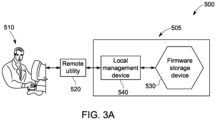
- FIG. 3A shows a system 500 which can update a firmware storage device 530 using a remote utility 520 and a management device 540.
- the system 500 is accessible by a user 510 and includes a computing device 505 and a remote utility 520.
- the computing device 505 includes a management device 540 and the firmware storage device 530.
- the firmware storage device 530 is the device requiring an update.
- the user 510 is an individual who can initiate the update procedure for the firmware storage device 530.
- the management device 540 can be internal to the computing device 505.
- the management device 540 can complete basic tasks according to instructions from the user 510. For example, the management device 540 can read all data from the firmware storage device 530; delete all data from the firmware storage device 530; or write data to the firmware storage device 530. Writing data to the firmware storage device 530 can render existing data on the firmware storage device 530 inaccessible because the computing device will only read the newly written data.
- the management devices 540 can be used to complete update procedures for the firmware storage device 530 when the computing device 505 cannot power on.
- the management device 540 can act as an operating environment for updating the firmware on the firmware storage device 530.
- the management device can be configured with its own microprocessor and memory to run separately from the main operating system run by the computing device. The management device can operate through standby power to read and/or write to the firmware storage device even when the computing device is powered off or not bootable.
- the remote utility 520 is a computer system that is independent to the computing device 505.
- the remote utility 520 can be communicatively coupled with the computing device 505. Further, the remote utility can be configured to complete complex tasks with firmware and the computing device 505, such as verification of a firmware image, retrieving and preserving settings of the firmware stored in the firmware storage device 530, and/or analyzing an old images read from the firmware storage device 530.
- the remote utility 520 can be a smart phone, a desktop computer, a laptop computer, a tablet, or any other computer system which the user 510 can interact with to carry out software edit and analysis functions.
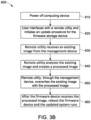
- FIG. 3B shows a flowchart of an exemplary methodology to update a firmware storage device, according to an embodiment of the present disclosure.
- This methodology can operate on the system 500 of FIG. 3A .
- the method can begin by powering off the computing device 505 in step 610. Powering off the computing device 505 prevents the computing device 505 from accessing the firmware storage device 530 at the same time as the management device 540 accesses the firmware storage device 530. If both the computing device 505 and the management device 540 accessed the firmware storage device 530 at the same time, the commands could conflict and prevent the update process from completing.
- the user 510 can begin an update procedure for updating the firmware stored on the firmware storage device 530 via the remote utility 520.
- the user 510 can first upload an updated firmware image to the remote utility 520.
- the management device's 540 functionality is determined by the management device's designer, who has little to no knowledge about what types of firmware the management device 540 will need to update.
- a remote utility 520 can be designed by the designer of the firmware storage device 530, who is familiar with what firmware will need updating. Therefore, use of the remote utility 520 allows easier implementation and maintenance of an update process.
- the remote utility 520 receives an existing image of the firmware in the firmware storage device 530 from the management device 540.
- This step involves the management device 540 reading all data currently existing on the firmware storage device 530.
- the management device 540 can provide this data as the existing image to the remote utility 520.
- the remote utility 520 analyzes the existing image. This analysis involves the remote utility 520 comparing the new firmware with the existing image. The remote utility 520 identifies which portions of the data in the existing data do not conflict with the updates in the new firmware. The remote utility 520 creates a processed image that retains all updates provided by the update procedure and retains all non-conflicting existing data from the firmware storage device 530.
- the remote utility 520 can analyze the existing image by performing a firmware image security check and keeping the original firmware settings stored in the existing image.
- the remote utility 520 can first retrieve a public key from the existing image.
- the remote utility 520 can then use a public key to confirm that the new firmware image uploaded by the user is properly signed by the correct private key. If the remote utility 520 is unable to verify the proper signature, then the remote utility 520 can deny the update request. If the remote utility 520 can verify the proper signature, then the remote utility 520 can retrieve the original firmware settings stored in the existing image.
- the remote utility 520 can then combine the settings with the new firmware image to create the processed image.
- the remote utility 520 designer can add other complex analysis which can be difficult for the management device 540 but easy for the remote utility 520.
- the remote utility 520 commands the management device 540 to overwrite the existing image with the processed image in the firmware storage device 530.
- the management device 540 can erase the existing image from the firmware storage device 530. Erasure of the existing image can be needed because some firmware storage devices use SPI flash. When writing to SPI flash, an erasure command can ensure all bits are properly reverted before new data is written to the firmware storage device.
- step 660 the firmware updating process for the firmware storage device 530 has completed. Therefore, step 660 provides for a reboot of the system 500. Rebooting the system 500 allows the firmware storage device 530 to start up using the new updates provided by the method 600.
- method 600 provides a technique to update a firmware storage device without losing all existing data on the firmware storage device 530.
- any non-conflicting existing data on the firmware storage device 530 can be preserved in the update procedures.
- the updates can be completed regardless of whether the firmware storage device 530 is powered on or off. Additionally, the updates can be completed regardless of whether an operating environment for updating the firmware storage device 530 is available.
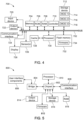
- FIG. 4 illustrates an example computing system 700, in which components of the computing system are in electrical communication with each other using a bus 702.
- the system 700 includes a processing unit (CPU or processor) 730; and a system bus 702 that couples various system components, including the system memory 704 (e.g., read only memory [ROM] 706 and random access memory [RAM] 708), to the processor 730.
- the system 700 can include a cache of high-speed memory connected directly with, in close proximity to, or integrated as part of the processor 730.
- the system 700 can copy data from the memory 704 and/or the storage device 712 to the cache 728 for quick access by the processor 730. In this way, the cache can provide a performance boost for processor 730 while waiting for data.
- the processor 730 can include any general purpose processor and a hardware module or software module, such as module 1 714, module 2 716, and module 3 718 embedded in storage device 712.
- the hardware module or software module is configured to control the processor 730, as well as a special-purpose processor where software instructions are incorporated into the actual processor design.
- the processor 730 may be a completely self-contained computing system, and contain multiple cores or processors, a bus, memory controller, cache, etc.
- a multi-core processor may be symmetric or asymmetric.
- an input device 720 is provided as an input mechanism.
- the input device 720 can comprise a microphone for speech, a touch-sensitive screen for gesture or graphical input, keyboard, mouse, motion input, and so forth.
- multimodal systems can enable a user to provide multiple types of input to communicate with the system 700.
- an output device 722 is also provided.
- the communications interface 724 can govern and manage the user input and system output.
- Storage device 712 can be a non-volatile memory to store data that are accessible by a computer.
- the storage device 712 can be magnetic cassettes, flash memory cards, solid state memory devices, digital versatile disks, cartridges, random access memories (RAMs) 708, read only memory (ROM) 706, and hybrids thereof.
- the controller 710 can be a specialized microcontroller or processor on the system 700, such as a BMC (baseboard management controller). In some cases, the controller 710 can be part of an Intelligent Platform Management Interface (IPMI). Moreover, in some cases, the controller 710 can be embedded on a motherboard or main circuit board of the system 700. The controller 710 can manage the interface between system management software and platform hardware. The controller 710 can also communicate with various system devices and components (internal and/or external), such as controllers or peripheral components, as further described below.
- IPMI Intelligent Platform Management Interface
- the controller 710 can generate specific responses to notifications, alerts, and/or events, and communicate with remote devices or components (e.g., electronic mail message, network message, etc.) to generate an instruction or command for automatic hardware recovery procedures, etc.
- remote devices or components e.g., electronic mail message, network message, etc.
- An administrator can also remotely communicate with the controller 710 to initiate or conduct specific hardware recovery procedures or operations, as further described below.
- the controller 710 can also include a system event log controller and/or storage for managing and maintaining events, alerts, and notifications received by the controller 710.
- the controller 710 or a system event log controller can receive alerts or notifications from one or more devices and components, and maintain the alerts or notifications in a system event log storage component.
- Flash memory 732 can be an electronic non-volatile computer storage medium or chip that can be used by the system 700 for storage and/or data transfer.
- the flash memory 732 can be electrically erased and/or reprogrammed. Flash memory 732 can include EPROM (erasable programmable read-only memory), EEPROM (electrically erasable programmable read-only memory), ROM, NVRAM, or CMOS (complementary metal-oxide semiconductor), for example.
- the flash memory 732 can store the firmware 734 executed by the system 700, when the system 700 is first powered on, along with a set of configurations specified for the firmware 734.
- the flash memory 732 can also store configurations used by the firmware 734.
- the firmware 734 can include a Basic Input/Output System or equivalents, such as an EFI (Extensible Firmware Interface) or UEFI (Unified Extensible Firmware Interface).
- the firmware 734 can be loaded and executed as a sequence program each time the system 700 is started.
- the firmware 734 can recognize, initialize, and test hardware present in the system 700 based on the set of configurations.
- the firmware 734 can perform a self-test, such as a POST (Power-on-Self-Test), on the system 700. This self-test can test functionality of various hardware components such as hard disk drives, optical reading devices, cooling devices, memory modules, expansion cards, and the like.
- the firmware 734 can address and allocate an area in the memory 704, ROM 706, RAM 708, and/or storage device 712, to store an operating system (OS).
- the firmware 734 can load a boot loader and/or OS, and give control of the system 700 to the OS.
- the firmware 734 of the system 700 can include a firmware configuration that defines how the firmware 734 controls various hardware components in the system 700.
- the firmware configuration can determine the order in which the various hardware components in the system 700 are started.
- the firmware 734 can provide an interface, such as an UEFI, that allows a variety of different parameters to be set, which can be different from parameters in a firmware default configuration.
- a user e.g., an administrator
- firmware 734 is illustrated as being stored in the flash memory 732, one of ordinary skill in the art will readily recognize that the firmware 734 can be stored in other memory components, such as memory 704 or ROM 706.
- System 700 can include one or more sensors 726.
- the one or more sensors 726 can include, for example, one or more temperature sensors, thermal sensors, oxygen sensors, chemical sensors, noise sensors, heat sensors, current sensors, voltage detectors, air flow sensors, flow sensors, infrared thermometers, heat flux sensors, thermometers, pyrometers, etc.
- the one or more sensors 726 can communicate with the processor, cache 728, flash memory 732, communications interface 724, memory 704, ROM 306, RAM 308, controller 710, and storage device 712, via the bus 702, for example.
- the one or more sensors 726 can also communicate with other components in the system via one or more different means, such as inter-integrated circuit (I2C), general purpose output (GPO), and the like.
- I2C inter-integrated circuit
- GPO general purpose output
- Different types of sensors (e.g., sensors 726) on the system 700 can also report to the controller 710 on parameters, such as cooling fan speeds, power status, operating system (OS) status, hardware status
- FIG. 5 illustrates an example computer system 800 having a chipset architecture that can be used in executing the described method(s) or operations, and in generating and displaying a graphical user interface (GUI).
- Computer system 800 can include computer hardware, software, and firmware that can be used to implement the disclosed technology.
- System 800 can include a processor 810, representative of a variety of physically and/or logically distinct resources capable of executing software, firmware, and hardware configured to perform identified computations.
- Processor 810 can communicate with a chipset 802 that can control input to, and output from, processor 810.
- chipset 802 outputs information to output device 814, such as a display, and can read and write information to storage device 816, which can include magnetic media, and solid state media, for example.
- Chipset 802 can also read data from, and write data to, RAM 818.
- a bridge 804 for interfacing with a variety of user interface components 806, can be provided for interfacing with chipset 802.
- Such user interface components 806 can include a keyboard, a microphone, touch detection and processing circuitry, a pointing device, such as a mouse, and so on.
- inputs to system 800 can come from any of a variety of sources, machine generated and/or human generated.
- Chipset 802 can also interface with one or more communication interfaces 808 that can have different physical interfaces.
- Such communication interfaces can include interfaces for wired and wireless local area networks, broadband wireless networks, and personal area networks.
- the machine can receive inputs from a user via user interface components 806 and execute appropriate functions, such as browsing functions by interpreting these inputs using processor 810.
- chipset 802 can also communicate with firmware 812, which can be executed by the computer system 800 when powering on.
- the firmware 812 can recognize, initialize, and test hardware present in the computer system 800, based on a set of firmware configurations.
- the firmware 812 can perform a self-test, such as a POST, on the system 800.
- the self-test can test the functionality of the various hardware components 802-818.
- the firmware 812 can address and allocate an area in the memory 818 to store an OS.
- the firmware 812 can load a boot loader and/or OS, and give control of the system 800 to the OS.
- the firmware 812 can communicate with the hardware components 802-810 and 814-818.
- the firmware 812 can communicate with the hardware components 802-810 and 814-818 through the chipset 802, and/or through one or more other components.
- the firmware 812 can communicate directly with the hardware components 802-810 and 814-818.
- example systems 700 and 800 can have more than one processor (e.g., 730, 810), or be part of a group or cluster of computing devices networked together to provide greater processing capability.
- the present disclosure may be presented as including individual functional blocks including functional blocks, such as devices, device components, steps or routines in a method embodied in software, or combinations of hardware and software.
- the computer-readable storage devices, mediums, and memories can include a cable or wireless signal containing a bit stream and the like.
- non-transitory computer-readable storage media expressly exclude media such as energy, carrier signals, electromagnetic waves, and signals per se.
- Such instructions can include, for example, instructions and data which cause or otherwise configure a general purpose computer, special purpose computer, or special purpose processing device to perform a certain function or group of functions. Portions of computer resources used, can be accessible over a network.
- the computer executable instructions may be, for example, binaries and intermediate format instructions, such as assembly language, firmware, or source code.
- Devices implementing methods according to these disclosures can include hardware, firmware and/or software, and can take any of a variety of form factors. Typical examples of such form factors include laptops, smart phones, small form factor personal computers, personal digital assistants, rack-mount devices, standalone devices, and so on. Functionality described herein also can be embodied in peripherals or add-in cards. Such functionality can also be implemented on a circuit board among different chips, or different processes executing in a single device, by way of further example.
- the various examples can be further implemented in a wide variety of operating environments, which in some cases can include one or more server computers, user computers, or computing devices that can be used to operate any of a number of applications.
- User or client devices can include any number of general purpose personal computers, such as desktop or laptop computers running a standard operating system, as well as cellular, wireless, and handheld devices running mobile software, and capable of supporting a number of networking and messaging protocols.
- Such a system can also include a number of workstations running any variety of commercially-available operating systems, and other known applications for purposes such as development and database management.
- These devices can also include other electronic devices, such as dummy terminals, thin-clients, gaming systems, and other devices capable of communicating via a network.
- the present disclosure can be implemented with any, or a combination of, the following technologies: a discreet logic circuit(s) having logic gates for implementing logic functions upon data signals; an application specific integrated circuit (ASIC) having appropriate combinational logic gates; programmable hardware such as a programmable gate array(s) (PGA); and/or a field programmable gate array (FPGA); etc.
- ASIC application specific integrated circuit
- PGA programmable gate array
- FPGA field programmable gate array
- Most examples utilize at least one network that would be familiar to those skilled in the art for supporting communications using any of a variety of commercially-available protocols, such as TCP/IP, OSI, FTP, UPnP, NFS, CIFS, AppleTalk etc.
- the network can be, for example, a local area network, a wide-area network, a virtual private network, the Internet, an intranet, an extranet, a public switched telephone network, an infrared network, a wireless network, and any combination thereof.
- Devices implementing methods, according to these technologies can include hardware, firmware and/or software, and can take any of a variety of form factors. Typical examples of such form factors include server computers, laptops, smart phones, small form factor personal computers, personal digital assistants, and so on. Functionality described herein also can be embodied in peripherals or add-in cards. Such functionality can also be implemented on a circuit board among different chips, or different processes executing in a single device, by way of further example.
- the Web server can run any variety of server or mid-tier applications, including HTTP servers, FTP servers, CGI servers, data servers, Java servers, and business application servers.
- the Web server(s) can also be capable of executing programs or scripts.
- the Web server can execute one or more Web applications, which can be implemented as one or more scripts or programs written in any programming language, such as Java ® , C, C# or C++ or any scripting language, such as Perl, Python or TCL, as well as combinations thereof.
- the Web server(s) can also encompass database servers, including those commercially available on the open market.
- the server system can include a variety of data stores and other memory and storage media, as discussed above. These can reside in a variety of locations, such as on a storage medium local to (and/or resident in) one or more of the computers; or remote from any or all of the computers across the network. In a particular set of examples, the information can reside in a storage-area network (SAN) familiar to those skilled in the art. Similarly, any necessary files for performing the functions attributed to the computers, servers, or other network devices can be stored locally and/or remotely, as appropriate.
- SAN storage-area network
- each such device can include hardware elements that can be electrically coupled via a bus, the elements including, for example, at least one central processing unit (CPU), at least one input device (e.g., a mouse, keyboard, controller, touch-sensitive display element or keypad), and at least one output device (e.g., a display device, printer or speaker).
- CPU central processing unit
- input device e.g., a mouse, keyboard, controller, touch-sensitive display element or keypad
- at least one output device e.g., a display device, printer or speaker
- Such a system can also include one or more storage devices, such as disk drives, optical storage devices, and solid-state storage devices such as random access memory (RAM) or read-only memory (ROM), as well as removable media devices, memory cards, flash cards, etc.
- ROM read-only memory
- Storage media and computer readable media for containing code, or portions of code can include any appropriate media known or used in the art, including, but not limited to, removable and non-removable media for storage and/or transmission of data or information.
- the removable and non-removable media comprise RAM, ROM, EPROM, EEPROM, flash memory or other memory technology, CD-ROM, digital versatile disk (DVD) or other optical storage, magnetic cassettes, magnetic tape, magnetic disk storage, or other magnetic storage devices that can be used to store the desired information and that can be accessed by a system device.
- the data or information can include computer readable instructions, data structures, program modules, or other data. Based on the technology and teachings provided herein, a person of ordinary skill in the art will appreciate other ways and/or methods to implement the various aspects of the present disclosure.
Landscapes
- Engineering & Computer Science (AREA)
- Software Systems (AREA)
- Theoretical Computer Science (AREA)
- General Engineering & Computer Science (AREA)
- Computer Security & Cryptography (AREA)
- Physics & Mathematics (AREA)
- General Physics & Mathematics (AREA)
- Stored Programmes (AREA)
Claims (11)
- Procédé mis en oeuvre par ordinateur exécuté par un utilitaire à distance (520) pour mettre à jour le microprogramme sur un dispositif informatique (505) couplé en communication avec l'utilitaire à distance (520), dans lequel l'utilitaire à distance (520) termine la procédure de mise à jour, comprenant :la récupération d'une image existante du microprogramme, dans lequel le microprogramme est situé sur un dispositif de stockage de microprogramme (530) dans le dispositif informatique (505) ;la récupération d'une nouvelle image du microprogramme mis à jour ;l'analyse de l'image existante et de la nouvelle image ;en se basant sur l'analyse de l'image existante et de la nouvelle image, la création d'une image traitée à partir de l'image existante et de la nouvelle image ; etl'écriture de l'image traitée sur le dispositif de stockage de microprogramme (530) du dispositif informatique (505) ; dans lequell'analyse de l'image existante et de la nouvelle image comprend en outre la comparaison de la nouvelle image avec l'image existante et l'identification d'une partie des données existantes qui n'entre pas en conflit avec les mises à jour de la nouvelle image ; etla création de l'image traitée comprend en outre la combinaison des mises à jour de la nouvelle image avec la partie des données existantes qui n'entre pas en conflit avec les mises à jour pour former l'image traitée.
- Procédé mis en oeuvre par ordinateur selon la revendication précédente, dans lequel la récupération de l'image existante du microprogramme comprend en outre la réception de l'image existante depuis un dispositif de gestion (540) sur le dispositif informatique (505).
- Procédé mis en oeuvre par ordinateur selon la revendication précédente, dans lequel l'écriture de l'image traitée sur le dispositif de stockage de microprogramme (530) comprend en outre l'écrasement de l'image existante par l'image traitée via le dispositif de gestion (540).
- Procédé mis en oeuvre par ordinateur selon la revendication précédente, dans lequel le dispositif informatique est éteint et/ou comprenant en outre le redémarrage du dispositif informatique (505) de sorte que l'image traitée s'exécute sur le dispositif de stockage de microprogramme (530).
- Système informatique (500) conçu pour la mise à jour, par un utilitaire à distance (520), d'une image existante sur un dispositif informatique (505) dans lequel l'utilitaire à distance (520) est couplé en communication au dispositif informatique (505), comprenant :une mémoire (704) ;une unité de traitement (730) en communication avec la mémoire (704), et le stockage d'instructions qui, lorsqu'elles sont exécutées, amènent l'utilitaire à distance (520) à réaliser des opérations comprenant :la récupération d'une image existante du microprogramme, dans lequel le microprogramme est situé sur un dispositif de stockage de microprogramme (530) dans le dispositif informatique (505) ;la récupération d'une nouvelle image du microprogramme mis à jour ;l'analyse de l'image existante et de la nouvelle image ;en se basant sur l'analyse de l'image existante et de la nouvelle image, la création d'une image traitée à partir de l'image existante et de la nouvelle image ; etl'écriture de l'image traitée sur le dispositif de stockage de microprogramme (530) du dispositif informatique (505) ; dans lequell'analyse de l'image existante et de la nouvelle image comprend en outre la comparaison de la nouvelle image avec l'image existante et l'identification d'une partie des données existantes qui n'entre pas en conflit avec les mises à jour de la nouvelle image ; etla création de l'image traitée comprend en outre la combinaison des mises à jour de la nouvelle image avec la partie des données existantes qui n'entre pas en conflit avec les mises à jour pour former l'image traitée.
- Système informatique (500) selon la revendication précédente, dans lequel la récupération de l'image existante du microprogramme comprend en outre la réception de l'image existante depuis un dispositif de gestion (540) sur le dispositif informatique (505).
- Système informatique (500) selon l'une quelconque des deux revendications précédentes, dans lequel l'écriture de l'image traitée sur le dispositif de stockage de microprogramme (530) comprend en outre l'écrasement de l'image existante par l'image traitée via le dispositif de gestion (540).
- Système informatique (500) selon la revendication précédente, dans lequel les instructions comprennent en outre :le redémarrage du dispositif informatique (505) après l'écriture de l'image traitée ; etl'exécution de l'image traitée sur un environnement d'exploitation du dispositif de stockage de microprogramme (530).
- Support lisible par ordinateur non transitoire stockant des instructions qui, lorsqu'elles sont exécutées par un utilitaire à distance (520), amènent l'utilitaire à distance (520) à mettre à jour une image existante sur un dispositif informatique (505) couplé en communication à l'utilitaire à distance (520), dans lequel la mise à jour de l'image existante comprend :la récupération d'une image existante du microprogramme, dans lequel le microprogramme est situé sur un dispositif de stockage de microprogramme (530) dans le dispositif informatique (505) ;la récupération d'une nouvelle image du microprogramme mis à jour ;l'analyse de l'image existante et de la nouvelle image ;en se basant sur l'analyse de l'image existante et de la nouvelle image correcte, la création d'une image traitée à partir de l'image existante et de la nouvelle image ; etl'écriture de l'image traitée sur le dispositif de stockage de microprogramme (530) du dispositif informatique (505) ; dans lequell'analyse de l'image existante et de la nouvelle image comprend en outre la comparaison de la nouvelle image avec l'image existante et l'identification d'une partie des données existantes qui n'entre pas en conflit avec les mises à jour de la nouvelle image ; etla création de l'image traitée comprend en outre la combinaison des mises à jour de la nouvelle image avec la partie des données existantes qui n'entre pas en conflit avec les mises à jour pour former l'image traitée.
- Support lisible par ordinateur non transitoire selon la revendication précédente, dans lequel
la récupération de l'image existante du microprogramme comprend en outre la réception de l'image existante depuis un dispositif de gestion (540) sur le dispositif informatique (505) et dans lequel l'écriture de l'image traitée sur le dispositif de stockage de microprogramme (530) comprend en outre l'écrasement de l'image existante avec l'image traitée via le dispositif de gestion (540). - Support lisible par ordinateur non transitoire selon l'une quelconque des deux revendications précédentes, dans lequel les instructions, lorsqu'elles sont exécutées, amènent en outre le système informatique (500) à réaliser les opérations comprenant :le redémarrage du dispositif informatique (505) après l'écriture de l'image traitée ; etl'exécution de l'image traitée sur un environnement d'exploitation du dispositif de stockage de microprogramme (530).
Applications Claiming Priority (1)
| Application Number | Priority Date | Filing Date | Title |
|---|---|---|---|
| US15/986,234 US10503489B1 (en) | 2018-05-22 | 2018-05-22 | Updating firmware via a remote utility |
Publications (2)
| Publication Number | Publication Date |
|---|---|
| EP3572933A1 EP3572933A1 (fr) | 2019-11-27 |
| EP3572933B1 true EP3572933B1 (fr) | 2023-08-02 |
Family
ID=64100576
Family Applications (1)
| Application Number | Title | Priority Date | Filing Date |
|---|---|---|---|
| EP18202987.6A Active EP3572933B1 (fr) | 2018-05-22 | 2018-10-26 | Mise à jour de micrologiciel par l'intermédiaire d'un equipement distant |
Country Status (5)
| Country | Link |
|---|---|
| US (1) | US10503489B1 (fr) |
| EP (1) | EP3572933B1 (fr) |
| JP (1) | JP6701398B2 (fr) |
| CN (1) | CN110515634B (fr) |
| TW (1) | TWI743395B (fr) |
Families Citing this family (5)
| Publication number | Priority date | Publication date | Assignee | Title |
|---|---|---|---|---|
| US12099612B2 (en) * | 2020-01-27 | 2024-09-24 | Hewlett-Packard Development Company, L.P. | Firmware corruption recovery |
| EP4104385A4 (fr) * | 2020-02-14 | 2023-11-01 | ARRIS Enterprises LLC | Systèmes et procédés de configuration et de restauration de modem |
| CN113641230B (zh) * | 2020-04-27 | 2024-06-25 | 捷普科技(上海)有限公司 | 电脑系统 |
| US11354259B1 (en) * | 2020-12-08 | 2022-06-07 | Hewlett Packard Enterprise Development Lp | Computer system configurations based on accessing data elements presented by baseboard management controllers |
| US11989551B2 (en) * | 2021-03-18 | 2024-05-21 | Quanta Computer Inc. | Modular firmware composition |
Family Cites Families (22)
| Publication number | Priority date | Publication date | Assignee | Title |
|---|---|---|---|---|
| AU2003279086A1 (en) | 2002-09-30 | 2004-04-23 | Insignia Solutions Plc | Efficient system and method for updating a memory device |
| US7587433B2 (en) * | 2004-06-01 | 2009-09-08 | Red Bend Ltd. | Method and system for in-place updating content stored in a storage device |
| US7661102B2 (en) * | 2004-08-20 | 2010-02-09 | Smith Micro Software, Inc. | Method for reducing binary image update package sizes |
| US20070043833A1 (en) | 2005-08-22 | 2007-02-22 | Inventec Corporation | Computer platform system program remote upgrading control method and system |
| JP5113699B2 (ja) | 2008-09-24 | 2013-01-09 | 株式会社日立ソリューションズ | ファームウェア更新システム、及び更新イメージ生成・配布サーバ装置 |
| JP2010086370A (ja) * | 2008-10-01 | 2010-04-15 | Canon Inc | 画像形成装置、配信サーバーおよびファームウェアアップデート方法 |
| US20100228960A1 (en) | 2009-03-06 | 2010-09-09 | Shih-Yuan Huang | Virtual memory over baseboard management controller |
| JP5342302B2 (ja) * | 2009-03-30 | 2013-11-13 | 株式会社日立ソリューションズ | ファームウェア更新システム、ファームウェア配信サーバ、及びプログラム |
| JP5478986B2 (ja) * | 2009-08-21 | 2014-04-23 | 株式会社日立ソリューションズ | 情報機器及びプログラム |
| US9122558B2 (en) * | 2009-11-09 | 2015-09-01 | Bank Of America Corporation | Software updates using delta patching |
| KR20110104383A (ko) * | 2010-03-16 | 2011-09-22 | 삼성전자주식회사 | 펌웨어 업데이트 서비스 장치 및 방법 |
| US20120144380A1 (en) * | 2010-12-07 | 2012-06-07 | Samsung Electronics Co. Ltd. | Method for generating delta file using basic blocks |
| US9092300B2 (en) | 2013-04-18 | 2015-07-28 | Ottr Products, Llc | Peripheral device and method for updating firmware thereof |
| TWI521435B (zh) | 2014-03-05 | 2016-02-11 | 啟碁科技股份有限公司 | 電子裝置及其韌體更新方法 |
| TWI515660B (zh) | 2014-12-17 | 2016-01-01 | 緯創資通股份有限公司 | 韌體變量更新方法 |
| US9965270B2 (en) | 2015-07-01 | 2018-05-08 | Quanta Computer Inc. | Updating computer firmware |
| US20170046152A1 (en) * | 2015-08-12 | 2017-02-16 | Quanta Computer Inc. | Firmware update |
| CN106484442B (zh) * | 2015-08-25 | 2020-07-21 | 佛山市顺德区顺达电脑厂有限公司 | 服务器系统及更新开机映像档的方法 |
| CN105183515B (zh) * | 2015-09-02 | 2019-10-15 | 深圳一电航空技术有限公司 | 云台固件升级的方法及装置 |
| JP6600240B2 (ja) * | 2015-12-08 | 2019-10-30 | キヤノン株式会社 | 情報処理装置、ファームウェア更新方法、およびプログラム |
| KR20180131840A (ko) * | 2017-06-01 | 2018-12-11 | 한국전자통신연구원 | 펌웨어 업데이트 지원 장치 및 그 방법 |
| US11416236B2 (en) * | 2017-07-07 | 2022-08-16 | Qualcomm Incorporated | Over-the-air (OTA) updating of partially compressed firmware |
-
2018
- 2018-05-22 US US15/986,234 patent/US10503489B1/en active Active
- 2018-09-25 TW TW107133549A patent/TWI743395B/zh active
- 2018-10-10 CN CN201811176777.8A patent/CN110515634B/zh active Active
- 2018-10-26 EP EP18202987.6A patent/EP3572933B1/fr active Active
-
2019
- 2019-02-12 JP JP2019022680A patent/JP6701398B2/ja active Active
Also Published As
| Publication number | Publication date |
|---|---|
| CN110515634B (zh) | 2023-07-21 |
| US10503489B1 (en) | 2019-12-10 |
| US20190361692A1 (en) | 2019-11-28 |
| TWI743395B (zh) | 2021-10-21 |
| JP2019204488A (ja) | 2019-11-28 |
| JP6701398B2 (ja) | 2020-05-27 |
| CN110515634A (zh) | 2019-11-29 |
| EP3572933A1 (fr) | 2019-11-27 |
| TW202004496A (zh) | 2020-01-16 |
Similar Documents
| Publication | Publication Date | Title |
|---|---|---|
| EP3572933B1 (fr) | Mise à jour de micrologiciel par l'intermédiaire d'un equipement distant | |
| US11438229B2 (en) | Systems and methods for operating system deployment and lifecycle management of a smart network interface card | |
| US10592232B2 (en) | Preserving firmware setting during firmware update | |
| US10846160B2 (en) | System and method for remote system recovery | |
| EP3470956A1 (fr) | Réglage dynamique de rendement de ventilateur maximum dans un système de serveur | |
| US20210004242A1 (en) | Method and system for remote selection of boot device | |
| US10055218B2 (en) | System and method for adding and storing groups of firmware default settings | |
| US11030047B2 (en) | Information handling system and method to restore system firmware to a selected restore point | |
| US7421573B2 (en) | Apparatus and method for updating firmware | |
| US8578144B2 (en) | Partial hibernation restore for boot time reduction | |
| CN110941323B (zh) | 计算机实施方法、计算装置及计算机可读取储存介质 | |
| US10533563B2 (en) | Management of multiple fan modules | |
| US9448808B2 (en) | BIOS update with service processor without serial peripheral interface (SPI) access | |
| CN111989656B (zh) | 可配置的恢复状态 | |
| US9852028B2 (en) | Managing a computing system crash | |
| US11340882B2 (en) | Systems and methods for enforcing update policies while applying updates from bootable image file | |
| CN1997961A (zh) | 用于引导计算机系统的方法和装置 | |
| CN116009969A (zh) | 应用程序控制方法、装置、电子设备、芯片及存储介质 | |
| JP2022120434A (ja) | 情報処理装置、マネージメントエンジン無効化方法、及びプログラム | |
| WO2022019895A1 (fr) | Désactivation de suppression de données d'empreintes digitales |
Legal Events
| Date | Code | Title | Description |
|---|---|---|---|
| PUAI | Public reference made under article 153(3) epc to a published international application that has entered the european phase |
Free format text: ORIGINAL CODE: 0009012 |
|
| STAA | Information on the status of an ep patent application or granted ep patent |
Free format text: STATUS: THE APPLICATION HAS BEEN PUBLISHED |
|
| AK | Designated contracting states |
Kind code of ref document: A1 Designated state(s): AL AT BE BG CH CY CZ DE DK EE ES FI FR GB GR HR HU IE IS IT LI LT LU LV MC MK MT NL NO PL PT RO RS SE SI SK SM TR |
|
| AX | Request for extension of the european patent |
Extension state: BA ME |
|
| STAA | Information on the status of an ep patent application or granted ep patent |
Free format text: STATUS: REQUEST FOR EXAMINATION WAS MADE |
|
| 17P | Request for examination filed |
Effective date: 20200527 |
|
| RBV | Designated contracting states (corrected) |
Designated state(s): AL AT BE BG CH CY CZ DE DK EE ES FI FR GB GR HR HU IE IS IT LI LT LU LV MC MK MT NL NO PL PT RO RS SE SI SK SM TR |
|
| STAA | Information on the status of an ep patent application or granted ep patent |
Free format text: STATUS: EXAMINATION IS IN PROGRESS |
|
| 17Q | First examination report despatched |
Effective date: 20211130 |
|
| GRAP | Despatch of communication of intention to grant a patent |
Free format text: ORIGINAL CODE: EPIDOSNIGR1 |
|
| STAA | Information on the status of an ep patent application or granted ep patent |
Free format text: STATUS: GRANT OF PATENT IS INTENDED |
|
| INTG | Intention to grant announced |
Effective date: 20230414 |
|
| RIN1 | Information on inventor provided before grant (corrected) |
Inventor name: LIN, YU-HAN |
|
| GRAS | Grant fee paid |
Free format text: ORIGINAL CODE: EPIDOSNIGR3 |
|
| GRAA | (expected) grant |
Free format text: ORIGINAL CODE: 0009210 |
|
| STAA | Information on the status of an ep patent application or granted ep patent |
Free format text: STATUS: THE PATENT HAS BEEN GRANTED |
|
| AK | Designated contracting states |
Kind code of ref document: B1 Designated state(s): AL AT BE BG CH CY CZ DE DK EE ES FI FR GB GR HR HU IE IS IT LI LT LU LV MC MK MT NL NO PL PT RO RS SE SI SK SM TR |
|
| REG | Reference to a national code |
Ref country code: GB Ref legal event code: FG4D |
|
| REG | Reference to a national code |
Ref country code: CH Ref legal event code: EP |
|
| REG | Reference to a national code |
Ref country code: DE Ref legal event code: R096 Ref document number: 602018054427 Country of ref document: DE |
|
| REG | Reference to a national code |
Ref country code: IE Ref legal event code: FG4D |
|
| REG | Reference to a national code |
Ref country code: LT Ref legal event code: MG9D |
|
| REG | Reference to a national code |
Ref country code: NL Ref legal event code: MP Effective date: 20230802 |
|
| REG | Reference to a national code |
Ref country code: AT Ref legal event code: MK05 Ref document number: 1595555 Country of ref document: AT Kind code of ref document: T Effective date: 20230802 |
|
| PG25 | Lapsed in a contracting state [announced via postgrant information from national office to epo] |
Ref country code: GR Free format text: LAPSE BECAUSE OF FAILURE TO SUBMIT A TRANSLATION OF THE DESCRIPTION OR TO PAY THE FEE WITHIN THE PRESCRIBED TIME-LIMIT Effective date: 20231103 |
|
| PG25 | Lapsed in a contracting state [announced via postgrant information from national office to epo] |
Ref country code: IS Free format text: LAPSE BECAUSE OF FAILURE TO SUBMIT A TRANSLATION OF THE DESCRIPTION OR TO PAY THE FEE WITHIN THE PRESCRIBED TIME-LIMIT Effective date: 20231202 |
|
| PG25 | Lapsed in a contracting state [announced via postgrant information from national office to epo] |
Ref country code: SE Free format text: LAPSE BECAUSE OF FAILURE TO SUBMIT A TRANSLATION OF THE DESCRIPTION OR TO PAY THE FEE WITHIN THE PRESCRIBED TIME-LIMIT Effective date: 20230802 Ref country code: RS Free format text: LAPSE BECAUSE OF FAILURE TO SUBMIT A TRANSLATION OF THE DESCRIPTION OR TO PAY THE FEE WITHIN THE PRESCRIBED TIME-LIMIT Effective date: 20230802 Ref country code: PT Free format text: LAPSE BECAUSE OF FAILURE TO SUBMIT A TRANSLATION OF THE DESCRIPTION OR TO PAY THE FEE WITHIN THE PRESCRIBED TIME-LIMIT Effective date: 20231204 Ref country code: NO Free format text: LAPSE BECAUSE OF FAILURE TO SUBMIT A TRANSLATION OF THE DESCRIPTION OR TO PAY THE FEE WITHIN THE PRESCRIBED TIME-LIMIT Effective date: 20231102 Ref country code: NL Free format text: LAPSE BECAUSE OF FAILURE TO SUBMIT A TRANSLATION OF THE DESCRIPTION OR TO PAY THE FEE WITHIN THE PRESCRIBED TIME-LIMIT Effective date: 20230802 Ref country code: LV Free format text: LAPSE BECAUSE OF FAILURE TO SUBMIT A TRANSLATION OF THE DESCRIPTION OR TO PAY THE FEE WITHIN THE PRESCRIBED TIME-LIMIT Effective date: 20230802 Ref country code: LT Free format text: LAPSE BECAUSE OF FAILURE TO SUBMIT A TRANSLATION OF THE DESCRIPTION OR TO PAY THE FEE WITHIN THE PRESCRIBED TIME-LIMIT Effective date: 20230802 Ref country code: IS Free format text: LAPSE BECAUSE OF FAILURE TO SUBMIT A TRANSLATION OF THE DESCRIPTION OR TO PAY THE FEE WITHIN THE PRESCRIBED TIME-LIMIT Effective date: 20231202 Ref country code: HR Free format text: LAPSE BECAUSE OF FAILURE TO SUBMIT A TRANSLATION OF THE DESCRIPTION OR TO PAY THE FEE WITHIN THE PRESCRIBED TIME-LIMIT Effective date: 20230802 Ref country code: GR Free format text: LAPSE BECAUSE OF FAILURE TO SUBMIT A TRANSLATION OF THE DESCRIPTION OR TO PAY THE FEE WITHIN THE PRESCRIBED TIME-LIMIT Effective date: 20231103 Ref country code: FI Free format text: LAPSE BECAUSE OF FAILURE TO SUBMIT A TRANSLATION OF THE DESCRIPTION OR TO PAY THE FEE WITHIN THE PRESCRIBED TIME-LIMIT Effective date: 20230802 Ref country code: AT Free format text: LAPSE BECAUSE OF FAILURE TO SUBMIT A TRANSLATION OF THE DESCRIPTION OR TO PAY THE FEE WITHIN THE PRESCRIBED TIME-LIMIT Effective date: 20230802 |
|
| PG25 | Lapsed in a contracting state [announced via postgrant information from national office to epo] |
Ref country code: PL Free format text: LAPSE BECAUSE OF FAILURE TO SUBMIT A TRANSLATION OF THE DESCRIPTION OR TO PAY THE FEE WITHIN THE PRESCRIBED TIME-LIMIT Effective date: 20230802 |
|
| PG25 | Lapsed in a contracting state [announced via postgrant information from national office to epo] |
Ref country code: ES Free format text: LAPSE BECAUSE OF FAILURE TO SUBMIT A TRANSLATION OF THE DESCRIPTION OR TO PAY THE FEE WITHIN THE PRESCRIBED TIME-LIMIT Effective date: 20230802 |
|
| PG25 | Lapsed in a contracting state [announced via postgrant information from national office to epo] |
Ref country code: SM Free format text: LAPSE BECAUSE OF FAILURE TO SUBMIT A TRANSLATION OF THE DESCRIPTION OR TO PAY THE FEE WITHIN THE PRESCRIBED TIME-LIMIT Effective date: 20230802 Ref country code: RO Free format text: LAPSE BECAUSE OF FAILURE TO SUBMIT A TRANSLATION OF THE DESCRIPTION OR TO PAY THE FEE WITHIN THE PRESCRIBED TIME-LIMIT Effective date: 20230802 Ref country code: ES Free format text: LAPSE BECAUSE OF FAILURE TO SUBMIT A TRANSLATION OF THE DESCRIPTION OR TO PAY THE FEE WITHIN THE PRESCRIBED TIME-LIMIT Effective date: 20230802 Ref country code: EE Free format text: LAPSE BECAUSE OF FAILURE TO SUBMIT A TRANSLATION OF THE DESCRIPTION OR TO PAY THE FEE WITHIN THE PRESCRIBED TIME-LIMIT Effective date: 20230802 Ref country code: DK Free format text: LAPSE BECAUSE OF FAILURE TO SUBMIT A TRANSLATION OF THE DESCRIPTION OR TO PAY THE FEE WITHIN THE PRESCRIBED TIME-LIMIT Effective date: 20230802 Ref country code: CZ Free format text: LAPSE BECAUSE OF FAILURE TO SUBMIT A TRANSLATION OF THE DESCRIPTION OR TO PAY THE FEE WITHIN THE PRESCRIBED TIME-LIMIT Effective date: 20230802 Ref country code: SK Free format text: LAPSE BECAUSE OF FAILURE TO SUBMIT A TRANSLATION OF THE DESCRIPTION OR TO PAY THE FEE WITHIN THE PRESCRIBED TIME-LIMIT Effective date: 20230802 |
|
| REG | Reference to a national code |
Ref country code: DE Ref legal event code: R097 Ref document number: 602018054427 Country of ref document: DE |
|
| PG25 | Lapsed in a contracting state [announced via postgrant information from national office to epo] |
Ref country code: IT Free format text: LAPSE BECAUSE OF FAILURE TO SUBMIT A TRANSLATION OF THE DESCRIPTION OR TO PAY THE FEE WITHIN THE PRESCRIBED TIME-LIMIT Effective date: 20230802 Ref country code: MC Free format text: LAPSE BECAUSE OF FAILURE TO SUBMIT A TRANSLATION OF THE DESCRIPTION OR TO PAY THE FEE WITHIN THE PRESCRIBED TIME-LIMIT Effective date: 20230802 |
|
| REG | Reference to a national code |
Ref country code: CH Ref legal event code: PL |
|
| PLBE | No opposition filed within time limit |
Free format text: ORIGINAL CODE: 0009261 |
|
| STAA | Information on the status of an ep patent application or granted ep patent |
Free format text: STATUS: NO OPPOSITION FILED WITHIN TIME LIMIT |
|
| REG | Reference to a national code |
Ref country code: BE Ref legal event code: MM Effective date: 20231031 |
|
| PG25 | Lapsed in a contracting state [announced via postgrant information from national office to epo] |
Ref country code: LU Free format text: LAPSE BECAUSE OF NON-PAYMENT OF DUE FEES Effective date: 20231026 |
|
| PG25 | Lapsed in a contracting state [announced via postgrant information from national office to epo] |
Ref country code: LU Free format text: LAPSE BECAUSE OF NON-PAYMENT OF DUE FEES Effective date: 20231026 |
|
| 26N | No opposition filed |
Effective date: 20240503 |
|
| PG25 | Lapsed in a contracting state [announced via postgrant information from national office to epo] |
Ref country code: CH Free format text: LAPSE BECAUSE OF NON-PAYMENT OF DUE FEES Effective date: 20231031 |
|
| PG25 | Lapsed in a contracting state [announced via postgrant information from national office to epo] |
Ref country code: CH Free format text: LAPSE BECAUSE OF NON-PAYMENT OF DUE FEES Effective date: 20231031 Ref country code: SI Free format text: LAPSE BECAUSE OF FAILURE TO SUBMIT A TRANSLATION OF THE DESCRIPTION OR TO PAY THE FEE WITHIN THE PRESCRIBED TIME-LIMIT Effective date: 20230802 |
|
| PG25 | Lapsed in a contracting state [announced via postgrant information from national office to epo] |
Ref country code: BE Free format text: LAPSE BECAUSE OF NON-PAYMENT OF DUE FEES Effective date: 20231031 |
|
| PG25 | Lapsed in a contracting state [announced via postgrant information from national office to epo] |
Ref country code: IE Free format text: LAPSE BECAUSE OF NON-PAYMENT OF DUE FEES Effective date: 20231026 |
|
| PG25 | Lapsed in a contracting state [announced via postgrant information from national office to epo] |
Ref country code: IE Free format text: LAPSE BECAUSE OF NON-PAYMENT OF DUE FEES Effective date: 20231026 |
|
| PG25 | Lapsed in a contracting state [announced via postgrant information from national office to epo] |
Ref country code: BG Free format text: LAPSE BECAUSE OF FAILURE TO SUBMIT A TRANSLATION OF THE DESCRIPTION OR TO PAY THE FEE WITHIN THE PRESCRIBED TIME-LIMIT Effective date: 20230802 |
|
| PG25 | Lapsed in a contracting state [announced via postgrant information from national office to epo] |
Ref country code: BG Free format text: LAPSE BECAUSE OF FAILURE TO SUBMIT A TRANSLATION OF THE DESCRIPTION OR TO PAY THE FEE WITHIN THE PRESCRIBED TIME-LIMIT Effective date: 20230802 |
|
| PG25 | Lapsed in a contracting state [announced via postgrant information from national office to epo] |
Ref country code: CY Free format text: LAPSE BECAUSE OF FAILURE TO SUBMIT A TRANSLATION OF THE DESCRIPTION OR TO PAY THE FEE WITHIN THE PRESCRIBED TIME-LIMIT; INVALID AB INITIO Effective date: 20181026 |
|
| PG25 | Lapsed in a contracting state [announced via postgrant information from national office to epo] |
Ref country code: HU Free format text: LAPSE BECAUSE OF FAILURE TO SUBMIT A TRANSLATION OF THE DESCRIPTION OR TO PAY THE FEE WITHIN THE PRESCRIBED TIME-LIMIT; INVALID AB INITIO Effective date: 20181026 |
|
| PGFP | Annual fee paid to national office [announced via postgrant information from national office to epo] |
Ref country code: GB Payment date: 20250904 Year of fee payment: 8 |
|
| PGFP | Annual fee paid to national office [announced via postgrant information from national office to epo] |
Ref country code: FR Payment date: 20250908 Year of fee payment: 8 |
|
| PG25 | Lapsed in a contracting state [announced via postgrant information from national office to epo] |
Ref country code: TR Free format text: LAPSE BECAUSE OF FAILURE TO SUBMIT A TRANSLATION OF THE DESCRIPTION OR TO PAY THE FEE WITHIN THE PRESCRIBED TIME-LIMIT Effective date: 20230802 |
|
| PGFP | Annual fee paid to national office [announced via postgrant information from national office to epo] |
Ref country code: DE Payment date: 20250902 Year of fee payment: 8 |