EP3573295A1 - Gateway-vorrichtung, netzwerkadressenübersetzungsvorrichtung, kommunikationssystem, kommunikationsverfahren und programm - Google Patents
Gateway-vorrichtung, netzwerkadressenübersetzungsvorrichtung, kommunikationssystem, kommunikationsverfahren und programm Download PDFInfo
- Publication number
- EP3573295A1 EP3573295A1 EP18741055.0A EP18741055A EP3573295A1 EP 3573295 A1 EP3573295 A1 EP 3573295A1 EP 18741055 A EP18741055 A EP 18741055A EP 3573295 A1 EP3573295 A1 EP 3573295A1
- Authority
- EP
- European Patent Office
- Prior art keywords
- network address
- address translation
- subscriber
- public
- global
- Prior art date
- Legal status (The legal status is an assumption and is not a legal conclusion. Google has not performed a legal analysis and makes no representation as to the accuracy of the status listed.)
- Withdrawn
Links
- 238000013519 translation Methods 0.000 title claims abstract description 165
- 238000004891 communication Methods 0.000 title claims description 68
- 238000000034 method Methods 0.000 title claims description 29
- 238000012545 processing Methods 0.000 claims abstract description 21
- 238000012544 monitoring process Methods 0.000 claims description 34
- 230000008520 organization Effects 0.000 claims description 8
- 238000010586 diagram Methods 0.000 description 22
- 230000004044 response Effects 0.000 description 15
- 238000005538 encapsulation Methods 0.000 description 7
- 230000010365 information processing Effects 0.000 description 5
- 230000000052 comparative effect Effects 0.000 description 4
- 230000000694 effects Effects 0.000 description 4
- 238000012423 maintenance Methods 0.000 description 4
- 230000001360 synchronised effect Effects 0.000 description 4
- 230000006870 function Effects 0.000 description 3
- 238000009434 installation Methods 0.000 description 3
- RJURFGZVJUQBHK-IIXSONLDSA-N actinomycin D Chemical compound C[C@H]1OC(=O)[C@H](C(C)C)N(C)C(=O)CN(C)C(=O)[C@@H]2CCCN2C(=O)[C@@H](C(C)C)NC(=O)[C@H]1NC(=O)C1=C(N)C(=O)C(C)=C2OC(C(C)=CC=C3C(=O)N[C@@H]4C(=O)N[C@@H](C(N5CCC[C@H]5C(=O)N(C)CC(=O)N(C)[C@@H](C(C)C)C(=O)O[C@@H]4C)=O)C(C)C)=C3N=C21 RJURFGZVJUQBHK-IIXSONLDSA-N 0.000 description 2
- 230000002159 abnormal effect Effects 0.000 description 1
- 230000005856 abnormality Effects 0.000 description 1
- 230000008901 benefit Effects 0.000 description 1
- 230000002457 bidirectional effect Effects 0.000 description 1
- 238000013461 design Methods 0.000 description 1
- 238000001514 detection method Methods 0.000 description 1
- 238000012986 modification Methods 0.000 description 1
- 230000004048 modification Effects 0.000 description 1
- 238000012552 review Methods 0.000 description 1
- 230000005641 tunneling Effects 0.000 description 1
- 238000011144 upstream manufacturing Methods 0.000 description 1
Images




Classifications
-
- H—ELECTRICITY
- H04—ELECTRIC COMMUNICATION TECHNIQUE
- H04L—TRANSMISSION OF DIGITAL INFORMATION, e.g. TELEGRAPHIC COMMUNICATION
- H04L67/00—Network arrangements or protocols for supporting network services or applications
- H04L67/01—Protocols
- H04L67/10—Protocols in which an application is distributed across nodes in the network
-
- H—ELECTRICITY
- H04—ELECTRIC COMMUNICATION TECHNIQUE
- H04L—TRANSMISSION OF DIGITAL INFORMATION, e.g. TELEGRAPHIC COMMUNICATION
- H04L61/00—Network arrangements, protocols or services for addressing or naming
- H04L61/09—Mapping addresses
- H04L61/25—Mapping addresses of the same type
- H04L61/2503—Translation of Internet protocol [IP] addresses
- H04L61/256—NAT traversal
-
- H—ELECTRICITY
- H04—ELECTRIC COMMUNICATION TECHNIQUE
- H04L—TRANSMISSION OF DIGITAL INFORMATION, e.g. TELEGRAPHIC COMMUNICATION
- H04L12/00—Data switching networks
- H04L12/66—Arrangements for connecting between networks having differing types of switching systems, e.g. gateways
-
- H—ELECTRICITY
- H04—ELECTRIC COMMUNICATION TECHNIQUE
- H04L—TRANSMISSION OF DIGITAL INFORMATION, e.g. TELEGRAPHIC COMMUNICATION
- H04L61/00—Network arrangements, protocols or services for addressing or naming
- H04L61/09—Mapping addresses
- H04L61/25—Mapping addresses of the same type
- H04L61/2503—Translation of Internet protocol [IP] addresses
- H04L61/2514—Translation of Internet protocol [IP] addresses between local and global IP addresses
-
- H—ELECTRICITY
- H04—ELECTRIC COMMUNICATION TECHNIQUE
- H04L—TRANSMISSION OF DIGITAL INFORMATION, e.g. TELEGRAPHIC COMMUNICATION
- H04L61/00—Network arrangements, protocols or services for addressing or naming
- H04L61/09—Mapping addresses
- H04L61/25—Mapping addresses of the same type
- H04L61/2503—Translation of Internet protocol [IP] addresses
- H04L61/2517—Translation of Internet protocol [IP] addresses using port numbers
-
- H—ELECTRICITY
- H04—ELECTRIC COMMUNICATION TECHNIQUE
- H04L—TRANSMISSION OF DIGITAL INFORMATION, e.g. TELEGRAPHIC COMMUNICATION
- H04L61/00—Network arrangements, protocols or services for addressing or naming
- H04L61/09—Mapping addresses
- H04L61/25—Mapping addresses of the same type
- H04L61/2503—Translation of Internet protocol [IP] addresses
- H04L61/2521—Translation architectures other than single NAT servers
-
- H—ELECTRICITY
- H04—ELECTRIC COMMUNICATION TECHNIQUE
- H04L—TRANSMISSION OF DIGITAL INFORMATION, e.g. TELEGRAPHIC COMMUNICATION
- H04L47/00—Traffic control in data switching networks
- H04L47/10—Flow control; Congestion control
- H04L47/12—Avoiding congestion; Recovering from congestion
- H04L47/125—Avoiding congestion; Recovering from congestion by balancing the load, e.g. traffic engineering
-
- H—ELECTRICITY
- H04—ELECTRIC COMMUNICATION TECHNIQUE
- H04L—TRANSMISSION OF DIGITAL INFORMATION, e.g. TELEGRAPHIC COMMUNICATION
- H04L61/00—Network arrangements, protocols or services for addressing or naming
- H04L61/09—Mapping addresses
- H04L61/25—Mapping addresses of the same type
- H04L61/2503—Translation of Internet protocol [IP] addresses
- H04L61/2557—Translation policies or rules
-
- H—ELECTRICITY
- H04—ELECTRIC COMMUNICATION TECHNIQUE
- H04L—TRANSMISSION OF DIGITAL INFORMATION, e.g. TELEGRAPHIC COMMUNICATION
- H04L69/00—Network arrangements, protocols or services independent of the application payload and not provided for in the other groups of this subclass
- H04L69/22—Parsing or analysis of headers
Definitions
- the present invention relates to a gateway apparatus, a network address translation apparatus, a communication system, a communication method, and a program.
- a gateway apparatus arranged between network address translation apparatuses having a redundant configuration and subscriber terminals, a larger-scale network address translator (LSNAT) such as a carrier grade NAT (CGNAT), a communication system including these apparatuses, a communication method, and a program.
- LSNAT larger-scale network address translator
- CGNAT carrier grade NAT
- CGNATs carrier grade network address translators
- ACT/SBY active and standby
- PTL 1 discusses a technique in which a standby NAT (network address translation) apparatus regularly monitors whether an event that needs switching of the systems, such as a failure in an active NAT apparatus, has occurred. According to this technique, if the standby NAT apparatus determines that switching of the systems is needed, this standby NAT apparatus switches to serve as an active NAT apparatus and switches the previously active NAT apparatus to a standby NAT apparatus.
- a standby NAT network address translation
- PTL 2 discusses a technique in which one NAPT (network address port translator) and another NAPT regularly exchange a keepalive heartbeat data packet. According to this technique, if one NAPT detects no reply heartbeat from another NAPT, one NAPT takes over a global address(es) of another NAPT.
- NAPT network address port translator
- PTL 3 discusses a technique including an active NAT apparatus and a standby NAT apparatus.
- the active NAT apparatus forwards before- and after-address-translation packets to the standby NAT apparatus, and the standby NAT apparatus generates translation information for performing address translation from the before- and after-address-translation packets received from the active NAT apparatus.
- address translation information for example, a NAT table
- the band of the network managed by the operator could be tightened.
- the challenge is to supply a fixed global IP address(es) to a subscriber(s) without performing synchronization processing between (among) network address translation apparatuses having a redundant configuration. It is an object of the present invention to provide a gateway apparatus, a network address translation apparatus, a communication system, a communication method, and a program that resolve the challenge.
- a gateway apparatus includes: a selection part that selects one network address translation apparatus from a plurality of network address translation apparatuses redundantly storing a global IP address(es) allocated to a terminal(s) of a subscriber(s); and a forwarding part that forwards a packet(s) received from the terminal(s) to the selected network address translation apparatus.
- a network address translation apparatus includes: a storing part that redundantly stores a global IP address(es) allocated to a terminal(s) of a subscriber(s) with a different network address translation apparatus(es); and a translation part that receives, from a gateway apparatus that forwards a packet(s) received from the terminal(s) to a network address translation apparatus selected from a plurality of network address translation apparatuses redundantly storing the global IP address(es), the packet(s) and converts an address(es) of the packet(s) by using the global IP address(es).
- a communication system includes: a plurality of network address translation apparatuses redundantly storing a global IP address(es) allocated to a terminal(s) of a subscriber(s); and a gateway apparatus that forwards a packet(s) received from the terminal(s) to a network address translation apparatus selected from the plurality of network address translation apparatus(es).
- a communication method includes steps of: causing a gateway apparatus to select one network address translation apparatus from a plurality of network address translation apparatuses redundantly storing a global IP address(es) allocated to a terminal(s) of a subscriber(s); and causing the gateway apparatus to forward a packet(s) received from the terminal(s) to the selected network address translation apparatus.
- a communication method includes steps of: causing a network address translation apparatus to redundantly store a global IP address(es) allocated to a terminal(s) of a subscriber(s) with a different network address translation apparatus(es); causing the network address translation apparatus to receive, from a gateway apparatus that forwards a packet(s) received from the terminal(s) to a network address translation apparatus selected from a plurality of network address translation apparatuses redundantly storing the global IP address(es), the packet(s); and causing the network address translation apparatus to convert an address(es) of the packet(s) by using the global IP address(es).
- a program causes a computer to perform processing for: selecting one network address translation apparatus from a plurality of network address translation apparatuses redundantly storing a global IP address(es) allocated to a terminal(s) of a subscriber(s); and forwarding a packet(s) received from the terminal(s) to the selected network address translation apparatus.
- the program may be provided as a program product stored in a non-transitory computer-readable storage medium.
- the gateway apparatus, the network address translation apparatus, the communication system, the communication method, and the program according to the present invention can supply a fixed global IP address(es) to a subscriber(s) without performing synchronization processing between (among) network address translation apparatuses having a redundant configuration.
- An individual connection line between blocks in an individual drawing signifies both one-way and two-way directions.
- An individual arrow schematically illustrates the principal flow of a signal (data) and does not exclude bidirectionality.
- an input port and an output port exist at an input end and an output end of an individual connection line in an individual circuit diagram, block diagram, internal configuration diagram, connection diagram, etc. indicated in the disclosure of the present application. The same holds true for an individual input-output interface.
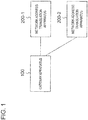
- a communication system includes a plurality of network address translation apparatuses 200-1 and 200-2 (for example, carrier grade network address translators (CGNATs) 20-1 and 20-2 in Fig. 4 ) and a gateway apparatus 100 (for example, an access gateway (AGW) 10 in Fig. 4 ).
- the plurality of network address translation apparatuses 200-1 and 200-2 redundantly store a global IP (Internet protocol) address(es) allocated to a terminal(s) of a subscriber(s) (for example, subscriber #A in Fig. 4 ).
- the gateway apparatus 100 forwards a packet(s) received from the terminal(s) to a network address translation apparatus selected from the plurality of network address translation apparatuses 200-1 and 200-2.
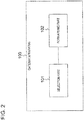
- the gateway apparatus 100 includes a selection part 101 and a forwarding part 102.
- the selection part 101 selects one network address translation apparatus from a plurality of network address translation apparatuses (for example, the network address translation apparatuses 200-1 and 200-2 in Fig. 1 ) redundantly storing a global IP address(es) allocated to a terminal(s) of a subscriber(s).
- the forwarding part 102 forwards a packet(s) received from the terminal(s) to the selected network address translation apparatus.
- an individual network address translation apparatus 200 includes a storing part 201 and a translation part 202.
- the storing part 201 redundantly stores a global IP address(es) allocated to a terminal(s) of a subscriber(s) with another network address translation apparatus.
- the translation part 202 receives, from a gateway apparatus (for example, the gateway apparatus 100 in Fig.
- a global IP address(es) allocated to a terminal(s) of a subscriber(s) is redundantly held in a plurality of network address translation apparatuses.
- the gateway apparatus arranged between the plurality of network address translation apparatuses and the terminal(s) of the subscriber(s) forwards a packet(s) received from the terminal(s) to a network address translation apparatus selected from the plurality of network address translation apparatuses.
- a fixed global IP address(es) can be supplied to a subscriber(s) without performing synchronization processing between network address translation apparatuses having a redundant configuration.
- a “global IP address” refers to an IP address allocated to a subscriber for Internet access.
- a global IP address is stored in a public IP pool included in a network address translation apparatus (for example, a CGNAT).
- a private IP address used in the residence of a subscriber is converted into a global IP address.
- a "public IP pool” is a pool for storing a group of global IP addresses (normally, IP prefixes) allocated to subscribers.
- a "public IP pair” is a pair of public IP pools storing the same IP prefix information.
- pairs of public IP pools are configured between the CGNATs (carrier grade network address translators) 20-1 and 20-2, and information about the pairs is set in the AGW (access gateway) 10.
- CGNATs carrier grade network address translators
- AGW access gateway
- a public IP pool is selected by the AGW 10 arranged upstream of the CGNATs 20-1 and 20-2.
- the AGW 10 may forward subscriber traffic to a public IP pool whose priority is relatively high (namely, the higher priority) in a normal operation.
- the AGW 10 perform alive monitoring by using ping or the like to detect whether a failure has occurred in a CGNAT in which public IP pools are accommodated.
- the AGW 10 detects that there is no response from a CGNAT, the AGW 10 changes the forwarding destination of the corresponding subscriber traffic to a public IP pool whose priority is relatively low (namely, the lower priority).
- a single ping destination may be set per CGNAT.
- the public IP pools forming a pair accommodate the same global IP addresses (IP prefixes) and supply one of the global IP addresses to a subscriber.
- the CGNATs 20-1 and 20-2 acquire information for associating the corresponding global IP addresses stored in the public IP pools with the corresponding subscribers on a one-on-one basis from a CTL server (control server) 30. In this way, the same global IP address can be allocated to a specified subscriber even before and after switching of the corresponding active and standby (ACT/SBY) public IP pools.
- the AGW 10 may select a public IP pair storing a global IP address used by a subscriber in accordance with an instruction from the CTL server 30.
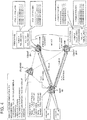
- the public IP pool When any one of the public IP pools (for example, the public IP pools #10, #11, #20, and #21 in Fig. 4 ) detects that a packet has been forwarded from the AGW 10, the public IP pool performs route advertisement of information about a corresponding stored global IP address on an upper router. In this way, even after the CGNAT storing the corresponding active (ACT) public IP pool is switched, the traffic to the global IP address allocated to the corresponding subscriber can be forwarded to a CGNAT storing a newly active (ACT) public IP pool. For example, in Fig. 4 , when a failure occurs in the CGNAT 20-1, the public IP pool #11 is newly set to be active (ACT) in place of the public IP pool #10.
- the public IP pool #11 when a failure occurs in the CGNAT 20-1, the public IP pool #11 is newly set to be active (ACT) in place of the public IP pool #10.
- the CGNAT storing the active (ACT) public IP pool is switched from the CGNAT 20-1 to the CGNAT 20-2.
- traffic from the Internet side addressed to the global IP address allocated to the corresponding subscriber can be forwarded to the CGNAT 20-2.
- the following items (1) to (3) are realized in a CGNAT (carrier grade network address translator) redundant configuration scheme based on a fixed broadband service that supplies private IP (Internet Protocol) addresses to subscribers.
- the present exemplary embodiment assumes a service that supplies fixed global IP addresses to subscribers and assumes that the subscribers are associated with the global IP addresses on a one-on-one basis.
- Fig. 4 illustrates an example of a configuration of a communication system according to the present exemplary embodiment.
- the communication system includes the broadband access gateway (AGW) 10, the two CGNATs (carrier grade network address translators) 20-1 and 20-2, and the CTL (control) server 30.
- AGW broadband access gateway
- CGNATs carrier grade network address translators
- CTL control
- the AGW 10 forwards traffic from subscribers (specifically, L2CPE (Layer 2 Customer Premises Equipment) of subscribers, for example) to the CGNATs 20-1 and 20-2.
- the CGNATs 20-1 and 20-2 supply global IP (Internet protocol) addresses for Internet access to the subscribers.
- the CTL server 30 sets necessary information in the AGW 10 and the CGNATs 20-1 and 20-2.
- a redundant configuration (ACT/SBY configuration) is realized based on a simple system configuration, without causing the CGNATs 20-1 and 20-2 to perform synchronization processing.
- a network for synchronization signals between the CGNATs can be removed.
- the system configuration can be simplified, and the constraints on the installation locations of the CGNATs can also be eliminated.
- a CGNAT redundant configuration can be realized by using public IP pools between arbitrary CGNATs in the system as a pair, and a highly reliable service can easily be realized.
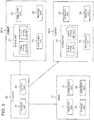
- Fig. 5 is a block diagram illustrating an example of a configuration of the communication system according to the present exemplary embodiment.
- the CTL server 30 includes a storage part 31 and a setting part 32.
- the storage part 31 stores two tables, which are a table (table 1) storing public IP pool information to be described below and a table (table 3) storing subscriber information.
- the setting part 32 refers to these tables held by the storage part 31 and sets necessary information in the AGW 10 and the CGNATs 20-1 and 20-2 to provide a service(s).
- the information set by the CTL server 30 will be described in detail in the following [Operations].
- the AGW 10 includes a selection part 11, a forwarding part 12, a storage part 13, and a monitoring part 14.
- the storage part 13 stores subscriber identifiers, information (public IP pair information) that identifies the groups of public IP pools held by the CGNATs 20-1 and 20-2, and subscriber identification information in association with each other.
- the selection part 11 performs subscriber authentication when a subscriber first accesses the communication system according to the present exemplary embodiment. Next, the selection part 11 acquires public IP pair information that accommodates this subscriber.
- the storage part 13 stores information indicating the priorities of the pools that store the global IP addresses in the CGNATs 20-1 and 20-2.
- the selection part 11 recognizes that priorities have been supplied and set by the CTL server 30 for two (or three or more) public IP pools forming a pair.
- the monitoring part 14 performs alive monitoring on the public IP pools.
- the monitoring part 14 performs alive monitoring by using ping/BFD (Bidirectional Forwarding Detection), for example.
- the monitoring part 14 performs alive monitoring on alive monitoring IP addresses allocated to the CGNATs 20-1 and 20-2.
- the relationship between the alive monitoring IP addresses and the public IP pairs stored in the CGNATs 20-1 and 20-2 is set by the CTL server 30.
- the monitoring part 14 checks responses from the CGNATs 20-1 and 20-2. When there is a response from a CGNAT storing a public IP pool whose priority is relatively high (the higher priority), the selection part 11 continues to forward the corresponding traffic to this CGNAT.
- the selection part 11 forwards the traffic to the latter CGNAT. If there are responses from both of the public IP pools, the selection part 11 determines the public IP pool having the higher priority as being active (ACT) and forwards the traffic from the subscriber to the CGNAT storing this public IP pool.
- ACT active
- the forwarding part 12 encapsulates subscriber traffic between the AGW 10 and the CGNATs 20-1 and 20-2 and forwards the encapsulated traffic. In this encapsulation, the forwarding part 12 supplies a subscriber identifier to the header of the individual packet.
- the forwarding part 12 may use GRE (Generic Routing Encapsulation) or the like, which is a general protocol, in the encapsulation processing.
- GRE Generic Routing Encapsulation
- the forwarding part 12 sets a public IP pool address as the destination IP address in the GRE header and also sets a subscriber identifier.
- the paths between the AGW 10 and the CGNATs 20-1 and 20-2 may be determined by a general routing protocol.
- the CGNATs 20-1 and 20-2 each includes a storing part 21, a translation part 22, and an advertisement part 23,
- a response part 24 transmits a response in response to an alive monitoring request from the monitoring part 14 of the AGW 10.
- the alive monitoring may be started when a CGNAT is deployed in the system.
- the storing part 21 stores public IP pools storing global IP addresses allocated to subscribers and performs redundancy management per public IP pool. By storing public IP pools storing the same global IP address in the two CGNATs 20-1 and 20-2, the same global IP address can be supplied to the corresponding subscriber even after switching of the CGNATs.
- the AGW 10 is connected to the CGNATs 20-1 and 20-2 via tunnels per subscriber by using GRE (Generic Routing Encapsulation)/DS-Lite (Dual-Stack Lite) or the like, and an individual subscriber is identified by a subscriber identifier in a header.
- GRE Generic Routing Encapsulation
- DS-Lite Dual-Stack Lite
- the AGW 10 supplies a subscriber identifier unique to an individual subscriber.
- the translation part 22 identifies a subscriber based on the corresponding subscriber identifier and determines a global IP address to be supplied to this subscriber.
- the AGW 10 can identify a subscriber by using, for example, a subscriber-specific QinQ (IEEE802.1Q Tunneling) frame (S-tag (Service tag)/C-tag (Customer-tag) of VLAN) supplied in an access network.
- S-tag Service tag
- C-tag Customer-tag
- the storing part 21 uniquely associates a subscriber identifier with a global IP address in a public IP pool.
- the CTL server 30 sets information for this association in the CGNATs 20-1 and 20-2.
- the configuration of redundant pairs of public IP pools is managed by the AGW 10, not by the CGNATs 20-1 and 20-2.
- the advertisement part 23 performs router advertisement of a global IP address held in an ACT public IP pool on an upper router. In this way, the traffic from the Internet side can be forwarded to the global IP address accommodated in the ACT public IP pool.
- the advertisement part 23 When the advertisement part 23 detects traffic from the AGW 10 to the Internet direction, the advertisement part 23 recognizes a public IP pool accommodating the subscriber that has transmitted this traffic as being active (ACT). After recognizing this public IP pool as being active (ACT), the advertisement part 23 performs router advertisement of global IP address information allocated to the subscriber on an upper router. When switching of ACT/SBY CGNATs has occurred, the advertisement part 23 of the CGNAT having a newly active (ACT) public IP pool performs the same processing. Consequently, the upper router switches the path to the CGNAT based on the router advertisement.
- a service(s) is provided by setting ACT/SBY public IP pools in the CGNATs 20-1 and 20-2 and causing the AGW 10 to select a public IP pool used by an individual subscriber.
- (1) “Setting of Management Information by CTL Server 30”, (2) “Packet Forwarding Sequence”, and (3) “System Switching Sequence” will be described sequentially.
- An operator of the system sets a "public IP pool information" table set in the AGW 10 and the CGNATs 20-1 and 20-2 and a "subscriber information” table set in the AGW 10 and the CGNATs 20-1 and 20-2 when a subscriber(s) is registered in the system in the CTL server 30.
- the CTL server 30 manages public IP pools for supplying global IPs to subscribers.
- the CTL server 30 configures two public IP pools storing the same global IP(s) as a pair and supplies a priority to an individual public IP pool.
- the CTL server 30 supplies priority 100 to one public IP pool and priority 200 to the other public IP pool.
- the smaller priority value indicates the higher priority.
- the AGW 10 can determine a packet forwarding direction in accordance with a priority.
- load balancing on the CGNATs 20-1 and 20-2 can be achieved.
- Table 1 illustrates an example of a configuration of the table ("public IP pool information" table) storing public IP pool information held by the storage part 31 of the CTL server 30.
- Table 1 "Public IP pool information" table Public IP pairs Priorities Public IP pool IP addresses Public IP pool IPs CGNAT IP addresses Public IP pair #1 100 Tunnel IP #10 Public IP pool #10 1.1.201.1 200 Tunnel IP # 11 Public IP pool # 11 1.1.202.1 Public IP pair # 2 200 Tunnel IP #20 Public IP pool # 20 1.1.201.1 100 Tunnel IP #21 Public IP pool # 21 1.1.202.1
- table 2 illustrates the contents of parameters managed by the "public IP pool information" table illustrated in table 1.
- Table 2 Parameters of "public IP pool information" Parameters Contents Notes Public IP pair Specify name of public IP pair used by subscriber Priority Priority of public IP pool AGW 10 selects public IP pool whose priority is relatively high.
- Public IP pool IP address IP address of public IP pool Global IP Global IP address group that public IP pool supplies to subscribers Public IP pools forming a pair store the same global IP CGNAT IP address IP address of CGNAT storing public IP pool Destination IP address for alive monitoring
- the CTL server 30 When a subscriber is registered in the system, the CTL server 30 generates a table ("subscriber information" table) storing "subscriber information” as illustrated in table 3 and stores the table in the storage part 31.
- Table 4 illustrates the contents of parameters managed in the "subscriber information" table illustrated in table 3.
- Table 4 Subscriber information parameters Parameters Contents Notes Subscriber identifier Subscriber identification number Stored in encapsulated header Public IP pool CGNAT function number Global IP address Global IP address group that public IP pool supplies to subscribers
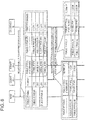
- Fig. 6 is a sequence diagram illustrating an example of an operation in which the setting part 32 of the CTL server 30 registers information included in the "public IP pool information" table stored in the storage part 31 in the AGW 10 and the CGNATs 20-1 and 20-2.
- Table 5 illustrates the parameters set by the setting part 32 of the CTL server 30 in the individual steps in the sequence diagram in Fig. 6 .
- the following information included in "public IP pool information" table is set in AGW 10.
- CTL server 30 >AGW 10 ⁇ Public IP pairs ⁇ Priorities ⁇ Public IP pool IP addresses ⁇ Public IP pool IPs ⁇ CGNAT IP addresses A2
- the monitoring part 14 of the AGW 10 transmits alive monitoring packets to the CGNAT IP addresses specified by the CTL server 30.
- the present exemplary embodiment assumes that the monitoring part 14 starts the alive monitoring after the CGNATs 20-1 and 20-2 are incorporated into the communication system. If the monitoring part 14 receives no response to the alive monitoring, the monitoring part 14 switches the corresponding public IP pools.
- the AGW 10 can manage the public IP pool information stored in the CGNATs 20-1 and 20-2.
- the CGNATs 20-1 and 20-2 can manage information about their own public IP pools.
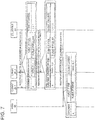
- Fig. 7 is a sequence diagram illustrating an example of an operation in which the setting part 32 of the CTL server 30 sets information about a subscriber in the AGW 10 and the CGNATs 20-1 and 20-2 when the subscriber is registered in the communication system.
- table 6 illustrates examples of the parameters set by the setting part 32 of the CTL server 30 in the individual steps in the sequence diagram illustrated in Fig. 7 .
- the following subscriber information is set in storing part 21 of CGNAT 20-1.
- CTL server 30 >CGNAT 20-1 ⁇ Subscriber identifier ⁇ Public IP pool ⁇ Global IP address B2
- the following subscriber information is set in storing part 21 of CGNAT 20-2.
- the following subscriber information is set in storage part 13 of AGW 10.
- CTL server 30 >AGW 10 ⁇ Public IP pair ⁇
- each of the translation parts 22 of the CGNATs 20-1 and 20-2 can determine the global IP address allocated to the corresponding traffic forwarded from the AGW 10.
- steps B1 and B2 in the sequence diagram in Fig. 7 as an example, a global IP address 1.1.1.1 is allocated to subscriber #A.
- the selection part 11 of the AGW 10 refers to the storage part 13, obtains a public IP pair to be applied to the subscriber (subscriber identifier), and determines a forwarding destination public IP pool.
- a public IP pair #1 (table 1) formed by the public IP pools #10 and #11 is allocated to subscriber #A.
- the selection part 11 determines that the traffic from subscriber #A is forwarded to the public IP pool #10 or #11.
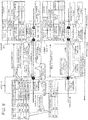
- Fig. 8 is a sequence diagram illustrating an example of an operation in which the subscriber performs packet forwarding via the AGW 10 and the CGNAT 20-1.
- the AGW 10 detects traffic from L2CPE (Layer 2 Customer Premises Equipment) 40 of subscriber #A
- the selection part 11 of the AGW 10 refers to the storage part 13 and determines the public IP pair #1 allocated to subscriber #A.
- the monitoring part 14 of the AGW 10 monitors whether the CGNATs 20-1 and 20-2 storing the public IP pools #10 and #11 included in the public IP pair #1 allocated to subscriber #A are alive.
- the selection part 11 selects a public IP pool having the higher priority, based on the alive monitoring results. This example assumes that no failure has occurred in any of the CGNATs 20-1 and 20-2 storing the respective public IP pools #10 and #11 included in the public IP pair #1. In this case, the selection part 11 selects the CGNAT 20-1 storing the public IP pool #10 whose priority is relatively high.
- the forwarding part 12 encapsulates the traffic from subscriber #A and forwards the encapsulated traffic to the selected CGNAT 20-1.
- the translation part 22 of the CGNAT 20-1 determines the corresponding to the public IP pool (public IP pool #10) from the destination IP address (tunnel IP #10) in the header information of the encapsulated packet. In addition, the translation part 22 determines the subscriber (#A) and the global IP address (1.1.1.1) allocated to this subscriber (#A) from the subscriber identifier (tunnel ID A) in the header information, performs NAPT (Network Address Port Translation) processing, and forwards the traffic in the Internet direction.
- NAPT Network Address Port Translation
- the translation part 22 of the CGNAT 20-1 identifies the subscriber (#A) from the destination IP address in a packet received from the Internet side.
- the translation part 22 encapsulates the packet on which NAPT processing has been processed, and forwards the packet to the AGW 10.
- the forwarding part 12 of the AGW 10 determines the subscriber (#A) by using the subscriber identifier (tunnel ID_A) and forwards the packet to the access network side.
- Fig. 9 illustrates an example of tunnel connection between the AGW 10 and the CGNATs 20-1 and 20-2.
- operations of the AGW 10 and the CGNATs 20-1 and 20-2 illustrated in Fig. 9 will be described.
- the selection part 11 of the AGW 10 includes a subscriber authentication section per subscriber.
- the selection part 11 uses a subscriber authentication section for authentication and identification of a subscriber and selects a public IP pair connected to the subscriber. As illustrated in Fig. 9 , the selection part 11 selects the public IP pair #1 for subscriber #A. Likewise, the selection part 11 selects the public IP pair #2 for subscriber #X.
- the selection part 11 selects a public IP pool having the higher one of the priorities between the public IP pools forming an individual public IP pair. As illustrated in Fig. 9 , the selection part 11 selects the public IP pool #10 having the higher priority between the public IP pools #10 and #11 included in the public IP pair #1 for subscriber #A. Likewise, the selection part 11 selects the public IP pool #21 having the higher priority between the public IP pools #20 and #21 included in the public IP pair #2 for subscriber #X.
- the forwarding part 12 of the AGW 10 encapsulates the subscriber traffic by using the IP addresses allocated to the respective public IP pools selected by the selection part 11 and forwards the encapsulated traffic.
- the destination addresses of the public IP pools are specified by the CTL server 30.
- the forwarding part 12 encapsulates the traffic from subscriber #A by using the IP address (tunnel IP #10) allocated to the public IP pool #10, supplies a subscriber identifier (tunnel ID_A) to the tunnel header used for the encapsulation, and forwards the traffic to the CGNAT 20-1.
- the forwarding part 12 encapsulates the traffic from subscriber #X by using the IP address (tunnel IP #21) allocated to the public IP pool #21, supplies a subscriber identifier (tunnel ID_X) to the tunnel header used for the encapsulation, and forwards the traffic to the CGNAT 20-2.
- IP address tunnel IP #21
- subscriber ID_X subscriber identifier
- the CGNATs 20-1 and 20-2 select public IP pools based on the destination IP addresses in the tunnel headers and forward the packets to the public IP pools accommodated in the storing parts 21 of the CGNATs 20-1 and 20-2. As illustrated in Fig. 9 , the CGNAT 20-1 selects the public IP pool (#10) based on the destination IP address (tunnel IP #10) in the tunnel header of a packet from subscriber #A, and forwards the packet to the accommodated public IP pool #10 accommodated in the storing part 21 of the CGNAT 20-1.
- the CGNAT 20-2 selects the public IP pool (#21) based on the destination IP address (tunnel IP #21) in the tunnel header of a packet from subscriber #X and forwards the packet to the public IP pool #21 accommodated in the storing part 21 of the CGNAT 20-2.
- a public IP pool identifies a subscriber based on a subscriber identifier supplied in a tunnel header and forwards the packet to a NAPT section ensured in the translation part 22 per subscriber.
- the NAPT section performs NAPT processing by using a global IP address allocated to a subscriber on a one-on-one basis.
- the public IP pool #10 accommodated in the storing part 21 identifies the subscriber (#A) based on the subscriber identifier (tunnel ID_A) supplied in the tunnel header of a packet from subscriber #A and forwards the packet to the NAPT section ensured for subscriber #A in the translation part 22.
- the NAPT section performs NAPT processing by using a global IP address (1.1.1.1) allocated to subscriber #A on a one-on-one basis.
- the public IP pool #21 accommodated in the storing part 21 identifies the subscriber (#X) based on the subscriber identifier (tunnel ID_X) allocated to the tunnel header of the packet from subscriber #X and forwards the packet to the NAPT section ensured for the subscriber #X in the translation part 22.
- the NAPT section performs NAPT processing by using a global IP address (1.1.2.1) allocated to subscriber #X on a one-on-one basis.
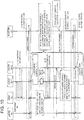
- Fig. 10 is a sequence diagram illustrating an example of an operation in which, when a failure occurs in the CGNAT 20-1 storing the ACT public IP pool #10 included in the public IP pair #1 allocated to subscriber #A, the CGNAT 20-2 storing the SBY public IP pool #11 switches to serve as an active public IP pool.
- Table 7 illustrates the contents of steps C1 to C6 in the sequence diagram in Fig. 10 .
- Table 7 subscriber information setting sequence Steps Contents C1
- Monitoring part 14 of AGW 10 performs alive monitoring on CGNATs 20-1 and 20-2 storing public IP pools #10 and #11, respectively, included in public IP pair #1 allocated to subscriber #A. If there are responses from both CGNATs 20-1 and 20-2, monitoring part 14 recognizes normal operation state.
- selection part 11 selects CGNAT 20-1 storing public IP pool #10 having higher priority.
- C2 Forwarding part 12 of AGW 10 forwards traffic from subscriber #A to public IP pool #10 (held in CGNAT 20-1) having high priority.
- C3 Failure occurs in CGNAT 20-1 storing public IP pool #10.
- C4 Monitoring part 14 of AGW 10 recognizes that there is no response from CGNAT 20-1 while there is response from CGNAT 20-2.
- Selection part 11 selects CGNAT 20-2 storing public IP pool #11 having lower priority.
- C5 Forwarding part 12 of AGW 10 recognizes SBY CGNAT (CGNAT 20-2) as new ACT and forwards traffic from subscriber #A.
- advertisement part 23 of CGNAT 20-2 When recognizing input of traffic, advertisement part 23 of CGNAT 20-2 performs router advertisement of global IP address information stored in public IP pool #11 on upper router 50.
- C6 Forwarding part 12 of AGW 10 forwards traffic from subscriber #A to new ACT public IP pool #11 (held in CGNAT 20-2) having lower priority. After path information of traffic from Internet to subscriber #A is changed on Internet side, traffic is forwarded to CGNAT 20-2 storing new ACT public IP pool #11.
- the monitoring part 14 of the AGW 10 regularly (for example, periodically) performs alive monitoring on the registered CGNATs 20-1 and 20-2. If the selection part 11 cannot receives an alive monitoring response from a CGNAT, the selection part 11 checks a list of public IP pools accommodated in this CGNAT. If there is a public IP pool currently used as an ACT public IP pool, the selection part 11 uses a standby (SBY) public IP pool that forms a pair with this public IP pool as a new ACT public IP pool.
- SBY standby
- the forwarding part 12 of the AGW 10 can forward the traffic from the subscriber to the new ACT public IP pool.
- the translation part 22 of the CGNAT identifies the subscriber based on the header information of the forwarded and encapsulated subscriber traffic, determines a global IP address allocated to this subscriber, and performs NAPT (Network Address Port Translation) processing.
- the same global IP address allocated to the subscriber is set in both of the public IP pools forming the pair by the CTL server 30.
- the AGW 10 supplies the same subscriber identifier to a packet header, the same global IP address can be supplied to the subscriber before and after switching of the public IP pools. In this way, the corresponding traffic from the AGW 10 to the CGNAT 20-1 or 20-2 can properly be forwarded in the Internet direction.
- a router 50 arranged on a network needs to forward the traffic to a CGNAT storing the newly ACT public IP pool (operating).
- the traffic forwarding direction needs to be changed.
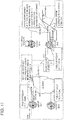
- Fig. 11 illustrates an example of an operation of changing the packet forwarding route from the Internet when a CGNAT storing a SBY public IP pool has been switched to a CGNAT storing an ACT public IP pool.
- a public IP pool that has received traffic from a subscriber recognizes that the public IP pool has been selected as an active (ACT) public IP pool.
- the advertisement part 23 performs router advertisement of a corresponding global IP address accommodated in this public IP pool on the upper router 50.
- the upper router 50 reviews the path information and switches the direction of the traffic that flows from the Internet to the subscriber via the CGNAT so that the traffic will flow via the CGNAT storing the newly ACT public IP pool.
- the left side in Fig. 11 illustrates a state before a failure occurs in the CGNAT 20-1.
- the public IP pool #10 accommodated in the CGNAT 20-1 recognizes that it is an active (ACT) public IP pool for subscriber #A.
- the advertisement part 23 performs router advertisement of the global IP address (1.1.1.0/24) held in the public IP pool #10 on the Internet side via the upper router 50 connected to the CGNAT 20-1.
- the router on the Internet side sets a routing table and recognizes that the forwarding destination of packets addressed to the IP address 1.1.1.0/24 is the CGNAT 20-1.
- the right side in Fig. 11 illustrates a state after a failure has occurred in the CGNAT 20-1.
- the public IP pool #11 accommodated in the CGNAT 20-2 recognizes that it is an active (ACT) public IP pool for subscriber #A.
- the advertisement part 23 performs router advertisement of the global IP address (1.1.1.0/24) stored in the public IP pool #11 on the Internet side via the upper router 50 connected to the CGNAT 20-2.
- An individual router on the Internet side that has received the new router advertisement updates its own routing table and recognizes that the forwarding destination of the packets addressed to the IP address1.1.1.0/24 is the CGNAT 20-2.
- synchronization interfaces between CGNATs forming a pair can be removed.
- CGNATs do not need to exchange synchronization data via synchronization interfaces, and the consumption amount of the band of the operator network can be reduced.
- the operator can dynamically set a pair of public IP pools based on resources (for example, the band of the network connecting CGNATs, the number of subscribers accommodated per CGNAT, etc.). Namely, the operator can arbitrarily establish a pair of public IP pools in CGNATs after CGNAT facilities are installed.
- Fig. 12 illustrates an example of a redundant (ACT/SBY) configuration of CGNATs according to a comparative example.
- this comparative example as illustrated in Fig. 12 , it is necessary to previously determine redundancy pairs (a pair of CGNATs 90-1 and 90-2 and a pair of CGNATs 90-3 and 90-4) and establish a network for exchanging synchronization information between CGNATs.
- redundancy pairs a pair of CGNATs 90-1 and 90-2 and a pair of CGNATs 90-3 and 90-4
- a redundant configuration is realized between the CGNAT 90-1 arranged at a site #A and the CGNAT 90-3 or 90-4 arranged at a site #B
- a synchronous network that extends between the sites #A and #B is necessary.
- problems such as the distance, the band, or the like between the sites #A and #B.
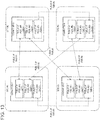
- FIG. 13 illustrates an example of a redundant configuration of CGNATs when the communication system according to the present exemplary embodiment is applied.
- a pair of public IP pools can be configured by freely combining CGNATs arranged at sites.
- a pair can be reconfigured at arbitrary timing based on resource statuses of CGNATs.
- Table 8 illustrates combinations of public IP pools stored in four CGNATs 20-1 to 20-4 arranged at four sites #A to #D as illustrated in Fig. 13 .
- Table 8 Examples of ACT/SBY Configuration Public IP pairs Priorities Public IP pool IP addresses Global IPs CG NAT numbers Statuses Sites Public IP pair #1 100 Tunnel IP #10 1.1.1.0/24 1 ACT A 200 Tunnel IP #11 1.1.1.0/24 3 SBY C Public IP pair # 2 200 Tunnel IP #20 1.1.2.0/24 1 SBY A 100 Tunnel IP #21 1.1.2.0/24 4 ACT D Public IP pair #3 100 Tunnel IP #30 1.1.3.0/24 1 ACT A 200 Tunnel IP #31 1.1.3.0/24 2 SBY B Public IP pair #4 100 Tunnel IP #40 1.1.4.0/24 3 ACT C 200 Tunnel IP #41 1.1.4.0/24 2 SBY B Public IP pair #5 100 Tunnel IP #50 1.1.5.0/24 4 ACT D 200 Tunnel IP #51 1.1.5.0/24 3 SBY C Public IP pair #6 200 Tunnel IP #60 1.1.6.0/24 4 SBY D 100 Tunnel IP #61 1.1.6.0/24 2 ACT B
- a redundancy function (for example, ACT/SBY/SBY) formed by three or more CGNATs can easily be realized by setting information about three or more public IP pools having priorities in the AGW 10 and applying the technique described in the present exemplary embodiment.
- ACT/SBY/SBY configuration since two standby (SBY) CGNATs are arranged, even if a failure occurs in one of the CGNATs, an ACT/SBY operation can be maintained. Thus, even when a failure occurs, no urgent maintenance is necessary. As a result, an abnormal apparatus (for example, a CGNAT) can be replaced within business hours, and the cost of the maintenance operation can be reduced.
- Fig. 14 and table 9 illustrate examples of an ACT/SBY/SBY configuration when the communication system according to the present exemplary embodiment is used.
- the tunnel IP #10 is used in a normal operation.
- an abnormality occurs in the "tunnel IP #10" (for example, a failure in the CGNAT 20-1)
- the service(s) is continued by switching the "tunnel IP #12" accommodated in the CGNAT 20-3 to a newly active (ACT) system.
- the "tunnel IP #11" accommodated in the CGNAT 20-2 can be operated as a standby (SBY) system. Thus, no maintenance workers need to rush to manage the situation.
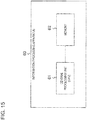
- An individual one of the apparatuses (for example, the AGW 10, the CGNATs 20-1 and 20-2, the CTL server 30) arranged in the communication system according to the above exemplary embodiment may include an information processing apparatus 60 illustrated in Fig. 15 .
- the information processing apparatus 60 includes a central processing unit (CPU) 61 and a memory 62.
- the information processing apparatus 60 may entirely or partially realize the functions of the individual parts of an individual one of these apparatuses (see Fig. 5 ) by causing the CPU 61 to execute a program stored in the memory 62.
- the communication system according to the above exemplary embodiment is applicable to BRAS/CGNAT used when a carrier or an ISP (Internet service provider) provides subscribers with Internet access services.
- ISP Internet service provider
- the gateway apparatus according to mode 1; wherein the plurality of network address translation apparatuses includes pools for redundantly storing the global IP address(es) in the plurality of network address translation apparatuses; and wherein the selection part selects a network address translation apparatus having a pool whose priority is relatively high from the plurality of network address translation apparatuses.
- the gateway apparatus includes a monitoring part that monitors whether the plurality of network address translation apparatuses is alive; and wherein, when a failure occurs in a network address translation apparatus having a pool whose priority is relatively high, the selection part selects a network address translation apparatus having a pool whose priority is relatively low.
- the gateway apparatus including a storage part that stores organization-specific information that identifies a set of pools redundantly storing the same global IP address and subscriber identification information in association with each other.
- the gateway apparatus according to mode 4; wherein the selection part selects one network address translation apparatus from a plurality of network address translation apparatuses including pools corresponding to organization-specific information associated with subscriber identification information of the subscriber(s); and wherein the forwarding part forwards the packet(s) into which the subscriber identification information has been inserted to the selected network address translation apparatus.
- the network address translation apparatus includes a pool(s) storing the global IP address(es); and wherein priorities are supplied to a plurality of pools that the plurality of network address translation apparatuses include for redundantly storing the global IP address(es).
- the network address translation apparatus according to mode 7; wherein the storing part stores a global IP address(es) and subscriber identification information in association with each other in the pools.
- the network address translation apparatus according to mode 8; wherein the translation part translates an address(es) of the packet(s) by using a global IP address(es) associated with subscriber identification information inserted by the gateway apparatus into the packet(s).
- the plurality of network address translation apparatuses includes pools for redundantly storing the global IP address(es) in the plurality of network address translation apparatuses; and wherein the gateway apparatus selects a network address translation apparatus having a pool whose priority is relatively high from the plurality of network address translation apparatuses and forwards the packet(s) to the selected network address translation apparatus.
- the communication system according to mode 11; wherein the gateway apparatus monitors whether the plurality of network address translation apparatuses are alive; and wherein, when a failure occurs in a network address translation apparatus having a pool whose priority is relatively high, the gateway apparatus selects a network address translation apparatus having a pool whose priority is relatively low and forwards the packet(s) to the selected network address translation apparatus.
- the communication system according to mode 11 or 12; wherein the plurality of network address translation apparatuses store a global IP address(es) and subscriber identification information in association with each other in the pools; and wherein the gateway apparatus stores organization-specific information that identifies a set of pools redundantly storing the same global IP address and subscriber identification information in association with each other.
- the communication system according to mode 13; wherein the gateway apparatus inserts subscriber identification information of the subscriber(s) in the packet(s), selects one network address translation apparatus from a plurality of network address translation apparatuses including pools corresponding to organization-specific information associated with the subscriber identification information of the subscriber(s), and forwards the packet(s) into which the subscriber identification information has been inserted to the selected network address translation apparatus.
- the communication system according to mode 14; wherein the plurality of network address translation apparatuses translates an address(es) of the packet(s) by using a global IP address(es) associated with subscriber identification information inserted by the gateway apparatus into the packet(s).
- the communication method according to mode 17, including a step of causing the gateway apparatus to monitor whether the plurality of network address translation apparatuses is alive; and wherein, when a failure occurs in a network address translation apparatus having a pool whose priority is relatively high, the gateway apparatus selects a network address translation apparatus having a pool whose priority is relatively low.
- a communication method including steps of:
- a program causing a computer in a network address translation apparatus to perform:
Landscapes
- Engineering & Computer Science (AREA)
- Computer Networks & Wireless Communication (AREA)
- Signal Processing (AREA)
- Data Exchanges In Wide-Area Networks (AREA)
Applications Claiming Priority (2)
| Application Number | Priority Date | Filing Date | Title |
|---|---|---|---|
| JP2017006107 | 2017-01-17 | ||
| PCT/JP2018/000791 WO2018135428A1 (ja) | 2017-01-17 | 2018-01-15 | ゲートウェイ装置、ネットワークアドレス変換装置、通信システム、通信方法、および、プログラム |
Publications (2)
| Publication Number | Publication Date |
|---|---|
| EP3573295A1 true EP3573295A1 (de) | 2019-11-27 |
| EP3573295A4 EP3573295A4 (de) | 2020-01-08 |
Family
ID=62908042
Family Applications (1)
| Application Number | Title | Priority Date | Filing Date |
|---|---|---|---|
| EP18741055.0A Withdrawn EP3573295A4 (de) | 2017-01-17 | 2018-01-15 | Gateway-vorrichtung, netzwerkadressenübersetzungsvorrichtung, kommunikationssystem, kommunikationsverfahren und programm |
Country Status (4)
| Country | Link |
|---|---|
| US (1) | US20190364014A1 (de) |
| EP (1) | EP3573295A4 (de) |
| JP (1) | JP6795043B2 (de) |
| WO (1) | WO2018135428A1 (de) |
Cited By (1)
| Publication number | Priority date | Publication date | Assignee | Title |
|---|---|---|---|---|
| CN117827980A (zh) * | 2024-03-06 | 2024-04-05 | 大汉软件股份有限公司 | 一种基于分布式链路的es数据跨网闸交换方法 |
Families Citing this family (4)
| Publication number | Priority date | Publication date | Assignee | Title |
|---|---|---|---|---|
| US11689493B2 (en) | 2020-07-02 | 2023-06-27 | Vmware, Inc. | Connection tracking records for a very large scale NAT engine |
| US11115381B1 (en) | 2020-11-30 | 2021-09-07 | Vmware, Inc. | Hybrid and efficient method to sync NAT sessions |
| US11949646B2 (en) | 2022-08-09 | 2024-04-02 | Packet Forensics, LLC | Correlating protocol data units transiting networks with differing addressing schemes |
| US11665131B1 (en) | 2022-09-13 | 2023-05-30 | Cisco Technology, Inc. | Stateful redundancy for deterministic carrier-grade network address translation (NAT) services |
Family Cites Families (9)
| Publication number | Priority date | Publication date | Assignee | Title |
|---|---|---|---|---|
| US7280557B1 (en) * | 2002-06-28 | 2007-10-09 | Cisco Technology, Inc. | Mechanisms for providing stateful NAT support in redundant and asymetric routing environments |
| JP4995177B2 (ja) | 2008-11-05 | 2012-08-08 | 三菱電機株式会社 | Nat装置 |
| JP2010114665A (ja) | 2008-11-06 | 2010-05-20 | Toshiba Corp | 通信データ制御方法及び計算機システム |
| JP5678769B2 (ja) | 2011-03-30 | 2015-03-04 | 沖電気工業株式会社 | 通信システム、ネットワークアドレス処理装置、経路制御ユニット、及び、ネットワークアドレス処理装置のパケット処理プログラム |
| JP5950023B2 (ja) * | 2013-03-18 | 2016-07-13 | 富士通株式会社 | 通信路制御装置、アドレス変換装置、通信システム及び通信路設定方法 |
| CN105791448B (zh) * | 2014-12-18 | 2019-10-25 | 华为技术有限公司 | 一种地址分配方法、cgn设备及cgn双主系统 |
| JP6350839B2 (ja) * | 2015-01-28 | 2018-07-04 | 日本電気株式会社 | ネットワーク中継装置、ゲートウェイ冗長化システム、プログラム、および冗長化方法 |
| JP2017006107A (ja) | 2015-06-23 | 2017-01-12 | 清一郎 友利 | クリートピトン |
| JP6579608B2 (ja) * | 2015-06-30 | 2019-09-25 | Necプラットフォームズ株式会社 | アドレス変換システム、アドレス変換の二重化方法及びプログラム |
-
2018
- 2018-01-15 WO PCT/JP2018/000791 patent/WO2018135428A1/ja not_active Ceased
- 2018-01-15 EP EP18741055.0A patent/EP3573295A4/de not_active Withdrawn
- 2018-01-15 US US16/476,322 patent/US20190364014A1/en not_active Abandoned
- 2018-01-15 JP JP2018563308A patent/JP6795043B2/ja active Active
Cited By (2)
| Publication number | Priority date | Publication date | Assignee | Title |
|---|---|---|---|---|
| CN117827980A (zh) * | 2024-03-06 | 2024-04-05 | 大汉软件股份有限公司 | 一种基于分布式链路的es数据跨网闸交换方法 |
| CN117827980B (zh) * | 2024-03-06 | 2024-05-10 | 大汉软件股份有限公司 | 一种基于分布式链路的es数据跨网闸交换方法 |
Also Published As
| Publication number | Publication date |
|---|---|
| JPWO2018135428A1 (ja) | 2019-11-07 |
| WO2018135428A1 (ja) | 2018-07-26 |
| JP6795043B2 (ja) | 2020-12-02 |
| US20190364014A1 (en) | 2019-11-28 |
| EP3573295A4 (de) | 2020-01-08 |
Similar Documents
| Publication | Publication Date | Title |
|---|---|---|
| CN107819677B (zh) | 一种报文转发方法及装置 | |
| EP3573295A1 (de) | Gateway-vorrichtung, netzwerkadressenübersetzungsvorrichtung, kommunikationssystem, kommunikationsverfahren und programm | |
| CN107623712B (zh) | 网络功能虚拟化环境中的虚拟客户端设备服务提供系统及用于其的网络功能虚拟云 | |
| KR102342286B1 (ko) | Dcn 메시지 처리 방법, 네트워크 디바이스, 및 네트워크 시스템 | |
| US8179900B2 (en) | Edge node redundant system in label switching network | |
| US8948181B2 (en) | System and method for optimizing next-hop table space in a dual-homed network environment | |
| CN107547402B (zh) | 一种转发表生成方法和装置 | |
| JP6434821B2 (ja) | 通信装置及び通信方法 | |
| EP2846498B1 (de) | Verfahren und vorrichtung zur verteilung von etiketten | |
| US20160142474A1 (en) | Communication system, apparatus, method and program | |
| EP2618521B1 (de) | Verfahren, vorrichtung und system für ausfallschutz bei verknüpfungsaggregationen | |
| EP2523403A1 (de) | Netzwerksystem und netzwerkredundanzverfahren | |
| EP1475942A2 (de) | Adressenauflösung in auf IP basierten Schicht 2 Punkt-zu-Punkt Verbindungen | |
| US10063467B2 (en) | Virtual extensible local area network performance routing | |
| US20090225660A1 (en) | Communication device and operation management method | |
| CN107276846B (zh) | 一种网关容灾方法、装置和存储介质 | |
| US20150172173A1 (en) | Communication system, communication apparatus and path switching method | |
| EP3588877B1 (de) | Leistungsüberwachungsunterstützung für cfm über evpn | |
| US20120099598A1 (en) | Method, device and system for establishing a pseudo wire | |
| US20230117218A1 (en) | Cloud-edge forwarding in a network | |
| CN101499951A (zh) | 隧道配置方法、虚拟接入节点、虚拟边缘节点以及系统 | |
| JP2015012455A (ja) | 伝送装置および伝送方法 | |
| CN102447703B (zh) | 一种热备份方法和系统、cgn设备 | |
| JP5557777B2 (ja) | 加入者終端装置による接続性監視方法 | |
| US20110176584A1 (en) | Communication system and communication method |
Legal Events
| Date | Code | Title | Description |
|---|---|---|---|
| PUAI | Public reference made under article 153(3) epc to a published international application that has entered the european phase |
Free format text: ORIGINAL CODE: 0009012 |
|
| 17P | Request for examination filed |
Effective date: 20190819 |
|
| AK | Designated contracting states |
Kind code of ref document: A1 Designated state(s): AL AT BE BG CH CY CZ DE DK EE ES FI FR GB GR HR HU IE IS IT LI LT LU LV MC MK MT NL NO PL PT RO RS SE SI SK SM TR |
|
| AX | Request for extension of the european patent |
Extension state: BA ME |
|
| A4 | Supplementary search report drawn up and despatched |
Effective date: 20191205 |
|
| RIC1 | Information provided on ipc code assigned before grant |
Ipc: H04L 29/12 20060101ALI20191130BHEP Ipc: H04L 12/713 20130101ALI20191130BHEP Ipc: H04L 12/803 20130101ALI20191130BHEP Ipc: H04L 12/749 20130101AFI20191130BHEP |
|
| DAV | Request for validation of the european patent (deleted) | ||
| DAX | Request for extension of the european patent (deleted) | ||
| STAA | Information on the status of an ep patent application or granted ep patent |
Free format text: STATUS: THE APPLICATION HAS BEEN WITHDRAWN |
|
| 18W | Application withdrawn |
Effective date: 20200702 |