EP3573358A1 - Funkkommunikationsverfahren, endgerätevorrichtung und netzwerkvorrichtung - Google Patents
Funkkommunikationsverfahren, endgerätevorrichtung und netzwerkvorrichtung Download PDFInfo
- Publication number
- EP3573358A1 EP3573358A1 EP17893311.5A EP17893311A EP3573358A1 EP 3573358 A1 EP3573358 A1 EP 3573358A1 EP 17893311 A EP17893311 A EP 17893311A EP 3573358 A1 EP3573358 A1 EP 3573358A1
- Authority
- EP
- European Patent Office
- Prior art keywords
- terminal device
- tbs
- data
- modulation
- transmission format
- Prior art date
- Legal status (The legal status is an assumption and is not a legal conclusion. Google has not performed a legal analysis and makes no representation as to the accuracy of the status listed.)
- Withdrawn
Links
Images


Classifications
-
- H—ELECTRICITY
- H04—ELECTRIC COMMUNICATION TECHNIQUE
- H04L—TRANSMISSION OF DIGITAL INFORMATION, e.g. TELEGRAPHIC COMMUNICATION
- H04L1/00—Arrangements for detecting or preventing errors in the information received
- H04L1/0001—Systems modifying transmission characteristics according to link quality, e.g. power backoff
- H04L1/0006—Systems modifying transmission characteristics according to link quality, e.g. power backoff by adapting the transmission format
- H04L1/0007—Systems modifying transmission characteristics according to link quality, e.g. power backoff by adapting the transmission format by modifying the frame length
-
- H—ELECTRICITY
- H04—ELECTRIC COMMUNICATION TECHNIQUE
- H04W—WIRELESS COMMUNICATION NETWORKS
- H04W72/00—Local resource management
- H04W72/50—Allocation or scheduling criteria for wireless resources
- H04W72/54—Allocation or scheduling criteria for wireless resources based on quality criteria
- H04W72/543—Allocation or scheduling criteria for wireless resources based on quality criteria based on requested quality, e.g. QoS
-
- H—ELECTRICITY
- H04—ELECTRIC COMMUNICATION TECHNIQUE
- H04L—TRANSMISSION OF DIGITAL INFORMATION, e.g. TELEGRAPHIC COMMUNICATION
- H04L1/00—Arrangements for detecting or preventing errors in the information received
- H04L1/0001—Systems modifying transmission characteristics according to link quality, e.g. power backoff
- H04L1/0002—Systems modifying transmission characteristics according to link quality, e.g. power backoff by adapting the transmission rate
- H04L1/0003—Systems modifying transmission characteristics according to link quality, e.g. power backoff by adapting the transmission rate by switching between different modulation schemes
-
- H—ELECTRICITY
- H04—ELECTRIC COMMUNICATION TECHNIQUE
- H04L—TRANSMISSION OF DIGITAL INFORMATION, e.g. TELEGRAPHIC COMMUNICATION
- H04L1/00—Arrangements for detecting or preventing errors in the information received
- H04L1/0001—Systems modifying transmission characteristics according to link quality, e.g. power backoff
- H04L1/0009—Systems modifying transmission characteristics according to link quality, e.g. power backoff by adapting the channel coding
-
- H—ELECTRICITY
- H04—ELECTRIC COMMUNICATION TECHNIQUE
- H04W—WIRELESS COMMUNICATION NETWORKS
- H04W52/00—Power management, e.g. Transmission Power Control [TPC] or power classes
- H04W52/04—Transmission power control [TPC]
- H04W52/30—Transmission power control [TPC] using constraints in the total amount of available transmission power
- H04W52/32—TPC of broadcast or control channels
- H04W52/325—Power control of control or pilot channels
-
- H—ELECTRICITY
- H04—ELECTRIC COMMUNICATION TECHNIQUE
- H04W—WIRELESS COMMUNICATION NETWORKS
- H04W52/00—Power management, e.g. Transmission Power Control [TPC] or power classes
- H04W52/04—Transmission power control [TPC]
- H04W52/30—Transmission power control [TPC] using constraints in the total amount of available transmission power
- H04W52/36—Transmission power control [TPC] using constraints in the total amount of available transmission power with a discrete range or set of values, e.g. step size, ramping or offsets
- H04W52/367—Power values between minimum and maximum limits, e.g. dynamic range
-
- H—ELECTRICITY
- H04—ELECTRIC COMMUNICATION TECHNIQUE
- H04W—WIRELESS COMMUNICATION NETWORKS
- H04W72/00—Local resource management
- H04W72/04—Wireless resource allocation
- H04W72/115—Grant-free or autonomous transmission
-
- H—ELECTRICITY
- H04—ELECTRIC COMMUNICATION TECHNIQUE
- H04W—WIRELESS COMMUNICATION NETWORKS
- H04W72/00—Local resource management
- H04W72/20—Control channels or signalling for resource management
- H04W72/21—Control channels or signalling for resource management in the uplink direction of a wireless link, i.e. towards the network
-
- H—ELECTRICITY
- H04—ELECTRIC COMMUNICATION TECHNIQUE
- H04W—WIRELESS COMMUNICATION NETWORKS
- H04W8/00—Network data management
- H04W8/02—Processing of mobility data, e.g. registration information at HLR [Home Location Register] or VLR [Visitor Location Register]; Transfer of mobility data, e.g. between HLR, VLR or external networks
- H04W8/08—Mobility data transfer
Definitions
- the disclosure relates to the field of communication, and in particular to a wireless communication method, a terminal device and a network device.
- a typical wireless communication network such as a Long Term Evolution (abbreviated as "LTE" network
- LTE Long Term Evolution
- selection of uplink shared data channels is based on a scheduling/grant mechanism and is completely controlled by a Base Station (abbreviated as "BS”).
- BS Base Station
- UE User Equipment
- UE first sends an uplink scheduling request to the BS.
- the BS sends an uplink Grant to the UE to notify the UE of uplink transmission resources allocated to the UE.
- the UE performs data transmission on the granted uplink transmission resources.
- the embodiments of the disclosure provide a wireless communication method, a terminal device and a network device, which can achieve determination of a transmission format in a non-scheduling manner by the terminal device and implement the grant free transmission.
- a first aspect provides a wireless communication method, which may include the following operations.
- a terminal device determines a first transmission format for sending data to be sent.
- the terminal device sends the data to be sent to a network device according to the first transmission format.
- the first transmission format includes at least one of the followings: a first modulation manner, a first code rate, a first transport block size (TBS), a first modulation coding level or a first physical resource block (PRB) size.
- the method may further include the following operation.
- the terminal device sends first indication information to the network device, and the first indication information is to indicate the first transmission format.
- the operation that the terminal device sends first indication information to the network device may include the following action.
- the terminal device sends the first indication information to the network device via a data channel for transmission of the data to be sent.
- the operation that the terminal device sends first indication information to the network device may include the following action.
- the terminal device sends the first indication information to the network device on a pre-configured resource for transmission of indication information of a transmission format.
- the pre-configured resource is a dedicated resource of the terminal device.
- the pre-configured resource is a resource shared by multiple terminal devices, and the indication information further carries an identifier of the terminal device.
- the operation that the terminal device determines a first transmission format for sending data to be sent may include the following action.
- the terminal device determines the first transmission format for sending the data according to at least one of the followings:
- the operation that the terminal device determines a first transmission format for sending data to be sent may include the following action.
- At least one TBS is determined according to pre-configured multiple TBSs and the data amount of the data to be sent.
- the at least one TBS is a TBS, more than the data amount of the data to be sent, in the multiple TBSs.
- a minimum TBS of the at least one TBS is determined as a first TBS included in the first transmission format.
- the operation that a terminal device determines a first transmission format for sending data to be sent may include the following action.
- At least one TBS is determined according to pre-configured multiple TBSs and the data amount of the data to be sent.
- the at least one TBS is a TBS, less than the data amount of the data to be sent, in the multiple TBSs.
- a maximum TBS of the at least one TBS is determined as a first TBS included in the first transmission format.
- the operation that the terminal device determines a first transmission format for sending data to be sent may include the following action.
- a first TBS included in the first transmission format is determined according to the pre-configured size of the uplink available resource, the pre-configured reference code rate, and the number of bits capable of being carried by the unit uplink resource.
- the operation that the terminal device determines a first transmission format for sending data to be sent may include the following actions.
- a first TBS included in the first transmission format is determined.
- a transmit power corresponding to each of the pre-configured multiple modulation manners is calculated according to the first TBS.
- a first modulation manner or a first modulation coding level included in the first transmission format is determined according to the transmit power corresponding to each modulation manner.
- a transmit power corresponding to the first modulation manner or a modulation manner included in the first modulation coding level is a minimum transmit power of transmit powers corresponding to the multiple modulation manners; and/or, the transmit power corresponding to the first modulation manner or the modulation manner included in the first modulation coding level is less than a maximum available transmit power of the terminal device for transmission of the data to be sent.
- the number of bits capable of being carried by the unit uplink resource includes the number of bits capable of being carried by a unit uplink resource corresponding to each of the multiple modulation manners.
- the operation that the terminal device determines a first transmission format for sending data to be sent may include the following actions.
- a TBS corresponding to each modulation manner is determined according to the size of the uplink available resource, the reference code rate and the number of bits capable of being carried by a unit uplink resource corresponding to each modulation manner.
- a first TBS included in the first transmission format is determined, and a first modulation manner or a first modulation coding level included in the first transmission format is determined.
- the operation that a first TBS included in the first transmission format is determined, and a first modulation manner or a first modulation coding level included in the first transmission format is determined may include the following actions.
- a maximum TBS of the TBSs corresponding to the multiple modulation manners is determined as the first TBS.
- a modulation manner corresponding to the first TBS is determined as the first modulation manner, or a modulation coding level to which the modulation manner corresponding to the first TBS belongs is determined as the first modulation coding level.
- the operation that a first TBS included in the first transmission format is determined, and a first modulation manner or a first modulation coding level included in the first transmission format is determined may include the following actions.
- At least one TBS is determined from the TBSs corresponding to the multiple modulation manners.
- a minimum TBS of the at least one TBS is determined as the first TBS.
- a modulation manner corresponding to the first TBS is determined as the first modulation manner, or a modulation coding level to which the modulation manner corresponding to the first TBS belongs is determined as the first modulation coding level.
- the operation that a first TBS included in the first transmission format is determined, and a first modulation manner or a first modulation coding level included in the first transmission format is determined may include the following actions.
- a transmit power at a TBS corresponding to each modulation manner is calculated.
- the first TBS is determined, and the first modulation manner or the first modulation coding level is determined.
- a transmit power corresponding to the first modulation manner or a modulation manner included in the first modulation coding level is a minimum transmit power of transmit powers corresponding to the multiple modulation manners; and/or, the transmit power corresponding to the first modulation manner or the modulation manner included in the first modulation coding level is less than a maximum available transmit power of the terminal device for transmission of the data to be sent.
- the operation that the first TBS and the first modulation manner are determined according to the transmit power at the TBS corresponding to each modulation manner may include the following action.
- the first TBS is determined, and the first modulation manner or the first modulation coding level is determined.
- the operation that the terminal device determines a first transmission format for sending data to be sent may include the following action.
- the terminal device determines the first transmission format according to a present downlink quality and a first correspondence.
- the first correspondence is to indicate a correspondence between multiple transmission formats and multiple downlink quality ranges.
- the operation that the terminal device determines a first transmission format for sending data to be sent may include the following action.
- the terminal device determines the first transmission format according to a data stream of the data to be sent and a second correspondence.
- the second correspondence is to indicate a correspondence between multiple transmission formats and multiple data streams.
- the operation that the terminal device determines a first transmission format for sending data to be sent may include the following action.
- the terminal device determines the first transmission format according to a bearer of the data to be sent and a third correspondence.
- the third correspondence is to indicate a correspondence between multiple transmission formats and multiple bearers.
- the operation that the terminal device determines a first transmission format may include the following action.
- the terminal device determines the first transmission format according to a pre-configured position of the available resource for transmitting uplink data and a fourth correspondence.
- the fourth correspondence is to indicate a correspondence between multiple transmission formats and multiple position ranges of uplink resources.
- the operation that the terminal device determines a first transmission format may include the following action.
- the terminal device determines the first transmission format according to a QoS requirement of the data to be sent and a QoS requirement capable of being met by each of the multiple transmission formats.
- the method may further include the following operation.
- the terminal device receives configuration information of the network device.
- the configuration information is used for indicating at least one of the followings:
- the operation that the terminal device receives configuration information of the network device may include the following action.
- the terminal device receives the configuration information sent by the network device via Wireless Resource Control (RRC) layer signaling, Media Access Control (MAC) layer signaling or physical layer signaling.
- RRC Wireless Resource Control
- MAC Media Access Control
- the method is used in grant free transmission.
- the method is used in a terminal device in an inactive state.
- a second aspect provides a wireless communication method, which may include the following operations.
- a network device determines a first transmission format for receiving data to be received.
- the network device receives the data to be received sent by a terminal device according to the first transmission format.
- the first transmission format includes at least one of the followings: a first modulation manner, a first code rate, a first TBS, a first modulation coding level or a first PRB size.
- the method may further include the following operation.
- the network device receives first indication information sent by the terminal device.
- the first indication information is to indicate the first transmission format.
- the operation that the network device determines a first transmission format for receiving data to be received may include the following action.
- the network device determines the first transmission format according to the first indication information.
- the operation that the network device receives first indication information sent by the terminal device may include the following action.
- the network device receives the first indication information sent by the terminal device via a data channel for transmission of the data to be received.
- the operation that the network device receives first indication information sent by the terminal device may include the following action.
- the network device receives the first indication information sent by the terminal device on a pre-configured resource for transmission of indication information of a transmission format.
- the pre-configured resource is a dedicated resource of the terminal device.
- the pre-configured resource is a resource shared by multiple terminal devices, and the indication information further carries an identifier of the terminal device.
- the method may further include the following operation.
- the network device sends configuration information, to enable a receiver to select a transmission format for transmitting uplink data.
- the receiver includes the terminal device, and the configuration information is to indicate at least one of the followings:
- the method is used in grant free transmission.
- the terminal device is a terminal device in an inactive state.
- a third aspect provides a terminal device.
- the terminal device may include a unit for executing the method in the first aspect or any possible implementation manner thereof.
- a fourth aspect provides a network device.
- the network device may include a unit for executing the method in the second aspect or any possible implementation manner thereof.
- a fifth aspect provides a terminal device, which may include a memory and a processor.
- the memory stores an instruction.
- the processor is configured to invoke the instruction stored in the memory to execute the method in the first aspect or any possible implementation manner thereof.
- a sixth aspect provides a network device, which may include a memory and a processor.
- the memory stores an instruction.
- the processor is configured to invoke the instruction stored in the memory to execute the method in the second aspect or any possible implementation manner thereof.
- a seventh aspect provides a computer-readable medium.
- the computer-readable medium stores a program code executed by a terminal device.
- the program code includes an instruction for executing the method in the first aspect or various implementation manners, or includes an instruction for executing the method in the second aspect or various implementation manner.
- An eighth aspect provides a system chip.
- the system chip includes an input interface, an output interface, a processor and a memory.
- the processor is configured to execute a code in the memory. When the code is executed, the processor may implement the method in the first aspect or various implementation manners, or the processor may implement the method in the second aspect or various implementation manners.
- component may be, but not limited to, a progress run on a processor, a processor, an object, an executable file, a thread of execution, a program, and/or a computer.
- an application run on a computing device and the computing device may be the components.
- One or more components may reside within a process and/or thread of execution and a component may be localized on one computer and/or distributed between two or more computers. Besides, these components may be executed from various computer readable media storing various data structures thereon.
- the components may be, for example, communicated via a local and/or remote progress according to a signal having one or more data packets (for example, data from two components interacted with another component of a local system, a distributive system and/or a network, and for example, an internet interacted with other systems via a signal).
- a signal having one or more data packets (for example, data from two components interacted with another component of a local system, a distributive system and/or a network, and for example, an internet interacted with other systems via a signal).
- GSM Global System of Mobile communication
- CDMA Code Division Multiple Access
- WCDMA Wideband Code Division Multiple Access
- LTE Long Term Evolution
- FDD Frequency Division Duplex
- TDD Time Division Duplex
- UMTS Universal Mobile Telecommunication System
- the terminal device may also be User Equipment (abbreviated as "UE"), an access terminal, a user unit, a user station, a mobile station, a mobile platform, a remote station, a remote terminal, a mobile device, a user terminal, a terminal, a wireless communication device and a user proxy or user apparatus.
- UE User Equipment
- the access terminal may be a cellular phone, a cordless telephone, a Session Initiation Protocol (abbreviated as "SIP ”) phone, a Wireless Local Loop (abbreviated as “WLL”) station, a Personal Digital Assistant (abbreviated as "PDA”), a handheld device having a wireless communication function, a computing device or other processing devices connected to a wireless modem, vehicle-mounted devices and wearable devices, a terminal device in a future 5G network or a terminal device in a future evolved Public Land Mobile Network (PLMN) network, etc.
- SIP Session Initiation Protocol
- WLL Wireless Local Loop
- PDA Personal Digital Assistant
- the network device may be a device used for communicating with the terminal device, and may be, for example, a Base Transceiver Station (abbreviated as "BTS”) in a GSM or CDMA, may also be a NodeB (abbreviated as "NB") in a WCDMA system, and may further be an Evolutional NodeB (abbreviated as "eNB” or "eNodeB”) in an LTE system; or the network device may be a relay station, an access point, a vehicle-mounted device, a wearable device, a network side device in the future 5G system or a network side device in the future evolved PLMN network, etc.
- BTS Base Transceiver Station
- NB NodeB
- eNB Evolutional NodeB
- LTE Long Term Evolutional NodeB
- the great number of connections need more resources to access a UE and more resources to transmit scheduling signaling relevant to data transmission of the terminal device.
- FIG. 1 illustrates a schematic architecture diagram of a wireless communication system according to an embodiment of the disclosure.
- the wireless communication system 100 may include a network device 102 and terminal devices 104-114 (abbreviated as UEs in FIG. 1 ), which are connected via a wireless connection or a wired connection or other manners.
- UEs terminal devices
- the network in this embodiment of the disclosure may be a Public Land Mobile Network (abbreviated as "PLMN") or a Device to Device (D2D) network or a Machine to Machine/Man (M2M) network or other networks.
- PLMN Public Land Mobile Network
- D2D Device to Device
- M2M Machine to Machine/Man
- FIG. 1 is a simplified schematic diagram for example.
- the network may further include other network devices, which is not illustrated in FIG. 1 .
- the disclosure provides a solution of grant free transmission.
- the grant free transmission may be applied for a lot of MTC services in a future network, and meet the requirement of the service transmission on low time delay and high reliability.
- the grant free transmission may be directed for uplink data transmission. It is known by those skilled in the art that the grant free transmission may also be referred to other names such as spontaneous access.
- the UL grant free transmission may be understood as any one of the following meanings, or multiple meanings, or a combination of a part of technical features in the multiple meanings.
- the data may include service data or signaling data.
- the blind detection may be understood as detection performed on data that is possibly reached, without knowing whether the data are reached.
- the blind detection may also be understood as detection without the indication of explicit signaling.
- the transmission resource may include, but not limited to, one or more combinations of the following resources: a time-domain resource, such as a wireless frame, a subframe and a symbol; a frequency-domain resource, such as a sub-carrier and a resource block; a space-domain resource, such as a transmitting antenna and a beam; a code-domain resource, such as a Sparse Code Multiple Access (abbreviated as "SCMA”) code group, a Low Density Signature (abbreviated as "LDS”) group and a CDMA code group; and an uplink pilot frequency resource.
- SCMA Sparse Code Multiple Access
- LDS Low Density Signature
- the above-mentioned transmission resource may be transmitted according to a control mechanism including but not limited to the followings: uplink power control, such as upper limit control of an uplink transmit power; Modulation Coding Scheme (MCS) setting, such as Transport Block Size (TBS), code rate and modulation order setting; and a retransmission mechanism, such as a Hybrid Automatic Retransmission Request (HARQ) mechanism.
- uplink power control such as upper limit control of an uplink transmit power
- MCS Modulation Coding Scheme
- TBS Transport Block Size
- HARQ Hybrid Automatic Retransmission Request
- the embodiment in FIG. 1 is described with the example in which the network device is a base station.
- the network device may also be other access devices (such as a wireless access point).
- FIG. 2 illustrates a schematic flowchart of a wireless communication method 200 according to an embodiment of the disclosure.
- the method 200 is applied in the grant free transmission.
- the method 200 may include the following operations.
- a terminal device determines a first transmission format for sending data to be sent.
- the first transmission format includes at least one of the followings: a first modulation manner, a first code rate, a first TBS, a first modulation coding level or a first physical resource block (PRB) size.
- the first transmission format only includes one of the first modulation manner, the first code rate, the first TBS, the first modulation coding level and the first PRB size.
- the first transmission format may include the first modulation manner and the first code rate.
- the first transmission format may include the first modulation manner and the first code rate, and further include at least one of the first TBS, the first modulation coding level or the first PRB size.
- the first transmission format may include the first modulation coding level, and further include at least one of the first TBS, the first modulation coding level or the first PRB size.
- the first transmission format may include the first TBS and the first PRB size.
- the terminal device determines the first transmission format according to at least one of the followings:
- the terminal device receives configuration information of the network device, and the configuration information is to indicate at least one of the following s:
- the terminal device receives the configuration information sent by the network device via Wireless Resource Control (RRC) layer signaling, Media Access Control (MAC) layer signaling or physical layer signaling.
- RRC Wireless Resource Control
- MAC Media Access Control
- the terminal device determines the first transmission format will be described below in combination with several implementations.
- At least one TBS is determined according to pre-configured multiple TBSs and the data amount of the data to be sent, and the at least one TBS includes a TBS, more than the data amount of the data to be sent, in the multiple TBSs.
- a minimum TBS of the at least one TBS is determined as the first TBS included in the first transmission format.
- At least one TBS is determined according to pre-configured multiple TBSs and the data amount of the data to be sent and the at least one TBS includes a TBS, less than the data amount of the data to be sent, in the multiple TBSs.
- a maximum TBS of the at least one TBS is determined as a first TBS included in the first transmission format.
- the first TBS included in the first transmission format is determined according to the pre-configured size of the uplink available resource, the pre-configured reference code rate, and the number of bits capable of being carried by a unit uplink resource.
- the unit uplink resource may be, but not limited to, a resource size determined by a unit time-domain resource, a unit frequency-domain resource and a unit space-domain resource.
- the unit time-domain resource may be a frame, a subframe, a time slot or a symbol.
- the size of the uplink available resource may include the number of unit time-domain resources, such as the number of frames, the number of subframes, the number of time slots or the number of symbols.
- the unit frequency-domain resource may be a Resource Block (RB) or an RB group, etc.
- the size of the uplink available resource may include the number of unit frequency-domain resources, such as the number of RBs or the number of RB groups.
- the unit space-domain resource may be a transmitting beam and the like.
- the size of the uplink available resource may include the number of unit space-domain resources, such as the number of transmitting beams.
- the number of bits capable of being carried by the unit uplink resource includes the number of bits that can be carried by a unit uplink resource corresponding to each of the multiple modulation manners.
- the terminal device determines a TBS corresponding to each modulation manner according to the size of the uplink available resource, the reference code rate and the number of bits that can be carried by the unit uplink resource corresponding to each modulation manner.
- the terminal device determines a first TBS included in the first transmission format, and determines a first modulation manner or a first modulation coding level included in the first transmission format.
- a maximum TBS of the TBSs corresponding to the multiple modulation manners is determined as the first TBS.
- a modulation manner corresponding to the first TBS is determined as the first modulation manner, or a modulation coding level to which the modulation manner corresponding to the first TBS belongs is determined as the first modulation coding level.
- At least one TBS that is more than the data amount of the data to be sent is determined from the TBSs corresponding to the multiple modulation manners.
- a minimum TBS of the at least one TBS is determined as the first TBS.
- a modulation manner corresponding to the first TBS is determined as the first modulation manner, or a modulation coding level to which the modulation manner corresponding to the first TBS belongs is determined as the first modulation coding level.
- a transmit power at each TBS corresponding to respective modulation manner is calculated.
- the first TBS is determined and the first modulation manner or the first modulation coding level is determined.
- a transmit power corresponding to the first modulation manner or a modulation manner included in the first modulation coding level is a minimum transmit power of transmit powers corresponding to the multiple modulation manners; and/or the transmit power corresponding to the first modulation manner or the modulation manner included in the first modulation coding level is less than a maximum available transmit power of the terminal device for transmission of the data to be sent.
- the first TBS is determined and the first modulation manner or the first modulation coding level is determined.
- a combination of transmit power and TBS both of which are within a range, may be selected; or the transmit power and the TBS may be converted in the same unit and weighed processing, and a combination of the transmit power and the TBS may be selected according to the obtained value.
- the terminal device determines the first transmission format according to a present downlink quality and a first correspondence.
- the first correspondence is to indicate a correspondence between multiple transmission formats and multiple downlink quality ranges.
- the terminal device determines the first transmission format according to a data stream of the data to be sent and a second correspondence.
- the second correspondence is to indicate a correspondence between multiple transmission formats and multiple data streams.
- the terminal device determines the first transmission format according to a bearer of the data to be sent and a third correspondence.
- the third correspondence is to indicate a correspondence between multiple transmission formats and multiple bearers.
- the terminal device determines the first transmission format according to a pre-configured position of the available resource for transmitting uplink data and a fourth correspondence.
- the fourth correspondence is to indicate a correspondence between multiple transmission formats and multiple position ranges of uplink resources.
- the terminal device determines the first transmission format according to a QoS requirement of the data to be sent and a QoS requirement capable of being met by each of the multiple transmission formats.
- the terminal device determines a first TBS included in the first transmission format.
- a transmit power corresponding to each of the pre-configured multiple modulation manners is calculated.
- a first modulation manner or a first modulation coding level included in the first transmission format is determined.
- a transmit power corresponding to the first modulation manner or a modulation manner included in the first modulation coding level is a minimum transmit power of transmit powers corresponding to the multiple modulation manners; and/or, the transmit power corresponding to the first modulation manner or the modulation manner included in the first modulation coding level is less than a maximum available transmit power of the terminal device for transmission of the data to be sent.
- the terminal device sends the data to be sent to a network device according to the first transmission format.
- the terminal device sends first indication information to the network device.
- the first indication information is to indicate the first transmission format.
- the terminal device sends the first indication information to the network device via a data channel for transmission of the data to be sent.
- the terminal device sends the first indication information to the network device on a pre-configured resource for transmission of indication information of a transmission format.
- the pre-configured resource is a dedicated resource of the terminal device.
- the pre-configured resource is a resource shared by multiple terminal devices, and the indication information further carries an identifier of the terminal device.
- FIG. 3 illustrates a schematic flowchart of a wireless communication method 300 according to an embodiment of the disclosure. As illustrated in FIG. 3 , the method 300 may include the following operations.
- a network device determines a first transmission format for receiving data to be received.
- the terminal device may be a terminal device in an inactive state.
- the first transmission format includes at least one of the followings: a first modulation manner, a first code rate, a first TBS, a first modulation coding level, or a first PRB size.
- the network device may determine the first transmission format according to a resource position for carrying the data to be received.
- the network device receives first indication information sent by the network device, and the first indication information is to indicate the first transmission format.
- the network device determines the first transmission format according to the first indication information.
- the network device receives the first indication information sent by the terminal device via a data channel for transmission of the data to be received.
- the network device receives the first indication information sent by the terminal device on a pre-configured resource for transmission of indication information of a transmission format.
- the pre-configured resource is a dedicated resource of the terminal device.
- the pre-configured resource is a resource shared by multiple terminal devices, and the indication information further carries an identifier of the terminal device.
- the network device receives the data to be received sent by a terminal device according to the first transmission format.
- the network device sends configuration information to enable a receiver to select a transmission format for transmitting uplink data.
- the receiver includes the terminal device.
- the configuration information is to indicate at least one of the followings:
- the terminal device determines the first transmission format for sending the data.
- the terminal device sends the data to the network device according to the first transmission format.
- the wireless communication method according to the embodiments of the disclosure has been described above in combination with FIG. 1 to FIG. 3 .
- a device for implementing the wireless communication method in the embodiments of the disclosure will be described below in combination with FIG. 4 to FIG. 7 .
- FIG. 4 illustrates a schematic block diagram of a terminal device 400 according to an embodiment of the disclosure.
- the terminal device 400 may include a processing unit 410 and a transceiving unit 420.
- the processing unit 410 is configured to determine a first transmission format for sending data to be sent.
- the transceiving unit 420 is configured to send the data to be sent to a network device according to the first transmission format.
- the first transmission format includes at least one of the followings: a first modulation manner, a first code rate, a first TBS, a first modulation coding level, or a first PRB size.
- the transceiving unit 420 is further configured to send first indication information to the network device.
- the first indication information is to indicate the first transmission format.
- the transceiving unit 420 is further configured to send the first indication information to the network device via a data channel for transmission of the data to be sent.
- the transceiving unit 420 is further configured to send the first indication information to the network device on a pre-configured resource for transmission of indication information of a transmission format.
- the pre-configured resource is a dedicated resource of the terminal device.
- the pre-configured resource is a resource shared by multiple terminal devices, and the indication information further carries an identifier of the terminal device.
- the processing unit 410 is further configured to determine the first transmission format according to at least one of the followings:
- the processing unit 410 is further configured to determine at least one TBS according to pre-configured multiple TBSs and the data amount of the data to be sent, and determine a minimum TBS of the at least one TBS as a first TBS included in the first transmission format.
- the at least one TBS includes a TBS, more than the data amount of the data to be sent, in the multiple TBSs.
- the processing unit 410 is further configured to determine at least one TBS according to pre-configured multiple TBSs and the data amount of the data to be sent, and determine a maximum TBS of the at least one TBS as a first TBS included in the first transmission format.
- the at least one TBS includes a TBS, less than the data amount of the data to be sent, in the multiple TBSs;
- the processing unit 410 is further configured to determine a first TBS included in the first transmission format according to the pre-configured size of the uplink available resource, the pre-configured reference code rate, and the number of bits capable of being carried by the unit uplink resource.
- the processing unit 410 is further configured to determine a first TBS included in the first transmission format; calculate, according to the first TBS, a transmit power corresponding to each of the pre-configured multiple modulation manners; and determine, according to the transmit power corresponding to each modulation manner, a first modulation manner or a first modulation coding level included in the first transmission format.
- the transmit power corresponding to the first modulation manner or the modulation manner included in the first modulation coding level may be at least one of the followings.
- the transmit power corresponding to the first modulation manner or the modulation manner included in the first modulation coding level is a minimum transmit power of transmit powers corresponding to the multiple modulation manners, or the transmit power corresponding to the first modulation manner or the modulation manner included in the first modulation coding level is less than a maximum available transmit power of the terminal device for transmission of the data to be sent.
- the number of bits capable of being carried by the unit uplink resource includes the number of bits capable of being carried by a unit uplink resource corresponding to each of the multiple modulation manners.
- the processing unit 410 is further configured to determine a TBS corresponding to each modulation manner according to the size of the uplink available resource, the reference code rate and the number of bits capable of being carried by the unit uplink resource corresponding to each modulation manner, determine, according to TBSs corresponding to the multiple modulation manners, a first TBS included in the first transmission format, and determine a first modulation manner or a first modulation coding level included in the first transmission format.
- the processing unit 410 is further configured to determine a maximum TBS of the TBSs corresponding to the multiple modulation manners as the first TBS; and determine a modulation manner corresponding to the first TBS as the first modulation manner, or determine a modulation coding level to which the modulation manner corresponding to the first TBS belongs as the first modulation coding level.
- the processing unit 410 is further configured to determine at least one TBS more than the data amount of the data to be sent from the TBSs corresponding to the multiple modulation manners, determine a minimum TBS of the at least one TBS as the first TBS, and determine a modulation manner corresponding to the first TBS as the first modulation manner, or determine a modulation coding level to which the modulation manner corresponding to the first TBS belongs as the first modulation coding level.
- the processing unit 410 is further configured to calculate a transmit power at a TBS corresponding to each modulation manner; and determine, according to the transmit power at the TBS corresponding to each modulation manner, the first TBS, and determine the first modulation manner or the first modulation coding level.
- the transmit power corresponding to the first modulation manner or the modulation manner included in the first modulation coding level is a minimum transmit power in transmit powers corresponding to the multiple modulation manners; and/or, the transmit power corresponding to the first modulation manner or the modulation manner included in the first modulation coding level is less than a maximum available transmit power of the terminal device for transmission of the data to be sent.
- the processing unit 410 is further configured to determine, according to the transmit power at the TBS corresponding to each modulation manner and the TBS corresponding to each modulation manner, the first TBS, and determine the first modulation manner or the first modulation coding level.
- the processing unit 410 is further configured to determine the first transmission format according to a present downlink quality and a first correspondence.
- the first correspondence is to indicate a correspondence between multiple transmission formats and multiple downlink quality ranges.
- the processing unit 410 is further configured to determine the first transmission format according to a data stream of the data to be sent and a second correspondence.
- the second correspondence is to indicate a correspondence between multiple transmission formats and multiple data streams.
- the processing unit 410 is further configured to determine the first transmission format according to a bearer of the data to be sent and a third correspondence.
- the third correspondence is to indicate a correspondence between multiple transmission formats and multiple bearers.
- the processing unit 410 is further configured to determine the first transmission format according to a pre-configured position of the available resource for transmitting uplink data and a fourth correspondence.
- the fourth correspondence is to indicate a correspondence between multiple transmission formats and multiple position ranges of uplink resources.
- the processing unit 410 is further configured to determine the first transmission format according to a QoS requirement of the data to be sent and a QoS requirement capable of being met by each of the multiple transmission formats.
- the transceiving unit 420 is further configured to receive configuration information of the network device.
- the configuration information is used for indicating at least one of the followings:
- the transceiving unit 420 is further configured to receive the configuration information sent by the network device via RRC layer signaling, MAC layer signaling or physical layer signaling.
- the terminal device 400 is used in grant free transmission.
- the terminal device 400 is a terminal device in an inactive state.
- the terminal device 400 may correspond to the terminal device in the method 200 and may implement corresponding functions implemented by the terminal device in the method 200, which will not be repeated herein for briefness.
- FIG. 5 illustrates a schematic block diagram of a network device 500 according to an embodiment of the disclosure.
- the network device 500 may include a processing unit 510 and a transceiving unit 520.
- the processing unit 510 is configured to determine a first transmission format for receiving data to be received.
- the transceiving unit 520 is configured to receive the data to be received sent by a terminal device according to the first transmission format.
- the first transmission format includes at least one of the followings: a first modulation manner, a first code rate, a first TBS, a first modulation coding level, or a first PRB size.
- the transceiving unit 520 is further configured to receive first indication information sent by the terminal device.
- the first indication information is used for indicating the first transmission format.
- the processing unit 510 is further configured to determine the first transmission format according to the first indication information.
- the transceiving unit 520 is further configured to receive the first indication information sent by the terminal device via a data channel for transmission of the data to be received.
- the transceiving unit 520 is further configured to receive the first indication information sent by the terminal device on a pre-configured resource for transmission of indication information of a transmission format.
- the pre-configured resource is a dedicated resource of the terminal device.
- the pre-configured resource is a resource shared by multiple terminal devices, and the indication information further carries an identifier of the terminal device.
- the transceiving unit 520 is further configured to send configuration information, to enable a receiver to select a transmission format for transmitting uplink data.
- the receiver includes the terminal device.
- the configuration information is used for indicating at least one of the followings:
- the network device is used in grant free transmission.
- the terminal device is a terminal device in an inactive state.
- the network device 500 may correspond to the network device in the method 300 and may implement corresponding functions implemented by the network device in the method 300, which will not be repeated herein for briefness.
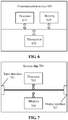
- FIG. 6 illustrates a schematic block diagram of a communication device 600 according to an embodiment of the disclosure.
- the device 600 may include a processor 610 and a memory 620.
- the memory 620 may store a program code.
- the processor 610 may execute the program code stored in the memory 620.
- the device 600 may include a transceiver 630.
- the processor 610 may control the transceiver 630 for external communication.
- the processor 610 may invoke the program code stored in the memory 620 to execute the corresponding operations of the terminal device in the method 200 illustrated in FIG. 2 , which will not be repeated herein for briefness.
- the processor 610 may invoke the program code stored in the memory 620 to execute the corresponding operations of the network device in the method 300 illustrated in FIG. 3 , which will not be repeated herein for briefness.
- FIG. 7 illustrates a schematic diagram of a system chip according to an embodiment of the disclosure.
- the system chip 700 in FIG. 7 may include an input interface 701, an output interface 702, a processor 703 and a memory 704 that are connected via an internal connection line,.
- the processor 703 is configured to execute a code in the memory 704.
- the processor 703 when the code is executed, the processor 703 implements the operations executed by the terminal device in the method 200 illustrated in FIG. 2 , which will not be repeated herein for briefness.
- the processor 703 when the code is executed, the processor 703 implements the operations executed by the network device in the method 300 illustrated in FIG. 3 , which will not be repeated herein for briefness.
- the disclosed system, device and method may be implemented in another manner.
- the device embodiment described above is only schematic, and for example, division of the units is only logic function division, and other division manners may be adopted during practical implementation.
- multiple units or components may be combined or integrated into another system, or some characteristics may be neglected or not executed.
- coupling or direct coupling or communication connection between each displayed or discussed component may be indirect coupling or communication connection, implemented through some interfaces, of the device or the units, and may be electrical and mechanical or adopt other forms.
- the units described as separate parts may or may not be physically separated, and parts displayed as units may or may not be physical units, and namely may be located in the same place, or may also be distributed to multiple network units. Part or all of the units may be selected to achieve the purpose of the solutions of the embodiments according to a practical requirement.
- each functional unit in each embodiment of the disclosure may be integrated into a processing unit, each unit may also physically exist independently, and two or more than two units may also be integrated into a unit.
- the function may also be stored in a computer-readable storage medium.
- the technical solutions of the disclosure substantially or parts making contributions to the conventional art or part of the technical solutions may be embodied in form of software product, and the computer software product is stored in a storage medium, including a plurality of instructions configured to enable a computer device (which may be a personal computer, a server, a network device or the like) to execute all or part of the operations of the method in each embodiment of the disclosure.
- the abovementioned storage medium includes: various media capable of storing program codes such as a U disk, a mobile hard disk, a Read-Only Memory (ROM), a Random Access Memory (RAM), a magnetic disk or an optical disk.
Landscapes
- Engineering & Computer Science (AREA)
- Computer Networks & Wireless Communication (AREA)
- Signal Processing (AREA)
- Quality & Reliability (AREA)
- Databases & Information Systems (AREA)
- Mobile Radio Communication Systems (AREA)
- Communication Control (AREA)
Applications Claiming Priority (1)
| Application Number | Priority Date | Filing Date | Title |
|---|---|---|---|
| PCT/CN2017/072287 WO2018133126A1 (zh) | 2017-01-23 | 2017-01-23 | 无线通信方法、终端设备和网络设备 |
Publications (2)
| Publication Number | Publication Date |
|---|---|
| EP3573358A1 true EP3573358A1 (de) | 2019-11-27 |
| EP3573358A4 EP3573358A4 (de) | 2019-11-27 |
Family
ID=62907652
Family Applications (1)
| Application Number | Title | Priority Date | Filing Date |
|---|---|---|---|
| EP17893311.5A Withdrawn EP3573358A4 (de) | 2017-01-23 | 2017-01-23 | Funkkommunikationsverfahren, endgerätevorrichtung und netzwerkvorrichtung |
Country Status (14)
| Country | Link |
|---|---|
| US (2) | US10925073B2 (de) |
| EP (1) | EP3573358A4 (de) |
| JP (1) | JP6980794B2 (de) |
| KR (1) | KR20190110109A (de) |
| CN (1) | CN110178391B (de) |
| AU (1) | AU2017394024A1 (de) |
| BR (1) | BR112019015071A2 (de) |
| CA (1) | CA3050805A1 (de) |
| MX (1) | MX2019008680A (de) |
| RU (1) | RU2746712C2 (de) |
| SG (1) | SG11201906730UA (de) |
| TW (1) | TW201828738A (de) |
| WO (1) | WO2018133126A1 (de) |
| ZA (1) | ZA201905454B (de) |
Families Citing this family (2)
| Publication number | Priority date | Publication date | Assignee | Title |
|---|---|---|---|---|
| CN108631918B (zh) * | 2017-03-24 | 2021-02-26 | 华为技术有限公司 | 数据传输的方法和装置 |
| CN112988726B (zh) * | 2021-03-24 | 2024-03-01 | 北京百度网讯科技有限公司 | 数据管理的方法、装置、计算机设备以及存储介质 |
Family Cites Families (21)
| Publication number | Priority date | Publication date | Assignee | Title |
|---|---|---|---|---|
| FI104143B1 (fi) * | 1997-07-31 | 1999-11-15 | Nokia Networks Oy | Menetelmä tietoliikenneresurssien kontrolloimiseksi |
| DE602004005327T2 (de) * | 2003-05-13 | 2007-11-22 | Koninklijke Philips Electronics N.V. | Funkkommunikationssystem |
| JP5209308B2 (ja) | 2004-08-11 | 2013-06-12 | インターデイジタル テクノロジー コーポレーション | システム性能向上のためのチャネルサウンディング |
| WO2007004285A1 (ja) * | 2005-07-04 | 2007-01-11 | Matsushita Electric Industrial Co., Ltd. | 無線通信方法、無線送信装置及び無線受信装置 |
| TWI427958B (zh) * | 2005-12-29 | 2014-02-21 | 內數位科技公司 | 以多h-arq方法同時選取多傳輸格式及傳送多傳輸塊組方法及裝置 |
| CN101127541A (zh) * | 2006-08-18 | 2008-02-20 | 大唐移动通信设备有限公司 | Hsupa中传输速率和调制编码的选择方法及装置 |
| US8724556B2 (en) * | 2007-03-19 | 2014-05-13 | Apple Inc. | Uplink control channel allocation in a communication system and communicating the allocation |
| EP3709545A1 (de) * | 2008-01-04 | 2020-09-16 | Godo Kaisha IP Bridge 1 | Funkübertragungsvorrichtung und funkübertragungsverfahren |
| CN102036305B (zh) * | 2009-09-30 | 2014-05-07 | 华为技术有限公司 | 控制信息的发送和接收方法、装置和通信系统 |
| CN107070597B (zh) * | 2012-03-02 | 2021-05-11 | 华为技术有限公司 | 信息传输方法和设备 |
| EP2639983A1 (de) * | 2012-03-16 | 2013-09-18 | Panasonic Corporation | Tabellenanpassung eines Modulations- und Kodierungsschemas für ABS mit niedriger Leistung |
| CN103733584A (zh) * | 2012-05-11 | 2014-04-16 | 华为技术有限公司 | 数据传输方法和设备 |
| CN103533533B (zh) | 2012-07-04 | 2017-07-14 | 电信科学技术研究院 | 一种信号传输方法及装置 |
| CN103580788A (zh) | 2012-07-27 | 2014-02-12 | 电信科学技术研究院 | 一种传输mcs指示信息的方法及装置 |
| US20140192767A1 (en) | 2012-12-14 | 2014-07-10 | Futurewei Technologies, Inc. | System and Method for Small Traffic Transmissions |
| US10028302B2 (en) * | 2013-03-08 | 2018-07-17 | Huawei Technologies Co., Ltd. | System and method for uplink grant-free transmission scheme |
| US10575205B2 (en) * | 2014-10-20 | 2020-02-25 | Qualcomm Incorporated | Transport block size determination |
| US9750056B2 (en) * | 2015-01-27 | 2017-08-29 | Huawei Technologies Co., Ltd. | System and method for transmission in a grant-free uplink transmission scheme |
| US10128993B2 (en) | 2015-05-29 | 2018-11-13 | Huawei Technologies Co., Ltd. | Systems and methods of adaptive frame structure for time division duplex |
| US10200168B2 (en) * | 2015-08-27 | 2019-02-05 | Futurewei Technologies, Inc. | Systems and methods for adaptation in a wireless network |
| CN105916171A (zh) | 2016-03-30 | 2016-08-31 | 深圳市金立通信设备有限公司 | 一种接入控制方法、接入设备及终端设备 |
-
2017
- 2017-01-23 BR BR112019015071-4A patent/BR112019015071A2/pt not_active IP Right Cessation
- 2017-01-23 JP JP2019539759A patent/JP6980794B2/ja active Active
- 2017-01-23 WO PCT/CN2017/072287 patent/WO2018133126A1/zh not_active Ceased
- 2017-01-23 MX MX2019008680A patent/MX2019008680A/es unknown
- 2017-01-23 KR KR1020197024162A patent/KR20190110109A/ko not_active Withdrawn
- 2017-01-23 RU RU2019126150A patent/RU2746712C2/ru active
- 2017-01-23 CA CA3050805A patent/CA3050805A1/en not_active Abandoned
- 2017-01-23 CN CN201780082645.6A patent/CN110178391B/zh active Active
- 2017-01-23 AU AU2017394024A patent/AU2017394024A1/en not_active Abandoned
- 2017-01-23 SG SG11201906730UA patent/SG11201906730UA/en unknown
- 2017-01-23 EP EP17893311.5A patent/EP3573358A4/de not_active Withdrawn
- 2017-01-23 US US16/479,774 patent/US10925073B2/en active Active
- 2017-12-27 TW TW106145867A patent/TW201828738A/zh unknown
-
2019
- 2019-08-19 ZA ZA2019/05454A patent/ZA201905454B/en unknown
-
2021
- 2021-01-20 US US17/153,356 patent/US20210144728A1/en not_active Abandoned
Also Published As
| Publication number | Publication date |
|---|---|
| KR20190110109A (ko) | 2019-09-27 |
| EP3573358A4 (de) | 2019-11-27 |
| BR112019015071A2 (pt) | 2020-03-03 |
| SG11201906730UA (en) | 2019-08-27 |
| CN110178391A (zh) | 2019-08-27 |
| TW201828738A (zh) | 2018-08-01 |
| US10925073B2 (en) | 2021-02-16 |
| US20210144728A1 (en) | 2021-05-13 |
| US20190373619A1 (en) | 2019-12-05 |
| ZA201905454B (en) | 2021-04-28 |
| JP6980794B2 (ja) | 2021-12-15 |
| RU2019126150A (ru) | 2021-02-24 |
| AU2017394024A1 (en) | 2019-09-12 |
| RU2019126150A3 (de) | 2021-02-24 |
| CN110178391B (zh) | 2022-10-11 |
| JP2020509637A (ja) | 2020-03-26 |
| MX2019008680A (es) | 2019-09-18 |
| RU2746712C2 (ru) | 2021-04-19 |
| WO2018133126A1 (zh) | 2018-07-26 |
| CA3050805A1 (en) | 2018-07-26 |
Similar Documents
| Publication | Publication Date | Title |
|---|---|---|
| US11711808B2 (en) | Method, mobile station, and network apparatus for transmitting service | |
| EP3883142B1 (de) | Sidelink-kommunikationsverfahren und endgerätevorrichtung | |
| EP4021105B1 (de) | Verfahren und vorrichtungen zum senden und empfangen von sidelink-informationen | |
| EP3665989A1 (de) | Dynamische verwaltung von uplink-steuerungssignalisierungsressourcen in einem drahtlosen netzwerk | |
| US20210194627A1 (en) | Communication method, terminal and network device | |
| US10349394B2 (en) | Physical downlink control channel transmission method, base station device, and user equipment | |
| JP2022033752A (ja) | 等しいサイズのコードブロックのためのトランスポートブロックサイズの決定 | |
| JP2023542690A (ja) | ユーザ装置及びユーザ装置の方法 | |
| EP3349502A1 (de) | Vorrichtung und verfahren zur handhabung von kanalstatusinformationsberichten zur übertragung von zeitintervallen | |
| US20200396728A1 (en) | Communication Method And Communications Apparatus | |
| CN107710819B (zh) | 无线通信的方法、网络设备和终端设备 | |
| US20210144728A1 (en) | Radio communication method, terminal device, and network device | |
| US20240188053A1 (en) | Terminal, base station, and communication method | |
| CN117917151A (zh) | 用于上行链路控制信道载波切换的方法 | |
| JP2025065048A (ja) | サービングセルとの通信を処理する方法及び通信装置 | |
| CN117999830A (zh) | 动态上行链路控制信道载波切换 | |
| JP7802886B2 (ja) | サービングセルとの通信を処理する方法及び通信装置 | |
| EP4568154A1 (de) | Ressourcenbestimmungsverfahren und -vorrichtung sowie endgerät und netzwerkseitige vorrichtung | |
| HK40024541B (en) | Transport block size determination for equal size code blocks |
Legal Events
| Date | Code | Title | Description |
|---|---|---|---|
| STAA | Information on the status of an ep patent application or granted ep patent |
Free format text: STATUS: THE INTERNATIONAL PUBLICATION HAS BEEN MADE |
|
| PUAI | Public reference made under article 153(3) epc to a published international application that has entered the european phase |
Free format text: ORIGINAL CODE: 0009012 |
|
| STAA | Information on the status of an ep patent application or granted ep patent |
Free format text: STATUS: REQUEST FOR EXAMINATION WAS MADE |
|
| 17P | Request for examination filed |
Effective date: 20190820 |
|
| A4 | Supplementary search report drawn up and despatched |
Effective date: 20190927 |
|
| AK | Designated contracting states |
Kind code of ref document: A1 Designated state(s): AL AT BE BG CH CY CZ DE DK EE ES FI FR GB GR HR HU IE IS IT LI LT LU LV MC MK MT NL NO PL PT RO RS SE SI SK SM TR |
|
| AX | Request for extension of the european patent |
Extension state: BA ME |
|
| RAP1 | Party data changed (applicant data changed or rights of an application transferred) |
Owner name: GUANGDONG OPPO MOBILE TELECOMMUNICATIONS CORP., LT |
|
| DAV | Request for validation of the european patent (deleted) | ||
| DAX | Request for extension of the european patent (deleted) | ||
| STAA | Information on the status of an ep patent application or granted ep patent |
Free format text: STATUS: EXAMINATION IS IN PROGRESS |
|
| 17Q | First examination report despatched |
Effective date: 20201211 |
|
| STAA | Information on the status of an ep patent application or granted ep patent |
Free format text: STATUS: THE APPLICATION IS DEEMED TO BE WITHDRAWN |
|
| 18D | Application deemed to be withdrawn |
Effective date: 20230801 |