EP3573369B1 - Procédé et appareil de transfert intercellulaire dans un système de communication sans fil prenant en charge une fonction eicic - Google Patents
Procédé et appareil de transfert intercellulaire dans un système de communication sans fil prenant en charge une fonction eicic Download PDFInfo
- Publication number
- EP3573369B1 EP3573369B1 EP18760602.5A EP18760602A EP3573369B1 EP 3573369 B1 EP3573369 B1 EP 3573369B1 EP 18760602 A EP18760602 A EP 18760602A EP 3573369 B1 EP3573369 B1 EP 3573369B1
- Authority
- EP
- European Patent Office
- Prior art keywords
- base station
- handover
- cell
- region
- terminal
- Prior art date
- Legal status (The legal status is an assumption and is not a legal conclusion. Google has not performed a legal analysis and makes no representation as to the accuracy of the status listed.)
- Not-in-force
Links
Images




Classifications
-
- H—ELECTRICITY
- H04—ELECTRIC COMMUNICATION TECHNIQUE
- H04W—WIRELESS COMMUNICATION NETWORKS
- H04W36/00—Hand-off or reselection arrangements
- H04W36/04—Reselecting a cell layer in multi-layered cells
-
- H—ELECTRICITY
- H04—ELECTRIC COMMUNICATION TECHNIQUE
- H04W—WIRELESS COMMUNICATION NETWORKS
- H04W16/00—Network planning, e.g. coverage or traffic planning tools; Network deployment, e.g. resource partitioning or cells structures
- H04W16/24—Cell structures
- H04W16/32—Hierarchical cell structures
-
- H—ELECTRICITY
- H04—ELECTRIC COMMUNICATION TECHNIQUE
- H04W—WIRELESS COMMUNICATION NETWORKS
- H04W36/00—Hand-off or reselection arrangements
- H04W36/0005—Control or signalling for completing the hand-off
- H04W36/0083—Determination of parameters used for hand-off, e.g. generation or modification of neighbour cell lists
- H04W36/00837—Determination of triggering parameters for hand-off
-
- H—ELECTRICITY
- H04—ELECTRIC COMMUNICATION TECHNIQUE
- H04W—WIRELESS COMMUNICATION NETWORKS
- H04W36/00—Hand-off or reselection arrangements
- H04W36/08—Reselecting an access point
-
- H—ELECTRICITY
- H04—ELECTRIC COMMUNICATION TECHNIQUE
- H04W—WIRELESS COMMUNICATION NETWORKS
- H04W36/00—Hand-off or reselection arrangements
- H04W36/16—Performing reselection for specific purposes
-
- H—ELECTRICITY
- H04—ELECTRIC COMMUNICATION TECHNIQUE
- H04W—WIRELESS COMMUNICATION NETWORKS
- H04W36/00—Hand-off or reselection arrangements
- H04W36/16—Performing reselection for specific purposes
- H04W36/20—Performing reselection for specific purposes for optimising the interference level
-
- H—ELECTRICITY
- H04—ELECTRIC COMMUNICATION TECHNIQUE
- H04W—WIRELESS COMMUNICATION NETWORKS
- H04W88/00—Devices specially adapted for wireless communication networks, e.g. terminals, base stations or access point devices
- H04W88/08—Access point devices
Definitions
- the disclosure relates to methods and apparatuses for handover in a wireless communication system supporting an enhanced Inter-Cell Interference Coordination (eICIC) function and, more particularly, to two methods and two apparatuses for handover of a terminal according to activation or deactivation of a cell range expansion function in a wireless communication.
- eICIC Inter-Cell Interference Coordination
- a mobile communication system has been developed to provide voice services while guaranteeing activity of users.
- the mobile communication system has gradually expanded its service area up to a data service as well as a voice service and has been developed to provide a high-speed data service at present.
- resources are lacking and users demand higher speed services in the current mobile communication system, a further improved mobile communication system is needed.
- LTE Long Term Evolution
- 3GPP 3rd Generation Partnership Project
- LTE is a technology of implementing high speed packet-based communication with a transmission rate of up to several hundreds Mbps.
- 3GPP 3rd Generation Partnership Project
- several methods are discussed, including a method of reducing the number of nodes located on a communication channel by simplifying a network architecture, a method of making wireless protocols closest to a wireless channel, and the like.
- EP2807859B1 relates to handover coordination in heterogeneous wireless networks.
- US2016006659A1 relates to a method and an apparatus for an inter-cell load balance in a wireless communication system.
- the disclosure has been made in view of the above-mentioned problems, and the disclosure provides two methods and two apparatuses for efficiently managing a terminal by a base station in a heterogeneous network mobile communication system in which a macro cell and a small cell co-exist.
- the disclosure provides two methods as set out in claims 1 and 5 and two apparatuses as set out in claims 7 and 11 for preventing occurrence of a radio link failure (RLF) due to a change in a cell range of a base station in a heterogeneous network (HetNet) system in which a high-output base station (macro cell) and a low-output base station (small cell) co-exist while sharing the same frequency.
- RLF radio link failure
- the solutions of the claims provide a method and an apparatus for preventing occurrence of a radio link failure (RLF) due to a change in a cell range of a base station in a heterogeneous network (HetNet) system in which a high-output base station (macro cell) and a low-output base station (small cell) co-exist while sharing the same frequency.
- RLF radio link failure
- the disclosure can prevent the occurence of a radio link failure (RLF) due to deactivation of a cell range expansion function (CRE) in a heterogeneous network mobile communication system in which a macro base station and a small base station co-exist.
- RLF radio link failure
- CRE cell range expansion function
- each block of the flowchart illustrations and combinations of blocks in the flowchart illustrations can be implemented by computer program instructions.
- These computer program instructions can be provided to a processor of a general purpose computer, special purpose computer, or other programmable data processing apparatus to produce a machine, such that the instructions, which execute via the processor of the computer or other programmable data processing apparatus, create means for implementing the functions specified in the flowchart block or blocks.
- These computer program instructions may also be stored in a computer usable or computer-readable memory that can direct a computer or other programmable data processing apparatus to function in a particular manner, such that the instructions stored in the computer usable or computer-readable memory produce an article of manufacture including instruction means that implement the function specified in the flowchart block or blocks.
- the computer program instructions may also be loaded onto a computer or other programmable data processing apparatus to cause a series of operational steps to be performed on the computer or other programmable data processing apparatus to produce a computer implemented process such that the instructions that execute on the computer or other programmable data processing apparatus provide steps for implementing the functions specified in the flowchart block or blocks.
- Each block of the flowchart illustrations may represent a module, segment, or portion of code, which includes one or more executable instructions for implementing the specified logical function(s). It should also be noted that in some alternative implementations, the functions noted in the blocks may occur out of the order. For example, two blocks shown in succession may, in fact, be executed substantially concurrently or the blocks may sometimes be executed in the reverse order, depending upon the functionality involved.
- the "unit” refers to a software element or a hardware element, such as a field programmable gate array (FPGA) or an application specific integrated circuit (ASIC), and performs a predetermined function.
- FPGA field programmable gate array
- ASIC application specific integrated circuit
- the "unit” does not always have a meaning limited to software or hardware.
- the "unit” may be constructed either to be stored in an addressable storage medium or to execute one or more processors. Therefore, the "unit” includes, for example, elements such as software elements, object-oriented software elements, class elements or task elements, processes, functions, properties, procedures, sub-routines, segments of a program code, drivers, firmware, micro-codes, circuits, data, database, data structures, tables, arrays, and parameters.
- the elements and functions provided by the "unit” may be either combined into a smaller number of elements, “unit” or divided into a larger number of elements, “unit”. Moreover, the elements and “units” may be implemented to reproduce one or more CPUs within a device or a security multimedia card. Further, in the embodiments, the "unit” may include one or more processors.
- HetNet heterogeneous network
- the disclosure provides a method and apparatus configured to prevent radio link failure (RLF) which may be incurred by a cell region change of a base station in a heterogeneous network system.
- RLF radio link failure
- a macro cell has a relatively high output and a wide region coverage.
- a small cell has a relatively low output and a narrower region coverage than the coverage of the macro cell, but has an advantage of inexpensive cell expansion.
- the small cell is mainly used to cover a coverage hole region which is not covered by the macro cell, or used to absorb load of the macro cell.
- the small cell cannot effectively absorb the load of the macro cell due to the narrow coverage.
- the 3GPP LTE standard employs an enhanced inter-cell interference coordination (eICIC) or time-domain ICIC technology in order to enable the small cell to effectively absorb the load of the macro cell.
- eICIC enhanced inter-cell interference coordination
- time-domain ICIC time-domain ICIC
- a cellular wireless communication system is operated such that a cell having the maximum downlink reception power is appointed as a serving cell for a given user to allow the user to download data traffic from the serving cell.
- the elCIC technology is a standard technology which appoints a small cell as a serving cell for a user, whose macro cell has a larger downlink reception power than the downlink reception power of the small cell, to allow the user to download data traffic from the small cell.
- FIG. 1 illustrates expansion of a coverage of a small cell by using an elCIC technology.
- a second region 110 which is coverage of a conventional small cell, can be expanded to a first region 120.
- a small cell can absorb more users of a macro cell and can thus distribute load of the macro cell to the small cell.
- users located in the expanded coverage of the small cell as illustrated in FIG. 1 i.e. users located inside the first region 120 and outside the second region 110, may undergo interference by the macro cell, which is stronger than a signal of the small cell, and thus have a greatly degraded wireless channel quality. Accordingly, the users located in the expanded coverage of the small cell may have a difficulty in performing a normal wireless communication.
- a 3GPP LTE elCIC technology provides an ABS pattern technology and a resource restriction technology.
- a macro cell provides information, i.e. an ABS pattern, to a small cell undergoing main interference from the macro cell.
- the ABS pattern information includes a 40-bit bit stream and indicates whether transmission (Tx) power of a macro cell, which repeats at a cycle of 40ms, is restricted.
- a first bit value among the 40 bits may indicate whether the transmission (Tx) power of a macro cell is restricted in a first subframe among the cycle of 40ms.
- a terminal located in the expanded coverage of a small cell undergoes high interference by a macro cell, and it is thus advantageous, in securing the wireless channel quality, to allocate a radio resource to the terminal only in the case of ABS wherein the macro cell reduces the transmission (Tx) power.
- the ABS pattern corresponds to a technology for explicitly informing the small cell of whether the transmission (Tx) power of the macro cell decreases, so as to enable the users located in the expanded coverage of the small cell to stably perform a wireless communication.
- the resource restriction technology corresponds to a technology to induce a user to measure a channel only in a specific subframe.
- the resource restriction technology may include three patterns.
- a first pattern includes 40-bit information and functions to restrict a subframe in which a user measures RSRP and RSRQ for a serving cell and determines radio link failure (RLC).
- RLC radio link failure
- a second pattern includes 40-bit information and performes a role to restict a subframe in which a user measures RSRP and RSRQ for a neighbor cell.
- a third pattern includes two pieces of 40-bit information.
- a first 40 bit may perform a role to indicate a subframe to be used to measure a first channel quality indicator (CQI).
- a second 40 bit performs a role to indicate a subframe to be used to measure a second channel quality indicator.
- a network uses the third pattern to enable a user to discriminately sort and measure a channel quality indicator in the ABS and a channel quality indicator in the nonABS.
- the network may apply a proper channel quality indicator depending on whether the ABS of the corresponding subframe exists, so as to perform resource allocation and a decision of modulation and coding scheme (MSC).
- MSC modulation and coding scheme
- ABS pattern may be changed according to time
- transferring of the third pattern to the user causes signaling overhead. Therefore, it is necessary to efficiently operate the third pattern.
- a 3GPP LTE standard also employs a further enhanced inter-cell interference coordination (FeICIC) technology in order to provide a more effective load distribution function.
- FeICIC enhanced inter-cell interference coordination
- the FelCIC technology enables a base station to transfer interference cell information to a terminal via signaling so as to remove interference by a cell-specific reference signal (CRS) generated from the interference cell and thus improve a channel quality.
- CRS cell-specific reference signal
- the FelCIC can provide an effect of enlarging the coverage of the small cell wider than the existing elCIC.
- the disclosure provides a method and apparatus configured to effectively manage a terminal by a base station in a heterogeneous network mobile communication system in which a macro cell and a small cell mixedly exist.
- the description in the specification is based on a 3GPP LTE FDD wireless communication system standard, but can also be expanded to other communication systems.
- the description in the specification is based on coverage expansion of a small cell in a network in which a macro cell and a small cell mixedly exist, but can also be expanded to other types of cell configurations.
- a pico cell is employed as an example of the small cell, without being necessarily limited thereto.
- the embodiments of the disclosure can also be applied to a node such as remote radio head (RRH), transmission point (TP) or the like on the same principle.
- RRH remote radio head
- TP transmission point
- FIG. 2 illustrates a cell region management method according to an embodiment of the disclosure.
- a "post-cell range expansion cell region 120" is called a cell-expanded region (CRE region) in contrast to a "pre-cell range expansion cell region 110" of a pico cell.
- CRE region cell-expanded region
- post-cell range expansion cell region 120 may be used to have a meaning that does not include the "pre-cell range expansion cell region 110".
- a terminal which is located in a cell-expandable region of the pico cell and whose serving cell is a macro cell, is called a "macro CRE terminal 210".
- a terminal except the "macro CRE terminal” is called a “macro non-CRE terminal 220".
- a terminal which is located in the cell-expanded region of the pico cell and whose serving cell is the pico cell, is called a "pico CRE terminal 230".
- a terminal except the "pico CRE terminal” is called a "pico non-CRE terminal 240".
- a coverage-expandable region of the pico cell (reserved region or CRE region) is operated as a "shared cell region" of the macro cell and the pico cell, not a unique cell region of the macro cell or the pico cell.
- a UE included in the reserved region is distinguished through a unique UE management method.
- the macro cell can distinguish between a macro CRE UE in the CRE region and a macro non-CRE UE which is not located in the CRE region.
- the pico cell can also distinguish between a pico CRE UE in the CRE region and a pico non-CRE UE which is not located in the CRE region.
- a CRE region UE having a high-load cell as a serving cell may be forced to handover to a low-load cell.
- a cellular system applies hysteresis to a handover occurrence condition, so that a shared cell region is generally formed.
- the shared cell region formed at a boundary between the macro cell and the pico cell is a region which serves as either a macro cell region or a pico cell region. If a UE moves within the shared cell region, handover does not occur.
- the shared cell region is a good solution to prevent the handover ping-pong, but has a weakness in that a UE cannot have the optimum cell as a serving cell in the perspective of signal strength.
- a pico UE may be located at a position where a stronger macro cell signal is received, rather than a macro UE.
- An embodiment according to the diagraph illustrated in FIG. 2 uses a method of operating the shared cell region (or CRE region), which exists at the boundary between the macro cell and the pico cell, more widely, so there is a fear that the UE cannot have the optimum cell as a serving cell in the perspective of signal strength.
- the shared cell region or CRE region
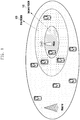
- FIG. 3 illustrates regions in which a UE may be located according to groups in a wireless communication system supporting an elCIC function of the disclosure.
- the groups refers to four groups of a macro non-CRE UE, a macro CRE UE, a pico non-CRE UE, and a pico CRE UE. Since the definition of the groups has been described above with reference to FIG. 2 , a detailed description thereof will be omitted below.
- An overlapping region between a region where a macro CRE UE is located and a region where a pico CRE UE is located is a CRE region.
- a macro UE passes eICIC_B, it is managed as the macro CRE UE, but does not yet handover to the pico cell. However, if the macro UE passes expanded CIO, i.e. eICICCIO, the macro CRE UE may handover to the pico cell.
- eICICCIO expanded CIO
- the macro UE may handover to the pico cell immediately after passing the eICIC_B. That is, the macro UE is managed as a macro cell UE in an expandable region of the pico cell, but may be managed as a pico cell UE after entering an expanded region of the pico cell.
- the pico UE passes a pre-expansion cell boundary (MROCIO)
- the pico UE is managed as the pico CRE UE before passing the eICICCIO, and may handover to the macro cell after passing the eICICCIO.
- the pico UE may be continuously managed as the pico CRE UE before passing the eICIC_B.
- the macro UE 300 may be located at a position where a pico cell signal received by the macro UE is stronger than that received by the pico UE 310.
- serving cells of the two UEs may be exchanged in order to avoid unnecessary radio resource waste due to degraded wireless channel quality.
- an A3 event of the 3GPP LTE standard is applied in order to distinguish a CRE region UE. If an A3 event entry condition is satisfied, an MR is operated to be transmitted only once in order to reduce an unnecessary RSRP information report of a UE (which is called an MR in 3GPP LTE, measurement report).
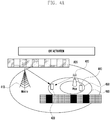
- FIG. 4a illustrates communication between a base station and a terminal in case a cell range expansion function is activated.
- a cell range expansion function i.e. a CRE function
- cell coverage of a pico base station 420 is expanded from a second region 450 to a first region 460.
- an ABS function is activated and a macro base station 410 may thus form an ABS pattern as shown in FIG. 4a .
- a terminal 440 located inside the second region 450 performs communication with the pico base station 420 regardless whether the cell range expansion function has been activated or deactivated.
- a terminal 430 located outside the second region 450 and inside the first region 460 performs communication with the macro base station 410 before the cell range expansion function is activated, and performs communication with the pico base station 420 after the cell range expansion function is activated.
- the macro terminal 430 may handover from the macro base station 410 to the pico base station 420.
- the pico base station 420 may perform communication with the terminal 430 without interference from the macro base station 410, by using the ABS pattern.
- FIG. 4b illustrates communication between a base station and a terminal in case a cell range expansion function is deactivated.
- the cell coverage of the pico base station 420 is changed from the first region 460 to the second region 450.
- the terminal 440 located inside the second region 450 is still located in the cell coverage of the pico base station 420 and can thus maintain communication with the pico base station 420.
- the terminal 430 located outside the second region 450 and inside the first region 460 may undergo radio link failure (RLF) as shown in FIG. 4b .
- RLF radio link failure
- the RLF may occur in a pico CRE UE located in a cell-expanded region, among terminals which can be supported by ABS. (It should be noted that even though the cell range expansion function is deactivated, the RLF does not occur in a macro CRE UE, which can be supported by the ABS and is located in a cell-expanded region).
- the interference of the macro base station 410 influences communication between the pico base station 420 and the terminal 430, and thus RLF may occur in the terminal 430.
- the disclosure provides a method for preventing occurrence of RLF due to the deactivation of the cell range expansion function, by maintaining an activation state of the ABS function of the macro base station for a predetermined time interval, even though the cell range expansion function is deactivated, and a detailed description thereof will be given below with reference to FIG. 5 .
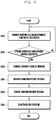
- FIG. 5 is a flowchart illustrating a communication method for a first base station according to an embodiment of the disclosure.
- a first base station monitors whether a cell range expansion function is deactivated. As described above, since there is a high possibility that a phenomenon, in which RLF occurs in a terminal, may occur at the moment when the cell range expansion function is converted from an activation state to a deactivation state, the first base station may monitor whether the cell range expansion function is deactivated, in real time.
- the first base station may indicate a macro base station, and the first base station can reduce the load of the first base station by monitoring whether the cell range expansion function is deactivated, at predetermined periodic intervals, instead of monitoring in real time whether the cell range expansion function is deactivated.
- the first base station returns to operation S510 and then consistently monitors the state of the cell range expansion function.
- the first base station maintains the activation state of an ABS function through operation S530.
- the cell range expansion function can be deactivated by various reasons. For example, if the load of the first base station increases, it is inefficient to maintain the activation state of the ABS function, and in this case, the first base station may thus deactivate the cell range expansion function.
- the ABS function of the first base station is also deactivated and RLF may thus occur in a terminal located in a specific region. Therefore, in order to prevent the occurrence of RLF, in operation S530, the first base station maintains the activation state of the ABS function even though the cell range expansion function is deactivated.
- the first base station In operation S540, the first base station generates a handover request message.
- the handover request message refers to a message for handover, into the first base station, of a terminal in which RLF may occur due to the deactivation of the cell range expansion function.
- a cell region of a second base station corresponding to a pico base station may be changed from a first region to a second region.
- a terminal which is located outside the second region and inside the first region and is connected to the second base station, may undergo RLF due to an interference from the first base station before the terminal handovers to the first base station.
- the first base station generates a message for handover of the terminal, which is located in the region (outside the second region and inside the first region) and is connected to the second base station.
- the terminal herein may be a pico CRE UE, and as previously disclosed, refers to a UE which is located in a cell-expanded region of a pico cell and whose serving cell is the pico cell.
- the first base station transmits the handover request message generated through operation S540 to the second base station.
- the second base station is a base station whose cell region is changed by the deactivation of the cell range expansion function, and may be, for example, a pico base station.
- the handover request message may be transmitted from the first base station to the second base station through a separate operation only for transmission of the handover request message, or if there is another message, which is transmitted from the first base station to the second base station according to the deactivation of the cell range expansion function, the handover request message may be transmitted while being included in said another message.
- the first base station determines whether a time interval having passed after the deactivation of the cell range expansion function exceeds a predetermined time interval.
- the predetermined time interval may be a maximum time interval required for a terminal having a possibility of the occurrence of RLF to handover from the second base station to the first base station, and the maximum time interval may be determined by the number of terminals which require the handover.
- the first base station deactivates the ABS function in operation S570.
- the first base station may maintain the activation state of the ABS function for a predetermined time interval, so as to prevent RLF from occurring in a terminal. After the predetermined time interval, the ABS function of the first base station may deactivated to improve communication efficiency of the first base station.
- FIG. 6 is a flowchart illustrating a communication method for a first base station according to an embodiment of the disclosure.
- a communication method for a first base station illustrated in FIG. 6 is generally similar to the communication method for a first base station illustrated in FIG. 5 .
- the first base station if the deactivation of a cell range expansion function is detected, the first base station does not maintain an activation state of an ABS function for a predetermined time interval, but maintains a deactivation state of the ABS function until receiving a handover completion message from a second base station.
- the first base station transmits a handover request message to the second base station through operation S640. Thereafter, if the first base station receives the handover completion message from the second base station through operation S650, the first base station deactivates the ABS function through operation S660. (A description of operations S610-S640 has been already given above with reference to FIG. 5 and is thus omitted here.
- the first base station maintains the activation state of the ABS function before receiving the handover completion message from the second base station, and thus can prevent the occurrence of RLF of a terminal due to the deactivation of the cell range expansion function.
- the first base station may receive the handover completion message from the second base station through a separate operation only for reception of the handover completion message, or if there is another message, which the first base station receives from the second base station according to the deactivation of the cell range expansion function, the handover completion message may be included in said received another message.
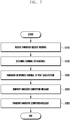
- FIG. 7 is a flowchart illustrating a handover method for a second base station according to an embodiment of the disclosure.
- a second base station may receive a handover request message generated by the deactivation of a cell range expansion function from a first base station.
- the second base station determines a terminal to be handovered to the first base station. More specifically, if a cell region of the second base station is changed from the first region to the second region by the deactivation of the cell range expansion function, a terminal, which is located inside the first region and outside the second region and is connected to the second base station, is determined as a terminal to be handovered to the first base station.
- the second base station handovers the terminal, which has been determined through operation S720, to the first base station.
- the terminal may be a pico CRE UE (UE which is located in a cell-expanded region of a pico cell and whose serving cell is a pico cell).
- the second base station determines that the handover of all terminals, which are located inside the first region and outside the second region, has been completed, the second base station generates a handover completion message through operation S740.
- the handover completion message may include information on a time interval required for completion of the handover after the handover request message is received, and information of the handovered terminal, as well as information reporting that the handover of the terminal requiring the handover has been completed.
- the second base station transmits the generated handover completion message to the first base station.
- the first base station deactivates the ABS function through the transmission of the handover completion message, and the second base station, whose cell region has been changed to the second region, accordingly performs communication with the terminal located in the second region.
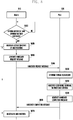
- FIG. 8 is a signal flow diagram illustrating a handover method in a wireless communication system supporting an elCIC function according to an embodiment of the disclosure, wherein a first base station is a macro base station 810 and a second base station is a pico base station 820.
- the macro base station 810 If deactivation of a cell range expansion function is detected through operation S830, the macro base station 810 does not deactivate an ABS function immediately, and maintains an activation state of the ABS function through operation S835.
- the macro base station 810 generates a handover request message through operation S840, and the macro base station 810 transmits the handover request message to the pico base station 820 through operation S845.
- the pico base station 820 which has received the handover request message, determines a terminal to handover to the macro base station 810 through operation S850. Specifically, if a cell region of the pico base station 820 is changed from a first region to a second region due to the deactivation of a cell range expansion function, the pico base station 820 determines a terminal, which is located inside the first region and outside the second region and is connected to the second base station, as the terminal to be handovered.
- the pico base station 820 handovers the terminal, which has been determined through operation S850, to the macro base station 810 through operation S855. If the handover is completed, the pico base station generates a handover completion message through operation S860.
- the terminal may be a pico CRE UE (UE which is located in a cell-expanded region of a pico cell and whose serving cell is the pico cell).
- UE which is located in a cell-expanded region of a pico cell and whose serving cell is the pico cell.
- the pico base station 820 transmits the handover completion message to the macro base station 810, and the macro base station 810, which has received the handover completion message, deactivates the ABS function through operation S870.
- RLF may not occur in a terminal located in an expanded region of the pico base station 820.
- the macro base station 810 can improve the efficiency of communication with a terminal by deactivating the ABS function.
- "t” may indicate the maximum time interval required for a terminal to handover from the second base station to the first base station as described above.
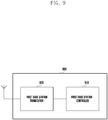
- FIG. 9 is a block diagram illustrating an inner structure of a first base station according to an embodiment of the disclosure.
- the first base station 900 monitors whether the cell range expansion function is deactivated.
- the first base station may include a first base station controller 910 configured to generate a handover request message if deactivation of the cell range expansion function is detected, and a first base station transceiver 920 configured to transmit the handover request message to the second base station.
- the first base station controller 910 may maintain an activation state of an almost blank subframe (ABS) function of the first base station for a predetermined time interval.
- ABS almost blank subframe
- a cell region of the second base station is changed from a first region to a second region by the deactivation of the cell range expansion function, and the handover request message may be a message to request a terminal, which is located outside the second region and inside the first region and is connected to the second base station, to handover to the first base station.
- the terminal may be a pico CRE UE (UE which is located in a cell-expanded region of a pico cell and whose serving cell is the pico cell).
- UE which is located in a cell-expanded region of a pico cell and whose serving cell is the pico cell.
- the first base station transceiver 920 may receive a handover completion message from the second base station. If the handover completion message is received through the first base station transceiver 910, the first base station controller 910 may deactivate the almost blank subframe (ABS) function of the first base station 900.
- ABS almost blank subframe
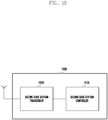
- FIG. 10 is a block diagram illustrating an inner structure of a second base station according to an embodiment of the disclosure.
- the second base station 1000 may include a second base station transceiver 1020 configured to receive, from the first base station, a handover request message generated by the deactivation of the cell range expansion function, and a second base station controller 1010 configured to handover at least one terminal, which has been determined based on the handover request message, to the first base station.
- a second base station transceiver 1020 configured to receive, from the first base station, a handover request message generated by the deactivation of the cell range expansion function
- a second base station controller 1010 configured to handover at least one terminal, which has been determined based on the handover request message, to the first base station.
- a cell region of the second base station 1000 is changed from a first region to a second region by the deactivation of the cell range expansion function, and the second base station controller 1010 may determine a terminal which is located inside the first region and outside the second region and connected to the second base station, and may handover the determined terminal to the first base station.
- the terminal may be a pico CRE UE (UE which is located in a cell-expanded region of a pico cell and whose serving cell is the pico cell).
- UE which is located in a cell-expanded region of a pico cell and whose serving cell is the pico cell.
- the second base station controller 1010 may generate a handover completion message after the handover of the terminal is completed, and the second base station transceiver 1020 may transmit the handover completion message to the first base station.
- embodiments of the disclosure disclosed in the specification and the drawings have been presented to easily explain technical contents of the disclosure and help comprehension of the disclosure, and do not limit the scope of the disclosure. Further, if necessary, the above respective embodiments may be employed in combination. For example, parts of embodiment 1, embodiment 2, and embodiment 3 of the disclosure are combined so as to employ a base station and a terminal. In addition, the above embodiments are presented based on an LTE system, but other modifications can be implemented in other systems such as a 5G or NR system or the like.
Landscapes
- Engineering & Computer Science (AREA)
- Computer Networks & Wireless Communication (AREA)
- Signal Processing (AREA)
- Mobile Radio Communication Systems (AREA)
Claims (12)
- Procédé de transfert intercellulaire exécuté par une première station de base (900) dans un système de communication sans fil de réseau hétérogène comprenant la première station de base (900) et une deuxième station de base (1000), supportant toutes les deux une fonction d'expansion de plage de cellules, CRE, le procédé comprenant :surveiller (S830) si la fonction d'expansion de plage de cellules est désactivéesi la désactivation de la fonction d'expansion de plage de cellules est détectée, générer (S840) un message de demande de transfert ; ettransmettre (S845) le message de demande de transfert à la deuxième station de base (1000) pour exécuter un transfert intercellulaire d'un terminal à la première station de base (900),la première station de base (900) étant une station de base macro et la deuxième station de base (1000) étant une station de base pico.
- Procédé de transfert intercellulaire selon la revendication 1, comprenant en outre maintenir (S835) un état d'activation d'une fonction de sous-trame presque vide (ABS) de la première station de base pour un intervalle de temps prédéterminé, si la désactivation de la fonction d'expansion de plage de cellules est détectée,
l'intervalle de temps prédéterminé étant un intervalle de temps maximum requis pour le transfert intercellulaire du terminal à la première station de base (900) par la deuxième station de base (1000). - Procédé de transfert intercellulaire selon la revendication 1, une région de cellules de la deuxième station de base (1000) étant changée d'une première région à une deuxième région en conséquence de la désactivation de la fonction d'expansion de plage de cellules, et
le message de demande de transfert intercellulaire étant un message qui demande le transfert intercellulaire, à la première station de base (900), d'un terminal, lequel est situé hors de la deuxième région et à l'intérieur de la première région et est connecté à la deuxième station de base (1000). - Procédé de transfert selon la revendication 1, comprenant en outre :recevoir (S865) un message de transfert intercellulaire terminé de la deuxième station de base (1000) ; anddésactiver (S870) la fonction de sous-trame presque vide, ABS, de la première station de base (900).
- Procédé de transfert intercellulaire exécuté par une deuxième station de base (1000) dans un système de communication sans fil de réseau hétérogène comprenant une première station de base (900) et la deuxième station de base (1000), supportant toutes les deux une fonction d'expansion de plage de cellules, CRE, le procédé comprenant :recevoir (S845), de la première station de base (900), un message de demande de transfert intercellulaire généré après la désactivation de la fonction d'expansion de plage de cellules ; etexécuter (S855) un transfert intercellulaire d'au moins un terminal déterminé sur la base du message de demande de transfert intercellulaire à la première station de base (900),la première station de base (900) étant une station de base macro et la deuxième station de base (1000) étant une station de base pico, une région de cellules de la deuxième station de base (1000) étant changée d'une première région à une deuxième région en conséquence de la désactivation de la fonction d'expansion de plage de cellules, etl'exécution du transfert intercellulaire comprenant :déterminer (S850) un terminal, lequel est situé hors de la deuxième région et à l'intérieur de la première région et est connecté à la deuxième station de base (1000) ; etexécuter (S855) le transfert intercellulaire du terminal déterminé à la première station de base (900).
- Procédé de transfert intercellulaire selon la revendication 5, comprenant en outre :générer (S860) un message de transfert intercellulaire terminé après que le transfert intercellulaire du terminal est terminé ; ettransmettre (S865) le message de transfert intercellulaire terminé à la première station de base (900).
- Première station de base (900) dans un système de communication sans fil de réseau hétérogène comprenant la première station de base (900) et une deuxième station de base (1000), supportant toutes les deux une fonction d'expansion de plage de cellules, CRE, la première station de base (900) comprenant :un contrôleur de première station de base (910) configuré pour surveiller si la fonction d'expansion de plage de cellules est désactivée, et générer un message de demande de transfert intercellulaire si la désactivation de la fonction d'expansion de plage de cellules est détectée ; etun émetteur-récepteur de première station de base (920) configuré pour transmettre le message de demande de transfert intercellulaire à la deuxième station de base (1000) pour exécuter un transfert intercellulaire d'un terminal à la première station de base (900),la première station de base (900) étant une station de base macro et la deuxième station de base (1000) étant une station de base pico.
- Première station de base (900) selon la revendication 7, le contrôleur de la première station de base (910) étant configuré pour maintenir un état d'activation d'une fonction de sous-trame presque vide (ABS) de la première station de base (900) pour un intervalle de temps prédéterminé, si la désactivation de la fonction d'expansion de plage de cellules est détectée, et
l'intervalle de temps prédéterminé étant un intervalle de temps maximum requis pour le transfert intercellulaire du terminal à la première station de base (900) par la deuxième station de base (1000). - Première station de base (900) selon la revendication 7, une région de cellules de la deuxième station de base (1000) étant changée d'une première région à une deuxième région en conséquence de la désactivation de la fonction d'expansion de plage de cellules, et
le message de demande de transfert intercellulaire étant un message qui demande le transfert intercellulaire, à la première station de base (900), d'un terminal, lequel est situé hors de la deuxième région et à l'intérieur de la première région et est connecté à la deuxième station de base (1000). - Première station de base (900) selon la revendication 7, l'émetteur-récepteur de la première station de base (920) étant configuré pour recevoir un message de transfert intercellulaire terminé de la deuxième station de base (1000) ; et
le contrôleur de la première station de base (910) étant configuré pour désactiver la fonction de sous-trame presque vide, ABS, de la première station de base (900) si le message de transfert intercellulaire terminé est reçu par l'émetteur-récepteur de la première station de base (920). - Deuxième station de base (1000) dans un système de communication sans fil de réseau hétérogène comprenant une première station de base (900) et la deuxième station de base (1000), supportant toutes les deux une fonction d'expansion de plage de cellules, CRE, la deuxième station de base (1000) comprenant :un émetteur-récepteur de deuxième station de base (1020) configuré pour recevoir, de la première station de base (900), un message de demande de transfert intercellulaire généré après la désactivation de la fonction d'expansion de plage de cellules ; etun contrôleur de deuxième station de base (1010) configuré pour exécuter un transfert intercellulaire, à la première station de base (900), d'au moins un terminal, déterminé sur la base du message de demande de transfert intercellulaire,la première station de base (900) étant une station de base macro et la deuxième station de base (1000) étant une station de base pico, une région de cellules de la deuxième station de base (1000) étant changée d'une première région à une deuxième région en conséquence de la désactivation de la fonction d'expansion de plage de cellules, etle contrôleur de deuxième station de base étant configuré pour déterminer un terminal, lequel est situé hors de la deuxième région et à l'intérieur de la première région et est connecté à la deuxième station de base (1000), et étant en outre configuré pour exécuter le transfert intercellulaire du terminal déterminé à la première station de base (900).
- Deuxième station de base (1000) selon la revendication 11, le contrôleur de la deuxième station de base (1010) générant un message de transfert intercellulaire terminé après que le transfert intercellulaire du terminal est terminé, et
l'émetteur-récepteur de la deuxième station de base (1020) étant configuré pour transmettre le message de transfert intercellulaire terminé à la première station de base (900).
Applications Claiming Priority (2)
| Application Number | Priority Date | Filing Date | Title |
|---|---|---|---|
| KR1020170026163A KR102542595B1 (ko) | 2017-02-28 | 2017-02-28 | eICIC 기능을 지원하는 무선 통신 시스템에서 핸드 오버 방법 및 장치 |
| PCT/KR2018/002480 WO2018160009A1 (fr) | 2017-02-28 | 2018-02-28 | Procédé et appareil de transfert intercellulaire dans un système de communication sans fil prenant en charge une fonction eicic |
Publications (3)
| Publication Number | Publication Date |
|---|---|
| EP3573369A4 EP3573369A4 (fr) | 2019-11-27 |
| EP3573369A1 EP3573369A1 (fr) | 2019-11-27 |
| EP3573369B1 true EP3573369B1 (fr) | 2021-11-24 |
Family
ID=63371432
Family Applications (1)
| Application Number | Title | Priority Date | Filing Date |
|---|---|---|---|
| EP18760602.5A Not-in-force EP3573369B1 (fr) | 2017-02-28 | 2018-02-28 | Procédé et appareil de transfert intercellulaire dans un système de communication sans fil prenant en charge une fonction eicic |
Country Status (5)
| Country | Link |
|---|---|
| US (1) | US11259226B2 (fr) |
| EP (1) | EP3573369B1 (fr) |
| KR (1) | KR102542595B1 (fr) |
| ES (1) | ES2901124T3 (fr) |
| WO (1) | WO2018160009A1 (fr) |
Families Citing this family (2)
| Publication number | Priority date | Publication date | Assignee | Title |
|---|---|---|---|---|
| US11012577B2 (en) * | 2016-05-18 | 2021-05-18 | Telefonaktiebolaget Lm Ericsson (Publ) | Method for enabling differentiated charging support |
| CN108882243A (zh) * | 2017-05-10 | 2018-11-23 | 索尼公司 | 用于无线通信系统的电子设备、方法和存储介质 |
Family Cites Families (17)
| Publication number | Priority date | Publication date | Assignee | Title |
|---|---|---|---|---|
| JP5473866B2 (ja) * | 2010-11-08 | 2014-04-16 | 株式会社Nttドコモ | 通知方法、ユーザ端末及び無線基地局 |
| WO2012093888A2 (fr) | 2011-01-07 | 2012-07-12 | 주식회사 팬택 | Dispositif et procédé permettant de sélectionner une cellule dans un système de communication sans fil |
| KR20120084533A (ko) | 2011-01-20 | 2012-07-30 | 삼성전자주식회사 | 이기종 망에서 핸드오버를 지원하기 위한 방법 및 장치 |
| WO2012134131A2 (fr) | 2011-03-28 | 2012-10-04 | 엘지전자 주식회사 | Procédé et appareil pour réaliser un transfert intercellulaire par rapport à une cellule mobile |
| US9451515B2 (en) | 2011-05-06 | 2016-09-20 | Telefonaktiebolaget Lm Ericsson (Publ) | Methods and apparatus for neighbor cell range extension |
| US10299178B2 (en) * | 2012-01-25 | 2019-05-21 | Telefonaktiebolaget L M Ericsson (Publ) | Methods and apparatus for hetergeneous network handover |
| US8744449B2 (en) * | 2012-03-16 | 2014-06-03 | Blackberry Limited | Mobility parameter adjustment and mobility state estimation in heterogeneous networks |
| JP5671494B2 (ja) * | 2012-05-09 | 2015-02-18 | 株式会社Nttドコモ | 無線通信システムおよび無線基地局 |
| US9231723B2 (en) | 2012-05-11 | 2016-01-05 | Intel Corporation | Coordinated dynamic point selection (DPS) with cell range expansion in a coordinated multipoint (CoMP) system |
| RU2603626C2 (ru) * | 2012-08-23 | 2016-11-27 | Интердиджитал Пэйтент Холдингз, Инк. | Работа с множеством планировщиков в беспроводной системе |
| US9155013B2 (en) | 2013-01-14 | 2015-10-06 | Qualcomm Incorporated | Cell range expansion elasticity control |
| US20150049672A1 (en) * | 2013-08-14 | 2015-02-19 | Qualcomm Incorporated | Methods and apparatus for avoiding or escaping cell range expansion (cre) in a heterogeneous network |
| WO2015066861A1 (fr) * | 2013-11-06 | 2015-05-14 | Telefonaktiebolaget L M Ericsson (Publ) | Optimisation de configuration d'expansion de plage de cellule (cre) |
| WO2015115784A1 (fr) * | 2014-01-28 | 2015-08-06 | 삼성전자 주식회사 | Procédé et appareil pour distribuer une charge entre des cellules, et atténuation d'interférences dans un système de communication sans fil |
| KR20150089890A (ko) * | 2014-01-28 | 2015-08-05 | 삼성전자주식회사 | 무선 통신 시스템에서 채널 품질 정보 보정 및 자원 할당 방법 및 장치 |
| KR102273878B1 (ko) * | 2014-07-02 | 2021-07-06 | 삼성전자 주식회사 | 무선 통신 시스템에서 셀 간 부하 분산 방법 및 장치 |
| US9888420B2 (en) * | 2016-06-29 | 2018-02-06 | Alcatel-Lucent Usa Inc. | Processing handovers for mobile terminals capable of interference cancellation |
-
2017
- 2017-02-28 KR KR1020170026163A patent/KR102542595B1/ko active Active
-
2018
- 2018-02-28 EP EP18760602.5A patent/EP3573369B1/fr not_active Not-in-force
- 2018-02-28 US US16/486,713 patent/US11259226B2/en active Active
- 2018-02-28 ES ES18760602T patent/ES2901124T3/es active Active
- 2018-02-28 WO PCT/KR2018/002480 patent/WO2018160009A1/fr not_active Ceased
Non-Patent Citations (1)
| Title |
|---|
| None * |
Also Published As
| Publication number | Publication date |
|---|---|
| EP3573369A4 (fr) | 2019-11-27 |
| EP3573369A1 (fr) | 2019-11-27 |
| WO2018160009A1 (fr) | 2018-09-07 |
| KR20180099129A (ko) | 2018-09-05 |
| KR102542595B1 (ko) | 2023-06-14 |
| US11259226B2 (en) | 2022-02-22 |
| ES2901124T3 (es) | 2022-03-21 |
| US20190380077A1 (en) | 2019-12-12 |
Similar Documents
| Publication | Publication Date | Title |
|---|---|---|
| US11463363B2 (en) | Method and apparatus for inter-cell load balance in wireless communication system | |
| JP7630501B2 (ja) | 隣接セル測定手順に関与するユーザ機器 | |
| EP3413660B1 (fr) | Procédé de communication et équipement d'utilisateur appliqués à une supercellule | |
| US20160353347A1 (en) | Method and apparatus for inter-cell load distribution and interference mitigation in wireless communication system | |
| CN108810960B (zh) | 一种小区切换、确定上行发送功率的方法及装置 | |
| KR20210020904A (ko) | 핸드오버 방법 및 장치 | |
| CN104272804B (zh) | 测量方法、测量控制方法及设备 | |
| US10784940B2 (en) | 5G platform-oriented node discovery method and system, and electronic device | |
| CN114616862A (zh) | 通信方法、装置及系统 | |
| CN108882264B (zh) | 双连接下异频邻区的测量方法及系统 | |
| TWI551162B (zh) | A method, system, and device for reporting mobile information | |
| CN115460625B (zh) | 数据传输方法、设备及存储介质 | |
| CN103581945A (zh) | 测量配置的处理方法及装置 | |
| CN116368846B (zh) | 通信方法及相关设备 | |
| JP2022540592A (ja) | 無線通信ネットワークの条件付き構成 | |
| EP3008939A1 (fr) | Partage de charge dans un système de radiocommunication cellulaire | |
| EP3573369B1 (fr) | Procédé et appareil de transfert intercellulaire dans un système de communication sans fil prenant en charge une fonction eicic | |
| KR20130060194A (ko) | 무선링크 실패 정보의 처리 방법 및 시스템 | |
| CN114071595B (zh) | 通信方法和通信装置 | |
| JP2023010463A (ja) | ユーザ装置、基地局及び通信制御方法 | |
| US20260046736A1 (en) | Configuration of l1 beam measurement for lower layer mobility | |
| WO2025194790A1 (fr) | Procédé d'envoi de rapport de mesure, appareil de communication et support de stockage | |
| WO2023282352A1 (fr) | Dispositif de communication, station de base et procédé de communication | |
| JP2023010464A (ja) | ユーザ装置、基地局及び通信制御方法 | |
| CN119233347A (zh) | 小区切换方法、电子设备、存储介质及程序产品 |
Legal Events
| Date | Code | Title | Description |
|---|---|---|---|
| STAA | Information on the status of an ep patent application or granted ep patent |
Free format text: STATUS: THE INTERNATIONAL PUBLICATION HAS BEEN MADE |
|
| PUAI | Public reference made under article 153(3) epc to a published international application that has entered the european phase |
Free format text: ORIGINAL CODE: 0009012 |
|
| STAA | Information on the status of an ep patent application or granted ep patent |
Free format text: STATUS: REQUEST FOR EXAMINATION WAS MADE |
|
| 17P | Request for examination filed |
Effective date: 20190819 |
|
| A4 | Supplementary search report drawn up and despatched |
Effective date: 20191024 |
|
| AK | Designated contracting states |
Kind code of ref document: A1 Designated state(s): AL AT BE BG CH CY CZ DE DK EE ES FI FR GB GR HR HU IE IS IT LI LT LU LV MC MK MT NL NO PL PT RO RS SE SI SK SM TR |
|
| AX | Request for extension of the european patent |
Extension state: BA ME |
|
| DAV | Request for validation of the european patent (deleted) | ||
| DAX | Request for extension of the european patent (deleted) | ||
| STAA | Information on the status of an ep patent application or granted ep patent |
Free format text: STATUS: EXAMINATION IS IN PROGRESS |
|
| 17Q | First examination report despatched |
Effective date: 20200724 |
|
| RIC1 | Information provided on ipc code assigned before grant |
Ipc: H04W 36/16 20090101AFI20210406BHEP Ipc: H04W 36/08 20090101ALI20210406BHEP Ipc: H04W 16/32 20090101ALN20210406BHEP Ipc: H04W 88/08 20090101ALN20210406BHEP |
|
| RIC1 | Information provided on ipc code assigned before grant |
Ipc: H04W 36/16 20090101AFI20210409BHEP Ipc: H04W 36/08 20090101ALI20210409BHEP Ipc: H04W 16/32 20090101ALN20210409BHEP Ipc: H04W 88/08 20090101ALN20210409BHEP |
|
| REG | Reference to a national code |
Ref country code: DE Ref legal event code: R079 Ref document number: 602018027191 Country of ref document: DE Free format text: PREVIOUS MAIN CLASS: H04W0036040000 Ipc: H04W0036160000 |
|
| RIC1 | Information provided on ipc code assigned before grant |
Ipc: H04W 36/16 20090101AFI20210505BHEP Ipc: H04W 36/08 20090101ALI20210505BHEP Ipc: H04W 16/32 20090101ALN20210505BHEP Ipc: H04W 88/08 20090101ALN20210505BHEP |
|
| GRAP | Despatch of communication of intention to grant a patent |
Free format text: ORIGINAL CODE: EPIDOSNIGR1 |
|
| STAA | Information on the status of an ep patent application or granted ep patent |
Free format text: STATUS: GRANT OF PATENT IS INTENDED |
|
| INTG | Intention to grant announced |
Effective date: 20210617 |
|
| RIC1 | Information provided on ipc code assigned before grant |
Ipc: H04W 36/16 20090101AFI20210604BHEP Ipc: H04W 36/08 20090101ALI20210604BHEP Ipc: H04W 16/32 20090101ALN20210604BHEP Ipc: H04W 88/08 20090101ALN20210604BHEP |
|
| GRAS | Grant fee paid |
Free format text: ORIGINAL CODE: EPIDOSNIGR3 |
|
| GRAA | (expected) grant |
Free format text: ORIGINAL CODE: 0009210 |
|
| STAA | Information on the status of an ep patent application or granted ep patent |
Free format text: STATUS: THE PATENT HAS BEEN GRANTED |
|
| AK | Designated contracting states |
Kind code of ref document: B1 Designated state(s): AL AT BE BG CH CY CZ DE DK EE ES FI FR GB GR HR HU IE IS IT LI LT LU LV MC MK MT NL NO PL PT RO RS SE SI SK SM TR |
|
| REG | Reference to a national code |
Ref country code: GB Ref legal event code: FG4D |
|
| REG | Reference to a national code |
Ref country code: DE Ref legal event code: R096 Ref document number: 602018027191 Country of ref document: DE |
|
| REG | Reference to a national code |
Ref country code: AT Ref legal event code: REF Ref document number: 1450821 Country of ref document: AT Kind code of ref document: T Effective date: 20211215 |
|
| REG | Reference to a national code |
Ref country code: IE Ref legal event code: FG4D |
|
| REG | Reference to a national code |
Ref country code: NL Ref legal event code: FP |
|
| REG | Reference to a national code |
Ref country code: ES Ref legal event code: FG2A Ref document number: 2901124 Country of ref document: ES Kind code of ref document: T3 Effective date: 20220321 |
|
| REG | Reference to a national code |
Ref country code: LT Ref legal event code: MG9D |
|
| REG | Reference to a national code |
Ref country code: AT Ref legal event code: MK05 Ref document number: 1450821 Country of ref document: AT Kind code of ref document: T Effective date: 20211124 |
|
| PG25 | Lapsed in a contracting state [announced via postgrant information from national office to epo] |
Ref country code: RS Free format text: LAPSE BECAUSE OF FAILURE TO SUBMIT A TRANSLATION OF THE DESCRIPTION OR TO PAY THE FEE WITHIN THE PRESCRIBED TIME-LIMIT Effective date: 20211124 Ref country code: LT Free format text: LAPSE BECAUSE OF FAILURE TO SUBMIT A TRANSLATION OF THE DESCRIPTION OR TO PAY THE FEE WITHIN THE PRESCRIBED TIME-LIMIT Effective date: 20211124 Ref country code: FI Free format text: LAPSE BECAUSE OF FAILURE TO SUBMIT A TRANSLATION OF THE DESCRIPTION OR TO PAY THE FEE WITHIN THE PRESCRIBED TIME-LIMIT Effective date: 20211124 Ref country code: BG Free format text: LAPSE BECAUSE OF FAILURE TO SUBMIT A TRANSLATION OF THE DESCRIPTION OR TO PAY THE FEE WITHIN THE PRESCRIBED TIME-LIMIT Effective date: 20220224 Ref country code: AT Free format text: LAPSE BECAUSE OF FAILURE TO SUBMIT A TRANSLATION OF THE DESCRIPTION OR TO PAY THE FEE WITHIN THE PRESCRIBED TIME-LIMIT Effective date: 20211124 |
|
| PG25 | Lapsed in a contracting state [announced via postgrant information from national office to epo] |
Ref country code: IS Free format text: LAPSE BECAUSE OF FAILURE TO SUBMIT A TRANSLATION OF THE DESCRIPTION OR TO PAY THE FEE WITHIN THE PRESCRIBED TIME-LIMIT Effective date: 20220324 Ref country code: SE Free format text: LAPSE BECAUSE OF FAILURE TO SUBMIT A TRANSLATION OF THE DESCRIPTION OR TO PAY THE FEE WITHIN THE PRESCRIBED TIME-LIMIT Effective date: 20211124 Ref country code: PT Free format text: LAPSE BECAUSE OF FAILURE TO SUBMIT A TRANSLATION OF THE DESCRIPTION OR TO PAY THE FEE WITHIN THE PRESCRIBED TIME-LIMIT Effective date: 20220324 Ref country code: PL Free format text: LAPSE BECAUSE OF FAILURE TO SUBMIT A TRANSLATION OF THE DESCRIPTION OR TO PAY THE FEE WITHIN THE PRESCRIBED TIME-LIMIT Effective date: 20211124 Ref country code: NO Free format text: LAPSE BECAUSE OF FAILURE TO SUBMIT A TRANSLATION OF THE DESCRIPTION OR TO PAY THE FEE WITHIN THE PRESCRIBED TIME-LIMIT Effective date: 20220224 Ref country code: LV Free format text: LAPSE BECAUSE OF FAILURE TO SUBMIT A TRANSLATION OF THE DESCRIPTION OR TO PAY THE FEE WITHIN THE PRESCRIBED TIME-LIMIT Effective date: 20211124 Ref country code: HR Free format text: LAPSE BECAUSE OF FAILURE TO SUBMIT A TRANSLATION OF THE DESCRIPTION OR TO PAY THE FEE WITHIN THE PRESCRIBED TIME-LIMIT Effective date: 20211124 Ref country code: GR Free format text: LAPSE BECAUSE OF FAILURE TO SUBMIT A TRANSLATION OF THE DESCRIPTION OR TO PAY THE FEE WITHIN THE PRESCRIBED TIME-LIMIT Effective date: 20220225 |
|
| PG25 | Lapsed in a contracting state [announced via postgrant information from national office to epo] |
Ref country code: SM Free format text: LAPSE BECAUSE OF FAILURE TO SUBMIT A TRANSLATION OF THE DESCRIPTION OR TO PAY THE FEE WITHIN THE PRESCRIBED TIME-LIMIT Effective date: 20211124 Ref country code: SK Free format text: LAPSE BECAUSE OF FAILURE TO SUBMIT A TRANSLATION OF THE DESCRIPTION OR TO PAY THE FEE WITHIN THE PRESCRIBED TIME-LIMIT Effective date: 20211124 Ref country code: RO Free format text: LAPSE BECAUSE OF FAILURE TO SUBMIT A TRANSLATION OF THE DESCRIPTION OR TO PAY THE FEE WITHIN THE PRESCRIBED TIME-LIMIT Effective date: 20211124 Ref country code: EE Free format text: LAPSE BECAUSE OF FAILURE TO SUBMIT A TRANSLATION OF THE DESCRIPTION OR TO PAY THE FEE WITHIN THE PRESCRIBED TIME-LIMIT Effective date: 20211124 Ref country code: DK Free format text: LAPSE BECAUSE OF FAILURE TO SUBMIT A TRANSLATION OF THE DESCRIPTION OR TO PAY THE FEE WITHIN THE PRESCRIBED TIME-LIMIT Effective date: 20211124 Ref country code: CZ Free format text: LAPSE BECAUSE OF FAILURE TO SUBMIT A TRANSLATION OF THE DESCRIPTION OR TO PAY THE FEE WITHIN THE PRESCRIBED TIME-LIMIT Effective date: 20211124 |
|
| REG | Reference to a national code |
Ref country code: DE Ref legal event code: R097 Ref document number: 602018027191 Country of ref document: DE |
|
| PG25 | Lapsed in a contracting state [announced via postgrant information from national office to epo] |
Ref country code: MC Free format text: LAPSE BECAUSE OF FAILURE TO SUBMIT A TRANSLATION OF THE DESCRIPTION OR TO PAY THE FEE WITHIN THE PRESCRIBED TIME-LIMIT Effective date: 20211124 |
|
| PLBE | No opposition filed within time limit |
Free format text: ORIGINAL CODE: 0009261 |
|
| STAA | Information on the status of an ep patent application or granted ep patent |
Free format text: STATUS: NO OPPOSITION FILED WITHIN TIME LIMIT |
|
| REG | Reference to a national code |
Ref country code: CH Ref legal event code: PL |
|
| REG | Reference to a national code |
Ref country code: BE Ref legal event code: MM Effective date: 20220228 |
|
| PG25 | Lapsed in a contracting state [announced via postgrant information from national office to epo] |
Ref country code: LU Free format text: LAPSE BECAUSE OF NON-PAYMENT OF DUE FEES Effective date: 20220228 Ref country code: AL Free format text: LAPSE BECAUSE OF FAILURE TO SUBMIT A TRANSLATION OF THE DESCRIPTION OR TO PAY THE FEE WITHIN THE PRESCRIBED TIME-LIMIT Effective date: 20211124 |
|
| 26N | No opposition filed |
Effective date: 20220825 |
|
| PG25 | Lapsed in a contracting state [announced via postgrant information from national office to epo] |
Ref country code: SI Free format text: LAPSE BECAUSE OF FAILURE TO SUBMIT A TRANSLATION OF THE DESCRIPTION OR TO PAY THE FEE WITHIN THE PRESCRIBED TIME-LIMIT Effective date: 20211124 |
|
| PG25 | Lapsed in a contracting state [announced via postgrant information from national office to epo] |
Ref country code: LI Free format text: LAPSE BECAUSE OF NON-PAYMENT OF DUE FEES Effective date: 20220228 Ref country code: IE Free format text: LAPSE BECAUSE OF NON-PAYMENT OF DUE FEES Effective date: 20220228 Ref country code: CH Free format text: LAPSE BECAUSE OF NON-PAYMENT OF DUE FEES Effective date: 20220228 |
|
| PG25 | Lapsed in a contracting state [announced via postgrant information from national office to epo] |
Ref country code: BE Free format text: LAPSE BECAUSE OF NON-PAYMENT OF DUE FEES Effective date: 20220228 |
|
| PGFP | Annual fee paid to national office [announced via postgrant information from national office to epo] |
Ref country code: NL Payment date: 20240123 Year of fee payment: 7 |
|
| PGFP | Annual fee paid to national office [announced via postgrant information from national office to epo] |
Ref country code: ES Payment date: 20240319 Year of fee payment: 7 |
|
| PG25 | Lapsed in a contracting state [announced via postgrant information from national office to epo] |
Ref country code: MK Free format text: LAPSE BECAUSE OF FAILURE TO SUBMIT A TRANSLATION OF THE DESCRIPTION OR TO PAY THE FEE WITHIN THE PRESCRIBED TIME-LIMIT Effective date: 20211124 Ref country code: CY Free format text: LAPSE BECAUSE OF FAILURE TO SUBMIT A TRANSLATION OF THE DESCRIPTION OR TO PAY THE FEE WITHIN THE PRESCRIBED TIME-LIMIT Effective date: 20211124 |
|
| PGFP | Annual fee paid to national office [announced via postgrant information from national office to epo] |
Ref country code: DE Payment date: 20240122 Year of fee payment: 7 Ref country code: GB Payment date: 20240122 Year of fee payment: 7 |
|
| PG25 | Lapsed in a contracting state [announced via postgrant information from national office to epo] |
Ref country code: HU Free format text: LAPSE BECAUSE OF FAILURE TO SUBMIT A TRANSLATION OF THE DESCRIPTION OR TO PAY THE FEE WITHIN THE PRESCRIBED TIME-LIMIT; INVALID AB INITIO Effective date: 20180228 |
|
| PGFP | Annual fee paid to national office [announced via postgrant information from national office to epo] |
Ref country code: IT Payment date: 20240124 Year of fee payment: 7 Ref country code: FR Payment date: 20240123 Year of fee payment: 7 |
|
| PG25 | Lapsed in a contracting state [announced via postgrant information from national office to epo] |
Ref country code: MT Free format text: LAPSE BECAUSE OF FAILURE TO SUBMIT A TRANSLATION OF THE DESCRIPTION OR TO PAY THE FEE WITHIN THE PRESCRIBED TIME-LIMIT Effective date: 20211124 |
|
| REG | Reference to a national code |
Ref country code: DE Ref legal event code: R119 Ref document number: 602018027191 Country of ref document: DE |
|
| REG | Reference to a national code |
Ref country code: NL Ref legal event code: MM Effective date: 20250301 |
|
| GBPC | Gb: european patent ceased through non-payment of renewal fee |
Effective date: 20250228 |
|
| PG25 | Lapsed in a contracting state [announced via postgrant information from national office to epo] |
Ref country code: NL Free format text: LAPSE BECAUSE OF NON-PAYMENT OF DUE FEES Effective date: 20250301 |
|
| PG25 | Lapsed in a contracting state [announced via postgrant information from national office to epo] |
Ref country code: TR Free format text: LAPSE BECAUSE OF FAILURE TO SUBMIT A TRANSLATION OF THE DESCRIPTION OR TO PAY THE FEE WITHIN THE PRESCRIBED TIME-LIMIT Effective date: 20211124 |
|
| PG25 | Lapsed in a contracting state [announced via postgrant information from national office to epo] |
Ref country code: DE Free format text: LAPSE BECAUSE OF NON-PAYMENT OF DUE FEES Effective date: 20250902 |
|
| PG25 | Lapsed in a contracting state [announced via postgrant information from national office to epo] |
Ref country code: GB Free format text: LAPSE BECAUSE OF NON-PAYMENT OF DUE FEES Effective date: 20250228 |
|
| PG25 | Lapsed in a contracting state [announced via postgrant information from national office to epo] |
Ref country code: IT Free format text: LAPSE BECAUSE OF NON-PAYMENT OF DUE FEES Effective date: 20250228 Ref country code: FR Free format text: LAPSE BECAUSE OF NON-PAYMENT OF DUE FEES Effective date: 20250228 |
|
| REG | Reference to a national code |
Ref country code: ES Ref legal event code: FD2A Effective date: 20260407 |
|
| PG25 | Lapsed in a contracting state [announced via postgrant information from national office to epo] |
Ref country code: ES Free format text: LAPSE BECAUSE OF NON-PAYMENT OF DUE FEES Effective date: 20250301 |