EP3573396A1 - Procédé de radiocommunication, dispositif terminal, et dispositif de réseau - Google Patents
Procédé de radiocommunication, dispositif terminal, et dispositif de réseau Download PDFInfo
- Publication number
- EP3573396A1 EP3573396A1 EP17896240.3A EP17896240A EP3573396A1 EP 3573396 A1 EP3573396 A1 EP 3573396A1 EP 17896240 A EP17896240 A EP 17896240A EP 3573396 A1 EP3573396 A1 EP 3573396A1
- Authority
- EP
- European Patent Office
- Prior art keywords
- dmrs
- multiple access
- access mode
- sequences
- terminal device
- Prior art date
- Legal status (The legal status is an assumption and is not a legal conclusion. Google has not performed a legal analysis and makes no representation as to the accuracy of the status listed.)
- Granted
Links
Images


Classifications
-
- H—ELECTRICITY
- H04—ELECTRIC COMMUNICATION TECHNIQUE
- H04L—TRANSMISSION OF DIGITAL INFORMATION, e.g. TELEGRAPHIC COMMUNICATION
- H04L5/00—Arrangements affording multiple use of the transmission path
- H04L5/0001—Arrangements for dividing the transmission path
- H04L5/0028—Variable division
-
- H—ELECTRICITY
- H04—ELECTRIC COMMUNICATION TECHNIQUE
- H04L—TRANSMISSION OF DIGITAL INFORMATION, e.g. TELEGRAPHIC COMMUNICATION
- H04L5/00—Arrangements affording multiple use of the transmission path
- H04L5/003—Arrangements for allocating sub-channels of the transmission path
- H04L5/0037—Inter-user or inter-terminal allocation
-
- H—ELECTRICITY
- H04—ELECTRIC COMMUNICATION TECHNIQUE
- H04L—TRANSMISSION OF DIGITAL INFORMATION, e.g. TELEGRAPHIC COMMUNICATION
- H04L27/00—Modulated-carrier systems
- H04L27/26—Systems using multi-frequency codes
- H04L27/2601—Multicarrier modulation systems
- H04L27/2602—Signal structure
- H04L27/2605—Symbol extensions, e.g. Zero Tail, Unique Word [UW]
- H04L27/2607—Cyclic extensions
-
- H—ELECTRICITY
- H04—ELECTRIC COMMUNICATION TECHNIQUE
- H04L—TRANSMISSION OF DIGITAL INFORMATION, e.g. TELEGRAPHIC COMMUNICATION
- H04L27/00—Modulated-carrier systems
- H04L27/26—Systems using multi-frequency codes
- H04L27/2601—Multicarrier modulation systems
- H04L27/2602—Signal structure
- H04L27/261—Details of reference signals
-
- H—ELECTRICITY
- H04—ELECTRIC COMMUNICATION TECHNIQUE
- H04L—TRANSMISSION OF DIGITAL INFORMATION, e.g. TELEGRAPHIC COMMUNICATION
- H04L27/00—Modulated-carrier systems
- H04L27/26—Systems using multi-frequency codes
- H04L27/2601—Multicarrier modulation systems
- H04L27/2602—Signal structure
- H04L27/261—Details of reference signals
- H04L27/2613—Structure of the reference signals
-
- H—ELECTRICITY
- H04—ELECTRIC COMMUNICATION TECHNIQUE
- H04L—TRANSMISSION OF DIGITAL INFORMATION, e.g. TELEGRAPHIC COMMUNICATION
- H04L27/00—Modulated-carrier systems
- H04L27/26—Systems using multi-frequency codes
- H04L27/2601—Multicarrier modulation systems
- H04L27/2626—Arrangements specific to the transmitter only
- H04L27/2646—Arrangements specific to the transmitter only using feedback from receiver for adjusting OFDM transmission parameters, e.g. transmission timing or guard interval length
-
- H—ELECTRICITY
- H04—ELECTRIC COMMUNICATION TECHNIQUE
- H04L—TRANSMISSION OF DIGITAL INFORMATION, e.g. TELEGRAPHIC COMMUNICATION
- H04L5/00—Arrangements affording multiple use of the transmission path
- H04L5/0001—Arrangements for dividing the transmission path
- H04L5/0003—Two-dimensional division
- H04L5/0005—Time-frequency
- H04L5/0007—Time-frequency the frequencies being orthogonal, e.g. OFDM(A) or DMT
-
- H—ELECTRICITY
- H04—ELECTRIC COMMUNICATION TECHNIQUE
- H04L—TRANSMISSION OF DIGITAL INFORMATION, e.g. TELEGRAPHIC COMMUNICATION
- H04L5/00—Arrangements affording multiple use of the transmission path
- H04L5/003—Arrangements for allocating sub-channels of the transmission path
- H04L5/0048—Allocation of pilot signals, i.e. of signals known to the receiver
-
- H—ELECTRICITY
- H04—ELECTRIC COMMUNICATION TECHNIQUE
- H04L—TRANSMISSION OF DIGITAL INFORMATION, e.g. TELEGRAPHIC COMMUNICATION
- H04L5/00—Arrangements affording multiple use of the transmission path
- H04L5/003—Arrangements for allocating sub-channels of the transmission path
- H04L5/0048—Allocation of pilot signals, i.e. of signals known to the receiver
- H04L5/0051—Allocation of pilot signals, i.e. of signals known to the receiver of dedicated pilots, i.e. pilots destined for a single user or terminal
-
- H—ELECTRICITY
- H04—ELECTRIC COMMUNICATION TECHNIQUE
- H04L—TRANSMISSION OF DIGITAL INFORMATION, e.g. TELEGRAPHIC COMMUNICATION
- H04L5/00—Arrangements affording multiple use of the transmission path
- H04L5/0091—Signalling for the administration of the divided path, e.g. signalling of configuration information
- H04L5/0094—Indication of how sub-channels of the path are allocated
-
- H—ELECTRICITY
- H04—ELECTRIC COMMUNICATION TECHNIQUE
- H04W—WIRELESS COMMUNICATION NETWORKS
- H04W72/00—Local resource management
- H04W72/04—Wireless resource allocation
-
- H—ELECTRICITY
- H04—ELECTRIC COMMUNICATION TECHNIQUE
- H04W—WIRELESS COMMUNICATION NETWORKS
- H04W72/00—Local resource management
- H04W72/20—Control channels or signalling for resource management
- H04W72/23—Control channels or signalling for resource management in the downlink direction of a wireless link, i.e. towards a terminal
-
- H—ELECTRICITY
- H04—ELECTRIC COMMUNICATION TECHNIQUE
- H04L—TRANSMISSION OF DIGITAL INFORMATION, e.g. TELEGRAPHIC COMMUNICATION
- H04L5/00—Arrangements affording multiple use of the transmission path
- H04L5/0001—Arrangements for dividing the transmission path
- H04L5/0026—Division using four or more dimensions, e.g. beam steering or quasi-co-location [QCL]
Definitions
- the present application relates to the field of communication, and more particularly, to a wireless communication method, a terminal device, and a network device.
- a demodulation reference signal (DMRS) sequence may be used for correlation demodulation of a channel.
- DMRS demodulation reference signal
- orthogonality may be obtained between different terminal devices by using a same DMRS sequence, but different cyclic shifts or different orthogonal codes. A number of terminal devices that use orthogonal codes to obtain orthogonality for supporting multiplexing is small.
- the terminal device may use, for example, discrete Fourier transform orthogonal frequency division multiplexing based spread spectrum (DFT-S-OFDM) multiple access mode or cyclic prefix orthogonal frequency division multiplexing (CP-OFDM) multiple access mode for uplink transmission.
- DFT-S-OFDM discrete Fourier transform orthogonal frequency division multiplexing based spread spectrum
- CP-OFDM cyclic prefix orthogonal frequency division multiplexing
- the DFT-S-OFDM multiple access mode may also be referred to as single carrier-frequency division multiple access (SC-FDMA) mode.
- SC-FDMA single carrier-frequency division multiple access
- OFDM system may also be referred to as orthogonal frequency division multiple access (OFDMA) mode.
- Embodiments of the present application provide a wireless communication method, a terminal device and a network device, which can realize multi-user multiplexing performed by terminal devices that transmit DMRS sequences using different multiple access modes.
- a first aspect provides a wireless communication method, including:
- the determining, by a terminal device, a quantity K of DMRS sequences corresponding to a first DMRS port and a physical resource occupied by each DMRS sequence in the K DMRS sequences includes: determining, by the terminal device, the quantity K of the DMRS sequences corresponding to the first DMRS port and/or the physical resource occupied by the each DMRS sequence in the K DMRS sequences according to a multiple access mode used in sending the DMRS sequences using the first DMRS port.
- the determining, by the terminal device, the quantity K of the DMRS sequences corresponding to the first DMRS port according to a multiple access mode used in sending the DMRS sequences using the first DMRS port includes:
- the determining, by the terminal device, the physical resource occupied by the each DMRS sequence in the K DMRS sequences according to a multiple access mode used in sending the DMRS sequences using the first DMRS port includes:
- the K DMRS sequences when the multiple access mode used in sending the DMRS sequences using the first DMRS port is a first multiple access mode, the K DMRS sequences include a first DMRS sequence, where the first DMRS sequence occupies a same physical resource and/or uses a same root sequence as a second DMRS sequence included in DMRS sequences transmitted using a same DMRS port when a second multiple access mode is used, where the second multiple access mode is difference from the first multiple access mode.
- the first multiple access mode is a discrete Fourier transform orthogonal frequency division multiplexing based spread spectrum DFT-S-OFDM multiple access mode
- the second multiple access mode is a cyclic prefix orthogonal frequency division multiplexing CP-OFDM multiple access mode
- the first multiple access mode is the CP-OFDM multiple access mode
- the second multiple access mode is the DFT-S-OFDM multiple access mode.
- K when the multiple access mode used in sending the DMRS sequences using the first DMRS port is a DFT-S-OFDM multiple access mode, K is an integer greater than 1; and/or, when the multiple access mode used in sending the DMRS sequences using the first DMRS port is a CP-OFDM multiple access mode, K is 1.
- the determining, by a terminal device, a quantity K of demodulation reference signal DMRS sequences corresponding to a first DMRS port includes: determining, by the terminal device, the quantity K of the DMRS sequences corresponding to the first DMRS port according to DMRS sequence indication information carried in downlink control information DCI transmitted by scheduling data corresponding to the DMRS sequences by the network device.
- K is an integer greater than 1.
- DMRS sequences in the K DMRS sequences having a same length uses a same sequence.
- the each DMRS sequence in the K DMRS sequences occupies, in at least one OFDM symbol, different sub-carriers in a same frequency domain bandwidth respectively.
- K 2
- a subcarrier occupied by a first DMRS sequence in the K DMRS sequences is an (n+jN) th subcarrier in the frequency domain bandwidth
- each DMRS sequence in at least one DMRS sequence in the K DMRS sequences occupies different sub-carriers in different OFDM symbols.
- the determining, by a terminal device, a quantity K of DMRS sequences corresponding to a first DMRS port and a physical resource occupied by each DMRS sequence in the K DMRS sequences includes:
- a second aspect provides a wireless communication method, including:
- the determining, by a network device, a quantity K of demodulation reference signal DMRS sequences sent by a terminal device using a first DMRS port and a physical resource occupied by each DMRS sequence in the K DMRS sequences includes: determining, by the network device, the quantity K of the DMRS sequences sent by the terminal device using the first DMRS port and/or the physical resource occupied by the each DMRS sequence in the K DMRS sequences according to a multiple access mode used by the terminal device in sending the DMRS sequences using the first DMRS port.
- the determining, by the network device, the quantity K of the DMRS sequences sent by the terminal device using the first DMRS port according to a first multiple access mode used by the terminal device in sending the DMRS sequences using the first DMRS port includes:
- the determining, by the network device, the physical resource occupied by the each DMRS sequence in the K DMRS sequences according to a multiple access mode used by the terminal device in sending the DMRS sequences using the first DMRS port includes:
- the method further includes: indicating, by the network device, the quantity K of the DMRS sequences corresponding to the DMRS port to the terminal device by DMRS sequence indication information carried in downlink control information DCI transmitted by scheduling data corresponding to the DMRS sequences.
- K is an integer greater than 1; and/or, when the multiple access mode used by the terminal device in sending the DMRS sequences using the first DMRS port is a CP-OFDM multiple access mode, K is 1.
- K is an integer greater than 1.
- the each DMRS sequence in the K DMRS sequences occupies, in at least one OFDM symbol, different sub-carriers in a same frequency domain bandwidth respectively.
- each DMRS sequence in at least one DMRS sequence in the K DMRS sequences occupies different sub-carriers in different OFDM symbols.
- a third aspect provides a terminal device, which may include a unit configured to implement the method of the first aspect or any one of the possible implementations of the first aspect described above.
- a fourth aspect provides a network device, which may include a unit configured to implement the method of the second aspect or any one of the possible implementations of the second aspect described above.
- a fifth aspect provides a terminal device, which may include a memory and a processor, where the memory stores an instruction, and the memory is configured to invoke the instruction stored in the memory to perform the method according to the first aspect or any one of the possible implementations of the first aspect.
- a sixth aspect provides a network device, which may include a memory and a processor, where the memory stores an instruction, and the memory is configured to invoke the instruction stored in the memory to perform the method according to the second aspect or any one of the possible implementations of the second aspect.
- a seventh aspect provides a computer readable medium, configured to store a program code executed by a terminal device, where the program code includes an instruction configured to perform the method according to the first aspect or the various implementations of the first aspect, or includes an instruction configured to perform the method according to the second aspect or the various implementations of the second aspect.
- An eighth aspect provides a system chip, including an input interface, an output interface, a processor and a memory, where the processor is configured to execute a code in the memory, and when the code is executed, the processor may implement the method according to the first aspect and the various implementations of the first aspect described above, or perform the method according to the second aspect and the various implementations of the second aspect described above.
- a quantity of DMRS sequences corresponding to one DMRS port may not be unique and may be flexibly changed.
- such corresponding relationship may be set according to a multiple access mode used by a plurality of terminal devices which need orthogonal multiplexing, so that multi-user multiplexing of terminal devices that use different multiple access modes may be supported.
- the quantity of the DMRS sequences corresponding to one DMRS port and resource occupied by each sequence may be flexibly changed, it may be realized that there is at least one DMRS sequence in the terminal devices using different multiple access modes that corresponds to a same root sequence and/or occupy a same physical resource, so that the terminal devices using different multiple access modes can obtain DMRS orthogonality by using different cyclic shifts, thereby enabling multi-user multiplexing transmission supporting more terminal devices.
- GSM global system of mobile communication
- CDMA code division multiple access
- WCDMA wideband code division multiple access
- GPRS general packet radio service
- LTE long term evolution
- FDD frequency division duplex
- TDD time division duplex
- UMTS universal mobile telecommunication system
- WiMAX worldwide interoperability for Microwave Access
- FIG. 1 illustrated a wireless communication system 100 applied in the embodiments of the application.
- the wireless communication system 100 may include a network device 110.
- the network device 100 may be a device communicated with a terminal device.
- the network device 100 may provide communication coverage for a particular geographic area and may communicate with a terminal device (e.g., a UE) located within the coverage area.
- a terminal device e.g., a UE
- the network device 100 may be a base transceiver station (BTS) in a GSM system or a CDMA system, or may be a base station (NodeB, NB) in a WCDMA system, or may also be an evolutional Node B (eNB or eNodeB) in an LTE system, or a wireless controller in a cloud radio access network (CRAN), or the network device may be a relay station, an access point, an in-vehicle device, a wearable device, a network side device in a future 5G network or a network device in a future evolved public land mobile network (PLMN), or the like.
- BTS base transceiver station
- NodeB NodeB
- eNB evolutional Node B
- CRAN cloud radio access network
- PLMN public land mobile network
- the wireless communication system 100 also includes at least one terminal device 120 located within the coverage of the network device 110.
- Terminal device 120 may be mobile or stationary.
- the terminal device 120 may refer to an access terminal, a user equipment (UE), a subscriber unit, a subscriber station, a mobile station, a mobile platform, a remote station, a remote terminal, a mobile device, a user terminal, a terminal, a wireless communication device, a user agent, or a user apparatus.
- UE user equipment
- the access terminal may be a cellular phone, a cordless phone, a session initiation protocol (SIP) phone, a wireless local loop (WLL) station, a personal digital assistant (PDA), a handheld device or a computing device with a wireless communication function, or other processing devices connected to a wireless modem, an in-vehicle device, a wearable device, a terminal devices in a future 5G network, or a terminal device in a future evolved PLMN, or the like.
- SIP session initiation protocol
- WLL wireless local loop
- PDA personal digital assistant
- the 5G system or network may also be referred to as a new radio (NR) system or network.
- NR new radio
- FIG. 1 exemplarily shows one network device and two terminal devices.
- the wireless communication system 100 may include a plurality of network devices and other numbers of terminal devices may be located within coverage of each network device, which is not limited in the embodiments of the present application.
- the wireless communication system 100 may further include other network entities, such as network controllers, mobility management entities, or the like, which is not limited in the embodiments of the present application.
- network entities such as network controllers, mobility management entities, or the like, which is not limited in the embodiments of the present application.
- system and “network” are generally used interchangeably herein.
- the term “and/or” in the present application is merely a relationships describing associated objects, indicating that there may be three types of relationships, for example, A and/or B may indicate three situations: only A existing, both A and B existing, and only B existing.
- the character “/” herein generally indicates that a relationship between contextual objects is "or”.
- FIG. 2 is a schematic flowchart of a wireless communication method 200 according to an embodiment of the present application.
- the method 200 may be used in the wireless communication system 100 described above.
- the method 200 may include the following: In 210, a terminal device determines a quantity K of DMRS sequences corresponding to a first DMRS port and a physical resource occupied by each DMRS sequence in the K DMRS sequences, where K is a positive integer.
- K may equal to or greater than 1.
- K may be 2, 3, 4, 6 or the like.
- the first DMRS port is one DMRS port in N DMRS ports currently used by the terminal device.
- DMRS sequences transmitted through the N DMRS ports may occupy a same physical resource, but use different cyclic shifts.
- quantities of DMRS sequences corresponding to different sequences may be the same or different.
- the physical resource occupied by the DMRS sequences may be a time domain resource, a frequency domain resource and/or an airspace resources, or the like.
- the terminal device may determine the quantity K of the DMRS sequences corresponding to the first DMRS port and the physical resource occupied by the each DMRS sequence in the K DMRS sequences in multiple manners.
- the terminal device may determine the quantity K of the DMRS sequences corresponding to the first DMRS port according to DMRS sequence indication information carried in downlink control information DCI transmitted by scheduling data corresponding to the DMRS sequences by the network device.
- the terminal device determines the quantity K of the DMRS sequences corresponding to the first DMRS port and/or the physical resource occupied by the each DMRS sequence in the K DMRS sequences according to a multiple access mode used in sending the DMRS sequences using the first DMRS port.
- DMRS resource patterns corresponding to different multiple access modes may be different.
- the terminal device may determine the quantity K of the DMRS sequences corresponding to the first DMRS port according to a first corresponding relation and the used multiple access mode; where, the first corresponding relation is configured to indicate a quantity of DMRS sequences corresponding to the first DMRS port under each multiple access mode in at least one multiple access mode.
- the terminal device may determine the physical resource occupied by the each DMRS sequence in the K DMRS sequences according to a second corresponding relation and the used multiple access mode; where, the second corresponding relation is configured to indicate a physical resource corresponding to each DMRS sequence in at least one DMRS sequence corresponding to the first DMRS port under each multiple access mode in the at least one multiple access mode.
- the first corresponding relation and/or the second corresponding relation may be notified by the network device to the terminal device, or may be pre-configured by the terminal device, or may be pre-agreed by the terminal device and the network device.
- the terminal device may determine the quantity K, but not the physical resources occupied by the K sequences, according to the used multiple access modes, where the physical resource of each sequence is preset or configured by the network device.
- the terminal device may determine the quantity K according to the DCI sent by the network device, and determine the physical resource occupied by the each sequence in the K sequences according to the used multiple access mode.
- K is 1.
- the terminal device may send only one DMRS sequence.
- the one DMRS sequence may use a discrete resource element (RE), and on the OFDM symbol where DMRS is transmitted, the DMRS sequence occupies a part of subcarriers, and other subcarriers may be configured to transmit data, specifically, as shown in FIG. 3 .
- RE resource element
- K may also be greater than 1.
- K may be an integer greater than 1.
- DMRS sequence in DMRS sequences sent by the terminal devices that occupies a same physical resource and/or a same root sequence as at least one DMRS sequence of the rest terminal devices.
- the terminal devices may select multiple access modes
- the K DMRS sequences include a first DMRS sequence, where the first DMRS sequence occupies a same physical resource and/or uses a same root sequence as a second DMRS sequence transmitted using a same DMRS port when the used multiple access mode is the CP-OFDM multiple access mode.
- the K DMRS sequences include the first DMRS sequence, where the first DMRS sequence occupies the same physical resource and/or uses the same root sequence as the second DMRS sequence transmitted using the same DMRS port when the terminal device uses the CP-OFDM multiple access mode.
- the K DMRS sequences include the first DMRS sequence, where the first DMRS sequence occupies the same physical resource and/or uses the same root sequence as the second DMRS sequence transmitted using the same DMRS port when the other terminal devices use the CP-OFDM multiple access mode.
- the K DMRS sequences include the second DMRS sequence, where the second DMRS sequence occupies the same physical resource and/or uses the same root sequence as the first DMRS sequence in multiple DMRS sequences transmitted using the same DMRS port when the used multiple access mode is the DFT-S-OFDM multiple access mode.
- the K DMRS sequences include the second DMRS sequence, where the second DMRS sequence occupies the same physical resource and/or uses the same root sequence as the first DMRS sequence in the multiple DMRS sequences transmitted using the same DMRS port when the terminal device uses the DFT-S-OFDM multiple access mode.
- the K DMRS sequences include the second DMRS sequence, where the second DMRS sequence occupies the same physical resource and/or uses the same root sequence as the first DMRS sequence in the multiple DMRS sequences transmitted using the same DMRS port when the other terminal devices use the DFT-S-OFDM multiple access mode.
- the multiple access mode is illustrated as the CP-OFDM multiple access mode and the DFT-S-OFDM multiple access mode in the embodiment of the present application, but the multiple access mode in the embodiment of the present application may also be other multiple access modes, which is not limited in the present application.
- determining the quantity of the DMRS sequences sent by one DMRS port and/or the resource of each DMRS sequence according to the multiple access mode may enable that there is at least one DMRS sequences in the terminal devices using different multiple access modes that occupies a same physical resource and/or uses a same root sequence, so that the terminal devices using different multiple access modes can obtain DMRS orthogonality by using different cyclic shifts, thereby enabling flexible multi-user multiplexing transmission.
- the each DMRS sequence in the K DMRS sequences occupies, in at least one OFDM symbol, different sub-carriers in a same frequency domain bandwidth respectively.
- Such same frequency domain bandwidth may be a transmission bandwidth of data corresponding to the DMRS sequences.
- K 2
- a subcarrier occupied by a first DMRS sequence in the K DMRS sequences is an (n+jN) th subcarrier in the frequency domain bandwidth
- a value of n or N may be notified by the network device to the terminal device through a downlink signaling, or may a preset value in the network device and the terminal device.
- the network device may indicate the value to the terminal device by DCI transmitted by scheduling data corresponding to the DMRS, or preconfigure the value for the terminal device through an upper layer signaling.
- DCI transmitted by scheduling data corresponding to the DMRS
- N may be a preset fixed value in the terminal device and the network device.
- each DMRS sequence in at least one DMRS sequence in the K DMRS sequences occupies different sub-carriers in different OFDM symbols.
- the subcarriers occupied by the same DMRS subsequence in different OFDM symbols may use a fixed subcarrier offset, or the same DMRS subsequence may use different frequency domain densities in different OFDM symbols.
- DMRS sequences in the K DMRS sequences having a same length use a same sequence.
- it may be a ZC (Zadoff-Chu) sequence generated by using a same sequence length and a same root sequence ID, so that a peak-to-average ratio can be effectively reduced compared to that when different sequences are used.
- ZC Zero-Chu
- the terminal device determines the quantity K of the DMRS sequences corresponding to the first DMRS port; and the terminal device determines a resource offset between physical resources occupied by different DMRS sequences in the K DMRS sequences according to the quantity K when the K is greater than 1.
- the terminal device may determine, according to the value of K, that the resource offset is a value in ⁇ 0, 1,..., K-1 ⁇ .
- the resource offset may be a time domain resource offset or a frequency domain resource offset.
- physical resources of different sub-sequences may be offset by n subcarriers, or offset by n OFDM symbols, where n is an integer greater than or equal to 0 and less than K.
- the terminal device sends, on determined the physical resource occupied by the each DMRS sequence, the each DMRS sequence to a network device using the first DMRS port.
- the network device determines the quantity K of the demodulation reference signal DMRS sequences sent by the terminal device using the first DMRS port and the physical resource occupied by the each DMRS sequence in the K DMRS sequences.
- the network device determines the quantity K of the DMRS sequences sent by the terminal device using the first DMRS port and/or the physical resource occupied by the each DMRS sequence in the K DMRS sequences according to a multiple access mode used by the terminal device in sending the DMRS sequences using the first DMRS port.
- the network device determines the quantity K of the DMRS sequences sent by the terminal device using the first DMRS port according to a first corresponding relation and the used multiple access mode; where, the first corresponding relation is configured to indicate a quantity of DMRS sequences corresponding to the first DMRS port under each multiple access mode in at least one multiple access mode.
- the network device determines the physical resource occupied by the each DMRS sequence in the K DMRS sequences according to a second corresponding relation and the used multiple access mode; where, the second corresponding relation is configured to indicate a physical resource corresponding to each DMRS sequence in at least one DMRS sequence corresponding to the first DMRS port under each multiple access mode in the at least one multiple access mode.
- the network device receives, on the determined physical resource occupied by the each DMRS sequence, the each DMRS sequence sent by the terminal device.
- a quantity of DMRS sequences corresponding to one DMRS port may not be unique and may be flexibly changed.
- such corresponding relationship may be set according to a multiple access mode used by a plurality of terminal devices which need orthogonal multiplexing, so that multi-user multiplexing of terminal devices that use different multiple access modes may be supported.
- the quantity of the DMRS sequences corresponding to one DMRS port and resource occupied by each sequence may be flexibly changed, it may be realized that there is at least one DMRS sequence in the terminal devices using different multiple access modes that corresponds to a same root sequence and/or occupy a same physical resource, so that the terminal devices using different multiple access modes can obtain DMRS orthogonality by using different cyclic shifts, thereby enabling multi-user multiplexing transmission supporting more terminal devices.
- the multiple access mode is illustrated as the DFT-S-OFDM in the following, and resources occupied by multiple DMRS sequences are described in combination with FIG. 4 to FIG. 9 .
- two DMRS sequences of a terminal device 1 respectively occupy an odd subcarrier and an even subcarrier in a physical resource block (PRB).
- PRB physical resource block
- a DMRS sequence 2 may be combined with a DMRS sequence 1 to obtain a better channel estimation performance.
- Sequences of the two DMRS sequences may be the same.
- a DMRS sequence in FIG. 4 may occupy a same subcarrier in two OFDM symbols, and a DMRS sequence in FIG. 5 occupies different subcarriers in two OFDM symbols and use different densities.
- a terminal device 2 using the CP-OFDM multiple access mode may use a DMRS resource occupation mode as shown in FIG. 3 , thus, when the terminal device 1 and the terminal device 2 are multiplexed on a same resource, the DMRS sequence 1 may obtain orthogonality by using a same root sequence as a DMRS sequence of the terminal device 2, but a different cyclic shift from the DMRS sequence of the terminal device 2.
- sequences in the DMRS sequences sent by the terminal device 1 and the terminal device 2 occupying the same resource can obtain orthogonality by using the same root sequence but different cyclic shifts.
- a DMRS sequence in FIG. 6 occupies a same subcarrier in two OFDM symbols
- a DMRS sequence in FIG. 7 occupies different subcarriers in two OFDM symbols and use a fixed subcarrier offset.
- DMRS subsequences ⁇ 2, 3, 4 ⁇ may be combined with a DMRS subsequence 1 to obtain a better channel estimation performance.
- a DMRS resource of a terminal device using the CP-OFDM multiple access mode supports offset in the frequency domain, it is not necessary to perform additional configuration on a terminal device using the DFT-S-OFDM multiple access mode to ensure mutual DMRS orthogonality.
- K 2
- a first DMRS sequence occupies an (4n+1) th subcarrier in a PRB
- n 0, 1, 2
- a second DMRS sequences occupies other subcarriers in the PRB.
- a DMRS sequence in FIG. 8 occupies a same subcarrier in two OFDM symbols
- a DMRS sequence in FIG. 9 occupies different subcarriers in two OFDM symbols and use a fixed subcarrier offset.
- DMRS sequence 1 may obtain orthogonality by using a same root sequence as the DMRS sequence of the terminal device 4, but a different cyclic shift from the DMRS sequence of the terminal device 4.
- a DMRS sequence 2 may be combined with a DMRS sequence 1 to obtain a better channel estimation performance.
- resources occupied by the DMRS sequences sent by the terminal device and a comb may be flexibly set, so that the terminal devices that support different multiple access modes may obtain orthogonality by cyclic shifting, thereby performing multi-user multiplexing.
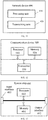
- FIG. 10 is a schematic block diagram of a terminal device 300 according to an embodiment of the present application. As shown in FIG. 10 , the terminal device 300 includes a processing unit 310 and a sending unit 320.
- the processing unit 310 is configured to determine a quantity K of demodulation reference signal (DMRS) sequences corresponding to a first DMRS port and a physical resource occupied by each DMRS sequence in the K DMRS sequences, where K is a positive integer; and the sending unit 320 is configured to send, on the physical resource occupied by the each DMRS sequence determined by the processing unit, the each DMRS sequence to a network device using the first DMRS port.
- DMRS demodulation reference signal
- the processing unit 310 is further configured to: determine the quantity K of the DMRS sequences corresponding to the first DMRS port and/or the physical resource occupied by the each DMRS sequence in the K DMRS sequences according to a multiple access mode used in sending the DMRS sequences using the first DMRS port.
- processing unit 310 is further configured to:
- processing unit 310 is further configured to:
- the K DMRS sequences include a first DMRS sequence, where the first DMRS sequence occupies a same physical resource and/or uses a same root sequence as a second DMRS sequence included in DMRS sequences transmitted using a same DMRS port when a second multiple access mode is used, where the second multiple access mode is difference from the first multiple access mode.
- the first multiple access mode is a discrete Fourier transform orthogonal frequency division multiplexing based spread spectrum DFT-S-OFDM multiple access mode
- the second multiple access mode is a cyclic prefix orthogonal frequency division multiplexing (CP-OFDM) multiple access mode
- the first multiple access mode is the CP-OFDM multiple access mode
- the second multiple access mode is the DFT-S-OFDM multiple access mode.
- K is an integer greater than 1; and/or, when the multiple access mode used in sending the DMRS sequences using the first DMRS port is the CP-OFDM multiple access mode, K is 1.
- the processing unit 310 is further configured to: determine the quantity K of the DMRS sequences corresponding to the first DMRS port according to DMRS sequence indication information carried in downlink control information DCI transmitted by scheduling data corresponding to the DMRS sequences by the network device.
- K is an integer greater than 1.
- DMRS sequences in the K DMRS sequences having a same length use a same sequence.
- the each DMRS sequence in the K DMRS sequences occupies, in at least one OFDM symbol, different sub-carriers in a same frequency domain bandwidth respectively.
- K 2
- a subcarrier occupied by a first DMRS sequence in the K DMRS sequences is an (n+jN) th in the frequency domain bandwidth
- each DMRS sequence in at least one DMRS sequence in the K DMRS sequences occupies different sub-carriers in different OFDM symbols.
- processing unit 310 is further configured to:
- the terminal device 300 may be corresponding to the terminal device in the method 200 and can implement corresponding functions of the terminal device in the method 200, which will not be repeated herein for the sake of conciseness.
- FIG. 11 is a schematic block diagram of a network device 400 according to an embodiment of the present application. As shown in FIG. 11 , the network device includes a processing unit 410 and a transceiving unit 420.
- the processing unit 410 is configured to determine a quantity K of demodulation reference signal DMRS sequences sent by a terminal device using a first DMRS port and a physical resource occupied by each DMRS sequence in the K DMRS sequences; and the transceiving unit 420 is configured to receive, on the determined physical resource occupied by the each DMRS sequence, the each DMRS sequence sent by the terminal device.
- the processing unit 410 is further configured to: determine the quantity K of the DMRS sequences sent by the terminal device using the first DMRS port and/or the physical resource occupied by the each DMRS sequence in the K DMRS sequences according to a multiple access mode used by the terminal device in sending the DMRS sequences using the first DMRS port.
- processing unit 410 is further configured to:
- processing unit 410 is further configured to:
- the transceiving unit 420 is further configured to: indicate the quantity K of the DMRS sequences corresponding to the DMRS port to the terminal device by DMRS sequence indication information carried in downlink control information DCI transmitted by scheduling data corresponding to the DMRS sequences.
- K is an integer greater than 1; and/or, when the multiple access mode used by the terminal device in sending the DMRS sequences using the first DMRS port is a CP-OFDM multiple access mode, K is 1.
- K is an integer greater than 1.
- the each DMRS sequence in the K DMRS sequences occupies, in at least one OFDM symbol, different sub-carriers in a same frequency domain bandwidth respectively.
- each DMRS sequence in at least one DMRS sequence in the K DMRS sequences occupies different sub-carriers in different OFDM symbols.
- the network device 400 may be corresponding to the network device in the method 200 and can implement corresponding functions of the network device in the method 200, which will not be repeated herein for the sake of conciseness.
- FIG. 12 is a schematic block diagram of a communication device 500 according to an embodiment of the present application.
- the communication device 500 includes a processor 510 and a memory 520.
- the memory 520 may store a program code
- the processor 510 may execute the program code stored in the memory 520.
- the communication device 500 may include a transceiver 530, and the processor 510 may control the transceiver 530 to communicate with the outside.
- the processor 510 may invoke the program code stored in the memory 520 to perform corresponding operations of the terminal device in the method 200 shown in FIG. 2 , which will not be repeated herein for the sake of conciseness.
- the processor 510 may invoke the program code stored in the memory 520 to perform corresponding operations of the network device in the method 200 shown in FIG. 2 , which will not be repeated herein for the sake of conciseness.
- FIG. 13 is a schematic structural diagram of a system chip 600 according to an embodiment of the present application.
- the system chip 600 of FIG. 13 includes an input interface 601, an output interface 602, a processor 603 and a memory 604, which are connected by a communication connection, where the processor 603 is configured to execute a code in the memory 604.
- the processor 603 implements a method performed by the terminal device in the method 200 shown in FIG. 2 , which will not be repeated herein for the sake of conciseness.
- the processor 603 when the code is executed, the processor 603 implements a method performed by the network device in the method 200 shown in FIG. 2 , which will not be repeated herein for the sake of conciseness.
- the disclosed systems, apparatuses, and methods may be implemented in other manners.
- the apparatus embodiments described above are merely illustrative.
- the division of the units is only a logical function division. In actual implementation, there may be other division manners.
- multiple units or components may be combined or may be integrated into another system, or some features may be ignored or not executed.
- the mutual coupling or direct coupling or communication connection shown or discussed may be an indirect coupling or communication connection through some interfaces, apparatuses or units, which may be in an electrical form, a mechanical form or other forms.
- the units described as separate components may or may not be physically separated, and the components shown as units may or may not be physical units, that is, may be located in one place, or may be distributed to multiple network units. Some or all of the units may be selected according to actual needs to achieve the purpose of the solution of this embodiment.
- functional units in the embodiment of the present application may be integrated into one processing unit, or each unit may exist physically separately, or two or more units may be integrated into one unit.
- the functions may be stored in a computer readable storage medium if implemented in the form of a software functional unit and sold or used as a standalone product.
- the technical solutions of the present application essentially, or its portion contributing to the prior art, or a portion of the technical solutions, may be embodied in the form of a software product, where the computer software product is stored in a storage medium including several instructions to cause a computer device (which may be a personal computer, a server, or a network device, or the like) to perform all or part of the steps of the methods described in the embodiments of the present application.
- the foregoing storage medium includes various media that can store a program code, such as a U disk, a mobile hard disk, a read-only memory (ROM), a random access memory (RAM), a magnetic disk, or an optical disk, or the like.
Landscapes
- Engineering & Computer Science (AREA)
- Signal Processing (AREA)
- Computer Networks & Wireless Communication (AREA)
- Mobile Radio Communication Systems (AREA)
Applications Claiming Priority (1)
| Application Number | Priority Date | Filing Date | Title |
|---|---|---|---|
| PCT/CN2017/073072 WO2018145251A1 (fr) | 2017-02-07 | 2017-02-07 | Procédé de radiocommunication, dispositif terminal, et dispositif de réseau |
Publications (3)
| Publication Number | Publication Date |
|---|---|
| EP3573396A1 true EP3573396A1 (fr) | 2019-11-27 |
| EP3573396A4 EP3573396A4 (fr) | 2020-07-15 |
| EP3573396B1 EP3573396B1 (fr) | 2022-10-05 |
Family
ID=63107733
Family Applications (1)
| Application Number | Title | Priority Date | Filing Date |
|---|---|---|---|
| EP17896240.3A Active EP3573396B1 (fr) | 2017-02-07 | 2017-02-07 | Procédé de radiocommunication, dispositif terminal, et dispositif de réseau |
Country Status (15)
| Country | Link |
|---|---|
| US (1) | US11362780B2 (fr) |
| EP (1) | EP3573396B1 (fr) |
| JP (1) | JP2020511038A (fr) |
| KR (1) | KR20190112772A (fr) |
| CN (2) | CN110268769B (fr) |
| AU (1) | AU2017397672A1 (fr) |
| BR (1) | BR112019016337A2 (fr) |
| CA (1) | CA3052871A1 (fr) |
| IL (1) | IL268563A (fr) |
| MX (1) | MX2019009421A (fr) |
| PH (1) | PH12019501834A1 (fr) |
| RU (1) | RU2727143C1 (fr) |
| SG (1) | SG11201907326WA (fr) |
| WO (1) | WO2018145251A1 (fr) |
| ZA (1) | ZA201905682B (fr) |
Families Citing this family (4)
| Publication number | Priority date | Publication date | Assignee | Title |
|---|---|---|---|---|
| CN108809587B (zh) | 2017-05-05 | 2021-06-08 | 华为技术有限公司 | 确定参考信号序列的方法、终端设备、网络设备 |
| JP7053685B2 (ja) * | 2018-02-16 | 2022-04-12 | 株式会社Nttドコモ | ユーザ端末および無線通信方法 |
| CN115226230A (zh) * | 2019-07-15 | 2022-10-21 | 上海朗帛通信技术有限公司 | 一种被用于无线通信的节点中的方法和装置 |
| WO2021066602A1 (fr) * | 2019-10-04 | 2021-04-08 | 엘지전자 주식회사 | Procédé d'émission et de réception de signaux dans un système de communication sans fil, et dispositif le prenant en charge |
Family Cites Families (14)
| Publication number | Priority date | Publication date | Assignee | Title |
|---|---|---|---|---|
| US8913672B2 (en) * | 2008-09-12 | 2014-12-16 | Qualcomm Incorporated | Efficiently identifying system waveform in uplink transmission |
| CN101931437A (zh) * | 2009-06-19 | 2010-12-29 | 松下电器产业株式会社 | 无线通信系统中的解调参考信号设置方法及装置 |
| US9031008B2 (en) * | 2009-10-30 | 2015-05-12 | Samsung Electronics Co., Ltd. | Methods and apparatus for multi-user MIMO transmissions in wireless communication systems |
| CN102076076B (zh) * | 2009-11-20 | 2015-11-25 | 夏普株式会社 | 一种解调参考信号的资源分配通知方法 |
| US8842622B2 (en) * | 2011-01-07 | 2014-09-23 | Interdigital Patent Holdings, Inc. | Method, system and apparatus for downlink shared channel reception in cooperative multipoint transmissions |
| WO2013062231A1 (fr) * | 2011-10-24 | 2013-05-02 | Lg Electronics Inc. | Procédé et appareil d'attribution de ressources dans un système de communications sans fil |
| CN107659390B (zh) * | 2012-02-20 | 2021-01-01 | Lg 电子株式会社 | 无线通信系统中传送上行链路信号的方法和设备 |
| CN103841644B (zh) * | 2012-11-22 | 2018-04-17 | 电信科学技术研究院 | 一种传输解调参考信号的方法、设备及系统 |
| CN104009831B (zh) * | 2013-02-22 | 2017-12-01 | 电信科学技术研究院 | 用户专用解调参考信号传输和数据解调方法及设备 |
| CN104125186B (zh) * | 2013-04-28 | 2019-08-30 | 中兴通讯股份有限公司 | 一种解调参考信号图样信息的选取方法、系统及装置 |
| WO2015188355A1 (fr) * | 2014-06-12 | 2015-12-17 | 华为技术有限公司 | Procédé et dispositif d'allocation de ressource |
| EP4236545A3 (fr) * | 2015-07-30 | 2023-09-13 | Apple Inc. | Multiplexage d'informations de commande de liaison montante basé sur un accès ofdma |
| CN106559363B (zh) | 2015-09-25 | 2020-06-05 | 电信科学技术研究院 | 一种解调参考信号传输方法、信道估计方法及装置 |
| US11943724B2 (en) * | 2017-02-03 | 2024-03-26 | Interdigital Patent Holdings, Inc. | Broadcast channel transmission and demodulation |
-
2017
- 2017-02-07 EP EP17896240.3A patent/EP3573396B1/fr active Active
- 2017-02-07 CA CA3052871A patent/CA3052871A1/fr not_active Abandoned
- 2017-02-07 RU RU2019127051A patent/RU2727143C1/ru active
- 2017-02-07 BR BR112019016337-9A patent/BR112019016337A2/pt not_active IP Right Cessation
- 2017-02-07 WO PCT/CN2017/073072 patent/WO2018145251A1/fr not_active Ceased
- 2017-02-07 MX MX2019009421A patent/MX2019009421A/es unknown
- 2017-02-07 CN CN201780085526.6A patent/CN110268769B/zh active Active
- 2017-02-07 AU AU2017397672A patent/AU2017397672A1/en not_active Abandoned
- 2017-02-07 KR KR1020197025339A patent/KR20190112772A/ko not_active Withdrawn
- 2017-02-07 JP JP2019542686A patent/JP2020511038A/ja active Pending
- 2017-02-07 CN CN202110269836.1A patent/CN113067692A/zh active Pending
- 2017-02-07 SG SG11201907326WA patent/SG11201907326WA/en unknown
-
2019
- 2019-08-07 IL IL268563A patent/IL268563A/en unknown
- 2019-08-07 PH PH12019501834A patent/PH12019501834A1/en unknown
- 2019-08-07 US US16/534,367 patent/US11362780B2/en active Active
- 2019-08-28 ZA ZA2019/05682A patent/ZA201905682B/en unknown
Also Published As
| Publication number | Publication date |
|---|---|
| EP3573396B1 (fr) | 2022-10-05 |
| MX2019009421A (es) | 2019-10-02 |
| ZA201905682B (en) | 2021-01-27 |
| WO2018145251A1 (fr) | 2018-08-16 |
| AU2017397672A1 (en) | 2019-09-19 |
| CN110268769A (zh) | 2019-09-20 |
| CN110268769B (zh) | 2021-04-02 |
| CN113067692A (zh) | 2021-07-02 |
| US11362780B2 (en) | 2022-06-14 |
| EP3573396A4 (fr) | 2020-07-15 |
| US20190363851A1 (en) | 2019-11-28 |
| KR20190112772A (ko) | 2019-10-07 |
| SG11201907326WA (en) | 2019-09-27 |
| CA3052871A1 (fr) | 2018-08-16 |
| JP2020511038A (ja) | 2020-04-09 |
| PH12019501834A1 (en) | 2020-03-16 |
| RU2727143C1 (ru) | 2020-07-21 |
| BR112019016337A2 (pt) | 2020-03-31 |
| IL268563A (en) | 2019-09-26 |
Similar Documents
| Publication | Publication Date | Title |
|---|---|---|
| US10312990B2 (en) | Signal sending or receiving method and device | |
| US11570767B2 (en) | Wireless-network-based communication method, terminal device, and network device | |
| EP4404494B1 (fr) | Procédé et appareil de transmission de signal dmrs | |
| CN111431686B (zh) | 信号处理的方法和装置 | |
| EP4376369B1 (fr) | Procédé de traitement de signal basé sur une séquence et appareil de traitement de signal | |
| US11362780B2 (en) | DMRS sequence transmitting method, terminal device and network device | |
| EP3595223B1 (fr) | Procédé et dispositif d'envoi d'un signal de référence de démodulation, et procédé et dispositif de démodulation | |
| JP2022500925A (ja) | 参照信号構成方法及び装置並びに系列構成方法及び装置 | |
| US11165550B2 (en) | Resource mapping method and communication device | |
| KR101895997B1 (ko) | 주파수 분할 다중 접속을 위한 송신기 및 수신기 | |
| US10939436B2 (en) | Signal transmission method and device | |
| SG10202108653SA (en) | Wireless communication method, terminal device and network device | |
| HK40014078B (en) | Radio communication method, terminal device and network device | |
| HK40014078A (en) | Radio communication method, terminal device and network device |
Legal Events
| Date | Code | Title | Description |
|---|---|---|---|
| STAA | Information on the status of an ep patent application or granted ep patent |
Free format text: STATUS: THE INTERNATIONAL PUBLICATION HAS BEEN MADE |
|
| PUAI | Public reference made under article 153(3) epc to a published international application that has entered the european phase |
Free format text: ORIGINAL CODE: 0009012 |
|
| STAA | Information on the status of an ep patent application or granted ep patent |
Free format text: STATUS: REQUEST FOR EXAMINATION WAS MADE |
|
| 17P | Request for examination filed |
Effective date: 20190823 |
|
| AK | Designated contracting states |
Kind code of ref document: A1 Designated state(s): AL AT BE BG CH CY CZ DE DK EE ES FI FR GB GR HR HU IE IS IT LI LT LU LV MC MK MT NL NO PL PT RO RS SE SI SK SM TR |
|
| AX | Request for extension of the european patent |
Extension state: BA ME |
|
| RAP1 | Party data changed (applicant data changed or rights of an application transferred) |
Owner name: GUANGDONG OPPO MOBILE TELECOMMUNICATIONS CORP., LT |
|
| RIC1 | Information provided on ipc code assigned before grant |
Ipc: H04W 72/04 20090101AFI20200121BHEP Ipc: H04L 1/00 20060101ALN20200121BHEP Ipc: H04L 27/26 20060101ALN20200121BHEP Ipc: H04L 5/00 20060101ALI20200121BHEP Ipc: H04B 7/04 20170101ALN20200121BHEP |
|
| DAV | Request for validation of the european patent (deleted) | ||
| DAX | Request for extension of the european patent (deleted) | ||
| A4 | Supplementary search report drawn up and despatched |
Effective date: 20200612 |
|
| RIC1 | Information provided on ipc code assigned before grant |
Ipc: H04W 72/04 20090101AFI20200606BHEP Ipc: H04L 27/26 20060101ALN20200606BHEP Ipc: H04L 5/00 20060101ALI20200606BHEP Ipc: H04B 7/04 20170101ALN20200606BHEP Ipc: H04L 1/00 20060101ALN20200606BHEP |
|
| STAA | Information on the status of an ep patent application or granted ep patent |
Free format text: STATUS: EXAMINATION IS IN PROGRESS |
|
| 17Q | First examination report despatched |
Effective date: 20210126 |
|
| REG | Reference to a national code |
Ref country code: DE Ref legal event code: R079 Ref document number: 602017062494 Country of ref document: DE Free format text: PREVIOUS MAIN CLASS: H04W0072040000 Ipc: H04L0005000000 |
|
| RIC1 | Information provided on ipc code assigned before grant |
Ipc: H04L 27/26 20060101ALI20220311BHEP Ipc: H04W 72/04 20090101ALI20220311BHEP Ipc: H04L 5/00 20060101AFI20220311BHEP |
|
| GRAP | Despatch of communication of intention to grant a patent |
Free format text: ORIGINAL CODE: EPIDOSNIGR1 |
|
| STAA | Information on the status of an ep patent application or granted ep patent |
Free format text: STATUS: GRANT OF PATENT IS INTENDED |
|
| INTG | Intention to grant announced |
Effective date: 20220506 |
|
| GRAS | Grant fee paid |
Free format text: ORIGINAL CODE: EPIDOSNIGR3 |
|
| GRAA | (expected) grant |
Free format text: ORIGINAL CODE: 0009210 |
|
| STAA | Information on the status of an ep patent application or granted ep patent |
Free format text: STATUS: THE PATENT HAS BEEN GRANTED |
|
| AK | Designated contracting states |
Kind code of ref document: B1 Designated state(s): AL AT BE BG CH CY CZ DE DK EE ES FI FR GB GR HR HU IE IS IT LI LT LU LV MC MK MT NL NO PL PT RO RS SE SI SK SM TR |
|
| REG | Reference to a national code |
Ref country code: GB Ref legal event code: FG4D |
|
| REG | Reference to a national code |
Ref country code: CH Ref legal event code: EP |
|
| REG | Reference to a national code |
Ref country code: AT Ref legal event code: REF Ref document number: 1523444 Country of ref document: AT Kind code of ref document: T Effective date: 20221015 |
|
| REG | Reference to a national code |
Ref country code: IE Ref legal event code: FG4D |
|
| REG | Reference to a national code |
Ref country code: DE Ref legal event code: R096 Ref document number: 602017062494 Country of ref document: DE |
|
| REG | Reference to a national code |
Ref country code: LT Ref legal event code: MG9D |
|
| REG | Reference to a national code |
Ref country code: NL Ref legal event code: MP Effective date: 20221005 |
|
| REG | Reference to a national code |
Ref country code: AT Ref legal event code: MK05 Ref document number: 1523444 Country of ref document: AT Kind code of ref document: T Effective date: 20221005 |
|
| PG25 | Lapsed in a contracting state [announced via postgrant information from national office to epo] |
Ref country code: NL Free format text: LAPSE BECAUSE OF FAILURE TO SUBMIT A TRANSLATION OF THE DESCRIPTION OR TO PAY THE FEE WITHIN THE PRESCRIBED TIME-LIMIT Effective date: 20221005 |
|
| PG25 | Lapsed in a contracting state [announced via postgrant information from national office to epo] |
Ref country code: SE Free format text: LAPSE BECAUSE OF FAILURE TO SUBMIT A TRANSLATION OF THE DESCRIPTION OR TO PAY THE FEE WITHIN THE PRESCRIBED TIME-LIMIT Effective date: 20221005 Ref country code: PT Free format text: LAPSE BECAUSE OF FAILURE TO SUBMIT A TRANSLATION OF THE DESCRIPTION OR TO PAY THE FEE WITHIN THE PRESCRIBED TIME-LIMIT Effective date: 20230206 Ref country code: NO Free format text: LAPSE BECAUSE OF FAILURE TO SUBMIT A TRANSLATION OF THE DESCRIPTION OR TO PAY THE FEE WITHIN THE PRESCRIBED TIME-LIMIT Effective date: 20230105 Ref country code: LT Free format text: LAPSE BECAUSE OF FAILURE TO SUBMIT A TRANSLATION OF THE DESCRIPTION OR TO PAY THE FEE WITHIN THE PRESCRIBED TIME-LIMIT Effective date: 20221005 Ref country code: FI Free format text: LAPSE BECAUSE OF FAILURE TO SUBMIT A TRANSLATION OF THE DESCRIPTION OR TO PAY THE FEE WITHIN THE PRESCRIBED TIME-LIMIT Effective date: 20221005 Ref country code: ES Free format text: LAPSE BECAUSE OF FAILURE TO SUBMIT A TRANSLATION OF THE DESCRIPTION OR TO PAY THE FEE WITHIN THE PRESCRIBED TIME-LIMIT Effective date: 20221005 Ref country code: AT Free format text: LAPSE BECAUSE OF FAILURE TO SUBMIT A TRANSLATION OF THE DESCRIPTION OR TO PAY THE FEE WITHIN THE PRESCRIBED TIME-LIMIT Effective date: 20221005 |
|
| PG25 | Lapsed in a contracting state [announced via postgrant information from national office to epo] |
Ref country code: RS Free format text: LAPSE BECAUSE OF FAILURE TO SUBMIT A TRANSLATION OF THE DESCRIPTION OR TO PAY THE FEE WITHIN THE PRESCRIBED TIME-LIMIT Effective date: 20221005 Ref country code: PL Free format text: LAPSE BECAUSE OF FAILURE TO SUBMIT A TRANSLATION OF THE DESCRIPTION OR TO PAY THE FEE WITHIN THE PRESCRIBED TIME-LIMIT Effective date: 20221005 Ref country code: LV Free format text: LAPSE BECAUSE OF FAILURE TO SUBMIT A TRANSLATION OF THE DESCRIPTION OR TO PAY THE FEE WITHIN THE PRESCRIBED TIME-LIMIT Effective date: 20221005 Ref country code: IS Free format text: LAPSE BECAUSE OF FAILURE TO SUBMIT A TRANSLATION OF THE DESCRIPTION OR TO PAY THE FEE WITHIN THE PRESCRIBED TIME-LIMIT Effective date: 20230205 Ref country code: HR Free format text: LAPSE BECAUSE OF FAILURE TO SUBMIT A TRANSLATION OF THE DESCRIPTION OR TO PAY THE FEE WITHIN THE PRESCRIBED TIME-LIMIT Effective date: 20221005 Ref country code: GR Free format text: LAPSE BECAUSE OF FAILURE TO SUBMIT A TRANSLATION OF THE DESCRIPTION OR TO PAY THE FEE WITHIN THE PRESCRIBED TIME-LIMIT Effective date: 20230106 |
|
| P01 | Opt-out of the competence of the unified patent court (upc) registered |
Effective date: 20230412 |
|
| REG | Reference to a national code |
Ref country code: DE Ref legal event code: R097 Ref document number: 602017062494 Country of ref document: DE |
|
| PG25 | Lapsed in a contracting state [announced via postgrant information from national office to epo] |
Ref country code: SM Free format text: LAPSE BECAUSE OF FAILURE TO SUBMIT A TRANSLATION OF THE DESCRIPTION OR TO PAY THE FEE WITHIN THE PRESCRIBED TIME-LIMIT Effective date: 20221005 Ref country code: RO Free format text: LAPSE BECAUSE OF FAILURE TO SUBMIT A TRANSLATION OF THE DESCRIPTION OR TO PAY THE FEE WITHIN THE PRESCRIBED TIME-LIMIT Effective date: 20221005 Ref country code: EE Free format text: LAPSE BECAUSE OF FAILURE TO SUBMIT A TRANSLATION OF THE DESCRIPTION OR TO PAY THE FEE WITHIN THE PRESCRIBED TIME-LIMIT Effective date: 20221005 Ref country code: DK Free format text: LAPSE BECAUSE OF FAILURE TO SUBMIT A TRANSLATION OF THE DESCRIPTION OR TO PAY THE FEE WITHIN THE PRESCRIBED TIME-LIMIT Effective date: 20221005 Ref country code: CZ Free format text: LAPSE BECAUSE OF FAILURE TO SUBMIT A TRANSLATION OF THE DESCRIPTION OR TO PAY THE FEE WITHIN THE PRESCRIBED TIME-LIMIT Effective date: 20221005 |
|
| PLBE | No opposition filed within time limit |
Free format text: ORIGINAL CODE: 0009261 |
|
| STAA | Information on the status of an ep patent application or granted ep patent |
Free format text: STATUS: NO OPPOSITION FILED WITHIN TIME LIMIT |
|
| PG25 | Lapsed in a contracting state [announced via postgrant information from national office to epo] |
Ref country code: SK Free format text: LAPSE BECAUSE OF FAILURE TO SUBMIT A TRANSLATION OF THE DESCRIPTION OR TO PAY THE FEE WITHIN THE PRESCRIBED TIME-LIMIT Effective date: 20221005 Ref country code: AL Free format text: LAPSE BECAUSE OF FAILURE TO SUBMIT A TRANSLATION OF THE DESCRIPTION OR TO PAY THE FEE WITHIN THE PRESCRIBED TIME-LIMIT Effective date: 20221005 |
|
| REG | Reference to a national code |
Ref country code: DE Ref legal event code: R119 Ref document number: 602017062494 Country of ref document: DE |
|
| 26N | No opposition filed |
Effective date: 20230706 |
|
| PG25 | Lapsed in a contracting state [announced via postgrant information from national office to epo] |
Ref country code: MC Free format text: LAPSE BECAUSE OF FAILURE TO SUBMIT A TRANSLATION OF THE DESCRIPTION OR TO PAY THE FEE WITHIN THE PRESCRIBED TIME-LIMIT Effective date: 20221005 |
|
| REG | Reference to a national code |
Ref country code: CH Ref legal event code: PL |
|
| REG | Reference to a national code |
Ref country code: BE Ref legal event code: MM Effective date: 20230228 |
|
| PG25 | Lapsed in a contracting state [announced via postgrant information from national office to epo] |
Ref country code: LU Free format text: LAPSE BECAUSE OF NON-PAYMENT OF DUE FEES Effective date: 20230207 Ref country code: LI Free format text: LAPSE BECAUSE OF NON-PAYMENT OF DUE FEES Effective date: 20230228 Ref country code: CH Free format text: LAPSE BECAUSE OF NON-PAYMENT OF DUE FEES Effective date: 20230228 |
|
| PG25 | Lapsed in a contracting state [announced via postgrant information from national office to epo] |
Ref country code: SI Free format text: LAPSE BECAUSE OF FAILURE TO SUBMIT A TRANSLATION OF THE DESCRIPTION OR TO PAY THE FEE WITHIN THE PRESCRIBED TIME-LIMIT Effective date: 20221005 |
|
| REG | Reference to a national code |
Ref country code: IE Ref legal event code: MM4A |
|
| PG25 | Lapsed in a contracting state [announced via postgrant information from national office to epo] |
Ref country code: IE Free format text: LAPSE BECAUSE OF NON-PAYMENT OF DUE FEES Effective date: 20230207 Ref country code: FR Free format text: LAPSE BECAUSE OF NON-PAYMENT OF DUE FEES Effective date: 20230228 Ref country code: DE Free format text: LAPSE BECAUSE OF NON-PAYMENT OF DUE FEES Effective date: 20230901 |
|
| PG25 | Lapsed in a contracting state [announced via postgrant information from national office to epo] |
Ref country code: BE Free format text: LAPSE BECAUSE OF NON-PAYMENT OF DUE FEES Effective date: 20230228 |
|
| PG25 | Lapsed in a contracting state [announced via postgrant information from national office to epo] |
Ref country code: IT Free format text: LAPSE BECAUSE OF FAILURE TO SUBMIT A TRANSLATION OF THE DESCRIPTION OR TO PAY THE FEE WITHIN THE PRESCRIBED TIME-LIMIT Effective date: 20221005 |
|
| PG25 | Lapsed in a contracting state [announced via postgrant information from national office to epo] |
Ref country code: BG Free format text: LAPSE BECAUSE OF FAILURE TO SUBMIT A TRANSLATION OF THE DESCRIPTION OR TO PAY THE FEE WITHIN THE PRESCRIBED TIME-LIMIT Effective date: 20221005 |
|
| PG25 | Lapsed in a contracting state [announced via postgrant information from national office to epo] |
Ref country code: BG Free format text: LAPSE BECAUSE OF FAILURE TO SUBMIT A TRANSLATION OF THE DESCRIPTION OR TO PAY THE FEE WITHIN THE PRESCRIBED TIME-LIMIT Effective date: 20221005 |
|
| PG25 | Lapsed in a contracting state [announced via postgrant information from national office to epo] |
Ref country code: CY Free format text: LAPSE BECAUSE OF FAILURE TO SUBMIT A TRANSLATION OF THE DESCRIPTION OR TO PAY THE FEE WITHIN THE PRESCRIBED TIME-LIMIT; INVALID AB INITIO Effective date: 20170207 |
|
| PG25 | Lapsed in a contracting state [announced via postgrant information from national office to epo] |
Ref country code: HU Free format text: LAPSE BECAUSE OF FAILURE TO SUBMIT A TRANSLATION OF THE DESCRIPTION OR TO PAY THE FEE WITHIN THE PRESCRIBED TIME-LIMIT; INVALID AB INITIO Effective date: 20170207 |
|
| PG25 | Lapsed in a contracting state [announced via postgrant information from national office to epo] |
Ref country code: TR Free format text: LAPSE BECAUSE OF FAILURE TO SUBMIT A TRANSLATION OF THE DESCRIPTION OR TO PAY THE FEE WITHIN THE PRESCRIBED TIME-LIMIT Effective date: 20221005 |
|
| PGFP | Annual fee paid to national office [announced via postgrant information from national office to epo] |
Ref country code: GB Payment date: 20251218 Year of fee payment: 10 |