EP3573479B1 - Imbissprodukt in form von pellets - Google Patents
Imbissprodukt in form von pellets Download PDFInfo
- Publication number
- EP3573479B1 EP3573479B1 EP18706970.3A EP18706970A EP3573479B1 EP 3573479 B1 EP3573479 B1 EP 3573479B1 EP 18706970 A EP18706970 A EP 18706970A EP 3573479 B1 EP3573479 B1 EP 3573479B1
- Authority
- EP
- European Patent Office
- Prior art keywords
- starch
- pellet
- granules
- pressing
- dough
- Prior art date
- Legal status (The legal status is an assumption and is not a legal conclusion. Google has not performed a legal analysis and makes no representation as to the accuracy of the status listed.)
- Active
Links
Images

Classifications
-
- A—HUMAN NECESSITIES
- A23—FOODS OR FOODSTUFFS; TREATMENT THEREOF, NOT COVERED BY OTHER CLASSES
- A23L—FOODS, FOODSTUFFS OR NON-ALCOHOLIC BEVERAGES, NOT OTHERWISE PROVIDED FOR; PREPARATION OR TREATMENT THEREOF
- A23L19/00—Products from fruits or vegetables; Preparation or treatment thereof
- A23L19/10—Products from fruits or vegetables; Preparation or treatment thereof of tuberous or like starch containing root crops
- A23L19/12—Products from fruits or vegetables; Preparation or treatment thereof of tuberous or like starch containing root crops of potatoes
- A23L19/18—Roasted or fried products, e.g. snacks or chips
- A23L19/19—Roasted or fried products, e.g. snacks or chips from powdered or mashed potato products
-
- A—HUMAN NECESSITIES
- A23—FOODS OR FOODSTUFFS; TREATMENT THEREOF, NOT COVERED BY OTHER CLASSES
- A23L—FOODS, FOODSTUFFS OR NON-ALCOHOLIC BEVERAGES, NOT OTHERWISE PROVIDED FOR; PREPARATION OR TREATMENT THEREOF
- A23L7/00—Cereal-derived products; Malt products; Preparation or treatment thereof
- A23L7/10—Cereal-derived products
- A23L7/161—Puffed cereals, e.g. popcorn or puffed rice
- A23L7/165—Preparation of puffed cereals involving preparation of meal or dough as an intermediate step
-
- A—HUMAN NECESSITIES
- A21—BAKING; EDIBLE DOUGHS
- A21D—TREATMENT OF FLOUR OR DOUGH FOR BAKING, e.g. BY ADDITION OF MATERIALS; BAKING; BAKERY PRODUCTS
- A21D13/00—Finished or partly finished bakery products
- A21D13/04—Products made from materials other than rye or wheat flour
- A21D13/043—Products made from materials other than rye or wheat flour from tubers, e.g. manioc or potato
-
- A—HUMAN NECESSITIES
- A23—FOODS OR FOODSTUFFS; TREATMENT THEREOF, NOT COVERED BY OTHER CLASSES
- A23L—FOODS, FOODSTUFFS OR NON-ALCOHOLIC BEVERAGES, NOT OTHERWISE PROVIDED FOR; PREPARATION OR TREATMENT THEREOF
- A23L7/00—Cereal-derived products; Malt products; Preparation or treatment thereof
- A23L7/10—Cereal-derived products
- A23L7/117—Flakes or other shapes of ready-to-eat type; Semi-finished or partly-finished products therefor
- A23L7/126—Snacks or the like obtained by binding, shaping or compacting together cereal grains or cereal pieces, e.g. cereal bars
-
- A—HUMAN NECESSITIES
- A23—FOODS OR FOODSTUFFS; TREATMENT THEREOF, NOT COVERED BY OTHER CLASSES
- A23L—FOODS, FOODSTUFFS OR NON-ALCOHOLIC BEVERAGES, NOT OTHERWISE PROVIDED FOR; PREPARATION OR TREATMENT THEREOF
- A23L7/00—Cereal-derived products; Malt products; Preparation or treatment thereof
- A23L7/10—Cereal-derived products
- A23L7/117—Flakes or other shapes of ready-to-eat type; Semi-finished or partly-finished products therefor
- A23L7/13—Snacks or the like obtained by oil frying of a formed cereal dough
-
- A—HUMAN NECESSITIES
- A23—FOODS OR FOODSTUFFS; TREATMENT THEREOF, NOT COVERED BY OTHER CLASSES
- A23P—SHAPING OR WORKING OF FOODSTUFFS, NOT FULLY COVERED BY A SINGLE OTHER SUBCLASS
- A23P10/00—Shaping or working of foodstuffs characterised by the products
- A23P10/20—Agglomerating; Granulating; Tabletting
- A23P10/25—Agglomeration or granulation by extrusion or by pressing, e.g. through small holes, through sieves or between surfaces
-
- A—HUMAN NECESSITIES
- A23—FOODS OR FOODSTUFFS; TREATMENT THEREOF, NOT COVERED BY OTHER CLASSES
- A23V—INDEXING SCHEME RELATING TO FOODS, FOODSTUFFS OR NON-ALCOHOLIC BEVERAGES AND LACTIC OR PROPIONIC ACID BACTERIA USED IN FOODSTUFFS OR FOOD PREPARATION
- A23V2002/00—Food compositions, function of food ingredients or processes for food or foodstuffs
Definitions
- the present invention relates to snack food pellets and to a method of manufacturing snack food pellets.
- the present invention also relates to a method of manufacturing a snack food produced from the snack food pellets.
- snack food pellets which are starch-based, is well known.
- Various compositions of snack food pellets are known.
- Dried pellets are conventionally produced by an extrusion process with a subsequent drying step to achieve a desired moisture content in the pellet.
- the dough is typically formed by hydrating dehydrated ingredients, such as cereal flour or potato flour.
- the dough is extruded through a die plate having one or more die orifices.
- the dough is shaped in cross-section upon exiting the extruder, and the extruded dough is cut to form a plurality of individual dough pieces of desired mass, shape and dimensions.
- the drying step dries the pieces to form pellets having a typical moisture content of from 10 to 12 wt% based on the weight of the pellets. Such a moisture content is provided to achieve both shelf-life stability of the pellets and expansion upon frying.
- the pellets are then cooked, for example by frying in oil, which causes expansion the pellets to form an expanded snack food of a desired shape and configuration.
- the expansion is at least partially achieved by the moisture content in the pellet forming steam at the elevated frying temperature and the steam causes the starch matrix, which has become gelatinized and plasticized at the elevated frying temperature, to expand.
- snack food manufacturing art There is a generally recognised desire in the snack food manufacturing art to reduce manufacturing costs of the snack food product without compromising the product quality. It is necessary to ensure that any new or modified cooking process still produces a high quality product to the consumer which meets customer acceptance and is reliably and consistently achievable despite high production volumes.
- snack food chips are normally required to meet very strict customer acceptance criteria for the respective product, for example having specific moisture and oil-in-chip contents, and the desired taste, organoleptic and other sensory attributes.
- the product design of snack food pellets made by conventional means is constrained by the correlation of certain product attributes which are affected by changes in composition or process variables. For example, increased starch gelatinization can deliver a more aerated structure through increased pellet expansion and a softer, more melting texture.
- the conventional pellet production process incorporating extrusion of a homogeneous mass, yields highly homogeneous products.
- the consistent achievement of a pre-specified moisture composition of a pellet having pre-specified mass, shape and dimensions is important for achieving consumer acceptance in the resultant cooked snack food piece.
- the present invention aims at least partially to solve these problems of known snack food pellets and their manufacture.
- WO 2015/157702 A1 discloses a process for making flour-based food products that have a final moisture content of less than 3 %.
- WO 2012/071491 A1 discloses a method for making a quick-cook grain or pulse via flat plate compression or gun puffing by controlling the porosity of the grain or pulse.
- JP S57-186449 A discloses the gelatinization and flattening and drying of ungelatinized grains, by treating the grains in rolls heated at a specific temperature.
- JP S57-170158 A discloses the flattening of cereal grains by compression between hot rollers to convert starch into alpha-form starch, thus producing grain flakes containing alpha-form starch.
- GB 2522854 A discloses a starch-based snack food pellet for manufacturing an expanded snack food comprises a starch matrix including a crystalline fraction and an amorphous fraction, wherein the weight ratio of the crystalline fraction to the amorphous fraction is from 0.52 to 0.60.
- GB 750217 A discloses a process for producing foodstuffs from a dry powder obtained from starch-containing tubers, e.g. potatoes, in which process the powder is mixed with water to form a mixture having a water content not exceeding 35 % by weight, which is then pressed into a tough to hard mass.
- the present invention accordingly provides a snack food pellet according to claim 1.
- the present invention also provides a method of manufacturing a snack food pellet according to claim 6.
- the pellet has a shape and composition for subsequent expansion in hot oil, hot air or a microwave to form an expanded snack food product.
- the present invention further provides a method of producing a snack food according to claim 14, the method comprising the steps of:
- the present invention further provides a snack food according to claim 15, which is produced by the method of claim 14 wherein the snack food comprises a cellular microstructure having cellular voids with an average elongation, defined as the maximum cellular void length divided by the minimum cellular void width within the range of from 1.41 to 1.46.
- the preferred embodiments of the present invention are predicated on the finding by the present inventors that the use of heat pressing can provide a number of advantages and technical effects as compared to conventional extrusion technology for manufacturing pellets.
- the heat pressing process enables the use of a lower moisture content for the dough.
- the dough is heat pressed into a stationary mould by a moving platen, or is compressed between opposed platens, either or both of which may move.
- the dough is subjected to reduced shear forces and flow as compared to an extrusion process. Therefore, the dough can have a higher viscosity than is typically used for extrusion, and consequently a lower moisture content.
- the heat pressed dough is not required to flow through a screw barrel or to be moulded into a shape on exiting the extruder.
- the lower moisture content enables the elimination of any drying step subsequent to the pressing step in order to provide a moisture content suitable for subsequent cooking and expansion of the starch to form a cooked expanded snack food piece, for example a chip.
- the avoidance of a subsequent drying process as compared to the known extrusion process simplifies the pellet manufacturing process and reduces the production costs.
- the dough moisture is from 16 to 20 wt% for heat pressing as compared to a typical dough moisture of from 24 to 35 wt% for extrusion.
- the final pellet moisture is reduced during heat pressing as a result of some moisture evaporation at the elevated temperature during the heat pressing step, and is most preferably from 10.5 to 11.5 wt%, which is an ideal range for achieving expansion of the pellet during cooking, for example frying.
- the heat pressing can lower the pellet moisture content to this desired range without requiring a drying step, whereas extrusion generally does require an additional drying step to condition the pellet for reliable and uniform expansion during cooking.
- the heat pressing process was found to be readily controllable to produce a new microstructure to the starch-based pellet.
- the heat pressing process significantly lowers or eliminates shear forces acting on the starch, and the low shear and low moisture enable the heat pressing process to minimize or eliminate starch gelatinisation. Consequently, the substantially ungelatinized starch granules in the dough substantially remain as substantially ungelatinized starch granules in the pellet.
- the pellet comprises a unique microstructure of compacted and agglomerated starch granules, with a minimal or no continuous starch matrix between the granules.
- the final product characteristics of the expanded snack food piece can be controlled.
- the presence of an agglomeration of compacted starch granules in the pellet provides a high level of uniformity in the pellet microstructure, and a high density of granules per unit volume of the pellet. This in turn provides a very high number of nucleation points for starch expansion, as a result of steam generation, during cooking, for example during frying. This structure provides new textures in the snack food pieces.
- the high proportion of ungelatinized starch, which is crystalline rather than amorphous in microstructure, in the granules of the pellet is also believed by the present inventors to result in a higher expression in the final expanded snack food piece of the characteristic of the source of the starch component.
- the resulting substantially ungelatinized starch granules in the pellet provide that the expanded snack food piece exhibits a more pronounced potato characteristic than would be expected by an extruded composition, which generally results in a high degree of starch gelatinisation in the pellet.
- the heat pressing applies a pressure to the starch granules which compacts the granules to form an agglomerate of the starch granules which mutually contact each other.
- the pellet is in the form of a layer. There is no or only minimal continuous starch matrix, and there is no or only minimal gelatinised or amorphous starch.
- Any gelatinised or amorphous starch which is between the substantially ungelatinized and substantially crystalline starch granules, may be derived from some gelatinization of surfaces of some or all of the starch granules and/or some gelatinized starch which either has been added as a pre-gelatinized starch ingredient to the dough which is then pressed and/or has been formed during pressing from a further minor starch ingredient which is present in the dough, in addition to the starch-based granules comprising ungelatinized starch.
- the starch granules are pressed together to agglomerate, but remain substantially ungelatinized. This increases the number of nucleation points for expansion in the pellet, and these nucleation points are uniformly distributed throughout the pellet microstructure.
- the resultant expanded snack food piece has a higher number of cellular voids uniformly distributed throughout the starch microstructure, and higher cell wall thickness, as compared to a typical snack food piece produced from an extruded pellet. This provides a crispier expanded snack food piece, and the consumer would perceive the enhanced crispiness of the product.
- the cellular voids are elongated, but with a low degree of elongation as compared to an expanded snack food produced from an extruded pellet whereas the pellet is in the form of a layer where the layer is sheeted during extrusion.
- the cellular voids are elongated to a reduced extent as compared to from the extruded pellet, because the heat pressing avoids the use of a sheeting process when the starch is in a gelatinised rubbery phase.
- the resultant snack food piece produced from the heat pressed pellet has a different microstructure as compared to an extruded pellet, which provides additional and novel characteristics of an expanded snack food piece.
- the heat pressing method can produce a new pellet microstructure which in turn can result in new characteristics for the final expanded snack food piece.
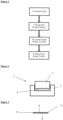
- FIG. 1 of the accompanying drawings there is schematically illustrated a process flow of a method of manufacturing a snack food pellet according to an embodiment of the present invention
- Figure 2 illustrates an apparatus for carrying out the method.
- a dough which comprises one or more starch-containing ingredients, derived from starch sources such as potato and cereals, for example wheat, maize, rice, oats, barley, etc. Other cereal crops could be used, as well as starch from pulses, legumes, cassava, etc.
- the starch-containing ingredients may be added as whole foods (e.g. potato flakes/granules; wheat flour) or as refined/isolated constituents (e.g. potato starch).
- the ingredients may be used individually or in combination with other starch-containing ingredients.
- the dough may further comprise one or more ingredients such as sugars, raising agents, seasoning, salts, emulsifiers, fats/oils, humectants, acids, bases, proteins, fibres, dairy ingredients, texture modifiers, acidity regulators or any combination thereof.
- ingredients such as sugars, raising agents, seasoning, salts, emulsifiers, fats/oils, humectants, acids, bases, proteins, fibres, dairy ingredients, texture modifiers, acidity regulators or any combination thereof.
- the dough comprises a plurality of starch-based granules.
- the starch granules comprise ungelatinized starch, and typically the starch component consists of ungelatinized starch.
- the plurality of starch granules comprise or consist of potato starch and the starch component of the starch-based granules is comprised of or consists of potato starch.
- the dough is formed by simple mixing of the starch-based granules, and optional ingredients such as seasoning, with water to form a substantially homogeneous dough mixture.
- the dough has a moisture content of from 16 to 20 wt%, preferably from 16 to 18 wt%, based upon the weight of the dough.
- the mixing is readily controlled to provide a uniform distribution of fine water droplets throughout the dough so that a corresponding fine and uniform water distribution is present in the resultant pellet. This in turn provides a uniform expansion of the pellet as a result of localised steam generation during cooking of the pellet, for example by frying.
- the dough is divided into portions, typically of a pre-set weight or volume, and each portion is intended to form an individual pellet.
- the dough portion has a volume of from 2,000 to 8,000 mm 3 , preferably from 2,300 to 4,500 mm 3 .
- the dough portion may have a weight of from 1 to 4 grams, preferably 1.5 to 2 grams.
- the portion, prior to pressing, has a thickness of from 1.5 to 5.5 mm, preferably from 1.7 to 3.5 mm.
- step III the portion of the dough is located in a heated pressing apparatus 2, illustrated in Figure 2 .
- the heated pressing apparatus 2 comprises a pair of pressing elements 4, 6 between which the dough portion 8 of the dough is located and pressed to form the pellet.
- the pressing elements 4, 6 are in the form of platens and typically each have a surface area of from 1250 to 1970 mm 2 , preferably from 1520 to 1660 mm 2 .
- At least one, and optionally both, of the pressing elements 4, 6 is or are heated to a pressing temperature which is from 100 to 140 °C, preferably from 100 to 120 °C.
- step IV the dough portion 8 is pressed in the heated pressing apparatus 2 to form a pellet.
- the pressing time is from 10 to 50 seconds, preferably from 20 to 30 seconds.
- the pressing pressure is from 100,000 to 400,000 N/m 2 (1 to 4 Bar), preferably from 300,000 to 400,000 N/m 2 (3 to 4 Bar).
- the temperature, pressure and pressing time are readily controlled to minimise or avoid any premature expansion of the starch as a result of stream generation in the starch at the elevated temperature of heat pressing.
- the resulting pellet 10 comprises a plurality of starch granules pressed together to form an agglomerate of the starch granules.
- the pellet 10 is in the form of a layer 12.
- the structure and texture of the snack food product after expansion is strongly influenced by the nature and composition of the starch-containing ingredients in the pellet 10.
- the pellet 10 consists of the plurality of starch granules pressed together to form the agglomerate and the pellet does not comprise a continuous starch-based matrix between the granules.
- the pellet 10 comprises from 90 to 99 wt% starch granules and from 1 to 10 wt% continuous starch-based matrix between the granules, preferably from 95 to 99 wt% starch granules and from 1 to 5 wt% continuous starch-based matrix between the granules, each based upon the weight of the total starch in the pellet 10.
- the pressed pellet 10 has a volume of from 1200 to 3800 mm 3 , preferably from 1200 to 2700 mm 3 .
- the layer 12 has two opposite surfaces 14, 16 and a thickness therebetween. The thickness is from 0.5 to 4 mm, preferably from 0.7 to 1.8 mm.
- the two opposite surfaces 14, 16 each have a surface area of from 1250 to 1970 mm 2 , preferably from 1520 to 1660 mm 2 .
- the two opposite surfaces 14, 16 each have from 600 to 1800, optionally from 675 to 1725, starch granules per mm 2 of the respective surface.
- the pressing time and pressing temperature are controlled to provide that the pellet 10 has a moisture content of from 9 to 12.5 wt%, preferably from 10 to 11.5 wt%, further preferably from 10.5 to 11 wt%, based upon the weight of the pellet 10.
- the pressing time and pressing temperature are controlled to provide that the agglomerate of the starch granules comprises from 60 to 99 wt% ungelatinized starch and from 1 to 40 wt% gelatinized starch, preferably from 80 to 99 wt% ungelatinized starch and from 1 to 20 wt% gelatinized starch, each based upon the weight of the total starch in the pellet 10.
- the resulting pellet 10 is used in a method of producing a snack food.
- the method comprises providing a plurality of the pellets 10 and expanding the pellets 10 during a cooking step to produce a plurality of snack food pieces.
- the cooking step comprises frying, baking or microwaving.
- the pellet 10 may be shaped and dimensioned to provide any desired shape and dimensions to the resultant expanded snack food piece using shape and dimension selection techniques well known to those skilled in the snack food art.
- a starch-based dough was prepared.
- the dough comprised a plurality of starch-based granules consisting of ungelatinized potato starch.
- the dough comprised 0.2 g potato flakes, 1.1 g native potato starch, 0.2 g pre-gelatinised starch, and 0.0957 ml water.
- the dough was substantially homogeneous and had a moisture content of 16 wt%, based upon the weight of the dough.
- a dough portion having a volume of 3000 mm 3 and a weight of 1.6 grams was placed in an aluminium foil tray and then located in a heated pressing apparatus.
- the heated pressing apparatus comprises a pair of platens, a stationary lower plate on which the tray was positioned and an upper movable platen which was lowered down onto the dough portion to press the dough to form a pellet in the form of a disc-like layer.
- the pressing temperature was 120 °C
- the pressing time was 30 seconds
- the pressing pressure was 400,000 N/m 2 (4 Bar).
- the resultant pellet had a uniform starch microstructure, as summarised in Table 1. It was determined that with this moisture content, pellet formation by heat pressing was fully successful.
- the pellet surface was examined by microscopy and a representative view of the pellet surface, indicated by reference numeral 18, is shown in Figure 4 . It may be seen that the pellet consists of a compacted agglomerate of starch granules, a granule being indicated by reference numeral 20, which remained intact, and with a minimal continuous starch matrix, of gelatinized, and amorphous, starch was formed.
- the starch granules are derived from the potato flakes and the native potato starch ingredients.
- the minor proportion of continuous starch matrix, of gelatinized, and amorphous, starch is primarily derived from the pre-gelatinised starch ingredient.
- the average number of starch granules per 200 ⁇ m ⁇ 200 ⁇ m area was within the range of from about 27 to about 69. This equates substantially to from 600 to 1800, typically from 675 to 1725, starch granules per mm 2 of the pellet surface.
- the pellet was fried to produce an expanded snack.
- the expanded snack comprised a starch matrix including a uniform distribution of cellular voids.
- the shape and dimensions of the cellular voids was analysed by microscopy and by C-Cell analysis which as used to measure the aspect ratio, or elongation of the cellular voids in the expanded snack food piece.
- the average cell elongation in a variety of expanded snacks produced from heat pressed pellets was analysed by C-Cell analysis; the C-Cell instrument and associated analytical software are available from C-Cell, Warrington, Cheshire, UK, ( http://www.c-cell.info/ ).
- the average cell elongation is defined as: The average length to breath ratio of cells, independent of their relative orientation; Values close to 1 indicate rounded cells, and values >1 indicate greater elongation.
- Example 1 A variety of expanded snack food pieces produced according to Example 1 were analysed and the average cell elongation, or aspect ratio, of the cells was found to be within the range of from 1.41 to 1.46, as shown in Table 1.
- Table 1 Dough Moisture wt% Pellet Process Pellet Properties Cell Elongation Expanded Snack
- Example 1 16 Heat pressing Uniform starch microstructure 1.41-1.46
- Example 2 18 Heat pressing Uniform starch microstructure 1.38-1.41
- Example 3 20 Heat pressing Uniform starch microstructure 1.39-1.42 Comp.
- Ex. 1 8 Heat pressing Non-uniform starch microstructure Un-expanded therefore not measured
- Comp.2 12 Heat pressing Non-uniform starch microstructure Un-expanded therefore not measured Comp.
- Example 1 was repeated but with varying moisture content of the dough as shown in Table 1, Example 2 using 18 wt% moisture content and Example 3 using 20 wt% moisture content.
- the resultant pellets had a uniform starch microstructure. It was determined that with this moisture content range, pellet formation by heat pressing was substantially successful.
- a variety of expanded snack food pieces were analysed and the average cell elongation, or aspect ratio, of the cells was found to be within the range of from 1.38 to 1.41 for Example 2 and 1.39 to 1.42 for Example 3, as shown in Table 1.
- Example 1 was repeated but with a moisture content of the dough of 8, 12, 14, 25 or 35 wt% for Comparative Examples 1 to 5 respectively.
- the resultant pellets of Comparative Examples 1 to 5 each had an unacceptable non-uniform starch microstructure as summarised in Table 1. It was determined that with these moisture contents, pellet formation by heat pressing was unsuccessful in Comparative Examples 1 to 5.
- Table 1 shows that there is a clearly preferred moisture content range of from 15 to 20 wt%, more preferably from 16 to 18 wt%, based upon the weight of the dough for achieving a heat pressed pellet with the desired uniform microstructure.
- Comparative Examples 6 to 8 were a commercial expanded snack food piece produced from an extruded pellet and sold in the United Kingdom under the trade mark Quavers ® by Walkers Crisps, Sheffield, UK. The extruded pellets have a high dough moisture content of 35 wt%.
- the known expanded snack food piece of Comparative Examples 6 to 8 were analysed by C-Cell analysis and the average cell elongation, or aspect ratio, of the cells was found to be within the general range of greater than 1.46 to 1.52 for the various Comparative Examples, providing an overall average of 1.48.
- Example 2 A variety of expanded snacks produced from heat pressed pellets as described in Example 1 were analysed by C-Cell analysis. The results are shown in Table 2. These examples had varying proportions of native potato starch, as shown in Table 2. It was found that the average cell elongation, or aspect ratio, of the cells was within the range of 1.43 to 1.44. Table 2 Dough Moisture wt% Native Potato Starch wt% Average Cell Elongation Expanded Snack (based on 4 replicates) Example 4 16 30 1.43 Example 5 16 40 1.44 Example 6 16 50 1.43 Example 7 16 60 1.44 Example 8 16 70 1.43
- the experimental data of the Examples and Comparative Examples shows that the heat pressing method to produce pellets in accordance with the present invention produces a pellet having new product attributes which are also manifested in the resultant expanded snack food piece. Therefore, the heat pressing process of the present invention can not only reduce the manufacturing costs and complexity of the pellet manufacturing process, but also can produce new product attributes which can be utilized to produce new snack food products, with new textures, mouthfeel, crispiness, etc., as compared to known products produced using pellet extrusion.
Landscapes
- Life Sciences & Earth Sciences (AREA)
- Engineering & Computer Science (AREA)
- Food Science & Technology (AREA)
- Chemical & Material Sciences (AREA)
- Polymers & Plastics (AREA)
- Health & Medical Sciences (AREA)
- Nutrition Science (AREA)
- Confectionery (AREA)
- Grain Derivatives (AREA)
Claims (15)
- Snack-Pellet umfassend eine Vielzahl von Stärkekörnchen, die eine Schicht bilden, wobei die Körnchen ungelatinierte Stärke enthalten, wobei die Körnchen in gegenseitigem Kontakt zusammengepresst sind, um ein Agglomerat der Stärkekörnchen zu bilden; wobei das Agglomerat der Stärkekörnchen 60 bis 99 Gew.-% ungelatinierte Stärke und 1 bis 40 Gew.-% gelatinierte Stärke umfasst, jeweils bezogen auf das Gewicht der gesamten Stärke in dem Pellet; wobei das Pellet 90 bis 99 Gew.-% Stärkekörnchen und 1 bis 10 Gew.-% kontinuierliche Matrix auf Stärkebasis zwischen den Körnchen umfasst, jeweils bezogen auf das Gewicht der gesamten Stärke in dem Pellet; wobei die Schicht eine längliche Schicht ist, die zwei gegenüberliegende Oberflächen und eine Dicke dazwischen aufweist und die zwei gegenüberliegenden Oberflächen jeweils 600 bis 1800 Stärkekörnchen pro mm2 der jeweiligen Oberfläche aufweisen; und wobei das Pellet einen Feuchtigkeitsgehalt von 9 bis 12,5 Gew.-% aufweist.
- Snack-Pellet nach Anspruch 1, wobei das Pellet 95 bis 99 Gew.-% Stärkekörnchen und 1 bis 5 Gew.-% kontinuierliche Matrix auf Stärkebasis zwischen den Körnchen umfasst, jeweils bezogen auf das Gewicht der gesamten Stärke in dem Pellet.
- Snack-Pellet nach Anspruch 1, wobei das Pellet aus der Vielzahl von Stärkekörnchen besteht, die zusammengepresst sind, um das Agglomerat zu bilden, und das Pellet keine kontinuierliche Matrix auf Stärkebasis zwischen den Körnchen umfasst.
- Snack-Pellet nach einem der vorstehenden Ansprüche, wobei die Dicke 0,5 bis 4 mm oder 0,7 bis 1,8 mm beträgt; optional wobei:i) die beiden gegenüberliegenden Oberflächen jeweils eine Fläche von 1250 bis 1970 mm2 oder von 1520 bis 1660 mm2 aufweisen; und/oderii) die beiden gegenüberliegenden Oberflächen jeweils 675 bis 1725 Stärkekörnchen pro mm2 der jeweiligen Oberfläche aufweisen.
- Snack-Pellet nach einem der vorstehenden Ansprüche, wobei:i) das Pellet einen Feuchtigkeitsgehalt von 10 bis 12 Gew.-% aufweist; und/oderii) das Agglomerat der Stärkekörnchen 80 bis 99 Gew.-% ungelatinierte Stärke und 1 bis 20 Gew.-% gelatinierte Stärke enthält, jeweils bezogen auf das Gewicht der gesamten Stärke im Pellet; und/oderiii) die Vielzahl von Stärkekörnchen mindestens eine Stärke aus einem Getreide oder einem Gemüse, gegebenenfalls Kartoffel, enthält.
- Verfahren zur Herstellung eines Snack-Pellets, wobei das Verfahren die folgenden Schritte umfasst:i. Bereitstellen eines Teigs, der eine Vielzahl von Körnchen auf Stärkebasis umfasst, wobei die Körnchen ungelatinierte Stärke enthalten und einen Feuchtigkeitsgehalt von 16 bis 20 Gew.-% aufweisen, bezogen auf das Gewicht des Teigs;ii. Platzieren einer Portion des Teigs in einer beheizten Pressvorrichtung; undiii. Pressen der Teigportion in der beheizten Pressvorrichtung, um ein Pellet zu bilden, das eine Vielzahl von Stärkekörnchen umfasst, die eine Schicht bilden, wobei die Körnchen ungelatinierte Stärke enthalten, wobei die Körner in gegenseitigem Kontakt zusammengepresst werden, um ein Agglomerat der Stärkekörnchen zu bilden;wobei die Presszeit und die Presstemperatur so gesteuert werden, dass das Agglomerat der Stärkekörnchen 60 bis 99 Gew.-% ungelatinierte Stärke und 1 bis 40 Gew.-% gelatinierte Stärke enthält, jeweils bezogen auf das Gewicht der gesamten Stärke im Pellet;wobei die Presstemperatur 100 bis 140°C beträgt;wobei die Presszeit 10 bis 50 Sekunden beträgt; undwobei der Pressdruck 100.000 bis 400.000 N/m2 beträgt.
- Verfahren nach Anspruch 6, wobei die Presszeit und die Presstemperatur so gesteuert werden, dass das Pellet einen Feuchtigkeitsgehalt von 9 bis 12,5 Gew.-% aufweist, bezogen auf das Gewicht des Pellets; wobei optional die Presszeit und die Presstemperatur so gesteuert werden, dass das Pellet einen Feuchtigkeitsgehalt von 10 bis 11,5 Gew.-%, bezogen auf das Gewicht des Pellets, oder von 10,5 bis 11 Gew.-%, bezogen auf das Gewicht des Pellets, aufweist.
- Verfahren nach Anspruch 6 oder Anspruch 7, wobei:i) die Presstemperatur 100 bis 120°C beträgt; und/oderii) die Presszeit 20 bis 30 Sekunden beträgt; und/oderiii) der Pressdruck 300.000 bis 400.000 N/m2 beträgt; und/oderiv) die Portion vor dem Pressen eine Dicke von 1,5 bis 5,5 mm, optional von 1,7 bis 3,5 mm aufweist.
- Verfahren nach einem der Ansprüche 6 bis 8, wobei:i) der Teig einen Feuchtigkeitsgehalt von 16 bis 18 Gew.-% aufweist, bezogen auf das Gewicht des Teigs; und/oderii) die Teigportion ein Volumen von 2.000 bis 8.000 mm3 hat; optional wobei die Teigportion ein Volumen von 2.300 bis 4.500 mm3 hat; und/oderiii) das gepresste Pellet ein Volumen von 1.200 bis 3.800 mm3, optional von 1.200 bis 2.700 mm3 hat.
- Verfahren nach einem der Ansprüche 6 bis 9, wobei die beheizte Pressvorrichtung ein Paar von Presselementen umfasst, zwischen denen der Teil der Teigportion des Teigs platziert und gepresst wird, um das Pellet zu bilden, optional wobei:i) mindestens eines der Presselemente auf die Presstemperatur erwärmt wird; und/oderii) die Presselemente jeweils eine Fläche von 1250 bis 1970 mm2 aufweisen; optional wobei die Presselemente jeweils eine Fläche von 1520 bis 1660 mm2 aufweisen.
- Verfahren nach einem der Ansprüche 6 bis 10, wobei die Schicht eine längliche Schicht ist und zwei gegenüberliegende Oberflächen und eine Dicke dazwischen aufweist, optional wobei:i) die Dicke 0,5 bis 3 mm oder 0,6 bis 1,5 mm beträgt; und/oderii) die beiden gegenüberliegenden Oberflächen jeweils eine Fläche von 1250 bis 1970 mm2, optional von 1520 bis 1660 mm2 aufweisen; und/oderiii) die beiden gegenüberliegenden Oberflächen jeweils 600 bis 1800 Stärkekörnchen pro mm2 der jeweiligen Oberfläche aufweisen, wobei die beiden gegenüberliegenden Oberflächen optional jeweils 675 bis 1725 Stärkekörnchen pro mm2 der jeweiligen Oberfläche aufweisen.
- Verfahren nach einem der Ansprüche 6 bis 11, wobei:i) die Presszeit und die Presstemperatur so gesteuert werden, dass das Agglomerat der Stärkekörnchen 80 bis 99 Gew.-% ungelatinierte Stärke und 1 bis 20 Gew.-% gelatinierte Stärke enthält, jeweils bezogen auf das Gewicht der gesamten Stärke im Pellet; und/oderii) die Vielzahl von Stärkekörnchen mindestens eine Stärke aus einem Getreide oder einem Gemüse, gegebenenfalls Kartoffel, enthält.
- Verfahren nach einem der Ansprüche 6 bis 12, wobei:i) das Pellet aus der Vielzahl von Stärkekörnchen besteht, die zusammengepresst werden, um das Agglomerat zu bilden, und das Pellet keine kontinuierliche Matrix auf Stärkebasis zwischen den Körnchen umfasst; oderii) das Pellet 90 bis 99 Gew.-% Stärkekörnchen und 1 bis 10 Gew.-% kontinuierliche Matrix auf Stärkebasis zwischen den Körnchen umfasst, jeweils bezogen auf das Gewicht der gesamten Stärke in dem Pellet; und optional wobei das Pellet 95 bis 99 Gew.-% Stärkekörnchen und 1 bis 5 Gew.-% kontinuierliche Matrix auf Stärkebasis zwischen den Körnchen umfasst, jeweils bezogen auf das Gewicht der gesamten Stärke in dem Pellet.
- Verfahren zur Herstellung eines Snacks, wobei das Verfahren die folgenden Schritte umfasst:i. Bereitstellen einer Vielzahl von Pellets nach einem der Ansprüche 1 bis 5 oder hergestellt nach dem Verfahren nach einem der Ansprüche 6 bis 13; undii. Expandieren der Pellets während eines Zubereitungsschritts, um eine Vielzahl von Snack-Stücken herzustellen; wobei optional der Zubereitungsschritt Braten, Backen oder Mikrowellengaren umfasst.
- Snack, der durch das Verfahren nach Anspruch 14 erhalten werden kann.
Applications Claiming Priority (2)
| Application Number | Priority Date | Filing Date | Title |
|---|---|---|---|
| GB1702036.3A GB2559557A (en) | 2017-02-08 | 2017-02-08 | Snack food pellets |
| PCT/EP2018/053211 WO2018146213A1 (en) | 2017-02-08 | 2018-02-08 | Snack food pellets |
Publications (2)
| Publication Number | Publication Date |
|---|---|
| EP3573479A1 EP3573479A1 (de) | 2019-12-04 |
| EP3573479B1 true EP3573479B1 (de) | 2023-08-23 |
Family
ID=58462401
Family Applications (1)
| Application Number | Title | Priority Date | Filing Date |
|---|---|---|---|
| EP18706970.3A Active EP3573479B1 (de) | 2017-02-08 | 2018-02-08 | Imbissprodukt in form von pellets |
Country Status (8)
| Country | Link |
|---|---|
| US (1) | US20200029606A1 (de) |
| EP (1) | EP3573479B1 (de) |
| CN (1) | CN110267545A (de) |
| ES (1) | ES2963485T3 (de) |
| GB (1) | GB2559557A (de) |
| MX (1) | MX2019009415A (de) |
| PL (1) | PL3573479T3 (de) |
| WO (1) | WO2018146213A1 (de) |
Family Cites Families (17)
| Publication number | Priority date | Publication date | Assignee | Title |
|---|---|---|---|---|
| GB750217A (en) * | 1952-07-31 | 1956-06-13 | Nibb It Products Ass S A | A process for producing foodstuffs from starch-containing powders |
| GB1435574A (en) * | 1972-11-24 | 1976-05-12 | Willard M J | Potato snack product |
| JPS57170158A (en) * | 1981-04-11 | 1982-10-20 | Nippon Carbide Ind Co Ltd | Production of grain flake |
| JPS57186449A (en) * | 1981-05-14 | 1982-11-16 | Nippon Carbide Ind Co Ltd | Prepartion of grain flake |
| EP0874556B1 (de) * | 1996-01-16 | 2001-07-18 | The Procter & Gamble Company | Fritierte snacks |
| US6558730B1 (en) * | 1997-07-01 | 2003-05-06 | The Procter & Gamble Co. | Potato-based fabricated snacks made from continuously sheeted doughs and methods for controlling the texture and organoleptical properties thereof |
| ES2421129T3 (es) * | 2002-02-15 | 2013-08-29 | Steven Van Poucke | Aparato de soplado para producir galletas de cereal |
| AU2002336304A1 (en) * | 2002-10-24 | 2004-05-13 | The Oyatsu Company, Ltd. | Production method for snack cake, snack cake, snack cake-style food |
| DE10359918A1 (de) * | 2003-12-18 | 2005-07-21 | Innogel Ag | Stärke aufweisende Lebensmittel mit programmierbarem Hydrolyseverlauf und resistentem Anteil |
| US7507431B2 (en) * | 2006-08-24 | 2009-03-24 | Frito-Lay North America, Inc. | Production of multi-grain, whole-grain, soft and crunchy sheeted snacks |
| US9144243B2 (en) * | 2008-03-07 | 2015-09-29 | Miles Willard Technologies, Llp | Method and system for making a snack product using a dough agglomerate |
| AU2011332839B2 (en) * | 2010-11-23 | 2014-08-07 | The Quaker Oats Company | Quick-cook grains and pulses |
| GB2502110B (en) * | 2012-05-16 | 2014-11-12 | Frito Lay Trading Co Gmbh | Chips and manufacture thereof |
| GB2522232B (en) * | 2014-01-17 | 2017-08-02 | Frito Lay Trading Co Gmbh | Snack food pellets |
| GB2522854A (en) * | 2014-02-05 | 2015-08-12 | Frito Lay Trading Co Gmbh | Sanck food pellets |
| GB201410909D0 (en) * | 2014-04-11 | 2014-08-06 | Tate & Lyle Ingredients | Methods for making flour-based food products and food products made thereby |
| GB2536409B (en) * | 2015-02-26 | 2019-10-30 | Frito Lay Trading Co Gmbh | Snack food pellets |
-
2017
- 2017-02-08 GB GB1702036.3A patent/GB2559557A/en not_active Withdrawn
-
2018
- 2018-02-08 US US16/484,494 patent/US20200029606A1/en not_active Abandoned
- 2018-02-08 ES ES18706970T patent/ES2963485T3/es active Active
- 2018-02-08 PL PL18706970.3T patent/PL3573479T3/pl unknown
- 2018-02-08 MX MX2019009415A patent/MX2019009415A/es unknown
- 2018-02-08 CN CN201880010663.8A patent/CN110267545A/zh active Pending
- 2018-02-08 WO PCT/EP2018/053211 patent/WO2018146213A1/en not_active Ceased
- 2018-02-08 EP EP18706970.3A patent/EP3573479B1/de active Active
Also Published As
| Publication number | Publication date |
|---|---|
| GB2559557A (en) | 2018-08-15 |
| PL3573479T3 (pl) | 2024-05-20 |
| GB201702036D0 (en) | 2017-03-22 |
| CA3050342A1 (en) | 2018-08-16 |
| WO2018146213A1 (en) | 2018-08-16 |
| ES2963485T3 (es) | 2024-03-27 |
| US20200029606A1 (en) | 2020-01-30 |
| CN110267545A (zh) | 2019-09-20 |
| MX2019009415A (es) | 2020-01-27 |
| EP3573479A1 (de) | 2019-12-04 |
Similar Documents
| Publication | Publication Date | Title |
|---|---|---|
| EP2139353B1 (de) | Verfahren zur herstellung von snack-chips auf nussbasis | |
| US4394397A (en) | Process for producing pasta products | |
| US5366749A (en) | Process and product of making a snack from composite dough | |
| Suknark et al. | Physical properties of directly expanded extrudates formulated from partially defatted peanut flour and different types of starch | |
| US8586120B2 (en) | Production of whole grain shredded products | |
| US20110223304A1 (en) | Production Of Whole Grain Shredded Products | |
| CA2485357C (en) | Method for producing extruded pellet products with minimal tempering time | |
| EP3573479B1 (de) | Imbissprodukt in form von pellets | |
| CA3050342C (en) | Snack food pellets | |
| GB2536409B (en) | Snack food pellets | |
| AU2017339555A1 (en) | Manufacture of snack food chips | |
| Jiamjariyatam et al. | Interaction of moisture content and fat content on puffing properties of expanded-product from native rice starch | |
| EP3509434A1 (de) | Imbisschips | |
| EP3509435B1 (de) | Herstellung von snack-chips | |
| WO2001076388A8 (en) | Extruded snack product | |
| PL173586B1 (pl) | Przekąski skrobiowe i sposób otrzymywania przekąsek skrobiowych | |
| HK1109304B (en) | Production of whole grain shredded products |
Legal Events
| Date | Code | Title | Description |
|---|---|---|---|
| STAA | Information on the status of an ep patent application or granted ep patent |
Free format text: STATUS: UNKNOWN |
|
| STAA | Information on the status of an ep patent application or granted ep patent |
Free format text: STATUS: THE INTERNATIONAL PUBLICATION HAS BEEN MADE |
|
| PUAI | Public reference made under article 153(3) epc to a published international application that has entered the european phase |
Free format text: ORIGINAL CODE: 0009012 |
|
| STAA | Information on the status of an ep patent application or granted ep patent |
Free format text: STATUS: REQUEST FOR EXAMINATION WAS MADE |
|
| 17P | Request for examination filed |
Effective date: 20190830 |
|
| AK | Designated contracting states |
Kind code of ref document: A1 Designated state(s): AL AT BE BG CH CY CZ DE DK EE ES FI FR GB GR HR HU IE IS IT LI LT LU LV MC MK MT NL NO PL PT RO RS SE SI SK SM TR |
|
| AX | Request for extension of the european patent |
Extension state: BA ME |
|
| DAV | Request for validation of the european patent (deleted) | ||
| DAX | Request for extension of the european patent (deleted) | ||
| STAA | Information on the status of an ep patent application or granted ep patent |
Free format text: STATUS: EXAMINATION IS IN PROGRESS |
|
| 17Q | First examination report despatched |
Effective date: 20210210 |
|
| GRAP | Despatch of communication of intention to grant a patent |
Free format text: ORIGINAL CODE: EPIDOSNIGR1 |
|
| STAA | Information on the status of an ep patent application or granted ep patent |
Free format text: STATUS: GRANT OF PATENT IS INTENDED |
|
| INTG | Intention to grant announced |
Effective date: 20230412 |
|
| P01 | Opt-out of the competence of the unified patent court (upc) registered |
Effective date: 20230518 |
|
| GRAS | Grant fee paid |
Free format text: ORIGINAL CODE: EPIDOSNIGR3 |
|
| GRAA | (expected) grant |
Free format text: ORIGINAL CODE: 0009210 |
|
| STAA | Information on the status of an ep patent application or granted ep patent |
Free format text: STATUS: THE PATENT HAS BEEN GRANTED |
|
| AK | Designated contracting states |
Kind code of ref document: B1 Designated state(s): AL AT BE BG CH CY CZ DE DK EE ES FI FR GB GR HR HU IE IS IT LI LT LU LV MC MK MT NL NO PL PT RO RS SE SI SK SM TR |
|
| REG | Reference to a national code |
Ref country code: GB Ref legal event code: FG4D |
|
| REG | Reference to a national code |
Ref country code: CH Ref legal event code: EP |
|
| REG | Reference to a national code |
Ref country code: IE Ref legal event code: FG4D |
|
| REG | Reference to a national code |
Ref country code: DE Ref legal event code: R096 Ref document number: 602018055871 Country of ref document: DE |
|
| REG | Reference to a national code |
Ref country code: LT Ref legal event code: MG9D |
|
| REG | Reference to a national code |
Ref country code: NL Ref legal event code: MP Effective date: 20230823 |
|
| REG | Reference to a national code |
Ref country code: AT Ref legal event code: MK05 Ref document number: 1601474 Country of ref document: AT Kind code of ref document: T Effective date: 20230823 |
|
| PG25 | Lapsed in a contracting state [announced via postgrant information from national office to epo] |
Ref country code: GR Free format text: LAPSE BECAUSE OF FAILURE TO SUBMIT A TRANSLATION OF THE DESCRIPTION OR TO PAY THE FEE WITHIN THE PRESCRIBED TIME-LIMIT Effective date: 20231124 |
|
| PG25 | Lapsed in a contracting state [announced via postgrant information from national office to epo] |
Ref country code: IS Free format text: LAPSE BECAUSE OF FAILURE TO SUBMIT A TRANSLATION OF THE DESCRIPTION OR TO PAY THE FEE WITHIN THE PRESCRIBED TIME-LIMIT Effective date: 20231223 |
|
| PG25 | Lapsed in a contracting state [announced via postgrant information from national office to epo] |
Ref country code: SE Free format text: LAPSE BECAUSE OF FAILURE TO SUBMIT A TRANSLATION OF THE DESCRIPTION OR TO PAY THE FEE WITHIN THE PRESCRIBED TIME-LIMIT Effective date: 20230823 Ref country code: RS Free format text: LAPSE BECAUSE OF FAILURE TO SUBMIT A TRANSLATION OF THE DESCRIPTION OR TO PAY THE FEE WITHIN THE PRESCRIBED TIME-LIMIT Effective date: 20230823 Ref country code: PT Free format text: LAPSE BECAUSE OF FAILURE TO SUBMIT A TRANSLATION OF THE DESCRIPTION OR TO PAY THE FEE WITHIN THE PRESCRIBED TIME-LIMIT Effective date: 20231226 Ref country code: NO Free format text: LAPSE BECAUSE OF FAILURE TO SUBMIT A TRANSLATION OF THE DESCRIPTION OR TO PAY THE FEE WITHIN THE PRESCRIBED TIME-LIMIT Effective date: 20231123 Ref country code: NL Free format text: LAPSE BECAUSE OF FAILURE TO SUBMIT A TRANSLATION OF THE DESCRIPTION OR TO PAY THE FEE WITHIN THE PRESCRIBED TIME-LIMIT Effective date: 20230823 Ref country code: LV Free format text: LAPSE BECAUSE OF FAILURE TO SUBMIT A TRANSLATION OF THE DESCRIPTION OR TO PAY THE FEE WITHIN THE PRESCRIBED TIME-LIMIT Effective date: 20230823 Ref country code: LT Free format text: LAPSE BECAUSE OF FAILURE TO SUBMIT A TRANSLATION OF THE DESCRIPTION OR TO PAY THE FEE WITHIN THE PRESCRIBED TIME-LIMIT Effective date: 20230823 Ref country code: IS Free format text: LAPSE BECAUSE OF FAILURE TO SUBMIT A TRANSLATION OF THE DESCRIPTION OR TO PAY THE FEE WITHIN THE PRESCRIBED TIME-LIMIT Effective date: 20231223 Ref country code: HR Free format text: LAPSE BECAUSE OF FAILURE TO SUBMIT A TRANSLATION OF THE DESCRIPTION OR TO PAY THE FEE WITHIN THE PRESCRIBED TIME-LIMIT Effective date: 20230823 Ref country code: GR Free format text: LAPSE BECAUSE OF FAILURE TO SUBMIT A TRANSLATION OF THE DESCRIPTION OR TO PAY THE FEE WITHIN THE PRESCRIBED TIME-LIMIT Effective date: 20231124 Ref country code: FI Free format text: LAPSE BECAUSE OF FAILURE TO SUBMIT A TRANSLATION OF THE DESCRIPTION OR TO PAY THE FEE WITHIN THE PRESCRIBED TIME-LIMIT Effective date: 20230823 Ref country code: AT Free format text: LAPSE BECAUSE OF FAILURE TO SUBMIT A TRANSLATION OF THE DESCRIPTION OR TO PAY THE FEE WITHIN THE PRESCRIBED TIME-LIMIT Effective date: 20230823 |
|
| REG | Reference to a national code |
Ref country code: ES Ref legal event code: FG2A Ref document number: 2963485 Country of ref document: ES Kind code of ref document: T3 Effective date: 20240327 |
|
| PG25 | Lapsed in a contracting state [announced via postgrant information from national office to epo] |
Ref country code: SM Free format text: LAPSE BECAUSE OF FAILURE TO SUBMIT A TRANSLATION OF THE DESCRIPTION OR TO PAY THE FEE WITHIN THE PRESCRIBED TIME-LIMIT Effective date: 20230823 Ref country code: RO Free format text: LAPSE BECAUSE OF FAILURE TO SUBMIT A TRANSLATION OF THE DESCRIPTION OR TO PAY THE FEE WITHIN THE PRESCRIBED TIME-LIMIT Effective date: 20230823 Ref country code: EE Free format text: LAPSE BECAUSE OF FAILURE TO SUBMIT A TRANSLATION OF THE DESCRIPTION OR TO PAY THE FEE WITHIN THE PRESCRIBED TIME-LIMIT Effective date: 20230823 Ref country code: DK Free format text: LAPSE BECAUSE OF FAILURE TO SUBMIT A TRANSLATION OF THE DESCRIPTION OR TO PAY THE FEE WITHIN THE PRESCRIBED TIME-LIMIT Effective date: 20230823 Ref country code: CZ Free format text: LAPSE BECAUSE OF FAILURE TO SUBMIT A TRANSLATION OF THE DESCRIPTION OR TO PAY THE FEE WITHIN THE PRESCRIBED TIME-LIMIT Effective date: 20230823 Ref country code: SK Free format text: LAPSE BECAUSE OF FAILURE TO SUBMIT A TRANSLATION OF THE DESCRIPTION OR TO PAY THE FEE WITHIN THE PRESCRIBED TIME-LIMIT Effective date: 20230823 |
|
| REG | Reference to a national code |
Ref country code: DE Ref legal event code: R097 Ref document number: 602018055871 Country of ref document: DE |
|
| PLBE | No opposition filed within time limit |
Free format text: ORIGINAL CODE: 0009261 |
|
| STAA | Information on the status of an ep patent application or granted ep patent |
Free format text: STATUS: NO OPPOSITION FILED WITHIN TIME LIMIT |
|
| 26N | No opposition filed |
Effective date: 20240524 |
|
| PG25 | Lapsed in a contracting state [announced via postgrant information from national office to epo] |
Ref country code: SI Free format text: LAPSE BECAUSE OF FAILURE TO SUBMIT A TRANSLATION OF THE DESCRIPTION OR TO PAY THE FEE WITHIN THE PRESCRIBED TIME-LIMIT Effective date: 20230823 |
|
| PG25 | Lapsed in a contracting state [announced via postgrant information from national office to epo] |
Ref country code: MC Free format text: LAPSE BECAUSE OF FAILURE TO SUBMIT A TRANSLATION OF THE DESCRIPTION OR TO PAY THE FEE WITHIN THE PRESCRIBED TIME-LIMIT Effective date: 20230823 |
|
| REG | Reference to a national code |
Ref country code: CH Ref legal event code: PL |
|
| PG25 | Lapsed in a contracting state [announced via postgrant information from national office to epo] |
Ref country code: LU Free format text: LAPSE BECAUSE OF NON-PAYMENT OF DUE FEES Effective date: 20240208 |
|
| PG25 | Lapsed in a contracting state [announced via postgrant information from national office to epo] |
Ref country code: CH Free format text: LAPSE BECAUSE OF NON-PAYMENT OF DUE FEES Effective date: 20240229 |
|
| PG25 | Lapsed in a contracting state [announced via postgrant information from national office to epo] |
Ref country code: LU Free format text: LAPSE BECAUSE OF NON-PAYMENT OF DUE FEES Effective date: 20240208 Ref country code: CH Free format text: LAPSE BECAUSE OF NON-PAYMENT OF DUE FEES Effective date: 20240229 |
|
| PG25 | Lapsed in a contracting state [announced via postgrant information from national office to epo] |
Ref country code: BG Free format text: LAPSE BECAUSE OF FAILURE TO SUBMIT A TRANSLATION OF THE DESCRIPTION OR TO PAY THE FEE WITHIN THE PRESCRIBED TIME-LIMIT Effective date: 20230823 |
|
| PG25 | Lapsed in a contracting state [announced via postgrant information from national office to epo] |
Ref country code: BG Free format text: LAPSE BECAUSE OF FAILURE TO SUBMIT A TRANSLATION OF THE DESCRIPTION OR TO PAY THE FEE WITHIN THE PRESCRIBED TIME-LIMIT Effective date: 20230823 |
|
| REG | Reference to a national code |
Ref country code: BE Ref legal event code: MM Effective date: 20240229 |
|
| PG25 | Lapsed in a contracting state [announced via postgrant information from national office to epo] |
Ref country code: BE Free format text: LAPSE BECAUSE OF NON-PAYMENT OF DUE FEES Effective date: 20240229 |
|
| PG25 | Lapsed in a contracting state [announced via postgrant information from national office to epo] |
Ref country code: IE Free format text: LAPSE BECAUSE OF NON-PAYMENT OF DUE FEES Effective date: 20240208 |
|
| PG25 | Lapsed in a contracting state [announced via postgrant information from national office to epo] |
Ref country code: IE Free format text: LAPSE BECAUSE OF NON-PAYMENT OF DUE FEES Effective date: 20240208 Ref country code: BE Free format text: LAPSE BECAUSE OF NON-PAYMENT OF DUE FEES Effective date: 20240229 |
|
| PG25 | Lapsed in a contracting state [announced via postgrant information from national office to epo] |
Ref country code: CY Free format text: LAPSE BECAUSE OF FAILURE TO SUBMIT A TRANSLATION OF THE DESCRIPTION OR TO PAY THE FEE WITHIN THE PRESCRIBED TIME-LIMIT; INVALID AB INITIO Effective date: 20180208 |
|
| PG25 | Lapsed in a contracting state [announced via postgrant information from national office to epo] |
Ref country code: HU Free format text: LAPSE BECAUSE OF FAILURE TO SUBMIT A TRANSLATION OF THE DESCRIPTION OR TO PAY THE FEE WITHIN THE PRESCRIBED TIME-LIMIT; INVALID AB INITIO Effective date: 20180208 |
|
| PG25 | Lapsed in a contracting state [announced via postgrant information from national office to epo] |
Ref country code: TR Free format text: LAPSE BECAUSE OF FAILURE TO SUBMIT A TRANSLATION OF THE DESCRIPTION OR TO PAY THE FEE WITHIN THE PRESCRIBED TIME-LIMIT Effective date: 20230823 |
|
| PGFP | Annual fee paid to national office [announced via postgrant information from national office to epo] |
Ref country code: GB Payment date: 20260227 Year of fee payment: 9 |
|
| PGFP | Annual fee paid to national office [announced via postgrant information from national office to epo] |
Ref country code: ES Payment date: 20260302 Year of fee payment: 9 |
|
| PGFP | Annual fee paid to national office [announced via postgrant information from national office to epo] |
Ref country code: DE Payment date: 20260227 Year of fee payment: 9 |
|
| PGFP | Annual fee paid to national office [announced via postgrant information from national office to epo] |
Ref country code: IT Payment date: 20260219 Year of fee payment: 9 |
|
| PGFP | Annual fee paid to national office [announced via postgrant information from national office to epo] |
Ref country code: FR Payment date: 20260225 Year of fee payment: 9 |
|
| PGFP | Annual fee paid to national office [announced via postgrant information from national office to epo] |
Ref country code: PL Payment date: 20260121 Year of fee payment: 9 |