EP3573781B1 - Aluminiummaterial für flussmittelfreies löten unter kontrollierter atmosphäre - Google Patents
Aluminiummaterial für flussmittelfreies löten unter kontrollierter atmosphäre Download PDFInfo
- Publication number
- EP3573781B1 EP3573781B1 EP18744216.5A EP18744216A EP3573781B1 EP 3573781 B1 EP3573781 B1 EP 3573781B1 EP 18744216 A EP18744216 A EP 18744216A EP 3573781 B1 EP3573781 B1 EP 3573781B1
- Authority
- EP
- European Patent Office
- Prior art keywords
- layer
- brazing
- interliner
- sheet material
- aluminum alloy
- Prior art date
- Legal status (The legal status is an assumption and is not a legal conclusion. Google has not performed a legal analysis and makes no representation as to the accuracy of the status listed.)
- Active
Links
Images

Classifications
-
- B—PERFORMING OPERATIONS; TRANSPORTING
- B23—MACHINE TOOLS; METAL-WORKING NOT OTHERWISE PROVIDED FOR
- B23K—SOLDERING OR UNSOLDERING; WELDING; CLADDING OR PLATING BY SOLDERING OR WELDING; CUTTING BY APPLYING HEAT LOCALLY, e.g. FLAME CUTTING; WORKING BY LASER BEAM
- B23K35/00—Rods, electrodes, materials, or media, for use in soldering, welding, or cutting
- B23K35/02—Rods, electrodes, materials, or media, for use in soldering, welding, or cutting characterised by mechanical features, e.g. shape
- B23K35/0222—Rods, electrodes, materials, or media, for use in soldering, welding, or cutting characterised by mechanical features, e.g. shape for use in soldering or brazing
- B23K35/0233—Sheets or foils
- B23K35/0238—Sheets or foils layered
-
- B—PERFORMING OPERATIONS; TRANSPORTING
- B23—MACHINE TOOLS; METAL-WORKING NOT OTHERWISE PROVIDED FOR
- B23K—SOLDERING OR UNSOLDERING; WELDING; CLADDING OR PLATING BY SOLDERING OR WELDING; CUTTING BY APPLYING HEAT LOCALLY, e.g. FLAME CUTTING; WORKING BY LASER BEAM
- B23K35/00—Rods, electrodes, materials, or media, for use in soldering, welding, or cutting
- B23K35/02—Rods, electrodes, materials, or media, for use in soldering, welding, or cutting characterised by mechanical features, e.g. shape
-
- B—PERFORMING OPERATIONS; TRANSPORTING
- B23—MACHINE TOOLS; METAL-WORKING NOT OTHERWISE PROVIDED FOR
- B23K—SOLDERING OR UNSOLDERING; WELDING; CLADDING OR PLATING BY SOLDERING OR WELDING; CUTTING BY APPLYING HEAT LOCALLY, e.g. FLAME CUTTING; WORKING BY LASER BEAM
- B23K1/00—Soldering, e.g. brazing, or unsoldering
- B23K1/0008—Soldering, e.g. brazing, or unsoldering specially adapted for particular articles or work
- B23K1/0012—Brazing of heat exchangers
-
- B—PERFORMING OPERATIONS; TRANSPORTING
- B23—MACHINE TOOLS; METAL-WORKING NOT OTHERWISE PROVIDED FOR
- B23K—SOLDERING OR UNSOLDERING; WELDING; CLADDING OR PLATING BY SOLDERING OR WELDING; CUTTING BY APPLYING HEAT LOCALLY, e.g. FLAME CUTTING; WORKING BY LASER BEAM
- B23K35/00—Rods, electrodes, materials, or media, for use in soldering, welding, or cutting
- B23K35/22—Rods, electrodes, materials, or media, for use in soldering, welding, or cutting characterised by the composition or nature of the material
- B23K35/24—Selection of soldering or welding materials proper
- B23K35/28—Selection of soldering or welding materials proper with the principal constituent melting at less than 950°C
-
- B—PERFORMING OPERATIONS; TRANSPORTING
- B23—MACHINE TOOLS; METAL-WORKING NOT OTHERWISE PROVIDED FOR
- B23K—SOLDERING OR UNSOLDERING; WELDING; CLADDING OR PLATING BY SOLDERING OR WELDING; CUTTING BY APPLYING HEAT LOCALLY, e.g. FLAME CUTTING; WORKING BY LASER BEAM
- B23K35/00—Rods, electrodes, materials, or media, for use in soldering, welding, or cutting
- B23K35/22—Rods, electrodes, materials, or media, for use in soldering, welding, or cutting characterised by the composition or nature of the material
- B23K35/24—Selection of soldering or welding materials proper
- B23K35/28—Selection of soldering or welding materials proper with the principal constituent melting at less than 950°C
- B23K35/286—Al as the principal constituent
-
- B—PERFORMING OPERATIONS; TRANSPORTING
- B23—MACHINE TOOLS; METAL-WORKING NOT OTHERWISE PROVIDED FOR
- B23K—SOLDERING OR UNSOLDERING; WELDING; CLADDING OR PLATING BY SOLDERING OR WELDING; CUTTING BY APPLYING HEAT LOCALLY, e.g. FLAME CUTTING; WORKING BY LASER BEAM
- B23K35/00—Rods, electrodes, materials, or media, for use in soldering, welding, or cutting
- B23K35/22—Rods, electrodes, materials, or media, for use in soldering, welding, or cutting characterised by the composition or nature of the material
- B23K35/38—Selection of media, e.g. special atmospheres for surrounding the working area
-
- B—PERFORMING OPERATIONS; TRANSPORTING
- B23—MACHINE TOOLS; METAL-WORKING NOT OTHERWISE PROVIDED FOR
- B23K—SOLDERING OR UNSOLDERING; WELDING; CLADDING OR PLATING BY SOLDERING OR WELDING; CUTTING BY APPLYING HEAT LOCALLY, e.g. FLAME CUTTING; WORKING BY LASER BEAM
- B23K35/00—Rods, electrodes, materials, or media, for use in soldering, welding, or cutting
- B23K35/22—Rods, electrodes, materials, or media, for use in soldering, welding, or cutting characterised by the composition or nature of the material
- B23K35/38—Selection of media, e.g. special atmospheres for surrounding the working area
- B23K35/383—Selection of media, e.g. special atmospheres for surrounding the working area mainly containing noble gases or nitrogen
-
- B—PERFORMING OPERATIONS; TRANSPORTING
- B32—LAYERED PRODUCTS
- B32B—LAYERED PRODUCTS, i.e. PRODUCTS BUILT-UP OF STRATA OF FLAT OR NON-FLAT, e.g. CELLULAR OR HONEYCOMB, FORM
- B32B15/00—Layered products comprising a layer of metal
- B32B15/01—Layered products comprising a layer of metal all layers being exclusively metallic
- B32B15/016—Layered products comprising a layer of metal all layers being exclusively metallic all layers being formed of aluminium or aluminium alloys
-
- C—CHEMISTRY; METALLURGY
- C22—METALLURGY; FERROUS OR NON-FERROUS ALLOYS; TREATMENT OF ALLOYS OR NON-FERROUS METALS
- C22C—ALLOYS
- C22C21/00—Alloys based on aluminium
-
- C—CHEMISTRY; METALLURGY
- C22—METALLURGY; FERROUS OR NON-FERROUS ALLOYS; TREATMENT OF ALLOYS OR NON-FERROUS METALS
- C22C—ALLOYS
- C22C21/00—Alloys based on aluminium
- C22C21/06—Alloys based on aluminium with magnesium as the next major constituent
-
- C—CHEMISTRY; METALLURGY
- C22—METALLURGY; FERROUS OR NON-FERROUS ALLOYS; TREATMENT OF ALLOYS OR NON-FERROUS METALS
- C22C—ALLOYS
- C22C21/00—Alloys based on aluminium
- C22C21/06—Alloys based on aluminium with magnesium as the next major constituent
- C22C21/08—Alloys based on aluminium with magnesium as the next major constituent with silicon
-
- F—MECHANICAL ENGINEERING; LIGHTING; HEATING; WEAPONS; BLASTING
- F28—HEAT EXCHANGE IN GENERAL
- F28F—DETAILS OF HEAT-EXCHANGE AND HEAT-TRANSFER APPARATUS, OF GENERAL APPLICATION
- F28F21/00—Constructions of heat-exchange apparatus characterised by the selection of particular materials
- F28F21/08—Constructions of heat-exchange apparatus characterised by the selection of particular materials of metal
- F28F21/081—Heat exchange elements made from metals or metal alloys
- F28F21/084—Heat exchange elements made from metals or metal alloys from aluminium or aluminium alloys
-
- F—MECHANICAL ENGINEERING; LIGHTING; HEATING; WEAPONS; BLASTING
- F28—HEAT EXCHANGE IN GENERAL
- F28F—DETAILS OF HEAT-EXCHANGE AND HEAT-TRANSFER APPARATUS, OF GENERAL APPLICATION
- F28F21/00—Constructions of heat-exchange apparatus characterised by the selection of particular materials
- F28F21/08—Constructions of heat-exchange apparatus characterised by the selection of particular materials of metal
- F28F21/089—Coatings, claddings or bonding layers made from metals or metal alloys
-
- B—PERFORMING OPERATIONS; TRANSPORTING
- B23—MACHINE TOOLS; METAL-WORKING NOT OTHERWISE PROVIDED FOR
- B23K—SOLDERING OR UNSOLDERING; WELDING; CLADDING OR PLATING BY SOLDERING OR WELDING; CUTTING BY APPLYING HEAT LOCALLY, e.g. FLAME CUTTING; WORKING BY LASER BEAM
- B23K2101/00—Articles made by soldering, welding or cutting
- B23K2101/04—Tubular or hollow articles
- B23K2101/14—Heat exchangers
-
- B—PERFORMING OPERATIONS; TRANSPORTING
- B23—MACHINE TOOLS; METAL-WORKING NOT OTHERWISE PROVIDED FOR
- B23K—SOLDERING OR UNSOLDERING; WELDING; CLADDING OR PLATING BY SOLDERING OR WELDING; CUTTING BY APPLYING HEAT LOCALLY, e.g. FLAME CUTTING; WORKING BY LASER BEAM
- B23K2103/00—Materials to be soldered, welded or cut
- B23K2103/08—Non-ferrous metals or alloys
- B23K2103/10—Aluminium or alloys thereof
-
- F—MECHANICAL ENGINEERING; LIGHTING; HEATING; WEAPONS; BLASTING
- F28—HEAT EXCHANGE IN GENERAL
- F28F—DETAILS OF HEAT-EXCHANGE AND HEAT-TRANSFER APPARATUS, OF GENERAL APPLICATION
- F28F2275/00—Fastening; Joining
- F28F2275/04—Fastening; Joining by brazing
-
- Y—GENERAL TAGGING OF NEW TECHNOLOGICAL DEVELOPMENTS; GENERAL TAGGING OF CROSS-SECTIONAL TECHNOLOGIES SPANNING OVER SEVERAL SECTIONS OF THE IPC; TECHNICAL SUBJECTS COVERED BY FORMER USPC CROSS-REFERENCE ART COLLECTIONS [XRACs] AND DIGESTS
- Y10—TECHNICAL SUBJECTS COVERED BY FORMER USPC
- Y10T—TECHNICAL SUBJECTS COVERED BY FORMER US CLASSIFICATION
- Y10T428/00—Stock material or miscellaneous articles
- Y10T428/12—All metal or with adjacent metals
- Y10T428/12493—Composite; i.e., plural, adjacent, spatially distinct metal components [e.g., layers, joint, etc.]
- Y10T428/12736—Al-base component
- Y10T428/12764—Next to Al-base component
Definitions
- the present invention relates to sheet metal and more particularly to sheet metal made from aluminum alloys that is used for joining operations in the fabrication of structures, such as heat exchangers and heat exchanger components, by controlled atmosphere brazing (CAB) without flux.
- CAB controlled atmosphere brazing
- Vacuum brazing is a furnace joining technology that protects the parts from oxidation by effectively removing most of the oxygen from the brazing chamber by a combination of evacuating the chamber and by use of oxygen getters such as Mg.
- CAB brazing Controlled Atmosphere Brazing
- a flux is used to remove the oxide from the parts to be joined and to then protect the clean metal surfaces from oxidation by the residual O 2 in the furnace atmosphere.
- NocolokTM flux One such flux extensively used today.
- CAB brazing relies heavily upon flux to deal with the oxide on the parts and to control oxidation in the furnace but there are various reasons why it is desirable to avoid the use of flux in CAB brazing. These include concerns around environmental health and safety (EHS) and problems caused by the residual flux that remains on the part after brazing. This has driven efforts to develop materials that can be joined in a flux-free CAB brazing process.
- EHS environmental health and safety
- WO 2013/180630 also U.S. patent application No. 14/404,093
- a brazing sheet for fluxfree CAB brazing that comprises an aluminum alloy core material which is covered by an aluminum alloy interlayer comprising ⁇ 1.0%Si, 0.1-2.5%Mg, the interlayer being covered by an Al-Si braze alloy comprising 5-14%Si, 0.01-1.0%Bi, ⁇ 0.8%Fe, ⁇ 6%Zn, ⁇ 0.1%Sn, ⁇ 0.1%In, ⁇ 0.3%Cu, ⁇ 0.15%Mn and ⁇ 0.05%Sr.
- the core material and the interlayer material have a higher melting temperature than the braze alloy, e.g., the melting point of the interlayer and the core may be >615C.
- the thickness of the interlayer may be 2.5% to 25% of the thickness of the sheet.
- European Patent EP 1430988B1 describes a method of brazing on the inside hollow portion of a structure formed from aluminum alloy materials without applying flux. Brazing is done in an inert atmosphere and the sheet used to form the hollow structure has an aluminum alloy core clad with an Al-Si based brazing alloy on one or both sides with a thickness "a" microns.
- the core contains X% Mg ( ⁇ 0.1%Mg) and the braze alloy contains Y% Mg with the respective composition of the two satisfying the relationship: (X+Y) ⁇ a/60+0.5 and X>Y.
- a 4-layer brazing sheet structure that incorporates a diffusion prevention layer between the core layer and the filler layer on the outer side of the formed hollow is also disclosed.
- JP 6 055573 B1 discloses a brazing sheet for flux-free brazing used for brazing aluminum alloy members flux-free, a method for flux-free brazing and a method for producing a heat exchanger.
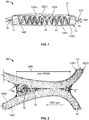
- FIG. 1 shows a cross-section of a brazed structure 10 having a pair of opposed shallow drawn cup members 12, 14 formed from sheet metal 12M, 14M, such as an aluminum alloy, that are brazed along a circular seam formed along the mating rails of the cups that is shown at joints 16, 18 to form the structure 10 with internal hollow 20. While FIG. 1 shows two joints 16, 18, these are different areas of a single continuous joint between the members 12, 14. In the exemplary structure 10 shown, the members 12, 14 are symmetrical and similar in shape, such that the sheet metal 12M, 14M may be of the same composition and gauge.
- the sheet metal of the header would have a different structural shape and may be of a different composition and/or gauge.
- a plurality of fins 22 are attached to the opposed members 12, 14, e.g., by brazing, and extend across the hollow 20. Since the members 12, 14 are cup-shaped in cross-section, they may be called “cups” and the overall structure 10 denominated a "cup/cup structure.”
- the peripheral flange portions 12F, 14F of the members 12, 14 that are brazed together at joints 16, 18 may be denominated "rails.” This particular sample geometry was used as a convenient tool for material evaluation during product development.
- the test structure 10 is merely one very simple example of a structure that can be formed by brazing sheet metal in accordance with the present disclosure.
- the sheet metal 12M, 14M of each member 12, 14 has two surfaces 12S1, 12S2 and 14S1, 14S2, respectively.
- 12S1, 14S1 form surfaces external to the hollow 20 and 12S2, 14S2 form internal surfaces, with 12S2 and 14S2 forming brazing junctions 16, 18 with each other and with the fins 22.
- the surfaces 12S2, 14S2 that are intended to form brazing junctions may have a specific composition to support brazing.
- the surfaces 12S1 and/or 14S1 may also be intended to braze to another element, such as an adjacent tube, external fins or a collector tank (not shown) and may also be specialized for brazing.
- FIG. 2 shows an enlarged fragment of structure 10 wherein the filler metal 24 making the joint 18 is visible bridging between members 12, 14.
- the equilibrium between the self-attraction of the filler metal 24 in the liquid state and the attraction of the filler metal to the surfaces 12S2 and 14S2 draws the filler metal into radii RE (radius external to the hollow 20) and RI (radius internal to the hollow 20).
- radii are one quantifiable measure of the effectiveness of the joint.
- Another quantifiable measure of joint quality is the width of the joint 18W.
- the members 12, 14 are provided in a pre-braze state with discrete layers having different composition and including a braze liner layer on surfaces 12S2, 14S2 that melts and contributes the filler metal 24 to the joint 18.
- FIG. 3 shows a structure 100, having end plates 110, 112 brazed to a U-shaped intermediate member 114 at joints 116, 118.
- the brazed joints 116, 118 have filler metal 116M, 118M that "wets" the interior and exterior surfaces 1141, 114E of the intermediate member 114, and the terminal ends thereof (at joints 116 and 118) in contact with members 110 and 112 at the interior surfaces of 110 (not visible in this view) and 112, i.e., 1121.
- the surfaces 1121, and 110I were clad with the brazing liner that provided the filler metal for the joints.
- one or more of surfaces 114E, 1141 and the surface of member 110 in contact with intermediate member 114 could be provided with a brazing liner, as described below in reference to FIG. 4 .
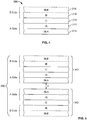
- FIG. 4 shows a metal sheet 200 with a plurality of layers 210, 212, 214, 216, 218 in accordance with the present disclosure that may be used as material for making structures, such as a cup structure 10 of FIG. 1 , or any other structure that is formed by brazing a plurality of separate metal components, at least one of which is a component made from metal sheet 200.
- Sheet 200 since it is suitable for fabricating structures by brazing may be called a "brazing sheet” and may be used for fluxfree CAB brazing.
- a core 210 (also labeled “C”) is typically comprised of a 3XXX-series aluminum alloy.
- An interliner layer 212 also labeled "IA" is conjoined to the core 210.
- the interliner 212 is an aluminum alloy with 0.25% to 1.7 wt. % Mg, 0.3% to 1.1 wt. % Si and 0.09% to 0.5 wt. % Bi.
- the interliner 212 can further comprise up to 1.8% Mn, up to 0.9%Cu, up to 0.7% Fe, up to 3%Zn, up to 0.18%Ti, up to 0.20% Cr with the remainder being aluminum and incidental impurities.
- a braze liner 214 (also labeled "BLA") composed of a 4XXX-series alloy with typically 5% to 12%Si, up to 0.7% Fe and the remainder being aluminum and other incidental impurities is conjoined to the interliner 212 distal to the core 210. Up to 3% Zn can be incorporated into the 4XXX-series alloy of the braze liner 214.
- the core 210, interliner 212 and braze liner 214 layers may be conjoined by hot rolling the stack of layers, and then subsequently cold rolling and thermally treating the materials resulting in a final laminate structure with the desired internal structure and temper with a thickness in a range 0.100 mm to 4.0mm, where the core comprises a percentage of the total thickness from 60% to 94%, the interliner 212 from 3 to 20 % and the braze liner 214 from 3 to 20%.
- the ranges given for the compositions of the interliners, cores and brazing liners include all intermediary values.
- the range of composition may include Mg in amounts of 0.25, 0.30, 0.35, 0.40, 0.45, 0.50, 0.55, 0.60, 0.65, 0.70, 0.75, 0.80, 0.85, 0.90, 0.95, 1.0, 1.05, 1.10, 1.15, 1.20, 1.25, 1.30, 1.35, 1.40, 1.45.
- these compositional ranges may include Mn in amounts of 0.0, 0.1, 0.2, 0.3, 0.4, 0.5, 0.6, 0.7, 0.8, 0.9, 1.0, 1.1, 1.2, 1.3, 1.4, 1.5, 1.6, 1.7 or 1.8 wt% or any intermediate value, Cu in amounts of 0.0, 0.1, 0.2, 0.3, 0.4, 0.5, 0.6, 0.7, 0.8 or 0.9 wt% or any intermediate value, Fe in amounts of 0.0, 0.1, 0.2, 0.3, 0.4, 0.5, 0.6 or 0.7 wt% or any intermediate value, Zn in amounts of 0.0, 0.5, 1.0, 1.5, 2.0, 2.5 or 3.0
- a braze liner 214 composed of a 4XXX-series alloy with typically 5% to 12%Si, up to 0.7% Fe, up to 3.0 wt%Zn and the remainder being aluminum and other incidental impurities, may include Si in amounts of 5.0, 5.5, 6.0, 6.5, 7.0, 7.5, 8.0, 8.5, 9.0, 9.5, 10.0, 10.5, 11.0, 11.5 or 12.0 wt% or any intermediate value, Fe in an amount of 0.0, 0.1, 0.2, 0.3, 0.4, 0.5, 0.6 or 0.7 wt% or any intermediate value, and Zn in amounts of 0.0, 0.5, 1.0, 1.5, 2.0, 2.5 or 3.0 wt% or any intermediate value.
- a brazing sheet such as sheet 200 may be anticipated to braze to an adjacent structure on one or both sides.
- Sheet 200 shows optional interliner layer 216 and braze liner layer 218 in dotted lines and labeled "IB" and "BLB” to signify the optional nature of these layers, which would be provided in the event that the sheet is intended to braze on the side with these optional layers.
- the core 210 and layers 212 (IA), 214 (BLA) can be denominated the "A Side” of the sheet 200, with core 210 and layers 216 (IB), 218 (BLB) forming the "B Side” of the sheet 200.
- the optional layer IB and BLB can be replaced with another aluminum alloy layer or layers designed to give specific performance attributes to that surface after brazing, such as corrosion resistance.
- they could be replaced with another 3XXX layer, a 3XXX+Zn layer, a 1XXX layer, a 7XXX layer or a 4XXX layer.
- FIG. 5 illustrates two brazing sheets 340, 342 positioned proximate one another with the A sides of each facing one another at interface I prior to brazing.
- the opposing braze liner layers BLA of sheets 340, 342 will melt and conjoin forming a conjunction at the interface I that binds the sheets 340, 342 into a structure 350 upon solidification.
- the sheets 340, 342 could be oriented with the A Side of one sheet, e.g., 340 facing the B Side of the other sheet, e.g., 342.
- the B Side braze liner layer 218 FIG.
- the B Side interliner layer 216 layer may not be present on one or both of the sheets 340, 342, such that the braze liner 214 of one sheet is positioned next to the B-Side interliner layer 216 or the core layer 210 of the other sheet prior to brazing.
- the A Side of one of the sheets, e.g. 340, with or without the B Side may be positioned proximate another metal structure that does not have the layer structure and/or composition of the sheet 200 ( FIG. 4 ) and brazed thereto.
- a Side or B Side (if present) of the sheet material 200 disclosed in the present application can be brazed to another piece of sheet material 200, either on the A Side or B Side (if present) as defined in the present disclosure or to other materials that are not described herein.
- the core layer 210 is most typically a 3XXX-series aluminum alloy.
- the composition of the core alloy is not particularly restrictive. A broad range of 3XXX core alloys are possible. Allowable compositions of the 3XXX core alloy include 0.08 to 1.1wt% Si, 0.15 to 0.7wt% Fe, 0.05 to 1.0wt% Cu, 0.4% to 1.8wt% Mn, up to 0.5wt% Mg, up to 2wt% Zn, up to 0.25wt% Cr, up to 0.15wt% Zr. As described above relative to the interliner, the compositional amounts of alternative embodiments of the core can vary incrementally over the compositional range for each element. It is noted that other core alloys can be effective in this structure. If strength is not critical, then 1XXX alloys can be used. For some applications requiring high strength, 6XXX alloys could be utilized as core alloys.
- the interliner layer(s) 212, 216 that help promote fluxfree brazing contain Mg which will diffuse to the surface of the sheet through the molten filler metal and reduce the aluminum oxide at the surface.
- the Mg content of the interliner alloy is between 0.25wt% and 1.7wt%. If below 0.25wt% Mg there is insufficient Mg to promote brazing, but above 1.7% Mg there is no additional benefit recognized.
- Si is also an important component of the interliner(s) 212, 216 because it helps control their solidus temperature.
- the Si content of the interliner(s) 212, 216 is between 0.3wt% and 1.1wt%.
- Bismuth is also an important component of the interliner because it helps promote wetting of the filler metal.
- interliner alloy for the purpose of increasing post-braze strength or enhancing corrosion resistance.
- elements include Mn up to 1.8wt%, Cu up to 0.9wt%, Fe up to 0.7wt%, Ti up to 0.18wt%, Zn up to 3wt%, Cr up to 0.25wt% and Zr up to 0.15wt%.
- the interliner thickness can range from 3% to 20% of the thickness of the final composite.
- the braze filler metals are typical CAB braze alloys such as AA4343, AA4045, AA4047 or the like with no intentional Mg or Bi addition. Up to 3 wt% Zn can be incorporated in the braze liners for purposes of providing corrosion protection to the final brazed product.
- the thickness of the braze liners can range from 3% to about 20% of the final composite thickness.
- the present disclosure utilizes standard abbreviations for the elements that appear in the periodic table of elements, e.g., Mg (magnesium), O (oxygen), Si (silicon), Al (aluminum), Bi (bismuth), Fe (iron), Zn (zinc), In (indium), Cu (copper), Mn (manganese), Sr (strontium), Ti (titanium), Zr (zirconium), etc.
- FIG. 1 shows a cross-section of a typical cup/cup brazed sample structure 10.
- the perimeter rail/rail joints of these samples were sectioned in 5 or 6 different locations and various parameters of the braze joint were measured including the internal fillet radius (RI), external fillet radius (RE) and the joint width (See FIG. 2 ).
- RI internal fillet radius
- RE external fillet radius
- the joint width See FIG. 2 .
- the quality of the internal joints between the bare 3003 fins 22 and the interior surfaces 12S2, 14S2 of the cups were given qualitative ratings.
- the second test involves fluxfree brazing a U-bend section 114, FIG. 3 , of bare 3003 sheet to two pieces 110, 112 of the test material.
- FIG. 3 shows a representative brazed test piece structure 100. This brazing is done in a quartz furnace in which controlled amounts of Oxygen (O 2 ) can be introduced into the nitrogen (N 2 ) atmosphere.
- O 2 Oxygen
- N 2 nitrogen
- the quality of the joint is quantified by visual inspection and measuring the amount of good joint length relative to the amount of total possible joint length. The assumption is that "better quality" or more efficacious materials will be able to generate acceptable joints at higher levels of O 2 contamination than will "lesser quality" materials.
- Table 1 lists the compositions of the core and interliner alloys used in this work.
- the braze liner in all cases is AA 4045 with composition limits described in the Teal Sheets of the Aluminum Association.
- Cup/cup samples were brazed in a CAB furnace using each of the above materials. For the first two materials cup/cup samples were brazed with and without flux. Table 3 reports the average fillet dimensions measured for each of the materials. Table 3 Rail/rail fillet results from Test 1 ID # R I (microns) R E (microns) Fillet width (microns) Fin/cup joints 13-242-2 No joint No joint No joint No joints 13-242-2-fluxed 548 581 3451 Good joints 14-157-3 No joint No joint No joints 14-157-3-fluxed 403 376 3242 Good joints 15-128-2 682-911 75 - 203 1816 - 2831 Good joints
- the quality % ratings indicate the % of good joint formed.
- Table 7 clearly shows the benefit of an Al-Mg-Si-Bi interliner positioned between a core and braze liner in promoting good joint formation without flux at low to moderate O 2 contents in an otherwise inert atmosphere.
- a sheet material in accordance with the present disclosure may allow heat exchanger manufacturers to produce brazed heat exchangers with a high level of internal cleanliness to meet the demands of their customers, especially the automotive OEMs. While vacuum brazing is one way to generate very clean interior units, not all heat exchanger fabricators have vacuum brazing equipment. Most have CAB brazing furnaces and prefer to use them because of the ease of operation and maintenance. The flux commonly used in CAB brazing however results in residues that are present throughout the heat exchanger after brazing. Levels of flux residue that are considered acceptable are being reduced for many mass produced heat exchangers. It is therefore desirable to have a material that will braze in an inert furnace atmosphere without the need for flux.
- Elimination of flux also represents a cost savings and increased cleanliness of the brazing furnace area by eliminating the fluxing operation, reduced maintenance time of the brazer muffle, belt and fixtures.
- a sheet material in accordance with the present disclosure may also lead to decreased EHS issues since flux may represent a health concerns as a fine particulate material that can be inhaled.
Landscapes
- Engineering & Computer Science (AREA)
- Mechanical Engineering (AREA)
- Chemical & Material Sciences (AREA)
- Physics & Mathematics (AREA)
- Thermal Sciences (AREA)
- General Engineering & Computer Science (AREA)
- Materials Engineering (AREA)
- Metallurgy (AREA)
- Organic Chemistry (AREA)
- Details Of Heat-Exchange And Heat-Transfer (AREA)
- Laminated Bodies (AREA)
Claims (13)
- Blechmaterial zum flussmittelfreien CAB-Hartlöten, umfassend:eine Kernschicht, umfassend eine Aluminiumlegierung der Serien 3XXX, 1XXX oder 6XXX; eine Zwischenschicht,umfassend 0,25 bis 1,7 Gew.-% Mg, 0,3 bis 1,1 Gew.-% Si, 0,09 bis 0,5 Gew.-% Bi, bis zu 1,8 Gew.-% Mn, bis zu 0,9 Gew.-% Cu, bis zu 0,7 Gew.-% Fe, bis zu 0,18 Gew.-% Ti, bis zu 3,0 Gew.-% Zn, bis zu 0,25 Gew.-% Cr, und bis zu 0,15 Gew.-% Zr, Rest Aluminium und Verunreinigungen; und eine Hartlötinnenschicht, die 4XXX-Aluminiumlegierung umfasst, wobei die Zwischenschicht zwischen der Kernschicht und der Hartlötinnenschicht angeordnet ist,wobei die Kernschicht, die Zwischenschicht und die Hartlötinnenschicht miteinander verbunden sind und das Blechmaterial bilden.
- Blechmaterial nach Anspruch 1, wobei die Kernschicht eine Aluminiumlegierung der 3XXX-Reihe umfasst.
- Blechmaterial nach Anspruch 1 oder Anspruch 2, wobei die Hartlötinnenschicht eine Zusammensetzung von Mg ≤ 0,05 Gew.-% aufweist.
- Blechmaterial nach einem der vorhergehenden Ansprüche, wobei die Hartlötinnenschicht eine Zusammensetzung von Bi < 0,010 Gew.-% aufweist.
- Blechmaterial nach einem der vorhergehenden Ansprüche, wobei die Kernschicht 0,08 bis 1,1 Gew.-% Si, 0,15 bis 0,7 Gew.-% Fe, 0,05 bis 1,0 Gew.-% Cu, 0,4 bis 1,8 Gew.-% Mn, bis zu 0,5 Gew.-% Mg, bis zu 2 Gew.-% Zn, bis zu 0,25 Gew.-% Cr und bis zu 0,15 Gew.-% Zr umfasst.
- Blechmaterial nach einem der vorhergehenden Ansprüche, wobei die Hartlötschicht 5 bis 12 Gew.-% Si, bis zu 0,7 Gew.-% Fe, bis zu 3 Gew.-% Zn, Aluminium und zufällige Verunreinigungen umfasst.
- Blechmaterial nach einem der vorhergehenden Ansprüche, wobei die Kernschicht 60 % bis 90 % der Gesamtdicke des Blechmaterials umfasst, die Zwischenschicht 3 % bis 20 % der Gesamtdicke umfasst und die Hartlötinnenschicht 3 % bis 20 % der Gesamtdicke umfasst.
- Blechmaterial nach einem der vorhergehenden Ansprüche, wobei die Zwischenschicht eine erste Zwischenschicht ist und ferner eine zweite Zwischenschicht mit einer Zusammensetzung wie die erste Zwischenschicht umfasst, wobei die zweite Zwischenschicht auf der Kernschicht gegenüber der ersten Zwischenschicht angeordnet ist, und wobei die Hartlötinnenschicht vorzugsweise eine erste Hartlötinnenschicht ist und ferner eine zweite Hartlötinnenschicht umfasst, die über der zweiten Zwischenschicht angeordnet ist.
- Blechmaterial nach einem der Ansprüche 1 bis 7, das ferner eine zusätzliche Aluminiumlegierungsschicht umfasst, die auf der Kernschicht gegenüber der Zwischenschicht angeordnet ist, wobei die zusätzliche Aluminiumlegierungsschicht aus einer 3XXX-Legierung, einer 3XXX+Zn-Legierung, einer 1XXX-Legierung, einer 7XXX-Legierung oder einer 4XXX-Legierung besteht.
- Blechmaterial nach einem der vorhergehenden Ansprüche, wobei das Blechmaterial zu einem ersten Teil geformt ist, und ferner umfassend ein zweites Teil, das aus einer Aluminiumlegierung hergestellt ist, wobei das erste Teil und das zweite Teil durch eine Lötverbindung miteinander verbunden sind, die zumindest teilweise aus einer Hartlötinnenschicht des ersten Teils geformt ist.
- Blechmaterial nach Anspruch 10, wobei das Blechmaterial ein Abschnitt eines Wärmetauschers wie eines Ölkühlers oder Heizkörpers ist und/oder wobei der erste Teil mit dem zweiten Teil in einem Inertatmosphären-Hartlötofen ohne Verwendung von Flussmittel hartgelötet ist und/oder wobei das Hartlöten in einer kontrollierten Atmosphäre eines Sauerstoffniveaus im Bereich von 1 ppm bis etwa 35 ppm durchgeführt wird und/oder wobei der erste Teil dieselbe Zusammensetzung wie der zweite Teil aufweist.
- Blechmaterial nach Anspruch 11, wobei der Wärmetauscher einen inneren Hohlraum ohne Flussmittelrückstände aufweist.
- Verfahren zum Hartlöten, umfassend:(A) Bereitstellen eines ersten Materials, umfassend eine Aluminiumlegierung;(B) Bereitstellen eines zweiten Materials, umfassend eine Kernschicht, die eine Aluminiumlegierung der Serien 3XXX, 1XXX oder 6XXX umfasst,
eine Zwischenschicht, umfassend 0,25 bis 1,7 Gew.-% Mg, 0,3 bis 1,1 Gew.-% Si, 0,09 bis 0,5 Gew.-% Bi, bis zu 1,8 Gew.-% Mn, bis zu 0,9 Gew.-% Cu, bis zu 0,7 Gew.-% Fe, bis zu 0,18 Gew.-% Ti, bis zu 3,0 Gew.-% Zn, bis zu 0,25 Gew.-% Cr und bis zu 0,15 Gew.-% Zr, Rest Aluminium und
Verunreinigungen, und eine Hartlötinnenschicht, die eine 4XXX-Aluminiumlegierung mit weniger als 0,05 % Mg und weniger als 0,010 % Bi umfasst, wobei die Zwischenschicht zwischen der Kernschicht und der Hartlötinnenschicht angeordnet ist, wobei die Kernschicht, die Zwischenschicht und die Hartlötinnenschicht miteinander verbunden sind, um ein Blechmaterial zu bilden;(C) In-Kontakt-Bringen des ersten Materials mit dem zweiten Material, wobei die Hartlötinnenschicht des zweiten Materials dem ersten Material zugewandt ist; und(D) Hartlöten des ersten Materials mit dem zweiten Material in einem Inertatmosphären-Hartlötofen ohne Verwendung von Flussmittel.
Applications Claiming Priority (2)
| Application Number | Priority Date | Filing Date | Title |
|---|---|---|---|
| US201762452090P | 2017-01-30 | 2017-01-30 | |
| PCT/US2018/015006 WO2018140468A1 (en) | 2017-01-30 | 2018-01-24 | Aluminum material for fluxfree cab brazing |
Publications (3)
| Publication Number | Publication Date |
|---|---|
| EP3573781A1 EP3573781A1 (de) | 2019-12-04 |
| EP3573781A4 EP3573781A4 (de) | 2020-05-27 |
| EP3573781B1 true EP3573781B1 (de) | 2021-07-21 |
Family
ID=62978701
Family Applications (1)
| Application Number | Title | Priority Date | Filing Date |
|---|---|---|---|
| EP18744216.5A Active EP3573781B1 (de) | 2017-01-30 | 2018-01-24 | Aluminiummaterial für flussmittelfreies löten unter kontrollierter atmosphäre |
Country Status (7)
| Country | Link |
|---|---|
| US (2) | US11491585B2 (de) |
| EP (1) | EP3573781B1 (de) |
| JP (1) | JP6861834B2 (de) |
| KR (1) | KR102267269B1 (de) |
| CN (2) | CN110225806B (de) |
| CA (1) | CA3048225C (de) |
| WO (1) | WO2018140468A1 (de) |
Families Citing this family (9)
| Publication number | Priority date | Publication date | Assignee | Title |
|---|---|---|---|---|
| JP6263574B2 (ja) * | 2016-05-30 | 2018-01-17 | 株式会社Uacj | ブレージングシート及びその製造方法並びにアルミニウム構造体のろう付方法 |
| CN110225806B (zh) * | 2017-01-30 | 2022-05-10 | 奥科宁克技术有限责任公司 | 用于无钎剂cab钎焊的铝材料 |
| FR3080058B1 (fr) * | 2018-04-16 | 2023-05-12 | Constellium Neuf Brisach | Tole de brasage multicouche |
| JP7164498B2 (ja) * | 2019-08-29 | 2022-11-01 | 株式会社神戸製鋼所 | アルミニウム合金材、フラックスレスろう付構造体、および、フラックスレスろう付方法 |
| EP4037868A4 (de) | 2019-09-30 | 2023-04-19 | Arconic Technologies LLC | Verbesserte hartlötbleche aus aluminiumlegierung zum flussmittelfreien löten |
| JP7282468B2 (ja) * | 2019-10-04 | 2023-05-29 | Maアルミニウム株式会社 | アルミニウムブレージングシートおよびアルミニウム部材のフラックスフリーろう付方法 |
| KR20230064437A (ko) | 2021-11-03 | 2023-05-10 | 코웨이 주식회사 | 복합 필터 구조체 |
| US20250018508A1 (en) * | 2021-12-23 | 2025-01-16 | Arconic Technologies Llc | Brazing sheets, articles formed from brazing sheets, and methods of forming articles |
| CN114932336B (zh) * | 2022-05-27 | 2023-05-23 | 郑州机械研究所有限公司 | 一种铜磷锌锡焊片及其制备方法和应用 |
Family Cites Families (18)
| Publication number | Priority date | Publication date | Assignee | Title |
|---|---|---|---|---|
| US3853547A (en) * | 1973-05-25 | 1974-12-10 | Reynolds Metals Co | Brazing materials |
| DE2542595C2 (de) * | 1975-09-24 | 1986-04-30 | Holland, Gerhard, Dr.rer.pol., 6000 Frankfurt | Verfahren zur Abtrennung von Metalldämpfen aus gasförmigen Gemischen |
| CN1277650C (zh) | 2001-09-28 | 2006-10-04 | 古河Sky株式会社 | 铝合金钎焊板 |
| EP1306207B2 (de) | 2001-10-26 | 2011-05-25 | Furukawa-Sky Aluminum Corporation | Flussmittelfreies Verfahren zum Hartlöten unter Schutzgas |
| US6815086B2 (en) * | 2001-11-21 | 2004-11-09 | Dana Canada Corporation | Methods for fluxless brazing |
| US7255932B1 (en) * | 2002-04-18 | 2007-08-14 | Alcoa Inc. | Ultra-longlife, high formability brazing sheet |
| US20080274367A1 (en) | 2004-10-13 | 2008-11-06 | Alcoa Inc. | Recovered high strength multi-layer aluminum brazing sheet products |
| CN101715380B (zh) | 2007-06-20 | 2012-12-19 | 阿勒里斯铝业科布伦茨有限公司 | 铝合金硬钎焊板材 |
| US8455110B2 (en) * | 2008-07-02 | 2013-06-04 | Aleris Aluminum Koblenz Gmbh | Aluminium brazing sheet material |
| CN102209629A (zh) * | 2008-11-10 | 2011-10-05 | 阿勒里斯铝业科布伦茨有限公司 | 对铝进行无钎剂钎焊的方法以及用于该方法的钎焊板 |
| US20100304175A1 (en) * | 2009-05-29 | 2010-12-02 | Alcoa Inc. | High strength multi-layer brazing sheet structures with good controlled atmosphere brazing (cab) brazeability |
| SE534689C2 (sv) * | 2009-09-17 | 2011-11-15 | Sapa Heat Transfer Ab | Lodpläterad aluminiumplåt |
| EP2418042A1 (de) * | 2011-01-17 | 2012-02-15 | Aleris Aluminum Koblenz GmbH | Aluminiumlötblechmaterial für Rohre |
| DE112012000619T5 (de) * | 2011-01-31 | 2013-10-31 | Aleris Rolled Products Germany Gmbh | Aluminium Lotblechmaterial für flussmittelfreies Löten |
| IN2014DN09944A (de) | 2012-05-31 | 2015-08-14 | Sapa Heat Transfer Ab | |
| JP6648999B2 (ja) * | 2015-07-13 | 2020-02-19 | 株式会社Uacj | アルミニウム合金ブレージングシート |
| JP6055573B1 (ja) * | 2016-06-23 | 2016-12-27 | 三菱アルミニウム株式会社 | フラックスフリーろう付用のブレージングシート、フラックスフリーろう付方法および熱交換器のフラックスフリーろう付方法 |
| CN110225806B (zh) * | 2017-01-30 | 2022-05-10 | 奥科宁克技术有限责任公司 | 用于无钎剂cab钎焊的铝材料 |
-
2018
- 2018-01-24 CN CN201880008613.6A patent/CN110225806B/zh active Active
- 2018-01-24 JP JP2019541088A patent/JP6861834B2/ja active Active
- 2018-01-24 CA CA3048225A patent/CA3048225C/en active Active
- 2018-01-24 EP EP18744216.5A patent/EP3573781B1/de active Active
- 2018-01-24 WO PCT/US2018/015006 patent/WO2018140468A1/en not_active Ceased
- 2018-01-24 KR KR1020197022787A patent/KR102267269B1/ko active Active
- 2018-01-24 CN CN202210422443.4A patent/CN114700650B/zh active Active
- 2018-01-24 US US16/471,270 patent/US11491585B2/en active Active
-
2022
- 2022-09-30 US US17/937,092 patent/US11673213B2/en active Active
Also Published As
| Publication number | Publication date |
|---|---|
| CN114700650B (zh) | 2025-03-11 |
| US20200086429A1 (en) | 2020-03-19 |
| US20230035052A1 (en) | 2023-02-02 |
| US11673213B2 (en) | 2023-06-13 |
| WO2018140468A1 (en) | 2018-08-02 |
| CN110225806B (zh) | 2022-05-10 |
| CN114700650A (zh) | 2022-07-05 |
| JP2020507474A (ja) | 2020-03-12 |
| EP3573781A4 (de) | 2020-05-27 |
| JP6861834B2 (ja) | 2021-04-21 |
| CA3048225C (en) | 2022-07-05 |
| KR102267269B1 (ko) | 2021-06-18 |
| CA3048225A1 (en) | 2018-08-02 |
| EP3573781A1 (de) | 2019-12-04 |
| CN110225806A (zh) | 2019-09-10 |
| US11491585B2 (en) | 2022-11-08 |
| KR20190098256A (ko) | 2019-08-21 |
Similar Documents
| Publication | Publication Date | Title |
|---|---|---|
| US11673213B2 (en) | Aluminum material for fluxfree cab brazing | |
| CN102089117B (zh) | 钎焊铝板材 | |
| CN104395028B (zh) | 用于在受控气氛中无助焊剂钎焊的多层铝钎焊板 | |
| EP2155431B1 (de) | Hartlötblechprodukt aus einer aluminiumlegierung | |
| EP3459676B1 (de) | Lötfolie für flussmittelfreies löten, flussmittelfreies lötverfahren und verfahren zur herstellung von wärmetauschern | |
| EP3174663B2 (de) | Mehrschichtiges aluminiumlötblechmaterial | |
| EP3174710B1 (de) | Mehrschichtiges aluminiumlötblechmaterial | |
| CN102574248B (zh) | 铝钎焊板材 | |
| WO2018100793A1 (ja) | ブレージングシート及びその製造方法 | |
| JP2012050993A (ja) | アルミニウム材のフラックスレスろう付け方法およびフラックスレスろう付け用アルミニウムクラッド材 | |
| EP1803525B1 (de) | Verfahren zum Hartlöten von Aluminiumlegierungsmaterial und Verfahren zur Herstellung eines Wärmetauschers aus einer Aluminiumlegierung | |
| JP5816317B2 (ja) | 電縫溶接用アルミニウム合金ブレージングシート | |
| JP2023505586A (ja) | 多層アルミニウムブレージングシート材 | |
| JP7164498B2 (ja) | アルミニウム合金材、フラックスレスろう付構造体、および、フラックスレスろう付方法 | |
| JP3326106B2 (ja) | 強度および耐食性に優れた熱交換器用アルミニウム合金クラッド材 | |
| CN115038805A (zh) | 铝合金钎焊板 | |
| JP5084490B2 (ja) | アルミニウム合金クラッド材 | |
| JP2004225061A (ja) | 耐食性に優れたアルミニウム合金クラッドチューブ材および該クラッドチューブ材を組付けた熱交換器 | |
| EP4037868A1 (de) | Verbesserte hartlötbleche aus aluminiumlegierung zum flussmittelfreien löten | |
| JP7650407B2 (ja) | 熱交換器及びその製造方法 | |
| JP7737878B2 (ja) | アルミニウム合金製熱交換器 | |
| JP2025152198A (ja) | ろう付性に優れるアルミニウム合金クラッド材 | |
| JP4107206B2 (ja) | ろう付け用複合材を用いたろう付け方法 |
Legal Events
| Date | Code | Title | Description |
|---|---|---|---|
| STAA | Information on the status of an ep patent application or granted ep patent |
Free format text: STATUS: THE INTERNATIONAL PUBLICATION HAS BEEN MADE |
|
| PUAI | Public reference made under article 153(3) epc to a published international application that has entered the european phase |
Free format text: ORIGINAL CODE: 0009012 |
|
| STAA | Information on the status of an ep patent application or granted ep patent |
Free format text: STATUS: REQUEST FOR EXAMINATION WAS MADE |
|
| 17P | Request for examination filed |
Effective date: 20190724 |
|
| AK | Designated contracting states |
Kind code of ref document: A1 Designated state(s): AL AT BE BG CH CY CZ DE DK EE ES FI FR GB GR HR HU IE IS IT LI LT LU LV MC MK MT NL NO PL PT RO RS SE SI SK SM TR |
|
| AX | Request for extension of the european patent |
Extension state: BA ME |
|
| RAP1 | Party data changed (applicant data changed or rights of an application transferred) |
Owner name: ARCONIC TECHNOLOGIES LLC |
|
| DAV | Request for validation of the european patent (deleted) | ||
| DAX | Request for extension of the european patent (deleted) | ||
| A4 | Supplementary search report drawn up and despatched |
Effective date: 20200428 |
|
| RIC1 | Information provided on ipc code assigned before grant |
Ipc: C22C 21/06 20060101ALI20200421BHEP Ipc: F28F 21/08 20060101ALI20200421BHEP Ipc: B23K 1/00 20060101ALI20200421BHEP Ipc: B23K 101/14 20060101ALI20200421BHEP Ipc: B23K 35/38 20060101ALI20200421BHEP Ipc: C22C 21/00 20060101ALI20200421BHEP Ipc: B23K 103/10 20060101ALN20200421BHEP Ipc: B23K 35/02 20060101AFI20200421BHEP Ipc: C22C 21/08 20060101ALI20200421BHEP Ipc: B23K 35/28 20060101ALI20200421BHEP Ipc: B32B 15/01 20060101ALI20200421BHEP |
|
| GRAP | Despatch of communication of intention to grant a patent |
Free format text: ORIGINAL CODE: EPIDOSNIGR1 |
|
| STAA | Information on the status of an ep patent application or granted ep patent |
Free format text: STATUS: GRANT OF PATENT IS INTENDED |
|
| RIC1 | Information provided on ipc code assigned before grant |
Ipc: B23K 35/02 20060101AFI20210330BHEP Ipc: B23K 35/28 20060101ALI20210330BHEP Ipc: B23K 1/00 20060101ALI20210330BHEP Ipc: B23K 101/14 20060101ALI20210330BHEP Ipc: B23K 35/38 20060101ALI20210330BHEP Ipc: B32B 15/01 20060101ALI20210330BHEP Ipc: C22C 21/00 20060101ALI20210330BHEP Ipc: C22C 21/06 20060101ALI20210330BHEP Ipc: C22C 21/08 20060101ALI20210330BHEP Ipc: F28F 21/08 20060101ALI20210330BHEP Ipc: B23K 103/10 20060101ALN20210330BHEP |
|
| RIC1 | Information provided on ipc code assigned before grant |
Ipc: B23K 35/02 20060101AFI20210406BHEP Ipc: B23K 35/28 20060101ALI20210406BHEP Ipc: B23K 1/00 20060101ALI20210406BHEP Ipc: B23K 101/14 20060101ALI20210406BHEP Ipc: B23K 35/38 20060101ALI20210406BHEP Ipc: B32B 15/01 20060101ALI20210406BHEP Ipc: C22C 21/00 20060101ALI20210406BHEP Ipc: C22C 21/06 20060101ALI20210406BHEP Ipc: C22C 21/08 20060101ALI20210406BHEP Ipc: F28F 21/08 20060101ALI20210406BHEP Ipc: B23K 103/10 20060101ALN20210406BHEP |
|
| INTG | Intention to grant announced |
Effective date: 20210419 |
|
| GRAS | Grant fee paid |
Free format text: ORIGINAL CODE: EPIDOSNIGR3 |
|
| GRAA | (expected) grant |
Free format text: ORIGINAL CODE: 0009210 |
|
| STAA | Information on the status of an ep patent application or granted ep patent |
Free format text: STATUS: THE PATENT HAS BEEN GRANTED |
|
| AK | Designated contracting states |
Kind code of ref document: B1 Designated state(s): AL AT BE BG CH CY CZ DE DK EE ES FI FR GB GR HR HU IE IS IT LI LT LU LV MC MK MT NL NO PL PT RO RS SE SI SK SM TR |
|
| REG | Reference to a national code |
Ref country code: GB Ref legal event code: FG4D |
|
| REG | Reference to a national code |
Ref country code: CH Ref legal event code: EP |
|
| REG | Reference to a national code |
Ref country code: DE Ref legal event code: R096 Ref document number: 602018020487 Country of ref document: DE |
|
| REG | Reference to a national code |
Ref country code: AT Ref legal event code: REF Ref document number: 1412157 Country of ref document: AT Kind code of ref document: T Effective date: 20210815 |
|
| REG | Reference to a national code |
Ref country code: IE Ref legal event code: FG4D |
|
| REG | Reference to a national code |
Ref country code: LT Ref legal event code: MG9D |
|
| REG | Reference to a national code |
Ref country code: NL Ref legal event code: MP Effective date: 20210721 |
|
| PG25 | Lapsed in a contracting state [announced via postgrant information from national office to epo] |
Ref country code: NL Free format text: LAPSE BECAUSE OF FAILURE TO SUBMIT A TRANSLATION OF THE DESCRIPTION OR TO PAY THE FEE WITHIN THE PRESCRIBED TIME-LIMIT Effective date: 20210721 Ref country code: PT Free format text: LAPSE BECAUSE OF FAILURE TO SUBMIT A TRANSLATION OF THE DESCRIPTION OR TO PAY THE FEE WITHIN THE PRESCRIBED TIME-LIMIT Effective date: 20211122 Ref country code: NO Free format text: LAPSE BECAUSE OF FAILURE TO SUBMIT A TRANSLATION OF THE DESCRIPTION OR TO PAY THE FEE WITHIN THE PRESCRIBED TIME-LIMIT Effective date: 20211021 Ref country code: BG Free format text: LAPSE BECAUSE OF FAILURE TO SUBMIT A TRANSLATION OF THE DESCRIPTION OR TO PAY THE FEE WITHIN THE PRESCRIBED TIME-LIMIT Effective date: 20211021 Ref country code: LT Free format text: LAPSE BECAUSE OF FAILURE TO SUBMIT A TRANSLATION OF THE DESCRIPTION OR TO PAY THE FEE WITHIN THE PRESCRIBED TIME-LIMIT Effective date: 20210721 Ref country code: SE Free format text: LAPSE BECAUSE OF FAILURE TO SUBMIT A TRANSLATION OF THE DESCRIPTION OR TO PAY THE FEE WITHIN THE PRESCRIBED TIME-LIMIT Effective date: 20210721 Ref country code: RS Free format text: LAPSE BECAUSE OF FAILURE TO SUBMIT A TRANSLATION OF THE DESCRIPTION OR TO PAY THE FEE WITHIN THE PRESCRIBED TIME-LIMIT Effective date: 20210721 Ref country code: HR Free format text: LAPSE BECAUSE OF FAILURE TO SUBMIT A TRANSLATION OF THE DESCRIPTION OR TO PAY THE FEE WITHIN THE PRESCRIBED TIME-LIMIT Effective date: 20210721 Ref country code: ES Free format text: LAPSE BECAUSE OF FAILURE TO SUBMIT A TRANSLATION OF THE DESCRIPTION OR TO PAY THE FEE WITHIN THE PRESCRIBED TIME-LIMIT Effective date: 20210721 Ref country code: FI Free format text: LAPSE BECAUSE OF FAILURE TO SUBMIT A TRANSLATION OF THE DESCRIPTION OR TO PAY THE FEE WITHIN THE PRESCRIBED TIME-LIMIT Effective date: 20210721 |
|
| PG25 | Lapsed in a contracting state [announced via postgrant information from national office to epo] |
Ref country code: PL Free format text: LAPSE BECAUSE OF FAILURE TO SUBMIT A TRANSLATION OF THE DESCRIPTION OR TO PAY THE FEE WITHIN THE PRESCRIBED TIME-LIMIT Effective date: 20210721 Ref country code: LV Free format text: LAPSE BECAUSE OF FAILURE TO SUBMIT A TRANSLATION OF THE DESCRIPTION OR TO PAY THE FEE WITHIN THE PRESCRIBED TIME-LIMIT Effective date: 20210721 Ref country code: GR Free format text: LAPSE BECAUSE OF FAILURE TO SUBMIT A TRANSLATION OF THE DESCRIPTION OR TO PAY THE FEE WITHIN THE PRESCRIBED TIME-LIMIT Effective date: 20211022 |
|
| REG | Reference to a national code |
Ref country code: DE Ref legal event code: R097 Ref document number: 602018020487 Country of ref document: DE |
|
| PG25 | Lapsed in a contracting state [announced via postgrant information from national office to epo] |
Ref country code: DK Free format text: LAPSE BECAUSE OF FAILURE TO SUBMIT A TRANSLATION OF THE DESCRIPTION OR TO PAY THE FEE WITHIN THE PRESCRIBED TIME-LIMIT Effective date: 20210721 |
|
| PLBE | No opposition filed within time limit |
Free format text: ORIGINAL CODE: 0009261 |
|
| STAA | Information on the status of an ep patent application or granted ep patent |
Free format text: STATUS: NO OPPOSITION FILED WITHIN TIME LIMIT |
|
| PG25 | Lapsed in a contracting state [announced via postgrant information from national office to epo] |
Ref country code: SM Free format text: LAPSE BECAUSE OF FAILURE TO SUBMIT A TRANSLATION OF THE DESCRIPTION OR TO PAY THE FEE WITHIN THE PRESCRIBED TIME-LIMIT Effective date: 20210721 Ref country code: SK Free format text: LAPSE BECAUSE OF FAILURE TO SUBMIT A TRANSLATION OF THE DESCRIPTION OR TO PAY THE FEE WITHIN THE PRESCRIBED TIME-LIMIT Effective date: 20210721 Ref country code: RO Free format text: LAPSE BECAUSE OF FAILURE TO SUBMIT A TRANSLATION OF THE DESCRIPTION OR TO PAY THE FEE WITHIN THE PRESCRIBED TIME-LIMIT Effective date: 20210721 Ref country code: EE Free format text: LAPSE BECAUSE OF FAILURE TO SUBMIT A TRANSLATION OF THE DESCRIPTION OR TO PAY THE FEE WITHIN THE PRESCRIBED TIME-LIMIT Effective date: 20210721 Ref country code: CZ Free format text: LAPSE BECAUSE OF FAILURE TO SUBMIT A TRANSLATION OF THE DESCRIPTION OR TO PAY THE FEE WITHIN THE PRESCRIBED TIME-LIMIT Effective date: 20210721 Ref country code: AL Free format text: LAPSE BECAUSE OF FAILURE TO SUBMIT A TRANSLATION OF THE DESCRIPTION OR TO PAY THE FEE WITHIN THE PRESCRIBED TIME-LIMIT Effective date: 20210721 |
|
| 26N | No opposition filed |
Effective date: 20220422 |
|
| PG25 | Lapsed in a contracting state [announced via postgrant information from national office to epo] |
Ref country code: MC Free format text: LAPSE BECAUSE OF FAILURE TO SUBMIT A TRANSLATION OF THE DESCRIPTION OR TO PAY THE FEE WITHIN THE PRESCRIBED TIME-LIMIT Effective date: 20210721 |
|
| REG | Reference to a national code |
Ref country code: CH Ref legal event code: PL |
|
| PG25 | Lapsed in a contracting state [announced via postgrant information from national office to epo] |
Ref country code: LU Free format text: LAPSE BECAUSE OF NON-PAYMENT OF DUE FEES Effective date: 20220124 |
|
| PG25 | Lapsed in a contracting state [announced via postgrant information from national office to epo] |
Ref country code: LI Free format text: LAPSE BECAUSE OF NON-PAYMENT OF DUE FEES Effective date: 20220131 Ref country code: CH Free format text: LAPSE BECAUSE OF NON-PAYMENT OF DUE FEES Effective date: 20220131 |
|
| PG25 | Lapsed in a contracting state [announced via postgrant information from national office to epo] |
Ref country code: IE Free format text: LAPSE BECAUSE OF NON-PAYMENT OF DUE FEES Effective date: 20220124 |
|
| REG | Reference to a national code |
Ref country code: AT Ref legal event code: UEP Ref document number: 1412157 Country of ref document: AT Kind code of ref document: T Effective date: 20210721 |
|
| P01 | Opt-out of the competence of the unified patent court (upc) registered |
Effective date: 20230517 |
|
| PG25 | Lapsed in a contracting state [announced via postgrant information from national office to epo] |
Ref country code: MK Free format text: LAPSE BECAUSE OF FAILURE TO SUBMIT A TRANSLATION OF THE DESCRIPTION OR TO PAY THE FEE WITHIN THE PRESCRIBED TIME-LIMIT Effective date: 20210721 Ref country code: CY Free format text: LAPSE BECAUSE OF FAILURE TO SUBMIT A TRANSLATION OF THE DESCRIPTION OR TO PAY THE FEE WITHIN THE PRESCRIBED TIME-LIMIT Effective date: 20210721 |
|
| PG25 | Lapsed in a contracting state [announced via postgrant information from national office to epo] |
Ref country code: HU Free format text: LAPSE BECAUSE OF FAILURE TO SUBMIT A TRANSLATION OF THE DESCRIPTION OR TO PAY THE FEE WITHIN THE PRESCRIBED TIME-LIMIT; INVALID AB INITIO Effective date: 20180124 |
|
| PG25 | Lapsed in a contracting state [announced via postgrant information from national office to epo] |
Ref country code: MT Free format text: LAPSE BECAUSE OF FAILURE TO SUBMIT A TRANSLATION OF THE DESCRIPTION OR TO PAY THE FEE WITHIN THE PRESCRIBED TIME-LIMIT Effective date: 20210721 |
|
| PG25 | Lapsed in a contracting state [announced via postgrant information from national office to epo] |
Ref country code: TR Free format text: LAPSE BECAUSE OF FAILURE TO SUBMIT A TRANSLATION OF THE DESCRIPTION OR TO PAY THE FEE WITHIN THE PRESCRIBED TIME-LIMIT Effective date: 20210721 |
|
| PGFP | Annual fee paid to national office [announced via postgrant information from national office to epo] |
Ref country code: GB Payment date: 20251220 Year of fee payment: 9 |
|
| PGFP | Annual fee paid to national office [announced via postgrant information from national office to epo] |
Ref country code: FR Payment date: 20251217 Year of fee payment: 9 |
|
| PGFP | Annual fee paid to national office [announced via postgrant information from national office to epo] |
Ref country code: BE Payment date: 20251217 Year of fee payment: 9 |
|
| PGFP | Annual fee paid to national office [announced via postgrant information from national office to epo] |
Ref country code: DE Payment date: 20251217 Year of fee payment: 9 |
|
| PGFP | Annual fee paid to national office [announced via postgrant information from national office to epo] |
Ref country code: AT Payment date: 20251218 Year of fee payment: 9 |
|
| PGFP | Annual fee paid to national office [announced via postgrant information from national office to epo] |
Ref country code: IT Payment date: 20260107 Year of fee payment: 9 |