EP3575343A1 - Copolymère à base de polyimide, et film à base de polyimide le comprenant - Google Patents
Copolymère à base de polyimide, et film à base de polyimide le comprenant Download PDFInfo
- Publication number
- EP3575343A1 EP3575343A1 EP18822585.8A EP18822585A EP3575343A1 EP 3575343 A1 EP3575343 A1 EP 3575343A1 EP 18822585 A EP18822585 A EP 18822585A EP 3575343 A1 EP3575343 A1 EP 3575343A1
- Authority
- EP
- European Patent Office
- Prior art keywords
- repeating unit
- independently
- polyimide
- group
- aromatic organic
- Prior art date
- Legal status (The legal status is an assumption and is not a legal conclusion. Google has not performed a legal analysis and makes no representation as to the accuracy of the status listed.)
- Pending
Links
- 229920001721 polyimide Polymers 0.000 title claims abstract description 77
- 239000004642 Polyimide Substances 0.000 title claims abstract description 67
- 229920001577 copolymer Polymers 0.000 title claims abstract description 41
- 125000000962 organic group Chemical group 0.000 claims description 69
- 125000003118 aryl group Chemical group 0.000 claims description 46
- 239000000126 substance Substances 0.000 claims description 41
- 125000002023 trifluoromethyl group Chemical group FC(F)(F)* 0.000 claims description 23
- 125000001931 aliphatic group Chemical group 0.000 claims description 20
- 125000005567 fluorenylene group Chemical group 0.000 claims description 16
- XLYOFNOQVPJJNP-UHFFFAOYSA-N water Substances O XLYOFNOQVPJJNP-UHFFFAOYSA-N 0.000 claims description 14
- 230000009477 glass transition Effects 0.000 claims description 12
- 150000001875 compounds Chemical class 0.000 claims description 11
- 125000005647 linker group Chemical group 0.000 claims description 7
- 125000003808 silyl group Chemical group [H][Si]([H])([H])[*] 0.000 claims description 7
- OFOBLEOULBTSOW-UHFFFAOYSA-N Malonic acid Chemical compound OC(=O)CC(O)=O OFOBLEOULBTSOW-UHFFFAOYSA-N 0.000 claims description 3
- 125000002723 alicyclic group Chemical group 0.000 claims description 3
- 150000004820 halides Chemical class 0.000 claims description 3
- 125000001072 heteroaryl group Chemical group 0.000 claims description 3
- 230000001747 exhibiting effect Effects 0.000 abstract description 3
- 238000006243 chemical reaction Methods 0.000 description 21
- SECXISVLQFMRJM-UHFFFAOYSA-N N-Methylpyrrolidone Chemical compound CN1CCCC1=O SECXISVLQFMRJM-UHFFFAOYSA-N 0.000 description 16
- NAQMVNRVTILPCV-UHFFFAOYSA-N hexane-1,6-diamine Chemical compound NCCCCCCN NAQMVNRVTILPCV-UHFFFAOYSA-N 0.000 description 16
- 239000011541 reaction mixture Substances 0.000 description 14
- 229920000642 polymer Polymers 0.000 description 12
- 230000000052 comparative effect Effects 0.000 description 11
- 238000002360 preparation method Methods 0.000 description 10
- 238000000034 method Methods 0.000 description 9
- 239000009719 polyimide resin Substances 0.000 description 8
- LXEJRKJRKIFVNY-UHFFFAOYSA-N terephthaloyl chloride Chemical compound ClC(=O)C1=CC=C(C(Cl)=O)C=C1 LXEJRKJRKIFVNY-UHFFFAOYSA-N 0.000 description 8
- NVKGJHAQGWCWDI-UHFFFAOYSA-N 4-[4-amino-2-(trifluoromethyl)phenyl]-3-(trifluoromethyl)aniline Chemical compound FC(F)(F)C1=CC(N)=CC=C1C1=CC=C(N)C=C1C(F)(F)F NVKGJHAQGWCWDI-UHFFFAOYSA-N 0.000 description 6
- WFDIJRYMOXRFFG-UHFFFAOYSA-N Acetic anhydride Chemical compound CC(=O)OC(C)=O WFDIJRYMOXRFFG-UHFFFAOYSA-N 0.000 description 6
- LFQSCWFLJHTTHZ-UHFFFAOYSA-N Ethanol Chemical compound CCO LFQSCWFLJHTTHZ-UHFFFAOYSA-N 0.000 description 6
- MVPPADPHJFYWMZ-UHFFFAOYSA-N chlorobenzene Chemical compound ClC1=CC=CC=C1 MVPPADPHJFYWMZ-UHFFFAOYSA-N 0.000 description 6
- 238000003756 stirring Methods 0.000 description 6
- 239000002253 acid Substances 0.000 description 5
- 150000007513 acids Chemical class 0.000 description 5
- 150000001408 amides Chemical class 0.000 description 5
- 238000010533 azeotropic distillation Methods 0.000 description 5
- RTZKZFJDLAIYFH-UHFFFAOYSA-N ether Substances CCOCC RTZKZFJDLAIYFH-UHFFFAOYSA-N 0.000 description 5
- 239000000203 mixture Substances 0.000 description 5
- 0 *C(*)(*)N(C(C1=C2C=C=IC=C1)=O)C2=O Chemical compound *C(*)(*)N(C(C1=C2C=C=IC=C1)=O)C2=O 0.000 description 4
- JUJWROOIHBZHMG-UHFFFAOYSA-N Pyridine Chemical compound C1=CC=NC=C1 JUJWROOIHBZHMG-UHFFFAOYSA-N 0.000 description 4
- 229920001400 block copolymer Polymers 0.000 description 4
- 230000001939 inductive effect Effects 0.000 description 4
- 239000004963 Torlon Substances 0.000 description 3
- 229920003997 Torlon® Polymers 0.000 description 3
- GTDPSWPPOUPBNX-UHFFFAOYSA-N ac1mqpva Chemical compound CC12C(=O)OC(=O)C1(C)C1(C)C2(C)C(=O)OC1=O GTDPSWPPOUPBNX-UHFFFAOYSA-N 0.000 description 3
- 229920006351 engineering plastic Polymers 0.000 description 3
- 239000000463 material Substances 0.000 description 3
- 239000000178 monomer Substances 0.000 description 3
- 239000012299 nitrogen atmosphere Substances 0.000 description 3
- 229920005575 poly(amic acid) Polymers 0.000 description 3
- 238000006116 polymerization reaction Methods 0.000 description 3
- 239000011347 resin Substances 0.000 description 3
- 229920005989 resin Polymers 0.000 description 3
- 239000002904 solvent Substances 0.000 description 3
- 238000005160 1H NMR spectroscopy Methods 0.000 description 2
- IAZDPXIOMUYVGZ-WFGJKAKNSA-N Dimethyl sulfoxide Chemical compound [2H]C([2H])([2H])S(=O)C([2H])([2H])[2H] IAZDPXIOMUYVGZ-WFGJKAKNSA-N 0.000 description 2
- KKEYFWRCBNTPAC-UHFFFAOYSA-N Terephthalic acid Chemical compound OC(=O)C1=CC=C(C(O)=O)C=C1 KKEYFWRCBNTPAC-UHFFFAOYSA-N 0.000 description 2
- -1 aliphatic cyclic compound Chemical class 0.000 description 2
- VCCBEIPGXKNHFW-UHFFFAOYSA-N biphenyl-4,4'-diol Chemical compound C1=CC(O)=CC=C1C1=CC=C(O)C=C1 VCCBEIPGXKNHFW-UHFFFAOYSA-N 0.000 description 2
- UHOVQNZJYSORNB-UHFFFAOYSA-N c1ccccc1 Chemical compound c1ccccc1 UHOVQNZJYSORNB-UHFFFAOYSA-N 0.000 description 2
- 230000000694 effects Effects 0.000 description 2
- 238000011156 evaluation Methods 0.000 description 2
- 230000014509 gene expression Effects 0.000 description 2
- 150000003949 imides Chemical class 0.000 description 2
- 238000002156 mixing Methods 0.000 description 2
- UMJSCPRVCHMLSP-UHFFFAOYSA-N pyridine Natural products COC1=CC=CN=C1 UMJSCPRVCHMLSP-UHFFFAOYSA-N 0.000 description 2
- PXGZQGDTEZPERC-UHFFFAOYSA-N 1,4-cyclohexanedicarboxylic acid Chemical compound OC(=O)C1CCC(C(O)=O)CC1 PXGZQGDTEZPERC-UHFFFAOYSA-N 0.000 description 1
- QDBOAKPEXMMQFO-UHFFFAOYSA-N 4-(4-carbonochloridoylphenyl)benzoyl chloride Chemical compound C1=CC(C(=O)Cl)=CC=C1C1=CC=C(C(Cl)=O)C=C1 QDBOAKPEXMMQFO-UHFFFAOYSA-N 0.000 description 1
- NEQFBGHQPUXOFH-UHFFFAOYSA-N 4-(4-carboxyphenyl)benzoic acid Chemical compound C1=CC(C(=O)O)=CC=C1C1=CC=C(C(O)=O)C=C1 NEQFBGHQPUXOFH-UHFFFAOYSA-N 0.000 description 1
- QHHKLPCQTTWFSS-UHFFFAOYSA-N 5-[2-(1,3-dioxo-2-benzofuran-5-yl)-1,1,1,3,3,3-hexafluoropropan-2-yl]-2-benzofuran-1,3-dione Chemical compound C1=C2C(=O)OC(=O)C2=CC(C(C=2C=C3C(=O)OC(=O)C3=CC=2)(C(F)(F)F)C(F)(F)F)=C1 QHHKLPCQTTWFSS-UHFFFAOYSA-N 0.000 description 1
- KBOQYLOMMPGRDV-UHFFFAOYSA-N CCNc(cc1C(F)(F)F)ccc1-c(c(C(F)(F)F)c1)ccc1N(C(c1ccc(C(C(F)(F)F)(C(F)(F)F)c(cc2C(N3C)=O)ccc2C3=O)cc11)=O)C1=O Chemical compound CCNc(cc1C(F)(F)F)ccc1-c(c(C(F)(F)F)c1)ccc1N(C(c1ccc(C(C(F)(F)F)(C(F)(F)F)c(cc2C(N3C)=O)ccc2C3=O)cc11)=O)C1=O KBOQYLOMMPGRDV-UHFFFAOYSA-N 0.000 description 1
- PXGOKWXKJXAPGV-UHFFFAOYSA-N Fluorine Chemical compound FF PXGOKWXKJXAPGV-UHFFFAOYSA-N 0.000 description 1
- 238000012695 Interfacial polymerization Methods 0.000 description 1
- FXHOOIRPVKKKFG-UHFFFAOYSA-N N,N-Dimethylacetamide Chemical compound CN(C)C(C)=O FXHOOIRPVKKKFG-UHFFFAOYSA-N 0.000 description 1
- 238000005481 NMR spectroscopy Methods 0.000 description 1
- 150000004984 aromatic diamines Chemical class 0.000 description 1
- 238000005452 bending Methods 0.000 description 1
- 239000011248 coating agent Substances 0.000 description 1
- 238000000576 coating method Methods 0.000 description 1
- 238000007796 conventional method Methods 0.000 description 1
- HXTYZWJVMWWWDK-UHFFFAOYSA-N cyclohexane-1,4-dicarbonyl chloride Chemical compound ClC(=O)C1CCC(C(Cl)=O)CC1 HXTYZWJVMWWWDK-UHFFFAOYSA-N 0.000 description 1
- 230000006866 deterioration Effects 0.000 description 1
- 238000001035 drying Methods 0.000 description 1
- 125000001033 ether group Chemical group 0.000 description 1
- 238000001704 evaporation Methods 0.000 description 1
- 229910052731 fluorine Inorganic materials 0.000 description 1
- 239000011737 fluorine Substances 0.000 description 1
- 238000010528 free radical solution polymerization reaction Methods 0.000 description 1
- 239000011521 glass Substances 0.000 description 1
- 238000010438 heat treatment Methods 0.000 description 1
- LVPMIMZXDYBCDF-UHFFFAOYSA-N isocinchomeronic acid Chemical compound OC(=O)C1=CC=C(C(O)=O)N=C1 LVPMIMZXDYBCDF-UHFFFAOYSA-N 0.000 description 1
- 239000012071 phase Substances 0.000 description 1
- RWEWEOKGGLQXPR-UHFFFAOYSA-N pyridine-2,5-dicarbonyl chloride Chemical compound ClC(=O)C1=CC=C(C(Cl)=O)N=C1 RWEWEOKGGLQXPR-UHFFFAOYSA-N 0.000 description 1
- XKZVLRMPAYFMKJ-UHFFFAOYSA-N pyrimidine-2,5-dicarbonyl chloride Chemical compound ClC(=O)C1=CN=C(C(Cl)=O)N=C1 XKZVLRMPAYFMKJ-UHFFFAOYSA-N 0.000 description 1
- PIVRLVQKXVLRCA-UHFFFAOYSA-N pyrimidine-2,5-dicarboxylic acid Chemical compound OC(=O)C1=CN=C(C(O)=O)N=C1 PIVRLVQKXVLRCA-UHFFFAOYSA-N 0.000 description 1
- 239000007790 solid phase Substances 0.000 description 1
- 239000010421 standard material Substances 0.000 description 1
Images
Classifications
-
- C—CHEMISTRY; METALLURGY
- C08—ORGANIC MACROMOLECULAR COMPOUNDS; THEIR PREPARATION OR CHEMICAL WORKING-UP; COMPOSITIONS BASED THEREON
- C08G—MACROMOLECULAR COMPOUNDS OBTAINED OTHERWISE THAN BY REACTIONS ONLY INVOLVING UNSATURATED CARBON-TO-CARBON BONDS
- C08G73/00—Macromolecular compounds obtained by reactions forming a linkage containing nitrogen with or without oxygen or carbon in the main chain of the macromolecule, not provided for in groups C08G12/00 - C08G71/00
- C08G73/06—Polycondensates having nitrogen-containing heterocyclic rings in the main chain of the macromolecule
- C08G73/10—Polyimides; Polyester-imides; Polyamide-imides; Polyamide acids or similar polyimide precursors
- C08G73/1039—Polyimides; Polyester-imides; Polyamide-imides; Polyamide acids or similar polyimide precursors comprising halogen-containing substituents
-
- C—CHEMISTRY; METALLURGY
- C08—ORGANIC MACROMOLECULAR COMPOUNDS; THEIR PREPARATION OR CHEMICAL WORKING-UP; COMPOSITIONS BASED THEREON
- C08G—MACROMOLECULAR COMPOUNDS OBTAINED OTHERWISE THAN BY REACTIONS ONLY INVOLVING UNSATURATED CARBON-TO-CARBON BONDS
- C08G73/00—Macromolecular compounds obtained by reactions forming a linkage containing nitrogen with or without oxygen or carbon in the main chain of the macromolecule, not provided for in groups C08G12/00 - C08G71/00
- C08G73/06—Polycondensates having nitrogen-containing heterocyclic rings in the main chain of the macromolecule
- C08G73/10—Polyimides; Polyester-imides; Polyamide-imides; Polyamide acids or similar polyimide precursors
- C08G73/14—Polyamide-imides
-
- C—CHEMISTRY; METALLURGY
- C08—ORGANIC MACROMOLECULAR COMPOUNDS; THEIR PREPARATION OR CHEMICAL WORKING-UP; COMPOSITIONS BASED THEREON
- C08G—MACROMOLECULAR COMPOUNDS OBTAINED OTHERWISE THAN BY REACTIONS ONLY INVOLVING UNSATURATED CARBON-TO-CARBON BONDS
- C08G73/00—Macromolecular compounds obtained by reactions forming a linkage containing nitrogen with or without oxygen or carbon in the main chain of the macromolecule, not provided for in groups C08G12/00 - C08G71/00
- C08G73/06—Polycondensates having nitrogen-containing heterocyclic rings in the main chain of the macromolecule
- C08G73/10—Polyimides; Polyester-imides; Polyamide-imides; Polyamide acids or similar polyimide precursors
- C08G73/1046—Polyimides containing oxygen in the form of ether bonds in the main chain
- C08G73/1053—Polyimides containing oxygen in the form of ether bonds in the main chain with oxygen only in the tetracarboxylic moiety
-
- C—CHEMISTRY; METALLURGY
- C08—ORGANIC MACROMOLECULAR COMPOUNDS; THEIR PREPARATION OR CHEMICAL WORKING-UP; COMPOSITIONS BASED THEREON
- C08G—MACROMOLECULAR COMPOUNDS OBTAINED OTHERWISE THAN BY REACTIONS ONLY INVOLVING UNSATURATED CARBON-TO-CARBON BONDS
- C08G73/00—Macromolecular compounds obtained by reactions forming a linkage containing nitrogen with or without oxygen or carbon in the main chain of the macromolecule, not provided for in groups C08G12/00 - C08G71/00
- C08G73/06—Polycondensates having nitrogen-containing heterocyclic rings in the main chain of the macromolecule
- C08G73/10—Polyimides; Polyester-imides; Polyamide-imides; Polyamide acids or similar polyimide precursors
- C08G73/1075—Partially aromatic polyimides
- C08G73/1082—Partially aromatic polyimides wholly aromatic in the tetracarboxylic moiety
-
- C—CHEMISTRY; METALLURGY
- C08—ORGANIC MACROMOLECULAR COMPOUNDS; THEIR PREPARATION OR CHEMICAL WORKING-UP; COMPOSITIONS BASED THEREON
- C08J—WORKING-UP; GENERAL PROCESSES OF COMPOUNDING; AFTER-TREATMENT NOT COVERED BY SUBCLASSES C08B, C08C, C08F, C08G or C08H
- C08J5/00—Manufacture of articles or shaped materials containing macromolecular substances
- C08J5/18—Manufacture of films or sheets
-
- C—CHEMISTRY; METALLURGY
- C08—ORGANIC MACROMOLECULAR COMPOUNDS; THEIR PREPARATION OR CHEMICAL WORKING-UP; COMPOSITIONS BASED THEREON
- C08L—COMPOSITIONS OF MACROMOLECULAR COMPOUNDS
- C08L79/00—Compositions of macromolecular compounds obtained by reactions forming in the main chain of the macromolecule a linkage containing nitrogen with or without oxygen or carbon only, not provided for in groups C08L61/00 - C08L77/00
- C08L79/04—Polycondensates having nitrogen-containing heterocyclic rings in the main chain; Polyhydrazides; Polyamide acids or similar polyimide precursors
- C08L79/08—Polyimides; Polyester-imides; Polyamide-imides; Polyamide acids or similar polyimide precursors
-
- C—CHEMISTRY; METALLURGY
- C08—ORGANIC MACROMOLECULAR COMPOUNDS; THEIR PREPARATION OR CHEMICAL WORKING-UP; COMPOSITIONS BASED THEREON
- C08J—WORKING-UP; GENERAL PROCESSES OF COMPOUNDING; AFTER-TREATMENT NOT COVERED BY SUBCLASSES C08B, C08C, C08F, C08G or C08H
- C08J2379/00—Characterised by the use of macromolecular compounds obtained by reactions forming in the main chain of the macromolecule a linkage containing nitrogen with or without oxygen, or carbon only, not provided for in groups C08J2361/00 - C08J2377/00
- C08J2379/04—Polycondensates having nitrogen-containing heterocyclic rings in the main chain; Polyhydrazides; Polyamide acids or similar polyimide precursors
- C08J2379/08—Polyimides; Polyester-imides; Polyamide-imides; Polyamide acids or similar polyimide precursors
-
- C—CHEMISTRY; METALLURGY
- C08—ORGANIC MACROMOLECULAR COMPOUNDS; THEIR PREPARATION OR CHEMICAL WORKING-UP; COMPOSITIONS BASED THEREON
- C08L—COMPOSITIONS OF MACROMOLECULAR COMPOUNDS
- C08L2203/00—Applications
- C08L2203/16—Applications used for films
Definitions
- the present disclosure relates to a polyimide-based copolymer and a polyimide-based film including the same.
- An aromatic polyimide resin is a polymer mostly having an amorphous structure, and exhibits excellent heat resistance, chemical resistance, electrical properties, and dimensional stability due to its rigid chain structure.
- the polyimide resin is widely used as a material for electrical/electronics, aerospace, aviation, and automobile fields.
- a wholly aromatic polyimide resin is generally insoluble and has a high softening temperature in spite of excellent heat resistance, so that moldability and processability are deteriorated, and it is difficult to use conventional processing equipment for resin processing.
- the polyimide resin is a material having high water absorbency due to amide bonds, and therefore, when used in engineering plastics, sufficient mechanical properties cannot be secured, so that there are many limitations on its use.
- the absorbency rate of the polyimide film has been controlled by a conventional post-cure method in order to solve the above limitations, there is a possibility of the film being deformed by the additional process, and economic efficiency may be reduced because of an increase in cost.
- a polyimide-based copolymer exhibiting low absorbency while having excellent heat resistance and mechanical properties is provided.
- a polyimide-based film including a polyimide-based copolymer is provided.
- a polyimide-based copolymer including a first repeating unit represented by Chemical Formula 1 and a second repeating unit represented by Chemical Formula 2 is provided: wherein, in Chemical Formula 1,
- the present disclosure also provides a polyimide-based film including the polyimide-based copolymer.
- Singular expressions of the present disclosure may include plural expressions unless it is differently expressed contextually.
- first and second are used to distinguish one component from another, and the components are not limited by the ordinal number.
- first component may also be referred to as a second component, and similarly, the second component may be referred to as a first component.
- a polyimide-based copolymer including a first repeating unit represented by Chemical Formula 1 and a second repeating unit represented by Chemical Formula 2 is provided.
- a polyimide-based copolymer in which an aliphatic diamine monomer and an aromatic dianhydride monomer containing at least one ether (-O-) linking group in the molecule are copolymerized can have both a low glass transition temperature and moldability within a range not affecting thermal stability. It was also found that it is possible to ameliorate a disadvantage of the polyimide-based resin, which is high absorbency, by using an aromatic diamine monomer containing at least one trifluoromethyl group (-CF 3 ) in the polymerization.
- the single bond means a case that R 1 in Chemical Formula 1 is a chemical bond which simply links the groups on both sides.
- Each R 2 is the same as or different from each other in each repeating unit, and each may independently be -H, -F, -Cl, -Br, -I, -CF 3 , -CCl 3 , -CBr 3 , -Cl 3 , -NO 2 , -CN, -COCH 3 , -CO 2 C 2 H 5 , a silyl group containing three C1 to C10 aliphatic organic groups, a C1 to C10 aliphatic organic group, or a C6 to C20 aromatic organic group.
- n1 and m1 may each independently be an integer of 0 to 3.
- Each Y 1 is the same as or different from each other in each repeating unit, and each may independently be a C3 to C10 aliphatic organic group.
- Each E 1 may independently be a single bond or -NH-.
- the single bond means a case that E 1 in Chemical Formula 1 is a chemical bond which simply links the groups on both sides.
- the first repeating unit may include a repeating unit represented by Chemical Formula 1-1: wherein, in Chemical Formula 1-1,
- p1 may be an integer of 3 to 10.
- the second repeating unit may include a repeating unit represented by Chemical Formula 2-1.
- Chemical Formula 2-1 a repeating unit represented by Chemical Formula 2-1.
- Y 3 may independently be a divalent linking group derived from at least one compound selected from the group consisting of terephthaloyl chloride (TPC), terephthalic acid, cyclohexane-1,4-dicarbonyl chloride, cyclohexane-1,4-dicarboxylic acid, pyridine-2,5-dicarbonyl chloride, pyridine-2,5-dicarboxylic acid, pyrimidine-2,5-dicarbonyl chloride, pyrimidine-2,5-dicarboxylic acid, 4,4'-biphenyldicarbonyl chloride (BPC), and 4,4'-biphenyldicarboxylic acid.
- TPC terephthaloyl chloride
- BPC 4,4'-biphenyldicarbonyl chloride
- the polyimide-based copolymer may have a mole ratio of the first repeating unit to the second repeating unit of 1:0.5 to 2, preferably 1:0.8 to 1.5. Excellent thermal stability and low absorbency can be simultaneously realized within the above-mentioned mole ratio range.
- the structure of the ether (-O-) linking group and the structure of the aliphatic organic group introduced into the first repeating unit can improve flexibility in the molecule, and thus excellent moldability can be realized while maintaining thermal stability of the copolymer in an appropriate range.
- the trifluoromethyl group (-CF 3 ) introduced into the second repeating unit can improve the problem of the polyimide resin having high absorbency.
- the glass transition temperature rises and processability of the polymer may be deteriorated.
- the mole of the second repeating unit is too low beyond the above range, mechanical properties of the polymer, in particular, strength, may be deteriorated.
- the polyimide-based copolymer may further include a third repeating unit represented by Chemical Formula 3, in addition to the first repeating unit and the second repeating unit: wherein, in Chemical Formula 3,
- the third repeating unit may include a repeating unit represented by Chemical Formula 3-1.
- Chemical Formula 3-1 Chemical Formula 3-1,
- a mole ratio of the first repeating unit to the second repeating unit to the third repeating unit may be 1:0.5 to 2:1 to 3, and preferably 1:0.8 to 1.5:1.5 to 2.5.
- the polyimide-based copolymer including all of the first, second, and third repeating units is preferable because it can further improve the moldability-improving effect according to the first repeating unit and the absorbency-reducing effect according to the second repeating unit.
- the polyimide-based copolymer may have a weight average molecular weight of 90,000 to 150,000 g/mol, and preferably 10,000 to 130,000 g/mol.
- the polyimide-based copolymer may be prepared by a method including the steps of: mixing a compound forming the first repeating unit in an appropriate solvent to initiate a reaction; adding a compound forming the second repeating unit to the reaction mixture and reacting; and inducing a chemical imidization reaction by adding a compound such as acetic anhydride or pyridine to the reaction mixture or inducing a thermal imidization reaction of amic acids by azeotropic distillation.
- the polyimide-based block copolymer when the polyimide-based block copolymer further includes the third repeating unit, it may be prepared by a method including the steps of: mixing a compound forming the first repeating unit in an appropriate solvent to initiate a reaction; adding a compound forming the second repeating unit to the reaction mixture and reacting; adding a compound forming the third repeating unit to the reaction mixture and reacting; and inducing a chemical imidization reaction by adding a compound such as acetic anhydride or pyridine to the reaction mixture or inducing a thermal imidization reaction of amic acids by azeotropic distillation.
- the polyimide-based copolymer may be prepared by low-temperature solution polymerization, interfacial polymerization, melt polymerization, solid phase polymerization, or the like.
- a polyimide-based film including the polyimide-based copolymer is provided.
- the polyimide-based film including the polyimide-based copolymer can be used as a material for various molded products requiring both excellent moldability and mechanical properties.
- the polyimide-based film according to the present disclosure can exhibit low absorbency, it may be easily applied to engineering films such as for automobile parts and industrial parts.
- the polyimide-based film may have a water absorbency rate of 0.5 to 2.0 %, preferably 1.0 to 1.5 %, measured by a change in weight after storage for 15 hours ⁇ 0.5 hours under the conditions of RH 85 % ⁇ 2 % and 85 °C ⁇ 2 °C.
- a water absorbency rate within the above range, it is easily applied to engineering films.
- the water absorbency rate is obtained by measuring a change in weight over time at room temperature (25 °C ⁇ 1 °C) after allowing to stand under the above-mentioned conditions in a thermo-hygrostat.
- the polyimide-based film may have a glass transition temperature (Tg) of 180 °C to 220 °C, preferably 190 °C to 210 °C.
- Tg glass transition temperature
- the polyimide-based film may be prepared by a conventional method such as a dry method or a wet method using the polyimide-based copolymer.
- the polyimide-based film may be obtained by coating a solution containing the copolymer on an arbitrary support to form a film, and drying the film by evaporating the solvent from the film. If necessary, stretching and heat treatment for the polyimide-based film may be carried out.
- the polyimide-based copolymer according to the present disclosure makes it possible to provide a polyimide-based film which is excellent in both thermal stability and moldability, and is capable of exhibiting low absorbency.
- TMFB 2,2'-bis(trifluoromethyl)benzidine
- BPADA 4,4'-bisphenol dianhydride
- NMP N-methylpyrrolidone
- HMDA hexamethylenediamine
- reaction mixture was mixed with 3.170 g (0.99 eq., 0.0099 mol) of 2,2'-bis(trifluoromethyl) benzidine, 2.051 g (1.01 eq., 0.010 mol) of terephthaloyl dichloride (TPC) and 36 ml of additional N-methyl pyrrolidone (NMP), followed by stirring in an oil bath at 40 °C for 4 hours to synthesize an amide block polymer.
- TPC terephthaloyl dichloride
- NMP N-methyl pyrrolidone
- a polyimide-based polymer containing the following repeating units was used.
- TMFB 2,2'-bis(trifluoromethyl)benzidine
- BPADA 4,4'-bisphenol dianhydride
- NMP N-methylpyrrolidone
- TMFB 2,2'-bis(trifluoromethyl) benzidine
- TPC terephthaloyl dichloride
- NMP additional N-methyl pyrrolidone
- reaction mixture was precipitated in water and ethanol (1:1 (v/v)) to obtain a polyimide-based block copolymer containing an imide block and an amide block in a mole ratio of about 3:1 (weight average molecular weight: about 150,000 g/mol).
- TMFB 2,2'-bis(trifluoromethyl)benzidine
- 6FDA 4,4'-(hexafluoroisopropylidene)diphthalic anhydride
- NMP N-methylpyrrolidone
- HMDA hexamethylenediamine
- reaction mixture was mixed with 3.170 g (0.99 eq., 0.0099 mol) of 2,2'-bis(trifluoromethyl) benzidine, 2.051 g (1.01 eq., 0.010 mol) of terephthaloyl dichloride (TPC), and 36 ml of additional N-methyl pyrrolidone (NMP), followed by stirring in an oil bath at 40 °C for 4 hours to synthesize an amide block polymer.
- TPC terephthaloyl dichloride
- NMP N-methyl pyrrolidone
- reaction mixture was precipitated in water and ethanol (1:1 (v/v)) to obtain a polyimide-based block copolymer containing an imide block and an amide block in a mole ratio of about 3:1 (weight average molecular weight: about 140,000 g/mol).
- the polyimide-based copolymer obtained in Preparation Example 1 was dissolved in dimethylacetamide to prepare a polymer solution of about 20 (w/V).
- the polymer solution was poured on a glass plate, the thickness of the polymer solution was uniformly adjusted using a film applicator, and it was dried in a vacuum oven at 20 °C for 12 hours or more to obtain a polyimide-based film having a thickness of 20 to 30 ⁇ m.
- a film was obtained in the same manner as in Example 1, except that the polyimide-based copolymers obtained in Comparative Preparation Examples 1, 2, and 3 were used in place of the copolymer obtained in Preparation Example 1.
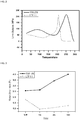
- the polyimide-based film was stored for 15 hours in a thermo-hygrostat under the conditions of 85 % ⁇ 2 % and 85 °C ⁇ 2 °C, and then allowed to stand at room temperature to measure a change in weight over time (water absorbency). The results are shown in Table 1 and FIG. 2 .
- the loss modulus of the polyimide-based film was measured at 330 °C under the conditions of 0.1 % ⁇ 0.005 % strain, 0.05 ⁇ 0.0005 force, and 1 ⁇ 0.01 Hz frequency.
- the glass transition temperature was measured from a temperature of a peak value of the measured loss modulus, and the results are shown in Table 1 and FIG. 3 .
- the example of the present disclosure has a remarkably low water absorbency rate compared with Torlon of Comparative Example 1, which is conventionally used, so that excellent mechanical properties can be secured when applied to engineering plastics.
- the example according to the present disclosure has excellent moldability by realizing a low glass transition temperature.
- Comparative Examples 2 and 3 have relatively high contents of fluorine, their water absorbency rate was comparable to that of the example, but the glass transition temperature was high and thus the moldability was remarkably low. Therefore, it was confirmed that the comparative examples are not easily applicable to engineering plastics.
Landscapes
- Chemical & Material Sciences (AREA)
- Health & Medical Sciences (AREA)
- Chemical Kinetics & Catalysis (AREA)
- Medicinal Chemistry (AREA)
- Polymers & Plastics (AREA)
- Organic Chemistry (AREA)
- Engineering & Computer Science (AREA)
- Manufacturing & Machinery (AREA)
- Materials Engineering (AREA)
- Macromolecular Compounds Obtained By Forming Nitrogen-Containing Linkages In General (AREA)
Applications Claiming Priority (3)
| Application Number | Priority Date | Filing Date | Title |
|---|---|---|---|
| KR20170083260 | 2017-06-30 | ||
| KR1020180075396A KR102070942B1 (ko) | 2017-06-30 | 2018-06-29 | 폴리이미드계 공중합체 및 이를 포함하는 폴리이미드계 필름 |
| PCT/KR2018/007480 WO2019004802A1 (fr) | 2017-06-30 | 2018-07-02 | Copolymère à base de polyimide, et film à base de polyimide le comprenant |
Publications (2)
| Publication Number | Publication Date |
|---|---|
| EP3575343A1 true EP3575343A1 (fr) | 2019-12-04 |
| EP3575343A4 EP3575343A4 (fr) | 2020-04-15 |
Family
ID=65017244
Family Applications (1)
| Application Number | Title | Priority Date | Filing Date |
|---|---|---|---|
| EP18822585.8A Pending EP3575343A4 (fr) | 2017-06-30 | 2018-07-02 | Copolymère à base de polyimide, et film à base de polyimide le comprenant |
Country Status (5)
| Country | Link |
|---|---|
| US (1) | US20190315925A1 (fr) |
| EP (1) | EP3575343A4 (fr) |
| JP (1) | JP7020704B2 (fr) |
| KR (1) | KR102070942B1 (fr) |
| CN (1) | CN110248987B (fr) |
Families Citing this family (6)
| Publication number | Priority date | Publication date | Assignee | Title |
|---|---|---|---|---|
| KR102430056B1 (ko) | 2017-09-08 | 2022-08-05 | 삼성전자주식회사 | 폴리(아미드-이미드) 코폴리머, 폴리(아미드-이미드) 코폴리머 제조용 조성물, 폴리(아미드-이미드) 코폴리머를 포함하는 성형품 및 표시 장치 |
| TWI862552B (zh) * | 2019-02-22 | 2024-11-21 | 美商杜邦電子股份有限公司 | 聚醯亞胺膜及電子裝置 |
| KR102671840B1 (ko) * | 2019-05-09 | 2024-05-31 | 주식회사 엘지화학 | 고분자 수지 필름 및 플렉서블 디스플레이 장치의 커버 윈도우 및 디스플레이 장치 |
| JP2022117108A (ja) * | 2021-01-29 | 2022-08-10 | 住友化学株式会社 | ポリイミド系樹脂 |
| JP2022117110A (ja) * | 2021-01-29 | 2022-08-10 | 住友化学株式会社 | 光学フィルム及び該光学フィルムを備えるフレキシブル表示装置 |
| US20240052104A1 (en) * | 2022-08-05 | 2024-02-15 | Dupont Electronics, Inc. | Dicarbonyl halides, polymer compositions and films made therefrom |
Family Cites Families (8)
| Publication number | Priority date | Publication date | Assignee | Title |
|---|---|---|---|---|
| US4504632A (en) * | 1983-12-30 | 1985-03-12 | General Electric Company | Amide ether imide block copolymers |
| EP0315025A1 (fr) * | 1987-11-04 | 1989-05-10 | General Electric Company | Copolymères amides-imides et leur procédé de préparation |
| JP3942063B2 (ja) * | 1999-06-28 | 2007-07-11 | 株式会社カネカ | 新規ポリイミド組成物およびこれに使用される新規酸二無水物 |
| KR101523730B1 (ko) * | 2011-05-18 | 2015-05-29 | 삼성전자 주식회사 | 폴리(아미드-이미드) 블록 코폴리머, 이를 포함하는 성형품 및 상기 성형품을 포함하는 디스플레이 장치 |
| JP5468575B2 (ja) * | 2011-07-06 | 2014-04-09 | Jfeケミカル株式会社 | ポリアミド酸組成物およびポリイミド |
| CN105392820B (zh) * | 2013-08-06 | 2018-04-03 | 三菱瓦斯化学株式会社 | 聚酰亚胺树脂 |
| JP6164070B2 (ja) * | 2013-12-04 | 2017-07-19 | 日立化成デュポンマイクロシステムズ株式会社 | ポリイミド前駆体、該ポリイミド前駆体を含む樹脂組成物、それを用いたパターン硬化膜の製造方法及び半導体装置 |
| SG11201702467QA (en) * | 2014-09-30 | 2017-04-27 | Toray Industries | Support substrate for display, color filter employing same and method for manufacturing same, organic led element and method for manufacturing same, and flexible organic el display |
-
2018
- 2018-06-29 KR KR1020180075396A patent/KR102070942B1/ko active Active
- 2018-07-02 JP JP2019550221A patent/JP7020704B2/ja active Active
- 2018-07-02 CN CN201880009725.3A patent/CN110248987B/zh active Active
- 2018-07-02 US US16/462,465 patent/US20190315925A1/en not_active Abandoned
- 2018-07-02 EP EP18822585.8A patent/EP3575343A4/fr active Pending
Also Published As
| Publication number | Publication date |
|---|---|
| KR102070942B1 (ko) | 2020-01-29 |
| CN110248987A (zh) | 2019-09-17 |
| CN110248987B (zh) | 2022-07-26 |
| US20190315925A1 (en) | 2019-10-17 |
| EP3575343A4 (fr) | 2020-04-15 |
| KR20190003394A (ko) | 2019-01-09 |
| JP7020704B2 (ja) | 2022-02-16 |
| JP2020510126A (ja) | 2020-04-02 |
Similar Documents
| Publication | Publication Date | Title |
|---|---|---|
| EP3575343A1 (fr) | Copolymère à base de polyimide, et film à base de polyimide le comprenant | |
| EP3375806B1 (fr) | Copolymère séquencé à base de polyimide et film à base de polyimide le comprenant | |
| US20140148548A1 (en) | Fluorine-Containing Polymerizable Monomer And Polymer Compound Using Same | |
| KR102053932B1 (ko) | 폴리이미드계 블록 공중합체 및 이를 포함하는 폴리이미드계 필름 | |
| WO2011076674A1 (fr) | Nouveaux polyamine, polyimide ou polyamide-imide comprenant des motifs dibenzodiazocine | |
| EP3412732B1 (fr) | Film de copolymère séquencé à base de polyimide | |
| KR102060190B1 (ko) | 폴리이미드계 랜덤 공중합체 및 이를 포함하는 폴리이미드계 필름 | |
| EP3486271B1 (fr) | Copolymère à blocs à base de polyimide, et film à base de polyimide comprenant ce copolymère | |
| KR20190094945A (ko) | 폴리아미드이미드 공중합체의 제조 방법 | |
| US7662903B2 (en) | Thermoplastic polyimide and imide oligomer | |
| KR102070943B1 (ko) | 폴리이미드계 블록 공중합체 필름 | |
| KR20100115994A (ko) | 고리형 올리고머를 이용한 폴리〔이미드-아미드〕공중합체의 제조방법 | |
| KR102682397B1 (ko) | 폴리아미드이미드 블록 공중합체의 제조방법, 폴리아미드이미드 블록 공중합체 및 이를 이용한 고분자 수지 필름 | |
| KR20160099411A (ko) | 폴리(이미드-벤족사졸) 코폴리머 제조용 조성물, 폴리(이미드-벤족사졸) 코폴리머, 폴리(이미드-벤족사졸) 코폴리머를 포함하는 성형품, 상기 성형품을 포함하는 디스플레이 장치 | |
| KR102721719B1 (ko) | 폴리아미드이미드 블록 공중합체 | |
| JP2022133200A (ja) | ポリアミドイミド及びその前駆体、ならびにポリアミドイミドフィルム | |
| KR102078384B1 (ko) | 폴리이미드계 블록 공중합체 필름 | |
| WO2019004802A1 (fr) | Copolymère à base de polyimide, et film à base de polyimide le comprenant | |
| JP3299777B2 (ja) | ポリイミドフィルム及びその製造方法 | |
| JP3375346B2 (ja) | ポリアミド酸とポリイミドフィルム及びそれらの製造方法 | |
| TWI706972B (zh) | 聚醯胺-醯亞胺樹脂膜及其製造方法 | |
| Hergenrother | Condensation polyimides | |
| KR102067226B1 (ko) | 폴리이미드계 블록 공중합체 및 이를 포함하는 폴리이미드계 필름 | |
| KR20200052178A (ko) | 폴리아미드-이미드 필름 및 이의 제조 방법 |
Legal Events
| Date | Code | Title | Description |
|---|---|---|---|
| STAA | Information on the status of an ep patent application or granted ep patent |
Free format text: STATUS: THE INTERNATIONAL PUBLICATION HAS BEEN MADE |
|
| PUAI | Public reference made under article 153(3) epc to a published international application that has entered the european phase |
Free format text: ORIGINAL CODE: 0009012 |
|
| STAA | Information on the status of an ep patent application or granted ep patent |
Free format text: STATUS: REQUEST FOR EXAMINATION WAS MADE |
|
| 17P | Request for examination filed |
Effective date: 20190830 |
|
| AK | Designated contracting states |
Kind code of ref document: A1 Designated state(s): AL AT BE BG CH CY CZ DE DK EE ES FI FR GB GR HR HU IE IS IT LI LT LU LV MC MK MT NL NO PL PT RO RS SE SI SK SM TR |
|
| AX | Request for extension of the european patent |
Extension state: BA ME |
|
| A4 | Supplementary search report drawn up and despatched |
Effective date: 20200313 |
|
| RIC1 | Information provided on ipc code assigned before grant |
Ipc: C08G 73/14 20060101ALI20200309BHEP Ipc: C08G 73/10 20060101AFI20200309BHEP Ipc: C08J 5/18 20060101ALI20200309BHEP Ipc: C08L 79/08 20060101ALI20200309BHEP |
|
| DAV | Request for validation of the european patent (deleted) | ||
| DAX | Request for extension of the european patent (deleted) | ||
| STAA | Information on the status of an ep patent application or granted ep patent |
Free format text: STATUS: EXAMINATION IS IN PROGRESS |
|
| 17Q | First examination report despatched |
Effective date: 20220317 |