EP3575404B1 - Production fermentative de saccharides sialyles - Google Patents
Production fermentative de saccharides sialyles Download PDFInfo
- Publication number
- EP3575404B1 EP3575404B1 EP18174643.9A EP18174643A EP3575404B1 EP 3575404 B1 EP3575404 B1 EP 3575404B1 EP 18174643 A EP18174643 A EP 18174643A EP 3575404 B1 EP3575404 B1 EP 3575404B1
- Authority
- EP
- European Patent Office
- Prior art keywords
- seq
- genetically engineered
- nucleotide sequences
- microbial cell
- tetraose
- Prior art date
- Legal status (The legal status is an assumption and is not a legal conclusion. Google has not performed a legal analysis and makes no representation as to the accuracy of the status listed.)
- Active
Links
Images


Classifications
-
- C—CHEMISTRY; METALLURGY
- C12—BIOCHEMISTRY; BEER; SPIRITS; WINE; VINEGAR; MICROBIOLOGY; ENZYMOLOGY; MUTATION OR GENETIC ENGINEERING
- C12P—FERMENTATION OR ENZYME-USING PROCESSES TO SYNTHESISE A DESIRED CHEMICAL COMPOUND OR COMPOSITION OR TO SEPARATE OPTICAL ISOMERS FROM A RACEMIC MIXTURE
- C12P19/00—Preparation of compounds containing saccharide radicals
- C12P19/26—Preparation of nitrogen-containing carbohydrates
- C12P19/28—N-glycosides
-
- A—HUMAN NECESSITIES
- A23—FOODS OR FOODSTUFFS; TREATMENT THEREOF, NOT COVERED BY OTHER CLASSES
- A23L—FOODS, FOODSTUFFS OR NON-ALCOHOLIC BEVERAGES, NOT OTHERWISE PROVIDED FOR; PREPARATION OR TREATMENT THEREOF
- A23L33/00—Modifying nutritive qualities of foods; Dietetic products; Preparation or treatment thereof
- A23L33/40—Complete food formulations for specific consumer groups or specific purposes, e.g. infant formula
-
- C—CHEMISTRY; METALLURGY
- C12—BIOCHEMISTRY; BEER; SPIRITS; WINE; VINEGAR; MICROBIOLOGY; ENZYMOLOGY; MUTATION OR GENETIC ENGINEERING
- C12Y—ENZYMES
- C12Y204/00—Glycosyltransferases (2.4)
- C12Y204/99—Glycosyltransferases (2.4) transferring other glycosyl groups (2.4.99)
Definitions
- the present invention relates to a method for the fermentative production of sialylated saccharides, as well as to recombinant or genetically engineered microbial cells employed therein.
- HMOs human milk oligosaccharides
- sialylated HMOs were observed to support the resistance to enteropathogenic bacteria and viruses.
- SHMOs sialylated HMOs
- recent studies further demonstrated a protective effect of long-chained SHMOs against necrotizing enterocolitis, which is one of the most common and lethal diseases in preterm infants.
- SHMOs are believed to support an infant's brain development and its cognitive capabilities.
- sialylated oligosaccharides have been shown to neutralize enterotoxins of various pathogenic microbes including Escherichia coli, Vibrio cholerae and Salmonella . Further, it was found that sialylated oligosaccharides interfere with the colonization of the gut by Helicobacter pylori and thereby prevent or inhibit gastric and duodenal ulcers.
- sialylated oligosaccharides 3'-sialyllactose, 6'-sialyllactose, sialyllacto- N -tetraose a, sialyllacto- N -tetraose b, sialyllacto- N -tetraose c and disialyllacto- N -tetraose are the most prevalent members in human milk.
- sialylated oligosaccharides have a complex structure, their chemical or (chemo-)enzymatic syntheses are challenging and associated with extensive difficulties, e.g. control of stereochemistry, formation of specific linkages, availability of feedstocks, etc. As a consequence, commercially available sialylated oligosaccharides have been very expensive due to their low quantity in natural sources.
- International Publication WO 2007/101862 A1 discloses a method for the large scale in vivo synthesis of sialylated oligosaccharides relying on the intracellular UDP-GlcNAc pool by culturing a microorganism in a culture medium, wherein said microorganism comprises heterologous genes encoding CMP-Neu5Ac synthetase, a sialic acid synthase, a GlcNAc-6-phosphate 2 epimerase and a sialyltransferase.
- the endogenous genes coding for sialic acid aldolase (NanA) and for ManNac kinase (NanK) were deleted.
- International Publication WO 2014/153253 A1 discloses methods and compositions for engineering bacteria to produce sialylated oligosaccharides as well as a method for producing a sialylated oligosaccharide in a bacterium, said bacterium comprises an exogenous sialyltransferase, a deficient sialic acid catabolic pathway, a sialic acid synthetic capability, and a functional lactose permease gene, wherein said bacterium is cultured in the presence of lactose.
- the sialic acid synthetic capability comprises expressing an exogenous CMP-Neu5Ac synthetase, an exogenous sialic acid synthase, and an exogenous UDP-GlcNAc-2-epimerase.
- Sprenger et al. disclose production of human milk oligosaccharides by enzymatic and whole-cell microbial biotransformation (J. Bacteriol. 258 (2017) 79-91 ), and describes whole-call synthesis of sialyllactoses in E . coli with an endogenous synthesis of Neu5Ac from UDP-GIcNAc.
- sialylated oligosaccharides by microbial fermentation which does not require the presence and/or addition of exogenous sialic acid during fermentation. Also, it is desirable to produce sialylated oligosaccharides by microorganisms which does not require accessing the intracellular pool of UDP- N -acetylglucosamine (UDP-GIcNAc) as this is believed to be energetically beneficial for the cell.
- UDP- N -acetylglucosamine UDP- N -acetylglucosamine
- the object is solved, inter alia, by a method by a genetically engineered microbial cell, and the sue of the genetically engineered microbial cell as set out in the appended set of claims.
- a method for the fermentative production of a sialylated saccharide comprises the steps of a) providing at least one genetically engineered microbial cell that is able to synthesize the sialylated saccharide, said at least one genetically engineered microbial cell comprises (i) a sialic acid biosynthesis pathway comprising a glucosamine-6-phosphate N -acetyltransferase; (ii) a cytidine 5'-monophopho-(CMP)- N -acetylneuraminic acid synthetase; and (iii) a heterologous sialyltransferase; b) cultivating the at least one genetically engineered microbial cell in a fermentation broth and under conditions that are permissive for the production of said sialylated saccharide, and optionally c) recovering said sialylated saccharide.
- the invention also concerns a genetically engineered microbial cell for the fermentative production of the sialylated saccharide, wherein the microbial cell comprises (i) a sialic acid biosynthesis pathway for the intracellular biosynthesis of N-acetylneuraminic acid, wherein said sialic acid biosynthesis pathway comprises a glucosamine-6-phosphate N -acetyltransferase; (ii) a cytidine 5'-monophospho-(CMP)-sialic acid synthetase for transferring the N -acetylneuraminic acid onto cytidine 5'-monophosphate to generate a CMP-activated sialic acid; and (iii) a sialyltransferase for transferring the N -acetylneuraminic acid moiety from the CMP-activated sialic acid as donor substrate to an acceptor molecule, which acceptor molecule is a saccharide, wherein the m
- the genetically engineered microbial cell comprises a sialic acid biosynthesis pathway for the intracellular biosynthesis of N -acetylneuraminic acid which does not utilize UDP-GIcNAc.
- the genetically engineered microbial cell comprises a sialic acid biosynthesis pathway for the intracellular biosynthesis of N -acetylneuraminic acid which a glucosamine-6-phosphate N -acetyltransferase.
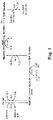
- a sialic acid biosynthesis pathway using a glucosamine-6-phosphate N -acetyltransferase for the intracellular biosynthesis of N-acetylneuraminic acid does not utilize UDP-GIcNAc for the biosynthesis of sialic acid ( Fig. 2 and Fig. 3 ).
- the sialic acid biosynthesis pathway comprises the enzymatic activities of a glutamine:fructose-6-phosphate aminotransferase and an N -acetylneuraminic acid synthase.
- the sialic acid biosynthesis pathway further comprises the enzymatic activities of a glucosamine-6-phosphate N -acetyltransferase, an N -acetylglucosamine-6-phosphate epimerase and an N -acetylmannosamine-6-phosphate phosphatase ( Fig. 3 ).
- the genetically engineered microbial cell comprises the enzymatic activities of a phosphoglucosamine mutase, an N -acetylglucosamine-1-phosphate uridyltransferase and an UDP N -acetylglucosamine 2-epimerase with concomitant release of UDP ( Fig. 1 ) for intracellular sialic acid biosynthesis.
- the genetically engineered microbial cell being capable of synthesizing sialic acid does not comprise one or more enzymatic activities selected from the group consisting of the enzymatic activities of a phosphoglucosamine mutase, an N-acetylglucosamine-1-phosphate uridyltransferase and an UDP N -acetylglucosamine 2-epimerase with concomitant release of UDP.
- the enzyme glutamine:fructose-6-phosphate aminotransferase (EC 2.6.1.16) catalyzes the conversion of fructose-6-phosphate (Frc-6P) to glucosamine-6-phosphate (GIcN-6P) using glutamine. This enzymatic reaction is typically considered to be the first step in the hexosamine biosynthesis pathway.
- glutamine:fructose-6-phosphate aminotransferase D-fructose-6-phosphate aminotransferase, GFAT, glucosamine-6-phosphate synthase, hexosephosphate aminotransferase, and L-glutamine-D-fructose-6-phosphate aminotransferase.
- the genetically engineered microbial cell possesses a glutamine:fructose-6-phosphate aminotransferase, preferably a heterologous a glutamine:fructose-6-phosphate aminotransferase, more preferably a glutamine:fructose-6-phosphate aminotransferase which is derived from E. coli ( E. coli GlmS (UniProtKB - P17169; SEQ ID NO. 67), or a functional variant of the E. coli GlmS. Most preferably, the functional variant is a version of the E. coli GlmS which shows significantly reduced sensitivity to glucosamine-6-phosphate inhibition as the wild-type enzyme does. An example of a functional variant of the E. coli GlmS which shows significantly reduced sensitivity to glucosamine-6-phosphate inhibition is represented by SEQ ID NO. 68).
- the genetically engineered microbial cell contains a nucleic acid molecule comprising a nucleotide sequence which encodes a glutamine:fructose-6-phosphate aminotransferase, preferably the E. coli glutamine:fructose-6-phosphate aminotransferase GlmS (SEQ ID NO. 69), or a nucleotide sequence encoding a functional variant is a version of the E. coli GlmS which shows significantly reduced sensitivity to glucosamine-6-phosphate inhibition as compared to the wild-type enzyme ( glm S*54 or glm S * (as represented by SEQ ID NO. 70)).
- the genetically engineered microbial cell contains a nucleic acid molecule comprising and expressing a nucleotide sequence selected from the group consisting of
- the genetically engineered microbial cell possesses glucosamine-6-phosphate N -acetyltransferase activity.
- Said glucosamine-6-phosphate N -acetyltransferase activity converts GlcN-6P to N -acetylglucosamine-6-phosphate (GlcNAc-6P).
- GlcNAc-6P N -acetylglucosamine-6-phosphate
- An example of a glucosamine-6-phosphate N -acetyltransferase is the Saccharomyces cerevisiae Gna1 (UniProtKB - P43577; SEQ ID NO. 77).
- the genetically engineered microbial cell contains a glucosamine-6-phosphate N -acetyltransferase, preferably a heterologous glucosamine-6-phosphate N -acetyltransferase, more preferably S . cerevisiae Gna1 (encoded by a nucleotide sequence as represented by SEQ ID NO. 78) or a functional variant thereof.
- the genetically engineered microbial cell contains a nucleic acid molecule comprising and expressing a nucleotide sequence selected from the group consisting of
- the genetically engineered microbial cell possesses N -acetylglucosamine-6-phosphate epimerase activity and N -acetylmannosamine-6-phosphate phosphatase activity.
- N -acetylglucosamine-6-phosphatase epimerase converts N -acetylglucosamine-6-phosphate (GIcNAc-6P) to N -acetylmannosamine-6-phosphate (ManNAc-6P), whereas N -acetylmannosamine-6-phosphate phosphatase dephosphorylates ManNAc-6P to give N -acetylmannosamine (ManNAc).
- Possessing N -acetylglucosamine-6-phosphate epimerase activity and N -acetylmannosamine-6-phosphate phosphatase activity provides an additional or alternative way for providing ManNAc for Neu5Ac production.
- the genetically engineered microbial cell contains an N -acetylglucosamine-6-phosphate epimerase.
- An example of a suitable N -acetylglucosamine-6-phosphate epimerase is E . coli NanE (UniprotKB P0A761, SEQ ID NO. 87) as encoded by the E . coli nan E gene (SEQ ID NO. 88).
- the genetically engineered microbial cell contains a nucleic acid molecule comprising and expressing a nucleotide sequence encoding an N -acetylglucosamine-6-phosphate epimerase, preferably a nucleotide sequence encoding E . coli NanE.
- the genetically engineered microbial cell contains a nucleic acid molecule comprising and expressing a nucleotide sequence selected from the group consisting of
- the genetically engineered microbial cell contains an N -acetylmannosamine-6-phosphate phosphatase.
- the genetically engineered microbial cell contains a nucleic acid molecule comprising and expressing a nucleotide sequence encoding an N -acetylmannosamine-6-phosphate phosphatase.
- the genetically engineered microbial cell comprises sialic acid synthase activity.
- the sialic acid synthase catalyzes the condensation of ManNAc and phosphoenolpyruvate (PEP) to N -acetylneuraminic acid (NeuNAc).
- the genetically engineered microbial cell comprises a sialic acid synthase or a functional variant thereof, preferably a heterologous sialic acid synthase.
- sialic acid synthases are known from a variety of bacterial species such as Campylobacter jejuni, Streptococcus agalactiae, Butyrivibrio proteoclasticus, Methanobrevibacter ruminatium, Acetobacterium woodii, Desulfobacula toluolica, Escherichia coli, Prevotella nigescens, Halorhabdus tiamatea, Desulfotignum phosphitoxidans, or Candidatus Scalindua sp., Idomarina Ioihiensis, Fusobacterium nucleatum or Neisseria meningitidis.
- the sialic acid synthase is the N -acetylneuraminic acid synthase NeuB of C. jejuni (SEQ ID NO. 89) as encoded by the C . jejuni neu B gene (SEQ ID NO. 90).
- the genetically engineered microbial cell contains a nucleic acid molecule comprising and expressing a nucleotide sequence selected from the group consisting of
- the genetically engineered microbial cell possesses cytidine 5'-monophospho-(CMP)- N -acetylneuraminic acid synthetase activity for transferring cytidine 5'-monophosphate onto N -acetylneuraminic acid to generate a CMP-activated N- acetylneuraminic acid (CMP-NeuNAc).
- CMP-NeuNAc CMP-activated N- acetylneuraminic acid
- Several 5'-monophospho-(CMP)-sialic acid synthetases are known in the art and have been described, e.g. 5'-monophospho- (CMP)-sialic acid synthetases from E . coli, Neisseria meningitidis, Campylobacter jejuni, Streptococcus sp., etc.
- the genetically engineered microbial cell contains a cytidine 5'-monophospho- (CMP)- N -acetylneuraminic acid synthetase, preferably a heterologous cytidine 5'-monophospho- (CMP)- N -acetylneuraminic acid synthetase, more preferably the N -acetylneuraminate cytidyltransferase NeuA from E . coli.
- E. coli NeuA (UnitProtKB - P13266; SEQ ID NO. 91) is encoded by the E. coli neu A gene (SEQ ID NO. 92).
- the genetically engineered microbial cell contains a nucleic acid molecule comprising and expressing a nucleotide sequence selected from the group consisting of
- the genetically engineered microbial cell possesses sialyltransferase activity, preferably a heterologous sialyltransferase activity, and more preferably a sialyltransferase activity selected from the group consisting of ⁇ -2,3-sialyltransferase activity, ⁇ -2,6-sialyltransferase activity and/or ⁇ -2,8-sialyltransferase activity.
- the sialyltransferase activity is capable of transferring the N -acetylneuraminic acid moiety from the CMP-NeuNAc to an acceptor molecule, wherein said acceptor molecule is a saccharide molecule, to provide a sialylated saccharide.
- the genetically engineered microbial cell contains at least one sialyltransferase, preferably at least one heterologous sialyltransferase, wherein said sialyltransferase is capable of possessing an ⁇ -2,3-sialyltransferase activity and/or an ⁇ -2,6-sialyltransferase activity and/or an ⁇ -2,8-sialyltransferase activity for transferring the NeuNAc moiety from CMP-NeuNAc as donor substrate to the acceptor saccharide.
- sialyltransferase refers to polypeptides being capable of possessing sialyltransferase activity.
- Sialyltransferase activity refers to the transfer of a sialic acid residue, preferably of an N -acetylneuraminic acid (Neu5Ac) residue, from a donor substrate to an acceptor molecule.
- sialyltransferase comprises functional fragments of the sialyltransferases described herein, functional variants of the sialyltransferases described herein, and functional fragments of the functional variants.
- “Functional” in this regard means that the fragments and/or variants are capable of possessing sialyltransferase activity.
- Functional fragments of a sialyltransferase encompass truncated versions of a sialyltransferase as encoded by it naturally occurring gene, which truncated version is capable of possessing sialyltransferase activity.
- Examples of truncated versions are sialyltransferases which do not comprise a so-called leader sequence which typically directs the polypeptide to a specific subcellular localization. Typically, such leader sequences are removed from the polypeptide during its subcellular transport, and are also absent in the naturally occurring mature sialyltransferase.
- the heterologous sialyltransferase is capable of transferring a sialic acid residue from a donor substrate to an acceptor molecule.
- the term "capable of" with respect to the heterologous sialyltransferase refers to the sialyltransferase activity of the heterologous sialyltransferase and the provision that suitable reaction conditions are required for the heterologous sialyltransferase to possess its enzymatic activity. In the absence of suitable reaction conditions, the heterologous sialyltransferase does not possess its enzymatic activity, but retains its enzymatic activity and possesses its enzymatic activity when suitable reaction conditions are restored.
- Suitable reaction conditions include the presence of a suitable donor substrate, the presence of suitable acceptor molecules, the presence of essential cofactors such as - for example - monovalent or divalent ions, a pH value in an appropriate range, a suitable temperature and the like. It is not necessary that the optimum values for each and every factor effecting the enzymatic reaction of the heterologous sialyltransferase is met, but the reaction conditions have to be such that the heterologous sialyltransferase performs its enzymatic activity.
- the term “capable of” excludes any conditions upon which the enzymatic activity of the heterologous sialyltransferase has been irreversibly impaired and also excluded exposure of the heterologous sialyltransferase to any such condition.
- “capable of” means that the sialyltransferase is enzymatically active, i.e. possesses its sialyltransferase activity, if permissive reactions conditions (where all requirements being necessary for the sialyltransferase to perform its enzymatic activity) are provided to the sialyltransferase.
- Sialyltransferases can be distinguished on the type of sugar linkage they form.
- ⁇ -2,3-sialyltransferase and " ⁇ -2,3-sialyltransferase activity” refer to polypeptides and their enzymatic activity which add a sialic acid residue with an ⁇ -2,3 linkage to galactose, N -acetylgalactosamine or a galactose or N -acetylgalactosamine residue of the acceptor molecule.
- ⁇ -2,6-sialyltransferase and " ⁇ -2,6-sialyltransferase activity” refer to polypeptides and their enzymatic activity which add a sialic acid residue with an ⁇ -2,6 linkage to galactose, N -acetylgalactosamine or a galactose or N -acetylgalactosamine residue of the acceptor molecule.
- ⁇ -2,8-sialyltransferase and " ⁇ -2,8-sialyltransferase activity” refer to polypeptides and their enzymatic activity which add a sialic acid residue with an ⁇ -2,8 linkage to galactose, N -acetylgalactosamine or a galactose or N -acetylgalactosamine residue of the acceptor molecule.
- the genetically engineered microbial cell contains a heterologous sialyltransferase that is preferably selected from the group consisting of
- the genetically engineered microbial cell has been transformed to contain a nucleic acid molecule which comprises and expresses a nucleotide sequence encoding the heterologous sialyltransferase.
- a nucleotide sequence as can be inferred from Table 1.
- the nucleotide sequence is selected from the group consisting of
- Table 1 List of sialyltransferase-encoding nucleotide sequences.
- the sialyltransferase-encoding nucleotide sequences were either cloned as full length constructs (FL) or without a predicted signal peptide ( ⁇ ) as compared to their wild-type protein coding regions. The number behind the ⁇ indicates the N-terminally amino acids deleted from the corresponding sequence.
- any one of SEQ ID NOs: 1 to 33 refers to any one of the group consisting of SEQ ID NO: 1, SEQ ID NO: 2, SEQ ID NO: 3, SEQ ID NO: 4, SEQ ID NO: 5, SEQ ID NO: 6, SEQ ID NO: 7, SEQ ID NO: 8, SEQ ID NO: 9, SEQ ID NO: 10, SEQ ID NO: 11, SEQ ID NO: 12, SEQ ID NO: 13. SEQ ID NO: 14.
- SEQ ID NO: 15 SEQ ID NO: 16, SEQ ID NO: 17, SEQ ID NO: 18, SEQ ID NO: 19, SEQ ID NO: 20, SEQ ID NO: 21, SEQ ID NO: 22, SEQ ID NO: 23, SEQ ID NO: 24, SEQ ID NO: 25, SEQ ID NO: 26, SEQ ID NO: 27, SEQ ID NO: 28, SEQ ID NO: 29, SEQ ID NO: 30, SEQ ID NO: 31, SEQ ID NO: 32, and SEQ ID NO: 33.
- the same principle applies to the expression "any one of SEQ ID NOs: 34 to 66".
- any one of SEQ ID NOs: X to Z refers to all sequences (nucleotide sequences or amino acid sequences) represented by any one of the "SEQ ID NOs” comprising an identification number from X to Z.
- the genetically engineered microbial cell has been genetically engineered to express the nucleotide sequence encoding the heterologous sialyltransferase.
- the nucleotide sequence encoding the heterologous sialyltransferase is operably linked to at least one expression control effecting transcription and/or translation of said nucleotide sequence encoding the heterologous sialyltransferase in the genetically engineered cell.
- operably linked refers to a functional linkage between the nucleotide sequence encoding the heterologous sialyltransferase and a second nucleotide sequence, the nucleic acid expression control sequence (such as promoter, operator, enhancer, regulator, array of transcription factor binding sites, transcriptional terminator, ribosome binding site), wherein the expression control sequence affects transcription and/or translation of the nucleic acid corresponding to the nucleotide sequence encoding the heterologous sialyltransferase.
- promoter designates DNA sequences which usually "precede” a gene in a DNA polymer and provide a site for initiation of the transcription into mRNA.
- Regulator DNA sequences also usually "upstream” of (i.e., preceding) a gene in a given DNA polymer, bind proteins that determine the frequency (or rate) of transcriptional initiation. Collectively referred to as “promoter/regulator” or “control” DNA sequence, these sequences which precede a selected gene (or series of genes) in a functional DNA polymer cooperate to determine whether the transcription (and eventual expression) of a gene will occur. DNA sequences which "follow" a gene in a DNA polymer and provide a signal for termination of the transcription into mRNA are referred to as transcription "terminator" sequences.
- heterologous sialyltransferase being capable of possessing ⁇ -2,3-sialyltransferase activity is selected from the group consisting of
- the genetically engineered microbial cell contains a nucleic acid molecule which comprises at least one nucleotide sequence encoding said heterologous sialyltransferase being capable of possessing ⁇ -2,3-sialyltransferase activity, wherein said at least one nucleotide sequence is selected from the group consisting of
- the heterologous sialyltransferase being capable of possessing ⁇ -2,3-sialyltransferase activity has a relative efficacy of at least 100-fold, at least 200-fold, at least 300-fold, at least 1000-fold, at least 10,000-fold, as compared to the relative efficacy of the sialyltransferase as represented by SEQ ID NO: 27 by means of quantitative analysis of LNT sialylation using LC-MS/MS.
- the heterologous sialyltransferase is capable of possessing ⁇ -2,6-sialyltransferase activity.
- heterologous sialyltransferase being capable of possessing ⁇ -2,6-sialyltransferase activity is selected from the group consisting of
- the genetically engineered microbial cell contains a nucleic acid molecule which comprises at least one nucleotide sequence encoding said heterologous sialyltransferase being capable of possessing ⁇ -2,6-sialyltransferase activity, wherein said at least one nucleotide sequence is selected from the group consisting of
- the heterologous sialyltransferase being capable of possessing ⁇ -2,6-sialyltransferase activity has a relative efficacy of at least 100-fold, more preferably of at least 200-fold, most preferably of at least 300-fold, as compared to the relative efficacy of the sialyltransferase as represented by SEQ ID NO: 33 by means of quantitative analysis of LNT sialylation.
- the heterologous sialyltransferase is capable of possessing ⁇ -2,8-sialyltransferase activity.
- An example of a heterologous sialyltransferase is capable of possessing ⁇ -2,8-sialyltransferase activity is the sialyltransferase Cstll of Campylobacter jejunii OH4384.
- the sialyltransferase is capable of transferring a sialic acid residue, e.g. a N -acetylneuraminic acid (Neu5Ac) residue, from a donor substrate, e.g. CMP-Neu5Ac, to an acceptor molecule.
- the acceptor molecule is a saccharide molecule, preferably a saccharide molecule set forth in Table 2.
- Table 2 List of saccharides that may be used as acceptor substrate for the production of a sialylated saccharide.
- the sialylated saccharide itself may also be used as acceptor substrate for the production of a further sialylated saccharide.
- the acceptor molecule is a monosaccharide, preferably a monosaccharide selected from the group consisting of N- acetylglucosamine, galactose and N -acetylgalactosamine.
- the acceptor molecule is a disaccharide, preferably a disaccharide selected from the group consisting lactose, lactulose, N -acetyllactosamine, lacto- N -biose, lactulose and melibiose.
- the acceptor molecule is a trisaccharide, preferably a trisaccharide selected from the group consisting of raffinose, lacto- N -triose II, 2'-fucosyllactose, 3-fucosyllactose, 3'-sialyllactose, 6'-sialyllactose, 3'-sialyl- N -acetyllactosamine, 6'-sialyl- N -acetyllactosamine, 3'-galactosyllactose and 6'-galactosyllactose.
- raffinose lacto- N -triose II
- 2'-fucosyllactose 3-fucosyllactose
- 3'-sialyllactose 6'-sialyllactose
- 6'-sialyllactose 3'-sialyl
- the acceptor molecule is a tetrasaccharide, preferably a tetrasaccharide selected from the group consisting of lacto- N -tetraose, lacto- N -neotetraose, 2'3-difucosyllactose, 3-fucosyl-3'-sialyllactose and 3-fucosyl-6'-sialyllactose.
- the acceptor molecule is a pentasaccharide, preferably a pentasaccharide selected from the group consisting of sialyllacto- N -tetraose a, sialyllacto- N -tetraose b, sialyllacto- N -tetraose c, lacto- N -fucopentaose I, lacto- N -fucopentaose II, lacto- N -fucopentaose III, lacto- N -fucopentaose V, lacto- N - neo fucopentaose I and lacto-N- neo fucopentaose V.
- a pentasaccharide preferably a pentasaccharide selected from the group consisting of sialyllacto- N -tetraose a, sialyllacto- N -tetrao
- polypeptide variants of the designated enzymes without loss of activity, and which share at least 70%, preferably at least 80%, at least 85%, at least 90 %, at least 95%, at least 98% or least 99% identity with the amino acid sequence of the designated enzyme. This takes into account the possibility of some variability in the genomic sequence data from which these polypeptides are derived, and also the possibility that some of the amino acids present in these polypeptides can be substituted without significantly affecting the enzyme's catalytic activity.
- the term "functional variant” also includes polypeptide variants of the designated enzymes which represent truncated variants of the enzyme without significant loss of the catalytic activity.
- the amino acid sequence of the truncated variants may differ from the amino acid sequences of the designated enzyme in that one, two or a stretch of more than two consecutive amino acids are absent.
- the truncation may be at the amino terminus (N-terminus), at the carboxyl terminus (C-terminus) and/or within the amino acid sequence of the designated enzyme.
- operably linked refers to functional linkage between a nucleic acid expression control sequence (such as a promoter, signal sequence, or array of transcription factor binding sites) and a second nucleic acid sequence, wherein the expression control sequence affects transcription and/or translation of the nucleic acid corresponding to the second sequence.
- a nucleic acid expression control sequence such as a promoter, signal sequence, or array of transcription factor binding sites
- a microbial cell already carrying one or more genes encoding said enzymes, and expressing said genes in a manner sufficient to produce NeuNAc, CMP-NeuNAc and/or the sialylated saccharide does not need to be genetically engineered to complete sialic acid biosynthesis and to transfer a sialic acid moiety to a saccharide acceptor, but may nevertheless be genetically engineered to alter the expression level of one or more of said genes to increase the intracellular level of said one or more gene products such as - for example the quantity of glutamine:fructose-6-phosphate aminotransferase, glucosamine-6-phosphate N -acetyltransferase, N -acetylglucosamine-6-phosphate phosphatase, N -acetylglucosamine 2-epimerase and/or N -acetylneuraminic acid synthase, thus increasing the rate of Neu5Ac biosynthesis and, as a consequence, of
- the genetically engineered microbial cell synthesizes more PEP than the wildtype of the cell. In an additional and/or alternative embodiment, the genetically engineered microbial cell has been genetically engineered to possess an enhanced PEP biosynthesis pathway.
- the genetically engineered microbial cell has been genetically engineered to possess an increased phosphoenolpyruvate synthase activity, for example in that the ppsA gene encoding phosphoenolpyruvate synthase gene is overexpressed and/or in that the non-naturally-occurring microorganisms contains at least one additional copy of a nucleotide sequence allowing the expression of a phosphoenolpyruvate synthase or a functional variant thereof.
- Overexpression of pps A enhances intracellular PEP synthesis such that more PEP is available for the production of sialic acid.
- a suitable phosphoenolpyruvate synthase is PpsA of E. coli.
- the genetically engineered microbial cell contains a nucleic acid molecule comprising a nucleotide sequence encoding E. coli PpsA or a functional variant thereof.
- Said nucleotide sequence encoding E. coli PpsA or a functional variant thereof has a sequence identity of at least 80%, at least 85%, at least 90%, at least 95%, at least 98% or at least 99% to the E . coli pps A gene.
- the genetically engineered microbial cell additionally comprises one or more genes encoding for a polypeptide being capable of possessing an enzymatic activity selected from the group consisting of sucrose permease, sucrose hydrolase, fructokinase, L-glutamine:D-fructose-6-phosphate aminotransferase, glucosamine-6-phosphate- N -acetyltransferase, N -acetylglucosamine-2-epimerase, sialic acid synthase, phosphoenolpyruvate synthase, wherein preferably at least one of these genes, preferably all, is/are overexpressed in the genetically engineered microbial cell as compared to the wild-type microbial cell.
- a sialic acid catabolic pathway that naturally occurs in the progenitor cell line of the genetically engineered microbial cell has been disabled in the genetically engineered microbial cell.
- ⁇ -N-acetylgalactosaminidase e.g. NagA
- N-acetylglucosaminekinase e.g. NagK
- N -acetylneuraminate lyase N-acetylneuraminic acid aldolase
- NanA ⁇ -galactosidase, a glucosamine-6-phosphate deaminase, a N -acetylglucosamine-6-phosphate deacetylase, a N -acetylmannosamine kinase and/or a N -acetylmannosamine-6-phosphate epimerase.
- the genetically engineered microbial cell additionally comprises one or more genes encoding for a polypeptide being capable of possessing an enzymatic activity selected from the group consisting of N -acetylglucosamine-1-phosphate uridyltransferase, glucosamine-1-phosphate acetyl transferase, phosphoglucosamine mutase, UDP-N-acetylglucosamine-2-epimerase, UDP-galactose-4-epimerase, galactose-1-phosphate uridylyltransferase, phosphoglucomutase, glu-cose-1-phosphate uridylyltransferase, phosphomannomutase, mannose-1-phosphate guanosyltransferase, GDP-mannose-4,6-dehydratase, GDP-L-fu
- the genetically engineered microbial cell comprises at least one selected from the group consisting of a functional lactose permease, a functional sialic acid transporter (exporter), wherein preferably comprises and expresses at least one nucleotide sequence encoding one selected from the group consisting of a functional lactose permease, a functional sucrose permease, a functional sialic acid transporter (exporter), wherein preferably at least one of these nucleotide sequences is overexpressed in the cell.
- the genetically engineered microbial cell is further modified to be capable to transfer said sole carbon source into the cell via a mechanism, that is not consuming PEP.
- the genetically engineered microbial cell possesses a functional sucrose utilization system.
- Said functional sucrose utilization system enables cellular import of exogenously supplied sucrose and its hydrolysis such that the resulting monosaccharides glucose and fructose can be metabolically utilized by the genetically engineered cell's metabolism and for the desired sialylated oligosaccharide production.
- the genetically engineered microbial cell has been genetically modified to possess a functional sucrose utilization system.
- the sucrose utilization system of the non-naturally-occurring microorganism comprises a sucrose proton symport transport system, a fructokinase, an invertase and a sucrose operon repressor.
- a suitable a sucrose proton symport transport system is CscB, encoded by the cscB gene, for example CscB of E. coli (UniProtKB - P30000) as encoded by the cscB gene of E. coli.
- a suitable fructokinase (EC 2.7.1.4) is CscK, encoded by the csc K gene, for example CscK of E . coli (UniProtKB - P40713) as encoded by the csc K gene of E. coli.
- a suitable invertase (EC 3.2.1.26) which hydrolysis terminal nonreducing ⁇ -D-fructofuranoside residues in ⁇ -D-fructofuranosides is CscA, for example CscA of E. coli (UniProtKB - O86076) as encoded by the cscA gene of E. coli.
- a suitable sucrose operon repressor is CscR as encoded by the cscR gene, for example the CscR of E. coli (UniProtKB - P62604) as encoded by the cscR gene of E . coli.
- the genetically engineered cell has been genetically engineered to possess a sucrose proton symport transport system, a fructokinase, an invertase and a sucrose operon repressor or functional variants of any one of these proteins.
- the genetically engineered cell has been genetically engineered to possess a nucleic acid molecule comprising nucleotide sequences encoding a sucrose proton symport transport system, a fructokinase, an invertase and a sucrose operon repressor for the expression of said sucrose proton symport transport system, fructokinase, invertase and sucrose operon repressor.
- the genetically engineered cell has been genetically engineered to express the genes csc B, csc K, csc A, preferably the E. coli genes csc B, csc K, csc A and csc R.
- the nucleotide sequence encoding a functional variant of CscB, CscK, CscA or CscR has a sequence identity or at least 80%, at least 85%, at least 90%, at least 95%, at least 98% or at least 99% to E. coli csc B, csc K, csc A or csc R, respectively.
- the non-naturally-occurring microorganism expresses a ⁇ -galactoside permease and a ⁇ -galactosidase.
- the non-naturally-occurring microorganism has been genetically engineered to express a ⁇ -galactoside permease, preferably the E. coli lactose permease LacY (SEQ ID NO: 93) or a functional variant thereof and a ⁇ -galactosidase, preferably E. coli LacZ (SEQ ID NO: 95) or a functional variant thereof.
- the non-naturally-occurring microorganism has been genetically engineered to carry a nucleic acid molecule comprising a nucleotide sequence encoding a ⁇ -galactoside permease, preferably a nucleotide sequence encoding the E .
- coli LacY (SEQ ID NO: 94) or a functional variant thereof, and/or a nucleotide sequence encoding a ⁇ -galactosidase, preferably a nucleotide sequence encoding E . coli LacZ (SEQ ID NO: 96) or a functional variant thereof.
- the nucleotide sequence encoding E . coli LacY or a functional variant thereof has a sequence identity to E . coli lac Y of at least 80%, at least 85%, at least 90%, at least 95%, at least 98% or at least 99%.
- the nucleotide sequence encoding E. coli LacZ or a functional variant thereof has a sequence identity to E. coli lac Z of at least 80%, at least 85%, at least 90%, at least 95%, at least 98% or at least 99%.
- a non-naturally-occurring microorganism that can produce CMP-Neu5Ac, and which expresses a functional ⁇ -galactoside permease and a functional ⁇ -galactosidase allows the cultivation of said non-naturally-occurring microorganism on lactose as a sole carbon source.
- the genetically engineered microbial cell that can produce sialylated saccharides may - optionally - include additional features, and may be genetically engineered to possess these additional features. These additional features are considered to improve the productivity of the non-naturally-occurring microorganism leading to higher sialylated saccharide yields.
- the genetically engineered microbial cell has been genetically engineered to abolish UDP-glucose:undeca-prenylphosphate glucose-1-phosphate transferase activity, preferably by deleting the wcaJ gene or a functional variant thereof, by impairing expression of the wcaJ gene or a functional variant thereof, or by abolishing the activity of the WcaJ enzyme by introducing mutations into the protein-coding region of the such that the polypeptide encoded by the altered nucleotide sequence does not possess enzymatic activity of WcaJ.
- WcaJ encodes a UDP-glucose:undecaprenylphosphate glucose-1-phosphate transferase.
- Said UDP-glucose:undecaprenylphosphate glucose-1-phosphate transferase is the first enzyme in colanic acid biosynthesis.
- the genetically engineered microbial cell has been genetically engineered in that the ⁇ -galactosidase gene ( lac Z) has been deleted, in that the expression of the ⁇ -galactosidase gene is impaired or in that the nucleotide sequence of the protein coding region of the ⁇ -galactosidase gene is amended such that the polypeptide being encoded by said altered nucleotide sequence(s) does not possess the enzymatic activity of the ⁇ -galactosidase.
- the ⁇ -galactosidase gene lac Z
- the genetically engineered microbial cell has been genetically engineered in that the gene encoding the galactose kinase (e.g. gal K gene) has been deleted, in that the expression of the gal K gene is impaired or in that the nucleotide sequence of the protein coding region of the gal K gene is amended such that the polypeptide being encoded by said altered nucleotide sequence(s) does not possess the enzymatic activity of the galactose kinase.
- Deletion or inactivation of the gal K gene / GalK is advantageous in that the genetically engineered microbial cell can utilize galactose as an acceptor substrate for sialylation reactions only.
- the genetically engineered microbial cell has been genetically engineered in that the gene encoding the N- acetylgalactosaminidase ( nag A) has been deleted, that its expression has been impaired or in that the nucleotide sequence of the protein coding region is amended such that the polypeptide being encoded by said altered nucleotide sequence(s) does not possess the enzymatic activity of an N -acetylgalactosaminidase.
- Deletion or inactivation of nagA / NagA is advantageous in that the genetically engineered microbial cell can utilize GlcNAc or GlcNAc-6-phosphate as an acceptor for sialylation reactions only.
- the genetically engineered microbial cell has been genetically engineered to abolish fucose isomerase activity, preferably by the deletion the fuc I gene, by impairing expression of the fuc I gene, or by modifying the protein-coding region of the fuc I gene such that the polypeptide being encoded by said altered nucleotide sequence does not possess fucose isomerase activity.
- the E. coli L-fucose isomerase FucI (UniProtKB - P69922) is encoded by the E. coli fuc I gene.
- Fuculokinase catalyzes the phosphorylation of fucose.
- Fuculokinase is the second enzyme in the subpathway that synthesizes L-lactaldehyde and glycerone phosphate from L-fucose.
- the E. coli fuculokinase FucK (UniProtKB - P11553) is encoded by the E . coli fuc K gene.
- E. coli fuculokinase can also phosphorylate, with lower efficiency, D-ribulose, D-xylulose and D-fructose.
- the genetically engineered cell has been genetically engineered to abolish fucose isomerase activity, preferably by the deletion of the fuc K gene or, by impairing expression of the fuc K gene, or by introducing mutations into the protein-coding region of the fuc K gene such that the polypeptide being encoded by said altered nucleotide sequence does not possess fucose isomerase activity.
- N -acetylgalactosamine-6-phosphate deacetylase catalyzes the following reaction: N -acetyl-D-galactosamine 6-phosphate + H 2 O ⁇ D-galactosamine 6-phosphate + acetate.
- N -acetylgalactosamine-6-phosphate deacetylase is encoded by the aga A gene.
- AgaA UniProtKB - P42906
- the genetically engineered microbial cell has been genetically engineered to abolish N -acetylgalactosamine-6-phosphate deacetylase activity, preferably by deletion of the aga A gene, by impairing expression of the aga A gene, or by introducing mutations into the protein-coding region of the agaA gene such that the polypeptide being encoded by said altered nucleotide sequence does not possess N -acetylgalactosamine-6-phosphate deacetylase activity.
- the at least one genetically engineered microbial cell possesses an increased production of one or more nucleotide-activated sugars selected from the group consisting of UDP- N -acetylglucosamine, UDP-galactose and GDP-fucose.
- the at least one genetically engineered microbial cell has been further genetically engineered to possess an increased production of one or more of said nucleotide-activated sugars.
- the production of the at least one of said nucleotide activated sugars is increased in the further genetically engineered cell as compared to the production of the same nucleotide-activated sugar(s) in the progenitor cell of the further genetically engineered microbial cell prior to being further genetically engineered to possess an increased production of at least one of said nucleotide-activated sugars.
- the at least one microbial cell has been further genetically engineered to overexpress one or more genes encoding for a polypeptide being capable of possessing an enzymatic activity selected from the group consisting of L-glutamine:D-fructose-6-phosphate aminotransferase, N -acetylglucosamine-1-phosphate uridyltransferase, glucosamine-1-phosphate acetyl transferase, phosphoglucosamine mutase, UDP-galactose-4-epimerase, galactose-1-phosphate uridylyltransferase, phosphoglucomutase, glucose-1-phosphate uridylyltransferase, phosphomannomutase, mannose-1-phosphate guanosyltransferase, GDP-mannose-4,6-dehydratase, GDP-L-fucose synthas
- said overexpression of one or more genes or polypeptides is an overexpression as compared to the progenitor cell of the further genetically engineered microbial cell prior to being further genetically engineered to possess overexpression of said one or more genes or polypeptides.
- Overexpression of one or more of said genes increases the amount of the corresponding polypeptides, i.e. enzyme(s), in the genetically engineered microbial cell, and hence increases the corresponding enzymatic activity in the cell to enhance intracellular production of sialylated saccharides.
- the at least one genetically engineered cell lacks or possesses a decreased activity of one or more enzymatic activities selected from the group consisting of ⁇ -galactosidase activity, glucosamine-6-phosphate deaminase, N -acetylglucosamine-6-phosphate deacetylase, N -acetylmannosamine kinase, N -acetylmannosamine-6-phosphate epimerase and N -acetylneuraminic acid aldolase as compared to the cell prior to be genetically engineered.
- ⁇ -galactosidase activity glucosamine-6-phosphate deaminase
- N -acetylglucosamine-6-phosphate deacetylase N -acetylmannosamine kinase
- N -acetylmannosamine-6-phosphate epimerase N -acetylneuraminic acid aldolase
- one or more of the genes encoding a ⁇ -galactosidase, a glucosamine-6-phosphate deaminase, a N- acetylglucosamine-6-phosphate deacetylase, a N -acetylmannosamine kinase, a N- acetylmannosamine-6-phosphate epimerase and a N -acetylneuraminic acid aldolase has/have been deleted from the genome of the genetically engineered cell or the expression of one or more of the genes encoding a ⁇ -galactosidase, a glucosamine-6-phosphate deaminase, a N -acetylglucosamine-6-phosphate deacetylase, a N -acetyl mannosamine kinase, a N -acetylmannosamine-6-phosphate epimerase and a N -acet
- the genetically engineered microbial cell preferably a prokaryotic cell.
- Appropriate microbial cells include yeast cells, bacterial cells, archaebacterial cells, algae cells, and fungal cells.
- the genetically engineered microbial cell is a bacterial cell, preferably a bacterial cell selected from the group consisting of Bacillus, Lactobacillus, Lactococcus, Enterococcus, Bifidobacterium, Sporolactobacillus spp., Micromomospora spp., Micrococcus spp., Rhodococcus spp., and Pseudomonas.
- Suitable bacterial species are Bacillus subtilis, Bacillus licheniformis, Bacillus coagulans, Bacillus thermophilus, Bacillus laterosporus, Bacillus megaterium, Bacillus mycoides, Bacillus pumilus, Bacillus lentus, Bacillus cereus, Bacillus circulans, Bifidobacterium longum, Bifidobacterium infantis, Bifidobacterium bifidum, Citrobacter freundii, Clostridium cellulolyticum, Clostridium ljungdahlii, Clostridium autoethanogenum, Clostridium acetobutylicum, Corynebacterium glutamicum, Enterococcus faecium, Enterococcus thermophiles, Escherichia coli, Erwinia herbicola (Pantoea agglomerans), Lactobacillus acidophilus, Lactobacillus salivarius, Lactobacill
- the genetically engineered cell is a yeast cell, preferably selected from the group consisting of Saccharomyces sp., in particular Saccharomyces cerevisiae, Saccharomycopsis sp., Pichia sp., in particular Pichia pastoris, Hansenula sp., Kluyveromyces sp., Yarrowia sp., Rhodotorula sp., and Schizosaccharomyces sp.
- Saccharomyces sp. in particular Saccharomyces cerevisiae
- Saccharomycopsis sp. Saccharomycopsis sp.
- Pichia sp. in particular Pichia pastoris
- Hansenula sp. Kluyveromyces sp.
- Yarrowia sp. Yarrowia sp.
- Rhodotorula sp. Rhodotorula sp.
- the genetically engineered cell has been genetically engineered to comprise a NeuNAc biosynthesis pathway, a cytidine 5'-monophospho- (CMP)-sialic acid synthetase activity, and a sialyltransferase activity.
- CMP cytidine 5'-monophospho-
- the term "genetically engineered” as used herein refers to the modification of the microbial cell's genetic make-up using molecular biological methods.
- the modification of the microbial cell's genetic make-up may include the transfer of genes within and/or across species boundaries, inserting, deleting, replacing and/or modifying nucleotides, triplets, genes, open reading frames, promoters, enhancers, terminators and other nucleotide sequences mediating and/or controlling gene expression.
- the modification of the microbial cell's genetic make-up aims to generate a genetically modified organism possessing particular, desired properties.
- Genetically engineered microbial cells can contain one or more genes that are not present in the native (not genetically engineered) form of the cell.
- Genetically engineered microbial cells can contain one or more genes that are present in the native form of the cell, wherein said genes are modified and re-introduced into the microbial cell by artificial means.
- the term "genetically engineered” also encompasses microbial cells that contain a nucleic acid molecule being endogenous to the cell, and that has been modified without removing the nucleic acid molecule from the cell. Such modifications include those obtained by gene replacement, site-specific mutations, and related techniques.
- heterologous refers to a polypeptide, amino acid sequence, nucleic acid molecule or nucleotide sequence that is foreign to a cell or organism, i.e. to a polypeptide, amino acid sequence, nucleic acid molecule or nucleotide sequence that does not naturally occurs in said cell or organism.
- a "heterologous sequence” or a “heterologous nucleic acid” or “heterologous polypeptide”, as used herein, is one that originates from a source foreign to the particular host cell (e.g. from a different species), or, if from the same source, is modified from its original form.
- a heterologous nucleic acid operably linked to a promoter is from a source different from that from which the promoter was derived, or, if from the same source, is modified from its original form.
- the heterologous sequence may be stably introduced, e.g. by transfection, transformation, conjugation or transduction, into the genome of the host microbial host cell, thus representing a genetically modified host cell. Techniques may be applied which will depend on the host cell the sequence is to be introduced. Various techniques are known to a person skilled in the art and are, e.g., disclosed in Sambrook et al., Molecular Cloning: A Laboratory Manual, 2nd Ed., Cold Spring Harbor Laboratory Press, Cold Spring Harbor, N.Y. (1989 ).
- a heterologous polypeptide is a polypeptide that does not naturally occur in the cell
- a “heterologous sialyltransferase” is a sialyltransferase that does not naturally occur in the microbial cell.
- a sialylated saccharide can be produced by fermentation, i.e. by means of whole cell biocatalysis, using a genetically engineered microbial cell as set forth herein before.
- the production of said sialylated saccharide does not require addition of N -acetylglucosamine, N -acetylmannosamine and/or N-acetylneuraminic acid to the fermentation broth and/or cultivating the genetically engineered microbial cell in the presence of N -acetylglucosamine, N -acetylmannosamine and/or N-acetylneuraminic acid for the intracellular biosynthesis of the sialylated saccharide.
- the at least one genetically engineered microbial cell is cultivated in a fermentation broth and under conditions which are permissive for the production of the saccharide comprising at least one N -acetylneuraminic acid moiety.
- the fermentation broth contains at least one carbon source, the at least one carbon source is preferably selected from the group consisting of glucose, fructose, sucrose, glycerol and combinations thereof.
- the process and the genetically modified/engineered microbial cell employs a carbon source in the fermentation broth, it is not necessary to add glucosamine and/or N -acetylneuraminic acid and/or N -acetylglucosamine and/or N -acetylmannosamine to the fermentation broth, since the N -acetylneuraminic acid is produced intracellularly by the genetically engineered microbial cell.
- the at least one genetically engineered microbial cell is cultivated in the absence of and/or without addition of one or more selected from the group consisting of glucosamine, N -acetylglucosamine, N -acetylmannosamine and N -acetylneuraminic acid.
- the genetically engineered microbial cell may be cultivated in the absence and/or without addition of galactose, as far as galactose is not supplied as an acceptor substrate for the sialyltransferase reaction.
- the at least one genetically engineered microbial cell is cultivated in the presence of one or more monosaccharides (e.g.
- galactose disaccharides
- disaccharides e.g. lactose
- trisaccharides e.g. lacto- N -triose II
- tetrasaccharides e.g. lacto- N -tetraose
- pentasaccharides e.g. sialyllacto- N -tetraose a
- the at least one genetically engineered microbial cell is cultivated in the presence of at least one acceptor substrate selected from the group consisting of galactose, N -acetylgalactosamine, N -acetylglucosamine, lactose, lactulose, N -acetyllactosamine, lacto- N -biose, lacto- N -triose, 2'-fucosyllactose, 3-fucosyllactose, 3'-sialyllactose, 6'-sialyllactose, 3'-sialyl- N -acetyllactosamine, 6'-sialyl- N -acetyllactosamine, 3'-galactosyllactose, 6'-galactosyllactose, lacto- N -triose II, lacto- N -tetraos
- the genetically engineered cell requires a carbon source for growth, proliferation and production of sialylated oligosaccharides.
- the genetically engineered cell may grow on an inexpensive sole carbon source, such as - for example - glycerol, glucose or sucrose.
- Said sole carbon source provides an educt for CMP-sialic acid biosynthesis in the genetically engineered cell.
- it is not necessary to cultivate the genetically engineered cell in the presence of Neu5Ac, ManNAc, GlcNAc or glucosamine (GlcN).
- the method comprises the optional step of recovering the sialylated saccharide that has been produced by the at least one genetically engineered microbial cell during its cultivation in the fermentation broth.
- the sialylated saccharide can be recovered from the fermentation broth after the genetically engineered microbial cells have been removed, for example by centrifugation, and/or can be recovered from the cells, for example in that the cells are harvested from the fermentation broth by centrifugation and are subjected to a cell lysis step.
- the sialylated saccharides can be further purified from the fermentation broth and/or cell lysates by suitable techniques known to the skilled artisan. Suitable techniques include microfiltration, ultrafiltration, diafiltration, simulated moving bed type chromatography, electrodialysis, reverse osmosis, gel filtration, anion exchange chromatography, cation exchange chromatography, and the like.
- sialylated saccharide refers to a saccharide molecule comprising at least one N- acetylneuraminic acid moiety.
- the sialylated saccharide is an oligosaccharide.
- oligosaccharide refers to polymers of monosaccharide residues, wherein said polymers comprise at least two monosaccharide residues, but no more than 10 monosaccharide residues, preferably no more than 7 monosaccharide residues.
- the oligosaccharides are either a linear chain of monosaccharides or are branched.
- the monosaccharide residues of the oligosaccharides may feature a number of chemical modifications. Accordingly, the oligosaccharides may comprise one or more non-saccharide moieties.
- sialylated oligosaccharide refers to oligosaccharides comprising one or more N -acetylneuraminic acid moieties.
- the sialylated oligosaccharide is selected from the group consisting of 3'-sialyllactose, 6'-sialyllactse, sialyllacto- N -tetraose a, sialyllacto- N -tetraose b, sialyllacto- N -tetraose c, fucosyl-sialyllacto- N -tetraose a, fucosyl-sialyllacto- N -tetraose b, fucosyl-sialyllacto- N -tetraose c, disialyllacto- N -tetraose, fucosyldisialyllacto- N -tetraose I, fucosyldisialyllacto- N -tetraose II, 3'-sialy
- the use of a genetically engineered microbial cell as described herein before for the production of a sialylated saccharide in a whole cell fermentation process is provided, i.e. the sialylated saccharide is synthesized by the genetically engineered microbial cell.
- Figs. 1 to 3 show schemes displaying alternative pathways for intracellular biosynthesis of NeuNAc, CMP-NeuNAc and sialylated saccharides.
- a provided sole carbon source e.g. sucrose
- fructose-6-phosphate Fig. 1 to Fig. 3
- L-glutamine:D-fructose-6-phosphate aminotransferase GlmS
- N -acetyltransferase Gna1
- N -acetylglucosamine-6-phosphate can be converted to i) N -acetylmannosamine-6-phosphate by an N- acetylglucosamine-6-phosphate epimerase (NanE) and further to N -acetylmannosamine by an N -acetylmannosamine-6-phosphate phosphatase ( Fig.
- N-acetylglucosamine-6-phosphate phosphatase (YihX/YqaB) and further metabolized to N -acetylmannosamine by an N -acetylglucosamine 2-epimerase (Slr1975) ( Fig. 2 ).
- Sialic acid synthase (NanA) converts N -acetylmannosamine into N -acetyl neuraminic acid, which gets converted into CMP- N -acetylneuraminic acid by CMP-sialic acid synthetase ( Fig. 1 to Fig. 3 ).
- An acceptor substrate may be supplied to the culture broth and imported into the cell and modified or de novo synthesized by the recombinant host cell.
- the acceptor substrate is ligated with N -acetylneuraminic acid in a reaction catalyzed by a sialyltransferase (SiaT) yielding the sialylated saccharide, which may be exported into the culture broth.
- SiaT sialyltransferase
- sialyltransferases were received from the literature and public databases. Since sialyltransferases are often described to exhibit higher activity when their signal peptide is deleted, we analyzed the corresponding protein sequences by the on-line prediction tool SignalP ( Petersen et al., Nature Methods, 2011 Sep 29;8(10):785-6 ). Genes were synthetically synthesized by GenScript cooperation either, as annotated, in a full-length form or, when a signal peptide is predicted, as a truncated variant lacking the N-terminal signal peptide.
- SignalP Petersen et al., Nature Methods, 2011 Sep 29;8(10):785-6 .
- sialyltransferases 1 to 26 were each subcloned as an operon with neuA into pDEST14 by SLIC using gene specific primers, yielding plasmids of the general kind: pDEST14-siaT-neuA.
- the remaining sialyltransferases 27 to 100 were directly subcloned by GenScript cooperation into plasmid pET11a using restriction sites Ndel and BamHI. Both expression systems allow the IPTG-inducible gene expression.
- the plasmids were transformed to an E . coli BL21(DE3) strain lacking LacZ activity.
- the E . coli strains harboring the plasmids for siaT9 ( ⁇ -2,3-sialyltransferase) and siaT18 ( ⁇ -2,6-sialyltransferase) expression were grown at 30°C in 100 ml shake flasks filled with 20 ml of 2YT medium supplemented with ampicillin 100 ⁇ g ml -1 . When the cultures reached an OD 600 of 0.1 to 0.3, gene expression was induced by addition of 0.3 mM IPTG and the incubation was continued for 12 to 16 hours. Cells were harvested by centrifugation and mechanically disrupted in a defined volume of 50 mM Tris-HCI pH7.5 using glass beads.
- the protein extract was kept on ice until the assay started.
- the in vitro assay was carried out in a total volume of 25 ⁇ l including 50 mM Tris-HCI pH7.5, 5 mM MgCl 2 , 10 mM CMP-Neu5Ac and 5 to 20 mM of the appropriate acceptor substrates.
- the assay started with the addition of 3 ⁇ l protein extract and continued for 16 hours. Formation of sialylated oligosaccharides resulting from the activity of the sialyltransferases was determined by thin layer chromatography.
- Table 3 In vitro analyses determining sialyltransferase activities of two exemplary sialyltransferases depending on the supplied acceptor substrate. The formation of sialylated saccharides was determined by thin layer chromatography. (+) A sialylated reaction product was detectable. (-) A sialylated reaction product was not detectable.
- sialyltransferases were capable to sialylate galactose or diverse oligosaccharides containing at least one galactose residue. No sialylated oligosaccharide was detectable when sucrose was applied to the reaction (Table 3).
- Example 2 Metabolic engineering of an E . coli BL21(DE3) strain for the production of N -acetylneuraminic acid employing a sialic acid biosynthesis pathway not being part of the invention
- Metabolic engineering was achieved by the mutagenesis and deletions of specific endogenous genes and the genomic integration of heterologous genes.
- the genes lac Z and ara A were inactivated by mutagenesis using mismatch-oligonucleotides as described by Ellis et al., (Proc. Natl. Acad. Sci. USA 98: 6742-6746 (2001 )).
- N -acetylneuraminic acid catabolic gene cluster encoding N -acetylmannosamine kinase ( nan K), N -acetylmannosamine-6-phosphate epimerase ( nan E), N -acetylneuraminic acid aldolase ( nan A) and the sialic acid permease ( nan T) was also deleted.
- the genes man X , man Y and man Z encoding a phosphoenolpyruvate-dependent phosphotransferase system facilitating the import of glucosamine, were also deleted.
- the wzx C -wca J genes were also deleted.
- the wca J gene encodes an UDP-glucose:undecaprenyl phosphate glucose-1-phosphate transferase catalyzing the first step in colanic acid synthesis ( Stevenson et al., J. Bacteriol. 1996, 178:4885-4893 ).
- the genes fuc I and fuc K and aga A were deleted, encoding L-fucose isomerase, L-fuculose kinase, and N -acetylgalactosamine-6-phosphate deacetylase, respectively.
- the genomic integration of heterologous genes was achieved by transposition, using either the EZ-Tn5 TM transposase (Epicentre, USA) or the hyperactive C9-mutant of the mariner transposase Himar1 ( Proc. Natl. Acad. Sci. 1999, USA 96:11428-11433 ).
- EZ-Tn5 transposomes the gene of interest together with a FRT-site flanked antibiotic resistance marker (alternatively the resistance marker gene was flanked by lox66-lox71 sites) was amplified. The resulting PCR-product carried at both termini the 19-bp Mosaic End recognition sites for the EZ-Tn5 transposase.
- Himar1 transposase expression constructs (operons) of interest were similarly cloned together with a FRT-site/lox66-lox71-site flanked by antibiotic resistance markers and transferred into the pEcomar vector, which encodes the hyperactive C9-mutant of the mariner transposase Himar1 under the control of the arabinose-inducible promoter P araB . All genes were codon-optimized for expression in E . coli and prepared synthetically by GenScript Corp.
- the expression fragment ⁇ P tet - lac Y-FRT- aadA -FRT> was integrated by using the EZ-Tn5 transposase.
- the resistance gene was eliminated from streptomycin resistant clones by the FLP recombinase encoded on plasmid pCP20 ( Proc. Natl. Acad. Sci. 2000, USA 97:6640-6645 ).
- coli W (GenBank: CP002185.1), comprising the genes for sucrose permease, fructokinase, sucrose hydrolase, and a transcriptional repressor (genes cscB, cscK, cscA, and cscR, respectively), enabling the strain to grow on sucrose as a sole carbon source, was also inserted in the genome. This cluster was integrated into the genome of the E . coli BL21(DE3) strain by transposition using plasmid pEcomar- cscABKR .
- the resulting strain was further modified for the production of NeuNAc by the genomic integration of the following expression cassettes: ⁇ P tet -slr1975-gna1- lox66- aacC1- lox71> (SEQ ID NO. 97), ⁇ P tet - neuB -lox66- kanR -lox71> (SEQ ID NO. 98), ⁇ P tet - slr1975 -P t5 - neuB -FRT- dhfr -FRT> (SEQ ID NO. 99), ⁇ P tet - glmS * -gna1- lox66- aacC1- lox71> (SEQ ID NO.
- the gene slr1975 (GenBank: BAL35720) encodes Synechocystis sp. PCC6803 N -acetylglucosamine 2-epimerase.
- the gene gna1 (GenBank: NP_116637) encodes a glucosamine-6-phosphate acetyltransferase from Saccharomyces cerevisiae.
- the gene neu B (GenBank: AF305571) encodes a sialic acid synthase from Campylobacter jejuni.
- the gene glm S* is a mutated version of the E . coli L-glutamine:D-fructose-6-phosphate aminotransferase gene ( Metab Eng. 2005 May;7(3):201-14 ).
- the gene pps A (GenBank: ACT43527) encodes the phosphoenolpyruvate synthase of E . coli BL21(DE3).
- the resulting expression cassette was integrated into the genome using vector pEcomar- slr195 - gna1 - aacC1 and the hyperactive C9-mutant of the mariner transposase Himar1 under the control of the arabinose-inducible promoter P araB .
- neu B was cloned behind the constitutive promotor P tet and fused to the kanamycin resistance gene (flanked by lox66/lox71 sites).
- the resulting expression cassette was integrated into the genome using the EZ-Tn5 transposase.
- Expression cassette ⁇ P tet - glmS *- gna1 -lox66- aacC1 -lox71> was generated by cloning glm S* and gna 1 as an operon behind the constitutive promotor P tet . This construct was further fused to the gentamycin resistance gene (flanked by lox66/lox71 sites). The resulting expression cassette was integrated into the genome by using the EZ-Tn5 transposase.
- the pps A gene was cloned behind the constitutive promoter P tet and fused to the gentamycin resistance gene (flanked by lox66/lox71 sites).
- the resulting expression cassette was integrated into the genome by using the EZ-Tn5 transposase.
- Example 3 Generation and cultivation of a microbial cell line for the production of 3'-sialyllactose employing a sialic acid biosynthesis pathway not being part of the invention
- E. coli #NANA1 was further modified by the genomic integration of ⁇ P tet - siaT9 -P t5 - neuA -lox66- aacC1 -lox71> (SEQ ID NO: 103) by using the EZ-Tn5 transposase yielding a 3'-SL production strain.
- the gene siaT9 (GenBank: BAF91160), codon-optimized for expression in E . coli and prepared synthetically by GenScript, encodes an ⁇ -2,3-sialyltransferase from Vibrio sp. JT-FAJ-16.
- the gene neuA (GenBank: AF305571) encodes a CMP-sialic acid synthetase from Campylobacter jejuni.
- Cultivation of the strain was conducted in 96-well plates. Therefore, single colonies of the strain were transferred from agar plates into microtiter plates containing 200 ⁇ L of the minimal medium containing 7 g I -1 NH 4 H 2 PO 4 , 7 g I -1 K 2 HPO 4 , 2 g I -1 KOH, 0.3g I -1 citric acid, 5 g I -1 NH4CI, 1 ml I -1 antifoam, 0.1 mM CaCl 2 , 8 mM MgSO 4 , trace-elements and 2% sucrose as carbon source.
- Trace elements consisted of 0.101 g I -1 nitrilotriacetic acid, pH 6.5, 0.056 g I -1 ammonium ferric citrate, 0.01 g I -1 MnCl 2 ⁇ 4 H 2 O, 0.002 g I -1 CoCl 2 ⁇ 6 H 2 O, 0.001g I -1 CuCl 2 ⁇ 2 H 2 O, 0.002 g I -1 boric acid, 0.009 g I -1 ZnSO 4 ⁇ 7 H 2 O, 0.001 g I -1 Na 2 MoO 4 ⁇ 2 H 2 O, 0.002 g I -1 Na 2 SeO 3 , 0.002 g I -1 NiSO 4 ⁇ 6 H 2 O. Cultivation was conducted for approximately 20 hours at 30°C under vigorous shaking. Subsequently, 50 ⁇ L of the culture broth was transferred to deepwell 96 well plates (2.0 mL) containing 400 ⁇ L of minimal medium per well.
- Mass spectrometry analysis was performed by MRM (multiple reaction monitoring) using a LC Triple-Quadrupole MS detection system. Precursor ions are selected and analyzed in quadrupole 1, fragmentation takes place in the collision cell using argon as CID gas, selection of fragment ions is performed in quadrupole 3.
- Example 4 Generation and cultivation of a microbial cell line for the production of 6'-sialyllactose employing a sialic acid biosynthesis pathway not being part of the invention
- E . coli #NANA1 was further modified by the genomic integration of ⁇ P tet - siaT18 -P t5 - neuA -lox66- aacC1 -lox71> (SEQ ID NO: 104) by using the EZ-Tn5 transposase yielding a 6'-SL production strain.
- the gene siaT18 (GenBank: AB500947), codon-optimized for expression in E . coli and prepared synthetically by GenScript, encodes an ⁇ -2,6-sialyltransferase from Photobacterium leiognathi JT-SHIZ-119.
- the gene neuA (GenBank: AF305571) encodes a CMP-sialic acid synthetase from Campylobacter jejuni.
Landscapes
- Life Sciences & Earth Sciences (AREA)
- Chemical & Material Sciences (AREA)
- Health & Medical Sciences (AREA)
- Organic Chemistry (AREA)
- Engineering & Computer Science (AREA)
- Wood Science & Technology (AREA)
- Zoology (AREA)
- Biochemistry (AREA)
- Genetics & Genomics (AREA)
- General Health & Medical Sciences (AREA)
- General Engineering & Computer Science (AREA)
- Bioinformatics & Cheminformatics (AREA)
- Chemical Kinetics & Catalysis (AREA)
- Nutrition Science (AREA)
- General Chemical & Material Sciences (AREA)
- Biotechnology (AREA)
- Molecular Biology (AREA)
- Pediatric Medicine (AREA)
- Mycology (AREA)
- Microbiology (AREA)
- Food Science & Technology (AREA)
- Polymers & Plastics (AREA)
- Micro-Organisms Or Cultivation Processes Thereof (AREA)
- Preparation Of Compounds By Using Micro-Organisms (AREA)
- Coloring Foods And Improving Nutritive Qualities (AREA)
- Saccharide Compounds (AREA)
Claims (10)
- Un procédé de production par fermentation d'un saccharide comprenant au moins une fraction d'acide N-acétylneuraminique, procédé comprenant les étapes consistant àa) fournir au moins une cellule microbienne génétiquement modifiée comprenant(i) une voie de biosynthèse de l'acide sialique comprenant une glucosamine-6-phosphate N-acétyltransférase, une N-acétylglucosamine-6-phosphate épimérase et une N-acétylmannosamine-6-phosphate phosphatase;(ii) un acide synthétase cytidine 5'-monophospho-(CMP)-N-acétylneuraminique; et(iii) une sialyltransférase hétérologue ;b) cultiver au moins une cellule microbienne génétiquement modifiée dans un milieu de fermentation et dans des conditions favorables à la production dudit saccharide comprenant au moins une fraction d'acide N-acétylneuraminique; et éventuellementc) récupérer ledit saccharide comprenant au moins une fraction d'acide N-acétylneuraminique.
- Une cellule microbienne génétiquement modifiée pour la production par fermentation d'un saccharide comprenant au moins une fraction d'acide N- acétylneuraminique, où la cellule microbienne génétiquement modifiée comprend(i) une voie de biosynthèse de l'acide sialique synthétique comprenant une glucosamine-6-phosphate N-acétyltransférase, une N-acétylglucosamine-6-phosphate épimérase et une N-acétylmannosamine-6-phosphate phosphatase;(ii) un acide synthétase cytidine 5'-monophospho-(CMP)-N-acétylneuraminique ; et(iii) une sialyltransférase hétérologue ;
- Le procédé selon la revendication 1, ou la cellule microbienne génétiquement modifiée selon la revendication 2, où la cellule microbienne génétiquement modifiée contient une molécule d'acide nucléique comprenant et exprimant une séquence nucléotidique choisie dans l'ensemble formé pari) des séquences nucléotidiques codant un polypeptide tel que représenté par N° ID SEQ. 91;ii) une séquence nucléotidique telle que représentée par N° ID SEQ. 92;iii) séquences nucléotidiques ayant une identité de séquence d'au moins 80%, 90%, 95%, 96%, 97%, 98%, 99% ou plus de 99% avec les séquences nucléotidiques codant pour un polypeptide tel que représenté par N° ID SEQ. 91;iv) séquences nucléotidiques ayant une identité de séquence d'au moins 80%, 90%, 95%, 96%, 97%, 98%, 99% ou plus de 99% avec la séquence nucléotidique telle que représentée par N° ID SEQ. 92;v) les séquences nucléotidiques qui sont complémentaires à l'une des séquences nucléotidiques de i), ii), iii) et iv); etvi) fragments de l'une des séquences nucléotidiques de i), ii), iii), iv) et v).
- Le procédé selon l'une des revendications 1 ou 3 ou la cellule microbienne génétiquement modifiée selon l'une des revendications 2 à 3, où la cellule microbienne génétiquement identifiée contient une sialyltransférase hétérologue qui est de préférence sélectionnée dans le groupe constitué par:II. polypeptides comprenant ou se composant d'une séquence d'acides aminés comme encodée par une séquence nucléotidique de l'une des N° ID SEQ 1 à 33 ;II. polypeptides comprenant ou se composant d'une séquence d'acide aminé présentant une identité de séquence d'au moins 80% avec l'une des séquences d'acide aminé comme encodée par une des séquences nucléotidiques de la N° ID SEQ. 1 à 33 ; etIII. fragments de l'un des polypeptides de I. et II.
- Le procédé selon l'une des revendications 1 et 3 à 4 ou la cellule microbienne génétiquement modifiée selon l'une quelconque des revendications 2 à 4, dans laquelle la cellule microbienne génétiquement modifiée contient une molécule d'acide nucléique qui comprend et exprime une séquence nucléotidique encodant la sialyltransférase hétérologue possédant une activité a2,3-sialyltransférase ou a2,6-Activité de la 6-sialyltransférase, la séquence nucléotidique étant choisie dans le groupe constitué par :i. séquences nucléotidiques codant un polypeptide tel que représenté par une des N° ID SEQ: 1 à 33;ii. séquences nucléotidiques telles que représentées par l'un des N°ID SEQ : 34 à 66;iii. séquences nucléotidiques ayant une identité de séquence d'au moins 80 % avec l'une des séquences nucléotidiques codant pour un polypeptide tel que représenté par l'un des N° ID SEQ: 1 à 33 ;iv. séquences nucléotidiques ayant une identité de séquence d'au moins 80 % par rapport à l'une des séquences nucléotidiques représentées par les N° ID SEQ: 34 à 66;v. séquences nucléotidiques complémentaires à l'une des séquences nucléotidiques de i., ii., iii. et iv ; etvi. fragments de l'une des séquences nucléotidiques de i, ii, iii, iv et v.
- Le procédé selon l'une des revendications 1 et 3 à 5, ou la cellule microbienne génétiquement modifiée selon l'une des revendications 2 à 5, où la sialyltransférase transfère un résidu d'acide sialique d'un substrat donneur vers une molécule receveuse, où la molécule receveuse est choisie dans le groupe constitué par la N-acétylglucosamine, galactose, N-acétylgalactosamine, lactose, lactulose, N-acétyllactosamine, lacto-N-biose, lactulose, mélibiose, raffinose, lacto-N-triose II, 2'-fucosyllactose, 3-fucosyllactose, 3'-sialyllactose, 6'-sialyllactose, 3'-sialyl-N-acétyllactosamine, 6'-sialyl-N-acétyllactosamine, 3'-galactosyllactose, 6' galactosyllactose, lacto-N-tétraose, lacto-N-néotétraose, 2'3-difucosyllactose, 3- fucosyl-3'-sialyllactose, 3-fucosyl-6'-sialyllactose, sialyllacto-N-tétraose a, sialyllacto-N-tétraose b, sialyllacto-N-tétraose c, lacto-N-fucopentaose I, lacto-N-fucopentaose II, lacto-N-fucopentaose III, lacto-N-fucopentaose V, lacto-N néofucopentaose I et lacto-N-néofucopentaose V.
- Le procédé selon l'une des revendications 1 et 3 à 6, dans lequel le milieu de fermentation contient au moins une source de carbone, laquelle est choisie de préférence dans le groupe constitué par le glucose, le fructose, la sucrase, le glycérol et leurs combinaisons.
- Le procédé selon l'une des revendications 1 et 3 à 7, où au moins une cellule microbienne génétiquement modifiée est cultivée en absence de et/ou sans addition d'une ou plusieurs choisies dans le groupe constitué par la glucosamine, la N-acétylglucosamine, la N-acétylmannosamine et l'acide N-acétylneuraminique.
- Le procédé selon l'une des revendications 1 et 3 à 8, où le saccharide comprenant au moins une fraction d'acide N-acétylneuraminique est choisi dans le groupe composé de 3'-sialylgalactose, 6'-sialylgalactose, 3'-sialyl-N-acétyllactosamine, 6' sialyl-N-acétyllactosamine, 3'-sialyllactose, 6'-sialyllactose, sialyllacto-N-tétraose a, sialyllacto-N-tétraose b, sialyllacto-N-tétraose c, fucosyl-sialyllacto-N-tétraose a, fucosyl-sialyllacto-N-tétraose b, fucosyl-sialyllacto-N-tétraose c, disialyllacto-N-tétraose, fucosyldisialyllacto-N-tétraose I, fucosyldisialyllacto-N-tétraose II.
- Utilisation d'une cellule microbienne génétiquement modifiée selon l'une des revendications 2 à 6 pour la production d'un saccharide sialylé par un procédé complet de fermentation de cellule.
Priority Applications (15)
| Application Number | Priority Date | Filing Date | Title |
|---|---|---|---|
| EP18174643.9A EP3575404B1 (fr) | 2018-05-28 | 2018-05-28 | Production fermentative de saccharides sialyles |
| ES18174643T ES2933995T3 (es) | 2018-05-28 | 2018-05-28 | Producción fermentativa de sacáridos sialilados |
| FIEP18174643.9T FI3575404T3 (fi) | 2018-05-28 | 2018-05-28 | Sialyloitujen sakkaridejen fermentatiivinen tuotanto |
| PL18174643.9T PL3575404T3 (pl) | 2018-05-28 | 2018-05-28 | Fermentacyjna produkcja sacharydów sialilowanych |
| CN201980044753.3A CN112368395A (zh) | 2018-05-28 | 2019-05-27 | 唾液酸化糖的发酵生产 |
| AU2019278599A AU2019278599B2 (en) | 2018-05-28 | 2019-05-27 | Fermentative production of sialylated saccharides |
| BR112020023987-9A BR112020023987A2 (pt) | 2018-05-28 | 2019-05-27 | produção fermentativa de sacarídeos sialilados |
| EP19726691.9A EP3802845A1 (fr) | 2018-05-28 | 2019-05-27 | Production par fermentation de saccharides sialylés |
| US17/058,689 US12600997B2 (en) | 2018-05-28 | 2019-05-27 | Fermentative production of sialylated saccharides |
| JP2020566820A JP7565801B2 (ja) | 2018-05-28 | 2019-05-27 | シアリル化糖の発酵産生 |
| SG11202011495WA SG11202011495WA (en) | 2018-05-28 | 2019-05-27 | Fermentative production of sialylated saccharides |
| PCT/EP2019/063669 WO2019228993A1 (fr) | 2018-05-28 | 2019-05-27 | Production par fermentation de saccharides sialylés |
| MX2020012920A MX2020012920A (es) | 2018-05-28 | 2019-05-27 | Produccion fermentativa de sacaridos sialilados. |
| KR1020207035651A KR102823919B1 (ko) | 2018-05-28 | 2019-05-27 | 시알릴화 사카라이드의 발효 생산 |
| PH12020552047A PH12020552047A1 (en) | 2018-05-28 | 2020-11-27 | Fermentative production of sialylated saccharides |
Applications Claiming Priority (1)
| Application Number | Priority Date | Filing Date | Title |
|---|---|---|---|
| EP18174643.9A EP3575404B1 (fr) | 2018-05-28 | 2018-05-28 | Production fermentative de saccharides sialyles |
Publications (2)
| Publication Number | Publication Date |
|---|---|
| EP3575404A1 EP3575404A1 (fr) | 2019-12-04 |
| EP3575404B1 true EP3575404B1 (fr) | 2022-10-19 |
Family
ID=62455403
Family Applications (2)
| Application Number | Title | Priority Date | Filing Date |
|---|---|---|---|
| EP18174643.9A Active EP3575404B1 (fr) | 2018-05-28 | 2018-05-28 | Production fermentative de saccharides sialyles |
| EP19726691.9A Pending EP3802845A1 (fr) | 2018-05-28 | 2019-05-27 | Production par fermentation de saccharides sialylés |
Family Applications After (1)
| Application Number | Title | Priority Date | Filing Date |
|---|---|---|---|
| EP19726691.9A Pending EP3802845A1 (fr) | 2018-05-28 | 2019-05-27 | Production par fermentation de saccharides sialylés |
Country Status (14)
| Country | Link |
|---|---|
| US (1) | US12600997B2 (fr) |
| EP (2) | EP3575404B1 (fr) |
| JP (1) | JP7565801B2 (fr) |
| KR (1) | KR102823919B1 (fr) |
| CN (1) | CN112368395A (fr) |
| AU (1) | AU2019278599B2 (fr) |
| BR (1) | BR112020023987A2 (fr) |
| ES (1) | ES2933995T3 (fr) |
| FI (1) | FI3575404T3 (fr) |
| MX (1) | MX2020012920A (fr) |
| PH (1) | PH12020552047A1 (fr) |
| PL (1) | PL3575404T3 (fr) |
| SG (1) | SG11202011495WA (fr) |
| WO (1) | WO2019228993A1 (fr) |
Families Citing this family (16)
| Publication number | Priority date | Publication date | Assignee | Title |
|---|---|---|---|---|
| EP3702468A1 (fr) | 2019-03-01 | 2020-09-02 | Jennewein Biotechnologie GmbH | Production par fermentation de glucides par des cellules microbiennes utilisant une alimentation melangee |
| EP3848471A1 (fr) * | 2020-01-10 | 2021-07-14 | Chr. Hansen HMO GmbH | Production fermentative séquentielle d'oligosaccharides |
| CN111411065B (zh) * | 2020-03-30 | 2022-07-05 | 江南大学 | 一种基于人工双碳源的产n-乙酰神经氨酸的重组菌 |
| TW202221130A (zh) | 2020-08-10 | 2022-06-01 | 比利時商因比奧斯公司 | 唾液酸化雙醣及/或寡醣的細胞生產 |
| AU2020483278A1 (en) * | 2020-12-22 | 2023-07-20 | Chr. Hansen HMO GmbH | Sialyltransferases for the production of 6'-sialyllactose |
| KR20230170961A (ko) | 2021-04-16 | 2023-12-19 | 인바이오스 엔.브이. | 시알릴화 이당 및/또는 올리고당의 세포 생산 |
| US20240294959A1 (en) | 2021-04-16 | 2024-09-05 | Inbiose N.V. | Cellular production of bioproducts |
| AU2021446678A1 (en) | 2021-05-20 | 2023-12-07 | Chr. Hansen A/S | Sequential fermentative production of oligosaccharides |
| CN116200316B (zh) * | 2021-11-30 | 2024-08-06 | 虹摹生物科技(上海)有限公司 | 一种基因工程菌及其在制备唾液酸乳糖中的应用 |
| CN114053313B (zh) * | 2022-01-17 | 2022-04-01 | 中科嘉亿营养医学(山东)微生态研究院有限公司 | 一种唾液乳杆菌jyls-372在制备解酒护肝产品中的应用 |
| DK181319B1 (en) | 2022-03-02 | 2023-08-10 | Dsm Ip Assets Bv | Genetically engineered cells and methods comprising use of a sialyltransferase for in vivo synthesis of 3’sl |
| DK181683B1 (en) * | 2022-03-02 | 2024-09-20 | Dsm Ip Assets Bv | Cells exprssing new sialyltransferases for in vivo synthesis of lst-a, methods using same and constructs encoding said sialyltransferases |
| DK182283B1 (en) * | 2022-06-20 | 2026-02-10 | Dsm Ip Assets Bv | Methods and cell comprising new sialyltransferases for in vivo synthesis of lst-c and use of the same |
| CN116334020B (zh) * | 2023-02-28 | 2025-11-11 | 南京工业大学 | 一种6'-唾液酸转移酶突变体及其应用 |
| CN119120332B (zh) * | 2023-09-22 | 2026-01-23 | 虹摹生物科技(上海)有限公司 | 产3’-唾液酸乳糖的工程菌及其构建方法和应用 |
| CN121472116A (zh) * | 2026-01-07 | 2026-02-06 | 天津合生生物科技有限公司 | 一种合成唾液酸乳糖-N-四糖c的重组大肠杆菌及其构建方法和应用 |
Citations (1)
| Publication number | Priority date | Publication date | Assignee | Title |
|---|---|---|---|---|
| WO2019020707A1 (fr) * | 2017-07-26 | 2019-01-31 | Jennewein Biotechnologie Gmbh | Sialyl-transférases et leur utilisation dans la production d'oligosaccharides sialylés |
Family Cites Families (10)
| Publication number | Priority date | Publication date | Assignee | Title |
|---|---|---|---|---|
| CN1226417C (zh) * | 1999-02-09 | 2005-11-09 | 协和发酵工业株式会社 | 用n-乙酰葡糖胺2-差向异构酶生产n-乙酰甘露糖胺的方法 |
| CN1301330C (zh) | 2002-07-18 | 2007-02-21 | 雅玛山酱油株式会社 | Cmp-n-乙酰神经氨酸的制造方法 |
| US7820422B2 (en) * | 2005-06-16 | 2010-10-26 | Centre National De La Recherche Scientifique (Cnrs) | Efficient production of oligosaccharides using metabolically engineered microorganisms |
| WO2007101862A1 (fr) | 2006-03-09 | 2007-09-13 | Centre National De La Recherche Scientifique (Cnrs) | Procédé de production d'oligosaccharides sialylés |
| DE14769797T1 (de) * | 2013-03-14 | 2016-06-23 | Glycosyn LLC | Mikroorganismen und Verfahren zur Herstellung sialylierter und N-acetylglucosamin-haltiger Oligosaccharide |
| CN103602627B (zh) * | 2013-11-25 | 2015-03-18 | 武汉中科光谷绿色生物技术有限公司 | 一种产n-乙酰神经氨酸大肠杆菌工程菌及其构建方法和应用 |
| EP3042952A1 (fr) * | 2015-01-07 | 2016-07-13 | CEVEC Pharmaceuticals GmbH | Glycoprotéines recombinantes sialylées o-glycanes et lignées cellulaires de production de celles-ci |
| KR101941745B1 (ko) * | 2016-07-20 | 2019-01-24 | 씨제이제일제당 (주) | 아실전이효소의 활성을 갖는 미생물 및 이의 용도 |
| BR112019013211A2 (pt) | 2016-12-27 | 2019-12-10 | Inbiose N.V. | síntese in vivo de compostos sialilados |
| EP3450443A1 (fr) | 2017-08-29 | 2019-03-06 | Jennewein Biotechnologie GmbH | Procédé de purification d'oligosaccharides sialylés |
-
2018
- 2018-05-28 FI FIEP18174643.9T patent/FI3575404T3/fi active
- 2018-05-28 ES ES18174643T patent/ES2933995T3/es active Active
- 2018-05-28 PL PL18174643.9T patent/PL3575404T3/pl unknown
- 2018-05-28 EP EP18174643.9A patent/EP3575404B1/fr active Active
-
2019
- 2019-05-27 BR BR112020023987-9A patent/BR112020023987A2/pt unknown
- 2019-05-27 US US17/058,689 patent/US12600997B2/en active Active
- 2019-05-27 WO PCT/EP2019/063669 patent/WO2019228993A1/fr not_active Ceased
- 2019-05-27 MX MX2020012920A patent/MX2020012920A/es unknown
- 2019-05-27 KR KR1020207035651A patent/KR102823919B1/ko active Active
- 2019-05-27 AU AU2019278599A patent/AU2019278599B2/en active Active
- 2019-05-27 EP EP19726691.9A patent/EP3802845A1/fr active Pending
- 2019-05-27 JP JP2020566820A patent/JP7565801B2/ja active Active
- 2019-05-27 SG SG11202011495WA patent/SG11202011495WA/en unknown
- 2019-05-27 CN CN201980044753.3A patent/CN112368395A/zh active Pending
-
2020
- 2020-11-27 PH PH12020552047A patent/PH12020552047A1/en unknown
Patent Citations (1)
| Publication number | Priority date | Publication date | Assignee | Title |
|---|---|---|---|---|
| WO2019020707A1 (fr) * | 2017-07-26 | 2019-01-31 | Jennewein Biotechnologie Gmbh | Sialyl-transférases et leur utilisation dans la production d'oligosaccharides sialylés |
Also Published As
| Publication number | Publication date |
|---|---|
| KR102823919B1 (ko) | 2025-06-23 |
| ES2933995T3 (es) | 2023-02-15 |
| SG11202011495WA (en) | 2020-12-30 |
| CN112368395A (zh) | 2021-02-12 |
| JP2021525522A (ja) | 2021-09-27 |
| EP3802845A1 (fr) | 2021-04-14 |
| EP3575404A1 (fr) | 2019-12-04 |
| AU2019278599A1 (en) | 2020-12-17 |
| WO2019228993A1 (fr) | 2019-12-05 |
| MX2020012920A (es) | 2021-05-27 |
| FI3575404T3 (fi) | 2023-01-13 |
| US12600997B2 (en) | 2026-04-14 |
| KR20210023842A (ko) | 2021-03-04 |
| BR112020023987A2 (pt) | 2021-02-23 |
| PL3575404T3 (pl) | 2023-02-06 |
| PH12020552047A1 (en) | 2021-06-28 |
| AU2019278599B2 (en) | 2023-11-09 |
| US20210198709A1 (en) | 2021-07-01 |
| JP7565801B2 (ja) | 2024-10-11 |
Similar Documents
| Publication | Publication Date | Title |
|---|---|---|
| EP3575404B1 (fr) | Production fermentative de saccharides sialyles | |
| US12060593B2 (en) | Fucosyltransferases and their use in producing fucosylated oligosaccharides | |
| US20210087599A1 (en) | Sialyltransferases and their use in producing sialylated oligosaccharides | |
| CN108026556B (zh) | 在具有经改造的输入/输出的微生物宿主中人乳寡糖的产生 | |
| US20250382649A1 (en) | Cells with tri-, tetra- or pentasaccharide importers useful in oligosaccharide production | |
| US12188056B2 (en) | Sialyltransferases for in vivo synthesis of 3′SL | |
| EP3772539A1 (fr) | Sialyltransférases pour la production de 6'-sialyllactose | |
| US20240052324A1 (en) | Sialyltransferases for the Production of 6'-Sialyllactose | |
| DK182283B1 (en) | Methods and cell comprising new sialyltransferases for in vivo synthesis of lst-c and use of the same | |
| US20260028634A1 (en) | New sialyltransferases for in vivo synthesis of 3'sl and 6'sl | |
| US20250297296A1 (en) | New sialyltransferases for in vivo synthesis of lst-a | |
| RU2818835C2 (ru) | Фукозилтрансферазы и их применение для получения фукозилированных олигосахаридов | |
| KR20260057080A (ko) | 변경된 기질 특이성을 갖는 n-아세틸글루코사미닐트랜스퍼라제 효소 및 발효 올리고당 생산에서의 이들의 용도 | |
| WO2025045721A1 (fr) | Enzymes de n-acétylglucosaminyltransférase ayant une spécificité de substrat modifiée et leur utilisation dans la production d'oligosaccharides fermentatifs |
Legal Events
| Date | Code | Title | Description |
|---|---|---|---|
| PUAI | Public reference made under article 153(3) epc to a published international application that has entered the european phase |
Free format text: ORIGINAL CODE: 0009012 |
|
| STAA | Information on the status of an ep patent application or granted ep patent |
Free format text: STATUS: THE APPLICATION HAS BEEN PUBLISHED |
|
| AK | Designated contracting states |
Kind code of ref document: A1 Designated state(s): AL AT BE BG CH CY CZ DE DK EE ES FI FR GB GR HR HU IE IS IT LI LT LU LV MC MK MT NL NO PL PT RO RS SE SI SK SM TR |
|
| AX | Request for extension of the european patent |
Extension state: BA ME |
|
| STAA | Information on the status of an ep patent application or granted ep patent |
Free format text: STATUS: REQUEST FOR EXAMINATION WAS MADE |
|
| 17P | Request for examination filed |
Effective date: 20200603 |
|
| RBV | Designated contracting states (corrected) |
Designated state(s): AL AT BE BG CH CY CZ DE DK EE ES FI FR GB GR HR HU IE IS IT LI LT LU LV MC MK MT NL NO PL PT RO RS SE SI SK SM TR |
|
| STAA | Information on the status of an ep patent application or granted ep patent |
Free format text: STATUS: EXAMINATION IS IN PROGRESS |
|
| TPAC | Observations filed by third parties |
Free format text: ORIGINAL CODE: EPIDOSNTIPA |
|
| 17Q | First examination report despatched |
Effective date: 20200902 |
|
| TPAC | Observations filed by third parties |
Free format text: ORIGINAL CODE: EPIDOSNTIPA |
|
| RAP3 | Party data changed (applicant data changed or rights of an application transferred) |
Owner name: CHR. HANSEN HMO GMBH |
|
| GRAP | Despatch of communication of intention to grant a patent |
Free format text: ORIGINAL CODE: EPIDOSNIGR1 |
|
| STAA | Information on the status of an ep patent application or granted ep patent |
Free format text: STATUS: GRANT OF PATENT IS INTENDED |
|
| INTG | Intention to grant announced |
Effective date: 20220512 |
|
| GRAS | Grant fee paid |
Free format text: ORIGINAL CODE: EPIDOSNIGR3 |
|
| GRAA | (expected) grant |
Free format text: ORIGINAL CODE: 0009210 |
|
| STAA | Information on the status of an ep patent application or granted ep patent |
Free format text: STATUS: THE PATENT HAS BEEN GRANTED |
|
| AK | Designated contracting states |
Kind code of ref document: B1 Designated state(s): AL AT BE BG CH CY CZ DE DK EE ES FI FR GB GR HR HU IE IS IT LI LT LU LV MC MK MT NL NO PL PT RO RS SE SI SK SM TR |
|
| REG | Reference to a national code |
Ref country code: GB Ref legal event code: FG4D |
|
| REG | Reference to a national code |
Ref country code: CH Ref legal event code: EP |
|
| REG | Reference to a national code |
Ref country code: DE Ref legal event code: R096 Ref document number: 602018041881 Country of ref document: DE |
|
| REG | Reference to a national code |
Ref country code: IE Ref legal event code: FG4D |
|
| REG | Reference to a national code |
Ref country code: AT Ref legal event code: REF Ref document number: 1525573 Country of ref document: AT Kind code of ref document: T Effective date: 20221115 |
|
| REG | Reference to a national code |
Ref country code: NO Ref legal event code: T2 Effective date: 20221019 |
|
| REG | Reference to a national code |
Ref country code: DK Ref legal event code: T3 Effective date: 20221220 |
|
| REG | Reference to a national code |
Ref country code: NL Ref legal event code: FP |
|
| REG | Reference to a national code |
Ref country code: SE Ref legal event code: TRGR |
|
| REG | Reference to a national code |
Ref country code: SK Ref legal event code: T3 Ref document number: E 40993 Country of ref document: SK |
|
| REG | Reference to a national code |
Ref country code: LT Ref legal event code: MG9D |
|
| REG | Reference to a national code |
Ref country code: ES Ref legal event code: FG2A Ref document number: 2933995 Country of ref document: ES Kind code of ref document: T3 Effective date: 20230215 |
|
| PG25 | Lapsed in a contracting state [announced via postgrant information from national office to epo] |
Ref country code: PT Free format text: LAPSE BECAUSE OF FAILURE TO SUBMIT A TRANSLATION OF THE DESCRIPTION OR TO PAY THE FEE WITHIN THE PRESCRIBED TIME-LIMIT Effective date: 20230220 Ref country code: LT Free format text: LAPSE BECAUSE OF FAILURE TO SUBMIT A TRANSLATION OF THE DESCRIPTION OR TO PAY THE FEE WITHIN THE PRESCRIBED TIME-LIMIT Effective date: 20221019 |
|
| PG25 | Lapsed in a contracting state [announced via postgrant information from national office to epo] |
Ref country code: RS Free format text: LAPSE BECAUSE OF FAILURE TO SUBMIT A TRANSLATION OF THE DESCRIPTION OR TO PAY THE FEE WITHIN THE PRESCRIBED TIME-LIMIT Effective date: 20221019 Ref country code: LV Free format text: LAPSE BECAUSE OF FAILURE TO SUBMIT A TRANSLATION OF THE DESCRIPTION OR TO PAY THE FEE WITHIN THE PRESCRIBED TIME-LIMIT Effective date: 20221019 Ref country code: IS Free format text: LAPSE BECAUSE OF FAILURE TO SUBMIT A TRANSLATION OF THE DESCRIPTION OR TO PAY THE FEE WITHIN THE PRESCRIBED TIME-LIMIT Effective date: 20230219 Ref country code: HR Free format text: LAPSE BECAUSE OF FAILURE TO SUBMIT A TRANSLATION OF THE DESCRIPTION OR TO PAY THE FEE WITHIN THE PRESCRIBED TIME-LIMIT Effective date: 20221019 Ref country code: GR Free format text: LAPSE BECAUSE OF FAILURE TO SUBMIT A TRANSLATION OF THE DESCRIPTION OR TO PAY THE FEE WITHIN THE PRESCRIBED TIME-LIMIT Effective date: 20230120 |
|
| REG | Reference to a national code |
Ref country code: DE Ref legal event code: R097 Ref document number: 602018041881 Country of ref document: DE |
|
| PG25 | Lapsed in a contracting state [announced via postgrant information from national office to epo] |
Ref country code: SM Free format text: LAPSE BECAUSE OF FAILURE TO SUBMIT A TRANSLATION OF THE DESCRIPTION OR TO PAY THE FEE WITHIN THE PRESCRIBED TIME-LIMIT Effective date: 20221019 Ref country code: RO Free format text: LAPSE BECAUSE OF FAILURE TO SUBMIT A TRANSLATION OF THE DESCRIPTION OR TO PAY THE FEE WITHIN THE PRESCRIBED TIME-LIMIT Effective date: 20221019 Ref country code: EE Free format text: LAPSE BECAUSE OF FAILURE TO SUBMIT A TRANSLATION OF THE DESCRIPTION OR TO PAY THE FEE WITHIN THE PRESCRIBED TIME-LIMIT Effective date: 20221019 |
|
| PLBE | No opposition filed within time limit |
Free format text: ORIGINAL CODE: 0009261 |
|
| STAA | Information on the status of an ep patent application or granted ep patent |
Free format text: STATUS: NO OPPOSITION FILED WITHIN TIME LIMIT |
|
| PG25 | Lapsed in a contracting state [announced via postgrant information from national office to epo] |
Ref country code: AL Free format text: LAPSE BECAUSE OF FAILURE TO SUBMIT A TRANSLATION OF THE DESCRIPTION OR TO PAY THE FEE WITHIN THE PRESCRIBED TIME-LIMIT Effective date: 20221019 |
|
| 26N | No opposition filed |
Effective date: 20230720 |
|
| PG25 | Lapsed in a contracting state [announced via postgrant information from national office to epo] |
Ref country code: SI Free format text: LAPSE BECAUSE OF FAILURE TO SUBMIT A TRANSLATION OF THE DESCRIPTION OR TO PAY THE FEE WITHIN THE PRESCRIBED TIME-LIMIT Effective date: 20221019 |
|
| REG | Reference to a national code |
Ref country code: AT Ref legal event code: UEP Ref document number: 1525573 Country of ref document: AT Kind code of ref document: T Effective date: 20221019 |
|
| PG25 | Lapsed in a contracting state [announced via postgrant information from national office to epo] |
Ref country code: MC Free format text: LAPSE BECAUSE OF FAILURE TO SUBMIT A TRANSLATION OF THE DESCRIPTION OR TO PAY THE FEE WITHIN THE PRESCRIBED TIME-LIMIT Effective date: 20221019 |
|
| PG25 | Lapsed in a contracting state [announced via postgrant information from national office to epo] |
Ref country code: MC Free format text: LAPSE BECAUSE OF FAILURE TO SUBMIT A TRANSLATION OF THE DESCRIPTION OR TO PAY THE FEE WITHIN THE PRESCRIBED TIME-LIMIT Effective date: 20221019 Ref country code: LU Free format text: LAPSE BECAUSE OF NON-PAYMENT OF DUE FEES Effective date: 20230528 |
|
| PGFP | Annual fee paid to national office [announced via postgrant information from national office to epo] |
Ref country code: NL Payment date: 20250522 Year of fee payment: 8 |
|
| PGFP | Annual fee paid to national office [announced via postgrant information from national office to epo] |
Ref country code: FI Payment date: 20250520 Year of fee payment: 8 |
|
| PGFP | Annual fee paid to national office [announced via postgrant information from national office to epo] |
Ref country code: DE Payment date: 20250519 Year of fee payment: 8 Ref country code: PL Payment date: 20250515 Year of fee payment: 8 |
|
| PGFP | Annual fee paid to national office [announced via postgrant information from national office to epo] |
Ref country code: ES Payment date: 20250616 Year of fee payment: 8 Ref country code: GB Payment date: 20250522 Year of fee payment: 8 Ref country code: DK Payment date: 20250521 Year of fee payment: 8 |
|
| PGFP | Annual fee paid to national office [announced via postgrant information from national office to epo] |
Ref country code: NO Payment date: 20250520 Year of fee payment: 8 |
|
| PGFP | Annual fee paid to national office [announced via postgrant information from national office to epo] |
Ref country code: IT Payment date: 20250530 Year of fee payment: 8 Ref country code: BE Payment date: 20250520 Year of fee payment: 8 |
|
| PGFP | Annual fee paid to national office [announced via postgrant information from national office to epo] |
Ref country code: FR Payment date: 20250526 Year of fee payment: 8 |
|
| PGFP | Annual fee paid to national office [announced via postgrant information from national office to epo] |
Ref country code: BG Payment date: 20250516 Year of fee payment: 8 |
|
| PGFP | Annual fee paid to national office [announced via postgrant information from national office to epo] |
Ref country code: CH Payment date: 20250601 Year of fee payment: 8 |
|
| PGFP | Annual fee paid to national office [announced via postgrant information from national office to epo] |
Ref country code: AT Payment date: 20250519 Year of fee payment: 8 |
|
| PG25 | Lapsed in a contracting state [announced via postgrant information from national office to epo] |
Ref country code: CY Free format text: LAPSE BECAUSE OF FAILURE TO SUBMIT A TRANSLATION OF THE DESCRIPTION OR TO PAY THE FEE WITHIN THE PRESCRIBED TIME-LIMIT; INVALID AB INITIO Effective date: 20180528 |
|
| PGFP | Annual fee paid to national office [announced via postgrant information from national office to epo] |
Ref country code: SK Payment date: 20250523 Year of fee payment: 8 |
|
| PGFP | Annual fee paid to national office [announced via postgrant information from national office to epo] |
Ref country code: CZ Payment date: 20250515 Year of fee payment: 8 |
|
| PGFP | Annual fee paid to national office [announced via postgrant information from national office to epo] |
Ref country code: IE Payment date: 20250522 Year of fee payment: 8 |
|
| PGFP | Annual fee paid to national office [announced via postgrant information from national office to epo] |
Ref country code: SE Payment date: 20250522 Year of fee payment: 8 |
|
| PG25 | Lapsed in a contracting state [announced via postgrant information from national office to epo] |
Ref country code: HU Free format text: LAPSE BECAUSE OF FAILURE TO SUBMIT A TRANSLATION OF THE DESCRIPTION OR TO PAY THE FEE WITHIN THE PRESCRIBED TIME-LIMIT; INVALID AB INITIO Effective date: 20180528 |
|
| PG25 | Lapsed in a contracting state [announced via postgrant information from national office to epo] |
Ref country code: TR Free format text: LAPSE BECAUSE OF FAILURE TO SUBMIT A TRANSLATION OF THE DESCRIPTION OR TO PAY THE FEE WITHIN THE PRESCRIBED TIME-LIMIT Effective date: 20221019 |