EP3575948A1 - Verfahren zur rückgewinnung gemeinsam verwendeter daten, computerausrüstung und speichermedium - Google Patents
Verfahren zur rückgewinnung gemeinsam verwendeter daten, computerausrüstung und speichermedium Download PDFInfo
- Publication number
- EP3575948A1 EP3575948A1 EP18744537.4A EP18744537A EP3575948A1 EP 3575948 A1 EP3575948 A1 EP 3575948A1 EP 18744537 A EP18744537 A EP 18744537A EP 3575948 A1 EP3575948 A1 EP 3575948A1
- Authority
- EP
- European Patent Office
- Prior art keywords
- data
- block height
- node
- eigenvalue
- recycling
- Prior art date
- Legal status (The legal status is an assumption and is not a legal conclusion. Google has not performed a legal analysis and makes no representation as to the accuracy of the status listed.)
- Granted
Links
Images






Classifications
-
- G—PHYSICS
- G06—COMPUTING OR CALCULATING; COUNTING
- G06F—ELECTRIC DIGITAL DATA PROCESSING
- G06F11/00—Error detection; Error correction; Monitoring
- G06F11/07—Responding to the occurrence of a fault, e.g. fault tolerance
- G06F11/14—Error detection or correction of the data by redundancy in operations
- G06F11/1446—Point-in-time backing up or restoration of persistent data
- G06F11/1458—Management of the backup or restore process
- G06F11/1464—Management of the backup or restore process for networked environments
-
- G—PHYSICS
- G06—COMPUTING OR CALCULATING; COUNTING
- G06F—ELECTRIC DIGITAL DATA PROCESSING
- G06F3/00—Input arrangements for transferring data to be processed into a form capable of being handled by the computer; Output arrangements for transferring data from processing unit to output unit, e.g. interface arrangements
- G06F3/06—Digital input from, or digital output to, record carriers, e.g. RAID, emulated record carriers or networked record carriers
- G06F3/0601—Interfaces specially adapted for storage systems
- G06F3/0602—Interfaces specially adapted for storage systems specifically adapted to achieve a particular effect
- G06F3/0608—Saving storage space on storage systems
-
- G—PHYSICS
- G06—COMPUTING OR CALCULATING; COUNTING
- G06F—ELECTRIC DIGITAL DATA PROCESSING
- G06F11/00—Error detection; Error correction; Monitoring
- G06F11/07—Responding to the occurrence of a fault, e.g. fault tolerance
- G06F11/14—Error detection or correction of the data by redundancy in operations
- G06F11/1446—Point-in-time backing up or restoration of persistent data
- G06F11/1458—Management of the backup or restore process
- G06F11/1469—Backup restoration techniques
-
- G—PHYSICS
- G06—COMPUTING OR CALCULATING; COUNTING
- G06F—ELECTRIC DIGITAL DATA PROCESSING
- G06F11/00—Error detection; Error correction; Monitoring
- G06F11/07—Responding to the occurrence of a fault, e.g. fault tolerance
- G06F11/14—Error detection or correction of the data by redundancy in operations
- G06F11/1474—Error detection or correction of the data by redundancy in operations in transactions
-
- G—PHYSICS
- G06—COMPUTING OR CALCULATING; COUNTING
- G06F—ELECTRIC DIGITAL DATA PROCESSING
- G06F11/00—Error detection; Error correction; Monitoring
- G06F11/07—Responding to the occurrence of a fault, e.g. fault tolerance
- G06F11/16—Error detection or correction of the data by redundancy in hardware
- G06F11/18—Error detection or correction of the data by redundancy in hardware using passive fault-masking of the redundant circuits
- G06F11/183—Error detection or correction of the data by redundancy in hardware using passive fault-masking of the redundant circuits by voting, the voting not being performed by the redundant components
- G06F11/184—Error detection or correction of the data by redundancy in hardware using passive fault-masking of the redundant circuits by voting, the voting not being performed by the redundant components where the redundant components implement processing functionality
-
- G—PHYSICS
- G06—COMPUTING OR CALCULATING; COUNTING
- G06F—ELECTRIC DIGITAL DATA PROCESSING
- G06F11/00—Error detection; Error correction; Monitoring
- G06F11/07—Responding to the occurrence of a fault, e.g. fault tolerance
- G06F11/16—Error detection or correction of the data by redundancy in hardware
- G06F11/20—Error detection or correction of the data by redundancy in hardware using active fault-masking, e.g. by switching out faulty elements or by switching in spare elements
- G06F11/2053—Error detection or correction of the data by redundancy in hardware using active fault-masking, e.g. by switching out faulty elements or by switching in spare elements where persistent mass storage functionality or persistent mass storage control functionality is redundant
- G06F11/2094—Redundant storage or storage space
-
- G—PHYSICS
- G06—COMPUTING OR CALCULATING; COUNTING
- G06F—ELECTRIC DIGITAL DATA PROCESSING
- G06F16/00—Information retrieval; Database structures therefor; File system structures therefor
- G06F16/10—File systems; File servers
- G06F16/18—File system types
- G06F16/182—Distributed file systems
- G06F16/1824—Distributed file systems implemented using Network-attached Storage [NAS] architecture
-
- G—PHYSICS
- G06—COMPUTING OR CALCULATING; COUNTING
- G06F—ELECTRIC DIGITAL DATA PROCESSING
- G06F21/00—Security arrangements for protecting computers, components thereof, programs or data against unauthorised activity
- G06F21/60—Protecting data
- G06F21/62—Protecting access to data via a platform, e.g. using keys or access control rules
-
- G—PHYSICS
- G06—COMPUTING OR CALCULATING; COUNTING
- G06F—ELECTRIC DIGITAL DATA PROCESSING
- G06F21/00—Security arrangements for protecting computers, components thereof, programs or data against unauthorised activity
- G06F21/60—Protecting data
- G06F21/62—Protecting access to data via a platform, e.g. using keys or access control rules
- G06F21/6218—Protecting access to data via a platform, e.g. using keys or access control rules to a system of files or objects, e.g. local or distributed file system or database
- G06F21/6227—Protecting access to data via a platform, e.g. using keys or access control rules to a system of files or objects, e.g. local or distributed file system or database where protection concerns the structure of data, e.g. records, types, queries
-
- G—PHYSICS
- G06—COMPUTING OR CALCULATING; COUNTING
- G06F—ELECTRIC DIGITAL DATA PROCESSING
- G06F3/00—Input arrangements for transferring data to be processed into a form capable of being handled by the computer; Output arrangements for transferring data from processing unit to output unit, e.g. interface arrangements
- G06F3/06—Digital input from, or digital output to, record carriers, e.g. RAID, emulated record carriers or networked record carriers
- G06F3/0601—Interfaces specially adapted for storage systems
- G06F3/0602—Interfaces specially adapted for storage systems specifically adapted to achieve a particular effect
- G06F3/0614—Improving the reliability of storage systems
- G06F3/0619—Improving the reliability of storage systems in relation to data integrity, e.g. data losses, bit errors
-
- G—PHYSICS
- G06—COMPUTING OR CALCULATING; COUNTING
- G06F—ELECTRIC DIGITAL DATA PROCESSING
- G06F3/00—Input arrangements for transferring data to be processed into a form capable of being handled by the computer; Output arrangements for transferring data from processing unit to output unit, e.g. interface arrangements
- G06F3/06—Digital input from, or digital output to, record carriers, e.g. RAID, emulated record carriers or networked record carriers
- G06F3/0601—Interfaces specially adapted for storage systems
- G06F3/0602—Interfaces specially adapted for storage systems specifically adapted to achieve a particular effect
- G06F3/062—Securing storage systems
- G06F3/0623—Securing storage systems in relation to content
-
- G—PHYSICS
- G06—COMPUTING OR CALCULATING; COUNTING
- G06F—ELECTRIC DIGITAL DATA PROCESSING
- G06F3/00—Input arrangements for transferring data to be processed into a form capable of being handled by the computer; Output arrangements for transferring data from processing unit to output unit, e.g. interface arrangements
- G06F3/06—Digital input from, or digital output to, record carriers, e.g. RAID, emulated record carriers or networked record carriers
- G06F3/0601—Interfaces specially adapted for storage systems
- G06F3/0628—Interfaces specially adapted for storage systems making use of a particular technique
- G06F3/0638—Organizing or formatting or addressing of data
-
- G—PHYSICS
- G06—COMPUTING OR CALCULATING; COUNTING
- G06F—ELECTRIC DIGITAL DATA PROCESSING
- G06F3/00—Input arrangements for transferring data to be processed into a form capable of being handled by the computer; Output arrangements for transferring data from processing unit to output unit, e.g. interface arrangements
- G06F3/06—Digital input from, or digital output to, record carriers, e.g. RAID, emulated record carriers or networked record carriers
- G06F3/0601—Interfaces specially adapted for storage systems
- G06F3/0668—Interfaces specially adapted for storage systems adopting a particular infrastructure
- G06F3/067—Distributed or networked storage systems, e.g. storage area networks [SAN], network attached storage [NAS]
-
- H—ELECTRICITY
- H04—ELECTRIC COMMUNICATION TECHNIQUE
- H04L—TRANSMISSION OF DIGITAL INFORMATION, e.g. TELEGRAPHIC COMMUNICATION
- H04L9/00—Cryptographic mechanisms or cryptographic arrangements for secret or secure communications; Network security protocols
- H04L9/06—Cryptographic mechanisms or cryptographic arrangements for secret or secure communications; Network security protocols the encryption apparatus using shift registers or memories for block-wise or stream coding, e.g. DES systems or RC4; Hash functions; Pseudorandom sequence generators
- H04L9/0643—Hash functions, e.g. MD5, SHA, HMAC or f9 MAC
-
- H—ELECTRICITY
- H04—ELECTRIC COMMUNICATION TECHNIQUE
- H04L—TRANSMISSION OF DIGITAL INFORMATION, e.g. TELEGRAPHIC COMMUNICATION
- H04L9/00—Cryptographic mechanisms or cryptographic arrangements for secret or secure communications; Network security protocols
- H04L9/08—Key distribution or management, e.g. generation, sharing or updating, of cryptographic keys or passwords
- H04L9/0894—Escrow, recovery or storing of secret information, e.g. secret key escrow or cryptographic key storage
-
- H—ELECTRICITY
- H04—ELECTRIC COMMUNICATION TECHNIQUE
- H04L—TRANSMISSION OF DIGITAL INFORMATION, e.g. TELEGRAPHIC COMMUNICATION
- H04L9/00—Cryptographic mechanisms or cryptographic arrangements for secret or secure communications; Network security protocols
- H04L9/32—Cryptographic mechanisms or cryptographic arrangements for secret or secure communications; Network security protocols including means for verifying the identity or authority of a user of the system or for message authentication, e.g. authorization, entity authentication, data integrity or data verification, non-repudiation, key authentication or verification of credentials
- H04L9/3236—Cryptographic mechanisms or cryptographic arrangements for secret or secure communications; Network security protocols including means for verifying the identity or authority of a user of the system or for message authentication, e.g. authorization, entity authentication, data integrity or data verification, non-repudiation, key authentication or verification of credentials using cryptographic hash functions
- H04L9/3239—Cryptographic mechanisms or cryptographic arrangements for secret or secure communications; Network security protocols including means for verifying the identity or authority of a user of the system or for message authentication, e.g. authorization, entity authentication, data integrity or data verification, non-repudiation, key authentication or verification of credentials using cryptographic hash functions involving non-keyed hash functions, e.g. modification detection codes [MDCs], MD5, SHA or RIPEMD
-
- H—ELECTRICITY
- H04—ELECTRIC COMMUNICATION TECHNIQUE
- H04L—TRANSMISSION OF DIGITAL INFORMATION, e.g. TELEGRAPHIC COMMUNICATION
- H04L9/00—Cryptographic mechanisms or cryptographic arrangements for secret or secure communications; Network security protocols
- H04L9/50—Cryptographic mechanisms or cryptographic arrangements for secret or secure communications; Network security protocols using hash chains, e.g. blockchains or hash trees
Definitions
- the present disclosure relates to the field of information technologies, and in particular, to a shared data recycling method, a shared data recycling apparatus, a computer device, and a storage medium.
- a blockchain is a string of associated blocks generated through a cryptographic method. For example, in a scenario of storage of transaction information, a block is generated based on data in a previous block and current transaction information. In this way, data in each block in a blockchain is associated with data in a previous block. Therefore, it is impossible to tamper with data in a block to cheat, thereby ensuring that any data in the block is in public, and thus improving security of transaction information.
- the blockchain technology has been frequently applied to fields requiring data sharing while ensuring security of shared data, such as the financial field.
- there may be multiple nodes in a data sharing system and all the nodes may together maintain same shared data based on the blockchain technology.
- the node may generate a new block based on an existing blockchain, and the node sends the new block to the other nodes of the data sharing system for storage. In this way, each node stores same shared data. Because data in the blockchain is in public and can be hardly tampered with, data security and data consistency in the data sharing system can be ensured.
- the related technology has at least the problems that, with a constant increase in data in a blockchain, storage space required for storage of shared data by each node of a data sharing system is increasing. Consequently, in case of frequent data generation, the amount of shared data sharply increases, and storage space required for storage of the shared data by each node rapidly expands, causing storage pressure on each node of the data sharing system. Therefore, it is desired to provide a shared data recycling method to reduce storage pressure on the node of the data sharing system while ensuring data security and consistency.
- the present disclosure provides a shared data recycling method and apparatus, a computer device, and a storage medium, to reduce pressure of storing shared data on a node of a data sharing system while ensuring consistency and security of data stored in a blockchain.
- a shared data recycling method is provided.
- the method is applied to a first node, and the first node is any node of a data sharing system.
- the method includes:
- a first eigenvalue of a first node in a range of block height less than a first block height and a second eigenvalue of a second node in the range of block height less than the first block height are calculated, and then, when it is determined that data in the range of block height less than the first block height in shared data stored by the nodes is consistent, the data in the range of block height less than the first block height in the shared data is recycled, thereby ensuring consistency and security of data stored in a block while reducing pressure of storing shared data on a node of a data sharing system.
- a shared data recycling apparatus is provided.
- the apparatus is applied to a first node, and the first node is any node of a data sharing system.
- the apparatus includes:
- the apparatus calculates a first eigenvalue of a first node in a range of block height less than a first block height and a second eigenvalue of a second node in the range of block height less than the first block height, and then, when determining that data in the range of block height less than the first block height in shared data stored by the nodes is consistent, recycles the data in the range of block height less than the first block height in the shared data, thereby ensuring consistency and security of data stored in a block while reducing pressure of storing shared data on a node of a data sharing system.
- a computer device including a processor and a memory.
- the memory stores at least one instruction, and the instruction is used to be loaded and executed by the processor to implement the following method:
- a computer-readable storage medium stores an instruction, and the instruction is used to be executed by a processor of a terminal to perform the following shared data recycling method:
- a data sharing system 100 is a system for data sharing between nodes, which may include N nodes 101.
- the N nodes 101 each may be any physical entity, for example, a server or a terminal, in the data sharing system, and a client application for sharing data may be installed on the physical entity, where N is a positive integer.
- Each node 101 may generate data during normal working, and maintain shared data in the data sharing system based on the generated data.
- the nodes of the data sharing system may have information connections therebetween, and the nodes may transmit information through the information connections.
- nodes of the data sharing system when any node of the data sharing system generates data, all the nodes of the data sharing system store the generated data as data in the shared data, so that data stored by all the nodes of the data sharing system is consistent.
- the nodes may store the data by a process of storing the data into a blockchain after a consensus between the nodes is determined based on a consensus algorithm, which will not be described in detail in the embodiments of the present disclosure.
- the data sharing system may be a transaction system for financial transactions.
- the transaction system may include N nodes. Each node generates ledger data during a transaction, and maintains a shared ledger in the transaction system based on the ledger data.
- Each node of the data sharing system has a corresponding node identifier, and each node of the data sharing system may store node identifiers of the other nodes of the data sharing system, to broadcast information to the other nodes of the data sharing system based on the node identifiers of the other nodes subsequently.
- Each node may maintain a node identifier list shown in Table 1, which stores correspondence between the node names and the node identifiers.
- a node identifier may be an Internet Protocol (IP) address or any other information that can be used to identify the node. In Table 1, only the IP address is illustrated as an example.
- IP Internet Protocol
- One or more same blockchains may be configured for each node of the data sharing system.
- Each blockchain may include multiple blocks each storing different data.
- the data stored in all the blocks in the blockchain forms shared data of a node in which the blockchain is located.
- the data sharing system is a transaction system
- the shared data is a shared ledger
- a block eigenvalue is a hash value.
- ledger data stored in a block includes a block height, a transferor address, a recipient address, an amount of money, a signature, a public key, a hash value of a previous piece of information, and a hash value of current information.
- the block height is used to indicate a position of a current block in the blockchain in the transaction system.
- the transferor address is used to indicate an initiation address of a transaction recorded in the current block.
- the recipient address is used to indicate a recipient address of the transaction recorded in the current block.
- the amount of money is a transaction amount of the transaction recorded in the current block.
- the signature is used to identify an initiation user of the transaction recorded in the current block, so as to distinguish between transactions initiated by different users.
- the public key is used to indicate a node related to ledger data stored in the current block.
- the hash value of the previous piece of information is a hash value generated based on ledger data stored in a previous block to the current block.
- the hash value of the current information is a hash value generated based on ledger data currently stored in the current block. It should be noted that, in generating the hash value of the current information for the current block, the hash value is generated based on all data in the ledger data in the block. In this way, the hash value of the current information generated for the current block is related to the hash value of the previous piece of information. Therefore, blocks in the blockchain are connected in series, and any tampering made to the ledger data can be detected by tracing an eigenvalue of a block, so that the shared ledger can be hardly tampered with, ensuring the security of the shared ledger.
- a block height may be set in the block.
- the block height is used to indicate a position of a current block in the blockchain. Because different nodes include same blockchains, block heights of blocks included in the blockchains in the different nodes are also the same.
- the data sharing system may maintain a data information table and a My Structure Quest Language (MySQL, a relational database management system) transaction.
- the data information table in the transaction system may be an account table.
- the account table is used to store detailed information in ledger data stored in a block.
- the detailed information involves an outflow and an inflow of a related transaction amount in the ledger data, including address information and amount information. Both the address information and the amount information are generated based on data in the MySQL transaction.
- the MySQL transaction includes flow information, an amount for an update from (transfer-out) address and an amount for an update from (transfer-out) address.
- the flow information is used to indicate the outflow and the inflow of the transaction value, and may be generated based on a transferor address and a recipient address in the ledger data stored in the block.
- the amount for the update from address is used to indicate a transferred-out transaction amount in the flow information, and may be generated based on the amount of money in the ledger data stored in the block.
- the amount for the update to address is used to indicate a transferred-in transaction amount in the flow information, and may also be generated based on the amount of money in the ledger data stored in the block. In this way, when the account table is generated, the address information and the amount information may be generated based on the amount for the update from address and the amount for the update from (transfer-out) address.
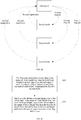
- FIG. 2A is a flowchart of a shared data recycling method according to an exemplary embodiment.
- a data sharing system is a transaction system
- shared data is a shared ledger
- the method is applied to a first node and at least one second node in the transaction system.
- the transaction system includes N nodes. The method includes the following steps.
- step 201 the first node acquires, when receiving a recycling request carrying a first block height, the first block height from the recycling request.
- the first node may be any node in the transaction system, and the recycling request may be received from any node in the transaction system, which may be referred to as a second node in this embodiment.
- the second node may initiate a recycling procedure of the shared ledger. For example, when detecting that remaining storage space is smaller than preset storage space, the second node determines the first block height based on a daily transaction information amount of the transaction system and the remaining storage space, and the second node broadcasts, to a node in the transaction system other than the second node, the recycling request carrying the first block height. In such a broadcast manner, all the nodes in the transaction system can receive the recycling request, to perform same data recycling, thereby ensuring data consistency.
- the second node may initiate the recycling procedure of the shared ledger for many reasons. For example, one reason may be that the second node initiates the recycling procedure of the shared ledger based on an actual storage status of the second node, that is, the second node may detect remaining storage space after the second node stores the shared ledger, to determine whether to recycle the shared ledger stored by the second node, and initiates the recycling procedure of the shared ledger if the shared ledger stored by the second node needs to be recycled.
- Another reason may be that a preset period or a preset data amount is provided in the transaction system, and the second node initiates the recycling procedure of the shared ledger when detecting a boundary between preset periods or a data amount of the shared ledger stored by the second node reaches the preset data amount.
- the second node is required to send a recycling request to all other nodes in the transaction system, to recycle the shared ledger.
- the recycling request may be generated by the following step 1 and step 2.
- step 1 the second node determines the first block height based on the daily transaction information amount of the transaction system and the remaining storage space when detecting that the remaining storage space is smaller than the preset storage space.
- the second node When the second node detects that the remaining storage space is smaller than the preset storage space, it means that as a data amount of the ledger increases, storage pressure of storing the shared ledger is caused to the second node, and the storage pressure grows with time. Therefore, to ensure a normal increase in the data amount of the ledger in a period of time, it may be considered to determine an amount of ledger data to be recycled based on the daily transaction information amount of the transaction system and the remaining storage space.
- the transaction system may count the daily transaction information amount of the transaction system by counting an amount of transaction information received by the transaction system each day, and send the counted daily transaction information amount to each node in the transaction system at a preset time in each day.
- the second node may set a day number threshold, and multiply the day number threshold by the daily transaction information amount to obtain a storage space threshold. Then the second node may determine a space difference between the storage space threshold and the remaining storage space, use the space difference as a data amount of ledger data to be recycled, and determine the first block height in the shared ledger based on the data amount.
- the first block height carried in the recycling request actually indicates a range. That is, ledger data stored in the first block to the block of height less than the first block height in a blockchain is recycled, and only ledger data in the block of the first block height and ledger data in the blocks of block heights greater than the first block height are remained.
- preset storage space thereof may be the same or may be different. If the nodes have a same storage capability, remaining storage space after a shared ledger of a same amount is stored is also the same, and therefore same preset storage space may be set for the nodes. If the nodes have different storage capabilities, remaining storage space after a shared ledger of a same amount is stored is different, and therefore different preset storage space may be set for the nodes, so that the nodes may initiate a recycling procedure of the shared ledger based on actual storage statuses of the nodes.
- the second node may obtain the preset first block height from the transaction system when detecting the boundary between the preset periods or the data amount of the shared ledger stored by the second node reaches the preset data amount, and initiates the recycling procedure of the shared ledger based on the preset first block height, without performing the process of determining the first block height based on the daily transaction information amount of the transaction system and the remaining storage space.
- step 2 the second node broadcasts, to at least one first node in the transaction system, the recycling request carrying the first block height.
- the second node When determining the first block height, the second node generates the recycling request based on the first block height, to carry the first block height in the recycling request.
- the recycling request carrying a second block height is broadcast to the other nodes in the transaction system based on node identifiers of the other nodes.
- the foregoing process of generating and sending the recycling request may be automatically triggered by the second node when detecting that the remaining storage space is smaller than the preset storage space, or detecting the boundary between the preset periods, or detecting that the data amount of the shared ledger stored by the second node reaches the preset data amount, or may be manually triggered by an operator when the operator determines that the remaining storage space of the second node is smaller than the preset storage space, or detects the boundary between the preset periods, or detects that the data amount of the shared ledger stored by the second node reaches the preset data amount.
- This is not specifically limited in the present disclosure.
- the recycling may be further initiated by a control node in the at least one second node in the transaction system.
- the control node may trigger the generation and sending of the recycling request when detecting that remaining storage space of multiple nodes is smaller than the preset storage space, or detecting the boundary between the preset periods, or detecting that data amounts of shared ledgers stored by multiple nodes reach the preset data amount.
- the first node receives the recycling request from the second node. Because the first node and the second node are both nodes having an accounting function in the transaction system, the first node may also initiate the recycling procedure of the shared ledger. For better understanding, an example in which the first node initiates the recycling procedure of the shared ledger is described.
- the first node may initiate the recycling procedure of the shared ledger for many reasons. For example, one reason may be that the first node initiates the recycling procedure of the shared ledger based on an actual storage status of the first node, that is, the first node may detect remaining storage space after the first node stores the shared ledger, to determine whether to recycle the shared ledger stored by the first node, and initiates the recycling procedure of the shared ledger if the shared ledger stored by the first node needs to be recycled.
- Another reason may be that a preset period or a preset data amount is provided in the transaction system, and the first node initiates the recycling procedure of the shared ledger when detecting a boundary between preset periods or a data amount of the shared ledger stored by the first node reaches the preset data amount.
- the first node is required to send a recycling request to all other nodes in the transaction system, to recycle the shared ledger.
- the recycling request may be generated by the following step 1 and step 2.
- the first node determines a second block height based on the daily transaction information amount of the transaction system and the remaining storage space when detecting that the remaining storage space is smaller than the preset storage space. It may be understood that, the daily shared information amount of the data sharing system includes the daily transaction information amount of the transaction system.
- the first node When the first node detects that the remaining storage space is smaller than the preset storage space, it means that as a data amount of the ledger increases, storage pressure of storing the shared ledger is caused to the first node, and the storage pressure grows with time. Therefore, to ensure a normal increase in the data amount of the ledger in a period of time, it may be considered to determine an amount of ledger data to be recycled based on the daily transaction information amount of the transaction system and the remaining storage space.
- the transaction system may count the daily transaction information amount of the transaction system by counting an amount of transaction information received by the transaction system each day, and send the counted daily transaction information amount to each node in the transaction system at a preset time each day.
- the first node may set a day number threshold, and multiply the day number threshold by the daily transaction information amount to obtain a storage space threshold. Then the first node may determine a space difference between the storage space threshold and the remaining storage space, use the space difference as a data amount of ledger data to be recycled, and determine the second block height in the shared ledger based on the data amount.
- the second block height carried in the recycling request actually indicates a range. That is, ledger data stored in the first block to the block of height less than the second block height in a blockchain needs to be recycled, and only ledger data of the second block height and ledger data of a block height greater than the second block height are remained.
- preset storage space thereof may be the same or may be different. If the nodes have a same storage capability, remaining storage space after a shared ledger of a same amount is stored is also the same, and therefore same preset storage space may be set for the nodes. If the nodes have different storage capabilities, remaining storage space after a shared ledger of a same amount is stored is different, and therefore different preset storage space may be set for the nodes, so that the nodes may initiate a recycling procedure of the shared ledger based on actual storage statuses of the nodes.
- the first node may obtain the preset second block height from the transaction system when detecting the boundary between the preset periods or the data amount of the shared ledger stored by the first node reaches or is greater than the preset data amount, and initiates the recycling procedure of the shared ledger based on the preset second block height, without performing the process of determining the second block height based on the daily transaction information amount of the transaction system and the remaining storage space.
- the second block height may be determined based on the daily shared information amount of the data sharing system and the remaining storage space when it is detected that the remaining storage space of the first node is smaller than the preset storage space.
- the second block height may be determined at every preset period based on the daily shared information amount of the data sharing system.
- the second block height may be determined based on the daily shared information amount of the data sharing system when it is detected that a data amount of currently stored shared data is greater than the preset data amount.
- step 2 the first node broadcasts, to the at least one second node in the transaction system, a recycling request carrying the second block height.
- the first node When determining the second block height, the first node generates the recycling request based on the second block height, to carry the second block height in the recycling request.
- the recycling request carrying the second block height is broadcast to the other nodes in the transaction system based on node identifiers of the other nodes.
- the foregoing process of generating and sending the recycling request may be automatically triggered by the first node when detecting that the remaining storage space is smaller than the preset storage space, or detecting the boundary between the preset periods, or detecting that the data amount of the shared ledger stored by the first node reaches the preset data amount, or may be manually triggered by an operator when the operator determines that the remaining storage space of the first node is smaller than the preset storage space, or detects the boundary between the preset periods, or detects that the data amount of the shared ledger stored by the first node reaches the preset data amount.
- This is not specifically limited in the present disclosure.
- the recycling may be further initiated by a control node in the at least one first node in the transaction system.
- the control node may trigger the generation and sending of the recycling request when detecting that remaining storage space of multiple nodes is smaller than the preset storage space, or detecting the boundary between the preset periods, or detecting that data amounts of shared ledgers stored by multiple nodes reach the preset data amount.
- the first node determines to-be-recycled ledger data in a range of block height less than the first block height in a shared ledger based on the first block height.
- the first node may determine, based on the first block height, ledger data stored in a block height range from a block height of the first block to the first block height, in a blockchain stored by the first node.
- the block height of the first block in the blockchain is Height(1)
- a block height of the second block is Height(2)
- a block height of the third block is Height(3)
- a block height of the fourth block is Height(4)
- a block height of the fifth block is Height(5)
- the first block height may be Height(3).
- the first node can determine, in a blockchain of the shared ledger based on the first block height Height(3), that to-be-recycled ledger data is ledger data stored in blocks indicated by the block heights, namely, Height(1) to Height(3), that is, ledger data stored in a block of a block height Height(1) and ledger data stored in a block of a block height Height(2) are determined as to-be-recycled ledger data.
- step 203 an eigenvalue of the ledger data in the range of block height less than the first block height is calculated based on a hash algorithm, to obtain a first eigenvalue of the first node.
- the first eigenvalue is used to uniquely indicate the data in the range of block height less than the first block height in the shared data stored by the first node.
- the first eigenvalue is obtained from the ledger data in the range of block height less than the first block height in the shared ledger stored by the first node.
- Step 201 to step 203 is a process of obtaining, by the first node, the first eigenvalue of the first node after receiving the recycling request carrying the first block height.
- the hash algorithm is used as an example, and the first eigenvalue may be a hash value of the ledger data in the range of block height less than the first block height. In practices, other algorithms may be used, which is not specifically limited in the present disclosure.
- step 204 the first node broadcasts the first eigenvalue to N-1 second nodes in the transaction system.
- the second node is a node other than the first node. Because the first node is any node in the transaction system, after obtaining the first eigenvalue, the first node obtains N-1 node identifiers of the other N-1 second nodes, duplicates the first eigenvalue, and broadcasts the first eigenvalue to the second nodes indicated by the N-1 node identifiers, so that the N-1 nodes can all receive the same first eigenvalue. Alternatively, the first eigenvalue may be sent to the N-1 second nodes sequentially. A specific sending manner is not limited in this embodiment of the present disclosure.
- each of the second nodes when receiving the recycling request carrying the first block height, each of the second nodes may also generate a second eigenvalue based on the first block height in the recycling request, and broadcasts the second eigenvalue in the transaction system.
- step 205 the first node receives N-1 second eigenvalues broadcasted by the N-1 second nodes.
- Each second eigenvalue is used to uniquely indicate data in the range of block height less than the first block height in shared data stored by one of the second nodes.
- the second eigenvalue broadcasted by the second node may be an eigenvalue of the ledger data in the range of block height less than the first block height in the shared ledger stored by the second node.
- a consensus algorithm may be used to determine the following step to be performed.
- the consensus algorithm is used to determine whether data stored by the multiple nodes in the system is consistent, and determine, based on a quantity of nodes in which stored data is consistent, whether there is a fault in the current system.
- the consensus algorithm may be a Byzantine Fault Tolerance (BFT) algorithm, which may be the Practical Byzantine Fault Tolerance (PBFT) algorithm. This is not specifically limited in the present disclosure.
- BFT Byzantine Fault Tolerance
- PBFT Practical Byzantine Fault Tolerance
- F is a quantity of nodes indicating fault-tolerant capability in the current transaction system, and may be preset. If a quantity of equal eigenvalues among the first eigenvalue and the multiple second eigenvalues reaches the preset quantity, it is determined that the ledger data of the shared ledgers stored by the nodes in the transaction system is consistent, and the shared ledger can be recycled. That is, the following step 206 can be performed.
- the quantity of equal eigenvalues among the first eigenvalue and the multiple second eigenvalues reaches the preset quantity mentioned above also indicates that a quantity of the equal eigenvalues in the first eigenvalues and the multiple second eigenvalues reaches the preset quantity.
- the preset quantity is set to 3. If the first eigenvalue of the first node is 1F8359E, and the first node receives four second eigenvalues that are respectively 1F84678E, 1F8359E, 1F8359E, and 1F8359E, there are four 1F8359E among the first eigenvalue and the four second eigenvalues.
- the first node may determine that the quantity of the equal eigenvalues among the first eigenvalue and the multiple second eigenvalues reaches the preset quantity, that is, the quantity of 1F8359E reaches three, and thus determine that the ledger data of the shared ledger stored by the nodes in the transaction system is consistent.
- the quantity of equal eigenvalues among the first eigenvalue and the multiple second eigenvalues does not reach the preset quantity, it is determined that there are a relatively large quantity of nodes with inconsistent ledger data of the shared ledger stored by the nodes in the transaction system, which indicates a fault in the transaction system. In this case, the transaction system needs to be repaired, that is, the following step 208 is to be performed.
- the process of determining whether the quantity of equal eigenvalues among the first eigenvalue and the multiple second eigenvalues reaches the preset quantity is actually a process of determining whether a quantity of the most equal eigenvalues among the first eigenvalue and the multiple second eigenvalues reaches the preset quantity.
- the first the of the first node is 1F8359E
- six second eigenvalues are received, respectively being 1F84678E, 1F84678E, 1F8359E, 1F8359E, 1F8359E, and 1F1248E
- there are three second eigenvalues of 1F8359E and two second eigenvalues of 1F84678E among the six second eigenvalues that is, the most second eigenvalues received by the first node are 1F8359E.
- the first node only needs to determine, among the first eigenvalue and the multiple second eigenvalues, whether a quantity of eigenvalues of 1F8359E reaches the preset quantity, without determining whether a quantity of eigenvalues of 1F84678E reaches the preset quantity.
- step 204 and step 205 are not limited to a particular execution order. That is, the first node may first broadcast the first eigenvalue to the N-1 second nodes in the transaction system, or may first receive the N-1 second eigenvalues broadcasted by the N-1 second nodes, or may perform step 204 and step 205 at the same time. This is not specifically limited in the present disclosure.
- the first node receives the recycling request carrying the first block height
- the N-1 second nodes also receive the recycling request, and step 201 to step 205 are performed. Therefore, the first node may receive the second eigenvalues sent by the N-1 second nodes.
- the process of step 205 is actually a process of determining, based on the first eigenvalue and the multiple second eigenvalues, whether the ledger data of the shared ledgers stored by all the nodes in the transaction system is consistent, so as to determine whether to broadcast the recycling instruction information to the at least one second node subsequently. Therefore, it is ensured that the shared ledger is recycled only when the ledger data of the shared ledgers stored by the nodes in the transaction system is consistent, thereby ensuring consistency and security of the ledger data of the shared ledgers stored by the nodes in the transaction system.
- the first node determines, if the quantity of equal eigenvalues among the first eigenvalue and the multiple second eigenvalues reaches a preset quantity, that the ledger data in the range of block height less than the first block height the shared ledgers stored by all the nodes in the transaction system is consistent, and broadcasts recycling instruction information to the N-1 second nodes, the recycling instruction information being used to instruct a node to recycle the ledger data in the range of block height less than the first block height.
- the recycling instruction information is broadcast to the N-1 second nodes, so that the N-1 second nodes perform an operation of recycling the shared ledger.
- a process of broadcasting the recycling instruction information is same as a process of broadcasting the first eigenvalue to the N-1 second nodes in the transaction system, which is not described in detail herein.
- each of the N-1 second nodes also receives recycling requests sent by other nodes, each triggering step 201 to step 205. In this case, it is required that when determining, based on second eigenvalues sent by the other nodes, that the ledger data of the shared ledgers stored by all the nodes in the transaction system is consistent, each of the N-1 second nodes also broadcasts recycling instruction information to the other nodes in the transaction system.
- the node broadcasts recycling instruction information to the other nodes in the transaction system only when determining that the eigenvalue generated by the node is equal to some received second eigenvalues sent by the other nodes and a quantity of the equal eigenvalues reaches the preset quantity. If a node in the transaction system determines that there are equal eigenvalues among the eigenvalue generated by the node and the received second eigenvalue sent by the other nodes but a quantity of the equal eigenvalues does not reach the preset quantity, the node does not broadcast recycling instruction information to the other nodes.
- step 207 the first node recycles the ledger data in the range of block height less than the first block height in the shared ledger if receiving a preset quantity of pieces of the recycling instruction information.
- the first node if the first node receives the preset quantity of pieces of recycling instruction information, it indicates that the shared ledger can be recycled currently. In this way, the first node recycles the to-be-recycled ledger data that is determined in the shared ledger based on the first block height.
- a data recycling process mentioned in this embodiment of the present disclosure is actually a process of performing data transferring on the to-be-recycled data, which includes determining a preset first storage location, and transferring, to the first storage location, the to-be-recycled data that is determined in the shared data based on the first block height. Because the data may not be often accessed, the process may also be considered as a data cold backup process.
- a current block eigenvalue of a block corresponding to the first block height may be further stored on the first node, so that when the recycled data is to be restored or traced subsequently, the data can be obtained based on the stored current block eigenvalue of the block corresponding to the first block height, or the transferred recycled ledger data may be obtained from the first storage location, thereby further ensuring data security while reducing pressure of storing the shared data on the first node.
- each of the N-1 second nodes may receive the multiple pieces of recycling instruction information broadcasted by the other nodes in the transaction system, and when a quantity of the received recycling instruction information reaches the preset quantity, recycle to-be-recycled data that is determined in the shared ledger based on the first block height. In this way, for the shared data stored by the node of the data sharing system, after the shared data is recycled, data consistency and security of the shared data can still be maintained.
- the first node determines a target eigenvalue in the first eigenvalue and the at least one second eigenvalue if the quantity of equal eigenvalues among the first eigenvalue and the multiple second eigenvalues does not reach the preset quantity, the target eigenvalue being an eigenvalue in the at least one second eigenvalue that is not equal to the first eigenvalue; and sends error information to a specified second node, to notify the specified second node that there is an error in shared data stored by the specified second node, the specified second node being a second node sending the target eigenvalue.
- the target eigenvalue is determined from the first eigenvalue and the at least one second eigenvalue, where the target eigenvalue is an eigenvalue in the second eigenvalue that is not equal to the first eigenvalue, and the error information is sent to the specified second node.
- each node in the transaction system after determining the target eigenvalue from the first eigenvalue and the at least one second eigenvalue, each node in the transaction system sends the error information to the specified second node.
- the error information sent to the specified node may carry an error prompt.
- the specified second node When receiving the error information, the specified second node counts a quantity of the received error information, and if the quantity of the received error information exceeds a quantity threshold, the specified second node obtains the error prompt from the error information, determines that ledger data of a shared ledger currently stored by the specified second node is inconsistent with the ledger data of the shared ledger stored by the other nodes in the transaction system, and obtains the shared ledger from the other nodes, to replace the currently stored shared ledger, so that the currently stored shared ledger is consistent with the shared ledger stored by the other nodes in the transaction system, achieving repair of the transaction system.
- the nodes in the transaction system may be classified into an accounting node and a non-accounting node.
- the accounting node is used to store the shared ledger in the transaction system, and continually update the shared ledger based on transaction information that is received by the transaction system each day.
- the non-accounting node is used to store mirror data of the shared ledger, that is, back up the shared ledger, where content of the mirror data is used to indicate a data change of the shared ledger. Further, the non-accounting node may also store the shared ledger. This is not specifically limited in the present disclosure.
- step 201 to step 208 are steps to be performed by the first node as an accounting node, that is, the first node stores only the shared ledger.
- the first node may store both the shared ledger and the mirror data of the shared ledger.
- step 207 when step 207 is performed to recycle the shared ledger, the following step 209 and step 210 may be further performed.
- the first node storing the mirror data may first perform step 207 to recycle the shared ledger, and then perform the following step 209 and step 210.
- the first node may perform step 207 and the following step 209 and step 210 at the same time. This is not specifically limited in the present disclosure.
- the first node determines mirror data in the range of block height less than the first block height in mirror data of the shared data if receiving the multiple pieces of recycling instruction information broadcasted by the N-1 second nodes.
- the mirror data records a change process of the shared ledger stored by the node in the transaction system, that is, the shared ledger shows only a current status of a user account in ledger data of the shared ledger, while the mirror data records a change of the user account in the ledger data of the shared ledger in a particular period of time.
- the first node is a non-accounting node
- the first node may store the shared ledger and the mirror data of the shared ledger, so that to-be-recycled mirror data can be determined in the mirror data of the shared ledger based on the first block height.
- a process of determining the to-be-recycled mirror data is same as the process of determining the to-be-recycled ledger data in step 202, which is not described in detail herein.
- the first node obtains a second eigenvalue of the mirror data in the range of block height less than the first block height, recycles the mirror data in the range of block height less than the first block height from the mirror data of the shared data, and stores the second eigenvalue into remaining mirror data.
- the first node performs based on the first block height carried in the recycling request.
- mirror data corresponding to different blocks is also distinguished based on block heights, and block heights of the mirror data corresponding to the different blocks are consistent with block heights of the blocks in the shared ledger. Therefore, in the mirror data, the first node may obtain the second eigenvalue in the range of block height less than the first block height based on the first block height.
- a process of obtaining the second eigenvalue is same as a process of obtaining the first eigenvalue. Details are not described herein again.
- the first node After determining the second eigenvalue of the mirror data in the range of block height less than the first block height based on the first block height, the first node recycles the mirror data in the range of block height less than the first block height from the mirror data of the shared ledger.
- a process of recycling the mirror data is same as a process of recycling the ledger data, that is, a preset second storage location is determined, and the mirror data in the range of block height less than the first block height is transferred to the second storage location. Because the mirror data may not be often accessed, the process may be considered as a data cold backup process, and only mirror data beyond the range of the first block height is maintained.
- the second eigenvalue may be stored into the remaining mirror data on the first node, so that when the recycled mirror data is required to be restored or traced subsequently, the recycled mirror data may be obtained based on the stored second eigenvalue, or the recycled mirror data that is transferred may be obtained from the second storage location, thereby further ensuring security of the mirror data, and reducing pressure of storing the shared data on the first node.
- the block height of the first block is Height(1)
- the block height of the second block is Height(2)
- the block height of the third block is Height(3)
- the block height of the fourth block is Height(4)
- the block height of the fifth block is Height(5)
- the to-be-recycled mirror data determined in the mirror data is mirror data corresponding to blocks indicated by the block heights Height(1) to Height(3).
- the mirror data in a range of a height greater than or equal to Height(1) and less than Height(3) is recycled, that is, the mirror data in the range of the height greater than or equal to Height(1) and less than Height(3) is deleted, and only mirror data corresponding to Height(3) and mirror data higher than Height(3) are maintained, and 1F84678E is stored to a position corresponding to Height(3).
- the shared data is recycled to expand the remaining storage space of the node, which may be implemented in many ways.
- data is transferred to expand the remaining storage space.
- the data may also be compressed to reduce a storage size of the data, thereby expanding the remaining storage space.
- the first eigenvalue of the first node in the range of block height less than the first block height and the second eigenvalue of the second node in the range of block height less than the first block height may be calculated, and whether the first eigenvalue is consistent with the second eigenvalue may be determined to determine whether data in the range of block height less than the first block height in the shared data stored by the nodes is consistent.
- the data in the range of block height less than the first block height in the shared data is compressed, so that a storage size of the shared data on each node can be reduced to a same degree, thereby ensuring consistency and security of data stored in the blocks while reducing pressure of storing shared data on the node of the data sharing system.
- a first eigenvalue of a first node in a range of block height less than a first block height and a second eigenvalue of a second node in the range of block height less than the first block height are calculated, and then, when it is determined that data in the range of block height less than the first block height in shared data stored by the nodes is consistent, the data in the range of block height less than the first block height in the shared data is recycled, thereby ensuring consistency and security of data stored in a block while reducing pressure of storing shared data on a node of a data sharing system.
- the first block height is acquired from the recycling request, the to-be-recycled shared data in the range of block height less than the first block height is determined in the shared data based on the first block height, the eigenvalue of the data in the range of block height less than the first block height is calculated based on the hash algorithm, to obtain the first eigenvalue of the first node, thereby ensuring that all the nodes of the data sharing system can recycle the shared data based on the first block height.
- whether the quantity of equal eigenvalues among the first eigenvalue and the multiple second eigenvalues reaches the preset quantity is determined, and if the preset quantity is reached, it is determined that the shared data stored by all the nodes of the data sharing system is consistent, and the recycling instruction information is broadcast to the at least one second node. Therefore, the recycling instruction information is broadcast to the at least one second node only when the quantity of equal eigenvalues among the first eigenvalue and the multiple second eigenvalues reaches the preset quantity, thereby ensuring consistency and security of the shared data stored by the nodes while recycling the shared data.
- the second block height is determined based on the daily shared information amount of the data sharing system and the remaining storage space, and the recycling request carrying the second block height is broadcast to the at least one second node of the data sharing system, so that when it is detected that there is pressure of storing the shared data on the node, the shared data may be immediately requests to be recycled, thereby reducing actual pressure of storing the shared data on the node.
- the mirror data in the range of block height less than the first block height is determined from the mirror data of the shared data, and the second eigenvalue of the mirror data in the range of block height less than the first block height is obtained.
- the mirror data in the range of block height less than the first block height is recycled from the mirror data of the shared data, and the second eigenvalue is stored into remaining mirror data, so that the mirror data of the shared data may also be recycled based on the first block height, thereby further reducing pressure of storing the shared data on the node.
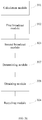
- FIG. 3A is a block diagram of a shared data recycling apparatus according to an exemplary embodiment.
- the apparatus includes a calculation module 301, a first broadcast module 302, a second broadcast module 303, and a recycling module 304.
- the calculation module 301 is configured to obtain a first eigenvalue of the first node after receiving a recycling request carrying a first block height, the first eigenvalue being used to uniquely indicate data in a range of block height less than the first block height in shared data stored by the first node.
- the first broadcast module 302 is configured to broadcast the first eigenvalue to at least one second node of the data sharing system, the second node being a node other than the first node.
- the second broadcast module 303 is configured to broadcast recycling instruction information to the at least one second node in a case that multiple second eigenvalues broadcasted by the at least one second node are received and it is determined, based on the first eigenvalue and the multiple second eigenvalues, that data in the range of block height less than the first block height in the shared data stored by all nodes of the data sharing system is consistent, each of the second eigenvalues is used to uniquely indicate data in the range of block height less than the first block height in the shared data stored by the second node broadcasting the second eigenvalue.
- the recycling module 304 is configured to recycle the data in the range of block height less than the first block height in the shared data if receiving a preset quantity of pieces of the recycling instruction information.
- the apparatus provided in this embodiment of the present disclosure calculates a first eigenvalue of a first node in a range of block height less than a first block height and a second eigenvalue of a second node in the range of block height less than the first block height, and then, when determining that data in the range of block height less than the first block height in shared data stored by the nodes is consistent, recycles the data in the range of block height less than the first block height in the shared data, thereby ensuring consistency and security of data stored in a block while reducing pressure of storing shared data on a node of a data sharing system.
- the calculation module 301 includes an acquiring submodule 3011, a determining submodule 3012, and a calculation submodule 3013.
- the acquiring submodule 3011 is configured to acquire the first block height from the recycling request.
- the determining submodule 3012 is configured to determine, based on the first block height, to-be-recycled data in the range of block height less than the first block height in the shared data.
- the calculation submodule 3013 is configured to calculate an eigenvalue of the data in the range of block height less than the first block height based on a hash algorithm, to obtain the first eigenvalue of the first node.
- the second broadcast module 304 is configured to: determine, if a quantity of equal eigenvalues among the first eigenvalue and the multiple second eigenvalues reaches the preset quantity, that the data in the range of block height less than the first block height in the shared data stored by all the nodes of the data sharing system is consistent, and broadcast the recycling instruction information to the at least one second node.
- the apparatus further includes a storing module 305.
- the storing module 305 is configured to store a current block eigenvalue of a block corresponding to the first block height.
- the apparatus further includes a third broadcast module 306.
- the third broadcast module 306 is configured to: determine, when it is detected that remaining storage space of the first node is smaller than preset storage space, a second block height based on a daily shared information amount of the data sharing system and the remaining storage space; and broadcast, to the at least one second node of the data sharing system, a recycling request carrying the second block height.
- the third broadcast module 306 is configured to determine a second block height at every preset period based on a daily shared information amount of the data sharing system; and broadcast, to the at least one second node of the data sharing system, a recycling request carrying the second block height.
- the third broadcast module 306 is configured to determine a second block height based on a daily shared information amount of the data sharing system when it is detected that a data amount of currently stored shared data is greater than a preset data amount; and broadcast, to the at least one second node of the data sharing system, a recycling request carrying the second block height.
- the apparatus further includes a determining module 307 and an obtaining module 308.
- the determining module 307 is configured to determine, in mirror data of the shared data, mirror data in the range of block height less than the first block height if receiving multiple pieces of recycling instruction information broadcasted by the at least one second node.
- the obtaining module 308 is configured to obtain a second eigenvalue of the mirror data in the range of block height less than the first block height.
- the recycling module 304 is further configured to recycle the mirror data in the range of block height less than the first block height from the mirror data of the shared data, and store the second eigenvalue into remaining mirror data.
- the method provided in the embodiments of the present disclosure is applicable to any node of the data sharing system.
- the node may be any computer device.
- the computer device includes a processor and a memory.
- the memory stores at least one instruction.
- the instruction is loaded and executed by the processor to implement the following method:
- the instruction is loaded and executed by the processor to further implement the following method:
- the instruction is loaded and executed by the processor to further implement the following method:
- the instruction is loaded and executed by the processor to further implement the following method: storing a current block eigenvalue of a block corresponding to the first block height.
- the instruction is loaded and executed by the processor to further implement the following method:
- the instruction is loaded and executed by the processor to further implement the following method:
- the computer device used as a node may be in a form of terminal, such as a terminal 400 shown in FIG. 4 , or may be in a form of server, such as a server 500 shown in FIG. 5 .
- FIG. 4 is a block diagram of the terminal 400 according to an exemplary embodiment.
- the terminal 400 may be a mobile phone, a computer, a digital broadcasting terminal, a message transceiver device, a game console, a tablet device, a medical device, fitness equipment, or a personal digital assistant.
- the terminal 400 may include one or more of the following components: a processing component 402, a memory 404, a power supply component 406, a multimedia component 408, an audio component 410, an input/output (I/O) interface 412, a sensor component 414, and a communications component 416.
- the processing component 402 generally controls an overall operation of terminal 400, for example, operations associated with display, telephone calls, data communications, camera operations, and recording operations.
- the processing component 402 may include one or more processors 420 for executing an instruction, to perform all or some of the steps of the foregoing method.
- the processing component 402 may include one or more modules, to facilitate interaction between the processing component 402 and another component.
- the processing component 402 may include a multimedia module to facilitate interaction between the multimedia component 408 and the processing component 402.
- the memory 404 is configured to store various types of data to support operations of the terminal 400. Examples of the data include instructions of any application program or method to be operated on the terminal 400, contact data, phonebook data, messages, pictures, videos, and the like.
- the memory 404 may be implemented by any type of volatile or nonvolatile storage device or a combination thereof, such as a static random access memory (SRAM), an electrically-erasable programmable read-only memory (EEPROM), an erasable programmable read-only memory (EPROM), a programmable read-only memory (PROM), a read-only memory (ROM), a magnetic memory, a flash memory, a magnetic disk, or an optical disc.
- SRAM static random access memory
- EEPROM electrically-erasable programmable read-only memory
- EPROM erasable programmable read-only memory
- PROM programmable read-only memory
- ROM read-only memory
- magnetic memory a magnetic memory
- flash memory a flash memory
- magnetic disk or an
- the power supply component 406 supplies power to components of the terminal 400.
- the power supply component 406 may include a power supply management system, one or more power supplies, and other components associated with generating, managing and allocating power for the terminal 800.
- the multimedia component 408 includes a screen providing an output interface between the terminal 400 and a user.
- the screen may include a liquid crystal display (LCD) and a touch panel (TP). If the screen includes a TP, the screen may be implemented as a touchscreen, to receive an input signal from the user.
- the TP includes one or more touch sensors to sense touching, sliding, and gestures on the TP. The touch sensor may not only sense the boundary of touching or sliding operations, but also detect duration and pressure related to the touching or sliding operations.
- the multimedia component 408 includes a front-facing camera and/or a rear-facing camera.
- the front-facing camera and/or the rear-facing camera may receive external multimedia data.
- Each of the front-facing camera and rear-facing camera may be a fixed optical lens system or have a focal length and an optical zooming capability.
- the audio component 410 is configured to output and/or input an audio signal.
- the audio component 410 includes a microphone (MIC), and when the terminal 400 is in an operation mode, such as a call mode, a recording mode, and a voice identification mode, the MIC is configured to receive an external audio signal.
- the received audio signal may be further stored in the memory 404 or sent through the communications component 416.
- the audio component 410 further includes a speaker, configured to output an audio signal.
- the I/O interface 412 provides an interface between the processing component 402 and an external interface module.
- the external interface module may be a keyboard, a click wheel, buttons, or the like.
- the buttons may include, but are not limited to: a homepage button, a volume button, a start-up button, and a locking button.
- the sensor component 414 includes one or more sensors, configured to provide status evaluation in each aspect to the terminal 400.
- the sensor component 414 may detect an opened/closed status of the device 400, and relative positioning of the component.
- the component is a display and a small keyboard of the terminal 400.
- the sensor component 414 may further detect a position change of the terminal 400 or one component of the terminal 400, the existence or nonexistence of contact between the user and the terminal 400, an azimuth or acceleration/deceleration of the terminal 400, and a temperature change of the terminal 400.
- the sensor component 414 may include a proximity sensor, configured to detect the existence of nearby objects without any physical contact.
- the sensor component 414 may further include an optical sensor, such as a complementary metal oxide semiconductor (CMOS) or a charge-coupled device (CCD) image sensor, to be used in an imaging application.
- CMOS complementary metal oxide semiconductor
- CCD charge-coupled device
- the sensor component 414 may further include an acceleration sensor, a gyroscope sensor, a magnetic sensor, a pressure sensor, or a temperature sensor.
- the communications component 416 is configured to facilitate communication in a wired or wireless manner between the terminal 400 and other devices.
- the terminal 400 may access a wireless network based on communication standards, such as Wi-Fi, 2G, or 3G, or a combination thereof.
- the communications component 416 receives a broadcast signal from an external broadcast management system or broadcast related information via a broadcast channel.
- the communications component 416 may further include a near field communication (NFC) module, to promote short range communication.
- the NFC module may be implemented based on a radio frequency identification (RFID) technology, an infra-red data association (IrDA) technology, an ultra wideband (UWB) technology, a Bluetooth (BT) technology, and other technologies.
- RFID radio frequency identification
- IrDA infra-red data association
- UWB ultra wideband
- BT Bluetooth
- the terminal 400 may be implemented by one or more application-specific integrated circuits (ASIC), digital signal processors (DSP), digital signal processor devices (DSPD), programmable logic devices (PLD), field programmable gate arrays (FPGA), controllers, microcontrollers, microprocessors, or other electronic components, and is configured to perform the foregoing shared data recycling method.
- ASIC application-specific integrated circuits
- DSP digital signal processors
- DSPD digital signal processor devices
- PLD programmable logic devices
- FPGA field programmable gate arrays
- controllers microcontrollers, microprocessors, or other electronic components, and is configured to perform the foregoing shared data recycling method.
- a non-transitory computer-readable storage medium including an instruction is further provided, for example, the memory 404 including an instruction, and the foregoing instruction may be executed by the processor 420 of the terminal 400 to perform the foregoing method.
- the non-transitory computer-readable storage medium may be a ROM, a random access memory (RAM), a compact disc read-only memory (CD-ROM), a magnetic tape, a floppy disk, an optical data storage device, or the like.
- FIG. 5 is a schematic structural diagram of a server according to an embodiment of the present disclosure.
- the server 500 may vary greatly due to different configurations or performance, and may include one or more central processing units (CPU) 501, and one or more memories 502.
- the memory 502 stores at least one instruction.
- the at least one instruction is loaded and executed by the processor 501 to implement the shared data recycling method provided in the foregoing method embodiments.
- the server may further include components such as a wired or wireless network interface, a keyboard, and an I/O interface, for inputting and outputting.
- the server may further include another component configured to implement a device function. Details are not described herein again.
- a computer-readable storage medium is further provided, for example, a memory including an instruction.
- the foregoing instruction may be executed by the processor of the terminal to perform the shared data recycling method in the foregoing embodiments.
- the computer-readable storage medium may be a ROM, a RAM, a CD-ROM, a magnetic tape, a floppy disk, or an optical data storage device.
Landscapes
- Engineering & Computer Science (AREA)
- Theoretical Computer Science (AREA)
- Physics & Mathematics (AREA)
- General Engineering & Computer Science (AREA)
- General Physics & Mathematics (AREA)
- Computer Security & Cryptography (AREA)
- Computer Networks & Wireless Communication (AREA)
- Signal Processing (AREA)
- Quality & Reliability (AREA)
- Human Computer Interaction (AREA)
- Databases & Information Systems (AREA)
- Health & Medical Sciences (AREA)
- Bioethics (AREA)
- General Health & Medical Sciences (AREA)
- Computer Hardware Design (AREA)
- Software Systems (AREA)
- Power Engineering (AREA)
- Data Mining & Analysis (AREA)
- Information Retrieval, Db Structures And Fs Structures Therefor (AREA)
Applications Claiming Priority (2)
| Application Number | Priority Date | Filing Date | Title |
|---|---|---|---|
| CN201710055111.6A CN107977163B (zh) | 2017-01-24 | 2017-01-24 | 共享数据回收方法及装置 |
| PCT/CN2018/073884 WO2018137624A1 (zh) | 2017-01-24 | 2018-01-23 | 共享数据回收方法、装置、计算机设备及存储介质 |
Publications (3)
| Publication Number | Publication Date |
|---|---|
| EP3575948A1 true EP3575948A1 (de) | 2019-12-04 |
| EP3575948A4 EP3575948A4 (de) | 2020-08-26 |
| EP3575948B1 EP3575948B1 (de) | 2021-11-17 |
Family
ID=62004240
Family Applications (1)
| Application Number | Title | Priority Date | Filing Date |
|---|---|---|---|
| EP18744537.4A Active EP3575948B1 (de) | 2017-01-24 | 2018-01-23 | Verfahren zur rückgewinnung gemeinsam verwendeter daten, computerausrüstung und speichermedium |
Country Status (5)
| Country | Link |
|---|---|
| US (1) | US10795778B2 (de) |
| EP (1) | EP3575948B1 (de) |
| CN (1) | CN107977163B (de) |
| MA (1) | MA47382A (de) |
| WO (1) | WO2018137624A1 (de) |
Cited By (2)
| Publication number | Priority date | Publication date | Assignee | Title |
|---|---|---|---|---|
| EP3673620A4 (de) * | 2019-07-11 | 2020-09-30 | Alibaba Group Holding Limited | Gemeinsame blockchain-datenspeicherung |
| KR102255459B1 (ko) * | 2020-10-26 | 2021-05-25 | 주식회사 동일아이씨티 | 컴퓨터 프로그램 자동 실행 방법 |
Families Citing this family (14)
| Publication number | Priority date | Publication date | Assignee | Title |
|---|---|---|---|---|
| CN108667931B (zh) * | 2018-05-10 | 2021-10-29 | 上海敏皓电力投资有限公司 | 基于gps/北斗定位的自组织区块链网络 |
| US11646879B2 (en) * | 2018-06-12 | 2023-05-09 | Electronics And Telecommunications Research Institute | Method and apparatus for selecting distributed consensus node based on proof of nonce |
| CN109508146B (zh) * | 2018-10-11 | 2021-07-23 | 广西师范大学 | 一种区块链的周期性存储空间回收方法 |
| CN109544200A (zh) * | 2018-10-11 | 2019-03-29 | 南京邮电大学 | 一种基于区块链的公共健身器材有奖使用方法 |
| US10791122B2 (en) | 2019-07-04 | 2020-09-29 | Alibaba Group Holding Limited | Blockchain user account data |
| CN110474775B (zh) * | 2019-07-04 | 2020-09-01 | 阿里巴巴集团控股有限公司 | 一种块链式账本中的用户创建方法、装置及设备 |
| CN111108478B (zh) | 2019-07-11 | 2023-11-21 | 创新先进技术有限公司 | 一种用于通信和共享区块链数据的方法、系统、和装置 |
| CN110598882B (zh) * | 2019-09-29 | 2023-09-19 | 腾讯科技(深圳)有限公司 | 一种回收可回收包装物的方法、装置和存储介质 |
| US12099997B1 (en) | 2020-01-31 | 2024-09-24 | Steven Mark Hoffberg | Tokenized fungible liabilities |
| EP3958144A1 (de) * | 2020-08-19 | 2022-02-23 | Siemens Aktiengesellschaft | Speicherverwaltung für blockchain-blöcke |
| CN112732487B (zh) * | 2021-01-07 | 2024-01-23 | 中国银联股份有限公司 | 一种数据恢复方法及装置 |
| CN112905554B (zh) * | 2021-02-07 | 2024-05-10 | 全链通有限公司 | 基于区块链的数据共享方法和装置 |
| CN112822224B (zh) * | 2021-04-19 | 2021-06-22 | 国网浙江省电力有限公司 | 一种用于财务数据查询的安全传输方法 |
| CN115269734B (zh) * | 2022-09-27 | 2022-11-29 | 北京奥星贝斯科技有限公司 | 分布式数据库的存储管理方法及装置 |
Family Cites Families (11)
| Publication number | Priority date | Publication date | Assignee | Title |
|---|---|---|---|---|
| TWI375887B (en) * | 2008-10-31 | 2012-11-01 | A Data Technology Co Ltd | Flash memory device with wear-leveling mechanism and controlling method thereof |
| TW201142646A (en) * | 2010-05-21 | 2011-12-01 | xiang-yu Li | Cloud data storage system |
| US20120030260A1 (en) * | 2010-07-30 | 2012-02-02 | Maohua Lu | Scalable and parallel garbage collection method and system for incremental backups with data de-duplication |
| JP5685213B2 (ja) * | 2012-02-22 | 2015-03-18 | 日本電信電話株式会社 | 差分レプリケーションシステム、マスターデータベース装置、及びスレーブデータベース装置 |
| CN103488576B (zh) * | 2013-09-18 | 2016-09-07 | 珠海金山网络游戏科技有限公司 | 一种高性能小区块内存管理方法 |
| US9678681B2 (en) * | 2015-06-17 | 2017-06-13 | International Business Machines Corporation | Secured multi-tenancy data in cloud-based storage environments |
| CN106201742B (zh) * | 2016-07-04 | 2019-09-20 | 东软医疗系统股份有限公司 | 一种共享内存管理方法、装置及系统 |
| US11461690B2 (en) * | 2016-07-18 | 2022-10-04 | Nantomics, Llc | Distributed machine learning systems, apparatus, and methods |
| CN107124278B (zh) * | 2017-03-30 | 2021-03-30 | 腾讯科技(深圳)有限公司 | 业务处理方法、装置以及数据共享系统 |
| US20190279172A1 (en) * | 2018-03-06 | 2019-09-12 | Dash Core Group, Inc. | Methods and Systems for Object Validated Blockchain Accounts |
| US11374736B2 (en) * | 2018-06-20 | 2022-06-28 | Clemson University | System and method for homomorphic encryption |
-
2017
- 2017-01-24 CN CN201710055111.6A patent/CN107977163B/zh active Active
-
2018
- 2018-01-23 WO PCT/CN2018/073884 patent/WO2018137624A1/zh not_active Ceased
- 2018-01-23 EP EP18744537.4A patent/EP3575948B1/de active Active
- 2018-01-23 MA MA047382A patent/MA47382A/fr unknown
-
2019
- 2019-06-03 US US16/430,077 patent/US10795778B2/en active Active
Cited By (3)
| Publication number | Priority date | Publication date | Assignee | Title |
|---|---|---|---|---|
| EP3673620A4 (de) * | 2019-07-11 | 2020-09-30 | Alibaba Group Holding Limited | Gemeinsame blockchain-datenspeicherung |
| US11270308B2 (en) | 2019-07-11 | 2022-03-08 | Advanced New Technologies Co., Ltd. | Shared blockchain data storage |
| KR102255459B1 (ko) * | 2020-10-26 | 2021-05-25 | 주식회사 동일아이씨티 | 컴퓨터 프로그램 자동 실행 방법 |
Also Published As
| Publication number | Publication date |
|---|---|
| US10795778B2 (en) | 2020-10-06 |
| MA47382A (fr) | 2019-12-04 |
| CN107977163A (zh) | 2018-05-01 |
| EP3575948B1 (de) | 2021-11-17 |
| WO2018137624A1 (zh) | 2018-08-02 |
| US20190286532A1 (en) | 2019-09-19 |
| EP3575948A4 (de) | 2020-08-26 |
| CN107977163B (zh) | 2019-09-10 |
Similar Documents
| Publication | Publication Date | Title |
|---|---|---|
| EP3575948B1 (de) | Verfahren zur rückgewinnung gemeinsam verwendeter daten, computerausrüstung und speichermedium | |
| CN105843615B (zh) | 通知消息的处理方法及装置 | |
| WO2020192311A1 (zh) | 主从服务器切换方法、装置、电子设备及存储介质 | |
| CN106598488B (zh) | 分布式数据读取方法及装置 | |
| CN112187862B (zh) | 一种任务处理方法、装置和用于任务处理的装置 | |
| CN114328629A (zh) | 数据缓存方法、装置、电子设备及存储介质 | |
| CN107707746A (zh) | 移动终端的管理方法、电子设备及存储介质 | |
| CN103914337A (zh) | 服务调用方法、装置及终端 | |
| CN106919283A (zh) | 终端的触摸事件处理方法、装置及终端 | |
| CN110795314B (zh) | 一种检测慢节点的方法、装置及计算机可读存储介质 | |
| CN104951522B (zh) | 一种进行搜索的方法和装置 | |
| CN116955356B (zh) | 业务数据处理方法、装置、电子设备及存储介质 | |
| CN108628883A (zh) | 一种数据处理方法、装置及电子设备 | |
| CN107704489B (zh) | 读写超时的处理方法、装置及计算机可读存储介质 | |
| CN116737830A (zh) | 批量数据同步方法、装置、电子设备和存储介质 | |
| CN117149432A (zh) | 基于分布式架构系统的交易处理方法、装置以及设备 | |
| CN109948012A (zh) | 序列号的生成方法、装置及存储介质 | |
| CN116431673A (zh) | 数据信息查询方法、装置、设备及存储介质 | |
| CN104536966B (zh) | 数据上传方法、数据接收方法、客户端及服务器 | |
| CN114489733A (zh) | 流控配置更新方法、装置和设备 | |
| CN108009025A (zh) | 数据存储方法及装置 | |
| CN115514748B (zh) | 数据处理方法、装置、设备及存储介质 | |
| CN114417133A (zh) | 业务数据处理方法、装置、电子设备及计算机存储介质 | |
| CN114936048B (zh) | 配置管理方法、装置、电子设备及存储介质 | |
| CN110716985B (zh) | 一种节点信息处理方法、装置及介质 |
Legal Events
| Date | Code | Title | Description |
|---|---|---|---|
| STAA | Information on the status of an ep patent application or granted ep patent |
Free format text: STATUS: THE INTERNATIONAL PUBLICATION HAS BEEN MADE |
|
| PUAI | Public reference made under article 153(3) epc to a published international application that has entered the european phase |
Free format text: ORIGINAL CODE: 0009012 |
|
| STAA | Information on the status of an ep patent application or granted ep patent |
Free format text: STATUS: REQUEST FOR EXAMINATION WAS MADE |
|
| 17P | Request for examination filed |
Effective date: 20190826 |
|
| AK | Designated contracting states |
Kind code of ref document: A1 Designated state(s): AL AT BE BG CH CY CZ DE DK EE ES FI FR GB GR HR HU IE IS IT LI LT LU LV MC MK MT NL NO PL PT RO RS SE SI SK SM TR |
|
| AX | Request for extension of the european patent |
Extension state: BA ME |
|
| A4 | Supplementary search report drawn up and despatched |
Effective date: 20200724 |
|
| RIC1 | Information provided on ipc code assigned before grant |
Ipc: H04L 9/32 20060101ALI20200720BHEP Ipc: G06F 21/62 20130101ALI20200720BHEP Ipc: G06F 3/06 20060101AFI20200720BHEP |
|
| GRAP | Despatch of communication of intention to grant a patent |
Free format text: ORIGINAL CODE: EPIDOSNIGR1 |
|
| STAA | Information on the status of an ep patent application or granted ep patent |
Free format text: STATUS: GRANT OF PATENT IS INTENDED |
|
| RIC1 | Information provided on ipc code assigned before grant |
Ipc: G06F 3/06 20060101AFI20210514BHEP Ipc: H04L 9/32 20060101ALI20210514BHEP Ipc: G06F 21/62 20130101ALI20210514BHEP Ipc: G06F 11/14 20060101ALI20210514BHEP Ipc: G06F 11/18 20060101ALI20210514BHEP Ipc: G06F 11/20 20060101ALI20210514BHEP Ipc: H04L 9/08 20060101ALI20210514BHEP |
|
| INTG | Intention to grant announced |
Effective date: 20210616 |
|
| GRAS | Grant fee paid |
Free format text: ORIGINAL CODE: EPIDOSNIGR3 |
|
| GRAA | (expected) grant |
Free format text: ORIGINAL CODE: 0009210 |
|
| STAA | Information on the status of an ep patent application or granted ep patent |
Free format text: STATUS: THE PATENT HAS BEEN GRANTED |
|
| AK | Designated contracting states |
Kind code of ref document: B1 Designated state(s): AL AT BE BG CH CY CZ DE DK EE ES FI FR GB GR HR HU IE IS IT LI LT LU LV MC MK MT NL NO PL PT RO RS SE SI SK SM TR |
|
| REG | Reference to a national code |
Ref country code: GB Ref legal event code: FG4D |
|
| REG | Reference to a national code |
Ref country code: IE Ref legal event code: FG4D |
|
| REG | Reference to a national code |
Ref country code: DE Ref legal event code: R096 Ref document number: 602018026836 Country of ref document: DE |
|
| REG | Reference to a national code |
Ref country code: AT Ref legal event code: REF Ref document number: 1448612 Country of ref document: AT Kind code of ref document: T Effective date: 20211215 |
|
| REG | Reference to a national code |
Ref country code: LT Ref legal event code: MG9D |
|
| REG | Reference to a national code |
Ref country code: NL Ref legal event code: MP Effective date: 20211117 |
|
| REG | Reference to a national code |
Ref country code: AT Ref legal event code: MK05 Ref document number: 1448612 Country of ref document: AT Kind code of ref document: T Effective date: 20211117 |
|
| PG25 | Lapsed in a contracting state [announced via postgrant information from national office to epo] |
Ref country code: RS Free format text: LAPSE BECAUSE OF FAILURE TO SUBMIT A TRANSLATION OF THE DESCRIPTION OR TO PAY THE FEE WITHIN THE PRESCRIBED TIME-LIMIT Effective date: 20211117 Ref country code: LT Free format text: LAPSE BECAUSE OF FAILURE TO SUBMIT A TRANSLATION OF THE DESCRIPTION OR TO PAY THE FEE WITHIN THE PRESCRIBED TIME-LIMIT Effective date: 20211117 Ref country code: FI Free format text: LAPSE BECAUSE OF FAILURE TO SUBMIT A TRANSLATION OF THE DESCRIPTION OR TO PAY THE FEE WITHIN THE PRESCRIBED TIME-LIMIT Effective date: 20211117 Ref country code: BG Free format text: LAPSE BECAUSE OF FAILURE TO SUBMIT A TRANSLATION OF THE DESCRIPTION OR TO PAY THE FEE WITHIN THE PRESCRIBED TIME-LIMIT Effective date: 20220217 Ref country code: AT Free format text: LAPSE BECAUSE OF FAILURE TO SUBMIT A TRANSLATION OF THE DESCRIPTION OR TO PAY THE FEE WITHIN THE PRESCRIBED TIME-LIMIT Effective date: 20211117 |
|
| PG25 | Lapsed in a contracting state [announced via postgrant information from national office to epo] |
Ref country code: IS Free format text: LAPSE BECAUSE OF FAILURE TO SUBMIT A TRANSLATION OF THE DESCRIPTION OR TO PAY THE FEE WITHIN THE PRESCRIBED TIME-LIMIT Effective date: 20220317 Ref country code: SE Free format text: LAPSE BECAUSE OF FAILURE TO SUBMIT A TRANSLATION OF THE DESCRIPTION OR TO PAY THE FEE WITHIN THE PRESCRIBED TIME-LIMIT Effective date: 20211117 Ref country code: PT Free format text: LAPSE BECAUSE OF FAILURE TO SUBMIT A TRANSLATION OF THE DESCRIPTION OR TO PAY THE FEE WITHIN THE PRESCRIBED TIME-LIMIT Effective date: 20220317 Ref country code: PL Free format text: LAPSE BECAUSE OF FAILURE TO SUBMIT A TRANSLATION OF THE DESCRIPTION OR TO PAY THE FEE WITHIN THE PRESCRIBED TIME-LIMIT Effective date: 20211117 Ref country code: NO Free format text: LAPSE BECAUSE OF FAILURE TO SUBMIT A TRANSLATION OF THE DESCRIPTION OR TO PAY THE FEE WITHIN THE PRESCRIBED TIME-LIMIT Effective date: 20220217 Ref country code: NL Free format text: LAPSE BECAUSE OF FAILURE TO SUBMIT A TRANSLATION OF THE DESCRIPTION OR TO PAY THE FEE WITHIN THE PRESCRIBED TIME-LIMIT Effective date: 20211117 Ref country code: LV Free format text: LAPSE BECAUSE OF FAILURE TO SUBMIT A TRANSLATION OF THE DESCRIPTION OR TO PAY THE FEE WITHIN THE PRESCRIBED TIME-LIMIT Effective date: 20211117 Ref country code: HR Free format text: LAPSE BECAUSE OF FAILURE TO SUBMIT A TRANSLATION OF THE DESCRIPTION OR TO PAY THE FEE WITHIN THE PRESCRIBED TIME-LIMIT Effective date: 20211117 Ref country code: GR Free format text: LAPSE BECAUSE OF FAILURE TO SUBMIT A TRANSLATION OF THE DESCRIPTION OR TO PAY THE FEE WITHIN THE PRESCRIBED TIME-LIMIT Effective date: 20220218 Ref country code: ES Free format text: LAPSE BECAUSE OF FAILURE TO SUBMIT A TRANSLATION OF THE DESCRIPTION OR TO PAY THE FEE WITHIN THE PRESCRIBED TIME-LIMIT Effective date: 20211117 |
|
| RAP4 | Party data changed (patent owner data changed or rights of a patent transferred) |
Owner name: TENCENT TECHNOLOGY (SHENZHEN) COMPANY LIMITED |
|
| PG25 | Lapsed in a contracting state [announced via postgrant information from national office to epo] |
Ref country code: SM Free format text: LAPSE BECAUSE OF FAILURE TO SUBMIT A TRANSLATION OF THE DESCRIPTION OR TO PAY THE FEE WITHIN THE PRESCRIBED TIME-LIMIT Effective date: 20211117 Ref country code: SK Free format text: LAPSE BECAUSE OF FAILURE TO SUBMIT A TRANSLATION OF THE DESCRIPTION OR TO PAY THE FEE WITHIN THE PRESCRIBED TIME-LIMIT Effective date: 20211117 Ref country code: RO Free format text: LAPSE BECAUSE OF FAILURE TO SUBMIT A TRANSLATION OF THE DESCRIPTION OR TO PAY THE FEE WITHIN THE PRESCRIBED TIME-LIMIT Effective date: 20211117 Ref country code: EE Free format text: LAPSE BECAUSE OF FAILURE TO SUBMIT A TRANSLATION OF THE DESCRIPTION OR TO PAY THE FEE WITHIN THE PRESCRIBED TIME-LIMIT Effective date: 20211117 Ref country code: DK Free format text: LAPSE BECAUSE OF FAILURE TO SUBMIT A TRANSLATION OF THE DESCRIPTION OR TO PAY THE FEE WITHIN THE PRESCRIBED TIME-LIMIT Effective date: 20211117 Ref country code: CZ Free format text: LAPSE BECAUSE OF FAILURE TO SUBMIT A TRANSLATION OF THE DESCRIPTION OR TO PAY THE FEE WITHIN THE PRESCRIBED TIME-LIMIT Effective date: 20211117 |
|
| VS25 | Lapsed in a validation state [announced via postgrant information from nat. office to epo] |
Ref country code: MD Free format text: LAPSE BECAUSE OF FAILURE TO SUBMIT A TRANSLATION OF THE DESCRIPTION OR TO PAY THE FEE WITHIN THE PRESCRIBED TIME-LIMIT Effective date: 20211117 |
|
| REG | Reference to a national code |
Ref country code: DE Ref legal event code: R097 Ref document number: 602018026836 Country of ref document: DE |
|
| PG25 | Lapsed in a contracting state [announced via postgrant information from national office to epo] |
Ref country code: MC Free format text: LAPSE BECAUSE OF FAILURE TO SUBMIT A TRANSLATION OF THE DESCRIPTION OR TO PAY THE FEE WITHIN THE PRESCRIBED TIME-LIMIT Effective date: 20211117 |
|
| REG | Reference to a national code |
Ref country code: CH Ref legal event code: PL |
|
| PLBE | No opposition filed within time limit |
Free format text: ORIGINAL CODE: 0009261 |
|
| STAA | Information on the status of an ep patent application or granted ep patent |
Free format text: STATUS: NO OPPOSITION FILED WITHIN TIME LIMIT |
|
| REG | Reference to a national code |
Ref country code: BE Ref legal event code: MM Effective date: 20220131 |
|
| 26N | No opposition filed |
Effective date: 20220818 |
|
| PG25 | Lapsed in a contracting state [announced via postgrant information from national office to epo] |
Ref country code: LU Free format text: LAPSE BECAUSE OF NON-PAYMENT OF DUE FEES Effective date: 20220123 Ref country code: AL Free format text: LAPSE BECAUSE OF FAILURE TO SUBMIT A TRANSLATION OF THE DESCRIPTION OR TO PAY THE FEE WITHIN THE PRESCRIBED TIME-LIMIT Effective date: 20211117 |
|
| PG25 | Lapsed in a contracting state [announced via postgrant information from national office to epo] |
Ref country code: SI Free format text: LAPSE BECAUSE OF FAILURE TO SUBMIT A TRANSLATION OF THE DESCRIPTION OR TO PAY THE FEE WITHIN THE PRESCRIBED TIME-LIMIT Effective date: 20211117 Ref country code: BE Free format text: LAPSE BECAUSE OF NON-PAYMENT OF DUE FEES Effective date: 20220131 |
|
| PG25 | Lapsed in a contracting state [announced via postgrant information from national office to epo] |
Ref country code: LI Free format text: LAPSE BECAUSE OF NON-PAYMENT OF DUE FEES Effective date: 20220131 Ref country code: CH Free format text: LAPSE BECAUSE OF NON-PAYMENT OF DUE FEES Effective date: 20220131 |
|
| PG25 | Lapsed in a contracting state [announced via postgrant information from national office to epo] |
Ref country code: IE Free format text: LAPSE BECAUSE OF NON-PAYMENT OF DUE FEES Effective date: 20220123 |
|
| PG25 | Lapsed in a contracting state [announced via postgrant information from national office to epo] |
Ref country code: IT Free format text: LAPSE BECAUSE OF FAILURE TO SUBMIT A TRANSLATION OF THE DESCRIPTION OR TO PAY THE FEE WITHIN THE PRESCRIBED TIME-LIMIT Effective date: 20211117 |
|
| PG25 | Lapsed in a contracting state [announced via postgrant information from national office to epo] |
Ref country code: MK Free format text: LAPSE BECAUSE OF FAILURE TO SUBMIT A TRANSLATION OF THE DESCRIPTION OR TO PAY THE FEE WITHIN THE PRESCRIBED TIME-LIMIT Effective date: 20211117 Ref country code: CY Free format text: LAPSE BECAUSE OF FAILURE TO SUBMIT A TRANSLATION OF THE DESCRIPTION OR TO PAY THE FEE WITHIN THE PRESCRIBED TIME-LIMIT Effective date: 20211117 |
|
| VS25 | Lapsed in a validation state [announced via postgrant information from nat. office to epo] |
Ref country code: MA Free format text: LAPSE BECAUSE OF FAILURE TO SUBMIT A TRANSLATION OF THE DESCRIPTION OR TO PAY THE FEE WITHIN THE PRESCRIBED TIME-LIMIT Effective date: 20211117 |
|
| PG25 | Lapsed in a contracting state [announced via postgrant information from national office to epo] |
Ref country code: HU Free format text: LAPSE BECAUSE OF FAILURE TO SUBMIT A TRANSLATION OF THE DESCRIPTION OR TO PAY THE FEE WITHIN THE PRESCRIBED TIME-LIMIT; INVALID AB INITIO Effective date: 20180123 |
|
| PG25 | Lapsed in a contracting state [announced via postgrant information from national office to epo] |
Ref country code: MT Free format text: LAPSE BECAUSE OF FAILURE TO SUBMIT A TRANSLATION OF THE DESCRIPTION OR TO PAY THE FEE WITHIN THE PRESCRIBED TIME-LIMIT Effective date: 20211117 |
|
| PG25 | Lapsed in a contracting state [announced via postgrant information from national office to epo] |
Ref country code: TR Free format text: LAPSE BECAUSE OF FAILURE TO SUBMIT A TRANSLATION OF THE DESCRIPTION OR TO PAY THE FEE WITHIN THE PRESCRIBED TIME-LIMIT Effective date: 20211117 |
|
| PGFP | Annual fee paid to national office [announced via postgrant information from national office to epo] |
Ref country code: GB Payment date: 20260122 Year of fee payment: 9 |
|
| PGFP | Annual fee paid to national office [announced via postgrant information from national office to epo] |
Ref country code: DE Payment date: 20260120 Year of fee payment: 9 |
|
| PGFP | Annual fee paid to national office [announced via postgrant information from national office to epo] |
Ref country code: FR Payment date: 20260123 Year of fee payment: 9 |