EP3576162A1 - Procédé de séparation d'un film organique d'un module de cellule solaire et méthode de recyclage - Google Patents
Procédé de séparation d'un film organique d'un module de cellule solaire et méthode de recyclage Download PDFInfo
- Publication number
- EP3576162A1 EP3576162A1 EP18202367.1A EP18202367A EP3576162A1 EP 3576162 A1 EP3576162 A1 EP 3576162A1 EP 18202367 A EP18202367 A EP 18202367A EP 3576162 A1 EP3576162 A1 EP 3576162A1
- Authority
- EP
- European Patent Office
- Prior art keywords
- solar cell
- cell module
- separation
- water bath
- ultrasonic treatment
- Prior art date
- Legal status (The legal status is an assumption and is not a legal conclusion. Google has not performed a legal analysis and makes no representation as to the accuracy of the status listed.)
- Withdrawn
Links
Images
Classifications
-
- H—ELECTRICITY
- H10—SEMICONDUCTOR DEVICES; ELECTRIC SOLID-STATE DEVICES NOT OTHERWISE PROVIDED FOR
- H10F—INORGANIC SEMICONDUCTOR DEVICES SENSITIVE TO INFRARED RADIATION, LIGHT, ELECTROMAGNETIC RADIATION OF SHORTER WAVELENGTH OR CORPUSCULAR RADIATION
- H10F19/00—Integrated devices, or assemblies of multiple devices, comprising at least one photovoltaic cell covered by group H10F10/00, e.g. photovoltaic modules
- H10F19/80—Encapsulations or containers for integrated devices, or assemblies of multiple devices, having photovoltaic cells
-
- B—PERFORMING OPERATIONS; TRANSPORTING
- B32—LAYERED PRODUCTS
- B32B—LAYERED PRODUCTS, i.e. PRODUCTS BUILT-UP OF STRATA OF FLAT OR NON-FLAT, e.g. CELLULAR OR HONEYCOMB, FORM
- B32B43/00—Operations specially adapted for layered products and not otherwise provided for, e.g. repairing; Apparatus therefor
- B32B43/006—Delaminating
-
- H—ELECTRICITY
- H10—SEMICONDUCTOR DEVICES; ELECTRIC SOLID-STATE DEVICES NOT OTHERWISE PROVIDED FOR
- H10F—INORGANIC SEMICONDUCTOR DEVICES SENSITIVE TO INFRARED RADIATION, LIGHT, ELECTROMAGNETIC RADIATION OF SHORTER WAVELENGTH OR CORPUSCULAR RADIATION
- H10F19/00—Integrated devices, or assemblies of multiple devices, comprising at least one photovoltaic cell covered by group H10F10/00, e.g. photovoltaic modules
- H10F19/30—Integrated devices, or assemblies of multiple devices, comprising at least one photovoltaic cell covered by group H10F10/00, e.g. photovoltaic modules comprising thin-film photovoltaic cells
-
- H—ELECTRICITY
- H10—SEMICONDUCTOR DEVICES; ELECTRIC SOLID-STATE DEVICES NOT OTHERWISE PROVIDED FOR
- H10F—INORGANIC SEMICONDUCTOR DEVICES SENSITIVE TO INFRARED RADIATION, LIGHT, ELECTROMAGNETIC RADIATION OF SHORTER WAVELENGTH OR CORPUSCULAR RADIATION
- H10F71/00—Manufacture or treatment of devices covered by this subclass
-
- H—ELECTRICITY
- H10—SEMICONDUCTOR DEVICES; ELECTRIC SOLID-STATE DEVICES NOT OTHERWISE PROVIDED FOR
- H10F—INORGANIC SEMICONDUCTOR DEVICES SENSITIVE TO INFRARED RADIATION, LIGHT, ELECTROMAGNETIC RADIATION OF SHORTER WAVELENGTH OR CORPUSCULAR RADIATION
- H10F77/00—Constructional details of devices covered by this subclass
- H10F77/60—Arrangements for cooling, heating, ventilating or compensating for temperature fluctuations
-
- B—PERFORMING OPERATIONS; TRANSPORTING
- B32—LAYERED PRODUCTS
- B32B—LAYERED PRODUCTS, i.e. PRODUCTS BUILT-UP OF STRATA OF FLAT OR NON-FLAT, e.g. CELLULAR OR HONEYCOMB, FORM
- B32B2457/00—Electrical equipment
- B32B2457/12—Photovoltaic modules
-
- B—PERFORMING OPERATIONS; TRANSPORTING
- B32—LAYERED PRODUCTS
- B32B—LAYERED PRODUCTS, i.e. PRODUCTS BUILT-UP OF STRATA OF FLAT OR NON-FLAT, e.g. CELLULAR OR HONEYCOMB, FORM
- B32B38/00—Ancillary operations in connection with laminating processes
- B32B38/10—Removing layers, or parts of layers, mechanically or chemically
-
- H—ELECTRICITY
- H10—SEMICONDUCTOR DEVICES; ELECTRIC SOLID-STATE DEVICES NOT OTHERWISE PROVIDED FOR
- H10F—INORGANIC SEMICONDUCTOR DEVICES SENSITIVE TO INFRARED RADIATION, LIGHT, ELECTROMAGNETIC RADIATION OF SHORTER WAVELENGTH OR CORPUSCULAR RADIATION
- H10F77/00—Constructional details of devices covered by this subclass
- H10F77/10—Semiconductor bodies
- H10F77/16—Material structures, e.g. crystalline structures, film structures or crystal plane orientations
- H10F77/169—Thin semiconductor films on metallic or insulating substrates
- H10F77/1694—Thin semiconductor films on metallic or insulating substrates the films including Group I-III-VI materials, e.g. CIS or CIGS
-
- Y—GENERAL TAGGING OF NEW TECHNOLOGICAL DEVELOPMENTS; GENERAL TAGGING OF CROSS-SECTIONAL TECHNOLOGIES SPANNING OVER SEVERAL SECTIONS OF THE IPC; TECHNICAL SUBJECTS COVERED BY FORMER USPC CROSS-REFERENCE ART COLLECTIONS [XRACs] AND DIGESTS
- Y02—TECHNOLOGIES OR APPLICATIONS FOR MITIGATION OR ADAPTATION AGAINST CLIMATE CHANGE
- Y02E—REDUCTION OF GREENHOUSE GAS [GHG] EMISSIONS, RELATED TO ENERGY GENERATION, TRANSMISSION OR DISTRIBUTION
- Y02E10/00—Energy generation through renewable energy sources
- Y02E10/50—Photovoltaic [PV] energy
-
- Y—GENERAL TAGGING OF NEW TECHNOLOGICAL DEVELOPMENTS; GENERAL TAGGING OF CROSS-SECTIONAL TECHNOLOGIES SPANNING OVER SEVERAL SECTIONS OF THE IPC; TECHNICAL SUBJECTS COVERED BY FORMER USPC CROSS-REFERENCE ART COLLECTIONS [XRACs] AND DIGESTS
- Y10—TECHNICAL SUBJECTS COVERED BY FORMER USPC
- Y10T—TECHNICAL SUBJECTS COVERED BY FORMER US CLASSIFICATION
- Y10T156/00—Adhesive bonding and miscellaneous chemical manufacture
- Y10T156/11—Methods of delaminating, per se; i.e., separating at bonding face
- Y10T156/1111—Using solvent during delaminating [e.g., water dissolving adhesive at bonding face during delamination, etc.]
- Y10T156/1116—Using specified organic delamination solvent
-
- Y—GENERAL TAGGING OF NEW TECHNOLOGICAL DEVELOPMENTS; GENERAL TAGGING OF CROSS-SECTIONAL TECHNOLOGIES SPANNING OVER SEVERAL SECTIONS OF THE IPC; TECHNICAL SUBJECTS COVERED BY FORMER USPC CROSS-REFERENCE ART COLLECTIONS [XRACs] AND DIGESTS
- Y10—TECHNICAL SUBJECTS COVERED BY FORMER USPC
- Y10T—TECHNICAL SUBJECTS COVERED BY FORMER US CLASSIFICATION
- Y10T156/00—Adhesive bonding and miscellaneous chemical manufacture
- Y10T156/11—Methods of delaminating, per se; i.e., separating at bonding face
- Y10T156/1121—Using vibration during delaminating
-
- Y—GENERAL TAGGING OF NEW TECHNOLOGICAL DEVELOPMENTS; GENERAL TAGGING OF CROSS-SECTIONAL TECHNOLOGIES SPANNING OVER SEVERAL SECTIONS OF THE IPC; TECHNICAL SUBJECTS COVERED BY FORMER USPC CROSS-REFERENCE ART COLLECTIONS [XRACs] AND DIGESTS
- Y10—TECHNICAL SUBJECTS COVERED BY FORMER USPC
- Y10T—TECHNICAL SUBJECTS COVERED BY FORMER US CLASSIFICATION
- Y10T156/00—Adhesive bonding and miscellaneous chemical manufacture
- Y10T156/11—Methods of delaminating, per se; i.e., separating at bonding face
- Y10T156/1126—Using direct fluid current against work during delaminating
-
- Y—GENERAL TAGGING OF NEW TECHNOLOGICAL DEVELOPMENTS; GENERAL TAGGING OF CROSS-SECTIONAL TECHNOLOGIES SPANNING OVER SEVERAL SECTIONS OF THE IPC; TECHNICAL SUBJECTS COVERED BY FORMER USPC CROSS-REFERENCE ART COLLECTIONS [XRACs] AND DIGESTS
- Y10—TECHNICAL SUBJECTS COVERED BY FORMER USPC
- Y10T—TECHNICAL SUBJECTS COVERED BY FORMER US CLASSIFICATION
- Y10T156/00—Adhesive bonding and miscellaneous chemical manufacture
- Y10T156/11—Methods of delaminating, per se; i.e., separating at bonding face
- Y10T156/1153—Temperature change for delamination [e.g., heating during delaminating, etc.]
-
- Y—GENERAL TAGGING OF NEW TECHNOLOGICAL DEVELOPMENTS; GENERAL TAGGING OF CROSS-SECTIONAL TECHNOLOGIES SPANNING OVER SEVERAL SECTIONS OF THE IPC; TECHNICAL SUBJECTS COVERED BY FORMER USPC CROSS-REFERENCE ART COLLECTIONS [XRACs] AND DIGESTS
- Y10—TECHNICAL SUBJECTS COVERED BY FORMER USPC
- Y10T—TECHNICAL SUBJECTS COVERED BY FORMER US CLASSIFICATION
- Y10T156/00—Adhesive bonding and miscellaneous chemical manufacture
- Y10T156/11—Methods of delaminating, per se; i.e., separating at bonding face
- Y10T156/1153—Temperature change for delamination [e.g., heating during delaminating, etc.]
- Y10T156/1158—Electromagnetic radiation applied to work for delamination [e.g., microwave, uv, ir, etc.]
-
- Y—GENERAL TAGGING OF NEW TECHNOLOGICAL DEVELOPMENTS; GENERAL TAGGING OF CROSS-SECTIONAL TECHNOLOGIES SPANNING OVER SEVERAL SECTIONS OF THE IPC; TECHNICAL SUBJECTS COVERED BY FORMER USPC CROSS-REFERENCE ART COLLECTIONS [XRACs] AND DIGESTS
- Y10—TECHNICAL SUBJECTS COVERED BY FORMER USPC
- Y10T—TECHNICAL SUBJECTS COVERED BY FORMER US CLASSIFICATION
- Y10T156/00—Adhesive bonding and miscellaneous chemical manufacture
- Y10T156/19—Delaminating means
- Y10T156/1911—Heating or cooling delaminating means [e.g., melting means, freezing means, etc.]
-
- Y—GENERAL TAGGING OF NEW TECHNOLOGICAL DEVELOPMENTS; GENERAL TAGGING OF CROSS-SECTIONAL TECHNOLOGIES SPANNING OVER SEVERAL SECTIONS OF THE IPC; TECHNICAL SUBJECTS COVERED BY FORMER USPC CROSS-REFERENCE ART COLLECTIONS [XRACs] AND DIGESTS
- Y10—TECHNICAL SUBJECTS COVERED BY FORMER USPC
- Y10T—TECHNICAL SUBJECTS COVERED BY FORMER US CLASSIFICATION
- Y10T156/00—Adhesive bonding and miscellaneous chemical manufacture
- Y10T156/19—Delaminating means
- Y10T156/1911—Heating or cooling delaminating means [e.g., melting means, freezing means, etc.]
- Y10T156/1917—Electromagnetic radiation delaminating means [e.g., microwave, uv, ir, etc.]
-
- Y—GENERAL TAGGING OF NEW TECHNOLOGICAL DEVELOPMENTS; GENERAL TAGGING OF CROSS-SECTIONAL TECHNOLOGIES SPANNING OVER SEVERAL SECTIONS OF THE IPC; TECHNICAL SUBJECTS COVERED BY FORMER USPC CROSS-REFERENCE ART COLLECTIONS [XRACs] AND DIGESTS
- Y10—TECHNICAL SUBJECTS COVERED BY FORMER USPC
- Y10T—TECHNICAL SUBJECTS COVERED BY FORMER US CLASSIFICATION
- Y10T156/00—Adhesive bonding and miscellaneous chemical manufacture
- Y10T156/19—Delaminating means
- Y10T156/1922—Vibrating delaminating means
Definitions
- the present disclosure relates to the field of solar cell, particularly to a separation method of an organic film module of a solar cell module and a recycling method of a solar cell module.
- the present disclosure provides a separation method of an organic film of a solar cell module, including the following steps: treating the solar cell module by heat treatment in combination with a ultrasonic treatment, and performing separation of the treated solar cell module by buoyancy, thereby achieving separation of the organic film from the module.
- the heat treatment is performed at a temperature of 80 to 300 °C, such as 80 °C, 90 °C, 95 °C, 100 °C, 105 °C, 110 °C, 120 °C, 130 °C, 140 °C, 150 °C, 160 °C, 170 °C, 180 °C, 200 °C, 230 °C, 250 °C, 280 °C or 300 °C, preferably 100 to 180 °C.
- a duration time for the heat treatment is 5 to 60 min, such as 5 min, 8 min, 10 min, 15 min, 20 min, 25 min, 30 min, 35 min, 40 min, 45 min, 50 min, 55 min or 60 min, preferably 15 to 40 min.
- the ultrasonic frequency of the ultrasonic treatment is 20 to 40 KHz, such as 20 KHz, 22 KHz, 24 KHz, 26 KHz, 28 KHz, 30 KHz, 32 KHz, 35 KHz, 38 KHz or 40 KHz.
- a duration time for the ultrasonic treatment is 10 to 120 min, such as 10 min, 15 min, 20 min, 25 min, 30 min, 40 min, 50 min, 60 min, 80 min, 100 min or 120 min.
- the heat treatment is a microwave heat treatment, a muffle furnace heat treatment, an induction cooker heat treatment or an electric furnace heat treatment, preferably a microwave heat treatment.
- the ultrasonic treatment is a water bath ultrasonic treatment.
- one or more inorganic salt chemical agents may be added to the water in water bath ultrasonic treatment in order to increase an efficiency of a film stripping.
- the inorganic salt is selected from one or more of basic inorganic salts, neutral inorganic salts, etc., such as sodium hydroxide, potassium hydroxide, calcium hydroxide, calcium oxide, magnesium hydroxide, magnesium oxide, sodium carbonate, potassium carbonate, sodium sulfate, potassium sulfate, sodium chloride, potassium chloride, basic zinc carbonate, and sodium hypochlorite.
- the separation method comprises the steps of: treating the solar cell module by the microwave heat treatment in combination with water bath ultrasonic treatment, and separating the treated solar cell module by buoyancy, thereby achieving separation of the organic film from the module.
- the microwave heat treatment in combination with the water bath ultrasonic treatment is performed by first performing the microwave heat treatment of the solar cell module, and then performing the water bath ultrasonic treatment of the solar cell module; or first performing the water bath ultrasonic treatment of the solar cell module, and then performing the microwave heat treatment of the solar cell module; preferably, first performing the microwave heat treatment of the solar cell module, and then performing the water bath ultrasonic treatment of the solar cell module.
- a temperature of the water bath during the water bath ultrasonic treatment is 50 to 100 °C, such as 50 °C, 55 °C, 60 °C, 65 °C, 70 °C, 75 °C, 80 °C, 85 °C, 90 °C, 95 °C or 100 °C.
- the water bath ultrasonic treatment is performed under stirring, and the stirring is performed at a rate of 20 to 150 r/min, such as 20 r/min, 25 r/min, 30 r/min, 35 r/min, 40 r/min, 45 r/min, 50 r/min, 55 r/min, 60 r/min, 70 r/min, 80 r/min, 100 r/min, 120 r/min, 140 r/min or 150 r/min.
- 20 to 150 r/min such as 20 r/min, 25 r/min, 30 r/min, 35 r/min, 40 r/min, 45 r/min, 50 r/min, 55 r/min, 60 r/min, 70 r/min, 80 r/min, 100 r/min, 120 r/min, 140 r/min or 150 r/min.
- the stirring direction is changed after each stirring for 10-60 revolutions.
- the separation by buoyancy is a separation by buoyancy performed in water.
- the organic film may be various organic films, preferably an organic wire film, an organic water-blocking film or an organic encapsulating film.
- a substrate of the solar cell module may be a stainless steel substrate, a glass-based substrate or a silicon-based substrate.
- the separation method of the organic film of the solar cell module of the present disclosure specifically includes the following steps:
- the separation method of the organic film module of the solar cell module of the present disclosure includes the following steps:
- the present disclosure also provides a recycling method of a solar cell module, including the above separation method.
- the above solar cell module is a flexible solar cell module.
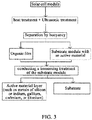
- the recycling method further includes: after separating the organic film from the solar cell module, subjecting the remaining portion of the module to a leaching separation such that the substrate of the solar cell module is separated from an active material layer.
- the ultrasonic treatment is performed using the water bath ultrasonic treatment, then separation by buoyancy is performed using water in the water bath, and the leaching separation is performed directly using the water bath solution after the separation by buoyancy.
- a leaching agent is added to the leachate during the leaching separation.
- the leaching agent is a mixture of an acidic substance and a surface treatment agent.
- the acidic substance is selected from any one or more of sulfuric acid, hydrochloric acid, and nitric acid.
- the surface treatment agent is selected from any one or more of hydrogen peroxide, sodium hypochlorite, sodium peroxide, ozone, sodium nitrite, sodium phosphate, and corrosion inhibitor Lan826.
- a solar cell module generally includes a front plate, a back plate, an organic film layer (such as an organic encapsulating film, an organic wire film, an organic water-blocking film), and a substrate.
- An organic film layer such as an organic encapsulating film, an organic wire film, an organic water-blocking film
- a currently preferred solar cell module is a flexible solar module.
- the flexible solar module is a multi-layer composite structure, and due to requirements of the solar module for weather resistance, water resistance, flame retardancy, etc., the front plate, the back plate and the encapsulating film layer contained in the solar module all have insoluble and refractory properties, which makes it difficult to separate them from the chip, thereby making recycling of expensive raw materials on the chip difficult.
- One method is calcination, that is, the entire photovoltaic module is calcined at a high temperature, and the remaining non-combustible portion is recycled.
- high-temperature calcination has high energy consumption, and fluorine, selenium and other elements in the photovoltaic sheets will produce toxic gases after incineration, which will seriously pollute the environment.
- Another method is to pulverize the flexible module and recover it by an acid-base leaching treatment.
- an object of the present disclosure is to provide a separation method of an organic film module of a solar cell module.
- the method of the present disclosure can achieve the separation of the organic film of the solar cell module, keep the organic film intact, and can keep the active material layer intact, clean and free of gelatin spots, and keep a loss rate small.
- the present disclosure provides a separation method of an organic film of a solar cell module, the separation method including the following steps: treating the solar cell module by a heat treatment in combination with a water bath ultrasonic treatment, and performing a separation of the treated solar cell module by buoyancy, thereby achieving a separation of the organic film from the module.
- the heat treatment is used in combination with the ultrasonic treatment to increase a temperature of the semiconductor material bonded to the substrate in the solar cell module, and the ultrasonic treatment is combined to facilitate the separation of the organic film from the substrate of the module.
- the heat treatment is performed at a temperature of 80 to 300 °C, such as 80 °C, 90 °C, 95 °C, 100 °C, 105 °C, 110 °C, 120 °C, 130 °C, 140 °C, 150 °C, 160 °C, 170 °C, 180 °C, 200 °C, 230 °C, 250 °C, 280 °C or 300 °C, preferably 100 to 180 °C.
- Selecting a suitable heating temperature in the present disclosure can facilitate separation of the organic film from the substrate of the module, and can contribute to keeping the organic film and the active material layer intact. Too low a temperature may result in poor separation rate, while too high a temperature may cause damage to the organic film and the active material layer.
- the duration time for the heat treatment is 5 to 60 min, such as 5 min, 8 min, 10 min, 15 min, 20 min, 25 min, 30 min, 35 min, 40 min, 45 min, 50 min, 55 min or 60 min, preferably 15 to 40 min.
- a ultrasonic frequency of the ultrasonic treatment is 20 to 40 KHz, such as 20 KHz, 22 KHz, 24 KHz, 26 KHz, 28 KHz, 30 KHz, 32 KHz, 35 KHz, 38 KHz or 40 KHz.
- the frequency of the ultrasonic treatment is too low, it may result in incomplete separation, and when the frequency of the ultrasonic treatment is too large, energy consumption is high and the active material layer is easily damaged.
- the duration time for the ultrasonic treatment is 10 to 120 min, such as 10 min, 15 min, 20 min, 25 min, 30 min, 40 min, 50 min, 60 min, 80 min, 100 min or 120 min.
- the heat treatment is a microwave heat treatment, a muffle furnace heat treatment, an induction cooker heat treatment or an electric furnace heat treatment, preferably a microwave heat treatment.
- the ultrasonic treatment is a water bath ultrasonic treatment.
- one or more inorganic salt chemical agents may be added to the water in water bath ultrasonic treatment in order to increase efficiency of a film stripping.
- the inorganic salt is selected from one or more of basic inorganic salts, neutral inorganic salts, etc. such as sodium hydroxide, potassium hydroxide, calcium hydroxide, calcium oxide, magnesium hydroxide, magnesium oxide, sodium carbonate, potassium carbonate, sodium sulfate, potassium sulfate, sodium chloride, potassium chloride, basic zinc carbonate, and sodium hypochlorite.
- the separation method comprises the steps of: treating the solar cell module by the microwave heat treatment combination with the water bath ultrasonic treatment, and separating the treated solar cell module by buoyancy, thereby achieving the separation of the organic film from the module.
- the combination of the microwave heat treatment and the water bath ultrasonic treatment may increase the temperature of the semiconductor material bonded to the substrate in the solar cell module, the organic film material in contact with the semiconductor material is uniformly heated and melted, and the ultrasonic treatment is combined to cause the organic film material to easily separate from the substrate, and can maintain an integrity of the organic film and the integrity and non-destruction of the active material layer.
- the microwave heat treatment in combination with the water bath ultrasonic treatment is performed by first performing the microwave heat treatment of the solar cell module, and then performing the water bath ultrasonic treatment of the solar cell module; or first performing the water bath ultrasonic treatment of the solar cell module, and then performing the microwave heat treatment of the solar cell module; preferably, first performing the microwave heat treatment of the solar cell module, and then performing the water bath ultrasonic treatment of the solar cell module.
- the microwave heat treatment has the advantage of uniformity and selectivity, and can break molecules of bonding the organic film and the substrate without destroying the module substrate (such as a steel sheet) and the active material layer.
- the temperature of water bath during the water bath ultrasonic treatment is 50 to 100 °C, such as 50 °C, 55 °C, 60 °C, 65 °C, 70 °C, 75 °C, 80 °C, 85 °C, 90 °C, 95 °C or 100 °C.
- the water bath ultrasonic treatment is performed under stirring, and the stirring is is performed at a rate of 20 to 150 r/min, such as 20 r/min, 25 r/min, 30 r/min, 35 r/min, 40 r/min, 45 r/min, 50 r/min, 55 r/min, 60 r/min, 70 r/min, 80 r/min, 100 r/min, 120 r/min, 140 r/min or 150 r/min.
- 20 to 150 r/min such as 20 r/min, 25 r/min, 30 r/min, 35 r/min, 40 r/min, 45 r/min, 50 r/min, 55 r/min, 60 r/min, 70 r/min, 80 r/min, 100 r/min, 120 r/min, 140 r/min or 150 r/min.
- the stirring direction is changed after each stirring for 10-60 revolutions.
- the separation by buoyancy is a separation by buoyancy performed in water.
- the use of separation by buoyancy in water means that the lighter organic film layer in water can float in the water, while the heavier remaining portion of the module sinks to the bottom. After the separation by buoyancy in water, the organic film layer floating in the water can be removed by a colander, a hanging basket or a jig.
- a recycling method of a solar cell module is also provided, and the recycling method may include not only the separation method as described above to recycle the organic film layer, but also include the treatment recycle of the remaining portion of the module from which the organic film is removed.
- the substrate and the active material such as silicon or indium, gallium, cadmium, titanium, and the like are recycled.
- the above solar cell module is a flexible solar cell module.
- the recycling method further includes: after separating the organic film from the solar cell module, subjecting the remaining portion of the module to a leaching separation such that the substrate of the solar cell module is separated from the active material layer.
- the ultrasonic treatment was performed using the water bath ultrasonic treatment, then separation by buoyancy was performed using the water in the water bath, and the leaching separation was performed directly using the water bath solution after the separation by buoyancy.
- a leaching agent is added to the leachate during the leaching separation.
- the leaching agent is a mixture of an acidic substance and a surface treatment agent.
- the acidic substance is selected from any one or more of sulfuric acid, hydrochloric acid, and nitric acid.
- the surface treatment agent is selected from any one or more of hydrogen peroxide, sodium hypochlorite, sodium peroxide, ozone, sodium nitrite, sodium phosphate, and corrosion inhibitor Lan826.
- the remaining portion of the module after the organic film is removed through the separation by buoyancy may be subjected to the leaching separation such that the substrate and the active material layer are separated.
- the separation method of the present disclosure facilitates the subsequent leaching process, and the water bath after separation by buoyancy can be directly used for the leaching separation, which can greatly reduce the cost of leaching separation.
- an appropriate amount of the leaching agent may be added to the leachate so as to complete the leaching process.
- the organic film may be various organic films, preferably an organic wire film, an organic water-blocking film or an organic encapsulating film.
- the substrate of the solar cell module may be a stainless steel substrate, a glass-based substrate or a silicon-based substrate.
- the separation method of the organic film of the solar cell module of the present disclosure specifically includes the following steps:
- the separation method of the organic film of the solar cell module of the present disclosure specifically includes the following steps:
- the present disclosure uses a microwave heating treatment in combination with a water bath ultrasonic treatment to break the bonding molecules of bonding the organic film and the substrate (such as a steel sheet) without destroying the steel sheet substrate and the active material layer, then uses the ultrasonic water bath to further detach the organic film, and finally use the buoyancy of water to separate the substrate (such as a steel sheet) from the organic film.
- the substrate (such as a steel sheet) and the organic film are separated by the buoyancy of the water, thus the method of the present disclosure is easy to achieve industrial batch disposal, while eliminating the need for manual splitting one by one.
- the organic film of the present disclosure is substantially intact, facilitating a subsequent recovery.
- the present disclosure has the following beneficial effects:
- the present disclosure uses the microwave heat treatment in combination with the water bath ultrasonic treatment to separate the organic film of the solar cell module, so that a stripping rate of the solar cell module reaches 97% or more, and the organic film after detachment does not adhere to the active material, the active material layer remains intact, the surface is clean and has no gelatin spots, and a loss rate is equal to or less than 1%, and thus the method is efficient, convenient, and easy to industrialize, and has broad application prospects.
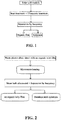
- the organic film of the solar cell module with the stainless steel as the substrate is separated by the following method, which has a specific workflow as shown in FIG. 1 , in which the method specifically includes the following steps:
- the organic film of the solar cell module with the stainless steel as the substrate is separated by the following method, in which the method specifically includes the following steps:
- the organic film of the solar cell module with the stainless steel as the substrate is separated by the following method, in which the method specifically includes the following steps:
- the organic film of the solar cell module with the stainless steel as the substrate is separated by the following method, in which the method specifically includes the following steps:
- the organic film of the solar cell module with the stainless steel as the substrate is separated by the following method, in which the method specifically includes the following steps:
- the organic film of the solar cell module with the stainless steel as the substrate is separated by the following method, in which the method specifically includes the following steps:
- the organic film of the solar cell module with the stainless steel as the substrate is separated by the following method, in which the method specifically includes the following steps:
- the organic film of the solar cell module with the stainless steel as the substrate is separated by the following method, in which the method specifically includes the following steps:
- the organic film of the solar cell module with the stainless steel as the substrate is separated by the following method, in which the method specifically includes the following steps:
- Example 1 The only difference from Example 1 is that the temperature of the microwave heat treatment is 50 °C.
- Example 1 The only difference from Example 1 is that the temperature of the microwave heat treatment is 500 °C.
- Example 1 The only difference from Example 1 is that the frequency of the ultrasonic treatment is 8 KHz.
- Example 1 The only difference from Example 1 is that the frequency of the ultrasonic treatment is 55 KHz.
- the stripping rate refers to a ratio of a number of the chips that has stripped successfully to a total number of chips as observed by the naked eye;
- the loss rate of the active material layer a weight of the organic film lost in the process / a total weight of the organic film, wherein a weight of the organic film lost in the process is a total weight of the organic film (obtained by the product parameters) minus a weight of a organic film weighed after it has been dried .
- the stripping rate of the wast solar cell module reaches 97% or more, and the organic film after detachment does not adhere to the active material, the active material layer remains intact, the surface is clean and has no gelatin spots, and the loss rate is is equal to or less than 1%.
- the organic film of the solar cell module with the stainless steel as the substrate is separated by the following method, in which the method specifically includes the following steps:
- the passivation layer does not react during the first leaching process, and the surface portion of the active material layer reacts.
- the copper indium gallium selenide in the active material layer in this example reacts with hydrogen peroxide under acidic condition, wherein the copper indium gallium selenide, hydrogen peroxide, and hydrogen ions are reacted to form Cu 3+ , In 3+ , Ga 3+ , SeO 3 2- , SeO 4 2- , and H 2 O.
- the active material layer in this example further includes zinc oxide and cadmium sulfide, wherein zinc oxide is reacted with hydrogen ions to form Zn 2+ and water, and cadmium sulfide is reacted with hydrogen peroxide to form Cd 2+ , SO 4 2- and water. Since the immersion temperature is low, the above reactions are slow, and only the surface portion of the active material layer is reacted.
- the mixture in which the active material layer was immersed was heated to 95 °C and the leaching process is stopped after 1 hour. At this time, the mixed solution in which the active material layer is immersed becomes clear, and the powder or debris of the active material layer is completely dissolved in the mixed solution, the total solution in which the active material is dissolved is obtained, and after cooling, it can be sent to a subsequent wet process for recycling.
- Table 1 below shows the concentration and a leaching rate of each element in the total solution in which the active material was dissolved after the second leaching.
- the concentration of each element in the total solution was detected by atomic absorption.
- the leaching rate can be calculated after conversion. It can be seen from Table 1 that the concentration of iron in the solution is very small, only 70 ppm, and the separation method in this example hardly caused corrosion damage to the stainless steel substrate.
- the leaching rates of copper, indium, gallium and selenium all reached 99% or more, and almost all were leached into the solution.
- the organic film of the solar cell module with the stainless steel as the substrate is separated by the following method, in which the method specifically includes the following steps:
- the organic film of the solar cell module with the stainless steel as the substrate is separated by the following method, in which the method specifically includes the following steps: (1) Microwave heat treatment: placing 10 kg of copper indium gallium selenide waste photovoltaic sheet with an organic encapsulating film in an industrial microwave oven for heating, wherein the temperature is maintained at 80 °C for 60 min; (2) Water bath ultrasonic treatment: preparing a stirring tank with a heating means and a volume of 30 L, adding 25 L of water in advance, then adding 0.5 kg of potassium hydroxide and 8 kg of sodium sulfate to dissolve them by stirring, and heating to a constant temperature of 60 °C; placing the waste photovoltaic sheet heated in the microwave oven in the step (1) in the stirring tank under stirring, while turning on the ultrasonic device, wherein the stirring rate is 150 r/min, the stirring direction is changed every 60 revolutions, the frequency of the ultrasonic treatment is 30 KHz, and the treatment is continued for 8 min; (3) Separation by buoyancy: after the water bath ultra
- the present disclosure illustrates the process of the present disclosure by the above-described examples, but the present disclosure is not limited to the above process steps, that is, it does not mean that the present disclosure must rely on the above process steps to be implemented. It should be understood by those skilled in the art that any modifications of the present disclosure, equivalent substitutions of the materials selected for the present disclosure, and the addition of the auxiliary components, the selection of the specific manners, and the like, are all within the scope of the disclosure and the scope of the disclosure.
Landscapes
- Photovoltaic Devices (AREA)
- Processing Of Solid Wastes (AREA)
- Life Sciences & Earth Sciences (AREA)
- Engineering & Computer Science (AREA)
- Sustainable Development (AREA)
- Sustainable Energy (AREA)
Applications Claiming Priority (1)
| Application Number | Priority Date | Filing Date | Title |
|---|---|---|---|
| CN201810556025.8A CN108767064A (zh) | 2018-06-01 | 2018-06-01 | 一种太阳能电池组件有机膜组件的分离方法 |
Publications (1)
| Publication Number | Publication Date |
|---|---|
| EP3576162A1 true EP3576162A1 (fr) | 2019-12-04 |
Family
ID=64001861
Family Applications (1)
| Application Number | Title | Priority Date | Filing Date |
|---|---|---|---|
| EP18202367.1A Withdrawn EP3576162A1 (fr) | 2018-06-01 | 2018-10-24 | Procédé de séparation d'un film organique d'un module de cellule solaire et méthode de recyclage |
Country Status (4)
| Country | Link |
|---|---|
| US (1) | US20190371957A1 (fr) |
| EP (1) | EP3576162A1 (fr) |
| CN (1) | CN108767064A (fr) |
| WO (1) | WO2019227788A1 (fr) |
Families Citing this family (4)
| Publication number | Priority date | Publication date | Assignee | Title |
|---|---|---|---|---|
| CN111211191B (zh) * | 2020-01-13 | 2022-08-16 | 铉锦(上海)环保科技有限公司 | 一种光伏组件的解离方法 |
| CN114227191B (zh) * | 2021-12-20 | 2023-03-21 | 武汉蔚能电池资产有限公司 | 一种电池包的拆解方法 |
| AU2023218299A1 (en) * | 2022-02-11 | 2024-09-26 | Macquarie University | Delaminating and laminating of photovoltaic modules and solar cells using microwaves |
| CN116346010B (zh) * | 2022-12-30 | 2026-04-07 | 丽瀑金属(江阴)有限公司 | 一种防腐太阳能边框及其制备方法 |
Citations (5)
| Publication number | Priority date | Publication date | Assignee | Title |
|---|---|---|---|---|
| JP2007134358A (ja) * | 2005-11-08 | 2007-05-31 | Kyowa Hakko Chemical Co Ltd | 太陽電池モジュールから太陽電池セルおよび/または強化ガラスを回収する方法 |
| JP2012019134A (ja) * | 2010-07-09 | 2012-01-26 | Takio Ishiguro | 太陽電池モジュール材料の再利用のための回収方法 |
| JP2014094321A (ja) * | 2012-11-07 | 2014-05-22 | Toray Fine Chemicals Co Ltd | 太陽電池モジュールの解体方法 |
| JP2014104406A (ja) * | 2012-11-27 | 2014-06-09 | Yokohama Yushi Kogyo Kk | 太陽電池モジュールのリサイクル方法 |
| KR20150101525A (ko) * | 2014-02-26 | 2015-09-04 | 재단법인 한국계면공학연구소 | 태양전지 셀의 재활용 방법 |
Family Cites Families (4)
| Publication number | Priority date | Publication date | Assignee | Title |
|---|---|---|---|---|
| CN202434555U (zh) * | 2012-01-06 | 2012-09-12 | 成都旭双太阳能科技有限公司 | 一种薄膜太阳能电池组件剥离装置 |
| JP5548724B2 (ja) * | 2012-05-08 | 2014-07-16 | 株式会社カンケン | 太陽電池パネルの設置構造 |
| CN105355709B (zh) * | 2015-10-16 | 2017-07-07 | 常州天合光能有限公司 | 一种晶体硅太阳电池组件的玻璃分离方法 |
| CN107293814B (zh) * | 2016-04-11 | 2019-12-20 | 上海奇谋能源技术开发有限公司 | 一种超声分离锂离子电池的电极集流体与电极材料的方法 |
-
2018
- 2018-06-01 CN CN201810556025.8A patent/CN108767064A/zh active Pending
- 2018-09-21 WO PCT/CN2018/106973 patent/WO2019227788A1/fr not_active Ceased
- 2018-10-23 US US16/168,403 patent/US20190371957A1/en not_active Abandoned
- 2018-10-24 EP EP18202367.1A patent/EP3576162A1/fr not_active Withdrawn
Patent Citations (5)
| Publication number | Priority date | Publication date | Assignee | Title |
|---|---|---|---|---|
| JP2007134358A (ja) * | 2005-11-08 | 2007-05-31 | Kyowa Hakko Chemical Co Ltd | 太陽電池モジュールから太陽電池セルおよび/または強化ガラスを回収する方法 |
| JP2012019134A (ja) * | 2010-07-09 | 2012-01-26 | Takio Ishiguro | 太陽電池モジュール材料の再利用のための回収方法 |
| JP2014094321A (ja) * | 2012-11-07 | 2014-05-22 | Toray Fine Chemicals Co Ltd | 太陽電池モジュールの解体方法 |
| JP2014104406A (ja) * | 2012-11-27 | 2014-06-09 | Yokohama Yushi Kogyo Kk | 太陽電池モジュールのリサイクル方法 |
| KR20150101525A (ko) * | 2014-02-26 | 2015-09-04 | 재단법인 한국계면공학연구소 | 태양전지 셀의 재활용 방법 |
Non-Patent Citations (3)
| Title |
|---|
| BOHLAND J ET AL: "Economic recycling of CdTe photovoltaic modules", CONFERENCE RECORD OF THE 26TH IEEE PHOTOVOLTAIC SPECIALISTS CONFERENCE - 1997. PVSC '97. ANAHEIM, CA, SEPT. 29 - OCT. 3, 1997; [IEEE PHOTOVOLTAIC SPECIALISTS CONFERENCE], NEW YORK, NY : IEEE, US, 29 September 1997 (1997-09-29), pages 355 - 358, XP010267798, ISBN: 978-0-7803-3767-1, DOI: 10.1109/PVSC.1997.654101 * |
| DOI T ET AL: "Experimental study on PV module recycling with organic solvent method", SOLAR ENERGY MATERIALS AND SOLAR CE, ELSEVIER SCIENCE PUBLISHERS, AMSTERDAM, NL, vol. 67, no. 1-4, 1 March 2001 (2001-03-01), pages 397 - 403, XP004224786, ISSN: 0927-0248, DOI: 10.1016/S0927-0248(00)00308-1 * |
| YOUN KYU YI ET AL: "Recovering valuable metals from recycled photovoltaic modules", AIR & WASTE MANAGEMENT ASSOCIATION. JOURNAL, vol. 64, no. 7, 3 July 2014 (2014-07-03), US, pages 797 - 807, XP055613756, ISSN: 1096-2247, DOI: 10.1080/10962247.2014.891540 * |
Also Published As
| Publication number | Publication date |
|---|---|
| WO2019227788A1 (fr) | 2019-12-05 |
| CN108767064A (zh) | 2018-11-06 |
| US20190371957A1 (en) | 2019-12-05 |
Similar Documents
| Publication | Publication Date | Title |
|---|---|---|
| Ndalloka et al. | Solar photovoltaic recycling strategies | |
| Savvilotidou et al. | Pre-concentration and recovery of silver and indium from crystalline silicon and copper indium selenide photovoltaic panels | |
| EP3576162A1 (fr) | Procédé de séparation d'un film organique d'un module de cellule solaire et méthode de recyclage | |
| Tao et al. | Review on feasible recycling pathways and technologies of solar photovoltaic modules | |
| Schmidt et al. | Organic solvent free PbI2 recycling from perovskite solar cells using hot water | |
| US5897685A (en) | Recycling of CdTe photovoltaic waste | |
| CN105618461A (zh) | 一种晶体硅太阳电池组件资源化的方法 | |
| EP2997169B1 (fr) | Procédé de traitement des panneaux photovoltaïques usagés | |
| CN102629644B (zh) | 一种成品晶硅太阳能电池片的返工工艺 | |
| Camargo et al. | CdTe photovoltaic technology: an overview of waste generation, recycling, and raw material demand | |
| Palitzsch et al. | Economic PV waste recycling solutions—Results from R&D and practice | |
| CN103943911A (zh) | 废旧锂离子电池综合回收利用的方法 | |
| KR20100106551A (ko) | 유용금속의 리사이클 방법 | |
| CN109439907A (zh) | 一种从回收废锂离子电池过程中的酸浸液中除铁铝的方法 | |
| CN115029558A (zh) | 一种从废旧太阳能电池组件提取硅片中银的方法 | |
| CN106654437A (zh) | 从含锂电池中回收锂的方法 | |
| Tierno et al. | Validation of recycling processes for demetallisation and recrystallisation of silicon solar cells | |
| CN111211191B (zh) | 一种光伏组件的解离方法 | |
| Palitzsch et al. | A new and intelligent de-metalization step of broken silicon cells and silicon cell production waste in the recycling procedure of crystalline Si modules | |
| Palaniappan et al. | Recycling of solar panels | |
| CN109802005A (zh) | 薄膜太阳能电池芯片的回收方法 | |
| US20240229192A1 (en) | Process for recovering silver from scrap photovoltaic cells | |
| Pa | Environmentally friendly electrochemical recycling of indium from scrap ITO glass and PET | |
| Palitzsch et al. | Integrated approach for economic PV waste recycling | |
| Brussa | Photovoltaic Panels |
Legal Events
| Date | Code | Title | Description |
|---|---|---|---|
| PUAI | Public reference made under article 153(3) epc to a published international application that has entered the european phase |
Free format text: ORIGINAL CODE: 0009012 |
|
| STAA | Information on the status of an ep patent application or granted ep patent |
Free format text: STATUS: THE APPLICATION HAS BEEN PUBLISHED |
|
| AK | Designated contracting states |
Kind code of ref document: A1 Designated state(s): AL AT BE BG CH CY CZ DE DK EE ES FI FR GB GR HR HU IE IS IT LI LT LU LV MC MK MT NL NO PL PT RO RS SE SI SK SM TR |
|
| AX | Request for extension of the european patent |
Extension state: BA ME |
|
| STAA | Information on the status of an ep patent application or granted ep patent |
Free format text: STATUS: THE APPLICATION IS DEEMED TO BE WITHDRAWN |
|
| 18D | Application deemed to be withdrawn |
Effective date: 20200605 |