EP3576413A1 - Encoder und verfahren zum kodieren eines immersiven fliesenbasierten videos - Google Patents
Encoder und verfahren zum kodieren eines immersiven fliesenbasierten videos Download PDFInfo
- Publication number
- EP3576413A1 EP3576413A1 EP18305674.6A EP18305674A EP3576413A1 EP 3576413 A1 EP3576413 A1 EP 3576413A1 EP 18305674 A EP18305674 A EP 18305674A EP 3576413 A1 EP3576413 A1 EP 3576413A1
- Authority
- EP
- European Patent Office
- Prior art keywords
- tile
- segment
- new
- current
- frame
- Prior art date
- Legal status (The legal status is an assumption and is not a legal conclusion. Google has not performed a legal analysis and makes no representation as to the accuracy of the status listed.)
- Withdrawn
Links
- 238000000034 method Methods 0.000 title claims description 41
- 230000000295 complement effect Effects 0.000 claims abstract description 69
- 230000002123 temporal effect Effects 0.000 claims description 15
- 238000004891 communication Methods 0.000 claims description 8
- 238000004590 computer program Methods 0.000 claims description 4
- 230000005540 biological transmission Effects 0.000 description 11
- 238000010586 diagram Methods 0.000 description 11
- 230000003044 adaptive effect Effects 0.000 description 10
- 230000006870 function Effects 0.000 description 10
- 230000015556 catabolic process Effects 0.000 description 4
- 238000006731 degradation reaction Methods 0.000 description 4
- 238000012986 modification Methods 0.000 description 3
- 230000004048 modification Effects 0.000 description 3
- 238000012545 processing Methods 0.000 description 3
- 230000003247 decreasing effect Effects 0.000 description 2
- 230000008569 process Effects 0.000 description 2
- 230000009471 action Effects 0.000 description 1
- 230000003139 buffering effect Effects 0.000 description 1
- 238000002716 delivery method Methods 0.000 description 1
- 230000000670 limiting effect Effects 0.000 description 1
- 238000011084 recovery Methods 0.000 description 1
- 230000002441 reversible effect Effects 0.000 description 1
- 239000007787 solid Substances 0.000 description 1
- 238000012546 transfer Methods 0.000 description 1
- 230000007704 transition Effects 0.000 description 1
Images




Classifications
-
- H—ELECTRICITY
- H04—ELECTRIC COMMUNICATION TECHNIQUE
- H04N—PICTORIAL COMMUNICATION, e.g. TELEVISION
- H04N21/00—Selective content distribution, e.g. interactive television or video on demand [VOD]
- H04N21/20—Servers specifically adapted for the distribution of content, e.g. VOD servers; Operations thereof
- H04N21/21—Server components or server architectures
- H04N21/218—Source of audio or video content, e.g. local disk arrays
- H04N21/21805—Source of audio or video content, e.g. local disk arrays enabling multiple viewpoints, e.g. using a plurality of cameras
-
- H—ELECTRICITY
- H04—ELECTRIC COMMUNICATION TECHNIQUE
- H04N—PICTORIAL COMMUNICATION, e.g. TELEVISION
- H04N19/00—Methods or arrangements for coding, decoding, compressing or decompressing digital video signals
- H04N19/10—Methods or arrangements for coding, decoding, compressing or decompressing digital video signals using adaptive coding
- H04N19/102—Methods or arrangements for coding, decoding, compressing or decompressing digital video signals using adaptive coding characterised by the element, parameter or selection affected or controlled by the adaptive coding
- H04N19/103—Selection of coding mode or of prediction mode
- H04N19/109—Selection of coding mode or of prediction mode among a plurality of temporal predictive coding modes
-
- H—ELECTRICITY
- H04—ELECTRIC COMMUNICATION TECHNIQUE
- H04N—PICTORIAL COMMUNICATION, e.g. TELEVISION
- H04N19/00—Methods or arrangements for coding, decoding, compressing or decompressing digital video signals
- H04N19/10—Methods or arrangements for coding, decoding, compressing or decompressing digital video signals using adaptive coding
- H04N19/134—Methods or arrangements for coding, decoding, compressing or decompressing digital video signals using adaptive coding characterised by the element, parameter or criterion affecting or controlling the adaptive coding
- H04N19/164—Feedback from the receiver or from the transmission channel
-
- H—ELECTRICITY
- H04—ELECTRIC COMMUNICATION TECHNIQUE
- H04N—PICTORIAL COMMUNICATION, e.g. TELEVISION
- H04N19/00—Methods or arrangements for coding, decoding, compressing or decompressing digital video signals
- H04N19/10—Methods or arrangements for coding, decoding, compressing or decompressing digital video signals using adaptive coding
- H04N19/169—Methods or arrangements for coding, decoding, compressing or decompressing digital video signals using adaptive coding characterised by the coding unit, i.e. the structural portion or semantic portion of the video signal being the object or the subject of the adaptive coding
- H04N19/17—Methods or arrangements for coding, decoding, compressing or decompressing digital video signals using adaptive coding characterised by the coding unit, i.e. the structural portion or semantic portion of the video signal being the object or the subject of the adaptive coding the unit being an image region, e.g. an object
- H04N19/174—Methods or arrangements for coding, decoding, compressing or decompressing digital video signals using adaptive coding characterised by the coding unit, i.e. the structural portion or semantic portion of the video signal being the object or the subject of the adaptive coding the unit being an image region, e.g. an object the region being a slice, e.g. a line of blocks or a group of blocks
-
- H—ELECTRICITY
- H04—ELECTRIC COMMUNICATION TECHNIQUE
- H04N—PICTORIAL COMMUNICATION, e.g. TELEVISION
- H04N19/00—Methods or arrangements for coding, decoding, compressing or decompressing digital video signals
- H04N19/50—Methods or arrangements for coding, decoding, compressing or decompressing digital video signals using predictive coding
- H04N19/597—Methods or arrangements for coding, decoding, compressing or decompressing digital video signals using predictive coding specially adapted for multi-view video sequence encoding
-
- H—ELECTRICITY
- H04—ELECTRIC COMMUNICATION TECHNIQUE
- H04N—PICTORIAL COMMUNICATION, e.g. TELEVISION
- H04N21/00—Selective content distribution, e.g. interactive television or video on demand [VOD]
- H04N21/20—Servers specifically adapted for the distribution of content, e.g. VOD servers; Operations thereof
- H04N21/23—Processing of content or additional data; Elementary server operations; Server middleware
- H04N21/234—Processing of video elementary streams, e.g. splicing of video streams or manipulating encoded video stream scene graphs
- H04N21/2343—Processing of video elementary streams, e.g. splicing of video streams or manipulating encoded video stream scene graphs involving reformatting operations of video signals for distribution or compliance with end-user requests or end-user device requirements
- H04N21/23439—Processing of video elementary streams, e.g. splicing of video streams or manipulating encoded video stream scene graphs involving reformatting operations of video signals for distribution or compliance with end-user requests or end-user device requirements for generating different versions
-
- H—ELECTRICITY
- H04—ELECTRIC COMMUNICATION TECHNIQUE
- H04N—PICTORIAL COMMUNICATION, e.g. TELEVISION
- H04N21/00—Selective content distribution, e.g. interactive television or video on demand [VOD]
- H04N21/20—Servers specifically adapted for the distribution of content, e.g. VOD servers; Operations thereof
- H04N21/25—Management operations performed by the server for facilitating the content distribution or administrating data related to end-users or client devices, e.g. end-user or client device authentication, learning user preferences for recommending movies
- H04N21/262—Content or additional data distribution scheduling, e.g. sending additional data at off-peak times, updating software modules, calculating the carousel transmission frequency, delaying a video stream transmission, generating play-lists
- H04N21/26258—Content or additional data distribution scheduling, e.g. sending additional data at off-peak times, updating software modules, calculating the carousel transmission frequency, delaying a video stream transmission, generating play-lists for generating a list of items to be played back in a given order, e.g. playlist, or scheduling item distribution according to such list
-
- H—ELECTRICITY
- H04—ELECTRIC COMMUNICATION TECHNIQUE
- H04N—PICTORIAL COMMUNICATION, e.g. TELEVISION
- H04N21/00—Selective content distribution, e.g. interactive television or video on demand [VOD]
- H04N21/40—Client devices specifically adapted for the reception of or interaction with content, e.g. set-top-box [STB]; Operations thereof
- H04N21/43—Processing of content or additional data, e.g. demultiplexing additional data from a digital video stream; Elementary client operations, e.g. monitoring of home network or synchronising decoder's clock; Client middleware
- H04N21/4302—Content synchronisation processes, e.g. decoder synchronisation
- H04N21/4307—Synchronising the rendering of multiple content streams or additional data on devices, e.g. synchronisation of audio on a mobile phone with the video output on the TV screen
- H04N21/43072—Synchronising the rendering of multiple content streams or additional data on devices, e.g. synchronisation of audio on a mobile phone with the video output on the TV screen of multiple content streams on the same device
-
- H—ELECTRICITY
- H04—ELECTRIC COMMUNICATION TECHNIQUE
- H04N—PICTORIAL COMMUNICATION, e.g. TELEVISION
- H04N21/00—Selective content distribution, e.g. interactive television or video on demand [VOD]
- H04N21/60—Network structure or processes for video distribution between server and client or between remote clients; Control signalling between clients, server and network components; Transmission of management data between server and client, e.g. sending from server to client commands for recording incoming content stream; Communication details between server and client
- H04N21/63—Control signaling related to video distribution between client, server and network components; Network processes for video distribution between server and clients or between remote clients, e.g. transmitting basic layer and enhancement layers over different transmission paths, setting up a peer-to-peer communication via Internet between remote STB's; Communication protocols; Addressing
- H04N21/637—Control signals issued by the client directed to the server or network components
- H04N21/6373—Control signals issued by the client directed to the server or network components for rate control, e.g. request to the server to modify its transmission rate
-
- H—ELECTRICITY
- H04—ELECTRIC COMMUNICATION TECHNIQUE
- H04N—PICTORIAL COMMUNICATION, e.g. TELEVISION
- H04N21/00—Selective content distribution, e.g. interactive television or video on demand [VOD]
- H04N21/80—Generation or processing of content or additional data by content creator independently of the distribution process; Content per se
- H04N21/81—Monomedia components thereof
- H04N21/816—Monomedia components thereof involving special video data, e.g 3D video
-
- H—ELECTRICITY
- H04—ELECTRIC COMMUNICATION TECHNIQUE
- H04N—PICTORIAL COMMUNICATION, e.g. TELEVISION
- H04N21/00—Selective content distribution, e.g. interactive television or video on demand [VOD]
- H04N21/80—Generation or processing of content or additional data by content creator independently of the distribution process; Content per se
- H04N21/83—Generation or processing of protective or descriptive data associated with content; Content structuring
- H04N21/845—Structuring of content, e.g. decomposing content into time segments
- H04N21/8455—Structuring of content, e.g. decomposing content into time segments involving pointers to the content, e.g. pointers to the I-frames of the video stream
-
- H—ELECTRICITY
- H04—ELECTRIC COMMUNICATION TECHNIQUE
- H04N—PICTORIAL COMMUNICATION, e.g. TELEVISION
- H04N21/00—Selective content distribution, e.g. interactive television or video on demand [VOD]
- H04N21/80—Generation or processing of content or additional data by content creator independently of the distribution process; Content per se
- H04N21/83—Generation or processing of protective or descriptive data associated with content; Content structuring
- H04N21/845—Structuring of content, e.g. decomposing content into time segments
- H04N21/8456—Structuring of content, e.g. decomposing content into time segments by decomposing the content in the time domain, e.g. in time segments
Definitions
- the present disclosure relates generally to the streaming of immersive videos (such as spherical videos, so called Virtual Reality (VR) 360° videos, or panoramic videos) to an end device through a delivery network.
- immersive videos such as spherical videos, so called Virtual Reality (VR) 360° videos, or panoramic videos
- Spherical videos offer an immersive experience wherein a user can look around using a VR head-mounted display (HMD) or can navigate freely within a scene on a flat display by controlling the viewport with a controlling apparatus (such as a mouse or a remote control).
- HMD VR head-mounted display
- a controlling apparatus such as a mouse or a remote control
- Such a freedom in spatial navigation requires that the whole 360° scene is delivered to a player (embedded within the HMD or TV set) configured to extract the video portion to be visualized depending on the position of the observer's aiming point within the scene. In such a situation, a high throughput is necessary to deliver the video.
- one main issue relies on the efficient transmission of spherical videos over bandwidth constrained network with an acceptable quality of immersive experience (i.e. avoiding freeze screen, blockiness, black screen, etc.).
- an acceptable quality of immersive experience i.e. avoiding freeze screen, blockiness, black screen, etc.
- a compromise is being sought between immersive experience, resolution of video and available throughput of the content delivery network.
- the targeted usage requires that the displayed video is always at the best quality, it prevents from using solutions based on a transitional degradation of resolution when the user's aiming point is varying. Consequently, the delivered video must cover a part of the scene large enough to allow the user to pan without risking a disastrous black area display due to a lack of video data.
- This part of the scene can for instance include the area which is currently viewed (i.e. the viewport or aiming point) and the surrounding region to prevent quality degradation when the user moves its viewport.
- One or more relevant tile segments of the immersive video are delivered to a player.
- new tile(s) and corresponding tile segment(s)
- switching tile(s) can only occur at given instants (e.g. the beginning of a segment).
- an encoder configured for encoding an immersive video spatially tiled with a set of tiles and temporally divided into a plurality of video segments defined by a plurality of tile segments, a tile covering a portion of a scene of the immersive video and a tile segment being associated with a tile of the set of tiles, said encoder comprising at least one processor configured for:
- a player configured for receiving an immersive video spatially tiled with a set of tiles and temporally divided into a plurality of video segments defined by a plurality of tile segments, a tile covering a portion of a scene of the immersive video and a tile segment being associated with a tile of the set of tiles, said player comprising at least one processor configured for:
- a method for receiving, at a player, an immersive video spatially tiled with a set of tiles and temporally divided into a plurality of video segments defined by a plurality of tile segments, a tile covering a portion of a scene of the immersive video and a tile segment being associated with a tile of the set of tiles comprising:
- a computer program product at least one of downloadable from a communication network and recorded on a non-transitory computer readable medium readable by at least one of computer and executable by a processor, comprising program code instructions for implementing a method for encoding, at an encoder, an immersive video spatially tiled with a set of tiles and temporally divided into a plurality of video segments defined by a plurality of tile segments, a tile covering a portion of a scene of the immersive video and a tile segment being associated with a tile of the set of tiles, said method comprising:
- a non-transitory program storage device readable by a computer, tangibly embodying a program of instructions executable by the computer to perform a method for encoding, at an encoder, an immersive video spatially tiled with a set of tiles and temporally divided into a plurality of video segments defined by a plurality of tile segments, a tile covering a portion of a scene of the immersive video and a tile segment being associated with a tile of the set of tiles, said method comprising:
- bitstream comprising at least one complementary frame obtained according to the method for encoding as described above.
- the methods according to the one or more embodiments may be implemented in software on a programmable apparatus. They may be implemented solely in hardware or in software, or in a combination thereof.
- Some processes implemented by elements of the one or more embodiments may be computer implemented. Accordingly, such elements may take the form of an entirely hardware embodiment, an entirely software embodiment (including firmware, resident software, micro-code, etc.) or an embodiment combining software and hardware aspects that may all generally be referred to herein as "circuit", "module” or “system”. Furthermore, such elements may take the form of a computer program product embodied in any tangible medium of expression having computer usable program code embodied in the medium.
- a tangible carrier medium may comprise a storage medium such as a floppy disk, a CD-ROM, a hard disk drive, a magnetic tape device or a solid state memory device and the like.
- the one or more embodiments thus provide a computer-readable program comprising computer-executable instructions to enable a computer to perform above mentioned methods.
- processor or “controller” should not be construed to refer exclusively to hardware capable of executing software, and may implicitly include, without limitation, digital signal processor (DSP) hardware, read only memory (ROM) for storing software, random access memory (RAM), and nonvolatile storage.
- DSP digital signal processor
- ROM read only memory
- RAM random access memory
- any element expressed as a means and/or module for performing a specified function is intended to encompass any way of performing that function including, for example, a) a combination of circuit elements that performs that function or b) software in any form, including, therefore, firmware, microcode or the like, combined with appropriate circuitry for executing that software to perform the function. It is thus regarded that any means that can provide those functionalities are equivalent to those shown herein.
- Embodiments are depicted with regard to a streaming environment to deliver an immersive or large-field of view video (e.g. a spherical video, a panoramic video, etc.) to a client terminal through a delivery network.
- an immersive or large-field of view video e.g. a spherical video, a panoramic video, etc.
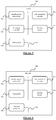
- a Client-Server network architecture supported by a network N (e.g. the Internet, a home network, an enterprise network), comprises one or several client terminals 100 (only one client terminal is represented) and one or more network equipment 200 (only one is represented in Figure 1 ), such as content servers (e.g. implementing the HTTP protocol to deliver data), and an encoder apparatus 300 providing encoded immersive (or large field of view) videos to content servers 200.
- a network N e.g. the Internet, a home network, an enterprise network
- client terminals 100 e.g. the Internet, a home network, an enterprise network
- network equipment 200 only one is represented in Figure 1
- content servers e.g. implementing the HTTP protocol to deliver data
- an encoder apparatus 300 providing encoded immersive (or large field of view) videos to content servers 200.
- the client terminal 100 may wish to request a tile-based immersive video stored on the content server 200 during a streaming session (e.g. an adaptive streaming session).
- a streaming session e.g. an adaptive streaming session
- the server 200 is configured to stream segments of the tile-based immersive video to the client terminal 100, upon client's request, using a streaming protocol.
- a streaming protocol such as the HTTP adaptive streaming protocol, so called HAS, like MPEG-DASH or HTTP Live Streaming (HLS)
- HAS HTTP adaptive streaming protocol
- HLS HTTP Live Streaming
- different type of streaming protocol can be implemented to support a streaming session of a tile-based immersive video.
- the client terminal 100 can comprise at least:
- the client terminal 100 is a portable media device, a mobile phone, a tablet or a laptop, a head mounted device, a TV set, a set-top box or the like.
- the client terminal 100 might not comprise a complete video player, but only some sub-elements such as the ones for demultiplexing and decoding the media content and might rely upon an external means to display the decoded content to the end user.
- the server 200 can comprise at least:
- the encoder 300 can comprise at least:
- the encoder 300 may be embedded within the server 200 to form a single device.
- the immersive video in a tile-based video service, can be spatially sliced into a set of tiles 400 at the server/encoder side.
- the set of tiles covers the whole scene 500 of the immersive video (a sphere in the example of Figure 5 ).
- the size of the tiles 400 can be defined large enough to allow a variation of the focusing point without being forced to obtain and decode instantaneously another tile.
- one tile delivered to the terminal 100 can cover at least the part of scene 500 to be displayed through the viewport VP associated with the client terminal 100 requesting the immersive video.
- the viewport VP associated with the client terminal 100 requesting the immersive video.
- the tile-based immersive video is temporally divided into a plurality of video segments of equal duration, each video segment being available at different video qualities or bit rates (also called representations) at the server 200, as shown in Figure 8 . While it may be different, it is assumed hereinafter that all the video segments of the immersive video are of equal duration.
- each video segment 1 to n of the immersive video is spatially split in tiles 400 (each tile covering a portion of the immersive scene as illustrated in Figure 5 ) according to the same tile arrangement.
- Each video segment is then defined by a set of tile segments of the same duration to cover the whole spherical scene (each tile segment being available at said different video qualities). Every tile segment - comprising a plurality of coded video frames - is of equivalent duration.
- switching tile(s) occurs at defined switching time (e.g. called SAP or Stream Access Point according to the MPEG-DASH standard).
- the duration of a tile segment can be chosen short (e.g. 0.5 second) and a tile segment S ti (corresponding to a time t i of the immersive video) can comprise one Group Of Pictures (GOP) for reducing the number of I frames (Intra frames).
- GOP Group Of Pictures
- Encoding schemes usually comprise bi-predictive frames (so called B frames which are Bi-directionally predicted frames, coded based on both previous and future coded frames) inserted between one-predictive frames (so called P-frames which are Predictively coded frames, coded based on previously coded frame).
- a GOP can comprise 15 frames with only one I frame, such as I-B-B-P-B-B-P-B-B-P-B-B-P-B-B-P-B-P (considering the display order) which is an encoding scheme wherein B frames may use the previous or preceding I or P frame and the next P frame for prediction and P frames may use the previous or preceding I or P frame.
- the player 104 will acquire the first I frame (Intra-coded frame, coded independently of all other frames) with the first P frame, before being able to decode the first B frame.
- a GOP can comprise a number of frames different from 15 (e.g. 10 frames). It should be further noted that, some embodiments can implement any other appropriate encoding scheme.
- the encoder 300 can operate a method 600 as shown in Figure 9A to provide a tile-based immersive video to the content server 200 in order to run a streaming session with the client terminal 100 upon request.
- the method 600 allows for switching from one or more current tile segments S ti to one or more new tile segments S' ti during the segment interval (i.e. within one segment), even if no switching time (e.g. SAP) is defined or present.
- the encoder Upon reception of such a request, the encoder will obtain the appropriate segment part(s) plus possibly additional information, the whole allowing the client terminal to decode the requested part of the new segment S' ti and to display it correctly.
- the current tile segment(s) and the new tile segment(s) correspond to the same temporal interval of the immersive video.
- the encoder 300 receives (e.g. via its interface of connection 301 and/or processor(s) 303) a request from the client terminal 100 (e.g. via the content server 200) to switch from at least one current tile segment S ti (currently processed and displayed) associated with a current tile 400 to at least one new tile segment S' ti associated with a new tile 400.
- a request can comprise a reference time t i + ⁇ t (also called aiming switching time) defining a desired time to implement tile switching from the current tile segment S ti to the new tile segment S ti .
- the reference time is chosen greater than the current displayed timestamp.
- the encoder 300 can obtain (e.g. via its processor 303 and/or content generator 305) at least one complementary frame allowing a decoding of the new tile segment S' ti associated with the new tile from the transmitted reference time.
- the encoder 300 can transfer the obtained complementary frame to the content server 200 for delivery to the client terminal 100.
- the obtained complementary frame can be internally transferred (e.g. via the internal bus 206) between the encoder and dedicated element(s) (e.g. the streaming controller 203 and/or the storing means 205) of the content server.
- the client terminal 100 can implement a method 700 as shown in Figure 9B to request tile switching during a streaming session of a tile-based immersive video.
- a timing condition (e.g. depending on the reference time, an encoding time of the complementary frame, a loading time and a decoding time of some frames of the new tile segment S' ti comprising at least the complementary frame, and a round trip time, as specified hereinafter) might be preliminary checked.
- a step 702 when the timing condition is met (when implemented), the client terminal sends to the server 200 a request for tile switching comprising a reference time t i + ⁇ t to switch from one current tile to a new tile.
- the embodiments apply to switch from one current tile to a new tile overlapping the current tile, but also to switch from one current tile to a new tile without any overlapping between tiles.
- the client terminal 100 can receive, from the server 200, a remaining portion of a new tile segment S' ti of the new tile, which comprises a complementary frame along with the last frames of the tile segment S' ti of the new tile.
- the client terminal 100 e.g. thanks to its processor(s) 105 and/or its video player 104) can decode the received complementary frame and the remaining frames of the new tile segment S' ti from the decoded complementary frame (which can be displayed or not).
- the remaining portion of the tile segment S' ti of the new tile can be displayed on the screen 107 at time t i + ⁇ t.
- the complementary frame can be displayed or not.
- the reference time corresponds to a P frame in the current tile segment S ti
- the complementary frame is configured to be decoded and displayed by the player.
- the current time corresponds to a B frame in the current tile segment S ti
- the complementary frame is only decoded without being displayed by the player.
- the reference time t i + ⁇ t specified in the request sent by the client terminal can correspond to either a P frame or a B frame (following either a P frame or B frame) in the current tile segment of the current tile (e.g. referenced tile X in the example of Figure 10 ).
- the current tile segment S ti of current tile X and the new tile segment S' ti of new tile Y correspond to the same temporal interval of the immersive video (starting at time t i ).
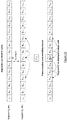
- the complementary frame consists in one new frame (in the example of Figure 10 , a P frame) encoded with reference to one or more frames of current tile segment already sent to the client terminal 200 (in the example the frame P 7,X of current tile X segment).
- the complementary frame is arranged at reference time ti + ⁇ t in the remaining portion of the new tile segment S' ti .
- the player 104 of the client terminal 200 is then able to decode and display this complementary frame (e.g. P' 7,Y in the example of Figure 10 ).
- frame P7,x of the current tile X segment S ti is sent to the client terminal 200 and is decoded by its player 104, since frame P7,x (which is not displayed on the screen 107) is used for decoding the previous B frames of the current tile X segment S ti (e.g. B 5,X and B 6,X ).
- the complementary frame consists in one new frame encoded with reference to one or more frames of current tile segment S ti (in the example frame P7,x of current tile X segment), previously transmitted to the client terminal 200.
- the complementary frame is arranged one frame prior to the frame at reference time ti + ⁇ t (i.e. B 8,Y in Figure 11 ) belonging to the remaining portion of the new tile segment S' ti .
- the player 104 of the client terminal 200 is then able to decode this complementary frame (in the example P' 7,Y in Figure 11 ) without displaying it on the screen 107.
- the complementary frame P' 7,Y will be used as reference frame for next frames (also called remaining frames) of the new tile segment S' ti for new tile Y.
- the complementary frame consists in one new frame (in the example of Figure 12 , a P frame) encoded with reference to one or more frames of current tile segment S ti previously transmitted to the client terminal 200 (in the example the frame P 7,X of current tile X segment, i.e. the preceding P frame of the current tile segment).
- the complementary frame is arranged two frames prior to the frame at reference time ti + ⁇ t (i.e. B 9,Y in Figure 11 ) belonging to the remaining portion of the new tile segment S' ti .
- the player 104 of the client terminal 200 is then able to decode this complementary frame (in the example P' 7,Y in Figure 11 ) without displaying it on the screen 107.
- the complementary frame P' 7,Y will be used as reference frame for next frames of the new tile segment S' ti for new tile Y.
- the frame P 10,X of current tile segment is transmitted but not displayed (since arranged after tile switching), in order to be able to decode the frame B 8,X of current tile segment which is transmitted and displayed (frame B 8,X is encoded with reference to frames P 7,X and P 10,X ).
- the reference frame(s) used to encode the complementary frame may be an I frame, a P frame or a B frame.
- the reference frame(s) used to obtain the complementary frame can correspond to frame(s) of the current segment S ti of current tile X already transmitted to the client terminal (leading to an efficient encoding in case of overlapping between the current tile and the new tile).
- the reference frame(s) used to obtain the complementary frame can correspond to frame(s) of the new tile segment S' ti of current tile Y.
- frames of the GOP after the complementary frame P' m,Y are devoid of any reference to frame preceding the complementary frame P' m,Y .
- the frames of the GOP are represented according to the frame display order (which differs from the frame transmission order, some B frames can refer to frames of a greater timestamp).
- Figure 13 shows the frames of the exemplary GOP according to their transmission order. Note that the frame number 7 (display order) of the GOP is sent twice to the client terminal 200 (once for current tile segment of current tile (frame P 7,X ), once for new tile segment of new tile as the complementary frame P' 7,Y ), but only one is displayed depending on the reference time to switch (either P 7,X or P' 7,Y in the examples of Figures 10 to 12 ).
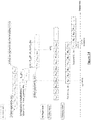
- the embodiments allow for switching at any timestamp within a current segment interval (even if no SAP is defined), assuming that the server 200 and the player 104 have the time to perform some operations. Indeed, as shown in the illustrative but non limitative example of Figure 14 , when the reference tile corresponds to a B frame following a P frame, the time to encode the complementary frame (i.e. frame P' 7,Y ) plus the time to load and to decode the 3 first frames (i.e.
- segment' ⁇ P' 7,Y ,P 10 , Y ,B 8,Y ⁇ ) of the remaining portion of segment S' ti (hereinafter referenced segment' ) of the new tile should be less than the interval between the time to request tile switching t req' and the reference time t i + ⁇ t (i.e. the switching time).
- the segment' comprises the complementary frame P' Y and the last frames of tile segment S' ti of the new tile Y from the reference time.
- the timing condition for the client terminal 100 to request a new tile segment of a new tile during the processing of a current tile segment can be defined by: t req ′ ⁇ t i + ⁇ t ⁇ RTT + max T enc T send_remain + T send_new + T dec wherein:
- the client terminal can be preliminary informed by the server of such timing condition (e.g. upon launch of the streaming session, for example with information provided by a manifest).
- the server 200 is currently sending tile segment S' ti of current tile X.
- the server 200 receives a request from client terminal 100 to switch from current tile X to new tile Y.
- the server 200 prepares (via the encoder 300) the complementary frame corresponding to the frame arranged at time t i + ⁇ t - frame_duration.
- the server 200 cancels the sending of tile segment S ti of current tile X at a time not earlier than t i + ⁇ t.
- the complementary frame P' 7,Y is received by the client terminal 100 and decoded but is not displayed.
- a complementary frame (P' Y ) can be pre-encoded and stored at server side for one or more segments and/or for one or more tiles, decreasing processing resources used at server/encoder side.
- the tile switching is only allowed at given moments (for instance listed in a manifest prepared by the server and delivered to the client terminal).
- tile switching can be allowed during the segment interval, even if no switching time (e.g. SAP) is defined.
- no switching time e.g. SAP
- one or more of the described embodiments are adapted for implementation of slow-motion mode within an adaptive streaming session of a tiled-based immersive video.
- the client terminal can operate the slow-motion operation in the same manner as for the normal play mode of operation for both tile and segment selection and recovery when a dedicated content is available for slow motion mode. In lack of dedicated slow-motion content, same content will be played in normal and slow-motion mode. Thus, a DASH segment will be played for a longer time during slow-motion than in normal play mode. As an example, if the video frame rate is divided by two (slow-motion factor) during slow motion, the segment will be actually displayed two times longer.
- the manifest sent by the content server and received by the client terminal can indicate such information (e.g. by listing the segment(s) for which slow motion mode is available).
- each block in the flowchart or block diagrams may represent a module, segment, or portion of code, which comprises one or more executable instructions for implementing the specified logical function(s).
- the functions noted in the block may occur out of the order noted in the figures. For example, two blocks shown in succession may, in fact, be executed substantially concurrently, or the blocks may sometimes be executed in the reverse order, or blocks may be executed in an alternative order, depending upon the functionality involved.
Landscapes
- Engineering & Computer Science (AREA)
- Multimedia (AREA)
- Signal Processing (AREA)
- Databases & Information Systems (AREA)
- Two-Way Televisions, Distribution Of Moving Picture Or The Like (AREA)
- Compression Or Coding Systems Of Tv Signals (AREA)
Priority Applications (8)
| Application Number | Priority Date | Filing Date | Title |
|---|---|---|---|
| EP18305674.6A EP3576413A1 (de) | 2018-05-31 | 2018-05-31 | Encoder und verfahren zum kodieren eines immersiven fliesenbasierten videos |
| US17/058,881 US12177479B2 (en) | 2018-05-31 | 2019-05-24 | Encoder and method for encoding a tile-based immersive video |
| CN201980047985.4A CN112470481B (zh) | 2018-05-31 | 2019-05-24 | 用于对基于图块的沉浸式视频进行编码的编码器和方法 |
| JP2020566578A JP2022501846A (ja) | 2018-05-31 | 2019-05-24 | タイルベースの没入型ビデオをエンコードするためのエンコーダおよび方法 |
| PCT/EP2019/063429 WO2019228916A1 (en) | 2018-05-31 | 2019-05-24 | Encoder and method for encoding a tile-based immersive video |
| EP19725369.3A EP3804339A1 (de) | 2018-05-31 | 2019-05-24 | Codierer und verfahren zur codierung eines kachelbasierten immersiven videos |
| MX2020012931A MX2020012931A (es) | 2018-05-31 | 2019-05-24 | Codificador y método para codificar video inmersivo basado en mosaicos. |
| JP2023177583A JP7553679B2 (ja) | 2018-05-31 | 2023-10-13 | タイルベースの没入型ビデオをエンコードするためのエンコーダおよび方法 |
Applications Claiming Priority (1)
| Application Number | Priority Date | Filing Date | Title |
|---|---|---|---|
| EP18305674.6A EP3576413A1 (de) | 2018-05-31 | 2018-05-31 | Encoder und verfahren zum kodieren eines immersiven fliesenbasierten videos |
Publications (1)
| Publication Number | Publication Date |
|---|---|
| EP3576413A1 true EP3576413A1 (de) | 2019-12-04 |
Family
ID=62567571
Family Applications (2)
| Application Number | Title | Priority Date | Filing Date |
|---|---|---|---|
| EP18305674.6A Withdrawn EP3576413A1 (de) | 2018-05-31 | 2018-05-31 | Encoder und verfahren zum kodieren eines immersiven fliesenbasierten videos |
| EP19725369.3A Pending EP3804339A1 (de) | 2018-05-31 | 2019-05-24 | Codierer und verfahren zur codierung eines kachelbasierten immersiven videos |
Family Applications After (1)
| Application Number | Title | Priority Date | Filing Date |
|---|---|---|---|
| EP19725369.3A Pending EP3804339A1 (de) | 2018-05-31 | 2019-05-24 | Codierer und verfahren zur codierung eines kachelbasierten immersiven videos |
Country Status (6)
| Country | Link |
|---|---|
| US (1) | US12177479B2 (de) |
| EP (2) | EP3576413A1 (de) |
| JP (2) | JP2022501846A (de) |
| CN (1) | CN112470481B (de) |
| MX (1) | MX2020012931A (de) |
| WO (1) | WO2019228916A1 (de) |
Families Citing this family (2)
| Publication number | Priority date | Publication date | Assignee | Title |
|---|---|---|---|---|
| CN113824958B (zh) * | 2020-06-18 | 2025-12-30 | 中兴通讯股份有限公司 | 视频分块方法、传输方法、服务器、适配器和存储介质 |
| US11470139B2 (en) * | 2020-06-23 | 2022-10-11 | Comcast Cable Communications, Llc | Video encoding for low-concurrency linear channels |
Citations (4)
| Publication number | Priority date | Publication date | Assignee | Title |
|---|---|---|---|---|
| US20130089142A1 (en) * | 2011-10-10 | 2013-04-11 | Cisco Technology, Inc. | Bandwidth-Friendly Representation Switching in Adaptive Streaming |
| US20170111670A1 (en) * | 2015-10-20 | 2017-04-20 | Harmonic, Inc. | Multi representation edge server with enhanced open-gop compression |
| US9788077B1 (en) * | 2016-03-18 | 2017-10-10 | Amazon Technologies, Inc. | Rendition switching |
| US20180103199A1 (en) * | 2016-10-12 | 2018-04-12 | Qualcomm Incorporated | Systems and methods of generating and processing files for partial decoding and most interested regions |
Family Cites Families (13)
| Publication number | Priority date | Publication date | Assignee | Title |
|---|---|---|---|---|
| JP4028818B2 (ja) | 2003-05-26 | 2007-12-26 | 財団法人エヌエイチケイエンジニアリングサービス | ストリーム切り替え装置、ストリーム切り替え方法及びストリーム切り替えプログラム、並びに、表示時刻補正装置 |
| US8605863B1 (en) | 2008-03-18 | 2013-12-10 | Avaya Inc. | Method and apparatus for providing state indication on a telephone call |
| JP2010041515A (ja) * | 2008-08-06 | 2010-02-18 | Sanyo Electric Co Ltd | 画像処理装置 |
| JP6095393B2 (ja) * | 2013-02-12 | 2017-03-15 | 株式会社スクウェア・エニックス | ビデオゲーム装置、及びビデオゲーム処理プログラム |
| CN106797495B (zh) * | 2014-08-20 | 2020-12-22 | 弗劳恩霍夫应用研究促进协会 | 视频合成系统、视频合成方法及计算机可读存储介质 |
| GB2534136A (en) * | 2015-01-12 | 2016-07-20 | Nokia Technologies Oy | An apparatus, a method and a computer program for video coding and decoding |
| EP3160147A1 (de) * | 2015-10-19 | 2017-04-26 | Thomson Licensing | Verfahren für schnellen kanalwechsel, entsprechende anordnung und vorrichtung |
| EP3249928A1 (de) | 2016-05-23 | 2017-11-29 | Thomson Licensing | Verfahren, vorrichtung und strom aus der formatierung eines immersiven videos für alte und immersive wiedergabevorrichtungen |
| EP3513562A1 (de) * | 2016-09-14 | 2019-07-24 | Koninklijke KPN N.V. | Streaming eines virtual-reality-videos |
| KR20180037725A (ko) * | 2016-10-05 | 2018-04-13 | 엘지전자 주식회사 | 디스플레이 장치 |
| GB2555410B (en) * | 2016-10-25 | 2020-11-04 | Sony Interactive Entertainment Inc | Video content synchronisation method and apparatus |
| US20180139464A1 (en) | 2016-11-17 | 2018-05-17 | Mediatek Inc. | Decoding system for tile-based videos |
| EP3454566B1 (de) * | 2017-09-11 | 2021-05-05 | Tiledmedia B.V. | Streaming-rahmen räumlicher elemente für eine client-vorrichtung |
-
2018
- 2018-05-31 EP EP18305674.6A patent/EP3576413A1/de not_active Withdrawn
-
2019
- 2019-05-24 CN CN201980047985.4A patent/CN112470481B/zh active Active
- 2019-05-24 EP EP19725369.3A patent/EP3804339A1/de active Pending
- 2019-05-24 US US17/058,881 patent/US12177479B2/en active Active
- 2019-05-24 WO PCT/EP2019/063429 patent/WO2019228916A1/en not_active Ceased
- 2019-05-24 MX MX2020012931A patent/MX2020012931A/es unknown
- 2019-05-24 JP JP2020566578A patent/JP2022501846A/ja active Pending
-
2023
- 2023-10-13 JP JP2023177583A patent/JP7553679B2/ja active Active
Patent Citations (4)
| Publication number | Priority date | Publication date | Assignee | Title |
|---|---|---|---|---|
| US20130089142A1 (en) * | 2011-10-10 | 2013-04-11 | Cisco Technology, Inc. | Bandwidth-Friendly Representation Switching in Adaptive Streaming |
| US20170111670A1 (en) * | 2015-10-20 | 2017-04-20 | Harmonic, Inc. | Multi representation edge server with enhanced open-gop compression |
| US9788077B1 (en) * | 2016-03-18 | 2017-10-10 | Amazon Technologies, Inc. | Rendition switching |
| US20180103199A1 (en) * | 2016-10-12 | 2018-04-12 | Qualcomm Incorporated | Systems and methods of generating and processing files for partial decoding and most interested regions |
Non-Patent Citations (2)
| Title |
|---|
| KARCZEWICZ M ET AL: "The SP- and SI-frames design for H.264/AVC", IEEE TRANSACTIONS ON CIRCUITS AND SYSTEMS FOR VIDEO TECHNOLOGY, INSTITUTE OF ELECTRICAL AND ELECTRONICS ENGINEERS, USA, vol. 13, no. 7, 1 July 2003 (2003-07-01), pages 637 - 644, XP011099256, ISSN: 1051-8215, DOI: 10.1109/TCSVT.2003.814969 * |
| PODBORSKI D: "Virtual Reality And Dash", INTERNATIONAL BROADCASTING CONFERENCE 2017; 14 SEPTEMBER 2017 - 18 SEPTEMBER 2017; AMSTERDAM,, no. IBC-2017-18, 14 September 2017 (2017-09-14), XP030082665 * |
Also Published As
| Publication number | Publication date |
|---|---|
| US20210203987A1 (en) | 2021-07-01 |
| CN112470481A (zh) | 2021-03-09 |
| MX2020012931A (es) | 2021-04-13 |
| CN112470481B (zh) | 2023-09-12 |
| JP2022501846A (ja) | 2022-01-06 |
| JP7553679B2 (ja) | 2024-09-18 |
| JP2023171661A (ja) | 2023-12-01 |
| US12177479B2 (en) | 2024-12-24 |
| WO2019228916A1 (en) | 2019-12-05 |
| EP3804339A1 (de) | 2021-04-14 |
Similar Documents
| Publication | Publication Date | Title |
|---|---|---|
| KR102715333B1 (ko) | 몰입형 미디어 콘텐츠 프레젠테이션 및 양방향 360° 비디오 통신 | |
| TWI853061B (zh) | 基於回饋資訊之動態視訊插入 | |
| JP7256212B2 (ja) | 360°没入型ビデオを提供するためのタイル選択および帯域幅最適化 | |
| EP2785068B1 (de) | Videobilddatenbereitstellungsvorrichtung, Verfahren und System | |
| EP3560205B1 (de) | Synchronisierungsverarbeitung zwischen strömen | |
| JP2020519094A (ja) | ビデオ再生方法、デバイス、およびシステム | |
| WO2014058713A1 (en) | Proactive video frame dropping | |
| US9661351B2 (en) | Client side frame prediction for video streams with skipped frames | |
| US20190268607A1 (en) | Method and network equipment for encoding an immersive video spatially tiled with a set of tiles | |
| JP7553679B2 (ja) | タイルベースの没入型ビデオをエンコードするためのエンコーダおよび方法 | |
| EP3503559A1 (de) | Verfahren und endgerät zur verwaltung einer streaming-sitzung eines mit einem satz von kacheln räumlich gekachelten und auf einer netzwerkeinrichtung gespeicherten immersiven videos | |
| US20140321556A1 (en) | Reducing amount of data in video encoding | |
| US11871079B2 (en) | Client and a method for managing, at the client, a streaming session of a multimedia content | |
| WO2004045216A1 (en) | Video streaming device and method of control for switchable video streams | |
| US10708631B2 (en) | Method and terminal for tile selection amongst a set of tiles | |
| CN108933762B (zh) | 一种媒体流的播放处理方法及装置 | |
| CN116170609B (zh) | 视频转码方法、装置、直播服务器、终端设备及存储介质 | |
| WO2019105932A1 (en) | Method for managing a streaming processing of a multimedia video spatially tiled stored on a network equipment, and corresponding terminal | |
| HK40067907B (zh) | 视频信号发送方法、装置、计算机设备及存储介质 |
Legal Events
| Date | Code | Title | Description |
|---|---|---|---|
| PUAI | Public reference made under article 153(3) epc to a published international application that has entered the european phase |
Free format text: ORIGINAL CODE: 0009012 |
|
| AK | Designated contracting states |
Kind code of ref document: A1 Designated state(s): AL AT BE BG CH CY CZ DE DK EE ES FI FR GB GR HR HU IE IS IT LI LT LU LV MC MK MT NL NO PL PT RO RS SE SI SK SM TR |
|
| AX | Request for extension of the european patent |
Extension state: BA ME |
|
| STAA | Information on the status of an ep patent application or granted ep patent |
Free format text: STATUS: THE APPLICATION IS DEEMED TO BE WITHDRAWN |
|
| 18D | Application deemed to be withdrawn |
Effective date: 20200605 |