EP3576742B1 - 6-[3,5-dihalogéno-4-(morpholin-4-yl)phényl]-5-méthyl-4,5-dihydropyridazin-3(2h)-one, modulateurs de pde3a ou 3b, pour leur utilisation dans le traitement du cancer - Google Patents
6-[3,5-dihalogéno-4-(morpholin-4-yl)phényl]-5-méthyl-4,5-dihydropyridazin-3(2h)-one, modulateurs de pde3a ou 3b, pour leur utilisation dans le traitement du cancer Download PDFInfo
- Publication number
- EP3576742B1 EP3576742B1 EP18704189.2A EP18704189A EP3576742B1 EP 3576742 B1 EP3576742 B1 EP 3576742B1 EP 18704189 A EP18704189 A EP 18704189A EP 3576742 B1 EP3576742 B1 EP 3576742B1
- Authority
- EP
- European Patent Office
- Prior art keywords
- compound
- pde3a
- pde3b
- cancer
- modulator
- Prior art date
- Legal status (The legal status is an assumption and is not a legal conclusion. Google has not performed a legal analysis and makes no representation as to the accuracy of the status listed.)
- Active
Links
Images



Classifications
-
- A—HUMAN NECESSITIES
- A61—MEDICAL OR VETERINARY SCIENCE; HYGIENE
- A61K—PREPARATIONS FOR MEDICAL, DENTAL OR TOILETRY PURPOSES
- A61K31/00—Medicinal preparations containing organic active ingredients
- A61K31/33—Heterocyclic compounds
- A61K31/395—Heterocyclic compounds having nitrogen as a ring hetero atom, e.g. guanethidine or rifamycins
- A61K31/495—Heterocyclic compounds having nitrogen as a ring hetero atom, e.g. guanethidine or rifamycins having six-membered rings with two or more nitrogen atoms as the only ring heteroatoms, e.g. piperazine or tetrazines
- A61K31/50—Pyridazines; Hydrogenated pyridazines
- A61K31/501—Pyridazines; Hydrogenated pyridazines not condensed and containing further heterocyclic rings
-
- C—CHEMISTRY; METALLURGY
- C07—ORGANIC CHEMISTRY
- C07D—HETEROCYCLIC COMPOUNDS
- C07D413/00—Heterocyclic compounds containing two or more hetero rings, at least one ring having nitrogen and oxygen atoms as the only ring hetero atoms
- C07D413/02—Heterocyclic compounds containing two or more hetero rings, at least one ring having nitrogen and oxygen atoms as the only ring hetero atoms containing two hetero rings
- C07D413/10—Heterocyclic compounds containing two or more hetero rings, at least one ring having nitrogen and oxygen atoms as the only ring hetero atoms containing two hetero rings linked by a carbon chain containing aromatic rings
-
- A—HUMAN NECESSITIES
- A61—MEDICAL OR VETERINARY SCIENCE; HYGIENE
- A61P—SPECIFIC THERAPEUTIC ACTIVITY OF CHEMICAL COMPOUNDS OR MEDICINAL PREPARATIONS
- A61P35/00—Antineoplastic agents
-
- A—HUMAN NECESSITIES
- A61—MEDICAL OR VETERINARY SCIENCE; HYGIENE
- A61P—SPECIFIC THERAPEUTIC ACTIVITY OF CHEMICAL COMPOUNDS OR MEDICINAL PREPARATIONS
- A61P35/00—Antineoplastic agents
- A61P35/02—Antineoplastic agents specific for leukemia
-
- C—CHEMISTRY; METALLURGY
- C07—ORGANIC CHEMISTRY
- C07D—HETEROCYCLIC COMPOUNDS
- C07D237/00—Heterocyclic compounds containing 1,2-diazine or hydrogenated 1,2-diazine rings
- C07D237/02—Heterocyclic compounds containing 1,2-diazine or hydrogenated 1,2-diazine rings not condensed with other rings
- C07D237/04—Heterocyclic compounds containing 1,2-diazine or hydrogenated 1,2-diazine rings not condensed with other rings having less than three double bonds between ring members or between ring members and non-ring members
Definitions
- the invention provides a compound of formula (I) for use in a method of treating a hyperproliferative disease, particularly cancer, comprising administering to a subject in need thereof a compound of formula (I) having the structure where R 1 is the same at each occurrence and is Cl or F, or a pharmaceutically acceptable salt thereof, wherein said cancer is a bone, breast, cervical, colon, endometrium, gastrointestinal stromal tumor (GIST), head and neck, hematopoetic, kidney, leiomyosarcoma, liver, lung, lymphoid, melanoma, ovarian, pancreas, prostate, skin, soft-tissue sarcoma, thyroid cancer, urinary tract cancer.
- GIST gastrointestinal stromal tumor
- the invention further provides a method of detecting expression of PDE3A and/or PDE3B and/or Schlafen 12 (SLFN12) polynucleotides or polypeptides for patient stratification for treatment with Compound 1 or Compound 2 using expression of PDE3A and/or PDE3B and/or Schlafen 12 (SLFN12) polynucleotides or polypeptides as a biomarker.
- SLFN12 a method of detecting expression of PDE3A and/or PDE3B and/or Schlafen 12
- the compound is an isomer.
- “Isomers” are different compounds that have the same molecular formula.
- “Stereoisomers” are isomers that differ only in the way the atoms are arranged in space.
- the term “isomer” includes any and all geometric isomers and stereoisomers.
- “isomers” include geometric double bond cis- and trans-isomers, also termed E- and Z-isomers; R- and S-enantiomers; diastereomers, (d)-isomers and (l)-isomers, racemic mixtures thereof; and other mixtures thereof, as falling within the scope of this invention
- Substituents around a carbon-carbon double bond alternatively can be referred to as “cis” or “trans,” where “cis” represents substituents on the same side of the double bond and “trans” represents substituents on opposite sides of the double bond.
- the arrangement of substituents around a carbocyclic ring can also be designated as “cis” or “trans.”
- the term “cis” represents substituents on the same side of the plane of the ring, and the term “trans” represents substituents on opposite sides of the plane of the ring.
- Mixtures of compounds wherein the substituents are disposed on both the same and opposite sides of plane of the ring are designated "cis/trans.”
- enantiomers refers to a pair of stereoisomers that are non-superimposable mirror images of each other.
- An atom having an asymmetric set of substituents can give rise to an enantiomer.
- a mixture of a pair of enantiomers in any proportion can be known as a “racemic” mixture.
- the term “( ⁇ )” is used to designate a racemic mixture where appropriate.
- “Diastereoisomers” are stereoisomers that have at least two asymmetric atoms, but which are not mirror-images of each other. The absolute stereochemistry is specified according to the Cahn-Ingold-Prelog R-S system.
- stereochemistry at each chiral carbon can be specified by either R or S.
- Resolved compounds whose absolute configuration is unknown can be designated (+) or (-) depending on the direction (dextro- or levorotatory) which they rotate plane polarized light at the wavelength of the sodium D line.
- Certain of the compounds described herein contain one or more asymmetric centers and can thus give rise to enantiomers, diastereomers, and other stereoisomeric forms that can be defined, in terms of absolute stereochemistry at each asymmetric atom, as (R)- or (S)-.
- the present chemical entities, pharmaceutical compositions and methods are meant to include all such possible isomers, including racemic mixtures, optically substantially pure forms and intermediate mixtures.
- Optically active (R)- and (S)-isomers can be prepared, for example, using chiral synthons or chiral reagents, or resolved using conventional techniques. Enantiomers can be isolated from racemic mixtures by any method known to those skilled in the art, including chiral high pressure liquid chromatography (HPLC), the formation and crystallization of chiral salts, or prepared by asymmetric syntheses.
- HPLC high pressure liquid chromatography
- Optical isomers can be obtained by resolution of the racemic mixtures according to conventional processes, e.g., by formation of diastereoisomeric salts, by treatment with an optically active acid or base.
- optically active acid or base examples include tartaric, diacetyltartaric, dibenzoyltartaric, ditoluoyltartaric, and camphorsulfonic acid.
- the separation of the mixture of diastereoisomers by crystallization followed by liberation of the optically active bases from these salts affords separation of the isomers.
- Another method involves synthesis of covalent diastereoisomeric molecules by reacting disclosed compounds with an optically pure acid in an activated form or an optically pure isocyanate.
- the synthesized diastereoisomers can be separated by conventional means such as chromatography, distillation, crystallization or sublimation, and then hydrolyzed to deliver the enantiomerically enriched compound.
- Optically active compounds can also be obtained by using active starting materials. In some embodiments, these isomers can be in the form of a free acid, a free base, an ester or a salt.
- keto-enol tautomerization is the interconversion of pentane-2,4-dione and 4-hydroxypent-3-en-2-one tautomers.
- tautomerization is phenol-keto tautomerization.
- phenol-keto tautomerization is the interconversion of pyridin-4-ol and pyridin-4(1H)-one tautomers.
- ameliorate decrease, suppress, attenuate, diminish, arrest, or stabilize the development or progression of a disease.
- an alteration is meant a change (increase or decrease) in the expression levels or activity of a gene or polypeptide as detected by standard art known methods such as those described herein.
- an alteration includes an about 10% change in expression levels, preferably an about 25% change, more preferably an about 40% change, and most preferably an about 50% or greater change in expression levels.
- an alteration includes a 10% or less (including 10 %) change in expression levels, preferably a 25% or less (including 25%) change, more preferably a40% or less (including 40%) change, and most preferably a 50% or less (including 50%) or greater change in expression levels.
- an alteration includes a 9% - 11% (including 9% and 11 %) change in expression levels, preferably a 10%-25% (including 10% and 25%) change, more preferably a 25% - 40% (including 25% and 40%) change, and most preferably a 40%-50% (including 40% - 50%) or greater than 50% (including 50%) change in expression levels.
- an alteration includes a 9% - 11% (including 9% and 11 %) change in expression levels, preferably a 22%-28% (including 22% and 28%) change, more preferably a 35% - 45% (including 35% and 45%) change, and most preferably a 45%-55% (including 45% - 55%) or a greater or equal to 55% change in expression levels
- an analog is meant a molecule that is not identical, but has analogous functional or structural features.
- a polypeptide analog retains the biological activity of a corresponding naturally-occurring polypeptide, while having certain biochemical modifications that enhance the analog's function relative to a naturally occurring polypeptide. Such biochemical modifications could increase the analog's protease resistance, membrane permeability, or half-life, without altering, for example, ligand binding.
- An analog may include an unnatural amino acid.
- Detect refers to identifying the presence, absence or amount of the analyte to be detected.
- the analyte is a PDE3A or PDE3B or SLFN12 polypeptide.
- disease is meant any condition or disorder that damages or interferes with the normal function of a cell, tissue, or organ.
- diseases include melanoma, adenocarcinoma, lung cancer, cervical cancer, liver cancer and breast cancer.
- an effective amount is meant the amount of a compound described herein required to ameliorate the symptoms of a disease relative to an untreated patient.
- the effective amount of active compound(s) used to practice the present invention for therapeutic treatment of a disease varies depending upon the manner of administration, the age, body weight, and general health of the subject. Ultimately, the attending physician or veterinarian will decide the appropriate amount and dosage regimen. Such amount is referred to as an "effective" amount.
- the PDE3A and/or PDE3B modulator is Compound 1, Compound 2.
- the invention provides a number of targets that are useful for the development of highly specific drugs to treat or a disorder characterized by the methods delineated herein.
- the methods of the invention provide a facile means to identify therapies that are safe for use in subjects.
- the methods of the invention provide a route for analyzing virtually any number of compounds for effects on a disease described herein with high-volume throughput, high sensitivity, and low complexity.
- fragment is meant a portion of a polypeptide or nucleic acid molecule. This portion contains, preferably, at least about 10%, about 20%, about 30%, about 40%, about 50%, about 60%, about 70%, about 80%, or about 90% of the entire length of the reference nucleic acid molecule or polypeptide.
- this portion contains, preferably, at least 9%-11% (including 9% and 11%) , 18%-22% (including 18% ands 22%) , 27%-33% (including 27% and 33%), 36%-44% (including 36% and 44%), 45%-55% (including 45% and 55%), 54%-66% (including 54% and 66%), 63%-77% (including 63% and 77%), 72%-88%(including 72%and 88%), or 81%-99% (including 81% and 99%) of the entire length of the reference nucleic acid molecule or polypeptide
- a fragment may contain about 10, about 20, about 30, about 40, about 50, about 60, about 70, about 80, about 90, about 100, about 200, about 300, about 400, about 500, about 600, about 700, about 800, about 900, or about 1000 nucleotides or amino acids.
- a fragment may contain 9-11, about 18-22, 27-33, 36-44, 45-55, 54-66, 63-77, 72-88, 81-99, 90-110, 180-220, 270-330, 360-440, 450-550, 540-660, 630-770, 720-880, 810-990, or 900-1100 nucleotides or amino acids (including for each the mentioned limitation e.g. for "9-11" means including 9 and 11.
- Hematological tumors include aggressive and indolent forms of leukemia and lymphoma, namely non-Hodgkins disease, chronic and acute myeloid leukemia (CML / AML), acute lymphoblastic leukemia (ALL), Hodgkins disease, multiple myeloma and T-cell lymphoma. Also included are myelodysplastic syndrome, plasma cell neoplasia, paraneoplastic syndromes, and cancers of unknown primary site as well as AIDS related malignancies.
- Hybridization means hydrogen bonding, which may be Watson-Crick, Hoogsteen or reversed Hoogsteen hydrogen bonding, between complementary nucleobases.
- adenine and thymine are complementary nucleobases that pair through the formation of hydrogen bonds.
- Hyperproliferative disease includes for example psoriasis, keloids and other hyperplasias which affect the skin, benign hyperproliferative diseases, hematopoietic hyperproliferative diseases, cancer ( e . g ., metastatic or malignant tumors, solid tumors, and haematological tumors).
- “Benign hyperproliferative diseases” include for example, endometriosis, leiomyoma and benign prostate hyperplasia.
- Hematopoietic hyperproliferative diseases also known as myoproliferative disorders include e.g.polycythemia vera, essential thrombocytosis, thrombocytosis, primary myelofibrosis, and others.
- marker or “biomarker” is meant any protein or polynucleotide having an alteration in expression level or activity (e.g., at the protein or mRNA level) that is associated with a disease or disorder.
- a marker of the invention is PDE3A or PDE3B or SLFN12 or CREB3L1.
- modulator is meant any agent that binds to a polypeptide and alters a biological function or activity of the polypeptide.
- a modulator includes, without limitation, agents that reduce or eliminate a biological function or activity of a polypeptide (e.g., an "inhibitor”).
- a modulator may inhibit a catalytic activity of a polypeptide.
- a modulator includes, without limitation, agents that increase or decrease binding of a polypeptide to another agent.
- a modulator may promote binding of a polypeptide to another polypeptide.
- the modulator of PDE3A/PDE3B polypeptide is Compound 1, Compound 2.
- reference is meant a standard or control condition.
- Nucleic acid molecules useful in the methods of the invention include any nucleic acid molecule that encodes a polypeptide of the invention or a fragment thereof. Such nucleic acid molecules need not be 100% identical with an endogenous nucleic acid sequence, but will typically exhibit substantial identity. Polynucleotides having "substantial identity" to an endogenous sequence are typically capable of hybridizing with at least one strand of a double-stranded nucleic acid molecule. Nucleic acid molecules useful in the methods of the invention include any nucleic acid molecule that encodes a polypeptide of the invention or a fragment thereof. Such nucleic acid molecules need not be 100% identical with an endogenous nucleic acid sequence, but will typically exhibit substantial identity. Polynucleotides having "substantial identity" to an endogenous sequence are typically capable of hybridizing with at least one strand of a double-stranded nucleic acid molecule.
- hybridize pair to form a double-stranded molecule between complementary polynucleotide sequences (e.g., a gene described herein), or portions thereof, under various conditions of stringency.
- complementary polynucleotide sequences e.g., a gene described herein
- stringency See, e.g., Wahl, G. M. and S. L. Berger (1987) Methods Enzymol. 152:399 ; Kimmel, A. R. (1987) Methods Enzymol. 152:507 ).
- stringent salt concentration will ordinarily be less than about 750 mM NaCl and 75 mM trisodium citrate, preferably less than about 500 mM NaCl and 50 mM trisodium citrate, and more preferably less than about 250 mM NaCl and 25 mM trisodium citrate.
- Low stringency hybridization can be obtained in the absence of organic solvent, e.g., formamide, while high stringency hybridization can be obtained in the presence of at least about 35% formamide, and more preferably at least about 50% formamide.
- Stringent temperature conditions will ordinarily include temperatures of at least about 30° C, more preferably of at least about 37° C, and most preferably of at least about 42° C.
- Varying additional parameters, such as hybridization time, the concentration of detergent, e.g., sodium dodecyl sulfate (SDS), and the inclusion or exclusion of carrier DNA, are well known to those skilled in the art.
- concentration of detergent e.g., sodium dodecyl sulfate (SDS)
- SDS sodium dodecyl sulfate
- Various levels of stringency are accomplished by combining these various conditions as needed.
- hybridization will occur at 30° C in 750 mM NaCl, 75 mM trisodium citrate, and 1% SDS.
- hybridization will occur at 37° C in 500 mM NaCl, 50 mM trisodium citrate, 1% SDS, 35% formamide, and 100 .mu.g/ml denatured salmon sperm DNA (ssDNA).
- hybridization will occur at 42° C in 250 mM NaCl, 25 mM trisodium citrate, 1% SDS, 50% formamide, and 200 ⁇ g/ml ssDNA. Useful variations on these conditions will be readily apparent to those skilled in the art.
- wash stringency conditions can be defined by salt concentration and by temperature. As above, wash stringency can be increased by decreasing salt concentration or by increasing temperature.
- stringent salt concentration for the wash steps will preferably be less than about 30 mM NaCl and 3 mM trisodium citrate, and most preferably less than about 15 mM NaCl and 1.5 mM trisodium citrate.
- Stringent temperature conditions for the wash steps will ordinarily include a temperature of at least about 25° C, more preferably of at least about 42° C, and even more preferably of at least about 68° C.
- wash steps will occur at 25° C in 30 mM NaCl, 3 mM trisodium citrate, and 0.1% SDS. In a more preferred embodiment, wash steps will occur at 42 C in 15 mM NaCl, 1.5 mM trisodium citrate, and 0.1% SDS. In a more preferred embodiment, wash steps will occur at 68° C in 15 mM NaCl, 1.5 mM trisodium citrate, and 0.1% SDS. Additional variations on these conditions will be readily apparent to those skilled in the art. Hybridization techniques are well known to those skilled in the art and are described, for example, in Benton and Davis (Science 196:180, 1977 ); Grunstein and Hogness (Proc. Natl. Acad.
- Solid tumors include for example, tumors of the breast, the respiratory tract, the brain, the bones, the central and peripheral nervous system, the colon, the rectum, the anus, the reproductive organs (e.g., cervix, ovary, prostate), the gastrointestinal tract, the urogenital tract, the endocrine glands (e.g., thyroid and adrenal cortex), the thyroid gland, the parathyroid gland, the esophagus, the endometrium, the eye, the germ cells, the head and the neck, the kidney, the liver, the larynx and hypopharynx, the lung, the mesothelioma, the pancreas, the prostate, the rectum, the kidney, the small intestine, the skin, the soft tissue, the stomach, the testis, ureter, vagina and vulva and the connective tissue and metastases of these tumors.
- Malignant neoplasias include inherited cancers exemplified by Retinoblastoma
- substantially identical is meant a polypeptide or nucleic acid molecule exhibiting at least 50% identity to a reference amino acid sequence (for example, any one of the amino acid sequences described herein) or nucleic acid sequence (for example, any one of the nucleic acid sequences described herein).
- a reference amino acid sequence for example, any one of the amino acid sequences described herein
- nucleic acid sequence for example, any one of the nucleic acid sequences described herein.
- such a sequence is at least 60%, more preferably 80% or 85%, and more preferably 90%, 95% or even 99% identical at the amino acid level or nucleic acid to the sequence used for comparison.
- Sequence identity is typically measured using sequence analysis software (for example, Sequence Analysis Software Package of the Genetics Computer Group, University of Wisconsin Biotechnology Center, 1710 University Avenue, Madison, Wis. 53705, BLAST, BESTFIT, GAP, or PILEUP/PRETTYBOX programs). Such software matches identical or similar sequences by assigning degrees of homology to various substitutions, deletions, and/or other modifications. Conservative substitutions typically include substitutions within the following groups: glycine, alanine; valine, isoleucine, leucine; aspartic acid, glutamic acid, asparagine, glutamine; serine, threonine; lysine, arginine; and phenylalanine, tyrosine. In an exemplary approach to determining the degree of identity, a BLAST program may be used, with a probability score between e -3 and e -100 indicating a closely related sequence.
- sequence analysis software for example, Sequence Analysis Software Package of the Genetics Computer Group, University of Wisconsin Bio
- subject is meant a mammal, including, but not limited to, a human or non-human mammal, such as a bovine, equine, canine, ovine, or feline.
- Ranges provided herein are understood to be shorthand for all of the values within the range.
- a range of 1 to 50 is understood to include any number, combination of numbers, or sub-range from the group consisting 1, 2, 3, 4, 5, 6, 7, 8, 9, 10, 11, 12, 13, 14, 15, 16, 17, 18, 19, 20, 21, 22, 23, 24, 25, 26, 27, 28, 29, 30, 31, 32, 33, 34, 35, 36, 37, 38, 39, 40, 41, 42, 43, 44, 45, 46, 47, 48, 49, or 50.
- treat refers to reducing or ameliorating a disorder and/or symptoms associated therewith. It will be appreciated that, although not precluded, treating a disorder or condition does not require that the disorder, condition or symptoms associated therewith be completely eliminated.
- the invention is based at least in part on the discovery that compounds 1 and 2 do have sensitivity to phosphodiesterase 3A modulation (PDE3A modulation) and/or phosphodiesterase 3B PDE3B modulation and do have increased stability in human hepatocytes and/or reduced clearance in dogs.
- PDE3A modulation phosphodiesterase 3A modulation
- phosphodiesterase 3B PDE3B modulation do have increased stability in human hepatocytes and/or reduced clearance in dogs.
- the invention provides methods of selecting a subject as having a cancer that responds to a PDE3A/PDE3B modulator, especially Compound 1 and/or Compound 2, where the selection method involves detecting co-expression of PDE3A and/or PDE3B and Schlafen 12 ( SLFN12) polypeptides or polynucleotides, in a cancer cell derived from such subjects.
- PDE3A/PDE3B modulators were made in connection with a phenotypic screen designed to identify cytotoxic small molecules in a mutant tp53 background.
- a predictive chemogenomics approach complements target-driven drug development programs, which consists of extensive in vitro and in vivo target validation, and can also be referred to as reverse chemogenomics ( Zheng et al., Curr Issues Mol Biol 4, 33-43, 2002 ).
- Many U.S. Food and Drug Administration (FDA)-approved targeted therapies have been developed this way, among them small-molecule kinase inhibitors that target oncogenic somatic driver mutations ( Moffat et al., Nat Rev Drug Discov 13, 588-602, 2014 ).
- FDA Food and Drug Administration
- Phenotypic screening can discover novel targets for cancer therapy whose specific molecular mechanism is often elucidated by future studies ( Swinney et al., Nat Rev Drug Discov 10, 507-519, 2011 ). In recent years, two classes of anti-cancer drugs found by unbiased phenotypic screening efforts have been approved by the FDA.
- Lenalidomide and pomalidomide were found to be modulators of an E3-ligase that alter the affinity of its target, leading to degradation of lineage specific transcription factors ( Krönke et al., Science 343, 301-305, 2014 ; Lu et al., Science 343, 305-309, 2014 ), whereas romidepsin and vorinostat were later identified as histone deacetylase (HDAC) inhibitors ( Moffat et al., Nat Rev Drug Discov 13, 588-602, 2014 ; Nakajima et al., Exp. Cell Res. 241, 126-133, 1998 , Marks et al., Nat Biotechnol 25, 84-90, 2007 ).
- HDAC histone deacetylase
- Tumor suppressor alterations are suitable targets for phenotypic screening as they are not directly targetable with small molecules, although synthetic lethal approaches such as olaparib treatment of BRCA1/BRCA2 mutant cancers have proven to be effective.
- the tp53 tumor suppressor gene is the most frequently mutated across human cancer, with somatic mutations detected in 36% of 4742 cancers subjected to whole exome sequencing. Despite many attempts, no compounds that selectively kill tp53 mutant cells have been identified.
- a phenotypic screen developed to identify small molecules causing synthetic lethality in tp53 mutant cancer cells enabled the serendipitous discovery of a class of cancer-selective cytotoxic agents which act as modulators of phosphodiesterase 3A (PDE3A) and phosphodiesterase 3B (PDE3B), as described herein below.
- Cyclic nucleotide phosphodiesterases catalyze the hydrolysis of second messenger molecules cyclic adenosine monophosphate (cAMP) and cyclic guanosine monophosphate (cGMP), and are important in many physiological processes.
- PDE3 inhibitors milrinone, cilostazol, and levosimendan for cardiovascular indications and inhibition of platelet coagulation, as well as the PDE3 inhibitor anagrelide for thrombocythemia.
- PDE3A inhibitors are known from WO 2014/164704 .
- PDE5 inhibitors e.g. vardenafil, are used for smooth muscle disorders including erectile dysfunction and pulmonary arterial hypertension, and the PDE4 inhibitor roflumilast reduces exacerbations from chronic obstructive pulmonary disease (COPD).
- COPD chronic obstructive pulmonary disease
- Phosphodiesterase inhibitors act by direct inhibition of their targets or by allosteric modulation; for example, structural analysis of PDE4 has led to the design of PDE4D and PDE4B allosteric modulators ( Burgin et al., Nat Biotechnol 28, 63-70, 2010 ; Gurney et al., Neurotherapeutics 12, 49-56, 2015 ). The data provided herein below indicates that the cancer cytotoxic phosphodiesterase modulator DNMDP likely acts through a similar allosteric mechanism.
- the invention provides methods for identifying subjects that have a malignancy that is likely to respond to PDE3A/PDE3B modulator treatment, especially a treatment with Compound 1 and/or Compound 2, based on the level of PDE3A and SLFN12 expression in a subject biological sample comprising a cancer cell.
- the invention provides methods for identifying subjects that have a malignancy that is resistant to PDE3A modulator treatment, especially to the treatment of Compound 1 and or Compound 2, based on a loss or reduction in the level of CREB3L1 and/or SLFN12 expression relative to a reference.
- the compounds of the present invention include the compounds themselves, as well as their salts, if applicable.
- a salt for example, can be formed between an anion and a positively charged substituent (e.g., amino) on a compound described herein.
- Suitable anions include chloride, bromide, iodide, sulfate, nitrate, phosphate, citrate, methanesulfonate, trifluoroacetate, and acetate.
- a salt can also be formed between a cation and a negatively charged substituent (e.g., carboxylate) on a compound described herein.
- Suitable cations include sodium ion, potassium ion, magnesium ion, calcium ion, and an ammonium cation such as tetramethylammonium ion.
- prodrugs include C 1-6 alkyl esters of carboxylic acid groups, which, upon administration to a subject, are capable of providing active compounds.
- Pharmaceutically acceptable salts of the compounds of the present disclosure include those derived from pharmaceutically acceptable inorganic and organic acids and bases.
- pharmaceutically acceptable salt refers to a salt formed by the addition of a pharmaceutically acceptable acid or base to a compound disclosed herein.
- pharmaceutically acceptable refers to a substance that is acceptable for use in pharmaceutical applications from a toxicological perspective and does not adversely interact with the active ingredient.
- a suitable pharmaceutically acceptable salt of the compounds of the present invention may be, for example, an acid-addition salt of a compound of the present invention bearing a nitrogen atom, in a chain or in a ring, for example, which is sufficiently basic, such as an acid-addition salt with an inorganic acid, or "mineral acid", such as hydrochloric, hydrobromic, hydroiodic, sulfuric, sulfamic, bisulfuric, phosphoric, or nitric acid, for example, or with an organic acid, such as formic, acetic, acetoacetic, pyruvic, trifluoroacetic, propionic, butyric, hexanoic, heptanoic, undecanoic, lauric, benzoic, salicylic, 2-(4-hydroxybenzoyl)-benzoic, camphoric, cinnamic, cyclopentanepropionic, digluconic, 3-hydroxy-2-naphthoic, nico
- suitable acid salts include acetate, adipate, alginate, aspartate, benzoate, benzenesulfonate, bisulfate, butyrate, citrate, camphorate, camphorsulfonate, digluconate, dodecylsulfate, ethanesulfonate, formate, fumarate, glucoheptanoate, glycolate, hemisulfate, heptanoate, hexanoate, hydrochloride, hydrobromide, hydroiodide, 2-hydroxyethanesulfonate, lactate, maleate, malonate, methanesulfonate, 2-naphthalenesulfonate, nicotinate, nitrate, palmoate, pectinate, persulfate, 3-phenylpropionate, phosphate, picrate, pivalate, propionate, salicylate, succinate, sulfate, tartrate, thiocyan
- an alkali metal salt for example a sodium or potassium salt
- an alkaline earth metal salt for example a calcium, magnesium or strontium salt, or an aluminium or a zinc salt
- salts are derived from appropriate bases include alkali metal (e.g., sodium), alkaline earth metal (e.g., magnesium), ammonium and N-(alkyl) 4 + salts.
- alkali metal e.g., sodium
- alkaline earth metal e.g., magnesium
- ammonium e.g., sodium
- N-(alkyl) 4 + salts e.g., sodium
- the present invention also envisions the quaternization of any basic nitrogen-containing groups of the compounds disclosed herein. Water or oil-soluble or dispersible products may be obtained by such quaternization.
- Salt forms of the compounds of any of the formulae herein can be amino acid salts of carboxyl groups (e.g., L-arginine, -lysine, -histidine salts).
- the present invention includes all possible salts of the compounds of the present invention as single salts, or as any mixture of said salts, in any ratio.
- the neutral forms of the compounds may be regenerated by contacting the salt with a base or acid and isolating the parent compound in the conventional manner.
- the parent form of the compound differs from the various salt forms in certain physical properties, such as solubility in polar solvents, but otherwise the salts are equivalent to the parent form of the compound for the purposes of the present invention.
- the present invention also includes various hydrate and solvate forms of the compounds.
- the compounds of the present invention may also contain unnatural proportions of atomic isotopes at one or more of the atoms that constitute such compounds.
- the compounds may be radiolabeled with radioactive isotopes, such as for example tritium ( 3 H), iodine-125 ( 125 I) or carbon-14 ( 14 C). All isotopic variations of the compounds of the present invention, whether radioactive or not, are intended to be encompassed within the scope of the present invention, particularly deuterium-containing compounds.
- Isotopic variant of a compound or a reagent is defined as a compound exhibiting an unnatural proportion of one or more of the isotopes that constitute such a compound.
- unnatural proportion means a proportion of such isotope which is higher than its natural abundance.
- the natural abundances of isotopes to be applied in this context are described in " Isotopic Compositions of the Elements 1997", Pure Appl. Chem., 70(1), 217-235, 1998 .
- isotopes examples include stable and radioactive isotopes of hydrogen, carbon, nitrogen, oxygen, phosphorus, sulfur, fluorine, chlorine, bromine and iodine, such as 2 H (deuterium), 3 H (tritium), 11 C, 13 C, 14 C, 15 N, 17 O, 18 O, 32 P, 33 P, 33 S, 34 S, 35 S, 36 S, 18 F , 36 Cl, 82 Br, 123 I, 124 I, 125 I, 129 I and 131 I, respectively.
- stable and radioactive isotopes of hydrogen, carbon, nitrogen, oxygen, phosphorus, sulfur, fluorine, chlorine, bromine and iodine such as 2 H (deuterium), 3 H (tritium), 11 C, 13 C, 14 C, 15 N, 17 O, 18 O, 32 P, 33 P, 33 S, 34 S, 35 S, 36 S, 18 F , 36 Cl, 82 Br, 123 I, 124 I, 125 I, 129 I and 131 I,
- the isotopic variant(s) of the compounds 1 and 2, especially of compound 1, preferably contain deuterium ("deuterium-containing").
- Isotopic variants of the compounds 1 and 2, especially of compound 1, in which one or more radioactive isotopes, such as 3 H or 14 C, are incorporated are useful e.g. in drug and/or substrate tissue distribution studies. These isotopes are particularly preferred for the ease of their incorporation and detectability.
- Positron emitting isotopes such as 18 F or 11 C may be incorporated into a compound 1 and 2, especially in compound 1.
- Deuterium-containing and 13 C-containing compounds 1 and 2 can be used in mass spectrometry analyses in the context of preclinical or clinical studies.
- Isotopic variants of the compounds 1and 2 can generally be prepared by methods known to a person skilled in the art, such as those described in the schemes and/or examples herein, by substituting a reagent for an isotopic variant of said reagent, preferably for a deuterium-containing reagent.
- a reagent for an isotopic variant of said reagent preferably for a deuterium-containing reagent.
- deuterium from D 2 O can be incorporated either directly into the compounds or into reagents that are useful for synthesizing such compounds.
- Deuterium gas is also a useful reagent for incorporating deuterium into molecules. Catalytic deuteration of olefinic bonds and acetylenic bonds is a rapid route for incorporation of deuterium.
- Metal catalysts i.e.
- deuterated reagents and synthetic building blocks are commercially available from companies such as for example C/D/N Isotopes, Quebec, Canada; Cambridge Isotope Laboratories Inc., Andover, MA, USA; and CombiPhos Catalysts, Inc., Princeton, NJ, USA.
- Kassahun et al., WO2012/112363 are examples for this deuterium effect. Still other cases have been reported in which reduced rates of metabolism result in an increase in exposure of the drug without changing the rate of systemic clearance (e.g. Rofecoxib: F. Schneider et al., Arzneim. Forsch. / Drug. Res., 2006, 56, 295 ; Telaprevir: F. Maltais et al., J. Med. Chem., 2009, 52, 7993 ). Deuterated drugs showing this effect may have reduced dosing requirements (e.g. lower number of doses or lower dosage to achieve the desired effect) and/or may produce lower metabolite loads.
- the compounds 1 and 2 For oral administration, it is possible to formulate the compounds 1 and 2 to dosage forms known in the art that deliver the compounds of the invention rapidly and/or in a modified manner, such as, for example, tablets (uncoated or coated tablets, for example with enteric or controlled release coatings that dissolve with a delay or are insoluble), orally-disintegrating tablets, films/wafers, films/lyophylisates, capsules (for example hard or soft gelatine capsules), sugar-coated tablets, granules, pellets, powders, emulsions, suspensions, aerosols or solutions. It is possible to incorporate the compounds 1-2 in crystalline and/or amorphised and/or dissolved form into said dosage forms.
- Parenteral administration can be effected with avoidance of an absorption step (for example intravenous, intraarterial, intracardial, intraspinal or intralumbal) or with inclusion of absorption (for example intramuscular, subcutaneous, intracutaneous, percutaneous or intraperitoneal).
- absorption step for example intravenous, intraarterial, intracardial, intraspinal or intralumbal
- absorption for example intramuscular, subcutaneous, intracutaneous, percutaneous or intraperitoneal.
- Administration forms which are suitable for parenteral administration are, inter alia, preparations for injection and infusion in the form of solutions, suspensions, emulsions, lyophylisates or sterile powders.
- Examples which are suitable for other administration routes are pharmaceutical forms for inhalation [inter alia powder inhalers, nebulizers], nasal drops, nasal solutions, nasal sprays; tablets/films/wafers/capsules for lingual, sublingual or buccal administration; suppositories; eye drops, eye ointments, eye baths, ocular inserts, ear drops, ear sprays, ear powders, ear-rinses, ear tampons; vaginal capsules, aqueous suspensions (lotions, mixturae agitandae), lipophilic suspensions, emulsions, ointments, creams, transdermal therapeutic systems (such as, for example, patches), milk, pastes, foams, dusting powders, implants or stents.
- inhalation inter alia powder inhalers, nebulizers
- nasal drops nasal solutions, nasal sprays
- tablets/films/wafers/capsules for lingual, sublingual or buccal
- the compounds according to the invention can be incorporated into the stated administration forms. This can be effected in a manner known per se by mixing with pharmaceutically suitable excipients.
- Pharmaceutically suitable excipients include, inter alia,
- the present invention furthermore relates to a pharmaceutical composition which comprise at least one compound 1and 2, especially compound 1, conventionally together with one or more pharmaceutically suitable excipient(s), and to their use according to the present invention.
- the present invention relates to compound 1 or compound 2 or a pharmaceutically acceptable salt thereof, and one or more pharmaceutically acceptable carriers or excipients.
- the present invention relates to compound 1 or a pharmaceutically acceptable salt thereof, and one or more pharmaceutically acceptable carriers or excipients.
- the present invention covers pharmaceutical combinations, in particular medicaments, comprising at least one of the compounda 1 and 2, especially compound 1 and at least one or more further active ingredients, in particular for the treatment and/or prophylaxis of a hyperproliferative disease, especially cancer.
- the present invention covers a pharmaceutical combination, which comprises:
- a "fixed combination” in the present invention is used as known to persons skilled in the art and is defined as a combination wherein, for example, a first active ingredient, such as one or more of compounds 1-2, and a further active ingredient are present together in one unit dosage or in one single entity.
- a “fixed combination” is a pharmaceutical composition wherein a first active ingredient and a further active ingredient are present in admixture for simultaneous administration, such as in a formulation.
- Another example of a "fixed combination” is a pharmaceutical combination wherein a first active ingredient and a further active ingredient are present in one unit without being in admixture.
- a non-fixed combination or "kit-of-parts" in the present invention is used as known to persons skilled in the art and is defined as a combination wherein a first active ingredient and a further active ingredient are present in more than one unit.
- a non-fixed combination or kit-of-parts is a combination wherein the first active ingredient and the further active ingredient are present separately. It is possible for the components of the non-fixed combination or kit-of-parts to be administered separately, sequentially, simultaneously, concurrently or chronologically staggered.
- the compounds of the present invention can be administered as the sole pharmaceutical agent or in combination with one or more other pharmaceutically active ingredients where the combination causes no unacceptable adverse effects.
- the compounds of the present invention can be combined with known anticancer agents and agents ameliorating potential side effects these anticancer agents may have.
- these agents include: 131I-chTNT, abarelix, abiraterone, aclarubicin, adalimumab, ado-trastuzumab emtansine, afatinib, aflibercept, aldesleukin, alectinib, alemtuzumab, alendronic acid, alitretinoin, altretamine, amifostine, aminoglutethimide, hexyl aminolevulinate, amrubicin, amsacrine, anastrozole, ancestim, anethole dithiolethione, anetumab ravtansine, angiotensin II, antithrombin III, aprepitant, arcitumomab, arglabin, ars
- Compound 1 and Compound 2 are PDE3A/PDE3B modulators and thus according to the fact that targeting cancer with phosphodiesterase modulators might be a promising approach, Compound 1 and Compound 2, especially Compound 1, are useful for the treatment of cancer.
- a further aspect of the invention is Compound 1 and Compound 2 for use in the treatment of hyperproliferative diseases.
- a further aspect of the invention is Compound 1 and Compound 2 for use in the treatment of hyperproliferative diseases or hematopoietic hyperproliferative diseases including polycythemia vera, essential thrombocytosis, primary myelofibrosis, and others.
- a further aspect is Compound 1 and/or Compound 2 for use in a method of treatment of hyperproliferative diseases comprising administering an effective amount of Compound 1 and/or Compound 2, especially Compound 1, in a method of treatment of cancer.
- compound 1 or compound 2 for use in a method of treating a hyperproliferative disease comprising administering to a subject in need thereof one of the compounds selected from the group consisting of or a pharmaceutically acceptable salt thereof.
- the invention relates to one of the compounds selected from the group consisting of or a pharmaceutically acceptable salt, thereof for use in treating a hyperproliferative disease, more specifically where the hyperproliferative disease is cancer.
- said cancer is a bone, breast, cervical, colon, endometrium, gastrointestinal stromal tumor (GIST), head and neck, hematopoetic, kidney, leiomyosarcoma, liver, lung, lymphoid, melanoma, ovarian, pancreas, prostate, soft-tissue sarcoma, thyroid cancer, or urinary tract cancer.
- GIST gastrointestinal stromal tumor
- the Compound 1 and/or Compound 2, especially Compound 1, are also suitable for prophylaxis and/or treatment of benign hyperproliferative diseases, for example endometriosis, leiomyoma and benign prostate hyperplasia.
- the hyperproliferative disease is a benign hyperproliferative disease.
- a further aspect of the invention is compound 1 and/or compound 2 for use in a method of treatment of metastatic or malignant tumors comprising administering an effective amount of Compound 1 and/or 2, especially Compound 1.
- Compound 1 and/or 2 is Compound 1 and/or 2, especially Compound 1 for use in the treatment of cancer whereby the cancer type is a bone, breast, cervical, colon, endometrium, gastrointestinal stromal tumor (GIST), head and neck ( e.g., head, glioma, glioblastoma), hematopoetic, kidney, leiomyosarcoma, liver, lung, lymphoid, melanoma ovarian, pancreas, prostate, soft-tissue sarcoma, thyroid cancer, urinary tract cancer.
- GIST gastrointestinal stromal tumor
- Yet another aspect of the invention is of Compound 1 and/or 2, especially Compound 1 for use in the treatment of skin cancer (e.g., melanoma), lung cancer (e.g., lung adenocarcinoma) and cervical cancer.
- skin cancer e.g., melanoma
- lung cancer e.g., lung adenocarcinoma
- cervical cancer e.g., cervical cancer.
- a further aspect of the invention is the use of a PDE3A and/or PDE3B modulator for the manufacture of a medicament for the treatment of cancer, where the PDE3A and/or PDE3B modulator is one of the compounds selected from the group consisting of or a pharmaceutically acceptable salt thereof
- a further aspect of the invention is the use of a PDE3A and/or PDE3B modulator for the manufacture of a medicament for the treatment of cancer
- the PDE3A and/or PDE3B modulator is one of the compounds selected from the group consisting of Compound 1 and Compound 2 or a pharmaceutically acceptable salt thereof and wherein the cancer is a bone, breast, cervical, colon, endometrium, gastrointestinal stromal tumor (GIST), head and neck, hematopoetic, kidney, leiomyosarcoma, liver, lung, lymphoid, skin, melanoma, ovarian, pancreas, prostate, soft-tissue sarcoma, thyroid cancer, or urinary tract cancer, more specifically melanoma or cervical cancer.
- GIST gastrointestinal stromal tumor
- the PDE3A and/or PDE3B modulator for use in the method of reducing cancer cell proliferation in a subject comprises administering to the subject compound 1 or compound 2 thereby reducing cancer proliferation in the subject.
- the subject may be pre-selected ( e . g ., selected prior to administration), by detecting an increase in the level of PDE3A and/or PDE3B polypeptide or polynucleotide in a cell from the subject's cancer relative to a reference which is a healthy cell.
- the pre-selection of the subject may occur by detecting a decrease in the level of SLFN12 in a cell from the subject's cancer relative to a reference. In some embodiments, the pre-selection of the subject may occur by detecting a increase in the level of SLFN12 in a cell from the subject's cancer relative to a reference which is a healthy cell.
- the survival of the cancer cell selected as responsive to a phosphodiesterase 3A (PDE3A) and/or phosphodiesterase 3B PDE3B modulator involving contacting the cell with compound 1 and/or compound 2 where the cell was selected as having an increase in the level of a PDE3A and/or PDE3B polypeptide or polynucleotide, or combination thereof, relative to a reference, which is a healthy cell, thereby reducing the survival of the cancer cell.
- PDE3A phosphodiesterase 3A
- PDE3B PDE3B modulator involving contacting the cell with compound 1 and/or compound 2 where the cell was selected as having an increase in the level of a PDE3A and/or PDE3B polypeptide or polynucleotide, or combination thereof, relative to a reference, which is a healthy cell, thereby reducing the survival of the cancer cell.
- the cancer is melanoma, prostrate cancer or lymphoma.
- the method of reducing cancer cell proliferation in a subject comprises administering to the subject compound 1 or compound 2 thereby reducing cancer proliferation in the subject.
- the subject is optionally pre-selected ( e . g ., selected prior to administration), by detecting an increase in the level of PDE3A and/or PDE3B polypeptide or polynucleotide and/or Schlafen 12 (SLFN12) in a cell from the subject's cancer relative to a reference which is a healthy cell.
- PDE3A phosphodiesterase 3A
- SLFN12 phosphodiesterase 3B PDE3B modulator
- a method of killing or reducing the survival of a cancer cell selected as responsive to a phosphodiesterase 3A (PDE3A) and/or phosphodiesterase 3B PDE3B modulator involves contacting the cell with compound 1 and/or compound 2 where the cell was selected as having an increase in the level of a PDE3A and/or PDE3B polypeptide or polynucleotide or Schlafen 12 (SLFN12), or combination thereof, relative to a reference, which is a healthy cell, thereby reducing the survival of the cancer cell upon treatment.
- the PDE3A and/or PDE3B modulator reduces the activity of PDE3A and/or PDE3B.
- the (PDE3A) and/or PDE3B modulator used in a method mentioned herein of killing a cancer cell or reducing survival of a cancer cell is compound 1 and/or compound 2.
- the invention relates to one or more PDE3A and/or PDE3B modulators having the structure: for use in a method of reducing cancer cell proliferation in a subject pre-selected as having a cancer that is responsive to compound 1 or compound 2 comprising administering to the subject the PDE3A/PDE3B modulator, where the subject is pre-selected by detecting an increase in the level of a PDE3A or PDE3B or Schlafen 12 (SLFN12) polypeptide or polynucleotide, or combination thereof, in a cell from the subject's cancer relative to a reference, which is a healthy cell, thereby reducing cancer cell proliferation in said subject.
- SLFN12 Schlafen 12
- the (PDE3A) and/or PDE3B modulator used in said methods reduces an activity of PDE3A and/or PDE3B.
- the preselection of the subject in a method mentioned herein may be performed by obtaining a biological sample (e.g. a tissue sample) of the tumor comprising the cancer cell.
- a biological sample e.g. a tissue sample
- a method as mentioned herein further comprises a step of detecting a lack of decrease in the level of expression of CREB3L1 polypeptide or polynucleotide relative to a reference.
- a method as mentioened herein further comprises a step of detecting a lack of decrease in the level of expression of CREB3L1 polypeptide or polynucleotide relative to a reference further comprising the step of detecting a decrease in the level of SLFN12.
- this detection is made by a method selected from the group consisting of immunoblotting, mass spectrometry, and immunoprecipitation.
- this detection is made by a method selected from the group consisting of quantitative PCR, RNA sequencing, Northern Blot, microarray, mass spectrometry, and in situ hybridization.
- the invention relates to a method of using Compound 1 and Compound 2 for the treatment of PDE3B and SLFN12 sensitive cancer.
- the invention relates to a method of using Compound 1 and Compound 2 for the treatment of PDE3B and SLFN12 sensitive to melanoma, prostate cancer, cervical cancer, or lymphoma.
- the present invention features diagnostic assays for the characterization of cancer.
- levels of PDE3A, PDE3B, Schlafen 12 (SLFN12), or CREB3L1 polynucleotides or polypeptides are measured in a subject sample and used as an indicator of cancer that is responsive to treatment with Compound 1 and/or 2, more specifically Compound 1.
- the level of a CREB3L1 polynucleotide or polypeptide is measured in a biological sample of the subject.
- a loss of or reduction in the level of CREB3L1 or SLFN12 polynucleotide or polypeptide expression in a biological sample of the subject (e.g., a biological sample comprising a cancer cell) relative to a reference indicates that the cancer is resistant to treatment with a PDE3A and/or PDE3B modulator.
- Levels of PDE3A, PDE3B, SLFN12 and/or CREB3L1 polynucleotides may be measured by standard methods, such as quantitative PCR, RNA sequencing, Northern Blot, microarray, mass spectrometry, and in situ hybridization. Standard methods may be used to measure levels of PDE3A, SLFN12, and/or CREB3L1 polypeptides in a biological sample derived from a tumor. Such methods include immunoassay, ELISA, western blotting using an antibody that binds PDE3A, PDE3B, SLFN12 and/or CREB3L1, and radioimmunoassay.
- Elevated levels of PDE3A and SLFN12 polynucleotides or polypeptides relative to a reference are considered a positive indicator of cancer that is responsive to treatment with a PDE3A and/or PDE3B modulator.
- Reduced levels of a CREB3L1 or SLFN12 polynucleotide or polypeptide are considered an indicator of cancer that is resistant to treatment with Compound 1 and/or 2, especially Compound 1.
- the level of PDE3A, PDE3B, SLFN12 and/or CREB3L1 expression is measured in different types of biologic samples.
- the biologic sample is a tumor sample.
- PDE3A, PDE3B and/or SLFN12 expression is higher in a sample obtained from a subject that is responsive to PDE3A and/or PDE3B modulator treatment than the level of expression in a non-responsive subject.
- PDE3A and/or PDE3B and/or SLFN12 is at least about 5, 10, 20, or 30-fold higher in a subject with a malignancy than in a healthy control. Fold change values are determined using any method known in the art.
- CREB3L1 or SLFN12 expression is reduced or undectable relative to a reference.
- subjects suffering from a hyperproliferative disease may be tested for PDE3A, PDE3B, SLFN12 and/or CREB3L1 expression in the course of selecting a treatment method.
- Patients characterized as having increased PDE3A and/or SLFN12 relative to a reference level are identified as responsive to PDE3A and/or PDE3B modulator, especially to Compound 1 and/or 2, more especially to Compound 1 treatment.
- Subjects having reduced or undetectable levels of SLFN12 or CREB3L1 expression relative to a reference are identified as resistant to PDE3A and/or PDE3B modulator, especially to Compound 1 and/or 2, more especially to Compound 1 treatment.
- kits that can include a therapeutic composition containing an effective amount of a PDE3A and/or PDE3B modulator in, e.g., unit dosage form.
- the kit comprises a sterile container which includes a therapeutic or diagnostic composition; such containers can be boxes, ampoules, bottles, vials, tubes, bags, pouches, blister-packs, or other suitable container forms known in the art.
- a sterile container which includes a therapeutic or diagnostic composition
- such containers can be boxes, ampoules, bottles, vials, tubes, bags, pouches, blister-packs, or other suitable container forms known in the art.
- Such containers can be made of plastic, glass, laminated paper, metal foil, or other materials suitable for holding medicaments.
- a kit of the invention comprises reagents for measuring PDE3A, SLFN12 and/or CREB3L1 levels. If desired, the kit further comprises instructions for measuring PDE3A and/or SLFN12 and/or instructions for administering the PDE3A/PDE3B modulator to a subject having a malignancy, e.g., a malignancy selected as responsive to PDE3A/PDE3B modulator treatment.
- the instructions include at least one of the following: description of the therapeutic agent; dosage schedule and administration for treatment or prevention of malignancy or symptoms thereof; precautions; warnings; indications; counter-indications; over dosage information; adverse reactions; animal pharmacology; clinical studies; and/or references.
- the instructions may be printed directly on the container (when present), or as a label applied to the container, or as a separate sheet, pamphlet, card, or folder supplied in or with the container.
- a kit of the invention comprises reagents for measuring PDE3A/PDE3B, SLFN12 and/or CREB3L1 levels.
- kits of the invention comprises reagents for measuring, SLFN12 and/or CREB3L1 levels.
- a kit of the invention comprises a capture reagent that binds CREB3L1 polypeptide or polynucleotide and/or a capture reagent that binds SLFN12 polypeptide or polynucleotide.
- the 1H-NMR data of selected compounds are listed in the form of 1H-NMR peaklists. Therein, for each signal peak the ⁇ value in ppm is given, followed by the signal intensity, reported in round brackets. The ⁇ value-signal intensity pairs from different peaks are separated by commas. Therefore, a peaklist is described by the general form: ⁇ 1 (intensity1), ⁇ 2 (intensity2), ... , ⁇ i (intensityi), ... , ⁇ n (intensityn).
- a 1H-NMR peaklist is similar to a classical 1H-NMR readout, and thus usually contains all the peaks listed in a classical NMR interpretation. Moreover, similar to classical 1H-NMR printouts, peaklists can show solvent signals, signals derived from stereoisomers of the particular target compound, peaks of impurities, 13C satellite peaks, and/or spinning sidebands.
- the peaks of stereoisomers, and/or peaks of impurities are typically displayed with a lower intensity compared to the peaks of the target compound (e.g., with a purity of >90%).
- Such stereoisomers and/or impurities may be typical for the particular manufacturing process, and therefore their peaks may help to identify a reproduction of the manufacturing process on the basis of "by-product fingerprints".
- An expert who calculates the peaks of the target compound by known methods can isolate the peaks of the target compound 1as required, optionally using additional intensity filters. Such an operation would be similar to peak-picking in classical 1H-NMR interpretation.
- Tandem Liquid Chromatography/Mass Spectrometry was performed on a Waters 2795 separations module and 3100 mass detector with a Waters Symmetry C18 column (3.5 ⁇ m, 4.6 X 100 mm) with a gradient of 0-100% CH3CN in water over 2.5 min with constant 0.1% formic acid.
- Analytical thin layer chromatography was performed on EM Reagent 0.25 mm silica gel 60-F plates. Elemental analysis was performed by Robertson Microlit Laboratories, Ledgewood NJ.
- Step a 1-[3,5-difluoro-4-(morpholin-4-yl)phenyl]propan-1-one.
- Step b ethyl 4-[3,5-difluoro-4-(morpholin-4-yl)phenyl]-3-methyl-4-oxobutanoate.
- Step c 6-[3,5-difluoro-4-(morpholin-4-yl)phenyl]-5-methyl-4,5-dihydropyridazin-3(2H)-one.
- the enantiomers were separated by means of chiral super critical fluid chromatography: Column: ChiralPak AS-H, 250x4.6 mm, 5 um, Mobile Phase Modifier: 100% Methanol, Gradient: 5 to 50% Methanol over 10 minutes, Flow Rate: 4 mL/min, Back Pressure: 100 bar, Column Temperature: 40 °C. UV detection was from 200-400 nm. The more active (R)-enantiomer (ret. time 7.08 min) was named Compound 1. Compound 1 was tested in the HeLa cell viability assay and its EC 50 was determined to be 1.1 nM.
- Step a 1-[3,5-difluoro-4-(morpholin-4-yl)phenyl]propan-1-one.
- Two parallel reactions were conducted in the following way: In a nitrogen atmosphere 1-(3,4,5-trifluorophenyl)propan-1-one (110 ml, 740 mmol) was dissolved in acetonitrile (1.4 l, 27 mol). Morpholine (490 ml, 5.6 mol) and N,N-diisopropylethylamine (200 ml, 1.1 mol) were added and the mixture stirred for 4h at 100°C. The solvents were removed and the crude products of two such reactions were combined.
- Step b 6-[3,5-difluoro-4-(morpholin-4-yl)phenyl]-5-methyl-4,5-dihydropyridazin-3(2H)-one.
- Lithium 1,1,1,3,3,3-hexamethyldisilazan-2-ide 510 ml, 1.0 M in THF, 510 mmol
- THF 560 mL
- 1-[3,5-difluoro-4-(morpholin-4-yl)phenyl]propan-1-one (128 g, 501 mmol), dissolved in THF (850 mL), was added slowly. The reaction was stirred for 1 h at -70°C.
- Step a Ethyl 3-methyl-4-oxo-4-(3,4,5-trifluorophenyl)butanoate.
- Lithium 1,1,1,3,3,3-hexamethyldisilazan-2-ide (12 ml, 1.0 M in THF, 12 mmol) was added to THF (10 mL) and cooled to -70°C, then 1-(3,4,5-trifluorophenyl)propan-1-one (1.7 ml, 12 mmol), dissolved in THF (8 mL), was added slowly. The reaction was stirred for 1.5 h at -70°C. Ethyl bromoacetate (1.6 ml, 14 mmol), dissolved in THF (3 mL), was added slowly. The mixture was stirred for 30 min at -70°C. The cooling bath was removed and the mixture stirred for 16h.
- HeLa 1000 HeLa (DMEM), cells were plated in a 384-well plate in 40 ⁇ l of corresponding growth media supplemented with 10% Fetal Bovine Serum. 24 hours after plating, indicated compounds were added at indicated concentrations and incubated for 48 hours. Cell viability was assessed as described in Compound library screening in NCI-H1734 and A549 cell lines. As shown in FIG. 1 , Compounds 1 and 2 had similar dose response curves in HeLa cells. Compound 1 was tested in the HeLa cell viability assay and its EC50 was determined to be 1.1 nM. Compound 1 inhibited PDE3A with an IC50 of 5 nM, and Compound 1 inhibited PDE3B with an IC50 of 12 nM
- Compound 2 was tested in the HeLa cell viability assay and its EC50 was determined to be 1.9 nM. Compound 2 inhibited PDE3A with an IC50 of 4 nM, and Compound 2 inhibited PDE3B with an IC50 of 11 nM.
- RMA Gene-centric robust multichip average
- Basal mRNA gene expression data measured on the Affymetrix GeneChip Human Genome U133 Plus 2.0 Array are downloaded from the Cancer Cell Line Encyclopedia (CCLE, a detailed genetic characterization of a large panel of human cancer cell lines; Barretina et al., Nature 483, 603-607, 2012 ).
- Pearson correlation coefficients are calculated between gene expression (18,988 transcripts) and areas under the curve (AUCs) across 760 overlapping CCLs. For comparisons across small molecules exposed to differing numbers of CCLs, correlation coefficients are transformed using Fisher's transformation.
- PDE3A protein was detected with anti-PDE3A A302-740A from Bethyl Laboratories.
- PDE3B protein was detected with anti-PDE3B A303-743A from Bethyl Laboratories.
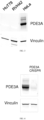
- FIG. 3 shows the immunoblot of endogenous PDE3A protein expression in HuT78, RVH42, and HeLa cell lines. As can be seen, HeLa cells have high expression of PDE3A as compared to HuT78 and RVH42 cells. Vinculin is detected in the immunoblots as a loading control.
- SPA 3 H-cAMP Scintillation Proximity Assay
- DMSO serial dilutions
- 50 ⁇ l of a dilution of PDE3A cell extract from Sf9 cells overexpressing human full length PDE3A (SB Drug Discovery, UK) in buffer A 50 mM Tris/HCl pH 7.5, 8.3 mM MgCl 2 , 1.7 mM EDTA, 0.2% BSA
- the dilution of the PDE3A cell extract was chosen such that the reaction kinetics was linear and less than 70% of the substrate was consumed (typical dilution 1:5000).
- the reaction was started by addition of 50 ⁇ l (0.025 ⁇ Ci) of 1:2000 in buffer A w/o BSA diluted substrate [8- 3 H] adenosine 3', 5'-cyclic phosphate (1 ⁇ Ci/ ⁇ l; Perkin Elmer). After incubation at room temperature for 60 min, the reaction was stopped by addition of 25 ⁇ l of a suspension containing 18 mg/ml yttrium scintillation proximity beads (Perkin Elmer) in water. The microtiter plates were sealed and measured in a Microbeta scintillation counter (PerkinElmer Wallac). IC 50 values were determined from sigmoidal curves by plotting percentage PDE3A activity vs log compound concentration.
- SPA 3 H-cAMP Scintillation Proximity Assay
- DMSO serial dilutions
- 50 ⁇ l of a dilution of PDE3B cell extract from Sf9 cells overexpressing human full length PDE3B (SB Drug Discovery, UK) in buffer A 50 mM Tris/HCl pH 7.5, 8.3 mM MgCl 2 , 1.7 mM EDTA, 0.2% BSA
- the dilution of the PDE3B cell extract was chosen such that the reaction kinetics was linear and less than 70% of the substrate was consumed (typical dilution 1:6000).
- the reaction was started by addition of 50 ⁇ l (0.025 ⁇ Ci) of 1:2000 in buffer A w/o BSA diluted substrate [8- 3 H] adenosine 3', 5'-cyclic phosphate (1 ⁇ Ci/ ⁇ l; Perkin Elmer). After incubation at room temperature for 60 min, the reaction was stopped by addition of 25 ⁇ l of a suspension containing 18 mg/ml yttrium scintillation proximity beads (Perkin Elmer) in water. The microtiter plates were sealed and measured in a Microbeta scintillation counter (PerkinElmer Wallac). IC 50 values were determined from sigmoidal curves by plotting percentage PDE3B activity vs log compound concentration.
- the IC50 values were 4.6 nM (PDE3A IC50) and 5.6 nM (PDE3B IC50) respectively.
- Cryopreserved Hepatocytes (e.g. purchased from Celsis InVitroTechnologies) were briefly thawed, washed with 45 mL pre-warmed in in vitro GRO HT medium and centrifuged for 5 min at 50xg. The cell pellet was resuspended in 5 ml of Krebs-Henseleit Butter (KHB). Cell viability was determined by trypan blue exclusion.
- KHB Krebs-Henseleit Butter
- PK parameters derived from concentration-time profiles after i.v. CLplasma: Total plasma clearance of test compound (in L/kg/h); CLblood: Total blood clearance of test compound: CLplasma*Cp/Cb (abbreviation: CLp; ) in L/kg/h) with Cp/Cb being the ratio of concentrations in plasma and blood.
- both PDE3A and SLFN12 are elevated in cell line A2058 which showed sensitivity to the compound.
- insensitive cell line A549 expresses only moderate levels of PDE3A and almost no SLFN12.
- Sensitive cell line HUT78 has elevated SLFN12 expression, but not have elevated PDE3A expression. Instead, cell line HUT78 has elevated SLFN12 expression and PDE3B expression.
- Table 1 Cell Line PDE3A_ log2(RPKM+1) PDE3B_ log2(RPKM+1) SLFN12_ log2(RPKM+1) Compound Sensitivity A2058 4.64 1.32 2.02 sensitive A549 2.61 0.85 0.06 not sensitive HUT78 0.08 3.84 5.48 sensitive
- T/C ratio of the mean tumor area of treatment versus mean tumor area of control group.
- T/C ratio of mean final tumor weight of treatment group versus mean final tumor weight of control group
- the abbreviation 2QD means twice per day, p.o. means per os or-oral .
Landscapes
- Chemical & Material Sciences (AREA)
- Organic Chemistry (AREA)
- Health & Medical Sciences (AREA)
- Life Sciences & Earth Sciences (AREA)
- Veterinary Medicine (AREA)
- Public Health (AREA)
- General Health & Medical Sciences (AREA)
- Animal Behavior & Ethology (AREA)
- Medicinal Chemistry (AREA)
- Pharmacology & Pharmacy (AREA)
- Nuclear Medicine, Radiotherapy & Molecular Imaging (AREA)
- General Chemical & Material Sciences (AREA)
- Chemical Kinetics & Catalysis (AREA)
- Oncology (AREA)
- Hematology (AREA)
- Epidemiology (AREA)
- Pharmaceuticals Containing Other Organic And Inorganic Compounds (AREA)
- Measuring Or Testing Involving Enzymes Or Micro-Organisms (AREA)
Claims (22)
- Composé ayant la structure suivante

- Composition pharmaceutique contenant l'un des composés sélectionnés dans le groupe consistant en

- Utilisation d'un modulateur de la phosphodiestérase 3A (PDE3A) et/ou de la phosphodiestérase (PDE3B) dans une méthode in vitro de destruction ou de réduction de la survie d'une cellule cancéreuse sélectionnée comme répondant audit modulateur de la PDE3A et/ou de la PDE3B, impliquant la mise en contact de la cellule avec un ou plusieurs modulateurs de la PDE3A et/ou de la PDE3B ayant la structure :

- Modulateur de la phosphodiestérase 3A (PDE3A) et/ou de la phosphodiestérase 3B (PDE3B) à utiliser dans une méthode de réduction de la prolifération des cellules cancéreuses chez un sujet présélectionné comme ayant un cancer qui répond à un ou plusieurs modulateurs de la PDE3A et/ou de la PDE3B ayant la structure :

- Utilisation de un modulateur de la phosphodiestérase 3A (PDE3A) et/ou de la phosphodiestérase 3B (PDE3B) selon la revendication 3, dans laquelle le modulateur de la PDE3A et/ou de la PDE3B réduit l'activité de la PDE3A et/ou de la PDE3B.
- Modulateur de la phosphodiestérase 3A (PDE3A) et/ou de la phosphodiestérase 3B (PDE3B) selon la revendication 4, dans lequel le modulateur de la PDE3A et/ou de la PDE3B réduit l'activité de la PDE3A et/ou de la PDE3B.
- Modulateur de la phosphodiestérase 3A (PDE3A) et/ou de la phosphodiestérase 3B (PDE3B) selon la revendication 4, dans lequel la cellule cancéreuse du sujet provient d'un échantillon biologique du sujet, ledit échantillon biologique étant un échantillon de tissu comprenant une cellule cancéreuse.
- Les composés choisis dans le groupe consistant en

- Composés à utiliser selon la revendication 8, la maladie hyperproliférative étant le cancer.
- Composés utilisables selon la revendication 9, dans lesquels ledit cancer est un cancer des os, du sein, du col de l'utérus, du colon, de l'endomètre, des tumeurs stromales gastro-intestinales (GIST), de la tête et du cou, hématopoïétique, du rein, du léiomyosarcome, du foie, du poumon, lymphoïde, du mélanome, des ovaires, du pancréas, de la prostate, du sarcome des tissus mous, de la thyroïde, ou des voies urinaires.
- Composition selon la revendication 2, dans laquelle le composé est

- Utilisation d'un modulateur de la phosphodiestérase 3A (PDE3A) et/ou de la phosphodiestérase 3B (PDE3B) dans une méthode selon l'une des revendications 3 et 5, comprenant en outre la détection d'une absence de diminution du niveau d'expression du polypeptide ou polynucléotide CREB3L1 par rapport à un contrôle sain.
- Composé utilisé selon l'une des revendications 4, 6 à 9, comprenant en outre la détection d'une absence de diminution du niveau d'expression du polypeptide ou polynucléotide CREB3L1 par rapport à un contrôle sain.
- Utilisation d'un modulateur de la phosphodiestérase 3A (PDE3A) et/ou de la phosphodiestérase 3B (PDE3B) dans une méthode selon la revendication 12, comprenant en outre la détection d'une diminution du niveau de SLFN12.
- Composé à utiliser selon la revendication 13, comprenant en outre la détection d'une diminution du niveau de SLFN12.
- Composé à utiliser selon l'une des revendications 4, 6 à 9, 13 et 15, dans lequel le composé ou le modulateur de la PDE3A et/ou de la PDE3B est

- Utilisation de un modulateur de la phosphodiestérase 3A (PDE3A) et/ou de la phosphodiestérase 3B (PDE3B) dans une méthode selon l'une quelconque des revendications 3, 5, 12 et 14, dans laquelle le composé ou le modulateur de la PDE3A et/ou de la PDE3B est

- Kit pour diminuer la prolifération des cellules cancéreuses chez un sujet présélectionné comme répondant à un modulateur PDE3A/PDE3B contenant l'un des composés choisis dans le groupe consistant en

- Utilisation d'un modulateur de la PDE3A et/ou de la PDE3B dans la fabrication d'un médicament, où le modulateur de la PDE3A et/ou de la PDE3B est l'un des composés choisis dans le groupe consistant en


- Méthode de préparation du composé 1, comprenant les étapes suivantesréaction d'un composé de formule (IV)
 avec de la morpholine pure à des températures élevées, ou avec de la morpholine et une base, telle que des amines ou des carbonates, en particulier la N,N-diisopropyléthylamine, éventuellement dans un solvant aprotique polaire, tel que des alcools ou CH3CN, à la température du reflux, pour obtenir le composé (V).
 qui réagit ensuite avec une base forte dans un solvant aprotique polaire à basse température, par exemple de -78° à -60°C, suivie de l'addition de bromoacétate de (C1-C4-alkyle) ou de chloroacétate de (C1-C4- alkyle) pur ou dans un solvant aprotique polaire, laisser le mélange se réchauffer de -78°C à RT, isoler éventuellement le produit brut, puis ajouter de l'hydrazine ou de l'hydrate d'hydrazine dans un solvant organique protique polaire à reflux pour obtenir le composé racémique 1c.
 puis séparation des énantiomères du composé 1c pour obtenir le composé 1 et le composé (1b)
 le composé (1b) est éventuellement converti en composé racémique (1c) qui peut ensuite être séparé à nouveau afin d'obtenir le composé 1 et une quantité moindre de la quantité initiale de composé 1b isolée à partir de la séparation énantiomérique
 - Méthode de préparation du composé 1 dans laquelle le composé (IV)


- Utilisation des composés (IV), (V), (VI), (VII), selon les revendications 20 et 21,


Applications Claiming Priority (2)
| Application Number | Priority Date | Filing Date | Title |
|---|---|---|---|
| US201762454407P | 2017-02-03 | 2017-02-03 | |
| PCT/EP2018/052491 WO2018141835A1 (fr) | 2017-02-03 | 2018-02-01 | Composés, compositions et méthodes de traitement du cancer |
Publications (2)
| Publication Number | Publication Date |
|---|---|
| EP3576742A1 EP3576742A1 (fr) | 2019-12-11 |
| EP3576742B1 true EP3576742B1 (fr) | 2025-07-02 |
Family
ID=61189434
Family Applications (1)
| Application Number | Title | Priority Date | Filing Date |
|---|---|---|---|
| EP18704189.2A Active EP3576742B1 (fr) | 2017-02-03 | 2018-02-01 | 6-[3,5-dihalogéno-4-(morpholin-4-yl)phényl]-5-méthyl-4,5-dihydropyridazin-3(2h)-one, modulateurs de pde3a ou 3b, pour leur utilisation dans le traitement du cancer |
Country Status (6)
| Country | Link |
|---|---|
| US (1) | US11142522B2 (fr) |
| EP (1) | EP3576742B1 (fr) |
| JP (1) | JP7048624B2 (fr) |
| CN (1) | CN110831599B (fr) |
| CA (1) | CA3052220A1 (fr) |
| WO (1) | WO2018141835A1 (fr) |
Families Citing this family (9)
| Publication number | Priority date | Publication date | Assignee | Title |
|---|---|---|---|---|
| EP3334404B1 (fr) * | 2015-08-13 | 2024-09-18 | The Broad Institute, Inc. | Compositions et procédés pour la détection de cellules cancéreuses exprimant pde3a et slfn12 |
| US10966986B2 (en) * | 2016-02-05 | 2021-04-06 | Bayer Pharma Aktiengesellschaft | Compounds, compositions and methods for cancer patient stratification and cancer treatment |
| TW202031677A (zh) | 2018-11-01 | 2020-09-01 | 美商博得學院股份有限公司 | Pde3調節劑反應性癌症之鑑定 |
| CN113929706B (zh) * | 2020-06-29 | 2024-04-16 | 中国科学院分子植物科学卓越创新中心 | 一种具有抗癌作用的化合物 |
| CN117279644A (zh) * | 2021-03-03 | 2023-12-22 | 拜耳股份有限公司 | 用于治疗肉瘤的取代的3,6-二氢-2h-1,3,4-噁二嗪-2-酮 |
| CN118354773A (zh) * | 2021-12-07 | 2024-07-16 | 萨达治疗公司 | 用于治疗癌症的协同组合物 |
| US20250263684A1 (en) | 2022-03-08 | 2025-08-21 | Institute Of Genetics And Developmental Biology, Chinese Academy Of Sciences | Cytosine deaminase and use thereof in base editing |
| WO2023232109A1 (fr) | 2022-06-01 | 2023-12-07 | 中国科学院遗传与发育生物学研究所 | Nouveau système d'édition de gène crispr |
| EP4577525A1 (fr) * | 2022-08-25 | 2025-07-02 | The Hospital For Sick Children | Composés de pyridazinone modulant des protéines mutantes pour le traitement de maladies respiratoires |
Family Cites Families (8)
| Publication number | Priority date | Publication date | Assignee | Title |
|---|---|---|---|---|
| US1975A (en) | 1841-02-12 | Manner of constructing corn-shellers | ||
| JPS5312879A (en) * | 1976-07-21 | 1978-02-04 | Sankyo Co Ltd | Pyridazinone derivatives |
| JP2002503655A (ja) | 1998-02-13 | 2002-02-05 | ファルマシア・アンド・アップジョン・カンパニー | 抗菌剤として有用な置換アミノフェニルイソオキサゾリン誘導体 |
| DE19929782A1 (de) * | 1999-06-29 | 2001-01-04 | Bayer Ag | 6-Carboxyphenyldihydropyridazinon-Derivate und ihre Verwendung |
| US20080146573A1 (en) | 2006-12-04 | 2008-06-19 | Auspex Pharmaceuticals, Inc. | Preparation and utility of substituted oxzolidinones |
| US8791162B2 (en) | 2011-02-14 | 2014-07-29 | Merck Sharp & Dohme Corp. | Cathepsin cysteine protease inhibitors |
| WO2014164704A2 (fr) * | 2013-03-11 | 2014-10-09 | The Broad Institute, Inc. | Composés et compositions utilisables en vue du traitement du cancer |
| US10966986B2 (en) * | 2016-02-05 | 2021-04-06 | Bayer Pharma Aktiengesellschaft | Compounds, compositions and methods for cancer patient stratification and cancer treatment |
-
2018
- 2018-02-01 WO PCT/EP2018/052491 patent/WO2018141835A1/fr not_active Ceased
- 2018-02-01 CA CA3052220A patent/CA3052220A1/fr active Pending
- 2018-02-01 JP JP2019542095A patent/JP7048624B2/ja active Active
- 2018-02-01 US US16/480,498 patent/US11142522B2/en active Active
- 2018-02-01 CN CN201880010189.9A patent/CN110831599B/zh active Active
- 2018-02-01 EP EP18704189.2A patent/EP3576742B1/fr active Active
Also Published As
| Publication number | Publication date |
|---|---|
| JP2020506934A (ja) | 2020-03-05 |
| JP7048624B2 (ja) | 2022-04-05 |
| CA3052220A1 (fr) | 2018-08-09 |
| WO2018141835A1 (fr) | 2018-08-09 |
| CN110831599B (zh) | 2023-03-28 |
| US11142522B2 (en) | 2021-10-12 |
| CN110831599A (zh) | 2020-02-21 |
| EP3576742A1 (fr) | 2019-12-11 |
| US20200062741A1 (en) | 2020-02-27 |
Similar Documents
| Publication | Publication Date | Title |
|---|---|---|
| US20240366620A1 (en) | Compounds, compositions and methods for cancer patient stratification and cancer treatment | |
| EP3576742B1 (fr) | 6-[3,5-dihalogéno-4-(morpholin-4-yl)phényl]-5-méthyl-4,5-dihydropyridazin-3(2h)-one, modulateurs de pde3a ou 3b, pour leur utilisation dans le traitement du cancer | |
| EP3661517B1 (fr) | Dihydrooxadiazinones | |
| WO2018024602A1 (fr) | 2,7-diazaspiro [4,4] nonanes | |
| CA3164112A1 (fr) | Pyrazolotriazines | |
| AU2021231312A1 (en) | Imidazotriazines acting on cancer via inhibition of CDK12 | |
| EP4114837A1 (fr) | Pyrazolopyrazines agissant sur des cancers par inhibition de cdk12 | |
| US20190307728A1 (en) | Methods of treatment with a 2,4,5-trisubstituted 1,2,4-triazolone | |
| WO2020157188A1 (fr) | Dihydrooxadiazinones pour le traitement de maladies hyperprolifératives | |
| WO2020157201A1 (fr) | Composés d'oxadiazinone pour le traitement de maladies hyperprolifératives | |
| EP4463458A1 (fr) | Dérivés de triazine bicycliques pour traiter le cancer | |
| WO2020157199A1 (fr) | Composés dihydropyridazinone annelés utilisés en tant que composés anticancéreux | |
| WO2020157236A1 (fr) | Dihydrooxadiazinones à substitution pyridyle |
Legal Events
| Date | Code | Title | Description |
|---|---|---|---|
| STAA | Information on the status of an ep patent application or granted ep patent |
Free format text: STATUS: UNKNOWN |
|
| STAA | Information on the status of an ep patent application or granted ep patent |
Free format text: STATUS: THE INTERNATIONAL PUBLICATION HAS BEEN MADE |
|
| PUAI | Public reference made under article 153(3) epc to a published international application that has entered the european phase |
Free format text: ORIGINAL CODE: 0009012 |
|
| STAA | Information on the status of an ep patent application or granted ep patent |
Free format text: STATUS: REQUEST FOR EXAMINATION WAS MADE |
|
| 17P | Request for examination filed |
Effective date: 20190903 |
|
| AK | Designated contracting states |
Kind code of ref document: A1 Designated state(s): AL AT BE BG CH CY CZ DE DK EE ES FI FR GB GR HR HU IE IS IT LI LT LU LV MC MK MT NL NO PL PT RO RS SE SI SK SM TR |
|
| AX | Request for extension of the european patent |
Extension state: BA ME |
|
| DAV | Request for validation of the european patent (deleted) | ||
| DAX | Request for extension of the european patent (deleted) | ||
| STAA | Information on the status of an ep patent application or granted ep patent |
Free format text: STATUS: EXAMINATION IS IN PROGRESS |
|
| 17Q | First examination report despatched |
Effective date: 20200826 |
|
| GRAP | Despatch of communication of intention to grant a patent |
Free format text: ORIGINAL CODE: EPIDOSNIGR1 |
|
| STAA | Information on the status of an ep patent application or granted ep patent |
Free format text: STATUS: GRANT OF PATENT IS INTENDED |
|
| INTG | Intention to grant announced |
Effective date: 20250124 |
|
| RIN1 | Information on inventor provided before grant (corrected) |
Inventor name: LANGE, MARTIN Inventor name: KOPITZ, CHARLOTTE CHRISTINE Inventor name: WENGNER, ANTJE MARGRET Inventor name: EIS, KNUT Inventor name: LIENAU, PHILIP Inventor name: ELLERMANN, MANUEL Inventor name: MEYERSON, MATTHEW Inventor name: GREULICH, HEIDI Inventor name: WU, XIAOYUN Inventor name: LEWIS, TIMOTHY A. |
|
| GRAS | Grant fee paid |
Free format text: ORIGINAL CODE: EPIDOSNIGR3 |
|
| GRAA | (expected) grant |
Free format text: ORIGINAL CODE: 0009210 |
|
| STAA | Information on the status of an ep patent application or granted ep patent |
Free format text: STATUS: THE PATENT HAS BEEN GRANTED |
|
| AK | Designated contracting states |
Kind code of ref document: B1 Designated state(s): AL AT BE BG CH CY CZ DE DK EE ES FI FR GB GR HR HU IE IS IT LI LT LU LV MC MK MT NL NO PL PT RO RS SE SI SK SM TR |
|
| REG | Reference to a national code |
Ref country code: GB Ref legal event code: FG4D |
|
| REG | Reference to a national code |
Ref country code: CH Ref legal event code: EP |
|
| REG | Reference to a national code |
Ref country code: DE Ref legal event code: R096 Ref document number: 602018083149 Country of ref document: DE |
|
| REG | Reference to a national code |
Ref country code: IE Ref legal event code: FG4D |
|
| P01 | Opt-out of the competence of the unified patent court (upc) registered |
Free format text: CASE NUMBER: APP_31623/2025 Effective date: 20250701 |
|
| REG | Reference to a national code |
Ref country code: NL Ref legal event code: MP Effective date: 20250702 |
|
| PG25 | Lapsed in a contracting state [announced via postgrant information from national office to epo] |
Ref country code: PT Free format text: LAPSE BECAUSE OF FAILURE TO SUBMIT A TRANSLATION OF THE DESCRIPTION OR TO PAY THE FEE WITHIN THE PRESCRIBED TIME-LIMIT Effective date: 20251103 |
|
| PG25 | Lapsed in a contracting state [announced via postgrant information from national office to epo] |
Ref country code: NL Free format text: LAPSE BECAUSE OF FAILURE TO SUBMIT A TRANSLATION OF THE DESCRIPTION OR TO PAY THE FEE WITHIN THE PRESCRIBED TIME-LIMIT Effective date: 20250702 |
|
| REG | Reference to a national code |
Ref country code: AT Ref legal event code: MK05 Ref document number: 1808502 Country of ref document: AT Kind code of ref document: T Effective date: 20250702 |
|
| PG25 | Lapsed in a contracting state [announced via postgrant information from national office to epo] |
Ref country code: IS Free format text: LAPSE BECAUSE OF FAILURE TO SUBMIT A TRANSLATION OF THE DESCRIPTION OR TO PAY THE FEE WITHIN THE PRESCRIBED TIME-LIMIT Effective date: 20251102 |
|
| PG25 | Lapsed in a contracting state [announced via postgrant information from national office to epo] |
Ref country code: NO Free format text: LAPSE BECAUSE OF FAILURE TO SUBMIT A TRANSLATION OF THE DESCRIPTION OR TO PAY THE FEE WITHIN THE PRESCRIBED TIME-LIMIT Effective date: 20251002 |
|
| REG | Reference to a national code |
Ref country code: LT Ref legal event code: MG9D |
|
| PG25 | Lapsed in a contracting state [announced via postgrant information from national office to epo] |
Ref country code: AT Free format text: LAPSE BECAUSE OF FAILURE TO SUBMIT A TRANSLATION OF THE DESCRIPTION OR TO PAY THE FEE WITHIN THE PRESCRIBED TIME-LIMIT Effective date: 20250702 |
|
| PG25 | Lapsed in a contracting state [announced via postgrant information from national office to epo] |
Ref country code: FI Free format text: LAPSE BECAUSE OF FAILURE TO SUBMIT A TRANSLATION OF THE DESCRIPTION OR TO PAY THE FEE WITHIN THE PRESCRIBED TIME-LIMIT Effective date: 20250702 |
|
| PG25 | Lapsed in a contracting state [announced via postgrant information from national office to epo] |
Ref country code: HR Free format text: LAPSE BECAUSE OF FAILURE TO SUBMIT A TRANSLATION OF THE DESCRIPTION OR TO PAY THE FEE WITHIN THE PRESCRIBED TIME-LIMIT Effective date: 20250702 |
|
| PG25 | Lapsed in a contracting state [announced via postgrant information from national office to epo] |
Ref country code: GR Free format text: LAPSE BECAUSE OF FAILURE TO SUBMIT A TRANSLATION OF THE DESCRIPTION OR TO PAY THE FEE WITHIN THE PRESCRIBED TIME-LIMIT Effective date: 20251003 |
|
| PG25 | Lapsed in a contracting state [announced via postgrant information from national office to epo] |
Ref country code: SE Free format text: LAPSE BECAUSE OF FAILURE TO SUBMIT A TRANSLATION OF THE DESCRIPTION OR TO PAY THE FEE WITHIN THE PRESCRIBED TIME-LIMIT Effective date: 20250702 Ref country code: CZ Free format text: LAPSE BECAUSE OF FAILURE TO SUBMIT A TRANSLATION OF THE DESCRIPTION OR TO PAY THE FEE WITHIN THE PRESCRIBED TIME-LIMIT Effective date: 20250702 |
|
| PG25 | Lapsed in a contracting state [announced via postgrant information from national office to epo] |
Ref country code: LV Free format text: LAPSE BECAUSE OF FAILURE TO SUBMIT A TRANSLATION OF THE DESCRIPTION OR TO PAY THE FEE WITHIN THE PRESCRIBED TIME-LIMIT Effective date: 20250702 |
|
| PG25 | Lapsed in a contracting state [announced via postgrant information from national office to epo] |
Ref country code: BG Free format text: LAPSE BECAUSE OF FAILURE TO SUBMIT A TRANSLATION OF THE DESCRIPTION OR TO PAY THE FEE WITHIN THE PRESCRIBED TIME-LIMIT Effective date: 20250702 Ref country code: PL Free format text: LAPSE BECAUSE OF FAILURE TO SUBMIT A TRANSLATION OF THE DESCRIPTION OR TO PAY THE FEE WITHIN THE PRESCRIBED TIME-LIMIT Effective date: 20250702 |
|
| PG25 | Lapsed in a contracting state [announced via postgrant information from national office to epo] |
Ref country code: RS Free format text: LAPSE BECAUSE OF FAILURE TO SUBMIT A TRANSLATION OF THE DESCRIPTION OR TO PAY THE FEE WITHIN THE PRESCRIBED TIME-LIMIT Effective date: 20251002 |
|
| PG25 | Lapsed in a contracting state [announced via postgrant information from national office to epo] |
Ref country code: ES Free format text: LAPSE BECAUSE OF FAILURE TO SUBMIT A TRANSLATION OF THE DESCRIPTION OR TO PAY THE FEE WITHIN THE PRESCRIBED TIME-LIMIT Effective date: 20250702 |
|
| PG25 | Lapsed in a contracting state [announced via postgrant information from national office to epo] |
Ref country code: SM Free format text: LAPSE BECAUSE OF FAILURE TO SUBMIT A TRANSLATION OF THE DESCRIPTION OR TO PAY THE FEE WITHIN THE PRESCRIBED TIME-LIMIT Effective date: 20250702 |
|
| PG25 | Lapsed in a contracting state [announced via postgrant information from national office to epo] |
Ref country code: DK Free format text: LAPSE BECAUSE OF FAILURE TO SUBMIT A TRANSLATION OF THE DESCRIPTION OR TO PAY THE FEE WITHIN THE PRESCRIBED TIME-LIMIT Effective date: 20250702 |
|
| PG25 | Lapsed in a contracting state [announced via postgrant information from national office to epo] |
Ref country code: IT Free format text: LAPSE BECAUSE OF FAILURE TO SUBMIT A TRANSLATION OF THE DESCRIPTION OR TO PAY THE FEE WITHIN THE PRESCRIBED TIME-LIMIT Effective date: 20250702 |
|
| PG25 | Lapsed in a contracting state [announced via postgrant information from national office to epo] |
Ref country code: EE Free format text: LAPSE BECAUSE OF FAILURE TO SUBMIT A TRANSLATION OF THE DESCRIPTION OR TO PAY THE FEE WITHIN THE PRESCRIBED TIME-LIMIT Effective date: 20250702 Ref country code: SK Free format text: LAPSE BECAUSE OF FAILURE TO SUBMIT A TRANSLATION OF THE DESCRIPTION OR TO PAY THE FEE WITHIN THE PRESCRIBED TIME-LIMIT Effective date: 20250702 |