EP3577982B1 - Nachhaltige dienstauswahl - Google Patents
Nachhaltige dienstauswahl Download PDFInfo
- Publication number
- EP3577982B1 EP3577982B1 EP17706419.3A EP17706419A EP3577982B1 EP 3577982 B1 EP3577982 B1 EP 3577982B1 EP 17706419 A EP17706419 A EP 17706419A EP 3577982 B1 EP3577982 B1 EP 3577982B1
- Authority
- EP
- European Patent Office
- Prior art keywords
- resource
- contribution
- requirement
- service
- resources
- Prior art date
- Legal status (The legal status is an assumption and is not a legal conclusion. Google has not performed a legal analysis and makes no representation as to the accuracy of the status listed.)
- Active
Links
Images


Classifications
-
- H—ELECTRICITY
- H04—ELECTRIC COMMUNICATION TECHNIQUE
- H04W—WIRELESS COMMUNICATION NETWORKS
- H04W72/00—Local resource management
- H04W72/50—Allocation or scheduling criteria for wireless resources
- H04W72/51—Allocation or scheduling criteria for wireless resources based on terminal or device properties
-
- H—ELECTRICITY
- H04—ELECTRIC COMMUNICATION TECHNIQUE
- H04L—TRANSMISSION OF DIGITAL INFORMATION, e.g. TELEGRAPHIC COMMUNICATION
- H04L41/00—Arrangements for maintenance, administration or management of data switching networks, e.g. of packet switching networks
- H04L41/50—Network service management, e.g. ensuring proper service fulfilment according to agreements
- H04L41/5003—Managing SLA; Interaction between SLA and QoS
- H04L41/5019—Ensuring fulfilment of SLA
-
- H—ELECTRICITY
- H04—ELECTRIC COMMUNICATION TECHNIQUE
- H04L—TRANSMISSION OF DIGITAL INFORMATION, e.g. TELEGRAPHIC COMMUNICATION
- H04L5/00—Arrangements affording multiple use of the transmission path
- H04L5/003—Arrangements for allocating sub-channels of the transmission path
- H04L5/0037—Inter-user or inter-terminal allocation
-
- H—ELECTRICITY
- H04—ELECTRIC COMMUNICATION TECHNIQUE
- H04W—WIRELESS COMMUNICATION NETWORKS
- H04W4/00—Services specially adapted for wireless communication networks; Facilities therefor
- H04W4/50—Service provisioning or reconfiguring
-
- H—ELECTRICITY
- H04—ELECTRIC COMMUNICATION TECHNIQUE
- H04W—WIRELESS COMMUNICATION NETWORKS
- H04W48/00—Access restriction; Network selection; Access point selection
- H04W48/18—Selecting a network or a communication service
-
- H—ELECTRICITY
- H04—ELECTRIC COMMUNICATION TECHNIQUE
- H04W—WIRELESS COMMUNICATION NETWORKS
- H04W72/00—Local resource management
- H04W72/50—Allocation or scheduling criteria for wireless resources
- H04W72/54—Allocation or scheduling criteria for wireless resources based on quality criteria
- H04W72/543—Allocation or scheduling criteria for wireless resources based on quality criteria based on requested quality, e.g. QoS
-
- H—ELECTRICITY
- H04—ELECTRIC COMMUNICATION TECHNIQUE
- H04L—TRANSMISSION OF DIGITAL INFORMATION, e.g. TELEGRAPHIC COMMUNICATION
- H04L41/00—Arrangements for maintenance, administration or management of data switching networks, e.g. of packet switching networks
- H04L41/50—Network service management, e.g. ensuring proper service fulfilment according to agreements
- H04L41/5041—Network service management, e.g. ensuring proper service fulfilment according to agreements characterised by the time relationship between creation and deployment of a service
- H04L41/5054—Automatic deployment of services triggered by the service manager, e.g. service implementation by automatic configuration of network components
-
- H—ELECTRICITY
- H04—ELECTRIC COMMUNICATION TECHNIQUE
- H04L—TRANSMISSION OF DIGITAL INFORMATION, e.g. TELEGRAPHIC COMMUNICATION
- H04L41/00—Arrangements for maintenance, administration or management of data switching networks, e.g. of packet switching networks
- H04L41/50—Network service management, e.g. ensuring proper service fulfilment according to agreements
- H04L41/508—Network service management, e.g. ensuring proper service fulfilment according to agreements based on type of value added network service under agreement
- H04L41/5096—Network service management, e.g. ensuring proper service fulfilment according to agreements based on type of value added network service under agreement wherein the managed service relates to distributed or central networked applications
-
- H—ELECTRICITY
- H04—ELECTRIC COMMUNICATION TECHNIQUE
- H04W—WIRELESS COMMUNICATION NETWORKS
- H04W76/00—Connection management
- H04W76/10—Connection setup
- H04W76/12—Setup of transport tunnels
Definitions
- the present invention relates to an apparatus and a method related to service selection. More particularly, the present invention relates to an apparatus and a method of service selection based on requirements.
- the slice selection i.e. which slice performs which service or part of a service
- an Application ID and Service Descriptor i.e. which slice performs which service or part of a service
- the selection principle should enable selection of the appropriate function to deliver a certain service even within a class of functions designed for a certain use case.
- selection criteria should enable selection of right network slice for a certain application and also the right functional components within the network slice for a certain service requested by the UE at any time.
- the figure below shows that the application running in the UE can provide a multi-dimensional descriptor.
- the multi-dimensional descriptor may contain at least the following:
- 3GPP intends to base the slice selection on the two parameters called application ID and Service Descriptor such as mMTC and CrIC etc.
- the UE is expected to explicitly setup these Application ID and Service Descriptor and the network is expected to evaluate those.
- Document US 2016/353367 A1 discloses a procedure for allocating network slices in a 5G wireless network employing technologies such as Network Function Virtualization, NFV, Network Slicing and Software Defined Networking, SDN.
- technologies such as Network Function Virtualization, NFV, Network Slicing and Software Defined Networking, SDN.
- the apparatus is configured to perform the corresponding method, although in some cases only the apparatus or only the method are described.
- the roaming partners shall at least share their knowledge on the latencies and jitters to be able to meet the latency/jitter requirements at all.
- the selection process is not able to meet a 5ms delay requirement, if the selection procedure selects a node which contributes 34ms to the delay.
- a node may be selected because the conventional selection process simply does not know about the individual delay contribution of each candidate node.
- the UE or the application in the UE can have knowledge of some application ID, it also could have knowledge of the QoS/SLA parameters for the application. Therefore, according to some embodiments of the invention, the UE provides information of QoS/SLA parameters to the network in the first place, instead of creating for every (mini-)application a new application ID.
- each network is able to set up its slices according to own needs without being restricted to some kind of "standardized slices/networks" to ensure interoperability between slices of different operators.
- a slice is a resource to be allocated to perform the service.
- the invention does not depend on virtualization (i.e. on implementing a function on a slice) and any resource to perform the service may be selected based on the above principle.
- a resource is a network node or a network function.
- the end users want to have interoperability of services. They do not really care how one operator arranges its slices and the end users are not interested in knowing how the different operators ensure the interoperability of their different types (flavours) of slices. The latter does not have any value add to the end user, the operator and the vendors.
- the UE provides a QoS/SLA parameter describing a corresponding requirement if the UE requests a resource for the service.
- the QoS/SLA parameter is named "dynamic generic QoS/SLA parameter" (DGQ) hereinafter because it is considered to be more dynamic and generic than the Application ID according to 3GPP TR 23.799. It is a kind of a requirement indication.
- DGQ dynamic generic QoS/SLA parameter
- the UE may send DGQ at attachment to the RAN and Core for each application wishing/needing to have connectivity.
- the application developers knowing their requirements best, shall populate / setup the content required for the application. That is, DGQ is predefined for each application. In some embodiments, plural DGQs may be predefined for one application which may be selected by the application depending on some condition.
- the application shall submit its requirement(s) with regard to at least one of
- Attach request (Attach is just an example and is the same name as currently used in the LTE environment, but may be different in other technologies such as 5G).
- the UE may indicate for instance the delay requirements of the service, e.g. as 6ms. Both requirements may be signalled in respective information elements of the new parameter UE DGQ.
- the UE and the network may act and behave as in the previous versions of the UE specifications.
- the network evaluates this new information element in order to select and allocate a resource fulfilling the requirements of the service request.
- the UE sends this new parameter to the RAN (e.g. eNB or WiFi AN) in the attach request.
- the RAN sets up another new parameter indicating its available resources and capability (i.e., its contribution to the QoS/SLA requirement received from the UE) in a similar way when forwarding the attach request / Create Session request to the core network (again, attach request and Create Session request are just examples to request resources, which are already known from the LTE environment), in case of the non-roaming case and potentially also in the roaming case.
- This new parameter with the capability (contribution) of the RAN may be included always in the request for a resource, in order to indicate that the procedure according to some embodiments of the invention is supported.
- the RAN when requesting a resource for the service, forwards two DGQ parameters: UE DQG received from UE and indicating the overall requirement for the service, and another parameter (named e.g. RAN DGQ) indicating the contribution of RAN to the overall requirement.
- RAN instead of or in addition to the two DGQ parameters, RAN forwards another DQG parameter which indicates the contribution which the core is allowed to add.
- core may add a delay of 70 ms, which may be indicated in a corresponding parameter in the request for a resource.
- the resources may be allocated in a (more) optimal way compared to the prior art, wherein only best guesses may be performed for the resource selection.
- Independent selection may lead to suboptimal allocation, whereas cooperative selection would lead to better resource utilisation and service offering to the user and less cost for the operators.
- cooperative selection requires negotiation which is not required for independent selection and may require disclosure of potentially critical information to the roaming partner operator.
- the selection of different RAN slices and different Core Network slices may be performed either independently or cooperatively.
- the resources of VPLMN and HPLMN allocated to the service may be selected independently per network or cooperatively between the networks.
- a cooperative selection in the roaming case is outlined at greater detail:
- the VPLMN (either the RAN directly or the potentially separated CP of the core) shares the candidate CP and/or UP addresses with the HPLMN via the signalling in the Create Session request.
- the higher layer protocol between the RAN and the CP of the Core and between the CP of the VPLMN and the CP of the HPLMN shall be the same.
- the above requirement is not compulsory.
- the RAN of VPLMN may communicate with CP of HPLMN via CP of VPLMN.
- the VPLMN may offer/signal a list of addresses and/or location for at least one of the CP and the UP of the candidate resources of the VPLMN in the DGQ to the HPLMN.
- the resources of these addresses would match and/or at least would not violate any of the requirements of the UE. If the VPLMN would not be able to meet the requirements, the VPLMN may reject the request of the UE, or VPLMN may inform the UE of the impossibility asking to relax the requirements.
- the HPLMN On receipt of both the UE DGQ and the DGQ of the VPLMN, the HPLMN evaluates the UE DGQ and the DGQ of the VPLMN and compares the UE requirements with the "consumed" and/or suggested contributions of the VPLMN in order to select the resource within the HPLMN such that the UE requirement are met. In addition, HPLMN may take into account business needs or other constraints in the selection.
- An example requirement is the (user plane) latency requirement of the UE. For instance, assumed the UE requires a maximum latency of a) 11 ms or b) 4 ms then depending on the indication of the VPLMN that in case a) already 6ms and in a case b) already 2 ms are consumed, the HPLMN selects its resources such that in case of a) for instance 5ms are spent and in case of b) only 2ms are spent.
- the HPLMN would need to select resources at a maximum physical distance of about 66 km away from the UE and the allocated resource of the VPLMN.
- the HPLMN is suggested to return the addresses of the corresponding own resources in the Create Session response and also committing one of the resources earlier offered by the VPLMN.
- the negotiation is completed.
- the HPLMN does not have resources in said vicinity (e.g. as required in the case b)).
- the HPLMN delegates the selection of the resources to the VPLMN in order to be able to fulfil the service request of the UE even in this case. Therefore, the VPLMN offers its own resources in the vicinity also to the HPLMN for re-usage.
- the HPLMN indicates its inability with a new information element in the Create Session response (e.g. named impossibility indication), according to which resources are not allocated in the HPLMN, but are to be allocated at the VPLMN instead.
- the jitter may be estimated or calculated similarly to the delay.
- resources for other KPIs such as bandwidth and packet loss can be selected by simply not selecting resources which violate the requirements. For instance if a packet loss rate of not less than 10-5 is required, then e.g. a resource with a rate of 10-4 shall not be considered when selecting the resources.
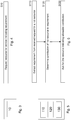
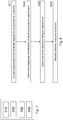
- Figs. 1 and 2 show example of sustainable service selections in the non-roaming ( Fig. 1 ) and roaming case ( Fig. 2 ) according to some embodiments of the invention.
- the FTEIDs typically denoting the GTP Tunnel ID including IP addresses are just examples for describing a termination point for the Control plane and for the User plane. It is to be understood just as a placeholder covering also any other endpoint between peers for exchanging control and user plane traffic.
- the UE provides to the RAN, along with the Attach request, a requirement indication such as UE DGQ.
- RAN issues a Create Session request to CP of core, which comprises UE DGQ, AN cap DQG (i.e. Access network capability DGQ), which indicates the capability/contribution of RAN to the requirement indicated by UE DGQ, and the AN CP/UP FTEID (Access network Control Plane / User Plan FTEID) carrying the ID of the potential candidate resources (e.g. IP or Ethernet address etc).
- CP instructs UP by e.g.
- FlowMod Flow Modification
- OpenFLow which comprises UP FTEID (User Plane Fully Qualified Tunnel Endpoint ID) and HPLMN DGQ to install the corresponding OpenFlow rules at the User plane.
- AN e.g. RAN
- CP control plane
- UP FTEID User Plane Fully Qualified Tunnel Endpoint ID
- HPLMN DGQ HPLMN DGQ
- the origin offers candidate resources and the terminating HPLMN side selects from the candidate list a particular (set of) resource(s) to meet the requirements as signalled/required by the UE.
- the HPLMN informs the AN about the selected resources at the AN via the AN sel DGQ.
- CP of VPLMN interacts with UP of VPLMN similarly as described for the non-roaming case, wherein HPLMN DGQ is replaced by VPLMN DGQ.
- CP of VPLMN sends Initial Request to CP of HPLMN, wherein the Initial Attach request comprises UE DGQ, CP and UP FTEID, and VPLMN cap DGQ, which indicates the contribution of VPLMN to the requirement indicated by UE DGQ.
- CP of HPLMN interacts with UP of HPLMN similarly as described in the non-roaming case.
- HPLMN CP provides the CP and UP FTEIDs and HPLMN sel DGQ (i.e. DGQ selected at HPLMN).
- the selection of the resources may be cooperative or non-cooperative.
- each of the two PLMNs select their respective resource independent from each other.
- the VPLMN selects its resources and signals the addresses of the resources (e.g. CP plane and UP plane) towards the HPLMN. Consequently in this solution the HPLMN needs to adapt its selection of its resources to the input shared by the VPLMN in order to meet the overall requirement of the UE. Although this might not lead to the optimal solution for the selection/placement of the corresponding resources, it does not require that the operators share the list of resources and to allow the selection of own resources by the foreign operator.
- both options may be applied depending on the policies and business needs, so these two options may be dynamically negotiated between the two operators or pre-configured.
- the non-roaming case is more or less a simplification of the roaming case because only one operator is involved, but this operator has the freedom and the duty to meet the overall requirement on its own as requested by the UE.
- the operator simultaneously owns the RAN and the core resources still the decision is to be taken how to split for instance the delay across the RAN and the core. For instance, the operator may allow to allocate more delay to the RAN and therefore less delay to the core, which means that core resources would be selected from clouds located nearer to the RAN. In the opposite case where less delay is allowed in the RAN the core resources may be selected from clouds/data centers located farther away from the RAN.
- the same procedures and parameters may be utilized as in the roaming case (compare e.g. Figs. 1 and 2 ).
- the RAN may evaluate the dynamic generic QoS/SLA parameter (DGQ), by querying a database about the available resources and utilization. For instance in one option the RAN consults an external or internal database for calculating and selecting the internal resources based on the content of the UE DGQ.
- DGQ dynamic generic QoS/SLA parameter
- the RAN After or simultaneously with selecting the resources internal to the RAN the RAN consults an external or internal database for selecting the home / local/visited part of the core network. These network parts may select their resources based on the signalled information comprising the UE DGQ and the contribution from the RAN.
- the Core[/HPLMN) may select/determine the overall budget, select the resources for its part of the network, calculate the remaining budget (contribution) with respect to the requirement, and signal it back to the RAN[/VPLMN] to configure the resources accordingly.
- the first case is applicable e.g. for the non-roaming case and for the VPLMN in the roaming case, and the second case is applicable to the roaming case.
- KPI/QoS/SLA KPI/QoS/SLA attributes
- the bandwidth can be configured independent from the latency, even within the eNB/newRAN with RAN slicing. Consequently there is no need to predefine/preconfigure any slice type in beforehand. This creates flexibility and provides value add to the operator.
- the eNB /newRAN is internally configured depending on each of the attributes either by evaluating the above attributes itself or by being controlled by the core network (e.g. the MME of the LTE architecture, just as an example) to configure the resources such that the requirements of the UE are met.
- the RAN shall be configurable for each attribute within certain ranges being identified by a number like 1 up to 6, in order to avoid configurations with infinitesimal short steps from zero to the highest value.
- a floating presentation of the attributes is not excluded.
- Table 2 gives an example for the capabilities of the newRAN and their classification. Similar parameters may be introduced for the interface between roaming partners in forward and backward direction.
- Table 2 Example of classification of capabilities of newRAN Ordinal number classifying the ranges Bandwidth e.g. downlink [mbit/s] Delay Jitter, packet delay variation (PDV) Packet Error Loss Rate Any other capability for proprietary usage/bilateral agreement 1 Up to [2] Mbps Up to 0.5 ms 10 -7 s 10 -6 2 Up to [50] Mbps 0,5ms - 5ms 10- 6 s 10 -5 3 Up to [100] Mbps 5ms - 10ms 10- 5 s 10 -4 4 Up to [1000] Mbps 10ms - 20ms 10 -4 s 10 -3 5 20ms-50ms 10 -3 s 10 -2 6 To be completed as needed in the future
- the KPIs/attributes and values listed in the table above are just examples and are not exhaustive. Any other attributes may be classified correspondingly.
- the table shows how attributes may be addressed flexibly and independently.
- the MME (or more general the CP in the Core) may maintain a similar table and configuration pattern for the remaining part of the budgets of each of the attributes/resources.
- the newRAN/LTE may signal its own capability with regard to the required resources. For instance, if the RAN in question is capable of providing a packet loss of 10-6 then the RAN shall send the number 1 for packet loss rate.
- That decouples the RAN from the Core configuration and the core may direct the RAN to pick any value from the categories available at the core to dynamically combine and compose the services as needed and economically feasible. There is no need to compose in beforehand any predefined and standardized slice across the operators, or in any RAN and no impact on the interface between RAN and Core if new applications requiring new service types needing a new slice in the network emerge!
- the MME control plane
- the MME may partition the budget across the eNB and the core network.
- the service requirements sent by the UE may be signalled to the home PLMN and the home PLMN is able to allocate a fraction of the overall budget of each attribute to itself, and a remaining fraction to the VPLMN.
- the VPLMN can allocate that fraction across its RAN and its core network dynamically as determined as a best split of the resources to meet the demand of the UE.
- the MME in case of roaming the MME (or in general the Control plane of the VPLMN) may also signal respective capabilities for the resources in question, thus offering the HPLMN to select its part of the fraction for the related KPIs to be partitioned between the two operators.
- the HPLMN knowing the location of the UE, the QoS requirements of the UE and its own candidate resources with their capabilities and locations and the candidate resources of the VPLMN with their capabilities and locations determines/calculates the best combination of an own candidate resource and a candidate resource of the VPLMN in order to fulfil the requirements of the UE.
- the HPLMN may signal to the VPLMN that the VPLMN shall perform some kind of short cut to the application (this would be similar to the case of local breakout (not home routed)). In such a way the operator will take advantage of a flexible decision/selection depending on the circumstance in highly dynamic environment.
- the HPLMN may select its own resources and the VPLMN may select its own resources based on own policy and business needs. Even in the case of a cooperative selection, HPLMN and VPLMN may select the respective candidate resources based on own policy and business needs.
- the HPLMN may indicate to the VPLMN that there might be enough freedom for the VPLMN to select resources in accordance with its own needs. That is, in some of these embodiments, the HPLMN may inform the VPLMN on the remaining budget to fulfil the requirement of the UE, the VPLMN selects its resources based on the received indication on remaining budget and informs the HPLMN and the UE accordingly.
- This procedure has the advantage that the VPLMN need not to inform the HPLMN on the capabilities of some candidate resources, but it requires additional signalling from VPLMN to HPLMN in order to inform on the selected candidate resources.
- the VPLMN when requesting resources from the HPLMN, offers a list of candidate resources with their capabilities from which the HPLMN can select. Then HPLMN may inform VPLMN on the selected resource of HPLMN and on the selected candidate resource of VPLMN such that an additional signalling from VPLMN to HPLMN is not needed.
- it is preconfigured for each network or for each pair of a HPLMN and a VPLMN which of the options for cooperative selection is applied.
- HPLMN and VPLMN may dynamically negotiate which option to apply.
- the VPLMN offers a list of candidate resources and the HPLMN selects a resource from VPLMN candidate resources, this allows a fast setup, whereas if the HPLMN may select its own resources without knowledge of the VPLMN resources, the VPLMN need to inform about the selected resources afterwards, which delays the service setup. Therefore, according to some embodiments of the invention, the result of the negotiation may depend on the need of the service requested by the UE.
- the User plane of the RAN e.g. eNB or eNB+
- the control plane of the core and the control plane of the RAN may or may not be collocated.
- the interface between the RAN and the Core is the same as the interface within the core networks of two different operators.
- the (mobility) control plane in the core is not really needed and the control plane of the RAN can be directly connected to the roaming partner without a dedicated control plane of the core of the VPLMN. Therefore, in some embodiments of the invention, an information element is used indicating that there is no need for mobility. If this information element is detected (or if this information element has a predefined value) the user plane traffic and the control plane traffic is directly exchanged between the eNB and the SGW without further involvement of the MME.
- the MME detecting the information element may forward the control plane address of the eNB towards the SGW and the control plane address of the SGW towards the enB, so that the MME is bypassed for the control plane in further communication.
- the existing APN Access Point Name
- the existing APN may be reused to identify and address the application to be addressed by the UE.
- the operators may have the freedom to allocate their resource according to the needs from the subscribers, and/or the operator's business needs, and/or operator's policy, and/or costs and/or utilisation level, and/or availability.
- the delay comprises, at least, the transmission delay (TranD), the processing delay (ProcD), and the propagation delay (PropD).
- This delay is induced by the finite bandwidth for the transmission/reception assigned to a resource. For instance if the network knows the potentially available bandwidth of the resource and decides to allocate a higher bandwidth to the candidate resource the transmission delay can be reduced. Thus, related costs may be estimated and optimized.
- the selection process may know the so far accumulated delay, the potential delay of candidate resources to be selected with the associated costs, and the delay requirements to be met. In that case the selection process is able to select the resources at the optimal costs.
- the UE may be able to request a certain maximum delay and/or maximum jitter via the UE DGQ being sent to the RAN (or to any fixed access node in a FMC environment).
- Each node participating in service execution e.g.
- RAN Access RAN
- MME Mobility Management Entity
- SGW Packet Control Function
- PGW Packet Control Function
- PGW-C Packet Control Function
- SGW-C Packet Control Function
- PGW-U Packet Control Function
- SGW-U Packet Control Function
- CSCF Packet Control Function
- the RAN (normally being selected by the UE) selects an appropriate MME.
- RAN informs the MME about the already accumulated delay. This information may comprise the accumulated delay from UE to RAN (i.e., the sum of ProcD, PropD, and TranD).
- RAN informs MME on the PropD (which is considered to be substantially fixed between UE and eNB) and informs about ranges of ProcD and TranD it may contribute to service execution.
- ProcD and TranD of RAN are not necessarily fixed for the selected RAN.
- TranD may be adapted by allocating a different bandwidth to the UE-eNB connection
- ProcD may be adapted by selecting an appropriate processor and/or by adapting TTI.
- the MME may retrieve, based on an identification of the individual RAN, the potential ProcD, TranD from a database (internal or external).
- PropD between UE and eNB may be considered as negligible (or as a constant, e.g. based on the cell radius) in most cases.
- the propagation delay (PropD) between two networks nodes may be held or dynamically retrieved, possibly based on an identification of the respective cloud center.
- the MME (or a similar/corresponding function in 5G or 3G, etc) receives the UE required delay, the delay indication of the RAN and the candidate delay for the candidate resources possibly to be assigned.
- the MME is in the position to know the detailed delay requirement from the UE, the already accumulated delay and the potentially available additional further delay of candidate resources for the selection by the MME.
- the MME being a selecting node may have access to a database holding the ID's of candidates of SGW/PGW-Us (or similar functions within 3G and/or 5G) with their potential ProcD value, TranD value, and with their associated costs.
- the SGW/PGW-Us may be a user plane part of the SGW/PGE separated from the control plane or be integrated within a conventional SGW/PGW.
- the propagation delay (PropD) between the RAN and the candidate SGW-U/PGW-U may not be fixed at the same value for all the time. If not fixed, the selection process in the MME is to be made aware of the actual propagation delay between the candidate peers (in this case between the originating RAN and the candidate S/PGW-Us), e.g. based on an identification of the respective cloud center.
- the selection process at the MME may finally select the best one (e.g. based on business needs) of the candidates to still meet the requirement signalled by the UE. Based on this calculation, the corresponding SGW-U/PGW-U instance is requested to be allocated via corresponding control plane signalling towards that/those SGW-U/PGW-U.
- MME may not only allocate an appropriate SGW-U/PGW-U but also determine the TranD and ProcD in the RAN, based on the indication of the available ranges of TranD and ProcD if these ranges are provided by RAN. That is, the MME may instruct the RAN to provide a certain TranD and ProcD such that the overall requirement for the service is substantially fulfilled by the combination of RAN and SGW-U/PGW-U. MMME may instruct RAN e.g. when allocating SGW-U/PGW-U or on successful acknowledgement of that allocation
- the delay between eNB and the UP in the core may be re-arranged in a similar way.to meet the user requirement for delay (and jitter).
- the MME evaluates the potential delay capabilities of the participating nodes and the potential propagation delay between candidate nodes and allocates individual fractions/portions of the overall delay limit across the involved/selected nodes and resources in the RAN/eNB to meet the requirement at minimal costs.
- the selection process may favour the virtualized user plane as the propagation delay is low in that example.
- the selection process may need to select either a virtualized user plane with a lower processing delay compared to the above example or even a user plane, which isn't virtualized at all, and therefore providing minimum processing delay.
- the Transmission delay may be reduced by allocating additional higher bandwidth (than originally requested by the UE) to and from the S/PGW-U, if, by this approach, the needs requested by the UE can be met at reasonable costs for the operator.
- each node e.g. the RAN or the core
- the selecting process e.g. in the MME
- the jitter of the candidate resources may be retrieved by a database query by the MME.
- the MME may select those resources which meet the UE requirements at optimal costs.
- the UE explicitly signals its actual requirements (e.g. delay and/or jitter) towards the network.
- the VPLMN solely selects its resources (e.g. SGW-U) based on the UE requirements and business needs and signals the selected instance and the currently accumulated delay and/or jitter together with the UE requirement to the HPLMN. Based on this and under consideration of the PropD between the already selected instance and the candidates in the HPLMN, the HPLMN tries to allocate its own resources. This is done by evaluating the candidates within its own network taking into account the accumulated delay and jitter together with the characteristics and costs of the candidate resources (e.g. PGW-Us) in its own network such that the UE requirement are met at reasonable/acceptable/optimal HPLMN costs in accordance with business needs. It cannot be excluded that this leads to solutions which are less optimal or that a solution is not possible at all).
- the candidate resources e.g. PGW-Us
- the VPLMN offers the HPLMN a list of candidate instances of the SGW-U and associated accumulated and/or potential contributions of TranD and ProcD to the delay (like the eNB offered it to the MME in the non-roaming case). These candidates can be considered at the HPLMN, when the HPLMN selects from its own list of PGW-U candidates. This procedure in general would be very similar to the procedure described in the non-roaming case above. I.e., the HPLMN has an overview of the candidates of both VPLMN and HPLMN resources and their individual contributions to TransD and ProcD.
- the HPLMN may then select from the list of candidates the pair of SGW-U and PGW-U, which meets the UE requirement at optimal/reasonable/acceptable costs in accordance with business needs.
- the HPLMN signals to the VPLMN the instance selected in the HPLMN as well as the selected instance in the VPLMN (which of course was part of the originally offered list).
- the selected instance On receipt of the HPLMN response at the VPLMN the selected instance is configured to interface with the HPLMN. Since, in this case, the final decision is made at the HPLMN, the selection process can pick up the resources from the widest range of possible solutions, this leads to a better overall solution at optimal/reasonable/acceptable costs.
- the roaming partners may share the revenue inversely proportional (or something similar) to the portion they contribute to the overall delay and/or overall jitter requirement as signalled by the UE. Otherwise, the HPLMN may/could select the high performant and potentially costly resources at the VPLMN at the expense of the VPLMN. However, then the VPLMN may not willing to share this sensitive information and may not want to provide the costly resources if not rewarded for its effort.
- the actual delay and jitter (etc) contributed by the corresponding operator is added to the charging/accounting records.
- the corresponding 3GPP charging protocols, such as Gx, Gxx, Gy and Gz etc. may be augmented accordingly.
- the VPLMN may be rewarded also with some kind of base pay for sharing the information.
- the HPLMN may share the same information of its candidate PGW-Us (as the VPLMN does in the above option) to its VPLMNs at a market place, from which the VPLMN can simultaneously select the best SGW-U and PGW-U pair.
- the broadcasted information is needed in beforehand, without any actual UE request to setup of a connectivity with that HPLMN which performs the broadcast. So, this seems to be unbalanced.
- the user plane delay and jitter is mainly addressed, because the user plane delay normally is of highest interest for the user experience.
- a corresponding selection mechanism may be applied to the control plane delay and control plane jitter.
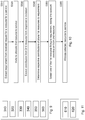
- Fig. 3 shows an apparatus according to an embodiment of the invention.
- the apparatus may be a terminal such as a UE, or an element thereof.
- Fig. 4 shows a method according to an embodiment of the invention.
- the apparatus according to Fig. 3 may perform the method of Fig. 4 but is not limited to this method.
- the method of Fig. 4 may be performed by the apparatus of Fig. 3 but is not limited to being performed by this apparatus.
- the apparatus comprises requesting means 10.
- the requesting means 10 may be requesting processor.
- the requesting processor 10 requests a resource for a service from a network (S10).
- the request includes a requirement indication indicating a requirement to the resource to be fulfilled for the service.
- the requirement indication may be a DGQ.
- the requirement may be a QoS requirement and/or a SLA requirement.
- Fig. 5 shows an apparatus according to an embodiment of the invention.
- the apparatus may be a network function which does not select a resource for the service such as a RAN (represented by eNB), or an element thereof.
- Fig. 6 shows a method according to an embodiment of the invention.
- the apparatus according to Fig. 5 may perform the method of Fig. 6 but is not limited to this method.
- the method of Fig. 6 may be performed by the apparatus of Fig. 5 but is not limited to being performed by this apparatus.
- the apparatus comprises extracting means 110, determining means 120, and asking means 130.
- the extracting means 110, determining means 120, and asking means 130 may be extracting processor, determining processor, and asking processor, respectively.
- the extracting means 110 extracts a requirement from a received request for a first resource for a service (S110).
- the request comprises a requirement indication, and the requirement indication indicates the requirement to be fulfilled for the service.
- the determining means 120 determines a contribution of the first resource to the requirement for a case that a first part of the service is executed by the first resource (S120).
- the asking means 130 asks for (i.e. "requests") a second resource for executing a second part of the service (S130).
- the asking i.e. the request for the second resource
- the asking includes a contribution indication.
- the contribution indication indicates an allowable contribution to the requirement, that is, how much the second resource may contribute to the requirement.
- the allowable contribution is based on the requirement and the contribution of the first resource.
- the allowable contribution may be indicated as the pair of requirement and contribution of the first resource, or the allowable contribution may be indicated as a calculated allowable contribution which is calculated based on the requirement and the contribution of the first resource.
- the apparatus e.g. an allocating means or allocating processor thereof
- Fig. 7 shows an apparatus according to an embodiment of the invention.
- the apparatus may be a network function which selects a resource for the service such as a node of a control plane (e.g. MME), or an element thereof.
- Fig. 8 shows a method according to an embodiment of the invention.
- the apparatus according to Fig. 7 may perform the method of Fig. 8 but is not limited to this method.
- the method of Fig. 8 may be performed by the apparatus of Fig. 7 but is not limited to being performed by this apparatus.
- the apparatus comprises extracting means 210, determining means 220, selecting means 230, and allocating means 240.
- the extracting means 210, determining means 220, selecting means 230, and allocating means 240 may be extracting processor, determining processor, selecting processor, and allocating processor, respectively.
- the extracting means 210 extracts a requirement from a received request for a resource for a service (S210).
- the request comprises a requirement indication, and the requirement indication indicates the requirement to be fulfilled for the service.
- the determining means 220 determines a respective contribution to the requirement for a case that at least a first part of the service is executed on the respective resource (S220). That is, under the assumption that at least a first part of the service is executed on the respective resource, the determining means 220 determines the contribution to the requirement caused by the respective resource.
- the selecting means 230 selects one of the plural resources such that a discrepancy between the requirement and the respective contribution is within a predetermined limit (S230), i.e. such that the contribution fits to the requirement. Then, the allocating means 240 allocates the selected resource to the service (S240).
- Fig. 9 shows an apparatus according to an embodiment of the invention.
- the apparatus may be a network function which selects a resource for the service such as a node of a control plane (e.g. MME), or an element thereof.
- Fig. 10 shows a method according to an embodiment of the invention.
- the apparatus according to Fig. 9 may perform the method of Fig. 10 but is not limited to this method.
- the method of Fig. 10 may be performed by the apparatus of Fig. 9 but is not limited to being performed by this apparatus.
- the apparatus comprises first extracting means 310, inviting means 320, second extracting means 330, determining means 340, selecting means 350, and allocating means 360.
- the first extracting means 310, inviting means 320, second extracting means 330, determining means 340, selecting means 350, and allocating means 360 may be first extracting processor, inviting processor, second extracting processor, determining processor, selecting processor, and allocating processor, respectively.
- the first extracting means 310 extracts a requirement from a received request for a first resource for a service (S310).
- the request comprises a requirement indication, and the requirement indication indicates the requirement to be fulfilled for the service.
- the inviting means 320 invites (i.e. "requests") a selecting device to allocate a second resource to the service for executing a second part of the service (S320).
- the invitation comprises the requirement indication.
- the selecting device may be e.g. a MME or another control device.
- the second extracting means 330 extracts a second contribution indication from a response to the invitation (S330).
- the second contribution indication indicates a contribution of the second resource if the second part of the service is executed on the second resource.
- the determining means 340 determines, for each of plural first resources, a respective first contribution to the requirement for a case that at least a first part of the service is executed on the respective first resource (S340).
- Each of the first resources may be different from the second resource. That is, the second resource may be under control of the selecting device, while the first resources may be under control of the apparatus.
- the selecting means 350 selects one of the plural first resources such that a discrepancy between the requirement and a total of the respective first contribution and the second contribution is within a predetermined limit (S350).
- the total of the contributions may be calculated depending on the kind of contribution. E.g. delays may be added, while probabilities or the inverse of probabilities (such as packet loss) may be multiplied.
- a total of two bandwidths may be the minimum of the two bandwidths.
- the allocating means 360 allocates the selected first resource to the service (S360).
- the selection function of the first resources may send information about the selected first resource to a selection function of the second resources so that the allocated first and second resources know each other and can exchange payload (can communicate with each other).
- Fig. 11 shows an apparatus according to an embodiment of the invention.
- the apparatus comprises at least one processor 610, at least one memory 620 including computer program code, and the at least one processor 610, with the at least one memory 620 and the computer program code, being arranged to cause the apparatus to at least perform at least one of the methods according to Figs. 4, 6 , 8 , and 10 .
- Embodiments of the invention may be employed in a 3GPP network such as LTE or LTE-A, or in a 5G network. They may be employed also in other wireless or wireline communication networks such as CDMA, EDGE, UTRAN networks, WiFi networks, etc..
- a terminal may be any apparatus capable to access the respective network.
- a terminal may be a UE, a M2M device, a computer/notebook, fixed telephone, etc.
- the terminal may be a smartphone, a laptop, a mobile phone etc.
- VPLMN may provide a requirement to HPLMN, wherein this requirement is a result of the overall requirement from the UE and the contribution from VPLMN.
- HPLMN may then consider the requirement received from VPLMN as an overall requirement in the same way as an overall requirement received from a UE attached to HPLMN.
- One piece of information may be transmitted in one or plural messages from one entity to another entity. Each of these messages may comprise further (different) pieces of information.
- Names of network elements, protocols, and methods are based on current standards. In other versions or other technologies, the names of these network elements and/or protocols and/or methods may be different, as long as they provide a corresponding functionality.
- each of the entities described in the present description may be based on a different hardware, or some or all of the entities may be based on the same hardware. It does not necessarily mean that they are based on different software. That is, each of the entities described in the present description may be based on different software, or some or all of the entities may be based on the same software.
- One or more of the described entities may be implemented in the cloud. In particular, each of the described entities may be implemented as a network slice.
- example embodiments of the present invention provide, for example a terminal such as a user equipment, or a component thereof, an apparatus embodying the same, a method for controlling and/or operating the same, and computer program(s) controlling and/or operating the same as well as mediums carrying such computer program(s) and forming computer program product(s).
- example embodiments of the present invention provide, for example an access node such as a base station (e.g.
- NodeB or eNodeB or a component thereof, an apparatus embodying the same, a method for controlling and/or operating the same, and computer program(s) controlling and/or operating the same as well as mediums carrying such computer program(s) and forming computer program product(s).
- a control device such as a MME
- a component thereof an apparatus embodying the same, a method for controlling and/or operating the same, and computer program(s) controlling and/or operating the same as well as mediums carrying such computer program(s) and forming computer program product(s).
- Implementations of any of the above described blocks, apparatuses, systems, techniques or methods include, as non-limiting examples, implementations as hardware, software, firmware, special purpose circuits or logic, general purpose hardware or controller or other computing devices, or some combination thereof. They may be implemented fully or partly in the cloud.
Landscapes
- Engineering & Computer Science (AREA)
- Signal Processing (AREA)
- Computer Networks & Wireless Communication (AREA)
- Quality & Reliability (AREA)
- Computer Security & Cryptography (AREA)
- Mobile Radio Communication Systems (AREA)
Claims (15)
- Vorrichtung eines Funkzugangsnetzwerks, RAN, die mindestens einen Prozessor (610), mindestens einen Speicher (620), der Computerprogrammcode beinhaltet, umfasst, und wobei der mindestens eine Prozessor mit dem mindestens einen Speicher und dem Computerprogrammcode angeordnet ist, die Vorrichtung zu veranlassen, mindestens die folgenden Schritte durchzuführen:Extrahieren einer Forderung für eine erste Ressource der Vorrichtung für einen Dienst aus einer ersten Anforderungsnachricht, wobei die Anforderung von einer Teilnehmereinrichtung, UE, empfangen wird und eine Forderungsanzeige umfasst und die Forderungsanzeige die für den Dienst zu erfüllende Forderung anzeigt;für einen Fall, dass ein erster Teil des Dienstes auf der ersten Ressource ausgeführt wird, Bestimmen eines Beitrags der ersten Ressource zur Forderung;Übertragen einer zweiten Anforderungsnachricht zum Anfragen wegen einer zweiten Ressource zum Ausführen eines zweiten Teils des Dienstes zu einer Steuerebene, CP, eines Kernnetzwerks, CN, wobei die zweite Anforderungsnachricht eine Beitragsanzeige beinhaltet, die Beitragsanzeige einen zulässigen Beitrag zur Forderung anzeigt und der zulässige Beitrag die Forderung und den Beitrag der ersten Ressource zur Forderung umfasst.
- Vorrichtung nach Anspruch 1, wobei der mindestens eine Speicher (620) und der Computerprogrammcode angeordnet sind, die Vorrichtung zu veranlassen, ferner Folgendes durchzuführen
für einen Fall, dass der erste Teil des Dienstes auf der jeweiligen ersten Ressource ausgeführt wird, Bestimmen eines jeweiligen Beitrags der jeweiligen ersten Ressource zur Forderung für jede von mehreren ersten Ressourcen für den Dienst; wobei
die zweite Anforderungsnachricht für die zweite Ressource ein oder mehrere Beitragsanzeigenpaare beinhaltet, von denen jedes eine Identifikation einer jeweiligen ersten Ressource der mehreren ersten Ressourcen und eine jeweilige Beitragsanzeige umfasst, und jede der Beitragsanzeigen auf der Forderung und dem Beitrag der jeweiligen ersten Ressource basiert. - Vorrichtung nach Anspruch 2, wobei der mindestens eine Speicher (620) und der Computerprogrammcode angeordnet sind, die Vorrichtung zu veranlassen, ferner Folgendes durchzuführen
Prüfen für jede der mehreren ersten Ressourcen auf Basis des jeweiligen Beitrags, ob die Forderung für den Dienst von der jeweiligen ersten Ressource erfüllt werden kann;
Unterbinden für jede der mehreren ersten Ressourcen, dass die zweite Anforderungsnachricht für die zweite Ressource das Beitragsanzeigenpaar, das die Identifikation der jeweiligen ersten Ressource umfasst, wenn die Forderung für den Dienst von der jeweiligen ersten Ressource nicht erfüllt werden kann. - Vorrichtung nach Anspruch 2, wobei der mindestens eine Speicher (620) und der Computerprogrammcode angeordnet sind, die Vorrichtung zu veranlassen, ferner Folgendes durchzuführen
Überwachen, ob eine empfangene Antwort auf die zweite Anforderungsnachricht für die zweite Ressource die Identifikation einer ausgewählten der ersten Ressourcen umfasst;
Zuteilen der ausgewählten der ersten Ressourcen zum Dienst, wenn die Antwort die Identifikation der ausgewählten einen der ersten Ressourcen umfasst. - Vorrichtung nach Anspruch 2, wobei mindestens eines von Folgendem gilt
der zulässige Beitrag wird in der Beitragsanzeige durch die Forderung und den Beitrag der ersten Ressource angezeigt; und
der mindestens eine Speicher (620) und der Computerprogrammcode angeordnet sind, die Vorrichtung zu veranlassen, das Berechnen des zulässigen Beitrags auf Basis der Forderung und des Beitrags der ersten Ressource durchzuführen, und die Beitragsanzeige den berechneten zulässigen Beitrag umfasst. - Vorrichtung nach Anspruch 2, wobei der mindestens eine Speicher (620) und der Computerprogrammcode angeordnet sind, die Vorrichtung zu veranlassen, ferner Folgendes durchzuführen
Prüfen, ob der Beitrag der ersten Ressource das Erfüllen der Forderung zulässt;
Zuteilen der ersten Ressource zum Dienst, wenn der Beitrag der ersten Ressource das Erfüllen der Forderung zulässt. - Vorrichtung nach Anspruch 6, wobei der mindestens eine Speicher (620) und der Computerprogrammcode angeordnet sind, die Vorrichtung zu veranlassen, ferner Folgendes durchzuführen
Bereitstellen einer abgehenden Unmöglichkeitsanzeige in Reaktion auf die Anforderung der ersten Ressource, wenn der Beitrag der ersten Ressource das Erfüllen der Forderung nicht zulässt. - Vorrichtung nach Anspruch 2, wobei der mindestens eine Speicher (620) und der Computerprogrammcode angeordnet sind, die Vorrichtung zu veranlassen, ferner Folgendes durchzuführen
in Reaktion auf die zweite Anforderungsnachricht für die zweite Ressource Überwachen, ob eine eingehende Unmöglichkeitsanzeige empfangen wird, wobei die eingehende Unmöglichkeitsanzeige anzeigt, dass die zweite Ressource den zulässigen Beitrag überschreitet;
für einen Fall, dass der zweite Teil des Dienstes auf der dritten Ressource ausgeführt wird, Bestimmen eines Beitrags einer dritten Ressource zur Forderung;
Prüfen, ob der Beitrag der dritten Ressource den zulässigen Beitrag überschreitet;
Zuteilen der dritten Ressource zum Dienst, wenn der Beitrag der dritten Ressource den zulässigen Beitrag nicht überschreitet und die eingehende Unmöglichkeitsanzeige empfangen wird. - Verfahren, das von einer Vorrichtung eines Funkzugangsnetzwerks, RAN, durchgeführt wird, wobei die Vorrichtung mindestens einen Prozessor (610), mindestens einen Speicher (620), der Computerprogrammcode beinhaltet, umfasst, wobei das Verfahren mindestens die folgenden Schritte umfasst:Extrahieren einer Forderung für eine erste Ressource der Vorrichtung für einen Dienst aus einer ersten Anforderungsnachricht, wobei die Anforderung von einer Teilnehmereinrichtung, UE, empfangen wird und eine Forderungsanzeige umfasst und die Forderungsanzeige die für den Dienst zu erfüllende Forderung anzeigt;für einen Fall, dass ein erster Teil des Dienstes auf der ersten Ressource ausgeführt wird, Bestimmen eines Beitrags der ersten Ressource zur Forderung;Übertragen einer zweiten Anforderungsnachricht zum Anfragen wegen einer zweiten Ressource zum Ausführen eines zweiten Teils des Dienstes zu einer Steuerebene, CP, eines Kernnetzwerks, CN, wobei die zweite Anforderungsnachricht eine Beitragsanzeige beinhaltet, die Beitragsanzeige einen zulässigen Beitrag zur Forderung anzeigt und der zulässige Beitrag die Forderung und den Beitrag der ersten Ressource zur Forderung umfasst.
- Verfahren nach Anspruch 9, das ferner Folgendes umfasst
für einen Fall, dass der erste Teil des Dienstes auf der jeweiligen ersten Ressource ausgeführt wird, Bestimmen eines jeweiligen Beitrags der jeweiligen ersten Ressource zur Forderung für jede von mehreren ersten Ressourcen für den Dienst; wobei
die zweite Anforderungsnachricht für die zweite Ressource ein oder mehrere Beitragsanzeigenpaare beinhaltet, von denen jedes eine Identifikation einer jeweiligen ersten Ressource der mehreren ersten Ressourcen und eine jeweilige Beitragsanzeige umfasst, und jede der Beitragsanzeigen auf der Forderung und dem Beitrag der jeweiligen ersten Ressource basiert. - Verfahren nach Anspruch 10, das ferner Folgendes umfasst
Prüfen für jede der mehreren ersten Ressourcen auf Basis des jeweiligen Beitrags, ob die Forderung für den Dienst von der jeweiligen ersten Ressource erfüllt werden kann;
Unterbinden für jede der mehreren ersten Ressourcen, dass die zweite Anforderungsnachricht für die zweite Ressource das Beitragsanzeigenpaar, das die Identifikation der jeweiligen ersten Ressource umfasst, wenn die Forderung für den Dienst von der jeweiligen ersten Ressource nicht erfüllt werden kann. - Verfahren nach Anspruch 10, das ferner Folgendes umfasst
Überwachen, ob eine empfangene Antwort auf die zweite Anforderungsnachricht für die zweite Ressource die Identifikation einer ausgewählten der ersten Ressourcen umfasst;
Zuteilen der ausgewählten der ersten Ressourcen zum Dienst, wenn die Antwort die Identifikation der ausgewählten einen der ersten Ressourcen umfasst. - Verfahren nach Anspruch 10, wobei mindestens eines von Folgendem gilt
der zulässige Beitrag wird in der Beitragsanzeige durch die Forderung und den Beitrag der ersten Ressource angezeigt; und
das Verfahren umfasst ferner das Berechnen des zulässigen Beitrags auf Basis der Forderung und des Beitrags der ersten Ressource, und die Beitragsanzeige den berechneten zulässigen Beitrag umfasst. - Verfahren nach Anspruch 10, das ferner Folgendes umfasst
Prüfen, ob der Beitrag der ersten Ressource das Erfüllen der Forderung zulässt;
Zuteilen der ersten Ressource zum Dienst, wenn der Beitrag der ersten Ressource das Erfüllen der Forderung zulässt. - Verfahren nach Anspruch 14, das ferner Folgendes umfasst
Bereitstellen einer abgehenden Unmöglichkeitsanzeige in Reaktion auf die Anforderung der ersten Ressource, wenn der Beitrag der ersten Ressource das Erfüllen der Forderung nicht zulässt.
Applications Claiming Priority (1)
| Application Number | Priority Date | Filing Date | Title |
|---|---|---|---|
| PCT/EP2017/052311 WO2018141393A1 (en) | 2017-02-03 | 2017-02-03 | Sustainable service selection |
Publications (2)
| Publication Number | Publication Date |
|---|---|
| EP3577982A1 EP3577982A1 (de) | 2019-12-11 |
| EP3577982B1 true EP3577982B1 (de) | 2021-07-14 |
Family
ID=58098592
Family Applications (1)
| Application Number | Title | Priority Date | Filing Date |
|---|---|---|---|
| EP17706419.3A Active EP3577982B1 (de) | 2017-02-03 | 2017-02-03 | Nachhaltige dienstauswahl |
Country Status (4)
| Country | Link |
|---|---|
| US (1) | US10873948B2 (de) |
| EP (1) | EP3577982B1 (de) |
| JP (1) | JP2020506625A (de) |
| WO (1) | WO2018141393A1 (de) |
Families Citing this family (7)
| Publication number | Priority date | Publication date | Assignee | Title |
|---|---|---|---|---|
| RU2760569C2 (ru) * | 2017-03-23 | 2021-11-29 | Сони Корпорейшн | Устройство, способ и записываемый носитель информации |
| JP2020530221A (ja) * | 2017-08-09 | 2020-10-15 | テレフオンアクチーボラゲット エルエム エリクソン(パブル) | 無線通信ネットワークにおけるネットワークノードおよび方法 |
| WO2019164517A1 (en) * | 2018-02-25 | 2019-08-29 | Nokia Solutions And Networks Oy | Method and system for controlling an operation of a communication network to reduce latency |
| US10779155B2 (en) * | 2018-07-17 | 2020-09-15 | At&T Intellectual Property I, L.P. | Customizable and low-latency architecture for cellular core networks |
| US12256338B2 (en) * | 2019-08-23 | 2025-03-18 | Sony Group Corporation | Multiple power class operation |
| EP4301005A4 (de) * | 2021-03-02 | 2024-04-03 | Guangdong Oppo Mobile Telecommunications Corp., Ltd. | Kommunikationsverfahren, vorrichtung und speichermedium |
| EP4096308A1 (de) * | 2021-05-28 | 2022-11-30 | Comcast Cable Communications, LLC | Mehrfachzugriff in einem besuchten netz |
Family Cites Families (13)
| Publication number | Priority date | Publication date | Assignee | Title |
|---|---|---|---|---|
| US6948070B1 (en) * | 1995-02-13 | 2005-09-20 | Intertrust Technologies Corporation | Systems and methods for secure transaction management and electronic rights protection |
| CN100365535C (zh) * | 1995-02-13 | 2008-01-30 | 英特特拉斯特技术公司 | 用于安全交易管理和电子权利保护的系统和方法 |
| US7069451B1 (en) * | 1995-02-13 | 2006-06-27 | Intertrust Technologies Corp. | Systems and methods for secure transaction management and electronic rights protection |
| US9111288B2 (en) * | 2010-05-07 | 2015-08-18 | Infosys Limited | Method and system for providing real time communications services by a service provider in collaboration with a communications service provider |
| US20170206115A1 (en) * | 2015-03-20 | 2017-07-20 | Ntt Docomo, Inc. | System and method |
| EP3272103A1 (de) * | 2015-03-20 | 2018-01-24 | Nokia Solutions and Networks GmbH & Co. KG | Koexistenz von softwaredefiniertem netzwerk, netzwerkfunktionsvirtualisierung und alt-netzwerken |
| US20160353367A1 (en) * | 2015-06-01 | 2016-12-01 | Huawei Technologies Co., Ltd. | System and Method for Virtualized Functions in Control and Data Planes |
| EP3257320B1 (de) * | 2015-06-01 | 2020-04-08 | Huawei Technologies Co., Ltd. | System und verfahren für virtualisierte funktionen auf steuerungs- und datenebenen |
| JPWO2017057025A1 (ja) * | 2015-09-30 | 2018-03-01 | 株式会社Nttドコモ | サービス割当決定方法 |
| EP4236253A3 (de) * | 2016-03-09 | 2023-10-18 | Ntt Docomo, Inc. | Slice-zuweisungsverfahren |
| US10863376B2 (en) * | 2018-01-18 | 2020-12-08 | Intel Corporation | Measurement job creation and performance data reporting for advanced networks including network slicing |
| US11070997B2 (en) * | 2018-02-22 | 2021-07-20 | Intel Corporation | Performance measurement job control for 5G networks and network slicing |
| US11051195B2 (en) * | 2018-05-02 | 2021-06-29 | Apple Inc. | Operations and notifications for performance management of 5G networks and network slicing |
-
2017
- 2017-02-03 EP EP17706419.3A patent/EP3577982B1/de active Active
- 2017-02-03 US US16/482,733 patent/US10873948B2/en active Active
- 2017-02-03 WO PCT/EP2017/052311 patent/WO2018141393A1/en not_active Ceased
- 2017-02-03 JP JP2019542114A patent/JP2020506625A/ja active Pending
Non-Patent Citations (1)
| Title |
|---|
| None * |
Also Published As
| Publication number | Publication date |
|---|---|
| US20200213992A1 (en) | 2020-07-02 |
| EP3577982A1 (de) | 2019-12-11 |
| WO2018141393A1 (en) | 2018-08-09 |
| US10873948B2 (en) | 2020-12-22 |
| JP2020506625A (ja) | 2020-02-27 |
Similar Documents
| Publication | Publication Date | Title |
|---|---|---|
| US11871340B2 (en) | Network slice selection | |
| US10873948B2 (en) | Sustainable service selection | |
| US11343111B2 (en) | Quota management in mobile edge computing (MEC) | |
| US11564084B2 (en) | Information transmission method, device, and computer readable storage medium | |
| US10595233B2 (en) | Communication control method, controller, user equipment, and function instance | |
| EP3732846B1 (de) | Steuerung der dienstgüte (qos) in mobile edge computing (mec) | |
| US10390257B2 (en) | Traffic priority for long term evolution networks | |
| US11330605B2 (en) | Systems and methods for radio access network-level allocation and retention priority based on network slicing | |
| US20200068587A1 (en) | Technique for User Plane Function Allocation | |
| US10064096B2 (en) | Traffic distribution in heterogenous network environment | |
| WO2019141166A1 (zh) | QoS流的控制方法和装置 | |
| CN111903094A (zh) | 用于在线计费的会话管理功能(smf)中的配额管理 | |
| US9843517B2 (en) | Dynamically adjusting network services stratum parameters based on access and/or connectivity stratum utilization and/or congestion information | |
| US20220287051A1 (en) | System and method for determining priorities for handling data based on network slice identifiers | |
| KR20180038035A (ko) | 통신 시스템에서 데이터 흐름 전송을 위한 개선된 우선권 핸들링 | |
| CN116939036A (zh) | 发现应用服务器的方法和装置 | |
| US12418837B2 (en) | Resource balancing | |
| US10080160B2 (en) | Method for resource reservation executed by a network element of a mobile communication network for a communication connection between a mobile device and a communication destination | |
| EP3518576B1 (de) | Datenflussmanager zum verteilen von daten für einen datenstrom eines benutzergeräts, kommunikationssystem und -verfahren | |
| KR20170034314A (ko) | 액세스 방식에 비종속적인 통합 네트워크 시스템 및 그 방법 | |
| KR102531648B1 (ko) | 다중망 병합 전송 시스템, 그리고 이의 동작 방법 | |
| CN118525548A (zh) | 通信方法、装置、网元、芯片、存储介质、产品及程序 | |
| JP6180182B2 (ja) | 複数の無線ベアラにアクセスする方法及び装置 | |
| CN120883653A (zh) | 无线通信的方法和通信装置 | |
| JP2016225682A (ja) | 中継装置、通信システム、通信制御方法および通信制御プログラム |
Legal Events
| Date | Code | Title | Description |
|---|---|---|---|
| STAA | Information on the status of an ep patent application or granted ep patent |
Free format text: STATUS: UNKNOWN |
|
| STAA | Information on the status of an ep patent application or granted ep patent |
Free format text: STATUS: THE INTERNATIONAL PUBLICATION HAS BEEN MADE |
|
| PUAI | Public reference made under article 153(3) epc to a published international application that has entered the european phase |
Free format text: ORIGINAL CODE: 0009012 |
|
| STAA | Information on the status of an ep patent application or granted ep patent |
Free format text: STATUS: REQUEST FOR EXAMINATION WAS MADE |
|
| 17P | Request for examination filed |
Effective date: 20190903 |
|
| AK | Designated contracting states |
Kind code of ref document: A1 Designated state(s): AL AT BE BG CH CY CZ DE DK EE ES FI FR GB GR HR HU IE IS IT LI LT LU LV MC MK MT NL NO PL PT RO RS SE SI SK SM TR |
|
| AX | Request for extension of the european patent |
Extension state: BA ME |
|
| DAV | Request for validation of the european patent (deleted) | ||
| DAX | Request for extension of the european patent (deleted) | ||
| STAA | Information on the status of an ep patent application or granted ep patent |
Free format text: STATUS: EXAMINATION IS IN PROGRESS |
|
| 17Q | First examination report despatched |
Effective date: 20200908 |
|
| REG | Reference to a national code |
Ref country code: DE Ref legal event code: R079 Ref document number: 602017042063 Country of ref document: DE Free format text: PREVIOUS MAIN CLASS: H04W0072080000 Ipc: H04W0048180000 |
|
| RIC1 | Information provided on ipc code assigned before grant |
Ipc: H04L 5/00 20060101ALN20210115BHEP Ipc: H04L 12/24 20060101ALN20210115BHEP Ipc: H04W 76/12 20180101ALN20210115BHEP Ipc: H04W 72/08 20090101ALN20210115BHEP Ipc: H04W 48/18 20090101AFI20210115BHEP |
|
| RIC1 | Information provided on ipc code assigned before grant |
Ipc: H04W 76/12 20180101ALN20210122BHEP Ipc: H04W 72/08 20090101ALN20210122BHEP Ipc: H04L 12/24 20060101ALN20210122BHEP Ipc: H04L 5/00 20060101ALN20210122BHEP Ipc: H04W 48/18 20090101AFI20210122BHEP |
|
| GRAP | Despatch of communication of intention to grant a patent |
Free format text: ORIGINAL CODE: EPIDOSNIGR1 |
|
| STAA | Information on the status of an ep patent application or granted ep patent |
Free format text: STATUS: GRANT OF PATENT IS INTENDED |
|
| RIC1 | Information provided on ipc code assigned before grant |
Ipc: H04W 72/08 20090101ALN20210209BHEP Ipc: H04L 12/24 20060101ALN20210209BHEP Ipc: H04W 76/12 20180101ALN20210209BHEP Ipc: H04W 48/18 20090101AFI20210209BHEP Ipc: H04L 5/00 20060101ALN20210209BHEP |
|
| INTG | Intention to grant announced |
Effective date: 20210312 |
|
| GRAS | Grant fee paid |
Free format text: ORIGINAL CODE: EPIDOSNIGR3 |
|
| GRAA | (expected) grant |
Free format text: ORIGINAL CODE: 0009210 |
|
| STAA | Information on the status of an ep patent application or granted ep patent |
Free format text: STATUS: THE PATENT HAS BEEN GRANTED |
|
| AK | Designated contracting states |
Kind code of ref document: B1 Designated state(s): AL AT BE BG CH CY CZ DE DK EE ES FI FR GB GR HR HU IE IS IT LI LT LU LV MC MK MT NL NO PL PT RO RS SE SI SK SM TR |
|
| REG | Reference to a national code |
Ref country code: GB Ref legal event code: FG4D |
|
| REG | Reference to a national code |
Ref country code: IE Ref legal event code: FG4D |
|
| REG | Reference to a national code |
Ref country code: DE Ref legal event code: R096 Ref document number: 602017042063 Country of ref document: DE |
|
| REG | Reference to a national code |
Ref country code: AT Ref legal event code: REF Ref document number: 1411648 Country of ref document: AT Kind code of ref document: T Effective date: 20210815 |
|
| REG | Reference to a national code |
Ref country code: LT Ref legal event code: MG9D |
|
| REG | Reference to a national code |
Ref country code: NL Ref legal event code: MP Effective date: 20210714 |
|
| REG | Reference to a national code |
Ref country code: AT Ref legal event code: MK05 Ref document number: 1411648 Country of ref document: AT Kind code of ref document: T Effective date: 20210714 |
|
| PG25 | Lapsed in a contracting state [announced via postgrant information from national office to epo] |
Ref country code: BG Free format text: LAPSE BECAUSE OF FAILURE TO SUBMIT A TRANSLATION OF THE DESCRIPTION OR TO PAY THE FEE WITHIN THE PRESCRIBED TIME-LIMIT Effective date: 20211014 Ref country code: AT Free format text: LAPSE BECAUSE OF FAILURE TO SUBMIT A TRANSLATION OF THE DESCRIPTION OR TO PAY THE FEE WITHIN THE PRESCRIBED TIME-LIMIT Effective date: 20210714 Ref country code: LT Free format text: LAPSE BECAUSE OF FAILURE TO SUBMIT A TRANSLATION OF THE DESCRIPTION OR TO PAY THE FEE WITHIN THE PRESCRIBED TIME-LIMIT Effective date: 20210714 Ref country code: ES Free format text: LAPSE BECAUSE OF FAILURE TO SUBMIT A TRANSLATION OF THE DESCRIPTION OR TO PAY THE FEE WITHIN THE PRESCRIBED TIME-LIMIT Effective date: 20210714 Ref country code: FI Free format text: LAPSE BECAUSE OF FAILURE TO SUBMIT A TRANSLATION OF THE DESCRIPTION OR TO PAY THE FEE WITHIN THE PRESCRIBED TIME-LIMIT Effective date: 20210714 Ref country code: PT Free format text: LAPSE BECAUSE OF FAILURE TO SUBMIT A TRANSLATION OF THE DESCRIPTION OR TO PAY THE FEE WITHIN THE PRESCRIBED TIME-LIMIT Effective date: 20211115 Ref country code: NL Free format text: LAPSE BECAUSE OF FAILURE TO SUBMIT A TRANSLATION OF THE DESCRIPTION OR TO PAY THE FEE WITHIN THE PRESCRIBED TIME-LIMIT Effective date: 20210714 Ref country code: NO Free format text: LAPSE BECAUSE OF FAILURE TO SUBMIT A TRANSLATION OF THE DESCRIPTION OR TO PAY THE FEE WITHIN THE PRESCRIBED TIME-LIMIT Effective date: 20211014 Ref country code: HR Free format text: LAPSE BECAUSE OF FAILURE TO SUBMIT A TRANSLATION OF THE DESCRIPTION OR TO PAY THE FEE WITHIN THE PRESCRIBED TIME-LIMIT Effective date: 20210714 Ref country code: SE Free format text: LAPSE BECAUSE OF FAILURE TO SUBMIT A TRANSLATION OF THE DESCRIPTION OR TO PAY THE FEE WITHIN THE PRESCRIBED TIME-LIMIT Effective date: 20210714 Ref country code: RS Free format text: LAPSE BECAUSE OF FAILURE TO SUBMIT A TRANSLATION OF THE DESCRIPTION OR TO PAY THE FEE WITHIN THE PRESCRIBED TIME-LIMIT Effective date: 20210714 |
|
| PG25 | Lapsed in a contracting state [announced via postgrant information from national office to epo] |
Ref country code: PL Free format text: LAPSE BECAUSE OF FAILURE TO SUBMIT A TRANSLATION OF THE DESCRIPTION OR TO PAY THE FEE WITHIN THE PRESCRIBED TIME-LIMIT Effective date: 20210714 Ref country code: LV Free format text: LAPSE BECAUSE OF FAILURE TO SUBMIT A TRANSLATION OF THE DESCRIPTION OR TO PAY THE FEE WITHIN THE PRESCRIBED TIME-LIMIT Effective date: 20210714 Ref country code: GR Free format text: LAPSE BECAUSE OF FAILURE TO SUBMIT A TRANSLATION OF THE DESCRIPTION OR TO PAY THE FEE WITHIN THE PRESCRIBED TIME-LIMIT Effective date: 20211015 |
|
| REG | Reference to a national code |
Ref country code: DE Ref legal event code: R097 Ref document number: 602017042063 Country of ref document: DE |
|
| PG25 | Lapsed in a contracting state [announced via postgrant information from national office to epo] |
Ref country code: DK Free format text: LAPSE BECAUSE OF FAILURE TO SUBMIT A TRANSLATION OF THE DESCRIPTION OR TO PAY THE FEE WITHIN THE PRESCRIBED TIME-LIMIT Effective date: 20210714 |
|
| PLBE | No opposition filed within time limit |
Free format text: ORIGINAL CODE: 0009261 |
|
| STAA | Information on the status of an ep patent application or granted ep patent |
Free format text: STATUS: NO OPPOSITION FILED WITHIN TIME LIMIT |
|
| PG25 | Lapsed in a contracting state [announced via postgrant information from national office to epo] |
Ref country code: SM Free format text: LAPSE BECAUSE OF FAILURE TO SUBMIT A TRANSLATION OF THE DESCRIPTION OR TO PAY THE FEE WITHIN THE PRESCRIBED TIME-LIMIT Effective date: 20210714 Ref country code: SK Free format text: LAPSE BECAUSE OF FAILURE TO SUBMIT A TRANSLATION OF THE DESCRIPTION OR TO PAY THE FEE WITHIN THE PRESCRIBED TIME-LIMIT Effective date: 20210714 Ref country code: RO Free format text: LAPSE BECAUSE OF FAILURE TO SUBMIT A TRANSLATION OF THE DESCRIPTION OR TO PAY THE FEE WITHIN THE PRESCRIBED TIME-LIMIT Effective date: 20210714 Ref country code: EE Free format text: LAPSE BECAUSE OF FAILURE TO SUBMIT A TRANSLATION OF THE DESCRIPTION OR TO PAY THE FEE WITHIN THE PRESCRIBED TIME-LIMIT Effective date: 20210714 Ref country code: CZ Free format text: LAPSE BECAUSE OF FAILURE TO SUBMIT A TRANSLATION OF THE DESCRIPTION OR TO PAY THE FEE WITHIN THE PRESCRIBED TIME-LIMIT Effective date: 20210714 Ref country code: AL Free format text: LAPSE BECAUSE OF FAILURE TO SUBMIT A TRANSLATION OF THE DESCRIPTION OR TO PAY THE FEE WITHIN THE PRESCRIBED TIME-LIMIT Effective date: 20210714 |
|
| 26N | No opposition filed |
Effective date: 20220419 |
|
| PG25 | Lapsed in a contracting state [announced via postgrant information from national office to epo] |
Ref country code: IT Free format text: LAPSE BECAUSE OF FAILURE TO SUBMIT A TRANSLATION OF THE DESCRIPTION OR TO PAY THE FEE WITHIN THE PRESCRIBED TIME-LIMIT Effective date: 20210714 |
|
| PG25 | Lapsed in a contracting state [announced via postgrant information from national office to epo] |
Ref country code: MC Free format text: LAPSE BECAUSE OF FAILURE TO SUBMIT A TRANSLATION OF THE DESCRIPTION OR TO PAY THE FEE WITHIN THE PRESCRIBED TIME-LIMIT Effective date: 20210714 |
|
| REG | Reference to a national code |
Ref country code: CH Ref legal event code: PL |
|
| REG | Reference to a national code |
Ref country code: BE Ref legal event code: MM Effective date: 20220228 |
|
| PG25 | Lapsed in a contracting state [announced via postgrant information from national office to epo] |
Ref country code: LU Free format text: LAPSE BECAUSE OF NON-PAYMENT OF DUE FEES Effective date: 20220203 |
|
| PG25 | Lapsed in a contracting state [announced via postgrant information from national office to epo] |
Ref country code: LI Free format text: LAPSE BECAUSE OF NON-PAYMENT OF DUE FEES Effective date: 20220228 Ref country code: IE Free format text: LAPSE BECAUSE OF NON-PAYMENT OF DUE FEES Effective date: 20220203 Ref country code: CH Free format text: LAPSE BECAUSE OF NON-PAYMENT OF DUE FEES Effective date: 20220228 |
|
| PG25 | Lapsed in a contracting state [announced via postgrant information from national office to epo] |
Ref country code: BE Free format text: LAPSE BECAUSE OF NON-PAYMENT OF DUE FEES Effective date: 20220228 |
|
| P01 | Opt-out of the competence of the unified patent court (upc) registered |
Effective date: 20230527 |
|
| PG25 | Lapsed in a contracting state [announced via postgrant information from national office to epo] |
Ref country code: MK Free format text: LAPSE BECAUSE OF FAILURE TO SUBMIT A TRANSLATION OF THE DESCRIPTION OR TO PAY THE FEE WITHIN THE PRESCRIBED TIME-LIMIT Effective date: 20210714 Ref country code: CY Free format text: LAPSE BECAUSE OF FAILURE TO SUBMIT A TRANSLATION OF THE DESCRIPTION OR TO PAY THE FEE WITHIN THE PRESCRIBED TIME-LIMIT Effective date: 20210714 |
|
| PG25 | Lapsed in a contracting state [announced via postgrant information from national office to epo] |
Ref country code: HU Free format text: LAPSE BECAUSE OF FAILURE TO SUBMIT A TRANSLATION OF THE DESCRIPTION OR TO PAY THE FEE WITHIN THE PRESCRIBED TIME-LIMIT; INVALID AB INITIO Effective date: 20170203 |
|
| PG25 | Lapsed in a contracting state [announced via postgrant information from national office to epo] |
Ref country code: TR Free format text: LAPSE BECAUSE OF FAILURE TO SUBMIT A TRANSLATION OF THE DESCRIPTION OR TO PAY THE FEE WITHIN THE PRESCRIBED TIME-LIMIT Effective date: 20210714 |
|
| PG25 | Lapsed in a contracting state [announced via postgrant information from national office to epo] |
Ref country code: MT Free format text: LAPSE BECAUSE OF FAILURE TO SUBMIT A TRANSLATION OF THE DESCRIPTION OR TO PAY THE FEE WITHIN THE PRESCRIBED TIME-LIMIT Effective date: 20210714 |
|
| PGFP | Annual fee paid to national office [announced via postgrant information from national office to epo] |
Ref country code: FR Payment date: 20251231 Year of fee payment: 10 |
|
| PGFP | Annual fee paid to national office [announced via postgrant information from national office to epo] |
Ref country code: GB Payment date: 20260106 Year of fee payment: 10 |
|
| PGFP | Annual fee paid to national office [announced via postgrant information from national office to epo] |
Ref country code: DE Payment date: 20251230 Year of fee payment: 10 |