EP3578588B1 - Hocheffiziente nassfestharze aus neuen vernetzern - Google Patents
Hocheffiziente nassfestharze aus neuen vernetzern Download PDFInfo
- Publication number
- EP3578588B1 EP3578588B1 EP19182264.2A EP19182264A EP3578588B1 EP 3578588 B1 EP3578588 B1 EP 3578588B1 EP 19182264 A EP19182264 A EP 19182264A EP 3578588 B1 EP3578588 B1 EP 3578588B1
- Authority
- EP
- European Patent Office
- Prior art keywords
- resin
- azetidinium
- cross
- alternatively
- wet strength
- Prior art date
- Legal status (The legal status is an assumption and is not a legal conclusion. Google has not performed a legal analysis and makes no representation as to the accuracy of the status listed.)
- Active
Links
Classifications
-
- D—TEXTILES; PAPER
- D21—PAPER-MAKING; PRODUCTION OF CELLULOSE
- D21H—PULP COMPOSITIONS; PREPARATION THEREOF NOT COVERED BY SUBCLASSES D21C OR D21D; IMPREGNATING OR COATING OF PAPER; TREATMENT OF FINISHED PAPER NOT COVERED BY CLASS B31 OR SUBCLASS D21G; PAPER NOT OTHERWISE PROVIDED FOR
- D21H21/00—Non-fibrous material added to the pulp, characterised by its function, form or properties; Paper-impregnating or coating material, characterised by its function, form or properties
- D21H21/14—Non-fibrous material added to the pulp, characterised by its function, form or properties; Paper-impregnating or coating material, characterised by its function, form or properties characterised by function or properties in or on the paper
- D21H21/18—Reinforcing agents
- D21H21/20—Wet strength agents
-
- C—CHEMISTRY; METALLURGY
- C08—ORGANIC MACROMOLECULAR COMPOUNDS; THEIR PREPARATION OR CHEMICAL WORKING-UP; COMPOSITIONS BASED THEREON
- C08G—MACROMOLECULAR COMPOUNDS OBTAINED OTHERWISE THAN BY REACTIONS ONLY INVOLVING UNSATURATED CARBON-TO-CARBON BONDS
- C08G73/00—Macromolecular compounds obtained by reactions forming a linkage containing nitrogen with or without oxygen or carbon in the main chain of the macromolecule, not provided for in groups C08G12/00 - C08G71/00
- C08G73/06—Polycondensates having nitrogen-containing heterocyclic rings in the main chain of the macromolecule
-
- D—TEXTILES; PAPER
- D21—PAPER-MAKING; PRODUCTION OF CELLULOSE
- D21H—PULP COMPOSITIONS; PREPARATION THEREOF NOT COVERED BY SUBCLASSES D21C OR D21D; IMPREGNATING OR COATING OF PAPER; TREATMENT OF FINISHED PAPER NOT COVERED BY CLASS B31 OR SUBCLASS D21G; PAPER NOT OTHERWISE PROVIDED FOR
- D21H11/00—Pulp or paper, comprising cellulose or lignocellulose fibres of natural origin only
- D21H11/02—Chemical or chemomechanical or chemothermomechanical pulp
- D21H11/04—Kraft or sulfate pulp
-
- D—TEXTILES; PAPER
- D21—PAPER-MAKING; PRODUCTION OF CELLULOSE
- D21H—PULP COMPOSITIONS; PREPARATION THEREOF NOT COVERED BY SUBCLASSES D21C OR D21D; IMPREGNATING OR COATING OF PAPER; TREATMENT OF FINISHED PAPER NOT COVERED BY CLASS B31 OR SUBCLASS D21G; PAPER NOT OTHERWISE PROVIDED FOR
- D21H17/00—Non-fibrous material added to the pulp, characterised by its constitution; Paper-impregnating material characterised by its constitution
- D21H17/20—Macromolecular organic compounds
- D21H17/33—Synthetic macromolecular compounds
-
- D—TEXTILES; PAPER
- D21—PAPER-MAKING; PRODUCTION OF CELLULOSE
- D21H—PULP COMPOSITIONS; PREPARATION THEREOF NOT COVERED BY SUBCLASSES D21C OR D21D; IMPREGNATING OR COATING OF PAPER; TREATMENT OF FINISHED PAPER NOT COVERED BY CLASS B31 OR SUBCLASS D21G; PAPER NOT OTHERWISE PROVIDED FOR
- D21H17/00—Non-fibrous material added to the pulp, characterised by its constitution; Paper-impregnating material characterised by its constitution
- D21H17/20—Macromolecular organic compounds
- D21H17/33—Synthetic macromolecular compounds
- D21H17/46—Synthetic macromolecular compounds obtained otherwise than by reactions only involving carbon-to-carbon unsaturated bonds
- D21H17/52—Epoxy resins
-
- D—TEXTILES; PAPER
- D21—PAPER-MAKING; PRODUCTION OF CELLULOSE
- D21H—PULP COMPOSITIONS; PREPARATION THEREOF NOT COVERED BY SUBCLASSES D21C OR D21D; IMPREGNATING OR COATING OF PAPER; TREATMENT OF FINISHED PAPER NOT COVERED BY CLASS B31 OR SUBCLASS D21G; PAPER NOT OTHERWISE PROVIDED FOR
- D21H17/00—Non-fibrous material added to the pulp, characterised by its constitution; Paper-impregnating material characterised by its constitution
- D21H17/20—Macromolecular organic compounds
- D21H17/33—Synthetic macromolecular compounds
- D21H17/46—Synthetic macromolecular compounds obtained otherwise than by reactions only involving carbon-to-carbon unsaturated bonds
- D21H17/54—Synthetic macromolecular compounds obtained otherwise than by reactions only involving carbon-to-carbon unsaturated bonds obtained by reactions forming in the main chain of the macromolecule a linkage containing nitrogen
- D21H17/55—Polyamides; Polyaminoamides; Polyester-amides
-
- D—TEXTILES; PAPER
- D21—PAPER-MAKING; PRODUCTION OF CELLULOSE
- D21H—PULP COMPOSITIONS; PREPARATION THEREOF NOT COVERED BY SUBCLASSES D21C OR D21D; IMPREGNATING OR COATING OF PAPER; TREATMENT OF FINISHED PAPER NOT COVERED BY CLASS B31 OR SUBCLASS D21G; PAPER NOT OTHERWISE PROVIDED FOR
- D21H17/00—Non-fibrous material added to the pulp, characterised by its constitution; Paper-impregnating material characterised by its constitution
- D21H17/20—Macromolecular organic compounds
- D21H17/33—Synthetic macromolecular compounds
- D21H17/46—Synthetic macromolecular compounds obtained otherwise than by reactions only involving carbon-to-carbon unsaturated bonds
- D21H17/54—Synthetic macromolecular compounds obtained otherwise than by reactions only involving carbon-to-carbon unsaturated bonds obtained by reactions forming in the main chain of the macromolecule a linkage containing nitrogen
- D21H17/56—Polyamines; Polyimines; Polyester-imides
-
- D—TEXTILES; PAPER
- D21—PAPER-MAKING; PRODUCTION OF CELLULOSE
- D21H—PULP COMPOSITIONS; PREPARATION THEREOF NOT COVERED BY SUBCLASSES D21C OR D21D; IMPREGNATING OR COATING OF PAPER; TREATMENT OF FINISHED PAPER NOT COVERED BY CLASS B31 OR SUBCLASS D21G; PAPER NOT OTHERWISE PROVIDED FOR
- D21H23/00—Processes or apparatus for adding material to the pulp or to the paper
- D21H23/02—Processes or apparatus for adding material to the pulp or to the paper characterised by the manner in which substances are added
- D21H23/04—Addition to the pulp; After-treatment of added substances in the pulp
Definitions
- the invention relates to paper strengthening agents, particularly wet strengthening agents.
- Paper is sheet material containing interconnected small, discrete fibers.
- the fibers are usually formed into a sheet on a fine screen from a dilute water suspension or slurry.
- Paper typically is made from cellulose fibers, although occasionally synthetic fibers are used.
- Paper products made from untreated cellulose fibers lose their strength rapidly when they become wet, i.e. , they have very little "wet strength".
- Wet strength of ordinary paper is only about 5% of its dry strength.
- the wet strength of paper is defined as the resistance of the paper to rupture or disintegration when it is wetted with water. See U.S. Patent No. 5,585,456 . To overcome this disadvantage, various methods of treating paper products have been employed.
- the second step involves two competing reactions of the pendant chlorohydrin groups: 1) an intramolecular cyclization which generates a cationic azetidinium chloride functionality, in which no increase in molecular weight is observed; and 2) an intermolecular alkylation reaction to cross-link the polymer, which significantly increases its molecular weight.
- the results of both reactions are illustrated in the PAE-epichlorohydrin resin structure D.
- the alkylation of epichlorohydrin, the intra-molecular cyclization and the cross-linking reactions are occurring simultaneously, but at different rates.
- the finished wet strength polymer product contains a small amount of residual pendant chlorohydrin as illustrated in structure D, and a 3-carbon cross-linked group with 2-hydroxyl functionality, with a fairly large amount of quaternary azetidinium chloride functionality.
- the product also can contain substantial amounts of the epichlorohydrin hydrolysis products 1,3-DCP, and 3-CPD.
- the relative rates of the three main reactions in this conventional method namely the pendant chlorohydrin formation (ring opening), cyclization to azetidinium ion groups (cationization), and cross-linking (intermolecular alkylation), are approximately 140:4:1, respectively, when carried out at room temperature. Therefore, the pendant chlorohydrin groups form very quickly from ring opening reaction of the epichlorohydrin epoxide and the secondary amine in the prepolymer.
- This first step is performed at lower temperature (for example, around 25-30°C).
- the chlorohydrin groups then relatively slowly cyclizes to form cationic azetidinium groups. Even more slowly, cross-linking occurs, for example, by: 1) a tertiary amine, for example, of a chlorohydrin pendent group reacting with moiety secondary amine; and/or 2) intermolecular alkylation of a tertiary amine with a pendant chlorohydrin moiety.
- the conventional manufacturing process typically requires that the reaction mixture be heated to increase the reaction rates, for example to about 60-70 °C.
- reactions are also carried out at high solids content in order to maximize reactor throughput and to provide finished wet strength resins at the highest solids possible to minimize shipping costs.
- High concentration favors the slower, inter-molecular reaction.
- the reaction rates between intramolecular cyclization and cross-linking become competitive.
- one problem encountered in the conventional manufacturing process is that the cross-linking reaction rate becomes fast enough that the desired viscosity end-point (molecular weight) is achieved at the expense of azetidinium ion group formation. If the reaction was allowed to continue beyond the desired viscosity end-point in order to generate higher levels of azetidinium groups, the reaction mixture would likely gel and form a solid mass.
- azetidinium group formation and cross-linking desirably are maximized without gelling the product or providing a product that gels during storage. These conditions, coupled with the desire for high solids to minimize shipping costs, have been limiting aspects of the formation of higher efficiency wet strength resin products.
- International Patent Application WO 01/36491 A1 relates to a method for preparing a wet strength agent comprising a first step of reacting a nitrogen-containing polymer with a hydrophobic compound to form hydrophobic side-chain substituents on the polymer, a second step of reacting the hydrophobised nitrogen-containing polymer obtained with a crosslinker to form a cationic nitrogen-containing resin, and a third step comprising forming of particles by emulsion polymerisation of one or more ethylenically unsaturated monomers in the presence of the wet strength resin formed.
- the invention further relates to a wet strength agent and resin.
- European Patent Application EP 2 935 694 A1 provides resin systems and methods for making and using same.
- the method for making a paper product can include contacting a plurality of pulp fibers with a resin system.
- the resin system can include a first polyamidoamine-epihalohydrin resin and a second resin that can include a second polyamidoamine-epihalohydrin resin, a urea-formaldehyde resin, or a mixture thereof to produce a paper product.
- the first resin and the second resin can be sequentially or simultaneously contacted with the plurality of pulp fibers. The period for sequential addition between the first resin and the second resin is about 1 second to about 1 hour.
- New wet strength resins are provided, obtainable by a process in which the prepolymer cross-linking is distinct from the "cationization" process of halohydrin-functionalization and cyclization, a feature that affords substantial flexibility in tailoring the degree of cationic functionality, molecular weight, and other resin properties.
- the functionally-symmetrical cross-linkers and mono-functional modifiers used to effect cross-linking and functionalization of a prepolymer are different from the reagent used to impart cationic charge to the resin.
- the methods to obtain the disclosed resins separate into discrete steps the reaction of the prepolymer with the cross-linkers from the reaction of the intermediate cross-linked prepolymer with the epihalohydrin.
- this process to obtain the disclosed resins can reduce the amount of epichlorohydrin by-products than typically found in more conventional PAE-epichlorohydrin wet strength resins that are not prepared by this process.
- This disclosure encompasses wet strength resin compositions.
- new functionally-symmetrical (“symmetrical") cross-linkers and mono-functional modifiers and separating into discrete steps the reaction of prepolymer with new cross-linkers from the reaction of intermediate cross-linked prepolymer with epichlorohydrin, new wet strength resins with enhanced properties and/or improved flexibility in their synthesis are provided.
- the products and method can provide higher azetidinium ion content, additional degrees of reactive functionalization, maximized molecular weight, and good storage stability.
- the wet strength products can have substantially reduced levels of 1,3-DCP and 3-CPD which typically accompany epichlorohydrin wet strength resin synthesis.
- polyamine polymers such as polyamine, polyamidoamine, polyethyleneimine (PEI), polyvinyl amine, and the like, typically with the intent to add more cationic charges and/or reactive groups and increase their molecular weight.
- the polyamine which may be referred to herein as a polyamine prepolymer, can have the following structure: wherein R can be alkyl, hydroxyalkyl, amine, amide, aryl, heteroaryl or cycloalkyl.
- w can be an integer from 1 to about 10,000.
- the R groups such as "alkyl” or “hydroxyalkyl” are intended to provide a convenient description in which the conventional rules of chemical valence apply; therefore, R of structure P may be described as alkyl or hydroxyalkyl, which is intended to reflect the "R" group is divalent and may alternatively be described as or hydroxyalkylene.
- Epichlorohydrin is a difunctional compound having different, hence "asymmetric", chemical functionalities, epoxy and chlorine groups. This asymmetric functionality allows epichlorohydrin to ring open upon reaction with the epoxy group with secondary amines, followed by the pendant chlorohydrin moieties being used for both: 1) intramolecular cyclization to generate a cationic azetidinium functionality; or 2) intermolecular cross-linking the polymer to increase molecular weight.
- Epichlorohydrin resin structure D illustrates the results of both reactions in a polyamidoamine-epichlorohydrin (PAE) resin.
- polyamine prepolymers A range of polyamines (polyamine prepolymers) can be used as a precursor to the wet strength resins disclosed herein.
- the polyamine prepolymers comprise primary and/or secondary amine moieties that are linked with at least one spacer.
- the polyamine which may be referred to herein as a polyamine prepolymer, can have the following structure: wherein R can be, for example, alkyl, hydroxyalkyl, amine, amide, aryl, heteroaryl or cycloalkyl.
- R can be, for example, alkyl, hydroxyalkyl, amine, amide, aryl, heteroaryl or cycloalkyl.
- w can be an integer from 1 to about 10,000; alternatively, from 1 to about 5,000; alternatively, from 1 to about 3,000; alternatively, from 1 to about 1,000; alternatively, from 1 to about 100; or alternatively, from 1 to about 10.
- R groups for example “alkyl” are intended to provide a convenient description of the specified groups that are derived from formally removing one or more hydrogen atoms (as needed for the particular group) from the parent group. Therefore, the term “alkyl” in structure P would apply the conventional rules of chemical valence to apply, but would include, for example, an "alkanediyl group” which is formed by formally removing two hydrogen atoms from an alkane (either two hydrogen atoms from one carbon atom or one hydrogen atom from two different carbon atoms). Such an alkyl group can be substituted or unsubstituted groups, can be acyclic or cyclic groups, and/or may be linear or branched unless otherwise specified.
- a "hydroxyalkyl” group includes one or more hydroxyl (OH) moieties substituted on the "alkyl” as defined.
- R can be a C 1 moiety, a C 2 moiety, a C 3 moiety, a C 4 moiety, a C 5 moiety, a C 6 moiety, a C 7 moiety, a C 8 moiety, a C 9 moiety, a C 10 moiety, a C 11 moiety, a C 12 moiety, a C 13 moiety, a C 14 moiety, a C 15 moiety, a C 16 moiety, a C 17 moiety, a C 18 moiety, a C 19 moiety, a C 20 moiety, a C 21 moiety, a C 22 moiety, a C 23 moiety, a C 24 moiety, a C 25 moiety, a C 26 moiety, a C 27 moiety, a C 28 moiety, a C 29 moiety, a C 30 moiety.
- n can be an integer from 1 to about 20; alternatively, from 1 to about 15; alternatively, from 1 to about 12; alternatively, from 1 to about 10; or alternatively, from 1 to about 5.
- n can be 1, 2, 3, 4, 5, 6, 7, 8, 9, 10, 11, 12, 13, 14, 15, 16, 17, 18, 19, 20, 21, 22, 23, 24, or 25.
- Suitable polyamines (polyamine prepolymers) for use in preparing the resins of this disclosure include, but are not limited to, polyalkylene polyamines, such as polyethylenepolyamines including diethylenetriamine (DETA), triethylenetetramine (TETA), aminoethyl piperazine, tetraethylenepentamine, pentaethylenehexamine, N-(2-aminoethyl)piperazine, N,N-bis(2-aminoethyl)-ethylenediamine, diaminoethyl triaminoethylamine, piperazinethyl triethylenetetramine, and the like.
- polyalkylene polyamines such as polyethylenepolyamines including diethylenetriamine (DETA), triethylenetetramine (TETA), aminoethyl piperazine, tetraethylenepentamine, pentaethylenehexamine, N-(2-aminoethyl)piperazine, N,N-bis(2-amino
- w is a number range corresponding to the polyamine prepolymer Mw mol number from about 2,000 to about 1,000,000.
- the Mw molecular weight of polyamine prepolymer P can also can be from about 5,000 to about 750,000; alternatively, from about 7,500 to about 500,000; alternatively, from about 10,000 to about 200,000; alternatively, from about 20,000 to about 150,000; or alternatively, from about 30,000 to about 100,000.
- a range of polyamidoamine prepolymers also can be used as a precursor to the wet strength resins according to this disclosure.
- the polyamidoamine prepolymers are made by the reaction of a polyalkylene polyamine having at least two primary amine groups and at least one secondary amine group with a dicarboxylic acid, in a process to form a long chain polyamide containing the recurring groups as disclosed herein.
- the polyamidoamine prepolymer can have the following structure: wherein R 1 is (CH 2 ) m where m is 2, 3, 4, or 5; R 2 is (CH 2 ) n where n is 2, 3, or 4; w is 1, 2, or 3; and p is a number range corresponding to the polyamidoamine prepolymer Mw molecular weight from about 2,000 to about 1,000,000.
- the Mw molecular weight also can be from about 5,000 to about 100,000; alternatively, from about 7,500 to about 80,000; alternatively, from about 10,000 to about 60,000; alternatively, from about 20,000 to about 55,000; or alternatively, from about 30,000 to about 50,000.
- the polyamidoamine prepolymer can have the following structure: wherein R 3 is (CH 2 ) q where q is ranging from 0 to 40; and r is a number range corresponding to the polyamidoamine prepolymer Mw molecular weight from about 2,000 to about 1,000,000.
- the Mw molecular weight also can be from about 5,000 to about 100,000; alternatively, from about 7,500 to about 80,000; alternatively, from about 10,000 to about 60,000; alternatively, from about 20,000 to about 55,000; or alternatively, from about 30,000 to about 50,000.
- q can also range from 0 to about 40; alternatively, from 0 to about 35; alternatively, from 0 to about 30; alternatively, from 0 to about 25; alternatively, from 0 to about 20; alternatively, from 0 to about 15; alternatively, from 0 to about 12; alternatively, from 1 to about 12; alternatively, from 1 to about 10; alternatively, from 1 to about 8; or alternatively, from 1 to about 6.
- the mono-functional modifier can be selected from or alternatively can comprises at least one of: methyl acrylate; alkyl acrylate; acrylamide; N-methylacrylamide; N,N-dimethylacrylamide; acrylonitrile; 2-methyloxirane; 2-ethyloxirane; 2-propyloxirane; 2-(allyloxymethyl)oxirane; 2-hydroxyethyl acrylate; 2-(2-hydroxyethoxy)ethyl acrylate; 2-(acryloyloxy)-N,N,N-trimethylethanaminium; 3-(acryloyloxy)-N,N,N-trimethylpropan-1-aminium; 2-acrylamido-N,N,N-trimethylethanaminium; 3-acrylamido-N,N,N-trimethylpropan-1-aminium; and 1-isopropyl-3-(methacryloyloxy)-1-methylazetidinium chloride.
- the epichlorohydrin functionalization product can illustrated by the following structure, termed a "halohydrin-functionalized polymer". As before, this illustration does not reflect the use of any mono-functional modifiers in addition to the symmetrical cross-linker.
- the formation of the halohydrin-functionalized polymer can be carried out using a range of epichlorohydrin molar ratios, but this reaction is typically carried out using an excess of epichlorohydrin.
- the stoichiometric reaction of epichlorohydrin with a secondary amine group requires a 1:1 molar ratio of epichlorohydrin with a secondary amine. In an aspect, from about 0.8 mole to about 3 moles of epichlorohydrin per mole of secondary amine can be used.
- a further aspect of the process of this disclosure is that sufficient amounts of symmetric cross-linker and epihalohydrin can be employed such that the resin composition prepared by the process can comprises substantially no secondary amine groups.
- This results is typically effected by using the molar amounts and ratios disclosed herein, but resin compositions prepared by this disclosure can comprises substantially no secondary amine groups even when molar amounts and ratios outside those recited are used.
- substantially no secondary amine groups it is intended to disclose that less than 10% of the original secondary amines in the starting PAE resin prior to it cross-linking, functionalization, and cationization reactions remain.
- the concentration of epichlorohydrin 1,3-dichloro-2-propanol (1,3-DCP) remaining in the wet strength resin at 25% solids can be less than about 15,000 ppm; alternatively, less than about 14,000 ppm; alternatively, less than about 13,000 ppm; alternatively, less than about 12,000 ppm; alternatively, less than about 11,500 ppm; alternatively, less than about 11,000 ppm; alternatively, less than about 10,500 ppm; alternatively, less than about 10,000 ppm; alternatively, less than about 8,000 ppm; alternatively, less than about 6,000 ppm; or alternatively, less than about 5,000 ppm.
- the resin composition is generated by subjecting the halohydrin-functionalized polymer to cyclization conditions sufficient to convert the halohydrin groups to form azetidinium ions.
- at least a portion of the halohydrin groups are cyclized to form azetidinium ions.
- at least 90% of the halohydrin groups are cyclized to form azetidinium ions.
- At least 95%; alternatively, at least 97%; alternatively, at least 98%; alternatively, at least 98.5%; alternatively, at least 99%; alternatively, at least 99.5%; alternatively, at least 99.7%; alternatively, at least 99.8%; or alternatively, at least 99.9% of the halohydrin groups are cyclized to form azetidinium ions.
- the resin composition is generated by converting the halohydrin-functionalized polymer to a azetidinium functionalized polymer.
- the polymer composition can be adjusted by pH such that the pH of the resin composition can be from about pH 2.0 to about pH 4.5.
- the pH of the resin can be from about pH 2.2 to about pH 4.2; alternatively, from about pH 2.5 to about pH 4.0; or alternatively, from about pH 2.7 to about pH 3.7.
- This pH adjustment step also may be followed by the step of adjusting the solids content of the composition from about 10% to about 50% to form the wet strength resin.
- the solids content of the composition can be adjusted from about 15% to about 40% or alternatively from about 20% to about 30% to form the wet strength resin.
- the wet strength resin can have a solids content of about 25%.
- this disclosure provides wet strength resins that can have a Mw molecular weight from about 0.02 ⁇ 10 6 to about 3.0 ⁇ 10 6 .
- the resins that can have a Mw molecular weight from about 0.05 ⁇ 10 6 to about 2.5 ⁇ 10 6 ; alternatively, from about 0.1 ⁇ 10 6 to about 2.0 ⁇ 10 6 ; alternatively, from about 0.5 ⁇ 10 6 to about 1.5 ⁇ 10 6 ; or alternatively, from about 1 ⁇ 10 6 to about 1.0 ⁇ 10 6 .
- the resin that can have a Mw molecular weight from about 0.05 ⁇ 10 6 to about 1.7 ⁇ 10 6 .
- the Mw molecular weight also can be from about 0.6 ⁇ 10 6 to about 1.6 ⁇ 10 6 ; alternatively, from about 0.7 ⁇ 10 6 to about 1.5 ⁇ 10 6 ; alternatively, from about 0.8 ⁇ 10 6 to about 1.3 ⁇ 10 6 ; or alternatively, from about 0.9 ⁇ 10 6 to about 1.1 ⁇ 10 6 .
- the azetidinium equivalent weight defined as the degree of polymerization multiplied times the Azet ratio, or (degree of polymerization) ⁇ (Azet), of from about 1,600 to about 3,800.
- the azetidinium equivalent weight can be from about 1,800 to about 3,500, or alternatively, from about 2,000 to about 2,900.
- the wet strength resin composition of this disclosure further can posses various combinations of the disclosed properties.
- the wet strength resin composition can exhibit or posses at least two, at least three, at least four, or at least five of the disclosed properties of charge density, Azet ratio, Mw molecular weight, azetidinium equivalent weight, 1,3-DCP content, halohydrin groups are cyclized to form azetidinium ions, and the like.
- the wet strength resin composition can exhibit or posses at least two, at least three, at least four, or all five of the following characteristic features:
- the relative rates of the three main reactions in this conventional method namely the pendant chlorohydrin formation (ring opening), cyclization to azetidinium ion groups (cationization), and cross-linking (intermolecular alkylation), are approximately 140:4:1, respectively, when carried out at room temperature. Therefore, the pendant chlorohydrin groups form very quickly from ring opening reaction of the epichlorohydrin epoxide and the secondary amine in the prepolymer using about a 1:1 molar ratio of epichlorohydrin to secondary amine. The chlorohydrin groups then relatively slowly cyclizes to form cationic azetidinium groups.
- cross-linking occurs, for example, by: 1) a tertiary amine, for example, of a chlorohydrin pendent group reacting with an azetidinium moiety; and/or 2) intermolecular alkylation of a tertiary amine with a pendant chlorohydrin moiety.
- a tertiary amine for example, of a chlorohydrin pendent group reacting with an azetidinium moiety
- intermolecular alkylation of a tertiary amine with a pendant chlorohydrin moiety there are substantially no remaining secondary amine groups.
- Cross-linking results in an increase in molecular weight, which is manifested in the increase in resin viscosity.
- the manufacturing process typically is carried out under high temperature and high concentration conditions, where the reaction rates between intramolecular cyclization and cross-linking become competitive.
- the cross-linking reaction rate becomes fast enough that the desired viscosity end-point (molecular weight) is achieved at the expense of azetidinium ion group formation. If the reaction was allowed to continue beyond the desired viscosity end-point in order to generate higher levels of azetidinium groups, the reaction mixture would likely gel and form a solid mass.
- azetidinium group formation and cross-linking desirably are maximized without gelling the product or providing a product that gels during storage. These conditions, coupled with the desire for high solids to minimize shipping costs, have been limiting aspects of the formation of higher efficiency wet strength resin products.
- wet strength resin composition and process disclosed herein address these issued by providing higher azetidinium ion content, additional degrees of reactive functionalization, increased molecular weight, and very good storage stability.
- the new wet strength resins provide improved wet tensile development over current technologies when used in paper, paperboard, tissue and towel applications.
- wet strength resin properties are provided in the Examples and Tables.
- the wet strength resin properties of the resin prepared according to this disclosure were examined and compared to standard commercially available wet strength resin products, including the Amres ® series (Georgia-Pacific) of resins and the Kymene ® (Ashland) resins. Both properties of the resins themselves and the performance of the resins for imparting wet strength are compared in the following tables.
- a further aspect of this disclosure provides a resin or resin composition for enhancing the wet strength of paper, the resin or resin composition comprising a polyamidoamine polymer which is symmetrically cross-linked and azetidinium ion-functionalized, the polyamidoamine polymer prepared by the process of:
Landscapes
- Chemical & Material Sciences (AREA)
- Chemical Kinetics & Catalysis (AREA)
- Health & Medical Sciences (AREA)
- Medicinal Chemistry (AREA)
- Polymers & Plastics (AREA)
- Organic Chemistry (AREA)
- General Chemical & Material Sciences (AREA)
- Macromolecular Compounds Obtained By Forming Nitrogen-Containing Linkages In General (AREA)
- Processes Of Treating Macromolecular Substances (AREA)
- Addition Polymer Or Copolymer, Post-Treatments, Or Chemical Modifications (AREA)
- Paper (AREA)
Claims (12)
- Harz zur Verbesserung der Nassfestigkeit von Papier, wobei das Harz ein Verhältnis von Azetidinium-Ionen zu Amidresten von 0,7 bis 1 aufweist, wobei das Harz durch ein Verfahren erhältlich ist, das aufweist:a) Umsetzen eines Polyamins mit einem symmetrischen Vernetzer, um ein teilweise vernetztes Polyamin herzustellen, wobei der symmetrische Vernetzer ausgewählt ist aus einem Polyethylenglycoldiacrylat, einer Bis(acrylamid)-Verbindung, einer Di-Epoxid-Verbindung, einer Polyazetidinium-Verbindung, N,N'-Methylen-bis-methacrylamid, Poly(ethylenglycol)diglycidylether, Poly(propylenglycol)diglycidylether und einer beliebigen Kombination davon;b) Zugabe eines Epihalohydrins zu dem teilweise vernetzten Polyamin, um ein halohydrinfunktionalisiertes Polymer herzustellen; undc) Cyclisierung des halohydrinfunktionalisierten Polymers zur Bildung des Harzes mit Azetidinium-Einheiten.
- Harz nach Anspruch 1, wobei das Verhältnis von Azetidinium-Ionen zu Amidresten 0,7 bis 0,9 beträgt.
- Harz nach Anspruch 1, wobei das Harz eine Ladungsdichte von 2,4 mEq/g Feststoffe bis 4 mEq/g Feststoffe aufweist und wobei die Ladungsdichte durch Messen eines Strömungsstrompotentials einer Lösung des Harzes mit einem nichtflüchtigen Gehalt von 10 % bis 50 % durch Titration mit einer polyanionischen Lösung von Polyvinylsulfat bestimmt wird, bis die Lösung des Harzes einen Punkt der Nullladung mit einem Mütek PCD-03 Partikelladungsdetektor und Titrator erreicht, und Berechnen der Ladungsdichte des Harzes aus dem Titriermittelverbrauch.
- Harz nach Anspruch 1, wobei das Harz eine Ladungsdichte von 2,4 mEq/g Feststoffe bis 3,2 mEq/g Feststoffe aufweist und wobei die Ladungsdichte durch Messen eines Strömungsstrompotentials einer Lösung des Harzes mit einem nichtflüchtigen Gehalt von 10 % bis 50 % durch Titration mit einer polyanionischen Lösung von Polyvinylsulfat bestimmt wird, bis die Lösung des Harzes einen Punkt der Nullladung mit einem Mütek PCD-03 Partikelladungsdetektor und Titrator erreicht, und Berechnen der Ladungsdichte des Harzes aus dem Titriermittelverbrauch.
- Harz nach Anspruch 1, wobei das Harz ein Azetidinium-Äquivalentgewicht von 2.000 bis 3.800 aufweist und wobei das Azetidinium-Äquivalentgewicht definiert ist als der Polymerisationsgrad multipliziert mit dem Azet-Verhältnis.
- Harz nach Anspruch 1, wobei das Harz ein Azetidinium-Äquivalentgewicht von 2.000 bis 2.900 aufweist und wobei das Azetidinium-Äquivalentgewicht definiert ist als der Polymerisationsgrad multipliziert mit dem Azet-Verhältnis.
- Harz nach Anspruch 1, wobei das Verhältnis von Azetidiniumionen zu Amidresten 0,7 bis 0,9 beträgt, und wobei das Harz ein Azetidinium-Äquivalentgewicht von 2.000 bis 2.900 aufweist, und wobei das Azetidinium-Äquivalentgewicht als der Polymerisationsgrad multipliziert mit dem Azet-Verhältnis definiert ist.
- Harz nach Anspruch 1, wobei das Verhältnis von Azetidiniumionen zu Amidresten 0,7 bis 0,9 beträgt, wobei das Harz ein Azetidinium-Äquivalentgewicht von 2.000 bis 2.900 aufweist, wobei das Azetidinium-Äquivalentgewicht als der Polymerisationsgrad multipliziert mit dem Azet-Verhältnis definiert ist, wobei das Harz eine Ladungsdichte von 2,4 mEq/g Feststoffe bis 3 aufweist.2 mEq/g Feststoffe aufweist, und wobei die Ladungsdichte durch Messen eines Strömungsstrompotentials einer Lösung des Harzes mit einem nichtflüchtigen Gehalt von 10 % bis 50 % durch Titration mit einer polyanionischen Lösung von Polyvinylsulfat bestimmt wird, bis die Lösung des Harzes einen Punkt der Nullladung mit einem Mütek PCD-03 Partikelladungsdetektor und Titrator erreicht, und Berechnen der Ladungsdichte des Harzes aus dem Titriermittelverbrauch.
- Harz nach Anspruch 1, wobei der symmetrische Vernetzer aufweisend ist:
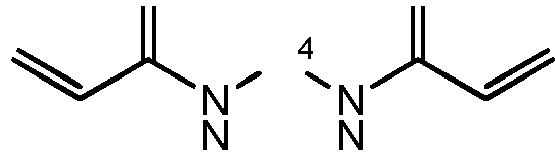


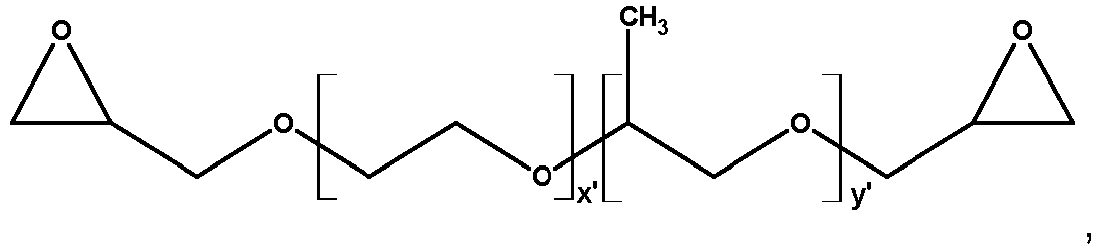
 ein Copolymer aus einem Acrylatmonomer, einem Methacrylatmonomer, einem Alkenmonomer oder einem Dienmonomer mit einem Azetidinium-funktionalisierten Monomer, ausgewählt aus
 und einer Kombination davon, wobei der Anteil des Azetidinium-funktionalisierten Monomers an dem Acrylatmonomer, dem Methacrylatmonomer, dem Alkenmonomer oder dem Dienmonomer in dem Copolymer etwa 0,1 % bis etwa 12 % beträgt; odereine Kombination davon.
 - Harz nach Anspruch 1, wobei der symmetrische Vernetzer ausgewählt ist aus einem Polyethylenglykoldiacrylat, einem Bis(acrylamid), einem Di-Epoxid und einer Polyazetidiniumverbindung.
- Harz nach Anspruch 1, wobei das Verfahren ferner das Umsetzen des Polyamins mit einem monofunktionellen Modifizierungsmittel vor, während oder nach dem Umsetzen des Polyamins mit dem symmetrischen Vernetzer aufweisend ist, und wobei das monofunktionelle Modifizierungsmittel ein Alkylacrylat, Acrylamid, ein Alkylacrylamid, ein Dialkylacrylamid, Acrylnitril, ein 2-Alkyloxiran, ein 2-(Allyloxyalkyl)oxiran, ein Hydroxyalkylacrylat, eine Co-(Acryloyloxy)-Alkyltrimethylammoniumverbindung, eine ω-(Acrylamido)-Alkyltrimethylammoniumverbindung oder eine Kombination davon umfasst.
- Harz nach Anspruch 1, wobei das Verfahren ferner das Umsetzen des Polyamins mit einem monofunktionellen Modifizierungsmittel vor, während oder nach dem Umsetzen des Polyamins mit dem symmetrischen Vernetzer aufweisend ist, und wobei das monofunktionelle Modifizierungsmittel mindestens eines aus Methylacrylat, Alkylacrylat, Acrylamid, N-Methylacrylamid, N,N-Dimethylacrylamid, Acrylnitril, 2-Methyloxiran, 2-Ethyloxiran, 2-Propyloxiran, 2-(Allyloxymethyl)oxiran, 2-Hydroxyethylacrylat, 2-(2-Hydroxyethoxy)ethylacrylat, 2-(Acryloyloxy)-N,N,N-trimethylethanaminium, 3-(Acryloyloxy)-N,N,N-Trimethylpropan-1-aminium, 2-Acrylamido-N,N,N-trimethylethanaminium, 3 Acrylamido-N,N,N-trimethylpropan-1-aminium und 1-Isopropyl-3-(methacryloyloxy)-1-methyl-azetidiniumchlorid.
Applications Claiming Priority (3)
| Application Number | Priority Date | Filing Date | Title |
|---|---|---|---|
| US201261673534P | 2012-07-19 | 2012-07-19 | |
| PCT/US2013/051050 WO2014015121A1 (en) | 2012-07-19 | 2013-07-18 | High efficiency wet strength resins from new cross-linkers |
| EP13819897.3A EP2875064B1 (de) | 2012-07-19 | 2013-07-18 | Hocheffiziente nassfestharze aus neuen vernetzern |
Related Parent Applications (1)
| Application Number | Title | Priority Date | Filing Date |
|---|---|---|---|
| EP13819897.3A Division EP2875064B1 (de) | 2012-07-19 | 2013-07-18 | Hocheffiziente nassfestharze aus neuen vernetzern |
Publications (3)
| Publication Number | Publication Date |
|---|---|
| EP3578588A1 EP3578588A1 (de) | 2019-12-11 |
| EP3578588B1 true EP3578588B1 (de) | 2025-07-02 |
| EP3578588C0 EP3578588C0 (de) | 2025-07-02 |
Family
ID=49945566
Family Applications (2)
| Application Number | Title | Priority Date | Filing Date |
|---|---|---|---|
| EP19182264.2A Active EP3578588B1 (de) | 2012-07-19 | 2013-07-18 | Hocheffiziente nassfestharze aus neuen vernetzern |
| EP13819897.3A Active EP2875064B1 (de) | 2012-07-19 | 2013-07-18 | Hocheffiziente nassfestharze aus neuen vernetzern |
Family Applications After (1)
| Application Number | Title | Priority Date | Filing Date |
|---|---|---|---|
| EP13819897.3A Active EP2875064B1 (de) | 2012-07-19 | 2013-07-18 | Hocheffiziente nassfestharze aus neuen vernetzern |
Country Status (9)
| Country | Link |
|---|---|
| US (3) | US9045862B2 (de) |
| EP (2) | EP3578588B1 (de) |
| CN (1) | CN104640906B (de) |
| BR (1) | BR112015001129A2 (de) |
| CA (1) | CA2879669C (de) |
| CL (1) | CL2015000122A1 (de) |
| ES (1) | ES3037037T3 (de) |
| MX (1) | MX2015000824A (de) |
| WO (1) | WO2014015121A1 (de) |
Families Citing this family (14)
| Publication number | Priority date | Publication date | Assignee | Title |
|---|---|---|---|---|
| EP3578588B1 (de) * | 2012-07-19 | 2025-07-02 | Ecolab USA Inc. | Hocheffiziente nassfestharze aus neuen vernetzern |
| CA2895781C (en) | 2012-12-19 | 2019-07-30 | Georgia Pacific Chemicals Llc | Blends of polymers as wet strengthening agents for paper |
| US9695552B2 (en) * | 2014-03-27 | 2017-07-04 | Georgia-Pacific Chemicals Llc | Wet strengthened fiber products, wet strengthening resins, and methods for making and using same |
| WO2016022879A1 (en) | 2014-08-07 | 2016-02-11 | Georgia-Pacific Chemicals Llc | Strengthening resins for paper products |
| US10144818B2 (en) * | 2014-10-16 | 2018-12-04 | Ecolab Usa Inc. | Resin compositions and methods for making and using same |
| JP2018517836A (ja) * | 2015-05-29 | 2018-07-05 | エコラブ ユーエスエイ インク | 新しい架橋剤からの高効率湿潤紙力増強樹脂 |
| US20180170820A1 (en) | 2015-06-19 | 2018-06-21 | Koch Agronomic Services, Llc | Strengthened composite products and methods for making and using same |
| BR112017027994B1 (pt) | 2015-06-25 | 2022-05-24 | Ecolab Usa Inc | Adesivo de crepagem |
| EP3749697A4 (de) * | 2018-02-05 | 2021-11-03 | Bio-Rad Laboratories, Inc. | Chromatografieharz mit einem liganden mit anionenaustausch-hydrophobem mischmodus |
| CN109020859B (zh) * | 2018-07-23 | 2020-07-24 | 万华化学集团股份有限公司 | 一种水溶性阳离子聚天门冬氨酸酯及其制备方法和用途 |
| WO2021092363A1 (en) | 2019-11-07 | 2021-05-14 | Ecolab Usa Inc. | Creping adhesives and processes for making and using same |
| WO2023003839A1 (en) * | 2021-07-21 | 2023-01-26 | The University Of Massachusetts | Antimicrobial finish for textiles |
| WO2025049834A1 (en) | 2023-08-31 | 2025-03-06 | Ecolab Usa Inc. | Strengthening agents and processes for making and using same |
| CN118422520B (zh) * | 2024-05-16 | 2026-02-06 | 万华化学集团股份有限公司 | 一种高性能纸张湿强剂、制备方法及应用 |
Family Cites Families (28)
| Publication number | Priority date | Publication date | Assignee | Title |
|---|---|---|---|---|
| US4536552A (en) * | 1982-01-04 | 1985-08-20 | The Dow Chemical Company | Polyamidoamine containing pendant ammonium moiety having crosslinking functionality |
| US4478938A (en) | 1984-03-02 | 1984-10-23 | The Dow Chemical Company | Process for crosslinking polyamines |
| US5152901A (en) | 1990-09-14 | 1992-10-06 | Ionics, Incorporated | Polyamine-polyamide composite nanofiltration membrane for water softening |
| DE4136289A1 (de) * | 1991-11-04 | 1993-05-06 | Bayer Ag, 5090 Leverkusen, De | Verfahren zur herstellung von polykondensaten |
| US5393338A (en) | 1991-12-31 | 1995-02-28 | Hercules Incorporated | Cationic compounds useful as drainage aids and stabilizers for rosin-based sizing agents |
| DE4240110A1 (de) | 1992-11-28 | 1994-06-01 | Basf Ag | Kondensationsprodukte von Polyalkylenpolyaminen, Verfahren zu ihrer Herstellung und ihre Verwendung bei der Herstellung von Papier |
| US5912306A (en) * | 1992-12-30 | 1999-06-15 | Hercules Incorporated | Cationic compounds useful as drainage aids and stabilizers for rosin-based sizing agents |
| ATE188981T1 (de) * | 1994-03-31 | 2000-02-15 | Henkel Corp | Nassfeste harzzusammensetzung und verfahren für ihre herstellung |
| US5567798A (en) | 1994-09-12 | 1996-10-22 | Georgia-Pacific Resins, Inc. | Repulpable wet strength resins for paper and paperboard |
| US5510004A (en) | 1994-12-01 | 1996-04-23 | Hercules Incorporated | Azetidinium polymers for improving wet strength of paper |
| ATE363494T1 (de) * | 1999-11-19 | 2007-06-15 | Akzo Nobel Nv | Nassverfestigungsmittel und verfahren zu seiner herstellung |
| CN1329415C (zh) * | 1999-11-19 | 2007-08-01 | 阿克佐诺贝尔公司 | 湿强度剂和其生产方法 |
| US6277242B1 (en) | 2000-02-28 | 2001-08-21 | Calgon Corporation | Creping adhesive containing an admixture of PAE resins |
| US20030114631A1 (en) | 2001-03-12 | 2003-06-19 | Walton Cynthia D. | Resins acting as wet strength agents and creping aids and processes for preparing and using the same |
| US6908983B2 (en) * | 2003-04-01 | 2005-06-21 | Hercules Corporation | Synthesis of high solids resins from amine terminated polyamides |
| US7608674B2 (en) | 2003-11-03 | 2009-10-27 | Ilypsa, Inc. | Pharmaceutical compositions comprising cross-linked small molecule amine polymers |
| US7459502B2 (en) | 2003-11-03 | 2008-12-02 | Ilypsa, Inc. | Pharmaceutical compositions comprising crosslinked polyamine polymers |
| JP4824911B2 (ja) | 2004-01-30 | 2011-11-30 | 一般財団法人川村理化学研究所 | ヒドロゲル、架橋ヒドロゲル及びそれらの製造方法 |
| DE102004005010A1 (de) | 2004-01-30 | 2005-08-18 | Basf Ag | Polymer für die Behandlung von Oberflächen |
| US7589153B2 (en) | 2005-05-25 | 2009-09-15 | Georgia-Pacific Chemicals Llc | Glyoxalated inter-copolymers with high and adjustable charge density |
| US7781501B2 (en) * | 2005-09-02 | 2010-08-24 | Georgia-Pacific Chemicals Llc | Thermosetting adhesives comprising a resin having azetidinium functional groups |
| US7932349B2 (en) * | 2006-09-18 | 2011-04-26 | Hercules Incorporated | Membrane separation process for removing residuals polyamine-epihalohydrin resins |
| AU2008206098B2 (en) * | 2007-01-19 | 2013-01-17 | Solenis Technologies Cayman, L.P. | Creping adhesives made from amine-terminated polyamidoamines |
| JP5454863B2 (ja) | 2008-03-31 | 2014-03-26 | 荒川化学工業株式会社 | 湿潤紙力剤 |
| US10016354B2 (en) | 2011-03-23 | 2018-07-10 | Basf Se | Compositions containing polymeric, ionic compounds comprising imidazolium groups |
| CN103987894A (zh) | 2011-09-30 | 2014-08-13 | 凯米罗总公司 | 纸张和造纸方法 |
| EP3578588B1 (de) * | 2012-07-19 | 2025-07-02 | Ecolab USA Inc. | Hocheffiziente nassfestharze aus neuen vernetzern |
| CA2895781C (en) * | 2012-12-19 | 2019-07-30 | Georgia Pacific Chemicals Llc | Blends of polymers as wet strengthening agents for paper |
-
2013
- 2013-07-18 EP EP19182264.2A patent/EP3578588B1/de active Active
- 2013-07-18 EP EP13819897.3A patent/EP2875064B1/de active Active
- 2013-07-18 MX MX2015000824A patent/MX2015000824A/es unknown
- 2013-07-18 ES ES19182264T patent/ES3037037T3/es active Active
- 2013-07-18 US US13/944,923 patent/US9045862B2/en active Active
- 2013-07-18 BR BR112015001129A patent/BR112015001129A2/pt not_active IP Right Cessation
- 2013-07-18 WO PCT/US2013/051050 patent/WO2014015121A1/en not_active Ceased
- 2013-07-18 CN CN201380046936.1A patent/CN104640906B/zh active Active
- 2013-07-18 CA CA2879669A patent/CA2879669C/en active Active
-
2015
- 2015-01-16 CL CL2015000122A patent/CL2015000122A1/es unknown
- 2015-05-29 US US14/725,384 patent/US9777436B2/en active Active
-
2017
- 2017-10-02 US US15/722,944 patent/US10711401B2/en active Active
Also Published As
| Publication number | Publication date |
|---|---|
| WO2014015121A1 (en) | 2014-01-23 |
| BR112015001129A2 (pt) | 2017-06-27 |
| CN104640906B (zh) | 2016-11-23 |
| EP2875064A1 (de) | 2015-05-27 |
| MX2015000824A (es) | 2015-12-09 |
| ES3037037T3 (en) | 2025-09-26 |
| CN104640906A (zh) | 2015-05-20 |
| US20180023254A1 (en) | 2018-01-25 |
| CA2879669C (en) | 2021-03-16 |
| US9777436B2 (en) | 2017-10-03 |
| US10711401B2 (en) | 2020-07-14 |
| US20140020858A1 (en) | 2014-01-23 |
| US9045862B2 (en) | 2015-06-02 |
| CL2015000122A1 (es) | 2015-05-08 |
| EP2875064A4 (de) | 2016-04-13 |
| CA2879669A1 (en) | 2014-01-23 |
| EP3578588A1 (de) | 2019-12-11 |
| EP2875064B1 (de) | 2019-06-26 |
| US20150259858A1 (en) | 2015-09-17 |
| EP3578588C0 (de) | 2025-07-02 |
Similar Documents
| Publication | Publication Date | Title |
|---|---|---|
| EP3578588B1 (de) | Hocheffiziente nassfestharze aus neuen vernetzern | |
| US10633798B2 (en) | Blends of polymers as wet strengthening agents for paper | |
| CA2964972C (en) | Resin compositions and methods for making and using same | |
| US10190261B2 (en) | Strengthening resins for paper products | |
| US9982395B2 (en) | High efficiency wet strength resins from new cross-linkers | |
| CA2987852C (en) | High efficiency wet strength resins from new cross-linkers | |
| US9695552B2 (en) | Wet strengthened fiber products, wet strengthening resins, and methods for making and using same |
Legal Events
| Date | Code | Title | Description |
|---|---|---|---|
| PUAI | Public reference made under article 153(3) epc to a published international application that has entered the european phase |
Free format text: ORIGINAL CODE: 0009012 |
|
| STAA | Information on the status of an ep patent application or granted ep patent |
Free format text: STATUS: THE APPLICATION HAS BEEN PUBLISHED |
|
| AC | Divisional application: reference to earlier application |
Ref document number: 2875064 Country of ref document: EP Kind code of ref document: P |
|
| AK | Designated contracting states |
Kind code of ref document: A1 Designated state(s): AL AT BE BG CH CY CZ DE DK EE ES FI FR GB GR HR HU IE IS IT LI LT LU LV MC MK MT NL NO PL PT RO RS SE SI SK SM TR |
|
| RIN1 | Information on inventor provided before grant (corrected) |
Inventor name: RINGOLD, CLAY E. |
|
| STAA | Information on the status of an ep patent application or granted ep patent |
Free format text: STATUS: REQUEST FOR EXAMINATION WAS MADE |
|
| STAA | Information on the status of an ep patent application or granted ep patent |
Free format text: STATUS: EXAMINATION IS IN PROGRESS |
|
| 17P | Request for examination filed |
Effective date: 20200609 |
|
| RBV | Designated contracting states (corrected) |
Designated state(s): AL AT BE BG CH CY CZ DE DK EE ES FI FR GB GR HR HU IE IS IT LI LT LU LV MC MK MT NL NO PL PT RO RS SE SI SK SM TR |
|
| 17Q | First examination report despatched |
Effective date: 20200715 |
|
| GRAP | Despatch of communication of intention to grant a patent |
Free format text: ORIGINAL CODE: EPIDOSNIGR1 |
|
| STAA | Information on the status of an ep patent application or granted ep patent |
Free format text: STATUS: GRANT OF PATENT IS INTENDED |
|
| INTG | Intention to grant announced |
Effective date: 20241022 |
|
| GRAJ | Information related to disapproval of communication of intention to grant by the applicant or resumption of examination proceedings by the epo deleted |
Free format text: ORIGINAL CODE: EPIDOSDIGR1 |
|
| STAA | Information on the status of an ep patent application or granted ep patent |
Free format text: STATUS: EXAMINATION IS IN PROGRESS |
|
| GRAP | Despatch of communication of intention to grant a patent |
Free format text: ORIGINAL CODE: EPIDOSNIGR1 |
|
| STAA | Information on the status of an ep patent application or granted ep patent |
Free format text: STATUS: GRANT OF PATENT IS INTENDED |
|
| INTC | Intention to grant announced (deleted) | ||
| INTG | Intention to grant announced |
Effective date: 20250205 |
|
| GRAS | Grant fee paid |
Free format text: ORIGINAL CODE: EPIDOSNIGR3 |
|
| GRAA | (expected) grant |
Free format text: ORIGINAL CODE: 0009210 |
|
| STAA | Information on the status of an ep patent application or granted ep patent |
Free format text: STATUS: THE PATENT HAS BEEN GRANTED |
|
| AC | Divisional application: reference to earlier application |
Ref document number: 2875064 Country of ref document: EP Kind code of ref document: P |
|
| AK | Designated contracting states |
Kind code of ref document: B1 Designated state(s): AL AT BE BG CH CY CZ DE DK EE ES FI FR GB GR HR HU IE IS IT LI LT LU LV MC MK MT NL NO PL PT RO RS SE SI SK SM TR |
|
| REG | Reference to a national code |
Ref country code: GB Ref legal event code: FG4D |
|
| REG | Reference to a national code |
Ref country code: CH Ref legal event code: EP |
|
| REG | Reference to a national code |
Ref country code: DE Ref legal event code: R096 Ref document number: 602013086872 Country of ref document: DE |
|
| REG | Reference to a national code |
Ref country code: IE Ref legal event code: FG4D |
|
| U01 | Request for unitary effect filed |
Effective date: 20250724 |
|
| U07 | Unitary effect registered |
Designated state(s): AT BE BG DE DK EE FI FR IT LT LU LV MT NL PT RO SE SI Effective date: 20250731 |
|
| REG | Reference to a national code |
Ref country code: ES Ref legal event code: FG2A Ref document number: 3037037 Country of ref document: ES Kind code of ref document: T3 Effective date: 20250926 |
|
| PGFP | Annual fee paid to national office [announced via postgrant information from national office to epo] |
Ref country code: ES Payment date: 20250929 Year of fee payment: 13 |
|
| PG25 | Lapsed in a contracting state [announced via postgrant information from national office to epo] |
Ref country code: IS Free format text: LAPSE BECAUSE OF FAILURE TO SUBMIT A TRANSLATION OF THE DESCRIPTION OR TO PAY THE FEE WITHIN THE PRESCRIBED TIME-LIMIT Effective date: 20251102 |
|
| PG25 | Lapsed in a contracting state [announced via postgrant information from national office to epo] |
Ref country code: NO Free format text: LAPSE BECAUSE OF FAILURE TO SUBMIT A TRANSLATION OF THE DESCRIPTION OR TO PAY THE FEE WITHIN THE PRESCRIBED TIME-LIMIT Effective date: 20251002 |
|
| PG25 | Lapsed in a contracting state [announced via postgrant information from national office to epo] |
Ref country code: HR Free format text: LAPSE BECAUSE OF FAILURE TO SUBMIT A TRANSLATION OF THE DESCRIPTION OR TO PAY THE FEE WITHIN THE PRESCRIBED TIME-LIMIT Effective date: 20250702 |
|
| PG25 | Lapsed in a contracting state [announced via postgrant information from national office to epo] |
Ref country code: GR Free format text: LAPSE BECAUSE OF FAILURE TO SUBMIT A TRANSLATION OF THE DESCRIPTION OR TO PAY THE FEE WITHIN THE PRESCRIBED TIME-LIMIT Effective date: 20251003 |
|
| PG25 | Lapsed in a contracting state [announced via postgrant information from national office to epo] |
Ref country code: CZ Free format text: LAPSE BECAUSE OF FAILURE TO SUBMIT A TRANSLATION OF THE DESCRIPTION OR TO PAY THE FEE WITHIN THE PRESCRIBED TIME-LIMIT Effective date: 20250702 |
|
| U21 | Renewal fee for the european patent with unitary effect paid with additional fee |
Year of fee payment: 13 Effective date: 20251218 |
|
| PG25 | Lapsed in a contracting state [announced via postgrant information from national office to epo] |
Ref country code: PL Free format text: LAPSE BECAUSE OF FAILURE TO SUBMIT A TRANSLATION OF THE DESCRIPTION OR TO PAY THE FEE WITHIN THE PRESCRIBED TIME-LIMIT Effective date: 20250702 |
|
| PG25 | Lapsed in a contracting state [announced via postgrant information from national office to epo] |
Ref country code: RS Free format text: LAPSE BECAUSE OF FAILURE TO SUBMIT A TRANSLATION OF THE DESCRIPTION OR TO PAY THE FEE WITHIN THE PRESCRIBED TIME-LIMIT Effective date: 20251002 |
|
| REG | Reference to a national code |
Ref country code: CH Ref legal event code: H13 Free format text: ST27 STATUS EVENT CODE: U-0-0-H10-H13 (AS PROVIDED BY THE NATIONAL OFFICE) Effective date: 20260224 |
|
| PG25 | Lapsed in a contracting state [announced via postgrant information from national office to epo] |
Ref country code: SM Free format text: LAPSE BECAUSE OF FAILURE TO SUBMIT A TRANSLATION OF THE DESCRIPTION OR TO PAY THE FEE WITHIN THE PRESCRIBED TIME-LIMIT Effective date: 20250702 |