EP3578887A1 - Système et procédé de contrôle de la qualité de l'air - Google Patents
Système et procédé de contrôle de la qualité de l'air Download PDFInfo
- Publication number
- EP3578887A1 EP3578887A1 EP18176392.1A EP18176392A EP3578887A1 EP 3578887 A1 EP3578887 A1 EP 3578887A1 EP 18176392 A EP18176392 A EP 18176392A EP 3578887 A1 EP3578887 A1 EP 3578887A1
- Authority
- EP
- European Patent Office
- Prior art keywords
- floor
- controller
- indoor space
- sensor
- occupant
- Prior art date
- Legal status (The legal status is an assumption and is not a legal conclusion. Google has not performed a legal analysis and makes no representation as to the accuracy of the status listed.)
- Withdrawn
Links
- 238000000034 method Methods 0.000 title claims abstract description 17
- 238000003908 quality control method Methods 0.000 title claims abstract description 11
- 230000000694 effects Effects 0.000 claims abstract description 97
- 239000000428 dust Substances 0.000 claims abstract description 38
- 238000004590 computer program Methods 0.000 claims description 5
- 230000006399 behavior Effects 0.000 description 24
- 238000004422 calculation algorithm Methods 0.000 description 10
- 230000008901 benefit Effects 0.000 description 9
- 238000004140 cleaning Methods 0.000 description 8
- 230000006870 function Effects 0.000 description 6
- 238000004887 air purification Methods 0.000 description 3
- 238000004891 communication Methods 0.000 description 3
- 238000010411 cooking Methods 0.000 description 3
- 230000001419 dependent effect Effects 0.000 description 3
- 230000001965 increasing effect Effects 0.000 description 3
- 238000012544 monitoring process Methods 0.000 description 3
- 230000003287 optical effect Effects 0.000 description 3
- 238000012913 prioritisation Methods 0.000 description 3
- 238000003860 storage Methods 0.000 description 3
- 238000010407 vacuum cleaning Methods 0.000 description 3
- 241000282472 Canis lupus familiaris Species 0.000 description 2
- 241000196324 Embryophyta Species 0.000 description 2
- 206010020751 Hypersensitivity Diseases 0.000 description 2
- 230000007815 allergy Effects 0.000 description 2
- 238000001514 detection method Methods 0.000 description 2
- 238000001914 filtration Methods 0.000 description 2
- 230000003993 interaction Effects 0.000 description 2
- 238000007726 management method Methods 0.000 description 2
- 238000013507 mapping Methods 0.000 description 2
- 238000005259 measurement Methods 0.000 description 2
- 239000002245 particle Substances 0.000 description 2
- 238000012545 processing Methods 0.000 description 2
- 230000002040 relaxant effect Effects 0.000 description 2
- 238000013515 script Methods 0.000 description 2
- 241000282326 Felis catus Species 0.000 description 1
- 241001465754 Metazoa Species 0.000 description 1
- 239000008186 active pharmaceutical agent Substances 0.000 description 1
- 238000004378 air conditioning Methods 0.000 description 1
- 239000013566 allergen Substances 0.000 description 1
- 239000000872 buffer Substances 0.000 description 1
- 230000008859 change Effects 0.000 description 1
- 230000003749 cleanliness Effects 0.000 description 1
- 239000007799 cork Substances 0.000 description 1
- 238000013523 data management Methods 0.000 description 1
- 230000003247 decreasing effect Effects 0.000 description 1
- 238000002592 echocardiography Methods 0.000 description 1
- 230000002708 enhancing effect Effects 0.000 description 1
- 238000009408 flooring Methods 0.000 description 1
- 230000036541 health Effects 0.000 description 1
- 238000010438 heat treatment Methods 0.000 description 1
- 230000005847 immunogenicity Effects 0.000 description 1
- 230000014759 maintenance of location Effects 0.000 description 1
- 238000005457 optimization Methods 0.000 description 1
- 229920001690 polydopamine Polymers 0.000 description 1
- 230000008569 process Effects 0.000 description 1
- 230000009467 reduction Effects 0.000 description 1
- 239000004065 semiconductor Substances 0.000 description 1
- 238000010183 spectrum analysis Methods 0.000 description 1
- 230000003068 static effect Effects 0.000 description 1
- 230000000007 visual effect Effects 0.000 description 1
- 239000002699 waste material Substances 0.000 description 1
- 239000002023 wood Substances 0.000 description 1
Images
Classifications
-
- F—MECHANICAL ENGINEERING; LIGHTING; HEATING; WEAPONS; BLASTING
- F24—HEATING; RANGES; VENTILATING
- F24F—AIR-CONDITIONING; AIR-HUMIDIFICATION; VENTILATION; USE OF AIR CURRENTS FOR SCREENING
- F24F11/00—Control or safety arrangements
- F24F11/0008—Control or safety arrangements for air-humidification
-
- F—MECHANICAL ENGINEERING; LIGHTING; HEATING; WEAPONS; BLASTING
- F24—HEATING; RANGES; VENTILATING
- F24F—AIR-CONDITIONING; AIR-HUMIDIFICATION; VENTILATION; USE OF AIR CURRENTS FOR SCREENING
- F24F3/00—Air-conditioning systems in which conditioned primary air is supplied from one or more central stations to distributing units in the rooms or spaces where it may receive secondary treatment; Apparatus specially designed for such systems
- F24F3/12—Air-conditioning systems in which conditioned primary air is supplied from one or more central stations to distributing units in the rooms or spaces where it may receive secondary treatment; Apparatus specially designed for such systems characterised by the treatment of the air otherwise than by heating and cooling
- F24F3/14—Air-conditioning systems in which conditioned primary air is supplied from one or more central stations to distributing units in the rooms or spaces where it may receive secondary treatment; Apparatus specially designed for such systems characterised by the treatment of the air otherwise than by heating and cooling by humidification; by dehumidification
-
- F—MECHANICAL ENGINEERING; LIGHTING; HEATING; WEAPONS; BLASTING
- F24—HEATING; RANGES; VENTILATING
- F24F—AIR-CONDITIONING; AIR-HUMIDIFICATION; VENTILATION; USE OF AIR CURRENTS FOR SCREENING
- F24F11/00—Control or safety arrangements
- F24F11/62—Control or safety arrangements characterised by the type of control or by internal processing, e.g. using fuzzy logic, adaptive control or estimation of values
- F24F11/63—Electronic processing
- F24F11/64—Electronic processing using pre-stored data
-
- G—PHYSICS
- G05—CONTROLLING; REGULATING
- G05B—CONTROL OR REGULATING SYSTEMS IN GENERAL; FUNCTIONAL ELEMENTS OF SUCH SYSTEMS; MONITORING OR TESTING ARRANGEMENTS FOR SUCH SYSTEMS OR ELEMENTS
- G05B15/00—Systems controlled by a computer
- G05B15/02—Systems controlled by a computer electric
-
- F—MECHANICAL ENGINEERING; LIGHTING; HEATING; WEAPONS; BLASTING
- F24—HEATING; RANGES; VENTILATING
- F24F—AIR-CONDITIONING; AIR-HUMIDIFICATION; VENTILATION; USE OF AIR CURRENTS FOR SCREENING
- F24F2120/00—Control inputs relating to users or occupants
- F24F2120/10—Occupancy
- F24F2120/14—Activity of occupants
-
- F—MECHANICAL ENGINEERING; LIGHTING; HEATING; WEAPONS; BLASTING
- F24—HEATING; RANGES; VENTILATING
- F24F—AIR-CONDITIONING; AIR-HUMIDIFICATION; VENTILATION; USE OF AIR CURRENTS FOR SCREENING
- F24F2130/00—Control inputs relating to environmental factors not covered by group F24F2110/00
-
- Y—GENERAL TAGGING OF NEW TECHNOLOGICAL DEVELOPMENTS; GENERAL TAGGING OF CROSS-SECTIONAL TECHNOLOGIES SPANNING OVER SEVERAL SECTIONS OF THE IPC; TECHNICAL SUBJECTS COVERED BY FORMER USPC CROSS-REFERENCE ART COLLECTIONS [XRACs] AND DIGESTS
- Y02—TECHNOLOGIES OR APPLICATIONS FOR MITIGATION OR ADAPTATION AGAINST CLIMATE CHANGE
- Y02B—CLIMATE CHANGE MITIGATION TECHNOLOGIES RELATED TO BUILDINGS, e.g. HOUSING, HOUSE APPLIANCES OR RELATED END-USER APPLICATIONS
- Y02B30/00—Energy efficient heating, ventilation or air conditioning [HVAC]
- Y02B30/70—Efficient control or regulation technologies, e.g. for control of refrigerant flow, motor or heating
Definitions
- This invention relates to the control of air quality. It relates in particular to air quality in indoor spaces, and relates in particular to air quality issues relating to suspended dust.
- Air quality is an increasing concern for people, and there is increasing interest in air quality monitoring and control generally.
- Resuspension of dust is influenced by many factors such as dust load, surface type, activity type and relative humidity level.
- the effect of each of these parameters on dust resuspension characteristics can also change depending on the other factors. For example, a high relative humidity affects dust resuspension characteristics of different surface types in opposite ways, enhancing resuspension on carpets and decreasing it on hard floors.
- Different areas within a home may have different floor types with varying dust resuspension characteristics that are strongly influenced by the relative humidity within the area.
- one humidifier may control the relative humidity in both a kitchen and a living area with hard and soft floor types respectively.
- Dust resuspension in an indoor environment is currently primarily controlled by the frequency of surface cleaning.
- Cleaning frequency alters the average dust load deposited on a surface and therefore the number of particulates that are resuspended due to other activities.
- Even a cleaning activity itself will cause dust resuspension and therefore may reduce the air quality.
- an air quality control system comprising:
- This system is used to control an indoor environment, in particular a humidity level, in order to reduce the effect of dust resuspension.
- the invention is based on the recognition that different floor types (e.g. hard, wooden floors vs. soft carpeted floors) as well as different activities (e.g. walking around that floor area, vacuum cleaning, opening a door or window which creates a draft across the floor) give rise to different levels of dust resuspension, and that this may be brought under control by controlling the relative humidity in an indoor space.
- humidity control may be implemented when needed to reduce the amount of dust which is resuspended, thereby maintaining desired air quality.
- the floor type indication may comprise at least a hard floor or soft floor indication.
- Hard and soft floors have different behavior in terms of settled dust.
- a hard floor for example may comprise wood, tiles, laminate, cork, PVC.
- the floor type indication may additionally distinguish different hard floor types and/or between different soft floor types.
- the controller is for example adapted to generate a map of floor types in different floor areas of the indoor space. This map may then be used to predict the impact on air quality of different activities taking place in different floor areas. For example, with knowledge of the floor type in a kitchen, hall, lounge etc., it can be predicted what the impact on air quality will be of different household activities, such as arriving or leaving the house, cooking, cleaning, or relaxing in a lounge. It may also be assumed that certain areas are more exposed to collect dust, such as near front and back doors. This may also be included in the map.
- the controller may comprise a third input for receiving user behavior information.
- This information enables a model of user behavior to be created, which may be combined with the map of floor types so that the impact of user behavior on air quality can be assessed.
- the user behavior may include pet behavior.
- the controller may be adapted to predict future occupant activities based on the user behavior information.
- a floor use profile may be created which may be used for predicting future floor use behavior.
- the controller may be adapted to control the humidity level further in dependence on an air quality target and/or a comfort level target.
- a desired air quality target and/or a desired comfort level target may be set, and the humidity control may then aim to achieve the desired targets.
- the system may further comprise:
- the system may receive the sensor information from remote external sensors or inputs.
- the system may in this example include the required sensors.
- the floor sensor may comprise an acoustic sensor or an image sensor. These sensor types may be used to detect echoes as a way of determining a floor type. Different acoustic profiles for the same activity and hence the same sound source (e.g. walking or the sound of a motor) may be used to distinguish between different floor types. Acoustic analysis or other sensor inputs such as proximity sensors may also be used to detect location, so that a detected floor type is associated with a particular area within the indoor space.
- the system may further comprises a location sensor, associated with the floor sensor and/or separate to the floor sensor.
- the system may comprise a robotic vacuum cleaner, wherein the floor sensor and a location sensor are integrated into the robotic vacuum cleaner.
- a robotic vacuum cleaner is used to collect the required floor type information and also the location information in respect of those floor types.
- the activity being monitored is the act of vacuum cleaning itself (i.e. a device activity) and in this case the robotic vacuum cleaner may also incorporate the activity sensor.
- other activities are preferably also monitored such as occupant activities (e.g. where they are located and what they are doing).
- the invention also provides an air quality control method, comprising:
- the floor type indication may comprise at least a hard floor or soft floor indication and the method comprises generating a map of floor types in different floor areas of the indoor space.
- the method may comprise predicting future occupant activities based on user behavior information.
- the floor type indication and activity information may be received from a robotic vacuum cleaner.
- the invention may be implemented at least in part in software.
- the invention provides an air quality control system in which a humidity level is controlled in such a way as to reduce an amount of dust resuspension caused by occupant or device activities in an indoor space, and taking into account type of floor surface in that space.
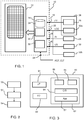
- FIG. 1 shows an air quality control system 10 comprising an air treatment unit 12 for controlling a humidity level in an indoor space.
- the air treatment unit 12 is a humidifier and/or dehumidifier, and optionally also an air purifier.
- a controller 14 is used to control the air treatment unit.
- the controller 14 comprises a first input 16 for receiving a floor type indication (FT) relating to floor types within the indoor space.
- the floor type indication may comprise at least a hard floor or soft floor indication. Hard and soft floors have different behavior in terms of settled dust. However, there may be more than two floor types.
- the floor type may be determined based on analysis of the effect of the floor on sounds, picked up by a microphone either within the air treatment device, or by separate floor type sensors for example in a robot vacuum cleaner. A measurement of friction encountered by the wheels of the robot cleaner may also be used.
- the floor type information may be input by the user through a user interface, thereby providing the controller with a spatial model of the indoor space. Another way to determine the floor type is by visual recognition for example using a camera of the user, or using a camera in the home.
- a second input 18 is for receiving activity information (AI) relating to occupant or device activities which are taking place on a floor area within the indoor space. These activities may include occupants or pets walking around a particular floor area, playing with a dog, play activity in a children's play area, or devices operating such as automated vacuum cleaner.
- Known sensors may be used for detecting activities, including occupancy sensors and sound sensors, and appliances which are used by a user may relay their active status as part of the second input - for example a television is turned on, a microwave oven is being used, a cupboard door or fridge door is open, etc. The user may even have the option to provide a manual input to indicate an activity they are about to undertake.
- the activity information may also include pet behavior.
- dogs and cats may have favorite spots to lay down or sleep, and this may be determined by detecting (or inputting) the location of pet beds, or by detecting movement patterns of the pets.
- a third input 20 is for receiving user behavior information (UB).
- UB user behavior information
- This user behavior for example tracks user activities, such as when they cook, dine, relax in the lounge, go to work, come home from work, go to bed etc. All of this behavior information may be used to generate a behavior profile, which may then be used to predict future behavior events. These events for example together may form a floor use profile in respect of the particular indoor space. Similar sensors may be used for determining a behavior profile as for detecting activities.
- a fourth input 22 is for receiving user (or device) location information (LOC).
- LOC location information
- This location information enables the floor type identification, and activity information, to be associated with specific areas of the indoor space. Tracking of the location of people and domestic animals in a house, when they walk from room to room, can be achieved using wireless signal strength, cameras, sound detection of walking and speech sounds etc. There may also be determination of how may people (or pets) are active in one area, and the location information may be used to determine a speed of walking or an intensity of an activity.
- a map of floor types in different floor areas of the indoor space may first be generated. This map may then be used to predict the impact on air quality of different activities taking place in those different floor areas, as predicted or measured by the user behavior information. For example, with knowledge of the floor type in a kitchen, hall, lounge etc., it can be predicted what the impact on air quality will be of different household activities, such as arriving or leaving the house, cooking, cleaning, or relaxing in a lounge.
- the map of floor types may additionally include information about surfaces such as couches, seats and plants that collect dust, which is released due to activity (people or pets) or airflows.
- the mapping may also include volume mapping of the spaces as this also has an impact on the dust behavior.
- a fifth input 24 is for receiving an air quality target (AQT) and/or a comfort level target (CLT). These targets may be used to set a desired effect of the control on the air quality in the indoor space. Different users may have different requirements in respect of these targets, and where multiple targets cannot all be achieved, different users may have different priorities. For example, a user with allergies may give the air quality a higher priority whereas another user may give the comfort level a higher priority. There may be multiple profiles for different situations. For example, when a person with allergies walks into the room, a more intense air purification setting may be used (with a higher noise level), to support this user.
- the floor type indication FT is received from a floor sensor 26, the activity information AI is received from an activity sensor 28 and the user behavior information UB is received from behavior sensors 30.
- Figure 1 shows two possible location sensors; a first 32a is for identifying the locations of the different floor types and a second 32b is for tracking the location of a user.
- the system may comprise a robotic vacuum cleaner 38, and as shown in Figure 1 the floor sensor 26 and the first location sensor 32a (which determines the vacuum cleaner location) are integrated into the robotic vacuum cleaner 38.
- a robotic vacuum cleaner maybe used to collect the required floor type information and also the location information in respect of those floor types.
- the second location sensor 32b may be used to detect an occupant location.
- the air quality target AQT and/or comfort level target CLT are received as user inputs. The balance between these targets may also be input by the user as a set of priority levels.
- the controller 14 comprises a floor use algorithm 33, a database 34 and a humidity control algorithm 36.
- the controller may be part of the air treatment unit, but it may instead be implemented as software provided on a separate device such as a smart phone, tablet or laptop.
- This system is used to control the humidity level in the indoor space, in order to reduce the effect of dust resuspension.
- Different floor types e.g. hard, wooden floors vs. soft carpeted floors
- different activities e.g. walking around that floor area, vacuum cleaning
- a relatively high humidity is desired if there are activities which are likely to disturb dust on a hard floor
- a relatively low humidity is desired if there are activities which are likely to disturb dust on a carpeted floor.
- humidity control may be implemented when needed to reduce the amount of dust which is resuspended, thereby maintaining a desired air quality, and optionally also while maintaining comfort levels within acceptable levels.
- the floor use algorithm 33 calculates the activity in a room in terms of the proportion of those activities occurring on different floor types, thereby to create a floor use profile.
- the floor use profile may be averaged over time or it may be based on an instantaneous measurement considering multiple moving entities within the indoor space.
- the floor use profile may comprise multiple data points extending into the future as predictions.
- a user may be known to usually spend 20 minutes cooking while on a hard floor before moving to a carpeted area.
- an autonomous vacuum cleaner may always follow a pre-set path.
- Examples of other activities that have an effect on the floor use profile include cleaning activities like manual vacuuming, house cleaning with a convective plume, operation of an air conditioning system or the use of heating and fans, etc.
- An effect of temperature on the propensity for dust release may also be taken into account.
- the floor use profile may even extend to the opening of doors or windows that enable the wind to blow through the house past that particular floor area. By opening doors or windows combined with a higher outdoor air pressure, a draft can be created in the house that has an effect. These indoor air currents may thus also be considered to result from particular user behavior.
- the behavior sensors 30 may include outdoor wind speed and direction sensors and an air pressure sensor, in combination with door and window setting (open/closed) sensors. Opening of doors and windows and air pressure differences can for example be detected by wirelessly connected (Internet of Things) sensors.
- the sensors may additionally be able to detect sitting-standing events or determine the speed of walking in the house.
- the database 34 for example stores air quality and/or comfort level targets of the user, and optionally also user-selected prioritization weightings for use in the control of the air treatment device.
- the humidity control algorithm 36 determines the adjustment or protocol of adjustments to be made to the humidity settings. These may comprise a single setting or time-series of humidity settings with implementation times.
- Figure 2 shows an air quality control method
- a floor type indication is received of floor types within the indoor space. This enables a map of floor types to be generated. This may be gathered via a vacuum cleaner robot 38 with a camera on the bottom functioning as the floor type sensor, or the information may be entered manually in combination with a house map. This may for example include an indication of a ratio of hard floor to soft floor in different areas. As mentioned above, in addition to a floor type indication, the space volume and an indication of the number of active surfaces (couches, dogbeds, plant leaves etc.) maybe used.
- step 52 activity information is received relating to occupant or device activities which are taking place on a floor area within the indoor space.
- This activity information enables a floor use profile to be determined. This for example involves correlating known acoustic features which result from user interaction with different floor types. These acoustic features are stored in the database 34. Known acoustic features may consist of frequency ranges caused by the impact of walking on different known flooring types.
- acoustic profiles resulting from motion within a room By analyzing acoustic profiles resulting from motion within a room, different activities, such as walking or autonomous device movement, may be recognized (regardless of the floor type) from acoustic cues such as a step period or motor noise. For a given detected activity, different acoustic profiles for the same activity are detected depending on the floor type so that the floor type can then be determined.
- the location at which the activity is detected may be used to access the floor type map and thereby determine the floor type, and/or the activity detection itself may enable determination of the floor type.
- the proportion of time spent on different floor types may be detected by an autonomous device.
- the activity information may even be used to generate automatically the floor type map. This could for example involve detecting a walking sound, detecting a direction using a microphone array (for example provided at the air treatment device) or in a conversational assistant device (such as Google Home TM), and detecting a distance by analyzing a relative sound amplitude and/or reverberations. This enables the location to be determined.
- the floor type may then be determined based on acoustic features for example using spectral analysis.
- the floor type map may then be generated in relation to the microphone array.
- step 54 the humidity level is controlled in dependence on the activity information and floor type indication, thereby to reduce an amount of dust resuspension caused by the occupant or device activities.
- the humidity level is additional controlled taking into account the user target levels for air quality and/or comfort.
- the humidity level is controlled by the humidity setting derived by the humidity control algorithm 36.
- the algorithm 36 determines the ability of the possible humidity settings to achieve the desired target air quality (AQT) and/or comfort level target based on the floor type map and floor use profile.
- a look up table may be used to assess the impact of different humidity settings.
- there may be a target atmosphere set by the user which is a combination of, or compromise between, air quality and comfort.
- a high humidity setting may be given a negative air quality benefit but a positive comfort benefit, based on a floor use profile which indicates activity occurring solely on carpeted floors.
- the range of possible humidity settings will in practice be limited by the capabilities of the air treatment device and its location relative to the indoor area being treated.
- a benefit optimization function may thus be used to determine the air treatment device humidity setting with the maximum overall benefit, based on the predefined and user dependent prioritization weightings.
- the analysis may be performed for multiple time points in the floor use profile to determine the humidity settings at certain time points in the future.
- a pre-determined estimate for the time taken for the humidity settings to affect the actual conditions in the room may be used to calculate the times at which the humidity settings should be implemented.
- a low air quality may have a high cost value if the user is present and a low cost value if they are not.
- the floor use algorithm 33 may differentiate between different individuals or types of room occupants, such as infants or pets.
- the humidity control algorithm 36 may then assign cost or benefit values to the humidity settings that are specific to the particular user or occupant type that has been detected.
- a prioritization algorithm may arbitrate between which optimum is used. For example, a high humidity setting may be chosen if an infant is detected on a hard floor, as their activity has a much greater effect on their inhaled dust levels (they are more active and closer to the floor), and their health is likely to be of greater concern.
- the floor use algorithm may include the capability to differentiate more types of surface interaction.
- a building may have multiple air treatment devices, with different devices allocated to different areas. These devices may communicate with each other to coordinate the humidity control.
- the air treatment device may include an air purification/filtering function. It may be desirable (in the absence of occupants) to deliberately cause dust resuspension so that filtering can take place before the dust resettles.
- the controller may be used deliberately to increase resuspension in combination with ramping up an air purification function as a way to perform cleaning of an area. This is of interest when it is certain that the increased resuspension will not negatively affect the occupant, as it will increase the general cleanliness of the space.
- the system described above makes use of a controller for processing data.
- Figure 3 illustrates an example of a computer 60 for implementing the controller or processor described above.
- the computer 60 includes, but is not limited to, PCs, workstations, laptops, PDAs, palm devices, servers, storages, and the like.
- the computer 60 may include one or more processors 61, memory 62, and one or more I/O devices 63 that are communicatively coupled via a local interface (not shown).
- the local interface can be, for example but not limited to, one or more buses or other wired or wireless connections, as is known in the art.
- the local interface may have additional elements, such as controllers, buffers (caches), drivers, repeaters, and receivers, to enable communications. Further, the local interface may include address, control, and/or data connections to enable appropriate communications among the aforementioned components.
- the processor 61 is a hardware device for executing software that can be stored in the memory 62.
- the processor 61 can be virtually any custom made or commercially available processor, a central processing unit (CPU), a digital signal processor (DSP), or an auxiliary processor among several processors associated with the computer 60, and the processor 61 may be a semiconductor based microprocessor (in the form of a microchip) or a microprocessor.
- the memory 62 can include any one or combination of volatile memory elements (e.g., random access memory (RAM), such as dynamic random access memory (DRAM), static random access memory (SRAM), etc.) and non-volatile memory elements (e.g., ROM, erasable programmable read only memory (EPROM), electronically erasable programmable read only memory (EEPROM), programmable read only memory (PROM), tape, compact disc read only memory (CD-ROM), disk, diskette, cartridge, cassette or the like, etc.).
- RAM random access memory
- DRAM dynamic random access memory
- SRAM static random access memory
- non-volatile memory elements e.g., ROM, erasable programmable read only memory (EPROM), electronically erasable programmable read only memory (EEPROM), programmable read only memory (PROM), tape, compact disc read only memory (CD-ROM), disk, diskette, cartridge, cassette or the like, etc.
- the memory 62 may incorporate electronic, magnetic, optical, and/or other types
- the software in the memory 62 may include one or more separate programs, each of which comprises an ordered listing of executable instructions for implementing logical functions.
- the software in the memory 62 includes a suitable operating system (O/S) 64, compiler 65, source code 66, and one or more applications 67 in accordance with exemplary embodiments.
- O/S operating system
- compiler 65 compiler 65
- source code 66 source code 66
- applications 67 application 67 in accordance with exemplary embodiments.
- the application 67 comprises numerous functional components such as computational units, logic, functional units, processes, operations, virtual entities, and/or modules.
- the operating system 64 controls the execution of computer programs, and provides scheduling, input-output control, file and data management, memory management, and communication control and related services.
- Application 67 may be a source program, executable program (object code), script, or any other entity comprising a set of instructions to be performed.
- a source program then the program is usually translated via a compiler (such as the compiler 65), assembler, interpreter, or the like, which may or may not be included within the memory 62, so as to operate properly in connection with the operating system 64.
- the application 67 can be written as an object oriented programming language, which has classes of data and methods, or a procedure programming language, which has routines, subroutines, and/or functions, for example but not limited to, C, C++, C#, Pascal, BASIC, API calls, HTML, XHTML, XML, ASP scripts, JavaScript, FORTRAN, COBOL, Perl, Java, ADA, .NET, and the like.
- the I/O devices 63 may include input devices such as, for example but not limited to, a mouse, keyboard, scanner, microphone, camera, etc. Furthermore, the I/O devices 63 may also include output devices, for example but not limited to a printer, display, etc. Finally, the I/O devices 63 may further include devices that communicate both inputs and outputs, for instance but not limited to, a network interface controller (NIC) or modulator/demodulator (for accessing remote devices, other files, devices, systems, or a network), a radio frequency (RF) or other transceiver, a telephonic interface, a bridge, a router, etc. The I/O devices 63 also include components for communicating over various networks, such as the Internet or intranet.
- NIC network interface controller
- modulator/demodulator for accessing remote devices, other files, devices, systems, or a network
- RF radio frequency
- the I/O devices 63 also include components for communicating over various networks, such as the Internet or intranet.
- the processor 61 When the computer 60 is in operation, the processor 61 is configured to execute software stored within the memory 62, to communicate data to and from the memory 62, and to generally control operations of the computer 60 pursuant to the software.
- the application 67 and the operating system 64 are read, in whole or in part, by the processor 61, perhaps buffered within the processor 61, and then executed.
- a computer readable medium may be an electronic, magnetic, optical, or other physical device or means that can contain or store a computer program for use by or in connection with a computer related system or method.
- This invention is of particular benefit in situation where dust resuspension activities occur within a space that has multiple floor types present.
- the system is likely to be most effective when a room occupant engages in a predictable pattern of behavior, occupying one floor type for a certain length of time before switching to another.
- a computer program may be stored/distributed on a suitable medium, such as an optical storage medium or a solid-state medium supplied together with or as part of other hardware, but may also be distributed in other forms, such as via the Internet or other wired or wireless telecommunication systems. Any reference signs in the claims should not be construed as limiting the scope.
Landscapes
- Engineering & Computer Science (AREA)
- General Engineering & Computer Science (AREA)
- Chemical & Material Sciences (AREA)
- Combustion & Propulsion (AREA)
- Mechanical Engineering (AREA)
- Signal Processing (AREA)
- Physics & Mathematics (AREA)
- Fuzzy Systems (AREA)
- Mathematical Physics (AREA)
- General Physics & Mathematics (AREA)
- Automation & Control Theory (AREA)
- Air Conditioning Control Device (AREA)
Priority Applications (6)
| Application Number | Priority Date | Filing Date | Title |
|---|---|---|---|
| EP18176392.1A EP3578887A1 (fr) | 2018-06-07 | 2018-06-07 | Système et procédé de contrôle de la qualité de l'air |
| EP19728936.6A EP3803219B1 (fr) | 2018-06-07 | 2019-06-04 | Système et procédé de contrôle de la qualité de l'air, ainsi que programme d'ordinateur |
| US17/056,445 US20210180810A1 (en) | 2018-06-07 | 2019-06-04 | An air quality control system and method |
| PCT/EP2019/064389 WO2019233964A1 (fr) | 2018-06-07 | 2019-06-04 | Système et procédé de régulation de la qualité de l'air |
| PL19728936T PL3803219T3 (pl) | 2018-06-07 | 2019-06-04 | System i sposób kontroli jakości powietrza, i program komputerowy |
| CN201980038039.3A CN112272746B (zh) | 2018-06-07 | 2019-06-04 | 空气质量控制系统和方法 |
Applications Claiming Priority (1)
| Application Number | Priority Date | Filing Date | Title |
|---|---|---|---|
| EP18176392.1A EP3578887A1 (fr) | 2018-06-07 | 2018-06-07 | Système et procédé de contrôle de la qualité de l'air |
Publications (1)
| Publication Number | Publication Date |
|---|---|
| EP3578887A1 true EP3578887A1 (fr) | 2019-12-11 |
Family
ID=62563034
Family Applications (2)
| Application Number | Title | Priority Date | Filing Date |
|---|---|---|---|
| EP18176392.1A Withdrawn EP3578887A1 (fr) | 2018-06-07 | 2018-06-07 | Système et procédé de contrôle de la qualité de l'air |
| EP19728936.6A Not-in-force EP3803219B1 (fr) | 2018-06-07 | 2019-06-04 | Système et procédé de contrôle de la qualité de l'air, ainsi que programme d'ordinateur |
Family Applications After (1)
| Application Number | Title | Priority Date | Filing Date |
|---|---|---|---|
| EP19728936.6A Not-in-force EP3803219B1 (fr) | 2018-06-07 | 2019-06-04 | Système et procédé de contrôle de la qualité de l'air, ainsi que programme d'ordinateur |
Country Status (5)
| Country | Link |
|---|---|
| US (1) | US20210180810A1 (fr) |
| EP (2) | EP3578887A1 (fr) |
| CN (1) | CN112272746B (fr) |
| PL (1) | PL3803219T3 (fr) |
| WO (1) | WO2019233964A1 (fr) |
Cited By (1)
| Publication number | Priority date | Publication date | Assignee | Title |
|---|---|---|---|---|
| US20220304529A1 (en) * | 2021-03-26 | 2022-09-29 | Irobot Corporation | Floor and air cleaning systems and related methods |
Families Citing this family (7)
| Publication number | Priority date | Publication date | Assignee | Title |
|---|---|---|---|---|
| WO2020218632A1 (fr) * | 2019-04-23 | 2020-10-29 | 엘지전자 주식회사 | Dispositif d'intelligence artificielle |
| US11982630B2 (en) * | 2020-04-29 | 2024-05-14 | DataGarden, Inc. | Method and apparatus for cleanliness determination of areas and objects via video monitoring |
| CN113180549A (zh) * | 2021-04-30 | 2021-07-30 | 青岛海尔空调器有限总公司 | 清扫控制方法、装置和空调机 |
| CN113531805B (zh) * | 2021-06-25 | 2022-11-18 | 青岛海尔空调器有限总公司 | 用于控制空调的方法及装置、空调、存储介质 |
| CN113819592A (zh) * | 2021-08-16 | 2021-12-21 | 青岛海尔空调器有限总公司 | 空调系统控制方法、装置、电子设备、存储介质及系统 |
| CN114235041B (zh) * | 2021-12-09 | 2024-05-03 | 中科国微科技(深圳)有限公司 | 直流稳压电源环境检测方法、装置、设备及存储介质 |
| CN119644774B (zh) * | 2024-12-06 | 2025-09-09 | 长沙理工大学 | 一种数字媒体智能家居控制系统 |
Citations (3)
| Publication number | Priority date | Publication date | Assignee | Title |
|---|---|---|---|---|
| EP0415747A2 (fr) * | 1989-08-30 | 1991-03-06 | Allan Dr. Shaw | Méthode de conditionnement d'air confortable et économique en énergie |
| US7264649B1 (en) | 2004-07-23 | 2007-09-04 | Advanced Design Consulting Usa, Inc. | System for allergen reduction through indoor humidity control |
| US20180070787A1 (en) * | 2016-09-09 | 2018-03-15 | International Business Machines Corporation | Cognitive vacuum cleaner with learning and cohort classification |
Family Cites Families (14)
| Publication number | Priority date | Publication date | Assignee | Title |
|---|---|---|---|---|
| US7298871B2 (en) * | 2002-06-07 | 2007-11-20 | Koninklijke Philips Electronics N.V. | System and method for adapting the ambience of a local environment according to the location and personal preferences of people in the local environment |
| JP2005283044A (ja) * | 2004-03-31 | 2005-10-13 | Daikin Ind Ltd | 調湿装置 |
| US20090066473A1 (en) * | 2005-03-11 | 2009-03-12 | Koninklijke Philips Electronics, N.V. | Commissioning wireless network devices according to an installation plan |
| CN1299076C (zh) * | 2005-04-29 | 2007-02-07 | 清华大学 | 一种变风量地板送风装置 |
| JP5111445B2 (ja) * | 2008-09-10 | 2013-01-09 | 三菱電機株式会社 | 空気調和機 |
| US8683645B2 (en) * | 2010-07-22 | 2014-04-01 | Sears Brands, L.L.C. | Vacuum cleaning device with air quality monitoring system |
| US9375847B2 (en) * | 2013-01-18 | 2016-06-28 | Irobot Corporation | Environmental management systems including mobile robots and methods using same |
| US9719268B2 (en) * | 2013-03-15 | 2017-08-01 | Aacer Acquisition, Llc | Ventilated athletic flooring systems and methods of assembling the same |
| JP6473289B2 (ja) * | 2013-10-23 | 2019-02-20 | 日立ジョンソンコントロールズ空調株式会社 | 空気調和機の室内機及びこれを用いた空気調和機 |
| CN105444341B (zh) * | 2014-09-02 | 2018-06-26 | 广东美的制冷设备有限公司 | 一种空调器及其室内除湿运行控制方法及系统 |
| JP6359176B2 (ja) * | 2015-03-12 | 2018-07-18 | 三菱電機株式会社 | 空気調和機 |
| WO2018039433A1 (fr) * | 2016-08-24 | 2018-03-01 | Delos Living Llc | Systèmes, procédés et articles permettant d'accroître le bien-être associé à des environnements habitables |
| CN106355986A (zh) * | 2016-09-21 | 2017-01-25 | 浙江工业大学 | 模拟人行走引起地面颗粒物二次悬浮的装置 |
| CN108006867A (zh) * | 2017-12-26 | 2018-05-08 | 天津城建大学 | 基于热舒适性的地板辐射供冷送风系统 |
-
2018
- 2018-06-07 EP EP18176392.1A patent/EP3578887A1/fr not_active Withdrawn
-
2019
- 2019-06-04 PL PL19728936T patent/PL3803219T3/pl unknown
- 2019-06-04 US US17/056,445 patent/US20210180810A1/en not_active Abandoned
- 2019-06-04 CN CN201980038039.3A patent/CN112272746B/zh not_active Expired - Fee Related
- 2019-06-04 EP EP19728936.6A patent/EP3803219B1/fr not_active Not-in-force
- 2019-06-04 WO PCT/EP2019/064389 patent/WO2019233964A1/fr not_active Ceased
Patent Citations (3)
| Publication number | Priority date | Publication date | Assignee | Title |
|---|---|---|---|---|
| EP0415747A2 (fr) * | 1989-08-30 | 1991-03-06 | Allan Dr. Shaw | Méthode de conditionnement d'air confortable et économique en énergie |
| US7264649B1 (en) | 2004-07-23 | 2007-09-04 | Advanced Design Consulting Usa, Inc. | System for allergen reduction through indoor humidity control |
| US20180070787A1 (en) * | 2016-09-09 | 2018-03-15 | International Business Machines Corporation | Cognitive vacuum cleaner with learning and cohort classification |
Non-Patent Citations (1)
| Title |
|---|
| "Estimating the resuspension rate and residence time of indoor particles", JOURNAL OF THE AIR & WASTE MANAGEMENT ASSOCIATION, ISSN: 1096-2247 |
Cited By (2)
| Publication number | Priority date | Publication date | Assignee | Title |
|---|---|---|---|---|
| US20220304529A1 (en) * | 2021-03-26 | 2022-09-29 | Irobot Corporation | Floor and air cleaning systems and related methods |
| US11793379B2 (en) * | 2021-03-26 | 2023-10-24 | Irobot Corporation | Floor and air cleaning systems and related methods |
Also Published As
| Publication number | Publication date |
|---|---|
| US20210180810A1 (en) | 2021-06-17 |
| CN112272746B (zh) | 2022-08-30 |
| EP3803219A1 (fr) | 2021-04-14 |
| EP3803219B1 (fr) | 2021-09-15 |
| CN112272746A (zh) | 2021-01-26 |
| WO2019233964A1 (fr) | 2019-12-12 |
| PL3803219T3 (pl) | 2022-03-07 |
Similar Documents
| Publication | Publication Date | Title |
|---|---|---|
| EP3803219B1 (fr) | Système et procédé de contrôle de la qualité de l'air, ainsi que programme d'ordinateur | |
| JP6761895B2 (ja) | 管理装置、空調管理システム及び空調管理方法 | |
| US12046373B2 (en) | Automated surface sterilization techniques | |
| US11243502B2 (en) | Interactive environmental controller | |
| US20210160326A1 (en) | Utilizing context information of environment component regions for event/activity prediction | |
| CN102384559B (zh) | 空气调节机 | |
| JP6701381B2 (ja) | 制御装置、換気システム、換気方法及びプログラム | |
| US20090065596A1 (en) | Systems and methods for increasing building space comfort using wireless devices | |
| JP2019124454A (ja) | 空気質および空気質に影響しそうなイベントをモニタリングし是正策を講じるシステムおよび方法 | |
| WO2022227533A1 (fr) | Procédé et appareil de commande de nettoyage, et appareil de conditionnement d'air | |
| JP6726884B2 (ja) | 汚染量推定システム、汚染量推定方法及びプログラム | |
| CN113639419A (zh) | 信息提供系统 | |
| JP2017003203A (ja) | 推定装置、推定方法、及び推定プログラム | |
| WO2017072158A1 (fr) | Système et procédé de détermination de l'emplacement et de l'occupation d'espaces de travail | |
| CN113280484A (zh) | 空气环境调节系统和控制设备 | |
| US10827893B2 (en) | Dust processing | |
| CN113037600A (zh) | 通知控制装置、通知控制系统以及通知控制方法 | |
| WO2013001407A1 (fr) | Appareil de commande d'environnement | |
| JP7243314B2 (ja) | 換気装置 | |
| CN116052631B (zh) | 一种主动式降噪系统及其调校方法 | |
| US20200256346A1 (en) | Method for controlling rotational speed of motor of fan | |
| US11917515B2 (en) | Allergen warning system and method | |
| CN110941189A (zh) | 智能家居系统及其控制方法、可读存储介质 | |
| CN119958054B (zh) | 基于物联网设备数据的空气净化方法、装置、设备及介质 | |
| CN105571997A (zh) | 一种室内空气颗粒浓度测量及控制方法和装置 |
Legal Events
| Date | Code | Title | Description |
|---|---|---|---|
| PUAI | Public reference made under article 153(3) epc to a published international application that has entered the european phase |
Free format text: ORIGINAL CODE: 0009012 |
|
| AK | Designated contracting states |
Kind code of ref document: A1 Designated state(s): AL AT BE BG CH CY CZ DE DK EE ES FI FR GB GR HR HU IE IS IT LI LT LU LV MC MK MT NL NO PL PT RO RS SE SI SK SM TR |
|
| AX | Request for extension of the european patent |
Extension state: BA ME |
|
| RAP1 | Party data changed (applicant data changed or rights of an application transferred) |
Owner name: KONINKLIJKE PHILIPS N.V. |
|
| STAA | Information on the status of an ep patent application or granted ep patent |
Free format text: STATUS: THE APPLICATION IS DEEMED TO BE WITHDRAWN |
|
| 18D | Application deemed to be withdrawn |
Effective date: 20200613 |