EP3580871B1 - Signalisation de ressources pour un pucch - Google Patents
Signalisation de ressources pour un pucch Download PDFInfo
- Publication number
- EP3580871B1 EP3580871B1 EP17707420.0A EP17707420A EP3580871B1 EP 3580871 B1 EP3580871 B1 EP 3580871B1 EP 17707420 A EP17707420 A EP 17707420A EP 3580871 B1 EP3580871 B1 EP 3580871B1
- Authority
- EP
- European Patent Office
- Prior art keywords
- acknowledgement
- signaling
- indication
- resource
- transmitting
- Prior art date
- Legal status (The legal status is an assumption and is not a legal conclusion. Google has not performed a legal analysis and makes no representation as to the accuracy of the status listed.)
- Active
Links
Images






Classifications
-
- H—ELECTRICITY
- H04—ELECTRIC COMMUNICATION TECHNIQUE
- H04W—WIRELESS COMMUNICATION NETWORKS
- H04W72/00—Local resource management
- H04W72/20—Control channels or signalling for resource management
-
- H—ELECTRICITY
- H04—ELECTRIC COMMUNICATION TECHNIQUE
- H04L—TRANSMISSION OF DIGITAL INFORMATION, e.g. TELEGRAPHIC COMMUNICATION
- H04L1/00—Arrangements for detecting or preventing errors in the information received
- H04L1/12—Arrangements for detecting or preventing errors in the information received by using return channel
- H04L1/16—Arrangements for detecting or preventing errors in the information received by using return channel in which the return channel carries supervisory signals, e.g. repetition request signals
- H04L1/1607—Details of the supervisory signal
-
- H—ELECTRICITY
- H04—ELECTRIC COMMUNICATION TECHNIQUE
- H04L—TRANSMISSION OF DIGITAL INFORMATION, e.g. TELEGRAPHIC COMMUNICATION
- H04L1/00—Arrangements for detecting or preventing errors in the information received
- H04L1/12—Arrangements for detecting or preventing errors in the information received by using return channel
- H04L1/16—Arrangements for detecting or preventing errors in the information received by using return channel in which the return channel carries supervisory signals, e.g. repetition request signals
- H04L1/1607—Details of the supervisory signal
- H04L1/1614—Details of the supervisory signal using bitmaps
-
- H—ELECTRICITY
- H04—ELECTRIC COMMUNICATION TECHNIQUE
- H04L—TRANSMISSION OF DIGITAL INFORMATION, e.g. TELEGRAPHIC COMMUNICATION
- H04L1/00—Arrangements for detecting or preventing errors in the information received
- H04L1/12—Arrangements for detecting or preventing errors in the information received by using return channel
- H04L1/16—Arrangements for detecting or preventing errors in the information received by using return channel in which the return channel carries supervisory signals, e.g. repetition request signals
- H04L1/18—Automatic repetition systems, e.g. Van Duuren systems
- H04L1/1829—Arrangements specially adapted for the receiver end
- H04L1/1854—Scheduling and prioritising arrangements
-
- H—ELECTRICITY
- H04—ELECTRIC COMMUNICATION TECHNIQUE
- H04L—TRANSMISSION OF DIGITAL INFORMATION, e.g. TELEGRAPHIC COMMUNICATION
- H04L1/00—Arrangements for detecting or preventing errors in the information received
- H04L1/12—Arrangements for detecting or preventing errors in the information received by using return channel
- H04L1/16—Arrangements for detecting or preventing errors in the information received by using return channel in which the return channel carries supervisory signals, e.g. repetition request signals
- H04L1/18—Automatic repetition systems, e.g. Van Duuren systems
- H04L1/1829—Arrangements specially adapted for the receiver end
- H04L1/1861—Physical mapping arrangements
-
- H—ELECTRICITY
- H04—ELECTRIC COMMUNICATION TECHNIQUE
- H04L—TRANSMISSION OF DIGITAL INFORMATION, e.g. TELEGRAPHIC COMMUNICATION
- H04L5/00—Arrangements affording multiple use of the transmission path
- H04L5/003—Arrangements for allocating sub-channels of the transmission path
- H04L5/0053—Allocation of signalling, i.e. of overhead other than pilot signals
- H04L5/0055—Physical resource allocation for ACK/NACK
-
- H—ELECTRICITY
- H04—ELECTRIC COMMUNICATION TECHNIQUE
- H04W—WIRELESS COMMUNICATION NETWORKS
- H04W72/00—Local resource management
- H04W72/20—Control channels or signalling for resource management
- H04W72/21—Control channels or signalling for resource management in the uplink direction of a wireless link, i.e. towards the network
-
- H—ELECTRICITY
- H04—ELECTRIC COMMUNICATION TECHNIQUE
- H04L—TRANSMISSION OF DIGITAL INFORMATION, e.g. TELEGRAPHIC COMMUNICATION
- H04L5/00—Arrangements affording multiple use of the transmission path
- H04L5/003—Arrangements for allocating sub-channels of the transmission path
- H04L5/0053—Allocation of signalling, i.e. of overhead other than pilot signals
-
- H—ELECTRICITY
- H04—ELECTRIC COMMUNICATION TECHNIQUE
- H04L—TRANSMISSION OF DIGITAL INFORMATION, e.g. TELEGRAPHIC COMMUNICATION
- H04L5/00—Arrangements affording multiple use of the transmission path
- H04L5/0091—Signalling for the administration of the divided path, e.g. signalling of configuration information
- H04L5/0092—Indication of how the channel is divided
Definitions
- This disclosure pertains to wireless communication technology, in particular in the context of Radio Access Technology/Networks (RAT/RAN).
- RAT/RAN Radio Access Technology/Networks
- New wireless communication technologies e.g. 5G technologies like 3GPP New Radio
- 5G technologies like 3GPP New Radio
- 3GPP New Radio 3GPP New Radio
- US 2016/270066 A1 discloses a method and apparatus for transmitting ACK/NACK information in a wireless communication system.
- an ACK/NACK signal of downlink transmission in a downlink subframe set is transmitted in a single uplink subframe.
- the ACK/NACK information can be transmitted using a second physical uplink control channel format on physical uplink control channel resources established by a higher layer for the second physical uplink control channel format.
- US 2015/085714 A1 anticipates a method for sending a Hybrid Automatic Repeat Request Acknowledgement message in a Time Division Duplex system and a User Equipment, in order that the User Equipment feeds back the Hybrid Automatic Repeat Request Acknowledgement message of each downlink serving cell and downlink subframe in Physical Uplink Control Channel format 1b with channel selection in the Time Division Duplex system.
- the feedback mode when the User Equipment feeds back the Hybrid Automatic Repeat Request Acknowledgement message in format 1b with channel selection is determined through the configuration of the high layer or according to the result about whether the User Equipment receives the Physical Downlink Shared Channel from a secondary downlink serving cell.
- the User Equipment adopts the mapping table defined by Long Term Evolution Advanced (Rel-10), generates the Hybrid Automatic Repeat Request Acknowledgement message in the mapping table by a time domain bundling method, and determines the corresponding Physical Uplink Control Channel resources in the mapping table by a preset new Physical Uplink Control Channel resource determining method.
- Rel-10 Long Term Evolution Advanced
- acknowledgement signaling may be considered a form of uplink control signaling, and/or be included and/or implemented therein, or be separately implemented.
- uplink control signaling may comprise acknowledgement signaling next to for example scheduling grants and/or measurement reporting.
- acknowledgement signaling may be implemented to only comprise acknowledgement information, at per individual message.
- a network node for a RAN there may be considered a network node for a RAN, the network node being adapted for receiving acknowledgement signaling having an uplink signaling format as discussed herein.
- the network node may in some variant be implemented as network node adapted for transmitting downlink control signaling as described herein.
- a method of operating a network node in a RAN the method comprising receiving acknowledgement signaling having an uplink signaling format as discussed herein.
- the method may comprise transmitting downlink control signaling as described herein, in particular before receiving, and/or for configuring, the acknowledgement signaling respectively the format.
- the downlink control signaling may comprise different message, e.g. different DCI messages, in particular received (by the UE) and/or transmitted (by the network node) in different time structures or TTIs.
- the acknowledgement position indication may be selective between two or more different uplink signaling formats.
- a radio node may select, and/or be adapted to select, the acknowledgement position indication based on a suitable uplink signaling format.
- the uplink signaling formats may correspond to, and/or configured for, specific uplink resources. For example, for different configured (or scheduled) uplink resources, there may be used and/or associated different uplink signaling formats, for example depending on the size (in time-frequency space, e.g. represented by resource elements) of the resource/s.
- acknowledgement position indication pertains to one downlink data element.
- Different acknowledgement position indications may pertain to different data elements, and/or may be included in different messages.
- a message may comprise more than one acknowledgement position indication, and/or an acknowledgement position indication may pertain to more than one data element. In the latter case, there may be provided one-to-one mappings of data elements to substructures by the indication.
- the data element/s and the corresponding acknowledgement position indication may be transmitted (respectively received) in the same time structure or interval, or in different time structures or intervals, depending on whether and/or how their respective channels are synchronized and/or timed.
- the timing indication may be referenced (e.g., by the UE and/or the network node) to either (if differently timed) or both (e.g., if simultaneous).
- the reference may be defined by the standard and/or implied and/or configured.
- a timing parameter may be represented by, and/or implemented as, a timing indicator.
- Signaling on a resource and/or resource structure associated to a specific channel may be considered to comprise and/or pertain to signals and/or symbols of the specific channel.
- signaling on a PUCCH resource structure may comprise and/or pertain to signaling of and/or associated to PUCCH
- signaling on a PUSCH resource structure may comprise and/or pertain to signaling of and/or associated to PUCCH.
- signaling on PUCCH or a related resource structure is different from signaling on a PUSCH.
- Signaling may be according to a specific signaling format, in particular according to an uplink signaling format.
- a signaling format may generally define and/or determine a message structure and/or a bit structure or pattern. Such a structure or pattern may comprise a plurality of substructures.
- a substructure may comprise one or more bits. Different substructures may comprise different numbers of bits. However, in some variant each acknowledgement substructure of a signaling format may comprise the same number of bits.
- a substructure may be associated and/or mapped uniquely to a data element.
- a multi-bit (2 or more) substructure may for example be used for providing the possibility of indicating non-reception in addition to ACK/NACK, and/or for error-padding, and/or for improved or more detailed ARQ/HARQ signaling.
- a substructure carrying information may comprise one or more bits representing the information carried, e.g. ACK/NACK information.
- Transmitting acknowledgement signaling may comprise encoding and/or modulating, e.g. the uplink signaling format and/or the substructures, and/or the corresponding information or bits.
- Encoding and/or modulating may comprise error detection coding and/or forward error correction encoding and/or scrambling.
- An uplink format may represent a bit structure comprising a plurality of bits, which may be structured according to one or more substructures, e.g. acknowledgement substructures.
- Jointly encoding and/or modulating may comprise encompassing the jointly encoded or modulated information or bits into the same coding, e.g. error coding (detection and/or error correction coding) and/or scrambling and/or modulating.
- jointly encoded information may be protected by the same bits of error coding, respectively subjected to the same modulation and/or scrambling event.
- a resource indicates time-frequency resource (or range/s in time-frequency space), in particular a resource structure, e.g. a resource structure comprising one or more resource elements.
- a resource is part of a resource pool comprising a one or a plurality of resources, which are configured (scheduled) for uplink transmission. Each resource may be possibly used for the acknowledgement signaling. Different resources may be different in size, e.g. range in frequency and/or time space. Different resources may be considered to pertain to, and/or be scheduled for, the same time structure/TTI, e.g., to the same slot or mini-slot or shortened slot.
- a resource pool may be configured for a plurality of time structures/TTIs.
- the resource pool may be configured by the network node, or more generally by the RAN.
- a resource and/or resource pool is represented and/or configured according to a resource configuration, in particular an uplink control signaling configuration, which is in particular a PUCCH configuration.
- a PUCCH configuration represents resources for PUCCH signaling, in particular acknowledgement signaling on PUCCH.
- a timing indication (in particular a timing indicator indicating a time shift) may have or represent an integer value in a range representing the number of different acknowledgement substructures in the uplink signaling format it pertains to. For example, if the format has 3 acknowledgement substructures, the indication may represent values between 0 and 2, or 1 and 3.
- a time shift may represent a shift in slots and be referred to as slot shift.
- the UE may select, and/or be adapted for selecting, a resource for transmitting acknowledgement signaling based on a configuration, e.g. an uplink control signaling resource configuration, in particular a PUCCH configuration.
- the network node may be adapted for configuring the configuration, and/or configure the configuration. Such configuring may be on the RRC layer, e.g. via RRC signaling, and/or be considered statically, or semi-statically (e.g., being valid until changed by other RRC signaling, or covering a predefined plurality of timing structures and/or TTI), which may also be referred to a persistent or semi-persistent, respectively.
- Transmitting acknowledgement signaling may be based on, and/or comprise, determining acknowledgement information pertaining to the one or more data elements. Determining such information may comprise performing an ARQ and/or HARQ process and/or determining correct reception of the data elements (and/or considering non-reception). Alternatively or additionally, transmitting acknowledgement signaling may comprise and/or be based on receiving the downlink data, respectively the downlink data elements, for example based on a configuration, which may be a downlink data configuration. Such a configuration may be configured by the network node. The configuration may (statically and/or dynamically, e.g. in part both) may be valid for one or more than one time structure or TTI. However, in some cases, the configuration may be dynamically adapted for each time structure or TTI, e.g. as configured by a network node.
- Downlink data may generally represent data transmitted on a downlink channel, e.g. subject to one or more ARQ or HARQ processes.
- a data element may in particular represent a (e.g., a single) data block (transport block), which may be associated to a specific ARQ/HARQ process.
- different data elements may be associated to different ARQ/HARQ processes (which may run in parallel).
- Data elements of the data may be transmitted by the network node, and/or under control or monitoring by the network node, which may be adapted accordingly, and/or utilise its circuitry accordingly, and/or comprise a data transmitting module therefor.
- data elements may be associated to one or more different transmissions/transmission events and/or messages, in particular to transmissions at different times or different time structures or intervals, e.g. TTIs.
- TTIs time structures or intervals.
- the approaches described herein allow flexible acknowledgement/HARQ feedback for data elements received in different time structures/TTI.
- a UE may receive, and/or be adapted to receive and/or to utilise its circuitry to receive, the downlink data and/or the data elements, e.g. based on a configuration.
- PUCCH and/or a downlink control channel may be implemented as defined according to a 3GPP standard, in particular according to LTE or NR, as amended as suggested herein.
- a radio node may generally be considered a device or node adapted for wireless and/or radio (and/or microwave) frequency communication, and/or for communication utilising an air interface, e.g. according to a communication standard.
- a radio node may be a network node, or a user equipment or terminal.
- a network node may be any radio node of a wireless communication network, e.g. a base station and/or gNodeB (gNB) and/or relay node and/or micro/nano/pico/femto node and/or other node, in particular for a RAN as described herein.
- gNB gNodeB
- Examples for memories comprise volatile and non-volatile memory, and/or Random Access Memory (RAM), and/or Read-Only-Memory (ROM), and/or magnetic and/or optical memory, and/or flash memory, and/or hard disk memory, and/or EPROM or EEPROM (Erasable Programmable ROM or Electrically Erasable Programmable ROM).
- Radio circuitry may comprise one or more transmitters and/or receivers and/or transceivers (which may operate as transmitter and receiver), and/or may comprise one or more amplifiers and/or oscillators and/or filters, and/or may comprise, and/or be connected or connectable to antenna circuitry and/or one or more antennas.
- a radio access network may be a wireless communication network, and/or a Radio Access Network (RAN) in particular according to a communication standard.
- RAN Radio Access Network
- a communication standard may in particular a standard according to 3GPP and/or 5G, e.g. according to NR or LTE, in particular LTE Evolution.
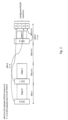
- the UE From the ACK/NACK timing indicator T the UE knows it should send HARQ feedback of DL transmission received in slot n in bit field 3, HARQ feedback of DL transmission received in slot n+1 in bit field 2, and HARQ feedback of DL transmission received in slot n+3 in bit field 0.
- the not used bit position 1 would be set to fixed value by the UE, e.g. a NACK. Even if the UE is scheduled but it does not receive the scheduling assignment (which the UE cannot distinguish from not being scheduled) it would set the corresponding bit position to the same fixed value.
- each bit position can assume the values ACK, NACK, and DTX.
- the ACK/NACK timing indicator points directly to the bit in the bit field (or more generally PUCCH sub-resource within the PUCCH resource indicated by ARI). More generally, the index to the PUCCH sub-resource is a function f(T) of the received ACK/NACK timing indicator.
- each DL transmission is acknowledged with a single bit HARQ feedback.
- each DL transmission data element
- multi-bit feedback e.g. multiple bits for MIMO; if a DL transmission (transport block) is segmented into multiple code blocks and each code block or group of code blocks can be acknowledged individually with a bit; soft feedback where multiple bits indicate the degree how successful the decoding was ranging from ACK to almost ACK ... to NACK).
- Multi-bit feedback could easily be combined with above mentioned DTX indication.
- the gNB knows which PUCCH sub-resources contain ACK/NACK (or possible DTX) (positions 0, 2, 3) and knows a fixed value will be signaled on position 1. The gNB can consider this in decoding and by that in practice only decode for 3 bits with small or no performance loss.
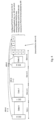
- the ARI is considered to select among or between resources in a configured pool of PUCCH resources (e.g. all PUCCH resources are of the same format or carry the same payload size). This concept is extended such that ARI points to select between configured PUCCH resources of different format or payload: In the example in Figure 4 , PUCCH resource 0 is capable to carry 4 bits, while PUCCH resources 1 to 3 can carry only 1 bit each.
- ACK/NACK timing indicator is reused to select a PUCCH sub-resource within the PUCCH resource pointed out by ACK/NACK resource indicator (ARI).
- ARI ACK/NACK resource indicator
- the concept of ARI is extended so that ARI selects within a pool of configured PUCCH resources which are not equal (i.e. either differ in format type or supported payload).
- FIG. 5 schematically shows a terminal 10, which may be implemented as a UE (User Equipment).
- Terminal 10 comprises processing circuitry (which may also be referred to as control circuitry) 20, which may comprise a controller connected to a memory. Any module of the terminal, e.g. a transmitting module or receiving module, may be implemented in and/or executable by, the processing circuitry 20, in particular as module in the controller.
- Terminal 10 also comprises radio circuitry 22 providing receiving and transmitting or transceiving functionality (e.g., one or more transmitters and/or receivers and/or transceivers), the radio circuitry 22 being connected or connectable to the control circuitry.
- An antenna circuitry 24 of the terminal 10 is connected or connectable to the radio circuitry 22 to collect or send and/or amplify signals.
- Figure 7 shows a diagram for an exemplary method of operating a terminal or user equipment.
- the method comprises an action TS10 of transmitting acknowledgement signaling pertaining to downlink data, the downlink data comprising one or more downlink data elements; wherein transmitting acknowledgement signaling is performed as described herein.
- FIG 8 shows a schematic of an exemplary terminal or user equipment.
- the user equipment may comprise a transmitting module TM10 for performing action TS10.
- Figure 9 shows a diagram for an exemplary method of operating a network node.
- the method comprises an action NS10 of transmitting downlink control signaling comprising an acknowledgement position indication as described herein.
- Figure 10 shows a schematic of an exemplary network node.
- the network node may comprise a transmitting module NM10 for performing action NS10.
- HARQ ACK/NACK acknowledgenowledge for a correctly received block of data, not acknowledged for a not correctly received block of data
- feedback may refer to feedback (e.g. a corresponding signal transmitted, which may comprise 1 or more bits) provided (e.g. on the UL) by a terminal, e.g. to a network or network node in response to data transmitted to it (e.g. on the DL).
- HARQ ACK//NACK information or feedback may include transmitting a signal/bit indicating whether a transport block of data received by the terminal has been receiver correctly or not.
- HARQ and/or determining HARQ may include decoding and/or error detection procedures to determine correct reception.
- There may be defined a number of HARQ processes with associated HARQ ids or numbers, which may refer to individual data streams and/or associated data elements; a HARQ response or feedback from a terminal (e.g. a HARQ bit) may be associated to one of the HARQ processes or ids.
- HARQ feedback may comprise one bit per DL carrier; in other variant, HARQ feedback may comprise two (or more than two) bits per carrier, e.g. dependent on the rank used.
- HARQ feedback may be transmitted (and/or determined, e.g.
- a terminal may be adapted for, and/or comprise a HARQ module for, determining (e.g., as mentioned above) and/or transmitting HARQ feedback, in particular based on and/or using a configuration and/or a modulation configured, e.g. a modulation determined and/or configured as described herein.
- Transmitting HARQ may generally be performed on a UL control channel, e.g. PUCCH.
- a carrier medium arrangement may comprise one or more carrier media.
- a carrier medium may be accessible and/or readable and/or receivable by control circuitry. Storing data and/or a program product and/or code may be seen as part of carrying data and/or a program product and/or code.
- a carrier medium generally may comprise a guiding/transporting medium and/or a storage medium.
- a guiding/transporting medium may be adapted to carry and/or carry and/or store signals, in particular electromagnetic signals and/or electrical signals and/or magnetic signals and/or optical signals.
- a carrier medium, in particular a guiding/transporting medium may be adapted to guide such signals to carry them.
- a carrier medium, in particular a guiding/transporting medium may comprise the electromagnetic field, e.g.
- Signaling may generally comprise one or more signals and/or one or more symbols.
- Reference signaling may comprise one or more reference signals or symbols.
- a resource element may generally describe the smallest individually usable and/or encodable and/or decodable and/or modulatable and/or demodulatable time-frequency resource, and/or may describe a time-frequency resource covering a symbol time length in time and a subcarrier in frequency.
- a signal may be allocatable and/or allocated to a resource element.
- a subcarrier may be a subband of a carrier, e.g. as defined by a standard.
- a carrier may define a frequency and/or frequency band for transmission and/or reception.
- a signal (jointly encoded/modulated) may cover more than one resource elements.
- a resource element may generally be as defined by a corresponding standard, e.g. NR or LTE.
- a resource represents a time-frequency resource, on which signaling according to a specific format may be transmitted and/or be intended for transmission.
- the format may comprise one or more substructures, which may be considered to represent a corresponding sub-resource (as they would be transmitted in a part of the resource).
- transmission time interval may correspond to any time period (T0) over which a physical channel can be encoded and optionally interleaved for transmission.
- the physical channel may be decoded by the receiver over the same time period (T0) over which it was encoded.
- Examples of TTI comprise short TTI (sTTI), transmission time, slot, sub-slot, mini-slot, mini-subframe etc.
- a TTI may comprise a one or more symbol time intervals, and/or one or two slot time intervals, wherein e.g. 7 symbol time intervals may correspond to a slot time interval. Time interval-related terms may be considered to follow 3GPP nomenclature.
- a mini-slot or shortened slot or short TTI may correspond to a plurality of symbol time intervals, e.g. 2 or 3 or 4 or 5 or 6 or 7 symbol time intervals.
- configuring may include determining configuration data representing the configuration and providing it to one or more other nodes (parallel and/or sequentially), which may transmit it further to the radio node (or another node, which may be repeated until it reaches the wireless device).
- configuring a radio node e.g., by a network node or other device, may include receiving configuration data and/or data pertaining to configuration data, e.g., from another node like a network node, which may be a higher-level node of the network, and/or transmitting received configuration data to the radio node.
- determining a configuration and transmitting the configuration data to the radio node may be performed by different network nodes or entities, which may be able to communicate via a suitable interface, e.g., an X2 interface in the case of LTE or a corresponding interface for NR.
- Configuring a terminal may comprise scheduling downlink and/or uplink transmissions for the terminal, e.g. downlink data and/or downlink control signaling and/or DCI and/or uplink signaling, in particular acknowledgement signaling, and/or configuring resources and/or a resource pool therefor.
- LTE Long Term Evolution
- LTE-A LTE-Advanced
- PM Performance Management
- Some useful abbreviations comprise: Abbreviation Explanation ACK Acknowledgment ARI ACK/NACK Resource Indicator CCE Control Channel Element DCI Downlink Control Information DL Downlink DTX Discontinues Transmission HARQ Hybrid Automatic Repeat Request MIMO Multiple Input Multiple Output NACK Negative Acknowledgment PAPR Peak to Average Power Ratio PDCCH Physical Downlink Control Channel PUCCH Physical Uplink Control Channel RRC Radio Resource Control UL Uplink
Landscapes
- Engineering & Computer Science (AREA)
- Signal Processing (AREA)
- Computer Networks & Wireless Communication (AREA)
- Mobile Radio Communication Systems (AREA)
- Detection And Prevention Of Errors In Transmission (AREA)
Claims (10)
- Équipement utilisateur (10), UE, pour un réseau d'accès radio, l'UE (10) étant adapté pour transmettre une signalisation d'accusé de réception relative à des données de liaison descendante, les données de liaison descendante comprenant un ou plusieurs éléments de données de liaison descendante ; dans lequel la signalisation d'accusé de réception a un format de signalisation de liaison montante comprenant une ou plusieurs sous-structures d'accusé de réception, chacune des sous-structures portant des informations d'accusé de réception relatives à un élément de données de liaison descendante ; dans lequel en outre chacune des sous-structures d'accusé de réception est mise en correspondance avec un élément différent parmi les éléments de données de liaison descendante sur la base d'au moins une indication de position d'accusé de réception fournie dans la signalisation de commande de liaison descendante reçue par l'UE (10) ;l'indication de position d'accusé de réception comprenant une indication de synchronisation ;l'indication de synchronisation indiquant un créneau pour transmettre la signalisation d'accusé de réception ;l'indication de position d'accusé de réception comprenant en outre une indication de sélection de ressource indiquant une ressource de canal de commande de liaison montante physique, PUCCH, permettant de transmettre la signalisation d'accusé de réception,la ressource de PUCCH étant une ressource temps-fréquence et étant sélectionnée par l'indication de sélection de ressource à partir d'un groupe de ressources configuré pour l'UE afin d'être disponible pour transmettre la signalisation d'accusé de réception dans le créneau indiqué par l'indication de synchronisation ;dans lequel l'indication de synchronisation est réutilisée pour sélectionner une sous-ressource dans la ressource de PUCCH sélectionnée par l'indication de sélection de ressource ; etdans lequel d'autres ressources du groupe de ressources configuré permettant de transmettre la signalisation d'accusé de réception ont des formats associés différents pour la transmission de la signalisation d'accusé de réception ou une taille de charge utile différente.
- Nœud de réseau (100) pour un réseau d'accès radio, le nœud de réseau (100) étant adapté pour transmettre une signalisation de commande de liaison descendante comprenant une indication de position d'accusé de réception ; dans lequel l'indication de position d'accusé de réception indique une mise en correspondance d'au moins une sous-structure d'accusé de réception constituée par un format de signalisation de liaison montante d'une signalisation d'accusé de réception reçue par le nœud de réseau (100) et comprenant une ou plusieurs sous-structures d'accusé de réception à un élément de données correspondant de données de liaison descendante, dans lequel en outre la sous-structure d'accusé de réception est mise en correspondance pour transporter des informations d'accusé de réception relatives à l'élément de données de liaison descendante ;l'indication de position d'accusé de réception comprenant une indication de synchronisation ;l'indication de synchronisation indiquant un créneau pour transmettre la signalisation d'accusé de réception ;l'indication de positionnement d'accusé de réception comprenant en outre une indication de sélection de ressource indiquant une ressource de canal de commande de liaison montante physique, PUCCH, pour transmettre la signalisation d'accusé de réception,la ressource de PUCCH étant une ressource temps-fréquence et étant sélectionnée par l'indication de sélection de ressource à partir d'un groupe de ressources configuré pour l'UE afin d'être disponible pour transmettre la signalisation d'accusé de réception dans le créneau indiqué par l'indication de synchronisation ;dans lequel l'indication de synchronisation est réutilisée pour sélectionner une sous-ressource dans la ressource de PUCCH sélectionnée par l'indication de sélection de ressource ; etdans lequel d'autres ressources du groupe de ressources configuré pour transmettre la signalisation d'accusé de réception ont des formats associés différents pour la transmission de la signalisation d'accusé de réception ou une taille de charge utile différente.
- Procédé mis en fonctionnement par un équipement utilisateur (10), UE, dans un réseau d'accès radio, le procédé comprenant la transmission d'une signalisation d'accusé de réception relative à des données de liaison descendante, les données de liaison descendante comprenant un ou plusieurs éléments de données de liaison descendante ;dans lequel la signalisation d'accusé de réception a un format de signalisation de liaison montante comprenant une ou plusieurs sous-structures d'accusé de réception, chacune des sous-structures portant des informations d'accusé de réception relatives à un élément de données de liaison descendante ;dans lequel en outre chacune des sous-structures d'accusé de réception est mise en correspondance avec un élément différent parmi les éléments de données de liaison descendante sur la base d'au moins une indication de position d'accusé de réception fournie dans la signalisation de commande de liaison descendante reçue par l'UE (10) ;l'indication de position d'accusé de réception comprenant une indication de synchronisation ;l'indication de synchronisation indiquant un créneau pour la transmission de la signalisation d'accusé de réception ;l'indication de positionnement d'accusé de réception comprenant en outre une indication de sélection de ressource indiquant une ressource de canal de commande de liaison montante physique, PUCCH, pour transmettre la signalisation d'accusé de réception,la ressource de PUCCH étant une ressource temps-fréquence et étant sélectionnée par l'indication de sélection de ressource à partir d'un groupe de ressources configuré pour l'UE afin d'être disponible pour transmettre la signalisation d'accusé de réception dans le créneau indiqué par l'indication de synchronisation ;dans lequel l'indication de synchronisation est réutilisée pour sélectionner une sous-ressource dans la ressource de PUCCH sélectionnée par l'indication de sélection de ressource ; etdans lequel d'autres ressources du groupe de ressources configuré pour transmettre la signalisation d'accusé de réception ont des formats associés différents pour la transmission de la signalisation d'accusé de réception ou une taille de charge utile différente.
- Procédé mis en fonctionnement par un nœud de réseau (100) dans un réseau d'accès radio, le procédé comprenant : la transmission d'une signalisation de commande de liaison descendante comprenant une indication de position d'accusé de réception ; dans lequel l'indication de position d'accusé de réception indique une mise en correspondance d'au moins une sous-structure d'accusé de réception constituée par un format de signalisation de liaison montante d'une signalisation d'accusé de réception reçue par le nœud de réseau (100) et comprenant une ou plusieurs sous-structures d'accusé de réception à un élément de données correspondant de données de liaison descendante, dans lequel la sous-structure d'accusé de réception est mise en correspondance pour transporter des informations d'accusé de réception relatives à l'élément de données de liaison descendante ;l'indication de position d'accusé de réception comprenant une indication de synchronisation ;l'indication de synchronisation indiquant un créneau pour transmettre la signalisation d'accusé de réception ;l'indication de positionnement d'accusé de réception comprenant en outre une indication de sélection de ressource indiquant une ressource de canal de commande de liaison montante physique, PUCCH, pour transmettre la signalisation d'accusé de réception,la ressource de PUCCH étant une ressource temps-fréquence et étant sélectionnée par l'indication de sélection de ressource à partir d'un groupe de ressources configuré pour l'UE afin d'être disponible pour transmettre la signalisation d'accusé de réception dans le créneau indiqué par l'indication de synchronisation ;dans lequel l'indication de synchronisation est réutilisée pour sélectionner une sous-ressource dans la ressource de PUCCH sélectionnée par l'indication de sélection de ressource ; etdans lequel d'autres ressources du groupe de ressources configuré pour transmettre la signalisation d'accusé de réception ont des formats associés différents pour la transmission de la signalisation d'accusé de réception ou une taille de charge utile différente.
- Procédé ou dispositif selon l'une des revendications précédentes, dans lequel la signalisation de commande de liaison descendante et les données de liaison descendante sont transmises sur des canaux différents, notamment des canaux physiques différents.
- Procédé ou dispositif selon l'une des revendications précédentes, dans lequel les informations d'accusé de réception représentent un accusé de réception correcte - ou un non-accusé de réception correcte de l'élément de données correspondant, et représentent éventuellement une indication de non-réception.
- Procédé ou dispositif selon l'une des revendications précédentes, dans lequel l'indication de position d'accusé de réception est sélective entre deux ou plusieurs formats de signalisation de liaison montante différents.
- Procédé ou dispositif selon l'une des revendications précédentes, dans lequel la signalisation de commande de liaison descendante comprend un ou plusieurs messages, dans lequel chaque message peut comprendre au moins une indication de position d'accusé de réception.
- Produit programme comprenant des instructions qui, lorsqu'elles sont exécutées par un circuit de traitement, amènent le circuit de traitement à réaliser et/ou à commander un procédé selon l'une des revendications 3 à 8.
- Agencement de support de transport portant et/ou stockant un produit de programme selon la revendication 9.
Applications Claiming Priority (1)
| Application Number | Priority Date | Filing Date | Title |
|---|---|---|---|
| PCT/SE2017/050134 WO2018147774A1 (fr) | 2017-02-13 | 2017-02-13 | Signalisation de ressources pour un pucch |
Publications (3)
| Publication Number | Publication Date |
|---|---|
| EP3580871A1 EP3580871A1 (fr) | 2019-12-18 |
| EP3580871B1 true EP3580871B1 (fr) | 2025-04-09 |
| EP3580871C0 EP3580871C0 (fr) | 2025-04-09 |
Family
ID=58163174
Family Applications (1)
| Application Number | Title | Priority Date | Filing Date |
|---|---|---|---|
| EP17707420.0A Active EP3580871B1 (fr) | 2017-02-13 | 2017-02-13 | Signalisation de ressources pour un pucch |
Country Status (9)
| Country | Link |
|---|---|
| US (2) | US11375478B2 (fr) |
| EP (1) | EP3580871B1 (fr) |
| JP (1) | JP6982622B2 (fr) |
| CN (1) | CN110313141B (fr) |
| CA (1) | CA3052136C (fr) |
| MX (1) | MX2019009595A (fr) |
| RU (1) | RU2737617C1 (fr) |
| SG (1) | SG11201907021YA (fr) |
| WO (1) | WO2018147774A1 (fr) |
Families Citing this family (10)
| Publication number | Priority date | Publication date | Assignee | Title |
|---|---|---|---|---|
| US11012221B2 (en) | 2017-03-08 | 2021-05-18 | Lg Electronics Inc. | Method and apparatus for transmitting and receiving radio signals in a wireless communication system |
| EP3599789B1 (fr) * | 2017-03-22 | 2024-02-14 | Sony Group Corporation | Dispositif terminal, dispositif de station de base, procédé de communication, et support d'informations |
| KR102458083B1 (ko) * | 2017-09-29 | 2022-10-24 | 삼성전자 주식회사 | 무선 통신 시스템에서 그룹 하향 제어채널 송수신 하는 방법 및 장치 |
| BR112020009812B1 (pt) * | 2017-11-17 | 2024-03-12 | Zte Corporation | Método realizado por um dispositivo de comunicação sem fio, método realizado por um nó de comunicação sem fio e primeiros aparelhos de comunicação |
| US10849110B2 (en) * | 2018-02-16 | 2020-11-24 | Qualcomm Incorporated | Resource allocation for the physical uplink control channel |
| WO2020067942A1 (fr) | 2018-09-28 | 2020-04-02 | Telefonaktiebolaget Lm Ericsson (Publ) | Structure de livre de codes harq |
| US11765689B2 (en) * | 2018-10-28 | 2023-09-19 | Lg Electronics Inc. | Method by which terminal performs sidelink operation in wireless communication system, and terminal using method |
| KR20200050812A (ko) * | 2018-11-02 | 2020-05-12 | 삼성전자주식회사 | 무선 통신 시스템에서 데이터 및 피드백의 송수신을 수행하는 방법 및 장치 |
| IL292110B2 (en) * | 2019-11-04 | 2025-04-01 | Guangdong Oppo Mobile Telecommunications Corp Ltd | Feedback Channel Mapping and HARQ Report Multiplexing in NR SIDELINK Communications |
| JP7389922B2 (ja) * | 2020-10-15 | 2023-11-30 | エルジー エレクトロニクス インコーポレイティド | 無線通信システムにおける信号の送受信方法および装置 |
Family Cites Families (41)
| Publication number | Priority date | Publication date | Assignee | Title |
|---|---|---|---|---|
| CA2667159C (fr) * | 2006-10-27 | 2015-05-05 | Fujitsu Limited | Procede de controle de transmission, appareil emetteur et appareil recepteur dans un systeme de communication sans fil |
| US8837421B2 (en) * | 2008-03-26 | 2014-09-16 | Nokia Siemens Neworks Oy | Channelization procedure for implementing persistent ACK/NACK and scheduling request |
| US9450727B2 (en) * | 2009-02-03 | 2016-09-20 | Google Technology Holdings LLC | Physical layer acknowledgement signaling resource allocation in wireless communication systems |
| JP5023123B2 (ja) * | 2009-09-08 | 2012-09-12 | 株式会社エヌ・ティ・ティ・ドコモ | 無線基地局及び移動通信方法 |
| KR101425630B1 (ko) * | 2010-04-30 | 2014-07-31 | 노키아 솔루션스 앤드 네트웍스 오와이 | 타이밍 불확실성 컴포넌트 캐리어 (재)구성/활성화/비활성화 기간 동안 캐리어 애그리케이션을 위한 ul ack/nack 피드백의 지원 |
| CN103026653B (zh) * | 2010-07-26 | 2016-05-25 | Lg电子株式会社 | 在无线通信系统中发送上行控制信息的方法和设备 |
| CN101969368B (zh) * | 2010-11-03 | 2013-04-24 | 北京北方烽火科技有限公司 | 一种应答信号检测方法及装置 |
| KR101727793B1 (ko) * | 2010-12-15 | 2017-04-17 | 엘지전자 주식회사 | Tdd 기반 무선 통신 시스템에서 ack/nack 전송 방법 및 장치 |
| CN102098151B (zh) * | 2010-12-28 | 2015-08-12 | 中兴通讯股份有限公司 | 一种正确/错误应答消息的发送方法及用户终端 |
| WO2012106975A1 (fr) * | 2011-02-12 | 2012-08-16 | 中兴通讯股份有限公司 | Procédé de transmission d'accusé de réception / accusé de réception négatif et terminal pour la mise en œuvre de ce procédé |
| KR101919780B1 (ko) | 2011-03-03 | 2018-11-19 | 엘지전자 주식회사 | 무선 통신 시스템에서 확인응답 정보를 전송하는 방법 및 장치 |
| CN102223215B (zh) * | 2011-06-23 | 2016-09-21 | 电信科学技术研究院 | Ack/nack的传输方法、接收方法及其装置 |
| US20130121304A1 (en) * | 2011-11-11 | 2013-05-16 | Motorola Mobility Llc | Acknowledgement signaling in wireless communication network |
| US9807740B2 (en) * | 2012-08-02 | 2017-10-31 | Sun Patent Trust | Terminal device, base station device, and uplink response signal transmission method |
| DK2901793T3 (en) * | 2012-09-27 | 2017-02-13 | ERICSSON TELEFON AB L M (publ) | METHODS AND SYSTEMS FOR TDD-PUCCH-HARQ RESOURCE ALLOCATION FOR ENHANCED PHYSICAL DOWNLINK CONTROL CHANNEL (EPDCCH) |
| WO2014049918A1 (fr) * | 2012-09-27 | 2014-04-03 | パナソニック株式会社 | Terminal de communication sans fil, dispositif de station de base et procédé d'attribution de ressources |
| WO2014148796A1 (fr) * | 2013-03-19 | 2014-09-25 | 엘지전자 주식회사 | Procédé destiné à permettre à un terminal d'émettre et de recevoir un signal dans un système de communications sans fil et appareil associé |
| CN110430032B (zh) * | 2013-04-12 | 2022-04-12 | 北京三星通信技术研究有限公司 | 一种多子帧调度中的上行功率控制方法 |
| JP5931828B2 (ja) * | 2013-09-26 | 2016-06-08 | 株式会社Nttドコモ | ユーザ端末、基地局及び無線通信方法 |
| EP3062570B1 (fr) | 2013-10-24 | 2018-08-01 | LG Electronics Inc. | Procédé de configuration de puissance d'émission en liaison descendante par le biais d'une rrh dans un environnement lan en nuage |
| US9667386B2 (en) * | 2013-11-13 | 2017-05-30 | Samsung Electronics Co., Ltd | Transmission of control channel and data channels for coverage enhancements |
| CN105850066B (zh) * | 2013-12-27 | 2019-07-19 | Lg电子株式会社 | 报告信道状态信息的方法和装置 |
| US10110365B2 (en) * | 2014-03-25 | 2018-10-23 | Lg Electronics Inc. | Method and apparatus for transmitting control information in wireless communication system |
| US10615946B2 (en) * | 2014-05-07 | 2020-04-07 | Lg Electronics Inc. | Method and apparatus for transmitting control information in wireless communication system |
| WO2016111599A1 (fr) * | 2015-01-09 | 2016-07-14 | 엘지전자 주식회사 | Procédé pour transmettre des informations de commande, et appareil associé |
| US9985742B2 (en) * | 2015-04-06 | 2018-05-29 | Samsung Electronics Co., Ltd. | Transmission power control for an uplink control channel |
| JP6861150B2 (ja) * | 2015-04-28 | 2021-04-21 | 株式会社Nttドコモ | ユーザ装置及び基地局 |
| CN112187432A (zh) | 2015-05-14 | 2021-01-05 | 北京三星通信技术研究有限公司 | 传输上行控制信息的方法和设备 |
| JP6081531B2 (ja) * | 2015-06-26 | 2017-02-15 | 株式会社Nttドコモ | ユーザ端末、無線基地局及び無線通信方法 |
| CN107852318B (zh) * | 2015-08-12 | 2021-07-30 | Lg电子株式会社 | 用于执行上行链路传输的方法和用户设备 |
| JPWO2017026513A1 (ja) * | 2015-08-13 | 2018-07-12 | 株式会社Nttドコモ | ユーザ端末、無線基地局、無線通信方法及び無線通信システム |
| ES3015237T3 (en) * | 2016-01-07 | 2025-04-30 | Nokia Solutions & Networks Oy | Method and apparatus for allocating acknowledgement resources |
| WO2017123064A1 (fr) * | 2016-01-15 | 2017-07-20 | 엘지전자 주식회사 | Procédé pour émettre/recevoir des signaux, et dispositif associé |
| US10548169B2 (en) * | 2016-02-02 | 2020-01-28 | Lg Electronics Inc. | Method and device for transmitting/receiving wireless signal in wireless communication system |
| KR102288627B1 (ko) * | 2016-03-02 | 2021-08-11 | 삼성전자 주식회사 | 통신 시스템에서 단말의 상향링크 제어 정보 전송 방법 및 장치 |
| KR102909813B1 (ko) | 2016-04-04 | 2026-01-09 | 삼성전자 주식회사 | 무선 통신 시스템에서 피드백 송수신 방법 및 장치 |
| WO2017176017A1 (fr) | 2016-04-04 | 2017-10-12 | Samsung Electronics Co., Ltd. | Procédé et appareil de transmission et de réception de rétroaction dans un système de communications sans fil |
| US10541785B2 (en) * | 2016-07-18 | 2020-01-21 | Samsung Electronics Co., Ltd. | Carrier aggregation with variable transmission durations |
| WO2018128200A1 (fr) * | 2017-01-04 | 2018-07-12 | 엘지전자 주식회사 | Procédé pour mettre en oeuvre une opération harq dans un système basé sur noma, et appareil associé |
| CN110168987B (zh) | 2017-01-05 | 2021-12-31 | 诺基亚技术有限公司 | 可扩展的反馈报告 |
| CN115208540B (zh) * | 2017-01-08 | 2024-10-15 | Lg电子株式会社 | 在无线通信系统中发送或接收上行链路信号的方法和设备 |
-
2017
- 2017-02-13 JP JP2019543212A patent/JP6982622B2/ja active Active
- 2017-02-13 SG SG11201907021YA patent/SG11201907021YA/en unknown
- 2017-02-13 MX MX2019009595A patent/MX2019009595A/es unknown
- 2017-02-13 CA CA3052136A patent/CA3052136C/fr active Active
- 2017-02-13 US US16/334,243 patent/US11375478B2/en active Active
- 2017-02-13 CN CN201780086226.XA patent/CN110313141B/zh active Active
- 2017-02-13 RU RU2019128663A patent/RU2737617C1/ru active
- 2017-02-13 EP EP17707420.0A patent/EP3580871B1/fr active Active
- 2017-02-13 WO PCT/SE2017/050134 patent/WO2018147774A1/fr not_active Ceased
-
2019
- 2019-03-06 US US16/294,356 patent/US10492179B2/en active Active
Also Published As
| Publication number | Publication date |
|---|---|
| SG11201907021YA (en) | 2019-08-27 |
| US11375478B2 (en) | 2022-06-28 |
| EP3580871A1 (fr) | 2019-12-18 |
| CN110313141A (zh) | 2019-10-08 |
| JP2020509670A (ja) | 2020-03-26 |
| US20190230642A1 (en) | 2019-07-25 |
| WO2018147774A1 (fr) | 2018-08-16 |
| US10492179B2 (en) | 2019-11-26 |
| CA3052136C (fr) | 2022-08-30 |
| JP6982622B2 (ja) | 2021-12-17 |
| EP3580871C0 (fr) | 2025-04-09 |
| CA3052136A1 (fr) | 2018-08-16 |
| BR112019016698A2 (pt) | 2020-04-07 |
| US20190208518A1 (en) | 2019-07-04 |
| RU2737617C1 (ru) | 2020-12-01 |
| CN110313141B (zh) | 2022-06-10 |
| MX2019009595A (es) | 2019-10-02 |
Similar Documents
| Publication | Publication Date | Title |
|---|---|---|
| EP3583716B1 (fr) | Signalisation de ressources de liaison latérale | |
| US10492179B2 (en) | Resource signaling for PUCCH | |
| US11431443B2 (en) | HARQ codebook | |
| US20230155792A1 (en) | Pucch structure for mixed numerology | |
| EP3646494A1 (fr) | Sélection de format de signalisation de rétroaction | |
| US20230354351A1 (en) | Resource Mapping Based on Bandwidth Part | |
| JP7253606B2 (ja) | Pucchのためのリソースシグナリング | |
| OA19791A (en) | Resource signaling for pucch. | |
| HK40036164A (en) | Efficient control signaling using common search space | |
| BR112019016698B1 (pt) | Equipamento de usuário, nó de rede e método de operação de um equipamento de usuário |
Legal Events
| Date | Code | Title | Description |
|---|---|---|---|
| STAA | Information on the status of an ep patent application or granted ep patent |
Free format text: STATUS: UNKNOWN |
|
| STAA | Information on the status of an ep patent application or granted ep patent |
Free format text: STATUS: THE INTERNATIONAL PUBLICATION HAS BEEN MADE |
|
| PUAI | Public reference made under article 153(3) epc to a published international application that has entered the european phase |
Free format text: ORIGINAL CODE: 0009012 |
|
| STAA | Information on the status of an ep patent application or granted ep patent |
Free format text: STATUS: REQUEST FOR EXAMINATION WAS MADE |
|
| 17P | Request for examination filed |
Effective date: 20190726 |
|
| AK | Designated contracting states |
Kind code of ref document: A1 Designated state(s): AL AT BE BG CH CY CZ DE DK EE ES FI FR GB GR HR HU IE IS IT LI LT LU LV MC MK MT NL NO PL PT RO RS SE SI SK SM TR |
|
| AX | Request for extension of the european patent |
Extension state: BA ME |
|
| DAV | Request for validation of the european patent (deleted) | ||
| DAX | Request for extension of the european patent (deleted) | ||
| STAA | Information on the status of an ep patent application or granted ep patent |
Free format text: STATUS: EXAMINATION IS IN PROGRESS |
|
| 17Q | First examination report despatched |
Effective date: 20220223 |
|
| REG | Reference to a national code |
Ref country code: DE Free format text: PREVIOUS MAIN CLASS: H04L0001160000 Ref country code: DE Ref legal event code: R079 Ref document number: 602017088795 Country of ref document: DE Free format text: PREVIOUS MAIN CLASS: H04L0001160000 Ipc: H04L0001160700 |
|
| GRAP | Despatch of communication of intention to grant a patent |
Free format text: ORIGINAL CODE: EPIDOSNIGR1 |
|
| STAA | Information on the status of an ep patent application or granted ep patent |
Free format text: STATUS: GRANT OF PATENT IS INTENDED |
|
| RIC1 | Information provided on ipc code assigned before grant |
Ipc: H04L 5/00 20060101ALI20240920BHEP Ipc: H04L 1/1829 20230101ALI20240920BHEP Ipc: H04L 1/1607 20230101AFI20240920BHEP |
|
| INTG | Intention to grant announced |
Effective date: 20241008 |
|
| GRAS | Grant fee paid |
Free format text: ORIGINAL CODE: EPIDOSNIGR3 |
|
| GRAA | (expected) grant |
Free format text: ORIGINAL CODE: 0009210 |
|
| STAA | Information on the status of an ep patent application or granted ep patent |
Free format text: STATUS: THE PATENT HAS BEEN GRANTED |
|
| AK | Designated contracting states |
Kind code of ref document: B1 Designated state(s): AL AT BE BG CH CY CZ DE DK EE ES FI FR GB GR HR HU IE IS IT LI LT LU LV MC MK MT NL NO PL PT RO RS SE SI SK SM TR |
|
| REG | Reference to a national code |
Ref country code: GB Ref legal event code: FG4D |
|
| REG | Reference to a national code |
Ref country code: CH Ref legal event code: EP |
|
| REG | Reference to a national code |
Ref country code: DE Ref legal event code: R096 Ref document number: 602017088795 Country of ref document: DE |
|
| REG | Reference to a national code |
Ref country code: IE Ref legal event code: FG4D |
|
| U01 | Request for unitary effect filed |
Effective date: 20250506 |
|
| RAP4 | Party data changed (patent owner data changed or rights of a patent transferred) |
Owner name: TELEFONAKTIEBOLAGET LM ERICSSON (PUBL) |
|
| U07 | Unitary effect registered |
Designated state(s): AT BE BG DE DK EE FI FR IT LT LU LV MT NL PT RO SE SI Effective date: 20250514 |
|
| PG25 | Lapsed in a contracting state [announced via postgrant information from national office to epo] |
Ref country code: ES Free format text: LAPSE BECAUSE OF FAILURE TO SUBMIT A TRANSLATION OF THE DESCRIPTION OR TO PAY THE FEE WITHIN THE PRESCRIBED TIME-LIMIT Effective date: 20250409 |
|
| PG25 | Lapsed in a contracting state [announced via postgrant information from national office to epo] |
Ref country code: NO Free format text: LAPSE BECAUSE OF FAILURE TO SUBMIT A TRANSLATION OF THE DESCRIPTION OR TO PAY THE FEE WITHIN THE PRESCRIBED TIME-LIMIT Effective date: 20250709 Ref country code: GR Free format text: LAPSE BECAUSE OF FAILURE TO SUBMIT A TRANSLATION OF THE DESCRIPTION OR TO PAY THE FEE WITHIN THE PRESCRIBED TIME-LIMIT Effective date: 20250710 |
|
| PG25 | Lapsed in a contracting state [announced via postgrant information from national office to epo] |
Ref country code: PL Free format text: LAPSE BECAUSE OF FAILURE TO SUBMIT A TRANSLATION OF THE DESCRIPTION OR TO PAY THE FEE WITHIN THE PRESCRIBED TIME-LIMIT Effective date: 20250409 |
|
| PG25 | Lapsed in a contracting state [announced via postgrant information from national office to epo] |
Ref country code: HR Free format text: LAPSE BECAUSE OF FAILURE TO SUBMIT A TRANSLATION OF THE DESCRIPTION OR TO PAY THE FEE WITHIN THE PRESCRIBED TIME-LIMIT Effective date: 20250409 |
|
| PG25 | Lapsed in a contracting state [announced via postgrant information from national office to epo] |
Ref country code: RS Free format text: LAPSE BECAUSE OF FAILURE TO SUBMIT A TRANSLATION OF THE DESCRIPTION OR TO PAY THE FEE WITHIN THE PRESCRIBED TIME-LIMIT Effective date: 20250709 |
|
| PG25 | Lapsed in a contracting state [announced via postgrant information from national office to epo] |
Ref country code: IS Free format text: LAPSE BECAUSE OF FAILURE TO SUBMIT A TRANSLATION OF THE DESCRIPTION OR TO PAY THE FEE WITHIN THE PRESCRIBED TIME-LIMIT Effective date: 20250809 |
|
| PG25 | Lapsed in a contracting state [announced via postgrant information from national office to epo] |
Ref country code: SM Free format text: LAPSE BECAUSE OF FAILURE TO SUBMIT A TRANSLATION OF THE DESCRIPTION OR TO PAY THE FEE WITHIN THE PRESCRIBED TIME-LIMIT Effective date: 20250409 |
|
| PG25 | Lapsed in a contracting state [announced via postgrant information from national office to epo] |
Ref country code: CZ Free format text: LAPSE BECAUSE OF FAILURE TO SUBMIT A TRANSLATION OF THE DESCRIPTION OR TO PAY THE FEE WITHIN THE PRESCRIBED TIME-LIMIT Effective date: 20250409 |
|
| PG25 | Lapsed in a contracting state [announced via postgrant information from national office to epo] |
Ref country code: SK Free format text: LAPSE BECAUSE OF FAILURE TO SUBMIT A TRANSLATION OF THE DESCRIPTION OR TO PAY THE FEE WITHIN THE PRESCRIBED TIME-LIMIT Effective date: 20250409 |
|
| PLBE | No opposition filed within time limit |
Free format text: ORIGINAL CODE: 0009261 |
|
| STAA | Information on the status of an ep patent application or granted ep patent |
Free format text: STATUS: NO OPPOSITION FILED WITHIN TIME LIMIT |
|
| REG | Reference to a national code |
Ref country code: CH Ref legal event code: L10 Free format text: ST27 STATUS EVENT CODE: U-0-0-L10-L00 (AS PROVIDED BY THE NATIONAL OFFICE) Effective date: 20260218 |
|
| 26N | No opposition filed |
Effective date: 20260112 |
|
| U20 | Renewal fee for the european patent with unitary effect paid |
Year of fee payment: 10 Effective date: 20260227 |