EP3581168A1 - Compositions à libération prolongée - Google Patents
Compositions à libération prolongée Download PDFInfo
- Publication number
- EP3581168A1 EP3581168A1 EP18178129.5A EP18178129A EP3581168A1 EP 3581168 A1 EP3581168 A1 EP 3581168A1 EP 18178129 A EP18178129 A EP 18178129A EP 3581168 A1 EP3581168 A1 EP 3581168A1
- Authority
- EP
- European Patent Office
- Prior art keywords
- methacrylated
- sulphate
- network
- lysozyme
- chondroitin
- Prior art date
- Legal status (The legal status is an assumption and is not a legal conclusion. Google has not performed a legal analysis and makes no representation as to the accuracy of the status listed.)
- Withdrawn
Links
- 239000000203 mixture Substances 0.000 title description 43
- 238000013268 sustained release Methods 0.000 title description 11
- 239000012730 sustained-release form Substances 0.000 title description 11
- 108090000765 processed proteins & peptides Proteins 0.000 claims abstract description 69
- 239000000017 hydrogel Substances 0.000 claims abstract description 65
- 229920006037 cross link polymer Polymers 0.000 claims abstract description 34
- 238000000034 method Methods 0.000 claims abstract description 32
- 239000002244 precipitate Substances 0.000 claims abstract description 17
- 125000002091 cationic group Chemical group 0.000 claims abstract description 11
- 150000004676 glycans Chemical class 0.000 claims abstract description 11
- 229920001282 polysaccharide Polymers 0.000 claims abstract description 11
- 239000005017 polysaccharide Substances 0.000 claims abstract description 10
- 229920000642 polymer Polymers 0.000 claims description 45
- 102000004169 proteins and genes Human genes 0.000 claims description 35
- 108090000623 proteins and genes Proteins 0.000 claims description 35
- 238000004132 cross linking Methods 0.000 claims description 18
- 229910021653 sulphate ion Inorganic materials 0.000 claims description 18
- 229920002683 Glycosaminoglycan Polymers 0.000 claims description 15
- 229920006318 anionic polymer Polymers 0.000 claims description 13
- 239000007853 buffer solution Substances 0.000 claims description 12
- 229920002567 Chondroitin Polymers 0.000 claims description 8
- DLGJWSVWTWEWBJ-HGGSSLSASA-N chondroitin Chemical compound CC(O)=N[C@@H]1[C@H](O)O[C@H](CO)[C@H](O)[C@@H]1OC1[C@H](O)[C@H](O)C=C(C(O)=O)O1 DLGJWSVWTWEWBJ-HGGSSLSASA-N 0.000 claims description 8
- 239000008194 pharmaceutical composition Substances 0.000 claims description 8
- 125000000129 anionic group Chemical group 0.000 claims description 6
- KIUKXJAPPMFGSW-DNGZLQJQSA-N (2S,3S,4S,5R,6R)-6-[(2S,3R,4R,5S,6R)-3-Acetamido-2-[(2S,3S,4R,5R,6R)-6-[(2R,3R,4R,5S,6R)-3-acetamido-2,5-dihydroxy-6-(hydroxymethyl)oxan-4-yl]oxy-2-carboxy-4,5-dihydroxyoxan-3-yl]oxy-5-hydroxy-6-(hydroxymethyl)oxan-4-yl]oxy-3,4,5-trihydroxyoxane-2-carboxylic acid Chemical compound CC(=O)N[C@H]1[C@H](O)O[C@H](CO)[C@@H](O)[C@@H]1O[C@H]1[C@H](O)[C@@H](O)[C@H](O[C@H]2[C@@H]([C@@H](O[C@H]3[C@@H]([C@@H](O)[C@H](O)[C@H](O3)C(O)=O)O)[C@H](O)[C@@H](CO)O2)NC(C)=O)[C@@H](C(O)=O)O1 KIUKXJAPPMFGSW-DNGZLQJQSA-N 0.000 claims description 5
- 229920002674 hyaluronan Polymers 0.000 claims description 5
- 229960003160 hyaluronic acid Drugs 0.000 claims description 5
- FPJHWYCPAOPVIV-VOZMEZHOSA-N (2R,3S,4R,5R,6R)-6-[(2R,3R,4R,5R,6R)-5-acetamido-2-(hydroxymethyl)-6-methoxy-3-sulfooxyoxan-4-yl]oxy-4,5-dihydroxy-3-methoxyoxane-2-carboxylic acid Chemical compound CO[C@@H]1O[C@H](CO)[C@H](OS(O)(=O)=O)[C@H](O[C@@H]2O[C@H]([C@@H](OC)[C@H](O)[C@H]2O)C(O)=O)[C@H]1NC(C)=O FPJHWYCPAOPVIV-VOZMEZHOSA-N 0.000 claims description 4
- 229920000045 Dermatan sulfate Polymers 0.000 claims description 4
- 229920002971 Heparan sulfate Polymers 0.000 claims description 4
- HTTJABKRGRZYRN-UHFFFAOYSA-N Heparin Chemical compound OC1C(NC(=O)C)C(O)OC(COS(O)(=O)=O)C1OC1C(OS(O)(=O)=O)C(O)C(OC2C(C(OS(O)(=O)=O)C(OC3C(C(O)C(O)C(O3)C(O)=O)OS(O)(=O)=O)C(CO)O2)NS(O)(=O)=O)C(C(O)=O)O1 HTTJABKRGRZYRN-UHFFFAOYSA-N 0.000 claims description 4
- 229920000288 Keratan sulfate Polymers 0.000 claims description 4
- 229920000669 heparin Polymers 0.000 claims description 4
- 229960002897 heparin Drugs 0.000 claims description 4
- KXCLCNHUUKTANI-RBIYJLQWSA-N keratan Chemical compound CC(=O)N[C@@H]1[C@@H](O)C[C@@H](COS(O)(=O)=O)O[C@H]1O[C@@H]1[C@@H](O)[C@H](O[C@@H]2[C@H](O[C@@H](O[C@H]3[C@H]([C@@H](COS(O)(=O)=O)O[C@@H](O)[C@@H]3O)O)[C@H](NC(C)=O)[C@H]2O)COS(O)(=O)=O)O[C@H](COS(O)(=O)=O)[C@@H]1O KXCLCNHUUKTANI-RBIYJLQWSA-N 0.000 claims description 4
- 239000007864 aqueous solution Substances 0.000 claims description 3
- 229920000447 polyanionic polymer Polymers 0.000 claims description 3
- 229920002307 Dextran Polymers 0.000 claims description 2
- QAOWNCQODCNURD-UHFFFAOYSA-L Sulfate Chemical compound [O-]S([O-])(=O)=O QAOWNCQODCNURD-UHFFFAOYSA-L 0.000 claims description 2
- 238000004945 emulsification Methods 0.000 claims description 2
- 229940088597 hormone Drugs 0.000 claims description 2
- 239000005556 hormone Substances 0.000 claims description 2
- 230000008569 process Effects 0.000 claims description 2
- -1 dermatan sulphate Chemical compound 0.000 claims 1
- 150000004804 polysaccharides Polymers 0.000 claims 1
- 102000004196 processed proteins & peptides Human genes 0.000 abstract description 31
- 229920001184 polypeptide Polymers 0.000 abstract description 6
- 102000015636 Oligopeptides Human genes 0.000 abstract description 3
- 108010038807 Oligopeptides Proteins 0.000 abstract description 3
- 229960000274 lysozyme Drugs 0.000 description 110
- 239000004325 lysozyme Substances 0.000 description 110
- 102000016943 Muramidase Human genes 0.000 description 103
- 108010014251 Muramidase Proteins 0.000 description 103
- 108010062010 N-Acetylmuramoyl-L-alanine Amidase Proteins 0.000 description 103
- 235000010335 lysozyme Nutrition 0.000 description 103
- 101100172132 Mus musculus Eif3a gene Proteins 0.000 description 80
- 239000000872 buffer Substances 0.000 description 58
- 239000012071 phase Substances 0.000 description 24
- 238000009472 formulation Methods 0.000 description 22
- 238000011068 loading method Methods 0.000 description 22
- 238000009792 diffusion process Methods 0.000 description 21
- 239000000243 solution Substances 0.000 description 15
- 239000011159 matrix material Substances 0.000 description 14
- 239000003921 oil Substances 0.000 description 13
- WYURNTSHIVDZCO-UHFFFAOYSA-N Tetrahydrofuran Chemical compound C1CCOC1 WYURNTSHIVDZCO-UHFFFAOYSA-N 0.000 description 12
- 239000002131 composite material Substances 0.000 description 12
- XLYOFNOQVPJJNP-UHFFFAOYSA-N water Substances O XLYOFNOQVPJJNP-UHFFFAOYSA-N 0.000 description 12
- 239000000499 gel Substances 0.000 description 11
- 230000002459 sustained effect Effects 0.000 description 10
- 238000004458 analytical method Methods 0.000 description 9
- 230000000694 effects Effects 0.000 description 9
- MHMNJMPURVTYEJ-UHFFFAOYSA-N fluorescein-5-isothiocyanate Chemical compound O1C(=O)C2=CC(N=C=S)=CC=C2C21C1=CC=C(O)C=C1OC1=CC(O)=CC=C21 MHMNJMPURVTYEJ-UHFFFAOYSA-N 0.000 description 9
- 238000011534 incubation Methods 0.000 description 9
- 239000000463 material Substances 0.000 description 9
- 239000002245 particle Substances 0.000 description 9
- 238000009826 distribution Methods 0.000 description 8
- 238000002376 fluorescence recovery after photobleaching Methods 0.000 description 8
- 230000015572 biosynthetic process Effects 0.000 description 7
- 238000005227 gel permeation chromatography Methods 0.000 description 7
- 230000009467 reduction Effects 0.000 description 7
- 229920001287 Chondroitin sulfate Polymers 0.000 description 6
- 206010061218 Inflammation Diseases 0.000 description 6
- 102000015696 Interleukins Human genes 0.000 description 6
- 108010063738 Interleukins Proteins 0.000 description 6
- 210000000481 breast Anatomy 0.000 description 6
- 238000002474 experimental method Methods 0.000 description 6
- 230000004054 inflammatory process Effects 0.000 description 6
- 229940047122 interleukins Drugs 0.000 description 6
- 239000004005 microsphere Substances 0.000 description 6
- 229920001223 polyethylene glycol Polymers 0.000 description 6
- 238000001556 precipitation Methods 0.000 description 6
- YLQBMQCUIZJEEH-UHFFFAOYSA-N tetrahydrofuran Natural products C=1C=COC=1 YLQBMQCUIZJEEH-UHFFFAOYSA-N 0.000 description 6
- 239000012530 fluid Substances 0.000 description 5
- 238000001727 in vivo Methods 0.000 description 5
- 230000003993 interaction Effects 0.000 description 5
- 239000000126 substance Substances 0.000 description 5
- 238000005160 1H NMR spectroscopy Methods 0.000 description 4
- JKMHFZQWWAIEOD-UHFFFAOYSA-N 2-[4-(2-hydroxyethyl)piperazin-1-yl]ethanesulfonic acid Chemical compound OCC[NH+]1CCN(CCS([O-])(=O)=O)CC1 JKMHFZQWWAIEOD-UHFFFAOYSA-N 0.000 description 4
- IAZDPXIOMUYVGZ-UHFFFAOYSA-N Dimethylsulphoxide Chemical compound CS(C)=O IAZDPXIOMUYVGZ-UHFFFAOYSA-N 0.000 description 4
- PXIPVTKHYLBLMZ-UHFFFAOYSA-N Sodium azide Chemical compound [Na+].[N-]=[N+]=[N-] PXIPVTKHYLBLMZ-UHFFFAOYSA-N 0.000 description 4
- 239000003814 drug Substances 0.000 description 4
- 238000012377 drug delivery Methods 0.000 description 4
- 238000004128 high performance liquid chromatography Methods 0.000 description 4
- CERQOIWHTDAKMF-UHFFFAOYSA-M methacrylate group Chemical group C(C(=C)C)(=O)[O-] CERQOIWHTDAKMF-UHFFFAOYSA-M 0.000 description 4
- 238000011084 recovery Methods 0.000 description 4
- 239000006228 supernatant Substances 0.000 description 4
- 229920000428 triblock copolymer Polymers 0.000 description 4
- 238000005406 washing Methods 0.000 description 4
- GJKGAPPUXSSCFI-UHFFFAOYSA-N 2-Hydroxy-4'-(2-hydroxyethoxy)-2-methylpropiophenone Chemical compound CC(C)(O)C(=O)C1=CC=C(OCCO)C=C1 GJKGAPPUXSSCFI-UHFFFAOYSA-N 0.000 description 3
- QTBSBXVTEAMEQO-UHFFFAOYSA-N Acetic acid Chemical compound CC(O)=O QTBSBXVTEAMEQO-UHFFFAOYSA-N 0.000 description 3
- WEVYAHXRMPXWCK-UHFFFAOYSA-N Acetonitrile Chemical compound CC#N WEVYAHXRMPXWCK-UHFFFAOYSA-N 0.000 description 3
- 239000007995 HEPES buffer Substances 0.000 description 3
- HEMHJVSKTPXQMS-UHFFFAOYSA-M Sodium hydroxide Chemical compound [OH-].[Na+] HEMHJVSKTPXQMS-UHFFFAOYSA-M 0.000 description 3
- 230000004071 biological effect Effects 0.000 description 3
- 239000002775 capsule Substances 0.000 description 3
- 229920006317 cationic polymer Polymers 0.000 description 3
- 238000013270 controlled release Methods 0.000 description 3
- 208000037265 diseases, disorders, signs and symptoms Diseases 0.000 description 3
- 208000035475 disorder Diseases 0.000 description 3
- 229940079593 drug Drugs 0.000 description 3
- 238000001035 drying Methods 0.000 description 3
- 230000009881 electrostatic interaction Effects 0.000 description 3
- 239000011521 glass Substances 0.000 description 3
- 238000002347 injection Methods 0.000 description 3
- 239000007924 injection Substances 0.000 description 3
- 238000004519 manufacturing process Methods 0.000 description 3
- 229920002530 polyetherether ketone Polymers 0.000 description 3
- 150000003839 salts Chemical class 0.000 description 3
- 239000002904 solvent Substances 0.000 description 3
- 230000008961 swelling Effects 0.000 description 3
- 210000001519 tissue Anatomy 0.000 description 3
- QCVGEOXPDFCNHA-UHFFFAOYSA-N 5,5-dimethyl-2,4-dioxo-1,3-oxazolidine-3-carboxamide Chemical compound CC1(C)OC(=O)N(C(N)=O)C1=O QCVGEOXPDFCNHA-UHFFFAOYSA-N 0.000 description 2
- 102000044503 Antimicrobial Peptides Human genes 0.000 description 2
- 108700042778 Antimicrobial Peptides Proteins 0.000 description 2
- 208000035143 Bacterial infection Diseases 0.000 description 2
- 206010006187 Breast cancer Diseases 0.000 description 2
- 208000026310 Breast neoplasm Diseases 0.000 description 2
- 208000011231 Crohn disease Diseases 0.000 description 2
- 108090000695 Cytokines Proteins 0.000 description 2
- 102000004127 Cytokines Human genes 0.000 description 2
- 102000002322 Egg Proteins Human genes 0.000 description 2
- 108010000912 Egg Proteins Proteins 0.000 description 2
- 208000004145 Endometritis Diseases 0.000 description 2
- 102000004190 Enzymes Human genes 0.000 description 2
- 108090000790 Enzymes Proteins 0.000 description 2
- 208000018522 Gastrointestinal disease Diseases 0.000 description 2
- XEEYBQQBJWHFJM-UHFFFAOYSA-N Iron Chemical compound [Fe] XEEYBQQBJWHFJM-UHFFFAOYSA-N 0.000 description 2
- 206010028980 Neoplasm Diseases 0.000 description 2
- NVNLLIYOARQCIX-MSHCCFNRSA-N Nisin Chemical compound N1C(=O)[C@@H](CC(C)C)NC(=O)C(=C)NC(=O)[C@@H]([C@H](C)CC)NC(=O)[C@@H](NC(=O)C(=C/C)/NC(=O)[C@H](N)[C@H](C)CC)CSC[C@@H]1C(=O)N[C@@H]1C(=O)N2CCC[C@@H]2C(=O)NCC(=O)N[C@@H](C(=O)N[C@H](CCCCN)C(=O)N[C@@H]2C(NCC(=O)N[C@H](C)C(=O)N[C@H](CC(C)C)C(=O)N[C@H](CCSC)C(=O)NCC(=O)N[C@H](CS[C@@H]2C)C(=O)N[C@H](CC(N)=O)C(=O)N[C@H](CCSC)C(=O)N[C@H](CCCCN)C(=O)N[C@@H]2C(N[C@H](C)C(=O)N[C@@H]3C(=O)N[C@@H](C(N[C@H](CC=4NC=NC=4)C(=O)N[C@H](CS[C@@H]3C)C(=O)N[C@H](CO)C(=O)N[C@H]([C@H](C)CC)C(=O)N[C@H](CC=3NC=NC=3)C(=O)N[C@H](C(C)C)C(=O)NC(=C)C(=O)N[C@H](CCCCN)C(O)=O)=O)CS[C@@H]2C)=O)=O)CS[C@@H]1C NVNLLIYOARQCIX-MSHCCFNRSA-N 0.000 description 2
- 108010053775 Nisin Proteins 0.000 description 2
- 206010033128 Ovarian cancer Diseases 0.000 description 2
- 206010061535 Ovarian neoplasm Diseases 0.000 description 2
- FAPWRFPIFSIZLT-UHFFFAOYSA-M Sodium chloride Chemical compound [Na+].[Cl-] FAPWRFPIFSIZLT-UHFFFAOYSA-M 0.000 description 2
- NWGKJDSIEKMTRX-AAZCQSIUSA-N Sorbitan monooleate Chemical compound CCCCCCCC\C=C/CCCCCCCC(=O)OC[C@@H](O)[C@H]1OC[C@H](O)[C@H]1O NWGKJDSIEKMTRX-AAZCQSIUSA-N 0.000 description 2
- HEDRZPFGACZZDS-MICDWDOJSA-N Trichloro(2H)methane Chemical compound [2H]C(Cl)(Cl)Cl HEDRZPFGACZZDS-MICDWDOJSA-N 0.000 description 2
- 238000012382 advanced drug delivery Methods 0.000 description 2
- 150000001413 amino acids Chemical class 0.000 description 2
- 230000000844 anti-bacterial effect Effects 0.000 description 2
- 230000003110 anti-inflammatory effect Effects 0.000 description 2
- 230000002917 arthritic effect Effects 0.000 description 2
- 208000022362 bacterial infectious disease Diseases 0.000 description 2
- 238000011088 calibration curve Methods 0.000 description 2
- 201000011510 cancer Diseases 0.000 description 2
- 230000015556 catabolic process Effects 0.000 description 2
- 210000004027 cell Anatomy 0.000 description 2
- 230000008859 change Effects 0.000 description 2
- 238000006243 chemical reaction Methods 0.000 description 2
- 230000008878 coupling Effects 0.000 description 2
- 238000010168 coupling process Methods 0.000 description 2
- 238000005859 coupling reaction Methods 0.000 description 2
- 230000001186 cumulative effect Effects 0.000 description 2
- 238000006731 degradation reaction Methods 0.000 description 2
- 230000009977 dual effect Effects 0.000 description 2
- 235000014103 egg white Nutrition 0.000 description 2
- 210000000969 egg white Anatomy 0.000 description 2
- 230000001804 emulsifying effect Effects 0.000 description 2
- 239000000839 emulsion Substances 0.000 description 2
- 210000004696 endometrium Anatomy 0.000 description 2
- 229940088598 enzyme Drugs 0.000 description 2
- 230000005284 excitation Effects 0.000 description 2
- 238000004108 freeze drying Methods 0.000 description 2
- 102000037865 fusion proteins Human genes 0.000 description 2
- 108020001507 fusion proteins Proteins 0.000 description 2
- 238000001879 gelation Methods 0.000 description 2
- 239000003102 growth factor Substances 0.000 description 2
- 208000002557 hidradenitis Diseases 0.000 description 2
- 201000007162 hidradenitis suppurativa Diseases 0.000 description 2
- 239000001257 hydrogen Substances 0.000 description 2
- 229910052739 hydrogen Inorganic materials 0.000 description 2
- 238000006460 hydrolysis reaction Methods 0.000 description 2
- 125000002887 hydroxy group Chemical group [H]O* 0.000 description 2
- 230000002519 immonomodulatory effect Effects 0.000 description 2
- 238000001802 infusion Methods 0.000 description 2
- 210000003127 knee Anatomy 0.000 description 2
- 239000007788 liquid Substances 0.000 description 2
- 125000003588 lysine group Chemical group [H]N([H])C([H])([H])C([H])([H])C([H])([H])C([H])([H])C([H])(N([H])[H])C(*)=O 0.000 description 2
- 208000004396 mastitis Diseases 0.000 description 2
- 238000005259 measurement Methods 0.000 description 2
- 230000007246 mechanism Effects 0.000 description 2
- 239000004309 nisin Substances 0.000 description 2
- 235000010297 nisin Nutrition 0.000 description 2
- 201000008482 osteoarthritis Diseases 0.000 description 2
- VLTRZXGMWDSKGL-UHFFFAOYSA-N perchloric acid Chemical compound OCl(=O)(=O)=O VLTRZXGMWDSKGL-UHFFFAOYSA-N 0.000 description 2
- 230000004526 pharmaceutical effect Effects 0.000 description 2
- 238000005191 phase separation Methods 0.000 description 2
- 125000003367 polycyclic group Chemical group 0.000 description 2
- 238000002360 preparation method Methods 0.000 description 2
- 230000002035 prolonged effect Effects 0.000 description 2
- 238000010526 radical polymerization reaction Methods 0.000 description 2
- 238000012552 review Methods 0.000 description 2
- 206010039073 rheumatoid arthritis Diseases 0.000 description 2
- 230000011664 signaling Effects 0.000 description 2
- 208000017520 skin disease Diseases 0.000 description 2
- 159000000000 sodium salts Chemical class 0.000 description 2
- 239000004094 surface-active agent Substances 0.000 description 2
- 238000003786 synthesis reaction Methods 0.000 description 2
- 230000001839 systemic circulation Effects 0.000 description 2
- 238000012800 visualization Methods 0.000 description 2
- JJTUDXZGHPGLLC-IMJSIDKUSA-N 4511-42-6 Chemical compound C[C@@H]1OC(=O)[C@H](C)OC1=O JJTUDXZGHPGLLC-IMJSIDKUSA-N 0.000 description 1
- 101710150620 Anionic peptide Proteins 0.000 description 1
- 241000283690 Bos taurus Species 0.000 description 1
- 241000238097 Callinectes sapidus Species 0.000 description 1
- 229920001661 Chitosan Polymers 0.000 description 1
- DRAJWRKLRBNJRQ-UHFFFAOYSA-N Hydroxycarbamic acid Chemical compound ONC(O)=O DRAJWRKLRBNJRQ-UHFFFAOYSA-N 0.000 description 1
- 108090000723 Insulin-Like Growth Factor I Proteins 0.000 description 1
- 102000004218 Insulin-Like Growth Factor I Human genes 0.000 description 1
- 238000001276 Kolmogorov–Smirnov test Methods 0.000 description 1
- 241001465754 Metazoa Species 0.000 description 1
- CERQOIWHTDAKMF-UHFFFAOYSA-N Methacrylic acid Chemical compound CC(=C)C(O)=O CERQOIWHTDAKMF-UHFFFAOYSA-N 0.000 description 1
- 239000002202 Polyethylene glycol Substances 0.000 description 1
- 229910000831 Steel Inorganic materials 0.000 description 1
- 239000004809 Teflon Substances 0.000 description 1
- 229920006362 Teflon® Polymers 0.000 description 1
- 238000005411 Van der Waals force Methods 0.000 description 1
- 238000002835 absorbance Methods 0.000 description 1
- 238000010521 absorption reaction Methods 0.000 description 1
- 230000002411 adverse Effects 0.000 description 1
- 125000001931 aliphatic group Chemical group 0.000 description 1
- 239000008346 aqueous phase Substances 0.000 description 1
- 125000003118 aryl group Chemical group 0.000 description 1
- 238000003556 assay Methods 0.000 description 1
- 230000002238 attenuated effect Effects 0.000 description 1
- 230000001580 bacterial effect Effects 0.000 description 1
- 230000009286 beneficial effect Effects 0.000 description 1
- 230000008901 benefit Effects 0.000 description 1
- 239000007844 bleaching agent Substances 0.000 description 1
- 238000010504 bond cleavage reaction Methods 0.000 description 1
- 238000004364 calculation method Methods 0.000 description 1
- 238000012512 characterization method Methods 0.000 description 1
- 230000007073 chemical hydrolysis Effects 0.000 description 1
- 238000007385 chemical modification Methods 0.000 description 1
- 239000003795 chemical substances by application Substances 0.000 description 1
- 238000000546 chi-square test Methods 0.000 description 1
- 238000002648 combination therapy Methods 0.000 description 1
- 150000001875 compounds Chemical class 0.000 description 1
- 238000001218 confocal laser scanning microscopy Methods 0.000 description 1
- 239000000356 contaminant Substances 0.000 description 1
- 229920001577 copolymer Polymers 0.000 description 1
- 230000000593 degrading effect Effects 0.000 description 1
- 230000003111 delayed effect Effects 0.000 description 1
- 238000004925 denaturation Methods 0.000 description 1
- 230000036425 denaturation Effects 0.000 description 1
- 230000001419 dependent effect Effects 0.000 description 1
- 238000013461 design Methods 0.000 description 1
- 238000001514 detection method Methods 0.000 description 1
- 238000011161 development Methods 0.000 description 1
- 150000002016 disaccharides Chemical group 0.000 description 1
- 238000002036 drum drying Methods 0.000 description 1
- 239000005293 duran Substances 0.000 description 1
- 239000003480 eluent Substances 0.000 description 1
- 238000005516 engineering process Methods 0.000 description 1
- 230000007515 enzymatic degradation Effects 0.000 description 1
- 230000002255 enzymatic effect Effects 0.000 description 1
- 210000002615 epidermis Anatomy 0.000 description 1
- 230000032050 esterification Effects 0.000 description 1
- 238000005886 esterification reaction Methods 0.000 description 1
- 150000002148 esters Chemical class 0.000 description 1
- 125000001495 ethyl group Chemical group [H]C([H])([H])C([H])([H])* 0.000 description 1
- 238000001704 evaporation Methods 0.000 description 1
- 230000008020 evaporation Effects 0.000 description 1
- 238000013401 experimental design Methods 0.000 description 1
- 210000001723 extracellular space Anatomy 0.000 description 1
- 210000003414 extremity Anatomy 0.000 description 1
- 230000002349 favourable effect Effects 0.000 description 1
- 125000000524 functional group Chemical group 0.000 description 1
- 210000001035 gastrointestinal tract Anatomy 0.000 description 1
- 239000007863 gel particle Substances 0.000 description 1
- 239000007970 homogeneous dispersion Substances 0.000 description 1
- 230000007062 hydrolysis Effects 0.000 description 1
- 230000002209 hydrophobic effect Effects 0.000 description 1
- 238000003384 imaging method Methods 0.000 description 1
- 238000007654 immersion Methods 0.000 description 1
- 239000007943 implant Substances 0.000 description 1
- 238000000338 in vitro Methods 0.000 description 1
- 208000015181 infectious disease Diseases 0.000 description 1
- 239000003999 initiator Substances 0.000 description 1
- 238000010255 intramuscular injection Methods 0.000 description 1
- 239000007927 intramuscular injection Substances 0.000 description 1
- 238000007915 intraurethral administration Methods 0.000 description 1
- 238000001990 intravenous administration Methods 0.000 description 1
- 150000002500 ions Chemical class 0.000 description 1
- 229910052742 iron Inorganic materials 0.000 description 1
- 229940059904 light mineral oil Drugs 0.000 description 1
- 239000007791 liquid phase Substances 0.000 description 1
- 210000002540 macrophage Anatomy 0.000 description 1
- 230000014759 maintenance of location Effects 0.000 description 1
- 230000010874 maintenance of protein location Effects 0.000 description 1
- 230000010534 mechanism of action Effects 0.000 description 1
- 230000001404 mediated effect Effects 0.000 description 1
- 239000012528 membrane Substances 0.000 description 1
- FQPSGWSUVKBHSU-UHFFFAOYSA-N methacrylamide Chemical compound CC(=C)C(N)=O FQPSGWSUVKBHSU-UHFFFAOYSA-N 0.000 description 1
- 125000005395 methacrylic acid group Chemical group 0.000 description 1
- 125000001360 methionine group Chemical group N[C@@H](CCSC)C(=O)* 0.000 description 1
- 238000001000 micrograph Methods 0.000 description 1
- 239000011859 microparticle Substances 0.000 description 1
- 239000002480 mineral oil Substances 0.000 description 1
- 235000010446 mineral oil Nutrition 0.000 description 1
- 238000012544 monitoring process Methods 0.000 description 1
- 239000000178 monomer Substances 0.000 description 1
- 210000000865 mononuclear phagocyte system Anatomy 0.000 description 1
- 230000007935 neutral effect Effects 0.000 description 1
- 230000003472 neutralizing effect Effects 0.000 description 1
- 239000002547 new drug Substances 0.000 description 1
- 125000000449 nitro group Chemical group [O-][N+](*)=O 0.000 description 1
- 238000010606 normalization Methods 0.000 description 1
- 238000000399 optical microscopy Methods 0.000 description 1
- 230000003647 oxidation Effects 0.000 description 1
- 238000007254 oxidation reaction Methods 0.000 description 1
- 230000001766 physiological effect Effects 0.000 description 1
- 229920001562 poly(N-(2-hydroxypropyl)methacrylamide) Polymers 0.000 description 1
- 229920000867 polyelectrolyte Polymers 0.000 description 1
- 238000006116 polymerization reaction Methods 0.000 description 1
- 229920000098 polyolefin Polymers 0.000 description 1
- 239000011148 porous material Substances 0.000 description 1
- 239000000843 powder Substances 0.000 description 1
- 239000000047 product Substances 0.000 description 1
- 230000000069 prophylactic effect Effects 0.000 description 1
- 230000017854 proteolysis Effects 0.000 description 1
- 150000003254 radicals Chemical class 0.000 description 1
- 230000000717 retained effect Effects 0.000 description 1
- OARRHUQTFTUEOS-UHFFFAOYSA-N safranin Chemical compound [Cl-].C=12C=C(N)C(C)=CC2=NC2=CC(C)=C(N)C=C2[N+]=1C1=CC=CC=C1 OARRHUQTFTUEOS-UHFFFAOYSA-N 0.000 description 1
- 238000012216 screening Methods 0.000 description 1
- 238000004062 sedimentation Methods 0.000 description 1
- 238000007873 sieving Methods 0.000 description 1
- 239000011780 sodium chloride Substances 0.000 description 1
- 238000005476 soldering Methods 0.000 description 1
- 239000007787 solid Substances 0.000 description 1
- 239000007790 solid phase Substances 0.000 description 1
- 238000001694 spray drying Methods 0.000 description 1
- 239000010959 steel Substances 0.000 description 1
- 238000010254 subcutaneous injection Methods 0.000 description 1
- 239000007929 subcutaneous injection Substances 0.000 description 1
- 239000000725 suspension Substances 0.000 description 1
- 230000009885 systemic effect Effects 0.000 description 1
- 238000012360 testing method Methods 0.000 description 1
- 210000003437 trachea Anatomy 0.000 description 1
- 230000007704 transition Effects 0.000 description 1
- 238000004704 ultra performance liquid chromatography Methods 0.000 description 1
- 238000003260 vortexing Methods 0.000 description 1
- 239000003643 water by type Substances 0.000 description 1
- 238000005303 weighing Methods 0.000 description 1
Images



Classifications
-
- A—HUMAN NECESSITIES
- A61—MEDICAL OR VETERINARY SCIENCE; HYGIENE
- A61K—PREPARATIONS FOR MEDICAL, DENTAL OR TOILETRY PURPOSES
- A61K9/00—Medicinal preparations characterised by special physical form
- A61K9/06—Ointments; Bases therefor; Other semi-solid forms, e.g. creams, sticks, gels
-
- A—HUMAN NECESSITIES
- A61—MEDICAL OR VETERINARY SCIENCE; HYGIENE
- A61K—PREPARATIONS FOR MEDICAL, DENTAL OR TOILETRY PURPOSES
- A61K31/00—Medicinal preparations containing organic active ingredients
- A61K31/70—Carbohydrates; Sugars; Derivatives thereof
- A61K31/715—Polysaccharides, i.e. having more than five saccharide radicals attached to each other by glycosidic linkages; Derivatives thereof, e.g. ethers, esters
- A61K31/737—Sulfated polysaccharides, e.g. chondroitin sulfate, dermatan sulfate
-
- A—HUMAN NECESSITIES
- A61—MEDICAL OR VETERINARY SCIENCE; HYGIENE
- A61K—PREPARATIONS FOR MEDICAL, DENTAL OR TOILETRY PURPOSES
- A61K9/00—Medicinal preparations characterised by special physical form
- A61K9/14—Particulate form, e.g. powders, Processes for size reducing of pure drugs or the resulting products, Pure drug nanoparticles
- A61K9/16—Agglomerates; Granulates; Microbeadlets ; Microspheres; Pellets; Solid products obtained by spray drying, spray freeze drying, spray congealing,(multiple) emulsion solvent evaporation or extraction
- A61K9/1605—Excipients; Inactive ingredients
- A61K9/1629—Organic macromolecular compounds
- A61K9/1652—Polysaccharides, e.g. alginate, cellulose derivatives; Cyclodextrin
-
- A—HUMAN NECESSITIES
- A61—MEDICAL OR VETERINARY SCIENCE; HYGIENE
- A61K—PREPARATIONS FOR MEDICAL, DENTAL OR TOILETRY PURPOSES
- A61K9/00—Medicinal preparations characterised by special physical form
- A61K9/0012—Galenical forms characterised by the site of application
- A61K9/0019—Injectable compositions; Intramuscular, intravenous, arterial, subcutaneous administration; Compositions to be administered through the skin in an invasive manner
Definitions
- the present invention relates to a sustained release composition.
- the present invention further relates to a pharmaceutical formulation comprising the composition of the present invention and to a method for preparing the sustained release composition of the present invention.
- peptides and proteins With respect to peptides and proteins, many of them have been observed to be unstable in the gastro-intestinal tract and therefore may need to be stabilized or protected or delivered via systemic circulation. In addition, peptides and proteins that have low molecular masses tend to have short biological half-lives due to their efficient removal from systemic circulation via renal clearance and the reticuloendothelial system. Many peptides and proteins can also lose their activity in vivo due to proteolysis (peptide bond cleavage).
- a drug delivery system may be used.
- Drug delivery strategies have been developed for peptide and protein delivery in vivo. Examples of drug delivery strategies are the sustained local release of anti-inflammatory and immunomodulatory cytokines like interleukins 4 and interleukins 10 (or fusion proteins consisting of interleukins) for instance for use in treatment of osteoarthritis (e.g. arthritic knees) and/or sustained local release of antimicrobial peptides (such as polycyclic antibacterial peptides including nisin) for the treatment of bacterial infection and subsequent inflammation (e.g. inflammation of the breast or udder, such as mastitis, or inflammation of the endometrium, such as endometritis).
- antimicrobial peptides such as polycyclic antibacterial peptides including nisin
- Other applications may include the delivery of soluble-secreted signalling polypeptides, such as growth factors, for tissue engineering, and/or the delivery of monoclonal antibodies (e.g. anti-TNF- ⁇ ) in the treatment of various disorders including rheumatoid arthritis, skin diseases (such as hidradenitis suppurativa), gastrointestinal diseases (such as Crohn's Disease) and cancer (including breast and ovarian cancer).
- soluble-secreted signalling polypeptides such as growth factors
- tissue engineering and/or the delivery of monoclonal antibodies (e.g. anti-TNF- ⁇ ) in the treatment of various disorders including rheumatoid arthritis, skin diseases (such as hidradenitis suppurativa), gastrointestinal diseases (such as Crohn's Disease) and cancer (including breast and ovarian cancer).
- monoclonal antibodies e.g. anti-TNF- ⁇
- sustained release formulations for (locally) administering pharmaceutically active peptides in vivo continuously for prolonged time periods are needed.
- the present invention provides hereto an hydrogel comprising a complex precipitate of a network of charged crosslinked polymers and an oppositely charged peptide. It was found that the hydrogels of the present invention are able to take up peptides with loading efficiencies up to 100%, forming complex precipitates suitable for use in sustained release formulations, e.g. injectable sustained release depot formulations. Given the hydrogels of the present invention it was found that peptides, e.g. oligopeptides or polypeptides, such as biologically active peptides including proteins (e.g. enzymes, such as lysozyme) and/or hormones, may be released in vivo having a sustained release profile.
- proteins e.g. enzymes, such as lysozyme
- Hydrogels comprising a complex coacervate of a network of crosslinked hyaluronic acid and lysozyme have been described in the art ( A. Abbadessa et al. (2017) Utrecht University Repository (Dissertation); chapter 5 ), it was found that by providing a hydrogel comprising a complex precipitate of a network of crosslinked charged polymers and an oppositely charged peptide, an prolonged sustained release profile can be obtained compared to the release profile disclosed in the art.
- hydrogel typically refers to a gel being a network (or matrix) of crosslinked polymers having at least one hydrophilic domain capable of absorbing water when contacted with an aqueous environment.
- Hydrogels of the present invention may refer to a network of crosslinked polymers that are able to absorb water in an amount of at least 5% of the total dry weight of the hydrogel, preferably at least 20%, 40%, 60% or at least 80%. In some embodiments of the present invention the hydrogel is able to absorb water in an amount of at least 90%, or even 95% of the total dry weight of the hydrogel.
- crosslinked as used herein typically refers to one or more covalent bounds or non-covalent bounds.
- the polymers may be covalently bound to each other or may be non-covalently bound, e.g. by electrostatic interactions, hydrogen bonds, stereocomplexes, Van der Waals forces, or the like.
- Further suitable crosslinking methods are described by Hennink et al. (Advanced Drug Delivery Reviews, 2012, 64, 223-236 ) and Buwalda et al. (Biomacromolecules, 2017, 18(2), 316-330 ) and may be used in providing a network of crosslinked polymers according to the present invention.
- hydrophilic domain typically refers to parts of the network or matrix of the hydrogel that have polar groups and/or groups able to form hydrogen bonds, such as functional groups comprising hydroxy, carboxy, amine, nitro, and the like.
- complex precipitate typically refers to forming a hydrogel comprising a network of crosslinked hydrophilic and charged polymers which complexes a proteins of opposite charge resulting in precipitates of this protein in the hydrogel matrix resulting in a liquid solid phase separation.
- a complex coacervate is formed via weaker electrostatic interactions between the hydrogel matrix and the oppositely charged protein resulting in liquid-liquid phase separation.
- a complex precipitate can be distinguished from a complex coacervate in that the complex precipitate still exhibits a net overall electrostatic charge (either positive or negative charge, depending on the net charge of the polymer(s) used forming the network of crosslinked polymers according to the present invention and that of the protein), whereas the net electrostatic charge of the complex coacervate is closer to neutral/zero.
- a complex precipitate may be physically classified as a solid, it is noted that the complex precipitate may contain water.
- oligopeptides typically refers to peptides consisting of 2 to 20 amino acids
- polypeptides typically refers to peptides consisting of 20 or more amino acids. According to this definitation proteins are considered as polypeptides.
- biologically active peptides typically refers to pharmaceutically active peptides, i.e. peptides having a beneficial or adverse effects on living matter, such as humans or animals.
- the network of crosslinked polymers is a network of crosslinked anionic polymers and wherein the peptide is a peptide having an anionic polymer binding domain.
- the peptide having an anionic polymer binding domain comprises a cationic peptide.
- the network of crosslinked polymers may comprise of a network of crosslinked cationic polymers, e.g. a network comprising cationic polymer moieties, such as crosslinked chitosan.
- anionic polymer typically refers to a polymer having one or more anionic charges (in the form of COO, OSO 3 , NSO 3 , OPO 3 , and the like) present in the repeating unit of the polymer. It should be noted that not all repeating units carry a charge. The charged groups can further be present in grafts coupled to the backbone of the same or another polymer. Also, the term “cationic polymer” as used herein typically refers to a polymer having a cationic charge (in the form of NH 3 + , NRH 2 + (wherein R can be CH 3 , CH 2 CH 3 or other aliphatic or aromatic groups) and the like) present in the repeating unit of the polymer.
- anionic polymer binding domain typically refers to a (poly)peptide having a net positively charged part through which part of the peptide may bind to an anionic (net negatively charged) polymeric matrix. Whether or not an anionic polymer binding domain is present, highly depends on the spatial conformation of the peptide.
- a peptide may be classified as an anionic peptide (having a net negative charge), due to its 3D structure and grouping of positively charged residues, the peptide may comprise an anionic polymer binding domain and is thus able to bind to anionic groups on a polymeric network.
- the charge of the peptide strongly depends on the pH of the buffer solution used during incubation of the hydrogel with the peptide.
- the pH of the buffer solution is below the isoelectric point (pI) of a peptide
- the peptide becomes positively charged, i.e. a cationic peptide.
- the overall positive charge depends on the difference between the pH of the buffer and the pl: the greater this difference, the greater the overall charge.
- the network of crosslinked polymers may be a biodegradable network of crosslinked polymers.
- biodegradable typically refers to the degradation of the hydrogel (e.g. network of crosslinked polymers) via chemical hydrolysis, enzymatic degradation and/or by macrophage-mediated degradation.
- the network of crosslinked polymers comprises biodegradable crosslinked polymers. It was found that a biodegradable network of crosslinked polymers may further facilitate the release profile of the peptide, i.e. being sustained released.
- the release of the peptide embedded in the network is controlled in a sustained way.
- the network of biodegradable crosslinked polymers may be chosen such that the hydrogels provide a delayed sustained release of the peptide, meaning that after a certain lag time of low or absent release, the payload is released in a pulsed or sustained manner.
- the network of crosslinked polymers preferably comprises anionic polymer moieties selected from the group consisting of polyanionic polysaccharides.
- polyanionic typically refers to a polymer (e.g. a polysaccharide) comprising one or more anionic groups present in the repeating unit of the polymer. It should be noted that not all repeating units carry a charge. The charged groups can further be present in grafts coupled to the backbone of the same or another polymer.
- Such polyanionic polysaccharides may include sulphated polysaccharides, such as glycosaminoglycans, dextran sulphate, pentosan polysulphate, derivatives and combinations thereof.
- Preferred polyanionic polysaccharides include glycosaminoglycans, preferably the glycosaminoglycans are selected from the group consisting of heparin, heparan sulphate, chondroitin, keratan sulphate, hyaluronic acid, derivatives and combinations thereof.
- the network of crosslinked polymers comprises polyanionic polymer moieties selected from the group consisting of chondroitin, including dermatan sulphate and/or chondroitin sulphate.
- Chondroitin sulphate may include chondroitin-4-sulphate, chondroitin-6-sulphate, chondroitin-2,6-sulphate, chondroitin-4,6-sulphate, derivatives and combinations thereof.
- the hydrogel of the present invention is preferably a microgel.
- Microgels are micro-hydrogel spheres having a diameter of at most 1000 ⁇ m, preferably within the range of 50 ⁇ m to 950 ⁇ m, within the range of 100 ⁇ m to 900 ⁇ m, within the range of 150 ⁇ m to 850 ⁇ m, within the range of 200 ⁇ m to 800 ⁇ m or within the range of 250 ⁇ m to 750 ⁇ m.
- the peptide as comprised in the hydrogel of the present invention may comprise two or more peptides, wherein each of the peptides having different biological/pharmaceutical effects.
- the hydrogels of the present invention may be useful for the sustained delivery of combination therapies.
- the two or more peptides may have the same biological/pharmaceutical effect, however differs in mechanism of action.
- the present further relates to a pharmaceutical formulation comprising the hydrogel of the present invention.
- the pharmaceutical formulation exhibits a sustained release profile in delivering the peptides loaded in the hydrogel.
- the pharmaceutical formulation of the present invention may be suitable for administration via subcutaneous injection, intradermal injection, intramuscular injection, intraurethral injections and/or intra-articular injection. However other forms of administration may be suitable as well.
- the pharmaceutical formulation may comprise a hydrogel embedded in a carrier matrix, e.g. a hydrogel complex precipitate embedded in a hydrogel carrier matrix, preferably a crosslinked carrier matrix.
- a crosslinked carrier matrix comprises copolymer moieties of poly( N -(2-hydroxypropyl) methacrylamide mono- and/or dilactate)-polyethylene glycol.
- the hydrogel may be in the form of a macrogel.
- the pharmaceutical formulation may be used as a sustained local release of anti-inflammatory and immunomodulatory cytokines like interleukins 4 and interleukins 10 (or fusion proteins consisting of interleukins) for instance for use in treatment of osteoarthritis (e.g. arthritic knees) and/or sustained local release of antimicrobial peptides (such as polycyclic antibacterial peptides including nisin) for the treatment of bacterial infection and subsequent inflammation (e.g. inflammation of the breast or udder, such as mastitis, or inflammation of the endometrium, such as endometritis).
- antimicrobial peptides such as polycyclic antibacterial peptides including nisin
- the pharmaceutical formulation of the present invention may be used as a delivery system for the delivery of soluble-secreted signalling polypeptides, such as growth factors, for tissue engineering, and/or the delivery of monoclonal antibodies (e.g. anti-TNF- ⁇ ) in the treatment of various disorders including rheumatoid arthritis, skin diseases (such as hidradenitis suppurativa), gastrointestinal diseases (such as Crohn's Disease) and cancer (including breast and ovarian cancer).
- soluble-secreted signalling polypeptides such as growth factors
- tissue engineering and/or the delivery of monoclonal antibodies (e.g. anti-TNF- ⁇ ) in the treatment of various disorders including rheumatoid arthritis, skin diseases (such as hidradenitis suppurativa), gastrointestinal diseases (such as Crohn's Disease) and cancer (including breast and ovarian cancer).
- monoclonal antibodies e.g. anti-TNF- ⁇
- the present invention further relates to a method for preparing hydrogels for forming a complex precipitate of a network of charged crosslinked polymers and an oppositely charged peptide, wherein the method comprises the steps of:
- aqueous spheres may vary in size, i.e. resulting in aqueous polydisperse spheres, monodisperse of aqueous spheres are preferred.
- monodisperse and polydisperse as used herein typically refers to solutions having a dispersity of the particles as coefficient of variation (CoV) of less than 30% (monodisperse) or more than 30% (polydisperse).
- the charged polymers having polymer crosslinking properties as used in the method of the present invention may be preferably selected from the group consisting of methacrylated anionic polymers.
- polymer crosslinking properties typically refers to the capability of forming covalent or non-covalent bonds.
- the degree of methacrylation is preferably on average 2 or more.
- the methacrylated anionic polymers may be methacrylated polyanionic polymers, such as methacrylated polyanionic polysaccharides.
- suitable polymer crosslinking methods may be used in the method of the present invention. Examples of such crosslinking methods suitable for use in the method are described by Hennink et al. (Advanced Drug Delivery Reviews, 2012, 64, 223-236 ) or Buwalda et al. (Biomacromolecules, 2017, 18(2), 316-330 ).
- the charged polymers having polymer crosslinking properties as used in the method of the present invention are selected from the group consisting of glycosaminoglycans having polymer crosslinking properties.
- glycosaminoglycans may be methacrylated glycosaminoglycans, including methacrylated heparin, methacrylated heparan sulphate, methacrylated chondroitin, methacrylated keratan sulphate, methacrylated hyaluronic acid, derivatives and combinations thereof.
- the methacrylated glycosaminoglycans comprise methacrylated chondroitin, including methacrylated dermatan sulphate and/or methacrylated chondroitin sulphate, such as methacrylated chondroitin-4-sulphate, methacrylated chondroitin-6-sulphate, methacrylated chondroitin-2,6-sulphate, methacrylated chondroitin-4,6- sulphate, derivatives and combinations thereof.
- the hydrogels are preferably incubated in a buffer solution having an ionic strength of 500 mM or less.
- the buffer solution has an ionic strength of up to 400 mM, up to 300 mM or up to 200 mM.
- Particular preferred is a buffer solution having an ionic strength of about 10 mM to 50 mM, such as 20 mM. Highly efficient loading efficiencies have been found at an ionic strength of 50 mM or less.
- the pH of the buffer solution during incubation of the hydrogels is preferably selected such that both the polymers having polymer crosslinking properties and the peptides are oppositely charged.
- the pH of the buffer solution is between 5.0 and 8.0.
- the pH of the buffer solution is about 7.4.
- the method of the present invention may further comprise the step of: e) drying the hydrogel, optionally incubated with a peptide.
- Suitable techniques for drying the hydrogels may include spray-drying, drum-drying or freeze-drying.
- Irgacure 2959 was purchased from BASF (Ludwigshaven, Germany) and PEG (10 kDa) was supplied by Merck (Darmstadt, Germany). Fluorescein isothiocyanate (FITC) labeled lysozyme (from hen egg white) was obtained from Nanocs (New York, USA). Sodium salt form 4-(2-hydroxyethyl)-1-piperazineethanesulfonic acid (HEPES) was acquired from Acros Organics (New Jersey, USA). The lysozyme used was extracted from hen egg white (Lot NR. SLBQ0509V).
- FITC Fluorescein isothiocyanate
- HEPES 4-(2-hydroxyethyl)-1-piperazineethanesulfonic acid
- a 20 mM HEPES buffer (pH adjusted to 7.4) was used as a low ionic strength buffer.
- a PBS buffer (pH 7.4) with an ionic strength of 170 mM was used as an isotonic buffer and was used as received from Braun (Melsungen, Germany).
- a PBS buffer with higher ionic strength was made by adding NaCl to the PBS buffer mentioned above to reach a total ionic strength of 500 mM. Ionic strength was measured with an cryoscopic osmometer (Osmomat 30, Gonotec) and calculated according to the IUPAC standard.
- DMSO dimethylsulfoxide
- CSMA chondroitin sulphate
- thermopolymer A triblock copolymer consisting of a 10 kDa PEG mid-block flanked by p(HPMAm-lac) thermosensitive outer blocks (referred to further as thermopolymer) was synthesized according to Vermonden et al. (Langmuir, 2006, 22, 10180-10184 ). To assure gelation at 37°C, a HPMAm-monolactate : HPMAm-dilactate monomer ratio of 75:25 was used in the free radical polymerization initiated by a (PEG-ABCPA) n macroinititator. This triblock copolymer was further derivatized with methacrylate moieties via esterification of part of the hydroxyl groups of the polymer to allow photopolymerization. M n and DM were determined by GPC and 1 H-NMR (in CDCl 3 ) respectively. The DM for the thermopolymer is defined as the percentage of available OH groups on the HPMA-lactate side chains which have been meth
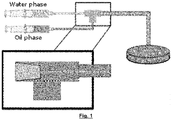
- Figure 1 shows a schematic representation of a custom-built microfluidic device for generation of monodisperse aqueous CSMA droplets.
- CSMA microgels with a narrow size distribution were fabricated using a custom built microfluidic device based on co-flowing streams.
- microfluidics set-up was developed as follows.
- a dual syringe pump (model 33, Harvard Apparatus) was used to allow two different constant flows.
- Disposable syringes with luer-lock fittings (typically a 1mL syringe for the water phase and a 50 mL syringe for the oil phase) were used to inject the two different phases and were connected to 1/16th inch OD Teflon tubing by screwing their luer tips into the tubing adapters.
- Tubing containing the external and the internal phase were let to converge into a customized polyethyletherketone (PEEK) T-junction (Sigma Aldrich).
- PEEK polyethyletherketone
- the tube containing the external phase was connected to the inlet of the T-junction via a nut and ferrule (dark grey fluid stream in Figure 1 ).
- the extremity of the tube containing this phase was equipped with a blunt Nanofil® needle (115 ⁇ m ID, World Precision Instruments, Germany).
- the needle holder was partially inserted into a 1 cm-long tube of chemically resistant, polyolefin-based heat shrink (OD diameter of 3/64th inch) and was held above a hot soldering iron to shrink the tubing around the needle. This was then inserted into the 1/16th inch tube creating a snug fit.
- a nut and ferrule were fitted onto the tubing and connected to one of the two straight inlets of the PEEK T-junction. The last opening of the T-junction was connected via a nut to 1/8th inch OD tubing acting as the receiving channel for the generated droplets. The droplets were then collected in a petri-dish partially filled with the external oil phase.
- microgels 5 wt.-% CSMA was dissolved overnight in MilliQ water in addition to 0.5 wt.-% of Irgacure 2959 and subsequently filtered through a Schott-Duran P1 glass filter (nominal pore size: 100-160 ⁇ m) to ensure a solution free of particle contaminants.
- the viscosities of the different polymer solutions were determined using a rheometer.
- the solutions were then loaded into a 1 mL Luer lock syringe (designated as 'water phase' in figure 1 ).
- a solution of surfactant (Span 80, 8 wt.-%) in light mineral oil was used.
- the water phase flow was set at 100 ⁇ L/min, with variations in the oil phase flow rate ranging between 1 to 8 mL/min.
- the inner diameter of the needle used was 115 ⁇ m.
- the obtained emulsion was collected in a petri-dish partially filled with the oil phase and was subsequently placed at a distance of 5 cm under a UV-lamp (Bluepoint 4 UV lamp, point light source, wavelength range: 300-600 nm, intensity at 5 cm from the waveguide: 80 mW/cm 2 , Hönle UV technology AG, Germany) and irradiated for 10 min.
- a UV-lamp Bluetooth 4 UV lamp, point light source, wavelength range: 300-600 nm, intensity at 5 cm from the waveguide: 80 mW/cm 2 , Hönle UV technology AG, Germany
- microgels were washed again with THF similarly as described above to dehydrate them. After this step, removal of solvent was achieved by evaporation overnight under a mild N 2 flow to yield dry microspheres. To determine the methacrylate conversion in microgels, the same method was used as reported for the determination of DM.
- the diameters of the crosslinked CSMA microgels were measured using optical microscopy, utilizing a size calibrated Nikon eclipse TE2000-U microscope equipped with a digital camera (Nikon DS-2Mv camera and Nikon DS-U1 digital adapter) and the NIS-elements basic research software package. Pictures of the microgels were taken in different conditions (unloaded, loaded with lysozyme after 1 h and 24 h, and in buffers consisting of 20 and 170 mM ionic strength) and for each gel 3 points on the gel-liquid interface were identified to allow calculation of circular diameter by the program. For each different combination of gel material, loading and buffer, 100 particles were measured.
- CoV coefficient of variation
- PDI polydispersity index
- microgels were suspended in 20 mM ionic strength buffer doped with Saffranin-O (0.1 mg/ml), incubated for 30 min. and subsequently washed with 20 mM ionic strength buffer.
- thermogel, CSMA / thermogel blends and CSMA / thermogel composites for lysozyme release studies
- thermogel 18 wt.-% of thermogel was dissolved for 24 h together with 0.05 wt.-% of Irgacure 2959 in 20 mM HEPES buffer at 4°C.
- a solution of 100 ⁇ L of the thermopolymer was pipetted into a glass vial with an internal diameter of 5 mm at 4°C and gellified at 37°C for 10 min. Gel heights in the vial were about 4.5 mm. Diffusion of lysozyme from the gel was limited to the upper surface which was in contact with the release buffer. After gelation the formulations were subjected to UV-light for 5 min to induce radical polymerization at a distance of 5 cm.
- Protein distribution during loading within microgels, composites and blends was studied using FITC labelled lysozyme and a confocal fluorescence microscope (Yokogawa cell voyager) equipped with a 405 nm laser and a 4x magnification objective.
- a 1:20 FITC-lysozyme lysozyme (w/w) mixture in 20 mM ionic strength buffer was used. The total concentration of both labelled and unlabelled lysozyme in each mixture was 2 mg/mL.
- samples of dry microspheres were allowed to swell in 20 mM ionic strength buffer and placed in a well plate.
- the lysozyme mixture was added to the well in a 4 : 1 protein : microgel w : w ratio (total volume 300 ⁇ L) and micrographs of the microgels were taken in 5 min intervals for up to 24 h at room temperature.
- a Jasco spectrofluorometer (FP-8300) with a 384 wells-plate reader attachment (FMP-825) was used to quantify fluorescence from release samples via interpolation of a measured linear calibration curve of lysozyme in release buffer (5-300 ⁇ g/mL, typical R 2 >0.98). When sample concentrations were found to be outside the linear range, they were diluted accordingly. Neither CSMA was found to exhibit fluorescence in the measured wavelengths, nor was it found to interfere with lysozyme fluorescence. Samples from all time points in each experimental group were measured in triplicate (a volume of 50 ⁇ L per single measurement was used). The excitation wavelength was 280 nm and the emission was measured at 340 nm (bandwidth for both excitation and emission was 5 nm).
- M t / M ⁇ is the normalized fractional release of lysozyme
- M t is the amount of lysozyme released at time t
- M ⁇ is the total amount of lysozyme released.
- D is the diffusion coefficient of lysozyme in the microgel matrix in ⁇ m 2 ⁇ s
- r is the average radius of the microgels used in ⁇ m.
- M t / M ⁇ is the normalized fractional release of lysozyme
- M t is the amount of lysozyme released at time t
- M ⁇ is the total amount of lysozyme released.
- D is the diffusion coefficient of lysozyme in the gel matrix in ⁇ m 2 ⁇ s and ⁇ represents diffusional distance, which is given by the thickness of the gel in mm.
- CSMA microgels consisting of 5 wt.-% CSMA and dispersed in the buffers were studied using Fluorescence Recovery After Photobleaching (FRAP).
- CSMA microgels were post-loaded in a 20 : 1 lysozyme : FITC-lysozyme weight: weight mixture for 24 h.
- a single microgel for each measurement was then placed in a 200 ⁇ m diameter well on a glass slide and 23 ⁇ L of either low, isotonic or high ionic strength buffer was added. The system was equilibrated for 30 min before the start of the photobleaching.
- a circular area of either 10 or 20 ⁇ m in diameter in the microgel was bleached for 1 second using an inverted Eclipse Ti microscope (Nikon) equipped with a 488 nm Ar laser (Melles Griot, Alburquerque, New Mexico).
- the microscope was equipped with 4x, 10x, 20x and 100x objectives. All objectives were used for imaging and the 100x oil immersion objective was used to generate the recovery curves.
- Laser power was set to minimum ( ⁇ 0.6%) to obtain around 1500 fluorescence (a.u.).
- the frame interval was set to 0.15 seconds when using the 100x oil objective.
- the recovery of the fluorescence after photobleaching was monitored up to 900 s. by using a strongly attenuated laser.
- FRAP curves were analyzed using FRAPanalyzer software. The FRAP curves were fitted utilizing an equation for a circular bleach area and diffusion-dominated recovery to yield a diffusion coefficient in ⁇ m 2 ⁇ s -1 .
- the compound was obtained as white powder after freeze drying.
- the DM was determined using HPLC analysis after hydrolysis of the ester linkages, resulting in a DM of 11.8 % for CSMA.
- Analysis by Viscotek GPC showed that CSMA consisted of two populations of chain lengths where 94% wt.-% had a M n of 27 kDa and the remaining 6 wt.-% had a M n of 354 kDa.
- thermosensitive polymer of formula B was synthesized with similar characteristics and yields as previously described.
- the chemical structure of thermopolymer is depicted below, wherein the thermopolymer comprises a PEG 10 kDa middle block and two thermosensitive p(HPMAm-lac) outer blocks.
- Aqueous solutions of methacrylated CSMA with 0.5 wt.-% IG2959 were used to obtain micrometre sized gels using a microfluidic device based on co-flowing streams of immiscible fluids.
- the disperse (CSMA plus photo-initiator in water) phase flow rate in the microfluidic device was kept constant at 100 ⁇ L/min, whereas the continuous (mineral oil with SPAN80) phase flow rate was varied between 1 and 8 mL/min and the effect on droplet size was monitored.
- the average droplet diameter was smaller than the theoretical limit of 230 ⁇ m, which is defined as twice the inner diameter of the needle used to inject the aqueous phase into the oil phase.
- the smaller average diameter of the emulsified droplets than the theoretical limit is likely caused by the formation of satellite droplets. These are smaller droplets that typically are formed when droplet generation from viscous solutions transitions from a fluidic dripping regime (where monodisperse droplets are formed) to a dripping with satellites and eventually a jetting regime.
- the formation of satellites alongside the main droplets leads to two droplet populations varying greatly in diameter. Such a bidisperse distribution of droplet sizes is typical of a dripping with satellites fluidic regime.
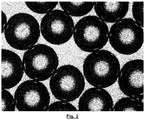
- CSMA microgels Based on the initial screening of droplet and satellite formation a fixed continuous phase flow of 2 mL/min was selected for fabrication of the different CSMA microgels (see also: figure 2 ). In total 10 batches of microgels of CSMA at 2.5 and 5 wt.-% were made. After UV crosslinking, the CSMA microgels were washed repeatedly with THF and H 2 O and dried under a gentle N 2 flow, and finally collected as dry particles.
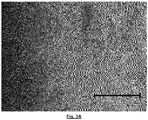
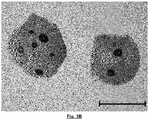
- Figure 3A shows that the microgels made from the 2.5 wt.-% CSMA solution were not mechanically stable and fragmented during washing whereas the 5 wt.-% CSMA microgels ( figure 3B ) did not disintegrate.
- the conversion of methacrylate groups after UV-polymerization for the 5 wt.-% CSMA was found to be 90%.
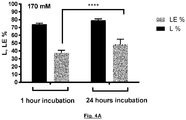
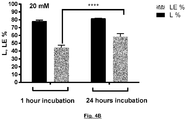
- Microgels of 5 wt.-% CSMA showed a loading of 78% and LE of 45% after 1 h and a significantly higher L of 82% (with LE reaching 59%) after 24 h.
- the CSMA-based microgels absorbed about 4 mg of lysozyme per mg dry microspheres.
- binding stoichiometry the binding stoichiometry of CSMA - lysozyme in the microgels was calculated to be about 7.5:1.
- FIG. 5 shows that the CSMA microgels had a L and LE of about 81 % and 100%, respectively, which was the same loading as found when the feed ratio was 8 : 1 lysozyme : microgel ( figure 4A ), indicating that above a feed ratio of 4 : 1 saturation of the microgels occurred.
- Lysozyme was found to homogeneously distribute over CSMA microgels. It took roughly 12 h for the CSMA microgels to absorb (FITC)lysozyme up to their loading capacity.
- Figure 6 shows the average diameter of different microgels before and after 1 and 24 h of incubation with 4 mg/mL lysozyme in the two specified buffers.
- This figure shows that the diameter of the CSMA microgels in 20 mM ionic strength buffer was 700 ⁇ m.
- the original 5% CSMA emulsion droplet diameters were 440 ⁇ m at a flow rate of 2 mL/min.
- the differences in size between the microgels in 20 mM ionic strength buffer and the emulsified droplets in oil are mostly related to the charge density of the polymer used. A higher initial charge density (i.e. number of negative charges in the initial droplet) will result in an increased swelling in the formed hydrogel particles due to stronger charge-charge repulsion.
- the corresponding CoV of the CSMA microgel formulations was 18%.
- a CoV of 18% is equal to a PDI of 0.03 according to equation 1, showing that the fabricated microgels were monodisperse.
- a significant size change was observed in the CSMA microgels ( figure 6 ) in 20 mM ionic strength during incubation with lysozyme after 1 h from 700 to 490 ⁇ m, with no significant change after 24 h.
- the CSMA microgels shrunk from 570 to 400 ⁇ m after 24 h incubation with lysozyme.
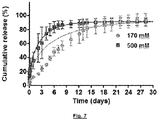
- Figure 7 shows that the formulations showed no burst release, which can be ascribed to the homogeneous distribution of the lysozyme in the microgel matrices.
- the release curves were fitted using equation 4. and these fits were used to calculate the diffusion coefficient of the lysozyme in the microgels (the curves fitting the experimental data according to equation 4 are represented by the solid lines in Figure 7 ).
- Two goodness-of-fit tests (a Chi squared test and the Kolmogorov-Smirnov test) were used to determine whether the fit describing a Fickian release profile from equation 4 was descriptive of the experimentally obtained release pattern. All formulations showed a nearly quantitative release, showing the potential of CSMA-based materials for protein release.
- the faster lysozyme release in high ionic strength buffer can be explained by the fact that an increasing salt concentration reduces the strength of the interaction between the negatively charged hydrogel network and the loaded cationic lysozyme.
- the release patterns of lysozyme for the CSMA microgels showed correlation between ionic strength and lysozyme release rate.
- Lysozyme in CSMA microgels incubated in 170 mM ionic strength medium had a diffusion coefficient ⁇ 0.006 ⁇ m 2 ⁇ s -1 , which indicates a strong interaction of the protein and the matrix.
- the diffusion coefficient of lysozyme in buffer is 104 ⁇ m 2 ⁇ s -1 .
- the fitted Fickian release curve of the lysozyme release from CSMA microgels in 170 mM ionic strength did not converge well with the data. This indicates that the mechanism of release of this formulation was not predominantly diffusion driven, but instead was likely affected by the electrostatic interactions remaining between the protein and the highly charged polymer network of the microgel. As a result of the low goodness of fit, the calculated diffusion coefficient for this formulation is considered only as an upper limit.
- the fitted curve of the lysozyme release from the CSMA microgels incubated at 500 mM ionic strength buffer did converge well with the experimental data and yielded a calculated diffusion coefficient of 0.013 ⁇ m 2 .s -1 .
- the faster lysozyme release in high ionic strength buffer can be explained by the fact that an increasing salt concentration reduces the strength of the interaction between the negatively charged hydrogel network and the loaded cationic lysozyme. No further release of lysozyme from the CSMA microgels was observed after around 28 and 13 days in 170 and 500 mM respectively.
- the mobility of lysozyme in the polymeric matrices was further investigated by FRAP analysis of FITC-lysozyme loaded CSMA microgels in the respective buffers.
- the fluorescence recovery was very slow (i.e. > 30 min) in the 20 mM ionic strength buffer and it was not possible to accurately calculate the diffusion coefficient.
- Lower diffusion coefficients of FITC-lysozyme were measured when incubated in 170 mM ionic strength buffer when compared to 500 mM ionic strength buffer. The diffusion coefficients were 0.5 and 3.5 ⁇ m 2 ⁇ s -1 (in 170 and 500 mM ionic strength buffer respectively).
- the FITC-lysozyme diffusion coefficients as measured through FRAP analysis differ significantly from those calculated from the release experiments. This is likely due to a reduction in the overall positive charge of lysozyme due to coupling of negatively charged FITC labels (i.e. 2 or 3 FITC labels are reacted to lysine residues per lysozyme).
- the net charge of lysozyme is +8 at pH 7.4. Due to coupling of FITC to a lysine residue one positive charge is destroyed whereas one negative charge is introduced. This means that when 2 FITC-labels are introduced, the overall positive charge drops from +8 to +4. This reduction in positive charges very likely leads to less interaction with the negatively charged hydrogel matrix, resulting in a higher diffusion coefficient.
- thermosensitive hydrogel based on a partially methacrylated triblock copolymer consisting of a central 10 kDa PEG block flanked by p(HPMAm-lac) thermosensitive outer blocks (abbreviated as 'thermogel').
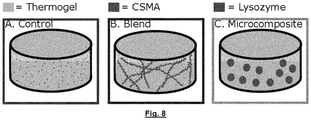
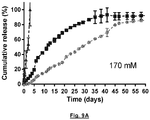
- thermogel In the CSMA-free thermogel ( figure 8A ) the loaded lysozyme was released quantitatively within 3 days ( figure 9A ), corresponding to a lysozyme diffusion coefficient of 3.8 ⁇ m 2 ⁇ s -1 (calculated with equation 5) for this formulation. As a comparison, the lysozyme diffusion coefficient in buffer is 104 ⁇ m 2 ⁇ s -1 ).
- the other thermogel formulations contained either methacrylated CSMA polymer complexed with lysozyme ( figure 8B ) or CMSA microgels loaded with lysozyme ( figure 8C ).
- Figures 9A and 9B show the cumulative release of lysozyme from both CSMA/thermogel composites and blends in 170 and 500 mM ionic strength buffers. Similar to the microgel-only release profiles shown in the previous section, lysozyme release was strongly dependent on the ionic strength of the medium. Complete release of loaded lysozyme from CSMA blends occurred after about 9 days and in the CSMA-based composites after about 21 days in the 500 mM release medium ( figure 9B ).
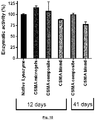
- the bioactivity of released lysozyme from both blends and composites was measured from samples taken at 12 and 41 days, with both showing similar bioactivities as compared to native lysozyme emphasizing the protein-friendly character of the preparation of the complex precipitated microgels.
- a clear advantage of the composite system is found in the capacity of the CSMA microgels to temporarily retain protein in isotonic buffer. Additionally, the post-loading technique is superior in avoiding possible protein denaturation/chemical modification when considered against more conventional direct loading techniques were the protein is subjected to free radicals found during crosslinking of the polymer resulting in e.g. oxidation of methionine residues of the protein.
- the retarded protein release in the microgels in 170 mM ionic strength buffer enables favourable protein release kinetics, allowing more design freedom in terms of tuning the mechanical properties of the bulk hydrogel to better suit the application.
Landscapes
- Health & Medical Sciences (AREA)
- Life Sciences & Earth Sciences (AREA)
- Animal Behavior & Ethology (AREA)
- Pharmacology & Pharmacy (AREA)
- Epidemiology (AREA)
- Medicinal Chemistry (AREA)
- Chemical & Material Sciences (AREA)
- General Health & Medical Sciences (AREA)
- Public Health (AREA)
- Veterinary Medicine (AREA)
- Engineering & Computer Science (AREA)
- Bioinformatics & Cheminformatics (AREA)
- Dermatology (AREA)
- Molecular Biology (AREA)
- Medicinal Preparation (AREA)
Priority Applications (1)
| Application Number | Priority Date | Filing Date | Title |
|---|---|---|---|
| EP18178129.5A EP3581168A1 (fr) | 2018-06-15 | 2018-06-15 | Compositions à libération prolongée |
Applications Claiming Priority (1)
| Application Number | Priority Date | Filing Date | Title |
|---|---|---|---|
| EP18178129.5A EP3581168A1 (fr) | 2018-06-15 | 2018-06-15 | Compositions à libération prolongée |
Publications (1)
| Publication Number | Publication Date |
|---|---|
| EP3581168A1 true EP3581168A1 (fr) | 2019-12-18 |
Family
ID=62705441
Family Applications (1)
| Application Number | Title | Priority Date | Filing Date |
|---|---|---|---|
| EP18178129.5A Withdrawn EP3581168A1 (fr) | 2018-06-15 | 2018-06-15 | Compositions à libération prolongée |
Country Status (1)
| Country | Link |
|---|---|
| EP (1) | EP3581168A1 (fr) |
Cited By (2)
| Publication number | Priority date | Publication date | Assignee | Title |
|---|---|---|---|---|
| WO2023284107A1 (fr) * | 2021-07-16 | 2023-01-19 | 江南大学 | Microsphère d'hydrogel pour adsorber un facteur de croissance dans un surnageant de cellules souches, et sa préparation |
| CN118161668A (zh) * | 2024-05-11 | 2024-06-11 | 健诺维(成都)生物科技有限公司 | 一种温度敏感性羊膜凝胶材料及制备方法及应用 |
Citations (3)
| Publication number | Priority date | Publication date | Assignee | Title |
|---|---|---|---|---|
| WO1998000170A1 (fr) * | 1996-07-01 | 1998-01-08 | Universiteit Utrecht | Hydrogels hydrolysables pour liberation controlee |
| EP1982700A1 (fr) * | 2004-05-13 | 2008-10-22 | Universiteit Utrecht Holding B.V. | Microparticules chargées positivement et négativement |
| WO2017114861A1 (fr) * | 2015-12-29 | 2017-07-06 | Galderma S.A. | Procédé de désacétylation de biopolymères |
-
2018
- 2018-06-15 EP EP18178129.5A patent/EP3581168A1/fr not_active Withdrawn
Patent Citations (3)
| Publication number | Priority date | Publication date | Assignee | Title |
|---|---|---|---|---|
| WO1998000170A1 (fr) * | 1996-07-01 | 1998-01-08 | Universiteit Utrecht | Hydrogels hydrolysables pour liberation controlee |
| EP1982700A1 (fr) * | 2004-05-13 | 2008-10-22 | Universiteit Utrecht Holding B.V. | Microparticules chargées positivement et négativement |
| WO2017114861A1 (fr) * | 2015-12-29 | 2017-07-06 | Galderma S.A. | Procédé de désacétylation de biopolymères |
Non-Patent Citations (8)
| Title |
|---|
| A. ABBADESSA ET AL.: "Utrecht University Repository (Dissertation", 2017 |
| A. ABBADESSA: "Thermosensitive hydrogelsfor 3D bioprinting ofcartilage constructs", part Chapter 5 6 March 2017, UTRECHT UNIVERSITY, article A. ABBADESSA, C.C.L. SCHUURMANS, M.M. BLOKZIJL, J.E. CITTEREN,W.E. HENNINK, T. VERMONDEN: "Monodisperse hyaluronic acid-based microgels loaded in thermosensitive hydrogelsfor a sustained release of proteins:an introductory study", pages: 123 - 145, XP002787460 * |
| ABBADESSA ET AL., CARBOHYDRATE POLYMERS, vol. 149, 2016, pages 163 - 174 |
| BUWALDA ET AL., BIOMACROMOLECULES, vol. 18, no. 2, 2017, pages 316 - 330 |
| HENNINK ET AL., ADVANCED DRUG DELIVERY REVIEWS, vol. 64, 2012, pages 223 - 236 |
| STENEKES ET AL., POLYMER, vol. 41, 2000, pages 5563 - 5569 |
| SYTZE J. BUWALDA ET AL: "Hydrogels for Therapeutic Delivery: Current Developments and Future Directions", BIOMACROMOLECULES, vol. 18, no. 2, 10 January 2017 (2017-01-10), US, pages 316 - 330, XP055533018, ISSN: 1525-7797, DOI: 10.1021/acs.biomac.6b01604 * |
| VERMONDEN ET AL., LANGMUIR, vol. 22, 2006, pages 10180 - 10184 |
Cited By (2)
| Publication number | Priority date | Publication date | Assignee | Title |
|---|---|---|---|---|
| WO2023284107A1 (fr) * | 2021-07-16 | 2023-01-19 | 江南大学 | Microsphère d'hydrogel pour adsorber un facteur de croissance dans un surnageant de cellules souches, et sa préparation |
| CN118161668A (zh) * | 2024-05-11 | 2024-06-11 | 健诺维(成都)生物科技有限公司 | 一种温度敏感性羊膜凝胶材料及制备方法及应用 |
Similar Documents
| Publication | Publication Date | Title |
|---|---|---|
| Hejjaji et al. | Evaluation of the mucoadhesive properties of chitosan nanoparticles prepared using different chitosan to tripolyphosphate (CS: TPP) ratios | |
| Schuurmans et al. | Complex coacervation-based loading and tunable release of a cationic protein from monodisperse glycosaminoglycan microgels | |
| Sarıyer et al. | pH-responsive double network alginate/kappa-carrageenan hydrogel beads for controlled protein release: Effect of pH and crosslinking agent | |
| US11517538B2 (en) | Shear-thinning self-healing networks | |
| Delair | Colloidal polyelectrolyte complexes of chitosan and dextran sulfate towards versatile nanocarriers of bioactive molecules | |
| Gåserød et al. | Microcapsules of alginate-chitosan–I: a quantitative study of the interaction between alginate and chitosan | |
| Wu et al. | Stabilization of chitosan/hyaluronan colloidal polyelectrolyte complexes in physiological conditions | |
| EP1701981B1 (fr) | Gels cohesifs de hyaluronane et/ou hylane reticules, leur preparation et utilisation | |
| Ko et al. | Preparation and characterization of chitosan microparticles intended for controlled drug delivery | |
| Riederer et al. | Injectable and microporous scaffold of densely-packed, growth factor-encapsulating chitosan microgels | |
| Yin et al. | Glucose-responsive insulin delivery microhydrogels from methacrylated dextran/concanavalin A: preparation and in vitro release study | |
| Mukhopadhyay et al. | Chitosan-graft-PAMAM–alginate core–shell nanoparticles: a safe and promising oral insulin carrier in an animal model | |
| EP2360188A1 (fr) | Dérivé d acide hyaluronique et sa composition pharmaceutique | |
| Zambito et al. | Mucoadhesive nanoparticles made of thiolated quaternary chitosan crosslinked with hyaluronan | |
| US20220111124A1 (en) | Biocompatible hydrogel, process for producing same, and use thereof in a mechanical viscosupplementation system | |
| US20130216592A1 (en) | Particles consisting of a chitosan polyelectrolyte complex and of an anionic polysaccharide, and having improved stability | |
| EP1393718A1 (fr) | Système colloidal de vecteur de médicament | |
| Umerska et al. | Design of chondroitin sulfate-based polyelectrolyte nanoplexes: Formation of nanocarriers with chitosan and a case study of salmon calcitonin | |
| JP2008517878A (ja) | ゲル粒子の形状保持凝集塊の形成の方法とその使用 | |
| ITPD20060202A1 (it) | Miscele polimeriche di polisaccaridi anionici e cationici e loro impiego | |
| Song et al. | Effect of net surface charge on physical properties of the cellulose nanoparticles and their efficacy for oral protein delivery | |
| Islam et al. | Enhancement of oral bioavailability of protein and peptide by polysaccharide-based nanoparticles | |
| Silva et al. | Design of protein delivery systems by mimicking extracellular mechanisms for protection of growth factors | |
| US20170313828A1 (en) | In situ-forming of dendrimer hydrogels using michael-addition reaction | |
| EP3581168A1 (fr) | Compositions à libération prolongée |
Legal Events
| Date | Code | Title | Description |
|---|---|---|---|
| PUAI | Public reference made under article 153(3) epc to a published international application that has entered the european phase |
Free format text: ORIGINAL CODE: 0009012 |
|
| AK | Designated contracting states |
Kind code of ref document: A1 Designated state(s): AL AT BE BG CH CY CZ DE DK EE ES FI FR GB GR HR HU IE IS IT LI LT LU LV MC MK MT NL NO PL PT RO RS SE SI SK SM TR |
|
| AX | Request for extension of the european patent |
Extension state: BA ME |
|
| STAA | Information on the status of an ep patent application or granted ep patent |
Free format text: STATUS: THE APPLICATION IS DEEMED TO BE WITHDRAWN |
|
| 18D | Application deemed to be withdrawn |
Effective date: 20200619 |