EP3582131B1 - Elektronische vorrichtung und verfahren zur bereitstellung von informationen für die anzeige - Google Patents
Elektronische vorrichtung und verfahren zur bereitstellung von informationen für die anzeige Download PDFInfo
- Publication number
- EP3582131B1 EP3582131B1 EP19176558.5A EP19176558A EP3582131B1 EP 3582131 B1 EP3582131 B1 EP 3582131B1 EP 19176558 A EP19176558 A EP 19176558A EP 3582131 B1 EP3582131 B1 EP 3582131B1
- Authority
- EP
- European Patent Office
- Prior art keywords
- information
- extracted
- electronic device
- portions
- portable electronic
- Prior art date
- Legal status (The legal status is an assumption and is not a legal conclusion. Google has not performed a legal analysis and makes no representation as to the accuracy of the status listed.)
- Active
Links
Images




Classifications
-
- G—PHYSICS
- G06—COMPUTING OR CALCULATING; COUNTING
- G06F—ELECTRIC DIGITAL DATA PROCESSING
- G06F21/00—Security arrangements for protecting computers, components thereof, programs or data against unauthorised activity
- G06F21/60—Protecting data
- G06F21/62—Protecting access to data via a platform, e.g. using keys or access control rules
- G06F21/6218—Protecting access to data via a platform, e.g. using keys or access control rules to a system of files or objects, e.g. local or distributed file system or database
- G06F21/6245—Protecting personal data, e.g. for financial or medical purposes
-
- G—PHYSICS
- G06—COMPUTING OR CALCULATING; COUNTING
- G06F—ELECTRIC DIGITAL DATA PROCESSING
- G06F21/00—Security arrangements for protecting computers, components thereof, programs or data against unauthorised activity
- G06F21/60—Protecting data
- G06F21/606—Protecting data by securing the transmission between two devices or processes
-
- G—PHYSICS
- G06—COMPUTING OR CALCULATING; COUNTING
- G06F—ELECTRIC DIGITAL DATA PROCESSING
- G06F21/00—Security arrangements for protecting computers, components thereof, programs or data against unauthorised activity
- G06F21/60—Protecting data
- G06F21/62—Protecting access to data via a platform, e.g. using keys or access control rules
- G06F21/6209—Protecting access to data via a platform, e.g. using keys or access control rules to a single file or object, e.g. in a secure envelope, encrypted and accessed using a key, or with access control rules appended to the object itself
-
- G—PHYSICS
- G06—COMPUTING OR CALCULATING; COUNTING
- G06F—ELECTRIC DIGITAL DATA PROCESSING
- G06F21/00—Security arrangements for protecting computers, components thereof, programs or data against unauthorised activity
- G06F21/60—Protecting data
- G06F21/62—Protecting access to data via a platform, e.g. using keys or access control rules
- G06F21/6218—Protecting access to data via a platform, e.g. using keys or access control rules to a system of files or objects, e.g. local or distributed file system or database
- G06F21/6245—Protecting personal data, e.g. for financial or medical purposes
- G06F21/6254—Protecting personal data, e.g. for financial or medical purposes by anonymising data, e.g. decorrelating personal data from the owner's identification
-
- H—ELECTRICITY
- H04—ELECTRIC COMMUNICATION TECHNIQUE
- H04N—PICTORIAL COMMUNICATION, e.g. TELEVISION
- H04N1/00—Scanning, transmission or reproduction of documents or the like, e.g. facsimile transmission; Details thereof
- H04N1/44—Secrecy systems
- H04N1/4406—Restricting access, e.g. according to user identity
- H04N1/444—Restricting access, e.g. according to user identity to a particular document or image or part thereof
-
- H—ELECTRICITY
- H04—ELECTRIC COMMUNICATION TECHNIQUE
- H04N—PICTORIAL COMMUNICATION, e.g. TELEVISION
- H04N1/00—Scanning, transmission or reproduction of documents or the like, e.g. facsimile transmission; Details thereof
- H04N1/44—Secrecy systems
- H04N1/448—Rendering the image unintelligible, e.g. scrambling
-
- G—PHYSICS
- G06—COMPUTING OR CALCULATING; COUNTING
- G06F—ELECTRIC DIGITAL DATA PROCESSING
- G06F21/00—Security arrangements for protecting computers, components thereof, programs or data against unauthorised activity
- G06F21/30—Authentication, i.e. establishing the identity or authorisation of security principals
- G06F21/31—User authentication
- G06F21/32—User authentication using biometric data, e.g. fingerprints, iris scans or voiceprints
-
- G—PHYSICS
- G06—COMPUTING OR CALCULATING; COUNTING
- G06F—ELECTRIC DIGITAL DATA PROCESSING
- G06F2221/00—Indexing scheme relating to security arrangements for protecting computers, components thereof, programs or data against unauthorised activity
- G06F2221/03—Indexing scheme relating to G06F21/50, monitoring users, programs or devices to maintain the integrity of platforms
- G06F2221/032—Protect output to user by software means
Definitions
- the present disclosure relates to providing information for display on an electronic device.
- Electronic devices have gained widespread use and may provide a variety of functions including, for example, telephonic, electronic messaging and other personal information manager (PIM) application functions.
- Electronic devices include several types of devices including mobile stations such as simple cellular telephones, smart telephones, wireless PDAs, and computers.
- Such electronic devices are often able to display various types of information to a user. In some situations, protection of the information to inhibit viewing by unauthorized individuals is desirable. Redaction of information may be useful in such instances. Two versions of information may be utilized, including a version prior to redaction and a version post-redaction to protect the information from unauthorized individuals and to facilitate viewing by authorized individuals.
- the document US 2018/0089459 A1 discloses methods and apparatus for securing personalized or sensitive information appearing in digital images.
- Digital images containing information to be secured is processed and divided into a plurality of image cells. At least one image cell from the plurality of image cells is selected and redacted or altered to render the information to be secured with the selected image cells indecipherable.
- the document US 6,954,532 B1 discloses storage or transmission of a raster image that supports mixed raster content. Upon retrieval or reception, a viewer enters in a private key into a user interface. The private key can only decrypt that content to which the viewer is authorized.
- the following describes an electronic device including a display and a method of providing information for display, from the portable electronic device.
- the method includes displaying information on a display of the portable electronic device, identifying a portion for redacting from the information displayed on the display of the portable electronic device, extracting the portion from the information to provide redacted information and an extracted portion, storing the redacted information, protecting and storing the extracted portion in association with a location identification in a file, and sending the redacted information and sending the file including extracted portions associated with the location identifiers.
- the redacted information and the file are received at a recipient portable electronic device.
- the extracted portions are unlocked or decrypted, and inserted into the redacted information utilizing the location identifiers to provide un-redacted information at the recipient portable electronic device.
- the disclosure generally relates to an electronic device.
- electronic devices include mobile, or handheld, wireless communication devices such as cellular phones, cellular smart-phones, wireless organizers, personal digital assistants, computers, tablet computers, mobile internet devices, electronic navigation devices, and so forth.
- FIG. 1 A block diagram of one example of an electronic device 100, which in the present example is a portable electronic device, is shown in FIG. 1 .
- the electronic device 100 includes multiple components, including a processor 102 that controls the overall operation of the electronic device 100. Communication functions, including data and voice communications, are performed through a communication subsystem 104. Data received by the electronic device 100 is decompressed and decrypted by a decoder 106.
- the communication subsystem 104 receives messages from and sends messages to a wireless network 150.
- the wireless network 150 may be any type of wireless network, including, but not limited to, data wireless networks, voice wireless networks, and networks that support both voice and data communications.
- a power source 142 such as one or more rechargeable batteries or a port to an external power supply, powers the electronic device 100.
- the processor 102 interacts with other components, such as a Random Access Memory (RAM) 108, memory 110, a touch-sensitive display 118, a keyboard 120, an auxiliary input/output (I/O) subsystem 124, a data port 126, a speaker 128, a microphone 130, short-range communications 132, and other device subsystems 134.
- RAM Random Access Memory
- I/O auxiliary input/output
- the processor may also interact with a loudspeaker, for example, for hands-free use.
- the touch-sensitive display 118 includes a display 112 and touch sensors 114 that are coupled to at least one controller 116 that is utilized to interact with the processor 102. Input via a graphical user interface is provided via the touch-sensitive display 118. Information, such as text, characters, symbols, images, icons, and other items that may be displayed or rendered on a portable electronic device, is displayed on the touch-sensitive display 118 via the processor 102.
- the processor 102 may also interact with an accelerometer 136 that may be utilized to detect direction of gravitational forces or gravity-induced reaction forces.
- the keyboard 120 includes a plurality of keys, which may be mechanical keys that include mechanical switches or contacts for input to the electronic device 100 when a mechanical key of the keyboard 120 is depressed by a sufficient force to oppose a bias of the mechanical key.
- the keys of the keyboard 120 may include touch sensors 122 coupled to a controller 123 to detect touch input thereon.
- the controller may be a keyboard controller 123 as illustrated in FIG. 1 .
- the keys of the keyboard 120 may be coupled to the controller 116 utilized to detect touches using the touch sensors 114 of the touch-sensitive display 118.
- the processor 102 may also interact with control keys 144 and, optionally, a navigation device 140.
- the control keys 144 may include, for example, a send key, a menu key, an escape key, an end key, or any other suitable control keys.
- the navigation device 140 may be a touch-sensitive track pad, an optical joystick, or any other suitable navigation device to interface with a user to provide input.
- the navigation device 140 may be utilized, for example, to navigate or scroll through information on a display, control a cursor or other indicator, edit information, and so forth.
- the processor 102 may also interact with a biometric sensor 141 for obtaining data to authenticate a user.
- the biometric sensor 141 may be a fingerprint sensor disposed on the navigation device for detecting a touch thereon and obtaining fingerprint data upon receipt of a touch on the navigation device.
- Other biometric sensors may also be successfully implemented. For example, an iris scanner or other suitable detector may be utilized for the purpose of authenticating a user.
- the electronic device 100 may utilize a Subscriber Identity Module or a Removable User Identity Module (SIM/RUIM) card 138 for communication with a network, such as the wireless network 150.
- SIM/RUIM Removable User Identity Module
- user identification information may be programmed into memory 110.
- the electronic device 100 includes an operating system 146 and software programs, applications, or components 148 that are executed by the processor 102 and are typically stored in a persistent, updatable store such as the memory 110. Additional applications or programs may be loaded onto the electronic device 100 through the wireless network 150, the auxiliary I/O subsystem 124, the data port 126, the short-range communications subsystem 132, or any other suitable subsystem 134.
- a received signal such as a text message, an e-mail message, or web page download is processed by the communication subsystem 104 and input to the processor 102.
- the processor 102 processes the received signal for output to the display 112 and/or to the auxiliary I/O subsystem 124.
- a subscriber may generate data items, for example e-mail messages, which may be transmitted over the wireless network 150 through the communication subsystem 104.
- the speaker 128 outputs audible information converted from electrical signals
- the microphone 130 converts audible information into electrical signals for processing.
- the touch-sensitive display 118 may be any suitable touch-sensitive display, such as a capacitive touch-sensitive display that includes a plurality of capacitive touch sensors 114.
- Capacitive touch sensors 114 include drive electrodes, also known as transmission electrodes, and sense electrodes, also known as receive electrodes.
- the drive electrodes generally extend in one direction and cross over or under the sense electrodes, which generally extend in another direction, generally at right angles to the direction that the drive electrodes extend, to form a grid pattern.
- the drive electrodes are spaced from the sense electrodes by a dielectric material. The points at which the drive electrodes and the sense electrodes cross each other are referred to as nodes.
- the drive and sense electrodes may comprise any suitable material, such as indium tin oxide (ITO).
- One or more touches may be detected by the touch-sensitive display 118.
- the processor 102 may determine attributes of the touch, including a location of the touch.
- Touch location data may include data for an area of contact or data for a single point of contact, such as a point at or near a center of the area of contact.
- the location of a detected touch may include x and y components, e.g., horizontal and vertical components, respectively, with respect to one's view of the touch-sensitive display 118.
- a touch may be detected from any suitable input member, such as a finger, thumb, appendage, or other objects, for example, a stylus, pen, or other pointer, depending on the nature of the touch-sensitive display 118. Multiple simultaneous touches may be detected.
- a gesture such as a swipe, also known as a flick, is a particular type of touch on a touch-sensitive display 118 and may begin at an origin point and continue to an end point, for example, a concluding end of the gesture.
- a gesture may be identified by attributes of the gesture, including the origin point, the end point, the distance travelled, the duration, the velocity, and the direction, for example.
- a gesture may be long or short in distance and/or duration. Two points of the gesture may be utilized to determine a direction of the gesture.
- a gesture may also include a hover.
- a hover may be a touch at a location that is generally unchanged over a period of time or is associated with the same selection item for a period of time.
- the touch sensors 122 on the keyboard may be any suitable touch sensors, such as capacitive touch-sensors, and may comprise any suitable material, such as indium tin oxide (ITO).
- the touch sensors 122 disposed on the keyboard 120 may be coupled to the same controller 116 as the touch sensors of touch-sensitive display 118 such that a single controller is utilized rather than two controllers 116, 123.
- One or more touches on the keys of the keyboard 120 may be detected.
- the processor 102 may determine attributes of the touch, including a location of the touch.
- Touch location data may include data for an area of contact or data for a single point of contact, such as a point at or near a center of the area of contact.
- the location of a detected touch may include x and y components, e.g., horizontal and vertical components, respectively, with respect to one's view of the keyboard 120.
- a touch may be detected from any suitable input member and multiple simultaneous touches may be detected.
- One or more gestures may also be detected utilizing the touch sensors 122 disposed on the keyboard 120.
- a gesture on the keys of the keyboard 120 may be identified by attributes of the gesture, including the origin point, the end point, the distance travelled, the duration, the velocity, and the direction, for example.
- a gesture may be long or short in distance and/or duration. Two points of the gesture may be utilized to determine a direction of the gesture.
- a gesture may also include a hover.
- the touch-sensitive display 118 includes a display area in which information may be displayed, and a non-display area extending around the periphery of the display area. Information is not displayed in the non-display area by the display.
- the non-display area is utilized to accommodate, for example, electronic traces or electrical connections, adhesives or other sealants, and/or protective coatings around the edges of the display area.
- the non-display area may be referred to as an inactive area and is not part of the physical housing or frame of the electronic device.
- no pixels of the display are in the non-display area, thus no image can be displayed by the display 112 in the non-display area.
- a secondary display not part of the primary display 112, may be disposed in the non-display area.
- Touch sensors including drive electrodes and sense electrodes may be disposed in the non-display area, which touch sensors may be extended from the touch sensors in the display area or may be distinct or separate touch sensors from the touch sensors in the display area.
- a touch, including a gesture may be associated with, i.e., performed on, the display area, the non-display area, or both areas.
- the touch sensors including the drive electrodes and the sense electrodes may extend across substantially the entire non-display area or may be disposed in only part of the non-display area.
- the biometric sensor 141 may be a fingerprint sensor disposed on the navigation device 140 for detecting a touch thereon and obtaining fingerprint data upon receipt of a touch on the navigation device.
- the fingerprint sensor may include a plurality of transmit and receive electrodes that are disposed in a grid pattern.
- the transmit electrodes are very closely spaced and receive electrodes are very closely spaced relative to the electrodes of the touch-sensitive display, for example, to provide a very fine grid pattern.
- the fine grid pattern provides very fine resolution suitable for identifying a fingerprint pattern and for detecting conductivity of ridges and valleys in a fingerprint.
- the navigation device 140 may be utilized to detect the presence of a finger on the biometric sensor 141 and, in response, the biometric sensor 141 may obtain fingerprint data for authentication purposes.
- the processor 102 receives the biometric data from the sensor 141 and compares the biometric data to biometric data stored, for example, in memory 136 to authenticate a user. A match or at least partial match of the biometric data from the sensor 141 results in authentication.
- the biometric data may therefore be utilized, for example, to unlock the electronic device 100, to access applications, documents, or information on the electronic device 100, or for any other suitable purpose.
- FIG. 2 An example of an electronic device displaying information is shown in FIG. 2 .
- the electronic device 100 includes a housing 202 in which the touch-sensitive display 118 is disposed.
- the housing 202 is utilized to enclose components such as the components shown in FIG. 1 .
- the mechanical keyboard 120 is disposed below the touch-sensitive display 118 in the orientation illustrated in FIG. 2 .
- the mechanical keyboard 120 includes a plurality of keys 204. Each of the keys 204 of the keyboard 120 is associated with a character such that a character is entered utilizing a key 204.
- the keyboard 120 in the present example includes four rows of keys 204 other numbers of rows of keys may be implemented, however.
- control keys 144 in this example are generally aligned in a row disposed between the touch-sensitive display 118 and the keyboard 120.
- the control keys include a send key, a menu key, an escape key, and an end key.
- Other suitable control keys can be utilized, however.
- the navigation device 140 is disposed in the center of the row of control keys 144.
- the navigation device 140 is an optical joystick for user input.
- the biometric sensor 141 may be disposed on the navigation device 140 to facilitate authentication of a user during use of the navigation device 140.
- the biometric sensor 141 provides data to the processor 102 (shown in FIG. 1 ) for authentication of the user.
- the navigation device 140 may be utilized to detect a touch by detecting the presence of a finger or thumb of a user and, in response to detecting the presence of a finger or thumb, the biometric sensor 141 begins sensing to obtain fingerprint data.
- the navigation device 140 facilitates selective use of the biometric sensor 141 such that the biometric sensor is not continually attempting to obtain fingerprint data even in the absence of a finger or thumb on the navigation device 140, thus reducing power use.
- the speaker 128 and the microphone 130 are disposed in openings in the housing 202. As indicated above, the speaker 128 outputs audible information and the microphone 130 is utilized to convert audible information into electrical signals for processing.
- information 206 that is received is displayed on the touch-sensitive display 118.
- the information displayed may include any suitable information such as icons, text, pictures, video, documents, a webpage, or any other suitable information.
- the information may be associated with, for example, a home page, a menu or submenu, an application or applications, a webpage, and so forth.
- the information 206 in the example of FIG. 2 is a picture that may be received at the portable electronic device 100 or may be captured utilizing a camera of the portable electronic device 100.
- the information may be any other suitable information, however, such as the banking information illustrated in the example of FIG. 7 and FIG. 8 and referred to further herein.
- the present application is directed to any suitable information.
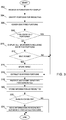
- FIG. 3 A flowchart illustrating a method of providing information for display, from a portable electronic device, such as the portable electronic device 100, is shown in FIG. 3 .
- the method may be carried out by software executed, for example, by the processor 102. Coding of software for carrying out such a method is within the scope of a person of ordinary skill in the art given the present description.
- the method may contain additional or fewer processes than shown and/or described, and may be performed in a different order.
- Computer-readable code executable by at least one processor, such as the processor 102, of the portable electronic device to perform the method may be stored in a computer-readable storage medium, such as a non-transitory computer-readable medium.
- Information is received and displayed on the display 112 at 302.
- the information may include text, characters, symbols, images, icons, and other items that may be displayed or rendered on a portable electronic device 100 in association with an application executed by the processor 102, such as, for example, a SMS, an electronic mail, calendar, address book, word processor, Web browser, or any other suitable application.
- the information may be information received from another electronic device in communication with the electronic device 100, may be information stored on the electronic device 100 and thus received at the processor 102 from memory such as the memory 110, information received at the processor 102 from an input device such as the keyboard 120, for example, during composition of a document, message, note, or any other suitable information.
- Portions of the information received and displayed at 302 are identified for redacting the information at 304.
- the portions may be identified by user-interaction, utilizing a redaction application, for example, by selecting the portions of information to remain private or hidden.
- the redaction application can optionally be a standalone application that executes on top of or independently of the other applications executed by the processor mentioned in the previous paragraph. Or the redaction functionality described herein can be incorporated into one or more of the other applications executed by the processor previously mentioned.
- the user may interact with the navigation device 140 to identify the portions of the information.
- the user may interact with the touch-sensitive display 118 to identify the portions of the information. For example, a drag operation may be utilized to draw a rectangle or oval around a portion of the information to remain private or hidden.
- portions of the information received and displayed at 302 may be automatically identified. Portions of the information may be automatically identified based on any suitable criteria. For example, portions of the information may be identified by analyzing the strings or images to identify portions of the information that were previously identified in other information. Thus, the portable electronic device 100 may maintain a list or history of previous redactions from information and may identify portions of information displayed at 302 that is determined to match those previous redactions. Portions of information may also be identified, for example, by identifying strings that are passwords or other sensitive information. Personal data such as names, phone numbers, contact information, locations or addresses or other personal information may also be automatically identified at 304.
- each portion may include a starting location within the information for the portion, as well as a width and a height of the portion.
- the portions may be identified by a starting point and an end point in a string or strings in a document, or message, for example.
- Portions may also be identified by, for example, a center point and a radius in the case of a circular area, or by a center point and one or more axes, such as a major axis and minor axis in the case of an oval. Any suitable information to identify the area of the portion may be utilized.
- the identified portions are covered at 306, for example, by an opaque cover, such as a rectangle, oval, or other suitable shape such that the identified portions are no longer visible.
- the cover may be semitransparent to facilitate viewing of the identified portions of the information prior to extraction of the identified portions from the information.
- the identified portions may alternatively be uncovered, for example, by user selection of an option to show the document including the portions identified for redacting.
- a determination may be made at 308 whether to show the redacted portions.
- the process continues at 316.
- the process may continue at 310.
- the portions are uncovered at 310 such that the opaque cover is not displayed and the un-redacted information is visible.
- an image of the un-redacted information is stored at 314.
- the image may be stored in memory such as the memory 110.
- Uncovering of the portions may be advantageous for reviewing a document or other information after identifying one or more portions of the information that are covered. Such uncovering may be particularly advantageous for reviewing information in which many portions are identified throughout the information.
- the portions identified for redacting at 304 and covered at 306 are extracted from the information at 316.
- the identification of each portion may include a starting location within the information for the portion, as well as a width and a height of the portion.
- the portions may be identified by a starting point and an end point in a string or strings in a document or message, for example.
- Portions may alternatively be identified by, for example, a center point and a radius in the case of a circular area, or by a center point and one more axes, such as a major axis and minor axis in the case of an oval. Any suitable information to identify the area of the portion may be utilized.
- Each portion of the information that is identified at 304 is extracted at 316 to provide the remaining redacted information and the extracted portions.
- the portions may be extracted as images, as text, or in any suitable format In the example of the picture such as that shown in FIG. 2 , the portions identified are extracted as images.
- the extracted portions are protected and stored in association with the location information at 318.
- the extracted portions are protected by encrypting utilizing a key or are protected utilizing a password.
- Each extracted portion may be stored in association with a starting point for the extracted portion. Alternatively, the extracted portion may be stored in association with a center point.
- the extracted portions and their respective locations may be associated, for example, in a mapping or lookup table.
- the extracted portions are stored in a file in memory, such as the memory 110.
- the information as redacted, i.e., without the extracted portions, is also stored in memory, such as the memory 110, at 322.
- the process continues at 324.
- the receipt of the command may be, for example, receipt of a selection of a send command to send a message, including the information, from the email or SMS application.
- the information, as redacted is sent to the recipient at 324.
- the file including the protected extracted portions is also sent to the recipient.
- the portable electronic device 100 may create an image file including the information, as redacted, to facilitate opening and viewing by the recipient.
- the image file may be attached to a message for which a default subject and body may be prepared.
- a second file, including the protected extracted portions and their respective locations may also be attached.
- the process described above with reference to FIG. 3 may be repeated, for example, to redact the information further or for another user to redact the information.
- a recipient of the information, as redacted, and the file, including the extracted portions may repeat the process by identifying further portions of the information that are extracted from the information, protected, and stored in the file.
- the further portions of the information may be associated with a second passphrase or key that differs from the passphrase or key utilized to protect the information previously extracted.
- different passphrases or keys may be utilized to protect different portions of information stored in the file.
- the further portions of the information may also be associated with a format that differs from the format of the previously extracted information.
- the portions extracted and reinserted into the information for display are shown in a format that is dependent on, for example, the source of the extraction.
- the format may be dependent on a time period in which the extracted portion was identified or extracted, or a security level required for viewing.
- FIG. 4 A flowchart illustrating a method of displaying the information on a display of a portable electronic device is shown in FIG. 4 .
- the method may be carried out by software executed, for example, by the processor. Coding of software for carrying out such a method is within the scope of a person of ordinary skill in the art given the present description.
- the method may contain additional or fewer processes than shown and/or described, and may be performed in a different order.
- Computer-readable code executable by at least one processor of the portable electronic device to perform the method may be stored in a computer-readable storage medium, such as a non-transitory computer-readable medium.
- the information such as the information sent from the portable electronic device 100 as described at 324 of FIG. 3 , is received at the recipient portable electronic device.
- the file including the extracted portions associated with respective locations, is also received at 404.
- the extracted portions are protected utilizing one or more passwords and/or keys.
- the information is displayed on the display of the portable electronic device at 406, without the extracted portions.
- the process continues at 410.
- the user may select or click on a location from which a portion was extracted or may select an option to show the extracted portions in a menu or submenu.
- a command to show the extracted portions may be automatically received for a document from which portions are extracted or in response to receipt of the file including the extracted portions.
- the process continues at 412 and the extracted portions associated with the entered password or selected decryption key are unlocked or unencrypted. Utilizing the associated location information from the file, the unlocked or decrypted portions are reinserted into the appropriate locations in the information at 414.
- the process of receipt of password or selection of a decryption key may be repeated in the case that sets of extracted portions are protected utilizing respective different passwords or encryption keys.
- a second set of extracted portions of the information may be displayed in a different format than the format that the first set of extracted portions is displayed in, to facilitate identification of the extraction source, for example, the user that selected the portion of information for extraction, or the time of selection or extraction, or a level of security associated with the portion of information.
- the unlocking or decryption of the extracted portions may occur without prompting the user to enter the passphrase or select the decryption key.
- the passphrase may be stored on the portable electronic device or the key may be stored in a keystore on the portable electronic device and a key lookup may be performed based on a key identifier in the file. In the event that the keystore is already unlocked user authentication may be unnecessary.
- the portable electronic device 100 may create an image file including the information, as redacted and attached the image file to the message
- the image file may be viewed by the recipient in any suitable viewing application.
- the image file may also be opened in a redaction application and then prompt for the password or key when the user attempts to view the extracted content.
- the information received at 302 is a picture, which may be a picture captured utilizing a camera of the portable electronic device 100, for example.
- a portion 502 of the information 206 is identified for redacting the information at 304.
- the portion of the information is identified by user-selection, such as by utilizing the touch-sensitive display 118 to identify opposing corners of a rectangular portion of the information.
- the information 206 is displayed with an opaque rectangle covering the portion 502 identified at 306.
- the portion identified is an image of a person in the picture.
- the portion 502 is extracted from the picture and an image of the portion 502 is encrypted and stored in a file in association with the location information identifying the location within the information 206 from which the portion was extracted.
- the location information may include a starting location of the portion 502.
- the information that remains after the portion 502 is extracted is also stored at 320.
- the information that remains is then sent, for example, by email, to a second portable electronic device user, along with the file that includes the encrypted extracted portion and associated location information.
- the remaining information is received at the second portable electronic device at 402.
- the file including the extracted portion and associated location information is also received at 404.
- the remaining picture is displayed at 408, with no image displayed at the location from which the portion was extracted.
- the user of the second portable electronic device 402 selects the location from which the portion was extracted and is prompted for a decryption key.
- the extracted portion is decrypted at 412 and is reinserted into the picture at 414 to provide the un-redacted image, as illustrated in FIG. 2 .
- the process of FIG. 3 may be repeated at the second portable electronic device and a second portion 604 is identified by the second user, encrypted and extracted to, for example, extract an image of a second person in the picture.
- the second extracted portion 604, i.e., the image of the second person may be encrypted utilizing a different encryption key and stored in the same file as the first extracted portion.
- a second decryption key is utilized to decrypt the second portion 604.
- the information received at 402 includes banking information 702.
- the information can optionally be included in a structured document or file that is used to generate the displayed information.
- the banking information includes an account number 704, an account balance 706, and banking transaction information 708 for display on the touch-sensitive display 118.
- Portions of the information are identified for redacting the information at 304.
- the portions of the information are identified by selecting start and end points of the portions of the information utilizing the navigation device 140.
- the portions of the information in the present example include the account number 704 and the account balance 706.
- the portions, including the account number 704 and the account balance 706 are extracted from the information and the account number 704 and the account balance 706 are stored in a file in association with the location information identifying the respective locations within the information 206, from which the portions were extracted.
- the location information includes a starting location and an end location in the information or start location and length.
- the extracted text can be replaced in the original presentation, document or file with a placeholder, placeholder text, coded text, or other indication appropriate for the presentation, document or file.
- the information that remains after the portions are extracted is also stored at 320.
- the information that remains is then sent, for example, by email, to a second portable electronic device user, along with the file that includes the encrypted extracted portions and associated location information.
- FIG. 9 through FIG. 11 another example of providing information for display, in accordance with the present disclosure is shown.
- the portable electronic device shown in FIG. 9 and FIG. 10 is indicated generally by the numeral 900 and does not include a physical keyboard.
- the remaining elements of the portable electronic device 900 may be similar to those described above with reference to FIG. 1 and are therefore not further described herein.
- the present method is applicable to portable electronic devices that include a physical keyboard and to portable electronic devices that do not include a physical keyboard.
- the information received at 1102 is a picture 902, which may be a picture captured utilizing a camera of the portable electronic device 900, for example.
- the picture 902 in this example is a picture of a crowd of people. Selecting a part of an image of one person for redacting may be difficult. Zooming in on an area of the picture 902 may be desirable for accurate identification of a portion of the information for redacting.
- the user identifies an area 904 to display at a greater magnification at 1104, i.e., to zoom in on to facilitate selection of a portion for redacting.
- the area may be identified in any suitable manner. For example, a zoom tool may be provided.
- a zoom command may be received at the portable electronic device by user-selection of a zoom tool followed by a touch at corners of the area or at a center of the area on the touch-sensitive display, resulting in zooming in on area at 1106.
- the user selects the area 904 and the area 904 is displayed on the touch-sensitive display at a higher magnification, as illustrated in FIG. 10 .
- a location of the area 904 in FIG. 9 relative to the entire picture 902 shown in FIG. 9 is determined at 1108. For example, a location of an upper left corner 906 of the area 904 relative to an upper left corner 908 of the picture 902 may be determined. Alternatively, a location of a center of the area 902 relative to a center of the picture 902 may be determined. X and Y offsets from the upper left corner 908 of the picture 902, may be utilized to identify the upper left corner 906 of the area 904 or the center.
- the aspect ratio or length to width ratio may be preset or may be based on user selection. Thus, the location of the lower right corner of the area may be determined based on the location of the upper left corner 906 of the area or may be determined based on user input.
- a portion 910 of the magnified information i.e., the area 904, is identified for redacting the information at 1110.
- the portion 910 of the area 904 is identified by user-selection, such as by utilizing the touch-sensitive display to identify opposing corners of a rectangular portion of the area 904.
- the portion identified is an image of a person in the area 904.
- a location of the portion 910 relative to the area 904 displayed is determined at 1112.
- the location of the upper left corner 912 of the portion 910 and lower right corner 914 of the portion 910 may be identified relative to the location of the upper left corner 906 of the area 904.
- X and Y offsets of the upper left corner 912 and lower right corner 914, both from the upper left corner 906 of the area 904 may be identified.
- the position and size of the redacted portion 910 relative to the entire picture 902 are identified at 1114.
- the position and size of the redacted portion 910 relative to the entire picture 902 may alternatively be determined utilizing X and Y offsets of the center of the area, X and Y offsets of the center of the portion, and a length and width of the portion, or utilizing any other suitable location information relative to the picture 902.
- the identified portion is covered at 1116, for example, by an opaque cover, such as a rectangle, oval, or other suitable shape such that the identified portions are no longer visible.
- the cover may be semitransparent to facilitate viewing of the identified portion of the information prior to extraction of the identified portion from the information. Viewing may be advantageous in situations in which several portions are identified for redacting.
- the identified portion may alternatively be uncovered, for example, by user selection of an option to show the document including the portion identified for redacting.
- a determination may be made at 1118 whether to show the redacted portions.
- the process continues at 1126.
- the process may continue at 1120.
- the portion is uncovered at 1120 such that the opaque cover is not displayed and the un-redacted information is visible.
- an image of the un-redacted information is stored at 1124.
- the image may be stored in memory.
- the portion 910 is extracted from the picture 902 and, at 1128, an image of the portion 910 is encrypted and stored in a file in association with the location information identifying the position and size of the redacted portion 910 relative to the entire picture 902 from which the portion 902 was extracted.
- the picture that remains after the portion 910 is extracted is also stored at 1130.
- the information that remains is sent at 1134, for example, by email, to a second portable electronic device user, along with the file that includes the encrypted extracted portion and associated location information.
- each of the portions is identified based on an offset of a magnified area relative to the information and based on an offset of the portion relative to the magnified area.
- the remaining information is received at a second electronic device.
- the file including the extracted portion and associated location information is also received at 404.
- the remaining picture is displayed at 408, with no image displayed at the location from which the portion was extracted.
- the user of the second portable electronic device 402 selects the location from which the portion was extracted and is prompted for a decryption key.
- the extracted portion is decrypted at 412 and is reinserted into the picture at 414 utilizing the X and Y offsets of the opposing corners of the portion 910 from the upper left corner 908 of the picture 902, to provide the un-redacted picture.
- FIG. 11 is described above with reference to FIG. 9 and 10 , in which the information is a picture.
- the method described with reference to FIG. 11 is also applicable to a document, an image or any other suitable information, including, for example, a document created utilizing a word processor, a pdf document, a drawing, or any other suitable document.
- the extraction of the portions of information to provide the remaining information, as redacted, and a file including the protected portions of information and location information is sent and the file is sent.
- the remaining information is sent and the files extracted are sent, reducing the size of the files sent from the portable electronic device. This reduction is file size also reduces bandwidth utilized for sending and receiving utilizing the portable electronic device.
Landscapes
- Engineering & Computer Science (AREA)
- Theoretical Computer Science (AREA)
- General Health & Medical Sciences (AREA)
- Health & Medical Sciences (AREA)
- Bioethics (AREA)
- Computer Hardware Design (AREA)
- Computer Security & Cryptography (AREA)
- Software Systems (AREA)
- Physics & Mathematics (AREA)
- General Engineering & Computer Science (AREA)
- General Physics & Mathematics (AREA)
- Signal Processing (AREA)
- Multimedia (AREA)
- Medical Informatics (AREA)
- Databases & Information Systems (AREA)
- User Interface Of Digital Computer (AREA)
- Telephone Function (AREA)
Claims (15)
- Verfahren zum Bereitstellen von Informationen für eine Anzeige, von einer tragbaren elektronischen Vorrichtung (100; 900), wobei das Verfahren Folgendes umfasst:Anzeigen (302) von Informationen (206; 902) auf einer Anzeige (118) der tragbaren elektronischen Vorrichtung;Identifizieren (304) eines Abschnitts zum Redigieren aus den Informationen, die auf der Anzeige der tragbaren elektronischen Vorrichtung angezeigt werden;Extrahieren (316) des Abschnitts aus den Informationen, um redigierte Informationen und einen extrahierten Abschnitt bereitzustellen;Speichern (320) der redigierten Informationen in einer ersten Datei;Schützen und Speichern (318) des extrahierten Abschnitts in Zugehörigkeit mit einer Ortsidentifikation in einer zweiten Datei;Senden der ersten Datei, die die redigierten Informationen enthält, und Senden der zweiten Datei, die extrahierte Abschnitte, die den Ortsidentifikatoren zugehörig sind, beinhaltet.
- Verfahren nach Anspruch 1, das Folgendes umfasst:als Reaktion auf einen Empfang eines Zoombefehls vor dem Identifizieren des Abschnitts, Anzeigen eines Bereichs der Informationen mit einer größeren Vergrößerung;wobei das Identifizieren des Abschnitts zum Redigieren das Identifizieren aus dem Bereich der Informationen, die mit einer größeren Vergrößerung auf der Anzeige der tragbaren elektronischen Vorrichtung angezeigt werden, umfasst; undBestimmen der Ortsidentifikation des Abschnitts innerhalb der Informationen vor dem Schützen und Speichern des extrahierten Abschnitts in Zugehörigkeit mit dem Ort.
- Verfahren nach Anspruch 2, wobei das Bestimmen des Ortes des Abschnitts innerhalb der Informationen ein Verwenden eines bestimmten Ortes des Bereichs innerhalb der Informationen und eines bestimmten Ortes des Abschnitts zum Redigieren innerhalb des Bereichs umfasst.
- Verfahren nach einem vorhergehenden Anspruch, wobei der extrahierte Abschnitt einer ersten Passphrase oder einem ersten Schlüssel zum Entsperren oder Entschlüsseln zugehörig ist.
- Verfahren nach Anspruch 4, das ein Sperren oder ein Verschlüsseln des extrahierten Abschnitts und das Speichern des extrahierten Abschnitts zusammen mit einem zuvor extrahierten Abschnitt in der Datei umfasst.
- Verfahren nach Anspruch 4, wobei das Schützen und Speichern das Schützen und Speichern des extrahierten Abschnitts zusammen mit einem zuvor extrahierten Abschnitt, der in der Datei gespeichert ist, umfasst.
- Verfahren nach Anspruch 6, wobei der zuvor extrahierte Abschnitt einer zweiten Passphrase oder einem zweiten Schlüssel, der sich von der ersten Passphrase oder dem ersten Schlüssel unterscheidet, zugehörig ist.
- Verfahren nach Anspruch 7, wobei der extrahierte Abschnitt einem ersten Format zugehörig ist und der zuvor extrahierte Abschnitt einem zweiten Format zum Identifizieren einer Extraktionsquelle oder eines Zeitraums zugehörig ist.
- Verfahren nach einem vorhergehenden Anspruch, das das Empfangen, an der tragbaren elektronischen Vorrichtung, eines Befehls, die redigierten Abschnitte darzustellen, und, als Reaktion darauf, das Anzeigen der Informationen in nicht redigierter Form vor dem Extrahieren des Abschnitts umfasst.
- Verfahren nach Anspruch 9, das das Speichern eines Bildes der Informationen in der nicht redigierten Form als Reaktion auf den Empfang eines Befehls, das Bild zu speichern, umfasst.
- Nicht flüchtiges computerlesbares Medium, das einen darauf gespeicherten computerlesbaren Code aufweist, wobei der computerlesbare Code durch wenigstens einen Prozessor einer tragbaren elektronischen Vorrichtung ausführbar ist, um das Verfahren nach einem vorhergehenden Anspruch durchzuführen.
- Verfahren zum Anzeigen von Informationen auf einer tragbaren elektronischen Vorrichtung (402), wobei das Verfahren Folgendes umfasst:Empfangen (402), an der tragbaren elektronischen Vorrichtung, von redigierten Informationen in einer ersten Datei;Empfangen (404), an der tragbaren elektronischen Vorrichtung, einer zweiten Datei, die die ersten extrahierten Abschnitte beinhaltet, die in Zugehörigkeit mit jeweiligen Ortsidentifikatoren gespeichert sind, wobei die ersten extrahierten Abschnitte geschützt sind;als Reaktion auf den Empfang einer ersten Passphrase oder eines ersten Schlüssels, die den ersten extrahierten Abschnitten zugehörig sind, Entsperren oder Entschlüsseln (412) der ersten extrahierten Abschnitte, die in der zweiten Datei empfangen werden, und Einfügen (414) der ersten extrahierten Abschnitte in die redigierten Informationen unter Verwendung der Ortsidentifikatoren, um nicht redigierte Informationen bereitzustellen.
- Verfahren nach Anspruch 12, wobei die Datei, die die ersten extrahierten Abschnitte beinhaltet, ebenso zweite extrahierte Abschnitte beinhaltet, die in Zugehörigkeit mit zweiten jeweiligen Ortsidentifikatoren gespeichert sind, wobei die zweiten extrahierten Abschnitte geschützt sind, wobei das Verfahren ferner, als Reaktion auf den Empfang einer zweiten Passphrase oder eines zweiten Schlüssels, die den zweiten extrahierten Abschnitten zugehörig sind, das Entsperren oder Entschlüsseln der zweiten extrahierten Abschnitte und das Einfügen der zweiten extrahierten Abschnitte in die redigierten Informationen unter Verwendung der zweiten jeweiligen Ortsidentifikatoren, um nicht redigierte Informationen bereitzustellen, umfasst.
- Nicht flüchtiges computerlesbares Medium, das einen darauf gespeicherten computerlesbaren Code aufweist, wobei der computerlesbare Code durch wenigstens einen Prozessor einer tragbaren elektronischen Vorrichtung (402) ausführbar ist, um das Verfahren zum Anzeigen von Informationen nach Anspruch 12 oder 13 durchzuführen.
- Tragbare elektronische Vorrichtung (100; 900), die Folgendes umfasst:eine Anzeige (118) zum Anzeigen von Informationen;eine Eingabevorrichtung;einen Prozessor, der mit der Eingabevorrichtung zum Empfangen von Eingaben von dieser wirkgekoppelt und mit der Anzeige gekoppelt ist, um das Verfahren nach einem der Ansprüche 1 bis 11 durchzuführen.
Applications Claiming Priority (1)
| Application Number | Priority Date | Filing Date | Title |
|---|---|---|---|
| US16/007,703 US12093413B2 (en) | 2018-06-13 | 2018-06-13 | Electronic device and method of providing information for display |
Publications (2)
| Publication Number | Publication Date |
|---|---|
| EP3582131A1 EP3582131A1 (de) | 2019-12-18 |
| EP3582131B1 true EP3582131B1 (de) | 2021-03-31 |
Family
ID=66668723
Family Applications (1)
| Application Number | Title | Priority Date | Filing Date |
|---|---|---|---|
| EP19176558.5A Active EP3582131B1 (de) | 2018-06-13 | 2019-05-24 | Elektronische vorrichtung und verfahren zur bereitstellung von informationen für die anzeige |
Country Status (2)
| Country | Link |
|---|---|
| US (1) | US12093413B2 (de) |
| EP (1) | EP3582131B1 (de) |
Families Citing this family (4)
| Publication number | Priority date | Publication date | Assignee | Title |
|---|---|---|---|---|
| US10630866B2 (en) * | 2018-01-28 | 2020-04-21 | Motorola Mobility Llc | Electronic devices and methods for blurring and revealing persons appearing in images |
| US10757323B2 (en) | 2018-04-05 | 2020-08-25 | Motorola Mobility Llc | Electronic device with image capture command source identification and corresponding methods |
| US11605242B2 (en) | 2018-06-07 | 2023-03-14 | Motorola Mobility Llc | Methods and devices for identifying multiple persons within an environment of an electronic device |
| US10747894B1 (en) * | 2018-09-24 | 2020-08-18 | Amazon Technologies, Inc. | Sensitive data management |
Family Cites Families (14)
| Publication number | Priority date | Publication date | Assignee | Title |
|---|---|---|---|---|
| US6954532B1 (en) | 2000-08-07 | 2005-10-11 | Xerox Corporation | Selective encryption of mixed raster content layers |
| WO2006051964A1 (ja) * | 2004-11-12 | 2006-05-18 | Justsystems Corporation | データ処理システム、データ処理方法、及び管理サーバ |
| US7536635B2 (en) | 2005-04-25 | 2009-05-19 | Microsoft Corporation | Enabling users to redact portions of a document |
| US8938671B2 (en) | 2005-12-16 | 2015-01-20 | The 41St Parameter, Inc. | Methods and apparatus for securely displaying digital images |
| JP4270230B2 (ja) * | 2006-07-11 | 2009-05-27 | ソニー株式会社 | 撮像装置および方法、画像処理装置および方法、並びにプログラム |
| US9015301B2 (en) * | 2007-01-05 | 2015-04-21 | Digital Doors, Inc. | Information infrastructure management tools with extractor, secure storage, content analysis and classification and method therefor |
| US8468244B2 (en) * | 2007-01-05 | 2013-06-18 | Digital Doors, Inc. | Digital information infrastructure and method for security designated data and with granular data stores |
| US20090323087A1 (en) | 2008-06-30 | 2009-12-31 | Konica Minolta Systems Laboratory, Inc. | Systems and Methods for Document Redaction |
| US8522050B1 (en) | 2010-07-28 | 2013-08-27 | Symantec Corporation | Systems and methods for securing information in an electronic file |
| US9721107B2 (en) * | 2013-06-08 | 2017-08-01 | Apple Inc. | Using biometric verification to grant access to redacted content |
| US9898642B2 (en) * | 2013-09-09 | 2018-02-20 | Apple Inc. | Device, method, and graphical user interface for manipulating user interfaces based on fingerprint sensor inputs |
| JP6544205B2 (ja) * | 2015-11-04 | 2019-07-17 | 株式会社リコー | 情報処理装置、プログラム、情報処理システムおよび情報処理方法 |
| US10068104B2 (en) * | 2016-01-29 | 2018-09-04 | Microsoft Technology Licensing, Llc | Conditional redaction of portions of electronic documents |
| US10452812B2 (en) * | 2016-08-09 | 2019-10-22 | General Electric Company | Methods and apparatus for recording anonymized volumetric data from medical image visualization software |
-
2018
- 2018-06-13 US US16/007,703 patent/US12093413B2/en active Active
-
2019
- 2019-05-24 EP EP19176558.5A patent/EP3582131B1/de active Active
Also Published As
| Publication number | Publication date |
|---|---|
| EP3582131A1 (de) | 2019-12-18 |
| US12093413B2 (en) | 2024-09-17 |
| US20190384924A1 (en) | 2019-12-19 |
Similar Documents
| Publication | Publication Date | Title |
|---|---|---|
| EP3688651B1 (de) | Elektronische vorrichtung mit anzeige und verfahren zur verschlüsselung und entschlüsselung von informationen | |
| US10101877B2 (en) | Portable electronic device including touch-sensitive display and method of providing access to an application | |
| EP3582131B1 (de) | Elektronische vorrichtung und verfahren zur bereitstellung von informationen für die anzeige | |
| EP3418938B1 (de) | Elektronische vorrichtung einschliesslich anzeige und verfahren zur anwendung von datenfilter | |
| CN109800583B (zh) | 包括显示器的电子设备以及加密信息的方法 | |
| EP3454191B1 (de) | Elektronische vorrichtung einschliesslich anzeige und verfahren zur bereitstellung von privaten informationen | |
| CN106682561A (zh) | 一种扫描功能使用方法及装置 | |
| WO2017193645A1 (zh) | 一种显示数据的方法、装置和终端 | |
| EP3480685B1 (de) | Elektronische vorrichtung mit touchpad und fingerabdrucksensor und verfahren zur detektion von berührung | |
| EP3439347A1 (de) | Elektronische vorrichtung mit anzeige und verfahren zur anwendung eines datenschutzfilters | |
| EP3877878B1 (de) | Vorrichtung und verfahren zur steuerung des zugriffs auf eine geschützte funktionalität von anwendungen | |
| EP3454249B1 (de) | Elektronische vorrichtung mit anzeige und verfahren zur bereitstellung privater informationen | |
| JP2016126704A (ja) | 情報処理装置、入力手段選択方法、およびコンピュータプログラム | |
| CN111143785B (zh) | 一种应用程序加密方法及电子设备 | |
| CN110505339A (zh) | 消息加密方法及装置 |
Legal Events
| Date | Code | Title | Description |
|---|---|---|---|
| PUAI | Public reference made under article 153(3) epc to a published international application that has entered the european phase |
Free format text: ORIGINAL CODE: 0009012 |
|
| STAA | Information on the status of an ep patent application or granted ep patent |
Free format text: STATUS: THE APPLICATION HAS BEEN PUBLISHED |
|
| AK | Designated contracting states |
Kind code of ref document: A1 Designated state(s): AL AT BE BG CH CY CZ DE DK EE ES FI FR GB GR HR HU IE IS IT LI LT LU LV MC MK MT NL NO PL PT RO RS SE SI SK SM TR |
|
| AX | Request for extension of the european patent |
Extension state: BA ME |
|
| STAA | Information on the status of an ep patent application or granted ep patent |
Free format text: STATUS: REQUEST FOR EXAMINATION WAS MADE |
|
| 17P | Request for examination filed |
Effective date: 20200605 |
|
| RBV | Designated contracting states (corrected) |
Designated state(s): AL AT BE BG CH CY CZ DE DK EE ES FI FR GB GR HR HU IE IS IT LI LT LU LV MC MK MT NL NO PL PT RO RS SE SI SK SM TR |
|
| GRAP | Despatch of communication of intention to grant a patent |
Free format text: ORIGINAL CODE: EPIDOSNIGR1 |
|
| STAA | Information on the status of an ep patent application or granted ep patent |
Free format text: STATUS: GRANT OF PATENT IS INTENDED |
|
| RIC1 | Information provided on ipc code assigned before grant |
Ipc: G06F 21/60 20130101AFI20201028BHEP Ipc: G06F 21/62 20130101ALI20201028BHEP |
|
| INTG | Intention to grant announced |
Effective date: 20201118 |
|
| GRAS | Grant fee paid |
Free format text: ORIGINAL CODE: EPIDOSNIGR3 |
|
| GRAA | (expected) grant |
Free format text: ORIGINAL CODE: 0009210 |
|
| STAA | Information on the status of an ep patent application or granted ep patent |
Free format text: STATUS: THE PATENT HAS BEEN GRANTED |
|
| AK | Designated contracting states |
Kind code of ref document: B1 Designated state(s): AL AT BE BG CH CY CZ DE DK EE ES FI FR GB GR HR HU IE IS IT LI LT LU LV MC MK MT NL NO PL PT RO RS SE SI SK SM TR |
|
| REG | Reference to a national code |
Ref country code: GB Ref legal event code: FG4D Ref country code: CH Ref legal event code: EP |
|
| REG | Reference to a national code |
Ref country code: DE Ref legal event code: R096 Ref document number: 602019003545 Country of ref document: DE Ref country code: AT Ref legal event code: REF Ref document number: 1377742 Country of ref document: AT Kind code of ref document: T Effective date: 20210415 |
|
| REG | Reference to a national code |
Ref country code: IE Ref legal event code: FG4D |
|
| REG | Reference to a national code |
Ref country code: LT Ref legal event code: MG9D |
|
| PG25 | Lapsed in a contracting state [announced via postgrant information from national office to epo] |
Ref country code: HR Free format text: LAPSE BECAUSE OF FAILURE TO SUBMIT A TRANSLATION OF THE DESCRIPTION OR TO PAY THE FEE WITHIN THE PRESCRIBED TIME-LIMIT Effective date: 20210331 Ref country code: BG Free format text: LAPSE BECAUSE OF FAILURE TO SUBMIT A TRANSLATION OF THE DESCRIPTION OR TO PAY THE FEE WITHIN THE PRESCRIBED TIME-LIMIT Effective date: 20210630 Ref country code: FI Free format text: LAPSE BECAUSE OF FAILURE TO SUBMIT A TRANSLATION OF THE DESCRIPTION OR TO PAY THE FEE WITHIN THE PRESCRIBED TIME-LIMIT Effective date: 20210331 Ref country code: NO Free format text: LAPSE BECAUSE OF FAILURE TO SUBMIT A TRANSLATION OF THE DESCRIPTION OR TO PAY THE FEE WITHIN THE PRESCRIBED TIME-LIMIT Effective date: 20210630 |
|
| PG25 | Lapsed in a contracting state [announced via postgrant information from national office to epo] |
Ref country code: SE Free format text: LAPSE BECAUSE OF FAILURE TO SUBMIT A TRANSLATION OF THE DESCRIPTION OR TO PAY THE FEE WITHIN THE PRESCRIBED TIME-LIMIT Effective date: 20210331 Ref country code: RS Free format text: LAPSE BECAUSE OF FAILURE TO SUBMIT A TRANSLATION OF THE DESCRIPTION OR TO PAY THE FEE WITHIN THE PRESCRIBED TIME-LIMIT Effective date: 20210331 Ref country code: LV Free format text: LAPSE BECAUSE OF FAILURE TO SUBMIT A TRANSLATION OF THE DESCRIPTION OR TO PAY THE FEE WITHIN THE PRESCRIBED TIME-LIMIT Effective date: 20210331 |
|
| REG | Reference to a national code |
Ref country code: NL Ref legal event code: MP Effective date: 20210331 |
|
| REG | Reference to a national code |
Ref country code: AT Ref legal event code: MK05 Ref document number: 1377742 Country of ref document: AT Kind code of ref document: T Effective date: 20210331 |
|
| PG25 | Lapsed in a contracting state [announced via postgrant information from national office to epo] |
Ref country code: NL Free format text: LAPSE BECAUSE OF FAILURE TO SUBMIT A TRANSLATION OF THE DESCRIPTION OR TO PAY THE FEE WITHIN THE PRESCRIBED TIME-LIMIT Effective date: 20210331 Ref country code: SM Free format text: LAPSE BECAUSE OF FAILURE TO SUBMIT A TRANSLATION OF THE DESCRIPTION OR TO PAY THE FEE WITHIN THE PRESCRIBED TIME-LIMIT Effective date: 20210331 Ref country code: AT Free format text: LAPSE BECAUSE OF FAILURE TO SUBMIT A TRANSLATION OF THE DESCRIPTION OR TO PAY THE FEE WITHIN THE PRESCRIBED TIME-LIMIT Effective date: 20210331 Ref country code: EE Free format text: LAPSE BECAUSE OF FAILURE TO SUBMIT A TRANSLATION OF THE DESCRIPTION OR TO PAY THE FEE WITHIN THE PRESCRIBED TIME-LIMIT Effective date: 20210331 Ref country code: CZ Free format text: LAPSE BECAUSE OF FAILURE TO SUBMIT A TRANSLATION OF THE DESCRIPTION OR TO PAY THE FEE WITHIN THE PRESCRIBED TIME-LIMIT Effective date: 20210331 Ref country code: LT Free format text: LAPSE BECAUSE OF FAILURE TO SUBMIT A TRANSLATION OF THE DESCRIPTION OR TO PAY THE FEE WITHIN THE PRESCRIBED TIME-LIMIT Effective date: 20210331 |
|
| PG25 | Lapsed in a contracting state [announced via postgrant information from national office to epo] |
Ref country code: PL Free format text: LAPSE BECAUSE OF FAILURE TO SUBMIT A TRANSLATION OF THE DESCRIPTION OR TO PAY THE FEE WITHIN THE PRESCRIBED TIME-LIMIT Effective date: 20210331 Ref country code: SK Free format text: LAPSE BECAUSE OF FAILURE TO SUBMIT A TRANSLATION OF THE DESCRIPTION OR TO PAY THE FEE WITHIN THE PRESCRIBED TIME-LIMIT Effective date: 20210331 Ref country code: PT Free format text: LAPSE BECAUSE OF FAILURE TO SUBMIT A TRANSLATION OF THE DESCRIPTION OR TO PAY THE FEE WITHIN THE PRESCRIBED TIME-LIMIT Effective date: 20210802 Ref country code: RO Free format text: LAPSE BECAUSE OF FAILURE TO SUBMIT A TRANSLATION OF THE DESCRIPTION OR TO PAY THE FEE WITHIN THE PRESCRIBED TIME-LIMIT Effective date: 20210331 Ref country code: IS Free format text: LAPSE BECAUSE OF FAILURE TO SUBMIT A TRANSLATION OF THE DESCRIPTION OR TO PAY THE FEE WITHIN THE PRESCRIBED TIME-LIMIT Effective date: 20210731 |
|
| REG | Reference to a national code |
Ref country code: DE Ref legal event code: R097 Ref document number: 602019003545 Country of ref document: DE |
|
| PG25 | Lapsed in a contracting state [announced via postgrant information from national office to epo] |
Ref country code: MC Free format text: LAPSE BECAUSE OF FAILURE TO SUBMIT A TRANSLATION OF THE DESCRIPTION OR TO PAY THE FEE WITHIN THE PRESCRIBED TIME-LIMIT Effective date: 20210331 Ref country code: AL Free format text: LAPSE BECAUSE OF FAILURE TO SUBMIT A TRANSLATION OF THE DESCRIPTION OR TO PAY THE FEE WITHIN THE PRESCRIBED TIME-LIMIT Effective date: 20210331 Ref country code: DK Free format text: LAPSE BECAUSE OF FAILURE TO SUBMIT A TRANSLATION OF THE DESCRIPTION OR TO PAY THE FEE WITHIN THE PRESCRIBED TIME-LIMIT Effective date: 20210331 Ref country code: LU Free format text: LAPSE BECAUSE OF NON-PAYMENT OF DUE FEES Effective date: 20210524 Ref country code: ES Free format text: LAPSE BECAUSE OF FAILURE TO SUBMIT A TRANSLATION OF THE DESCRIPTION OR TO PAY THE FEE WITHIN THE PRESCRIBED TIME-LIMIT Effective date: 20210331 |
|
| PLBE | No opposition filed within time limit |
Free format text: ORIGINAL CODE: 0009261 |
|
| STAA | Information on the status of an ep patent application or granted ep patent |
Free format text: STATUS: NO OPPOSITION FILED WITHIN TIME LIMIT |
|
| REG | Reference to a national code |
Ref country code: BE Ref legal event code: MM Effective date: 20210531 |
|
| 26N | No opposition filed |
Effective date: 20220104 |
|
| PG25 | Lapsed in a contracting state [announced via postgrant information from national office to epo] |
Ref country code: IE Free format text: LAPSE BECAUSE OF NON-PAYMENT OF DUE FEES Effective date: 20210524 |
|
| PG25 | Lapsed in a contracting state [announced via postgrant information from national office to epo] |
Ref country code: IS Free format text: LAPSE BECAUSE OF FAILURE TO SUBMIT A TRANSLATION OF THE DESCRIPTION OR TO PAY THE FEE WITHIN THE PRESCRIBED TIME-LIMIT Effective date: 20210731 |
|
| PG25 | Lapsed in a contracting state [announced via postgrant information from national office to epo] |
Ref country code: IT Free format text: LAPSE BECAUSE OF FAILURE TO SUBMIT A TRANSLATION OF THE DESCRIPTION OR TO PAY THE FEE WITHIN THE PRESCRIBED TIME-LIMIT Effective date: 20210331 Ref country code: BE Free format text: LAPSE BECAUSE OF NON-PAYMENT OF DUE FEES Effective date: 20210531 |
|
| REG | Reference to a national code |
Ref country code: CH Ref legal event code: PL |
|
| PG25 | Lapsed in a contracting state [announced via postgrant information from national office to epo] |
Ref country code: LI Free format text: LAPSE BECAUSE OF NON-PAYMENT OF DUE FEES Effective date: 20220531 Ref country code: CH Free format text: LAPSE BECAUSE OF NON-PAYMENT OF DUE FEES Effective date: 20220531 |
|
| PG25 | Lapsed in a contracting state [announced via postgrant information from national office to epo] |
Ref country code: CY Free format text: LAPSE BECAUSE OF FAILURE TO SUBMIT A TRANSLATION OF THE DESCRIPTION OR TO PAY THE FEE WITHIN THE PRESCRIBED TIME-LIMIT Effective date: 20210331 |
|
| PG25 | Lapsed in a contracting state [announced via postgrant information from national office to epo] |
Ref country code: HU Free format text: LAPSE BECAUSE OF FAILURE TO SUBMIT A TRANSLATION OF THE DESCRIPTION OR TO PAY THE FEE WITHIN THE PRESCRIBED TIME-LIMIT; INVALID AB INITIO Effective date: 20190524 Ref country code: GR Free format text: LAPSE BECAUSE OF FAILURE TO SUBMIT A TRANSLATION OF THE DESCRIPTION OR TO PAY THE FEE WITHIN THE PRESCRIBED TIME-LIMIT Effective date: 20210331 |
|
| PG25 | Lapsed in a contracting state [announced via postgrant information from national office to epo] |
Ref country code: MK Free format text: LAPSE BECAUSE OF FAILURE TO SUBMIT A TRANSLATION OF THE DESCRIPTION OR TO PAY THE FEE WITHIN THE PRESCRIBED TIME-LIMIT Effective date: 20210331 |
|
| REG | Reference to a national code |
Ref country code: DE Ref legal event code: R082 Ref document number: 602019003545 Country of ref document: DE Ref country code: DE Ref legal event code: R081 Ref document number: 602019003545 Country of ref document: DE Owner name: MALIKIE INNOVATIONS LTD., IE Free format text: FORMER OWNER: BLACKBERRY LIMITED, WATERLOO, ONTARIO, CA |
|
| PG25 | Lapsed in a contracting state [announced via postgrant information from national office to epo] |
Ref country code: TR Free format text: LAPSE BECAUSE OF FAILURE TO SUBMIT A TRANSLATION OF THE DESCRIPTION OR TO PAY THE FEE WITHIN THE PRESCRIBED TIME-LIMIT Effective date: 20210331 |
|
| REG | Reference to a national code |
Ref country code: GB Ref legal event code: 732E Free format text: REGISTERED BETWEEN 20240620 AND 20240627 |
|
| PG25 | Lapsed in a contracting state [announced via postgrant information from national office to epo] |
Ref country code: MT Free format text: LAPSE BECAUSE OF FAILURE TO SUBMIT A TRANSLATION OF THE DESCRIPTION OR TO PAY THE FEE WITHIN THE PRESCRIBED TIME-LIMIT Effective date: 20210331 |
|
| PGFP | Annual fee paid to national office [announced via postgrant information from national office to epo] |
Ref country code: DE Payment date: 20250528 Year of fee payment: 7 |
|
| PGFP | Annual fee paid to national office [announced via postgrant information from national office to epo] |
Ref country code: FR Payment date: 20250526 Year of fee payment: 7 |
|
| PGFP | Annual fee paid to national office [announced via postgrant information from national office to epo] |
Ref country code: GB Payment date: 20260319 Year of fee payment: 8 |