EP3582531B1 - Procédé d'authentification d'accès au réseau basé sur un réseau non 3gpp, et dispositif et système associés - Google Patents
Procédé d'authentification d'accès au réseau basé sur un réseau non 3gpp, et dispositif et système associés Download PDFInfo
- Publication number
- EP3582531B1 EP3582531B1 EP17901907.0A EP17901907A EP3582531B1 EP 3582531 B1 EP3582531 B1 EP 3582531B1 EP 17901907 A EP17901907 A EP 17901907A EP 3582531 B1 EP3582531 B1 EP 3582531B1
- Authority
- EP
- European Patent Office
- Prior art keywords
- amf
- key
- information
- authentication
- n3iwf
- Prior art date
- Legal status (The legal status is an assumption and is not a legal conclusion. Google has not performed a legal analysis and makes no representation as to the accuracy of the status listed.)
- Active
Links
Images





Classifications
-
- H—ELECTRICITY
- H04—ELECTRIC COMMUNICATION TECHNIQUE
- H04W—WIRELESS COMMUNICATION NETWORKS
- H04W12/00—Security arrangements; Authentication; Protecting privacy or anonymity
- H04W12/04—Key management, e.g. using generic bootstrapping architecture [GBA]
- H04W12/041—Key generation or derivation
-
- H—ELECTRICITY
- H04—ELECTRIC COMMUNICATION TECHNIQUE
- H04W—WIRELESS COMMUNICATION NETWORKS
- H04W12/00—Security arrangements; Authentication; Protecting privacy or anonymity
- H04W12/06—Authentication
- H04W12/069—Authentication using certificates or pre-shared keys
-
- H—ELECTRICITY
- H04—ELECTRIC COMMUNICATION TECHNIQUE
- H04W—WIRELESS COMMUNICATION NETWORKS
- H04W12/00—Security arrangements; Authentication; Protecting privacy or anonymity
- H04W12/04—Key management, e.g. using generic bootstrapping architecture [GBA]
- H04W12/043—Key management, e.g. using generic bootstrapping architecture [GBA] using a trusted network node as an anchor
- H04W12/0433—Key management protocols
-
- H—ELECTRICITY
- H04—ELECTRIC COMMUNICATION TECHNIQUE
- H04W—WIRELESS COMMUNICATION NETWORKS
- H04W12/00—Security arrangements; Authentication; Protecting privacy or anonymity
- H04W12/10—Integrity
-
- H—ELECTRICITY
- H04—ELECTRIC COMMUNICATION TECHNIQUE
- H04W—WIRELESS COMMUNICATION NETWORKS
- H04W76/00—Connection management
- H04W76/10—Connection setup
- H04W76/11—Allocation or use of connection identifiers
-
- H—ELECTRICITY
- H04—ELECTRIC COMMUNICATION TECHNIQUE
- H04W—WIRELESS COMMUNICATION NETWORKS
- H04W76/00—Connection management
- H04W76/20—Manipulation of established connections
- H04W76/25—Maintenance of established connections
-
- H—ELECTRICITY
- H04—ELECTRIC COMMUNICATION TECHNIQUE
- H04W—WIRELESS COMMUNICATION NETWORKS
- H04W8/00—Network data management
- H04W8/02—Processing of mobility data, e.g. registration information at HLR [Home Location Register] or VLR [Visitor Location Register]; Transfer of mobility data, e.g. between HLR, VLR or external networks
- H04W8/08—Mobility data transfer
Definitions
- the present invention relates to the field of 5G communications technologies, and in particular, to a method and a system for performing network access authentication based on a non-3GPP network, and a related device.
- a method for performing network access authentication based on a non-3GPP network including:
- the UE can complete current non-3GPP-based network access authentication again by using security context information stored in the UE after the UE successfully accesses the network last time, so that steps in a non-3GPP-based network access authentication procedure in the prior art are reduced, and the UE can quickly access the network.
- the first response message carries second authentication code
- the second authentication code is generated by the N3IWF based on the first security key
- the method further includes:
- the method further includes:
- the user equipment After performing the foregoing steps, the user equipment adds the fourth request message into the IPsec protocol and sends the fourth request message to the N3IWF, so that the first AMF on a network side can perform security authentication on the UE.
- the first request message further carries third authentication code, and the third authentication code is used by a first AMF to perform security authentication on the UE.
- the method further includes:
- the user equipment After performing the foregoing steps, the user equipment obtains the NAS integrity key from the retained information of the UE, and then generates the third authentication code by using the NAS integrity key, so that the first AMF obtains the NAS integrity key based on the key identifier information, and completes security authentication on the UE based on verification of the third authentication code. In this way, the UE can quickly and securely access the network.
- an embodiment of the present invention provides a method for performing network access authentication based on a non-3GPP network, including:
- the N3IWF receives the first request message sent by the UE, where the first request message carries the first authentication code, the AMF indication information, and the key identifier information; sends the key identifier information to the first AMF indicated by the AMF indication information, and receives the first security key corresponding to the key identifier information; generates the first verification code based on the first security key; and if the first authentication code matches the first verification code, sends the first response message to the UE.
- the N3IWF can perform security authentication on the UE based on integrity verification of the first authentication code, so that steps in a non-3GPP-based network access authentication procedure in the prior art can be reduced, and the UE can quickly access a network.
- the method further includes:
- the N3IWF After performing the foregoing steps, the N3IWF generates the second authentication code by using the received first security key, and sends the second authentication code to the UE, so that the UE can perform security authentication on the N3IWF.
- the N3IWF directly sends the second request message to the first AMF indicated by the AMF indication information, to obtain the first security key, complete verification of the first authentication code, and generate second authentication code, so that mutual authentication can be performed between the UE and the N3IWF.
- the sending the key identifier information to a first AMF indicated by the AMF indication information specifically includes:
- the N3IWF when the N3IWF cannot find the first AMF indicated by the AMF indication information, the N3IWF sends the third request message to the second AMF, so that the second AMF sends the second request message to the first AMF. In this way, the N3IWF obtains the first security key, completes verification of the first authentication code, and generates second authentication code, so that mutual authentication can be finally performed between the UE and the N3IWF.
- the sending the key identifier information to a first AMF indicated by the AMF indication information specifically includes:
- the N3IWF when the N3IWF cannot find the first AMF indicated by the AMF indication information, the N3IWF sends the third request message to the second AMF, so that the second AMF sends the second request message to the first AMF.
- the first AMF After receiving the second request message, the first AMF sends the redirection instruction information to the first AMF by using the second AMF.
- the N3IWF directly establishes a communication connection to the first AMF, and obtains the first security key from the first AMF, so that mutual authentication can be performed between the UE and the N3IWF.
- the method further includes:
- the N3IWF receives the fourth request message that is added by the UE into the IPsec protocol, extracts the fourth request message from the IPsec protocol, and then adds the fourth request message into the NG2 protocol to send the fourth request message to the first AMF, so that security authentication performed by the first AMF on the UE can be completed.
- the first AMF sends the fourth response message to the UE
- the first AMF needs to first add the fourth response message into the IPsec protocol and send the fourth response message to the N3IWF, and then add the fourth response message into the NG2 protocol to finally send the fourth response message to the UE, so that the first AMF can perform security authentication on the UE.
- the first request message carries third authentication code
- the third authentication code is used by the first AMF to perform security authentication on the UE
- the method further includes: sending, by the N3IWF, the third authentication code to the first AMF.
- an embodiment of the present invention provides a method for performing network access authentication based on a non-3GPP network, including:
- the first AMF receives the second request message sent by the N3IWF, where the second request message carries the key identifier information; next, determines the first security key based on the key identifier information; and finally, sends the second response message to the N3IWF, where the second response message carries the first security key.
- the first AMF determines the first security key based on the key identifier information sent by the N3IWF, and sends the first security key to the N3IWF, to help the N3IWF complete security authentication on the UE, so that the UE can quickly access a network.
- the receiving, by a first AMF, a second request message sent by an N3IWF specifically includes:
- the first AMF receives the second request message that is sent by the second AMF and that is used to obtain the first security key. After determining the first security key, similarly, the first AMF sends the found first security key to the N3IWF by using the second AMF, to help the N3IWF complete security authentication on the UE, so that the UE can quickly access a network.
- the receiving, by a first AMF, a second request message sent by an N3IWF specifically includes:
- the first AMF may send the redirection instruction information to the first AMF by using the second AMF, to establish a direct communication connection between the first AMF and the N3IWF, thereby avoiding the following case:
- the message needs to be forwarded by the second AMF. Therefore, a network access time of the UE is reduced, and the UE can quickly access a network.
- the first AMF receives the fourth request message sent by the UE by using the N3IWF, where the fourth request message carries the third authentication code, so that the first AMF can perform security authentication on the UE based on verification of the third authentication code, and the UE can securely and quickly access a network.
- the second request message further carries third authentication code, and before the determining a first security key based on the key identifier information, the method further includes:
- the first AMF verifies the third authentication code, to perform security authentication on the UE, so that steps in a network access authentication procedure are reduced, and the UE can securely and quickly access a network.
- an embodiment of the present invention provides a method for performing network access authentication based on a non-3GPP network, including:
- the first AMF receives the second request message sent by the second AMF, where the second request message carries the key identifier information; determines, based on the key identifier information, the derivation parameter used to derive the first security key; and sends the third response message to the second AMF, where the third response message carries the derivation parameter used to derive the first security key, so that the second AMF generates the first security key based on the derivation parameter.
- an embodiment of the present invention provides a method for performing network access authentication based on a non-3GPP network, including:
- the second AMF after receiving the third request message sent by the N3IWF, the second AMF sends the second request message to the first AMF corresponding to the UE temporary identifier, where the second request message and the third request message carry the UE temporary identifier and the key identifier information; receives the third response message sent by the first AMF, where the third response message carries the derivation parameter used to derive the first security key; generates the first security key based on the derivation parameter; and sends the second response message to the N3IWF, where the second response message carries the first security key, and the first security key is used by the N3IWF to perform security authentication on the UE.
- the second AMF generates the first security key based on the derivation parameter. This helps the UE and the N3IWF complete mutual security authentication, so that the UE can securely and quickly access a network.
- the second request message and the third request message each further carry third authentication code, and the third authentication code is used by the first AMF to perform security authentication on the UE.
- the first security key is a NAS integrity key in security context information of the UE.
- the first security key is a key derived based on a security key in the security context information of the UE and a first fresh protection parameter.
- the security key includes a key Kseaf or a key Kamf
- the first fresh protection parameter includes any one of the following: a count value of a counter, a first random number, and the UE temporary identifier.
- the AMF indication information is used to indicate the first AMF that performs mutual security authentication with the UE, and the AMF indication information includes the UE temporary identifier or network access identifier NAI information generated based on the UE temporary identifier.
- the key identifier information includes the UE temporary identifier and/or a key identifier in the security context information of the UE.
- the third authentication code is generated based on the NAS integrity key (namely, the NAS integrity key) in the security context information of the UE and a second fresh protection parameter.
- the second fresh protection parameter includes any one of the following: the count value of the counter and a second random number.
- the present invention provides user equipment, where the user equipment includes a function unit configured to perform the method in the first aspect.
- the present invention provides an access and mobility management function network element, where the access and mobility management function network element includes a function unit configured to perform the method in any one of the third aspect to the fifth aspect.
- the present invention provides user equipment, including a processor, a memory, and a transceiver, where the memory is configured to store program code used to perform network access authentication based on a non-3GPP network, and the processor is configured to invoke the program code used to perform network access authentication based on a non-3GPP network, to perform the method described in the first aspect.
- the present invention provides a non-3GPP interworking function network element, including a processor, a memory, and a transceiver, where the memory is configured to store program code used to perform network access authentication based on a non-3GPP network, and the processor is configured to invoke the program code used to perform network access authentication based on a non-3GPP network, to perform the method described in the second aspect.
- the present invention provides an access and mobility management function network element, including a processor, a memory, and a transceiver, where the memory is configured to store program code used to perform network access authentication based on a non-3GPP network, and the processor is configured to invoke the program code used to perform network access authentication based on a non-3GPP network, to perform the method described in the third aspect, the fourth aspect, or the fifth aspect.
- a computer readable storage medium stores program code used to perform network access authentication based on a non-3GPP network, and the program code includes an instruction used to perform the method described in the first aspect.
- a computer readable storage medium stores program code used to perform network access authentication based on a non-3GPP network, and the program code includes an instruction used to perform the method described in the second aspect.
- a computer readable storage medium stores program code used to perform network access authentication based on a non-3GPP network, and the program code includes an instruction used to perform the method described in any one of the third aspect to the fifth aspect.
- a computer program product includes a program instruction, and when the computer program product is executed by user equipment, the user equipment performs the method described in the first aspect.
- the computer program product may be a software package.
- the computer program product may be downloaded and executed on the user equipment.
- a computer program product includes a program instruction, and when the computer program product is executed by a non-3GPP interworking function network element N3IWF, the N3IWF performs the method described in the first aspect.
- the computer program product may be a software package.
- the computer program product may be downloaded and executed on the non-3GPP interworking function network element N3IWF
- steps in a prior-art procedure in which the UE currently performs network access authentication based on non-3GPP after the UE successfully accesses a network last time can be reduced, and a network access authentication time can be reduced, so that the UE can quickly access the network.
- FIG. 1 is a schematic diagram of a 3GPP network framework in LTE according to an embodiment of the present invention.
- the schematic diagram of the network framework includes user equipment UE (User Equipment, UE), a UMTS terrestrial radio access network (UMTS Terrestrial Radio Access Network, E-UTRAN), a mobility management entity MME (Mobility Management Entity, MME), a home subscriber server HSS (Home Subscriber Server, HSS), a serving gateway SGW (Serving Gateway), a packet data network gateway PDN-GW (Packet Data Network Gateway), a policy and charging rules function PCRF (Policy and Charging Rules Function, PCRF) entity, and an IP service provided by an operator, where the IP service provided by the operator is shown as "operator's IP service" in the figure.
- UE User Equipment
- E-UTRAN UMTS Terrestrial Radio Access Network
- MME Mobility Management Entity
- HSS Home Subscriber Server
- SGW Serving Gateway
- PDN-GW Packet Data Network Gateway
- the E-UTRAN is an air interface access part in LTE, is also usually referred to as an evolved NodeB (Evolved NodeB, eNodeB), and provides a radio resource for access of the user equipment UE.
- the mobility management entity MME is located in a core network, is responsible for security, mobility management, and session management, and includes functions such as bearer control in the core network, serving gateway SGW and packet data network gateway PDN-GW selection, and authentication.
- the SGW is responsible for user-plane data transmission and forwarding, route switching, and the like of the UE.
- the packet data network gateway PDN-GW is mainly responsible for connecting to a PDN network, allocating an IP address to a user, and the like.
- the home subscriber server HSS is responsible for storing subscription information, authentication data, and the like of the user.
- the policy and charging rules function PCRF entity is responsible for generating, based on information such as subscription information of the user, an Internet protocol capability access network (IP Capability Access Network, IP-CAN) type, and an IP-CAN capability, policy and charging rules information used to establish a bearer.
- IP Capability Access Network IP-CAN
- IP-CAN Internet protocol capability access network
- the UE is connected to a network based on 3GPP, and a network access authentication procedure of the UE is as follows: UE->E-UTRAN->MME->HSS.
- the UE sends an attach request to the MME, and the MME requests an authentication vector set of the user from the HSS.
- LTE-based authentication and key agreement EPS-AKA Evolved packet system-authentication and key agreement, EPS-AKA
- security authentication between the UE and a 3GPP network side is completed, and the UE can access the 3GPP network.
- FIG. 2 is a schematic diagram of a non-3GPP network framework in LTE according to an embodiment of the present invention.
- the schematic diagram of the network framework includes user equipment UE (User Equipment, UE), an (un)trusted non-3GPP IP access ((Un)trusted non-3GPP IP Access) network, an evolved packet data network gateway (Evolved PDN Gateway, ePDG), a 3GPP authentication, authorization and accounting (3GPP Authentication Authorization Accounting server, 3GPP AAA) server, a home subscriber server HSS (Home Subscriber Server, HSS), a serving gateway SGW (Serving Gateway), and a packet data network gateway PDN-GW (Packet Data Network Gateway).
- UE User Equipment
- ePDG evolved packet data network gateway
- 3GPP AAA 3GPP authentication, authorization and accounting
- HSS Home Subscriber Server, HSS
- SGW Serving Gateway
- PDN-GW Packet Data Network Gateway
- the evolved packet data network gateway ePDG is an entity having a PDN-GW function defined in 3GPP TS 23.234, and has a function of specifically modifying or expanding the PDN-GW function.
- the trusted non-3GPP IP access untrusted non-3GPP IP access network such as a wireless local area network WLAN (Wireless Local Area Network, WLAN) provides a radio resource for access of the UE.
- the 3GPP AAA server is responsible for performing authentication and authorization on the UE.
- the home subscriber server HSS, the serving gateway SGW, the packet data network gateway PDN-GW, and a policy and charging rules function PCRF refer to related descriptions in the embodiment in FIG. 1 . Details are not described herein again.
- the PDN-GW supports non-3GPP (non-3GPP) access through an S2a or S2b interface.
- the S2a interface allows trusted non-3GPP (trusted non-3GPP) access performed based on the proxy mobile IP (Proxy Mobile Internet Protocol, PMIP) protocol and the mobile IPv4 (Mobile IPV4, MIPV4) protocol.
- the S2b interface allows untrusted non-3GPP (untrusted non-3GPP) access performed based on the proxy mobile IPv6 (Proxy Mobile IPv6, PMIPv6) protocol.
- a non-3GPP network may include a network that does not comply with a specification formulated by 3GPP, for example, Wi-Fi (Wireless Fidelity, Chinese: wireless fidelity) or WiMAX (Worldwide Interoperability for Microwave Access, Chinese: worldwide interoperability for microwave access).
- Wi-Fi Wireless Fidelity, Chinese: wireless fidelity
- WiMAX Worldwide Interoperability for Microwave Access, Chinese: worldwide interoperability for microwave access
- Step S107 The UE determines whether the second authentication code matches the second verification code.
- the first AMF finds, from the prestored plurality of pieces of security context information of the plurality of UEs based on the UE temporary identifier carried in the second request message, one or more pieces of security context information corresponding to the UE temporary identifier. Subsequently, the first AMF finds, based on the key identifier information (assuming that the key identifier information is a key identifier) from the one or more pieces of security context information corresponding to the UE temporary identifier, security context information that is of the UE and that is corresponding to the key identifier information.
- the second AMF receives the third request message sent by the N3IWF.
- the third request message further needs to carry the UE temporary identifier, and the second AMF obtains, by parsing the message, parameter information such as the UE temporary identifier and the key identifier information carried in the third request message, and optionally other parameter information.
- the second AMF determines whether an AMF corresponding to the UE temporary identifier is the second AMF. If the AMF corresponding to the UE temporary identifier is not the second AMF, the second AMF finds, based on AMF identifier information included in the UE temporary identifier, the first AMF corresponding to the UE temporary identifier.
- Step S303 The second AMF sends the second request message to the first AMF, where the second request message carries the key identifier information.
- the first AMF receives the second request message sent by the second AMF.
- the second request message and the third request message may further carry the first authentication code AUTH1, the first fresh protection parameter, the first random number, the identifier information (the IP address of the N3IWF, the ID of the N3IWF, or the like) of the N3IWF, the count value (NAS_uplink Count Number) of the counter, registration type indication information (also referred to as network access type indication information) that indicates whether the UE currently accesses the network based on non-3GPP for the first time or not, or other parameter information. This is not limited in this embodiment of the present invention.
- step S304b The first AMF determines, based on the key identifier information, information about the first security key corresponding to the UE, where the information about the first security key includes a derivation parameter used to derive the first security key.
- the information about the first security key includes a derivation parameter used to derive the first security key.
- the derivation parameter includes the security context information (for example, a security key) of the UE and the first fresh protection parameter, and optionally, may further include some other parameter information (for example, a NAS algorithm) and the like. This is not limited in this embodiment of the present invention.
- Step S305 The first AMF sends a third response message to the second AMF, where the third response message carries the information about the first security key.
- the second AMF receives the third response message sent by the first AMF.
- the first AMF generates the corresponding third response message by using the determined information about the first security key.
- the third response message carries the information about the first security key.
- the first AMF may send the third response message to the second AMF.
- the second AMF receives the third response message sent by the first AMF.
- Step S306 The second AMF sends a second response message to the N3IWF, where the second response message carries the first security key.
- the N3IWF receives the second response message sent by the second AMF.
- the second AMF may directly forward (send), to the N3IWF as the second response message, the received third response message sent by the first AMF.
- the second AMF may generate the second response message based on the first security key Ks carried in the received third response message and optionally some other parameter information (for example, the identifier information of the second AMF), and then send the second response message to the N3IWF.
- the N3IWF receives the second response message sent by the second AMF.
- the second response message carries at least the first security key.
- step S304b when the information about the first security key includes the derivation parameter used to derive the first security key, before the second AMF sends the second response message to the N3IWF, the method further includes step S306': The second AMF generates the corresponding first security key Ks based on the derivation parameter.
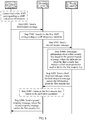
- Step S401 When the N3IWF cannot find the first AMF indicated by the AMF indication information, the N3IWF sends a third request message to a second AMF, where the third request message carries the key identifier information.
- step S401 to step S403 refer to related detailed descriptions of step S301 to step S303 in the embodiment in FIG. 6 . Details are not described herein again.
- Step S405 the N3IWF receives the redirection instruction information that is forwarded by the second AMF and that is sent by the first AMF.
- the N3IWF sends the second request message to the first AMF based on the redirection instruction information, where the second request message carries the key identifier information.
- the first AMF when the first AMF receives the second request message sent by the second AMF, the first AMF may send the redirection instruction information Identification Response to the N3IWF by using the second AMF.
- the redirection instruction information Identification Response is used to instruct the N3IWF to re-establish a communication connection to the first AMF, to retransmit the second request message.
- the N3IWF receives the redirection instruction information Identification Response forwarded by the first AMF by using the second AMF, and resends the second request message to the first AMF based on an instruction of the Identification Response.
- Step S406 Correspondingly, the first AMF receives the second request message sent by the N3IWF. The first AMF determines, based on the key identifier information, the first security key corresponding to the UE.
- step S406 that the first AMF determines, based on the UE temporary identifier and the key identifier information, the first security key corresponding to the UE may alternatively be performed after step S403, or may be performed after step S405 that the first AMF receives the second request message sent by the N3IWF. This is not limited in this embodiment of the present invention.
- Step S407 The first AMF sends a second response message to the N3IWF, where the second response message carries the first security key.
- the N3IWF receives the second response message sent by the first AMF, where the second response message carries the first security key.
- the UE sends the fourth request message to the NSIWF on a secure channel (for example, an IPsec tunnel), so that the first AMF can perform security authentication on the UE.
- the fourth request message herein is a NAS message, and is carried in the IPsec protocol for transmission.
- the fourth request message herein may be a registration request Registration request message, a service request Service Request message, a tracking area update (Tracking area update, TAU) request message, or a request message in another procedure. This is not limited in this embodiment of the present invention.
- the registration request message may include registration parameters Registration parameters.
- the registration parameters may include the UE temporary identifier, the key identifier information, the registration type indication information RT, a second fresh protection parameter, or other parameter information.
- the registration request message further carries the third authentication code MAC or other parameter information. This is not limited in this embodiment of the present invention. In actual application, the registration parameters may be placed in a V payload or an N payload of the message.
- the fourth request message in another procedure already includes the third authentication code and parameters in the another procedure, and the registration request message in the registration request procedure includes only the registration parameters, and does not include the third authentication code. Therefore, when the fourth request message is a registration request message, in addition to including the registration parameters in the registration request message, the fourth request message further needs to include/carry the third authentication code.
- the UE may generate the fourth request message (for example, a registration request Registration request message) by using the UE temporary identifier, the key identifier information, the registration type indication message, and optionally some other parameter information (for example, the second fresh protection parameter or the security context information stored in the UE). Then, the UE may protect the fourth request message (for example, a registration request Registration request message) by using a second security key (for example, the NAS integrity key or the encryption key) in the security context information, and generates and calculates the third authentication code MAC.
- a second security key for example, the NAS integrity key or the encryption key
- the UE may generate the third authentication code MAC (Message authentication code, also referred to as message authentication code) based on the security context information stored in the UE after the UE successfully accesses the network last time, for example, the UE temporary identifier, the key identifier information, the second security key Kq, and a security algorithm f1, and with reference to the registration type indication information RI (network access type indication information, namely, first-time network access or non-first-time network access) indicating that the UE currently accesses the network based on non-3GPP, and optionally some other parameter information (for example, the second fresh protection parameter).
- RI network access type indication information, namely, first-time network access or non-first-time network access
- MAC EIA1 (the NAS integrity key, the second fresh protection parameter (for example, the NAS uplink count), and a parameter that is shared between the UE and the AMF and that is unknown to a third party (for example, a GUTI, a registration type, or a parameter that is subsequently newly defined, for example, an access manner indicator).
- MAC EIA1 (the NAS integrity protection key and registration parameters).
- EIA is an integrity protection algorithm (EPS Integrity Algorithm) used in an EPS network, for example, EIA0, EIA1, EIA2, or EIA3.
- the message direction indicates whether the Registration request message is an uplink message or a downlink message, and may be usually represented by a specific string, for example, "0" represents a downlink message, and "1" represents an uplink message.
- a bearer message indicates a transmission channel of a message, namely, a channel on which the message is transmitted.
- the registration parameters are registration parameters carried in the V payload or the N payload of the first request message.
- the security context information herein includes the second security key Kq and the security algorithm.
- the second security key may be the NAS integrity key, the encryption key, the NAS key, or the like in the security context information.
- the security algorithm may be the integrity protection algorithm, the encryption algorithm, a NAS algorithm, or another algorithm in the security context information. This is not limited in this embodiment of the present invention.
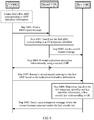
- Step S502 The N3IWF sends the fourth request message to the first AMF, where the fourth request message is carried in the NG2 protocol.
- the first AMF receives the fourth request message sent by the N3IWF.
- the N3IWF may extract the fourth request message from the IPsec protocol. Further, the N3IWF adds the fourth request message into the NG2 (Next Generation interface Number 2) protocol, and sends the fourth request message to the first AMF.
- the first AMF receives the fourth request message that is sent by the N3IWF and that is carried in the NG2 protocol.
- NG2 is an interface used to connect the N3IWF and the AMF, so that the N3IWF and the AMF communicate with each other.
- Step S503 The first AMF determines the NAS integrity key in the security context information of the UE based on the key identifier information.
- the first AMF receives the fourth request message sent by the N3IWF, and obtains, by parsing the message, parameter information such as the third authentication code MAC, the UE temporary identifier, the key identifier information, the registration type indication information RT, and the second fresh protection parameter carried in the fourth request message.
- the first AMF may find the security context information of the UE based on the UE temporary identifier and the key identifier information. For a process of searching for the security context information, refer to related detailed descriptions of step S202 in the embodiment in FIG. 5 . Details are not described herein again.
- the first AMF generates the third verification code MAC' based on the UE temporary identifier, the key identifier information, the second security key Kq (for example, the NAS integrity key), the security algorithm f1, the registration type indication information RT, the second fresh protection parameter, and optionally some other parameter information.
- the first AMF uses necessary parameter information such as the UE temporary identifier, the key identifier information, the registration type indication information RT, and the second fresh protection parameter obtained by parsing the fourth request message, to generate a fourth request message (for example, a registration request Registration request message) that is the same as the fourth request message sent by the UE or the N3IWF. Then, the first AMF protects the generated fourth request message (for example, a Registration request) by using the second security key (for example, the NAS integrity key) in the security context information, and also generates and calculates the third verification code MAC'.
- a fourth request message for example, a registration request
- the second security key for example, the NAS integrity key
- MAC' EIA1 (the NAS integrity key, the second fresh protection parameter (for example, the NAS uplink count), and a parameter that is shared between the UE and the AMF and that is unknown to a third party (for example, a GUTI, registration type indication information registration type, or a parameter that is subsequently newly defined, for example, an access manner indicator).
- a generation method in LTE is that MAC-EIA1 (the NAS integrity key, the Registration request message (which includes the third authentication code AMC), the count value (NAS uplink count) of the counter, a message direction, and bearer information).
- Step S505 The first AMF determines whether the third verification code matches the third authentication code.
- Step S507 Correspondingly, the N3IWF receives the fourth response message sent by the first AMF.
- the N3IWF sends the fourth response message to the UE, where the fourth response message is carried in the IPsec protocol, and the fourth response message is used to indicate that registration of the UE succeeds.
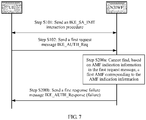
- the first AMF determines whether the third authentication code MAC is the same as the generated third verification code MAC'. If the third authentication code MAC is the same as the generated third verification code MAC', the first AMF sends the fourth response message (for example, a Registration response) to the NI3WF on the secure channel. The fourth response message is used to indicate that registration of the UE succeeds and the security authentication performed by the first AMF on the UE succeeds. Otherwise, the procedure ends, or the first AMF sends a fourth response failure message (for example, a Registration response failure) to the UE. The fourth response failure message is used to indicate that the security authentication performed by the first AMF on the UE fails and registration of the UE fails. The fourth response message or the fourth response failure message herein needs to be carried in the NG2 protocol for transmission.
- the N3IWF receives the fourth response message or the fourth response failure message that is sent by the first AMF, and adds the fourth response message or the fourth response failure message into the NG2 protocol and sends the message to the UE, to notify the UE whether registration succeeds.
- the security context information stored after the UE successfully accesses the network last time can be used to complete current network access authentication performed by the UE based on non-3GPP, so that steps in a non-3GPP-based network access authentication procedure in the prior art are reduced, and the UE can quickly access the network.
- FIG. 11 is a schematic flowchart of another method in which a first AMF performs security authentication on UE according to an embodiment of the present invention.
- Step S601 The first AMF determines, based on the key identifier information, the security context information of the UE.
- the method further includes: the UE generates the third authentication code based on the NAS integrity key in the security context information of the UE.
- the UE may not generate a specific Registration request message, but uses a Registration parameter, that is used by the N3IWF to generate a Registration request and that is carried in the second request message, as input for generating the third authentication code MAC.
- the UE initiates another procedure such as a service request (Service Request) procedure or a procedure similar to a tracking area update (Tracking area update, TAU) procedure in LTE
- the second message carries a parameter in a corresponding procedure, and the parameter is used by the N3IWF to generate a corresponding message.
- the second message carries a service request parameter or a TAU parameter.
- the N3IWF needs to construct a Registration Request message that is totally the same as the message generated by the UE, and then sends the message to the first AMF. This requirement is also applicable to another procedure such as a service request procedure or a TAU procedure.
- a process of generating the third authentication code refer to related detailed descriptions in the embodiment in FIG. 10 . Details are not described herein again.
- Step S602 The first AMF generates third verification code based on the NAS integrity key in the security context information of the UE.
- Step S603 The first AMF determines whether the third verification code matches the third authentication code.
- Step S604 When determining that the third verification code matches the third authentication code, the first AMF determines that security authentication performed by the first AMF on the UE succeeds.
- the first AMF when the first AMF determines that the third verification code MAC' matches the third authentication code MAC, it indicates that the security authentication performed by the first AMF on the UE succeeds, and the first AMF may correspondingly continue to perform step S202, step S304, or step S406, and subsequent related procedure steps in the foregoing embodiments.
- the second request message sent by the N3IWF to the first AMF carries the third authentication code MAC, and optionally, may further carry the UE temporary identifier, the key identifier (or the key identifier information), the registration type indication information RT, the second fresh protection parameter, or other parameter information. This is not limited in this embodiment of the present invention.
- the second request message herein includes a registration request Registration request message and the third authentication code MAC.
- step S601 to step S603 refer to related detailed descriptions of step S501 to step S505 in the embodiment in FIG. 10 . Details are not described herein again.
- the first request message in this embodiment of this application carries registration parameters.
- the registration parameters include parameter information such as the key identifier information, the UE temporary identifier, and the third authentication code (MAC).
- the second request message includes a registration request Registration request message and a key request message.
- the key request message is used to obtain the first security key for verifying the first authentication code AUTH1.
- the registration request message is generated by the N3IWF by using the registration parameters in the first request message, and the registration request message (or the registration parameters) is included in the first request message.
- parameter information such as the UE temporary identifier, the key identifier information, the NAI information, the registration type indication message, the second fresh protection parameter, and the count value (NAS uplink Count) of the counter used in the embodiments of the present invention may be placed in a V payload or an N payload of a corresponding message for transmission.
- Parameter information such as the first authentication code AUTH1, the first verification code AUTH1', the second authentication code AUTH2, and the second verification code AUTH2' used in the embodiments of the present invention may be placed in an Authentication authentication payload of a corresponding message.
- the security context information stored after the UE successfully accesses the network last time can be used to complete current network access authentication performed by the UE based on non-3GPP, so that steps in a non-3GPP-based network access authentication procedure in the prior art are reduced, and the UE can quickly access the network.
- FIG. 12 is a schematic structural diagram of user equipment according to an embodiment of the present invention.
- the user equipment 12 includes a transceiver 501, a memory 502, and a processor 503 (there may be one or more processors 503, and one processor is used as an example in FIG. 12 ).
- the transceiver 501, the memory 502, and the processor 503 may be connected by using a bus or in another manner, and that a bus connection is used as an example in FIG. 12 .
- the processor 503 invokes a program that is in the memory 502 and that is used to perform network access authentication based on a non-3GPP network, to perform the following operations:
- the first response message carries second authentication code
- the second authentication code is generated by the N3IWF based on the first security key
- the processor is further configured to: generate second verification code based on the first security key; and if the second verification code matches the second authentication code, determine that security authentication performed by the UE on the N3IWF succeeds.
- the retained information of the UE includes security context information
- the first security key is a NAS integrity key in the security context information
- the retained information of the UE includes security context information
- the first security key is a key derived based on a security key in the security context information and a first fresh protection parameter.
- the security key includes a key Kseaf or a key Kamf
- the first fresh protection parameter includes any one of the following: a count value of a counter, a first random number, and a UE temporary identifier.
- the AMF indication information is used to indicate a first AMF that performs mutual security authentication with the UE, and the AMF indication information includes the UE temporary identifier or network access identifier NAI information generated based on the UE temporary identifier.
- the generation unit 122 is configured to generate first authentication code based on the first security key.
- the sending unit 123 is configured to send a first request message to a non-3GPP interworking function network element N3IWF, where the first request message carries the first authentication code, the AMF indication information, and key identifier information, the first authentication code is used by the N3IWF to perform security authentication on the UE, and the key identifier information is used to obtain the first security key.
- the receiving unit 124 is configured to receive a first response message returned by the N3IWF based on the first request message.
- another function unit may be added based on the structure.
- the key identifier information is used to identify security context information of the UE, and the first security key is a NAS integrity key in the security context information.
- the key identifier information is used to identify security context information of the UE
- the second request message further carries a first fresh protection parameter
- the first security key is a key derived based on a security key in the security context information and the first fresh protection parameter
- the security key includes a key Kseaf or a key Kamf
- the first fresh protection parameter includes any one of the following: a count value of a counter, a first random number, and a UE temporary identifier.
- the AMF indication information is used to indicate the first AMF that performs mutual security authentication with the UE, and the AMF indication information includes the UE temporary identifier or NAI information generated based on the UE temporary identifier.
- the key identifier information includes the UE temporary identifier and/or a key identifier in the security context information of the UE.
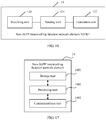
- FIG. 16 is a possible schematic structural diagram of a non-3GPP interworking function network element in the foregoing embodiments.
- the non-3GPP interworking function network element 14 includes a receiving unit 130, a sending unit 131, and a generation unit 132.
- the receiving unit 130, the sending unit 131, and the generation unit 132 each are configured to perform related steps described in this specification.
- the receiving unit 130 is configured to receive a first request message sent by UE, where the first request message carries first authentication code, AMF indication information, and key identifier information.
- the sending unit 131 is configured to: send the key identifier information to a first AMF indicated by the AMF indication information, and receive the first security key corresponding to the key identifier information.
- the generation unit 132 is configured to generate first verification code based on the first security key.
- the sending unit 131 is further configured to: if the first authentication code matches the first verification code, send a first response message to the UE by using the transceiver.
- another function unit may be added based on the structure.
- FIG. 17 is another possible schematic structural diagram of a non-3GPP interworking function network element (N3IWF) in the foregoing embodiments.
- the non-3GPP interworking function network element 14 includes a communications unit 1401, a processing unit 1402, and a storage unit 1403.
- the communications unit 1401 is configured to support the non-3GPP interworking function network element in sending information to or receiving information from user equipment, a core network network element (for example, an AMF) in a non-3GPP-network access network, and a WLAN access point in the foregoing embodiments.
- the processing unit 1402 further performs processing processes of the user equipment in FIG. 4A to FIG. 11 and/or other technical processes described in this application.
- the processing unit 1402 is configured to support the non-3GPP interworking function network element in performing the processes S103 to S105 in FIG. 4A and/or other technical processes described in this specification.
- the storage unit 1403 is configured to store program code and data of the non-3GPP interworking function network element.
- unit division is an example, and is merely a logical function division. In actual implementation, there may be another division manner.
- Function units in the embodiments of the present invention may be integrated into one processing unit, or each of the units may exist alone physically, or two or more units may be integrated into one unit.
- the receiving unit and the sending unit may be a same unit or different units.
- the integrated unit may be implemented in a form of hardware, or may be implemented in a form of a software function unit.
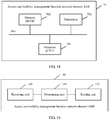
- FIG. 18 is a schematic structural diagram of an access and mobility management function network element according to an embodiment of the present invention.
- the access and mobility management function network element 16 includes a transceiver 701, a memory 702, and a processor 703 (there may be one or more processors 703, and one processor is used as an example in FIG. 16 ).
- the transceiver 701, the memory 702, and the processor 703 may be connected by using a bus or in another manner, and that a bus connection is used as an example in FIG. 18 .
- the processor 703 invokes a program that is in the memory 702 and that is used to perform network access authentication based on a non-3GPP network, to perform the following operations:
- that the processor receives, by using the transceiver, a second request message sent by an N3IWF is specifically: receiving, by using the transceiver, a second request message sent by a second AMF, where the second request message is sent by the second AMF based on a received third request message sent by the N3IWF; and that the processor sends a second response message to the N3IWF by using the transceiver is specifically: sending a third response message to the second AMF, so that the second AMF sends a second response message to the N3IWF, where the second response message and the third response message each carry the first security key.
- that the processor receives, by using the transceiver, a second request message sent by an N3IWF is specifically: receiving, by using the transceiver, a second request message sent by a second AMF, where the second request message is sent by the second AMF based on a received third request message sent by the N3IWF.
- the key identifier information is used to identify security context information of the UE, and the first security key is a NAS integrity key in the security context information.
- the second request message further carries third authentication code
- the processor is further configured to: determine a NAS integrity key based on the key identifier information; generate third verification code based on the NAS integrity key; and if the third verification code matches the third authentication code, perform the step of determining a first security key based on the key identifier information.
- FIG. 19 is a possible schematic structural diagram of an access and mobility management function network element in the foregoing embodiments.
- the access and mobility management function network element 16 includes a receiving unit 140, a determining unit 141, and a sending unit 132.
- the receiving unit 140, the determining unit 141, and the sending unit 132 each are configured to perform related steps described in this specification.
- the receiving unit 140 is configured to receive a second request message sent by an N3IWF, where the second request message carries key identifier information.
- the determining unit 141 is configured to determine a first security key based on the key identifier information.
- the sending unit 132 is configured to send a second response message to the N3IWF, where the second response message carries the first security key.
- another function unit may be added based on the structure.
- FIG. 20 is another possible schematic structural diagram of an access and mobility management function network element (AMF) in the foregoing embodiments.
- the access and mobility management function network element 16 includes a communications unit 1601, a processing unit 1602, and a storage unit 1603.
- the communications unit 1601 is configured to support the access and mobility management function network element in sending information to or receiving information from user equipment and some function network elements (for example, an N3IWF) in a non-3GPP-network access network in the foregoing embodiments.
- the processing unit 1602 further performs processing processes of the user equipment in FIG. 4A to FIG. 11 and/or other technical processes described in this application.
- the processing unit 1602 is configured to support the non-3GPP interworking function network element in performing the processes S202 and S203 in FIG. 5 and/or other technical processes described in this specification.
- the storage unit 1603 is configured to store program code and data of the access and mobility management function network element.
- the non-3GPP interworking function network element 14 may be the non-3GPP interworking function network element described in any one of the embodiments in FIG. 15 to FIG. 17 . Details are not described herein again.
- the access and mobility management function network element 16 may be the access and mobility management function network element described in any one of the embodiments in FIG. 18 to FIG. 20 . Details are not described herein again.
- the system further includes user equipment 12.
- the user equipment 12 may be the user equipment described in any one of the embodiments in FIG. 12 to FIG. 14 . Details are not described herein again.
- steps in a prior-art procedure in which the UE currently performs network access authentication based on non-3GPP after the UE successfully accesses a network last time can be reduced, and a network access authentication time can be reduced, so that the UE can quickly access the network.
- a person of ordinary skill in the art may understand that all or some of the processes of the methods in the embodiments may be implemented by a computer program instructing related hardware.
- the program may be stored in a computer readable storage medium. When the program runs, the processes of the methods in the embodiments may be performed.
- the foregoing storage medium includes any medium that can store program code, such as a ROM, a RAM, a magnetic disk, or an optical disc.
Landscapes
- Engineering & Computer Science (AREA)
- Computer Networks & Wireless Communication (AREA)
- Signal Processing (AREA)
- Computer Security & Cryptography (AREA)
- Databases & Information Systems (AREA)
- Mobile Radio Communication Systems (AREA)
Claims (13)
- Équipement utilisateur (12), UE, dans lequel l'équipement utilisateur comprend un processeur (501), une mémoire (502) et un émetteur-récepteur (503), la mémoire (502) est configurée pour stocker un code de programme utilisé pour effectuer une authentification d'accès au réseau basée sur un réseau non 3GPP, et le processeur (501) est configuré pour invoquer le code de programme utilisé pour effectuer une authentification d'accès au réseau basée sur un réseau non 3GPP, pour effectuer les opérations suivantes :l'obtention d'informations conservées qui sont de l'UE et qui existent après que l'UE accède avec succès à un réseau la dernière fois ;la détermination d'informations d'indication d'élément de réseau de fonction de gestion de mobilité et d'accès, AMF, sur la base des informations conservées de l'UE ;l'envoi (S102) d'un premier message de demande à un élément de réseau de fonction d'interfonctionnement non 3GPP, N3IWF, en utilisant l'émetteur-récepteur (503), dans lequel le premier message de demande transporte les informations d'indication d'AMF et des informations d'identificateur de clé utilisées pour obtenir une première clé de sécurité ; etla réception (S105), en utilisant l'émetteur-récepteur (503), d'un premier message de réponse renvoyé par le N3IWF sur la base du premier message de demande ;caractérisé en ce que le processeur (501) est configuré pour invoquer le code de programme pour effectuer les opérations suivantes :la détermination de la première clé de sécurité sur la base des informations conservées de l'UE ; etla génération d'un premier code d'authentification sur la base de la première clé de sécurité ;dans lequel le premier message de demande envoyé à l'élément de réseau de fonction d'interfonctionnement non 3GPP N3IWF transporte en outre le premier code d'authentification pour permettre au N3IWF d'effectuer une authentification de sécurité sur l'UE.
- Équipement utilisateur selon la revendication 1, dans lequel le premier message de demande transporte un deuxième code d'authentification, le deuxième code d'authentification est généré par le N3IWF sur la base de la première clé de sécurité, et le processeur (501) est configuré en outre pour :générer un second code de vérification sur la base de la première clé de sécurité ; etsi le second code de vérification correspond au deuxième code d'authentification, déterminer qu'une authentification de sécurité effectuée par l'UE sur le N3IWF réussit.
- Équipement utilisateur selon la revendication 1 ou 2, dans lequel les informations conservées de l'UE comprennent des informations de contexte de sécurité, et la première clé de sécurité est une clé obtenue sur la base d'une clé de sécurité dans les informations de contexte de sécurité et d'un premier paramètre de protection frais.
- Équipement utilisateur selon la revendication 3, dans lequel la clé de sécurité comprend une clé Kseaf ou une clé Kamf, et le premier paramètre de protection frais comprend l'un quelconque parmi ce qui suit : une valeur de comptage d'un compteur, un premier nombre aléatoire et un identificateur temporaire d'UE.
- Équipement utilisateur selon l'une quelconque des revendications 1 à 4, dans lequel les informations d'indication AMF sont utilisées pour indiquer un premier AMF qui effectue une authentification de sécurité mutuelle avec l'UE, et les informations d'indication d'AMF comprennent l'identificateur temporaire d'UE ou des informations d'identificateur d'accès au réseau, NAI, générées sur la base de l'identificateur temporaire d'UE.
- Équipement utilisateur selon l'une quelconque des revendications 1 à 5, dans lequel les informations d'identification de clé comprennent l'identificateur temporaire d'UE et/ou un identificateur de clé dans les informations de contexte de sécurité de l'UE.
- Équipement utilisateur selon l'une quelconque des revendications 1 à 6, dans lequel le premier message de demande transporte en outre un troisième code d'authentification, et le troisième code d'authentification est utilisé par le premier AMF pour effectuer une authentification de sécurité sur l'UE.
- Élément de réseau de fonction d'interfonctionnement non 3GPP (14), N3IWF, dans lequel l'élément de réseau de fonction d'interfonctionnement non 3GPP comprend un processeur (601), une mémoire (602) et un émetteur-récepteur (603), la mémoire (602) est configurée pour stocker un code de programme utilisé pour effectuer une authentification d'accès au réseau basée sur un réseau non 3GPP, et le processeur (601) est configuré pour invoquer le code de programme utilisé pour effectuer une authentification d'accès au réseau basée sur un réseau non 3GPP, pour effectuer les opérations suivantes :la réception (S102), en utilisant l'émetteur-récepteur (603), d'un premier message de demande envoyé par l'UE, dans lequel le premier message de demande transporte des informations d'indication d'élément de réseau de fonction de gestion de mobilité et d'accès, AMF, et des informations d'identificateur de clé ;l'envoi (S201), en utilisant l'émetteur-récepteur (603), des informations d'identificateur de clé à un premier AMF indiqué par les informations d'indication d'AMF, et la réception (S203), en utilisant l'émetteur-récepteur (603), de la première clé de sécurité correspondant aux informations d'identificateur de clé ;caractérisé en ce que le premier message de demande reçu transporte un premier code d'authentification utilisé pour effectuer une authentification de sécurité sur l'UE ;le processeur (601) est configuré pour invoquer le code de programme pour effectuer les opérations suivantes :la génération (S103) d'un premier code de vérification sur la base de la première clé de sécurité ;la détermination (S104) si le premier code de vérification généré correspond au premier code de vérification de manière à effectuer une authentification de sécurité sur l'UE, dans lequel le premier code d'authentification correspondant au premier code de vérification indique que l'authentification de sécurité effectuée par le N3IWF sur l'UE réussit ; ets'il est déterminé que le premier code d'authentification correspond au premier code de vérification, l'envoi (S105) d'un premier message de réponse à l'UE en utilisant l'émetteur-récepteur (603).
- Élément de réseau de fonction d'interfonctionnement non 3GPP selon la revendication 8, dans lequel le processeur (601) est configuré en outre pour :générer un deuxième code d'authentification sur la base de la première clé de sécurité ; etenvoyer le deuxième code d'authentification à l'UE en utilisant l'émetteur-récepteur (603), dans lequel le deuxième code d'authentification est utilisé par l'UE pour effectuer une authentification de sécurité sur le N3IWF.
- Élément de réseau de fonction d'interfonctionnement non 3GPP selon la revendication 8, dans lequel le fait que le processeur (601) envoie, en utilisant l'émetteur-récepteur (603), les informations d'identificateur de clé à un premier AMF indiqué par les informations d'indication d'AMF est spécifiquement :la détermination du premier AMF sur la base des informations d'indication d'AMF ; etl'envoi d'un second message de demande au premier AMF, dans lequel le second message de demande transporte les informations d'identificateur de clé ; etle fait que le processeur (601) reçoit, en utilisant l'émetteur-récepteur (603), la première clé de sécurité correspondant aux informations d'identificateur de clé est spécifiquement :
la réception, en utilisant l'émetteur-récepteur (603), de la première clé de sécurité envoyée par le premier AMF. - Système pour effectuer une authentification d'accès au réseau basée sur un réseau non 3GPP, comprenant l'équipement utilisateur selon l'une quelconque des revendications 1 à 7, l'élément de réseau de fonction d'interfonctionnement non 3GPP, N3IWF selon l'une quelconque des revendications 8 à 10 et un élément de réseau de fonction de gestion de mobilité et d'accès (16) ;
dans lequel l'élément de réseau de fonction de gestion de mobilité et d'accès comprend un processeur (701), une mémoire (702) et un émetteur-récepteur (703), la mémoire (702) est configurée pour stocker un code de programme utilisé pour effectuer une authentification d'accès au réseau basée sur un réseau non 3GPP, et le processeur (701) est configuré pour invoquer le code de programme utilisé pour effectuer une authentification d'accès au réseau basée sur un réseau non 3GPP, pour effectuer les opérations suivantes :la réception, en utilisant l'émetteur-récepteur (703), d'un second message de demande envoyé par le N3IWF, dans lequel le second message de demande transporte des informations d'identificateur de clé ;la détermination d'une première clé de sécurité sur la base des informations d'identificateur de clé ; etl'envoi d'un second message de réponse au N3IWF en utilisant l'émetteur-récepteur (703), dans lequel le second message de réponse transporte la première clé de sécurité. - Procédé pour effectuer une authentification d'accès au réseau basée sur un réseau non 3GPP, dans lequel le procédé comprend :l'obtention, par un équipement utilisateur, UE, d'informations conservées qui sont de l'UE et qui existent après que l'UE accède avec succès à un réseau la dernière fois ;la détermination d'informations d'indication d'élément de réseau de fonction de gestion de mobilité et d'accès, AMF, sur la base des informations conservées de l'UE ;l'envoi (S102) d'un premier message de demande à un élément de réseau de fonction d'interfonctionnement non 3GPP, N3IWF, dans lequel le premier message de demande transporte les informations d'indication d'AMF et des informations d'identificateur de clé utilisées pour obtenir une première clé de sécurité ; etla réception (S105) d'un premier message de réponse renvoyé par le N3IWF sur la base du premier message de demande ;caractérisé en ce que le procédé comprend en outre :la détermination de la première clé de sécurité sur la base des informations conservées de l'UE ; etla génération d'un premier code d'authentification sur la base de la première clé de sécurité ;dans lequel le premier message de demande envoyé à l'élément de réseau de fonction d'interfonctionnement non 3GPP N3IWF transporte en outre le premier code d'authentification pour permettre au N3IWF d'effectuer une authentification de sécurité sur l'UE.
- Procédé pour effectuer une authentification d'accès au réseau basée sur un réseau non 3GPP, effectué par un élément de réseau de fonction d'interfonctionnement non 3GPP, N3IWF, dans lequel le procédé comprend :la réception d'un premier message de demande envoyé par l'UE, dans lequel le premier message de demande transporte des informations d'indication d'élément de réseau de fonction de gestion de mobilité et d'accès, AMF, et des informations d'identificateur de clé ;l'envoi (S201) des informations d'identificateur de clé à un premier AMF indiqué par les informations d'indication d'AMF, et la réception de la première clé de sécurité correspondant aux informations d'identificateur de clé ;caractérisé en ce que le premier message de demande transporte un premier code d'authentification utilisé pour effectuer une authentification de sécurité sur l'UE ;le procédé comprend en outre :la génération (S103) d'un premier code de vérification sur la base de la première clé de sécurité ;la détermination (S104) si le premier code de vérification généré correspond au premier code de vérification de manière à effectuer une authentification de sécurité sur l'UE, dans lequel le premier code d'authentification correspondant au premier code de vérification indique que l'authentification de sécurité effectuée par le N3IWF sur l'UE réussit ; ets'il est déterminé que le premier code d'authentification correspond au premier code de vérification, l'envoi d'un premier message de réponse à l'UE.
Applications Claiming Priority (1)
| Application Number | Priority Date | Filing Date | Title |
|---|---|---|---|
| PCT/CN2017/077162 WO2018170617A1 (fr) | 2017-03-18 | 2017-03-18 | Procédé d'authentification d'accès au réseau basé sur un réseau non 3gpp, et dispositif et système associés |
Publications (3)
| Publication Number | Publication Date |
|---|---|
| EP3582531A1 EP3582531A1 (fr) | 2019-12-18 |
| EP3582531A4 EP3582531A4 (fr) | 2020-01-22 |
| EP3582531B1 true EP3582531B1 (fr) | 2021-02-17 |
Family
ID=63584063
Family Applications (1)
| Application Number | Title | Priority Date | Filing Date |
|---|---|---|---|
| EP17901907.0A Active EP3582531B1 (fr) | 2017-03-18 | 2017-03-18 | Procédé d'authentification d'accès au réseau basé sur un réseau non 3gpp, et dispositif et système associés |
Country Status (4)
| Country | Link |
|---|---|
| US (1) | US10911948B2 (fr) |
| EP (1) | EP3582531B1 (fr) |
| CN (1) | CN110431867B (fr) |
| WO (1) | WO2018170617A1 (fr) |
Families Citing this family (27)
| Publication number | Priority date | Publication date | Assignee | Title |
|---|---|---|---|---|
| CN112073184B (zh) | 2017-10-23 | 2022-01-14 | 华为技术有限公司 | 一种生成密钥的方法、装置及系统 |
| WO2019184895A1 (fr) | 2018-03-26 | 2019-10-03 | Telefonaktiebolaget Lm Ericsson (Publ) | Améliorations dans la détection et le traitement d'une défaillance sur un trajet de plan d'utilisateur |
| CN110351722B (zh) * | 2018-04-08 | 2024-04-16 | 华为技术有限公司 | 一种信息发送方法、密钥生成方法以及装置 |
| CN110831007B (zh) * | 2018-08-10 | 2021-09-17 | 华为技术有限公司 | 用户面完整性保护方法、装置及设备 |
| EP3935895A4 (fr) * | 2019-03-08 | 2022-03-02 | Telefonaktiebolaget LM Ericsson (publ.) | Procédé et appareil de traitement de défaillances et de rétablissements de trajets de plan d'utilisateur |
| US10750366B1 (en) | 2019-12-19 | 2020-08-18 | Cisco Technology, Inc. | Efficient authentication and secure communications in private communication systems having non-3GPP and 3GPP access |
| CN113163399B (zh) * | 2020-01-07 | 2024-06-11 | 阿里巴巴集团控股有限公司 | 一种终端与服务器的通信方法和装置 |
| KR102752412B1 (ko) | 2020-01-23 | 2025-01-10 | 삼성전자주식회사 | 무선통신시스템에서 보안을 제공하는 장치 및 방법 |
| CN111314856B (zh) * | 2020-02-13 | 2020-12-15 | 广州爱浦路网络技术有限公司 | 一种5g用户位置信息服务的分级审查与跟踪装置和方法 |
| KR20220163432A (ko) * | 2020-04-03 | 2022-12-09 | 레노보 (싱가포르) 피티이. 엘티디. | 액세스 게이트웨이 재배치 |
| US20230180118A1 (en) * | 2020-05-05 | 2023-06-08 | Samsung Electronics Co., Ltd. | Method and system for n3iwf selection in user equipment for network connectivity |
| EP4162713A1 (fr) * | 2020-06-05 | 2023-04-12 | Lenovo (Singapore) Pte. Ltd. | Prise en charge d'une réauthentification d'unité à distance |
| WO2022127791A1 (fr) * | 2020-12-15 | 2022-06-23 | Telefonaktiebolaget Lm Ericsson (Publ) | Procédés, entités et supports lisibles par ordinateur pour une authentification d'accès non 3gpp |
| CN112822674A (zh) * | 2020-12-29 | 2021-05-18 | 联想未来通信科技(重庆)有限公司 | 一种nas消息的解密方法和装置 |
| CN114866991A (zh) * | 2021-02-03 | 2022-08-05 | 维沃移动通信有限公司 | 核心网系统 |
| CN115314946B (zh) * | 2021-05-08 | 2025-09-05 | 华为技术有限公司 | 用于传输数据的方法和通信装置 |
| CN118713729A (zh) * | 2021-07-31 | 2024-09-27 | 华为技术有限公司 | 一种传输方法、系统及相关装置 |
| CN114222298B (zh) * | 2021-12-14 | 2024-10-08 | 中国电信股份有限公司 | 终端接入方法、装置、网络设备、终端和介质 |
| CN116546490A (zh) * | 2022-01-25 | 2023-08-04 | 华为技术有限公司 | 密钥生成方法及装置 |
| US12317360B2 (en) * | 2022-05-09 | 2025-05-27 | Hewlett Packard Enterprise Development Lp | Session continuity for a user equipment |
| US20240080666A1 (en) * | 2022-09-01 | 2024-03-07 | T-Mobile Innovations Llc | Wireless communication network authentication for a wireless user device that has a circuitry identifier |
| US12483887B2 (en) * | 2022-09-22 | 2025-11-25 | Qualcomm Incorporated | Secure timing for sidelink systems |
| WO2024234179A1 (fr) * | 2023-05-12 | 2024-11-21 | 北京小米移动软件有限公司 | Procédé et appareil de traitement d'informations, et dispositif de communication et support d'enregistrement |
| CN116528234B (zh) * | 2023-06-29 | 2023-09-19 | 内江师范学院 | 一种虚拟机的安全可信验证方法及装置 |
| CN117997675B (zh) * | 2024-02-07 | 2025-05-27 | 奉加科技(上海)股份有限公司 | 一种入网通信方法、网关设备、外围设备 |
| WO2025218523A1 (fr) * | 2024-04-19 | 2025-10-23 | Mediatek Inc. | Procédés d'améliorations apportées au codage de message dans une session de communication sécurisée sur un accès non-3gpp |
| WO2026006998A1 (fr) * | 2024-07-02 | 2026-01-08 | Oppo广东移动通信有限公司 | Procédé de communication et dispositif |
Family Cites Families (6)
| Publication number | Priority date | Publication date | Assignee | Title |
|---|---|---|---|---|
| EP2166798A1 (fr) * | 2008-09-23 | 2010-03-24 | Alcatel, Lucent | Transfert entre un réseau non 3GPP et un réseau 3GPP |
| CN102348193B (zh) * | 2010-07-28 | 2016-06-15 | 中兴通讯股份有限公司 | 一种网关标识上报的方法及系统 |
| CN105282798A (zh) * | 2014-07-24 | 2016-01-27 | 中兴通讯股份有限公司 | 一种关于流迁移触发的相关实现方法及设备 |
| CN106304038A (zh) * | 2015-05-25 | 2017-01-04 | 徐成琦 | 一种统一网元标识的方法 |
| EP3523997B1 (fr) * | 2016-10-05 | 2024-07-03 | Motorola Mobility LLC | Rattachement de réseau central par l'intermédiaire de réseaux d'accès non 3gpp autonomes |
| CN110268734B (zh) * | 2017-02-07 | 2023-09-15 | 沃洛切特解决方案有限责任公司 | 使用不可信网络的互通功能 |
-
2017
- 2017-03-18 CN CN201780088621.1A patent/CN110431867B/zh active Active
- 2017-03-18 WO PCT/CN2017/077162 patent/WO2018170617A1/fr not_active Ceased
- 2017-03-18 EP EP17901907.0A patent/EP3582531B1/fr active Active
-
2019
- 2019-09-18 US US16/574,899 patent/US10911948B2/en active Active
Non-Patent Citations (1)
| Title |
|---|
| None * |
Also Published As
| Publication number | Publication date |
|---|---|
| WO2018170617A1 (fr) | 2018-09-27 |
| EP3582531A4 (fr) | 2020-01-22 |
| US10911948B2 (en) | 2021-02-02 |
| CN110431867A (zh) | 2019-11-08 |
| CN110431867B (zh) | 2021-08-31 |
| EP3582531A1 (fr) | 2019-12-18 |
| US20200015079A1 (en) | 2020-01-09 |
Similar Documents
| Publication | Publication Date | Title |
|---|---|---|
| US10911948B2 (en) | Method and system for performing network access authentication based on non-3GPP network, and related device | |
| US10728757B2 (en) | Security implementation method, related apparatus, and system | |
| US10841302B2 (en) | Method and apparatus for authenticating UE between heterogeneous networks in wireless communication system | |
| US11627458B2 (en) | Key derivation algorithm negotiation method and apparatus | |
| US11032706B2 (en) | Unified authentication for integrated small cell and Wi-Fi networks | |
| US10454686B2 (en) | Method, apparatus, and system for providing encryption or integrity protection in a wireless network | |
| US10798082B2 (en) | Network authentication triggering method and related device | |
| US20170359719A1 (en) | Key generation method, device, and system | |
| US10299120B2 (en) | Methods and arrangements for identification of user equipments for authentication purposes | |
| EP3275149B1 (fr) | Configuration d'une temporisation de vérification de la vivacité à l'aide messages ike | |
| CN109803262B (zh) | 一种网络参数的传输方法及装置 | |
| EP2648437B1 (fr) | Procédé, appareil et système de génération de clé | |
| JP6123035B1 (ja) | Twagとueとの間でのwlcpメッセージ交換の保護 | |
| EP4583551A1 (fr) | Procédé de communication et appareil de communication | |
| JP6732794B2 (ja) | モバイル無線通信ネットワーク及び通信ネットワークデバイスへのモバイル端末の接続を確立するための方法 | |
| WO2021073382A1 (fr) | Appareil et procédé d'enregistrement | |
| EP4642071A1 (fr) | Procédé d'authentification et appareil de communication | |
| EP4654641A1 (fr) | Procédé et appareil de communication |
Legal Events
| Date | Code | Title | Description |
|---|---|---|---|
| STAA | Information on the status of an ep patent application or granted ep patent |
Free format text: STATUS: THE INTERNATIONAL PUBLICATION HAS BEEN MADE |
|
| PUAI | Public reference made under article 153(3) epc to a published international application that has entered the european phase |
Free format text: ORIGINAL CODE: 0009012 |
|
| STAA | Information on the status of an ep patent application or granted ep patent |
Free format text: STATUS: REQUEST FOR EXAMINATION WAS MADE |
|
| 17P | Request for examination filed |
Effective date: 20190912 |
|
| AK | Designated contracting states |
Kind code of ref document: A1 Designated state(s): AL AT BE BG CH CY CZ DE DK EE ES FI FR GB GR HR HU IE IS IT LI LT LU LV MC MK MT NL NO PL PT RO RS SE SI SK SM TR |
|
| AX | Request for extension of the european patent |
Extension state: BA ME |
|
| A4 | Supplementary search report drawn up and despatched |
Effective date: 20200107 |
|
| RIC1 | Information provided on ipc code assigned before grant |
Ipc: H04L 29/06 20060101ALI20191219BHEP Ipc: H04W 12/06 20090101AFI20191219BHEP |
|
| DAV | Request for validation of the european patent (deleted) | ||
| DAX | Request for extension of the european patent (deleted) | ||
| REG | Reference to a national code |
Ref country code: DE Ref legal event code: R079 Ref document number: 602017033031 Country of ref document: DE Free format text: PREVIOUS MAIN CLASS: H04W0012060000 Ipc: H04W0012040000 |
|
| GRAP | Despatch of communication of intention to grant a patent |
Free format text: ORIGINAL CODE: EPIDOSNIGR1 |
|
| STAA | Information on the status of an ep patent application or granted ep patent |
Free format text: STATUS: GRANT OF PATENT IS INTENDED |
|
| RIC1 | Information provided on ipc code assigned before grant |
Ipc: H04W 12/06 20090101ALI20200727BHEP Ipc: H04W 12/04 20090101AFI20200727BHEP |
|
| INTG | Intention to grant announced |
Effective date: 20200828 |
|
| GRAS | Grant fee paid |
Free format text: ORIGINAL CODE: EPIDOSNIGR3 |
|
| GRAA | (expected) grant |
Free format text: ORIGINAL CODE: 0009210 |
|
| STAA | Information on the status of an ep patent application or granted ep patent |
Free format text: STATUS: THE PATENT HAS BEEN GRANTED |
|
| AK | Designated contracting states |
Kind code of ref document: B1 Designated state(s): AL AT BE BG CH CY CZ DE DK EE ES FI FR GB GR HR HU IE IS IT LI LT LU LV MC MK MT NL NO PL PT RO RS SE SI SK SM TR |
|
| REG | Reference to a national code |
Ref country code: GB Ref legal event code: FG4D |
|
| REG | Reference to a national code |
Ref country code: CH Ref legal event code: EP |
|
| REG | Reference to a national code |
Ref country code: DE Ref legal event code: R096 Ref document number: 602017033031 Country of ref document: DE |
|
| REG | Reference to a national code |
Ref country code: AT Ref legal event code: REF Ref document number: 1363142 Country of ref document: AT Kind code of ref document: T Effective date: 20210315 |
|
| REG | Reference to a national code |
Ref country code: IE Ref legal event code: FG4D |
|
| REG | Reference to a national code |
Ref country code: LT Ref legal event code: MG9D |
|
| REG | Reference to a national code |
Ref country code: NL Ref legal event code: MP Effective date: 20210217 |
|
| PG25 | Lapsed in a contracting state [announced via postgrant information from national office to epo] |
Ref country code: NO Free format text: LAPSE BECAUSE OF FAILURE TO SUBMIT A TRANSLATION OF THE DESCRIPTION OR TO PAY THE FEE WITHIN THE PRESCRIBED TIME-LIMIT Effective date: 20210517 Ref country code: PT Free format text: LAPSE BECAUSE OF FAILURE TO SUBMIT A TRANSLATION OF THE DESCRIPTION OR TO PAY THE FEE WITHIN THE PRESCRIBED TIME-LIMIT Effective date: 20210617 Ref country code: FI Free format text: LAPSE BECAUSE OF FAILURE TO SUBMIT A TRANSLATION OF THE DESCRIPTION OR TO PAY THE FEE WITHIN THE PRESCRIBED TIME-LIMIT Effective date: 20210217 Ref country code: HR Free format text: LAPSE BECAUSE OF FAILURE TO SUBMIT A TRANSLATION OF THE DESCRIPTION OR TO PAY THE FEE WITHIN THE PRESCRIBED TIME-LIMIT Effective date: 20210217 Ref country code: GR Free format text: LAPSE BECAUSE OF FAILURE TO SUBMIT A TRANSLATION OF THE DESCRIPTION OR TO PAY THE FEE WITHIN THE PRESCRIBED TIME-LIMIT Effective date: 20210518 Ref country code: LT Free format text: LAPSE BECAUSE OF FAILURE TO SUBMIT A TRANSLATION OF THE DESCRIPTION OR TO PAY THE FEE WITHIN THE PRESCRIBED TIME-LIMIT Effective date: 20210217 Ref country code: BG Free format text: LAPSE BECAUSE OF FAILURE TO SUBMIT A TRANSLATION OF THE DESCRIPTION OR TO PAY THE FEE WITHIN THE PRESCRIBED TIME-LIMIT Effective date: 20210517 |
|
| REG | Reference to a national code |
Ref country code: AT Ref legal event code: MK05 Ref document number: 1363142 Country of ref document: AT Kind code of ref document: T Effective date: 20210217 |
|
| PG25 | Lapsed in a contracting state [announced via postgrant information from national office to epo] |
Ref country code: SE Free format text: LAPSE BECAUSE OF FAILURE TO SUBMIT A TRANSLATION OF THE DESCRIPTION OR TO PAY THE FEE WITHIN THE PRESCRIBED TIME-LIMIT Effective date: 20210217 Ref country code: PL Free format text: LAPSE BECAUSE OF FAILURE TO SUBMIT A TRANSLATION OF THE DESCRIPTION OR TO PAY THE FEE WITHIN THE PRESCRIBED TIME-LIMIT Effective date: 20210217 Ref country code: LV Free format text: LAPSE BECAUSE OF FAILURE TO SUBMIT A TRANSLATION OF THE DESCRIPTION OR TO PAY THE FEE WITHIN THE PRESCRIBED TIME-LIMIT Effective date: 20210217 Ref country code: NL Free format text: LAPSE BECAUSE OF FAILURE TO SUBMIT A TRANSLATION OF THE DESCRIPTION OR TO PAY THE FEE WITHIN THE PRESCRIBED TIME-LIMIT Effective date: 20210217 Ref country code: RS Free format text: LAPSE BECAUSE OF FAILURE TO SUBMIT A TRANSLATION OF THE DESCRIPTION OR TO PAY THE FEE WITHIN THE PRESCRIBED TIME-LIMIT Effective date: 20210217 |
|
| PG25 | Lapsed in a contracting state [announced via postgrant information from national office to epo] |
Ref country code: IS Free format text: LAPSE BECAUSE OF FAILURE TO SUBMIT A TRANSLATION OF THE DESCRIPTION OR TO PAY THE FEE WITHIN THE PRESCRIBED TIME-LIMIT Effective date: 20210617 |
|
| REG | Reference to a national code |
Ref country code: DE Ref legal event code: R119 Ref document number: 602017033031 Country of ref document: DE |
|
| PG25 | Lapsed in a contracting state [announced via postgrant information from national office to epo] |
Ref country code: EE Free format text: LAPSE BECAUSE OF FAILURE TO SUBMIT A TRANSLATION OF THE DESCRIPTION OR TO PAY THE FEE WITHIN THE PRESCRIBED TIME-LIMIT Effective date: 20210217 Ref country code: CZ Free format text: LAPSE BECAUSE OF FAILURE TO SUBMIT A TRANSLATION OF THE DESCRIPTION OR TO PAY THE FEE WITHIN THE PRESCRIBED TIME-LIMIT Effective date: 20210217 Ref country code: SM Free format text: LAPSE BECAUSE OF FAILURE TO SUBMIT A TRANSLATION OF THE DESCRIPTION OR TO PAY THE FEE WITHIN THE PRESCRIBED TIME-LIMIT Effective date: 20210217 Ref country code: AT Free format text: LAPSE BECAUSE OF FAILURE TO SUBMIT A TRANSLATION OF THE DESCRIPTION OR TO PAY THE FEE WITHIN THE PRESCRIBED TIME-LIMIT Effective date: 20210217 |
|
| REG | Reference to a national code |
Ref country code: CH Ref legal event code: PL |
|
| PG25 | Lapsed in a contracting state [announced via postgrant information from national office to epo] |
Ref country code: MC Free format text: LAPSE BECAUSE OF FAILURE TO SUBMIT A TRANSLATION OF THE DESCRIPTION OR TO PAY THE FEE WITHIN THE PRESCRIBED TIME-LIMIT Effective date: 20210217 Ref country code: DK Free format text: LAPSE BECAUSE OF FAILURE TO SUBMIT A TRANSLATION OF THE DESCRIPTION OR TO PAY THE FEE WITHIN THE PRESCRIBED TIME-LIMIT Effective date: 20210217 Ref country code: SK Free format text: LAPSE BECAUSE OF FAILURE TO SUBMIT A TRANSLATION OF THE DESCRIPTION OR TO PAY THE FEE WITHIN THE PRESCRIBED TIME-LIMIT Effective date: 20210217 Ref country code: RO Free format text: LAPSE BECAUSE OF FAILURE TO SUBMIT A TRANSLATION OF THE DESCRIPTION OR TO PAY THE FEE WITHIN THE PRESCRIBED TIME-LIMIT Effective date: 20210217 |
|
| REG | Reference to a national code |
Ref country code: BE Ref legal event code: MM Effective date: 20210331 |
|
| PLBE | No opposition filed within time limit |
Free format text: ORIGINAL CODE: 0009261 |
|
| STAA | Information on the status of an ep patent application or granted ep patent |
Free format text: STATUS: NO OPPOSITION FILED WITHIN TIME LIMIT |
|
| 26N | No opposition filed |
Effective date: 20211118 |
|
| PG25 | Lapsed in a contracting state [announced via postgrant information from national office to epo] |
Ref country code: LI Free format text: LAPSE BECAUSE OF NON-PAYMENT OF DUE FEES Effective date: 20210331 Ref country code: LU Free format text: LAPSE BECAUSE OF NON-PAYMENT OF DUE FEES Effective date: 20210318 Ref country code: AL Free format text: LAPSE BECAUSE OF FAILURE TO SUBMIT A TRANSLATION OF THE DESCRIPTION OR TO PAY THE FEE WITHIN THE PRESCRIBED TIME-LIMIT Effective date: 20210217 Ref country code: CH Free format text: LAPSE BECAUSE OF NON-PAYMENT OF DUE FEES Effective date: 20210331 Ref country code: DE Free format text: LAPSE BECAUSE OF NON-PAYMENT OF DUE FEES Effective date: 20211001 Ref country code: FR Free format text: LAPSE BECAUSE OF NON-PAYMENT OF DUE FEES Effective date: 20210417 Ref country code: IE Free format text: LAPSE BECAUSE OF NON-PAYMENT OF DUE FEES Effective date: 20210318 Ref country code: ES Free format text: LAPSE BECAUSE OF FAILURE TO SUBMIT A TRANSLATION OF THE DESCRIPTION OR TO PAY THE FEE WITHIN THE PRESCRIBED TIME-LIMIT Effective date: 20210217 |
|
| PG25 | Lapsed in a contracting state [announced via postgrant information from national office to epo] |
Ref country code: SI Free format text: LAPSE BECAUSE OF FAILURE TO SUBMIT A TRANSLATION OF THE DESCRIPTION OR TO PAY THE FEE WITHIN THE PRESCRIBED TIME-LIMIT Effective date: 20210217 |
|
| PG25 | Lapsed in a contracting state [announced via postgrant information from national office to epo] |
Ref country code: IT Free format text: LAPSE BECAUSE OF FAILURE TO SUBMIT A TRANSLATION OF THE DESCRIPTION OR TO PAY THE FEE WITHIN THE PRESCRIBED TIME-LIMIT Effective date: 20210217 |
|
| PG25 | Lapsed in a contracting state [announced via postgrant information from national office to epo] |
Ref country code: IS Free format text: LAPSE BECAUSE OF FAILURE TO SUBMIT A TRANSLATION OF THE DESCRIPTION OR TO PAY THE FEE WITHIN THE PRESCRIBED TIME-LIMIT Effective date: 20210617 |
|
| PG25 | Lapsed in a contracting state [announced via postgrant information from national office to epo] |
Ref country code: BE Free format text: LAPSE BECAUSE OF NON-PAYMENT OF DUE FEES Effective date: 20210331 |
|
| PG25 | Lapsed in a contracting state [announced via postgrant information from national office to epo] |
Ref country code: CY Free format text: LAPSE BECAUSE OF FAILURE TO SUBMIT A TRANSLATION OF THE DESCRIPTION OR TO PAY THE FEE WITHIN THE PRESCRIBED TIME-LIMIT Effective date: 20210217 |
|
| PG25 | Lapsed in a contracting state [announced via postgrant information from national office to epo] |
Ref country code: HU Free format text: LAPSE BECAUSE OF FAILURE TO SUBMIT A TRANSLATION OF THE DESCRIPTION OR TO PAY THE FEE WITHIN THE PRESCRIBED TIME-LIMIT; INVALID AB INITIO Effective date: 20170318 |
|
| PG25 | Lapsed in a contracting state [announced via postgrant information from national office to epo] |
Ref country code: MK Free format text: LAPSE BECAUSE OF FAILURE TO SUBMIT A TRANSLATION OF THE DESCRIPTION OR TO PAY THE FEE WITHIN THE PRESCRIBED TIME-LIMIT Effective date: 20210217 |
|
| PG25 | Lapsed in a contracting state [announced via postgrant information from national office to epo] |
Ref country code: MT Free format text: LAPSE BECAUSE OF FAILURE TO SUBMIT A TRANSLATION OF THE DESCRIPTION OR TO PAY THE FEE WITHIN THE PRESCRIBED TIME-LIMIT Effective date: 20210217 |
|
| PG25 | Lapsed in a contracting state [announced via postgrant information from national office to epo] |
Ref country code: TR Free format text: LAPSE BECAUSE OF FAILURE TO SUBMIT A TRANSLATION OF THE DESCRIPTION OR TO PAY THE FEE WITHIN THE PRESCRIBED TIME-LIMIT Effective date: 20210217 |
|
| PGFP | Annual fee paid to national office [announced via postgrant information from national office to epo] |
Ref country code: GB Payment date: 20260202 Year of fee payment: 10 |