EP3582575B1 - Procédé à réservation dynamique de la capacité de transmission - Google Patents
Procédé à réservation dynamique de la capacité de transmission Download PDFInfo
- Publication number
- EP3582575B1 EP3582575B1 EP19190681.7A EP19190681A EP3582575B1 EP 3582575 B1 EP3582575 B1 EP 3582575B1 EP 19190681 A EP19190681 A EP 19190681A EP 3582575 B1 EP3582575 B1 EP 3582575B1
- Authority
- EP
- European Patent Office
- Prior art keywords
- network node
- data
- network
- send
- cts
- Prior art date
- Legal status (The legal status is an assumption and is not a legal conclusion. Google has not performed a legal analysis and makes no representation as to the accuracy of the status listed.)
- Active
Links
Images


Classifications
-
- H—ELECTRICITY
- H04—ELECTRIC COMMUNICATION TECHNIQUE
- H04W—WIRELESS COMMUNICATION NETWORKS
- H04W74/00—Wireless channel access
- H04W74/08—Non-scheduled access, e.g. ALOHA
- H04W74/0808—Non-scheduled access, e.g. ALOHA using carrier sensing, e.g. carrier sense multiple access [CSMA]
- H04W74/0816—Non-scheduled access, e.g. ALOHA using carrier sensing, e.g. carrier sense multiple access [CSMA] with collision avoidance
-
- H—ELECTRICITY
- H04—ELECTRIC COMMUNICATION TECHNIQUE
- H04W—WIRELESS COMMUNICATION NETWORKS
- H04W84/00—Network topologies
- H04W84/18—Self-organising networks, e.g. ad-hoc networks or sensor networks
Definitions
- the invention relates to a method for the decentralized reservation of transmission capacity, in particular for a communication network without a network master and having at least two network nodes, each with a transmitting/receiving antenna.
- Wireless data transmission via radio networks preferably using ad hoc networks, has become increasingly important in recent years.
- such ad hoc networks do not require any fixed infrastructure such as routers or base stations. Therefore, such a network is not only very helpful to support emergency services, e.g. after natural disasters, but also in areas for which a client-server-based network is too expensive or not feasible.
- Such ad hoc networks can be implemented with omnidirectional or directional antennas.
- signals to be transmitted are only sent in a specific direction or directed antennas can also only receive signals from a specific direction.
- An omnidirectional antenna sends data to be transmitted in all directions and also receives signals from all directions.
- Directional antennas are used in radio communications to achieve a greater data rate for a given range or to achieve a greater range for a given data rate.
- a higher data throughput can be achieved in wireless networks through the use of directional antennas, since the achievable spatial diversity several parallel communications between two network nodes are possible.
- Independent control and coordination by the individual network nodes is particularly necessary for such communication networks without a network master in order to avoid that information sent is lost.
- problems such as the deafness problem and the hidden node problem arise, among others.
- a solution to the hidden terminal problem is in the DE 10 2006 014 308 A1 called.
- a method for multi-hop data transmission in an ad hoc network with hidden nodes is described.
- a mobile ad hoc network consists of a number of radio devices, with each radio device serving as a router for the other radio devices and therefore not requiring a central infrastructure.
- a node with the intention to send determines the probability of a collision-free data transmission to the next node and, if there is a high probability of such a collision-free data transmission, transmits a payload data packet to the next node without being in the vicinity of the next node via the next node located hidden node regarding the data transfer to the next node.
- a medium access control (MAC) protocol coordinates access to the individual nodes and defines how the limited transmission resource can be distributed efficiently and fairly between the individual nodes (radio devices).
- the EP 2 209 346 A2 relates to a method for data transmission in a local network, for example a WLAN network or a personal area network, data being transmitted within consecutive time frames between a plurality of first nodes on the MAC layer.
- a local network for example a WLAN network or a personal area network
- the DE 10 2007 051 605 A1 relates to a radio communication system comprising a coordinator device and at least one communication terminal, in which access to the radio resource is structured according to the time-division multiplex method.
- the radio resource is divided into determined time frames, with the coordinator device allocating at least one user data transmission time slot to the at least one communication terminal, the time slot of which is determined in successive time frames in relation to the beginning of the respective time frame.
- the individual time frames are structured in such a way that they contain a synchronization time slot, one or more user data transmission time slots of the same length and an additional dynamic time slot.
- the object of the invention is to provide a method for the decentralized reservation of transmission capacity, to create in particular for a communication network without a network master with at least two network nodes, each with a transmit / receive antenna.
- collision-free data transmission is to be implemented in a decentralized radio network with omnidirectional or directed antennas.
- the invention is based on the finding of creating collision-free data transmission between at least two network nodes, each with a transmit/receive antenna, in that at least one network node has a reservation functionality in order to reserve at least one time slot for the transmission of the desired data packet at the network node intended for receiving a user data packet to reserve payload packets.
- the reservation functionality is preferably based on data packets defined in a data frame, with the data frame having what is known as a request to send block (in German: request for sending), also called an RTS block, which contains RTS data packets, and what is known as a clear to send block ( in German: clear to send), also called CTS block, has the CTS includes data packages.
- a reservation request is sent by means of RTS data packets from a network node that wants to send data, in this case called the sender, to a network node to be received, in this case called the receiver.
- these RTS data packets are also received by all other network nodes.
- the sender receives a Clear To Send (CTS) data packet or a not Clear To Send (in German: not clear to send), also called nCTS data packet.
- CTS Clear To Send
- nCTS not Clear To Send
- each network node the network node sending the at least one RTS data packet, i.e. briefly the sender, can signal whether it is able to receive the sender or whether the sender is interfering with its own reception.
- the RTS and CTS or nCTS data packets preferably allow the data transmission to be coordinated within the communications framework, since the various network nodes can control the data flow by means of a reservation request and corresponding feedback. Based on the CTS or nCTS feedback, each transmitter can decide whether it can send to a specific receiver without blocking reception from other transmitters.
- the reservation of a plurality of time slots within a frame is preferably requested by means of an RTS data packet from at least one network node.
- capacity can also be requested from the recipient for more than one time slot.
- This dynamic reservation depending on the user data to be sent increases flexibility in data transmission.
- At least one of the RTS data packets can also contain information about the amount of data that is to be transmitted and/or the information that already reserved time slots additional time slots are to be reserved.
- An RTS data packet from the sender is preferably followed by a CTS data packet from the requested recipient if time slots are available for data transmission. If, on the other hand, the receiver cannot accept a reservation of time slots because the time slots have already been reserved by other network nodes, an nCTS data packet follows an RTS data packet from the sender. At least one of the nCTS data packets can receive information about how long the time slots are occupied and/or when a new reservation request should be made. Furthermore, it is also conceivable that the nCTS data packet contains position data for the requesting transmitter, which specify a position for the transmitter that allows time slots to be reserved and thus leads to the receipt of a CTS data packet.
- a CTS data packet preferably signals that more than one time slot can be reserved within a frame until the next RTS data packet is received and is answered with a CTS data packet.
- At least one of the CTS data packets preferably includes information about the possible reservable number of time slots up to a defined point in time, namely until an RTS data packet is received and with a CTS data packet is answered.
- the sender can therefore send data to this network node until this network node receives an RTS data packet and responds with CTS.
- the data communication is thus optimized since data can be sent to a network node until this network node is occupied elsewhere. This additional information within the CTS data packets increases further the flexibility, since not only the reservation request is responded to, but also additional information about a possible higher capacity than that requested is given.
- At least one network node preferably has a beam-shaping functionality and the antenna associated with this network node preferably emits a directed electromagnetic beam or a directed electromagnetic wave.
- the transmission lobe of the electromagnetic beam can preferably be switched very quickly and thus a directed beam can be transmitted in any direction.
- the antenna is preferably also able to receive electromagnetic radiation from different directions, ie to align or focus in different directions.
- the beam swiveling by means of beam shaping in the reception case can preferably take place very quickly. It is also conceivable to use antennas with mechanical directivity for communication between the individual nodes. However, several such antennas are then necessary and it should be possible to achieve the necessary spatial coverage by switching between the individual antennas. Furthermore, it is advantageous if a greater data rate can be achieved by using directional antennas for a given range or that a higher range can be achieved by means of directional antennas for a given data rate. Another advantage of directional antennas is an increase in energy efficiency and increased resistance to interference and interference.
- LPI Low Probability of Intercept, in German: low probability of interception
- LPD Low Probability of Detection
- the individual network nodes are preferably synchronized in time and/or the position of the individual network nodes is known.
- the at least one user data packet is preferably divided into more than one time slot.
- a network node preferably sends data packets to a desired recipient, even if the network node has received an nCTS data packet. This is the case when the data to be sent has a high priority and the data packets are therefore marked, for example, with Quality of Service (QoS) information.
- QoS Quality of Service
- the transmitter or receiver can advantageously decide whether higher-priority data is to be preferred or not.
- a network node preferably makes a reservation request to a number of network nodes simultaneously within a time slot by sending RTS data packets to a number of network nodes within a time slot.
- Directional communication network in this context means that the transmitting antenna emits a directional electromagnetic beam and that the receiving antenna can focus on receiving an electromagnetic beam from a specific direction.
- Deafness in directed networks occurs, for example, when a network node X (4) that wants to transmit, also called a transmitter, wants to communicate with another network node A (1), but this network node A (1) is already showing its radiation lobe (3). has aligned another network node B (2).
- Network node A (1) communicates with network node B (2), but network node X (4) also wants to start communication with network node A (1). Since network node X (4) is unaware that node A (1) has pointed its lobe (3) at node B (2), making communication between node X (4) and node A (1) impossible, the node attempts X (4) repeatedly establish a connection with the network node A (1) by repeatedly sending a Request To Send (RTS) data packet. Thus, the network node X (4) wastes transmission capacities. Furthermore, network node X (4) can assume that network node A (1) is outside of its transmission range, since there is no response to the RTS data packets.
- the representation in 1 is intended to explain the need for each network node to send and receive at defined times in order to avoid disruptions and data collisions in the communication network.
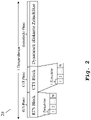
- FIG. 2 shows the data frame (20) according to the invention for a media access control (Medium Access Control abbreviated as MAC) based on a TDMA scheme for a communication network or radio network.
- MAC Media Access Control
- Said data frame or frame (20) is, for example, 1 second long. All fixed allocations of time slots, also called slots, are repeated on this frame basis.
- a frame contains a specific number of slots, with only one participant, ie one network node of the communication network, transmitting within a slot.
- the size of the slots depends on the desired or required data rate, but also on the type of communication network. Typical slot lengths are 1-10ms.
- the necessary guard intervals for the runtime equalization of the radio transmission must also be taken into account in the slot lengths. For aeronautical radio, such runtime differences are up to 1.34 ms, for example.
- the scheme (20) according to the invention is intended to reduce data collisions in a radio network and also to avoid problems such as the deafness problem.
- each network node knows the position of the other network nodes and can therefore align its antenna accordingly for both transmission and reception.
- a transmitting network node is also called a transmitter in the following
- a receiving network node is also called a receiver in the following.
- the data frame (20) contains a so-called RTS block, where RTS stands for Request To Send (in German: request to send).
- RTS stands for Request To Send (in German: request to send).
- both the RTS data packet information with the reservation requests of the respective network node to the desired recipient of the user data are preferably stored, as well as the RTS data packet information received from other network nodes with their reservation requests.
- the CTS block follows the RTS block, where CTS stands for Clear To Send.
- the nCTS data packet information is preferably also located within the CTS block.
- both the received CTS data packet information or nCTS data packet information of the other network nodes, which are to receive the user data are preferably in response to the reservation requests filed. But it is also the sent CTS data packet information or nCTS data packet information that responds to the Reservation requests from all other stations have been sent.
- each network node or transmitter can use RTS data packets to send reservation requests to one or more recipients in the RTS time slot reserved for it.
- the receivers use CTS or nCTS data packets to signal the respective transmitter whether they can receive information, whether the respective transmitter is interfering with reception from other transmitters and how much information they can receive.
- the RTS data packets which are transmitted by the sender preferably contain the size of the information which the sender would like to send to a receiver or which the sender would like to reserve for the respective receiver.
- the RTS data packets can also contain the number of time slots to be reserved in the receiver within a data frame, with multiple time slots within a time frame and multiple time slots in more than one data frame being able to be requested for a reservation.
- the recipients of the RTS data packets use CTS data packets to signal the respective transmitter which time slots within a data frame or also which time slots within several data frames can be reserved for reception.
- the TDMA-based MAC scheme according to the invention thus allows, through an RTS/CTS handshake, i.e. the sending of an RTS data packet and the receipt of a CTS data packet in response to the transmitted RTS data packet, to reserve several time slots within a data frame at the same time, or else that several time slots can be reserved simultaneously within several data frames.
- RTS/CTS handshake i.e. the sending of an RTS data packet and the receipt of a CTS data packet in response to the transmitted RTS data packet, to reserve several time slots within a data frame at the same time, or else that several time slots can be reserved simultaneously within several data frames.
- 2 are exemplary dynamic allocated time slots shown within a frame (20).
- CTS data packets that indicate that no reservation is possible are also referred to as not clear to send or nCTS data packets (in German: not ready to send).
- the transmitter Based on the responses, i.e. the CTS or nCTS data packets from all other recipients, the transmitter then selects those time slots in which it sends to a specific recipient.
- the sender can therefore also transmit data to recipients who have responded to a reservation request with an nCTS data packet. This happens, for example, when the data to be transmitted is marked with quality-of-service information.
- both the sender and the receiver can recognize quality-of-service data packets that are also transmitted with RTS and CTS data packets and give preference to correspondingly higher-priority data.
- each transmitter can signal at the start of transmission the time slots in which it is transmitting to a receiver. This allows each receiver to reuse unused time slots for a subsequent reservation.
- RTS/CTS cycle is only carried out at longer intervals in order to avoid an overhead.
- the RTS/CTS blocks or RTS/CTS phases can also be present several times within a data frame.
- each network node can determine whether any transmissions from other network nodes are interfering with its reception.
- network node B receives data from network node A.
- a network node C tries to start a transmission with a network node D by sending an RTS data packet.
- Such a transmission would disturb the reception of the network node B.
- Such a disturbance can occur when a receiving network node, called receiver for short, is in an ongoing transmission and another sending network node, called transmitter for short, wants to transmit data to it or to another receiver and the receiver receives this transmitter in the main lobe .
- the recipient concerned replies with an nCTS data packet and thus signals to the potential sender that data is currently being transmitted is not possible and thus prevents interference with its reception.
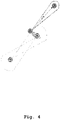
- FIG. 4 shows a possible malfunction of a receiver B, which receives data from a transmitter A and could be disturbed by sidelobe emissions from a transmitter C.
- the sending of an nCTS signal by the receiver B to the potential sender C prevents the interference of the reception at the receiver B.
- the reception of the network node B can also be disturbed by sidelobe reception, which is also caused by the sending of an nCTS signal of the network node B to the potential sender C can be prevented.
- a receiver affected by interference from sidelobe emissions generates a spatial zero and then uses CTS data packets, which are sent to the potential transmitter C, to signal that no interference is occurring and transmitter C thus establishes a connection with D can.
- the invention is not limited to the embodiments disclosed in the description.
Landscapes
- Engineering & Computer Science (AREA)
- Computer Networks & Wireless Communication (AREA)
- Signal Processing (AREA)
- Mobile Radio Communication Systems (AREA)
- Small-Scale Networks (AREA)
Claims (3)
- Procédé pour faire fonctionner un réseau de communication (10) constitué d'au moins deux nœuds de réseau (1, 2) pourvus chacun d'une antenne d'émission/de réception avec les étapes de procédé suivantes :- la génération d'une trame de données (20), dans laquelle des paquets de données sont définis, pour la communication avec au moins un autre nœud de réseau (1, 2),dans lequel au moins un bloc, qui attribue au moins un créneau temporel fixe à chaque nœud de réseau (1, 2), est affecté à la trame de données (20), et
dans lequel- un bloc demande pour émettre (RTS), qui affecte des créneaux temporels à chaque nœud de réseau pour des souhaits de réservation, est associé à la trame de données, et- un bloc prêt à émettre (CTS), qui confirme les souhaits de réservation reçus au moyen d'un paquet de données prêt à émettre (CTS) ou les rejette au moyen d'un paquet de données non prêt à émettre (nCTS), est affecté à la trame de données etdans lequel au moins un nœud de réseau (1, 2) envoie des paquets de données à un récepteur souhaité, même si le nœud de réseau concerné a obtenu un paquet de données nCTS,
dans lequel les données à émettre présentent une priorité élevée et les paquets de données correspondants sont pour cette raison caractérisés avec des informations de qualité de service. - Procédé selon la revendication 1,dans lequel des paquets de données RTS sont générés par un nœud de réseau (1, 2), qui comportent le nombre des créneaux temporels nécessaires et/ou la taille des informations à échanger et sont envoyés à au moins un nœud de réseau (1, 2) doté d'une adresse,en ce que le nœud de réseau (1, 2) doté d'une adresse génère un paquet de données CTS ou nCTS et le renvoie aux nœuds de réseau (1, 2), et en ce que,l'un des nœuds de réseau (1, 2) envoie ou non des données utiles sur la base des paquets de données CTS reçus.
- Procédé selon la revendication 1 ou 2,dans lequel un nœud de réseau (1) doté d'une adresse, qui communique déjà avec un autre nœud de réseau (2), rejette un souhait de réservation demandé au moyen d'un paquet de données nCTS, et/ouen ce qu'un nœud de réseau décide sur la base des retours de tous les nœuds de réseau s'il peut émettre à un nœud de réseau défini sans perturber d'autres nœuds de réseau.
Priority Applications (1)
| Application Number | Priority Date | Filing Date | Title |
|---|---|---|---|
| EP19190681.7A EP3582575B8 (fr) | 2017-11-22 | 2017-11-22 | Procédé à réservation dynamique de la capacité de transmission |
Applications Claiming Priority (2)
| Application Number | Priority Date | Filing Date | Title |
|---|---|---|---|
| EP19190681.7A EP3582575B8 (fr) | 2017-11-22 | 2017-11-22 | Procédé à réservation dynamique de la capacité de transmission |
| EP17202949.8A EP3490327B1 (fr) | 2017-11-22 | 2017-11-22 | Procédé de radio transmission à réservation dynamique de la capacité de transmission |
Related Parent Applications (2)
| Application Number | Title | Priority Date | Filing Date |
|---|---|---|---|
| EP17202949.8A Division-Into EP3490327B1 (fr) | 2017-11-22 | 2017-11-22 | Procédé de radio transmission à réservation dynamique de la capacité de transmission |
| EP17202949.8A Division EP3490327B1 (fr) | 2017-11-22 | 2017-11-22 | Procédé de radio transmission à réservation dynamique de la capacité de transmission |
Publications (3)
| Publication Number | Publication Date |
|---|---|
| EP3582575A1 EP3582575A1 (fr) | 2019-12-18 |
| EP3582575B1 true EP3582575B1 (fr) | 2022-07-27 |
| EP3582575B8 EP3582575B8 (fr) | 2022-08-31 |
Family
ID=60452420
Family Applications (2)
| Application Number | Title | Priority Date | Filing Date |
|---|---|---|---|
| EP17202949.8A Active EP3490327B1 (fr) | 2017-11-22 | 2017-11-22 | Procédé de radio transmission à réservation dynamique de la capacité de transmission |
| EP19190681.7A Active EP3582575B8 (fr) | 2017-11-22 | 2017-11-22 | Procédé à réservation dynamique de la capacité de transmission |
Family Applications Before (1)
| Application Number | Title | Priority Date | Filing Date |
|---|---|---|---|
| EP17202949.8A Active EP3490327B1 (fr) | 2017-11-22 | 2017-11-22 | Procédé de radio transmission à réservation dynamique de la capacité de transmission |
Country Status (1)
| Country | Link |
|---|---|
| EP (2) | EP3490327B1 (fr) |
Cited By (1)
| Publication number | Priority date | Publication date | Assignee | Title |
|---|---|---|---|---|
| US20240172282A1 (en) * | 2022-11-18 | 2024-05-23 | Rohde & Schwarz Gmbh & Co. Kg | Node for a radio communication network with dynamic reservation of transmission capacity, corresponding network, and method |
Family Cites Families (6)
| Publication number | Priority date | Publication date | Assignee | Title |
|---|---|---|---|---|
| EP1389884A1 (fr) * | 2002-08-13 | 2004-02-18 | Siemens Aktiengesellschaft | Méthode de fonctionnement d'un système de radio utilisant antennes directionnelles et station emittant et système de radio |
| JP4779438B2 (ja) * | 2004-05-31 | 2011-09-28 | パナソニック株式会社 | 無線通信方法および無線通信装置 |
| DE102006014308A1 (de) | 2006-03-10 | 2007-09-13 | Rohde & Schwarz Gmbh & Co. Kg | Verfahren zur Multi-Hop-Datenübertragung in einem ad-hoc-Netz mit versteckten Knoten |
| DE102007051605A1 (de) * | 2007-10-23 | 2009-04-30 | Siemens Ag | Funkkommunikationssystem, Koordinatorgerät und Kommunikationsendgerät |
| EP2209346A3 (fr) * | 2009-01-19 | 2011-11-23 | Siemens Aktiengesellschaft | Procédé pour la transmission de données dans un réseau local |
| US9763267B2 (en) * | 2015-08-04 | 2017-09-12 | Qualcomm Incorporated | Techniques for using collision avoidance signaling for co-existence with unlicensed networks |
-
2017
- 2017-11-22 EP EP17202949.8A patent/EP3490327B1/fr active Active
- 2017-11-22 EP EP19190681.7A patent/EP3582575B8/fr active Active
Cited By (1)
| Publication number | Priority date | Publication date | Assignee | Title |
|---|---|---|---|---|
| US20240172282A1 (en) * | 2022-11-18 | 2024-05-23 | Rohde & Schwarz Gmbh & Co. Kg | Node for a radio communication network with dynamic reservation of transmission capacity, corresponding network, and method |
Also Published As
| Publication number | Publication date |
|---|---|
| EP3490327B1 (fr) | 2019-10-16 |
| EP3490327A1 (fr) | 2019-05-29 |
| EP3582575A1 (fr) | 2019-12-18 |
| EP3582575B8 (fr) | 2022-08-31 |
Similar Documents
| Publication | Publication Date | Title |
|---|---|---|
| DE60030751T2 (de) | Verfahren und vorrichtung zur koordinierung des zugriffs auf gemeinsam genutzte paralele datenkanäle | |
| DE10259832B4 (de) | Verfahren und Einrichtung zur Herstellung von Kommunikationsverbindungen zwischen mobilen Kommunikationssystemen | |
| DE69735849T2 (de) | Verfahren und Einrichtung zur Kanalzuweisung in einem Funkkommunikationssystem | |
| DE69830601T2 (de) | Zuteilung von datenübertragungsmitteln zwischen verschiededen netzwerken | |
| EP1530855B1 (fr) | Procede d'attribution de ressources radio dans un systeme de communication radio auto-organise | |
| DE60318322T2 (de) | Verfahren zur durchführung einer drahtlosen vermittlung | |
| DE69938350T2 (de) | Verteilter verbindungsmechanismus für ein vhf-netzwerk | |
| EP1678887A1 (fr) | Procede, station radio et produit programme informatique pour l'acces a des ressources radio dans un systeme de communication radio ad hoc | |
| DE112012005907T5 (de) | Kommunikationssystem, Kommunikationsendgerät und Kommunikationsverfahren | |
| EP1849324B1 (fr) | Affectation dynamique de ressources dans un systeme de communication a porteuses multiples | |
| EP1678890B1 (fr) | Procede et dispositif pour determiner des chemins et attribuer des ressources radio aux chemins determines dans un systeme de communication radio | |
| EP1540973B1 (fr) | Procede et systeme de radiocommunication permettant la transmission d'informations utiles, en tant que service, a plusieurs stations d'abonne | |
| DE60211488T2 (de) | System und verfahren zur sendeplanung unter verwendung von netzwerkmitgliederschaftsinformationen und umgebungsinformationen | |
| DE102004022145A1 (de) | Verfahren zur Signalübertragung in einem Funk-Kommunikationssystem | |
| EP3582575B1 (fr) | Procédé à réservation dynamique de la capacité de transmission | |
| DE10344345B3 (de) | Verfahren zur Kommunikation in einem Adhoc-Funkkommunikationssystem | |
| DE102004024647B4 (de) | Verfahren und Funkstation zur Regulierung von Zugriffsraten in einem Funkkommunikationssystem | |
| DE19536379A1 (de) | Verfahren, Protokolle und Einrichtungen für den Betrieb kanal- und paketvermittelnder Mobilfunknetze mit teilweiser oder vollständiger Vermaschung der Stationen, insbesondere ATM basierter Zugangsnetze | |
| EP2269416B1 (fr) | Noeud de réseau et procédé de transmission de données dans un réseau sans fil à bonds multiples | |
| DE102004019106B4 (de) | Verfahren zur mehrfachen Verwendung einer zellularen Funkschnittstelle | |
| EP3682556A1 (fr) | Émetteur-récepteur double comprenant un premier et un deuxième émetteur-récepteur | |
| DE102008034271A1 (de) | Verfahren zur Steuerung der drahtlosen Kommunikation zwischen mobilen Teilnehmern und Teilnehmerfunkübertragungseinrichtung hierzu | |
| EP1173996A1 (fr) | Rach pour grosses cellules | |
| DE10200119B4 (de) | Kommunikationssystem und Kommunikationsverfahren für die Fahrzeug-zu-Fahrzeug Kommunikation | |
| DE10340814B4 (de) | Verfahren zum Betreiben eines Funkkommunikationssystems mit einem Adhoc-Modus |
Legal Events
| Date | Code | Title | Description |
|---|---|---|---|
| PUAI | Public reference made under article 153(3) epc to a published international application that has entered the european phase |
Free format text: ORIGINAL CODE: 0009012 |
|
| STAA | Information on the status of an ep patent application or granted ep patent |
Free format text: STATUS: THE APPLICATION HAS BEEN PUBLISHED |
|
| AC | Divisional application: reference to earlier application |
Ref document number: 3490327 Country of ref document: EP Kind code of ref document: P |
|
| AK | Designated contracting states |
Kind code of ref document: A1 Designated state(s): AL AT BE BG CH CY CZ DE DK EE ES FI FR GB GR HR HU IE IS IT LI LT LU LV MC MK MT NL NO PL PT RO RS SE SI SK SM TR |
|
| STAA | Information on the status of an ep patent application or granted ep patent |
Free format text: STATUS: REQUEST FOR EXAMINATION WAS MADE |
|
| 17P | Request for examination filed |
Effective date: 20200428 |
|
| RBV | Designated contracting states (corrected) |
Designated state(s): AL AT BE BG CH CY CZ DE DK EE ES FI FR GB GR HR HU IE IS IT LI LT LU LV MC MK MT NL NO PL PT RO RS SE SI SK SM TR |
|
| STAA | Information on the status of an ep patent application or granted ep patent |
Free format text: STATUS: EXAMINATION IS IN PROGRESS |
|
| 17Q | First examination report despatched |
Effective date: 20200923 |
|
| GRAP | Despatch of communication of intention to grant a patent |
Free format text: ORIGINAL CODE: EPIDOSNIGR1 |
|
| STAA | Information on the status of an ep patent application or granted ep patent |
Free format text: STATUS: GRANT OF PATENT IS INTENDED |
|
| INTG | Intention to grant announced |
Effective date: 20220426 |
|
| RIC1 | Information provided on ipc code assigned before grant |
Ipc: H04W 84/18 20090101ALN20220408BHEP Ipc: H04W 74/08 20090101AFI20220408BHEP |
|
| GRAS | Grant fee paid |
Free format text: ORIGINAL CODE: EPIDOSNIGR3 |
|
| GRAA | (expected) grant |
Free format text: ORIGINAL CODE: 0009210 |
|
| STAA | Information on the status of an ep patent application or granted ep patent |
Free format text: STATUS: THE PATENT HAS BEEN GRANTED |
|
| AC | Divisional application: reference to earlier application |
Ref document number: 3490327 Country of ref document: EP Kind code of ref document: P |
|
| AK | Designated contracting states |
Kind code of ref document: B1 Designated state(s): AL AT BE BG CH CY CZ DE DK EE ES FI FR GB GR HR HU IE IS IT LI LT LU LV MC MK MT NL NO PL PT RO RS SE SI SK SM TR |
|
| RBV | Designated contracting states (corrected) |
Designated state(s): AL AT BE BG CY CZ DE DK EE ES FI FR GB GR HR HU IS IT LT LU LV MC MK MT NL NO PL PT RO RS SE SI SK SM TR |
|
| REG | Reference to a national code |
Ref country code: DE Ref legal event code: R096 Ref document number: 502017013541 Country of ref document: DE |
|
| REG | Reference to a national code |
Ref country code: AT Ref legal event code: REF Ref document number: 1507968 Country of ref document: AT Kind code of ref document: T Effective date: 20220815 |
|
| REG | Reference to a national code |
Ref country code: IE Ref legal event code: FG4D Free format text: LANGUAGE OF EP DOCUMENT: GERMAN |
|
| REG | Reference to a national code |
Ref country code: LT Ref legal event code: MG9D |
|
| REG | Reference to a national code |
Ref country code: NL Ref legal event code: MP Effective date: 20220727 |
|
| PG25 | Lapsed in a contracting state [announced via postgrant information from national office to epo] |
Ref country code: SE Free format text: LAPSE BECAUSE OF FAILURE TO SUBMIT A TRANSLATION OF THE DESCRIPTION OR TO PAY THE FEE WITHIN THE PRESCRIBED TIME-LIMIT Effective date: 20220727 Ref country code: RS Free format text: LAPSE BECAUSE OF FAILURE TO SUBMIT A TRANSLATION OF THE DESCRIPTION OR TO PAY THE FEE WITHIN THE PRESCRIBED TIME-LIMIT Effective date: 20220727 Ref country code: PT Free format text: LAPSE BECAUSE OF FAILURE TO SUBMIT A TRANSLATION OF THE DESCRIPTION OR TO PAY THE FEE WITHIN THE PRESCRIBED TIME-LIMIT Effective date: 20221128 Ref country code: NO Free format text: LAPSE BECAUSE OF FAILURE TO SUBMIT A TRANSLATION OF THE DESCRIPTION OR TO PAY THE FEE WITHIN THE PRESCRIBED TIME-LIMIT Effective date: 20221027 Ref country code: NL Free format text: LAPSE BECAUSE OF FAILURE TO SUBMIT A TRANSLATION OF THE DESCRIPTION OR TO PAY THE FEE WITHIN THE PRESCRIBED TIME-LIMIT Effective date: 20220727 Ref country code: LV Free format text: LAPSE BECAUSE OF FAILURE TO SUBMIT A TRANSLATION OF THE DESCRIPTION OR TO PAY THE FEE WITHIN THE PRESCRIBED TIME-LIMIT Effective date: 20220727 Ref country code: LT Free format text: LAPSE BECAUSE OF FAILURE TO SUBMIT A TRANSLATION OF THE DESCRIPTION OR TO PAY THE FEE WITHIN THE PRESCRIBED TIME-LIMIT Effective date: 20220727 Ref country code: FI Free format text: LAPSE BECAUSE OF FAILURE TO SUBMIT A TRANSLATION OF THE DESCRIPTION OR TO PAY THE FEE WITHIN THE PRESCRIBED TIME-LIMIT Effective date: 20220727 Ref country code: ES Free format text: LAPSE BECAUSE OF FAILURE TO SUBMIT A TRANSLATION OF THE DESCRIPTION OR TO PAY THE FEE WITHIN THE PRESCRIBED TIME-LIMIT Effective date: 20220727 |
|
| PG25 | Lapsed in a contracting state [announced via postgrant information from national office to epo] |
Ref country code: PL Free format text: LAPSE BECAUSE OF FAILURE TO SUBMIT A TRANSLATION OF THE DESCRIPTION OR TO PAY THE FEE WITHIN THE PRESCRIBED TIME-LIMIT Effective date: 20220727 Ref country code: IS Free format text: LAPSE BECAUSE OF FAILURE TO SUBMIT A TRANSLATION OF THE DESCRIPTION OR TO PAY THE FEE WITHIN THE PRESCRIBED TIME-LIMIT Effective date: 20221127 Ref country code: HR Free format text: LAPSE BECAUSE OF FAILURE TO SUBMIT A TRANSLATION OF THE DESCRIPTION OR TO PAY THE FEE WITHIN THE PRESCRIBED TIME-LIMIT Effective date: 20220727 Ref country code: GR Free format text: LAPSE BECAUSE OF FAILURE TO SUBMIT A TRANSLATION OF THE DESCRIPTION OR TO PAY THE FEE WITHIN THE PRESCRIBED TIME-LIMIT Effective date: 20221028 |
|
| PG25 | Lapsed in a contracting state [announced via postgrant information from national office to epo] |
Ref country code: SM Free format text: LAPSE BECAUSE OF FAILURE TO SUBMIT A TRANSLATION OF THE DESCRIPTION OR TO PAY THE FEE WITHIN THE PRESCRIBED TIME-LIMIT Effective date: 20220727 Ref country code: RO Free format text: LAPSE BECAUSE OF FAILURE TO SUBMIT A TRANSLATION OF THE DESCRIPTION OR TO PAY THE FEE WITHIN THE PRESCRIBED TIME-LIMIT Effective date: 20220727 Ref country code: DK Free format text: LAPSE BECAUSE OF FAILURE TO SUBMIT A TRANSLATION OF THE DESCRIPTION OR TO PAY THE FEE WITHIN THE PRESCRIBED TIME-LIMIT Effective date: 20220727 Ref country code: CZ Free format text: LAPSE BECAUSE OF FAILURE TO SUBMIT A TRANSLATION OF THE DESCRIPTION OR TO PAY THE FEE WITHIN THE PRESCRIBED TIME-LIMIT Effective date: 20220727 |
|
| REG | Reference to a national code |
Ref country code: DE Ref legal event code: R097 Ref document number: 502017013541 Country of ref document: DE |
|
| PG25 | Lapsed in a contracting state [announced via postgrant information from national office to epo] |
Ref country code: SK Free format text: LAPSE BECAUSE OF FAILURE TO SUBMIT A TRANSLATION OF THE DESCRIPTION OR TO PAY THE FEE WITHIN THE PRESCRIBED TIME-LIMIT Effective date: 20220727 Ref country code: EE Free format text: LAPSE BECAUSE OF FAILURE TO SUBMIT A TRANSLATION OF THE DESCRIPTION OR TO PAY THE FEE WITHIN THE PRESCRIBED TIME-LIMIT Effective date: 20220727 |
|
| PLBE | No opposition filed within time limit |
Free format text: ORIGINAL CODE: 0009261 |
|
| STAA | Information on the status of an ep patent application or granted ep patent |
Free format text: STATUS: NO OPPOSITION FILED WITHIN TIME LIMIT |
|
| PG25 | Lapsed in a contracting state [announced via postgrant information from national office to epo] |
Ref country code: MC Free format text: LAPSE BECAUSE OF FAILURE TO SUBMIT A TRANSLATION OF THE DESCRIPTION OR TO PAY THE FEE WITHIN THE PRESCRIBED TIME-LIMIT Effective date: 20220727 Ref country code: AL Free format text: LAPSE BECAUSE OF FAILURE TO SUBMIT A TRANSLATION OF THE DESCRIPTION OR TO PAY THE FEE WITHIN THE PRESCRIBED TIME-LIMIT Effective date: 20220727 |
|
| 26N | No opposition filed |
Effective date: 20230502 |
|
| P01 | Opt-out of the competence of the unified patent court (upc) registered |
Effective date: 20230525 |
|
| REG | Reference to a national code |
Ref country code: BE Ref legal event code: MM Effective date: 20221130 |
|
| PG25 | Lapsed in a contracting state [announced via postgrant information from national office to epo] |
Ref country code: SI Free format text: LAPSE BECAUSE OF FAILURE TO SUBMIT A TRANSLATION OF THE DESCRIPTION OR TO PAY THE FEE WITHIN THE PRESCRIBED TIME-LIMIT Effective date: 20220727 Ref country code: LU Free format text: LAPSE BECAUSE OF NON-PAYMENT OF DUE FEES Effective date: 20221122 |
|
| PG25 | Lapsed in a contracting state [announced via postgrant information from national office to epo] |
Ref country code: BE Free format text: LAPSE BECAUSE OF NON-PAYMENT OF DUE FEES Effective date: 20221130 |
|
| REG | Reference to a national code |
Ref country code: AT Ref legal event code: MM01 Ref document number: 1507968 Country of ref document: AT Kind code of ref document: T Effective date: 20221122 |
|
| PG25 | Lapsed in a contracting state [announced via postgrant information from national office to epo] |
Ref country code: AT Free format text: LAPSE BECAUSE OF NON-PAYMENT OF DUE FEES Effective date: 20221122 |
|
| PG25 | Lapsed in a contracting state [announced via postgrant information from national office to epo] |
Ref country code: HU Free format text: LAPSE BECAUSE OF FAILURE TO SUBMIT A TRANSLATION OF THE DESCRIPTION OR TO PAY THE FEE WITHIN THE PRESCRIBED TIME-LIMIT; INVALID AB INITIO Effective date: 20171122 |
|
| PG25 | Lapsed in a contracting state [announced via postgrant information from national office to epo] |
Ref country code: CY Free format text: LAPSE BECAUSE OF FAILURE TO SUBMIT A TRANSLATION OF THE DESCRIPTION OR TO PAY THE FEE WITHIN THE PRESCRIBED TIME-LIMIT Effective date: 20220727 |
|
| PG25 | Lapsed in a contracting state [announced via postgrant information from national office to epo] |
Ref country code: MK Free format text: LAPSE BECAUSE OF FAILURE TO SUBMIT A TRANSLATION OF THE DESCRIPTION OR TO PAY THE FEE WITHIN THE PRESCRIBED TIME-LIMIT Effective date: 20220727 Ref country code: IT Free format text: LAPSE BECAUSE OF FAILURE TO SUBMIT A TRANSLATION OF THE DESCRIPTION OR TO PAY THE FEE WITHIN THE PRESCRIBED TIME-LIMIT Effective date: 20220727 |
|
| PG25 | Lapsed in a contracting state [announced via postgrant information from national office to epo] |
Ref country code: BG Free format text: LAPSE BECAUSE OF FAILURE TO SUBMIT A TRANSLATION OF THE DESCRIPTION OR TO PAY THE FEE WITHIN THE PRESCRIBED TIME-LIMIT Effective date: 20220727 |
|
| PG25 | Lapsed in a contracting state [announced via postgrant information from national office to epo] |
Ref country code: MT Free format text: LAPSE BECAUSE OF FAILURE TO SUBMIT A TRANSLATION OF THE DESCRIPTION OR TO PAY THE FEE WITHIN THE PRESCRIBED TIME-LIMIT Effective date: 20220727 |
|
| PG25 | Lapsed in a contracting state [announced via postgrant information from national office to epo] |
Ref country code: TR Free format text: LAPSE BECAUSE OF FAILURE TO SUBMIT A TRANSLATION OF THE DESCRIPTION OR TO PAY THE FEE WITHIN THE PRESCRIBED TIME-LIMIT Effective date: 20220727 |
|
| PGFP | Annual fee paid to national office [announced via postgrant information from national office to epo] |
Ref country code: DE Payment date: 20251118 Year of fee payment: 9 |
|
| PGFP | Annual fee paid to national office [announced via postgrant information from national office to epo] |
Ref country code: GB Payment date: 20251120 Year of fee payment: 9 |
|
| PGFP | Annual fee paid to national office [announced via postgrant information from national office to epo] |
Ref country code: FR Payment date: 20251120 Year of fee payment: 9 |