EP3584977A1 - Verfahren und vorrichtung zur informationsübertragung - Google Patents
Verfahren und vorrichtung zur informationsübertragung Download PDFInfo
- Publication number
- EP3584977A1 EP3584977A1 EP17897527.2A EP17897527A EP3584977A1 EP 3584977 A1 EP3584977 A1 EP 3584977A1 EP 17897527 A EP17897527 A EP 17897527A EP 3584977 A1 EP3584977 A1 EP 3584977A1
- Authority
- EP
- European Patent Office
- Prior art keywords
- code block
- code
- transport block
- information
- scheduled transport
- Prior art date
- Legal status (The legal status is an assumption and is not a legal conclusion. Google has not performed a legal analysis and makes no representation as to the accuracy of the status listed.)
- Granted
Links
Images



Classifications
-
- H—ELECTRICITY
- H04—ELECTRIC COMMUNICATION TECHNIQUE
- H04L—TRANSMISSION OF DIGITAL INFORMATION, e.g. TELEGRAPHIC COMMUNICATION
- H04L1/00—Arrangements for detecting or preventing errors in the information received
- H04L1/12—Arrangements for detecting or preventing errors in the information received by using return channel
- H04L1/16—Arrangements for detecting or preventing errors in the information received by using return channel in which the return channel carries supervisory signals, e.g. repetition request signals
- H04L1/18—Automatic repetition systems, e.g. Van Duuren systems
- H04L1/1812—Hybrid protocols; Hybrid automatic repeat request [HARQ]
-
- H—ELECTRICITY
- H04—ELECTRIC COMMUNICATION TECHNIQUE
- H04L—TRANSMISSION OF DIGITAL INFORMATION, e.g. TELEGRAPHIC COMMUNICATION
- H04L1/00—Arrangements for detecting or preventing errors in the information received
- H04L1/004—Arrangements for detecting or preventing errors in the information received by using forward error control
- H04L1/0056—Systems characterized by the type of code used
- H04L1/0057—Block codes
-
- H—ELECTRICITY
- H04—ELECTRIC COMMUNICATION TECHNIQUE
- H04L—TRANSMISSION OF DIGITAL INFORMATION, e.g. TELEGRAPHIC COMMUNICATION
- H04L1/00—Arrangements for detecting or preventing errors in the information received
- H04L1/12—Arrangements for detecting or preventing errors in the information received by using return channel
- H04L1/16—Arrangements for detecting or preventing errors in the information received by using return channel in which the return channel carries supervisory signals, e.g. repetition request signals
- H04L1/1607—Details of the supervisory signal
- H04L1/1621—Group acknowledgement, i.e. the acknowledgement message defining a range of identifiers, e.g. of sequence numbers
-
- H—ELECTRICITY
- H04—ELECTRIC COMMUNICATION TECHNIQUE
- H04L—TRANSMISSION OF DIGITAL INFORMATION, e.g. TELEGRAPHIC COMMUNICATION
- H04L1/00—Arrangements for detecting or preventing errors in the information received
- H04L1/12—Arrangements for detecting or preventing errors in the information received by using return channel
- H04L1/16—Arrangements for detecting or preventing errors in the information received by using return channel in which the return channel carries supervisory signals, e.g. repetition request signals
- H04L1/18—Automatic repetition systems, e.g. Van Duuren systems
- H04L1/1867—Arrangements specially adapted for the transmitter end
- H04L1/1887—Scheduling and prioritising arrangements
-
- H—ELECTRICITY
- H04—ELECTRIC COMMUNICATION TECHNIQUE
- H04L—TRANSMISSION OF DIGITAL INFORMATION, e.g. TELEGRAPHIC COMMUNICATION
- H04L1/00—Arrangements for detecting or preventing errors in the information received
- H04L1/12—Arrangements for detecting or preventing errors in the information received by using return channel
- H04L1/16—Arrangements for detecting or preventing errors in the information received by using return channel in which the return channel carries supervisory signals, e.g. repetition request signals
- H04L1/18—Automatic repetition systems, e.g. Van Duuren systems
- H04L1/1867—Arrangements specially adapted for the transmitter end
- H04L1/1896—ARQ related signaling
-
- H—ELECTRICITY
- H04—ELECTRIC COMMUNICATION TECHNIQUE
- H04L—TRANSMISSION OF DIGITAL INFORMATION, e.g. TELEGRAPHIC COMMUNICATION
- H04L5/00—Arrangements affording multiple use of the transmission path
- H04L5/003—Arrangements for allocating sub-channels of the transmission path
- H04L5/0053—Allocation of signalling, i.e. of overhead other than pilot signals
- H04L5/0055—Physical resource allocation for ACK/NACK
-
- H—ELECTRICITY
- H04—ELECTRIC COMMUNICATION TECHNIQUE
- H04W—WIRELESS COMMUNICATION NETWORKS
- H04W72/00—Local resource management
- H04W72/20—Control channels or signalling for resource management
- H04W72/23—Control channels or signalling for resource management in the downlink direction of a wireless link, i.e. towards a terminal
-
- H—ELECTRICITY
- H04—ELECTRIC COMMUNICATION TECHNIQUE
- H04W—WIRELESS COMMUNICATION NETWORKS
- H04W72/00—Local resource management
- H04W72/50—Allocation or scheduling criteria for wireless resources
- H04W72/535—Allocation or scheduling criteria for wireless resources based on resource usage policies
-
- H—ELECTRICITY
- H04—ELECTRIC COMMUNICATION TECHNIQUE
- H04W—WIRELESS COMMUNICATION NETWORKS
- H04W88/00—Devices specially adapted for wireless communication networks, e.g. terminals, base stations or access point devices
- H04W88/02—Terminal devices
Definitions
- Embodiments of the present disclosure relate to the field of communication, and in particular, to a method and a device for transmitting information.
- the receiving device sends Acknowledgement (ACK)/Negative Acknowledgment (NACK) feedback information to the transmitting device for different code blocks in a transport block.
- the transmitting device retransmits the code block that failed in decoding according to the feedback information.
- the present application provides a method and a device for transmitting information, which can determine an appropriate amount of feedback information, reduce control signaling overhead, improve control signaling demodulation performance, and improve system efficiency.
- a method for transmitting information including: determining, by a terminal device, first quantity information, wherein the first quantity information is information about a number of code block groups included in a transport block, and each code block group includes at least one code block; determining, by the terminal device, second quantity information, wherein the second quantity information is information about a total number of bits included in a scheduled transport block; and determining, by the terminal device, information about code block groups included in the scheduled transport block according to the first quantity information and the second quantity information.
- the first quantity information is used to indicate a maximum number of code block groups of a transport block; or the first quantity information is used to indicate a number of the code block groups included in the scheduled transport block.
- the second quantity information is used to indicate a total number of bits included in the scheduled transport block; or the second quantity information is used to indicate a number of bits included in each code block group in the scheduled transport block.
- the information about code block groups included in the scheduled transport block is a number of the code block groups included in the scheduled transport block; or, the information about the code block groups included in the scheduled transport block is a number of the code block groups included in the scheduled transport block and a number of code blocks included in each code block group.
- the first quantity information is used to indicate a maximum number of code block groups of a transport block, and the information about the code block groups included in the scheduled transport block is the number of the code block groups included in the scheduled transport block; and determining, by the terminal device, information about the code block groups included in the scheduled transport block, according to the first quantity information and the second quantity information, including: determining, by the terminal device, the number of the code blocks included in the scheduled transport block according to the second quantity information; and determining, by the terminal device, the number of the code block groups included in the scheduled transport block according to the maximum number of code block groups of a transport block and the number of the code blocks included in the transport block.
- the terminal device determines a value resulted from a rounding up operation on a ration of the total number of bits included in the scheduled transport block and a maximum number of the bits of a code block group, as the number of the code blocks included in the scheduled transport block.
- determining, by the terminal device, the number of the code block groups included in the scheduled transport block according to the maximum number of code block groups of a transport block and the number of the code blocks included in the transport block includes: determining, by the terminal device, a smaller one of the maximum number of code block groups of a transport block and the number of the code blocks included in the scheduled transport block as the number of the code block groups included in the scheduled transport block.
- the method further includes: determining, by the terminal device, the number of code blocks included in each code block group according to the number of the code block groups included in the scheduled transport block and the number of code blocks included in the scheduled transport block.
- determining, by the terminal device, the number of code blocks included in each code block group in the scheduled transport block according to the second quantity information includes: determining, by the terminal device, the number of code blocks included in each code block group according to the second quantity information and the maximum number of bits of a code block.
- each block group when each of the code block groups includes a plurality of code blocks, each block group consists of the plurality of code blocks with consecutive indices.
- the terminal device supports a plurality of transmission configurations, wherein the transmission configuration includes one of the following transmission configurations: a service type configuration, a transmission time interval configuration, and a basis parameter set configuration, and the method further includes: determining, by the terminal device, a maximum number of bits of a code block according to the current transmission configuration.
- information carried by each code block group corresponds to one common cyclic redundancy check CRC information
- information carried by each code block included in each code block group corresponds to one proprietary CRC information
- the method when the scheduled transport block is a transport block for downlink transmission, the method further includes: determining, by the terminal device, a code block group that failed in transmission from the code block groups included in the scheduled transport block; and determining, by the terminal device, feedback information according to the code block group failed in transmission.
- the feedback information is NACK information of a code block group for indicating a transmission failure.
- determining, by the terminal device, a code block group that failed in transmission from the code block groups included in the scheduled transport block includes: when the terminal device determines that there is a code block failed in decoding in a first code block group according to the proprietary CRC information corresponding to the information carried by each code block in the first code block group, determining, by the terminal device, that the first code block group is a code block group failed in transmission, wherein the first code block group is any code block group of the code block groups included in the scheduled transport block; or when the terminal device determines that the first code block group fails in the check according to the common CRC information corresponding to the information carried by the first code block group, determining, by the terminal device, that the first code block group is a code block group failed in transmission, wherein the first code block group is any code block group of the code block groups included in the scheduled transport block.
- the method further includes: receiving, by the terminal device, scheduling signaling, wherein the scheduling signaling is used to indicate a part of the code block groups included in the scheduled transport block has to be retransmitted, and retransmitting, by the terminal device, the part of the code block groups.
- the terminal device only needs to retransmit the code block group indicated by the scheduling signaling, thereby improving the system efficiency.
- a method for transmitting information including: determining, by a network device, first quantity information, wherein the first quantity information is information about a number of code block groups included in a transport block, and each code block group includes at least a code block; sending, by the network device, second quantity information to the terminal device, wherein the second quantity information is information about a total number of bits included in a scheduled transport block; and determining, by the network device, information about the code block groups included in the scheduled transport block according to the first quantity information and the second quantity information.
- the network device determines information about the code block groups included in the scheduled transport block, according to information about a number of code block groups included in a transport block, and information about a total number of bits included in a scheduled transport block. And the network device sends second quantity information to the terminal device, such that the terminal device can determine information about the code block groups included in the scheduled transport block according to the determined first quantity information and the received second quantity information. Thereby, the terminal device or the network device can determine the number of the code block groups included in the scheduled transport block according to the information about the code block groups included in the scheduled transport block. Then, when feedback is performed for the code block groups, an appropriate amount of feedback information can be determined according to the number of the code block groups.
- the control signaling overhead can be reduced, the demodulation performance of the control signaling can be improved, and the system efficiency can be improved.
- the information about the code block groups included in the scheduled transport block is a number of the code block groups included in the scheduled transport block; or, the information about the code block groups included in the scheduled transport block is the number of code block groups included in the scheduled transport block and a number of code blocks included in each code block group.
- the first quantity information is used to indicate a maximum number of code block groups of a transport block
- the information about the code block groups included by the scheduled transport block is the number of the code block groups included in the scheduled transport block
- determining, by the network device, information about the code block groups included in the scheduled transport block according to the first quantity information and the second quantity information includes: determining, by the network device, the number of the code blocks included in the scheduled transport block according to the second quantity information; and determining, by the network device, the number of the code block groups included in the scheduled transport block according to the maximum number of code block groups of a transport block and the number of the code blocks included in the transport block.
- determining, by the network device, the number of the code block groups included in the scheduled transport block according to the maximum number of code block groups of a transport block and the number of the code blocks included in the transport block includes: determining, by the network device, a smaller value of the maximum number of code block groups of a transport block and the number of the code blocks included in the transport block as the number of the code block groups included in the scheduled transport block.
- the method further includes: receiving, by the network device, feedback information sent by the terminal device; and determining, by the network device, a code block group failed in transmission from the code block groups included in the scheduled transport block according to the feedback information.
- the method further includes: sending, by the network device, scheduling signaling, wherein the scheduling signaling is used to indicate that a part of the code block groups included in the scheduled transport block has to be retransmitted.
- a terminal device for performing the method in the first aspect or any possible implementations of the first aspect.
- the terminal device includes functional modules for performing the method in the first aspect or any possible implementations of the first aspect.
- a network device for performing the method in the second aspect or any possible implementations of the second aspect.
- the network device includes functional modules for performing the method in the second aspect or any possible implementations of the second aspect.
- a terminal device including a processor, a memory, and a transceiver.
- the processor, the memory, and the transceiver communicate with each other through an internal connection path, for transmitting control and/or data signals, such that the terminal device performs the method in the first aspect or any possible implementations of the first aspect.
- a network device including a processor, a memory, and a transceiver.
- the processor, the memory, and the transceiver communicate with each other through an internal connection path, for transmitting control and/or data signals, such that the network device performs the method in the second aspect or any possible implementations of the second aspect.
- a computer readable medium for storing a computer program, the computer program including instructions for performing the method in the first aspect or any possible implementations of the first aspect.
- a computer readable medium for storing a computer program, the computer program including instructions for performing the method in the second aspect or any possible implementations of the second aspect.
- GSM Global System of Mobile communication
- CDMA Code Division Multiple Access
- WCDMA Wideband Code Division Multiple Access
- GPRS General Packet Radio Service
- LTE Long Term Evolution
- FDD Frequency Division Duplex
- TDD Time Division Duplex
- UMTS Universal Mobile Telecommunication System
- WiMAX Worldwide Interoperability for Microwave Access
- the terminal device may include, but is not limited to, a mobile station (MS), a mobile terminal, a mobile telephone, a user equipment (UE), a handset and a portable device, a vehicle, etc.
- the terminal device can communicate with one or more core networks via a Radio Access Network (RAN).
- RAN Radio Access Network
- the terminal device can be a mobile phone (or Known as a "cellular" telephone), a computer with wireless communication capabilities, etc.
- the terminal devices can also be a portable, pocket-sized, handheld, computer-integrated or in-vehicle mobile device.
- the network device involved in the embodiments of the present application is a device deployed in a radio access network to provide a wireless communication function for a terminal device.
- the network device may be a base station, and the base station may include various forms of a macro base station, a micro base station, a relay station, an access point, and the like.
- the names of devices with base station functionality may vary. For example, in an LTE network, it is called an Evolved NodeB (eNB or eNodeB), and in a 3rd Generation (3G) network, it is called a Node B, and so on.
- eNB Evolved NodeB
- 3G 3rd Generation
- the uplink transmission refers to a process in which the terminal device sends information to the network device
- the downlink transmission refers to a process in which the network device sends information to the terminal device
- FIG. 1 illustrates a method for transmitting information according to an embodiment of the present application. As shown in FIG. 1 , the method 100 includes the following steps.
- the terminal device determines first quantity information, wherein the first quantity information is information about a number of code block groups included in a transport block, and each code block group includes at least one code block.
- the terminal device determines second quantity information, wherein the second quantity information is information about a total number of bits included in a scheduled transport block.
- the terminal device determines, according to the first quantity information and the second quantity information, information about the code block groups included in the scheduled transport block.
- the terminal device determines information about the code block groups included in the scheduled transport block, according to information about a number of code block groups included in a transport block, and information about a total number of bits included in a scheduled transport block. Thereby, the terminal device can determine the number of the code block groups included in the scheduled transport block according to the information about the code block groups included in the scheduled transport block. Then, when feedback is performed for the code block groups, an appropriate amount of feedback information can be determined according to the number of the code block groups.
- the control signaling overhead can be reduced, the demodulation performance of the control signaling can be improved, and the system efficiency can be improved.
- the first quantity information is used to indicate a maximum number of code block groups of a transport block.
- the first quantity information is used to indicate a maximum number of code block groups that a transport block can be divided into.
- the terminal device can receive high layer signaling sent by the network device, and determine the first quantity information according to the high layer signaling.
- the maximum number of code block groups of a transport block can be previously agreed in the protocol.
- the first quantity information is used to indicate the number of the code block groups included in the scheduled transport block.
- the first quantity information is used to indicate the number of code block groups that the scheduled transport block is divided into.
- the terminal device can receive downlink control signaling sent by the network device, and determine the first quantity information according to the downlink control signaling.
- the second quantity information is used to indicate the total number of bits included in the scheduled transport block, or the second quantity information is used to indicate the number of bits included in each code block group in the scheduled transport block.
- the terminal device can receive signaling sent by the network device, and determine the second amount of information according to the received signaling.
- the information about the code block groups included in the scheduled transport block is the number of the code block groups included in the scheduled transport block.
- the information about the code block groups included in the scheduled transport block is the number of the code block groups included in the scheduled transport block and the number of the code blocks included in each code block group.
- min() represents an operation of taking a smaller value
- A represents the maximum number of code block groups of a transport block
- N num_CB represents the number of code blocks included in the scheduled transport block.
- the value of N num_CB can be indicated by the network device to the terminal device through signaling, and the value of N num_CB can also be determined by the terminal device according to the second quantity information.
- the terminal device determines the number of the code block groups included in the scheduled transport block is 10. Assuming that the maximum number of code block groups of a transport block is 10, and the number of code blocks that the scheduled transport block includes is 8, the terminal device determines that the number of code block groups included in the scheduled transport block is 8.
- ⁇ ⁇ represents an up-rounding operation
- N TBS represents the total number of bits included in the scheduled transport block
- N CB_ max represents the maximum number of bits of a code block.
- the value of N CB_ max in the formula (2) can be agreed in the protocol or configured by the network device.
- the terminal device needs to determine the value of N CB_ max according to the current transmission configuration.
- the terminal device supports different service types (for example, Enhanced Mobile Broadband (eMBB), Ultra Reliable & Low Latency Communication (URLLC), and the different service types correspond to different values of N CB_ max .
- the terminal device supports multiple transmission time intervals (for example, a slot, a mini-slot), and different transmission time intervals correspond to different values of N CB_ max .
- the terminal device supports multiple basic parameter set (Numerology), the different basic parameter sets correspond to different values of N CB _max .
- the terminal device can determine the number of code blocks included in each code block group, according to the number N of code block groups included in the scheduled transport block and the number of code blocks included in the scheduled transport block.
- the terminal device can determine that N num _ CB ⁇ N ⁇ ⁇ N num _ CB N ⁇ code block groups in the N code block groups included in the scheduled transport block includes ⁇ N num _ CB N ⁇ code blocks, and each of the remaining code block groups includes ⁇ N num _ CB N ⁇ code blocks.
- the terminal device can determine that N ⁇ ⁇ N num _ CB N ⁇ ⁇ N num _ CB code block groups in the N code block groups included in the scheduled transport block includes ⁇ N num _ CB N ⁇ code blocks, and each of the remaining code block groups includes ⁇ N num _ CB N ⁇ code blocks.
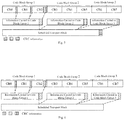
- the terminal device determines that two code block groups in the three code block groups each contains three code blocks, and a code block group includes two code blocks.
- each code block group includes one code block.
- the terminal device determines, according to the first quantity information and the second quantity information, the number of code block groups included in the scheduled transport block and the number of code blocks included in each code block group.
- the terminal device determines the number indicated by the first quantity information as the number of code block groups included in the scheduled transport block. Further, the terminal device determines, according to the second quantity information, the number of code blocks included in each code block group in the scheduled transport block.
- the number of code blocks included in each code block group ⁇ N TBS N CB _ max ⁇ , in this case, N TBS represents the number of bits included in each code block group.
- each block group consists of the plurality of code blocks with consecutive indices.
- the scheduled transport block includes three code block groups, namely, a code block group 1, a code block group 2, and a code block group 3, wherein the code block group 1 includes code blocks with indices CB0, CB1 and CB2, the code block group 2 includes code blocks with indices CB3, CB4 and CB5, and the code block group 3 includes code blocks with indices CB5, CB6 and CB7.
- each code block group corresponds to one Common Cyclic Redundancy Check (CRC) information
- information carried in each code block included in each code block group corresponds to one proprietary CRC information.
- CRC Common Cyclic Redundancy Check
- the terminal device determines a code block group failed in transmission from the code block groups included in the scheduled transport block, and then the terminal device determines feedback information according to the code block group failed in transmission.
- the feedback information can be NACK information indicating a code block group failed in transmission.
- the network device can directly determine the code block group failed in transmission according to the NACK information.
- the feedback information can also be ACK information for indicating a properly transmitted code block group, and the network device directly determines the properly transmitted code block group according to the ACK information, thereby determining the code block group failed in transmission.
- the feedback information includes both ACK information and NACK information, and the network device directly determines the code block group failed in transmission according to the NACK information.
- the terminal device performs feedback for the code block group, which can reduce the control signaling overhead, improve the demodulation performance of the control signaling, and improve the system efficiency, compared to the method for performing feedback for each code block.
- the terminal device can determine the code block group failed in transmission of the code block groups included in the scheduled transport block in the following two manners.
- the terminal device decodes all the code blocks in a code block group according to the proprietary CRC information corresponding to the information carried by each code block. If there is a code block failed in decoding in the code block group, the terminal device confirms that this code block group is a code block group failed in transmission.
- the terminal device checks a code block group according to the common CRC information corresponding to the information carried by the code block group. If the code block group fails in the check, the terminal device confirms that the code block group is the code block group failed in transmission.
- the terminal device when the scheduled transport block is a transport block of uplink transmission, the terminal device receives scheduling information, where the scheduling signaling is used to indicate that a part of the code block groups included in the scheduled transport block has to be retransmitted. Then, the terminal device retransmits the part of the code block groups. Therefore, the terminal device only needs to retransmit the code block groups indicated by the scheduling signaling for retransmission, which can improve system efficiency.
- the method for transmitting information according to the embodiment of the present application is described in detail above from the terminal device side with reference to FIG. 1 to FIG. 4 .
- the method for transmitting information according to the embodiment of the present application will be described in detail below from the network device side with reference to FIG. 5 . It should be understood that the interaction between the network device and the terminal device described from the network device side is the same as that described from the terminal device side. To avoid repetition, the related description is omitted as appropriate.
- FIG. 5 illustrates a method for transmitting information according to another embodiment of the present application. As shown in FIG. 5 , the method 200 includes the following steps.
- the network device determines first quantity information, wherein the first quantity information is information about a number of code block groups included in a transport block, and each code block group includes at least one code block.
- the network device sends second quantity information, wherein the second quantity information is information about a total number of bits included in a scheduled transport block.
- the network device determines, according to the first quantity information and the second quantity information, information about the code block groups included in the scheduled transport block.
- the network device determines information about the code block groups included in the scheduled transport block, according to information about a number of code block groups included in a transport block, and information about a total number of bits included in a scheduled transport block. And the network device sends second quantity information to the terminal device, such that the terminal device can determine information about the code block groups included in the scheduled transport block according to the determined first quantity information and the received second quantity information. Thereby, the terminal device or the network device can determine the number of the code block groups included in the scheduled transport block according to the information about the code block groups included in the scheduled transport block. Then, when feedback is performed for the code block groups, an appropriate amount of feedback information can be determined according to the number of the code block groups.
- the control signaling overhead can be reduced, the demodulation performance of the control signaling can be improved, and the system efficiency can be improved.
- the information about the code block groups included in the scheduled transport block is the number of the code block groups included in the scheduled transport block;
- the information about the code block groups included in the scheduled transport block is the number of code block groups included in the scheduled transport block and the number of code blocks included in each code block group.
- the first quantity information is used to indicate a maximum number of code block groups of a transport block, and the information about the code block groups included by the scheduled transport block is the number of the code block groups included in the scheduled transport block.
- the network device determines, according to the second quantity information, a number of the code blocks included in the scheduled transport block; and the network device determines the number of the code block groups included in the scheduled transport block according to the maximum number of code block groups of a transport block and the number of the code blocks included in the transport block.
- the network device determining the number of the code block groups included in the scheduled transport block according to the maximum number of code block groups of a transport block and the number of the code blocks included in the transport block includes: the network device determining a smaller value of the maximum number of code block groups of a transport block and the number of the code blocks included in the transport block as the number of the code block groups included in the scheduled transport block.
- the method 200 further includes: the network device receiving feedback information sent by the terminal device; the network device determining, according to the feedback information, a code block group failed in transmission from the code block groups included in the scheduled transport block.
- the method 200 further includes: the network device sending scheduling signaling, wherein the scheduling signaling is used to indicate that a part of the code block groups included in the scheduled transport block has to be retransmitted.
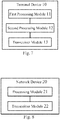
- the terminal device 10 includes:
- a first processing module 11 configured to determines first quantity information, wherein the first quantity information is information about a number of code block groups included in a transport block, and each code block group includes at least one code block;
- the first processing module 11 is further configured to determine second quantity information, wherein the second quantity information is information about a total number of bits included in a scheduled transport block;
- a second processing module 12 configured to determine, according to the first quantity information and the second quantity information, information about the code block groups included in the scheduled transport block.
- the terminal device determines information about the code block groups included in the scheduled transport block, according to information about the number of code block groups included in a transport block, and information about the total number of bits included in the scheduled transport block. Thereby, the terminal device can determine the number of the code block groups included in the scheduled transport block according to the information about the code block groups included in the scheduled transport block. Then, when feedback is performed for the code block groups, an appropriate amount of feedback information can be determined according to the number of the code block groups.
- the control signaling overhead can be reduced, the demodulation performance of the control signaling can be improved, and the system efficiency can be improved.
- the first quantity information is used to indicate a maximum number of code block groups of a transport block
- the first quantity information is used to indicate the number of the code block groups included in the scheduled transport block.
- the second quantity information is used to indicate a total number of bits included in the scheduled transport block
- the second quantity information is used to indicate the number of bits included in each code block group in the scheduled transport block.
- the information about the code block groups included in the scheduled transport block is the number of the code block groups included in the scheduled transport block;
- the information about the code block groups included in the scheduled transport block is the number of the code block groups included in the scheduled transport block and the number of code blocks included in each code block group.
- the first quantity information is used to indicate a maximum number of code block groups of a transport block, and the information about the code block groups included in the scheduled transport block is the number of the code block groups included in the scheduled transport block.
- the second processing module 12 is specifically configured to determine the number of code blocks included in the scheduled transport block according to the second quantity information; and determine the number of code block groups included in the scheduled transport block according to the maximum number of code block groups of a transport block and the number of code blocks included in the transport block.
- the second processing module 12 is specifically configured to determine the smaller one of the maximum number of code block groups of a transport block and the number of the code blocks included in the scheduled transport block as the number of the code block groups included in the scheduled transport block.
- the second processing module 12 is further configured to: determine the number of code blocks included in each code block group, according to the number of code block groups included in the scheduled transport block, and the number of code blocks included in the scheduled transport block.
- the information about the code block groups included in the scheduled transport block is the number of code block groups included in the scheduled transport block, and the number of code blocks included in each code block group.
- the second processing module 12 is specifically configured to, when the first quantity information is used to indicate the number of code block groups included in the scheduled transport block, determine the number indicated by the first quantity information as the number of code block groups included in the scheduled transport block; and determine the number of code blocks included in each code block group in the scheduled transport block according to the second quantity information.
- the second processing module 12 is specifically configured to determine the number of code blocks included in each code block group according to the second quantity information and the maximum number of bits of a code block.
- each block group when each of the code block groups includes a plurality of code blocks, each block group consists of the plurality of code blocks with consecutive indices.
- the terminal device supports multiple transmission configurations, wherein the transmission configurations include one of the following transmission configurations: a service type configuration, a transmission time interval configuration, and a basic parameter set configuration.
- the second processing module 12 is further configured to: determine, according to the current transmission configuration, a maximum number of bits of a code block.
- each code block group corresponds to one common cyclic redundancy check CRC information
- information carried by each code block included in each code block group corresponds to one proprietary CRC information
- the second processing module 12 is further configured to: determine a code block group failed in transmission from the code block groups included in the scheduled transport block; and determine feedback information according to the code block group failed in transmission.
- the second processing module 12 is specifically configured to, when determining that there is a code block failed in decoding in a first code block group according to the proprietary CRC information corresponding to the information carried by each code block in the first code block group, determine that the first code block group is a code block group failed in transmission, wherein the first code block group is any code block group of the code block groups included in the scheduled transport block; or when determining the first code block group fails in the check according to the common CRC information corresponding to the information carried by the first code block group, determine that the first code block group is a code block group failed in transmission, wherein the first code block group is any code block group of the code block groups included in the scheduled transport block.
- the terminal device further includes a transceiver module 13.
- the transceiver module 13 is configured to receive scheduling signaling, wherein the scheduling signaling is used to indicate a part of the code block groups included in the scheduled transport block has to be retransmitted, and retransmit the part of the code block groups.
- the terminal device can refer to the process of the method 100 corresponding to the embodiment of the present application, and the respective units/modules in the terminal device and the other operations and/or functions described above respectively implement the corresponding processes in the method 100. For the sake of brevity, it will not be repeated here.
- FIG. 8 shows a network device according to an embodiment of the present application.
- the network device 20 includes:
- the network device determines information about the code block groups included in the scheduled transport block, according to information about a number of code block groups included in a transport block, and information about a total number of bits included in a scheduled transport block. And the network device sends second quantity information to the terminal device, such that the terminal device can determine information about the code block groups included in the scheduled transport block according to the determined first quantity information and the received second quantity information. Thereby, the terminal device or the network device can determine the number of the code block groups included in the scheduled transport block according to the information about the code block groups included in the scheduled transport block. Then, when feedback is performed for the code block groups, an appropriate amount of feedback information can be determined according to the number of the code block groups.
- the control signaling overhead can be reduced, the demodulation performance of the control signaling can be improved, and the system efficiency can be improved.
- the information about the code block groups included in the scheduled transport block is the number of code block groups included in the scheduled transport block; or the information about the code block groups included in the scheduled transport block is the number of code block groups included in the scheduled transport block and the number of code blocks included in each code block group.
- the first quantity information is used to indicate a maximum number of code block groups of a transport block, and the information about the code block groups included by the scheduled transport block is the number of the code block groups included in the scheduled transport block.
- the processing module 21 is specifically configured to determine, according to the second quantity information, a number of the code blocks included in the scheduled transport block; and determine the number of the code block groups included in the scheduled transport block according to the maximum number of code block groups of a transport block and the number of the code blocks included in the transport block.
- the processing module 21 is specifically configured to determine a smaller value of the maximum number of code block groups of a transport block and the number of the code blocks included in the transport block as the number of the code block groups included in the scheduled transport block.
- the transceiver module 22 is further configured to receive feedback information sent by the terminal device; the processing module 2 1 is further configured to determine, according to the feedback information, a code block group failed in transmission from the code block groups included in the scheduled transport block.
- the transceiver module 22 is further configured to send scheduling signaling, wherein the scheduling signaling is used to indicate that a part of the code block groups included in the scheduled transport block has to be retransmitted.
- the network device can refer to the process of the method 200 corresponding to the embodiment of the present application, and the respective units/modules in the network device and the other operations and/or functions described above respectively implement the corresponding processes in the method 200. For the sake of brevity, it will not be repeated here.
- FIG. 9 shows a terminal device according to another embodiment of the present application.
- the terminal device 100 includes a processor 110 and a transceiver 120.
- the processor 110 is connected to the transceiver 120.
- the network device 100 further includes a memory 130.
- the memory 130 is connected to the processor 110.
- the processor 110, the memory 130, and the transceiver 120 can communicate with each other through an internal connection path.
- the processor 110 is configured to determine first quantity information, wherein the first quantity information is information about a number of code block groups included in a transport block, and each code block group includes at least one code block; determine second quantity information, wherein the second quantity information is information about a total number of bits included in a scheduled transport block; and determine, according to the first quantity information and the second quantity information, information about the code block groups included in the scheduled transport block.
- the terminal device determines information about the code block groups included in the scheduled transport block, according to information about the number of code block groups included in a transport block, and information about the total number of bits included in the scheduled transport block. Thereby, the terminal device can determine the number of the code block groups included in the scheduled transport block according to the information about the code block groups included in the scheduled transport block. Then, when feedback is performed for the code block groups, an appropriate amount of feedback information can be determined according to the number of the code block groups.
- the control signaling overhead can be reduced, the demodulation performance of the control signaling can be improved, and the system efficiency can be improved.
- the terminal device 100 can refer to the terminal device 10 corresponding to the embodiment of the present application, and each unit/module in the terminal device and the other operations and/or functions respectively implement the corresponding processes in the method 100. For the sake of brevity, it will not be repeated here.
- FIG. 10 is a schematic block diagram of a network device according to another embodiment of the present application.
- the network device 200 includes: a processor 210 and a transceiver 220.
- the processor 210 is connected to the transceiver 220.
- the terminal device 200 further includes a memory 230, and the memory 230 is connected to the processor 210.
- the processor 210, the memory 230, and the transceiver 220 can communicate with each other through an internal connection path.
- the processor 210 is configured to determine first quantity information, wherein the first quantity information is information about a number of code block groups included in a transport block, and each code block group includes at least one code block.
- the transceiver 220 is configured to second quantity information to the terminal device, wherein the second quantity information is information about a total number of bits included in a scheduled transport block.
- the processor 210 is further configured to determine, according to the first quantity information and the second quantity information, information about the code block groups included in the scheduled transport block.
- the network device determines information about the code block groups included in the scheduled transport block, according to information about a number of code block groups included in a transport block, and information about a total number of bits included in a scheduled transport block. And the network device sends second quantity information to the terminal device, such that the terminal device can determine information about the code block groups included in the scheduled transport block according to the determined first quantity information and the received second quantity information. Thereby, the terminal device or the network device can determine the number of the code block groups included in the scheduled transport block according to the information about the code block groups included in the scheduled transport block. Then, when feedback is performed for the code block groups, an appropriate amount of feedback information can be determined according to the number of the code block groups.
- the control signaling overhead can be reduced, the demodulation performance of the control signaling can be improved, and the system efficiency can be improved.
- the network device 200 can refer to the network device 20 corresponding to the embodiment of the present application, and the respective units/modules in the network device and the other operations and/or functions respectively implement the corresponding processes in the method 200. For the sake of brevity, it will not be repeated here.
- the processor in the embodiment of the present application can be an integrated circuit chip with signal processing capability.
- the processor can be a general-purpose processor, a digital signal processor (DSP), an application specific integrated circuit (ASIC), a Field Programmable Gate Array (FPGA), or other programmable logic devices, discrete gates or transistor logic devices, discrete hardware components.
- DSP digital signal processor
- ASIC application specific integrated circuit
- FPGA Field Programmable Gate Array
- the methods, steps, and logical block diagrams disclosed in the embodiments of the present application can be implemented or executed.
- the general purpose processor can be a microprocessor or the processor or any conventional processor or the like.
- the memory in the embodiments of the present application can be a volatile memory or a non-volatile memory, or can include both volatile and non-volatile memory.
- the non-volatile memory can be a read-only memory (ROM), a programmable read only memory (PROM), an erasable programmable read only memory (Erasable PROM, EPROM), or an electrically erasable programmable read only memory (EEPROM) or a flash memory.
- the volatile memory can be a Random Access Memory (RAM) that acts as an external cache.
- RAM random access memory
- SRAM static random access memory
- DRAM dynamic random access memory
- DDR SDRAM Double Data Rate SDRAM
- ESDRAM Enhanced Synchronous Dynamic Random Access Memory
- SLDRAM Synchronous Dynamic Random Access Memory
- DR RAM direct rambus random access memory
- the disclosed systems, devices, and methods can be implemented in other manners.
- the device embodiments described above are merely illustrative.
- the division of the unit is only a logical function division.
- there can be another division manner for example, multiple units or components can be combined or can be integrated into another system, or some features can be ignored or skipped.
- the mutual coupling or direct coupling or communication connection shown or discussed can be an indirect coupling or communication connection through some interfaces, devices or units, and can be in an electrical, mechanical or other form.
- the units described as separate components can or cannot be physically separated, and the components displayed as units can or cannot be physical units, that is, can be located in one place, or can be distributed to multiple network units. Some or all of the units can be selected according to actual needs to achieve the objective of the solution of the embodiment.
- each functional unit in each embodiment of the present application can be integrated into one processing unit, or each unit can exist physically separately, or two or more units can be integrated into one unit.
- the functions can be stored in a computer readable storage medium if implemented in the form of a software functional unit and sold or used as a standalone product. Based on such understanding, the technical solution of the present application, in its essence or with the part contributing to the prior art, or a part of the technical solution, can be embodied in the form of a software product, which is stored in a storage medium, including instructions used to cause a computer device (which can be a personal computer, a server, or a network device, etc.) to perform all or part of the steps of the methods described in various embodiments of the present application.
- the storage medium includes: a U disk, a mobile hard disk, a read-only memory (ROM), a random access memory (RAM), a magnetic disk, or an optical disk, and various media that can store program codes.
Landscapes
- Engineering & Computer Science (AREA)
- Signal Processing (AREA)
- Computer Networks & Wireless Communication (AREA)
- Mobile Radio Communication Systems (AREA)
- Communication Control (AREA)
- Detection And Prevention Of Errors In Transmission (AREA)
- Time-Division Multiplex Systems (AREA)
- Compression, Expansion, Code Conversion, And Decoders (AREA)
Priority Applications (1)
| Application Number | Priority Date | Filing Date | Title |
|---|---|---|---|
| EP21212662.7A EP3985902B1 (de) | 2017-02-22 | 2017-02-22 | Verfahren und vorrichtung zur informationsübertragung |
Applications Claiming Priority (1)
| Application Number | Priority Date | Filing Date | Title |
|---|---|---|---|
| PCT/CN2017/074447 WO2018152714A1 (zh) | 2017-02-22 | 2017-02-22 | 用于信息传输的方法和设备 |
Related Child Applications (2)
| Application Number | Title | Priority Date | Filing Date |
|---|---|---|---|
| EP21212662.7A Division EP3985902B1 (de) | 2017-02-22 | 2017-02-22 | Verfahren und vorrichtung zur informationsübertragung |
| EP21212662.7A Division-Into EP3985902B1 (de) | 2017-02-22 | 2017-02-22 | Verfahren und vorrichtung zur informationsübertragung |
Publications (3)
| Publication Number | Publication Date |
|---|---|
| EP3584977A1 true EP3584977A1 (de) | 2019-12-25 |
| EP3584977A4 EP3584977A4 (de) | 2020-03-04 |
| EP3584977B1 EP3584977B1 (de) | 2022-01-26 |
Family
ID=63253492
Family Applications (2)
| Application Number | Title | Priority Date | Filing Date |
|---|---|---|---|
| EP21212662.7A Active EP3985902B1 (de) | 2017-02-22 | 2017-02-22 | Verfahren und vorrichtung zur informationsübertragung |
| EP17897527.2A Active EP3584977B1 (de) | 2017-02-22 | 2017-02-22 | Verfahren und vorrichtung zur informationsübertragung |
Family Applications Before (1)
| Application Number | Title | Priority Date | Filing Date |
|---|---|---|---|
| EP21212662.7A Active EP3985902B1 (de) | 2017-02-22 | 2017-02-22 | Verfahren und vorrichtung zur informationsübertragung |
Country Status (16)
| Country | Link |
|---|---|
| US (2) | US10972227B2 (de) |
| EP (2) | EP3985902B1 (de) |
| JP (2) | JP2020511820A (de) |
| KR (1) | KR102783981B1 (de) |
| CN (2) | CN110073624A (de) |
| AU (1) | AU2017400807B2 (de) |
| CA (1) | CA3054200C (de) |
| ES (2) | ES2939016T3 (de) |
| IL (1) | IL268810B2 (de) |
| MX (1) | MX2019010038A (de) |
| PH (1) | PH12019501935A1 (de) |
| RU (1) | RU2722583C1 (de) |
| SG (1) | SG11201907728YA (de) |
| TW (1) | TWI757425B (de) |
| WO (1) | WO2018152714A1 (de) |
| ZA (1) | ZA201906074B (de) |
Cited By (2)
| Publication number | Priority date | Publication date | Assignee | Title |
|---|---|---|---|---|
| EP3605912A4 (de) * | 2017-04-28 | 2020-04-08 | Huawei Technologies Co., Ltd. | Datenverarbeitungsverfahren und datenverarbeitungsvorrichtung |
| US10856286B2 (en) | 2016-11-04 | 2020-12-01 | Huawei Technologies Co., Ltd. | Data transmission method and apparatus |
Families Citing this family (4)
| Publication number | Priority date | Publication date | Assignee | Title |
|---|---|---|---|---|
| US11012221B2 (en) | 2017-03-08 | 2021-05-18 | Lg Electronics Inc. | Method and apparatus for transmitting and receiving radio signals in a wireless communication system |
| US11171758B2 (en) * | 2017-03-24 | 2021-11-09 | Qualcomm Incorporated | Code block grouping and feedback that support efficient retransmissions |
| RU2737481C1 (ru) * | 2017-04-03 | 2020-12-01 | Телефонактиеболагет Лм Эрикссон (Пабл) | Harq-обработка для узлов с переменными временами обработки |
| CN111614446B (zh) * | 2019-02-22 | 2021-06-29 | 华为技术有限公司 | 通信处理方法和通信处理装置 |
Family Cites Families (25)
| Publication number | Priority date | Publication date | Assignee | Title |
|---|---|---|---|---|
| KR100766866B1 (ko) * | 2005-12-08 | 2007-10-12 | 한국전자통신연구원 | 직교 주파수 분할 다중 시스템의 셀 탐색 장치와 이를이용한 셀 탐색 코드 구성 방법 |
| US8379738B2 (en) * | 2007-03-16 | 2013-02-19 | Samsung Electronics Co., Ltd. | Methods and apparatus to improve performance and enable fast decoding of transmissions with multiple code blocks |
| CN101282192B (zh) | 2007-04-03 | 2011-09-21 | 中兴通讯股份有限公司 | 混合自动重传信道编码方法 |
| WO2009005047A1 (ja) * | 2007-07-04 | 2009-01-08 | Nec Corporation | マルチキャリア移動体通信システム |
| US8683305B2 (en) * | 2007-08-14 | 2014-03-25 | Texas Instruments Incorporated | Rate matching and scrambling techniques for control signaling |
| CN101615986A (zh) * | 2008-06-27 | 2009-12-30 | 华为技术有限公司 | 一种数据传输方法、装置及通信系统 |
| CN101667900B (zh) * | 2008-09-02 | 2014-11-05 | 中兴通讯股份有限公司 | Harq反馈方法 |
| WO2010115295A1 (zh) * | 2009-04-10 | 2010-10-14 | 上海贝尔股份有限公司 | 请求重传方法、重传方法及其设备 |
| CN101820330B (zh) * | 2010-02-09 | 2013-04-24 | 华为技术有限公司 | 一种信号接收处理方法及装置 |
| KR101728840B1 (ko) * | 2011-03-03 | 2017-04-20 | 텔레콤 이탈리아 소시에떼 퍼 아찌오니 | Lte 스케줄링 |
| CN102255712B (zh) | 2011-07-18 | 2013-07-10 | 东南大学 | 长期演进系统混合自动要求重传过程软量存储分配方法 |
| CN104301077B (zh) * | 2013-07-16 | 2017-07-28 | 普天信息技术研究院有限公司 | 一种混合重传的方法 |
| EP2913951A1 (de) | 2014-02-26 | 2015-09-02 | Alcatel Lucent | Vorrichtung, Verfahren und Computerprogramm zur Steuerung von Informationen im Zusammenhang mit einer Bestätigung eines Empfang eines Nutzdatenpakets, Basisstations-Sender-Empfänger und mobiler Sender-Empfänger |
| CN105306166B (zh) * | 2014-07-08 | 2018-05-04 | 普天信息技术有限公司 | 码块的接收处理方法及装置 |
| CN105515733B (zh) * | 2014-09-24 | 2019-03-12 | 中兴通讯股份有限公司 | 一种反馈方法及装置 |
| CN105515719B (zh) * | 2014-09-24 | 2019-04-26 | 中兴通讯股份有限公司 | 一种数据传输方法及装置 |
| CN105530071B (zh) * | 2014-09-29 | 2018-08-07 | 普天信息技术有限公司 | 一种基于码块分割的上行信号编码方法及终端 |
| CN105530072B (zh) | 2014-09-29 | 2018-09-14 | 普天信息技术有限公司 | 一种基于码块分割的上行信号解码方法及基站 |
| CN105505733B (zh) * | 2016-01-26 | 2018-07-06 | 湖南省林业科学院 | 一种竹奶醋及其制备方法 |
| KR102561715B1 (ko) * | 2016-11-24 | 2023-08-02 | 삼성전자주식회사 | 무선 셀룰라 통신 시스템에서 부분 재전송 방법 및 장치 |
| US10298362B2 (en) | 2016-11-24 | 2019-05-21 | Samsung Electronics Co., Ltd | Method and apparatus for partial retransmission in wireless cellular communication system |
| CN108270513B (zh) | 2016-12-30 | 2024-01-19 | 华为技术有限公司 | 发送控制信息的方法和装置及接收控制信息的方法和装置 |
| WO2018137584A1 (zh) | 2017-01-26 | 2018-08-02 | 华为技术有限公司 | 用于反馈的方法、设备和系统 |
| CN108365922B (zh) * | 2017-01-26 | 2021-03-30 | 华为技术有限公司 | 用于反馈的方法、设备和系统 |
| CN110249537B (zh) * | 2017-02-03 | 2023-04-04 | 交互数字专利控股公司 | 依赖于ldpc基础矩阵选择的码块分段 |
-
2017
- 2017-02-22 JP JP2019545763A patent/JP2020511820A/ja active Pending
- 2017-02-22 EP EP21212662.7A patent/EP3985902B1/de active Active
- 2017-02-22 SG SG11201907728YA patent/SG11201907728YA/en unknown
- 2017-02-22 CN CN201780077870.0A patent/CN110073624A/zh active Pending
- 2017-02-22 CN CN202111142053.3A patent/CN113872737B/zh active Active
- 2017-02-22 WO PCT/CN2017/074447 patent/WO2018152714A1/zh not_active Ceased
- 2017-02-22 MX MX2019010038A patent/MX2019010038A/es unknown
- 2017-02-22 RU RU2019129177A patent/RU2722583C1/ru active
- 2017-02-22 ES ES21212662T patent/ES2939016T3/es active Active
- 2017-02-22 CA CA3054200A patent/CA3054200C/en active Active
- 2017-02-22 US US16/487,141 patent/US10972227B2/en active Active
- 2017-02-22 KR KR1020197025338A patent/KR102783981B1/ko active Active
- 2017-02-22 EP EP17897527.2A patent/EP3584977B1/de active Active
- 2017-02-22 ES ES17897527T patent/ES2907816T3/es active Active
- 2017-02-22 AU AU2017400807A patent/AU2017400807B2/en active Active
-
2018
- 2018-02-12 TW TW107105077A patent/TWI757425B/zh active
-
2019
- 2019-08-20 IL IL268810A patent/IL268810B2/en unknown
- 2019-08-22 PH PH12019501935A patent/PH12019501935A1/en unknown
- 2019-09-13 ZA ZA2019/06074A patent/ZA201906074B/en unknown
-
2020
- 2020-09-28 US US17/035,138 patent/US11483098B2/en active Active
-
2021
- 2021-12-15 JP JP2021203457A patent/JP7574174B2/ja active Active
Cited By (5)
| Publication number | Priority date | Publication date | Assignee | Title |
|---|---|---|---|---|
| US10856286B2 (en) | 2016-11-04 | 2020-12-01 | Huawei Technologies Co., Ltd. | Data transmission method and apparatus |
| US11533717B2 (en) | 2016-11-04 | 2022-12-20 | Huawei Technologies Co., Ltd. | Data transmission method and apparatus |
| EP3537644B1 (de) * | 2016-11-04 | 2023-01-25 | Huawei Technologies Co., Ltd. | Datenübertragungsverfahren und -vorrichtung |
| EP3605912A4 (de) * | 2017-04-28 | 2020-04-08 | Huawei Technologies Co., Ltd. | Datenverarbeitungsverfahren und datenverarbeitungsvorrichtung |
| US11239957B2 (en) | 2017-04-28 | 2022-02-01 | Huawei Technologies Co., Ltd. | Data processing method and data processing apparatus |
Also Published As
Similar Documents
| Publication | Publication Date | Title |
|---|---|---|
| US11483098B2 (en) | Method and device for information transmission | |
| CN113412595B (zh) | 无线通信方法、终端设备和网络设备 | |
| US12185344B2 (en) | Wireless communication method and network device | |
| US20210194637A1 (en) | Method for determining harq-ack codebook, terminal device and network device | |
| EP3512145B1 (de) | Drahtloskommunikationsverfahren und -vorrichtung | |
| JP2020503776A (ja) | 複数のキャリア上でデータを送信するための方法、端末装置、およびネットワーク装置 | |
| CN111525991B (zh) | 无线通信方法和设备 | |
| US20230412308A1 (en) | Wireless communication method, terminal device and network device | |
| CN109644088B (zh) | 基于载波聚合的反馈方法和设备 | |
| CN114205874B (zh) | 通信方法和装置 | |
| HK40005072A (en) | Method and device for information transmission | |
| WO2022236752A1 (zh) | 无线通信方法、第一设备和第二设备 | |
| BR112019017328B1 (pt) | Método para transmissão de informação, dispositivo terminal, e dispositivo de rede |
Legal Events
| Date | Code | Title | Description |
|---|---|---|---|
| STAA | Information on the status of an ep patent application or granted ep patent |
Free format text: STATUS: THE INTERNATIONAL PUBLICATION HAS BEEN MADE |
|
| PUAI | Public reference made under article 153(3) epc to a published international application that has entered the european phase |
Free format text: ORIGINAL CODE: 0009012 |
|
| STAA | Information on the status of an ep patent application or granted ep patent |
Free format text: STATUS: REQUEST FOR EXAMINATION WAS MADE |
|
| 17P | Request for examination filed |
Effective date: 20190919 |
|
| AK | Designated contracting states |
Kind code of ref document: A1 Designated state(s): AL AT BE BG CH CY CZ DE DK EE ES FI FR GB GR HR HU IE IS IT LI LT LU LV MC MK MT NL NO PL PT RO RS SE SI SK SM TR |
|
| AX | Request for extension of the european patent |
Extension state: BA ME |
|
| A4 | Supplementary search report drawn up and despatched |
Effective date: 20200205 |
|
| RIC1 | Information provided on ipc code assigned before grant |
Ipc: H04L 1/18 20060101AFI20200130BHEP |
|
| DAV | Request for validation of the european patent (deleted) | ||
| DAX | Request for extension of the european patent (deleted) | ||
| STAA | Information on the status of an ep patent application or granted ep patent |
Free format text: STATUS: EXAMINATION IS IN PROGRESS |
|
| 17Q | First examination report despatched |
Effective date: 20201111 |
|
| GRAP | Despatch of communication of intention to grant a patent |
Free format text: ORIGINAL CODE: EPIDOSNIGR1 |
|
| STAA | Information on the status of an ep patent application or granted ep patent |
Free format text: STATUS: GRANT OF PATENT IS INTENDED |
|
| INTG | Intention to grant announced |
Effective date: 20210909 |
|
| GRAS | Grant fee paid |
Free format text: ORIGINAL CODE: EPIDOSNIGR3 |
|
| GRAA | (expected) grant |
Free format text: ORIGINAL CODE: 0009210 |
|
| STAA | Information on the status of an ep patent application or granted ep patent |
Free format text: STATUS: THE PATENT HAS BEEN GRANTED |
|
| AK | Designated contracting states |
Kind code of ref document: B1 Designated state(s): AL AT BE BG CH CY CZ DE DK EE ES FI FR GB GR HR HU IE IS IT LI LT LU LV MC MK MT NL NO PL PT RO RS SE SI SK SM TR |
|
| REG | Reference to a national code |
Ref country code: GB Ref legal event code: FG4D |
|
| REG | Reference to a national code |
Ref country code: CH Ref legal event code: EP |
|
| REG | Reference to a national code |
Ref country code: AT Ref legal event code: REF Ref document number: 1466105 Country of ref document: AT Kind code of ref document: T Effective date: 20220215 |
|
| REG | Reference to a national code |
Ref country code: IE Ref legal event code: FG4D |
|
| REG | Reference to a national code |
Ref country code: DE Ref legal event code: R096 Ref document number: 602017052937 Country of ref document: DE |
|
| REG | Reference to a national code |
Ref country code: NL Ref legal event code: FP |
|
| REG | Reference to a national code |
Ref country code: ES Ref legal event code: FG2A Ref document number: 2907816 Country of ref document: ES Kind code of ref document: T3 Effective date: 20220426 |
|
| REG | Reference to a national code |
Ref country code: LT Ref legal event code: MG9D |
|
| REG | Reference to a national code |
Ref country code: AT Ref legal event code: MK05 Ref document number: 1466105 Country of ref document: AT Kind code of ref document: T Effective date: 20220126 |
|
| PG25 | Lapsed in a contracting state [announced via postgrant information from national office to epo] |
Ref country code: SE Free format text: LAPSE BECAUSE OF FAILURE TO SUBMIT A TRANSLATION OF THE DESCRIPTION OR TO PAY THE FEE WITHIN THE PRESCRIBED TIME-LIMIT Effective date: 20220126 Ref country code: RS Free format text: LAPSE BECAUSE OF FAILURE TO SUBMIT A TRANSLATION OF THE DESCRIPTION OR TO PAY THE FEE WITHIN THE PRESCRIBED TIME-LIMIT Effective date: 20220126 Ref country code: PT Free format text: LAPSE BECAUSE OF FAILURE TO SUBMIT A TRANSLATION OF THE DESCRIPTION OR TO PAY THE FEE WITHIN THE PRESCRIBED TIME-LIMIT Effective date: 20220526 Ref country code: NO Free format text: LAPSE BECAUSE OF FAILURE TO SUBMIT A TRANSLATION OF THE DESCRIPTION OR TO PAY THE FEE WITHIN THE PRESCRIBED TIME-LIMIT Effective date: 20220426 Ref country code: LT Free format text: LAPSE BECAUSE OF FAILURE TO SUBMIT A TRANSLATION OF THE DESCRIPTION OR TO PAY THE FEE WITHIN THE PRESCRIBED TIME-LIMIT Effective date: 20220126 Ref country code: HR Free format text: LAPSE BECAUSE OF FAILURE TO SUBMIT A TRANSLATION OF THE DESCRIPTION OR TO PAY THE FEE WITHIN THE PRESCRIBED TIME-LIMIT Effective date: 20220126 Ref country code: BG Free format text: LAPSE BECAUSE OF FAILURE TO SUBMIT A TRANSLATION OF THE DESCRIPTION OR TO PAY THE FEE WITHIN THE PRESCRIBED TIME-LIMIT Effective date: 20220426 |
|
| PG25 | Lapsed in a contracting state [announced via postgrant information from national office to epo] |
Ref country code: PL Free format text: LAPSE BECAUSE OF FAILURE TO SUBMIT A TRANSLATION OF THE DESCRIPTION OR TO PAY THE FEE WITHIN THE PRESCRIBED TIME-LIMIT Effective date: 20220126 Ref country code: LV Free format text: LAPSE BECAUSE OF FAILURE TO SUBMIT A TRANSLATION OF THE DESCRIPTION OR TO PAY THE FEE WITHIN THE PRESCRIBED TIME-LIMIT Effective date: 20220126 Ref country code: GR Free format text: LAPSE BECAUSE OF FAILURE TO SUBMIT A TRANSLATION OF THE DESCRIPTION OR TO PAY THE FEE WITHIN THE PRESCRIBED TIME-LIMIT Effective date: 20220427 Ref country code: FI Free format text: LAPSE BECAUSE OF FAILURE TO SUBMIT A TRANSLATION OF THE DESCRIPTION OR TO PAY THE FEE WITHIN THE PRESCRIBED TIME-LIMIT Effective date: 20220126 Ref country code: AT Free format text: LAPSE BECAUSE OF FAILURE TO SUBMIT A TRANSLATION OF THE DESCRIPTION OR TO PAY THE FEE WITHIN THE PRESCRIBED TIME-LIMIT Effective date: 20220126 |
|
| PG25 | Lapsed in a contracting state [announced via postgrant information from national office to epo] |
Ref country code: IS Free format text: LAPSE BECAUSE OF FAILURE TO SUBMIT A TRANSLATION OF THE DESCRIPTION OR TO PAY THE FEE WITHIN THE PRESCRIBED TIME-LIMIT Effective date: 20220526 |
|
| REG | Reference to a national code |
Ref country code: CH Ref legal event code: PL |
|
| REG | Reference to a national code |
Ref country code: BE Ref legal event code: MM Effective date: 20220228 |
|
| REG | Reference to a national code |
Ref country code: DE Ref legal event code: R097 Ref document number: 602017052937 Country of ref document: DE |
|
| PG25 | Lapsed in a contracting state [announced via postgrant information from national office to epo] |
Ref country code: SM Free format text: LAPSE BECAUSE OF FAILURE TO SUBMIT A TRANSLATION OF THE DESCRIPTION OR TO PAY THE FEE WITHIN THE PRESCRIBED TIME-LIMIT Effective date: 20220126 Ref country code: SK Free format text: LAPSE BECAUSE OF FAILURE TO SUBMIT A TRANSLATION OF THE DESCRIPTION OR TO PAY THE FEE WITHIN THE PRESCRIBED TIME-LIMIT Effective date: 20220126 Ref country code: RO Free format text: LAPSE BECAUSE OF FAILURE TO SUBMIT A TRANSLATION OF THE DESCRIPTION OR TO PAY THE FEE WITHIN THE PRESCRIBED TIME-LIMIT Effective date: 20220126 Ref country code: MC Free format text: LAPSE BECAUSE OF FAILURE TO SUBMIT A TRANSLATION OF THE DESCRIPTION OR TO PAY THE FEE WITHIN THE PRESCRIBED TIME-LIMIT Effective date: 20220126 Ref country code: LU Free format text: LAPSE BECAUSE OF NON-PAYMENT OF DUE FEES Effective date: 20220222 Ref country code: EE Free format text: LAPSE BECAUSE OF FAILURE TO SUBMIT A TRANSLATION OF THE DESCRIPTION OR TO PAY THE FEE WITHIN THE PRESCRIBED TIME-LIMIT Effective date: 20220126 Ref country code: DK Free format text: LAPSE BECAUSE OF FAILURE TO SUBMIT A TRANSLATION OF THE DESCRIPTION OR TO PAY THE FEE WITHIN THE PRESCRIBED TIME-LIMIT Effective date: 20220126 Ref country code: CZ Free format text: LAPSE BECAUSE OF FAILURE TO SUBMIT A TRANSLATION OF THE DESCRIPTION OR TO PAY THE FEE WITHIN THE PRESCRIBED TIME-LIMIT Effective date: 20220126 |
|
| PG25 | Lapsed in a contracting state [announced via postgrant information from national office to epo] |
Ref country code: AL Free format text: LAPSE BECAUSE OF FAILURE TO SUBMIT A TRANSLATION OF THE DESCRIPTION OR TO PAY THE FEE WITHIN THE PRESCRIBED TIME-LIMIT Effective date: 20220126 |
|
| PLBE | No opposition filed within time limit |
Free format text: ORIGINAL CODE: 0009261 |
|
| STAA | Information on the status of an ep patent application or granted ep patent |
Free format text: STATUS: NO OPPOSITION FILED WITHIN TIME LIMIT |
|
| 26N | No opposition filed |
Effective date: 20221027 |
|
| PG25 | Lapsed in a contracting state [announced via postgrant information from national office to epo] |
Ref country code: LI Free format text: LAPSE BECAUSE OF NON-PAYMENT OF DUE FEES Effective date: 20220228 Ref country code: IE Free format text: LAPSE BECAUSE OF NON-PAYMENT OF DUE FEES Effective date: 20220222 Ref country code: CH Free format text: LAPSE BECAUSE OF NON-PAYMENT OF DUE FEES Effective date: 20220228 |
|
| PG25 | Lapsed in a contracting state [announced via postgrant information from national office to epo] |
Ref country code: SI Free format text: LAPSE BECAUSE OF FAILURE TO SUBMIT A TRANSLATION OF THE DESCRIPTION OR TO PAY THE FEE WITHIN THE PRESCRIBED TIME-LIMIT Effective date: 20220126 Ref country code: BE Free format text: LAPSE BECAUSE OF NON-PAYMENT OF DUE FEES Effective date: 20220228 |
|
| P01 | Opt-out of the competence of the unified patent court (upc) registered |
Effective date: 20230412 |
|
| PG25 | Lapsed in a contracting state [announced via postgrant information from national office to epo] |
Ref country code: MK Free format text: LAPSE BECAUSE OF FAILURE TO SUBMIT A TRANSLATION OF THE DESCRIPTION OR TO PAY THE FEE WITHIN THE PRESCRIBED TIME-LIMIT Effective date: 20220126 Ref country code: CY Free format text: LAPSE BECAUSE OF FAILURE TO SUBMIT A TRANSLATION OF THE DESCRIPTION OR TO PAY THE FEE WITHIN THE PRESCRIBED TIME-LIMIT Effective date: 20220126 |
|
| PG25 | Lapsed in a contracting state [announced via postgrant information from national office to epo] |
Ref country code: HU Free format text: LAPSE BECAUSE OF FAILURE TO SUBMIT A TRANSLATION OF THE DESCRIPTION OR TO PAY THE FEE WITHIN THE PRESCRIBED TIME-LIMIT; INVALID AB INITIO Effective date: 20170222 |
|
| PG25 | Lapsed in a contracting state [announced via postgrant information from national office to epo] |
Ref country code: TR Free format text: LAPSE BECAUSE OF FAILURE TO SUBMIT A TRANSLATION OF THE DESCRIPTION OR TO PAY THE FEE WITHIN THE PRESCRIBED TIME-LIMIT Effective date: 20220126 |
|
| PG25 | Lapsed in a contracting state [announced via postgrant information from national office to epo] |
Ref country code: MT Free format text: LAPSE BECAUSE OF FAILURE TO SUBMIT A TRANSLATION OF THE DESCRIPTION OR TO PAY THE FEE WITHIN THE PRESCRIBED TIME-LIMIT Effective date: 20220126 |
|
| PGFP | Annual fee paid to national office [announced via postgrant information from national office to epo] |
Ref country code: FR Payment date: 20251231 Year of fee payment: 10 |
|
| PGFP | Annual fee paid to national office [announced via postgrant information from national office to epo] |
Ref country code: NL Payment date: 20260106 Year of fee payment: 10 |
|
| PGFP | Annual fee paid to national office [announced via postgrant information from national office to epo] |
Ref country code: GB Payment date: 20260106 Year of fee payment: 10 |
|
| PGFP | Annual fee paid to national office [announced via postgrant information from national office to epo] |
Ref country code: ES Payment date: 20260311 Year of fee payment: 10 |
|
| PGFP | Annual fee paid to national office [announced via postgrant information from national office to epo] |
Ref country code: DE Payment date: 20251230 Year of fee payment: 10 |
|
| PGFP | Annual fee paid to national office [announced via postgrant information from national office to epo] |
Ref country code: IT Payment date: 20260122 Year of fee payment: 10 |