EP3584998A1 - Procédé d'expansion et de réduction de capacité de machine virtuelle et dispositif de gestion virtuelle - Google Patents
Procédé d'expansion et de réduction de capacité de machine virtuelle et dispositif de gestion virtuelle Download PDFInfo
- Publication number
- EP3584998A1 EP3584998A1 EP18770216.2A EP18770216A EP3584998A1 EP 3584998 A1 EP3584998 A1 EP 3584998A1 EP 18770216 A EP18770216 A EP 18770216A EP 3584998 A1 EP3584998 A1 EP 3584998A1
- Authority
- EP
- European Patent Office
- Prior art keywords
- virtual machine
- target
- identifier
- vnfm
- virtual
- Prior art date
- Legal status (The legal status is an assumption and is not a legal conclusion. Google has not performed a legal analysis and makes no representation as to the accuracy of the status listed.)
- Granted
Links
Images



Classifications
-
- G—PHYSICS
- G06—COMPUTING OR CALCULATING; COUNTING
- G06F—ELECTRIC DIGITAL DATA PROCESSING
- G06F9/00—Arrangements for program control, e.g. control units
- G06F9/06—Arrangements for program control, e.g. control units using stored programs, i.e. using an internal store of processing equipment to receive or retain programs
- G06F9/44—Arrangements for executing specific programs
- G06F9/455—Emulation; Interpretation; Software simulation, e.g. virtualisation or emulation of application or operating system execution engines
- G06F9/45533—Hypervisors; Virtual machine monitors
- G06F9/45558—Hypervisor-specific management and integration aspects
-
- H—ELECTRICITY
- H04—ELECTRIC COMMUNICATION TECHNIQUE
- H04L—TRANSMISSION OF DIGITAL INFORMATION, e.g. TELEGRAPHIC COMMUNICATION
- H04L41/00—Arrangements for maintenance, administration or management of data switching networks, e.g. of packet switching networks
- H04L41/08—Configuration management of networks or network elements
- H04L41/0896—Bandwidth or capacity management, i.e. automatically increasing or decreasing capacities
- H04L41/0897—Bandwidth or capacity management, i.e. automatically increasing or decreasing capacities by horizontal or vertical scaling of resources, or by migrating entities, e.g. virtual resources or entities
-
- G—PHYSICS
- G06—COMPUTING OR CALCULATING; COUNTING
- G06F—ELECTRIC DIGITAL DATA PROCESSING
- G06F9/00—Arrangements for program control, e.g. control units
- G06F9/06—Arrangements for program control, e.g. control units using stored programs, i.e. using an internal store of processing equipment to receive or retain programs
- G06F9/44—Arrangements for executing specific programs
- G06F9/455—Emulation; Interpretation; Software simulation, e.g. virtualisation or emulation of application or operating system execution engines
- G06F9/45533—Hypervisors; Virtual machine monitors
- G06F9/45558—Hypervisor-specific management and integration aspects
- G06F2009/45562—Creating, deleting, cloning virtual machine instances
-
- G—PHYSICS
- G06—COMPUTING OR CALCULATING; COUNTING
- G06F—ELECTRIC DIGITAL DATA PROCESSING
- G06F9/00—Arrangements for program control, e.g. control units
- G06F9/06—Arrangements for program control, e.g. control units using stored programs, i.e. using an internal store of processing equipment to receive or retain programs
- G06F9/44—Arrangements for executing specific programs
- G06F9/455—Emulation; Interpretation; Software simulation, e.g. virtualisation or emulation of application or operating system execution engines
- G06F9/45533—Hypervisors; Virtual machine monitors
- G06F9/45558—Hypervisor-specific management and integration aspects
- G06F2009/45575—Starting, stopping, suspending or resuming virtual machine instances
Definitions
- Embodiments of the present invention relate to the field of virtualization technologies, and in particular, to a virtual machine scaling method and a virtual management device.
- NFV network function virtualization
- a virtualization technology is used to implement a hardware function of a physical machine through software processing, so that service development and deployment of the physical machine no longer rely on dedicated hardware.
- an NFV system may be created on the physical machine by using the virtualization technology.
- the system includes a virtualized network function (virtualized network function, VNF) node, and virtual machines (virtual machine, VM) are deployed for the VNF node based on an actual service requirement of the VNF node.
- VNF virtualized network function
- VM virtual machine
- scaling is performed, by adding or deleting a virtual machine, on the virtual machines deployed for the VNF node. For example, when a service is busy, some VMs are created for use by the VNF node to relieve service pressure, or when a service is idle, some VMs are deleted to facilitate full utilization of a VM resource.
- the VNF node needs to preempt a resource with other VNF nodes to create a virtual machine, and there is a very high probability that the resource preemption fails.
- a VM creation operation is complex. Consequently, there is a relatively high probability that the VM creation fails.
- a problem of preempting the VM resource with other VNF nodes also exists when a VM needs to be applied for again to scale out the VNF node, and it is also possible that the VM fails to be obtained through application.
- an application programming interface application programming interface, API
- an application programming interface needs to be invoked for a plurality of times to apply for a network adapter, a hard disk, a VM, and the like.
- a larger quantity of times of API invocation indicates a higher probability that a fault occurs. Consequently, the probability that the VM creation fails increases.
- an API needs to be invoked for a plurality of times to delete a network adapter, a hard disk, a VM, and the like. Consequently, a probability that the VM deletion fails increases.
- an existing scaling solution causes a relatively high probability of a VNF node scaling failure.
- scale-out fails, a service of the VNF node is affected. If scale-in fails, the VM resource is not properly used. Consequently, other VNF nodes that need to be scaled out fail to obtain virtual machines through application, and services of these nodes are affected.
- a service of the NFV system is affected in the prior art.
- This application provides a virtual machine scaling method and a virtual management device.
- a virtual machine cluster is created for the VNF node.
- the VNF node may be scaled out by powering on a virtual machine in the virtual machine cluster, and the VNF node may be scaled in by powering off a virtual machine in the virtual machine cluster. Only one API needs to be invoked to perform a power-on operation or a power-off operation on the virtual machine.
- a virtual machine scaling method including: creating, by a virtualized network function manager (virtualized network function manager, VNFM), a target virtualized network function (virtualized network function, VNF) node, and creating a virtual machine cluster for the target VNF node, where the virtual machine cluster includes Q virtual machines, and Q is an integer greater than or equal to 1; then receiving, by the VNFM, a virtual machine scaling request sent by a network function virtualization orchestrator (network function virtualization orchestrator, NFVO), where the request carries an identifier of the target VNF node, information about a target virtual machine, and a virtual machine status identifier, and the virtual machine status identifier is a power-on identifier or a power-off identifier; subsequently determining, by the VNFM, the virtual machine cluster of the target VNF node based on the identifier of the target VNF node
- the target virtual machine is set to a power-on state if the virtual machine status identifier is a power-on identifier, so as to scale out the target VNF node, or the target virtual machine is set to a power-off state if the virtual machine status identifier is a power-off identifier, so as to scale in the target VNF node.
- a virtual machine cluster is created in advance for a VNF node, and then a power-on operation or a power-off operation may be performed on a virtual machine in the virtual machine cluster of the VNF node to implement virtualized scaling.
- a power-on operation or a power-off operation may be performed on a virtual machine in the virtual machine cluster of the VNF node to implement virtualized scaling.
- one or more virtual machines in a power-off state that are not used in the virtual machine cluster are powered on, and during scale-in, one or more virtual machines in a power-on state that are being used in the virtual machine cluster are powered off.
- no re-application of a virtual machine at an infrastructure layer is required. This avoids a VNF node scale-out failure caused when a virtual machine is applied for but a VM resource fails to be preempted.
- the VNFM may further update the virtual machine cluster of the target VNF node, specifically including: if Q is less than a first threshold and P/Q is greater than a second threshold, creating, by the VNFM, M new virtual machines for the target VNF node, and adding the M virtual machines to the virtual machine cluster, where P is a quantity of virtual machines in a power-on state in the virtual machine cluster, and M is greater than or equal to 1 and less than or equal to a difference between the first threshold and Q.
- the first threshold herein may be a management capability upper limit of the target VNF node, namely, a maximum quantity of virtual machines that can be managed by the target VNF node.
- the second threshold may be a maximum upper limit of a proportion of running virtual machines, for example, 90%. In other words, when most virtual machines in the virtual machine cluster are running, M virtual machines may be added to the target VNF node, but the quantity of virtual machines in the virtual machine cluster after the addition cannot exceed the management upper limit of the target VNF node.
- the setting, by the VNFM, a running status of the target virtual machine based on the virtual machine status identifier specifically includes: sending, by the VNFM, a virtual machine resource operation request message to the NFVO, where the virtual machine resource operation request message carries the information about the target virtual machine; receiving, by the VNFM, a virtual machine resource operation grant message sent by the NFVO, where the virtual machine operation grant message carries an acknowledgement identifier, for example, "yes", and the acknowledgement identifier is used to indicate that the VNFM has obtained permission to operate the target virtual machine; and subsequently sending, by the VNFM, a virtual machine operation instruction to a virtualized infrastructure manager VIM, to instruct the VIM to set the running status of the target virtual machine.
- the VNFM can instruct the VIM to set the running status of the target virtual machine, including the power-on state and the power-off state, so as to scale out the target VNF node by setting the target virtual machine to the power-on state, or scale in the target VNF node by setting the target virtual machine to the power-off state.
- the setting, by the VNFM, a running status of the target virtual machine based on the virtual machine status identifier specifically includes: sending, by the VNFM, a virtual machine operation instruction to the NFVO, so that the NFVO forwards the virtual machine operation instruction to a VIM, to instruct the VIM to set the running status of the target virtual machine.
- the VNFM can instruct the NFVO to set the running status of the target virtual machine, including the power-on state and the power-off state, so as to scale out the target VNF node by setting the target virtual machine to the power-on state, or scale in the target VNF node by setting the target virtual machine to the power-off state.
- the information about the target virtual machine includes one or both of a quantity of target virtual machines and an identifier of the target virtual machine.
- the VNFM selects any two virtual machines in a power-off state from the virtual machine cluster of the target VNF node as target virtual machines. If the information about the target virtual machine is identifiers of target virtual machines, for example, a "virtual machine A" and a "virtual machine B", and the virtual machine status identifier is a power-on state, the VNFM determines the virtual machine A and the virtual machine B that are in a power-off state in the virtual machine cluster as target virtual machines.
- the method before the receiving, by the VNFM, a virtual machine scaling instruction sent by the NFVO, the method further includes: receiving, by the VNFM, scaling mode indication information sent by the NFVO, where the scaling mode indication information is used to indicate that a scaling mode is powering on or off a virtual machine.
- the scaling mode indication information may indicate a plurality of scaling modes, for example, adding or deleting a virtual machine or powering on or off a virtual machine. In this application, powering on or off a virtual machine is indicated.
- the method further includes: configuring, by the VNFM, the target virtual machine based on a service requirement of the target VNF node.
- a virtual management device including: a creation unit, configured to create a target VNF node, and create a virtual machine cluster for the target VNF node, where the virtual machine cluster includes Q virtual machines, and Q is an integer greater than or equal to 1; a receiving unit, configured to receive a virtual machine scaling request sent by an NFVO, where the virtual machine scaling request carries an identifier of the target VNF node, information about a target virtual machine, and a virtual machine status identifier, and the virtual machine status identifier is a power-on identifier or a power-off identifier; a determining unit, configured to: determine the virtual machine cluster of the target VNF node based on the identifier of the target VNF node, and determine the target virtual machine in the virtual machine cluster based on the information about the target virtual machine; and a setting unit, configured to set a running status of the target virtual machine based on the virtual machine status identifier, where the target virtual machine is set to a power-
- a virtual machine cluster is created in advance for a VNF node, and a power-on operation or a power-off operation is performed on a virtual machine in the virtual machine cluster to implement virtualized scaling.
- a power-on operation or a power-off operation is performed on a virtual machine in the virtual machine cluster to implement virtualized scaling.
- one or more virtual machines in a power-off state that are not used in the virtual machine cluster are powered on, and during scale-in, one or more virtual machines in a power-on state that are being used in the virtual machine cluster are powered off.
- no re-application of a virtual machine at an infrastructure layer is required. This avoids a VNF node scale-out failure caused when a virtual machine is applied for but a VM resource fails to be preempted.
- the creation unit is further configured to: after the setting unit sets the running status of the target virtual machine based on the virtual machine status identifier, if Q is less than a first threshold and P/Q is greater than a second threshold, create M new virtual machines for the target VNF node, and add the M virtual machines to the virtual machine cluster, where P is a quantity of virtual machines in a power-on state in the virtual machine cluster, and M is greater than or equal to 1 and less than or equal to a difference between the first threshold and Q.
- the setting unit is specifically configured to: send a virtual machine resource operation request message to the NFVO; receive a virtual machine resource operation grant message sent by the NFVO; and send a virtual machine operation instruction to a virtualized infrastructure manager VIM, to instruct the VIM to perform a power-on operation or a power-off operation on the target virtual machine.
- the setting unit is specifically configured to send a virtual machine operation instruction to the NFVO, so that the NFVO forwards the virtual machine operation instruction to a VIM, to instruct the VIM to perform a power-on operation or a power-off operation on the target virtual machine.
- the information about the target virtual machine includes one or both of a quantity of target virtual machines and an identifier of the target virtual machine.
- the receiving unit is further configured to: before a virtual machine scaling instruction sent by the NFVO is received, receive scaling mode indication information sent by the NFVO, where the scaling mode indication information is used to indicate that a scaling mode is powering on or off a virtual machine.
- the virtual management device further includes a configuration unit, and the configuration unit is configured to: after the setting unit sets the target virtual machine to the power-on state, so as to scale out the target VNF node, configure the target virtual machine based on a service requirement of the target VNF node.
- a virtual management device may include at least one processor, a memory, and a communications interface, and the at least one processor is connected to the memory and the communications interface.
- the memory is configured to store a computer executable instruction.
- the processor is configured to read the computer executable instruction stored in the memory to implement the virtual machine scaling method in any one of the first aspect or the possible implementations of the first aspect.
- a computer storage medium configured to store a computer software instruction used by the foregoing virtual management device, and the computer software instruction includes a program designed for performing the foregoing virtual machine scaling method.
- a computer program product including an instruction is provided.
- the computer program product runs on a computer, the computer may execute a program designed for the virtual machine scaling method in any implementation of the first aspect.
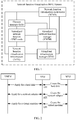
- FIG. 1 is an architectural diagram of an NFV system.
- the NFV system includes function nodes such as an NFVO, a VNFM, a network function virtualization infrastructure (network function virtualization infrastructure, NFVI), a virtualized infrastructure manager (virtualized infrastructure manager, VIM), an element manager (element manager, EM), and a VNF node.
- function nodes such as an NFVO, a VNFM, a network function virtualization infrastructure (network function virtualization infrastructure, NFVI), a virtualized infrastructure manager (virtualized infrastructure manager, VIM), an element manager (element manager, EM), and a VNF node.
- the VNFM is responsible for life cycle management of the VNF node, for example, instantiation, scale-out/scale-in, query, update, and termination.
- the VIM is a management ingress of infrastructure and resources, and provides VM resource management for the VNF node.
- the NFVO may perform scheduling functions such as operation, management, and coordination on the VIM. All VIMs and VNFMs in the NFV system are connected to the NFVO.
- scaling may be performed on the VNF node to adapt to different service requirements of the VNF node. For example, when a service of the VNF node is busy, the VNF node is scaled out to relieve service pressure of the VNF node; or when a service of the VNF node is idle, the VNF node is scaled in and some virtual machines are released for use by other VNF nodes, so that a virtual machine resource can be properly used.
- increasing a quantity of virtual machines that are being used by the VNF node means scaling out the VNF node
- reducing the quantity of virtual machines that are being used by the VNF node means scaling in the VNF node.
- scaling is performed on the VNF node by adding or deleting a virtual machine. For example, some new virtual machines are created for the VNF node at an infrastructure layer when the service is busy; or some virtual machines of the VNF node are deleted when the service is idle.
- the VNF node needs to preempt the VM resource with other VNF nodes to create a virtual machine, and there is a very high probability that the VM resource preemption fails.
- a VM creation operation is complex. Consequently, there is also a relatively high probability that the VM creation fails.
- the VNFM needs to invoke an API of the VIM for a plurality of times to complete the procedure, including invoking the APIs to apply for a network adapter, a hard disk, a VM, and the like.
- the VNFM also needs to invoke an API of the VIM for a plurality of times to delete a network adapter, a hard disk, a VM, and the like.
- a larger quantity of times of API invocation indicates a higher probability that a fault occurs.
- a plurality of times of API invocation also increases a probability of a VM creation failure (or a VM deletion failure). It can be learned that an existing solution of performing scaling by adding or deleting a virtual machine causes a relatively high probability of a VNF node scaling failure. If the VNF node fails to be scaled out, the service of the VNF node is affected. If the VNF node fails to be scaled in, the VM resource is not properly used. Consequently, other VNF nodes that need to be scaled out fail to obtain virtual machines through application, and services of these nodes are affected. In conclusion, service stability of the NFV system is affected in the prior art.
- An embodiment of the present invention provides a virtual machine scaling method, and a basic principle of the method is as follows: A virtual machine cluster is created in advance for a VNF node, and a power-on operation or a power-off operation is performed on a virtual machine in the virtual machine cluster to implement virtualized scaling. During scale-out, one or more virtual machines in a power-off state that are not used in the virtual machine cluster are powered on, and during scale-in, one or more virtual machines in a power-on state that are being used in the virtual machine cluster are powered off. In this way, no re-application of a virtual machine at an infrastructure layer is required.
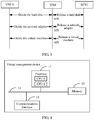
- FIG. 4 is a schematic composition diagram of a virtual management device according to an embodiment of the present invention.
- the virtual management device may be the VNFM in FIG. 1 .
- the virtual management device may include at least one processor 11, a memory 12, and a communications interface 13.
- the processor 11 is a control center of the virtual management device, and may be one processor or a collective name of a plurality of processing elements.
- the processor 11 is a central processing unit (Central Processing Unit, CPU); or may be an application-specific integrated circuit (application-specific integrated circuit, ASIC), or one or more integrated circuits configured to implement this embodiment of the present invention, for example, one or more microprocessors (digital signal processor, DSP) or one or more field programmable gate arrays (field programmable gate array, FPGA).
- CPU Central Processing Unit
- ASIC application-specific integrated circuit
- integrated circuits configured to implement this embodiment of the present invention, for example, one or more microprocessors (digital signal processor, DSP) or one or more field programmable gate arrays (field programmable gate array, FPGA).
- the processor 11 may perform various functions of the virtual management device by running or executing a software program stored in the memory 12 and by invoking data stored in the memory 12.
- the processor 11 may include one or more CPUs, for example, a CPU 0 and a CPU 1 shown in FIG. 4 .
- the virtual management device may include a plurality of processors, for example, the processor 11 and a processor 14 shown in FIG. 4 .
- Each of the processors may be a single-core processor (single-CPU) or a multi-core processor (multi-CPU).
- the processor herein may be one or more devices, circuits, and/or processing cores configured to process data (such as a computer program instruction).
- the memory 12 may be a read-only memory (read-only memory, ROM), a static storage device of another type that can store static information and an instruction, a random access memory (random access memory, RAM), or a dynamic storage device of another type that can store information and an instruction; or may be an electrically erasable programmable read-only memory (electrically erasable programmable read-only memory, EEPROM), a compact disc read-only memory (compact disc read-only memory, CD-ROM) or another compact disc storage, an optical disc storage (including a compact disc, a laser disc, an optical disc, a digital versatile disc, a Blu-ray disc, or the like), a magnetic disk storage medium or another magnetic storage device, or any other medium that can be configured to carry or store expected program code in a form of an instruction or a data structure and that can be accessed by a computer.
- the memory 12 is not limited thereto.
- the memory 12 may exist independently, and is connected to the processor 11 by using a communications bus 14. Alternatively,
- the memory 12 is configured to store a software program for executing the solutions in the present invention, and the software program is executed under control of the processor 11.
- the communications interface 13 is configured to use any apparatus like a transceiver to communicate with another device in an NFV system, for example, the NFVO, the EM, or the VIM in FIG. 1 .
- the communications interface 13 may be further configured to communicate with a communications network, such as the Ethernet, a radio access network (radio access network, RAN), or a wireless local area network (wireless local area network, WLAN).
- the communications interface 13 may include a receiving unit for implementing a receiving function and a sending unit for implementing a sending function.
- a structure of the device shown in FIG. 4 does not constitute any limitation on the virtual management device, and the virtual management device may include more or fewer components than those shown in the figure, or combine some components, or have different component arrangements.
- the processor 11 first creates a virtual machine cluster for a target VNF node, where the cluster includes Q virtual machines. Specifically, the processor 11 first needs to sequentially apply for Q virtual machines for the target VNF node. For a specific creation procedure, refer to FIG. 2 . Details are not described herein again.
- an identifier of the virtual machine cluster is bound to an identifier of the target VNF node. For example, a mapping relationship between the identifier of the target VNF node and the virtual machine cluster is established.
- the processor 11 may set a virtual machine that is not currently used by the target VNF node in the virtual machine cluster to a power-off state, and set a virtual machine currently used by the target VNF node in the virtual machine cluster to a power-on state.
- an NFVO (or a device integrating an NFVO and an EM, or an EM) sends a virtual machine scaling request to the VNFM.
- the request carries the identifier of the target VNF node, information about a target virtual machine, and a virtual machine status identifier.
- the target virtual machine is one or more virtual machines in the virtual machine cluster of the target VNF node.
- the information about the target virtual machine may be a quantity of target virtual machines or an identifier of the target virtual machine.
- the virtual machine status identifier is a power-on identifier or a power-off identifier.
- the processor 11 receives the virtual machine scaling request through the communications interface 13.
- the processor 11 determines the virtual machine cluster of the target VNF node based on the identifier of the target VNF node, and determines the target virtual machine in the virtual machine cluster based on the information about the target virtual machine. For example, if the information about the target virtual machine is the quantity of target virtual machines, for example, 2, and the virtual machine status identifier is PowerOnVMs, the processor 11 determines any two virtual machines in a power-off state in the virtual machine cluster as target virtual machines.
- the processor 11 determines the virtual machine A and the virtual machine B that are in a power-off state in the virtual machine cluster as target virtual machines.
- the processor 11 sets the target virtual machine to a power-on state based on the virtual machine status identifier, so as to scale out the target VNF node, or sets the target virtual machine to a power-off state based on the virtual machine status identifier, so as to scale in the target VNF node.
- a VM resource may be controlled by the NFVO, or may be controlled by the VNFM.
- a procedure in which the processor 11 sets the target virtual machine to the power-on state or the power-off state based on the virtual machine status identifier varies with the two cases.
- the processor 11 sends a virtual machine resource operation request message to the NFVO to apply for a grant to operate the VM resource.
- the processor 11 receives, through the communications interface 13, a virtual machine resource operation grant message returned by the NFVO, to obtain the grant from the NFVO.
- the processor 11 sends a virtual machine operation instruction to a VIM through the communications interface 13.
- the virtual machine operation instruction may carry the identifier of the target virtual machine and the virtual machine status identifier.
- the VIM performs a power-on operation or a power-off operation on the target virtual machine based on the virtual machine status identifier.
- the processor 11 When the VM resource is controlled by the NFVO, after receiving the virtual machine scaling request through the communications interface 13, the processor 11 sends a virtual machine operation instruction to the NFVO. Likewise, the virtual machine operation instruction carries the identifier of the target virtual machine and the virtual machine status identifier. Then the NFVO forwards the virtual machine operation instruction to a VIM, and after receiving the virtual machine operation instruction, the VIM may perform a power-on operation or a power-off operation on the target virtual machine based on the virtual machine status identifier.
- a configuration parameter of a VNF node in the NFV system is configured in an NSD or a VNFD, and the configuration parameter includes parameters such as a quantity Q of virtual machines included in the virtual machine cluster of the VNF node, and a management capability upper limit of the VNF node.
- the NFV system may include the NSD and the VNFD, and both the NSD and the VNFD have a connection relationship with the VNFM.
- Q may be the management capability upper limit (namely, the first threshold) of the target VNF node, namely, a maximum quantity of virtual machines that can be managed by the target VNF node.
- Q may be any integer greater than or equal to 1 and less than the management capability upper limit.
- the processor 11 may further periodically query for a ratio P/Q of a quantity P of used virtual machines (namely, a quantity of virtual machines in a power-on state) in the virtual machine cluster of the target VNF node to Q. If P/Q is greater than a second threshold, in other words, most virtual machines in the virtual machine cluster are running, the processor 11 may create M new virtual machines for the target VNF node, and add the M virtual machines to the virtual machine cluster of the target VNF node. It should be noted that M is greater than or equal to 1 and less than or equal to a difference between the first threshold and Q. In other words, the quantity of virtual machines in the virtual machine cluster cannot exceed the management upper limit of the target VNF node after the M virtual machines are added. Certainly, the configuration parameter of the target VNF node further includes the first threshold and the second threshold.
- FIG. 5 is a flowchart of a virtual machine scaling method according to an embodiment of the present invention. As shown in FIG. 5 , the method may include the following steps.
- a VNFM obtains a configuration parameter of a target VNF node, where the configuration parameter includes a quantity Q of virtual machines included in a virtual machine cluster of the target VNF node.
- the VNFM before performing instantiation (in other words, creating the virtual machine cluster for the target VNF node), the VNFM first invokes a VNF interface of an NSD or a VNFD, to obtain the configuration parameter of the target VNF node through the interface.
- the configuration parameter may include the quantity Q of virtual machines included in the virtual machine cluster of the target VNF nod, a first threshold, a second threshold, and the like.
- the first threshold may be a management capability upper limit of the target VNF node
- the second threshold may be an upper limit of a proportion of virtual machines that are being used in the virtual machine cluster.
- Q may be the management capability upper limit (namely, the first threshold) of the target VNF node, or may be any integer greater than or equal to 1 and less than the management capability upper limit.
- the VNFM creates the virtual machine cluster for the target VNF node, where the virtual machine cluster includes Q virtual machines.
- a procedure in which the VNFM creates a virtual machine for the target VNF node varies.
- the VNFM invokes a create VMS interface of the NFVO to create the virtual machine.
- the VNFM sends a virtual machine creation instruction to the NFVO through the create VMS interface, and the instruction carries an identifier of the virtual machine A.
- the NFVO sends the virtual machine creation instruction to a VIM through a create VMS interface of the VIM, to instruct the VIM to create the virtual machine A.
- the VIM creates the virtual machine A at an infrastructure layer NFVI.
- the VNFM when the VM resource is controlled by the NFVO, and a virtual machine A is to be created, the VNFM first sends virtual machine resource operation request information to the NFVO. Specifically, the VNFM invokes a GrantLifeCycle interface of the NFVO to apply for a grant to operate the VM resource. In other words, the VNFM sends the virtual machine resource operation request message to the NFVO through the GrantLifeCycle interface of the NFVO. Subsequently, the NFVO sends a virtual machine resource operation grant message to the VNFM through the GrantLifeCycle interface.
- the VNFM then obtains the grant to operate the VM resource, and further sends a virtual machine creation instruction to a VIM through a createVMS interface of the VIM, to instruct the VIM to create the virtual machine A. After receiving the instruction, the VIM creates the virtual machine A at an infrastructure layer NFVI.
- the VNFM may set a virtual machine that needs to be used in the Q virtual machines to a power-on state, and set remaining virtual machines in the Q virtual machines to a power-off state.
- the VNFM receives a virtual machine scaling request sent by the NFVO, where the virtual machine scaling request carries an identifier of the target VNF node, information about a target virtual machine, and a virtual machine status identifier, and the virtual machine status identifier is a power-on identifier or a power-off identifier.
- the target virtual machine is one or more virtual machines in the virtual machine cluster of the target VNF node.
- the information about the target virtual machine may be a quantity of target virtual machines, for example, 2, or may be identifiers of target virtual machines, for example, a "virtual machine A" and a “virtual machine B".
- the information about the target virtual machine may be a quantity of target virtual machines and identifiers of target virtual machines. For example, there are three target virtual machines, and the three target virtual machines are a "virtual machine A", a "virtual machine B", and a "virtual machine C".
- the VNFM determines the virtual machine cluster of the target VNF node based on the identifier of the target VNF node, and determines the target virtual machine in the virtual machine cluster based on the information about the target virtual machine.
- the processor 11 determines any two virtual machines in a power-off state in the virtual machine cluster as target virtual machines, and may determine identifiers of the target virtual machines at the same time. If the information about the target virtual machine is identifiers of target virtual machines, for example, a "virtual machine A" and a "virtual machine B", and the virtual machine status identifier is PowerOnVMs, the processor 11 determines the virtual machine A and the virtual machine B that are in a power-off state in the virtual machine cluster as target virtual machines.
- the VNFM sets a running status of the virtual machine based on the virtual machine status identifier, where the target virtual machine is set to a power-on state if the virtual machine status identifier is a power-on state, so as to scale out the target VNF node, or the target virtual machine is set to a power-off state if the virtual machine status identifier is a power-off state, so as to scale in the target VNF node.
- the VNFM when the VM resource is controlled by the NFVO or is controlled by the VNFM, a procedure in which the VNFM powers on or off a virtual machine varies.
- the VNFM receives the virtual machine scaling request sent by the NFVO, and the request carries the virtual machine status identifier (which may be a power-on identifier or a power-off identifier).
- the VNFM sends a virtual machine resource operation request message to the NFVO to apply for a grant to operate the VM resource, and receives a virtual machine resource operation grant message returned by the NFVO, to obtain the grant from the NFVO.
- the VNFM sends a virtual machine operation instruction to the VIM.
- the virtual machine operation instruction carries the identifier of the target virtual machine and the virtual machine status identifier.
- the VIM may perform a power-on operation or a power-off operation on the target virtual machine based on the virtual machine status identifier.
- the VNFM When the VM resource is controlled by the NFVO, after receiving the virtual machine scaling request sent by the NFVO, the VNFM sends a virtual machine operation instruction to the NFVO. Likewise, the virtual machine operation instruction carries the identifier of the target virtual machine and the virtual machine status identifier. Then the NFVO forwards the virtual machine operation instruction to the VIM, and after receiving the virtual machine operation instruction, the VIM may perform a power-on operation or a power-off operation on the target virtual machine based on the virtual machine status identifier.
- step 106 may be further performed after step 105.
- the VNFM updates the virtual machine cluster.
- the VNFM may further periodically query for a ratio P/Q of a quantity P of used virtual machines (namely, a quantity of virtual machines in a power-on state) in the virtual machine cluster of the target VNF node to Q. If P/Q is greater than the second threshold (for example, 90%), in other words, most virtual machines in the virtual machine cluster are running, the VNFM may create M new virtual machines for the target VNF node, and add the M virtual machines to the virtual machine cluster of the target VNF node.
- P/Q is greater than the second threshold (for example, 90%)
- the VNFM may create M new virtual machines for the target VNF node, and add the M virtual machines to the virtual machine cluster of the target VNF node.
- M is greater than or equal to 1 and less than or equal to a difference between the first threshold and Q.
- the quantity of virtual machines in the virtual machine cluster cannot exceed the management upper limit of the target VNF node after the M virtual machines are added.
- the configuration parameter of the target VNF node further includes the first threshold and the second threshold.
- the VNFM may further provide a new interface similar to a SetScalingType interface.
- the NFVO may send scaling indication information to the VNFM through the interface, to indicate a scaling mode.
- the scaling indication information may be an indication field, and the NFVO sends a scaling mode indication field to the VNFM through the interface similar to the SetScalingType interface, to indicate a scaling mode to the VNFM.
- a field "0" is used to instruct the VNFM to perform scaling on the target VNF node by adding or deleting a virtual machine; and a field "1" is used to instruct the VNFM to perform scaling on the target VNF node by powering on or off a virtual machine.
- the scaling mode indication information is used to instruct the VNFM to perform scaling on the target VNF node by powering on or off a virtual machine.
- a virtual machine cluster is created in advance for a VNF node, and a power-on operation or a power-off operation is performed on a virtual machine in the virtual machine cluster to implement virtualized scaling.
- a power-on operation or a power-off operation is performed on a virtual machine in the virtual machine cluster to implement virtualized scaling.
- no re-application of a virtual machine at an infrastructure layer is required.
- This avoids a VNF node scale-out failure caused when a virtual machine is applied for but a VM resource fails to be preempted.
- a power-on operation or a power-off operation is performed only on a virtual machine that has been obtained through application. Therefore, fast scaling of the VNF node can be ensured.
- a VM resource is controlled by an NFVO.
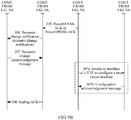
- an embodiment of the present invention provides a virtual machine scaling method. As shown in FIG. 8A and FIG. 8B , the method may include the following steps.
- the NFVO (or a device integrating an EM and an NFVO, or an EM) initiates a virtual machine scaling request to a VNFM, where the request carries an identifier of a target VNF node, an identifier of a target VM, and a virtual machine status identifier (a power-on identifier PowerOnVMs or a power-off identifier PowerOffVMs).
- a virtual machine status identifier a power-on identifier PowerOnVMs or a power-off identifier PowerOffVMs.
- the target VM herein is one or more virtual machines in a virtual machine cluster of the target VNF node.
- the EM/the NFVO invokes a scaling interface of the VNFM to initiate the virtual machine scaling request to the VNFM.
- the VNFM invokes a PowerOnVMs interface or a PowerOffVMs interface of the NFVO, to instruct the NFVO to perform a power-on operation or a power-off operation on the VM.
- the VNFM first determines the virtual machine cluster of the target VNF node based on the identifier of the node, and then determines the target virtual machine in the virtual machine cluster based on the information about the target virtual machine. Then the VNFM may invoke the PowerOnVMs interface or the PowerOffVMs interface of the NFVO to perform a power-on operation or a power-off operation on each target VM.
- the VNFM may send the power-on identifier PowerOnVMs and the identifier of the target VM to the NFVO through the PowerOnVMs interface of the NFVO.
- the VNFM sends the power-off identifier PowerOffVMs and the identifier of the target VM to the NFVO through the PowerOffVMs interface of the NFVO.
- the NFVO invokes a PowerOnVMs interface of a VIM to perform a power-on operation on the target VM, or invokes a PowerOffVMs interface of a VIM to perform a power-off operation on the target VM.
- the NFVO may send the power-on identifier PowerOnVMs and the identifier of the target VM to the VIM through the PowerOnVMs interface of the VIM, so that the VIM performs a power-on operation on the target VM.
- the NFVO sends the power-off identifier PowerOffVMs and the identifier of the target VM to the VIM through the PowerOffVMs interface of the VIM, so that the VIM performs a power-off operation on the target VM.
- the VIM returns a power-on operation acknowledgement message PowerOnVMs ACK (Acknowledgement) or a power-off operation acknowledgement message PowerOffVMs ACK to the NFVO.
- the power-on operation acknowledgement message PowerOnVMs ACK is used to notify the NFVO that a power-on operation has been performed on the target virtual machine.
- the power-off operation acknowledgement message PowerOffVMs ACK is used to notify the NFVO that a power-off operation has been performed on the target virtual machine.
- the NFVO forwards the PowerOnVMs ACK or the PowerOffVMs ACK to the VNFM.
- the VNFM sends a scaling acknowledgement message scaling ACK to the NFVO.
- the scaling ACK is used to notify the NFVO that a scale-out operation or a scale-in operation has been performed on the target VNF node.
- steps 205a and 205b may be further performed between step 205 and step 206.
- the VNFM invokes an interface of a VNF to configure a new virtual machine.
- the VNFM receives a configuration acknowledgement message returned by the VNF.
- the VNFM may further develop an interface similar to a SetScalingType interface, and the NFVO invokes this interface of the VNFM to instruct the VNFM to perform scaling on the target VNF node by adding or deleting a virtual machine, or to perform scaling on the target VNF node by powering on or off a virtual machine.
- the NFVO may further send a scaling mode indication field to the VNFM through the interface similar to the SetScalingType interface, to indicate a scaling mode to the VNFM.
- a field "0" is used to instruct the VNFM to perform scaling on the target VNF node by adding or deleting a virtual machine; and a field "1" is used to instruct the VNFM to perform scaling on the target VNF node by powering on or off a virtual machine.
- the scaling mode indication field is used to instruct the VNFM to perform scaling on the target VNF node by powering on or off a virtual machine.
- a VM resource is controlled by a VNFM.
- VNFM virtual machine scaling method
- An NFVO (or a device integrating an EM and an NFVO, or an EM) initiates a virtual machine scaling request to a VNFM, where the request carries an identifier of a target VM and a virtual machine status identifier (a power-on identifier PowerOnVMs or a power-off identifier PowerOffVMs).
- a virtual machine status identifier a power-on identifier PowerOnVMs or a power-off identifier PowerOffVMs.
- the target VM herein is one or more virtual machines in a virtual machine cluster of the target VNF node.
- the EM/the NFVO invokes a scaling interface of the VNFM to initiate the virtual machine scaling request to the VNFM.
- the VNFM invokes a GrantLifeCycle interface of the NFVO to apply for a resource operation grant.
- the VNFM sends a virtual machine resource operation request message to the NFVO through the GrantLifeCycle interface of the NFVO.
- the VNFM receives a virtual machine resource operation grant message sent by the NFVO.
- the VNFM invokes a PowerOnVMs interface of a VIM to perform a power-on operation on the target VM, or invokes a PowerOffVMs interface of a VIM to perform a power-off operation on the target VM.
- the VNFM first determines the virtual machine cluster of the target VNF node based on the identifier of the node, and then determines the target virtual machine in the virtual machine cluster based on the information about the target virtual machine. Then the VNFM may invoke the PowerOnVMs interface or the PowerOffVMs interface of the VIM to perform a power-on operation on the target VM.
- the VNFM may send the power-on identifier PowerOnVMs and the identifier of the target VM to the VIM through the PowerOnVMs interface of the VIM, so that the VIM performs a power-on operation on the target VM.
- the VNFM sends the power-off identifier PowerOffVMs and the identifier of the target VM to the VIM through the PowerOffVMs interface of the VIM, so that the VIM performs a power-off operation on the target VM.
- the VIM returns a power-on operation acknowledgement message PowerOnVMs ACK or a power-off operation acknowledgement message PowerOffVMs ACK to the VNFM.
- the power-on operation acknowledgement message PowerOnVMs ACK is used to notify the NFVO that a power-on operation has been performed on the target virtual machine.
- the power-off operation acknowledgement message PowerOffVMs ACK is used to notify the NFVO that a power-off operation has been performed on the target virtual machine.
- the VNFM sends a resource change notification (resource change notification) to the NFVO.
- the NFVO returns a resource change acknowledgement message to the VNFM.
- the VNFM sends a scaling acknowledgement message scaling ACK to the NFVO.
- the scaling acknowledgement message scaling ACK is used to notify the NFVO that a scale-out operation or a scale-in operation has been performed on the target VNF node.
- steps 307a and 307b may be further performed between step 307 and step 308.
- the VNFM invokes an interface of a VNF to configure a new virtual machine.
- the VNFM receives a configuration acknowledgement message returned by the VNF.
- the VNFM may further develop an interface similar to a SetScalingType interface, and the NFVO invokes this interface of the VNFM to instruct the VNFM to perform scaling on the target VNF node by adding or deleting a virtual machine, or to perform scaling on the target VNF node by powering on or off a virtual machine.
- the NFVO invokes this interface of the VNFM to instruct the VNFM to perform scaling on the target VNF node by powering on or off a virtual machine.
- the NFVO may further send a scaling mode indication field to the VNFM through the interface similar to the SetScalingType interface, to indicate a scaling mode to the VNFM.
- a field "0" is used to instruct the VNFM to perform scaling on the target VNF node by adding or deleting a virtual machine; and a field "1" is used to instruct the VNFM to perform scaling on the target VNF node by powering on or off a virtual machine.
- the scaling mode indication field is used to instruct the VNFM to perform scaling on the target VNF node by powering on or off a virtual machine.
- each network element such as the virtual management device includes a corresponding hardware structure and/or software module for performing each function.
- a person of skilled in the art should be easily aware that the algorithm steps in the examples described with reference to the embodiments disclosed in this specification can be implemented by hardware or a combination of hardware and computer software in the present invention. Whether a function is performed by hardware or hardware driven by computer software depends on particular applications and design constraints of the technical solutions. A person skilled in the art may use different methods to implement the described functions for each particular application, but it should not be considered that the implementation goes beyond the scope of the present invention.
- the virtual management device may be divided into function modules based on the foregoing method example.
- each function module may be obtained through division based on each corresponding function, or two or more functions may be integrated into one processing module.
- the integrated module may be implemented in a form of hardware, or may be implemented in a form of a software function module. It should be noted that the module division in the embodiments of the present invention is an example, and is merely logical function division, and may be other division in an actual implementation.
- FIG. 10 is a possible schematic composition diagram of the virtual management device in the foregoing embodiments.
- the virtual management device may include a creation unit 401, a receiving unit 402, a determining unit 403, and a setting unit 404.
- the creation unit 401 is configured to support the virtual management device in performing step 102 in the virtual machine scaling method shown in FIG. 5 .
- the receiving unit 402 is configured to support the virtual management device in performing step 101 and step 103 in the virtual machine scaling method shown in FIG. 5 , step 201 and step 205 in the virtual machine scaling method shown in FIG. 8A and FIG. 8B , and step 301, step 303, and step 307 in the virtual machine scaling method shown in FIG. 9A and FIG. 9B .
- the determining unit 403 is configured to support the virtual management device in performing step 404 in the virtual machine scaling method shown in FIG. 5 .
- the setting unit 404 is configured to support the virtual management device in performing step 105 in the virtual machine scaling method shown in FIG. 5 , step 202 in the virtual machine scaling method shown in FIG. 8A and FIG. 8B , and steps 302 to 304 in the virtual machine scaling method shown in FIG. 9A and FIG. 9B .
- FIG. 11 is another possible schematic composition diagram of the virtual management device in the foregoing embodiments.
- the virtual management device includes a processing module 501 and a communications module 502.
- the processing module 81 is configured to control and manage an action of the virtual management device.
- the processing module 501 is configured to support the virtual management device in performing step 102 and steps 104 to 106 in FIG. 5 , step 202 in FIG. 8A , steps 302 and 304 in FIG. 9A , and/or is configured to perform another process of the technology described in this specification.
- the communications module 82 is configured to support the virtual management device in communicating with another network entity, for example, communicating with a function module or a network entity shown in FIG. 1 .
- the virtual management device may further include a storage module 503, configured to store program code and data of the virtual management device.
- the processing module 501 may be a processor or a controller.
- the controller/processor may implement or execute various examples of logical blocks, modules, and circuits described with reference to content disclosed in the present invention.
- the processor may be a combination that implements a computing function, for example, a combination of one or more microprocessors or a combination of a DSP and a microprocessor.
- the communications module 502 may be a transceiver, a transceiver circuit, a communications interface, or the like.
- the storage module 503 may be a memory.
- the virtual management device in this embodiment of the present invention may be the virtual management device shown in FIG. 4 .
- the virtual management device provided in the embodiments of this application may be configured to perform the foregoing virtual machine scaling method, for technical effects that can be obtained by the virtual management device, refer to the foregoing method embodiments. Details are not described herein again in the embodiments of this application.
- All or some of the foregoing embodiments may be implemented by using software, hardware, firmware, or any combination thereof.
- a software program is used to implement the embodiments, the embodiments may be implemented completely or partially in a form of a computer program product.
- the computer program product includes one or more computer instructions.
- the computer program instructions When the computer program instructions are loaded and executed on a computer, the procedures or functions according to the embodiments of this application are all or partially generated.
- the computer may be a general-purpose computer, a dedicated computer, a computer network, or other programmable apparatuses.
- the computer instructions may be stored in a computer readable storage medium or may be transmitted from a computer readable storage medium to another computer readable storage medium.
- the computer instructions may be transmitted from a website, computer, server, or data center to another website, computer, server, or data center in a wired (for example, a coaxial cable, an optical fiber, or a digital subscriber line (digital subscriber line, DSL)) or wireless (for example, infrared, radio, microwave, or the like) manner.
- the computer readable storage medium may be any usable medium accessible by a computer, or a data storage device, such as a server or a data center, integrating one or more usable media.
- the usable medium may be a magnetic medium (for example, a floppy disk, a hard disk, or a magnetic tape), an optical medium (for example, a DVD), a semiconductor medium (for example, a solid state disk (solid state disk, SSD)), or the like.
- a magnetic medium for example, a floppy disk, a hard disk, or a magnetic tape
- an optical medium for example, a DVD
- a semiconductor medium for example, a solid state disk (solid state disk, SSD)
- the disclosed system, apparatus, and method may be implemented in other manners.
- the described apparatus embodiment is merely an example.
- the module or unit division is merely logical function division and may be other division in an actual implementation.
- a plurality of units or components may be combined or integrated into another system, or some features may be ignored or not performed.
- the displayed or discussed mutual couplings or direct couplings or communication connections may be implemented by using some interfaces.
- the indirect couplings or communication connections between the apparatuses or units may be implemented in electronic, mechanical, or other forms.
- the units described as separate parts may or may not be physically separate, and parts displayed as units may or may not be physical units, may be located in one position, or may be distributed on a plurality of network units. Some or all of the units may be selected based on actual requirements to achieve the objectives of the solutions of the embodiments.
- functional units in the embodiments of this application may be integrated into one processing unit, or each of the units may exist alone physically, or two or more units are integrated into one unit.
- the integrated unit may be implemented in a form of hardware, or may be implemented in a form of a software functional unit.
- the integrated unit When the integrated unit is implemented in the form of a software functional unit and sold or used as an independent product, the integrated unit may be stored in a computer readable storage medium.
- the computer software product is stored in a storage medium and includes several instructions for instructing a computer device (which may be a personal computer, a server, or a network device) or a processor to perform all or some of the steps of the methods described in the embodiments of this application.
- the foregoing storage medium includes: any medium that can store program code, such as a flash memory, a removable hard disk, a read-only memory, a random access memory, a magnetic disk, or an optical disc.
Landscapes
- Engineering & Computer Science (AREA)
- Software Systems (AREA)
- Theoretical Computer Science (AREA)
- General Physics & Mathematics (AREA)
- Physics & Mathematics (AREA)
- General Engineering & Computer Science (AREA)
- Signal Processing (AREA)
- Computer Networks & Wireless Communication (AREA)
- Debugging And Monitoring (AREA)
- Hardware Redundancy (AREA)
- Stored Programmes (AREA)
- Mobile Radio Communication Systems (AREA)
- Power Sources (AREA)
Applications Claiming Priority (2)
| Application Number | Priority Date | Filing Date | Title |
|---|---|---|---|
| CN201710184109.9A CN108628660B (zh) | 2017-03-24 | 2017-03-24 | 一种虚拟机扩缩容方法及虚拟管理设备 |
| PCT/CN2018/077419 WO2018171392A1 (fr) | 2017-03-24 | 2018-02-27 | Procédé d'expansion et de réduction de capacité de machine virtuelle et dispositif de gestion virtuelle |
Publications (3)
| Publication Number | Publication Date |
|---|---|
| EP3584998A1 true EP3584998A1 (fr) | 2019-12-25 |
| EP3584998A4 EP3584998A4 (fr) | 2019-12-25 |
| EP3584998B1 EP3584998B1 (fr) | 2021-03-17 |
Family
ID=63584969
Family Applications (1)
| Application Number | Title | Priority Date | Filing Date |
|---|---|---|---|
| EP18770216.2A Active EP3584998B1 (fr) | 2017-03-24 | 2018-02-27 | Procédé d'expansion et de réduction de capacité de machine virtuelle et dispositif de gestion virtuelle |
Country Status (3)
| Country | Link |
|---|---|
| EP (1) | EP3584998B1 (fr) |
| CN (1) | CN108628660B (fr) |
| WO (1) | WO2018171392A1 (fr) |
Cited By (4)
| Publication number | Priority date | Publication date | Assignee | Title |
|---|---|---|---|---|
| WO2021259064A1 (fr) * | 2020-06-24 | 2021-12-30 | 中兴通讯股份有限公司 | Procédé et système de réduction/augmentation de capacité d'une grappe, terminal de commande de réduction/augmentation de capacité et support |
| US20220350632A1 (en) * | 2021-05-03 | 2022-11-03 | Vmware, Inc. | Automated referencing and resolution of properties across virtual network functions and network service |
| US20220413937A1 (en) * | 2019-12-02 | 2022-12-29 | Zte Corporation | Node management method, device and apparatus, storage medium, and system |
| CN116126464A (zh) * | 2022-12-20 | 2023-05-16 | 马上消费金融股份有限公司 | 虚拟机管理方法、装置及系统 |
Families Citing this family (10)
| Publication number | Priority date | Publication date | Assignee | Title |
|---|---|---|---|---|
| CN111190685B (zh) * | 2018-11-15 | 2023-07-21 | 中国移动通信有限公司研究院 | 虚拟机数量测试系统、方法、装置、电子设备及存储介质 |
| CN109714239B (zh) * | 2018-12-27 | 2021-04-27 | 新华三技术有限公司 | 一种管理消息的下发方法、vnfm设备和服务器 |
| CN111399967B (zh) * | 2019-01-02 | 2023-03-31 | 中国移动通信有限公司研究院 | 一种基于容器的虚拟资源管理方法、装置及系统 |
| CN111147565B (zh) * | 2019-12-22 | 2023-01-24 | 北京浪潮数据技术有限公司 | 一种集群节点控制方法、装置、设备及可读存储介质 |
| CN112118131B (zh) * | 2020-09-01 | 2023-07-25 | 紫光云(南京)数字技术有限公司 | 一种高可靠快捷扩容的云资源管理方法 |
| CN115113971B (zh) * | 2021-03-22 | 2025-03-21 | 阿里巴巴创新公司 | Nfv资源编排方法、设备、系统及存储介质 |
| CN113867899A (zh) * | 2021-10-15 | 2021-12-31 | 云宏信息科技股份有限公司 | 弹性伸缩组配置方法、计算机可读存储介质及云平台 |
| CN113867900A (zh) * | 2021-10-15 | 2021-12-31 | 云宏信息科技股份有限公司 | 虚拟化系统的弹性伸缩构建方法、系统及可读存储介质 |
| CN115037615B (zh) * | 2022-06-23 | 2024-08-06 | 新华智云科技有限公司 | 基于云平台的自适应应用扩容方法 |
| CN115543862B (zh) * | 2022-09-27 | 2023-09-01 | 超聚变数字技术有限公司 | 内存管理方法及相关装置 |
Family Cites Families (17)
| Publication number | Priority date | Publication date | Assignee | Title |
|---|---|---|---|---|
| TWI456944B (zh) * | 2012-05-02 | 2014-10-11 | Quanta Comp Inc | 管理方法及其系統 |
| CN104035808B (zh) * | 2013-03-04 | 2018-03-27 | 中兴通讯股份有限公司 | 虚拟机集合的部署方法和装置 |
| CN105103507B (zh) * | 2014-01-28 | 2018-01-05 | 华为技术有限公司 | 网络功能虚拟化的方法及装置 |
| CN103810020B (zh) * | 2014-02-14 | 2017-08-29 | 华为技术有限公司 | 虚拟机弹性伸缩方法及装置 |
| WO2015126430A1 (fr) * | 2014-02-24 | 2015-08-27 | Hewlett-Packard Development Company, L.P. | Gestion de fonction de réseau virtuel avec des machines virtuelles désactivées |
| US9424065B2 (en) * | 2014-06-26 | 2016-08-23 | Vmware, Inc. | Methods and apparatus to scale application deployments in cloud computing environments using virtual machine pools |
| EP2988214A1 (fr) * | 2014-08-20 | 2016-02-24 | Alcatel Lucent | Procédé permettant d'équilibrer une charge, système, gestionnaire d'élasticité et produit de programme informatique |
| KR102438042B1 (ko) * | 2014-09-25 | 2022-08-29 | 애플 인크. | 네트워크 기능 가상화 |
| EP3278221A1 (fr) * | 2015-04-02 | 2018-02-07 | Telefonaktiebolaget LM Ericsson (publ) | Technique de mise à l'échelle d'une application comprenant un ensemble de machines virtuelles |
| US10671420B2 (en) * | 2015-05-07 | 2020-06-02 | Futurewei Technologies, Inc. | System and method for dynamic virtualized network function descriptor management |
| WO2017002812A1 (fr) * | 2015-06-30 | 2017-01-05 | 日本電気株式会社 | Dispositif de gestion d'infrastructure de virtualisation, dispositif de gestion de fonction de réseau virtuel, procédé de gestion de machine virtuelle et programme |
| CN105005506B (zh) * | 2015-07-17 | 2017-11-10 | 中国人民解放军国防科学技术大学 | 一种虚拟化云中容错资源供给方法 |
| CN104951367B (zh) * | 2015-07-17 | 2018-02-16 | 中国人民解放军国防科学技术大学 | 一种虚拟化云中容错任务调度方法 |
| CN106375101B (zh) * | 2015-07-20 | 2019-08-27 | 华为技术有限公司 | 一种生命周期管理方法及装置 |
| CN106506186A (zh) * | 2015-09-08 | 2017-03-15 | 中兴通讯股份有限公司 | 重建虚拟网络功能的方法和装置 |
| CN105468435A (zh) * | 2015-12-25 | 2016-04-06 | 赛特斯信息科技股份有限公司 | Nfv动态资源分配方法 |
| CN106227582B (zh) * | 2016-08-10 | 2019-06-11 | 华为技术有限公司 | 弹性伸缩方法及系统 |
-
2017
- 2017-03-24 CN CN201710184109.9A patent/CN108628660B/zh active Active
-
2018
- 2018-02-27 EP EP18770216.2A patent/EP3584998B1/fr active Active
- 2018-02-27 WO PCT/CN2018/077419 patent/WO2018171392A1/fr not_active Ceased
Cited By (5)
| Publication number | Priority date | Publication date | Assignee | Title |
|---|---|---|---|---|
| US20220413937A1 (en) * | 2019-12-02 | 2022-12-29 | Zte Corporation | Node management method, device and apparatus, storage medium, and system |
| US12566642B2 (en) * | 2019-12-02 | 2026-03-03 | Zte Corporation | Node management method, device and apparatus, storage medium, and system |
| WO2021259064A1 (fr) * | 2020-06-24 | 2021-12-30 | 中兴通讯股份有限公司 | Procédé et système de réduction/augmentation de capacité d'une grappe, terminal de commande de réduction/augmentation de capacité et support |
| US20220350632A1 (en) * | 2021-05-03 | 2022-11-03 | Vmware, Inc. | Automated referencing and resolution of properties across virtual network functions and network service |
| CN116126464A (zh) * | 2022-12-20 | 2023-05-16 | 马上消费金融股份有限公司 | 虚拟机管理方法、装置及系统 |
Also Published As
| Publication number | Publication date |
|---|---|
| CN108628660B (zh) | 2021-05-18 |
| WO2018171392A1 (fr) | 2018-09-27 |
| EP3584998A4 (fr) | 2019-12-25 |
| EP3584998B1 (fr) | 2021-03-17 |
| CN108628660A (zh) | 2018-10-09 |
Similar Documents
| Publication | Publication Date | Title |
|---|---|---|
| EP3584998B1 (fr) | Procédé d'expansion et de réduction de capacité de machine virtuelle et dispositif de gestion virtuelle | |
| US12020055B2 (en) | VNF service instantiation method and apparatus | |
| US11146453B2 (en) | Method and apparatus for creating network slice, and communications system | |
| CN107924383B (zh) | 用于网络功能虚拟化资源管理的系统和方法 | |
| CN110720091B (zh) | 用于与托管的应用/虚拟网络功能(vnf)协调基础设施升级的方法 | |
| US10263911B2 (en) | System and method for resource management | |
| EP3503472B1 (fr) | Procédé de gestion d'instance de tranche et appareil | |
| US11210132B2 (en) | Virtual machine migration in virtualization environment having different virtualization systems | |
| JP6636142B2 (ja) | スケールアウト関連付けの方法および装置、ならびにシステム | |
| CN106776998B (zh) | 一种数据库服务提供方法及服务器 | |
| US10541862B2 (en) | VNF processing policy determining method, apparatus, and system | |
| EP3855680A1 (fr) | Procédé et système de gestion de politique et appareil | |
| EP4024767A1 (fr) | Procédé d'instanciation de vnf, nfvo, vim, vnfm et système | |
| WO2015158108A1 (fr) | Procédé de changement de ressource de machine virtuelle, dispositif et dispositif à fonction de réseau virtuel | |
| WO2020228377A1 (fr) | Procédé et dispositif de configuration de mémoire miroir et support d'enregistrement informatique | |
| CN108345496B (zh) | 一种运行应用程序的方法及装置 | |
| CN110795205A (zh) | 基于软件容器提供云端服务的系统及方法 | |
| CN105100180A (zh) | 集群节点动态加载的方法、装置及系统 | |
| CN105094947B (zh) | 一种虚拟计算资源的配额管理方法及系统 | |
| WO2019109948A1 (fr) | Procédé et dispositif de gestion de paas, et support de stockage | |
| CN111045778A (zh) | 一种虚拟机的创建方法、装置、服务器及存储介质 | |
| CN121217735A (zh) | 一种nfv基础设施功能卸载的方法及相关装置 | |
| WO2018014356A1 (fr) | Procédé et appaeil de chargement |
Legal Events
| Date | Code | Title | Description |
|---|---|---|---|
| STAA | Information on the status of an ep patent application or granted ep patent |
Free format text: STATUS: THE INTERNATIONAL PUBLICATION HAS BEEN MADE |
|
| PUAI | Public reference made under article 153(3) epc to a published international application that has entered the european phase |
Free format text: ORIGINAL CODE: 0009012 |
|
| STAA | Information on the status of an ep patent application or granted ep patent |
Free format text: STATUS: REQUEST FOR EXAMINATION WAS MADE |
|
| 17P | Request for examination filed |
Effective date: 20190918 |
|
| A4 | Supplementary search report drawn up and despatched |
Effective date: 20191024 |
|
| AK | Designated contracting states |
Kind code of ref document: A1 Designated state(s): AL AT BE BG CH CY CZ DE DK EE ES FI FR GB GR HR HU IE IS IT LI LT LU LV MC MK MT NL NO PL PT RO RS SE SI SK SM TR |
|
| AX | Request for extension of the european patent |
Extension state: BA ME |
|
| DAV | Request for validation of the european patent (deleted) | ||
| DAX | Request for extension of the european patent (deleted) | ||
| RIC1 | Information provided on ipc code assigned before grant |
Ipc: H04L 12/24 20060101AFI20200722BHEP Ipc: G06F 9/455 20180101ALI20200722BHEP |
|
| GRAP | Despatch of communication of intention to grant a patent |
Free format text: ORIGINAL CODE: EPIDOSNIGR1 |
|
| STAA | Information on the status of an ep patent application or granted ep patent |
Free format text: STATUS: GRANT OF PATENT IS INTENDED |
|
| INTG | Intention to grant announced |
Effective date: 20201012 |
|
| GRAS | Grant fee paid |
Free format text: ORIGINAL CODE: EPIDOSNIGR3 |
|
| GRAA | (expected) grant |
Free format text: ORIGINAL CODE: 0009210 |
|
| STAA | Information on the status of an ep patent application or granted ep patent |
Free format text: STATUS: THE PATENT HAS BEEN GRANTED |
|
| AK | Designated contracting states |
Kind code of ref document: B1 Designated state(s): AL AT BE BG CH CY CZ DE DK EE ES FI FR GB GR HR HU IE IS IT LI LT LU LV MC MK MT NL NO PL PT RO RS SE SI SK SM TR |
|
| REG | Reference to a national code |
Ref country code: GB Ref legal event code: FG4D |
|
| REG | Reference to a national code |
Ref country code: CH Ref legal event code: EP |
|
| REG | Reference to a national code |
Ref country code: DE Ref legal event code: R096 Ref document number: 602018014154 Country of ref document: DE |
|
| REG | Reference to a national code |
Ref country code: IE Ref legal event code: FG4D |
|
| REG | Reference to a national code |
Ref country code: AT Ref legal event code: REF Ref document number: 1373282 Country of ref document: AT Kind code of ref document: T Effective date: 20210415 |
|
| REG | Reference to a national code |
Ref country code: LT Ref legal event code: MG9D |
|
| PG25 | Lapsed in a contracting state [announced via postgrant information from national office to epo] |
Ref country code: NO Free format text: LAPSE BECAUSE OF FAILURE TO SUBMIT A TRANSLATION OF THE DESCRIPTION OR TO PAY THE FEE WITHIN THE PRESCRIBED TIME-LIMIT Effective date: 20210617 Ref country code: FI Free format text: LAPSE BECAUSE OF FAILURE TO SUBMIT A TRANSLATION OF THE DESCRIPTION OR TO PAY THE FEE WITHIN THE PRESCRIBED TIME-LIMIT Effective date: 20210317 Ref country code: GR Free format text: LAPSE BECAUSE OF FAILURE TO SUBMIT A TRANSLATION OF THE DESCRIPTION OR TO PAY THE FEE WITHIN THE PRESCRIBED TIME-LIMIT Effective date: 20210618 Ref country code: HR Free format text: LAPSE BECAUSE OF FAILURE TO SUBMIT A TRANSLATION OF THE DESCRIPTION OR TO PAY THE FEE WITHIN THE PRESCRIBED TIME-LIMIT Effective date: 20210317 Ref country code: BG Free format text: LAPSE BECAUSE OF FAILURE TO SUBMIT A TRANSLATION OF THE DESCRIPTION OR TO PAY THE FEE WITHIN THE PRESCRIBED TIME-LIMIT Effective date: 20210617 |
|
| REG | Reference to a national code |
Ref country code: AT Ref legal event code: MK05 Ref document number: 1373282 Country of ref document: AT Kind code of ref document: T Effective date: 20210317 |
|
| REG | Reference to a national code |
Ref country code: NL Ref legal event code: MP Effective date: 20210317 |
|
| PG25 | Lapsed in a contracting state [announced via postgrant information from national office to epo] |
Ref country code: SE Free format text: LAPSE BECAUSE OF FAILURE TO SUBMIT A TRANSLATION OF THE DESCRIPTION OR TO PAY THE FEE WITHIN THE PRESCRIBED TIME-LIMIT Effective date: 20210317 Ref country code: RS Free format text: LAPSE BECAUSE OF FAILURE TO SUBMIT A TRANSLATION OF THE DESCRIPTION OR TO PAY THE FEE WITHIN THE PRESCRIBED TIME-LIMIT Effective date: 20210317 Ref country code: LV Free format text: LAPSE BECAUSE OF FAILURE TO SUBMIT A TRANSLATION OF THE DESCRIPTION OR TO PAY THE FEE WITHIN THE PRESCRIBED TIME-LIMIT Effective date: 20210317 |
|
| PG25 | Lapsed in a contracting state [announced via postgrant information from national office to epo] |
Ref country code: NL Free format text: LAPSE BECAUSE OF FAILURE TO SUBMIT A TRANSLATION OF THE DESCRIPTION OR TO PAY THE FEE WITHIN THE PRESCRIBED TIME-LIMIT Effective date: 20210317 |
|
| PG25 | Lapsed in a contracting state [announced via postgrant information from national office to epo] |
Ref country code: SM Free format text: LAPSE BECAUSE OF FAILURE TO SUBMIT A TRANSLATION OF THE DESCRIPTION OR TO PAY THE FEE WITHIN THE PRESCRIBED TIME-LIMIT Effective date: 20210317 Ref country code: AT Free format text: LAPSE BECAUSE OF FAILURE TO SUBMIT A TRANSLATION OF THE DESCRIPTION OR TO PAY THE FEE WITHIN THE PRESCRIBED TIME-LIMIT Effective date: 20210317 Ref country code: LT Free format text: LAPSE BECAUSE OF FAILURE TO SUBMIT A TRANSLATION OF THE DESCRIPTION OR TO PAY THE FEE WITHIN THE PRESCRIBED TIME-LIMIT Effective date: 20210317 Ref country code: CZ Free format text: LAPSE BECAUSE OF FAILURE TO SUBMIT A TRANSLATION OF THE DESCRIPTION OR TO PAY THE FEE WITHIN THE PRESCRIBED TIME-LIMIT Effective date: 20210317 Ref country code: EE Free format text: LAPSE BECAUSE OF FAILURE TO SUBMIT A TRANSLATION OF THE DESCRIPTION OR TO PAY THE FEE WITHIN THE PRESCRIBED TIME-LIMIT Effective date: 20210317 |
|
| REG | Reference to a national code |
Ref country code: DE Ref legal event code: R079 Ref document number: 602018014154 Country of ref document: DE Free format text: PREVIOUS MAIN CLASS: H04L0012240000 Ipc: H04L0041000000 |
|
| PG25 | Lapsed in a contracting state [announced via postgrant information from national office to epo] |
Ref country code: IS Free format text: LAPSE BECAUSE OF FAILURE TO SUBMIT A TRANSLATION OF THE DESCRIPTION OR TO PAY THE FEE WITHIN THE PRESCRIBED TIME-LIMIT Effective date: 20210717 Ref country code: PL Free format text: LAPSE BECAUSE OF FAILURE TO SUBMIT A TRANSLATION OF THE DESCRIPTION OR TO PAY THE FEE WITHIN THE PRESCRIBED TIME-LIMIT Effective date: 20210317 Ref country code: SK Free format text: LAPSE BECAUSE OF FAILURE TO SUBMIT A TRANSLATION OF THE DESCRIPTION OR TO PAY THE FEE WITHIN THE PRESCRIBED TIME-LIMIT Effective date: 20210317 Ref country code: PT Free format text: LAPSE BECAUSE OF FAILURE TO SUBMIT A TRANSLATION OF THE DESCRIPTION OR TO PAY THE FEE WITHIN THE PRESCRIBED TIME-LIMIT Effective date: 20210719 Ref country code: RO Free format text: LAPSE BECAUSE OF FAILURE TO SUBMIT A TRANSLATION OF THE DESCRIPTION OR TO PAY THE FEE WITHIN THE PRESCRIBED TIME-LIMIT Effective date: 20210317 |
|
| REG | Reference to a national code |
Ref country code: DE Ref legal event code: R097 Ref document number: 602018014154 Country of ref document: DE |
|
| PLBE | No opposition filed within time limit |
Free format text: ORIGINAL CODE: 0009261 |
|
| STAA | Information on the status of an ep patent application or granted ep patent |
Free format text: STATUS: NO OPPOSITION FILED WITHIN TIME LIMIT |
|
| PG25 | Lapsed in a contracting state [announced via postgrant information from national office to epo] |
Ref country code: AL Free format text: LAPSE BECAUSE OF FAILURE TO SUBMIT A TRANSLATION OF THE DESCRIPTION OR TO PAY THE FEE WITHIN THE PRESCRIBED TIME-LIMIT Effective date: 20210317 Ref country code: DK Free format text: LAPSE BECAUSE OF FAILURE TO SUBMIT A TRANSLATION OF THE DESCRIPTION OR TO PAY THE FEE WITHIN THE PRESCRIBED TIME-LIMIT Effective date: 20210317 Ref country code: ES Free format text: LAPSE BECAUSE OF FAILURE TO SUBMIT A TRANSLATION OF THE DESCRIPTION OR TO PAY THE FEE WITHIN THE PRESCRIBED TIME-LIMIT Effective date: 20210317 |
|
| 26N | No opposition filed |
Effective date: 20211220 |
|
| PG25 | Lapsed in a contracting state [announced via postgrant information from national office to epo] |
Ref country code: SI Free format text: LAPSE BECAUSE OF FAILURE TO SUBMIT A TRANSLATION OF THE DESCRIPTION OR TO PAY THE FEE WITHIN THE PRESCRIBED TIME-LIMIT Effective date: 20210317 |
|
| PG25 | Lapsed in a contracting state [announced via postgrant information from national office to epo] |
Ref country code: IT Free format text: LAPSE BECAUSE OF FAILURE TO SUBMIT A TRANSLATION OF THE DESCRIPTION OR TO PAY THE FEE WITHIN THE PRESCRIBED TIME-LIMIT Effective date: 20210317 |
|
| PG25 | Lapsed in a contracting state [announced via postgrant information from national office to epo] |
Ref country code: IS Free format text: LAPSE BECAUSE OF FAILURE TO SUBMIT A TRANSLATION OF THE DESCRIPTION OR TO PAY THE FEE WITHIN THE PRESCRIBED TIME-LIMIT Effective date: 20210717 |
|
| PG25 | Lapsed in a contracting state [announced via postgrant information from national office to epo] |
Ref country code: MC Free format text: LAPSE BECAUSE OF FAILURE TO SUBMIT A TRANSLATION OF THE DESCRIPTION OR TO PAY THE FEE WITHIN THE PRESCRIBED TIME-LIMIT Effective date: 20210317 |
|
| REG | Reference to a national code |
Ref country code: CH Ref legal event code: PL |
|
| REG | Reference to a national code |
Ref country code: BE Ref legal event code: MM Effective date: 20220228 |
|
| GBPC | Gb: european patent ceased through non-payment of renewal fee |
Effective date: 20220227 |
|
| PG25 | Lapsed in a contracting state [announced via postgrant information from national office to epo] |
Ref country code: LU Free format text: LAPSE BECAUSE OF NON-PAYMENT OF DUE FEES Effective date: 20220227 |
|
| PG25 | Lapsed in a contracting state [announced via postgrant information from national office to epo] |
Ref country code: FR Free format text: LAPSE BECAUSE OF NON-PAYMENT OF DUE FEES Effective date: 20220228 |
|
| PG25 | Lapsed in a contracting state [announced via postgrant information from national office to epo] |
Ref country code: LI Free format text: LAPSE BECAUSE OF NON-PAYMENT OF DUE FEES Effective date: 20220228 Ref country code: IE Free format text: LAPSE BECAUSE OF NON-PAYMENT OF DUE FEES Effective date: 20220227 Ref country code: GB Free format text: LAPSE BECAUSE OF NON-PAYMENT OF DUE FEES Effective date: 20220227 Ref country code: CH Free format text: LAPSE BECAUSE OF NON-PAYMENT OF DUE FEES Effective date: 20220228 |
|
| PG25 | Lapsed in a contracting state [announced via postgrant information from national office to epo] |
Ref country code: BE Free format text: LAPSE BECAUSE OF NON-PAYMENT OF DUE FEES Effective date: 20220228 |
|
| PG25 | Lapsed in a contracting state [announced via postgrant information from national office to epo] |
Ref country code: MK Free format text: LAPSE BECAUSE OF FAILURE TO SUBMIT A TRANSLATION OF THE DESCRIPTION OR TO PAY THE FEE WITHIN THE PRESCRIBED TIME-LIMIT Effective date: 20210317 Ref country code: CY Free format text: LAPSE BECAUSE OF FAILURE TO SUBMIT A TRANSLATION OF THE DESCRIPTION OR TO PAY THE FEE WITHIN THE PRESCRIBED TIME-LIMIT Effective date: 20210317 |
|
| PG25 | Lapsed in a contracting state [announced via postgrant information from national office to epo] |
Ref country code: HU Free format text: LAPSE BECAUSE OF FAILURE TO SUBMIT A TRANSLATION OF THE DESCRIPTION OR TO PAY THE FEE WITHIN THE PRESCRIBED TIME-LIMIT; INVALID AB INITIO Effective date: 20180227 |
|
| PG25 | Lapsed in a contracting state [announced via postgrant information from national office to epo] |
Ref country code: TR Free format text: LAPSE BECAUSE OF FAILURE TO SUBMIT A TRANSLATION OF THE DESCRIPTION OR TO PAY THE FEE WITHIN THE PRESCRIBED TIME-LIMIT Effective date: 20210317 |
|
| PG25 | Lapsed in a contracting state [announced via postgrant information from national office to epo] |
Ref country code: MT Free format text: LAPSE BECAUSE OF FAILURE TO SUBMIT A TRANSLATION OF THE DESCRIPTION OR TO PAY THE FEE WITHIN THE PRESCRIBED TIME-LIMIT Effective date: 20210317 |
|
| PGFP | Annual fee paid to national office [announced via postgrant information from national office to epo] |
Ref country code: DE Payment date: 20260102 Year of fee payment: 9 |