EP3586211B1 - Autonomes autofahren zur durchführung komplexer wiederkehrender manöver bei niedriger geschwindigkeit - Google Patents
Autonomes autofahren zur durchführung komplexer wiederkehrender manöver bei niedriger geschwindigkeit Download PDFInfo
- Publication number
- EP3586211B1 EP3586211B1 EP19716549.1A EP19716549A EP3586211B1 EP 3586211 B1 EP3586211 B1 EP 3586211B1 EP 19716549 A EP19716549 A EP 19716549A EP 3586211 B1 EP3586211 B1 EP 3586211B1
- Authority
- EP
- European Patent Office
- Prior art keywords
- low speed
- manoeuvre
- automotive
- autonomous driving
- stored
- Prior art date
- Legal status (The legal status is an assumption and is not a legal conclusion. Google has not performed a legal analysis and makes no representation as to the accuracy of the status listed.)
- Active
Links
Images


Classifications
-
- B—PERFORMING OPERATIONS; TRANSPORTING
- B60—VEHICLES IN GENERAL
- B60W—CONJOINT CONTROL OF VEHICLE SUB-UNITS OF DIFFERENT TYPE OR DIFFERENT FUNCTION; CONTROL SYSTEMS SPECIALLY ADAPTED FOR HYBRID VEHICLES; ROAD VEHICLE DRIVE CONTROL SYSTEMS FOR PURPOSES NOT RELATED TO THE CONTROL OF A PARTICULAR SUB-UNIT
- B60W60/00—Drive control systems specially adapted for autonomous road vehicles
- B60W60/001—Planning or execution of driving tasks
-
- G—PHYSICS
- G05—CONTROLLING; REGULATING
- G05D—SYSTEMS FOR CONTROLLING OR REGULATING NON-ELECTRIC VARIABLES
- G05D1/00—Control of position, course, altitude or attitude of land, water, air or space vehicles, e.g. using automatic pilots
- G05D1/02—Control of position or course in two dimensions
- G05D1/021—Control of position or course in two dimensions specially adapted to land vehicles
- G05D1/0212—Control of position or course in two dimensions specially adapted to land vehicles with means for defining a desired trajectory
- G05D1/0221—Control of position or course in two dimensions specially adapted to land vehicles with means for defining a desired trajectory involving a learning process
-
- B—PERFORMING OPERATIONS; TRANSPORTING
- B60—VEHICLES IN GENERAL
- B60R—VEHICLES, VEHICLE FITTINGS, OR VEHICLE PARTS, NOT OTHERWISE PROVIDED FOR
- B60R16/00—Electric or fluid circuits specially adapted for vehicles and not otherwise provided for; Arrangement of elements of electric or fluid circuits specially adapted for vehicles and not otherwise provided for
- B60R16/02—Electric or fluid circuits specially adapted for vehicles and not otherwise provided for; Arrangement of elements of electric or fluid circuits specially adapted for vehicles and not otherwise provided for electric constitutive elements
- B60R16/023—Electric or fluid circuits specially adapted for vehicles and not otherwise provided for; Arrangement of elements of electric or fluid circuits specially adapted for vehicles and not otherwise provided for electric constitutive elements for transmission of signals between vehicle parts or subsystems
-
- B—PERFORMING OPERATIONS; TRANSPORTING
- B60—VEHICLES IN GENERAL
- B60W—CONJOINT CONTROL OF VEHICLE SUB-UNITS OF DIFFERENT TYPE OR DIFFERENT FUNCTION; CONTROL SYSTEMS SPECIALLY ADAPTED FOR HYBRID VEHICLES; ROAD VEHICLE DRIVE CONTROL SYSTEMS FOR PURPOSES NOT RELATED TO THE CONTROL OF A PARTICULAR SUB-UNIT
- B60W10/00—Conjoint control of vehicle sub-units of different type or different function
- B60W10/04—Conjoint control of vehicle sub-units of different type or different function including control of propulsion units
-
- B—PERFORMING OPERATIONS; TRANSPORTING
- B60—VEHICLES IN GENERAL
- B60W—CONJOINT CONTROL OF VEHICLE SUB-UNITS OF DIFFERENT TYPE OR DIFFERENT FUNCTION; CONTROL SYSTEMS SPECIALLY ADAPTED FOR HYBRID VEHICLES; ROAD VEHICLE DRIVE CONTROL SYSTEMS FOR PURPOSES NOT RELATED TO THE CONTROL OF A PARTICULAR SUB-UNIT
- B60W10/00—Conjoint control of vehicle sub-units of different type or different function
- B60W10/18—Conjoint control of vehicle sub-units of different type or different function including control of braking systems
-
- B—PERFORMING OPERATIONS; TRANSPORTING
- B60—VEHICLES IN GENERAL
- B60W—CONJOINT CONTROL OF VEHICLE SUB-UNITS OF DIFFERENT TYPE OR DIFFERENT FUNCTION; CONTROL SYSTEMS SPECIALLY ADAPTED FOR HYBRID VEHICLES; ROAD VEHICLE DRIVE CONTROL SYSTEMS FOR PURPOSES NOT RELATED TO THE CONTROL OF A PARTICULAR SUB-UNIT
- B60W10/00—Conjoint control of vehicle sub-units of different type or different function
- B60W10/20—Conjoint control of vehicle sub-units of different type or different function including control of steering systems
-
- B—PERFORMING OPERATIONS; TRANSPORTING
- B60—VEHICLES IN GENERAL
- B60W—CONJOINT CONTROL OF VEHICLE SUB-UNITS OF DIFFERENT TYPE OR DIFFERENT FUNCTION; CONTROL SYSTEMS SPECIALLY ADAPTED FOR HYBRID VEHICLES; ROAD VEHICLE DRIVE CONTROL SYSTEMS FOR PURPOSES NOT RELATED TO THE CONTROL OF A PARTICULAR SUB-UNIT
- B60W30/00—Purposes of road vehicle drive control systems not related to the control of a particular sub-unit, e.g. of systems using conjoint control of vehicle sub-units
- B60W30/18—Propelling the vehicle
- B60W30/18009—Propelling the vehicle related to particular drive situations
-
- B—PERFORMING OPERATIONS; TRANSPORTING
- B60—VEHICLES IN GENERAL
- B60W—CONJOINT CONTROL OF VEHICLE SUB-UNITS OF DIFFERENT TYPE OR DIFFERENT FUNCTION; CONTROL SYSTEMS SPECIALLY ADAPTED FOR HYBRID VEHICLES; ROAD VEHICLE DRIVE CONTROL SYSTEMS FOR PURPOSES NOT RELATED TO THE CONTROL OF A PARTICULAR SUB-UNIT
- B60W50/00—Details of control systems for road vehicle drive control not related to the control of a particular sub-unit, e.g. process diagnostic or vehicle driver interfaces
- B60W50/06—Improving the dynamic response of the control system, e.g. improving the speed of regulation or avoiding hunting or overshoot
-
- B—PERFORMING OPERATIONS; TRANSPORTING
- B60—VEHICLES IN GENERAL
- B60W—CONJOINT CONTROL OF VEHICLE SUB-UNITS OF DIFFERENT TYPE OR DIFFERENT FUNCTION; CONTROL SYSTEMS SPECIALLY ADAPTED FOR HYBRID VEHICLES; ROAD VEHICLE DRIVE CONTROL SYSTEMS FOR PURPOSES NOT RELATED TO THE CONTROL OF A PARTICULAR SUB-UNIT
- B60W50/00—Details of control systems for road vehicle drive control not related to the control of a particular sub-unit, e.g. process diagnostic or vehicle driver interfaces
- B60W50/08—Interaction between the driver and the control system
- B60W50/14—Means for informing the driver, warning the driver or prompting a driver intervention
-
- G—PHYSICS
- G01—MEASURING; TESTING
- G01C—MEASURING DISTANCES, LEVELS OR BEARINGS; SURVEYING; NAVIGATION; GYROSCOPIC INSTRUMENTS; PHOTOGRAMMETRY OR VIDEOGRAMMETRY
- G01C21/00—Navigation; Navigational instruments not provided for in groups G01C1/00 - G01C19/00
- G01C21/26—Navigation; Navigational instruments not provided for in groups G01C1/00 - G01C19/00 specially adapted for navigation in a road network
- G01C21/34—Route searching; Route guidance
- G01C21/3407—Route searching; Route guidance specially adapted for specific applications
-
- B—PERFORMING OPERATIONS; TRANSPORTING
- B60—VEHICLES IN GENERAL
- B60W—CONJOINT CONTROL OF VEHICLE SUB-UNITS OF DIFFERENT TYPE OR DIFFERENT FUNCTION; CONTROL SYSTEMS SPECIALLY ADAPTED FOR HYBRID VEHICLES; ROAD VEHICLE DRIVE CONTROL SYSTEMS FOR PURPOSES NOT RELATED TO THE CONTROL OF A PARTICULAR SUB-UNIT
- B60W50/00—Details of control systems for road vehicle drive control not related to the control of a particular sub-unit, e.g. process diagnostic or vehicle driver interfaces
- B60W50/08—Interaction between the driver and the control system
- B60W50/14—Means for informing the driver, warning the driver or prompting a driver intervention
- B60W2050/146—Display means
-
- B—PERFORMING OPERATIONS; TRANSPORTING
- B60—VEHICLES IN GENERAL
- B60W—CONJOINT CONTROL OF VEHICLE SUB-UNITS OF DIFFERENT TYPE OR DIFFERENT FUNCTION; CONTROL SYSTEMS SPECIALLY ADAPTED FOR HYBRID VEHICLES; ROAD VEHICLE DRIVE CONTROL SYSTEMS FOR PURPOSES NOT RELATED TO THE CONTROL OF A PARTICULAR SUB-UNIT
- B60W2520/00—Input parameters relating to overall vehicle dynamics
- B60W2520/10—Longitudinal speed
-
- B—PERFORMING OPERATIONS; TRANSPORTING
- B60—VEHICLES IN GENERAL
- B60W—CONJOINT CONTROL OF VEHICLE SUB-UNITS OF DIFFERENT TYPE OR DIFFERENT FUNCTION; CONTROL SYSTEMS SPECIALLY ADAPTED FOR HYBRID VEHICLES; ROAD VEHICLE DRIVE CONTROL SYSTEMS FOR PURPOSES NOT RELATED TO THE CONTROL OF A PARTICULAR SUB-UNIT
- B60W2520/00—Input parameters relating to overall vehicle dynamics
- B60W2520/12—Lateral speed
- B60W2520/125—Lateral acceleration
-
- B—PERFORMING OPERATIONS; TRANSPORTING
- B60—VEHICLES IN GENERAL
- B60W—CONJOINT CONTROL OF VEHICLE SUB-UNITS OF DIFFERENT TYPE OR DIFFERENT FUNCTION; CONTROL SYSTEMS SPECIALLY ADAPTED FOR HYBRID VEHICLES; ROAD VEHICLE DRIVE CONTROL SYSTEMS FOR PURPOSES NOT RELATED TO THE CONTROL OF A PARTICULAR SUB-UNIT
- B60W2552/00—Input parameters relating to infrastructure
- B60W2552/15—Road slope, i.e. the inclination of a road segment in the longitudinal direction
-
- B—PERFORMING OPERATIONS; TRANSPORTING
- B60—VEHICLES IN GENERAL
- B60W—CONJOINT CONTROL OF VEHICLE SUB-UNITS OF DIFFERENT TYPE OR DIFFERENT FUNCTION; CONTROL SYSTEMS SPECIALLY ADAPTED FOR HYBRID VEHICLES; ROAD VEHICLE DRIVE CONTROL SYSTEMS FOR PURPOSES NOT RELATED TO THE CONTROL OF A PARTICULAR SUB-UNIT
- B60W2554/00—Input parameters relating to objects
- B60W2554/80—Spatial relation or speed relative to objects
Definitions
- the present invention generally relates to automotive driving assistance, and particularly to performance of complex recurrent low speed manoeuvres in autonomous driving mode.
- the present invention finds application in any type of road motor vehicle, whether it is used to transport people, such as a car, a bus, a camper van, etc., or to transport goods, such as an industrial vehicle (a truck, lorry, articulated vehicle, etc.) or a light or medium-heavy commercial vehicle (a van, covered body vehicle, cabin cruiser, etc.).
- an industrial vehicle a truck, lorry, articulated vehicle, etc.
- a light or medium-heavy commercial vehicle a van, covered body vehicle, cabin cruiser, etc.
- ADAS are one of the fastest growing segments in the automotive sector and bound to become increasingly popular in the years to come.
- ADAS safety features are designed to avoid collisions and accidents by offering technologies that warn drivers of potential problems, or to avoid collisions by implementing safeguard measures and taking control of the motor vehicles.
- Adaptive features can automate lighting, provide adaptive cruise control, automate braking, incorporate GPS/traffic signalling, connect smartphones, alert drivers of other motor vehicles of hazards, keep drivers in the right lane, or show what is in blind spots.
- ADAS technology is based on vision/camera systems, sensory systems, automotive data networks, vehicle-to-vehicle (V2V) or vehicle-to-infrastructure (V2I) communication systems.
- V2V vehicle-to-vehicle
- V2I vehicle-to-infrastructure
- Next-generation ADAS systems will increasingly take advantage of wireless connectivity to offer added value to V2V or V2I communication.
- the end-point of these technological developments is usually defined as self-driving cars or autonomous cars.
- autonomous cars was used to indicate those cars that resemble today's cars, i.e. with the seats facing forward and a steering wheel, and wherein the driver is deprived of driving tasks only in certain circumstances, for example for self-parking or self-braking or for Adaptive Cruise Control to adjust the speed so as to maintain a safe distance from the cars ahead.
- autonomous cars could take total control of the driving in heavy traffic or on motorways.
- self-driving cars has instead been used to indicate those cars that are considered to represent a step forward compared to autonomous cars, i.e. cars in which the steering wheel will completely disappear, and which will make the whole trip by using the same sensory system used by autonomous cars.
- assisted driving motor vehicles where the motor vehicle "assists" the driver (who is therefore not exempt from paying attention), by braking if the vehicle in front brakes, slowing down when required, and so on
- automatic or automated driving motor vehicles where the motor vehicle, unlike the above one, drives fully autonomously and the driver may not pay attention.
- SAE Society of Automotive Engineers
- J3016 International Standard J3016
- the six levels of automatic driving are:
- US 2018/011494 A1 discloses a planning control method based on standard scenes for the operation of autonomous motor vehicles.
- planning and movement control data is received, which indicates that an autonomous motor vehicle must move from a first point to a second point of a path within a predetermined path.
- the path from the first point to the second point is segmented into multiple path segments.
- one of the predetermined driving scenes is identified, which corresponds to the movement characteristics of the corresponding path segment.
- the planning and movement control data associated with the path segments is modified according to predetermined movement settings of the path segments.
- the autonomous motor vehicle is driven across the path segments according to the modified planning and movement control data.
- US 2015/354978 S1 discloses a method of predicting a path and a destination of a motor vehicle based on situational awareness and comprising the steps of receiving data on the motor vehicle including at least one current position and one current time from a plurality of sensors, determining a plurality of usage scenarios based on the motor vehicle data, accessing historical data on the motor vehicle and user data stored in a database, assigning a probability value to each one of the plurality of usage scenarios based on the motor vehicle data, and predicting a set of destinations and paths for each one of the plurality of usage scenarios.
- US 2006/178823 A1 discloses a system for extending the driving paths of agricultural vehicles which have variable curvature along their length.
- the system provides precision driving of agricultural vehicles along a series of adjacent paths so as to form rows for cultivating a field.
- the vehicle is moved along a first path while receiving positioning information from a navigation system, for example a RTK GPS.
- This positioning information is stored in a processor and is used by the processor to calculate a second path adjacent to the first path by calculating offsets perpendicular to sections of the first path in multiple positions along the first path.
- the offset process is repeated to calculate a third path and subsequent paths so as to cover the field. Thanks to the offset process, the field can be covered with paths having variable curvature along their length, yet substantially providing no gaps or overlaps in the field covering.
- the system can propose alternative paths and the user can intervene by steering the agricultural vehicle or using a graphical user interface to select among the alternative paths.
- the paths that allow the field to be covered can be stored in the form of a model, which can be used to make the agricultural vehicle steer automatically along a previously calculated path in subsequent operations on the field and in subsequent years.
- US 2011/082613 A1 discloses a device for controlling the steering of a motor vehicle during a parking manoeuvre.
- the selected parking space for parking the motor vehicle is first monitored and, based on the monitoring results, an orientation field is prepared which defines an orientation of destination for a plurality of positioning points within the selected parking space and near the selected parking space.
- the motor vehicle is then driven along these positioning points, starting from any arbitrary point within the orientation field, to the point of destination of the parking manoeuvre.
- the control of the motor vehicle takes place by comparing the respective current orientation of the motor vehicle with the specific orientation of destination for the respective position in the orientation field and by appropriately adjusting the steering angle from the orientation of the motor vehicle to the orientation of destination.
- the Applicant has found that due to the presence of obstacles and surrounding motor vehicles, when moving in traffic a motor vehicle always travels different paths that are not predictable or programmable a priori, even when it has to reach the same destination via the same route, whereas "controlled" situations exist, typically within localized, private or protected areas (or in any case with limited and controlled access), where a motor vehicle travels at low speed one or more predetermined paths or trajectories, which are always the same, and where the presence of obstacles (for example other surrounding vehicles), which could force the motor vehicle to modify its trajectory, is limited (if any).
- a motor vehicle travels several times the same path at low speed from a first point, for example an entrance gate, to a second point, for example a garage; or, in a loading/unloading area of a cluster of warehouses, a motor vehicle travels a plurality of predetermined paths from an entrance point to reach a loading/unloading point of a respective warehouse (a so-called "docking" manoeuvre); yet further, in a parking lot, a motor vehicle typically travels along predefined trajectories to go from an entrance point to a given parking area.
- the motor vehicle's driver must typically perform the same manoeuvres repeatedly to reach the desired destinations travelling the predefined paths. Furthermore, the motor vehicle's driver, if he/she is unfamiliar with the configuration of the controlled area, often he/she finds it difficult to reach his/her destination; a typical example is the difficulty of finding a free space in a public or private car park, or an assigned unloading area in a freight loading/unloading area.
- EP 2 136 275 B1 an automotive autonomous driving system, in which an automotive electronic control unit implemented a self-learning path procedure which causes the automatic storage of driving data of the motor vehicle while travelling the path under the manual control of a motor vehicle's driver.
- the object of the present invention is hence to provide a technology which makes exploitation of the automotive autonomous driving technology as user-friendly as possible to perform complex or demanding recurrent low-speed manoeuvres.
- an automotive electronic control unit an automotive autonomous driving system, and a motor vehicle are provided, as claimed in the appended claims.
- Figure 1 schematically shows a typical scenario of a possible exploitation of the automotive autonomous driving technology to park the motor vehicle in a garage.
- Figure 2 shows a block diagram of an automotive autonomous driving system, referenced as a whole with the reference numeral 1, designed to cause a motor vehicle, referenced with reference numeral 2, to perform recurrent low speed manoeuvres in autonomous driving mode.
- the automotive autonomous driving system 1 comprises:
- the automotive user interface 4 includes:
- the automotive user interface 4 is configured to receive commands imparted by the driver of the motor vehicle 2 and comprising, by way of example, a command to start a stored recurrent low speed manoeuvre, a command to select a stored recurrent low speed manoeuvre, etc., and/or to inform the driver of the motor vehicle 2 about the degree of progress of a stored recurrent low speed manoeuvre and about operating parameters of the motor vehicle 2; and/or to request intervention of the driver of the motor vehicle 2, for example to stop the motor vehicle 2 or engaging the reverse gear, when the recurrent low speed manoeuvre is only partially performed through autonomous driving.
- Requests for intervention and information may be provided to the driver of the motor vehicle 2 visually, vocally, and/or acoustically, wherein the acoustic/vocal mode is preferred to result in the driver not diverting visual attention away from the road and, hence, to immediately perceive possible dangers and obstacles.
- the electronic control unit 5 is programmed to perform three high-level tasks:
- a low speed manoeuvre may be meant as a manoeuvre whose maximum speed does not exceed 30 km/h during storing (whether the motor vehicle 2 starts from standstill or is already moving), and 20 km/h during repetition.
- the automotive electronic control unit 5 is programmed to learn both recurrent low speed manoeuvres performed manually by the driver of the motor vehicle 2 and manoeuvres stored in the automotive electronic control unit 5 and performed in autonomous driving mode.
- the storage in the automotive electronic control unit 5 of a recurrent low speed manoeuvre performed in a certain location may in fact not only be the result of the learning of a recurrent low speed manoeuvre performed manually by the driver of the motor vehicle 2, but also the result of the programming of a recurrent low speed manoeuvre performed by means of a suitable external programming device, or still, of the downloading of a recurrent low speed manoeuvre stored in a remote server in which the same manoeuvre was stored as a result of its learning which took place when such manoeuvre was performed manually by the same driver or by another driver on a different motor vehicle 2.
- the automotive electronic control unit 5 is further programmed to store the recurrent low speed manoeuvres in a database of recurrent low speed manoeuvres in the form of descriptive data of the environments in which the recurrent low speed manoeuvres are repeatable in autonomous driving mode, in particular descriptive data of the free spaces available for repetition in autonomous driving mode of recurrent low speed manoeuvres, and conveniently including geolocation data representative of starting and end points of the recurrent low speed manoeuvres, and of spatial constraints, obstacles and associated dimensions, in the environments where the recurrent low speed manoeuvres are repeatable in autonomous driving mode.
- the descriptive data of the environments in which the recurrent low speed manoeuvres are repeatable in autonomous driving mode, stored in the database of recurrent low speed manoeuvres do not include data indicative of the types of motor vehicles 2 used to perform the recurrent low speed manoeuvres when they were stored, so as to make the descriptive data of the recurrent low speed manoeuvres independent of the types of motor vehicles 2 used to perform them.
- the database of the recurrent low speed manoeuvres may be stored in the internal memory of the automotive electronic control unit 5 or in a dedicated storage unit externally connected to the automotive electronic control unit 5 , and, optionally, automatically duplicated, through an automatic synchronization procedure, in a specific remote repository, for example a remote server, in which it may be shared with other drivers, for example other relatives, who may need to perform the same recurrent low speed manoeuvres.
- a specific remote repository for example a remote server, in which it may be shared with other drivers, for example other relatives, who may need to perform the same recurrent low speed manoeuvres.
- the automotive electronic control unit 5 is also programmed to store, together with the descriptive data of the environments in which the automotive recurrent low speed manoeuvres are repeatable in autonomous driving mode, identification data of the recurrent low speed manoeuvres so as to allow subsequent identification and automatic or manual selection thereof, for example a descriptive name given to it by the driver of the motor vehicle 2 via the automotive user interface 4 when the learning is completed, and manoeuvre repetition indexes indicative of the number of times the stored recurrent low speed manoeuvres have been repeated in autonomous driving mode.
- the automotive electronic control unit 5 is also programmed to cause stored recurrent low speed manoeuvres available for repetition in autonomous driving mode to be selectable both manually by the driver via the automotive user interface 4 and autonomously by the automotive electronic control unit 5 based on the current location of the motor vehicle 2, and identifying the stored recurrent low speed manoeuvre(s) whose geolocation data matches the location of the motor vehicle 2.
- the stored recurrent low speed manoeuvres available for repetition in autonomous driving mode are selectable autonomously by the automotive electronic control unit 5 based on the current location of the motor vehicle 2 by comparing current geolocation data indicative of the current location of the motor vehicle 2 outputted by an on-board satellite geolocation device (GPS, Galileo), or computed by fusing sensory data provided by the on-board sensory system of the motor vehicle 2, for example by ultrasound sensors, surround view cameras, laser scanners, etc., with the geolocation data of the stored recurrent low speed manoeuvres.
- GPS satellite geolocation device
- Galileo on-board satellite geolocation device
- the automotive electronic control unit 5 is also programmed to cause a stored recurrent low speed manoeuvre to be repeated in autonomous driving mode in response to a command imparted by the driver of the motor vehicle 2 via the automotive user interface 4, for example in response to operation of a special start button displayed on the on-board display of the motor vehicle 2 or of a personal electronic communications device, or in response to recognition of a specific gesture of the driver of the motor vehicle 2 on the controls of the motor vehicle 2, for example the removal of both hands from the steering wheel and/or of one foot from the accelerator pedal.
- the automotive electronic control unit 5 is also programmed to cause a stored recurrent low speed manoeuvre to be repeated in autonomous driving mode by:
- the automotive electronic control unit 5 is programmed to cause a recurrent low speed manoeuvre to be repeated in autonomous driving mode by first computing elementary displacements, defined in a given reference system, to be performed by the motor vehicle 2 and then generating, based on the computed elementary displacements and by using known algorithms, specific commands to be provided to the automotive on-board systems 3 in order to repeat the stored recurrent low speed manoeuvre.
- the automotive electronic control unit 5 is also programmed to cause the motor vehicle 2 to repeat a stored recurrent low speed manoeuvre in autonomous driving mode by computing in real time, by means of known algorithms, an optimal path to be travelled by the motor vehicle 2 from the starting point to the end point, and the associated longitudinal and lateral dynamics of the motor vehicle 2, taking into account spatial constraints, obstacles, and associated dimensions, in the environment in which the recurrent low speed manoeuvre is to be repeated, both those identified in the environment in which the recurrent low speed manoeuvre is to be repeated in autonomous driving mode when the manoeuvre was stored, and any new spatial constraints and/or obstacles that may have appeared in the environment in which the recurrent low speed manoeuvre is to be repeated in autonomous driving mode subsequent to its storage and which are identifiable based on the data received from the sensory system of the motor vehicle 2.
- the stored recurrent low speed manoeuvres are not repeated in autonomous driving mode by simply repeating the commands provided to the automotive on-board systems 3 by the drivers of the motor vehicles 2 when the recurrent low speed manoeuvres are stored, but by real-time computing the corresponding optimal paths based on the stored descriptive data of the recurrent low speed manoeuvres and of the data from the sensory systems of the motor vehicles 2.
- the stored recurrent low speed manoeuvres may be repeated, without having to modify or re-store them, even if new constraints and/or new obstacles should appear in the environments in which the manoeuvres are repeatable in autonomous driving mode, and/or the existing ones and/or the associated dimensions should have been modified compared to when the recurrent low speed manoeuvres are stored.
- the computation of the corresponding optimal paths based on the descriptive data of the stored recurrent low speed manoeuvres and of the data from the sensory systems of the motor vehicles 2 causes the recurrent low speed manoeuvres repeatable in autonomous driving mode to be different from the stored ones.
- the automotive electronic control unit 5 is also conveniently programmed to compute the optimal paths to be travelled by the motor vehicle 2 in autonomous driving mode also taking into account the types of motor vehicles 2 with which the recurrent low speed manoeuvres are repeated in autonomous driving mode, so as to make their repetitions in autonomous driving mode dependent on the types of motor vehicle 2 used to repeat recurrent low speed manoeuvres in autonomous driving mode.
- the automotive electronic control unit 5 may also be programmed to allow the driver of the motor vehicle 2, for safety reasons, to exercise a priority manual control during repetitions of the recurrent low speed manoeuvres in autonomous driving mode, for example to react in a timely manner to anomalous situations, such as the appearance of obstacles along the paths.
- the driver of the motor vehicle 2 may be allowed to exercise, without interrupting the repetition of the manoeuvre, an active control at least on the brake and accelerator pedals and on the gear-change, for example to reverse the direction of travel if this is not possible in the autonomous driving mode, and therefore requires intervention of the driver, and/or an active control on the steering wheel, so allowing the interruption of the repetitions of the manoeuvres, depending on whether or not the intervention on the steering wheel is considered to be invasive.
- the automotive electronic control unit 5 is programmed to consider as priority the manual commands given by the driver compared to those from the autonomous driving.
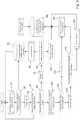
- the automotive electronic control unit 5 is also programmed to store and populate a database of recurrent low speed manoeuvres by implementing the operations described hereinafter with reference to the flow chart shown in Figure 3 .
- the automotive electronic control unit 5 is programmed to:
- a current low speed manoeuvre of the motor vehicle 2 is either a simple or complex low speed manoeuvre is conveniently carried out in order to avoid harassing the driver of the motor vehicle 2 with continuous prompts to store and repeat relatively simple current low speed manoeuvres, whose repetition in autonomous driving mode would not bring significant benefits to the driver.
- the determination of whether a current low speed manoeuvre is either a simple or complex manoeuvre is based on a proprietary discrimination criterion specifically developed by the automotive manufacturer to achieve a distinguishing performance from those of other automotive manufacturers.
- the discrimination criterion may be based on the cognitive load of the driver, which can be determined based on given automotive quantities.
- the automotive electronic control unit 5 is further programmed to:
- the automotive electronic control unit 5 is further programmed to cause the recurrent low speed manoeuvres stored in the database of recurrent low speed manoeuvres to be repeatable in autonomous driving mode by implementing the operations described below, again with reference to the flow chart shown in Figure 3 .
- the automotive electronic control unit 5 is programmed to:
- the automotive electronic control unit 5 is further programmed to:
- the automotive electronic control unit 5 is further programmed to:
- the automotive electronic control unit 5 is further programmed to:
- the automotive electronic control unit 5 is programmed to:
- the automotive autonomous driving system according to the present invention may be applied to any type of motor vehicle, without the need for complex structural modifications, since it uses sensors and actuators normally already provided on board the motor vehicles, and used for autonomous driving of a motor vehicle in any area, without the provision of mechanical driving means, such as a rail, to drive the motor vehicle along a predefined path.
- the automotive autonomous driving system of a motor vehicle is configurable and can be easily adapted to and used in several types of situations, from the less complex, for example a private courtyard, to the more complex ones (for example a hub complex for freight loading/unloading to make docking manoeuvres efficient, fast and safe).
- the driving may be completely autonomous or only partially autonomous; for example, the driver may be left in charge of controlling the brake and accelerator pedals, limiting the autonomous action to the steering control only.
- the procedure for manually defining and programming recurrent low speed manoeuvres may involve the learning and storing of a plurality of predefined manoeuvres in the storage device, with the possibility for the user to select the desired manoeuvre among those stored, recognizing it through the code or the associated identification category, for example parking at home, passing through a narrow alley, multi-storey parking circular ramps, approaching a tollbooth, etc.
- the stored recurrent low speed manoeuvres can also include reverse manoeuvres for returning to the starting point from the arrival point, suitably modified to reverse the direction of travel of the motor vehicle.
- the reverse trajectories could be calculated by the electronic control unit, through appropriate processing.
Landscapes
- Engineering & Computer Science (AREA)
- Mechanical Engineering (AREA)
- Automation & Control Theory (AREA)
- Transportation (AREA)
- Chemical & Material Sciences (AREA)
- Combustion & Propulsion (AREA)
- Remote Sensing (AREA)
- Radar, Positioning & Navigation (AREA)
- Human Computer Interaction (AREA)
- Physics & Mathematics (AREA)
- General Physics & Mathematics (AREA)
- Aviation & Aerospace Engineering (AREA)
- Control Of Driving Devices And Active Controlling Of Vehicle (AREA)
- Traffic Control Systems (AREA)
- Vibration Prevention Devices (AREA)
- Control Of Position, Course, Altitude, Or Attitude Of Moving Bodies (AREA)
Claims (14)
- Automobile elektronische Steuereinheit (5), die dafür konfiguriert ist, mit automobilen On-Board-Systemen (3), die ein Antriebssystem, ein Bremssystem, ein Lenksystem und ein Sensorsystem umfassen, und mit einer automobilen Benutzerschnittstelle (4) über ein automobiles On-Board-Kommunikationsnetz (6) verbunden werden zu können, und die dafür ausgelegt ist, mit automobilen On-Board-Systemen (3) zusammenzuwirken, um ein automobiles autonomes Fahrsystem (1) bereitzustellen;
wobei die automobile elektronische Steuereinheit (5) des Weiteren dafür konfiguriert ist, eine Datenbank wiederkehrender Langsamfahrmanöver zu speichern und zu veranlassen, dass wiederkehrende Langsamfahrmanöver, die in der Datenbank wiederkehrender Langsamfahrmanöver gespeichert sind, im autonomen Fahrmodus wiederholt werden;
wobei die automobile elektronische Steuereinheit (5) des Weiteren dafür konfiguriert ist, die Datenbank wiederkehrender Langsamfahrmanöver mit Daten zu besetzen durch:- Bestimmen und Speichern deskriptiver Daten eines momentanen Langsamfahrmanövers eines Kraftfahrzeugs (2),- Bestimmen, auf der Grundlage der deskriptiven Daten des momentanen Langsamfahrmanövers und eines gegebenen Unterscheidungskriteriums, ob das momentane Langsamfahrmanöver entweder ein einfaches oder ein komplexes Langsamfahrmanöver ist (10),- wenn festgestellt wird, dass das momentane Langsamfahrmanöver ein komplexes Langsamfahrmanöver ist, Bestimmen, ob das komplexe Langsamfahrmanöver auch ein wiederkehrendes Langsamfahrmanöver ist (20),- wenn festgestellt wird, dass das komplexe Langsamfahrmanöver kein wiederkehrendes Langsamfahrmanöver ist, Speichern des komplexen Langsamfahrmanövers in einer Datenbank komplexer Langsamfahrmanöver in Verknüpfung mit einem Manöverwiederholungsindex (30),- wenn stattdessen festgestellt wird, dass das komplexen Langsamfahrmanöver ein wiederkehrendes Langsamfahrmanöver ist, Aktualisieren des in Verknüpfung mit dem komplexen Langsamfahrmanöver gespeicherten Manöverwiederholungsindex (40),- Verifizieren, ob der in Verknüpfung mit dem komplexen Langsamfahrmanöver gespeicherte Manöverwiederholungsindex ein vorgegebenes Kriterium erfüllt (50),- wenn festgestellt wird, dass der in Verknüpfung mit dem komplexen Langsamfahrmanöver gespeicherte Manöverwiederholungsindex das oben erwähnte vorgegebene Kriterium erfüllt, Verifizieren, ob das komplexe Langsamfahrmanöver in der Datenbank wiederkehrender Langsamfahrmanöver gespeichert ist (60),- wenn festgestellt wird, dass das komplexe Langsamfahrmanöver nicht in der Datenbank wiederkehrender Langsamfahrmanöver gespeichert ist, Veranlassen, dass der Fahrer über die automobile Benutzerschnittstelle (4) aufgefordert wird, das komplexe Langsamfahrmanöver in der Datenbank wiederkehrender Langsamfahrmanöver zu speichern (70),- wenn bestimmt wird, dass die Aufforderung zum Speichern des komplexen Langsamfahrmanövers in der Datenbank wiederkehrender Langsamfahrmanöver durch den Fahrer über die automobile Benutzerschnittstelle (4) akzeptiert wurde, Speichern des komplexen Langsamfahrmanövers in der Datenbank wiederkehrender Langsamfahrmanöver in Verknüpfung mit einem Manöverwiederholungsindex (100) ;dadurch gekennzeichnet, dass
die automobile elektronische Steuereinheit (5) des Weiteren dafür konfiguriert ist, die wiederkehrenden Langsamfahrmanöver in der Datenbank wiederkehrender Langsamfahrmanöver in Form deskriptiver Daten der Umgebungen zu speichern, in denen die wiederkehrenden Langsamfahrmanöver im autonomen Fahrmodus wiederholbar sind, einschließlich Geolokalisierungsdaten, die für Anfangs- und Endpunkte der wiederkehrenden Langsamfahrmanöver sowie für räumliche Beschränkungen, Hindernisse und zugehörige Abmessungen in den Umgebungen, in denen wiederkehrende Langsamfahrmanöver im autonomen Fahrmodus wiederholt werden, repräsentativ sind;
die automobile elektronische Steuereinheit (5) des Weiteren dafür konfiguriert ist zu veranlassen, dass ein in der Datenbank wiederkehrender Langsamfahrmanöver gespeichertes wiederkehrendes Langsamfahrmanöver im autonomen Fahrmodus wiederholt wird, durch:- Berechnen eines optimalen Pfades, den das Kraftfahrzeug (2) vom Anfangs- zum Endpunkt zurücklegen soll, und der damit verbundenen Längs- und Querdynamik des Kraftfahrzeugs (2) auf der Grundlage zugehöriger gespeicherter Geolokalisierungsdaten und Daten, die von dem automobilen Sensorsystem empfangen werden, wobei sowohl die räumlichen Beschränkungen, Hindernisse und zugehörigen Abmessungen in der Umgebung berücksichtigt werden, in der das wiederkehrende Langsamfahrmanöver im autonomen Fahrmodus wiederholbar ist, und die identifiziert wurden, als das Manöver gespeichert wurde, als auch alle neuen räumlichen Beschränkungen und/oder Hindernisse berücksichtigt werden, die in der Umgebung, in der das wiederkehrende Langsamfahrmanöver im autonomen Fahrmodus wiederholbar ist, auftraten, nachdem das Manöver gespeichert wurde, und die auf der Grundlage der von dem automobilen Sensorsystem empfangenen Daten identifizierbar sind; und- Berechnen, auf der Grundlage des berechneten optimalen Pfades, von Befehlen, die an das autonome Antriebssystem des Kraftfahrzeugs (2) zu übermitteln sind, um zu veranlassen, dass das wiederkehrende Langsamfahrmanövers im autonomen Fahrmodus wiederholt wird. - Automobile elektronische Steuereinheit (5) nach Anspruch 1, wobei die deskriptiven Daten der Umgebungen, in denen die wiederkehrenden Langsamfahrmanöver, die in der Datenbank wiederkehrender Langsamfahrmanöver gespeichert sind, im autonomen Fahrmodus wiederholt werden können, keine Daten enthalten, die die Arten von Kraftfahrzeugen (2) angeben, die zum Ausführen der wiederkehrenden Langsamfahrmanöver verwendet wurden, als sie gespeichert wurden, um die deskriptiven Daten der gespeicherten wiederkehrender Langsamfahrmanöver unabhängig von den Arten von Kraftfahrzeugen (2) zu machen, die zum Ausführen der wiederkehrenden Langsamfahrmanöver verwendet wurden, als sie gespeichert wurden.
- Automobile elektronische Steuereinheit (5) nach Anspruch 1 oder 2, die des Weiteren dafür konfiguriert ist, optimale Pfade, die durch die Kraftfahrzeuge (2) im autonomen Fahrmodus gefahren werden wollen, und die damit verbundene Längs- und Querdynamik der Kraftfahrzeuge (2) zu berechnen, wobei auch die Arten von Kraftfahrzeugen (2) berücksichtigt werden, mit denen die wiederkehrenden Langsamfahrmanöver im autonomen Fahrmodus wiederholbar sind, um zu veranlassen, dass die Wiederholungen im autonomen Fahrmodus der in der Datenbank wiederkehrender Langsamfahrmanöver gespeicherten wiederkehrenden Langsamfahrmanöver von den Arten von Kraftfahrzeugen (2) abhängig zu machen, mit denen die wiederkehrenden Langsamfahrmanöver im autonomen Fahrmodus wiederholbar sind.
- Automobile elektronische Steuereinheit (5) nach einem der vorangehenden Ansprüche, die des Weiteren dafür konfiguriert ist zu veranlassen, dass die in der Datenbank wiederkehrender Langsamfahrmanöver gespeicherten wiederkehrenden Langsamfahrmanöver im autonomen Fahrmodus wiederholbar sind, durch:- Bestimmen der Verfügbarkeit eines gespeicherten wiederkehrenden Langsamfahrmanövers zur Wiederholung im autonomen Fahrmodus am momentanen Standort des Kraftfahrzeugs (120),- wenn festgestellt wird, dass ein gespeichertes wiederkehrendes Langsamfahrmanöver zur Wiederholung im autonomen Fahrmodus an der momentanen Position des Kraftfahrzeugs (2) verfügbar ist, Veranlassen, dass der Fahrer über die automobile Benutzerschnittstelle (4) aufgefordert wird, das verfügbare gespeicherte wiederkehrende Langsamfahrmanöver im autonomen Fahrmodus zu wiederholen,- wenn festgestellt wird, dass die Aufforderung, das verfügbare gespeicherte wiederkehrende Langsamfahrmanöver im autonomen Fahrmodus zu wiederholen, durch den Fahrer über die automobile Benutzerschnittstelle (4) abgelehnt wird, Verringern des Manöverwiederholungsindex, der in Verknüpfung mit dem verfügbaren gespeicherten wiederkehrenden Langsamfahrmanöver gespeichert ist (140), und- wenn festgestellt wird, dass die Aufforderung, das verfügbare gespeicherte wiederkehrende Langsamfahrmanöver im autonomen Fahrmodus zu wiederholen, durch den Fahrer über die automobile Benutzerschnittstelle (4) akzeptiert wird, Erhöhen des Manöverwiederholungsindex, der in Verknüpfung mit dem verfügbaren gespeicherten wiederkehrenden Langsamfahrmanöver gespeichert ist (150).
- Automobile elektronische Steuereinheit (5) nach Anspruch 4, die, wenn festgestellt wird, dass die Aufforderung, das verfügbare gespeicherte wiederkehrende Langsamfahrmanöver im autonomen Fahrmodus zu wiederholen, durch den Fahrer über die automobile Benutzerschnittstelle (4) abgelehnt wird, des Weiteren für Folgendes konfiguriert ist:- Verifizieren, ob der Manöverwiederholungsindex, der in Verknüpfung mit dem verfügbaren gespeicherten wiederkehrenden Langsamfahrmanöver gespeichert ist, ein vorgegebenes Kriterium erfüllt (170), und- wenn festgestellt wird, dass der Manöverwiederholungsindex, der in Verknüpfung mit dem verfügbaren gespeicherten wiederkehrenden Langsamfahrmanöver gespeichert ist, das vorgegebene Kriterium erfüllt, Löschen des wiederkehrenden Langsamfahrmanövers aus der Datenbank wiederkehrender Langsamfahrmanöver (180) .
- Automobile elektronische Steuereinheit (5) nach Anspruch 4 oder 5, die des Weiteren dafür konfiguriert, wenn festgestellt wird, dass die Aufforderung zur Wiederholung des verfügbaren gespeicherten wiederkehrenden Langsamfahrmanövers im autonomen Fahrmodus durch den Fahrer über die automobilen Benutzerschnittstelle (4) akzeptiert wird, zu veranlassen, dass das verfügbare gespeicherte wiederkehrende Langsamfahrmanöver im autonomen Fahrmodus wiederholt wird und dass eine Skizze des wiederkehrenden Langsamfahrmanövers, das im autonomen Fahrmodus zu wiederholen ist, und die Umgebung auf einer Anzeige der automobilen Benutzerschnittstelle (4) angezeigt werden.
- Automobile elektronische Steuereinheit (5) nach einem der Ansprüche 4 bis 6, die, wenn festgestellt wird, dass mehrere gespeicherte wiederkehrende Langsamfahrmanöver für eine Wiederholung im autonomen Fahrmodus an der momentanen Position des Kraftfahrzeugs (2) zur Verfügung stehen, des Weiteren für Folgendes konfiguriert ist:- Veranlassen, dass der Fahrer über die automobile Benutzerschnittstelle (4) aufgefordert wird, im autonomen Fahrmodus die verfügbaren gespeicherten wiederkehrenden Langsamfahrmanöver zu wiederholen, indem sie in absteigender Reihenfolge des Manöverwiederholungsindex angezeigt werden, wobei das verfügbare gespeicherte wiederkehrende Langsamfahrmanöver mit dem höchsten Manöverwiederholungsindex das erste in der Reihenfolge ist,- Erlauben, dass der Fahrer über die automobile Benutzerschnittstelle (4) eines der wiederkehrenden Langsamfahrmanöver auswählt, die für die Wiederholung im autonomen Fahrmodus zur Verfügung stehen, und- Veranlassen, dass das ausgewählte gespeicherte wiederkehrende Langsamfahrmanöver in Reaktion auf die Auswahl des Fahrers im autonomen Fahrmodus wiederholt wird.
- Automobile elektronische Steuereinheit (5) nach einem der vorangehenden Ansprüche, wobei die deskriptiven Daten eines momentanen Manövers des Kraftfahrzeugs (2) eines oder mehrere von Folgendem umfassen:- Geolokalisierungsdaten des momentanen Manövers,- deskriptive Daten über die Umgebung, in der das momentane Manöver ausgeführt wird, die zweckmäßigerweise Geolokalisierungsdaten von mehreren, zweckmäßigerweise drei oder mehr, Bezugspunkten in der Umgebung umfassen,- Zeitdaten, die entweder einen Tageszeitraum oder eine Tageszeit angeben, in dem bzw. in der das momentane Manöver ausgeführt wird,- Daten, die die Anzahl der Operationen angeben, aus denen das momentane Manöver besteht,- Daten, die die Breite des Pfades angeben, den das Kraftfahrzeug (2) während des momentanen Manövers zurücklegt, und- Daten, die die Geschwindigkeit des Kraftfahrzeugs (2) während des momentanen Manövers angeben.
- Automobile elektronische Steuereinheit (5) nach einem der vorangehenden Ansprüche, wobei das Unterscheidungskriterium auf einer kognitiven Belastung des Fahrers während des momentanen Manövers des Kraftfahrzeugs (2) basiert und auf der Grundlage automobiler Quantitäten bestimmbar ist.
- Automobile elektronische Steuereinheit (5) nach Anspruch 9, die des Weiteren dafür konfiguriert ist zu bestimmen, ob ein momentanes Langsamfahrmanöver des Kraftfahrzeugs (2) entweder ein einfaches oder ein komplexes Langsamfahrmanöver ist, durch:- Berechnen eines Komplexitätsindex (I), der die Komplexität des momentanen Langsamfahrmanövers des Kraftfahrzeugs (2) angibt,- Vergleichen des Komplexitätsindex (I) mit einem Schwellenwert,- Bestimmen des momentanen Langsamfahrmanövers des Kraftfahrzeugs (2) als ein komplexes Manöver, wenn der Komplexitätsindex (I) mindestens so hoch wie der Schwellenwert ist, und- anderenfalls Bestimmen des momentanen Langsamfahrmanövers des Kraftfahrzeugs (2) als ein einfaches Manöver;und wobei der Komplexitätsindex (I) auf der Grundlage einer oder mehrerer der folgenden Quantitäten berechnet werden kann:- Längs-, Quer- oder Vertikalbeschleunigung des Kraftfahrzeugs,- Straßenneigung,- Richtungsänderungen (und folglich Anzahl der Manöver),- Betätigung des Lenkrades (Änderung des Lenkradwinkels und der Lenkradwinkelgeschwindigkeit),- Betätigung der Bremsen (Druck und Druckveränderung),- verfügbare Pfadbreite (freier Raum) und/oder Distanz zu seitlichen Hindernissen,- Geschwindigkeit des Kraftfahrzeugs,- Innen- oder Außenumgebung, und- Dauer des Manövers (Minimum- und Maximumwerte).
- Automobile elektronische Steuereinheit (5) nach Anspruch 10, die des Weiteren dafür konfiguriert ist, den Komplexitätsindex (I) zu berechnen, indem k der oben erwähnten Quantitäten v gemäß der folgenden Formel angemessen gewichtet wird:
 an das Gewicht ist, das der n-ten Quantität vn beizumessen ist, undfn die n-te Funktion ist, die einen Wert zwischen 0 und 1 annehmen kann.
 - Automobiles autonomes Fahrsystem (1), das umfasst:- automobile On-Board-Systeme (3), die ein automobile Antriebssystem, ein Bremssystem, ein Lenksystem und ein sensorisches System umfassen,- eine automobile Benutzerschnittstelle (4), und- eine automobile elektronische Steuereinheit (5) nach einem der vorangehenden Ansprüche, die über ein automobiles On-Board-Kommunikationsnetz (6) mit den automobilen On-Board-Systemen (3) und der automobilen Benutzerschnittstelle (4) verbunden ist und dafür ausgelegt ist, mit automobilen On-Board-Systemen (3) zusammenzuwirken, um ein automobiles autonomes Fahrsystem (1) bereitzustellen.
- Kraftfahrzeug (2), das ein automobiles autonomes Fahrsystem (1) nach Anspruch 12 umfasst.
- Software, die in eine automobile elektronische Steuereinheit (5) geladen werden kann und dafür ausgelegt ist, bei ihrer Ausführung die automobile elektronische Steuereinheit (5) zu veranlassen, so konfiguriert zu werden, wie es in einem der vorangehenden Ansprüche 1 bis 11 beansprucht ist.
Applications Claiming Priority (2)
| Application Number | Priority Date | Filing Date | Title |
|---|---|---|---|
| IT102018000003312A IT201800003312A1 (it) | 2018-03-06 | 2018-03-06 | Guida autonoma di autoveicoli per l'esecuzione di manovre ricorrenti a bassa velocita' |
| PCT/IB2019/051809 WO2019171292A1 (en) | 2018-03-06 | 2019-03-06 | Automotive autonomous driving to perform complex recurrent low speed manoeuvres |
Publications (2)
| Publication Number | Publication Date |
|---|---|
| EP3586211A1 EP3586211A1 (de) | 2020-01-01 |
| EP3586211B1 true EP3586211B1 (de) | 2020-07-15 |
Family
ID=62386768
Family Applications (1)
| Application Number | Title | Priority Date | Filing Date |
|---|---|---|---|
| EP19716549.1A Active EP3586211B1 (de) | 2018-03-06 | 2019-03-06 | Autonomes autofahren zur durchführung komplexer wiederkehrender manöver bei niedriger geschwindigkeit |
Country Status (6)
| Country | Link |
|---|---|
| US (1) | US11299172B2 (de) |
| EP (1) | EP3586211B1 (de) |
| JP (1) | JP6872635B2 (de) |
| CN (1) | CN110753893B (de) |
| IT (1) | IT201800003312A1 (de) |
| WO (1) | WO2019171292A1 (de) |
Cited By (9)
| Publication number | Priority date | Publication date | Assignee | Title |
|---|---|---|---|---|
| WO2022101825A1 (en) * | 2020-11-11 | 2022-05-19 | C.R.F. Societa' Consortile Per Azioni | Optimization of performance in automotive autonomous driving of recurrent low speed manoeuvres in digital road maps-free areas |
| IT202200008807A1 (it) | 2022-05-02 | 2023-11-02 | Fiat Ricerche | "Procedimento di assistenza alla guida di un veicolo, unità elettronica di controllo, veicolo e prodotto informatico corrispondenti" |
| IT202200012116A1 (it) | 2022-06-08 | 2023-12-08 | Fiat Ricerche | "Autoveicolo comprendente un sistema di assistenza alla guida in comunicazione con un sistema informatico remoto, apparato e procedimento di assistenza alla guida di un autoveicolo corrispondenti" |
| WO2023237959A1 (en) | 2022-06-07 | 2023-12-14 | C.R.F. Società Consortile Per Azioni | Motor vehicle comprising a driver-assistance system configurable in a virtual environment, and corresponding driver-assistance method for a motor vehicle |
| IT202300005196A1 (it) | 2023-03-20 | 2024-09-20 | Fiat Ricerche | "procedimento di assistenza alla guida di un veicolo, unità elettronica di controllo, veicolo e prodotto informatico corrispondenti" |
| WO2024194707A1 (en) | 2023-03-20 | 2024-09-26 | C.R.F. Società Consortile Per Azioni | Driver-assistance system of a motor vehicle, and corresponding method |
| IT202300012480A1 (it) | 2023-06-16 | 2024-12-16 | Fiat Ricerche | Procedimento di assistenza alla guida di un autoveicolo, e corrispondente autoveicolo a guida assistita |
| WO2024256897A1 (en) | 2023-06-13 | 2024-12-19 | C.R.F. Società Consortile Per Azioni | A driving-assistance method for a motor-vehicle and corresponding assisted-driving motor-vehicle |
| WO2025177766A1 (en) * | 2024-02-22 | 2025-08-28 | Toyota Jidosha Kabushiki Kaisha | Parking system, vehicle (first vehicle, second vehicle) in parking system, server in parking system, and parking method |
Families Citing this family (25)
| Publication number | Priority date | Publication date | Assignee | Title |
|---|---|---|---|---|
| GB201802475D0 (en) * | 2018-02-15 | 2018-04-04 | Jaguar Land Rover Ltd | Controller and vehicle |
| US11613261B2 (en) * | 2018-09-05 | 2023-03-28 | Autobrains Technologies Ltd | Generating a database and alerting about improperly driven vehicles |
| US12330646B2 (en) | 2018-10-18 | 2025-06-17 | Autobrains Technologies Ltd | Off road assistance |
| US10748038B1 (en) | 2019-03-31 | 2020-08-18 | Cortica Ltd. | Efficient calculation of a robust signature of a media unit |
| DE102019101040A1 (de) * | 2019-01-16 | 2020-07-16 | Valeo Schalter Und Sensoren Gmbh | Verfahren zum Trainieren einer Trajektorie für ein Fahrzeug, sowie elektronisches Fahrzeugführungssystem |
| WO2021164875A1 (en) | 2020-02-20 | 2021-08-26 | Volvo Truck Corporation | Download of verified vehicle manoeuvres |
| WO2022006418A1 (en) * | 2020-07-01 | 2022-01-06 | May Mobility, Inc. | Method and system for dynamically curating autonomous vehicle policies |
| US12049116B2 (en) | 2020-09-30 | 2024-07-30 | Autobrains Technologies Ltd | Configuring an active suspension |
| US12142005B2 (en) | 2020-10-13 | 2024-11-12 | Autobrains Technologies Ltd | Camera based distance measurements |
| EP4264181A4 (de) | 2020-12-17 | 2024-10-30 | May Mobility, Inc. | Verfahren und system zur dynamischen aktualisierung einer umgebungsdarstellung eines autonomen agenten |
| US12257949B2 (en) | 2021-01-25 | 2025-03-25 | Autobrains Technologies Ltd | Alerting on driving affecting signal |
| JP2022142175A (ja) * | 2021-03-16 | 2022-09-30 | トヨタ自動車株式会社 | 移動経路算出装置、移動体制御システム、移動経路算出方法、及び、移動経路算出プログラム |
| EP4314708A4 (de) | 2021-04-02 | 2024-12-25 | May Mobility, Inc. | Verfahren und system zum betrieb eines autonomen agenten mit unvollständigen umgebungsinformationen |
| US12511873B2 (en) | 2021-06-07 | 2025-12-30 | Cortica, Ltd. | Isolating unique and representative patterns of a concept structure |
| US12139166B2 (en) | 2021-06-07 | 2024-11-12 | Autobrains Technologies Ltd | Cabin preferences setting that is based on identification of one or more persons in the cabin |
| US12423994B2 (en) | 2021-07-01 | 2025-09-23 | Autobrains Technologies Ltd | Lane boundary detection |
| EP4194300B1 (de) | 2021-08-05 | 2026-01-28 | Autobrains Technologies LTD. | Vorhersage eines radius einer motorradkurve |
| EP4169790A1 (de) * | 2021-10-12 | 2023-04-26 | Volvo Car Corporation | Fahrsteuerungssystem für ein fahrzeug |
| US12293560B2 (en) | 2021-10-26 | 2025-05-06 | Autobrains Technologies Ltd | Context based separation of on-/off-vehicle points of interest in videos |
| WO2023102098A1 (en) | 2021-12-01 | 2023-06-08 | May Mobility, Inc. | Method and system for impact-based operation of an autonomous agent |
| US12296849B2 (en) | 2021-12-02 | 2025-05-13 | May Mobility, Inc. | Method and system for feasibility-based operation of an autonomous agent |
| CN114030484B (zh) * | 2021-12-21 | 2023-06-02 | 华人运通(江苏)技术有限公司 | 自动驾驶功能控制方法、装置、设备和存储介质 |
| JP7851524B2 (ja) | 2022-02-14 | 2026-04-27 | メイ モビリティー,インコーポレイテッド | 自律エージェントの条件付き動作のための方法及びシステム |
| CN116811985B (zh) * | 2022-11-14 | 2024-10-22 | 深圳市檐外科技有限公司 | 基于智能手柄的控制露营车运动的方法、装置及介质 |
| DE102023119445A1 (de) | 2023-07-24 | 2025-01-30 | Valeo Schalter Und Sensoren Gmbh | Verfahren zum autonomen einparken |
Family Cites Families (30)
| Publication number | Priority date | Publication date | Assignee | Title |
|---|---|---|---|---|
| DE60009000T2 (de) * | 1999-10-21 | 2005-03-10 | Matsushita Electric Industrial Co., Ltd., Kadoma | System zur Einparkhilfe |
| ITTO20010282A1 (it) * | 2001-03-26 | 2002-09-26 | Fiat Ricerche | Sistema di ausilio alla guida di un autoveicolo. |
| JP3902543B2 (ja) * | 2002-12-17 | 2007-04-11 | 本田技研工業株式会社 | 道路交通シミュレーション装置 |
| US20060178823A1 (en) * | 2005-02-04 | 2006-08-10 | Novariant, Inc. | System and method for propagating agricultural vehicle guidance paths that have varying curvature along their length |
| US7548805B2 (en) * | 2006-03-27 | 2009-06-16 | Fujitsu Ten Limited | Vehicle control apparatus, vehicle control method and vehicle slip suppressing apparatus |
| DE102007009745A1 (de) * | 2007-02-28 | 2008-09-04 | Continental Automotive Gmbh | Einparkhalbautomat |
| US8260515B2 (en) * | 2008-07-24 | 2012-09-04 | GM Global Technology Operations LLC | Adaptive vehicle control system with driving style recognition |
| DE102008062916A1 (de) * | 2008-12-23 | 2010-06-24 | Continental Safety Engineering International Gmbh | Verfahren zur Ermittlung einer Kollisionswahrscheinlichkeit eines Fahrzeuges mit einem Lebewesen |
| DE102010030208A1 (de) * | 2010-06-17 | 2011-12-22 | Robert Bosch Gmbh | Verfahren zur Unterstützung eines Fahrers eines Kraftfahrzeugs |
| CA2720892A1 (en) * | 2010-11-12 | 2012-05-12 | The Regents Of The University Of California | Enhancing cognition in the presence of distraction and/or interruption |
| LT3005233T (lt) * | 2013-06-04 | 2018-05-25 | Isolynx, Llc | Objektų sekimo sistemos optimizavimas ir priemoės |
| JPWO2015166721A1 (ja) * | 2014-05-02 | 2017-04-20 | エイディシーテクノロジー株式会社 | 車両制御装置 |
| US9500493B2 (en) * | 2014-06-09 | 2016-11-22 | Volkswagen Aktiengesellschaft | Situation-aware route and destination predictions |
| DE202014006923U1 (de) * | 2014-08-27 | 2015-11-30 | GM Global Technology Operations LLC (n. d. Ges. d. Staates Delaware) | Fahrassistenzsystem, Computerprogrammprodukt sowie Kraftfahrzeug |
| US10589751B2 (en) * | 2014-12-31 | 2020-03-17 | Robert Bosch Gmbh | Autonomous maneuver notification for autonomous vehicles |
| JP6598019B2 (ja) * | 2015-04-21 | 2019-10-30 | パナソニックIpマネジメント株式会社 | 運転支援方法およびそれを利用した運転支援装置、運転制御装置、車両、運転支援プログラム |
| JP6428671B2 (ja) * | 2016-02-17 | 2018-11-28 | 株式会社デンソー | 推定装置 |
| DE102016003308B3 (de) * | 2016-03-17 | 2017-09-21 | Audi Ag | Verfahren zum Betrieb eines Fahrerassistenzsystems eines Kraftfahrzeugs und Kraftfahrzeug |
| US10331141B2 (en) * | 2016-06-30 | 2019-06-25 | GM Global Technology Operations LLC | Systems for autonomous vehicle route selection and execution |
| US10331138B2 (en) * | 2016-07-05 | 2019-06-25 | Baidu Usa Llc | Standard scene-based planning control methods for operating autonomous vehicles |
| US9870001B1 (en) * | 2016-08-05 | 2018-01-16 | Delphi Technologies, Inc. | Automated vehicle operator skill evaluation system |
| JP6520862B2 (ja) * | 2016-08-10 | 2019-05-29 | トヨタ自動車株式会社 | 自動運転システム |
| DE102016214822B4 (de) * | 2016-08-10 | 2022-06-09 | Audi Ag | Verfahren zur Unterstützung eines Fahrers bei der Führung eines Kraftfahrzeugs |
| JP6519555B2 (ja) * | 2016-08-26 | 2019-05-29 | トヨタ自動車株式会社 | 情報処理装置 |
| CN106774291B (zh) * | 2016-12-26 | 2020-07-31 | 清华大学苏州汽车研究院(吴江) | 一种自动驾驶电动汽车的电控系统 |
| US10379538B1 (en) * | 2017-03-20 | 2019-08-13 | Zoox, Inc. | Trajectory generation using motion primitives |
| KR102215428B1 (ko) * | 2017-08-10 | 2021-02-17 | 닛산 지도우샤 가부시키가이샤 | 주차 제어 방법 및 주차 제어 장치 |
| WO2019048034A1 (en) * | 2017-09-06 | 2019-03-14 | Swiss Reinsurance Company Ltd. | ELECTRONIC TRACKING AND RECORDING IDENTIFICATION SYSTEM FOR TELEMATIC DEVICES, AND CORRESPONDING METHOD THEREOF |
| US10745006B2 (en) * | 2018-02-01 | 2020-08-18 | GM Global Technology Operations LLC | Managing automated driving complexity of the forward path using perception system measures |
| US10410403B1 (en) * | 2018-03-05 | 2019-09-10 | Verizon Patent And Licensing Inc. | Three-dimensional voxel mapping |
-
2018
- 2018-03-06 IT IT102018000003312A patent/IT201800003312A1/it unknown
-
2019
- 2019-03-06 EP EP19716549.1A patent/EP3586211B1/de active Active
- 2019-03-06 WO PCT/IB2019/051809 patent/WO2019171292A1/en not_active Ceased
- 2019-03-06 CN CN201980001854.2A patent/CN110753893B/zh active Active
- 2019-03-06 US US16/498,624 patent/US11299172B2/en active Active
- 2019-03-06 JP JP2019553488A patent/JP6872635B2/ja active Active
Non-Patent Citations (1)
| Title |
|---|
| None * |
Cited By (10)
| Publication number | Priority date | Publication date | Assignee | Title |
|---|---|---|---|---|
| WO2022101825A1 (en) * | 2020-11-11 | 2022-05-19 | C.R.F. Societa' Consortile Per Azioni | Optimization of performance in automotive autonomous driving of recurrent low speed manoeuvres in digital road maps-free areas |
| IT202200008807A1 (it) | 2022-05-02 | 2023-11-02 | Fiat Ricerche | "Procedimento di assistenza alla guida di un veicolo, unità elettronica di controllo, veicolo e prodotto informatico corrispondenti" |
| WO2023214271A1 (en) | 2022-05-02 | 2023-11-09 | C.R.F. Società Consortile Per Azioni | Method for assistance in driving a vehicle, corresponding electronic control unit, vehicle, and computer program product |
| WO2023237959A1 (en) | 2022-06-07 | 2023-12-14 | C.R.F. Società Consortile Per Azioni | Motor vehicle comprising a driver-assistance system configurable in a virtual environment, and corresponding driver-assistance method for a motor vehicle |
| IT202200012116A1 (it) | 2022-06-08 | 2023-12-08 | Fiat Ricerche | "Autoveicolo comprendente un sistema di assistenza alla guida in comunicazione con un sistema informatico remoto, apparato e procedimento di assistenza alla guida di un autoveicolo corrispondenti" |
| IT202300005196A1 (it) | 2023-03-20 | 2024-09-20 | Fiat Ricerche | "procedimento di assistenza alla guida di un veicolo, unità elettronica di controllo, veicolo e prodotto informatico corrispondenti" |
| WO2024194707A1 (en) | 2023-03-20 | 2024-09-26 | C.R.F. Società Consortile Per Azioni | Driver-assistance system of a motor vehicle, and corresponding method |
| WO2024256897A1 (en) | 2023-06-13 | 2024-12-19 | C.R.F. Società Consortile Per Azioni | A driving-assistance method for a motor-vehicle and corresponding assisted-driving motor-vehicle |
| IT202300012480A1 (it) | 2023-06-16 | 2024-12-16 | Fiat Ricerche | Procedimento di assistenza alla guida di un autoveicolo, e corrispondente autoveicolo a guida assistita |
| WO2025177766A1 (en) * | 2024-02-22 | 2025-08-28 | Toyota Jidosha Kabushiki Kaisha | Parking system, vehicle (first vehicle, second vehicle) in parking system, server in parking system, and parking method |
Also Published As
| Publication number | Publication date |
|---|---|
| WO2019171292A1 (en) | 2019-09-12 |
| EP3586211A1 (de) | 2020-01-01 |
| IT201800003312A1 (it) | 2019-09-06 |
| US11299172B2 (en) | 2022-04-12 |
| JP2020518501A (ja) | 2020-06-25 |
| CN110753893A (zh) | 2020-02-04 |
| CN110753893B (zh) | 2022-08-30 |
| US20210284183A1 (en) | 2021-09-16 |
| JP6872635B2 (ja) | 2021-05-19 |
Similar Documents
| Publication | Publication Date | Title |
|---|---|---|
| EP3586211B1 (de) | Autonomes autofahren zur durchführung komplexer wiederkehrender manöver bei niedriger geschwindigkeit | |
| US12168439B2 (en) | Vehicle control device, and vehicle control system | |
| CN113365895B (zh) | 车辆控制系统和方法 | |
| US10267911B2 (en) | Steering wheel actuation | |
| US10513267B2 (en) | Vehicle safety system | |
| JP6308233B2 (ja) | 車両制御装置及び車両制御方法 | |
| EP3091370B1 (de) | Verfahren und anordnung zur bestimmung sicherer fahrzeugtrajektorien | |
| EP4003803B1 (de) | Anpassung von fahrspurwechseln von autonom fahrenden kraftfahrzeugen basierend auf dem fahrverhalten des fahrers | |
| US9212926B2 (en) | In-vehicle path verification | |
| CN109664885B (zh) | 车载交通辅助 | |
| US20210284131A1 (en) | Method for operating a transportation vehicle and a control unit for carrying out the method | |
| JP2020128167A (ja) | 車両制御装置 | |
| KR20190030199A (ko) | 차량들의 감독 제어 | |
| JP2022094311A (ja) | 運転支援システムによる、自動化された運転過程の選択方法 | |
| CN107264532A (zh) | 用于自主车辆的基于状态的操作 | |
| KR20150066303A (ko) | 운전자의 주행 패턴을 반영하는 자율 주행 장치 및 그 방법 | |
| CN110447057A (zh) | 车辆控制装置 | |
| US20250058799A1 (en) | Vehicle control device | |
| CN115891981A (zh) | 基于视觉识别的驾驶辅助系统及方法 | |
| JP2020032860A (ja) | 車両制御装置、自動運転制御システム、および車両制御方法 | |
| US11577729B2 (en) | Method for driving on an opposite lane in a controlled manner | |
| JP7483419B2 (ja) | 走行支援方法及び走行支援装置 | |
| CN118618417A (zh) | 一种自动驾驶安全防护方法和系统 | |
| EP4244692B1 (de) | Optimierung der leistung beim autonomen fahren von wiederholten manövern niedriger geschwindigkeit in digitalen strassenkartenfreien bereichen in kraftfahrzeugen | |
| CN116001788A (zh) | 跟车方法、电子设备、车辆及存储介质 |
Legal Events
| Date | Code | Title | Description |
|---|---|---|---|
| STAA | Information on the status of an ep patent application or granted ep patent |
Free format text: STATUS: UNKNOWN |
|
| STAA | Information on the status of an ep patent application or granted ep patent |
Free format text: STATUS: THE INTERNATIONAL PUBLICATION HAS BEEN MADE |
|
| PUAI | Public reference made under article 153(3) epc to a published international application that has entered the european phase |
Free format text: ORIGINAL CODE: 0009012 |
|
| STAA | Information on the status of an ep patent application or granted ep patent |
Free format text: STATUS: REQUEST FOR EXAMINATION WAS MADE |
|
| 17P | Request for examination filed |
Effective date: 20190924 |
|
| AK | Designated contracting states |
Kind code of ref document: A1 Designated state(s): AL AT BE BG CH CY CZ DE DK EE ES FI FR GB GR HR HU IE IS IT LI LT LU LV MC MK MT NL NO PL PT RO RS SE SI SK SM TR |
|
| AX | Request for extension of the european patent |
Extension state: BA ME |
|
| GRAP | Despatch of communication of intention to grant a patent |
Free format text: ORIGINAL CODE: EPIDOSNIGR1 |
|
| STAA | Information on the status of an ep patent application or granted ep patent |
Free format text: STATUS: GRANT OF PATENT IS INTENDED |
|
| DAX | Request for extension of the european patent (deleted) | ||
| INTG | Intention to grant announced |
Effective date: 20200207 |
|
| GRAS | Grant fee paid |
Free format text: ORIGINAL CODE: EPIDOSNIGR3 |
|
| GRAA | (expected) grant |
Free format text: ORIGINAL CODE: 0009210 |
|
| STAA | Information on the status of an ep patent application or granted ep patent |
Free format text: STATUS: THE PATENT HAS BEEN GRANTED |
|
| AK | Designated contracting states |
Kind code of ref document: B1 Designated state(s): AL AT BE BG CH CY CZ DE DK EE ES FI FR GB GR HR HU IE IS IT LI LT LU LV MC MK MT NL NO PL PT RO RS SE SI SK SM TR |
|
| DAV | Request for validation of the european patent (deleted) | ||
| REG | Reference to a national code |
Ref country code: CH Ref legal event code: EP Ref country code: GB Ref legal event code: FG4D |
|
| REG | Reference to a national code |
Ref country code: IE Ref legal event code: FG4D |
|
| REG | Reference to a national code |
Ref country code: DE Ref legal event code: R096 Ref document number: 602019000280 Country of ref document: DE |
|
| REG | Reference to a national code |
Ref country code: AT Ref legal event code: REF Ref document number: 1291712 Country of ref document: AT Kind code of ref document: T Effective date: 20200815 |
|
| REG | Reference to a national code |
Ref country code: LT Ref legal event code: MG4D |
|
| REG | Reference to a national code |
Ref country code: AT Ref legal event code: MK05 Ref document number: 1291712 Country of ref document: AT Kind code of ref document: T Effective date: 20200715 |
|
| REG | Reference to a national code |
Ref country code: NL Ref legal event code: MP Effective date: 20200715 |
|
| PG25 | Lapsed in a contracting state [announced via postgrant information from national office to epo] |
Ref country code: GR Free format text: LAPSE BECAUSE OF FAILURE TO SUBMIT A TRANSLATION OF THE DESCRIPTION OR TO PAY THE FEE WITHIN THE PRESCRIBED TIME-LIMIT Effective date: 20201016 Ref country code: LT Free format text: LAPSE BECAUSE OF FAILURE TO SUBMIT A TRANSLATION OF THE DESCRIPTION OR TO PAY THE FEE WITHIN THE PRESCRIBED TIME-LIMIT Effective date: 20200715 Ref country code: NO Free format text: LAPSE BECAUSE OF FAILURE TO SUBMIT A TRANSLATION OF THE DESCRIPTION OR TO PAY THE FEE WITHIN THE PRESCRIBED TIME-LIMIT Effective date: 20201015 Ref country code: AT Free format text: LAPSE BECAUSE OF FAILURE TO SUBMIT A TRANSLATION OF THE DESCRIPTION OR TO PAY THE FEE WITHIN THE PRESCRIBED TIME-LIMIT Effective date: 20200715 Ref country code: PT Free format text: LAPSE BECAUSE OF FAILURE TO SUBMIT A TRANSLATION OF THE DESCRIPTION OR TO PAY THE FEE WITHIN THE PRESCRIBED TIME-LIMIT Effective date: 20201116 Ref country code: BG Free format text: LAPSE BECAUSE OF FAILURE TO SUBMIT A TRANSLATION OF THE DESCRIPTION OR TO PAY THE FEE WITHIN THE PRESCRIBED TIME-LIMIT Effective date: 20201015 Ref country code: HR Free format text: LAPSE BECAUSE OF FAILURE TO SUBMIT A TRANSLATION OF THE DESCRIPTION OR TO PAY THE FEE WITHIN THE PRESCRIBED TIME-LIMIT Effective date: 20200715 Ref country code: ES Free format text: LAPSE BECAUSE OF FAILURE TO SUBMIT A TRANSLATION OF THE DESCRIPTION OR TO PAY THE FEE WITHIN THE PRESCRIBED TIME-LIMIT Effective date: 20200715 Ref country code: FI Free format text: LAPSE BECAUSE OF FAILURE TO SUBMIT A TRANSLATION OF THE DESCRIPTION OR TO PAY THE FEE WITHIN THE PRESCRIBED TIME-LIMIT Effective date: 20200715 Ref country code: SE Free format text: LAPSE BECAUSE OF FAILURE TO SUBMIT A TRANSLATION OF THE DESCRIPTION OR TO PAY THE FEE WITHIN THE PRESCRIBED TIME-LIMIT Effective date: 20200715 |
|
| PG25 | Lapsed in a contracting state [announced via postgrant information from national office to epo] |
Ref country code: PL Free format text: LAPSE BECAUSE OF FAILURE TO SUBMIT A TRANSLATION OF THE DESCRIPTION OR TO PAY THE FEE WITHIN THE PRESCRIBED TIME-LIMIT Effective date: 20200715 Ref country code: LV Free format text: LAPSE BECAUSE OF FAILURE TO SUBMIT A TRANSLATION OF THE DESCRIPTION OR TO PAY THE FEE WITHIN THE PRESCRIBED TIME-LIMIT Effective date: 20200715 Ref country code: RS Free format text: LAPSE BECAUSE OF FAILURE TO SUBMIT A TRANSLATION OF THE DESCRIPTION OR TO PAY THE FEE WITHIN THE PRESCRIBED TIME-LIMIT Effective date: 20200715 Ref country code: IS Free format text: LAPSE BECAUSE OF FAILURE TO SUBMIT A TRANSLATION OF THE DESCRIPTION OR TO PAY THE FEE WITHIN THE PRESCRIBED TIME-LIMIT Effective date: 20201115 |
|
| PG25 | Lapsed in a contracting state [announced via postgrant information from national office to epo] |
Ref country code: NL Free format text: LAPSE BECAUSE OF FAILURE TO SUBMIT A TRANSLATION OF THE DESCRIPTION OR TO PAY THE FEE WITHIN THE PRESCRIBED TIME-LIMIT Effective date: 20200715 |
|
| REG | Reference to a national code |
Ref country code: DE Ref legal event code: R097 Ref document number: 602019000280 Country of ref document: DE |
|
| PG25 | Lapsed in a contracting state [announced via postgrant information from national office to epo] |
Ref country code: SM Free format text: LAPSE BECAUSE OF FAILURE TO SUBMIT A TRANSLATION OF THE DESCRIPTION OR TO PAY THE FEE WITHIN THE PRESCRIBED TIME-LIMIT Effective date: 20200715 Ref country code: EE Free format text: LAPSE BECAUSE OF FAILURE TO SUBMIT A TRANSLATION OF THE DESCRIPTION OR TO PAY THE FEE WITHIN THE PRESCRIBED TIME-LIMIT Effective date: 20200715 Ref country code: RO Free format text: LAPSE BECAUSE OF FAILURE TO SUBMIT A TRANSLATION OF THE DESCRIPTION OR TO PAY THE FEE WITHIN THE PRESCRIBED TIME-LIMIT Effective date: 20200715 Ref country code: CZ Free format text: LAPSE BECAUSE OF FAILURE TO SUBMIT A TRANSLATION OF THE DESCRIPTION OR TO PAY THE FEE WITHIN THE PRESCRIBED TIME-LIMIT Effective date: 20200715 Ref country code: DK Free format text: LAPSE BECAUSE OF FAILURE TO SUBMIT A TRANSLATION OF THE DESCRIPTION OR TO PAY THE FEE WITHIN THE PRESCRIBED TIME-LIMIT Effective date: 20200715 |
|
| PLBE | No opposition filed within time limit |
Free format text: ORIGINAL CODE: 0009261 |
|
| STAA | Information on the status of an ep patent application or granted ep patent |
Free format text: STATUS: NO OPPOSITION FILED WITHIN TIME LIMIT |
|
| PG25 | Lapsed in a contracting state [announced via postgrant information from national office to epo] |
Ref country code: AL Free format text: LAPSE BECAUSE OF FAILURE TO SUBMIT A TRANSLATION OF THE DESCRIPTION OR TO PAY THE FEE WITHIN THE PRESCRIBED TIME-LIMIT Effective date: 20200715 |
|
| 26N | No opposition filed |
Effective date: 20210416 |
|
| PG25 | Lapsed in a contracting state [announced via postgrant information from national office to epo] |
Ref country code: SK Free format text: LAPSE BECAUSE OF FAILURE TO SUBMIT A TRANSLATION OF THE DESCRIPTION OR TO PAY THE FEE WITHIN THE PRESCRIBED TIME-LIMIT Effective date: 20200715 |
|
| PG25 | Lapsed in a contracting state [announced via postgrant information from national office to epo] |
Ref country code: MC Free format text: LAPSE BECAUSE OF FAILURE TO SUBMIT A TRANSLATION OF THE DESCRIPTION OR TO PAY THE FEE WITHIN THE PRESCRIBED TIME-LIMIT Effective date: 20200715 |
|
| REG | Reference to a national code |
Ref country code: BE Ref legal event code: MM Effective date: 20210331 |
|
| PG25 | Lapsed in a contracting state [announced via postgrant information from national office to epo] |
Ref country code: IE Free format text: LAPSE BECAUSE OF NON-PAYMENT OF DUE FEES Effective date: 20210306 Ref country code: LU Free format text: LAPSE BECAUSE OF NON-PAYMENT OF DUE FEES Effective date: 20210306 |
|
| PG25 | Lapsed in a contracting state [announced via postgrant information from national office to epo] |
Ref country code: BE Free format text: LAPSE BECAUSE OF NON-PAYMENT OF DUE FEES Effective date: 20210331 |
|
| REG | Reference to a national code |
Ref country code: CH Ref legal event code: PL |
|
| PG25 | Lapsed in a contracting state [announced via postgrant information from national office to epo] |
Ref country code: LI Free format text: LAPSE BECAUSE OF NON-PAYMENT OF DUE FEES Effective date: 20220331 Ref country code: CH Free format text: LAPSE BECAUSE OF NON-PAYMENT OF DUE FEES Effective date: 20220331 |
|
| PG25 | Lapsed in a contracting state [announced via postgrant information from national office to epo] |
Ref country code: CY Free format text: LAPSE BECAUSE OF FAILURE TO SUBMIT A TRANSLATION OF THE DESCRIPTION OR TO PAY THE FEE WITHIN THE PRESCRIBED TIME-LIMIT Effective date: 20200715 |
|
| PG25 | Lapsed in a contracting state [announced via postgrant information from national office to epo] |
Ref country code: HU Free format text: LAPSE BECAUSE OF FAILURE TO SUBMIT A TRANSLATION OF THE DESCRIPTION OR TO PAY THE FEE WITHIN THE PRESCRIBED TIME-LIMIT; INVALID AB INITIO Effective date: 20190306 |
|
| PG25 | Lapsed in a contracting state [announced via postgrant information from national office to epo] |
Ref country code: SI Free format text: LAPSE BECAUSE OF FAILURE TO SUBMIT A TRANSLATION OF THE DESCRIPTION OR TO PAY THE FEE WITHIN THE PRESCRIBED TIME-LIMIT Effective date: 20200715 |
|
| REG | Reference to a national code |
Ref country code: DE Ref legal event code: R079 Ref document number: 602019000280 Country of ref document: DE Free format text: PREVIOUS MAIN CLASS: G05D0001020000 Ipc: G05D0001430000 |
|
| GBPC | Gb: european patent ceased through non-payment of renewal fee |
Effective date: 20230306 |
|
| PG25 | Lapsed in a contracting state [announced via postgrant information from national office to epo] |
Ref country code: GB Free format text: LAPSE BECAUSE OF NON-PAYMENT OF DUE FEES Effective date: 20230306 |
|
| PG25 | Lapsed in a contracting state [announced via postgrant information from national office to epo] |
Ref country code: GB Free format text: LAPSE BECAUSE OF NON-PAYMENT OF DUE FEES Effective date: 20230306 |
|
| PG25 | Lapsed in a contracting state [announced via postgrant information from national office to epo] |
Ref country code: MK Free format text: LAPSE BECAUSE OF FAILURE TO SUBMIT A TRANSLATION OF THE DESCRIPTION OR TO PAY THE FEE WITHIN THE PRESCRIBED TIME-LIMIT Effective date: 20200715 |
|
| PG25 | Lapsed in a contracting state [announced via postgrant information from national office to epo] |
Ref country code: TR Free format text: LAPSE BECAUSE OF FAILURE TO SUBMIT A TRANSLATION OF THE DESCRIPTION OR TO PAY THE FEE WITHIN THE PRESCRIBED TIME-LIMIT Effective date: 20200715 |
|
| PG25 | Lapsed in a contracting state [announced via postgrant information from national office to epo] |
Ref country code: MT Free format text: LAPSE BECAUSE OF FAILURE TO SUBMIT A TRANSLATION OF THE DESCRIPTION OR TO PAY THE FEE WITHIN THE PRESCRIBED TIME-LIMIT Effective date: 20200715 |
|
| PGFP | Annual fee paid to national office [announced via postgrant information from national office to epo] |
Ref country code: DE Payment date: 20260219 Year of fee payment: 8 |
|
| PGFP | Annual fee paid to national office [announced via postgrant information from national office to epo] |
Ref country code: IT Payment date: 20260219 Year of fee payment: 8 |
|
| PGFP | Annual fee paid to national office [announced via postgrant information from national office to epo] |
Ref country code: FR Payment date: 20260219 Year of fee payment: 8 |