EP3587779A2 - Système de surveillance pour détecter des dispositifs d'invalidation dans des unités de commande de moteur - Google Patents
Système de surveillance pour détecter des dispositifs d'invalidation dans des unités de commande de moteur Download PDFInfo
- Publication number
- EP3587779A2 EP3587779A2 EP19167962.0A EP19167962A EP3587779A2 EP 3587779 A2 EP3587779 A2 EP 3587779A2 EP 19167962 A EP19167962 A EP 19167962A EP 3587779 A2 EP3587779 A2 EP 3587779A2
- Authority
- EP
- European Patent Office
- Prior art keywords
- data
- key
- ecu
- vehicle
- environmental
- Prior art date
- Legal status (The legal status is an assumption and is not a legal conclusion. Google has not performed a legal analysis and makes no representation as to the accuracy of the status listed.)
- Withdrawn
Links
Images



Classifications
-
- G—PHYSICS
- G01—MEASURING; TESTING
- G01M—TESTING STATIC OR DYNAMIC BALANCE OF MACHINES OR STRUCTURES; TESTING OF STRUCTURES OR APPARATUS, NOT OTHERWISE PROVIDED FOR
- G01M17/00—Testing of vehicles
- G01M17/007—Wheeled or endless-tracked vehicles
- G01M17/0072—Wheeled or endless-tracked vehicles the wheels of the vehicle co-operating with rotatable rolls
-
- F—MECHANICAL ENGINEERING; LIGHTING; HEATING; WEAPONS; BLASTING
- F02—COMBUSTION ENGINES; HOT-GAS OR COMBUSTION-PRODUCT ENGINE PLANTS
- F02D—CONTROLLING COMBUSTION ENGINES
- F02D41/00—Electrical control of supply of combustible mixture or its constituents
- F02D41/22—Safety or indicating devices for abnormal conditions
-
- F—MECHANICAL ENGINEERING; LIGHTING; HEATING; WEAPONS; BLASTING
- F02—COMBUSTION ENGINES; HOT-GAS OR COMBUSTION-PRODUCT ENGINE PLANTS
- F02D—CONTROLLING COMBUSTION ENGINES
- F02D41/00—Electrical control of supply of combustible mixture or its constituents
- F02D41/24—Electrical control of supply of combustible mixture or its constituents characterised by the use of digital means
- F02D41/26—Electrical control of supply of combustible mixture or its constituents characterised by the use of digital means using computer, e.g. microprocessor
-
- G—PHYSICS
- G01—MEASURING; TESTING
- G01M—TESTING STATIC OR DYNAMIC BALANCE OF MACHINES OR STRUCTURES; TESTING OF STRUCTURES OR APPARATUS, NOT OTHERWISE PROVIDED FOR
- G01M13/00—Testing of machine parts
-
- G—PHYSICS
- G01—MEASURING; TESTING
- G01M—TESTING STATIC OR DYNAMIC BALANCE OF MACHINES OR STRUCTURES; TESTING OF STRUCTURES OR APPARATUS, NOT OTHERWISE PROVIDED FOR
- G01M15/00—Testing of engines
- G01M15/02—Details or accessories of testing apparatus
-
- G—PHYSICS
- G01—MEASURING; TESTING
- G01M—TESTING STATIC OR DYNAMIC BALANCE OF MACHINES OR STRUCTURES; TESTING OF STRUCTURES OR APPARATUS, NOT OTHERWISE PROVIDED FOR
- G01M17/00—Testing of vehicles
- G01M17/007—Wheeled or endless-tracked vehicles
Definitions
- Additional hardware is added to the ECU to capture various data obtained both during an environmental test and prior to the environmental test (e.g., during "real-world” or typical consumer usage of the vehicle, such as intercity commuting, highway driving, and the like).
- the ECU from these two environments is actively modified during the environmental test to verify similar results to the non-environmental test environment.
- Non-limiting examples of environmental testing include emission tests performed by, or on behalf of, a vehicle manufacturer for initial vehicle certification, emission and road safety tests performed on a periodic basis to ensure ongoing road worthiness, and fuel consumption tests.
- the teachings applied to a single ECU are applied to the collective response of the multiple ECUs.
- a urea-based exhaust after-treatment system for a diesel vehicle was activated only when the defeat device detected an environmental test condition. Outside of the test environment, the after-treatment system was deactivated to provide better performance in terms of fuel consumption, acceleration, and the like.
- a defeat device detects certain characteristics of a test environment, such as the movement of a steering wheel, to determine when to alter the behavior of the ECU, sensors or actuators of a vehicle.
- the defeat device exhibits different patterns in ECU key-data including accessed memory space, used subroutine addresses and internal states. In other examples, the defeat device alters parameters not related to memory addressing or states.
- the defeat device is, at least partially, located in the sensor or actuator of a vehicle, with effects observed by the ECU.
- a heuristic approach is disclosed herein that, in addition to other advantages, overcomes many of the obfuscation measures, operates in a practical timeframe and remains effective against many future defeat devices that continue to be adapted after discovery.
- a key-data collection unit is added to the ECU for the collection and comparison of the ECU data during environmental testing both under typical test environment conditions and conditions outside of the test environment (e.g., real-world).
- the collected key-data is encrypted so that only a certifying authority can access the data.
- the certifying authority includes the operator of the environmental tester.
- the certifying authority is remote to the tester and obtains the test results over the Internet or a similar network.
- the existence of the defeat device detection mechanism is disclosed to the public to deter attempts to install defeat devices.
- FIG. 2 shows an embodiment 60 for a Tier-1 company, a vehicle manufacturer or end user of the vehicle, where access to the key-data has not been granted.
- the environmental test environment 62 no key-data 64 is produced.
- the non-environmental test environment 72 no key-data 74 is produced.
- the embodiment 80 of FIG. 3 shows key-data access for a certification authority.
- the environmental test environment 62 produces key-data 66, which is read-out by a device 68.
- the device 68 includes a storage device.
- the non-environmental test environment 72 produces key-data 76, which is read-out by a device 78.
- the device 78 includes a storage device.
- the key-data 66 and 76 are received by the respective read-out devices 68 and 78, and compared with a comparison device 90.
- the comparison device 90 determines an anomaly (e.g., an unexpected difference), which indicates the presence of a defeat device.
- FIG. 4 shows an embodiment of a system 100 for detecting defeat devices in an ECU 14.
- the ECU 14 includes a Central Processing Unit (CPU) 102 including an L1 Cache. In other embodiments, multiple layers of the Cache are included.
- the CPU is a microcontroller.
- the CPU 102 communicates with a Random Access Memory (RAM) 106 over a bus 108.
- the CPU 102 further communicates with a Key-Data Collection Unit 110 over a bus 112.
- the L1 cache 104 also communicates with the Key-Data Collection Unit 110 over a bus 114.
- the Key-Data Collection Unit 110 communicates with the bus 108 over a bus 116.
- the Key-Data Collection Unit 110 has access to all the state information in the CPU 102, the L1 Cache 104 and the RAM 106, including look-up tables, and subroutines, through a direct transfer of data without relying on tamper-prone CPU software.
- the Key-Data Collection Unit 110 includes storage for the collected information, wherein the storage is one of a volatile storage and a non-volatile storage.
- the Key-Data Collection Unit 110 stores a sample of data from the CPU 102, the L1 Cache 104 and the RAM 106.
- a Cryptographic (Crypto) Unit 118 encrypts data received from the Key-Data Collection Unit 110 over a bus 120.
- the Crypto Unit 118 implements a Pretty Good Privacy (PGP) protocol for encryption.
- PGP Pretty Good Privacy
- Another encryption methodology is used.
- the CPU 102 communicates with an Input/Output (I/O) Interface 130 over a bus 132.
- the Crypto Unit 118 communicates with the I/O Interface 130 over a bus 134.
- the I/O Interface 130 communicates with the Vehicle bus 16 over a bus 18.
- the PGP keys are passed between the Crypto Unit 118 and the Environmental Testing Device 140 through the I/O Interface 130.
- the Environmental Testing Device 140 accesses and decrypts the Key-Data transferred by the Crypto Unit 118, and also accesses data from the Vehicle Sensors 150 and Vehicle Actuators 160 from the Vehicle Bus 16.
- the Environmental Testing Device 140 analyzes collected data to find information that the Environmental Test Environment 62, (hereinafter “Test Environment”), is being treated differently than the Non-Environmental Test Environment 72, (hereinafter "Non-Test Environment”). In various embodiments, this analysis is performed with a machine-learning method based on heuristics. Based on accumulated knowledge from one or more of previous environmental test results, knowledge of the behavior of defeat devices detected thus far, and the anticipated behavior of defeat devices, characteristics of various ECU features are determined for both the Test Environment and the Non-Test Environment.
- machine-learning includes estimation methods such as maximum likelihood estimation, Bayes estimator or a machine-learning-based estimator. These estimation methods determine when data positions (e.g., CPU registers, and cache contents), and time slots (e.g., an integer number of minutes after a change to the ECU status, such as being powered up), have the highest likelihood of changing the defeat device's behavior from the Test Environment to the Non-Test Environment, and vice versa.
- estimation methods such as maximum likelihood estimation, Bayes estimator or a machine-learning-based estimator.
- the Test Environment is modified by the accumulated knowledge of environmental differences such that the ECU experiences an emulated Non-Test Environment during the Environmental Test, and thus can compare the ECU behavior of the emulated Non-Test Environment to the actual Test Environment to detect differences in behavior (e.g., anomalies).
- the accumulated data for the Non-Test Environment is modified by the accumulated knowledge of environmental differences such that the ECU experiences an emulated Test Environment during an Non-Test Environmental environment, and thus can compare the ECU behavior of the emulated Test Environment to the actual Non-Test Environment to detect differences in behavior (e.g., anomalies).
- references to Key-Data refer to key metric data including, for example, the frequency and address range of memory data accessed during specific activity, correlations and patterns and the like. Characteristics of the ECU refer to such behavior as a change in intake manifold pressure of X% resulting in a change to fuel mixture of Y%, or an engine temperature varying by a certain percentage over a specific power range, for example.
- features refers to a specific activity such as "changing a throttle position, and the like.
- nomaly refers to a difference in activity from the ECU 14, Vehicle Sensors 150 and Vehicle Actuators 160 that result in a significant difference in the key-data during an environmental test and before an environmental test (e.g., "real-world” behavior).
- the acquisition of accumulated knowledge of environmental differences through machine-learning is further augmented with one or more of the techniques described below, or any combination thereof.
- a machine-learning algorithm starts with pre-processing or data reduction of the large amount of data (e.g., identifying constant values and identifying constantly changing values). For example, driving speed is usually slowly changing with respect to the small sample intervals, thus it can be expressed by a step-wise linear function instead of a large number of sample points.
- a machine-learning algorithm usually requires feature extraction, which can be augmented by human assistance to achieve improved speeds.
- the feature extraction might focus on a non-linear behavior.
- a defeat device might react to small or large movements of the steering wheel in the same way. By noticing that the steering wheel is active, the defeat device might conclude that it is not in the environmental test mode. Without the defeat device, the ECU might not react to the steering wheel movement at all, or if the defeat device does react the reaction for small movements would be different that the reaction to large movements.
- the machine-learning algorithm is augmented by human input that informs the algorithm which input data are more likely to determine a difference between the test environment and non-test environment, and which environment is more likely.
- the behavior of defeat devices is often time dependent.
- the defeat device modifies the exhaust after-treatment procedure.
- Such time dependencies often occur after an integer number of minutes (e.g., exactly 23 minutes to 23.01 minutes after engine start).
- a critical test is altered after an integer number of minutes following another relevant change to the status of the ECU.
- the defeat device changes the status of a Vehicle Actuator 160 independent of a change to the Vehicle Sensors 150.
- the machine-learning algorithm creates certain environmental test scenarios, which makes it easier for the algorithm to learn the differences between an environmental test and a non-environmental test. Creating these scenarios is based on the input data captured during previous measurements runs - for example, repeating a lab run with slightly different input conditions, with a modified sequence of test, or repeating tests.
- defeat devices exist in the ECU prior to the initial manufacturing certification, during period technical inspections, or both.
- certain inspection authorities upload new firmware to the ECU. This firmware needs to be delivered and cryptographically signed by the car manufacturer. Only firmware with the right signature will be accepted by the ECU.
- checking for defeat devices during period inspections includes comparing key-data determined before the firmware upload to key-data determined after the firmware upload.
- the ECU data is not only read, but also written to, (for example, the Certifying Authority can write or modify data in the CPU registers, L1-Cache or RAM).
- the machine-learning algorithm gets information from humans about the general behavior of the car environment. For example, increasing fuel injection increases engine power, or increasing the air fraction leads to more NOx and less CO in the exhaust gas.
- the machine-learning algorithm gets information from humans about typical time constants of the car environment. For example, increasing fuel injection or decreasing the cooling of the engine leads to increasing engine temperature with a time constant within a certain time range measured in minutes or modifying the fuel/air ratio leads to modified exhaust gas contents with certain time constants (e.g., within 100 ms).
- the machine-learning algorithm is based upon "hidden" parameters that are not directly measured, but that are good intermediate values to be used by a deep learning algorithm. Examples include the speed with which the fuel is injected into the combustion chamber, or the temperature inside the combustion chamber.
- the machine-learning algorithm receives guidance regarding data clustering (e.g., without a defeat device, the data in the L1 cache are expected to be more constant than those in CPU registers, or the size of engine characteristic maps is a certain size).
- a defeat device is detected by the use of different subroutines for the same feature, where the subroutine controls some parameters of the engine or exhaust gas treatment unit.
- the defeat device sets a parameter in the same subroutine to zero for the test environment and to one for the non-test environment.
- the defeat device changes a parity of a random number in a subroutine to always be an odd number for the test environment and an even number for a non-test environment.
- access to suspect subroutines or lookup tables occurs immediately after reading out a respective sensor (e.g., exhaust temperature), or immediately before controlling a respective actuator (e.g., fuel injection or a catalyst).
- a respective sensor e.g., exhaust temperature
- a respective actuator e.g., fuel injection or a catalyst
- the defeat device changes its response to the feature based on an indication of being in the test environment (or conversely the non-test environment).
- Illustrative non-limiting example conditions of a test environment include in extreme cases, the steering wheel not moving, the front wheels not turning, the speed staying constant for several minutes, the speed changing abruptly, outside parameters such as air temperature staying substantially constant, and a reduced cooling capacity of the cooling system due to lack of head winds resulting in a faster rise in engine temperature and thus fuel consumption.
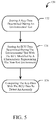
- FIG. 5 describes an embodiment of a method for detecting defeat devices by causing the ECU to react as if it is in the non-test environment, while actually in the test environment. If the ECU response changes, a defeat device is likely present.
- a key-data determined during an environmental test is stored by the key-data collection unit 110.
- the ECU is modified with a characteristic, such that the ECU senses the non-test environment. In various embodiments, the characteristic is written to the ECU by the Environmental Testing Device 140. ECU data is then stored in the key-data collection unit 110 as ECU data.
- a comparison at 176 of the key-data and the ECU data will indicate the presence of a defeat device, if there is a difference in the comparison (e.g., an anomaly).
- the anomaly indicates the presence of a defeat device because the ECU should otherwise produce similar key-data with the same stimulus regardless of whether the ECU is in the test environment or not.
- Key-data is considered to be "similar” when changes are due merely to uncontrollable random variations or the input data and internal states.
- a level of these random variations is predetermined by adding a threshold value below which a pair of key-data is considered to be similar.
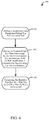
- FIG. 6 describes an embodiment of a method for detecting defeat devices by causing the ECU to react as if it is in the test environment, while actually in the non-test environment.
- a second key-data determined before the environment test e.g., non-test environment.
- the ECU is modified with a characteristic, such that the ECU senses the test environment.
- ECU data is then stored in the key-data collection unit 110 as an emulated first key-data, while in the non-test environment.
- the emulated first-key data is compared with the second key data to detect an anomaly indicting the presence of a defeat device.
- FIG. 7 describes an embodiment of a method for detecting defeat devices caused either by modifying the ECU with a characteristic to sense that the ECU is in the non-test environment, while in the test environment, or vice versa.
- a first key-data is determined during an environmental test.
- a second key-data is determined before the environmental test (e.g., the non-test environment).
- the first key-data is determined at 192 is determined by an ECU sensing a non-test environment or the second key-data is determined at 194 by the ECU sensing a test environment.
- the first key-data is compared with the second key-data to detect an anomaly.
- Alternative embodiments of the method for detecting defeat devices in an engine control unit include one of the following features, or any combination thereof.
- the key-data and the ECU data are encrypted to form an encrypted key-data-set, the key-data-set is transmitted to the environmental testing device, and the encrypted key-data-set is decrypted with the environmental testing device.
- the first vehicle and the second vehicle are a same vehicle.
- the characteristic is determined by comparing a feature of the first vehicle during the environmental test to the feature during a plurality of environmental and driving conditions performed on the second vehicle before the environmental test.
- the environmental test is one of an emissions test and a fuel consumption test.
- a status flag is set with the emissions testing device to report the detection of the anomaly.
- a method for detecting defeat devices in an engine control unit comprises storing with a key-data collection unit, a second key-data determined before an environmental test of a vehicle.
- the key-data collection unit stores an emulated first key-data determined before the environmental test by the ECU modified by a characteristic only present during the environmental test.
- An environmental testing device compares the emulated first key-data to the second key data to detect an anomaly, wherein the anomaly indicates the presence of the defeat device in the ECU.
- the actuator command for the first key-data is stored in a different memory location in the ECU than the actuator command for the second key-data.
- the determination of the first key-data includes averaging data from a plurality of the environmental tests, wherein each environmental test includes a plurality of measurement runs, and each environmental test is performed with at least one of a different sequence of the measurement runs and different input conditions to the environmental testing device.
- a first comparison of the first key-data to the second key-data is generated before uploading a firmware update to the ECU, and a second comparison of the first key-data to the second key-data is generated after uploading the firmware update to the ECU, the anomaly is determined by a difference between the first comparison and the second comparison.
- the second key-data is reduced through sampling, before storing the second key-data in the key-data collection unit.
- a method for detecting defeat devices in an engine control unit comprises storing with a key-data collection unit, a first key-data determined during an environmental test of a vehicle.
- the key-data collection unit stores a second key-data determined before the environmental test.
- one of the first key-data is determined by the ECU modified by a characteristic only present before the environmental test and the second key-data is determined by the ECU modified by a characteristic only present during the environmental test.
- An environmental testing device compares the first key-data with the second key-data to detect an anomaly, wherein the anomaly indicates the presence of the defeat device in the ECU.
- Comparing the first key-data to the second key-data further comprises pre-processing the second key-data with the emissions testing device to categorize the second key-data into a constant value set and a changing value set, wherein the changing value set includes a time-variant data having a magnitude that exceeds a threshold during a time period, and determining a step-wise linear function for a plurality of values in the changing value set.
- a method for detecting defeat devices in an engine control unit includes storing with a key-data collection unit, a first key-data determined during an environmental test of a vehicle.
- the key-data collection unit stores a second key-data determined before the environmental test.
- one of the first key-data is determined by the ECU modified by a characteristic only present before the environmental test and the second key-data is determined by the ECU modified by a characteristic only present during the environmental test.
- An environmental testing device compares the first key-data with the second key-data to detect an anomaly, wherein the anomaly indicates the presence of the defeat device in the ECU.
Landscapes
- Engineering & Computer Science (AREA)
- Physics & Mathematics (AREA)
- General Physics & Mathematics (AREA)
- Chemical & Material Sciences (AREA)
- Combustion & Propulsion (AREA)
- Mechanical Engineering (AREA)
- General Engineering & Computer Science (AREA)
- Computer Hardware Design (AREA)
- Microelectronics & Electronic Packaging (AREA)
- Testing And Monitoring For Control Systems (AREA)
- Combined Controls Of Internal Combustion Engines (AREA)
- Lock And Its Accessories (AREA)
Applications Claiming Priority (1)
| Application Number | Priority Date | Filing Date | Title |
|---|---|---|---|
| US15/967,376 US10648889B2 (en) | 2018-04-30 | 2018-04-30 | Monitor system for detecting defeat devices in engine control units |
Publications (2)
| Publication Number | Publication Date |
|---|---|
| EP3587779A2 true EP3587779A2 (fr) | 2020-01-01 |
| EP3587779A3 EP3587779A3 (fr) | 2020-02-26 |
Family
ID=66349254
Family Applications (1)
| Application Number | Title | Priority Date | Filing Date |
|---|---|---|---|
| EP19167962.0A Withdrawn EP3587779A3 (fr) | 2018-04-30 | 2019-04-08 | Système de surveillance pour détecter des dispositifs d'invalidation dans des unités de commande de moteur |
Country Status (2)
| Country | Link |
|---|---|
| US (1) | US10648889B2 (fr) |
| EP (1) | EP3587779A3 (fr) |
Families Citing this family (9)
| Publication number | Priority date | Publication date | Assignee | Title |
|---|---|---|---|---|
| US10795349B2 (en) * | 2017-05-12 | 2020-10-06 | Iav Gmbh Ingenieurgesellschaft Auto Und Verkehr | Method and device for testing software of an electronic control unit of a vehicle |
| WO2020021713A1 (fr) * | 2018-07-27 | 2020-01-30 | パナソニック インテレクチュアル プロパティ コーポレーション オブ アメリカ | Procédé de détection de fraudes et dispositif de commande électronique de détection de fraudes |
| WO2021186673A1 (fr) * | 2020-03-19 | 2021-09-23 | 日本電気株式会社 | Dispositif de traitement, procédé de traitement et programme |
| CN113946145A (zh) * | 2020-07-17 | 2022-01-18 | 北京车和家信息技术有限公司 | 整车控制器的检测方法及装置 |
| CN112814796B (zh) * | 2021-01-05 | 2023-01-24 | 潍柴动力股份有限公司 | 双ecu控制发动机转速的方法、装置 |
| DE102021200789A1 (de) * | 2021-01-28 | 2022-07-28 | Robert Bosch Gesellschaft mit beschränkter Haftung | Computer-implementiertes Verfahren und Vorrichtung zur Manipulationserkennung für Abgasnachbehandlungssysteme mithilfe Verfahren künstlicher Intelligenz |
| KR102541782B1 (ko) * | 2021-03-22 | 2023-06-12 | 대한민국 (관리부서 : 환경부 국립환경과학원장) | 제작자동차 배출가스 인증시험 데이터를 이용한 임의설정 분석 프로그램이 기록된 컴퓨터 판독매체 및 분석방법 |
| DE102021203228B3 (de) * | 2021-03-30 | 2022-06-23 | Robert Bosch Gesellschaft mit beschränkter Haftung | Verfahren und Vorrichtung zur Manipulationskennung an einer technischen Einrichtung in einem Kraftfahrzeug mithilfe Methoden künstlicher Intelligenz |
| JPWO2024128100A1 (fr) * | 2022-12-14 | 2024-06-20 |
Family Cites Families (11)
| Publication number | Priority date | Publication date | Assignee | Title |
|---|---|---|---|---|
| US5896083A (en) | 1997-05-16 | 1999-04-20 | Detroit Diesel Corporation | System and method for detecting vehicle speed sensor tampering |
| US6573827B1 (en) | 2000-11-14 | 2003-06-03 | Detroit Diesel Corporation | System and method of detecting vehicle speed limiting system tampering |
| US7865427B2 (en) | 2001-05-30 | 2011-01-04 | Cybersource Corporation | Method and apparatus for evaluating fraud risk in an electronic commerce transaction |
| DE10131573A1 (de) | 2001-07-02 | 2003-01-16 | Bosch Gmbh Robert | Verfahren zum Schutz eines Steuergeräts eines Kraftfahrzeugs vor Manipulation |
| US6678606B2 (en) | 2001-09-14 | 2004-01-13 | Cummins Inc. | Tamper detection for vehicle controller |
| WO2005009019A2 (fr) | 2003-07-16 | 2005-01-27 | Skype Limited | Systeme telephonique poste a poste |
| US7894978B2 (en) | 2008-02-06 | 2011-02-22 | Gm Global Technology Operations, Inc. | Diagnostic system and method for detecting tampering of vehicle software or calibrations |
| US8666588B2 (en) | 2011-05-27 | 2014-03-04 | Systech International, Llc | Fraud detection in an OBD inspection system |
| US9068492B2 (en) * | 2011-11-04 | 2015-06-30 | Ford Global Technologies, Llc | Motor vehicle on-board diagnostics to distinguish degradation from tampering |
| US10475029B2 (en) | 2013-03-15 | 2019-11-12 | Allowify Llc | System and method for consumer fraud protection |
| KR102417383B1 (ko) * | 2016-12-15 | 2022-07-06 | 현대자동차주식회사 | 임의 조작 장치를 검출하는 방법 |
-
2018
- 2018-04-30 US US15/967,376 patent/US10648889B2/en active Active
-
2019
- 2019-04-08 EP EP19167962.0A patent/EP3587779A3/fr not_active Withdrawn
Non-Patent Citations (1)
| Title |
|---|
| None |
Also Published As
| Publication number | Publication date |
|---|---|
| EP3587779A3 (fr) | 2020-02-26 |
| US20190331555A1 (en) | 2019-10-31 |
| US10648889B2 (en) | 2020-05-12 |
Similar Documents
| Publication | Publication Date | Title |
|---|---|---|
| US10648889B2 (en) | Monitor system for detecting defeat devices in engine control units | |
| US12401667B2 (en) | Vehicle security monitoring apparatus, method and non-transitory computer readable medium | |
| Nguyen et al. | Hyperproperties of real-valued signals | |
| US9618423B2 (en) | System and method for misfire diagnosis of vehicle engine | |
| WO2020261262A1 (fr) | Systèmes et procédés pour évaluer le risque dans des composants de véhicule en réseau | |
| US20210194921A1 (en) | System and method for network intrusion detection based on physical measurements | |
| EP3379218B1 (fr) | Procédé permettant de fournir un diagnostic sur un capteur d'humidité et de température combiné | |
| BRPI0812088B1 (pt) | Monitoração de motor | |
| US10708293B2 (en) | System and method for time based anomaly detection in an in-vehicle communication network | |
| EP2145084A2 (fr) | Procédé et système pour la mesure simultanée d'une pluralité de propriétés associées à un mélange de gaz d'échappement | |
| US20050178130A1 (en) | Method and apparatus for determining coolant temperature rationality in a motor vehicle | |
| US11922741B2 (en) | Secure installation of approved parts using blockchain | |
| US20140309905A1 (en) | System and method for sending and receiving messages between an electronic control unit of a vehicle and an external device | |
| EP3798840B1 (fr) | Dispositif de traitement d'informations, procédé d'analyse de données et programme | |
| US20250045410A1 (en) | Systems and methods for improving and updating ids with fuzzing results | |
| CN110067624B (zh) | 用于对机动车中的内燃机进行排放监控的方法和装置 | |
| US20240364784A1 (en) | Method and system to measure service usage and bill for associated used services based on a intrusion detection system | |
| CN112685731A (zh) | 电子设备入侵检测 | |
| US11361600B2 (en) | Method for authenticating a diagnostic trouble code generated by a motor vehicle system of a vehicle | |
| KR101131344B1 (ko) | 메커트로닉스 시스템의 모델에 기초한 진단 방법 | |
| Nyamdelger et al. | Fuzz testing and safe framework development for vehicle security analysis | |
| CN111145386A (zh) | 一种基于区块链管理行车电脑数据的方法、设备及介质 | |
| CN119968631A (zh) | 信息处理装置、信息处理系统、信息处理程序、信息处理方法 | |
| Yadav et al. | On Board Diagnostics (OBD): A Review On Monitoring Vehicle Operations | |
| Lóránt et al. | Intelligent resilience testing of vehicle control systems via learning-guided fuzzing |
Legal Events
| Date | Code | Title | Description |
|---|---|---|---|
| PUAI | Public reference made under article 153(3) epc to a published international application that has entered the european phase |
Free format text: ORIGINAL CODE: 0009012 |
|
| STAA | Information on the status of an ep patent application or granted ep patent |
Free format text: STATUS: THE APPLICATION HAS BEEN PUBLISHED |
|
| AK | Designated contracting states |
Kind code of ref document: A2 Designated state(s): AL AT BE BG CH CY CZ DE DK EE ES FI FR GB GR HR HU IE IS IT LI LT LU LV MC MK MT NL NO PL PT RO RS SE SI SK SM TR |
|
| AX | Request for extension of the european patent |
Extension state: BA ME |
|
| PUAL | Search report despatched |
Free format text: ORIGINAL CODE: 0009013 |
|
| AK | Designated contracting states |
Kind code of ref document: A3 Designated state(s): AL AT BE BG CH CY CZ DE DK EE ES FI FR GB GR HR HU IE IS IT LI LT LU LV MC MK MT NL NO PL PT RO RS SE SI SK SM TR |
|
| AX | Request for extension of the european patent |
Extension state: BA ME |
|
| RIC1 | Information provided on ipc code assigned before grant |
Ipc: F02D 41/26 20060101AFI20200123BHEP Ipc: G01M 15/04 20060101ALI20200123BHEP Ipc: F02D 41/22 20060101ALI20200123BHEP |
|
| STAA | Information on the status of an ep patent application or granted ep patent |
Free format text: STATUS: THE APPLICATION IS DEEMED TO BE WITHDRAWN |
|
| 18D | Application deemed to be withdrawn |
Effective date: 20200827 |