EP3589737B1 - Haploidisierung in sorghum - Google Patents
Haploidisierung in sorghum Download PDFInfo
- Publication number
- EP3589737B1 EP3589737B1 EP18708396.9A EP18708396A EP3589737B1 EP 3589737 B1 EP3589737 B1 EP 3589737B1 EP 18708396 A EP18708396 A EP 18708396A EP 3589737 B1 EP3589737 B1 EP 3589737B1
- Authority
- EP
- European Patent Office
- Prior art keywords
- plant
- seq
- amino acid
- sequence
- sorghum
- Prior art date
- Legal status (The legal status is an assumption and is not a legal conclusion. Google has not performed a legal analysis and makes no representation as to the accuracy of the status listed.)
- Active
Links
Images
Classifications
-
- A—HUMAN NECESSITIES
- A01—AGRICULTURE; FORESTRY; ANIMAL HUSBANDRY; HUNTING; TRAPPING; FISHING
- A01H—NEW PLANTS OR NON-TRANSGENIC PROCESSES FOR OBTAINING THEM; PLANT REPRODUCTION BY TISSUE CULTURE TECHNIQUES
- A01H1/00—Processes for modifying genotypes ; Plants characterised by associated natural traits
- A01H1/06—Processes for producing mutations, e.g. treatment with chemicals or with radiation
- A01H1/08—Methods for producing changes in chromosome number
-
- C—CHEMISTRY; METALLURGY
- C07—ORGANIC CHEMISTRY
- C07K—PEPTIDES
- C07K14/00—Peptides having more than 20 amino acids; Gastrins; Somatostatins; Melanotropins; Derivatives thereof
- C07K14/415—Peptides having more than 20 amino acids; Gastrins; Somatostatins; Melanotropins; Derivatives thereof from plants
-
- C—CHEMISTRY; METALLURGY
- C12—BIOCHEMISTRY; BEER; SPIRITS; WINE; VINEGAR; MICROBIOLOGY; ENZYMOLOGY; MUTATION OR GENETIC ENGINEERING
- C12N—MICROORGANISMS OR ENZYMES; COMPOSITIONS THEREOF; PROPAGATING, PRESERVING, OR MAINTAINING MICROORGANISMS; MUTATION OR GENETIC ENGINEERING; CULTURE MEDIA
- C12N15/00—Mutation or genetic engineering; DNA or RNA concerning genetic engineering, vectors, e.g. plasmids, or their isolation, preparation or purification; Use of hosts therefor
- C12N15/09—Recombinant DNA-technology
- C12N15/63—Introduction of foreign genetic material using vectors; Vectors; Use of hosts therefor; Regulation of expression
- C12N15/79—Vectors or expression systems specially adapted for eukaryotic hosts
- C12N15/82—Vectors or expression systems specially adapted for eukaryotic hosts for plant cells, e.g. plant artificial chromosomes (PACs)
- C12N15/8216—Methods for controlling, regulating or enhancing expression of transgenes in plant cells
- C12N15/8222—Developmentally regulated expression systems, tissue, organ specific, temporal or spatial regulation
- C12N15/823—Reproductive tissue-specific promoters
- C12N15/8231—Male-specific, e.g. anther, tapetum, pollen
-
- C—CHEMISTRY; METALLURGY
- C12—BIOCHEMISTRY; BEER; SPIRITS; WINE; VINEGAR; MICROBIOLOGY; ENZYMOLOGY; MUTATION OR GENETIC ENGINEERING
- C12N—MICROORGANISMS OR ENZYMES; COMPOSITIONS THEREOF; PROPAGATING, PRESERVING, OR MAINTAINING MICROORGANISMS; MUTATION OR GENETIC ENGINEERING; CULTURE MEDIA
- C12N9/00—Enzymes; Proenzymes; Compositions thereof; Processes for preparing, activating, inhibiting, separating or purifying enzymes
- C12N9/14—Hydrolases (3)
- C12N9/16—Hydrolases (3) acting on ester bonds (3.1)
- C12N9/18—Carboxylic ester hydrolases (3.1.1)
-
- C—CHEMISTRY; METALLURGY
- C12—BIOCHEMISTRY; BEER; SPIRITS; WINE; VINEGAR; MICROBIOLOGY; ENZYMOLOGY; MUTATION OR GENETIC ENGINEERING
- C12Y—ENZYMES
- C12Y301/00—Hydrolases acting on ester bonds (3.1)
- C12Y301/01—Carboxylic ester hydrolases (3.1.1)
- C12Y301/01002—Arylesterase (3.1.1.2)
-
- C—CHEMISTRY; METALLURGY
- C12—BIOCHEMISTRY; BEER; SPIRITS; WINE; VINEGAR; MICROBIOLOGY; ENZYMOLOGY; MUTATION OR GENETIC ENGINEERING
- C12Y—ENZYMES
- C12Y301/00—Hydrolases acting on ester bonds (3.1)
- C12Y301/04—Phosphoric diester hydrolases (3.1.4)
- C12Y301/04004—Phospholipase D (3.1.4.4)
-
- C—CHEMISTRY; METALLURGY
- C12—BIOCHEMISTRY; BEER; SPIRITS; WINE; VINEGAR; MICROBIOLOGY; ENZYMOLOGY; MUTATION OR GENETIC ENGINEERING
- C12N—MICROORGANISMS OR ENZYMES; COMPOSITIONS THEREOF; PROPAGATING, PRESERVING, OR MAINTAINING MICROORGANISMS; MUTATION OR GENETIC ENGINEERING; CULTURE MEDIA
- C12N15/00—Mutation or genetic engineering; DNA or RNA concerning genetic engineering, vectors, e.g. plasmids, or their isolation, preparation or purification; Use of hosts therefor
- C12N15/09—Recombinant DNA-technology
- C12N15/63—Introduction of foreign genetic material using vectors; Vectors; Use of hosts therefor; Regulation of expression
- C12N15/79—Vectors or expression systems specially adapted for eukaryotic hosts
- C12N15/82—Vectors or expression systems specially adapted for eukaryotic hosts for plant cells, e.g. plant artificial chromosomes (PACs)
- C12N15/8241—Phenotypically and genetically modified plants via recombinant DNA technology
- C12N15/8261—Phenotypically and genetically modified plants via recombinant DNA technology with agronomic (input) traits, e.g. crop yield
- C12N15/8287—Phenotypically and genetically modified plants via recombinant DNA technology with agronomic (input) traits, e.g. crop yield for fertility modification, e.g. apomixis
-
- C—CHEMISTRY; METALLURGY
- C12—BIOCHEMISTRY; BEER; SPIRITS; WINE; VINEGAR; MICROBIOLOGY; ENZYMOLOGY; MUTATION OR GENETIC ENGINEERING
- C12N—MICROORGANISMS OR ENZYMES; COMPOSITIONS THEREOF; PROPAGATING, PRESERVING, OR MAINTAINING MICROORGANISMS; MUTATION OR GENETIC ENGINEERING; CULTURE MEDIA
- C12N9/00—Enzymes; Proenzymes; Compositions thereof; Processes for preparing, activating, inhibiting, separating or purifying enzymes
- C12N9/14—Hydrolases (3)
- C12N9/16—Hydrolases (3) acting on ester bonds (3.1)
-
- Y—GENERAL TAGGING OF NEW TECHNOLOGICAL DEVELOPMENTS; GENERAL TAGGING OF CROSS-SECTIONAL TECHNOLOGIES SPANNING OVER SEVERAL SECTIONS OF THE IPC; TECHNICAL SUBJECTS COVERED BY FORMER USPC CROSS-REFERENCE ART COLLECTIONS [XRACs] AND DIGESTS
- Y02—TECHNOLOGIES OR APPLICATIONS FOR MITIGATION OR ADAPTATION AGAINST CLIMATE CHANGE
- Y02A—TECHNOLOGIES FOR ADAPTATION TO CLIMATE CHANGE
- Y02A40/00—Adaptation technologies in agriculture, forestry, livestock or agroalimentary production
- Y02A40/10—Adaptation technologies in agriculture, forestry, livestock or agroalimentary production in agriculture
- Y02A40/146—Genetically Modified [GMO] plants, e.g. transgenic plants
Definitions
- the present invention relates to the field of simplifying labor-intensive breeding programs using molecular biological methods, marker technology and genetic engineering.
- sorghum plants are provided which are able to induce haploidy through modifications in the genome which affect a patatin phospholipase which is preferably expressed in a pollen-specific manner, thereby producing haploid offspring and enabling inbred lines for hybrid breeding to be produced in a short time by chromosome doubling.
- sorghum plants which have mutations in the patatin phospholipase, methods for producing and identifying these mutations or the mutated plant and the corresponding nucleic acid molecule which encodes the mutated patatin phospholipase as well as vectors and host cells, in particular plant cells containing the nucleic acid molecule, and plants generated from such plant cells which are capable of producing haploidy as well as their offspring, crossing products, inbred lines and their plant parts and products.
- the present invention provides methods for producing and identifying transgenic and non-transgenic plant haploid inducers as well as the corresponding plants which have acquired the property of haploidy induction or whose induction performance has been improved. Furthermore, the invention also covers seeds or offspring, organs, plant parts, tissues or cells of the plant according to the invention and the use thereof.
- Sorghum is a relatively new crop in Germany, but due to its mass growth, drought tolerance and good water and nutrient efficiency, it is becoming the focus of science and practice in the search for other high-yield crops for substrate production, especially with regard to use in biogas production, but also for use as animal feed, food and ethanol production.
- General breeding goals for sorghum are adaptation to the climate of Central Europe, i.e. improved cold tolerance, improvement of yield, stability coupled with good juvenile development and development of disease and pest resistance.
- sorghum can be improved through breeding.
- the population can be improved through complex selective breeding by selecting the best plants for seed production for the next growing season.
- new possibilities for improving varieties have been created through hybrid breeding.
- the process of hybrid breeding is based on the production of pure-bred father and mother lines over several generations, which means that the process of hybrid breeding is time-consuming and costly despite good results.
- WO2016/075255A1 concerns the provision of technical means such as nucleic acids which, after transcription or expression in a plant, are capable of imparting the property of a haploid inducer or of increasing the induction performance of a haploid inducer.
- Liu et al. (2017) concerns haploid induction in maize by a 4-bp insertion in ZmPLA1 encoding a putative phospholipase A.
- the object of the present invention was therefore to provide an efficient system for the cultivation of sorghum.
- the present invention relates to the field of simplifying laborious breeding programs, marker technology and genetic engineering.
- the invention provides sorghum plants that are able to induce haploidy through modifications in the genome that affect a pollen-specifically expressed patatin phospholipase, thereby producing haploid offspring and in a short time through Chromosome doubling inbred lines, ie pure-breeding father and mother lines, can be produced for hybrid breeding.
- the findings can be used to produce transgenic and non-transgenic plant haploid inducers or to improve the induction performance of plants.
- Conveying the property of a haploid inducer or “conveying the property of a haploid inducer” or “being able to induce haploidy” or a comparable expression means that a plant is enabled, by using a nucleic acid according to the invention or by modifying the genome, in particular by mutating a patatin phospholipase, to produce fertilized seeds or embryos which have a single (haploid) set of chromosomes from a cross with a plant of the same genus, preferably the same species, which does not have the property of a haploid inducer.
- the property of a haploid inducer means that at least 0.1%, 0.2%, 0.3%, 0.4%, 0.5%, 0.6%, 0.7%, 0.8%, 0.9% or 1%, preferably at least 1.5%, 2%, 2.5%, 3%, 3.5%, 4%, 4.5% or 5%, particularly preferably at least 6%, 7%, 8%, 9%, 10%, 11%, 12%, 13%, 14% or 15%, or very particularly preferably at least 20%, 25%, 30%, 35%, 40%, 45% or 50% of the fertilized seeds or embryos have a haploid set of chromosomes.
- a "functional fragment" of a nucleotide sequence means a section of a nucleotide sequence which has identical or comparable functionality to the total nucleotide sequence from which the functional fragment originates.
- the functional fragment can have a nucleotide sequence which is at least 50%, 55%, 60%, 65%, 70%, 75%, 80%, 85%, 90%, 92%, 94%, 96%, 97%, 98% or 99% identical or homologous to the total nucleotide sequence.
- a "functional fragment" of a nucleotide sequence can also mean a section of a nucleotide sequence which changes the functionality of the total nucleotide sequence, for example in the course of post-transcriptional or transcriptional gene silencing.
- the functional fragment of a nucleotide sequence may comprise at least 14, 15, 16, 17, 18, 19, 20, 21, 22, 23, 24 or 25, preferably at least 30, 35, 40, 45, 50, 60, 70, 80, 90, 100, 120 or 140, particularly preferably at least 160, 180, 200, 250, 300, 350, 400, 450, 500, 600, 700, 800, 900 or 1000 consecutive nucleotides of the total nucleotide sequence.
- a “functional part" of a protein means a section of a protein or a section of the amino acid sequence that encodes the protein, where the section can perform identical or comparable functionality to the entire protein in a plant cell.
- a functional part of a protein has an amino acid sequence that is identical or, taking into account conservative and semi-conservative amino acid substitutions, similar to the protein from which the functional part originates, over a length of at least 50%, 55%, 60%, 65%, 70%, 75%, 80%, 85%, 90%, 92%, 94%, 96%, 97%, 98% or 99%.
- Haploid inducer also means an in vivo haploid inducer.
- heterologous means that the introduced polynucleotide originates, for example, from a cell or organism with a different genetic background of the same species or of a different species, or is homologous to the prokaryotic or eukaryotic host cell, but is then located in a different genetic environment and thus differs from a corresponding polynucleotide that may be naturally present.
- a heterologous polynucleotide can be present in addition to a corresponding endogenous gene.
- Hybridization or “hybridisation” is a process in which a single-stranded nucleic acid molecule attaches itself to a largely complementary nucleic acid strand, ie forms base pairs with it.
- Standard procedures for hybridisation are described, for example, in Sambrook et al., Molecular Cloning: A Laboratory Manual 3rd Ed. Cold Spring Harbor Laboratory Press, Cold Spring Harbor, NY, 2001 described.
- this means that at least 80% or 85%, preferably at least 90%, 91%, 92%, 93%, 94% or 95%, particularly preferably at least 96%, 97%, 98% or 99% of the bases of the nucleic acid molecule enter into base pairing with the largely complementary nucleic acid strand.
- stringency refers to the hybridization conditions. High stringency is present when base pairing is difficult, low stringency when base pairing is easier.
- the stringency of the hybridization conditions depends, for example, on the salt concentration or ionic strength and the temperature. In general, the stringency can be increased by increasing the temperature and/or reducing the salt content.
- Stringency hybridization conditions are those conditions under which hybridization predominantly only takes place between homologous nucleic acid molecules and homologs.
- hybridization conditions refers not only on the conditions prevailing during the actual attachment of the nucleic acids, but also on the conditions prevailing during the subsequent washing steps.
- Stringent hybridization conditions are, for example, conditions under which predominantly only those nucleic acid molecules hybridize that have at least 80%, at least 85%, at least 90% or at least 95% sequence identity.
- Stringent hybridization conditions are, for example: hybridization in 4 ⁇ SSC at 65°C and subsequent multiple washing in 0.1 ⁇ SSC at 65°C for a total of about 1 hour.
- the term "stringent hybridization conditions" used here can also mean: hybridization at 68°C in 0.25 M sodium phosphate, pH 7.2, 7% SDS, 1 mM EDTA and 1% BSA for 16 hours and subsequent washing twice with 2 ⁇ SSC and 0.1% SDS at 68°C. Hybridization preferably takes place under stringent conditions.
- Increasing the induction efficiency of a haploid inducer or “increasing the induction efficiency of a haploid inducer” or similar expressions mean that the haploid induction rate of a plant which has the property of a haploid inducer is increased.
- the number of fertilized seeds which have a haploid set of chromosomes and have resulted from a cross of the haploid inducer with a plant of the same genus, preferably the same species, which does not have the property of a haploid inducer can be at least 0.1%, 0.2%, 0.3%, 0.4%, 0.5%, 0.6%, 0.7%, 0.8%, 0.9% or 1%, preferably at least 1.5%, 2%, 2.5%, 3%, 3.5%, 4%, 4.5% or 5%, and particularly preferably at least 6%, 7%, 8%, 9%, 10%, 15%, 20%, 30% or 50% higher than the number of haploid fertilized seeds which have resulted from a cross of the haploid inducer with a plant of the same genus, preferably the same species, which does not have the property of a haploid inducer, than the number of haploid fertilized seeds which have resulted from a cross of the haploid inducer with a plant of the same genus,
- the haploid induction rate can be increased by at least 0.1%, 0.2%, 0.3%, 0.4%, 0.5%, 0.6%, 0.7%, 0.8%, 0.9% or 1%, preferably at least 1.5%, 2%, 2.5%, 3%, 3.5%, 4%, 4.5% or 5%, and particularly preferably at least 6%, 7%, 8%, 9%, 10%, 15%, 20%, 30% or 50% relative to the previously achieved haploid induction rate.
- “Complementary” nucleotide sequence means, in relation to a nucleic acid in the form of a double-stranded DNA, that the second DNA strand complementary to the first DNA strand has, according to the base pairing rules, the nucleotides that correspond to the bases of the first strand according to the Watson-Crick rules.
- a “molecular marker” is a nucleic acid that is polymorphic in a plant population and is used as a reference or landmark.
- a marker for Detecting a recombination event should be suitable for monitoring differences or polymorphisms within a plant population. Thus, such a marker is able to detect and distinguish between different allelic states (alleles).
- the term "molecular marker” also refers to nucleotide sequences that are complementary or at least largely complementary or homologous to genomic sequences, for example nucleic acids, which are used as probes or primers.
- markers these differences are found at the DNA level and are, for example, polynucleotide sequence differences such as SSRs ( simple sequence repeats ), RFLPs ( restriction fragment length polymorphisms ), FLPs ( fragment length polymorphisms ) or SNPs ( single nucleotide polymorphisms ) .
- the markers may be derived from genomic or expressed nucleic acids such as spliced RNA, cDNA or ESTs and may also refer to nucleic acids used as probes or primer pairs and as such are suitable to amplify a sequence fragment using PCR-based methods.
- Markers describing genetic polymorphisms can be detected using well-established state-of-the-art methods ( An Introduction to Genetic Analysis. 7th Edition, Griffiths, Miller, Suzuki et al., 2000 ). These include, for example, DNA sequencing, PCR-based sequence-specific amplification, detection of RFLPs, detection of polynucleotide polymorphisms by allele-specific hybridization (ASH), detection of amplified variable sequences of the plant genome, detection of a 3SR ( self-sustained sequence replication ), detection of SSRs, SNPs, RFLPs or AFLPs ( amplified fragment length polymorphisms ).
- ESTs expressed sequence tags
- SSR markers derived from EST sequences and RAPD ( randomly amplifiedpolymorphic DNA ) are also known.
- marker in the description can also mean a specific chromosome position in the genome of a species where a specific marker (e.g. SNP) can be found.
- “Operatively linked” means linked in a common nucleic acid molecule in such a way that the linked elements are positioned and oriented relative to each other such that transcription of the nucleic acid molecule can take place.
- a DNA that is operatively linked to a promoter is under the transcriptional control of that promoter.
- a "plant” in the sense of the invention can, unless otherwise stated, be any species of dicotyledonous and monocotyledonous plants. Preference is given to plants in agriculture or horticulture or for the production of bioenergy (bioethanol, biogas, etc.).
- a sorghum millet plant according to the invention is a plant of the genus Sorghum , in particular of the species Sorghum bicolor, Sorghum sudanense, Sorghum bicolor ⁇ Sorghum sudanense, Sorghum ⁇ almum ( Sorghum bicolor ⁇ Sorghum halepense ), Sorghum arundinaceum, Sorghum ⁇ drummondii, Sorghum halepense and/or Sorghum propinquum or their hybrids and all varieties derived therefrom.
- Plant “organs” include, for example, leaves, stems, trunks, roots, vegetative buds, meristems, embryos, anthers, ovules, seeds or fruits, especially seeds.
- plant part or “plant parts” includes, but is not limited to, the stem, leaves, flowers, inflorescences, roots, fruits and seeds as well as pollen.
- Plant “parts” also mean a combination of several organs, e.g. a flower or a seed, or a part of an organ, e.g. a cross-section of the stem.
- Plant “tissues” include, for example, callus tissue, storage tissue, meristematic tissue, leaf tissue, stem tissue, root tissue, plant tumor tissue or reproductive tissue as well as the formation tissue, ground tissue (the so-called parenchyma), conductive tissue, strengthening tissue and the covering tissue (the so-called epidermis).
- tissue is not limited by this list.
- Plant “cells” include, for example, isolated cells with a cell wall or aggregates thereof or protoplasts.
- a “promoter” is a non-translated DNA segment, typically upstream of a coding region, which contains the binding site for RNA polymerase and initiates transcription of the DNA.
- a promoter also contains other elements known as Regulatory genes of gene expression (eg cis-regulatory elements).
- a “core or minimal promoter” is a promoter that has at least the basic elements needed for transcription initiation (eg TATA box and/or initiator).
- modifications refers to a nucleotide sequence which influences the specificity and/or the expression level, for example in that the regulatory sequence mediates a certain tissue specificity.
- a regulatory sequence can be located upstream of the transcription initiation point of a minimal promoter, but also downstream of it, for example in a transcribed but not translated leader sequence or within an intron.
- a “transgenic plant” refers to a plant in whose genome at least one polynucleotide, preferably a heterologous polynucleotide, is integrated.
- the polynucleotide is stably integrated, which means that the integrated polynucleotide is stably retained in the plant, is expressed and can also be stably inherited by the offspring.
- the stable introduction of a polynucleotide into the genome of a plant also includes integration into the genome of a plant of the previous parental generation, whereby the polynucleotide can be stably inherited.
- heterologous means that the introduced polynucleotide originates, for example, from a cell or organism with a different genetic background of the same species or another species, or is homologous to the prokaryotic or eukaryotic host cell, but is then located in a different genetic environment and thus differs from a corresponding polynucleotide that may be naturally present.
- a heterologous polynucleotide may be present in addition to a corresponding endogenous gene.
- Suitable for use as a haploid inducer or “capable of inducing haploidy” means that a plant is capable of producing fertilized seeds having a single (haploid) set of chromosomes from a cross with a plant of the same genus, preferably the same species, which does not have the property of a haploid inducer.
- haploid inducer expressed as absolute haploid induction rate, means that at least 0.1%, 0.2%, 0.3%, 0.4%, 0.5%, 0.6%, 0.7%, 0.8%, 0.9% or 1%, preferably at least 1.5%, 2%, 2.5%, 3%, 3.5%, 4%, 4.5% or 5%, particularly preferably at least 6%, 7%, 8%, 9%, 10%, 11%, 12%, 13%, 14% or 15%, or very particularly preferably at least 20%, 25%, 30%, 35%, 40%, 45% or 50% of the fertilized seeds have a haploid set of chromosomes.
- the present invention provides a plant of the genus Sorghum, hereinafter also referred to as sorghum millet plant, which is capable of inducing haploidy. Due to this property of haploid induction, the plant is able to produce fertilized seeds or embryos, which have a single (haploid) set of chromosomes, from a Crossing with a plant of the same genus, preferably of the same species, which does not have the property of a haploid inducer.
- This system enabled the inventors to provide an efficient system for breeding sorghum plants, because chromosome doubling in the haploid offspring can generate inbred lines, ie pure-breeding father and mother lines for hybrid breeding.
- the sorghum plants according to the invention are characterized in that they have one or more modifications that affect the patatin phospholipase, which either imparts the property for haploid induction or improves a naturally existing ability for haploid induction or increases the induction performance.
- the modification relating to the patatin phospholipase is therefore the reason for the suitability of the sorghum plant according to the invention as a haploid inducer in breeding programs.
- the plants are characterized by the fact that they have an induction rate of preferably at least 0.5% and thus differ from wild-type plants or from non-haploid inducers.
- the patatin phospholipase in sorghum is expressed in a pollen-specific manner and therefore presumably has an influence on pollen tube growth or the interaction between the gametophytes.
- the sorghum plant is preferably characterized in that the patatin phospholipase is expressed in a pollen-specific manner and/or has an influence on pollen tube growth or the interaction between the gametophytes.
- the patatin phospholipase is encoded by the nucleotide sequence according to SEQ ID NO: 1 or 2, or by a nucleotide sequence which is at least 80%, preferably 85%, more preferably 90%, even more preferably 95% and most preferably 99% identical to SEQ ID NO: 1 or 2, or by a nucleotide sequence which hybridizes with the complementary sequence to the nucleotide sequence according to SEQ ID NO: 1 or 2 under stringent conditions, wherein the stringent conditions correspond to hybridization in 4 ⁇ SSC at 65°C followed by multiple washings in 0.1 ⁇ SSC at 65°C for a total of about 1 hour; or comprises the amino acid sequence shown in SEQ ID NO: 3 or an amino acid sequence which is at least 80% identical to SEQ ID NO: 3.
- the sorghum millet plant within the meaning of the present invention comprises plants of any kind of the genus Sorghum, in particular the species Sorghum bicolor, Sorghum sudanense and Sorghum bicolor ⁇ Sorghum sudanense or their hybrids as well as all varieties derived from it. Accordingly, it is reasonable to assume that the nucleotide sequence and accordingly also the amino acid sequence of the patatin phospholipase have changed in the course of speciation and variety breeding.
- the term homologous means that the genes in question (from two different plant species or varieties) have essentially the same function and a common precursor, and therefore typically show a significant identity in their nucleic acid or encoded amino acid sequence, which is preferably at least 80%.
- a "homologue” is understood to be a protein of the same phylogenetic origin
- an "analogue” is understood to be a protein that performs the same function but has a different phylogenetic origin
- an "ortholog” is understood to be a protein from another species that performs the same function
- a "paralog” is understood to be a protein that has arisen by duplication within a species, whereby this copy either retains the same protein function, changes its expression pattern but does not change the function, changes its protein function, or the original gene function is divided between the two copies.
- a coded protein is basically a homolog within the meaning of the present description if it performs the same function, regardless of whether it has the same or a different phylogenetic origin or comes from the same or a different species.
- a homolog is also able to complement the property of haploid induction, i.e. to impart the property of a haploid inducer or to increase the induction performance of a haploid inducer by modifying the gene product encoded by the homolog of the plant from which the gene originates.
- the homolog of patatin phospholipase in question can preferably be characterized in that it is able to complement the property of a haploid inducer that is observed in the sorghum plant according to the invention.
- the patatin phospholipase homologue can preferably be characterized in that the modification of the gene product encoded by the homologue imparts the property of a haploid inducer or increases the induction performance of a haploid inducer.
- an amino acid exchange in the amino acid sequence of the patatin phospholipase from sorghum (SEQ ID No.: 3) in sorghum leads to a haploid induction rate of sometimes more than 1.5%. It can be assumed that further amino acid exchanges, which lead to a further modification of the coding sequence of the patatin phospholipase, can lead to a further increase in the induction rate.
- the present invention thus encompasses sorghum plants which have one or more modifications or mutations affecting the patatin phospholipase.
- patatin phospholipase are characterized in the sense of the present invention in that they are mutations which lead to one or more amino acid substitutions in the region of amino acid positions 55-75, 157-167 or 285-298 according to SEQ ID No.: 3 in the endogenous gene encoding patatin phospholipase.
- a mutation means a modification at the DNA level, i.e. a change in genetics and/or epigenetics.
- a change in genetics can be the exchange of at least one nucleobase in the endogenous DNA sequence or in a regulatory sequence of the endogenous DNA sequence.
- nucleobase exchange takes place, for example, in a promoter
- this can lead to a change in the activity of the promoter because, for example, cis-regulatory elements are modified in such a way that the affinity of a transcription factor to the mutated cis -regulatory element is changed compared to the wild-type promoter, so that the activity of the promoter with the mutated cis- regulatory element is increased or decreased, depending on whether the transcription factor is a repressor or inducer or whether the affinity of the transcription factor to the mutated cis-regulatory element is increased or decreased.
- nucleobase exchange takes place, for example, in a coding region of the endogenous DNA sequence, this can lead to an amino acid exchange in the encoded protein, which can cause a change in the activity or stability of the protein compared to the wild-type protein.
- Another example of a change in the Genetics is the deletion of nucleotides in the regulatory sequence and/or the endogenous DNA sequence as well as the addition of nucleotides in the regulatory sequence and/or the endogenous DNA sequence.
- a change in epigenetics can occur, for example, through a changed methylation pattern of the DNA.
- the described mutations lead to a change or shortening of the amino acid sequence of the patatin phospholipase, it can be assumed that the mutations change, i.e. increase or reduce, the activity or stability of the patatin phospholipase encoded by the endogenous DNA sequence in the sorghum plant compared to a wild-type plant.
- the activity of the protein can be increased, for example by optimizing the sequence, or it can also be inhibited or lost. Mutations in the promoter region can also lead to a change in the expression of the gene.
- patatin phospholipase can be altered by the described mutation in such a way that its original function in pollen is no longer exerted to the same extent as is the case in the wild-type sorghum plant.
- this can occur through overexpression of the gene combined with an increased protein quantity and activity, for example through mutations in the promoter region, through increasing the stability of the protein, or through the formation of a more active form of patatin phospholipase, for example through amino acid substitutions in the functional domain, which could lead, for example, to faster growth of the pollen tube, a decoupling of the transport of the generative cells in the pollen tube with its growth, or a disturbed interaction of the gametophytes followed by incomplete fertilization with subsequent chromosome elimination.
- the correct formation, folding and/or stability of patatin phospholipase could also be inhibited, prevented or reduced by overexpression of the gene.
- patatin phospholipase could also lead to reduced formation or no formation of a functional patatin phospholipase, for example through mutations in the promoter region, to the formation of a less active, inactive or unstable form of patatin phospholipase, for example, through amino acid substitutions in the functional domain, which in turn could lead to defective fertilization.
- the described mutations could also change the localization of the patatin phospholipase so that, for example, it is no longer expressed in a pollen-specific manner.
- the present invention also includes sorghum plants which have one or more insertions of an expression cassette which has a nucleic acid molecule encoding the patatin phospholipase which is encoded by the nucleotide sequence according to SEQ ID No.: 1 or 2 or by a nucleotide sequence which is at least 80%, preferably 85%, more preferably 90%, even more preferably 95% and most preferably 99% identical to SEQ ID No.: 1 or 2, or which has a nucleic acid molecule having a nucleotide sequence which hybridizes with the complementary sequence to the nucleotide sequence according to SEQ ID No.: 1 or 2 under stringent conditions, the stringent conditions corresponding to hybridization in 4 ⁇ SSC at 65°C and subsequent multiple washing in 0.1 ⁇ SSC at 65°C for a total of about 1 hour, or which has a nucleic acid molecule encoding the Patatin phospholipase having an amino acid sequence according to SEQ ID No.: 3 or
- the present invention provides sorghum plants having one or more mutations resulting in an amino acid exchange in the region of amino acid positions 55-75 or 157-167 according to SEQ ID NO:3.
- the present invention also provides sorghum plants having one or more mutations leading to an amino acid exchange in the region of amino acid positions 285-298 according to SEQ ID No.: 3, which preferably corresponds to a region outside the functional domain of patatin phospholipase.
- the plant according to the invention is characterized in that the one or more mutations lead to an amino acid exchange at amino acid position 59, 162 and/or 291 according to SEQ ID No.: 3.
- the modified patatin phospholipase comprises an amino acid sequence according to SEQ ID No.: 3 or an amino acid sequence which is at least 80% identical to SEQ ID No.: 3, in which at least one amino acid substitution is present, wherein at position 59 arginine (R), at position 162 valine (V), and/or at position 291 serine (S) is replaced by another amino acid, preferably by glutamine (Q) at position 59, isoleucine (I) at position 162 and/or leucine (L) at position 291; or is encoded by a nucleotide sequence according to SEQ ID No.: 1 which comprises the coding sequence of the DNA sequence according to SEQ ID No.: 1 or a DNA sequence which is at least 80% identical to SEQ ID No.: 1, in which at least one nucleotide exchange is present, resulting in an amino acid exchange, wherein one or more nucleotides are exchanged at positions 421-423, 815-817,
- plants have two or more copies of their genetic information per cell. Each gene is usually represented by two alleles, which can be identical in the homozygous state or different in the heterozygous state.
- the phenotype of the plant according to the invention is determined by one or more mutations in the patatin phospholipase caused, whereby the plant is homozygous or heterozygous, preferably homozygous for the mutated patatin phospholipase.
- a nucleic acid molecule which comprises the previously defined specific mutations which lead to the amino acid exchanges R59Q, V162I, and/or S291L based on the amino acid sequence of SEQ ID No.: 3.
- the nucleic acid molecule according to the invention is characterized in that the presence of the nucleic acid molecule according to the invention in the absence of a wild-type patatin phospholipase in a plant results in the plant being able to induce haploidy or in the induction performance of a plant which is already capable of haploid induction being improved.
- the nucleic acid according to the invention or an RNA encoded by the nucleic acid or a protein or polypeptide encoded by the nucleic acid influences the pollen tube growth in a plant, the interaction between the gametophytes or the fertilization as such.
- DNA hybridization probes derived from the modified sequence of patatin phospholipase, ie comprising one of the mutations described above, can be used to identify plants according to the invention, ie to detect the mutations in the gene of patatin phospholipase.
- probes should be specific and have a length of at least 15 nucleotides, preferably at least 20 nucleotides.
- the probes can also be used to amplify a region of the modified patatin phospholipase sequence containing at least one of the previously described mutations by the known polymerase chain reaction (PCR) process.
- PCR polymerase chain reaction
- a nucleic acid molecule of at least 15, 16, 17, 18, 19 or 20, preferably at least 21, 22, 23, 24 or 25, particularly preferably at least 30, 35, 40, 45 or 50, and especially preferably at least 100, 200, 300, 500 or 1000 nucleotides in length is the subject of the present invention, wherein this nucleic acid molecule is specifically bound to a previously described nucleotide sequence which encodes the modified patatin phospholipase gene comprises, hybridizes, and comprises one of the mutations or a pair of nucleic acid molecules suitable for amplifying a region containing at least one of the mutations in a polymerase chain reaction (PCR), preferably in the form of an oligonucleotide, preferably with a maximum length of 50 nucleotides, preferably having one of the following nucleotide sequences according to SEQ ID No.: 28-30, 32-34, 36-38 or 40-42.
- PCR polymerase chain reaction
- the invention further relates to vectors comprising the nucleic acid molecule according to the invention.
- a vector according to the invention can comprise the mutated gene of patatin phospholipase with the aforementioned properties of the nucleotide sequence, which is operatively linked to a heterologous promoter or it can comprise the mutated gene of patatin phospholipase together with its natural promoter.
- Another vector may comprise the wild-type patatin phospholipase gene operably linked to a heterologous promoter.
- a vector may comprise a recombinant DNA molecule having a nucleotide sequence encoding a double-stranded RNA which, when expressed in a plant cell, results in inhibition of the expression of the patatin phospholipase gene.
- a vector can contain the previously described nucleic acid molecule that specifically binds to the mutated nucleotide sequence of patatin phospholipase.
- the vector described may be a plasmid, a cosmid, a phage or an expression vector, a transformation vector, shuttle vector or cloning vector, it may be double- or single-stranded, linear or circular or it may transform a prokaryotic or eukaryotic host either by integration into its genome or extrachromosomally.
- the nucleic acid molecule according to the invention is operatively linked in an expression vector to one or more regulatory sequences which allow transcription and optionally expression in a prokaryotic or eukaryotic host cell; see for example Sambrook et al., Molecular Cloning: A Laboratory Manual 3rd Ed.
- a regulatory sequence preferably DNA
- these regulatory sequences are promoters or terminators, in particular a transcription initiation starting point, a ribosome binding site, an RNA processing signal, a transcription termination site and/or a polyadenylation signal.
- the vectors usually also contain indicator/reporter genes or resistance genes to detect the transfer of the desired vector or DNA molecule/nucleic acid molecule and to select the individuals that contain them, since direct detection via the expression of the gene is usually rather difficult.
- the vector is a plant vector.
- a method which comprises introducing a described vector into a host cell.
- the vector can be introduced, for example, by conjugation, mobilization, biolistic transformation, Agrobacterium-mediated transformation, transfection, transduction, vacuum infiltration or electroporation.
- conjugation, mobilization, biolistic transformation, Agrobacterium-mediated transformation, transfection, transduction, vacuum infiltration or electroporation Such methods as well as methods for preparing described vectors are familiar to the person skilled in the art (Sambrook et al. 2001).
- the present invention relates to host cells which contain the vectors or nucleic acid molecules described.
- a host cell in the sense of the invention can be a prokaryotic (e.g. bacterial) or eukaryotic cell (e.g. a plant cell or a yeast cell).
- the host cell is an Agrobacterium such as Agrobacterium tumefaciens or Agrobacterium rhizogenes or a plant cell which comprises the nucleic acid according to the invention or the vector.
- the present invention further preferably relates to a transgenic plant cell which comprises the nucleic acid molecule according to the invention as a transgene or the vector of the present invention, as well as a transgenic plant or a part thereof which comprises the transgenic plant cell.
- a transgenic plant cell or plant is, for example, a plant cell or plant which is preferably stably transformed with the nucleic acid molecule according to the invention or with the vector of the present invention.
- a transgenic plant of the present invention is suitable for use as a haploid inducer.
- the nucleic acid molecule is operatively linked to one or more regulatory sequences which allow transcription and optionally expression in the plant cell.
- a regulatory sequence preferably DNA
- the overall construct of the nucleic acid molecule according to the invention and the regulatory sequence(s) then represents the transgene.
- a part of a plant can be a fertilized or unfertilized seed, an embryo, a pollen, a tissue, an organ or a plant cell, wherein the fertilized or unfertilized seed, the embryo or the pollen are produced on the transgenic plant and in whose genome the nucleic acid according to the invention is integrated as a transgene or the vector.
- the present invention also includes a descendant of the transgenic plant, in whose genome the nucleic acid according to the invention is integrated as a transgene or the vector and which is suitable for use as a haploid inducer.
- the endogenous DNA sequence from step (a) (ii) of the above process can in principle encode any plant patatin phospholipase.
- the endogenous DNA sequence encodes a patatin phospholipase from sorghum (SEQ ID No.: 3), sunflower (SEQ ID No.: 18), barley (SEQ ID No.: 21), or sugar beet, wherein sugar beet has two putative patatin phospholipases (SEQ ID No.: 24 and 27).
- the plant patatin phospholipases mentioned in step (ii) are preferably those from sunflower (SEQ ID No.: 18), barley (SEQ ID No.: 21) or sugar beet, wherein sugar beet has two putative patatin phospholipases (SEQ ID No.: 24 and 27).
- step (a) (i) of the method for producing a plant which is suitable for use as a haploid inducer Mutagenization includes both conventional mutagenesis and site-specific mutagenesis or "genome editing".
- conventional mutagenesis the modification at the DNA level is not brought about in a targeted manner.
- the plant cell or the plant is exposed to mutagenic conditions such as TILLING by UV light irradiation or the use of chemical substances ( Till et al., BMC Plant Biology 4 (2004), 12 ).
- Another method of random mutagenesis is mutagenesis using a transposon.
- Site-specific mutagenesis enables the introduction of modifications at the DNA level at predefined locations on the DNA.
- TALENS WO 2010/079430 , WO 2011/072246
- meganucleases Silva et al., Current Gene Therapy 11 (2011), 11
- homing endonucleases Chevalier, Molecular Cell 10 (2002), 895-905
- zinc finger nucleases Lloyd et al., Proceedings of the National Academy of Sciences of the United States of America 102 (2005), 2232-237 or a CRISPR/Cas system ( Gaj et al., Trends in Biotechnology 31 (2013), 397-405 ) be used.
- the identification of a plant in step (a) (ii) can be done, for example, with the help of molecular markers or probes.
- DNA probes are, for example, primers or primer pairs that can be used in a PCR reaction.
- Tilling mutants can be identified by sequencing the target gene in a Tilling population or other Methods that detect mismatches in the DNA, such as melting point analyses or the use of mismatch-specific nucleases, are detected or identified.
- the present invention also includes primers/primer pairs that can be used for this purpose, such as primers for patatin phospholipase.
- mutants generated by means of transposons can be detected by using transposon-specific primers and target gene-specific primers in the PCR across the entire population and subsequent sequencing of PCR products.
- Such primers are also covered by the present invention.
- the person skilled in the art knows further means and methods from the prior art which he can use to identify a plant in step (b).
- the present description also relates to molecular markers which detect the presence or absence of a mutation in the endogenous DNA sequence or in a regulatory sequence of the endogenous DNA sequence. Such markers are based, for example, on a SNP and are specific for the mutation (examples: KASPar or TaqMan markers).
- Identifying a plant in step (a) (ii) can also be carried out by testing the induction performance as described in the appended Example 1.
- the present invention also relates to a method for identifying a plant according to the invention by detecting the mutation in the patatin phospholipase gene or by detecting a marker allele linked to the mutation, preferably using molecular markers described above.
- An example of a plant produced and identified by such a method is the sorghum plant of the invention.
- the present invention further relates to a plant which can be produced or is produced using the above method, or a part of this plant, where a part of a plant can be a fertilized or unfertilized seed, an embryo, a pollen, a tissue, an organ or a plant cell, where the fertilized or unfertilized seed, the embryo or the pollen are produced on the transgenic plant and in whose genome the at least one mutation is present.
- the present invention also includes a descendant of the plant which has the at least one mutation and is suitable for use as a haploid inducer.
- the method can be applied to any plant containing a patatin phospholipase and thus to this plant the property of haploid induction.
- This plant is preferably sorghum, sunflower, barley, sugar beet, rye, wheat or potato.
- the method for producing a transgenic plant which is suitable for use as a haploid inducer also includes the provision of two or more of the nucleic acids described above, optionally also different embodiments of the nucleic acid according to the invention and optionally in one or more vectors, and the transformation of plant cells by introducing the two or more nucleic acids.
- one or more further nucleic acids which are known to be usable for producing a haploid inducer eg manipulated cenh3 gene ( Ravi and Chan, Nature 464 (2010), 615-618 ; EP 2 989 889 A1 ; EP 3 037 540 A1 ; WO 2016/138021 A1 ) and transformed or introduced through breeding.
- the nucleic acid molecule or the vector from (b) is introduced by transformation, preferably by stable transformation of plant cells.
- the vector can be introduced, for example, by conjugation, mobilization, biolistic transformation, Agrobacterium-mediated transformation, transfection, transduction, vacuum infiltration or electroporation. Such methods are familiar to the person skilled in the art (Sambrook et al. 2001).
- a nucleic acid molecule can also be introduced into the plant genome via homologous recombination, for example using CRISPR/Cas or CRISPR/Cpf1 and repair template.
- the present invention further relates to a transgenic plant which can be produced or is produced using this method, or to a part of this plant, where a part of a plant can be a fertilized or unfertilized seed, an embryo, a pollen, a tissue, an organ or a plant cell, where the fertilized or unfertilized seed, the embryo or the pollen are produced on the transgenic plant and the introduced nucleic acid is integrated into its genome as a transgene or the vector.
- the present invention also includes a descendant of the transgenic plant which has the introduced nucleic acid as a transgene and is suitable for use as a haploid inducer.
- the method can be applied to any plant containing a patatin phospholipase and thus imparted the property of haploid induction.
- This plant is preferably sorghum, sunflower, barley, sugar beet, rye, wheat or potato.
- the plant suitable for use as a haploid inducer is used as a pollen parent and crossed with a seed parent of the same genus, preferably the same species.
- the plant suitable for use as a haploid inducer can also be used as a seed parent and crossed with a pollen parent of the same genus, preferably the same species.
- Both crossing partners in step (a), i.e. seed parent and pollen parent can also be the same individual. In this case, the crossing step represents selfing.
- the selection of the haploid fertilized seed or embryo can include a step of detecting haploidy and separating the haploid fertilized seed or embryo from polyploid fertilized seeds or embryos.
- the detection of haploidy of a fertilized seed or embryo can be done phenotypically or genotypically, for example by providing the inducer with an embryo-specific dominant marker that is visible in all diploid offspring but not in the induced haploid offspring.
- the ploidy status can be determined by flow cytometry.
- a completely homozygous pattern of molecular markers indicates haploid plants.
- the separation can be automated, for example based on data from the detection of haploidy.
- the present description also relates to a haploid fertilized seed or embryo which is produced by crossing in step (a) of the method for producing a haploid plant, as well as to a haploid plant which can be produced or is produced by this method, or to a part of this plant, where a part of a plant can be a seed, an embryo, a tissue, an organ or a plant cell.
- the present description also includes a descendant of the plant.
- the haploid plants from (a) are treated with the cell division inhibitor colchicine. This leads to the doubling of the chromosomes.
- This method is known to the person skilled in the art and is described, for example, in Segu ⁇ -Simarro and Nuez, Cytogenetic and Genome Research 120 (2008), 358-369 described.
- the double haploid plants are homozygous and by crossing two homozygous plants the well-known heterosis effect occurs, which leads to a particularly pronounced performance of hybrid plants. Accordingly, the hybrid plants obtained by such a process are also the subject of the present description.
- the present invention relates to the use of the nucleic acid according to the invention or the vector according to the invention in a plant for imparting the property of a haploid inducer or for increasing the induction performance of a haploid inducer or the use of the nucleic acid according to the invention or the vector according to the invention for producing a plant or a transgenic plant which is suitable for use as a haploid inducer.
- a sorghum plant was found that was able to induce haploidy with an efficiency of about 1%.
- various genes were focused on as potential targets. The genes were selected based on whether they are preferentially expressed in the plant's reproductive organs and play some role in fertilization, because faulty or incomplete fertilization, for example due to a lack of or faulty transport of the generative cells to the female ovules or by affecting the energy metabolism of the pollen, can lead to chromosome elimination, which leads to a haploid set of chromosomes.
- a mutated gene was found which was identified using the bioinformatics methods BLASTP and Synteny Study ( Altschul et al., Nucleid Acid Res. 25 (1997), 3389-3402 ) as patatin phospholipase in sorghum, the nucleotide and amino acid sequence of which are shown in SEQ ID NO: 1 and SEQ ID NO: 3, respectively, and was identified as a pollen-specifically expressed patatin phospholipase by RNA sequencing (RNASeq).
- the mutated gene contained a point mutation in the nucleotide sequence of patatin phospholipase (cf.
- SEQ ID NO: 10 which resulted in an amino acid exchange from serine to leucine at position 291 (cf. SEQ ID NO: 12).
- the point mutation in the nucleotide sequence of patatin phospholipase was identified using the PCR method with the primers according to SEQ ID NO: 44 and 45.
- the locus containing the gene was introduced into the genetic background of a non-inducer using breeding and biotechnological methods. This made it possible to introduce the property of a haploid inducer into the non-inducer with an average efficiency of 1.5% when the mutation was homozygous and 1.2% when the mutation was heterozygous.
- the mutated gene could be tracked using PCR with the primers according to SEQ ID No.: 36 to 38.
- the induction performance of a potential inducer was carried out by pollinating sorghum plants with the mutated sorghum plants (containing the mutated gene).
- the wild-type sorghum plants used differed genetically from the potential inducer line using several markers. These markers were used to identify homozygous plants, which were subsequently tested for haploidy using flow cytometry.
- the mutations could not only be introduced into the patatin phospholipase using TILLING or other mutagenesis methods, but other haploid inducers could also be generated by transgenic expression of the patatin phospholipase.
- the corresponding genes including their promoters from the sorghum inducer lines with the mutations S291L, R59Q, V162I and/or Q372Stopp in the patatin phospholipase according to SEQ ID No.: 3 must be cloned. These genes can be cloned into a suitable transformation vector and transformed into the desired plant.
- the induction property of the sorghum plants described above can be traced back to the mutations in the patatin phospholipase described, which usually leads to a change in its biological activity.
- the biological activity can be changed not only by introducing the mutations described but also by numerous other genetic engineering methods.
- the wild-type gene of patatin phospholipase can be cloned into a transformation vector together with a suitable promoter and transformed into the desired plant, resulting in overexpression of patatin phospholipase.
- patatin phospholipase activity could be reduced via RNAi.
- hairpin constructs can be produced, for example, which then include a suitable promoter and terminator, which Allowing transcription of the hairpin construct before or at the time of pollen formation, cloned into a suitable transformation vector and transformed into the desired plant.
- knockout mutants could be sought that further reduce the activity.
- patatin phospholipase modifications of the patatin phospholipase, in particular via corresponding mutations described above for the sorghum plant or according to the inventive methods described above.
- These are target genes that encode putative patatin phospholipases with one of the following amino acid sequences in sunflower (SEQ ID No.: 18), barley (SEQ ID No.: 21) and in sugar beet, whereby sugar beet has two potential phospholipases (SEQ ID No.: 24 and 27).
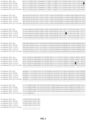
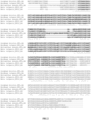
- a sequence alignment of the protein sequences from sorghum, sunflower, barley and sugar beet is in Fig. 2 , in which the putative functional domain is additionally marked (bold) .
- the expression of these genes in pollen can be carried out, for example, via RNASeq of pollen.
- sunflower, barley or cereal and sugar beet plants are also the subject of the present invention, which are able to induce haploidy and are characterized in that they have one or more modifications which relate to an endogenous, preferably pollen-specifically expressed patatin phospholipase according to one of the embodiments characterized in the above items [] or claims, in particular for sorghum millet plants, and/or obtainable by the method according to the invention described above or characterized in the claims.
- amino acid exchanges at position 75 can mediate the induction of haploids in sorghum as well as in other crops,
Landscapes
- Health & Medical Sciences (AREA)
- Genetics & Genomics (AREA)
- Life Sciences & Earth Sciences (AREA)
- Engineering & Computer Science (AREA)
- Chemical & Material Sciences (AREA)
- Organic Chemistry (AREA)
- Biomedical Technology (AREA)
- Bioinformatics & Cheminformatics (AREA)
- Zoology (AREA)
- Wood Science & Technology (AREA)
- General Engineering & Computer Science (AREA)
- General Health & Medical Sciences (AREA)
- Molecular Biology (AREA)
- Biotechnology (AREA)
- Biochemistry (AREA)
- Microbiology (AREA)
- Biophysics (AREA)
- Plant Pathology (AREA)
- Cell Biology (AREA)
- Physics & Mathematics (AREA)
- Botany (AREA)
- Medicinal Chemistry (AREA)
- Pregnancy & Childbirth (AREA)
- Reproductive Health (AREA)
- Developmental Biology & Embryology (AREA)
- Environmental Sciences (AREA)
- Gastroenterology & Hepatology (AREA)
- Proteomics, Peptides & Aminoacids (AREA)
- Breeding Of Plants And Reproduction By Means Of Culturing (AREA)
- Micro-Organisms Or Cultivation Processes Thereof (AREA)
Description
- Die vorliegende Erfindung betrifft das Gebiet der Vereinfachung arbeitsaufwendiger Züchtungsprogramme mittels molekularbiologischer Methoden, Markertechnologie sowie der Gentechnik. Insbesondere werden Sorghumhirsepflanzen zur Verfügung gestellt, die durch Modifikationen im Genom, die eine vorzugsweise pollenspezifisch exprimierte Patatin-Phospholipase betreffen, in der Lage sind Haploidie zu induzieren, wodurch haploide Nachkommen erzeugt und in kurzer Zeit durch Chromosomenverdopplung Inzuchtlinien für die Hybridzüchtung hergestellt werden können. Im Speziellen werden Sorghumhirsepflanzen zur Verfügung gestellt, die Mutationen in der Patatin-Phospholipase aufweisen, Verfahren zur Herstellung und Identifizierung dieser Mutationen bzw. der mutierten Pflanze sowie das entsprechende Nukleinsäuremolekül, welches die mutierte Patatin-Phospholipase kodiert sowie Vektoren und Wirtszellen insbesondere Pflanzenzellen enthaltend das Nukleinsäuremolekül, und aus solchen Pflanzenzellen generierte Pflanzen, die in der Lage sind Haploidie zu erzeugen sowie deren Nachkommen, Kreuzungsprodukte, Inzuchtlinien und jeweils deren Pflanzenteile und -produkte.
- Basierend auf den Erkenntnissen aus Sorghum stellt die vorliegende Erfindung Verfahren zur Herstellung und Identifizierung von transgenen und nicht-transgenen pflanzlichen Haploiden-Induktoren bereit sowie die entsprechenden Pflanzen, die die Eigenschaft der Haploidie-Induktion erhalten haben oder dessen Induktionsleistung verbessert wurde. Ferner sind von der Erfindung auch Samen oder Nachkommen, Organe, Pflanzenteile, Gewebe oder Zellen der erfindungsgemäßen Pflanze sowie deren Verwendung miterfasst.
- Sorghum ist eine in Deutschland recht neue Kultur, gerät jedoch aufgrund ihrer Massenwüchsigkeit, Trockentoleranz sowie gute Wasser- und Nährstoffeffizienz in den Fokus der Wissenschaft und Praxis bei der Suche nach weiteren hochertragsreichen Kulturen zur Substratproduktion, insbesondere im Hinblick auf die Verwendung in der Biogasproduktion, aber auch zur Verwendung als Futtermittel, Nahrungsmittel und zur Ethanol-Produktion. Allgemeine Zuchtziele für Sorghum sind die Anpassung an das Klima Mitteleuropas, d.h. eine verbesserte Kältetoleranz, die Verbesserung des Ertrags, der Standfestigkeit gepaart mit guter Jugendentwicklung sowie Entwicklung von Krankheits- und Schädlingsresistenzen.
- Sorghum kann wie eine selbstbefruchtende Kultur züchterisch verbessert werden. Die Verbesserung der Population kann durch die aufwendige Selektionszüchtung durch eine gezielte Auswahl der besten Pflanzen zur Saatgutproduktion für das nächste Anbaujahr erreicht werden. Daneben wurden mittels der Hybridzüchtung neue Möglichkeiten zur Verbesserung der Sorten geschaffen. Allerdings beruht der Prozess der Hybridzüchtung auf eine mehrere Generationen dauernde Erzeugung von reinerbigen Vater- und Mutterlinien, wodurch auch der Prozess der Hybridzüchtung trotz guter Erfolge zeit- und kostenintensiv ist.
- In
WO2016/177887A1 ist ein isoliertes Polypeptid beschrieben, das für die Haploideninduktion in Maispflanzen verantwortlich ist. -
WO2016/075255A1 betrifft die Bereitstellung von technischen Mitteln wie Nukleinsäuren, welche nach Transkription oder nach Expression in einer Pflanze geeignet sind, die Eigenschaft eines Haploideninduktors zu vermitteln oder die Induktionsleistung eines Haploideninduktors zu erhöhen. - Gilles et al. (2014) beschreibt, dass der Verlust der pollenspezifischen Phospholipase NOT LIKE DAD Gynogenese in Mais auslöst.
- In Kelliher et al. (2017) ist die Induktion von Haploiden in Mais durch die Phospholipase MATRII,INEAL beschrieben.
- Liu et al. (2017) betrifft die Haploideninduktion in Mais durch eine 4-bp Insertion in ZmPLA1, die eine putative Phospholipase A kodiert.
- Aufgabe der vorliegenden Erfindung war es daher ein effizientes System zur Züchtung von Sorghum bereitzustellen.
- Die vorliegende Erfindung betrifft das Gebiet der Vereinfachung von arbeitsaufwendigen Züchtungsprogrammen, der Markertechnologie sowie der Gentechnik. Die Erfindung stellt Sorghumhirsepflanzen zur Verfügung, die durch Modifikationen im Genom, die eine pollenspezifisch exprimierte Patatin-Phospholipase betreffen, in der Lage sind Haploidie zu induzieren, wodurch haploide Nachkommen erzeugt und in kurzer Zeit durch Chromosomenverdopplung Inzuchtlinien, d.h. reinerbige Vater- und Mutterlinien, für die Hybridzüchtung hergestellt werden können. Zusätzlich können die Erkenntnisse dazu verwendet werden, transgene sowie nicht-transgene pflanzliche Haploiden-Induktoren herzustellen oder die Induktionsleistung von Pflanzen zu verbessern.
- Zunächst werden einige der in dieser Anmeldung verwendeten Begriffe nachfolgend näher erläutert:
"Die Eigenschaft eines Haploideninduktors vermitteln" oder das "Vermitteln der Eigenschaft eines Haploideninduktors" oder "in der Lage sein Haploidie zu induzieren" ein vergleichbarer Ausdruck bedeutet, dass eine Pflanze durch Verwendung einer erfindungsgemäßen Nukleinsäure bzw. durch Modifizierung des Genoms, im Speziellen durch Mutation einer Patatin-Phospholipase, in die Lage versetzt wird, befruchtete Samen oder Embryos, welche einen einfachen (haploiden) Chromosomensatz aufweisen, aus einer Kreuzung mit einer Pflanze derselben Gattung, vorzugsweise derselben Spezies, welche nicht die Eigenschaft eines Haploideninduktors aufweist, hervorzubringen. Die Eigenschaft eines Haploideninduktors, angegeben als absolute Haploiden-Induktionsrate, meint, dass mindestens 0,1%, 0,2%, 0,3%, 0,4%, 0,5%, 0,6%, 0,7%, 0,8%, 0,9% oder 1%, bevorzugt mindestens 1,5%, 2%, 2,5%, 3%, 3,5%, 4%, 4,5% oder 5%, besonders bevorzugt mindestens 6%, 7%, 8%, 9%, 10%, 11 %, 12%, 13%, 14% oder 15%, oder ganz besonders bevorzugt mindestens 20%, 25%, 30%, 35%, 40%, 45% oder 50% der befruchteten Samen oder Embryos einen haploiden Chromosomensatz aufweisen. - Ein "funktionelles Fragment" einer Nukleotidsequenz meint einen Abschnitt einer Nukleotidsequenz, welcher die identische oder eine vergleichbare Funktionalität wie die Gesamtnukleotidsequenz, aus welcher das funktionelle Fragment stammt, aufweist. Als solches kann das funktionelle Fragment eine Nukleotidsequenz besitzen, welche über eine Länge von mindestens 50%, 55%, 60%, 65%, 70%, 75%, 80%, 85%, 90%, 92%, 94% 96%, 97%, 98% oder 99% identisch oder homolog mit der Gesamtnukleotidsequenz ist. Weiterhin kann ein "funktionelles Fragment" einer Nukleotidsequenz auch einen Abschnitt einer Nukleotidsequenz meinen, welcher die Funktionalität der Gesamtnukleotidsequenz beispielsweise im Zuge von posttranskriptionalem oder transkriptionellem Gene Silencing verändert. Als solches kann das funktionelle Fragment einer Nukleotidsequenz mindestens 14, 15, 16, 17, 18, 19, 20, 21, 22, 23, 24 oder 25, bevorzugt mindestens 30, 35, 40, 45, 50, 60, 70, 80, 90, 100, 120 oder 140, besonders bevorzugt mindestens 160, 180, 200, 250, 300, 350, 400, 450, 500, 600, 700, 800, 900 oder 1000 aufeinanderfolgende Nukleotide der Gesamtnukleotidsequenz umfassen.
- Ein "funktioneller Teil" eines Proteins meint einen Abschnitt eines Proteins bzw. eine Anschnitt der Aminosäuresequenz, die das Protein kodiert, wobei der Abschnitt die identische oder eine vergleichbare Funktionalität wie das Gesamtprotein in einer pflanzlichen Zelle ausüben kann. Ein funktioneller Teil eines Proteins weist über eine Länge von mindestens 50%, 55%, 60%, 65%, 70%, 75%, 80%, 85%, 90%, 92%, 94% 96%, 97%, 98% oder 99% eine identische oder unter Berücksichtigung von konservativen und semikonservativen Aminosäureaustauschen ähnliche Aminosäuresequenz auf wie das Protein, aus welchem der funktionelle Teil stammt.
- "Haploideninduktor" meint auch einen in vivo Haploideninduktor.
- Der Begriff "heterolog" bedeutet, dass das eingebrachte Polynukleotid beispielsweise von einer Zelle oder einem Organismus mit einem anderen genetischen Hintergrund derselben Spezies oder einer anderen Spezies stammt, oder homolog ist zu der prokaryotischen oder eukaryotischen Wirtszelle, dann aber in einer unterschiedlichen genetischen Umgebung lokalisiert ist und sich so von einem eventuell natürlicherweise vorhandenen korrespondierenden Polynukleotid unterscheidet. Ein heterologes Polynukleotid kann zusätzlich zu einem entsprechenden endogenen Gen vorhanden sein.
- Unter "Hybridisieren" oder "Hybridisierung" wird ein Vorgang verstanden, bei dem sich ein einzelsträngiges Nukleinsäuremolekül an einen weitestgehend komplementären Nukleinsäurestrang anlagert, d. h. Basenpaarungen mit diesem eingeht. Standardverfahren zur Hybridisierung sind beispielsweise in Sambrook et al., Molecular Cloning: A Laboratory Manual 3rd Ed. Cold Spring Harbor Laboratory Press, Cold Spring Harbor, NY, 2001 beschrieben. Vorzugsweise wird darunter verstanden, dass mindestens 80% oder 85%, bevorzugt mindestens 90%, 91%, 92%, 93%, 94% oder 95%, besonders bevorzugt mindestens 96%, 97%, 98% oder 99% der Basen des Nukleinsäuremoleküls eine Basenpaarung mit dem weitestgehend komplementären Nukleinsäurestrang eingehen. Die Möglichkeit einer solchen Anlagerung hängt von der Stringenz der Hybridisierungsbedingungen ab. Der Begriff "Stringenz" bezieht sich auf die Hybridisierungsbedingungen. Hohe Stringenz ist dann gegeben, wenn eine Basenpaarung erschwert ist, niedrige Stringenz, wenn eine Basenpaarung erleichtert ist. Die Stringenz der Hybridisierungsbedingungen hängt beispielsweise von der Salzkonzentration bzw. Ionenstärke und der Temperatur ab. Generell kann die Stringenz durch eine Erhöhung der Temperatur und/oder eine Erniedrigung des Salzgehaltes erhöht werden. Unter "stringenten Hybridisierungsbedingungen" sind solche Bedingungen zu verstehen, bei denen eine Hybridisierung überwiegend nur zwischen homologen Nukleinsäuremolekülen und Homologen stattfindet. Der Begriff "Hybridisierungsbedingungen" bezieht sich dabei nicht nur auf die bei der eigentlichen Anlagerung der Nukleinsäuren herrschenden Bedingungen, sondern auch auf die bei den anschließenden Waschschritten herrschenden Bedingungen. Stringente Hybridisierungsbedingungen sind beispielsweise Bedingungen, unter denen überwiegend nur solche Nukleinsäuremoleküle hybridisieren, die mindestens 80%, mindestens 85%, mindestens 90% oder mindestens 95% Sequenzidentität aufweisen. Stringente Hybridisierungsbedingungen sind beispielsweise: Hybridisieren in 4 × SSC bei 65°C und anschließendes mehrfaches Waschen in 0,1 × SSC bei 65°C für insgesamt etwa 1 Stunde. Der hier verwendete Begriff "stringente Hybridisierungsbedingungen" kann auch bedeuten: Hybridisieren bei 68°C in 0,25 M Natriumphosphat, pH 7,2, 7% SDS, 1 mM EDTA und 1% BSA für 16 Stunden und anschließendes zweimaliges Waschen mit 2 × SSC und 0,1% SDS bei 68°C. Bevorzugt findet eine Hybridisierung unter stringenten Bedingungen statt.
- "Die Induktionsleistung eines Haploideninduktors erhöhen" oder "die Erhöhung der Induktionsleistung eines Haploideninduktors" oder vergleichbare Ausdrücke meinen, dass die Haploiden-Induktionsrate einer Pflanze, welche die Eigenschaft eines Haploideninduktors aufweist, erhöht wird. Somit kann die Zahl der befruchteten Samen, welche einen haploiden Chromosomensatz aufweisen und aus einer Kreuzung des Haploideninduktors mit einer Pflanze derselben Gattung, vorzugsweise derselben Spezies, welche nicht die Eigenschaft eines Haploideninduktors aufweist, hervorgegangen sind, um mindestens 0,1 %, 0,2%, 0,3%, 0,4%, 0,5%, 0,6%, 0,7%, 0,8%, 0,9% oder 1%, bevorzugt mindestens 1,5%, 2%, 2,5%, 3%, 3,5%, 4%, 4,5% oder 5%, und besonders bevorzugt mindestens 6%, 7%, 8%, 9%, 10%, 15%, 20%, 30% oder 50% höher sind als die Zahl der haploiden befruchteten Samen, welche ohne die Verwendung der Nukleinsäure bzw. ohne Modifizierung des Genoms, im Speziellen ohne Mutation einer Patatin-Phospholipase im Sinne der vorliegenden Erfindung erzielt wird, d.h. die Haploiden-Induktionsrate kann um mindestens 0,1 %, 0,2%, 0,3%, 0,4%, 0,5%, 0,6%, 0,7%, 0,8%, 0,9% oder 1 %, bevorzugt mindestens 1,5%, 2%, 2,5%, 3%, 3,5%, 4%, 4,5% oder 5%, und besonders bevorzugt mindestens 6%, 7%, 8%, 9%, 10%, 15%, 20%, 30% oder 50% relativ zu der zuvor erreichten Haploiden-Induktionsrate gesteigert werden.
- "Komplementäre" Nukleotidsequenz bedeutet bezogen auf eine Nukleinsäure in Form einer doppelsträngigen DNA, dass der zum ersten DNA Strang komplementäre zweite DNA Strang entsprechend den Basenpaarungsregeln die Nukleotide aufweist, die zu den Basen des ersten Stranges entsprechend den Watson-Crick-Regeln korrespondieren.
- Ein "molekularer Marker" ist eine Nukleinsäure, die polymorph in einer pflanzlichen Population ist und als Bezugs- oder Orientierungspunkt verwendet wird. Ein Marker zum Erkennen eines Rekombinationsereignisses sollte geeignet sein, Unterschiede oder Polymorphismen innerhalb einer pflanzlichen Population zu überwachen. Somit ist ein solcher Marker in der Lage verschiedene allelische Zustände (Allele) zu detektieren und zu unterscheiden. Der Begriff "molekularer Marker" bezieht sich auch auf Nukleotidsequenzen, welche komplementär oder zumindest weitestgehend komplementär oder homolog sind zu genomischen Sequenzen, zum Beispiel Nukleinsäuren, welche als Sonden oder Primer eingesetzt werden. Für Marker finden sich diese Unterschiede auf DNA-Ebene und sind beispielsweise Polynukleotidsequenzunterschiede wie zum Beispiel SSRs (simple sequence repeats), RFLPs (restriction fragment length polymorphisms), FLPs (fragment length polymorphisms) oder SNPs (single nucleotide polymorphisms). Die Marker können von genomischen oder exprimierten Nukleinsäuren wie beispielsweise gespleißter RNA, cDNA oder ESTs abgeleitet sein und können sich auch auf Nukleinsäuren beziehen, die als Sonden oder Primer-Paare eingesetzt werden und als solche geeignet sind, ein Sequenzfragment unter Verwendung PCR-basierter Verfahren zu amplifizieren. Marker, die genetische Polymorphismen (zwischen Teilen einer Population) beschreiben, können unter Verwendung gut etablierter Verfahren aus dem Stand der Technik nachgewiesen werden (An Introduction to Genetic Analysis. 7th Edition, Griffiths, Miller, Suzuki et al., 2000). Dazu gehören z.B. DNA-Sequenzierung, PCR-basierte sequenzspezifische Amplifikation, Nachweis von RFLPs, Nachweis von Polynukleotid-Polymorphismen mittels Allel-spezifischer Hybridisierung (ASH), Detektion von amplifizierten variablen Sequenzen des Pflanzengenoms, Detektion einer 3SR (self-sustained sequence replication), Detektion von SSRs, SNPs, RFLPs oder AFLPs (amplified fragment length polymorphisms). Ferner sind auch die Methoden zur Detektion von ESTs (expressed sequence tags) und SSR-Marker abgeleitet von EST-Sequenzen und RAPD (randomly amplifiedpolymorphic DNA) bekannt. Je nach Kontext kann der Begriff Marker in der Beschreibung auch eine spezifische Chromosom-Position in dem Genom einer Spezies, wo ein spezifischer Marker (z.B. SNP) gefunden werden kann, meinen.
- "Operativ verknüpft" meint verbunden in einem gemeinsamen Nukleinsäuremolekül, in einer Weise, dass die verbundenen Elemente derart zueinander positioniert und orientiert sind, dass eine Transkription des Nukleinsäuremoleküls stattfinden kann. Eine DNA, welche operativ mit einem Promotor verknüpft ist, steht unter der transkriptionellen Kontrolle dieses Promotors
- Eine "Pflanze" im Sinne der Erfindung kann, sofern nicht anders angegeben, von jeder Spezies aus den dikotyledonen und monokotyledonen Pflanzen sein. Bevorzugt sind Pflanzen in Agrikultur oder Hortikultur oder zur Erzeugung von Bioenergie (Bioethanol, Biogas etc.). Hierzu zählen beispielhaft Solanum tuberosum, Triticum aestivum, Triticum durum, Triticum spelta, Helianthus annuus, Secale cereale, Hordeum vulgare, Hordeum bulbosum, Brassica napus, Brassica oleracea, Brassica rapa, Brassica juncacea, Brassica nigra, Glycine max, Gossypium sp., Sorghum bicolor, Sorghum sudanense, Sorghum bicolor × Sorghum sudanense, Triticale, Saccharum officinarium, Setaria italica, Oryza sativa, Oryza minuta, Oryza australiensis, Oryza alta, Brachypodium distachyon, Hordeum marinum, Aegilops tauschii, Daucus glochidiatus, Daucus pusillus, Daucus muricatus, Daucus carota, Eucalyptus grandis, Erythranthe guttata, Genlisea aurea, Musa sp., Avena sp., Nicotiana sylvestris, Nicotiana tabacum, Nicotiana tomentosiformis, Solanum lycopersicum, Coffea canephora, Vitis vinifera, Cucumis sativus, Morus notabilis, Crucihimalaya himalaica, Crucihimalaya wallichii, Cardamine flexuosa, Lepidium virginicum, Capsella bursa-pastoris, Olmarabidopsis pumila, Arabis hirsuta, Raphanus sativus, Eruca vesicaria sativa, Citrus sinensis, Jatropha curcas, Populus trichocarpa oder Beta vulgaris.
- Eine erfindungsgemäße Sorghumhirsepflanze ist eine Pflanze der Gattung Sorghum, insbesondere der Spezies Sorghum bicolor, Sorghum sudanense, Sorghum bicolor × Sorghum sudanense, Sorghum × almum (Sorghum bicolor × Sorghum halepense), Sorghum arundinaceum, Sorghum × drummondii, Sorghum halepense und/oder Sorghum propinquum bzw. deren Hybriden sowie sämtliche sich davon ableitenden Sorten.
- Pflanzliche "Organe" meinen beispielsweise Blätter, Sprossachse, Stamm, Wurzeln, vegetative Knospen, Meristeme, Embryos, Antheren, Ovula, Samen oder Früchte, insbesondere Samenkörner. Der Begriff "Pflanzenteil" bzw. "Pflanzenteile" beinhaltet, ist jedoch nicht beschränkt auf, die Sprossachse bzw. den Halm, Blätter, Blüten, Blütenstände, Wurzeln, Früchte und Samen sowie die Pollen. Pflanzliche "Teile" meinen ferner einen Zusammenschluss mehrerer Organe, z.B. eine Blüte oder ein Samen, oder einen Teil eines Organs, z.B. einen Querschnitt aus der Sprossachse. Pflanzliche "Gewebe" sind zum Beispiel Kallusgewebe, Speichergewebe, meristematische Gewebe, Blattgewebe, Sprossgewebe, Wurzelgewebe, Pflanzentumorgewebe oder reproduktives Gewebe sowie das Bildungsgewebe, Grundgewebe (das sogenannte Parenchym), Leitgewebe, Festigungsgewebe und das Deckgewebe (die sogenannte Epidermis). Das Gewebe wird durch diese Auflistung jedoch nicht beschränkt. Unter pflanzlichen "Zellen" sind beispielsweise isolierte Zellen mit einer Zellwand oder Aggregate davon oder Protoplasten zu verstehen.
- Ein "Promotor" ist ein nicht-translatierter DNA-Abschnitt, typischerweise stromaufwärts einer kodierenden Region, welche die Bindestelle für die RNA-Polymerase beinhaltet und die Transkription der DNA initiiert. Ein Promotor enthält zudem andere Elemente, die als Regulatorgen der Genexpression fungieren (z.B. cis-regulatorischen Elemente). Ein "Kern-oder Minimalpromotor" ist ein Promoter, der zumindest die Grundelemente, welche für die Transkriptionsinitiation gebraucht werden, aufweist (z.B. TATA-Box und/oder Initiator).
- Im Zusammenhang mit der vorliegenden Erfindung betrifft der Begriff "Modifikationen" eine Nukleotidsequenz, welche die Spezifität und/oder die Expressionsstarke beeinflusst, zum Beispiel indem die regulatorische Sequenz eine bestimmte Gewebespezifität vermittelt. Eine solche regulatorische Sequenz kann stromaufwärts des Transkriptionsinitiationspunkts eines Minimalpromotors, aber auch stromabwärts davon wie beispielsweise in einer transkribierten aber nicht translatierten Leader-Sequenz oder innerhalb eines Introns lokalisiert sein.
- Eine "Transgene Pflanze" bezieht sich auf eine Pflanze, in deren Genom mindestens ein Polynukleotid, vorzugsweise ein heterologes Polynukleotid, integriert ist. Bevorzugt ist das Polynukleotid stabil integriert, was bedeutet, dass das integrierte Polynukleotid in der Pflanze stabil erhalten bleibt, exprimiert wird und auch stabil an die Nachkommen vererbt werden kann. Das stabile Einbringen eines Polynukleotids in das Genom einer Pflanze schließt auch die Integration in das Genom einer Pflanze der vorhergehenden Parentalgeneration mit ein, wobei das Polynukleotid stabil weitervererbt werden kann. Der Begriff "heterolog" bedeutet, dass das eingebrachte Polynukleotid beispielsweise von einer Zelle oder einem Organismus mit einem anderen genetischen Hintergrund derselben Spezies oder einer anderen Spezies stammt, oder homolog ist zu der prokaryotischen oder eukaryotischen Wirtszelle, dann aber in einer unterschiedlichen genetischen Umgebung lokalisiert ist und sich so von einem eventuell natürlicherweise vorhandenen korrespondierenden Polynukleotid unterscheidet. Ein heterologes Polynukleotid kann zusätzlich zu einem entsprechenden endogenen Gen vorhanden sein.
- "Zur Verwendung als Haploideninduktor geeignet" oder "ist in der Lage Haploidie zu induzieren" meint, dass eine Pflanze in die Lage ist, befruchtete Samen, welche einen einfachen (haploiden) Chromosomensatz aufweisen, aus einer Kreuzung mit einer Pflanze derselben Gattung, vorzugsweise derselben Spezies, welche nicht die Eigenschaft eines Haploideninduktors aufweist, hervorzubringen. Die Verwendung als Haploideninduktor, angegeben als absolute Haploiden-Induktionsrate, meint, dass mindestens 0,1 %, 0,2%, 0,3%, 0,4%, 0,5%, 0,6%, 0,7%, 0,8%, 0,9% oder 1 %, bevorzugt mindestens 1,5%, 2%, 2,5%, 3%, 3,5%, 4%, 4,5% oder 5%, besonders bevorzugt mindestens 6%, 7%, 8%, 9%, 10%, 11 %, 12%, 13%, 14% oder 15%, oder ganz besonders bevorzugt mindestens 20%, 25%, 30%, 35%, 40%, 45% oder 50% der befruchteten Samen einen haploiden Chromosomensatz aufweisen.
- Ausgestaltungen und Ausführungsformen der vorliegenden Beschreibung werden in exemplarischer Weise mit Bezug auf die angehängten Figuren und Sequenzen beschrieben:
- Figur 1:
- Sequenzalignment (CLUSTAL O 1.2.4) der Aminosäuresequenzen der Wild-Typ Patatin-Phospholipase aus Sorghumhirse (Sorghum_PPL_AA, SEQ ID Nr.: 3), der Patatin-Phospholipase aus Sorghumhirse mit einem Austausch der Aminosäure Arginin (R) durch Glutamin (Q) an der Aminosäureposition 59 (Sorghum_PPL_R59Q, SEQ ID Nr.: 6), der Patatin-Phospholipase aus Sorghumhirse mit einem Austausch der Aminosäure Valin (V) durch Isoleucin (I) an der Aminosäureposition 162 (Sorghum_PPL_V162I, SEQ ID Nr.: 9), der Patatin-Phospholipase aus Sorghumhirse mit einem Austausch der Aminosäure Serin (S) durch Leucin (L) an der Aminosäureposition 291 (Sorghum _PPL_S291L, SEQ ID Nr.: 12) und der Patatin-Phospholipase aus Sorghumhirse mit einem Austausch der Aminosäure Glutamin (Q) durch ein Stopp-Codon an der Aminosäureposition 372 (Sorghum _PPL_Q372Stopp, SEQ ID Nr.: 15). Die Aminosäurepositionen 59, 162 und 291 sind schwarz unterlegt.
- Figur 2:
- Sequenzalignment (CLUSTAL O 1.2.4) der Aminosäuresequenzen der Wild-Typ Patatin-Phospholipase aus Sorghumhirse (Sorghum bicolor_PPL_AA, SEQ ID Nr.: 3), der Patatin-Phospholipase aus Gerste (Hordeum vulgare_PPL_AA, SEQ ID Nr.: 21), der Patatin-Phospholipase aus Sonnenblume (Helianthus annuus_PPL_AA, SEQ ID Nr.: 18), der Patatin-Phospholipase 1 aus Zuckerrübe (Beta vulgaris_PPL1_AA, SEQ ID Nr.: 24) und der Patatin-Phospholipase 2 aus Zuckerrübe (Beta vulgaris _Phospholipase2_AA, SEQ ID Nr.: 27). Die Aminosäurepositionen, welche die funktionelle Domäne der Phospholipase darstellen, sind fett gedruckt.
- Die vorliegende Erfindung stellt eine Pflanze der Gattung Sorghum, im Folgenden auch als Sorghumhirsepflanze bezeichnet, zur Verfügung, die in der Lage ist Haploidie zu induzieren. Durch diese Eigenschaft der Haploideninduktion ist die Pflanze in der Lage, befruchtete Samen oder Embryos, welche einen einfachen (haploiden) Chromosomensatz aufweisen, aus einer Kreuzung mit einer Pflanze derselben Gattung, vorzugsweise derselben Spezies, welche nicht die Eigenschaft eines Haploideninduktors aufweist, hervorzubringen. Durch dieses System war es den Erfindern möglich, ein effizientes System zur Züchtung von Sorghumhirsepflanzen bereitzustellen, denn durch Chromosomenverdopplung in den haploiden Nachkommen können Inzuchtlinien, d.h. reinerbige Vater- und Mutterlinien für die Hybridzüchtung generiert werden.
- Die erfindungsgemäßen Sorghumhirsepflanzen sind dadurch gekennzeichnet, dass sie eine oder mehrere Modifikationen aufweisen, die die Patatin-Phospholipase betreffen, wodurch entweder die Eigenschaft zur Haploideninduktion vermittelt wird oder auch eine natürlich vorhandenen Fähigkeit zur Haploideninduktion verbessert bzw. die Induktionsleistung erhöht wird. Somit ist die Modifikation betreffend die Patatin-Phospholipase ursächlich für die Eignung der erfindungsgemäßen Sorghumhirsepflanze als Haploideninduktor in Züchtungsprogrammen.
- Die Pflanzen zeichnen sich dadurch aus, dass sie eine Induktionsrate von vorzugsweise mindestens 0,5% aufweisen und sich somit von Wildtyp-Pflanzen bzw. von Nicht-Haploideninduktoren unterscheiden.
- In den im Rahmen der vorliegenden Erfindung durchgeführten Experimenten wurde festgestellt, dass die Patatin-Phospholipase in Sorghumhirse pollenspezifisch exprimiert wird und daher vermutlich einen Einfluss auf das Pollenschlauch-Wachstum oder die Interaktion zwischen den Gametophyten hat. Somit ist die Sorghumhirsepflanze vorzugsweise dadurch gekennzeichnet, dass die Patatin-Phospholipase pollenspezifisch exprimiert wird und/oder Einfluss auf das Pollenschlauch-Wachstum oder die Interaktion zwischen den Gametophyten hat.
- Die Patatin-Phospholipase ist durch die Nukleotidsequenz gemäß SEQ ID Nr.: 1 oder 2 kodiert oder durch eine Nukleotidsequenz, die zu mindestens 80%, vorzugsweise 85%, weiter bevorzugt 90%, noch weiter bevorzugt 95% und am bevorzugtesten 99% identisch zu SEQ ID Nr.: 1 oder 2 ist, kodiert ist oder durch eine Nukleotidsequenz kodiert wird, die mit der komplementären Sequenz zu der Nukleotidsequenz gemäß SEQ ID Nr.: 1 oder 2 unter stringenten Bedingungen hybridisiert, wobei die stringenten Bedingungen Hybridisieren in 4 × SSC bei 65°C und anschließendes mehrfaches Waschen in 0,1 × SSC bei 65°C für insgesamt etwa 1 Stunde entsprechen; oder die in SEQ ID Nr.: 3 gezeigte Aminosäuresequenz oder eine Aminosäuresequenz umfasst, die zumindest 80% identisch zu SEQ ID Nr.:3 ist. Wie oben bereits erwähnt, umfasst die Sorghumhirsepflanze in Sinne der vorliegenden Erfindung Pflanzen jeglicher Art der Gattung Sorghum, insbesondere der Arten Sorghum bicolor, Sorghum sudanense und Sorghum bicolor × Sorghum sudanense bzw. deren Hybriden sowie sämtliche sich davon ableitenden Sorten. Dementsprechend ist vernünftigerweise anzunehmen, dass sich im Laufe der Artbildung sowie der Sortenzüchtung die Nukleotidsequenz und entsprechend auch die Aminosäuresequenz der Patatin-Phospholipase verändert haben. In diesem Zusammenhang bedeutet der Begriff homolog, dass die betreffenden Gene (aus zwei verschiedenen Pflanzenarten bzw. Sorten) im Wesentlichen die gleiche Funktion und einen gemeinsamen Vorläufer haben, und sich daher typischerweise eine signifikante Identität in deren Nukleinsäure- bzw. kodierten Aminosäuresequenz zeigt, welche vorzugsweise bei mindestens 80% liegt.
- Im Sinne der Beschreibung wird unter einem "Homolog" ein Protein gleichen phylogenetischen Ursprungs verstanden, unter einem "Analog" ein Protein verstanden, welches die gleiche Funktion ausübt, jedoch einen anderen phylogenetischen Ursprung hat, unter einem "Ortholog" ein Protein aus einer anderen Spezies verstanden, das die gleiche Funktion ausübt und unter einem "Paralog" ein Protein verstanden, das durch Duplikation innerhalb einer Spezies entstanden ist, wobei diese Kopie entweder die gleiche Proteinfunktion behält, ihr Expressionsmuster verändert, jedoch nicht die Funktion, ihre Proteinfunktion ändert oder sich die ursprüngliche Genfunktion zwischen beiden Kopien aufteilt.
- Ein kodiertes Protein (bzw. Aminosäuresequenz) ist grundsätzlich dann ein Homolog im Sinne der vorliegenden Beschreibung, wenn es die gleiche Funktion ausübt, unabhängig davon ob es denselben oder einen anderen phylogenetischen Ursprung hat oder aus derselben oder einer anderen Spezies stammt. Eine Homolog ist ferner in der Lage ist, die Eigenschaft der Haploideninduktion zu komplementieren, d.h. durch eine Modifizierung des durch das Homolog kodierenden Genprodukts der Pflanze, aus der das Gen stammt, die Eigenschaft eines Haploideninduktors zu vermitteln oder die Induktionsleistung eines Haploideninduktors zu erhöhen. Dementsprechend kann das betreffende Homolog zur Patatin-Phospholipase kodiert durch die Nukleotidsequenz gemäß SEQ ID Nr.: 1 oder 2 bzw. umfassend die Aminosäuresequenz gemäß SEQ ID Nr.: 3 vorzugsweise dadurch gekennzeichnet werden, dass es in der Lage ist die Eigenschaft eines Haploideninduktors, die in der erfindungsgemäßen Sorghumhirsepflanze beobachtet wird, zu komplementieren. Zusätzlich oder alternativ kann das Patatin-Phospholipase-Homolog vorzugsweise dadurch gekennzeichnet werden, dass durch die Modifizierung des durch das Homolog kodierten Genprodukts die Eigenschaft eines Haploideninduktors vermittelt oder die Induktionsleistung eines Haploideninduktors erhöht wird.
- Entsprechende Techniken und Verfahren zu Komplementationsgenetik in Sorghum sind dem Fachmann aus dem Stand der Technik bekannt, beispielsweise aus der Publikation von Li et al., J Genet. 94 (2015), 445-452, in der der Sorghum-Phänotyp, der sich durch eine braune Mittelrippe auszeichnet und durch eine Punktmutation in dem bmr-6 Gen verursacht wird, durch Einbringen des Wildtpy-bmr-6 Gens komplementiert wurde.
- Wie in Beispiel 2 gezeigt, führt ein Aminosäureaustausch in der Aminosäuresequenz der Patatin-Phospholipase aus Sorghumhirse (SEQ ID Nr.: 3) in Sorghumhirse zu einer Haploideninduktionsrate von teilweise mehr als 1,5%. Es ist davon auszugehen, dass durch weitere Aminosäureaustausche, was zu einer weiteren Modifizierung der kodierenden Sequenz der Patatin-Phospholipase führt, es zu einer weiteren Erhöhung der Induktionsrate kommen kann. Somit sind von der vorliegenden Erfindung Sorghumhirsepflanzen umfasst, die eine oder mehrere Modifikationen bzw. Mutationen aufweisen, die die Patatin-Phospholipase betreffen.
- Die oben erwähnten Modifikationen, die die Patatin-Phospholipase betreffen, sind im Sinne der vorliegenden Erfindung dadurch gekennzeichnet, dass es Mutationen sind, die in dem endogenen Gen kodierend die Patatin-Phospholipase, zu einem oder mehreren Aminosäureaustauschen in dem Bereich der Aminosäurepositionen 55-75, 157-167 oder 285-298 gemäß SEQ ID Nr.: 3 führen.
- Eine Mutation meint eine Modifikation auf DNA-Ebene, also eine Veränderung der Genetik und/oder der Epigenetik. Beispielsweise kann eine Veränderung der Genetik der Austausch von mindestens einer Nukleobase in der endogenen DNA-Sequenz oder in einer regulatorischen Sequenz der endogenen DNA-Sequenz sein. Findet ein solcher Nukleobasen-Austausch z.B. in einem Promotor statt, kann dies zu einer veränderten Aktivität des Promotors führen, da beispielsweise cis-regulatorische Elemente derart modifiziert werden, dass die Affinität eines Transkriptionsfaktors zu dem mutierten cis-regulatorischen Element im Vergleich zum Wildtyp-Promotor verändert ist, sodass die Aktivität des Promotors mit dem mutierten cis-regulatorischen Element erhöht oder erniedrigt ist, je nachdem ob es sich bei dem Transkriptionsfaktor um einen Repressor oder Induktor handelt oder ob die Affinität des Transkriptionsfaktors zu dem mutierten cis-regulatorischen Element verstärkt oder abgeschwächt wird. Findet ein solcher Nukleobasen-Austausch z.B. in einer kodierenden Region der endogenen DNA-Sequenz statt, kann dies zu einem Aminosäureaustausch im kodierten Protein führen, was eine Veränderung der Aktivität oder Stabilität des Proteins im Vergleich zum Wildtyp-Protein bewirken kann. Ein weiteres Beispiel für eine Veränderung der Genetik ist die Deletion von Nukleotiden in der regulatorische Sequenz und/oder der endogenen DNA-Sequenz sowie die Addition von Nukleotiden in der regulatorischen Sequenz und/oder der endogenen DNA-Sequenz. Eine Veränderung der Epigenetik kann beispielsweise durch ein verändertes Methylierungsmuster der DNA erfolgen.
- Verfahren zum Mutagenisieren von DNA-Sequenzen werden im Zusammenhang mit dem Verfahren zum Erhalt eines pflanzlichen Haploideninduktors näher beschrieben.
- Da die beschriebenen Mutationen zu einer Änderung oder Verkürzung der Aminosäuresequenz der Patatin-Phospholipase führen, kann davon ausgegangen werden, dass die Mutationen die Aktivität oder Stabilität der durch die endogene DNA-Sequenz kodierten Patatin-Phospholipase in der Sorghumhirsepflanze im Vergleich zu einer Wildtyp-Pflanze verändern, d.h. erhöhen oder reduzieren.
- Im Falle der Mutationen kann es zu einer Erhöhung der Aktivität des Proteins kommen, zum Beispiel durch Optimierung der Sequenz oder ebenso gut zu einer Inhibierung oder zum Verlust der Aktivität. Auch kann es durch Mutationen in dem Promotorbereich zu einer Änderung der Expression des Gens kommen.
- Bezogen auf die vorliegende Erfindung kann demensprechend durch die beschriebene Mutation die biologische Aktivität der Patatin-Phospholipase dahingehend geändert werden, dass ihre ursprüngliche Funktion in Pollen nicht mehr in dem Maße ausgeübt wird, wie es in der Wildtyp-Sorghumhirsepflanze der Fall ist.
- Dies kann einerseits durch Überexpression des Gens verbunden mit einer erhöhten Proteinmenge und Aktivität geschehen, beispielsweise durch Mutationen in dem Promotorbereich, durch die Erhöhung der Stabilität des Proteins, oder durch die Bildung einer aktiveren Form der Patatin-Phospholipase, beispielsweise durch Aminosäuresubstitutionen in der funktionellen Domäne, was beispielsweise zu einem schnelleren Wachstum des Pollenschlauchs, einer Entkopplung des Transports der generativen Zellen im Pollenschlauch mit dessen Wachstum oder einer gestörten Interaktion der Gametophyten gefolgt von einer unvollständigen Befruchtung mit anschließender Chromosomeneliminierung führen könnte. Andererseits könnte auch durch die Überexpression des Gens die korrekte Bildung, Faltung und/oder Stabilität der Patatin-Phospholipase inhibiert, verhindert oder herabgesetzt werden. Es könnte jedoch auch zu einer verringerten Bildung oder keiner Bildung einer funktionalen Patatin-Phospholipase kommen, beispielsweise durch Mutationen in dem Promotorbereich, zu der Bildung einer weniger aktiven, inaktiven oder instabilen Form der Patatin-Phospholipase, beispielsweise durch Aminosäuresubstitutionen in der funktionellen Domäne, was auch wiederum zu einer fehlerhaften Befruchtung führen könnte. Ebenso könnte durch die beschriebenen Mutationen die Lokalisation der Patatin-Phospholipase verändert werden, sodass sie beispielsweise nicht mehr pollenspezifisch exprimiert wird.
- Infolgedessen sind in der vorliegenden Erfindung auch Sorghumhirsepflanzen umfasst, die eine oder mehrere Insertionen einer Expressionskassette aufweisen, die ein Nukleinsäuremolekül kodierend die Patatin-Phospholipase, die durch die Nukleotidsequenz gemäß SEQ ID Nr.: 1 oder 2 oder durch eine Nukleotidsequenz, die zu mindestens 80%, vorzugsweise 85%, weiter bevorzugt 90%, noch weiter bevorzugt 95% und am bevorzugtesten 99% identisch ist zu SEQ ID Nr.: 1 oder 2 kodiert wird, oder die ein Nukleinsäuremolekül aufweisend eine Nukleotidsequenz, die mit der komplementären Sequenz zu der Nukleotidsequenz gemäß SEQ ID Nr.: 1 oder 2 unter stringenten Bedingungen hybridisiert, wobei die stringenten Bedingungen Hybridisieren in 4 × SSC bei 65°C und anschließendes mehrfaches Waschen in 0,1 × SSC bei 65°C für insgesamt etwa 1 Stunde entsprechen, oder die ein Nukleinsäuremolekül kodierend die Patatin-Phospholipase mit einer Aminosäuresequenz gemäß der SEQ ID Nr.: 3 oder einer Aminosäuresequenz die zu mindestens 80% identisch ist zu SEQ ID Nr.: 3, wobei die kodierte Patatin-Phospholipase oder der funktionellen Teil davon eine oder mehrere Mutationen aufweist, welche zu einem oder mehreren Aminosäureaustauschen und somit für eine Überexpression des Gens kodierend die Patatin-Phospholipase in einer Pflanze oder einem Teil davon im Vergleich zu einer Wildtyp-Pflanze oder entsprechenden Teil davon sorgt.
- Wie in Beispiel 2 gezeigt, führt ein Austausch der Aminosäure Arginin gegen Glutamin an der Aminosäureposition 59 gemäß der Aminosäuresequenz der Patatin-Phospholipase gezeigt in SEQ ID Nr.: 6 oder ein Austausch der Aminosäure Valin durch Isoleucin an der Aminosäureposition 162 gemäß der Aminosäuresequenz der Patatin-Phospholipase gezeigt in SEQ ID Nr.: 9 in Sorghumhirsepflanzen zu einer Haploideninduktionsrate von mehr als 0,5%. Anhand von
Fig. 2 ist zu erkennen, dass diese Aminosäurepositionen in der funktionellen Domäne der Patatin-Phospholipase liegen, die dem Bereich der Aminosäurepositionen 37 bis 240 entspricht. - Somit stellt die vorliegende Erfindung Sorghumhirsepflanzen bereit, die eine oder mehrere Mutationen aufweisen, die in dem Bereich der Aminosäurepositionen 55-75 oder 157-167 gemäß SEQ ID Nr.:3 zu einem Aminosäureaustausch führen.
- Des Weiteren führt ein Austausch der Aminosäure Serin gegen Leucin an der Aminosäureposition 291 gemäß der Aminosäuresequenz der Patatin-Phospholipase gezeigt in SEQ ID Nr.: 12 in Sorghumhirsepflanzen zu einer Haploideninduktionsrate von mehr als 1,5%.
- Anhand von
Fig. 2 ist zu erkennen, dass diese Position außerhalb der funktionellen Domäne der Patatin-Phospholipase liegen. - Somit stellt die vorliegende Erfindung auch Sorghumhirsepflanzen bereit, die eine oder mehrere Mutationen aufweisen, die in dem Bereich der Aminosäurepositionen 285-298 gemäß SEQ ID Nr.: 3 zu einem Aminosäureaustausch führen, was vorzugsweise einer Region außerhalb der funktionellen Domäne der Patatin-Phospholipase entspricht.
- In einer besonders bevorzugten Ausführungsform der vorliegenden Erfindung ist die erfindungsgemäße Pflanze dadurch gekennzeichnet, dass die eine oder mehrere Mutationen zu einem Aminosäureaustausch an der Aminosäureposition 59, 162 und/oder 291 gemäß SEQ ID Nr.: 3 führen.
- In diesem Zusammenhang umfasst in einer Ausführungsform der vorliegenden Erfindung die modifizierte Patatin-Phospholipase eine Aminosäuresequenz gemäß SEQ ID Nr.: 3 oder eine Aminosäuresequenz, die zu mindestens 80% identisch ist zu SEQ ID Nr.: 3, in der mindestens ein Aminosäureaustausch vorhanden ist, wobei an der Position 59 Arginin (R), an der Position 162 Valin (V), und/oder an der Position 291 Serin (S) durch eine andere Aminosäure ausgetauscht ist, vorzugsweise durch Glutamin (Q) an der Position 59, Isoleucin (I) an der Position 162 und/oder Leucin (L) an der Position 291; beziehungsweise wird durch eine Nukleotidsequenz gemäß SEQ ID Nr.: 1 kodiert die die kodierende Sequenz der DNA-Sequenz gemäß SEQ ID Nr.: 1 oder einer DNA-Sequenz, die zu mindestens 80% identisch ist zu SEQ ID Nr.: 1 umfasst, in der mindestens ein Nukleotidaustausch vorhanden ist, was zu einem Aminosäureaustauch, wobei an den Positionen 421-423, 815-817, 1420-1422 und/oder 1663-1665 gemäß SEQ ID Nr.: 1 (entsprechend der Nukleotid-Positionen 175-177, 484-486, 871-873 und/oder 1114-1116 der SEQ ID Nr.: 2) ein oder mehrere Nukleotide ausgetauscht sind; oder eine Aminosäuresequenz gemäß SEQ ID Nr.: 6, 9 oder 12; oder durch eine Nukleotidsequenz kodiert wird, die die kodierende Sequenz der DNA-Sequenz gemäß SEQ ID Nr.: 4, SEQ ID Nr.: 7, SEQ ID Nr.: 10 oder SEQ ID Nr.: 13 umfasst.
- Pflanzen besitzen als Eukaryoten zwei oder mehr Kopien ihrer genetischen Information pro Zelle. Jedes Gen wird in der Regel durch zwei Allele, die im homozygoten Zustand identisch bzw. im heterozygoten Zustand unterschiedlich sein können, repräsentiert. Der Phänotyp der erfindungsgemäßen Pflanze wird durch eine oder mehrere Mutationen in der Patatin-Phospholipase verursacht, wobei die Pflanze homozygot oder heterozygot, vorzugsweise homozygot für die mutierte Patatin-Phospholipase ist.
- In einer weiteren Ausführungsform der vorliegenden Erfindung wird ein Nukleinsäuremolekül beansprucht, welches die zuvor definierten spezifischen Mutationen umfasst, die zu den Aminosäureaustauschen R59Q, V162I, und/oder S291L basierend auf der Aminosäuresequenz von SEQ ID Nr.: 3 führen. Dabei ist das erfindungsgemäße Nukleinsäuremolekül dadurch gekennzeichnet, dass das Vorhandensein des erfindungsgemäßen Nukleinsäuremoleküls in Abwesenheit einer Wildtyp-Patatin-Phospholipase in einer Pflanze dazu führt, dass die Pflanze in der Lage ist Haploidie zu induzieren oder dass die Induktionsleistung einer Pflanze, die bereits zur Haploideninduktion fähig ist, verbessert wird.
- In einer bevorzugten Ausgestaltung der vorliegenden Beschreibung hat die erfindungsgemäße Nukleinsäure oder eine von der Nukleinsäure kodierte RNA oder ein von der Nukleinsäure kodiertes Protein oder Polypeptid Einfluss auf das Pollenschlauch-Wachstum in einer Pflanze, auf die Interaktion zwischen die Gametophyten oder auf die Befruchtung als solches.
- DNA-Hybridisierungssonden, die von der modifizierten Sequenz der Patatin-Phospholipase abgeleitet sind, d.h. eine der oben beschriebenen Mutationen umfassen, können zum Identifizieren von erfindungsgemäßen Pflanzen verwendet werden, d.h. zur Detektion der Mutationen im Gen der Patatin-Phospholipase eingesetzt werden. Um eine spezifische Hybridisierung zu erzielen, sollten solche Sonden spezifisch sein und mindestens eine Länge von 15 Nukleotiden, bevorzugt mindestens 20 Nukleotide aufweisen. Eine ausführliche Anleitung zu der Hybridisierung von Nukleinsäuren kann man in Tijssen, Laboratory Techniques in Biochemistry and Molecular Biology - Hybridization with Nucleic Acid Probes, Teil 1, Kapitel 2, "Overview of principles of hybridization and the strategy of nucleic acid probe assays," Elsevier, New York (1993); und in Current Protocols in Molecular Biology, Kapitel 2, Ausubel, et al., eds, Greene Publishing and Wiley Interscience, New York (1995) finden. Die Sonden können auch zum Amplifizieren eines Bereiches der modifizierten Sequenz der Patatin-Phospholipase, der mindestens eine der zuvor beschriebenen Mutationen erhält, durch den bekannten Prozess der Polymerase Kettenreaktion (PCR) eingesetzt werden.
- Daher ist ein Nukleinsäuremolekül von mindestens 15, 16, 17, 18, 19 oder 20, bevorzugt mindestens 21, 22, 23, 24 oder 25, besonders bevorzugt mindestens 30, 35, 40, 45 oder 50, und insbesondere bevorzugt mindestens 100, 200, 300, 500 oder 1000 Nukleotiden Länge Gegenstand der vorliegenden Erfindung, wobei dieses Nukleinsäuremolekül spezifisch an eine zuvor beschriebene Nukleotidsequenz, die das modifizierte Patatin-Phospholipase Gen umfasst, hybridisiert, und eine der Mutationen umfasst oder ein Paar von Nukleinsäuremolekülen, das geeignet ist einen Bereich, der mindestens eine der Mutationen enthält, in einer Polymerase-Kettenreaktion (PCR) zu amplifizieren, vorzugsweise in Form eines Oligonukleotids, vorzugsweise mit einer Länge von maximal 50 Nukleotiden, vorzugsweise eine der folgenden Nukleotidsequenzen gemäß SEQ ID Nr.: 28-30, 32-34, 36-38 oder 40-42 aufweist.
- Ein weiterer Gegenstand der Erfindung sind Vektoren, die das erfindungsgemäße Nukleinsäuremolekül umfassen. Ein erfindungsgemäßer Vektor kann das mutierte Gen der Patatin-Phospholipase mit den zuvor erwähnten Eigenschaften der Nukleotidsequenz umfassen, das operativ mit einem heterologen Promotor verknüpft ist oder es kann das mutierte Gen der Patatin-Phospholipase zusammen mit seinem natürlichen Promotor umfassen.
- Ein anderer Vektor kann das Wildtyp-Gen der Patatin-Phospholipase umfassen, das operativ mit einem heterologen Promotor verknüpft ist. Des Weiteren kann ein Vektor ein rekombinantes DNA-Molekül enthalten, das eine Nukleotidsequenz aufweist, die für eine doppelsträngige RNA kodiert und somit nach Expression in einer Pflanzenzelle zur Inhibierung der Expression des Patatin-Phospholipase Gens führt.
- Weiterhin kann ein Vektor das zuvor beschriebene Nukleinsäuremolekül enthalten, das spezifisch an die mutierte Nukleotidsequenz der Patatin-Phospholipase bindet.
- Bei dem beschriebenen Vektor kann es sich um ein Plasmid, ein Cosmid, eine Phage oder einen Expressionsvektor, einen Transformationsvektor, Shuttle-Vektor oder Klonierungsvektor handeln, er kann doppel- oder einzelsträngig, linear oder zirkulär sein oder kann einen prokaryotischen oder eukaryotischen Wirt entweder durch Integration in dessen Genom oder extrachromosomal transformieren. Bevorzugt ist das erfindungsgemäße Nukleinsäuremolekül in einem Expressionsvektor mit einer oder mehreren regulatorischen Sequenzen, welche die Transkription und optional die Expression in einer prokaryotischen oder eukaryotischen Wirtszelle erlauben, operativ verknüpft; siehe beispielsweise Sambrook et al., Molecular Cloning: A Laboratory Manual 3rd Ed. Cold Spring Harbor Laboratory Press, Cold Spring Harbor, NY, 2001 und die internationale Anmeldung
WO 00/75359 - Zusätzlich zu den oben beschriebenen Vektoren, ist ein Verfahren beschrieben, das die Einbringung eines beschriebenen Vektors in eine Wirtszelle umfasst. Der Vektor kann beispielsweise durch Konjugation, Mobilisation, biolistische Transformation, Agrobakterium-vermittelte Transformation, Transfektion, Transduktion, Vakuuminfiltration oder Elektroporation eingebracht werden. Solche Verfahren ebenso wie Verfahren zur Präparation von beschriebenen Vektoren sind dem Fachmann geläufig (Sambrook et al. 2001).
- In einem weiteren Aspekt betrifft die vorliegende Erfindung Wirtszellen, die die beschriebenen Vektoren oder Nukleinsäuremoleküle enthalten. Eine Wirtszelle im Sinne der Erfindung kann eine prokaryotische (z.B. bakteriell) oder eukaryotische Zelle (z.B. eine pflanzliche Zelle oder eine Hefezelle) sein. Vorzugsweise ist die Wirtszelle ein Agrobakterium wie Agrobacterium tumefaciens oder Agrobacterium rhizogenes oder eine Pflanzenzelle, welche die erfindungsgemäße Nukleinsäure oder den Vektor umfasst. Dem Fachmann sind sowohl zahlreiche Methoden wie Konjugation oder Elektroporation bekannt, mit denen er die erfindungsgemäße Nukleinsäure oder den Vektor der vorliegenden Erfindung in ein Agrobakterium einbringen kann, als auch Methoden wie diverse Transformationsverfahren (biolistische Transformation, Agrobakterium-vermittelte Transformation), mit denen er die erfindungsgemäße Nukleinsäure oder den Vektor der vorliegenden Erfindung in eine Pflanzenzelle einbringen kann (Sambrook et al. 2001).
- Weiter bevorzugt betrifft die vorliegende Erfindung eine transgene Pflanzenzelle, die das erfindungsgemäße Nukleinsäuremolekül als Transgen oder den Vektor der vorliegenden Erfindung umfasst sowie eine transgene Pflanze oder einen Teil davon, welche die transgene Pflanzenzelle umfasst. Eine solche transgene Pflanzenzelle oder Pflanze ist beispielsweise eine Pflanzenzelle oder Pflanze, welche mit dem erfindungsgemäßen Nukleinsäuremolekül oder mit dem Vektor der vorliegenden Erfindung vorzugsweise stabil, transformiert ist. Eine transgene Pflanze der vorliegenden Erfindung ist zur Verwendung als Haploideninduktor geeignet. In einer bevorzugten Ausgestaltung der transgenen Pflanzenzelle ist das Nukleinsäuremolekül mit einer oder mehreren regulatorischen Sequenzen, welche die Transkription und optional die Expression in der Pflanzenzelle erlauben, operativ verknüpft. Eine regulatorische Sequenz, vorzugsweise DNA, kann homolog oder heterolog zu der erfindungsgemäßen Nukleinsäure sein. Das Gesamtkonstrukt aus dem erfindungsgemäßen Nukleinsäuremolekül und der/den regulatorischen Sequenzen stellt dann das Transgen dar. Ein Teil einer Pflanze kann ein befruchteter oder unbefruchteter Samen, ein Embryo, ein Pollen, ein Gewebe, ein Organ oder eine pflanzliche Zelle sein, wobei der befruchtete oder unbefruchtete Samen, der Embryo oder der Pollen auf der transgenen Pflanze erzeugt werden und in deren Genom die erfindungsgemäße Nukleinsäure als Transgen oder der Vektor integriert ist. Ebenso schließt die vorliegende Erfindung auch einen Nachkommen der transgenen Pflanze ein, in dessen Genom die erfindungsgemäße Nukleinsäure als Transgen oder der Vektor integriert ist und der zur Verwendung als Haploideninduktor geeignet ist.
- In einem weiteren Aspekt betrifft die vorliegende Erfindung ein Verfahren zum Erhalt einer Pflanze, welche in der Lage ist Haploidie zu induzieren bzw. mit einer erhöhten Induktionsrate gegenüber dem Wild-Typ. Das Verfahren umfasst die folgenden Schritte:
- (a)
- (i) Mutagenisieren von Pflanzenzellen und anschließendem Regenerieren von Pflanzen aus den mutagenisierten Pflanzenzellen oder Mutagenisieren von Pflanzen; und
- (ii) Identifizieren einer Pflanze aus (i), die eine oder mehrere Mutationen in einer endogenen DNA-Sequenz kodierend die oben beschriebene Patatin-Phospholipase aufweist, die zu einem oder mehreren Aminosäureaustauschen führen, zu einem oder mehreren der beschriebenen Aminosäureaustauschen S291L, R59Q und V1621 gemäß der Aminosäuresequenz SEQ ID Nr. 3 führen oder die zu einem oder mehreren Aminosäureaustauschen in Sequenzen von pflanzlichen Patatin-Phospholipasen führen, die den Aminosäureaustauschen S291L, R59Q und V1621 gemäß der Aminosäuresequenz SEQ ID Nr. 3 entsprechen und/oder welche dazu führen, dass an der Position 75 Asparaginsäure (D), an der Position 79 Glycin (G), und/oder an der Position 203 Prolin (P) der Aminosäuresequenz gemäß SEQ ID Nr. 3 durch eine andere Aminosäure ausgetauscht wird, vorzugsweise durch Asparagin (N) in Position 75, Arginin (R) an Position 79 und/oder Leucin (L) an Position 203 oder welche diesen entsprechen, und die in der Lage ist, den Erhalt haploider Nachkommen mit einer erhöhten Rate im Vergleich mit einer nicht-mutagenisierten Pflanze zu induzieren. Dabei verursacht mindestens eine Mutation, dass in der identifizierten Pflanze die Eigenschaft eines Haploideninduktors vermittelt wird oder die Induktionsleistung eines Haploideninduktors erhöht wird, oder
- (b)
- (i) Einbringen des Nukleinsäuremoleküls, das eine oder mehrere Mutationen aufweist, welche der einen oder mehreren der in Anspruch 1 gekennzeichneten Mutationen entsprechen und/oder welche dazu führen, dass an der Position 75 Asparaginsäure (D), an der Position 79 Glycin (G), und/oder an der Position 203 Prolin (P) der Aminosäuresequenz gemäß SEQ ID Nr. 3 durch eine andere Aminosäure ausgetauscht wird, vorzugsweise durch Asparagin (N) an Position 75, Arginin (R) an Position 79 und/oder Leucin (L) an Position 203 oder welche diesen entsprechen, in eine Pflanzenzelle, und
- (ii) Regenerieren einer Pflanze aus der Pflanzenzelle aus (i).
- Die endogene DNA-Sequenz aus Schritt (a) (ii) des vorstehenden Verfahrens kann grundsätzlich für jedwede pflanzliche Patatin-Phospholipase kodieren. Vorzugsweise kodiert die endogene DNA-Sequenz für eine Patatin-Phospholipase aus Sorghumhirse (SEQ ID Nr.: 3), Sonnenblume (SEQ ID Nr.: 18), Gerste (SEQ ID Nr.: 21), oder Zuckerrübe, wobei Zuckerrübe zwei putative Patatin-Phospholipasen aufweist (SEQ ID Nr.: 24 und 27). Die in dem Schritt (ii) genannten pflanzlichen Patatin-Phospholipasen sind vorzugsweise solche aus Sonnenblume (SEQ ID Nr.: 18), Gerste (SEQ ID Nr.: 21) oder Zuckerrübe, wobei Zuckerrübe zwei putative Patatin-Phospholipasen aufweist (SEQ ID Nr.: 24 und 27).
- Dem Fachmann ist bekannt, wie eine Mutation im Sinne der Erfindung durch den Prozess einer Mutagenisierung im Schritt (a) (i) des Verfahrens zur Herstellung einer Pflanze, welche zur Verwendung als Haploideninduktor geeignet ist, erreicht werden kann. Die Mutagenisierung schließt hierbei sowohl die konventionelle Mutagenese als auch die ortspezifische Mutagenese beziehungsweise das "Genome Editing" ein. Bei der konventionellen Mutagenese wird die Modifikation auf DNA-Ebene nicht gezielt herbeigeführt. Die Pflanzenzelle oder die Pflanze wird mutagenen Bedingungen wie z.B. TILLING durch UV-Licht-Bestrahlung oder den Einsatz chemischer Stoffe ausgesetzt (Till et al., BMC Plant Biology 4 (2004), 12). Eine weitere Methode der Zufallsmutagenese ist die Mutagenese mit Hilfe eines Transposons. Die ortspezifische Mutagenese ermöglicht die Einbringung von Modifikation auf DNA-Ebene zielgerichtet an vordefinierten Stellen der DNA. Hierfür können beispielsweise, TALENS (
WO 2010/079430 ,WO 2011/072246 ), Meganukleasen (Silva et al., Current Gene Therapy 11 (2011), 11), Homing-Endonukleasen (Chevalier, Molecular Cell 10 (2002), 895-905), Zinkfingernukleasen (Lloyd et al., Proceedings of the National Academy of Sciences of the United States of America 102 (2005), 2232-237 oder ein CRISPR/Cas-System (Gaj et al., Trends in Biotechnology 31 (2013), 397-405) verwendet werden. - Das Identifizieren einer Pflanze im Schritt (a) (ii) kann beispielsweise mit Hilfe von molekularen Markern oder Sonden erfolgen. DNA-Sonden sind beispielsweise Primer oder Primerpaare, welche in einer PCR-Reaktion eingesetzt werden können. Beispielsweise können Tillingmutanten durch Sequenzierung des Zielgens in einer Tilling-Population oder weitere Methoden, die Fehlpaarungen in der DNA nachweisen, wie z.B. Schmelzpunktanalysen oder Einsatz fehlpaarungsspezifischer Nukleasen nachgewiesen beziehungsweise identifiziert werden. Vorliegende Erfindung schließt hierfür einsetzbare Primer/Primerpaare ebenfalls mit ein, wie z.B. Primer für die Patatin-Phospholipase.
- Ferner können Mutanten, erzeugt mittels Transposons, durch Einsatz von Transposon spezifischen Primern und Zielgen-spezifischem Primern in der PCR über die gesamte Population und anschießende Sequenzierung von PCR-Produkten nachgewiesen werden. Auch solche Primer sind von der vorliegenden Erfindung mit erfasst. Dem Fachmann sind aus dem Stand der Technik weitere Mittel und Verfahren bekannt, welche er zum Identifizieren einer Pflanze im Schritt (b) verwenden kann. Die vorliegende Beschreibung betrifft auch molekulare Marker, welche die Anwesenheit oder Abwesenheit einer Mutation in der endogenen DNA-Sequenz oder in einer regulatorischen Sequenz der endogenen DNA-Sequenz nachweisen. Solche Marker basieren beispielsweise auf einem SNP und sind spezifisch für die Mutation (Beispiele: KASPar oder TaqMan Marker).
- Das Identifizieren einer Pflanze im Schritt (a) (ii) kann auch durch Testen der Induktionsleistung wie in dem anhängigen Beispiel 1 beschrieben durchgeführt werden. Somit betrifft die vorliegende Erfindung auch ein Verfahren zur Identifizierung einer erfindungsgemäßen Pflanze durch Nachweis der Mutation in dem Patatin-Phospholipase Gen bzw. durch Nachweis eines Markerallels, das mit der Mutation gekoppelt ist, vorzugsweise unter Verwendung von oben beschriebenen molekulare Marker.
- Ein Beispiel für eine Pflanze, die mittels solch einem Verfahren hergestellt und identifiziert wurde, ist die erfindungsgemäße Sorghumhirsepflanze.
- Die vorliegende Erfindung betrifft weiterhin auch eine Pflanze, welche mit dem vorstehenden Verfahren herstellbar ist oder hergestellt ist, oder ein Teil dieser Pflanze, wobei ein Teil einer Pflanze ein befruchteter oder unbefruchteter Samen, ein Embryo, ein Pollen, ein Gewebe, ein Organ oder eine pflanzliche Zelle sein kann, wobei der befruchtete oder unbefruchtete Samen, der Embryo oder der Pollen auf der transgenen Pflanze erzeugt werden und in deren Genom die mindestens eine Mutation vorhanden ist. Ebenso schließt die vorliegende Erfindung auch ein Nachkomme der Pflanze ein, welcher die mindestens eine Mutation aufweist und zur Verwendung als Haploideninduktor geeignet ist. Prinzipiell kann das Verfahren auf jedwede Pflanze enthaltend eine Patatin-Phospholipase angewandt werden und dieser somit die Eigenschaft der Haploideninduktion verliehen werden. Vorzugsweise handelt es sich bei dieser Pflanze um Sorghumhirse, Sonnenblume, Gerste, Zuckerrübe, Roggen, Weizen oder Kartoffel.
- Das Verfahren zur Herstellung einer transgenen Pflanze, welche zur Verwendung als Haploideninduktor geeignet ist, schließt auch die Bereitstellung von zwei oder mehr der oben beschriebenen Nukleinsäure, wahlweise auch unterschiedliche Ausgestaltungen der erfindungsgemäßen Nukleinsäure und optional in einem oder mehreren Vektoren, und das Transformieren von Pflanzenzellen durch Einbringen der zwei oder mehr Nukleinsäuren ein. Alternativ oder ergänzend können neben der erfindungsgemäßen Nukleinsäure auch eine oder mehrere weitere Nukleinsäuren, welche bekanntermaßen einsetzbar sind zur Erzeugung eines Haploideninduktors (z.B. manipuliertes cenh3-Gen (Ravi und Chan, Nature 464 (2010), 615-618;
EP 2 989 889 A1 ;EP 3 037 540 A1 ;WO 2016/138021 A1 ) bereitgestellt und transformiert oder züchterisch eingebracht werden. - Das Einbringen des Nukleinsäuremoleküls oder des Vektors aus (b) geschieht mittels Transformation, vorzugsweise mittels stabiler Transformation von Pflanzenzellen. Der Vektor kann beispielsweise durch Konjugation, Mobilisation, biolistische Transformation, Agrobakterium-vermittelte Transformation, Transfektion, Transduktion, Vakuuminfiltration oder Elektroporation eingebracht werden. Solche Verfahren sind dem Fachmann geläufig (Sambrook et al. 2001). Ein Nukleinsäuremolekül kann zudem auch über homologe Rekombination beispielsweise mittels CRISPR/Cas bzw. CRISPR/Cpf1 und Repairtemplate in das pflanzliche Genom eingebracht werden.
- Die vorliegende Erfindung betrifft weiterhin auch eine transgene Pflanze, welche mit diesem Verfahren herstellbar ist oder hergestellt ist, oder ein Teil dieser Pflanze, wobei ein Teil einer Pflanze ein befruchteter oder unbefruchteter Samen, ein Embryo, ein Pollen, ein Gewebe, ein Organ oder eine pflanzliche Zelle sein kann, wobei der befruchtete oder unbefruchtete Samen, der Embryo oder der Pollen auf der transgenen Pflanze erzeugt werden und in deren Genom die eingebrachte Nukleinsäure als Transgen oder der Vektor integriert ist. Ebenso schließt die vorliegende Erfindung auch einen Nachkomme der transgenen Pflanze ein, welcher die eingebrachte Nukleinsäure als Transgen aufweist und zur Verwendung als Haploideninduktor geeignet ist. Prinzipiell kann das Verfahren auf jedwede Pflanze enthaltend eine Patatin-Phospholipase angewandt werden und dieser somit die Eigenschaft der Haploideninduktion verliehen werden. Vorzugsweise handelt es sich bei dieser Pflanze um Sorghumhirse, Sonnenblume, Gerste, Zuckerrübe, Roggen, Weizen oder Kartoffel.
- In einem weiteren Aspekt betrifft die vorliegende Beschreibung ein Verfahren zur Herstellung einer haploiden Pflanze, welches die folgenden Schritte umfasst:
- (a) Kreuzen einer nicht-transgenen oder transgenen Induktor-Pflanze der vorliegenden Beschreibung, welche zur Verwendung als Haploideninduktor geeignet ist, mit einer Pflanze derselben Gattung, vorzugsweise derselben Spezies,
- (b) Selektieren eines befruchtete haploiden Samens oder Embryos, und
- (c) Erzeugen einer haploiden Pflanze aus dem Samen oder Embryo aus (b).
- Bevorzugt wird die Pflanze, welche zur Verwendung als Haploideninduktor geeignet ist, als Pollenelter eingesetzt und mit einem Saatelter derselben Gattung, vorzugsweise derselben Spezies gekreuzt. Es kann auch die Pflanze, welche zur Verwendung als Haploideninduktor geeignet ist, als Saatelter eingesetzt werden und mit einem Pollenelter derselben Gattung, vorzugsweise derselben Spezies gekreuzt werden. Beide Kreuzungspartner in Schritt (a), also Saatelter und Pollenelter, können auch dasselbe Individuum sein. Dann stellt der Kreuzungsschritt eine Selbstung dar.
- Das Selektieren des haploiden befruchteten Samens oder Embryos kann einen Schritt des Nachweises der Haploidie und des Separierens des haploiden befruchteten Samens oder Embryos von polyploiden befruchteten Samen oder Embryos umfassen. Der Nachweis der Haploidie eines befruchteten Samens oder Embryos kann phänotypisch oder genotypisch erfolgen, indem beispielsweise der Induktor mit einem embryo-spezifischen dominanten Marker versehen wird, der in allen diploiden Nachkommen, aber nicht in den induzierten haploiden Nachkommen sichtbar wird. Des Weiteren kann der Ploidie-Status über Durchflusszytometrie bestimmt werden. Außerdem gibt ein vollständig homozygotes Muster von molekularen Markern einen Hinweis auf haploide Pflanzen. Das Separieren kann automatisiert beispielsweise auf Basis von Daten des Nachweises der Haploidie erfolgen.
- Die vorliegende Beschreibung betrifft weiterhin auch einen haploiden befruchteten Samen oder Embryo, welcher beim Kreuzen in Schritt (a) des Verfahrens zur Herstellung einer haploiden Pflanze entsteht sowie eine haploide Pflanze, welche mit diesem Verfahren herstellbar ist oder hergestellt ist, oder ein Teil dieser Pflanze, wobei ein Teil einer Pflanze ein Samen, ein Embryo, ein Gewebe, ein Organ oder eine pflanzliche Zelle sein kann. Ebenso schließt die vorliegende Beschreibung auch ein Nachkomme der Pflanze ein.
- Weiterhin erfasst die vorliegende Beschreibung auch eine doppelhaploide (diploide) Pflanze oder einen Teil davon, wobei die doppelhaploide (diploide) Pflanze oder der Teil davon durch Chromosomendoppelung der haploiden Pflanze oder des Teils davon erzeugt wurde. Diese doppelhaploiden (diploiden) Pflanzen können durch folgendes Verfahren hergestellt werden:
- (a) Herstellen einer haploiden Pflanze mittels dem beschriebenen Verfahrens;
- (b) Verdoppeln des haploiden Chromosomensatzes in mindestens einer Zelle der haploiden Pflanze, und
- (c) Regenerieren der diploiden Pflanze aus der Zelle aus (b).
- In dem beschriebenen Verfahren zur Erzeugung doppelhaploider Pflanzen werden die haploiden Pflanzen aus (a) mit dem Zellteilungshemmstoff Colchizin behandelt. Das führt zur Verdoppelung der Chromosomen. Dem Fachmann ist dieses Verfahren bekannt und es ist beispielsweise in Seguí-Simarro und Nuez, Cytogenetic and Genome Research 120 (2008), 358-369 beschrieben.
- Allgemeine Verfahren zur Herstellung von haploiden sowie doppelhaploiden Pflanzen sind dem Fachmann bekannt, beispielsweise aus Dwivedi et al., Biotechnol. Adv. 33 (2015), 812-29 und Murovec & Bohanec, Biochemistry, Genetics and Molecular Biology "Plant Breeding" (2012), eds. Abdurakhmonov, Kapitel 5 und können auf die vorliegende Beschreibung angewandt werden.
- Eine weitere Ausführungsform der vorliegenden Beschreibung umfasst ein Verfahren zur Herstellung von hybriden Pflanzen mit den folgenden Schritten:
- (a) Kreuzen der beschriebenen doppelhaploiden (diploiden) Pflanze mit einer zweiten Pflanze derselben Gattung, vorzugsweise derselben Spezies,
- (b) Selektieren der hybriden Pflanzen hinsichtlich des gewünschten Merkmals.
- Die doppelhaploiden Pflanzen sind reinerbig und durch Kreuzen zweier reinerbiger Pflanzen tritt der bekannte Heterosis-Effekt ein, der zu einer besonders ausgeprägte Leistungsfähigkeit von Hybridpflanzen führt. Es sind demensprechend auch die hybride Pflanzen, die durch solch ein Verfahren erhalten wird Gegenstand der vorliegenden Beschreibung.
- In einem weiteren Aspekt betrifft die vorliegende Erfindung die Verwendung der erfindungsgemäßen Nukleinsäure oder des erfindungsgemäßen Vektors in einer Pflanze zur Vermittlung der Eigenschaft eines Haploideninduktors oder zur Erhöhung der Induktionsleistung eines Haploideninduktors oder die Verwendung der erfindungsgemäßen Nukleinsäure oder des erfindungsgemäßen Vektors zur Herstellung einer Pflanze oder einer transgenen Pflanze, welche zur Verwendung als Haploideninduktor geeignet ist.
- In Experimenten mit Sorghumhirsepflanzen konnte ein Gen aufgefunden werden, im Speziellen das Gen der Patatin-Phospholipase mit einer oder mehreren Mutationen die geeignet waren, der Pflanze die Eigenschaft eines Haploidie-Induktors zu vermitteln sowie eine Induktionsleistung von mindestens 0,4% bis zu 1,5% oder mehr, sodass erstmal ein effizientes und damit wirtschaftlich anwendbares System zur Herstellung haploider und doppelhaploider Sorghumhirsepflanzen für die Hybridzüchtung bereitgestellt werden konnte. Durch das Verfahren zur Herstellung solcher Haploideninduktoren sowie der Identifizierung von Patatin-Phospholipasen in weiteren Kulturpflanzen, kann dieses System ebenso auf diese übertragen werden.
- Die folgenden Beispiele erläutern die Erfindung, ohne jedoch den Gegenstand der Erfindung einzuschränken. Sofern nicht anders angegeben, wurden molekularbiologischen Standardmethoden verwendet, siehe beispielsweise (Sambrook et al., Molecular Cloning: A Laboratory Manual 3rd Ed. Cold Spring Harbor Laboratory Press, Cold Spring Harbor, NY, 2001), Fritsch et al., Cold Spring Harbor Laboratory Press: 1989; Mayer et al., Immunochemical Methods In Cell And Molecular Biology, eds., Academic Press, London, 1987) und Weir et al., Handbook Of Experimental Immunology, Volumes I-IV, Blackwell, eds., 1986).
- In einer TILLING Population wurde eine Sorghumhirsepflanze gefunden, welche in der Lage war, Haploidie mit einer Effizienz von etwa 1% zu induzieren. Auf der Suche nach der genetischen Grundlage, welche diese Eigenschaft in der identifizierten Sorghumhirsepflanze vermittelt, fokusierte man sich auf verschiedenen Gene als potentielle Targets. Die Auswahl der Gene erfolgte basierend darauf, dass sie vorzugsweise in Fortpflanzungsorganen der Pflanze exprimiert werden und in irgendeiner Art und Weise eine Rolle in der Befruchtung spielen, denn durch fehlerhafte oder unvollständige Befruchtung, beispielsweise durch einen ausbleibenden oder fehlerhaften Transport der generativen Zellen zu den weiblichen Samenanlagen oder durch Einwirkung auf den Energiestoffwechsel des Pollens, kann es zur Chromosomeneliminierung kommen, was zu einem haploiden Chromosomensatz führt.
- Nach ersten vorläufigen Untersuchungen im Rahmen der vorliegenden Erfindung wurde dann ein mutiertes Gen gefunden, das mittels der bioinformatischen Methoden BLASTP und Syntenie Studie (Altschul et al., Nucleid Acid Res. 25 (1997), 3389-3402) als Patatin-Phospholipase in Sorghum identifiziert werden konnte, dessen Nukleotid- und Aminosäuresequenz in SEQ ID Nr.: 1 bzw. SEQ ID Nr.: 3 dargestellt sind, und aufgrund von RNA-Sequenzierung (RNASeq) als eine pollenspezifisch exprimierte Patatin-Phospholipase identifiziert wurde. Das mutierte Gen wies eine Punktmutation in der Nukleotidsequenz der Patatin-Phospholipase auf (vgl. SEQ ID Nr.: 10), welche einen Aminosäureaustausch von Serin zu Leucin an Position 291 bewirkte (vgl. SEQ ID Nr.: 12). Die Punktmutation in der Nukleotidsequenz der Patatin-Phospholipase wurde unter Verwendung der PCR-Methode mit den Primern gemäß SEQ ID Nr.: 44 und 45 identifiziert.
- Zur Verifikation des mutierten Gens als Ursache für die beobachtete Haploideninduktion wurde der Locus enthaltend das Gen in den genetischen Hintergrund eines Nicht-Induktors durch züchterische und biotechnologische Methoden eingebracht. Hierdurch gelang es, in den Nicht-Induktor die Eigenschaft eines Haploideninduktors mit einer Effizienz von durchschnittlich 1,5%, wenn die Mutation homozygot vorlag, und 1,2%, wenn die Mutation heterozygot vorlag, einzubringen. Während der Verifikation konnte das mutierte Gen mittels PCR mit den Primern gemäß SEQ ID Nr.: 36 bis 38 nachverfolgt werden. Die Induktionsleistung eines potentiellen Induktors wurde durch Bestäubung von Sorghumhirsepflanzen mit den mutierten Sorghumhirsepflanzen (enthaltend das mutierte Gen) durchgeführt. Dabei unterschieden sich die verwendeten Wildtyp-Sorghumhirsepflanzen genetisch über mehrere Marker von der potentiellen Induktorlinie. Diese Marker wurden dazu verwendet, um homozygote Pflanzen zu identifizieren, welche anschließend mittels Durchflusszytometrie auf Haploidie geprüft wurden.
- Nachdem mit dem zuvor beschriebenen Versuch verifiziert wurde, dass die Patatin-Phospholipase in der Sorghumhirse ein geeignetes Target ist, um in der Sorghumhirse die Eigenschaft der Haploideninduktion zu vermitteln, wurden weitere Mutationen in das endogene Wildtyp-Gen eingebracht. Es wurde eine Mutation eingebracht, die zu einem Austausch der Aminosäure Glutamin (Q) gegen ein Stopp-Codon an der Position 372 führte. Dies führte zu einer Verkürzung des Patatin-Phospholipase Proteins und verlieh der Sorghumhirsepflanze enthaltend diese Mutation die Eigenschaft zur Haploideninduktion mit einer Effizienz von durchschnittlich zwischen 1% und 3%. Wie in
Fig. 2 dargestellt, liegen die zuvor beschriebenen Mutationen S291L und Q372Stopp außerhalb der funktionellen Domäne der Patatin-Phospholipase. Daher wurden in einem nächsten Versuch Mutationen in das Gen der Patatin-Phospholipase eingebracht, die einerseits einen R59Q- und andererseits einen V162I-Aminosäureaustausch herbeiführten. Diese beiden Mutationen liegen innerhalb der funktionellen Domäne und bewirken, dass die Sorghumhirsepflanze eine Haploideninduktoreigenschaft erhält, wobei erste Versuche ergaben, dass die Induktionsrate über etwa 0,5% liegt. Ein Sequenzalignment der vier Mutanten zusammen mit dem Wildtyp-Protein ist inFig. 1 dargestellt. - Es ist davon auszugehen, dass zusätzliche oder andere Mutationen bzw. die Kombination von mehreren Mutationen in der Patatin-Phospholipase zu einer erhöhten bzw. weiter erhöhten Induktionsrate führen, sodass weitere Versuche zum Screening von TILLING-Populationen durchgeführt werden können, um eine Pflanze mit erhöhter Induktionsleistung zu identifizieren.
- Des Weiteren könnten auch in den verschiedenen Sorghum Arten und davon abgeleiteten Sorten die Mutationen nicht nur mittels TILLING oder anderen Mutageneseverfahren in die Patatin-Phospholipase eingebracht werden sondern es können beispielsweise weitere Haploideninduktoren durch transgene Expression der Patatin-Phospholipase erzeugt werden. Hierfür sind die entsprechenden Gene inklusive ihrer Promotoren aus den Sorghumhirse-Induktorlinien mit den Mutationen S291L, R59Q, V162I und/oder Q372Stopp in der Patatin-Phospholipase gemäß SEQ ID Nr.: 3 zu klonieren. Diese Gene können in einen geeigneten Transformationsvektor kloniert und in die gewünschte Pflanze transformiert werden.
- Die Induktionseigenschaft der oben beschriebenen Sorghumhirsepflanzen lässt sich auf die dargestellten Mutationen in der Patatin-Phospholipase zurückführen, was in der Regel zu einer Änderung der biologischen Aktivität dieser führt. Die biologische Aktivität kann jedoch nicht nur durch das Einbringen der beschriebenen Mutationen sondern auch durch zahlreiche weitere gentechnische Verfahren verändert werden.
- Beispielsweise kann das Wildtyp-Gen der Patatin-Phospholipase zusammen mit einem geeigneten Promotor in einen Transformationsvektor kloniert und in die gewünschte Pflanze transformiert werden, sodass es zu einer Überexpression der Patatin-Phospholipase kommt. Weiterhin könnte die Patatin-Phospholipase über RNAi in ihrer Aktivität reduziert werden. Hierfür sind beispielsweise Hairpin-Konstrukte herzustellen, welche dann inklusive eines geeigneten Promotors und Terminators, welche eine Transkription des Hairpin-Konstruktes vor oder zum Zeitpunkt der Pollenausbildung erlauben, in einen geeigneten Transformationsvektor kloniert und in die gewünschte Pflanze transformiert werden. Alternativ könnte nach Knockout-Mutanten gesucht werden, die die Aktivität weiter verringern.
- Erste Untersuchungen im Rahmen der vorliegenden Erfindung geben begründeten Anlass zu stipulieren, dass in einigen weiteren Kulturpflanzen die Eigenschaft der Haploideninduktion bzw. eine Verbesserung dieser Eigenschaft über Modifikationen der Patatin-Phospholipase vermittelt werden kann, insbesondere über entsprechende, vorstehend für die Sorghumhirsepflanze beschriebenen Mutationen bzw. gemäß vorstehend beschriebenen erfindungsgemäßen Verfahren. Dabei handelt es sich um Target-Gene, die putative Patatin-Phospholipasen kodieren mit einer der folgenden Aminosäuresequenzen in Sonnenblume (SEQ ID Nr.: 18), Gerste (SEQ ID Nr.: 21) und in Zuckerrübe, wobei Zuckerrübe zwei potentielle Phospholipasen aufweist (SEQ ID Nr.: 24 und 27). Ein Sequenzalignment der Proteinsequenzen aus Sorghum, Sonnenblume, Gerste und Zuckerrübe ist in
Fig. 2 dargestellt, in dem zusätzlich die putative funktionelle Domäne gekennzeichnet ist (fett). Die Expression dieser Gene in Pollen kann bspw. über RNASeq von Pollen durchgeführt werden. - Gemäß dem vorstehend beschriebenen erfindungsgemäßen Verfahren können nun gezielt Modifikationen betreffend die Patatin-Phospholipase in Sonnenblume, Gerste (und andere Getreide wie Weizen, Roggen und Hafer) und Zuckerrübe eingebracht werden. Beispielsweise können mithilfe des Sequenzalignments in
Fig. 2 die Aminosäuren identifiziert werden, die denen an den Positionen 291, 59, 162 und 372 gemäß SEQ ID Nr.: 3 entsprechen und ausgetauscht werden. Dementsprechend sind auch Sonnenblumen-, Gerste- bzw. Getreide- und Zuckerrübenpflanzen Gegenstand der vorliegenden Erfindung, welche in der Lage sind Haploidie zu induzieren, und dadurch gekennzeichnet sind, dass sie eine oder mehrere Modifikationen aufweisen, die eine endogene vorzugsweise pollenspezifisch exprimierte Patatin-Phospholipase betreffen entsprechend eine der der in vorstehenden Items [] oder Ansprüchen insbesondere für Sorghumhirsepflanze gekennzeichneten Ausführungsformen und/oder erhältlich durch das vorstehend beschriebene bzw. in den Ansprüchen gekennzeichnete erfindungsgemäße Verfahren. Es gibt bereits erste Indikationen, dass auch Aminosäureaustausche an Position 75 (Asparaginsäure (D) ist durch Asparagin (N) ersetzt (D75N)), an Position 79 (Glycin (G) ist durch Arginin (R) ersetzt (G79R)) und/oder an Position 203 (Prolin (P) ist durch Leucin (L) ersetzt (P203L)) der Aminosäuresequenz gemäß SEQ ID Nr. 3 sowohl in Sorghum als auch in anderen Kulturarten eine Induktion von Haploiden vermitteln können,
Claims (9)
- Sorghumhirsepflanze, welche in der Lage ist Haploidie zu induzieren, dadurch gekennzeichnet, dass die Pflanze eine oder mehrere Modifikationen aufweist, die ein endogenes Gen kodierend eine Patatin-Phospholipase betreffen, wobei die Patatin-Phospholipase durch die Nukleotidsequenz gemäß SEQ ID Nr.: 1 oder 2 oder durch eine Nukleotidsequenz, die zu mindestens 80% identisch ist zu SEQ ID Nr.: 1 oder 2 kodiert wird, oder durch eine Nukleotidsequenz kodiert wird, die mit der komplementären Sequenz zu der Nukleotidsequenz gemäß SEQ ID Nr.: 1 oder 2 unter stringenten Bedingungen hybridisiert, oder die die in SEQ ID Nr.: 3 gezeigte Aminosäuresequenz oder eine Aminosäuresequenz umfasst, die zu mindestens 80% identisch ist zu SEQ ID Nr.: 3, dadurch gekennzeichnet, dass die eine oder mehrere Modifikationen eine oder mehrere Mutationen in dem endogenen Gen kodierend die Patatin-Phospholipase sind, welche zu einem oder mehreren Aminosäureaustauschen führen, wobei die eine oder mehrere Mutationen zu einem Aminosäureaustausch in dem Bereich der Aminosäurepositionen 55-75, 157-167 oder 285-298 gemäß SEQ ID Nr.: 3 führen, wobei die stringenten Bedingungen entsprechen Hybridisieren in 4 × SSC bei 65°C und anschließendes mehrfaches Waschen in 0,1 × SSC bei 65°C für insgesamt etwa 1 Stunde.
- Pflanze nach Anspruch 1, dadurch gekennzeichnet, dass die eine oder mehrere Mutationen zu einem Aminosäureaustausch an der Aminosäureposition 59, 162 und/oder 291 gemäß SEQ ID Nr.: 3 führen.
- Pflanze nach Anspruch 1 oder 2, dadurch gekennzeichnet, dass die modifizierte Patatin-Phospholipase(i) eine Aminosäuresequenz gemäß SEQ ID Nr.: 3 oder eine Aminosäuresequenz umfasst, die zu mindestens 80% identisch ist zu SEQ ID Nr.: 3, in der mindestens ein Aminosäureaustausch vorhanden ist, wobei an der Position 59 Arginin (R), an der Position 162 Valin (V), und/oder an der Position 291 Serin (S) durch eine andere Aminosäure ausgetauscht ist, vorzugsweise durch Glutamin (Q) an Position 59, Isoleucin (I) an Position 162 und/oder Leucin (L) an Position 291;(ii) durch eine Nukleotidsequenz kodiert wird, die die kodierende Sequenz der DNA-Sequenz gemäß SEQ ID Nr.: 1 oder einer DNA-Sequenz, die zu mindestens 80% identisch ist zu SEQ ID Nr.: 1 umfasst, in der mindestens ein Nukleotidaustausch vorhanden ist, der zu einem Aminosäureaustauch führt, wobei an den Positionen 421-423, 815-817, 1420-1422 und/oder 1663-1665 gemäß SEQ ID Nr.: 1 ein oder mehrere Nukleotide ausgetauscht sind;(iii) eine Aminosäuresequenz gemäß SEQ ID Nr.: 6, 9 oder 12 umfasst; oder(iv) durch eine Nukleotidsequenz kodiert wird, die die kodierende Sequenz der DNA-Sequenz gemäß SEQ ID Nr.: 4, SEQ ID Nr.: 7, SEQ ID Nr.: 10 oder SEQ ID Nr.: 13 umfasst.
- Nukleinsäuremolekül, welches die in Anspruch 1 gekennzeichnete mutierte Patatin-Phospholipase kodiert, welche in einer Pflanze in Abwesenheit einer Wild-Typ Patatin-Phospholipase dazu führt, dass die Pflanze in der Lage ist Haploidie zu induzieren.
- Nukleinsäuremolekül von mindestens 15, 16, 17, 18, 19 oder 20, bevorzugt mindestens 21, 22, 23, 24 oder 25, besonders bevorzugt mindestens 30, 35, 40, 45 oder 50, und insbesondere bevorzugt mindestens 100, 200, 300, 500 oder 1000 Nukleotiden Länge, das spezifisch an eine wie in Anspruch 2 und 3 definierte Nukleotidsequenz hybridisiert, und eine der Mutationen umfasst oder ein Paar von Nukleinsäuremolekülen, das geeignet ist einen Bereich, der mindestens eine der Mutationen enthält, in einer Polymerase-Kettenreaktion (PCR) zu amplifizieren, vorzugsweise in Form eines Oligonukleotids, vorzugsweise mit einer Länge von maximal 50 Nukleotiden, das vorzugsweise eine der folgenden Nukleotidsequenzen gemäß SEQ ID Nr.: 28-30, 32-34, 36-38 oder 40-42 aufweist.
- Wirtszelle, vorzugsweise Pflanzenzelle enthaltend ein Nukleinsäuremolekül nach Anspruch 4 oder 5, einen Vektor, vorzugsweise Pflanzenvektor, umfassend ein Nukleinsäuremolekül nach Anspruch 4 oder 5 oder das Nukleinsäuremolekül nach Anspruch 4 oder 5 als Transgen, optional unter der Kontrolle eines heterologen Promotors.
- Verfahren zum Erhalt einer Pflanze, welche in der Lage ist Haploidie zu induzieren bzw.
mit einer erhöhten Induktionsrate gegenüber dem Wild-Typ, umfassend die folgenden Schritte:(a)(i) Mutagenisieren von Pflanzenzellen und anschließendem Regenerieren von Pflanzen aus den mutagenisierten Pflanzenzellen oder Mutagenisieren von Pflanzen;(ii) Identifizieren einer Pflanze aus (i), die eine oder mehrere Mutationen in einer endogenen DNA-Sequenz aufweist, welche der einen oder mehreren der in Anspruch 1 gekennzeichneten Mutationen entsprechen und/oder welche dazu führen, dass an der Position 75 Asparaginsäure (D), an der Position 79 Glycin (G), und/oder an der Position 203 Prolin (P) der Aminosäuresequenz gemäß SEQ ID Nr. 3 durch eine andere Aminosäure ausgetauscht wird, vorzugsweise durch Asparagin (N) an Position 75, Arginin (R) an Position 79 und/oder Leucin (L) an Position 203 oder welche diesen entsprechen, und in der Lage ist, den Erhalt haploider Nachkommen mit einer erhöhten Rate im Vergleich mit einer nicht-mutagenisierten Pflanze zu induzieren; oder(b)(i) Einbringen des Nukleinsäuremoleküls, das eine oder mehrere Mutationen aufweist, welche der einen oder mehreren der in Anspruch 1 gekennzeichneten Mutationen entsprechen und/oder welche dazu führen, dass an der Position 75 Asparaginsäure (D), an der Position 79 Glycin (G), und/oder an der Position 203 Prolin (P) der Aminosäuresequenz gemäß SEQ ID Nr. 3 durch eine andere Aminosäure ausgetauscht wird, vorzugsweise durch Asparagin (N) an Position 75, Arginin (R) an Position 79 und/oder Leucin (L) an Position 203 oder welche diesen entsprechen, in eine Pflanzenzelle, und(ii) Regenerieren einer Pflanze aus der Pflanzenzelle aus (i),vorzugsweise wobei es sich bei der endogenen DNA-Sequenz bzw. dem Nukleinsäuremolekül um eine Nukleotidsequenz handelt, welche die in SEQ ID Nr.: 3 für Sorghumhirse (Sorghum bicolor), SEQ ID Nr.: 18 für Sonnenblume (Helianthus annuus), SEQ ID Nr.: 21 für Gerste (Hordeum vulgare) oder in SEQ ID Nr.: 24 oder 27 für Beta vulgaris (z.B. Zuckerrübe) gezeigten Aminosäuresequenzen kodiert. - Pflanze enthaltend Pflanzenzelle nach Anspruch 6 und/oder erhältlich durch ein Verfahren nach Anspruch 7, vorzugsweise wobei es sich bei der Pflanze um Sorghumhirse, Sonnenblume, Roggen, Weizen, Kartoffel, Gerste oder Zuckerrübe handelt.
- Organ, Pflanzenteil, Gewebe oder Zelle der Pflanze nach einem der Ansprüche 1 bis 3 oder 8 oder Samen oder Nachkommen der Pflanze nach einem der Ansprüche 1 bis 3 oder 8, wobei der Samen oder die Nachkommen die in einem der Ansprüche 1 bis 3 definierte Mutation aufweist und/oder ein Nukleinsäuremolekül nach Anspruch 4 oder 5 oder einen Vektor, vorzugsweise Pflanzenvektor, umfassend ein Nukleinsäuremolekül nach Anspruch 4 oder 5.
Applications Claiming Priority (2)
| Application Number | Priority Date | Filing Date | Title |
|---|---|---|---|
| EP17158439.4A EP3366778A1 (de) | 2017-02-28 | 2017-02-28 | Haploidisierung in sorghum |
| PCT/EP2018/054901 WO2018158301A1 (de) | 2017-02-28 | 2018-02-28 | Haploidisierung in sorghum |
Publications (2)
| Publication Number | Publication Date |
|---|---|
| EP3589737A1 EP3589737A1 (de) | 2020-01-08 |
| EP3589737B1 true EP3589737B1 (de) | 2024-10-30 |
Family
ID=58212937
Family Applications (2)
| Application Number | Title | Priority Date | Filing Date |
|---|---|---|---|
| EP17158439.4A Withdrawn EP3366778A1 (de) | 2017-02-28 | 2017-02-28 | Haploidisierung in sorghum |
| EP18708396.9A Active EP3589737B1 (de) | 2017-02-28 | 2018-02-28 | Haploidisierung in sorghum |
Family Applications Before (1)
| Application Number | Title | Priority Date | Filing Date |
|---|---|---|---|
| EP17158439.4A Withdrawn EP3366778A1 (de) | 2017-02-28 | 2017-02-28 | Haploidisierung in sorghum |
Country Status (12)
| Country | Link |
|---|---|
| US (2) | US11661607B2 (de) |
| EP (2) | EP3366778A1 (de) |
| CN (1) | CN110546266A (de) |
| AR (1) | AR111006A1 (de) |
| BR (1) | BR112019017802A2 (de) |
| CA (1) | CA3054855A1 (de) |
| CL (2) | CL2019002439A1 (de) |
| EA (1) | EA201991923A1 (de) |
| ES (1) | ES2992413T3 (de) |
| PE (1) | PE20191361A1 (de) |
| UA (1) | UA127680C2 (de) |
| WO (1) | WO2018158301A1 (de) |
Families Citing this family (9)
| Publication number | Priority date | Publication date | Assignee | Title |
|---|---|---|---|---|
| DE102014016667B4 (de) * | 2014-11-12 | 2024-03-07 | Kws Saat Se | Haploideninduktoren |
| WO2019234129A1 (en) | 2018-06-05 | 2019-12-12 | KWS SAAT SE & Co. KGaA | Haploid induction with modified dna-repair |
| EP3689135A1 (de) * | 2019-01-30 | 2020-08-05 | KWS SAAT SE & Co. KGaA | Haploidinduktoren |
| AR118995A1 (es) | 2019-05-25 | 2021-11-17 | Kws Saat Se & Co Kgaa | Mejorador de la inducción de haploides |
| AR122206A1 (es) * | 2020-05-29 | 2022-08-24 | Kws Saat Se & Co Kgaa | Inducción de haploides en plantas |
| CN114957422B (zh) * | 2022-06-15 | 2024-08-27 | 中国水稻研究所 | 一种诱导单倍体的方法及其在植物育种中的应用 |
| CN117285610A (zh) * | 2020-12-03 | 2023-12-26 | 中国农业大学 | 孤雌生殖单倍体诱导基因NtDMP及其应用 |
| AR130789A1 (es) * | 2022-10-18 | 2025-01-22 | Advanta Holdings B V | Métodos y composiciones de plantas haploides |
| CN120193001B (zh) * | 2025-01-07 | 2025-11-21 | 中国农业科学院作物科学研究所 | 一种高粱双单倍体的育种方法 |
Family Cites Families (9)
| Publication number | Priority date | Publication date | Assignee | Title |
|---|---|---|---|---|
| DE60024820T2 (de) | 1999-06-09 | 2006-10-26 | University Of Rochester Office Of Technology Transfer | FüR SIN KODIERENDES GEN UND DESSEN VERWENDUNGEN |
| EP2206723A1 (de) | 2009-01-12 | 2010-07-14 | Bonas, Ulla | Modulare DNA-bindende Domänen |
| PT2816112T (pt) | 2009-12-10 | 2018-11-20 | Univ Iowa State Res Found Inc | Modificação do adn modificada pelo efector tal |
| EP3037540A1 (de) | 2014-12-23 | 2016-06-29 | Kws Saat Se | Haploidinduktor |
| DK2989889T5 (da) | 2014-08-28 | 2024-10-14 | Kws Saat Se & Co Kgaa | Generering af haploide planter |
| DE102014016667B4 (de) * | 2014-11-12 | 2024-03-07 | Kws Saat Se | Haploideninduktoren |
| US20180116141A1 (en) | 2015-02-24 | 2018-05-03 | The Regents Of The University Of California | Haploid induction |
| EP3091076A1 (de) * | 2015-05-07 | 2016-11-09 | Limagrain Europe | Für die haploide induktion in maispflanzen verantwortliches polynukleotid und zugehörige verfahren |
| US20190200554A1 (en) * | 2016-08-16 | 2019-07-04 | Monsanto Technology Llc | Compositions and Methods for Plant Haploid Induction |
-
2017
- 2017-02-28 EP EP17158439.4A patent/EP3366778A1/de not_active Withdrawn
-
2018
- 2018-02-28 CA CA3054855A patent/CA3054855A1/en active Pending
- 2018-02-28 ES ES18708396T patent/ES2992413T3/es active Active
- 2018-02-28 EA EA201991923A patent/EA201991923A1/ru unknown
- 2018-02-28 WO PCT/EP2018/054901 patent/WO2018158301A1/de not_active Ceased
- 2018-02-28 AR ARP180100462A patent/AR111006A1/es unknown
- 2018-02-28 PE PE2019001775A patent/PE20191361A1/es unknown
- 2018-02-28 UA UAA201910053A patent/UA127680C2/uk unknown
- 2018-02-28 CN CN201880027936.XA patent/CN110546266A/zh active Pending
- 2018-02-28 EP EP18708396.9A patent/EP3589737B1/de active Active
- 2018-02-28 US US16/489,201 patent/US11661607B2/en active Active
- 2018-02-28 BR BR112019017802-3A patent/BR112019017802A2/pt unknown
-
2019
- 2019-08-23 CL CL2019002439A patent/CL2019002439A1/es unknown
-
2020
- 2020-09-17 CL CL2020002415A patent/CL2020002415A1/es unknown
-
2023
- 2023-04-18 US US18/302,547 patent/US20230279415A1/en not_active Abandoned
Also Published As
| Publication number | Publication date |
|---|---|
| EP3589737A1 (de) | 2020-01-08 |
| ES2992413T3 (es) | 2024-12-12 |
| AR111006A1 (es) | 2019-05-22 |
| CL2019002439A1 (es) | 2019-11-29 |
| EA201991923A1 (ru) | 2020-01-22 |
| CN110546266A (zh) | 2019-12-06 |
| US20190390213A1 (en) | 2019-12-26 |
| US11661607B2 (en) | 2023-05-30 |
| PE20191361A1 (es) | 2019-10-01 |
| WO2018158301A1 (de) | 2018-09-07 |
| EP3366778A1 (de) | 2018-08-29 |
| US20230279415A1 (en) | 2023-09-07 |
| BR112019017802A2 (pt) | 2020-03-31 |
| CA3054855A1 (en) | 2018-09-07 |
| UA127680C2 (uk) | 2023-11-29 |
| CL2020002415A1 (es) | 2021-01-29 |
Similar Documents
| Publication | Publication Date | Title |
|---|---|---|
| DE102014016667B4 (de) | Haploideninduktoren | |
| EP3366778A1 (de) | Haploidisierung in sorghum | |
| EP3041345B1 (de) | Helminthosporium turcicum-resistente pflanze | |
| EP3443103B1 (de) | Kernkodierte männliche sterilität durch mutation in cytochrom p450 oxidase | |
| US20220090118A1 (en) | Powdery mildew resistant cannabis plants | |
| BR112020010655A2 (pt) | gene de milho krn2 e usos do mesmo | |
| EP3380618B1 (de) | Kühletolerante pflanze | |
| WO2016156583A1 (de) | Männlich sterile pflanze der gattung triticum | |
| DE102016015741A1 (de) | Kernkodierte männliche Sterilität durch Mutation in Cytochrom P450 Oxidase | |
| EP3282016B1 (de) | Resistenzgen gegen wurzelbärtigkeit | |
| US20120331579A1 (en) | Transgenic plant male sterility | |
| US20250234827A1 (en) | Controlling juvenile to reproductive phase transition in tree crops | |
| EP3393234B2 (de) | Restorer-pflanze | |
| EP3301111A1 (de) | Pflanze der gattung triticum, in der das tdf-gen durch ein markergen inaktiviert ist | |
| WO2026034537A1 (ja) | 小穂あたりの小花の数を制御する核酸 | |
| DE102015017161A1 (de) | Restorer-Pflanze | |
| CN121135847A (zh) | 蛋白质TaALBA及其相关生物材料在调控植物低温胁迫响应中的应用 | |
| WO2002027001A2 (de) | Pflanzen mit maskierter fruchtbarkeit |
Legal Events
| Date | Code | Title | Description |
|---|---|---|---|
| STAA | Information on the status of an ep patent application or granted ep patent |
Free format text: STATUS: UNKNOWN |
|
| STAA | Information on the status of an ep patent application or granted ep patent |
Free format text: STATUS: THE INTERNATIONAL PUBLICATION HAS BEEN MADE |
|
| PUAI | Public reference made under article 153(3) epc to a published international application that has entered the european phase |
Free format text: ORIGINAL CODE: 0009012 |
|
| STAA | Information on the status of an ep patent application or granted ep patent |
Free format text: STATUS: REQUEST FOR EXAMINATION WAS MADE |
|
| 17P | Request for examination filed |
Effective date: 20190930 |
|
| AK | Designated contracting states |
Kind code of ref document: A1 Designated state(s): AL AT BE BG CH CY CZ DE DK EE ES FI FR GB GR HR HU IE IS IT LI LT LU LV MC MK MT NL NO PL PT RO RS SE SI SK SM TR |
|
| AX | Request for extension of the european patent |
Extension state: BA ME |
|
| DAV | Request for validation of the european patent (deleted) | ||
| DAX | Request for extension of the european patent (deleted) | ||
| STAA | Information on the status of an ep patent application or granted ep patent |
Free format text: STATUS: EXAMINATION IS IN PROGRESS |
|
| 17Q | First examination report despatched |
Effective date: 20201125 |
|
| GRAP | Despatch of communication of intention to grant a patent |
Free format text: ORIGINAL CODE: EPIDOSNIGR1 |
|
| STAA | Information on the status of an ep patent application or granted ep patent |
Free format text: STATUS: GRANT OF PATENT IS INTENDED |
|
| INTG | Intention to grant announced |
Effective date: 20240523 |
|
| GRAS | Grant fee paid |
Free format text: ORIGINAL CODE: EPIDOSNIGR3 |
|
| GRAA | (expected) grant |
Free format text: ORIGINAL CODE: 0009210 |
|
| STAA | Information on the status of an ep patent application or granted ep patent |
Free format text: STATUS: THE PATENT HAS BEEN GRANTED |
|
| AK | Designated contracting states |
Kind code of ref document: B1 Designated state(s): AL AT BE BG CH CY CZ DE DK EE ES FI FR GB GR HR HU IE IS IT LI LT LU LV MC MK MT NL NO PL PT RO RS SE SI SK SM TR |
|
| REG | Reference to a national code |
Ref country code: GB Ref legal event code: FG4D Free format text: NOT ENGLISH |
|
| REG | Reference to a national code |
Ref country code: CH Ref legal event code: EP |
|
| REG | Reference to a national code |
Ref country code: DE Ref legal event code: R096 Ref document number: 502018015274 Country of ref document: DE |
|
| REG | Reference to a national code |
Ref country code: NL Ref legal event code: FP Ref country code: IE Ref legal event code: FG4D Free format text: LANGUAGE OF EP DOCUMENT: GERMAN |
|
| REG | Reference to a national code |
Ref country code: ES Ref legal event code: FG2A Ref document number: 2992413 Country of ref document: ES Kind code of ref document: T3 Effective date: 20241212 |
|
| P01 | Opt-out of the competence of the unified patent court (upc) registered |
Free format text: CASE NUMBER: APP_60368/2024 Effective date: 20241108 |
|
| REG | Reference to a national code |
Ref country code: LT Ref legal event code: MG9D |
|
| PG25 | Lapsed in a contracting state [announced via postgrant information from national office to epo] |
Ref country code: IS Free format text: LAPSE BECAUSE OF FAILURE TO SUBMIT A TRANSLATION OF THE DESCRIPTION OR TO PAY THE FEE WITHIN THE PRESCRIBED TIME-LIMIT Effective date: 20250228 Ref country code: HR Free format text: LAPSE BECAUSE OF FAILURE TO SUBMIT A TRANSLATION OF THE DESCRIPTION OR TO PAY THE FEE WITHIN THE PRESCRIBED TIME-LIMIT Effective date: 20241030 Ref country code: PT Free format text: LAPSE BECAUSE OF FAILURE TO SUBMIT A TRANSLATION OF THE DESCRIPTION OR TO PAY THE FEE WITHIN THE PRESCRIBED TIME-LIMIT Effective date: 20250228 |
|
| PG25 | Lapsed in a contracting state [announced via postgrant information from national office to epo] |
Ref country code: FI Free format text: LAPSE BECAUSE OF FAILURE TO SUBMIT A TRANSLATION OF THE DESCRIPTION OR TO PAY THE FEE WITHIN THE PRESCRIBED TIME-LIMIT Effective date: 20241030 |
|
| PG25 | Lapsed in a contracting state [announced via postgrant information from national office to epo] |
Ref country code: BG Free format text: LAPSE BECAUSE OF FAILURE TO SUBMIT A TRANSLATION OF THE DESCRIPTION OR TO PAY THE FEE WITHIN THE PRESCRIBED TIME-LIMIT Effective date: 20241030 |
|
| PG25 | Lapsed in a contracting state [announced via postgrant information from national office to epo] |
Ref country code: NO Free format text: LAPSE BECAUSE OF FAILURE TO SUBMIT A TRANSLATION OF THE DESCRIPTION OR TO PAY THE FEE WITHIN THE PRESCRIBED TIME-LIMIT Effective date: 20250130 |
|
| PG25 | Lapsed in a contracting state [announced via postgrant information from national office to epo] |
Ref country code: LV Free format text: LAPSE BECAUSE OF FAILURE TO SUBMIT A TRANSLATION OF THE DESCRIPTION OR TO PAY THE FEE WITHIN THE PRESCRIBED TIME-LIMIT Effective date: 20241030 Ref country code: GR Free format text: LAPSE BECAUSE OF FAILURE TO SUBMIT A TRANSLATION OF THE DESCRIPTION OR TO PAY THE FEE WITHIN THE PRESCRIBED TIME-LIMIT Effective date: 20250131 |
|
| PG25 | Lapsed in a contracting state [announced via postgrant information from national office to epo] |
Ref country code: PL Free format text: LAPSE BECAUSE OF FAILURE TO SUBMIT A TRANSLATION OF THE DESCRIPTION OR TO PAY THE FEE WITHIN THE PRESCRIBED TIME-LIMIT Effective date: 20241030 |
|
| PG25 | Lapsed in a contracting state [announced via postgrant information from national office to epo] |
Ref country code: RS Free format text: LAPSE BECAUSE OF FAILURE TO SUBMIT A TRANSLATION OF THE DESCRIPTION OR TO PAY THE FEE WITHIN THE PRESCRIBED TIME-LIMIT Effective date: 20250130 |
|
| PG25 | Lapsed in a contracting state [announced via postgrant information from national office to epo] |
Ref country code: SM Free format text: LAPSE BECAUSE OF FAILURE TO SUBMIT A TRANSLATION OF THE DESCRIPTION OR TO PAY THE FEE WITHIN THE PRESCRIBED TIME-LIMIT Effective date: 20241030 |
|
| PG25 | Lapsed in a contracting state [announced via postgrant information from national office to epo] |
Ref country code: DK Free format text: LAPSE BECAUSE OF FAILURE TO SUBMIT A TRANSLATION OF THE DESCRIPTION OR TO PAY THE FEE WITHIN THE PRESCRIBED TIME-LIMIT Effective date: 20241030 |
|
| PG25 | Lapsed in a contracting state [announced via postgrant information from national office to epo] |
Ref country code: EE Free format text: LAPSE BECAUSE OF FAILURE TO SUBMIT A TRANSLATION OF THE DESCRIPTION OR TO PAY THE FEE WITHIN THE PRESCRIBED TIME-LIMIT Effective date: 20241030 |
|
| PG25 | Lapsed in a contracting state [announced via postgrant information from national office to epo] |
Ref country code: RO Free format text: LAPSE BECAUSE OF FAILURE TO SUBMIT A TRANSLATION OF THE DESCRIPTION OR TO PAY THE FEE WITHIN THE PRESCRIBED TIME-LIMIT Effective date: 20241030 |
|
| PG25 | Lapsed in a contracting state [announced via postgrant information from national office to epo] |
Ref country code: SK Free format text: LAPSE BECAUSE OF FAILURE TO SUBMIT A TRANSLATION OF THE DESCRIPTION OR TO PAY THE FEE WITHIN THE PRESCRIBED TIME-LIMIT Effective date: 20241030 |
|
| PG25 | Lapsed in a contracting state [announced via postgrant information from national office to epo] |
Ref country code: CZ Free format text: LAPSE BECAUSE OF FAILURE TO SUBMIT A TRANSLATION OF THE DESCRIPTION OR TO PAY THE FEE WITHIN THE PRESCRIBED TIME-LIMIT Effective date: 20241030 |
|
| REG | Reference to a national code |
Ref country code: DE Ref legal event code: R097 Ref document number: 502018015274 Country of ref document: DE |
|
| PLBE | No opposition filed within time limit |
Free format text: ORIGINAL CODE: 0009261 |
|
| STAA | Information on the status of an ep patent application or granted ep patent |
Free format text: STATUS: NO OPPOSITION FILED WITHIN TIME LIMIT |
|
| PG25 | Lapsed in a contracting state [announced via postgrant information from national office to epo] |
Ref country code: SE Free format text: LAPSE BECAUSE OF FAILURE TO SUBMIT A TRANSLATION OF THE DESCRIPTION OR TO PAY THE FEE WITHIN THE PRESCRIBED TIME-LIMIT Effective date: 20241030 |
|
| PG25 | Lapsed in a contracting state [announced via postgrant information from national office to epo] |
Ref country code: MC Free format text: LAPSE BECAUSE OF FAILURE TO SUBMIT A TRANSLATION OF THE DESCRIPTION OR TO PAY THE FEE WITHIN THE PRESCRIBED TIME-LIMIT Effective date: 20241030 |
|
| 26N | No opposition filed |
Effective date: 20250731 |
|
| PG25 | Lapsed in a contracting state [announced via postgrant information from national office to epo] |
Ref country code: LU Free format text: LAPSE BECAUSE OF NON-PAYMENT OF DUE FEES Effective date: 20250228 |
|
| GBPC | Gb: european patent ceased through non-payment of renewal fee |
Effective date: 20250228 |
|
| PG25 | Lapsed in a contracting state [announced via postgrant information from national office to epo] |
Ref country code: GB Free format text: LAPSE BECAUSE OF NON-PAYMENT OF DUE FEES Effective date: 20250228 |
|
| PG25 | Lapsed in a contracting state [announced via postgrant information from national office to epo] |
Ref country code: IE Free format text: LAPSE BECAUSE OF NON-PAYMENT OF DUE FEES Effective date: 20250228 |
|
| REG | Reference to a national code |
Ref country code: CH Ref legal event code: U11 Free format text: ST27 STATUS EVENT CODE: U-0-0-U10-U11 (AS PROVIDED BY THE NATIONAL OFFICE) Effective date: 20260301 |
|
| PGFP | Annual fee paid to national office [announced via postgrant information from national office to epo] |
Ref country code: NL Payment date: 20260228 Year of fee payment: 9 |
|
| PGFP | Annual fee paid to national office [announced via postgrant information from national office to epo] |
Ref country code: ES Payment date: 20260302 Year of fee payment: 9 |
|
| PGFP | Annual fee paid to national office [announced via postgrant information from national office to epo] |
Ref country code: DE Payment date: 20260303 Year of fee payment: 9 |
|
| PG25 | Lapsed in a contracting state [announced via postgrant information from national office to epo] |
Ref country code: AT Free format text: LAPSE BECAUSE OF NON-PAYMENT OF DUE FEES Effective date: 20250228 |
|
| PGFP | Annual fee paid to national office [announced via postgrant information from national office to epo] |
Ref country code: BE Payment date: 20260225 Year of fee payment: 9 Ref country code: IT Payment date: 20260227 Year of fee payment: 9 |
|
| REG | Reference to a national code |
Ref country code: AT Ref legal event code: MM01 Ref document number: 1736915 Country of ref document: AT Kind code of ref document: T Effective date: 20250228 |
|
| PGFP | Annual fee paid to national office [announced via postgrant information from national office to epo] |
Ref country code: FR Payment date: 20260225 Year of fee payment: 9 |
|
| PGFP | Annual fee paid to national office [announced via postgrant information from national office to epo] |
Ref country code: CH Payment date: 20260301 Year of fee payment: 9 |
|
| PG25 | Lapsed in a contracting state [announced via postgrant information from national office to epo] |
Ref country code: LT Free format text: LAPSE BECAUSE OF FAILURE TO SUBMIT A TRANSLATION OF THE DESCRIPTION OR TO PAY THE FEE WITHIN THE PRESCRIBED TIME-LIMIT Effective date: 20241030 |
|
| PG25 | Lapsed in a contracting state [announced via postgrant information from national office to epo] |
Ref country code: TR Free format text: LAPSE BECAUSE OF FAILURE TO SUBMIT A TRANSLATION OF THE DESCRIPTION OR TO PAY THE FEE WITHIN THE PRESCRIBED TIME-LIMIT Effective date: 20241030 |