EP3593560B1 - Appareil et procédé de communication - Google Patents
Appareil et procédé de communication Download PDFInfo
- Publication number
- EP3593560B1 EP3593560B1 EP17899640.1A EP17899640A EP3593560B1 EP 3593560 B1 EP3593560 B1 EP 3593560B1 EP 17899640 A EP17899640 A EP 17899640A EP 3593560 B1 EP3593560 B1 EP 3593560B1
- Authority
- EP
- European Patent Office
- Prior art keywords
- cell
- user terminal
- transmission
- connections
- controlling
- Prior art date
- Legal status (The legal status is an assumption and is not a legal conclusion. Google has not performed a legal analysis and makes no representation as to the accuracy of the status listed.)
- Active
Links
Images



Classifications
-
- H—ELECTRICITY
- H04—ELECTRIC COMMUNICATION TECHNIQUE
- H04L—TRANSMISSION OF DIGITAL INFORMATION, e.g. TELEGRAPHIC COMMUNICATION
- H04L5/00—Arrangements affording multiple use of the transmission path
- H04L5/003—Arrangements for allocating sub-channels of the transmission path
- H04L5/0053—Allocation of signalling, i.e. of overhead other than pilot signals
- H04L5/0055—Physical resource allocation for ACK/NACK
-
- H—ELECTRICITY
- H04—ELECTRIC COMMUNICATION TECHNIQUE
- H04L—TRANSMISSION OF DIGITAL INFORMATION, e.g. TELEGRAPHIC COMMUNICATION
- H04L5/00—Arrangements affording multiple use of the transmission path
- H04L5/0001—Arrangements for dividing the transmission path
- H04L5/0003—Two-dimensional division
- H04L5/0005—Time-frequency
- H04L5/0007—Time-frequency the frequencies being orthogonal, e.g. OFDM(A) or DMT
- H04L5/001—Time-frequency the frequencies being orthogonal, e.g. OFDM(A) or DMT the frequencies being arranged in component carriers
-
- H—ELECTRICITY
- H04—ELECTRIC COMMUNICATION TECHNIQUE
- H04L—TRANSMISSION OF DIGITAL INFORMATION, e.g. TELEGRAPHIC COMMUNICATION
- H04L1/00—Arrangements for detecting or preventing errors in the information received
- H04L1/12—Arrangements for detecting or preventing errors in the information received by using return channel
- H04L1/16—Arrangements for detecting or preventing errors in the information received by using return channel in which the return channel carries supervisory signals, e.g. repetition request signals
- H04L1/1607—Details of the supervisory signal
-
- H—ELECTRICITY
- H04—ELECTRIC COMMUNICATION TECHNIQUE
- H04L—TRANSMISSION OF DIGITAL INFORMATION, e.g. TELEGRAPHIC COMMUNICATION
- H04L1/00—Arrangements for detecting or preventing errors in the information received
- H04L1/12—Arrangements for detecting or preventing errors in the information received by using return channel
- H04L1/16—Arrangements for detecting or preventing errors in the information received by using return channel in which the return channel carries supervisory signals, e.g. repetition request signals
- H04L1/18—Automatic repetition systems, e.g. Van Duuren systems
- H04L1/1812—Hybrid protocols; Hybrid automatic repeat request [HARQ]
-
- H—ELECTRICITY
- H04—ELECTRIC COMMUNICATION TECHNIQUE
- H04L—TRANSMISSION OF DIGITAL INFORMATION, e.g. TELEGRAPHIC COMMUNICATION
- H04L1/00—Arrangements for detecting or preventing errors in the information received
- H04L1/12—Arrangements for detecting or preventing errors in the information received by using return channel
- H04L1/16—Arrangements for detecting or preventing errors in the information received by using return channel in which the return channel carries supervisory signals, e.g. repetition request signals
- H04L1/18—Automatic repetition systems, e.g. Van Duuren systems
- H04L1/1829—Arrangements specially adapted for the receiver end
- H04L1/1864—ARQ related signaling
-
- H—ELECTRICITY
- H04—ELECTRIC COMMUNICATION TECHNIQUE
- H04L—TRANSMISSION OF DIGITAL INFORMATION, e.g. TELEGRAPHIC COMMUNICATION
- H04L5/00—Arrangements affording multiple use of the transmission path
- H04L5/14—Two-way operation using the same type of signal, i.e. duplex
- H04L5/1469—Two-way operation using the same type of signal, i.e. duplex using time-sharing
-
- H—ELECTRICITY
- H04—ELECTRIC COMMUNICATION TECHNIQUE
- H04W—WIRELESS COMMUNICATION NETWORKS
- H04W72/00—Local resource management
- H04W72/20—Control channels or signalling for resource management
- H04W72/23—Control channels or signalling for resource management in the downlink direction of a wireless link, i.e. towards a terminal
-
- H—ELECTRICITY
- H04—ELECTRIC COMMUNICATION TECHNIQUE
- H04W—WIRELESS COMMUNICATION NETWORKS
- H04W76/00—Connection management
- H04W76/10—Connection setup
- H04W76/15—Setup of multiple wireless link connections
-
- H—ELECTRICITY
- H04—ELECTRIC COMMUNICATION TECHNIQUE
- H04L—TRANSMISSION OF DIGITAL INFORMATION, e.g. TELEGRAPHIC COMMUNICATION
- H04L1/00—Arrangements for detecting or preventing errors in the information received
- H04L2001/0092—Error control systems characterised by the topology of the transmission link
- H04L2001/0097—Relays
Definitions
- the exemplary and non-limiting embodiments of the invention relate generally to communications.
- multi-connectivity In communication systems, connections between communicating parties were in the past single connections. Recently, multi-connectivity has been the object of increasing research. This applies especially to wireless communication systems comprising user terminals in cells served by base stations or the like. In multi-connectivity, a communicating party such as a user terminal is not connected only to a single cell on a single frequency layer, but simultaneously to multiple cells on different frequency layers or even different, not necessarily co-sited radio interfaces.
- Processing data packets which are transmitted through more than one transmission link presents challenges as fast and reliable transmission of data is of importance in many applications.
- WO 2014/056198 disclose a transmission method utilising Hybrid Automatic Repeat Request-Acknowledgment feedback.
- Embodiments are applicable to any base station, communication network element, user equipment (UE), user terminal (UT), server, corresponding component, and/or to any communication system or any combination of different communication systems that support required functionalities.
- UE user equipment
- UT user terminal
- server server
- corresponding component and/or to any communication system or any combination of different communication systems that support required functionalities.
- UMTS universal mobile telecommunications system
- UTRAN E-UTRAN
- LTE long term evolution
- LTE-A long term evolution advanced
- WLAN Wireless Local Area Network
- WiMAX worldwide interoperability for microwave access
- Bluetooth ® personal communications services
- UWB ultra-wideband
- Figure 1 A general architecture of an exemplary system is illustrated in Figure 1.
- Figure 1 is a simplified system architecture only showing some elements and functional entities, all being logical units whose implementation may differ from what is shown. It is apparent to a person skilled in the art that the system may also comprise other functions and structures that are not illustrated, for example connections to the core network/system.
- the exemplary system illustrated in Figure 1 comprises user terminals 102 (only one illustrated in Figure 1 ) and two or more network nodes 104, 106 (only two illustrated in Figure 1 ) controlling one or more cells in a radio access system, and a mobility management entity/serving gateway 100.
- the mobility management entity represents a mobility anchor entity in a core network that is involved in the bearer activation/deactivation processes, for example.
- the mobility management entity is configured to support carrier aggregation.
- the serving gateway (S-GW) routes and forwards user data packets further.
- the user terminal (user equipment, UE) 102 illustrates one type of an apparatus to which resources on the air interface are allocated and assigned, and thus any feature described herein with user apparatus (user equipment) may be implemented with a corresponding apparatus.
- the user terminal 102 refers to a portable computing device that includes wireless mobile communication devices operating with or without a subscriber identification module (SIM), including, but not limited to, the following types of devices: mobile phone, smart-phone, personal digital assistant (PDA), handset, laptop computer, e-reading device, and tablet.
- SIM subscriber identification module
- the user terminal 102 may be configured to support also carrier aggregation.
- both network nodes 104, 106 depict an apparatus controlling one or more cells via which access is provided to the network the user terminals and the network nodes are connected to.
- network node 104 maintains three cells 104A, 104B and 104C
- network node 106 maintains three cells 106A, 106B and 106C.
- a network node is an evolved node B (eNB).
- the evolved node B 104, or any corresponding network apparatus controlling one or more cells, is a computing device configured to control the radio resources, and connected to the evolved packet core network, thereby providing the user terminal 102 a connection to the communication system.
- the evolved node B comprises all radio-related functionalities of the communication whereby the evolved node B, for example, schedules transmissions by assigning certain uplink resources for the user terminal and informing the user terminal about transmission formats to be used.
- the nodes 104, 106 may be configured to perform one or more of evolved node B functionalities described below with an embodiment, and to perform functionalities from different embodiments.
- the evolved node B also provides the cells but the exemplary embodiments may be implemented with a solution having a separate controlling apparatus, and separate cell providing apparatuses controlled by a controlling apparatus. Further, the cells may be macro cells, and/or small cells.
- the eNBs are configured to communicate with mobility management entity/serving gateway 100 using S1-MME/S1-U interface, for example.
- eNBs may communicate with each other using X2 interface.
- carrier aggregation may be used.
- communication link or carrier of more than one cell is allocated to the user terminal.
- Each aggregated carrier may be referred to as a component carrier, CC.
- the component carriers may be of different bandwidths.
- PCell Primary Cell
- SCell Secondary Cells
- PCell provides both uplink, UL, and downlink, DL, connections to the user terminal, while each SCell provides only a downlink connection.
- user terminal utilises carrier aggregation and has a connection 108 in cell 104C with eNB 104 and a connection 110 in cell 106A with eNB 106.
- cell 104C is PCell
- cell 106A is SCell.
- PCell and SCell are connected via a non-ideal backhaul over X2 where maximum one-way latency might be 20ms.
- the X2 interface is utilised in communication between the cells, such as exchanging signalling and data related to carrier aggregation.
- the X2 interface supports exchange of information between eNBs to perform, for example, following functions: Handover (mobility of terminals between eNBs), load management (sharing of information to help spread loads more evenly), Co-ordinated Multi-Point transmission or reception (Neighbouring eNBs co-ordinate over X2 to reduce interference levels), network optimisation, eNB configuration update, cell activation, including neighbour list updates, mobility optimisation (co-ordination of handover parameters), and general management (initialising and resetting the X2).
- Handover mobility of terminals between eNBs
- load management sharing of information to help spread loads more evenly
- Co-ordinated Multi-Point transmission or reception Neighbouring eNBs co-ordinate over X2 to reduce interference levels
- network optimisation eNB configuration update
- cell activation including neighbour list updates
- mobility optimisation co-ordination of handover parameters
- general management initialising and resetting the X2).
- the eNBs control the communication with the user terminals. Used resources and acknowledgement procedures are determined by the eNBs and related information signalled to user terminals.
- the user terminal may receive a subframe from eNB.
- the subframe may contain a physical downlink control channel (PDCCH) formed in accordance with Downlink Control information (DCI) format.
- the DCI format may comprise a Downlink Assignment Index (DAI) for Time Division Duplexed (TDD) and Frequency Division Duplexed (FDD) operation.
- DCI Downlink Assignment Index
- TDD Time Division Duplexed
- FDD Frequency Division Duplexed
- the user terminal may determine, dependent on the DAI, the number and ordering of Hybrid Automatic Repeat Request-Acknowledgment (HARQ-ACK) bits to be transmitted on a Physical Uplink Share Channel (PUSCH) and subsequently transmit the HARQ-ACK bits.
- HARQ-ACK Hybrid Automatic Repeat Request-Acknowledgment
- the user terminal is configured to indicate successful/unsuccessful reception of data using the HARQ-ACK bits.
- the number of HARQ-ACK bits is not constant but it is set by the eNB depending on the resources allocated to the user terminal.
- the number of HARQ-ACK feedback bits is determined by values of two parameters, first parameter being W DAI UL and second parameter being V DAI , c DL which are transmitted in DAI and is decoded by the user terminal from Physical Downlink Control Channel PDCCH of PCell and SCell.
- Figure 2 illustrates an example of HARQ-ACK transmission in connection with carrier aggregation with PCell and SCell.
- UE reports ACK/NACK of number of bits according to W DAI UL and V DAI , c DL .
- the figure denotes HARQ feedback timing of TDD DL/UL configuration 2, which is the same DL/UL configuration for both PCell and SCell.
- embodiments of the invention are not limited to the same DL/UL configuration in PCell and SCell.
- the figure illustrates successive subframes (numbered from 0 to 9) of both PCell 200 and SCell 203 .
- the ACK/NACK information of subframes 9,0,1,3 (which may be denoted "downlink association set" as specified in 3GPP) of both PCell and SCell are transmitted in uplink subframe No.7.
- downlink association set for both PCell and SCell.
- User terminal shall report 8 bits and every bit denotes the ACK/NACK of one subframe if we assume that user terminal configured transmission mode only supports single stream. If there are some subframes which are not transmitted by eNB cells, the number of ACK/NACK bits is less than 8.
- PCell and SCell select W DAI UL and V DAI , c DL such that user terminal assumes that all subframes in downlink association set have transmission for both PCell and SCell, even though this is not necessarily the case.
- the user terminal will utilise maximum number of HARQ-ACK bits.
- the PCell will thus know the number of HARQ-ACK bits the user terminal transmits and is able to decode the transmission in a correct manner.
- Figure 3A is a flowchart illustrating an embodiment of the invention.
- the Figure illustrates an example of the operation of an apparatus or a network element such as an eNB controlling a Primary Cell utilising carrier aggregation or a part of an eNB.
- the steps of the flowchart may also be in different order than illustrated in Figure 3A .
- the apparatus is configured to control a connection to user terminal 102 having connections 108, 110 to more than one cell 104C, 106A for carrier aggregation.
- the apparatus is configured to control transmission of signalling to user terminal 102 to use maximum allowable number of bits of hybrid automatic request feedback in transmission of positive and negative acknowledgements to more than one aggregated cell.
- the apparatus is configured to control reception of feedback data from the user terminal 102, the feedback bits comprising positive and negative acknowledgements related to user terminal connections with the more than one aggregated cell 104C, 106A.
- the apparatus is configured to decode and process feedback bits related to the connections 108 controlled by the apparatus.
- the apparatus is configured to transmit feedback bits related to other connections 110 to respective cell 106A.
- the PCell may transmit feedback bits of a connection managed by a SCell to the respective SCell.
- the feedback bits sent by the PCell to SCells are accompanied by the System Frame Number, SFN, and subframe number of Transmission Time Interval, TTI, in which the feedback bits were received.
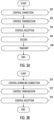
- Figure 3B is a flowchart illustrating an embodiment of the invention.
- the Figure illustrates an example of the operation of an apparatus or a network element such as an eNB controlling a Secondary Cell utilising carrier aggregation or a part of an eNB.
- the steps of the flowchart may also be in different order than illustrated in Figure 3B .
- the apparatus is configured to control a downlink connection to user terminal 102 having connections 108, 110 to more than one cell 104C, 106A for carrier aggregation.
- the apparatus is configured to control transmission of signalling to the user terminal to use maximum allowable number of bits of hybrid automatic request feedback in transmission of positive and negative acknowledgements to more than one aggregated cell.
- the apparatus is configured to control reception of a transmission from a base station serving an aggregated cell, the transmission comprising feedback bits, the feedback bits comprising positive and negative acknowledgements related to user terminal connection with the apparatus.
- SCell may receive feedback bits from PCell, where the feedback bits are related to the connection controlled by the SCell and where the feedback bits were received from the user terminal by the PCell.
- PCell acts as a transmitter and SCell acts as a receiver.
- the feedback bits received by the apparatus are accompanied by the System Frame Number, SFN, and subframe number of Transmission Time Interval, TTI, in which the feedback bits were received. Based on the received information, the apparatus can correlate the feedback bits with the actual PDSCH transmissions.
- the eNB may be configured to send a pseudo DAI (Downlink Assignment Index) to the user terminal conveyed in PDCCH, so that the user terminal shall report ACK/NACK with maximum number of HARQ-ACK feedback bits.
- a pseudo DAI Downlink Assignment Index
- the eNB will know the expected number of HARQ-ACK feedback bits punctured and is able to decode PUSCH correctly.
- the eNB shall allow maximum number of subframes of dynamically scheduled PDSCH transmissions so far in the downlink association set to take the place of accumulative number of subframes with PDSCH transmission and with PDCCH or Evolved PDCCH indicating downlink Semi-Persistent Scheduling, DL SPS, release in DCI formats 1/1A/1B/1D/2/ 2A/2B/2C/2D.
- the eNB shall allow maximum total number of subframes of PDSCH transmissions (including both Semi-Persistent Scheduling and dynamic scheduling transmissions) in the downlink association set to take the place of accumulative number of subframes with PDSCH transmission and with PDCCH or Evolved PDCCH indicating DL SPS release in DCI format 0/4.
- the PCell when receiving HARQ-ACK feedback bits, is able to decode and process the bits related to its own transmissions.
- the SCell(s) HARQ-ACK feedback bits (HARQ ACK/NACK/DTX) from PUSCH decoded by the PCell are sent transparently to the respective SCell(s), regardless that PCell has no way of knowing if the PDSCH has actually been scheduled in the Scell.
- a value M is given for the first parameter W DAI UL controlling tranmission of feedback data, where M equals the size of downlink association set, or the number of downlink subframes that are reported within the same uplink frame.
- the first parameter W DAI UL may follow the rule of following table: Table 1 DAI W DAI UL MSB, LSB 0,0 1 0,1 2 1,0 3 1,1 4
- a value i + 1 is given for the second parameter V DAI , c DL controlling reception of feedback data, where (0 ⁇ i ⁇ M ) and where M equals the size of downlink association set.
- i has value as in k i : subframe in downlink association set: K: ⁇ k 0 , k 1 , ...,k M-1 ⁇ .
- Figure 4 is a flowchart illustrating an embodiment of the invention.
- the Figure illustrates an example of the operation of an apparatus or a network element such as an eNB controlling a Primary Cell utilising carrier aggregation or a part of an eNB.
- step 400 the apparatus is configured to determine if there is PUSCH in subframe n +k'.
- n is the TTI in which the eNB transmit PDSCH
- n+k' means the TTI in which UE reports HARQ ACK/NACK. If there is the first parameter W DAI UL is given the value M in step 402.
- the apparatus is configured to determine in step 404 if there is PDSCH in subframe n .
- n is the TTI in which the eNB transmit PDSCH.
- c DL is given the value i + 1 in step 406, where (0 ⁇ i ⁇ M ) and where M equals the size of downlink association set.
- Figure 5 is a flowchart illustrating an embodiment of the invention.
- the Figure illustrates an example of the operation of an apparatus or a network element such as an eNB controlling a Secondary Cell utilising carrier aggregation or a part of an eNB.
- step 500 the apparatus is configured to determine if there is PDSCH in n subframe.
- n is the TTI in which the eNB transmit PDSCH.
- Figure 6 illustrates an embodiment.
- the figure illustrates a simplified example of an apparatus applying embodiments of the invention.
- the apparatus may be an eNB or a part of an eNB.
- the apparatus is depicted herein as an example illustrating some embodiments. It is apparent to a person skilled in the art that the apparatus may also comprise other functions and/or structures and not all described functions and structures are required. Although the apparatus has been depicted as one entity, different modules and memory may be implemented in one or more physical or logical entities.
- the apparatus of the example includes a control circuitry 600 configured to control at least part of the operation of the apparatus.
- the apparatus may comprise a memory 602 for storing data. Furthermore the memory may store software 604 executable by the control circuitry 400. The memory may be integrated in the control circuitry.
- the apparatus comprises a transceiver 606.
- the transceiver is operationally connected to the control circuitry 600. It may be connected to an antenna arrangement 608.
- the apparatus may further comprise interface circuitry 610 configured to connect the apparatus to other devices and network elements of communication system, for example to other corresponding.
- the interface may implement X2 interface and/or S1-MME/S1-U interface, for example.
- the interface may provide a wired or wireless connection to the communication network.
- the software 604 may comprise a computer program comprising program code means adapted to cause the control circuitry 600 of the apparatus, if the apparatus is configured to serve a Primary Cell, to control a connection to user terminal having connections to more than one cell for carrier aggregation; control transmission of signalling to user terminal to use maximum allowable number of bits of hybrid automatic request feedback in transmission of positive and negative acknowledgements to more than one aggregated cell; control reception of feedback bits from the user terminal, the feedback bits comprising positive and negative acknowledgements related to user terminal connections with the more than one aggregated cell; decode and process feedback bits related to the connections controlled by the apparatus; and transmit feedback bits related to other connections to respective cell.
- the software 604 may comprise a computer program comprising program code means adapted to cause the control circuitry 600 of the apparatus, if the apparatus is configured to serve a Secondary Cell, to control a downlink connection to a user terminal having connections to more than one cell for carrier aggregation; control transmission of signalling to the user terminal to use maximum allowable number of bits of hybrid automatic request feedback in transmission of positive and negative acknowledgements to more than one aggregated cell; control reception of a transmission from a base station serving an aggregated cell, the transmission comprising feedback bits, the feedback bits comprising positive and negative acknowledgements related to user terminal connection with the apparatus.
- the apparatus of Figure 7 may comprise a remote control unit RCU 700, such as a host computer or a server computer, operatively coupled (e.g. via a wireless or wired network) to a remote radio head RRH 702 located in the base station.
- RCU 700 remote control unit
- the apparatus of Figure 7 may comprise a remote control unit RCU 700, such as a host computer or a server computer, operatively coupled (e.g. via a wireless or wired network) to a remote radio head RRH 702 located in the base station.
- RCU 700 such as a host computer or a server computer
- RRH 702 remote radio head
- the RCU 700 may generate a virtual network through which the RCU 700 communicates with the RRH 702.
- virtual networking may involve a process of combining hardware and software network resources and network functionality into a single, software-based administrative entity, a virtual network.
- Network virtualization may involve platform virtualization, often combined with resource virtualization.
- Network virtualization may be categorized as external virtual networking which combines many networks, or parts of networks, into the server computer or the host computer (e.g. to the RCU). External network virtualization is targeted to optimized network sharing. Another category is internal virtual networking which provides network-like functionality to the software containers on a single system. Virtual networking may also be used for testing the terminal device.
- the virtual network may provide flexible distribution of operations between the RRH and the RCU.
- any digital signal processing task may be performed in either the RRH or the RCU and the boundary where the responsibility is shifted between the RRH and the RCU may be selected according to implementation.
- the apparatuses or controllers able to perform the above-described steps may be implemented as an electronic digital computer, which may comprise a working memory (RAM), a central processing unit (CPU), and a system clock.
- the CPU may comprise a set of registers, an arithmetic logic unit, and a controller.
- the controller is controlled by a sequence of program instructions transferred to the CPU from the RAM.
- the controller may contain a number of microinstructions for basic operations.
- the implementation of microinstructions may vary depending on the CPU design.
- the program instructions may be coded by a programming language, which may be a high-level programming language, such as C, Java, etc., or a low-level programming language, such as a machine language, or an assembler.
- the electronic digital computer may also have an operating system, which may provide system services to a computer program written with the program instructions.
- circuitry refers to all of the following: (a) hardware-only circuit implementations, such as implementations in only analog and/or digital circuitry, and (b) combinations of circuits and software (and/or firmware), such as (as applicable): (i) a combination of processor(s) or (ii) portions of processor(s)/software including digital signal processor(s), software, and memory(ies) that work together to cause an apparatus to perform various functions, and (c) circuits, such as a microprocessor(s) or a portion of a microprocessor(s), that require software or firmware for operation, even if the software or firmware is not physically present.
- circuitry' applies to all uses of this term in this application.
- the term 'circuitry' would also cover an implementation of merely a processor (or multiple processors) or a portion of a processor and its (or their) accompanying software and/or firmware.
- the term 'circuitry' would also cover, for example and if applicable to the particular element, a baseband integrated circuit or applications processor integrated circuit for a mobile phone or a similar integrated circuit in a server, a cellular network device, or another network device.
- An embodiment provides a computer program embodied on a distribution medium, comprising program instructions which, when loaded into an electronic apparatus, are configured to control the apparatus to execute the embodiments described above.
- the computer program may be in source code form, object code form, or in some intermediate form, and it may be stored in some sort of carrier, which may be any entity or device capable of carrying the program.
- carrier include a record medium, computer memory, read-only memory, and a software distribution package, for example.
- the computer program may be executed in a single electronic digital computer or it may be distributed amongst a number of computers.
- the apparatus may also be implemented as one or more integrated circuits, such as application-specific integrated circuits ASIC.
- Other hardware embodiments are also feasible, such as a circuit built of separate logic components.
- a hybrid of these different implementations is also feasible.
- An embodiment provides an apparatus comprising means for controlling a connection to a user terminal having connections to more than one cell for carrier aggregation, means for controlling transmission of signalling to the user terminal to use maximum allowable number of bits of hybrid automatic request feedback in transmission of positive and negative acknowledgements to more than one aggregated cell, means for controlling reception of feedback bits from the user terminal, the feedback bits comprising positive and negative acknowledgements related to user terminal connections with the more than one aggregated cell, means for decoding and processing feedback bits related to the connections controlled by the apparatus and means for transmitting feedback bits related to other connections to respective cell.
- An embodiment provides an apparatus comprising means for controlling a downlink connection to a user terminal having connections to more than one cell for carrier aggregation, means for controlling transmission of signalling to the user terminal to use maximum allowable number of bits of hybrid automatic request feedback in transmission of positive and negative acknowledgements to more than one aggregated cell, and means for controlling reception of a transmission from a base station serving an aggregated cell, the transmission comprising feedback bits, the feedback bits comprising positive and negative acknowledgements related to user terminal connection with the apparatus.
Landscapes
- Engineering & Computer Science (AREA)
- Signal Processing (AREA)
- Computer Networks & Wireless Communication (AREA)
- Mobile Radio Communication Systems (AREA)
Claims (15)
- Appareil pour un système de communication comprenant :des moyens (600, 602, 606) pour commander une connexion de liaison descendante sur un terminal utilisateur, le terminal utilisateur ayant des connexions à une cellule, la cellule étant conservée par l'appareil, et le terminal utilisateur ayant des connexions à plus d'une cellule, les plus d'une cellule étant conservées par d'autres appareils pour une agrégation de porteuses ;des moyens (600, 602, 606) pour commander la transmission de signalisation au terminal utilisateur pour utiliser un nombre maximal autorisé de bits d'un retour de demande automatique hybride lors de la transmission d'accusés de réception positifs et négatifs à plus d'une cellule agrégée ;des moyens (600, 602, 606) pour commander la réception de bits de retour du terminal utilisateur, les bits de retour comprenant des accusés de réception positifs et négatifs relatifs à des connexions de terminal utilisateur avec les plus d'une cellule agrégée ;des moyens (600, 602, 606) pour décoder et traiter des bits de retour relatifs aux connexions commandées par l'appareil ; etdes moyens (600, 602, 606) pour transmettre des bits de retour relatifs à d'autres connexions à des cellules respectives conservées par d'autres appareils.
- Appareil selon la revendication 1, dans lequel, lors de la transmission de bits de retour relatifs à d'autres connexions à des cellules respectives, les moyens sont en outre configurés pour :
inclure, lors de la transmission des bits de retour à d'autres connexions à des cellules respectives, le nombre de trames du système et le nombre de sous-trames de l'intervalle de temps de transmission dans lequel les bits de retour ont été reçus. - Appareil selon la revendication 1, dans lequel les moyens sont en outre configurés pour :
déterminer une valeur M pour un premier paramètre
- Appareil selon la revendication 1, dans lequel les moyens sont en outre configurés pour :
déterminer pour l'appareil une valeur i + 1 pour un deuxième paramètre
- Appareil pour un système de communication, comprenant :des moyens (600, 602, 606) pour commander une connexion de liaison descendante à un terminal utilisateur, le terminal utilisateur ayant des connexions à une cellule, la cellule étant conservée par l'appareil, et le terminal utilisateur ayant des connexions à plus d'une cellule, les plus d'une cellule étant conservées par d'autres appareils pour une agrégation de porteuses ;des moyens (600, 602, 606) pour commander la transmission de signalisation au terminal utilisateur pour utiliser un nombre maximal autorisé de bits d'un retour de demande automatique hybride lors de la transmission d'accusés de réception positifs et négatifs à plus d'une cellule agrégée ;et des moyens (600, 602, 606) pour commander la réception d'une transmission d'une station de base desservant une cellule agrégée, la transmission comprenant des bits de retour, les bits de retour comprenant des accusés de réception positifs et négatifs relatifs à une connexion de terminal utilisateur avec l'appareil.
- Appareil selon la revendication 5, dans lequel les moyens sont en outre configurés pour :
déterminer une valeur

- Appareil selon la revendication 5, dans lequel les moyens sont en outre configurés pour :
détecter, lors de la transmission de la station de base desservant une cellule agrégée, le nombre de trames du système et le nombre de sous-trames de l'intervalle de temps de transmission dans lequel les bits de retour ont été reçus par la station de base desservant une cellule agrégée. - Appareil selon la revendication 7, dans lequel les moyens sont en outre configurés pour :
corréler, sur la base du nombre de trames du système et du nombre de sous-trames de l'intervalle de temps de transmission, les bits de retour avec la signalisation transmise au terminal utilisateur. - Procédé dans un système de communication, comprenant :la commande (300) d'une connexion de liaison descendante à un terminal utilisateur, le terminal utilisateur ayant des connexions à une cellule, la cellule étant conservée par l'appareil, et le terminal utilisateur ayant des connexions à plus d'une cellule, les plus d'une cellule étant conservées par d'autres appareils pour une agrégation de porteuses ;la commande (302) d'une transmission de signalisation au terminal utilisateur pour utiliser un nombre maximal autorisé de bits d'un retour de demande automatique hybride lors de la transmission d'accusés de réception positifs et négatifs à plus d'une cellule agrégée ;la commande (304) de la réception de bits de retour du terminal utilisateur, les bits de retour comprenant des accusés de réception positifs et négatifs relatifs à des connexions de terminal utilisateur avec les plus d'une cellule agrégée ;le décodage (306) et le traitement de bits de retour relatifs aux connexions commandées par l'appareil ;la transmission (308) de bits de retour relatifs à d'autres connexions à des cellules respectives conservées par d'autres appareils.
- Procédé selon la revendication 9, comprenant en outre :
l'inclusion, lors de la transmission à d'autres connexions à des cellules respectives, du nombre de trames du système et du nombre de sous-trames de l'intervalle de temps de transmission dans lequel les bits de retour ont été reçus. - Procédé selon la revendication 9, comprenant en outre :
la détermination d'une valeur M pour un premier paramètre
- Procédé selon la revendication 9, comprenant en outre :
la détermination pour l'appareil d'une valeur i + 1 pour un deuxième paramètre
- Procédé dans un système de communication, comprenant :la commande (320) d'une connexion de liaison descendante à un terminal utilisateur, le terminal utilisateur ayant des connexions à une cellule, la cellule étant conservée par l'appareil, et le terminal utilisateur ayant des connexions à plus d'une cellule, les plus d'une cellule étant conservées par d'autres appareils pour une agrégation de porteuses ;la commande (322) d'une transmission de signalisation au terminal utilisateur pour utiliser un nombre maximal autorisé de bits d'un retour de demande automatique hybride lors de la transmission d'accusés de réception positifs et négatifs à plus d'une cellule agrégée ;la commande (324) de la réception d'une transmission d'une station de base desservant une cellule agrégée, la transmission comprenant des bits de retour, les bits de retour comprenant des accusés de réception positifs et négatifs relatifs à une connexion de terminal utilisateur avec l'appareil.
- Procédé selon la revendication 13, comprenant en outre :
la détermination d'une valeur

- Programme informatique comprenant des instructions de programme qui, lorsqu'elles sont exécutées par un ordinateur, amènent l'ordinateur à mettre en œuvre les étapes de l'une des revendications précédentes 9 à 14.
Applications Claiming Priority (1)
| Application Number | Priority Date | Filing Date | Title |
|---|---|---|---|
| PCT/CN2017/075970 WO2018161275A1 (fr) | 2017-03-08 | 2017-03-08 | Appareil et procédé de communication |
Publications (3)
| Publication Number | Publication Date |
|---|---|
| EP3593560A1 EP3593560A1 (fr) | 2020-01-15 |
| EP3593560A4 EP3593560A4 (fr) | 2020-11-25 |
| EP3593560B1 true EP3593560B1 (fr) | 2023-08-16 |
Family
ID=63447200
Family Applications (1)
| Application Number | Title | Priority Date | Filing Date |
|---|---|---|---|
| EP17899640.1A Active EP3593560B1 (fr) | 2017-03-08 | 2017-03-08 | Appareil et procédé de communication |
Country Status (4)
| Country | Link |
|---|---|
| US (1) | US11336416B2 (fr) |
| EP (1) | EP3593560B1 (fr) |
| CN (1) | CN110622552B (fr) |
| WO (1) | WO2018161275A1 (fr) |
Families Citing this family (2)
| Publication number | Priority date | Publication date | Assignee | Title |
|---|---|---|---|---|
| EP3602886B1 (fr) * | 2017-03-23 | 2024-08-14 | Motorola Mobility LLC | Indication de rétroaction harq-ack |
| CN111788786A (zh) * | 2019-01-11 | 2020-10-16 | Oppo广东移动通信有限公司 | 用于传输反馈信息的方法、终端设备和网络设备 |
Family Cites Families (23)
| Publication number | Priority date | Publication date | Assignee | Title |
|---|---|---|---|---|
| US8369280B2 (en) * | 2011-07-01 | 2013-02-05 | Ofinno Techologies, LLC | Control channels in multicarrier OFDM transmission |
| KR101979850B1 (ko) * | 2011-09-23 | 2019-08-28 | 엘지전자 주식회사 | 제어 정보를 전송하는 방법 및 이를 위한 장치 |
| KR102091598B1 (ko) * | 2012-01-15 | 2020-03-20 | 엘지전자 주식회사 | 무선 통신 시스템에서 제어 정보 전송 방법 및 장치 |
| US9749094B2 (en) * | 2012-06-14 | 2017-08-29 | Sharp Kabushiki Kaisha | Devices for sending and receiving feedback information |
| US9680628B2 (en) * | 2012-07-25 | 2017-06-13 | Samsung Electronics Co., Ltd. | Method and apparatus for transmitting control channel in intra-cell carrier aggregation system |
| KR102057868B1 (ko) * | 2012-08-01 | 2019-12-20 | 엘지전자 주식회사 | 제어 정보를 시그널링 하는 방법 및 이를 위한 장치 |
| WO2014056198A1 (fr) * | 2012-10-12 | 2014-04-17 | 华为技术有限公司 | Procédé et appareil permettant de transmettre une rétroaction harq |
| CN103780361B (zh) * | 2012-10-17 | 2018-08-17 | 中兴通讯股份有限公司 | 一种应答信息的发送方法及装置 |
| CN103795508A (zh) * | 2012-11-02 | 2014-05-14 | 北京三星通信技术研究有限公司 | Harq-ack反馈信息的传输方法及ue |
| KR102024132B1 (ko) * | 2013-01-25 | 2019-09-24 | 삼성전자주식회사 | 셀 내의 캐리어 집적 시스템에서 제어 채널 전송 방법 및 장치 |
| CN104079390A (zh) * | 2013-03-25 | 2014-10-01 | 北京三星通信技术研究有限公司 | 跨基站载波聚合系统中传输harq-ack反馈信息的方法及设备 |
| CN104348589B (zh) * | 2013-07-23 | 2018-12-11 | 电信科学技术研究院 | 一种传输反馈信息的方法和装置 |
| WO2015060860A1 (fr) * | 2013-10-25 | 2015-04-30 | Telefonaktiebolaget L M Ericsson (Publ) | Diversité de rrc |
| US20150200751A1 (en) * | 2014-01-10 | 2015-07-16 | Sharp Laboratories Of America, Inc. | Enhanced pucch reporting for carrier aggregation |
| CN104468030B (zh) * | 2014-08-26 | 2018-06-05 | 上海华为技术有限公司 | 一种数据传输方法、用户设备及基站 |
| JP6592448B2 (ja) * | 2014-10-17 | 2019-10-16 | シャープ株式会社 | 端末装置、通信方法、および、集積回路 |
| FI3251245T3 (fi) * | 2015-01-28 | 2023-06-20 | Interdigital Patent Holdings Inc | Nousevan siirtotien palautemenetelmät suuren lukumäärän kantoaaltoja kanssa toimimiseksi |
| JP2018107482A (ja) * | 2015-04-28 | 2018-07-05 | シャープ株式会社 | 端末装置、基地局装置、通信方法、および、集積回路 |
| CN106301670A (zh) * | 2015-05-15 | 2017-01-04 | 中兴通讯股份有限公司 | 上行控制信息的发送方法及装置 |
| US10342005B2 (en) * | 2015-08-14 | 2019-07-02 | Telefonaktiebolaget Lm Ericsson (Publ) | Methods for determining a HARQ-ACK codebook size for a user equipment and base station |
| US9807673B2 (en) * | 2015-08-25 | 2017-10-31 | Apple Inc. | Cellular network capabilities exchange protocol |
| JP6894841B2 (ja) * | 2015-09-24 | 2021-06-30 | 株式会社Nttドコモ | 端末、無線基地局及び無線通信方法 |
| US10735146B2 (en) * | 2015-09-25 | 2020-08-04 | Samsung Electronics Co., Ltd. | Method and device for feeding back and receiving HARQ-ACK information |
-
2017
- 2017-03-08 WO PCT/CN2017/075970 patent/WO2018161275A1/fr not_active Ceased
- 2017-03-08 EP EP17899640.1A patent/EP3593560B1/fr active Active
- 2017-03-08 CN CN201780090534.XA patent/CN110622552B/zh active Active
- 2017-03-08 US US16/492,047 patent/US11336416B2/en active Active
Also Published As
| Publication number | Publication date |
|---|---|
| CN110622552B (zh) | 2023-09-22 |
| WO2018161275A1 (fr) | 2018-09-13 |
| EP3593560A1 (fr) | 2020-01-15 |
| EP3593560A4 (fr) | 2020-11-25 |
| US11336416B2 (en) | 2022-05-17 |
| CN110622552A (zh) | 2019-12-27 |
| US20200099496A1 (en) | 2020-03-26 |
Similar Documents
| Publication | Publication Date | Title |
|---|---|---|
| US11916678B2 (en) | Method and apparatus for HARQ-ACK feedback for carrier aggregation | |
| US20220322310A1 (en) | Inter-cell multi-trp operation for wireless networks | |
| US11489635B2 (en) | Method and apparatus for determining a dynamic HARQ-ACK codebook | |
| JP6908135B2 (ja) | フィードバック情報の送受信方法、装置及び通信システム | |
| RU2676895C1 (ru) | Сетевой узел, беспроводное устройство и способы, выполняемые ими для обработки информации обратной связи автоматических запросов повторения передачи (arq) | |
| TW201406095A (zh) | 於長期演進(lte)分時雙工(tdd)系統中用於動態改變tdd上行鏈路/下行鏈路組態之混合自動重覆請求(harq) | |
| JP2014525690A (ja) | Fddscellの肯定/否定応答伝送のためのpdsch割当て標示情報 | |
| WO2019029287A1 (fr) | Procédé de transmission de pucch, équipement utilisateur et appareil | |
| US12289722B2 (en) | Enhanced uplink control information mapping to uplink channel allocations | |
| US11974265B2 (en) | Use of priority mismatch indication for uplink transmission for wireless networks | |
| US20200280400A1 (en) | Transmission of Extra Information | |
| EP3593560B1 (fr) | Appareil et procédé de communication | |
| CN111083791A (zh) | 数据传输方法及装置 | |
| CN109275192A (zh) | 用于传输信息的方法和设备 | |
| CN118830324A (zh) | 用于在多小区调度中使用单一dci进行预算控制监测的方法及装置 | |
| WO2020001773A1 (fr) | Appareil et procédé pour des communications fiables en connectivité multiple | |
| CN114402681B (zh) | 一种信息处理方法和终端设备以及网络设备 | |
| EP4572256A1 (fr) | Procédé de réception de signal, procédé d`envoi de signal et appareil | |
| TW201818684A (zh) | 載波聚合中服務小區的分組方法與使用者設備 | |
| HK40121509B (en) | Enhanced uplink control information mapping to uplink channel allocations | |
| HK40121509A (en) | Enhanced uplink control information mapping to uplink channel allocations | |
| WO2023178482A1 (fr) | Procédé de transmission d'informations, dispositif terminal et dispositif de réseau | |
| WO2014075320A1 (fr) | Procédé et appareil | |
| WO2018036604A1 (fr) | Attribution de ressources de liaison montante pour transmettre des informations configurées en réseau et des informations configurables par un dispositif d'utilisateur pour des réseaux sans fil |
Legal Events
| Date | Code | Title | Description |
|---|---|---|---|
| STAA | Information on the status of an ep patent application or granted ep patent |
Free format text: STATUS: THE INTERNATIONAL PUBLICATION HAS BEEN MADE |
|
| PUAI | Public reference made under article 153(3) epc to a published international application that has entered the european phase |
Free format text: ORIGINAL CODE: 0009012 |
|
| STAA | Information on the status of an ep patent application or granted ep patent |
Free format text: STATUS: REQUEST FOR EXAMINATION WAS MADE |
|
| 17P | Request for examination filed |
Effective date: 20191008 |
|
| AK | Designated contracting states |
Kind code of ref document: A1 Designated state(s): AL AT BE BG CH CY CZ DE DK EE ES FI FR GB GR HR HU IE IS IT LI LT LU LV MC MK MT NL NO PL PT RO RS SE SI SK SM TR |
|
| AX | Request for extension of the european patent |
Extension state: BA ME |
|
| DAV | Request for validation of the european patent (deleted) | ||
| DAX | Request for extension of the european patent (deleted) | ||
| A4 | Supplementary search report drawn up and despatched |
Effective date: 20201026 |
|
| RIC1 | Information provided on ipc code assigned before grant |
Ipc: H04L 5/00 20060101ALI20201020BHEP Ipc: H04L 1/18 20060101AFI20201020BHEP Ipc: H04L 1/16 20060101ALI20201020BHEP Ipc: H04L 1/00 20060101ALI20201020BHEP |
|
| REG | Reference to a national code |
Ref legal event code: R079 Ipc: H04L0001182900 Ref country code: DE Ref legal event code: R079 Ref document number: 602017072955 Country of ref document: DE Free format text: PREVIOUS MAIN CLASS: H04W0028040000 Ipc: H04L0001182900 |
|
| RIC1 | Information provided on ipc code assigned before grant |
Ipc: H04L 1/00 20060101ALN20230209BHEP Ipc: H04W 76/15 20180101ALI20230209BHEP Ipc: H04L 5/00 20060101ALI20230209BHEP Ipc: H04L 1/1607 20230101ALI20230209BHEP Ipc: H04L 1/1829 20230101AFI20230209BHEP |
|
| GRAP | Despatch of communication of intention to grant a patent |
Free format text: ORIGINAL CODE: EPIDOSNIGR1 |
|
| STAA | Information on the status of an ep patent application or granted ep patent |
Free format text: STATUS: GRANT OF PATENT IS INTENDED |
|
| RIC1 | Information provided on ipc code assigned before grant |
Ipc: H04L 1/00 20060101ALN20230314BHEP Ipc: H04W 76/15 20180101ALI20230314BHEP Ipc: H04L 5/00 20060101ALI20230314BHEP Ipc: H04L 1/1607 20230101ALI20230314BHEP Ipc: H04L 1/1829 20230101AFI20230314BHEP |
|
| INTG | Intention to grant announced |
Effective date: 20230327 |
|
| GRAS | Grant fee paid |
Free format text: ORIGINAL CODE: EPIDOSNIGR3 |
|
| GRAA | (expected) grant |
Free format text: ORIGINAL CODE: 0009210 |
|
| STAA | Information on the status of an ep patent application or granted ep patent |
Free format text: STATUS: THE PATENT HAS BEEN GRANTED |
|
| AK | Designated contracting states |
Kind code of ref document: B1 Designated state(s): AL AT BE BG CH CY CZ DE DK EE ES FI FR GB GR HR HU IE IS IT LI LT LU LV MC MK MT NL NO PL PT RO RS SE SI SK SM TR |
|
| REG | Reference to a national code |
Ref country code: GB Ref legal event code: FG4D |
|
| REG | Reference to a national code |
Ref country code: CH Ref legal event code: EP |
|
| REG | Reference to a national code |
Ref country code: DE Ref legal event code: R096 Ref document number: 602017072955 Country of ref document: DE |
|
| REG | Reference to a national code |
Ref country code: IE Ref legal event code: FG4D |
|
| REG | Reference to a national code |
Ref country code: LT Ref legal event code: MG9D |
|
| REG | Reference to a national code |
Ref country code: NL Ref legal event code: MP Effective date: 20230816 |
|
| REG | Reference to a national code |
Ref country code: AT Ref legal event code: MK05 Ref document number: 1601097 Country of ref document: AT Kind code of ref document: T Effective date: 20230816 |
|
| PG25 | Lapsed in a contracting state [announced via postgrant information from national office to epo] |
Ref country code: GR Free format text: LAPSE BECAUSE OF FAILURE TO SUBMIT A TRANSLATION OF THE DESCRIPTION OR TO PAY THE FEE WITHIN THE PRESCRIBED TIME-LIMIT Effective date: 20231117 |
|
| PG25 | Lapsed in a contracting state [announced via postgrant information from national office to epo] |
Ref country code: IS Free format text: LAPSE BECAUSE OF FAILURE TO SUBMIT A TRANSLATION OF THE DESCRIPTION OR TO PAY THE FEE WITHIN THE PRESCRIBED TIME-LIMIT Effective date: 20231216 |
|
| PG25 | Lapsed in a contracting state [announced via postgrant information from national office to epo] |
Ref country code: SE Free format text: LAPSE BECAUSE OF FAILURE TO SUBMIT A TRANSLATION OF THE DESCRIPTION OR TO PAY THE FEE WITHIN THE PRESCRIBED TIME-LIMIT Effective date: 20230816 Ref country code: RS Free format text: LAPSE BECAUSE OF FAILURE TO SUBMIT A TRANSLATION OF THE DESCRIPTION OR TO PAY THE FEE WITHIN THE PRESCRIBED TIME-LIMIT Effective date: 20230816 Ref country code: PT Free format text: LAPSE BECAUSE OF FAILURE TO SUBMIT A TRANSLATION OF THE DESCRIPTION OR TO PAY THE FEE WITHIN THE PRESCRIBED TIME-LIMIT Effective date: 20231218 Ref country code: NO Free format text: LAPSE BECAUSE OF FAILURE TO SUBMIT A TRANSLATION OF THE DESCRIPTION OR TO PAY THE FEE WITHIN THE PRESCRIBED TIME-LIMIT Effective date: 20231116 Ref country code: NL Free format text: LAPSE BECAUSE OF FAILURE TO SUBMIT A TRANSLATION OF THE DESCRIPTION OR TO PAY THE FEE WITHIN THE PRESCRIBED TIME-LIMIT Effective date: 20230816 Ref country code: LV Free format text: LAPSE BECAUSE OF FAILURE TO SUBMIT A TRANSLATION OF THE DESCRIPTION OR TO PAY THE FEE WITHIN THE PRESCRIBED TIME-LIMIT Effective date: 20230816 Ref country code: LT Free format text: LAPSE BECAUSE OF FAILURE TO SUBMIT A TRANSLATION OF THE DESCRIPTION OR TO PAY THE FEE WITHIN THE PRESCRIBED TIME-LIMIT Effective date: 20230816 Ref country code: IS Free format text: LAPSE BECAUSE OF FAILURE TO SUBMIT A TRANSLATION OF THE DESCRIPTION OR TO PAY THE FEE WITHIN THE PRESCRIBED TIME-LIMIT Effective date: 20231216 Ref country code: HR Free format text: LAPSE BECAUSE OF FAILURE TO SUBMIT A TRANSLATION OF THE DESCRIPTION OR TO PAY THE FEE WITHIN THE PRESCRIBED TIME-LIMIT Effective date: 20230816 Ref country code: GR Free format text: LAPSE BECAUSE OF FAILURE TO SUBMIT A TRANSLATION OF THE DESCRIPTION OR TO PAY THE FEE WITHIN THE PRESCRIBED TIME-LIMIT Effective date: 20231117 Ref country code: FI Free format text: LAPSE BECAUSE OF FAILURE TO SUBMIT A TRANSLATION OF THE DESCRIPTION OR TO PAY THE FEE WITHIN THE PRESCRIBED TIME-LIMIT Effective date: 20230816 Ref country code: AT Free format text: LAPSE BECAUSE OF FAILURE TO SUBMIT A TRANSLATION OF THE DESCRIPTION OR TO PAY THE FEE WITHIN THE PRESCRIBED TIME-LIMIT Effective date: 20230816 |
|
| PG25 | Lapsed in a contracting state [announced via postgrant information from national office to epo] |
Ref country code: PL Free format text: LAPSE BECAUSE OF FAILURE TO SUBMIT A TRANSLATION OF THE DESCRIPTION OR TO PAY THE FEE WITHIN THE PRESCRIBED TIME-LIMIT Effective date: 20230816 |
|
| PG25 | Lapsed in a contracting state [announced via postgrant information from national office to epo] |
Ref country code: ES Free format text: LAPSE BECAUSE OF FAILURE TO SUBMIT A TRANSLATION OF THE DESCRIPTION OR TO PAY THE FEE WITHIN THE PRESCRIBED TIME-LIMIT Effective date: 20230816 |
|
| PG25 | Lapsed in a contracting state [announced via postgrant information from national office to epo] |
Ref country code: SM Free format text: LAPSE BECAUSE OF FAILURE TO SUBMIT A TRANSLATION OF THE DESCRIPTION OR TO PAY THE FEE WITHIN THE PRESCRIBED TIME-LIMIT Effective date: 20230816 Ref country code: RO Free format text: LAPSE BECAUSE OF FAILURE TO SUBMIT A TRANSLATION OF THE DESCRIPTION OR TO PAY THE FEE WITHIN THE PRESCRIBED TIME-LIMIT Effective date: 20230816 Ref country code: ES Free format text: LAPSE BECAUSE OF FAILURE TO SUBMIT A TRANSLATION OF THE DESCRIPTION OR TO PAY THE FEE WITHIN THE PRESCRIBED TIME-LIMIT Effective date: 20230816 Ref country code: EE Free format text: LAPSE BECAUSE OF FAILURE TO SUBMIT A TRANSLATION OF THE DESCRIPTION OR TO PAY THE FEE WITHIN THE PRESCRIBED TIME-LIMIT Effective date: 20230816 Ref country code: DK Free format text: LAPSE BECAUSE OF FAILURE TO SUBMIT A TRANSLATION OF THE DESCRIPTION OR TO PAY THE FEE WITHIN THE PRESCRIBED TIME-LIMIT Effective date: 20230816 Ref country code: CZ Free format text: LAPSE BECAUSE OF FAILURE TO SUBMIT A TRANSLATION OF THE DESCRIPTION OR TO PAY THE FEE WITHIN THE PRESCRIBED TIME-LIMIT Effective date: 20230816 Ref country code: SK Free format text: LAPSE BECAUSE OF FAILURE TO SUBMIT A TRANSLATION OF THE DESCRIPTION OR TO PAY THE FEE WITHIN THE PRESCRIBED TIME-LIMIT Effective date: 20230816 |
|
| REG | Reference to a national code |
Ref country code: DE Ref legal event code: R097 Ref document number: 602017072955 Country of ref document: DE |
|
| PLBE | No opposition filed within time limit |
Free format text: ORIGINAL CODE: 0009261 |
|
| STAA | Information on the status of an ep patent application or granted ep patent |
Free format text: STATUS: NO OPPOSITION FILED WITHIN TIME LIMIT |
|
| 26N | No opposition filed |
Effective date: 20240517 |
|
| PG25 | Lapsed in a contracting state [announced via postgrant information from national office to epo] |
Ref country code: IT Free format text: LAPSE BECAUSE OF FAILURE TO SUBMIT A TRANSLATION OF THE DESCRIPTION OR TO PAY THE FEE WITHIN THE PRESCRIBED TIME-LIMIT Effective date: 20230816 Ref country code: SI Free format text: LAPSE BECAUSE OF FAILURE TO SUBMIT A TRANSLATION OF THE DESCRIPTION OR TO PAY THE FEE WITHIN THE PRESCRIBED TIME-LIMIT Effective date: 20230816 |
|
| REG | Reference to a national code |
Ref country code: CH Ref legal event code: PL |
|
| PG25 | Lapsed in a contracting state [announced via postgrant information from national office to epo] |
Ref country code: BG Free format text: LAPSE BECAUSE OF FAILURE TO SUBMIT A TRANSLATION OF THE DESCRIPTION OR TO PAY THE FEE WITHIN THE PRESCRIBED TIME-LIMIT Effective date: 20230816 |
|
| PG25 | Lapsed in a contracting state [announced via postgrant information from national office to epo] |
Ref country code: LU Free format text: LAPSE BECAUSE OF NON-PAYMENT OF DUE FEES Effective date: 20240308 |
|
| PG25 | Lapsed in a contracting state [announced via postgrant information from national office to epo] |
Ref country code: MC Free format text: LAPSE BECAUSE OF FAILURE TO SUBMIT A TRANSLATION OF THE DESCRIPTION OR TO PAY THE FEE WITHIN THE PRESCRIBED TIME-LIMIT Effective date: 20230816 |
|
| PG25 | Lapsed in a contracting state [announced via postgrant information from national office to epo] |
Ref country code: MC Free format text: LAPSE BECAUSE OF FAILURE TO SUBMIT A TRANSLATION OF THE DESCRIPTION OR TO PAY THE FEE WITHIN THE PRESCRIBED TIME-LIMIT Effective date: 20230816 Ref country code: LU Free format text: LAPSE BECAUSE OF NON-PAYMENT OF DUE FEES Effective date: 20240308 Ref country code: BG Free format text: LAPSE BECAUSE OF FAILURE TO SUBMIT A TRANSLATION OF THE DESCRIPTION OR TO PAY THE FEE WITHIN THE PRESCRIBED TIME-LIMIT Effective date: 20230816 |
|
| REG | Reference to a national code |
Ref country code: BE Ref legal event code: MM Effective date: 20240331 |
|
| PG25 | Lapsed in a contracting state [announced via postgrant information from national office to epo] |
Ref country code: BE Free format text: LAPSE BECAUSE OF NON-PAYMENT OF DUE FEES Effective date: 20240331 |
|
| PG25 | Lapsed in a contracting state [announced via postgrant information from national office to epo] |
Ref country code: IE Free format text: LAPSE BECAUSE OF NON-PAYMENT OF DUE FEES Effective date: 20240308 |
|
| PG25 | Lapsed in a contracting state [announced via postgrant information from national office to epo] |
Ref country code: IE Free format text: LAPSE BECAUSE OF NON-PAYMENT OF DUE FEES Effective date: 20240308 Ref country code: BE Free format text: LAPSE BECAUSE OF NON-PAYMENT OF DUE FEES Effective date: 20240331 Ref country code: CH Free format text: LAPSE BECAUSE OF NON-PAYMENT OF DUE FEES Effective date: 20240331 |
|
| PGFP | Annual fee paid to national office [announced via postgrant information from national office to epo] |
Ref country code: DE Payment date: 20250204 Year of fee payment: 9 |
|
| PGFP | Annual fee paid to national office [announced via postgrant information from national office to epo] |
Ref country code: FR Payment date: 20250210 Year of fee payment: 9 |
|
| PGFP | Annual fee paid to national office [announced via postgrant information from national office to epo] |
Ref country code: GB Payment date: 20250130 Year of fee payment: 9 |
|
| PG25 | Lapsed in a contracting state [announced via postgrant information from national office to epo] |
Ref country code: CY Free format text: LAPSE BECAUSE OF FAILURE TO SUBMIT A TRANSLATION OF THE DESCRIPTION OR TO PAY THE FEE WITHIN THE PRESCRIBED TIME-LIMIT; INVALID AB INITIO Effective date: 20170308 |
|
| PG25 | Lapsed in a contracting state [announced via postgrant information from national office to epo] |
Ref country code: HU Free format text: LAPSE BECAUSE OF FAILURE TO SUBMIT A TRANSLATION OF THE DESCRIPTION OR TO PAY THE FEE WITHIN THE PRESCRIBED TIME-LIMIT; INVALID AB INITIO Effective date: 20170308 |
|
| PG25 | Lapsed in a contracting state [announced via postgrant information from national office to epo] |
Ref country code: TR Free format text: LAPSE BECAUSE OF FAILURE TO SUBMIT A TRANSLATION OF THE DESCRIPTION OR TO PAY THE FEE WITHIN THE PRESCRIBED TIME-LIMIT Effective date: 20230816 |