EP3595329A1 - Verfahren zur kundenspezifischen anpassung eines hörgeräts an einer verkaufsstelle - Google Patents
Verfahren zur kundenspezifischen anpassung eines hörgeräts an einer verkaufsstelle Download PDFInfo
- Publication number
- EP3595329A1 EP3595329A1 EP19185051.0A EP19185051A EP3595329A1 EP 3595329 A1 EP3595329 A1 EP 3595329A1 EP 19185051 A EP19185051 A EP 19185051A EP 3595329 A1 EP3595329 A1 EP 3595329A1
- Authority
- EP
- European Patent Office
- Prior art keywords
- user
- hearing device
- purchased
- hearing
- user interface
- Prior art date
- Legal status (The legal status is an assumption and is not a legal conclusion. Google has not performed a legal analysis and makes no representation as to the accuracy of the status listed.)
- Withdrawn
Links
Images

Classifications
-
- H—ELECTRICITY
- H04—ELECTRIC COMMUNICATION TECHNIQUE
- H04R—LOUDSPEAKERS, MICROPHONES, GRAMOPHONE PICK-UPS OR LIKE ACOUSTIC ELECTROMECHANICAL TRANSDUCERS; ELECTRIC HEARING AIDS; PUBLIC ADDRESS SYSTEMS
- H04R25/00—Electric hearing aids
- H04R25/70—Adaptation of deaf aid to hearing loss, e.g. initial electronic fitting
-
- H—ELECTRICITY
- H04—ELECTRIC COMMUNICATION TECHNIQUE
- H04R—LOUDSPEAKERS, MICROPHONES, GRAMOPHONE PICK-UPS OR LIKE ACOUSTIC ELECTROMECHANICAL TRANSDUCERS; ELECTRIC HEARING AIDS; PUBLIC ADDRESS SYSTEMS
- H04R29/00—Monitoring arrangements; Testing arrangements
- H04R29/001—Monitoring arrangements; Testing arrangements for loudspeakers
-
- A—HUMAN NECESSITIES
- A61—MEDICAL OR VETERINARY SCIENCE; HYGIENE
- A61B—DIAGNOSIS; SURGERY; IDENTIFICATION
- A61B5/00—Measuring for diagnostic purposes; Identification of persons
- A61B5/12—Audiometering
- A61B5/121—Audiometering evaluating hearing capacity
-
- A—HUMAN NECESSITIES
- A61—MEDICAL OR VETERINARY SCIENCE; HYGIENE
- A61B—DIAGNOSIS; SURGERY; IDENTIFICATION
- A61B5/00—Measuring for diagnostic purposes; Identification of persons
- A61B5/24—Detecting, measuring or recording bioelectric or biomagnetic signals of the body or parts thereof
- A61B5/25—Bioelectric electrodes therefor
- A61B5/279—Bioelectric electrodes therefor specially adapted for particular uses
- A61B5/291—Bioelectric electrodes therefor specially adapted for particular uses for electroencephalography [EEG]
-
- A—HUMAN NECESSITIES
- A61—MEDICAL OR VETERINARY SCIENCE; HYGIENE
- A61B—DIAGNOSIS; SURGERY; IDENTIFICATION
- A61B5/00—Measuring for diagnostic purposes; Identification of persons
- A61B5/68—Arrangements of detecting, measuring or recording means, e.g. sensors, in relation to patient
- A61B5/6801—Arrangements of detecting, measuring or recording means, e.g. sensors, in relation to patient specially adapted to be attached to or worn on the body surface
- A61B5/6813—Specially adapted to be attached to a specific body part
- A61B5/6814—Head
- A61B5/6815—Ear
- A61B5/6817—Ear canal
-
- G—PHYSICS
- G06—COMPUTING OR CALCULATING; COUNTING
- G06Q—INFORMATION AND COMMUNICATION TECHNOLOGY [ICT] SPECIALLY ADAPTED FOR ADMINISTRATIVE, COMMERCIAL, FINANCIAL, MANAGERIAL OR SUPERVISORY PURPOSES; SYSTEMS OR METHODS SPECIALLY ADAPTED FOR ADMINISTRATIVE, COMMERCIAL, FINANCIAL, MANAGERIAL OR SUPERVISORY PURPOSES, NOT OTHERWISE PROVIDED FOR
- G06Q20/00—Payment architectures, schemes or protocols
- G06Q20/08—Payment architectures
- G06Q20/18—Payment architectures involving self-service terminals [SST], vending machines, kiosks or multimedia terminals
-
- H—ELECTRICITY
- H04—ELECTRIC COMMUNICATION TECHNIQUE
- H04R—LOUDSPEAKERS, MICROPHONES, GRAMOPHONE PICK-UPS OR LIKE ACOUSTIC ELECTROMECHANICAL TRANSDUCERS; ELECTRIC HEARING AIDS; PUBLIC ADDRESS SYSTEMS
- H04R1/00—Details of transducers, loudspeakers or microphones
- H04R1/10—Earpieces; Attachments therefor ; Earphones; Monophonic headphones
-
- H—ELECTRICITY
- H04—ELECTRIC COMMUNICATION TECHNIQUE
- H04R—LOUDSPEAKERS, MICROPHONES, GRAMOPHONE PICK-UPS OR LIKE ACOUSTIC ELECTROMECHANICAL TRANSDUCERS; ELECTRIC HEARING AIDS; PUBLIC ADDRESS SYSTEMS
- H04R1/00—Details of transducers, loudspeakers or microphones
- H04R1/10—Earpieces; Attachments therefor ; Earphones; Monophonic headphones
- H04R1/1091—Details not provided for in groups H04R1/1008 - H04R1/1083
-
- H—ELECTRICITY
- H04—ELECTRIC COMMUNICATION TECHNIQUE
- H04R—LOUDSPEAKERS, MICROPHONES, GRAMOPHONE PICK-UPS OR LIKE ACOUSTIC ELECTROMECHANICAL TRANSDUCERS; ELECTRIC HEARING AIDS; PUBLIC ADDRESS SYSTEMS
- H04R25/00—Electric hearing aids
- H04R25/50—Customised settings for obtaining desired overall acoustical characteristics
-
- H—ELECTRICITY
- H04—ELECTRIC COMMUNICATION TECHNIQUE
- H04R—LOUDSPEAKERS, MICROPHONES, GRAMOPHONE PICK-UPS OR LIKE ACOUSTIC ELECTROMECHANICAL TRANSDUCERS; ELECTRIC HEARING AIDS; PUBLIC ADDRESS SYSTEMS
- H04R2225/00—Details of deaf aids covered by H04R25/00, not provided for in any of its subgroups
- H04R2225/39—Aspects relating to automatic logging of sound environment parameters and the performance of the hearing aid during use, e.g. histogram logging, or of user selected programs or settings in the hearing aid, e.g. usage logging
-
- H—ELECTRICITY
- H04—ELECTRIC COMMUNICATION TECHNIQUE
- H04R—LOUDSPEAKERS, MICROPHONES, GRAMOPHONE PICK-UPS OR LIKE ACOUSTIC ELECTROMECHANICAL TRANSDUCERS; ELECTRIC HEARING AIDS; PUBLIC ADDRESS SYSTEMS
- H04R2225/00—Details of deaf aids covered by H04R25/00, not provided for in any of its subgroups
- H04R2225/43—Signal processing in hearing aids to enhance the speech intelligibility
-
- H—ELECTRICITY
- H04—ELECTRIC COMMUNICATION TECHNIQUE
- H04R—LOUDSPEAKERS, MICROPHONES, GRAMOPHONE PICK-UPS OR LIKE ACOUSTIC ELECTROMECHANICAL TRANSDUCERS; ELECTRIC HEARING AIDS; PUBLIC ADDRESS SYSTEMS
- H04R2225/00—Details of deaf aids covered by H04R25/00, not provided for in any of its subgroups
- H04R2225/55—Communication between hearing aids and external devices via a network for data exchange
Definitions
- the present disclosure is directed to a method for customizing a hearing device and more particularly, a method for customizing a hearing device at its point of sale.
- Wireless technology for exchanging data over short distances requires pairing devices such as smart phones, laptop computers, tablets, wearables and hearing devices such as headphones or earbuds.
- pairing devices using wireless technology such as Bluetooth
- hearing devices such as headphones and earbuds have adopted Bluetooth audio streaming technology that allows a user to customize a configuration of the hearing device for the user's particular needs and desires.
- the process for pairing such devices is subject to some sources of frustration, and may deter a user from seeking out and using customized hearing devices.
- Customization of products, such as headphones or earbuds is designed with the purpose of providing a user with an enhanced listening experience. Therefore, it is important to eliminate any source of frustration that may arise during the customization process.
- a system and method for customizing a hearing device at a point of sale has a user interface, and a test hearing device.
- the test hearing device may have a plurality of biometric sensors arranged in an array for detecting data representative of an auditory brainstem response.
- An algorithm designed by the computing device collects the data and configures audio parameters specifically for the user.
- a hearing device to be purchased by the user purchased communicatively couples with the computing device and receives the algorithm to customize the hearing device to be purchased.
- a stand-alone kiosk system for customizing, at a point of sale, a hearing device to be purchased by a user.
- the stand-alone kiosk system has a test hearing device having a plurality of sensors collecting data in response to a predetermined audio signal played at the hearing device.
- the test hearing device is communicatively coupled to a user interface to play a test signal and collect the data at the computing device.
- a customized hearing algorithm is designed by the computing device using the collected data.
- the hearing device to be purchased is communicatively coupled to the user interface and the customized hearing algorithm is downloaded to the hearing device to be purchased.
- any one or more of the servers, receivers, or devices described herein include computer executable instructions that may be compiled or interpreted from computer programs created using a variety of programming languages and/or technologies.
- a processing unit such as a microprocessor receives instructions, for example from a memory, a computer-readable medium, or the like, and executes the instructions.
- the processing unit includes a non-transitory computer-readable storage medium capable of executing instructions of a software program.
- the computer readable medium may be, but is not limited to, an electronic storage device, a magnetic storage device, an optical storage device, an electromagnetic storage device, a semi-conductor storage device, or any suitable combination thereof.
- Connecting and networking servers, receivers or devices may include, but are not limited to, Bluetooth, SATA, Wi-Fi, lightning, Ethernet, UFS, 5G, etc., and one or more servers, receivers, or devices may operate using a dedicated operating system, multiple software programs and/or platforms for interfaces such as graphics, audio, wireless networking, enabling applications, integrating hardware of vehicle components, systems, and external devices such as smart phones, tablets, and other systems to name just a few.
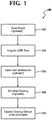
- FIG. 1 is a diagram of a method 100 for customizing a hearing device at a point of sale.
- the hearing device may be a set of headphones that are worn on the outside of a user's ears, a set of earbuds that are worn in-ear or rest on an outer ear without sealing an auditory surface.
- the hearing device may be wired or wireless.
- a user enters a retailer, or similar location, looking to purchase a hearing device such as a new set of earbuds or earphones that are inserted into or around a user's ears.
- the method 100 is carried out by a user by way of a user interface having a user input, a processor having storage capabilities and the capability to communicatively connect (wirelessly or by wire) to the hearing device to be purchased, a test hearing device and an optional scanning device.
- the method 100 involves optionally scanning 102 the user's ear(s) to capture the geometry of inner and outer canals in the ear to find an optimal size and fit for the new set of earbuds. Scanning 102 maybe accomplished using a scanner having 3D scanning capability and provides a non-invasive means to determine fit for the user. Such a non-invasive scanner may be easily placed in retail locations. This step is considered optional because a standard set of earbuds or earphones, whose size is not a customizable feature does not require a scan of the user's ears.
- Data representative of the user's hearing loss threshold, preference for a particular signal processing algorithm, and other data is acquired 104 from the user. This is accomplished by having the user wear a headset or hearing device that includes biometric sensors that collect data while the user listens to an audio signal, such as music, while wearing the hearing device.
- auditory brainstem response data is acquired 104 using the headset having biometric sensors which will be discussed later herein and which is described in detail in US patent 9,787,274 , incorporated in its entirety by reference herein.
- the hearing device used to collect the data may be a set of headphones or earbuds that is to be purchased by the user having biometric sensors therein capable of collecting the data.
- it may be a separate hearing device, such as a test hearing device, dedicated to the retail space and used only for the purpose of acquiring auditory brainstem response data from the user. Any settings that are determined from the data acquired by the test hearing device will later be transferred to the hearing device that is to be purchased by the user.
- a separate hearing device such as a test hearing device, dedicated to the retail space and used only for the purpose of acquiring auditory brainstem response data from the user. Any settings that are determined from the data acquired by the test hearing device will later be transferred to the hearing device that is to be purchased by the user.
- the user's hearing loss threshold may also be measured using standard hearing threshold tests that result in an audiogram. Again, any settings that are determined from the data acquired by the test hearing device will later be transferred to the hearing device that is to be purchased by the user.
- the user may also provide input preferences 106, such as preferences for different signal processing algorithms, when prompted.
- the preferences input by the user may further be used to define a hearing algorithm that is developed 108 for customization of the hearing device to be purchased.
- Some examples of preferences input by the user may include, but are not limited to, correction of impedance differences using an audio chirp excitation, designing customized trainings in response to data collected that might indicate a learning disability due to hearing loss, and customized head-related transfer functions (HRTF).
- HRTF head-related transfer functions
- a head-related transfer function is a response that characterizes how an ear receives a sound from a point in space.
- test hearing device There may also be static measurements captured from accelerometers on the test hearing device such as heart rate, heart rate variability, surface electromyography (EMG) to measure mouth movement, electrooculography (EOG) to measure eye movement.
- EMG surface electromyography
- EOG electrooculography
- Health training programs may be developed and customized based on the measurements taken by the test hearing device.
- the customized hearing algorithm is developed 108 for the hearing device to be purchased based on the user's ABR data and, optionally, the user's input preferences.
- the developed algorithm may be immediately available at the hearing device.
- the hearing device to be purchased will be paired to the user interface and the developed hearing algorithm will be transferred to the hearing device from the teste hearing device.
- FIG. 2 is a block diagram of an example test hearing device 200, or hearing device to be purchased by a user, that may be used for determining an algorithm for customizing audio parameters associated with hearing characteristics of a user.
- the test hearing device 200 has a computing device 202, one or more speakers 204, and one or more electrodes 206.
- the computing device 202 includes a processing unit 208, input/output devices 210 and a memory device 212.
- the memory device 212 has a calibration application 214 configured to interact with a database 216 and creates an algorithm that is developed to configure audio parameters specifically for a user and provide the configured audio parameters to a hearing device purchased by the user.
- the electrodes 206 in the test hearing device may include one or more electroencephalography (EEG) electrodes implemented in a sensor array.
- EEG electroencephalography
- the hearing device 200 may be an earphone having a body that may be shaped to fit the user's ear canal as customized from the scanning described above as in cases where the test headset is also the set of headphones or earbuds that is to be purchased by the user.
- the earphone may be included in an over-the-ear headphone, around-the-ear headphone, also to be purchased by the user.
- the test headset may be an over-the-ear or around-the-ear headphone that is used strictly for testing, and the results of the method are then transferred to the hearing device to be purchased.
- Electrodes 206 are integrated into the body of the test headset.
- the user while wearing the headset having biometric sensors, listens to a test audio signal, such as a predetermined music signal or the like.
- the electrodes in the headset measure electrical activity produced in a brain of the user in response to the audio signal.
- the electrodes may incorporate biometric sensors, such as EEG and are configured to contact the user's scalp, ear canal, or other portions of the user's head or body.
- the measured electrical activity does not rely on the user's direct input in response to the stimuli. It is measured directly by the biometric sensors.
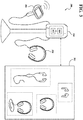
- a system 300 is shown for customizing a hearing device 302 to be purchased by a user.
- the system 300 is located in a retail space, such as a brick and mortar location, a kiosk, or a pop-up location, and may be monitored by a sales associate.
- the system 300 is accessible to the user and may or may not be monitored by a sales associate or retail representative.
- the sales associate or retail representative may help the user through the process on site at the retail location.
- the user may be able to use the system 300, such as a standalone kiosk, to complete the customization process on their own.
- the hearing device 302 to be purchased by a user may be a set of headphones, wired or wireless, a set of earbuds, wired or wireless, etc. Some examples of which are shown in FIG. 3 .
- a scanning device 304 may be used to perform an optional scan on an ear or ears of the user to determine size and shape of the user's ear(s) for customized fit of the hearing device.
- the hearing device to be purchased 302 includes the electrodes necessary to collect the auditory brainstem response, it may also be used as the test hearing device 306.
- the hearing device 302 to be purchased does not have electrodes, a separate test hearing device 306 must be used to collect the auditory brainstem response.
- a stand-alone system 308 provides a user interface for initiating and facilitating the customization process.
- Each of the hearing device 302 to be purchased, the scanning device 304 and the test hearing device 306 are in communication (wired or wireless) with the stand-alone unit 308.
- the stand-alone unit has a user interface 310, such as a touchscreen, tablet, keyboard, or the like, and processing/memory capability 312, that enables the user or the retail sales associate to interact with the stand-alone unit 308.
- the user or retail associate helping the user is able to initiate the customization, collect data from the optional scan and audio test signal, analyze the collected data. Further, the user may provide preferences, such as different signal processing algorithms that may be selected by the user, for customizing the hearing device 302 to be purchased. Once all the data has been collected and analyzed, the hearing device 302 to be purchased is paired with the processor 312 of the stand-alone device 3018 and the customized algorithms are downloaded to the hearing device 302 to be purchased.
- any method or process claims may be executed in any order and are not limited to the specific order presented in the claims.
- the equations may be implemented with a filter to minimize effects of signal noises.
- the components and/or elements recited in any apparatus claims may be assembled or otherwise operationally configured in a variety of permutations and are accordingly not limited to the specific configuration recited in the claims.
Landscapes
- Health & Medical Sciences (AREA)
- Engineering & Computer Science (AREA)
- Physics & Mathematics (AREA)
- Life Sciences & Earth Sciences (AREA)
- Acoustics & Sound (AREA)
- General Health & Medical Sciences (AREA)
- Otolaryngology (AREA)
- Signal Processing (AREA)
- Medical Informatics (AREA)
- Veterinary Medicine (AREA)
- Biophysics (AREA)
- Pathology (AREA)
- Biomedical Technology (AREA)
- Heart & Thoracic Surgery (AREA)
- Audiology, Speech & Language Pathology (AREA)
- Molecular Biology (AREA)
- Surgery (AREA)
- Animal Behavior & Ethology (AREA)
- Public Health (AREA)
- Business, Economics & Management (AREA)
- Neurosurgery (AREA)
- Accounting & Taxation (AREA)
- Multimedia (AREA)
- Finance (AREA)
- Strategic Management (AREA)
- General Business, Economics & Management (AREA)
- General Physics & Mathematics (AREA)
- Theoretical Computer Science (AREA)
- Measurement Of The Respiration, Hearing Ability, Form, And Blood Characteristics Of Living Organisms (AREA)
- Measurement And Recording Of Electrical Phenomena And Electrical Characteristics Of The Living Body (AREA)
Applications Claiming Priority (1)
| Application Number | Priority Date | Filing Date | Title |
|---|---|---|---|
| US16/032,193 US20200021927A1 (en) | 2018-07-11 | 2018-07-11 | Method for customizing a hearing device at point of sale |
Publications (1)
| Publication Number | Publication Date |
|---|---|
| EP3595329A1 true EP3595329A1 (de) | 2020-01-15 |
Family
ID=67211639
Family Applications (1)
| Application Number | Title | Priority Date | Filing Date |
|---|---|---|---|
| EP19185051.0A Withdrawn EP3595329A1 (de) | 2018-07-11 | 2019-07-08 | Verfahren zur kundenspezifischen anpassung eines hörgeräts an einer verkaufsstelle |
Country Status (4)
| Country | Link |
|---|---|
| US (1) | US20200021927A1 (de) |
| EP (1) | EP3595329A1 (de) |
| KR (1) | KR20200006914A (de) |
| CN (1) | CN110719562A (de) |
Citations (4)
| Publication number | Priority date | Publication date | Assignee | Title |
|---|---|---|---|---|
| US20110180947A1 (en) * | 2008-10-01 | 2011-07-28 | You Jung Kwon | Method of manufacturing standard ear shells for in-the-ear type general-purpose hearing aids |
| US20160198271A1 (en) * | 2015-01-07 | 2016-07-07 | iHear Medical, Inc. | Hearing device test system for non-expert user at home and non-clinical settings |
| US9635469B2 (en) * | 2011-10-14 | 2017-04-25 | Oticon A/S | Automatic real-time hearing aid fitting based on auditory evoked potentials |
| US9787274B2 (en) | 2014-10-20 | 2017-10-10 | Harman International Industries, Incorporated | Automatic sound equalization device |
Family Cites Families (7)
| Publication number | Priority date | Publication date | Assignee | Title |
|---|---|---|---|---|
| US7084870B2 (en) * | 2002-12-19 | 2006-08-01 | Siemens Corporate Research, Inc. | Interactive binaural shell modeling for hearing aids |
| WO2008116462A1 (en) * | 2007-03-23 | 2008-10-02 | Widex A/S | System and method for the objective measurement of hearing ability of an individual |
| US20100226502A1 (en) * | 2009-03-06 | 2010-09-09 | Siemens Hearing Instruments, Inc. | Method For Fabricating A Hearing Device |
| DK2454892T3 (en) * | 2009-07-13 | 2015-04-20 | Widex As | HEARING-AID adapted to detect brain waves and a method for HOW TO ADAPT a hearing aid |
| WO2016078710A1 (en) * | 2014-11-20 | 2016-05-26 | Widex A/S | Granting access rights to a sub-set of the data set in a user account |
| US10887679B2 (en) * | 2016-08-26 | 2021-01-05 | Bragi GmbH | Earpiece for audiograms |
| US20190141462A1 (en) * | 2017-11-09 | 2019-05-09 | Andrea VELATI | System and method for performing an audiometric test and calibrating a hearing aid |
-
2018
- 2018-07-11 US US16/032,193 patent/US20200021927A1/en not_active Abandoned
-
2019
- 2019-06-12 KR KR1020190069191A patent/KR20200006914A/ko not_active Withdrawn
- 2019-07-08 EP EP19185051.0A patent/EP3595329A1/de not_active Withdrawn
- 2019-07-10 CN CN201910618593.0A patent/CN110719562A/zh active Pending
Patent Citations (4)
| Publication number | Priority date | Publication date | Assignee | Title |
|---|---|---|---|---|
| US20110180947A1 (en) * | 2008-10-01 | 2011-07-28 | You Jung Kwon | Method of manufacturing standard ear shells for in-the-ear type general-purpose hearing aids |
| US9635469B2 (en) * | 2011-10-14 | 2017-04-25 | Oticon A/S | Automatic real-time hearing aid fitting based on auditory evoked potentials |
| US9787274B2 (en) | 2014-10-20 | 2017-10-10 | Harman International Industries, Incorporated | Automatic sound equalization device |
| US20160198271A1 (en) * | 2015-01-07 | 2016-07-07 | iHear Medical, Inc. | Hearing device test system for non-expert user at home and non-clinical settings |
Also Published As
| Publication number | Publication date |
|---|---|
| US20200021927A1 (en) | 2020-01-16 |
| CN110719562A (zh) | 2020-01-21 |
| KR20200006914A (ko) | 2020-01-21 |
Similar Documents
| Publication | Publication Date | Title |
|---|---|---|
| CN103313653B (zh) | 具有电极验证的个人eeg监测装置 | |
| US11006225B2 (en) | Auditory device assembly | |
| US12101606B2 (en) | Methods and systems for assessing insertion position of hearing instrument | |
| JP6104035B2 (ja) | イヤホン及び眼球運動推定装置 | |
| CN110520041B (zh) | 脑波数据分析系统、信息处理终端、电子设备以及用于认知症检查的信息的呈现方法 | |
| US10887679B2 (en) | Earpiece for audiograms | |
| US20200315544A1 (en) | Sound interference assessment in a diagnostic hearing health system and method for use | |
| US12374335B2 (en) | Local artificial intelligence assistant system with ear-wearable device | |
| EP2572640B1 (de) | Verfahren und Vorrichtung zur Durchführung einer Reinton-Audiometrieuntersuchung | |
| JP2018528735A5 (de) | ||
| KR20120131778A (ko) | 청력 검사를 수행하는 방법과 이것을 이용한 청력 보조 장치 | |
| CN105474256A (zh) | 听觉概况检测系统与方法 | |
| US20230016667A1 (en) | Hearing assistance systems and methods for monitoring emotional state | |
| CN103561643A (zh) | 语音辨别能力判定装置、语音辨别能力判定系统、助听器增益决定装置、语音辨别能力判定方法及其程序 | |
| CN110868912B (zh) | 神经生理信号中的伪影的移除 | |
| WO2018154289A2 (en) | System, method, computer program and computer program product for detecting a change in hearing response | |
| US20220157434A1 (en) | Ear-wearable device systems and methods for monitoring emotional state | |
| US12543997B2 (en) | Determination of cochlear hydrops based on recorded auditory electrophysiological responses | |
| US20250030992A1 (en) | Electronic hearing device and method | |
| EP3595329A1 (de) | Verfahren zur kundenspezifischen anpassung eines hörgeräts an einer verkaufsstelle | |
| WO2017151106A1 (en) | Systems for measuring evoked responses from a brain of a patient | |
| EP3232906B1 (de) | Hörtestsystem | |
| JP6888355B2 (ja) | 脳波測定装置、脳波測定方法及び脳波測定プログラム | |
| EP4084500A1 (de) | Elektronisches hörgerät und verfahren | |
| DK202170193A1 (en) | Electronic hearing device and method |
Legal Events
| Date | Code | Title | Description |
|---|---|---|---|
| PUAI | Public reference made under article 153(3) epc to a published international application that has entered the european phase |
Free format text: ORIGINAL CODE: 0009012 |
|
| STAA | Information on the status of an ep patent application or granted ep patent |
Free format text: STATUS: THE APPLICATION HAS BEEN PUBLISHED |
|
| AK | Designated contracting states |
Kind code of ref document: A1 Designated state(s): AL AT BE BG CH CY CZ DE DK EE ES FI FR GB GR HR HU IE IS IT LI LT LU LV MC MK MT NL NO PL PT RO RS SE SI SK SM TR |
|
| AX | Request for extension of the european patent |
Extension state: BA ME |
|
| STAA | Information on the status of an ep patent application or granted ep patent |
Free format text: STATUS: THE APPLICATION IS DEEMED TO BE WITHDRAWN |
|
| RAP1 | Party data changed (applicant data changed or rights of an application transferred) |
Owner name: HARMAN INTERNATIONAL INDUSTRIES, INCORPORATED |
|
| 18D | Application deemed to be withdrawn |
Effective date: 20200716 |