EP3596151B1 - Durcisseur pour compositions à résine époxyde pauvres en émissions - Google Patents
Durcisseur pour compositions à résine époxyde pauvres en émissions Download PDFInfo
- Publication number
- EP3596151B1 EP3596151B1 EP18709027.9A EP18709027A EP3596151B1 EP 3596151 B1 EP3596151 B1 EP 3596151B1 EP 18709027 A EP18709027 A EP 18709027A EP 3596151 B1 EP3596151 B1 EP 3596151B1
- Authority
- EP
- European Patent Office
- Prior art keywords
- amine
- formula
- cyclohexylene
- epoxy resin
- methylene
- Prior art date
- Legal status (The legal status is an assumption and is not a legal conclusion. Google has not performed a legal analysis and makes no representation as to the accuracy of the status listed.)
- Active
Links
Classifications
-
- C—CHEMISTRY; METALLURGY
- C08—ORGANIC MACROMOLECULAR COMPOUNDS; THEIR PREPARATION OR CHEMICAL WORKING-UP; COMPOSITIONS BASED THEREON
- C08G—MACROMOLECULAR COMPOUNDS OBTAINED OTHERWISE THAN BY REACTIONS ONLY INVOLVING UNSATURATED CARBON-TO-CARBON BONDS
- C08G59/00—Polycondensates containing more than one epoxy group per molecule; Macromolecules obtained by polymerising compounds containing more than one epoxy group per molecule using curing agents or catalysts which react with the epoxy groups
- C08G59/18—Macromolecules obtained by polymerising compounds containing more than one epoxy group per molecule using curing agents or catalysts which react with the epoxy groups ; e.g. general methods of curing
- C08G59/40—Macromolecules obtained by polymerising compounds containing more than one epoxy group per molecule using curing agents or catalysts which react with the epoxy groups ; e.g. general methods of curing characterised by the curing agents used
- C08G59/50—Amines
- C08G59/5006—Amines aliphatic
-
- C—CHEMISTRY; METALLURGY
- C08—ORGANIC MACROMOLECULAR COMPOUNDS; THEIR PREPARATION OR CHEMICAL WORKING-UP; COMPOSITIONS BASED THEREON
- C08G—MACROMOLECULAR COMPOUNDS OBTAINED OTHERWISE THAN BY REACTIONS ONLY INVOLVING UNSATURATED CARBON-TO-CARBON BONDS
- C08G59/00—Polycondensates containing more than one epoxy group per molecule; Macromolecules obtained by polymerising compounds containing more than one epoxy group per molecule using curing agents or catalysts which react with the epoxy groups
- C08G59/18—Macromolecules obtained by polymerising compounds containing more than one epoxy group per molecule using curing agents or catalysts which react with the epoxy groups ; e.g. general methods of curing
- C08G59/182—Macromolecules obtained by polymerising compounds containing more than one epoxy group per molecule using curing agents or catalysts which react with the epoxy groups ; e.g. general methods of curing using pre-adducts of epoxy compounds with curing agents
- C08G59/184—Macromolecules obtained by polymerising compounds containing more than one epoxy group per molecule using curing agents or catalysts which react with the epoxy groups ; e.g. general methods of curing using pre-adducts of epoxy compounds with curing agents with amines
-
- B—PERFORMING OPERATIONS; TRANSPORTING
- B32—LAYERED PRODUCTS
- B32B—LAYERED PRODUCTS, i.e. PRODUCTS BUILT-UP OF STRATA OF FLAT OR NON-FLAT, e.g. CELLULAR OR HONEYCOMB, FORM
- B32B27/00—Layered products comprising a layer of synthetic resin
- B32B27/38—Layered products comprising a layer of synthetic resin comprising epoxy resins
-
- C—CHEMISTRY; METALLURGY
- C08—ORGANIC MACROMOLECULAR COMPOUNDS; THEIR PREPARATION OR CHEMICAL WORKING-UP; COMPOSITIONS BASED THEREON
- C08G—MACROMOLECULAR COMPOUNDS OBTAINED OTHERWISE THAN BY REACTIONS ONLY INVOLVING UNSATURATED CARBON-TO-CARBON BONDS
- C08G59/00—Polycondensates containing more than one epoxy group per molecule; Macromolecules obtained by polymerising compounds containing more than one epoxy group per molecule using curing agents or catalysts which react with the epoxy groups
- C08G59/18—Macromolecules obtained by polymerising compounds containing more than one epoxy group per molecule using curing agents or catalysts which react with the epoxy groups ; e.g. general methods of curing
- C08G59/182—Macromolecules obtained by polymerising compounds containing more than one epoxy group per molecule using curing agents or catalysts which react with the epoxy groups ; e.g. general methods of curing using pre-adducts of epoxy compounds with curing agents
-
- C—CHEMISTRY; METALLURGY
- C08—ORGANIC MACROMOLECULAR COMPOUNDS; THEIR PREPARATION OR CHEMICAL WORKING-UP; COMPOSITIONS BASED THEREON
- C08G—MACROMOLECULAR COMPOUNDS OBTAINED OTHERWISE THAN BY REACTIONS ONLY INVOLVING UNSATURATED CARBON-TO-CARBON BONDS
- C08G59/00—Polycondensates containing more than one epoxy group per molecule; Macromolecules obtained by polymerising compounds containing more than one epoxy group per molecule using curing agents or catalysts which react with the epoxy groups
- C08G59/18—Macromolecules obtained by polymerising compounds containing more than one epoxy group per molecule using curing agents or catalysts which react with the epoxy groups ; e.g. general methods of curing
- C08G59/40—Macromolecules obtained by polymerising compounds containing more than one epoxy group per molecule using curing agents or catalysts which react with the epoxy groups ; e.g. general methods of curing characterised by the curing agents used
- C08G59/50—Amines
- C08G59/5033—Amines aromatic
-
- C—CHEMISTRY; METALLURGY
- C08—ORGANIC MACROMOLECULAR COMPOUNDS; THEIR PREPARATION OR CHEMICAL WORKING-UP; COMPOSITIONS BASED THEREON
- C08L—COMPOSITIONS OF MACROMOLECULAR COMPOUNDS
- C08L63/00—Compositions of epoxy resins; Compositions of derivatives of epoxy resins
-
- C—CHEMISTRY; METALLURGY
- C09—DYES; PAINTS; POLISHES; NATURAL RESINS; ADHESIVES; COMPOSITIONS NOT OTHERWISE PROVIDED FOR; APPLICATIONS OF MATERIALS NOT OTHERWISE PROVIDED FOR
- C09D—COATING COMPOSITIONS, e.g. PAINTS, VARNISHES OR LACQUERS; FILLING PASTES; CHEMICAL PAINT OR INK REMOVERS; INKS; CORRECTING FLUIDS; WOODSTAINS; PASTES OR SOLIDS FOR COLOURING OR PRINTING; USE OF MATERIALS THEREFOR
- C09D163/00—Coating compositions based on epoxy resins; Coating compositions based on derivatives of epoxy resins
Definitions
- the invention relates to the field of hardeners for epoxy resins and epoxy resin compositions, as well as coatings, coverings and paints.
- Epoxy resin products suitable for coating purposes should contain as little thinner as possible and thus be low in emissions, while still having a viscosity that is so low that they can be easily processed at ambient temperature. Furthermore, after application, they should cure as quickly and without disruption as possible, even under cold and damp conditions, and at the same time develop a smooth, glossy and non-sticky surface without cloudiness, spots or craters. Finally, the coating obtained should have a high degree of hardness and durability. For visually demanding applications, for example floor coverings, it should also have a high degree of gloss and a low tendency to yellow when exposed to light.
- hardeners based on cycloaliphatic diamines such as in particular IPDA, which are partially reacted or adducted with epoxy resin, are known from the prior art.
- IPDA cycloaliphatic diamines
- these hardeners are undesirably highly viscous and, under cold and damp conditions, tend to have matt surfaces and white spots when exposed to water early.
- EP1956034 discloses a curing composition
- a curing composition comprising the reaction product of: (a) at least one alkylated polyalkylene amine and (b) at least one polyalkylene polyether polyol modified polyepoxy resin.
- Partially alkylated primary diamines are known as hardeners for epoxy resins, for example from U.S. 6,562,934 , US 8,729,213 , WO 2014/108306 and WO 2016/023839 . These amines enable low-emission epoxy resin products with good properties. They are typically used in a free, non-adducted form. It is also possible to use them in adducted form. Although such adducts have a comparatively low viscosity, the curing rate and the final hardness achieved by epoxy resin products formulated with them are often not sufficiently high.
- the object of the present invention is therefore to provide a hardener for epoxy resins which enables the lowest possible viscosity epoxy resin products that cure quickly at ambient temperatures and especially in the cold and thereby enable high-quality coatings with an even, glossy surface.
- the hardener contains at least one mixed adduct amine of the formula (I), which can be obtained from the adducting of a mixture of primary diamine and a partially alkylated further diamine with a polyepoxide.
- the hardener according to the invention enables odorless and low-emission epoxy resin products with a surprisingly lower viscosity and a surprisingly beautiful surface in comparison with hardeners based on corresponding, separately prepared adduct amines, whereby the other properties of the epoxy resin products obtained therewith, such as in particular curing speed, Final hardness and tendency to yellowing are comparably good.
- primary amino group denotes an amino group which is bonded to a single organic radical and bears two hydrogen atoms
- secondary amino group is an amino group which is bonded to two organic radicals, which can also be part of a ring together, and which bears a hydrogen atom
- tertiary amino group denotes an amino group which is bonded to three organic radicals, two or three of which can also be part of one or more rings, and which does not carry a hydrogen atom.
- amine hydrogen The hydrogen atoms of primary and secondary amino groups are referred to as "amine hydrogen".
- amine hydrogen equivalent weight is the mass of an amine or an amine-containing composition which contains one molar equivalent of amine hydrogen.
- Substance names beginning with "poly” such as polyamine, polyol or polyepoxide denote substances which formally contain two or more of the functional groups per molecule that appear in their name.
- a “thinner” is a substance which is soluble in an epoxy resin and which lowers its viscosity and which is not chemically incorporated into the epoxy polymer during curing.
- Viscosity is the dynamic viscosity or shear viscosity which is defined by the relationship between the shear stress and the shear rate (speed gradient) and is determined as described in the description or the exemplary embodiments.
- Molecular weight is the molar mass (in grams per mole) of a molecule.
- Average molecular weight is the number average M n of a polydisperse mixture of oligomeric or polymeric molecules, which is usually determined by means of gel permeation chromatography (GPC) against polystyrene as the standard.
- room temperature A temperature of 23 ° C is referred to as "room temperature”.
- a dashed line in the formulas represents the bond between a substituent and the associated remainder of the molecule.
- a 1 is preferably an alkylene radical having 6 to 12 carbon atoms, which optionally has cyclic components and optionally secondary or tertiary amino groups.
- a 1 is particularly preferably selected from the group consisting of 2-methyl-1,5-pentylene, 1,6-hexylene, 2,2 (4), 4-trimethyl-1,6-hexamethylene, 1,3-cyclohexylene bis (methylene), 1,4-cyclohexylene-bis (methylene), 1,3-phenylene-bis (methylene), 1,4-phenylene-bis (methylene), 1,2-cyclohexylene, 1,3-cyclohexylene , 1,4-cyclohexylene, (1,5,5-trimethylcyclohexan-1-yl) methane-1,3,4 (2) -methyl-1,3-cyclohexylene, 3-aza-1,5-pentylene, 3 , 6-diaza-1,8-octylene, 3,6,9-triaza-1,11-undecylene, 3,6,9,12-tetraaza-1,14-tetradecylene, 3,6,9,12,15 Pentaaza-1,17-hepta
- a 1 is selected from the group consisting of 2,2 (4), 4-trimethyl-1,6-hexamethylene, 1,3-cyclohexylenebis (methylene), (1,5,5-trimethylcyclohexan-1-yl ) methane-1,3 and 4 (2) -methyl-1,3-cyclohexylene.
- a 1 is (1,5,5-trimethylcyclohexan-1-yl) methane-1,3. This remainder A 1 enables epoxy resin products with a particularly attractive combination of fast curing, high final strength and good surface quality.
- a 2 is preferably an alkylene radical having 2 to 6, in particular 2 or 3, carbon atoms. These residues A 2 enable epoxy resin products with particularly low viscosity and particularly beautiful surfaces.
- a 2 is preferably selected from the group consisting of 1,2-ethylene, 1,2-propylene and 2-methyl-1,5-pentylene.
- a 2 particularly preferably represents 1,2-ethylene or 1,2-propylene, in particular 1,2-propylene. These residues A 2 enable epoxy resin products with particularly good processability, particularly fast curing, particularly beautiful surfaces and particularly little tendency to yellow.
- a 2 is 1,2-propylene and A 1 is selected from the group consisting of 2-methyl-1,5-pentylene, 1,6-hexylene, 2.2 (4), 4- Trimethyl-1,6-hexamethylene, 1,3-cyclohexylene-bis (methylene), 1,4-cyclohexylene-bis (methylene), 1,3-phenylene-bis (methylene), 1,4-phenylene-bis (methylene ), 1,2-cyclohexylene, 1,3-cyclohexylene, 1,4-cyclohexylene, (1,5,5-trimethylcyclohexan-1-yl) methane-1,3,4 (2) -methyl-1,3- cyclohexylene, 3-aza-1,5-pentylene, 3,6-diaza-1,8-octylene, 3,6,9-triaza-1,11-undecylene, 3,6,9,12-tetraaza-1, 14-tetradecylene, 3,6,9
- a 1 is preferably 2,2 (4), 4-trimethyl-1,6-hexamethylene, 1,3-cyclohexylenebis (methylene), (1,5,5-trimethylcyclohexan-1-yl) methane-1 , 3 or 4 (2) -methyl-1,3-cyclohexylene, especially for (1,5,5-trimethylcyclohexan-1-yl) methane-1,3.
- Y is preferably an alkyl, cycloalkyl or aralkyl radical having 3 to 10 carbon atoms.
- Y stands for an alkyl radical with 6 to 10 carbon atoms, in particular for 2-ethylhexyl.
- Such a hardener has a particularly low viscosity and thus enables epoxy resin products with particularly good processability.
- Y is 2-phenylethyl. Such a hardener is particularly easily available.
- R 1 is preferably a hydrogen radical or methyl, in particular a hydrogen radical.
- R 2 is preferably cyclohexyl, phenyl or 1-naphthyl.
- Y is particularly preferably selected from the group consisting of 2-ethylhexyl, 2-phenylethyl, cyclohexylmethyl, benzyl, 1-phenylethyl and 1-naphthylmethyl.
- Y very particularly preferably represents benzyl, 1-phenylethyl or 1-naphthylmethyl, most preferably benzyl.
- Such a hardener has a particularly low viscosity and enables epoxy resin products that are particularly easy to process with rapid curing and particularly beautiful surfaces.
- Z is preferably a bivalent, trivalent or tetravalent hydrocarbon radical optionally containing ether-oxygen and having a molecular weight in the range from 56 to 1,000, in particular 56 to 500 g / mol.
- Z is particularly preferably the radical of a di-, trivalent or tetravalent aryl glycidyl ether after removal of the glycidoxy groups.
- Z stands for the remainder of bisphenol A diglycidyl ether, bisphenol F diglycidyl ether, bisphenol A / F diglycidyl ether or novolak glycidyl ethers after removal of the glycidoxy groups.
- Z is preferably derived from bisphenol A liquid resin, bisphenol F liquid resin, bisphenol A / F liquid resin or phenol novolak glycidyl ethers with an average functionality in the range from 2.5 to 3.8.
- Z very particularly preferably represents the radical of bisphenol A diglycidyl ether after the glycidoxy groups have been removed.
- Such a hardener has a particularly low viscosity.
- the invention further provides a process for producing the hardener described, characterized in that an amine mixture comprising at least one amine of the formula (II) and at least one monoalkylated Amine of the formula (III) is reacted with at least one glycidyl ether of the formula (IV), where A 1 , A 2 , Y, Z, p and q have the meanings already mentioned. Such a conversion is also referred to as "adducting".
- reaction between the amine mixture and the glycidyl ether is preferably carried out in such a way that the primary amino groups are present in a stoichiometric excess over the epoxide groups.
- the molar ratio of the sum of the amine of the formula (II) and the amine of the formula (III) to the epoxide groups is preferably in the range from 1.5 / 1 to 15/1, particularly preferably from 2/1 to 15/1, in particular from 2.5 / 1 to 10/1.
- the weight ratio between the amine of the formula (II) and the amine of the formula (III) is preferably in the range from 5/95 to 95/5, preferably 10/90 to 90/10, in particular 20/80 to 80/20.
- the temperature during the reaction is preferably in the range from 40 to 120.degree. C., in particular from 60 to 100.degree.
- the amine mixture is preferably initially introduced and warmed up and then the glycidyl ether is metered in, care being taken that the temperature of the reaction mixture remains in the temperature range mentioned.
- the amine of the formula (II) is preferably selected from the group consisting of 1,5-diamino-2-methylpentane (MPMD), 1,6-hexanediamine, 2,2 (4), 4-trimethylhexamethylenediamine (TMD), 1, 3-bis (aminomethyl) cyclohexane, 1,4-bis (aminomethyl) cyclohexane, 1,3-bis (aminomethyl) benzene, 1,4-bis (aminomethyl) benzene, 1,2-diaminocyclohexane, 1, 3-diaminocyclohexane, 1,4-diaminocyclohexane, 1-Amino-3-aminomethyl-3,5,5-trimethylcyclohexane (isophoronediamine or IPDA), 2- and 4-methyl-1,3-diaminocyclohexane and mixtures thereof, diethylenetriamine (DETA), triethylenetetramine (TETA), tetra
- TMD 1,3-bis- (aminomethyl) cyclohexane, IPDA or 2 (4) -methyl-1,3-diaminocyclohexane is particularly preferred.
- IPDA IPDA
- the amine of the formula (III) is preferably selected from the group consisting of N-benzyl-1,2-ethanediamine, N 1 -benzyl-1,2-propanediamine or N 2 -benzyl-1,2-propanediamine or a mixture thereof , N 1 - (1-phenylethyl) -1,2-propanediamine or N 2 - (1-phenylethyl) -1,2-propanediamine or a mixture thereof, N 1 - (1-naphthylmethyl) -1,2-propanediamine or N 2 - (1-naphthylmethyl) -1,2-propanediamine or a mixture thereof, N-benzyl-1,3-propanediamine, N 1 -benzyl-2-methyl-1,5-pentanediamine or N 5 -benzyl-2 methyl-1,5-pentanediamine or a mixture thereof, N-benzyl-1,6-hexanediamine, N-benzyl-1,3-bis
- N 1 -benzyl-1,2-propanediamine or N 2 -benzyl-1,2-propanediamine or a mixture thereof.
- the glycidyl ether of the formula (IV) is preferably selected from bisphenol A liquid resins, bisphenol F liquid resins, bisphenol A / F liquid resins and phenol novolaks with an average functionality in the range from 2.5 to 3.8.
- the amine mixture used in the process described preferably additionally contains at least one dialkylated amine of the formula (IIIa), where A 2 and Y have the meanings already mentioned.
- the amine of the formula (III) used in the process described and the optionally additionally present amine of the formula (IIIa) are preferably part of a reaction mixture from the partial alkylation of at least one amine of the formula A 2 (NH 2 ) 2 with at least one alkylating agent.
- the alkylation is preferably a reductive alkylation, an aldehyde or ketone and hydrogen being used as the alkylating agent.
- the aldehyde or the ketone is preferably selected from the group consisting of 2-ethylhexanal, cyclohexylcarbaldehyde, benzaldehyde, acetophenone and 1-naphthaldehyde, in particular benzaldehyde.
- the reductive alkylation is preferably carried out in the presence of a suitable catalyst.
- a suitable catalyst Palladium on charcoal (Pd / C), platinum on charcoal (Pt / C), Adams catalyst or Raney nickel, in particular palladium on charcoal or Raney nickel, are preferred as the catalyst.
- the reductive alkylation is preferably carried out in a pressure apparatus at a hydrogen pressure of 5 to 150 bar, in particular 10 to 100 bar. This can be done in a batch process or preferably in a continuous process.
- the reductive alkylation is preferably carried out at a temperature in the range from 40 to 120.degree. C., in particular 60 to 100.degree.
- the amine of the formula A 2 (NH 2 ) 2 is preferably in a stoichiometric excess over the aldehyde or ketone used and after the alkylation unreacted amine of the formula A 2 (NH 2 ) 2 at least partially removed from the reaction mixture, in particular by means of stripping. If desired, the reaction mixture can then be purified further, in particular by at least partly fingerng the amine of the formula (III) from the amine of the formula (IIIa) by means of distillation.
- the hardener according to the invention preferably has an amine content of the formula A 2 (NH 2 ) 2 , in which A 2 represents an alkylene radical with 2 to 6, in particular 2 or 3 carbon atoms, is less than 2.5% by weight, preferably less than 1% by weight.
- a 2 represents an alkylene radical with 2 to 6, in particular 2 or 3 carbon atoms
- a 2 is an alkylene radical having 7 to 10 carbon atoms
- the underlying amine of the formula A 2 (NH 2 ) 2 is preferably used for the reductive alkylation in an amount such that per mole of amine of the formula A 2 (NH 2 ) 2 1 to 1.8, in particular 1 to 1.5, moles of aldehyde or ketone are present.
- the invention also relates to the reaction product from the process described for producing the hardener according to the invention.
- this reaction product contains, in addition to the adduct amine of the formula (I), at least one amine of the formula (II), at least one amine of the formula (III), at least one adduct amine of the formula (V) and at least one adduct amine of the formula (VI), where A 1 , A 2 , Y, Z, p and q have the meanings already mentioned.
- reaction product optionally contains at least one amine of the formula (IIIa) and optionally at least one adduct amine from the reaction of an amine of the formula (IIIa) with the glycidyl ether of the formula (IV).
- reaction product typically contains proportions of further adduct amines, in particular proportions of higher adduct amines, such as are formed by the reaction of an amine of the formula (II) or (III) with more than one glycidyl ether of the formula (III).
- the hardener described may contain further amines which are not derived from the amines of the formula (II) or (III) or (IIIa) used to prepare the adduct of the formula (I) or from the reaction with the glycidyl ether of the formula (IV) Adduct amines correspond.
- the hardener described may contain at least one accelerator.
- Preferred accelerators are acids or compounds hydrolyzable to acids, tertiary amines, salts of tertiary amines, quaternary ammonium salts, amidines, guanidines, phenols, Mannich bases, phosphites or compounds containing mercapto groups, in particular acids, tertiary amines or Mannich bases.
- Salicylic acid or 2,4,6-tris (dimethylaminomethyl) phenol or a combination thereof are particularly preferred.
- the hardener described may contain at least one thinner, in particular benzyl alcohol, 2-phenoxyethanol, cardanol (made from cashew shell oil, containing 3- (8,11,14-pentadecatrienyl) phenol as the main component), styrenated phenol or aromatic hydrocarbon resins containing phenol groups, especially benzyl alcohol or Cardanol.
- thinner in particular benzyl alcohol, 2-phenoxyethanol, cardanol (made from cashew shell oil, containing 3- (8,11,14-pentadecatrienyl) phenol as the main component), styrenated phenol or aromatic hydrocarbon resins containing phenol groups, especially benzyl alcohol or Cardanol.
- Customary technical epoxy resins are suitable as the epoxy resin. These are obtained in a known manner, for example from the oxidation of the corresponding olefins or from the reaction of epichlorohydrin with the corresponding polyols, polyphenols or amines.
- epoxy resin Particularly suitable as epoxy resin are so-called polyepoxy liquid resins, hereinafter referred to as "liquid resin”. These have a glass transition temperature below 25 ° C.
- epoxy resin are so-called solid resins, which have a glass transition temperature above 25 ° C and can be comminuted to give powders which can be poured at 25 ° C.
- the preferred epoxy resin in the resin component is a liquid resin based on a bisphenol, in particular a diglycidyl ether of bisphenol-A, bisphenol-F or bisphenol-A / F, as are commercially available, for example, from Dow, Huntsman or Momentive.
- These liquid resins have a low viscosity for epoxy resins and, when cured, they have good coating properties. They can contain proportions of solid bisphenol A resin or novolak glycidyl ethers.
- the resin component can additionally contain a reactive diluent, in particular a reactive diluent having at least one epoxy group, in particular a glycidyl ether of monohydric or polyhydric phenols or aliphatic or cycloaliphatic alcohols, in particular butanediol diglycidyl ether, hexanediol diglycidyl ether, polyoxypropylene glycol, glycidyl ether such as glycidyl ether of natural alcohol, cardyl diglycidyl ether, cardyl ether of 8 to C 10 , C 12 to C 14 or C 13 to C 15 alkyl glycidyl ethers.
- a reactive diluent having at least one epoxy group
- a reactive diluent having at least one epoxy group in particular a glycidyl ether of monohydric or polyhydric phenols or aliphatic or cycloaliphatic alcohols, in particular but
- the epoxy resin composition optionally contains further constituents, in particular auxiliaries and additives commonly used in epoxy resin compositions, in particular solvents, thinners, film-forming aids, extenders, polymers, inorganic and / or organic fillers, fibers, pigments, rheology modifiers, adhesion promoters, stabilizers against oxidation, heat, light or UV radiation, flame retardant substances, surface-active substances or biocides.
- auxiliaries and additives commonly used in epoxy resin compositions in particular solvents, thinners, film-forming aids, extenders, polymers, inorganic and / or organic fillers, fibers, pigments, rheology modifiers, adhesion promoters, stabilizers against oxidation, heat, light or UV radiation, flame retardant substances, surface-active substances or biocides.
- the ratio of the number of groups reactive toward epoxy groups to the number of epoxy groups is preferably in the range from 0.5 to 1.5, in particular 0.7 to 1.2.
- the resin and hardener components of the epoxy resin composition are each stored in a separate container. Further constituents of the epoxy resin composition can be present as constituents of the resin or hardener component, further constituents reactive towards epoxy groups preferably being a constituent of the hardener component. It is also possible that further constituents are available as separate, further components.
- the components can be stored, which means that they can be stored for several months, up to a year or longer before they are used, without their respective properties changing to an extent relevant to their use.
- the components are mixed with one another shortly before or during application.
- the components are mixed using a suitable process; it can be carried out continuously or in batches.
- the mixing takes place in particular at ambient temperature, which is typically in the range from about 5 to 50.degree. C., preferably about 10 to 30.degree.
- Curing typically takes place at a temperature in the range from 0 to 150 ° C. It is preferably carried out at ambient temperature and typically extends over a few days to weeks. The duration depends, among other things, on the temperature, the reactivity of the constituents and their stoichiometry and the presence of accelerators.
- Another object of the invention is thus a cured composition obtained from the curing of an epoxy resin composition as described in the present document.
- the substrates can be pretreated before the epoxy resin composition is applied.
- the epoxy resin composition described can advantageously be used as a fiber composite matrix for fiber composite materials (composites) such as in particular CFRP or GFRP, or as a potting compound or casting resin, sealant, adhesive, covering, coating, paint, varnish, sealer, primer or primer.
- fiber composite materials such as in particular CFRP or GFRP
- potting compound or casting resin sealant, adhesive, covering, coating, paint, varnish, sealer, primer or primer.
- it can be used as a covering, coating, paint, varnish, sealer, primer or primer for construction and industrial applications, in particular as a floor covering or floor coating for interiors such as offices, industrial halls, gyms or cold rooms, or outdoors for balconies, terraces, parking decks, Bridges or roofs, as a protective coating for concrete, cement, metals, plastics or wood, for example for surface sealing of wooden structures, vehicles, loading areas, tanks, silos, shafts, pipelines, pipelines, machines or steel structures, e.g. of ships, piers, offshore platforms, lock gates, hydropower plants, river structures , swimming pools, wind turbines, bridges, chimneys, cranes or sheet piling, or as a primer, adhesive coating, corrosion protection primer or for making surfaces water-repellent.
- it can also be used as an adhesive, in particular as a bodywork adhesive, sandwich element adhesive, half-shell adhesive for rotor blades of wind turbines, bridge element adhesive or anchoring adhesive.
- a further coating, a further covering or a further paint can be applied to the completely or partially cured epoxy resin composition, in particular when it is used as a coating, covering or paint, which further layer can also be an epoxy resin composition, but also a different material, in particular a polyurethane or polyurea coating.
- the epoxy resin composition described is used particularly advantageously as a coating.
- the epoxy resin composition is advantageously used in a coating process, where it has a liquid consistency with low viscosity and good leveling properties and is applied in particular as a self-leveling or thixotropic coating to predominantly flat surfaces or as a paint.
- the epoxy resin composition preferably has a viscosity, measured at 20 ° C., in the range from 0.3 to 4 Pa ⁇ s, particularly preferably 0.3 to 2 Pa ⁇ s, in particular immediately after the mixing of the resin and hardener components 0.3 to 1.7 Pa ⁇ s.
- the mixed composition is applied to a substrate as a thin film with a layer thickness of typically about 50 ⁇ m to about 5 mm within the processing time, typically at ambient temperature.
- the application takes place in particular by pouring it onto the substrate to be coated and then uniformly distributing it with the aid of, for example, a squeegee or a notched trowel.
- the application can also take place with a brush or roller or as a spray application, for example as a corrosion protection coating on steel.
- the use of the epoxy resin composition results in an article comprising the cured composition from the curing of the epoxy resin composition described.
- the cured composition is in particular in the form of a coating.
- the epoxy resin composition described is characterized by advantageous properties. It has little odor and low emissions, is particularly easy to process, wets the substrates well and hardens quickly and without problems, even in cool ambient temperatures. The curing process results in high-quality epoxy resin products with high hardness and an even, non-sticky and glossy surface.
- AHEW stands for the amine hydrogen equivalent weight.
- NK stands for "Normer”.
- the viscosity was measured on a thermostatted cone-plate viscometer Rheotec RC30 (cone diameter 50 mm, cone angle 1 °, cone tip-plate distance 0.05 mm, shear rate 10 s -1 ).
- the amine number was determined by titration (with 0.1 N HClO 4 in acetic acid against crystal violet).
- the ingredients specified in Tables 1 to 2 were mixed in the specified amounts (in parts by weight) of the hardener component using a centrifugal mixer (SpeedMixer TM DAC 150, FlackTek Inc.) and stored in the absence of moisture.
- a centrifugal mixer SpeedMixer TM DAC 150, FlackTek Inc.
- a first film was drawn onto a glass plate in a layer thickness of 500 ⁇ m and stored or cured in this standard climate.
- the King hardness König pendulum hardness, measured according to DIN EN ISO 1522
- King hardness (1d NK) was, after 2 days ( “King hardness (2d NK)" was, after 4 days ( “King hardness (4d NK) "), after 7 days (“King's hardness (7d NK) ”) and after 14 days (“King's hardness (14d NK) ").
- the aspect of the film was evaluated (referred to as “Aspect (NK)” in the table).
- a film which was clear and had a glossy and non-sticky surface without structure was referred to as "beautiful”. Any type of drawing or pattern on the surface is referred to as "structure”.
- a second film was drawn onto a glass plate in a layer thickness of 500 ⁇ m and stored or cured immediately after application for 7 days at 8 ° C. and 80% relative humidity and then for 3 weeks in the NK.
- 24 hours after application a polypropylene bottle cap was placed on the film, underneath which a damp sponge was placed. After a further 24 hours, the sponge and the lid were removed and placed at a new point on the film, where it was removed again and repositioned after 24 hours, a total of 4 times.
- the aspect of this film was evaluated (labeled "Aspect (8 ° / 80%)" in the tables) in the same manner as described for the aspect (NK). The number of white marks created in the film by the damp sponge was also given.
- the change in color after exposure was also determined in a weathering tester as a measure of the yellowing.
- a further film was drawn onto a glass plate in a layer thickness of 500 ⁇ m and this was stored or cured in a standard climate for 2 weeks and then in a weathering tester of the type Q-Sun Xenon Xe-1 with an optical filter Q-SUN Daylight-Q and a xenon lamp with a light intensity of 0.51 W / m 2 at 340 nm at a temperature of 65 ° C for 72 hours (Q-Sun (72h)).
- the color difference ⁇ E of the film exposed in this way in comparison to the corresponding non-exposed film was then determined using an NH310 colorimeter from Shenzen 3NH Technology Co. LTD, equipped with a Silicon Photoelectric Diode Detector, Light Source A, Color Space Measurement Interface CIE L * a * b * C * H *, definitely.
- ⁇ E values of 0.5 to 1.5 stand for a slight color difference, 1.5 to 3 for a slight color difference, 3 to 6 for a clearly visible color difference and more than 6 for a large color difference.
Landscapes
- Chemical & Material Sciences (AREA)
- Organic Chemistry (AREA)
- Health & Medical Sciences (AREA)
- Chemical Kinetics & Catalysis (AREA)
- Medicinal Chemistry (AREA)
- Polymers & Plastics (AREA)
- Life Sciences & Earth Sciences (AREA)
- Engineering & Computer Science (AREA)
- Materials Engineering (AREA)
- Wood Science & Technology (AREA)
- Epoxy Resins (AREA)
- Paints Or Removers (AREA)
Claims (15)
- Agent de durcissement pour des résines époxy contenant au moins un adduit d'amine de formule (I),
 A1 représentant un radical alkylène comportant 6 à 15 atomes de C, qui présente éventuellement des portions cycliques et éventuellement des groupes amino secondaire ou tertiaire,A2 représentant un radical alkylène comportant 2 à 10 atomes de C, différent de A1,Y représentant un radical alkyle ou cycloalkyle ou aralkyle comportant 1 à 20 atomes de C,Z représentant un radical hydrocarboné (p + q)-valent, éventuellement présentant un oxygène d'éther, doté d'un poids moléculaire dans la plage de 56 à 1500 g/mole, etp et q représentant indépendamment l'un de l'autre 1 ou 2 ou 3 et (p + q) représentant 2 ou 3 ou 4.
 - Agent de durcissement selon la revendication 1, caractérisé en ce que A1 est choisi dans le groupe constitué par le 2-méthyl-1,5-pentylène, le 1,6-hexylène, le 2,2(4),4-triméthyl-1,6-hexaméthylène, le 1,3-cyclohexylène-bis(méthylène), le 1,4-cyclohexylène-bis(méthylène), le 1,3-phénylène-bis(méthylène), le 1,4-phénylène-bis(méthylène), le 1,2-cyclohexylène, le 1,3-cyclohexylène, le 1,4-cyclohexylène, le (1,5,5-triméthylcyclohexan-1-yl)méthan-1,3,4(2)-méthyl-1,3-cyclohexylène, le 3-aza-1,5-pentylène, le 3,6-diaza-1,8-octylène, le 3,6,9-triaza-1,11-undécylène, le 3,6,9,12-tétraaza-1,14-tétradécylène, le 3,6,9,12,15-pentaaza-1,17-heptadécylène, le 4-aza-2,6-heptylène, le 4-aza-1,7-heptylène, le 4,7-diaza-1,10-décylène et le 7-aza-1,13-tridécylène.
- Agent de durcissement selon l'une quelconque des revendications précédentes, caractérisé en ce que A2 représente un radical alkylène comportant 2 à 6, en particulier 2 ou 3, atomes de C.
- Agent de durcissement selon l'une quelconque des revendications précédentes, caractérisé en ce que A2 représente 1,2-propylène et A1 est choisi dans le groupe constitué par le 2-méthyl-1,5-pentylène, le 1,6-hexylène, le 2,2(4),4-triméthyl-1,6-hexaméthylène, le 1,3-cyclohexylène-bis(méthylène), le 1,4-cyclohexylène-bis(méthylène), le 1,3-phénylène-bis(méthylène), le 1,4-phénylène-bis(méthylène), le 1,2-cyclohexylène, le 1,3-cyclohexylène, le 1,4-cyclohexylène, le (1,5,5-triméthylcyclohexan-1-yl)méthan-1,3,4(2)-méthyl-1,3-cyclohexylène, le 3-aza-1,5-pentylène, le 3,6-diaza-1,8-octylène, le 3,6,9-triaza-1,11-undécylène, le 3,6,9,12-tétraaza-1,14-tétradécylène, le 3,6,9,12,15-pentaaza-1,17-heptadécylène, le 4-aza-2,6-heptylène, le 4-aza-1,7-heptylène, le 4,7-diaza-1,10-décylène et le 7-aza-1,13-tridécylène.
- Agent de durcissement selon l'une quelconque des revendications précédentes, caractérisé en ce queY représente un radical de formule
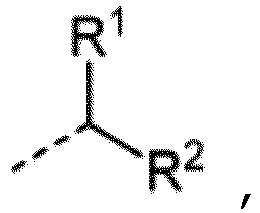 R1 représentant un radical hydrogène ou représentant méthyle ou phényle, etR2 représentant un radical cycloalkyle ou aryle à cinq ou six ou sept chaînons comportant 4 à 7 atomes de C, qui est éventuellement substitué par alkyle.
 - Agent de durcissement selon l'une quelconque des revendications 1 à 4, caractérisé en ce que Y est choisi dans le groupe constitué par 2-éthylhexyle, 2-phényléthyle, cyclohexylméthyle, benzyle, 1-phényléthyle et 1-naphtylméthyle.
- Agent de durcissement selon l'une quelconque des revendications précédentes, caractérisé en ce que Z représente le radical d'un éther aryl-glycidyle divalent, trivalent ou tétravalent après la suppression des groupes glycidoxy.
- Procédé pour la préparation de l'agent de durcissement selon l'une quelconque des revendications précédentes, caractérisé en ce qu'un mélange d'amines contenant au moins une amine de formule (II) et au moins une amine monoalkylée de formule (III) est transformé avec au moins un éther de glycidyle de formule (IV),


- Procédé selon la revendication 8, caractérisé en ce que le rapport molaire de la somme de l'amine de formule (II) et de l'amine de formule (III) par rapport aux groupes époxyde se situe dans la plage de 1,5/1 à 15/1.
- Procédé selon l'une quelconque des revendications 8 et 9, caractérisé en ce que le mélange d'amines utilisé dans le procédé contient de plus au moins une amine dialkylée de formule (IIIa),

- Procédé selon l'une quelconque des revendications 8 à 10, caractérisé en ce que l'amine de formule (III) utilisée dans le procédé et l'amine de formule (IIIa) éventuellement de plus présente font partie d'un mélange réactionnel provenant de l'alkylation partielle d'au moins une amine de formule A2(NH2)2 avec au moins un agent d'alkylation.
- Produit de réaction provenant du procédé selon l'une quelconque des revendications 8 à 11.
- Composition de résine époxy comprenant- un composant de type résine contenant au moins une résine époxy et- un composant de type agent de durcissement contenant l'agent de durcissement selon l'une quelconque des revendications 1 à 7 et/ou le produit de réaction selon la revendication 12.
- Utilisation de la composition de résine époxy selon la revendication 13 en tant que revêtement.
- Composition durcie obtenue par le durcissement d'une composition de résine époxy selon la revendication 13.
Priority Applications (1)
| Application Number | Priority Date | Filing Date | Title |
|---|---|---|---|
| PL18709027T PL3596151T3 (pl) | 2017-03-14 | 2018-03-13 | Utwardzacz do niskoemisyjnych kompozycji żywic epoksydowych |
Applications Claiming Priority (2)
| Application Number | Priority Date | Filing Date | Title |
|---|---|---|---|
| EP17160752.6A EP3375803A1 (fr) | 2017-03-14 | 2017-03-14 | Durcisseur pour compositions à résine époxyde pauvres en émissions |
| PCT/EP2018/056133 WO2018166997A1 (fr) | 2017-03-14 | 2018-03-13 | Durcisseur destiné à des compositions de résine époxy à faibles émissions |
Publications (2)
| Publication Number | Publication Date |
|---|---|
| EP3596151A1 EP3596151A1 (fr) | 2020-01-22 |
| EP3596151B1 true EP3596151B1 (fr) | 2021-04-28 |
Family
ID=58358367
Family Applications (2)
| Application Number | Title | Priority Date | Filing Date |
|---|---|---|---|
| EP17160752.6A Withdrawn EP3375803A1 (fr) | 2017-03-14 | 2017-03-14 | Durcisseur pour compositions à résine époxyde pauvres en émissions |
| EP18709027.9A Active EP3596151B1 (fr) | 2017-03-14 | 2018-03-13 | Durcisseur pour compositions à résine époxyde pauvres en émissions |
Family Applications Before (1)
| Application Number | Title | Priority Date | Filing Date |
|---|---|---|---|
| EP17160752.6A Withdrawn EP3375803A1 (fr) | 2017-03-14 | 2017-03-14 | Durcisseur pour compositions à résine époxyde pauvres en émissions |
Country Status (7)
| Country | Link |
|---|---|
| US (1) | US11053347B2 (fr) |
| EP (2) | EP3375803A1 (fr) |
| JP (1) | JP7274422B2 (fr) |
| CN (1) | CN110312748B (fr) |
| ES (1) | ES2870578T3 (fr) |
| PL (1) | PL3596151T3 (fr) |
| WO (1) | WO2018166997A1 (fr) |
Families Citing this family (4)
| Publication number | Priority date | Publication date | Assignee | Title |
|---|---|---|---|---|
| GB2586983B (en) * | 2019-09-10 | 2023-12-13 | Gurit Uk Ltd | Epoxy resin adhesives |
| JP2023514488A (ja) * | 2020-02-24 | 2023-04-06 | シーカ テクノロジー アクチェンゲゼルシャフト | アミン-エポキシ樹脂付加生成物 |
| EP4036141A1 (fr) * | 2021-01-27 | 2022-08-03 | Sika Technology Ag | Adduit de diamine alkylée et de résine époxy novolak |
| CN118027787A (zh) * | 2024-01-26 | 2024-05-14 | 上海众彦生物科技有限公司 | 一种亲水型环氧树脂防水涂料及其制备方法和应用 |
Family Cites Families (12)
| Publication number | Priority date | Publication date | Assignee | Title |
|---|---|---|---|---|
| TW539661B (en) | 2000-09-12 | 2003-07-01 | Mitsubishi Gas Chemical Co | Amino compound and process for producing the same |
| US8143331B2 (en) * | 2007-02-07 | 2012-03-27 | Air Products And Chemicals, Inc. | Alkylated polyalkyleneamines and uses thereof |
| US8729213B2 (en) | 2011-09-23 | 2014-05-20 | Air Products And Chemicals, Inc. | Benzylated polyamine curing agents |
| JP2016500744A (ja) * | 2012-10-24 | 2016-01-14 | ダウ グローバル テクノロジーズ エルエルシー | 常温硬化耐候性コーティング |
| CN104870509B (zh) * | 2013-01-08 | 2018-06-08 | Sika技术股份公司 | 用于低排放环氧树脂产品的固化剂 |
| EP2752403A1 (fr) | 2013-01-08 | 2014-07-09 | Sika Technology AG | Amine pour résines époxy à faibles émissions |
| US20160009853A1 (en) * | 2013-03-01 | 2016-01-14 | Sika Technology Ag | Composition and method of making water borne epoxy hardener for use in two-component epoxy self levelling compounds with long pot life, fast cure and low shrinkage characteristics |
| CA2935321A1 (fr) * | 2014-02-07 | 2015-08-13 | Sika Technology Ag | Amine pour produits a base de resine epoxy presentant peu d'emanations |
| WO2016023839A1 (fr) | 2014-08-13 | 2016-02-18 | Sika Technology Ag | Amine pour compositions de résine époxyde à faible taux d'émission |
| US9550912B2 (en) * | 2014-12-19 | 2017-01-24 | Hexion Inc | Curing agent for epoxy coatings |
| US10584268B2 (en) * | 2015-03-23 | 2020-03-10 | Sika Technology Ag | Cold curing epoxy resin primer or adhesive |
| EP3138863A1 (fr) | 2015-09-01 | 2017-03-08 | Sika Technology AG | Composition de resine hepoxyde pauvre en emissions |
-
2017
- 2017-03-14 EP EP17160752.6A patent/EP3375803A1/fr not_active Withdrawn
-
2018
- 2018-03-13 US US16/491,103 patent/US11053347B2/en active Active
- 2018-03-13 EP EP18709027.9A patent/EP3596151B1/fr active Active
- 2018-03-13 WO PCT/EP2018/056133 patent/WO2018166997A1/fr not_active Ceased
- 2018-03-13 JP JP2019550633A patent/JP7274422B2/ja active Active
- 2018-03-13 PL PL18709027T patent/PL3596151T3/pl unknown
- 2018-03-13 CN CN201880012753.0A patent/CN110312748B/zh active Active
- 2018-03-13 ES ES18709027T patent/ES2870578T3/es active Active
Non-Patent Citations (1)
| Title |
|---|
| None * |
Also Published As
| Publication number | Publication date |
|---|---|
| EP3375803A1 (fr) | 2018-09-19 |
| WO2018166997A1 (fr) | 2018-09-20 |
| JP7274422B2 (ja) | 2023-05-16 |
| EP3596151A1 (fr) | 2020-01-22 |
| JP2020512446A (ja) | 2020-04-23 |
| US20200017629A1 (en) | 2020-01-16 |
| ES2870578T3 (es) | 2021-10-27 |
| CN110312748B (zh) | 2023-01-06 |
| CN110312748A (zh) | 2019-10-08 |
| PL3596151T3 (pl) | 2021-11-08 |
| US11053347B2 (en) | 2021-07-06 |
Similar Documents
| Publication | Publication Date | Title |
|---|---|---|
| EP3274328B1 (fr) | Amine pour compositions de résine époxy à durcissement rapide | |
| EP3180383B1 (fr) | Amines à faible d'émission des compositions de résine époxy | |
| EP3344677B1 (fr) | Composition de resine hepoxyde pauvre en emissions | |
| EP3596150B1 (fr) | Procédé de fabrication d'un durcisseur pour des compositions de résine époxy à faible émission | |
| EP3861047B1 (fr) | Durcisseur pour des resins d'epoxides | |
| EP3350245B1 (fr) | Amine pour compositions à resine époxyde pauvres en émissions | |
| EP3205682A1 (fr) | Durcisseur pour compositions à résine époxyde pauvres en émissions | |
| EP3861046B1 (fr) | Accélérateur de durcissement pour une composition de résine époxide avec des restes alkyle | |
| EP3180382B1 (fr) | Amine pour des compositions de résine époxy à faible émission | |
| EP4110846B1 (fr) | Adduit de résine époxy-amine | |
| WO2018166997A1 (fr) | Durcisseur destiné à des compositions de résine époxy à faibles émissions | |
| EP3144334A1 (fr) | Durcisseur pour compositions a resine epoxyde pauvres en emissions | |
| WO2021170513A1 (fr) | Agents durcisseurs pour revêtements en résine époxy | |
| EP3344678B1 (fr) | Amine pour compositions a resine epoxyde pauvres en emissions | |
| EP4110845B1 (fr) | Adduit de résine époxy-amine | |
| EP3252091B1 (fr) | Tétrahydrofurane-diamine | |
| EP4036141A1 (fr) | Adduit de diamine alkylée et de résine époxy novolak |
Legal Events
| Date | Code | Title | Description |
|---|---|---|---|
| STAA | Information on the status of an ep patent application or granted ep patent |
Free format text: STATUS: UNKNOWN |
|
| STAA | Information on the status of an ep patent application or granted ep patent |
Free format text: STATUS: THE INTERNATIONAL PUBLICATION HAS BEEN MADE |
|
| PUAI | Public reference made under article 153(3) epc to a published international application that has entered the european phase |
Free format text: ORIGINAL CODE: 0009012 |
|
| STAA | Information on the status of an ep patent application or granted ep patent |
Free format text: STATUS: REQUEST FOR EXAMINATION WAS MADE |
|
| 17P | Request for examination filed |
Effective date: 20191014 |
|
| AK | Designated contracting states |
Kind code of ref document: A1 Designated state(s): AL AT BE BG CH CY CZ DE DK EE ES FI FR GB GR HR HU IE IS IT LI LT LU LV MC MK MT NL NO PL PT RO RS SE SI SK SM TR |
|
| AX | Request for extension of the european patent |
Extension state: BA ME |
|
| DAV | Request for validation of the european patent (deleted) | ||
| DAX | Request for extension of the european patent (deleted) | ||
| GRAP | Despatch of communication of intention to grant a patent |
Free format text: ORIGINAL CODE: EPIDOSNIGR1 |
|
| STAA | Information on the status of an ep patent application or granted ep patent |
Free format text: STATUS: GRANT OF PATENT IS INTENDED |
|
| INTG | Intention to grant announced |
Effective date: 20201119 |
|
| GRAS | Grant fee paid |
Free format text: ORIGINAL CODE: EPIDOSNIGR3 |
|
| GRAA | (expected) grant |
Free format text: ORIGINAL CODE: 0009210 |
|
| STAA | Information on the status of an ep patent application or granted ep patent |
Free format text: STATUS: THE PATENT HAS BEEN GRANTED |
|
| AK | Designated contracting states |
Kind code of ref document: B1 Designated state(s): AL AT BE BG CH CY CZ DE DK EE ES FI FR GB GR HR HU IE IS IT LI LT LU LV MC MK MT NL NO PL PT RO RS SE SI SK SM TR |
|
| REG | Reference to a national code |
Ref country code: GB Ref legal event code: FG4D Free format text: NOT ENGLISH |
|
| REG | Reference to a national code |
Ref country code: CH Ref legal event code: EP |
|
| REG | Reference to a national code |
Ref country code: DE Ref legal event code: R096 Ref document number: 502018005001 Country of ref document: DE |
|
| REG | Reference to a national code |
Ref country code: AT Ref legal event code: REF Ref document number: 1386984 Country of ref document: AT Kind code of ref document: T Effective date: 20210515 |
|
| REG | Reference to a national code |
Ref country code: IE Ref legal event code: FG4D Free format text: LANGUAGE OF EP DOCUMENT: GERMAN |
|
| REG | Reference to a national code |
Ref country code: LT Ref legal event code: MG9D |
|
| REG | Reference to a national code |
Ref country code: ES Ref legal event code: FG2A Ref document number: 2870578 Country of ref document: ES Kind code of ref document: T3 Effective date: 20211027 |
|
| PG25 | Lapsed in a contracting state [announced via postgrant information from national office to epo] |
Ref country code: HR Free format text: LAPSE BECAUSE OF FAILURE TO SUBMIT A TRANSLATION OF THE DESCRIPTION OR TO PAY THE FEE WITHIN THE PRESCRIBED TIME-LIMIT Effective date: 20210428 Ref country code: LT Free format text: LAPSE BECAUSE OF FAILURE TO SUBMIT A TRANSLATION OF THE DESCRIPTION OR TO PAY THE FEE WITHIN THE PRESCRIBED TIME-LIMIT Effective date: 20210428 Ref country code: FI Free format text: LAPSE BECAUSE OF FAILURE TO SUBMIT A TRANSLATION OF THE DESCRIPTION OR TO PAY THE FEE WITHIN THE PRESCRIBED TIME-LIMIT Effective date: 20210428 Ref country code: BG Free format text: LAPSE BECAUSE OF FAILURE TO SUBMIT A TRANSLATION OF THE DESCRIPTION OR TO PAY THE FEE WITHIN THE PRESCRIBED TIME-LIMIT Effective date: 20210728 Ref country code: NL Free format text: LAPSE BECAUSE OF FAILURE TO SUBMIT A TRANSLATION OF THE DESCRIPTION OR TO PAY THE FEE WITHIN THE PRESCRIBED TIME-LIMIT Effective date: 20210428 |
|
| PG25 | Lapsed in a contracting state [announced via postgrant information from national office to epo] |
Ref country code: IS Free format text: LAPSE BECAUSE OF FAILURE TO SUBMIT A TRANSLATION OF THE DESCRIPTION OR TO PAY THE FEE WITHIN THE PRESCRIBED TIME-LIMIT Effective date: 20210828 Ref country code: GR Free format text: LAPSE BECAUSE OF FAILURE TO SUBMIT A TRANSLATION OF THE DESCRIPTION OR TO PAY THE FEE WITHIN THE PRESCRIBED TIME-LIMIT Effective date: 20210729 Ref country code: NO Free format text: LAPSE BECAUSE OF FAILURE TO SUBMIT A TRANSLATION OF THE DESCRIPTION OR TO PAY THE FEE WITHIN THE PRESCRIBED TIME-LIMIT Effective date: 20210728 Ref country code: LV Free format text: LAPSE BECAUSE OF FAILURE TO SUBMIT A TRANSLATION OF THE DESCRIPTION OR TO PAY THE FEE WITHIN THE PRESCRIBED TIME-LIMIT Effective date: 20210428 Ref country code: PT Free format text: LAPSE BECAUSE OF FAILURE TO SUBMIT A TRANSLATION OF THE DESCRIPTION OR TO PAY THE FEE WITHIN THE PRESCRIBED TIME-LIMIT Effective date: 20210830 Ref country code: RS Free format text: LAPSE BECAUSE OF FAILURE TO SUBMIT A TRANSLATION OF THE DESCRIPTION OR TO PAY THE FEE WITHIN THE PRESCRIBED TIME-LIMIT Effective date: 20210428 Ref country code: SE Free format text: LAPSE BECAUSE OF FAILURE TO SUBMIT A TRANSLATION OF THE DESCRIPTION OR TO PAY THE FEE WITHIN THE PRESCRIBED TIME-LIMIT Effective date: 20210428 |
|
| REG | Reference to a national code |
Ref country code: NL Ref legal event code: MP Effective date: 20210428 |
|
| PG25 | Lapsed in a contracting state [announced via postgrant information from national office to epo] |
Ref country code: EE Free format text: LAPSE BECAUSE OF FAILURE TO SUBMIT A TRANSLATION OF THE DESCRIPTION OR TO PAY THE FEE WITHIN THE PRESCRIBED TIME-LIMIT Effective date: 20210428 Ref country code: SK Free format text: LAPSE BECAUSE OF FAILURE TO SUBMIT A TRANSLATION OF THE DESCRIPTION OR TO PAY THE FEE WITHIN THE PRESCRIBED TIME-LIMIT Effective date: 20210428 Ref country code: SM Free format text: LAPSE BECAUSE OF FAILURE TO SUBMIT A TRANSLATION OF THE DESCRIPTION OR TO PAY THE FEE WITHIN THE PRESCRIBED TIME-LIMIT Effective date: 20210428 Ref country code: DK Free format text: LAPSE BECAUSE OF FAILURE TO SUBMIT A TRANSLATION OF THE DESCRIPTION OR TO PAY THE FEE WITHIN THE PRESCRIBED TIME-LIMIT Effective date: 20210428 Ref country code: CZ Free format text: LAPSE BECAUSE OF FAILURE TO SUBMIT A TRANSLATION OF THE DESCRIPTION OR TO PAY THE FEE WITHIN THE PRESCRIBED TIME-LIMIT Effective date: 20210428 Ref country code: RO Free format text: LAPSE BECAUSE OF FAILURE TO SUBMIT A TRANSLATION OF THE DESCRIPTION OR TO PAY THE FEE WITHIN THE PRESCRIBED TIME-LIMIT Effective date: 20210428 |
|
| REG | Reference to a national code |
Ref country code: DE Ref legal event code: R097 Ref document number: 502018005001 Country of ref document: DE |
|
| PLBE | No opposition filed within time limit |
Free format text: ORIGINAL CODE: 0009261 |
|
| STAA | Information on the status of an ep patent application or granted ep patent |
Free format text: STATUS: NO OPPOSITION FILED WITHIN TIME LIMIT |
|
| 26N | No opposition filed |
Effective date: 20220131 |
|
| PG25 | Lapsed in a contracting state [announced via postgrant information from national office to epo] |
Ref country code: IS Free format text: LAPSE BECAUSE OF FAILURE TO SUBMIT A TRANSLATION OF THE DESCRIPTION OR TO PAY THE FEE WITHIN THE PRESCRIBED TIME-LIMIT Effective date: 20210828 Ref country code: AL Free format text: LAPSE BECAUSE OF FAILURE TO SUBMIT A TRANSLATION OF THE DESCRIPTION OR TO PAY THE FEE WITHIN THE PRESCRIBED TIME-LIMIT Effective date: 20210428 |
|
| PG25 | Lapsed in a contracting state [announced via postgrant information from national office to epo] |
Ref country code: MC Free format text: LAPSE BECAUSE OF FAILURE TO SUBMIT A TRANSLATION OF THE DESCRIPTION OR TO PAY THE FEE WITHIN THE PRESCRIBED TIME-LIMIT Effective date: 20210428 |
|
| REG | Reference to a national code |
Ref country code: CH Ref legal event code: PL |
|
| REG | Reference to a national code |
Ref country code: BE Ref legal event code: MM Effective date: 20220331 |
|
| PG25 | Lapsed in a contracting state [announced via postgrant information from national office to epo] |
Ref country code: LU Free format text: LAPSE BECAUSE OF NON-PAYMENT OF DUE FEES Effective date: 20220313 Ref country code: LI Free format text: LAPSE BECAUSE OF NON-PAYMENT OF DUE FEES Effective date: 20220331 Ref country code: IE Free format text: LAPSE BECAUSE OF NON-PAYMENT OF DUE FEES Effective date: 20220313 Ref country code: CH Free format text: LAPSE BECAUSE OF NON-PAYMENT OF DUE FEES Effective date: 20220331 |
|
| PG25 | Lapsed in a contracting state [announced via postgrant information from national office to epo] |
Ref country code: BE Free format text: LAPSE BECAUSE OF NON-PAYMENT OF DUE FEES Effective date: 20220331 |
|
| PG25 | Lapsed in a contracting state [announced via postgrant information from national office to epo] |
Ref country code: MK Free format text: LAPSE BECAUSE OF FAILURE TO SUBMIT A TRANSLATION OF THE DESCRIPTION OR TO PAY THE FEE WITHIN THE PRESCRIBED TIME-LIMIT Effective date: 20210428 Ref country code: CY Free format text: LAPSE BECAUSE OF FAILURE TO SUBMIT A TRANSLATION OF THE DESCRIPTION OR TO PAY THE FEE WITHIN THE PRESCRIBED TIME-LIMIT Effective date: 20210428 |
|
| REG | Reference to a national code |
Ref country code: AT Ref legal event code: MM01 Ref document number: 1386984 Country of ref document: AT Kind code of ref document: T Effective date: 20230313 |
|
| PG25 | Lapsed in a contracting state [announced via postgrant information from national office to epo] |
Ref country code: HU Free format text: LAPSE BECAUSE OF FAILURE TO SUBMIT A TRANSLATION OF THE DESCRIPTION OR TO PAY THE FEE WITHIN THE PRESCRIBED TIME-LIMIT; INVALID AB INITIO Effective date: 20180313 |
|
| PG25 | Lapsed in a contracting state [announced via postgrant information from national office to epo] |
Ref country code: TR Free format text: LAPSE BECAUSE OF FAILURE TO SUBMIT A TRANSLATION OF THE DESCRIPTION OR TO PAY THE FEE WITHIN THE PRESCRIBED TIME-LIMIT Effective date: 20210428 |
|
| PG25 | Lapsed in a contracting state [announced via postgrant information from national office to epo] |
Ref country code: AT Free format text: LAPSE BECAUSE OF NON-PAYMENT OF DUE FEES Effective date: 20230313 |
|
| PG25 | Lapsed in a contracting state [announced via postgrant information from national office to epo] |
Ref country code: AT Free format text: LAPSE BECAUSE OF NON-PAYMENT OF DUE FEES Effective date: 20230313 |
|
| PG25 | Lapsed in a contracting state [announced via postgrant information from national office to epo] |
Ref country code: MT Free format text: LAPSE BECAUSE OF FAILURE TO SUBMIT A TRANSLATION OF THE DESCRIPTION OR TO PAY THE FEE WITHIN THE PRESCRIBED TIME-LIMIT Effective date: 20210428 |
|
| PGFP | Annual fee paid to national office [announced via postgrant information from national office to epo] |
Ref country code: ES Payment date: 20250401 Year of fee payment: 8 |
|
| PGFP | Annual fee paid to national office [announced via postgrant information from national office to epo] |
Ref country code: GB Payment date: 20260219 Year of fee payment: 9 |
|
| PGFP | Annual fee paid to national office [announced via postgrant information from national office to epo] |
Ref country code: DE Payment date: 20260219 Year of fee payment: 9 |
|
| PGFP | Annual fee paid to national office [announced via postgrant information from national office to epo] |
Ref country code: AT Payment date: 20260410 Year of fee payment: 5 |
|
| PGFP | Annual fee paid to national office [announced via postgrant information from national office to epo] |
Ref country code: IT Payment date: 20260219 Year of fee payment: 9 |
|
| PGFP | Annual fee paid to national office [announced via postgrant information from national office to epo] |
Ref country code: FR Payment date: 20260219 Year of fee payment: 9 |
|
| PGFP | Annual fee paid to national office [announced via postgrant information from national office to epo] |
Ref country code: PL Payment date: 20260225 Year of fee payment: 9 |