EP3596603B1 - Verfahren zum betrieb eines automatisierungssystems und nach dem verfahren arbeitendes automatisierungssystem - Google Patents
Verfahren zum betrieb eines automatisierungssystems und nach dem verfahren arbeitendes automatisierungssystem Download PDFInfo
- Publication number
- EP3596603B1 EP3596603B1 EP18707309.3A EP18707309A EP3596603B1 EP 3596603 B1 EP3596603 B1 EP 3596603B1 EP 18707309 A EP18707309 A EP 18707309A EP 3596603 B1 EP3596603 B1 EP 3596603B1
- Authority
- EP
- European Patent Office
- Prior art keywords
- container
- kernel
- mode software
- automation system
- kernel mode
- Prior art date
- Legal status (The legal status is an assumption and is not a legal conclusion. Google has not performed a legal analysis and makes no representation as to the accuracy of the status listed.)
- Active
Links
Images

Classifications
-
- G—PHYSICS
- G06—COMPUTING OR CALCULATING; COUNTING
- G06F—ELECTRIC DIGITAL DATA PROCESSING
- G06F9/00—Arrangements for program control, e.g. control units
- G06F9/06—Arrangements for program control, e.g. control units using stored programs, i.e. using an internal store of processing equipment to receive or retain programs
- G06F9/44—Arrangements for executing specific programs
- G06F9/455—Emulation; Interpretation; Software simulation, e.g. virtualisation or emulation of application or operating system execution engines
-
- G—PHYSICS
- G05—CONTROLLING; REGULATING
- G05B—CONTROL OR REGULATING SYSTEMS IN GENERAL; FUNCTIONAL ELEMENTS OF SUCH SYSTEMS; MONITORING OR TESTING ARRANGEMENTS FOR SUCH SYSTEMS OR ELEMENTS
- G05B19/00—Program-control systems
- G05B19/02—Program-control systems electric
- G05B19/04—Program control other than numerical control, i.e. in sequence controllers or logic controllers
- G05B19/042—Program control other than numerical control, i.e. in sequence controllers or logic controllers using digital processors
- G05B19/0426—Programming the control sequence
-
- G—PHYSICS
- G06—COMPUTING OR CALCULATING; COUNTING
- G06F—ELECTRIC DIGITAL DATA PROCESSING
- G06F11/00—Error detection; Error correction; Monitoring
- G06F11/30—Monitoring
- G06F11/34—Recording or statistical evaluation of computer activity, e.g. of down time, of input/output operation ; Recording or statistical evaluation of user activity, e.g. usability assessment
-
- G—PHYSICS
- G06—COMPUTING OR CALCULATING; COUNTING
- G06F—ELECTRIC DIGITAL DATA PROCESSING
- G06F8/00—Arrangements for software engineering
- G06F8/60—Software deployment
- G06F8/61—Installation
-
- G—PHYSICS
- G06—COMPUTING OR CALCULATING; COUNTING
- G06F—ELECTRIC DIGITAL DATA PROCESSING
- G06F9/00—Arrangements for program control, e.g. control units
- G06F9/06—Arrangements for program control, e.g. control units using stored programs, i.e. using an internal store of processing equipment to receive or retain programs
- G06F9/44—Arrangements for executing specific programs
- G06F9/4401—Bootstrapping
- G06F9/4411—Configuring for operating with peripheral devices; Loading of device drivers
-
- G—PHYSICS
- G06—COMPUTING OR CALCULATING; COUNTING
- G06F—ELECTRIC DIGITAL DATA PROCESSING
- G06F9/00—Arrangements for program control, e.g. control units
- G06F9/06—Arrangements for program control, e.g. control units using stored programs, i.e. using an internal store of processing equipment to receive or retain programs
- G06F9/44—Arrangements for executing specific programs
- G06F9/445—Program loading or initiating
-
- G—PHYSICS
- G06—COMPUTING OR CALCULATING; COUNTING
- G06F—ELECTRIC DIGITAL DATA PROCESSING
- G06F9/00—Arrangements for program control, e.g. control units
- G06F9/06—Arrangements for program control, e.g. control units using stored programs, i.e. using an internal store of processing equipment to receive or retain programs
- G06F9/44—Arrangements for executing specific programs
- G06F9/445—Program loading or initiating
- G06F9/44521—Dynamic linking or loading; Link editing at or after load time, e.g. Java class loading
-
- G—PHYSICS
- G06—COMPUTING OR CALCULATING; COUNTING
- G06F—ELECTRIC DIGITAL DATA PROCESSING
- G06F9/00—Arrangements for program control, e.g. control units
- G06F9/06—Arrangements for program control, e.g. control units using stored programs, i.e. using an internal store of processing equipment to receive or retain programs
- G06F9/44—Arrangements for executing specific programs
- G06F9/455—Emulation; Interpretation; Software simulation, e.g. virtualisation or emulation of application or operating system execution engines
- G06F9/45533—Hypervisors; Virtual machine monitors
- G06F9/45558—Hypervisor-specific management and integration aspects
-
- G—PHYSICS
- G05—CONTROLLING; REGULATING
- G05B—CONTROL OR REGULATING SYSTEMS IN GENERAL; FUNCTIONAL ELEMENTS OF SUCH SYSTEMS; MONITORING OR TESTING ARRANGEMENTS FOR SUCH SYSTEMS OR ELEMENTS
- G05B2219/00—Program-control systems
- G05B2219/30—Nc systems
- G05B2219/35—Nc in input of data, input till input file format
- G05B2219/35346—VMMC: virtual machining measuring cell simulate machining process with modeled errors, error prediction
-
- G—PHYSICS
- G06—COMPUTING OR CALCULATING; COUNTING
- G06F—ELECTRIC DIGITAL DATA PROCESSING
- G06F9/00—Arrangements for program control, e.g. control units
- G06F9/06—Arrangements for program control, e.g. control units using stored programs, i.e. using an internal store of processing equipment to receive or retain programs
- G06F9/44—Arrangements for executing specific programs
- G06F9/455—Emulation; Interpretation; Software simulation, e.g. virtualisation or emulation of application or operating system execution engines
- G06F9/45533—Hypervisors; Virtual machine monitors
- G06F9/45558—Hypervisor-specific management and integration aspects
- G06F2009/45562—Creating, deleting, cloning virtual machine instances
-
- G—PHYSICS
- G06—COMPUTING OR CALCULATING; COUNTING
- G06F—ELECTRIC DIGITAL DATA PROCESSING
- G06F9/00—Arrangements for program control, e.g. control units
- G06F9/06—Arrangements for program control, e.g. control units using stored programs, i.e. using an internal store of processing equipment to receive or retain programs
- G06F9/44—Arrangements for executing specific programs
- G06F9/455—Emulation; Interpretation; Software simulation, e.g. virtualisation or emulation of application or operating system execution engines
- G06F9/45533—Hypervisors; Virtual machine monitors
- G06F9/45558—Hypervisor-specific management and integration aspects
- G06F2009/4557—Distribution of virtual machine instances; Migration and load balancing
-
- G—PHYSICS
- G06—COMPUTING OR CALCULATING; COUNTING
- G06F—ELECTRIC DIGITAL DATA PROCESSING
- G06F8/00—Arrangements for software engineering
- G06F8/60—Software deployment
- G06F8/61—Installation
- G06F8/62—Uninstallation
Definitions
- the invention relates to a method for operating an automation system and, in general, to a method for operating any computer system. Furthermore, the invention relates to an automation system or computer system operating according to the method and a computer program with an implementation of the method.
- container technology is a standard procedure for the simple merging (packaging) and distribution of software applications, referred to below as applications in accordance with common usage.
- This technology is available for various operating systems, such as Windows and Linux. There are various implementations of each.
- Windows In the Linux environment, for example, the open source software "Docker" has established itself as a container technology.
- Windows containers for the Windows operating system.
- this includes a complete runtime environment (runtime environment) required to run the respective application.
- the container includes, for example, all the binary and configuration files and libraries required to run the respective application. The differences in the various operating system distributions are abstracted by means of encapsulation in a container.
- OS virtualization In contrast to operating system virtualization (OS virtualization), container technology is much leaner and requires fewer resources.
- OS virtualization the resulting package includes a virtual machine (VM), the complete operating system to be virtualized, in particular the respective operating system kernel, and at least one application to be executed using the virtual machine.
- VM virtual machine
- all containers share a common operating system kernel.
- a container of the type described above represents what is known as a sandbox, in that it includes all the data and files required for the execution of the respective application and thus separates the application from other applications and the respective operating system (sandbox).
- kernel-mode software cannot currently be packaged in a container. Instead, the much more complex and resource-intensive traditional OS virtualization has been used so far, which is based directly on the so-called hypervisor.
- a virtual machine (VM) including the complete so-called operating system stack must be distributed in addition to the respective application itself.
- one object of the invention is to specify a possibility for encapsulating an application which requires kernel mode software in a container and for executing such an application on a respective target system.
- this object is achieved by means of a method having the features of claim 1 .
- the method is formulated as a method for operating an automation system, ie for example an automation system intended for controlling and/or monitoring a technical process, and the further description is continued on this basis.
- an automation system ie for example an automation system intended for controlling and/or monitoring a technical process
- the approach proposed here can in principle be used for computer systems of any type and in this respect an automation system is only an exemplary computer system. Accordingly, whenever the term automation system is mentioned in the following, more general computer systems that are not or not primarily intended for automation purposes should also be read.
- kernel-mode software required by the application encapsulated in the container
- host extender loads the required kernel mode software from a database with kernel mode software and installs it locally on the automation system.
- the local installation of the kernel mode software takes place in particular in the form of an integration into a kernel of an operating system of the automation system.
- Which kernel-mode software the respective application requires and which kernel-mode software is to be loaded from the database and installed locally is determined on the basis of metadata, which the container with the respective application itself includes.
- the metadata is available in a coding that can be automatically evaluated by the host extender, for example in an XML format or the like.
- the object mentioned above is also achieved by means of an automation system which works according to the method described here and below and for this purpose comprises means for carrying out the method.
- the method is implemented for automatic execution in the form of a computer program and the invention is therefore on the one hand also a computer program with program code instructions that can be executed by a computer and on the other hand a storage medium with such a computer program, i.e. a computer program product with program code means, and finally also an automation system with a processing unit in In the form of or in the form of a microprocessor and a memory into which such a computer program is or can be loaded as a means for carrying out the method and its configurations.
- the advantage of the approach proposed here is that the previous container technology is expanded so that applications that require kernel-mode software can now also be encapsulated in a container.
- the previous advantages such as easy distribution of applications, fast starting of containers, efficient use of resources and the like, are still given with the expansion of container technology.
- the host extender when deleting a container, automatically checks whether installed kernel mode software is still required in connection with the execution of an application comprised by the container becomes. If it turns out that the kernel-mode software is no longer required, it is automatically deleted by the host extender or at the request of the host extender. This not only cleans up the kernel and reduces its size. Deleting kernel-mode software that is no longer required also helps to avoid possible incompatibilities.
- the host extender automatically checks the compatibility of the respectively required kernel mode software for a plurality of containers. On the basis of such a check, it can at least be ensured that kernel-mode software that is actually required is not installed locally if such an installation would result in incompatibility and, accordingly, malfunctions or functional failures.
- the host extender installs a virtual machine in the event of a recognized incompatibility on the automation system, loads the container that led to the incompatibility into the virtual machine and loads the kernel mode required by the application covered by the container Loads software into the virtual machine kernel.
- this enables the application contained in the causal container to be executed by the container and the application being executed in a specially created virtual machine. Loading the kernel mode software into the kernel of the virtual machine does not affect the kernel of the operating system of the automation system and accordingly there is no incompatibility and malfunctions or functional failures are not to be feared.
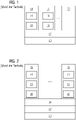
- FIG 1 shows - schematically simplified - in a layer model a device/computer system referred to below as server 10, in particular a computer system functioning as an automation system for controlling and/or monitoring any technical process that is not shown here.
- a respective operating system 12 is set up on the hardware of the server 10 . In the following, this is sometimes also referred to as the host OS (host operating system) in accordance with common usage.
- Individual containers 14 are shown above the operating system 12 . These each include at least one application 16 and a runtime environment 18 necessary for executing the respective application 16. These are, for example, binary files and/or libraries.
- a computer program referred to below as container manager 20 enables the execution of an application 16 encapsulated in a container 14.
- FIG 1 Schematically simplified container technology shown encapsulation of kernel-mode software in a container 14 is not possible, for the encapsulation of applications 16, which for their execution kernel-mode software 22 ( 3 ) require, for example, a so-called driver, which often uses traditional OS virtualization, as is schematically simplified in the illustration in FIG 2 is shown.
- the representation is based on a layer model and shows at the bottom the server hardware 10 of a respective target computer system and above it the operating system (host OS) 12 running on this hardware 10.
- a so-called hypervisor 24 acts as an interface between the operating system 12 and one or more virtual machines (VM) 26.
- Each virtual machine 26 comprises at least one application 16 provided for execution within and by means of the virtual machine 26 and the respective guest operating system (guest OS) 28, which is required for execution of the application 16.
- the virtual machine 26 also includes a possible runtime environment 18, in particular binary files and/or libraries that are required to run the respective application 16.
- the container manager 20 is responsible for the distribution, installation and configuration (deployment) as well as starting, stopping and deleting containers 14 .
- the approach proposed here is based on an extension of the container manager 20 by a container manager extension referred to below as host extender 30 ( 3 ).
- the host extender 30 is responsible for integrating kernel-mode software 22 into a respective local kernel 36 so that the kernel-mode software 22 is available for executing the application 16 contained in the container 14 .
- the representation in 3 shows a container 14 intended for execution on a respective target hardware 10 or alternatively for execution in a virtual machine 26.
- a respective target hardware 10 intended for execution of the container 14 or a virtual machine 26 intended for execution of the container 14 as an alternative is designated as host 10/26 because both the target hardware 10 directly suitable for executing the container 14 and a virtual machine 26 running on basically any target hardware 10 can be used as a platform for executing the container 14 - ie as a "host".
- a hypervisor 24 acting as an interface to the respective target hardware 10 and its operating system 12 or as an interface to the guest operating system 28 of the respective virtual machine 26 is executed on the host 10/26.
- the host extender 30 processes encapsulated metadata 32 within the container 14, which defines dependencies between the application 16 encapsulated in the container 14 on the one hand and kernel-mode software 22, for example a driver 22 or a plurality of drivers 22, on the other hand.
- kernel-mode software 22 for example a driver 22 or a plurality of drivers 22, on the other hand.
- the host extender 30 is responsible for installing the kernel mode software 22 required for executing an application 16 encapsulated in the container 14 on the host 10/26 (server or VM), in particular for integrating it into the kernel 36 there.
- the host extender 30 obtains the appropriate kernel mode software 22 (needed to run the respective application 16). from a database 34 (Container Extension Hub), which is available locally or can be reached using conventional means for data transmission, for example on the Internet.
- the database 34 includes the kernel mode software 22, which is referenced by a container 14 using the metadata 32 included therein and used at runtime.
- the host extender 30 plays the central role for the management of the kernel mode software 22.
- the host extender 30 automatically checks, for example, whether a required driver 22 is required Kernel mode software 22 installed in host 10/26. If the check shows that the kernel mode software 22 is not yet installed locally in the host 10/26, the host extender 30 initiates the local installation by loading the kernel mode software 22 from the database 34 and a kernel 36 of the host 10/26 is added, as shown in the illustration in 3 is shown.
- the host extender 30 automatically determines that the required kernel mode software 22 is already in has been integrated into the kernel 36, so that the container 14 can be started immediately and the application 16 contained therein can be executed.
- the host extender 30 also manages, for example in a linked list or a comparable data structure 38, which kernel-mode software 22 was integrated into the kernel 36 in connection with starting a container 14.
- the data structure 38 includes, for example, a data set 40 ( FIG 4 ) and this in turn includes a reference to the or each container 14, which requires the respective driver 22.
- the host extender 30 automatically uses the data structure 38 to check which data set 40 or which data sets 40 reference this container 14. The reference is deleted in connection with the deletion of container 14.
- a data record 40 is created that no longer references a container 14 - this means that there is no longer a container 14 that requires the driver 22 for which the data record 40 managed by the host extender 30 was originally created - the driver 22 even be deleted from the kernel 36.
- the host extender 30 then causes the respective driver 22 to be uninstalled (removed from the kernel 36).
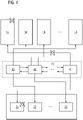
- FIG 4 shows this in a schematically simplified form.
- the data structure 38 results in the associated data record 40 (namely the data record 40 shown on the far right) and the data record 40 reveals which driver 22 this container 14 uses (namely the driver shown on the far left 22). Because no other container 14 is using the same driver 22, the driver 22 may also be deleted (uninstalled) in conjunction with deleting the container 14. -
- the deletion processes described are shown in the illustration in FIG 4 represented symbolically by means of individual crosses.
- the host extender 30 optionally automatically checks the compatibility of the dependencies of the containers 14 encoded in the form of the metadata 32 by the kernel mode software 22 . If no incompatibility is found, the kernel mode software 22 required to operate the containers 14 can be installed side-by-side on the host 10/26 and the containers 14 can be run on the host 10/26.
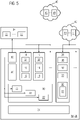
- a special embodiment of the innovation proposed here provides that the host extender 30 automatically and dynamically generates a virtual machine 26 ( 5 ) is generated and started with container functionality, in which the kernel mode software 22 is installed natively (in its kernel 36), which led to the identified incompatibility.
- the container 14 which has led to the ascertained incompatibility is then loaded (deployed) and started into this virtual machine 26--also automatically by means of the host extender 30. This is schematically simplified in the illustration in 5 shown.
- the automatic generation of a virtual machine 26 or other virtual machines by and using the host extender 30 takes place, for example, on the basis of another database 42 (VM Hub) in which, for example, images 44 (images) of different virtual machines 26 are available.
- a container to be executed 14 ( 3 , 5 ) can also come from this database 42 or, for example, from a separate container database 46, which also includes an image 48 (image) of a container 14 in each case.
- the database 42 with images 44 of virtual machines 26 and/or the container database 46 with at least one image 48 of a container 14 can be reached in a manner known per se using standard data transmission means, for example on the Internet, so that an image 44, 48 can be loaded from the respective database 42, 46 and is loaded as needed to execute the approach described here.
- a method for operating an automation system and an automation system working according to the method are specified, with an application 16 to be executed on the automation system in an encapsulated form in a container 14 for Available.
- a host extender 30 running on the automation system downloads the required kernel-mode software 22 from a database 34 with a kernel -Mode Software 22 loads and installs locally on the automation system.
- Which kernel-mode software 22 the respective application 16 requires and which kernel-mode software 22 is accordingly to be loaded from the database 34 and installed locally is determined on the basis of metadata 32, which of the container 14 with the respective application 16 itself includes.
- an incompatibility between kernel-mode software modules can be detected by the host extender.
- An incompatibility can be defined explicitly via metadata of a container: e.g. Driver1 and Driver4 are not side-by-side capable.
- the Host Extender can react accordingly via fallback mechanisms. Firstly, it could uninstall an incompatible driver from the host if it is not currently used by any container instance. If two containers use drivers that are incompatible with each other, a virtual machine with container functionality is started dynamically in which the corresponding incompatible driver is installed, e.g. natively. The container can then be inserted into this virtual machine and/or started. the The images of the virtual machine can be managed, for example, via a virtual machine hub in which images are available.
- the component described which takes over the management of the kernel-mode software modules, can resolve any incompatibilities using appropriate fallback mechanisms.
- this allows the integration of kernel-mode software into a local kernel 36 on a host intended for executing the container.
- a virtual machine can be created for the container for this purpose.
Landscapes
- Engineering & Computer Science (AREA)
- Software Systems (AREA)
- Theoretical Computer Science (AREA)
- General Engineering & Computer Science (AREA)
- Physics & Mathematics (AREA)
- General Physics & Mathematics (AREA)
- Computer Hardware Design (AREA)
- Quality & Reliability (AREA)
- Computer Security & Cryptography (AREA)
- Automation & Control Theory (AREA)
- Stored Programmes (AREA)
Description
- Die Erfindung betrifft ein Verfahren zum Betrieb eines Automatisierungssystems und allgemein ein Verfahren zum Betrieb eines grundsätzlich beliebigen Computersystems. Im Weiteren betrifft die Erfindung ein nach dem Verfahren arbeitendes Automatisierungssystem bzw. Computersystem sowie ein Computerprogramm mit einer Implementation des Verfahrens.
- Die sogenannte Container-Technologie ist ein Standardverfahren zum einfachen Zusammenfassen (Paketieren) und Verteilen von im Folgenden entsprechend dem üblichen Sprachgebrauch kurz als Applikationen bezeichneten Software-Applikationen. Diese Technologie ist für diverse Betriebssysteme, zum Beispiel Windows und Linux, verfügbar. Es gibt jeweils diverse Implementierungen. So hat sich im Linux-Umfeld zum Beispiel die Open-Source-Software "Docker" als Container-Technologie durchgesetzt. Für das Windows-Betriebssystem gibt es sogenannte "Windows-Container".
- Zur Kapselung einer Applikation in einem Container umfasst dieser eine komplette, zur Ausführung der jeweiligen Applikation notwendige Laufzeitumgebung (Runtime-Umgebung). Demnach umfasst der Container zum Beispiel alle für die Ausführung der jeweiligen Applikation notwendigen Binär- und Konfigurationsdateien sowie Bibliotheken. Mittels der Kapselung in einem Container werden die Unterschiede in den diversen Betriebssystemdistributionen abstrahiert.
- Im Gegensatz zu einer Betriebssystem-Virtualisierung (OS-Virtualisierung) ist die Container-Technologie wesentlich schlanker und benötigt weniger Ressourcen. Bei der OS-Virtualisierung umfasst das dort entstehende Paket eine virtuelle Maschine (VM), das komplette jeweils zu virtualisierende Betriebssystem, insbesondere den jeweiligen Betriebssystem-Kernel, und zumindest eine mittels der virtuellen Maschine auszuführende Applikation. Im Gegensatz dazu teilen sich bei der Container-Technologie alle Container einen gemeinsamen Betriebssystem-Kernel.
- Heutige Applikationen (Software-Applikationen) benötigen des Öfteren für deren Ausführung sogenannte Treiber (Treiber-Software). Wenn solche Applikationen in einem Container zusammengefasst und ausgeliefert werden sollen, führt dies oftmals zu einem Problem, denn Treiber werden als sogenannte Kernel-Mode Software in das jeweilige Betriebssystem integriert. Mit heutigen Container-Technologien lässt sich jedoch nur sogenannte User-Mode Software, also Software auf einer anderen, weniger systemnahen/systemkritischen Hierarchiestufe, in eine sogenannte Sandbox abstrahieren. Ein Container der oben beschriebenen Art stellt eine sogenannte Sandbox dar, indem dieser alle für die Ausführung der jeweiligen Applikation notwendigen Daten und Dateien umfasst und die Applikation somit von anderen Applikationen und dem jeweiligen Betriebssystem abgrenzt (Sandbox).
- Weil sich alle Container einen gemeinsamen Betriebssystem-Kernel teilen und ein Container keine Berechtigungen hat, Veränderungen im sogenannten Kernel-Space vorzunehmen, kann aktuell Kernel-Mode Software nicht in einem Container verpackt werden. Stattdessen wird bisher die ungleich aufwendigere und ressourcenintensive traditionelle OS-Virtualisierung verwendet, welche direkt auf dem sogenannten Hypervisor aufsetzt. Um eine Applikation, die Kernel-Mode Software verwendet, zu paketieren, muss hierfür neben der jeweiligen Applikation selbst eine virtuelle Maschine (VM) inklusive dem kompletten sogenannten Betriebssystem-Stack verteilt werden.
- Dies ist aufwendig und ressourcenintensiv, zum Beispiel wenn das resultierende Paket mit Mitteln der elektronischen Datenübertragung an einen Empfänger oder mehrere Empfänger verteilt wird.
- In dem Artikel "Towards Container-Based Resource Management for the Internet of Things", 2016 INTERNATIONAL CONFERENCE ON SOFTWARE NETWORKING (ICSN), IEEE, von Thomas Renner et al. ist eine Kernel Version offenbart, die Docker unterstützt. Dabei stellt Docker voneinander getrennte Ressourcen zur Verfügung. Durch Linux namespaces werden dabei isolierte Container zur Verfügung gestellt. Zudem kann eine Container-Virtualisierung direkt im Kernel erfolgen.
- Insbesondere in
Figur 1 in "How to Get Started Creating Oracle Solaris Kernel Zones in Oracle Solaris 11", Duncan Hardie, URL:http://www.oracle.com/technetwork/articles/serversstorage-admin/howto-create-kernal-zones-sll-2251331.html#6 ist das Erstellen mehrerer Kernel Zonen offenbart. - Eine Aufgabe der Erfindung besteht entsprechend darin, eine Möglichkeit zum Kapseln einer Applikation, welche Kernel-Mode Software benötigt, in einem Container und zum Ausführen einer solchen Applikation auf einem jeweiligen Zielsystem anzugeben.
- Diese Aufgabe wird erfindungsgemäß mittels eines Verfahrens mit den Merkmalen des Anspruchs 1 gelöst. Das Verfahren ist als Verfahren zum Betrieb eines Automatisierungssystems, also zum Beispiel eines zur Steuerung und/oder Überwachung eines technischen Prozesses bestimmten Automatisierungssystems, formuliert und auf dieser Basis wird die weitere Beschreibung fortgesetzt. Der hier vorgeschlagene Ansatz ist aber grundsätzlich für Computersysteme beliebiger Art verwendbar und insofern ist ein Automatisierungssystem nur ein beispielhaftes Computersystem. Entsprechend sind im Folgenden bei jeder Erwähnung des Begriffs Automatisierungssystem auch allgemeinere und nicht oder nicht vornehmlich für Automatisierungszwecke bestimmte Computersysteme mitzulesen.
- Bei dem hier vorgeschlagenen Ansatz ist zum Betrieb eines Automatisierungssystems, bei dem eine auf dem Automatisierungssystem auszuführende Applikation in einer in einem Container gekapselten Form zur Verfügung steht, Folgendes vorgesehen: Im Falle einer von der in dem Container gekapselten Applikation benötigten Kernel-Mode Software lädt ein auf dem Automatisierungssystem ausgeführtes und im Folgenden als Host-Extender bezeichnetes Computerprogramm die benötigte Kernel-Mode Software aus einer Datenbasis mit Kernel-Mode Software und installiert diese lokal auf dem Automatisierungssystem. Die lokale Installation der Kernel-Mode Software erfolgt dabei insbesondere in Form einer Integration in einen Kernel eines Betriebssystems des Automatisierungssystems.
- Welche Kernel-Mode Software die jeweilige Applikation benötigt und welche Kernel-Mode Software demgemäß aus der Datenbasis zu laden und lokal zu installieren ist, ergibt sich dabei auf Basis von Metadaten, welche der Container mit der jeweiligen Applikation selbst umfasst. Die Metadaten liegen in einer durch den Host-Extender automatisch auswertbaren Kodierung vor, also zum Beispiel in einem XML-Format oder dergleichen.
- Für die weitere Beschreibung gilt zur Vermeidung unnötiger Wiederholungen, dass Merkmale und Details, die im Zusammenhang mit dem gegenständlichen Verfahren sowie eventueller Ausgestaltungen beschrieben sind, selbstverständlich auch im Zusammenhang mit und im Hinblick auf ein zur Durchführung des Verfahrens bestimmtes Automatisierungssystem und umgekehrt gelten, so dass das Verfahren auch mittels einzelner oder mehrerer Verfahrensmerkmale fortgebildet sein kann, die sich auf von dem Automatisierungssystem ausgeführte Verfahrensschritte beziehen, und das Automatisierungssystem entsprechend auch durch Mittel zur Ausführung von im Rahmen des Verfahrens ausgeführten Verfahrensschritten fortgebildet sein kann. Entsprechend gelten Merkmale und Details, die im Zusammenhang mit dem gegenständlichen Verfahren und eventuellen Ausgestaltungen beschrieben sind, selbstverständlich auch im Zusammenhang mit und im Hinblick auf ein zur Durchführung des Verfahrens bestimmtes Automatisierungssystem und jeweils umgekehrt, so dass bezüglich der Offenbarung zu den einzelnen Aspekten der Erfindung stets wechselseitig Bezug genommen wird bzw. werden kann.
- Die oben genannte Aufgabe wird auch mittels eines Automatisierungssystems gelöst, welches nach dem hier und im Folgenden beschriebenen Verfahren arbeitet und dazu Mittel zur Durchführung des Verfahrens umfasst. Das Verfahren ist zur automatischen Ausführung in Form eines Computerprogramms realisiert und die Erfindung ist damit einerseits auch ein Computerprogramm mit durch einen Computer ausführbaren Programmcodeanweisungen und andererseits ein Speichermedium mit einem derartigen Computerprogramm, also ein Computerprogrammprodukt mit Programmcodemitteln, sowie schließlich auch ein Automatisierungssystem mit einer Verarbeitungseinheit in Form von oder nach Art eines Mikroprozessors und einem Speicher, in den als Mittel zur Durchführung des Verfahrens und seiner Ausgestaltungen ein solches Computerprogramm geladen oder ladbar ist.
- Wenn im Folgenden Verfahrensschritte oder Verfahrensschrittfolgen beschrieben werden, bezieht sich dies auf Aktionen, die aufgrund des Computerprogramms oder unter Kontrolle des Computerprogramms erfolgen. Dabei bedeutet speziell jede Verwendung des Begriffs "automatisch", dass die betreffende Aktion aufgrund des Computerprogramms oder unter Kontrolle des Computerprogramms erfolgt.
- Anstelle eines Computerprogramms mit einzelnen Programmcodeanweisungen kann die Implementierung des hier und im Folgenden beschriebenen Verfahrens auch in Form von Firmware erfolgen. Dem Fachmann ist klar, dass anstelle einer Implementation eines Verfahrens in Software stets auch eine Implementation in Firmware oder in Firm- und Software möglich ist. Daher soll für die hier vorgelegte Beschreibung gelten, dass von den Begriffen Software und Computerprogramm auch andere Implementationsmöglichkeiten, nämlich insbesondere eine Implementation in Firmware oder in Firm- und Software, umfasst sind.
- Der Vorteil des hier vorgeschlagenen Ansatzes besteht darin, dass die bisherige Container-Technologie erweitert wird, so dass jetzt auch Applikationen, welche Kernel-Mode Software benötigen, in einem Container gekapselt werden können. Die bisherigen Vorteile, wie einfaches Verteilen von Applikationen, schnelles Starten von Containern, effizienter Ressourcenverbrauch und dergleichen, sind mit der Erweiterung der Container-Technologie weiterhin gegeben.
- Vorteilhafte Ausgestaltungen der Erfindung sind Gegenstand der Unteransprüche. Dabei verwendete Rückbeziehungen innerhalb der Ansprüche weisen auf die weitere Ausbildung des Gegenstandes des in Bezug genommenen Anspruchs durch die Merkmale des jeweiligen abhängigen Anspruchs hin. Sie sind nicht als ein Verzicht auf die Erzielung eines selbständigen, gegenständlichen Schutzes für die Merkmale oder Merkmalskombinationen eines abhängigen Anspruchs zu verstehen. Des Weiteren ist im Hinblick auf eine Auslegung der Ansprüche sowie der Beschreibung bei einer näheren Konkretisierung eines Merkmals in einem abhängigen Anspruch davon auszugehen, dass eine derartige Beschränkung in den jeweils vorangehenden Ansprüchen sowie einer allgemeineren Ausführungsform des gegenständlichen Verfahrens/des gegenständlichen Automatisierungssystems nicht vorhanden ist. Jede Bezugnahme in der Beschreibung auf Aspekte abhängiger Ansprüche ist demnach auch ohne speziellen Hinweis ausdrücklich als Beschreibung optionaler Merkmale zu lesen. Schließlich ist darauf hinzuweisen, dass das hier angegebene Verfahren auch entsprechend der abhängigen Vorrichtungsansprüche weitergebildet sein kann und umgekehrt.
- Bei einer Ausführungsform des Verfahrens prüft der Host-Extender beim Löschen eines Containers automatisch, ob im Zusammenhang mit der Ausführung einer von dem Container umfassten Applikation installierte Kernel-Mode Software noch benötigt wird. Wenn sich dabei herausstellt, dass die Kernel-Mode Software nicht mehr benötigt wird, wird sie automatisch durch den Host-Extender oder veranlasst durch den Host-Extender gelöscht. Dies bereinigt nicht nur den Kernel und reduziert dessen Umfang. Das Löschen nicht mehr benötigter Kernel-Mode Software hilft auch, eventuelle Inkompatibilitäten zu vermeiden.
- Erfindungsgemäß ist vorgesehen, dass der Host-Extender bei einer Mehrzahl von Containern automatisch eine Kompatibilität der jeweils benötigten Kernel-Mode Software prüft. Auf Basis einer solchen Prüfung kann zumindest sichergestellt werden, dass an sich benötigte Kernel-Mode Software nicht lokal installiert wird, wenn aufgrund einer solchen Installation mit einer Inkompatibilität und demgemäß mit Funktionsstörungen oder Funktionsausfällen zu rechnen ist.
- Erfindungsgemäß ist vorgesehen, dass der Host-Extender im Falle einer erkannten Inkompatibilität auf dem Automatisierungssystem eine virtuelle Maschine installiert, den Container, welcher zu der Inkompatibilität geführt hat, in die virtuelle Maschine lädt und die von der von dem Container umfassten Applikation benötigte Kernel-Mode Software in den Kernel der virtuellen Maschine lädt. Dies ermöglicht trotz einer zuvor festgestellten Inkompatibilität die Ausführung der von dem ursächlichen Container umfassten Applikation, indem der Container und die Applikation in einer speziell erzeugten virtuellen Maschine ausgeführt werden. Das Laden der Kernel-Mode Software in den Kernel der virtuellen Maschine betrifft den Kernel des Betriebssystems des Automatisierungssystems nicht und es ergibt sich entsprechend auch keine Inkompatibilität und Funktionsstörungen oder Funktionsausfälle sind nicht zu besorgen.
- Nachfolgend wird ein Ausführungsbeispiel der Erfindung anhand der Zeichnung näher erläutert. Einander entsprechende Gegenstände oder Elemente sind in allen Figuren mit den gleichen Bezugszeichen versehen.
- Es zeigen
- FIG 1
- ein Schichtenmodell mit einer in einem Container gekapselten Applikation,
- FIG 2
- ein Schichtenmodell mit einer in einer virtuellen Maschine gekapselten Applikation,
- FIG 3
- ein Schichtenmodell mit einer in einem Container gekapselten Applikation und einem Computerprogramm zur lokalen Installation einer von der Applikation benötigten Kernel-Mode Software,
- FIG 4
- eine Datenstruktur zum Löschen von nicht mehr benötigter, lokal installierter Kernel-Mode Software und
- FIG 5
- ein Schichtenmodell gemäß
FIG 3 mit einer durch das Computerprogramm generierten virtuellen Maschine zum Ausführen einer in der virtuellen Maschine gekapselten Applikation im Falle von Kompatibilitätsproblemen. - Die Darstellung in
FIG 1 zeigt - schematisch vereinfacht - in einem Schichtenmodell ein im Folgenden als Server 10 bezeichnetes Gerät/Computersystem, insbesondere ein als Automatisierungssystem zur Steuerung und/oder Überwachung eines grundsätzlich beliebigen und hier nicht gezeigten technischen Prozesses fungierendes Computersystem. Auf der Hardware des Servers 10 setzt ein jeweiliges Betriebssystem 12 auf. Dieses wird im Folgenden mitunter entsprechend dem üblichen Sprachgebrauch auch als Host OS (Host Betriebssystem) bezeichnet. Oberhalb des Betriebssystems 12 sind einzelne Container 14 gezeigt. Diese umfassen jeweils zumindest eine Applikation 16 sowie eine zur Ausführung der jeweiligen Applikation 16 notwendige Laufzeitumgebung 18. Dabei handelt es sich zum Beispiel um Binärdateien und/oder Bibliotheken (Libraries). Ein im Folgenden als Containermanager 20 bezeichnetes ComputerProgramm ermöglicht die Ausführung einer in einem Container 14 gekapselten Applikation 16. - Weil mittels der eingangs erläuterten und in
FIG 1 schematisch vereinfacht gezeigten Container-Technologie eine Kapselung von Kernel-Mode Software in einem Container 14 nicht möglich ist, wird zur Kapselung von Applikationen 16, welche für deren Ausführung Kernel-Mode Software 22 (FIG 3 ) benötigen, zum Beispiel einen sogenannten Treiber, oftmals die traditionelle OS-Virtualisierung verwendet, wie dies schematisch vereinfacht in der Darstellung inFIG 2 gezeigt ist. - Auch dort basiert die Darstellung auf einem Schichtenmodell und zeigt zuunterst die Serverhardware 10 eines jeweiligen Zielcomputersystems und darüber das auf dieser Hardware 10 ablaufende Betriebssystem (Host OS) 12. Ein sogenannter Hypervisor 24 fungiert als Schnittstelle zwischen dem Betriebssystem 12 und einer oder mehreren virtuellen Maschinen (VM) 26. Jede virtuelle Maschine 26 umfasst zumindest eine zur Ausführung innerhalb und mittels der virtuellen Maschine 26 vorgesehene Applikation 16 und das jeweilige Gast-Betriebssystem (Guest OS) 28, das zur Ausführung der Applikation 16 benötigt wird. Die virtuelle Maschine 26 umfasst auch eine eventuelle Laufzeitumgebung 18, insbesondere Binärdateien und/oder Bibliotheken, die zur Ausführung der jeweiligen Applikation 16 benötigt wird bzw. werden.
- Aktuelle Implementierungen der Container-Technologie verwenden zum Verwalten der jeweiligen Container 14 und der darin gekapselten Applikationen 16 als zentrale Komponente in dem jeweiligen lokalen System (Zielcomputersystem) den Containermanager 20 (
FIG 1 ). Der Containermanager 20 ist für die Verteilung, Installation und Konfiguration (Deployment) sowie das Starten, Stoppen und Löschen von Containern 14 zuständig. - Der hier vorgeschlagene Ansatz basiert auf einer Erweiterung des Containermanagers 20 um eine im Folgenden als Host-Extender 30 bezeichnete Containermanager-Erweiterung (
FIG 3 ). - Der Host-Extender 30 ist für die Integration von Kernel-Mode Software 22 in einen jeweiligen lokalen Kernel 36 zuständig, damit die Kernel-Mode Software 22 zur Ausführung der von dem Container 14 umfassten Applikation 16 zur Verfügung steht.
- Die Darstellung in
FIG 3 zeigt einen zur Ausführung auf einer jeweiligen Zielhardware 10 oder alternativ zur Ausführung in einer virtuellen Maschine 26 bestimmten Container 14. Eine zur Ausführung des Containers 14 bestimmte jeweilige Zielhardware 10 oder eine alternativ zur Ausführung des Containers 14 bestimmte virtuelle Maschine 26 werden als Host 10/26 bezeichnet, denn sowohl die zur Ausführung des Containers 14 unmittelbar geeignete Zielhardware 10 wie auch eine auf einer im Grunde beliebigen Zielhardware 10 ablaufende virtuelle Maschine 26 kommen als Plattform zur Ausführung des Containers 14 - also als "Host" - in Betracht. - Auf dem Host 10/26 wird ein als Schnittstelle zur jeweiligen Zielhardware 10 und dessen Betriebssystem 12 oder als Schnittstelle zum Gast-Betriebssystem 28 der jeweiligen virtuellen Maschine 26 fungierender Hypervisor 24 ausgeführt.
- Der Host-Extender 30 verarbeitet innerhalb des Containers 14 gekapselte Metadaten 32, welche Abhängigkeiten zwischen der oder einer in dem Container 14 gekapselten Applikation 16 einerseits sowie Kernel-Mode Software 22, zum Beispiel einem Treiber 22 oder einer Mehrzahl von Treibern 22, andererseits definiert. Mittels der Metadaten 32 ist für den Containermanager 20 automatisch erkennbar, ob beim Start eines Containers 14 bestimmte Kernel-Mode Software 22 vorhanden sein oder installiert werden muss. Der Host-Extender 30 ist dabei dafür zuständig, die zur Ausführung einer in dem Container 14 gekapselten Applikation 16 notwendige Kernel-Mode Software 22 auf dem Host 10/26 (Server oder VM) zu installieren, insbesondere in den dortigen Kernel 36 zu integrieren.
- Der Host-Extender 30 bezieht die passende (zur Ausführung der jeweiligen Applikation 16 notwendige) Kernel-Mode Software 22 aus einer Datenbasis 34 (Container Extension Hub), welche lokal zur Verfügung steht oder mittels üblicher Mittel zur Datenübertragung, also zum Beispiel im Internet, erreichbar ist. Die Datenbasis 34 umfasst die Kernel-Mode Software 22, die von einem Container 14 mittels der davon umfassten Metadaten 32 referenziert und zur Laufzeit benutzt wird.
- Der Host-Extender 30 spielt die zentrale Rolle für das Management der Kernel-Mode Software 22. Beim Starten eines Containers 14 auf dem Host 10/26 wird mittels des Host-Extenders 30 zum Beispiel automatisch geprüft, ob ein benötigter Treiber 22, also benötigte Kernel-Mode Software 22, im Host 10/26 installiert ist. Ergibt die Prüfung, dass die Kernel-Mode Software 22 noch nicht lokal im Host 10/26 installiert ist, veranlasst der Host-Extender 30 die lokale Installation, indem die Kernel-Mode Software 22 aus der Datenbasis 34 geladen und einem Kernel 36 des Hosts 10/26 hinzugefügt wird, wie dies in der Darstellung in
FIG 3 gezeigt ist. - Beim Starten einer weiteren Instanz eines Containers 14, welcher dieselbe Kernel-Mode Software 22 zur Ausführung der davon umfassten Applikation 16 benötigt, auf dem Host 10/26 stellt der Host-Extender 30 automatisch fest, dass die benötigte Kernel-Mode Software 22 bereits in den Kernel 36 integriert wurde, so dass der Container 14 unmittelbar gestartet und die davon umfasste Applikation 16 ausgeführt werden kann.
- Der Host-Extender 30 verwaltet auch, zum Beispiel in einer verketteten Liste oder einer vergleichbaren Datenstruktur 38, welche Kernel-Mode Software 22 im Zusammenhang mit dem Starten eines Containers 14 in den Kernel 36 integriert wurde. Die Datenstruktur 38 umfasst zum Beispiel für jeden in den Kernel 36 integrierten Treiber 22 (Kernel-Mode Software 22) einen Datensatz 40 (
FIG 4 ) und dieser umfasst wiederum eine Referenz auf den oder jeden Container 14, welcher den jeweiligen Treiber 22 benötigt. Beim Löschen eines Containers 14 wird automatisch durch den Host-Extender 30 anhand der Datenstruktur 38 überprüft, welcher Datensatz 40 oder welche Datensätze 40 diesen Container 14 referenzieren. Die Referenz wird im Zusammenhang mit dem Löschen des Containers 14 gelöscht. Wenn dabei ein Datensatz 40 entsteht, der keinen Container 14 mehr referenziert - dies bedeutet, dass kein Container 14 mehr existiert, welcher den Treiber 22 benötigt, für den der von dem Host-Extender 30 verwaltete Datensatz 40 ursprünglich angelegt wurde - kann der Treiber 22 selbst aus den Kernel 36 gelöscht werden. Der Host-Extender 30 veranlasst dann, dass der jeweilige Treiber 22 deinstalliert (aus den Kernel 36 entfernt) wird. - Die Darstellung in
FIG 4 zeigt dies in schematisch vereinfachter Form. Beim Löschen des dort ganz links gezeigten Containers 14 ergibt sich anhand der Datenstruktur 38 der zugehörige Datensatz 40 (nämlich der ganz rechts gezeigte Datensatz 40) und anhand des Datensatzes 40 ergibt sich, welchen Treiber 22 dieser Container 14 benutzt (nämlich den ganz links gezeigten Treiber 22). Weil kein anderer Container 14 denselben Treiber 22 benutzt, kann der Treiber 22 im Zusammenhang mit dem Löschen des Containers 14 ebenfalls gelöscht (deinstalliert) werden. - Die beschriebenen Löschvorgänge sind in der Darstellung inFIG 4 symbolisch mittels einzelner Kreuze dargestellt. - Wenn mehrere unterschiedliche Container 14 auf dem Host 10/26 gestartet werden, wird mittels des Host-Extenders 30 optional automatisch eine Kompatibilität der in Form der Metadaten 32 kodierten Abhängigkeiten der Container 14 von der Kernel-Mode Software 22 geprüft. Wird keine Inkompatibilität festgestellt, so kann die zum Betrieb der Container 14 notwendige Kernel-Mode Software 22 auf dem Host 10/26 nebeneinander installiert werden und die Container 14 können auf dem Host 10/26 ausgeführt werden.
- Im Falle einer automatisch mittels des Host-Extenders 30 erkannten Inkompatibilität ist bei einer speziellen Ausführungsform der hier vorgeschlagenen Neuerung vorgesehen, dass der Host-Extender 30 automatisch und dynamisch eine virtuelle Maschine 26 (
FIG 5 ) mit Container-Funktionalität generiert und startet, in welcher nativ (in deren Kernel 36) die Kernel-Mode Software 22 installiert wird, welche zu der ermittelten Inkompatibilität geführt hatte. Anschließend wird - ebenfalls automatisch mittels des Host-Extenders 30 - der Container 14, der zu der ermittelten Inkompatibilität geführt hat, in diese virtuelle Maschine 26 geladen (deployed) und gestartet. Dies ist schematisch vereinfacht in der Darstellung inFIG 5 gezeigt. - Je nach Bedarf werden im Falle einer automatisch festgestellten Inkompatibilität weitere virtuelle Maschinen 26 erzeugt und gestartet. Solange eine Kompatibilität mit der in den Kernel 36 des Hosts 10/26 geladenen Kernel-Mode Software 22 besteht, werden zur Ausführung weiterer Container 14 diese direkt, also ohne eine nochmals kapselnde virtuelle Maschine 26, installiert.
- Die automatische Generierung einer virtuellen Maschine 26 oder weiterer virtueller Maschinen durch und mittels des Host-Extenders 30 erfolgt zum Beispiel auf Basis einer weiteren Datenbank 42 (VM Hub), in welcher zum Beispiel Abbilder 44 (Images) unterschiedlicher virtueller Maschinen 26 zur Verfügung stehen. Ein auszuführender Container 14 (
FIG 3 ,FIG 5 ) kann ebenfalls aus dieser Datenbank 42 oder zum Beispiel aus einer eigenen Containerdatenbank 46 stammen, welche ebenfalls jeweils ein Abbild 48 (Image) eines Containers 14 umfasst. Die Datenbank 42 mit Abbildern 44 virtueller Maschinen 26 und oder die Containerdatenbank 46 mit zumindest einem Abbild 48 eines Containers 14 ist in grundsätzlich an sich bekannter Art und Weise mit üblichen Datenübertragungsmitteln, also zum Beispiel im Internet, erreichbar, so dass ein Abbild 44, 48 aus der jeweiligen Datenbank 42, 46 geladen werden kann und zur Ausführung des hier beschriebenen Ansatzes bedarfsweise geladen wird. - Obwohl die Erfindung im Detail durch das Ausführungsbeispiel näher illustriert und beschrieben wurde, so ist die Erfindung nicht durch das oder die offenbarten Beispiele eingeschränkt und andere Variationen können vom Fachmann hieraus abgeleitet werden, ohne den Schutzumfang der Erfindung zu verlassen.
- Einzelne im Vordergrund stehende Aspekte der hier eingereichten Beschreibung lassen sich damit kurz wie folgt zusammenfassen: Angegeben werden ein Verfahren zum Betrieb eines Automatisierungssystems und ein nach dem Verfahren arbeitendes Automatisierungssystem, wobei eine auf dem Automatisierungssystem auszuführende Applikation 16 in einer in einem Container 14 gekapselten Form zur Verfügung steht. Gemäß der hier vorgeschlagenen Neuerung ist dabei vorgesehen, dass im Falle einer von der in dem Container 14 gekapselten Applikation 16 benötigten Kernel-Mode Software 22 ein auf dem Automatisierungssystem ausgeführter Host-Extender 30 die benötigte Kernel-Mode Software 22 aus einer Datenbasis 34 mit Kernel-Mode Software 22 lädt und lokal auf dem Automatisierungssystem installiert. Welche Kernel-Mode Software 22 die jeweilige Applikation 16 benötigt und welche Kernel-Mode Software 22 demgemäß aus der Datenbasis 34 zu laden und lokal zu installieren ist, ergibt sich dabei auf Basis von Metadaten 32, welche der Container 14 mit der jeweiligen Applikation 16 selbst umfasst.
- Gibt es bspw. eine Inkompatibilität zwischen Kernel-Mode Software Modulen, so kann das durch den Host-Extender erkannt werden. Eine Inkompatibilität kann explizit über Metadaten eines Containers definiert werden: z.B. Driverl und Driver4 sind nicht side-by-side fähig. In diesem Fall kann der Host Extender über Fallback Mechanismen entsprechend reagieren. Zum einen könnte er einen inkompatiblen Treiber vom Host deinstallieren wenn dieser von keiner Container Instanz aktuell verwendet wird. Verwenden zwei Container jeweils Treiber die miteinander nicht kompatibel sind, so wird dynamisch eine Virtuelle Maschine mit Container Funktionalität gestartet in die, bspw. nativ, der entsprechende inkompatible Treiber installiert wird. Anschließend kann der Container in diese Virtuelle Maschine eingesetzt und/oder gestartet werden. Die Verwaltung der Images der Virtuellen Maschine kann bspw. über einen Virtual Machine Hub erfolgen, in dem Images zur Verfügung stehen.
- Dadurch ist es möglich Applikationen zu paketieren die bisher nicht unterstützt wurden. Die bisherigen Vorteile, wie einfaches Verteilen von Anwendungen, schnelles Starten von Containern, effizienter Ressourcenverbrauch, sind mit der Erweiterung der Container Technologie weiterhin gegeben.
- Die beschriebene Komponente die das Management der Kernel-Mode Software Module übernimmt kann über entsprechende Fallback-Mechanismen etwaige Inkompatibilitäten auflösen.
- Insbesondere kann dadurch die Integration von Kernel-Mode Software in einen lokalen Kernel 36 auf einem zur Ausführung des Containers bestimmten Host ermöglicht werden. Zu diesem Zweck kann eine virtuelle Maschine für den Container erzeugt werden.
Claims (4)
- Verfahren zum Betrieb eines Automatisierungssystems,wobei eine auf dem Automatisierungssystem auszuführende Applikation (16) in einer in einem Container (14) gekapselten Form zur Verfügung steht undwobei im Falle einer von der in dem Container (14) gekapselten Applikation (16) benötigten Kernel-Mode Software (22) ein auf dem Automatisierungssystem ausgeführter Host-Extender (30) anhand von von dem Container (14) umfassten Metadaten (32) die benötigte Kernel-Mode Software (22) aus einer Datenbasis (34) mit Kernel-Mode Software (22) lädt und lokal auf dem Automatisierungssystem installiert,wobei der Host-Extender (30) im Falle einer erkannten Inkompatibilität auf dem Automatisierungssystem eine virtuelle Maschine (26) installiert, den Container (14), welcher zu der Inkompatibilität geführt hat, in die virtuelle Maschine (26) lädt und die von der von dem Container (14) umfassten Applikation (16) benötigte Kernel-Mode Software (22) in den Kernel (38) der virtuellen Maschine (26) lädt,wobei die lokale Installation der Kernel-Mode Software (22) in Form einer Integration in einen Kernel (36) eines Betriebssystems (12) des Automatisierungssystems erfolgt,wobei der Host-Extender (30) bei einer Mehrzahl von Containern (14) automatisch eine Kompatibilität der jeweils benötigten Kernel-Mode Software (22) prüft.
- Verfahren nach Anspruch 1,
wobei der Host-Extender (30) beim Löschen eines Containers (14) automatisch prüft, ob im Zusammenhang mit der Ausführung einer von dem Container (14) umfassten Applikation (16) installierte Kernel-Mode Software (22) noch benötigt wird und diese gegebenenfalls löscht. - Computerprogramm (30) mit Programmcodemitteln, um alle Schritte von jedem beliebigen vorangehenden Anspruch durchzuführen, wenn das Computerprogramm (30) auf einem Automatisierungssystem ausgeführt wird.
- Automatisierungssystem mit einer Verarbeitungseinheit und einem Speicher, in den ein Computerprogramm (30) nach Anspruch 3 geladen ist, das beim Betrieb des Automatisierungssystems zwecks Integration von Kernel-Mode Software (22) in einen lokalen Kernel (36) ausgeführt wird, wobei die Kernel-Mode Software (22) für eine Ausführung einer in einem Container (14) gekapselten Applikation (16) benötigt wird.
Applications Claiming Priority (2)
| Application Number | Priority Date | Filing Date | Title |
|---|---|---|---|
| EP17161107.2A EP3376392A1 (de) | 2017-03-15 | 2017-03-15 | Verfahren zum betrieb eines automatisierungssystems und nach dem verfahren arbeitendes automatisierungssystem |
| PCT/EP2018/053898 WO2018166750A1 (de) | 2017-03-15 | 2018-02-16 | Verfahren zum betrieb eines automatisierungssystems und nach dem verfahren arbeitendes automatisierungssystem |
Publications (2)
| Publication Number | Publication Date |
|---|---|
| EP3596603A1 EP3596603A1 (de) | 2020-01-22 |
| EP3596603B1 true EP3596603B1 (de) | 2022-10-05 |
Family
ID=58387646
Family Applications (2)
| Application Number | Title | Priority Date | Filing Date |
|---|---|---|---|
| EP17161107.2A Withdrawn EP3376392A1 (de) | 2017-03-15 | 2017-03-15 | Verfahren zum betrieb eines automatisierungssystems und nach dem verfahren arbeitendes automatisierungssystem |
| EP18707309.3A Active EP3596603B1 (de) | 2017-03-15 | 2018-02-16 | Verfahren zum betrieb eines automatisierungssystems und nach dem verfahren arbeitendes automatisierungssystem |
Family Applications Before (1)
| Application Number | Title | Priority Date | Filing Date |
|---|---|---|---|
| EP17161107.2A Withdrawn EP3376392A1 (de) | 2017-03-15 | 2017-03-15 | Verfahren zum betrieb eines automatisierungssystems und nach dem verfahren arbeitendes automatisierungssystem |
Country Status (4)
| Country | Link |
|---|---|
| US (1) | US11182194B2 (de) |
| EP (2) | EP3376392A1 (de) |
| CN (1) | CN110622131B (de) |
| WO (1) | WO2018166750A1 (de) |
Families Citing this family (3)
| Publication number | Priority date | Publication date | Assignee | Title |
|---|---|---|---|---|
| EP3650968B1 (de) * | 2018-11-07 | 2025-06-25 | Siemens Aktiengesellschaft | Verfahren zum betrieb einer produktions- oder werkzeugmaschine und produktions- oder werkzeugmaschine sowie computerprogramm zum betrieb einer produktions- oder werkzeugmaschine |
| US11453131B2 (en) | 2019-12-30 | 2022-09-27 | UiPath, Inc. | Method and apparatus for remote native automation decoupling |
| EP3962026A1 (de) * | 2020-08-31 | 2022-03-02 | Siemens Aktiengesellschaft | Verfahren und system zur bereitstellung von zeitkritischen diensten |
Family Cites Families (14)
| Publication number | Priority date | Publication date | Assignee | Title |
|---|---|---|---|---|
| US7519814B2 (en) * | 2003-09-15 | 2009-04-14 | Trigence Corp. | System for containerization of application sets |
| US9015704B2 (en) * | 2008-03-24 | 2015-04-21 | International Business Machines Corporation | Context agent injection using virtual machine introspection |
| US9525587B2 (en) * | 2012-05-17 | 2016-12-20 | International Business Machines Corporation | Updating web resources |
| US9531688B2 (en) * | 2014-01-15 | 2016-12-27 | Blackhawk Network, Inc. | Approach for message level encryption for service APIs |
| US9524214B1 (en) * | 2014-03-24 | 2016-12-20 | Google Inc. | Virtual machine |
| US9575797B2 (en) * | 2015-03-20 | 2017-02-21 | International Business Machines Corporation | Virtual machine migration between hypervisor virtual machines and containers |
| CN107615244B (zh) * | 2015-06-26 | 2021-07-13 | 英特尔公司 | 在虚拟机上运行一个或多个容器的技术 |
| US9910657B2 (en) * | 2015-09-16 | 2018-03-06 | International Business Machines Corporation | Installing software where operating system prerequisites are unmet |
| KR102000266B1 (ko) * | 2016-01-15 | 2019-07-15 | 구글 엘엘씨 | 애플리케이션 인스턴스들에 걸친 식별자들 |
| US10095537B1 (en) * | 2016-03-22 | 2018-10-09 | Amazon Technologies, Inc. | Driver version identification and update system |
| US10146563B2 (en) * | 2016-08-03 | 2018-12-04 | International Business Machines Corporation | Predictive layer pre-provisioning in container-based virtualization |
| US11403086B2 (en) * | 2016-10-28 | 2022-08-02 | Virtuozzo International Gmbh | System and method for upgrading operating system of a container using an auxiliary host |
| WO2018119662A1 (zh) * | 2016-12-27 | 2018-07-05 | 华为技术有限公司 | 内核更新方法和装置、计算机设备 |
| US10650138B2 (en) * | 2017-01-27 | 2020-05-12 | Hewlett Packard Enterprise Development Lp | System call policies for containers |
-
2017
- 2017-03-15 EP EP17161107.2A patent/EP3376392A1/de not_active Withdrawn
-
2018
- 2018-02-16 EP EP18707309.3A patent/EP3596603B1/de active Active
- 2018-02-16 US US16/613,629 patent/US11182194B2/en not_active Expired - Fee Related
- 2018-02-16 WO PCT/EP2018/053898 patent/WO2018166750A1/de not_active Ceased
- 2018-02-16 CN CN201880032275.XA patent/CN110622131B/zh active Active
Also Published As
| Publication number | Publication date |
|---|---|
| CN110622131A (zh) | 2019-12-27 |
| EP3596603A1 (de) | 2020-01-22 |
| US11182194B2 (en) | 2021-11-23 |
| US20200379795A1 (en) | 2020-12-03 |
| EP3376392A1 (de) | 2018-09-19 |
| CN110622131B (zh) | 2023-05-26 |
| WO2018166750A1 (de) | 2018-09-20 |
Similar Documents
| Publication | Publication Date | Title |
|---|---|---|
| DE69936162T2 (de) | Verfahren und Gerät für ein objektorientiertes Unterbrechungssystem | |
| EP3596603B1 (de) | Verfahren zum betrieb eines automatisierungssystems und nach dem verfahren arbeitendes automatisierungssystem | |
| EP2506098B1 (de) | Anordnung und Verfahren für den Betrieb einer industriellen Automatisierungsanordnung mit einer Mehrzahl programmierbarer Automatisierungskomponenten und einer Mehrzahl Automatisierungsprogramme | |
| DE102009047025B3 (de) | Echtzeit-Laufzeitsystem und Funktionsmodul für ein solches Laufzeitsystem | |
| DE112007001714T5 (de) | Virtualisieren von Leistungszählern | |
| DE10335989B4 (de) | Online-Änderungen von CIL-Code-Programmen für die Industrieautomatisierung | |
| DE102010011658A1 (de) | Applikationsplattform und Verfahren zum Betrieb einer Datenverarbeitungseinrichtung mit einer solchen | |
| DE112010004784T5 (de) | Effizientes Laden von Daten in den Speicher eines Rechnersystems | |
| EP3650968B1 (de) | Verfahren zum betrieb einer produktions- oder werkzeugmaschine und produktions- oder werkzeugmaschine sowie computerprogramm zum betrieb einer produktions- oder werkzeugmaschine | |
| EP3336730B1 (de) | Verfahren zum erstellen eines mit einem simulationsgerät kompatiblen modells | |
| DE102012221512B4 (de) | Steuern der Verwendung virtueller Festplatten vor deren Anbindung an virtuelle Maschinen | |
| DE102010011652A1 (de) | Applikationsplattform und Verfahren zum Betrieb einer Datenverarbeitungseinrichtung mit einer solchen | |
| DE102012221814A1 (de) | Neuanordnung von Software-Abbildern auf der Grundlage von deren vorhergesagter Verwendung | |
| EP3559796B1 (de) | Verfahren zum erstellen einer datensicherung einer virtualisierten automatisierungslösung, computerprogramm mit einer implementation des verfahrens und nach dem verfahren arbeitender virtualisierungsserver | |
| EP4463784B1 (de) | Dynamische integritätsüberwachung einer auf einem gastrechner ausgeführten container-laufzeitumgebung | |
| EP4002098B1 (de) | Verfahren zur bereitstellung der funktionalität von mehreren mikrodiensten und/oder der funktionalität von mehreren software-containern mittels einer cloud-infrastruktur, system, verwendungssystem, computerprogramm und computerlesbares medium | |
| EP4099163A1 (de) | Verfahren und system zum erkennen und beseitigen von schwachstellen in einzelnen dateisystemschichten eines container-images | |
| EP1536328B1 (de) | Datenverarbeitungssystem mit automatisierbarer Verwaltung und Verfahren zur automatisierten Verwaltung eines Datenverarbeitungssystems | |
| DE102007023048A1 (de) | Intelligentes System zur Bestimmung einer optimalen Partitionsgrösse in einer auf Bestellung fertigenden Umgebung | |
| DE102019135079A1 (de) | Installation von firmware-bundles abbrechen | |
| DE102021205958A1 (de) | Computerimplementiertes Verfahren zum Erstellen eines Linker-Codes für einen Erstellungsprozess eines ausführbaren Codes für eine Recheneinheit aus einem Quellcode | |
| DE102020115820B3 (de) | Testvorrichtung sowie Verfahren und Speichermedium zum Betreiben eines Prozessorsystems | |
| EP4010798B1 (de) | Verfahren und automatisierungssystem für die steuerung und/oder überwachung einer maschine und/oder anlage | |
| DE202015102285U1 (de) | Computersystem und Speichervorrichtung zum Bereitstellen wenigstens eines Datenträgers | |
| DE202010005486U1 (de) | Instant-on-Computersystem |
Legal Events
| Date | Code | Title | Description |
|---|---|---|---|
| STAA | Information on the status of an ep patent application or granted ep patent |
Free format text: STATUS: UNKNOWN |
|
| STAA | Information on the status of an ep patent application or granted ep patent |
Free format text: STATUS: THE INTERNATIONAL PUBLICATION HAS BEEN MADE |
|
| PUAI | Public reference made under article 153(3) epc to a published international application that has entered the european phase |
Free format text: ORIGINAL CODE: 0009012 |
|
| STAA | Information on the status of an ep patent application or granted ep patent |
Free format text: STATUS: REQUEST FOR EXAMINATION WAS MADE |
|
| 17P | Request for examination filed |
Effective date: 20191108 |
|
| AK | Designated contracting states |
Kind code of ref document: A1 Designated state(s): AL AT BE BG CH CY CZ DE DK EE ES FI FR GB GR HR HU IE IS IT LI LT LU LV MC MK MT NL NO PL PT RO RS SE SI SK SM TR |
|
| AX | Request for extension of the european patent |
Extension state: BA ME |
|
| DAV | Request for validation of the european patent (deleted) | ||
| DAX | Request for extension of the european patent (deleted) | ||
| STAA | Information on the status of an ep patent application or granted ep patent |
Free format text: STATUS: EXAMINATION IS IN PROGRESS |
|
| 17Q | First examination report despatched |
Effective date: 20210812 |
|
| REG | Reference to a national code |
Ref country code: DE Ref legal event code: R079 Ref document number: 502018010770 Country of ref document: DE Free format text: PREVIOUS MAIN CLASS: G06F0011340000 Ipc: G06F0009455000 |
|
| GRAP | Despatch of communication of intention to grant a patent |
Free format text: ORIGINAL CODE: EPIDOSNIGR1 |
|
| STAA | Information on the status of an ep patent application or granted ep patent |
Free format text: STATUS: GRANT OF PATENT IS INTENDED |
|
| RIC1 | Information provided on ipc code assigned before grant |
Ipc: G06F 9/4401 20180101ALN20220419BHEP Ipc: G05B 19/042 20060101ALI20220419BHEP Ipc: G06F 8/61 20180101ALI20220419BHEP Ipc: G06F 9/445 20180101ALI20220419BHEP Ipc: G06F 9/455 20180101AFI20220419BHEP |
|
| INTG | Intention to grant announced |
Effective date: 20220520 |
|
| GRAS | Grant fee paid |
Free format text: ORIGINAL CODE: EPIDOSNIGR3 |
|
| GRAA | (expected) grant |
Free format text: ORIGINAL CODE: 0009210 |
|
| STAA | Information on the status of an ep patent application or granted ep patent |
Free format text: STATUS: THE PATENT HAS BEEN GRANTED |
|
| AK | Designated contracting states |
Kind code of ref document: B1 Designated state(s): AL AT BE BG CH CY CZ DE DK EE ES FI FR GB GR HR HU IE IS IT LI LT LU LV MC MK MT NL NO PL PT RO RS SE SI SK SM TR |
|
| REG | Reference to a national code |
Ref country code: GB Ref legal event code: FG4D Free format text: NOT ENGLISH |
|
| REG | Reference to a national code |
Ref country code: CH Ref legal event code: EP |
|
| REG | Reference to a national code |
Ref country code: AT Ref legal event code: REF Ref document number: 1523166 Country of ref document: AT Kind code of ref document: T Effective date: 20221015 |
|
| REG | Reference to a national code |
Ref country code: IE Ref legal event code: FG4D Free format text: LANGUAGE OF EP DOCUMENT: GERMAN |
|
| REG | Reference to a national code |
Ref country code: DE Ref legal event code: R096 Ref document number: 502018010770 Country of ref document: DE |
|
| REG | Reference to a national code |
Ref country code: LT Ref legal event code: MG9D |
|
| REG | Reference to a national code |
Ref country code: NL Ref legal event code: MP Effective date: 20221005 |
|
| PG25 | Lapsed in a contracting state [announced via postgrant information from national office to epo] |
Ref country code: NL Free format text: LAPSE BECAUSE OF FAILURE TO SUBMIT A TRANSLATION OF THE DESCRIPTION OR TO PAY THE FEE WITHIN THE PRESCRIBED TIME-LIMIT Effective date: 20221005 |
|
| PG25 | Lapsed in a contracting state [announced via postgrant information from national office to epo] |
Ref country code: SE Free format text: LAPSE BECAUSE OF FAILURE TO SUBMIT A TRANSLATION OF THE DESCRIPTION OR TO PAY THE FEE WITHIN THE PRESCRIBED TIME-LIMIT Effective date: 20221005 Ref country code: PT Free format text: LAPSE BECAUSE OF FAILURE TO SUBMIT A TRANSLATION OF THE DESCRIPTION OR TO PAY THE FEE WITHIN THE PRESCRIBED TIME-LIMIT Effective date: 20230206 Ref country code: NO Free format text: LAPSE BECAUSE OF FAILURE TO SUBMIT A TRANSLATION OF THE DESCRIPTION OR TO PAY THE FEE WITHIN THE PRESCRIBED TIME-LIMIT Effective date: 20230105 Ref country code: LT Free format text: LAPSE BECAUSE OF FAILURE TO SUBMIT A TRANSLATION OF THE DESCRIPTION OR TO PAY THE FEE WITHIN THE PRESCRIBED TIME-LIMIT Effective date: 20221005 Ref country code: FI Free format text: LAPSE BECAUSE OF FAILURE TO SUBMIT A TRANSLATION OF THE DESCRIPTION OR TO PAY THE FEE WITHIN THE PRESCRIBED TIME-LIMIT Effective date: 20221005 Ref country code: ES Free format text: LAPSE BECAUSE OF FAILURE TO SUBMIT A TRANSLATION OF THE DESCRIPTION OR TO PAY THE FEE WITHIN THE PRESCRIBED TIME-LIMIT Effective date: 20221005 |
|
| PG25 | Lapsed in a contracting state [announced via postgrant information from national office to epo] |
Ref country code: RS Free format text: LAPSE BECAUSE OF FAILURE TO SUBMIT A TRANSLATION OF THE DESCRIPTION OR TO PAY THE FEE WITHIN THE PRESCRIBED TIME-LIMIT Effective date: 20221005 Ref country code: PL Free format text: LAPSE BECAUSE OF FAILURE TO SUBMIT A TRANSLATION OF THE DESCRIPTION OR TO PAY THE FEE WITHIN THE PRESCRIBED TIME-LIMIT Effective date: 20221005 Ref country code: LV Free format text: LAPSE BECAUSE OF FAILURE TO SUBMIT A TRANSLATION OF THE DESCRIPTION OR TO PAY THE FEE WITHIN THE PRESCRIBED TIME-LIMIT Effective date: 20221005 Ref country code: IS Free format text: LAPSE BECAUSE OF FAILURE TO SUBMIT A TRANSLATION OF THE DESCRIPTION OR TO PAY THE FEE WITHIN THE PRESCRIBED TIME-LIMIT Effective date: 20230205 Ref country code: HR Free format text: LAPSE BECAUSE OF FAILURE TO SUBMIT A TRANSLATION OF THE DESCRIPTION OR TO PAY THE FEE WITHIN THE PRESCRIBED TIME-LIMIT Effective date: 20221005 Ref country code: GR Free format text: LAPSE BECAUSE OF FAILURE TO SUBMIT A TRANSLATION OF THE DESCRIPTION OR TO PAY THE FEE WITHIN THE PRESCRIBED TIME-LIMIT Effective date: 20230106 |
|
| REG | Reference to a national code |
Ref country code: DE Ref legal event code: R097 Ref document number: 502018010770 Country of ref document: DE |
|
| PG25 | Lapsed in a contracting state [announced via postgrant information from national office to epo] |
Ref country code: SM Free format text: LAPSE BECAUSE OF FAILURE TO SUBMIT A TRANSLATION OF THE DESCRIPTION OR TO PAY THE FEE WITHIN THE PRESCRIBED TIME-LIMIT Effective date: 20221005 Ref country code: RO Free format text: LAPSE BECAUSE OF FAILURE TO SUBMIT A TRANSLATION OF THE DESCRIPTION OR TO PAY THE FEE WITHIN THE PRESCRIBED TIME-LIMIT Effective date: 20221005 Ref country code: EE Free format text: LAPSE BECAUSE OF FAILURE TO SUBMIT A TRANSLATION OF THE DESCRIPTION OR TO PAY THE FEE WITHIN THE PRESCRIBED TIME-LIMIT Effective date: 20221005 Ref country code: DK Free format text: LAPSE BECAUSE OF FAILURE TO SUBMIT A TRANSLATION OF THE DESCRIPTION OR TO PAY THE FEE WITHIN THE PRESCRIBED TIME-LIMIT Effective date: 20221005 Ref country code: CZ Free format text: LAPSE BECAUSE OF FAILURE TO SUBMIT A TRANSLATION OF THE DESCRIPTION OR TO PAY THE FEE WITHIN THE PRESCRIBED TIME-LIMIT Effective date: 20221005 |
|
| PLBE | No opposition filed within time limit |
Free format text: ORIGINAL CODE: 0009261 |
|
| STAA | Information on the status of an ep patent application or granted ep patent |
Free format text: STATUS: NO OPPOSITION FILED WITHIN TIME LIMIT |
|
| PG25 | Lapsed in a contracting state [announced via postgrant information from national office to epo] |
Ref country code: SK Free format text: LAPSE BECAUSE OF FAILURE TO SUBMIT A TRANSLATION OF THE DESCRIPTION OR TO PAY THE FEE WITHIN THE PRESCRIBED TIME-LIMIT Effective date: 20221005 Ref country code: AL Free format text: LAPSE BECAUSE OF FAILURE TO SUBMIT A TRANSLATION OF THE DESCRIPTION OR TO PAY THE FEE WITHIN THE PRESCRIBED TIME-LIMIT Effective date: 20221005 |
|
| 26N | No opposition filed |
Effective date: 20230706 |
|
| PG25 | Lapsed in a contracting state [announced via postgrant information from national office to epo] |
Ref country code: MC Free format text: LAPSE BECAUSE OF FAILURE TO SUBMIT A TRANSLATION OF THE DESCRIPTION OR TO PAY THE FEE WITHIN THE PRESCRIBED TIME-LIMIT Effective date: 20221005 |
|
| REG | Reference to a national code |
Ref country code: CH Ref legal event code: PL |
|
| REG | Reference to a national code |
Ref country code: BE Ref legal event code: MM Effective date: 20230228 |
|
| GBPC | Gb: european patent ceased through non-payment of renewal fee |
Effective date: 20230216 |
|
| PG25 | Lapsed in a contracting state [announced via postgrant information from national office to epo] |
Ref country code: LU Free format text: LAPSE BECAUSE OF NON-PAYMENT OF DUE FEES Effective date: 20230216 Ref country code: LI Free format text: LAPSE BECAUSE OF NON-PAYMENT OF DUE FEES Effective date: 20230228 Ref country code: CH Free format text: LAPSE BECAUSE OF NON-PAYMENT OF DUE FEES Effective date: 20230228 |
|
| PG25 | Lapsed in a contracting state [announced via postgrant information from national office to epo] |
Ref country code: SI Free format text: LAPSE BECAUSE OF FAILURE TO SUBMIT A TRANSLATION OF THE DESCRIPTION OR TO PAY THE FEE WITHIN THE PRESCRIBED TIME-LIMIT Effective date: 20221005 |
|
| PGFP | Annual fee paid to national office [announced via postgrant information from national office to epo] |
Ref country code: FR Payment date: 20230905 Year of fee payment: 7 |
|
| REG | Reference to a national code |
Ref country code: IE Ref legal event code: MM4A |
|
| PG25 | Lapsed in a contracting state [announced via postgrant information from national office to epo] |
Ref country code: GB Free format text: LAPSE BECAUSE OF NON-PAYMENT OF DUE FEES Effective date: 20230216 |
|
| PG25 | Lapsed in a contracting state [announced via postgrant information from national office to epo] |
Ref country code: IE Free format text: LAPSE BECAUSE OF NON-PAYMENT OF DUE FEES Effective date: 20230216 Ref country code: GB Free format text: LAPSE BECAUSE OF NON-PAYMENT OF DUE FEES Effective date: 20230216 |
|
| PG25 | Lapsed in a contracting state [announced via postgrant information from national office to epo] |
Ref country code: BE Free format text: LAPSE BECAUSE OF NON-PAYMENT OF DUE FEES Effective date: 20230228 |
|
| REG | Reference to a national code |
Ref country code: AT Ref legal event code: MM01 Ref document number: 1523166 Country of ref document: AT Kind code of ref document: T Effective date: 20230216 |
|
| PG25 | Lapsed in a contracting state [announced via postgrant information from national office to epo] |
Ref country code: AT Free format text: LAPSE BECAUSE OF NON-PAYMENT OF DUE FEES Effective date: 20230216 |
|
| PG25 | Lapsed in a contracting state [announced via postgrant information from national office to epo] |
Ref country code: AT Free format text: LAPSE BECAUSE OF NON-PAYMENT OF DUE FEES Effective date: 20230216 |
|
| PGFP | Annual fee paid to national office [announced via postgrant information from national office to epo] |
Ref country code: DE Payment date: 20230808 Year of fee payment: 7 |
|
| PG25 | Lapsed in a contracting state [announced via postgrant information from national office to epo] |
Ref country code: BG Free format text: LAPSE BECAUSE OF FAILURE TO SUBMIT A TRANSLATION OF THE DESCRIPTION OR TO PAY THE FEE WITHIN THE PRESCRIBED TIME-LIMIT Effective date: 20221005 |
|
| PG25 | Lapsed in a contracting state [announced via postgrant information from national office to epo] |
Ref country code: BG Free format text: LAPSE BECAUSE OF FAILURE TO SUBMIT A TRANSLATION OF THE DESCRIPTION OR TO PAY THE FEE WITHIN THE PRESCRIBED TIME-LIMIT Effective date: 20221005 |
|
| PGFP | Annual fee paid to national office [announced via postgrant information from national office to epo] |
Ref country code: IT Payment date: 20231003 Year of fee payment: 8 |
|
| PG25 | Lapsed in a contracting state [announced via postgrant information from national office to epo] |
Ref country code: CY Free format text: LAPSE BECAUSE OF FAILURE TO SUBMIT A TRANSLATION OF THE DESCRIPTION OR TO PAY THE FEE WITHIN THE PRESCRIBED TIME-LIMIT; INVALID AB INITIO Effective date: 20180216 |
|
| PG25 | Lapsed in a contracting state [announced via postgrant information from national office to epo] |
Ref country code: HU Free format text: LAPSE BECAUSE OF FAILURE TO SUBMIT A TRANSLATION OF THE DESCRIPTION OR TO PAY THE FEE WITHIN THE PRESCRIBED TIME-LIMIT; INVALID AB INITIO Effective date: 20180216 |
|
| REG | Reference to a national code |
Ref country code: DE Ref legal event code: R119 Ref document number: 502018010770 Country of ref document: DE |
|
| PG25 | Lapsed in a contracting state [announced via postgrant information from national office to epo] |
Ref country code: TR Free format text: LAPSE BECAUSE OF FAILURE TO SUBMIT A TRANSLATION OF THE DESCRIPTION OR TO PAY THE FEE WITHIN THE PRESCRIBED TIME-LIMIT Effective date: 20221005 |
|
| PG25 | Lapsed in a contracting state [announced via postgrant information from national office to epo] |
Ref country code: DE Free format text: LAPSE BECAUSE OF NON-PAYMENT OF DUE FEES Effective date: 20250902 |
|
| PG25 | Lapsed in a contracting state [announced via postgrant information from national office to epo] |
Ref country code: FR Free format text: LAPSE BECAUSE OF NON-PAYMENT OF DUE FEES Effective date: 20250228 |