EP3597290A1 - Katalysator zur oxidativen kopplung von methan, herstellungsverfahren dafür und anwendung davon - Google Patents
Katalysator zur oxidativen kopplung von methan, herstellungsverfahren dafür und anwendung davon Download PDFInfo
- Publication number
- EP3597290A1 EP3597290A1 EP18768093.9A EP18768093A EP3597290A1 EP 3597290 A1 EP3597290 A1 EP 3597290A1 EP 18768093 A EP18768093 A EP 18768093A EP 3597290 A1 EP3597290 A1 EP 3597290A1
- Authority
- EP
- European Patent Office
- Prior art keywords
- manganese
- weight
- catalyst
- parts
- carrier
- Prior art date
- Legal status (The legal status is an assumption and is not a legal conclusion. Google has not performed a legal analysis and makes no representation as to the accuracy of the status listed.)
- Pending
Links
Images

Classifications
-
- B—PERFORMING OPERATIONS; TRANSPORTING
- B01—PHYSICAL OR CHEMICAL PROCESSES OR APPARATUS IN GENERAL
- B01J—CHEMICAL OR PHYSICAL PROCESSES, e.g. CATALYSIS OR COLLOID CHEMISTRY; THEIR RELEVANT APPARATUS
- B01J35/00—Catalysts, in general, characterised by their form or physical properties
- B01J35/19—Catalysts containing parts with different compositions
-
- B—PERFORMING OPERATIONS; TRANSPORTING
- B01—PHYSICAL OR CHEMICAL PROCESSES OR APPARATUS IN GENERAL
- B01J—CHEMICAL OR PHYSICAL PROCESSES, e.g. CATALYSIS OR COLLOID CHEMISTRY; THEIR RELEVANT APPARATUS
- B01J23/00—Catalysts comprising metals or metal oxides or hydroxides, not provided for in group B01J21/00
- B01J23/002—Mixed oxides other than spinels, e.g. perovskite
-
- B—PERFORMING OPERATIONS; TRANSPORTING
- B01—PHYSICAL OR CHEMICAL PROCESSES OR APPARATUS IN GENERAL
- B01J—CHEMICAL OR PHYSICAL PROCESSES, e.g. CATALYSIS OR COLLOID CHEMISTRY; THEIR RELEVANT APPARATUS
- B01J23/00—Catalysts comprising metals or metal oxides or hydroxides, not provided for in group B01J21/00
- B01J23/005—Spinels
-
- B—PERFORMING OPERATIONS; TRANSPORTING
- B01—PHYSICAL OR CHEMICAL PROCESSES OR APPARATUS IN GENERAL
- B01J—CHEMICAL OR PHYSICAL PROCESSES, e.g. CATALYSIS OR COLLOID CHEMISTRY; THEIR RELEVANT APPARATUS
- B01J23/00—Catalysts comprising metals or metal oxides or hydroxides, not provided for in group B01J21/00
- B01J23/16—Catalysts comprising metals or metal oxides or hydroxides, not provided for in group B01J21/00 of arsenic, antimony, bismuth, vanadium, niobium, tantalum, polonium, chromium, molybdenum, tungsten, manganese, technetium or rhenium
- B01J23/24—Chromium, molybdenum or tungsten
- B01J23/30—Tungsten
-
- B—PERFORMING OPERATIONS; TRANSPORTING
- B01—PHYSICAL OR CHEMICAL PROCESSES OR APPARATUS IN GENERAL
- B01J—CHEMICAL OR PHYSICAL PROCESSES, e.g. CATALYSIS OR COLLOID CHEMISTRY; THEIR RELEVANT APPARATUS
- B01J23/00—Catalysts comprising metals or metal oxides or hydroxides, not provided for in group B01J21/00
- B01J23/16—Catalysts comprising metals or metal oxides or hydroxides, not provided for in group B01J21/00 of arsenic, antimony, bismuth, vanadium, niobium, tantalum, polonium, chromium, molybdenum, tungsten, manganese, technetium or rhenium
- B01J23/32—Manganese, technetium or rhenium
- B01J23/34—Manganese
-
- B—PERFORMING OPERATIONS; TRANSPORTING
- B01—PHYSICAL OR CHEMICAL PROCESSES OR APPARATUS IN GENERAL
- B01J—CHEMICAL OR PHYSICAL PROCESSES, e.g. CATALYSIS OR COLLOID CHEMISTRY; THEIR RELEVANT APPARATUS
- B01J23/00—Catalysts comprising metals or metal oxides or hydroxides, not provided for in group B01J21/00
- B01J23/70—Catalysts comprising metals or metal oxides or hydroxides, not provided for in group B01J21/00 of the iron group metals or copper
- B01J23/76—Catalysts comprising metals or metal oxides or hydroxides, not provided for in group B01J21/00 of the iron group metals or copper combined with metals, oxides or hydroxides provided for in groups B01J23/02 - B01J23/36
- B01J23/84—Catalysts comprising metals or metal oxides or hydroxides, not provided for in group B01J21/00 of the iron group metals or copper combined with metals, oxides or hydroxides provided for in groups B01J23/02 - B01J23/36 with arsenic, antimony, bismuth, vanadium, niobium, tantalum, polonium, chromium, molybdenum, tungsten, manganese, technetium or rhenium
- B01J23/889—Manganese, technetium or rhenium
- B01J23/8892—Manganese
-
- B—PERFORMING OPERATIONS; TRANSPORTING
- B01—PHYSICAL OR CHEMICAL PROCESSES OR APPARATUS IN GENERAL
- B01J—CHEMICAL OR PHYSICAL PROCESSES, e.g. CATALYSIS OR COLLOID CHEMISTRY; THEIR RELEVANT APPARATUS
- B01J35/00—Catalysts, in general, characterised by their form or physical properties
- B01J35/30—Catalysts, in general, characterised by their form or physical properties characterised by their physical properties
-
- B—PERFORMING OPERATIONS; TRANSPORTING
- B01—PHYSICAL OR CHEMICAL PROCESSES OR APPARATUS IN GENERAL
- B01J—CHEMICAL OR PHYSICAL PROCESSES, e.g. CATALYSIS OR COLLOID CHEMISTRY; THEIR RELEVANT APPARATUS
- B01J35/00—Catalysts, in general, characterised by their form or physical properties
- B01J35/60—Catalysts, in general, characterised by their form or physical properties characterised by their surface properties or porosity
- B01J35/61—Surface area
- B01J35/613—10-100 m2/g
-
- B—PERFORMING OPERATIONS; TRANSPORTING
- B01—PHYSICAL OR CHEMICAL PROCESSES OR APPARATUS IN GENERAL
- B01J—CHEMICAL OR PHYSICAL PROCESSES, e.g. CATALYSIS OR COLLOID CHEMISTRY; THEIR RELEVANT APPARATUS
- B01J35/00—Catalysts, in general, characterised by their form or physical properties
- B01J35/60—Catalysts, in general, characterised by their form or physical properties characterised by their surface properties or porosity
- B01J35/61—Surface area
- B01J35/615—100-500 m2/g
-
- B—PERFORMING OPERATIONS; TRANSPORTING
- B01—PHYSICAL OR CHEMICAL PROCESSES OR APPARATUS IN GENERAL
- B01J—CHEMICAL OR PHYSICAL PROCESSES, e.g. CATALYSIS OR COLLOID CHEMISTRY; THEIR RELEVANT APPARATUS
- B01J35/00—Catalysts, in general, characterised by their form or physical properties
- B01J35/60—Catalysts, in general, characterised by their form or physical properties characterised by their surface properties or porosity
- B01J35/61—Surface area
- B01J35/617—500-1000 m2/g
-
- B—PERFORMING OPERATIONS; TRANSPORTING
- B01—PHYSICAL OR CHEMICAL PROCESSES OR APPARATUS IN GENERAL
- B01J—CHEMICAL OR PHYSICAL PROCESSES, e.g. CATALYSIS OR COLLOID CHEMISTRY; THEIR RELEVANT APPARATUS
- B01J35/00—Catalysts, in general, characterised by their form or physical properties
- B01J35/60—Catalysts, in general, characterised by their form or physical properties characterised by their surface properties or porosity
- B01J35/63—Pore volume
- B01J35/635—0.5-1.0 ml/g
-
- B—PERFORMING OPERATIONS; TRANSPORTING
- B01—PHYSICAL OR CHEMICAL PROCESSES OR APPARATUS IN GENERAL
- B01J—CHEMICAL OR PHYSICAL PROCESSES, e.g. CATALYSIS OR COLLOID CHEMISTRY; THEIR RELEVANT APPARATUS
- B01J35/00—Catalysts, in general, characterised by their form or physical properties
- B01J35/60—Catalysts, in general, characterised by their form or physical properties characterised by their surface properties or porosity
- B01J35/64—Pore diameter
- B01J35/647—2-50 nm
-
- B—PERFORMING OPERATIONS; TRANSPORTING
- B01—PHYSICAL OR CHEMICAL PROCESSES OR APPARATUS IN GENERAL
- B01J—CHEMICAL OR PHYSICAL PROCESSES, e.g. CATALYSIS OR COLLOID CHEMISTRY; THEIR RELEVANT APPARATUS
- B01J35/00—Catalysts, in general, characterised by their form or physical properties
- B01J35/60—Catalysts, in general, characterised by their form or physical properties characterised by their surface properties or porosity
- B01J35/64—Pore diameter
- B01J35/653—500-1000 nm
-
- B—PERFORMING OPERATIONS; TRANSPORTING
- B01—PHYSICAL OR CHEMICAL PROCESSES OR APPARATUS IN GENERAL
- B01J—CHEMICAL OR PHYSICAL PROCESSES, e.g. CATALYSIS OR COLLOID CHEMISTRY; THEIR RELEVANT APPARATUS
- B01J35/00—Catalysts, in general, characterised by their form or physical properties
- B01J35/60—Catalysts, in general, characterised by their form or physical properties characterised by their surface properties or porosity
- B01J35/64—Pore diameter
- B01J35/657—Pore diameter larger than 1000 nm
-
- B—PERFORMING OPERATIONS; TRANSPORTING
- B01—PHYSICAL OR CHEMICAL PROCESSES OR APPARATUS IN GENERAL
- B01J—CHEMICAL OR PHYSICAL PROCESSES, e.g. CATALYSIS OR COLLOID CHEMISTRY; THEIR RELEVANT APPARATUS
- B01J37/00—Processes, in general, for preparing catalysts; Processes, in general, for activation of catalysts
- B01J37/0009—Use of binding agents; Moulding; Pressing; Powdering; Granulating; Addition of materials ameliorating the mechanical properties of the product catalyst
- B01J37/0027—Powdering
- B01J37/0036—Grinding
-
- B—PERFORMING OPERATIONS; TRANSPORTING
- B01—PHYSICAL OR CHEMICAL PROCESSES OR APPARATUS IN GENERAL
- B01J—CHEMICAL OR PHYSICAL PROCESSES, e.g. CATALYSIS OR COLLOID CHEMISTRY; THEIR RELEVANT APPARATUS
- B01J37/00—Processes, in general, for preparing catalysts; Processes, in general, for activation of catalysts
- B01J37/02—Impregnation, coating or precipitation
- B01J37/0201—Impregnation
- B01J37/0205—Impregnation in several steps
-
- B—PERFORMING OPERATIONS; TRANSPORTING
- B01—PHYSICAL OR CHEMICAL PROCESSES OR APPARATUS IN GENERAL
- B01J—CHEMICAL OR PHYSICAL PROCESSES, e.g. CATALYSIS OR COLLOID CHEMISTRY; THEIR RELEVANT APPARATUS
- B01J37/00—Processes, in general, for preparing catalysts; Processes, in general, for activation of catalysts
- B01J37/04—Mixing
-
- B—PERFORMING OPERATIONS; TRANSPORTING
- B01—PHYSICAL OR CHEMICAL PROCESSES OR APPARATUS IN GENERAL
- B01J—CHEMICAL OR PHYSICAL PROCESSES, e.g. CATALYSIS OR COLLOID CHEMISTRY; THEIR RELEVANT APPARATUS
- B01J37/00—Processes, in general, for preparing catalysts; Processes, in general, for activation of catalysts
- B01J37/08—Heat treatment
-
- B—PERFORMING OPERATIONS; TRANSPORTING
- B01—PHYSICAL OR CHEMICAL PROCESSES OR APPARATUS IN GENERAL
- B01J—CHEMICAL OR PHYSICAL PROCESSES, e.g. CATALYSIS OR COLLOID CHEMISTRY; THEIR RELEVANT APPARATUS
- B01J37/00—Processes, in general, for preparing catalysts; Processes, in general, for activation of catalysts
- B01J37/08—Heat treatment
- B01J37/082—Decomposition and pyrolysis
- B01J37/088—Decomposition of a metal salt
-
- B—PERFORMING OPERATIONS; TRANSPORTING
- B01—PHYSICAL OR CHEMICAL PROCESSES OR APPARATUS IN GENERAL
- B01J—CHEMICAL OR PHYSICAL PROCESSES, e.g. CATALYSIS OR COLLOID CHEMISTRY; THEIR RELEVANT APPARATUS
- B01J37/00—Processes, in general, for preparing catalysts; Processes, in general, for activation of catalysts
- B01J37/34—Irradiation by, or application of, electric, magnetic or wave energy, e.g. ultrasonic waves ; Ionic sputtering; Flame or plasma spraying; Particle radiation
- B01J37/341—Irradiation by, or application of, electric, magnetic or wave energy, e.g. ultrasonic waves ; Ionic sputtering; Flame or plasma spraying; Particle radiation making use of electric or magnetic fields, wave energy or particle radiation
- B01J37/343—Irradiation by, or application of, electric, magnetic or wave energy, e.g. ultrasonic waves ; Ionic sputtering; Flame or plasma spraying; Particle radiation making use of electric or magnetic fields, wave energy or particle radiation of ultrasonic wave energy
-
- C—CHEMISTRY; METALLURGY
- C07—ORGANIC CHEMISTRY
- C07C—ACYCLIC OR CARBOCYCLIC COMPOUNDS
- C07C2/00—Preparation of hydrocarbons from hydrocarbons containing a smaller number of carbon atoms
- C07C2/76—Preparation of hydrocarbons from hydrocarbons containing a smaller number of carbon atoms by condensation of hydrocarbons with partial elimination of hydrogen
- C07C2/82—Preparation of hydrocarbons from hydrocarbons containing a smaller number of carbon atoms by condensation of hydrocarbons with partial elimination of hydrogen oxidative coupling
-
- C—CHEMISTRY; METALLURGY
- C07—ORGANIC CHEMISTRY
- C07C—ACYCLIC OR CARBOCYCLIC COMPOUNDS
- C07C2/00—Preparation of hydrocarbons from hydrocarbons containing a smaller number of carbon atoms
- C07C2/76—Preparation of hydrocarbons from hydrocarbons containing a smaller number of carbon atoms by condensation of hydrocarbons with partial elimination of hydrogen
- C07C2/82—Preparation of hydrocarbons from hydrocarbons containing a smaller number of carbon atoms by condensation of hydrocarbons with partial elimination of hydrogen oxidative coupling
- C07C2/84—Preparation of hydrocarbons from hydrocarbons containing a smaller number of carbon atoms by condensation of hydrocarbons with partial elimination of hydrogen oxidative coupling catalytic
-
- B—PERFORMING OPERATIONS; TRANSPORTING
- B01—PHYSICAL OR CHEMICAL PROCESSES OR APPARATUS IN GENERAL
- B01J—CHEMICAL OR PHYSICAL PROCESSES, e.g. CATALYSIS OR COLLOID CHEMISTRY; THEIR RELEVANT APPARATUS
- B01J2235/00—Indexing scheme associated with group B01J35/00, related to the analysis techniques used to determine the catalysts form or properties
- B01J2235/15—X-ray diffraction
-
- B—PERFORMING OPERATIONS; TRANSPORTING
- B01—PHYSICAL OR CHEMICAL PROCESSES OR APPARATUS IN GENERAL
- B01J—CHEMICAL OR PHYSICAL PROCESSES, e.g. CATALYSIS OR COLLOID CHEMISTRY; THEIR RELEVANT APPARATUS
- B01J2523/00—Constitutive chemical elements of heterogeneous catalysts
-
- B—PERFORMING OPERATIONS; TRANSPORTING
- B01—PHYSICAL OR CHEMICAL PROCESSES OR APPARATUS IN GENERAL
- B01J—CHEMICAL OR PHYSICAL PROCESSES, e.g. CATALYSIS OR COLLOID CHEMISTRY; THEIR RELEVANT APPARATUS
- B01J2523/00—Constitutive chemical elements of heterogeneous catalysts
- B01J2523/20—Constitutive chemical elements of heterogeneous catalysts of Group II (IIA or IIB) of the Periodic Table
- B01J2523/24—Strontium
-
- B—PERFORMING OPERATIONS; TRANSPORTING
- B01—PHYSICAL OR CHEMICAL PROCESSES OR APPARATUS IN GENERAL
- B01J—CHEMICAL OR PHYSICAL PROCESSES, e.g. CATALYSIS OR COLLOID CHEMISTRY; THEIR RELEVANT APPARATUS
- B01J2523/00—Constitutive chemical elements of heterogeneous catalysts
- B01J2523/30—Constitutive chemical elements of heterogeneous catalysts of Group III (IIIA or IIIB) of the Periodic Table
- B01J2523/37—Lanthanides
- B01J2523/3706—Lanthanum
-
- B—PERFORMING OPERATIONS; TRANSPORTING
- B01—PHYSICAL OR CHEMICAL PROCESSES OR APPARATUS IN GENERAL
- B01J—CHEMICAL OR PHYSICAL PROCESSES, e.g. CATALYSIS OR COLLOID CHEMISTRY; THEIR RELEVANT APPARATUS
- B01J2523/00—Constitutive chemical elements of heterogeneous catalysts
- B01J2523/70—Constitutive chemical elements of heterogeneous catalysts of Group VII (VIIB) of the Periodic Table
- B01J2523/72—Manganese
-
- B—PERFORMING OPERATIONS; TRANSPORTING
- B01—PHYSICAL OR CHEMICAL PROCESSES OR APPARATUS IN GENERAL
- B01J—CHEMICAL OR PHYSICAL PROCESSES, e.g. CATALYSIS OR COLLOID CHEMISTRY; THEIR RELEVANT APPARATUS
- B01J2523/00—Constitutive chemical elements of heterogeneous catalysts
- B01J2523/80—Constitutive chemical elements of heterogeneous catalysts of Group VIII of the Periodic Table
- B01J2523/84—Metals of the iron group
- B01J2523/842—Iron
-
- B—PERFORMING OPERATIONS; TRANSPORTING
- B01—PHYSICAL OR CHEMICAL PROCESSES OR APPARATUS IN GENERAL
- B01J—CHEMICAL OR PHYSICAL PROCESSES, e.g. CATALYSIS OR COLLOID CHEMISTRY; THEIR RELEVANT APPARATUS
- B01J35/00—Catalysts, in general, characterised by their form or physical properties
- B01J35/70—Catalysts, in general, characterised by their form or physical properties characterised by their crystalline properties, e.g. semi-crystalline
-
- B—PERFORMING OPERATIONS; TRANSPORTING
- B01—PHYSICAL OR CHEMICAL PROCESSES OR APPARATUS IN GENERAL
- B01J—CHEMICAL OR PHYSICAL PROCESSES, e.g. CATALYSIS OR COLLOID CHEMISTRY; THEIR RELEVANT APPARATUS
- B01J35/00—Catalysts, in general, characterised by their form or physical properties
- B01J35/70—Catalysts, in general, characterised by their form or physical properties characterised by their crystalline properties, e.g. semi-crystalline
- B01J35/733—Perovskite-type
-
- C—CHEMISTRY; METALLURGY
- C07—ORGANIC CHEMISTRY
- C07C—ACYCLIC OR CARBOCYCLIC COMPOUNDS
- C07C2523/00—Catalysts comprising metals or metal oxides or hydroxides, not provided for in group C07C2521/00
- C07C2523/16—Catalysts comprising metals or metal oxides or hydroxides, not provided for in group C07C2521/00 of arsenic, antimony, bismuth, vanadium, niobium, tantalum, polonium, chromium, molybdenum, tungsten, manganese, technetium or rhenium
- C07C2523/24—Chromium, molybdenum or tungsten
- C07C2523/30—Tungsten
-
- C—CHEMISTRY; METALLURGY
- C07—ORGANIC CHEMISTRY
- C07C—ACYCLIC OR CARBOCYCLIC COMPOUNDS
- C07C2523/00—Catalysts comprising metals or metal oxides or hydroxides, not provided for in group C07C2521/00
- C07C2523/16—Catalysts comprising metals or metal oxides or hydroxides, not provided for in group C07C2521/00 of arsenic, antimony, bismuth, vanadium, niobium, tantalum, polonium, chromium, molybdenum, tungsten, manganese, technetium or rhenium
- C07C2523/32—Manganese, technetium or rhenium
- C07C2523/34—Manganese
-
- C—CHEMISTRY; METALLURGY
- C07—ORGANIC CHEMISTRY
- C07C—ACYCLIC OR CARBOCYCLIC COMPOUNDS
- C07C2523/00—Catalysts comprising metals or metal oxides or hydroxides, not provided for in group C07C2521/00
- C07C2523/70—Catalysts comprising metals or metal oxides or hydroxides, not provided for in group C07C2521/00 of the iron group metals or copper
- C07C2523/76—Catalysts comprising metals or metal oxides or hydroxides, not provided for in group C07C2521/00 of the iron group metals or copper combined with metals, oxides or hydroxides provided for in groups C07C2523/02 - C07C2523/36
- C07C2523/84—Catalysts comprising metals or metal oxides or hydroxides, not provided for in group C07C2521/00 of the iron group metals or copper combined with metals, oxides or hydroxides provided for in groups C07C2523/02 - C07C2523/36 with arsenic, antimony, bismuth, vanadium, niobium, tantalum, polonium, chromium, molybdenum, tungsten, manganese, technetium or rhenium
- C07C2523/889—Manganese, technetium or rhenium
-
- Y—GENERAL TAGGING OF NEW TECHNOLOGICAL DEVELOPMENTS; GENERAL TAGGING OF CROSS-SECTIONAL TECHNOLOGIES SPANNING OVER SEVERAL SECTIONS OF THE IPC; TECHNICAL SUBJECTS COVERED BY FORMER USPC CROSS-REFERENCE ART COLLECTIONS [XRACs] AND DIGESTS
- Y02—TECHNOLOGIES OR APPLICATIONS FOR MITIGATION OR ADAPTATION AGAINST CLIMATE CHANGE
- Y02P—CLIMATE CHANGE MITIGATION TECHNOLOGIES IN THE PRODUCTION OR PROCESSING OF GOODS
- Y02P20/00—Technologies relating to chemical industry
- Y02P20/50—Improvements relating to the production of bulk chemicals
- Y02P20/52—Improvements relating to the production of bulk chemicals using catalysts, e.g. selective catalysts
Definitions
- the present disclosure relates to the technical field of catalysts and, more specifically, to preparation methods of the catalysts and applications of the catalysts, and to methods for oxidative coupling of methane.
- Methane and olefins are important chemical raw materials.
- process for direct conversion from methane to olefins have been established, such as the Benson process, partial oxidation process, and catalytic pyrolysis process ( Liaoning Chemical Industry, 1985, 1, 11 ). Due to the existence of by-product chlorinated hydrocarbons in the traditional Benson method, it has certain difficulties for separation. And the catalytic pyrolysis method produces a large amount of carbon deposit, which seriously affects the stability and working life of the catalyst.
- the catalysts for oxidative coupling of methane reaction are mainly grouped in three categories: alkaline and alkaline-earth metal oxide catalysts, rare-earth metal oxide catalysts, and transition metal composite oxide catalysts. These catalyst systems were almost all established in the 90s of 20th century. The problem is that product selectivity is low (generally no higher than 70%) at a relatively high methane conversions (> 25%), making it difficult to meet economic requirements. In addition, the high reaction temperature (>800 °C) is extremely demanding on the material of the reactor, etc., greatly reducing the economics of the production process. For oxidative coupling of methane catalyst development, hence, the design of specific functions of catalytic materials that achieve high activity and selectivity at low temperature ( ⁇ 700 °C), is currently a challenging and difficult topic.
- Chinese Application No. CN02119567.6 discloses a SiO 2 supported Mn 2 O 3 , Na 2 WO 4 and SnO 2 catalyst. Such catalyst is capable of converting 33% methane with a C 2 + yield of 24% at >700 °C and 0.6 MPa.
- fire and explosion hazards are the potential safety issues for oxidative coupling of methane process operated with pressure at >700 °C, which greatly restricts its industrial application development.
- Chinese Application No. CN201410001437.7 discribes a manganese-sodium-tungsten-silicon composite oxide oxidative coupling of methane catalyst containing or not containing titanium, obtained by loading manganese nitrate (or one manganese precursor selected from manganese chloride, manganese acetate and manganese sulphate), sodium tungstate and ammonium tungstate onto a titanosilicate zeolite or a pure silica zeolite by means of a step-by-step impregnation method and subsequent calcination.
- manganese nitrate or one manganese precursor selected from manganese chloride, manganese acetate and manganese sulphate
- sodium tungstate and ammonium tungstate onto a titanosilicate zeolite or a pure silica zeolite by means of a step-by-step impregnation method and subsequent calcination.
- the manganese-sodium-tungsten-silicon composite oxide catalyst containing or not containing titanium has the following structural formula: vMnO 2 ⁇ xNa 2 O ⁇ yWO 3 ⁇ zTiO 2 ⁇ (100-v-x-y-z)SiO 2 .
- the manganese-sodium-tungsten-silicon composite oxide catalysts containing or not containing titanium set forth in the application shows XRD patterns similar with their corresponding titanosilicate zeolite or pure silica zeolite carriers while no any phase diffraction peaks related to active components were observed, indicating the high dispersion of these active components on the zeolite carriers.
- Such catalysts are capable of converting more than 25% methane with high C 2 -C 3 yield of 72-81% at 750-800 °C and atmospheric pressure in a wide range of gas hourly space velocity (10000 ⁇ 35000 mL ⁇ g -1 ⁇ h -1 ).
- these catalysts become almost inactive when the reaction temperature is below 700 °C. Only on the condition that the reaction temperature is relatively high, higher than 700 °C, for example 750-800 °C, can the catalysts exhibit better activity and selectivity. In such circumstance, it still cannot meet the requirements of low-temperature industrial production.
- the present disclouse aims at providing a catalyst and a method of making the same, application thereof, as well as a method for the oxidative coupling of methane.
- the weight fraction occupied by the manganese sesquioxide, sodium tungstate, manganese titanate is each further in the range of 1.5 ⁇ x ⁇ 18, 4 ⁇ y ⁇ 18, and 2 ⁇ z ⁇ 35.
- a second aspect of the present disclosure provides a preparation method of the catalyst for oxidative coupling of methane, comprising:
- a third aspect of the present disclosure provides another preparation method of the catalyst for oxidative coupling of methane, comprising:
- a forth aspect of the present disclosure provides a catalyst, comprising a manganese sesquioxide, a tungstate, a manganese composite oxide having a perovskite structure and/or a spinel structure, and a carrier, wherein the manganese sesquioxide, the tungstate, the manganese composite oxide having a perovskite structure and/or a spinel structure are supported on the carrier, or the manganese sesquioxide and the tungstate are supported on the admixture of the said manganese composite oxide having a perovskite structure and/or a spinel structure and the said carrier.
- the content of the manganese sesquioxide is a parts by weight
- the content of the tungstate is b parts by weight
- the content of the manganese composite oxide having the perovskite structure and/or the spinel structure is c parts by weight
- the content of the carrier is d parts by weight, and wherein 0 ⁇ a ⁇ 20, 1 ⁇ b ⁇ 20, 1 ⁇ c ⁇ 40, 20 ⁇ d ⁇ 98.
- a fifth aspect of the present disclosure provides a preparation method of a catalyst, comprising:
- a sixth aspect of the present disclosure provides another preparation method of the catalyst, comprising:
- a seventh aspect of the present disclosure provides the catalysts obtained by above described methods.
- An eighth aspect of the present disclosure provides an application of the above described catalysts or the catalysts obtained by the above described method in oxidative coupling of methane.
- a nineth aspect of the present disclosure provides a method for oxidative coupling of methane, comprising: bringing a catalyst into contact with a feed gas stream containing methane and oxygen to have the methane reacting with oxygen under oxidative coupling of methane conditions, wherein the catalyst is the each one chosen from the above described catalysts or the catalysts obtained by the above described preparation method.
- the catalysts provided by the present disclosure or the catalysts obtained by the preparation method provided by the present disclosure achieve unprecedented low-temperature activity and selectivity for oxidative coupling of methane, due to the presence of the manganese composite oxide having a perovskite structure and/or a spinel structure.
- Such catalysts are capable of converting 27% methane with a high C 2 -C 3 hydrocarbon selectivity of 76% even at low reaction temperature of 620-700 °C, achieving the results that the prior art can only be realized at a temperature higher than 750 °C, and therefore making oxidative coupling of methane reaction process more beneficial to commercialization. More specially, in the prior art, the catalysts become almost inactive at or below 700 °C and it is even more impossible to talk about selectivity. Compared with the prior art, thus, the present disclosure has also made remarkable progress.
- the endpoints and any values of the ranges disclosed herein are not limited to the precise ranges or values, and these ranges or values should be understood to include values close to these ranges or values.
- the endpoint values of the various ranges, the endpoint values of the various ranges and the individual point values, and individual point values can be combined with one another to obtain one or more new numerical ranges, these numerical ranges should be considered as specifically disclosed herein.
- a first aspect of the present disclosure provides a methane oxidative coupling catalyst consisting of three active components of manganese sesquioxide, sodium tungstate, and manganese titanium trioxide, and a carrier of silica.
- the catalyst has the following structural formula: xMn 2 O 3 -yNa 2 WO 4 -zMnTiO 3 -(100-x-y-z)SiO 2 , wherein x, y and z respectively representing the weight fraction occupied by manganese sesquioxide, sodium tungstate, manganese titanate in the catalyst, and wherein 0 ⁇ x ⁇ 20, 1 ⁇ y ⁇ 20, 1 ⁇ z ⁇ 40.
- the connection symbols between the components have no special meaning and there is no special requirement for the arrangement sequence of the components; the as-described catalyst structural formula only represents that the catalyst contains the following components, the x, y, z and (100-x-y-z) respectively representing the weight fraction occupied by manganese sesquioxide (Mn 2 O 3 ), sodium tungstate (Na 2 WO 4 ), manganese titanate (MnTiO 3 ), and silica (SiO 2 ).
- Ti is selected as a modified element in a targeted way, which can be transformed into TiO 2 auxiliary agent during oxidative coupling of methane reaction and modify the SiO 2 carrier supported components Mn 2 O 3 and Na 2 WO 4 .
- the MnTiO 3 is generated from TiO 2 auxiliary agent and Mn 2 O 3 at low temperature, which can effectively reduce the temperature for O 2 activation in oxidative coupling of methane and triggers the low-temperature chemical cycle for O 2 activation to drive the low-temperature oxidative coupling of methane thereby leading to a significant reduction of the reaction temperature from 800-900 °C for the prior art to less than 700 °C.
- the essence of this effect lies in the formation of low temperature chemical cycle "MnTiO 3 ⁇ Mn 2 O 3 ", that is, the introduced TiO 2 acts as a low-temperature active "catalyst” to catalyze the reduction-oxidation reaction of Mn 2 O 3 with methane (CH 4 ) in association with the formation of MnTiO 3 at a low temperature, and meanwhile, the as-formed MnTiO 3 can react with oxygen at a relatively low temperature to form Mn 2 O 3 and TiO 2 .
- the low temperature chemical cycle works synergistically with Na 2 WO 4 to achieve high selectivity regulation of the target product.
- the weight fraction occupied by the manganese sesquioxide, sodium tungstate, and manganese titanate is in range of 0 ⁇ x ⁇ 20, 1 ⁇ y ⁇ 20, and 1 ⁇ z ⁇ 40, respectively, and preferably is 1.5 ⁇ x ⁇ 18, 4 ⁇ y ⁇ 18, and 2 ⁇ z ⁇ 35, respectively.
- a second aspect of the present disclosure provides a preparation method of the catalyst for oxidative coupling of methane, comprising:
- a third aspect of the present disclosure provides another preparation method of the catalyst for oxidative coupling of methane, comprising:
- a forth aspect of the present disclosure provides a catalyst, comprising a manganese sesquioxide, a tungstate, a manganese composite oxide having a perovskite structure and/or a spinel structure, and a carrier, wherein the manganese sesquioxide, the tungstate, the manganese composite oxide having a perovskite structure and/or a spinel structure are supported on the carrier, or the manganese sesquioxide and the tungstate are supported on the admixture of the said manganese composite oxide having a perovskite structure and/or a spinel structure and the said carrier, wherein since the manganese composite oxide having a perovskite structure and/or a spinel structure is a relatively large particle, it is generally considered that the perovskite structure and/or the spinel structure of the manganese composite oxide is not present in the form of loading on the carrier, but coexists in the form of a mixture.
- the content of the manganese sesquioxide is a parts by weight
- the content of the tungstate is b parts by weight
- the content of the manganese composite oxide having the perovskite structure and/or the spinel structure is c parts by weight
- the content of the carrier is d parts by weight, wherein 0 ⁇ a ⁇ 20, preferably 1.5 ⁇ a ⁇ 18, 1 ⁇ b ⁇ 20, preferably 4 ⁇ b ⁇ 18, 1 ⁇ c ⁇ 40, preferably 2 ⁇ c ⁇ 35, 20 ⁇ d ⁇ 98, preferably 29 ⁇ d ⁇ 92.5.
- oxides which can interact with manganese oxide to form manganese composite oxides having perovskite structures and/or spinel structures at low temperature are selected in a targeted way to use as modifiers to modify the supported catalyst systems containing manganese sesquioxide and tungstate.
- the catalyst described in the present disclosure can form a chemical cycle between "manganese sesquioxide” and "manganese composite oxides having perovskite structures and/or spinel structures" in the low-temperature methane oxidative coupling reaction process, that is, the oxides of specific doping elements introduced show the ability to catalyze the reduction-oxidation reaction of Mn 2 O 3 with methane in association with the formation of the manganese composite oxides having perovskite structures and/or the spinel structures, and meanwhile, as-formed manganese composite oxides having perovskite structures and/or spinel structures can react with oxygen at a relatively low temperature to form Mn 2 O 3 and the oxides of specific doping elements introduced.
- the chemical cycle between "manganese sesquioxide” and “manganese composite oxides having perovskite structures and/or spinel structures” works synergistically with Na 2 WO 4 to selectively convert methane into C 2 -C 3 .
- the present disclosure provides a new idea for direct activation and conversion of methane, the catalyst modification described in the present disclosure leads to a significant reduction of reaction temperature of oxidative coupling of methane while achieving high methane conversion and C 2+ selectivity.
- the catalyst provided in the present disclosure comprising a manganese sesquioxide, a tungstate, a manganese composite oxide having a perovskite structure and/or a spinel structure, and a carrier, shows good stability, showing excellent maintenance of high methane conversion and high C 2 -C 3 selectivity during several hundred hours testing in oxidative coupling of methane at relatively high temperature.
- the catalyst is consisted of a manganese sesquioxide, a tungstate, a manganese composite oxide having a perovskite structure and/or a spinel structure, and a carrier.
- the content of the manganese sesquioxide is ranged from >0 parts by weight to ⁇ 20 parts by weight, for example, the content of the manganese sesquioxide can be 0.1 parts by weight, 0.2 parts by weight, 0.3 parts by weight, 0.4 parts by weight, 0.5 parts by weight, 1 parts by weight, 1.5 parts by weight, 2 parts by weight, 2.5 parts by weight, 3 parts by weight, 3.5 parts by weight, 4 parts by weight, 4.5 parts by weight, 5 parts by weight, 6 parts by weight, 7 parts by weight, 8 parts by weight, 9 parts by weight, 10 parts by weight, 11 parts by weight, 12 parts by weight, 13 parts by weight, 14 parts by weight, 15 parts by weight, 16 parts by weight, 17 parts by weight, 18 parts by weight, 19 parts by weight, 20 parts by weight, and any content between any two of the foregoing adjacent contents; the content of the tungstate is range from 1.0 parts by weight to 20 parts by weight, for example, the content of the tungstate
- the content of the manganese sesquioxide is ranged from 1.5 parts by weight to 18 parts by weight
- the content of the tungstate is range from 4 parts by weight to 18 parts by weight
- the content of the manganese composite oxide having a perovskite structure and/or a spinel structure is range from 2 parts by weight to 35 parts by weight
- the balance is the carrier.
- the phase composition of the catalyst is determined by means of X-ray powder diffraction method, the loading amount of each active component in the catalyst is measured by means of X-ray powder diffraction standard working curve method.
- the manganese composite oxide having a perovskite structure and/or a spinel structure comprises at least one element selected from Ti, Fe, Co, Ni, Li, Pb, Cd, Sn, In, Ge, Ga, Sb, Bi, Te, Se, Zr, Hf, V, Nb, Ta, Cr, Mo, W, Ba, Mg, Ce, La, Pr, Nd, Sm, Ca, Sr, Ba, K or combinations thereof.
- the manganese composite oxide having a perovskite structure and/or a spinel structure can be the manganese composite oxide having a perovskite structure and/or a manganese composite oxide having a double-perovskite structure.
- the manganese composite oxide comprises at least one selected from manganese titanate, manganese plumbate, manganese stannate, manganese indium trihydoxide, manganese germanate, manganese metagallate, manganese antimonate, manganese bismuthate, manganese tellurate, manganese selenate, manganese zirconate, manganese hafnate, manganese vanadate, manganese niobate, manganese tantalite, manganese chromate, manganese molybdate, manganese tungstate, batium manganate, magnesium manganate, and cerium manganite.
- the manganese composite oxide comprises at least one selected from the group consisted of LnAFeMnO 6 (Ln is selected from La, Pr, Nd, Sm, Ce or combinations thereof; A is selected from Ca, Sr, Ba or combinations thereof), La 0.5 Sr 0.5 Mn 1-m Fe m O 3 , Ca ⁇ La ⁇ K 1- ⁇ - ⁇ Mn 0.5 Fe 0.5 O 3 , Ca p La q K 1-p-q Mn 0.78 Fe 0.22 O 3 , Bi 0.5 Ca 0.5-n La n Fe 0.3 Mn 0.7 O 3 or combinations thereof, wherein 0 ⁇ m ⁇ 0.25, for example, m can be 0.05, 0.1, 0.12, 0.15, 0.2, 0.22, 0.24, 0.25, and any value between any two of the foregoing adjacent values, preferably 0.1 ⁇ m ⁇ 0.22, 0 ⁇ 0.25, for example, ⁇ can be 0.05, 0.1, 0.12, 0.15, 0.2,
- the manganese composite oxide having the perovskite structure and/or the spinel structure can be the manganese composite oxide having the spinel structure as well.
- the manganese composite oxide is at least one of manganese ferrite, manganese cobaltate, manganese nickelate, lithium manganate, manganese chromate, and lithium nickel cobalt manganese oxide.
- the carrier may be various inorganic heat-resistant oxides and/or carbide that do not adversely affect the catalyst, including but not limited to SiC, Fe 2 O 3 , Fe 3 O 4 , TiO 2 , ZrO 2 , Al 2 O 3 , La 2 O 3 , CaO, SrO, MgO, SiO 2 or combinations thereof.
- SiO 2 is economical; on the other hand, SiO 2 can be transformed into cristobalite phase that is beneficial to the catalytic activity of the catalyst.
- SiO 2 is preferably chosen as the carrier.
- the carrier comprises particles having the size varied from 100 to 2000 mash, even more preferably, from 100 to 1000 mesh; preferably, the carrier comprises particles having the specific surface varied from 10 to 1000 m 2 /g, even more preferably, from 50 to 250 m 2 /g; preferably, the carrier comprises particles having the pore volume varied from 0.1 to 1.2 mL/g, even more preferably, from 0.5 to 0.9 mL/g; preferably, the carrier comprises particles having the most probable pore size varied from 2.0 to 20 nm, even more preferably, from 2.0 to 10.0 nm.
- the specific surface and pore volume refer to BET specific surface and pore volume, and the most probable pore size is calculated from the adsorption curve using BJH (Barrett-Joyner-Halenda) model.
- the manganese composite oxide having the perovskite structure and/or the spinel structure comprises particles having size varied from 100 to 2000 mash, preferably, from 100 to 1000 mesh.
- the manganese composite oxide having the perovskite structure and/or the spinel structure is manganese titanate (MnTiO 3 ), the catalyst is consisted of a manganese sesquioxide (Mn 2 O 3 ), a sodium tungstate (Na 2 WO 4 ), a manganese titanate (MnTiO 3 ), and a silica (SiO 2 ) carrier.
- MnTiO 3 is chosen as the manganese composite oxide having the perovskite structure and/or the spinel structure, it means that Ti is selected as a modified element in a targeted way, which can be transformed into TiO 2 auxiliary agent during oxidative coupling of methane reaction and modify the SiO 2 carrier supported components Mn 2 O 3 and Na 2 WO 4 .
- the MnTiO 3 is generated from TiO 2 auxiliary agent and Mn 2 O 3 at low temperature, which can effectively reduce the temperature for O 2 activation in oxidative coupling of methane and and triggers the low-temperature chemical cycle for O 2 activation to drive the low-temperature oxidative coupling of methane thereby leading to a dramatic improvement of the low-temperature activity/selectivity associated with a significant reduction of the reaction temperature from 800-900 °C for the prior art to less than 700 °C.
- the essence of this effect lies in the formation of low temperature chemical cycle "MnTiO 3 ⁇ Mn 2 O 3 ", that is, the introduced TiO 2 acts as a low-temperature active "catalyst” to catalyze the reduction-oxidation reaction of Mn 2 O 3 with methane (CH 4 ) in association with the formation of MnTiO 3 at a low temperature, and meanwhile, the as-formed MnTiO 3 can react with oxygen at a relatively low temperature to form Mn 2 O 3 and TiO 2 .
- the low temperature chemical cycle works synergistically with Na 2 WO 4 to achieve high selectivity regulation of the target product.
- the fifth aspect of the present disclosure provides a preparation method of a catalyst, comprising: admixing a precursor of manganese sesquioxide, a precursor of tungstate salt, and a manganese composite oxide having a perovskite structure and/or a spinel structure with the carrier, and sequentially drying and calcining the admixture.
- the admixing order can be: admixing the manganese composite oxide having the perovskite structure and/or the spinel structure with the carrier in solid-phase to obtain an admixture, successively admixing the precursor of tungstate salt and the precursor of manganese sesquioxide (Mn 2 O 3 ) in the presence of a solvent with as-obtained admixture of last step, wherein the sequence of admixing the precursor of tungstate salt and the precursor of manganese sesquioxide (Mn 2 O 3 ) in the presence of a solvent with as-obtained admixture of last step can be changed; the admixing order also can be: successively admixing the precursor of tungstate salt and the precursor of manganese sesquioxide (Mn 2 O 3 )
- the above said admixing in solid-phase is carried out under grinding conditions; the above said admixing in the presence of a solvent is performed by dispersing ultrasonically and mechanically.
- the liquid materials can be admixed with the solid materials by dropwise addition method or by impregnation method, wherein the liquid materials are the solution formed by the precursor of tungstate salt and a solvent, and the solution formed by the precursor of the manganese sesquioxide (Mn 2 O 3 ) and a solvent, and the precursor of tungstate salt and the precursor of the manganese sesquioxide (Mn 2 O 3 ) all are water-soluable; solid materials are carrier, manganese composite oxide having the perovskite structure and/or the spinel structure, dried mixed product obtained by admixing the precursor of tungstate and/or the precursor of the manganese sesquioxide (Mn 2 O 3 ) with the carrier and the manganese composite oxide having the perovs
- the liquid materials can be concurrently added dropwise into the solid material, it is also possible to dropwise add another liquid material after dropwise adding one liquid material completely; the dropping speed of the liquid material is preferably controlled to keep the temperature of the reaction system at 10-30 °C;
- stepwise impregnation is preferred, the stepwise impregnation method comprising steps of a first impregnation is performed by impregnating the solid materials into one solution, after that, a second impregnation is carried out by impregnating as-impregnated product of the first impregnation into another solution again, wherein the temperature for each impregnation is preferably kept at 30-60 °C, the concentration of the solution used for impregnation is preferably controlled at 35-55 wt.%, and the sequence of stepwise impregnation can be changes.
- the solid admixing refers to physical admixing between solid phase materials in the absence of solvent.
- the mixing sequence of the precursor of tungstate and the precursor of manganese sesquioxide is not specifically specified, anything but that the precursor of tungstate and the precursor of manganese sesquioxide are mixed in solvent in advance and then mixed with other raw materials. Otherwise, when the precursor of manganese sesquioxide and the precursor of tungstate are mixed in the presence of a solvent, neutralization reaction occurs to form plentiful participate that is harmful for the formation of active component and its dispersion. As a result, the crystallinity and dispersibility of tungstate component and manganese sesquioxide component on the surface of the carrier are affected thereby leading to a decline of the catalyst activity.
- the catalyst prepared by the above method, the manganese sesquioxide and the tungstate are supported on the carrier.
- the method comprising the steps of:
- the catalyst prepared by the above method, the manganese sesquioxide and the tungstate are supported on the manganese composite oxide having the perovskite structure and/or the spinel structure and the carrier.
- the method comprising the steps of:
- the solid phase admixing is preferably carried out under grinding conditions, which makes the ground admixture have a particle size varied from 200 to 2000 mesh, further more preferably from 200 to 1000 mesh.
- the admixing in the presence of a solvent is a stepwise impregnation or ultrasonic agitation mixing; preferably an ultrasonic agitation mixing, and more preferably, the ultrasonic agitation mixing comprises sequentially mixing under ultrasonic and agitation conditions, wherein the ultrasonic condition includes under the ultrasonic power varied from 400 to 2500 W and the ultrasonic frequency varied from 20 to 60 kHz, the mixing time under ultrasonic condition is 0.5-1 hour, and the mixing time under agitation condition is 1-3 hours.
- the drying process is performed at temperature varied from 80 °C to 100 °C for time period varied from 1hour to 2 hours; in order to completely transform the effective components in the admixture into oxides while removing the inevitably formed impurities such as carbon, the calcining treatment of the above dried admixture is performed under oxygen-containing atmosphere at temperature varied from 500 °C to 900 °C for time period from 1hour to 2 hours; more preferably, oxygen-containing atmosphere is air.
- the content of the precursor of the manganese sesquioxide is from over 0 to less than 20 parts by weight and preferably from 1.5 to 18 parts by weight
- the content of the precursor of the tungstate is from 1 to 20 parts by weight and preferably from 4 to 18 parts by weight
- the content of the manganese composite oxide having the perovskite structure and/or the spinel structure is from 1 to 40 parts by weight and preferably from 2 to 35 parts by weight
- the content of the carrier is from 20 to 98 parts by weight and
- the precursors of tungstate salts are water-soluble, which for example can be at least one of sodium tungstate, potassium tungstate and rubidium tungstate and their crystalline hydrates thereof.
- the precursors of manganese sesquioxides are water-soluble, which for example can be at least one of manganese nitrate, manganese acetate, manganese chloride and manganese sulfate and their crystalline hydrates thereof.
- the solvent only needs to dissolve tungstate precursor and manganese trioxide precursor, for example, the solvent can be water.
- the concentration of tungstate precursor is preferably controlled at 35 ⁇ 45 weight%, and the concentration of manganese sesquioxide precursor is preferably controlled at 35 ⁇ 55 weight%
- the manganese composite oxide having the perovskite structure and/or the spinel structure comprises at least one element selected from Ti, Fe, Co, Ni, Li, Pb, Cd, Sn, In, Ge, Ga, Sb, Bi, Te, Se, Zr, Hf, V, Nb, Ta, Cr, Mo, W, Ba, Mg, Ce, La, Pr, Nd, Sm, Ca, Sr, Ba, K or combinations thereof.
- the carrier may be various inorganic heat-resistant oxides and/or carbide that do not adversely affect the catalyst, including but not limited to SiC, Fe 2 O 3 , Fe 3 O 4 , TiO 2 , ZrO 2 , Al 2 O 3 , La 2 O 3 , CaO, SrO, MgO, SiO 2 or combinations thereof.
- SiO 2 is economical; on the other hand, SiO 2 can be transformed into cristobalite phase that is beneficial to the catalytic activity of the catalyst.
- SiO 2 is preferably chosen as the carrier.
- the carrier comprises particles having a size varied from 100 to 2000 mash, even more preferably from 100 to 1000 mesh; preferably, the carrier comprises particles having the specific surface varied from 10 to 1000 m 2 /g, even more preferably, from 50 to 250 m 2 /g; preferably, the carrier comprises particles having the pore volume varied from 0.1 to 1.2 mL/g, even more preferably, from 0.5 to 0.9 mL/g; preferably, the carrier comprises particles having the most probable pore size varied from 2.0 to 20 nm, even more preferably, from 2.0 to 10.0 nm.
- the specific surface and pore volume refer to BET specific surface and pore volume, and the most probable pore size is calculated from the adsorption curve using BJH (Barrett-Joyner-Halenda) model.
- the manganese composite oxide having the perovskite structure and/or the spinel structure comprises particles having size varied from 100 to 2000 mash, preferably, from 100 to 1000 mesh.
- the seventh aspect of the present disclosure also provides a catalyst obtained by the specific implementation method of the above preparation method.
- the catalyst has a composition represented by a general formula xMn 2 O 3 -yR 2 WO 4 -zMn r M 1 s1 M 2 s2 ⁇ M n sn O t -(100-x-y-z)Support, wherein R represents an alkali metal element selected from Na, K, and Rb; Support represents the carrier; Mn r M 1 s1 M 2 s2 ⁇ M n sn O t , of which the elements are arranged in any order, represents the composition of the manganese composite oxide having the perovskite structure and/or the spinel structure, wherein M 1 , M 2 , ⁇ M n represent the elements except manganese in the manganese composite oxide with perovskite structure and/or spinel structure, and are selected from at least one of Ti, Fe, Co, Ni, Li, Pb, Cd, Sn, In, Ge, Ga, Sb, Bi, Te
- the general formula of the catalyst only represents that the weight fractions of x, y, z and (100-x-y-z) respectively occupied by the manganese sesquioxide (Mn 2 O 3 ), the tungstate (R 2 WO 4 ), the manganese composite oxide (Mn r M 1 s1 M 2 s2 ⁇ M n sn O t ) having a perovskite structure and/or a spinel structure, and the carrier (Support).
- the weight fraction of each component in the catalyst is calculated according to the feeding amount of the raw material source of each component.
- the eighth aspect of the present disclosure also provides the application of above-mentioned catalyst or the catalyst obtained by the specific implementation method of the above preparation method in oxidative coupling of methane.
- the ninth aspect of the present disclosure also provides a method for oxidative coupling of methane, comprising: bringing a catalyst into contact with a feed gas stream containing methane and oxygen to have the methane reacting with oxygen under oxidative coupling of methane conditions, wherein the catalyst is the each one chosen from the above described catalysts or the catalysts obtained by the above described preparation method.
- the methane to oxygen volume ratio in the feed gas stream is 3: 1 ⁇ 8: 1;
- the reaction temperature is from 620 to 900 °C, for example, 620 °C, 630 °C, 640 °C, 650 °C, 660 °C, 670 °C, 680 °C, 690 °C, 700 °C, 720°C, 750 °C, 780 °C, 800 °C, 820 °C, 850°C, 880 °C, and 900 °C, and any temperature between any two of the aforementioned adjacent temperatures, preferably from 620 to 800 °C;
- the reaction pressure is from 0.1 to 2 MPa, preferably from 0.1 to 1 MPa; on the basis of the total amount of methane and oxygen, the gas hourly space velocity is from 3000-50000 mL ⁇ h -1 ⁇ g -1 , preferably from 4000-8500 mL
- inert gas in the reaction process of oxidative coupling of methane between methane and oxygen, inert gas can be used to dilute the feed gas composed of methane and oxygen, in order to avoid fast temperature rise in the reaction process of oxidative coupling of methane and to eliminate thermal effect, wherein the inert gas can be nitrogen or helium, and nitrogen is preferable; more preferably, the volume ratio of the methane, oxygen and the inert gas can be 3 ⁇ 8: 1: 3.5 ⁇ 4.5.
- the temperature for oxygen molecule activation in oxidative coupling of methane can be effectively reduced, thereby leading to a significant reduction of the reaction temperature from 800-900 °C for the traditional catalysts to less than 700 °C, preferably 620 ⁇ 700°C.
- the manganese titanate has a particle size of 500 mesh
- the manganese ferrite has a particle size of 200 mesh
- the manganese cobaltate has a particle size of 200 mesh
- the Ca 0.2 La 0.2 K 0.6 Mn 0.78 Fe 0.22 O 3 has a particle size of 325 mesh.
- the carrier is SiO 2 , which has a particle size of 200 mesh, specific surface area of 50 ⁇ 250 m 2 /g, pore volume of 0.5 ⁇ 0.9 mL/g, and most probable pore size of 2.0 ⁇ 10.0 nm.
- ultrasonic dispersing is carried out using an ultra-sonic homogenizer purchased from Shanghai Kudos ultrasonic instrument Co., Ltd., with ultrasonic power of 400-500 W and ultrasonic frequency of 25kHz.
- the purpose of this example is to provide a catalyst: 3Mn 2 O 3 -10Na 2 WO 4 -10MnTiO 3 -77SiO 2 , the preparation method is as follows:
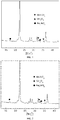
- FIG. 1 presents the X-ray diffraction patterns of 3Mn 2 O 3 -10Na 2 WO 4 -10MnTiO 3 -77SiO 2 catalyst as prepared in example 1; as shown in FIG.1 , the catalyst comprises three phases of Mn 2 O 3 , Na 2 WO 4 , and MnTiO 3 .
- the purpose of this example is to provide a catalyst: 5Mn 2 O 3 -5Na 2 WO 4 -8MnTiO 3 -82SiO 2 , the preparation method is as follows:
- FIG. 2 presents the X-ray diffraction patterns of 5Mn 2 O 3 -5Na 2 WO 4 -8MnTiO 3 -82SiO 2 catalyst as prepared in example 2; as shown in FIG.2 , the catalyst comprises three phases of Mn 2 O 3 , Na 2 WO 4 , and MnTiO 3 .
- the purpose of this example is to provide a catalyst: 1.5Mn 2 O 3 -8Na 2 WO 4 -4MnTiO 3 -86.5SiO 2 , the preparation method is as follows:
- the purpose of this example is to provide a catalyst: 10Mn 2 O 3 -4Na 2 WO 4 -5MnTiO 3 -83SiO 2 , the preparation method is as follows:
- the purpose of this example is to provide a catalyst: 15Mn 2 O 3 -12Na 2 WO 4 -20MnTiO 3 -53SiO 2 , the preparation method is as follows:
- the purpose of this example is to provide a catalyst: 18Mn 2 O 3 -15Na 2 WO 4 -15MnTiO 3 -52SiO 2 , the preparation method is as follows:
- the purpose of this example is to provide a catalyst: 2Mn 2 O 3 -18Na 2 WO 4 -7MnTiO 3 -73SiO 2 , the preparation method is as follows:
- the purpose of this example is to provide a catalyst: 12Mn 2 O 3 -10Na 2 WO 4 -2MnTiO 3 -76SiO 2 , the preparation method is as follows:
- the purpose of this example is to provide a catalyst: 8Mn 2 O 3 -12Na 2 WO 4 -28MnTiO 3 -52SiO 2 , the preparation method is as follows:
- the purpose of this example is to provide a catalyst: 18Mn 2 O 3 -18Na 2 WO 4 -35MnTiO 3 -29SiO 2 , the preparation method is as follows:
- the purpose of this example is to provide a catalyst: 3Mn 2 O 3 -10Na 2 WO 4 -10MnFe 2 O 4 -77SiO 2 , the preparation method is as follows:
- the purpose of this example is to provide a catalyst: 5Mn 2 O 3 -5Na 2 WO 4 -8MnCo 2 O 4 -82SiO 2 , the preparation method is as follows:
- the purpose of this example is to provide a catalyst: 1.5Mn 2 O 3 -8K 2 WO 4 -4MnLi 2 O 4 -86.5SiO 2 , the preparation method is as follows:
- the purpose of this example is to provide a catalyst: 3Mn 2 O 3 -10Na 2 WO 4 -10 Ca 0.2 La 0.2 K 0.6 Mn 0.78 Fe 0.22 O 3 -77SiO 2 , the preparation method is as follows:
- This comparative example is to provide a catalyst: 3Mn 2 O 3 -10Na 2 WO 4 -87SiO 2 , according to the method of Example 1, wherein the difference is that manganese titanate is not added in the preparation process, specifically the preparation method is as follows:
- This comparative example is to provide a catalyst: 3Mn 2 O 3 -10Na 2 WO 4 -87Sillicalite-1, according to the method of Example 1, wherein the difference is that manganese titanate is not added in the preparation process and MFI-type full-silica Sillicalite-1 zeolite is used to replace SiO 2 as carrier, specifically the preparation method is as follows:
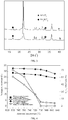
- FIG. 3 presents the X-ray diffraction patterns of (a) 3Mn 2 O 3 -10Na 2 WO 4 -87SiO 2 catalyst as prepared in comparative example 1 and (b) 3Mn 2 O 3 -10Na 2 WO 4 -87Sillicalite-1 catalyst as prepared in comparative example 2. As shown in FIG. 3 , only Mn 2 O 3 and Na 2 WO 4 phases rather than MnTiO 3 phase are detected for these two comparative catalyst samples by XRD.
- the purpose of this comparative example is to provide a catalyst: 4.2MnO 2 ⁇ 1.5Na 2 O ⁇ 5.5WO 3 ⁇ 2.9TiO 2 ⁇ 85.9SiO 2 .
- the catalyst reaction evaluation was carried out on a continuous flow fixed bed quartz tube reactor, a 400 mm of straight cylindrical tubing with an internal diameter of 16 mm.
- the catalyst bed height is 10 mm.
- the catalyst was heated to the set reaction temperature and directly exposed without pretreatment, the feed gas was then introduced into the catalyst bed for reaction.
- the effluent gas was analyzed with an online gas chromatograph equipped with a TCD, using a 60 m DM-Plot Msieve 5A column (DIKMA, for the separation of N 2 , O 2 , CO, and CH 4 ) and a 30 m DM-Plot Q capillary column (DIKMA, for the separation of CO 2 , CH 4 , C 2 H 4 , C 2 H 6 , C 3 H 6 , and C 3 H 8 ) in parallel.
- DIKMA 60 m DM-Plot Msieve 5A column
- DIKMA 30 m DM-Plot Q capillary column
- the purpose of this application example is to investigate the catalytic performance of the catalysts obtained by the examples and comparative examples in oxidative coupling of methane at different reaction temperatures.
- GHSV gas hourly space velocity
- the catalyst of COMPARATIVE EXAMPLE 3 was also evaluated at 750 °C when other conditions remain unchanged.
- Table 1 shows the reaction results of oxidative coupling of methane catalyzed by the catalysts of the EXAMPLES and COMPARATIVE EXAMPLES.
- Table 1 Catalyst Temp. Conversion Selectivity (%) C 2 -C 3 yield ethylene/ethane (°C) (%) C 2 C 3 C 2 -C 3 (%) (mol/mol)
- Example 1 620 14.8 45.7 4.8 50.5 7.5 1.45 640 22.0 57.1 5.8 62.9 13.8 1.66 650 24.3 62.6 5.0 67.6 16.4 1.65 680 25.5 68.2 5.6 73.8 18.8 1.74 700 26.7 70.7 5.8 76.5 20.4 1.78
- Example 3 620 13.3 43.7 4.6 48.3 6.4 1.46 650 22.8 59.8 5.3 65.1 14.8 1.62 700 25.
- the catalysts provided by the present disclosure or the catalysts obtained by the preparation method provided by the present disclosure achieve unprecedented low-temperature activity and selectivity for oxidative coupling of methane, due to the presence of the manganese composite oxide having a perovskite structure and/or a spinel structure in the active components.
- Such catalysts are capable of converting 27% methane with a high C 2 -C 3 hydrocarbon selectivity of 76% even at low reaction temperature of 620-700 °C and normal pressure. More specially, in the comparative examples, the catalysts become almost inactive below 700 °C and it is even more impossible to talk about selectivity. Compared with the prior art, thus, the present disclosure has also made remarkable progress and unexpected effect.
- FIG. 4 is a graph showing temperature-dependent methane conversion and C 2 -C 3 selectivity for oxidative coupling of methane respectively catalyzed by 3Mn 2 O 3 -10Na 2 WO 4 -10MnTiO 3 -77SiO 2 catalyst as prepared in Example 1 and 3Mn 2 O 3 -10Na 2 WO 4 -87SiO 2 catalyst as prepared in Comparative Example 1;
- FIG. 4 is a graph showing temperature-dependent methane conversion and C 2 -C 3 selectivity for oxidative coupling of methane respectively catalyzed by 3Mn 2 O 3 -10Na 2 WO 4 -10MnTiO 3 -77SiO 2 catalyst as prepared in Example 1 and 3Mn 2 O 3 -10Na 2 WO 4 -87SiO 2 catalyst as prepared in Comparative Example 1;
- FIG. 4 is a graph showing temperature-dependent methane conversion and C 2 -C 3 selectivity for oxidative coupling of methane respectively cat
- FIG. 5 is a graph showing temperature-dependent methane conversion and C 2 -C 3 selectivity for oxidative coupling of methane respectively catalyzed by 5Mn 2 O 3 -5Na 2 WO 4 -8MnTiO 3 -82SiO 2 catalyst as prepared in Example 2 and 3Mn 2 O 3 -10Na 2 WO 4 -87Sillicalite-1 catalyst as prepared in Comparative Example 2.
- the catalysts provided by the present disclosure or the catalysts obtained by the preparation method provided by the present disclosure achieve promising low-temperature activity and selectivity for oxidative coupling of methane, thus, the present disclosure has made remarkable progress compared with the prior art.
- the catalyst reaction evaluation and product analysis system are the same as in Application Example 1.
- the purpose of this application example is to investigate the stability of the catalysts obtained the examples in the oxidative coupling reaction of methane.
- the catalyst of the invention has good reaction stability, achieving excellent reactivity maintenance with methane conversion around 24% and C 2 -C 3 selectivity around 67% throughout entire 300 hours test.
Landscapes
- Chemical & Material Sciences (AREA)
- Organic Chemistry (AREA)
- Engineering & Computer Science (AREA)
- Materials Engineering (AREA)
- Chemical Kinetics & Catalysis (AREA)
- Physics & Mathematics (AREA)
- Thermal Sciences (AREA)
- Optics & Photonics (AREA)
- Health & Medical Sciences (AREA)
- Plasma & Fusion (AREA)
- Toxicology (AREA)
- Catalysts (AREA)
- Nanotechnology (AREA)
- Organic Low-Molecular-Weight Compounds And Preparation Thereof (AREA)
- Low-Molecular Organic Synthesis Reactions Using Catalysts (AREA)
Applications Claiming Priority (2)
| Application Number | Priority Date | Filing Date | Title |
|---|---|---|---|
| CN201710146190.1A CN106964341B (zh) | 2017-03-13 | 2017-03-13 | 一种低温甲烷氧化偶联催化剂及其制备方法和应用 |
| PCT/CN2018/078709 WO2018166419A1 (zh) | 2017-03-13 | 2018-03-12 | 一种甲烷氧化偶联催化剂及其制备方法和应用 |
Publications (2)
| Publication Number | Publication Date |
|---|---|
| EP3597290A1 true EP3597290A1 (de) | 2020-01-22 |
| EP3597290A4 EP3597290A4 (de) | 2020-12-02 |
Family
ID=59329717
Family Applications (1)
| Application Number | Title | Priority Date | Filing Date |
|---|---|---|---|
| EP18768093.9A Pending EP3597290A4 (de) | 2017-03-13 | 2018-03-12 | Katalysator zur oxidativen kopplung von methan, herstellungsverfahren dafür und anwendung davon |
Country Status (10)
| Country | Link |
|---|---|
| US (1) | US11298684B2 (de) |
| EP (1) | EP3597290A4 (de) |
| JP (1) | JP6852185B2 (de) |
| KR (1) | KR102339869B1 (de) |
| CN (1) | CN106964341B (de) |
| AU (1) | AU2018233329B2 (de) |
| CA (1) | CA3056473C (de) |
| EA (1) | EA201992172A1 (de) |
| SG (1) | SG11201908522PA (de) |
| WO (1) | WO2018166419A1 (de) |
Cited By (1)
| Publication number | Priority date | Publication date | Assignee | Title |
|---|---|---|---|---|
| US11673121B2 (en) | 2020-12-28 | 2023-06-13 | Korea Institute Of Science And Technology | Catalyst for oxidative coupling reaction of methane, method for preparing the same, and method for oxidative coupling reaction of methane using the same |
Families Citing this family (17)
| Publication number | Priority date | Publication date | Assignee | Title |
|---|---|---|---|---|
| CN106964341B (zh) | 2017-03-13 | 2019-06-04 | 华东师范大学 | 一种低温甲烷氧化偶联催化剂及其制备方法和应用 |
| CN107649114A (zh) * | 2017-09-18 | 2018-02-02 | 南昌大学 | 一种用于甲烷氧化偶联的b位为铈的烧绿石催化剂的制备方法及应用 |
| WO2020142218A1 (en) * | 2019-01-04 | 2020-07-09 | Sabic Global Technologies, B.V. | Mixed oxide catalyst for oxidative coupling of methane |
| CN109967121A (zh) * | 2019-03-06 | 2019-07-05 | 浙江大学 | 以钛硅分子筛为载体的甲烷氧化偶联制c2烃催化剂及其制备方法 |
| CN112387265A (zh) * | 2019-08-16 | 2021-02-23 | 中国石油化工股份有限公司 | 条形具有网络结构的介孔二氧化硅载体及其制备方法和催化剂以及应用 |
| CN112387266A (zh) * | 2019-08-19 | 2021-02-23 | 中国石油化工股份有限公司 | 条形具有蜂窝孔状二氧化硅载体及其制备方法和催化剂以及应用 |
| CN112439400A (zh) * | 2019-08-28 | 2021-03-05 | 中国石油化工股份有限公司 | 条形具有网格结构的二氧化硅载体及其制备方法和催化剂以及应用 |
| CN112536029B (zh) * | 2019-09-23 | 2022-08-19 | 中国石油化工股份有限公司 | 甲烷氧化偶联制乙烯催化剂及其制备方法和甲烷氧化偶联制乙烯的方法 |
| CN112934216A (zh) * | 2019-12-10 | 2021-06-11 | 中国石油化工股份有限公司 | 甲烷氧化偶联催化剂及其制备方法和甲烷氧化偶联制碳二烃的方法 |
| CN113398947B (zh) * | 2020-03-16 | 2023-05-02 | 华东师范大学 | 一种用于化学链甲烷氧化偶联反应的催化剂及其制备方法和应用 |
| CN115487840B (zh) * | 2021-06-18 | 2024-05-07 | 中国石油化工股份有限公司 | 含有碳酸氧镧的催化剂的制备方法和应用 |
| CN115703075B (zh) * | 2021-08-16 | 2024-08-09 | 中国石油化工股份有限公司 | 甲烷氧化偶联催化剂及其制备方法和应用以及制备碳二烃的方法 |
| KR20230072397A (ko) * | 2021-11-17 | 2023-05-24 | 주식회사 엘지화학 | 메탄 개질용 촉매 및 이의 제조방법 |
| CN115626666B (zh) * | 2022-10-08 | 2024-09-24 | 天津大学 | 三钙钛矿型复合金属氧化物载氧体及其制备方法和应用 |
| JPWO2024157807A1 (de) * | 2023-01-27 | 2024-08-02 | ||
| CN117899888B (zh) * | 2024-01-12 | 2026-04-28 | 成都理工大学 | 乙酸自热重整用钙钨双钙钛矿型镍基催化剂 |
| CN118059850A (zh) * | 2024-03-08 | 2024-05-24 | 中国计量大学 | 一种耐水抗硫的正仲氢转化催化剂及其制备方法 |
Family Cites Families (10)
| Publication number | Priority date | Publication date | Assignee | Title |
|---|---|---|---|---|
| CN1187118C (zh) * | 2002-05-25 | 2005-02-02 | 中国科学院兰州化学物理研究所 | 加压甲烷氧化偶联制乙烯催化剂及制备方法 |
| US8158057B2 (en) * | 2005-06-15 | 2012-04-17 | Ati Properties, Inc. | Interconnects for solid oxide fuel cells and ferritic stainless steels adapted for use with solid oxide fuel cells |
| JP2007254305A (ja) | 2006-03-20 | 2007-10-04 | Nippon Shokubai Co Ltd | 脂肪酸アルキルエステル及び/又はグリセロールの製造方法 |
| WO2008087147A1 (en) | 2007-01-18 | 2008-07-24 | Shell Internationale Research Maatschappij B.V. | Fischer-tropsch catalyst support and catalyst |
| US8129305B2 (en) * | 2007-04-25 | 2012-03-06 | Hrd Corporation | Catalyst and method for converting natural gas to higher carbon compounds |
| CN103118777B (zh) * | 2010-05-24 | 2016-06-29 | 希路瑞亚技术公司 | 纳米线催化剂 |
| KR101294592B1 (ko) | 2012-01-11 | 2013-08-09 | 한국과학기술연구원 | 메탄 산화이량화 반응촉매, 그 제조방법 및 이를 이용한 메탄 산화이량화 반응방법 |
| CN104759291B (zh) * | 2014-01-02 | 2018-01-26 | 易高环保能源研究院有限公司 | 一种甲烷氧化偶联催化剂及其制备方法 |
| CN105170138A (zh) * | 2014-05-29 | 2015-12-23 | 中国石油化工股份有限公司 | 一种甲烷氧化偶联反应催化剂及其制备方法 |
| CN106964341B (zh) | 2017-03-13 | 2019-06-04 | 华东师范大学 | 一种低温甲烷氧化偶联催化剂及其制备方法和应用 |
-
2017
- 2017-03-13 CN CN201710146190.1A patent/CN106964341B/zh active Active
-
2018
- 2018-03-12 US US16/494,173 patent/US11298684B2/en active Active
- 2018-03-12 EA EA201992172A patent/EA201992172A1/ru unknown
- 2018-03-12 CA CA3056473A patent/CA3056473C/en active Active
- 2018-03-12 EP EP18768093.9A patent/EP3597290A4/de active Pending
- 2018-03-12 JP JP2019551373A patent/JP6852185B2/ja active Active
- 2018-03-12 WO PCT/CN2018/078709 patent/WO2018166419A1/zh not_active Ceased
- 2018-03-12 SG SG11201908522P patent/SG11201908522PA/en unknown
- 2018-03-12 AU AU2018233329A patent/AU2018233329B2/en active Active
- 2018-03-12 KR KR1020197029723A patent/KR102339869B1/ko active Active
Cited By (1)
| Publication number | Priority date | Publication date | Assignee | Title |
|---|---|---|---|---|
| US11673121B2 (en) | 2020-12-28 | 2023-06-13 | Korea Institute Of Science And Technology | Catalyst for oxidative coupling reaction of methane, method for preparing the same, and method for oxidative coupling reaction of methane using the same |
Also Published As
| Publication number | Publication date |
|---|---|
| EA201992172A1 (ru) | 2020-03-12 |
| SG11201908522PA (en) | 2019-10-30 |
| AU2018233329A1 (en) | 2019-10-31 |
| EP3597290A4 (de) | 2020-12-02 |
| CN106964341A (zh) | 2017-07-21 |
| JP2020511303A (ja) | 2020-04-16 |
| AU2018233329B2 (en) | 2020-08-20 |
| US20200009534A1 (en) | 2020-01-09 |
| KR20190121391A (ko) | 2019-10-25 |
| CA3056473C (en) | 2021-10-26 |
| US11298684B2 (en) | 2022-04-12 |
| CN106964341B (zh) | 2019-06-04 |
| CA3056473A1 (en) | 2018-09-20 |
| KR102339869B1 (ko) | 2021-12-17 |
| JP6852185B2 (ja) | 2021-03-31 |
| WO2018166419A1 (zh) | 2018-09-20 |
Similar Documents
| Publication | Publication Date | Title |
|---|---|---|
| US11298684B2 (en) | Catalyst for oxidative coupling of methane, preparation method thereof and application thereof | |
| El-Sharkawy et al. | Structural characterization and catalytic activity of molybdenum oxide supported zirconia catalysts | |
| CN113398947B (zh) | 一种用于化学链甲烷氧化偶联反应的催化剂及其制备方法和应用 | |
| US20150086471A1 (en) | Multimetallic mixed oxides, its preparation and use for the oxidative dehydrogenation of ethane for producing ethylene | |
| EP4230290A1 (de) | Wolframat-nanocluster enthaltendes verbundoxid, herstellungsverfahren dafür und verwendung davon | |
| CN108043406B (zh) | 一种乙酸自热重整制氢的助剂促进水滑石衍生钴基催化剂 | |
| KR20260012801A (ko) | 촉매, 이의 제조 방법 및 응용, 및 메탄-이산화탄소 개질 반응 방법 | |
| EP3844109B1 (de) | Verfahren zur herstellung von wasserstoffselektiven sauerstoffträgermaterialien | |
| Wu et al. | Direct oxidation of methane to methanol using CuMoO 4 | |
| Zhang et al. | High-performance Ni-foam-structured Nb2O5–NiO nanocomposite catalyst for oxidative dehydrogenation of shale gas ethane to ethylene: Effects of Nb2O5 loading and calcination temperature | |
| CN106179395B (zh) | 一种高性能CO氧化和NOx消除储氧材料的制备方法 | |
| CN112169817B (zh) | 一种钙钛矿型复合载氧体和应用 | |
| Xie et al. | An important principle for catalyst preparation—spontaneous monolayer dispersion of solid compounds onto surfaces of supports | |
| US20250312775A1 (en) | Ammonia synthesis catalyst and process for its preparation | |
| CN112239392B (zh) | 低温烷基芳烃脱氢的方法 | |
| CN119327471A (zh) | 一种用于低温co2甲烷化的金属氧化物纳米岛修饰镍基催化剂及其制备方法和应用 | |
| Lane et al. | Methane oxidative coupling over titanate catalysts | |
| Yao et al. | Low-temperature selective catalytic reduction of NO over manganese supported on TiO2 nanotubes | |
| Peng et al. | In situ synthesis of low-valence MnO/Mn3O4 catalyst via carbon-acid hydrothermal strategy for NO removal | |
| Yang et al. | Catalytic properties of LnSrCoO4 (Ln= La, Sm) in the oxidation of CO and C3H8 | |
| CN112547062A (zh) | 丙烯醛制丙烯酸的催化剂及其制备方法和应用 | |
| EA048033B1 (ru) | Катализатор для окислительной конденсации метана, способ его получения и его применение | |
| Arcozzi et al. | The control of catalytic performance of rutile-type Sn/V/Nb/Sb mixed oxides, catalysts for propane ammoxidation to acrylonitrile | |
| Gao et al. | Enhanced oxidative coupling of methane over Mn 2 O 3–Na 2 WO 4/TS-1 catalysts by the Ti induced synergistic effect between Mn 2 O 3 and Na 2 WO 4 | |
| Zhao et al. | Silver enhanced oxidative coupling of methane over the Mn–Na 2 WO 4/SiO 2 catalyst |
Legal Events
| Date | Code | Title | Description |
|---|---|---|---|
| STAA | Information on the status of an ep patent application or granted ep patent |
Free format text: STATUS: THE INTERNATIONAL PUBLICATION HAS BEEN MADE |
|
| PUAI | Public reference made under article 153(3) epc to a published international application that has entered the european phase |
Free format text: ORIGINAL CODE: 0009012 |
|
| STAA | Information on the status of an ep patent application or granted ep patent |
Free format text: STATUS: REQUEST FOR EXAMINATION WAS MADE |
|
| 17P | Request for examination filed |
Effective date: 20191011 |
|
| AK | Designated contracting states |
Kind code of ref document: A1 Designated state(s): AL AT BE BG CH CY CZ DE DK EE ES FI FR GB GR HR HU IE IS IT LI LT LU LV MC MK MT NL NO PL PT RO RS SE SI SK SM TR |
|
| AX | Request for extension of the european patent |
Extension state: BA ME |
|
| DAV | Request for validation of the european patent (deleted) | ||
| DAX | Request for extension of the european patent (deleted) | ||
| A4 | Supplementary search report drawn up and despatched |
Effective date: 20201103 |
|
| RIC1 | Information provided on ipc code assigned before grant |
Ipc: B01J 23/888 20060101ALI20201028BHEP Ipc: C07C 2/84 20060101ALI20201028BHEP Ipc: B01J 23/30 20060101ALI20201028BHEP Ipc: B01J 23/34 20060101AFI20201028BHEP Ipc: B01J 23/00 20060101ALI20201028BHEP Ipc: B01J 23/889 20060101ALI20201028BHEP Ipc: B01J 23/04 20060101ALI20201028BHEP |
|
| STAA | Information on the status of an ep patent application or granted ep patent |
Free format text: STATUS: EXAMINATION IS IN PROGRESS |
|
| 17Q | First examination report despatched |
Effective date: 20221011 |