EP3599002A2 - Rehabilitationssystem für obere extremität - Google Patents
Rehabilitationssystem für obere extremität Download PDFInfo
- Publication number
- EP3599002A2 EP3599002A2 EP19197105.0A EP19197105A EP3599002A2 EP 3599002 A2 EP3599002 A2 EP 3599002A2 EP 19197105 A EP19197105 A EP 19197105A EP 3599002 A2 EP3599002 A2 EP 3599002A2
- Authority
- EP
- European Patent Office
- Prior art keywords
- subject
- upper limb
- rehabilitation system
- limb rehabilitation
- holding element
- Prior art date
- Legal status (The legal status is an assumption and is not a legal conclusion. Google has not performed a legal analysis and makes no representation as to the accuracy of the status listed.)
- Withdrawn
Links
Images



Classifications
-
- A—HUMAN NECESSITIES
- A63—SPORTS; GAMES; AMUSEMENTS
- A63B—APPARATUS FOR PHYSICAL TRAINING, GYMNASTICS, SWIMMING, CLIMBING, OR FENCING; BALL GAMES; TRAINING EQUIPMENT
- A63B23/00—Exercising apparatus specially adapted for particular parts of the body
- A63B23/035—Exercising apparatus specially adapted for particular parts of the body for limbs, i.e. upper or lower limbs, e.g. simultaneously
- A63B23/12—Exercising apparatus specially adapted for particular parts of the body for limbs, i.e. upper or lower limbs, e.g. simultaneously for upper limbs or related muscles, e.g. chest, upper back or shoulder muscles
-
- A—HUMAN NECESSITIES
- A61—MEDICAL OR VETERINARY SCIENCE; HYGIENE
- A61B—DIAGNOSIS; SURGERY; IDENTIFICATION
- A61B5/00—Measuring for diagnostic purposes; Identification of persons
- A61B5/0033—Features or image-related aspects of imaging apparatus, e.g. for MRI, optical tomography or impedance tomography apparatus; Arrangements of imaging apparatus in a room
- A61B5/0036—Features or image-related aspects of imaging apparatus, e.g. for MRI, optical tomography or impedance tomography apparatus; Arrangements of imaging apparatus in a room including treatment, e.g., using an implantable medical device, ablating, ventilating
-
- A—HUMAN NECESSITIES
- A61—MEDICAL OR VETERINARY SCIENCE; HYGIENE
- A61B—DIAGNOSIS; SURGERY; IDENTIFICATION
- A61B5/00—Measuring for diagnostic purposes; Identification of persons
- A61B5/02—Detecting, measuring or recording for evaluating the cardiovascular system, e.g. pulse, heart rate, blood pressure or blood flow
- A61B5/0205—Simultaneously evaluating both cardiovascular conditions and different types of body conditions, e.g. heart and respiratory condition
-
- A—HUMAN NECESSITIES
- A61—MEDICAL OR VETERINARY SCIENCE; HYGIENE
- A61H—PHYSICAL THERAPY APPARATUS, e.g. DEVICES FOR LOCATING OR STIMULATING REFLEX POINTS IN THE BODY; ARTIFICIAL RESPIRATION; MASSAGE; BATHING DEVICES FOR SPECIAL THERAPEUTIC OR HYGIENIC PURPOSES OR SPECIFIC PARTS OF THE BODY
- A61H1/00—Apparatus for passive exercising; Vibrating apparatus; Chiropractic devices, e.g. body impacting devices, external devices for briefly extending or aligning unbroken bones
- A61H1/02—Stretching or bending or torsioning apparatus for exercising
- A61H1/0274—Stretching or bending or torsioning apparatus for exercising for the upper limbs
- A61H1/0281—Shoulder
-
- A—HUMAN NECESSITIES
- A61—MEDICAL OR VETERINARY SCIENCE; HYGIENE
- A61H—PHYSICAL THERAPY APPARATUS, e.g. DEVICES FOR LOCATING OR STIMULATING REFLEX POINTS IN THE BODY; ARTIFICIAL RESPIRATION; MASSAGE; BATHING DEVICES FOR SPECIAL THERAPEUTIC OR HYGIENIC PURPOSES OR SPECIFIC PARTS OF THE BODY
- A61H1/00—Apparatus for passive exercising; Vibrating apparatus; Chiropractic devices, e.g. body impacting devices, external devices for briefly extending or aligning unbroken bones
- A61H1/02—Stretching or bending or torsioning apparatus for exercising
- A61H1/0274—Stretching or bending or torsioning apparatus for exercising for the upper limbs
- A61H1/0285—Hand
-
- A—HUMAN NECESSITIES
- A61—MEDICAL OR VETERINARY SCIENCE; HYGIENE
- A61H—PHYSICAL THERAPY APPARATUS, e.g. DEVICES FOR LOCATING OR STIMULATING REFLEX POINTS IN THE BODY; ARTIFICIAL RESPIRATION; MASSAGE; BATHING DEVICES FOR SPECIAL THERAPEUTIC OR HYGIENIC PURPOSES OR SPECIFIC PARTS OF THE BODY
- A61H1/00—Apparatus for passive exercising; Vibrating apparatus; Chiropractic devices, e.g. body impacting devices, external devices for briefly extending or aligning unbroken bones
- A61H1/02—Stretching or bending or torsioning apparatus for exercising
- A61H1/0274—Stretching or bending or torsioning apparatus for exercising for the upper limbs
- A61H1/0285—Hand
- A61H1/0288—Fingers
-
- A—HUMAN NECESSITIES
- A63—SPORTS; GAMES; AMUSEMENTS
- A63B—APPARATUS FOR PHYSICAL TRAINING, GYMNASTICS, SWIMMING, CLIMBING, OR FENCING; BALL GAMES; TRAINING EQUIPMENT
- A63B21/00—Exercising apparatus for developing or strengthening the muscles or joints of the body by working against a counterforce, with or without measuring devices
- A63B21/00181—Exercising apparatus for developing or strengthening the muscles or joints of the body by working against a counterforce, with or without measuring devices comprising additional means assisting the user to overcome part of the resisting force, i.e. assisted-active exercising
-
- A—HUMAN NECESSITIES
- A63—SPORTS; GAMES; AMUSEMENTS
- A63B—APPARATUS FOR PHYSICAL TRAINING, GYMNASTICS, SWIMMING, CLIMBING, OR FENCING; BALL GAMES; TRAINING EQUIPMENT
- A63B21/00—Exercising apparatus for developing or strengthening the muscles or joints of the body by working against a counterforce, with or without measuring devices
- A63B21/005—Exercising apparatus for developing or strengthening the muscles or joints of the body by working against a counterforce, with or without measuring devices using electromagnetic or electric force-resisters
- A63B21/0058—Exercising apparatus for developing or strengthening the muscles or joints of the body by working against a counterforce, with or without measuring devices using electromagnetic or electric force-resisters using motors
-
- A—HUMAN NECESSITIES
- A63—SPORTS; GAMES; AMUSEMENTS
- A63B—APPARATUS FOR PHYSICAL TRAINING, GYMNASTICS, SWIMMING, CLIMBING, OR FENCING; BALL GAMES; TRAINING EQUIPMENT
- A63B21/00—Exercising apparatus for developing or strengthening the muscles or joints of the body by working against a counterforce, with or without measuring devices
- A63B21/16—Supports for anchoring force-resisters
-
- A—HUMAN NECESSITIES
- A63—SPORTS; GAMES; AMUSEMENTS
- A63B—APPARATUS FOR PHYSICAL TRAINING, GYMNASTICS, SWIMMING, CLIMBING, OR FENCING; BALL GAMES; TRAINING EQUIPMENT
- A63B21/00—Exercising apparatus for developing or strengthening the muscles or joints of the body by working against a counterforce, with or without measuring devices
- A63B21/40—Interfaces with the user related to strength training; Details thereof
- A63B21/4027—Specific exercise interfaces
- A63B21/4033—Handles, pedals, bars or platforms
- A63B21/4035—Handles, pedals, bars or platforms for operation by hand
-
- A—HUMAN NECESSITIES
- A63—SPORTS; GAMES; AMUSEMENTS
- A63B—APPARATUS FOR PHYSICAL TRAINING, GYMNASTICS, SWIMMING, CLIMBING, OR FENCING; BALL GAMES; TRAINING EQUIPMENT
- A63B23/00—Exercising apparatus specially adapted for particular parts of the body
- A63B23/035—Exercising apparatus specially adapted for particular parts of the body for limbs, i.e. upper or lower limbs, e.g. simultaneously
- A63B23/12—Exercising apparatus specially adapted for particular parts of the body for limbs, i.e. upper or lower limbs, e.g. simultaneously for upper limbs or related muscles, e.g. chest, upper back or shoulder muscles
- A63B23/1209—Involving a bending of elbow and shoulder joints simultaneously
-
- A—HUMAN NECESSITIES
- A63—SPORTS; GAMES; AMUSEMENTS
- A63B—APPARATUS FOR PHYSICAL TRAINING, GYMNASTICS, SWIMMING, CLIMBING, OR FENCING; BALL GAMES; TRAINING EQUIPMENT
- A63B23/00—Exercising apparatus specially adapted for particular parts of the body
- A63B23/035—Exercising apparatus specially adapted for particular parts of the body for limbs, i.e. upper or lower limbs, e.g. simultaneously
- A63B23/12—Exercising apparatus specially adapted for particular parts of the body for limbs, i.e. upper or lower limbs, e.g. simultaneously for upper limbs or related muscles, e.g. chest, upper back or shoulder muscles
- A63B23/14—Exercising apparatus specially adapted for particular parts of the body for limbs, i.e. upper or lower limbs, e.g. simultaneously for upper limbs or related muscles, e.g. chest, upper back or shoulder muscles for wrist joints
-
- A—HUMAN NECESSITIES
- A63—SPORTS; GAMES; AMUSEMENTS
- A63B—APPARATUS FOR PHYSICAL TRAINING, GYMNASTICS, SWIMMING, CLIMBING, OR FENCING; BALL GAMES; TRAINING EQUIPMENT
- A63B23/00—Exercising apparatus specially adapted for particular parts of the body
- A63B23/035—Exercising apparatus specially adapted for particular parts of the body for limbs, i.e. upper or lower limbs, e.g. simultaneously
- A63B23/12—Exercising apparatus specially adapted for particular parts of the body for limbs, i.e. upper or lower limbs, e.g. simultaneously for upper limbs or related muscles, e.g. chest, upper back or shoulder muscles
- A63B23/16—Exercising apparatus specially adapted for particular parts of the body for limbs, i.e. upper or lower limbs, e.g. simultaneously for upper limbs or related muscles, e.g. chest, upper back or shoulder muscles for hands or fingers
-
- A—HUMAN NECESSITIES
- A63—SPORTS; GAMES; AMUSEMENTS
- A63B—APPARATUS FOR PHYSICAL TRAINING, GYMNASTICS, SWIMMING, CLIMBING, OR FENCING; BALL GAMES; TRAINING EQUIPMENT
- A63B24/00—Electric or electronic controls for exercising apparatus of preceding groups; Controlling or monitoring of exercises, sportive games, training or athletic performances
- A63B24/0062—Monitoring athletic performances, e.g. for determining the work of a user on an exercise apparatus, the completed jogging or cycling distance
-
- A—HUMAN NECESSITIES
- A63—SPORTS; GAMES; AMUSEMENTS
- A63B—APPARATUS FOR PHYSICAL TRAINING, GYMNASTICS, SWIMMING, CLIMBING, OR FENCING; BALL GAMES; TRAINING EQUIPMENT
- A63B24/00—Electric or electronic controls for exercising apparatus of preceding groups; Controlling or monitoring of exercises, sportive games, training or athletic performances
- A63B24/0087—Electric or electronic controls for exercising apparatus of groups A63B21/00 - A63B23/00, e.g. controlling load
-
- A—HUMAN NECESSITIES
- A63—SPORTS; GAMES; AMUSEMENTS
- A63B—APPARATUS FOR PHYSICAL TRAINING, GYMNASTICS, SWIMMING, CLIMBING, OR FENCING; BALL GAMES; TRAINING EQUIPMENT
- A63B71/00—Games or sports accessories not covered in groups A63B1/00 - A63B69/00
- A63B71/0009—Games or sports accessories not covered in groups A63B1/00 - A63B69/00 for handicapped persons
-
- A—HUMAN NECESSITIES
- A63—SPORTS; GAMES; AMUSEMENTS
- A63B—APPARATUS FOR PHYSICAL TRAINING, GYMNASTICS, SWIMMING, CLIMBING, OR FENCING; BALL GAMES; TRAINING EQUIPMENT
- A63B71/00—Games or sports accessories not covered in groups A63B1/00 - A63B69/00
- A63B71/06—Indicating or scoring devices for games or players, or for other sports activities
- A63B71/0619—Displays, user interfaces and indicating devices, specially adapted for sport equipment, e.g. display mounted on treadmills
- A63B71/0622—Visual, audio or audio-visual systems for entertaining, instructing or motivating the user
-
- G—PHYSICS
- G06—COMPUTING OR CALCULATING; COUNTING
- G06T—IMAGE DATA PROCESSING OR GENERATION, IN GENERAL
- G06T19/00—Manipulating three-dimensional [3D] models or images for computer graphics
- G06T19/006—Mixed reality
-
- A—HUMAN NECESSITIES
- A61—MEDICAL OR VETERINARY SCIENCE; HYGIENE
- A61B—DIAGNOSIS; SURGERY; IDENTIFICATION
- A61B5/00—Measuring for diagnostic purposes; Identification of persons
- A61B5/0059—Measuring for diagnostic purposes; Identification of persons using light, e.g. diagnosis by transillumination, diascopy, fluorescence
- A61B5/0075—Measuring for diagnostic purposes; Identification of persons using light, e.g. diagnosis by transillumination, diascopy, fluorescence by spectroscopy, i.e. measuring spectra, e.g. Raman spectroscopy, infrared absorption spectroscopy
-
- A—HUMAN NECESSITIES
- A61—MEDICAL OR VETERINARY SCIENCE; HYGIENE
- A61B—DIAGNOSIS; SURGERY; IDENTIFICATION
- A61B5/00—Measuring for diagnostic purposes; Identification of persons
- A61B5/05—Detecting, measuring or recording for diagnosis by means of electric currents or magnetic fields; Measuring using microwaves or radio waves
- A61B5/053—Measuring electrical impedance or conductance of a portion of the body
- A61B5/0531—Measuring skin impedance
-
- A—HUMAN NECESSITIES
- A61—MEDICAL OR VETERINARY SCIENCE; HYGIENE
- A61H—PHYSICAL THERAPY APPARATUS, e.g. DEVICES FOR LOCATING OR STIMULATING REFLEX POINTS IN THE BODY; ARTIFICIAL RESPIRATION; MASSAGE; BATHING DEVICES FOR SPECIAL THERAPEUTIC OR HYGIENIC PURPOSES OR SPECIFIC PARTS OF THE BODY
- A61H2201/00—Characteristics of apparatus not provided for in the preceding codes
- A61H2201/12—Driving means
- A61H2201/1207—Driving means with electric or magnetic drive
- A61H2201/1215—Rotary drive
-
- A—HUMAN NECESSITIES
- A61—MEDICAL OR VETERINARY SCIENCE; HYGIENE
- A61H—PHYSICAL THERAPY APPARATUS, e.g. DEVICES FOR LOCATING OR STIMULATING REFLEX POINTS IN THE BODY; ARTIFICIAL RESPIRATION; MASSAGE; BATHING DEVICES FOR SPECIAL THERAPEUTIC OR HYGIENIC PURPOSES OR SPECIFIC PARTS OF THE BODY
- A61H2201/00—Characteristics of apparatus not provided for in the preceding codes
- A61H2201/12—Driving means
- A61H2201/1253—Driving means driven by a human being, e.g. hand driven
- A61H2201/1261—Driving means driven by a human being, e.g. hand driven combined with active exercising of the patient
-
- A—HUMAN NECESSITIES
- A61—MEDICAL OR VETERINARY SCIENCE; HYGIENE
- A61H—PHYSICAL THERAPY APPARATUS, e.g. DEVICES FOR LOCATING OR STIMULATING REFLEX POINTS IN THE BODY; ARTIFICIAL RESPIRATION; MASSAGE; BATHING DEVICES FOR SPECIAL THERAPEUTIC OR HYGIENIC PURPOSES OR SPECIFIC PARTS OF THE BODY
- A61H2201/00—Characteristics of apparatus not provided for in the preceding codes
- A61H2201/16—Physical interface with patient
- A61H2201/1602—Physical interface with patient kind of interface, e.g. head rest, knee support or lumbar support
- A61H2201/1635—Hand or arm, e.g. handle
-
- A—HUMAN NECESSITIES
- A61—MEDICAL OR VETERINARY SCIENCE; HYGIENE
- A61H—PHYSICAL THERAPY APPARATUS, e.g. DEVICES FOR LOCATING OR STIMULATING REFLEX POINTS IN THE BODY; ARTIFICIAL RESPIRATION; MASSAGE; BATHING DEVICES FOR SPECIAL THERAPEUTIC OR HYGIENIC PURPOSES OR SPECIFIC PARTS OF THE BODY
- A61H2201/00—Characteristics of apparatus not provided for in the preceding codes
- A61H2201/16—Physical interface with patient
- A61H2201/1657—Movement of interface, i.e. force application means
- A61H2201/1659—Free spatial automatic movement of interface within a working area, e.g. Robot
-
- A—HUMAN NECESSITIES
- A61—MEDICAL OR VETERINARY SCIENCE; HYGIENE
- A61H—PHYSICAL THERAPY APPARATUS, e.g. DEVICES FOR LOCATING OR STIMULATING REFLEX POINTS IN THE BODY; ARTIFICIAL RESPIRATION; MASSAGE; BATHING DEVICES FOR SPECIAL THERAPEUTIC OR HYGIENIC PURPOSES OR SPECIFIC PARTS OF THE BODY
- A61H2201/00—Characteristics of apparatus not provided for in the preceding codes
- A61H2201/50—Control means thereof
- A61H2201/5023—Interfaces to the user
- A61H2201/5043—Displays
-
- A—HUMAN NECESSITIES
- A61—MEDICAL OR VETERINARY SCIENCE; HYGIENE
- A61H—PHYSICAL THERAPY APPARATUS, e.g. DEVICES FOR LOCATING OR STIMULATING REFLEX POINTS IN THE BODY; ARTIFICIAL RESPIRATION; MASSAGE; BATHING DEVICES FOR SPECIAL THERAPEUTIC OR HYGIENIC PURPOSES OR SPECIFIC PARTS OF THE BODY
- A61H2201/00—Characteristics of apparatus not provided for in the preceding codes
- A61H2201/50—Control means thereof
- A61H2201/5058—Sensors or detectors
- A61H2201/5061—Force sensors
-
- A—HUMAN NECESSITIES
- A61—MEDICAL OR VETERINARY SCIENCE; HYGIENE
- A61H—PHYSICAL THERAPY APPARATUS, e.g. DEVICES FOR LOCATING OR STIMULATING REFLEX POINTS IN THE BODY; ARTIFICIAL RESPIRATION; MASSAGE; BATHING DEVICES FOR SPECIAL THERAPEUTIC OR HYGIENIC PURPOSES OR SPECIFIC PARTS OF THE BODY
- A61H2201/00—Characteristics of apparatus not provided for in the preceding codes
- A61H2201/50—Control means thereof
- A61H2201/5058—Sensors or detectors
- A61H2201/5064—Position sensors
-
- A—HUMAN NECESSITIES
- A61—MEDICAL OR VETERINARY SCIENCE; HYGIENE
- A61H—PHYSICAL THERAPY APPARATUS, e.g. DEVICES FOR LOCATING OR STIMULATING REFLEX POINTS IN THE BODY; ARTIFICIAL RESPIRATION; MASSAGE; BATHING DEVICES FOR SPECIAL THERAPEUTIC OR HYGIENIC PURPOSES OR SPECIFIC PARTS OF THE BODY
- A61H2201/00—Characteristics of apparatus not provided for in the preceding codes
- A61H2201/50—Control means thereof
- A61H2201/5058—Sensors or detectors
- A61H2201/5069—Angle sensors
-
- A—HUMAN NECESSITIES
- A61—MEDICAL OR VETERINARY SCIENCE; HYGIENE
- A61H—PHYSICAL THERAPY APPARATUS, e.g. DEVICES FOR LOCATING OR STIMULATING REFLEX POINTS IN THE BODY; ARTIFICIAL RESPIRATION; MASSAGE; BATHING DEVICES FOR SPECIAL THERAPEUTIC OR HYGIENIC PURPOSES OR SPECIFIC PARTS OF THE BODY
- A61H2201/00—Characteristics of apparatus not provided for in the preceding codes
- A61H2201/50—Control means thereof
- A61H2201/5058—Sensors or detectors
- A61H2201/5079—Velocity sensors
-
- A—HUMAN NECESSITIES
- A61—MEDICAL OR VETERINARY SCIENCE; HYGIENE
- A61H—PHYSICAL THERAPY APPARATUS, e.g. DEVICES FOR LOCATING OR STIMULATING REFLEX POINTS IN THE BODY; ARTIFICIAL RESPIRATION; MASSAGE; BATHING DEVICES FOR SPECIAL THERAPEUTIC OR HYGIENIC PURPOSES OR SPECIFIC PARTS OF THE BODY
- A61H2230/00—Measuring physical parameters of the user
- A61H2230/08—Other bio-electrical signals
- A61H2230/10—Electroencephalographic signals
-
- A—HUMAN NECESSITIES
- A61—MEDICAL OR VETERINARY SCIENCE; HYGIENE
- A61H—PHYSICAL THERAPY APPARATUS, e.g. DEVICES FOR LOCATING OR STIMULATING REFLEX POINTS IN THE BODY; ARTIFICIAL RESPIRATION; MASSAGE; BATHING DEVICES FOR SPECIAL THERAPEUTIC OR HYGIENIC PURPOSES OR SPECIFIC PARTS OF THE BODY
- A61H2230/00—Measuring physical parameters of the user
- A61H2230/60—Muscle strain, i.e. measured on the user, e.g. Electromyography [EMG]
-
- A—HUMAN NECESSITIES
- A63—SPORTS; GAMES; AMUSEMENTS
- A63B—APPARATUS FOR PHYSICAL TRAINING, GYMNASTICS, SWIMMING, CLIMBING, OR FENCING; BALL GAMES; TRAINING EQUIPMENT
- A63B22/00—Exercising apparatus specially adapted for conditioning the cardio-vascular system, for training agility or co-ordination of movements
- A63B2022/0094—Exercising apparatus specially adapted for conditioning the cardio-vascular system, for training agility or co-ordination of movements for active rehabilitation, e.g. slow motion devices
-
- A—HUMAN NECESSITIES
- A63—SPORTS; GAMES; AMUSEMENTS
- A63B—APPARATUS FOR PHYSICAL TRAINING, GYMNASTICS, SWIMMING, CLIMBING, OR FENCING; BALL GAMES; TRAINING EQUIPMENT
- A63B24/00—Electric or electronic controls for exercising apparatus of preceding groups; Controlling or monitoring of exercises, sportive games, training or athletic performances
- A63B24/0062—Monitoring athletic performances, e.g. for determining the work of a user on an exercise apparatus, the completed jogging or cycling distance
- A63B2024/0068—Comparison to target or threshold, previous performance or not real time comparison to other individuals
-
- A—HUMAN NECESSITIES
- A63—SPORTS; GAMES; AMUSEMENTS
- A63B—APPARATUS FOR PHYSICAL TRAINING, GYMNASTICS, SWIMMING, CLIMBING, OR FENCING; BALL GAMES; TRAINING EQUIPMENT
- A63B24/00—Electric or electronic controls for exercising apparatus of preceding groups; Controlling or monitoring of exercises, sportive games, training or athletic performances
- A63B24/0087—Electric or electronic controls for exercising apparatus of groups A63B21/00 - A63B23/00, e.g. controlling load
- A63B2024/0093—Electric or electronic controls for exercising apparatus of groups A63B21/00 - A63B23/00, e.g. controlling load the load of the exercise apparatus being controlled by performance parameters, e.g. distance or speed
-
- A—HUMAN NECESSITIES
- A63—SPORTS; GAMES; AMUSEMENTS
- A63B—APPARATUS FOR PHYSICAL TRAINING, GYMNASTICS, SWIMMING, CLIMBING, OR FENCING; BALL GAMES; TRAINING EQUIPMENT
- A63B24/00—Electric or electronic controls for exercising apparatus of preceding groups; Controlling or monitoring of exercises, sportive games, training or athletic performances
- A63B24/0087—Electric or electronic controls for exercising apparatus of groups A63B21/00 - A63B23/00, e.g. controlling load
- A63B2024/0096—Electric or electronic controls for exercising apparatus of groups A63B21/00 - A63B23/00, e.g. controlling load using performance related parameters for controlling electronic or video games or avatars
-
- A—HUMAN NECESSITIES
- A63—SPORTS; GAMES; AMUSEMENTS
- A63B—APPARATUS FOR PHYSICAL TRAINING, GYMNASTICS, SWIMMING, CLIMBING, OR FENCING; BALL GAMES; TRAINING EQUIPMENT
- A63B71/00—Games or sports accessories not covered in groups A63B1/00 - A63B69/00
- A63B71/0054—Features for injury prevention on an apparatus, e.g. shock absorbers
- A63B2071/0072—Limiting the applied force, torque, movement or speed
-
- A—HUMAN NECESSITIES
- A63—SPORTS; GAMES; AMUSEMENTS
- A63B—APPARATUS FOR PHYSICAL TRAINING, GYMNASTICS, SWIMMING, CLIMBING, OR FENCING; BALL GAMES; TRAINING EQUIPMENT
- A63B71/00—Games or sports accessories not covered in groups A63B1/00 - A63B69/00
- A63B71/06—Indicating or scoring devices for games or players, or for other sports activities
- A63B71/0619—Displays, user interfaces and indicating devices, specially adapted for sport equipment, e.g. display mounted on treadmills
- A63B71/0622—Visual, audio or audio-visual systems for entertaining, instructing or motivating the user
- A63B2071/0638—Displaying moving images of recorded environment, e.g. virtual environment
-
- A—HUMAN NECESSITIES
- A63—SPORTS; GAMES; AMUSEMENTS
- A63B—APPARATUS FOR PHYSICAL TRAINING, GYMNASTICS, SWIMMING, CLIMBING, OR FENCING; BALL GAMES; TRAINING EQUIPMENT
- A63B71/00—Games or sports accessories not covered in groups A63B1/00 - A63B69/00
- A63B71/06—Indicating or scoring devices for games or players, or for other sports activities
- A63B71/0619—Displays, user interfaces and indicating devices, specially adapted for sport equipment, e.g. display mounted on treadmills
- A63B2071/0647—Visualisation of executed movements
-
- A—HUMAN NECESSITIES
- A63—SPORTS; GAMES; AMUSEMENTS
- A63B—APPARATUS FOR PHYSICAL TRAINING, GYMNASTICS, SWIMMING, CLIMBING, OR FENCING; BALL GAMES; TRAINING EQUIPMENT
- A63B71/00—Games or sports accessories not covered in groups A63B1/00 - A63B69/00
- A63B71/06—Indicating or scoring devices for games or players, or for other sports activities
- A63B71/0619—Displays, user interfaces and indicating devices, specially adapted for sport equipment, e.g. display mounted on treadmills
- A63B2071/0655—Tactile feedback
-
- A—HUMAN NECESSITIES
- A63—SPORTS; GAMES; AMUSEMENTS
- A63B—APPARATUS FOR PHYSICAL TRAINING, GYMNASTICS, SWIMMING, CLIMBING, OR FENCING; BALL GAMES; TRAINING EQUIPMENT
- A63B2220/00—Measuring of physical parameters relating to sporting activity
- A63B2220/10—Positions
- A63B2220/16—Angular positions
-
- A—HUMAN NECESSITIES
- A63—SPORTS; GAMES; AMUSEMENTS
- A63B—APPARATUS FOR PHYSICAL TRAINING, GYMNASTICS, SWIMMING, CLIMBING, OR FENCING; BALL GAMES; TRAINING EQUIPMENT
- A63B2220/00—Measuring of physical parameters relating to sporting activity
- A63B2220/20—Distances or displacements
- A63B2220/24—Angular displacement
-
- A—HUMAN NECESSITIES
- A63—SPORTS; GAMES; AMUSEMENTS
- A63B—APPARATUS FOR PHYSICAL TRAINING, GYMNASTICS, SWIMMING, CLIMBING, OR FENCING; BALL GAMES; TRAINING EQUIPMENT
- A63B2220/00—Measuring of physical parameters relating to sporting activity
- A63B2220/30—Speed
- A63B2220/34—Angular speed
-
- A—HUMAN NECESSITIES
- A63—SPORTS; GAMES; AMUSEMENTS
- A63B—APPARATUS FOR PHYSICAL TRAINING, GYMNASTICS, SWIMMING, CLIMBING, OR FENCING; BALL GAMES; TRAINING EQUIPMENT
- A63B2220/00—Measuring of physical parameters relating to sporting activity
- A63B2220/50—Force related parameters
- A63B2220/54—Torque
-
- A—HUMAN NECESSITIES
- A63—SPORTS; GAMES; AMUSEMENTS
- A63B—APPARATUS FOR PHYSICAL TRAINING, GYMNASTICS, SWIMMING, CLIMBING, OR FENCING; BALL GAMES; TRAINING EQUIPMENT
- A63B2220/00—Measuring of physical parameters relating to sporting activity
- A63B2220/50—Force related parameters
- A63B2220/56—Pressure
-
- A—HUMAN NECESSITIES
- A63—SPORTS; GAMES; AMUSEMENTS
- A63B—APPARATUS FOR PHYSICAL TRAINING, GYMNASTICS, SWIMMING, CLIMBING, OR FENCING; BALL GAMES; TRAINING EQUIPMENT
- A63B2230/00—Measuring physiological parameters of the user
- A63B2230/08—Measuring physiological parameters of the user other bio-electrical signals
- A63B2230/10—Measuring physiological parameters of the user other bio-electrical signals electroencephalographic signals
-
- A—HUMAN NECESSITIES
- A63—SPORTS; GAMES; AMUSEMENTS
- A63B—APPARATUS FOR PHYSICAL TRAINING, GYMNASTICS, SWIMMING, CLIMBING, OR FENCING; BALL GAMES; TRAINING EQUIPMENT
- A63B2230/00—Measuring physiological parameters of the user
- A63B2230/60—Measuring physiological parameters of the user muscle strain, i.e. measured on the user
-
- A—HUMAN NECESSITIES
- A63—SPORTS; GAMES; AMUSEMENTS
- A63B—APPARATUS FOR PHYSICAL TRAINING, GYMNASTICS, SWIMMING, CLIMBING, OR FENCING; BALL GAMES; TRAINING EQUIPMENT
- A63B2230/00—Measuring physiological parameters of the user
- A63B2230/65—Measuring physiological parameters of the user skin conductivity
Definitions
- the present invention relates to the field of rehabilitation systems, more particularly to an upper limb rehabilitation system for rehabilitating the upper limb of a subject.
- the present invention further relates to an integrated rehabilitation platform that combines robotics and interactive gaming to enable individual undergoing rehabilitation to improve performance of coordinated movements of the shoulder, the forearm and the hand.
- robotic systems In the last 15 years, technological development has mainly focused on two kinds of rehabilitation systems: robotic systems and sensor based systems.
- Sensor based systems target to develop small portable devices enabling to monitor functional movement in natural settings like at home.
- Robots on the other hand have shown to be able to facilitate repetitive training in stroke subjects with all functional levels which has proven to address brain plasticity improving sensorimotor function.
- robotic systems such as the MIT-Manus, the Haptic Master and the MIME, guarantee a large variability of goal-tailored training exercises which encourages subjects to use all their capabilities to improve their motor performances.
- US2006/0106326 discloses wrist and upper extremity motion system which includes a series of motors that can apply torques to a wrist about the tree axes of wrist rotation: pronation/supination, flexion/extension, and adduction/abduction.
- the pronation/supination (PS) axis extends parallel to the longitudinal axis of the device. Rotation of the device about the PS axis will cause or result from pronation and supination of the subject's wrist and arm.
- the flexion/extension (FE) axis extends through the subject's wrist perpendicular to the PS axis. Rotation of the system about the FE axis will cause or result from flexion and extension of the subject's wrist.
- the abduction/adduction (AA) axis is perpendicular to the FE and PS axes and extends below the handle of the system. Rotation of the system about the AA axis will cause or result from abduction and adduction of the subject's wrist.
- This system is however mainly configured for the wrist rehabilitation of a subject.
- This system is therefore not adapted to simulate for example an interaction with a virtual object which is translating and rotating about an axis passing by its centre of gravity for training the hand and fingers' movements of the subject, thereby reducing the capability of the system to help retraining the whole functions of the impaired upper limb.
- an aim of the present invention is to provide an upper limb rehabilitation system to address problems such as these in the prior art.
- an upper limb rehabilitation system as hereinafter set forth in Claim 1 of the appended claims.
- an upper limb rehabilitation system as set forth in Claim 15 of the appended claims.
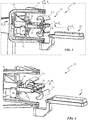
- An upper limb rehabilitation system for improving performance of coordinated movements of an upper limb (i.e. shoulder, elbow, wrist and hand) of a subject, is described herein and is seen generally in Figure 1 .
- the compact and lightweight characteristics of the system allow it to be used in any restricted-space area in medical and rehabilitative facilities.
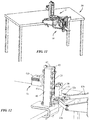
- the upper limb rehabilitation system is advantageously transportable and configured to be easily clamped to any appropriate supporting structure such as a table 50 as shown in Figure 11 allowing on-site therapeutic procedures at home.
- the rehabilitation system comprises essentially a gripping device 11 mounted on an articulated handle assembly 10 which is pivotally connected to a fixed platform 12 in a manner that the gripping device 11 is movable within a plane which is substantially coplanar or parallel to the transverse plane of the subject, referred hereafter as the working plane, during a working session.
- the handle assembly 10 is supported by a holding unit 12a which is slidably mounted along a linear guide 25 arranged vertically on a tower 40 forming part of the fixed platform 12.
- the holding unit 12a comprises locking means (not shown) in order to be locked in an appropriate height in function of the supporting structure and/or the position of the subject to adjust the working plane at a desired height.
- the holding unit 12a of the rehabilitation system is arranged to freely move upwards and downwards along the linear guide 25 to provide a further degree of freedom to the system thereby allowing the subject to perform exercises in a three dimension environment with partial or full compensation of his forearm thanks to gravity compensation means as described subsequently.
- the handle assembly 10 comprises a first and a second holding element 14, 15 which have each a general ⁇ - shaped construction and which are each oriented within a plane perpendicular to the plane of the supporting structure 50 on which the fixed platform 12 of the rehabilitation system is clamped.
- These first and second holding element 14, 15 are pivotally connected to a supporting structure which comprises a first and a second connecting link 13a, 13b which are both pivotally connected to the holding unit 12a of the fixed platform 12 to allow movements of the handle assembly 10 in two orthogonal directions within the working plane.
- the extremities of the upper and lower parts of the first holding element 14 are pivotally connected to the corresponding extremities of respective upper and lower parts of the second holding element 15 such that said first and second holding elements 14, 15 of the handle assembly 10 are both rotatable about a first axis of rotation ⁇ 1 which is perpendicular to the transverse plane of the subject.
- the handle assembly 10 further comprises a third and a fourth holding element 16, 17, both of which have also a general ⁇ - shaped construction.
- the extremities of lower and upper parts of the third holding element 16 are pivotally connected to respective upper and lower parts of the first and second holding elements 14, 15.
- the gripping device 11 is mounted on a shaft 18 whose extremities are rotatably mounted on opposite sides of the fourth ⁇ - shaped holding element 17.
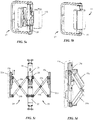
- the latter is pivotally connected to the third holding element 16 to rotate about a second axis of rotation ⁇ 2 perpendicular to the first axis of rotation ⁇ 1 within said third holding element 16 in order to allow forearm pronation movements and forearm supination movements of the subject through an angle up to +/- 90 degrees as shown in Figure 3 as well as wrist flexion movements about a third axis of rotation ⁇ 3 as shown in Figure 4 corresponding to the longitudinal/central axis of the shaft 18.
- the first and second axes of rotation ⁇ 1 , ⁇ 2 as well as the longitudinal/central axis of the shaft 18 of the gripping device 11 always intersect at one point independently from the orientation of each of the first, second, third and fourth holding elements 14, 15, 16, 17.
- the gripping device 11 of the handle assembly 10 comprises two complementary parts 11a, 11b which are each connected to a foldable structure 19 ( Figure 5c ) mounted on both sides of the shaft 18.
- Each foldable structure 19 comprises a first and a second intersecting link 19a, 19b pivotally mounted together at their centre.
- the first intersecting link 19a is further connected at one end to the shaft 18 while its other end is slidably mounted along a rail 19c arranged on the upper inner side of the corresponding complementary part 11a, 11b of the gripping device 11.
- the second intersecting link 19b for its part, is connected at one end to the lower inner side of said complementary part 11a, 11b while its other end is connected to a travel nut 20 of a ball screw 21 mounted inside the shaft 18.
- Each foldable structure 19 is folded between the shaft 18 and the inner side of the corresponding complementary part 11a, 11b of the gripping device 11 when the latter is in a retracted position as shown in Figure 5b .
- the configuration of the gripping device allows hand grasp movements and hand release movements of the subject.
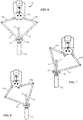
- the upper limb rehabilitation device further comprises a forearm supporting structure 22 which is pivotally connected to handle assembly 10 to rest the subject's forearm, during a rehabilitation session, when operating the handle assembly 10 in the two orthogonal directions within the working plane as shown specifically in Figures 6 to 10 .
- the upper limb rehabilitation system as described above is adapted to provide active forces and/or torques to assist the subject's motions as well as resistive active movement in response to the subject motion to simulate the interaction with a virtual object.
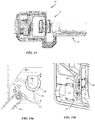
- the rehabilitation system according to this embodiment comprises two motors 30, 31 as shown in Figure 12 coupled with the first, respectively the second connecting link 13a, 13b to assist or impede movements of the handle assembly 10 in the two orthogonal directions within the working plane.
- Figures 14a shows a detailed view of the motor 30 coupled to a driving pulley 30a which is connected to a driven pulley 32 through a cable/belt 33 and which is arranged at one extremity of the connecting link 13a.
- a third motor 34 is mounted on the third ⁇ - shaped holding element 16 as shown for example in Figure 14b .
- a driving pulley 35 is mounted on the motor's shaft and is coupled to a driven pulley 36 through a cable/belt 37 to assist or impede rotational movement of the fourth holding element 17 along with the gripping device 11 about the second axis of rotation ⁇ 2 .
- the cable transmission configuration amplified the torque produced by the motors 30, 31 and 34 by a factor equal to the ratio between the radiuses of the driven and the drive pulley respectively. Cable transmissions are preferred over more standard solutions such as gear boxes which have the disadvantage of introducing friction and backlash preventing a smooth interaction of the rehabilitation system with the subject.
- a fourth motor 38 is arranged inside the shaft 18 of the gripping device 11 and is coupled to the ball screw 21 to assist or impede grasp movements of the subject's hand. More particularly, the motor 38 is configured to be driven to rotate the ball screw 21 clockwise or anticlockwise to cause the travel nut 20 to move upwards or downwards thereby bringing the two complementary parts 11a, 11b of the gripping device, through the foldable structure 19, against each other or moving said complementary parts 11a, 11b away from each other.
- the rehabilitation system can advantageously be used in an integrated robotic platform that combines robotics and interactive gaming to facilitate performance of task-specific repetitive, upper extremity/hand motor tasks, to enable individual undergoing rehabilitation to improve performance of coordinated movements of the forearm and hand.
- the robotic integrated platform comprises a gaming interface which is provided with a display device to simulate virtual reality and to present sensorimotor integration tasks to the subject.
- the rehabilitation device is used as a haptic interface to simulate the interaction with objects in a virtual reality world presented in the display device.
- Positions sensors (not shown) such as encoders or potentiometers are placed on the rehabilitation system on strategic locations to track the movement of the system.
- the integrated robotic platform further comprises a controller interface that is adapted to monitor and forward continuously, during the rehabilitation session, the outputs from the sensors to a programmable computer which determines desired force feedback to be applied by the controller interface to the corresponding motors 30, 31, 34 and 38 of rehabilitation system.
- the level of assistance can be tuned on-line (e.g. during a working session) providing adapting time-dependent force fields.
- the robotic platform can provide different level of support, from complete assistance, i.e. movements of the rehabilitation system are entirely driven by its motors, to full transparency, i.e. movements of the rehabilitation system are entirely caused by the subject upper limb's movements.
- the robotic platform can also provide force perturbation to increase the difficulty of the task.
- the robotic integrated platform optionally comprises a controller arranged to monitor different physiological signals of the subject such as EEG or EMG and to drive the motors of the rehabilitation system for real time correlation between the movement of the device and brain activity pattern of the subject.
- a controller arranged to monitor different physiological signals of the subject such as EEG or EMG and to drive the motors of the rehabilitation system for real time correlation between the movement of the device and brain activity pattern of the subject.
- the upper limb rehabilitation system as described above is adapted to provide resistive movements only, in response to the subject's motions.
- the motors are replaced by braking devices.
- a braking device as shown in Figures 15a, 15b .
- the braking device comprises for example a fixed part 45 mounted on the third holding element of the rehabilitation system (not shown) and a rotating part 46 rotatably mounted on the fixed part 45 and fixed to the fourth holding element in order to rotate about the second axis of rotation ⁇ 2 of the system.
- a linear actuator 47 is mounted on the fixed part 45 to engage upon actuation into one of several arcuate slots 48 disposed along a circular path on the rotating part 45 thereby stopping its rotation in order to simulate a physical contact with a virtual object.
- the rehabilitation system according to the invention preferably comprises gravity compensation means that can provide different levels of gravity compensation either passively (i.e. counterweights or springs) or actively (i.e. motors).
- Figure 12 illustrates an example of gravity compensation means which comprise a counterweight holder 41 slidably mounted along a vertical rail 41a on the rear side of the tower 40 of the fixed platform 12.
- At least one cable 42 is arranged on pulleys 43 located on the top of the tower 40 to connect the holding unit 12a with the counterweight holder 41.
- the latter is adapted to receive one or several counterweight 41b in function of the desired level of gravity compensation.
- a related method for the rehabilitation of an upper limb of a subject comprises the steps of:
- Another method for the rehabilitation of an upper limb of a subject comprises the steps of (i) recording physiological signals of the subject such as electroencephalography (EEG), functional magnetic resonance imaging (fMRI), functional near-infrared spectroscopic imaging (fNRIS) or Electromyography (EMG) when the subject is operating the upper limb rehabilitation system, and (ii) interfering with the movements of said system in function of the recorded physiological signals.
- EEG electroencephalography
- fMRI functional magnetic resonance imaging
- fNRIS functional near-infrared spectroscopic imaging
- EMG Electromyography
Landscapes
- Health & Medical Sciences (AREA)
- General Health & Medical Sciences (AREA)
- Physical Education & Sports Medicine (AREA)
- Orthopedic Medicine & Surgery (AREA)
- Life Sciences & Earth Sciences (AREA)
- Biophysics (AREA)
- Public Health (AREA)
- Veterinary Medicine (AREA)
- Animal Behavior & Ethology (AREA)
- Engineering & Computer Science (AREA)
- Rehabilitation Therapy (AREA)
- Pain & Pain Management (AREA)
- Epidemiology (AREA)
- Physics & Mathematics (AREA)
- Pathology (AREA)
- Biomedical Technology (AREA)
- Heart & Thoracic Surgery (AREA)
- Medical Informatics (AREA)
- Molecular Biology (AREA)
- Surgery (AREA)
- Human Computer Interaction (AREA)
- Multimedia (AREA)
- Electromagnetism (AREA)
- Radiology & Medical Imaging (AREA)
- Nuclear Medicine, Radiotherapy & Molecular Imaging (AREA)
- Cardiology (AREA)
- Physiology (AREA)
- Computer Graphics (AREA)
- Computer Hardware Design (AREA)
- General Engineering & Computer Science (AREA)
- Software Systems (AREA)
- General Physics & Mathematics (AREA)
- Theoretical Computer Science (AREA)
- Pulmonology (AREA)
- Rehabilitation Tools (AREA)
Applications Claiming Priority (3)
| Application Number | Priority Date | Filing Date | Title |
|---|---|---|---|
| EP14180356 | 2014-08-08 | ||
| EP15750330.1A EP3177375A1 (de) | 2014-08-08 | 2015-08-05 | Rehabilitationssystem für obere extremität |
| PCT/EP2015/068104 WO2016020457A1 (en) | 2014-08-08 | 2015-08-05 | Upper limb rehabilitation system |
Related Parent Applications (1)
| Application Number | Title | Priority Date | Filing Date |
|---|---|---|---|
| EP15750330.1A Division EP3177375A1 (de) | 2014-08-08 | 2015-08-05 | Rehabilitationssystem für obere extremität |
Publications (2)
| Publication Number | Publication Date |
|---|---|
| EP3599002A2 true EP3599002A2 (de) | 2020-01-29 |
| EP3599002A3 EP3599002A3 (de) | 2020-04-29 |
Family
ID=51298618
Family Applications (2)
| Application Number | Title | Priority Date | Filing Date |
|---|---|---|---|
| EP19197105.0A Withdrawn EP3599002A3 (de) | 2014-08-08 | 2015-08-05 | Rehabilitationssystem für obere extremität |
| EP15750330.1A Withdrawn EP3177375A1 (de) | 2014-08-08 | 2015-08-05 | Rehabilitationssystem für obere extremität |
Family Applications After (1)
| Application Number | Title | Priority Date | Filing Date |
|---|---|---|---|
| EP15750330.1A Withdrawn EP3177375A1 (de) | 2014-08-08 | 2015-08-05 | Rehabilitationssystem für obere extremität |
Country Status (4)
| Country | Link |
|---|---|
| US (1) | US20170209737A1 (de) |
| EP (2) | EP3599002A3 (de) |
| GB (1) | GB2544015B (de) |
| WO (1) | WO2016020457A1 (de) |
Cited By (3)
| Publication number | Priority date | Publication date | Assignee | Title |
|---|---|---|---|---|
| CN112619065A (zh) * | 2020-11-27 | 2021-04-09 | 山东海天智能工程有限公司 | 一种手功能综合康复训练平台 |
| IT202200009317A1 (it) * | 2022-05-06 | 2023-11-06 | Consiglio Nazionale Ricerche | Dispositivo per la riabilitazione bilaterale |
| WO2024003918A1 (en) * | 2022-06-29 | 2024-01-04 | Bioxtreme Ltd. | Hand exercise rehabilitation system and method |
Families Citing this family (44)
| Publication number | Priority date | Publication date | Assignee | Title |
|---|---|---|---|---|
| US11904101B2 (en) | 2012-06-27 | 2024-02-20 | Vincent John Macri | Digital virtual limb and body interaction |
| WO2014186739A1 (en) | 2013-05-17 | 2014-11-20 | Macri Vincent J | System and method for pre-movement and action training and control |
| US10096265B2 (en) | 2012-06-27 | 2018-10-09 | Vincent Macri | Methods and apparatuses for pre-action gaming |
| US11673042B2 (en) | 2012-06-27 | 2023-06-13 | Vincent John Macri | Digital anatomical virtual extremities for pre-training physical movement |
| US10111603B2 (en) | 2014-01-13 | 2018-10-30 | Vincent James Macri | Apparatus, method and system for pre-action therapy |
| US10940363B2 (en) * | 2015-03-14 | 2021-03-09 | Board Of Regents Of The University Of Texas System | Shoulder rehabilitation device |
| US10376727B2 (en) * | 2016-06-09 | 2019-08-13 | Paul Michael Fitzpatrick | Mountable exercise bar assembly |
| US9861856B1 (en) | 2016-06-21 | 2018-01-09 | Boston Biomotion, Inc. | Computerized exercise apparatus |
| RU170210U1 (ru) * | 2016-07-22 | 2017-04-18 | Леонид Евгеньевич Селявко | Устройство-тренажер для самостоятельных занятий по восстановлению амплитуды движений руки больных с неврологическими заболеваниями |
| GB201615438D0 (en) * | 2016-09-12 | 2016-10-26 | Imp Innovations Ltd | Apparatus and method for assisting tool use |
| IT201700049732A1 (it) | 2017-05-08 | 2018-11-08 | Scuola Superiore Di Studi Univ E Di Perfezionamento Santanna | Esoscheletro di arto superiore |
| WO2019060298A1 (en) | 2017-09-19 | 2019-03-28 | Neuroenhancement Lab, LLC | METHOD AND APPARATUS FOR NEURO-ACTIVATION |
| EP3697363A4 (de) * | 2017-10-18 | 2021-07-14 | Iregained Inc. | System und verfahren zur bereitstellung von indirekter bewegungsrückkopplung während einer sensomotorischen funktionsrehabilitation und -verbesserung |
| US10888732B2 (en) | 2017-11-01 | 2021-01-12 | Proteus Motion Inc. | Exercise device limb interface |
| US11717686B2 (en) | 2017-12-04 | 2023-08-08 | Neuroenhancement Lab, LLC | Method and apparatus for neuroenhancement to facilitate learning and performance |
| US11478603B2 (en) | 2017-12-31 | 2022-10-25 | Neuroenhancement Lab, LLC | Method and apparatus for neuroenhancement to enhance emotional response |
| US12280219B2 (en) | 2017-12-31 | 2025-04-22 | NeuroLight, Inc. | Method and apparatus for neuroenhancement to enhance emotional response |
| US11364361B2 (en) | 2018-04-20 | 2022-06-21 | Neuroenhancement Lab, LLC | System and method for inducing sleep by transplanting mental states |
| CN108814569B (zh) * | 2018-05-02 | 2021-03-23 | 南京邮电大学 | 康复训练控制装置 |
| CN108814905B (zh) * | 2018-07-16 | 2021-11-02 | 东北大学 | 一种上肢康复平台 |
| US11452839B2 (en) | 2018-09-14 | 2022-09-27 | Neuroenhancement Lab, LLC | System and method of improving sleep |
| CN110123572B (zh) * | 2019-04-04 | 2021-10-26 | 华南理工大学 | 一种偏瘫上肢代偿运动多模态交互的康复机器人训练系统 |
| CN109999427A (zh) * | 2019-05-06 | 2019-07-12 | 上海机器人产业技术研究院有限公司 | 一种基于移动平台的上肢康复训练机器人 |
| US11786694B2 (en) | 2019-05-24 | 2023-10-17 | NeuroLight, Inc. | Device, method, and app for facilitating sleep |
| CN110169894A (zh) * | 2019-06-24 | 2019-08-27 | 深圳睿瀚医疗科技有限公司 | 牵拉式上肢一体化训练装置 |
| TWI726361B (zh) * | 2019-07-22 | 2021-05-01 | 財團法人工業技術研究院 | 重量訓練方法及系統 |
| CN110464604B (zh) * | 2019-09-09 | 2021-10-08 | 西南医科大学附属医院 | 一种自动肢体康复机 |
| CN110639196A (zh) * | 2019-09-12 | 2020-01-03 | 广州穗海新峰医疗设备制造有限公司 | 基于镜像神经元和体感技术多模态的康复训练系统及方法 |
| WO2021077159A1 (en) * | 2019-10-21 | 2021-04-29 | Tech Gym Pty Ltd | Systems for mechanically assisting rehabilitation of a patient |
| CN112057292B (zh) * | 2019-12-04 | 2025-02-14 | 宁波大学 | 一种六自由度串并混联上肢康复机器人 |
| CN111346345A (zh) * | 2020-03-13 | 2020-06-30 | 卓柔萍 | 一种骨折后早期康复锻炼提醒设备 |
| CN111589058B (zh) * | 2020-04-23 | 2024-12-13 | 苏州爱宝利恩康复科技有限公司 | 一种带有力反馈功能的上肢康复机器人 |
| CN111714328A (zh) * | 2020-06-28 | 2020-09-29 | 山东大学 | 一种脑卒中患者手指康复训练装置及上肢康复训练装置 |
| KR102332318B1 (ko) * | 2020-07-22 | 2021-12-01 | 이화여자대학교 산학협력단 | 시공간 인코딩을 사용하여 가상 객체의 거칠기 촉각을 제공하기 위한 방법 및 시스템 |
| CN111839154A (zh) * | 2020-07-30 | 2020-10-30 | 荆门怡盛源环保科技有限公司 | 一种具有调节和防脱落的vr设备悬挂架 |
| CN112370309A (zh) * | 2020-11-27 | 2021-02-19 | 杭州华移技术有限公司 | 一种手部关节康复装置 |
| CN113274240A (zh) * | 2021-03-26 | 2021-08-20 | 阁步(上海)医疗科技有限公司 | 上肢手臂康复机器人 |
| CN113274650B (zh) * | 2021-05-20 | 2023-10-10 | 金达威医疗科技(湖南)有限公司 | 一种可调节机头角度的红外线理疗器 |
| CN115581906A (zh) * | 2021-07-05 | 2023-01-10 | 鸿富泰精密电子(烟台)有限公司 | 虚拟实境复健装置、系统及复健方法 |
| US11596837B1 (en) * | 2022-01-11 | 2023-03-07 | Tonal Systems, Inc. | Exercise machine suggested weights |
| US20230256296A1 (en) * | 2022-04-26 | 2023-08-17 | Southeast University | Wrist rehabilitation training system based on muscle coordination and variable stiffness impedance control |
| CN115475361B (zh) * | 2022-09-21 | 2023-09-29 | 哈尔滨学院 | 一种具有高度调节功能的老人手部训练器 |
| WO2025017564A1 (en) | 2023-07-20 | 2025-01-23 | Kinesics Ai Ltd. | Game-based system and methods for rehabilitation |
| CN121266082B (zh) * | 2025-12-05 | 2026-03-13 | 四川大学华西医院 | 一种下肢康复训练辅助装置 |
Citations (5)
| Publication number | Priority date | Publication date | Assignee | Title |
|---|---|---|---|---|
| US20060106326A1 (en) | 2004-10-27 | 2006-05-18 | Massachusetts Institute Of Technology | Wrist and upper extremity motion |
| WO2007131340A1 (en) * | 2006-05-11 | 2007-11-22 | Rehabtronics Inc. | Method and apparatus for automated delivery of therapeutic exercises of the upper extremity |
| US20080161733A1 (en) | 2004-02-05 | 2008-07-03 | Motorika Limited | Methods and Apparatuses for Rehabilitation and Training |
| CN102379793A (zh) * | 2011-08-18 | 2012-03-21 | 付风生 | 一种上肢康复训练机器人 |
| CN103720571A (zh) * | 2013-12-25 | 2014-04-16 | 华中科技大学 | 一种龙门式上肢康复训练装置 |
Family Cites Families (8)
| Publication number | Priority date | Publication date | Assignee | Title |
|---|---|---|---|---|
| US5755645A (en) * | 1997-01-09 | 1998-05-26 | Boston Biomotion, Inc. | Exercise apparatus |
| TW420019U (en) * | 1999-12-29 | 2001-01-21 | Wu Lie Shr | Adjustable grip exerciser |
| EP1629949B1 (de) * | 2004-08-31 | 2010-10-20 | Scuola Superiore Di Studi Universitari E Di Perfezionamento S. Anna | Haptische Schnittstellenvorrichtung |
| US20080009771A1 (en) * | 2006-03-29 | 2008-01-10 | Joel Perry | Exoskeleton |
| FR2965184A1 (fr) * | 2010-09-28 | 2012-03-30 | Thierry Stevenot | Appareil de renforcement musculaire et/ou de reeducation de l'articulation de l'epaule et du membre superieure en chaine cinetique fermee |
| JP5914012B2 (ja) * | 2012-01-30 | 2016-05-11 | 株式会社奥村組 | コンクリート壁面研掃処理装置 |
| WO2013136287A1 (en) * | 2012-03-15 | 2013-09-19 | Motorika Limited | Gyroscopic apparatuses and methods of using same |
| CN103481283A (zh) * | 2013-09-17 | 2014-01-01 | 江南大学 | 一种3轴五杆并联机械手 |
-
2015
- 2015-08-05 EP EP19197105.0A patent/EP3599002A3/de not_active Withdrawn
- 2015-08-05 GB GB1703569.2A patent/GB2544015B/en not_active Expired - Fee Related
- 2015-08-05 EP EP15750330.1A patent/EP3177375A1/de not_active Withdrawn
- 2015-08-05 WO PCT/EP2015/068104 patent/WO2016020457A1/en not_active Ceased
-
2017
- 2017-02-07 US US15/426,443 patent/US20170209737A1/en not_active Abandoned
Patent Citations (5)
| Publication number | Priority date | Publication date | Assignee | Title |
|---|---|---|---|---|
| US20080161733A1 (en) | 2004-02-05 | 2008-07-03 | Motorika Limited | Methods and Apparatuses for Rehabilitation and Training |
| US20060106326A1 (en) | 2004-10-27 | 2006-05-18 | Massachusetts Institute Of Technology | Wrist and upper extremity motion |
| WO2007131340A1 (en) * | 2006-05-11 | 2007-11-22 | Rehabtronics Inc. | Method and apparatus for automated delivery of therapeutic exercises of the upper extremity |
| CN102379793A (zh) * | 2011-08-18 | 2012-03-21 | 付风生 | 一种上肢康复训练机器人 |
| CN103720571A (zh) * | 2013-12-25 | 2014-04-16 | 华中科技大学 | 一种龙门式上肢康复训练装置 |
Cited By (4)
| Publication number | Priority date | Publication date | Assignee | Title |
|---|---|---|---|---|
| CN112619065A (zh) * | 2020-11-27 | 2021-04-09 | 山东海天智能工程有限公司 | 一种手功能综合康复训练平台 |
| IT202200009317A1 (it) * | 2022-05-06 | 2023-11-06 | Consiglio Nazionale Ricerche | Dispositivo per la riabilitazione bilaterale |
| WO2023214349A1 (en) * | 2022-05-06 | 2023-11-09 | Consiglio Nazionale Delle Ricerche | Device for bilateral rehabilitation |
| WO2024003918A1 (en) * | 2022-06-29 | 2024-01-04 | Bioxtreme Ltd. | Hand exercise rehabilitation system and method |
Also Published As
| Publication number | Publication date |
|---|---|
| GB201703569D0 (en) | 2017-04-19 |
| GB2544015A (en) | 2017-05-03 |
| GB2544015A8 (en) | 2017-06-07 |
| EP3599002A3 (de) | 2020-04-29 |
| US20170209737A1 (en) | 2017-07-27 |
| EP3177375A1 (de) | 2017-06-14 |
| WO2016020457A1 (en) | 2016-02-11 |
| GB2544015B (en) | 2021-06-02 |
Similar Documents
| Publication | Publication Date | Title |
|---|---|---|
| EP3599002A2 (de) | Rehabilitationssystem für obere extremität | |
| Narayan et al. | Development of robot-based upper limb devices for rehabilitation purposes: A systematic review | |
| KR101504793B1 (ko) | 휴대용 상지 재활 장치 | |
| Maciejasz et al. | A survey on robotic devices for upper limb rehabilitation | |
| EP2349168B1 (de) | Universal-haptikantriebssystem | |
| Nef et al. | ARMin: a robot for patient-cooperative arm therapy | |
| Bhujel et al. | A comparative study of end-effector and exoskeleton type rehabilitation robots in human upper extremity rehabilitation | |
| EP1631421B1 (de) | System zur Bewegungsverbesserung | |
| US10123929B2 (en) | Wrist and forearm exoskeleton | |
| Sicuri et al. | Robotics in shoulder rehabilitation | |
| US20060106326A1 (en) | Wrist and upper extremity motion | |
| EP3654902B1 (de) | Vorrichtungen für armübung | |
| CN110678157A (zh) | 机电机器人操作器装置 | |
| US20150290071A1 (en) | Multiple Degree of Freedom Portable Rehabilitation System Having DC Motor-Based, Multi-Mode Actuator | |
| Westerveld et al. | Passive reach and grasp with functional electrical stimulation and robotic arm support | |
| Decker et al. | A hand exoskeleton device for robot assisted sensory-motor training after stroke | |
| Peng et al. | Design of casia-arm: A novel rehabilitation robot for upper limbs | |
| Young et al. | Design of intention-based assistive robot for upper limb | |
| US20250319354A1 (en) | Hand exercise rehabilitation system and method | |
| Oblak et al. | A universal haptic device for arm and wrist rehabilitation | |
| Zhang et al. | Design and human–machine compatibility analysis of Co-Exos II for upper-limb rehabilitation | |
| Lee et al. | Compact design of a robotic device for shoulder rehabilitation | |
| Varela et al. | User centred design of rehabilitation robots | |
| Phan | Establishment and Evaluation of a Robotic Wrist Exoskeleton for Rehabilitation | |
| Wood et al. | Development of an interactive upper extremity gestural robotic feedback system: from bench to reality |
Legal Events
| Date | Code | Title | Description |
|---|---|---|---|
| PUAI | Public reference made under article 153(3) epc to a published international application that has entered the european phase |
Free format text: ORIGINAL CODE: 0009012 |
|
| STAA | Information on the status of an ep patent application or granted ep patent |
Free format text: STATUS: REQUEST FOR EXAMINATION WAS MADE |
|
| 17P | Request for examination filed |
Effective date: 20190912 |
|
| AC | Divisional application: reference to earlier application |
Ref document number: 3177375 Country of ref document: EP Kind code of ref document: P |
|
| AK | Designated contracting states |
Kind code of ref document: A2 Designated state(s): AL AT BE BG CH CY CZ DE DK EE ES FI FR GB GR HR HU IE IS IT LI LT LU LV MC MK MT NL NO PL PT RO RS SE SI SK SM TR |
|
| PUAL | Search report despatched |
Free format text: ORIGINAL CODE: 0009013 |
|
| RIN1 | Information on inventor provided before grant (corrected) |
Inventor name: TADI RAVI, TEJ Inventor name: ROGNINI, GIULIO |
|
| AK | Designated contracting states |
Kind code of ref document: A3 Designated state(s): AL AT BE BG CH CY CZ DE DK EE ES FI FR GB GR HR HU IE IS IT LI LT LU LV MC MK MT NL NO PL PT RO RS SE SI SK SM TR |
|
| RIC1 | Information provided on ipc code assigned before grant |
Ipc: A63B 23/16 20060101ALI20200321BHEP Ipc: A63B 23/12 20060101ALI20200321BHEP Ipc: A63B 21/005 20060101ALI20200321BHEP Ipc: A63B 71/06 20060101ALI20200321BHEP Ipc: A63B 24/00 20060101ALI20200321BHEP Ipc: A63B 22/00 20060101ALN20200321BHEP Ipc: A63B 71/00 20060101AFI20200321BHEP Ipc: A63B 21/00 20060101ALI20200321BHEP Ipc: A47G 29/087 20060101ALI20200321BHEP Ipc: A63B 21/16 20060101ALI20200321BHEP Ipc: A63B 23/14 20060101ALI20200321BHEP Ipc: A61H 1/02 20060101ALI20200321BHEP |
|
| STAA | Information on the status of an ep patent application or granted ep patent |
Free format text: STATUS: EXAMINATION IS IN PROGRESS |
|
| 17Q | First examination report despatched |
Effective date: 20210525 |
|
| STAA | Information on the status of an ep patent application or granted ep patent |
Free format text: STATUS: THE APPLICATION IS DEEMED TO BE WITHDRAWN |
|
| 18D | Application deemed to be withdrawn |
Effective date: 20250918 |