EP3599564A1 - Steuerungsverfahren eines elektronischen geräts, das autentifizierungscodes liefert, entsprechende vorrichtungen und server - Google Patents
Steuerungsverfahren eines elektronischen geräts, das autentifizierungscodes liefert, entsprechende vorrichtungen und server Download PDFInfo
- Publication number
- EP3599564A1 EP3599564A1 EP19188594.6A EP19188594A EP3599564A1 EP 3599564 A1 EP3599564 A1 EP 3599564A1 EP 19188594 A EP19188594 A EP 19188594A EP 3599564 A1 EP3599564 A1 EP 3599564A1
- Authority
- EP
- European Patent Office
- Prior art keywords
- authentication code
- predefined
- electronic device
- code
- state
- Prior art date
- Legal status (The legal status is an assumption and is not a legal conclusion. Google has not performed a legal analysis and makes no representation as to the accuracy of the status listed.)
- Granted
Links
Images


Classifications
-
- G—PHYSICS
- G06—COMPUTING OR CALCULATING; COUNTING
- G06F—ELECTRIC DIGITAL DATA PROCESSING
- G06F21/00—Security arrangements for protecting computers, components thereof, programs or data against unauthorised activity
- G06F21/30—Authentication, i.e. establishing the identity or authorisation of security principals
- G06F21/31—User authentication
- G06F21/34—User authentication involving the use of external additional devices, e.g. dongles or smart cards
-
- G—PHYSICS
- G06—COMPUTING OR CALCULATING; COUNTING
- G06Q—INFORMATION AND COMMUNICATION TECHNOLOGY [ICT] SPECIALLY ADAPTED FOR ADMINISTRATIVE, COMMERCIAL, FINANCIAL, MANAGERIAL OR SUPERVISORY PURPOSES; SYSTEMS OR METHODS SPECIALLY ADAPTED FOR ADMINISTRATIVE, COMMERCIAL, FINANCIAL, MANAGERIAL OR SUPERVISORY PURPOSES, NOT OTHERWISE PROVIDED FOR
- G06Q20/00—Payment architectures, schemes or protocols
- G06Q20/30—Payment architectures, schemes or protocols characterised by the use of specific devices or networks
- G06Q20/34—Payment architectures, schemes or protocols characterised by the use of specific devices or networks using cards, e.g. integrated circuit [IC] cards or magnetic cards
- G06Q20/341—Active cards, i.e. cards including their own processing means, e.g. including an IC or chip
-
- G—PHYSICS
- G06—COMPUTING OR CALCULATING; COUNTING
- G06Q—INFORMATION AND COMMUNICATION TECHNOLOGY [ICT] SPECIALLY ADAPTED FOR ADMINISTRATIVE, COMMERCIAL, FINANCIAL, MANAGERIAL OR SUPERVISORY PURPOSES; SYSTEMS OR METHODS SPECIALLY ADAPTED FOR ADMINISTRATIVE, COMMERCIAL, FINANCIAL, MANAGERIAL OR SUPERVISORY PURPOSES, NOT OTHERWISE PROVIDED FOR
- G06Q20/00—Payment architectures, schemes or protocols
- G06Q20/38—Payment protocols; Details thereof
- G06Q20/382—Payment protocols; Details thereof insuring higher security of transaction
- G06Q20/3821—Electronic credentials
-
- G—PHYSICS
- G06—COMPUTING OR CALCULATING; COUNTING
- G06Q—INFORMATION AND COMMUNICATION TECHNOLOGY [ICT] SPECIALLY ADAPTED FOR ADMINISTRATIVE, COMMERCIAL, FINANCIAL, MANAGERIAL OR SUPERVISORY PURPOSES; SYSTEMS OR METHODS SPECIALLY ADAPTED FOR ADMINISTRATIVE, COMMERCIAL, FINANCIAL, MANAGERIAL OR SUPERVISORY PURPOSES, NOT OTHERWISE PROVIDED FOR
- G06Q20/00—Payment architectures, schemes or protocols
- G06Q20/38—Payment protocols; Details thereof
- G06Q20/385—Payment protocols; Details thereof using an alias or single-use codes
-
- G—PHYSICS
- G06—COMPUTING OR CALCULATING; COUNTING
- G06Q—INFORMATION AND COMMUNICATION TECHNOLOGY [ICT] SPECIALLY ADAPTED FOR ADMINISTRATIVE, COMMERCIAL, FINANCIAL, MANAGERIAL OR SUPERVISORY PURPOSES; SYSTEMS OR METHODS SPECIALLY ADAPTED FOR ADMINISTRATIVE, COMMERCIAL, FINANCIAL, MANAGERIAL OR SUPERVISORY PURPOSES, NOT OTHERWISE PROVIDED FOR
- G06Q20/00—Payment architectures, schemes or protocols
- G06Q20/38—Payment protocols; Details thereof
- G06Q20/40—Authorisation, e.g. identification of payer or payee, verification of customer or shop credentials; Review and approval of payers, e.g. check credit lines or negative lists
-
- G—PHYSICS
- G06—COMPUTING OR CALCULATING; COUNTING
- G06Q—INFORMATION AND COMMUNICATION TECHNOLOGY [ICT] SPECIALLY ADAPTED FOR ADMINISTRATIVE, COMMERCIAL, FINANCIAL, MANAGERIAL OR SUPERVISORY PURPOSES; SYSTEMS OR METHODS SPECIALLY ADAPTED FOR ADMINISTRATIVE, COMMERCIAL, FINANCIAL, MANAGERIAL OR SUPERVISORY PURPOSES, NOT OTHERWISE PROVIDED FOR
- G06Q20/00—Payment architectures, schemes or protocols
- G06Q20/38—Payment protocols; Details thereof
- G06Q20/40—Authorisation, e.g. identification of payer or payee, verification of customer or shop credentials; Review and approval of payers, e.g. check credit lines or negative lists
- G06Q20/401—Transaction verification
- G06Q20/4018—Transaction verification using the card verification value [CVV] associated with the card
-
- H—ELECTRICITY
- H04—ELECTRIC COMMUNICATION TECHNIQUE
- H04L—TRANSMISSION OF DIGITAL INFORMATION, e.g. TELEGRAPHIC COMMUNICATION
- H04L63/00—Network architectures or network communication protocols for network security
- H04L63/08—Network architectures or network communication protocols for network security for authentication of entities
- H04L63/083—Network architectures or network communication protocols for network security for authentication of entities using passwords
- H04L63/0838—Network architectures or network communication protocols for network security for authentication of entities using passwords using one-time-passwords
-
- H—ELECTRICITY
- H04—ELECTRIC COMMUNICATION TECHNIQUE
- H04L—TRANSMISSION OF DIGITAL INFORMATION, e.g. TELEGRAPHIC COMMUNICATION
- H04L63/00—Network architectures or network communication protocols for network security
- H04L63/08—Network architectures or network communication protocols for network security for authentication of entities
- H04L63/083—Network architectures or network communication protocols for network security for authentication of entities using passwords
- H04L63/0846—Network architectures or network communication protocols for network security for authentication of entities using passwords using time-dependent-passwords, e.g. periodically changing passwords
-
- H—ELECTRICITY
- H04—ELECTRIC COMMUNICATION TECHNIQUE
- H04L—TRANSMISSION OF DIGITAL INFORMATION, e.g. TELEGRAPHIC COMMUNICATION
- H04L63/00—Network architectures or network communication protocols for network security
- H04L63/08—Network architectures or network communication protocols for network security for authentication of entities
- H04L63/0853—Network architectures or network communication protocols for network security for authentication of entities using an additional device, e.g. smartcard, SIM or a different communication terminal
-
- H—ELECTRICITY
- H04—ELECTRIC COMMUNICATION TECHNIQUE
- H04L—TRANSMISSION OF DIGITAL INFORMATION, e.g. TELEGRAPHIC COMMUNICATION
- H04L63/00—Network architectures or network communication protocols for network security
- H04L63/08—Network architectures or network communication protocols for network security for authentication of entities
- H04L63/0892—Network architectures or network communication protocols for network security for authentication of entities by using authentication-authorization-accounting [AAA] servers or protocols
-
- H—ELECTRICITY
- H04—ELECTRIC COMMUNICATION TECHNIQUE
- H04L—TRANSMISSION OF DIGITAL INFORMATION, e.g. TELEGRAPHIC COMMUNICATION
- H04L9/00—Cryptographic mechanisms or cryptographic arrangements for secret or secure communications; Network security protocols
- H04L9/08—Key distribution or management, e.g. generation, sharing or updating, of cryptographic keys or passwords
- H04L9/0861—Generation of secret information including derivation or calculation of cryptographic keys or passwords
- H04L9/0866—Generation of secret information including derivation or calculation of cryptographic keys or passwords involving user or device identifiers, e.g. serial number, physical or biometrical information, DNA, hand-signature or measurable physical characteristics
-
- H—ELECTRICITY
- H04—ELECTRIC COMMUNICATION TECHNIQUE
- H04L—TRANSMISSION OF DIGITAL INFORMATION, e.g. TELEGRAPHIC COMMUNICATION
- H04L9/00—Cryptographic mechanisms or cryptographic arrangements for secret or secure communications; Network security protocols
- H04L9/32—Cryptographic mechanisms or cryptographic arrangements for secret or secure communications; Network security protocols including means for verifying the identity or authority of a user of the system or for message authentication, e.g. authorization, entity authentication, data integrity or data verification, non-repudiation, key authentication or verification of credentials
- H04L9/3226—Cryptographic mechanisms or cryptographic arrangements for secret or secure communications; Network security protocols including means for verifying the identity or authority of a user of the system or for message authentication, e.g. authorization, entity authentication, data integrity or data verification, non-repudiation, key authentication or verification of credentials using a predetermined code, e.g. password, passphrase or PIN
- H04L9/3228—One-time or temporary data, i.e. information which is sent for every authentication or authorization, e.g. one-time-password, one-time-token or one-time-key
-
- H—ELECTRICITY
- H04—ELECTRIC COMMUNICATION TECHNIQUE
- H04L—TRANSMISSION OF DIGITAL INFORMATION, e.g. TELEGRAPHIC COMMUNICATION
- H04L9/00—Cryptographic mechanisms or cryptographic arrangements for secret or secure communications; Network security protocols
- H04L9/32—Cryptographic mechanisms or cryptographic arrangements for secret or secure communications; Network security protocols including means for verifying the identity or authority of a user of the system or for message authentication, e.g. authorization, entity authentication, data integrity or data verification, non-repudiation, key authentication or verification of credentials
- H04L9/3234—Cryptographic mechanisms or cryptographic arrangements for secret or secure communications; Network security protocols including means for verifying the identity or authority of a user of the system or for message authentication, e.g. authorization, entity authentication, data integrity or data verification, non-repudiation, key authentication or verification of credentials involving additional secure or trusted devices, e.g. TPM, smartcard, USB or software token
-
- H—ELECTRICITY
- H04—ELECTRIC COMMUNICATION TECHNIQUE
- H04L—TRANSMISSION OF DIGITAL INFORMATION, e.g. TELEGRAPHIC COMMUNICATION
- H04L2209/00—Additional information or applications relating to cryptographic mechanisms or cryptographic arrangements for secret or secure communication H04L9/00
- H04L2209/56—Financial cryptography, e.g. electronic payment or e-cash
Definitions
- the present invention relates to an electronic device associated with a user, and in particular an electronic device which delivers authentication codes to a user.
- the invention relates more particularly to authentication codes sometimes called dynamic authentication codes.
- Such codes can be used in electronic devices such as bank cards or authentication tokens.
- CVV code Card Verification Value
- Bank cards which deliver dynamic CVV codes are therefore complex electronic devices, because these bank cards all include a microcircuit, a screen, a battery which can power the screen, and finally a clock which will be used to update the dynamic CVV code. (synchronously with the server). There is a risk that one or more of these elements may fail.
- the card in the event of a bank card clock failure, the card will issue authentication codes which are not synchronized with those of the server used to authenticate transactions. In the event of a battery failure, the screen will not be able to display new authentication codes. The bank card therefore becomes unusable.
- the manufacturers of bank cards and the entities that issue these cards have no information on these failures.
- a user whose card is defective will request a change of card, but the cause of the card's failure will generally not be investigated.
- the manufacturers of bank cards and the companies which issue these cards have therefore taken the habit of regularly replacing these cards, for example, after a period of two years, this period corresponding to a normal lifetime of a battery.
- the authentication servers do not have access to information on the functioning of the card. There is therefore a need for the supply of information relating to the state of bank cards, in order to be able to better manage a fleet of bank cards.
- authentication tokens are also known which are used to authenticate users on the internet. These authentication tokens can for example be used to access services, for example messaging services.
- authentication tokens can for example be used to access services, for example messaging services.
- the authentication code can be used for subsequent authentication of the user with for example a server.
- the server will wait for example the current authentication code to authenticate the user, but, if an authentication code has been changed, the server can detect it and therefore obtain information on the state of the electronic device.
- the server can therefore determine that it is a modified authentication code which has been entered, and it will thus be able to detect that the electronic device is in the predefined state which has been detected during step b.
- the invention is in no way limited to the entry of authentication code on server interfaces. It finds application in the provision of authentication codes which can be entered on any interface.
- the delivery of the modified authentication code to the user can be implemented by displaying the modified authentication code on a screen of the electronic device.
- the modified authentication code can also be delivered to the user by an audio signal, or by display of a one-dimensional or two-dimensional code such as a bar code or a QR code.
- a predefined state is detected which is included among a plurality of predefined states of the card, each predefined state of the plurality of predefined states being respectively associated with a predefined function.
- This particular mode of implementation makes it possible to detect several predefined states on the basis of a modified authentication code.
- This particular embodiment is therefore particularly well suited to complex electronic devices in which different types of failures can appear.
- each predefined state of the plurality of predefined states is associated with a state code
- the application of the predefined function associated with this predefined state comprises the application of '' an intermediate function common to all the predefined states and having as variables the current authentication code and the state code of the predefined state.
- the status code can be a character string (letters, numbers, signs or symbols or more than one) that has been chosen beforehand.
- the intermediate function which is used could therefore be a mathematical function or a logical function.
- the intermediate function having as variables the current authentication code and the status code of the predefined state is the function or exclusive.
- the function or exclusive is particularly easy to implement.
- the properties of this logic function allow you to find a predefined state from a modified authentication code.
- steps a to d are implemented for the first time at a first instant, and at a second instant after the first instant, steps a to d are repeated, the current authentication codes being determined during steps a taking into account the instant.
- This particular mode of implementation is suitable for electronic devices which deliver authentication codes updated regularly, for example every hour.
- a current authentication code must be updated (taking account of the time)
- the modified authentication code is also updated.
- the instants are defined as a duration elapsing from a time reference, and taking account of the instant then means taking account of this duration.
- a moment can correspond to the realization of an event. There are therefore here two realizations of predefined events spaced in time at the first instant and at the second instant. Taking account of the instant can then include a step in which account is taken of the predefined event associated with this instant.
- the realization of an event can be the press of a button, or more particularly the n-th press of a button, and taking account of the moment then means taking account of n.
- a pressure meter since the electronic device was returned to the user can be used. Note that it is possible to detecting a new predefined state of the electronic device each time a new modified authentication code is obtained.
- the current authentication code comprises a plurality of characters
- said predefined function is chosen to modify several characters of the plurality of characters of the current authentication code or all of the characters of the plurality of characters of the current authentication code.
- step b several predefined states of the electronic device are detected, step c then comprising an application to the current authentication code of a predefined function associated with said several predefined states, for obtain a modified authentication code.
- This particular mode of implementation makes it possible to modify the current authentication code so that one can read in the modified authentication code that the electronic device is in several simultaneous predefined states.
- This particular mode of implementation is therefore well suited to complex electronic devices which comprise a plurality of components.
- the delivery of the modified authentication code to the user comprises a display of the modified authentication code on a screen of the electronic device.
- the display of a modified authentication code is completely analogous to the display of a current authentication code, for example a current authentication code according to the prior art.
- the user can take cognizance of the modified authentication code, enter it on a server interface, and transmit, without knowing it, information which indicates that the electronic device is in a predefined state.
- the electronic device is further configured to display authentication codes according to several display modes, the method further comprising a selection of the display mode to be used to display the security code. authentication taking into account said predefined state detected.
- the modified authentication code is displayed, and the display mode used for displaying this modified authentication code is changed.
- This particular mode of implementation also applies to the detection of several predefined states detected simultaneously.
- a display mode is here a characteristic of text formatting.
- a change in display mode involves a change in at least one text formatting characteristic (the text of the modified code).
- a text formatting feature can be, but is not limited to, the color of the text, an underline, etc.
- the authentication code is displayed in a manner which differs from a character string, for example if it is displayed in the form of a two-dimensional code, it will also be possible to implement mode changes d 'display with for example a particular choice of colors.
- This change in display mode can be perceived by a user and this implies that the user is aware of additional information, in addition to the modified code. Therefore, it is possible to ask the user on the interface in which he will enter a code if the display mode has a particular characteristic, for example a formatting characteristic. If this interface is a server interface, then the server receives two pieces of information: the code entered by the user and information on the display mode of the text. The information relating to the text display mode can be used for example to confirm, on the server side, the predefined state of the electronic device.
- the electronic device is a microcircuit card of the dynamic CVV type or an authentication token.
- the current authentication code is the dynamic CCV code which would be obtained in a card according to the prior art.
- the modified authentication code is displayed on the back of the card next to the user's signature or on the front of the card.
- the predefined state is chosen from a group comprising at least one of the following states: a normal operating state, a state in which a battery of the electronic device is faulty, a state in which a memory of the electronic device is faulty, a state in which a module for determining the instant of the electronic device is faulty, and a state in which the electronic device has reached a predefined temperature value.
- the predefined state is a normal operating state
- a predefined function can be chosen which will not modify the current authentication code.
- the modified authentication code is identical to the current authentication code.
- the invention finds application in the detection of anomalies or failures. It also finds application in the detection of other predefined states, for example the end of the validity of the electronic device or the number of presses on a button of said electronic device.
- This electronic device management method is implemented by a server, and it can be implemented after the implementation of the electronic device management method implemented by an electronic device as described above.
- the method implemented by a server is adapted to process the modified authentication codes that a user could enter.
- the authentication codes entered will be treated as the authentication codes which have been modified according to the method implemented by an electronic device as described above.
- Obtaining the current authentication code can be done in a manner analogous to obtaining a dynamic authentication code according to the prior art.
- the reception of an authentication code entered associated with electronic devices can be done through means of communication or through a network such as the Internet.
- the user can enter an authentication code on a server interface (for example which appears on a user's terminal of the computer or telephone type).
- the authentication code entered can be obtained by an application to the current authentication code of a predefined function associated with the predefined state, then it can be detected that the electronic device is in this predefined state.
- the method further comprises a comparison of the current authentication code with the entered authentication code received.
- the method for managing an electronic device implemented by a server can also include a step of authenticating the user. This authentication takes into account the authentication code entered and the detection of the predefined state.
- the authentication code entered is identical to the current identification code (which is the case if a predefined state for the "normal” state uses an identity function which does not modify the current authentication code; or if no function is applied to the current authentication code when the "normal" state is detected), or if the authentication code entered corresponds to an authentication code obtained after applying a function predefined to the current authentication code (in this case, there is authentication and the method can include taking into account the predefined state, for example memorizing the detected predefined state).
- step r is implemented if the current authentication code differs from the entered authentication code received.
- This particular mode of implementation is suitable for devices for which the predefined state for the "normal" state of the device uses an identity function, that is to say which does not modify the current authentication code, or devices that do not apply any function to the current authentication code when the "normal" state is detected.
- these devices are advantageous because they can operate with servers such as those described in the method defined below, but also with servers according to the prior art.
- the use of the invention with such devices does not imply a replacement of all the servers capable of being used with the electronic device for authentication.
- step r is only implemented if there is a difference between the authentication code entered which has been received and the current authentication code. In fact, if the entered authentication code received and the current authentication code are different, either it is a fraudulent authentication attempt, or it is a transmission of a authentication which has been modified to indicate that the electronic device is in a predefined state.
- the detection of the predefined state of the electronic device can be implemented in three ways.
- the first way implies that there is a function opposite to said predefined function.
- the intermediate authentication code corresponds to the current identification code, then we can both deduce that the electronic device is in the predefined state and we can also authenticate the user and / or the electronic device.
- the same function can be applied in the server as that which has been applied in the electronic device, and the modified authentication code (by the server) obtained can be compared with the entered authentication code which has been received.
- This third variant is very advantageous with an intermediate function of the type or exclusive because the application of the or exclusive to a status code and to a code authentication code gives a modified authentication code, and applying the or exclusive to this modified authentication code and to the unmodified authentication code (for example the current authentication code) delivers the status code. This makes it easy to find the predefined state in which the electronic device is located.
- a predefined state is detected among a plurality of predefined states, each predefined state of the plurality of predefined states being respectively associated with a predefined function.
- This implementation mode makes it possible to detect several predefined states. It is particularly suitable for the detection of predefined states in complex electronic devices comprising a plurality of components.
- each predefined state can be associated with a different state code.
- this intermediate function can be applied to the current authentication code and to the authentication code entered and the result of this operation can be one of the status codes ( a comparison with each previously registered status code can be implemented).
- This mode of implementation is well suited to an intermediate function of the type or exclusive.
- steps p to r are implemented for the first time at a first instant, and at a second instant after the first instant, steps p to r are repeated, the current authentication codes being determined during steps p taking account of the instant.
- This mode of implementation is suitable for current authentication codes which are obtained as a function of time (and therefore taking account of the instant) and for which there is synchronization between the electronic devices and the servers.
- this mode of implementation can address current authentication codes which are determined at a time which corresponds to the occurrence of an event.
- the realization of an event can be the press of a button on the device, or more particularly the n-th press of a button, and taking account of the instant then means taking account of n.
- a pressure counter since the electronic device was delivered to the user can be used in the server (and, correspondingly, another counter can be used in the electronic device).
- the method further comprises an implementation of security processing.
- This security processing can be implemented taking into account the authentication code entered, or even taking into account the predefined state which has been detected.
- an appropriate action can be carried out such as security processing.
- the security processing is implemented if at least two of said predefined states detected successively form a predefined pair of successively incompatible states.
- an electronic device it is for example possible to detect that an electronic device is in a later state which is not compatible with the previous state. For example, if an electronic device is in a state in which it has a battery failure, this electronic device can no longer normally be in a state in which it has a normal running.
- the detection of two successive incompatible states can in particular indicate a fraudulent authentication attempt.
- Those skilled in the art will be able to establish pairs of incompatible states successively.
- the security processing comprises a request, by the server, for a new authentication code.
- This implementation mode is particularly suitable for electronic devices fitted with a button to obtain a new authentication code (for example an authentication token).
- the server will thus be able to verify that the new authentication code entered by the user makes it possible to detect that the electronic device is still in the same predefined state.
- the method for managing an electronic device implemented by a server can also include a step of subsequent authentication of the user. This subsequent authentication takes into account the new authentication code entered and the detection of the predefined state.
- the security processing comprises a sending by the server of an additional authentication code to a terminal of the user separate from the electronic device, and a reception of an additional authentication code entered by the user.
- the additional authentication code can allow subsequent authentication of the user. Subsequent user authentication can only be obtained if the additional authentication code entered by the user is the same as the additional authentication code sent by the server to the user's terminal.
- the authentication is carried out as part of a bank transaction, then the success of the subsequent authentication of the user leads to the validation of the bank transaction.
- Sending by the server can for example be implemented by sending an SMS type message to a user terminal.
- the security processing further comprises the sending of a communication to an entity transmitting the electronic device.
- This security processing can be implemented, for example, if the same predefined state has been detected during successive detections a predefined number of times.
- the issuing entity of the electronic device can for example be a bank, in the case where the electronic device is a bank card.
- the server authenticates the electronic device if the predefined state of the electronic device is included in a list of authorized predefined states.
- said list of authorized predefined states varies as a function of time.
- This mode of implementation allows account to be taken of the failures which are more likely when an electronic device is aging. For example, failures related to batteries are particularly rare when an electronic device is put into service, but they are frequent when an electronic device is around two years old.
- this mode of implementation applies both to the devices which develop authentication codes from a duration (for example from the delivery of the device to the user) or also to the devices which develop authentication codes for the realization of an event.
- the n-th presses of a button used to generate a code are necessarily performed later in the life of the device than the first presses. Consequently, for these devices, the time is estimated as a function of the number of pressures.
- step p comprises obtaining a first plurality of current authentication codes each associated with a window, step r being implemented for at least one authentication code current (or each) of the first plurality of current authentication codes, and if the predefined state detected at the first instant and at the second instant is a state in which an instant determination module (the module which will determine that the first instant or that the second instant is reached) of the electronic device is faulty, then for the subsequent moments step p comprises obtaining a second plurality of current authentication codes each associated with a window, the second plurality having a higher cardinal than the first plurality.
- the instant determination module can be a device clock, a button (the instant is a press of this button), or even a sensor that detects the occurrence of an event.
- This device can be configured for the implementation of all the modes of implementation of the method for managing an electronic device implemented by the electronic device as described above.
- This server can be configured for the implementation of all the modes of implementation of the method for managing an electronic device implemented by a server as defined above.
- the invention also provides a computer program comprising instructions for the execution of the steps of a method (implemented by an electronic device) as defined above when said program is executed by a computer.
- the invention also provides a computer program comprising instructions for the execution of the steps of a method (implemented by a server) as defined above when said program is executed by a computer.
- the computer programs mentioned in this presentation can use any programming language, and be in the form of source code, object code, or intermediate code between source code and object code, such as in a partially compiled form, or any other desirable form.
- the invention also provides a computer-readable recording medium on which a computer program is recorded comprising instructions for the execution of the steps of a method (implemented by an electronic device) as defined above. before.
- the invention also provides a recording medium readable by a computer on which a computer program is recorded comprising instructions for the execution of the steps of a method (implemented by a server) as defined above. .
- the recording (or information) media mentioned in this presentation can be any entity or device capable of storing the program.
- the support may include a storage means, such as a ROM, for example a CD ROM or a microelectronic circuit ROM, or else a magnetic recording means, for example a floppy disc or a disc. hard.
- the recording media can correspond to a transmissible medium such as an electrical or optical signal, which can be routed via an electrical or optical cable, by radio or by other means.
- the program according to the invention can in particular be downloaded from a network of the Internet type.
- the recording media can correspond to an integrated circuit in which the program is incorporated, the circuit being adapted to execute or to be used in the execution of the process in question.
- the present invention relates to the field of electronic devices which are capable of obtaining authentication codes and of delivering them to users.
- These authentication codes can for example be entered on interfaces of websites of authentication servers for the authentication of the user or of his electronic device, the electronic device being associated with a user.
- the present invention finds particular application in financial transactions carried out by remote bank cards (for example on the internet or by telephone).
- a first method P1 implemented by an electronic device, for example a bank card
- a second method P2 implemented by a server, for example an authentication server which will receive authentication codes entered by a user to authenticate the user.
- a current authentication code obtained from a current authentication code.
- This step may include the application of a cryptographic function, which receives parameters from the electronic device as input and also time information from a clock of the electronic device.
- time information can also be used, and this alternative consists of a number of occurrences of a predetermined event, for example the number of times that the button on the device has been pressed since delivery. of said device to the user.
- the current authentication code can comprise a plurality of characters, possibly only digits, for example three digits (such as for example a dynamic CVV code).
- a predefined state can be chosen in the group comprising a normal operating state, a state in which a battery of the electronic device is faulty, a state in which a memory of the electronic device is faulty, a state in which a module for determining the instant of the electronic device is faulty, and a state in which the electronic device has reached a predefined temperature value.
- a predefined state can be chosen in the group comprising a normal operating state, a state in which a battery of the electronic device is faulty, a state in which a memory of the electronic device is faulty, a state in which a module for determining the instant of the electronic device is faulty, and a state in which the electronic device has reached a predefined temperature value.
- those skilled in the art can remove states from this list and / or add other predefined states, depending on the application.
- a failed battery and a failed memory are two states that are not incompatible.
- step A3 The electronic device then implements step A3 in which it applies to the current authentication code obtained in step A1 a predefined function associated with the predefined state which has been detected in step A2. This gives a modified authentication code.
- a predefined function associated with these two states can be applied.
- step A4 is implemented in which the modified authentication code obtained in step A3 is delivered to the user.
- the delivery may include the display on this display screen of the modified authentication code.
- the modified authentication code can be delivered to the user by means of an audio signal, or by the display of a one-dimensional or two-dimensional code such as a bar code or QR code in which the modified authentication code is coded.
- step B4 The user then intervenes by taking note of the code which was delivered to him during step B4.
- the user will read the code that has been issued when he wishes to authenticate himself on a server.
- step B5 the user implements step B5 in which he enters the authentication code on an interface of a website of the server.
- step C0 On the server side, a step C0 has previously been implemented in which a current authentication code is obtained. It may be noted that if the electronic device and the server are synchronized over time, then, preferentially, step A1 of obtaining the current authentication code implemented by the electronic device is implemented in a substantially simultaneous manner with the 'step C0 of obtaining the current authentication code by the server. During step C5 the server receives the authentication code which was entered by the user during step B5. As will be appreciated, this example relates only to electronic devices which use time-type time information to develop authentication codes.
- Step C6 is then implemented in which the authentication code entered by the user received in step C5 is compared with the current authentication code from step C0. If the current authentication code differs from the authentication code that has been received, then step C7 can be implemented in which a predefined state of the electronic device is detected. If on the other hand step C6 shows that the authentication code entered by the user and the current authentication code are identical then it is possible to directly implement step C8 of authentication of the electronic device (or of the user, which is equivalent here). It is understood that if the current authentication code is identical to the authentication code entered, this may imply that a predefined state called "normal" is detected and that the user can, in fine, be authenticated.
- step C6 is particularly well suited to devices for which the predefined state for the “normal” state of the device uses an identity function, that is to say which does not modify the authentication code. current, or to devices that do not apply any function to the current authentication code when the "normal" state is detected.
- step C6 is not implemented and step C7 is implemented directly after step C5.
- step C7 both the current authentication code and the authentication code entered were used, to detect that a predefined function associated with a predefined state of the electronic device has been applied to the current authentication code in the electronic device.
- account is taken of temporal information (an instant) to develop the authentication codes.
- the implementation of all steps A1 to A4, B4 and B5, and C0 to C8 can therefore be repeated with different time information and therefore at different times.
- this implementation can be performed every hour for the device, and every hour or upon receipt of the authentication code entered by the user for the server.
- step C0 can be implemented with step C5, that is to say upon reception by the server of the code entered by the user.
- the figure 2 is a schematic representation of an electronic device 200 according to an exemplary embodiment.
- the electronic device 200 comprises a first module for obtaining a current authentication code 201, capable of implementing step A1 as described with reference to the figure 1 .
- the electronic device 200 also includes a module 202 for detecting a predefined state of the electronic device, and which is therefore capable of implementing step A2 as described with reference to the figure 1 .
- the module 202 can detect a predefined state included in a plurality of predefined states of the card and in this example each predefined state is associated with a state code.
- the electronic device 200 is equipped with a module 203 for assigning a status code to a predefined state which has been detected by the module 202.
- the module 203 can assign a digit or several digits to each predefined state.
- the electronic device 200 comprises a module 204 for applying to the current authentication code a predefined function associated with the predefined state which has been detected, in order to obtain a modified authentication code.
- a predefined function associated with the predefined state which has been detected
- the same function is used for all the predefined states, but the state code provided by the module 203 will make it possible to code different predefined states in the modified authentication code.
- the function which is implemented by the module 204 can be the function or exclusive.
- the modified authentication code obtained by means of the module 204 is supplied to a module for issuing the modified authentication code to the user.
- the module 205 here displays three characters ABC. In fact, the module 205 is a screen of the electronic device 200.
- the figure 3 illustrates on two time axes the current authentication codes which will be obtained on the one hand by the device (on a first time axis) and on the other hand at the server level (on a second time axis).
- the device obtains the authentication code ABC, it is this code which will be displayed by the electronic device, unless it has to be modified taking into account a predefined detected state of the electronic device.
- the ABC code will for example be displayed on a screen of the electronic device during a first time window F11.
- time window F12 the current authentication code obtained is DEF
- time window F13 the current authentication code obtained is GHI
- time window F14 the current authentication code obtained is JKL
- time window F15 the current authentication code obtained is MNO.
- the time windows F11, F12, F13, F14, and F15 have a duration denoted 302.
- a time offset 300 is present between a time reference of the electronic device (for example a clock of the device) and a time reference of the server (for example a server clock).
- a time reference of the electronic device for example a clock of the device
- a time reference of the server for example a server clock
- the value of the offset 300 may not be known, nor measurable by the server. Therefore, using a current authentication code per window F01 to F05, user authentication may fail.
- another time offset 301 can be introduced between the time reference of the server and the first instant of the additional time windows used by the server F21, F 22, F23, F24, F25.
- the additional time windows used by the server F21, F 22, F23, F24, F25 can also have a time length greater than that of the windows used on the device side F11, F12, F13, F14 and F15.
- the windows used on the server side are longer than those used on the electronic device, of a duration denoted 303.
- the server obtains a current authentication code, and it can accept the current authentication code from the previous window, because these windows overlap.
- the offset 301 and the duration 303 are chosen so as to cover the possible offsets 300 of the electronic devices which are in normal operating state.
- the server obtains the current authentication code ABC. Then in the additional time window F22, the server obtains the current authentication code DEF, in the additional time window F23 the server obtains the current authentication code GHI, in the additional time window F24 the server obtains the authentication code current JKL, and finally, in the additional time window F25, the server obtains the current authentication code MNO.
- the server obtains the current authentication code GHI and accepts the current authentication code DEF from the previous window, while at time t2, the server obtains the code GHI current authentication code and no longer accepts the current DEF authentication code from the previous window.
- the server has obtained two current authentication codes and it can implement steps C5 to C8 with DEF and GHI.
- a predefined state of the electronic device is a state in which a clock of the electronic device is faulty
- the server can obtain (and accept) more than two current authentication codes, for example 3 codes current authentication methods. This can be achieved by increasing the duration 303 so that three additional windows can overlap.
- the example of the figure 3 can be implemented with a device that uses the number of times a button is pressed to generate authentication codes.
- the time offset 300 would then correspond to a difference between the number of events on the server side and on the device side (for example, the user having pressed the button on his device several times without having entered the current authentication codes thus obtained) .
- the offset 301 and the durations 303 would then correspond to a number of entered authentication codes received by the server for this device.
- the figure 4A schematically illustrates a server 400, for example a server capable of implementing the states C0 to C8 described with reference to the figure 1 .
- the server 400 can therefore be an authentication server of an electronic device, for example an authentication server which is used to carry out financial transactions.
- the server 400 includes a first module 401 for obtaining a current authentication code, this module is capable of implementing step C0 of the figure 1 .
- the server 400 further comprises a module 402 for receiving an entered authentication code, and to receive the entered authentication codes the server 400 includes communication means 403, for example access to a network of the internet type.
- the server 400 includes a detection module 404 of a predefined state of the electronic device from a current authentication code and from an entered authentication code, if the entered authentication code can be obtained by an application the current authentication code of a predefined function associated with the predefined state of the electronic device. For example, if the entered authentication code which has been received is noted as AB'C, then a predefined state can be detected by applying the inverse function denoted F -1 in a sub-module 405 of the detection module 404, this inverse function makes it possible to obtain an intermediate authentication code denoted ABC.
- the ABC code is compared by a sub-module 406 to the current authentication code obtained by the module 401 (the supply of the current authentication code is represented by means of an arrow). If the intermediate authentication code ABC is identical to the current authentication code obtained by the module 401, then the predefined state of the electronic device which is associated with the function implemented by the module 405 has been detected.
- the embodiment of the figure 4A can be implemented as soon as, in a predefined state, the function used to modify the codes in the electronic device is a bijective function for which there is an inverse function.
- the detection module 404 is configured for the implementation of step C7 described with reference to the figure 1 .
- the inverse function F -1 is associated with a single predefined state (or possibly with several predefined states which can be detected simultaneously for which there is an associated predefined function).
- an LP loop is used which will reuse the sub-module 405 with an inverse function associated with another predefined state and reuse the sub-module 406 to implement a new comparison.
- the LP loop can be used until a predefined state is detected, or, alternatively, it can be used for all predefined states.
- the LP loop is used by means of a list of inverse functions all associated with a predefined state.
- This list of inverse functions all associated with predefined states is therefore saved in the server.
- Step C7 described with reference to figure 1 may therefore include a repetition of a detection for each predefined state.
- the figure 4B presents an alternative embodiment of a server 400 ′.
- the server 400 ' comprises a first module 401' for obtaining a current authentication code, a module 402 'for receiving an entered authentication code, communication means 403', and finally a module 404 ' for detecting a predefined state of the electronic device.
- the modules 401 '402' and 403 ' are similar to the modules 401 402 and 403 described with reference to the figure 4A .
- module 404 ' from the current authentication code ABC obtained by module 401', we will apply the same function denoted F as that which could have been applied in an electronic device.
- This application is implemented by a 405 ′ sub-module.
- the detection module 404 ′ is also configured for the implementation of step C7 described with reference to the figure 1 .
- the predefined function F is associated with a single predefined state (or possibly with several predefined states which can be detected simultaneously for which there is an associated predefined function).
- an LP 'loop is used which will reuse the sub-module 405' with a function associated with another predefined state and reuse the sub-module 406 'to implement a new comparison.
- the loop LP ' is used by means of a list of functions all associated with a predefined state. This list of functions all associated with predefined states is therefore saved in the server.
- Step C7 described with reference to figure 1 may therefore include a repetition of a detection for each predefined state.
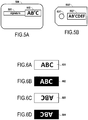
- the figure 5A represents a bank card 500 whose back has been shown.
- the bank card 500 includes a zone 501 in which a user can put his signature and a screen 502 on which a modified authentication code AB'C has been displayed.
- the figure 5B represents an authentication token 500 ′, which corresponds to an alternative embodiment of the invention.
- a token 500 ′ can be used to access services on the internet, for example to access a messaging service.
- the authentication token 500 ' has a button 501' which can be pressed to obtain a new authentication code displayed on a screen 502 '.
- the token can have a button press counter and the value associated with the counter can be used for the generation of current authentication codes.
- screen 502 ' displays a six-character code AB'CDEF.
- the display of the modified authentication code can be modified.
- the figure 6A shows the so-called normal display of an ABC code on a screen 601
- the figure 6B shows the display of the same ABC code on a 602 screen, but here the display is made so as to obtain a negative of the display obtained in the embodiment of the figure 6A .
- FIG. 6C there is shown a display 603 in which the ABC code is inverted.
- the ABC code is reversed in the same way as on the figure 6C , but we display a negative on screen 604 of what was obtained on screen 603 of the figure 6C .
- a server can ask the user (by means of an interface) how the code is displayed on their electronic device. This can confirm the status of the electronic device on the server side. In fact, this makes it possible to verify that an input error does not indicate a particular state of the electronic device.
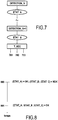
- a predefined state of the electronic device is detected, by applying one of the methods as described above, with any of the electronic devices described -C before.
- the detected state is state ETAT_A.
- T_SEC is implemented only if ETAT_A and ETAT_B are states which are incompatible (those skilled in the art will be able to determine which states are incompatible with each other for the same electronic device).
- FIG. 8 another example has been shown implemented by a server and in which a security processing can be triggered.
- ETAT_A can correspond to normal operation and if another state is detected when the device is delivered to the user, then security processing is implemented.
- the list of unacceptable states is empty while the list of acceptable states includes all the states: ETAT_A, ETAT_B, and ETAT_C .
Landscapes
- Engineering & Computer Science (AREA)
- Computer Security & Cryptography (AREA)
- Business, Economics & Management (AREA)
- Accounting & Taxation (AREA)
- Computer Networks & Wireless Communication (AREA)
- Theoretical Computer Science (AREA)
- Signal Processing (AREA)
- General Physics & Mathematics (AREA)
- Physics & Mathematics (AREA)
- General Engineering & Computer Science (AREA)
- Computer Hardware Design (AREA)
- Strategic Management (AREA)
- General Business, Economics & Management (AREA)
- Computing Systems (AREA)
- Finance (AREA)
- Software Systems (AREA)
- Microelectronics & Electronic Packaging (AREA)
- Telephonic Communication Services (AREA)
- Storage Device Security (AREA)
- Computer And Data Communications (AREA)
Applications Claiming Priority (1)
| Application Number | Priority Date | Filing Date | Title |
|---|---|---|---|
| FR1856956A FR3084493B1 (fr) | 2018-07-26 | 2018-07-26 | Procede de gestion d'un dispositif electronique delivrant des codes d'authentifications, dispositifs et serveurs associes |
Publications (2)
| Publication Number | Publication Date |
|---|---|
| EP3599564A1 true EP3599564A1 (de) | 2020-01-29 |
| EP3599564B1 EP3599564B1 (de) | 2021-07-14 |
Family
ID=65494210
Family Applications (1)
| Application Number | Title | Priority Date | Filing Date |
|---|---|---|---|
| EP19188594.6A Active EP3599564B1 (de) | 2018-07-26 | 2019-07-26 | Eine methode zur verwaltung eines elektronischen gerätes zur generierung von authentifizierungscodes, assoziierte geräte und server |
Country Status (3)
| Country | Link |
|---|---|
| EP (1) | EP3599564B1 (de) |
| ES (1) | ES2889226T3 (de) |
| FR (1) | FR3084493B1 (de) |
Citations (3)
| Publication number | Priority date | Publication date | Assignee | Title |
|---|---|---|---|---|
| US20080029607A1 (en) * | 2005-05-09 | 2008-02-07 | Mullen Jeffrey D | Dynamic credit card with magnetic stripe and embedded encoder and methods for using the same to provide a copy-proof credit card |
| US20130024372A1 (en) * | 2010-03-02 | 2013-01-24 | Spodak Douglas A | Portable e-wallet and universal card |
| EP3217343A1 (de) * | 2016-03-08 | 2017-09-13 | Gemalto Sa | Verfahren zur kompensation von taktabweichungen einer karte über einen server |
-
2018
- 2018-07-26 FR FR1856956A patent/FR3084493B1/fr not_active Expired - Fee Related
-
2019
- 2019-07-26 EP EP19188594.6A patent/EP3599564B1/de active Active
- 2019-07-26 ES ES19188594T patent/ES2889226T3/es active Active
Patent Citations (3)
| Publication number | Priority date | Publication date | Assignee | Title |
|---|---|---|---|---|
| US20080029607A1 (en) * | 2005-05-09 | 2008-02-07 | Mullen Jeffrey D | Dynamic credit card with magnetic stripe and embedded encoder and methods for using the same to provide a copy-proof credit card |
| US20130024372A1 (en) * | 2010-03-02 | 2013-01-24 | Spodak Douglas A | Portable e-wallet and universal card |
| EP3217343A1 (de) * | 2016-03-08 | 2017-09-13 | Gemalto Sa | Verfahren zur kompensation von taktabweichungen einer karte über einen server |
Also Published As
| Publication number | Publication date |
|---|---|
| ES2889226T3 (es) | 2022-01-11 |
| FR3084493A1 (fr) | 2020-01-31 |
| EP3599564B1 (de) | 2021-07-14 |
| FR3084493B1 (fr) | 2020-12-11 |
Similar Documents
| Publication | Publication Date | Title |
|---|---|---|
| EP3690686B1 (de) | Authentifizierungsverfahren, server und elektronische identitätsvorrichtung | |
| WO2017198842A1 (fr) | Dispositif de génération et d'affichage dynamique de code de sécurité | |
| EP2099089B1 (de) | Endgerät zur elektronischen Bezahlung, Konformitätsverfahren mindestens eines abnehmbaren Akkus eines solchen Endgeräts und entsprechendes Computerprogrammprodukt | |
| FR2926938A1 (fr) | Procede d'authentification et de signature d'un utilisateur aupres d'un service applicatif, utilisant un telephone mobile comme second facteur en complement et independamment d'un premier facteur | |
| EP2369780A1 (de) | Verfahren und System zur Validierung einer Transaktion, und entsprechendes Transaktionsterminal und Programm | |
| EP3599564B1 (de) | Eine methode zur verwaltung eines elektronischen gerätes zur generierung von authentifizierungscodes, assoziierte geräte und server | |
| EP3542335B1 (de) | Verfahren zur verarbeitung von transaktionsdaten, entsprechendes kommunikationsendgerät, kartenleser und programm | |
| FR2945141A1 (fr) | Procede et systeme de gestion d'une application de paiement mobile sans contact mettant en oeuvre une verification de code personnel | |
| EP3395042B1 (de) | Authentifizierungsserver zur steuerung des zugangs auf einen dienst | |
| WO2022123152A1 (fr) | Procédé de gestion de l'authentification d'un utilisateur d'un dispositif sur un équipement par mot de passe | |
| WO2020128203A1 (fr) | Procédé et système de sécurisation d'opérations, et poste utilisateur associé | |
| FR2913551A1 (fr) | Methode d'authentification mutuelle et recurrente sur internet. | |
| EP2795526A1 (de) | Elektronische vorrichtung zum speichern von vertraulichen daten | |
| FR3093225A1 (fr) | Procédé de gestion d’accès d’un utilisateur à un service vocal, dispositif, système et programmes correspondants | |
| EP3032450B1 (de) | Verfahren zur kontrolle der authentizität eines zahlungsterminals, und so gesichertes terminal | |
| FR3148658A1 (fr) | Procédé de mise en œuvre d’une transaction relative au transfert de monnaie numérique d’un premier portefeuille électronique à un deuxième portefeuille électronique. | |
| WO2017005644A1 (fr) | Procédé et système de contrôle d'accès à un service via un média mobile sans intermediaire de confiance | |
| WO2018104091A1 (fr) | Procédé de sécurisation de saisie de données, terminal de communication et programme correspondant | |
| FR3024793A1 (fr) | Methode de gestion de transaction par reconnaissance d'immatriculation d'un vehicule | |
| EP3690685A1 (de) | Authentifizierungsverfahren eines benutzers und entsprechende vorrichtung | |
| WO2013093330A1 (fr) | Procede et dispositif de securisation d'une application informatique | |
| FR2871914A1 (fr) | Systeme de paiement par suite de jetons | |
| WO2017001762A1 (fr) | Procédé d'enregistrement mis en œuvre par un microcircuit, et dispositif correspondant | |
| WO2000070842A2 (fr) | Procede de gestion de donnees par un module de securite et module de securite | |
| FR3015077A1 (fr) | Procede de controle d'une identite d'un terminal de paiement et terminal ainsi securise. |
Legal Events
| Date | Code | Title | Description |
|---|---|---|---|
| PUAI | Public reference made under article 153(3) epc to a published international application that has entered the european phase |
Free format text: ORIGINAL CODE: 0009012 |
|
| STAA | Information on the status of an ep patent application or granted ep patent |
Free format text: STATUS: THE APPLICATION HAS BEEN PUBLISHED |
|
| AK | Designated contracting states |
Kind code of ref document: A1 Designated state(s): AL AT BE BG CH CY CZ DE DK EE ES FI FR GB GR HR HU IE IS IT LI LT LU LV MC MK MT NL NO PL PT RO RS SE SI SK SM TR |
|
| AX | Request for extension of the european patent |
Extension state: BA ME |
|
| STAA | Information on the status of an ep patent application or granted ep patent |
Free format text: STATUS: REQUEST FOR EXAMINATION WAS MADE |
|
| 17P | Request for examination filed |
Effective date: 20200710 |
|
| RBV | Designated contracting states (corrected) |
Designated state(s): AL AT BE BG CH CY CZ DE DK EE ES FI FR GB GR HR HU IE IS IT LI LT LU LV MC MK MT NL NO PL PT RO RS SE SI SK SM TR |
|
| GRAP | Despatch of communication of intention to grant a patent |
Free format text: ORIGINAL CODE: EPIDOSNIGR1 |
|
| STAA | Information on the status of an ep patent application or granted ep patent |
Free format text: STATUS: GRANT OF PATENT IS INTENDED |
|
| RIC1 | Information provided on ipc code assigned before grant |
Ipc: H04L 9/32 20060101ALI20210112BHEP Ipc: G06Q 20/34 20120101ALI20210112BHEP Ipc: G06F 21/34 20130101AFI20210112BHEP Ipc: H04L 9/08 20060101ALI20210112BHEP Ipc: H04L 29/06 20060101ALI20210112BHEP Ipc: G06Q 20/38 20120101ALI20210112BHEP Ipc: G06Q 20/40 20120101ALI20210112BHEP |
|
| INTG | Intention to grant announced |
Effective date: 20210126 |
|
| RIN1 | Information on inventor provided before grant (corrected) |
Inventor name: LESEIGNEUR, GILLES Inventor name: DEPRUN, JEAN-FRANCOIS |
|
| GRAS | Grant fee paid |
Free format text: ORIGINAL CODE: EPIDOSNIGR3 |
|
| GRAA | (expected) grant |
Free format text: ORIGINAL CODE: 0009210 |
|
| STAA | Information on the status of an ep patent application or granted ep patent |
Free format text: STATUS: THE PATENT HAS BEEN GRANTED |
|
| AK | Designated contracting states |
Kind code of ref document: B1 Designated state(s): AL AT BE BG CH CY CZ DE DK EE ES FI FR GB GR HR HU IE IS IT LI LT LU LV MC MK MT NL NO PL PT RO RS SE SI SK SM TR |
|
| REG | Reference to a national code |
Ref country code: GB Ref legal event code: FG4D Free format text: NOT ENGLISH |
|
| REG | Reference to a national code |
Ref country code: IE Ref legal event code: FG4D Free format text: LANGUAGE OF EP DOCUMENT: FRENCH |
|
| REG | Reference to a national code |
Ref country code: DE Ref legal event code: R096 Ref document number: 602019006066 Country of ref document: DE |
|
| REG | Reference to a national code |
Ref country code: AT Ref legal event code: REF Ref document number: 1411224 Country of ref document: AT Kind code of ref document: T Effective date: 20210815 |
|
| REG | Reference to a national code |
Ref country code: LT Ref legal event code: MG9D |
|
| REG | Reference to a national code |
Ref country code: NL Ref legal event code: MP Effective date: 20210714 |
|
| REG | Reference to a national code |
Ref country code: ES Ref legal event code: FG2A Ref document number: 2889226 Country of ref document: ES Kind code of ref document: T3 Effective date: 20220111 |
|
| PG25 | Lapsed in a contracting state [announced via postgrant information from national office to epo] |
Ref country code: LT Free format text: LAPSE BECAUSE OF FAILURE TO SUBMIT A TRANSLATION OF THE DESCRIPTION OR TO PAY THE FEE WITHIN THE PRESCRIBED TIME-LIMIT Effective date: 20210714 Ref country code: BG Free format text: LAPSE BECAUSE OF FAILURE TO SUBMIT A TRANSLATION OF THE DESCRIPTION OR TO PAY THE FEE WITHIN THE PRESCRIBED TIME-LIMIT Effective date: 20211014 Ref country code: HR Free format text: LAPSE BECAUSE OF FAILURE TO SUBMIT A TRANSLATION OF THE DESCRIPTION OR TO PAY THE FEE WITHIN THE PRESCRIBED TIME-LIMIT Effective date: 20210714 Ref country code: PT Free format text: LAPSE BECAUSE OF FAILURE TO SUBMIT A TRANSLATION OF THE DESCRIPTION OR TO PAY THE FEE WITHIN THE PRESCRIBED TIME-LIMIT Effective date: 20211115 Ref country code: NO Free format text: LAPSE BECAUSE OF FAILURE TO SUBMIT A TRANSLATION OF THE DESCRIPTION OR TO PAY THE FEE WITHIN THE PRESCRIBED TIME-LIMIT Effective date: 20211014 Ref country code: NL Free format text: LAPSE BECAUSE OF FAILURE TO SUBMIT A TRANSLATION OF THE DESCRIPTION OR TO PAY THE FEE WITHIN THE PRESCRIBED TIME-LIMIT Effective date: 20210714 Ref country code: RS Free format text: LAPSE BECAUSE OF FAILURE TO SUBMIT A TRANSLATION OF THE DESCRIPTION OR TO PAY THE FEE WITHIN THE PRESCRIBED TIME-LIMIT Effective date: 20210714 Ref country code: SE Free format text: LAPSE BECAUSE OF FAILURE TO SUBMIT A TRANSLATION OF THE DESCRIPTION OR TO PAY THE FEE WITHIN THE PRESCRIBED TIME-LIMIT Effective date: 20210714 Ref country code: FI Free format text: LAPSE BECAUSE OF FAILURE TO SUBMIT A TRANSLATION OF THE DESCRIPTION OR TO PAY THE FEE WITHIN THE PRESCRIBED TIME-LIMIT Effective date: 20210714 |
|
| PG25 | Lapsed in a contracting state [announced via postgrant information from national office to epo] |
Ref country code: PL Free format text: LAPSE BECAUSE OF FAILURE TO SUBMIT A TRANSLATION OF THE DESCRIPTION OR TO PAY THE FEE WITHIN THE PRESCRIBED TIME-LIMIT Effective date: 20210714 Ref country code: LV Free format text: LAPSE BECAUSE OF FAILURE TO SUBMIT A TRANSLATION OF THE DESCRIPTION OR TO PAY THE FEE WITHIN THE PRESCRIBED TIME-LIMIT Effective date: 20210714 Ref country code: GR Free format text: LAPSE BECAUSE OF FAILURE TO SUBMIT A TRANSLATION OF THE DESCRIPTION OR TO PAY THE FEE WITHIN THE PRESCRIBED TIME-LIMIT Effective date: 20211015 |
|
| REG | Reference to a national code |
Ref country code: BE Ref legal event code: MM Effective date: 20210731 |
|
| REG | Reference to a national code |
Ref country code: DE Ref legal event code: R097 Ref document number: 602019006066 Country of ref document: DE |
|
| PG25 | Lapsed in a contracting state [announced via postgrant information from national office to epo] |
Ref country code: DK Free format text: LAPSE BECAUSE OF FAILURE TO SUBMIT A TRANSLATION OF THE DESCRIPTION OR TO PAY THE FEE WITHIN THE PRESCRIBED TIME-LIMIT Effective date: 20210714 |
|
| PLBE | No opposition filed within time limit |
Free format text: ORIGINAL CODE: 0009261 |
|
| STAA | Information on the status of an ep patent application or granted ep patent |
Free format text: STATUS: NO OPPOSITION FILED WITHIN TIME LIMIT |
|
| PG25 | Lapsed in a contracting state [announced via postgrant information from national office to epo] |
Ref country code: SM Free format text: LAPSE BECAUSE OF FAILURE TO SUBMIT A TRANSLATION OF THE DESCRIPTION OR TO PAY THE FEE WITHIN THE PRESCRIBED TIME-LIMIT Effective date: 20210714 Ref country code: SK Free format text: LAPSE BECAUSE OF FAILURE TO SUBMIT A TRANSLATION OF THE DESCRIPTION OR TO PAY THE FEE WITHIN THE PRESCRIBED TIME-LIMIT Effective date: 20210714 Ref country code: RO Free format text: LAPSE BECAUSE OF FAILURE TO SUBMIT A TRANSLATION OF THE DESCRIPTION OR TO PAY THE FEE WITHIN THE PRESCRIBED TIME-LIMIT Effective date: 20210714 Ref country code: MC Free format text: LAPSE BECAUSE OF FAILURE TO SUBMIT A TRANSLATION OF THE DESCRIPTION OR TO PAY THE FEE WITHIN THE PRESCRIBED TIME-LIMIT Effective date: 20210714 Ref country code: LU Free format text: LAPSE BECAUSE OF NON-PAYMENT OF DUE FEES Effective date: 20210726 Ref country code: EE Free format text: LAPSE BECAUSE OF FAILURE TO SUBMIT A TRANSLATION OF THE DESCRIPTION OR TO PAY THE FEE WITHIN THE PRESCRIBED TIME-LIMIT Effective date: 20210714 Ref country code: CZ Free format text: LAPSE BECAUSE OF FAILURE TO SUBMIT A TRANSLATION OF THE DESCRIPTION OR TO PAY THE FEE WITHIN THE PRESCRIBED TIME-LIMIT Effective date: 20210714 Ref country code: AL Free format text: LAPSE BECAUSE OF FAILURE TO SUBMIT A TRANSLATION OF THE DESCRIPTION OR TO PAY THE FEE WITHIN THE PRESCRIBED TIME-LIMIT Effective date: 20210714 |
|
| 26N | No opposition filed |
Effective date: 20220419 |
|
| PG25 | Lapsed in a contracting state [announced via postgrant information from national office to epo] |
Ref country code: IT Free format text: LAPSE BECAUSE OF FAILURE TO SUBMIT A TRANSLATION OF THE DESCRIPTION OR TO PAY THE FEE WITHIN THE PRESCRIBED TIME-LIMIT Effective date: 20210714 Ref country code: IE Free format text: LAPSE BECAUSE OF NON-PAYMENT OF DUE FEES Effective date: 20210726 Ref country code: BE Free format text: LAPSE BECAUSE OF NON-PAYMENT OF DUE FEES Effective date: 20210731 |
|
| PGFP | Annual fee paid to national office [announced via postgrant information from national office to epo] |
Ref country code: FR Payment date: 20220622 Year of fee payment: 4 |
|
| PGFP | Annual fee paid to national office [announced via postgrant information from national office to epo] |
Ref country code: ES Payment date: 20220801 Year of fee payment: 4 Ref country code: DE Payment date: 20220621 Year of fee payment: 4 |
|
| REG | Reference to a national code |
Ref country code: CH Ref legal event code: PL |
|
| PG25 | Lapsed in a contracting state [announced via postgrant information from national office to epo] |
Ref country code: LI Free format text: LAPSE BECAUSE OF NON-PAYMENT OF DUE FEES Effective date: 20220731 Ref country code: CH Free format text: LAPSE BECAUSE OF NON-PAYMENT OF DUE FEES Effective date: 20220731 |
|
| P01 | Opt-out of the competence of the unified patent court (upc) registered |
Effective date: 20230428 |
|
| PG25 | Lapsed in a contracting state [announced via postgrant information from national office to epo] |
Ref country code: CY Free format text: LAPSE BECAUSE OF FAILURE TO SUBMIT A TRANSLATION OF THE DESCRIPTION OR TO PAY THE FEE WITHIN THE PRESCRIBED TIME-LIMIT Effective date: 20210714 |
|
| PG25 | Lapsed in a contracting state [announced via postgrant information from national office to epo] |
Ref country code: HU Free format text: LAPSE BECAUSE OF FAILURE TO SUBMIT A TRANSLATION OF THE DESCRIPTION OR TO PAY THE FEE WITHIN THE PRESCRIBED TIME-LIMIT; INVALID AB INITIO Effective date: 20190726 |
|
| REG | Reference to a national code |
Ref country code: DE Ref legal event code: R119 Ref document number: 602019006066 Country of ref document: DE |
|
| GBPC | Gb: european patent ceased through non-payment of renewal fee |
Effective date: 20230726 |
|
| PG25 | Lapsed in a contracting state [announced via postgrant information from national office to epo] |
Ref country code: MK Free format text: LAPSE BECAUSE OF FAILURE TO SUBMIT A TRANSLATION OF THE DESCRIPTION OR TO PAY THE FEE WITHIN THE PRESCRIBED TIME-LIMIT Effective date: 20210714 Ref country code: DE Free format text: LAPSE BECAUSE OF NON-PAYMENT OF DUE FEES Effective date: 20240201 Ref country code: GB Free format text: LAPSE BECAUSE OF NON-PAYMENT OF DUE FEES Effective date: 20230726 |
|
| PG25 | Lapsed in a contracting state [announced via postgrant information from national office to epo] |
Ref country code: FR Free format text: LAPSE BECAUSE OF NON-PAYMENT OF DUE FEES Effective date: 20230731 |
|
| PG25 | Lapsed in a contracting state [announced via postgrant information from national office to epo] |
Ref country code: TR Free format text: LAPSE BECAUSE OF FAILURE TO SUBMIT A TRANSLATION OF THE DESCRIPTION OR TO PAY THE FEE WITHIN THE PRESCRIBED TIME-LIMIT Effective date: 20210714 |
|
| REG | Reference to a national code |
Ref country code: ES Ref legal event code: FD2A Effective date: 20240827 |
|
| PG25 | Lapsed in a contracting state [announced via postgrant information from national office to epo] |
Ref country code: MT Free format text: LAPSE BECAUSE OF FAILURE TO SUBMIT A TRANSLATION OF THE DESCRIPTION OR TO PAY THE FEE WITHIN THE PRESCRIBED TIME-LIMIT Effective date: 20210714 |
|
| PG25 | Lapsed in a contracting state [announced via postgrant information from national office to epo] |
Ref country code: ES Free format text: LAPSE BECAUSE OF NON-PAYMENT OF DUE FEES Effective date: 20230727 |
|
| PG25 | Lapsed in a contracting state [announced via postgrant information from national office to epo] |
Ref country code: ES Free format text: LAPSE BECAUSE OF NON-PAYMENT OF DUE FEES Effective date: 20230727 |
|
| REG | Reference to a national code |
Ref country code: AT Ref legal event code: MM01 Ref document number: 1411224 Country of ref document: AT Kind code of ref document: T Effective date: 20240726 Ref country code: AT Ref legal event code: UEP Ref document number: 1411224 Country of ref document: AT Kind code of ref document: T Effective date: 20210714 |
|
| PG25 | Lapsed in a contracting state [announced via postgrant information from national office to epo] |
Ref country code: AT Free format text: LAPSE BECAUSE OF NON-PAYMENT OF DUE FEES Effective date: 20240726 |
|
| PGFP | Annual fee paid to national office [announced via postgrant information from national office to epo] |
Ref country code: AT Payment date: 20260410 Year of fee payment: 5 |