EP3600452B1 - Makrocyclische komplexe von alpha-emittierenden radionukliden und deren verwendung in der gezielten strahlentherapie von krebs - Google Patents
Makrocyclische komplexe von alpha-emittierenden radionukliden und deren verwendung in der gezielten strahlentherapie von krebs Download PDFInfo
- Publication number
- EP3600452B1 EP3600452B1 EP18775715.8A EP18775715A EP3600452B1 EP 3600452 B1 EP3600452 B1 EP 3600452B1 EP 18775715 A EP18775715 A EP 18775715A EP 3600452 B1 EP3600452 B1 EP 3600452B1
- Authority
- EP
- European Patent Office
- Prior art keywords
- groups
- macropa
- substituted
- dota
- group
- Prior art date
- Legal status (The legal status is an assumption and is not a legal conclusion. Google has not performed a legal analysis and makes no representation as to the accuracy of the status listed.)
- Active
Links
Images


Classifications
-
- C—CHEMISTRY; METALLURGY
- C07—ORGANIC CHEMISTRY
- C07D—HETEROCYCLIC COMPOUNDS
- C07D405/00—Heterocyclic compounds containing both one or more hetero rings having oxygen atoms as the only ring hetero atoms, and one or more rings having nitrogen as the only ring hetero atom
- C07D405/14—Heterocyclic compounds containing both one or more hetero rings having oxygen atoms as the only ring hetero atoms, and one or more rings having nitrogen as the only ring hetero atom containing three or more hetero rings
-
- A—HUMAN NECESSITIES
- A61—MEDICAL OR VETERINARY SCIENCE; HYGIENE
- A61K—PREPARATIONS FOR MEDICAL, DENTAL OR TOILETRY PURPOSES
- A61K51/00—Preparations containing radioactive substances for use in therapy or testing in vivo
- A61K51/02—Preparations containing radioactive substances for use in therapy or testing in vivo characterised by the carrier, i.e. characterised by the agent or material covalently linked or complexing the radioactive nucleus
- A61K51/04—Organic compounds
-
- A—HUMAN NECESSITIES
- A61—MEDICAL OR VETERINARY SCIENCE; HYGIENE
- A61K—PREPARATIONS FOR MEDICAL, DENTAL OR TOILETRY PURPOSES
- A61K51/00—Preparations containing radioactive substances for use in therapy or testing in vivo
- A61K51/02—Preparations containing radioactive substances for use in therapy or testing in vivo characterised by the carrier, i.e. characterised by the agent or material covalently linked or complexing the radioactive nucleus
- A61K51/04—Organic compounds
- A61K51/0474—Organic compounds complexes or complex-forming compounds, i.e. wherein a radioactive metal (e.g. 111In3+) is complexed or chelated by, e.g. a N2S2, N3S, NS3, N4 chelating group
- A61K51/0482—Organic compounds complexes or complex-forming compounds, i.e. wherein a radioactive metal (e.g. 111In3+) is complexed or chelated by, e.g. a N2S2, N3S, NS3, N4 chelating group chelates from cyclic ligands, e.g. DOTA
-
- A—HUMAN NECESSITIES
- A61—MEDICAL OR VETERINARY SCIENCE; HYGIENE
- A61K—PREPARATIONS FOR MEDICAL, DENTAL OR TOILETRY PURPOSES
- A61K51/00—Preparations containing radioactive substances for use in therapy or testing in vivo
- A61K51/02—Preparations containing radioactive substances for use in therapy or testing in vivo characterised by the carrier, i.e. characterised by the agent or material covalently linked or complexing the radioactive nucleus
- A61K51/04—Organic compounds
- A61K51/08—Peptides, e.g. proteins, carriers being peptides, polyamino acids, proteins
- A61K51/10—Antibodies or immunoglobulins; Fragments thereof, the carrier being an antibody, an immunoglobulin or a fragment thereof, e.g. a camelised human single domain antibody or the Fc fragment of an antibody
- A61K51/1045—Antibodies or immunoglobulins; Fragments thereof, the carrier being an antibody, an immunoglobulin or a fragment thereof, e.g. a camelised human single domain antibody or the Fc fragment of an antibody against animal or human tumor cells or tumor cell determinants
- A61K51/1051—Antibodies or immunoglobulins; Fragments thereof, the carrier being an antibody, an immunoglobulin or a fragment thereof, e.g. a camelised human single domain antibody or the Fc fragment of an antibody against animal or human tumor cells or tumor cell determinants the tumor cell being from breast, e.g. the antibody being herceptin
-
- A—HUMAN NECESSITIES
- A61—MEDICAL OR VETERINARY SCIENCE; HYGIENE
- A61K—PREPARATIONS FOR MEDICAL, DENTAL OR TOILETRY PURPOSES
- A61K2121/00—Preparations for use in therapy
-
- A—HUMAN NECESSITIES
- A61—MEDICAL OR VETERINARY SCIENCE; HYGIENE
- A61K—PREPARATIONS FOR MEDICAL, DENTAL OR TOILETRY PURPOSES
- A61K51/00—Preparations containing radioactive substances for use in therapy or testing in vivo
- A61K51/02—Preparations containing radioactive substances for use in therapy or testing in vivo characterised by the carrier, i.e. characterised by the agent or material covalently linked or complexing the radioactive nucleus
- A61K51/04—Organic compounds
- A61K51/08—Peptides, e.g. proteins, carriers being peptides, polyamino acids, proteins
- A61K51/10—Antibodies or immunoglobulins; Fragments thereof, the carrier being an antibody, an immunoglobulin or a fragment thereof, e.g. a camelised human single domain antibody or the Fc fragment of an antibody
- A61K51/1093—Antibodies or immunoglobulins; Fragments thereof, the carrier being an antibody, an immunoglobulin or a fragment thereof, e.g. a camelised human single domain antibody or the Fc fragment of an antibody conjugates with carriers being antibodies
- A61K51/1096—Antibodies or immunoglobulins; Fragments thereof, the carrier being an antibody, an immunoglobulin or a fragment thereof, e.g. a camelised human single domain antibody or the Fc fragment of an antibody conjugates with carriers being antibodies radioimmunotoxins, i.e. conjugates being structurally as defined in A61K51/1093, and including a radioactive nucleus for use in radiotherapeutic applications
-
- A—HUMAN NECESSITIES
- A61—MEDICAL OR VETERINARY SCIENCE; HYGIENE
- A61P—SPECIFIC THERAPEUTIC ACTIVITY OF CHEMICAL COMPOUNDS OR MEDICINAL PREPARATIONS
- A61P35/00—Antineoplastic agents
Definitions
- the present technology generally relates to macrocyclic complexes of alpha-emitting radionuclides.
- references to a certain element such as hydrogen or H is meant to include all isotopes of that element.
- an R group is defined to include hydrogen or H, it also includes deuterium and tritium.
- Compounds comprising radioisotopes such as tritium, C 14 , P 32 and S 35 are thus within the scope of the present technology. Procedures for inserting such labels into the compounds of the present technology will be readily apparent to those skilled in the art based on the disclosure herein.
- substituted refers to an organic group as defined below (e.g., an alkyl group) in which one or more bonds to a hydrogen atom contained therein are replaced by a bond to non-hydrogen or non-carbon atoms.
- Substituted groups also include groups in which one or more bonds to a carbon(s) or hydrogen(s) atom are replaced by one or more bonds, including double or triple bonds, to a heteroatom.
- a substituted group is substituted with one or more substituents, unless otherwise specified.
- a substituted group is substituted with 1, 2, 3, 4, 5, or 6 substituents.
- substituent groups include: halogens (i.e., F, Cl, Br, and I); hydroxyls; alkoxy, alkenoxy, aryloxy, aralkyloxy, heterocyclyl, heterocyclylalkyl, heterocyclyloxy, and heterocyclylalkoxy groups; carbonyls (oxo); carboxylates; esters; urethanes; oximes; hydroxylamines; alkoxyamines; aralkoxyamines; thiols; sulfides; sulfoxides; sulfones; sulfonyls; pentafluorosulfanyl (i.e., SF 5 ), sulfonamides; amines; N-oxides; hydrazines; hydrazides; hydrazones; azides; amides; ureas; amidines; guanidines; enamines; imides; isocyanates; isothi
- Substituted ring groups such as substituted cycloalkyl, aryl, heterocyclyl and heteroaryl groups also include rings and ring systems in which a bond to a hydrogen atom is replaced with a bond to a carbon atom. Therefore, substituted cycloalkyl, aryl, heterocyclyl and heteroaryl groups may also be substituted with substituted or unsubstituted alkyl, alkenyl, and alkynyl groups as defined below.
- C m -C n such as C 1 -C 12 , C 1 -C 8 , or C 1 -C 6 when used before a group refers to that group containing m to n carbon atoms.
- Alkyl groups include straight chain and branched chain alkyl groups having from 1 to 12 carbon atoms, and typically from 1 to 10 carbons or, in some embodiments, from 1 to 8, 1 to 6, or 1 to 4 carbon atoms.
- straight chain alkyl groups include groups such as methyl, ethyl, n-propyl, n-butyl, n-pentyl, n-hexyl, n-heptyl, and n-octyl groups.
- branched alkyl groups include, but are not limited to, isopropyl, iso-butyl, sec-butyl, tert-butyl, neopentyl, isopentyl, and 2,2-dimethylpropyl groups.
- Alkyl groups may be substituted or unsubstituted. Representative substituted alkyl groups may be substituted one or more times with substituents such as those listed above, and include without limitation haloalkyl (e.g., trifluoromethyl), hydroxyalkyl, thioalkyl, aminoalkyl, alkylaminoalkyl, dialkylaminoalkyl, alkoxyalkyl, carboxyalkyl, and the like.
- Cycloalkyl groups include mono-, bi- or tricyclic alkyl groups having from 3 to 12 carbon atoms in the ring(s), or, in some embodiments, 3 to 10, 3 to 8, or 3 to 4, 5, or 6 carbon atoms.
- Exemplary monocyclic cycloalkyl groups include, but not limited to, cyclopropyl, cyclobutyl, cyclopentyl, cyclohexyl, cycloheptyl, and cyclooctyl groups.
- the cycloalkyl group has 3 to 8 ring members, whereas in other embodiments the number of ring carbon atoms range from 3 to 5, 3 to 6, or 3 to 7.
- Bi- and tricyclic ring systems include both bridged cycloalkyl groups and fused rings, such as, but not limited to, bicyclo[2. 1. 1]hexane, adamantyl, decalinyl, and the like.
- Cycloalkyl groups may be substituted or unsubstituted. Substituted cycloalkyl groups may be substituted one or more times with, non-hydrogen and non-carbon groups as defined above. However, substituted cycloalkyl groups also include rings that are substituted with straight or branched chain alkyl groups as defined above.
- Representative substituted cycloalkyl groups may be mono-substituted or substituted more than once, such as, but not limited to, 2,2-, 2,3-, 2,4- 2,5- or 2,6-disubstituted cyclohexyl groups, which may be substituted with substituents such as those listed above.
- Cycloalkylalkyl groups are alkyl groups as defined above in which a hydrogen or carbon bond of an alkyl group is replaced with a bond to a cycloalkyl group as defined above.
- cycloalkylalkyl groups have from 4 to 16 carbon atoms, 4 to 12 carbon atoms, and typically 4 to 10 carbon atoms.
- Cycloalkylalkyl groups may be substituted or unsubstituted. Substituted cycloalkylalkyl groups may be substituted at the alkyl, the cycloalkyl or both the alkyl and cycloalkyl portions of the group.
- Representative substituted cycloalkylalkyl groups may be mono-substituted or substituted more than once, such as, but not limited to, mono-, di- or tri-substituted with substituents such as those listed above.
- Alkenyl groups may be substituted or unsubstituted. Representative substituted alkenyl groups may be mono-substituted or substituted more than once, such as, but not limited to, mono-, di- or tri-substituted with substituents such as those listed above.
- Cycloalkenyl groups include cycloalkyl groups as defined above, having at least one double bond between two carbon atoms. Cycloalkenyl groups may be substituted or unsubstituted. In some embodiments the cycloalkenyl group may have one, two or three double bonds but does not include aromatic compounds. Cycloalkenyl groups have from 4 to 14 carbon atoms, or, in some embodiments, 5 to 14 carbon atoms, 5 to 10 carbon atoms, or even 5, 6, 7, or 8 carbon atoms. Examples of cycloalkenyl groups include cyclohexenyl, cyclopentenyl, cyclohexadienyl, cyclobutadienyl, and cyclopentadienyl.
- Cycloalkenylalkyl groups are alkyl groups as defined above in which a hydrogen or carbon bond of the alkyl group is replaced with a bond to a cycloalkenyl group as defined above. Cycloalkenylalkyl groups may be substituted or unsubstituted. Substituted cycloalkenylalkyl groups may be substituted at the alkyl, the cycloalkenyl or both the alkyl and cycloalkenyl portions of the group. Representative substituted cycloalkenylalkyl groups may be substituted one or more times with substituents such as those listed above.
- Alkynyl groups include straight and branched chain alkyl groups as defined above, except that at least one triple bond exists between two carbon atoms.
- Alkynyl groups have from 2 to 12 carbon atoms, and typically from 2 to 10 carbons or, in some embodiments, from 2 to 8, 2 to 6, or 2 to 4 carbon atoms.
- the alkynyl group has one, two, or three carbon-carbon triple bonds. Examples include, but are not limited to - C ⁇ CH, -C ⁇ CCH 3 , -CH 2 C ⁇ CCH 3 , -C ⁇ CCH 2 CH(CH 2 CH 3 ) 2 , among others.
- Alkynyl groups may be substituted or unsubstituted. Representative substituted alkynyl groups may be mono-substituted or substituted more than once, such as, but not limited to, mono-, di- or tri-substituted with substituents such as those listed above.
- Aryl groups are cyclic aromatic hydrocarbons that do not contain heteroatoms.
- Aryl groups herein include monocyclic, bicyclic and tricyclic ring systems.
- aryl groups include, but are not limited to, phenyl, azulenyl, heptalenyl, biphenyl, fluorenyl, phenanthrenyl, anthracenyl, indenyl, indanyl, pentalenyl, and naphthyl groups.
- aryl groups contain 6-14 carbons, and in others from 6 to 12 or even 6-10 carbon atoms in the ring portions of the groups.
- the aryl groups are phenyl or naphthyl.
- Aryl groups may be substituted or unsubstituted.
- aryl groups includes groups containing fused rings, such as fused aromatic-aliphatic ring systems (e.g., indanyl, tetrahydronaphthyl, and the like).
- Representative substituted aryl groups may be mono-substituted or substituted more than once.
- monosubstituted aryl groups include, but are not limited to, 2-, 3-, 4-, 5-, or 6-substituted phenyl or naphthyl groups, which may be substituted with substituents such as those listed above.
- Aralkyl groups are alkyl groups as defined above in which a hydrogen or carbon bond of an alkyl group is replaced with a bond to an aryl group as defined above.
- aralkyl groups contain 7 to 16 carbon atoms, 7 to 14 carbon atoms, or 7 to 10 carbon atoms.
- Aralkyl groups may be substituted or unsubstituted. Substituted aralkyl groups may be substituted at the alkyl, the aryl or both the alkyl and aryl portions of the group.
- Representative aralkyl groups include but are not limited to benzyl and phenethyl groups and fused (cycloalkylaryl)alkyl groups such as 4-indanylethyl.
- Representative substituted aralkyl groups may be substituted one or more times with substituents such as those listed above.
- Heterocyclyl groups include aromatic (also referred to as heteroaryl) and non-aromatic ring compounds containing 3 or more ring members, of which one or more is a heteroatom such as, but not limited to, N, O, and S.
- the heterocyclyl group contains 1, 2, 3 or 4 heteroatoms.
- heterocyclyl groups include mono-, bi- and tricyclic rings having 3 to 16 ring members, whereas other such groups have 3 to 6, 3 to 10, 3 to 12, or 3 to 14 ring members.
- Heterocyclyl groups encompass aromatic, partially unsaturated and saturated ring systems, such as, for example, imidazolyl, imidazolinyl and imidazolidinyl groups.
- heterocyclyl group includes fused ring species including those comprising fused aromatic and non-aromatic groups, such as, for example, benzotriazolyl, 2,3-dihydrobenzo[1,4]dioxinyl, and benzo[1,3]dioxolyl.
- the phrase also includes bridged polycyclic ring systems containing a heteroatom such as, but not limited to, quinuclidyl. Heterocyclyl groups may be substituted or unsubstituted.
- Heterocyclyl groups include, but are not limited to, aziridinyl, azetidinyl, pyrrolidinyl, imidazolidinyl, pyrazolidinyl, thiazolidinyl, tetrahydrothiophenyl, tetrahydrofuranyl, dioxolyl, furanyl, thiophenyl, pyrrolyl, pyrrolinyl, imidazolyl, imidazolinyl, pyrazolyl, pyrazolinyl, triazolyl, tetrazolyl, oxazolyl, isoxazolyl, thiazolyl, thiazolinyl, isothiazolyl, thiadiazolyl, oxadiazolyl, piperidyl, piperazinyl, morpholinyl, thiomorpholinyl, tetrahydropyranyl, tetrahydrothiopyranyl,
- substituted heterocyclyl groups may be mono-substituted or substituted more than once, such as, but not limited to, pyridyl or morpholinyl groups, which are 2-, 3-, 4-, 5-, or 6-substituted, or disubstituted with various substituents such as those listed above.
- Heteroaryl groups are aromatic ring compounds containing 5 or more ring members, of which, one or more is a heteroatom such as, but not limited to, N, O, and S.
- Heteroaryl groups include, but are not limited to, groups such as pyrrolyl, pyrazolyl, triazolyl, tetrazolyl, oxazolyl, isoxazolyl, thiazolyl, pyridinyl, pyridazinyl, pyrimidinyl, pyrazinyl, thiophenyl, benzothiophenyl, furanyl, benzofuranyl, indolyl, azaindolyl (pyrrolopyridinyl), indazolyl, benzimidazolyl, imidazopyridinyl (azabenzimidazolyl), pyrazolopyridinyl, triazolopyridinyl, benzotriazolyl, benzoxazolyl, benzo
- Heteroaryl groups include fused ring compounds in which all rings are aromatic such as indolyl groups and include fused ring compounds in which only one of the rings is aromatic, such as 2,3-dihydro indolyl groups. Heteroaryl groups may be substituted or unsubstituted. Thus, the phrase "heteroaryl groups" includes fused ring compounds as well as includes heteroaryl groups that have other groups bonded to one of the ring members, such as alkyl groups. Representative substituted heteroaryl groups may be substituted one or more times with various substituents such as those listed above.
- Heterocyclylalkyl groups are alkyl groups as defined above in which a hydrogen or carbon bond of an alkyl group is replaced with a bond to a heterocyclyl group as defined above. Heterocyclylalkyl groups may be substituted or unsubstituted. Substituted heterocyclylalkyl groups may be substituted at the alkyl, the heterocyclyl or both the alkyl and heterocyclyl portions of the group.
- heterocyclyl alkyl groups include, but are not limited to, morpholin-4-yl-ethyl, furan-2-yl-methyl, imidazol-4-yl-methyl, pyridin-3-yl-methyl, tetrahydrofuran-2-yl-ethyl, and indol-2-yl-propyl.
- Representative substituted heterocyclylalkyl groups may be substituted one or more times with substituents such as those listed above.
- Heteroaralkyl groups are alkyl groups as defined above in which a hydrogen or carbon bond of an alkyl group is replaced with a bond to a heteroaryl group as defined above. Heteroaralkyl groups may be substituted or unsubstituted. Substituted heteroaralkyl groups may be substituted at the alkyl, the heteroaryl or both the alkyl and heteroaryl portions of the group. Representative substituted heteroaralkyl groups may be substituted one or more times with substituents such as those listed above.
- Groups described herein having two or more points of attachment i.e., divalent, trivalent, or polyvalent
- divalent alkyl groups are alkylene groups
- divalent aryl groups are arylene groups
- divalent heteroaryl groups are divalent heteroarylene groups, and so forth.
- Substituted groups having a single point of attachment to the compound of the present technology are not referred to using the "ene" designation.
- chloroethyl is not referred to herein as chloroethylene.
- Such groups may further be substituted or unsubstituted.
- Alkoxy groups are hydroxyl groups (-OH) in which the bond to the hydrogen atom is replaced by a bond to a carbon atom of a substituted or unsubstituted alkyl group as defined above.
- linear alkoxy groups include but are not limited to methoxy, ethoxy, propoxy, butoxy, pentoxy, hexoxy, and the like.
- branched alkoxy groups include but are not limited to isopropoxy, sec-butoxy, tert-butoxy, isopentoxy, isohexoxy, and the like.
- cycloalkoxy groups include but are not limited to cyclopropyloxy, cyclobutyloxy, cyclopentyloxy, cyclohexyloxy, and the like.
- Alkoxy groups may be substituted or unsubstituted.
- Representative substituted alkoxy groups may be substituted one or more times with substituents such as those listed above.
- alkanoyl and alkanoyloxy can refer, respectively, to - C(O)-alkyl and -O-C(O)-alkyl groups, where in some embodiments the alkanoyl or alkanoyloxy groups each contain 2-5 carbon atoms.
- aryloyl and aryloyloxy respectively refer to -C(O)-aryl and -O-C(O)-aryl groups.
- aryloxy and arylalkoxy refer to, respectively, a substituted or unsubstituted aryl group bonded to an oxygen atom and a substituted or unsubstituted aralkyl group bonded to the oxygen atom at the alkyl. Examples include but are not limited to phenoxy, naphthyloxy, and benzyloxy. Representative substituted aryloxy and arylalkoxy groups may be substituted one or more times with substituents such as those listed above.
- carboxylic acid refers to a compound with a -C(O)OH group.
- carboxylate refers to a -C(O)O - group.
- a “protected carboxylate” refers to a -C(O)O-G where G is a carboxylate protecting group.
- Carboxylate protecting groups are well known to one of ordinary skill in the art. An extensive list of protecting groups for the carboxylate group functionality may be found in Protective Groups in Organic Synthesis, Greene, T.W.; Wuts, P. G. M., John Wiley & Sons, New York, NY, (3rd Edition, 1999 ) which can be added or removed using the procedures set forth therein.
- esters refers to -COOR 70 groups.
- R 70 is a substituted or unsubstituted alkyl, cycloalkyl, alkenyl, alkynyl, aryl, aralkyl, heterocyclylalkyl or heterocyclyl group as defined herein.
- amide includes C- and N-amide groups, i.e., -C(O)NR 71 R 72 , and -NR 71 C(O)R 72 groups, respectively.
- R 71 and R 72 are independently hydrogen, or a substituted or unsubstituted alkyl, alkenyl, alkynyl, cycloalkyl, aryl, aralkyl, heterocyclylalkyl or heterocyclyl group as defined herein.
- Amido groups therefore include but are not limited to carbamoyl groups (-C(O)NH 2 ) and formamide groups (-NHC(O)H).
- the amide is -NR 71 C(O)-(C 1-5 alkyl) and the group is termed “carbonylamino,” and in others the amide is -NHC(O)-alkyl and the group is termed "alkanoylamino.”
- nitrile or "cyano” as used herein refers to the -CN group.
- Urethane groups include N- and O-urethane groups, i.e., -NR 73 C(O)OR 74 and -OC(O)NR 73 R 74 groups, respectively.
- R 73 and R 74 are independently a substituted or unsubstituted alkyl, alkenyl, alkynyl, cycloalkyl, aryl, aralkyl, heterocyclylalkyl, or heterocyclyl group as defined herein.
- R 73 may also be H.
- amine refers to -NR 75 R 76 groups, wherein R 75 and R 76 are independently hydrogen, or a substituted or unsubstituted alkyl, alkenyl, alkynyl, cycloalkyl, aryl, aralkyl, heterocyclylalkyl or heterocyclyl group as defined herein.
- the amine is alkylamino, dialkylamino, arylamino, or alkylarylamino.
- the amine is NH 2 , methylamino, dimethylamino, ethylamino, diethylamino, propylamino, isopropylamino, phenylamino, or benzylamino.
- sulfonamido includes S- and N-sulfonamide groups, i.e., -SO 2 NR 78 R 79 and -NR 78 SO 2 R 79 groups, respectively.
- R 78 and R 79 are independently hydrogen, or a substituted or unsubstituted alkyl, alkenyl, alkynyl, cycloalkyl, aryl, aralkyl, heterocyclylalkyl, or heterocyclyl group as defined herein.
- Sulfonamido groups therefore include but are not limited to sulfamoyl groups (-SO 2 NH 2 ).
- the sulfonamido is -NHSO 2 -alkyl and is referred to as the "alkylsulfonylamino" group.
- thiol refers to -SH groups
- sulfides include -SR 80 groups
- sulfoxides include -S(O)R 81 groups
- sulfones include -SO 2 R 82 groups
- sulfonyls include -SO 2 OR 83 .
- R 80 , R 81 , R 82 , and R 83 are each independently a substituted or unsubstituted alkyl, cycloalkyl, alkenyl, alkynyl, aryl aralkyl, heterocyclyl or heterocyclylalkyl group as defined herein.
- the sulfide is an alkylthio group, -S-alkyl.
- urea refers to -NR 84 -C(O)-NR 85 R 86 groups.
- R 84 , R 85 , and R 86 groups are independently hydrogen, or a substituted or unsubstituted alkyl, alkenyl, alkynyl, cycloalkyl, aryl, aralkyl, heterocyclyl, or heterocyclylalkyl group as defined herein.
- amidine refers to -C(NR 87 )NR 88 R 89 and -NR 87 C(NR 88 )R 89 , wherein R 87 , R 88 , and R 89 are each independently hydrogen, or a substituted or unsubstituted alkyl, cycloalkyl, alkenyl, alkynyl, aryl aralkyl, heterocyclyl or heterocyclylalkyl group as defined herein.
- guanidine refers to -NR 90 C(NR 91 )NR 92 R 93 , wherein R 90 , R 91 , R 92 and R 93 are each independently hydrogen, or a substituted or unsubstituted alkyl, cycloalkyl, alkenyl, alkynyl, aryl aralkyl, heterocyclyl or heterocyclylalkyl group as defined herein.
- halogen refers to bromine, chlorine, fluorine, or iodine. In some embodiments, the halogen is fluorine. In other embodiments, the halogen is chlorine or bromine.
- hydroxyl as used herein can refer to -OH or its ionized form, -O - .
- imide refers to -C(O)NR 98 C(O)R 99 , wherein R 98 and R 99 are each independently hydrogen, or a substituted or unsubstituted alkyl, cycloalkyl, alkenyl, alkynyl, aryl aralkyl, heterocyclyl or heterocyclylalkyl group as defined herein.
- the term "imine” refers to -CR 100 (NR 101 ) and -N(CR 100 R 101 ) groups, wherein R 100 and R 101 are each independently hydrogen or a substituted or unsubstituted alkyl, cycloalkyl, alkenyl, alkynyl, aryl aralkyl, heterocyclyl or heterocyclylalkyl group as defined herein, with the proviso that R 100 and R 101 are not both simultaneously hydrogen.
- nitro refers to an -NO 2 group.
- trifluoromethyl refers to -CF 3 .
- trifluoromethoxy refers to -OCF 3 .
- azido refers to -N 3 .
- trialkyl ammonium refers to a -N(alkyl) 3 group.
- a trialkylammonium group is positively charged and thus typically has an associated anion, such as halogen anion.
- isocyano refers to -NC.
- isothiocyano refers to -NCS.
- pentafluorosulfanyl refers to -SF 5 .
- a range includes each individual member.
- a group having 1-3 atoms refers to groups having 1, 2, or 3 atoms.
- a group having 1-5 atoms refers to groups having 1, 2, 3, 4, or 5 atoms, and so forth.
- salts of compounds described herein are within the scope of the present technology and include acid or base addition salts which retain the desired pharmacological activity and is not biologically undesirable (e.g., the salt is not unduly toxic, allergenic, or irritating, and is bioavailable).
- pharmaceutically acceptable salts can be formed with inorganic acids (such as hydrochloric acid, hydroboric acid, nitric acid, sulfuric acid, and phosphoric acid), organic acids (e.g., alginate, formic acid, acetic acid, benzoic acid, gluconic acid, fumaric acid, oxalic acid, tartaric acid, lactic acid, maleic acid, citric acid, succinic acid, malic acid, methanesulfonic acid, benzenesulfonic acid, naphthalene sulfonic acid, and p-toluenesulfonic acid) or acidic amino acids (such as aspartic acid and glutamic acid).
- inorganic acids such as hydrochloric acid, hydroboric acid, nitric acid, sulfuric acid, and phosphoric acid
- organic acids e.g., alginate, formic acid, acetic acid, benzoic acid, gluconic acid, fumaric acid, ox
- the compound of the present technology can form salts with metals, such as alkali and earth alkali metals (e.g., Na + , Li + , K + , Ca 2+ , Mg 2+ , Zn 2+ ), ammonia or organic amines (e.g. dicyclohexylamine, trimethylamine, triethylamine, pyridine, picoline, ethanolamine, diethanolamine, triethanolamine) or basic amino acids (e.g., arginine, lysine and omithine).
- metals such as alkali and earth alkali metals (e.g., Na + , Li + , K + , Ca 2+ , Mg 2+ , Zn 2+ ), ammonia or organic amines (e.g. dicyclohexylamine, trimethylamine, triethylamine, pyridine, picoline, ethanolamine, diethanolamine, triethanolamine) or basic amino acids (e.g.,
- Tautomers refers to isomeric forms of a compound that are in equilibrium with each other. The presence and concentrations of the isomeric forms will depend on the environment the compound is found in and may be different depending upon, for example, whether the compound is a solid or is in an organic or aqueous solution.
- quinazolinones may exhibit the following isomeric forms, which are referred to as tautomers of each other:
- guanidines may exhibit the following isomeric forms in protic organic solution, also referred to as tautomers of each other:
- Stereoisomers of compounds include all chiral, diastereomeric, and racemic forms of a structure, unless the specific stereochemistry is expressly indicated.
- compounds used in the present technology include enriched or resolved optical isomers at any or all asymmetric atoms as are apparent from the depictions.
- racemic and diastereomeric mixtures, as well as the individual optical isomers can be isolated or synthesized so as to be substantially free of their enantiomeric or diastereomeric partners, and these stereoisomers are all within the scope of the present technology.
- the compounds of the present technology may exist as solvates, especially hydrates. Hydrates may form during manufacture of the compounds or compositions comprising the compounds, or hydrates may form over time due to the hygroscopic nature of the compounds.
- Compounds of the present technology may exist as organic solvates as well, including DMF, ether, and alcohol solvates among others. The identification and preparation of any particular solvate is within the skill of the ordinary artisan of synthetic organic or medicinal chemistry.
- the macrocycles currently in use e.g., DOTA
- the macrocycles currently in use generally form complexes of insufficient stability with radionuclides, particularly for radionuclides of larger size, such as actinium, radium, bismuth, and lead isotopes.
- Such instability results in dissociation of the radionuclide from the macrocycle, and this results in a lack of selectivity to targeted tissue, which also results in toxicity to non-targeted tissue.
- Jensen et al. DOE: 10.1021/ic500244p
- the present technology provides new macrocyclic complexes that are substantially more stable than those of the conventional art.
- these new complexes can advantageously target cancer cells more effectively, with substantially less toxicity to non-targeted tissue than complexes of the art.
- the new complexes can advantageously be produced at room temperature, in contrast to DOTA-type complexes, which generally require elevated temperatures (e.g., at least 80°C) for complexation with the radionuclide.
- the present technology also specifically employs alpha-emitting radionuclides instead of beta radionuclides. Alpha-emitting radionuclides are of much higher energy, and thus substantially more potent, than beta-emitting radionuclides.
- composition of Formula I-b is provided: or a pharmaceutically acceptable salt thereof, wherein
- the examples herein are provided to illustrate advantages of the present technology and to further assist a person of ordinary skill in the art with preparing or using the compounds of the present technology or salts, pharmaceutical compositions, derivatives, prodrugs, or tautomeric forms thereof.
- the examples herein are also presented in order to more fully illustrate the preferred aspects of the present technology. The examples should in no way be construed as limiting the scope of the present technology, as defined by the appended claims.
- the examples can include or incorporate any of the variations, aspects or embodiments of the present technology described above.
- the variations, aspects or embodiments described above may also further each include or incorporate the variations of any or all other variations, aspects or embodiments of the present technology.
- NMR spectra were recorded at ambient temperature on Varian Inova 300 MHz, 400 MHz, 500 MHz or 600 MHz spectrometers, or on a Bruker AV III HD 500 MHz spectrometer equipped with a broadband Prodigy cryoprobe. Chemical shifts are reported in ppm. 1 H and 13 C NMR spectra were referenced to the TMS internal standard (0 ppm), to the residual solvent peak, or to an acetonitrile internal standard (2.06 ppm in D 2 O spectra). 19 F NMR spectra were referenced to a monofluorobenzene internal standard (-113.15 ppm).
- UV/visible spectra were recorded on a Cary 8454 UV-Vis (Agilent Technologies, Santa Clara, CA) using 1-cm quartz cuvettes, unless otherwise noted. Elemental analysis (EA) was performed by Atlantic Microlab, Inc. (Norcross, GA).
- Isothiocyanate 12 was obtained as a mixture of white and pale-yellow solid (0.0547 g) and was stored at -80 °C in a jar of Drierite. Calculations from 1 H NMR and 19 F NMR spectra of a sample of 12 spiked with a known concentration of fluorobenzene estimated that 12 was isolated as a tetra-TFA salt.
- Compound 12 was prepared as described above using 0.0873 g (0.087 mmol) of 11, except the purification step was omitted. Instead, directly to the crude solid was added 2 M methylamine in THF (4 mL). The tan-orange suspension was stirred at RT for 2 h and then concentrated at RT under reduced pressure to a pale-peach solid. The solid was dissolved in 10% ACN/H 2 O containing 0.2% TFA (2 mL), filtered, and purified by preparative HPLC using Method C. Pure fractions were combined, concentrated at 50 °C under reduced pressure to remove the organic solvent, and then lyophilized. The dark-gold, slightly sticky solid was then recrystallized from ACN with Et 2 O.
- Hydrogen atoms were included in the model at geometrically calculated positions and refined using a riding model. Hydrogen atoms bound to nitrogen and oxygen were located in the difference Fourier synthesis and subsequently refined semi-freely with the help of distance restraints. The isotropic displacement parameters of all hydrogen atoms were fixed to 1.2 times the U value of the atoms they are linked to (1.5 times for methyl groups). For [La(Hmacropa)(H 2 O)] ⁇ (ClO 4 ) 2 , a partially occupied solvent molecule of water was included in the unit cell but could not be satisfactorily modeled. Therefore, that solvent was treated as a diffuse contribution to the overall scattering without using specific atom positions by the solvent masking function in Olex2. [112]
- La 3+ and Lu 3+ Titrations with Macropa The pH of a 10 mM 3-(N-morpholino)propanesulfonic acid (MOPS) buffer was adjusted to 7.4 using aqueous NMe 4 OH. The ionic strength was set at 100 mM using NMe 4 Cl.
- Stock solutions of LaCl 3 ⁇ 6.8H 2 O (40 mM) and LuCl 3 ⁇ 6H 2 O (21 mM) were prepared in 1 mM HCl.
- a stock solution of H 2 macropa ⁇ 2HCl ⁇ 4H 2 O (8.8 mM) was prepared in MOPS buffer.
- titration solutions containing macropa (100 ⁇ M) and either LaCl 3 or LuCl 3 were prepared in MOPS.
- Each metal ion titration was carried out at RT by adding 5-10 ⁇ L aliquots of titrant to a cuvette containing 3000 ⁇ L of macropa (100 ⁇ M) in MOPS.
- Each sample was allowed to equilibrate for 5 min following every addition before a spectrum was acquired.
- Complexation of the metal ion was monitored by the decrease in absorbance at 268 nm, the ⁇ max of macropa. Titrant was added until no further spectral changes were detected.
- the preformed La 3+ and Lu 3+ complexes of macropa were challenged with EDTA. Challenges were initiated by adding an aliquot of solution containing EDTA (98.7 mM) and macropa (100 ⁇ M) in MOPS buffer to each solution of complex. The final ratios of M:macropa:EDTA were approximately 1:1:20 (La) and 1:1:10 (Lu). Solutions were repeatedly analyzed by UV spectroscopy over the course of 21 days for any spectral changes. The final pH of each solution was between 7.18 and 7.25.
- 225 Ac and 225 Ra were produced by the spallation of uranium carbide, separated downstream from other radionuclides by a mass separator using the Isotope Separator and Accelerator (ISAC) isotope separation on-line (ISOL) facility at TRIUMF (Vancouver, BC, Canada), and were collected via literature protocols.
- Isotope Separator and Accelerator (ISAC) isotope separation on-line (ISOL) facility at TRIUMF (Vancouver, BC, Canada) were collected via literature protocols.
- 225 Ac was then separated from 225 Ra via DGA column [105,106] (branched, 50-100 ⁇ m, Eichrom Technologies LLC) and obtained in 0.05 M HNO 3 for use in radiolabeling experiments.
- TLC plates Aluminum-backed TLC plates (silica gel 60, F 254 , EMD Millipore, Darmstadt, Germany) were used to analyze 225 Ac radiolabeling reaction progress.
- Instant thin layer chromatography paper impregnated with silica gel iTLC-SG, Agilent Technologies, Mississauga, ON, Canada
- TLC plates were developed and then counted on a BioScan System 200 imaging scanner equipped with a BioScan Autochanger 1000 and WinScan software at least 8 h later to allow time for daughter isotopes to decay completely, ensuring that the radioactive signal measured was generated by parent 225 Ac.
- Quantitative radioactivity measurements of 225 Ac, 221 Fr, and 213 Bi were determined via gamma-spectroscopy using a high-purity germanium (HPGe) detector (Canberra GR1520, Meriden, CT) calibrated using a NIST-traceable mixed 133 Ba and 152 Eu source. Detector dead time was maintained below 10% for all measurements. Data was analyzed using Genie 2000 software (v3.4, Canberra, Meriden, CT).
- HPGe high-purity germanium
- ligand (10 ⁇ L) and 225 Ac (10-26 kBq, 10-30 ⁇ L) were sequentially added to NH 4 OAc buffer (pH 6, 0.15 M, 150 ⁇ L) to give final ligand concentrations of 5.3 ⁇ 10 -5 -5.9 ⁇ 10 -10 M for macropa and 5.9 ⁇ 10 -5 -5.9 ⁇ 10 -9 M for DOTA.
- the final pH of all labeling reactions was between 5.5 and 6.
- the reaction solutions were maintained at ambient temperature or 80 °C. Reaction progress was monitored at 5 and 30 min by spotting 3-5 ⁇ L of the reaction solution onto TLC plates.
- Macropa 100 ⁇ L of a 1mg/mL solution in NH 4 OAc was diluted with 387 ⁇ L of NH 4 OAc (1 M, pH 7), and an aliquot (203 ⁇ L) of 225 Ac(NO 3 ) 3 (-157 kBq) was then added; the pH of this solution was adjusted to 6.5-7 by the addition of 1 M NaOH (210 ⁇ L, trace metal grade). After 5 min at ambient temperature, the reaction solution was analyzed by TLC (0.4 M pH 4 sodium citrate as the eluent), which confirmed >95% radiochemical yield. The reaction was allowed to proceed overnight, and the radiochemical yield was again confirmed to be >95% the following morning.
- Tissues were weighed and then counted with a calibrated gamma counter (Packard, Cobra II model 5002) using three energy windows: 60-120 keV (window A), 180-260 keV (window B), and 400-480 keV (window C). Counting was performed both immediately after sacrifice and after 7 days; counts were decay corrected from the time of injection and then converted to the percentage of injected dose (% ID) per gram of tissue (% ID/g). No differences were noted between the data; therefore, the biodistributions are reported using the data acquired immediately using window A.
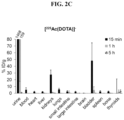
- [ 225 Ac(DOTA)] - and 225 Ac(NO 3 ) 3 were carried out as described above for [ 225 Ac(macropa)] + , with the following modifications.
- [ 225 Ac(DOTA) - was prepared by adding 225 Ac(NO 3 ) 3 (338 ⁇ L, 1.1 MBq) to a solution of DOTA (100 ⁇ g, 20 mg/mL in H 2 O) in NH 4 OAc (467 ⁇ L, 0.15 M, pH 7). The pH of the solution was adjusted to 7 using NH 4 OAc (150 ⁇ L, 1 M, pH 7) and the solution was heated at 85 °C for 45 min. RCY > 99% was confirmed by TLC as described above.
- [ 225 Ac(DOTA)] - was diluted with saline to a final concentration of 0.05 MBq/100 ⁇ L, and 100 ⁇ L were injected into each mouse.
- 225 Ac(NO 3 ) 3 ( ⁇ 58 ⁇ L, 0.4 MBq) was diluted and injected in the same manner as [ 225 Ac(DOTA)] - .
- the final concentration of macropa-NHC(S)NHCH 3 in each cuvette was 25.3 ⁇ M. These solutions were repeatedly analyzed by UV spectrophotometry over the course of 21 days for any spectral changes. The final pH of each solution was between 7.42 and 7.49. The experiment was performed in triplicate.
- Tmab Trastuzumab (Tmab, Genentech) was purified using a Zeba spin desalting column (2 mL or 5 mL, 40 MWCO, Thermo Scientific, Waltham, MA) according to the manufacturer's protocol, with saline as the mobile phase. The concentration of purified Tmab was calculated via the Beer-Lambert law using A 280 and an ⁇ 280 of 1.446 mL mg -1 cm -1 . [107] Purified Tmab and Tmab conjugates were stored at 4 °C.
- Macropa-NCS was estimated to be in 16-fold molar excess to Tmab based on a molecular weight of 1045.76 g/mol for 12 (tetra-TFA salt).
- the pH of this solution was between 8 and 9 by litmus paper. The solution was rocked gently at room temperature for 17.5 h and then purified using a spin column.
- the protein concentration of each conjugate was calculated from two independent dilutions, each measured in triplicate, and the results were averaged to give a protein concentration of 4.557 mg/mL for macropa-Tmab and 2.839 mg/mL for DOTA-Tmab.
- the average number of macropa or DOTA ligands conjugated to Tmab was determined by MALDI-ToF MS/MS on a Bruker autoflex speed at the Alberta Proteomics and Mass Spectrometry Facility (University of Alberta, Canada) using a procedure described elsewhere. [108] Purified Tmab and the conjugates were analyzed in duplicate, and the [M+H] + mass signals from the chromatograms were averaged for each compound. The ligand-to-protein (L:P) ratio for each conjugate was obtained by subtracting the molecular weight of Tmab from the molecular weight of the conjugate, and subsequently dividing by the mass of the bifunctional ligand.
- 225 Ac Radiolabeling Studies In a total reaction volume of 200 ⁇ L made up with NH 4 OAc buffer (pH 6, 0.15 M), 225 Ac (10 or 20 kBq, 7-10 ⁇ L) was mixed with 25-100 ⁇ g of either macropa-Tmab (5.5-22 ⁇ L) or DOTA-Tmab (8.81-35.2 ⁇ L), and the pH was adjusted to ⁇ 5 with NaOH. A control solution was also prepared in which unmodified Tmab (25 ⁇ g) was substituted in place of conjugate.
- the reaction solutions were maintained at ambient temperature and analyzed at 5 min, 30 min, 1 h, 2 h, 3 h, and 4 h by spotting 8 ⁇ L in triplicate on iTLC strips.
- the strips were developed with a mobile phase of 0.05 M citric acid (pH 5).
- mice Organ distribution of 225 Ac complexes following intravenous injection in mice.
- Radium-223 ( 223 Ra) is the first therapeutic alpha ( ⁇ )-emitting radionuclide to be approved for clinical use in cancer patients, and is effective in erradicating bone metastases.
- TAT targeted alpha-particle therapy
- lethal ⁇ -emitting radionuclides are conjugated to tumor-targeting vectors using bifunctional chelators to selectively deliver cytotoxic alpha radiation to cancer cells.
- Actinium-225 ( 225 Ac) was examined for use in TAT owing to its long 10-day half-life that is compatible with antibody-based targeting vectors and 4 high-energy ⁇ -emissions that are extremely lethal to cells.
- the 12-membered tetraaza macrocycle H 4 DOTA is currently the state of the art for the chelation of the 225 Ac 3+ ion, however, the thermodynamic stabilities of complexes of H 4 DOTA decrease as the ionic radius of the metal ion increases, indicating that this ligand is not optimal for chelation of the of the Ac 3+ ion (the largest +3 ion on the periodic table).
- the macrocyclic complexes of the present technology provide a signifiant and unexpected improvement over known complexes, where the present examples (H 2 macropa and H 2 macropa-NCS; Scheme 1) illustrate the improved 225 Ac bifunctional chelators according to the present technology.
- the La 3+ and Lu 3+ complexes of macropa were isolated and their solid-state structures were elucidated by X-ray crystallography ( FIGS. 1A-1D ).
- the La 3+ and Lu 3+ ions reside above the 18-membered macrocycle, and the two picolinate arms are positioned on the same side of the macrocycle.
- the coordination sphere of the Lu 3+ ion is satisfied by the ten donors of macropa with both picolinate arms deprotonated; by contrast, the larger La 3+ ion forms an 11-coordinate complex by the incorporation of an inner-sphere water molecule that penetrates the macrocycle.
- the ability of macropa to form stable 11-coordinate complexes is of particular significance because recent EXAFS studies have demonstrated that Ac 3+ prefers a coordination number of 11 in aqueous solutions. [29,30]
- Macropa was examined for the chelation of the larger, radioactive 225 Ac 3+ ion and compared to DOTA. Both ligands (59 ⁇ M) were incubated with 225 Ac (26 kBq) in 0.15 M NH 4 OAc buffer at pH 5.5-6, and the complexation reaction was monitored by radio-TLC after 5 min. Remarkably, macropa complexed all the 225 Ac after merely 5 min at RT, whereas DOTA only complexed 10% under these conditions. At 100-fold lower concentration (0.59 ⁇ M) of macropa, a L:M ratio of only 1800, radiolabeling was still complete at RT in 5 min. At this concentration, DOTA failed to form a complex with 225 Ac. Taken together, these studies reveal macropa to exhibit excellent radiolabeling kinetics at ambient temperature and submicromolar ligand concentration, conditions under which DOTA fails.
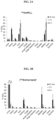
- FIG. 2A demonstrates slow blood clearance and excretion, coupled to large accumulation in the liver and spleen of the uncomplexed 225 Ac(NO 3 ) 3 .
- the biodistribution profile of [ 225 Ac(macropa)] + (FIG. 3B) differs markedly from that of 225 Ac(NO 3 ) 3 .
- [ 225 Ac(macropa)] + was rapidly cleared from mice, with very little activity measured in blood by 1 h post injection.
- macropa Due to the inherent stability of the [ 225 Ac(macropa)] + complexes, macropa was incorporated into into tumor-targeting constructs. To facilitate its conjugation, a reactive isothiocyanate functional group was installed onto one of the picolinate arms of macropa to give the novel bifunctional ligand macropa-NCS ( Scheme 1 ). As illustrated in vide supra, macropa-NCS was synthesized over 8 steps and characterized by conventional techniques. For one tumor-targeting construct, macropa-NCS was s conjugated to trastuzumab (Tmab), an FDA- approved monoclonal antibody that targets the human epidermal growth factor receptor 2 (HER2) in breast and other cancers.
- Tmab trastuzumab
- HER2 human epidermal growth factor receptor 2
- Tmab is an ideal vector to shuttle the long-lived 225 Ac radionuclide to tumor cells.
- 225 Ac-macropa-Tmab displayed excellent stability in human serum at 37 °C; after 7 days, >99% of the complex remained intact (Table 4). Together, these results highlight the efficacy of macropa as a chelator for 225 Ac in antibody constructs as well as other cancer-targeted constructs.
Landscapes
- Health & Medical Sciences (AREA)
- Life Sciences & Earth Sciences (AREA)
- Proteomics, Peptides & Aminoacids (AREA)
- Chemical & Material Sciences (AREA)
- General Health & Medical Sciences (AREA)
- Veterinary Medicine (AREA)
- Medicinal Chemistry (AREA)
- Pharmacology & Pharmacy (AREA)
- Public Health (AREA)
- Animal Behavior & Ethology (AREA)
- Optics & Photonics (AREA)
- Epidemiology (AREA)
- Physics & Mathematics (AREA)
- Oncology (AREA)
- Immunology (AREA)
- Organic Chemistry (AREA)
- Cell Biology (AREA)
- Chemical Kinetics & Catalysis (AREA)
- General Chemical & Material Sciences (AREA)
- Nuclear Medicine, Radiotherapy & Molecular Imaging (AREA)
- Pharmaceuticals Containing Other Organic And Inorganic Compounds (AREA)
- Medicines That Contain Protein Lipid Enzymes And Other Medicines (AREA)
- Medicinal Preparation (AREA)
- Nitrogen And Oxygen Or Sulfur-Condensed Heterocyclic Ring Systems (AREA)
- Plural Heterocyclic Compounds (AREA)
Claims (4)
- Zusammensetzung nach Formel I-b
 M ein alpha-emittierendes Radionuklid ist, das vorzugsweise aus Folgenden ausgewählt wird: Actinium-225 (225Ac3+), Radium-223 (223Ra2+), Wismut-213 (213Bi3+), Blei-212 (212Pb2+ und/oder 212Pb4+), Terbium-149 (149Tb3+), Fermium-255 (255Fm3+), Thorium-227 (227Th4+), Thorium-226 (226Th4+), Astatin-211 (211At+), Astatin-217 (217At+) und Uran-230;R2 und R7-C(O)OH sind;R9 NCS oder NH2 ist;R3, R4, R5, R8 und R10 jeweils H sind;L1 und L2 jeweils -(CH2) p- sind, wobei p ein Wert von 1 ist;r 1 ist; unds 1 ist.
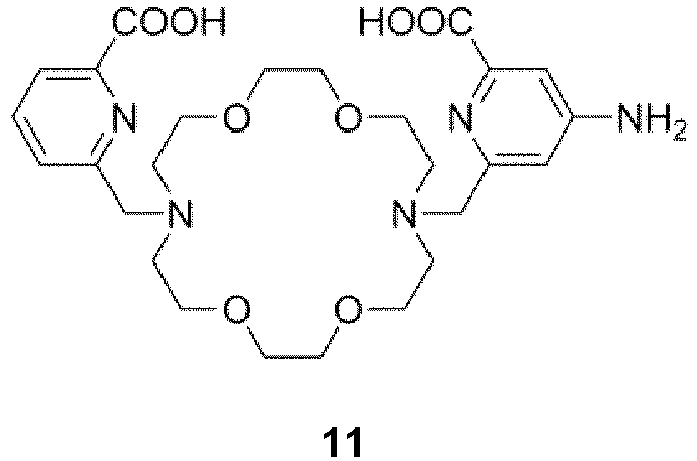
 - Verbindung nach Formel 11:
- Verbindung nach Formel Macropa-NCS:

- Verbindung nach Formel 10:

Priority Applications (1)
| Application Number | Priority Date | Filing Date | Title |
|---|---|---|---|
| EP24194380.2A EP4458418A3 (de) | 2017-03-30 | 2018-03-30 | Makrocyclische komplexe von alpha-emittierenden radionukliden und deren verwendung in der gezielten strahlentherapie von krebs |
Applications Claiming Priority (2)
| Application Number | Priority Date | Filing Date | Title |
|---|---|---|---|
| US201762478945P | 2017-03-30 | 2017-03-30 | |
| PCT/US2018/025488 WO2018183906A1 (en) | 2017-03-30 | 2018-03-30 | Macrocyclic complexes of alpha-emitting radionuclides and their use in targeted radiotherapy of cancer |
Related Child Applications (1)
| Application Number | Title | Priority Date | Filing Date |
|---|---|---|---|
| EP24194380.2A Division EP4458418A3 (de) | 2017-03-30 | 2018-03-30 | Makrocyclische komplexe von alpha-emittierenden radionukliden und deren verwendung in der gezielten strahlentherapie von krebs |
Publications (3)
| Publication Number | Publication Date |
|---|---|
| EP3600452A1 EP3600452A1 (de) | 2020-02-05 |
| EP3600452A4 EP3600452A4 (de) | 2020-11-18 |
| EP3600452B1 true EP3600452B1 (de) | 2024-09-04 |
Family
ID=63676871
Family Applications (2)
| Application Number | Title | Priority Date | Filing Date |
|---|---|---|---|
| EP18775715.8A Active EP3600452B1 (de) | 2017-03-30 | 2018-03-30 | Makrocyclische komplexe von alpha-emittierenden radionukliden und deren verwendung in der gezielten strahlentherapie von krebs |
| EP24194380.2A Pending EP4458418A3 (de) | 2017-03-30 | 2018-03-30 | Makrocyclische komplexe von alpha-emittierenden radionukliden und deren verwendung in der gezielten strahlentherapie von krebs |
Family Applications After (1)
| Application Number | Title | Priority Date | Filing Date |
|---|---|---|---|
| EP24194380.2A Pending EP4458418A3 (de) | 2017-03-30 | 2018-03-30 | Makrocyclische komplexe von alpha-emittierenden radionukliden und deren verwendung in der gezielten strahlentherapie von krebs |
Country Status (9)
| Country | Link |
|---|---|
| US (2) | US11554182B2 (de) |
| EP (2) | EP3600452B1 (de) |
| JP (2) | JP7675500B2 (de) |
| KR (3) | KR20260008174A (de) |
| CN (1) | CN110573186A (de) |
| AU (1) | AU2018243682B2 (de) |
| ES (1) | ES2992988T3 (de) |
| IL (2) | IL269763B2 (de) |
| WO (1) | WO2018183906A1 (de) |
Families Citing this family (23)
| Publication number | Priority date | Publication date | Assignee | Title |
|---|---|---|---|---|
| JP7699542B2 (ja) * | 2018-11-20 | 2025-06-27 | コーネル ユニバーシティー | 放射線核種の大環状錯体およびがんの放射線療法におけるそれらの使用 |
| WO2020180756A1 (en) * | 2019-03-01 | 2020-09-10 | Washington University | Compositions and methods for radiotherapy using chelated radiotherapeutic agents and non-target tissue blockade |
| BR112021022237A2 (pt) | 2019-05-10 | 2022-03-29 | Janssen Biotech Inc | Queladores macrocíclicos e métodos de uso dos mesmos |
| UY39510A (es) * | 2020-11-10 | 2022-05-31 | Janssen Biotech Inc | Compuestos macrocíclicos y métodos para usarlos |
| JP2024503924A (ja) | 2021-01-27 | 2024-01-29 | ヤンセン バイオテツク,インコーポレーテツド | カリクレイン関連ペプチダーゼ2抗原結合ドメインを含む免疫コンジュゲート及びその使用 |
| GEAP202316335A (en) * | 2021-02-01 | 2023-10-10 | Bayer Ag | Multimeric chelator compounds for use in targeted radiotherapy |
| JP2024060110A (ja) * | 2021-02-19 | 2024-05-02 | 住友化学株式会社 | 放射性金属錯体及びその製造方法 |
| JP2024045789A (ja) * | 2021-02-19 | 2024-04-03 | 住友化学株式会社 | 化合物及び金属錯体 |
| US20230011134A1 (en) | 2021-05-27 | 2023-01-12 | Janssen Biotech, Inc. | Compositions and methods for the treatment of prostate cancer |
| AU2022333321A1 (en) | 2021-08-27 | 2024-04-11 | Janssen Biotech, Inc. | Anti-psma antibodies and uses thereof |
| KR20240053607A (ko) * | 2021-08-27 | 2024-04-24 | 얀센 바이오테크 인코포레이티드 | 항-psma 방사성 접합체 및 이의 용도 |
| CA3240194A1 (en) | 2021-11-09 | 2023-05-19 | Edward Cleator | Macrocyclic compounds and methods of making the same |
| JP2024543046A (ja) | 2021-11-09 | 2024-11-19 | ヤンセン バイオテツク,インコーポレーテツド | 大環状化合物及びその診断上の使用 |
| EP4469095A1 (de) | 2022-01-26 | 2024-12-04 | Janssen Biotech, Inc. | Immunokonjugate mit kallikreinverwandten peptidase-2-antigen-bindenden domänen und deren verwendungen |
| JP2023135733A (ja) * | 2022-03-16 | 2023-09-29 | Jfeエンジニアリング株式会社 | ジルコニウム錯体およびその合成方法 |
| US20230346862A1 (en) | 2022-05-02 | 2023-11-02 | Athanor Biosciences, Inc. | Cancer eradicating - bio-nanoparticles (ce-bnp) |
| WO2023215560A1 (en) | 2022-05-05 | 2023-11-09 | Atoosa Corporation | Tumor cell/immune cell multivalent receptor engager – bio-nanoparticle (timre-bnp) |
| EP4279092A1 (de) | 2022-05-17 | 2023-11-22 | Bayer AG | Radiopharmazeutische komplexe |
| CA3256909A1 (en) | 2022-05-17 | 2023-11-23 | Bayer As | Radiopharmaceutical complexes targeting the specific prostate membrane antigen and their combinations |
| EP4694938A2 (de) * | 2023-04-10 | 2026-02-18 | Board Of Trustees Of Michigan State University | Auf krebs abzielende therapeutische alphateilchen-träger zur behandlung von krebs |
| TW202517674A (zh) | 2023-10-19 | 2025-05-01 | 德商拜耳廠股份有限公司 | 抗gpc3抗體及其放射性結合物 |
| EP4552657A1 (de) | 2023-11-07 | 2025-05-14 | Bayer Aktiengesellschaft | Radiopharmazeutische komplexe und kombinationen |
| DE102024109122A1 (de) | 2024-03-28 | 2025-10-02 | Helmholtz-Zentrum Dresden - Rossendorf E. V. | 1,4,10,13-Tetraoxa-7,16-diazacyclooctadecan-Derivate und deren Verwendung |
Family Cites Families (10)
| Publication number | Priority date | Publication date | Assignee | Title |
|---|---|---|---|---|
| US4597903A (en) * | 1984-08-21 | 1986-07-01 | University Of Maryland | Process for the direct preparation of N,N-disubstituted derivatives for 4,13-diaza-18-crown-6 |
| US5747345A (en) * | 1996-08-15 | 1998-05-05 | Johnson & Johnson Clinical Diagnostics, Inc. | Calcium specific diaza-18-crown-6-ether chromoionophores |
| JP2002098981A (ja) * | 2000-09-21 | 2002-04-05 | Seiko Epson Corp | 液晶装置およびその製造方法、並びに電子機器 |
| GB0624587D0 (en) * | 2006-12-08 | 2007-01-17 | Univ Muenchen Tech | Chelating agent |
| ES2354666B1 (es) * | 2009-07-27 | 2012-01-03 | Universidade Da Coruña Y En Su Nombre Y Representacion El Rector Jose Maria Barja Perez | Compuesto para la extraccion selectiva de estroncio (ii) y plomo (ii). |
| CN103421133A (zh) * | 2013-08-03 | 2013-12-04 | 大连理工大学 | 一种催化α-烯烃高立构规整性聚合的稀土金属催化体系 |
| US11660357B2 (en) * | 2014-05-16 | 2023-05-30 | David A. Scheinberg | One-step labeling of antibodies to high specific activity with actinium-225 |
| MA41176A (fr) * | 2014-12-17 | 2017-10-24 | Bayer As | Complexes radio-pharmaceutiques |
| US10806806B2 (en) * | 2016-06-23 | 2020-10-20 | Cornell University | Trifunctional constructs with tunable pharmacokinetics useful in imaging and anti-tumor therapies |
| EP3609541A4 (de) * | 2017-04-05 | 2021-04-07 | Cornell University | Trifunktionelle konstrukte mit abstimmbarer pharmakokinetik nützlich in der bildgebung und antitumortherapien |
-
2018
- 2018-03-30 IL IL269763A patent/IL269763B2/en unknown
- 2018-03-30 EP EP18775715.8A patent/EP3600452B1/de active Active
- 2018-03-30 ES ES18775715T patent/ES2992988T3/es active Active
- 2018-03-30 KR KR1020257042732A patent/KR20260008174A/ko active Pending
- 2018-03-30 US US16/499,070 patent/US11554182B2/en active Active
- 2018-03-30 AU AU2018243682A patent/AU2018243682B2/en active Active
- 2018-03-30 WO PCT/US2018/025488 patent/WO2018183906A1/en not_active Ceased
- 2018-03-30 EP EP24194380.2A patent/EP4458418A3/de active Pending
- 2018-03-30 CN CN201880025643.8A patent/CN110573186A/zh active Pending
- 2018-03-30 JP JP2019553433A patent/JP7675500B2/ja active Active
- 2018-03-30 KR KR1020197029951A patent/KR102670305B1/ko active Active
- 2018-03-30 KR KR1020247017348A patent/KR20240093912A/ko not_active Ceased
-
2022
- 2022-12-19 US US18/084,480 patent/US20230372550A1/en active Pending
-
2024
- 2024-02-26 IL IL311111A patent/IL311111B1/en unknown
-
2025
- 2025-01-22 JP JP2025008935A patent/JP2025066780A/ja active Pending
Also Published As
| Publication number | Publication date |
|---|---|
| NZ798439A (en) | 2025-08-29 |
| WO2018183906A1 (en) | 2018-10-04 |
| NZ757693A (en) | 2025-07-25 |
| IL311111A (en) | 2024-04-01 |
| IL269763B2 (en) | 2024-08-01 |
| JP7675500B2 (ja) | 2025-05-13 |
| AU2018243682A1 (en) | 2019-10-17 |
| CA3058454A1 (en) | 2018-10-04 |
| JP2020515596A (ja) | 2020-05-28 |
| EP3600452A4 (de) | 2020-11-18 |
| IL269763B1 (en) | 2024-04-01 |
| KR102670305B1 (ko) | 2024-05-30 |
| KR20260008174A (ko) | 2026-01-15 |
| KR20240093912A (ko) | 2024-06-24 |
| EP4458418A2 (de) | 2024-11-06 |
| CN110573186A (zh) | 2019-12-13 |
| JP2025066780A (ja) | 2025-04-23 |
| EP3600452A1 (de) | 2020-02-05 |
| IL269763A (en) | 2019-11-28 |
| US20210085808A1 (en) | 2021-03-25 |
| US11554182B2 (en) | 2023-01-17 |
| IL311111B1 (en) | 2026-03-01 |
| ES2992988T3 (en) | 2024-12-20 |
| KR20190139222A (ko) | 2019-12-17 |
| US20230372550A1 (en) | 2023-11-23 |
| EP4458418A3 (de) | 2024-11-13 |
| AU2018243682B2 (en) | 2023-11-09 |
Similar Documents
| Publication | Publication Date | Title |
|---|---|---|
| EP3600452B1 (de) | Makrocyclische komplexe von alpha-emittierenden radionukliden und deren verwendung in der gezielten strahlentherapie von krebs | |
| US12258339B2 (en) | Macrocyclic complexes of alpha-emitting radionuclides and their use in targeted radiotherapy of cancer | |
| KR102724812B1 (ko) | 영상화 및 항종양 치료요법에 유용한 조정 가능한 약동학을 갖는 삼작용성 작제물 | |
| CA3058454C (en) | Macrocyclic complexes of alpha-emitting radionuclides and their use in targeted radiotherapy of cancer | |
| HK40018472A (en) | Macrocyclic complexes of alpha-emitting radionuclides and their use in targeted radiotherapy of cancer |
Legal Events
| Date | Code | Title | Description |
|---|---|---|---|
| STAA | Information on the status of an ep patent application or granted ep patent |
Free format text: STATUS: THE INTERNATIONAL PUBLICATION HAS BEEN MADE |
|
| PUAI | Public reference made under article 153(3) epc to a published international application that has entered the european phase |
Free format text: ORIGINAL CODE: 0009012 |
|
| STAA | Information on the status of an ep patent application or granted ep patent |
Free format text: STATUS: REQUEST FOR EXAMINATION WAS MADE |
|
| 17P | Request for examination filed |
Effective date: 20191007 |
|
| AK | Designated contracting states |
Kind code of ref document: A1 Designated state(s): AL AT BE BG CH CY CZ DE DK EE ES FI FR GB GR HR HU IE IS IT LI LT LU LV MC MK MT NL NO PL PT RO RS SE SI SK SM TR |
|
| AX | Request for extension of the european patent |
Extension state: BA ME |
|
| DAV | Request for validation of the european patent (deleted) | ||
| DAX | Request for extension of the european patent (deleted) | ||
| REG | Reference to a national code |
Ref legal event code: R079 Ipc: A61K0051040000 Ref country code: DE Ref legal event code: R079 Ref document number: 602018073993 Country of ref document: DE Free format text: PREVIOUS MAIN CLASS: A61K0051000000 Ipc: A61K0051040000 |
|
| A4 | Supplementary search report drawn up and despatched |
Effective date: 20201016 |
|
| RIC1 | Information provided on ipc code assigned before grant |
Ipc: A61K 51/10 20060101ALI20201012BHEP Ipc: A61M 36/14 20060101ALI20201012BHEP Ipc: A61P 35/00 20060101ALI20201012BHEP Ipc: A61K 51/04 20060101AFI20201012BHEP |
|
| STAA | Information on the status of an ep patent application or granted ep patent |
Free format text: STATUS: EXAMINATION IS IN PROGRESS |
|
| 17Q | First examination report despatched |
Effective date: 20210621 |
|
| GRAP | Despatch of communication of intention to grant a patent |
Free format text: ORIGINAL CODE: EPIDOSNIGR1 |
|
| STAA | Information on the status of an ep patent application or granted ep patent |
Free format text: STATUS: GRANT OF PATENT IS INTENDED |
|
| INTG | Intention to grant announced |
Effective date: 20240402 |
|
| RAP3 | Party data changed (applicant data changed or rights of an application transferred) |
Owner name: CORNELL UNIVERSITY |
|
| GRAS | Grant fee paid |
Free format text: ORIGINAL CODE: EPIDOSNIGR3 |
|
| GRAA | (expected) grant |
Free format text: ORIGINAL CODE: 0009210 |
|
| STAA | Information on the status of an ep patent application or granted ep patent |
Free format text: STATUS: THE PATENT HAS BEEN GRANTED |
|
| AK | Designated contracting states |
Kind code of ref document: B1 Designated state(s): AL AT BE BG CH CY CZ DE DK EE ES FI FR GB GR HR HU IE IS IT LI LT LU LV MC MK MT NL NO PL PT RO RS SE SI SK SM TR |
|
| REG | Reference to a national code |
Ref country code: GB Ref legal event code: FG4D |
|
| P01 | Opt-out of the competence of the unified patent court (upc) registered |
Free format text: CASE NUMBER: APP_44689/2024 Effective date: 20240801 |
|
| REG | Reference to a national code |
Ref country code: CH Ref legal event code: EP |
|
| REG | Reference to a national code |
Ref country code: IE Ref legal event code: FG4D |
|
| REG | Reference to a national code |
Ref country code: DE Ref legal event code: R096 Ref document number: 602018073993 Country of ref document: DE |
|
| REG | Reference to a national code |
Ref country code: ES Ref legal event code: FG2A Ref document number: 2992988 Country of ref document: ES Kind code of ref document: T3 Effective date: 20241220 |
|
| REG | Reference to a national code |
Ref country code: LT Ref legal event code: MG9D |
|
| REG | Reference to a national code |
Ref country code: NL Ref legal event code: MP Effective date: 20240904 |
|
| PG25 | Lapsed in a contracting state [announced via postgrant information from national office to epo] |
Ref country code: NO Free format text: LAPSE BECAUSE OF FAILURE TO SUBMIT A TRANSLATION OF THE DESCRIPTION OR TO PAY THE FEE WITHIN THE PRESCRIBED TIME-LIMIT Effective date: 20241204 |
|
| PG25 | Lapsed in a contracting state [announced via postgrant information from national office to epo] |
Ref country code: GR Free format text: LAPSE BECAUSE OF FAILURE TO SUBMIT A TRANSLATION OF THE DESCRIPTION OR TO PAY THE FEE WITHIN THE PRESCRIBED TIME-LIMIT Effective date: 20241205 Ref country code: FI Free format text: LAPSE BECAUSE OF FAILURE TO SUBMIT A TRANSLATION OF THE DESCRIPTION OR TO PAY THE FEE WITHIN THE PRESCRIBED TIME-LIMIT Effective date: 20240904 Ref country code: PL Free format text: LAPSE BECAUSE OF FAILURE TO SUBMIT A TRANSLATION OF THE DESCRIPTION OR TO PAY THE FEE WITHIN THE PRESCRIBED TIME-LIMIT Effective date: 20240904 |
|
| PG25 | Lapsed in a contracting state [announced via postgrant information from national office to epo] |
Ref country code: BG Free format text: LAPSE BECAUSE OF FAILURE TO SUBMIT A TRANSLATION OF THE DESCRIPTION OR TO PAY THE FEE WITHIN THE PRESCRIBED TIME-LIMIT Effective date: 20240904 |
|
| PG25 | Lapsed in a contracting state [announced via postgrant information from national office to epo] |
Ref country code: LV Free format text: LAPSE BECAUSE OF FAILURE TO SUBMIT A TRANSLATION OF THE DESCRIPTION OR TO PAY THE FEE WITHIN THE PRESCRIBED TIME-LIMIT Effective date: 20240904 |
|
| PG25 | Lapsed in a contracting state [announced via postgrant information from national office to epo] |
Ref country code: HR Free format text: LAPSE BECAUSE OF FAILURE TO SUBMIT A TRANSLATION OF THE DESCRIPTION OR TO PAY THE FEE WITHIN THE PRESCRIBED TIME-LIMIT Effective date: 20240904 |
|
| PG25 | Lapsed in a contracting state [announced via postgrant information from national office to epo] |
Ref country code: RS Free format text: LAPSE BECAUSE OF FAILURE TO SUBMIT A TRANSLATION OF THE DESCRIPTION OR TO PAY THE FEE WITHIN THE PRESCRIBED TIME-LIMIT Effective date: 20241204 |
|
| PG25 | Lapsed in a contracting state [announced via postgrant information from national office to epo] |
Ref country code: RS Free format text: LAPSE BECAUSE OF FAILURE TO SUBMIT A TRANSLATION OF THE DESCRIPTION OR TO PAY THE FEE WITHIN THE PRESCRIBED TIME-LIMIT Effective date: 20241204 Ref country code: PL Free format text: LAPSE BECAUSE OF FAILURE TO SUBMIT A TRANSLATION OF THE DESCRIPTION OR TO PAY THE FEE WITHIN THE PRESCRIBED TIME-LIMIT Effective date: 20240904 Ref country code: NO Free format text: LAPSE BECAUSE OF FAILURE TO SUBMIT A TRANSLATION OF THE DESCRIPTION OR TO PAY THE FEE WITHIN THE PRESCRIBED TIME-LIMIT Effective date: 20241204 Ref country code: LV Free format text: LAPSE BECAUSE OF FAILURE TO SUBMIT A TRANSLATION OF THE DESCRIPTION OR TO PAY THE FEE WITHIN THE PRESCRIBED TIME-LIMIT Effective date: 20240904 Ref country code: HR Free format text: LAPSE BECAUSE OF FAILURE TO SUBMIT A TRANSLATION OF THE DESCRIPTION OR TO PAY THE FEE WITHIN THE PRESCRIBED TIME-LIMIT Effective date: 20240904 Ref country code: GR Free format text: LAPSE BECAUSE OF FAILURE TO SUBMIT A TRANSLATION OF THE DESCRIPTION OR TO PAY THE FEE WITHIN THE PRESCRIBED TIME-LIMIT Effective date: 20241205 Ref country code: FI Free format text: LAPSE BECAUSE OF FAILURE TO SUBMIT A TRANSLATION OF THE DESCRIPTION OR TO PAY THE FEE WITHIN THE PRESCRIBED TIME-LIMIT Effective date: 20240904 Ref country code: BG Free format text: LAPSE BECAUSE OF FAILURE TO SUBMIT A TRANSLATION OF THE DESCRIPTION OR TO PAY THE FEE WITHIN THE PRESCRIBED TIME-LIMIT Effective date: 20240904 |
|
| REG | Reference to a national code |
Ref country code: AT Ref legal event code: MK05 Ref document number: 1719687 Country of ref document: AT Kind code of ref document: T Effective date: 20240904 |
|
| PG25 | Lapsed in a contracting state [announced via postgrant information from national office to epo] |
Ref country code: NL Free format text: LAPSE BECAUSE OF FAILURE TO SUBMIT A TRANSLATION OF THE DESCRIPTION OR TO PAY THE FEE WITHIN THE PRESCRIBED TIME-LIMIT Effective date: 20240904 |
|
| PG25 | Lapsed in a contracting state [announced via postgrant information from national office to epo] |
Ref country code: PT Free format text: LAPSE BECAUSE OF FAILURE TO SUBMIT A TRANSLATION OF THE DESCRIPTION OR TO PAY THE FEE WITHIN THE PRESCRIBED TIME-LIMIT Effective date: 20250106 Ref country code: IS Free format text: LAPSE BECAUSE OF FAILURE TO SUBMIT A TRANSLATION OF THE DESCRIPTION OR TO PAY THE FEE WITHIN THE PRESCRIBED TIME-LIMIT Effective date: 20250104 |
|
| PG25 | Lapsed in a contracting state [announced via postgrant information from national office to epo] |
Ref country code: SM Free format text: LAPSE BECAUSE OF FAILURE TO SUBMIT A TRANSLATION OF THE DESCRIPTION OR TO PAY THE FEE WITHIN THE PRESCRIBED TIME-LIMIT Effective date: 20240904 Ref country code: RO Free format text: LAPSE BECAUSE OF FAILURE TO SUBMIT A TRANSLATION OF THE DESCRIPTION OR TO PAY THE FEE WITHIN THE PRESCRIBED TIME-LIMIT Effective date: 20240904 |
|
| PG25 | Lapsed in a contracting state [announced via postgrant information from national office to epo] |
Ref country code: EE Free format text: LAPSE BECAUSE OF FAILURE TO SUBMIT A TRANSLATION OF THE DESCRIPTION OR TO PAY THE FEE WITHIN THE PRESCRIBED TIME-LIMIT Effective date: 20240904 Ref country code: AT Free format text: LAPSE BECAUSE OF FAILURE TO SUBMIT A TRANSLATION OF THE DESCRIPTION OR TO PAY THE FEE WITHIN THE PRESCRIBED TIME-LIMIT Effective date: 20240904 |
|
| PG25 | Lapsed in a contracting state [announced via postgrant information from national office to epo] |
Ref country code: CZ Free format text: LAPSE BECAUSE OF FAILURE TO SUBMIT A TRANSLATION OF THE DESCRIPTION OR TO PAY THE FEE WITHIN THE PRESCRIBED TIME-LIMIT Effective date: 20240904 |
|
| PG25 | Lapsed in a contracting state [announced via postgrant information from national office to epo] |
Ref country code: SK Free format text: LAPSE BECAUSE OF FAILURE TO SUBMIT A TRANSLATION OF THE DESCRIPTION OR TO PAY THE FEE WITHIN THE PRESCRIBED TIME-LIMIT Effective date: 20240904 Ref country code: IT Free format text: LAPSE BECAUSE OF FAILURE TO SUBMIT A TRANSLATION OF THE DESCRIPTION OR TO PAY THE FEE WITHIN THE PRESCRIBED TIME-LIMIT Effective date: 20240904 |
|
| REG | Reference to a national code |
Ref country code: DE Ref legal event code: R097 Ref document number: 602018073993 Country of ref document: DE |
|
| PG25 | Lapsed in a contracting state [announced via postgrant information from national office to epo] |
Ref country code: DK Free format text: LAPSE BECAUSE OF FAILURE TO SUBMIT A TRANSLATION OF THE DESCRIPTION OR TO PAY THE FEE WITHIN THE PRESCRIBED TIME-LIMIT Effective date: 20240904 |
|
| PGFP | Annual fee paid to national office [announced via postgrant information from national office to epo] |
Ref country code: ES Payment date: 20250401 Year of fee payment: 8 |
|
| PLBE | No opposition filed within time limit |
Free format text: ORIGINAL CODE: 0009261 |
|
| STAA | Information on the status of an ep patent application or granted ep patent |
Free format text: STATUS: NO OPPOSITION FILED WITHIN TIME LIMIT |
|
| PGFP | Annual fee paid to national office [announced via postgrant information from national office to epo] |
Ref country code: CH Payment date: 20250401 Year of fee payment: 8 |
|
| 26N | No opposition filed |
Effective date: 20250605 |
|
| PG25 | Lapsed in a contracting state [announced via postgrant information from national office to epo] |
Ref country code: SE Free format text: LAPSE BECAUSE OF FAILURE TO SUBMIT A TRANSLATION OF THE DESCRIPTION OR TO PAY THE FEE WITHIN THE PRESCRIBED TIME-LIMIT Effective date: 20240904 |
|
| REG | Reference to a national code |
Ref country code: CH Ref legal event code: U11 Free format text: ST27 STATUS EVENT CODE: U-0-0-U10-U11 (AS PROVIDED BY THE NATIONAL OFFICE) Effective date: 20260401 |
|
| PGFP | Annual fee paid to national office [announced via postgrant information from national office to epo] |
Ref country code: GB Payment date: 20260327 Year of fee payment: 9 |
|
| PGFP | Annual fee paid to national office [announced via postgrant information from national office to epo] |
Ref country code: MC Payment date: 20260305 Year of fee payment: 9 |
|
| PGFP | Annual fee paid to national office [announced via postgrant information from national office to epo] |
Ref country code: DE Payment date: 20260327 Year of fee payment: 9 Ref country code: IE Payment date: 20260327 Year of fee payment: 9 |
|
| PGFP | Annual fee paid to national office [announced via postgrant information from national office to epo] |
Ref country code: LU Payment date: 20260327 Year of fee payment: 9 Ref country code: BE Payment date: 20260327 Year of fee payment: 9 |
|
| PGFP | Annual fee paid to national office [announced via postgrant information from national office to epo] |
Ref country code: FR Payment date: 20260325 Year of fee payment: 9 |