EP3602360B1 - Verarbeitung von sequenzierungsdatenströmen - Google Patents
Verarbeitung von sequenzierungsdatenströmen Download PDFInfo
- Publication number
- EP3602360B1 EP3602360B1 EP18772385.3A EP18772385A EP3602360B1 EP 3602360 B1 EP3602360 B1 EP 3602360B1 EP 18772385 A EP18772385 A EP 18772385A EP 3602360 B1 EP3602360 B1 EP 3602360B1
- Authority
- EP
- European Patent Office
- Prior art keywords
- sequence
- database
- sequences
- matching
- data
- Prior art date
- Legal status (The legal status is an assumption and is not a legal conclusion. Google has not performed a legal analysis and makes no representation as to the accuracy of the status listed.)
- Active
Links
Images


Classifications
-
- G—PHYSICS
- G06—COMPUTING OR CALCULATING; COUNTING
- G06F—ELECTRIC DIGITAL DATA PROCESSING
- G06F16/00—Information retrieval; Database structures therefor; File system structures therefor
- G06F16/20—Information retrieval; Database structures therefor; File system structures therefor of structured data, e.g. relational data
- G06F16/24—Querying
- G06F16/245—Query processing
- G06F16/2455—Query execution
- G06F16/24568—Data stream processing; Continuous queries
-
- G—PHYSICS
- G16—INFORMATION AND COMMUNICATION TECHNOLOGY [ICT] SPECIALLY ADAPTED FOR SPECIFIC APPLICATION FIELDS
- G16B—BIOINFORMATICS, i.e. INFORMATION AND COMMUNICATION TECHNOLOGY [ICT] SPECIALLY ADAPTED FOR GENETIC OR PROTEIN-RELATED DATA PROCESSING IN COMPUTATIONAL MOLECULAR BIOLOGY
- G16B30/00—ICT specially adapted for sequence analysis involving nucleotides or amino acids
- G16B30/10—Sequence alignment; Homology search
-
- G—PHYSICS
- G06—COMPUTING OR CALCULATING; COUNTING
- G06F—ELECTRIC DIGITAL DATA PROCESSING
- G06F16/00—Information retrieval; Database structures therefor; File system structures therefor
- G06F16/20—Information retrieval; Database structures therefor; File system structures therefor of structured data, e.g. relational data
- G06F16/22—Indexing; Data structures therefor; Storage structures
-
- G—PHYSICS
- G06—COMPUTING OR CALCULATING; COUNTING
- G06F—ELECTRIC DIGITAL DATA PROCESSING
- G06F16/00—Information retrieval; Database structures therefor; File system structures therefor
- G06F16/20—Information retrieval; Database structures therefor; File system structures therefor of structured data, e.g. relational data
- G06F16/24—Querying
- G06F16/245—Query processing
- G06F16/2457—Query processing with adaptation to user needs
- G06F16/24578—Query processing with adaptation to user needs using ranking
-
- G—PHYSICS
- G06—COMPUTING OR CALCULATING; COUNTING
- G06F—ELECTRIC DIGITAL DATA PROCESSING
- G06F16/00—Information retrieval; Database structures therefor; File system structures therefor
- G06F16/20—Information retrieval; Database structures therefor; File system structures therefor of structured data, e.g. relational data
- G06F16/24—Querying
- G06F16/245—Query processing
- G06F16/2458—Special types of queries, e.g. statistical queries, fuzzy queries or distributed queries
- G06F16/2474—Sequence data queries, e.g. querying versioned data
-
- G—PHYSICS
- G06—COMPUTING OR CALCULATING; COUNTING
- G06F—ELECTRIC DIGITAL DATA PROCESSING
- G06F9/00—Arrangements for program control, e.g. control units
- G06F9/06—Arrangements for program control, e.g. control units using stored programs, i.e. using an internal store of processing equipment to receive or retain programs
- G06F9/46—Multiprogramming arrangements
- G06F9/54—Interprogram communication
Definitions
- This disclosure relates to methods and systems for processing of sequencing data streams.
- this disclosure relates to processing data streams from nanopore sequencers.
- Measuring the abundance and variation of unique molecules in biological systems can serve to identify cellular states, environmental responses, and progression of pathologies.
- Experimental quantification of molecular concentrations using sequencing techniques is limited by sampling depth. Indeed, highly abundant molecules can mask the presence of molecules in low concentration given the finite sampling depth or time of most methods. Detecting low abundance molecules is important because they can have different functions or discriminative characteristics. For example, 'housekeeping' proteins or RNAs are often highly abundant, whereas regulatory macromolecules are expressed at weaker levels, making them more difficult to characterise when sampling stochastically. Regulatory molecules have more important or drastic roles and provide unique information about cellular dynamics, for instance.
- Nanopore sequencing offers new applications that were previously impossible.
- the availability of a stream of sequencing data allows real-time processing of the sequencing data.
- This challenge mainly arises from the large amount of noisy data that needs to be matched against a potentially large set of references.
- this excessive processing time limits the application of real time analyses using nanopores.
- This problem is expected to grow as nanopore sequencers with increasing numbers of parallel pores come onto the market.
- MITEN JAIN et al., GENOME BIOLOGY, vol. 17, no. 1, page 239-249 summarises technical features of the Oxford Nanopore MinION.
- a database stores sequences previously received from the sequencer together with counters for each stored sequence. While the streaming data is received, a processor matches the streaming data progressively against the stored sequences. As soon as a match is found, the processor checks the counter of the matching sequence. If the counter is below a threshold, the processor keeps the current sequence but if the counter is above the threshold, the processor stops receiving the sequence and proceeds to the next sequence.
- the present invention provides a method for processing streaming data from a sequencer according to claim 1.
- Terminating the receiving of the further sequence comprises sending a reject signal to the sequencer to abort sequencing the further sequence before the sequencer reaches the end of the further sequence and to allow a next sequence to be sequenced before the further sequence is fully sequenced.
- Storing the sequence as data records in the database may be conditional on the matching score being below the matching threshold for the sequences stored in the database.
- Storing the sequence as data records in the database may comprise storing a digital representation of an electric signal received from the sequencer.
- Matching the streaming data may comprise matching a digital representation of an electric signal indicative of the further sequence against the digital representation of the electric signal stored on the database.
- Determining a matching score may comprise performing dynamic time warping.
- Performing dynamic time warping may comprise selectively calculating cells in an associated dynamic programming matrix that are within a specified range or value.
- the method may further comprise upon the matching score exceeding a matching threshold for one of the multiple sequences in the database incrementing the counter for the one of the multiple sequences.
- Matching the streaming data may comprise matching the streaming data against a subset of the multiple sequences in the database, wherein the subset is based on the counter.
- the subset may include sequences for which the associated counter is above an abundance threshold.
- this subset includes the most abundant sequences (above the abundance threshold) which are exactly those sequences that should be rejected. This way, the matching can be performed at a speed that matches the rate of sequences generated by the sequencer.
- the sequencer may comprise a nanopore.
- the method comprises:
- the data records may form an associative array, each record may comprise a key/value pair and the value may comprise the sequence and the counter.
- Receiving the multiple sequences may comprise using an application programming interface (API) to receive the multiple sequences.
- API application programming interface
- Storing the sequence as data records in the database may comprise storing a digital representation of a nucleic acid sequence.
- the method comprises performing base calling on the further sequence while receiving the further sequence.
- Determining the matching score may comprise performing sequence alignment or comparison.
- the present invention also provides a computer system as set out in claim 15.
- RNA sequencing a small number of housekeeping RNA constitutes a majority of reads but in most cases, the most frequent sequences are of little interest. This is particularly the case when expression levels are to be measured for research or clinical diagnosis. In that case, a minimum coverage should be reached for the minority sequences.
- a large number of reads for housekeeping RNA often needs to be generated in order to reach an acceptable coverage for the less frequent, but more relevant sequences. This leads to excessively long sequencing times, which leads to increased cost for occupying the sequencer and for reagents.
- This disclosure provides a method for Squiggle Quantification InDex sequencing (SQUIDseq), a data acquisition method that expands sampling depth while simultaneously quantifying molecular abundances.
- SQUIDseq is method that aims to reduce the redundancy of sequencing experiment outputs and increase the depth, breadth, and diversity of sequenced molecules while preserving molecular abundance information.
- the solution disclosed herein addresses the issue of exceeding processing time by dynamically building a database of sequences and gradually determining the most frequent sequences.
- the database can then be used to match the sequencing data as it is received against the database and terminate acquisition of the most frequent reads before they reach the end of the read. This way, the next read can be processed earlier than if each read was processed entirely.
- different databases may be used, which includes external databases hosted by a database management system, such as relational (e.g. SQL) databases, graph databases (e.g. CouchDB) as well as internal databases that are maintained in programming variables and form internal data structures, such as lists, arrays, sets, heaps, stacks, dictionaries, distributed hash tables, etc.
- the database may be stored on and accessed from hard disk or may be stored on and accessed from RAM. Storing the database entirely on RAM increases speed but limits the database size and increases the risk of data loss due to a system crash.
- the terms 'read' and 'sequence' are used interchangeably herein.
- the term 'read' is used to describe the signal, data or result from a single molecule received by the nanopore or the single molecule itself.
- two reads can be identical, similar or different.
- the term 'sequence' is used to describe a unique signal, data or result.
- any two sequences should be different. However, as will be described in more detail below, this is not always an exact statement as the equality of two sequences is not always determined. As a result, two reads may be stored as two sequences although they are identical, for example.
- Fig. 1 illustrates a sequencing system 100 comprising a sequencer 101 generating streaming data 102 and a computer 103 for processing the streaming data 102.
- the read 104 such as a DNA, RNA, or peptide macromolecule-passes through a pore 105.
- An electronics interface 106 of the pore 105 measures the electric properties across the pore, such as current, voltage, conductance, etc.
- this disclosure uses the electric current as an example.
- Each of the different bases has a different atomic charge configuration and therefore influences the current across the pore 105 differently. As a result, the electric current changes as the different bases pass through the pore 105.
- the electronics interface 106 records this current and generates a signal indicative of that current.
- streaming data may refer to this 'raw' signal that directly reflects the current across the pore.
- the electronics interface 106 pre-processes the current signal into a compressed form, which is referred to as a 'squiggle'.
- a squiggle represents the normalised values of current signal over time where periods of constant or comparable current are eliminated for data reduction.
- Computer system 103 displays an example squiggle 107. It is noted that in most examples, the squiggle is stored as a digital signal, such as an array or list of digital values, such as 8-bit values. More detailed information can be found in Hengyun Lu, Francesca Giordano, Zemin Ning: "Oxford Nanopore MinION Sequencing and Genome Assembly", Genomics Proteomics Bioinformatics 14 (2016) 265-279 .
- the streaming data is the 'raw' signal and computer system 103 performs base calling on the fly to convert the raw sequence data into a stream of bases.
- computer system 103 reduces the raw data into base-space by a general purpose processor (CPU), graphics processor (GPU) or dedicated hardware.
- Computer system 103 then performs the methods described herein but instead of using squiggles, computer system 103 uses the base-space signal.
- the base-space signal is a sequence of the four letters ACGT, which may be encoded by binary numbers 00, 01, 10 and 11, for example. Other encodings, such as one hot (0001, 0010, 0100, 1000) may equally be used.
- Computer system 103 comprises a processor 110 connected to program memory 111, volatile data memory 112, such as RAM, non-volatile data memory 113, such as a hard disk, as well as a database 114.
- Computer system 103 may comprise a CPU, GPU, FPGA, Integrated Circuit, or other hardware with data processing and storage capability in place or in addition to processor 110.
- computer system 103 may be implemented within a USB stick with a dedicated embedded electronics hardware for performing the methods described herein.
- electronics interface 106 linked to the sequencer may only provide limited preprocessing or simply perform basic analog signal amplification.
- the signal processing is mainly performed by the computer system 103, such as involving a GPU, CPU or FGA, for example.
- the database may be fully or partially hosted on volatile memory 112, fully hosted on local non-volatile data memory 113, or externally.
- Program memory 111 stores a computer program that is installed on computer system 103 and that causes processor 110 to perform the method of Fig. 2 .
- Computer system 103 may be implemented in a distributed computing environment, that is, on a cloud computing platform. In other examples, computer system 103 is a local server or personal computer.
- the latest nanopore sequencers are portable and suitable for use with laptop computers and even mobile phones. As it would be appreciated, these devices often have less computing resources than cloud-based architectures. For this reason, the proposed method can be particularly useful to reduce processing time on these constrained devices to allow fast quantitative expression level analysis, for example.
- Fig. 2 illustrates a method for processing streaming data 102 from sequencer 101.
- processor 110 receives 201 multiple sequences from sequencer 101 and stores 202 each of the multiple sequences as data records on database 114.
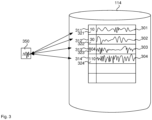
- Fig. 3 illustrates database 114 in more detail after each of the multiple sequences are stored on database 114.
- database 114 stores four sequences 301, 302, 303, 304 in four respective records 311, 312, 313, 314.
- the four sequences 301, 302, 303, 304 are stored in the form of respective squiggles.
- each of the stored sequences is associated with a respective counter 321, 322, 323, 324.
- Each counter is indicative of a number of times the associated sequence has been sequenced.
- 954 reads were received from sequencer 101 for four different sequences. Accordingly, the counter values together add up to 954.
- counter 323 has a value of 804, which means that the coverage of sequence 303 is already relatively high, that is, 804X.
- Processor 110 then progressively receives 203 a further sequence as streaming data from the sequencer.
- Progressively in this context means that processor 110 has only the beginning part of the sequence available for processing and over time, more data becomes available. In other words, the squiggle gets longer and processor 110 processes the squiggle at the same time.
- processor 110 progressively matches 204 the streaming data against each of the multiple sequences in the records of the database. In the example of Fig. 3 , processor 110 receives squiggle 350 and matches the beginning of the squiggle 350, that is the part of the squiggle that processor 110 has received so far, against each sequence in the database 114.
- processor 110 matches squiggle 350 against squiggle 301, against squiggle 302, against squiggle 303 and against squiggle 304. Matching one squiggle against another may be achieved by processor 110 calculating a matching score. If the matching score is above a threshold, processor 110 decides that there is a match.
- processor 110 continuously receives the squiggle and once a pre-defined amount of data is received, processor 110 performs the matching.
- the pre-defined amount may be between 100-1,000 events, such as 300 events, or data generated in 0.1-1 s, such as 0.3 s, or 500-10,000 raw data points, such as 1000 data points.
- the nanopore sequencer 101 generates 450 bases per second with an average RNA transcript of around 1kb, that is about 2 s of raw data per read. In this case, 0.3 s provides a good balance between matching accuracy versus reduction in time by ejecting the current read early. Accordingly, it is preferable that the pre-defined amount of data is less than the average read length. It is further preferable that the pre-defined amount of data is less than 50% of the average read length. It is also preferable that the pre-defined amount of data is more than 25% of the average read length.
- processor 110 matches the received squiggle against each squiggle 301, 302, 303 and 304 in the database.
- processor 110 calculates a matching score for each sequence 301, 302, 303, 304 in database 114 and continuously updates the matching score while processor 110 receives further streaming data.
- processor 110 determines that the matching score exceeds the matching threshold for one of the multiple sequences in the database
- processor 110 selects 205 the one of the multiple sequences in the database based on the matching score.
- received sequence 350 looks similar to third sequence 303, which is reflected by an above threshold matching score.
- processor 110 selects third sequence 303.
- Processor 110 then branches into two different options based on the counter value. If the counter value is below a saturation threshold, processor 110 stores 206 the further sequence on non-volatile memory, such as in a read file on hard disk 113. Alternatively, if the counter value associated with the selected sequence is above a saturation threshold, processor 110 terminates 206 the receiving of the further sequence where the counter value associated with the selected sequence is above the saturation threshold. As a result, the further sequence is not stored on hard disk 113. This reduces the storage requirements on the hard disk 113 and makes the dataset more manageable for later use because the most frequent sequences are not overly represented. Further, the termination of receiving the sequencing data means that the next sequence can be received earlier than if all sequences are received entirely. As a result, the sampling of molecules is increased overall, allowing more of the less frequent sequences to be sequenced in a constant sequencing time, that is, without increasing the total number of sequenced reads.
- the matching threshold may be specific to the method used by processor 110 to compare the received sequence to the database. It is noted that the matching threshold can be determined empirically from sequences of known composition, such as sequencing data from synthetic RNA molecules. This can be used to train a discriminative matching threshold at a given accuracy. An example of this is to compare 200 reads composed of 20 unique sequences against each other with a selected comparative method, then compare the resulting scores to a binary classification of identical versus non-identical sequences and select a value with optimal discriminative ability. A less stringent matching threshold will consider more divergent sequences as matches at step 205. This also means steps 206 and 207 occur more frequently.
- the matching threshold is typically static for a selected comparative method, it is noted that this value can also be increased or decreased dynamically during a sequencing run or given certain conditions of the sequencing device 101 or the data stream 102.
- This may be of value is when the nature or quality of the sequencing data stream 102 varies progressively during a sequencing experiment. For example, the amount of noise in the signal can increase over time, as sequencing reagents or solutions are depleted. In this scenario, varying the matching threshold may increase specificity or sensitivity, as desired.
- processor 110 can instead process streaming data from other channels/pores.
- processor 110 terminates the receiving of the further sequence in cases where the counter of the matched sequence is above the saturation threshold, which represents the maximal amount of sequences to be stored to the hard disk 113.
- a lower number e.g. 20, ensures that the termination signal 207 will be reached faster for abundant sequences and will allow the sequencer to sample a broader diversity of molecules.
- a higher number e.g. 150
- the sequencing data is originally created by a sequencer, such as an Illumina X10 and stored on a server, and the server streams the sequencing data as a stream to computer system 103.
- processor 110 terminates the receiving of the streaming data by sending a termination message to the server or simply stopping the acknowledgment of the receipt of the streaming data.
- increasing the saturation threshold will reduce the breadth of sequencing (amount of unique sequences) in favour of increasing the depth of sequencing (amount of similar or redundant sequences).
- processor 110 can send a reject signal to the sequencer. This aborts the sequencing of the further sequence before the sequencer reaches the end of the further sequence and allows a next sequence to be sequenced before the further sequence is fully sequenced.
- electronics interface 106 can reverse the feed current to expel the current sequence out of the nanopore. It is noted that there is often a dead time of a few seconds before the nanopore 105 receives the next sequence. However, it is noted that this dead time will rarely occur simultaneously at multiple nanopores, which means the remaining nanopores continue creating sequencing data and the overall amount of data processed by processor 110 is not significantly reduced by one nanopore being inactive.
- a software installed on computer system 103 writes a temporary data file to hard disk 113 while receiving the data stream. In that case, terminating the receiving also involves deleting the temporary data file or allowing the temporary data file to be overwritten by the streaming data for the next sequence.
- Steps 201 and 202 are presented above as initialisation steps to fill the database 114 with sequences from the sequencer at the beginning of the sequencing. It is noted, however, that processor 110 may store further sequences in the database. In particular, in cases where the matching scores for the sequences that are already stored are below the matching threshold, processor 110 stores the current sequence on database 114. This can be generalised for the very first sequence that is received. At the very beginning, the database 114 is empty, which means that no sequence in database 114 matches the received stream. As a result, the streamed sequence is added as a new record in database 114. Processor 110 then receives the second sequence and matches it against the first sequence. If it doesn't match, processor 110 adds the second sequence as a new record in database 114 and so on.
- processor 110 may receive a new sequence that matches against none of the previously stored sequences. In that case, processor 110 adds the new sequence as a new record on database 114. In other words storing the sequence as data records in the database is conditional on the matching score being below the matching threshold for the sequences stored in the database.
- the sub-sequence may be the beginning of the sequence, which is adequate because processor 110 matches the received stream against the beginning of the stored sequences. Although it is possible that two sequences match at the beginning but are different at the rest of the sequence, such occurrences are relatively uncommon in biological systems, which is the reason why the quality of resulting data remains high.
- the length of the stored sequence is 250 events sequentially spanning positions 50 to 300 of the streaming data 102.
- the raw electronic current values between 0.05 to 0.4 seconds after commencing receipt of the streaming data 102 are stored into database 114 instead of the normalised (squiggle) data.
- RNA sequencing the beginning of a sequence is defined by the 3' end of the sequence and the nanopore is configured to receive this end first. In other examples, however, there may be ambiguity over which end is the beginning (such as cDNA sequencing where both extremities present double stranded DNA).
- database 114 may store two entries for each sequence, which are the parts from ether of the two ends. This avoids storing the middle of the sequence, which could potentially be 90% of the sequence that is not stored on database 114. It is noted that the full sequence is still stored on hard disk 113 for later analysis but is not being used for matching.
- sequences can be stored in the database as a digital representation of the electric signal received from the interface 106 of sequencer 101.
- the digital representation is a squiggle where a series of raw values is replaced by a single entry or event.
- a sliding average window can be applied to the raw electric signal to bypass the generation of the squiggle. Again, this reduces the overall number of data points, which decreases processing time due to the smaller number of comparisons to perform in step 205 of method 200.
- matching the streaming data comprises matching a digital representation of an electric signal indicative of the further sequence against the digital representation of the electric signal stored on the database.
- processor 110 performs this matching by performing dynamic time warping (DTW), which can readily deal with sequences that are created with different speeds of the molecule 104 moving through the pore 105. Examples include the use of PrunedDTW, SparseDTW, and the FastDTW.
- DTW dynamic time warping
- DTW has a broad range of applications but for this particular application of matching digital representations of an electric signal, DTW-a dynamic programming algorithm-can be further accelerated.
- the cell pointers and backtracking stage of the algorithm which returns the optimal path or alignment of both signals, can be bypassed as the nature of the alignment is not essential to the proposed method.
- DTW calculates a distance matrix or grid where each cell indicates the distance between a position in the stored sequence (row) and a position in the streamed sequence (column), added to the cumulative distance of the local minima of the 3 previous cells (row - 1, column), (row, column -1); or (row - 1, column - 1).
- processor 110 selectively calculates elements of the grid that positively contribute to a matching score.
- processor 110 may reduce the number of cells to decrease processing times.
- Another example would consist of only calculating cells of the distance matrix where the 3 previous cells are below a given value, as 'daughter' cells cannot be lesser than any of the previous 3.
- the given value can be a function of or equal to the matching threshold, as only sequences that satisfy this threshold will be considered by method 205.
- processor 110 increments the counter for the matching sequence once a match is identified.
- Processor 110 may increment the counter in cases where the counter is below the saturation threshold and also in cases where the counter is already above the saturation threshold. The main difference between these two cases is that processor 110 stores the streamed sequence in the database 114 in the former case and terminates the receiving in the latter case. In other examples, however, processor 110 does not increment the counter if the counter is already at the saturation threshold.
- processor 110 may match the streaming data against a subset of the multiple sequences in the database. This subset may be based on the counter. For example, processor 110 may order the sequences by counter values and match only against the top 10 or top 100. In other examples, processor 110 matches against sequences with a counter value above an abundance threshold, which may be equal to the saturation threshold. However, the abundance threshold may also be different to the saturation threshold.
- the subset includes the most abundant sequences (above the abundance threshold) which are exactly those sequences that should be rejected.
- the matching can be performed at a speed that matches the rate of sequences generated by the sequencer.
- processor 110 may not detect that a received sequencing stream would match against one of the less abundant sequences. As mentioned above, this may lead to two identical reads stored as sequences on database 114. In many applications, however, it is valuable to retain multiple reads of the less abundant sequences, so the potential downside is often not relevant.
- the abundance threshold may be adjusted automatically. For example, the abundance threshold may be adjusted based on the processor load or based on the number of stored sequences or both.
- processor 110 monitors the counters in the database to determine whether one or more counters exceed a depth threshold. When one or more counters exceed a depth threshold, processor 110 creates an alert that sufficient sequences have been sequenced. In that event, the sequencing can be stopped altogether by the user or automatically by the processor 110.
- the data records may form an associative array.
- Each record may then comprise a key/value pair and the value comprises the sequence and the counter.
- the key may be a hash value of the squiggle, which means that the key is a unique identifier of the squiggle.
- an interface software is installed on computer system 103 that communicates with interface electronics 106, such as MinKnow for the MinION device.
- This interface software may comprise a hardware driver to communicate with interface electronics 106, as well as basic processing functionalities.
- the interface software may also offer an application programming interface (API) that allows a third party application to access some of the functions provided by the interface software.
- API application programming interface
- the interface software receives the stream of sequencing data and writes the data to files on the hard disk 113.
- a third party application can read the stream directly as it is being received and perform the method described above.
- the API may also offer a function call for ejecting the current read out of the nanopore to skip the remainder of the current read and move on to the next read.
- the database 114 of stored sequences and their associated counts can be saved to non-volatile memory 113 or uploaded to a remote location over a network at regular or sporadic intervals during the sequencing run.
- This enables parallel processing of the sequences and their associated counts by processor 110 or an external program during the data acquisition.
- This can be of benefit if the external process determines that sufficient qualitative or quantitative information has been obtained, which can then be used as a signal to abort the sequencing experiment and economise time, reagents, or resources.
- Such an application is facilitated by the intrinsic reduction in data (with minimal loss of information) generated by the proposed method.
- the proposed method operates on a stream of data, such as nucleotide or peptide sequences from a high-throughput sequencing machine, a file, or standard input. It reads individual sequences or subsequences as they are generated or received, and indexes them ⁇ on the fly' into an appropriate data structure (dictionary or hash table with a key and value, hereafter referred to as the "Index"). If the Index is empty (first read), the sequence, signal or subset thereof is stored in the Index, as well as a separate output file containing the full sequence information. As the streaming progresses, new data is compared to all existing entries in the Index (or a subset thereof) using a comparative similarity function, e.g. dynamic time warping for signal data (ONT).
- a comparative similarity function e.g. dynamic time warping for signal data (ONT).
- sequence alignment or indexing tools can be used, such as Needleman-Wunsch, BWA BLAST, or Simrank to determine a matching score of the stream of data against each of the sequences in the database 114. More particularly, sequence alignment and comparison tools provide an alignment or similarity score that can be readily used as the matching score in the methods described herein. It is noted that the matching score may be negative, which means that the matching threshold may also be a negative number. For example, the matching score exceeding the matching threshold may occur when the matching score changes from - 10 to -9 for a threshold of -10.
- the sampled sequence or signal compares favourably with en existing entry-based on a predefined similarity threshold obtained from empirical data-the associated key in the Index has its value incremented. If the value is above a user defined saturation threshold, then a termination signal is sent to the acquisition mechanism (409 in Fig. 4 ) for that single molecule or read, such as reversing the flow of ionic current in Oxford Nanopore Technologies sequencers.
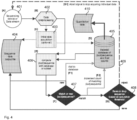
- Fig. 4 illustrates one example of how the proposed method can be implemented.
- This implementation commences by receiving 401 the data stream, followed by data preprocessing 402. At the beginning of the process there may be the step of initial data acquisition 403 that writes the initial data to a sequence data output file 404 and a database 405. Once the initial data acquisition is completed, the next step is to compare 406 the sequence or sub-sequence with the database 405 or subset of database 405 as describe above. A decision 407 is then made on whether there is a match or the sequence is new. If the sequence is new, the processor adds the sequence to database 405.
- the processor saves the sequence if the counter for that sequence in the database is below the saturation threshold or drops the sequence if the counter for that sequence in the database is above the saturation threshold. Saving the sequences involves writing the sequence to the sequence data output file 404. Saving the unique sequence counts and their associated sequence or subsequence involves writing the database 114 to the quantitation data output file 410.
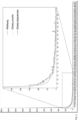
- Fig. 5 illustrates a graph showing the number of reads (y-axis) for each sequence (x-axis) where the sequences are ordered by abundance. It can be seen that about the eight most abundant sequences, the number of reads is constant at 150, which is the saturation threshold in this example.
- Fig. 6a illustrates the result that the proposed method (SQUIDseq) processes more reads than RNAseq.
- Fig. 6b illustrates the result that the proposed method(SQUIDseq) locates more unique sequences than RNAseq.
- Fig. 6c illustrates the coverage (indexed sequence counts) for particular sequences using RNAseq and SQUIDseq, which shows that the coverage using the proposed method is consistently higher.
- Fig. 6d illustrates the average processing times. In particular, Fig.
- 6d shows temporal performance of an implementation of the above method including the average time to compare one sequence against a database of 1k, 5k, 10k and 25k stored sequences shown as white boxes, and a comparison of average DTW speedups with default DTW shown as black boxes. It can be easily seen that the proposed method provides a significant reduction in processing times, which allows the sequencing of higher depth for less abundant reads while keeping the sequencing time constant.
- the benefits of the proposed method include:
- Suitable computer readable media may include volatile (e.g. RAM) and/or non-volatile (e.g. ROM, disk) memory, carrier waves and transmission media.
- Exemplary carrier waves may take the form of electrical, electromagnetic or optical signals conveying digital data steams along a local network or a publically accessible network such as the internet.
Landscapes
- Engineering & Computer Science (AREA)
- Theoretical Computer Science (AREA)
- Physics & Mathematics (AREA)
- General Physics & Mathematics (AREA)
- General Engineering & Computer Science (AREA)
- Data Mining & Analysis (AREA)
- Software Systems (AREA)
- Databases & Information Systems (AREA)
- Life Sciences & Earth Sciences (AREA)
- Computational Linguistics (AREA)
- Analytical Chemistry (AREA)
- Biotechnology (AREA)
- General Health & Medical Sciences (AREA)
- Medical Informatics (AREA)
- Spectroscopy & Molecular Physics (AREA)
- Biophysics (AREA)
- Proteomics, Peptides & Aminoacids (AREA)
- Chemical & Material Sciences (AREA)
- Bioinformatics & Cheminformatics (AREA)
- Evolutionary Biology (AREA)
- Bioinformatics & Computational Biology (AREA)
- Health & Medical Sciences (AREA)
- Probability & Statistics with Applications (AREA)
- Mathematical Physics (AREA)
- Fuzzy Systems (AREA)
- Measuring Or Testing Involving Enzymes Or Micro-Organisms (AREA)
- Apparatus Associated With Microorganisms And Enzymes (AREA)
- Investigating Or Analysing Biological Materials (AREA)
- Information Retrieval, Db Structures And Fs Structures Therefor (AREA)
Claims (15)
- Verfahren zum Verarbeiten von Streaming-Daten aus einem Sequenzierungsgerät (101), wobei das Verfahren Folgendes umfasst:Empfangen mehrerer Sequenzen (301, 302, 303, 304) von dem Sequenzierungsgerät (101);Speichern jeder aus der Mehrzahl von Sequenzen als Datenaufzeichnungen (311, 312, 313, 314) in einer Datenbank (114); undweiterhin Empfangen einer weiteren Sequenz (350) als Streaming-Daten von dem Sequenzierungsgerät (101);dadurch gekennzeichnet, dass:jede aus der Mehrzahl von Sequenzen einem Zähler (321, 322, 323, 324) zugeordnet ist, der eine Anzahl von Malen angibt, die die zugeordnete Sequenz sequenziert wurde; undwobei das Verfahren ferner Folgendes umfasst:während des Empfangens der weiteren Sequenz Durchführen einer Basenidentifikation auf der weiteren Sequenz und Abgleichen der Streaming-Daten gegen jede aus der Mehrzahl von Sequenzen in der Datenbank, um eine Abgleichsbewertung für jede aus der Mehrzahl von Sequenzen in den Aufzeichnungen der Datenbank (114) zu bestimmen;wenn die Abgleichsbewertung einen Abgleichsschwellenwert für eine aus der Mehrzahl von Sequenzen in der Datenbank (114) überschreitet, Auswählen der einen aus der Mehrzahl von Sequenzen in der Datenbank (114) basierend auf der Abgleichsbewertung;Speichern der weiteren Sequenz auf einem nichtflüchtigen Speicher (113), wobei der Zählerwert, der der ausgewählten Sequenz zugeordnet ist, unter einem Sättigungsschwellenwert liegt; undAbschließen des Empfangs der weiteren Sequenz, wenn der Zählerwert, der der ausgewählten Sequenz zugeordnet ist, über dem Sättigungsschwellenwert liegt,wobei das Abschließen des Empfangs der weiteren Sequenz das Senden eines Zurückweisungssignals an das Sequenzierungsgerät umfasst, um das Sequenzieren der weiteren Sequenz abzubrechen, bevor das Sequenzierungsgerät das Ende der weiteren Sequenz erreicht, und um zu ermöglichen, dass eine nächste Sequenz sequenziert wird, bevor die weitere Sequenz vollständig sequenziert wurde, undwobei das Verfahren ferner Folgendes umfasst:Überwachen der Zähler in der Datenbank, um zu bestimmen, ob ein oder mehrere Zähler einen Tiefenschwellenwert überschreiten; undwenn bestimmt wird, dass ein oder mehrere Zähler einen Tiefenschwellenwert überschreiten, Erzeugen eines Alarms, dass ausreichend viele Sequenzen sequenziert wurden.
- Verfahren nach Anspruch 1, wobei das Speichern der Sequenz als Datenaufzeichnungen in der Datenbank (114) davon abhängt, ob die Abgleichsbewertung unter dem Abgleichsschwellenwert für die in der Datenbank gespeicherten Sequenzen liegt.
- Verfahren nach einem der vorangegangenen Ansprüche, wobei das Speichern der Sequenz als Datenaufzeichnungen in der Datenbank (114) das Speichern einer digitalen Darstellung eines von dem Sequenziergerät empfangenen elektrischen Signals umfasst.
- Verfahren nach Anspruch 3, wobei das Abgleichen der Streaming-Daten das Abgleichen einer digitalen Darstellung eines elektrischen Signals, das die weitere Sequenz angibt, mit der digitalen Darstellung des auf der Datenbank gespeicherten elektrischen Signals umfasst.
- Verfahren nach Anspruch 4, wobei das Bestimmen einer Abgleichsbewertung das Durchführen einer dynamischen Zeitschleifenerstellung umfasst.
- Verfahren nach Anspruch 5, wobei das Durchführen einer dynamischen Zeitschleifenerstellung das selektive Berechnen von Zellen in einer assoziierten dynamischen Programmierungsmatrix umfasst, die innerhalb eines speziellen Bereichs oder Werts liegen.
- Verfahren nach einem der vorangegangenen Ansprüche, das weiters, wenn eine Abgleichsbewertung einen Abgleichsschwellenwert für eine aus der Mehrzahl von Sequenzen in der Datenbank übersteigt, das Erhöhen des Zählers für die eine aus der Mehrzahl von Sequenzen umfasst.
- Verfahren nach einem der vorangegangenen Ansprüche, wobei das Abgleichen der Streaming-Daten das Abgleichen der Streaming-Daten mit einem Teilsatz der Mehrzahl von Sequenzen (301, 302, 303, 304) in der Datenbank (114) umfasst, wobei ein Teilsatz auf dem Zähler basiert.
- Verfahren nach Anspruch 8, wobei der Teilsatz Sequenzen umfasst, für die der zugeordnete Zähler über einem Häufigkeitsschwellenwert liegt.
- Verfahren nach einem der vorangegangenen Ansprüche, wobei das Sequenzierungsgerät (101) eine Nanopore umfasst.
- Verfahren nach einem der vorangegangenen Ansprüche, wobei die Datenaufzeichnungen (311, 312, 313, 314) eine assoziative Anordnung bilden, wobei jede Aufzeichnung ein Schlüssel/Wert-Paar umfasst und der Wert die Sequenz und den Zähler umfasst.
- Verfahren nach einem der vorangegangenen Ansprüche, wobei das Empfangen der Mehrzahl von Sequenzen (301, 302, 303, 304) die Verwendung einer Schnittstelle zur Programmierung von Anwendungen (API) zum Empfang der Mehrzahl von Sequenzen umfasst.
- Verfahren nach einem der vorangegangenen Ansprüche, wobei das Speichern der Sequenz als Datenaufzeichnungen in der Datenbank (114) das Speichern einer digitalen Darstellung einer Nucleinsäuresequenz umfasst.
- Verfahren nach Anspruch 13, wobei das Bestimmen der Abgleichsbewertung das Durchführen eines Sequenzabgleichs oder -vergleichs umfasst.
- Computersystem (103) zum Verarbeiten von Streaming-Daten von einem Sequenzierungsgerät (101), wobei das Computersystem Folgendes umfasst:einen Datenanschluss, der ausgelegt ist, um mehrere Sequenzen (301, 302, 303, 304) von dem Sequenzierungsgerät zu empfangen; undeine Datenbank (114), die ausgelegt ist, um jede aus der Mehrzahl von Sequenzen als Datenaufzeichnungen (311, 312, 313, 314) zu speichern;dadurch gekennzeichnet, dass:jede aus der Mehrzahl von Sequenzen einem Zähler (321, 322, 323, 324) zugeordnet ist, der eine Anzahl von Malen angibt, die die zugeordnete Sequenz sequenziert wurde; undwobei das Computersystem ferner einen Prozessor (110) umfasst, der ausgelegt ist, um:während des durchgehenden Empfangens einer weiteren Sequenz als Streaming-Daten von dem Sequenzierungsgerät eine Basenidentifikation auf der weiteren Sequenz durchzuführen und die Streaming-Daten gegen jede aus der Mehrzahl von Sequenzen in den Aufzeichnungen der Datenbank abzugleichen, um eine Abgleichsbewertung für jede aus der Mehrzahl von Sequenzen in den Aufzeichnungen der Datenbank zu bestimmen;wenn die Abgleichsbewertung einen Abgleichsschwellenwert für eine aus der Mehrzahl von Sequenzen in der Datenbank überschreitet, die eine aus der Mehrzahl von Sequenzen in der Datenbank basierend auf der Abgleichsbewertung auszuwählen;die weitere Sequenz auf einem nichtflüchtigen Speicher (113) zu speichern, wobei der Zählerwert, der der ausgewählten Sequenz zugeordnet ist, unter einem Sättigungsschwellenwert liegt; undden Empfang der weiteren Sequenz abzuschließen, wenn der Zählerwert, der der ausgewählten Sequenz zugeordnet ist, über dem Sättigungsschwellenwert liegt,wobei das Abschließen des Empfangs der weiteren Sequenz das Senden eines Zurückweisungssignals an das Sequenzierungsgerät umfasst, um das Sequenzieren der weiteren Sequenz abzubrechen, bevor das Sequenzierungsgerät das Ende der weiteren Sequenz erreicht, und um zu ermöglichen, dass eine nächste Sequenz sequenziert wird, bevor die weitere Sequenz vollständig sequenziert wurde, undwobei der Prozessor des Computersystems ferner ausgelegt ist, um:die Zähler in der Datenbank zu überwachen, um zu bestimmen, ob ein oder mehrere Zähler einen Tiefenschwellenwert überschreiten; undwenn bestimmt wird, dass ein oder mehrere Zähler einen Tiefenschwellenwert überschreiten, einen Alarm zu erzeugen, dass ausreichend viele Sequenzen sequenziert wurden.
Priority Applications (1)
| Application Number | Priority Date | Filing Date | Title |
|---|---|---|---|
| EP24168943.9A EP4404200A3 (de) | 2017-03-24 | 2018-03-23 | Verarbeitung von sequenzierungsdatenströmen |
Applications Claiming Priority (3)
| Application Number | Priority Date | Filing Date | Title |
|---|---|---|---|
| AU2017901072A AU2017901072A0 (en) | 2017-03-24 | Processing of sequencing data streams | |
| AU2017904458A AU2017904458A0 (en) | 2017-11-02 | Processing of sequencing data streams | |
| PCT/AU2018/050265 WO2018170552A1 (en) | 2017-03-24 | 2018-03-23 | "processing of sequencing data streams" |
Related Child Applications (1)
| Application Number | Title | Priority Date | Filing Date |
|---|---|---|---|
| EP24168943.9A Division EP4404200A3 (de) | 2017-03-24 | 2018-03-23 | Verarbeitung von sequenzierungsdatenströmen |
Publications (4)
| Publication Number | Publication Date |
|---|---|
| EP3602360A1 EP3602360A1 (de) | 2020-02-05 |
| EP3602360A4 EP3602360A4 (de) | 2020-12-02 |
| EP3602360C0 EP3602360C0 (de) | 2024-05-01 |
| EP3602360B1 true EP3602360B1 (de) | 2024-05-01 |
Family
ID=63583888
Family Applications (2)
| Application Number | Title | Priority Date | Filing Date |
|---|---|---|---|
| EP18772385.3A Active EP3602360B1 (de) | 2017-03-24 | 2018-03-23 | Verarbeitung von sequenzierungsdatenströmen |
| EP24168943.9A Pending EP4404200A3 (de) | 2017-03-24 | 2018-03-23 | Verarbeitung von sequenzierungsdatenströmen |
Family Applications After (1)
| Application Number | Title | Priority Date | Filing Date |
|---|---|---|---|
| EP24168943.9A Pending EP4404200A3 (de) | 2017-03-24 | 2018-03-23 | Verarbeitung von sequenzierungsdatenströmen |
Country Status (5)
| Country | Link |
|---|---|
| US (1) | US11567944B2 (de) |
| EP (2) | EP3602360B1 (de) |
| CN (1) | CN110637341B (de) |
| AU (1) | AU2018238195B2 (de) |
| WO (1) | WO2018170552A1 (de) |
Families Citing this family (3)
| Publication number | Priority date | Publication date | Assignee | Title |
|---|---|---|---|---|
| US9127313B2 (en) | 2009-12-01 | 2015-09-08 | Oxford Nanopore Technologies Limited | Biochemical analysis instrument |
| WO2018197374A1 (en) * | 2017-04-27 | 2018-11-01 | Koninklijke Philips N.V. | Compression and annotation of digital waveforms from serial read next generation sequencing to support remote computing base calling |
| CN113407363B (zh) * | 2021-06-23 | 2024-05-17 | 京东科技控股股份有限公司 | 一种基于远程字典服务的滑窗计数方法及装置 |
Family Cites Families (8)
| Publication number | Priority date | Publication date | Assignee | Title |
|---|---|---|---|---|
| US6553317B1 (en) * | 1997-03-05 | 2003-04-22 | Incyte Pharmaceuticals, Inc. | Relational database and system for storing information relating to biomolecular sequences and reagents |
| US20070038381A1 (en) * | 2005-08-09 | 2007-02-15 | Melchior Timothy A | Efficient method for alignment of a polypeptide query against a collection of polypeptide subjects |
| GB0620694D0 (en) * | 2006-10-18 | 2006-11-29 | Fingerpin | Biometrics |
| WO2011137368A2 (en) * | 2010-04-30 | 2011-11-03 | Life Technologies Corporation | Systems and methods for analyzing nucleic acid sequences |
| US10395758B2 (en) | 2013-08-30 | 2019-08-27 | 10X Genomics, Inc. | Sequencing methods |
| EP4397972A3 (de) | 2014-10-16 | 2024-10-09 | Oxford Nanopore Technologies PLC | Ausrichtungsabbildungsschätzung |
| US9805099B2 (en) * | 2014-10-30 | 2017-10-31 | The Johns Hopkins University | Apparatus and method for efficient identification of code similarity |
| CA2967752A1 (en) * | 2016-05-18 | 2017-11-18 | Bioinformatics Solutions Inc. | Methods and systems for assembly of protein sequences |
-
2018
- 2018-03-23 US US16/497,146 patent/US11567944B2/en active Active
- 2018-03-23 CN CN201880032018.6A patent/CN110637341B/zh active Active
- 2018-03-23 EP EP18772385.3A patent/EP3602360B1/de active Active
- 2018-03-23 EP EP24168943.9A patent/EP4404200A3/de active Pending
- 2018-03-23 WO PCT/AU2018/050265 patent/WO2018170552A1/en not_active Ceased
- 2018-03-23 AU AU2018238195A patent/AU2018238195B2/en active Active
Also Published As
| Publication number | Publication date |
|---|---|
| EP3602360A4 (de) | 2020-12-02 |
| CN110637341B (zh) | 2024-08-13 |
| WO2018170552A1 (en) | 2018-09-27 |
| EP3602360A1 (de) | 2020-02-05 |
| EP3602360C0 (de) | 2024-05-01 |
| US11567944B2 (en) | 2023-01-31 |
| EP4404200A2 (de) | 2024-07-24 |
| AU2018238195B2 (en) | 2023-03-02 |
| CN110637341A (zh) | 2019-12-31 |
| US20200110752A1 (en) | 2020-04-09 |
| AU2018238195A1 (en) | 2019-10-24 |
| EP4404200A3 (de) | 2024-09-18 |
Similar Documents
| Publication | Publication Date | Title |
|---|---|---|
| Pandey et al. | Squeakr: an exact and approximate k-mer counting system | |
| US11403017B2 (en) | Data compression method, electronic device and computer program product | |
| US7809765B2 (en) | Sequence identification and analysis | |
| CA2839802C (en) | Methods and systems for data analysis | |
| EP3602360B1 (de) | Verarbeitung von sequenzierungsdatenströmen | |
| CN115312129B (zh) | 高通量测序背景下的基因数据压缩方法、装置及相关设备 | |
| WO2016020682A1 (en) | Methods and systems for data analysis and compression | |
| CN112599199A (zh) | 一种适用于10x单细胞转录组测序数据的分析方法 | |
| CN110428868B (zh) | 基因测序质量行数据压缩预处理、解压还原方法及系统 | |
| US20140244639A1 (en) | Surprisal data reduction of genetic data for transmission, storage, and analysis | |
| JP2025124637A (ja) | ゲノム配列データの圧縮のための方法 | |
| Seiler et al. | Raptor: A fast and space-efficient pre-filter for querying very large collections of nucleotide sequences | |
| JP2023510134A (ja) | スケッチ計算のためのシステムおよび方法 | |
| CN109857366B (zh) | 基于外存的插入排序方法、系统、设备及存储介质 | |
| CN110534158B (zh) | 一种基因序列比对方法、装置、服务器及介质 | |
| Zakeri et al. | Movi 2: Fast and Space-Efficient Queries on Pangenomes | |
| Wang et al. | MRPGA: motif detecting by modified random projection strategy and genetic algorithm | |
| US12431218B2 (en) | Multi-pass software-accelerated genomic read mapping engine | |
| CN113159090B (zh) | 一种模型自适应的信息处理系统及其处理方法 | |
| WO2025050527A1 (zh) | 序列和后验矩阵的处理方法、装置和计算设备 | |
| CN116028532A (zh) | 一种数据库数据过滤方法、装置、设备及存储介质 | |
| US20230420074A1 (en) | Variant calling of high coverage samples with a restricted memory | |
| CN120032718B (zh) | 基于全卷积网络的碱基识别方法、系统、介质及程序 | |
| CN115346605B (zh) | 高通量测序背景下的基因数据处理方法、装置及相关设备 | |
| Lu et al. | Integrating GPU-accelerated sequence alignment and SNP detection for genome resequencing analysis |
Legal Events
| Date | Code | Title | Description |
|---|---|---|---|
| STAA | Information on the status of an ep patent application or granted ep patent |
Free format text: STATUS: THE INTERNATIONAL PUBLICATION HAS BEEN MADE |
|
| PUAI | Public reference made under article 153(3) epc to a published international application that has entered the european phase |
Free format text: ORIGINAL CODE: 0009012 |
|
| STAA | Information on the status of an ep patent application or granted ep patent |
Free format text: STATUS: REQUEST FOR EXAMINATION WAS MADE |
|
| 17P | Request for examination filed |
Effective date: 20190930 |
|
| AK | Designated contracting states |
Kind code of ref document: A1 Designated state(s): AL AT BE BG CH CY CZ DE DK EE ES FI FR GB GR HR HU IE IS IT LI LT LU LV MC MK MT NL NO PL PT RO RS SE SI SK SM TR |
|
| AX | Request for extension of the european patent |
Extension state: BA ME |
|
| DAV | Request for validation of the european patent (deleted) | ||
| DAX | Request for extension of the european patent (deleted) | ||
| REG | Reference to a national code |
Ref legal event code: R079 Ipc: G16B0030100000 Ref country code: DE Ref legal event code: R079 Ref document number: 602018068955 Country of ref document: DE Free format text: PREVIOUS MAIN CLASS: G06F0019220000 Ipc: G16B0030100000 |
|
| A4 | Supplementary search report drawn up and despatched |
Effective date: 20201103 |
|
| RIC1 | Information provided on ipc code assigned before grant |
Ipc: G16B 30/10 20190101AFI20201028BHEP |
|
| GRAP | Despatch of communication of intention to grant a patent |
Free format text: ORIGINAL CODE: EPIDOSNIGR1 |
|
| STAA | Information on the status of an ep patent application or granted ep patent |
Free format text: STATUS: GRANT OF PATENT IS INTENDED |
|
| INTG | Intention to grant announced |
Effective date: 20231124 |
|
| RIN1 | Information on inventor provided before grant (corrected) |
Inventor name: BUNADI, DENNIS Inventor name: FERGUSON, JAMES Inventor name: SMITH, MARTIN |
|
| GRAS | Grant fee paid |
Free format text: ORIGINAL CODE: EPIDOSNIGR3 |
|
| GRAA | (expected) grant |
Free format text: ORIGINAL CODE: 0009210 |
|
| STAA | Information on the status of an ep patent application or granted ep patent |
Free format text: STATUS: THE PATENT HAS BEEN GRANTED |
|
| AK | Designated contracting states |
Kind code of ref document: B1 Designated state(s): AL AT BE BG CH CY CZ DE DK EE ES FI FR GB GR HR HU IE IS IT LI LT LU LV MC MK MT NL NO PL PT RO RS SE SI SK SM TR |
|
| REG | Reference to a national code |
Ref country code: GB Ref legal event code: FG4D |
|
| REG | Reference to a national code |
Ref country code: CH Ref legal event code: EP |
|
| REG | Reference to a national code |
Ref country code: IE Ref legal event code: FG4D |
|
| REG | Reference to a national code |
Ref country code: DE Ref legal event code: R096 Ref document number: 602018068955 Country of ref document: DE |
|
| U01 | Request for unitary effect filed |
Effective date: 20240520 |
|
| U07 | Unitary effect registered |
Designated state(s): AT BE BG DE DK EE FI FR IT LT LU LV MT NL PT SE SI Effective date: 20240529 |
|
| PG25 | Lapsed in a contracting state [announced via postgrant information from national office to epo] |
Ref country code: IS Free format text: LAPSE BECAUSE OF FAILURE TO SUBMIT A TRANSLATION OF THE DESCRIPTION OR TO PAY THE FEE WITHIN THE PRESCRIBED TIME-LIMIT Effective date: 20240901 |
|
| PG25 | Lapsed in a contracting state [announced via postgrant information from national office to epo] |
Ref country code: HR Free format text: LAPSE BECAUSE OF FAILURE TO SUBMIT A TRANSLATION OF THE DESCRIPTION OR TO PAY THE FEE WITHIN THE PRESCRIBED TIME-LIMIT Effective date: 20240501 |
|
| PG25 | Lapsed in a contracting state [announced via postgrant information from national office to epo] |
Ref country code: GR Free format text: LAPSE BECAUSE OF FAILURE TO SUBMIT A TRANSLATION OF THE DESCRIPTION OR TO PAY THE FEE WITHIN THE PRESCRIBED TIME-LIMIT Effective date: 20240802 |
|
| PG25 | Lapsed in a contracting state [announced via postgrant information from national office to epo] |
Ref country code: ES Free format text: LAPSE BECAUSE OF FAILURE TO SUBMIT A TRANSLATION OF THE DESCRIPTION OR TO PAY THE FEE WITHIN THE PRESCRIBED TIME-LIMIT Effective date: 20240501 |
|
| PG25 | Lapsed in a contracting state [announced via postgrant information from national office to epo] |
Ref country code: PL Free format text: LAPSE BECAUSE OF FAILURE TO SUBMIT A TRANSLATION OF THE DESCRIPTION OR TO PAY THE FEE WITHIN THE PRESCRIBED TIME-LIMIT Effective date: 20240501 |
|
| PG25 | Lapsed in a contracting state [announced via postgrant information from national office to epo] |
Ref country code: PL Free format text: LAPSE BECAUSE OF FAILURE TO SUBMIT A TRANSLATION OF THE DESCRIPTION OR TO PAY THE FEE WITHIN THE PRESCRIBED TIME-LIMIT Effective date: 20240501 Ref country code: NO Free format text: LAPSE BECAUSE OF FAILURE TO SUBMIT A TRANSLATION OF THE DESCRIPTION OR TO PAY THE FEE WITHIN THE PRESCRIBED TIME-LIMIT Effective date: 20240801 Ref country code: IS Free format text: LAPSE BECAUSE OF FAILURE TO SUBMIT A TRANSLATION OF THE DESCRIPTION OR TO PAY THE FEE WITHIN THE PRESCRIBED TIME-LIMIT Effective date: 20240901 Ref country code: HR Free format text: LAPSE BECAUSE OF FAILURE TO SUBMIT A TRANSLATION OF THE DESCRIPTION OR TO PAY THE FEE WITHIN THE PRESCRIBED TIME-LIMIT Effective date: 20240501 Ref country code: GR Free format text: LAPSE BECAUSE OF FAILURE TO SUBMIT A TRANSLATION OF THE DESCRIPTION OR TO PAY THE FEE WITHIN THE PRESCRIBED TIME-LIMIT Effective date: 20240802 Ref country code: ES Free format text: LAPSE BECAUSE OF FAILURE TO SUBMIT A TRANSLATION OF THE DESCRIPTION OR TO PAY THE FEE WITHIN THE PRESCRIBED TIME-LIMIT Effective date: 20240501 Ref country code: RS Free format text: LAPSE BECAUSE OF FAILURE TO SUBMIT A TRANSLATION OF THE DESCRIPTION OR TO PAY THE FEE WITHIN THE PRESCRIBED TIME-LIMIT Effective date: 20240801 |
|
| PG25 | Lapsed in a contracting state [announced via postgrant information from national office to epo] |
Ref country code: CZ Free format text: LAPSE BECAUSE OF FAILURE TO SUBMIT A TRANSLATION OF THE DESCRIPTION OR TO PAY THE FEE WITHIN THE PRESCRIBED TIME-LIMIT Effective date: 20240501 |
|
| PG25 | Lapsed in a contracting state [announced via postgrant information from national office to epo] |
Ref country code: RO Free format text: LAPSE BECAUSE OF FAILURE TO SUBMIT A TRANSLATION OF THE DESCRIPTION OR TO PAY THE FEE WITHIN THE PRESCRIBED TIME-LIMIT Effective date: 20240501 Ref country code: SK Free format text: LAPSE BECAUSE OF FAILURE TO SUBMIT A TRANSLATION OF THE DESCRIPTION OR TO PAY THE FEE WITHIN THE PRESCRIBED TIME-LIMIT Effective date: 20240501 |
|
| PG25 | Lapsed in a contracting state [announced via postgrant information from national office to epo] |
Ref country code: SM Free format text: LAPSE BECAUSE OF FAILURE TO SUBMIT A TRANSLATION OF THE DESCRIPTION OR TO PAY THE FEE WITHIN THE PRESCRIBED TIME-LIMIT Effective date: 20240501 |
|
| PG25 | Lapsed in a contracting state [announced via postgrant information from national office to epo] |
Ref country code: SM Free format text: LAPSE BECAUSE OF FAILURE TO SUBMIT A TRANSLATION OF THE DESCRIPTION OR TO PAY THE FEE WITHIN THE PRESCRIBED TIME-LIMIT Effective date: 20240501 Ref country code: SK Free format text: LAPSE BECAUSE OF FAILURE TO SUBMIT A TRANSLATION OF THE DESCRIPTION OR TO PAY THE FEE WITHIN THE PRESCRIBED TIME-LIMIT Effective date: 20240501 Ref country code: RO Free format text: LAPSE BECAUSE OF FAILURE TO SUBMIT A TRANSLATION OF THE DESCRIPTION OR TO PAY THE FEE WITHIN THE PRESCRIBED TIME-LIMIT Effective date: 20240501 Ref country code: CZ Free format text: LAPSE BECAUSE OF FAILURE TO SUBMIT A TRANSLATION OF THE DESCRIPTION OR TO PAY THE FEE WITHIN THE PRESCRIBED TIME-LIMIT Effective date: 20240501 |
|
| REG | Reference to a national code |
Ref country code: DE Ref legal event code: R097 Ref document number: 602018068955 Country of ref document: DE |
|
| PLBE | No opposition filed within time limit |
Free format text: ORIGINAL CODE: 0009261 |
|
| STAA | Information on the status of an ep patent application or granted ep patent |
Free format text: STATUS: NO OPPOSITION FILED WITHIN TIME LIMIT |
|
| 26N | No opposition filed |
Effective date: 20250204 |
|
| U21 | Renewal fee for the european patent with unitary effect paid with additional fee |
Year of fee payment: 8 Effective date: 20250628 |
|
| PG25 | Lapsed in a contracting state [announced via postgrant information from national office to epo] |
Ref country code: MC Free format text: LAPSE BECAUSE OF FAILURE TO SUBMIT A TRANSLATION OF THE DESCRIPTION OR TO PAY THE FEE WITHIN THE PRESCRIBED TIME-LIMIT Effective date: 20240501 |
|
| REG | Reference to a national code |
Ref country code: CH Ref legal event code: H13 Free format text: ST27 STATUS EVENT CODE: U-0-0-H10-H13 (AS PROVIDED BY THE NATIONAL OFFICE) Effective date: 20251023 |
|
| PG25 | Lapsed in a contracting state [announced via postgrant information from national office to epo] |
Ref country code: CH Free format text: LAPSE BECAUSE OF NON-PAYMENT OF DUE FEES Effective date: 20250331 |
|
| PG25 | Lapsed in a contracting state [announced via postgrant information from national office to epo] |
Ref country code: IE Free format text: LAPSE BECAUSE OF NON-PAYMENT OF DUE FEES Effective date: 20250323 |
|
| PGFP | Annual fee paid to national office [announced via postgrant information from national office to epo] |
Ref country code: GB Payment date: 20260327 Year of fee payment: 9 |