EP3604530A1 - Promotor eines konstitutiven corynebacterium-expressionsvektors, der auf der basis von transkriptomsequenzierung geprüft wird, screeningverfahren dafür und anwendungen davon - Google Patents
Promotor eines konstitutiven corynebacterium-expressionsvektors, der auf der basis von transkriptomsequenzierung geprüft wird, screeningverfahren dafür und anwendungen davon Download PDFInfo
- Publication number
- EP3604530A1 EP3604530A1 EP18772338.2A EP18772338A EP3604530A1 EP 3604530 A1 EP3604530 A1 EP 3604530A1 EP 18772338 A EP18772338 A EP 18772338A EP 3604530 A1 EP3604530 A1 EP 3604530A1
- Authority
- EP
- European Patent Office
- Prior art keywords
- promoter
- expression vector
- corynebacterium
- seq
- gene
- Prior art date
- Legal status (The legal status is an assumption and is not a legal conclusion. Google has not performed a legal analysis and makes no representation as to the accuracy of the status listed.)
- Pending
Links
Images


Classifications
-
- C—CHEMISTRY; METALLURGY
- C07—ORGANIC CHEMISTRY
- C07K—PEPTIDES
- C07K14/00—Peptides having more than 20 amino acids; Gastrins; Somatostatins; Melanotropins; Derivatives thereof
- C07K14/195—Peptides having more than 20 amino acids; Gastrins; Somatostatins; Melanotropins; Derivatives thereof from bacteria
- C07K14/34—Peptides having more than 20 amino acids; Gastrins; Somatostatins; Melanotropins; Derivatives thereof from bacteria from Corynebacterium (G)
-
- C—CHEMISTRY; METALLURGY
- C12—BIOCHEMISTRY; BEER; SPIRITS; WINE; VINEGAR; MICROBIOLOGY; ENZYMOLOGY; MUTATION OR GENETIC ENGINEERING
- C12N—MICROORGANISMS OR ENZYMES; COMPOSITIONS THEREOF; PROPAGATING, PRESERVING, OR MAINTAINING MICROORGANISMS; MUTATION OR GENETIC ENGINEERING; CULTURE MEDIA
- C12N1/00—Microorganisms; Compositions thereof; Processes of propagating, maintaining or preserving microorganisms or compositions thereof; Processes of preparing or isolating a composition containing a microorganism; Culture media therefor
- C12N1/20—Bacteria; Culture media therefor
-
- C—CHEMISTRY; METALLURGY
- C12—BIOCHEMISTRY; BEER; SPIRITS; WINE; VINEGAR; MICROBIOLOGY; ENZYMOLOGY; MUTATION OR GENETIC ENGINEERING
- C12N—MICROORGANISMS OR ENZYMES; COMPOSITIONS THEREOF; PROPAGATING, PRESERVING, OR MAINTAINING MICROORGANISMS; MUTATION OR GENETIC ENGINEERING; CULTURE MEDIA
- C12N1/00—Microorganisms; Compositions thereof; Processes of propagating, maintaining or preserving microorganisms or compositions thereof; Processes of preparing or isolating a composition containing a microorganism; Culture media therefor
- C12N1/20—Bacteria; Culture media therefor
- C12N1/205—Bacterial isolates
-
- C—CHEMISTRY; METALLURGY
- C12—BIOCHEMISTRY; BEER; SPIRITS; WINE; VINEGAR; MICROBIOLOGY; ENZYMOLOGY; MUTATION OR GENETIC ENGINEERING
- C12N—MICROORGANISMS OR ENZYMES; COMPOSITIONS THEREOF; PROPAGATING, PRESERVING, OR MAINTAINING MICROORGANISMS; MUTATION OR GENETIC ENGINEERING; CULTURE MEDIA
- C12N15/00—Mutation or genetic engineering; DNA or RNA concerning genetic engineering, vectors, e.g. plasmids, or their isolation, preparation or purification; Use of hosts therefor
- C12N15/09—Recombinant DNA-technology
- C12N15/10—Processes for the isolation, preparation or purification of DNA or RNA
- C12N15/1034—Isolating an individual clone by screening libraries
-
- C—CHEMISTRY; METALLURGY
- C12—BIOCHEMISTRY; BEER; SPIRITS; WINE; VINEGAR; MICROBIOLOGY; ENZYMOLOGY; MUTATION OR GENETIC ENGINEERING
- C12N—MICROORGANISMS OR ENZYMES; COMPOSITIONS THEREOF; PROPAGATING, PRESERVING, OR MAINTAINING MICROORGANISMS; MUTATION OR GENETIC ENGINEERING; CULTURE MEDIA
- C12N15/00—Mutation or genetic engineering; DNA or RNA concerning genetic engineering, vectors, e.g. plasmids, or their isolation, preparation or purification; Use of hosts therefor
- C12N15/09—Recombinant DNA-technology
- C12N15/10—Processes for the isolation, preparation or purification of DNA or RNA
- C12N15/1034—Isolating an individual clone by screening libraries
- C12N15/1086—Preparation or screening of expression libraries, e.g. reporter assays
-
- C—CHEMISTRY; METALLURGY
- C12—BIOCHEMISTRY; BEER; SPIRITS; WINE; VINEGAR; MICROBIOLOGY; ENZYMOLOGY; MUTATION OR GENETIC ENGINEERING
- C12N—MICROORGANISMS OR ENZYMES; COMPOSITIONS THEREOF; PROPAGATING, PRESERVING, OR MAINTAINING MICROORGANISMS; MUTATION OR GENETIC ENGINEERING; CULTURE MEDIA
- C12N15/00—Mutation or genetic engineering; DNA or RNA concerning genetic engineering, vectors, e.g. plasmids, or their isolation, preparation or purification; Use of hosts therefor
- C12N15/09—Recombinant DNA-technology
- C12N15/10—Processes for the isolation, preparation or purification of DNA or RNA
- C12N15/1034—Isolating an individual clone by screening libraries
- C12N15/1089—Design, preparation, screening or analysis of libraries using computer algorithms
-
- C—CHEMISTRY; METALLURGY
- C12—BIOCHEMISTRY; BEER; SPIRITS; WINE; VINEGAR; MICROBIOLOGY; ENZYMOLOGY; MUTATION OR GENETIC ENGINEERING
- C12N—MICROORGANISMS OR ENZYMES; COMPOSITIONS THEREOF; PROPAGATING, PRESERVING, OR MAINTAINING MICROORGANISMS; MUTATION OR GENETIC ENGINEERING; CULTURE MEDIA
- C12N15/00—Mutation or genetic engineering; DNA or RNA concerning genetic engineering, vectors, e.g. plasmids, or their isolation, preparation or purification; Use of hosts therefor
- C12N15/09—Recombinant DNA-technology
- C12N15/11—DNA or RNA fragments; Modified forms thereof; Non-coding nucleic acids having a biological activity
- C12N15/113—Non-coding nucleic acids modulating the expression of genes, e.g. antisense oligonucleotides; Antisense DNA or RNA; Triplex- forming oligonucleotides; Catalytic nucleic acids, e.g. ribozymes; Nucleic acids used in co-suppression or gene silencing
-
- C—CHEMISTRY; METALLURGY
- C12—BIOCHEMISTRY; BEER; SPIRITS; WINE; VINEGAR; MICROBIOLOGY; ENZYMOLOGY; MUTATION OR GENETIC ENGINEERING
- C12N—MICROORGANISMS OR ENZYMES; COMPOSITIONS THEREOF; PROPAGATING, PRESERVING, OR MAINTAINING MICROORGANISMS; MUTATION OR GENETIC ENGINEERING; CULTURE MEDIA
- C12N15/00—Mutation or genetic engineering; DNA or RNA concerning genetic engineering, vectors, e.g. plasmids, or their isolation, preparation or purification; Use of hosts therefor
- C12N15/09—Recombinant DNA-technology
- C12N15/63—Introduction of foreign genetic material using vectors; Vectors; Use of hosts therefor; Regulation of expression
- C12N15/74—Vectors or expression systems specially adapted for prokaryotic hosts other than E. coli, e.g. Lactobacillus, Micromonospora
- C12N15/77—Vectors or expression systems specially adapted for prokaryotic hosts other than E. coli, e.g. Lactobacillus, Micromonospora for Corynebacterium; for Brevibacterium
-
- C—CHEMISTRY; METALLURGY
- C12—BIOCHEMISTRY; BEER; SPIRITS; WINE; VINEGAR; MICROBIOLOGY; ENZYMOLOGY; MUTATION OR GENETIC ENGINEERING
- C12N—MICROORGANISMS OR ENZYMES; COMPOSITIONS THEREOF; PROPAGATING, PRESERVING, OR MAINTAINING MICROORGANISMS; MUTATION OR GENETIC ENGINEERING; CULTURE MEDIA
- C12N9/00—Enzymes; Proenzymes; Compositions thereof; Processes for preparing, activating, inhibiting, separating or purifying enzymes
- C12N9/0004—Oxidoreductases (1.)
- C12N9/0006—Oxidoreductases (1.) acting on CH-OH groups as donors (1.1)
-
- C—CHEMISTRY; METALLURGY
- C12—BIOCHEMISTRY; BEER; SPIRITS; WINE; VINEGAR; MICROBIOLOGY; ENZYMOLOGY; MUTATION OR GENETIC ENGINEERING
- C12N—MICROORGANISMS OR ENZYMES; COMPOSITIONS THEREOF; PROPAGATING, PRESERVING, OR MAINTAINING MICROORGANISMS; MUTATION OR GENETIC ENGINEERING; CULTURE MEDIA
- C12N9/00—Enzymes; Proenzymes; Compositions thereof; Processes for preparing, activating, inhibiting, separating or purifying enzymes
- C12N9/88—Lyases (4.)
-
- C—CHEMISTRY; METALLURGY
- C12—BIOCHEMISTRY; BEER; SPIRITS; WINE; VINEGAR; MICROBIOLOGY; ENZYMOLOGY; MUTATION OR GENETIC ENGINEERING
- C12P—FERMENTATION OR ENZYME-USING PROCESSES TO SYNTHESISE A DESIRED CHEMICAL COMPOUND OR COMPOSITION OR TO SEPARATE OPTICAL ISOMERS FROM A RACEMIC MIXTURE
- C12P13/00—Preparation of nitrogen-containing organic compounds
- C12P13/04—Alpha- or beta- amino acids
- C12P13/06—Alanine; Leucine; Isoleucine; Serine; Homoserine
-
- C—CHEMISTRY; METALLURGY
- C12—BIOCHEMISTRY; BEER; SPIRITS; WINE; VINEGAR; MICROBIOLOGY; ENZYMOLOGY; MUTATION OR GENETIC ENGINEERING
- C12Q—MEASURING OR TESTING PROCESSES INVOLVING ENZYMES, NUCLEIC ACIDS OR MICROORGANISMS; COMPOSITIONS OR TEST PAPERS THEREFOR; PROCESSES OF PREPARING SUCH COMPOSITIONS; CONDITION-RESPONSIVE CONTROL IN MICROBIOLOGICAL OR ENZYMOLOGICAL PROCESSES
- C12Q1/00—Measuring or testing processes involving enzymes, nucleic acids or microorganisms; Compositions therefor; Processes of preparing such compositions
- C12Q1/02—Measuring or testing processes involving enzymes, nucleic acids or microorganisms; Compositions therefor; Processes of preparing such compositions involving viable microorganisms
-
- C—CHEMISTRY; METALLURGY
- C12—BIOCHEMISTRY; BEER; SPIRITS; WINE; VINEGAR; MICROBIOLOGY; ENZYMOLOGY; MUTATION OR GENETIC ENGINEERING
- C12N—MICROORGANISMS OR ENZYMES; COMPOSITIONS THEREOF; PROPAGATING, PRESERVING, OR MAINTAINING MICROORGANISMS; MUTATION OR GENETIC ENGINEERING; CULTURE MEDIA
- C12N2800/00—Nucleic acids vectors
- C12N2800/10—Plasmid DNA
- C12N2800/101—Plasmid DNA for bacteria
-
- C—CHEMISTRY; METALLURGY
- C12—BIOCHEMISTRY; BEER; SPIRITS; WINE; VINEGAR; MICROBIOLOGY; ENZYMOLOGY; MUTATION OR GENETIC ENGINEERING
- C12N—MICROORGANISMS OR ENZYMES; COMPOSITIONS THEREOF; PROPAGATING, PRESERVING, OR MAINTAINING MICROORGANISMS; MUTATION OR GENETIC ENGINEERING; CULTURE MEDIA
- C12N2800/00—Nucleic acids vectors
- C12N2800/24—Vectors characterised by the absence of particular element, e.g. selectable marker, viral origin of replication
-
- C—CHEMISTRY; METALLURGY
- C12—BIOCHEMISTRY; BEER; SPIRITS; WINE; VINEGAR; MICROBIOLOGY; ENZYMOLOGY; MUTATION OR GENETIC ENGINEERING
- C12N—MICROORGANISMS OR ENZYMES; COMPOSITIONS THEREOF; PROPAGATING, PRESERVING, OR MAINTAINING MICROORGANISMS; MUTATION OR GENETIC ENGINEERING; CULTURE MEDIA
- C12N2800/00—Nucleic acids vectors
- C12N2800/60—Vectors containing traps for, e.g. exons, promoters
-
- C—CHEMISTRY; METALLURGY
- C12—BIOCHEMISTRY; BEER; SPIRITS; WINE; VINEGAR; MICROBIOLOGY; ENZYMOLOGY; MUTATION OR GENETIC ENGINEERING
- C12N—MICROORGANISMS OR ENZYMES; COMPOSITIONS THEREOF; PROPAGATING, PRESERVING, OR MAINTAINING MICROORGANISMS; MUTATION OR GENETIC ENGINEERING; CULTURE MEDIA
- C12N2830/00—Vector systems having a special element relevant for transcription
-
- C—CHEMISTRY; METALLURGY
- C12—BIOCHEMISTRY; BEER; SPIRITS; WINE; VINEGAR; MICROBIOLOGY; ENZYMOLOGY; MUTATION OR GENETIC ENGINEERING
- C12Q—MEASURING OR TESTING PROCESSES INVOLVING ENZYMES, NUCLEIC ACIDS OR MICROORGANISMS; COMPOSITIONS OR TEST PAPERS THEREFOR; PROCESSES OF PREPARING SUCH COMPOSITIONS; CONDITION-RESPONSIVE CONTROL IN MICROBIOLOGICAL OR ENZYMOLOGICAL PROCESSES
- C12Q1/00—Measuring or testing processes involving enzymes, nucleic acids or microorganisms; Compositions therefor; Processes of preparing such compositions
- C12Q1/68—Measuring or testing processes involving enzymes, nucleic acids or microorganisms; Compositions therefor; Processes of preparing such compositions involving nucleic acids
- C12Q1/6897—Measuring or testing processes involving enzymes, nucleic acids or microorganisms; Compositions therefor; Processes of preparing such compositions involving nucleic acids involving reporter genes operably linked to promoters
-
- C—CHEMISTRY; METALLURGY
- C12—BIOCHEMISTRY; BEER; SPIRITS; WINE; VINEGAR; MICROBIOLOGY; ENZYMOLOGY; MUTATION OR GENETIC ENGINEERING
- C12R—INDEXING SCHEME ASSOCIATED WITH SUBCLASSES C12C - C12Q, RELATING TO MICROORGANISMS
- C12R2001/00—Microorganisms ; Processes using microorganisms
- C12R2001/01—Bacteria or Actinomycetales ; using bacteria or Actinomycetales
- C12R2001/15—Corynebacterium
Definitions
- the present invention belongs to the field of biotechnology, and particularly relates to a Corynebacterium constitutive expression vector promoter screened on the basis of transcriptome sequencing screening, a screening method thereof and applications thereof.
- the present invention further relates to an expression vector and a recombinant strain containing the promoter.
- Corynebacterium is a kind of Gram-positive bacteria. Corynebacterium glutamicum, Brevibacterium flavum and Brevibacterium lactofermentum, three main representatives of Corynebacterium, have been widely used in the production of amino acids, nucleotides and other chemicals (Liebl et al., 1991).
- the Corynebacterium mutant strains obtained by physical or chemical mutagenesis have a strong ability to synthesize useful substances of interest, while wild or mutant strains of Corynebacterium can be modified by genetic engineering and metabolic engineering to obtain strains with higher production intensity. Metabolic engineering is to find key metabolic enzymes in various metabolic pathways of Corynebacterium, and regulate gene expression of key metabolic enzymes through genetic engineering.
- genes are expressed under the control of a promoter, and their expression intensity depends on promoter elements.
- the promoters derived from Escherichia coli, Streptomyces and Bacillus subtilis can be expressed in Corynebacterium and can be applied to the construction of a vector system of Corynebacterium, such as expression plasmids PXMJ19 and PEC-XK99E constructed by using Ptac and Ptrc promoters derived from Escherichia coli.
- Genes are induced and expressed under the control of lacIq, but the expression level is low, and an inducer IPTG is needed in the production process while IPTG is quite expensive which is not a suitable inducer for gene expression in large-scale production of the target product.
- Lactose can be used as an inducer for large-scale production instead of IPTG, however, lactose cannot enter cells of most Corynebacterium strains (Brabetz et al., 1991), which also limits the application of inducible expression systems in Corynebacterium.
- the constitutive promoter can continuously express foreign gene without special conditions such as induction during the survival period of the bacteria, thereby simplifying the operation process and having relatively high safety, and thus being more suitable for the application in actual production.
- the constitutive genes with strong expression were screened and purified by means of PCR amplification and DNA probes in various housekeeping genes, and constitutive strong promoters were screened for the construction of recombinant vectors ( Jensen PR et al., Appl Environ Microbiol, 1998, 64(1): 82-87 .).
- Yangliu et al. used Pgro, the endogenous strong promoter of C. glutamicum ATCC 13032, to effectively promote the expression of the exogenous gene xylA in C.
- Pgro is used as a promoter to construct an expression plasmid together with the gene of interest.
- These kinds of plasmids also express the target gene in the logarithmic growth phase of bacteria, resulting in a loss rate of the plasmid reaches more than 40% prior to the stationary phase, thereby reducing the expression effect.
- the technical problem to be solved by the present invention is that the current screening methods of constitutive promoters are complicated, and the expression plasmid constructed by the screened promoter is easily lost in the growth of the host, and also has adverse effects on the growth and metabolism of the host. How to establish a rapid screening method for constitutive promoters to screen endogenous promoter with high viability in the stationary phase, and how to ensure the stability of plasmid constructs containing the promoters in the stationary phase of bacteria growth is the problem needed to be solved.
- the object of the present invention is to establish a method for finding a promoter gene and using it to construct a constitutive high-efficiency expression plasmid, wherein the promoter gene is silent in the logarithmic phase of bacteria growth and efficiently expressed in the stationary phase of bacterial growth.
- promoters are all regulatable promoters.
- the series of expression vectors used green fluorescent protein (EGFP) as a marker gene to detect the activity of each promoter fragment and evaluate the passage stability of each probe plasmid, thereby screening a series of promoters with low activity in the logarithmic phase and high activity in the stationary phase, evaluating the passage stability of plasmids containing each promoter, and further screening promoters for stabilizing plasmids.
- EGFP green fluorescent protein
- a method for screening a Corynebacterium constitutive expression vector promoter on the basis of transcriptome sequencing comprising:
- a Corynebacterium constitutive expression vector comprising the abovesaid Corynebacterium constitutive expression vector promoter.
- Corynebacterium constitutive expression vector wherein it is constructed by inserting a gene of interest and the abovesaid Corynebacterium constitutive expression vector promoter at the restriction site of the plasmid HY-P19, wherein the nucleotide sequence of the plasmid HY-P19 is shown in SEQ ID NO: 4, and the nucleotide sequence of the gene of interest is set forth in SEQ ID NO: 5, SEQ ID NO: 6 or SEQ ID NO: 7.
- the nucleotide sequence of the gene of interest is set forth in SEQ ID NO: 5, provided that the nucleotide sequence of the Corynebacterium constitutive expression vector promoter is set forth in SEQ ID NO: 1; the nucleotide sequence of the gene of interest is set forth in SEQ ID NO: 6, provided that the nucleotide sequence of the Corynebacterium constitutive expression vector promoter is set forth in SEQ ID NO: 2; the nucleotide sequence of the gene of interest is set forth in SEQ ID NO: 7, provided that the nucleotide sequence of the Corynebacterium constitutive expression vector promoter is set forth SEQ ID NO: 3.
- the beneficial effect of the present invention is that the expression vector constructed by such promoter has a low expression level of the target protein in the logarithmic phase, but the expression level of the target protein in the stationary phase is greatly increased compared to the logarithmic phase, and the adverse effect on the growth of the host bacteria is low and the stability of plasmid passage is high.
- the promoter is suitable for vector construction of the gene of interest which does not need expression in the logarithmic phase but needs high expression in the stationary phase. It is especially suitable for the construction of engineering strains for amino acid fermentation.
- the Corynebacterium glutamicum strain H5 of the present invention was deposited at the China Center for Type Culture Collection (CCTCC) on November 1, 2016, and confirmed viable on November 12, 2016.
- the deposit address is: Wuhan University, Wuhan, China, Zip Code:430072, the accession number is: CCTCC NO: M2016609, the culture name is Corynebacterium glutamicum H5, and the classification is Corynebacterium glutamicum.
- Bacterial culture The L-isoleucine-producing Corynebacterium glutamicum without plasmid (Corynebacterium glutamicum H5 strain, deposited at the China Center for Type Culture Collection on November 1, 2016, and the accession number of which is CCTCC NO: M2016609) was picked and inoculated to LB medium, and cultured overnight at 31° C. The obtained bacterial liquid was centrifuged and resuspended in an equal volume of sterile water, then inoculated to LBG fresh sterile medium at a percentage of 5%, and cultured at 31 °C and 200 rpm until the mid-log phase and the early stationary phase. The fermentation broth was taken out, and mixed immediately with an equal volume of RNA protect® Bacteria Reagent (QIAGEN). After centrifugation at 5000 rpm for 10 min, 100 mg of wet bacteria were weighed and quickly stored in liquid nitrogen.
- RNA protect® Bacteria Reagent QIAGEN
- RNA extraction The sample stored in liquid nitrogen was placed in a mortar precooled with liquid nitrogen, and an appropriate amount of liquid nitrogen was added to ensure that the mortar always contains a certain amount of liquid nitrogen. The sample was ground into powder, and then RNA of which was extracted according to the experimental procedure provided by QIAGEN RNeasy Plant Mini Kit. The extracted sample was tested by 1% agarose gel, which requires that the sample cannot be contaminated with protein, i.e. there was no obvious bright bands in the pores of agarose gel. The concentration of nucleic acid was measured by NanoDrop Spectrophotometer. The concentration of the sample in mid-log phase was 421 ng/ ⁇ l, and that in stationary phase was 237 ng/ ⁇ l, and the requirements of no obvious protein contamination and nucleic acid concentration reaching >60 ng/ ⁇ l were met.
- Transcriptome sequencing extracted RNA samples were sequenced by Beijing Novogene Corporation. The sequencing process was as follows: After the sample was qualified, rRNA was removed by Ribo-zero kit to enrich the mRNA. Subsequently, the fragmentation buffer was added to break the mRNA into short fragments. mRNA was used as a template to synthesize a single stranded cDNA with random hexamers. Then, buffer, dNTPs (dTTP in dNTP was replaced with dUTP), DNA polymerase I and RNase H polymerase were added to synthesize the double-stranded cDNA.
- the double-stranded cDNA was purified with AMPure XP beads, and the second strand of the cDNA containing U was degraded with USER enzyme.
- the purified double-stranded cDNA was firstly end-repaired, A-tailed and ligated to sequencing adaptor, and then the fragment size was selected using AMPure XP beads.
- PCR amplification was performed and the PCR products were purified with AMPure XP beads to obtain a final library. After the library was constructed, preliminary quantification was performed using Qubit 2.0, and the library was diluted to 1 ng/ ⁇ l. Then, the insert size of the library was detected using Agilent 2100.
- the effective concentration of the library was accurately quantified (effective library concentration > 2 nM) by using Q-PCR method to ensure the quality of the library.
- different libraries were pooled according to the requirement of the effective concentration and target raw data volume, and HiSeq/MiSeq sequencing was performed.
- Bioinformatics analysis process The sequencing results were analysed by Beijing Novogene Corporation. After the original Sequenced Reads were obtained, bioinformatics analysis was performed by using reference sequence or reference genome of the relevant species. The main processes of bioinformatics analysis were as follows: Original sequence data Quality assessment of sequencing data Alignment analysis with reference sequence Gene expression level analysis Overall quality assessment of RNA-seq Gene differential expression analysis GO enrichment analysis of differential gene or KEGG enrichment analysis of differential gene.
- the bioinformatics reference species of the sample of the present invention is Corynebacterium glutamicum ATCC 13032 (purchased from Shanghai Fuxiang Biotechnology Co., Ltd.), and the reference genome is linked to ncbi as https://www.ncbi.nlm.nih.gov/Nuccore/NC_006958.1.
- the expression abundance of each gene in the logarithmic phase and the stationary phase was analyzed, and 10 genes and transcription analysis information in Table 1 were screened.
- the consistent characteristics of the 10 genes were: the transcription level was low in the logarithmic phase, while the transcription level was high in the stationary phase.
- the genes CGTRNA_RS10085 and CGTRNA RS 10080 belong to the same operon, CGTRNA RS07920, CGTRNA_RS07925, CGTRNA_RS07930 belong to the same operon, CGTRNA_RS00965, CGTRNA_RS00970 belong to the same operon, and the same operon shares one promoter.
- Table 1 The Corynebacterium glutamate transcriptome analysis of gene with high transcript abundance in S phase and low transcript abundance in L phase Gene Name Strand start end length S1_fpkm L1_fpkm CGTRNA_RS10085 - 2142201 2143517 1317 27347.52 148.9929 CGTRNA_RS10080 - 2141798 2142136 339 24497.2 543.2887 CGTRNA_RS10840 + 2320501 2321934 1434 13058.69 838.0642 CGTRNA_RS07910 - 1672737 1673144 408 7453.836 37.12523 CGTRNA_RS07920 - 1674757 1675572 816 3383.739 15.18759 CGTRNA_RS07925 - 1675587 1676735 1149 2442.069 7.789865 CGTRNA_RS07930 - 1676732 1678090 1359 5493.98 22.03821 CGTRNA_RS00965 + 195241 199773 4533 6137.992 5
- Promoter region screening by means of NCBI blast, the predicted gene fragments were aligned with the genome of the C. glutamicum sequenced in the laboratory to find the corresponding gene sequence.
- the promoter region of each gene was predicted by searching literature or applying promoter prediction software, and 2-3 fragments from the promoter region of each gene were selected according to the predicted functional region for promoter activity detection.
- Primer synthesis The primers were designed by snapgene software, and synthesized by Wuhan TianyiHuiyuan Corporation. The sequences of synthetic primer are shown in Table 2 below. Table 2: primer sequences for the construction of the probe vector Primer Name Primer Sequence RS10085SEQ1FP TGCCTGCAGGTCGACTCTAGACTATTGAAATTAGTTTCTG RS10085SEQ2FP TGCCTGCAGGTCGACTCTAGACTATTCTATAGATCTATTG RS10085SEQ3FP RS10085SEQ1RP CTCGCCCTTGCTCACCATAGCGTGGATGACCTCCTTTG RS10840SEQ1FP TGCCTGCAGGTCGACTCTAGATCAAAGGTCAGCAATTG RS10840SEQ2FP TGCCTGCAGGTCGACTCTAGAGCAGTCAAAAGGCGTTGC RS10840SEQ1RP CTCGCCCTTGCTCACCATGGTGACTCCTCATTGACATG RS07910SEQ1FP TGCCTGCAGGTCGACTC
- the bacterial genome was extracted according to the protocol of the Tiangen Genome Extraction Kit.
- the concentration of the nucleic acid from the extracted genome was detected using a NanoDrop Spectrophotometer, and the concentration of the nucleic acid for PCR amplification was controlled between 100 and 200 ng/ ⁇ l.
- the PCR system contained 1 ⁇ l of genomic template, 1 ⁇ l of forward primer (10 ⁇ M), 1 ⁇ l of reverse primer (10 ⁇ M), 10 ⁇ l of 5 ⁇ TransStart FastPfu FlyBuffer, 4 ⁇ l of 2.5 mM Dntps, 1 ⁇ l of TransStart FastPfu Fly DNA Polymerase, and ddH 2 O 32 ⁇ l.
- the PCR amplification process was 95 °C for 2 min, 32 cycles of 95 °C for 20 s, 55 °C for 20 s and 72 °C for 10 s-1 min, and 72 °C for 5 min.
- DNA sequence hy-dna1 shown below was synthesized by Wuhan Tianyi Huiyuan: gcatccggggctgatccccggcgcctaactaactaactcgagcttaagaggcctaagcttgcatgcctgcaggtcgact (5)
- DNA recovered by agarose electrophoresis The PCR products and the digested products were aliquoted with 10 ⁇ loading buffer and 50 ⁇ l of which were loaded onto a 1.5% agarose gel, takara 2000 DL DNA marker was used as a control, and electrophoresis was carried out at 70 V for 40 min.
- PCR amplified bands were recovered using takara DNA recovery kit.
- the DNA fragments with recombinant adaptor RS10085seq1 (167 bp), RS10085seq2 (180 bp), RS10085seq3 (240 bp), RS10840seq1 (107 bp), RS10840seq2 (282 bp), and RS07910seq1 (110 bp), RS07910seq2 (241 bp), RS07930seq1 (93 bp), RS07930seq2 (118 bp), RS07930seq3 (229 bp), RS00965seq1 (118 bp), RS00965seq2 (241 bp), RS04670seq1 (99 bp), RS04670seq2 (247 bp), EGFP (760bp) were then obtained
- E. coli competent cells were prepared using Beyotime Supercompetent Cell Preparation Kit, and the prepared competent cells were stored in a refrigerator at -80 °C until use.
- Transformation The DH5 ⁇ competent cells were slowly thawed on ice, and the in vitro recombinant products were pipetted into the competent cell.
- the centrifuge tube was gently flicked with finger to mix the bacteria and the recombinant products, and placed in an ice bath or ice water bath for 30 minutes. Then the centrifuge tube was placed in a water bath at 42 °C, and heated shock for 2 minutes. Immediately after heat shock, the centrifuge tube was placed in an ice water bath for 2 minutes. 900 ml of LB was aliquoted and incubated at 37 °C and 200 rpm for 1 hour. The supernatant was removed after centrifugation, and the obtained cells were spread on LB solid plate containing 25 ⁇ g/ml chloramphenicol, and cultured overnight at 37 °C.
- HY-P19 was digested with NEB restriction enzyme XbaI and EcoRI in a 37 °C water bath for 1 h, and the amount of the plasmid was 1 ⁇ g in a 50 ⁇ l of digestion system.
- the digestion system includes 5-10 ⁇ l of plasmid, 1 ⁇ l of XbaI, 1 ⁇ l of EcoRI, 5 ⁇ l of cutsmart, and 33- 38 ⁇ l of ddH 2 O.
- the digested products of HY-P19 were recovered, and recombined in vitro with each promoter fragment and EGFP fragment using Vazyme one Step Cloning Kit.
- the other experimental processes were the same as (7)-(9) mentioned-above.
- DNA seq of green fluorescent protein EGFP fragment 720 bp
- a series of plasmids HY-P19-promoter-EGFP containing probe vectors with different promoters were constructed, and the construction process is as follows: the original plasmid PXMJ19 shown in Fig.1 was digested with NarI and HindIII, and digested products were recovered after digestion. The digested product and the synthesized DNA fragment shown in Fig.2 were recombined in vitro by one-step cloning. After the recombinants were transformed into DH5 ⁇ , positive clones were picked and verified by sequencing, then the verified plasmid was extracted to obtain plasmid HY-P19 of Fig.3 .
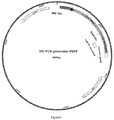
- HY-P19 was digested with XbaI and EcoRI, and digested products were recovered. The digested products were further recombined in vitro with a series of synthesized promoter fragments and PCR-amplified EGFP fragment. After the recombinants were transformed into DH5 ⁇ , positive clones were picked and verified by sequencing. Thereafter, the plasmid was extracted to obtain a probe vector with a series of promoters and the marker gene EGFP shown in Fig. 4 .
- the probe vectors containing the promoter fragments were named PRS10085seq1, PRS10085seq2, PRS10085seq3, PRS10840seq1, PRS10840seq2, PRS07910seq1, PRS07910seq2, PRS07930seq1, PRS07930seq2, PRS07930seq3, PRS00965seq1, PRS00965seq2, PRS04670seq1, PRS04670seq2, respectively. (10) Preparation of electroporation competent C. glutamicum cells:
- the recombinant bacteria containing each promoter probe vector were inoculated into LBG medium and the inoculation amount for passaging was 5%. Without antibiotics pressure, the recombinant bacteria were cultured on a rotary shaker at 30 °C and 190 rpm for 24 h, i.e. one generation of passaging was done. Continuous passaging was carried out, each passage of bacteria was diluted and spread on the plates, and the bacteria with same diluted concentration were spread on chloramphenicol-containing plates and chloramphenicol-free plates.
- the loss rate of the plasmid (the number of colonies grown on the chloramphenicol-containing plates - the number of colonies grown on the chloramphenicol-free plates) / the number of colonies grown on the chloramphenicol- containing plates ⁇ 100%. It is considered that the passaging of plasmids is stable while the loss rate of the plasmid is less than or equal to 10%, and it is considered that the passaging of plasmids is unstable when the loss rate of the plasmid is more than 10%.
- the number of stable passages of bacteria containing each probe plasmid is shown in Table 3.
- the key gene for isoleucine metabolism of Corynebacterium glutamicum is threonine dehydratase, and the gene was name ilvA (the sequence of which is shown in SEQ ID NO: 5).
- the expression vector HY-P19-RS10085seq2- ilvA was constructed.
- DNA fragment amplification plasmid PRS10085seq2 was used as a template, and the upstream and downstream primers were as follows:
- the DNA fragment RS10085seq2 was amplified using TransStart FastPfu Fly DNA Polymerase.
- the PCR system comprised: 1 ⁇ l of PRS10085seq2 template, 1 ⁇ l of forward primer (10 ⁇ M), 1 ⁇ l of reverse primer (10 ⁇ M), 10 ⁇ l of 5 ⁇ TransStart FastPfu FlyBuffer, 4 ⁇ l of 2.5 mM Dntps, 1 ⁇ l of TransStart FastPfu Fly DNA Polymerase, 32 ⁇ l of ddH 2 O.
- the PCR amplification process was 95 °C for 2 min; 32 cycles of 95 °C for 20 s, 55 °C for 20 s, 72 °C for 10 smin; and 72 °C for 5 min.
- the C. glutamicum H5 genome was used as a template, and the upstream and downstream primers were as follows: ilvA FP: AAAGGAGGTCATCCACGCTATGAGTGAAACATACGTGTCTGAG ilvA RP: caaaacagccaagctgaattcTTAGGTCAAGTATTCGTACTCAG
- the DNA fragment ilvA was amplified using TransStart FastPfu Fly DNA Polymerase.
- the PCR system comprised: 1 ⁇ l of genomic template, 1 ⁇ l of forward primer (10 ⁇ M), 1 ⁇ l of reverse primer (10 ⁇ M), 10 ⁇ l of 5 ⁇ TransStart FastPfu FlyBuffer, 4 ⁇ l of 2.5 mM Dntps, 1 ⁇ l of TransStart FastPfu Fly DNA Polymerase, 32 ⁇ l of ddH 2 O.
- the PCR amplification process was 95 °C for 2 min; 32 cycles of 95 °C for 20 s, 58 °C for 20 s, 72 °C for 30 s; and 72 °C for 5 min.
- Plasmid digestion The plasmid HY-P19 which had been modified by removing the original laclq and the promoter of PXMJ19 was used. HY-P19 was digested with NEB restriction enzyme XbaI and EcoRI in a 37 °C water bath for 1 h. The amount of plasmid was 1 ⁇ g, and 50 ⁇ l of enzyme digestion system contained 5 ⁇ l plasmid, 1 ⁇ l of XbaI, 1 ⁇ l of EcoRI, 5 ⁇ l of cutsmart, and 38 ⁇ l of ddH 2 O.
- DNA recovery by agarose electrophoresis The PCR products and the digested products were added to a 10 ⁇ loading buffer, respectively, and 50 ⁇ l of which was loaded onto a 1.5% agarose gel. Takara 2000 DL DNA marker was used as a control, and electrophoresis was carried out at 70 V for 40 min. The 160 bp and 1347 bp bands amplified by PCR were recovered according to instruction of the bands of marker. Recovery was carried out using Takara DNA Recovery Kit.
- In vitro recombination In vitro recombination was performed using Vazyme one Step Cloning Kit, and the recombinant products were directly transformed into E. coli.
- E. coli competent cells The preparation of E. coli competent cells is the same as that in the construction of promoter probe vectors.
- Transformation competent cells were slowly thawed on ice, 10 ⁇ l of the in vitro recombinant products were pipetted into 100 ⁇ l of the competent cells, and the centrifuge tube was gently flicked with a finger to mix the cells and recombinant products.
- the tube was placed in an ice bath or ice water bath for 30 minutes, and then placed in a water bath at 42 °C, heating shock for 2 minutes.
- the centrifuge tube was placed in an ice water bath for 2 minutes.
- 900 microliters of LB was aliquoted to the tube and the tube was incubated at 37 °C for 200 hours at 200 rpm. The supernatant was removed after centrifugation, and the obtained cells were spread on an LB solid plate containing 25 ⁇ g/ml chloramphenicol and cultured at 37 °C overnight.
- Transformant verification and plasmid extraction Transformants that were grown on the resistant plates after transformation were sent to Wuhan Tianyi Huiyuan for sequencing analysis, and transformants with correct sequence were picked and transferred into a tube with 5 ml LB supplemented with a final concentration of 25 ⁇ g/ml chloramphenicol. After culturing by shaking at 37°C and 200 rpm overnight, plasmid was extracted using Takara plasmid kit, and the concentration of the expression plasmid HY-P19-RS10085seq2- ilvA was 269 ng/ ⁇ l.
- the preparation of electroporation competent Corynebacterium glutamicum cells is the same as that in the construction of promoter probe vectors.
- the electrotransformed bacterial solution was concentrated by centrifugation, and spread on a LBCIS solid medium supplemented with 10 ⁇ g/mL chloramphenicol by a glass rod, and cultured in a 30 °C incubator for 36 hours.
- the grown transformant was strain with plasmid HY-P19-RS10085seq2-ilvA, which was named H5-RS10085seq2-ilvA.
- Fermentation medium for the 5L fermenter 15ml/L of corn syrup, 140g/L of glucose (sterilize alone, moist heat sterilization at 0.075MPa for 15min), 5g/L of ammonium sulfate, 0.4g/L of potassium dihydrogen phosphate, 0.6g/L of magnesium sulfate heptahydrate, 0.1mg/L of biotin, 0.1mg/L of VB1, 1ml/L of corn oil, 1g/L of Angel yeast powder, 1ml/L of defoamer, moist heat sterilization at 0.01MPa and 121°C for 25min; the initial glucose was then added, and the pH was adjusted to 7.0 with ammonia water.
- Culture method the strain was inoculated into a seed culture medium (seed medium formula: 17g/L of glucose, 10ml/L of corn steep liquor, 1g/L of urea, 0.5g/L of magnesium sulfate, 1g/L of dipotassium hydrogen phosphate, 0.1g/L of yeast paste, 0.1mg/L of biotin, 10.1mg/L of vitamin B, 0.1g/100ml of corn oil, 1g/100ml of calcium carbonate; adjusted pH to 7.0 with NaOH), cultured at 31°C on a rotary shaker at 200rpm, for 16h.
- seed medium formula: 17g/L of glucose, 10ml/L of corn steep liquor, 1g/L of urea, 0.5g/L of magnesium sulfate, 1g/L of dipotassium hydrogen phosphate, 0.1g/L of yeast paste, 0.1mg/L of biotin, 10.1mg/L of vitamin B, 0.1g/100ml of
- the seed culture medium was inoculated to a 5L automatic control fermenter containing fermentation medium at 10% inoculation amount, and appropriate amount of air was introduced and appropriate stirring speed was set.
- the dissolved oxygen was controlled by the staged oxygen supply mode: 30% for 0-8 th hour, 25% for 8- 24 th hour, and 12% for 24-56th hour.
- the pH is controlled at 7.0 by automatic flow of 15% ammonia water, defoaming by fed-batch feeding an appropriate amount of defoamer polyether, and controlling the residual glucose at about 3% by feeding glucose solution with a concentration of 800g/L.
- the fermentation ended at 56h.
- the fermentation broth was detected by HPLC (Ilite C18 column, 5 ⁇ m, 4.6 ⁇ 250 mm, and the mobile phase was 0.015 mol/L of diammonium phosphate and 0.005 mol/L of a mixed aqueous solution with pH 7.20.
- the flow rate was 0.5. ml/min, and the column temperature was 23 °C.
- the detector was an UV detector with a wavelength of 199 nm.
- the control strain of Corynebacterium glutamicum H5 was fermented and produced 22.0 g/L of acid, 6.3 g/L of heteroacid, and the conversion rate of glucose to acid was 12.83%.
- the engineering strain H5-RS10085seq2-ilvA was fermented and produced 41.2g/L of acid, 6.8g/L of heteroacid, and the conversion rate of glucose to acid was 18.79%.
- the strains after fermenting for 56h were diluted to gradient concentrations of 10 -6 , 10 -7 , 10 -8 , and 10 -9 and spread on the plate. 50 ⁇ l of strain solution with each concentration was pipetted to spread on chloramphenicol-containing plates and chloramphenicol-free plates, and the plates were then placed in an incubator at 31°C for 36 h.
- the loss rate of plasmid was calculated based on the number of colonies growing on the non-resistant plates and the resistant plates.
- the loss rate of the plasmid (the number of colonies grown on the chloramphenicol-free plates - the number of colonies grown on the chloramphenicol-containing plates) / the number of colonies grown on the chloramphenicol-free plates ⁇ 100%.
- the screened promoter fragment RS07910seq2 was used as promoter and lrp was used as gene of interest to construct an expression vector HY-P19-RS07910seq2-lrp.
- DNA fragment amplification plasmid PRS07910seq2 was used as a template, and the upstream and downstream primers were as follows:
- the DNA fragment RS07910seq2 was amplified using TransStart FastPfu Fly DNA Polymerase.
- the PCR system comprised: 1 ⁇ l of P RS07910seq2 template, 1 ⁇ l of forward primer (10 ⁇ M), 1 ⁇ l of reverse primer (10 ⁇ M), 10 ⁇ l of 5 ⁇ TransStart FastPfu FlyBuffer,4 ⁇ l of 2.5 mM Dntps, 1 ⁇ l of TransStart FastPfu Fly DNA Polymerase, and 32 ⁇ l of ddH 2 O.
- the PCR amplification process was 95 °C for 2 min, and 32 cycles of 95 °C for 20 s, 55 °C for 20 s, 72 °C for 10 smin with a final 72 °C for 5 min.
- the C. glutamicum H5 genome was used as a template, and the upstream and downstream primers were as follows: lrpFP: GCTTCATCCGTGACCGTGAtgaagctagattccattgatt lrpRP: caaaacagccaagctgaattctcacacctgggggcgagc
- the DNA fragment lrp was amplified using TransStart FastPfu Fly DNA Polymerase.
- the PCR system was as follows: 1 ⁇ l of genomic template, 1 ⁇ l of forward primer (10 ⁇ M), 1 ⁇ l of reverse primer (10 ⁇ M), 10 ⁇ l of 5 ⁇ TransStart FastPfu FlyBuffer, 4 ⁇ l of 2.5 mM Dntps, 1 ⁇ l of TransStart FastPfu Fly DNA Polymerase, and 32 ⁇ l of ddH 2 O.
- the PCR amplification process was 95 °C for 2 min, and 32 cycles of 95 °C for 20 s, 55 °C for 20 s, 72 °C for 10 smin with a final 72 °C for 5 min.
- Plasmid digestion The plasmid HY-P19 modified by removing the original laclq and the promoter of PXMJ19 was used. HY-P19 was digested with NEB restriction enzyme XbaI and EcoRI in a 37 °C water bath for 1 h, and the amount of plasmid was 1 ⁇ g.
- the 50 ⁇ l of enzyme digestion system comprised: 5 ⁇ l of plasmid, 1 ⁇ l of XbaI, 1 ⁇ l of EcoRI, 5 ⁇ l of cutsmart, and 38 ⁇ l of ddH 2 O.
- the preparation of electroporation competent Corynebacterium glutamicum cells is the same as the construction of the promoter probe vectors.
- the electrotransformed bacterial solution was concentrated by centrifugation, and spread on a LBCIS solid medium supplemented with 10 ⁇ g/mL chloramphenicol by a glass rod, and cultured in a 30 °C incubator for 36 hours.
- the grown transformant was exactly the strain with plasmid HY-P19-RS07910seq2-lrp, which was named H5-RS07910seq2-lrp.
- the formulation of the fermentation medium in the 5L fermenter, the culture method of the strain, and the detection method of the released fermentation broth were the same as those in the embodiment 2, and the results showed that the engineering strain H5-RS07910seq2-lrp produced 39.1 g/L of acid and 6.9. g/L of heteroacid, and the conversion rate of glucose to acid reached 17.88%.
- the strains after fermenting for 56h were diluted to gradient concentrations of 10 -6 , 10 -7 , 10 -8 , and 10 -9 and spread on the plate. 50 ⁇ l of strain solution with each concentration was pipetted to spread on chloramphenicol-containing plates and chloramphenicol-free plates, and the plates were then placed in an incubator at 31°C for 36 h.
- the loss rate of plasmid was calculated based on the number of colonies growing on the non-resistant plates and the resistant plates.
- the loss rate of the plasmid (the number of colonies grown on the chloramphenicol-free plates - the number of colonies grown on the chloramphenicol-containing plates) / the number of colonies grown on the chloramphenicol-free plates ⁇ 100%.
- NADPH is mainly derived from the pentose phosphate pathway.
- the supply of NADPH in organism through this pathway need to consume other metabolites. Changing the carbon flux of the pathway may affect the accumulation of metabolites of interest.
- transcriptome analysis glucose-6-phosphate dehydrogenase in the pentose phosphate pathway is down-regulated in leucine-producing Corynebacterium glutamicum during the stationary phase.
- the gene gnd of the glucose-6-phosphate dehydrogenase (the sequence is shown in SEQ ID NO: 7) was connected with a promoter to promote the expression of this gene.
- the screened promoter fragment RS04670seq2 was used as a promoter and gnd was used as target gene to construct the expression vector HY-P19-RS04670seq2-gnd.
- DNA fragment amplification plasmid PRS04670seq1 was used as a template, and the upstream and downstream primers were as follows:
- the DNA fragment RS04670seq1 was amplified using TransStart FastPfu Fly DNA Polymerase.
- the PCR system comprised: 1 ⁇ l of PRS04670seq1 template, 1 ⁇ l of forward primer (10 ⁇ M), 1 ⁇ l of reverse primer (10 ⁇ M), 10 ⁇ l of 5 ⁇ TransStart FastPfu FlyBuffer,4 ⁇ l of 2.5 mM Dntps, 1 ⁇ l of TransStart FastPfu Fly DNA Polymerase, and 32 ⁇ l of ddH 2 O.
- the PCR amplification process was 95 °C for 2 min, and 32 cycles of 95 °C for 20 s, 55 °C for 20 s, 72 °C for 10 smin with a final 72 °C for 5 min.
- the C. glutamicum H5 genome was used as a template, and the upstream and downstream primers were as follows: Gnd-FP: TTAACTTCGGAGGTATCCAtgaagctagattccattgattg gnd-RP: ccaaaacagccaagctgaattcTTAAGCTTCCACCTCGGAGCG
- the DNA fragment gnd was amplified using TransStart FastPfu Fly DNA Polymerase.
- the PCR system comprised 1 ⁇ l of genomic template, 1 ⁇ l of forward primer (10 ⁇ M), 1 ⁇ l of reverse primer (10 ⁇ M), 10 ⁇ l of 5 ⁇ TransStart FastPfu FlyBuffer, 4 ⁇ l of 2.5 mM Dntps, 1 ⁇ l of TransStart FastPfu Fly DNA Polymerase, and 32 ⁇ l of ddH 2 O.
- the PCR amplification process was 95 °C for 2 min, and 32 cycles of 95 °C for 20 s, 55 °C for 20 s, 72 °C for 10 smin with a final 72 °C for 5 min.
- Plasmid digestion The plasmid HY-P19 modified by removing the original laclq and the promoter of PXMJ19 was used. HY-P19 was digested with NEB restriction enzyme XbaI and EcoRI in a 37 °C water bath for 1 h, and the amount of plasmid was 1 ⁇ g.
- the 50 ⁇ l of enzyme digestion system comprised: 5 ⁇ l of plasmid, 1 ⁇ l of XbaI, 1 ⁇ l of EcoRI, 5 ⁇ l of cutsmart, and 38 ⁇ l of ddH 2 O.
- DNA recovery by agarose electrophoresis the PCR products and the digested products were added to 10 ⁇ loading buffer, respectively, and 50 ⁇ l of which was loaded onto 3%, 1% agarose gel.
- Takara 2000 DL DNA marker was used as a control, and electrophoresis was carried out at 70 V for 40 min.
- the 77 bp and 1481 bp bands amplified by PCR were recovered according to the instruction of the bands of marker. Recovery was carried out using Takara DNA Recovery Kit.
- the preparation of electroporation competent Corynebacterium glutamicum cells is the same as that in the construction of promoter probe vectors.
- the electrotransformed bacterial solution was concentrated by centrifugation, and spread on a LBCIS solid medium supplemented with 10 ⁇ g/mL chloramphenicol by a glass rod, and cultured in a 30 °C incubator for 36 hours.
- the grown transformant was exactly the strain with plasmid HY-P19-RS04670seq2-gnd, which was named H5-RS04670seq2-gnd.
- the formulation of the fermentation medium in the 5L fermenter, the culture method of the strain, and the detection method of the released fermentation broth were the same as those in the embodiment 2, and the results showed that the engineering strain H5-RS04670seq2-gnd produced 33.4 g/L of acid, 7.08 g/L of heteroacid, and the conversion rate of glucose to acid reached 15.31%.
- the strains after fermenting for 56h were diluted to gradient concentrations of 10 -6 , 10 -7 , 10 -8 , and 10 -9 and spread on the plate. 50 ⁇ l of strain solution with each concentration was pipetted to spread on chloramphenicol-containing plates and chloramphenicol-free plates, and the plates were then placed in an incubator at 31°C for 36 h.
- the loss rate of plasmid was calculated based on the number of colonies growing on the non-resistant plates and the resistant plates.
- the loss rate of the plasmid (the number of colonies grown on the chloramphenicol-free plates - the number of colonies grown on the chloramphenicol-containing plates) / the number of colonies grown on the chloramphenicol-free plates ⁇ 100%.
Landscapes
- Life Sciences & Earth Sciences (AREA)
- Chemical & Material Sciences (AREA)
- Health & Medical Sciences (AREA)
- Engineering & Computer Science (AREA)
- Genetics & Genomics (AREA)
- Organic Chemistry (AREA)
- Zoology (AREA)
- Wood Science & Technology (AREA)
- Bioinformatics & Cheminformatics (AREA)
- Biotechnology (AREA)
- General Engineering & Computer Science (AREA)
- Biomedical Technology (AREA)
- Biochemistry (AREA)
- General Health & Medical Sciences (AREA)
- Microbiology (AREA)
- Molecular Biology (AREA)
- Biophysics (AREA)
- Physics & Mathematics (AREA)
- Plant Pathology (AREA)
- Medicinal Chemistry (AREA)
- Proteomics, Peptides & Aminoacids (AREA)
- Crystallography & Structural Chemistry (AREA)
- Tropical Medicine & Parasitology (AREA)
- Virology (AREA)
- Chemical Kinetics & Catalysis (AREA)
- General Chemical & Material Sciences (AREA)
- Analytical Chemistry (AREA)
- Bioinformatics & Computational Biology (AREA)
- Immunology (AREA)
- Gastroenterology & Hepatology (AREA)
- Micro-Organisms Or Cultivation Processes Thereof (AREA)
- Measuring Or Testing Involving Enzymes Or Micro-Organisms (AREA)
Applications Claiming Priority (4)
| Application Number | Priority Date | Filing Date | Title |
|---|---|---|---|
| CN201710169685.6A CN107164370B (zh) | 2017-03-21 | 2017-03-21 | 一种棒状杆菌组成型表达载体启动子、含有该启动子及gnd基因的表达载体 |
| CN201710169693.0A CN107164371B (zh) | 2017-03-21 | 2017-03-21 | 一种基于转录组测序构建的棒状杆菌组成型表达载体启动子 |
| CN201710169454.5A CN107164369B (zh) | 2017-03-21 | 2017-03-21 | 一种棒状杆菌组成型表达载体启动子、含有该启动子及lrp基因的表达载体 |
| PCT/CN2018/079034 WO2018171488A1 (zh) | 2017-03-21 | 2018-03-14 | 一种基于转录组测序筛选的棒杆菌组成型表达载体启动子及其筛选方法和应用 |
Publications (2)
| Publication Number | Publication Date |
|---|---|
| EP3604530A1 true EP3604530A1 (de) | 2020-02-05 |
| EP3604530A4 EP3604530A4 (de) | 2020-11-25 |
Family
ID=63585001
Family Applications (1)
| Application Number | Title | Priority Date | Filing Date |
|---|---|---|---|
| EP18772338.2A Pending EP3604530A4 (de) | 2017-03-21 | 2018-03-14 | Promotor eines konstitutiven corynebacterium-expressionsvektors, der auf der basis von transkriptomsequenzierung geprüft wird, screeningverfahren dafür und anwendungen davon |
Country Status (3)
| Country | Link |
|---|---|
| US (1) | US11639512B2 (de) |
| EP (1) | EP3604530A4 (de) |
| WO (1) | WO2018171488A1 (de) |
Families Citing this family (4)
| Publication number | Priority date | Publication date | Assignee | Title |
|---|---|---|---|---|
| CN111286481B (zh) * | 2020-01-21 | 2022-10-28 | 山东大学 | 一种施氏假单胞菌突变菌株及其构建方法和应用 |
| CN111909879B (zh) * | 2020-08-24 | 2023-04-28 | 江南大学 | 一种高效表达外源蛋白的谷氨酸棒杆菌诱变菌株及应用 |
| CN112608932A (zh) * | 2020-12-02 | 2021-04-06 | 华农(肇庆)生物产业技术研究院有限公司 | 一种大肠杆菌中高效表达禽腺病毒Fiber-2蛋白的方法 |
| CN113151337A (zh) * | 2021-05-24 | 2021-07-23 | 山东恒仁工贸有限公司 | 一种谷氨酸棒杆菌利用EF-Tu启动子表达海藻糖合酶的方法和应用 |
Family Cites Families (10)
| Publication number | Priority date | Publication date | Assignee | Title |
|---|---|---|---|---|
| DE4400926C1 (de) * | 1994-01-14 | 1995-06-01 | Forschungszentrum Juelich Gmbh | Herstellung von L-Isoleucin mittels rekombinanter Mikroorganismen mit deregulierter Threonindehydratase |
| CN101698845B (zh) | 2009-06-29 | 2012-05-02 | 中国科学院微生物研究所 | 源自谷氨酸棒杆菌的启动子及其应用 |
| CN101838663B (zh) | 2009-12-18 | 2013-05-22 | 江南大学 | 一种大肠杆菌-棒状杆菌穿梭组成型表达载体及其构建方法 |
| CN101985631B (zh) | 2010-02-10 | 2012-05-30 | 江南大学 | 一种棒状杆菌启动子探测载体及其构建方法和应用 |
| CN103820486B (zh) | 2013-11-05 | 2016-03-23 | 南京工业大学 | 一种谷氨酸棒杆菌启动子探针载体及其构建方法和应用 |
| CN103834679B (zh) | 2014-02-20 | 2016-08-17 | 江南大学 | 一种不依赖抗生素为选择压力的棒状杆菌表达系统 |
| CN106434732A (zh) | 2016-07-29 | 2017-02-22 | 江南大学 | 一种适用于谷氨酸棒杆菌的表达载体及其应用 |
| CN107164370B (zh) | 2017-03-21 | 2019-09-20 | 武汉远大弘元股份有限公司 | 一种棒状杆菌组成型表达载体启动子、含有该启动子及gnd基因的表达载体 |
| CN107164369B (zh) | 2017-03-21 | 2019-09-20 | 武汉远大弘元股份有限公司 | 一种棒状杆菌组成型表达载体启动子、含有该启动子及lrp基因的表达载体 |
| CN107164371B (zh) | 2017-03-21 | 2019-09-20 | 武汉远大弘元股份有限公司 | 一种基于转录组测序构建的棒状杆菌组成型表达载体启动子 |
-
2018
- 2018-03-14 EP EP18772338.2A patent/EP3604530A4/de active Pending
- 2018-03-14 WO PCT/CN2018/079034 patent/WO2018171488A1/zh not_active Ceased
- 2018-03-14 US US16/496,496 patent/US11639512B2/en active Active
Also Published As
| Publication number | Publication date |
|---|---|
| US20200024625A1 (en) | 2020-01-23 |
| WO2018171488A1 (zh) | 2018-09-27 |
| US11639512B2 (en) | 2023-05-02 |
| EP3604530A4 (de) | 2020-11-25 |
Similar Documents
| Publication | Publication Date | Title |
|---|---|---|
| US11639512B2 (en) | Corynebacterium constitutive expression vector promoter screened on the basis of transcriptome sequencing, screening method thereof, and applications thereof | |
| CN107828671A (zh) | 用于生产3‑羟基丙酸的组合物和方法 | |
| CN107164369B (zh) | 一种棒状杆菌组成型表达载体启动子、含有该启动子及lrp基因的表达载体 | |
| CN111394288B (zh) | 重组谷氨酸棒杆菌、其构建方法及其生产四氢嘧啶的方法 | |
| CN117304283A (zh) | 一种mreC突变体及其在L-缬氨酸发酵生产中的应用 | |
| CN111849852A (zh) | 一种高光学纯l-乳酸工程菌的构建方法 | |
| CN119220512B (zh) | 酮醇酸还原异构酶突变体、高产d-泛酸的基因工程菌 | |
| CN110305892B (zh) | 一种验证CRISPR-Cas9系统介导目标基因插入产朊假丝酵母的可行性的方法 | |
| CN107164370B (zh) | 一种棒状杆菌组成型表达载体启动子、含有该启动子及gnd基因的表达载体 | |
| CN118421546A (zh) | 纤维二糖差向异构酶在枯草芽孢杆菌中高效表达及其胞外生产的动态调控方法 | |
| CN111254143B (zh) | 具有优良胁迫耐受性的简单节杆菌工程菌株的构建方法、菌株及其应用 | |
| CN116286807A (zh) | 突变的dapA启动子及其应用 | |
| JP7190322B2 (ja) | 組換え細胞およびペンタメチレンジアミンの生産方法 | |
| CN114774421A (zh) | 运动发酵单胞菌内源性启动子突变体 | |
| CN114085785B (zh) | 一种酿酒酵母基因工程菌及其构建方法与应用 | |
| CN107164371B (zh) | 一种基于转录组测序构建的棒状杆菌组成型表达载体启动子 | |
| CN121065059B (zh) | 一种通过辅酶a转移酶途径提高丁酸合成的丁酸梭菌工程菌株及其构建方法和应用 | |
| CN120272505B (zh) | 一种荧光蛋白筛选标记staygold-DUF350r基因及其基因衍生产品和应用 | |
| JP2022513674A (ja) | 発酵によって2-オキソアジピン酸を生産するための設計された生合成経路 | |
| CN117987399B (zh) | 一种苏氨酸脱氨酶突变体及其在异亮氨酸制备中的应用 | |
| CN116218895B (zh) | 一种2-氮己环酮的生物合成代谢通路基因的表达载体和2-氮己环酮的合成方法 | |
| CN120384090A (zh) | 一种高通量筛选大肠杆菌1,5-戊二胺生物合成途径中关键基因的方法 | |
| Lu et al. | GlnR positively affects the acid resistance of Lactiplantibacillus plantarum from wine by regulating glutamate metabolism | |
| GB2591209A (en) | High-Throughput screening method of lysine decarboxylase | |
| CN120818541A (zh) | 一种动态调控苏氨酸途径合成o-琥珀酰-l-高丝氨酸的方法及其应用 |
Legal Events
| Date | Code | Title | Description |
|---|---|---|---|
| STAA | Information on the status of an ep patent application or granted ep patent |
Free format text: STATUS: THE INTERNATIONAL PUBLICATION HAS BEEN MADE |
|
| PUAI | Public reference made under article 153(3) epc to a published international application that has entered the european phase |
Free format text: ORIGINAL CODE: 0009012 |
|
| STAA | Information on the status of an ep patent application or granted ep patent |
Free format text: STATUS: REQUEST FOR EXAMINATION WAS MADE |
|
| 17P | Request for examination filed |
Effective date: 20191017 |
|
| AK | Designated contracting states |
Kind code of ref document: A1 Designated state(s): AL AT BE BG CH CY CZ DE DK EE ES FI FR GB GR HR HU IE IS IT LI LT LU LV MC MK MT NL NO PL PT RO RS SE SI SK SM TR |
|
| AX | Request for extension of the european patent |
Extension state: BA ME |
|
| DAV | Request for validation of the european patent (deleted) | ||
| DAX | Request for extension of the european patent (deleted) | ||
| RIC1 | Information provided on ipc code assigned before grant |
Ipc: C07K 14/34 20060101ALI20200527BHEP Ipc: C12N 1/21 20060101ALI20200527BHEP Ipc: C12P 13/06 20060101ALI20200527BHEP Ipc: C12N 15/113 20100101AFI20200527BHEP Ipc: C12N 9/88 20060101ALI20200527BHEP Ipc: C12N 9/04 20060101ALI20200527BHEP Ipc: C12R 1/15 20060101ALI20200527BHEP Ipc: C12N 15/77 20060101ALI20200527BHEP |
|
| RIC1 | Information provided on ipc code assigned before grant |
Ipc: C12N 1/21 20060101ALI20201015BHEP Ipc: C12P 13/06 20060101ALI20201015BHEP Ipc: C07K 14/34 20060101ALI20201015BHEP Ipc: C12N 15/77 20060101ALI20201015BHEP Ipc: C12N 9/04 20060101ALI20201015BHEP Ipc: C12N 9/88 20060101ALI20201015BHEP Ipc: C12R 1/15 20060101ALI20201015BHEP Ipc: C12N 15/113 20100101AFI20201015BHEP |
|
| A4 | Supplementary search report drawn up and despatched |
Effective date: 20201022 |