EP3605475A1 - Sicheres kommunikationsverfahren basierend auf einem intelligenten türschlosssystem und intelligentes türschlosssystem dafür - Google Patents
Sicheres kommunikationsverfahren basierend auf einem intelligenten türschlosssystem und intelligentes türschlosssystem dafür Download PDFInfo
- Publication number
- EP3605475A1 EP3605475A1 EP18774831.4A EP18774831A EP3605475A1 EP 3605475 A1 EP3605475 A1 EP 3605475A1 EP 18774831 A EP18774831 A EP 18774831A EP 3605475 A1 EP3605475 A1 EP 3605475A1
- Authority
- EP
- European Patent Office
- Prior art keywords
- door lock
- encrypted data
- smart door
- mobile terminal
- key
- Prior art date
- Legal status (The legal status is an assumption and is not a legal conclusion. Google has not performed a legal analysis and makes no representation as to the accuracy of the status listed.)
- Pending
Links
Images



Classifications
-
- H—ELECTRICITY
- H04—ELECTRIC COMMUNICATION TECHNIQUE
- H04L—TRANSMISSION OF DIGITAL INFORMATION, e.g. TELEGRAPHIC COMMUNICATION
- H04L9/00—Cryptographic mechanisms or cryptographic arrangements for secret or secure communications; Network security protocols
- H04L9/08—Key distribution or management, e.g. generation, sharing or updating, of cryptographic keys or passwords
- H04L9/0816—Key establishment, i.e. cryptographic processes or cryptographic protocols whereby a shared secret becomes available to two or more parties, for subsequent use
- H04L9/0819—Key transport or distribution, i.e. key establishment techniques where one party creates or otherwise obtains a secret value, and securely transfers it to the other(s)
- H04L9/0822—Key transport or distribution, i.e. key establishment techniques where one party creates or otherwise obtains a secret value, and securely transfers it to the other(s) using key encryption key
-
- G—PHYSICS
- G07—CHECKING-DEVICES
- G07C—TIME OR ATTENDANCE REGISTERS; REGISTERING OR INDICATING THE WORKING OF MACHINES; GENERATING RANDOM NUMBERS; VOTING OR LOTTERY APPARATUS; ARRANGEMENTS, SYSTEMS OR APPARATUS FOR CHECKING NOT PROVIDED FOR ELSEWHERE
- G07C9/00—Individual registration on entry or exit
- G07C9/00174—Electronically operated locks; Circuits therefor; Nonmechanical keys therefor, e.g. passive or active electrical keys or other data carriers without mechanical keys
- G07C9/00309—Electronically operated locks; Circuits therefor; Nonmechanical keys therefor, e.g. passive or active electrical keys or other data carriers without mechanical keys operated with bidirectional data transmission between data carrier and locks
-
- H—ELECTRICITY
- H04—ELECTRIC COMMUNICATION TECHNIQUE
- H04L—TRANSMISSION OF DIGITAL INFORMATION, e.g. TELEGRAPHIC COMMUNICATION
- H04L63/00—Network architectures or network communication protocols for network security
- H04L63/04—Network architectures or network communication protocols for network security for providing a confidential data exchange among entities communicating through data packet networks
- H04L63/0428—Network architectures or network communication protocols for network security for providing a confidential data exchange among entities communicating through data packet networks wherein the data content is protected, e.g. by encrypting or encapsulating the payload
- H04L63/0492—Network architectures or network communication protocols for network security for providing a confidential data exchange among entities communicating through data packet networks wherein the data content is protected, e.g. by encrypting or encapsulating the payload by using a location-limited connection, e.g. near-field communication or limited proximity of entities
-
- H—ELECTRICITY
- H04—ELECTRIC COMMUNICATION TECHNIQUE
- H04L—TRANSMISSION OF DIGITAL INFORMATION, e.g. TELEGRAPHIC COMMUNICATION
- H04L9/00—Cryptographic mechanisms or cryptographic arrangements for secret or secure communications; Network security protocols
- H04L9/08—Key distribution or management, e.g. generation, sharing or updating, of cryptographic keys or passwords
- H04L9/0816—Key establishment, i.e. cryptographic processes or cryptographic protocols whereby a shared secret becomes available to two or more parties, for subsequent use
- H04L9/0838—Key agreement, i.e. key establishment technique in which a shared key is derived by parties as a function of information contributed by, or associated with, each of these
- H04L9/0841—Key agreement, i.e. key establishment technique in which a shared key is derived by parties as a function of information contributed by, or associated with, each of these involving Diffie-Hellman or related key agreement protocols
- H04L9/0844—Key agreement, i.e. key establishment technique in which a shared key is derived by parties as a function of information contributed by, or associated with, each of these involving Diffie-Hellman or related key agreement protocols with user authentication or key authentication, e.g. ElGamal, MTI, MQV-Menezes-Qu-Vanstone protocol or Diffie-Hellman protocols using implicitly-certified keys
-
- H—ELECTRICITY
- H04—ELECTRIC COMMUNICATION TECHNIQUE
- H04L—TRANSMISSION OF DIGITAL INFORMATION, e.g. TELEGRAPHIC COMMUNICATION
- H04L9/00—Cryptographic mechanisms or cryptographic arrangements for secret or secure communications; Network security protocols
- H04L9/32—Cryptographic mechanisms or cryptographic arrangements for secret or secure communications; Network security protocols including means for verifying the identity or authority of a user of the system or for message authentication, e.g. authorization, entity authentication, data integrity or data verification, non-repudiation, key authentication or verification of credentials
- H04L9/3247—Cryptographic mechanisms or cryptographic arrangements for secret or secure communications; Network security protocols including means for verifying the identity or authority of a user of the system or for message authentication, e.g. authorization, entity authentication, data integrity or data verification, non-repudiation, key authentication or verification of credentials involving digital signatures
-
- H—ELECTRICITY
- H04—ELECTRIC COMMUNICATION TECHNIQUE
- H04L—TRANSMISSION OF DIGITAL INFORMATION, e.g. TELEGRAPHIC COMMUNICATION
- H04L9/00—Cryptographic mechanisms or cryptographic arrangements for secret or secure communications; Network security protocols
- H04L9/32—Cryptographic mechanisms or cryptographic arrangements for secret or secure communications; Network security protocols including means for verifying the identity or authority of a user of the system or for message authentication, e.g. authorization, entity authentication, data integrity or data verification, non-repudiation, key authentication or verification of credentials
- H04L9/3297—Cryptographic mechanisms or cryptographic arrangements for secret or secure communications; Network security protocols including means for verifying the identity or authority of a user of the system or for message authentication, e.g. authorization, entity authentication, data integrity or data verification, non-repudiation, key authentication or verification of credentials involving time stamps, e.g. generation of time stamps
-
- H—ELECTRICITY
- H04—ELECTRIC COMMUNICATION TECHNIQUE
- H04W—WIRELESS COMMUNICATION NETWORKS
- H04W4/00—Services specially adapted for wireless communication networks; Facilities therefor
- H04W4/80—Services using short range communication, e.g. near-field communication [NFC], radio-frequency identification [RFID] or low energy communication
-
- G—PHYSICS
- G07—CHECKING-DEVICES
- G07C—TIME OR ATTENDANCE REGISTERS; REGISTERING OR INDICATING THE WORKING OF MACHINES; GENERATING RANDOM NUMBERS; VOTING OR LOTTERY APPARATUS; ARRANGEMENTS, SYSTEMS OR APPARATUS FOR CHECKING NOT PROVIDED FOR ELSEWHERE
- G07C9/00—Individual registration on entry or exit
- G07C9/00174—Electronically operated locks; Circuits therefor; Nonmechanical keys therefor, e.g. passive or active electrical keys or other data carriers without mechanical keys
- G07C9/00309—Electronically operated locks; Circuits therefor; Nonmechanical keys therefor, e.g. passive or active electrical keys or other data carriers without mechanical keys operated with bidirectional data transmission between data carrier and locks
- G07C2009/00412—Electronically operated locks; Circuits therefor; Nonmechanical keys therefor, e.g. passive or active electrical keys or other data carriers without mechanical keys operated with bidirectional data transmission between data carrier and locks the transmitted data signal being encrypted
-
- G—PHYSICS
- G07—CHECKING-DEVICES
- G07C—TIME OR ATTENDANCE REGISTERS; REGISTERING OR INDICATING THE WORKING OF MACHINES; GENERATING RANDOM NUMBERS; VOTING OR LOTTERY APPARATUS; ARRANGEMENTS, SYSTEMS OR APPARATUS FOR CHECKING NOT PROVIDED FOR ELSEWHERE
- G07C9/00—Individual registration on entry or exit
- G07C9/00174—Electronically operated locks; Circuits therefor; Nonmechanical keys therefor, e.g. passive or active electrical keys or other data carriers without mechanical keys
- G07C9/00309—Electronically operated locks; Circuits therefor; Nonmechanical keys therefor, e.g. passive or active electrical keys or other data carriers without mechanical keys operated with bidirectional data transmission between data carrier and locks
- G07C2009/0042—Electronically operated locks; Circuits therefor; Nonmechanical keys therefor, e.g. passive or active electrical keys or other data carriers without mechanical keys operated with bidirectional data transmission between data carrier and locks the transmitted data signal containing a code which is changed
Definitions
- the present disclosure generally relates to secure communication technology in the field of smart home and security surveillance.
- Smart door locks currently available on the market are equipped with communication functions. Information of the smart door locks may be transmitted to a server, and then forwarded to an application (APP), or the like, used by users. Users may also remotely issue passwords, grant permissions, etc., through the server.
- APP application
- secure communication techniques are unavailable on the market that can prevent a server or a staff member from obtaining a user's transmission information from the server, or that can maintain the functions of identity authentication, anti-replay, and anti-tampering in the communication between the door lock and the mobile terminal even if the server is compromised.
- a secure communication method is provided, the method may be applied to a smart door lock system, the smart door lock system may include a smart door lock and a mobile terminal, and the method may include:
- the sending, by the sending terminal, the encrypted data with the unique identifier to the receiving terminal may include: sending, by the sending terminal, the encrypted data with the unique identifier to the receiving terminal through the preset secure communication channel or a cloud server, wherein the preset secure communication channel includes a short-range wireless communication channel or an NFC channel.
- the encryption key may be determined by authenticating an initial encryption key by the smart door lock and the mobile terminal, wherein the initial encryption key may be generated by the smart door lock or the mobile terminal in response to a user's authorization instruction, wherein the initial encryption key may be a key that is automatically generated by the smart door lock or the mobile terminal or manually inputted, and the initial encryption key may be transmitted between the smart door lock and the mobile terminal through the preset secure communication channel.
- the encryption key may include a first encryption key
- the determining the encrypted data by encrypting the data to be transmitted using the preset encryption algorithm based on the encryption key may include:
- the encryption key stored in the sending terminal and the receiving terminal may include a public key and a private key
- the determining the encrypted data by encrypting the data to be transmitted using the preset encryption algorithm based on the encryption key may include:
- the method may further comprise:
- a method for secure communication may be applied to a smart door lock system, wherein the smart door lock system may include a smart door lock and a mobile terminal.
- the method may include:
- the encryption key may be a first encryption key
- the encrypted data may be determined through determining initial encrypted data by encrypting the data to be transmitted using a symmetric encryption algorithm based on the first encryption key, configuring a preset key value for the initial encrypted data, and adding a verification signature to the initial encrypted data configured with the preset key value; wherein the determining, by the receiving terminal, the data to be transmitted by decrypting the encrypted data using the encryption key obtained by the exchange according to the result of the identity authorization including:
- the encryption key stored in the sending terminal and the receiving terminal may include a public key and a private key.
- the encrypted data may be determined through determining initial encrypted data by encrypting the data to be transmitted using an asymmetric encryption algorithm based on the public key stored in the sending terminal, configuring a preset key value for the initial encrypted data, and adding the private key stored in the sending terminal as the verification signature to the initial encrypted data configured with the preset key value; the determining, by the receiving terminal, the data to be transmitted by decrypting the encrypted data using the encryption key obtained by the key exchange process according to the result of the identity authorization including:
- the performing, by the receiving terminal, an identity authorization on the encrypted data with the unique identifier may include:
- a smart door lock system may include:
- the smart door lock may further include a configuration mode activation module, configured to activate a configuration mode for generating and exchanging the encryption key.
- the configuration mode activation module may include at least one of a configuration button, a configuration mode touch key, a touch screen for inputting an administrator password, or a fingerprint collector for inputting a fingerprint of an administrator.
- controlling the smart door lock by the mobile terminal may include controlling the smart door lock by a smart door lock control APP, wherein the smart door lock control APP may include a virtual button for activating the configuration mode configured to activate the configuration mode of the mobile terminal.
- a smart door lock and a mobile terminal may both activate the secure communication under a user's authorization. That is to say, the smart door lock and an APP of each mobile terminal may send and exchange an encryption key through a short-range wireless communication channel or a Near-Field communication (NFC) channel under the user's authorization, thereby allowing a secure exchange of the encryption key.
- NFC Near-Field communication
- a same or corresponding encryption algorithm may be set on the smart door lock and the APP of each mobile terminal. Encryption and decryption processes may be performed locally using the encryption algorithm, to achieve end-to-end encryption communication.
- the server may prevent a server end or an internal staff member of the smart door lock manufacturer from obtaining information transmitted by a user from the server. It may allow that even if the server is compromised, the functions of identity authentication, anti-replay, and anti-tampering in the communication between the door lock and the mobile client terminal may remain intact, thereby protecting user information. Because the generation and exchange of an encryption key are performed locally between the mobile terminal and the smart door lock through a short-range wireless communication channel or the NFC channel, the server does not store information relating to encryption keys, cannot decrypt data forwarded by it, thereby protecting data security.
- both the mobile client terminal and the door lock do not respond for failure of an identity authentication.
- the mobile client terminal or the door lock may analyze and determine not to respond if someone replays or tampers a command on the server or the communication network of the server. If an attack exemplified above occurs, the mobile client terminal or the door lock may send an alert to the server or locally if needed.
- the present disclosure provides an unlocking method for a smart door lock.
- the terms “first,” “second,” “third,” “fourth,” or the like (if present) in the specification and claims of the present disclosure are used to distinguish similar objects and are not necessarily used to describe a particular order. It will be further understood that data used in this way may be interchanged where appropriate so that the embodiments described herein can be implemented in a sequence other than what is illustrated or described herein.
- the terms “including,” “having,” and any variants thereof are intended to cover a non-exclusive inclusion, for example, a process, a method, a system, a product or a device that includes a series of operations or units is not necessarily limited to those operations or units clearly listed, but may include other operations or units not clearly listed or inherent to such processes, methods, products, or devices.
- FIG. 1 a schematic structural diagram illustrating an exemplary smart door lock system according to some embodiments of the present disclosure. As shown in FIG. 1 :
- the short-range wireless communication module may include at least one of the Bluetooth communication module, the Zigbee communication module, or the NFC communication module. Based on the short-range wireless communication module, a preset communication channel may be established.
- the preset communication channel may be a short-range wireless communication channel or an NFC channel.
- the smart door lock and the mobile terminal may transmit data through the preset communication channel, for example, the smart door lock or the mobile terminal may transmit encrypted data through the preset communication channel.
- the smart door lock system may further include a cloud server, and the mobile terminal and the smart door lock may transmit data remotely through the cloud server.
- the smart door lock may further include a configuration mode activation module, wherein the configuration mode activation module may be configured to active a configuration mode for generating and exchanging an encryption key.
- the configuration mode module may include: at least one of a configuration button, a configuration mode touch key, a touch screen for inputting an administrator password, or a fingerprint collector for inputting a fingerprint of an administrator; an APP of the mobile terminal, for controlling the smart door lock, may be configured to include a virtual button for activing a configuration mode, wherein the virtual button may be configured to active the configuration mode of the mobile terminal.
- the smart door lock system may be configured to implement the following secure communication method based on the smart door lock system.
- FIG. 2 a schematic flowchart illustrating an exemplary secure communication method applicable in a smart door lock system of the present disclosure.
- a secure communication method applicable in the smart door lock system of the present disclosure may include:
- a smart door lock and a mobile terminal may exchange an encryption key through a preset secure communication channel.
- the preset secure communication channel may be a communication channel activated by an authorization of the smart door lock and the mobile terminal.
- the secure communication channel may include a short-range wireless communication channel or an NFC channel.
- the secure communication channel may include one of a WIFI local area network, a Bluetooth channel, a Zigbee channel, or an NFC channel.
- the smart door lock may correspond to a plurality of mobile terminals, and a user may control the smart door lock using any one of the plurality of mobile terminals.
- each mobile terminal may be installed with a smart door lock APP, and each APP may correspond to an account.
- the smart door lock and the mobile terminal with the smart door lock APP through a communication channel activated by an authorization of the smart door lock and the mobile terminal.
- the smart door lock and the mobile terminal with the smart door lock APP may enter a configuration mode after being authorized and then an independent encryption key may be separately exchanged through the short-range wireless communication channel or the NFC channel.
- the encryption key may be used to encrypt data to be transmitted.
- the mobile terminal may include but is not limited to a smartphone, a tablet computer (IPAD), a smartwatch or a wristband pre-configured with a smart door lock APP, a small controller, or the like, or any combination thereof.
- the smart door lock and the mobile terminal may configure the communication module according to some setting requirements. For example, a mobile phone A with the smart door lock APP may activate a Bluetooth module, and the smart door lock may also activate a Bluetooth module to exchange a pre-generated encryption key through Bluetooth communication.
- the generation of the encryption key are performed locally in the mobile terminal and the smart door lock and the exchange of the encryption key are performed through the short-range wireless communication channel or the NFC channel, even if the server contains some relevant keys, the server cannot understand the data forwarded by it, that ensuring the security of the data.
- Operation S103 the sending terminal may generate data to be transmitted according to an operational instruction or a preset rule, and determine encrypted data by decrypting the data to be transmitted using a preset encryption algorithm based on the encryption key.
- the sending terminal may include the smart door lock or a terminal.
- the smart door lock and the mobile terminal may be configured with a same encryption algorithm.
- the smart door lock and the mobile terminal may be configured with an inverse algorithm corresponding the encryption algorithm. Encryption and decryption may be performed locally in the smart door lock and the mobile terminal to implement an end-to-end secure data communication, thereby reducing the risk of information leakage.
- the built in encryption algorithm in the mobile terminal may be implemented by the smart door lock APP pre-installed in the mobile terminal.
- the sending terminal may be one of the mobile terminal or the smart door lock.
- the sending terminal may include the mobile terminal, and the receiving terminal may include the smart door lock.
- the sending terminal may include the smart door lock, and the receiving terminal may include the mobile terminal.
- the sending terminal and the receiving terminal may be set depending on the needs of a user, which is not limited in the present disclosure.
- the sending terminal may generate data to be transmitted according to an operational instruction or a preset rule, and determine encrypted data by encrypting the data to be transmitted using a preset encryption algorithm based on an encryption key.
- the operational instruction may be an instruction to request data or request to perform an action, as illustrated in examples of the present disclosure, the operational instruction may be an instruction to issue an unlock password, request a Bluetooth key, unlock remotely, delete a password, etc.
- the preset rule may be understood as a rule that is already set.
- the preset rule may be a preset time rule, such as, each time of the lock is unlocked, every 12 hours, etc.
- the data to be transmitted may be data that needs to be transmitted securely between the smart door lock and the mobile terminal.
- data to be transmitted may be a smart door lock password, a Bluetooth key, an unlock record, a history, a sensor status, or the like, or any combination thereof.
- the data to be transmitted is generally sensitive and may need to be transmitted via a secure transmission technique. Therefore, the data to be transmitted may be encrypted using a preset encryption algorithm based on the encryption key to obtain encrypted data. In this way, the data to be transmitted may be transmitted between a smart door lock and a mobile terminal in the form of ciphertext.
- a user may issue an unlock password to the smart door lock via a cloud server using the pre-installed smart door lock APP.
- the mobile terminal may act as the sending terminal, and the smart door lock may act as the receiving terminal.
- the mobile terminal may set the unlock password as the data to be transmitted, and determine the encrypted data by encrypting the data to be transmitted according to the preset encryption algorithm.
- the mobile terminal may send a request to the smart door lock for issuing a key for unlocking via the cloud server through the pre-installed smart door lock APP.
- the mobile terminal may act as the receiving terminal, and the smart door lock may act as the sending terminal.
- the smart door lock may generate a corresponding Bluetooth key as the data to be transmitted according to the instruction, and determine the encrypted data by processing the data to be transmitted according to the preset encryption algorithm.
- the mobile terminal may send an instruction of a control request to the smart door lock through the pre-installed smart door lock APP.
- the mobile terminal may act as the sending terminal and the smart door lock may act as the receiving terminal.
- the instruction of the control request from the mobile terminal may include controlling to add a password, a Bluetooth key, or the like; unlocking a lock remotely; deleting a password, a Bluetooth key, a fingerprint, etc.
- the instruction may be set as determining the encrypted data by encrypting the data to be transmitted using a preset encryption algorithm.
- the smart door lock may act as the sending terminal, and send specified data (e.g., unlocking records, historical records, status of sensors on the door, and presence of anyone in the house, etc.) to a specified mobile terminal according to a user's preset rule (e.g., sending every 12h, uploading after each door unlocking, timed transmission, etc.). That is to say, the smart door lock may act as the sending terminal to encrypt the unlocking record to be transmitted according to a preset encryption algorithm to determine encrypted data, and to process the unlocking record according to a preset rule (e.g., sending every 12h, uploading after each door opening, timing retransmission, etc.) to determine encrypted data.
- specified data e.g., unlocking records, historical records, status of sensors on the door, and presence of anyone in the house, etc.
- a user's preset rule e.g., sending every 12h, uploading after each door unlocking, timed transmission, etc.
- the smart door lock may act as the sending terminal
- Operation S104 the sending terminal may assign a unique identifier to the encrypted data.
- the sending terminal may determine the encrypted data with the unique identifier by assigning the unique identifier to the encrypted data.
- the unique identifier may represent an identity of the sending terminal, and be used to perform identifier matching in an authentication.
- the unique identifier may include, for example, a MAC address of the sending terminal, an IP address, a specific tag, a username or a user ID, or the like, or any combination thereof.
- the sending terminal may send the encrypted data with the unique identifier to the receiving terminal.
- the sending terminal may send the encrypted data with the unique identifier to the receiving terminal through a preset communication channel or via a cloud server.
- the preset communication channel may be a short-range wireless communication channel or an NFC channel, include but not limited to one of a WIFI local area network, a Bluetooth channel, a Zigbee channel, or an NFC channel.
- a locally control of the smart lock system may be implemented through the preset communication channel and a remotely control of the smart lock system may be implemented through the cloud sever.
- the user may issue an unlock password to the smart door lock via a cloud server using a pre-installed smart door lock APP.
- the mobile terminal may act as the sending terminal, and the smart door lock may act as the receiving terminal.
- the mobile terminal may set an unlock password as data to be transmitted, and determine encrypted data by encrypting the data to be transmitted according to a preset encryption algorithm, and assign a unique identifier to the encrypted data, and send the encrypted data with the unique identifier to the smart door lock through the cloud server or the preset communication channel.
- the smart door lock may act as the sending terminal, and send specified data (e.g., unlocking records) to a specified mobile terminal according to a user's preset rule (e.g., sending every 12 hours). That is to say, the smart door lock may act as the sending terminal to encrypt the unlocking records to be transmitted according to a preset encryption algorithm to determine encrypted data, process the unlocking records to form the encrypted data according to the preset rule (e.g., sending every 12 hours), assign a unique identifier, and sent the encrypted data with the unique identifier to the mobile terminal through the cloud server or the preset communication channel.
- specified data e.g., unlocking records
- a specified mobile terminal e.g., unlocking records
- a user's preset rule e.g., sending every 12 hours
- the smart door lock may act as the sending terminal to encrypt the unlocking records to be transmitted according to a preset encryption algorithm to determine encrypted data, process the unlocking records to form the encrypted data according to the preset rule (
- Operation S106 the receiving terminal may identify authentication based on the encrypted data with the unique identifier.
- the identifying authentication based on the encrypted data with the unique identifier by the receiving terminal may include the following operations.
- Operation S1061 the receiving terminal may extract the unique identifier in the encrypted data with the unique identifier.
- the mobile terminal or the smart door lock may extract the unique identifier carried by the encrypted data with the unique identifier.
- the sending terminal may send the encrypted data with the unique identifier
- the receiving terminal may extract the unique identifier (e.g., the extracted unique identifier may be a MAC address, a IP address, a specific tag, a user name or a user ID, etc. of the sending terminal).
- Operation S1062 determine an encryption key corresponding to the unique identifier based on the unique identifier.
- An encryption key corresponding to the unique identifier may be determined by performing a matching operation based on the extracted unique identifier.
- the mobile terminal or the smart door lock may both store a correspondence relationship between the unique identifier and the encryption key, and the encryption key corresponding to the unique identifier may be determined according to the matching operation of the unique identifier. For example, a correspondence relationship table between the unique identifier and the encryption key may be stored in both the mobile terminal and the smart door lock. When a matching search is performed based on the unique identifier, the corresponding encryption key may be determined.
- Operation S1063 determine a result of an authentication based on the encryption key corresponding to the unique identifier.
- the receiving terminal may determine whether the encryption key determined by the matching operation is the same as or corresponds to an encryption key stored in the receiving terminal. If they are the same or correspond to each other, the result of the authentication may be that the encrypted data was sent by a paired sending terminal. If they are different or do not correspond to each other, the result of the authentication may be that the encrypted data was sent by an unpaired sending terminal.
- an authentication operation may be applied to ensure and enhance security of the communication.
- the receiving terminal may process the encrypted data according to the result of the identity authentication.
- the receiving terminal may be a mobile terminal or a smart door lock.
- decrypting and further processing may be performed. If the result of the authentication identifying the encrypted data are sent from an unpaired sending terminal, decrypting may not be performed and alert may be generated.
- the method of the present disclosure may also include the following operations.
- Operation S101 in response to a user's authorization instruction, the smart door lock or the mobile terminal may generate an initial encryption key, and determine an encryption key by authenticating the initial encryption key.
- the initial encryption key may be a key automatically generated by the smart door lock or the mobile terminal or manually inputted by the user.
- the initial encryption key may be transmitted through a secure communication channel.
- the smart door lock and the mobile terminal may both obtain the initial encryption key.
- the smart door lock and the mobile terminal may determine an encryption key by authenticating the initial encryption key.
- the user's authorization instruction may be provide by, for example, pressing a configuration button or a configuration mode touch key manually by the user, inputting a preset administrator password or inputting an administrator authority fingerprint locally in the smart door lock (i.e., the smart door lock enters a configuration mode).
- the user may open the APP on the terminal to enter the configuration mode, and the secure communication channel may be activated with the user's authorization through the configuration mode.
- the smart door lock and the mobile terminal may be connected through the secure communication channel using any one of a WIFI LAN network, a Bluetooth channel, a Zigbee channel, or an NFC channel.
- the initial encryption key may be generated by either of the smart door lock or the mobile terminal and the encryption key may be determined by authenticating mutually by the smart door lock and the mobile terminal. For example, the user may press a startup configuration button on the smart door lock and input an authenticated administrator password, meanwhile the user may open the smart door lock APP in the mobile terminal to enter the configuration mode.
- the smart door lock and the mobile phone may be connected and communicate through the Bluetooth channel with the user's authorization.
- the initial encryption key may be generated by the smart door lock and be transmitted to the smart door lock APP in the mobile phone through the Bluetooth communication channel.
- the APP in the mobile phone may confirm or modify the initial encryption key and exchange it with the smart door lock.
- the smart door lock and the mobile phone APP may generate a pair of public key and a private key respectively and exchange them.
- symmetric encryption or asymmetric encryption may be used for encryption.
- the encryption and decryption processes of different encryption methods are described in detail below in conjunction with specific embodiments.
- the encryption key may be a first encryption key.
- the determining the encrypted data by decrypting the data to be transmitted using the preset encryption algorithm based on the encryption key may include the following operations.
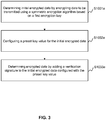
- Operation S1031a determining initial encrypted data by encrypting the data to be transmitted using a symmetric encryption algorithm base on a first encryption key.
- the first encryption key may be an encryption key stored respectively in the smart door lock and the mobile terminal.
- a mobile terminal A and the smart door lock may store a same encryption key (e.g., Key A).
- a mobile terminal B and the smart door lock may store a same encryption key (e.g., Key B).
- initial encrypted data A may be determined by encrypting data to be transmitted, generated by the mobile terminal A, using the encryption key algorithm based on the encryption key "Key A".
- initial encrypted data B may be determined by encrypting data to be transmitted using the encryption key algorithm based on the encryption key "Key B", wherein the data to be transmitted may be generated according to an instruction of request sent by the mobile terminal B.
- Operation S1032a configuring a preset key value for the initial encrypted data.
- the preset key value may be configured for the initial encrypted data determined by the above operations, where the preset key value may be at least one of a timestamp, a counter reading, or a random code.
- the timestamp may be a current timestamp. For example, if the current time is 2016-08-11-20:21, then it may be used as the preset key value and be configured into the initial encrypted data.
- Operation S1033a determining the encrypted data by adding a verification signature to the initial encrypted data configured with the preset key value.
- the verification signature may be a hash value that may be generated according to the hash algorithm, wherein the verification signature may be used for verifying the integrity of the encrypted data upon decryption.
- the processing the encrypted data according to the result of the identify authentication may include the following operations.
- the receiving terminal may verify the verification signature of the encrypted data.
- the receiving terminal may verify the integrity of the verification signature, to prevent data tampering and ensure data integrity.
- the receiving terminal may verify whether the preset key value is legal.
- the receiving terminal may analyze whether the preset key value (e.g., the timestamp, the counter reading, or the random code) is legal. Specifically, the preset key value may be compared with local data in the receiving terminal, wherein the local data may be current data, or stored or generated by the receiving terminal.
- the smart door lock may compare the timestamp with time data stored in a clock module of the smart door lock.
- the clock module may include a clock chip continuously powered by a button battery.
- the smart door lock may be powered by a double-A dry battery. The operation of changing battery does not disrupt the normal operation of the clock inside the smart door lock.
- the clock module may update automatically according to a standard time. For example, the current time may be 17:00, and the time of the clock module may also be 17:00.
- the smart lock may compare the timestamp with the time stored in the clock module of the smart door lock. If a deviation (i.e., a difference between the timestamp of the encrypted data and the time stored in the clock module) exceeds a threshold value, the encrypted data may be deemed to be an illegal data package.
- the verification result may be fed back to the mobile terminal through Bluetooth, Zigbee, or the like.
- the threshold value may be set within 15 minutes to 60 minutes according to the situation, for example, the threshold may be 20 minutes. If the deviation exceeds 20 minutes, the encrypted data may be deemed to be an illegal data package.
- a verification result may be that the encrypted data with the preset key value is illegal, and the verification result may be fed back to the mobile terminal through a preset communication channel or a cloud server.
- the verification result may be that the encrypted data with the preset key value is legal.
- a comparing may be performed to a current time value of the mobile terminal, and details are not described herein.
- the preset key value may be a counter reading.
- the smart door lock may compare the counter reading of the encrypted data configured with the preset key value with a locally stored counter reading.
- the verification result may be that an unlock verification code with the counter reading is legal. If the counter reading of the encrypted data is less than or equal to the locally stored counter reading, it may be considered that data packet of the encrypted data is replayed.
- a verification result may be that the encrypted data with the counter reading is illegal, and the verification result may be fed back to the mobile terminal through a preset communication channel or a cloud server.
- the mobile terminal may act the same as the receiving terminal and details are not described here.
- the receiving terminal may determine data to be transmitted by decrypting the initial encrypted data using an inverse algorithm of the symmetric encryption algorithm based on the first encryption key.
- the receiving terminal may verify whether the preset key of the encrypted data configured with the preset key value is legal. If the preset key value is legal, the receiving terminal may determine the data to be transmitted by decrypting the initial encrypted data using the inverse algorithm of the symmetric encryption algorithm based on the first encryption key locally stored in the receiving terminal. For example, if a corresponding first encryption key stored locally is "Key A,” the data to be transmitted may be obtained by decrypting the initial encrypted data based on "Key A" using the inverse algorithm of the symmetric encryption algorithm.
- an encryption key may include a public key and a private key.
- the determining encrypted data by encrypting the data to be transmitted using the preset encryption algorithm based on the encryption key may include the following operations.
- Operation S1031b the sending terminal may determine initial encrypted data by encrypt the data to be transmitted using an asymmetric encryption algorithm based on the public key stored in the sending terminal.
- the encryption key stored respectively by the sending terminal and the receiving terminal may include a public key and a private key.
- the encryption key saved by the sending terminal may include a private key pri A and a public key pub B.
- the corresponding encryption key stored by the receiving terminal may include a private key pri B and a public key pub A.
- the encryption key saved by the smart door lock acts as a sending terminal, may include the private key pri A and the public key pub B;
- the corresponding encryption key saved by the mobile terminal acts as a receiving terminal, may include the private key pri B and the public key pub A.
- the smart door lock, acting as the sending terminal may determine initial encrypted data by encrypting the data to be transmitted using the asymmetric encryption algorithm based on the public key pub B stored in itself.
- Operation S1032b configuring a preset key value for the initial encrypted data.
- the preset key value may be at least one of a current timestamp, a counter reading, or a random code.
- the preset key value may be configured into the initial encrypted data determined through the above operations, where the preset key value may be at least one of a current timestamp, a counter reading, or a random code. For example, if the current time is 2016-08-11-20:21, a timestamp may be set as the preset key value and be configured into the initial encrypted data.
- Operation S1033b determining the encrypted data by adding a verification signature to the initial encrypted data configured with the preset key value, wherein the verification signature is the private key stored in the sending terminal.
- the encryption key stored by the sending terminal may include a private key pri A and a public key pub B.
- the corresponding encryption key stored by the receiving terminal may include a private key pri B and a public key pub A.
- the encryption key stored by the smart door lock as the sending terminal may include the private key pri A and the public key pub B
- the corresponding encryption key stored by the mobile terminal as the receiving terminal may include the private key pri B and the public key pub A.
- the encrypted data may be determined by adding a verification signature to the initial encrypted data with the preset key value, wherein the verification signature may be the private key pri A stored by the smart door lock.
- the processing the encrypted data according to the result of the identity authentication may include the following operations.
- the receiving terminal may verify the verification signature of the encrypted data using the public key stored by the receiving terminal.
- the receiving terminal may verify the verification signature of the encrypted data using the public key stored locally in the receiving terminal.
- the receiving terminal may be a mobile terminal.
- the encryption key stored locally in the mobile terminal may include a private key pri B and a public key pub A.
- the mobile terminal may use the locally stored public key pub A to verify a verification signature pri A carried in the encrypted data. If it is verified that the pri A is corresponding to the locally stored public key pub A, the verification signature matches. If it is verified that it is not a private key corresponding to the locally stored public key pub A, the result of the verification signature is not matching.
- Operation S1072b if the result of the signature verification is a match, the receiving terminal may verify whether the preset key value is legal.
- the receiving terminal may analyze whether the preset key value (e.g., the timestamp, the counter reading, or the random code) is legal. Specifically, the preset key value may be compared with local data in the receiving terminal, wherein the local data may be current data, or stored or generated by the receiving terminal.
- the smart door lock may compare the timestamp with time data stored in a clock module of the smart door lock.
- the clock module may include a clock chip continuously powered by a battery. For example, a smart door lock may be powered by a double-A dry battery. The operation of changing battery does not disrupt the normal operation of the clock inside the door lock.
- the clock module may be updated automatically according to a standard time. For example, the current time may be 17:00, and the time of the clock module may also be 17:00.
- the smart lock may compare the timestamp with the time stored in the clock module of the smart door lock. If a deviation (i.e., a difference between the timestamp of the encrypted data and the time stored in the clock module) exceeds a threshold value, the encrypted data may deemed to be an illegal data package.
- the verification result may be fed back to the mobile terminal through Bluetooth, Zigbee, or the like.
- the threshold value may be set within 15 minutes to 60 minutes according to the situation. For example, the threshold may be 20 minutes. If the deviation exceeds 20 minutes, the encrypted data may be deemed to include an illegal data package.
- a verification result may be that the encrypted data with the preset key value is illegal, and the verification result may be fed back to the mobile terminal through a preset communication channel or a cloud server.
- the verification result may be that the encrypted data with the preset key value is legal.
- a comparison may be performed to a current time value of the mobile terminal, and details are not repeated herein.
- the preset key value may be a counter reading.
- the smart door lock may compare the counter reading of the encrypted data configured with the preset key value with a locally stored counter reading.
- the verification result may be that an unlock verification code with the counter reading is legal. If the counter reading of the encrypted data is less than or equal to the locally stored counter reading, it may be considered that data packet of the encrypted data is replayed.
- a verification result may be that the encrypted data with the counter reading is illegal, and the verification result may be fed back to the mobile terminal through a preset communication channel or a cloud server.
- the mobile terminal may be the same as the receiving terminal and details are not repeated here.
- Operation S1073b If the preset key value is legal, the receiving terminal may determine data to be transmitted by decrypting the initial encrypted data using an inverse algorithm of the same symmetric encryption algorithm based on the private key stored by itself.
- Operation S1071a-S1073a and operation S1071 b-S1073b are some specific embodiments for decrypting the encrypted data by the receiving terminal.
- the receiving terminal may receive the encrypted data with the unique identifier sent by the sending terminal and determine a result of an identity authentication by performing the identity authentication on the encrypted data with the unique identifier.
- the receiving terminal may obtain data to be transmitted by decrypting the encrypted data based on the encryption key obtained from a key exchange process according to the result of the identity authentication.
- the manner of decrypting the encrypted data may be different depending on the encryption methods of the encrypted data. The embodiments of the present disclosure do not limit this.
- an deletion operation may still be initiated to instruct the smart door lock and/or the cloud server to delete the relevant encryption key information by logging into a backup mobile terminal. It may prevent leakage of the encryption key information in the lost mobile terminal, and reduce security risks.
- the secure communication method based on the smart door lock system may further include the following operations.
- a backup mobile terminal may obtain account login verification information, wherein the account login verification information may be information for verifying the identity of a user, and the backup mobile terminal may be a backup device of the mobile terminal.
- the user when the user loses a mobile terminal pre-installed with an APP and stored an encryption key, the user may login through a backup mobile terminal pre-installed with the smart door lock APP by inputting account login verification information.
- the account login verification information may include, but is not limited to, user identity information (user identity information set by the user according to some rules, such as user name, user ID, etc.), a password, a verification code, or the like.
- Operation 1082 if the account login verification information is verified, the backup mobile terminal, in response to an authorization of a deletion operation by the user, may send a first delete instruction to a smart door lock to instruct the smart door lock to delete its locally stored specified encryption key information, and/or, the backup mobile terminal, in response to a remote authorization of a deletion operation by the user, may send a second deletion instruction to the cloud server to instruct the cloud server to delete encryption key information stored in a mobile terminal.
- user's terminal device may connect to the smart door lock through a short-range wireless communication or an NFC connection, and control the smart lock to delete original encryption key information corresponding to the account.
- an encryption key stored in a lost mobile terminal may be delete through some operations performed via a cloud server.
- Embodiment 1 is an application scenario in which a mobile terminal acts as a sending terminal, and an unlocking password is sent to the smart door lock to implement unlocking.
- Embodiment 2 is an application scenario in which a smart door lock acts as a sending terminal, and an unlocking record, a sensor state, or the like are sent to a specified mobile terminal according to a preset rule. The implementation processes are described in detail below.
- a secure communication method applicable in a smart door lock system including the following operations.
- the smart door lock or the mobile terminal may generate an initial encryption key, and determine an encryption key by authenticating the initial encryption key, wherein the initial encryption key may be a key automatically generated by the smart door lock or the mobile terminal or manually inputted by the user.
- the user's authorization instruction may be, for example, pressing a configuration button or a configuration mode touch key manually by the user, inputting a preset administrator password or inputting an administrator authority fingerprint locally in the smart door lock (i.e., the smart door lock enters a configuration mode).
- the user may open the APP in a terminal to enter the configuration mode, and the secure communication channel may be activated with the user's authorization through the configuration mode.
- the smart door lock and the mobile terminal may be connected through the secure communication channel using any one of the WIFI LAN, Bluetooth, Zigbee or NFC.
- the initial encryption key may be generated by either of the smart door lock or the mobile terminal and the encryption key may be determined by authenticating mutually by the smart door lock and the mobile terminal.
- the user may press a startup configuration button on the smart door lock and input an authenticated administrator password, meanwhile the user may open a smart door lock APP in the mobile terminal to enter the configuration mode.
- the smart door lock and the mobile phone may be connected through the Bluetooth with the user's authorization.
- the initial encryption key may be generated by the smart door lock and be transmitted to the smart door lock APP in the mobile phone through the Bluetooth communication channel.
- the APP in the mobile phone may confirm or modify the initial encryption key and exchange it with the smart door lock.
- the smart door lock and the mobile phone APP may respectively generate a pair of public key and a private key and exchange them.
- the smart lock may compare the timestamp with the time stored in the clock module of the smart door lock. If a deviation (i.e., a difference between the timestamp of the encrypted data and the time stored in the clock module) exceeds a threshold value, the encrypted data may be determined to be an illegal data package.
- the verification result may be fed back to the mobile terminal through Bluetooth or Zigbee or the like.
- the threshold value may be set within 15 minutes to 60 minutes according to the situation, for example, the threshold may be 20 minutes. If the deviation exceeds 20 minutes, it may be determined that the encrypted data is an illegal data package.
- a verification result may be that the encrypted data with the preset key value is illegal, and the verification result may be fed back to the mobile terminal through a preset communication channel or a cloud server.
- the verification result may be that the encrypted data with the preset key value is legal. If the preset key value is legal, the smart lock may determine data to be transmitted by decrypting the initial encrypted data based on the same first encryption key "Key A" saved locally using an inverse algorithm of the same symmetric encryption algorithm.
- a secure communication method based on the smart door lock system including the following operations.
- the smart door lock or the mobile terminal may generate an initial encryption key, and the smart door lock and the mobile terminal may determine an encryption key by authenticating the initial encryption key.
- the initial encryption key may be a key automatically generated by the smart door lock or the mobile terminal or manually inputted by the user.
- the user's authorization instruction may be, for example, pressing a configuration button or a configuration mode touch key manually by the user, inputting a preset administrator password or inputting an administrator authority fingerprint locally in the smart door lock (i.e., the smart door lock enters configuration mode).
- the user may open an APP in a terminal to enter a configuration mode, and a secure communication channel may be triggered with the user's authorization through the configuration mode.
- the smart door lock and the mobile terminal may be connected through the secure communication channel using any one of a WIFI LAN network, a Bluetooth channel, a Zigbee channel, or an NFC channel.
- the initial encryption key may be generated by either of the smart door lock or the mobile terminal and encryption key may be determined by authenticating mutually by the smart door lock and the mobile terminal. For example, the user may press a startup configuration button on the smart door lock and input an authenticated administrator password, meanwhile the user may open a smart door lock APP in the mobile terminal to enter the configuration mode.
- the smart door lock and the mobile phone may be connected through the NFC channel with the user's authorization.
- the smart door lock and the mobile phone APP may respectively generate a pair of a public key and a private key and exchange them through the NFC channel.
- verification result may be that an unlock verification code with the counter reading is legal. If the counter reading of the encrypted data is less than or equal to the locally stored value, it may be considered that the data packet is replayed.
- the verification result may be that the encrypted data with the counter reading is illegal, and the verification result may be fed back to the smart door lock through a preset communication channel or a cloud server to generate alert information. If the preset key value is legal, the receiving terminal may determine data to be transmitted by decrypting the initial encrypted data using an inverse algorithm of the same symmetric encryption algorithm based on the private key.
- the serial number of the present disclosure is for illustrative purposes only and does not represent the advantages and disadvantages of the embodiments.
- the disclosed technical contents may be implemented in other manners.
- the device embodiment described above is only schematic, for example, the division of the unit may be a logical function division, and may actually have another division manner when actually implemented. For example, a plurality of units or components may be combined or may be integrated into another system, or some features may be ignored or not executed.
- the mutual coupling or direct coupling or communication connection shown or discussed may be an indirect coupling or communication connection through some interface, unit or module, and maybe electrical or otherwise.
- the units described as separate components may or may not be physically separate, and the components are shown as the unit may or may not be physical units, i.e. may be located in one place, or maybe distributed to a plurality of units. Some or all of the units may be selected according to actual needs to achieve the purpose of the solution of the embodiment.
- each functional unit in each embodiment of the present disclosure may be integrated into one processing unit, or maybe a physical unit of each unit alone, or two or more units may be integrated into one unit.
- the integrated unit may be implemented in the form of hardware or in the form of a software functional unit.
Landscapes
- Engineering & Computer Science (AREA)
- Computer Security & Cryptography (AREA)
- Computer Networks & Wireless Communication (AREA)
- Signal Processing (AREA)
- Physics & Mathematics (AREA)
- General Physics & Mathematics (AREA)
- Computer Hardware Design (AREA)
- Computing Systems (AREA)
- General Engineering & Computer Science (AREA)
- Lock And Its Accessories (AREA)
- Mobile Radio Communication Systems (AREA)
Applications Claiming Priority (2)
| Application Number | Priority Date | Filing Date | Title |
|---|---|---|---|
| CN201710198457.1A CN107038777B (zh) | 2017-03-29 | 2017-03-29 | 一种基于智能门锁系统的安全通信方法及其智能门锁系统 |
| PCT/CN2018/079999 WO2018177188A1 (zh) | 2017-03-29 | 2018-03-22 | 一种基于智能门锁系统的安全通信方法及其智能门锁系统 |
Publications (2)
| Publication Number | Publication Date |
|---|---|
| EP3605475A1 true EP3605475A1 (de) | 2020-02-05 |
| EP3605475A4 EP3605475A4 (de) | 2020-04-15 |
Family
ID=59533396
Family Applications (1)
| Application Number | Title | Priority Date | Filing Date |
|---|---|---|---|
| EP18774831.4A Pending EP3605475A4 (de) | 2017-03-29 | 2018-03-22 | Sicheres kommunikationsverfahren basierend auf einem intelligenten türschlosssystem und intelligentes türschlosssystem dafür |
Country Status (5)
| Country | Link |
|---|---|
| US (1) | US11070364B2 (de) |
| EP (1) | EP3605475A4 (de) |
| JP (1) | JP7152466B2 (de) |
| CN (2) | CN107038777B (de) |
| WO (1) | WO2018177188A1 (de) |
Cited By (2)
| Publication number | Priority date | Publication date | Assignee | Title |
|---|---|---|---|---|
| EP3754140A4 (de) * | 2018-02-12 | 2022-04-06 | Team Young Technology Co., Ltd. | Ferngesteuertes elektronisches schliesssystem und ver- und entschlüsselungsverfahren dafür |
| EP3916701A4 (de) * | 2019-01-22 | 2022-10-19 | Bitkey Inc. | Nutzungsverwaltungssystem, verwaltungsvorrichtung, nutzungssteuerungsvorrichtung, nutzungsverwaltungsverfahren und computerlesbares programm |
Families Citing this family (101)
| Publication number | Priority date | Publication date | Assignee | Title |
|---|---|---|---|---|
| CN107924476A (zh) | 2015-04-14 | 2018-04-17 | 第资本服务公司 | 用于动态交易卡的系统、方法和设备 |
| WO2016168409A1 (en) * | 2015-04-14 | 2016-10-20 | Capital One Services, LLC. | Automated bluetooth pairing |
| US20240257592A1 (en) * | 2021-06-30 | 2024-08-01 | 1Ahead Technologies | Access management system |
| US11997193B2 (en) | 2017-03-29 | 2024-05-28 | Yunding Network Technology (Beijing) Co., Ltd. | Secure communication method and smart lock system based thereof |
| CN107038777B (zh) | 2017-03-29 | 2020-08-18 | 云丁网络技术(北京)有限公司 | 一种基于智能门锁系统的安全通信方法及其智能门锁系统 |
| CN107968781B (zh) * | 2017-11-23 | 2021-04-30 | 大陆投资(中国)有限公司 | 车辆共享业务的安全处理方法 |
| CN107977816A (zh) * | 2017-12-01 | 2018-05-01 | 移康智能科技(上海)股份有限公司 | 快件投递方法及服务器 |
| CN108049721B (zh) * | 2017-12-06 | 2023-06-13 | 云丁网络技术(北京)有限公司 | 电子锁及其控制方法、装置及系统 |
| WO2019109964A1 (zh) * | 2017-12-06 | 2019-06-13 | 云丁网络技术(北京)有限公司 | 电子锁及其控制方法、装置及系统 |
| CN108122316B (zh) * | 2017-12-21 | 2020-02-04 | 美智光电科技有限公司 | 基于安全芯片的门锁通信系统及方法 |
| CN108269334A (zh) * | 2018-01-10 | 2018-07-10 | 北京小米移动软件有限公司 | 开锁方法、终端设备以及智能锁 |
| JP2019190111A (ja) * | 2018-04-24 | 2019-10-31 | 株式会社東海理化電機製作所 | 鍵情報生成システム及び鍵情報生成方法 |
| CN108777015B (zh) * | 2018-05-25 | 2021-04-27 | 国网湖北省电力有限公司荆州供电公司 | 一种基于动态口令的门禁系统 |
| CN108877041B (zh) * | 2018-06-06 | 2020-07-31 | 常熟市恒仕达电器有限公司 | 一种智能售货终端及系统 |
| CN108810862A (zh) * | 2018-06-11 | 2018-11-13 | 深圳市长恩实业有限公司 | 用于智能门锁通讯方法和智能门锁系统 |
| CN109300201A (zh) * | 2018-06-14 | 2019-02-01 | 北京玛泰科技有限公司 | 一种智能安全锁及其加密系统和加密方法 |
| US11303449B2 (en) * | 2018-06-22 | 2022-04-12 | Salesforce.Com, Inc. | User device validation at an application server |
| CN110866999A (zh) * | 2018-08-09 | 2020-03-06 | 中兴通讯股份有限公司 | 一种智能门锁的控制方法、设备及存储介质 |
| CN109309568A (zh) * | 2018-09-07 | 2019-02-05 | 江苏恒宝智能系统技术有限公司 | 一种指纹授权方法及系统 |
| CN112740206A (zh) * | 2018-09-18 | 2021-04-30 | 亚萨合莱有限公司 | 使用户拍摄的图像与访问控制设备参考匹配以用于物理访问控制 |
| CN109410396B (zh) * | 2018-10-14 | 2021-01-01 | 浙江鸿利锁业有限公司 | 一种智能锁数据加密传输方法以及应用其的租赁设备 |
| CN109523664A (zh) * | 2018-10-26 | 2019-03-26 | 厦门摩洛克科技有限公司 | 一种智能门锁控制方法 |
| CN109493483A (zh) * | 2018-11-12 | 2019-03-19 | 上海庆科信息技术有限公司 | 智能锁系统及报警方法、装置、设备、计算机存储介质 |
| CN109330505B (zh) * | 2018-11-19 | 2021-06-29 | 南京特沃斯清洁设备有限公司 | 一种洗地机物联网系统 |
| CN109712278B (zh) * | 2018-11-27 | 2021-07-13 | 深圳市小石安防科技有限公司 | 智能门锁身份认证方法、系统、可读存储介质及移动终端 |
| KR102009863B1 (ko) * | 2018-12-05 | 2019-08-12 | 주식회사 후본 | 보안카드와 모바일 단말을 이용한 출입 보안 시스템 및 그 보안 방법 |
| CN109889596A (zh) * | 2018-12-29 | 2019-06-14 | 珠海汇金科技股份有限公司 | 智能锁绑定方法、智能锁及智能锁绑定系统 |
| CN109949461B (zh) * | 2019-03-15 | 2021-01-01 | 北京深思数盾科技股份有限公司 | 开锁方法及装置 |
| EP3736780A1 (de) * | 2019-05-06 | 2020-11-11 | Universitat Pompeu Fabra | Verfahren zur fernsteuerung von merkmalen einer vorrichtung und eines fernbedienbaren schlüssellosen eingangsinstruments |
| CN112017330B (zh) * | 2019-05-13 | 2023-05-05 | 浙江宇视科技有限公司 | 智能锁参数配置方法、装置、智能锁及存储介质 |
| CN112149083B (zh) * | 2019-06-26 | 2023-12-12 | 天地融科技股份有限公司 | 一种设备认证方法、安全键盘及办公系统 |
| CN112446982A (zh) * | 2019-08-10 | 2021-03-05 | 云丁网络技术(北京)有限公司 | 用于控制智能锁的方法、装置、计算机可读介质及设备 |
| WO2021023164A1 (zh) | 2019-08-02 | 2021-02-11 | 云丁网络技术(北京)有限公司 | 一种智能锁具控制方法和系统 |
| WO2021023276A1 (zh) | 2019-08-06 | 2021-02-11 | 云丁网络技术(北京)有限公司 | 一种智能锁控制方法和装置 |
| CN112351390A (zh) * | 2019-08-09 | 2021-02-09 | 华为技术有限公司 | 蓝牙设备互识或互信的方法 |
| CN110610570A (zh) * | 2019-09-24 | 2019-12-24 | 深圳好逸多科技有限公司 | 智能柜锁系统 |
| CN112562122A (zh) * | 2019-09-24 | 2021-03-26 | 上海奥宜电子科技有限公司 | 远程开锁方法、装置、终端、存储介质、及系统 |
| CN110610571A (zh) * | 2019-09-24 | 2019-12-24 | 深圳好逸多科技有限公司 | 具有数据收集功能的智能柜锁系统 |
| CN110942537B (zh) * | 2019-11-26 | 2021-10-15 | 珠海格力电器股份有限公司 | 一种智能门锁开锁系统、方法、装置和介质 |
| CN110942538A (zh) * | 2019-12-04 | 2020-03-31 | 国网上海市电力公司 | 一种带有加密算法的远程授权的实时蓝牙电子密钥 |
| CN110992533B (zh) * | 2019-12-09 | 2022-06-10 | 深圳Tcl数字技术有限公司 | Rfid卡验证方法、装置、设备及存储介质 |
| CN111147452B (zh) * | 2019-12-10 | 2020-12-25 | 珠海格力电器股份有限公司 | 一种门锁指令响应的方法、装置、门锁及存储介质 |
| CN113132091B (zh) * | 2019-12-31 | 2022-06-10 | 华为技术有限公司 | 一种分享设备的方法及电子设备 |
| CN111161454A (zh) * | 2020-01-09 | 2020-05-15 | 广州微盾科技股份有限公司 | 一种智能锁安全联网与控制的方法 |
| CZ202086A3 (cs) * | 2020-02-20 | 2021-02-03 | Petr Lakomý | Způsob ovládání elektronického trezorového zámku |
| CN113312326B (zh) * | 2020-02-26 | 2024-04-16 | 伊姆西Ip控股有限责任公司 | 用于存储管理的方法、电子设备和计算机程序产品 |
| CN113329399A (zh) * | 2020-02-28 | 2021-08-31 | 阿里巴巴集团控股有限公司 | 数据传输、配网与管理方法、设备、系统及存储介质 |
| CN111815813A (zh) * | 2020-06-22 | 2020-10-23 | 北京智辉空间科技有限责任公司 | 一种电子锁安全系统 |
| CN111815811B (zh) * | 2020-06-22 | 2022-09-06 | 合肥智辉空间科技有限责任公司 | 一种电子锁安全系统 |
| CN111815815B (zh) * | 2020-06-22 | 2022-06-24 | 合肥智辉空间科技有限责任公司 | 一种电子锁安全系统 |
| CN111669406B (zh) * | 2020-06-28 | 2021-05-28 | 山东大学 | 一种无创呼吸机数据安全传输方法及系统 |
| WO2022002146A1 (zh) * | 2020-06-30 | 2022-01-06 | 云丁网络技术(北京)有限公司 | 一种智能设备控制方法和系统 |
| CN111882707B (zh) * | 2020-07-15 | 2022-08-19 | 珠海优特电力科技股份有限公司 | 锁具控制方法和装置 |
| CN114155630B (zh) * | 2020-08-18 | 2024-08-23 | 浙江宇视科技有限公司 | 安全验证方法、电子设备和介质 |
| US11949778B1 (en) | 2020-09-16 | 2024-04-02 | Snap Inc. | Privacy-preserving multi-touch attribution |
| CN114254332B (zh) * | 2020-09-21 | 2024-10-29 | 中移物联网有限公司 | 一种资源授权方法、装置、电子设备和可读存储介质 |
| US11373239B1 (en) * | 2020-09-30 | 2022-06-28 | Wells Fargo Bank, N.A. | Real-time currency exchange system |
| US12554885B1 (en) | 2020-09-30 | 2026-02-17 | Snap Inc. | Accurate and anonymized attribution |
| KR102229537B1 (ko) * | 2020-10-16 | 2021-03-18 | 패스테크 주식회사 | 도어락 영역정보 표시 기능을 가지는 스마트 도어락 시스템 및 그 제어 방법 |
| CN112434318B (zh) * | 2020-11-26 | 2024-11-01 | 江苏特思达电子科技股份有限公司 | 一种物联网远程设备加密方法及系统 |
| CN112767576B (zh) * | 2020-12-16 | 2023-05-02 | 珠海优特电力科技股份有限公司 | 锁具授权管理方法和锁具授权管理系统 |
| CN112738103B (zh) * | 2020-12-29 | 2022-03-22 | 北京深思数盾科技股份有限公司 | 信息校验方法、装置及电子设备 |
| CN112995137B (zh) * | 2021-02-03 | 2023-04-07 | 深圳市凯迪仕智能科技有限公司 | 一种智能锁的绑定方法及智能锁系统 |
| US12183136B2 (en) | 2021-02-12 | 2024-12-31 | Invue Security Products Inc. | Merchandise display security systems and methods |
| CN113347613B (zh) * | 2021-04-15 | 2024-01-30 | 奇瑞商用车(安徽)有限公司 | 基于蓝牙数字钥匙的安全通信方法及系统 |
| TW202243441A (zh) | 2021-04-15 | 2022-11-01 | 美商品譜公司 | 與諸如電子鎖之物聯網裝置的安全藍牙連接之建立 |
| CN113194465B (zh) * | 2021-04-20 | 2023-11-24 | 歌尔股份有限公司 | 终端间的ble连接验证方法、装置及可读存储介质 |
| CN113345135A (zh) * | 2021-04-26 | 2021-09-03 | 合肥美的智能科技有限公司 | 智能售货柜的控制方法、装置、电子设备及存储介质 |
| CN113298981A (zh) * | 2021-05-14 | 2021-08-24 | 北京千丁互联科技有限公司 | 门锁设备近距离通信解锁方法和门锁设备请求解锁方法 |
| CN113256853B (zh) * | 2021-06-21 | 2021-10-15 | 德施曼机电(中国)有限公司 | 一种信息传输方法、电子设备、门锁、服务器及存储介质 |
| CN113486372A (zh) * | 2021-07-05 | 2021-10-08 | 优车库网络科技发展(深圳)有限公司 | 数据备份方法、数据备份装置及服务器 |
| CN114120498B (zh) * | 2022-01-27 | 2022-05-10 | 云丁网络技术(北京)有限公司 | 用于迁移数据的方法和相关设备 |
| CN113674455B (zh) * | 2021-08-13 | 2023-08-04 | 京东科技信息技术有限公司 | 智能门锁远程控制方法、装置、系统、设备及存储介质 |
| CN113630772A (zh) * | 2021-08-17 | 2021-11-09 | 深圳市智莱科技股份有限公司 | 蓝牙数据传输方法、装置、蓝牙设备以及存储介质 |
| CN113808303B (zh) * | 2021-08-24 | 2023-04-07 | 珠海市安科电子有限公司 | 复合加密方法、门锁系统及存储介质 |
| CN113823024A (zh) * | 2021-11-23 | 2021-12-21 | 云丁网络技术(北京)有限公司 | 一种智能卡识别方法、装置及系统 |
| CN114241631B (zh) * | 2021-11-24 | 2024-09-03 | 新华三智能终端有限公司 | 一种智能门锁的管控方法、注册方法及相关装置 |
| CN114257999B (zh) * | 2021-11-29 | 2026-01-23 | 惠州高盛达科技有限公司 | 蓝牙共享设备借助手机接入网络云端的方法 |
| CN114170709B (zh) * | 2021-12-07 | 2024-10-11 | 中国建设银行股份有限公司 | 基于物联网的款箱管理方法和系统 |
| CN114338150A (zh) * | 2021-12-28 | 2022-04-12 | 北京纬百科技有限公司 | 物联网设备的配网方法、存储介质、电子设备及智能门锁 |
| CN114120497A (zh) * | 2021-12-28 | 2022-03-01 | 深圳市欧瑞博科技股份有限公司 | 智能门锁的通信方法、装置、智能门锁及存储介质 |
| CN114255533B (zh) * | 2022-01-28 | 2024-04-16 | 无锡融卡科技有限公司 | 智能锁系统及其实现方法 |
| CN114448727B (zh) * | 2022-04-02 | 2022-06-21 | 中国信息通信研究院 | 基于工业互联网标识解析体系的信息处理方法及系统 |
| CN114826574B (zh) * | 2022-04-19 | 2024-10-18 | 中国电子科技集团公司第三十研究所 | 智能家居安全通信系统及通信方法 |
| CN114863590A (zh) * | 2022-04-20 | 2022-08-05 | 东风汽车集团股份有限公司 | 一种通过移动终端控制车载保险箱的开启方法及装置 |
| CN115171245B (zh) * | 2022-06-09 | 2024-03-12 | 郑州信大捷安信息技术股份有限公司 | 一种基于hce的门锁安全认证方法及系统 |
| CN117517809A (zh) * | 2022-07-27 | 2024-02-06 | 深圳市中科创激光技术有限公司 | 箱体检测方法及装置 |
| CN115601861A (zh) * | 2022-09-22 | 2023-01-13 | 济南量子技术研究院(Cn) | 基于量子随机数的智能汽车门锁开闭方法及控制系统 |
| CN115915078B (zh) * | 2022-09-30 | 2024-11-05 | 国网冀北电力有限公司计量中心 | 一种基于3des的蓝牙通信电能表安全通信认证方法 |
| CN115822384B (zh) * | 2022-11-22 | 2025-10-10 | 临沂大学 | 一种智能锁管理系统及使用方法 |
| CN116798167A (zh) * | 2023-08-25 | 2023-09-22 | 广东星云开物科技股份有限公司 | 共享娱乐设备启动方法、系统及存储介质 |
| CN117071992B (zh) * | 2023-09-08 | 2025-12-02 | 浙江德施曼科技智能股份有限公司 | 具备智能锁芯的智能锁、带有智能锁的门及解锁方法 |
| FR3155603A1 (fr) * | 2023-11-22 | 2025-05-23 | Commissariat à l'Energie Atomique et aux Energies Alternatives | Communication en champ proche sécurisée |
| DE102023133858A1 (de) * | 2023-12-04 | 2025-06-05 | Deutsche Post Ag | Verfahren und Vorrichtung zum Feststellen, ob eine Information zum Zugang zu einem Fach einer Fachanlage berechtigt |
| TWI881685B (zh) * | 2024-01-26 | 2025-04-21 | 琺博工業有限公司 | 電子門鎖控制系統及方法 |
| CN117743631A (zh) * | 2024-02-21 | 2024-03-22 | 深圳市卓悦智能技术有限公司 | 智能门铃的控制方法、装置、智能门铃及存储介质 |
| CN118351615A (zh) * | 2024-05-23 | 2024-07-16 | 广东开放大学(广东理工职业学院) | 一种基于物联网的数据采集验证方法及系统 |
| CN118644914B (zh) * | 2024-07-11 | 2024-11-26 | 合肥智辉空间科技有限责任公司 | 一种无人物联区域门锁控制方法及系统 |
| CN119479116B (zh) * | 2024-11-15 | 2025-11-04 | 青岛海尔科技有限公司 | 信息更新方法及装置、存储介质、电子装置 |
| CN120375497B (zh) * | 2025-06-26 | 2025-08-29 | 江苏国保信息系统测评中心有限公司 | 一种智能门锁的密码离线管理方法及系统 |
| CN121011027A (zh) * | 2025-09-16 | 2025-11-25 | 国网山西省电力有限公司超高压变电分公司 | 一种基于wapi网络的变电站有源锁具控制方法及系统 |
Family Cites Families (18)
| Publication number | Priority date | Publication date | Assignee | Title |
|---|---|---|---|---|
| JP4613969B2 (ja) | 2008-03-03 | 2011-01-19 | ソニー株式会社 | 通信装置、及び通信方法 |
| US9078021B2 (en) * | 2013-01-16 | 2015-07-07 | Kabushiki Kaisha Toshiba | Information processing apparatus, content transmission method and storage medium |
| CN103578165B (zh) * | 2013-03-08 | 2016-06-29 | 高潮 | 一种防盗系统 |
| US20150045013A1 (en) * | 2013-08-09 | 2015-02-12 | Directed, Llc | Multi-level vehicle remote start authentication method & system |
| KR101710317B1 (ko) | 2013-11-22 | 2017-02-24 | 퀄컴 인코포레이티드 | 차량 내의 다수의 모바일 컴퓨팅 디바이스들에 의해 제공된 선호도들에 기초하여 차량의 내면을 구성하기 위한 시스템 및 방법 |
| US9892579B2 (en) * | 2014-08-06 | 2018-02-13 | Che-Ming KU | Control method for smart lock, a smart lock, and a lock system |
| WO2016023558A1 (en) * | 2014-08-14 | 2016-02-18 | Poly-Care Aps | Method for operating a door lock by encrypted wireless signals |
| CN104537735A (zh) * | 2014-12-11 | 2015-04-22 | 应骏 | 电子锁及其解锁和设置方法 |
| WO2016130386A1 (en) * | 2015-02-13 | 2016-08-18 | Candy House Inc. | Control method for smart lock, a smart lock, and a lock system |
| CN104806085B (zh) * | 2015-03-20 | 2017-07-18 | 云丁网络技术(北京)有限公司 | 一种智能门锁系统及其智能提醒方法 |
| US9877123B2 (en) * | 2015-07-02 | 2018-01-23 | Gn Hearing A/S | Method of manufacturing a hearing device and hearing device with certificate |
| CN105654580B (zh) * | 2015-07-28 | 2018-06-15 | 宇龙计算机通信科技(深圳)有限公司 | 访问控制方法及系统、电子锁、管理及访客终端 |
| CN105096419B (zh) * | 2015-07-31 | 2021-10-08 | 小米科技有限责任公司 | 开锁方法、装置、门锁及智能穿戴设备 |
| CN105894627B (zh) * | 2016-03-30 | 2019-04-16 | 北京千丁互联科技有限公司 | 一种蓝牙门禁设备、蓝牙门禁管理系统及方法 |
| CN106097486B (zh) * | 2016-05-26 | 2018-04-17 | 深圳市前海速普得技术有限公司 | 一种基于声波传输的门禁口令的验证方法和验证系统 |
| CN106408697A (zh) * | 2016-08-30 | 2017-02-15 | 广东金大田家居股份有限公司 | 一种智能门锁系统 |
| CN106504391B (zh) * | 2016-11-24 | 2020-03-06 | 北京爱接力科技发展有限公司 | 一种智能门禁的控制方法、装置及系统 |
| CN107038777B (zh) * | 2017-03-29 | 2020-08-18 | 云丁网络技术(北京)有限公司 | 一种基于智能门锁系统的安全通信方法及其智能门锁系统 |
-
2017
- 2017-03-29 CN CN201710198457.1A patent/CN107038777B/zh active Active
-
2018
- 2018-03-22 EP EP18774831.4A patent/EP3605475A4/de active Pending
- 2018-03-22 JP JP2020502749A patent/JP7152466B2/ja active Active
- 2018-03-22 WO PCT/CN2018/079999 patent/WO2018177188A1/zh not_active Ceased
- 2018-03-22 CN CN201880022578.3A patent/CN110462692B/zh active Active
-
2019
- 2019-09-29 US US16/586,995 patent/US11070364B2/en active Active
Cited By (2)
| Publication number | Priority date | Publication date | Assignee | Title |
|---|---|---|---|---|
| EP3754140A4 (de) * | 2018-02-12 | 2022-04-06 | Team Young Technology Co., Ltd. | Ferngesteuertes elektronisches schliesssystem und ver- und entschlüsselungsverfahren dafür |
| EP3916701A4 (de) * | 2019-01-22 | 2022-10-19 | Bitkey Inc. | Nutzungsverwaltungssystem, verwaltungsvorrichtung, nutzungssteuerungsvorrichtung, nutzungsverwaltungsverfahren und computerlesbares programm |
Also Published As
| Publication number | Publication date |
|---|---|
| JP7152466B2 (ja) | 2022-10-12 |
| CN107038777B (zh) | 2020-08-18 |
| CN107038777A (zh) | 2017-08-11 |
| CN110462692A (zh) | 2019-11-15 |
| WO2018177188A1 (zh) | 2018-10-04 |
| US20200028672A1 (en) | 2020-01-23 |
| JP2020519208A (ja) | 2020-06-25 |
| EP3605475A4 (de) | 2020-04-15 |
| US11070364B2 (en) | 2021-07-20 |
| CN110462692B (zh) | 2022-02-22 |
Similar Documents
| Publication | Publication Date | Title |
|---|---|---|
| US11070364B2 (en) | Secure communication method and smart lock system based thereof | |
| US10574466B1 (en) | Authenticated external biometric reader and verification device | |
| US11997193B2 (en) | Secure communication method and smart lock system based thereof | |
| EP2624081B1 (de) | Konfigurationsverfahren, Konfigurationsvorrichtung, Computerprogrammprodukt und Steuerungssystem | |
| CN105118127B (zh) | 一种访客系统及其控制方法 | |
| CN109618334B (zh) | 控制方法及相关设备 | |
| TW201400684A (zh) | 智慧鎖具及其操作方法 | |
| CN104299300B (zh) | 基于nfc的安全智能锁系统的开锁和关锁方法 | |
| KR20040075293A (ko) | 컴퓨팅 장치를 보안 네트워크에 접속시키기 위한 방법 및시스템 | |
| US10263782B2 (en) | Soft-token authentication system | |
| US11244052B2 (en) | Host computer securitization architecture | |
| KR20220072657A (ko) | 가상 블록체인이 결합된 이중 블록체인에 기반한 IoT 기기 플랫폼 보안 구축 방법 및 IoT 기기 플랫폼 보안 구축 시스템 | |
| CN111815813A (zh) | 一种电子锁安全系统 | |
| CN111815817A (zh) | 一种门禁安全控制方法和系统 | |
| KR102160656B1 (ko) | 장정맥을 이용한 로그인 방법 | |
| CN112530053B (zh) | 智能锁的控制方法、系统、锁设备、服务器及存储介质 | |
| CN111815815B (zh) | 一种电子锁安全系统 | |
| CN110932951B (zh) | 一种智能家居控制方法和装置 | |
| WO2019218328A1 (zh) | 一种智能门锁无线通信方法、智能门锁、网关及通信设备 | |
| CN109547303B (zh) | 控制方法及相关设备 | |
| CN109448192A (zh) | 基于加密芯片的安全智能锁系统 | |
| KR102691787B1 (ko) | 하드웨어 보안 모듈을 이용하는 보안 관리 방법 및 장치 | |
| CN113593088A (zh) | 一种智能开锁方法、智能锁、移动终端及服务器 | |
| KR20110128371A (ko) | 모바일 클라이언트 보안인증시스템과 중앙제어시스템 및 그 동작방법 | |
| CN111815811A (zh) | 一种电子锁安全系统 |
Legal Events
| Date | Code | Title | Description |
|---|---|---|---|
| STAA | Information on the status of an ep patent application or granted ep patent |
Free format text: STATUS: THE INTERNATIONAL PUBLICATION HAS BEEN MADE |
|
| PUAI | Public reference made under article 153(3) epc to a published international application that has entered the european phase |
Free format text: ORIGINAL CODE: 0009012 |
|
| STAA | Information on the status of an ep patent application or granted ep patent |
Free format text: STATUS: REQUEST FOR EXAMINATION WAS MADE |
|
| 17P | Request for examination filed |
Effective date: 20191028 |
|
| AK | Designated contracting states |
Kind code of ref document: A1 Designated state(s): AL AT BE BG CH CY CZ DE DK EE ES FI FR GB GR HR HU IE IS IT LI LT LU LV MC MK MT NL NO PL PT RO RS SE SI SK SM TR |
|
| AX | Request for extension of the european patent |
Extension state: BA ME |
|
| A4 | Supplementary search report drawn up and despatched |
Effective date: 20200316 |
|
| RIC1 | Information provided on ipc code assigned before grant |
Ipc: G07C 9/00 20200101AFI20200310BHEP |
|
| DAV | Request for validation of the european patent (deleted) | ||
| DAX | Request for extension of the european patent (deleted) | ||
| STAA | Information on the status of an ep patent application or granted ep patent |
Free format text: STATUS: EXAMINATION IS IN PROGRESS |
|
| 17Q | First examination report despatched |
Effective date: 20220622 |
|
| GRAP | Despatch of communication of intention to grant a patent |
Free format text: ORIGINAL CODE: EPIDOSNIGR1 |
|
| STAA | Information on the status of an ep patent application or granted ep patent |
Free format text: STATUS: GRANT OF PATENT IS INTENDED |
|
| INTG | Intention to grant announced |
Effective date: 20260116 |
|
| GRAS | Grant fee paid |
Free format text: ORIGINAL CODE: EPIDOSNIGR3 |
|
| GRAA | (expected) grant |
Free format text: ORIGINAL CODE: 0009210 |
|
| STAA | Information on the status of an ep patent application or granted ep patent |
Free format text: STATUS: THE PATENT HAS BEEN GRANTED |