EP3606236A1 - Procédé et appareil permettant de déterminer une taille de bloc de transport - Google Patents
Procédé et appareil permettant de déterminer une taille de bloc de transport Download PDFInfo
- Publication number
- EP3606236A1 EP3606236A1 EP18816736.5A EP18816736A EP3606236A1 EP 3606236 A1 EP3606236 A1 EP 3606236A1 EP 18816736 A EP18816736 A EP 18816736A EP 3606236 A1 EP3606236 A1 EP 3606236A1
- Authority
- EP
- European Patent Office
- Prior art keywords
- available
- type
- res
- determining
- communications device
- Prior art date
- Legal status (The legal status is an assumption and is not a legal conclusion. Google has not performed a legal analysis and makes no representation as to the accuracy of the status listed.)
- Granted
Links
Images




Classifications
-
- H—ELECTRICITY
- H04—ELECTRIC COMMUNICATION TECHNIQUE
- H04L—TRANSMISSION OF DIGITAL INFORMATION, e.g. TELEGRAPHIC COMMUNICATION
- H04L5/00—Arrangements affording multiple use of the transmission path
- H04L5/003—Arrangements for allocating sub-channels of the transmission path
- H04L5/0044—Allocation of payload; Allocation of data channels, e.g. PDSCH or PUSCH
-
- H—ELECTRICITY
- H04—ELECTRIC COMMUNICATION TECHNIQUE
- H04W—WIRELESS COMMUNICATION NETWORKS
- H04W72/00—Local resource management
- H04W72/04—Wireless resource allocation
- H04W72/044—Wireless resource allocation based on the type of the allocated resource
-
- H—ELECTRICITY
- H04—ELECTRIC COMMUNICATION TECHNIQUE
- H04L—TRANSMISSION OF DIGITAL INFORMATION, e.g. TELEGRAPHIC COMMUNICATION
- H04L5/00—Arrangements affording multiple use of the transmission path
- H04L5/0001—Arrangements for dividing the transmission path
- H04L5/0014—Three-dimensional division
- H04L5/0016—Time-frequency-code
-
- H—ELECTRICITY
- H04—ELECTRIC COMMUNICATION TECHNIQUE
- H04L—TRANSMISSION OF DIGITAL INFORMATION, e.g. TELEGRAPHIC COMMUNICATION
- H04L5/00—Arrangements affording multiple use of the transmission path
- H04L5/003—Arrangements for allocating sub-channels of the transmission path
- H04L5/0048—Allocation of pilot signals, i.e. of signals known to the receiver
- H04L5/0051—Allocation of pilot signals, i.e. of signals known to the receiver of dedicated pilots, i.e. pilots destined for a single user or terminal
-
- H—ELECTRICITY
- H04—ELECTRIC COMMUNICATION TECHNIQUE
- H04W—WIRELESS COMMUNICATION NETWORKS
- H04W72/00—Local resource management
- H04W72/04—Wireless resource allocation
-
- H—ELECTRICITY
- H04—ELECTRIC COMMUNICATION TECHNIQUE
- H04W—WIRELESS COMMUNICATION NETWORKS
- H04W72/00—Local resource management
- H04W72/12—Wireless traffic scheduling
Definitions
- This application relates to the field of communication technologies, and in particular, to a method and an apparatus for determining a transport block size.
- a transport block size (Transport block size, TBS) is determined by searching a TBS table based on a modulation and coding scheme (Modulation and Coding Scheme, MCS) and a quantity of allocated resource blocks (Resource Block, RB).
- MCS Modulation and Coding Scheme
- RB Resource Block
- data scheduling may be more flexible in a fifth generation mobile communications technology (5G) new radio (New Radio, NR) system.
- 5G fifth generation mobile communications technology
- NR new Radio
- a quantity of symbols that can be used in each slot may change dynamically, and different quantities of resource elements (Resource Element, RE) can be used in different symbols.
- resource Element, RE Resource Element
- frequency domain different quantities of REs can be used in different RBs.
- a method for determining a TBS in LTE cannot flexibly support a case in which different quantities of REs can be used in different RBs. Therefore, the method for determining a TBS in LTE cannot meet a requirement for determining a TBS in the NR system.
- An embodiment of this application provides a method and an apparatus for determining a transport block size, to accurately determine a transport block size when different quantities of REs can be used in different RBs, thereby improving system performance.
- a method for determining a transport block size including: determining, by a communications device, a type of an available resource element RE for data scheduling; and determining, by the communications device, a transport block size of data based on the type of the available RE.
- the communications device can accurately determine the transport block size of the data based on the type of the available RE for data scheduling, so that a system requirement can be met, and system performance can be improved.
- the determining, by a communications device, a type of an available RE for data scheduling includes: determining, by the communications device, a classification criterion of available REs; and determining the type of the available RE for data scheduling based on the classification criterion of the available REs, where the classification criterion is determined based on a symbol feature of X1 symbols in time domain and/or an RB feature of Y1 RBs in frequency domain, or the classification criterion is determined based on a symbol feature of X2 symbols in time domain and/or an RBG feature of Y2 resource block groups RBGs in frequency domain, or the classification criterion is determined based on a slot feature of X3 slots in time domain and/or an RB feature of Y3 resource blocks RBs in frequency domain, or the classification criterion is determined based on a slot feature of X4 slots in time domain and/or an RBG feature of Y4 RBGs in frequency domain,
- the symbol feature includes at least one of information about a reference signal in the symbols and a quantity of available REs in the symbols;
- the RB feature includes at least one of information about a reference signal in the RBs and a quantity of available REs in the RBs;
- the slot feature includes at least one of information about a reference signal in the slots, a quantity of available REs in the slots, and a quantity of available symbols in the slots;
- the RBG feature includes at least one of information about a reference signal in the RBGs, a quantity of available REs in the RBGs, and a quantity of available RBs in the RBGs.
- the classification criterion can be flexibly designed based on a designed time-frequency feature, to further determine the type of the available RE. Because different TBS values are determined based on different types of REs, the TBS size of the data is accurately determined based on the type of the available RE.
- the information about the reference signal includes at least one of whether there is the reference signal, a quantity of antenna ports of the reference signal, and a quantity of REs occupied by the reference signal.
- the information about the reference signal may be any combination of the foregoing designs, when the classification criterion includes the information about the reference signal, a diverse classification of the available REs may be implemented based on the information about the reference signal, to meet different requirements.
- the determining, by the communications device, a classification criterion of available REs includes: determining, by the communications device, a predefined classification criterion of the available REs, or receiving first signaling sent by a base station, where the first signaling is used to indicate the classification criterion of the available REs; and when the communications device is a base station, the determining, by the communications device, a classification criterion of available REs includes: determining, by the communications device, a predefined classification criterion of the available REs, or configuring, by the communications device, a classification criterion of the available REs based on a service feature of data scheduling.
- the classification criteria may be determined in two manners.
- the classification criteria is directly specified in a protocol. This manner is relatively simple and direct, and the base station and a terminal do not need to perform excessive interaction, thereby saving signaling overheads.
- the base station dynamically configures the classification criterion based on the service feature of data scheduling, and notifies the terminal of the classification criterion. This manner is characterized by better flexibility, so that different service requirements can be met.
- the determining, by the communications device, the type of the available RE for data scheduling based on the classification criterion of the available REs includes: determining, by the communications device, the type of the available RE for data scheduling based on the classification criterion of the available REs and a time-frequency resource for data scheduling.
- the determining, by a communications device, a type of an available RE for data scheduling includes: determining, by the communications device, a service type of data, and determining the type of the available RE of the data based on the service type, where different service types correspond to different types of available REs.
- different classification criteria may be designed for different service types, so that the service types are distinguished for determining a TBS size of data.
- the determining, by the communications device, a transport block size of data based on the type of the available RE includes: determining, by the communications device based on the type of the available RE, a table of the transport block size corresponding to the type of the available RE, and determining the transport block size of the data based on the table of the transport block size; or determining, by the communications device, the transport block size of the data based on the type of the available RE and a correspondence between the type of the available RE and the transport block size; or determining, by the communications device, a scale factor corresponding to the type of the available RE, and multiplying the scale factor by a preset value, to obtain the transport block size of the data, where the preset value is determined based on a preset table of the transport block size, or is calculated based on a modulation scheme, a code rate, a quantity of transmission layers, and a first quantity of available REs of the communications device, and the first quantity of available REs is predefined or
- an apparatus for determining a transport block size including:
- the first determining unit when determining the type of the available RE for data scheduling, is specifically configured to: determine a classification criterion of available REs, and determine the type of the available RE for data scheduling based on the classification criterion of the available REs, where the classification criterion is determined based on a symbol feature of X1 symbols in time domain and/or an RB feature of Y1 RBs in frequency domain, or the classification criterion is determined based on a symbol feature of X2 symbols in time domain and/or an RBG feature of Y2 resource block groups RBGs in frequency domain, or the classification criterion is determined based on a slot feature of X3 slots in time domain and/or an RB feature of Y3 resource blocks RBs in frequency domain, or the classification criterion is determined based on a slot feature of X4 slots in time domain and/or an RBG feature of Y4 RBGs in frequency domain, or the classification criterion
- the symbol feature includes at least one of information about a reference signal in the symbols and a quantity of available REs in the symbols;
- the RB feature includes at least one of information about a reference signal in the RBs and a quantity of available REs in the RBs;
- the slot feature includes at least one of information about a reference signal in the slots, a quantity of available REs in the slots, and a quantity of available symbols in the slots;
- the RBG feature includes at least one of information about a reference signal in the RBGs, a quantity of available REs in the RBGs, and a quantity of available RBs in the RBGs.
- the information about the reference signal includes at least one of whether there is the reference signal, a quantity of antenna ports of the reference signal, and a quantity of REs occupied by the reference signal.
- the apparatus when the apparatus is a terminal, the apparatus further includes a receiving unit, configured to receive first signaling sent by a base station, where the first signaling is used to indicate the classification criterion of the available REs, or the first determining unit is specifically configured to determine a predefined classification criterion of the available REs; when the apparatus is a base station, the first determining unit is specifically configured to: determine a predefined classification criterion of the available REs, or configure a classification criterion of the available REs based on a service feature of data scheduling.
- the first determining unit when determining the type of the available RE for data scheduling based on the classification criterion of the available REs, is specifically configured to determine the type of the available RE for data scheduling based on the classification criterion of the available REs and a time-frequency resource for data scheduling.
- the first determining unit when determining the type of the available RE for data scheduling, is specifically configured to: determine a service type to which the data scheduling belongs, and determine the type of the available RE for data scheduling based on the service type, where different service types correspond to different types of available REs.
- the second determining unit when determining the transport block size of the data based on the type of the available RE, is specifically configured to: determine, based on the type of the available RE, a table of the transport block size corresponding to the type of the available RE, and determine the transport block size of the data based on the table of the transport block size; or determine the transport block size of the data based on the type of the available RE and a correspondence between the type of the available RE and the transport block size; or determine a scale factor corresponding to the type of the available RE, and multiply the scale factor by a preset value, to obtain the transport block size of the data, where the preset value is determined based on a preset table of a transport block size, or is calculated based on a modulation scheme, a code rate, a quantity of transmission layers, and a first quantity of available REs of the apparatus, and the first quantity of available REs is predefined or determined based on the time-frequency resource for data scheduling; or determine a second
- a communications device is provided, where the communications device is a terminal or a base station, and the communications device has a function of implementing a behavior of a communications device in the foregoing method example of the first aspect.
- the function may be implemented by hardware.
- a structure of the communications device includes: a memory, configured to store a computer executable program code; a communications interface, and a processor.
- the processor is coupled with the memory and the communications interface.
- the program code stored in the memory includes an instruction. When the processor executes the instruction, the instruction enables the communications device to perform the method performed by the communications device according to any one of the first aspect or the possible designs of the first aspect.
- a computer storage medium configured to store a computer software instruction used by the foregoing communications device, and the computer storage medium includes a program that is designed for executing the foregoing aspects.
- a computer program product that includes an instruction is provided.
- the computer program product runs on a computer, the computer is configured to perform the method according to the first aspect.
- the technical solutions provided in this specification may be applied to a 5G NR system (NR system for short in the following description), and may also be applied to a next-generation mobile communications system or another similar mobile communications system.
- 5G NR system NR system for short in the following description
- next-generation mobile communications system or another similar mobile communications system.
- FIG. 1 shows an application scenario according to an embodiment of this application.
- a terminal and a base station are included in FIG. 1 .
- the terminal may exchange information with the base station.
- the base station can transmit downlink data to the terminal, and the terminal may also receive the downlink data transmitted by the base station.
- the terminal can further transmit uplink data to the base station, and the base station may also receive the uplink data transmitted by the terminal.
- a method for determining a TBS in this application may be for a transport block size of uplink data, or may be for a transport block size of downlink data. This is not specifically limited herein.
- FIG. 1 is a schematic diagram of an application scenario of coordinated transmission between a plurality of antenna sites.
- the embodiments of this application are also applicable to a scenario of a homogeneous network and a scenario of a heterogeneous network, and imposes no limitation to a transmission point.
- the coordinated multipoint transmission may be performed between a macro base station and a macro base station, a micro base station and a micro base station, or a macro base station and a micro base station.
- the embodiments of this application are applicable to a frequency division duplex (Frequency Division Duplexing, FDD)/time division duplex (Time Division Duplexing, TDD)/flexible duplex (flexible duplexing or Dynamic Time Division Duplexing, D-TDD) system, and are applicable to both a low frequency scenario (for example, a frequency is less than or equal to 6 GHz) and a high frequency scenario (for example, a frequency is greater than 6 GHz).
- FDD Frequency Division Duplexing
- TDD Time Division Duplexing
- D-TDD Dynamic Time Division Duplexing
- FIG. 3 is a schematic flowchart of a method for determining a transport block size according to an embodiment of this application. The process may be specifically implemented by using hardware, through software programming, or by using a combination of software and hardware.
- a communications device may be configured to perform the process shown in FIG. 3 .
- the communications device may be a terminal or a base station.
- a function module that is in the terminal or the base station and that is configured to execute the solution for determining a transport block size provided in this embodiment of this application may be specifically implemented by using hardware, through software programming, or by using a combination of software and hardware.
- the hardware may include one or more signal processing circuits and/or dedicated integrated circuits.
- the process specifically includes the following processing process.
- Step 30 A communications device determines a type of an available RE for data scheduling.
- the available RE in this embodiment of this application is an RE that is used to carry data, or may be an RE that does not carry an RS.
- An unavailable RE is an RE that is not used to carry data, or an RE that carries an RS.
- the communications device may determine the type of the available RE for data scheduling by using the following two implementations.
- the communications device determines a classification criterion of available REs and determines the type of the available RE for data scheduling based on the classification criterion of the available REs.
- the classification criterion is determined based on a symbol feature of X1 symbols in time domain and/or an RB feature of Y1 RBs in frequency domain, or the classification criterion is determined based on a symbol feature of X2 symbols in time domain and/or an RBG feature of Y2 resource block groups RBGs in frequency domain, or the classification criterion is determined based on a slot feature of X3 slots in time domain and/or an RB feature of Y3 resource blocks RBs in frequency domain, or the classification criterion is determined based on a slot feature of X4 slots in time domain and/or an RBG feature of Y4 RBGs in frequency domain, or the classification criterion is a quantity of available REs for data scheduling, where X1, X2, X3, X4, Y
- At least one of values of X1, X2, X3, X4, Y1, Y2, Y3, and Y4 may be predefined, or at least one of values of X1, X2, X3, X4, Y1, Y2, Y3 and Y4 may be notified by a base station to a terminal by using signaling.
- the signaling may be higher layer signaling, physical layer signaling, or the like.
- the RBG may be a basic unit of resource allocation, and one RBG may include one or more RBs.
- a specific size of the RBG may be predefined, or may be notified by using signaling. This is not specifically limited herein.
- the size of the RBG may dynamically or semi-statically change.
- the size of the RBG may be at a system level, a bandwidth part level, a user level, or a user group level. This is not specifically limited herein.
- different sizes of RBGs may be used for different channels, or different sizes of RBGs may be used for different services. This is not specifically limited herein.
- a resource corresponding to the classification criterion may be considered as a reference resource element.
- the classification criterion is determined based on the symbol feature of the X1 symbols in time domain and/or the RB feature of the Y1 RBs in frequency domain
- a resource corresponding to the X1 symbols in time domain and the Y1 RBs in frequency domain is the reference resource element.
- Other classification criteria are deduced in a same way. This is not specifically limited herein.
- the communications device may determine the classification criterion of the available REs by using a resource allocation method or a data scheduling method.
- different resource allocation methods or data scheduling methods may correspond to different classification criteria of available REs.
- the resource allocation method may be a resource allocation type 0, a resource allocation type 1, a resource allocation type 2, or may be a resource allocation type in the prior art, another resource allocation type, an RB-based resource allocation type, an RBG-based resource allocation type, or the like.
- the data scheduling method may be a slot-based scheduling method, a mini-slot-based scheduling method, a scheduling method based on slot aggregation, a scheduling method based on mini-slot aggregation, or a scheduling method based on slot and mini-slot aggregation.
- That the communications device determines a classification criterion of available REs includes: The communications device determines a predefined classification criterion of the available REs or receives first signaling sent by a base station, where the first signaling includes the classification criterion of the available REs.
- That the communications device determines a classification criterion of available REs includes: The communications device determines a predefined classification criterion of the available REs, or the communications device configures a classification criterion of the available REs based on a service feature of data scheduling.
- the communications device when determining the type of the available RE for data scheduling based on the classification criterion of the available REs, the communications device needs to determine a time-frequency resource for data scheduling, and determine the type of the available RE for data scheduling based on the classification criterion of the available REs and the time-frequency resource for data scheduling.
- the available REs may be classified into two types by using the classification criterion. If there is a DMRS in the symbol, an available RE belongs to a first type. If there is no DMRS in the symbol, an available RE belongs to a second type. In this case, the time-frequency resource for data scheduling is consecutive three symbols and five RBs. For example, if there is no DMRS in the three symbols, the available RE belongs to the second type.
- the communications device obtains a TBS table or a preset TBS value corresponding to the second type, and determines a corresponding TBS value by using the TBS table.
- the corresponding TBS value is multiplied by 3 to obtain a TBS size of data in the current scheduling.
- the available REs may be classified into four types by using the classification criterion. If there is a CSI-RS in each RB in one symbol and one RBG, an available RE belongs to a first type. If there is no CSI-RS in each RB in one symbol and one RBG, an available RE belongs to a second type. If there is no CSI-RS in one RB in one symbol and one RBG, an available RE belongs to a third type. If there is no CSI-RS in two RBs in one symbol and one RBG, an available RE belongs to a fourth type.
- the time-frequency resource for data scheduling is consecutive three symbols and five RBGs, and a specific type to which each of the 15 time-frequency blocks belongs and a quantity of time-frequency blocks of each type are determined.
- the communications device obtains a TBS table or a preset TBS value corresponding to each type, and determines a corresponding TBS value by using the TBS table.
- the corresponding TBS value is multiplied by the quantity of time-frequency blocks of each type to obtain a TBS size of data in the current scheduling.
- the symbol feature includes at least one of information about a reference signal in the symbols and a quantity of available REs in the symbols.
- the RB feature includes at least one of information about a reference signal in the RBs and a quantity of available REs in the RBs.
- the slot feature includes at least one of information about a reference signal in the slots, a quantity of available REs in the slots, and a quantity of available symbols in the slots.
- the RBG feature includes at least one of information about a reference signal in the RBGs, a quantity of available REs in the RBGs, and a quantity of available RBs in the RBGs.
- the information about the reference signal includes at least one of whether there is the reference signal, a quantity of antenna ports of the reference signal, and a quantity of REs occupied by the reference signal.
- the reference signal includes at least one of a demodulation reference signal (Demodulation Reference Signal, DMRS), a channel state information-reference signal (Channel State Information Reference Signal, CSI-RS), and a phase-tracking reference signal (Phase-tracking RS, PT-RS), and a tracking reference signal (Tracking RS, TRS).
- DMRS Demodulation Reference Signal
- CSI-RS Channel State Information Reference Signal
- CSI-RS Channel State Information Reference Signal
- Phase-tracking reference signal Phase-tracking RS, PT-RS
- Tracking RS tracking reference signal
- the communications device may determine the type of the available RE by using a resource allocation method or a data scheduling method.
- different resource allocation methods or data scheduling methods may correspond to different types of available RE.
- the resource allocation method may be a resource allocation type 0, a resource allocation type 1, a resource allocation type 2, or may be a resource allocation type in the prior art, another resource allocation type, an RB-based resource allocation type, an RBG-based resource allocation type, or the like.
- the data scheduling method may be a slot-based scheduling method, a mini-slot-based scheduling method, a scheduling method based on slot aggregation, a scheduling method based on mini-slot aggregation, or a scheduling method based on slot and mini-slot aggregation.
- the communications device determines a service type of data scheduling, and determines the type of the available RE for data scheduling based on the service type, where different service types correspond to different types of available REs.
- Step 31 The communications device determines a transport block size of data based on the type of the available RE.
- the communications device determines the transport block size of the data based on the type of the available RE by using the following four implementations.
- ⁇ ⁇ represents rounding up
- N sf represents a quantity of reference resource elements corresponding to a classification criterion
- N RE sf represents a quantity of available REs corresponding to a reference resource element or is a preset quantity of REs, namely, the first quantity of available REs
- v represents the quantity of transmission layers
- R represents the code rate
- the communications device determines a second quantity of available REs that is corresponding to the type of the available RE, and obtains the transport block size of the data through calculation by using a modulation scheme, a code rate, a quantity of transmission layers, and the second quantity of available REs of the communications device.
- a calculation formula is similar to the foregoing formula 1 provided that the first quantity of available REs is replaced with the second quantity of available REs.
- the TBS value may be determined by using a TBS table, and a specific process is as follows.
- the communications device may determine a modulation scheme and a TBS index based on an MCS index (index) by using Table 1, and then search Table 2 based on the TBS index and a quantity N RB of allocated RBs, to determine the TBS value.
- a specific classification criterion used by the base station and the terminal may be pre-specified in a protocol, or may be dynamically configured by the base station, and may be notified to the terminal by using signaling.
- Specific signaling may be higher layer signaling, physical layer signaling, or the like. This is not limited in this application.
- the type of the available RE is determined based on a symbol feature of one symbol in time domain and/or an RB feature of one RB in frequency domain.
- Scenario 1 The type of the available RE is determined based on information about a DMRS in the one symbol in time domain and the one RB in frequency domain.
- available REs are classified based on whether there is a DMRS in a symbol, to obtain the type of the available RE.
- the available REs are classified into two types: an RE corresponding to a symbol that includes a DMRS and an RE corresponding to a symbol that includes no DMRS.
- available REs are classified based on a quantity of antenna ports of the DMRS, to obtain a classification criterion of the available REs. Specifically, for example, when the quantity of antenna ports of the DMRS is 0, an available RE belongs to a first type; when the quantity of antenna ports of the DMRS is 1 or 2, an available RE belongs to a second type; when the quantity of antenna ports of the DMRS is 3 or 4, an available RE belongs to a third type; when the quantity of antenna ports of the DMRS is 5 to 8, an available RE belongs to a fourth type.
- available REs are classified based on a quantity of REs occupied by the DMRS, to obtain the type of the available RE. For example, when the DMRS occupies no RE, an available RE belongs to a first type; when the DMRS occupies two REs, an available RE belongs to a second type; when the DMRS occupies four REs, an available RE belongs to a third type; when the DMRS occupies eight REs, an available RE belongs to a fourth type.
- classification is performed based on a quantity of antenna ports of the DMRS and a quantity of REs occupied by the DMRS. For example, when the quantity of antenna ports of the DMRS is 0, and the DMRS occupies no RE, an available RE belongs to a first type. When the quantity of antenna ports of the DMRS is 1 or 2 and the DMRS occupies two REs, or when the quantity of antenna ports of the DMRS is 3 or 4 and the DMRS occupies two REs, an available RE belongs to a second type.
- an available RE belongs to a third type.
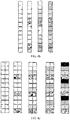
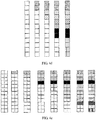
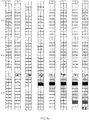
- FIG. 4a to FIG. 4c show schematic diagrams of classifying available REs based on information about a DMRS in each symbol.
- available REs of data or REs occupied by a DMRS in each symbol may be classified into three types.
- available REs of data or REs occupied by a DMRS in each symbol may be classified into four types.
- available REs of data or REs occupied by a DMRS in each symbol may be classified into five types.
- a quantity of available REs of total data or a quantity of REs occupied by a DMRS may be 0, 3, 4, 6, 8, 9, and 12, and available REs may be classified into three types or four types.
- an available RE belongs to a first type; when the quantity of available REs of total data or the quantity of REs occupied by the DMRS is 3, 4, or 6, an available RE belongs to a second type; when the quantity of available REs of total data or the quantity of REs occupied by the DMRS is 8 or 9, an available RE belongs to a third type; when the quantity of available REs of total data or the quantity of REs occupied by the DMRS is 12, an available RE belongs to a fourth type.
- Scenario 2 The type of the available RE is determined based on information about a CSI-RS/PTRS/TRS in the one symbol in time domain and the one RB in frequency domain.
- the CSI-RS/PTRS/TRS and the DMRS in Scenario 1 are applied in a similar manner. Details are not described herein again.
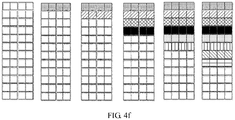
- FIG. 4d to FIG. 4f show schematic diagrams of classifying available REs based on information about a CSI-RS in each symbol and each RB.
- Scenario 3 When different reference signals occupy a same symbol, available REs may also be classified based on a type of a reference signal.
- an available RE belongs to a first type; if there is only a CSI-RS in the symbol, an available RE belongs to a second type; if there are both a DMRS and a CSI-RS in the symbol, an available RE belongs to a third type.
- Scenario 4 Available REs are classified based on a quantity of available REs in a symbol.
- a quantity of available REs in one RB and one symbol may be 0 to 12. Specifically, for example, if the quantity of available REs is 0 to 4, an available RE belongs to a first type; if the quantity of available REs is 5 to 8, an available RE belongs to a second type; if the quantity of available REs is 9 to 12, an available RE belongs to a third type.
- the type of the available RE may be jointly determined by considering both information about a DMRS and information about a CSI-RS/PTRS/TRS.
- a TBS value of the type is obtained based on the determined type of the available RE.
- the TBS size for data scheduling is obtained by multiplying the TBS value of the type by a product of a quantity of symbols in time domain in the classification criterion 1 and a quantity of RBs in frequency domain in the classification criterion 1.
- a scale factor may be 1 for a first type, may be 1/2 for a second type, and may be 0 for a third type.
- a TBS table corresponding to the first type is formulated, and TBS tables respectively corresponding to the second type and the third type may be obtained through conversion based on scale factors.
- the TBS table corresponding to the second type is obtained by multiplying the TBS table corresponding to the first type by the scale factor 1/2 of the second type
- the TBS table corresponding to the third type is obtained by multiplying the TBS table corresponding to the first type by the scale factor 0 of the third type.
- a scale factor may be 1 for a first type, may be 2/3 for a second type, may be 1/3 for a third type, and may be 0 for a fourth type.
- a TBS table corresponding to the first type is formulated, and TBS tables respectively corresponding to the second type and the third type may be obtained through conversion based on scale factors.
- the TBS table corresponding to the second type is obtained by multiplying the TBS table corresponding to the first type by the scale factor 2/3 of the second type
- the TBS table corresponding to the third type is obtained by multiplying the TBS table corresponding to the first type by the scale factor 1/3 of the third type
- the TBS table corresponding to the fourth type is obtained by multiplying the TBS table corresponding to the first type by the scale factor 0 of the fourth type.
- a scale factor may be 1 for a first type, may be 3/4 for a second type, may be 1/2 for a third type, may be 1/4 for a fourth type, and may be 0 for a fifth type.
- a TBS table corresponding to the first type is formulated, and TBS tables respectively corresponding to the second type and the third type may be obtained through conversion based on scale factors.
- the TBS table corresponding to the second type is obtained by multiplying the TBS table corresponding to the first type by the scale factor 2/4 of the second type
- the TBS table corresponding to the third type is obtained by multiplying the TBS table corresponding to the first type by the scale factor 1/2 of the third type
- the TBS table corresponding to the fourth type is obtained by multiplying the TBS table corresponding to the first type by the scale factor 1/4 of the fourth type
- the TBS table corresponding to the fifth type is obtained by multiplying the TBS table corresponding to the first type by the scale factor 0 of the fifth type.
- the type of the available RE is determined based on a symbol feature of one slot in time domain and/or an RB feature of one RB in frequency domain.
- Scenario 1 The type of the available RE is determined based on information about a DMRS in the one slot in time domain and the one RB in frequency domain.
- available REs are classified based on a quantity of symbols occupied by a DMRS, to obtain the type of the available RE.
- the available REs may be classified into two types based on a quantity of symbols occupied by a DMRS in each slot. When the DMRS occupies one symbol, an available RE belongs to a first type. When the DMRS occupies two symbols, an available RE belongs to a second type. Alternatively, the available REs may be classified into four types. When the DMRS occupies one symbol, an available RE belongs to a first type. When the DMRS occupies two symbols, an available RE belongs to a second type. When the DMRS occupies three symbols, an available RE belongs to a third type.
- an available RE belongs to a fourth type.
- the available REs may be classified into two types. When the DMRS occupies one or two symbols, an available RE belongs to a first type. When the DMRS occupies three or four symbols, an available RE belongs to a second type.
- available REs are classified based on a quantity of REs occupied by a DMRS in one slot. For example, with reference to a status of a DMRS on a single symbol, a quantity of REs occupied by a DMRS in each slot is 6, 12, or 24. In this case, the available REs are classified into three types. For another example, with reference to a status of a DMRS on a single symbol, a quantity of REs occupied by a DMRS in each slot is 4, 8, 12, 16, or 24. In this case, the available REs are classified into five types. For another example, with reference to a status of a DMRS on a single symbol, a quantity of REs occupied by a DMRS in each slot is 6, 12, 18, or 24. In this case, the available REs are classified into four types.
- classification is performed based on a quantity of REs occupied by a DMRS in one slot.
- a total quantity of occupied REs may be 4, 6, 8, 12, 16, 18, or 24.
- available REs may be classified into three types or four types.
- Scenario 2 The type of the available RE is determined based on information about a CSI-RS/PTRS/TRS in the one slot in time domain and the one RB in frequency domain.
- the CSI-RS/PTRS/TRS and the DMRS in Scenario 1 are applied in a similar manner. Details are not described herein again.
- available REs may also be classified based on a type of a reference signal. For example, if there is only a DMRS in the slot, an available RE belongs to a first type; if there is only a CSI-RS in the slot, an available RE belongs to a second type; if there are both a DMRS and a CSI-RS in the slot, an available RE belongs to a third type.
- Scenario 4 Available REs are classified based on a quantity of available REs in a slot.
- a quantity of available REs in one PRB and one slot may be 0 to 168.
- an available RE belongs to a first type; if the quantity of available REs is 33 to 64, an available RE belongs to a second type; if the quantity of available REs is 65 to 128, an available RE belongs to a third type; if the quantity of available REs is 129 to 168, an available RE belongs to a fourth type.
- Scenario 5 Classification may be performed based on a quantity of symbols available for data scheduling.
- a quantity of available symbols in one PRB and one slot may be 0 to 14. Specifically, for example, if the quantity of available symbols is 0 to 4, an available RE belongs to a first type; if the quantity of available symbols is 5 to 8, an available RE belongs to a second type; if the quantity of available symbols is 9 to 12, an available RE belongs to a third type; if the quantity of available symbols is 13 or 14, an available RE belongs to a fourth type.
- the communications device determines the type of the available RE by matching time-frequency resources for data scheduling and time-frequency features in classification criteria, where the time-frequency resources specifically include a time domain resource and a frequency domain resource, and the time-frequency features specifically include a symbol feature, a slot feature, an RB feature, and an RBG feature. After determining the type of the available RE, the communications device obtains a TBS value of the type based on the determined type of the available RE.
- the TBS size for data scheduling is obtained by multiplying the TBS value of the type by a product of a quantity of slots in time domain in the classification criterion 2 and a quantity of RBs in frequency domain in the classification criterion 2.
- the type of the available RE is determined based on a symbol feature of one symbol in time domain and/or an RBG feature of one RBG in frequency domain.
- Scenario 1 Available REs are classified based on information about a CSI-RS in each RBG.
- Type classification of the available REs may be performed based on a status of a CSI-RS in each RBG.
- FIG. 5a to FIG. 5c are schematic diagrams.
- type classification of the available REs may be performed in a manner shown in FIG. 5a .
- type classification of the available REs may be performed in a manner shown in FIG. 5b .
- type classification of the available REs may be performed in a manner shown in FIG. 5c .
- a TBS value of the type is obtained based on the determined type of the available RE.
- the TBS size for data scheduling is obtained by multiplying the TBS value of the type by a product of a quantity of symbols in time domain in the classification criterion 3 and a quantity of RBGs in frequency domain in the classification criterion 3.
- the type of the available RE is determined based on a slot feature of one slot in time domain and/or an RBG feature of one RBG in frequency domain.
- the classification criterion 4 is easily determined with reference to the classification criterion 3 and the classification criterion 2, and details are not described herein again.
- the foregoing classification criteria are all classification criteria for a time domain feature of a single time domain scheduling unit and/or a frequency domain feature of a single frequency domain scheduling unit. According to the foregoing examples, a classification criterion for a time domain feature of a plurality of time domain scheduling units and/or a frequency domain feature of a plurality of frequency domain scheduling units may be easily inferred, and details are not described herein again.
- the type of the available RE for data scheduling is determined based on a service type of data scheduling.
- different RE types and/or different scale factors and/or different TBS tables and/or different method for determining a TBS may be used.
- different service types may correspond to different RE types and/or different scale factors and/or different TBS tables and/or different methods for determining a TBS and/or different first quantities of available REs and/or different second quantities of available REs.
- the URLLC may be a small packet service, and a transmission time for data scheduling may be one or more symbols. Therefore, type division of REs needs to be more refined.
- a value range of a TBS corresponding to a small packet service is relatively small. Therefore, a value interval of the TBS may be relatively small.
- the URLLC service requires high reliability and low latency. Therefore, a transmission code rate may be relatively low.
- the eMBB may be a large packet service, and a transmission time for data scheduling may be one slot or more slots. Therefore, type division of REs may be relatively rough.
- a value range of a TBS is relatively large. Therefore, a value interval of the TBS may be relatively large.
- different services may require different code rates.
- the eMBB service may require a small code rate or a large code rate
- the URLLC service requires a small code rate. Therefore, different services may have different modulation and coding schemes (modulation and Coding scheme, MCS) tables.
- MCS table of the eMBB service may include a large quantity of code rates and a large quantity of MCS identifiers, where values of the code rates may be sorted in ascending order.
- an MCS table of the URLLC service may include a relatively small code rate or a small quantity of code rates and a small quantity of MCS identifiers.
- the MCS table may be used to indicate a modulation scheme and a TBS identifier, or may be used to indicate a modulation scheme and code rate information.
- the MCS table may include two tables. One table is used to indicate a modulation scheme, and the other table is used to indicate code rate information.
- the MCS table is used to indicate a modulation scheme and code rate information is used to indicate that different services may correspond to different MCS tables. Details are shown below.
- Table 3 is an MCS table used for URLLC service transmission.
- Table 4 is an MCS table used for eMBB service transmission.
- Table 3 MCS Index (Index) I MCS Modulation Order (Modulation Order) Q m Code Rate R 0 2 1/10 1 2 1/5 2 2 1/4 3 2 1/3 4 2 2/5 5 2 1/2 6 2 2/3 7 4 1/10 8 4 1/5 9 4 1/4 10 4 1/3 11 4 2/5 12 4 1/2 13 6 1/10 14 6 1/5 15 6 1/4
- Table 4 MCS Index (Index) I MCS Modulation Order (Modulation Order) Q m Code Rate R 0 2 1/10 1 2 1/5 2 2 1/4 3 2 1/3 4 2 2/5 5 2 1/2 6 2 2/3 7 2 4/5 8 2 5/6 9 2 7/8 10 4 1/10 11 4 1/5 12 4 1/4 13 4 1/3 14 4 2/5 15 4 1/2 16 4 2/3 17 4 4/5 18 4 5/6 19 4 7/8 20 6 1/10 21 6 1/5 22 6 1/4 23 6 1/3 24 6 2/5 25 6 1/2 26 6 2/3 27 6 4/5 28 6 5/6
- Different MCS tables are set for different services, so that MCS signaling overheads can be reduced.
- a smaller MCS table may be designed when there are a relatively small quantity of code rates and/or modulation schemes and/or TBS values.
- an MCS index Table 3 may be represented by using four bits.
- a larger MCS table may be designed when there are a large quantity of code rates and/or modulation schemes and/or TBS values.
- an MCS index Table 4 may be represented by using five bits. If a same MCS table is used for different services, representation is performed by using five bits for different services. Consequently, signaling overheads are relatively large.
- classification criteria of available REs are used for different service types.
- a classification criterion of one slot and one RB is used for eMBB
- a classification criterion of one symbol and one RB is used for URLLC.
- scale factor values are used for different service types. For example, a value of 1, 1/2, or 1/4 may be used for eMBB, and a value of 1, 1/2, 1/3, 1/4, 2/3, or 3/4 may be used for URLLC.
- TBS tables are used for different service types.
- a TBS table is formulated for eMBB based on 120 REs
- a TBS table is formulated for URLLC based on 60 REs.
- Different TBS tables may include different code rates.
- different quantities of available REs may correspond to a same TBS value.
- the method in which different quantities of available REs correspond to a same TBS value may be specifically determined by specifying a correspondence between a value interval or a value range of a quantity of available REs and a TBS value. For example, if the value interval or the value range is N, quantities of available REs that are within the value interval N or the value range N correspond to a same TBS value.
- quantities of available REs whose value interval is N correspond to a same TBS table, a same TBS value in a TBS table, or a same first quantity of available REs or a same second quantity of available REs in a calculation formula, or correspond to a same scale factor, or the like. This is not limited in this application.
- a value of N may be defined for available REs in X1 symbols in time domain and Y1 RBs in frequency domain, or defined for available REs in X2 symbols in time domain and Y2 resource block groups RBGs in frequency domain, or defined for available REs in X3 slots in time domain and Y3 resource blocks RBs in frequency domain, or defined for available REs in X4 slots in time domain and Y4 RBGs in frequency domain, or defined for a total quantity of available REs for data scheduling, where X1, X2, X3, X4, Y1, Y2, Y3, and Y4 are positive integers.
- a specific definition method of N may be predefined, or the value of N may be notified by the base station to the terminal by using signaling, for example, higher layer signaling or physical layer signaling. This is not limited in this application.
- the TBS value may be the same as a TBS value corresponding to a smallest quantity of REs in the interval, or may be the same as a TBS value corresponding to a largest quantity of REs in the interval, or may be the same as a TBS value corresponding to a default quantity of REs in the interval.
- a specific determining method may be predefined, or the correspondence may be notified by the base station to the terminal by using signaling, and specific signaling is not limited in this application.
- the signaling may be higher layer signaling, physical layer signaling, or the like.
- the TBS value when a correspondence of a corresponding TBS value is determined based on the value of N, the TBS value may be a TBS value corresponding to a default quantity of REs or default quantities of REs.
- the TBS value When the TBS value is determined based on another quantity of REs, the TBS value may be the same as a TBS value corresponding to a quantity of REs that is nearest to a default quantity of REs or some default quantities of REs.
- a specific determining method may be predefined, or the correspondence may be notified by the base station to the terminal by using signaling, and specific signaling is not limited herein.
- the signaling may be higher layer signaling, physical layer signaling, or the like.
- a correspondence of a TBS value in the TBS table corresponding to the value interval N is used as an example. If it is stipulated that a value of N is 4, quantities of available REs whose value interval or value range is less than 4 are corresponding to a same TBS value.
- a TBS value corresponding to a quantity, namely, 4, of available REs is A
- a TBS value corresponding to a quantity, namely, 8, of available REs is B
- a TBS value corresponding to a quantity, namely, 12, of available REs is C
- when a quantity of available REs is 3, a value of a corresponding TBS is A
- a quantity of available REs is 1, a corresponding TBS value is also A
- a corresponding TBS value may be A or B
- when a quantity of available REs is 7, a corresponding TBS value may be B
- when a quantity of available REs is 9, a corresponding TBS value may be B or C
- the method in which different quantities of available REs correspond to a same TBS value may be specifically determined by specifying a correspondence between a division interval of a quantity of available REs and a TBS value.
- the division interval may include one or more intervals, and each interval corresponds to a TBS value.
- quantities of available REs within an interval correspond to a same TBS table, a same TBS value in a TBS table, a same first quantity of available REs, or a same second quantity of second available REs in a calculation formula, or correspond to a same scale factor.
- a specific interval division method may be predefined, or may be notified by the base station to the terminal by using signaling, and specific signaling is not limited herein.
- the signaling may be higher layer signaling, physical layer signaling, or the like.
- each division interval includes one or more quantities of available REs.
- a correspondence between a division interval of a quantity of available REs and a TBS value in a TBS table is used as an example. If three are three intervals obtained through division, for example, a range 1 from 0 to 4, a range 2 from 5 to 8, and a range 3 from 9 to 12, quantities of available REs in an interval correspond to a same TBS value in a TBS table.
- a TBS value corresponding to the interval 1 is A
- a TBS value corresponding to the interval 2 is B
- a TBS value corresponding to the interval 3 is C
- a corresponding TBS value may be A
- when a quantity of available REs is 5, a corresponding TBS value may be B
- a quantity of available REs is 6, a corresponding TBS value may be B
- when a quantity of available REs is 7, a corresponding TBS value may be B
- when a quantity of available REs is 9, a corresponding TBS value may be C
- when a quantity of available REs is 10 a corresponding TBS value may be C
- a specific value of N or interval division may be predefined, or may be notified by the base station to the terminal by using signaling, for example, higher layer signaling or physical layer signaling.
- the higher layer signaling may be radio resource control (Radio Resource Control, RRC) signaling, a medium access control (Medium Access Control, MAC) control element (Control Element, CE), or other signaling.
- RRC Radio Resource Control
- MAC Medium Access Control
- CE Control Element, CE
- the physical layer signaling may be downlink control information, or the like.
- type classification of available REs may be performed based on a quantity of REs by using a correspondence between a value interval or a value range of a quantity of available REs or a division interval of the quantity of available REs and a TBS, for example, based on a correspondence between a value interval or a value range of a quantity of REs or a division interval of the quantity of REs and a type of an available RE.
- a correspondence between a value interval or a value range of a quantity of available REs or a division interval of the quantity of REs and a type of an available RE This is not specifically limited herein.
- a value interval, a value range, or a division interval is specified for a quantity of available REs or a quantity of REs, so that a plurality of quantities of available REs or REs may correspond to a same TBS value or correspond to a same type of an available RE, thereby avoiding a problem of excessive TBS values.
- the TBS value is not necessarily accurate to each RE. If there are excessive TBS values, system complexity increases, and a TBS exception value may occur. Consequently, data transmission performance deteriorates.
- a quantity of transmission layers is considered as 1 by default.
- a quantity of transmission layers needs to be considered for determining a TBS value.
- an embodiment of this application provides a communications apparatus 600.
- the apparatus 600 may be an independent network element, may be a terminal or a base station, or may be a function module in a corresponding network element.
- a structure of the apparatus 600 includes a first determining unit 610 and a second determining unit 620.
- the first determining unit 610 is configured to determine a type of an available resource element RE for data scheduling.
- the second determining unit 620 is configured to determine a transport block size of data based on the type of the available RE.
- the first determining unit 610 is specifically configured to: determine a classification criterion of available REs, and determine the type of the available RE for data scheduling based on the classification criterion of the available REs, where the classification criterion is determined based on a symbol feature of X1 symbols in time domain and/or an RB feature of Y1 RBs in frequency domain, or the classification criterion is determined based on a symbol feature of X2 symbols in time domain and/or an RBG feature of Y2 resource block groups RBGs in frequency domain, or the classification criterion is determined based on a slot feature of X3 slots in time domain and/or an RB feature of Y3 resource blocks RBs in frequency domain, or the classification criterion is determined based on a slot feature of X4 slots in time domain and/or an RBG feature of Y4 RBGs in frequency domain, or the classification criterion is a quantity of available REs
- the symbol feature includes at least one of information about a reference signal in the symbols and a quantity of available REs in the symbols;
- the RB feature includes at least one of information about a reference signal in the RBs and a quantity of available REs in the RBs;
- the slot feature includes at least one of information about a reference signal in the slots, a quantity of available REs in the slots, and a quantity of available symbols in the slots;
- the RBG feature includes at least one of information about a reference signal in the RBGs, a quantity of available REs in the RBGs, and a quantity of available RBs in the RBGs.
- the information about the reference signal includes at least one of whether there is the reference signal, a quantity of antenna ports of the reference signal, and a quantity of REs occupied by the reference signal.
- the apparatus 600 when the apparatus 600 is a terminal, the apparatus further includes a receiving unit 630, configured to receive first signaling sent by a base station, where the first signaling is used to indicate the classification criterion of the available REs.
- the first determining unit 610 is specifically configured to determine a predefined classification criterion of the available REs.
- the first determining unit 610 is specifically configured to: determine a predefined classification criterion of the available REs, or configure a classification criterion of the available REs based on a service feature of data scheduling.
- the first determining unit 610 is specifically configured to: determine the type of the available RE for data scheduling based on the classification criterion of the available REs and a time-frequency resource for data scheduling.
- the first determining unit 610 is specifically configured to: determine a service type to which the data scheduling belongs, and determine the types of the available RE for data scheduling based on the service type, where different service types correspond to different types of available REs.
- the second determining unit 620 when determining the transport block size of the data based on the type of the available RE, is specifically configured to:
- the first determining unit 610 and the second determining unit 620a may be implemented by a processor, and the receiving unit 630 may be implemented by a transceiver or a communications interface.
- communications apparatus provided in the embodiment shown in FIG. 6 may be further implemented in another form.
- a communications device may include a memory 701, a processor 702, a system bus 703, and a communications interface 704.
- the processor 702, the memory 701, and the communications interface 704 are connected by using the system bus 703.
- the memory 701 is configured to store a computer executable instruction.
- the processor 702 executes the computer executable instruction stored in the memory 701, so that the communications device performs the method for determining a transport block size provided in the embodiment shown in FIG. 3 .
- the communications device performs the method for determining a transport block size provided in the embodiment shown in FIG. 3 .
- the processor 702 may be a general central processing unit (Central Processing Unit, CPU), a microprocessor, an application-specific integrated circuit (Application Specific Integrated Circuit, ASIC), or one or more integrated circuits, and is configured to perform a related operation, to implement the technical solutions provided in the embodiments of this application.
- CPU Central Processing Unit
- ASIC Application Specific Integrated Circuit
- the communications device provided in the embodiment shown in FIG. 7 may be an FPGA, an ASIC, a system on chip (system on chip, SoC), a CPU, a network processor (network processor, NP), a digital signal processing circuit (digital signal processor, DSP), or a microcontroller unit (micro controller unit, MCU).
- SoC system on chip
- NP network processor
- DSP digital signal processing circuit
- MCU microcontroller unit
- a programmable controller programmable logic device, PLD
- PLD programmable logic device, PLD
- another integrated chip may also be used.
- the communications device further includes another component necessary for implementing normal running.
- the communications device may further include hardware components for implementing other additional functions.
- the communications device may include only components or modules necessary for implementing the embodiments of this application, but not necessarily include all the components shown in FIG. 7 .
- the program may be stored in a computer readable storage medium.
- the foregoing storage medium may include a magnetic disk, an optical disc, a read-only memory (Read-Only Memory, ROM), a random access memory (Random Access Memory, RAM), and the like.
- the embodiments of this application may be provided as a method, a system, or a computer program product. Therefore, the embodiments of this application may use a form of hardware only embodiments, software only embodiments, or embodiments with a combination of software and hardware. Moreover, the embodiments of this application may use a form of a computer program product that is implemented on one or more computer-usable storage media (including but not limited to a disk memory, a CD-ROM, an optical memory, or the like) that include computer-usable program code.
- computer-usable storage media including but not limited to a disk memory, a CD-ROM, an optical memory, or the like
- These computer program instructions may be provided for a general-purpose computer, a dedicated computer, an embedded processor, or a processor of another programmable data processing device to generate a machine, so that the instructions executed by the computer or the processor of another programmable data processing device generate an apparatus for implementing a specific function in one or more processes in the flowcharts and/or in one or more blocks in the block diagrams.
- These computer program instructions may be stored in a computer readable memory that can instruct the computer or the another programmable data processing device to work in a specific manner, so that the instructions stored in the computer readable memory generate an artifact that includes an instruction apparatus.
- the instruction apparatus implements a specific function in one or more processes in the flowcharts and/or in one or more blocks in the block diagrams.
- These computer program instructions may be loaded onto the computer or the another programmable data processing device, so that a series of operations and steps are performed on the computer or the another programmable device, thereby generating computer-implemented processing. Therefore, the instructions executed on the computer or the another programmable device provide steps for implementing a specific function in one or more processes in the flowcharts and/or in one or more blocks in the block diagrams.
Landscapes
- Engineering & Computer Science (AREA)
- Signal Processing (AREA)
- Computer Networks & Wireless Communication (AREA)
- Mobile Radio Communication Systems (AREA)
Applications Claiming Priority (2)
| Application Number | Priority Date | Filing Date | Title |
|---|---|---|---|
| CN201710459081.5A CN109152017B (zh) | 2017-06-16 | 2017-06-16 | 一种传输块大小的确定方法和装置 |
| PCT/CN2018/089371 WO2018228212A1 (fr) | 2017-06-16 | 2018-05-31 | Procédé et appareil permettant de déterminer une taille de bloc de transport |
Publications (3)
| Publication Number | Publication Date |
|---|---|
| EP3606236A1 true EP3606236A1 (fr) | 2020-02-05 |
| EP3606236A4 EP3606236A4 (fr) | 2020-04-08 |
| EP3606236B1 EP3606236B1 (fr) | 2023-06-28 |
Family
ID=64660032
Family Applications (1)
| Application Number | Title | Priority Date | Filing Date |
|---|---|---|---|
| EP18816736.5A Active EP3606236B1 (fr) | 2017-06-16 | 2018-05-31 | Procédé et appareil permettant de déterminer une taille de bloc de transport |
Country Status (5)
| Country | Link |
|---|---|
| US (1) | US11166273B2 (fr) |
| EP (1) | EP3606236B1 (fr) |
| JP (1) | JP2020522947A (fr) |
| CN (1) | CN109152017B (fr) |
| WO (1) | WO2018228212A1 (fr) |
Cited By (2)
| Publication number | Priority date | Publication date | Assignee | Title |
|---|---|---|---|---|
| WO2020197734A1 (fr) * | 2019-03-22 | 2020-10-01 | Qualcomm Incorporated | Communications de liaison latérale à agrégation de créneaux |
| EP4322675A4 (fr) * | 2021-04-05 | 2025-04-02 | LG Electronics Inc. | Procédé et dispositif d'émission et de réception de signaux dans un système de communication sans fil |
Families Citing this family (8)
| Publication number | Priority date | Publication date | Assignee | Title |
|---|---|---|---|---|
| KR102414531B1 (ko) * | 2017-06-15 | 2022-06-30 | 삼성전자 주식회사 | 통신 또는 방송 시스템에서 채널 부호화/복호화 방법 및 장치 |
| WO2018230992A1 (fr) | 2017-06-15 | 2018-12-20 | 삼성전자 주식회사 | Un procédé et appareil pour effectuer un codage et un décodage de canal dans un système de communication ou de diffusion |
| CN111525979B (zh) * | 2019-02-01 | 2022-09-30 | 中兴通讯股份有限公司 | 传输块大小确定方法、装置、通信设备及存储介质 |
| CN111263454B (zh) * | 2020-01-19 | 2023-04-07 | 展讯通信(上海)有限公司 | 传输块大小确定方法和终端设备 |
| CN119094637A (zh) | 2020-01-21 | 2024-12-06 | 中兴通讯股份有限公司 | 一种无线通信方法、终端、网络节点及非暂时性计算机可读介质 |
| US20210352527A1 (en) * | 2020-05-11 | 2021-11-11 | Qualcomm Incorporated | Scalable sizing of transport blocks for uplink transmissions |
| US12317120B1 (en) * | 2020-12-01 | 2025-05-27 | Sprint Spectrum Llc | Use of backhaul packet-drop rate as basis to control transport block size for air-interface communication |
| CN121711792A (zh) * | 2024-09-20 | 2026-03-20 | 中兴通讯股份有限公司 | 传输块大小的确定方法、装置、存储介质及程序产品 |
Family Cites Families (11)
| Publication number | Priority date | Publication date | Assignee | Title |
|---|---|---|---|---|
| KR101754970B1 (ko) * | 2010-01-12 | 2017-07-06 | 삼성전자주식회사 | 무선 통신 시스템의 채널 상태 측정 기준신호 처리 장치 및 방법 |
| WO2011129610A2 (fr) * | 2010-04-13 | 2011-10-20 | 엘지전자 주식회사 | Procédé et dispositif de réception d'un signal de liaison descendante |
| CN102244628B (zh) * | 2010-05-12 | 2014-11-05 | 中兴通讯股份有限公司 | 一种实现业务数据传输的方法和装置 |
| CN101969360B (zh) * | 2010-09-29 | 2015-12-16 | 中兴通讯股份有限公司 | 一种确定传输块大小的方法及系统 |
| EP2503835A1 (fr) | 2011-03-23 | 2012-09-26 | Panasonic Corporation | Affectation de ressources pour une transmission de groupes simples et multiples |
| CN102752874B (zh) * | 2011-04-22 | 2016-08-24 | 中兴通讯股份有限公司 | 物理下行共享信道的调度方法及装置 |
| US9532337B2 (en) * | 2012-05-19 | 2016-12-27 | Google Technology Holdings LLC | Method and apparatus for transport block signaling in a wireless communication system |
| US20140045510A1 (en) * | 2012-07-25 | 2014-02-13 | Nec Laboratories America, Inc. | Coordinated Multipoint Transmission and Reception (CoMP) |
| US10123344B2 (en) * | 2013-03-06 | 2018-11-06 | Qualcomm Incorporated | Methods and apparatus for multi-subframe scheduling |
| KR20190143472A (ko) * | 2015-01-28 | 2019-12-30 | 인터디지탈 패튼 홀딩스, 인크 | 비면허 대역에서의 lte용 업링크 동작 |
| US10425938B2 (en) | 2015-11-06 | 2019-09-24 | Kt Corporation | Method of determining modulation order and transport block size in downlink data channel, and apparatus thereof |
-
2017
- 2017-06-16 CN CN201710459081.5A patent/CN109152017B/zh active Active
-
2018
- 2018-05-31 WO PCT/CN2018/089371 patent/WO2018228212A1/fr not_active Ceased
- 2018-05-31 JP JP2019567290A patent/JP2020522947A/ja active Pending
- 2018-05-31 EP EP18816736.5A patent/EP3606236B1/fr active Active
-
2019
- 2019-12-05 US US16/704,558 patent/US11166273B2/en active Active
Cited By (3)
| Publication number | Priority date | Publication date | Assignee | Title |
|---|---|---|---|---|
| WO2020197734A1 (fr) * | 2019-03-22 | 2020-10-01 | Qualcomm Incorporated | Communications de liaison latérale à agrégation de créneaux |
| US11375503B2 (en) | 2019-03-22 | 2022-06-28 | Qualcomm Incorporated | Side link communications with slot aggregation |
| EP4322675A4 (fr) * | 2021-04-05 | 2025-04-02 | LG Electronics Inc. | Procédé et dispositif d'émission et de réception de signaux dans un système de communication sans fil |
Also Published As
| Publication number | Publication date |
|---|---|
| US11166273B2 (en) | 2021-11-02 |
| US20200112948A1 (en) | 2020-04-09 |
| WO2018228212A1 (fr) | 2018-12-20 |
| JP2020522947A (ja) | 2020-07-30 |
| CN109152017A (zh) | 2019-01-04 |
| EP3606236B1 (fr) | 2023-06-28 |
| CN109152017B (zh) | 2021-02-05 |
| EP3606236A4 (fr) | 2020-04-08 |
Similar Documents
| Publication | Publication Date | Title |
|---|---|---|
| US11166273B2 (en) | Method and apparatus for determining transport block size | |
| US11490364B2 (en) | Resource indication method and apparatus | |
| US11540147B2 (en) | Downlink control information transmission method, method for obtaining quantity of blind detection times, and apparatus | |
| US10863367B2 (en) | Reference signal sequence configuration method and network device | |
| US10313073B2 (en) | Transmission of reference signals | |
| US11283569B2 (en) | Data transmission method, network device, and terminal device | |
| US10856268B2 (en) | Subframe configuration method and related device | |
| EP3606242A1 (fr) | Procédé et appareil de transmission de données | |
| EP3627747B1 (fr) | Appareil et procédé de transmission d'informations | |
| US20170188346A1 (en) | Method for receiving and sending control channel, user equipment and base station | |
| US20180367274A1 (en) | Method and apparatus for transmitting pilot signal | |
| US11916628B2 (en) | Method and apparatus for providing antenna port indication to user equipment | |
| US12113740B2 (en) | Communication method and communications apparatus | |
| EP3515141B1 (fr) | Procédé et dispositif d'obtention et de distribution d'informations de configuration de port drms | |
| US20200119795A1 (en) | Channel state measurement method and apparatus | |
| CN108282310B (zh) | 一种数据传输方法、网络侧设备及终端设备 | |
| CN119013904A (zh) | 用于在多面板pusch上的csi报告的方法和装置 | |
| EP4465573A1 (fr) | Procédé et appareil de transmission dmrs, et support de stockage | |
| CN115706613B (zh) | Dci接收方法、发送方法、终端、网络设备和存储介质 |
Legal Events
| Date | Code | Title | Description |
|---|---|---|---|
| STAA | Information on the status of an ep patent application or granted ep patent |
Free format text: STATUS: THE INTERNATIONAL PUBLICATION HAS BEEN MADE |
|
| PUAI | Public reference made under article 153(3) epc to a published international application that has entered the european phase |
Free format text: ORIGINAL CODE: 0009012 |
|
| STAA | Information on the status of an ep patent application or granted ep patent |
Free format text: STATUS: REQUEST FOR EXAMINATION WAS MADE |
|
| 17P | Request for examination filed |
Effective date: 20191030 |
|
| AK | Designated contracting states |
Kind code of ref document: A1 Designated state(s): AL AT BE BG CH CY CZ DE DK EE ES FI FR GB GR HR HU IE IS IT LI LT LU LV MC MK MT NL NO PL PT RO RS SE SI SK SM TR |
|
| AX | Request for extension of the european patent |
Extension state: BA ME |
|
| A4 | Supplementary search report drawn up and despatched |
Effective date: 20200306 |
|
| RIC1 | Information provided on ipc code assigned before grant |
Ipc: H04L 5/00 20060101ALI20200302BHEP Ipc: H04W 72/04 20090101AFI20200302BHEP Ipc: H04W 72/12 20090101ALI20200302BHEP |
|
| DAV | Request for validation of the european patent (deleted) | ||
| DAX | Request for extension of the european patent (deleted) | ||
| STAA | Information on the status of an ep patent application or granted ep patent |
Free format text: STATUS: EXAMINATION IS IN PROGRESS |
|
| 17Q | First examination report despatched |
Effective date: 20211104 |
|
| GRAP | Despatch of communication of intention to grant a patent |
Free format text: ORIGINAL CODE: EPIDOSNIGR1 |
|
| STAA | Information on the status of an ep patent application or granted ep patent |
Free format text: STATUS: GRANT OF PATENT IS INTENDED |
|
| INTG | Intention to grant announced |
Effective date: 20230221 |
|
| GRAS | Grant fee paid |
Free format text: ORIGINAL CODE: EPIDOSNIGR3 |
|
| GRAA | (expected) grant |
Free format text: ORIGINAL CODE: 0009210 |
|
| STAA | Information on the status of an ep patent application or granted ep patent |
Free format text: STATUS: THE PATENT HAS BEEN GRANTED |
|
| AK | Designated contracting states |
Kind code of ref document: B1 Designated state(s): AL AT BE BG CH CY CZ DE DK EE ES FI FR GB GR HR HU IE IS IT LI LT LU LV MC MK MT NL NO PL PT RO RS SE SI SK SM TR |
|
| P01 | Opt-out of the competence of the unified patent court (upc) registered |
Effective date: 20230524 |
|
| REG | Reference to a national code |
Ref country code: CH Ref legal event code: EP |
|
| REG | Reference to a national code |
Ref country code: AT Ref legal event code: REF Ref document number: 1583861 Country of ref document: AT Kind code of ref document: T Effective date: 20230715 |
|
| REG | Reference to a national code |
Ref country code: IE Ref legal event code: FG4D |
|
| REG | Reference to a national code |
Ref country code: DE Ref legal event code: R096 Ref document number: 602018052545 Country of ref document: DE |
|
| REG | Reference to a national code |
Ref country code: NL Ref legal event code: FP |
|
| REG | Reference to a national code |
Ref country code: LT Ref legal event code: MG9D |
|
| PG25 | Lapsed in a contracting state [announced via postgrant information from national office to epo] |
Ref country code: SE Free format text: LAPSE BECAUSE OF FAILURE TO SUBMIT A TRANSLATION OF THE DESCRIPTION OR TO PAY THE FEE WITHIN THE PRESCRIBED TIME-LIMIT Effective date: 20230628 Ref country code: NO Free format text: LAPSE BECAUSE OF FAILURE TO SUBMIT A TRANSLATION OF THE DESCRIPTION OR TO PAY THE FEE WITHIN THE PRESCRIBED TIME-LIMIT Effective date: 20230928 |
|
| REG | Reference to a national code |
Ref country code: AT Ref legal event code: MK05 Ref document number: 1583861 Country of ref document: AT Kind code of ref document: T Effective date: 20230628 |
|
| PG25 | Lapsed in a contracting state [announced via postgrant information from national office to epo] |
Ref country code: RS Free format text: LAPSE BECAUSE OF FAILURE TO SUBMIT A TRANSLATION OF THE DESCRIPTION OR TO PAY THE FEE WITHIN THE PRESCRIBED TIME-LIMIT Effective date: 20230628 Ref country code: LV Free format text: LAPSE BECAUSE OF FAILURE TO SUBMIT A TRANSLATION OF THE DESCRIPTION OR TO PAY THE FEE WITHIN THE PRESCRIBED TIME-LIMIT Effective date: 20230628 Ref country code: LT Free format text: LAPSE BECAUSE OF FAILURE TO SUBMIT A TRANSLATION OF THE DESCRIPTION OR TO PAY THE FEE WITHIN THE PRESCRIBED TIME-LIMIT Effective date: 20230628 Ref country code: HR Free format text: LAPSE BECAUSE OF FAILURE TO SUBMIT A TRANSLATION OF THE DESCRIPTION OR TO PAY THE FEE WITHIN THE PRESCRIBED TIME-LIMIT Effective date: 20230628 Ref country code: GR Free format text: LAPSE BECAUSE OF FAILURE TO SUBMIT A TRANSLATION OF THE DESCRIPTION OR TO PAY THE FEE WITHIN THE PRESCRIBED TIME-LIMIT Effective date: 20230929 |
|
| PG25 | Lapsed in a contracting state [announced via postgrant information from national office to epo] |
Ref country code: FI Free format text: LAPSE BECAUSE OF FAILURE TO SUBMIT A TRANSLATION OF THE DESCRIPTION OR TO PAY THE FEE WITHIN THE PRESCRIBED TIME-LIMIT Effective date: 20230628 |
|
| PG25 | Lapsed in a contracting state [announced via postgrant information from national office to epo] |
Ref country code: SK Free format text: LAPSE BECAUSE OF FAILURE TO SUBMIT A TRANSLATION OF THE DESCRIPTION OR TO PAY THE FEE WITHIN THE PRESCRIBED TIME-LIMIT Effective date: 20230628 |
|
| PG25 | Lapsed in a contracting state [announced via postgrant information from national office to epo] |
Ref country code: ES Free format text: LAPSE BECAUSE OF FAILURE TO SUBMIT A TRANSLATION OF THE DESCRIPTION OR TO PAY THE FEE WITHIN THE PRESCRIBED TIME-LIMIT Effective date: 20230628 |
|
| PG25 | Lapsed in a contracting state [announced via postgrant information from national office to epo] |
Ref country code: IS Free format text: LAPSE BECAUSE OF FAILURE TO SUBMIT A TRANSLATION OF THE DESCRIPTION OR TO PAY THE FEE WITHIN THE PRESCRIBED TIME-LIMIT Effective date: 20231028 |
|
| PG25 | Lapsed in a contracting state [announced via postgrant information from national office to epo] |
Ref country code: SM Free format text: LAPSE BECAUSE OF FAILURE TO SUBMIT A TRANSLATION OF THE DESCRIPTION OR TO PAY THE FEE WITHIN THE PRESCRIBED TIME-LIMIT Effective date: 20230628 Ref country code: SK Free format text: LAPSE BECAUSE OF FAILURE TO SUBMIT A TRANSLATION OF THE DESCRIPTION OR TO PAY THE FEE WITHIN THE PRESCRIBED TIME-LIMIT Effective date: 20230628 Ref country code: RO Free format text: LAPSE BECAUSE OF FAILURE TO SUBMIT A TRANSLATION OF THE DESCRIPTION OR TO PAY THE FEE WITHIN THE PRESCRIBED TIME-LIMIT Effective date: 20230628 Ref country code: PT Free format text: LAPSE BECAUSE OF FAILURE TO SUBMIT A TRANSLATION OF THE DESCRIPTION OR TO PAY THE FEE WITHIN THE PRESCRIBED TIME-LIMIT Effective date: 20231030 Ref country code: IS Free format text: LAPSE BECAUSE OF FAILURE TO SUBMIT A TRANSLATION OF THE DESCRIPTION OR TO PAY THE FEE WITHIN THE PRESCRIBED TIME-LIMIT Effective date: 20231028 Ref country code: ES Free format text: LAPSE BECAUSE OF FAILURE TO SUBMIT A TRANSLATION OF THE DESCRIPTION OR TO PAY THE FEE WITHIN THE PRESCRIBED TIME-LIMIT Effective date: 20230628 Ref country code: EE Free format text: LAPSE BECAUSE OF FAILURE TO SUBMIT A TRANSLATION OF THE DESCRIPTION OR TO PAY THE FEE WITHIN THE PRESCRIBED TIME-LIMIT Effective date: 20230628 Ref country code: CZ Free format text: LAPSE BECAUSE OF FAILURE TO SUBMIT A TRANSLATION OF THE DESCRIPTION OR TO PAY THE FEE WITHIN THE PRESCRIBED TIME-LIMIT Effective date: 20230628 Ref country code: AT Free format text: LAPSE BECAUSE OF FAILURE TO SUBMIT A TRANSLATION OF THE DESCRIPTION OR TO PAY THE FEE WITHIN THE PRESCRIBED TIME-LIMIT Effective date: 20230628 |
|
| PG25 | Lapsed in a contracting state [announced via postgrant information from national office to epo] |
Ref country code: PL Free format text: LAPSE BECAUSE OF FAILURE TO SUBMIT A TRANSLATION OF THE DESCRIPTION OR TO PAY THE FEE WITHIN THE PRESCRIBED TIME-LIMIT Effective date: 20230628 |
|
| REG | Reference to a national code |
Ref country code: DE Ref legal event code: R097 Ref document number: 602018052545 Country of ref document: DE |
|
| PG25 | Lapsed in a contracting state [announced via postgrant information from national office to epo] |
Ref country code: DK Free format text: LAPSE BECAUSE OF FAILURE TO SUBMIT A TRANSLATION OF THE DESCRIPTION OR TO PAY THE FEE WITHIN THE PRESCRIBED TIME-LIMIT Effective date: 20230628 |
|
| PLBE | No opposition filed within time limit |
Free format text: ORIGINAL CODE: 0009261 |
|
| STAA | Information on the status of an ep patent application or granted ep patent |
Free format text: STATUS: NO OPPOSITION FILED WITHIN TIME LIMIT |
|
| PG25 | Lapsed in a contracting state [announced via postgrant information from national office to epo] |
Ref country code: IT Free format text: LAPSE BECAUSE OF FAILURE TO SUBMIT A TRANSLATION OF THE DESCRIPTION OR TO PAY THE FEE WITHIN THE PRESCRIBED TIME-LIMIT Effective date: 20230628 |
|
| 26N | No opposition filed |
Effective date: 20240402 |
|
| PG25 | Lapsed in a contracting state [announced via postgrant information from national office to epo] |
Ref country code: SI Free format text: LAPSE BECAUSE OF FAILURE TO SUBMIT A TRANSLATION OF THE DESCRIPTION OR TO PAY THE FEE WITHIN THE PRESCRIBED TIME-LIMIT Effective date: 20230628 |
|
| PG25 | Lapsed in a contracting state [announced via postgrant information from national office to epo] |
Ref country code: BG Free format text: LAPSE BECAUSE OF FAILURE TO SUBMIT A TRANSLATION OF THE DESCRIPTION OR TO PAY THE FEE WITHIN THE PRESCRIBED TIME-LIMIT Effective date: 20230628 |
|
| PG25 | Lapsed in a contracting state [announced via postgrant information from national office to epo] |
Ref country code: BG Free format text: LAPSE BECAUSE OF FAILURE TO SUBMIT A TRANSLATION OF THE DESCRIPTION OR TO PAY THE FEE WITHIN THE PRESCRIBED TIME-LIMIT Effective date: 20230628 |
|
| REG | Reference to a national code |
Ref country code: CH Ref legal event code: PL |
|
| PG25 | Lapsed in a contracting state [announced via postgrant information from national office to epo] |
Ref country code: MC Free format text: LAPSE BECAUSE OF FAILURE TO SUBMIT A TRANSLATION OF THE DESCRIPTION OR TO PAY THE FEE WITHIN THE PRESCRIBED TIME-LIMIT Effective date: 20230628 |
|
| PG25 | Lapsed in a contracting state [announced via postgrant information from national office to epo] |
Ref country code: LU Free format text: LAPSE BECAUSE OF NON-PAYMENT OF DUE FEES Effective date: 20240531 |
|
| PG25 | Lapsed in a contracting state [announced via postgrant information from national office to epo] |
Ref country code: MC Free format text: LAPSE BECAUSE OF FAILURE TO SUBMIT A TRANSLATION OF THE DESCRIPTION OR TO PAY THE FEE WITHIN THE PRESCRIBED TIME-LIMIT Effective date: 20230628 Ref country code: LU Free format text: LAPSE BECAUSE OF NON-PAYMENT OF DUE FEES Effective date: 20240531 Ref country code: CH Free format text: LAPSE BECAUSE OF NON-PAYMENT OF DUE FEES Effective date: 20240531 |
|
| REG | Reference to a national code |
Ref country code: BE Ref legal event code: MM Effective date: 20240531 |
|
| PG25 | Lapsed in a contracting state [announced via postgrant information from national office to epo] |
Ref country code: IE Free format text: LAPSE BECAUSE OF NON-PAYMENT OF DUE FEES Effective date: 20240531 |
|
| PG25 | Lapsed in a contracting state [announced via postgrant information from national office to epo] |
Ref country code: BE Free format text: LAPSE BECAUSE OF NON-PAYMENT OF DUE FEES Effective date: 20240531 |
|
| PG25 | Lapsed in a contracting state [announced via postgrant information from national office to epo] |
Ref country code: FR Free format text: LAPSE BECAUSE OF NON-PAYMENT OF DUE FEES Effective date: 20240531 |
|
| PGFP | Annual fee paid to national office [announced via postgrant information from national office to epo] |
Ref country code: NL Payment date: 20250409 Year of fee payment: 8 |
|
| PGFP | Annual fee paid to national office [announced via postgrant information from national office to epo] |
Ref country code: DE Payment date: 20250402 Year of fee payment: 8 |
|
| PG25 | Lapsed in a contracting state [announced via postgrant information from national office to epo] |
Ref country code: CY Free format text: LAPSE BECAUSE OF FAILURE TO SUBMIT A TRANSLATION OF THE DESCRIPTION OR TO PAY THE FEE WITHIN THE PRESCRIBED TIME-LIMIT; INVALID AB INITIO Effective date: 20180531 |
|
| PG25 | Lapsed in a contracting state [announced via postgrant information from national office to epo] |
Ref country code: HU Free format text: LAPSE BECAUSE OF FAILURE TO SUBMIT A TRANSLATION OF THE DESCRIPTION OR TO PAY THE FEE WITHIN THE PRESCRIBED TIME-LIMIT; INVALID AB INITIO Effective date: 20180531 |
|
| PGFP | Annual fee paid to national office [announced via postgrant information from national office to epo] |
Ref country code: GB Payment date: 20260325 Year of fee payment: 9 |