EP3606876B1 - Procédé pour le traitement et la réutilisation d'eaux usées provenant du lavage d'outils agricoles - Google Patents
Procédé pour le traitement et la réutilisation d'eaux usées provenant du lavage d'outils agricoles Download PDFInfo
- Publication number
- EP3606876B1 EP3606876B1 EP18713355.8A EP18713355A EP3606876B1 EP 3606876 B1 EP3606876 B1 EP 3606876B1 EP 18713355 A EP18713355 A EP 18713355A EP 3606876 B1 EP3606876 B1 EP 3606876B1
- Authority
- EP
- European Patent Office
- Prior art keywords
- nanofiltration
- ultrafiltration
- tank
- washing
- membrane
- Prior art date
- Legal status (The legal status is an assumption and is not a legal conclusion. Google has not performed a legal analysis and makes no representation as to the accuracy of the status listed.)
- Active
Links
Images





Classifications
-
- C—CHEMISTRY; METALLURGY
- C02—TREATMENT OF WATER, WASTE WATER, SEWAGE, OR SLUDGE
- C02F—TREATMENT OF WATER, WASTE WATER, SEWAGE, OR SLUDGE
- C02F1/00—Treatment of water, waste water, or sewage
- C02F1/44—Treatment of water, waste water, or sewage by dialysis, osmosis or reverse osmosis
- C02F1/441—Treatment of water, waste water, or sewage by dialysis, osmosis or reverse osmosis by reverse osmosis
-
- C—CHEMISTRY; METALLURGY
- C02—TREATMENT OF WATER, WASTE WATER, SEWAGE, OR SLUDGE
- C02F—TREATMENT OF WATER, WASTE WATER, SEWAGE, OR SLUDGE
- C02F1/00—Treatment of water, waste water, or sewage
- C02F1/44—Treatment of water, waste water, or sewage by dialysis, osmosis or reverse osmosis
- C02F1/442—Treatment of water, waste water, or sewage by dialysis, osmosis or reverse osmosis by nanofiltration
-
- C—CHEMISTRY; METALLURGY
- C02—TREATMENT OF WATER, WASTE WATER, SEWAGE, OR SLUDGE
- C02F—TREATMENT OF WATER, WASTE WATER, SEWAGE, OR SLUDGE
- C02F1/00—Treatment of water, waste water, or sewage
- C02F1/44—Treatment of water, waste water, or sewage by dialysis, osmosis or reverse osmosis
- C02F1/444—Treatment of water, waste water, or sewage by dialysis, osmosis or reverse osmosis by ultrafiltration or microfiltration
-
- C—CHEMISTRY; METALLURGY
- C02—TREATMENT OF WATER, WASTE WATER, SEWAGE, OR SLUDGE
- C02F—TREATMENT OF WATER, WASTE WATER, SEWAGE, OR SLUDGE
- C02F1/00—Treatment of water, waste water, or sewage
- C02F1/24—Treatment of water, waste water, or sewage by flotation
-
- C—CHEMISTRY; METALLURGY
- C02—TREATMENT OF WATER, WASTE WATER, SEWAGE, OR SLUDGE
- C02F—TREATMENT OF WATER, WASTE WATER, SEWAGE, OR SLUDGE
- C02F1/00—Treatment of water, waste water, or sewage
- C02F2001/007—Processes including a sedimentation step
-
- C—CHEMISTRY; METALLURGY
- C02—TREATMENT OF WATER, WASTE WATER, SEWAGE, OR SLUDGE
- C02F—TREATMENT OF WATER, WASTE WATER, SEWAGE, OR SLUDGE
- C02F2101/00—Nature of the contaminant
- C02F2101/30—Organic compounds
- C02F2101/305—Endocrine disruptive agents
-
- C—CHEMISTRY; METALLURGY
- C02—TREATMENT OF WATER, WASTE WATER, SEWAGE, OR SLUDGE
- C02F—TREATMENT OF WATER, WASTE WATER, SEWAGE, OR SLUDGE
- C02F2101/00—Nature of the contaminant
- C02F2101/30—Organic compounds
- C02F2101/306—Pesticides
-
- C—CHEMISTRY; METALLURGY
- C02—TREATMENT OF WATER, WASTE WATER, SEWAGE, OR SLUDGE
- C02F—TREATMENT OF WATER, WASTE WATER, SEWAGE, OR SLUDGE
- C02F2103/00—Nature of the water, waste water, sewage or sludge to be treated
- C02F2103/44—Nature of the water, waste water, sewage or sludge to be treated from vehicle washing facilities
-
- C—CHEMISTRY; METALLURGY
- C02—TREATMENT OF WATER, WASTE WATER, SEWAGE, OR SLUDGE
- C02F—TREATMENT OF WATER, WASTE WATER, SEWAGE, OR SLUDGE
- C02F2201/00—Apparatus for treatment of water, waste water or sewage
- C02F2201/009—Apparatus with independent power supply, e.g. solar cells, windpower or fuel cells
-
- C—CHEMISTRY; METALLURGY
- C02—TREATMENT OF WATER, WASTE WATER, SEWAGE, OR SLUDGE
- C02F—TREATMENT OF WATER, WASTE WATER, SEWAGE, OR SLUDGE
- C02F2301/00—General aspects of water treatment
- C02F2301/04—Flow arrangements
- C02F2301/046—Recirculation with an external loop
-
- Y—GENERAL TAGGING OF NEW TECHNOLOGICAL DEVELOPMENTS; GENERAL TAGGING OF CROSS-SECTIONAL TECHNOLOGIES SPANNING OVER SEVERAL SECTIONS OF THE IPC; TECHNICAL SUBJECTS COVERED BY FORMER USPC CROSS-REFERENCE ART COLLECTIONS [XRACs] AND DIGESTS
- Y02—TECHNOLOGIES OR APPLICATIONS FOR MITIGATION OR ADAPTATION AGAINST CLIMATE CHANGE
- Y02A—TECHNOLOGIES FOR ADAPTATION TO CLIMATE CHANGE
- Y02A20/00—Water conservation; Efficient water supply; Efficient water use
- Y02A20/20—Controlling water pollution; Waste water treatment
- Y02A20/208—Off-grid powered water treatment
- Y02A20/212—Solar-powered wastewater sewage treatment, e.g. spray evaporation
-
- Y—GENERAL TAGGING OF NEW TECHNOLOGICAL DEVELOPMENTS; GENERAL TAGGING OF CROSS-SECTIONAL TECHNOLOGIES SPANNING OVER SEVERAL SECTIONS OF THE IPC; TECHNICAL SUBJECTS COVERED BY FORMER USPC CROSS-REFERENCE ART COLLECTIONS [XRACs] AND DIGESTS
- Y02—TECHNOLOGIES OR APPLICATIONS FOR MITIGATION OR ADAPTATION AGAINST CLIMATE CHANGE
- Y02W—CLIMATE CHANGE MITIGATION TECHNOLOGIES RELATED TO WASTEWATER TREATMENT OR WASTE MANAGEMENT
- Y02W10/00—Technologies for wastewater treatment
- Y02W10/30—Wastewater or sewage treatment systems using renewable energies
- Y02W10/37—Wastewater or sewage treatment systems using renewable energies using solar energy
Definitions
- the present invention relates to a method for the treatment and reuse of waste water originated from washing agricultural vehicles, such as tractors.
- Some of them are based upon a chemical-physical treatment with flocculant agents or by coagulation which can be followed by a classical filtration and/or by an adsorption on ion exchange resins or on activated carbons, other ones are based upon a water evaporation or by means of a permeation of water vapour through a membrane or directly by solar radiation or forced ventilation and heating.
- Other devices are based upon the degradation of the pesticide products or by means of natural biodegradation in a substrate constituted by earth and organic material or by addition of oxidizing chemical products the action thereof can be made more effective even by using UV rays.
- the previously described methods are characterized by huge overall size dimensions upon increasing the quantity of waste water to be treated and by an intrinsic low effectiveness depending upon the solar radiation [such as for example the (bio)-degradation and/or natural evaporation]; they request a difficult development of process conditions which depends upon the waste water variability apart from a high dosage of chemical products [such as for example precipitation and coagulation], and they generate residues which have to be disposed of [such as for example, filtering cartridges, activated carbons].
- the technical problem placed and solved by the present invention is then to provide a method and apparatus for treatment and reuse of waste water originated by the washing of agricultural vehicles allowing to obviate the drawbacks mentioned above with reference to the known art.
- the method could further provide an additional step of finishing the nanofiltration permeate and a step of managing the concentrates, these additional steps too will be described hereinafter according to some embodiments described by way of example and not for limitative purposes.
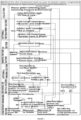
- the agricultural vehicles are generally washed in a yard by means of hydro-cleaning machines or automatic washing systems. Washing water is conveyed from the parking yard, in case even together with the discharge of atomizers. Washing water could be collected in an underground tank having for example a volume of about 2-3 m3, through an open-channel conduit or in a not underground container. In figure 2 the collecting tank is designated as element T-100.
- the crop protection products included in the atomizer can be either discharged to ground in the yard and collected together with the washing water of the tractor or discharged directly in a suitable basin (by means of dedicated hose) for sake of simplicity not shown in the scheme of figure 2 , or discharged in the tank designated as element D-1000.
- a first pump (G-100) for "sewage” is dipped which suctions the mixture to be treated towards the herein described apparatus.
- the pump operation is controlled by a level of max/min and by a liter-counting flowmeter installed at the entrance of apparatus 1.
- the flowmeter has the purpose both of measuring the flow inletting the apparatus, which can be adjusted by acting on a suitable valve, and of measuring the volume to be treated entering the apparatus 1. Volume which can be set on the control panel: once reached the set volume, the apparatus stops. At this point the washing cycle of each section - if selected - can start autonomously or one has to wait that all sections have completed the working cycle to be ready for the next batch.
- the apparatus can even work continuously.
- waste water to be treated collected in the tank or collection tanks is then subject to the additional steps of the method according to the present invention, preferably by means of an apparatus as herein described.
- the method provides a pretreatment step.
- the pretreatment step is optional, in particular it could not be performed in case only the waste water collected by the atomizer washing has to be treated.
- the waste water to be treated from the collecting tank is then subjected to a pretreatment, in figure 3 the "tanks" for the pretreatment are designated as a whole with the abbreviation F-100.
- the pretreatment step could provide up to three steps described hereinafter in details:
- the first step (A) is a sedimentation and a static flotation wherein the liquid is sent to a tank (D-500), in particular a truncated conical tank or a tank with a tilted or concave bottom collected from the tank T-100.
- the suspended solids (SS) go to the bottom and the oils/hydrocarbons upwards.
- a cartridge or bag filter (F-500) instead of letting SS to be accumulated in the tank, a cartridge or bag filter (F-500) will be used.
- the suspended solids kept by the filter F-500 together with those kept by the filter F-501 will be sent to the disposal together with the filters whereas the filtrate will be sent ahead of the apparatus.
- an air (membrane) pump could be used, for example, capable of creating a depression, for example of about 0.2-0.3 bar, so as to allow the filtration which thus takes place under depression.
- a pump working under pressure could be used.
- the second pretreatment step (B) consists in transferring the liquid phase without the suspended solids into a settler with lamellar pack, in particular with truncated conical or concave bottom.
- the bottom deposit is treated as above, by means of filtration with Filter F-501.
- the portion that remains in surface is sent to a second lamellar pack.
- the third step (C) is a twin unit of the second step (B) which depending upon the type of made connections can act as second settler or floater for the separation of oils. If it acts as floater the surface portion is sent to the oil-collecting tank (T-310) which depending upon the law about waste disposal could be, or could not be, in common with the collecting tank of the nanofiltration (NF) concentrate; and the liquid collected onto the bottom without oils is sent to the ultrafiltration (UF) section. If this tank acts as settler (II stage), the portion collected in surface is sent to the UF and the portion remaining on the bottom to the F-501.
- T-310 oil-collecting tank
- UF ultrafiltration
- a portion of the ultrafiltration (UF) concentrate can be made to recirculate for an additional separation of the suspended solids (SS).
- the liquid so treated by gravity flows into the recirculation tank D-1000 of UF section.
- the capacity of each pretreatment tank could be for example 200-400 litres, preferably about 300 litres.
- the lamellar packs used in the pretreatment step are made of thermoformed PVC with profile height ranging from 12 to 19 millimetres with crossed channels.
- the UF ultrafiltration or microfiltration section could be constituted by polymeric, ceramic, metallic tubular ultrafiltration membranes; polymeric or ceramic flat membranes, polymeric and ceramic capillary membranes membrane, polymeric wound-spiral membranes.
- ultrafiltration membranes also membranes with a 0.05-micron porosity are meant, in the state of art sometimes the membranes with porosity of this type are not designated as ultrafiltration, but as microfiltration membranes.
- the porosity will be preferably 1kD to 1.4 micron, whereas the length could be comprised from 20 to 150 cm, preferably for smaller apparatuses from 50 to 110 cm.
- the support material preferably will be made of Al 2 O 3 or TiO 2 or SiC, whereas the filtering layer of ZrO 2 and/or Al 2 O 3 and/or TiO 2 and/or SiC.
- the UF passage will start once reached a certain volume in the supply tank designated in figure as D-1000, which could be for example of about 30 litres.
- the level is measured by the flowmeter placed in the input section, in the smaller apparatuses a level switch could be used.
- the ultrafiltration will start by actuating the pump, designated in figure as element G-101.
- the permeate flow could be adjusted by a flowmeter acting on an inverter.
- the ultrafiltration is provided with a back-pulse system and a system for fluxing with clean water -permeate of the (first) second nanofiltration or mains stage (option which can be selected by the operator), the waste water could be even heated.
- UF continues to operate until in section: A) the volume set for the subject batch has entered or B) the set production time has elapsed.
- suitable level switches will be provided which make the permeate valve to be closed.
- the residual concentrate is sent to the supply pit of the system (T-100) by means of the recirculation pump G101 before pretreatment (automatic depletion cycle).
- the UF concentrate can be sent both ahead of the pretreatment section or to the collecting tank of the pesticide products (NF first stage concentrate).
- the UF section at this point can be stopped, alternatively either rinsed with water or with suitable detergents.
- the permeate volume is equal to 475 litres.
- the permeate flow for example will be set between 40 and 50 l/h, preferably 47 l/h.
- polymeric nanofiltration membranes will be used, for example made of polymeric material such as PA, PS, PES. Such membranes could be both like wound spiral and tubular and flat. According to a preferred option those of NF270 type of DOW Chemicals will be used.
- a collection and recirculation from the tank T-200 is performed by sending the permeate to a tank for collecting the permeate to use it for washing (tank D100), after having filled-up the tank D-4000 it will be possible to select or not the tank (accumulation tank of washing water, fluxing).
- a second nanofiltration step the permeate of the first step is sent to the tank D-3000, from here once finished a half-batch (that is emptied of tank T-200), it is collected still with pump G.102, and treated again with NF membrane, by sending the permeate to D-4000. Once filled up D-4000 to the tank D-100.
- the active carbon filter will be a FCA-400 cartridge.
- the concentrate of the first nanofiltration step is sent either directly to a collection tank (T-310) for the subsequent disposal or to a concentration system, such as for example an evaporator which uses the solar light and the panels to produce heat.
- a concentration system such as for example an evaporator which uses the solar light and the panels to produce heat.
- the NF concentrate could be used for preparing the mixture for the subsequent treatments.
- the concentrate of the second NF step (included in tank D-300) will be sent with the pump G-102 to the tank T-100 or T-200 or as above illustrated reused for preparing other mixtures.
- the same pump and the same membrane could be used, but a different tank for supplying and accumulating the permeate will be used.
- the method will provide to send the water to be treated ahead of the UF section in order to remove the colloids and the microbial charge.
- the NF step could start for example when the UF section has produced at least 30 litres of permeate.
- the concentration factor (VCR) reached with NF is comprised between 7-15 for the first step, whereas for the second between 10-20.
- the apparatus comprises a pretreatment unit to perform the pretreatment step as described above in details.
- Such pretreatment unit designated as a whole as F-100, provides a first pretreatment tank D-500 for static sedimentation and flotation, in particular with truncated conical shape or with tilted or concave bottom.
- the first pretreatment tank D-500 will be connected so that the waste water is collected from the tank T-100 and poured inside thereof and the liquid free of the suspended solids is transferred to a second pretreatment tank D-510 for sedimentation in lamellar pack, with truncated conical or concave bottom.
- the second pretreatment tank D-510 in turn will be connected to a third pretreatment tank D-520 identical to the second one and connected to the supply tank of the ultrafiltration D-1000.
- the apparatus will be configured so as to make a portion of the ultrafiltration (UF) or microfiltration (MF) concentrate to recirculate in the upper portion of the tank with lamellar pack, so as to obtain an additional separation of the suspended solids (SS).
- the so treated liquid by gravity flows into the recirculation tank D-1000 of the UF section.
- the capacity of each pretreatment tank could be for example di 200-400 litres, preferably about 300 litres.
- the apparatus will further include a first filtration unit c provided with a ultrafiltration or microfiltration membrane D-101 and a pump G-101 connected to the tank F-100 so that when the apparatus is in use the waste water collected in the tank D-1000 is ultrafiltrated and the permeate of the ultrafiltration is accumulated in a second tank T-200 in turn connected to a second filtration unit comprising a nanofiltration membrane D-102 and a second pump G-102.
- the nanofiltration unit is connected to the tank T-200 so that when the apparatus is in use the content of the tank T-200 is nanofiltered and the nanofiltration permeate is transferred to the collecting tank D-100, whereas the nanofiltration concentrate is sent to the tank T-310 or reused to create the subsequent mixtures.
- the ultrafiltration membrane D-101 of the apparatus is a ceramic membrane by ultrafiltration or microfiltration with channels ranging from 2.0 mm to 8.0 mm, a porosity comprised between 1kD and 1.4 micron and a length comprised between 20 and 150 cm, wherein the support material of said membrane by ultrafiltration is made of Al 2 O 3 or TiO2 or SiC and the filtering layer is made of ZrO 2 and/or Al 2 O 3 and/or TiO 2 and/or SiC.
- the nanofiltration membrane D-102 of the apparatus is a polymeric spiral-like or tubular membrane by nanofiltration.
- polymeric nanofiltration membranes will be used, for example made of polymeric material such as PA, PS, PES. Such membranes could be both like a wound spiral and tubular and flat.
- membranes of the NF270 type of the DOW Chemicals will be used.
- the apparatus could further include one or more active carbon filters (FCA-400) connected so as to further depurate the nanofiltration permeate.
- FCA-400 active carbon filters
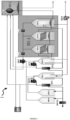
- the apparatus includes a pretreatment unit comprising a first series of tanks designated as a whole with F-100 which will be filled-up with the waste water collected in the collecting tank T-100 by means of the pump designated in figure as G-100 - pretreatment section.
- the apparatus will further include a first filtration unit comprising an accumulation tank D-1000, a ultrafiltration or microfiltration membrane D-101 and a pump G-101 connected to the tank D-1000 so that when the apparatus is in use the waste water collected in the tank - D1000 is ultrafiltered or microfiltered and the ultrafiltration permeate is sent directly to a second filtration unit comprising a nanofiltration membrane D-102 and a second pump G-102.
- the nanofiltration unit is connected directly to the ultrafiltration or microfiltration permeate tube so that when the apparatus is in use the UF (or microfiltration (MF)) permeate is nanofiltered and the nanofiltration permeate is transferred to the collecting tank D-100, whereas the nanofiltration concentration is sent to the tank of the apparatus T-310 or reused to create the subsequent mixtures.
- the apparatus could include one or more active carbon filters designated with FCA-400 in figures which will be connected in the apparatus so that the permeate is further depurated by means of the active carbons before being collected in D-100. If the apparatus as above is used, the method preferably will provide even one or more of the following steps:
- the apparatus then could further include means for dosing chemical substances, means for pressurizing with air or gas the container D-1000 and adjusting the pressure thereof and/or means for emptying the system with compressed air.
- the apparatus comprises a second nanofiltration unit or filtration unit by reverse osmosis.
- Said second unit will be configured so that the nanofiltration permeate of the first stage is sent directly by suction to the pump G-103 of the second nanofiltration or reverse osmosis stage, whereas the NF concentrate of the second stage is sent or sucked to the pump G -102 or to the tank D-1000 or discharged both to be reused or to go back to T-100.
- it will be provided to pressurize with air or gas the container D-1000 and to adjust the pressure in the container D-1000 depending upon the flow which is measured outletting the nanofiltration, when the NF flow is low the pressure in D-1000 will be increased, when the flow is high it will be decreased.
- the apparatus could then include means for controlling the flows, in particular means for pressurizing the tank D-1000 with air or other gas.
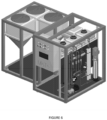
- the pretreatment unit is constituted by tanks made of CLS and an automatic system for washing the tractors.
- an apparatus having larger sizes suitable to the washing of a high number of tractors per day (even higher than 100) is shown.
- the whole apparatus is laid underground and positioned under the yard provided for washing the agricultural vehicles and water collection.
- the portion related to the pretreatment can be seen, constituted by a stilling basin for the first separation of the rough material - which by precipitating is collected in the first left sector, followed by a section wherein a separator in lamellar pack is installed suitably for an additional separation of the suspended solids and the fats and oils.
- the latter are collected in a suitable conduit - represented on top in the tank.
- the so-pretreated waste water, after intermediate storage is sent to the membrane section - represented in the right portion of the figure - for concentration and purification.
- the permeate is used for washing the medium.
- the concentrates are sent to the disposal or reused as previously described for the other embodiments.
- the washing of the medium can take place by means of cleaning machines manoeuvred by an operator or by means of an automatized washing system with water jets at a medium and/or high pressure.
- On the top right the control panel of the whole apparatus is shown.
- Table 1 summarizes some of the values of some chemical compounds measured inletting and outletting the apparatus.
- Table 1 Compound Unit Apparatus inletting waste water Apparatus outletting pemeate
- the output values reflect the current limits of the Italian law (DL 152/06) for the discharge in surface water.
- total active principles the sum of all active principles is meant, measured with the multi-residual method UNI EN 15662:2009,
- Table 2 shows the average reduction effectiveness values of the apparatus for some compounds detected during an operating period of the apparatus equal to two months. As % of decrease the rejection of the whole apparatus, and not of each single section, was considered. Table 2 Component % Reduction Component % Reduction Total surfactants 99.58% Tetraconazole 95.24% TOC 92.11% Ametoctradin 91.67% Copper 99.73% Clorantranilipole 99.06% Sulphur 99.98% Spiroxamine 94.69% Aluminium 99.86% Cyazofamide 97.00% Suspended solids 100.00% Spinosad 96.55% Difenoconazol 96.97% Tetraconazole 2 97.62% Dimetomorf 94.74% Metalaxyl 95.00% Myclobutanil 98.79% Glyphosate 99.86% Pendimethalin 97.60% - -
- the nanofiltration concentrate after the first step on the average was equal to 48 litres (volume to be disposed of), whereas the concentrate of the second step of NF on the average was equal to - 30 litres.
- the permeate to be used as washing water on the average was equal to 400 litres.
- the process yield calculated as the ratio between the produced permeate and the treated volume can be established to be equal to 80%. Depending upon and based upon the composition of the treated mixture, yields comprised between 70% and 95% have been found.
Landscapes
- Engineering & Computer Science (AREA)
- Chemical & Material Sciences (AREA)
- Life Sciences & Earth Sciences (AREA)
- Hydrology & Water Resources (AREA)
- Environmental & Geological Engineering (AREA)
- Water Supply & Treatment (AREA)
- Organic Chemistry (AREA)
- Nanotechnology (AREA)
- Separation Using Semi-Permeable Membranes (AREA)
- Processing Of Solid Wastes (AREA)
- Fertilizers (AREA)
- Separation Of Suspended Particles By Flocculating Agents (AREA)
Claims (8)
- Procédé pour le traitement et la réutilisation d'eaux usées de lavage de véhicules agricoles, comprenant les étapes suivantes :i) collecte des eaux usées provenant du lavage de véhicules agricoles dans un ou plusieurs réservoirs ou réservoirs de collecte (T-100, D-100) ;ii) ultrafiltration ou microfiltration des eaux de lavage collectées dans l'étape i) ;iii) soumission du perméat obtenu à partir de l'ultrafiltration ou de la microfiltration à une ou plusieurs étapes de nanofiltration ;iv) réutilisation du perméat obtenu à partir de l'étape de nanofiltration pour le lavage des véhicules agricoles et/ou pour la préparation de mélanges de pesticides.
- Procédé selon la revendication 1, comprenant une étape supplémentaire de prétraitement desdites eaux usées avant l'étape ii) d'ultrafiltration ou de microfiltration, comprenant les étapes suivantes :a) sédimentation statique et flottation desdites eaux usées dans un premier réservoir (D-500) ;b) sédimentation de la phase liquide dépourvue de solides en suspension obtenue à partir de l'étape a) dans un premier réservoir avec un pack lamellaire (D-510) ;c) sédimentation ou flottation de la phase liquide obtenue à partir de l'étape b) dans un deuxième réservoir (D-520) avec un pack lamellaire.
- Procédé selon la revendication 1 ou 2, dans lequel ladite ultrafiltration ou microfiltration est effectuée par utilisation d'une membrane plate ou tubulaire, de type polymère ou céramique ou métallique, de préférence dans lequel ladite ultrafiltration est effectuée par utilisation d'une membrane d'ultrafiltration céramique avec des canaux de 2,0 mm à 16,0 mm, une porosité comprise entre 1 kD et 1,4 micromètres et une longueur comprise entre 20 et 150 cm.
- Procédé selon l'une quelconque des revendications précédentes, dans lequel le matériau de support de ladite membrane pour l'ultrafiltration ou la microfiltration est fait d'Al2O3 et/ou TiO2 et/ou SiC et la couche filtrante est faite de ZrO2 et/ou Al2O3 et/ou TiO2 et/ou SiC.
- Procédé selon l'une quelconque des revendications précédentes, dans lequel ladite nanofiltration est effectuée par utilisation d'une membrane polymère de nanofiltration tubulaire ou enroulée analogue à une spirale.
- Procédé selon l'une quelconque des revendications précédentes, comprenant une étape supplémentaire dans laquelle le perméat obtenu à partir de l'étape de nanofiltration est filtrée à travers un filtre au charbon activé.
- Procédé selon l'une quelconque des revendications précédentes, comprenant deux étapes de nanofiltration sur une membrane identique ou additionnelle, dans lequel le concentré obtenu à partir des première et/ou deuxième nanofiltrations est transféré dans l'un des réservoirs de collecte (T-310, T-100, T-200) pour être jeté ou pour aller dans un système de concentration, en particulier un évaporateur alimenté par la lumière solaire.
- Procédé selon l'une quelconque des revendications précédentes, dans lequel le concentré obtenu à partir de l'étape d'ultrafiltration ou de microfiltration est transféré dans l'un des réservoirs de collecte (T-100) et/ou soumis à l'étape de prétraitement telle que définie dans la revendication 2 et/ou le concentré de la nanofiltration est réutilisé pour dissoudre davantage de principes actifs, en particulier s'ils n'utilisent pas d'herbicides ou d'autres composés incompatibles ou à une concentration telle qu'ils soient dangereux pour les plantes.
Applications Claiming Priority (2)
| Application Number | Priority Date | Filing Date | Title |
|---|---|---|---|
| IT102017000024583A IT201700024583A1 (it) | 2017-03-06 | 2017-03-06 | Metodo ed apparato per il trattamento e riutilizzo di acque reflue originate dal lavaggio di mezzi agricoli ed atomizzatori |
| PCT/IB2018/051402 WO2018163047A1 (fr) | 2017-03-06 | 2018-03-05 | Procédé et appareil pour le traitement et la réutilisation d'eaux usées provenant du lavage d'outils agricoles et d'atomiseurs |
Publications (3)
| Publication Number | Publication Date |
|---|---|
| EP3606876A1 EP3606876A1 (fr) | 2020-02-12 |
| EP3606876B1 true EP3606876B1 (fr) | 2023-06-07 |
| EP3606876C0 EP3606876C0 (fr) | 2023-06-07 |
Family
ID=59521374
Family Applications (1)
| Application Number | Title | Priority Date | Filing Date |
|---|---|---|---|
| EP18713355.8A Active EP3606876B1 (fr) | 2017-03-06 | 2018-03-05 | Procédé pour le traitement et la réutilisation d'eaux usées provenant du lavage d'outils agricoles |
Country Status (4)
| Country | Link |
|---|---|
| EP (1) | EP3606876B1 (fr) |
| ES (1) | ES2951474T3 (fr) |
| IT (1) | IT201700024583A1 (fr) |
| WO (1) | WO2018163047A1 (fr) |
Families Citing this family (1)
| Publication number | Priority date | Publication date | Assignee | Title |
|---|---|---|---|---|
| WO2021263191A1 (fr) | 2020-06-25 | 2021-12-30 | Yeh Daniel H | Systèmes et procédés de traitement d'un courant d'eaux usées |
Citations (2)
| Publication number | Priority date | Publication date | Assignee | Title |
|---|---|---|---|---|
| US20030037805A1 (en) * | 2000-07-05 | 2003-02-27 | Christian Mathieu | Washing and recycling unit and method for on-site washing of heavy machinery |
| WO2006116533A2 (fr) * | 2005-04-27 | 2006-11-02 | Hw Process Technologies, Inc. | Traitement d'eaux de forage |
Family Cites Families (3)
| Publication number | Priority date | Publication date | Assignee | Title |
|---|---|---|---|---|
| FR2891540B1 (fr) * | 2005-09-30 | 2007-12-28 | Otv Sa | Procede de traitement d'eaux comprenant une etape de decantation rapide suivie d'une etape de filtration directement sur membranes de micro ou d'ultra-filtration, et dispositif correspondant. |
| CA2719880C (fr) * | 2009-11-03 | 2016-01-05 | Syncrude Canada Ltd. | Hydrotraitement des sables bitumineux pour reutilisation |
| JP6832710B2 (ja) * | 2014-05-30 | 2021-02-24 | ゼットナノ エルエルシーzNano LLC | 水を処理するためのシステム |
-
2017
- 2017-03-06 IT IT102017000024583A patent/IT201700024583A1/it unknown
-
2018
- 2018-03-05 WO PCT/IB2018/051402 patent/WO2018163047A1/fr not_active Ceased
- 2018-03-05 EP EP18713355.8A patent/EP3606876B1/fr active Active
- 2018-03-05 ES ES18713355T patent/ES2951474T3/es active Active
Patent Citations (2)
| Publication number | Priority date | Publication date | Assignee | Title |
|---|---|---|---|---|
| US20030037805A1 (en) * | 2000-07-05 | 2003-02-27 | Christian Mathieu | Washing and recycling unit and method for on-site washing of heavy machinery |
| WO2006116533A2 (fr) * | 2005-04-27 | 2006-11-02 | Hw Process Technologies, Inc. | Traitement d'eaux de forage |
Also Published As
| Publication number | Publication date |
|---|---|
| EP3606876A1 (fr) | 2020-02-12 |
| ES2951474T3 (es) | 2023-10-23 |
| WO2018163047A1 (fr) | 2018-09-13 |
| IT201700024583A1 (it) | 2018-09-06 |
| EP3606876C0 (fr) | 2023-06-07 |
Similar Documents
| Publication | Publication Date | Title |
|---|---|---|
| DE69829952T2 (de) | Tragbare umkehrosmoseeinheit zur trinkwasserbereitung | |
| US5728305A (en) | Waste water purification system | |
| CA2174847C (fr) | Procede et dispositif de recuperation de l'eau dans un collecteur d'egouts | |
| CN105000737B (zh) | 一种工业污水处理系统及污水处理方法 | |
| KR101193902B1 (ko) | 정수 생산을 위한 막여과 정수 처리 시스템 및 방법 | |
| CN102120651B (zh) | 用于污水净化的滤芯及含有该滤芯的污水净化装置 | |
| WO2018223137A1 (fr) | Procédé et appareil pour traiter des eaux usées de blanchisserie commerciale et industrielle | |
| US20110263009A1 (en) | Method for the filtration of a bioreactor liquid from a bioreactor; cross-flow membrane module, and bioreactor membrane system | |
| CN105347539A (zh) | 集成自动化的工业废水中水回用装置 | |
| CN104129887A (zh) | 一种基于膜生物反应器的中水回用系统 | |
| EP3606876B1 (fr) | Procédé pour le traitement et la réutilisation d'eaux usées provenant du lavage d'outils agricoles | |
| JP6613323B2 (ja) | 水処理装置及び水処理方法 | |
| US11648496B2 (en) | Treatment module and operating method therefor | |
| CN102583647A (zh) | 一种管式微滤膜工业废水回用处理设备及工艺流程 | |
| CN108744979A (zh) | 一种具有自动清洗结构的废水处理系统 | |
| CN210885551U (zh) | 一种电极箔的废液回收装置 | |
| CN210313765U (zh) | 含氟高盐度废水回用系统 | |
| CN110330156A (zh) | 污水处理净化系统及其方法 | |
| US20150166374A1 (en) | Method and apparatus for treating a fluid containing ionized particles | |
| CN210796018U (zh) | 电极箔含磷清洗废水处理系统 | |
| CN208151108U (zh) | 一种用于循环冷却水的中水回用系统 | |
| CN108101270A (zh) | 一种用于循环冷却水的中水回用系统及处理方法 | |
| CN209010331U (zh) | 一种污泥干化废水零排放处理系统 | |
| CN205687675U (zh) | 反渗透膜苦咸水淡化系统 | |
| CN216236306U (zh) | 一种垃圾渗滤液膜处理器 |
Legal Events
| Date | Code | Title | Description |
|---|---|---|---|
| STAA | Information on the status of an ep patent application or granted ep patent |
Free format text: STATUS: UNKNOWN |
|
| STAA | Information on the status of an ep patent application or granted ep patent |
Free format text: STATUS: THE INTERNATIONAL PUBLICATION HAS BEEN MADE |
|
| PUAI | Public reference made under article 153(3) epc to a published international application that has entered the european phase |
Free format text: ORIGINAL CODE: 0009012 |
|
| STAA | Information on the status of an ep patent application or granted ep patent |
Free format text: STATUS: REQUEST FOR EXAMINATION WAS MADE |
|
| 17P | Request for examination filed |
Effective date: 20191220 |
|
| AK | Designated contracting states |
Kind code of ref document: A1 Designated state(s): AL AT BE BG CH CY CZ DE DK EE ES FI FR GB GR HR HU IE IS IT LI LT LU LV MC MK MT NL NO PL PT RO RS SE SI SK SM TR |
|
| AX | Request for extension of the european patent |
Extension state: BA ME |
|
| DAV | Request for validation of the european patent (deleted) | ||
| DAX | Request for extension of the european patent (deleted) | ||
| STAA | Information on the status of an ep patent application or granted ep patent |
Free format text: STATUS: EXAMINATION IS IN PROGRESS |
|
| 17Q | First examination report despatched |
Effective date: 20201109 |
|
| GRAP | Despatch of communication of intention to grant a patent |
Free format text: ORIGINAL CODE: EPIDOSNIGR1 |
|
| STAA | Information on the status of an ep patent application or granted ep patent |
Free format text: STATUS: GRANT OF PATENT IS INTENDED |
|
| INTG | Intention to grant announced |
Effective date: 20221005 |
|
| GRAS | Grant fee paid |
Free format text: ORIGINAL CODE: EPIDOSNIGR3 |
|
| GRAA | (expected) grant |
Free format text: ORIGINAL CODE: 0009210 |
|
| STAA | Information on the status of an ep patent application or granted ep patent |
Free format text: STATUS: THE PATENT HAS BEEN GRANTED |
|
| AK | Designated contracting states |
Kind code of ref document: B1 Designated state(s): AL AT BE BG CH CY CZ DE DK EE ES FI FR GB GR HR HU IE IS IT LI LT LU LV MC MK MT NL NO PL PT RO RS SE SI SK SM TR |
|
| REG | Reference to a national code |
Ref country code: GB Ref legal event code: FG4D |
|
| REG | Reference to a national code |
Ref country code: CH Ref legal event code: EP Ref country code: AT Ref legal event code: REF Ref document number: 1574587 Country of ref document: AT Kind code of ref document: T Effective date: 20230615 Ref country code: DE Ref legal event code: R096 Ref document number: 602018050922 Country of ref document: DE |
|
| U01 | Request for unitary effect filed |
Effective date: 20230704 |
|
| U07 | Unitary effect registered |
Designated state(s): AT BE BG DE DK EE FI FR IT LT LU LV MT NL PT SE SI Effective date: 20230713 |
|
| REG | Reference to a national code |
Ref country code: LT Ref legal event code: MG9D |
|
| REG | Reference to a national code |
Ref country code: ES Ref legal event code: FG2A Ref document number: 2951474 Country of ref document: ES Kind code of ref document: T3 Effective date: 20231023 |
|
| PG25 | Lapsed in a contracting state [announced via postgrant information from national office to epo] |
Ref country code: NO Free format text: LAPSE BECAUSE OF FAILURE TO SUBMIT A TRANSLATION OF THE DESCRIPTION OR TO PAY THE FEE WITHIN THE PRESCRIBED TIME-LIMIT Effective date: 20230907 |
|
| PG25 | Lapsed in a contracting state [announced via postgrant information from national office to epo] |
Ref country code: RS Free format text: LAPSE BECAUSE OF FAILURE TO SUBMIT A TRANSLATION OF THE DESCRIPTION OR TO PAY THE FEE WITHIN THE PRESCRIBED TIME-LIMIT Effective date: 20230607 Ref country code: HR Free format text: LAPSE BECAUSE OF FAILURE TO SUBMIT A TRANSLATION OF THE DESCRIPTION OR TO PAY THE FEE WITHIN THE PRESCRIBED TIME-LIMIT Effective date: 20230607 Ref country code: GR Free format text: LAPSE BECAUSE OF FAILURE TO SUBMIT A TRANSLATION OF THE DESCRIPTION OR TO PAY THE FEE WITHIN THE PRESCRIBED TIME-LIMIT Effective date: 20230908 |
|
| PG25 | Lapsed in a contracting state [announced via postgrant information from national office to epo] |
Ref country code: SK Free format text: LAPSE BECAUSE OF FAILURE TO SUBMIT A TRANSLATION OF THE DESCRIPTION OR TO PAY THE FEE WITHIN THE PRESCRIBED TIME-LIMIT Effective date: 20230607 |
|
| PG25 | Lapsed in a contracting state [announced via postgrant information from national office to epo] |
Ref country code: IS Free format text: LAPSE BECAUSE OF FAILURE TO SUBMIT A TRANSLATION OF THE DESCRIPTION OR TO PAY THE FEE WITHIN THE PRESCRIBED TIME-LIMIT Effective date: 20231007 |
|
| PG25 | Lapsed in a contracting state [announced via postgrant information from national office to epo] |
Ref country code: SM Free format text: LAPSE BECAUSE OF FAILURE TO SUBMIT A TRANSLATION OF THE DESCRIPTION OR TO PAY THE FEE WITHIN THE PRESCRIBED TIME-LIMIT Effective date: 20230607 Ref country code: SK Free format text: LAPSE BECAUSE OF FAILURE TO SUBMIT A TRANSLATION OF THE DESCRIPTION OR TO PAY THE FEE WITHIN THE PRESCRIBED TIME-LIMIT Effective date: 20230607 Ref country code: RO Free format text: LAPSE BECAUSE OF FAILURE TO SUBMIT A TRANSLATION OF THE DESCRIPTION OR TO PAY THE FEE WITHIN THE PRESCRIBED TIME-LIMIT Effective date: 20230607 Ref country code: IS Free format text: LAPSE BECAUSE OF FAILURE TO SUBMIT A TRANSLATION OF THE DESCRIPTION OR TO PAY THE FEE WITHIN THE PRESCRIBED TIME-LIMIT Effective date: 20231007 Ref country code: CZ Free format text: LAPSE BECAUSE OF FAILURE TO SUBMIT A TRANSLATION OF THE DESCRIPTION OR TO PAY THE FEE WITHIN THE PRESCRIBED TIME-LIMIT Effective date: 20230607 |
|
| PG25 | Lapsed in a contracting state [announced via postgrant information from national office to epo] |
Ref country code: PL Free format text: LAPSE BECAUSE OF FAILURE TO SUBMIT A TRANSLATION OF THE DESCRIPTION OR TO PAY THE FEE WITHIN THE PRESCRIBED TIME-LIMIT Effective date: 20230607 |
|
| REG | Reference to a national code |
Ref country code: DE Ref legal event code: R097 Ref document number: 602018050922 Country of ref document: DE |
|
| PLBE | No opposition filed within time limit |
Free format text: ORIGINAL CODE: 0009261 |
|
| STAA | Information on the status of an ep patent application or granted ep patent |
Free format text: STATUS: NO OPPOSITION FILED WITHIN TIME LIMIT |
|
| U20 | Renewal fee for the european patent with unitary effect paid |
Year of fee payment: 7 Effective date: 20240322 |
|
| 26N | No opposition filed |
Effective date: 20240308 |
|
| PG25 | Lapsed in a contracting state [announced via postgrant information from national office to epo] |
Ref country code: MC Free format text: LAPSE BECAUSE OF FAILURE TO SUBMIT A TRANSLATION OF THE DESCRIPTION OR TO PAY THE FEE WITHIN THE PRESCRIBED TIME-LIMIT Effective date: 20230607 |
|
| PG25 | Lapsed in a contracting state [announced via postgrant information from national office to epo] |
Ref country code: MC Free format text: LAPSE BECAUSE OF FAILURE TO SUBMIT A TRANSLATION OF THE DESCRIPTION OR TO PAY THE FEE WITHIN THE PRESCRIBED TIME-LIMIT Effective date: 20230607 |
|
| PG25 | Lapsed in a contracting state [announced via postgrant information from national office to epo] |
Ref country code: IE Free format text: LAPSE BECAUSE OF NON-PAYMENT OF DUE FEES Effective date: 20240305 |
|
| PG25 | Lapsed in a contracting state [announced via postgrant information from national office to epo] |
Ref country code: IE Free format text: LAPSE BECAUSE OF NON-PAYMENT OF DUE FEES Effective date: 20240305 |
|
| U20 | Renewal fee for the european patent with unitary effect paid |
Year of fee payment: 8 Effective date: 20250313 |
|
| PGFP | Annual fee paid to national office [announced via postgrant information from national office to epo] |
Ref country code: ES Payment date: 20250429 Year of fee payment: 8 |
|
| PGFP | Annual fee paid to national office [announced via postgrant information from national office to epo] |
Ref country code: CH Payment date: 20250401 Year of fee payment: 8 |
|
| PG25 | Lapsed in a contracting state [announced via postgrant information from national office to epo] |
Ref country code: CY Free format text: LAPSE BECAUSE OF FAILURE TO SUBMIT A TRANSLATION OF THE DESCRIPTION OR TO PAY THE FEE WITHIN THE PRESCRIBED TIME-LIMIT; INVALID AB INITIO Effective date: 20180305 |
|
| PG25 | Lapsed in a contracting state [announced via postgrant information from national office to epo] |
Ref country code: HU Free format text: LAPSE BECAUSE OF FAILURE TO SUBMIT A TRANSLATION OF THE DESCRIPTION OR TO PAY THE FEE WITHIN THE PRESCRIBED TIME-LIMIT; INVALID AB INITIO Effective date: 20180305 |
|
| PG25 | Lapsed in a contracting state [announced via postgrant information from national office to epo] |
Ref country code: TR Free format text: LAPSE BECAUSE OF FAILURE TO SUBMIT A TRANSLATION OF THE DESCRIPTION OR TO PAY THE FEE WITHIN THE PRESCRIBED TIME-LIMIT Effective date: 20230607 |
|
| U20 | Renewal fee for the european patent with unitary effect paid |
Year of fee payment: 9 Effective date: 20260211 |
|
| REG | Reference to a national code |
Ref country code: CH Ref legal event code: U11 Free format text: ST27 STATUS EVENT CODE: U-0-0-U10-U11 (AS PROVIDED BY THE NATIONAL OFFICE) Effective date: 20260401 |
|
| PGFP | Annual fee paid to national office [announced via postgrant information from national office to epo] |
Ref country code: GB Payment date: 20260324 Year of fee payment: 9 |