EP3608334A1 - Protéines de fusion tatk-cdkl5, compositions, formulations et leur utilisation - Google Patents
Protéines de fusion tatk-cdkl5, compositions, formulations et leur utilisation Download PDFInfo
- Publication number
- EP3608334A1 EP3608334A1 EP19179287.8A EP19179287A EP3608334A1 EP 3608334 A1 EP3608334 A1 EP 3608334A1 EP 19179287 A EP19179287 A EP 19179287A EP 3608334 A1 EP3608334 A1 EP 3608334A1
- Authority
- EP
- European Patent Office
- Prior art keywords
- cdkl5
- nucleic acid
- fusion protein
- protein
- tatk
- Prior art date
- Legal status (The legal status is an assumption and is not a legal conclusion. Google has not performed a legal analysis and makes no representation as to the accuracy of the status listed.)
- Granted
Links
Images












Classifications
-
- C—CHEMISTRY; METALLURGY
- C12—BIOCHEMISTRY; BEER; SPIRITS; WINE; VINEGAR; MICROBIOLOGY; ENZYMOLOGY; MUTATION OR GENETIC ENGINEERING
- C12N—MICROORGANISMS OR ENZYMES; COMPOSITIONS THEREOF; PROPAGATING, PRESERVING, OR MAINTAINING MICROORGANISMS; MUTATION OR GENETIC ENGINEERING; CULTURE MEDIA
- C12N9/00—Enzymes; Proenzymes; Compositions thereof; Processes for preparing, activating, inhibiting, separating or purifying enzymes
- C12N9/10—Transferases (2.)
- C12N9/12—Transferases (2.) transferring phosphorus containing groups, e.g. kinases (2.7)
-
- C—CHEMISTRY; METALLURGY
- C07—ORGANIC CHEMISTRY
- C07K—PEPTIDES
- C07K14/00—Peptides having more than 20 amino acids; Gastrins; Somatostatins; Melanotropins; Derivatives thereof
- C07K14/435—Peptides having more than 20 amino acids; Gastrins; Somatostatins; Melanotropins; Derivatives thereof from animals; from humans
- C07K14/46—Peptides having more than 20 amino acids; Gastrins; Somatostatins; Melanotropins; Derivatives thereof from animals; from humans from vertebrates
- C07K14/47—Peptides having more than 20 amino acids; Gastrins; Somatostatins; Melanotropins; Derivatives thereof from animals; from humans from vertebrates from mammals
-
- A—HUMAN NECESSITIES
- A61—MEDICAL OR VETERINARY SCIENCE; HYGIENE
- A61K—PREPARATIONS FOR MEDICAL, DENTAL OR TOILETRY PURPOSES
- A61K38/00—Medicinal preparations containing peptides
- A61K38/16—Peptides having more than 20 amino acids; Gastrins; Somatostatins; Melanotropins; Derivatives thereof
- A61K38/17—Peptides having more than 20 amino acids; Gastrins; Somatostatins; Melanotropins; Derivatives thereof from animals; from humans
- A61K38/1703—Peptides having more than 20 amino acids; Gastrins; Somatostatins; Melanotropins; Derivatives thereof from animals; from humans from vertebrates
- A61K38/1709—Peptides having more than 20 amino acids; Gastrins; Somatostatins; Melanotropins; Derivatives thereof from animals; from humans from vertebrates from mammals
-
- A—HUMAN NECESSITIES
- A61—MEDICAL OR VETERINARY SCIENCE; HYGIENE
- A61K—PREPARATIONS FOR MEDICAL, DENTAL OR TOILETRY PURPOSES
- A61K38/00—Medicinal preparations containing peptides
- A61K38/16—Peptides having more than 20 amino acids; Gastrins; Somatostatins; Melanotropins; Derivatives thereof
- A61K38/43—Enzymes; Proenzymes; Derivatives thereof
- A61K38/45—Transferases (2)
-
- A—HUMAN NECESSITIES
- A61—MEDICAL OR VETERINARY SCIENCE; HYGIENE
- A61P—SPECIFIC THERAPEUTIC ACTIVITY OF CHEMICAL COMPOUNDS OR MEDICINAL PREPARATIONS
- A61P25/00—Drugs for disorders of the nervous system
-
- A—HUMAN NECESSITIES
- A61—MEDICAL OR VETERINARY SCIENCE; HYGIENE
- A61P—SPECIFIC THERAPEUTIC ACTIVITY OF CHEMICAL COMPOUNDS OR MEDICINAL PREPARATIONS
- A61P25/00—Drugs for disorders of the nervous system
- A61P25/28—Drugs for disorders of the nervous system for treating neurodegenerative disorders of the central nervous system, e.g. nootropic agents, cognition enhancers, drugs for treating Alzheimer's disease or other forms of dementia
-
- A—HUMAN NECESSITIES
- A61—MEDICAL OR VETERINARY SCIENCE; HYGIENE
- A61P—SPECIFIC THERAPEUTIC ACTIVITY OF CHEMICAL COMPOUNDS OR MEDICINAL PREPARATIONS
- A61P43/00—Drugs for specific purposes, not provided for in groups A61P1/00-A61P41/00
-
- C—CHEMISTRY; METALLURGY
- C07—ORGANIC CHEMISTRY
- C07K—PEPTIDES
- C07K14/00—Peptides having more than 20 amino acids; Gastrins; Somatostatins; Melanotropins; Derivatives thereof
- C07K14/435—Peptides having more than 20 amino acids; Gastrins; Somatostatins; Melanotropins; Derivatives thereof from animals; from humans
- C07K14/46—Peptides having more than 20 amino acids; Gastrins; Somatostatins; Melanotropins; Derivatives thereof from animals; from humans from vertebrates
- C07K14/47—Peptides having more than 20 amino acids; Gastrins; Somatostatins; Melanotropins; Derivatives thereof from animals; from humans from vertebrates from mammals
- C07K14/4701—Peptides having more than 20 amino acids; Gastrins; Somatostatins; Melanotropins; Derivatives thereof from animals; from humans from vertebrates from mammals not used
- C07K14/4737—C-reactive protein
-
- C—CHEMISTRY; METALLURGY
- C07—ORGANIC CHEMISTRY
- C07K—PEPTIDES
- C07K14/00—Peptides having more than 20 amino acids; Gastrins; Somatostatins; Melanotropins; Derivatives thereof
- C07K14/435—Peptides having more than 20 amino acids; Gastrins; Somatostatins; Melanotropins; Derivatives thereof from animals; from humans
- C07K14/46—Peptides having more than 20 amino acids; Gastrins; Somatostatins; Melanotropins; Derivatives thereof from animals; from humans from vertebrates
- C07K14/47—Peptides having more than 20 amino acids; Gastrins; Somatostatins; Melanotropins; Derivatives thereof from animals; from humans from vertebrates from mammals
- C07K14/4701—Peptides having more than 20 amino acids; Gastrins; Somatostatins; Melanotropins; Derivatives thereof from animals; from humans from vertebrates from mammals not used
- C07K14/4738—Cell cycle regulated proteins, e.g. cyclin, CDC, INK-CCR
-
- C—CHEMISTRY; METALLURGY
- C12—BIOCHEMISTRY; BEER; SPIRITS; WINE; VINEGAR; MICROBIOLOGY; ENZYMOLOGY; MUTATION OR GENETIC ENGINEERING
- C12N—MICROORGANISMS OR ENZYMES; COMPOSITIONS THEREOF; PROPAGATING, PRESERVING, OR MAINTAINING MICROORGANISMS; MUTATION OR GENETIC ENGINEERING; CULTURE MEDIA
- C12N9/00—Enzymes; Proenzymes; Compositions thereof; Processes for preparing, activating, inhibiting, separating or purifying enzymes
- C12N9/10—Transferases (2.)
- C12N9/12—Transferases (2.) transferring phosphorus containing groups, e.g. kinases (2.7)
- C12N9/1205—Phosphotransferases with an alcohol group as acceptor (2.7.1), e.g. protein kinases
-
- C—CHEMISTRY; METALLURGY
- C12—BIOCHEMISTRY; BEER; SPIRITS; WINE; VINEGAR; MICROBIOLOGY; ENZYMOLOGY; MUTATION OR GENETIC ENGINEERING
- C12Y—ENZYMES
- C12Y207/00—Transferases transferring phosphorus-containing groups (2.7)
- C12Y207/11—Protein-serine/threonine kinases (2.7.11)
- C12Y207/11022—Cyclin-dependent kinase (2.7.11.22)
-
- A—HUMAN NECESSITIES
- A61—MEDICAL OR VETERINARY SCIENCE; HYGIENE
- A61K—PREPARATIONS FOR MEDICAL, DENTAL OR TOILETRY PURPOSES
- A61K38/00—Medicinal preparations containing peptides
-
- C—CHEMISTRY; METALLURGY
- C07—ORGANIC CHEMISTRY
- C07K—PEPTIDES
- C07K2319/00—Fusion polypeptide
- C07K2319/01—Fusion polypeptide containing a localisation/targetting motif
-
- C—CHEMISTRY; METALLURGY
- C07—ORGANIC CHEMISTRY
- C07K—PEPTIDES
- C07K2319/00—Fusion polypeptide
- C07K2319/01—Fusion polypeptide containing a localisation/targetting motif
- C07K2319/10—Fusion polypeptide containing a localisation/targetting motif containing a tag for extracellular membrane crossing, e.g. TAT or VP22
-
- C—CHEMISTRY; METALLURGY
- C07—ORGANIC CHEMISTRY
- C07K—PEPTIDES
- C07K2319/00—Fusion polypeptide
- C07K2319/20—Fusion polypeptide containing a tag with affinity for a non-protein ligand
- C07K2319/21—Fusion polypeptide containing a tag with affinity for a non-protein ligand containing a His-tag
-
- C—CHEMISTRY; METALLURGY
- C07—ORGANIC CHEMISTRY
- C07K—PEPTIDES
- C07K2319/00—Fusion polypeptide
- C07K2319/40—Fusion polypeptide containing a tag for immunodetection, or an epitope for immunisation
- C07K2319/41—Fusion polypeptide containing a tag for immunodetection, or an epitope for immunisation containing a Myc-tag
-
- C—CHEMISTRY; METALLURGY
- C07—ORGANIC CHEMISTRY
- C07K—PEPTIDES
- C07K2319/00—Fusion polypeptide
- C07K2319/60—Fusion polypeptide containing spectroscopic/fluorescent detection, e.g. green fluorescent protein [GFP]
-
- C—CHEMISTRY; METALLURGY
- C12—BIOCHEMISTRY; BEER; SPIRITS; WINE; VINEGAR; MICROBIOLOGY; ENZYMOLOGY; MUTATION OR GENETIC ENGINEERING
- C12N—MICROORGANISMS OR ENZYMES; COMPOSITIONS THEREOF; PROPAGATING, PRESERVING, OR MAINTAINING MICROORGANISMS; MUTATION OR GENETIC ENGINEERING; CULTURE MEDIA
- C12N2501/00—Active agents used in cell culture processes, e.g. differentation
- C12N2501/40—Regulators of development
- C12N2501/405—Cell cycle regulated proteins, e.g. cyclins, cyclin-dependant kinases
Definitions
- Cyclin-dependent kinase-like 5 (CDKL5) mutation/deficiency also known as atypical Rett syndrome, is a debilitating postnatal neurological disorder that occurs worldwide in 1 of every 17000 to 38000 female births. Males are also affected at a lower incidence. This disorder is not limited to ethnic or racial origin. Symptoms of CDKL5 mutation/deficiency range from mild to severe and present as early onset seizure, cognitive disability, hypotonia as well as autonomic, sleep and gastrointestinal disturbances. Symptoms of disease result from the deficiency of a functional CDKL5 protein.
- CDKL5 gene is located on the X-chromosome and encodes a protein that is essential for normal brain development and function.
- CDKL5 protein is a multifunctional protein that has multiple effects in a neuronal cell.
- CDKL5 can act as a kinase and phosphorylate MeCP2.
- Girls affected by the CDKL5 mutations or deficiencies typically have a normal prenatal history; irritability and drowsiness in the perinatal period; early-onset epilepsy with onset before 5 months of age, Rett-like features, including deceleration of head growth, stereotypies, poor to absent voluntary hand use, and sleep disturbances, and severe mental retardation with poor eye contact and virtually no language. See Bahi-Buisson and Bienvenu. 2012. Mol. Syndromol. 2:137-152 .
- CDKL5 mutations/deficiencies are primarily focused on managing symptoms. However, there are currently no treatments that improve the neurological outcome of subjects with CDKL5 mutations or deficiencies. As such, there exists a need for development of therapies for treating the CDKL5 mutations and deficiencies.
- fusion proteins having a CDKL5 polypeptide sequence, wherein the CDKL5 polypeptide sequence has about 50% to 100% sequence identity to SEQ ID NO:2 or SEQ ID NO: 16, and a TATk polypeptide sequence, wherein the TATk polypeptide sequence has about 90% to about 100% sequence identity to SEQ ID NO: 4, wherein the TATk polypeptide is operatively coupled to the CDKL5 polypeptide.
- the fusion protein can contain an Igk-chain leader sequence polypeptide, wherein the Igk-chain leader sequence is operatively coupled to the CDKL5 polypeptide.
- the fusion protein can contain a reporter protein polypeptide, wherein the reporter protein polypeptide is operatively coupled to the CDKL5 polypeptide.
- the fusion protein can contain a protein tag polypeptide, wherein the protein tag polypeptide is operatively coupled to the CDKL5 polypeptide.
- the fusion proteins can increase neurite growth, elongation, branch number, or branch density in a brain of a subject as compared to a control.
- the fusion proteins can reduce neuron apoptosis in the brain of a subject as compared to a control.
- the fusion protein can have a polypeptide sequence according to SEQ ID NO: 8, SEQ ID NO: 10, SEQ ID NO: 12, or SEQ ID NO: 14.
- the fusion protein contained in the pharmaceutical formulations can contain a reporter protein polypeptide, wherein the reporter protein polypeptide is operatively coupled to the CDKL5 polypeptide.
- the fusion protein contained in the pharmaceutical formulations can have a polypeptide sequence according to SEQ ID NO: 8, SEQ ID NO: 10, SEQ ID NO: 12, or SEQ ID NO: 14.
- the therapeutically effective amount of the fusion protein can treat one or more symptoms of a CDKL5 deficiency, Rett syndrome, or Rett syndrome variant in a subject as compared to a control.
- the therapeutically effective amount of the fusion protein can increase neurite growth, elongation, branch number, or branch density in a brain of a subject as compared to a control. In other aspects, the therapeutically effective amount of the fusion protein can reduce neuron apoptosis in the brain of a subject as compared to a control. In additional aspects, the therapeutically effective amount of the fusion protein can improve motor function in a subject as compared to a control. In some aspects, the therapeutically effective amount of the fusion protein can improve cognitive function in a subject as compared to a control.
- the subject in need thereof has or is suspected of having a CDKL5 deficiency, Rett syndrome, or a Rett syndrome variant.
- the therapeutically effective amount of the fusion protein can treat one or more symptoms of a CDKL5 deficiency, Rett syndrome, or Rett syndrome variant in a subject as compared to a control.
- biocompatible refers to a material that along with any metabolites or degradation products thereof that are generally non-toxic to the recipient and do not cause any significant adverse effects to the recipient.
- biocompatible materials are materials which do not elicit a significant inflammatory or immune response when administered to a patient.
- molecular weight generally refers to the mass or average mass of a material. If a polymer or oligomer, the molecular weight can refer to the relative average chain length or relative chain mass of the bulk polymer. In practice, the molecular weight of polymers and oligomers can be estimated or characterized in various ways including gel permeation chromatography (GPC) or capillary viscometry. GPC molecular weights are reported as the weight-average molecular weight (M w ) as opposed to the number-average molecular weight (M n ). Capillary viscometry provides estimates of molecular weight as the inherent viscosity determined from a dilute polymer solution using a particular set of concentration, temperature, and solvent conditions.
- biodegradable generally refers to a material that will degrade or erode under physiologic conditions to smaller units or chemical species that are capable of being metabolized, eliminated, or excreted by the subject.
- the degradation time is a function of composition and morphology. Degradation times can be from hours to weeks.
- hydrophilic refers to substances that have strongly polar groups that readily interact with water.
- hydrophobic refers to substances that lack an affinity for water; tending to repel and not absorb water as well as not dissolve in or mix with water.
- lipophilic refers to compounds having an affinity for lipids.
- amphiphilic refers to a molecule combining hydrophilic and lipophilic (hydrophobic) properties.
- progeny As used herein, “cell,” “cell line,” and “cell culture” include progeny. It is also understood that all progeny may not be precisely identical in DNA content, due to deliberate or inadvertent mutations. Variant progeny that have the same function or biological property, as screened for in the originally transformed cell, are included.
- composition refers to a combination of active agent and at least one other compound or molecule, inert (for example, a detectable agent or label) or active, such as an adjuvant.
- control is an alternative subject or sample used in an experiment for comparison purpose and included to minimize or distinguish the effect of variables other than an independent variable.
- positive control refers to a “control” that is designed to produce the desired result, provided that all reagents are functioning properly and that the experiment is properly conducted.
- RNA differential production of RNA, including but not limited to mRNA, tRNA, miRNA, siRNA, snRNA, and piRNA transcribed from a gene or regulatory region of a genome or the protein product encoded by a gene as compared to the level of production of RNA by the same gene or regulator region in a normal or a control cell.
- “differentially expressed” also refers to nucleotide sequences or proteins in a cell or tissue which have different temporal and/or spatial expression profiles as compared to a normal or control cell.
- underexpressed or “underexpression” refers to decreased expression level of an RNA or protein product encoded by a gene as compared to the level of expression of the RNA or protein product in a normal or control cell.
- a therapeutically effective amount refers to an amount needed to achieve one or more therapeutic effects.
- expansion or “expanded” in the context of cell refers to an increase in the number of a characteristic cell type, or cell types, from an initial population of cells, which may or may not be identical.
- the initial cells used for expansion need not be the same as the cells generated from expansion.
- the expanded cells may be produced by ex vivo or in vitro growth and differentiation of the initial population of cells.
- expression refers to the process by which polynucleotides are transcribed into RNA transcripts. In the context of mRNA and other translated RNA species, “expression” also refers to the process or processes by which the transcribed RNA is subsequently translated into peptides, polypeptides, or proteins.
- isolated means separated from constituents, cellular and otherwise, in which the polynucleotide, peptide, polypeptide, protein, antibody, or fragments thereof, are normally associated with in nature.
- concentrate refers to a molecule, including but not limited to a polynucleotide, peptide, polypeptide, protein, antibody, or fragments thereof, that is distinguishable from its naturally occurring counterpart in that the concentration or number of molecules per volume is greater than that of its naturally occurring counterpart.
- separated refers to the state of being physically divided from the original source or population such that the separated compound, agent, particle, or molecule can no longer be considered part of the original source or population.
- substantially pure cell population refers to a population of cells having a specified cell marker characteristic and differentiation potential that is about 50%, preferably about 75-80%, more preferably about 85-90%, and most preferably about 95% of the cells making up the total cell population.
- a “substantially pure cell population” refers to a population of cells that contain fewer than about 50%, preferably fewer than about 20-25%, more preferably fewer than about 10-15%, and most preferably fewer than about 5% of cells that do not display a specified marker characteristic and differentiation potential under designated assay conditions.
- treating and “treatment” as used herein refer generally to obtaining a desired pharmacological and/or physiological effect.
- the effect may be prophylactic in terms of preventing or partially preventing a disease, symptom or condition thereof, such as disease or disorders resulting from CDKL5 mutations and/or deficiencies, the CDKL5 variant of Rett syndrome, or other CDKL5-mediated neurological disorder, and/or may be therapeutic in terms of a partial or complete cure of a disease, condition, symptom or adverse effect attributed to the disease, disorder, or condition.
- treatment covers any treatment of CDKL5-mediated neurological disorder in a mammal, particularly a human, and includes: (a) preventing the disease from occurring in a subject which may be predisposed to the disease but has not yet been diagnosed as having it; (b) inhibiting the disease, i.e., arresting its development; or (c) relieving the disease, i.e., mitigating or ameliorating the disease and/or its symptoms or conditions.
- treatment refers to both therapeutic treatment and prophylactic or preventative measures. Those in need of treatment include those already with the disorder as well as those in which the disorder is to be prevented.
- pharmaceutical formulation refers to the combination of an active agent, compound, or ingredient with a pharmaceutically acceptable carrier or excipient, making the composition suitable for diagnostic, therapeutic, or preventive use in vitro, in vivo, or ex vivo.
- pharmaceutically acceptable carrier or excipient refers to a carrier or excipient that is useful in preparing a pharmaceutical formulation that is generally safe, non-toxic, and is neither biologically or otherwise undesirable, and includes a carrier or excipient that is acceptable for veterinary use as well as human pharmaceutical use.
- a “pharmaceutically acceptable carrier or excipient” as used in the specification and claims includes both one and more than one such carrier or excipient.
- pharmaceutically acceptable salt refers to any acid or base addition salt whose counter-ions are non-toxic to the subject to which they are administered in pharmaceutical doses of the salts.
- preventative and “prevent” refers to hindering or stopping a disease or condition before it occurs, even if undiagnosed, or while the disease or condition is still in the sub-clinical phase.
- active agent refers to a substance, compound, or molecule, which is biologically active or otherwise, induces a biological or physiological effect on a subject to which it is administered to.
- active agent or “active ingredient” refers to a component or components of a composition to which the whole or part of the effect of the composition is attributed.
- tangible medium of expression refers to a medium that is physically tangible and is not a mere abstract thought or an unrecorded spoken word. Tangible medium of expression includes, but is not limited to, words on a cellulosic or plastic material or data stored on a suitable device such as a flash memory or CD-ROM.
- chemotherapeutic agent or “chemotherapeutic” refer to a therapeutic agent utilized to prevent or treat cancer.
- matrix refers to a material, in which one or more specialized structures, molecules, or compositions, are embedded.
- aptamer refers to single-stranded DNA or RNA molecules that can bind to pre-selected targets including proteins with high affinity and specificity. Their specificity and characteristics are not directly determined by their primary sequence, but instead by their tertiary structure.
- immunomodulator refers to an agent, such as a therapeutic agent, which is capable of modulating or regulating one or more immune function or response.
- antibody refers to a glycoprotein comprising at least two heavy (H) chains and two light (L) chains inter-connected by disulfide bonds, or an antigen binding portion thereof.
- Each heavy chain is comprised of a heavy chain variable region (abbreviated herein as VH) and a heavy chain constant region.
- Each light chain is comprised of a light chain variable region and a light chain constant region.
- VH and VL regions retain the binding specificity to the antigen and can be further subdivided into regions of hypervariability, termed complementarity determining regions (CDR).
- CDR complementarity determining regions
- the CDRs are interspersed with regions that are more conserved, termed framework regions (FR).
- Each VH and VL is composed of three CDRs and four framework regions, arranged from amino-terminus to carboxy-terminus in the following order: FR1, CDR1, FR2, CDR2, FR3, CDR3, and FR4.
- the variable regions of the heavy and light chains contain a binding domain that interacts with an antigen.
- organ refers to any living entity comprised of at least one cell.
- a living organism can be as simple as, for example, a single isolated eukaryotic cell or cultured cell or cell line, or as complex as a mammal, including a human being, and animals (e.g., vertebrates, amphibians, fish, mammals, e.g., cats, dogs, horses, pigs, cows, sheep, rodents, rabbits, squirrels, bears, primates (e.g., chimpanzees, gorillas, and humans).
- "Subject” may also be a cell, a population of cells, a tissue, an organ, or an organism, preferably to human and constituents thereof.
- protein refers to a large molecule composed of one or more chains of amino acids in a specific order.
- the term protein is used interchangeable with "polypeptide.” The order is determined by the base sequence of nucleotides in the gene coding for the protein. Proteins are required for the structure, function, and regulation of the body's cells, tissues, and organs. Each protein has a unique function.
- substantially pure means an object species is the predominant species present (i.e., on a molar basis it is more abundant than any other individual species in the composition), and preferably a substantially purified fraction is a composition wherein the object species comprises about 50 percent of all species present. Generally, a substantially pure composition will comprise more than about 80 percent of all species present in the composition, more preferably more than about 85%, 90%, 95%, and 99%. Most preferably, the object species is purified to essential homogeneity (contaminant species cannot be detected in the composition by conventional detection methods) wherein the composition consists essentially of a single species.
- nucleic acid and polynucleotide generally refer to a string of at least two base-sugar-phosphate combinations and refers to, among others, single-and double-stranded DNA, DNA that is a mixture of single-and double-stranded regions, single- and double-stranded RNA, and RNA that is mixture of single- and double-stranded regions, hybrid molecules comprising DNA and RNA that may be single-stranded or, more typically, double-stranded or a mixture of single- and double-stranded regions.
- polynucleotide as used herein refers to triple-stranded regions comprising RNA or DNA or both RNA and DNA.
- the strands in such regions may be from the same molecule or from different molecules.
- the regions may include all of one or more of the molecules, but more typically involve only a region of some of the molecules.
- One of the molecules of a triple-helical region often is an oligonucleotide.
- Polynucleotide and “nucleic acids” also encompasses such chemically, enzymatically or metabolically modified forms of polynucleotides, as well as the chemical forms of DNA and RNA characteristic of viruses and cells, including simple and complex cells, inter alia.
- the term polynucleotide includes DNAs or RNAs as described above that contain one or more modified bases.
- DNAs or RNAs comprising unusual bases, such as inosine, or modified bases, such as tritylated bases, to name just two examples are polynucleotides as the term is used herein.
- Polynucleotide and “nucleic acids” also includes PNAs (peptide nucleic acids), phosphorothioates, and other variants of the phosphate backbone of native nucleic acids.
- Natural nucleic acids have a phosphate backbone, artificial nucleic acids may contain other types of backbones, but contain the same bases.
- DNAs or RNAs with backbones modified for stability or for other reasons are "nucleic acids" or "polynucleotide” as that term is intended herein.
- terapéuticaally effective amount refers to the amount of a CDKL5-fusion protein, a composition containing a CDKL5 fusion protein, a pharmaceutical formulation thereof, auxiliary agent, or secondary agent described herein that will elicit the biological or medical response of a tissue, system, animal, or human that is being sought by the researcher, veterinarian, medical doctor or other clinician.
- “Therapeutically effective amount” includes that amount of a CDKL5-fusion protein, a composition containing a CDKL5 fusion protein, a pharmaceutical formulation thereof that, when administered alone or co-administered with a secondary agent, is sufficient to prevent development of, reduce or alleviate to some extent, one or more of the symptoms of CDKL5 deficiency and/or Rett syndrome.
- “Therapeutically effect amount” includes that amount of CDKL5-fusion protein, a composition containing a CDKL5 fusion protein, a pharmaceutical formulation thereof that, when administered alone or co-administered with a secondary agent, is sufficient to increase neuron survival, neuron number, neurite growth, elongation, and/or branch density in a region of the brain of a subject as compared to a control.
- “Therapeutically effect amount” includes that amount of CDKL5-fusion protein, a composition containing a CDKL5 fusion protein, a pharmaceutical formulation thereof that, when administered alone or co-administered with a secondary agent, is sufficient to increase learning ability in a subject as compared to a control.
- “Therapeutically effect amount” includes that amount of CDKL5-fusion protein, a composition containing a CDKL5 fusion protein, a pharmaceutical formulation thereof that, when administered alone or co-administered with a secondary agent, is sufficient to increase memory ability in a subject as compared to a control.
- “Therapeutically effect amount” includes that amount of CDKL5-fusion protein, a composition containing a CDKL5 fusion protein, a pharmaceutical formulation thereof that, when administered alone or co-administered with a secondary agent, is sufficient to improve motor function in a subject as compared to a control.
- “Therapeutically effect amount” includes that amount of CDKL5-fusion protein, a composition containing a CDKL5 fusion protein, a pharmaceutical formulation thereof that, when administered alone or co-administered with a secondary agent, is sufficient to restore learning ability, memory ability, and/or motor function to levels that are substantially similar to wild-type or normal levels.
- “Therapeutically effect amount” includes that amount of CDKL5-fusion protein, a composition containing a CDKL5 fusion protein, a pharmaceutical formulation thereof that, when administered alone or co-administered with a secondary agent, is sufficient to restore neuron number, neuron survival, neurite growth, neurite elongation, neurite branch number, and/or neurite branch density in a region of the brain to levels that are substantially similar to wild-type or normal levels.
- the therapeutically effective amount will vary depending on the exact chemical structure of the CDKL5-fusion protein, a composition containing a CDKL5 fusion protein, a pharmaceutical formulation thereof, the CDKL5 deficiency, Rett syndrome or symptom thereof being treated, the route of administration, the time of administration, the rate of excretion, the drug combination, the judgment of the treating physician, the dosage form, and the age, weight, general health, sex and/or diet of the subject to be treated.
- cDNA sequences which code for various CDKL5 fusion proteins containing a modified TAT (TATk) sequence.
- the fusion protein contains a human CDKL5 polypeptide operatively coupled to a TATk polypeptide.
- the cDNA sequence, which codes for the CDKL5 fusion protein can have a sequence according to any one of SEQ ID NOs: 2, 7, 9, 11, 13, or a variant thereof described herein.
- the CDKL5 fusion protein can have a polypeptide sequence according to any one of SEQ ID NOs: 8, 10, 12, 14, or a variant thereof describe herein.
- the human CDKL5 cDNA sequence can be according to SEQ ID NOs: 1 or 15. In further embodiments, the human CDKL5 cDNA can be about 90% to about 100%, 80% to about 90%, or about 50% to about 80%, identical to SEQ ID NOs: 1 or 15. In some embodiments, the human CDKL5 cDNA sequence can code for an amino acid sequence according to SEQ ID NO: 2 or 16. In further embodiments, the human CDKL5 cDNA sequence can code for an amino acid sequence that is about 90% to about 100%, 80% to about 90%, or about 50% to about 80% identical to SEQ ID NO: 2 or 16.
- the human CDKL5 cDNA sequence can be a fragment of at least 12 consecutive nucleotides that are about 90% to 100% identical to 12 consecutive nucleotides in SEQ ID NO: 1. In some embodiments, the human CDKL5 cDNA sequence can be a fragment of at least 12 consecutive nucleotides that are about 80% to 90% identical to 12 consecutive nucleotides in SEQ ID NO: 1. In some embodiments, the cDNA sequence can be a fragment of at least 12 consecutive nucleotides that are about 50% to 80% identical to 12 consecutive nucleotides in SEQ ID NO: 1.
- the CDKL5 fusion protein can optionally contain an Ig ⁇ -chain leader sequence to direct the polypeptide down the secretory pathway during production by a cell.
- the Ig ⁇ -chain leader sequence can be operatively coupled at the N-terminus of the human CDKL5 polypeptide.
- the Ig ⁇ -chain leader sequence can have a cDNA sequence according to SEQ ID NO: 5 or a variant thereof described herein and can have an amino acid sequence according to SEQ ID NO: 6 or variant thereof described herein.
- a CDKL5 fusion protein cDNA according SEQ ID NO: 7, 9, or 11 having an amino acid sequence according to SEQ ID NO: 8, 10, or 12, respectively, demonstrate non-limiting embodiments of a CDKL5 fusion protein containing a TATk, and Myc-tag and a poly(HIS) tag.
- a CDKL5 fusion protein cDNA according SEQ ID NO: 13, having an amino acid sequence according to SEQ ID NO: 14 demonstrate a non-limiting embodiment of a CDKL5 fusion protein having a FLAG-tag.
- the CDKL5 fusion protein can optionally contain one or more reporter proteins operatively coupled to the CDKL5 polypeptide.
- reporter genes include, but are not limited to, fluorescent proteins (e.g. green fluorescent protein (GFP), red fluorescent protein (RFP), yellow fluorescent protein (YFP), blue fluorescent protein (BFP), and cyan fluorescent protein (CFP)), beta-galactosidase, luciferase (bacterial, firefly, and renilla luciferase), anitbiotic-resistance genes ( e.g .
- the expression vector can be suitable for expressing the CDKL5 fusion protein in a mammalian cell. In another embodiment, the vector can be suitable for expressing the CDKL5 fusion protein in a fungal cell. Suitable expression vectors are generally known in the heart.
- the CDKL5 fusion protein is produced in vitro in a cell culture system.
- the cell culture system can contain one or more bacterial, yeast, fungal, plant, or mammalian cells.
- the CDKL5 fusion protein is secreted by the cultured cell(s) into the cell culture media.
- the CDKL5 fusion protein is contained within the cytoplasm or a membrane of the cultured cell(s).
- FIG. 1 shows one embodiment of a method to produce a CDKL5 fusion protein, wherein the CDKL5 fusion protein is produced by the cultured cell and secreted into the surrounding culture media.
- the method begins by transfecting or otherwise delivering a suitable vector containing a CDKL5 fusion protein cDNA sequence to a cell or cells in culture (6000).
- the cells are then cultured (6010) using generally known methods to allow the transfected cells to produce the CDKL5 fusion protein from the vector and secrete the CDKL5 fusion protein into the surrounding cell culture media.
- the culture media that contains the secreted CDKL5 fusion protein is collected (6020).
- the cells are cultured from about 12 h to about 96 h.
- the media containing the CDKL5 fusion protein is not further purified and is used directly to transduce one or more cells (6050).
- the CDKL5 fusion protein is further purified from and/or concentrated in the culture media.
- the CDKL5 fusion protein is purified and/or concentrated using a suitable method. Suitable methods include, but are not limited to, affinity purification, size exclusion separation, and chromatographical separation methods.
- Fig. 2 shows one embodiment of a method of producing a CDKL5 fusion protein wherein the CDKL5 fusion protein is not secreted into the surrounding cell culture media.
- the method begins by transfecting or otherwise delivering a suitable vector containing a CDKL5 fusion protein cDNA sequence to a cell or cells in culture (6000).
- the cells are then cultured (6010) using generally known methods to allow the transfected cells to produce the CDKL5 fusion protein from the vector.
- the cells are lysed using standard methods (7000). In some embodiments, the cells are cultured from 12 h to 96 h before being lysed.
- the CDKL5 fusion protein is integrated within the cell membrane or the cytoplasm (7010). If the CDKL5 fusion protein is in the membrane fraction, then the membrane fraction is collected (7020). After the membrane fraction is collected (7020), the CDKL5 fusion protein is separated from the membrane fraction using suitable method (6040) for purifying and/or concentrating the CDKL5 fusion protein.
- the supernatant containing the CDKL5 fusion protein is collected (7030). After the supernatant is collected (7030), it is determined if the CDKL5 fusion protein should be further purified and/or concentrated. If it is determined that that the CDKL5 fusion protein should be further purified and/or concentrated, then the CDKL5 fusion protein is purified and/or concentrated using a suitable method (6040). Suitable methods include, but are not limited to, affinity purification, size exclusion separation, and chromatographical separation methods. In other embodiments where it is determined that the CDKL5 should not be further purified and/or concentrated from the supernatant, the supernatant containing the CDKL5 fusion protein is used directly to transduce cells (6050).
- the CDKL5 fusion proteins described herein can be provided to a subject in need thereof alone or as such as an active ingredient, in a pharmaceutical formulation.
- pharmaceutical formulations containing an amount of a CDKL5 fusion protein.
- the pharmaceutical formulations contain a therapeutically effective amount of a CDKL5 fusion protein.
- the pharmaceutical formulations described herein can be administered to a subject in need thereof.
- the subject in need thereof can have a CDKL5 deficiency, Rett syndrome, and/or a symptom thereof.
- the CDKL5 fusion protein can be used in the manufacture of a medicament for the treatment or prevention of a CDKL5 deficiency, Rett syndrome, and/or a symptom thereof.
- the pharmaceutical formulations containing a therapeutically effective amount of a CDKL5 fusion protein described herein can further include a pharmaceutically acceptable carrier.
- suitable pharmaceutically acceptable carriers include, but are not limited to, water, salt solutions, alcohols, gum arabic, vegetable oils, benzyl alcohols, polyethylene glycols, gelatin, carbohydrates such as lactose, amylose or starch, magnesium stearate, talc, silicic acid, viscous paraffin, perfume oil, fatty acid esters, hydroxy methylcellulose, and polyvinyl pyrrolidone, which do not deleteriously react with the active composition.
- the pharmaceutical formulations can be sterilized, and if desired, mixed with auxiliary agents, such as lubricants, preservatives, stabilizers, wetting agents, emulsifiers, salts for influencing osmotic pressure, buffers, coloring, flavoring and/or aromatic substances, and the like which do not deleteriously react with the active composition.
- auxiliary agents such as lubricants, preservatives, stabilizers, wetting agents, emulsifiers, salts for influencing osmotic pressure, buffers, coloring, flavoring and/or aromatic substances, and the like which do not deleteriously react with the active composition.
- the pharmaceutical formulation can also include an effective amount of an auxiliary active agent, including but not limited to, DNA, RNA, amino acids, peptides, polypeptides, antibodies, aptamers, ribozymes, guide sequences for ribozymes that inhibit translation or transcription of essential tumor proteins and genes, hormones, immunomodulators, antipyretics, anxiolytics, antipsychotics, analgesics, antispasmodics, anti-inflammatories, anti-histamines, anti-infectives, and chemotherapeutics.
- an auxiliary active agent including but not limited to, DNA, RNA, amino acids, peptides, polypeptides, antibodies, aptamers, ribozymes, guide sequences for ribozymes that inhibit translation or transcription of essential tumor proteins and genes, hormones, immunomodulators, antipyretics, anxiolytics, antipsychotics, analgesics, antispasmodics, anti-inflammatories, anti-histamines
- Suitable hormones include, but are not limited to, amino-acid derived hormones (e.g. melatonin and thyroxine), small peptide hormones and protein hormones (e.g. thyrotropin-releasing hormone, vasopressin, insulin, growth hormone, luteinizing hormone, follicle-stimulating hormone, and thyroid-stimulating hormone), eiconsanoids (e.g . arachidonic acid, lipoxins, and prostaglandins), and steroid hormones (e.g . estradiol, testosterone, tetrahydro testosteron cortisol).
- amino-acid derived hormones e.g. melatonin and thyroxine
- small peptide hormones and protein hormones e.g. thyrotropin-releasing hormone, vasopressin, insulin, growth hormone, luteinizing hormone, follicle-stimulating hormone, and thyroid-stimulating hormone
- Suitable immunomodulators include, but are not limited to, prednisone, azathioprine, 6-MP, cyclosporine, tacrolimus, methotrexate, interleukins (e.g . IL-2, IL-7, and IL-12), cytokines (e.g. interferons (e.g. IFN- ⁇ , IFN- ⁇ , IFN- ⁇ , IFN- ⁇ , IFN- ⁇ , and IFN- ⁇ ), granulocyte colony-stimulating factor, and imiquimod), chemokines (e.g . CCL3, CCL26 and CXCL7), cytosine phosphate-guanosine, oligodeoxynucleotides, glucans, antibodies, and aptamers).
- interleukins e.g IL-2, IL-7, and IL-12
- cytokines e.g. interferons (e.g. IFN- ⁇ , IFN- ⁇ , IFN- ⁇ , IFN
- Suitable antipyretics include, but are not limited to, non-steroidal anti-inflammants (e.g. ibuprofen, naproxen, ketoprofen, and nimesulide), aspirin and related salicylates (e.g. choline salicylate, magnesium salicylae, and sodium salicaylate), paracetamol/acetaminophen, metamizole, nabumetone, phenazone, and quinine.
- non-steroidal anti-inflammants e.g. ibuprofen, naproxen, ketoprofen, and nimesulide
- aspirin and related salicylates e.g. choline salicylate, magnesium salicylae, and sodium salicaylate
- paracetamol/acetaminophen metamizole
- nabumetone nabumetone
- phenazone phenazone
- quinine quinine.
- Suitable anxiolytics include, but are not limited to, benzodiazepines (e.g . alprazolam, bromazepam, chlordiazepoxide, clonazepam, clorazepate, diazepam, flurazepam, lorazepam, oxazepam, temazepam, triazolam, and tofisopam), serotenergic antidepressants (e.g .
- selective serotonin reuptake inhibitors tricyclic antidepresents, and monoamine oxidase inhibitors
- mebicar afobazole
- selank bromantane
- emoxypine azapirones
- barbiturates hydroxyzine
- pregabalin validol
- beta blockers selective serotonin reuptake inhibitors, tricyclic antidepresents, and monoamine oxidase inhibitors
- Suitable antipsychotics include, but are not limited to, benperidol, bromoperidol, droperidol, haloperidol, moperone, pipaperone, timiperone, fluspirilene, penfluridol, pimozide, acepromazine, chlorpromazine, cyamemazine, dizyrazine, fluphenazine, levomepromazine, mesoridazine, perazine, pericyazine, perphenazine, pipotiazine, prochlorperazine, promazine, promethazine, prothipendyl, thioproperazine, thioridazine, trifluoperazine, triflupromazine, chlorprothixene, clopenthixol, flupentixol, tiotixene, zuclopenthixol, clotiapine, loxapine, prothipendyl, car
- Suitable analgesics include, but are not limited to, paracetamol/acetaminophen, non-steroidal anti-inflammants (e.g. ibuprofen, naproxen, ketoprofen, and nimesulide), COX-2 inhibitors (e.g. rofecoxib, celecoxib, and etoricoxib), opioids (e.g.
- Suitable anti-inflammatories include, but are not limited to, prednisone, non-steroidal anti-inflammants (e.g . ibuprofen, naproxen, ketoprofen, and nimesulide), COX-2 inhibitors (e.g . rofecoxib, celecoxib, and etoricoxib), and immune selective anti-inflammatory derivatives (e.g . submandibular gland peptide-T and its derivatives).
- non-steroidal anti-inflammants e.g ibuprofen, naproxen, ketoprofen, and nimesulide
- COX-2 inhibitors e.g . rofecoxib, celecoxib, and etoricoxib
- immune selective anti-inflammatory derivatives e.g . submandibular gland peptide-T and its derivatives.
- Suitable anti-histamines include, but are not limited to, H 1 -receptor antagonists (e . g . acrivastine, azelastine, bilastine, brompheniramine, buclizine, bromodiphenhydramine, carbinoxamine, cetirizine, chlorpromazine, cyclizine, chlorpheniramine, clemastine, cyproheptadine, desloratadine, dexbromapheniramine, dexchlorpheniramine, dimenhydrinate, dimetindene, diphenhydramine, doxylamine, ebasine, embramine, fexofenadine, hydroxyzine, levocetirzine, loratadine, meclozine, mirtazapine, olopatadine, orphenadrine, phenindamine, pheniramine, phenyltoloxamine, promethazine, pyrilamine, quetia
- cimetidine famotidine, lafutidine, nizatidine, rafitidine, and roxatidine
- tritoqualine catechin, cromoglicate, nedocromil, and ⁇ 2-adrenergic agonists.
- Suitable anti-infectives include, but are not limited to, amebicides (e.g nitazoxanide, paromomycin, metronidazole, tinidazole, chloroquine, miltefosine, amphotericin b, and iodoquinol), aminoglycosides ( e . g . paromomycin, tobramycin, gentamicin, amikacin, kanamycin, and neomycin), anthelmintics ( e . g .
- amebicides e.g nitazoxanide, paromomycin, metronidazole, tinidazole, chloroquine, miltefosine, amphotericin b, and iodoquinol
- aminoglycosides e . g . paromomycin, tobramycin, gentamicin, amikacin, kanamycin,
- antifungals e.g. azole antifungals (e.g. itraconazole, fluconazole, posaconazole, ketoconazole, clotrimazole, miconazole, and voriconazole), echinocandins (e.g. caspofungin, anidulafungin, and micafungin), griseofulvin, terbinafine, flucytosine, and polyenes (e.g. nystatin, and amphotericin b), antimalarial agents (e.g.
- telithromycin fidaxomicin, erthromycin, azithromycin, clarithromycin, dirithromycin, and troleandomycin
- linezolid sulfamethoxazole/trimethoprim, rifaximin, chloramphenicol, fosfomycin, metronidazole, aztreonam, bacitracin
- penicillins amoxicillin, ampicillin, bacampicillin, carbenicillin, piperacillin, ticarcillin, amoxicillin/clavulanate, ampicillin/sulbactam, piperacillin/tazobactam, clavulanate/ticarcillin, penicillin, procaine penicillin, oxaxillin, dicloxacillin, and nafcillin
- quinolones e.g.
- Suitable chemotherapeutics include, but are not limited to, paclitaxel, brentuximab vedotin, doxorubicin, 5-FU (fluorouracil), everolimus, pemetrexed, melphalan, pamidronate, anastrozole, exemestane, nelarabine, ofatumumab, bevacizumab, belinostat, tositumomab, carmustine, bleomycin, bosutinib, busulfan, alemtuzumab, irinotecan, vandetanib, bicalutamide, lomustine, daunorubicin, clofarabine, cabozantinib, dactinomycin, ramucirumab, cytarabine, cytoxan, cyclophosphamide, decitabine, dexamethasone, docetaxel, hydroxyurea, decarbazin
- the therapeutically effective amount can be from about 20 to about 50 ng per injection, such as for an intraventricular injection. In other embodiments, the therapeutically effective amount can be about 10 microliters per injection, such as for intraventricular injection. In further embodiments, the therapeutically effective amount can be about 5ng/ ⁇ L, such as for intraventricular injection. In yet further embodiments, the therapeutically effective amount can be about 1.9 ⁇ g/kg of bodyweight for intraventricular injection.
- the pharmaceutical formulations described herein may be in a dosage form.
- the dosage forms can be adapted for administration by any appropriate route.
- Appropriate routes include, but are not limited to, oral (including buccal or sublingual), rectal, epidural, intracranial, intraocular, inhaled, intranasal, topical (including buccal, sublingual, or transdermal), vaginal, intraurethral, parenteral, intracranial, subcutaneous, intramuscular, intravenous, intraperitoneal, intradermal, intraosseous, intracardiac, intraarticular, intracavernous, intrathecal, intravireal, intracerebral, and intracerebroventricular and intradermal.
- Such formulations may be prepared by any method known in the art.
- the oral dosage form can contain about 1 ng to 1000 g of a pharmaceutical formulation containing a therapeutically effective amount or an appropriate fraction thereof of the CDKL5 fusion protein or composition containing the CDKL5 fusion protein
- the oral dosage form can be administered to a subject in need thereof.
- the dosage forms described herein can be microencapsulated.
- the dosage form can also be prepared to prolong or sustain the release of any ingredient.
- the CDKL5 fusion protein is the ingredient whose release is delayed.
- the release of an optionally included auxiliary ingredient is delayed.
- Suitable methods for delaying the release of an ingredient include, but are not limited to, coating or embedding the ingredients in material in polymers, wax, gels, and the like. Delayed release dosage formulations can be prepared as described in standard references such as " Pharmaceutical dosage form tablets," eds. Liberman et. al.
- suitable coating materials include, but are not limited to, cellulose polymers such as cellulose acetate phthalate, hydroxypropyl cellulose, hydroxypropyl methylcellulose, hydroxypropyl methylcellulose phthalate, and hydroxypropyl methylcellulose acetate succinate; polyvinyl acetate phthalate, acrylic acid polymers and copolymers, and methacrylic resins that are commercially available under the trade name EUDRAGIT® (Roth Pharma, Westerstadt, Germany), zein, shellac, and polysaccharides.
- cellulose polymers such as cellulose acetate phthalate, hydroxypropyl cellulose, hydroxypropyl methylcellulose, hydroxypropyl methylcellulose phthalate, and hydroxypropyl methylcellulose acetate succinate
- polyvinyl acetate phthalate acrylic acid polymers and copolymers
- methacrylic resins that are commercially available under the trade name EUDRAGIT® (Roth Pharma, Westerstadt, Germany),
- Coatings may be formed with a different ratio of water soluble polymer, water insoluble polymers, and/or pH dependent polymers, with or without water insoluble/water soluble non polymeric excipient, to produce the desired release profile.
- the coating is either performed on the dosage form (matrix or simple) which includes, but is not limited to, tablets (compressed with or without coated beads), capsules (with or without coated beads), beads, particle compositions, "ingredient as is” formulated as, but not limited to, suspension form or as a sprinkle dosage form.
- Dosage forms adapted for topical administration can be formulated as ointments, creams, suspensions, lotions, powders, solutions, pastes, gels, sprays, aerosols, or oils.
- the pharmaceutical formulations are applied as a topical ointment or cream.
- the CDKL5 fusion protein, auxiliary active ingredient, and/or pharmaceutically acceptable salt thereof can be formulated with a paraffinic or water-miscible ointment base.
- the active ingredient can be formulated in a cream with an oil-in-water cream base or a water-in-oil base.
- Dosage forms adapted for topical administration in the mouth include lozenges, pastilles, and mouth washes.
- Dosage forms adapted for nasal or inhalation administration include aerosols, solutions, suspension drops, gels, or dry powders.
- the CDKL5 fusion protein, the composition containing a CDKL5 fusion protein, auxiliary active ingredient, and/or pharmaceutically acceptable salt thereof in a dosage form adapted for inhalation is in a particle-size-reduced form that is obtained or obtainable by micronization.
- the particle size of the size reduced (e.g. micronized) compound or salt or solvate thereof is defined by a D50 value of about 0.5 to about 10 microns as measured by an appropriate method known in the art.
- Dosage forms adapted for administration by inhalation also include particle dusts or mists.
- Suitable dosage forms wherein the carrier or excipient is a liquid for administration as a nasal spray or drops include aqueous or oil solutions/suspensions of an active ingredient, which may be generated by various types of metered dose pressurized aerosols, nebulizers, or insufflators.
- the dosage forms are aerosol formulations suitable for administration by inhalation.
- the aerosol formulation contains a solution or fine suspension of the CDKL5 fusion protein, the composition containing a CDKL5 fusion protein, and/or pharmaceutically acceptable salt thereof, and a pharmaceutically acceptable aqueous or non-aqueous solvent.
- Aerosol formulations can be presented in single or multi-dose quantities in sterile form in a sealed container.
- the sealed container is a single dose or multi-dose nasal or an aerosol dispenser fitted with a metering valve (e.g. metered dose inhaler), which is intended for disposal once the contents of the container have been exhausted.
- the dispenser contains a suitable propellant under pressure, such as compressed air, carbon dioxide, or an organic propellant, including but not limited to a hydrofluorocarbon.
- a suitable propellant under pressure such as compressed air, carbon dioxide, or an organic propellant, including but not limited to a hydrofluorocarbon.
- the aerosol formulation dosage forms in other embodiments are contained in a pump-atomizer.
- the pressurized aerosol formulation can also contain a solution or a suspension of a CDKL5 fusion protein, composition containing a CDKL5 fusion protein, or a pharmaceutical formulation thereof.
- the aerosol formulation also contains co-solvents and/or modifiers incorporated to improve, for example, the stability and/or taste and/or fine particle mass characteristics (amount and/or profile) of the formulation.
- Administration of the aerosol formulation can be once daily or several times daily, for example 2, 3, 4, or 8 times daily, in which 1, 2, or 3 doses are delivered each time.
- the pharmaceutical formulation is a dry powder inhalable formulation.
- the composition containing a CDKL5 fusion protein, an auxiliary active ingredient, and/or pharmaceutically acceptable salt thereof can contain a powder base such as lactose, glucose, trehalose, manitol, and/or starch.
- the CDKL5 fusion protein, the composition containing a CDKL5 fusion protein, auxiliary active ingredient, and/or pharmaceutically acceptable salt thereof is in a particle-size reduced form.
- a performance modifier such as L-leucine or another amino acid, cellobiose octaacetate, and/or metals salts of stearic acid, such as magnesium or calcium stearate.
- Dosage forms adapted for vaginal administration can be presented as pessaries, tampons, creams, gels, pastes, foams, or spray formulations.
- Dosage forms adapted for rectal administration include suppositories or enemas.
- Dosage forms adapted for parenteral administration and/or adapted for any type of injection can include aqueous and/or non-aqueous sterile injection solutions, which can contain anti-oxidants, buffers, bacteriostats, solutes that render the composition isotonic with the blood of the subject, and aqueous and non-aqueous sterile suspensions, which can include suspending agents and thickening agents.
- the dosage forms adapted for parenteral administration can be presented in a single-unit dose or multi-unit dose containers, including but not limited to sealed ampoules or vials.
- the doses can be lyophilized and resuspended in a sterile carrier to reconstitute the dose prior to administration.
- Extemporaneous injection solutions and suspensions can be prepared in some embodiments, from sterile powders, granules, and tablets.
- Dosage forms adapted for ocular administration can include aqueous and/or non-aqueous sterile solutions that can optionally be adapted for injection, and which can optionally contain anti-oxidants, buffers, bacteriostats, solutes that render the composition isotonic with the eye or fluid contained therein or around the eye of the subject, and aqueous and non-aqueous sterile suspensions, which can include suspending agents and thickening agents.
- the dosage form contains a predetermined amount of the CDKL5 fusion protein or composition containing a CDKL5 fusion protein per unit dose.
- the predetermined amount of the CDKL5 fusion protein or composition containing a CDKL5 fusion protein is a therapeutically effective amount of the CDKL5 fusion protein or composition containing a CDKL5 fusion protein to treat or prevent a CDKL5 deficiency, Rett syndrome, and/or a symptom thereof.
- the predetermined amount of the CDKL5 fusion protein or composition containing a CDKL5 fusion protein can be an appropriate fraction of the therapeutically effective amount of the active ingredient.
- Such unit doses may therefore be administered once or more than once a day.
- Such pharmaceutical formulations may be prepared by any of the methods well known in the art.
- the CDKL5 fusion protein and pharmaceutical formulations thereof described herein can be used for the treatment and/or prevention of a disease, disorder, syndrome, or a symptom thereof in a subject.
- the CDKL5 fusion protein and pharmaceutical formulations thereof can be used to treat and/or prevent a CDKL5 deficiency, Rett syndrome, variants of Rett syndrome, and/or a symptom thereof.
- the subject has a CDKL5 deficiency, Rett syndrome, variants of Rett syndrome, and/or a symptom thereof.
- an amount of the CDKL5 fusion protein, compositions, and pharmaceutical formulations thereof described herein can be administered to a subject in need thereof one or more times per day, week, month, or year.
- the amount administered can be the therapeutically effective amount of the CDKL5 fusion protein, compositions, and pharmaceutical formulations thereof.
- the CDKL5 fusion protein, compositions, and pharmaceutical formulations thereof can be administered in a daily dose. This amount may be given in a single dose per day. In other embodiments, the daily dose may be administered over multiple doses per day, in which each containing a fraction of the total daily dose to be administered (sub-doses). In some embodiments, the amount of doses delivered per day is 2, 3, 4, 5, or 6.
- the compounds, formulations, or salts thereof are administered one or more times per week, such as 1, 2, 3, 4, 5, or 6 times per week.
- the CDKL5 fusion protein, compositions, and pharmaceutical formulations thereof can be administered one or more times per month, such as 1 to 5 times per month.
- the CDKL5 fusion protein, compositions, and pharmaceutical formulations thereof can be administered one or more times per year, such as 1 to 11 times per year.
- the CDKL5 fusion proteins, compositions, and pharmaceutical formulations thereof can be co-administered with a secondary agent by any convenient route.
- the secondary agent is a separate compound and/or formulation from the CDKL5 fusion proteins, compositions, and pharmaceutical formulations thereof.
- the secondary agent can be administered simultaneously with the CDKL5 fusion proteins, compositions, and pharmaceutical formulations thereof.
- the secondary agent can be administered sequentially with the CDKL5 fusion proteins, compositions, and pharmaceutical formulations thereof.
- the secondary agent can have an additive or synergistic effect to the CDKL5 fusion proteins, compositions, and pharmaceutical formulations thereof.
- Suitable hormones include, but are not limited to, amino-acid derived hormones (e.g. melatonin and thyroxine), small peptide hormones and protein hormones (e.g . thyrotropin-releasing hormone, vasopressin, insulin, growth hormone, luteinizing hormone, follicle-stimulating hormone, and thyroid-stimulating hormone), eiconsanoids (e.g . arachidonic acid, lipoxins, and prostaglandins), and steroid hormones (e.g . estradiol, testosterone, tetrahydro testosteron cortisol).
- amino-acid derived hormones e.g. melatonin and thyroxine
- small peptide hormones and protein hormones e.g thyrotropin-releasing hormone, vasopressin, insulin, growth hormone, luteinizing hormone, follicle-stimulating hormone, and thyroid-stimulating hormone
- Suitable immunomodulators include, but are not limited to, prednisone, azathioprine, 6-MP, cyclosporine, tacrolimus, methotrexate, interleukins (e.g . IL-2, IL-7, and IL-12), cytokines (e.g. interferons (e.g. IFN- ⁇ , IFN- ⁇ , IFN- ⁇ , IFN- ⁇ , IFN- ⁇ , and IFN- ⁇ ), granulocyte colony-stimulating factor, and imiquimod), chemokines (e.g . CCL3, CCL26 and CXCL7), cytosine phosphate-guanosine, oligodeoxynucleotides, glucans, antibodies, and aptamers).
- interleukins e.g IL-2, IL-7, and IL-12
- cytokines e.g. interferons (e.g. IFN- ⁇ , IFN- ⁇ , IFN- ⁇ , IFN
- Suitable antipyretics include, but are not limited to, non-steroidal anti-inflammants (e.g. ibuprofen, naproxen, ketoprofen, and nimesulide), aspirin and related salicylates (e.g. choline salicylate, magnesium salicylae, and sodium salicaylate), paracetamol/acetaminophen, metamizole, nabumetone, phenazone, and quinine.
- non-steroidal anti-inflammants e.g. ibuprofen, naproxen, ketoprofen, and nimesulide
- aspirin and related salicylates e.g. choline salicylate, magnesium salicylae, and sodium salicaylate
- paracetamol/acetaminophen metamizole
- nabumetone nabumetone
- phenazone phenazone
- quinine quinine.
- Suitable anxiolytics include, but are not limited to, benzodiazepines (e.g . alprazolam, bromazepam, chlordiazepoxide, clonazepam, clorazepate, diazepam, flurazepam, lorazepam, oxazepam, temazepam, triazolam, and tofisopam), serotenergic antidepressants (e.g .
- selective serotonin reuptake inhibitors tricyclic antidepresents, and monoamine oxidase inhibitors
- mebicar afobazole
- selank bromantane
- emoxypine azapirones
- barbiturates hydroxyzine
- pregabalin validol
- beta blockers selective serotonin reuptake inhibitors, tricyclic antidepresents, and monoamine oxidase inhibitors
- Suitable antipsychotics include, but are not limited to, benperidol, bromoperidol, droperidol, haloperidol, moperone, pipaperone, timiperone, fluspirilene, penfluridol, pimozide, acepromazine, chlorpromazine, cyamemazine, dizyrazine, fluphenazine, levomepromazine, mesoridazine, perazine, pericyazine, perphenazine, pipotiazine, prochlorperazine, promazine, promethazine, prothipendyl, thioproperazine, thioridazine, trifluoperazine, triflupromazine, chlorprothixene, clopenthixol, flupentixol, tiotixene, zuclopenthixol, clotiapine, loxapine, prothipendyl, car
- Suitable analgesics include, but are not limited to, paracetamol/acetaminophen, non-steroidal anti-inflammants (e.g . ibuprofen, naproxen, ketoprofen, and nimesulide), COX-2 inhibitors (e.g. rofecoxib, celecoxib, and etoricoxib), opioids (e.g.
- morphine morphine, codeine, oxycodone, hydrocodone, dihydromorphine, pethidine, buprenorphine), tramadol, norepinephrine, flupiretine, nefopam, orphenadrine, pregabalin, gabapentin, cyclobenzaprine, scopolamine, methadone, ketobemidone, piritramide, and aspirin and related salicylates (e.g . choline salicylate, magnesium salicylate, and sodium salicylate).
- salicylates e.g choline salicylate, magnesium salicylate, and sodium salicylate.
- Suitable antispasmodics include, but are not limited to, mebeverine, papverine, cyclobenzaprine, carisoprodol, orphenadrine, tizanidine, metaxalone, methodcarbamol, chlorzoxazone, baclofen, dantrolene, baclofen, tizanidine, and dantrolene.
- Suitable anti-inflammatories include, but are not limited to, prednisone, non-steroidal anti-inflammants (e.g . ibuprofen, naproxen, ketoprofen, and nimesulide), COX-2 inhibitors (e.g . rofecoxib, celecoxib, and etoricoxib), and immune selective anti-inflammatory derivatives (e.g. submandibular gland peptide-T and its derivatives).
- non-steroidal anti-inflammants e.g ibuprofen, naproxen, ketoprofen, and nimesulide
- COX-2 inhibitors e.g . rofecoxib, celecoxib, and etoricoxib
- immune selective anti-inflammatory derivatives e.g. submandibular gland peptide-T and its derivatives.
- cimetidine famotidine, lafutidine, nizatidine, rafitidine, and roxatidine
- tritoqualine catechin, cromoglicate, nedocromil, and ⁇ 2-adrenergic agonists.
- the amount of the secondary agent ranges from about 1% v/v to about 50% v/v of the total pharmaceutical formulation. In still other embodiments, the amount of the secondary agent ranges from about 1% w/v to about 50% w/v of the total secondary agent composition or pharmaceutical formulation.
- the composition or formulation containing the CDKL5 fusion protein is administered to a patient via and injection.
- Suitable methods of injection include, but are not limited to. intravenous, intraperitoneal, subcutaneous, intramuscular, intradermal, intraosseous, epidural, intracardiac, intraarticular, intracavernous, intrathecal, intravireal, intracerebral, and intracerebroventricular injection
- Other suitable methods of administration of the composition or formulation containing the CDKL5 fusion protein include, but are not limited to, topical, transdermal, nasal, or oral delivery.
- the dosage of the CDKL5 fusion protein ranges from about 0.01 ⁇ g/g bodyweight to about 10 mg/g bodyweight.
- the CDKL5 fusion protein can be delivered to a patient in need of treatment via cell therapy.
- Fig. 3 shows one embodiment of method of delivering a CDKL5 fusion protein via an autologous cell.
- the method begins by culturing cells in vitro (8000).
- the cells are autologous cells.
- the autologous cells are neurons or neuronal precursor cells, such as neural stem cells.
- the autologous cells are neurons are derived from induced pluripotent stem cells.
- the autologous cells are neurons are derived from umbilical cord blood stem cells.
- the cultured cells are transduced with a purified CDKL5 fusion protein (8010).
- the cultured cells are transduced by exposing the culture cells to media containing a CDKL5 fusion protein as previously described.
- the cultured cells are transfected with a suitable vector containing a CDKL5 fusion protein cDNA.
- the cells are then cultured for a suitable amount of time to allow for expression of the CDKL5 fusion protein (8020).
- the cells are cultured for about 6 h to about 96 h. After the cells are cultured, one or more transduced cells are administered to a patient.
- transduced autologous neurons are delivered to the brain using surgical techniques.
- one or more transduced cells are administered to a patient via injection.
- one or more transduced cells are included in a formulation.
- the formulation containing one or more transduced cells also includes a pharmaceutically acceptable carrier and/or an active agent.
- the formulation containing the one or more transduced cells is administered to a patient via injection or using a surgical technique.
- the CDKL5 fusion protein, compositions containing the CDKL5 fusion protein, and pharmaceutical formulations thereof described herein can be presented as a combination kit.
- the terms "combination kit” or “kit of parts” refers to the CDKL5 fusion protein, compositions containing the CDKL5 fusion protein, and pharmaceutical formulations thereof described herein and additional components that are used to package, sell, market, deliver, and/or administer the combination of elements or a single element, such as the active ingredient, contained therein.
- additional components include but are not limited to, packaging, syringes, blister packages, bottles, and the like.
- the combination kit can contain the active agents in a single pharmaceutical formulation (e.g. a tablet) or in separate pharmaceutical formulations.
- the combination kit can contain each agent, compound, pharmaceutical formulation or component thereof, in separate compositions or pharmaceutical formulations.
- the separate compositions or pharmaceutical formulations can be contained in a single package or in separate packages within the kit.
- the combination kit also includes instructions printed on or otherwise contained in a tangible medium of expression.
- the instructions can provide information regarding the content of the CDKL5 fusion protein, compositions containing the CDKL5 fusion protein, and pharmaceutical formulations thereof and/or other auxiliary and/or secondary agent contained therein, safety information regarding the content of the CDKL5 fusion protein, compositions containing the CDKL5 fusion protein, and pharmaceutical formulations thereof and/or other auxiliary and/or secondary agent contained therein, information regarding the dosages, indications for use, and/or recommended treatment regimen(s) for the CDKL5 fusion protein, compositions containing the CDKL5 fusion protein, and pharmaceutical formulations thereof and/or other auxiliary and/or secondary agent contained therein.
- the instructions can provide directions for administering the CDKL5 fusion protein, compositions containing the CDKL5 fusion protein, and pharmaceutical formulations thereof and/or other auxiliary and/or secondary agent to a subject having a CDKL5 deficiency, Rett syndrome, and/or a symptom thereof.
- Example 1 Production and purification of the TATk-CDKL5 protein.
- TAT-CDKL5 fusion protein To produce a deliverable TAT-CDKL5 fusion protein a synthetic TAT ⁇ -PTD in which mutation of the furin recognition sequences in the TAT domain allows secretion of recombinant proteins was used. The secreted protein was observed to be successfully taken up by the target cells.
- TATk-CDKL5 fusion gene containing a human CDKL5 was cloned into the expression plasmid pSecTag2 (Life Technologies). This plasmid is designed to allow expression of genes in mammalian hosts and high expression levels of target proteins. Proteins expressed from pSecTag2 are fused at the N-terminus to the murine Ig ⁇ chain leader sequence for protein secretion in culture medium.
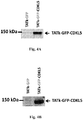
- Figs. 4A and 4B demonstrate western blot analysis results from TATk-GFP-CDKL5 protein expression in transfected HEK293T cells.
- Fig. 4A demonstrates TATk-GFP-CDKL5 fusion protein expression in cell homogenates from transfected HEK293T cells.
- Fig. 4B demonstrates TATk-GFP-CDKL5 fusion protein accumulation in concentrated (20X) cell culture medium from transfected HEK293T cells,
- Example 2 Validation of TATk-CDKL5 kinase activity.
- TATk-GFP-CDKL5 In order to purify the TATk-GFP-CDKL5 protein, a myc-tag and a 6xHis tag were added at the C-terminal region of the TATk-GFP-CDKL5 gene.
- TATk-GFP-CDKL5 fusion protein was purified from culture medium on a Ni-NTA resin. It has been shown that the CDKL5 kinase has a high autophosphorylation activity. As shown in Figs. 5A and 5B , which shows the results from an in vitro kinase activity assay, purified TATk-GFP-CDKL5 protein preserves its autophosphorylation activity. This demonstrates that the purified fusion protein retains its kinase activity.
- Example 3 Internalization of TATk-CDKL5 by HEK293T cells.
- TATk-GFP-CDKL5 protein was efficiently translocated into the cells.
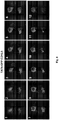
- the internalization in target cells was confirmed by confocal microscopy ( Fig. 8 ).
- SH-SY5Y neuroblastoma cells were incubated in concentrated media containing the fusion protein for 30 minutes.
- FIG. 8 shows an image of a serial of confocal images (1-12) of TATk-GFP-CDKL5 transduced SH-SY5Y cells, demonstrating that TATk-GFP-CDKL5 protein is internalized by target cells and localized both in the nucleus and cytoplasm of SH-SY5Y cells ( Fig. 8 ).
- CDKL5 plays a fundamental role on postnatal neurogenesis, by affecting neural precursor survival and maturation of newborn neurons.
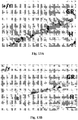
- Cultures of neuronal precursor cells (NPCs) from the subventricolar zone (SVZ) of Cdkl5 knockout mice were observed to exhibit the same defects observed in vivo in cerebellar granule cell precursors. Namely, in cultures of neuronal precursor cells derived from wild type mice (+/+) there were more neurons ( ⁇ -tubulin III positive cells, red cells) than in cultures of neuronal precursor cells derived from CDKL5 KO (-/-) mice ( Figs. 14A and 14B ). This suggests that the loss of CDKL5 decreases the survival of postmitotic neurons.
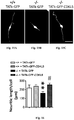
- TATk-CDKL5 protein restores neurite development of neronal cell precursors derived from a CDKL5 KO mouse.
- Example 7 Delivery of TATk-CDKL5 into the mouse brain.
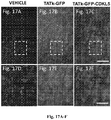
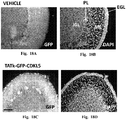
- TATk-GFP-CDKL5 and TATk-GFP in the brain were evaluated by immunohistochemistry using an anti-GFP antibody and a TSA amplification kit. Images were taken at the level of the sensory-motor cortex and the cerebellum. Cells were counterstained using 4',6-diamidino-2-phenylindole (DAPI). Representative images demonstrating presence of the TATk-GFP-CDKL5 protein in the sensory-motor cortex and cerebellum of mice are shown in Figs.
- mice (4-6 months of age) were intraventricularly injected ( Fig. 19 ) for 5 consecutive days ( see e.g. Fig. 20 for experimental schedule) with TATk-GFP-CDKL5 or TATk-GFP. Briefly, mice were anesthetized with ketamine (100-125 mg/kg) and xylazine (10-12.5 mg/kg). Cannulas (0.31-mm diameter, Brain Infusion Kit III; Alzet Cupertino, CA) were stereotaxically implanted into the lateral ventricles (A/P -0.4-mm caudal, M/L 1.0 mm, D/V -2.0 mm; Fig. 19 ).
- mice Seven days after implantation mice were infused for 5 consecutive days with 10 ⁇ l (about 50 ng) of TATk-GFP-CDKL5 or TATk-GFP in PBS by using a Hamilton syringe connected to a motorized nanoinjector (at a rate of 0.5 ⁇ l/min).
- a Hamilton syringe connected to a motorized nanoinjector (at a rate of 0.5 ⁇ l/min).
- the dendritic morphology of newborn hippocampal granule cells was analyzed with immunohistochemistry for DCX.
- Figs. 21 and 22 demonstrate that DCX positive neurons of Cdkl5 KO mice had shorter processes than those of their wild type counterparts ( Figs 21A-21B and 22A-22B ).
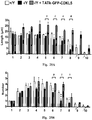
- TATk-GFP-CDKL5 fusion protein administered intraventricularly on five consecutive days was observed to increase neurite length and branch number in CDKL5 knockout mice ( Fig. 22C ) to levels similar to wild-type ( Fig. 22A ).
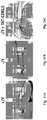
- Figs. 23A-23B show examples of the reconstructed dendritic tree of newborn granule cells of wild-type (+/Y) ( Fig. 23A ), hemizygous CDKL5 knockout mice (-/Y) ( Fig. 23B ), and hemizygous CDKL5 knockout male mice treated with a TATk-GFP-CDKL5 fusion protein.
- TATk-GFP-CDKL5-treated CDKL5 knockout mice underwent an increase in the number of postmitotic neurons that became similar to those of wild type (+/Y) mice ( Fig. 27 ). This indicates that the increased death of posmitotic immature granule cells that characterizes CDKL5 knockout mice is rescued by TATk-GFP-CDKL5 treatment.
- TATk-GFP-CDKL5 in CDKL5 knockout mice increased neurite length and survival of newborn cells in the hippocampus indicating that injected TATk-CDKL5 diffused from the lateral ventricle to the hippocampus and restored maturation and survival of postmitotic granule cells.
- a reduction in connectivity may be the counterpart of the dendritic hypotrophy that characterizes the newborn granule cells of CDKL5 KO mice.
- Synaptophysin (SYN; also known as p38) is a synaptic vesicle glycoprotein that is a specific marker of presynaptic terminals.
- SYN synaptophysin
- FIG. 28A-28C show representative images demonstrating brain sections processed for synaptophysin (SYN) immunofluorescence from the molecular layer (Mol) of the dentate gryrus (DG) from a wild-type male mouse (+/Y) ( Fig. 28A ), a hemizygous CDKL5 knockout male mouse (-/Y) ( Fig. 28B ), and a hemizygous CDKL5 knockout male mouse treated with TATk-GFP-CDKL5 fusion protein via intraventricular injections given once a day for 5 consecutive days (-/Y + TATk-GFP-CDKL5) ( Fig. 28C ).
- SYN synaptophysin
- Fluorescence images were captured using a Nikon Eclipse E600 microscope equipped with a Nikon Digital Camera DXM1200 (ATI system). Densitometric analysis in the molecular layer and cortex was carried out using Nis-Elements Software 3.21.03 (Nikon). For each image, the intensity threshold was estimated by analyzing the distribution of pixel intensities in the image areas that did not contain IR. This value was then subtracted to calculate IR of each sampled area. Values are given as a percentage of the optical density of control CDKL5 +/Y mice (mean + standard error).
- Dendritic arborization is significantly reduced in cortical pyramidal neurons of CDKL5 knockout mice compared to their wild type counterparts (Amendola, 2014 PLoS One. 9(5):e91613). A similar lower level of SYN immunoreactivity in the layers III of the neocortex was observed ( Fig. 30B ). In CDKL5 knockout mice (-/Y) mice treated with TATk-GFP-CDKL5 these defects were fully rescued ( Fig. 28 and Figs. 30A and 30B ), suggesting that the positive impact of treatment with TATk-GFP-CDKL5 on dendritic structure was paralleled by restoration of the input to neurons.
- CDKL5 knockout mice exhibit learning and memory deficits as compared to wild-type mice (see e.g. Figs. 33, and 34A-34B ).
Landscapes
- Health & Medical Sciences (AREA)
- Life Sciences & Earth Sciences (AREA)
- Chemical & Material Sciences (AREA)
- Organic Chemistry (AREA)
- Engineering & Computer Science (AREA)
- Bioinformatics & Cheminformatics (AREA)
- Zoology (AREA)
- Genetics & Genomics (AREA)
- General Health & Medical Sciences (AREA)
- Medicinal Chemistry (AREA)
- Molecular Biology (AREA)
- Wood Science & Technology (AREA)
- Biochemistry (AREA)
- Biomedical Technology (AREA)
- Proteomics, Peptides & Aminoacids (AREA)
- General Engineering & Computer Science (AREA)
- Gastroenterology & Hepatology (AREA)
- Microbiology (AREA)
- Biotechnology (AREA)
- Animal Behavior & Ethology (AREA)
- Veterinary Medicine (AREA)
- Pharmacology & Pharmacy (AREA)
- Public Health (AREA)
- Biophysics (AREA)
- Toxicology (AREA)
- General Chemical & Material Sciences (AREA)
- Chemical Kinetics & Catalysis (AREA)
- Nuclear Medicine, Radiotherapy & Molecular Imaging (AREA)
- Neurosurgery (AREA)
- Neurology (AREA)
- Cell Biology (AREA)
- Epidemiology (AREA)
- Immunology (AREA)
- Hospice & Palliative Care (AREA)
- Psychiatry (AREA)
- Marine Sciences & Fisheries (AREA)
- Peptides Or Proteins (AREA)
- Medicines That Contain Protein Lipid Enzymes And Other Medicines (AREA)
- Enzymes And Modification Thereof (AREA)
- Medicinal Preparation (AREA)
Priority Applications (5)
| Application Number | Priority Date | Filing Date | Title |
|---|---|---|---|
| SM20210478T SMT202100478T1 (it) | 2014-02-28 | 2015-02-27 | Proteine di fusione tatk-cdkl5, composizioni, formulazioni e loro uso |
| PL19179287T PL3608334T3 (pl) | 2014-02-28 | 2015-02-27 | Białka fuzyjne TATK-CDKL5, kompozycje, formulacje i ich zastosowanie |
| RS20211041A RS62244B1 (sr) | 2014-02-28 | 2015-02-27 | Tatk-cdkl5 fuzioni proteini, sastavi, formulacije i njihova upotreba |
| SI201531680T SI3608334T1 (sl) | 2014-02-28 | 2015-02-27 | Fuzijski proteini TATK-CDKL5, sestavki, formulacije in njihova uporaba |
| HRP20211324TT HRP20211324T1 (hr) | 2014-02-28 | 2021-08-17 | Tatk-cdkl5 fuzijski proteini, pripravci, formulacije, i njihova uporaba |
Applications Claiming Priority (3)
| Application Number | Priority Date | Filing Date | Title |
|---|---|---|---|
| US201461946280P | 2014-02-28 | 2014-02-28 | |
| EP15736034.8A EP3110837B1 (fr) | 2014-02-28 | 2015-02-27 | Protéines de fusion tatk-cdkl5, compositions, formulations et utilisation de celles-ci |
| PCT/IB2015/000999 WO2015128746A2 (fr) | 2014-02-28 | 2015-02-27 | Protéines de fusion tatk-cdkl5, compositions, formulations et utilisation de celles-ci |
Related Parent Applications (1)
| Application Number | Title | Priority Date | Filing Date |
|---|---|---|---|
| EP15736034.8A Division EP3110837B1 (fr) | 2014-02-28 | 2015-02-27 | Protéines de fusion tatk-cdkl5, compositions, formulations et utilisation de celles-ci |
Publications (2)
| Publication Number | Publication Date |
|---|---|
| EP3608334A1 true EP3608334A1 (fr) | 2020-02-12 |
| EP3608334B1 EP3608334B1 (fr) | 2021-05-19 |
Family
ID=53539745
Family Applications (2)
| Application Number | Title | Priority Date | Filing Date |
|---|---|---|---|
| EP19179287.8A Active EP3608334B1 (fr) | 2014-02-28 | 2015-02-27 | Protéines de fusion tatk-cdkl5, compositions, formulations et leur utilisation |
| EP15736034.8A Active EP3110837B1 (fr) | 2014-02-28 | 2015-02-27 | Protéines de fusion tatk-cdkl5, compositions, formulations et utilisation de celles-ci |
Family Applications After (1)
| Application Number | Title | Priority Date | Filing Date |
|---|---|---|---|
| EP15736034.8A Active EP3110837B1 (fr) | 2014-02-28 | 2015-02-27 | Protéines de fusion tatk-cdkl5, compositions, formulations et utilisation de celles-ci |
Country Status (33)
| Country | Link |
|---|---|
| US (4) | US9290746B2 (fr) |
| EP (2) | EP3608334B1 (fr) |
| JP (2) | JP6629747B2 (fr) |
| KR (1) | KR102307276B1 (fr) |
| CN (1) | CN106255706A (fr) |
| AU (2) | AU2015221860B2 (fr) |
| BR (1) | BR112016019868B1 (fr) |
| CA (1) | CA2940401C (fr) |
| CL (1) | CL2016002142A1 (fr) |
| CR (1) | CR20160392A (fr) |
| CY (2) | CY1122644T1 (fr) |
| DK (2) | DK3110837T3 (fr) |
| DO (1) | DOP2016000220A (fr) |
| EA (2) | EA202190727A3 (fr) |
| ES (2) | ES2745335T3 (fr) |
| HR (2) | HRP20191511T1 (fr) |
| HU (2) | HUE055282T2 (fr) |
| IL (2) | IL247481B (fr) |
| LT (2) | LT3608334T (fr) |
| MX (2) | MX2016011167A (fr) |
| MY (1) | MY181566A (fr) |
| NI (1) | NI201600127A (fr) |
| PE (1) | PE20161406A1 (fr) |
| PH (1) | PH12016501689B1 (fr) |
| PL (2) | PL3608334T3 (fr) |
| PT (2) | PT3608334T (fr) |
| RS (2) | RS59344B1 (fr) |
| SG (2) | SG10202000537RA (fr) |
| SI (2) | SI3608334T1 (fr) |
| SM (2) | SMT201900504T1 (fr) |
| SV (1) | SV2016005264A (fr) |
| WO (1) | WO2015128746A2 (fr) |
| ZA (2) | ZA201606655B (fr) |
Families Citing this family (9)
| Publication number | Priority date | Publication date | Assignee | Title |
|---|---|---|---|---|
| SG10202000537RA (en) * | 2014-02-28 | 2020-03-30 | Univ Bologna Alma Mater Studiorum | Tatk-cdkl5 fusion proteins, compositions, formulations, and use thereof |
| EP3475418A4 (fr) * | 2016-06-28 | 2020-03-04 | Alma Mater Studiorum -Universita' di Bologna | Protéines de fusion tatk-cdkl5, compositions, formulations et leur utilisation |
| JP2021505135A (ja) * | 2017-11-30 | 2021-02-18 | アミカス セラピューティックス インコーポレイテッド | Cdkl5発現変異体及びcdkl5融合タンパク質 |
| WO2021050789A1 (fr) | 2019-09-10 | 2021-03-18 | Obsidian Therapeutics, Inc. | Protéines de fusion de ca2-il15 pour une régulation accordable |
| US20230043046A1 (en) * | 2019-10-30 | 2023-02-09 | Amicus Therapeutics, Inc. | Recombinant CDKL5 Proteins, Gene Therapy and Production Methods |
| IT202000025423A1 (it) * | 2020-10-27 | 2022-04-27 | Ulisse Biomed S P A | Uso di proteine per il trattamento di patologie associate a tossine formanti pori o a proteine virali |
| IL303239A (en) | 2020-12-01 | 2023-07-01 | Univ Pennsylvania | Compositions and their uses for the treatment of Engelmann syndrome |
| EP4387641A4 (fr) * | 2021-08-18 | 2025-07-09 | Ultragenyx Pharmaceutical Inc | Formulations d'aav recombinants |
| WO2025050032A1 (fr) * | 2023-08-31 | 2025-03-06 | Ultragenyx Pharmaceutical Inc. | Méthodes de production de protéines cdkl5 et leurs utilisations |
Family Cites Families (2)
| Publication number | Priority date | Publication date | Assignee | Title |
|---|---|---|---|---|
| WO2012055826A1 (fr) * | 2010-10-25 | 2012-05-03 | Universite De La Mediterranee (Aix-Marseille Ii) | TRAITEMENT DE TROUBLES ASSOCIÉS À MeCP2 |
| SG10202000537RA (en) * | 2014-02-28 | 2020-03-30 | Univ Bologna Alma Mater Studiorum | Tatk-cdkl5 fusion proteins, compositions, formulations, and use thereof |
-
2015
- 2015-02-27 SG SG10202000537RA patent/SG10202000537RA/en unknown
- 2015-02-27 ES ES15736034T patent/ES2745335T3/es active Active
- 2015-02-27 CR CR20160392A patent/CR20160392A/es unknown
- 2015-02-27 JP JP2016553630A patent/JP6629747B2/ja active Active
- 2015-02-27 SI SI201531680T patent/SI3608334T1/sl unknown
- 2015-02-27 CA CA2940401A patent/CA2940401C/fr active Active
- 2015-02-27 EP EP19179287.8A patent/EP3608334B1/fr active Active
- 2015-02-27 PT PT191792878T patent/PT3608334T/pt unknown
- 2015-02-27 US US14/633,757 patent/US9290746B2/en active Active
- 2015-02-27 EA EA202190727A patent/EA202190727A3/ru unknown
- 2015-02-27 PE PE2016001528A patent/PE20161406A1/es not_active Application Discontinuation
- 2015-02-27 HU HUE19179287A patent/HUE055282T2/hu unknown
- 2015-02-27 DK DK15736034.8T patent/DK3110837T3/da active
- 2015-02-27 RS RSP20191144 patent/RS59344B1/sr unknown
- 2015-02-27 WO PCT/IB2015/000999 patent/WO2015128746A2/fr not_active Ceased
- 2015-02-27 LT LTEP19179287.8T patent/LT3608334T/lt unknown
- 2015-02-27 PT PT15736034T patent/PT3110837T/pt unknown
- 2015-02-27 MX MX2016011167A patent/MX2016011167A/es active IP Right Grant
- 2015-02-27 BR BR112016019868-9A patent/BR112016019868B1/pt not_active IP Right Cessation
- 2015-02-27 HU HUE15736034A patent/HUE045393T2/hu unknown
- 2015-02-27 LT LTEP15736034.8T patent/LT3110837T/lt unknown
- 2015-02-27 PL PL19179287T patent/PL3608334T3/pl unknown
- 2015-02-27 AU AU2015221860A patent/AU2015221860B2/en active Active
- 2015-02-27 SI SI201530884T patent/SI3110837T1/sl unknown
- 2015-02-27 SM SM20190504T patent/SMT201900504T1/it unknown
- 2015-02-27 DK DK19179287.8T patent/DK3608334T3/da active
- 2015-02-27 KR KR1020167026521A patent/KR102307276B1/ko active Active
- 2015-02-27 PL PL15736034T patent/PL3110837T3/pl unknown
- 2015-02-27 ES ES19179287T patent/ES2885245T3/es active Active
- 2015-02-27 MX MX2020001223A patent/MX392778B/es unknown
- 2015-02-27 HR HRP20191511 patent/HRP20191511T1/hr unknown
- 2015-02-27 EA EA201691691A patent/EA038000B1/ru unknown
- 2015-02-27 CN CN201580010858.9A patent/CN106255706A/zh active Pending
- 2015-02-27 MY MYPI2016001567A patent/MY181566A/en unknown
- 2015-02-27 RS RS20211041A patent/RS62244B1/sr unknown
- 2015-02-27 SM SM20210478T patent/SMT202100478T1/it unknown
- 2015-02-27 SG SG11201606863YA patent/SG11201606863YA/en unknown
- 2015-02-27 EP EP15736034.8A patent/EP3110837B1/fr active Active
-
2016
- 2016-03-21 US US15/075,457 patent/US9944910B2/en active Active
- 2016-08-23 DO DO2016000220A patent/DOP2016000220A/es unknown
- 2016-08-24 CL CL2016002142A patent/CL2016002142A1/es unknown
- 2016-08-25 IL IL247481A patent/IL247481B/en active IP Right Grant
- 2016-08-25 PH PH12016501689A patent/PH12016501689B1/en unknown
- 2016-08-26 NI NI201600127A patent/NI201600127A/es unknown
- 2016-08-26 SV SV2016005264A patent/SV2016005264A/es unknown
- 2016-09-26 ZA ZA2016/06655A patent/ZA201606655B/en unknown
-
2018
- 2018-04-16 US US15/954,021 patent/US10584318B2/en active Active
-
2019
- 2019-08-20 AU AU2019219743A patent/AU2019219743B2/en active Active
- 2019-09-11 CY CY20191100949T patent/CY1122644T1/el unknown
- 2019-09-25 ZA ZA2019/06304A patent/ZA201906304B/en unknown
- 2019-12-05 JP JP2019220178A patent/JP6896050B2/ja active Active
-
2020
- 2020-03-06 US US16/811,484 patent/US10907138B2/en active Active
- 2020-06-17 IL IL275435A patent/IL275435B/en unknown
-
2021
- 2021-08-17 HR HRP20211324TT patent/HRP20211324T1/hr unknown
- 2021-08-19 CY CY20211100743T patent/CY1124727T1/el unknown
Non-Patent Citations (26)
| Title |
|---|
| "Biocomputing: Informatics and Genome Projects", 1993, ACADEMIC PRESS |
| "Computer Analysis of Sequence Data", 1994, HUMANA PRESS |
| "Pharmaceutical dosage form tablets", 1989, MARCEL DEKKER, INC. |
| "Remington - The science and practice of pharmacy", 2000, LIPPINCOTT WILLIAMS & WILKINS |
| "Sequence Analysis Primer", 1991, M STOCKTON PRESS |
| AMENDOLA2014, PLOS ONE, vol. 9, no. 5, 2014, pages e91613 |
| ANONYMOUS: "Bandi per Assegni di ricerca", 1 January 2013 (2013-01-01), XP055207890, Retrieved from the Internet <URL:http://bandi.miur.it/bandi.php/public/fellowship/id_fellow/67724> [retrieved on 20150814] * |
| ANONYMOUS: "Gene therapy reverses Rett syndrome symptoms in mice -", 30 September 2013 (2013-09-30), XP055208894, Retrieved from the Internet <URL:http://sfari.org/news-and-opinion/news/2013/gene-therapy-reverses-rett-syndrome-symptoms-in-mice> [retrieved on 20150821] * |
| ANSEL ET AL.: "Pharmaceutical dosage forms and drug delivery systems", 1995, WILLIAMS AND WILKINS |
| BAHI-BUISSONBIENVENU, MOL. SYNDROMOL., vol. 2, 2012, pages 137 - 152 |
| BERTANI ET AL., J. BIOL. CHEM., vol. 281, 2006, pages 32048 - 320 56 |
| CARILLO, H.LIPMAN, D., SIAM J. APPLIED MATH., vol. 48, 1988, pages 1073 |
| E SCALA: "CDKL5/STK9 is mutated in Rett syndrome variant with infantile spasms", JOURNAL OF MEDICAL GENETICS, vol. 42, no. 2, 1 February 2005 (2005-02-01), pages 103 - 107, XP055208896, DOI: 10.1136/jmg.2004.026237 * |
| FUCHS, NEUROBIOL DIS., vol. 70, 2014, pages 53 - 68 |
| GENE: "Gene therapy for rare diseases", 1 January 1999 (1999-01-01), XP055208821, Retrieved from the Internet <URL:http://www.nature.com/ng/journal/v22/n4/pdf/ng0899_313.pdf> [retrieved on 20150820] * |
| HEINJE, G.: "Sequence Analysis in Molecular Biology", 1987, ACADEMIC PRESS |
| KALSCHEUER ET AL., AM. J. HUM. GENET., vol. 72, 2003, pages 1401 - 1411 |
| MAE M ET AL: "Cell-penetrating peptides as vectors for peptide, protein and oligonucleotide delivery", CURRENT OPINION IN PHARMACOLOGY, ELSEVIER SCIENCE PUBLISHERS, NL, vol. 6, no. 5, 1 October 2006 (2006-10-01), pages 509 - 514, XP028058465, ISSN: 1471-4892, [retrieved on 20061001], DOI: 10.1016/J.COPH.2006.04.004 * |
| MARCELLA FLINTERMAN ET AL: "Delivery of Therapeutic Proteins as Secretable TAT Fusion Products", MOLECULAR THERAPY, vol. 17, no. 2, 2 December 2008 (2008-12-02), pages 334 - 342, XP055166511, ISSN: 1525-0016, DOI: 10.1038/mt.2008.256 * |
| MELINO, J. NEUROONCOL., vol. 31, 1997, pages 65 - 83 |
| NEEDELMANWUNSCH, J. MOL. BIOL., vol. 48, 1970, pages 443 - 453 |
| QIAN CHEN ET AL: "CDKL5, a protein associated with rett syndrome, regulates neuronal morphogenesis via Rac1 signaling", THE JOURNAL OF NEUROSCIENCE : THE OFFICIAL JOURNAL OF THE SOCIETY FOR NEUROSCIENCE, 22 September 2010 (2010-09-22), United States, pages 12777 - 12786, XP055207953, Retrieved from the Internet <URL:http://www.ncbi.nlm.nih.gov/pubmed/20861382> DOI: 10.1523/JNEUROSCI.1102-10.2010 * |
| RIZZI ET AL., BRAIN RES., vol. 1415, 2011, pages 23 - 33 |
| SCALA ET AL., J. MED. GEN., vol. 42, 2005, pages 103 - 107 |
| SINGH, BRAIN RES., vol. 1154, 2007, pages 8 - 21 |
| VALLI ET AL., BIOCHIM BIOPHYS ACTA, vol. 1819, 2012, pages 1173 - 1185 |
Also Published As
Similar Documents
| Publication | Publication Date | Title |
|---|---|---|
| US10907138B2 (en) | TATk-CDKL5 fusion proteins, compositions, formulations, and use thereof | |
| US20210268072A1 (en) | TATk-CDKL5 Fusion Proteins, Compositions, Formulations, and Use Thereof | |
| JP2017507655A5 (fr) | ||
| US11603394B2 (en) | Targeted effector proteins and uses thereof | |
| US9616138B1 (en) | Cargo carrying nanoparticles | |
| NZ749459A (en) | TATĸ-CDKL5 FUSION PROTEINS, COMPOSITIONS, FORMULATIONS, AND USE THEREOF | |
| HK1226745A1 (en) | Tatk-cdkl5 fusion proteins, compositions, formulations, and use thereof |
Legal Events
| Date | Code | Title | Description |
|---|---|---|---|
| PUAI | Public reference made under article 153(3) epc to a published international application that has entered the european phase |
Free format text: ORIGINAL CODE: 0009012 |
|
| STAA | Information on the status of an ep patent application or granted ep patent |
Free format text: STATUS: THE APPLICATION HAS BEEN PUBLISHED |
|
| AC | Divisional application: reference to earlier application |
Ref document number: 3110837 Country of ref document: EP Kind code of ref document: P |
|
| AK | Designated contracting states |
Kind code of ref document: A1 Designated state(s): AL AT BE BG CH CY CZ DE DK EE ES FI FR GB GR HR HU IE IS IT LI LT LU LV MC MK MT NL NO PL PT RO RS SE SI SK SM TR |
|
| STAA | Information on the status of an ep patent application or granted ep patent |
Free format text: STATUS: REQUEST FOR EXAMINATION WAS MADE |
|
| 17P | Request for examination filed |
Effective date: 20200812 |
|
| RBV | Designated contracting states (corrected) |
Designated state(s): AL AT BE BG CH CY CZ DE DK EE ES FI FR GB GR HR HU IE IS IT LI LT LU LV MC MK MT NL NO PL PT RO RS SE SI SK SM TR |
|
| GRAP | Despatch of communication of intention to grant a patent |
Free format text: ORIGINAL CODE: EPIDOSNIGR1 |
|
| STAA | Information on the status of an ep patent application or granted ep patent |
Free format text: STATUS: GRANT OF PATENT IS INTENDED |
|
| INTG | Intention to grant announced |
Effective date: 20201203 |
|
| GRAS | Grant fee paid |
Free format text: ORIGINAL CODE: EPIDOSNIGR3 |
|
| GRAA | (expected) grant |
Free format text: ORIGINAL CODE: 0009210 |
|
| STAA | Information on the status of an ep patent application or granted ep patent |
Free format text: STATUS: THE PATENT HAS BEEN GRANTED |
|
| AC | Divisional application: reference to earlier application |
Ref document number: 3110837 Country of ref document: EP Kind code of ref document: P |
|
| AK | Designated contracting states |
Kind code of ref document: B1 Designated state(s): AL AT BE BG CH CY CZ DE DK EE ES FI FR GB GR HR HU IE IS IT LI LT LU LV MC MK MT NL NO PL PT RO RS SE SI SK SM TR |
|
| REG | Reference to a national code |
Ref country code: GB Ref legal event code: FG4D |
|
| REG | Reference to a national code |
Ref country code: CH Ref legal event code: EP |
|
| REG | Reference to a national code |
Ref country code: DE Ref legal event code: R096 Ref document number: 602015069620 Country of ref document: DE |
|
| REG | Reference to a national code |
Ref country code: AT Ref legal event code: REF Ref document number: 1393879 Country of ref document: AT Kind code of ref document: T Effective date: 20210615 |
|
| REG | Reference to a national code |
Ref country code: IE Ref legal event code: FG4D |
|
| REG | Reference to a national code |
Ref country code: HR Ref legal event code: TUEP Ref document number: P20211324 Country of ref document: HR Ref country code: FI Ref legal event code: FGE |
|
| REG | Reference to a national code |
Ref country code: RO Ref legal event code: EPE |
|
| REG | Reference to a national code |
Ref country code: DK Ref legal event code: T3 Effective date: 20210820 |
|
| REG | Reference to a national code |
Ref country code: PT Ref legal event code: SC4A Ref document number: 3608334 Country of ref document: PT Date of ref document: 20210825 Kind code of ref document: T Free format text: AVAILABILITY OF NATIONAL TRANSLATION Effective date: 20210818 Ref country code: NL Ref legal event code: FP |
|
| REG | Reference to a national code |
Ref country code: SE Ref legal event code: TRGR |
|
| REG | Reference to a national code |
Ref country code: NO Ref legal event code: T2 Effective date: 20210519 |
|
| REG | Reference to a national code |
Ref country code: SK Ref legal event code: T3 Ref document number: E 37972 Country of ref document: SK |
|
| REG | Reference to a national code |
Ref country code: EE Ref legal event code: FG4A Ref document number: E021267 Country of ref document: EE Effective date: 20210819 |
|
| REG | Reference to a national code |
Ref country code: GR Ref legal event code: EP Ref document number: 20210402219 Country of ref document: GR Effective date: 20211013 |
|
| REG | Reference to a national code |
Ref country code: HR Ref legal event code: T1PR Ref document number: P20211324 Country of ref document: HR |
|
| REG | Reference to a national code |
Ref country code: HU Ref legal event code: AG4A Ref document number: E055282 Country of ref document: HU |
|
| REG | Reference to a national code |
Ref country code: ES Ref legal event code: FG2A Ref document number: 2885245 Country of ref document: ES Kind code of ref document: T3 Effective date: 20211213 |
|
| REG | Reference to a national code |
Ref country code: AT Ref legal event code: UEP Ref document number: 1393879 Country of ref document: AT Kind code of ref document: T Effective date: 20210519 |
|
| REG | Reference to a national code |
Ref country code: DE Ref legal event code: R097 Ref document number: 602015069620 Country of ref document: DE |
|
| REG | Reference to a national code |
Ref country code: HR Ref legal event code: ODRP Ref document number: P20211324 Country of ref document: HR Payment date: 20220225 Year of fee payment: 8 |
|
| PLBE | No opposition filed within time limit |
Free format text: ORIGINAL CODE: 0009261 |
|
| STAA | Information on the status of an ep patent application or granted ep patent |
Free format text: STATUS: NO OPPOSITION FILED WITHIN TIME LIMIT |
|
| 26N | No opposition filed |
Effective date: 20220222 |
|
| REG | Reference to a national code |
Ref country code: HR Ref legal event code: ODRP Ref document number: P20211324 Country of ref document: HR Payment date: 20230119 Year of fee payment: 9 |
|
| PGFP | Annual fee paid to national office [announced via postgrant information from national office to epo] |
Ref country code: LV Payment date: 20231219 Year of fee payment: 10 Ref country code: HR Payment date: 20231228 Year of fee payment: 10 Ref country code: FR Payment date: 20231229 Year of fee payment: 10 Ref country code: FI Payment date: 20231219 Year of fee payment: 10 Ref country code: BG Payment date: 20231219 Year of fee payment: 10 |
|
| PGFP | Annual fee paid to national office [announced via postgrant information from national office to epo] |
Ref country code: PL Payment date: 20231213 Year of fee payment: 10 |
|
| REG | Reference to a national code |
Ref country code: HR Ref legal event code: ODRP Ref document number: P20211324 Country of ref document: HR Payment date: 20231228 Year of fee payment: 10 |
|
| PGFP | Annual fee paid to national office [announced via postgrant information from national office to epo] |
Ref country code: LU Payment date: 20240213 Year of fee payment: 10 |
|
| PGFP | Annual fee paid to national office [announced via postgrant information from national office to epo] |
Ref country code: MK Payment date: 20231220 Year of fee payment: 10 |
|
| PGFP | Annual fee paid to national office [announced via postgrant information from national office to epo] |
Ref country code: GR Payment date: 20240110 Year of fee payment: 10 |
|
| PGFP | Annual fee paid to national office [announced via postgrant information from national office to epo] |
Ref country code: IS Payment date: 20240109 Year of fee payment: 10 |
|
| PGFP | Annual fee paid to national office [announced via postgrant information from national office to epo] |
Ref country code: LT Payment date: 20240130 Year of fee payment: 10 |
|
| PGFP | Annual fee paid to national office [announced via postgrant information from national office to epo] |
Ref country code: IE Payment date: 20240103 Year of fee payment: 10 |
|
| PGFP | Annual fee paid to national office [announced via postgrant information from national office to epo] |
Ref country code: AT Payment date: 20240125 Year of fee payment: 10 |
|
| PGFP | Annual fee paid to national office [announced via postgrant information from national office to epo] |
Ref country code: MC Payment date: 20240126 Year of fee payment: 10 |
|
| PGFP | Annual fee paid to national office [announced via postgrant information from national office to epo] |
Ref country code: SM Payment date: 20240229 Year of fee payment: 10 Ref country code: RO Payment date: 20240129 Year of fee payment: 10 Ref country code: HU Payment date: 20240116 Year of fee payment: 10 Ref country code: EE Payment date: 20240122 Year of fee payment: 10 Ref country code: CZ Payment date: 20240216 Year of fee payment: 10 Ref country code: GB Payment date: 20240108 Year of fee payment: 10 Ref country code: CH Payment date: 20240301 Year of fee payment: 10 Ref country code: SK Payment date: 20240115 Year of fee payment: 10 Ref country code: PT Payment date: 20240222 Year of fee payment: 10 |
|
| PGFP | Annual fee paid to national office [announced via postgrant information from national office to epo] |
Ref country code: SI Payment date: 20231228 Year of fee payment: 10 |
|
| PGFP | Annual fee paid to national office [announced via postgrant information from national office to epo] |
Ref country code: TR Payment date: 20240210 Year of fee payment: 10 Ref country code: SE Payment date: 20240103 Year of fee payment: 10 Ref country code: RS Payment date: 20240131 Year of fee payment: 10 Ref country code: NO Payment date: 20240208 Year of fee payment: 10 Ref country code: MT Payment date: 20240214 Year of fee payment: 10 Ref country code: BE Payment date: 20240105 Year of fee payment: 10 |
|
| PGFP | Annual fee paid to national office [announced via postgrant information from national office to epo] |
Ref country code: CY Payment date: 20240226 Year of fee payment: 10 |
|
| PGFP | Annual fee paid to national office [announced via postgrant information from national office to epo] |
Ref country code: AL Payment date: 20240209 Year of fee payment: 10 |
|
| REG | Reference to a national code |
Ref country code: HR Ref legal event code: PBON Ref document number: P20211324 Country of ref document: HR Effective date: 20250227 |
|
| PG25 | Lapsed in a contracting state [announced via postgrant information from national office to epo] |
Ref country code: MC Free format text: LAPSE BECAUSE OF NON-PAYMENT OF DUE FEES Effective date: 20250228 |
|
| REG | Reference to a national code |
Ref country code: LT Ref legal event code: MM4D Effective date: 20250227 |
|
| REG | Reference to a national code |
Ref country code: SE Ref legal event code: EUG Ref country code: CH Ref legal event code: PL |
|
| PG25 | Lapsed in a contracting state [announced via postgrant information from national office to epo] |
Ref country code: SM Free format text: LAPSE BECAUSE OF NON-PAYMENT OF DUE FEES Effective date: 20250911 |
|
| PG25 | Lapsed in a contracting state [announced via postgrant information from national office to epo] |
Ref country code: PT Free format text: LAPSE BECAUSE OF NON-PAYMENT OF DUE FEES Effective date: 20250827 |
|
| PG25 | Lapsed in a contracting state [announced via postgrant information from national office to epo] |
Ref country code: LT Free format text: LAPSE BECAUSE OF NON-PAYMENT OF DUE FEES Effective date: 20250227 Ref country code: FI Free format text: LAPSE BECAUSE OF NON-PAYMENT OF DUE FEES Effective date: 20250227 |
|
| PG25 | Lapsed in a contracting state [announced via postgrant information from national office to epo] |
Ref country code: NO Free format text: LAPSE BECAUSE OF NON-PAYMENT OF DUE FEES Effective date: 20250228 Ref country code: GR Free format text: LAPSE BECAUSE OF NON-PAYMENT OF DUE FEES Effective date: 20250903 |
|
| PG25 | Lapsed in a contracting state [announced via postgrant information from national office to epo] |
Ref country code: LU Free format text: LAPSE BECAUSE OF NON-PAYMENT OF DUE FEES Effective date: 20250227 |
|
| REG | Reference to a national code |
Ref country code: AT Ref legal event code: MM01 Ref document number: 1393879 Country of ref document: AT Kind code of ref document: T Effective date: 20250227 Ref country code: SK Ref legal event code: MM4A Ref document number: E 37972 Country of ref document: SK Effective date: 20250227 |
|
| PG25 | Lapsed in a contracting state [announced via postgrant information from national office to epo] |
Ref country code: BG Free format text: LAPSE BECAUSE OF NON-PAYMENT OF DUE FEES Effective date: 20250227 Ref country code: HU Free format text: LAPSE BECAUSE OF NON-PAYMENT OF DUE FEES Effective date: 20250228 |
|
| PG25 | Lapsed in a contracting state [announced via postgrant information from national office to epo] |
Ref country code: HR Free format text: LAPSE BECAUSE OF NON-PAYMENT OF DUE FEES Effective date: 20250227 |
|
| PG25 | Lapsed in a contracting state [announced via postgrant information from national office to epo] |
Ref country code: AT Free format text: LAPSE BECAUSE OF NON-PAYMENT OF DUE FEES Effective date: 20250227 |
|
| PG25 | Lapsed in a contracting state [announced via postgrant information from national office to epo] |
Ref country code: CH Free format text: LAPSE BECAUSE OF NON-PAYMENT OF DUE FEES Effective date: 20250228 Ref country code: CY Free format text: LAPSE BECAUSE OF NON-PAYMENT OF DUE FEES Effective date: 20250227 |
|
| PG25 | Lapsed in a contracting state [announced via postgrant information from national office to epo] |
Ref country code: EE Free format text: LAPSE BECAUSE OF NON-PAYMENT OF DUE FEES Effective date: 20250228 Ref country code: RS Free format text: LAPSE BECAUSE OF NON-PAYMENT OF DUE FEES Effective date: 20250227 Ref country code: CZ Free format text: LAPSE BECAUSE OF NON-PAYMENT OF DUE FEES Effective date: 20250227 |
|
| PG25 | Lapsed in a contracting state [announced via postgrant information from national office to epo] |
Ref country code: RO Free format text: LAPSE BECAUSE OF NON-PAYMENT OF DUE FEES Effective date: 20250227 |
|
| PG25 | Lapsed in a contracting state [announced via postgrant information from national office to epo] |
Ref country code: SK Free format text: LAPSE BECAUSE OF NON-PAYMENT OF DUE FEES Effective date: 20250227 |
|
| GBPC | Gb: european patent ceased through non-payment of renewal fee |
Effective date: 20250227 |
|
| PG25 | Lapsed in a contracting state [announced via postgrant information from national office to epo] |
Ref country code: LV Free format text: LAPSE BECAUSE OF NON-PAYMENT OF DUE FEES Effective date: 20250227 |
|
| REG | Reference to a national code |
Ref country code: BE Ref legal event code: MM Effective date: 20250228 |
|
| PG25 | Lapsed in a contracting state [announced via postgrant information from national office to epo] |
Ref country code: GB Free format text: LAPSE BECAUSE OF NON-PAYMENT OF DUE FEES Effective date: 20250227 |
|
| PG25 | Lapsed in a contracting state [announced via postgrant information from national office to epo] |
Ref country code: FR Free format text: LAPSE BECAUSE OF NON-PAYMENT OF DUE FEES Effective date: 20250228 |
|
| PG25 | Lapsed in a contracting state [announced via postgrant information from national office to epo] |
Ref country code: BE Free format text: LAPSE BECAUSE OF NON-PAYMENT OF DUE FEES Effective date: 20250228 |
|
| PG25 | Lapsed in a contracting state [announced via postgrant information from national office to epo] |
Ref country code: IE Free format text: LAPSE BECAUSE OF NON-PAYMENT OF DUE FEES Effective date: 20250227 |
|
| PGFP | Annual fee paid to national office [announced via postgrant information from national office to epo] |
Ref country code: NL Payment date: 20260220 Year of fee payment: 12 |
|
| PGFP | Annual fee paid to national office [announced via postgrant information from national office to epo] |
Ref country code: ES Payment date: 20260317 Year of fee payment: 12 |
|
| PGFP | Annual fee paid to national office [announced via postgrant information from national office to epo] |
Ref country code: DE Payment date: 20260220 Year of fee payment: 12 Ref country code: DK Payment date: 20260223 Year of fee payment: 12 |
|
| PGFP | Annual fee paid to national office [announced via postgrant information from national office to epo] |
Ref country code: IT Payment date: 20260205 Year of fee payment: 12 |
|
| PG25 | Lapsed in a contracting state [announced via postgrant information from national office to epo] |
Ref country code: PL Free format text: LAPSE BECAUSE OF NON-PAYMENT OF DUE FEES Effective date: 20250227 |