EP3608822A1 - Verfahren und vorrichtung zur erkennung von modellsicherheit und elektronische vorrichtung - Google Patents
Verfahren und vorrichtung zur erkennung von modellsicherheit und elektronische vorrichtung Download PDFInfo
- Publication number
- EP3608822A1 EP3608822A1 EP18854346.6A EP18854346A EP3608822A1 EP 3608822 A1 EP3608822 A1 EP 3608822A1 EP 18854346 A EP18854346 A EP 18854346A EP 3608822 A1 EP3608822 A1 EP 3608822A1
- Authority
- EP
- European Patent Office
- Prior art keywords
- result data
- discriminator
- result
- data
- model
- Prior art date
- Legal status (The legal status is an assumption and is not a legal conclusion. Google has not performed a legal analysis and makes no representation as to the accuracy of the status listed.)
- Granted
Links
Images

Classifications
-
- G—PHYSICS
- G06—COMPUTING OR CALCULATING; COUNTING
- G06F—ELECTRIC DIGITAL DATA PROCESSING
- G06F21/00—Security arrangements for protecting computers, components thereof, programs or data against unauthorised activity
- G06F21/50—Monitoring users, programs or devices to maintain the integrity of platforms, e.g. of processors, firmware or operating systems
- G06F21/57—Certifying or maintaining trusted computer platforms, e.g. secure boots or power-downs, version controls, system software checks, secure updates or assessing vulnerabilities
-
- G—PHYSICS
- G06—COMPUTING OR CALCULATING; COUNTING
- G06F—ELECTRIC DIGITAL DATA PROCESSING
- G06F21/00—Security arrangements for protecting computers, components thereof, programs or data against unauthorised activity
- G06F21/50—Monitoring users, programs or devices to maintain the integrity of platforms, e.g. of processors, firmware or operating systems
- G06F21/52—Monitoring users, programs or devices to maintain the integrity of platforms, e.g. of processors, firmware or operating systems during program execution, e.g. stack integrity ; Preventing unwanted data erasure; Buffer overflow
-
- G—PHYSICS
- G06—COMPUTING OR CALCULATING; COUNTING
- G06F—ELECTRIC DIGITAL DATA PROCESSING
- G06F21/00—Security arrangements for protecting computers, components thereof, programs or data against unauthorised activity
- G06F21/50—Monitoring users, programs or devices to maintain the integrity of platforms, e.g. of processors, firmware or operating systems
- G06F21/52—Monitoring users, programs or devices to maintain the integrity of platforms, e.g. of processors, firmware or operating systems during program execution, e.g. stack integrity ; Preventing unwanted data erasure; Buffer overflow
- G06F21/53—Monitoring users, programs or devices to maintain the integrity of platforms, e.g. of processors, firmware or operating systems during program execution, e.g. stack integrity ; Preventing unwanted data erasure; Buffer overflow by executing in a restricted environment, e.g. sandbox or secure virtual machine
-
- G—PHYSICS
- G06—COMPUTING OR CALCULATING; COUNTING
- G06F—ELECTRIC DIGITAL DATA PROCESSING
- G06F11/00—Error detection; Error correction; Monitoring
- G06F11/36—Prevention of errors by analysis, debugging or testing of software
- G06F11/3668—Testing of software
- G06F11/3672—Test management
- G06F11/3692—Test management for test results analysis
-
- G—PHYSICS
- G06—COMPUTING OR CALCULATING; COUNTING
- G06F—ELECTRIC DIGITAL DATA PROCESSING
- G06F21/00—Security arrangements for protecting computers, components thereof, programs or data against unauthorised activity
- G06F21/50—Monitoring users, programs or devices to maintain the integrity of platforms, e.g. of processors, firmware or operating systems
- G06F21/57—Certifying or maintaining trusted computer platforms, e.g. secure boots or power-downs, version controls, system software checks, secure updates or assessing vulnerabilities
- G06F21/577—Assessing vulnerabilities and evaluating computer system security
-
- G—PHYSICS
- G06—COMPUTING OR CALCULATING; COUNTING
- G06F—ELECTRIC DIGITAL DATA PROCESSING
- G06F21/00—Security arrangements for protecting computers, components thereof, programs or data against unauthorised activity
- G06F21/60—Protecting data
- G06F21/62—Protecting access to data via a platform, e.g. using keys or access control rules
- G06F21/6218—Protecting access to data via a platform, e.g. using keys or access control rules to a system of files or objects, e.g. local or distributed file system or database
-
- G—PHYSICS
- G06—COMPUTING OR CALCULATING; COUNTING
- G06N—COMPUTING ARRANGEMENTS BASED ON SPECIFIC COMPUTATIONAL MODELS
- G06N20/00—Machine learning
- G06N20/10—Machine learning using kernel methods, e.g. support vector machines [SVM]
-
- G—PHYSICS
- G06—COMPUTING OR CALCULATING; COUNTING
- G06N—COMPUTING ARRANGEMENTS BASED ON SPECIFIC COMPUTATIONAL MODELS
- G06N20/00—Machine learning
- G06N20/20—Ensemble learning
-
- G—PHYSICS
- G06—COMPUTING OR CALCULATING; COUNTING
- G06N—COMPUTING ARRANGEMENTS BASED ON SPECIFIC COMPUTATIONAL MODELS
- G06N3/00—Computing arrangements based on biological models
- G06N3/02—Neural networks
- G06N3/04—Architecture, e.g. interconnection topology
- G06N3/045—Combinations of networks
-
- G—PHYSICS
- G06—COMPUTING OR CALCULATING; COUNTING
- G06N—COMPUTING ARRANGEMENTS BASED ON SPECIFIC COMPUTATIONAL MODELS
- G06N3/00—Computing arrangements based on biological models
- G06N3/02—Neural networks
- G06N3/04—Architecture, e.g. interconnection topology
- G06N3/047—Probabilistic or stochastic networks
-
- G—PHYSICS
- G06—COMPUTING OR CALCULATING; COUNTING
- G06N—COMPUTING ARRANGEMENTS BASED ON SPECIFIC COMPUTATIONAL MODELS
- G06N3/00—Computing arrangements based on biological models
- G06N3/02—Neural networks
- G06N3/04—Architecture, e.g. interconnection topology
- G06N3/0475—Generative networks
-
- G—PHYSICS
- G06—COMPUTING OR CALCULATING; COUNTING
- G06N—COMPUTING ARRANGEMENTS BASED ON SPECIFIC COMPUTATIONAL MODELS
- G06N3/00—Computing arrangements based on biological models
- G06N3/02—Neural networks
- G06N3/06—Physical realisation, i.e. hardware implementation of neural networks, neurons or parts of neurons
- G06N3/063—Physical realisation, i.e. hardware implementation of neural networks, neurons or parts of neurons using electronic means
-
- G—PHYSICS
- G06—COMPUTING OR CALCULATING; COUNTING
- G06N—COMPUTING ARRANGEMENTS BASED ON SPECIFIC COMPUTATIONAL MODELS
- G06N3/00—Computing arrangements based on biological models
- G06N3/02—Neural networks
- G06N3/08—Learning methods
-
- G—PHYSICS
- G06—COMPUTING OR CALCULATING; COUNTING
- G06N—COMPUTING ARRANGEMENTS BASED ON SPECIFIC COMPUTATIONAL MODELS
- G06N3/00—Computing arrangements based on biological models
- G06N3/02—Neural networks
- G06N3/08—Learning methods
- G06N3/088—Non-supervised learning, e.g. competitive learning
-
- G—PHYSICS
- G06—COMPUTING OR CALCULATING; COUNTING
- G06N—COMPUTING ARRANGEMENTS BASED ON SPECIFIC COMPUTATIONAL MODELS
- G06N3/00—Computing arrangements based on biological models
- G06N3/02—Neural networks
- G06N3/08—Learning methods
- G06N3/09—Supervised learning
-
- G—PHYSICS
- G06—COMPUTING OR CALCULATING; COUNTING
- G06N—COMPUTING ARRANGEMENTS BASED ON SPECIFIC COMPUTATIONAL MODELS
- G06N3/00—Computing arrangements based on biological models
- G06N3/02—Neural networks
- G06N3/08—Learning methods
- G06N3/094—Adversarial learning
Definitions
- the present specification relates to the field of computer software technologies, and in particular, to a method and an apparatus for detecting model security and an electronic device.
- Deep learning is a popular technology field at present. Based on a deep learning model, tasks such as risk recognition, voice recognition, and image recognition can be performed.
- the deep learning model is usually on a server, but can also be in a relatively open environment such as a user terminal.
- Implementations of the present specification provide a method and an apparatus for detecting model security and an electronic device, to detect security of a model in a relatively open environment.
- An implementation of the present specification provides a method for detecting model security, including the following: obtaining result data computed by using a to-be-detected model, where the result data includes intermediate result data and/or output result data, and discriminating the result data by using a discriminator, and determining a security detection result of the to-be-detected model, where the discriminator is obtained through training by using a generative adversarial network (GAN) framework, the to-be-detected model, and a sample, and the to-be-detected model is in a trusted environment in the process of obtaining the discriminator through training.
- GAN generative adversarial network
- An implementation of the present specification provides an apparatus for detecting model security, including the following: an acquisition module, configured to obtain result data computed by using a to-be-detected model, where the result data includes intermediate result data and/or output result data, and a detection module, configured to discriminate the result data by using a discriminator, and determine a security detection result of the to-be-detected model, where the discriminator is obtained through training by using a GAN framework, the to-be-detected model, and a sample, and the to-be-detected model is in a trusted environment in the process of obtaining the discriminator through training.
- An implementation of the present specification provides an electronic device, including the following: at least one processor, and a memory communicatively connected to the at least one processor, where the memory stores an instruction that can be executed by the at least one processor, and the instruction is executed by the at least one processor, to enable the at least one processor to: obtain result data computed by using a to-be-detected model, where the result data includes intermediate result data and/or output result data, and discriminate the result data by using a discriminator, and determine a security detection result of the to-be-detected model, where the discriminator is obtained through training by using a GAN framework, the to-be-detected model, and a sample, and the to-be-detected model is in a trusted environment in the process of obtaining the discriminator through training.
- the at least one technical solution used in the implementations of the present specification can achieve the following beneficial effects:
- the discriminator obtained through training based on the GAN framework can perform model security detection based on the intermediate result data and/or the output result data computed by using the to-be-detected model, to learn whether the computing process or the result is secure.
- Implementations of the present specification provide a method and an apparatus for detecting model security and an electronic device.
- the model is usually used for classification and prediction, and a wind control model is used for risk control in a typical application scenario.
- Some characteristic data is input to the wind control model to obtain result data through computing, and it is further determined whether a user or an event corresponding to the input characteristic data is at risk based on the result data.
- a malicious user probably attacks a model by tampering with input data, computing logic, result data, etc of the model.
- a computing process or a computing result of the model is no longer to be trusted.
- the model can be considered as insecure.
- the present specification provides a model security detection solution.
- FIG. 1 is a schematic diagram illustrating an overall architecture in an actual application scenario of the solution in the present specification.
- the overall architecture mainly includes a to-be-detected model and a device in which a discriminator obtained through training by using a GAN framework is located.
- the discriminator is obtained through training by using the GAN framework, the to-be-detected model, and a sample, and the discriminator discriminates intermediate result data and/or output result data computed by using the to-be-detected model for current input data, to detect whether the to-be-detected model is currently secure.
- the device can be a device in a relatively open environment such as a user terminal.
- an air control engine is deployed on a mobile phone, and edge computing is performed on the air control engine to implement risk control on the mobile phone.
- the to-be-detected model can be a model in the air control engine, and the mobile phone can be the device.
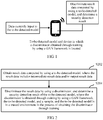
- FIG. 2 is a schematic flowchart illustrating a method for detecting model security, according to an implementation of the present specification.
- the procedure can be executed by the following devices that can be used as a server or a server: a mobile phone, a tablet computer, an intelligent wearable device, an on-board unit, a personal computer, a medium-sized computer, a computer cluster, etc.
- the procedure in FIG. 2 can include the following steps: S202: Obtain result data computed by using a to-be-detected model, where the result data includes intermediate result data and/or output result data.
- the to-be-detected model is located in an execution body.
- the field to which the to-be-detected model belongs is not limited in the present application.
- the to-be-detected model is a wind control model in the artificial intelligence field. Computing is performed based on input data (for example, behavior characteristic and environment information), and it is determined, based on the output result data obtained through computing, whether a current operation is performed by the user. In this case, security of the to-be-detected model is particularly important.
- the result data can be in a plurality of forms.
- the result data is a vector.
- a main body of the deep learning model is a deep neural network.
- input data of the deep neural network is a vector
- the previously described output result data output by an output layer of the deep neural network is also a vector.
- data computed by an intermediate layer (namely, a hidden layer) of the deep neural network can also be output, and the data output by the intermediate layer is also a vector, and belongs to the previously described intermediate result data.
- the result data can be a value, a Boolean value, a character string, etc.
- S204 Discriminate the result data by using a discriminator, and determine a security detection result of the to-be-detected model, where the discriminator is obtained through training by using a GAN framework, the to-be-detected model, and a sample, and the to-be-detected model is in a trusted environment in the process of obtaining the discriminator through training.
- the result data is computed by inputting data to the to-be-detected model.
- the input data can include no label and is usually used in a model prediction phase.
- the sample can include a label and is usually used in a model training phase.
- the discriminator When the discriminator is being trained, input the sample to the to-be-detected model for computing to obtain second result data, where the second result data includes second intermediate result data and/or second output result data.
- second herein is merely used to distinguish the input data and the sample, and a manner for computing the result data by using the to-be-detected model can be the same as that for computing the second result data.
- the second result data is used as training data based on the GAN framework to obtain a corresponding GAN through training, where the GAN includes a generator and the discriminator.
- the generator can also be referred to as a generative (G) network
- the discriminator can also be referred to as a discriminative (D) network.
- computing in the process of obtaining the discriminator through training, computing also needs to be performed for the input sample by using the to-be-detected model, and the second result data obtained through computing is used as a training basis of the discriminator.
- the training process cannot be trusted, it is difficult to ensure that the discriminator obtained through training can be trusted. Therefore, make sure the to-be-detected model isin the trusted environment in the training process of the discriminator, to ensure that the second result data is authentic.
- the discriminator obtained through training based on the GAN framework can perform model security detection based on the intermediate result data and/or the output result data computed by using the to-be-detected model, to determine whether the computing process or the computing result is secure, and whether the computing process or the result is secure can directly reflect whether the to-be-detected model is secure.
- this implementation of the present specification further provides some specific implementation solutions and extension solutions of the method, which are described below.
- the obtaining a corresponding GAN through training by using the second result data and the GAN framework in step S204 can include: obtaining the second result data computed by using the to-be-detected model for the sample, where the second result data includes second intermediate result data and/or second output result data, and obtaining the corresponding GAN through training based on the second result data and the GAN framework (in other words, obtaining the discriminator through training), where the GAN includes the generator and the discriminator.
- an intermediate result is usually higher than a corresponding output result in terms of dimension, and an amount of information included in the intermediate result is often more rich and more refined accordingly.
- the intermediate result is a 100-dimensional vector
- the corresponding output result is a 10-dimensional vector.
- the intermediate result is a 100-dimensional vector
- the corresponding output result is a 1-dimensional Boolean value. It can be seen that the intermediate result to the output result is an information convergence process.
- the discriminator can be obtained through training based on the second intermediate result data, instead of the second output result data. As such, an information analysis capability of the discriminator can be improved, and a more accurate discrimination result can be obtained.
- the to-be-detected model can be split from a more complete model. For example, a ten-layer neural network model is trained. After the training is completed, the first nine layers of the neural network model are extracted as the to-be-detected model. In this case, the output result of the to-be-detected model is actually an intermediate result of the neural network model. Therefore, it is appropriate to obtain the discriminator through training based on the output result data of the to-be-detected model.
- FIG. 3 is a schematic diagram illustrating a training principle of a discriminator used in the model security detection method, according to an implementation of the present specification.
- a trained GAN includes a discriminator and a generator.
- Second result data is used as a reference to train the GAN, so that the generator can generate a generation result whose data distribution is consistent with that of the second result data.
- the second result data and the generation result are separately input to the discriminator to determine whether the second result data and the generation result are true or false.
- a training objective of the generator is to allowa discrimination error for the generation result
- a training objective of the discriminator is to avoid a discrimination error for the generation result and a discrimination error for the second result data.
- data input to the generator is random data, such as a random number or a random vector.
- the second result data can be superposed to the random data as input of the generator.
- the input data of the generator includes at least some data distribution features of the second result data, so that data distribution of the generation result is more approximate to the data distribution of the second result data.
- the obtaining a corresponding GAN through training based on the second result data and the GAN framework includes the following: generating data to be input to the generator based on the random data and/or the second result data, and obtaining the corresponding GAN through training based on the second result data, the data to be input to the generator, and the GAN framework.
- the sample is a sample without being attacked, which can be ensured by using the previous trusted environment. Therefore, the second result data can be considered as authentic. If the second result data is not authentic, reliability of the discriminator obtained through training based on the second result data is adversely affected, and reliability of a model security detection result is reduced.
- FIG. 4 is a schematic diagram of the solution.
- a security detection model includes at least a discriminator, and can further include processing logic after a discrimination result is obtained.
- Data is input to a to-be-detected model to obtain result data through computing.
- Intermediate result data and/or output result data are/is input to the security detection model, and are/is discriminated by the discriminator.
- a security detection result can be generated by using the security detection model based on the output result data and the discrimination result.
- the generated security detection result can reflect such information: "The operation is performed by the user (representing the output result data computed by using the to-be-detected model), and the data is tampered with (representing the discrimination result of the discriminator)."
- a specific format and representation form of the security detection result are not limited.
- the security detection result can be generated based on only the discrimination result without considering the output result data.
- the to-be-detected model is in an insecure environment (for example, the open environment described in the background), and can be probably attacked.
- the security detection module can be in a predetermined secure environment.
- the secure environment can be built based on software and/or hardware.
- the secure environment can be a trusted execution environment (TEE).
- the discriminating the result data by using a discriminator in step S204 can include: discriminating whether the result data is true or false by using the discriminator, where a discrimination result reflects whether distribution of the result data is consistent with that of the second result data.
- the discriminating the result data by using a discriminator, and determining a security detection result of the to-be-detected model includes the following: discriminating the result data by using the discriminator to obtain the discrimination result, and determining the security detection result of the to-be-detected model based on the discrimination result, or obtaining the output result data, and determining the security detection result of the to-be-detected model based on the output result data and the discrimination result.
- an implementation of the present specification further provides a corresponding apparatus.
- FIG. 5 is a schematic structural diagram illustrating an apparatus for detecting model security corresponding to FIG. 2 , according to an implementation of the present specification.
- the apparatus includes the following: an acquisition module 501, configured to obtain result data computed by using a to-be-detected model, where the result data includes intermediate result data and/or output result data, and a detection module 502, configured to discriminate the result data by using a discriminator, and determine a security detection result of the to-be-detected model, where the discriminator is obtained through training by using a GAN framework, the to-be-detected model, and a sample.
- an acquisition module 501 configured to obtain result data computed by using a to-be-detected model, where the result data includes intermediate result data and/or output result data
- a detection module 502 configured to discriminate the result data by using a discriminator, and determine a security detection result of the to-be-detected model, where the discriminator is obtained through training by using a GAN framework, the to-
- the to-be-detected model is a deep learning model
- the intermediate result data is data computed at an intermediate layer of the to-be-detected model.
- the discriminator is obtained through training by using a GAN framework, the to-be-detected model, and a sample includes the following:obtaining second result data computed by using the to-be-detected model for the sample, where the second result data includes second intermediate result data and/or second output result data, and obtaining a corresponding GAN through training by using the second result data and the GAN framework, where the GAN includes a generator and the discriminator.
- the second result data is authentic.
- the obtaining a corresponding GAN through training by using the second result data and the GAN framework includes the following: generating data to be input to the generator based on random data and/or the second result data, and obtaining the corresponding GAN through training based on the second result data, the data to be input to the generator, and the GAN framework.
- the detection module 502 discriminates the result data by using a discriminator includes the following: the detection module 502 discriminates whether the result data is true or false by using the discriminator, where a discrimination result reflects whether distribution of the result data is consistent with that of the second result data.
- the discriminator is in a predetermined secure environment.
- the discriminator is located in a user terminal.
- an implementation of the present specification further provides a corresponding electronic device, including the following: at least one processor, and a memory communicatively connected to the at least one processor.
- the memory stores an instruction that can be executed by the at least one processor, and the instruction is executed by the at least one processor, to enable the at least one processor to: obtain result data computed by using a to-be-detected model, where the result data includes intermediate result data and/or output result data; and discriminate the result data by using a discriminator, and determine a security detection result of the to-be-detected model, where the discriminator is obtained through training by using a GAN framework, the to-be-detected model, and a sample.
- an implementation of the present specification further provides a corresponding non-volatile computer storage medium, where the non-volatile computer storage medium stores a computer executable instruction, and the computer executable instruction is set to: obtain result data computed by using a to-be-detected model, where the result data includes intermediate result data and/or output result data, and discriminate the result data by using a discriminator, and determine a security detection result of the to-be-detected model, where the discriminator is obtained through training by using a GAN framework, the to-be-detected model, and a sample.
- the apparatus, the electronic device, and the non-volatile computer storage medium provided in the embodiments of the present specification correspond to the method. Therefore, the apparatus, the electronic device, and the non-volatile computer storage medium also have beneficial technical effects similar to a beneficial technical effect of the corresponding method.
- the beneficial technical effect of the method is described in detail above, so that the beneficial technical effects of the corresponding apparatus, electronic device, and non-volatile computer storage medium are not described here again.
- a technical improvement is a hardware improvement (for example, an improvement to a circuit structure, such as a diode, a transistor, or a switch) or a software improvement (an improvement to a method procedure) can be clearly distinguished.
- a hardware improvement for example, an improvement to a circuit structure, such as a diode, a transistor, or a switch
- a software improvement an improvement to a method procedure
- a designer usually programs an improved method procedure into a hardware circuit, to obtain a corresponding hardware circuit structure. Therefore, a method procedure can be improved by using a hardware entity module.
- a programmable logic device for example, a field programmable gate array (FPGA)
- FPGA field programmable gate array
- the designer performs programming to "integrate" a digital system to a PLD without requesting a chip manufacturer to design and produce an application-specific integrated circuit chip.
- programming is mostly implemented by using "logic compiler” software.
- the logic compiler software is similar to a software compiler used to develop and write a program. Original code needs to be written in a particular programming language for compilation. The language is referred to as a hardware description language (HDL).
- HDL hardware description language
- HDLs such as the Advanced Boolean Expression Language (ABEL), the Altera Hardware Description Language (AHDL), Confluence, the Cornell University Programming Language (CUPL), HDCal, the Java Hardware Description Language (JHDL), Lava, Lola, MyHDL, PALASM, and the Ruby Hardware Description Language (RHDL).
- ABEL Advanced Boolean Expression Language
- AHDL Altera Hardware Description Language
- CUPL Cornell University Programming Language
- HDCal the Java Hardware Description Language
- JHDL Java Hardware Description Language
- Lava Lola
- MyHDL MyHDL
- PALASM Ruby Hardware Description Language
- RHDL Ruby Hardware Description Language
- VHDL very-high-speed integrated circuit hardware description language
- Verilog2 Verilog2
- a controller can be implemented by using any appropriate method.
- the controller can be a microprocessor or a processor, or a computer-readable medium that stores computer readable program code (such as software or firmware) that can be executed by the microprocessor or the processor, a logic gate, a switch, an application-specific integrated circuit (ASIC), a programmable logic controller, or a built-in microprocessor.
- Examples of the controller include but are not limited to the following microprocessors: ARC 625D, Atmel AT91SAM, Microchip PIC18F26K20, and Silicone Labs C8051F320.
- the memory controller can also be implemented as a part of the control logic of the memory.
- controller can be considered as a hardware component, and an apparatus configured to implement various functions in the controller can also be considered as a structure in the hardware component. Or the apparatus configured to implement various functions can even be considered as both a software module implementing the method and a structure in the hardware component.
- the system, apparatus, module, or unit illustrated in the previous implementations can be implemented by using a computer chip or an entity, or can be implemented by using a product having a certain function.
- a typical implementation device is a computer.
- the computer can be, for example, a personal computer, a laptop computer, a cellular phone, a camera phone, a smartphone, a personal digital assistant, a media player, a navigation device, an email device, a game console, a tablet computer, or a wearable device, or a combination of any of these devices.
- an implementation of the present specification can be provided as a method, a system, or a computer program product. Therefore, the implementations of the present specification can use a form of hardware only implementations, software only implementations, or implementations with a combination of software and hardware. Moreover, the implementations of the present specification can use a form of a computer program product that is implemented on one or more computer-usable storage media (including but not limited to a disk memory, a CD-ROM, an optical memory, etc.) that include computer-usable program code.
- computer-usable storage media including but not limited to a disk memory, a CD-ROM, an optical memory, etc.
- These computer program instructions can be provided for a general-purpose computer, a dedicated computer, an embedded processor, or a processor of another programmable data processing device to generate a machine, so that the instructions executed by the computer or the processor of the another programmable data processing device generate a device for implementing a specific function in one or more processes in the flowcharts and/or in one or more blocks in the block diagrams.
- These computer program instructions can be stored in a computer readable memory that can instruct the computer or the other programmable data processing devices to work in a specific way, so that the instructions stored in the computer readable memory generate an artifact that includes an instruction device.
- the instruction device implements a specific function in one or more processes in the flowcharts and/or in one or more blocks in the block diagrams.
- a computing device includes one or more processors (CPU), an input/output interface, a network interface, and a memory.
- the memory can include a non-persistent memory, a random access memory (RAM), a non-volatile memory, and/or another form that are in a computer readable medium, for example, a read-only memory (ROM) or a flash memory (flash RAM).
- ROM read-only memory
- flash RAM flash memory
- the computer readable medium includes persistent, non-persistent, movable, and unmovable media that can store information by using any method or technology.
- the information can be a computer readable instruction, a data structure, a program module, or other data.
- Examples of a computer storage medium include but are not limited to a phase change memory (PRAM), a static random access memory (SRAM), a dynamic random access memory (DRAM), another type of random access memory (RAM), a read-only memory (ROM), an electrically erasable programmable read-only memory (EEPROM), a flash memory or another memory technology, a compact disc read-only memory (CD-ROM), a digital versatile disc (DVD) or another optical storage, a cassette magnetic tape, a magnetic tape/magnetic disk storage or another magnetic storage device.
- the computer storage medium can be used to store information accessible by the computing device. Based on the definition in the present specification, the computer readable medium does not include transitory computer readable media (transitory media) such as a modulated data
- the present specification can be described in the general context of computer-executable instructions, for example, a program module.
- the program module includes a routine, a program, an object, a component, a data structure, etc. executing a specific task or implementing a specific abstract data type.
- the present specification can alternatively be practiced in distributed computing environments in which tasks are performed by remote processing devices that are connected through a communications network.
- the program module can be located in both local and remote computer storage media including storage devices.
Landscapes
- Engineering & Computer Science (AREA)
- Theoretical Computer Science (AREA)
- Physics & Mathematics (AREA)
- Software Systems (AREA)
- General Engineering & Computer Science (AREA)
- General Physics & Mathematics (AREA)
- Computer Security & Cryptography (AREA)
- Computing Systems (AREA)
- Mathematical Physics (AREA)
- Data Mining & Analysis (AREA)
- Evolutionary Computation (AREA)
- Artificial Intelligence (AREA)
- Health & Medical Sciences (AREA)
- Biophysics (AREA)
- General Health & Medical Sciences (AREA)
- Life Sciences & Earth Sciences (AREA)
- Biomedical Technology (AREA)
- Computer Hardware Design (AREA)
- Computational Linguistics (AREA)
- Molecular Biology (AREA)
- Medical Informatics (AREA)
- Computer Vision & Pattern Recognition (AREA)
- Databases & Information Systems (AREA)
- Bioethics (AREA)
- Probability & Statistics with Applications (AREA)
- Quality & Reliability (AREA)
- Neurology (AREA)
- Storage Device Security (AREA)
- Mobile Radio Communication Systems (AREA)
- Image Analysis (AREA)
- Telephone Function (AREA)
Applications Claiming Priority (2)
| Application Number | Priority Date | Filing Date | Title |
|---|---|---|---|
| CN201710798683.3A CN107808098B (zh) | 2017-09-07 | 2017-09-07 | 一种模型安全检测方法、装置以及电子设备 |
| PCT/CN2018/103730 WO2019047795A1 (zh) | 2017-09-07 | 2018-09-03 | 一种模型安全检测方法、装置以及电子设备 |
Publications (3)
| Publication Number | Publication Date |
|---|---|
| EP3608822A1 true EP3608822A1 (de) | 2020-02-12 |
| EP3608822A4 EP3608822A4 (de) | 2020-04-29 |
| EP3608822B1 EP3608822B1 (de) | 2021-08-04 |
Family
ID=61576552
Family Applications (1)
| Application Number | Title | Priority Date | Filing Date |
|---|---|---|---|
| EP18854346.6A Active EP3608822B1 (de) | 2017-09-07 | 2018-09-03 | Verfahren und vorrichtung zur erkennung von modellsicherheit und elektronische vorrichtung |
Country Status (7)
| Country | Link |
|---|---|
| US (1) | US10691794B2 (de) |
| EP (1) | EP3608822B1 (de) |
| CN (1) | CN107808098B (de) |
| AU (1) | AU2018328515C1 (de) |
| CA (1) | CA3062722A1 (de) |
| TW (1) | TWI712913B (de) |
| WO (1) | WO2019047795A1 (de) |
Families Citing this family (23)
| Publication number | Priority date | Publication date | Assignee | Title |
|---|---|---|---|---|
| CN107808098B (zh) | 2017-09-07 | 2020-08-21 | 阿里巴巴集团控股有限公司 | 一种模型安全检测方法、装置以及电子设备 |
| CN108667850B (zh) * | 2018-05-21 | 2020-10-27 | 浪潮集团有限公司 | 一种人工智能服务系统及其实现人工智能服务的方法 |
| EP3794473B1 (de) | 2018-08-06 | 2024-10-16 | Google LLC | Captcha-automatisierter assistent |
| TWI674777B (zh) * | 2018-11-09 | 2019-10-11 | 財團法人資訊工業策進會 | 異常流量偵測裝置及其異常流量偵測方法 |
| JP7318197B2 (ja) * | 2018-11-15 | 2023-08-01 | 富士通株式会社 | 逐次学習プログラム、逐次学習装置および逐次学習方法 |
| CN109543760B (zh) * | 2018-11-28 | 2021-10-19 | 上海交通大学 | 基于图像滤镜算法的对抗样本检测方法 |
| CN109726800B (zh) * | 2018-12-29 | 2019-12-24 | 北京中科寒武纪科技有限公司 | 运算方法、装置及相关产品 |
| WO2020165610A1 (en) * | 2019-02-15 | 2020-08-20 | Sophos Limited | Systems and methods for conducting a security recognition task |
| US11766575B2 (en) * | 2019-06-24 | 2023-09-26 | Varian Medical Systems, Inc. | Quality assurance process for radiation therapy treatment planning |
| CN110458662B (zh) * | 2019-08-06 | 2022-01-07 | 西安纸贵互联网科技有限公司 | 反欺诈风控方法及装置 |
| CN110633989B (zh) * | 2019-08-16 | 2023-08-29 | 创新先进技术有限公司 | 一种风险行为生成模型的确定方法及装置 |
| CN111079153B (zh) * | 2019-12-17 | 2022-06-03 | 支付宝(杭州)信息技术有限公司 | 安全建模方法、装置、电子设备及存储介质 |
| CN111159776A (zh) * | 2019-12-24 | 2020-05-15 | 山东浪潮人工智能研究院有限公司 | 一种自适应神经网络模型验证方法及系统 |
| CN111949986B (zh) * | 2020-02-19 | 2023-10-03 | 华控清交信息科技(北京)有限公司 | 业务处理方法、系统及存储介质 |
| CN111949972B (zh) * | 2020-02-19 | 2023-10-03 | 华控清交信息科技(北京)有限公司 | 人工智能模型的验证方法、系统、设备及存储介质 |
| CN111914256B (zh) * | 2020-07-17 | 2021-05-18 | 华中科技大学 | 一种机器学习训练数据受投毒攻击的防御方法 |
| CN114662522B (zh) * | 2020-12-04 | 2025-07-25 | 成都大象分形智能科技有限公司 | 基于获取并识别噪声全景分布模型的信号分析方法及系统 |
| CN113051604B (zh) * | 2021-03-08 | 2022-06-14 | 中国地质大学(武汉) | 一种基于生成式对抗网络的涉密地理表格类数据保护方法 |
| EP4079384A1 (de) | 2021-04-22 | 2022-10-26 | Morai Sp. z o.o. | Ein verfahren zur erstellung einer rangliste, system zur erstellung einer rangliste und rangliste |
| CN113468060B (zh) * | 2021-07-12 | 2022-09-16 | 建信金融科技有限责任公司 | 一种基于复现思想的程序异常检测方法和装置 |
| CN114970670B (zh) * | 2022-04-12 | 2025-10-24 | 阿里巴巴(中国)有限公司 | 模型公平性评估方法及装置 |
| CN119989393B (zh) * | 2023-11-20 | 2026-01-30 | 中国工商银行股份有限公司 | 保障用户隐私的移动设备风险检测方法和装置 |
| CN117592056B (zh) * | 2023-11-21 | 2025-03-11 | 支付宝(杭州)信息技术有限公司 | 一种模型的防盗取检测方法、装置、存储介质及电子设备 |
Family Cites Families (15)
| Publication number | Priority date | Publication date | Assignee | Title |
|---|---|---|---|---|
| US7797739B2 (en) * | 2004-12-14 | 2010-09-14 | International Business Machines Corporation | Automated verification of correctness of aspects of an information technology system |
| US7752607B2 (en) * | 2005-10-13 | 2010-07-06 | Sap Ag | System and method for testing business process configurations |
| WO2010069587A1 (en) * | 2008-12-18 | 2010-06-24 | Nec Europe Ltd. | Method and device for supporting penetration testing of a computer system |
| CN102955712B (zh) * | 2011-08-30 | 2016-02-03 | 国际商业机器公司 | 提供关联关系并执行代码优化的方法和装置 |
| CN104077303B (zh) * | 2013-03-28 | 2017-07-28 | 国际商业机器公司 | 用于呈现数据的方法和装置 |
| CN104731664A (zh) * | 2013-12-23 | 2015-06-24 | 伊姆西公司 | 用于故障处理的方法和装置 |
| CN104915352B (zh) * | 2014-03-12 | 2018-10-02 | 阿里巴巴集团控股有限公司 | 一种验证MapReduce环境下处理数据正确性的方法和装置 |
| CN105095230A (zh) * | 2014-04-29 | 2015-11-25 | 国际商业机器公司 | 确定目标数据分析应用的性能预测模型的方法及装置 |
| US10110622B2 (en) * | 2015-02-13 | 2018-10-23 | Microsoft Technology Licensing, Llc | Security scanner |
| CN106548350B (zh) * | 2016-11-17 | 2020-07-14 | 腾讯科技(深圳)有限公司 | 一种数据处理方法及服务器 |
| CN106951867B (zh) * | 2017-03-22 | 2019-08-23 | 成都擎天树科技有限公司 | 基于卷积神经网络的人脸识别方法、装置、系统及设备 |
| JP6849915B2 (ja) * | 2017-03-31 | 2021-03-31 | 富士通株式会社 | 比較プログラム、比較方法および比較装置 |
| CN107808098B (zh) * | 2017-09-07 | 2020-08-21 | 阿里巴巴集团控股有限公司 | 一种模型安全检测方法、装置以及电子设备 |
| US10764319B2 (en) * | 2017-10-05 | 2020-09-01 | Honeywell International Inc. | Intelligent automated security vulnerability detection and analysis for industrial internet of things (IIOT) devices |
| US20200050766A1 (en) * | 2018-08-08 | 2020-02-13 | Nxp B.V. | Method and data processing system for remotely detecting tampering of a machine learning model |
-
2017
- 2017-09-07 CN CN201710798683.3A patent/CN107808098B/zh active Active
-
2018
- 2018-05-25 TW TW107117909A patent/TWI712913B/zh not_active IP Right Cessation
- 2018-09-03 EP EP18854346.6A patent/EP3608822B1/de active Active
- 2018-09-03 CA CA3062722A patent/CA3062722A1/en not_active Abandoned
- 2018-09-03 WO PCT/CN2018/103730 patent/WO2019047795A1/zh not_active Ceased
- 2018-09-03 AU AU2018328515A patent/AU2018328515C1/en not_active Ceased
-
2019
- 2019-10-30 US US16/668,857 patent/US10691794B2/en active Active
Also Published As
| Publication number | Publication date |
|---|---|
| AU2018328515A1 (en) | 2019-11-28 |
| US10691794B2 (en) | 2020-06-23 |
| AU2018328515B2 (en) | 2021-01-14 |
| AU2018328515C1 (en) | 2021-06-17 |
| US20200065479A1 (en) | 2020-02-27 |
| TW201913441A (zh) | 2019-04-01 |
| CN107808098A (zh) | 2018-03-16 |
| TWI712913B (zh) | 2020-12-11 |
| EP3608822B1 (de) | 2021-08-04 |
| WO2019047795A1 (zh) | 2019-03-14 |
| EP3608822A4 (de) | 2020-04-29 |
| CA3062722A1 (en) | 2019-03-14 |
| CN107808098B (zh) | 2020-08-21 |
Similar Documents
| Publication | Publication Date | Title |
|---|---|---|
| EP3608822B1 (de) | Verfahren und vorrichtung zur erkennung von modellsicherheit und elektronische vorrichtung | |
| KR102893857B1 (ko) | 퓨샷 개방-세트 인식을 위한 태스크 애그노스틱 개방-세트 프로토타입 | |
| CN107358157A (zh) | 一种人脸活体检测方法、装置以及电子设备 | |
| CN109034183B (zh) | 一种目标检测方法、装置及设备 | |
| US20240177510A1 (en) | Model training method and apparatus, service processing method and apparatus, storage medium, and device | |
| US20250217704A1 (en) | Model ownership verification methods and apparatuses, storage media, and electronic devices | |
| KR20230108075A (ko) | 객체 인식 방법 및 장치 | |
| CN117707947A (zh) | 代码检测模型训练方法及装置 | |
| CN116152933A (zh) | 一种异常检测模型的训练方法、装置、设备及存储介质 | |
| CN115618964A (zh) | 一种模型训练的方法、装置、存储介质及电子设备 | |
| CN115578796A (zh) | 一种活体检测模型的训练方法、装置、设备及介质 | |
| CN116453615B (zh) | 一种预测方法、装置、可读存储介质及电子设备 | |
| CN114154559A (zh) | 图像识别模型训练方法及装置 | |
| CN116028820A (zh) | 一种模型训练的方法、装置、存储介质及电子设备 | |
| CN115204395A (zh) | 数据的处理方法、装置及设备 | |
| WO2021233389A1 (zh) | 增强深度学习模型鲁棒性的方法及装置 | |
| CN117093862B (zh) | 一种模型训练的方法、装置、电子设备及存储介质 | |
| CN115545938B (zh) | 一种执行风险识别业务的方法、装置、存储介质及设备 | |
| CN115017915B (zh) | 一种模型训练、任务执行的方法及装置 | |
| CN116824580A (zh) | 图像处理方法、装置、设备及存储介质 | |
| CN116486199A (zh) | 图像检测模型的训练方法、图像检测方法及装置 | |
| CN115495776A (zh) | 一种调整模型的方法、装置、存储介质及电子设备 | |
| CN115100587A (zh) | 基于多元数据的区域乱采监测方法及装置 | |
| CN119513921B (zh) | 一种数据处理方法、装置及设备 | |
| CN116340852B (zh) | 一种模型训练、业务风控的方法及装置 |
Legal Events
| Date | Code | Title | Description |
|---|---|---|---|
| STAA | Information on the status of an ep patent application or granted ep patent |
Free format text: STATUS: THE INTERNATIONAL PUBLICATION HAS BEEN MADE |
|
| PUAI | Public reference made under article 153(3) epc to a published international application that has entered the european phase |
Free format text: ORIGINAL CODE: 0009012 |
|
| STAA | Information on the status of an ep patent application or granted ep patent |
Free format text: STATUS: REQUEST FOR EXAMINATION WAS MADE |
|
| 17P | Request for examination filed |
Effective date: 20191107 |
|
| AK | Designated contracting states |
Kind code of ref document: A1 Designated state(s): AL AT BE BG CH CY CZ DE DK EE ES FI FR GB GR HR HU IE IS IT LI LT LU LV MC MK MT NL NO PL PT RO RS SE SI SK SM TR |
|
| AX | Request for extension of the european patent |
Extension state: BA ME |
|
| A4 | Supplementary search report drawn up and despatched |
Effective date: 20200327 |
|
| RIC1 | Information provided on ipc code assigned before grant |
Ipc: G06F 21/52 20130101AFI20200324BHEP Ipc: G06F 21/62 20130101ALI20200324BHEP Ipc: G06N 20/00 20190101ALI20200324BHEP |
|
| STAA | Information on the status of an ep patent application or granted ep patent |
Free format text: STATUS: EXAMINATION IS IN PROGRESS |
|
| 17Q | First examination report despatched |
Effective date: 20200917 |
|
| DAV | Request for validation of the european patent (deleted) | ||
| DAX | Request for extension of the european patent (deleted) | ||
| RAP1 | Party data changed (applicant data changed or rights of an application transferred) |
Owner name: ADVANCED NEW TECHNOLOGIES CO., LTD. |
|
| REG | Reference to a national code |
Ref country code: DE Ref legal event code: R079 Ref document number: 602018021424 Country of ref document: DE Free format text: PREVIOUS MAIN CLASS: G06F0021570000 Ipc: G06F0021520000 |
|
| GRAP | Despatch of communication of intention to grant a patent |
Free format text: ORIGINAL CODE: EPIDOSNIGR1 |
|
| STAA | Information on the status of an ep patent application or granted ep patent |
Free format text: STATUS: GRANT OF PATENT IS INTENDED |
|
| RIC1 | Information provided on ipc code assigned before grant |
Ipc: G06F 21/52 20130101AFI20210414BHEP Ipc: G06N 20/00 20190101ALI20210414BHEP Ipc: G06F 21/62 20130101ALI20210414BHEP Ipc: G06N 3/04 20060101ALI20210414BHEP Ipc: G06N 3/08 20060101ALI20210414BHEP |
|
| INTG | Intention to grant announced |
Effective date: 20210430 |
|
| GRAS | Grant fee paid |
Free format text: ORIGINAL CODE: EPIDOSNIGR3 |
|
| GRAA | (expected) grant |
Free format text: ORIGINAL CODE: 0009210 |
|
| STAA | Information on the status of an ep patent application or granted ep patent |
Free format text: STATUS: THE PATENT HAS BEEN GRANTED |
|
| AK | Designated contracting states |
Kind code of ref document: B1 Designated state(s): AL AT BE BG CH CY CZ DE DK EE ES FI FR GB GR HR HU IE IS IT LI LT LU LV MC MK MT NL NO PL PT RO RS SE SI SK SM TR |
|
| REG | Reference to a national code |
Ref country code: GB Ref legal event code: FG4D |
|
| REG | Reference to a national code |
Ref country code: AT Ref legal event code: REF Ref document number: 1417715 Country of ref document: AT Kind code of ref document: T Effective date: 20210815 |
|
| REG | Reference to a national code |
Ref country code: CH Ref legal event code: EP |
|
| REG | Reference to a national code |
Ref country code: DE Ref legal event code: R096 Ref document number: 602018021424 Country of ref document: DE |
|
| REG | Reference to a national code |
Ref country code: IE Ref legal event code: FG4D |
|
| REG | Reference to a national code |
Ref country code: LT Ref legal event code: MG9D |
|
| REG | Reference to a national code |
Ref country code: NL Ref legal event code: MP Effective date: 20210804 |
|
| REG | Reference to a national code |
Ref country code: AT Ref legal event code: MK05 Ref document number: 1417715 Country of ref document: AT Kind code of ref document: T Effective date: 20210804 |
|
| PG25 | Lapsed in a contracting state [announced via postgrant information from national office to epo] |
Ref country code: RS Free format text: LAPSE BECAUSE OF FAILURE TO SUBMIT A TRANSLATION OF THE DESCRIPTION OR TO PAY THE FEE WITHIN THE PRESCRIBED TIME-LIMIT Effective date: 20210804 Ref country code: SE Free format text: LAPSE BECAUSE OF FAILURE TO SUBMIT A TRANSLATION OF THE DESCRIPTION OR TO PAY THE FEE WITHIN THE PRESCRIBED TIME-LIMIT Effective date: 20210804 Ref country code: FI Free format text: LAPSE BECAUSE OF FAILURE TO SUBMIT A TRANSLATION OF THE DESCRIPTION OR TO PAY THE FEE WITHIN THE PRESCRIBED TIME-LIMIT Effective date: 20210804 Ref country code: ES Free format text: LAPSE BECAUSE OF FAILURE TO SUBMIT A TRANSLATION OF THE DESCRIPTION OR TO PAY THE FEE WITHIN THE PRESCRIBED TIME-LIMIT Effective date: 20210804 Ref country code: NO Free format text: LAPSE BECAUSE OF FAILURE TO SUBMIT A TRANSLATION OF THE DESCRIPTION OR TO PAY THE FEE WITHIN THE PRESCRIBED TIME-LIMIT Effective date: 20211104 Ref country code: PT Free format text: LAPSE BECAUSE OF FAILURE TO SUBMIT A TRANSLATION OF THE DESCRIPTION OR TO PAY THE FEE WITHIN THE PRESCRIBED TIME-LIMIT Effective date: 20211206 Ref country code: HR Free format text: LAPSE BECAUSE OF FAILURE TO SUBMIT A TRANSLATION OF THE DESCRIPTION OR TO PAY THE FEE WITHIN THE PRESCRIBED TIME-LIMIT Effective date: 20210804 Ref country code: AT Free format text: LAPSE BECAUSE OF FAILURE TO SUBMIT A TRANSLATION OF THE DESCRIPTION OR TO PAY THE FEE WITHIN THE PRESCRIBED TIME-LIMIT Effective date: 20210804 Ref country code: BG Free format text: LAPSE BECAUSE OF FAILURE TO SUBMIT A TRANSLATION OF THE DESCRIPTION OR TO PAY THE FEE WITHIN THE PRESCRIBED TIME-LIMIT Effective date: 20211104 Ref country code: LT Free format text: LAPSE BECAUSE OF FAILURE TO SUBMIT A TRANSLATION OF THE DESCRIPTION OR TO PAY THE FEE WITHIN THE PRESCRIBED TIME-LIMIT Effective date: 20210804 |
|
| PG25 | Lapsed in a contracting state [announced via postgrant information from national office to epo] |
Ref country code: PL Free format text: LAPSE BECAUSE OF FAILURE TO SUBMIT A TRANSLATION OF THE DESCRIPTION OR TO PAY THE FEE WITHIN THE PRESCRIBED TIME-LIMIT Effective date: 20210804 Ref country code: LV Free format text: LAPSE BECAUSE OF FAILURE TO SUBMIT A TRANSLATION OF THE DESCRIPTION OR TO PAY THE FEE WITHIN THE PRESCRIBED TIME-LIMIT Effective date: 20210804 Ref country code: GR Free format text: LAPSE BECAUSE OF FAILURE TO SUBMIT A TRANSLATION OF THE DESCRIPTION OR TO PAY THE FEE WITHIN THE PRESCRIBED TIME-LIMIT Effective date: 20211105 |
|
| PG25 | Lapsed in a contracting state [announced via postgrant information from national office to epo] |
Ref country code: NL Free format text: LAPSE BECAUSE OF FAILURE TO SUBMIT A TRANSLATION OF THE DESCRIPTION OR TO PAY THE FEE WITHIN THE PRESCRIBED TIME-LIMIT Effective date: 20210804 |
|
| PG25 | Lapsed in a contracting state [announced via postgrant information from national office to epo] |
Ref country code: DK Free format text: LAPSE BECAUSE OF FAILURE TO SUBMIT A TRANSLATION OF THE DESCRIPTION OR TO PAY THE FEE WITHIN THE PRESCRIBED TIME-LIMIT Effective date: 20210804 |
|
| REG | Reference to a national code |
Ref country code: DE Ref legal event code: R097 Ref document number: 602018021424 Country of ref document: DE |
|
| REG | Reference to a national code |
Ref country code: CH Ref legal event code: PL |
|
| REG | Reference to a national code |
Ref country code: BE Ref legal event code: MM Effective date: 20210930 |
|
| PG25 | Lapsed in a contracting state [announced via postgrant information from national office to epo] |
Ref country code: SM Free format text: LAPSE BECAUSE OF FAILURE TO SUBMIT A TRANSLATION OF THE DESCRIPTION OR TO PAY THE FEE WITHIN THE PRESCRIBED TIME-LIMIT Effective date: 20210804 Ref country code: SK Free format text: LAPSE BECAUSE OF FAILURE TO SUBMIT A TRANSLATION OF THE DESCRIPTION OR TO PAY THE FEE WITHIN THE PRESCRIBED TIME-LIMIT Effective date: 20210804 Ref country code: RO Free format text: LAPSE BECAUSE OF FAILURE TO SUBMIT A TRANSLATION OF THE DESCRIPTION OR TO PAY THE FEE WITHIN THE PRESCRIBED TIME-LIMIT Effective date: 20210804 Ref country code: MC Free format text: LAPSE BECAUSE OF FAILURE TO SUBMIT A TRANSLATION OF THE DESCRIPTION OR TO PAY THE FEE WITHIN THE PRESCRIBED TIME-LIMIT Effective date: 20210804 Ref country code: EE Free format text: LAPSE BECAUSE OF FAILURE TO SUBMIT A TRANSLATION OF THE DESCRIPTION OR TO PAY THE FEE WITHIN THE PRESCRIBED TIME-LIMIT Effective date: 20210804 Ref country code: CZ Free format text: LAPSE BECAUSE OF FAILURE TO SUBMIT A TRANSLATION OF THE DESCRIPTION OR TO PAY THE FEE WITHIN THE PRESCRIBED TIME-LIMIT Effective date: 20210804 Ref country code: AL Free format text: LAPSE BECAUSE OF FAILURE TO SUBMIT A TRANSLATION OF THE DESCRIPTION OR TO PAY THE FEE WITHIN THE PRESCRIBED TIME-LIMIT Effective date: 20210804 |
|
| PLBE | No opposition filed within time limit |
Free format text: ORIGINAL CODE: 0009261 |
|
| STAA | Information on the status of an ep patent application or granted ep patent |
Free format text: STATUS: NO OPPOSITION FILED WITHIN TIME LIMIT |
|
| 26N | No opposition filed |
Effective date: 20220506 |
|
| PG25 | Lapsed in a contracting state [announced via postgrant information from national office to epo] |
Ref country code: LU Free format text: LAPSE BECAUSE OF NON-PAYMENT OF DUE FEES Effective date: 20210903 Ref country code: IT Free format text: LAPSE BECAUSE OF FAILURE TO SUBMIT A TRANSLATION OF THE DESCRIPTION OR TO PAY THE FEE WITHIN THE PRESCRIBED TIME-LIMIT Effective date: 20210804 Ref country code: IE Free format text: LAPSE BECAUSE OF NON-PAYMENT OF DUE FEES Effective date: 20210903 Ref country code: BE Free format text: LAPSE BECAUSE OF NON-PAYMENT OF DUE FEES Effective date: 20210930 |
|
| PG25 | Lapsed in a contracting state [announced via postgrant information from national office to epo] |
Ref country code: SI Free format text: LAPSE BECAUSE OF FAILURE TO SUBMIT A TRANSLATION OF THE DESCRIPTION OR TO PAY THE FEE WITHIN THE PRESCRIBED TIME-LIMIT Effective date: 20210804 Ref country code: LI Free format text: LAPSE BECAUSE OF NON-PAYMENT OF DUE FEES Effective date: 20210930 Ref country code: CH Free format text: LAPSE BECAUSE OF NON-PAYMENT OF DUE FEES Effective date: 20210930 |
|
| P01 | Opt-out of the competence of the unified patent court (upc) registered |
Effective date: 20230524 |
|
| PG25 | Lapsed in a contracting state [announced via postgrant information from national office to epo] |
Ref country code: CY Free format text: LAPSE BECAUSE OF FAILURE TO SUBMIT A TRANSLATION OF THE DESCRIPTION OR TO PAY THE FEE WITHIN THE PRESCRIBED TIME-LIMIT Effective date: 20210804 |
|
| PG25 | Lapsed in a contracting state [announced via postgrant information from national office to epo] |
Ref country code: HU Free format text: LAPSE BECAUSE OF FAILURE TO SUBMIT A TRANSLATION OF THE DESCRIPTION OR TO PAY THE FEE WITHIN THE PRESCRIBED TIME-LIMIT; INVALID AB INITIO Effective date: 20180903 |
|
| PG25 | Lapsed in a contracting state [announced via postgrant information from national office to epo] |
Ref country code: MK Free format text: LAPSE BECAUSE OF FAILURE TO SUBMIT A TRANSLATION OF THE DESCRIPTION OR TO PAY THE FEE WITHIN THE PRESCRIBED TIME-LIMIT Effective date: 20210804 |
|
| PG25 | Lapsed in a contracting state [announced via postgrant information from national office to epo] |
Ref country code: MT Free format text: LAPSE BECAUSE OF FAILURE TO SUBMIT A TRANSLATION OF THE DESCRIPTION OR TO PAY THE FEE WITHIN THE PRESCRIBED TIME-LIMIT Effective date: 20210804 |
|
| PGFP | Annual fee paid to national office [announced via postgrant information from national office to epo] |
Ref country code: DE Payment date: 20250702 Year of fee payment: 8 |
|
| PGFP | Annual fee paid to national office [announced via postgrant information from national office to epo] |
Ref country code: GB Payment date: 20250703 Year of fee payment: 8 |
|
| PGFP | Annual fee paid to national office [announced via postgrant information from national office to epo] |
Ref country code: FR Payment date: 20250703 Year of fee payment: 8 |
|
| PG25 | Lapsed in a contracting state [announced via postgrant information from national office to epo] |
Ref country code: TR Free format text: LAPSE BECAUSE OF FAILURE TO SUBMIT A TRANSLATION OF THE DESCRIPTION OR TO PAY THE FEE WITHIN THE PRESCRIBED TIME-LIMIT Effective date: 20210804 |