EP3609632B1 - System und vorrichtung zur verarbeitung von eischalenabfällen zu produkten - Google Patents
System und vorrichtung zur verarbeitung von eischalenabfällen zu produkten Download PDFInfo
- Publication number
- EP3609632B1 EP3609632B1 EP18785161.3A EP18785161A EP3609632B1 EP 3609632 B1 EP3609632 B1 EP 3609632B1 EP 18785161 A EP18785161 A EP 18785161A EP 3609632 B1 EP3609632 B1 EP 3609632B1
- Authority
- EP
- European Patent Office
- Prior art keywords
- calcified
- equipment
- particles
- fraction
- shell
- Prior art date
- Legal status (The legal status is an assumption and is not a legal conclusion. Google has not performed a legal analysis and makes no representation as to the accuracy of the status listed.)
- Active
Links
Images



Classifications
-
- B—PERFORMING OPERATIONS; TRANSPORTING
- B02—CRUSHING, PULVERISING, OR DISINTEGRATING; PREPARATORY TREATMENT OF GRAIN FOR MILLING
- B02C—CRUSHING, PULVERISING, OR DISINTEGRATING IN GENERAL; MILLING GRAIN
- B02C23/00—Auxiliary methods or auxiliary devices or accessories specially adapted for crushing or disintegrating not provided for in preceding groups or not specially adapted to apparatus covered by a single preceding group
- B02C23/08—Separating or sorting of material, associated with crushing or disintegrating
- B02C23/10—Separating or sorting of material, associated with crushing or disintegrating with separator arranged in discharge path of crushing or disintegrating zone
- B02C23/12—Separating or sorting of material, associated with crushing or disintegrating with separator arranged in discharge path of crushing or disintegrating zone with return of oversize material to crushing or disintegrating zone
-
- C—CHEMISTRY; METALLURGY
- C08—ORGANIC MACROMOLECULAR COMPOUNDS; THEIR PREPARATION OR CHEMICAL WORKING-UP; COMPOSITIONS BASED THEREON
- C08K—Use of inorganic or non-macromolecular organic substances as compounding ingredients
- C08K11/00—Use of ingredients of unknown constitution, e.g. undefined reaction products
- C08K11/005—Waste materials, e.g. treated or untreated sewage sludge
-
- A—HUMAN NECESSITIES
- A61—MEDICAL OR VETERINARY SCIENCE; HYGIENE
- A61K—PREPARATIONS FOR MEDICAL, DENTAL OR TOILETRY PURPOSES
- A61K6/00—Preparations for dentistry
- A61K6/15—Compositions characterised by their physical properties
- A61K6/17—Particle size
-
- A—HUMAN NECESSITIES
- A61—MEDICAL OR VETERINARY SCIENCE; HYGIENE
- A61K—PREPARATIONS FOR MEDICAL, DENTAL OR TOILETRY PURPOSES
- A61K6/00—Preparations for dentistry
- A61K6/70—Preparations for dentistry comprising inorganic additives
- A61K6/71—Fillers
-
- B—PERFORMING OPERATIONS; TRANSPORTING
- B02—CRUSHING, PULVERISING, OR DISINTEGRATING; PREPARATORY TREATMENT OF GRAIN FOR MILLING
- B02C—CRUSHING, PULVERISING, OR DISINTEGRATING IN GENERAL; MILLING GRAIN
- B02C23/00—Auxiliary methods or auxiliary devices or accessories specially adapted for crushing or disintegrating not provided for in preceding groups or not specially adapted to apparatus covered by a single preceding group
- B02C23/08—Separating or sorting of material, associated with crushing or disintegrating
- B02C23/14—Separating or sorting of material, associated with crushing or disintegrating with more than one separator
-
- B—PERFORMING OPERATIONS; TRANSPORTING
- B03—SEPARATION OF SOLID MATERIALS USING LIQUIDS OR USING PNEUMATIC TABLES OR JIGS; MAGNETIC OR ELECTROSTATIC SEPARATION OF SOLID MATERIALS FROM SOLID MATERIALS OR FLUIDS; SEPARATION BY HIGH-VOLTAGE ELECTRIC FIELDS
- B03B—SEPARATING SOLID MATERIALS USING LIQUIDS OR USING PNEUMATIC TABLES OR JIGS
- B03B9/00—General arrangement of separating plant, e.g. flow sheets
- B03B9/06—General arrangement of separating plant, e.g. flow sheets specially adapted for refuse
- B03B9/061—General arrangement of separating plant, e.g. flow sheets specially adapted for refuse the refuse being industrial
-
- B—PERFORMING OPERATIONS; TRANSPORTING
- B09—DISPOSAL OF SOLID WASTE; RECLAMATION OF CONTAMINATED SOIL
- B09B—DISPOSAL OF SOLID WASTE NOT OTHERWISE PROVIDED FOR
- B09B3/00—Destroying solid waste or transforming solid waste into something useful or harmless
- B09B3/30—Destroying solid waste or transforming solid waste into something useful or harmless involving mechanical treatment
- B09B3/35—Shredding, crushing or cutting
-
- C—CHEMISTRY; METALLURGY
- C01—INORGANIC CHEMISTRY
- C01F—COMPOUNDS OF THE METALS BERYLLIUM, MAGNESIUM, ALUMINIUM, CALCIUM, STRONTIUM, BARIUM, RADIUM, THORIUM, OR OF THE RARE-EARTH METALS
- C01F11/00—Compounds of calcium, strontium, or barium
- C01F11/18—Carbonates
-
- A—HUMAN NECESSITIES
- A01—AGRICULTURE; FORESTRY; ANIMAL HUSBANDRY; HUNTING; TRAPPING; FISHING
- A01K—ANIMAL HUSBANDRY; AVICULTURE; APICULTURE; PISCICULTURE; FISHING; REARING OR BREEDING ANIMALS, NOT OTHERWISE PROVIDED FOR; NEW BREEDS OF ANIMALS
- A01K43/00—Testing, sorting or cleaning eggs ; Conveying devices ; Pick-up devices
- A01K43/005—Cleaning, washing of eggs
-
- B—PERFORMING OPERATIONS; TRANSPORTING
- B02—CRUSHING, PULVERISING, OR DISINTEGRATING; PREPARATORY TREATMENT OF GRAIN FOR MILLING
- B02C—CRUSHING, PULVERISING, OR DISINTEGRATING IN GENERAL; MILLING GRAIN
- B02C2201/00—Codes relating to disintegrating devices adapted for specific materials
- B02C2201/06—Codes relating to disintegrating devices adapted for specific materials for garbage, waste or sewage
-
- C—CHEMISTRY; METALLURGY
- C01—INORGANIC CHEMISTRY
- C01P—INDEXING SCHEME RELATING TO STRUCTURAL AND PHYSICAL ASPECTS OF SOLID INORGANIC COMPOUNDS
- C01P2004/00—Particle morphology
- C01P2004/60—Particles characterised by their size
- C01P2004/61—Micrometer sized, i.e. from 1-100 micrometer
-
- C—CHEMISTRY; METALLURGY
- C09—DYES; PAINTS; POLISHES; NATURAL RESINS; ADHESIVES; COMPOSITIONS NOT OTHERWISE PROVIDED FOR; APPLICATIONS OF MATERIALS NOT OTHERWISE PROVIDED FOR
- C09D—COATING COMPOSITIONS, e.g. PAINTS, VARNISHES OR LACQUERS; FILLING PASTES; CHEMICAL PAINT OR INK REMOVERS; INKS; CORRECTING FLUIDS; WOODSTAINS; PASTES OR SOLIDS FOR COLOURING OR PRINTING; USE OF MATERIALS THEREFOR
- C09D7/00—Features of coating compositions, not provided for in group C09D5/00; Processes for incorporating ingredients in coating compositions
- C09D7/40—Additives
-
- Y—GENERAL TAGGING OF NEW TECHNOLOGICAL DEVELOPMENTS; GENERAL TAGGING OF CROSS-SECTIONAL TECHNOLOGIES SPANNING OVER SEVERAL SECTIONS OF THE IPC; TECHNICAL SUBJECTS COVERED BY FORMER USPC CROSS-REFERENCE ART COLLECTIONS [XRACs] AND DIGESTS
- Y02—TECHNOLOGIES OR APPLICATIONS FOR MITIGATION OR ADAPTATION AGAINST CLIMATE CHANGE
- Y02W—CLIMATE CHANGE MITIGATION TECHNOLOGIES RELATED TO WASTEWATER TREATMENT OR WASTE MANAGEMENT
- Y02W30/00—Technologies for solid waste management
- Y02W30/50—Reuse, recycling or recovery technologies
- Y02W30/62—Plastics recycling; Rubber recycling
Definitions
- This disclosure generally relates to processing of waste eggshells. More specifically, this disclosure pertains to systems and methods for separating membranes from eggshells and then processing de-membraned eggshells into fractions suitable for use as CaCO 3 filler substitutes for paints, resins, topical compositions, and for use as abrasive blasting media.
- the increasing volumes of eggs used for large-scale commercial production of egg-based fast foods and food products, baking and cooking ingredients, and the like is resulting in large accumulations of waste eggshells.
- Separated and purified eggshell membranes have been incorporated into oral supplements and topical lotions and creams based an the high levels of collagen and other useful proteins in the membranes.
- the calcified outer eggshell components are typically ground into coarse and fine granules that are most commonly incorporated into poultry and animal feeds and feed supplements. Alternatively, ground calcified outer eggshell components can be used as soil agronomic supplements and amendments.
- JP H08 173838 A is directed to a high-quality product by efficiently separating the shell and membrane of an egg and heating, sterilizing and crushing the shell with high efficiency.
- WO 01/28691 A1 is directed to method of processing eggshells to separate outer eggshell portions and the membrane portions.
- JP 2009 089686 A is directed to a ground meat processed product having soft meat quality, to provide sauce mixed with the ground meat processed product, to provide a method for producing the ground meat processed product and the sauce, and to provide a ground meat quality modifying agent.
- the embodiments of the present disclosure generally relate to systems and methods for processing waste eggshells into commercially useful products.
- One embodiment of the present disclosure pertains to systems comprising a plurality of equipment configured for cooperatively receiving waste eggshells, washing the waste eggshells, separating the membrane components from the calcified solids components of the eggshells, washing the de-membraned calcified solids components, drying the de-membraned calcified solids components, milling the dried calcified solids components, separating out three fractions of milled calcified solids components wherein the first fraction comprises calcified particles having a diameter of three microns or less, the second fraction comprises calcified particles having diameters from the range of about three microns to seven microns, and the third fraction comprises calcified particles having diameters greater than seven microns, re-milling the third fraction and separating out the first and second fractions until no more of the third fraction remains, and separately collecting the first fraction and the second fraction.
- An aspect of this embodiment pertains to separately collecting the membrane components after the separation of the membrane components from eggshell calcified solids components.
- An embodiment of the present disclosure pertains to methods for processing waste eggs shells to separate out and collect: (i) a first product comprising calcified solids particles having a diameter of three microns or less, and (ii) a second product comprising calcified particles having diameters from the range of about three microns to seven microns.
- An aspect of this embodiment pertains to methods that additionally comprise collection of a third product comprising membrane components separated from waste eggshells.
- Another example not according to the invention of the present disclosure pertains to packaging of the first eggshell calcified solids particle product for use as a filler in resinous polymer compositions such as epoxy resins, vinylester resins, polyester resins, and the like.
- the first eggshell calcified solids particle product may also be packaged for use as a filler in paint compositions such as latex paints, alkyd paints, and the like.
- An aspect of this example pertains to resinous polymer compositions comprising the first eggshell calcified solids particle product.
- Another aspect of this example pertains to paint compositions comprising the first eggshell calcified particle solids product.
- Another example not according to the invention of the present disclosure pertains to packaging of the second eggshell calcified solids particle product for use as a blasting media with abrasive blasting equipment for cleaning and removal of surface coverings from underlying solid surfaces and articles.
- Another example not according to the invention of the present disclosure pertains to packaging of the third product comprising the eggshell membrane components, for further processing to produce collagen-based products therefrom.
- eggshells from which the membranes components have been removed can be milled to produce two very-fine-powdered fractions referred to herein as eggshell calcified particles, that can be used to substitute for chemically synthesized or chemically derived calcium carbonate (CaCO 3 ) and for pulverized quarried or mined limestone in various industrial applications.
- the first fraction i.e., product comprises eggshell calcified particles having a particle size of 3 ⁇ or less
- the second fraction i.e., product, comprises eggshell calcified particles having particle sizes from a range of about 3 ⁇ to 7 ⁇ .
- CaCO 3 used in industry is extracted from mined or quarried limestone, which is then crushed and sieved to provide crushed limestone grains having selected ranges of mesh sizes.
- limestone contains other mineral and organic components, which tend to make crushed limestone unsuitable for incorporation into paint and plastics compositions.
- These industries use precipitated CaCO 3 that is produced from calcium oxide dispersed in water through which is then passed carbon dioxide to precipitate out CaCO 3 .
- paint formulators and manufacturers that are replacing some of the precipitated CaCO 3 with clays and/or talcs and are referring to their paints as "ecopaints" of "biopaints”.
- Plastics manufacturers have long used plant-derived materials such as starch, cellulose and proteins to replace some or all of the petroleum-based polymers in their formulations, and commonly refer to such plastics as bioplastics or ecoplastics.
- precipitated CaCO 3 is commonly used as a filler in plastics comprising plant-derived polymers.
- eggshell calcified particles having a particle size of 3 ⁇ or less produced by the methods disclosed herein can be used as a replacement for precipitated CaCO 3 and clays and talcs in paint compositions.
- eggshell calcified particles having a particle size of 3 ⁇ or less produced by the methods disclosed herein can be used as a replacement for precipitated CaCO 3 as a filler for formulating plastics compositions.
- eggshell calcified particles can be substituted as fillers for precipitated CaCO 3 in any other application wherein precipitated CaCO 3 is used, for example sealers, glues, and the like.
- Crushed CaCO 3 produced from quarried or mined limestone is commonly used as a blasting media for gentle abrasive cleaning and stripping of coverings an solid surfaces and substrates wherein the coverings are one or more of paint, varnish, rust, grime, soot, oil films, spray-painted graffiti, and the like.
- the particle i.e., grain sizes of commercially available crushed CaCO 3 blasting media are typically in the range of 70 mesh (210 ⁇ ) to 130 mesh (115 ⁇ ) with a hardness rating of 2-3 Mohs medium.
- eggshell calcified particles from a range of about 3 ⁇ to 7 ⁇ are well-suited for use with abrasive blasting equipment as a substitute for crushed CaCO 3 blasting media and that the smaller eggshell calcified particle size (i.e., 3 ⁇ to 7 ⁇ ) provides a softer i.e., more gentle cleaning and stripping function when used with abrasive blasting equipment.
- eggshell calcified particles can be substituted as fillers for crushed CaCO 3 in any other application wherein crushed CaCO 3 is used, for example paints, composites, sealers, glues, and the like.
- one embodiment of the present disclosure pertains to a method for processing waste eggshells to produce therefrom two eggshell calcified particle products wherein one product comprises eggshell calcified particles having a diameter of 3 ⁇ (- 4000 mesh) or less, and is suitable for use as a CaOO 3 substitute in paint compositions, plastics compositions, topical cosmetics compositions, and dental filling compositions, and the second product comprises eggshell calcified particles having diameters from a range of about 3 ⁇ (- 4000 mesh) to 7 ⁇ (- 1900 mesh) and is suitable for use as a blasting media with abrasive blasting equipment.
- the methods according to this disclosure generally comprise the steps of:
- Suitable packaging may include:
- the present methods optionally comprise one or more additional steps of collecting and packaging the membrane components separated in step 1, for use in other types of applications.
- Another embodiment of the present disclosure pertains to systems comprising a plurality of equipment configured for cooperatively processing waste eggshells into a first product consisting of eggshell calcified particles having diameters of 3 ⁇ or less, a second product consisting of eggshell calcified particles having diameters in a range from about 3 ⁇ to about 7 ⁇ , and optionally, a third product comprising membrane components separated from waste eggshells.
- the methods may be batch methods wherein a selected batch size of waste eggshells is prepared and then processed to output the first product, the second product, and optionally, the third product.
- the methods may be continuous methods wherein a constant supply of waste eggshells is delivered to the first step of the method and constant outputs of the first product, the second product, and optionally the third product are collected and packaged.
- the methods may be semi-continuous methods wherein a constant supply of waste eggshells is delivered to the first step of the method for an extended period of time for example 2 h, 3, 4, 6, 8, 12, 18, and therebetween, during which time constant outputs of the first product, the second product, and optionally the third product are collected and packaged.
- FIG. 1 An example of a system 10 according to the present disclosure is illustrated in Fig. 1 , and generally comprises five primary components.
- the first primary component 20 is equipment for separating membranes from waste eggshells.
- Such equipment is known and publically disclosed, for example, in US Patent Numbers US 8,418,943 , US 8,448,884 , US 9,370,778 among others. It is optional, if so desired, provide a suitable industrial washing machine 15 to remove residual egg yolk and/or egg white from the inner surfaces of the waste eggshells prior to transfer of the waste eggshells into the membrane separation equipment.
- the second primary component is a suitable industrial washing machine 30 to separate any residual membrane from the eggshells that was not completely removed by the membrane separation equipment 20.
- This washing machine 30 may be the same as the first washing machine 15 or not.
- the third primary component is a suitable industrial drier 40 for drying therein the wash de-membranized eggshells. It is within the scope of the present invention to incorporate into the system 10 any of a tray drier, a tumble drier, a centrifugal dewatering machine, an air jet drier, and the like.
- the fourth primary component is a suitable dry-milling machine 50 for powderizing the eggshell fragments into very fine particulates.
- the fifth primary component is a powder separator 60 to separate out and deliver the first fraction into a collection container 70 for receiving product 1 comprising eggshell calcified particles having diameters of 3 ⁇ or less, to separate out and deliver the second fraction into a collection container 80 for receiving product 2 comprising eggshell calcified particles having diameters in a range from about 3 ⁇ to about 7 ⁇ , and to separate the third fraction 90 comprising eggshell calcified particles having diameters larger than about 7 ⁇ into a conveyance equipment for delivery of the third fraction 90 back into the milling machine 50 for further milling and powderizing.
- the membrane / shell separating equipment 20 it is optional if so desired, to configure the membrane / shell separating equipment 20 to concentrate the separated membrane components and deliver the concentrated membrane components to a suitable product container 95.
- the systems disclosed herein may be configured as batch throughput systems wherein a selected batch size of waste eggshells is received and processed to output the first product, the second product, and optionally, the third product.
- the systems may be continuous throughput systems wherein a constant supply of waste eggshells is delivered to the first components and processed constantly to output the first product, the second product, and optionally the third product.
- the systems may be semi-continuous throughput systems wherein a constant supply of waste eggshells is delivered to the first components of the systems for an extended period of time, for example 2 h, 3, 4, 6, 8, 12, 18, and there between, during which time constant outputs of the first product, the second product, and optionally the third product are processed.
- Another example not according to the invention pertains to an eggshell calcified particle product for use as a filler in coating compositions such as paints, sealers, and the like, wherein the eggshell calcified particles have diameters of 3 ⁇ or less, and wherein the eggshell calcified particle product is produced from waste eggshells using the system and/or methods disclosed herein.
- Another example not according to the invention of the present disclosure pertains to an eggshell calcified particle product for use as a filler in cosmetics topical compositions such as moisturizers, lotions, creams, facial scrubs, and the like, wherein the eggshell calcified particles have diameters of 3 ⁇ or less, and wherein the eggshell calcified particle product is produced from waste eggshells using the system and/or methods disclosed herein.
- Another example not according to the invention of the present disclosure pertains to an eggshell calcified particle product for use as a filler dental filling compositions, wherein the eggshell calcified particles have diameters of 3 ⁇ or less, and wherein the eggshell calcified particle product is produced from waste eggshells using the system and/or methods disclosed herein.
- Another example not according to the invention of the present disclosure pertains to an eggshell calcified particle product for use as an abrasive blasting media with abrasive blasting equipment compositions, wherein the eggshell calcified particles having diameters in a range from about 3 ⁇ to about 7 ⁇ , and wherein the eggshell calcified particle product is produced from waste eggshells using the system and/or methods disclosed herein.
- Waste eggshells were processed by the following method to produce a sample eggshell calcified particle product.
- Cement paving blocks having dimensions 30.5 cm (12 inches) X 30.5 cm (12 inches) X 3.8 cm (1,5 inches) received one of the following coatings an their top surfaces: (i) coated with a commercial primer coating, (ii) coated with a commercial primer coating which was then overlaid with a coating mixture comprising calcium carbonate, (iii) coated with a commercial primer coating which was then overlaid with a coating mixture comprising the milled eggshell calcified particles, and (iv) no coating (control).
- Some of the concrete paving blocks were divided into two equal sections wherein one section was untreated and the other section was coated with a commercial primer coating which was then overlaid with a coating mixture comprising calcium carbonate.
- Other concrete paving blocks were divided into two equal sections wherein one section was untreated and the other section was coated with a commercial primer coating which was then overlaid with a coating mixture comprising the milled eggshell calcified particles.
- the surfaces of the cement paving blocks were examined with optical coherence tomography (OCT) using a surface-scanning probe head comprising a light source focused through a lens having a 5-mm focal distance.
- OCT optical coherence tomography
- the detected signal incoming from one single location of the focused probing beam was recorded and represents one depth scan.
- a full OCT image was obtained by scanning the lens from one point to the next, each time recording a depth scan corresponding to that specific location.
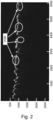
- Each OCT image acquired for this study ( Figs. 2- 7 ) contained 6,000 depth scans, with the distance between two consecutive depth scans being 2.5 micrometers.
- the incoming probing beam approached the samples from the top in all cases.
- Fig. 2 shows an OCT image of the uncoated side of a concrete paving block. Details such as surface imperfections (pores) and empty pockets (voids) located under the concrete surface are clearly distinguishable.
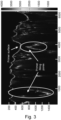
- Fig. 3 shows an OCT image of the primer layer applied over the porous surface of a concrete paving block.
- the intensity bar shown an the right has red corresponding to the strongest OCT signal and dark blue to the weakest signal recorded in the image.
- the air/primer interface is marked as "Surface”.
- Clearly visible in Fig. 3 is how the primer filled the concrete pores and voids with two examples of filled voids encircled. The interfaces that mark the boundaries between the primer and concrete are also visible.
- a very good example of primer/concrete separation is marked to the right of Fig. 3 and shows one big void filled with primer whose volume is also split in two by a concrete peak. The primer thoroughly filled all the surface pores.
- Fig. 3 shows an OCT image of the primer layer applied over the porous surface of a concrete paving block.
- the intensity bar shown an the right has red corresponding to the strongest OCT signal and dark blue to the weakest signal recorded in the image.
- the air/primer interface is marked as "
- the signal acquired from within the primer pockets which fill the concrete pores does not have a "spotty" (i.e. speckled) appearance, like the spotty appearance displayed by the signal acquired from within the concrete.
- spotty i.e. speckled
- the primer is not only transparent but also does not scatter the probing light and this is how primer is differentiated from coating material in the OCT images.
- Fig. 4 shows the surface of a concrete paving block that received a calcium carbonate coating applied over the primer layer.
- the first interface (the air/coating interface) is obvious in the image. The image also shows clear differences between porous regions filled with calcium carbonate and the surrounding concrete matrix. For convenience, some of the pores filled with calcium carbonate are circled.
- speckles spots
- the calcium carbonate particles distribute themselves quite homogeneous within the primer layer.
- secondary interfaces that can be distinguished within the calcium carbonate layer. One such example is also marked. Although of dim intensity, by looking carefully across this figure, other such secondary interfaces are also visible.
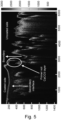
- Fig. 5 shows an OCT image of a region located at the boundary between uncoated and calcium carbonate-coated concrete. Additional features such as the "secondary interfaces" observed in Fig. 4 , are also visible on the coated side from Figure 5 . Pools of primer are also present at the bottom of some pores. Another detail in this image is the presence of a piece of un-mixed primer just at the coated/uncoated boundary labelled as "primer not CaCO 3 ". This can be identified as primer due to the lack of the spotty pattern (i.e. speckle) which characterizes the OCT signal coming from locations with calcium carbonate.
- spotty pattern i.e. speckle
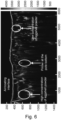
- Fig. 6 shows an OCT image acquired from a region coated with eggshell calcified particles / primer mix.
- the calcium carbonate coating shown in Fig. 5 for example the interface separating the air from the coating, as well as the pools of primer from the bottom of some of the concrete surface pores.
- the particle density of eggshell coating is not uniform. Based on speckle densities observed across the eggshell layer, it can be can inferred that there are locations with high density and low density of particles across the coated region. It is also apparent that the adjacent regions with different eggshell calcified particles concentrations are separated by interfaces. There are two examples circled in Fig.
- the low-density regions are located toward the surface of the coating, very near the air/coating interface and very often actually forms that interface. This indicates that the eggshell calcified particles diffuse deeper into the concrete pores, i.e. toward the bottom of the coating layer, during the time period before the layer solidifies.
- Fig. 7 shows an OCT image of a region located at the boundary of a concrete paving block between an uncoated surface and a surface coated with primer and eggshell calcified particles. The features observed and noted in Fig. 6 are also visible on the coated side of this concrete paving block.
Landscapes
- Health & Medical Sciences (AREA)
- Chemical & Material Sciences (AREA)
- Engineering & Computer Science (AREA)
- Organic Chemistry (AREA)
- Life Sciences & Earth Sciences (AREA)
- Food Science & Technology (AREA)
- Inorganic Chemistry (AREA)
- Epidemiology (AREA)
- Veterinary Medicine (AREA)
- Oral & Maxillofacial Surgery (AREA)
- Environmental & Geological Engineering (AREA)
- Animal Behavior & Ethology (AREA)
- General Health & Medical Sciences (AREA)
- Public Health (AREA)
- Geology (AREA)
- Chemical Kinetics & Catalysis (AREA)
- Medicinal Chemistry (AREA)
- Polymers & Plastics (AREA)
- Paints Or Removers (AREA)
- Cosmetics (AREA)
- Processing Of Solid Wastes (AREA)
Claims (5)
- Verfahren zur Herstellung eines ersten Produkts und eines zweiten Produkts aus Abfalleierschalen, das die folgenden Schritte umfasst:Trennen einer inneren Membrankomponente von einer kalzifizierten äußeren Schalenkomponente der Abfalleierschalen, um daraus eine innere Membranfraktion und eine entmembranisierte kalzifizierte Komponente herzustellen;Waschen der entmembranisierten, kalzifizierten Eierschalenkomponenten, um alle verbleibenden Membrankomponenten zu entfernen;Trocknen der gewaschenen entmembranisierten kalzifizierten Eierschalenkomponenten:Trockenmahlen der getrockneten entmembranisierten kalzifizierten Eierschalenkomponenten, um daraus Partikel mit kleinem Durchmesser herzustellen;Trennen der gemahlenen kalzifizierten Eierschalenteilchen mit kleinem Durchmesser in drei Fraktionen, wobei die erste Fraktion aus kalzifizierten Teilchen mit Durchmessern von 3 µ oder weniger besteht, die zweite Fraktion aus kalzifizierten Teilchen mit Durchmessern in einem Bereich von etwa 3 µ bis etwa 7 µ besteht und die dritte Fraktion kalzifizierte Teilchen mit Durchmessern von mehr als 7 µ umfasst;Trockenmahlung der dritten Fraktion und anschließende Abtrennung weiterer Mengen der ersten Fraktion, der zweiten Fraktion und gegebenenfalls der dritten Fraktion;Wiederholung des Trockenmahlschritts so oft wie nötig, um kalzifizierte Eierschalenteilchen mit Durchmessern von mehr als 7 µ zu entfernen; undgetrenntes Sammeln der ersten Fraktion, in der die kalzifizierten Eierschalenpartikel einen Durchmesser von 3 µ oder weniger haben, als erstes Produkt, und der zweiten Fraktion, in der die kalzifizierten Eierschalenpartikel einen Durchmesser im Bereich von 3 µ bis 7 µ haben, als zweites Produkt.
- Verfahren nach Anspruch 1, das zusätzlich einen Schritt des Waschens der Abfalleierschalen vor der Abtrennung der inneren Membrankomponente von der kalzifizierten äußeren Schalenkomponente der Abfalleierschalen umfasst.
- System zur Verarbeitung von Abfalleierschalen in (i) ein erstes Produkt, das aus kalzifizierten Eierschalenteilchen mit Durchmessern von 3 µ oder weniger besteht, und (ii) ein zweites Produkt, das aus kalzifizierten Eierschalenteilchen mit Durchmessern in einem Bereich von etwa 3 µ bis etwa 7 µ besteht, wobei das System umfasst:Anlage zum Trennen einer inneren Membrankomponente von einer äußeren kalzifizierten Schalenkomponente der Abfalleierschalen, wodurch eine entmembranisierte kalzifizierte Schalenkomponente erzeugt wird, wobei die Anlage in Verbindung steht mit;Anlage zum Waschen der entmembranisierten kalzifizierten Schalenkomponente, wobei die Anlage mit dieser in Verbindung steht;Anlage zum Trocknen der gewaschenen entmembranifizierten kalzifizierten Schalenkomponente, wobei die Anlage in Verbindung mit dieser steht;Anlage zum Trockenmahlen, wobei die Anlage mit dieser in Verbindung steht;Anlage zur Pulverabscheidung; undmindestens zwei Sätze von Verpackungsanlagen zum Verpacken von zwei Produktströmen, wobei die Verpackungsanlagen mit der Pulvertrennanlage in Verbindung stehen.
- System nach Anspruch 3, das zusätzlich eine Anlage zum Waschen von Abfalleierschalen umfasst, wobei die Abfalleierschalenwaschanlage für mit der Anlage zum Trennen der inneren Membrankomponente von der äußeren kalzifizierten Schalenkomponente der Abfalleierschalen in Verbindung steht.
- System nach Anspruch 3, das zusätzlich eine Anlage zum Konzentrieren und Verpacken der inneren Membrankomponente von Abfalleierschalen umfasst, wobei die Anlage mit der Anlage zum Trennen der inneren Membrankomponente von der äußeren kalzifizierten Schalenkomponente der Abfalleierschalen verbunden ist.
Applications Claiming Priority (2)
| Application Number | Priority Date | Filing Date | Title |
|---|---|---|---|
| US201762483757P | 2017-04-10 | 2017-04-10 | |
| PCT/CA2018/050440 WO2018187868A1 (en) | 2017-04-10 | 2018-04-10 | System and apparatus for processing waste egg shells into products |
Publications (3)
| Publication Number | Publication Date |
|---|---|
| EP3609632A1 EP3609632A1 (de) | 2020-02-19 |
| EP3609632A4 EP3609632A4 (de) | 2020-12-16 |
| EP3609632B1 true EP3609632B1 (de) | 2024-07-31 |
Family
ID=63792132
Family Applications (1)
| Application Number | Title | Priority Date | Filing Date |
|---|---|---|---|
| EP18785161.3A Active EP3609632B1 (de) | 2017-04-10 | 2018-04-10 | System und vorrichtung zur verarbeitung von eischalenabfällen zu produkten |
Country Status (4)
| Country | Link |
|---|---|
| US (4) | US11266997B2 (de) |
| EP (1) | EP3609632B1 (de) |
| CA (4) | CA3013007C (de) |
| WO (1) | WO2018187868A1 (de) |
Families Citing this family (5)
| Publication number | Priority date | Publication date | Assignee | Title |
|---|---|---|---|---|
| EP3609632B1 (de) * | 2017-04-10 | 2024-07-31 | Eggshellerate Inc. | System und vorrichtung zur verarbeitung von eischalenabfällen zu produkten |
| JP6763535B1 (ja) * | 2020-05-29 | 2020-09-30 | 株式会社バイオアパタイト | 卵殻膜分離システム、及び卵殻膜分離方法 |
| CN112658011A (zh) * | 2020-12-17 | 2021-04-16 | 东北农业大学 | 一种分离禽蛋壳膜的方法 |
| JP7316432B1 (ja) | 2022-10-18 | 2023-07-27 | 株式会社 アルマード | 卵殻膜含有微粉末の製造方法 |
| CN116998426B (zh) * | 2023-07-18 | 2024-08-02 | 西藏自治区农牧科学院水产科学研究所 | 一种野生黑斑原鮡亲鱼的收集方法 |
Family Cites Families (17)
| Publication number | Priority date | Publication date | Assignee | Title |
|---|---|---|---|---|
| JP3305538B2 (ja) * | 1994-10-25 | 2002-07-22 | キユーピー株式会社 | 卵殻と卵殻膜との分離方法およびその装置 |
| JPH08225765A (ja) * | 1995-02-21 | 1996-09-03 | Toyota Motor Corp | 塩化ビニルプラスチゾル系の耐チップ塗料組成物 |
| US6649203B1 (en) * | 1999-10-21 | 2003-11-18 | Mfi Food Canada, Ltd. | Eggshell processing methods and apparatus |
| AU2001251207A1 (en) * | 2000-04-03 | 2001-10-15 | Joseph Herman Macneil | Eggshell waste processing method and device |
| WO2004105912A2 (en) * | 2003-05-29 | 2004-12-09 | Biosynergy, Inc. | Method of producing eggshell powder |
| US8418943B2 (en) | 2005-01-18 | 2013-04-16 | Biova, L.L.C. | Egg shell membrane separation |
| US7584909B2 (en) * | 2005-01-18 | 2009-09-08 | Biova, L.L.C. | Eggshell membrane separation method |
| JP4764398B2 (ja) | 2007-10-11 | 2011-08-31 | キユーピー株式会社 | 挽肉入りソースおよびその製造方法ならびに挽肉食感改質剤 |
| US7597280B2 (en) * | 2008-02-19 | 2009-10-06 | Eggshell Resources Inc. | Apparatus for separating the organic membrane portion and the mineral portion of broken egg shells |
| PL221419B1 (pl) | 2010-05-10 | 2016-04-29 | Pulverdryer Usa | Proces oddzielania skorup jaja od przyczepionej błony |
| JP5464591B2 (ja) * | 2010-06-08 | 2014-04-09 | 株式会社和田木型製作所 | 無機微粒子凝集体の製造方法および無機微粒子を含有する樹脂組成物の製造方法 |
| CN101926733B (zh) * | 2010-08-17 | 2012-06-27 | 张惠民 | 一种牙齿修复用天然蛋白活性粘固剂 |
| US9370778B2 (en) | 2013-05-21 | 2016-06-21 | K & S Investments, L.P. | Eggshell membrane separation process |
| JP2014231487A (ja) * | 2013-05-28 | 2014-12-11 | 国立大学法人 東京大学 | 卵殻膜成分を含むサーチュイン遺伝子活性化剤ならびにそれを用いた組成物 |
| CA2963595C (en) * | 2014-10-28 | 2023-07-11 | Biovotec As | Micronized eggshell membrane particles and the use thereof to promote the healing of wounds |
| CN105902398A (zh) * | 2016-04-20 | 2016-08-31 | 苏州蔻美新材料有限公司 | 一种牙齿填充材料及其制备方法 |
| EP3609632B1 (de) * | 2017-04-10 | 2024-07-31 | Eggshellerate Inc. | System und vorrichtung zur verarbeitung von eischalenabfällen zu produkten |
-
2018
- 2018-04-10 EP EP18785161.3A patent/EP3609632B1/de active Active
- 2018-04-10 CA CA3013007A patent/CA3013007C/en active Active
- 2018-04-10 CA CA3038617A patent/CA3038617C/en active Active
- 2018-04-10 CA CA3028641A patent/CA3028641C/en active Active
- 2018-04-10 WO PCT/CA2018/050440 patent/WO2018187868A1/en not_active Ceased
- 2018-04-10 CA CA3038625A patent/CA3038625C/en active Active
-
2019
- 2019-10-04 US US16/593,855 patent/US11266997B2/en active Active
-
2022
- 2022-01-31 US US17/649,390 patent/US11511286B2/en active Active
- 2022-01-31 US US17/649,407 patent/US11738351B2/en active Active
- 2022-01-31 US US17/649,399 patent/US11738350B2/en active Active
Also Published As
| Publication number | Publication date |
|---|---|
| EP3609632A4 (de) | 2020-12-16 |
| US20220008931A9 (en) | 2022-01-13 |
| US20220152624A1 (en) | 2022-05-19 |
| US11266997B2 (en) | 2022-03-08 |
| CA3038617A1 (en) | 2018-10-09 |
| WO2018187868A1 (en) | 2018-10-18 |
| US11738350B2 (en) | 2023-08-29 |
| CA3013007A1 (en) | 2018-10-09 |
| US11511286B2 (en) | 2022-11-29 |
| EP3609632A1 (de) | 2020-02-19 |
| CA3013007C (en) | 2019-07-02 |
| CA3028641C (en) | 2019-07-02 |
| CA3038617C (en) | 2019-12-31 |
| US20220152623A1 (en) | 2022-05-19 |
| US11738351B2 (en) | 2023-08-29 |
| US20210101156A1 (en) | 2021-04-08 |
| CA3038625A1 (en) | 2018-10-09 |
| CA3038625C (en) | 2020-03-24 |
| US20220152625A1 (en) | 2022-05-19 |
| CA3028641A1 (en) | 2018-10-09 |
Similar Documents
| Publication | Publication Date | Title |
|---|---|---|
| US11738350B2 (en) | Product having calcified egg shell particles having diameter of 3 microns or less | |
| TWI587919B (zh) | 用於同時硏磨及泡沫浮選之裝置 | |
| EP2632989B1 (de) | Verfahren zur verbesserung der handhabung von calciumcarbonathaltigen materialien | |
| KR101563044B1 (ko) | 글리세롤 함유 첨가제의 존재 하의 광물질의 사이징 방법, 얻은 생성물 및 이의 용도 | |
| CN106497143B (zh) | 一种利用大理石废料回收重钙粉的方法 | |
| JP3613198B2 (ja) | ペットボトルリサイクルにおけるフレーク異物の除去方法 | |
| WO2017034941A1 (en) | Process for cleaning dirty post-consumer waste glass | |
| WO2018089287A1 (en) | Processing waste cathode ray tube glass with other waste glass into a powder | |
| Schlögl et al. | Quantifying the delabelling performance using sensor-based material flow monitoring | |
| CN111712332B (zh) | 用于降低碱土金属碳酸盐中的水分含量的方法 | |
| JP2693039B2 (ja) | 珪酸ジルコニウム粉砕媒体および微粉砕方法 | |
| WO1996019291A1 (en) | Zirconium silicate grinding method | |
| Malshe | Basics of Paint Technology Part II | |
| RU2575651C2 (ru) | Способ увеличения способности к транспортировке материалов, содержащих карбонат кальция | |
| JPS63225522A (ja) | 塗料用重質炭酸カルシウムの処理方法 |
Legal Events
| Date | Code | Title | Description |
|---|---|---|---|
| STAA | Information on the status of an ep patent application or granted ep patent |
Free format text: STATUS: THE INTERNATIONAL PUBLICATION HAS BEEN MADE |
|
| PUAI | Public reference made under article 153(3) epc to a published international application that has entered the european phase |
Free format text: ORIGINAL CODE: 0009012 |
|
| STAA | Information on the status of an ep patent application or granted ep patent |
Free format text: STATUS: REQUEST FOR EXAMINATION WAS MADE |
|
| 17P | Request for examination filed |
Effective date: 20191031 |
|
| AK | Designated contracting states |
Kind code of ref document: A1 Designated state(s): AL AT BE BG CH CY CZ DE DK EE ES FI FR GB GR HR HU IE IS IT LI LT LU LV MC MK MT NL NO PL PT RO RS SE SI SK SM TR |
|
| AX | Request for extension of the european patent |
Extension state: BA ME |
|
| DAV | Request for validation of the european patent (deleted) | ||
| DAX | Request for extension of the european patent (deleted) | ||
| REG | Reference to a national code |
Ref country code: DE Ref legal event code: R079 Free format text: PREVIOUS MAIN CLASS: B09B0003000000 Ipc: B03B0009060000 Ref country code: DE Ref legal event code: R079 Ref document number: 602018072464 Country of ref document: DE Free format text: PREVIOUS MAIN CLASS: B09B0003000000 Ipc: B03B0009060000 |
|
| A4 | Supplementary search report drawn up and despatched |
Effective date: 20201113 |
|
| RIC1 | Information provided on ipc code assigned before grant |
Ipc: C08K 11/00 20060101ALI20201109BHEP Ipc: B09B 3/00 20060101ALI20201109BHEP Ipc: A61K 6/71 20200101ALI20201109BHEP Ipc: B03B 9/06 20060101AFI20201109BHEP Ipc: A61K 6/17 20200101ALI20201109BHEP |
|
| RAP1 | Party data changed (applicant data changed or rights of an application transferred) |
Owner name: EGGSHELLERATE INC. |
|
| GRAP | Despatch of communication of intention to grant a patent |
Free format text: ORIGINAL CODE: EPIDOSNIGR1 |
|
| STAA | Information on the status of an ep patent application or granted ep patent |
Free format text: STATUS: GRANT OF PATENT IS INTENDED |
|
| INTG | Intention to grant announced |
Effective date: 20240222 |
|
| RIN1 | Information on inventor provided before grant (corrected) |
Inventor name: MAENDEL, JACK |
|
| GRAS | Grant fee paid |
Free format text: ORIGINAL CODE: EPIDOSNIGR3 |
|
| GRAA | (expected) grant |
Free format text: ORIGINAL CODE: 0009210 |
|
| STAA | Information on the status of an ep patent application or granted ep patent |
Free format text: STATUS: THE PATENT HAS BEEN GRANTED |
|
| AK | Designated contracting states |
Kind code of ref document: B1 Designated state(s): AL AT BE BG CH CY CZ DE DK EE ES FI FR GB GR HR HU IE IS IT LI LT LU LV MC MK MT NL NO PL PT RO RS SE SI SK SM TR |
|
| REG | Reference to a national code |
Ref country code: CH Ref legal event code: EP Ref country code: GB Ref legal event code: FG4D |
|
| REG | Reference to a national code |
Ref country code: DE Ref legal event code: R096 Ref document number: 602018072464 Country of ref document: DE |
|
| REG | Reference to a national code |
Ref country code: IE Ref legal event code: FG4D |
|
| REG | Reference to a national code |
Ref country code: LT Ref legal event code: MG9D |
|
| REG | Reference to a national code |
Ref country code: NL Ref legal event code: MP Effective date: 20240731 |
|
| PG25 | Lapsed in a contracting state [announced via postgrant information from national office to epo] |
Ref country code: PT Free format text: LAPSE BECAUSE OF FAILURE TO SUBMIT A TRANSLATION OF THE DESCRIPTION OR TO PAY THE FEE WITHIN THE PRESCRIBED TIME-LIMIT Effective date: 20241202 |
|
| REG | Reference to a national code |
Ref country code: AT Ref legal event code: MK05 Ref document number: 1707980 Country of ref document: AT Kind code of ref document: T Effective date: 20240731 |
|
| PG25 | Lapsed in a contracting state [announced via postgrant information from national office to epo] |
Ref country code: PT Free format text: LAPSE BECAUSE OF FAILURE TO SUBMIT A TRANSLATION OF THE DESCRIPTION OR TO PAY THE FEE WITHIN THE PRESCRIBED TIME-LIMIT Effective date: 20241202 |
|
| PG25 | Lapsed in a contracting state [announced via postgrant information from national office to epo] |
Ref country code: NO Free format text: LAPSE BECAUSE OF FAILURE TO SUBMIT A TRANSLATION OF THE DESCRIPTION OR TO PAY THE FEE WITHIN THE PRESCRIBED TIME-LIMIT Effective date: 20241031 |
|
| PG25 | Lapsed in a contracting state [announced via postgrant information from national office to epo] |
Ref country code: FI Free format text: LAPSE BECAUSE OF FAILURE TO SUBMIT A TRANSLATION OF THE DESCRIPTION OR TO PAY THE FEE WITHIN THE PRESCRIBED TIME-LIMIT Effective date: 20240731 Ref country code: NL Free format text: LAPSE BECAUSE OF FAILURE TO SUBMIT A TRANSLATION OF THE DESCRIPTION OR TO PAY THE FEE WITHIN THE PRESCRIBED TIME-LIMIT Effective date: 20240731 Ref country code: GR Free format text: LAPSE BECAUSE OF FAILURE TO SUBMIT A TRANSLATION OF THE DESCRIPTION OR TO PAY THE FEE WITHIN THE PRESCRIBED TIME-LIMIT Effective date: 20241101 Ref country code: PL Free format text: LAPSE BECAUSE OF FAILURE TO SUBMIT A TRANSLATION OF THE DESCRIPTION OR TO PAY THE FEE WITHIN THE PRESCRIBED TIME-LIMIT Effective date: 20240731 |
|
| PG25 | Lapsed in a contracting state [announced via postgrant information from national office to epo] |
Ref country code: BG Free format text: LAPSE BECAUSE OF FAILURE TO SUBMIT A TRANSLATION OF THE DESCRIPTION OR TO PAY THE FEE WITHIN THE PRESCRIBED TIME-LIMIT Effective date: 20240731 |
|
| PG25 | Lapsed in a contracting state [announced via postgrant information from national office to epo] |
Ref country code: LV Free format text: LAPSE BECAUSE OF FAILURE TO SUBMIT A TRANSLATION OF THE DESCRIPTION OR TO PAY THE FEE WITHIN THE PRESCRIBED TIME-LIMIT Effective date: 20240731 |
|
| PG25 | Lapsed in a contracting state [announced via postgrant information from national office to epo] |
Ref country code: IS Free format text: LAPSE BECAUSE OF FAILURE TO SUBMIT A TRANSLATION OF THE DESCRIPTION OR TO PAY THE FEE WITHIN THE PRESCRIBED TIME-LIMIT Effective date: 20241130 Ref country code: AT Free format text: LAPSE BECAUSE OF FAILURE TO SUBMIT A TRANSLATION OF THE DESCRIPTION OR TO PAY THE FEE WITHIN THE PRESCRIBED TIME-LIMIT Effective date: 20240731 |
|
| PG25 | Lapsed in a contracting state [announced via postgrant information from national office to epo] |
Ref country code: HR Free format text: LAPSE BECAUSE OF FAILURE TO SUBMIT A TRANSLATION OF THE DESCRIPTION OR TO PAY THE FEE WITHIN THE PRESCRIBED TIME-LIMIT Effective date: 20240731 |
|
| PG25 | Lapsed in a contracting state [announced via postgrant information from national office to epo] |
Ref country code: ES Free format text: LAPSE BECAUSE OF FAILURE TO SUBMIT A TRANSLATION OF THE DESCRIPTION OR TO PAY THE FEE WITHIN THE PRESCRIBED TIME-LIMIT Effective date: 20240731 Ref country code: RS Free format text: LAPSE BECAUSE OF FAILURE TO SUBMIT A TRANSLATION OF THE DESCRIPTION OR TO PAY THE FEE WITHIN THE PRESCRIBED TIME-LIMIT Effective date: 20241031 |
|
| PG25 | Lapsed in a contracting state [announced via postgrant information from national office to epo] |
Ref country code: RS Free format text: LAPSE BECAUSE OF FAILURE TO SUBMIT A TRANSLATION OF THE DESCRIPTION OR TO PAY THE FEE WITHIN THE PRESCRIBED TIME-LIMIT Effective date: 20241031 Ref country code: PL Free format text: LAPSE BECAUSE OF FAILURE TO SUBMIT A TRANSLATION OF THE DESCRIPTION OR TO PAY THE FEE WITHIN THE PRESCRIBED TIME-LIMIT Effective date: 20240731 Ref country code: NO Free format text: LAPSE BECAUSE OF FAILURE TO SUBMIT A TRANSLATION OF THE DESCRIPTION OR TO PAY THE FEE WITHIN THE PRESCRIBED TIME-LIMIT Effective date: 20241031 Ref country code: NL Free format text: LAPSE BECAUSE OF FAILURE TO SUBMIT A TRANSLATION OF THE DESCRIPTION OR TO PAY THE FEE WITHIN THE PRESCRIBED TIME-LIMIT Effective date: 20240731 Ref country code: LV Free format text: LAPSE BECAUSE OF FAILURE TO SUBMIT A TRANSLATION OF THE DESCRIPTION OR TO PAY THE FEE WITHIN THE PRESCRIBED TIME-LIMIT Effective date: 20240731 Ref country code: IS Free format text: LAPSE BECAUSE OF FAILURE TO SUBMIT A TRANSLATION OF THE DESCRIPTION OR TO PAY THE FEE WITHIN THE PRESCRIBED TIME-LIMIT Effective date: 20241130 Ref country code: HR Free format text: LAPSE BECAUSE OF FAILURE TO SUBMIT A TRANSLATION OF THE DESCRIPTION OR TO PAY THE FEE WITHIN THE PRESCRIBED TIME-LIMIT Effective date: 20240731 Ref country code: GR Free format text: LAPSE BECAUSE OF FAILURE TO SUBMIT A TRANSLATION OF THE DESCRIPTION OR TO PAY THE FEE WITHIN THE PRESCRIBED TIME-LIMIT Effective date: 20241101 Ref country code: FI Free format text: LAPSE BECAUSE OF FAILURE TO SUBMIT A TRANSLATION OF THE DESCRIPTION OR TO PAY THE FEE WITHIN THE PRESCRIBED TIME-LIMIT Effective date: 20240731 Ref country code: ES Free format text: LAPSE BECAUSE OF FAILURE TO SUBMIT A TRANSLATION OF THE DESCRIPTION OR TO PAY THE FEE WITHIN THE PRESCRIBED TIME-LIMIT Effective date: 20240731 Ref country code: BG Free format text: LAPSE BECAUSE OF FAILURE TO SUBMIT A TRANSLATION OF THE DESCRIPTION OR TO PAY THE FEE WITHIN THE PRESCRIBED TIME-LIMIT Effective date: 20240731 Ref country code: AT Free format text: LAPSE BECAUSE OF FAILURE TO SUBMIT A TRANSLATION OF THE DESCRIPTION OR TO PAY THE FEE WITHIN THE PRESCRIBED TIME-LIMIT Effective date: 20240731 |
|
| PG25 | Lapsed in a contracting state [announced via postgrant information from national office to epo] |
Ref country code: SM Free format text: LAPSE BECAUSE OF FAILURE TO SUBMIT A TRANSLATION OF THE DESCRIPTION OR TO PAY THE FEE WITHIN THE PRESCRIBED TIME-LIMIT Effective date: 20240731 Ref country code: DK Free format text: LAPSE BECAUSE OF FAILURE TO SUBMIT A TRANSLATION OF THE DESCRIPTION OR TO PAY THE FEE WITHIN THE PRESCRIBED TIME-LIMIT Effective date: 20240731 Ref country code: RO Free format text: LAPSE BECAUSE OF FAILURE TO SUBMIT A TRANSLATION OF THE DESCRIPTION OR TO PAY THE FEE WITHIN THE PRESCRIBED TIME-LIMIT Effective date: 20240731 |
|
| PG25 | Lapsed in a contracting state [announced via postgrant information from national office to epo] |
Ref country code: EE Free format text: LAPSE BECAUSE OF FAILURE TO SUBMIT A TRANSLATION OF THE DESCRIPTION OR TO PAY THE FEE WITHIN THE PRESCRIBED TIME-LIMIT Effective date: 20240731 |
|
| PG25 | Lapsed in a contracting state [announced via postgrant information from national office to epo] |
Ref country code: CZ Free format text: LAPSE BECAUSE OF FAILURE TO SUBMIT A TRANSLATION OF THE DESCRIPTION OR TO PAY THE FEE WITHIN THE PRESCRIBED TIME-LIMIT Effective date: 20240731 |
|
| PG25 | Lapsed in a contracting state [announced via postgrant information from national office to epo] |
Ref country code: SK Free format text: LAPSE BECAUSE OF FAILURE TO SUBMIT A TRANSLATION OF THE DESCRIPTION OR TO PAY THE FEE WITHIN THE PRESCRIBED TIME-LIMIT Effective date: 20240731 Ref country code: IT Free format text: LAPSE BECAUSE OF FAILURE TO SUBMIT A TRANSLATION OF THE DESCRIPTION OR TO PAY THE FEE WITHIN THE PRESCRIBED TIME-LIMIT Effective date: 20240731 |
|
| REG | Reference to a national code |
Ref country code: DE Ref legal event code: R097 Ref document number: 602018072464 Country of ref document: DE |
|
| PLBE | No opposition filed within time limit |
Free format text: ORIGINAL CODE: 0009261 |
|
| STAA | Information on the status of an ep patent application or granted ep patent |
Free format text: STATUS: NO OPPOSITION FILED WITHIN TIME LIMIT |
|
| 26N | No opposition filed |
Effective date: 20250501 |
|
| PGFP | Annual fee paid to national office [announced via postgrant information from national office to epo] |
Ref country code: DE Payment date: 20250214 Year of fee payment: 8 |
|
| PG25 | Lapsed in a contracting state [announced via postgrant information from national office to epo] |
Ref country code: SE Free format text: LAPSE BECAUSE OF FAILURE TO SUBMIT A TRANSLATION OF THE DESCRIPTION OR TO PAY THE FEE WITHIN THE PRESCRIBED TIME-LIMIT Effective date: 20240731 |
|
| REG | Reference to a national code |
Ref country code: CH Ref legal event code: H13 Free format text: ST27 STATUS EVENT CODE: U-0-0-H10-H13 (AS PROVIDED BY THE NATIONAL OFFICE) Effective date: 20251125 |
|
| PG25 | Lapsed in a contracting state [announced via postgrant information from national office to epo] |
Ref country code: LU Free format text: LAPSE BECAUSE OF NON-PAYMENT OF DUE FEES Effective date: 20250410 |
|
| PG25 | Lapsed in a contracting state [announced via postgrant information from national office to epo] |
Ref country code: MC Free format text: LAPSE BECAUSE OF FAILURE TO SUBMIT A TRANSLATION OF THE DESCRIPTION OR TO PAY THE FEE WITHIN THE PRESCRIBED TIME-LIMIT Effective date: 20240731 |
|
| GBPC | Gb: european patent ceased through non-payment of renewal fee |
Effective date: 20250410 |
|
| REG | Reference to a national code |
Ref country code: BE Ref legal event code: MM Effective date: 20250430 |
|
| PG25 | Lapsed in a contracting state [announced via postgrant information from national office to epo] |
Ref country code: GB Free format text: LAPSE BECAUSE OF NON-PAYMENT OF DUE FEES Effective date: 20250410 |
|
| PG25 | Lapsed in a contracting state [announced via postgrant information from national office to epo] |
Ref country code: BE Free format text: LAPSE BECAUSE OF NON-PAYMENT OF DUE FEES Effective date: 20250430 |
|
| PG25 | Lapsed in a contracting state [announced via postgrant information from national office to epo] |
Ref country code: CH Free format text: LAPSE BECAUSE OF NON-PAYMENT OF DUE FEES Effective date: 20250430 |
|
| PG25 | Lapsed in a contracting state [announced via postgrant information from national office to epo] |
Ref country code: IE Free format text: LAPSE BECAUSE OF NON-PAYMENT OF DUE FEES Effective date: 20250410 |
|
| PGFP | Annual fee paid to national office [announced via postgrant information from national office to epo] |
Ref country code: FR Payment date: 20260209 Year of fee payment: 9 |