EP3610026B1 - Cg0070 zur behandlung von bcg resistentem in situ blasencarcinom - Google Patents
Cg0070 zur behandlung von bcg resistentem in situ blasencarcinom Download PDFInfo
- Publication number
- EP3610026B1 EP3610026B1 EP18784592.0A EP18784592A EP3610026B1 EP 3610026 B1 EP3610026 B1 EP 3610026B1 EP 18784592 A EP18784592 A EP 18784592A EP 3610026 B1 EP3610026 B1 EP 3610026B1
- Authority
- EP
- European Patent Office
- Prior art keywords
- individual
- oncolytic virus
- administered
- cis
- bladder
- Prior art date
- Legal status (The legal status is an assumption and is not a legal conclusion. Google has not performed a legal analysis and makes no representation as to the accuracy of the status listed.)
- Active
Links
Images
Classifications
-
- A—HUMAN NECESSITIES
- A61—MEDICAL OR VETERINARY SCIENCE; HYGIENE
- A61P—SPECIFIC THERAPEUTIC ACTIVITY OF CHEMICAL COMPOUNDS OR MEDICINAL PREPARATIONS
- A61P13/00—Drugs for disorders of the urinary system
- A61P13/10—Drugs for disorders of the urinary system of the bladder
-
- A—HUMAN NECESSITIES
- A61—MEDICAL OR VETERINARY SCIENCE; HYGIENE
- A61K—PREPARATIONS FOR MEDICAL, DENTAL OR TOILETRY PURPOSES
- A61K35/00—Medicinal preparations containing materials or reaction products thereof with undetermined constitution
- A61K35/66—Microorganisms or materials therefrom
- A61K35/76—Viruses; Subviral particles; Bacteriophages
- A61K35/761—Adenovirus
-
- A—HUMAN NECESSITIES
- A61—MEDICAL OR VETERINARY SCIENCE; HYGIENE
- A61K—PREPARATIONS FOR MEDICAL, DENTAL OR TOILETRY PURPOSES
- A61K9/00—Medicinal preparations characterised by special physical form
- A61K9/0012—Galenical forms characterised by the site of application
- A61K9/0034—Urogenital system, e.g. vagina, uterus, cervix, penis, scrotum, urethra, bladder; Personal lubricants
-
- A—HUMAN NECESSITIES
- A61—MEDICAL OR VETERINARY SCIENCE; HYGIENE
- A61P—SPECIFIC THERAPEUTIC ACTIVITY OF CHEMICAL COMPOUNDS OR MEDICINAL PREPARATIONS
- A61P35/00—Antineoplastic agents
-
- A—HUMAN NECESSITIES
- A61—MEDICAL OR VETERINARY SCIENCE; HYGIENE
- A61K—PREPARATIONS FOR MEDICAL, DENTAL OR TOILETRY PURPOSES
- A61K35/00—Medicinal preparations containing materials or reaction products thereof with undetermined constitution
- A61K35/66—Microorganisms or materials therefrom
- A61K35/76—Viruses; Subviral particles; Bacteriophages
-
- A—HUMAN NECESSITIES
- A61—MEDICAL OR VETERINARY SCIENCE; HYGIENE
- A61K—PREPARATIONS FOR MEDICAL, DENTAL OR TOILETRY PURPOSES
- A61K35/00—Medicinal preparations containing materials or reaction products thereof with undetermined constitution
- A61K35/66—Microorganisms or materials therefrom
- A61K35/76—Viruses; Subviral particles; Bacteriophages
- A61K35/768—Oncolytic viruses not provided for in groups A61K35/761 - A61K35/766
-
- C—CHEMISTRY; METALLURGY
- C12—BIOCHEMISTRY; BEER; SPIRITS; WINE; VINEGAR; MICROBIOLOGY; ENZYMOLOGY; MUTATION OR GENETIC ENGINEERING
- C12N—MICROORGANISMS OR ENZYMES; COMPOSITIONS THEREOF; PROPAGATING, PRESERVING, OR MAINTAINING MICROORGANISMS; MUTATION OR GENETIC ENGINEERING; CULTURE MEDIA
- C12N2710/00—MICROORGANISMS OR ENZYMES; COMPOSITIONS THEREOF; PROPAGATING, PRESERVING, OR MAINTAINING MICROORGANISMS; MUTATION OR GENETIC ENGINEERING; CULTURE MEDIA dsDNA viruses
- C12N2710/00011—Details
- C12N2710/10011—Adenoviridae
- C12N2710/10032—Use of virus as therapeutic agent, other than vaccine, e.g. as cytolytic agent
-
- C—CHEMISTRY; METALLURGY
- C12—BIOCHEMISTRY; BEER; SPIRITS; WINE; VINEGAR; MICROBIOLOGY; ENZYMOLOGY; MUTATION OR GENETIC ENGINEERING
- C12N—MICROORGANISMS OR ENZYMES; COMPOSITIONS THEREOF; PROPAGATING, PRESERVING, OR MAINTAINING MICROORGANISMS; MUTATION OR GENETIC ENGINEERING; CULTURE MEDIA
- C12N2710/00—MICROORGANISMS OR ENZYMES; COMPOSITIONS THEREOF; PROPAGATING, PRESERVING, OR MAINTAINING MICROORGANISMS; MUTATION OR GENETIC ENGINEERING; CULTURE MEDIA dsDNA viruses
- C12N2710/00011—Details
- C12N2710/10011—Adenoviridae
- C12N2710/10311—Mastadenovirus, e.g. human or simian adenoviruses
- C12N2710/10332—Use of virus as therapeutic agent, other than vaccine, e.g. as cytolytic agent
-
- C—CHEMISTRY; METALLURGY
- C12—BIOCHEMISTRY; BEER; SPIRITS; WINE; VINEGAR; MICROBIOLOGY; ENZYMOLOGY; MUTATION OR GENETIC ENGINEERING
- C12N—MICROORGANISMS OR ENZYMES; COMPOSITIONS THEREOF; PROPAGATING, PRESERVING, OR MAINTAINING MICROORGANISMS; MUTATION OR GENETIC ENGINEERING; CULTURE MEDIA
- C12N2710/00—MICROORGANISMS OR ENZYMES; COMPOSITIONS THEREOF; PROPAGATING, PRESERVING, OR MAINTAINING MICROORGANISMS; MUTATION OR GENETIC ENGINEERING; CULTURE MEDIA dsDNA viruses
- C12N2710/00011—Details
- C12N2710/10011—Adenoviridae
- C12N2710/10311—Mastadenovirus, e.g. human or simian adenoviruses
- C12N2710/10341—Use of virus, viral particle or viral elements as a vector
- C12N2710/10343—Use of virus, viral particle or viral elements as a vector viral genome or elements thereof as genetic vector
-
- C—CHEMISTRY; METALLURGY
- C12—BIOCHEMISTRY; BEER; SPIRITS; WINE; VINEGAR; MICROBIOLOGY; ENZYMOLOGY; MUTATION OR GENETIC ENGINEERING
- C12N—MICROORGANISMS OR ENZYMES; COMPOSITIONS THEREOF; PROPAGATING, PRESERVING, OR MAINTAINING MICROORGANISMS; MUTATION OR GENETIC ENGINEERING; CULTURE MEDIA
- C12N7/00—Viruses; Bacteriophages; Compositions thereof; Preparation or purification thereof
Definitions
- the present invention relates to compositions for use in methods of treating bladder carcinoma in situ, wherein the composition comprises the oncolytic virusCG0070.
- Non-muscle invasive bladder cancer (stages Ta, T1, or Carcinoma in situ ) accounts for 70-80% of these cases while muscle invasive disease (stage T2 and above) and metastatic disease make up the remaining 20-30%.
- Bladder cancers are divided into 2 subtypes based on their distinct cellular growth patterns: papillary tumors and flat tumors.
- Carcinoma in situ is a flat tumor confined to the surface layer of the bladder. Compared to papillary tumors of the Ta and T1 stage, bladder CIS is more difficult to diagnose, and has a high risk of progression to muscle invasive bladder cancer.
- Intravesical Bacillus Calmette-Guerin is the standard-of-care treatment for bladder CIS. Patients typically receive an induction course consisting of weekly intravesical installations of BCG for 6 weeks, followed by monthly maintenance treatments for 6 to 12 months. However, about 30-40% of patients do not respond to a single course of BCG treatment. In one study, the overall risk of progression among BCG-treated CIS patients with a median follow-up of 2.5 years was about 14%. See, Witjes, J. A. European urology 45.2 (2004): 142-146 . Since the chance of progression in CIS patients failing BCG is significant, cystectomy, including partial and radical cystectomy, remains the treatment of choice. However, cystectomy is associated with severe side effects and adversely affects patients' quality of life.
- compositions including pharmaceutical compositions
- kits for use in methods of treating bladder cancer in an individual comprising intravesical administration of an oncolytic virus, CG0070.
- composition comprising an oncolytic virus for use in a method of treating bladder carcinoma in situ in an individual, the method comprising intravesically administering to the individual an effective amount of an oncolytic virus, wherein the individual is treated with an induction phase of the oncolytic virus followed by a maintenance phase, wherein the induction phase comprises administering to the individual an effective amount of an oncolytic virus once per week for six weeks, and the maintenance phase comprises administering to the individual an effective amount of an oncolytic virus once per week for three weeks every six months at least three times, wherein the start of the induction phase and the start of the maintenance phase are separated by 3 or 6 months, wherein the oncolytic virus is CG0070, and wherein: (i) the individual is unresponsive to BCG treatment; or (ii) the individual has disease reoccurrence subsequent to BCG treatment; and/or (iii) the individual has failed the BCG treatment within 6 months.
- Also described herein is a method of bladder preservation in an individual comprising intravesically administering to the individual an effective amount of an oncolytic virus once per week for three weeks during a maintenance phase, wherein the oncolytic virus comprises a viral vector comprising a tumor cell-specific promoter operably linked to a viral gene essential for replication of the oncolytic virus, and a heterologous gene encoding an immune-related molecule.
- the induction phase comprises administering to the individual an effective amount of an oncolytic virus once per week for six weeks on month zero and month three of a treatment regimen.
- an oncolytic virus for use in a method of treating Ta or T1 bladder cancer in an individual who has not received a transurothelial resection of bladder tumor (TURBT), the method comprising intravesically administering to the individual an effective amount of the oncolytic virus, wherein the oncolytic virus comprises a viral vector comprising a tumor cell-specific promoter operably linked to a viral gene essential for replication of the oncolytic virus, and a heterologous gene encoding an immune-related molecule.
- TURBT transurothelial resection of bladder tumor
- an oncolytic virus for use in a method of treating bladder cancer in an individual (such as a human), the method comprising intravesically administering to the individual an effective amount of the oncolytic virus, wherein the oncolytic virus comprises a viral vector comprising a tumor cell-specific promoter operably linked to a viral gene essential for replication of the oncolytic virus, and a heterologous gene encoding an immune-related molecule.
- the individual only has bladder carcinoma in situ.
- the individual does not have a concurrent papillary carcinoma of Ta or T1 stage.
- the individual has bladder carcinoma in situ and a carcinoma of Ta or Ta stage (CIS + Ta or CIS + T1).
- the individual has Ta or T1 bladder cancer but not carcinoma in situ. In some instances, the individual has Ta or T1 bladder cancer and has not received a transurothelial resection of bladder tumor (TURBT). In some instances, the individual has non-resectable Ta or T1 stage bladder cancer. In some embodiments, the individual is unresponsive to BCG treatment. In some instances, the individual has disease reoccurrence subsequent to BCG treatment. In some instances, the individual has failed the BCG treatment within about 6 months. In some instances, the individual is refractory to BCG.
- TURBT transurothelial resection of bladder tumor
- the individual has not received a cystectomy. In some embodiments, the individual has refused or is ineligible for a cystectomy. In some embodiments, the cystectomy is radical cystectomy.
- the oncolytic virus is CG0070.
- the oncolytic virus is administered at a dose of about 1 x 10 8 to about 1x 10 14 viral particles.
- the oncolytic virus is administered weekly. In some instances, the oncolytic virus is administered for about 1 week to about 6 weeks.
- the method further comprises intravesically administering to the individual a transduction enhancing agent prior to the administration of the oncolytic virus.
- the transduction enhancing agent is N-Dodecyl- ⁇ -D-maltoside (DDM).
- the method is repeated for at least once.
- the oncolytic virus is not administered in conjunction with an immune checkpoint modulator.
- the oncolytic virus is administered as a single therapeutic agent.
- a pharmaceutical composition for use in a method of treating bladder cancer in an individual (such as a human), wherein the pharmaceutical composition is intravesically administered to the individual, and wherein the pharmaceutical composition comprises an oncolytic virus, wherein the oncolytic virus comprises a viral vector comprising a tumor cell-specific promoter operably linked to a viral gene essential for replication of the oncolytic virus, and a heterologous gene encoding an immune-related molecule.
- the present invention provides compositions for use in methods of treating bladder carcinoma in situ in an individual by intravesically administering to the individual an effective amount of an oncolytic virus CG0070.
- an oncolytic virus CG0070 could be an effective strategy for treating bladder cancer.
- CG0070 a conditionally replicating granulocyte macrophage colony-stimulating factor-armed oncolytic adenovirus for the treatment of bladder cancer.
- Clin Cancer Res. 2006; 12:305-13 are examples of the same.
- the methods are bladder-preserving, highly efficacious and well-tolerated in bladder cancer, including those that have previously failed standard-of-care therapies.
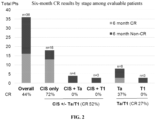
- inventors surprisingly found that 72.2% of patients with pure CIS, who had previously failed BCG therapy, had complete response (CR) after 6 months of intravesical CG0070 therapy.
- the therapeutic effects of the oncolytic virus can be achieved using the oncolytic virus as a monotherapeutic agent, or without combination with an immune checkpoint modulator.
- the methods and compositions described herein are especially useful for patients who have high-risk bladder CIS, but refuse to receive cystectomy, or are ineligible for cystectomy.
- one aspect of the present application provides a composition comprising an oncolytic virus for use in a method of treating bladder cancer in an individual, the method comprising intravesically administering to the individual an effective amount of the oncolytic virus.
- the oncolytic virus comprises a viral vector comprising a tumor cell-specific promoter operably linked to a viral gene essential for replication of the oncolytic virus, and a heterologous gene encoding an immune-related molecule.
- the oncolytic virus is CG0070.
- the oncolytic virus is administered as a single therapeutic agent.
- the oncolytic virus is not administered in conjunction with an immune checkpoint modulator.
- the individual is not responsive to BCG treatment or has disease reoccurrence subsequent to BCG treatment.
- compositions such as pharmaceutical compositions
- medicine such as pharmaceutical compositions
- kits for use in the methods described herein.
- unit dosages for use in the methods described herein.
- bladedder carcinoma in situ As used herein, “bladder carcinoma in situ,” “bladder CIS,” and “carcinoma in situ of the bladder” are used interchangeably to refer to the clinical stage of bladder cancer characterized by a flat ( i.e., non-papillary) lesion comprising of cytologically malignant cells which may involve either full or partial thickness of the urothelium.
- beneficial or desired clinical results include, but are not limited to, one or more of the following: alleviating one or more symptoms resulting from the bladder cancer, diminishing the extent of the bladder cancer, stabilizing the bladder cancer ( e.g. , preventing or delaying the worsening of the bladder cancer), preventing or delaying the spread (e.g.
- metastasis of the bladder cancer, preventing or delaying the recurrence of the bladder cancer, reducing recurrence rate of the bladder cancer, delay or slowing the progression of the bladder cancer, ameliorating the bladder cancer state, providing a remission (partial or total) of the bladder cancer, decreasing the dose of one or more other medications required to treat the bladder cancer, delaying the progression of the bladder cancer, increasing the quality of life, and/or prolonging survival.
- treatment is a reduction of pathological consequence of bladder cancer. The methods of the invention contemplate any one or more of these aspects of treatment.
- Primary therapy used herein refers to a therapeutic regime that is different from and was instituted prior to the methods described herein comprising intravesical administration of the oncolytic virus.
- an "at risk” individual is a human individual who is at risk of developing bladder CIS.
- a human individual “at risk” may or may not have detectable disease, and may or may not have displayed detectable disease prior to the treatment methods described herein.
- At risk denotes that a human individual has one or more so-called risk factors, which are measurable parameters that correlate with development of muscle invasive bladder cancer, which are described herein.
- a human individual having one or more of these risk factors has a higher probability of developing bladder CIS than a human individual without these risk factor(s).
- Adjuvant setting refers to a clinical setting in which an individual has had a history of bladder cancer, and generally (but not necessarily) been responsive to therapy, which includes, but is not limited to, surgery (e.g. , transurethral resection of bladder tumor ("TURBT”), partial cystectomy, or radical cystectomy), radiotherapy, and chemotherapy.
- Treatment or administration in the "adjuvant setting” refers to a subsequent mode of treatment.
- Neoadjuvant setting refers to a clinical setting in which the method is carried out before the primary/definitive therapy.
- the term "individual,” “subject,” and “patient” are used interchangeably herein to describe a mammal, including humans.
- An individual includes, but is not limited to, human, bovine, horse, feline, canine, rodent, or primate.
- the individual is human.
- an individual suffers from bladder CIS.
- the individual is in need of treatment.
- “delaying" the development of bladder cancer means to defer, hinder, slow, retard, stabilize, and/or postpone development of the bladder cancer. This delay can be of varying lengths of time, depending on the history of the disease and/or individual being treated. As is evident to one skilled in the art, a sufficient or significant delay can, in effect, encompass prevention, in that the individual does not develop the disease.
- a method that "delays" development of bladder cancer is a method that reduces probability of disease development in a given time frame and/or reduces the extent of the bladder cancer in a given time frame, when compared to not using the method. Such comparisons are typically based on clinical studies, using a statistically significant number of subjects.
- Bladder cancer development can be detectable using standard methods, including, but not limited to, urinary cytology, urethra-cystoscopy (UCS), computed tomography (CT Scan, e.g., helical spiral CT scan), endoscopic ultrasound (EUS), endoscopic retrograde cholangiopancreatography (ERCP), laparoscopy, or biopsy (e.g., percutaneous needle biopsy or fine needle aspiration). Development may also refer to bladder cancer progression that may be initially undetectable and includes recurrence.
- UCS urethra-cystoscopy
- CT Scan computed tomography
- EUS endoscopic ultrasound
- ERCP endoscopic retrograde cholangiopancreatography
- laparoscopy e.g., percutaneous needle biopsy or fine needle aspiration.
- biopsy e.g., percutaneous needle biopsy or fine needle aspiration.
- combination therapy is meant that a first agent be administered in conjunction with another agent.
- “In conjunction with” refers to administration of one treatment modality in addition to another treatment modality.
- “in conjunction with” refers to administration of one treatment modality before, during, or after delivery of the other treatment modality to the individual.
- monotherapy refers to administration of a single therapeutic agent, such as the oncolytic virus, which is not in conjunction with another treatment modality, such as an immune checkpoint modulator.
- a monotherapy with the oncolytic virus can be administered with a pretreatment, such as a transduction enhancing agent (e.g., DDM), which is not considered as a different treatment modality for the purpose of this invention.
- a transduction enhancing agent e.g., DDM
- an effective amount refers to an amount of an agent (such as the oncolytic virus described herein) or composition sufficient to treat a specified disorder, condition or disease such as ameliorate, palliate, lessen, and/or delay one or more of its symptoms.
- an effective amount comprises an amount sufficient to cause a tumor to shrink and/or to decrease the growth rate of the tumor (such as to suppress tumor growth) or to prevent or delay other unwanted cell proliferation in cancer.
- an effective amount is an amount sufficient to delay development of bladder cancer.
- an effective amount is an amount sufficient to prevent or delay recurrence.
- an effective amount is an amount sufficient to reduce recurrence rate in the individual.
- the effective amount is an amount sufficient to inhibit tumor metastasis in the individual.
- An effective amount can be administered in one or more administrations.
- the effective amount of the agent or composition may: (i) reduce the number of cancer cells; (ii) reduce tumor size; (iii) inhibit, retard, slow to some extent and preferably stop cancer cell infiltration into peripheral organs; (iv) inhibit ( i.e.
- an "effective amount" may be in one or more doses, i.e. , a single dose or multiple doses may be required to achieve the desired treatment endpoint.
- the term "simultaneous administration,” as used herein, means that a first therapy and second therapy in a combination therapy are administered at the same time.
- the first and second therapies may be contained in the same composition (e.g. , a composition comprising both a first and second therapy) or in separate compositions (e.g. , a first therapy is contained in one composition and a second therapy is contained in another composition).
- the term “sequential administration” or “in sequence” means that the first therapy and second therapy in a combination therapy are administered with a time separation, for example, of more than about 1 minute, such as more than about any of 5, 10, 15, 20, 30, 40, 50, 60, or more minutes.
- the term “sequential administration” means that the first therapy and second therapy in a combination therapy are administered with a time separation of more than about 1 day, such as more than about any of 1 day to 1 week, 2 weeks, 3 weeks, 4 weeks, 8 weeks, 12 weeks, or more weeks. Either the first therapy or the second therapy may be administered first.
- the first and second therapies are contained in separate compositions, which may be contained in the same or different packages or kits.
- administered immediately prior to means that the first therapy is administered no more than about 15 minutes, such as no more than about any of 10, 5 or 1 minutes before administration of the second therapy.
- administered immediately after means that the first therapy is administered no more than about 15 minutes, such as no more than about any of 15, 10 or 1 minutes after administration of the second therapy.
- pharmaceutically acceptable or “pharmacologically compatible” is meant a material that is not biologically or otherwise undesirable, e.g. , the material may be incorporated into a pharmaceutical composition administered to a patient without causing any significant undesirable biological effects or interacting in a deleterious manner with any of the other components of the composition in which it is contained.
- Pharmaceutically acceptable carriers or excipients have preferably met the required standards of toxicological and manufacturing testing and/or are included on the Inactive Ingredient Guide prepared by the U.S. Food and Drug administration.
- an "adverse event” or "AE” as used herein refers to any untoward medical occurrence in an individual receiving a marketed pharmaceutical product or in an individual who is participating on a clinical trial who is receiving an investigational or non-investigational pharmaceutical agent.
- the AE does not necessarily have a causal relationship with the individual's treatment. Therefore, an AE can be any unfavorable and unintended sign, symptom, or disease temporally associated with the use of a medicinal product, whether or not considered to be related to the medicinal product.
- An AE includes, but is not limited to: an exacerbation of a pre-existing illness; an increase in frequency or intensity of a pre-existing episodic event or condition; a condition detected or diagnosed after study drug administration even though it may have been present prior to the start of the study; and continuously persistent disease or symptoms that were present at baseline and worsen following the start of the study.
- An AE generally does not include: medical or surgical procedures (e.g., surgery, endoscopy, tooth extraction, or transfusion); however, the condition that leads to the procedure is an adverse event; pre-existing diseases, conditions, or laboratory abnormalities present or detected at the start of the study that do not worsen; hospitalizations or procedures that are done for elective purposes not related to an untoward medical occurrence (e.g. , hospitalizations for cosmetic or elective surgery or social/convenience admissions); the disease being studied or signs/symptoms associated with the disease unless more severe than expected for the individual's condition; and overdose of study drug without any clinical signs or symptoms.
- a "serious adverse event” or (SAE) as used herein refers to any untoward medical occurrence at any dose including, but not limited to, that: a) is fatal; b) is life-threatening (defined as an immediate risk of death from the event as it occurred); c) results in persistent or significant disability or incapacity; d) requires in-patient hospitalization or prolongs an existing hospitalization (exception: Hospitalization for elective treatment of a pre-existing condition that did not worsen during the study is not considered an adverse event.
- AEs Complications that occur during hospitalization are AEs and if a complication prolongs hospitalization, then the event is serious); e) is a congenital anomaly/birth defect in the offspring of an individual who received medication; or f) conditions not included in the above definitions that may jeopardize the individual or may require intervention to prevent one of the outcomes listed above unless clearly related to the individual's underlying disease.
- "Lack of efficacy" progressive disease
- the signs and symptoms or clinical sequelae resulting from lack of efficacy should be reported if they fulfill the AE or SAE definitions.
- response assessments may be used to evaluate a non-target lesion: "complete response” or “CR” refers to disappearance of all non-target lesions; “stable disease” or “SD” refers to the persistence of one or more non-target lesions not qualifying for CR or PD; and “progressive disease” or “PD” refers to the "unequivocal progression" of existing non-target lesion(s) or appearance of one or more new lesion(s) is considered progressive disease (if PD for the individual is to be assessed for a time point based solely on the progression of non-target lesion(s), then additional criteria are required to be fulfilled.
- Progression free survival indicates the length of time during and after treatment that the cancer does not grow. Progression-free survival includes the amount of time individuals have experienced a complete response or a partial response, as well as the amount of time individuals have experienced stable disease.
- Cystectomy free survival indicates the length of time during and after treatment that a cystectomy is not required for the patient as determined by the physician.
- Predicting or “prediction” is used herein to refer to the likelihood that an individual is likely to respond either favorably or unfavorably to a treatment regimen.
- “at the time of starting treatment” or “baseline” refers to the time period at or prior to the first exposure to the treatment.
- sample refers to a composition which contains a molecule which is to be characterized and/or identified, for example, based on physical, biochemical, chemical, physiological, and/or genetic characteristics.
- references to "about” a value or parameter herein includes (and describes) variations that are directed to that value or parameter per se. For example, description referring to "about X” includes description of "X”.
- reference to "not" a value or parameter generally means and describes "other than” a value or parameter.
- the method is not used to treat cancer of type X means the method is used to treat cancer of types other than X.
- One aspect of the present application relates to treatment of bladder carcinoma in situ in an individual (such as human individual) by local administration of an oncolytic virus, CG0070.
- local administration of the oncolytic virus encompasses intravesical administration of the oncolytic virus.
- Any of the methods described herein may be useful for inhibiting growth of a bladder tumor, inhibiting metastasis of a bladder tumor, prolonging survival (such as disease-free survival, progression-free survival, or cystectomy-free survival) of an individual having bladder cancer, causing disease remission in an individual having bladder cancer, preventing disease progression of an individual having bladder cancer, and/or improving quality of life of an individual having bladder cancer.
- the method is bladder-preserving or bladder-sparing.
- the bladder-preserving or bladder-sparing method is useful for improving the quality of life of the individual.
- the present application provides a method of treating bladder carcinoma in situ, the method comprising intravesically administering to the individual an effective amount of an oncolytic virus, wherein the individual is treated with an induction phase of the oncolytic virus followed by a maintenance phase, wherein the induction phase comprises administering to the individual an effective amount of an oncolytic virus once per week for six weeks, and the maintenance phase comprises administering to the individual an effective amount of an oncolytic virus once per week for three weeks every six months at least three times, wherein the start of the induction phase and the start of the maintenance phase are separated by 3 or 6 months, wherein the oncolytic virus is CG0070, and wherein: (i) the individual is unresponsive to BCG treatment; or (ii) the individual has disease reoccurrence subsequent to BCG treatment; and/or (iii) the individual has failed the BCG treatment within 6 months.
- the oncolytic virus is delivered once per week for 6 weeks at month 0 and once per week for 3 weeks at month 6.
- the oncolytic virus is administered during an induction phase and a maintenance phase.
- the induction period comprises administering an oncolytic virus once per week for six weeks.
- the induction period comprises administering the oncolytic virus once per week for six weeks on months 0 and 3.
- the maintenance phase comprises administering an oncolytic virus once per week for three weeks, following an induction phase.
- the maintenance phase comprises delivering the oncolytic virus once per week for three weeks every six months.
- the maintenance phase comprises administering the oncolytic virus weekly for three weeks every 6 months3, 4, 5 or 6 times.
- the maintenance phase comprises administering an oncolytic virus weekly for three weeks on months 6, 12, and 18.
- the maintenance phase comprises administering an oncolytic virus weekly for three weeks on months 3, 6, 12, and 18.
- the dosage schedule can be modified based upon the individual's response to the oncolytic virus. For example, in some embodiments, an individual is administered an oncolytic virus once per week for six weeks on month 0 and is reevaluated at month 3. In some embodiments, individuals who have a complete response at month 3 begin a maintenance phase comprising administration of an oncolytic virus once per week for 6 weeks every 6 months. In some embodiments, individuals who do not have a complete response at 3 months receive a second induction dose of oncolytic virus once per week for 6 weeks.
- the present application provides a composition comprising an oncolytic virus for use in a method of treating bladder carcinoma in situ in an individual, the method comprising intravesically administering to the individual an effective amount of an oncolytic virus, wherein the individual is treated with an induction phase of the oncolytic virus followed by a maintenance phase, wherein the induction phase comprises administering to the individual an effective amount of an oncolytic virus once per week for six weeks, and the maintenance phase comprises administering to the individual an effective amount of an oncolytic virus wherein the oncolytic virus is administered once per week for three weeks every six months at least three times, wherein the start of the induction phase and the start of the maintenance phase are separated by 3 or 6 months, wherein the oncolytic virus is CG0070, and wherein: (i) the individual is unresponsive to BCG treatment; or (ii) the individual has disease reoccurrence subsequent to BCG treatment; and/or (iii) the individual has failed the BCG treatment within 6 months.
- the oncolytic virus is not administered in conjunction with an immune checkpoint modulator. In some embodiments, the oncolytic virus is administered as a single therapeutic agent. In some embodiments, the individual is unresponsive or has disease reoccurrence subsequent to BCG treatment. In some embodiments, the individual has refused or is ineligible for cystectomy (such as radical cystectomy). In some embodiments, the method further comprises administering to the individual a transduction enhancing agent (such as DDM) prior to the administration of the oncolytic virus. In some embodiments, the oncolytic virus is administered at a dose of about 1 x 10 8 to about 1x 10 14 viral particles (such as about 1x10 12 viral particles).
- a transduction enhancing agent such as DDM
- the bladder cancer is CIS, CIS +Ta, CIS + T1, CIS without Ta or T1, Ta, or T1 grade bladder cancer.
- the individual has Ta or T1 bladder cancer and has not received a transurothelial resection of bladder tumor (TURBT).
- the bladder cancer is Ta or T1 non-resectable bladder cancer.
- the oncolytic virus is administered on months 6, 12, and 18 of a treatment regimen. In some embodiments, the oncolytic virus is administered on months 3, 6, 12, and 18 of a treatment regimen. In some embodiments, the oncolytic virus is administered weekly for three weeks, every six months, as needed.
- an oncolytic virus for use in a method of treating bladder cancer, the method comprising administering the oncolytic virus once per week for six weeks during an induction phase and once per week for three weeks during a maintenance phase wherein the an oncolytic virus (such as CG0070) is administered intervesically, wherein the oncolytic virus comprises a viral vector comprising a tumor cell-specific promoter operably linked to a viral gene essential for replication of the oncolytic virus, and a heterologous gene encoding an immune-related molecule.
- the oncolytic virus comprises a tumor-selective promoter.
- the oncolytic virus is not administered in conjunction with an immune checkpoint modulator.
- the oncolytic virus is administered as a single therapeutic agent.
- the individual is unresponsive or has disease reoccurrence subsequent to BCG treatment.
- the individual has refused or is ineligible for cystectomy (such as radical cystectomy).
- the method further comprises administering to the individual a transduction enhancing agent (such as DDM) prior to the administration of the oncolytic virus.
- the oncolytic virus is administered at a dose of about 1 x 10 8 to about 1x 10 14 viral particles (such as about 1x10 12 viral particles).
- the bladder cancer is CIS, CIS +Ta, CIS + T1, CIS without Ta or T1, Ta, or T1 grade bladder cancer.
- the bladder cancer is Ta or T1 non-respectable bladder cancer.
- the induction phase comprises administering the oncolytic virus once per week for six weeks on months 0 and 3.
- the maintenance phase comprises administering the oncolytic virus once per week for three weeks on months 6, 12, and 18.
- the maintenance phase comprises administering the oncolytic virus once per week for three weeks on months 3, 6, 12, and 18.
- the maintenance phase comprises administering the oncolytic virus once per week for three weeks every six months as needed.
- bladder sparing method comprising in an individual comprising administering an oncolytic virus weekly for three weeks every six months, wherein an oncolytic virus (such as CG0070) is administered intervesically, wherein the oncolytic virus comprises a viral vector comprising a tumor cell-specific promoter operably linked to a viral gene essential for replication of the oncolytic virus, and a heterologous gene encoding an immune-related molecule.
- the oncolytic virus comprises a tumor-selective promoter.
- the oncolytic virus is not administered in conjunction with an immune checkpoint modulator. In some instances, the oncolytic virus is administered as a single therapeutic agent. In some instances, the individual is unresponsive or has disease reoccurrence subsequent to BCG treatment. In some instances, the individual has refused or is ineligible for cystectomy (such as radical cystectomy). In some instances, the method further comprises administering to the individual a transduction enhancing agent (such as DDM) prior to the administration of the oncolytic virus. In some instances, the oncolytic virus is administered at a dose of about 1 x 10 8 to about 1x 10 14 viral particles (such as about 1x10 12 viral particles).
- a transduction enhancing agent such as DDM
- the bladder cancer is CIS, CIS +Ta, CIS + T1, CIS without Ta or T1, Ta, or T1 grade bladder cancer.
- the individual has Ta or T1 bladder cancer and has not received a transurothelial resection of bladder tumor (TURBT).
- the bladder cancer is Ta or T1 non-resectable bladder cancer.
- the oncolytic virus is administered on months 6, 12, and 18 of a treatment regimen. In some instances, the oncolytic virus is administered on months 3, 6, 12, and 18 of a treatment regimen. In some instances, the oncolytic virus is administered weekly for three weeks, every six months, as needed.
- Also described herein is a method of maintenance therapy comprising administering an oncolytic virus weekly for three weeks every six months, wherein an oncolytic virus (such as CG0070) is administered intervesically, wherein the oncolytic virus comprises a viral vector comprising a tumor cell-specific promoter operably linked to a viral gene essential for replication of the oncolytic virus, and a heterologous gene encoding an immune-related molecule.
- the oncolytic virus comprises a tumor-selective promoter.
- the oncolytic virus is not administered in conjunction with an immune checkpoint modulator.
- the oncolytic virus is administered as a single therapeutic agent.
- the individual is unresponsive or has disease reoccurrence subsequent to BCG treatment.
- the method further comprises administering to the individual a transduction enhancing agent (such as DDM) prior to the administration of the oncolytic virus.
- the oncolytic virus is administered at a dose of about 1 x 10 8 to about 1x 10 14 viral particles (such as about 1x10 12 viral particles).
- the bladder cancer is CIS, CIS +Ta, CIS + T1, CIS without Ta or T1, Ta, or T1 grade bladder cancer.
- the individual has Ta or T1 bladder cancer and has not received a transurothelial resection of bladder tumor (TURBT).
- the bladder cancer is Ta or T1 non-resectable bladder cancer.
- the oncolytic virus is administered on months 6, 12, and 18 of a treatment regimen. In some instances, the oncolytic virus is administered on months 3, 6, 12, and 18 of a treatment regimen. In some instances, the oncolytic virus is administered weekly for three weeks, every six months, as needed.
- the individual receives no more than 21 doses of an oncolytic virus. In some instances, the individual receives no more than 30, 25, 20, 15, 14, 13, 12, 11, 10, 9, 8, 7, or 6 doses of an oncolytic virus.
- an oncolytic virus for use in a method of treating bladder cancer (such as CIS bladder cancer or Ta or T1 grade bladder cancer without TURBT) in an individual, the method comprising intravesically administering to the individual an effective amount of the oncolytic virus (such as oncolytic adenovirus) comprising a viral vector comprising a tumor cell-specific promoter operably linked to a viral gene essential for replication of the oncolytic virus.
- the oncolytic virus comprises a tumor-selective promoter.
- the tumor selective promoter allows preferential replication of the oncolytic virus in tumor cells.
- the oncolytic virus preferentially replicates in a cancer cell, such as a cancer cell defective in the Rb pathway.
- the oncolytic virus is selected from the group consisting of adenovirus, herpes simplex virus, vaccinia virus, mumps virus, Newcastle disease virus, polio virus, measles virus, Seneca valley virus, coxsackie virus, reo virus, vesicular stomatitis virus, maraba and rhabdovirus, and parvovirus.
- the tumor-specific promoter is an E2F-1 promoter, such as a human E2F-1 promoter or an E2F-1 promoter comprising the nucleotide sequence set forth in SEQ ID NO:1.
- the viral gene essential for replication of the oncolytic virus is selected from the group consisting of E1A, E1B, and E4.
- the oncolytic virus further comprises an immune-related molecule (such as cytokine, chemokine, or PRRago (i.e., pathogen recognition receptor agonist)).
- an immune-related molecule such as cytokine, chemokine, or PRRago (i.e., pathogen recognition receptor agonist)
- the immune-related molecule is not an immune checkpoint modulator.
- the immune-related molecule is selected from the group consisting of GM-CSF, IL-2, IL-12, interferon (such as Type 1, Type 2 or Type 3 interferon, e.g., interferon y), CCL4, CCL19, CCL21, CXCL13, TLR1, TLR2, TLR3, TLR4, TLR5, TLR6, TLR7, TLR8, TLR9, TLR10, RIG-I, MDA5, LGP2, and LT ⁇ .
- interferon such as Type 1, Type 2 or Type 3 interferon, e.g., interferon y
- the immune-related molecule is selected from the group consisting of STING (i.e., stimulator of interferon genes) activators (such as CDN, i.e., cyclic dinucleotides), PRRago (such as CpG, Imiquimod, or Poly I:C), TLR stimulators (such as GS-9620, AED-1419, CYT-003-QbG10, AVE-0675, or PF-7909), and RLR stimulators (such as RIG-I, Mda5, or LGP2 stimulators).
- STING i.e., stimulator of interferon genes
- activators such as CDN, i.e., cyclic dinucleotides
- PRRago such as CpG, Imiquimod, or Poly I:C
- TLR stimulators such as GS-9620, AED-1419, CYT-003-QbG10, AVE-0675, or PF-7909
- RLR stimulators such
- the immune-related molecule is expressed by the oncolytic virus.
- the oncolytic virus may comprise a nucleic acid encoding the immune-related molecule, and the nucleic acid can be in the viral vector or on a separate vector.
- the oncolytic virus is a virus comprising a viral vector, and wherein the viral vector comprises the nucleic acid encoding the immune-related molecule.
- the nucleic acid encoding the immune-related molecule is operably linked to a viral promoter, such as an E1 promoter, or an E3 promoter.
- the immune-related molecule enhances an immune response in the individual.
- Immune-related molecules may include, but are not limited to, a cytokine, a chemokine, a stem cell growth factor, a lymphotoxin, an hematopoietic factor, a colony stimulating factor (CSF), erythropoietin, thrombopoietin, tumor necrosis factor-alpha (TNF), TNF-beta , granulocyte-colony stimulating factor (G-CSF), granulocyte macrophage-colony stimulating factor (GM-CSF), interferon-alpha, interferon-beta, interferon-gamma, interferon-lambda, stem cell growth factor designated "S1 factor", human growth hormone, N-methionyl human growth hormone, bovine growth hormone, parathyroid hormone, thyroxine, insulin, proinsulin, relaxin, prorelaxin, follicle stimulating hormone (FSH
- an oncolytic virus for use in a method of treating bladder cancer (such as CIS bladder cancer or Ta or T1 grade bladder cancer without TURBT) in an individual, the method comprising intravesically administering to the individual an effective amount of the oncolytic virus, wherein the oncolytic virus comprises a viral vector comprising a tumor cell-specific promoter operably linked to a viral gene essential for replication of the oncolytic virus and a nucleic acid encoding an immune-related molecule (such as cytokine or chemokine) operably linked to a viral promoter.
- the oncolytic virus comprises a tumor-selective promoter.
- the tumor-specific promoter is an E2F-1 promoter, such as a human E2F-1 promoter or an E2F-1 promoter comprising the nucleotide sequence set forth in SEQ ID NO:1.
- the viral gene essential for replication of the oncolytic virus is selected from the group consisting of E1A, E1B, and E4.
- the viral promoter operably linked to the nucleic acid encoding the immune-related molecule is the E3 promoter.
- the immune-related molecule is GM-CSF.
- the method further comprises administering to the individual a transduction enhancing agent (such as DDM) prior to the administration of the oncolytic virus.
- a transduction enhancing agent such as DDM
- the oncolytic virus is administered at a dose of about 1 x 10 8 to about 1x 10 14 viral particles (such as about 1x10 12 viral particles). In some instances, the oncolytic virus is administered weekly. In some instances, the oncolytic virus is administered for about 1 week to about 6 weeks (such as about 6 weeks or about 3 weeks). In some instances, the bladder cancer is CIS, CIS +Ta, CIS + T1, Ta, or T1 grade bladder cancer.
- the oncolytic virus is an adenovirus serotype 5.
- the endogenous E1a promoter and E3 19kD coding region of a native adenovirus is replaced by the human E2F-1 promoter and a nucleic acid encoding human GM-CSF.
- a polyadenylation signal (PA) is inserted 5' of the E2F-1 promoter.
- the nucleic acid encoding human GM-CSF is operably linked to the E3 promoter.
- the vector backbone of the adenovirus serotype 5 further comprises E2, E4, late protein regions or inverted terminal repeats (ITRs) identical to the wildtype adenovirus serotype 5 genome.
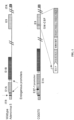
- the oncolytic virus has the genomic structure as shown in Figure 1 . In some instances, the oncolytic virus is conditionally replicating. In some instances, the oncolytic virus preferentially replicates in cancer cells. In some instances, the cancer cells are Rb pathway-defective cancer cells. In some instances, the oncolytic virus is CG0070.
- an adenovirus for use in a method of treating bladder cancer (such as CIS bladder cancer or Ta or T1 grade bladder cancer without TURBT) in an individual, the method comprising intravesically administering to the individual an effective amount of an adenovirus serotype 5, wherein the endogenous E1a promoter and E319kD coding region of a native adenovirus is replaced by the human E2F-1 promoter and a nucleic acid encoding an immune-related molecule (such as cytokine or chemokine, for example, GM-CSF).
- bladder cancer such as CIS bladder cancer or Ta or T1 grade bladder cancer without TURBT
- the method comprising intravesically administering to the individual an effective amount of an adenovirus serotype 5, wherein the endogenous E1a promoter and E319kD coding region of a native adenovirus is replaced by the human E2F-1 promoter and a nucleic acid encoding an immune-related molecule (such as
- the tumor-specific promoter is a human E2F-1 promoter or an E2F-1 promoter comprising the nucleotide sequence set forth in SEQ ID NO: 1.
- the method further comprises administering to the individual a transduction enhancing agent (such as DDM) prior to the administration of the adenovirus.
- the adenovirus is administered at a dose of about 1 x 10 8 to about 1x 10 14 viral particles (such as about 1x10 12 viral particles).
- the adenovirus is administered weekly.
- the adenovirus is administered for about 1 week to about 6 weeks (such as about 6 weeks or about 3 weeks).
- the bladder cancer is CIS, CIS +Ta, CIS + T1, Ta, or T1 grade bladder cancer.
- the present application provides a composition comprising an oncolytic virus for use in a method of treating bladder carcinoma in situ (such as CIS bladder cancer or Ta or T1 grade bladder cancer without TURBT), the method comprising intravesically administering to the individual an effective amount of CG0070, wherein the individual is treated with an induction phase of the oncolytic virus followed by a maintenance phase, wherein the induction phase comprises administering to the individual an effective amount of an oncolytic virus once per week for six weeks, and the maintenance phase comprises administering to the individual an effective amount of an oncolytic virus once per week for three weeks every six months at least three times, wherein the start of the induction phase and the start of the maintenance phase are separated by 3 or 6 months, and wherein: (i) the individual is unresponsive to BCG treatment; or (ii) the individual has disease reoccurrence subsequent to BCG treatment; and/or (iii) the individual has failed the BCG treatment within 6 months.
- bladder carcinoma in situ such as CIS bladder cancer or Ta or T1 grade bladder cancer without TUR
- the method further comprises administering to the individual a transduction enhancing agent (such as DDM) prior to the administration of CG0070.
- CG0070 is administered at a dose of about 1 x 10 8 to about 1x 10 14 viral particles (such as about 1x10 12 viral particles).
- CG0070 is administered weekly.
- CG0070 is administered for 6 weeks.
- the bladder cancer is CIS, CIS +Ta, CIS + T1, Ta, or T1 grade bladder cancer.
- the oncolytic virus is not administered to the individual in conjunction with an immune checkpoint modulator. In some embodiments, the oncolytic virus is administered to the individual as a single therapeutic agent.
- immune checkpoint modulator refers to a molecule or an agent (such as antibody) that inhibits an inhibitory immune checkpoint molecule or an immune-stimulating agent that activates an immune stimulatory molecule on an immune cell (such as T cell) or a tumor cell.
- immune checkpoint molecules include molecules that turn up an immune signal (i.e., “immune stimulatory molecules"), or molecules that turn down an immune signal ( i.e., "inhibitory immune checkpoint molecules”) against a tumor cell.
- the oncolytic virus is not administered to the individual in conjunction with an immune-stimulating agent.
- the immune-stimulating agent may be a natural or engineered ligand of an immune stimulatory molecule selected from the group consisting of ligands of OX40 (e.g., OX40L), ligands of CD-28 (e.g., CD80, CD86), ligands of ICOS (e.g., B7RP1), ligands of 4-1BB (e.g., 4-1BBL, Ultra4-1BBL), ligands of CD27 (e.g., CD70), ligands of CD40 (e.g., CD40L), and ligands of TCR (e.g., MHC class I or class II molecules, IMCgp100).
- OX40 e.g., OX40L
- CD-28 e.g., CD80, CD86
- ICOS e.g., B7RP1
- 4-1BB e
- the immune-stimulating agent may also be an antibody selected from the group consisting of anti-CD28 (e.g., TGN-1412), anti-OX40 (e.g., MEDI6469, MEDI-0562), anti-ICOS (e.g., MEDI-570), anti-GITR (e.g., TRX518, INBRX-110, NOV-120301), anti-41-BB (e.g., BMS-663513, PF-05082566), anti-CD27 (e.g., BION-1402, Varlilumab and hCD27.15), anti-CD40 (e.g., CP870,893, BI-655064, BMS-986090, APX005, APX005M), anti-CD3 (e.g., blinatumomab, muromonab), and anti-HVEM.
- anti-CD28 e.g., TGN-1412
- anti-OX40 e
- the oncolytic virus is not administered to the individual in conjunction with an immune checkpoint inhibitor.
- the immune-checkpoint inhibitor may be a natural or engineered ligand of an inhibitory immune checkpoint molecule selected from the group consisting of ligands of CTLA-4 (e.g., B7.1, B7.2), ligands of TIM3 (e.g., Galectin-9), ligands of A2a Receptor (e.g., adenosine, Regadenoson), ligands of LAG3 (e.g., MHC class I or MHC class II molecules), ligands of BTLA (e.g., HVEM, B7-H4), ligands of KIR (e.g., MHC class I or MHC class II molecules), ligands of PD-1 (e.g., PD-L1, PD-L2), ligands of IDO (e.g., NKTR-218, Indoximod, NLG919), and
- the immune checkpoint inhibitor may also be an antibody that targets an inhibitory immune checkpoint protein selected from the group consisting of anti-CTLA-4 (e.g., Ipilimumab, Tremelimumab, KAHR-102), anti-TIM3 (e.g., F38-2E2, ENUM005), anti-LAG3 (e.g., BMS-986016, IMP701, IMP321, C9B7W), anti-KIR (e.g., Lirilumab and IPH2101), anti-PD-1 (e.g., Nivolumab, Pidilizumab, Pembrolizumab, BMS-936559, atezolizumab, Lambrolizumab, MK-3475, AMP-224, AMP-514, STI-A1110, TSR-042), anti-PD-L1 (e.g., KY-1003 ( EP20120194977 ), MCLA-145, RG7446, BMS-936559, MEDI
- an oncolytic virus for use in a method of treating bladder cancer (such as CIS bladder cancer or Ta or T1 grade bladder cancer without TURBT) in an individual, the method comprising intravesically administering to the individual an effective amount of the oncolytic virus (such as oncolytic adenovirus) comprising a viral vector comprising a tumor cell-specific promoter operably linked to a viral gene essential for replication of the oncolytic virus and a nucleic acid encoding an immune-related molecule (such as cytokine or chemokine) operably linked to a viral promoter, wherein the oncolytic virus is administered as a single therapeutic agent.
- the oncolytic virus comprises a tumor-selective promoter.
- a method of treating bladder cancer in an individual comprising intravesically administering to the individual an effective amount of an oncolytic virus (such as oncolytic adenovirus) comprising a viral vector comprising a tumor cell-specific promoter operably linked to a viral gene essential for replication of the oncolytic virus and a nucleic acid encoding an immune-related molecule (such as cytokine or chemokine) operably linked to a viral promoter, wherein the oncolytic virus is not administered in conjunction with an immune checkpoint modulator.
- an oncolytic virus such as oncolytic adenovirus
- an immune-related molecule such as cytokine or chemokine
- the tumor-specific promoter is an E2F-1 promoter, such as a human E2F-1 promoter or an E2F-1 promoter comprising the nucleotide sequence set forth in SEQ ID NO: 1.
- the viral gene essential for replication of the oncolytic virus is selected from the group consisting of E1A, E1B, and E4.
- the viral promoter operably linked to the nucleic acid encoding the immune-related molecule is the E3 promoter.
- the immune-related molecule is GM-CSF.
- the method further comprises administering to the individual a transduction enhancing agent (such as DDM) prior to the administration of the oncolytic virus.
- a transduction enhancing agent such as DDM
- the oncolytic virus is administered at a dose of about 1 x 10 8 to about 1x 10 14 viral particles (such as about 1x10 12 viral particles). In some instances, the oncolytic virus is administered weekly. In some instances, the oncolytic virus is administered for about 1 week to about 6 weeks (such as about 6 weeks or about 3 weeks). In some instances, the bladder cancer is CIS, CIS +Ta, CIS + T1, Ta, or T1 grade bladder cancer.
- an adenovirus for use in a method of treating bladder cancer (such as CIS bladder cancer or Ta or T1 grade bladder cancer without TURBT) in an individual, the method comprising intravesically administering to the individual an effective amount of an adenovirus serotype 5, wherein the endogenous E1a promoter and E3 19kD coding region of a native adenovirus is replaced by the human E2F-1 promoter and a nucleic acid encoding an immune-related molecule (such as cytokine or chemokine, for example, GM-CSF), wherein the adenovirus is administered as a single therapeutic agent.
- bladder cancer such as CIS bladder cancer or Ta or T1 grade bladder cancer without TURBT
- an adenovirus for use in a method of treating bladder carcinoma in situ in an individual, the method comprising intravesically administering to the individual an effective amount of an adenovirus serotype 5, wherein the endogenous E1a promoter and E3 19kD coding region of a native adenovirus is replaced by the human E2F-1 promoter and a nucleic acid encoding an immune-related molecule (such as cytokine or chemokine, for example, GM-CSF), wherein the adenovirus is not administered in conjunction with an immune checkpoint modulator.
- an immune-related molecule such as cytokine or chemokine, for example, GM-CSF
- the tumor-specific promoter is a human E2F-1 promoter or an E2F-1 promoter comprising the nucleotide sequence set forth in SEQ ID NO: 1.
- the method further comprises administering to the individual a transduction enhancing agent (such as DDM) prior to the administration of the adenovirus.
- the adenovirus is administered at a dose of about 1 x 10 8 to about 1x 10 14 viral particles (such as about 1x10 12 viral particles).
- the adenovirus is administered weekly.
- the adenovirus is administered for about 1 week to about 6 weeks (such as about 3 weeks or about 6 weeks).
- the bladder cancer is CIS, CIS +Ta, CIS + T1, Ta, or T1 grade bladder cancer.
- the present invention also provides a composition comprising an oncolytic virus for use in a method of treating bladder carcinoma in situ (such as CIS bladder cancer or Ta or T1 grade bladder cancer without TURBT) in an individual, the method comprising intravesically administering to the individual an effective amount of CG0070, wherein the individual is treated with an induction phase of the oncolytic virus followed by a maintenance phase, wherein the induction phase comprises administering to the individual an effective amount of an oncolytic virus once per week for six weeks, and the maintenance phase comprises administering to the individual an effective amount of an oncolytic virus once per week for three weeks every six months at least three times, wherein the start of the induction phase and the start of the maintenance phase are separated by 3 or 6 months, and wherein: (i) the individual is unresponsive to BCG treatment; or (ii) the individual has disease reoccurrence subsequent to BCG treatment; and/or (iii) the individual has failed the BCG treatment within 6 months, and wherein CG0070 is administered as a single therapeutic agent.
- a method of treating bladder carcinoma in situ in an individual comprising intravesically administering to the individual an effective amount of CG0070, wherein CG0070 is not administered in conjunction with an immune checkpoint modulator.
- the method further comprises administering to the individual a transduction enhancing agent (such as DDM) prior to the administration of CG0070.
- CG0070 is administered at a dose of about 1 x 10 8 to about 1x 10 14 viral particles (such as about 1x10 12 viral particles).
- CG0070 is administered weekly.
- CG0070 is administered for about 6 weeks.
- the bladder cancer is CIS, CIS +Ta, CIS + T1, Ta, or T1 grade bladder cancer.
- the methods described herein can be used to treat a variety of bladder cancers.
- the individual has a bladder cancer at a stage Ta, T1, or CIS (TIS) as determined according to the TNM staging system by the American Joint Committee on Cancer (AJCC) guidelines.
- TIS stage Ta, T1, or CIS
- the present application provides a composition comprising an oncolytic virus for use in a method of treating bladder carcinoma in situ in an individual, the method comprising intravesically administering to the individual an effective amount of an oncolytic virus, wherein the individual is treated with an induction phase of the oncolytic virus followed by a maintenance phase, wherein the induction phase comprises administering to the individual an effective amount of an oncolytic virus once per week for six weeks, and the maintenance phase comprises administering to the individual an effective amount of an oncolytic virus wherein the oncolytic virus is administered once per week for three weeks every six months at least three times, wherein the start of the induction phase and the start of the maintenance phase are separated by 3 or 6 months, wherein the oncolytic virus is CG0070, and wherein: (i) the individual is unresponsive to BCG treatment; or (ii) the individual has disease reoccurrence subsequent to BCG treatment; and/or (iii) the individual has failed the BCG treatment within 6 months.
- Bladder cancer may be CIS.
- Bladder CIS may be transitional cell carcinoma or urothelial carcinoma.
- Bladder CIS may be metastatic urothelial carcinoma.
- Bladder CIS may be located in the urothelium of the bladder.
- Bladder CIS may be located in the upper urinary tract.
- Bladder CIS may be in the ureter.
- Bladder CIS may be in the urethra.
- Bladder CIS may be in the renal pelvis.
- Bladder carcinoma in situ is a high-grade bladder cancer, also known as Stage 0is, Tis, flat, or bladder CIS.
- Bladder CIS is found only on the inner lining of the bladder, and it has not grown in toward the hollow part of the bladder, and it has not spread to the thick layer of muscle or connective tissue of the bladder.
- Bladder CIS is considered an aggressive disease, and believed to be a precursor of invasive bladder cancer.
- current standard therapy for bladder CIS is resection followed by intravesical therapy with BCG. BCG is generally given once a week for 6 weeks, followed by a rest period of 4 to 6 weeks, with a full re-evaluation at week 12 after the start of therapy. If the patient is unable to tolerate BCG, intravesical mitomycin C may be administered.
- the individual has a pathological stage of "pure CIS" or "CIS,” wherein the individual has one or more bladder carcinomas in situ only. In some embodiments, the individual has a pathological stage of Tis, N0, M0. In some embodiments, the bladder CIS is a primary tumor. In some embodiments, the bladder CIS is a recurrent tumor. In some embodiments, the individual has at least about any one of 1, 2, 3, 4, 5, 10, or more bladder carcinomas in situ.
- the individual has concurrently one or more bladder carcinomas in situ and one or more papillary carcinomas of Ta or T1 stage.
- the individual has a pathological stage of "CIS + Ta,” wherein the individual has concurrently one or more bladder carcinomas in situ and one or more Ta stage papillary carcinomas.
- the individual has a pathological stage of "CIS + T1," wherein the individual has concurrently one or more bladder carcinomas in situ and one or more T1 stage papillary carcinomas.
- Papillary carcinoma refers to bladder tumors that grow in slender, finger-like projections from the inner surface of the bladder toward the hollow center. Papillary tumors often grow toward the center of the bladder without growing into the deeper bladder layers. These tumors are called non-invasive papillary cancers. Very low-grade (slow growing), non-invasive papillary cancer is sometimes called papillary urothelial neoplasm of low-malignant potential (PUNLMP).
- PUNLMP papillary urothelial neoplasm of low-malignant potential
- Ta stage papillary carcinoma refers to papillary carcinoma that is found on the surface of the inner lining of the bladder. Cancer cells are grouped together and can often be easily removed. The cancer has not invaded the muscle or connective tissue of the bladder wall. Ta papillary carcinoma is also referred to as noninvasive papillary urothelial carcinoma, or Stage 0a bladder cancer.
- T1 stage papillary carcinoma refers to papillary carcinoma that has grown through the inner lining of the bladder into the lamina basement. It has not spread to the thick layer of muscle in the bladder wall or to lymph nodes or other organs. In some embodiments, the carcinoma has invaded subepithelial connective tissue.
- the individual does not have a concurrent papillary carcinoma with CIS. In some embodiments, the individual does not have low-grade or high-grade papillary carcinoma. In some embodiments, the individual does not have high-grade papillary carcinoma. In some embodiments, the individual does not have a concurrent papillary carcinoma of low-grade Ta stage. In some embodiments, the individual does not have a concurrent papillary carcinoma of high-grade Ta stage. In some embodiments, the individual does not have a concurrent papillary carcinoma of low-grade T1 stage. In some embodiments, the individual does not have a concurrent papillary carcinoma of high-grade T1 stage. In some embodiments, the individual does not have a concurrent papillary carcinoma of Ta or T1 stage.
- the individual has a papillary carcinoma. In some embodiments, the individual has a low-grade or high-grade papillary carcinoma concurrent with CIS. In some embodiments, the individual has a high-grade papillary carcinoma. In some embodiments, the individual has a concurrent papillary carcinoma of low-grade Ta stage. In some embodiments, the individual has a concurrent papillary carcinoma of high-grade Ta stage. In some embodiments, the individual does not have a concurrent papillary carcinoma of low-grade T1 stage. In some embodiments, the individual does not have a concurrent papillary carcinoma of high-grade T1 stage. In some embodiments, the individual does not have a concurrent papillary carcinoma of Ta or T1 stage.
- the individual has a papillary carcinoma without CIS. In some embodiments, the individual has a low-grade or high-grade papillary carcinoma. In some embodiments, the individual has a high-grade papillary carcinoma. In some embodiments, the individual has a concurrent papillary carcinoma of low-grade Ta stage. In some embodiments, the individual has a concurrent papillary carcinoma of high-grade Ta stage. In some embodiments, the individual does not have a concurrent papillary carcinoma of low-grade T1 stage. In some embodiments, the individual does not have a concurrent papillary carcinoma of high-grade T1 stage. In some embodiments, the individual has Ta or T1 stage bladder cancer without CIS.
- Bladder cancer can be detected and staged using any known methods in the art, including, but not limited to, urinary cytology, urethra-cystoscopy (UCS), biopsy (such as transurethral resection of bladder tumor, or "TURBT"), computed tomography (CT or CAT) scan (e.g., CT urography), magnetic resonance imaging (MRI, i.e., MR urography), positron emission tomography (PET or PET-CT) scan, ultrasound (e.g. , renal ultrasound), ureteroscopy, and x-ray imaging (e.g. , chest imaging).
- CT or CAT computed tomography
- MRI magnetic resonance imaging
- PET or PET-CT positron emission tomography
- ultrasound e.g. , renal ultrasound
- ureteroscopy e.g. , chest imaging
- x-ray imaging e.g. , chest imaging.
- a distinct feature of bladder CIS is the fact that coherence
- bladder CIS is associated with an increased chance of denuded epithelium upon biopsy.
- Tumor cells from urinary samples or biopsy samples can be examined using immunohistochemistry, ELISA, RT-PCR, or other suitable methods to detect urinary markers for bladder CIS or papillary tumors.
- Fluorescence cystoscopy methods e.g., those using a porphyrin-based phososensitizer, may be especially suitable for detecting CIS lesions.
- the application also provides a composition for use in a method of treating an individual having bladder carcinoma in situ only, the method comprising intravesically administering to the individual an effective amount of an oncolytic virus, wherein the individual is treated with an induction phase of the oncolytic virus followed by a maintenance phase, wherein the induction phase comprises administering to the individual an effective amount of an oncolytic virus once per week for six weeks, and the maintenance phase comprises administering to the individual an effective amount of an oncolytic virus wherein the oncolytic virus is administered once per week for three weeks every six months at least three times, wherein the start of the induction phase and the start of the maintenance phase are separated by 3 or 6 months, wherein the oncolytic virus is CG0070, and wherein: (i) the individual is unresponsive to BCG treatment; or (ii) the individual has disease reoccurrence subsequent to BCG treatment; and/or (iii) the individual has failed the BCG treatment within 6 months.
- the oncolytic virus is not administered in conjunction with an immune checkpoint modulator. In some embodiments, the oncolytic virus is administered as a single therapeutic agent. In some embodiments, the method further comprises administering to the individual a transduction enhancing agent (such as DDM) prior to the administration of the oncolytic virus. In some embodiments, the oncolytic virus is administered at a dose of about 1 x 10 8 to about 1x 10 14 viral particles (such as about 1x10 12 viral particles). In some embodiments, the oncolytic virus is administered weekly. In some embodiments, the oncolytic virus is administered for about 6 weeks.
- a transduction enhancing agent such as DDM
- the composition for use is administered to an individual that does not have a concurrent papillary carcinoma of Ta or T1 stage.
- the oncolytic virus is not administered in conjunction with an immune checkpoint modulator.
- the oncolytic virus is administered as a single therapeutic agent.
- the method further comprises administering to the individual a transduction enhancing agent (such as DDM) prior to the administration of the oncolytic virus.
- the oncolytic virus is administered at a dose of about 1 x 10 8 to about 1x 10 14 viral particles (such as about 1x10 12 viral particles).
- the oncolytic virus is administered weekly.
- the oncolytic virus is administered for about 1 week to about 6 weeks (such as about 3 weeks or about 6 weeks).
- the composition for use is administered to an individual having bladder CIS (such as pure CIS), the administration comprising intravesically administering to the individual CG0070, wherein CG0070 is administered weekly at a dose of about 1 x 10 8 to about 1x 10 14 viral particles (such as about 1x10 12 viral particles) for about 3 or about 6 weeks.
- the method further comprises administering to the individual a transduction enhancing agent (such as DDM) prior to the administration of CG0070.
- CG0070 is not administered in conjunction with an immune checkpoint modulator.
- CG0070 is administered as a single therapeutic agent.
- the individual is unresponsive or has disease reoccurrence subsequent to BCG treatment.
- the individual has refused or is ineligible for cystectomy (such as radical cystectomy).
- the composition for use is administered to an individual having T1 stage bladder cancer with CIS, the administration comprising intravesically administering to the individual CG0070, wherein CG0070 is administered weekly at a dose of about 1 x 10 8 to about 1x 10 14 viral particles (such as about 1x10 12 viral particles) for about 3 or about 6 weeks.
- the method further comprises administering to the individual a transduction enhancing agent (such as DDM) prior to the administration of CG0070.
- CG0070 is not administered in conjunction with an immune checkpoint modulator.
- CG0070 is administered as a single therapeutic agent.
- the individual is unresponsive or has disease reoccurrence subsequent to BCG treatment.
- the individual has refused or is ineligible for cystectomy (such as radical cystectomy).
- the composition for use is administered to an individual having Ta stage bladder cancer with CIS, the administration comprising intravesically administering to the individual CG0070, wherein CG0070 is administered weekly at a dose of about 1 x 10 8 to about 1x 10 14 viral particles (such as about 1x10 12 viral particles) for about 6 weeks.
- the method further comprises administering to the individual a transduction enhancing agent (such as DDM) prior to the administration of CG0070.
- CG0070 is not administered in conjunction with an immune checkpoint modulator.
- CG0070 is administered as a single therapeutic agent.
- the individual is unresponsive or has disease reoccurrence subsequent to BCG treatment.
- the individual has refused or is ineligible for cystectomy (such as radical cystectomy).
- the composition for use is administered to an individual having T1 stage bladder cancer without CIS, the administration comprising intravesically administering to the individual CG0070, wherein CG0070 is administered weekly at a dose of about 1 x 10 8 to about 1x 10 14 viral particles (such as about 1x10 12 viral particles) for about 6 weeks.
- the method further comprises administering to the individual a transduction enhancing agent (such as DDM) prior to the administration of CG0070.
- CG0070 is not administered in conjunction with an immune checkpoint modulator.
- CG0070 is administered as a single therapeutic agent.
- the individual is unresponsive or has disease reoccurrence subsequent to BCG treatment.
- the individual has refused or is ineligible for cystectomy (such as radical cystectomy).
- the composition for use is administered to an individual having Ta stage bladder cancer without CIS, the administration comprising intravesically administering to the individual CG0070, wherein CG0070 is administered weekly at a dose of about 1 x 10 8 to about 1x 10 14 viral particles (such as about 1x10 12 viral particles) for about 6 weeks.
- the method further comprises administering to the individual a transduction enhancing agent (such as DDM) prior to the administration of CG0070.
- CG0070 is not administered in conjunction with an immune checkpoint modulator.
- CG0070 is administered as a single therapeutic agent.
- the individual is unresponsive or has disease reoccurrence subsequent to BCG treatment.
- the individual has refused or is ineligible for cystectomy (such as radical cystectomy).
- the individual has early stage bladder cancer, non-metastatic bladder cancer, non-invasive bladder cancer, non-muscle-invasive bladder cancer, primary bladder cancer, locally advanced bladder cancer (such as unresectable locally advanced bladder cancer), metastatic bladder cancer, or bladder cancer in remission.
- the bladder cancer is localized resectable, localized unresectable, or unresectable.
- the bladder cancer is a high grade, non-muscle-invasive cancer that has been refractory to standard intra-bladder infusion (intravesical) therapy.
- the individual has a high grade, non-muscle-invasive CIS that has been refractory to standard intra-bladder infusion (intravesical) therapy.
- the individual has urothelial ( i.e., transitional cell) carcinoma.
- compositions for use in the methods provided herein can be used to treat an individual (e.g., human) who has bladder carcinoma in situ.
- the individual has undergone a tumor resection, such as TURBT, or partial cystectomy.
- the individual has previously received TURBT alone.
- the individual has previously received TURBT and concurrent chemoradiotherapy.
- the individual has previously received repeated TURBT.
- the individual has previously received TURBT for at least about any one of 1, 2, 3, 4, or more times.
- the individual has previously received maximal TURBT.
- the individual has not received a tumor resection.
- bladder preservation with maximal TURBT and concurrent chemoradiotherapy is generally reserved for patients with smaller solitary tumors, negative nodes, no carcinoma in situ, no tumor-related hydronephrosis, and good pre-treatment bladder function.
- the methods provided herein can be used to treat an individual with bladder cancer who has not received a TURBT, or partial cystectomy prior to treatment with CG0070.
- the individual has a Ta or T1 stage cancer.
- the individual is considered unresectable or with residual disease.
- the individual has an underlying medical condition that does not permit adequate resection.
- a composition comprising an oncolytic virus for use in a method of treating an individual having T1 or Ta stage bladder cancer that is has not been resected or is considered non-resectable, the method comprising intravesically administering to the individual CG0070 as described herein, wherein CG0070 is administered weekly at a dose of about 1 x 10 8 to about 1x 10 14 viral particles (such as about 1x10 12 viral particles).
- the method further comprises administering to the individual a transduction enhancing agent (such as DDM) prior to the administration of CG0070.
- CG0070 is not administered in conjunction with an immune checkpoint modulator.
- CG0070 is administered as a single therapeutic agent.
- the individual is unresponsive or has disease reoccurrence subsequent to BCG treatment.
- the individual has refused or is ineligible for cystectomy (such as radical cystectomy).
- the individual has refused cystectomy, such as partial cystectomy or radical cystectomy.
- the individual is ineligible for cystectomy, such as partial cystectomy or radical cystectomy.
- the individual is less tolerable to cystectomy.
- the individual is medically inoperable.
- the individual has previously received a full course of external-beam radiotherapy, and has bulky residual disease.
- the individual has previously received a bladder-preserving therapy.
- the individual is an elderly patient.
- the individual cannot tolerate cystectomy because of age.
- the individual is at least about any of 60, 65, 70, 75, 80, 85, 90, 95 years old or older.
- the individual has renal deficiency or renal failure.
- partial cystectomy is indicated for T2 muscle invasive disease with solitary lesion in location amenable to segmental resection with adequate margins, and no carcinoma in situ is determined by random biopsy.
- Radical cystectomy or cystoprostatectomy is indicated for residual high-grade T1, and muscle-invasive disease. Cystectomy is normally given within 3 months of diagnosis if no therapy is given to the patient. Additionally, Cystectomy is indicated for recurrent or persistent bladder cancer at Ta, T1 or CIS stage, after TURBT or BCG treatment.
- the individual is ineligible for radical cystectomy under the National Comprehensive Cancer Network (NCCN) guidelines.
- NCCN National Comprehensive Cancer Network
- the individual may be unfit for curative therapy due to frailty.
- Prior to the present methods such individuals typically received palliative radiation without chemotherapy (3.5 Gy/fraction - 10 treatments; or 7Gy/fraction - 7 treatments; TURBT; or no treatment).
- the individual cannot tolerate radical cystectomy based upon the American Society of Anesthesiology (ASA) guidelines.
- ASA American Society of Anesthesiology
- the individual who cannot tolerate radial cystectomy may be deemed medically unfit for surgery requiring general or epidural anesthesia.
- the individual may lack operative post-operative care infrastructure or personal as determined by the Comprehensive Geriatric Assessment provided by the American Society of Anesthesiologists. Under these guidelines, an individual is deemed frail if he or she shows abnormal independent activities of daily living, severe malnutrition, cognitive impairment, or comorbidities cumulative illness rating scale for geriatrics (CISR-G) grades 3-4.
- CISR-G geriatrics
- the present application provides a composition for use in a method of treating an individual having bladder carcinoma in situ, comprising intravesically administering to the individual an effective amount of an oncolytic virus, wherein the individual is treated with an induction phase of the oncolytic virus followed by a maintenance phase, wherein the induction phase comprises administering to the individual an effective amount of an oncolytic virus once per week for six weeks, and the maintenance phase comprises administering to the individual an effective amount of an oncolytic virus wherein the oncolytic virus is administered once per week for three weeks every six months at least three times, wherein the start of the induction phase and the start of the maintenance phase are separated by 3 or 6 months, wherein the oncolytic virus is CG0070, and wherein: (i) the individual is unresponsive to BCG treatment; or (ii) the individual has disease reoccurrence subsequent to BCG treatment; and/or (iii) the individual has failed the BCG treatment within 6 months, and wherein the individual has refused or is ineligible for cystectomy (such as radical cystectomy).
- the oncolytic virus comprises a tumor-selective promoter. In some embodiments, the oncolytic virus is not administered in conjunction with an immune checkpoint modulator. In some embodiments, the oncolytic virus is administered as a single therapeutic agent. In some embodiments, the method further comprises administering to the individual a transduction enhancing agent (such as DDM) prior to the administration of the oncolytic virus. In some embodiments, the oncolytic virus is administered at a dose of about 1 x 10 8 to about 1x 10 14 viral particles (such as about 1x10 12 viral particles). In some embodiments, the oncolytic virus is administered weekly. In some embodiments, the oncolytic virus is administered for about 6 weeks.
- a transduction enhancing agent such as DDM
- the methods of the present invention also provide important and significant treatment benefits compared to standard therapeutic regimens that call for removal of the bladder.
- the present invention also has the advantage of being useful as a bladder sparing protocol for individuals who are eligible for a cystectomy, but elect not to have a cystectomy.
- the present methods result in a greatly improved quality of life for individuals, who may be able to retain their bladder after having bladder cancer, compared to the presently available treatments.
- compositions for use in a bladder sparing method comprising intravesically administering to the individual an oncolytic virus (such as CG0070), wherein the oncolytic virus comprises a viral vector comprising a tumor cell-specific promoter operably linked to a viral gene essential for replication of the oncolytic virus, and a heterologous gene encoding an immune-related molecule, and wherein the individual has refused or is ineligible for cystectomy (such as radical cystectomy).
- the oncolytic virus comprises a tumor-selective promoter.
- the oncolytic virus is not administered in conjunction with an immune checkpoint modulator.
- the oncolytic virus is administered as a single therapeutic agent.
- the method further comprises administering to the individual a transduction enhancing agent (such as DDM) prior to the administration of the oncolytic virus.
- a transduction enhancing agent such as DDM
- the oncolytic virus is administered at a dose of about 1 x 10 8 to about 1x 10 14 viral particles (such as about 1x10 12 viral particles).
- the oncolytic virus is administered weekly.
- the oncolytic virus is administered for about 1 week to about 6 weeks (such as about 3 weeks or about 6 weeks).
- the individual has been previously treated for bladder cancer (also referred to as the "prior therapy").
- the prior therapy comprises one or more (such as 1, 2, 3, 4, 5, or more) treatment modalities, including, but are not limited to surgery (such as transurethral resection of bladder tumor, or partial cystectomy), intravesical therapy (such as BCG or intravesical chemotherapy), radiation therapy, chemotherapy, immunotherapy, and combinations thereof.
- the present methods are especially suited for individuals who relapse after BCG therapy after at least 3, 4, 5, 6, 7, 8, 9, 10, 11, or 12 months. In some embodiments, the methods are especially suitable for individuals who relapse at least 9 months after receiving BCG therapy. In some embodiments, the individual has CIS.
- the individual has been previously treated with a standard therapy for bladder cancer. In some embodiments, the individual has been previously treated with a standard therapy for non-invasive papillary carcinoma. In some embodiments, the individual has been previously treated with a standard therapy for bladder CIS.
- the prior standard therapy is an intravesical therapy, such as intravesical chemotherapy or intravesical immunotherapy. In some embodiments, the prior standard therapy is treatment with mitomycin C. In some embodiments, the prior standard therapy is treatment with interferon (such as interferon- ⁇ ). In some embodiments, the prior standard therapy is treatment with platinum-based agents. In some embodiments, the prior standard therapy is treatment with mitomycin and thiotepa. In some embodiments, the prior standard therapy is treatment with cisplatin, doxorubicin, gemcitabine, and valrubicin. In some embodiments, the prior standard therapy is BCG treatment.
- the individual has bladder CIS in remission, progressive bladder CIS, persistent bladder CIS, or recurrent bladder CIS.
- the individual is resistant to treatment of bladder CIS with other agents (such as BCG, or chemotherapy agent).
- the individual is initially responsive to treatment of bladder CIS with other agents (such as BCG, or chemotherapy agent) but has progressed after treatment.
- the individual has persistent or recurrent bladder CIS after receiving TURBT.
- the individual has persistent or recurrent bladder CIS after receiving an intravesical therapy, such as intravesical BCG or intravesical chemotherapy ( e.g. , mitomycin C).
- the individual has persistent or recurrent bladder CIS after receiving at least 2 consecutive cycles or an intravesical therapy, and/or at least two intravesical agents (e.g., intraveiscal BCG followed by intravesical mitomycin C). In some embodiments, the individual has persistent or recurrent bladder CIS after receiving a combination of TURBT and one or more intravesical therapy.
- intravesical agents e.g., intraveiscal BCG followed by intravesical mitomycin C.
- the individual has recurrent bladder CIS (such as pure CIS) after a prior therapy (such as prior standard therapy, for example intravesical BCG).
- a prior therapy such as prior standard therapy, for example intravesical BCG.
- the individual may be initially responsive to the treatment with the prior therapy, but develops bladder CIS after about any of about 2, 3, 4, 5, 6, 7, 8, 9, 10, 11, 12, 24, 36, 48, or 60 months upon the cessation of the prior therapy.
- the individual has previously received BCG treatment. In some embodiments, the individual has previously received at least one (such as at least about any one of 1, 2, 3, 4, 5, 6, or more) course of intravesical BCG treatment. In some embodiments, the intravesical BCG treatment comprises weekly intravesical instillation of BCG for at least about 4 weeks, such as at least about any one of 5, 6, 7, 8, 9, or more weeks. In some embodiments, the individual has previously received an induction course of intravesical BCG treatment (such as about 4 to about 9, e.g. , about 6 weekly BCG administration). In some embodiments, the individual has previously received an induction course and at least one maintenance course of intravesical BCG treatment.
- the individual has previously received a 6-233k induction course of BCG followed by maintenance with three weekly instillations at about any one or more of months 3, 6, 12, 18, 24, 30 and 36.
- the individual has been on maintenance intravesical BCG treatment for at least about 3 months, such as at least about any one of 3, 4, 5, 6, 7, 8, 9, 10, 11, 12, 18, 24, 30, 36 months or longer.
- the individual has received BCG treatment within about any one of 12, 11, 10, 9, 8, 7, 6, 5, 4, 3, 2, or 1 month before receiving the viral treatment of the present application.
- the individual has severe adverse effects after intravesical BCG treatment.
- the individual has bacteriuria, persistent gross hematuria, persistent severe local symptoms, or systemic symptoms.
- the individual cannot tolerate the intravesical BCG treatment even after dose reduction.
- the individual has failed the BCG treatment. In some embodiments, the individual has failed the BCG treatment within about any one of 24, 22, 20, 18, 16, 14, 12, 11, 10, 9, 8, 7, 6, 5, 4, 3, 2, or 1 month after the last administration of BCG. In some embodiments, the individual has failed the induction course of intravesical BCG treatment. In some embodiments, the individual has failed the BCG treatment during or after the maintenance course(s).
- the individual is unresponsive to the BCG treatment. In some embodiments, the individual had partial response to the BCG treatment. In some embodiments, the individual could not tolerate the adverse effects of the BCG treatment. In some embodiments, the individual has disease reoccurrence subsequent to the BCG treatment. In some embodiments, the individual has disease reoccurrence after no more than about any one of 24, 22, 20, 18, 16, 14, 12, 11, 10, 9, 8, 7, 6, 5, 4, 3, 2, or 1 month after the last administration of BCG (such as BCG induction or BCG maintenance). In some embodiments, the individual has disease progression despite receiving maintenance courses of the BCG treatment. In some embodiments, the individual had bladder CIS prior to the BCG treatment. In some embodiments, the individual did not have bladder CIS prior to the BCG treatment. In some embodiments, the individual had papillary tumors (such as stage Ta or T1) prior to the BCG treatment. In some embodiments, the individual had both bladder CIS and papillary tumors (such as stage Ta or T1) prior to the BCG treatment.
- an oncolytic virus for use in a method of treating BCG-unresponsive non-muscle-invasive bladder cancer (such as BCG-unresponsive bladder CIS) in an individual, the comprising intravesically administering to the individual the oncolytic virus (such as CG0070), wherein the oncolytic virus comprises a viral vector comprising a tumor cell-specific promoter operably linked to a viral gene essential for replication of the oncolytic virus, and a heterologous gene encoding an immune-related molecule.
- the oncolytic virus comprises a tumor-selective promoter.
- the oncolytic virus is not administered in conjunction with an immune checkpoint modulator.
- the oncolytic virus is administered as a single therapeutic agent.
- the method further comprises administering to the individual a transduction enhancing agent (such as DDM) prior to the administration of the oncolytic virus.
- a transduction enhancing agent such as DDM
- the oncolytic virus is administered at a dose of about 1 x 10 8 to about 1x 10 14 viral particles (such as about 1x10 12 viral particles).
- the oncolytic virus is administered weekly. In some instances, the oncolytic virus is administered for about 1 week to about 6 weeks (such as about 6 weeks).
- the present application provides a composition for use in a method of treating an individual having bladder CIS, the method comprising intravesically administering to the individual an effective amount of the oncolytic virus CG0070, , wherein the individual is treated with an induction phase of the oncolytic virus followed by a maintenance phase, wherein the induction phase comprises administering to the individual an effective amount of an oncolytic virus once per week for six weeks, and the maintenance phase comprises administering to the individual an effective amount of an oncolytic virus wherein the oncolytic virus is administered once per week for three weeks every six months at least three times, wherein the start of the induction phase and the start of the maintenance phase are separated by 3 or 6 months, and wherein: (i) the individual is unresponsive to BCG treatment; or (ii) the individual has disease reoccurrence subsequent to BCG treatment; and/or (iii) the individual has failed the BCG treatment within 6 months, and wherein the individual has disease reoccurrence subsequent to BCG treatment.
- the oncolytic virus is not administered in conjunction with an immune checkpoint modulator. In some embodiments, the oncolytic virus is administered as a single therapeutic agent. In some embodiments, the individual only has bladder CIS. In some embodiments, the individual has refused or is ineligible for cystectomy (such as radical cystectomy). In some embodiments, the method further comprises administering to the individual a transduction enhancing agent (such as DDM) prior to the administration of the oncolytic virus. In some embodiments, the oncolytic virus is administered at a dose of about 1 x 10 8 to about 1x 10 14 viral particles (such as about 1x10 12 viral particles). In some embodiments, the oncolytic virus is administered weekly. In some embodiments, the oncolytic virus is administered for about 6 weeks.
- a transduction enhancing agent such as DDM
- the method prevents progression of the bladder cancer in the individual. In some embodiments, the method prevent progression of the non-muscle invasive bladder cancer to muscle invasive bladder cancer by at least about any one of 3, 6, 9, 12, 18, 24, 30, 36, 42, 48, 54, 60 or more months.
- the present application provides a composition comprising an oncolytic virus for use in a method of preventing disease progression in an individual having bladder carcinoma in situ, the method intravesically administering to the individual an effective amount of the oncolytic virus CG0070, wherein the individual is treated with an induction phase of the oncolytic virus followed by a maintenance phase, wherein the induction phase comprises administering to the individual an effective amount of an oncolytic virus once per week for six weeks, and the maintenance phase comprises administering to the individual an effective amount of an oncolytic virus once per week for three weeks every six months at least three times, wherein the start of the induction phase and the start of the maintenance phase are separated by 3 or 6 months, and wherein: (i) the individual is unresponsive to BCG treatment; or (ii) the individual has disease reoccurrence subsequent to BCG treatment; and/or (iii) the individual has failed the BCG treatment within 6 months.
- the oncolytic virus is not administered in conjunction with an immune checkpoint modulator. In some embodiments, the oncolytic virus is administered as a single therapeutic agent. In some embodiments, the individual is unresponsive or has disease reoccurrence subsequent to BCG treatment. In some embodiments, the individual has refused or is ineligible for cystectomy (such as radical cystectomy). In some embodiments, the method further comprises administering to the individual a transduction enhancing agent (such as DDM) prior to the administration of the oncolytic virus. In some embodiments, the oncolytic virus is administered at a dose of about 1 x 10 8 to about 1x 10 14 viral particles (such as about 1x10 12 viral particles). In some embodiments, the oncolytic virus is administered weekly. In some embodiments, the oncolytic virus is administered for about 6 weeks . In some embodiments, the bladder cancer is CIS, CIS +Ta, CIS + T1, Ta, or T1 grade bladder cancer.
- the method inhibits growth or reduces the size of the bladder cancer.
- the size of the bladder cancer is reduced for at least about 10% (including for example at least about any of 20%, 30%, 40%, 60%, 70%, 80%, 90%, or 100%).
- the present application provides a composition comprising an oncolytic virus for use in a method of inhibiting tumor growth or reducing tumor size in an individual having bladder carcinoma in situ, the method comprising intravesically administering to the individual an effective amount of the oncolytic virus CG0070, wherein the individual is treated with an induction phase of the oncolytic virus followed by a maintenance phase, wherein the induction phase comprises administering to the individual an effective amount of an oncolytic virus once per week for six weeks, and the maintenance phase comprises administering to the individual an effective amount of an oncolytic virus once per week for three weeks every six months at least three times, wherein the start of the induction phase and the start of the maintenance phase are separated by 3 or 6 months, and wherein: (i) the individual is unresponsive to BCG treatment; or (ii) the individual has disease reoccurrence subsequent to BCG treatment; and/or (iii) the individual has failed the BCG treatment within 6 months.
- the oncolytic virus is not administered in conjunction with an immune checkpoint modulator. In some embodiments, the oncolytic virus is administered as a single therapeutic agent. In some embodiments, the individual is unresponsive or has disease reoccurrence subsequent to BCG treatment. In some embodiments, the individual has refused or is ineligible for cystectomy (such as radical cystectomy). In some embodiments, the method further comprises administering to the individual a transduction enhancing agent (such as DDM) prior to the administration of the oncolytic virus. In some embodiments, the oncolytic virus is administered at a dose of about 1 x 10 8 to about 1x 10 14 viral particles (such as about 1x10 12 viral particles). In some embodiments, the oncolytic virus is administered weekly. In some embodiments, the oncolytic virus is administered for about 6 weeks. In some embodiments, the bladder cancer is CIS, CIS +Ta, CIS + T1, Ta, or T1 grade bladder cancer.
- the method causes disease remission (partial or complete) in the individual.
- the individual has disease remission for at least about any one of 2, 3, 4, 5, 6, 12, 24, or more months.
- the present application provides a composition comprising an oncolytic virus for use in a method of causing disease remission (such as partial or complete remission) in an individual having bladder CIS (such as pure CIS), the method comprising intravesically administering to the individual an effective amount of the oncolytic virus CG0070, wherein the individual is treated with an induction phase of the oncolytic virus followed by a maintenance phase, wherein the induction phase comprises administering to the individual an effective amount of an oncolytic virus once per week for six weeks, and the maintenance phase comprises administering to the individual an effective amount of an oncolytic virus once per week for three weeks every six months at least three times, wherein the start of the induction phase and the start of the maintenance phase are separated by 3 or 6 months, and wherein: (i) the individual is unresponsive to BCG treatment; or (ii) the individual has disease reoccurrence subsequent to BCG treatment; and/or (iii) the individual has failed the BCG treatment within 6 months.
- the oncolytic virus is not administered in conjunction with an immune checkpoint modulator. In some embodiments, the oncolytic virus is administered as a single therapeutic agent. In some embodiments, the individual is unresponsive or has disease reoccurrence subsequent to BCG treatment. In some embodiments, the individual has refused or is ineligible for cystectomy (such as radical cystectomy). In some embodiments, the method further comprises administering to the individual a transduction enhancing agent (such as DDM) prior to the administration of the oncolytic virus. In some embodiments, the oncolytic virus is administered at a dose of about 1 x 10 8 to about 1x 10 14 viral particles (such as about 1x10 12 viral particles). In some embodiments, the oncolytic virus is administered weekly. In some embodiments, the oncolytic virus is administered for about 6 weeks .
- a transduction enhancing agent such as DDM
- the method inhibits tumor metastasis in the individual. In some embodiments, at least about 10% (including for example at least about any of 20%, 30%, 40%, 60%, 70%, 80%, 90%, or 100%) metastasis is inhibited. In some embodiments, a method of inhibiting metastasis to lymph node is provided. In some embodiments, a method of inhibiting metastasis to the lung is provided. Metastasis can be assessed by any known methods in the art, such as by blood tests, bone scans, x-ray scans, CT scans, PET scans, and biopsy.
- the present application provides a composition comprising an oncolytic virus for use in a method of inhibiting tumor metastasis in an individual having bladder carcinoma in situ, the method comprising intravesically administering to the individual an effective amount of the oncolytic virus CG0070, wherein the individual is treated with an induction phase of the oncolytic virus followed by a maintenance phase, wherein the induction phase comprises administering to the individual an effective amount of an oncolytic virus once per week for six weeks, and the maintenance phase comprises administering to the individual an effective amount of an oncolytic virus once per week for three weeks every six months at least three times, wherein the start of the induction phase and the start of the maintenance phase are separated by 3 or 6 months, and wherein: (i) the individual is unresponsive to BCG treatment; or (ii) the individual has disease reoccurrence subsequent to BCG treatment; and/or (iii) the individual has failed the BCG treatment within 6 months.
- the oncolytic virus is not administered in conjunction with an immune checkpoint modulator. In some embodiments, the oncolytic virus is administered as a single therapeutic agent. In some embodiments, the individual is unresponsive or has disease reoccurrence subsequent to BCG treatment. In some embodiments, the individual has refused or is ineligible for cystectomy (such as radical cystectomy). In some embodiments, the method further comprises administering to the individual a transduction enhancing agent (such as DDM) prior to the administration of the oncolytic virus. In some embodiments, the oncolytic virus is administered at a dose of about 1 x 10 8 to about 1x 10 14 viral particles (such as about 1x10 12 viral particles). In some embodiments, the oncolytic virus is administered weekly. In some embodiments, the oncolytic virus is administered for about 6 weeks. In some embodiments, the bladder cancer is CIS, CIS +Ta, CIS + T1, Ta, or T1 grade bladder cancer.
- the method prolongs survival (such as disease free survival, progression-free survival, or cystectomy-free survival) in the individual. In some embodiments, the survival is prolonged for at least about 2, 3, 4, 5, 6, 12, 24, or more months.
- the present application provides a composition comprising an oncolytic virus for use in a method of prolonging survival (such as disease free survival, progression-free survival, or cystectomy-free survival) in an individual having bladder carcinoma in situ, comprising intravesically administering to the individual an effective amount of the oncolytic virus CG0070, wherein the individual is treated with an induction phase of the oncolytic virus followed by a maintenance phase, wherein the induction phase comprises administering to the individual an effective amount of an oncolytic virus once per week for six weeks, and the maintenance phase comprises administering to the individual an effective amount of an oncolytic virus once per week for three weeks every six months at least three times, wherein the start of the induction phase and the start of the maintenance phase are separated by 3 or 6 months, and wherein: (i) the individual is unresponsive to BCG treatment; or (ii) the individual has disease reoccurrence subsequent to BCG treatment; and/or (iii) the individual has failed the BCG treatment within 6 months.
- a method of prolonging survival such as disease free survival
- the oncolytic virus is not administered in conjunction with an immune checkpoint modulator. In some embodiments, the oncolytic virus is administered as a single therapeutic agent. In some embodiments, the individual is unresponsive or has disease reoccurrence subsequent to BCG treatment. In some embodiments, the individual has refused or is ineligible for cystectomy (such as radical cystectomy). In some embodiments, the method further comprises administering to the individual a transduction enhancing agent (such as DDM) prior to the administration of the oncolytic virus. In some embodiments, the oncolytic virus is administered at a dose of about 1 x 10 8 to about 1x 10 14 viral particles (such as about 1x10 12 viral particles). In some embodiments, the oncolytic virus is administered weekly. In some embodiments, the oncolytic virus is administered for about 6 weeks. In some embodiments, the bladder cancer is CIS, CIS +Ta, CIS + T1, Ta, or T1 grade bladder cancer.
- the method improves quality of life in the individual.
- the individual does not need a cystectomy (such as partial cystectomy or radical cystectomy) after receiving the viral therapy of the present application for at least about any one of 3, 6, 9, 12, 18, 24, 30, 36, 42, 48, 54, 60 or more months.
- a cystectomy such as partial cystectomy or radical cystectomy
- the method of the present application delays or obviates the need for radical cystectomy in the individual, the individual enjoys improved quality of life compared to other bladder CIS patients because the individual does not suffer from undesirable side effects due to reconstructive surgery after radical cystectomy.
- the present application provides a composition comprising an oncolytic virus for use in a method of improving quality of life in an individual having bladder CIS (such as pure CIS), the method comprising intravesically administering to the individual an effective amount of the oncolytic virus CG0070, wherein the individual is treated with an induction phase of the oncolytic virus followed by a maintenance phase, wherein the induction phase comprises administering to the individual an effective amount of an oncolytic virus once per week for six weeks, and the maintenance phase comprises administering to the individual an effective amount of an oncolytic virus once per week for three weeks every six months at least three times, wherein the start of the induction phase and the start of the maintenance phase are separated by 3 or 6 months, and wherein: (i) the individual is unresponsive to BCG treatment; or (ii) the individual has disease reoccurrence subsequent to BCG treatment; and/or (iii) the individual has failed the BCG treatment within 6 months.
- the oncolytic virus is not administered in conjunction with an immune checkpoint modulator. In some embodiments, the oncolytic virus is administered as a single therapeutic agent. In some embodiments, the individual is unresponsive or has disease reoccurrence subsequent to BCG treatment. In some embodiments, the individual has refused or is ineligible for cystectomy (such as radical cystectomy). In some embodiments, the method further comprises administering to the individual a transduction enhancing agent (such as DDM) prior to the administration of the oncolytic virus. In some embodiments, the oncolytic virus is administered at a dose of about 1 x 10 8 to about 1x 10 14 viral particles (such as about 1x10 12 viral particles). In some embodiments, the oncolytic virus is administered weekly. In some embodiments, the oncolytic virus is administered for about 6 weeks. In some embodiments, the bladder cancer is CIS, CIS +Ta, CIS + T1, Ta, or T1 grade bladder cancer.
- the present application provides a composition comprising an oncolytic virus for use in a method of treating bladder carcinoma in situ in an individual without subjecting the individual to cystectomy (such as radical cystectomy), the method comprising intravesically administering to the individual an effective amount of the oncolytic virus CG0070, wherein the individual is treated with an induction phase of the oncolytic virus followed by a maintenance phase, wherein the induction phase comprises administering to the individual an effective amount of an oncolytic virus once per week for six weeks, and the maintenance phase comprises administering to the individual an effective amount of an oncolytic virus once per week for three weeks every six months at least three times, wherein the start of the induction phase and the start of the maintenance phase are separated by 3 or 6 months, and wherein: (i) the individual is unresponsive to BCG treatment; or (ii) the individual has disease reoccurrence subsequent to BCG treatment; and/or (iii) the individual has failed the BCG treatment within 6 months.
- cystectomy such as radical cystectomy
- the oncolytic virus is not administered in conjunction with an immune checkpoint modulator. In some embodiments, the oncolytic virus is administered as a single therapeutic agent. In some embodiments, the individual is unresponsive or has disease reoccurrence subsequent to BCG treatment. In some embodiments, the individual has refused or is ineligible for cystectomy (such as radical cystectomy). In some embodiments, the method further comprises administering to the individual a transduction enhancing agent (such as DDM) prior to the administration of the oncolytic virus. In some embodiments, the oncolytic virus is administered at a dose of about 1 x 10 8 to about 1x 10 14 viral particles (such as about 1x10 12 viral particles). In some embodiments, the oncolytic virus is administered weekly. In some embodiments, the oncolytic virus is administered for about 6 weeks. In some embodiments, the bladder cancer is CIS, CIS +Ta, CIS + T1, Ta, or T1 grade bladder cancer.
- the present application provides a composition comprising an oncolytic virus for use in a bladder-preserving method of treating bladder CIS (such as pure CIS) in an individual, the method comprising intravesically administering to the individual an effective amount of the oncolytic virus CG0070, wherein the individual is treated with an induction phase of the oncolytic virus followed by a maintenance phase, wherein the induction phase comprises administering to the individual an effective amount of an oncolytic virus once per week for six weeks, and the maintenance phase comprises administering to the individual an effective amount of an oncolytic virus once per week for three weeks every six months at least three times, wherein the start of the induction phase and the start of the maintenance phase are separated by 3 or 6 months, and wherein: (i) the individual is unresponsive to BCG treatment; or (ii) the individual has disease reoccurrence subsequent to BCG treatment; and/or (iii) the individual has failed the BCG treatment within 6 months.
- the oncolytic virus comprises a tumor-selective promoter. In some embodiments, the oncolytic virus is not administered in conjunction with an immune checkpoint modulator. In some embodiments, the oncolytic virus is administered as a single therapeutic agent. In some embodiments, the individual is unresponsive or has disease reoccurrence subsequent to BCG treatment. In some embodiments, the individual has refused or is ineligible for cystectomy (such as radical cystectomy). In some embodiments, the method further comprises administering to the individual a transduction enhancing agent (such as DDM) prior to the administration of the oncolytic virus. In some embodiments, the oncolytic virus is administered at a dose of about 1 x 10 8 to about 1x 10 14 viral particles (such as about 1x10 12 viral particles). In some embodiments, the oncolytic virus is administered weekly. In some embodiments, the oncolytic virus is administered for about 6 weeks. In some embodiments, the bladder cancer is CIS, CIS +Ta, CIS + T1, Ta, or T1 grade bladder cancer.
- the intravesical administration of the oncolytic virus provide a unique opportunity of a relatively convenient yet effective intravesical tumor exposure to the oncolytic virus, as well as a potentially reduced toxicity to other tissues.
- Suitable dosages for the oncolytic virus depend on factors such as the nature of the oncolytic virus, type of the bladder carcinoma in situ being treated, and routes of administration.
- particles as related to an oncolytic virus mean the collective number of physical singular units of the oncolytic virus. This number can be converted to, or is equivalent to, another number meaning infectious titer units, e.g., plaque forming unit (pfu) or international unit, by infectivity assays as known in the art.
- the oncolytic virus is administered at a dose of about any one of 1x10 5 particles, 1x10 6 particles, 1x10 7 particles, 1x10 8 particles, 1x10 9 particles, 1x10 10 particles, 2x10 10 particles, 5x10 10 particles, 1x10 11 particles, 2x10 11 particles, 5x10 11 particles, 1x10 12 particles, 2x10 12 particles, 5x10 12 particles, 1x10 13 particles, 2x10 13 particles, 5x10 13 particles, 1x10 14 particles, or 1x10 15 particles.
- the oncolytic virus is administered at a dose of any one of about 1x10 5 particles to about 1x10 6 particles, about 1x10 6 particles to about 1x10 7 particles, about 1x10 7 particles to about 1x10 8 particles, about 1x10 8 particles to about 1x10 9 particles, about 1x10 9 particles to about 1x10 10 particles, about 1x10 10 particles to about 1x10 11 particles, about 1x10 11 particles to about 5x10 11 particles, about 5x10 11 particles to about 1x10 12 particles, about 1x10 12 particles to about 2x10 12 particles, about 2x10 12 particles to about 5x10 12 particles, about 5x10 12 particles to about 1x10 13 particles, about 1x10 13 particles to about 1x10 14 particles, or about 1x10 14 particles to about 1x10 15 particles.
- the oncolytic virus is administered daily. In some instances, the oncolytic virus is administered is administered at least about any one of 1x, 2x, 3x, 4x, 5x, 6x, or 7x (i.e., daily) a week. In all embodiments, the oncolytic virus is administered weekly. In some instances, the oncolytic virus is administered weekly without break; weekly, two out of three weeks; weekly three out of four weeks; once every two weeks; once every 3 weeks; once every 4 weeks; once every 6 weeks; once every 8 weeks, monthly, or every two to 12 months.
- the intervals between each administration are less than about any one of 6 months, 3 months, 1 month, 20 days, 15, days, 12 days, 10 days, 9 days, 8 days, 7 days, 6 days, 5 days, 4 days, 3 days, 2 days, or 1 day. In some instances, the intervals between each administration are more than about any one of 1 month, 2 months, 3 months, 4 months, 5 months, 6 months, 8 months, or 12 months. In some instances, there is no break in the dosing schedule. In some instances, the interval between each administration is no more than about a week.
- the administration of the oncolytic virus can be over an extended period of time, such as from about a month up to about seven years.
- the oncolytic virus is administered over a period of at least about any one of 1, 2, 3, 4, 5, 6, 7, 8, 9, 10, 11, 12, 18, 24, 30, 36, 48, 60, 72, or 84 months.
- the oncolytic virus is administered over a period of at least 4 weeks or 6 weeks.
- the oncolytic virus is administered weekly for four weeks every 3 months.
- the oncolytic virus is administered weekly for 6 weeks every 3 months.
- each treatment course comprises weekly administration of the oncolytic virus for about 3 or about 6 weeks.
- the interval between each course of treatment is at least about any one of 1, 2, 3, 4, 5, 6, or more months.
- the interval between each course of treatment is no more than about any one of 6, 5, 4, 3, 2, 1 months or less.
- the treatment course is repeated at least once, such as at least about any of 1, 2, 3, 4, 5, 6, or more times.
- the individual is treated with an initial course of the oncolytic virus, followed by a maintenance course.
- the initial course and the maintenance course have the same dose and schedule.
- the initial course and the maintenance course have different doses and/or schedules.
- the oncolytic virus is administered by instillation as a solution via a catheter.
- the total volume of the solution used for the intravesical installation is about any of 1 mL, 10 mL, 50 mL, 75 mL, 100 mL, 125 mL, 150 mL, 200 mL, 250 mL, 300 mL, 400 mL or 500 mL.
- the total volume of the solution used for the intravesical installation is any of about 1 mL to about 10 mL, about 10 mL to about 50 mL, about 50 mL to about 75 mL, about 75 mL to about 100 mL, about 100mL to about 125 mL, about 75 mL to about 125 mL, about 100 mL to about 150 mL, about 150 mL to about 200 mL, about 200 mL to about 300 mL, about 300 mL to about 400 mL, about 400 mL to about 500 mL, about 50 mL to about 500 mL, about 50 mL to about 250 mL, or about 100 mL to about 250 mL.
- the oncolytic virus is administered at a dose of about 1x10 8 to about 1x10 15 particles (such as about 1x10 11 to about 1x10 14 particles, for example about1x10 12 particles) .
- the oncolytic virus is administered at a volume of about 50 to about 500mL (such as about 100 mL) by instillation.
- the oncolytic virus is administered at a dose of about 1x10 12 in about 50 mL.
- the solution of the oncolytic virus may be retained in the bladder for a certain amount of time before voiding, in order to achieve uniform distribution or sufficient exposure of the oncolytic virus among the bladder tumor cells.
- the solution is retained in the bladder of the individual for at least about any of 5 minutes, 10 minutes, 15 minutes, 20 minutes, 30 minutes, 45 minutes, 1 hour, 2 hours, or more.
- the solution is retained in the bladder of the individual for any of about 5 minutes to about10 minutes, about 10 minutes to about 15 minutes, about 10 minutes to about 20 minutes, about 20 minutes to about 30 minutes, about 30 minutes to about 45 minutes, about 45 minutes to about 50 minutes, about 50 minutes to about 1 hour, about 5 minutes to about 15 minutes, about 10 minutes to about 30 minutes, about 30 minutes to about 1 hour, or about 1 hour to about 2 hours.
- the oncolytic virus e.g., CG0070
- the efficiency of the intravesical administration of the oncolytic virus is further enhanced by a pretreatment comprising intravesical administration of an effective amount of a transduction enhancing agent, such as DDM.
- the methods described herein may further comprise a step of intravesically administering to the individual a pretreatment composition prior to the administration of the oncolytic virus.
- the pretreatment composition comprises a transduction enhancing agent, such as N-Dodecyl- ⁇ -D-maltoside (DDM).
- DDM is a nonionic surfactant comprised of a maltose derivatized with a single twelve-carbon chain, and acts as a mild detergent and solubilizing agent. It has been used as a food additive and is known to enhance mucosal surface permeation in rodents, probably due to its effect on membrane associated GAG and tight junctions.
- the present application provides a composition comprising an oncolytic virus for use in a method of treating bladder carcinoma in situ in an individual, the method comprising: (1) intravesically administering to the individual a transduction enhancing agent (such as DDM); and subsequently (2) intravesically administering to the individual an effective amount of the oncolytic virus CG0070, wherein the individual is treated with an induction phase of the oncolytic virus followed by a maintenance phase, wherein the induction phase comprises administering to the individual an effective amount of an oncolytic virus once per week for six weeks, and the maintenance phase comprises administering to the individual an effective amount of an oncolytic virus once per week for three weeks every six months at least three times, wherein the start of the induction phase and the start of the maintenance phase are separated by 3 or 6 months, and wherein: (i) the individual is unresponsive to BCG treatment; or (ii) the individual has disease reoccurrence subsequent to BCG treatment; and/or (iii) the individual has failed the BCG treatment within 6 months.
- the oncolytic virus is not administered in conjunction with an immune checkpoint modulator. In some embodiments, the oncolytic virus is administered as a single therapeutic agent. In some embodiments, the individual is unresponsive or has disease reoccurrence subsequent to BCG treatment. In some embodiments, the individual has refused or is ineligible for cystectomy (such as radical cystectomy). In some embodiments, the oncolytic virus is administered at a dose of about 1 x 10 8 to about 1x 10 14 viral particles (such as about 1x10 12 viral particles). In some embodiments, the oncolytic virus is administered weekly. In some embodiments, the oncolytic virus is administered for about 6 weeks.
- the bladder cancer is CIS, CIS +Ta, CIS + T1, Ta, or T1 grade bladder cancer.
- the individual does not receive a resection prior to administration of oncolytic virus.
- the individual has Ta or T1 bladder cancer and has not received a transurothelial resection of bladder tumor (TURBT).
- the bladder cancer is Ta or T1 non-resectable bladder cancer.
- a saline wash is performed prior to intravesically administering to the individual a transduction enhancing agent.
- an oncolytic virus for use in a method of treating bladder cancer (such as CIS bladder cancer or Ta or T1 grade bladder cancer without TURBT), the method comprising: (1) administering an intravesicular saline wash (2) administering an intravesicular wash with a transduction enhancing agent (such as DDM); (3) administering to the individual an intravesicular instillation of a transduction enhancing agent (such as DDM); and subsequently (4) intravesically administering to the individual an oncolytic virus (such as CG0070), wherein the oncolytic virus comprises a viral vector comprising a tumor cell-specific promoter operably linked to a viral gene essential for replication of the oncolytic virus, and a heterologous gene encoding an immune-related molecule.
- bladder cancer such as CIS bladder cancer or Ta or T1 grade bladder cancer without TURBT
- the method comprising: (1) administering an intravesicular saline wash (2) administering an intravesicular wash with a transduction enhancing agent (such as DDM); (3) administer
- the oncolytic virus comprises a tumor-selective promoter. In some instances, the oncolytic virus is not administered in conjunction with an immune checkpoint modulator. In some instances, the oncolytic virus is administered as a single therapeutic agent. In some instances, the individual is unresponsive or has disease reoccurrence subsequent to BCG treatment. In some instances, the individual has refused or is ineligible for cystectomy (such as radical cystectomy). In some instances, the oncolytic virus is administered at a dose of about 1 x 10 8 to about 1x 10 14 viral particles (such as about 1x10 12 viral particles). In some instances, the oncolytic virus is administered weekly. In some instances, the oncolytic virus is administered for about 1 week to about 6 weeks (such as about 3 or about 6 weeks).
- the bladder cancer is CIS, CIS +Ta, CIS + T1, Ta, or T1 grade bladder cancer.
- the individual has Ta or T1 bladder cancer and has not received a transurothelial resection of bladder tumor (TURBT).
- the bladder cancer is Ta or T1 non-resectable bladder cancer.
- the individual does not receive a resection prior to administration of oncolytic virus.
- the transduction enhancing agent is retained in the bladder for 12 to 15 minutes during the intravesicular instillation.
- a saline rinse is administered following intravesicular instillation of a transduction enhancing agent and administering an oncolytic virus.
- the pretreatment composition is administered intravesically.
- the pretreatment composition comprises a solution of the transduction enhancing agent (such as DDM).
- Suitable concentration of the pretreatment composition include, but are not limited to, about any one of 0.01%, 0.05%, 0.1%, 0.2%, 0.3%, 0.4%, 0.5%, 1%, 2%, 3%, 4%, or 5% of the transducing enhancing agent (such as DDM).
- the pretreatment composition comprises any of about 0.01% to about 0.05%, about 0.05% to about 0.1%, about 0.1% to about 0.5%, about 0.5% to about 1%, about 1% to about 2%, about 2% to about 3%, about 3% to about 4%, about 4% to about 5%, about 0.01% to about 1%, about 0.05% to about 2%, about 1% to about 5%, or about 0.1% to about 5% of the transduction enhancing agent (such as DDM).
- the transduction enhancing agent such as DDM
- Suitable dosages for the pretreatment composition include, but are not limited to, about any of 0.1 mg/kg, 0.5 mg/kg, 1 mg/kg, 1.5mg/kg, 2 mg/kg, 2.5 mg/kg, 5mg/kg, 10 mg/kg, 25 mg/kg, 50 mg/kg, 100 mg/kg, 150 mg/kg, 200 mg/kg, 250 mg/kg, 300 mg/kg, 400 mg/kg, 500 mg/kg, 0.1 mg/kg to 0.5 mg/kg, 0.5 mg/kg to 1 mg/kg, 1 mg/kg to 2 mg/kg, 2 mg/kg to 5mg/kg, 5mg/kg to 10 mg/kg, 10 mg/kg to 25 mg/kg, 25 mg/kg to 50 mg/kg, 50 mg/kg to 100 mg/kg, 100 mg/kg to 150 mg/kg, 150 mg/kg to 200 mg/kg, 200 mg/kg to 250 mg/kg, 250 mg/kg to 500 mg/kg, or 0.5 mg/kg to about 5 mg/kg.
- a suitable dosage for the pretreatment composition is about any one of 0.1 g, 0.2 g, 0.5g, 0.75 g, 1 g, 1.5 g, 2 g, 2.5 g, 5 g, or 10 g of the transduction enhancing agent (such as DDM).
- the transduction enhancing agent such as DDM
- the pretreatment step is carried out by contacting the luminal surface of the bladder in the individual with the pretreatment composition prior to the administration of the oncolytic virus.
- the pretreatment composition may comprise about 0.01% to about 0.5% (such as 0.05 to about 0.2%, for example about 0.1%) of the transduction enhancing agent (such as DDM).
- the total volume of the pretreatment composition (such as DDM) is about 10 mL to about 1000 mL (such as about 10 mL to about 100 mL, about 100 mL to about 500 mL, or about 500 mL to about 1000 mL).
- the pretreatment composition comprises about 0.1% DDM.
- a suitable dosage for the pretreatment composition is about any one of 0.1 g, 0.2 g, 0.5g, 0.75 g, 1 g, 1.5 g, 2 g, 2.5 g, 5 g, or 10 g of the transduction enhancing agent (such as DDM).
- the effective amount of the pretreatment composition is about 1g of DDM (e.g., 100 mL of 0.1% DDM solution).
- the pretreatment composition (such as DDM) is administered immediately (such as no more than 5 minutes) prior to the administration of the oncolytic virus. In some embodiments, the pretreatment composition (such as DDM) is administered no more than about any of 5 minutes, 10 minutes, 15 minutes, 20 minutes, 30 minutes, 45 minutes, 1 hour, 90 minutes, 2 hours, 3 hours or 4 hours before the administration of the oncolytic virus. In some embodiments, the pretreatment composition (such as DDM) is administered no more than about 2 hours before the administration of the oncolytic virus. In some embodiments, the pretreatment composition (such as DDM solution) is retained in the bladder for at least about any one of 5 minutes, 10 minutes, 15 minutes, or 20 minutes.
- the pretreatment composition (such as DDM solution) is retained in the bladder for any of about 5 minutes to about 10 minutes, about 10 minutes to about 15 minutes, about 12 minutes to about 15 minutes, about 15 minutes to about 20 minutes, or about 10 minutes to about 20 minutes. In some embodiments, the pretreatment composition (such as DDM solution) is retained in the bladder for about 12 minutes to about 15 minutes.
- the pretreatment step is carried out by contacting the luminal surface of the bladder in the individual with the pretreatment composition prior to the administration of the oncolytic virus. In some embodiments, the method further comprises washing the luminal surface of the bladder contact with the pretreatment composition. In some embodiments, the method further comprises washing the luminal surface of the bladder after contacting the bladder with the pretreatment composition prior to the administration of the oncolytic virus.
- the pretreatment step comprises intravesically instilling 75 mL or 100 mL of a pretreatment composition (such as a DDM solution).
- a pretreatment composition such as a DDM solution
- the individual is a human individual.
- the individual being treated for bladder carcinoma in situ has been identified as having one or more of the conditions described herein. Identification of the conditions as described herein by a skilled physician is routine in the art (e.g., via blood tests, X-rays, ultrasound, CT scans, PET scans, PET/CT scans, MRI scans, PET/MRI scans, nuclear medicine radioisotope scans, endoscopy, biopsy, angiography, CT-angiography, etc.) and may also be suspected by the individual or others, for example, due to tumor growth, hemorrhage, ulceration, pain, enlarged lymph nodes, cough, jaundice, swelling, weight loss, cachexia, sweating, anemia, paraneoplastic phenomena, thrombosis, etc.
- the individual is selected for any one of the treatment methods described herein based on any one or more of a number of risk factors and/or diagnostic approaches appreciated by the skilled artisan, including, but not limited to, genetic profiling, family history, medical history (e.g., appearance of related conditions and viral infection history), lifestyle or habits.
- risk factors and/or diagnostic approaches appreciated by the skilled artisan, including, but not limited to, genetic profiling, family history, medical history (e.g., appearance of related conditions and viral infection history), lifestyle or habits.
- oncolytic viruses for example, oncolytic adenovirus.
- the oncolytic virus is CG0070.
- Further oncolytic viruses described herein include naturally occurring viruses and a genetically modified viruses, for example an attenuated virus, and/or a virus with additional favorable features (e.g., preferential replication in cancer cells, or encoding an immune-related molecule).
- viruses contemplated in the present application include, but are not limited to, adenovirus, for example, H101 (ONCOCRINE ® ), CG-TG-102 (Ad5/3-D24-GM-CSF), and CG0070; herpes simplex virus, for example, Talimogene laherparapvec (T-VEC) and HSV-1716 (SEPREHVIR ® ); reo virus, for example, REOLYSIN ® ; vaccinia virus, for example, JX-594; Seneca valley virus, for example, NTX-010 and SVV-001; newcastle disease virus, for example, NDV-NS1 and GL-ONC1; polio virus, for example, PVS-RIPO; measles virus, for example, MV-NIS; coxsackie virus, for example, CAVATAK TM ; vesicular stomatitis virus; maraba and rhabdoviruses; parvovirus
- the oncolytic virus is a wild type oncolytic virus. In some instances, the oncolytic virus is genetically modified. In some instances, the oncolytic virus is attenuated (for example through multiple passages, inactivation or genetic modification). In some instances, the oncolytic virus is replication competent. In some instances, the oncolytic virus preferentially replicates in a cancer cell, such as a cancer cell defective in the Rb pathway.
- the oncolytic virus (such as oncolytic adenovirus) comprises a viral vector comprising a tumor cell-specific promoter operably linked to a viral gene essential for replication of the oncolytic virus.
- the tumor-specific promoter is an E2F-1 promoter, such as a human E2F-1 promoter or an E2F-1 promoter comprising the nucleotide sequence set forth in SEQ ID NO: 1 as shown below.
- the viral gene essential for replication of the oncolytic virus is selected from the group consisting of E1A, E1B, and E4.
- the oncolytic virus (such as oncolytic adenovirus) comprises a viral vector comprising a tumor-selective promoter operably linked to a viral gene essential for replication of the oncolytic virus.
- the tumor-selective promoter is an E2F-1 promoter, such as a human E2F-1 promoter or an E2F-1 promoter comprising the nucleotide sequence set forth in SEQ ID NO: 1 as shown below.
- the viral gene essential for replication of the oncolytic virus is selected from the group consisting of E1A, E1B, and E4.
- the oncolytic virus (such as oncolytic adenovirus) comprises a viral vector comprising a tumor cell-specific promoter operably linked to a viral gene essential for replication of the oncolytic virus and a nucleic acid encoding an immune-related molecule (such as cytokine or chemokine) operably linked to a viral promoter.
- the tumor-specific promoter is an E2F-1 promoter, such as a human E2F-1 promoter or an E2F-1 promoter comprising the nucleotide sequence set forth in SEQ ID NO: 1.
- the viral gene essential for replication of the oncolytic virus is selected from the group consisting of E1A, E1B, and E4.
- the viral promoter operably linked to the nucleic acid encoding the immune-related molecule is the E3 promoter.
- the immune-related molecule is GM-CSF.
- the oncolytic virus (such as oncolytic adenovirus) comprises a viral vector comprising a tumor cell-selective promoter operably linked to a viral gene essential for replication of the oncolytic virus and a nucleic acid encoding an immune-related molecule (such as cytokine or chemokine) operably linked to a viral promoter.
- the tumor-selective promoter is an E2F-1 promoter, such as a human E2F-1 promoter or an E2F-1 promoter comprising the nucleotide sequence set forth in SEQ ID NO: 1.
- the viral gene essential for replication of the oncolytic virus is selected from the group consisting of E1A, E1B, and E4.
- the viral promoter operably linked to the nucleic acid encoding the immune-related molecule is the E3 promoter.
- the immune-related molecule is GM-CSF.
- the oncolytic virus is an adenovirus serotype 5, wherein the endogenous E1a promoter and E3 19kD coding region of a native adenovirus is replaced by the human E2F-1 promoter and a nucleic acid encoding an immune-related molecule (such as cytokine or chemokine, for example, GM-CSF).
- the tumor-specific promoter is a human E2F-1 promoter or an E2F-1 promoter comprising the nucleotide sequence set forth in SEQ ID NO:1.
- the oncolytic virus is CG0070, an adenovirus serotype 5 which has an E2F promoter at the E1a gene and a GM-CSF expression at the E3 gene.
- CG0070 is a conditionally replicating oncolytic adenovirus (serotype 5) designed to preferentially replicate in and kill Rb pathway-defective cancer cells.
- This vector is transcriptionally regulated by a promoter (e.g., E2F-1 promoter) that is up-regulated in Rb-pathway-detective tumor cells.
- a promoter e.g., E2F-1 promoter
- one or more genes of the Rb pathway such as the tumor suppressor Rb gene, are mutated.
- CG0070 also encodes the human cytokine GM-CSF, which is expressed selectively in the infected tumor cells to stimulate immune responses against uninfected distant (such as metastases) and local tumor foci.
- the genomic structure of the oncolytic adenoviral vector CG0070 is shown schematically in Figure 1 .
- Products of the adenoviral early E1A gene are essential for efficient expression of other regions of the adenoviral genome.
- CG0070 has been engineered to express the E1A gene under control of the human E2F-l promoter, which provides tumor specificity to the E1A gene product.
- a polyadenylation signal (PA) was inserted 5' of the E2F-1 promoter.
- CG0070 includes the entire wild type E3 region except for the 19kD-coding region.
- E3-containing carries the cDNA for human GM-CSF under the control of the endogenous E3 promoter (E3P). Since the E3 promoter is in turn activated by E1A, both viral replication and GM-CSF expression are ultimately under the control of the E2F-l promoter.
- E3P endogenous E3 promoter
- CG0070 is manufactured in HeLa-S3 cells, and released from infected HeLa-S3 cells by detergent lysis. CG0070 is purified from the lysate by chromatography, and then formulated in 5% sucrose, 10 mM Tris, 0.05% polysorbate-80, 1 % glycine, 1 mM magnesium chloride, pH 7.8.
- CG0070 is supplied as a sterile, slightly opalescent, frozen liquid in stoppered glass vials.
- the particle concentration per mL (vp/mL) is stated on the Certificate of Analysis for each lot of CG0070.
- CG0070 has additional potential anti-tumor activity in that it carries the cDNA for human GM-CSF, a key cytokine for generating long-lasting anti-tumor immunity.
- CG0070 is a selectively replicating oncolytic vector with the potential for attacking the tumor by two mechanisms: direct cytotoxicity as a replicating vector and induction of a host immune response.
- direct cytotoxicity as a replicating vector
- induction of a host immune response In vitro and in vivo studies have been conducted to characterize the tumor selectivity and anti-tumor activity and safety of CG0070. See, for example, U.S. patent application publication No. US20150190505 .
- kits, unit dosages, and articles of manufacture useful for any one of the methods described herein.
- a pharmaceutical composition comprising an oncolytic virus (such as CG0070) and a pharmaceutically acceptable carrier, wherein the oncolytic virus comprises a viral vector comprising a tumor cell-specific promoter operably linked to a viral gene essential for replication of the oncolytic virus, and a heterologous gene encoding an immune-related molecule.
- the pharmaceutical composition may be used for treating bladder CIS (such as pure CIS) according to any one of the methods described herein.
- Suitable pharmaceutical carriers include sterile water; saline, dextrose; dextrose in water or saline; condensation products of castor oil and ethylene oxide combining about 30 to about 35 moles of ethylene oxide per mole of castor oil; liquid acid; lower alkanols; oils such as corn oil; peanut oil, sesame oil and the like, with emulsifiers such as mono- or di-glyceride of a fatty acid, or a phosphatide, e.g., lecithin, and the like; glycols; polyalkylene glycols; aqueous media in the presence of a suspending agent, for example, sodium carboxymethylcellulose; sodium alginate; poly(vinylpyrolidone) ; and the like, alone, or with suitable dispensing agents such as lecithin; polyoxyethylene stearate; and the like.
- a suspending agent for example, sodium carboxymethylcellulose; sodium alginate; poly(vinylpyrolidone)
- the carrier may also contain adjuvants such as preserving stabilizing, wetting, emulsifying agents and the like together with the penetration enhancer.
- the final form may be sterile and may also be able to pass readily through an injection device such as a hollow needle. The proper viscosity may be achieved and maintained by the proper choice of solvents or excipients.
- the pharmaceutical carrier may include active or passive excipients for drug delivery, such as polymer and non-polymer systems. Other pharmaceutically acceptable carriers and their formulation are described in standard formulation treatises, e.g., Remington's Pharmaceutical Sciences by E. W. Martin.
- compositions described herein may include other agents, excipients, or stabilizers to improve properties of the composition.
- suitable excipients and diluents include, but are not limited to, lactose, dextrose, sucrose, sorbitol, mannitol, starches, gum acacia, calcium phosphate, alginates, tragacanth, gelatin, calcium silicate, microcrystalline cellulose, polyvinylpyrrolidone, cellulose, water, saline solution, syrup, methylcellulose, methyl- and propylhydroxybenzoates, talc, magnesium stearate and mineral oil.
- the pharmaceutical composition is formulated to have a pH in the range of about 4.5 to about 9.0, including for example pH ranges of about any one of 5.0 to about 8.0, about 6.5 to about 7.5, or about 6.5 to about 7.0.
- the pharmaceutical composition can also be made to be isotonic with blood by the addition of a suitable tonicity modifier, such as glycerol.
- kits for use in a method of treating bladder carcinoma in situ (such as pure CIS) in an individual comprising an oncolytic virus (such as CG0070), wherein the oncolytic virus comprises a viral vector comprising a tumor cell-specific promoter operably linked to a viral gene essential for replication of the oncolytic virus, and a heterologous gene encoding an immune-related molecule.
- the kit further comprises a pretreatment composition comprising a transduction enhancing agent, such as N-Dodecyl- ⁇ -D-maltoside (DDM).
- the kit further comprises devices, materials, and/or instructions for carrying out any one of the methods described above.
- Medical device for intravesical delivery may include a catheter, for example, a Rusch 173430 Foley Catheter & BARD LUBRI-SIL Foley Catheter #70516SI.
- the instructions relating to the use of the oncolytic virus generally include information as to dosage, dosing schedule, and route of administration for the intended treatment.
- the containers may be unit doses, bulk packages (e.g., multi-dose packages) or subunit doses.
- kits may be provided that contain sufficient dosages of the oncolytic virus as disclosed herein to provide effective treatment of an individual for an extended period, such as any of a week, 2 weeks, 3 weeks, 4 weeks, 6 weeks, 8 weeks, 3 months, 4 months, 5 months, 7 months, 8 months, 9 months, 12 months or more. Kits may also include multiple unit doses of the oncolytic virus and instructions for use, packaged in quantities sufficient for storage and use in pharmacies, for example, hospital pharmacies and compounding pharmacies.
- kits described herein are in suitable packaging.
- suitable packaging includes, but is not limited to, vials, bottles, jars, flexible packaging (e.g., sealed Mylar or plastic bags), and the like. Kits may optionally provide additional components such as buffers and interpretative information.
- the present application thus also provides articles of manufacture, which include vials (such as sealed vials), bottles, jars, flexible packaging, and the like.
- the article of manufacture can comprise a container and a label or package insert on or associated with the container.
- Suitable containers include, for example, bottles, vials, syringes, etc.
- the containers may be formed from a variety of materials such as glass or plastic.
- the container holds a composition which is effective for treating bladder CIS as described herein, and may have a sterile access port.
- the label or package insert indicates that the composition is used for treating the particular condition in an individual.
- the label or package insert will further comprise instructions for administering the composition to the individual.
- Articles of manufacture and kits comprising combination therapies described herein are also contemplated.
- Package insert refers to instructions customarily included in commercial packages of therapeutic products that contain information about the indications, usage, dosage, administration, contraindications and/or warnings concerning the use of such therapeutic products.
- the package insert indicates that the composition is used for treating bladder carcinoma in situ (such as pure CIS).
- the article of manufacture may further comprise a second container comprising a pharmaceutically-acceptable buffer, such as bacteriostatic water for injection (BWFI), phosphate-buffered saline, Ringer's solution and dextrose solution. It may further include other materials desirable from a commercial and user standpoint, including other buffers, diluents, filters, needles, and syringes.
- a pharmaceutically-acceptable buffer such as bacteriostatic water for injection (BWFI), phosphate-buffered saline, Ringer's solution and dextrose solution.
- Example 1 A Phase II Clinical Trial of CG0070 for Treating BCG-Unresponsive Non-Muscle-Invasive Bladder Cancer (NMIBC)
- NMIBC Non-Muscle-Invasive Bladder Cancer
- This example describes an open-label, single-arm, Phase II, multicenter study of the safety and efficacy of intravesical CG0070 monotherapy in patients with non-muscle invasive bladder carcinoma who have failed BG therapy and refused cystectomy.
- Most patients with NMIBC (Cis, Cis with Ta and/or T1, high grade Ta or T1 with frequent or uncontrolled recurrences) who have failed BCG intravesical therapy (standard of care) usually have no other choice but to proceed to cystectomy. Cystectomy is a surgery associated with major morbidity, mortality and quality of life issues. Morbidity and long term tedious medical care are associated with the rest of the patient's life span after cystectomy.
- Most patients at the NMIBC stages do not show signs of disease progression into the muscle layer or of metastasis, making surgery a very difficult decision. There is unmet need for therapeutic alternatives among this patient population.
- CG0070 is a replication selective oncolytic adenovirus that destroys bladder tumor cells through their defective retinoblastoma (Rb) pathway.
- Rb retinoblastoma
- Prior reports of intravesical CG0070 have shown promising activity in patients with high-grade NMIBC who previously did not respond to BCG. However, limited accrual has hindered analysis of efficacy, particularly for pathologic subsets. Interim analysis at 6 months from the first intravesical administration of CG0070 was conducted to investigate the efficacy of CG0070 monotherapy in patients having bladder carcinoma in situ (CIS) with or without concurrent papillary carcinoma at Ta or T1 stage.
- CIS bladder carcinoma in situ
- each patient received intravesical CG0070 at a dose of 1x10 12 viral particles weekly for six weeks. Patients achieved a partial response or a complete response at 6 months post first intravesical intervention were maintained with the same treatment courses of six weekly intravesical instillation of CG0070. Patients were followed every 3 months for 24 months. At the 6-month follow up, patients were subjected to cystoscopy, urine cytology and biopsy. If no suspicious lesions were found, random biopsy of the bladder was obtained from the patients. Biopsy samples were reviewed by local and central pathologists, and treatment response was determined using both biopsy readings.
- DCR durable complete response proportion
- Secondary outcome measures include: cystectomy free survival at 18 months after the first intravesical treatment, complete response survival at 18 months after the first intravesical treatment, progression free survival at 18 months after the first intravesical treatment, time to progression to muscle invasive disease at 18 months after the first intravesical treatment, overall survival at 18 months and 24 months after the first intravesical treatment, PD-L1 status changes between pre-intervention and post intervention at either cystectomy or at biopsy up to 24 months, PD-L1 status of cancer cells and immune cells at tumor site by IHC, organ confined disease proportions at cystectomy, patient proportions with no cancer cells in regional lymph nodes at cystectomy, complete response proportions at 24 months after the first intravesical treatment, proportions of patients with a complete response of at least 12-month duration, disease regression proportions at 24 months after the first intravesical treatment, and proportions of patients with a partial response and/or a complete response of less than 12-month duration.
- Clinical response of the patients was determined using the same staging rules as for the baseline stage assessment described above.
- Patients with complete response include those who were assessed as "negative” at 6 month following CG0070 treatment.
- Patients with progressive disease include those who had prior time point assessment as "negative” and current time point assessment as not “negative,” and those who had progression to T2 or higher stage.
- a total of 67 patients having CIS, CIS +Ta, CIS+T1, Ta, or T1 stage bladder cancer were treated with intravesical CG0070. Patients were evaluated at 6 and 12 months for complete response, as described above. Table 7 shows the response rate to CG0070 for patients with BCG unresponsive, BCG refractory, and BCG relapsing bladder cancer.
- BCG unresponsive patients shows a 49% complete response rate at 6 months and a 30% complete response rate at 12 months.
- BCG refractory patients showed a 56% complete response rate at 6 months and a 44% complete response rate at 12 months.
- BCG relapsing patients showed a 35% response rate at 6 months and an 18 % response rate at 12 months.
- this phase II study of CG0700 demonstrates its effectiveness for treating both CIS-containing and papillary bladder cancer.
- Patients with unresponsive, BCG refractory, and BCG relapsing bladder cancer all showed high response rates to CG0700 demonstrating its efficacy in these underserved patient groups.
- the high level of efficacy of the CG0700 therapy suggests that it could be a viable alternative to radical cystectomy, allowing patients with non-muscle invasive bladder cancer to preserve their bladders and increasing the quality of life for these patients.
- This study shows the effect of a treatment regimen with CG0070 comprising an induction phase and a maintenance phase.
- Patients with bladder cancer are administered CG0700 therapy once per week for six weeks at month 0 during an induction phase.
- patients are reassessed.
- Patients with persistent disease will continue the induction therapy and receive a weekly CG0070 for six weeks at three months.
- Patients who show a complete response will begin a maintenance phase and receive weekly CG0070 for three weeks at three months.
- all patients will receive CG0070 weekly for three weeks in a maintenance phase.
- patients will receive CG0070 weekly for three weeks during the maintenance phase.
- Patients will receive a maximum of 21 doses of CG0700. Complete response rate is assessed.
- Example 3 Treatment of Patients with Ta or T1 non-Muscle Invasive Bladder Cancer Who Have Not Received TURBT
- This study shows the effect of treatment of patients with Ta or T1 non-muscle invasive bladder cancer who have not received a transurothelial resection of bladder tumor (TURBT), for example in a neoadjuvant setting.
- Patients who have not received a TURBT are administered CG0070.
- Patients include those who are ineligible for TURBT and patients who are considered to have non-resectable Ta or T1 stage bladder cancer. Complete response rate is assessed.
Landscapes
- Health & Medical Sciences (AREA)
- Life Sciences & Earth Sciences (AREA)
- Animal Behavior & Ethology (AREA)
- Chemical & Material Sciences (AREA)
- Medicinal Chemistry (AREA)
- Pharmacology & Pharmacy (AREA)
- General Health & Medical Sciences (AREA)
- Public Health (AREA)
- Veterinary Medicine (AREA)
- Virology (AREA)
- Epidemiology (AREA)
- Microbiology (AREA)
- Mycology (AREA)
- General Chemical & Material Sciences (AREA)
- Nuclear Medicine, Radiotherapy & Molecular Imaging (AREA)
- Organic Chemistry (AREA)
- Chemical Kinetics & Catalysis (AREA)
- Urology & Nephrology (AREA)
- Gynecology & Obstetrics (AREA)
- Reproductive Health (AREA)
- Oncology (AREA)
- Engineering & Computer Science (AREA)
- Bioinformatics & Cheminformatics (AREA)
- Medicines Containing Material From Animals Or Micro-Organisms (AREA)
- Medicines That Contain Protein Lipid Enzymes And Other Medicines (AREA)
- Peptides Or Proteins (AREA)
- Micro-Organisms Or Cultivation Processes Thereof (AREA)
- Pharmaceuticals Containing Other Organic And Inorganic Compounds (AREA)
Claims (13)
- Zusammensetzung, die ein onkolytisches Virus für die Verwendung in einem Verfahren zum Behandeln von Blasenkarzinom in situ bei einem Individuum umfasst, umfassend das intravesikale Verabreichen einer wirksamen Menge eines onkolytischen Virus an das Individuum, wobei das Individuum mit einer Induktionsphase des onkolytischen Virus behandelt wird, gefolgt von einer Erhaltungsphase, wobei die Induktionsphase das Verabreichen einer wirksamen Menge eines onkolytischen Virus an das Individuum einmal pro Woche für sechs Wochen umfasst und die Erhaltungsphase das Verabreichen einer wirksamen Menge eines onkolytischen Virus an das Individuum einmal pro Woche für drei Wochen alle sechs Monate wenigstens dreimal umfasst, wobei der Beginn der Induktionsphase und der Beginn der Erhaltungsphase durch 3 oder 6 Monate getrennt sind, wobei das onkolytische Virus CG0070 ist, und wobei:(i) das Individuum auf die BCG-Behandlung nicht anspricht; oder(ii) das Individuum nach der BCG-Behandlung ein Wiederauftreten der Krankheit hat; und/oder(iii) das Individuum die BCG-Behandlung innerhalb von 6 Monaten nicht bestanden hat.
- Zusammensetzung für die Verwendung nach Anspruch 1, wobei die Induktionsphase das Verabreichen einer wirksamen Menge eines onkolytischen Virus an das Individuum einmal pro Woche für sechs Wochen im Monat Null und Monat drei eines Behandlungsschemas umfasst.
- Zusammensetzung für die Verwendung nach Anspruch 1 oder 2, wobei das Individuum nicht an einem gleichzeitigen papillären Karzinom im Stadium Ta oder T1 leidet.
- Zusammensetzung für die Verwendung nach Anspruch 1 oder 2, wobei das Individuum Blasenkrebs im Stadium Ta oder T1 hat.
- Zusammensetzung für die Verwendung nach einem der Ansprüche 1 bis 4, wobei das Individuum keine Zystektomie erhalten hat.
- Zusammensetzung für die Verwendung nach Anspruch 5, wobei das Individuum eine Zystektomie verweigert hat oder für eine solche nicht in Frage kommt.
- Zusammensetzung für die Verwendung nach einem der Ansprüche 1-6, wobei das onkolytische Virus in einer Dosis von 1 x 10⁸ bis 1 x 10¹⁴ viraler Partikel verabreicht wird.
- Zusammensetzung für die Verwendung nach einem der Ansprüche 1-7, wobei das onkolytische Virus in einem Volumen von 50 ml verabreicht wird.
- Zusammensetzung für die Verwendung nach einem der Ansprüche 1-8, ferner umfassend das intravesikale Verabreichen eines transduktionsverstärkenden Mittels an das Individuum vor der Verabreichung des onkolytischen Virus.
- Zusammensetzung für die Verwendung nach Anspruch 9, wobei das transduktionsverstärkende Mittel N-Dodecyl-β-D-Maltosid (DDM) ist.
- Zusammensetzung für die Verwendung nach einem der Ansprüche 1-10, wobei das onkolytische Virus nicht in Verbindung mit einem Immun-Checkpoint-Modulator verabreicht wird.
- Zusammensetzung für die Verwendung nach einem der Ansprüche 1-11, wobei das onkolytische Virus als ein einziges therapeutisches Mittel verabreicht wird.
- Zusammensetzung für die Verwendung nach einem der Ansprüche 1-12, wobei das Individuum ein Mensch ist.
Priority Applications (1)
| Application Number | Priority Date | Filing Date | Title |
|---|---|---|---|
| EP25171388.9A EP4599893A3 (de) | 2017-04-14 | 2018-04-13 | Cg0070 zur behandlung von bcg-resistentem blasenkarzinom in situ |
Applications Claiming Priority (3)
| Application Number | Priority Date | Filing Date | Title |
|---|---|---|---|
| US201762485805P | 2017-04-14 | 2017-04-14 | |
| US201762500729P | 2017-05-03 | 2017-05-03 | |
| PCT/US2018/027549 WO2018191654A1 (en) | 2017-04-14 | 2018-04-13 | Methods of treating bladder cancer |
Related Child Applications (1)
| Application Number | Title | Priority Date | Filing Date |
|---|---|---|---|
| EP25171388.9A Division EP4599893A3 (de) | 2017-04-14 | 2018-04-13 | Cg0070 zur behandlung von bcg-resistentem blasenkarzinom in situ |
Publications (3)
| Publication Number | Publication Date |
|---|---|
| EP3610026A1 EP3610026A1 (de) | 2020-02-19 |
| EP3610026A4 EP3610026A4 (de) | 2021-03-24 |
| EP3610026B1 true EP3610026B1 (de) | 2025-05-14 |
Family
ID=63792825
Family Applications (2)
| Application Number | Title | Priority Date | Filing Date |
|---|---|---|---|
| EP25171388.9A Pending EP4599893A3 (de) | 2017-04-14 | 2018-04-13 | Cg0070 zur behandlung von bcg-resistentem blasenkarzinom in situ |
| EP18784592.0A Active EP3610026B1 (de) | 2017-04-14 | 2018-04-13 | Cg0070 zur behandlung von bcg resistentem in situ blasencarcinom |
Family Applications Before (1)
| Application Number | Title | Priority Date | Filing Date |
|---|---|---|---|
| EP25171388.9A Pending EP4599893A3 (de) | 2017-04-14 | 2018-04-13 | Cg0070 zur behandlung von bcg-resistentem blasenkarzinom in situ |
Country Status (9)
| Country | Link |
|---|---|
| US (4) | US11338003B2 (de) |
| EP (2) | EP4599893A3 (de) |
| JP (4) | JP2020516590A (de) |
| KR (1) | KR102949236B1 (de) |
| CN (1) | CN110573624A (de) |
| AU (1) | AU2018251987B2 (de) |
| ES (1) | ES3030923T3 (de) |
| PL (1) | PL3610026T3 (de) |
| WO (1) | WO2018191654A1 (de) |
Families Citing this family (12)
| Publication number | Priority date | Publication date | Assignee | Title |
|---|---|---|---|---|
| ES3041500T3 (en) | 2016-03-10 | 2025-11-12 | Cg Oncology Inc | Methods of treating solid tumors by combination therapy |
| EP4599893A3 (de) | 2017-04-14 | 2025-11-05 | CG Oncology, Inc. | Cg0070 zur behandlung von bcg-resistentem blasenkarzinom in situ |
| WO2019093435A1 (ja) * | 2017-11-08 | 2019-05-16 | 国立大学法人 鹿児島大学 | 安全を確保しながら転移性がんまで効果的に治療可能な、搭載する免疫誘導遺伝子の最適発現レベルを与える発現制御システムを有する腫瘍溶解性ウイルス(腫瘍溶解性免疫治療) |
| JP7340591B2 (ja) | 2018-07-11 | 2023-09-07 | アクティム・セラピューティクス・インコーポレイテッド | 遺伝子操作された免疫刺激性細菌菌株およびその使用 |
| US20200222477A1 (en) * | 2019-01-10 | 2020-07-16 | Trizell Ltd. | Method to Curtail the Progression of Non-Muscle Invasive Bladder Cancer To Muscle-Invasive Cancer |
| US12024709B2 (en) | 2019-02-27 | 2024-07-02 | Actym Therapeutics, Inc. | Immunostimulatory bacteria engineered to colonize tumors, tumor-resident immune cells, and the tumor microenvironment |
| CA3131017C (en) | 2019-02-27 | 2025-05-13 | Actym Therapeutics, Inc. | Immunostimulatory bacteria modified to colonize tumors, tumor-resident immune cells, and the tumor microenvironment |
| MX2022005705A (es) | 2019-11-12 | 2022-08-16 | Actym Therapeutics Inc | Plataformas de suministro bacteriano inmunomoduladoras y su uso para el suministro de productos terapéuticos. |
| JP2023539454A (ja) | 2020-08-12 | 2023-09-14 | アクティム・セラピューティクス・インコーポレイテッド | 免疫刺激細菌ベースのワクチン、治療薬およびrnaデリバリープラットフォーム |
| CA3235418A1 (en) | 2021-11-09 | 2023-05-19 | Actym Therapeutics, Inc. | Immunostimulatory bacteria for converting macrophages into a phenotype amenable to treatment, and companion diagnostic for identifying subjects for treatment |
| WO2025251009A1 (en) * | 2024-05-31 | 2025-12-04 | Cg Oncology, Inc. | Methods of treating bladder cancer using an oncolytic virus and a transduction-enhancing agent |
| WO2025251003A1 (en) * | 2024-05-31 | 2025-12-04 | Cg Oncology, Inc. | Methods of treating bladder cancer using an oncolytic virus |
Family Cites Families (50)
| Publication number | Priority date | Publication date | Assignee | Title |
|---|---|---|---|---|
| US4590071A (en) | 1984-09-25 | 1986-05-20 | Xoma Corporation | Human melanoma specific immunotoxins |
| US7001764B2 (en) | 1995-06-27 | 2006-02-21 | Cell Genesys, Inc. | Compositions comprising tissue specific adenoviral vectors |
| US6051227A (en) | 1995-07-25 | 2000-04-18 | The Regents Of The University Of California, Office Of Technology Transfer | Blockade of T lymphocyte down-regulation associated with CTLA-4 signaling |
| WO1998039464A2 (en) | 1997-03-03 | 1998-09-11 | Cell Genesys, Inc. | Adenovirus vectors containing heterologous transcription regulatory elements and methods of using same |
| US6432700B1 (en) | 1997-03-03 | 2002-08-13 | Cell Genesys, Inc. | Adenovirus vectors containing heterologous transcription regulatory elements and methods of using same |
| AU2003252891B2 (en) | 1998-09-10 | 2006-06-01 | Cold Genesys, Inc. | Adenovirus vectors containing cell status-specific response elements and methods of use thereof |
| US6900049B2 (en) | 1998-09-10 | 2005-05-31 | Cell Genesys, Inc. | Adenovirus vectors containing cell status-specific response elements and methods of use thereof |
| US7109003B2 (en) | 1998-12-23 | 2006-09-19 | Abgenix, Inc. | Methods for expressing and recovering human monoclonal antibodies to CTLA-4 |
| EE05627B1 (et) | 1998-12-23 | 2013-02-15 | Pfizer Inc. | CTLA-4 vastased inimese monoklonaalsed antikehad |
| US6495130B1 (en) | 1998-12-30 | 2002-12-17 | Calydon, Inc. | Target cell-specific adenoviral vectors containing E3 and methods of use thereof |
| US7605238B2 (en) | 1999-08-24 | 2009-10-20 | Medarex, Inc. | Human CTLA-4 antibodies and their uses |
| CN102766210B (zh) | 1999-08-24 | 2015-07-08 | E.R.施贵宝&圣斯有限责任公司 | 人ctla-4抗体及其应用 |
| US7048920B2 (en) | 2000-03-24 | 2006-05-23 | Cell Genesys, Inc. | Recombinant oncolytic adenovirus for human melanoma |
| US6692736B2 (en) | 2000-03-24 | 2004-02-17 | Cell Genesys, Inc. | Cell-specific adenovirus vectors comprising an internal ribosome entry site |
| EP1266022B1 (de) | 2000-03-24 | 2008-10-22 | Cell Genesys, Inc. | Interne ribosomenzugangsstelle-enthaltende zell-spezifische adenovirale vektoren |
| EP1320599A2 (de) | 2000-06-28 | 2003-06-25 | Genetics Institute, LLC | Pd-l2 moleküle: pd-l1 liganden und ihre verwendungen |
| ES2384168T3 (es) | 2002-04-12 | 2012-07-02 | Medarex, Inc. | Procedimientos de tratamiento usando anticuerpos CTLA-4 |
| WO2004056875A1 (en) | 2002-12-23 | 2004-07-08 | Wyeth | Antibodies against pd-1 and uses therefor |
| US7459154B2 (en) | 2002-12-26 | 2008-12-02 | Cell Genesys, Inc. | Methods and reagents for the enhancement of virus transduction in the bladder epithelium |
| WO2004060911A2 (en) | 2002-12-30 | 2004-07-22 | Amgen Inc. | Combination therapy with co-stimulatory factors |
| US20040197312A1 (en) | 2003-04-02 | 2004-10-07 | Marina Moskalenko | Cytokine-expressing cellular vaccine combinations |
| US20050186178A1 (en) | 2003-08-28 | 2005-08-25 | Ennist David L. | Oncolytic adenoviral vectors encoding GM-CSF |
| US20050282280A1 (en) | 2003-08-28 | 2005-12-22 | Ennist David L | Oncolytic adenoviral vectors encoding GM-CSF |
| WO2005030261A1 (en) | 2003-08-28 | 2005-04-07 | Cell Genesys, Inc. | Oncolytic adenoviral vectors encoding gm-csf |
| US7473418B2 (en) | 2004-03-25 | 2009-01-06 | Cell Genesys, Inc. | Pan cancer oncolytic vectors and methods of use thereof |
| TW200607859A (en) | 2004-08-23 | 2006-03-01 | Cell Genesys Inc | Oncolytic adenoviral vectors encoding GM-CSF |
| US20060062764A1 (en) | 2004-08-25 | 2006-03-23 | Seshidar-Reddy Police | Fiber-modified adenoviral vectors for enhanced transduction of tumor cells |
| ES2605380T3 (es) | 2005-05-06 | 2017-03-14 | Providence Health & Services - Oregon | Proteina de fusión OX40-inmunoglobulina trimérica y métodos de uso |
| GB0522476D0 (en) | 2005-11-03 | 2005-12-14 | Biovex Ltd | Oncolytic herpes virus vectors |
| WO2007112316A2 (en) | 2006-03-24 | 2007-10-04 | Morton Donald L | Mycobacterial immunotherapy for cancer treatment |
| US9868961B2 (en) | 2006-03-30 | 2018-01-16 | The Regents Of The University Of California | Methods and compositions for localized secretion of anti-CTLA-4 antibodies |
| US7919079B2 (en) | 2006-03-31 | 2011-04-05 | Biosante Pharmaceuticals, Inc. | Cancer immunotherapy compositions and methods of use |
| CA2947292C (en) | 2006-12-27 | 2019-07-23 | Emory University | Compositions and methods for the treatment of infections and tumors |
| US8840881B2 (en) | 2008-08-28 | 2014-09-23 | Aduro Gvax Inc. | Methods and compositions for treating prostate cancer or inducing a humoral immune response against prostate cancer |
| JP2012513209A (ja) | 2008-12-22 | 2012-06-14 | オンコス セラピュティックス オサケ ユキチュア | 腫瘍溶解アデノウイルスベクター並びに前記に関連する方法および使用 |
| US9345787B2 (en) | 2008-12-22 | 2016-05-24 | Targovax Oy | Adenoviral vectors and methods and uses related thereto |
| CN102638971B (zh) | 2009-07-08 | 2015-10-07 | 科马布有限公司 | 动物模型及治疗分子 |
| BR112013006699A2 (pt) | 2010-09-24 | 2016-06-14 | Oncos Therapeutics Oy | vetor adenoviral oncolítico que codifica anticorpos anti-ctl4-4 monoclonais, célula e composição farmacêutica compreendendo o mesmo, método de produção de anticorpo monoclonal humano específico para ctla-4 em uma célula e uso do referido vetor adenoviral |
| US9056133B2 (en) | 2011-05-25 | 2015-06-16 | Cti-S.A. | Pharmaceutical kit and method for treating cancer |
| DK2806883T3 (da) | 2012-01-25 | 2019-07-22 | Dnatrix Inc | Biomarkører og kombinationsterapier under anvendelse af onkolytisk virus og immunomodulation |
| AR090263A1 (es) | 2012-03-08 | 2014-10-29 | Hoffmann La Roche | Terapia combinada de anticuerpos contra el csf-1r humano y las utilizaciones de la misma |
| KR20170039774A (ko) | 2012-07-30 | 2017-04-11 | 알렉스 와 힌 영 | 종양 세포, 암세포파괴 바이러스 벡터 및 면역 체크포인트 조절인자를 갖는 암 백신 시스템 |
| DK3461491T3 (da) | 2013-04-18 | 2025-02-03 | Tilt Biotherapeutics Oy | Forbedret adoptiv celleterapi |
| KR20160137946A (ko) | 2013-11-22 | 2016-12-02 | 디엔에이트릭스, 인코포레이티드 | 면역 세포 자극성 수용체 작용제(들)를 발현하는 아데노바이러스 |
| US10765710B2 (en) | 2014-07-16 | 2020-09-08 | Institut Gustave-Roussy | Combination of oncolytic virus with immune checkpoint modulators |
| WO2016061142A1 (en) | 2014-10-14 | 2016-04-21 | Novartis Ag | Antibody molecules to pd-l1 and uses thereof |
| JP6847846B2 (ja) * | 2015-03-12 | 2021-03-24 | セセン バイオ,インコーポレイテッド | Epcam陽性膀胱癌を標的とする投薬戦略 |
| CN108135934B (zh) | 2015-10-19 | 2024-09-10 | 永恒生物科技股份有限公司 | 通过组合疗法治疗实体或淋巴肿瘤的方法 |
| ES3041500T3 (en) * | 2016-03-10 | 2025-11-12 | Cg Oncology Inc | Methods of treating solid tumors by combination therapy |
| EP4599893A3 (de) | 2017-04-14 | 2025-11-05 | CG Oncology, Inc. | Cg0070 zur behandlung von bcg-resistentem blasenkarzinom in situ |
-
2018
- 2018-04-13 EP EP25171388.9A patent/EP4599893A3/de active Pending
- 2018-04-13 US US16/605,066 patent/US11338003B2/en active Active
- 2018-04-13 AU AU2018251987A patent/AU2018251987B2/en active Active
- 2018-04-13 JP JP2019553212A patent/JP2020516590A/ja active Pending
- 2018-04-13 WO PCT/US2018/027549 patent/WO2018191654A1/en not_active Ceased
- 2018-04-13 PL PL18784592.0T patent/PL3610026T3/pl unknown
- 2018-04-13 KR KR1020197033495A patent/KR102949236B1/ko active Active
- 2018-04-13 EP EP18784592.0A patent/EP3610026B1/de active Active
- 2018-04-13 ES ES18784592T patent/ES3030923T3/es active Active
- 2018-04-13 CN CN201880025068.1A patent/CN110573624A/zh active Pending
-
2022
- 2022-04-05 US US17/713,975 patent/US12370229B2/en active Active
- 2022-06-16 US US17/842,406 patent/US11596660B2/en active Active
- 2022-08-30 JP JP2022136745A patent/JP7597384B2/ja active Active
-
2024
- 2024-01-19 JP JP2024006788A patent/JP2024028541A/ja active Pending
-
2025
- 2025-06-10 US US19/233,891 patent/US20260014218A1/en active Pending
-
2026
- 2026-01-05 JP JP2026000350A patent/JP2026042875A/ja active Pending
Non-Patent Citations (1)
| Title |
|---|
| PACKIAM VIGNESH T ET AL: "An open label, single-arm, phase II multicenter study of the safety and efficacy of CG0070 oncolytic vector regimen in patients with BCG-unresponsive non-muscle-invasive bladder cancer: Interim results", UROLOGIC ONCOLOGY: SEMINARS AND ORIGINAL INVESTIGATIONS, vol. 36, no. 10, 26 July 2017 (2017-07-26), pages 440 - 447, XP085491439, ISSN: 1078-1439, DOI: 10.1016/J.UROLONC.2017.07.005 * |
Also Published As
| Publication number | Publication date |
|---|---|
| US20260014218A1 (en) | 2026-01-15 |
| US11338003B2 (en) | 2022-05-24 |
| KR20190134786A (ko) | 2019-12-04 |
| JP2026042875A (ja) | 2026-03-11 |
| WO2018191654A1 (en) | 2018-10-18 |
| EP4599893A3 (de) | 2025-11-05 |
| JP2022164776A (ja) | 2022-10-27 |
| US20210085734A1 (en) | 2021-03-25 |
| AU2018251987B2 (en) | 2024-11-28 |
| AU2018251987A1 (en) | 2019-12-05 |
| JP2020516590A (ja) | 2020-06-11 |
| US20220331384A1 (en) | 2022-10-20 |
| KR102949236B1 (ko) | 2026-04-08 |
| CN110573624A (zh) | 2019-12-13 |
| US11596660B2 (en) | 2023-03-07 |
| NZ759184A (en) | 2025-06-27 |
| US12370229B2 (en) | 2025-07-29 |
| EP3610026A4 (de) | 2021-03-24 |
| JP2024028541A (ja) | 2024-03-04 |
| EP4599893A2 (de) | 2025-08-13 |
| US20220296658A1 (en) | 2022-09-22 |
| EP3610026A1 (de) | 2020-02-19 |
| JP7597384B2 (ja) | 2024-12-10 |
| ES3030923T3 (en) | 2025-07-02 |
| PL3610026T3 (pl) | 2025-07-28 |
Similar Documents
| Publication | Publication Date | Title |
|---|---|---|
| US11596660B2 (en) | Methods of treating bladder cancer | |
| US12090183B2 (en) | Methods of treating solid or lymphatic tumors by combination therapy | |
| US20220125864A1 (en) | Methods of treating solid or lymphatic tumors by combination therapy | |
| EP3324988B1 (de) | Verwendung von onkolytischem herpes-simplex-virus in kombination mit einem immun-checkpoint-inhibitor bei der behandlung von krebs | |
| HK40022407B (en) | Cg0070 for treating bcg resistant bladder carcinoma in situ | |
| HK40022407A (en) | Cg0070 for treating bcg resistant bladder carcinoma in situ | |
| WO2026096653A1 (en) | Methods of treating non-muscle invasive bladder cancer | |
| HK1262099B (en) | Methods of treating solid tumors by combination therapy | |
| HK1262099A1 (en) | Methods of treating solid tumors by combination therapy | |
| HK1255016B (zh) | 通过组合疗法治疗实体或淋巴肿瘤的方法 |
Legal Events
| Date | Code | Title | Description |
|---|---|---|---|
| STAA | Information on the status of an ep patent application or granted ep patent |
Free format text: STATUS: THE INTERNATIONAL PUBLICATION HAS BEEN MADE |
|
| PUAI | Public reference made under article 153(3) epc to a published international application that has entered the european phase |
Free format text: ORIGINAL CODE: 0009012 |
|
| STAA | Information on the status of an ep patent application or granted ep patent |
Free format text: STATUS: REQUEST FOR EXAMINATION WAS MADE |
|
| 17P | Request for examination filed |
Effective date: 20190918 |
|
| AK | Designated contracting states |
Kind code of ref document: A1 Designated state(s): AL AT BE BG CH CY CZ DE DK EE ES FI FR GB GR HR HU IE IS IT LI LT LU LV MC MK MT NL NO PL PT RO RS SE SI SK SM TR |
|
| AX | Request for extension of the european patent |
Extension state: BA ME |
|
| DAV | Request for validation of the european patent (deleted) | ||
| DAX | Request for extension of the european patent (deleted) | ||
| REG | Reference to a national code |
Ref country code: HK Ref legal event code: DE Ref document number: 40022407 Country of ref document: HK |
|
| A4 | Supplementary search report drawn up and despatched |
Effective date: 20210219 |
|
| RIC1 | Information provided on ipc code assigned before grant |
Ipc: A61K 35/761 20150101ALI20210215BHEP Ipc: A61P 13/10 20060101ALI20210215BHEP Ipc: A61P 35/00 20060101ALI20210215BHEP Ipc: C12N 7/01 20060101ALI20210215BHEP Ipc: C12N 15/869 20060101AFI20210215BHEP |
|
| RAP3 | Party data changed (applicant data changed or rights of an application transferred) |
Owner name: CG ONCOLOGY, INC. |
|
| STAA | Information on the status of an ep patent application or granted ep patent |
Free format text: STATUS: EXAMINATION IS IN PROGRESS |
|
| 17Q | First examination report despatched |
Effective date: 20220824 |
|
| REG | Reference to a national code |
Ref legal event code: R079 Ipc: A61K0035761000 Ref country code: DE Ref legal event code: R079 Ref document number: 602018081940 Country of ref document: DE Free format text: PREVIOUS MAIN CLASS: C12N0015869000 Ipc: A61K0035761000 |
|
| GRAP | Despatch of communication of intention to grant a patent |
Free format text: ORIGINAL CODE: EPIDOSNIGR1 |
|
| STAA | Information on the status of an ep patent application or granted ep patent |
Free format text: STATUS: GRANT OF PATENT IS INTENDED |
|
| RIC1 | Information provided on ipc code assigned before grant |
Ipc: A61P 35/00 20060101ALI20241104BHEP Ipc: A61P 13/10 20060101ALI20241104BHEP Ipc: C12N 7/01 20060101ALI20241104BHEP Ipc: C12N 15/869 20060101ALI20241104BHEP Ipc: A61K 35/761 20150101AFI20241104BHEP |
|
| INTG | Intention to grant announced |
Effective date: 20241209 |
|
| GRAS | Grant fee paid |
Free format text: ORIGINAL CODE: EPIDOSNIGR3 |
|
| GRAA | (expected) grant |
Free format text: ORIGINAL CODE: 0009210 |
|
| STAA | Information on the status of an ep patent application or granted ep patent |
Free format text: STATUS: THE PATENT HAS BEEN GRANTED |
|
| P01 | Opt-out of the competence of the unified patent court (upc) registered |
Free format text: CASE NUMBER: APP_15427/2025 Effective date: 20250328 |
|
| AK | Designated contracting states |
Kind code of ref document: B1 Designated state(s): AL AT BE BG CH CY CZ DE DK EE ES FI FR GB GR HR HU IE IS IT LI LT LU LV MC MK MT NL NO PL PT RO RS SE SI SK SM TR |
|
| REG | Reference to a national code |
Ref country code: GB Ref legal event code: FG4D |
|
| REG | Reference to a national code |
Ref country code: CH Ref legal event code: EP |
|
| REG | Reference to a national code |
Ref country code: NL Ref legal event code: FP |
|
| REG | Reference to a national code |
Ref country code: IE Ref legal event code: FG4D |
|
| REG | Reference to a national code |
Ref country code: DE Ref legal event code: R096 Ref document number: 602018081940 Country of ref document: DE |
|
| REG | Reference to a national code |
Ref country code: ES Ref legal event code: FG2A Ref document number: 3030923 Country of ref document: ES Kind code of ref document: T3 Effective date: 20250702 |
|
| PG25 | Lapsed in a contracting state [announced via postgrant information from national office to epo] |
Ref country code: PT Free format text: LAPSE BECAUSE OF FAILURE TO SUBMIT A TRANSLATION OF THE DESCRIPTION OR TO PAY THE FEE WITHIN THE PRESCRIBED TIME-LIMIT Effective date: 20250915 Ref country code: FI Free format text: LAPSE BECAUSE OF FAILURE TO SUBMIT A TRANSLATION OF THE DESCRIPTION OR TO PAY THE FEE WITHIN THE PRESCRIBED TIME-LIMIT Effective date: 20250514 |
|
| REG | Reference to a national code |
Ref country code: LT Ref legal event code: MG9D |
|
| PG25 | Lapsed in a contracting state [announced via postgrant information from national office to epo] |
Ref country code: GR Free format text: LAPSE BECAUSE OF FAILURE TO SUBMIT A TRANSLATION OF THE DESCRIPTION OR TO PAY THE FEE WITHIN THE PRESCRIBED TIME-LIMIT Effective date: 20250815 Ref country code: NO Free format text: LAPSE BECAUSE OF FAILURE TO SUBMIT A TRANSLATION OF THE DESCRIPTION OR TO PAY THE FEE WITHIN THE PRESCRIBED TIME-LIMIT Effective date: 20250814 |
|
| REG | Reference to a national code |
Ref country code: AT Ref legal event code: MK05 Ref document number: 1794262 Country of ref document: AT Kind code of ref document: T Effective date: 20250514 |
|
| PG25 | Lapsed in a contracting state [announced via postgrant information from national office to epo] |
Ref country code: BG Free format text: LAPSE BECAUSE OF FAILURE TO SUBMIT A TRANSLATION OF THE DESCRIPTION OR TO PAY THE FEE WITHIN THE PRESCRIBED TIME-LIMIT Effective date: 20250514 |
|
| PG25 | Lapsed in a contracting state [announced via postgrant information from national office to epo] |
Ref country code: HR Free format text: LAPSE BECAUSE OF FAILURE TO SUBMIT A TRANSLATION OF THE DESCRIPTION OR TO PAY THE FEE WITHIN THE PRESCRIBED TIME-LIMIT Effective date: 20250514 |
|
| PG25 | Lapsed in a contracting state [announced via postgrant information from national office to epo] |
Ref country code: AT Free format text: LAPSE BECAUSE OF FAILURE TO SUBMIT A TRANSLATION OF THE DESCRIPTION OR TO PAY THE FEE WITHIN THE PRESCRIBED TIME-LIMIT Effective date: 20250514 |
|
| PG25 | Lapsed in a contracting state [announced via postgrant information from national office to epo] |
Ref country code: RS Free format text: LAPSE BECAUSE OF FAILURE TO SUBMIT A TRANSLATION OF THE DESCRIPTION OR TO PAY THE FEE WITHIN THE PRESCRIBED TIME-LIMIT Effective date: 20250814 |
|
| PG25 | Lapsed in a contracting state [announced via postgrant information from national office to epo] |
Ref country code: IS Free format text: LAPSE BECAUSE OF FAILURE TO SUBMIT A TRANSLATION OF THE DESCRIPTION OR TO PAY THE FEE WITHIN THE PRESCRIBED TIME-LIMIT Effective date: 20250914 |
|
| PG25 | Lapsed in a contracting state [announced via postgrant information from national office to epo] |
Ref country code: LV Free format text: LAPSE BECAUSE OF FAILURE TO SUBMIT A TRANSLATION OF THE DESCRIPTION OR TO PAY THE FEE WITHIN THE PRESCRIBED TIME-LIMIT Effective date: 20250514 |
|
| PG25 | Lapsed in a contracting state [announced via postgrant information from national office to epo] |
Ref country code: SM Free format text: LAPSE BECAUSE OF FAILURE TO SUBMIT A TRANSLATION OF THE DESCRIPTION OR TO PAY THE FEE WITHIN THE PRESCRIBED TIME-LIMIT Effective date: 20250514 Ref country code: DK Free format text: LAPSE BECAUSE OF FAILURE TO SUBMIT A TRANSLATION OF THE DESCRIPTION OR TO PAY THE FEE WITHIN THE PRESCRIBED TIME-LIMIT Effective date: 20250514 |
|
| PG25 | Lapsed in a contracting state [announced via postgrant information from national office to epo] |
Ref country code: CZ Free format text: LAPSE BECAUSE OF FAILURE TO SUBMIT A TRANSLATION OF THE DESCRIPTION OR TO PAY THE FEE WITHIN THE PRESCRIBED TIME-LIMIT Effective date: 20250514 |
|
| PG25 | Lapsed in a contracting state [announced via postgrant information from national office to epo] |
Ref country code: EE Free format text: LAPSE BECAUSE OF FAILURE TO SUBMIT A TRANSLATION OF THE DESCRIPTION OR TO PAY THE FEE WITHIN THE PRESCRIBED TIME-LIMIT Effective date: 20250514 |
|
| PG25 | Lapsed in a contracting state [announced via postgrant information from national office to epo] |
Ref country code: RO Free format text: LAPSE BECAUSE OF FAILURE TO SUBMIT A TRANSLATION OF THE DESCRIPTION OR TO PAY THE FEE WITHIN THE PRESCRIBED TIME-LIMIT Effective date: 20250514 Ref country code: SK Free format text: LAPSE BECAUSE OF FAILURE TO SUBMIT A TRANSLATION OF THE DESCRIPTION OR TO PAY THE FEE WITHIN THE PRESCRIBED TIME-LIMIT Effective date: 20250514 |
|
| REG | Reference to a national code |
Ref country code: DE Ref legal event code: R097 Ref document number: 602018081940 Country of ref document: DE |
|
| PLBE | No opposition filed within time limit |
Free format text: ORIGINAL CODE: 0009261 |
|
| STAA | Information on the status of an ep patent application or granted ep patent |
Free format text: STATUS: NO OPPOSITION FILED WITHIN TIME LIMIT |
|
| REG | Reference to a national code |
Ref country code: CH Ref legal event code: L10 Free format text: ST27 STATUS EVENT CODE: U-0-0-L10-L00 (AS PROVIDED BY THE NATIONAL OFFICE) Effective date: 20260325 |
|
| PGFP | Annual fee paid to national office [announced via postgrant information from national office to epo] |
Ref country code: GB Payment date: 20260316 Year of fee payment: 9 |
|
| PGFP | Annual fee paid to national office [announced via postgrant information from national office to epo] |
Ref country code: IT Payment date: 20260320 Year of fee payment: 9 |
|
| PGFP | Annual fee paid to national office [announced via postgrant information from national office to epo] |
Ref country code: NL Payment date: 20260317 Year of fee payment: 9 |
|
| PGFP | Annual fee paid to national office [announced via postgrant information from national office to epo] |
Ref country code: FR Payment date: 20260309 Year of fee payment: 9 |
|
| 26N | No opposition filed |
Effective date: 20260217 |
|
| PGFP | Annual fee paid to national office [announced via postgrant information from national office to epo] |
Ref country code: PL Payment date: 20260323 Year of fee payment: 9 |
|
| REG | Reference to a national code |
Ref country code: CH Ref legal event code: U11 Free format text: ST27 STATUS EVENT CODE: U-0-0-U10-U11 (AS PROVIDED BY THE NATIONAL OFFICE) Effective date: 20260501 |