EP3611980B1 - Ressourcesnzuweisung an logische kanäle und numerologien - Google Patents
Ressourcesnzuweisung an logische kanäle und numerologien Download PDFInfo
- Publication number
- EP3611980B1 EP3611980B1 EP17913890.4A EP17913890A EP3611980B1 EP 3611980 B1 EP3611980 B1 EP 3611980B1 EP 17913890 A EP17913890 A EP 17913890A EP 3611980 B1 EP3611980 B1 EP 3611980B1
- Authority
- EP
- European Patent Office
- Prior art keywords
- logical channel
- granted uplink
- numerology
- uplink resource
- priority
- Prior art date
- Legal status (The legal status is an assumption and is not a legal conclusion. Google has not performed a legal analysis and makes no representation as to the accuracy of the status listed.)
- Not-in-force
Links
Images

Classifications
-
- H—ELECTRICITY
- H04—ELECTRIC COMMUNICATION TECHNIQUE
- H04W—WIRELESS COMMUNICATION NETWORKS
- H04W72/00—Local resource management
- H04W72/50—Allocation or scheduling criteria for wireless resources
- H04W72/56—Allocation or scheduling criteria for wireless resources based on priority criteria
- H04W72/566—Allocation or scheduling criteria for wireless resources based on priority criteria of the information or information source or recipient
- H04W72/569—Allocation or scheduling criteria for wireless resources based on priority criteria of the information or information source or recipient of the traffic information
-
- H—ELECTRICITY
- H04—ELECTRIC COMMUNICATION TECHNIQUE
- H04L—TRANSMISSION OF DIGITAL INFORMATION, e.g. TELEGRAPHIC COMMUNICATION
- H04L1/00—Arrangements for detecting or preventing errors in the information received
- H04L1/12—Arrangements for detecting or preventing errors in the information received by using return channel
- H04L1/16—Arrangements for detecting or preventing errors in the information received by using return channel in which the return channel carries supervisory signals, e.g. repetition request signals
- H04L1/1607—Details of the supervisory signal
- H04L1/1642—Formats specially adapted for sequence numbers
-
- H—ELECTRICITY
- H04—ELECTRIC COMMUNICATION TECHNIQUE
- H04L—TRANSMISSION OF DIGITAL INFORMATION, e.g. TELEGRAPHIC COMMUNICATION
- H04L5/00—Arrangements affording multiple use of the transmission path
- H04L5/003—Arrangements for allocating sub-channels of the transmission path
- H04L5/0044—Allocation of payload; Allocation of data channels, e.g. PDSCH or PUSCH
-
- H—ELECTRICITY
- H04—ELECTRIC COMMUNICATION TECHNIQUE
- H04W—WIRELESS COMMUNICATION NETWORKS
- H04W72/00—Local resource management
- H04W72/20—Control channels or signalling for resource management
- H04W72/23—Control channels or signalling for resource management in the downlink direction of a wireless link, i.e. towards a terminal
-
- H—ELECTRICITY
- H04—ELECTRIC COMMUNICATION TECHNIQUE
- H04W—WIRELESS COMMUNICATION NETWORKS
- H04W72/00—Local resource management
- H04W72/50—Allocation or scheduling criteria for wireless resources
- H04W72/56—Allocation or scheduling criteria for wireless resources based on priority criteria
Definitions
- the present application relates to the field of communications and, more particularly, to a method and a device for transmitting data and to a computer readable storage medium.
- a terminal device may request a granted uplink resource from a network, and the terminal device may receive a plurality of granted uplink resources allocated by the network within a certain period of time. If different granted uplink resources correspond to different numerologies, in this scenario, how to implement allocation of the plurality of granted uplink resources to the plurality of logical channels is a problem worthy of studying for the terminal device.
- NR New Radio
- HUAWEI et al. "Remaining issues on LCP with Multiple Numerologies", 3GPP R2-1705624, vol. RAN WG2, no. Hangzhou, China; 20170515-20170519 14 May 2017, XP051275947 discloses LCP with multiple numerologies, where numerology specific priority should be supported to encourage data from a specific logical channel to be put into the MAC PDU which will be transmitted on more suitable numerologies.
- GSM Global System of Mobile communication
- CDMA Code Division Multiple Access
- WCDMA Wideband Code Division Multiple Access
- GPRS General Packet Radio Service
- LTE Long Term Evolution
- LTE-A Advanced Long Term Evolution
- UMTS Universal Mobile Telecommunication System
- FIG. 1 illustrates a wireless communication system 100 suitable for embodiments of the present invention.
- the wireless communication system 100 can include at least one network device, such as a first network device 110 and a second network device 120 shown in FIG. 1 . Both the first network device 110 and the second network device 120 can communicate with a terminal device 130 through a wireless air interface.
- the resources to the plurality of logical channels according to the at least one numerology corresponding to each of the logical channels includes: allocating a granted uplink resource to the first logical channel preferentially according to a numerology corresponding to the first logical channel if a priority of the first logical channel is higher than a priority of the second logical channel.
- first logical channel and the second logical channel here can be any two logical channels of the plurality of logical channels, and the plurality of logical channels can further include more logical channels, for example, a third logical channel, a fourth logical channel and the like. And embodiments of the present application do not limit the number of the plurality of logical channels.
- the first logical channel corresponds to a plurality of numerologies
- the allocating a granted uplink resource to the first logical channel according to a numerology corresponding to the first logical channel includes: allocating the granted uplink resource to the first logical channel according to a priority order of the plurality of numerologies corresponding to the first logical channel.
- the terminal device Since the priority order of the numerologies can be used to represent the preference of the logical channel to a numerology, that is, the priority order corresponding to the numerologies can reflect that the logical channel is more suitable, or more expects to perform transmission on the granted uplink resource corresponding to which numerology, the terminal device then can allocate a suitable granted uplink resource to the first logical channel according to the priority order corresponding to the plurality of numerologies, which thus improves resource utilization and is conducive to the QoS assurance of the logical channel.
- the plurality of numerologies include a first numerology and a second numerology
- the allocating the granted uplink resource to the first logical channel according to a priority order of the plurality of numerologies corresponding to the first logical channel includes: allocating, by the terminal device, a granted uplink resource corresponding to the first numerology to the first logical channel preferentially from the plurality of granted uplink resources if a priority of the first numerology is higher than a priority of the second numerology.
- the allocating the granted uplink resource to the first logical channel according to a priority order of the plurality of numerologies corresponding to the first logical channel further includes: allocating, by the terminal device, a remaining granted uplink resource of the first logical channel from a granted uplink resource corresponding to the second numerology if the granted uplink resource corresponding to the first numerology in the plurality of granted uplink resources cannot meet a priority bit rate (PBR) of the first logical channel.
- PBR priority bit rate
- each of the logical channels corresponds to a set of logical channel priority parameters
- the set of logical channel priority parameters includes: a PBR, a Bucket Size Duration (BSD) and a priority.
- a device for transmitting data including units for performing the method in the first aspect or in any implementation of the first aspect.
- a device for transmitting data including a memory, a processor, and a transceiver, where the memory is configured to store a program, the processor is configured to execute the program, and when the program is executed, the processor performs, based on the transceiver, the method in the first aspect or in any implementation of the first aspect.
- a computer readable medium stores program codes for execution by a terminal device, and the program codes comprise instructions for performing the method in the first aspect or in any implementation of the first aspect.
- a computer program product including instructions, which, when executed on a computer, causes the computer to perform the method in the first aspect or in any implementation of the first aspect.
- FIG. 1 is a schematic diagram of a wireless communication system according to an embodiment of the present application.
- FIG. 2 is a schematic flowchart of a method for transmitting data according to an embodiment of the present application.
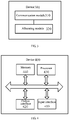
- FIG. 3 is a schematic block diagram of a device for transmitting data according to an embodiment of the present application.
- FIG. 4 is a schematic block diagram of a device for transmitting data according to another embodiment of the present application.
- GSM Global System of Mobile communication
- CDMA Code Division Multiple Access
- WCDMA Wideband Code Division Multiple Access
- GPRS General Packet Radio Service
- LTE Long Term Evolution
- LTE-A Advanced Long Term Evolution
- UMTS Universal Mobile Telecommunication System
- FIG. 1 illustrates a wireless communication system 100 suitable for embodiments of the present invention.
- the wireless communication system 100 can include at least one network device, such as a first network device 110 and a second network device 120 shown in FIG. 1 . Both the first network device 110 and the second network device 120 can communicate with a terminal device 130 through a wireless air interface.
- the first network device 110 and the second network device 120 can provide communication coverage for a particular geographic area and can communicate with terminal devices located within the coverage area.
- the first network device 110 or the second network device 120 may be a Base Transceiver Station (abbreviated as "BTS”) in a GSM system or a CDMA system, or may be a NodeB in a WCDMA system, or may be an Evolutional Node B (abbreviated as "eNB” or “eNodeB”) in an LTE system, or a network device in a future 5G network, such as a Transmission Reception Point (abbreviated as "TRP”), a base station, a small cell device, etc., which is not particularly limited in embodiments of the present invention.
- BTS Base Transceiver Station
- eNB Evolutional Node B
- TRP Transmission Reception Point
- the wireless communication system 100 further includes one or more terminal device (also referred to as User Equipment, abbreviated as "UE") 130 located within the coverage of the first network device 110 and the second network device 120.
- the terminal device 130 can be mobile or fixed.
- the terminal device 130 can communicate with one or more core networks via a Radio Access Network (abbreviated as "RAN"), and the terminal device may be referred to as an access terminal, a terminal device, a subscriber unit, a subscriber station, a mobile station, a mobile radio station, a remote station, a remote terminal, a mobile device, a user terminal, a terminal, a wireless communication device, a user agent or a user apparatus.
- RAN Radio Access Network
- the terminal device may be a cellular phone, a cordless phone, a Session Initiation Protocol (abbreviated as "SIP”) phone, a Wireless Local Loop (abbreviated as “WLL”) station, a Personal Digital Assistant (abbreviated as "PDA”), a handheld device or a computing device with wireless communication capabilities, or other processing device, in-vehicle device or wearable device connected to a wireless modem, or a terminal device in a future 5G network, etc.
- SIP Session Initiation Protocol
- WLL Wireless Local Loop
- PDA Personal Digital Assistant
- the terminal device can send uplink data to the network device through a plurality of logical channels, and each of the logical channels can correspond to a set of logical channel priority parameters, for example, parameters like a priority, a Priority Bit Rate (PBR) and a Bucket Size Duration (BSD).
- PBR Priority Bit Rate
- BSD Bucket Size Duration
- the terminal device can request to acquire a granted uplink resource from the network device, and the network device can allocate a plurality of granted uplink resources to the plurality of logical channels.
- the above parameters can be used to determine an order in which each of the logical channels obtains a granted uplink resource, where the priority can be used to indicate an order in which data in the logical channels is scheduled, and a larger value of the priority represents a lower priority; and the PBR determines an upper limit of the resources that can be scheduled for each of the logical channels.
- the above parameters can be configured by a Radio Resource Control (RRC) entity, and in addition to the above parameters, a variable Bj can also be maintained for each of the logical channels in a Medium Access Control (MAC) layer, where Bj has an initial value of 0, and increases with an increase of a Transmission Time Interval (TTI), the amount of increase each time is PBR ⁇ TTI, with an upper limit of PBR ⁇ BSD.
- RRC Radio Resource Control
- TTI Transmission Time Interval
- a process of performing granted uplink resource allocation according to priorities of logical channels is specified in an existing LTE protocol, and can specifically include: Step 1: for a logical channel wanting resource allocation, it is necessary to satisfy Bj>0.
- Step 1 for a logical channel wanting resource allocation, it is necessary to satisfy Bj>0.
- a granted uplink resource is allocated to each of the logical channels successively in a priority order from high to low.
- the PBR of one logical channel of the plurality of logical channels is set to be infinity, resource needs of this logical channel are preferentially satisfied, and then granted uplink resources are allocated to logical channels with lower priorities.
- Step 2 the MAC entity updates a value of Bj, and subtracts a total size of RLC PDU served in the corresponding logical channel from Bj.
- Step 3 after the execution of Step 1, if there are remaining resources, at this time, resource allocation is performed according to priorities. That is, needs of a logical channel with a higher priority is met first; if corresponding resources have been allocated for all the data of the logical channel with the higher priority, and if there are still remaining resources at this time, allocation to a logical channel with a next priority is continued.
- a logical channel can be mapped to one or more numerologies, and a plurality of granted uplink resources allocated by the network device can also correspond to different numerologies, a new resource allocation method is needed.
- resource allocation is performed for each logical channel, a numerology corresponding to the logical channel can be considered, thereby improving resource utilization.
- an embodiment of the present application provides a method for transmitting data, which can implement resource allocation to a plurality of logical channels according to numerologies corresponding to the plurality of logical channels.
- FIG. 2 is a schematic flowchart of a method 200 for transmitting data according to an embodiment of the present application.
- the method 200 can be performed by a terminal device in the wireless communication system shown in FIG. 1 , and as shown in FIG. 2 , the method 200 includes: S210: a terminal device receives a plurality of granted uplink resources, where different granted uplink resources correspond to different numerologies, the terminal device has a plurality of logical channels, and each of the logical channels corresponds to at least one numerology.
- the terminal device has a plurality of logical channels, and each of the logical channels corresponds to one or more numerologies, where the numerology may be a complete numerology, or may include a part of parameters (for example, a TTI length) in a complete numerology, specific parameters included in a numerology is not particularly limited in the embodiments of the present application.
- the terminal device can send uplink data to the network device through the plurality of logical channels, and before sending the uplink data, the terminal device can first request, from the network device, a granted uplink resource for uplink transmission. For example, the terminal device can send a Scheduling Request (SR) to the network device, for requesting to acquire a granted uplink resource for uplink transmission, and the network device can send a plurality of granted uplink resources to the terminal device.
- SR Scheduling Request
- the plurality of granted uplink resources can be used by the terminal device to transmit uplink data on the plurality of logical channels.
- the plurality of granted uplink resources can be regarded as being obtained by dividing the resource set according to different numerologies. That is, resources corresponding to a same numerology in the resource set can be determined as a same uplink resource, or each granted uplink resource can be regarded as a granted uplink resource of one type, and the granted uplink resource of such type may be continuous or may be discontinuous, and for example, may include one or more sub-resources. That is, the plurality of granted uplink resources can be regarded as a plurality of granted uplink resources of different types.
- the terminal device allocates the plurality of granted uplink resources to the plurality of logical channels according to the at least one numerology corresponding to each of the logical channels.
- the terminal device can allocate a granted uplink resource corresponding to the first numerology to the first logical channel; or if the first logical channel corresponds to a first numerology and a second numerology, the terminal device can preferentially allocate a granted uplink resource corresponding to the first numerology or the second numerology to the first logical channel; or if the first logical channel has a preference for the first numerology and the second numerology, that is, the first logical channel is more suitable, or more expects to perform data transmission on a granted uplink resource corresponding to the first numerology, the terminal device can allocate a granted uplink resource to the first logical channel according to the preference to the first logical channel, that is, the granted uplink resource corresponding to the first numerology is preferentially allocated to the first logical channel.
- the terminal device allocates the plurality of granted uplink resources to the plurality of logical channels according to the at least one numerology corresponding to each of the logical channels includes that: the terminal device allocates the plurality of granted uplink resources to the plurality of logical channels according to the at least one numerology corresponding to each of the logical channels and priorities of the plurality of logical channels.
- the terminal device can allocate a granted uplink resource to each of the logical channels with reference to the priorities of the plurality of logical channels and the numerology corresponding to each of the logical channels.
- a sequence of resource allocation to each of the logical channels can be determined according to the priorities of the logical channels.
- a corresponding granted uplink resource can be allocated to the logical channel with reference to a numerology corresponding to the logical channel.
- the plurality of logical channels include a first logical channel and a second logical channel
- S220 specifically includes: allocating a granted uplink resource to the first logical channel preferentially according to a numerology corresponding to the first logical channel if a priority of the first logical channel is higher than a priority of the second logical channel.
- the terminal device when performing the granted uplink resource allocation, can act with a logical channel prioritization process in the prior art as a main line, preferentially allocate a granted uplink resource to a logical channel with a higher priority, and then allocate a resource to a logical channel with a lower priority after satisfying the resource needs of the logical channel with the higher priority.
- the terminal device can allocate a corresponding granted uplink resource to the logical channel with reference to the numerology corresponding to the logical channel.
- first logical channel and the second logical channel here can be any two logical channels of the plurality of logical channels, and embodiments of the present application only use the first logical channel and the second logical channel of the plurality of logical channels as an example to describe how to implement resource allocation according to the priorities of the logical channels, but the embodiments of the present application do not exclude that the plurality of logical channels can also include more logical channels, for example, a third logical channel, a fourth logical channel and the like. The embodiments of the present application do not limit the number of the plurality of logical channels.
- the manner of resource allocation to the plurality of logical channels is similar to the manner of performing resource allocation according to the priorities of the first logical channel and the second logical channel as described above, and details are not described herein again.
- the first logical channel corresponds to a plurality of numerologies
- the allocating a granted uplink resource to the first logical channel according to a numerology corresponding to the first logical channel includes: allocating the granted uplink resource to the first logical channel according to a priority order of the plurality of numerologies corresponding to the first logical channel.
- the terminal device can allocate the granted uplink resource to the first logical channel according to the priority order of the plurality of numerologies corresponding to the first logical channel.
- a granted uplink resource corresponding to a numerology with a higher priority is preferentially allocated to the first logical channel, and in a case that the granted uplink resource corresponding to the numerology with the higher priority cannot satisfy the PBR of the first logical channel, it is then considered to allocate a granted uplink resource corresponding to a numerology with a secondary higher priority to the first logical channel.
- the priority order of the numerologies is used to represent the preference of the logical channel to a numerology, that is, the priority order corresponding to the numerologies reflects that the logical channel is more suitable, or more expects to perform transmission on the granted uplink resource corresponding to which numerology.
- the terminal device then allocates a suitable granted uplink resource to the first logical channel according to the priority order corresponding to the plurality of numerologies, which thus improves resource utilization and is conducive to the Quality-of-Service (QoS) assurance of the logical channel.
- QoS Quality-of-Service
- the plurality of numerologies include a first numerology and a second numerology
- the allocating the granted uplink resource to the first logical channel according to a priority order of the plurality of numerologies corresponding to the first logical channel includes that: the terminal device allocates a granted uplink resource corresponding to the first numerology to the first logical channel preferentially from the plurality of granted uplink resources if a priority of the first numerology is higher than a priority of the second numerology.
- the granted uplink resource allocated by the terminal device to the first logical channel according to the priority order of the plurality of numerologies is more conducive to the QoS assurance of the data transmitted on the logical channel.
- the priority order of the numerologies can be determined by a data type, a QoS requirement, and other parameters of the data to be transmitted on the logical channel.
- a logical channel for transmitting Enhanced Mobile Broadband (eMBB) data corresponds to two numerologies, one is a numerology with a long TTI, and the other is a numerology with a short TTI. Since the eMBB data is high-rate data, transmission using a granted uplink resource corresponding to the numerology with the long TTI is more advantageous for guaranteeing the QoS of the data transmission, that is, the preference of the logical channel to the numerology may be that the numerology with the long TTI is better than the numerology with the short TTI.
- a priority of the numerology with the long TTI can be set to be higher than a priority of the numerology with the short TTI, so that when the resource allocation is performed, a granted uplink resource corresponding to the numerology with the long TTI can be preferentially allocated to the logical channel.
- the allocating the granted uplink resource to the first logical channel according to a priority order of the plurality of numerologies corresponding to the first logical channel can further include that: the terminal device allocates a remaining granted uplink resource of the first logical channel from a granted uplink resource corresponding to the second numerology if the granted uplink resource corresponding to the first numerology in the plurality of granted uplink resources cannot meet a priority bit rate (PBR) of the first logical channel.
- PBR priority bit rate
- the terminal device can further perform allocation to the first logical channel for a lacking PBR from a granted uplink resource corresponding to the third numerology.
- the terminal device preferentially allocates a granted uplink resource corresponding to a numerology with a highest priority to the first logical channel, allocate a remaining granted uplink resource of the first logical channel from a granted uplink resource corresponding to a numerology with a secondary highest priority if the granted uplink resource corresponding to the numerology with the highest priority is insufficient, and allocate, if the granted uplink resource corresponding to the numerology with the secondary highest priority cannot satisfy the remaining PBR, a granted uplink resource to the first logical channel successively from the granted uplink resources corresponding to the numerologies with other priorities according to the priority order of the numerologies corresponding to the first logical channel until the PBR of the first logical channel can be satisfied.
- the first numerology and the second numerology can be any two numerologies of the plurality of numerologies, and embodiments of the present application only use the first numerology and the second numerology of the plurality of numerologies as an example to describe how to implement the resource allocation according to the priorities of the numerologies, but the embodiments of the present application do not exclude that the plurality of numerologies can also include more numerologies, for example, a third numerology, a fourth numerology and the like. The embodiments of the present application do not limit the number of the plurality of numerologies.
- the manner of performing resource allocation according to the priorities of the plurality of numerologies is similar to the manner of performing resource allocation according to the priorities of the first numerology and the second numerology as described above, and details are not described herein again.
- the terminal device has two logical channels (including LC1 and LC2) over which data is to be transmitted, and LC1>LC2 in terms of priorities of the logical channels, that is, a priority of LC1 is higher than that of LC2, where LC1 maps to numerologies of N1 and N2, and numerologies of LC2 are also N1 and N2.
- a priority order of N1 and N2 is N1>N2, that is, LC1 prefers N1, or uplink data transmission on a granted uplink resource corresponding to N1 is more suitable for LC1. If the granted uplink resource corresponding to N1 is insufficient, uplink data transmission can also be performed on a granted uplink resource corresponding to N2.
- a priority order of N1 and N2 is N2>N1, that is, LC2 prefers N2, or uplink data transmission on a granted uplink resource corresponding to N2 is more suitable for LC2. If the granted uplink resource corresponding to N2 is insufficient, uplink data transmission can also be performed on a granted uplink resource corresponding to N1.
- the terminal device receives two granted uplink resources A and B, where a numerology adopted by A is N1, and a numerology adopted by B is N2, and the terminal device can follow the following criteria to perform resource allocation: since the priority of LC1 is higher than that of LC2, when allocating resources, the terminal device preferentially allocates a resource to LC1, and then allocates a resource to LC2 after the PBR of LC1 is satisfied; and for allocating a granted uplink resource to LC1, a granted uplink resource that satisfies the PBR of LC1 is preferentially allocated to LC1 from the granted uplink resource A, and for allocating a granted uplink resource to LC2, a granted uplink resource that satisfies the PBR of LC2 is preferentially allocated to LC2 from the granted uplink resource B.
- the granted uplink resource A can satisfy the PBR of LC1
- the granted uplink resource B can satisfy the PBR of LC2.
- PBR1 the PBR of LC1
- PBR2 the PBR of LC2
- a resource in the granted uplink resource A is preferentially allocated to LC1 according to the preference of LC1. Since A is sufficient in resources, the terminal device can allocate a granted uplink resource that satisfies PBR1 to LC1.
- a resource in the granted uplink resource B is preferentially allocated to LC2 according to the preference of LC2. Since the granted uplink resource B is sufficient, the terminal device can allocate a granted uplink resource that satisfies PBR2 from the granted uplink resource B.
- the granted uplink resource allocated to LC1 is the granted uplink resource A
- the granted uplink resource allocated to LC2 is the granted uplink resource B.
- A is sufficient in resources and B is insufficient in resources;
- the granted uplink resource A can satisfy the PBR of LC1, and the granted uplink resource B cannot satisfy the PBR of LC2.
- a resource in the granted uplink resource A is preferentially allocated according to the preference of LC1. Since A is sufficient in resources, the terminal device can allocate a granted uplink resource that satisfies PBR1 to LC1.
- the terminal device selects to preferentially allocate the granted uplink resource B according to the preference of LC2. Since the granted uplink resource B is insufficient, after the granted uplink resource B is allocated to LC2, PBR2of LC2 cannot be satisfied. The terminal device can perform allocation to LC2 for a remaining PBR from the granted uplink resource A until PBR2 of LC2 can be satisfied. If the granted uplink resource A has remaining resources after the corresponding granted uplink resource is allocated to each of the logical channels, resource allocation can be performed in the manner described in Step 3 of the existing LTE protocol.
- the granted uplink resource allocated to LC1 is the granted uplink resource A
- the granted uplink resource allocated to LC2 is the granted uplink resource B plus the granted uplink resource A.
- A is insufficient in resources and B is sufficient in resources;
- the granted uplink resource A cannot satisfy the PBR of LC1, and the granted uplink resource B can satisfy the PBR of LC2.
- a resource in the granted uplink resource A is preferentially allocated to LC1 according to the preference of LC1. Since A is insufficient in resources, after allocating the granted uplink resource A to LC1, the terminal device can perform allocation to LC1 for a remaining PBR from the granted uplink resource B to satisfy PBR1 of LC1.
- the terminal device can preferentially allocate the granted uplink resource B according to the preference of LC2. If the remaining granted uplink resource B is sufficient, the terminal device can allocate a granted uplink resource that satisfies PBR2 to LC2 from the granted uplink resource B. If the granted uplink resource B has remaining resources after the corresponding granted uplink resource is allocated to each of the logical channels, resource allocation can be performed in the manner described in Step 3 of the existing LTE protocol. Or if the remaining granted uplink resource B cannot satisfy PBR2 of LC2 after the allocation to LC1 from the granted uplink resource B, the terminal device can allocate the remaining granted uplink resource B to LC2.
- the granted uplink resource allocated to LC1 is the granted uplink resource A plus the granted uplink resource B
- the granted uplink resource allocated to LC2 is the granted uplink resource B.
- A is insufficient in resources and B is insufficient in resources;
- the granted uplink resource A cannot satisfy the PBR of LC1
- the granted uplink resource B cannot satisfy the PBR of LC2.
- a resource in the granted uplink resource A is preferentially allocated according to the preference of LC1. Since A is insufficient in resources, the terminal device allocates all the granted uplink resource A to LC1 and then performs allocation to LC1 for the remaining PBR from the granted uplink resource B. If the granted uplink resource B has remaining resources after the allocation, the remaining granted uplink resource B is allocated to LC2. If the granted uplink resource B cannot satisfy the remaining PBR of LC1, all the granted uplink resource B is allocated to LC1 to preferentially guarantee PBR1 of LC1, and a granted uplink resource is allocated to LC2 on the basis of satisfying PBR1 of LC1.
- the granted uplink resource allocated to LC1 is the granted uplink resource A plus the granted uplink resource B
- the granted uplink resource allocated to LC2 is the granted uplink resource B or no granted uplink resource is allocated to LC2.
- the terminal device can allocate granted uplink resources to the plurality of logical channels according to the priority corresponding to each of the plurality of logical channels, which therefore is beneficial to improve resource utilization and to ensure the QoS of data of the logical channels.
- FIG. 3 is a schematic block diagram of a device for transmitting data according to an embodiment of the present application.
- a device 300 in FIG. 3 includes:
- the allocating module 320 is specifically configured to: allocate the plurality of granted uplink resources to the plurality of logical channels according to the at least one numerology corresponding to each of the logical channels and priorities of the plurality of logical channels.
- the plurality of logical channels include a first logical channel and a second logical channel
- the allocating module 320 is specifically configured to: allocate a granted uplink resource to the first logical channel preferentially according to a numerology corresponding to the first logical channel if a priority of the first logical channel is higher than a priority of the second logical channel.
- the first logical channel corresponds to a plurality of numerologies
- the allocating module 320 is specifically configured to: allocate the granted uplink resource to the first logical channel according to a priority order of the plurality of numerologies corresponding to the first logical channel.
- the plurality of numerologies include a first numerology and a second numerology
- the allocating module 320 is specifically configured to: allocate a granted uplink resource corresponding to the first numerology to the first logical channel preferentially from the plurality of granted uplink resources if a priority of the first numerology is higher than a priority of the second numerology.
- the allocating module 320 is specifically configured to: allocate a remaining granted uplink resource of the first logical channel from a granted uplink resource corresponding to the second numerology if the granted uplink resource corresponding to the first numerology in the plurality of granted uplink resources cannot meet a priority bit rate (PBR) of the first logical channel.
- PBR priority bit rate
- each of the logical channels corresponds to a set of logical channel priority parameters, where the set of logical channel priority parameters includes: a PBR, a Bucket Size Duration (BSD) and a priority.
- the set of logical channel priority parameters includes: a PBR, a Bucket Size Duration (BSD) and a priority.
- the device 300 can correspond to (for example, can be configured in or be itself) the terminal device described in the method 200, and respective modules or units in the device 300 are configured to execute respective operations or processes performed by the terminal device in the method 200, details of which is omitted here for the sake of avoiding redundancy.
- an example of the present application further provides a device 400 for transmitting data
- the device 400 can be the device 300 in FIG. 3 , which can be configured to execute the corresponding contents for the terminal device in the method 200 in FIG. 2 .
- the device 400 includes an input interface 410, an output interface 420, a processor 430 and a memory 440, where the input interface 410, the output interface 420, the processor 430 and the memory 440 can be connected by a bus system.
- the memory 440 is configured to store programs, instructions or codes.
- the processor 430 is configured to execute the programs, the instructions or the codes in the memory 440, so as to control the input interface 410 to receive signals, control the output interface 420 to send signals, and complete the operations in the foregoing method embodiments.
- the processor 430 may be a Central Processing Unit (abbreviated as "CPU"), and the processor 430 may also be other general-purpose processor, a Digital Signal Processor (DSP), an Application Specific Integrated Circuit (ASIC), a Field-Programmable Gate Array (FPGA) or other programmable logic devices, discrete gate or transistor logic devices, discrete hardware components, etc.
- the general-purpose processor may be a microprocessor or the processor may be any conventional processor or the like.
- the memory 440 can include a read only memory and a random access memory and provides instructions and data to the processor 430. A portion of the memory 440 can also include a non-volatile random access memory. For example, the memory 440 can also store information of a device type.
- contents of the foregoing methods may be completed by an integrated logic circuit of hardware in the processor 430 or instructions in a form of software.
- the contents of the methods disclosed in the embodiments of the present application may be directly implemented by a hardware processor, or may be performed by a combination of hardware and software modules in the processor.
- the software modules can be located in a mature storage medium such as a random access memory, a flash memory, a read only memory, a programmable read only memory or an electrically erasable programmable memory, a register, etc.
- the storage medium is located in the memory 440, and the processor 430 reads information in the memory 440 and completes the contents of the above methods in combination with the hardware thereof. To avoid repetition, details are not described here.
- the allocating module 320 included in the device 300 of FIG. 3 can be implemented by the processor 430 of FIG. 4 .
- the communication module 310 included in the device 300 of FIG. 3 can be implemented by the input interface 410 and the output interface 420 of FIG. 4 .
- An embodiment of the present application further proposes a computer readable storage medium, where the computer readable storage medium stores one or more programs, the one or more programs includes instructions which, when executed by a portable electronic device including a plurality of applications, cause the portable electronic device to perform the method in the embodiment shown in FIG. 2 .
- An example of the present application also proposes a computer program, where the computer program includes instructions which, when executed by a computer, cause the computer to perform the corresponding flow of the method in the embodiment shown in FIG. 2 .
- the disclosed systems, apparatuses, and methods may be implemented in other manners.
- the apparatus embodiments described above are merely illustrative.
- the division of units is only a logical function division.
- there may be another division manner for example, multiple units or components may be combined or may be integrated into another system, or some features can be ignored or not executed.
- the mutual coupling or direct coupling or communication connection shown or discussed may be an indirect coupling or communication connection through some interfaces, apparatuses or units, and may be in an electrical, mechanical or other form.
- the units described as separate components may or may not be physically separated, and the components displayed as units may or may not be physical units, that is, may be located in one place, or may be distributed to multiple network units. Some or all of the units may be selected according to actual needs to achieve the purpose of the solution of the embodiment.
- the functional units in various embodiments of the present application may be integrated into one processing unit, or each unit may physically exist separately, or two or more units may be integrated into one unit.
- the functions may be stored in a computer readable storage medium if implemented in the form of software functional units and sold or used as a standalone product.
- the technical solution of the present application which is essential or contributes to the prior art, or a part of the technical solution, may be embodied in the form of a software product, and the software product is stored in a storage medium and includes a number of instructions to cause a computer device (which may be a personal computer, a server, or a network device, etc.) to perform all or a part of the steps of the methods described in various embodiments of the present application.
- the foregoing storage medium includes various mediums capable of storing program codes, such as a U disk, a mobile hard disk, a Read-Only Memory (ROM), a Random Access Memory (RAM), a magnetic disk, or an optical disk, etc.
Landscapes
- Engineering & Computer Science (AREA)
- Signal Processing (AREA)
- Computer Networks & Wireless Communication (AREA)
- Mobile Radio Communication Systems (AREA)
Claims (9)
- Verfahren zum Übertragen von Daten, umfassend:Empfangen (S210), durch eine Endgerätevorrichtung, mehrerer gewährter Uplink-Ressourcen, wobei verschiedene gewährte Uplink-Ressourcen verschiedenen Numerologien entsprechen, die Endgerätevorrichtung mehrere logische Kanäle aufweist und jeder der logischen Kanäle mindestens einer Numerologie entspricht; undZuweisen (S220), durch die Endgerätevorrichtung, der mehreren gewährten Uplink-Ressourcen an die mehreren logischen Kanäle gemäß den Prioritäten der mehreren logischen Kanäle und einer Priorität der mindestens einen Numerologie, die jedem der logischen Kanäle entspricht;dadurch gekennzeichnet, dass die mehreren logischen Kanäle einen ersten logischen Kanal und einen zweiten logischen Kanal umfassen, wobei der erste logische Kanal mehreren Numerologien entspricht, und das Zuweisen (S220), durch die Endgerätevorrichtung, der mehreren gewährten Uplink-Ressourcen zu den mehreren logischen Kanälen entsprechend den Prioritäten der mehreren logischen Kanäle und einer Priorität der mindestens einen Numerologie, die jedem der logischen Kanäle entspricht, umfasst:Zuweisen, mit Vorrang vor dem zweiten logischen Kanal, einer gewährten Uplink-Ressource an den ersten logischen Kanal gemäß den mehreren Numerologien, die dem ersten logischen Kanal entsprechen, wenn eine Priorität des ersten logischen Kanals höher ist als eine Priorität des zweiten logischen Kanals;wobei das Zuweisen einer gewährten Uplink-Ressource an den ersten logischen Kanal gemäß den mehreren Numerologien, die dem ersten logischen Kanal entsprechen, umfasst:
Zuweisen der gewährten Uplink-Ressource an den ersten logischen Kanal gemäß einer Prioritätsreihenfolge der mehreren Numerologien, die dem ersten logischen Kanal entsprechen. - Verfahren nach Anspruch 1, wobei die mehreren Numerologien eine erste Numerologie und eine zweite Numerologie umfassen und das Zuweisen der gewährten Uplink-Ressource zu dem ersten logischen Kanal gemäß einer Prioritätsreihenfolge der mehreren Numerologien, die dem ersten logischen Kanal entsprechen, umfasst:
Zuweisen, durch die Endgerätevorrichtung, einer gewährten Uplink-Ressource, die der ersten Numerologie entspricht, die aus den mehreren gewährten Uplink-Ressourcen Vorrang hat, zu dem ersten logischen Kanal, wenn eine Priorität der ersten Numerologie höher ist als eine Priorität der zweiten Numerologie. - Verfahren nach Anspruch 2, wobei das Zuweisen der gewährten Uplink-Ressource zu dem ersten logischen Kanal gemäß einer Prioritätsreihenfolge der mehreren Numerologien, die dem ersten logischen Kanal entsprechen, ferner umfasst:
Zuweisen, durch die Endgerätevorrichtung, einer verbleibenden gewährten Uplink-Ressource des ersten logischen Kanals aus einer gewährten Uplink-Ressource, die der zweiten Numerologie entspricht, wenn die gewährte Uplink-Ressource, die der ersten Numerologie entspricht, in den mehreren gewährten Uplink-Ressourcen eine Prioritätsbitrate, PBR, des ersten logischen Kanals nicht erfüllen kann. - Verfahren nach einem der Ansprüche 1 bis 3, wobei jeder der logischen Kanäle einem Satz von logischen Kanalprioritätsparametern entspricht und der Satz von logischen Kanalprioritätsparametern umfasst: eine PBR, eine Bereichsgrößendauer, BSD, und eine Priorität.
- Vorrichtung zum Übertragen von Daten, umfassend:ein Kommunikationsmodul (310), das dazu ausgelegt ist, mehrere gewährte Uplink-Ressourcen zu empfangen, wobei verschiedene gewährte Uplink-Ressourcen verschiedenen Numerologien entsprechen,eine Endgerätevorrichtung mehrere logische Kanäle aufweist und jeder der logischen Kanäle mindestens einer Numerologie entspricht; undein Zuweisungsmodul (320), das dazu ausgelegt ist, die mehreren gewährten Uplink-Ressourcen an die mehreren logischen Kanäle gemäß den Prioritäten der mehreren logischen Kanäle und einer Priorität der mindestens einen Numerologie zuzuweisen, die jedem der logischen Kanäle entspricht;dadurch gekennzeichnet, dass die mehreren logischen Kanäle einen ersten logischen Kanal und einen zweiten logischen Kanal umfassen, der erste logische Kanal mehreren Numerologien entspricht und das Zuweisungsmodul (320) insbesondere dazu ausgelegt ist:
mit Vorrang vor dem zweiten logischen Kanal eine gewährte Uplink-Ressource dem ersten logischen Kanal gemäß den mehreren Numerologien zuweisen, die dem ersten logischen Kanal entsprechen, wenn eine Priorität des ersten logischen Kanals höher ist als eine Priorität des zweiten logischen Kanals; wobei die gewährte Uplink-Ressource dem ersten logischen Kanal gemäß einer Prioritätsreihenfolge der mehreren Numerologien zugewiesen wird, die dem ersten logischen Kanal entsprechen. - Vorrichtung nach Anspruch 5, wobei die mehreren Numerologien eine erste Numerologie und eine zweite Numerologie umfassen und das Zuweisungsmodul (320) insbesondere dazu ausgelegt ist:
dem ersten logischen Kanal eine gewährte Uplink-Ressource zuzuweisen, die der ersten Numerologie entspricht, die aus den mehreren gewährten Uplink-Ressourcen Vorrang hat, wenn eine Priorität der ersten Numerologie höher ist als eine Priorität der zweiten Numerologie. - Vorrichtung nach Anspruch 6, wobei das Zuweisungsmodul (320) insbesondere dazu ausgelegt ist:
eine verbleibende gewährte Uplink-Ressource des ersten logischen Kanals aus einer gewährten Uplink-Ressource zuzuweisen, die der zweiten Numerologie entspricht, wenn die gewährte Uplink-Ressource, die der ersten Numerologie entspricht, in den mehreren gewährten Uplink-Ressourcen eine Prioritätsbitrate, PBR, des ersten logischen Kanals nicht erfüllen kann. - Vorrichtung nach einem der Ansprüche 5 bis 7, wobei jeder der logischen Kanäle einem Satz von logischen Kanalprioritätsparametern entspricht und der Satz von logischen Kanalprioritätsparametern umfasst: eine PBR, eine Bereichsgrößendauer, BSD, und eine Priorität.
- Computerlesbares Speichermedium, wobei das computerlesbare Speichermedium ein oder mehrere Programme speichert, wobei das eine oder die mehreren Programme Anweisungen umfassen, die, wenn sie von einer tragbaren elektronischen Vorrichtung, die mehrere Anwendungen umfasst, ausgeführt werden, die tragbare elektronische Vorrichtung veranlassen, das Verfahren nach einem der Ansprüche 1 bis 4 durchzuführen.
Applications Claiming Priority (1)
| Application Number | Priority Date | Filing Date | Title |
|---|---|---|---|
| PCT/CN2017/088317 WO2018227444A1 (zh) | 2017-06-14 | 2017-06-14 | 用于传输数据的方法和设备 |
Publications (3)
| Publication Number | Publication Date |
|---|---|
| EP3611980A1 EP3611980A1 (de) | 2020-02-19 |
| EP3611980A4 EP3611980A4 (de) | 2020-04-22 |
| EP3611980B1 true EP3611980B1 (de) | 2021-10-06 |
Family
ID=64658903
Family Applications (1)
| Application Number | Title | Priority Date | Filing Date |
|---|---|---|---|
| EP17913890.4A Not-in-force EP3611980B1 (de) | 2017-06-14 | 2017-06-14 | Ressourcesnzuweisung an logische kanäle und numerologien |
Country Status (10)
| Country | Link |
|---|---|
| US (1) | US20200083988A1 (de) |
| EP (1) | EP3611980B1 (de) |
| CN (1) | CN110637493B (de) |
| AU (1) | AU2017418411A1 (de) |
| BR (1) | BR112019024554A2 (de) |
| CA (1) | CA3064631C (de) |
| MX (1) | MX2019013838A (de) |
| RU (1) | RU2735672C1 (de) |
| WO (1) | WO2018227444A1 (de) |
| ZA (1) | ZA202000024B (de) |
Family Cites Families (10)
| Publication number | Priority date | Publication date | Assignee | Title |
|---|---|---|---|---|
| EP2670205B1 (de) * | 2008-02-01 | 2019-01-02 | Interdigital Patent Holdings, Inc. | Verfahren und Vorrichtung zur Priorisierung von logischen Kanälen |
| US20100281486A1 (en) * | 2009-05-04 | 2010-11-04 | HT mMobile Inc. | Enhanced scheduling, priority handling and multiplexing method and system |
| CN101902817B (zh) * | 2009-05-26 | 2015-07-22 | 中兴通讯股份有限公司 | 无线通信系统中上行无线资源调度方法与装置 |
| KR101335869B1 (ko) * | 2009-08-12 | 2013-12-02 | 엘지전자 주식회사 | 무선 통신 시스템에서 논리채널에 대한 자원 할당 방법 및 장치 |
| DE112012002211B4 (de) * | 2011-05-24 | 2019-02-21 | Broadcom Corp. | Ressourcenzuweisungssteuerung |
| RU2654052C2 (ru) * | 2011-09-30 | 2018-05-16 | Интердиджитал Пэйтент Холдингз, Инк. | Многоточечная передача при беспроводной связи |
| CN103313411B (zh) * | 2012-03-14 | 2016-04-13 | 普天信息技术研究院有限公司 | 一种多业务资源分配方法及装置 |
| RU2603626C2 (ru) * | 2012-08-23 | 2016-11-27 | Интердиджитал Пэйтент Холдингз, Инк. | Работа с множеством планировщиков в беспроводной системе |
| CN106559795B (zh) * | 2015-09-25 | 2022-07-29 | 中兴通讯股份有限公司 | 一种确定lbt模式的方法、装置和实现lbt模式切换的方法 |
| CN106559882B (zh) * | 2015-09-25 | 2021-12-10 | 中兴通讯股份有限公司 | 一种授权协助接入设备竞争接入参数配置的方法及装置 |
-
2017
- 2017-06-14 CA CA3064631A patent/CA3064631C/en active Active
- 2017-06-14 RU RU2019137011A patent/RU2735672C1/ru active
- 2017-06-14 CN CN201780090897.3A patent/CN110637493B/zh active Active
- 2017-06-14 WO PCT/CN2017/088317 patent/WO2018227444A1/zh not_active Ceased
- 2017-06-14 BR BR112019024554A patent/BR112019024554A2/pt not_active IP Right Cessation
- 2017-06-14 EP EP17913890.4A patent/EP3611980B1/de not_active Not-in-force
- 2017-06-14 MX MX2019013838A patent/MX2019013838A/es unknown
- 2017-06-14 AU AU2017418411A patent/AU2017418411A1/en not_active Abandoned
-
2019
- 2019-11-14 US US16/684,494 patent/US20200083988A1/en not_active Abandoned
-
2020
- 2020-01-02 ZA ZA2020/00024A patent/ZA202000024B/en unknown
Non-Patent Citations (1)
| Title |
|---|
| None * |
Also Published As
| Publication number | Publication date |
|---|---|
| BR112019024554A2 (pt) | 2020-06-09 |
| WO2018227444A1 (zh) | 2018-12-20 |
| AU2017418411A1 (en) | 2019-12-12 |
| EP3611980A1 (de) | 2020-02-19 |
| CN110637493B (zh) | 2024-12-10 |
| RU2735672C1 (ru) | 2020-11-05 |
| US20200083988A1 (en) | 2020-03-12 |
| CA3064631A1 (en) | 2018-12-20 |
| MX2019013838A (es) | 2020-01-30 |
| ZA202000024B (en) | 2021-08-25 |
| CA3064631C (en) | 2022-05-24 |
| EP3611980A4 (de) | 2020-04-22 |
| CN110637493A (zh) | 2019-12-31 |
Similar Documents
| Publication | Publication Date | Title |
|---|---|---|
| US11665520B2 (en) | Resource configuration method in D2D communication and terminal device | |
| EP3783984B1 (de) | Ressourcenzuteilungsverfahren und kommunikationsvorrichtung | |
| JP6708744B2 (ja) | データ伝送方法 | |
| CN110474854B (zh) | 资源分配的方法和装置 | |
| US11963173B2 (en) | Data transmission method and terminal device | |
| US20190342893A1 (en) | Data Packet Transmission Method and Terminal | |
| EP3562244B1 (de) | Verfahren und vorrichtung zum multiplexing von uplink-autorisierungsressourcen | |
| US10869314B2 (en) | Method and terminal device for allocating logical channel resources | |
| EP3500037B1 (de) | Datenübertragungsverfahren, endgerätevorrichtung und netzwerkvorrichtung | |
| WO2023131067A1 (zh) | 一种频域资源配置方法及装置、通信设备 | |
| CN112512106B (zh) | 一种上行功率分配方法、装置、终端设备及存储介质 | |
| EP3611980B1 (de) | Ressourcesnzuweisung an logische kanäle und numerologien | |
| CN113965955B (zh) | 一种通信资源冲突的选择方法及相关产品 | |
| WO2018227459A1 (zh) | 为逻辑信道分配资源的方法和终端设备 | |
| WO2024221444A1 (zh) | 资源指示方法、终端设备和网络设备 | |
| CN109644344B (zh) | 业务的传输方法、终端和网络设备 |
Legal Events
| Date | Code | Title | Description |
|---|---|---|---|
| STAA | Information on the status of an ep patent application or granted ep patent |
Free format text: STATUS: THE INTERNATIONAL PUBLICATION HAS BEEN MADE |
|
| PUAI | Public reference made under article 153(3) epc to a published international application that has entered the european phase |
Free format text: ORIGINAL CODE: 0009012 |
|
| STAA | Information on the status of an ep patent application or granted ep patent |
Free format text: STATUS: REQUEST FOR EXAMINATION WAS MADE |
|
| 17P | Request for examination filed |
Effective date: 20191115 |
|
| AK | Designated contracting states |
Kind code of ref document: A1 Designated state(s): AL AT BE BG CH CY CZ DE DK EE ES FI FR GB GR HR HU IE IS IT LI LT LU LV MC MK MT NL NO PL PT RO RS SE SI SK SM TR |
|
| AX | Request for extension of the european patent |
Extension state: BA ME |
|
| REG | Reference to a national code |
Ref country code: DE Ref legal event code: R079 Ref document number: 602017047385 Country of ref document: DE Free format text: PREVIOUS MAIN CLASS: H04W0072040000 Ipc: H04W0072120000 |
|
| A4 | Supplementary search report drawn up and despatched |
Effective date: 20200320 |
|
| RIC1 | Information provided on ipc code assigned before grant |
Ipc: H04W 72/12 20090101AFI20200316BHEP |
|
| DAV | Request for validation of the european patent (deleted) | ||
| DAX | Request for extension of the european patent (deleted) | ||
| STAA | Information on the status of an ep patent application or granted ep patent |
Free format text: STATUS: EXAMINATION IS IN PROGRESS |
|
| 17Q | First examination report despatched |
Effective date: 20201113 |
|
| GRAP | Despatch of communication of intention to grant a patent |
Free format text: ORIGINAL CODE: EPIDOSNIGR1 |
|
| STAA | Information on the status of an ep patent application or granted ep patent |
Free format text: STATUS: GRANT OF PATENT IS INTENDED |
|
| INTG | Intention to grant announced |
Effective date: 20210716 |
|
| GRAS | Grant fee paid |
Free format text: ORIGINAL CODE: EPIDOSNIGR3 |
|
| GRAA | (expected) grant |
Free format text: ORIGINAL CODE: 0009210 |
|
| STAA | Information on the status of an ep patent application or granted ep patent |
Free format text: STATUS: THE PATENT HAS BEEN GRANTED |
|
| AK | Designated contracting states |
Kind code of ref document: B1 Designated state(s): AL AT BE BG CH CY CZ DE DK EE ES FI FR GB GR HR HU IE IS IT LI LT LU LV MC MK MT NL NO PL PT RO RS SE SI SK SM TR |
|
| REG | Reference to a national code |
Ref country code: GB Ref legal event code: FG4D |
|
| REG | Reference to a national code |
Ref country code: CH Ref legal event code: EP Ref country code: AT Ref legal event code: REF Ref document number: 1437384 Country of ref document: AT Kind code of ref document: T Effective date: 20211015 |
|
| REG | Reference to a national code |
Ref country code: IE Ref legal event code: FG4D |
|
| REG | Reference to a national code |
Ref country code: DE Ref legal event code: R096 Ref document number: 602017047385 Country of ref document: DE |
|
| REG | Reference to a national code |
Ref country code: LT Ref legal event code: MG9D |
|
| REG | Reference to a national code |
Ref country code: NL Ref legal event code: MP Effective date: 20211006 |
|
| REG | Reference to a national code |
Ref country code: AT Ref legal event code: MK05 Ref document number: 1437384 Country of ref document: AT Kind code of ref document: T Effective date: 20211006 |
|
| PG25 | Lapsed in a contracting state [announced via postgrant information from national office to epo] |
Ref country code: RS Free format text: LAPSE BECAUSE OF FAILURE TO SUBMIT A TRANSLATION OF THE DESCRIPTION OR TO PAY THE FEE WITHIN THE PRESCRIBED TIME-LIMIT Effective date: 20211006 Ref country code: LT Free format text: LAPSE BECAUSE OF FAILURE TO SUBMIT A TRANSLATION OF THE DESCRIPTION OR TO PAY THE FEE WITHIN THE PRESCRIBED TIME-LIMIT Effective date: 20211006 Ref country code: FI Free format text: LAPSE BECAUSE OF FAILURE TO SUBMIT A TRANSLATION OF THE DESCRIPTION OR TO PAY THE FEE WITHIN THE PRESCRIBED TIME-LIMIT Effective date: 20211006 Ref country code: BG Free format text: LAPSE BECAUSE OF FAILURE TO SUBMIT A TRANSLATION OF THE DESCRIPTION OR TO PAY THE FEE WITHIN THE PRESCRIBED TIME-LIMIT Effective date: 20220106 Ref country code: AT Free format text: LAPSE BECAUSE OF FAILURE TO SUBMIT A TRANSLATION OF THE DESCRIPTION OR TO PAY THE FEE WITHIN THE PRESCRIBED TIME-LIMIT Effective date: 20211006 |
|
| PG25 | Lapsed in a contracting state [announced via postgrant information from national office to epo] |
Ref country code: IS Free format text: LAPSE BECAUSE OF FAILURE TO SUBMIT A TRANSLATION OF THE DESCRIPTION OR TO PAY THE FEE WITHIN THE PRESCRIBED TIME-LIMIT Effective date: 20220206 Ref country code: SE Free format text: LAPSE BECAUSE OF FAILURE TO SUBMIT A TRANSLATION OF THE DESCRIPTION OR TO PAY THE FEE WITHIN THE PRESCRIBED TIME-LIMIT Effective date: 20211006 Ref country code: PT Free format text: LAPSE BECAUSE OF FAILURE TO SUBMIT A TRANSLATION OF THE DESCRIPTION OR TO PAY THE FEE WITHIN THE PRESCRIBED TIME-LIMIT Effective date: 20220207 Ref country code: PL Free format text: LAPSE BECAUSE OF FAILURE TO SUBMIT A TRANSLATION OF THE DESCRIPTION OR TO PAY THE FEE WITHIN THE PRESCRIBED TIME-LIMIT Effective date: 20211006 Ref country code: NO Free format text: LAPSE BECAUSE OF FAILURE TO SUBMIT A TRANSLATION OF THE DESCRIPTION OR TO PAY THE FEE WITHIN THE PRESCRIBED TIME-LIMIT Effective date: 20220106 Ref country code: NL Free format text: LAPSE BECAUSE OF FAILURE TO SUBMIT A TRANSLATION OF THE DESCRIPTION OR TO PAY THE FEE WITHIN THE PRESCRIBED TIME-LIMIT Effective date: 20211006 Ref country code: LV Free format text: LAPSE BECAUSE OF FAILURE TO SUBMIT A TRANSLATION OF THE DESCRIPTION OR TO PAY THE FEE WITHIN THE PRESCRIBED TIME-LIMIT Effective date: 20211006 Ref country code: HR Free format text: LAPSE BECAUSE OF FAILURE TO SUBMIT A TRANSLATION OF THE DESCRIPTION OR TO PAY THE FEE WITHIN THE PRESCRIBED TIME-LIMIT Effective date: 20211006 Ref country code: GR Free format text: LAPSE BECAUSE OF FAILURE TO SUBMIT A TRANSLATION OF THE DESCRIPTION OR TO PAY THE FEE WITHIN THE PRESCRIBED TIME-LIMIT Effective date: 20220107 Ref country code: ES Free format text: LAPSE BECAUSE OF FAILURE TO SUBMIT A TRANSLATION OF THE DESCRIPTION OR TO PAY THE FEE WITHIN THE PRESCRIBED TIME-LIMIT Effective date: 20211006 |
|
| REG | Reference to a national code |
Ref country code: DE Ref legal event code: R097 Ref document number: 602017047385 Country of ref document: DE |
|
| PG25 | Lapsed in a contracting state [announced via postgrant information from national office to epo] |
Ref country code: SM Free format text: LAPSE BECAUSE OF FAILURE TO SUBMIT A TRANSLATION OF THE DESCRIPTION OR TO PAY THE FEE WITHIN THE PRESCRIBED TIME-LIMIT Effective date: 20211006 Ref country code: SK Free format text: LAPSE BECAUSE OF FAILURE TO SUBMIT A TRANSLATION OF THE DESCRIPTION OR TO PAY THE FEE WITHIN THE PRESCRIBED TIME-LIMIT Effective date: 20211006 Ref country code: RO Free format text: LAPSE BECAUSE OF FAILURE TO SUBMIT A TRANSLATION OF THE DESCRIPTION OR TO PAY THE FEE WITHIN THE PRESCRIBED TIME-LIMIT Effective date: 20211006 Ref country code: EE Free format text: LAPSE BECAUSE OF FAILURE TO SUBMIT A TRANSLATION OF THE DESCRIPTION OR TO PAY THE FEE WITHIN THE PRESCRIBED TIME-LIMIT Effective date: 20211006 Ref country code: DK Free format text: LAPSE BECAUSE OF FAILURE TO SUBMIT A TRANSLATION OF THE DESCRIPTION OR TO PAY THE FEE WITHIN THE PRESCRIBED TIME-LIMIT Effective date: 20211006 Ref country code: CZ Free format text: LAPSE BECAUSE OF FAILURE TO SUBMIT A TRANSLATION OF THE DESCRIPTION OR TO PAY THE FEE WITHIN THE PRESCRIBED TIME-LIMIT Effective date: 20211006 |
|
| PLBE | No opposition filed within time limit |
Free format text: ORIGINAL CODE: 0009261 |
|
| STAA | Information on the status of an ep patent application or granted ep patent |
Free format text: STATUS: NO OPPOSITION FILED WITHIN TIME LIMIT |
|
| 26N | No opposition filed |
Effective date: 20220707 |
|
| PGFP | Annual fee paid to national office [announced via postgrant information from national office to epo] |
Ref country code: FR Payment date: 20220630 Year of fee payment: 6 |
|
| PG25 | Lapsed in a contracting state [announced via postgrant information from national office to epo] |
Ref country code: AL Free format text: LAPSE BECAUSE OF FAILURE TO SUBMIT A TRANSLATION OF THE DESCRIPTION OR TO PAY THE FEE WITHIN THE PRESCRIBED TIME-LIMIT Effective date: 20211006 |
|
| PG25 | Lapsed in a contracting state [announced via postgrant information from national office to epo] |
Ref country code: SI Free format text: LAPSE BECAUSE OF FAILURE TO SUBMIT A TRANSLATION OF THE DESCRIPTION OR TO PAY THE FEE WITHIN THE PRESCRIBED TIME-LIMIT Effective date: 20211006 |
|
| REG | Reference to a national code |
Ref country code: DE Ref legal event code: R119 Ref document number: 602017047385 Country of ref document: DE |
|
| PG25 | Lapsed in a contracting state [announced via postgrant information from national office to epo] |
Ref country code: MC Free format text: LAPSE BECAUSE OF FAILURE TO SUBMIT A TRANSLATION OF THE DESCRIPTION OR TO PAY THE FEE WITHIN THE PRESCRIBED TIME-LIMIT Effective date: 20211006 |
|
| REG | Reference to a national code |
Ref country code: CH Ref legal event code: PL |
|
| REG | Reference to a national code |
Ref country code: BE Ref legal event code: MM Effective date: 20220630 |
|
| GBPC | Gb: european patent ceased through non-payment of renewal fee |
Effective date: 20220614 |
|
| PG25 | Lapsed in a contracting state [announced via postgrant information from national office to epo] |
Ref country code: LU Free format text: LAPSE BECAUSE OF NON-PAYMENT OF DUE FEES Effective date: 20220614 Ref country code: IE Free format text: LAPSE BECAUSE OF NON-PAYMENT OF DUE FEES Effective date: 20220614 Ref country code: CH Free format text: LAPSE BECAUSE OF NON-PAYMENT OF DUE FEES Effective date: 20220630 Ref country code: LI Free format text: LAPSE BECAUSE OF NON-PAYMENT OF DUE FEES Effective date: 20220630 |
|
| PG25 | Lapsed in a contracting state [announced via postgrant information from national office to epo] |
Ref country code: IT Free format text: LAPSE BECAUSE OF FAILURE TO SUBMIT A TRANSLATION OF THE DESCRIPTION OR TO PAY THE FEE WITHIN THE PRESCRIBED TIME-LIMIT Effective date: 20211006 Ref country code: GB Free format text: LAPSE BECAUSE OF NON-PAYMENT OF DUE FEES Effective date: 20220614 Ref country code: DE Free format text: LAPSE BECAUSE OF NON-PAYMENT OF DUE FEES Effective date: 20230103 Ref country code: BE Free format text: LAPSE BECAUSE OF NON-PAYMENT OF DUE FEES Effective date: 20220630 |
|
| P01 | Opt-out of the competence of the unified patent court (upc) registered |
Effective date: 20230412 |
|
| PG25 | Lapsed in a contracting state [announced via postgrant information from national office to epo] |
Ref country code: MK Free format text: LAPSE BECAUSE OF FAILURE TO SUBMIT A TRANSLATION OF THE DESCRIPTION OR TO PAY THE FEE WITHIN THE PRESCRIBED TIME-LIMIT Effective date: 20211006 Ref country code: CY Free format text: LAPSE BECAUSE OF FAILURE TO SUBMIT A TRANSLATION OF THE DESCRIPTION OR TO PAY THE FEE WITHIN THE PRESCRIBED TIME-LIMIT Effective date: 20211006 |
|
| PG25 | Lapsed in a contracting state [announced via postgrant information from national office to epo] |
Ref country code: HU Free format text: LAPSE BECAUSE OF FAILURE TO SUBMIT A TRANSLATION OF THE DESCRIPTION OR TO PAY THE FEE WITHIN THE PRESCRIBED TIME-LIMIT; INVALID AB INITIO Effective date: 20170614 Ref country code: FR Free format text: LAPSE BECAUSE OF NON-PAYMENT OF DUE FEES Effective date: 20230630 |
|
| PG25 | Lapsed in a contracting state [announced via postgrant information from national office to epo] |
Ref country code: TR Free format text: LAPSE BECAUSE OF FAILURE TO SUBMIT A TRANSLATION OF THE DESCRIPTION OR TO PAY THE FEE WITHIN THE PRESCRIBED TIME-LIMIT Effective date: 20211006 |
|
| PG25 | Lapsed in a contracting state [announced via postgrant information from national office to epo] |
Ref country code: MT Free format text: LAPSE BECAUSE OF FAILURE TO SUBMIT A TRANSLATION OF THE DESCRIPTION OR TO PAY THE FEE WITHIN THE PRESCRIBED TIME-LIMIT Effective date: 20211006 |