EP3614380B1 - Systeme und verfahren zur soundverbesserung in audiosystemen - Google Patents
Systeme und verfahren zur soundverbesserung in audiosystemen Download PDFInfo
- Publication number
- EP3614380B1 EP3614380B1 EP19163624.0A EP19163624A EP3614380B1 EP 3614380 B1 EP3614380 B1 EP 3614380B1 EP 19163624 A EP19163624 A EP 19163624A EP 3614380 B1 EP3614380 B1 EP 3614380B1
- Authority
- EP
- European Patent Office
- Prior art keywords
- hearing
- user
- audio
- indication
- hearing ability
- Prior art date
- Legal status (The legal status is an assumption and is not a legal conclusion. Google has not performed a legal analysis and makes no representation as to the accuracy of the status listed.)
- Active
Links
Images







Classifications
-
- G—PHYSICS
- G10—MUSICAL INSTRUMENTS; ACOUSTICS
- G10L—SPEECH ANALYSIS TECHNIQUES OR SPEECH SYNTHESIS; SPEECH RECOGNITION; SPEECH OR VOICE PROCESSING TECHNIQUES; SPEECH OR AUDIO CODING OR DECODING
- G10L21/00—Speech or voice signal processing techniques to produce another audible or non-audible signal, e.g. visual or tactile, in order to modify its quality or its intelligibility
- G10L21/02—Speech enhancement, e.g. noise reduction or echo cancellation
-
- H—ELECTRICITY
- H04—ELECTRIC COMMUNICATION TECHNIQUE
- H04R—LOUDSPEAKERS, MICROPHONES, GRAMOPHONE PICK-UPS OR LIKE ACOUSTIC ELECTROMECHANICAL TRANSDUCERS; ELECTRIC HEARING AIDS; PUBLIC ADDRESS SYSTEMS
- H04R3/00—Circuits for transducers
-
- G—PHYSICS
- G06—COMPUTING OR CALCULATING; COUNTING
- G06F—ELECTRIC DIGITAL DATA PROCESSING
- G06F3/00—Input arrangements for transferring data to be processed into a form capable of being handled by the computer; Output arrangements for transferring data from processing unit to output unit, e.g. interface arrangements
- G06F3/16—Sound input; Sound output
- G06F3/165—Management of the audio stream, e.g. setting of volume, audio stream path
-
- G—PHYSICS
- G06—COMPUTING OR CALCULATING; COUNTING
- G06V—IMAGE OR VIDEO RECOGNITION OR UNDERSTANDING
- G06V40/00—Recognition of biometric, human-related or animal-related patterns in image or video data
- G06V40/10—Human or animal bodies, e.g. vehicle occupants or pedestrians; Body parts, e.g. hands
- G06V40/16—Human faces, e.g. facial parts, sketches or expressions
-
- G—PHYSICS
- G10—MUSICAL INSTRUMENTS; ACOUSTICS
- G10L—SPEECH ANALYSIS TECHNIQUES OR SPEECH SYNTHESIS; SPEECH RECOGNITION; SPEECH OR VOICE PROCESSING TECHNIQUES; SPEECH OR AUDIO CODING OR DECODING
- G10L17/00—Speaker identification or verification techniques
-
- H—ELECTRICITY
- H03—ELECTRONIC CIRCUITRY
- H03G—CONTROL OF AMPLIFICATION
- H03G9/00—Combinations of two or more types of control, e.g. gain control and tone control
- H03G9/005—Combinations of two or more types of control, e.g. gain control and tone control of digital or coded signals
-
- H—ELECTRICITY
- H03—ELECTRONIC CIRCUITRY
- H03G—CONTROL OF AMPLIFICATION
- H03G9/00—Combinations of two or more types of control, e.g. gain control and tone control
- H03G9/02—Combinations of two or more types of control, e.g. gain control and tone control in untuned amplifiers
- H03G9/025—Combinations of two or more types of control, e.g. gain control and tone control in untuned amplifiers frequency-dependent volume compression or expansion, e.g. multiple-band systems
-
- H—ELECTRICITY
- H04—ELECTRIC COMMUNICATION TECHNIQUE
- H04R—LOUDSPEAKERS, MICROPHONES, GRAMOPHONE PICK-UPS OR LIKE ACOUSTIC ELECTROMECHANICAL TRANSDUCERS; ELECTRIC HEARING AIDS; PUBLIC ADDRESS SYSTEMS
- H04R1/00—Details of transducers, loudspeakers or microphones
- H04R1/10—Earpieces; Attachments therefor ; Earphones; Monophonic headphones
- H04R1/1041—Mechanical or electronic switches, or control elements
-
- H—ELECTRICITY
- H04—ELECTRIC COMMUNICATION TECHNIQUE
- H04R—LOUDSPEAKERS, MICROPHONES, GRAMOPHONE PICK-UPS OR LIKE ACOUSTIC ELECTROMECHANICAL TRANSDUCERS; ELECTRIC HEARING AIDS; PUBLIC ADDRESS SYSTEMS
- H04R3/00—Circuits for transducers
- H04R3/04—Circuits for transducers for correcting frequency response
-
- G—PHYSICS
- G06—COMPUTING OR CALCULATING; COUNTING
- G06V—IMAGE OR VIDEO RECOGNITION OR UNDERSTANDING
- G06V40/00—Recognition of biometric, human-related or animal-related patterns in image or video data
- G06V40/10—Human or animal bodies, e.g. vehicle occupants or pedestrians; Body parts, e.g. hands
- G06V40/16—Human faces, e.g. facial parts, sketches or expressions
- G06V40/172—Classification, e.g. identification
-
- H—ELECTRICITY
- H04—ELECTRIC COMMUNICATION TECHNIQUE
- H04R—LOUDSPEAKERS, MICROPHONES, GRAMOPHONE PICK-UPS OR LIKE ACOUSTIC ELECTROMECHANICAL TRANSDUCERS; ELECTRIC HEARING AIDS; PUBLIC ADDRESS SYSTEMS
- H04R2430/00—Signal processing covered by H04R, not provided for in its groups
-
- H—ELECTRICITY
- H04—ELECTRIC COMMUNICATION TECHNIQUE
- H04R—LOUDSPEAKERS, MICROPHONES, GRAMOPHONE PICK-UPS OR LIKE ACOUSTIC ELECTROMECHANICAL TRANSDUCERS; ELECTRIC HEARING AIDS; PUBLIC ADDRESS SYSTEMS
- H04R2430/00—Signal processing covered by H04R, not provided for in its groups
- H04R2430/01—Aspects of volume control, not necessarily automatic, in sound systems
-
- H—ELECTRICITY
- H04—ELECTRIC COMMUNICATION TECHNIQUE
- H04R—LOUDSPEAKERS, MICROPHONES, GRAMOPHONE PICK-UPS OR LIKE ACOUSTIC ELECTROMECHANICAL TRANSDUCERS; ELECTRIC HEARING AIDS; PUBLIC ADDRESS SYSTEMS
- H04R2430/00—Signal processing covered by H04R, not provided for in its groups
- H04R2430/03—Synergistic effects of band splitting and sub-band processing
Definitions
- the disclosed technology relates generally to the fields of digital signal processing (DSP), audio engineering and audiology, and more specifically pertains to systems and methods for processing an audio signal on an audio system to provide an enhanced hearing experience for users, including those that are healthy and those that are hard of hearing.
- DSP digital signal processing
- Audio systems including home entertainment and loudspeaker consumer products, are currently in a status quo of "one sound fits all", and do not provide an optimal sound quality to users.
- US 2008/0165980 A1 discloses a method of generating a personalized sound system hearing profile for a user. The method begins by selecting an initial profile based on demographic factors input by the user. Then the system identifies one or more alternate profiles, each having a selected relationship with the initial profile. The next step links at least one audio sample with the initial and alternate profiles and then plays selected samples for the user. The system then receives identification of the preferred sample from the user; and selects a final profile based on the user's preference.
- the presently disclosed technology solves the problems of cost, inconvenience and/or stigmatization posed by conventional solutions.
- the invention provides for an enhanced hearing experience for one or more users through audio systems personalisation.
- the presently disclosed technology features systems and methods for audio signal adaptation in entertainment systems.
- the methods may be methods of sound personalisation to provide an enhanced hearing experience for one or multiple users.
- an audio processing method according to claim 1 is claimed.
- the information suitable to derive an indication of hearing ability comprises demographic information of the one or more user and the representative indication of hearing ability (e.g. a hearing age) is further determined from the demographic information.
- the demographic information of the one or more user comprises at least one of the sex, the age and the birthdate of the one or more user.
- the hearing test results can then be used to derive a hearing age for the one or more user.
- the sound personalisation signal processing algorithm is a multiband compression algorithm.
- multiband compression algorithms allow for a variety of signal manipulations based on controllable parameters that can be personalized based on the representative indication of hearing ability (e.g. hearing age).
- Other parameterized signal processing algorithms may be used as well, e.g. frequency dependent equalizers.
- the parameters of the multiband compression algorithm comprise the threshold value of a dynamic range compressor provided in each subband, and the ratio value of a dynamic range compressor provided in each subband.
- the parameters of the multiband compression algorithm further comprise a gain value provided in each subband.
- the receiving the audio signal comprises receiving the audio signal from a storage device or from a transmitter.
- the storage device may be a fixed storage device (e.g. a hard disk or solid state memory) of the entertainment system.
- the audio signal may be received via wireless or wireline communication system such as radio waves, unicast, multicast, or broadcast transmission, cable systems, internet, etc.
- determining a set of audio processing parameters for the representative indication of hearing ability comprises deriving the set of audio processing parameters from a table of pre-stored audio processing parameters for different anchor indications of hearing ability.
- the table stores audio processing parameters for different hearing ages.
- determining a set of audio processing parameters for the representative indication of hearing ability further comprises interpolating the set of audio processing parameters for the indication of hearing ability based upon the pre-stored audio processing parameters for different anchor indications of hearing ability.
- the hearing test results may be based upon at least one of a suprathreshold test, a psychophysical tuning curve, a masked threshold test or further tests involving a masking paradigm, a threshold test and an audiogram.
- Other hearing tests that allow driving indication of hearing ability e.g. hearing age may be used as well.
- the determining a set of audio processing parameters comprises determining the set of audio processing parameters by optimizing perceptual relevant information for the one or more user based on the hearing test results. For example, the optimization of perceptual entropy for an audio sample based on an indication of hearing ability of a user can be used to determine the audio processing parameters.
- the information suitable to derive an indication of hearing ability is received at a server where representative the indication of hearing ability and the set of audio processing parameters are determined.
- the method may further comprise transmitting the set of audio processing parameters to the entertainment system.
- the entertainment system comprises a control unit and headphones, the audio signal processed on the control unit or the headphones and outputted from the headphones.
- a control unit is herein defined as the processing module to which the set of audio processing parameters are transferred for configuring the signal processing algorithm which then processes the audio signal.
- information to derive an indication of hearing ability for a plurality of users is received and the representative indication of hearing ability for the plurality of users is determined, in particular by selecting the youngest indication of hearing ability of the users (e.g. selecting the youngest hearing age for the users).
- selecting the youngest indication of hearing ability of the users e.g. selecting the youngest hearing age for the users.
- other methods like averaging hearing ages are possible, too.
- a system for multiple users may comprise a stored program causing a processor of an entertainment system, when executed on the processor, to perform audio processing according to the audio processing method.
- a computer program product comprising instructions that when executed on an entertainment system, cause a processor to perform the audio processing method.
- hearing profile is defined as the representative hearing data reflecting a user's hearing ability. It may be derived from an individual's demographic information, or from a hearing test, for example from an audiogram, or from suprathreshold data, such as a psychophysical tuning curve across the hearing spectrum.
- sound personalisation is defined as any digital signal processing (DSP) algorithm that processes an audio signal to enhance the clarity of the signal to a user.
- DSP digital signal processing
- the DSP algorithm may comprise a multiband compressive system and/or employ equalization techniques parameterized according to the calculated hearing profile of a user.
- demographic information is defined as the characteristics of an individual, such as age, (biological) sex and ethnicity, that bear informational value for statistical purposes, such as, for example, hearing ability.
- An individual's hearing ability is known to be correlated with the individual's age.
- An individual's hearing ability may be correlated with the individual's biological sex: typically, male individuals may hear slightly worse than female individuals.
- audio entertainment system may refer to a home entertainment system, such as a television, home cinema, home theater, a system reproducing a movie theater experience and mood, using video and audio equipment, a home theater personal computer, a media center appliance, a device that combines abilities of a personal computer with a software application supporting video, photo, music playback, video recording functionality, Hi-Fi systems, and loudspeaker systems. It may further refer to an entertainment system in a car, to an in-flight entertainment system in a back seat, or generally to any device outputting audio signals, such as a smartphone, a tablet, a hearable, a smart speaker or a computer.
- references to "one embodiment” or “an embodiment” means that a particular feature, structure, or characteristic described in connection with the embodiment is included in at least one embodiment of the disclosure.
- the appearances of the phrase “in one embodiment” in various places in the specification are not necessarily all referring to the same embodiment, nor are separate or alternative embodiments mutually exclusive of other embodiments.
- various features are described which may be exhibited by some embodiments and not by others.
- FIG. 1 is a flowchart illustrating the successive steps of the audio processing method according to the present invention.
- step 101 information from one or more users suitable to derive an indication of hearing ability if the one or more users is received.
- Information suitable to derive an indication of hearing ability may comprise demographic information, such as the one or more user's biological sex, age, birthdate or year of birth.
- Information suitable to derive an indication of hearing ability may further comprise the musical preferences of the one or more users.
- information suitable to derive an indication of hearing ability may comprise hearing test results of the one or more users.
- the hearing test results may comprise suprathreshold test results, such as the results of test involving a masking paradigm (such as a masked threshold test or a psychoacoustic tests), an audiogram, or other hearing test results.
- the information may be manually inputted on a device.
- the information may also be obtained by voice recognition software allowing to identify the user by his voice and access to a personal profile comprising information suitable to derive an indication of hearing ability.
- the information may also be stored on the memory of the device.
- the information may further be obtained from the one or more user's social media account or from the one or more user's personal account supporting video, photo, music playback or video recording functionality. Further ways of receiving information suitable to derive an indication of hearing ability is through a voice recognition algorithm, a facial recognition algorithm, physiological parameters of the user, a user's musical preferences, or accessing the user's time and location.
- Step 101 may occur on a server or on an offline module located on a user device such as a smart phone, tablet or any entertainment device.
- an indication of hearing ability is determined for the one or more users.
- the indication of hearing ability may be derived the information received in step 101.
- An indication of hearing ability may be an assumed hearing age, i.e. an age reflecting the user's hearing ability compared to a user with healthy hearing.
- the hearing age may be assumed to correspond to the user's actual age. Namely, the user's actual age may be calculated by subtracting the user's birthdate to the date of the present day.
- the hearing age may also be determined from the results of one or more hearing tests. In this case, the hearing age may be similar or different from the user's actual age.
- an average of the hearing age and the actual age of the user may be calculated in order to obtain the indication of the user's hearing ability.
- An indication of hearing ability may be static, i.e. generated once and then saved, or may be dynamic, i.e. generated and then updated whenever new information relevant to a given indication of hearing ability (e.g. a hearing profile) and its associated user is received.
- pre-constructed indications of hearing ability may be stored remotely (e.g. on a server), locally (e.g. on an offline module located on a device, for example on the entertainment system), or in some combination of the two.
- a set of audio processing parameters are determined for the indication of hearing ability.
- a set of audio processing parameters may be derived from a table of pre-stored audio processing parameters for different anchor indications of hearing ability.
- the anchor indications of hearing abilities may be a selection of hearing ages, each having their associated set of audio processing parameters.
- a set of audio processing parameters may be interpolated based on such a table of pre-stored audio processing parameters. For example, if the user's indication of hearing ability does not correspond to an anchor indications of hearing abilities (e.g. to anchor hearing ages), the set of audio processing parameters may be interpolated from the adjacent indications of hearing abilities. In one embodiment, the interpolation may be a linear interpolation.
- the user's hearing test results may be compared with prototype hearing test results for different indications of hearing abilities (e.g. hearing ages) in order to determine a closest match.
- the closest matching prototype hearing test result can then be used to determine the indication of hearing abilities for the user.
- the prototype hearing test result are marked with corresponding hearing ages and the hearing age of the closest matching prototype is assigned as hearing age for the user.
- the set of audio processing parameters may be derived by interpolation of the set of audio parameters corresponding to the closest match.
- the set of audio parameters may also be derived from the user's hearing test results.
- masking contour curve data such as masked threshold data or psychoacoustic tuning curve data
- audiogram data may be used to calculate gain within a given frequency sub-band.
- the set of audio processing parameters is determined based on the optimisation of perceptual relevant information for the one or more user based on the hearing test results.
- a sound personalisation signal processing algorithm may be configured based on the set of audio processing parameters.
- the sound personalisation signal processing algorithm may be executed on an audio entertainment system.
- an audio signal is received on the audio entertainment system, such as a television, a home cinema, a home theater, a media center appliance, a device that combines abilities of a personal computer with a software application supporting video, photo, music playback, video recording functionality, Hi-Fi systems, and loudspeaker systems, an entertainment system in a car, to an in-flight entertainment system in a back seat, a smartphone, a tablet, a hearable, a smart speaker or a computer.
- the audio entertainment system is no hearing aid that picks up sound in real-time and plays the processed sound via an in ear device to the user.
- the audio signal may be received from a storage device of the audio entertainment system such as a hard disk or a music CD/DVD.
- the audio signal may be received by a receiver of the audio entertainment system from an external transmitter, via a wired or wireless transmission path such as an audio streaming path or a radio broadcasting service.
- the audio signal is not recorded in real time by the entertainment system but is received from a local or remote storage device where it has been stored.
- the audio signal is processed using the sound personalisation signal processing algorithm.
- the sound personalisation signal processing algorithm is applied to the audio signal and changes the signal characteristics so as to provide an enhanced hearing experience for one or more users.
- the sound personalization signal processing algorithm is a multiband dynamic range compression algorithm.
- step 107 the processed audio signal is outputted from the entertainment system and played back to the one or more users, e.g. via a transducer such as a loudspeaker or headphones.
- a transducer such as a loudspeaker or headphones.
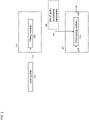
- FIG. 2 describes an exemplified embodiment of the present invention, in which demographic information 201 is inputted, e.g. manually inputted, on a user device.
- the user manually inputs his/her year of birth and optionally his/her biological sex.
- the user device may be part of the entertainment system 207, or may be a separate device.
- step 202 the inputted information is transmitted to a fitting module 203.
- the fitting module has the ability to work offline and may be integrated into the entertainment system 207.
- the age of the user can be calculated by subtracting the year of birth or the birthdate to the current year (or date of the day) on the fitting module 203.
- a plurality of anchor ages, each of them corresponding to a set of audio processing parameters, are stored on the fitting module 203.
- a set of audio processing parameters corresponding to the user's age is derived by matching the user's age to the two closest anchor ages.
- the set of audio parameters 204 corresponding to the user's age are determined by linear interpolation methods. This step also occurs on the fitting module 203.
- Anchor ages can for example be 18, 45, 60 and 75 years old.
- the set of audio processing parameters for a user aged 55 will be linearly interpolated from the parameters corresponding to the anchor ages 45 and 60.
- step 205 the set of audio processing parameters 204 corresponding to the user's age are then transferred to a processing module 206.
- the processing module 206 is also integrated into the entertainment system 207.
- An audio input signal enters 208 the processing module 206 on the entertainment system, in which it is processed.
- the processed audio signal is then outputted 209 from the entertainment system 207.
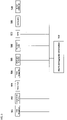
- FIG. 3 describes an exemplified embodiment of the present invention, in which a user can create or log in to his/her personal user profile 201 by inputting information such as his/her name, email address, and/or a personal password.
- the inputted information or information from the personal user profile 201 is transmitted to a fitting module 203.
- the fitting module is located on a server 210.
- the server 210 accesses data from the users, for example his/her age, date of birth, biological sex, and/or hearing test results.
- the audio processing parameters 204 are determined on the fitting module 203, from the user's age by linear interpolation between anchor ages and their corresponding sets of audio processing parameters such as described in FIG. 2 , or by deriving the set of audio processing parameters directly from the user's hearing test results.
- the audio processing parameters 204 are transferred to the processing module 206.
- the processing module is located on the entertainment system 207.
- An audio input signal enters 208 the processing module 206 on the entertainment system 207, in which it is processed.
- the processed audio signal is then outputted 209 from the entertainment system 207.
- FIG. 4A illustrates the typical deterioration of a user's hearing ability over time.
- humans begin to lose their ability to hear higher frequencies (albeit above the spectrum of human voice). This steadily becomes worse with age as noticeable declines within the speech frequency spectrum are apparent around the age of 50 or 60.
- these pure tone audiometry findings mask a more complex problem as in that the human ability to understand speech may in fact begin to decline much earlier.
- hearing loss typically begins at higher frequencies, users who are aware that they have hearing loss do not typically complain about the absence of high frequency sounds. Instead, they report difficulties listening in a noisy environment and in hearing out the details in a complex mixture of sounds, such as in a telephone call.
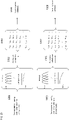
- FIG. 4B-C illustrate how large hearing datasets enable more accurate demographic estimation of a user's hearing ability.
- the PTC test ( FIG. 4B ) is a suprathreshold test that measures an individual's ability to discern a probe tone (or pulsed signal tone) against a sweeping masker noise of variable frequency and amplitude.
- the psychophysical tuning curve test may be measured for signal tones between frequencies of 500 Hz and 4 kHz, and at a sound level of between 20 dB SL and 40 dB SL, in the presence of a masking signal for the signal tone that sweeps from 50% of the signal tone frequency to 150% of the signal tone frequency.
- Masked threshold curves 202 represent a similar paradigm for measuring masked threshold.
- a narrow band of noise, in this instance 202 around 4kHz, is fixed while a probe tone sweeps from 50% of the noise band center frequency to 150% of the noise band center frequency.
- FIG. 5 illustrates various input sources from which a user's demographic information 510 may be attained.
- Demographic information 510 can include, but is not limited to: age, sex, country of residence, country of birth, etc. Although described separately, it is appreciated that one or more of these input sources can be utilized in combination, either separately or in cooperation, without departing from the scope of the present disclosure.
- age and sex demographic information of one or more users may be obtained by using a speech recognition algorithm to process the user's voice. Such speech recognition algorithms can be applied in substantially real time, can be applied to a previously recorded sample of a user speaking, or both.
- age and sex of a given user can be estimated from a combination of vocal tract length (vtl) and pitch, both of which can be extracted from vowel sounds in the user's speech sample.
- vtl vocal tract length
- pitch both of which can be extracted from vowel sounds in the user's speech sample.
- children will generally have short vtls and high pitch
- adult males will generally have a low pitch and long vtls
- adult women will generally have fairly long vtls and higher pitch (see e.g., Metze, F., Ajmera, J., Englert, R., Bub, U., Burkhardt, F., Stegmann, J., ... & Littel, B., Comparison of four approaches to age and gender recognition for telephone applications, 2007 IEEE International Conference on Acoustics, Speech and Signal Processing, ICASSP'07 Vol. 4, pp. IV-1089 ).
- age and sex demographic information of one or more users may be retrieved from a stored memory of an entertainment system. For example, age data of the user can be retrieved from a birth date associated with a contact card, contact list, calendar entry, etc., that is provided on or otherwise accessible to the entertainment system.
- age and sex demographic information of an intended user can be manually input by the user prior to using the entertainment system.
- age and sex demographic information of an intended user can be obtained through facial recognition technology, such as from the camera of a mobile phone or the entertainment system.
- physiological measurements may be used, such as heart rate, blood pressure and/or tremoring of the hands.
- threshold and suprathreshold hearing test results may be used.
- a user or intended user's demographic information can be obtained from a server (e.g. wireless network connection), e.g. from a social media account (Facebook, Twitter, Linkedln, etc.) of the user or intended user.
- time and location of a user may be used to determine DSP parameterization, e.g. applying more gain if an individual is in a noisy location.
- a user's demographic information may be derived from his musical preferences. This may be based on musical genres and average demographic information (i.e. the age) of a certain musical genre's audience. It may further be based on statistical data on the average demographic information (i.e. the age) of the audience of an artist, album, or track.
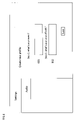
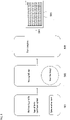
- FIG. 6 illustrates a user interface that can be shown, for example, on the screen of a home entertainment system to create a new user profile.
- a user profile can be employed according to one or more aspects of the present disclosure in providing sound personalisation of one or more audio signals (either standalone or derived from multimedia content such as video, television broadcasts, movies, etc.).
- the user interface can prompt the user to create a new profile, i.e. shown here as 'Create new Mimi Profile'.
- a first entry field 601 a given user enters his or her name, and in a second entry filed 602, the given user enters his or her year of birth.
- the user interface can provide clarifying information, e.g.
- one or more of the entry fields 601, 602 can be manually filled by the given user, either using a hardware input device (TV remote control, smartphone, dedicated controller) or a software input mechanism (voice recognition, etc.).
- a hardware input device TV remote control, smartphone, dedicated controller
- a software input mechanism voice recognition, etc.
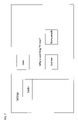
- FIG. 7 illustrates an additional example user interface of the present disclosure.
- this user interface allows for selection between different stored or already configured user profiles (such as those of FIG. 6 ).
- the user interface may be used to select only a single user's profile (corresponding to the option 'who is watching TV now? - Just me').
- the user interface may be used to select a multi-user user profile or a multi-user listening experience (corresponding to the option 'who is watching TV now? - More people').
- the number of users can be inputted manually or can be derived automatically, e.g. through a camera system or other external sensor(s) coupled to the television and/or sound personalisation system of the present disclosure.
- FIG. 8 illustrates the user interface corresponding to the selection of the 'who is watching TV now? - More people' option of FIG. 7 .
- FIG. 8 depicts two further options corresponding to group sound personalisation.
- a user may elect to choose a quick group preset, which is one of a set of standard group presets. This option can be best for large groups of new, unknown, or otherwise unregistered (with the sound personalisation system) individuals.
- a second option shown as the right-most option of the two
- a user may elect to add new profiles, i.e. such that a profile exists for all individuals (or a majority of individuals) in the group.
- This option can be best for group viewing and listening scenarios in which the members of the group will often be viewing or listening together, e.g. the group consists primarily of family members or individuals living together in the same house.
- group personalisation would be to create group presets corresponding to a decade (seventies, eighties, nineties, etc.) in which the members of the group, or most of the members of the group, were born.
- the reference hearing age for the group may correspond to the middle of the decade (i.e. 1975 for the seventies, 1985 for the eighties, etc.).
- the best presets would be the presets leading to the least processing, in order to avoid any excess of processing that may spoil the quality of the signal for any one of the users. Typically, these would be the presets of the most recent year of birth.
- the hearing profile (audiograms or masking curves) of the users are known, and an average of the two or more profiles is calculated.
- FIG. 9 illustrates a method of setting up a hearing profile from a companion app, e.g. a companion app running on a smartphone, mobile computing device, or other computing device associated with a user performing the hearing profile setup.
- a companion app e.g. a companion app running on a smartphone, mobile computing device, or other computing device associated with a user performing the hearing profile setup.
- the companion app is operating on a smartphone.
- basic information about the user such as age, name, contact information, information regarding the user's hearing (pre-test) are entered.
- the user has the possibility to take a hearing test. The test can be conducted for both ears.
- the hearing data is validated, and the user receives information that his profile is updated.
- a set of audio processing parameters is generated and the audio processing parameters are then transferred in a step 904 to an entertainment system 905.
- FIG. 10 illustrates one way of determining the audio parameters from hearing test results, more particularly results of hearing tests involving a masking paradigm.
- FIG. 10 gives one way of setting up the ratio and threshold parameters for a channel (or frequency band) in a multi-band compression system (e.g., at step 103).
- FIG. 10 combines the visualization of the user masking contour curve 1006 and target masking contour curve 1007 of a constant tone or noise 1005 at a center frequency 1008 (x-axis 1001 being frequency, y-axis 1002 being the sound level in dB SPL or HL) and an input/output graph showing the input level 1003 versus the output level 1004 of a sound signal, in decibels relative to full scale (dB FS).
- the bisecting line in the input/output graph represents a 1:1 (unprocessed) output of the input signal with gain 1.
- Parameters of the multi-band compression system in a frequency band 1010 are threshold 1011 and gain 1012. These two parameters are determined from the demographically-estimated masking contour curve 1006 for the user and target masking contour curve 1007.
- the frequency band 1010 for which the set of parameters should be obtained is selected, and the method of FIG. 1 is performed for that frequency band 1010.
- the masking contour curves(s) are preferably selected such that their center frequency is in a frequency band adjacent to the frequency band in question.
- a masking contour curve may be obtained by a suprathreshold test relying on a masking paradigm, such as obtaining an individual's psychoacoustic tuning curve, or masked threshold curve.
- a psychoacoustic test can be conducted by masking of a constant tone or noise 1005 by a masker noise, to thereby obtain a user masking contour curve 1006.
- At least a part of a user masking contour curve should be in the frequency band 1010 for which the set of parameters should be obtained.
- the user masking contour curves 1006 may also be stored and accessible from a database or a server, and matched to an individual's hearing age based on statistical averages.
- the target masking contour curves 1007 is typically "sharper" than the masking contour curves of users with mild, moderate, severe or profound hearing loss, and therefore correspond in an improvement of the individual's hearing ability.
- An objective is to process the signal in order to obtain a good balance between an objective benefit and a good sound quality.
- the given frequency 1009 is then chosen within the frequency band 1010. It may be chosen arbitrarily, at a certain distance from the center frequency 1008 of the constant tone or noise (which is preferably in the adjacent frequency band or another nearby frequency band). In any case, it is preferred that the given frequency 1009 is in another frequency band 1010 than the center frequency 1008, as noted above.
- the corresponding sound levels of the user and target masking contour curves are determined at this given frequency 1009. The value of these sound levels may be determined graphically on the y-axis 1002.
- the threshold 1011 and ratio 1012 must satisfy the condition that the signal-to-noise ratio 1021 (SNR) of the user masking contour curve at a given frequency 1009 is made to match the SNR 1022 of the target masking contour curve at the same given frequency 1009 by applying the compression system.
- SNR is herein defined as the level of the signal tone relative to (i.e. divided by) the level of the masker noise. Hence, the "sharper" the curve, the higher the noise value is, whereas the signal value remains the same.
- the sound level of the signal tone does not vary, and the noise level varies (noise is sweeping in frequency and level over a constant tone).
- the higher the noise level the smaller the SNR will be (and the lower the noise level (situation of a broad PTC), the higher the SNR will be.
- the broader the curve will be, the higher the SNR.
- the inverse configuration in which the noise level is fixed, and the signal tone varies is also a possible configuration. In this case, the masking contour curves should be rotated 180° around a center point.
- the sound level 1030 in dB of the target masking contour curve at a given frequency 1009 corresponds (see bent arrow 1031 in FIG. 10 ) to an input sound level 1041 entering the compression system.
- the objective is that the sound level 1042 outputted by the compression system will match the user masking contour curve 1006 at the same given frequency 1009, i.e., that his sound level 1042 is substantially equal to the sound level in dB of the user masking contour curve at the given frequency 1009.
- This condition allows deriving the threshold 1011 (which has to be below the input sound level, if not, there is no change as below the threshold of the compressor, the system is linear) and the ratio 1012.
- input sound level 1041 and output sound level 1042 determine a reference point of the compression curve. Threshold 1011 must be selected to be lower than input sound level 1041. Once the threshold is selected, the ratio 1012 can be determined from the threshold and the reference point.
- the right panel in FIG. 10 illustrates a broken stick DRC (or bent knee DRC), with a threshold 1011 and a ratio 1012 as parameters that need to be determined.
- An input sound signal having a sound level 1030/1041 at a given frequency 1009 enters the compression system.
- the sound signal should be processed by the DRC in such a way that the outputted sound level is the sound level of the user masking contour curve 1006 at the given frequency 1009.
- the threshold 1011 should not exceed the input sound level 1041, otherwise compression will not occur.
- Multiple sets of threshold and ratio parameters are possible. Preferred sets can be selected depending on a fitting algorithm and/or objective fitting data that have proven to show the most benefit in terms of sound quality.
- either one of the threshold 1011 and ratio 1012 may be chosen to have a default value, and the respective other one of the parameters can then be determined by imposing the above-described condition.
- Another way of selecting a preferred set is to repeat step 103 (see FIG. 1 ) at one or more other given frequencies in the channel or frequency band. Having two or more sets of values of outputted sound level for an inputted sound level may allow to determine a set of parameters (threshold and ratio) with more accuracy.
- the ratio is higher than 0,2 (1:5), to avoid excessive compression resulting in an altered audio signal.
- the ratio should not exceed 1 (1:1), a ratio of 1:1 corresponding to no compression.
- the parameters of the compression system are determined such that application of the compression system to the higher one of the signal level of the user masking contour curve at the given frequency 1009 and the signal level of the target masking contour curve at the given frequency 1009 yields the lower one of the signal level of the user masking contour curve at the given frequency 1009 and the signal level of the target masking contour curve at the given frequency 1009.
- the results of a demographically-estimated audiogram may be used for calculating gain within a sub-band signal. For instance, raised thresholds may be compensated for by a corresponding frequency gain.
- DSP parameters in a multiband dynamic processor may be calculated by optimizing perceptual relevant information (e.g. perceptual entropy) through parameterization using demographically-estimated threshold and suprathreshold information (see commonly owned US App. No 16/206,376 and EP18208020.0 ).
- perceptual relevant information e.g. perceptual entropy
- demographically-estimated threshold and suprathreshold information see commonly owned US App. No 16/206,376 and EP18208020.0 .
- the multiband dynamic processor is re-parameterized 1111 according to a given set of parameter heuristics, derived from optimization, and from this - the audio sample(s) is reprocessed 1102 and the PRI calculated 1103.
- the multiband dynamics processor is configured to process the audio sample so that it has a higher PRI value for the particular user, taking into account the individual user's demographically-estimated threshold and suprathreshold information 1107.
- parameterization of the multiband dynamics processor is adapted to increase the PRI of the processed audio sample over the unprocessed audio sample.
- the parameters of the multiband dynamics processor are determined by an optimization process that uses PRI as its optimization criteria.
- PRI can be calculated according to a variety of methods found in the prior art.
- One such method also called perceptual entropy, was developed by James D. Johnston at Bell Labs, generally comprising: transforming a sampled window of audio signal into the frequency domain, obtaining masking thresholds using psychoacoustic rules by performing critical band analysis, determining noise-like or tone-like regions of the audio signal, applying thresholding rules for the signal and then accounting for absolute hearing thresholds. Following this, the number of bits required to quantize the spectrum without introducing perceptible quantization error is determined.
- Painter & Vietnameses disclose a formulation for perceptual entropy in units of bits/s, which is closely related to ISO/IEC MPEG-1 psychoacoustic model 2 [ Painter & Vietnameses, Perceptual Coding of Digital Audio, Proc. Of IEEE, Vol. 88, No. 4 (2000 ); see also generally Moving Picture Expert Group standards https://mpeg.chiariglione.org/standards.
- a subband dynamic compressor may be parameterized by compression threshold, attack time, gain and compression ratio for each subband, and these parameters may be determined by the optimization process.
- the effect of the multiband dynamics processor on the audio signal is nonlinear and an appropriate optimization technique such as gradient descend is required.
- the number of parameters that need to be determined may become large, e.g. if the audio signal is processed in many subbands and a plurality of parameters needs to be determined for each subband. In such cases, it may not be practicable to optimize all parameters simultaneously and a sequential approach for parameter optimization may be applied. Although sequential optimization procedures do not necessarily result in the optimum parameters, the obtained parameter values result in increased PRI over the unprocessed audio sample, thereby improving the user's listening experience.
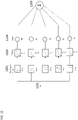
- FIG. 12 illustrates a multi-band compressive DSP system capable of providing the presently disclosed personalisation of audio signal processing.
- An incoming signal 1201 e.g. audio signal, either raw or pre-processed
- each sub-band signal is transmitted to a dynamic range compressor (DRC) 1203.
- DRC dynamic range compressor
- One or more of the DRCs 1203 can be identical, similar, or different, depending on the particular sound personalisation that is configured or otherwise desired.
- the corresponding one of the DRCs 1203 features a threshold variable tx (i.e., the threshold value at which DRC compression initiates) and a ratio variable rx (i.e., the amount of gain reduction provided by the DRC above threshold tx).
- each sub-band signal may be subject to variable gain gx 1204 following compression at DRC 1203.
- the variables may differ according to the receiver's demographic information.
- FIG. 13 illustrates how a set of parameters may be configured or preset according to an age of an intended user, although it is appreciated that the exemplary parameter preset can also be applied to sex or other demographic information of the intended user.
- hearing data 1301 comprising threshold and suprathreshold information across a range of audible frequencies is used to calculate 1302 a parameter preset 1303.
- This preset is then stored in a database 1304 according to the particular demographic group.
- a preset 1307 is calculated 1306 from the hearing data 1305 of a model 70 year old male and stored in the preset database 1308.
- these presets 1304, 1308 may then later be retrieved 1303, 1307 from the database 1304, 1308 when a user's demographic information is ascertained 1301, 1305.
- these parameter presets 1304, 1308 include tx, rx, and gx values for various values of x, where each individual value is parameterized by age as well, e.g., ⁇ t1,20 yrs age, r1,20 yrs age, g1,20 yrs age ⁇ and ⁇ t1,70 yrs age, r1,70 yrs age, g1,70 yrs age ⁇ .
- one or more of the parameters for a given user or a given hearing profile may be interpolated from the nearest relevant age presets, e.g. a 47-year-old hearing preset can be interpolated from existing 45 year old and 50 year old parameter presets.
- Other configurations of multiband compressive systems are possible without departing from the scope of the present disclosure (see e.g., commonly owned U.S. Patent 10199047 , US App. No. 16/244,727 ), with relevant associated parameters.
- the presented technology offers a novel and convenient way to provide added clarity to the TV, video, or multimedia consumption of individuals who may suffer from known or undiagnosed hearing deficiencies by seamlessly personalizing an audio portion of the TV, video, or multimedia content according to the specific hearing profile(s) of the given listening individual(s). It is to be understood that the present disclosure contemplates numerous variations, options, and alternatives. For clarity of explanation, in some instances the present technology may be presented as including individual functional blocks including functional blocks comprising devices, device components, steps or routines in a method embodied in software, or combinations of hardware and software.
- Such instructions can comprise, for example, instructions and data which cause or otherwise configure a general-purpose computer, special purpose computer, or special purpose processing device to perform a certain function or group of functions. Portions of computer resources used can be accessible over a network.
- the computer executable instructions may be, for example, binaries, intermediate format instructions such as assembly language, firmware, or source code. Examples of computer-readable media that may be used to store instructions, information used, and/or information created during methods according to described examples include magnetic or optical disks, flash memory, USB devices provided with non-volatile memory, networked storage devices, and so on.
- Devices implementing methods according to these disclosures can comprise hardware, firmware and/or software, and can take any of a variety of form factors. Typical examples of such form factors include laptops, smart phones, small form factor personal computers, personal digital assistants, rackmount devices, standalone devices, and so on. Functionality described herein also can be embodied in peripherals or add-in cards. Such functionality can also be implemented on a circuit board among different chips or different processes executing in a single device, by way of further example.
- the instructions, media for conveying such instructions, computing resources for executing them, and other structures for supporting such computing resources are means for providing the functions described in these disclosures.
Landscapes
- Engineering & Computer Science (AREA)
- Physics & Mathematics (AREA)
- Acoustics & Sound (AREA)
- Signal Processing (AREA)
- Health & Medical Sciences (AREA)
- Human Computer Interaction (AREA)
- Multimedia (AREA)
- Theoretical Computer Science (AREA)
- Audiology, Speech & Language Pathology (AREA)
- General Health & Medical Sciences (AREA)
- General Physics & Mathematics (AREA)
- General Engineering & Computer Science (AREA)
- Quality & Reliability (AREA)
- Computational Linguistics (AREA)
- Oral & Maxillofacial Surgery (AREA)
- Circuit For Audible Band Transducer (AREA)
- Measurement Of The Respiration, Hearing Ability, Form, And Blood Characteristics Of Living Organisms (AREA)
Claims (14)
- Audioverarbeitungsverfahren, das Folgendes aufweist:- Erhalten von Informationen von einer oder mehreren Benutzerpersonen, die geeignet sind, um eine Indikation des Hörvermögens der einen bzw. der mehreren Benutzerpersonen abzuleiten, wobei die Informationen, die geeignet sind, eine Indikation des Hörvermögens abzuleiten, Hörtestergebnisse der einen bzw. der mehreren Benutzerpersonen aufweisen;- Bestimmen einer repräsentativen Indikation des Hörvermögens der einen bzw. der mehreren Benutzerpersonen, wobei die repräsentative Indikation des Hörvermögens basierend auf den Hörtestergebnissen der einen bzw. der mehreren Benutzerpersonen durch Vergleichen der Hörtestergebnisse mit Musterhörtestergebnissen für unterschiedliche Indikationen des Hörvermögens und Bestimmen einer starken Übereinstimmung bestimmt wird;- Bestimmen eines Satzes von Audioverarbeitungsparametern für die repräsentative Indikation des Hörvermögens;- Konfigurieren eines Tonpersonalisierungs-Signalverarbeitungsalgorithmus basierend auf dem Satz von Audioverarbeitungsparametern;- Erhalten eines Audiosignals an einem Entertainmentsystems;- Verarbeiten des Audiosignals unter Verwendung des Tonpersonalisierungs-Signalverarbeitungsalgorithmus und Ausgeben des verarbeiteten Audiosignals aus dem Entertainmentsystem.
- Verfahren nach Anspruch 1, wobei die Informationen, die geeignet sind, eine Indikation des Hörvermögens abzuleiten, demographische Informationen der einen bzw. mehreren Benutzerpersonen aufweisen und die repräsentative Indikation des Hörvermögens ferner aus den demographischen Informationen bestimmt wird.
- Verfahren nach Anspruch 2, wobei die demographischen Informationen der einen bzw. mehreren Benutzerpersonen Geschlecht, Alter und/oder Geburtsort der einen bzw. mehreren Benutzerpersonen aufweisen.
- Verfahren nach einem der vorstehenden Ansprüche, wobei der Tonpersonalisierungs-Signalverarbeitungsalgorithmus ein Mehrbandkompressionsalgorithmus ist.
- Verfahren nach Anspruch 4, wobei die Parameter des Mehrbandkompressionsalgorithmus den Schwellenwert eines Dynamikkompressors, der in jedem Teilband vorgesehen ist, den Verhältniswert eines Dynamikkompressors, der in jedem Teilband vorgesehen ist, und den Verstärkungswert, der in jedem Teilband vorgesehen ist, aufweisen.
- Verfahren nach einem der vorhergehenden Ansprüche, wobei das Erhalten des Audiosignals Erhalten des Audiosignals von einer Speichervorrichtung oder von einem Transmitter aufweist.
- Verfahren nach einem der vorhergehenden Ansprüche, wobei das Bestimmen eines Satzes von Audioverarbeitungsparametern für die repräsentative Indikation des Hörvermögens Ableiten des Satzes von Audioverarbeitungsparametern von einer Tabelle im Voraus gespeicherter Audioverarbeitungsparameter für unterschiedliche Bezugsindikationen des Hörvermögens aufweist.
- Verfahren nach Anspruch 7, das ferner Interpolieren des Satzes von Audioverarbeitungsparametern für die repräsentative Indikation des Hörvermögens basierend auf den im Voraus gespeicherten Audioverarbeitungsparametern für unterschiedliche Bezugsindikationen des Hörvermögens aufweist.
- Verfahren nach Anspruch 1, wobei das Bestimmen eines Satzes von Audioverarbeitungsparametern Bestimmen des Satzes von Audioverarbeitungsparametern durch Optimieren wahrnehmungsrelevanter Information für die eine bzw. die mehreren Benutzerpersonen basierend auf den Hörtestergebnissen aufweist.
- Verfahren nach einem der vorhergehenden Ansprüche, wobei die Informationen, die geeignet sind, eine Indikation des Hörvermögens abzuleiten, an einem Server, wo die repräsentative Indikation des Hörvermögens und der Satz von Audioverarbeitungsparametern bestimmt werden, erhalten werden, ferner aufweisend Übertragen des Satzes von Audioverarbeitungsparametern an das Entertainmentsystem.
- Verfahren nach einem der vorhergehenden Ansprüche, wobei das Entertainmentsystem eine Steuereinheit und Kopfhörer aufweist, wobei das Audiosignal auf der Steuereinheit oder den Kopfhörern verarbeitet und von den Kopfhörern ausgegeben wird.
- Verfahren nach einem der vorhergehenden Ansprüche, wobei die Informationen zum Ableiten einer Indikation des Hörvermögens für eine Vielzahl an Benutzerpersonen erhalten wird und die repräsentative Indikation des Hörvermögens für die Vielzahl an Benutzerpersonen bestimmt wird, insbesondere durch Auswählen der jüngsten Indikation des Hörvermögens der Benutzerpersonen.
- System für mehrere Benutzerpersonen, das ein gespeichertes Programm aufweist, das bei Ausführung auf dem Prozessor einen Prozessor eines Entertainmentsystems veranlasst, Audioverarbeitung gemäß der Verfahren nach einem der Ansprüche 1 bis 12 durchzuführen.
- Computerprogrammprodukt, das Befehle aufweist, die bei Ausführung auf einem Entertainmentsystem einen Prozessor veranlassen, das Verfahren gemäß einem der Ansprüche 1 bis 12 durchzuführen.
Priority Applications (2)
| Application Number | Priority Date | Filing Date | Title |
|---|---|---|---|
| US16/534,742 US10871940B2 (en) | 2018-08-22 | 2019-08-07 | Systems and methods for sound enhancement in audio systems |
| CN201910779629.3A CN110858941B (zh) | 2018-08-22 | 2019-08-22 | 用于在音频系统中进行声音增强的系统和方法 |
Applications Claiming Priority (1)
| Application Number | Priority Date | Filing Date | Title |
|---|---|---|---|
| US201862721417P | 2018-08-22 | 2018-08-22 |
Publications (2)
| Publication Number | Publication Date |
|---|---|
| EP3614380A1 EP3614380A1 (de) | 2020-02-26 |
| EP3614380B1 true EP3614380B1 (de) | 2022-04-13 |
Family
ID=65894859
Family Applications (1)
| Application Number | Title | Priority Date | Filing Date |
|---|---|---|---|
| EP19163624.0A Active EP3614380B1 (de) | 2018-08-22 | 2019-03-19 | Systeme und verfahren zur soundverbesserung in audiosystemen |
Country Status (3)
| Country | Link |
|---|---|
| US (1) | US10871940B2 (de) |
| EP (1) | EP3614380B1 (de) |
| CN (1) | CN110858941B (de) |
Families Citing this family (18)
| Publication number | Priority date | Publication date | Assignee | Title |
|---|---|---|---|---|
| US20200077190A1 (en) * | 2018-08-29 | 2020-03-05 | Soniphi Llc | Earbuds With Vocal Frequency-Based Equalization |
| US11094328B2 (en) * | 2019-09-27 | 2021-08-17 | Ncr Corporation | Conferencing audio manipulation for inclusion and accessibility |
| CN111447539B (zh) * | 2020-03-25 | 2021-06-18 | 北京聆通科技有限公司 | 一种用于听力耳机的验配方法和装置 |
| CN113782040B (zh) | 2020-05-22 | 2024-07-30 | 华为技术有限公司 | 基于心理声学的音频编码方法及装置 |
| CN111935429B (zh) * | 2020-07-06 | 2021-10-19 | 瑞声新能源发展(常州)有限公司科教城分公司 | 音质自适应调节方法、相关系统和设备及存储介质 |
| EP3944100A1 (de) * | 2020-07-20 | 2022-01-26 | Mimi Hearing Technologies GmbH | Verfahren zur auswahl eines geeigneten inhalts für subjektive präferenzbeurteilung |
| CN114339541A (zh) * | 2020-09-24 | 2022-04-12 | 原相科技股份有限公司 | 调整播放声音的方法和播放声音系统 |
| CN112887877B (zh) * | 2021-01-28 | 2023-09-08 | 歌尔科技有限公司 | 一种音频参数设置方法、装置、电子设备及存储介质 |
| CN116491132A (zh) | 2021-04-27 | 2023-07-25 | 深圳市韶音科技有限公司 | 骨导听力辅助设备的配置方法及系统 |
| CN115346544B (zh) * | 2021-05-14 | 2025-12-05 | 广州视源电子科技股份有限公司 | 音频信号处理方法、装置、存储介质和程序产品 |
| CN113362839B (zh) * | 2021-06-01 | 2024-10-01 | 平安科技(深圳)有限公司 | 音频数据处理方法、装置、计算机设备及存储介质 |
| EP4117308A1 (de) * | 2021-07-08 | 2023-01-11 | Audientes A/S | Anpassungsverfahren für hörgerät und hörgerät mit solchen anpassungsverfahren |
| JP7873065B2 (ja) * | 2021-10-20 | 2026-06-11 | リオン株式会社 | 聞こえチェックシステム |
| NL2031643B1 (en) * | 2022-04-20 | 2023-11-07 | Absolute Audio Labs B V | Method and device for compressing a dynamic range of an audio signal |
| US12573407B2 (en) * | 2022-10-26 | 2026-03-10 | Sony Group Corporation | Quick audio profile using voice assistant |
| CN117093182B (zh) * | 2023-10-10 | 2024-04-02 | 荣耀终端有限公司 | 一种音频播放方法、电子设备和计算机可读存储介质 |
| TWI904664B (zh) * | 2024-05-09 | 2025-11-11 | 兆豐國際商業銀行股份有限公司 | 具客戶識別之語音服務系統和其方法 |
| FR3165539B1 (fr) | 2024-08-08 | 2026-07-10 | Focal Jmlab | Methode d’optimisation de la reponse en frequence d’au moins deux enceintes placees dans un environnement specifique |
Family Cites Families (29)
| Publication number | Priority date | Publication date | Assignee | Title |
|---|---|---|---|---|
| US6327366B1 (en) | 1996-05-01 | 2001-12-04 | Phonak Ag | Method for the adjustment of a hearing device, apparatus to do it and a hearing device |
| US6944474B2 (en) | 2001-09-20 | 2005-09-13 | Sound Id | Sound enhancement for mobile phones and other products producing personalized audio for users |
| US20040045449A1 (en) | 2002-09-10 | 2004-03-11 | Reading Bakery Systems, Inc. | Apparatus and method for movement and rotation of dough sheets to produce a bakery product |
| FR2898443A1 (fr) | 2006-03-13 | 2007-09-14 | France Telecom | Procede de codage d'un signal audio source, dispositif de codage, procede et dispositif de decodage, signal, produits programme d'ordinateur correspondants |
| ES2318715T3 (es) * | 2006-11-17 | 2009-05-01 | Akg Acoustics Gmbh | Compresor de audio. |
| EP2109934B2 (de) * | 2007-01-04 | 2019-09-04 | K/S Himpp | Auswahl von hörprofilen für ein personalisiertes tonsystem |
| ATE535904T1 (de) | 2007-08-27 | 2011-12-15 | Ericsson Telefon Ab L M | Verbesserte transformationskodierung von sprach- und audiosignalen |
| US8005246B2 (en) | 2007-10-23 | 2011-08-23 | Swat/Acr Portfolio Llc | Hearing aid apparatus |
| US20100329490A1 (en) * | 2008-02-20 | 2010-12-30 | Koninklijke Philips Electronics N.V. | Audio device and method of operation therefor |
| ATE550754T1 (de) | 2009-07-30 | 2012-04-15 | Nxp Bv | Verfahren und vorrichtung zur aktiven geräuschsminderung unter anwendung von wahrnehmungsmaskierung |
| CA2782646C (en) | 2009-12-09 | 2014-09-02 | Widex A/S | A method of processing a signal in a hearing aid, a method of fitting a hearing aid and a hearing aid |
| US20120023051A1 (en) | 2010-07-22 | 2012-01-26 | Ramin Pishehvar | Signal coding with adaptive neural network |
| US9138178B2 (en) * | 2010-08-05 | 2015-09-22 | Ace Communications Limited | Method and system for self-managed sound enhancement |
| US10687155B1 (en) | 2019-08-14 | 2020-06-16 | Mimi Hearing Technologies GmbH | Systems and methods for providing personalized audio replay on a plurality of consumer devices |
| US9613028B2 (en) | 2011-01-19 | 2017-04-04 | Apple Inc. | Remotely updating a hearing and profile |
| US20150281853A1 (en) * | 2011-07-11 | 2015-10-01 | SoundFest, Inc. | Systems and methods for enhancing targeted audibility |
| HK1212534A1 (en) * | 2013-01-09 | 2016-06-10 | 听优企业 | Method and system for self-managed sound enhancement |
| US9344793B2 (en) * | 2013-02-11 | 2016-05-17 | Symphonic Audio Technologies Corp. | Audio apparatus and methods |
| US9344815B2 (en) * | 2013-02-11 | 2016-05-17 | Symphonic Audio Technologies Corp. | Method for augmenting hearing |
| WO2014124449A1 (en) * | 2013-02-11 | 2014-08-14 | Symphonic Audio Technologies Corp. | Methods for testing hearing |
| US9577596B2 (en) | 2013-03-08 | 2017-02-21 | Sound Innovations, Llc | System and method for personalization of an audio equalizer |
| WO2017143333A1 (en) * | 2016-02-18 | 2017-08-24 | Trustees Of Boston University | Method and system for assessing supra-threshold hearing loss |
| US9818126B1 (en) * | 2016-04-20 | 2017-11-14 | Deep Labs Inc. | Systems and methods for sensor data analysis through machine learning |
| WO2018069900A1 (en) | 2016-10-14 | 2018-04-19 | Auckland Uniservices Limited | Audio-system and method for hearing-impaired |
| US10430155B2 (en) * | 2017-06-28 | 2019-10-01 | MeQ, Inc. | Method of calibrating audio output device with playback of adjusted audio |
| US10719292B2 (en) * | 2018-05-11 | 2020-07-21 | Google Llc | Sound enhancement adapter |
| EP3584927B1 (de) | 2018-06-20 | 2021-03-10 | Mimi Hearing Technologies GmbH | Systeme und verfahren zur verarbeitung eines audiosignals zur wiedergabe auf einer audiovorrichtung |
| US10966033B2 (en) | 2018-07-20 | 2021-03-30 | Mimi Hearing Technologies GmbH | Systems and methods for modifying an audio signal using custom psychoacoustic models |
| US10455335B1 (en) | 2018-07-20 | 2019-10-22 | Mimi Hearing Technologies GmbH | Systems and methods for modifying an audio signal using custom psychoacoustic models |
-
2019
- 2019-03-19 EP EP19163624.0A patent/EP3614380B1/de active Active
- 2019-08-07 US US16/534,742 patent/US10871940B2/en active Active
- 2019-08-22 CN CN201910779629.3A patent/CN110858941B/zh active Active
Also Published As
| Publication number | Publication date |
|---|---|
| US20200065058A1 (en) | 2020-02-27 |
| US10871940B2 (en) | 2020-12-22 |
| CN110858941B (zh) | 2021-07-09 |
| CN110858941A (zh) | 2020-03-03 |
| EP3614380A1 (de) | 2020-02-26 |
Similar Documents
| Publication | Publication Date | Title |
|---|---|---|
| US10871940B2 (en) | Systems and methods for sound enhancement in audio systems | |
| US11122374B2 (en) | Systems and methods for providing personalized audio replay on a plurality of consumer devices | |
| EP3694103B1 (de) | System zur kombination von lautstärkenmessungen in einem einzelnen wiedergabemodus | |
| JP6476192B2 (ja) | 多様な再生環境のためのダイナミックレンジ制御 | |
| US9559651B2 (en) | Metadata for loudness and dynamic range control | |
| US10993049B2 (en) | Systems and methods for modifying an audio signal using custom psychoacoustic models | |
| JP2019097219A (ja) | ダウンミックスされたオーディオ・コンテンツについてのラウドネス調整 | |
| CN114902560B (zh) | 具有环境噪音补偿的用于自动音量控制的设备和方法 | |
| US20200027467A1 (en) | Systems and methods for encoding an audio signal using custom psychoacoustic models | |
| JP2016522597A (ja) | 端末装置及びそのオーディオ信号の出力方法 | |
| US20200244802A1 (en) | Systems and methods for adaption of a telephonic audio signal | |
| EP3896998B1 (de) | Systeme und verfahren zur bereitstellung inhaltsspezifischer personalisierter audiowiedergabe auf kundenvorrichtungen | |
| Biberger et al. | Instrumental quality predictions and analysis of auditory cues for algorithms in modern headphone technology | |
| CN114615581A (zh) | 一种提升音频主观感受质量的方法及装置 | |
| US20210329387A1 (en) | Systems and methods for a hearing assistive device | |
| HK40025548B (en) | System for combining loudness measurements in a single playback mode | |
| HK1238802B (en) | System for combining loudness measurements in a single playback mode | |
| HK1238802A1 (en) | System for combining loudness measurements in a single playback mode | |
| HK1238802A (en) | System for combining loudness measurements in a single playback mode | |
| HK1221080B (en) | Dynamic range control for a wide variety of playback environments |
Legal Events
| Date | Code | Title | Description |
|---|---|---|---|
| PUAI | Public reference made under article 153(3) epc to a published international application that has entered the european phase |
Free format text: ORIGINAL CODE: 0009012 |
|
| STAA | Information on the status of an ep patent application or granted ep patent |
Free format text: STATUS: THE APPLICATION HAS BEEN PUBLISHED |
|
| AK | Designated contracting states |
Kind code of ref document: A1 Designated state(s): AL AT BE BG CH CY CZ DE DK EE ES FI FR GB GR HR HU IE IS IT LI LT LU LV MC MK MT NL NO PL PT RO RS SE SI SK SM TR |
|
| AX | Request for extension of the european patent |
Extension state: BA ME |
|
| STAA | Information on the status of an ep patent application or granted ep patent |
Free format text: STATUS: REQUEST FOR EXAMINATION WAS MADE |
|
| 17P | Request for examination filed |
Effective date: 20200325 |
|
| RBV | Designated contracting states (corrected) |
Designated state(s): AL AT BE BG CH CY CZ DE DK EE ES FI FR GB GR HR HU IE IS IT LI LT LU LV MC MK MT NL NO PL PT RO RS SE SI SK SM TR |
|
| REG | Reference to a national code |
Ref country code: DE Ref legal event code: R079 Ref document number: 602019013582 Country of ref document: DE Free format text: PREVIOUS MAIN CLASS: G10L0019020000 Ipc: G10L0021020000 |
|
| RIC1 | Information provided on ipc code assigned before grant |
Ipc: G10L 21/02 20130101AFI20210712BHEP Ipc: H03G 9/00 20060101ALI20210712BHEP Ipc: H03G 9/02 20060101ALI20210712BHEP |
|
| GRAP | Despatch of communication of intention to grant a patent |
Free format text: ORIGINAL CODE: EPIDOSNIGR1 |
|
| STAA | Information on the status of an ep patent application or granted ep patent |
Free format text: STATUS: GRANT OF PATENT IS INTENDED |
|
| INTG | Intention to grant announced |
Effective date: 20211118 |
|
| GRAS | Grant fee paid |
Free format text: ORIGINAL CODE: EPIDOSNIGR3 |
|
| GRAA | (expected) grant |
Free format text: ORIGINAL CODE: 0009210 |
|
| STAA | Information on the status of an ep patent application or granted ep patent |
Free format text: STATUS: THE PATENT HAS BEEN GRANTED |
|
| AK | Designated contracting states |
Kind code of ref document: B1 Designated state(s): AL AT BE BG CH CY CZ DE DK EE ES FI FR GB GR HR HU IE IS IT LI LT LU LV MC MK MT NL NO PL PT RO RS SE SI SK SM TR |
|
| REG | Reference to a national code |
Ref country code: GB Ref legal event code: FG4D |
|
| REG | Reference to a national code |
Ref country code: CH Ref legal event code: EP |
|
| REG | Reference to a national code |
Ref country code: DE Ref legal event code: R096 Ref document number: 602019013582 Country of ref document: DE |
|
| REG | Reference to a national code |
Ref country code: IE Ref legal event code: FG4D |
|
| REG | Reference to a national code |
Ref country code: AT Ref legal event code: REF Ref document number: 1484037 Country of ref document: AT Kind code of ref document: T Effective date: 20220515 |
|
| REG | Reference to a national code |
Ref country code: LT Ref legal event code: MG9D |
|
| REG | Reference to a national code |
Ref country code: NL Ref legal event code: MP Effective date: 20220413 |
|
| REG | Reference to a national code |
Ref country code: AT Ref legal event code: MK05 Ref document number: 1484037 Country of ref document: AT Kind code of ref document: T Effective date: 20220413 |
|
| PG25 | Lapsed in a contracting state [announced via postgrant information from national office to epo] |
Ref country code: NL Free format text: LAPSE BECAUSE OF FAILURE TO SUBMIT A TRANSLATION OF THE DESCRIPTION OR TO PAY THE FEE WITHIN THE PRESCRIBED TIME-LIMIT Effective date: 20220413 |
|
| PG25 | Lapsed in a contracting state [announced via postgrant information from national office to epo] |
Ref country code: SE Free format text: LAPSE BECAUSE OF FAILURE TO SUBMIT A TRANSLATION OF THE DESCRIPTION OR TO PAY THE FEE WITHIN THE PRESCRIBED TIME-LIMIT Effective date: 20220413 Ref country code: PT Free format text: LAPSE BECAUSE OF FAILURE TO SUBMIT A TRANSLATION OF THE DESCRIPTION OR TO PAY THE FEE WITHIN THE PRESCRIBED TIME-LIMIT Effective date: 20220816 Ref country code: NO Free format text: LAPSE BECAUSE OF FAILURE TO SUBMIT A TRANSLATION OF THE DESCRIPTION OR TO PAY THE FEE WITHIN THE PRESCRIBED TIME-LIMIT Effective date: 20220713 Ref country code: LT Free format text: LAPSE BECAUSE OF FAILURE TO SUBMIT A TRANSLATION OF THE DESCRIPTION OR TO PAY THE FEE WITHIN THE PRESCRIBED TIME-LIMIT Effective date: 20220413 Ref country code: HR Free format text: LAPSE BECAUSE OF FAILURE TO SUBMIT A TRANSLATION OF THE DESCRIPTION OR TO PAY THE FEE WITHIN THE PRESCRIBED TIME-LIMIT Effective date: 20220413 Ref country code: GR Free format text: LAPSE BECAUSE OF FAILURE TO SUBMIT A TRANSLATION OF THE DESCRIPTION OR TO PAY THE FEE WITHIN THE PRESCRIBED TIME-LIMIT Effective date: 20220714 Ref country code: FI Free format text: LAPSE BECAUSE OF FAILURE TO SUBMIT A TRANSLATION OF THE DESCRIPTION OR TO PAY THE FEE WITHIN THE PRESCRIBED TIME-LIMIT Effective date: 20220413 Ref country code: ES Free format text: LAPSE BECAUSE OF FAILURE TO SUBMIT A TRANSLATION OF THE DESCRIPTION OR TO PAY THE FEE WITHIN THE PRESCRIBED TIME-LIMIT Effective date: 20220413 Ref country code: BG Free format text: LAPSE BECAUSE OF FAILURE TO SUBMIT A TRANSLATION OF THE DESCRIPTION OR TO PAY THE FEE WITHIN THE PRESCRIBED TIME-LIMIT Effective date: 20220713 Ref country code: AT Free format text: LAPSE BECAUSE OF FAILURE TO SUBMIT A TRANSLATION OF THE DESCRIPTION OR TO PAY THE FEE WITHIN THE PRESCRIBED TIME-LIMIT Effective date: 20220413 |
|
| PG25 | Lapsed in a contracting state [announced via postgrant information from national office to epo] |
Ref country code: RS Free format text: LAPSE BECAUSE OF FAILURE TO SUBMIT A TRANSLATION OF THE DESCRIPTION OR TO PAY THE FEE WITHIN THE PRESCRIBED TIME-LIMIT Effective date: 20220413 Ref country code: PL Free format text: LAPSE BECAUSE OF FAILURE TO SUBMIT A TRANSLATION OF THE DESCRIPTION OR TO PAY THE FEE WITHIN THE PRESCRIBED TIME-LIMIT Effective date: 20220413 Ref country code: LV Free format text: LAPSE BECAUSE OF FAILURE TO SUBMIT A TRANSLATION OF THE DESCRIPTION OR TO PAY THE FEE WITHIN THE PRESCRIBED TIME-LIMIT Effective date: 20220413 Ref country code: IS Free format text: LAPSE BECAUSE OF FAILURE TO SUBMIT A TRANSLATION OF THE DESCRIPTION OR TO PAY THE FEE WITHIN THE PRESCRIBED TIME-LIMIT Effective date: 20220813 |
|
| REG | Reference to a national code |
Ref country code: DE Ref legal event code: R097 Ref document number: 602019013582 Country of ref document: DE |
|
| PG25 | Lapsed in a contracting state [announced via postgrant information from national office to epo] |
Ref country code: SM Free format text: LAPSE BECAUSE OF FAILURE TO SUBMIT A TRANSLATION OF THE DESCRIPTION OR TO PAY THE FEE WITHIN THE PRESCRIBED TIME-LIMIT Effective date: 20220413 Ref country code: SK Free format text: LAPSE BECAUSE OF FAILURE TO SUBMIT A TRANSLATION OF THE DESCRIPTION OR TO PAY THE FEE WITHIN THE PRESCRIBED TIME-LIMIT Effective date: 20220413 Ref country code: RO Free format text: LAPSE BECAUSE OF FAILURE TO SUBMIT A TRANSLATION OF THE DESCRIPTION OR TO PAY THE FEE WITHIN THE PRESCRIBED TIME-LIMIT Effective date: 20220413 Ref country code: EE Free format text: LAPSE BECAUSE OF FAILURE TO SUBMIT A TRANSLATION OF THE DESCRIPTION OR TO PAY THE FEE WITHIN THE PRESCRIBED TIME-LIMIT Effective date: 20220413 Ref country code: DK Free format text: LAPSE BECAUSE OF FAILURE TO SUBMIT A TRANSLATION OF THE DESCRIPTION OR TO PAY THE FEE WITHIN THE PRESCRIBED TIME-LIMIT Effective date: 20220413 Ref country code: CZ Free format text: LAPSE BECAUSE OF FAILURE TO SUBMIT A TRANSLATION OF THE DESCRIPTION OR TO PAY THE FEE WITHIN THE PRESCRIBED TIME-LIMIT Effective date: 20220413 |
|
| PLBE | No opposition filed within time limit |
Free format text: ORIGINAL CODE: 0009261 |
|
| STAA | Information on the status of an ep patent application or granted ep patent |
Free format text: STATUS: NO OPPOSITION FILED WITHIN TIME LIMIT |
|
| 26N | No opposition filed |
Effective date: 20230116 |
|
| PG25 | Lapsed in a contracting state [announced via postgrant information from national office to epo] |
Ref country code: AL Free format text: LAPSE BECAUSE OF FAILURE TO SUBMIT A TRANSLATION OF THE DESCRIPTION OR TO PAY THE FEE WITHIN THE PRESCRIBED TIME-LIMIT Effective date: 20220413 |
|
| PG25 | Lapsed in a contracting state [announced via postgrant information from national office to epo] |
Ref country code: SI Free format text: LAPSE BECAUSE OF FAILURE TO SUBMIT A TRANSLATION OF THE DESCRIPTION OR TO PAY THE FEE WITHIN THE PRESCRIBED TIME-LIMIT Effective date: 20220413 |
|
| PGFP | Annual fee paid to national office [announced via postgrant information from national office to epo] |
Ref country code: IE Payment date: 20230601 Year of fee payment: 5 |
|
| PG25 | Lapsed in a contracting state [announced via postgrant information from national office to epo] |
Ref country code: MC Free format text: LAPSE BECAUSE OF FAILURE TO SUBMIT A TRANSLATION OF THE DESCRIPTION OR TO PAY THE FEE WITHIN THE PRESCRIBED TIME-LIMIT Effective date: 20220413 |
|
| REG | Reference to a national code |
Ref country code: CH Ref legal event code: PL |
|
| REG | Reference to a national code |
Ref country code: BE Ref legal event code: MM Effective date: 20230331 |
|
| PG25 | Lapsed in a contracting state [announced via postgrant information from national office to epo] |
Ref country code: LU Free format text: LAPSE BECAUSE OF NON-PAYMENT OF DUE FEES Effective date: 20230319 |
|
| PG25 | Lapsed in a contracting state [announced via postgrant information from national office to epo] |
Ref country code: LI Free format text: LAPSE BECAUSE OF NON-PAYMENT OF DUE FEES Effective date: 20230331 Ref country code: IT Free format text: LAPSE BECAUSE OF FAILURE TO SUBMIT A TRANSLATION OF THE DESCRIPTION OR TO PAY THE FEE WITHIN THE PRESCRIBED TIME-LIMIT Effective date: 20220413 Ref country code: CH Free format text: LAPSE BECAUSE OF NON-PAYMENT OF DUE FEES Effective date: 20230331 |
|
| PG25 | Lapsed in a contracting state [announced via postgrant information from national office to epo] |
Ref country code: BE Free format text: LAPSE BECAUSE OF NON-PAYMENT OF DUE FEES Effective date: 20230331 |
|
| PG25 | Lapsed in a contracting state [announced via postgrant information from national office to epo] |
Ref country code: BG Free format text: LAPSE BECAUSE OF FAILURE TO SUBMIT A TRANSLATION OF THE DESCRIPTION OR TO PAY THE FEE WITHIN THE PRESCRIBED TIME-LIMIT Effective date: 20220413 |
|
| PG25 | Lapsed in a contracting state [announced via postgrant information from national office to epo] |
Ref country code: BG Free format text: LAPSE BECAUSE OF FAILURE TO SUBMIT A TRANSLATION OF THE DESCRIPTION OR TO PAY THE FEE WITHIN THE PRESCRIBED TIME-LIMIT Effective date: 20220413 |
|
| PG25 | Lapsed in a contracting state [announced via postgrant information from national office to epo] |
Ref country code: IE Free format text: LAPSE BECAUSE OF NON-PAYMENT OF DUE FEES Effective date: 20240319 |
|
| PG25 | Lapsed in a contracting state [announced via postgrant information from national office to epo] |
Ref country code: IE Free format text: LAPSE BECAUSE OF NON-PAYMENT OF DUE FEES Effective date: 20240319 |
|
| PG25 | Lapsed in a contracting state [announced via postgrant information from national office to epo] |
Ref country code: CY Free format text: LAPSE BECAUSE OF FAILURE TO SUBMIT A TRANSLATION OF THE DESCRIPTION OR TO PAY THE FEE WITHIN THE PRESCRIBED TIME-LIMIT; INVALID AB INITIO Effective date: 20190319 |
|
| PG25 | Lapsed in a contracting state [announced via postgrant information from national office to epo] |
Ref country code: HU Free format text: LAPSE BECAUSE OF FAILURE TO SUBMIT A TRANSLATION OF THE DESCRIPTION OR TO PAY THE FEE WITHIN THE PRESCRIBED TIME-LIMIT; INVALID AB INITIO Effective date: 20190319 |
|
| PG25 | Lapsed in a contracting state [announced via postgrant information from national office to epo] |
Ref country code: TR Free format text: LAPSE BECAUSE OF FAILURE TO SUBMIT A TRANSLATION OF THE DESCRIPTION OR TO PAY THE FEE WITHIN THE PRESCRIBED TIME-LIMIT Effective date: 20220413 |
|
| PGFP | Annual fee paid to national office [announced via postgrant information from national office to epo] |
Ref country code: GB Payment date: 20260324 Year of fee payment: 8 |
|
| PGFP | Annual fee paid to national office [announced via postgrant information from national office to epo] |
Ref country code: DE Payment date: 20260331 Year of fee payment: 8 |
|
| PGFP | Annual fee paid to national office [announced via postgrant information from national office to epo] |
Ref country code: FR Payment date: 20260324 Year of fee payment: 8 |