EP3614621B1 - Procédé et dispositif de contrôle de paquet de données - Google Patents
Procédé et dispositif de contrôle de paquet de données Download PDFInfo
- Publication number
- EP3614621B1 EP3614621B1 EP17909626.8A EP17909626A EP3614621B1 EP 3614621 B1 EP3614621 B1 EP 3614621B1 EP 17909626 A EP17909626 A EP 17909626A EP 3614621 B1 EP3614621 B1 EP 3614621B1
- Authority
- EP
- European Patent Office
- Prior art keywords
- token
- input information
- terminal device
- data packet
- identifier
- Prior art date
- Legal status (The legal status is an assumption and is not a legal conclusion. Google has not performed a legal analysis and makes no representation as to the accuracy of the status listed.)
- Active
Links
Images



Classifications
-
- H—ELECTRICITY
- H04—ELECTRIC COMMUNICATION TECHNIQUE
- H04W—WIRELESS COMMUNICATION NETWORKS
- H04W12/00—Security arrangements; Authentication; Protecting privacy or anonymity
- H04W12/06—Authentication
-
- H—ELECTRICITY
- H04—ELECTRIC COMMUNICATION TECHNIQUE
- H04L—TRANSMISSION OF DIGITAL INFORMATION, e.g. TELEGRAPHIC COMMUNICATION
- H04L63/00—Network architectures or network communication protocols for network security
- H04L63/12—Applying verification of the received information
- H04L63/123—Applying verification of the received information received data contents, e.g. message integrity
-
- H—ELECTRICITY
- H04—ELECTRIC COMMUNICATION TECHNIQUE
- H04L—TRANSMISSION OF DIGITAL INFORMATION, e.g. TELEGRAPHIC COMMUNICATION
- H04L9/00—Cryptographic mechanisms or cryptographic arrangements for secret or secure communications; Network security protocols
- H04L9/32—Cryptographic mechanisms or cryptographic arrangements for secret or secure communications; Network security protocols including means for verifying the identity or authority of a user of the system or for message authentication, e.g. authorization, entity authentication, data integrity or data verification, non-repudiation, key authentication or verification of credentials
- H04L9/321—Cryptographic mechanisms or cryptographic arrangements for secret or secure communications; Network security protocols including means for verifying the identity or authority of a user of the system or for message authentication, e.g. authorization, entity authentication, data integrity or data verification, non-repudiation, key authentication or verification of credentials involving a third party or a trusted authority
- H04L9/3213—Cryptographic mechanisms or cryptographic arrangements for secret or secure communications; Network security protocols including means for verifying the identity or authority of a user of the system or for message authentication, e.g. authorization, entity authentication, data integrity or data verification, non-repudiation, key authentication or verification of credentials involving a third party or a trusted authority using tickets or tokens, e.g. Kerberos
-
- H—ELECTRICITY
- H04—ELECTRIC COMMUNICATION TECHNIQUE
- H04L—TRANSMISSION OF DIGITAL INFORMATION, e.g. TELEGRAPHIC COMMUNICATION
- H04L9/00—Cryptographic mechanisms or cryptographic arrangements for secret or secure communications; Network security protocols
- H04L9/32—Cryptographic mechanisms or cryptographic arrangements for secret or secure communications; Network security protocols including means for verifying the identity or authority of a user of the system or for message authentication, e.g. authorization, entity authentication, data integrity or data verification, non-repudiation, key authentication or verification of credentials
- H04L9/3226—Cryptographic mechanisms or cryptographic arrangements for secret or secure communications; Network security protocols including means for verifying the identity or authority of a user of the system or for message authentication, e.g. authorization, entity authentication, data integrity or data verification, non-repudiation, key authentication or verification of credentials using a predetermined code, e.g. password, passphrase or PIN
-
- H—ELECTRICITY
- H04—ELECTRIC COMMUNICATION TECHNIQUE
- H04L—TRANSMISSION OF DIGITAL INFORMATION, e.g. TELEGRAPHIC COMMUNICATION
- H04L9/00—Cryptographic mechanisms or cryptographic arrangements for secret or secure communications; Network security protocols
- H04L9/32—Cryptographic mechanisms or cryptographic arrangements for secret or secure communications; Network security protocols including means for verifying the identity or authority of a user of the system or for message authentication, e.g. authorization, entity authentication, data integrity or data verification, non-repudiation, key authentication or verification of credentials
- H04L9/3234—Cryptographic mechanisms or cryptographic arrangements for secret or secure communications; Network security protocols including means for verifying the identity or authority of a user of the system or for message authentication, e.g. authorization, entity authentication, data integrity or data verification, non-repudiation, key authentication or verification of credentials involving additional secure or trusted devices, e.g. TPM, smartcard, USB or software token
-
- H—ELECTRICITY
- H04—ELECTRIC COMMUNICATION TECHNIQUE
- H04L—TRANSMISSION OF DIGITAL INFORMATION, e.g. TELEGRAPHIC COMMUNICATION
- H04L9/00—Cryptographic mechanisms or cryptographic arrangements for secret or secure communications; Network security protocols
- H04L9/32—Cryptographic mechanisms or cryptographic arrangements for secret or secure communications; Network security protocols including means for verifying the identity or authority of a user of the system or for message authentication, e.g. authorization, entity authentication, data integrity or data verification, non-repudiation, key authentication or verification of credentials
- H04L9/3236—Cryptographic mechanisms or cryptographic arrangements for secret or secure communications; Network security protocols including means for verifying the identity or authority of a user of the system or for message authentication, e.g. authorization, entity authentication, data integrity or data verification, non-repudiation, key authentication or verification of credentials using cryptographic hash functions
-
- H—ELECTRICITY
- H04—ELECTRIC COMMUNICATION TECHNIQUE
- H04W—WIRELESS COMMUNICATION NETWORKS
- H04W12/00—Security arrangements; Authentication; Protecting privacy or anonymity
- H04W12/10—Integrity
- H04W12/106—Packet or message integrity
-
- H—ELECTRICITY
- H04—ELECTRIC COMMUNICATION TECHNIQUE
- H04W—WIRELESS COMMUNICATION NETWORKS
- H04W12/00—Security arrangements; Authentication; Protecting privacy or anonymity
- H04W12/12—Detection or prevention of fraud
-
- H—ELECTRICITY
- H04—ELECTRIC COMMUNICATION TECHNIQUE
- H04L—TRANSMISSION OF DIGITAL INFORMATION, e.g. TELEGRAPHIC COMMUNICATION
- H04L2209/00—Additional information or applications relating to cryptographic mechanisms or cryptographic arrangements for secret or secure communication H04L9/00
- H04L2209/80—Wireless
-
- H—ELECTRICITY
- H04—ELECTRIC COMMUNICATION TECHNIQUE
- H04L—TRANSMISSION OF DIGITAL INFORMATION, e.g. TELEGRAPHIC COMMUNICATION
- H04L67/00—Network arrangements or protocols for supporting network services or applications
- H04L67/14—Session management
- H04L67/146—Markers for unambiguous identification of a particular session, e.g. session cookie or URL-encoding
Definitions
- Embodiments of the present invention relate to the field of mobile communications technologies, and in particular, to a data packet verification method and a device.
- a token token
- CN core network
- a data packet transmitted between the terminal device and the server may carry the token, and the CN device attempts to verify legality of the terminal device or the server based on the token carried in the data packet sent by the terminal device or the server.
- the token is randomly generated by the CN device. Therefore, as long as an attacker steals the token and sends the token to the CN device, verification of the attacker by the CN device succeeds. As a result, the attacker may disguise as a stolen device to perform an activity such as fraud, thereby reducing security of the communications network.
- US 2016/344635 A1 discloses a gateway device which detects a trigger associated with a device and, in response, identifies an application service associated with the device, obtains a traffic network policy associated with the application service, and obtains a network access token based on the traffic network policy.
- the network access token facilitates validating and/or mapping a downlink data packet obtained at the gateway device in user-plane traffic that is destined for the device.
- the network access token is sent to an entity in control-plane signaling.
- the gateway device obtains a downlink data packet including the network access token.
- the gateway device verifies the network access token and/or maps the downlink data packet to the device using data obtained from the network access token.
- the network access token may be removed from the downlink data packet before the downlink data packet is sent to the device according to the mapping.
- CN 106 603 461 A describes a business authentication method, apparatus and method.
- the method comprises the following steps: receiving a business request containing the authentication information and sent from a terminal device; sending the authentication information to a security platform which verifies whether the authentication information comes from a legal terminal device or not; and according to the verification result returned by the security platform, determining whether to provide the business service to the terminal device or not.
- CN 101 754 215 A discloses an authentication method which comprises the following steps: receiving an access request sent by a terminal device, wherein the access request contains an authentication identifier generated according to a session identifier and a device identifier of the terminal device; resolving the authentication identifier obtained by the access request; and utilizing the authentication identifier for authenticating the terminal device.
- Embodiments of the present invention provide a data packet verification method and a device, to improve network security.
- a data packet verification method is provided.
- the method may be implemented by a user plane function entity, and the user plane function entity is, for example, a UPF.
- the method includes: receiving a data packet of a terminal device, where the data packet carries a first token and a service identifier, and the service identifier is used to indicate a type of a service to which the data packet belongs; obtaining first input information based on the data packet, and generating a second token based on the first input information, where the first input information includes an identifier of the terminal device and the service identifier; and sending the data packet when the first token is the same as the second token.
- a token is generated based on the identifier of the terminal device and the service identifier, and whether the device is legal is determined by comparing whether the generated token is consistent with the token carried in the data packet.
- the token is associated with the identifier of the terminal device and the service identifier, and the verification fails as long as one of the token, the identifier of the terminal device, and the service identifier is incorrect. Therefore, even if an attacker steals the token, as the attacker cannot obtain the identifier of the terminal device and the service identifier that are legal, the verification still fails. As a result, the attacker cannot disguise as a legal device to perform an attack. It can be learned that the technical solution provided in this embodiment of the present invention enhances the network security, and improves network assurance.
- the service identifier includes service type indication information and an identifier of a server.
- the identifier of the server is used to indicate the server that provides the service for the terminal device, and the service type indication information is used to indicate the type of the service to which the data packet belongs.
- the identifier of the server and the service type indication information may be obtained by using the service identifier, that is, a relatively large quantity of information is carried by using limited resources.
- the service identifier is used as input information, that is, the token is associated with the identifier of the server and the service type, thereby further enhancing security and reliability of the token.
- the UPF before receiving the data packet of the terminal device, the UPF may first generate the first token, that is, the first token is first generated before the first token is used.
- a method for generating the first token is as follows: obtaining second input information, where the second input information includes the identifier of the terminal device and the service identifier; generating the first token based on the second input information; and sending the generated first token to the terminal device and the server that provides the service for the terminal device.
- the first token is generated based on the identifier of the terminal device and the service identifier that are obtained.
- the token is associated with the identifier of the terminal device and the service identifier, and subsequent verification fails as long as one of the token, the identifier of the terminal device, and the service identifier is incorrect. Therefore, even if an attacker steals the token, as the attacker cannot obtain the identifier of the terminal device and the service identifier that are legal, the verification still fails. As a result, the attacker cannot disguise as a legal device to perform attack, thereby enhancing the network security.
- the second input information further includes a random number, and the first input information further includes the random number; or the second input information further includes a third token, and the first input information further includes the third token, and the third token is generated by the terminal device; or the second input information further includes a fourth token, and the first input information further includes the fourth token, and the fourth token is generated by the server that provides the service for the terminal device; or the second input information further includes the third token and the fourth token, and the first input information further includes the third token and the fourth token; or the second input information further includes the random number, the third token, and the fourth token, and the first input information further includes the random number, the third token, and the fourth token; or the second input information further includes the random number and the third token, and the first input information further includes the random number and the third token; or the second input information further includes the random number and the fourth token, and the first input information further includes the random number and the fourth token.
- the second input information is input information used to generate the first token
- the first input information is input information used to generate the second token. Therefore, a category of a parameter included in the first input information needs to be the same as a category of a parameter included in the second input information, and a quantity of parameters included in the first input information further needs to be the same as a quantity of parameters included in the second input information, so that the verification may be completed by comparing the first token with the second token.
- some parameters are further included, for example, the random number, the third token, and the fourth token.
- the input information may further include any one or more of the foregoing parameters.
- a category and a quantity of additional parameters included in the second input information need to be the same as a category and a quantity of additional parameters included in the first input information. For example, if the second input information includes the random number, the first input information further needs to include the random number, if the second input information does not include the third token, the first input information cannot include the third token either. Therefore, this manner ensures that a basic verification error is avoided.
- the UPF needs to first obtain the random number to generate the token.
- the UPF may obtain the random number based on the identifier of the terminal device, or may obtain the random number based on the service identifier.
- the UPF may generate the random number based on the identifier of the terminal device, so that the UPF may generate different random numbers for identifiers of different terminal devices.
- the UPF may maintain one random number for an identifier of each terminal device.
- the UPF pre-stores a mapping relationship between an identifier of a terminal device and a random number. Therefore, when generating the first token, the UPF may search, based on the stored mapping relationship, for a random number corresponding to the identifier of the terminal device, and this manner is relatively simple. In this manner, each terminal device obtains a different first token, thereby improving the reliability of the token.
- the UPF may generate the random number based on the service identifier. In this way, the UPF may generate different random numbers for different service identifiers.
- the UPF may maintain one random number for each service identifier. For example, the UPF pre-stores a mapping relationship between a service identifier and a random number. Therefore, when generating the first token, the UPF may search, based on the stored mapping relationship, a random number corresponding to the service identifier, and this manner is relatively simple. In this manner, each service identifier corresponds to a different first token, thereby improving the reliability of the token.
- the data packet is discarded when the first token is different from the second token.
- the UPF may discard the data packet, to protect the network security and avoid being attacked by an illegal user.
- the first token after the generating the first token based on the second input information, the first token may further be stored. Therefore, the generating a second token based on the first input information includes: when the stored first token is the same as the first token carried in the data packet, generating the second token based on the first input information.
- the UPF may further perform preliminary verification once before generating the second token. For example, after receiving the data packet, the UPF first compares the stored first token with the first token stored in the data packet, to determine whether the stored first token and the first token stored in the data packet are the same. If the stored first token is different from the first token carried in the data packet, the first token carried in the data packet may be basically determined as incorrect, where the error may be caused in a transmission process, or the device that sends the data packet may steal the token, that is, the device that sends the data packet may be an illegal device. In this case, the UPF may directly determine that the verification fails without generating the second token. A simple preliminary verification process is added, so that the UPF may preliminarily determine whether the device that sends the data packet is legal, and workload of the UPF may be reduced to some extent.
- a communications apparatus has functions for implementing the UPF in the foregoing method designs.
- the functions may be implemented by using hardware, or may be implemented by executing corresponding software by hardware.
- the hardware or the software includes one or more units corresponding to the foregoing functions.
- a specific structure of the communications apparatus may include a receiving unit, a processing unit, and a sending unit.
- the receiving unit, the processing unit, and the sending unit may perform corresponding functions in the method according to the first aspect or any possible design of the first aspect.
- a communications apparatus may be a UPF, or a function module such as a chip disposed in the UPF.
- the communications apparatus includes: a memory, configured to store computer executable program code; a communications interface; and a processor, where the processor is coupled to the memory and the communications interface.
- the program code stored in the memory includes an instruction, and when the processor executes the instruction, the instruction enables the communications apparatus to perform the method performed by the UPF according to the first aspect or any possible design of the first aspect.
- a computer storage medium configured to store a computer software instruction used by the communications apparatus described in the second aspect or the communications apparatus described in the third aspect, and includes a program designed for the UPF to perform the method according to the first aspect or any possible design of the first aspect.
- a computer program product including an instruction is provided.
- the computer program product When running on a computer, the computer program product enables the computer to perform the method according to the first aspect or any possible design of the first aspect.
- whether the device that sends the data packet is legal is verified based on the token, and the token is associated with the identifier of the terminal device and the service identifier. Even if an attacker steals the token, as the attacker cannot obtain the identifier of the terminal device and the service identifier that are legal, the verification still fails. Therefore, the network security is enhanced, and the network assurance is improved.
- the solutions described in this specification may be applied to a fifth-generation mobile communications technology (5G) system, or may be applied to a next-generation mobile communications system.
- 5G fifth-generation mobile communications technology
- FIG. 1 is a diagram of a network architecture of a 5G system, and is also a schematic diagram of an application scenario according to an embodiment of the present invention. It can be learned from FIG. 1 that a terminal device communicates with a core network by using an access network, where a core network device includes a control plane function entity and a user plane function entity, and the terminal device performs signaling interaction with the control plane function entity by using the access network, and performs data interaction with the user plane function entity by using the access network.
- the user plane function entity is connected to an IP service (Service) network, the IP service network is further connected to a server, and the server may provide an application service for the terminal device.
- IP service Service
- an embodiment of the present invention provides a data packet verification method, where the method may be implemented by a user plane function entity of a core network.
- the data packet of the terminal device may be a data packet sent by a server to the terminal device.
- a server sends the data packet to the terminal device.
- the data packet of the terminal device may further be a data packet sent by the terminal device to the server.
- the terminal device sends the data packet to the server.
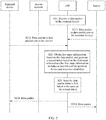
- S211 and S212 are optional manners in which the UPF obtains the data packet of the terminal device. Therefore, arrows used to indicate S211 and S212 are drawn in dashed lines in FIG. 2 .
- the solution provided in this embodiment of the present invention may be applied to a process in which the server sends the data packet to the terminal device, or may be applied to a process in which the terminal device sends the data packet to the server.
- the data packet communicated between the terminal device and the server is forwarded by the access network and the UPF, both the data packet sent by the server to the terminal device and the data packet sent by the terminal device to the server first arrive at the UPF before arriving at a destination device, so that the UPF receives the data packet of the terminal device.
- the data packet may carry a first token and a service identifier (Service ID).
- Service ID service identifier
- the service identifier may include service type indication information and an identifier of the server.
- the service type indication information may be used to indicate the type of the service to which the data packet belongs, for example, used to indicate an encrypted service.
- the identifier of the server is used to indicate the server that provides the terminal device with the service to which the data packet belongs. For example, when one server provides a service for the terminal device, the service identifier may include an identifier of the server. When a plurality of servers provide services for the terminal device, the service identifier may include identifiers of the plurality of servers.
- the first token may be a token generated by the UPF. That is, the UPF generates the first token in advance, and sends the first token to the terminal device and the server. After receiving the first token sent by the UPF, the server and the terminal device add the first token to the data packet in a communication process, so that the UPF attempts to verify legality of the terminal device or the server based on the first token.
- the server and the terminal device may add the first token to each data packet in a current session process, and the UPF needs to attempt to verify each data packet communicated by the server and the terminal device, to improve security of the communication process.
- the server and the terminal device may add the first token merely to a first data packet or some selected data packets in the current session process, and the UPF merely needs to attempt to verify these data packets, so that workload of the UPF is reduced, a data volume of the data packet is reduced, and transmission resources are saved.
- a process in which the UPF generates the first token is described in a subsequent embodiment.
- the data packet further includes an identifier (identity, ID) of the terminal device.
- the identifier of the terminal device may be an Internet Protocol (IP) address of the terminal device, or a permanent subscription identifier of the terminal device, for example, an international mobile subscriber identity (International Mobile Subscriber Identity, IMSI) or a subscriber permanent identifier (Subscriber Permanent Identifier, SUPI), or may be a temporary subscription identifier of the terminal device, for example, a globally unique temporary identity (globally unique temporary identity, GUTI) or a temporary user identity (Temporary User ID).
- IP Internet Protocol
- IMSI International Mobile Subscriber Identity
- SUPI Subscriber Permanent Identifier
- GUTI globally unique temporary identity
- Temporal User ID Temporal User ID
- the first input information includes the identifier of the terminal device and the service identifier.
- the service identifier includes the service type indication information and the identifier of the server, and the service identifier and the identifier of the terminal device are used as parameters for generating the token, association between the terminal device, the server, and the service is implemented. In this way, another terminal device cannot counterfeit the terminal device, thereby resisting a spoof attack.
- the obtaining first input information based on the data packet in S22 may be implemented by obtaining the identifier of the terminal device and service identifier from the data packet.
- the identifier of the terminal device is an IP address of the terminal device
- the UPF may obtain the IP address of the terminal device by directly parsing an IP layer of the data packet.
- the obtaining first input information based on the data packet in S22 may include: obtaining the identifier of the terminal device based on a tunnel identifier or the IP address of the terminal device that is carried in the data packet. For example, if the identifier of the terminal device is the permanent subscription identifier of the terminal device or the temporary subscription identifier of the terminal device, the UPF may obtain a corresponding permanent subscription identifier of the terminal device or a corresponding temporary subscription identifier of the terminal device from stored context information by using the tunnel identifier of the data packet.
- the generating a second token based on the first input information in S22 may include: generating the second token based on an authentication vector algorithm by using the first input information as an input parameter.
- the authentication vector algorithm may be a one-way function, for example, a secure hash algorithm (Secure Hash Algorithm, SHA) 1, an SHA256, a message digest algorithm (Message Digest Algorithm, MD), or a hash-based message authentication code (Hash-based Message Authentication Code, HMAC).
- SHA secure hash algorithm
- MD message digest algorithm
- HMAC hash-based message authentication code
- a method of generating the first token may be the same as a method of generating the second token.
- an authentication vector algorithm used to generate the first token and an authentication vector algorithm used to generate the second token are the same, to avoid verification failure caused by different algorithms.
- an input parameter for generating the first token is the same as the first input information.
- both the input parameter and the first input information arc the permanent subscription identifier of the terminal device such as an IMSI, or are the temporary subscription identifier of the terminal device such as a GUTI, so that successful verification is ensured as much as possible.
- the first input information further includes a salt (salt), and the salt may be a random number.
- the random number is added to the first input information, so that the generated token is unique and is more difficult to steal.
- the UPF may store a random number used to generate the first token, and when generating the second token, the UPF may directly obtain the stored random number as the random number included in the first input information.
- a manner in which the UPF obtains the random number in the first input information is the same as a manner in which the UPF obtains the random number used to generate the first token.
- the UPF may further obtain the random number in the first input information based on the identifier of the terminal device when generating the second token.
- the UPF stores the random number used to generate the first token, for example, the UPF pre-stores a mapping relationship between an identifier of a terminal device and a random number, when the UPF needs to obtain the first input information, the UPF may query, based on the identifier of the terminal device and the mapping relationship between an identifier of a terminal device and a random number, the random number corresponding to the identifier of the terminal device.
- the UPF may generate a random number in a generation manner that is the same as that of generating the random number used to generate the first token, and use the generated random number as the random number in the first input information.
- the UPF may further continue to obtain the random number based on the service identifier when generating the second token. If the UPF stores the random number used to generate the first token, and the UPF pre-stores a mapping relationship between a service identifier and a random number, when the UPF needs to obtain the first input information, the UPF may query, directly based on the service identifier carried in the data packet and the mapping relationship between a service identifier and a random number, the random number corresponding to the service identifier.
- the UPF may generate a random number in the generation manner that is the same as that of generating the random number used to generate the first token, and use the generated random number as the random number in the first input information.
- the UPF uses the random number as the random number used to generate the first token, the UPF may directly query the stored random number, and the random number obtained through query is used as the random number in the first input information.
- a random number is introduced into input information used to generate the second token, thereby ensuring freshness of a token generated by each new session, reducing cases in which a same token is generated, and effectively resist a replay attack.
- the first input information further includes a third token
- the third token is generated by the terminal device.
- the third token is stored in the UPF, and the UPF may obtain the third token through query.
- the input parameter used when the first token is generated further includes the third token.
- the terminal device may send the third token to the UPF, the UPF may use the third token as the input parameter for generating the first token, and the UPF may further store the third token. In this way, when performing verification, the UPF may also use the stored third token as an input parameter for generating the second token.
- the UPF may perform storage based on the identifier of the terminal device, and certainly may further perform storage based on other information such as the service identifier.
- the UPF may search for the stored third token based on information such as the identifier of the terminal device or the service identifier.
- the UPF may use the token generated by the terminal device as the input information for generating the first token, and update, by using the first token, the third token generated by the terminal device, thereby eliminating a potential security threat caused by a non-standard token generated by the terminal device.
- the first input information further includes a fourth token
- the fourth token is generated by the server.
- the fourth token is stored in the UPF, and the UPF may obtain the fourth token through query.
- the input parameter used when the first token is generated further includes the fourth token.
- the server may send the fourth token to the UPF, the UPF may use the fourth token as the input parameter for generating the first token, and the UPF may further store the fourth token. In this way, when performing the verification, the UPF may further use the stored fourth token as the input parameter for generating the second token.
- the UPF may perform storage based on the service identifier, and certainly may further perform storage based on other information such as the identifier of the server.
- the UPF may search for the stored fourth token based on information such as the service identifier or the identifier of the server.
- the UPF may use, as the input of the first token, the token generated by the server, and update, by using the first token, the token generated by the server, thereby eliminating a potential security threat caused by a non-standard token generated by the server.
- the first input information further includes any one or more of the random number, the third token, and the fourth token.
- another parameter for generating the token may each be dynamically obtained without being stored, so that storage costs of the UPF may be reduced.
- the UPF compares the first token with the second token, and determines whether the first token is the same as the second token. If the first token is the same as the second token, the device that sends the data packet is legal, and the UPF may continue to forward the data packet.
- S21 that is, the data packet is a data packet sent by the server to the terminal device
- the UPF determines that the server is legal.
- S23 refer to S231 in FIG. 2 , that is, the UPF sends the data packet to the terminal device.
- the UPF determines that the terminal device is legal.
- S232 refer to S232 in FIG. 2 , that is, the UPF sends the data packet to the server.
- the data packet sent by the UPF first arrives at the access network, and then arrives at the terminal device.
- verification of legality of the device that sends the data packet may be attempted by attempting to verify legality of the data packet.
- a verification process is the same for the UPF.
- S21 that is, the data packet is the data packet sent by the server to the terminal device, in S22
- the UPF needs to attempt to verify the legality of the server that sends the data packet.
- S21 is S212
- the data packet is the data packet sent by the terminal device to the server, in S22
- the UPF needs to attempt to verify the legality of the terminal device that sends the data packet.
- the UPF generates the second token based on the identifier of the terminal device and the service identifier, and attempts to verify the data packet by comparing whether the generated second token is consistent with the first token carried in the data packet, to determine whether the device that sends the data packet is legal. Because the token is associated with the identifier of the terminal device and the service identifier, the data packet verification fails as long as one of the token, the identifier of the terminal device, and the service identifier is incorrect. Even if an attacker steals the token, as the attacker cannot obtain the identifier of the terminal device and the service identifier that are legal, the verification still fails. As a result, the attacker cannot disguise as a legal device to perform an attack, thereby enhancing network security, and improving network assurance.
- the method further includes: generating, by the UPF, the first token, and storing the first token.
- the generating a second token based on the first input information in step S22 may include: when the stored first token is the same as the first token carried in the data packet, generating the second token based on the first input information.
- the UPF after receiving the data packet, the UPF first compares the stored first token with the first token stored in the data packet, to determine whether the stored first token and the first token stored in the data packet are the same. If the stored first token is different from the first token carried in the data packet, the first token carried in the data packet may be basically determined as incorrect, where the error may be caused in a transmission process, or the device that sends the data packet may steal a token, that is, the device that sends the data packet may be an illegal device. In this case, the UPF may directly determine that the verification fails without generating the second token. A simple preliminary verification process is added, so that the UPF may preliminarily determine whether the device that sends the data packet is legal, and workload of the UPF may be reduced to some extent.
- the stored first token and the first token carried in the data packet are compared first. In this way, if second input information includes a random number, a forgery attack may still be resisted when the random number is leaked.
- the first token is compared again, to ensure that a communication entity is the same as a communication entity for which the first token is generated.
- the UPF may directly determine that the verification succeeds, and directly continue to forward the data packet, so that S22 does not need to be performed.
- the UPF may continue to generate the second token based on the first input information to perform the verification, so that security assurance may further be improved.
- the UPF needs to generate the first token in advance.
- the following describes, by using one embodiment, a method for generating the first token by the UPF.
- an embodiment of the present invention provides a token generation method, where the method may be implemented by a user plane function entity of a core network.
- the method provided in the embodiment shown in FIG. 3 may be combined with the embodiment shown in FIG. 2 .
- the embodiment shown in FIG. 2 is performed after the method provided in the embodiment shown in FIG. 3 is completed.
- the first token in the data packet in S21 is generated according to the embodiment shown in FIG. 3 , and then data packet verification is performed by using the generated first token according to the embodiment shown in FIG. 2 .
- a terminal device is registered with the core network, and a packet data unit (packet data unit, PDU) session is established between the terminal device and the UPF. Then, the terminal device starts to access a server, where the data packet communicated between the terminal device and the server is forwarded by an access network and the UPF.
- PDU packet data unit
- the UPF obtains an identifier of the terminal device and a service identifier.
- the UPF may obtain the identifier of the terminal device and the service identifier in different manners.
- the UPF obtains the identifier of the terminal device when the PDU session between the terminal device and the UPF is established.
- the service identifier may be sent by the server to the UPF.
- the terminal device sends, to the server, a request message used to request to perform an application session, as shown in S311 in FIG. 3 .
- the server sends a response message to the terminal device, where the response message may carry the service identifier, as shown in S312 in FIG. 3 .
- the response message needs to be transited by the UPF and then arrives at the terminal device. Therefore, after receiving the response message sent by the server, the UPF may obtain the service identifier carried in the response message, and then continue to send the response message to the terminal device. In this way, the UPF obtains the service identifier.
- S311 and S312 are merely optional manners in which the UPF obtains the identifier of the terminal device and the service identifier, and are not mandatory steps. Therefore, arrows used to indicate S311 and S312 are drawn in dashed lines in FIG. 3 .
- the UPF generates a first token based on second input information, where the second input information includes the identifier of the terminal device and the service identifier that are obtained.
- the UPF may use the second input information as input information for generating the first token, and generate the first token by using an authentication vector algorithm.
- the authentication vector algorithm has been described in the embodiment shown in FIG. 2 , and details are not described.
- the second input information includes the identifier of the terminal device and the service identifier.
- the service identifier includes service type indication information and an identifier of the server.
- generation of the first token is bound to both communication parties and a service, to ensure association between the terminal dcvicc, the server, and the service, so that another terminal device cannot counterfeit the terminal device, thereby resisting a spoof attack.
- the second input information further includes a salt, where the salt may be a random number.
- the random number is added to input information, so that the generated token is unique and is more difficult to steal.
- the UPF needs to first obtain the random number.
- the following describes several manners in which the UPF obtains the random number. It should be noted that the following several manners are merely examples, and the manners in which the random number is obtained in this embodiment of the present invention are not limited to the following several manners.
- the UPF may merely store one random number, and the random number may be used as a part of the second input information for an identifier of any terminal device or any service identifier.
- a data volume stored in the UPF is relatively small, so that storage space of the UPF may be reduced while security is improved.
- the UPF may periodically update the stored random number. In this way, freshness of the stored random number is ensured, to be more secure.
- a random number is introduced into the input information for generating the first token, thereby ensuring freshness of a token generated by each new session, reducing cases in which a same token is generated, and effectively resisting a replay attack.
- the second input information further includes a third token
- the third token is generated by the terminal device.
- the terminal device may send the third token to the UPF.
- the terminal device may add the third token to a request message in S311. The request message is sent to the server, but is transited by the UPF and then arrives at the server. Therefore, after receiving the request message sent by the terminal device, the UPF may extract the third token carried in the request message, and then send the response message from which the third token is removed to the server. In this way, the UPF obtains the third token.
- the UPF may further store the third token, to attempt to verify the legality of the device in a subsequent verification process.
- a process of performing verification by using the third token is described in the embodiment shown in FIG. 2 , and details are not described.
- the UPF may use the token generated by the terminal device as the input information for generating the first token, and update, by using the first token, the third token generated by the terminal device, thereby eliminating a potential security threat caused by a non-standard token generated by the terminal device.
- the second input information further includes a fourth token
- the fourth token is generated by the server.
- the server may send the fourth token to the UPF.
- the server may add the fourth token to the response message in S312, and the UPF obtains the fourth token.
- the response message is sent to the terminal device, but is transited by the UPF and then arrives at the terminal device. Therefore, after receiving the response message sent by the server, the UPF may extract the fourth token carried in the response message, and then send the response message from which the fourth token is removed to the terminal device. In this way, the UPF obtains the fourth token.
- the UPF may further store the fourth token, to attempt to verify the legality of the device in the subsequent verification process.
- a process of performing verification by using the fourth token is described in the embodiment shown in FIG. 2 , and details are not described.
- the UPF may use, as the input of the first token, the token generated by the server, and update, by using the first token, the token generated by the server, thereby eliminating a potential security threat caused by a non-standard token generated by the server.
- the second input information further includes one or more of the random number, the third token, and the fourth token.
- a category and a quantity of parameters included in the second input information may be the same as a category and a quantity of parameters included in the first input information described in the embodiment shown in FIG. 2 .
- another parameter included in the second input information may be dynamically obtained without being stored, so that storage costs of the UPF may be reduced.
- the UPF sends the first token to the terminal device and the server that provides the service for the terminal device.
- the terminal device and the server receive the first token.
- the UPF sends the first token to the terminal device, and the UPF sends the first token to the server, where the two steps may be performed simultaneously.
- the UPF may first send the first token to the terminal device and then send the first token to the server.
- the UPF may first send the first token to the server and then send the first token to the terminal device. This is not limited in this embodiment of the present invention.
- the service is a service corresponding to the service identifier in S31.
- the service is a service indicated by the service type indication information included in the service identifier.
- the UPF after generating the first token, the UPF sends the first token to the terminal device and the server, so that the terminal device and the server may add the first token to the data packet in the subsequent communication process, and the UPF attempts to verify the legality of the terminal device or the server based on the first token.
- the UPF sends the data packet to the terminal device, where the data packet carries the first token.
- the data packet may further carry the service identifier.
- the service identifier and the first token may be stored in a hypertext transfer protocol (HyperText Transfer Protocol, HTTP) or transmission control protocol (Transmission Control Protocol, TCP) option (option) field of the data packet.
- the terminal device may store the first token, as shown in S331 in FIG. 3 .
- the terminal device may further store the service identifier.
- the UPF sends the data packet to the server, where the data packet carries the first token.
- the data packet may further carry the service identifier.
- the service identifier and the first token may be stored in the HTTP or TCP option field of the data packet.
- the server may store the first token, as shown in S332 in FIG. 3 .
- the server may further store the service identifier.
- the UPF may further locally store the first token. Certainly, the UPF may further choose not to store the first token. This is not limited in this embodiment of the present invention.
- the server and the terminal device After the UPF generates the first token, the server and the terminal device send the first token to the UPF by using the data packet in the subsequent communication process, so that the UPF attempts to verify the legality of the server or the terminal device based on the first token.
- a specific verification manner of the UPF is described in the embodiment shown in FIG. 2 , and details are not described.
- FIG. 4 is a schematic structural diagram of a communications apparatus 400.
- the communications apparatus 400 may implement functions of the UPF in the foregoing.
- the communications apparatus 400 may include a processing unit 401, a sending unit 402, and a receiving unit 403.
- the processing unit 401 may be configured to perform S22 and S23 (a process of comparing the first token with the second token in S23 is performed by the processing unit 401) in the embodiment shown in FIG. 2 .
- the processing unit 401 may be configured to perform S31 (if the UPF obtains the identifier of the terminal device and the service identifier by receiving a message in S31, the processing unit 401 is configured to parse the received message to obtain the identifier of the terminal device and the service identifier) and the S32 in the embodiment shown in FIG. 3 , and/or may be configured to support another process of the technology described in this specification.
- the sending unit 402 may be configured to perform S23 in the embodiment shown in FIG. 2 , or S33 in the embodiment shown in FIG. 3 , and/or may be configured to support another process of the technology described in this specification.
- the receiving unit 403 may be configured to perform S21 in the embodiment shown in FIG. 2 .
- the UPF obtains the identifier of the terminal device and the service identifier by receiving a message in S31
- the receiving unit 403 may further be configured to perform S31 in the embodiment shown in FIG. 3 , and/or may be configured to support another process of the technology described in this specification.
- the communications apparatus 400 is presented in a form in which function modules are divided in correspondence with functions, or may be presented in a form in which function modules are divided in an integrated manner.
- the "module” herein may refer to an application-specific integrated circuit (application-specific integrated circuit, ASIC), a processor for executing one or more software or firmware programs, a memory, an integrated logic circuit, and/or another component that may provide the foregoing functions.
- ASIC application-specific integrated circuit
- the communications apparatus 400 may further be implemented by using a structure shown in FIG. 5 .
- the communications apparatus 500 may include: a memory 501, a processor 502, a system bus 503, and a communications interface 504.
- the processor 502, the memory 501, and the communications interface 504 are connected by using the system bus 503.
- the memory 501 is configured to store a computer executable instruction.
- the processor 502 executes the computer executable instruction stored in the memory 501, so that the communications apparatus 500 is enabled to perform the data packet verification method provided in the embodiment shown in FIG. 2 or the token generation method provided in the embodiment shown in FIG. 3 .
- the communications interface 504 may be a transceiver, or an independent receiver and an independent transmitter.
- the sending unit 402 may correspond to the communications interface 504 in FIG. 5
- the receiving unit 403 may further correspond to the communications interface 504 in FIG. 5
- the processing unit 401 may be embedded or independent of the memory 501 of the communications apparatus 500 in a hardware form/software form.
- the communications apparatus 500 may be a field-programmable gate array (field-programmable gate array, FPGA), an application-specific integrated chip (application-specific integrated circuit, ASIC), a system on chip (system on chip, SoC), a central processing unit (central processor unit, CPU), a network processor (network processor, NP), a digital signal processing circuit (digital signal processor, DSP), or a micro controller unit (micro controller unit, MCU), or a programmable controller (programmable logic device, PLD) or another integrated chip may be used.
- the communications apparatus 500 may further be an independent network element, for example, the UPF.
- the communications apparatus 400 or the communications apparatus 500 provided in the embodiments of the present invention may be configured to perform the data packet verification method or the token generation method in the foregoing. Therefore, for technical effects that may be obtained by the communications apparatus 400 or the communications apparatus 500, refer to the foregoing method embodiments, and details are not described herein again.
- a token is generated based on the identifier of the terminal device and the service identifier carried in the data packet, and whether the device is legal is determined by comparing whether the generated token is consistent with the token carried in the data packet.
- the token is associated with the identifier of the terminal device and the service identifier, and the verification fails as long as one of the token, the identifier of the terminal device, and the service identifier is incorrect. Therefore, even if an attacker steals the token, as the attacker cannot obtain the identifier of the terminal device and the service identifier that are legal, the verification still fails. As a result, the attacker cannot disguise as a legal device to perform an attack. It can be learned that the technical solutions provided in the embodiments of the present invention enhance network security, and improves network assurance.
- These computer program instructions may be provided for a general-purpose computer, a special-purpose computer, an embedded processor, or a processor of another programmable data processing device to generate a machine, so that the instructions executed by a computer or the processor of another programmable data processing device generate an apparatus configured to implement a specified function in one or more processes in the flowcharts and/or in one or more blocks in the block diagrams.
- the foregoing embodiments may be implemented completely or partially by using software, hardware, firmware, or any combination thereof.
- the embodiments may be implemented completely or partially in a form of a computer program product.
- the computer program product includes one or more computer instructions.
- the computer may be a general-purpose computer, a special-purpose computer, a computer network, or another programmable apparatus.
- the computer instructions may be stored in a computer-readable storage medium, or may be transmitted from a computer-readable storage medium to another readable storage medium.
- the computer instructions may be transmitted from a website, computer, server, or data center to another website, computer, server, or data center in a wired (for example, a coaxial cable, an optical fiber, or a digital subscriber line (DSL)) or wireless (for example, infrared, radio, and microwave, or the like) manner.
- the computer-readable storage medium may be any usable medium accessible by a computer, or a data storage device, such as a server or a data center, integrating one or more usable media.
- the usable medium may be a magnetic medium (for example, a floppy disk, a hard disk, or a magnetic tape), an optical medium (for example, a DVD), a semiconductor medium (for example, a solid-state disk (Solid State Disk, SSD)), or the like.
- a magnetic medium for example, a floppy disk, a hard disk, or a magnetic tape
- an optical medium for example, a DVD
- a semiconductor medium for example, a solid-state disk (Solid State Disk, SSD)
Landscapes
- Engineering & Computer Science (AREA)
- Computer Security & Cryptography (AREA)
- Computer Networks & Wireless Communication (AREA)
- Signal Processing (AREA)
- Computer Hardware Design (AREA)
- Computing Systems (AREA)
- General Engineering & Computer Science (AREA)
- Mobile Radio Communication Systems (AREA)
- Data Exchanges In Wide-Area Networks (AREA)
Claims (11)
- Procédé de vérification de paquets de données, caractérisé en ce qu'il comprend de :recevoir (S21), par un appareil de communication (400), un paquet de données d'un dispositif terminal, dans lequel le paquet de données du terminal est un paquet de données envoyé par un serveur au dispositif terminal, ou le paquet de données du terminal est un paquet de données envoyé par le dispositif terminal au serveur, dans lequel le paquet de données contient un premier jeton et un identifiant de service, et l'identifiant de service est utilisé pour indiquer un type de service auquel appartient le paquet de données ;obtenir (S22), par l'appareil de communication (400), de premières informations d'entrée sur la base du paquet de données, et générer un deuxième jeton sur la base des premières informations d'entrée, dans lequel les premières informations d'entrée comprennent un identifiant du dispositif terminal et l'identifiant de service ; et dans lequel l'identifiant de service comprend des informations d'indication de type de service et un identifiant d'un serveur, et l'identifiant du serveur est utilisé pour indiquer le serveur qui fournit le service pour le dispositif terminal, et les informations d'indication de type de service sont utilisées pour indiquer le type du service auquel appartient le paquet de données ;envoyer (S23), par l'appareil de communication (400), le paquet de données, lorsque le premier jeton est identique au deuxième jeton, au dispositif terminal dans le cas où le paquet de données est un paquet de données envoyé par le serveur au dispositif terminal, ou au serveur dans le cas où le paquet de données est un paquet de données envoyé par le terminal au serveur; dans lequel avant la réception d'un paquet de données d'un dispositif terminal, le procédé comprend en outre de :obtenir, par l'appareil de communication (400), de secondes informations d'entrée, dans lequel les secondes informations d'entrée comprennent l'identifiant du dispositif terminal et l'identifiant de service ;générer, par l'appareil de communication (400), le premier jeton sur la base des secondes informations d'entrée ; etenvoyer, par l'appareil de communication (400), le premier jeton au dispositif terminal et au serveur qui fournit le service pour le dispositif terminal ;dans lequel les secondes informations d'entrée comprennent en outre un troisième jeton, les premières informations d'entrée comprennent en outre le troisième jeton, et le troisième jeton est généré par le dispositif terminal, et le troisième jeton est envoyé par le dispositif terminal à l'appareil de communication (400) ;dans lequel le dispositif de communication (400) utilise le troisième jeton comme paramètre d'entrée pour générer le premier jeton ;dans lequel le dispositif de communication (400) stocke le troisième jeton et utilise le troisième jeton stocké comme paramètre d'entrée pour générer le deuxième jeton ; et dans lequel le dispositif de communication (400) met à jour, en utilisant le premier jeton, le troisième jeton généré par le dispositif terminal.
- Procédé selon la revendication 1, dans lequel
les secondes informations d'entrée comprennent en outre un nombre aléatoire, et les premières informations d'entrée comprennent en outre le nombre aléatoire ; ou
les secondes informations d'entrée comprennent en outre un quatrième jeton, les premières informations d'entrée comprennent en outre le quatrième jeton, et le quatrième jeton est généré par le serveur ; ou
les secondes informations d'entrée comprennent en outre le troisième jeton et le quatrième jeton, et les premières informations d'entrée comprennent en outre le troisième jeton et le quatrième jeton ; ou
les secondes informations d'entrée comprennent en outre le nombre aléatoire, le troisième jeton et le quatrième jeton, et les premières informations d'entrée comprennent en outre le nombre aléatoire, le troisième jeton et le quatrième jeton ; ou les secondes informations d'entrée comprennent en outre le nombre aléatoire et le troisième jeton, et les premières informations d'entrée comprennent en outre le nombre aléatoire et le troisième jeton ; ou
les secondes informations d'entrée comprennent en outre le nombre aléatoire et le quatrième jeton, et les premières informations d'entrée comprennent en outre le nombre aléatoire et le quatrième jeton. - Procédé selon la revendication 1 ou 2, dans lequel le procédé comprend en outre de :
rejeter le paquet de données lorsque le premier jeton est différent du deuxième jeton. - Procédé selon la revendication 1 ou 3, dans lequel, après la génération du premier jeton sur la base des secondes informations d'entrée, le procédé comprend en outre de :stocker le premier jeton ; etla génération d'un deuxième jeton sur la base des premières informations d'entrée comprend de :
lorsque le premier jeton stocké est identique au premier jeton contenu dans le paquet de données, générer le deuxième jeton sur la base des premières informations d'entrée. - Appareil de communication (400), caractérisé en ce qu'il comprend :une unité de réception (403), configurée pour recevoir un paquet de données d'un dispositif terminal, dans lequel le paquet de données du terminal est un paquet de données envoyé par un serveur au dispositif terminal, ou le paquet de données du terminal est un paquet de données envoyé par le dispositif terminal au serveur, dans lequel le paquet de données contient un premier jeton et un identifiant de service, et l'identifiant de service est utilisé pour indiquer un type de service auquel appartient le paquet de données ;une unité de traitement (401), configurée pour obtenir de premières informations d'entrée sur la base du paquet de données, et générer un deuxième jeton sur la base des premières informations d'entrée, dans lequel les premières informations d'entrée comprennent un identifiant du dispositif terminal et l'identifiant de service ; dans lequel l'identifiant de service comprend des informations d'indication de type de service et un identifiant d'un serveur, et l'identifiant du serveur est utilisé pour indiquer le serveur qui fournit le service pour le dispositif terminal, et les informations d'indication de type de service sont utilisées pour indiquer le type du service auquel appartient le paquet de données ; etune unité d'envoi (402), configurée pour envoyer le paquet de données, lorsque le premier jeton est identique au deuxième jeton, au dispositif terminal dans le cas où le paquet de données est un paquet de données envoyé par le serveur au dispositif terminal, ou au serveur dans le cas où le paquet de données est un paquet de données envoyé par le terminal au serveur ;dans lequell'unité de traitement (401) est en outre configurée pour : avant que l'unité de réception ne reçoive le paquet de données du dispositif terminal, obtenir de secondes informations d'entrée et générer le premier jeton sur la base des secondes informations d'entrée, dans lequel les secondes informations d'entrée comprennent l'identifiant du dispositif terminal et l'identifiant de service ; etl'unité d'envoi (402) est en outre configurée pour : envoyer le premier jeton au dispositif terminal et au serveur qui fournit le service pour le dispositif terminal ;dans lequel les secondes informations d'entrée comprennent en outre un troisième jeton, les premières informations d'entrée comprennent en outre le troisième jeton, et le troisième jeton est généré par le dispositif terminal, et le troisième jeton est envoyé par le dispositif terminal à l'appareil de communication (400) ;dans lequel le dispositif de communication (400) est configuré pour utiliser le troisième jeton comme paramètre d'entrée pour générer le premier jeton ;dans lequel le dispositif de communication (400) est configuré pour stocker le troisième jeton et utilise le troisième jeton stocké comme paramètre d'entrée pour générer le deuxième jeton ; etdans lequel le dispositif de communication (400) est configuré pour mettre à jour, en utilisant le premier jeton, le troisième jeton généré par le dispositif terminal.
- Appareil selon la revendication 5, dans lequel
les secondes informations d'entrée comprennent en outre un nombre aléatoire, et les premières informations d'entrée comprennent en outre le nombre aléatoire ; ou
les secondes informations d'entrée comprennent en outre un quatrième jeton, les premières informations d'entrée comprennent en outre le quatrième jeton, et le quatrième jeton est généré par le serveur ; ou
les secondes informations d'entrée comprennent en outre le troisième jeton et le quatrième jeton, et les premières informations d'entrée comprennent en outre le troisième jeton et le quatrième jeton ; ou
les secondes informations d'entrée comprennent en outre le nombre aléatoire, le troisième jeton et le quatrième jeton, et les premières informations d'entrée comprennent en outre le nombre aléatoire, le troisième jeton et le quatrième jeton ; ou les secondes informations d'entrée comprennent en outre le nombre aléatoire et le troisième jeton, et les premières informations d'entrée comprennent en outre le nombre aléatoire et le troisième jeton ; ou
les secondes informations d'entrée comprennent en outre le nombre aléatoire et le quatrième jeton, et les premières informations d'entrée comprennent en outre le nombre aléatoire et le quatrième jeton. - Appareil selon la revendication 6, dans lequel l'unité de traitement (401) est en outre configurée pour :obtenir le nombre aléatoire sur la base de l'identifiant du dispositif terminal ; ouobtenir le nombre aléatoire sur la base de l'identifiant de service.
- Appareil selon l'une quelconque des revendications 5 à 7, dans lequel l'unité de traitement (401) est en outre configurée pour :
rejeter le paquet de données lorsque le premier jeton est différent du deuxième jeton. - Appareil selon l'une quelconque des revendications 5 à 8, dans lequel l'unité de traitement (401) est en outre configurée pour : après la génération du premier jeton sur la base des secondes informations d'entrée, stocker le premier jeton ; et l'unité de traitement (401) étant configurée pour générer un deuxième jeton sur la base des premières informations d'entrée comprend de : lorsque le premier jeton stocké est identique au premier jeton contenu dans le paquet de données, générer le deuxième jeton sur la base des premières informations d'entrée.
- Support de stockage lisible par ordinateur, dans lequel le support de stockage lisible par ordinateur comprend une instruction, et lorsqu'elle est exécutée sur un ordinateur, l'instruction permet à l'ordinateur d'exécuter le procédé selon les revendications 1 à 4.
- Produit de programme informatique comprenant une instruction, dans lequel, lorsqu'elle est exécutée sur un ordinateur, l'instruction permet à l'ordinateur d'exécuter le procédé selon l'une quelconque des revendications 1 à 4.
Applications Claiming Priority (1)
| Application Number | Priority Date | Filing Date | Title |
|---|---|---|---|
| PCT/CN2017/083623 WO2018205148A1 (fr) | 2017-05-09 | 2017-05-09 | Procédé et dispositif de contrôle de paquet de données |
Publications (3)
| Publication Number | Publication Date |
|---|---|
| EP3614621A1 EP3614621A1 (fr) | 2020-02-26 |
| EP3614621A4 EP3614621A4 (fr) | 2020-04-08 |
| EP3614621B1 true EP3614621B1 (fr) | 2021-04-28 |
Family
ID=64104088
Family Applications (1)
| Application Number | Title | Priority Date | Filing Date |
|---|---|---|---|
| EP17909626.8A Active EP3614621B1 (fr) | 2017-05-09 | 2017-05-09 | Procédé et dispositif de contrôle de paquet de données |
Country Status (4)
| Country | Link |
|---|---|
| US (1) | US11706618B2 (fr) |
| EP (1) | EP3614621B1 (fr) |
| CN (1) | CN110392998B (fr) |
| WO (1) | WO2018205148A1 (fr) |
Families Citing this family (7)
| Publication number | Priority date | Publication date | Assignee | Title |
|---|---|---|---|---|
| CN113169937B (zh) * | 2018-12-21 | 2023-04-28 | 瑞典爱立信有限公司 | 用户数据业务处理的方法、装置、网络节点及介质 |
| GB2584147B (en) * | 2019-05-24 | 2021-10-20 | F Secure Corp | Method for integrity protection in a computer network |
| US12439298B2 (en) * | 2020-02-06 | 2025-10-07 | Telefonaktiebolaget Lm Ericsson (Publ) | Tunnel initiation in a communications network |
| JP7801842B2 (ja) * | 2020-02-14 | 2026-01-19 | 株式会社野村総合研究所 | 秘密分散ベースのマルチパーティ計算のための装置 |
| CN113015095B (zh) * | 2021-02-24 | 2023-12-19 | 安科讯(福建)科技有限公司 | 一种匹配终端与upf的方法及系统 |
| CN115150338B (zh) * | 2021-03-29 | 2024-12-20 | 华为技术有限公司 | 报文流量控制的方法、装置、设备及计算机可读存储介质 |
| US11757707B2 (en) | 2021-07-28 | 2023-09-12 | Cisco Technology, Inc. | Network assurance for 5G enterprise networks |
Family Cites Families (31)
| Publication number | Priority date | Publication date | Assignee | Title |
|---|---|---|---|---|
| US7325143B2 (en) * | 2001-10-15 | 2008-01-29 | Linux Foundation | Digital identity creation and coalescence for service authorization |
| US20040177369A1 (en) * | 2003-03-06 | 2004-09-09 | Akins Glendon L. | Conditional access personal video recorder |
| US7376134B2 (en) * | 2004-08-02 | 2008-05-20 | Novell, Inc. | Privileged network routing |
| GB0523871D0 (en) * | 2005-11-24 | 2006-01-04 | Ibm | A system for updating security data |
| KR100843081B1 (ko) * | 2006-12-06 | 2008-07-02 | 삼성전자주식회사 | 보안 제공 시스템 및 방법 |
| CN101351027A (zh) * | 2007-07-19 | 2009-01-21 | 中国移动通信集团公司 | 业务鉴权处理方法及系统 |
| CN101662458A (zh) * | 2008-08-28 | 2010-03-03 | 西门子(中国)有限公司 | 一种认证方法 |
| CN101754215B (zh) * | 2008-12-01 | 2012-08-08 | 华为技术有限公司 | 一种鉴权方法及系统 |
| US9119067B2 (en) * | 2011-06-03 | 2015-08-25 | Apple Inc. | Embodiments of a system and method for securely managing multiple user handles across multiple data processing devices |
| US20140245411A1 (en) * | 2013-02-22 | 2014-08-28 | Nokia Corporation | Method and apparatus for providing account-less access via an account connector platform |
| US20140337950A1 (en) * | 2013-05-07 | 2014-11-13 | Futurewei Technologies, Inc. | Method and Apparatus for Secure Communications in a Wireless Network |
| WO2014198745A1 (fr) * | 2013-06-12 | 2014-12-18 | Telecom Italia S.P.A. | Authentification de dispositif mobile dans un scénario à réseaux de communication hétérogène |
| KR20160042692A (ko) * | 2014-10-10 | 2016-04-20 | 삼성전자주식회사 | 트래픽 처리를 위한 방법 및 장치 |
| US9401912B2 (en) * | 2014-10-13 | 2016-07-26 | Netiq Corporation | Late binding authentication |
| CN104579694B (zh) * | 2015-02-09 | 2018-09-14 | 浙江大学 | 一种身份认证方法及系统 |
| US10505850B2 (en) * | 2015-02-24 | 2019-12-10 | Qualcomm Incorporated | Efficient policy enforcement using network tokens for services—user-plane approach |
| US9819596B2 (en) * | 2015-02-24 | 2017-11-14 | Qualcomm Incorporated | Efficient policy enforcement using network tokens for services C-plane approach |
| US10341239B2 (en) * | 2015-05-21 | 2019-07-02 | Qualcomm Incorporated | Efficient policy enforcement for downlink traffic using network access tokens—control-plane approach |
| CN106603461A (zh) * | 2015-10-14 | 2017-04-26 | 阿里巴巴集团控股有限公司 | 一种业务认证的方法、装置和系统 |
| US10382409B2 (en) * | 2015-11-25 | 2019-08-13 | Visa International Service Association | Secure multi-party protocol |
| US10171463B1 (en) * | 2015-12-21 | 2019-01-01 | Amazon Technologies, Inc. | Secure transport layer authentication of network traffic |
| WO2017192161A1 (fr) * | 2016-05-06 | 2017-11-09 | Intel IP Corporation | Autorisation de service et fourniture de justificatif d'identité pour une communication v2x |
| EP4709026A2 (fr) * | 2016-05-12 | 2026-03-11 | InterDigital Patent Holdings, Inc. | Connexion à des réseaux centraux mobiles virtualisés |
| US10674346B2 (en) * | 2016-10-10 | 2020-06-02 | Qualcomm Incorporated | Connectivity to a core network via an access network |
| US10779345B2 (en) * | 2017-03-20 | 2020-09-15 | Qualcomm Incorporated | User plane relocation techniques in wireless communication systems |
| GB2583218B (en) * | 2017-11-16 | 2023-02-15 | Prisec Innovation Ltd | A system and method for authenticating a user |
| US11178118B2 (en) * | 2019-04-09 | 2021-11-16 | First Data Corporation | Network provisioning and tokenization using a remote terminal |
| EP3959910B1 (fr) * | 2019-04-25 | 2024-06-26 | Telefonaktiebolaget LM Ericsson (publ) | Solutions de confiance destinés à permettre à un équipement utilisateur appartenant à un réseau domestique d'accéder à des services de communication de données dans un réseau visité |
| US10785652B1 (en) * | 2019-09-11 | 2020-09-22 | Cisco Technology, Inc. | Secure remote access to a 5G private network through a private network slice |
| EP4115309A4 (fr) * | 2020-03-03 | 2024-03-20 | The Trustees of Princeton University | Système et procédé pour confidentialité de téléphone |
| US11375024B1 (en) * | 2021-02-22 | 2022-06-28 | T-Mobile Innovations Llc | Programmable networking device for user plane function |
-
2017
- 2017-05-09 EP EP17909626.8A patent/EP3614621B1/fr active Active
- 2017-05-09 CN CN201780088247.5A patent/CN110392998B/zh active Active
- 2017-05-09 WO PCT/CN2017/083623 patent/WO2018205148A1/fr not_active Ceased
-
2019
- 2019-11-08 US US16/678,314 patent/US11706618B2/en active Active
Non-Patent Citations (1)
| Title |
|---|
| None * |
Also Published As
| Publication number | Publication date |
|---|---|
| WO2018205148A1 (fr) | 2018-11-15 |
| EP3614621A4 (fr) | 2020-04-08 |
| EP3614621A1 (fr) | 2020-02-26 |
| US20200092722A1 (en) | 2020-03-19 |
| US11706618B2 (en) | 2023-07-18 |
| CN110392998A (zh) | 2019-10-29 |
| CN110392998B (zh) | 2020-11-27 |
Similar Documents
| Publication | Publication Date | Title |
|---|---|---|
| US11706618B2 (en) | Data packet verification method and device | |
| JP7452600B2 (ja) | 通信端末装置及びその方法 | |
| CN113016202B (zh) | 用于基站的装置、方法和计算机可读存储介质 | |
| US11825303B2 (en) | Method for performing verification by using shared key, method for performing verification by using public key and private key, and apparatus | |
| EP3629613B1 (fr) | Procédé de vérification de réseau, dispositif et système pertinents | |
| CN112703754B (zh) | Ue、ue的装置和方法、amf的装置和方法、以及存储介质 | |
| US10798082B2 (en) | Network authentication triggering method and related device | |
| JP2022502908A (ja) | Nasメッセージのセキュリティ保護のためのシステム及び方法 | |
| CN112970329B (zh) | 使用包括全局唯一小区标识符的安全令牌来恢复无线电资源控制连接 | |
| CN105052184A (zh) | 控制用户设备对服务的接入 | |
| US10681546B2 (en) | Processing method for sim card equipped terminal access to 3GPP network and apparatus | |
| CN102395130A (zh) | 一种lte中鉴权的方法 | |
| WO2013185709A1 (fr) | Procédé d'authentification d'appel, dispositif et système | |
| US10582378B2 (en) | Message protection method, user equipment, and core network device | |
| US20230337002A1 (en) | Security context generation method and apparatus, and computer-readable storage medium | |
| CN112492590A (zh) | 一种通信方法及装置 | |
| CN101867931B (zh) | 实现lte系统中的非接入层的装置和方法 | |
| CN113904781B (zh) | 切片认证方法及系统 | |
| CN105873059A (zh) | 配电通信无线专网的联合身份认证方法和系统 | |
| US20240373215A1 (en) | Security configuration update in communication networks | |
| CN103858485A (zh) | 一种rrc连接重建方法、设备和网络系统 | |
| CN116530119A (zh) | 保护无线网络中序列号的方法、设备和系统 | |
| CN114501448A (zh) | 拒绝接入方法、装置及系统 | |
| CN115884187A (zh) | 消息传输方法及通信装置 | |
| WO2025008921A1 (fr) | Procédé et système permettant une récupération d'équipement utilisateur après défaillance de validation d'intégrité |
Legal Events
| Date | Code | Title | Description |
|---|---|---|---|
| STAA | Information on the status of an ep patent application or granted ep patent |
Free format text: STATUS: THE INTERNATIONAL PUBLICATION HAS BEEN MADE |
|
| PUAI | Public reference made under article 153(3) epc to a published international application that has entered the european phase |
Free format text: ORIGINAL CODE: 0009012 |
|
| STAA | Information on the status of an ep patent application or granted ep patent |
Free format text: STATUS: REQUEST FOR EXAMINATION WAS MADE |
|
| 17P | Request for examination filed |
Effective date: 20191119 |
|
| AK | Designated contracting states |
Kind code of ref document: A1 Designated state(s): AL AT BE BG CH CY CZ DE DK EE ES FI FR GB GR HR HU IE IS IT LI LT LU LV MC MK MT NL NO PL PT RO RS SE SI SK SM TR |
|
| AX | Request for extension of the european patent |
Extension state: BA ME |
|
| A4 | Supplementary search report drawn up and despatched |
Effective date: 20200310 |
|
| RIC1 | Information provided on ipc code assigned before grant |
Ipc: H04W 12/10 20090101ALI20200304BHEP Ipc: H04L 9/32 20060101AFI20200304BHEP Ipc: H04L 29/08 20060101ALN20200304BHEP |
|
| STAA | Information on the status of an ep patent application or granted ep patent |
Free format text: STATUS: EXAMINATION IS IN PROGRESS |
|
| 17Q | First examination report despatched |
Effective date: 20200603 |
|
| DAV | Request for validation of the european patent (deleted) | ||
| DAX | Request for extension of the european patent (deleted) | ||
| REG | Reference to a national code |
Ref country code: DE Ref legal event code: R079 Ref document number: 602017037868 Country of ref document: DE Free format text: PREVIOUS MAIN CLASS: H04L0009320000 Ipc: H04W0012100000 |
|
| GRAP | Despatch of communication of intention to grant a patent |
Free format text: ORIGINAL CODE: EPIDOSNIGR1 |
|
| STAA | Information on the status of an ep patent application or granted ep patent |
Free format text: STATUS: GRANT OF PATENT IS INTENDED |
|
| RIC1 | Information provided on ipc code assigned before grant |
Ipc: H04L 9/32 20060101ALI20201113BHEP Ipc: H04L 29/06 20060101ALI20201113BHEP Ipc: H04W 12/10 20090101AFI20201113BHEP Ipc: H04L 29/08 20060101ALN20201113BHEP |
|
| INTG | Intention to grant announced |
Effective date: 20201202 |
|
| GRAS | Grant fee paid |
Free format text: ORIGINAL CODE: EPIDOSNIGR3 |
|
| GRAA | (expected) grant |
Free format text: ORIGINAL CODE: 0009210 |
|
| STAA | Information on the status of an ep patent application or granted ep patent |
Free format text: STATUS: THE PATENT HAS BEEN GRANTED |
|
| AK | Designated contracting states |
Kind code of ref document: B1 Designated state(s): AL AT BE BG CH CY CZ DE DK EE ES FI FR GB GR HR HU IE IS IT LI LT LU LV MC MK MT NL NO PL PT RO RS SE SI SK SM TR |
|
| REG | Reference to a national code |
Ref country code: GB Ref legal event code: FG4D |
|
| REG | Reference to a national code |
Ref country code: CH Ref legal event code: EP |
|
| REG | Reference to a national code |
Ref country code: DE Ref legal event code: R096 Ref document number: 602017037868 Country of ref document: DE |
|
| REG | Reference to a national code |
Ref country code: AT Ref legal event code: REF Ref document number: 1388518 Country of ref document: AT Kind code of ref document: T Effective date: 20210515 |
|
| REG | Reference to a national code |
Ref country code: IE Ref legal event code: FG4D |
|
| REG | Reference to a national code |
Ref country code: LT Ref legal event code: MG9D |
|
| REG | Reference to a national code |
Ref country code: AT Ref legal event code: MK05 Ref document number: 1388518 Country of ref document: AT Kind code of ref document: T Effective date: 20210428 |
|
| PG25 | Lapsed in a contracting state [announced via postgrant information from national office to epo] |
Ref country code: FI Free format text: LAPSE BECAUSE OF FAILURE TO SUBMIT A TRANSLATION OF THE DESCRIPTION OR TO PAY THE FEE WITHIN THE PRESCRIBED TIME-LIMIT Effective date: 20210428 Ref country code: LT Free format text: LAPSE BECAUSE OF FAILURE TO SUBMIT A TRANSLATION OF THE DESCRIPTION OR TO PAY THE FEE WITHIN THE PRESCRIBED TIME-LIMIT Effective date: 20210428 Ref country code: NL Free format text: LAPSE BECAUSE OF FAILURE TO SUBMIT A TRANSLATION OF THE DESCRIPTION OR TO PAY THE FEE WITHIN THE PRESCRIBED TIME-LIMIT Effective date: 20210428 Ref country code: AT Free format text: LAPSE BECAUSE OF FAILURE TO SUBMIT A TRANSLATION OF THE DESCRIPTION OR TO PAY THE FEE WITHIN THE PRESCRIBED TIME-LIMIT Effective date: 20210428 Ref country code: BG Free format text: LAPSE BECAUSE OF FAILURE TO SUBMIT A TRANSLATION OF THE DESCRIPTION OR TO PAY THE FEE WITHIN THE PRESCRIBED TIME-LIMIT Effective date: 20210728 Ref country code: HR Free format text: LAPSE BECAUSE OF FAILURE TO SUBMIT A TRANSLATION OF THE DESCRIPTION OR TO PAY THE FEE WITHIN THE PRESCRIBED TIME-LIMIT Effective date: 20210428 |
|
| PG25 | Lapsed in a contracting state [announced via postgrant information from national office to epo] |
Ref country code: SE Free format text: LAPSE BECAUSE OF FAILURE TO SUBMIT A TRANSLATION OF THE DESCRIPTION OR TO PAY THE FEE WITHIN THE PRESCRIBED TIME-LIMIT Effective date: 20210428 Ref country code: RS Free format text: LAPSE BECAUSE OF FAILURE TO SUBMIT A TRANSLATION OF THE DESCRIPTION OR TO PAY THE FEE WITHIN THE PRESCRIBED TIME-LIMIT Effective date: 20210428 Ref country code: NO Free format text: LAPSE BECAUSE OF FAILURE TO SUBMIT A TRANSLATION OF THE DESCRIPTION OR TO PAY THE FEE WITHIN THE PRESCRIBED TIME-LIMIT Effective date: 20210728 Ref country code: LV Free format text: LAPSE BECAUSE OF FAILURE TO SUBMIT A TRANSLATION OF THE DESCRIPTION OR TO PAY THE FEE WITHIN THE PRESCRIBED TIME-LIMIT Effective date: 20210428 Ref country code: PL Free format text: LAPSE BECAUSE OF FAILURE TO SUBMIT A TRANSLATION OF THE DESCRIPTION OR TO PAY THE FEE WITHIN THE PRESCRIBED TIME-LIMIT Effective date: 20210428 Ref country code: PT Free format text: LAPSE BECAUSE OF FAILURE TO SUBMIT A TRANSLATION OF THE DESCRIPTION OR TO PAY THE FEE WITHIN THE PRESCRIBED TIME-LIMIT Effective date: 20210830 Ref country code: GR Free format text: LAPSE BECAUSE OF FAILURE TO SUBMIT A TRANSLATION OF THE DESCRIPTION OR TO PAY THE FEE WITHIN THE PRESCRIBED TIME-LIMIT Effective date: 20210729 Ref country code: IS Free format text: LAPSE BECAUSE OF FAILURE TO SUBMIT A TRANSLATION OF THE DESCRIPTION OR TO PAY THE FEE WITHIN THE PRESCRIBED TIME-LIMIT Effective date: 20210828 |
|
| REG | Reference to a national code |
Ref country code: NL Ref legal event code: MP Effective date: 20210428 |
|
| REG | Reference to a national code |
Ref country code: CH Ref legal event code: PL |
|
| PG25 | Lapsed in a contracting state [announced via postgrant information from national office to epo] |
Ref country code: SK Free format text: LAPSE BECAUSE OF FAILURE TO SUBMIT A TRANSLATION OF THE DESCRIPTION OR TO PAY THE FEE WITHIN THE PRESCRIBED TIME-LIMIT Effective date: 20210428 Ref country code: SM Free format text: LAPSE BECAUSE OF FAILURE TO SUBMIT A TRANSLATION OF THE DESCRIPTION OR TO PAY THE FEE WITHIN THE PRESCRIBED TIME-LIMIT Effective date: 20210428 Ref country code: ES Free format text: LAPSE BECAUSE OF FAILURE TO SUBMIT A TRANSLATION OF THE DESCRIPTION OR TO PAY THE FEE WITHIN THE PRESCRIBED TIME-LIMIT Effective date: 20210428 Ref country code: EE Free format text: LAPSE BECAUSE OF FAILURE TO SUBMIT A TRANSLATION OF THE DESCRIPTION OR TO PAY THE FEE WITHIN THE PRESCRIBED TIME-LIMIT Effective date: 20210428 Ref country code: RO Free format text: LAPSE BECAUSE OF FAILURE TO SUBMIT A TRANSLATION OF THE DESCRIPTION OR TO PAY THE FEE WITHIN THE PRESCRIBED TIME-LIMIT Effective date: 20210428 Ref country code: DK Free format text: LAPSE BECAUSE OF FAILURE TO SUBMIT A TRANSLATION OF THE DESCRIPTION OR TO PAY THE FEE WITHIN THE PRESCRIBED TIME-LIMIT Effective date: 20210428 Ref country code: CZ Free format text: LAPSE BECAUSE OF FAILURE TO SUBMIT A TRANSLATION OF THE DESCRIPTION OR TO PAY THE FEE WITHIN THE PRESCRIBED TIME-LIMIT Effective date: 20210428 Ref country code: CH Free format text: LAPSE BECAUSE OF NON-PAYMENT OF DUE FEES Effective date: 20210531 Ref country code: MC Free format text: LAPSE BECAUSE OF FAILURE TO SUBMIT A TRANSLATION OF THE DESCRIPTION OR TO PAY THE FEE WITHIN THE PRESCRIBED TIME-LIMIT Effective date: 20210428 Ref country code: LU Free format text: LAPSE BECAUSE OF NON-PAYMENT OF DUE FEES Effective date: 20210509 Ref country code: LI Free format text: LAPSE BECAUSE OF NON-PAYMENT OF DUE FEES Effective date: 20210531 |
|
| REG | Reference to a national code |
Ref country code: DE Ref legal event code: R097 Ref document number: 602017037868 Country of ref document: DE |
|
| REG | Reference to a national code |
Ref country code: BE Ref legal event code: MM Effective date: 20210531 |
|
| PLBE | No opposition filed within time limit |
Free format text: ORIGINAL CODE: 0009261 |
|
| STAA | Information on the status of an ep patent application or granted ep patent |
Free format text: STATUS: NO OPPOSITION FILED WITHIN TIME LIMIT |
|
| 26N | No opposition filed |
Effective date: 20220131 |
|
| PG25 | Lapsed in a contracting state [announced via postgrant information from national office to epo] |
Ref country code: IE Free format text: LAPSE BECAUSE OF NON-PAYMENT OF DUE FEES Effective date: 20210509 |
|
| PG25 | Lapsed in a contracting state [announced via postgrant information from national office to epo] |
Ref country code: IS Free format text: LAPSE BECAUSE OF FAILURE TO SUBMIT A TRANSLATION OF THE DESCRIPTION OR TO PAY THE FEE WITHIN THE PRESCRIBED TIME-LIMIT Effective date: 20210828 Ref country code: FR Free format text: LAPSE BECAUSE OF NON-PAYMENT OF DUE FEES Effective date: 20210628 Ref country code: AL Free format text: LAPSE BECAUSE OF FAILURE TO SUBMIT A TRANSLATION OF THE DESCRIPTION OR TO PAY THE FEE WITHIN THE PRESCRIBED TIME-LIMIT Effective date: 20210428 |
|
| PG25 | Lapsed in a contracting state [announced via postgrant information from national office to epo] |
Ref country code: IT Free format text: LAPSE BECAUSE OF FAILURE TO SUBMIT A TRANSLATION OF THE DESCRIPTION OR TO PAY THE FEE WITHIN THE PRESCRIBED TIME-LIMIT Effective date: 20210428 Ref country code: BE Free format text: LAPSE BECAUSE OF NON-PAYMENT OF DUE FEES Effective date: 20210531 |
|
| PG25 | Lapsed in a contracting state [announced via postgrant information from national office to epo] |
Ref country code: CY Free format text: LAPSE BECAUSE OF FAILURE TO SUBMIT A TRANSLATION OF THE DESCRIPTION OR TO PAY THE FEE WITHIN THE PRESCRIBED TIME-LIMIT Effective date: 20210428 |
|
| PG25 | Lapsed in a contracting state [announced via postgrant information from national office to epo] |
Ref country code: HU Free format text: LAPSE BECAUSE OF FAILURE TO SUBMIT A TRANSLATION OF THE DESCRIPTION OR TO PAY THE FEE WITHIN THE PRESCRIBED TIME-LIMIT; INVALID AB INITIO Effective date: 20170509 |
|
| PG25 | Lapsed in a contracting state [announced via postgrant information from national office to epo] |
Ref country code: MK Free format text: LAPSE BECAUSE OF FAILURE TO SUBMIT A TRANSLATION OF THE DESCRIPTION OR TO PAY THE FEE WITHIN THE PRESCRIBED TIME-LIMIT Effective date: 20210428 |
|
| PG25 | Lapsed in a contracting state [announced via postgrant information from national office to epo] |
Ref country code: TR Free format text: LAPSE BECAUSE OF FAILURE TO SUBMIT A TRANSLATION OF THE DESCRIPTION OR TO PAY THE FEE WITHIN THE PRESCRIBED TIME-LIMIT Effective date: 20210428 |
|
| PG25 | Lapsed in a contracting state [announced via postgrant information from national office to epo] |
Ref country code: MT Free format text: LAPSE BECAUSE OF FAILURE TO SUBMIT A TRANSLATION OF THE DESCRIPTION OR TO PAY THE FEE WITHIN THE PRESCRIBED TIME-LIMIT Effective date: 20210428 |
|
| PGFP | Annual fee paid to national office [announced via postgrant information from national office to epo] |
Ref country code: DE Payment date: 20250402 Year of fee payment: 9 |
|
| PGFP | Annual fee paid to national office [announced via postgrant information from national office to epo] |
Ref country code: GB Payment date: 20250401 Year of fee payment: 9 |