EP3615491B1 - Agents d'amélioration de la résistance du ciment - Google Patents
Agents d'amélioration de la résistance du ciment Download PDFInfo
- Publication number
- EP3615491B1 EP3615491B1 EP18726872.7A EP18726872A EP3615491B1 EP 3615491 B1 EP3615491 B1 EP 3615491B1 EP 18726872 A EP18726872 A EP 18726872A EP 3615491 B1 EP3615491 B1 EP 3615491B1
- Authority
- EP
- European Patent Office
- Prior art keywords
- strength
- enhancing agent
- agent
- cementitious material
- cement
- Prior art date
- Legal status (The legal status is an assumption and is not a legal conclusion. Google has not performed a legal analysis and makes no representation as to the accuracy of the status listed.)
- Active
Links
Images





Classifications
-
- C—CHEMISTRY; METALLURGY
- C04—CEMENTS; CONCRETE; ARTIFICIAL STONE; CERAMICS; REFRACTORIES
- C04B—LIME, MAGNESIA; SLAG; CEMENTS; COMPOSITIONS THEREOF, e.g. MORTARS, CONCRETE OR LIKE BUILDING MATERIALS; ARTIFICIAL STONE; CERAMICS; REFRACTORIES; TREATMENT OF NATURAL STONE
- C04B16/00—Use of organic materials as fillers, e.g. pigments, for mortars, concrete or artificial stone; Treatment of organic materials specially adapted to enhance their filling properties in mortars, concrete or artificial stone
- C04B16/04—Macromolecular compounds
- C04B16/06—Macromolecular compounds fibrous
- C04B16/0675—Macromolecular compounds fibrous from polymers obtained otherwise than by reactions only involving carbon-to-carbon unsaturated bonds
-
- C—CHEMISTRY; METALLURGY
- C04—CEMENTS; CONCRETE; ARTIFICIAL STONE; CERAMICS; REFRACTORIES
- C04B—LIME, MAGNESIA; SLAG; CEMENTS; COMPOSITIONS THEREOF, e.g. MORTARS, CONCRETE OR LIKE BUILDING MATERIALS; ARTIFICIAL STONE; CERAMICS; REFRACTORIES; TREATMENT OF NATURAL STONE
- C04B24/00—Use of organic materials as active ingredients for mortars, concrete or artificial stone, e.g. plasticisers
- C04B24/12—Nitrogen containing compounds organic derivatives of hydrazine
- C04B24/122—Hydroxy amines
-
- C—CHEMISTRY; METALLURGY
- C04—CEMENTS; CONCRETE; ARTIFICIAL STONE; CERAMICS; REFRACTORIES
- C04B—LIME, MAGNESIA; SLAG; CEMENTS; COMPOSITIONS THEREOF, e.g. MORTARS, CONCRETE OR LIKE BUILDING MATERIALS; ARTIFICIAL STONE; CERAMICS; REFRACTORIES; TREATMENT OF NATURAL STONE
- C04B28/00—Compositions of mortars, concrete or artificial stone, containing inorganic binders or the reaction product of an inorganic and an organic binder, e.g. polycarboxylate cements
- C04B28/02—Compositions of mortars, concrete or artificial stone, containing inorganic binders or the reaction product of an inorganic and an organic binder, e.g. polycarboxylate cements containing hydraulic cements other than calcium sulfates
- C04B28/04—Portland cements
-
- C—CHEMISTRY; METALLURGY
- C04—CEMENTS; CONCRETE; ARTIFICIAL STONE; CERAMICS; REFRACTORIES
- C04B—LIME, MAGNESIA; SLAG; CEMENTS; COMPOSITIONS THEREOF, e.g. MORTARS, CONCRETE OR LIKE BUILDING MATERIALS; ARTIFICIAL STONE; CERAMICS; REFRACTORIES; TREATMENT OF NATURAL STONE
- C04B40/00—Processes, in general, for influencing or modifying the properties of mortars, concrete or artificial stone compositions, e.g. their setting or hardening ability
- C04B40/0028—Aspects relating to the mixing step of the mortar preparation
- C04B40/0039—Premixtures of ingredients
-
- C—CHEMISTRY; METALLURGY
- C04—CEMENTS; CONCRETE; ARTIFICIAL STONE; CERAMICS; REFRACTORIES
- C04B—LIME, MAGNESIA; SLAG; CEMENTS; COMPOSITIONS THEREOF, e.g. MORTARS, CONCRETE OR LIKE BUILDING MATERIALS; ARTIFICIAL STONE; CERAMICS; REFRACTORIES; TREATMENT OF NATURAL STONE
- C04B40/00—Processes, in general, for influencing or modifying the properties of mortars, concrete or artificial stone compositions, e.g. their setting or hardening ability
- C04B40/0028—Aspects relating to the mixing step of the mortar preparation
- C04B40/0039—Premixtures of ingredients
- C04B40/0042—Powdery mixtures
-
- C—CHEMISTRY; METALLURGY
- C04—CEMENTS; CONCRETE; ARTIFICIAL STONE; CERAMICS; REFRACTORIES
- C04B—LIME, MAGNESIA; SLAG; CEMENTS; COMPOSITIONS THEREOF, e.g. MORTARS, CONCRETE OR LIKE BUILDING MATERIALS; ARTIFICIAL STONE; CERAMICS; REFRACTORIES; TREATMENT OF NATURAL STONE
- C04B7/00—Hydraulic cements
- C04B7/02—Portland cement
-
- C—CHEMISTRY; METALLURGY
- C08—ORGANIC MACROMOLECULAR COMPOUNDS; THEIR PREPARATION OR CHEMICAL WORKING-UP; COMPOSITIONS BASED THEREON
- C08K—Use of inorganic or non-macromolecular organic substances as compounding ingredients
- C08K3/00—Use of inorganic substances as compounding ingredients
- C08K3/34—Silicon-containing compounds
- C08K3/346—Clay
-
- C—CHEMISTRY; METALLURGY
- C08—ORGANIC MACROMOLECULAR COMPOUNDS; THEIR PREPARATION OR CHEMICAL WORKING-UP; COMPOSITIONS BASED THEREON
- C08K—Use of inorganic or non-macromolecular organic substances as compounding ingredients
- C08K5/00—Use of organic ingredients
- C08K5/0008—Organic ingredients according to more than one of the "one dot" groups of C08K5/01 - C08K5/59
- C08K5/0025—Crosslinking or vulcanising agents; including accelerators
-
- C—CHEMISTRY; METALLURGY
- C08—ORGANIC MACROMOLECULAR COMPOUNDS; THEIR PREPARATION OR CHEMICAL WORKING-UP; COMPOSITIONS BASED THEREON
- C08K—Use of inorganic or non-macromolecular organic substances as compounding ingredients
- C08K5/00—Use of organic ingredients
- C08K5/16—Nitrogen-containing compounds
- C08K5/17—Amines; Quaternary ammonium compounds
-
- C—CHEMISTRY; METALLURGY
- C04—CEMENTS; CONCRETE; ARTIFICIAL STONE; CERAMICS; REFRACTORIES
- C04B—LIME, MAGNESIA; SLAG; CEMENTS; COMPOSITIONS THEREOF, e.g. MORTARS, CONCRETE OR LIKE BUILDING MATERIALS; ARTIFICIAL STONE; CERAMICS; REFRACTORIES; TREATMENT OF NATURAL STONE
- C04B2111/00—Mortars, concrete or artificial stone or mixtures to prepare them, characterised by specific function, property or use
- C04B2111/10—Compositions or ingredients thereof characterised by the absence or the very low content of a specific material
- C04B2111/1025—Alkali-free or very low alkali-content materials
-
- C—CHEMISTRY; METALLURGY
- C04—CEMENTS; CONCRETE; ARTIFICIAL STONE; CERAMICS; REFRACTORIES
- C04B—LIME, MAGNESIA; SLAG; CEMENTS; COMPOSITIONS THEREOF, e.g. MORTARS, CONCRETE OR LIKE BUILDING MATERIALS; ARTIFICIAL STONE; CERAMICS; REFRACTORIES; TREATMENT OF NATURAL STONE
- C04B2235/00—Aspects relating to ceramic starting mixtures or sintered ceramic products
- C04B2235/02—Composition of constituents of the starting material or of secondary phases of the final product
- C04B2235/30—Constituents and secondary phases not being of a fibrous nature
- C04B2235/34—Non-metal oxides, non-metal mixed oxides, or salts thereof that form the non-metal oxides upon heating, e.g. carbonates, nitrates, (oxy)hydroxides, chlorides
- C04B2235/349—Clays, e.g. bentonites, smectites such as montmorillonite, vermiculites or kaolines, e.g. illite, talc or sepiolite
-
- C—CHEMISTRY; METALLURGY
- C08—ORGANIC MACROMOLECULAR COMPOUNDS; THEIR PREPARATION OR CHEMICAL WORKING-UP; COMPOSITIONS BASED THEREON
- C08L—COMPOSITIONS OF MACROMOLECULAR COMPOUNDS
- C08L79/00—Compositions of macromolecular compounds obtained by reactions forming in the main chain of the macromolecule a linkage containing nitrogen with or without oxygen or carbon only, not provided for in groups C08L61/00 - C08L77/00
- C08L79/02—Polyamines
-
- Y—GENERAL TAGGING OF NEW TECHNOLOGICAL DEVELOPMENTS; GENERAL TAGGING OF CROSS-SECTIONAL TECHNOLOGIES SPANNING OVER SEVERAL SECTIONS OF THE IPC; TECHNICAL SUBJECTS COVERED BY FORMER USPC CROSS-REFERENCE ART COLLECTIONS [XRACs] AND DIGESTS
- Y02—TECHNOLOGIES OR APPLICATIONS FOR MITIGATION OR ADAPTATION AGAINST CLIMATE CHANGE
- Y02W—CLIMATE CHANGE MITIGATION TECHNOLOGIES RELATED TO WASTEWATER TREATMENT OR WASTE MANAGEMENT
- Y02W30/00—Technologies for solid waste management
- Y02W30/50—Reuse, recycling or recovery technologies
- Y02W30/91—Use of waste materials as fillers for mortars or concrete
Definitions
- Cements often exhibit low compressive strength in the early stages of setting (i.e. compressive strength after 1 to 3 days after mixing with water).
- One solution used in the cement industry to enhance early compressive strength is to add alkali metals in a water-soluble form (e.g., alkali metal salts).
- alkali metal salts e.g., alkali metal salts
- the drawback of this solution is a decrease in a long-term (late) compressive strength, usually measured 28 days after mixing. It is thus desirable to develop cement additives to increase early compressive strength of cement compositions without negatively affecting late compressive strength.
- the present invention is a method of forming a cement composition.
- the method comprises adding to a hydraulic cementitious material a first strength-enhancing agent and a second strength-enhancing agent, wherein the content of total alkali (Na 2 O equivalent) in the hydraulic cementitious material is less than or equal to 0.7% by weight of the cementitious material.
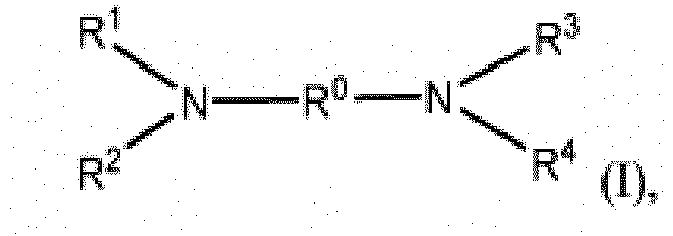
- the first strength-enhancing agent includes a compound represented by structural formula (I): wherein each R 1 , R 2 , R 3 , and R 4 , independently is a -(C 1 -C 4 )alkyl-OH, and R 0 is a (C 1 -C 4 ) alkylene.
- the first strength-enhancing agent includes tetrahydroxyethylethylenediamine (THEED).
- the second strength-enhancing agent is sodium sulfate.
- the first strength-enhancing agent is added in an amount of from 0.0005% to 0.20 % by weight of the cementitious material, and the second strength-enhancing agent is added in an amount of 0.05 - 0.30% Na 2 O equivalent by weight of the hydraulic cementitious material; preferably wherein the second strength-enhancing agent is added in an amount of 0.15 - 0.30 percent Na 2 O equivalent by weight of the hydraulic cementitious mixture, and preferably wherein the first strength-enhancing agent is added in an amount of 0.0005% to 0.04% by weight of the hydraulic cementitious material.
- the present invention is a cement composition obtainable by the methods disclosed herein.
- the present invention is an admixture composition for manufacturing cementitious compositions.
- the admixture composition comprises a first strength-enhancing agent and a second strength-enhancing agent.
- the first strength-enhancing agent includes a compound represented by structural formula (I): wherein each R 1 , R 2 , R 3 , and R 4 , independently is a -(C 1 -C 4 )alkyl-OH, and R 0 is a (C 1 -C 4 ) alkylene.
- the first strength-enhancing agent being present in an amount of 0.1 to 80 % by dry weight solid of the admixture composition.
- the first strength-enhancing agent includes tetrahydroxylethylethylenediamine (THEED).
- the second strength-enhancing agent is sodium sulfate.
- the second strength-enhancing agent being present in an amount of 20 to 99.9 % Na 2 O equivalent by dry weight solid of the admixture composition.
- the admixture further comprises at least one defoaming agent.
- alkyl means an optionally substituted saturated aliphatic branched or straight-chain monovalent hydrocarbon radical having the specified number of carbon atoms.
- (C 1 -C 4 ) alkyl means a radical having from 1-4 carbon atoms in a linear or branched arrangement.
- (C 1 -C 4 )alkyl includes methyl, ethyl, propyl, isopropyl, n-butyl and tert-butyl.
- alkanolmonoamine means an alkyl, typically a C1-C6 alkyl, functionalized with one amino group and at least one hydroxyl group.
- alkanolmonoamines include triethanolamine or TEA, diethanol isopropanolamine or DEIPA, ethanol diisopropanolamine (EDIPA), and tri-isopropanolamine or TIPA.
- alkanoldiamine means an alkyl, typically a C1-C6 alkyl, functionalized with at least two amino groups and at least one hydroxyl group.
- An example of an alkanoldiamine includes tetrahydroxyethylethylenediamine (THEED).
- triisobutylphosphate is a compound of structural formula [(CH 3 ) 2 CHCH 2 O] 3 PO.
- alkylene means an optionally substituted saturated aliphatic branched or straight-chain bivalent hydrocarbon radical having the specified number of carbon atoms.
- (C 1 -C 4 ) alkylene means a radical having from 1-4 carbon atoms in a linear or branched arrangement.
- (C 1 -C 4 )alkyl includes methylene, ethylene, propylene, isopropylene, etc.
- Suitable optional substituents on any alkyl or alkylene include halogen, a C1-C4 alkyl, a C1-C4 haloalkyl, -OH, -O-(C 1 -C 4 )alkyl, -O-(C 1 -C 4 )haloalkyl, -CN,-NH 2 , -NH(C 1 -C 4 )alkyl, -N((C 1 -C 4 )alkyl) 2 , and -NO 2 .
- ethylene oxide refers to a monomeric unit of a homo- or copolymer having the following structural formula: -(C 2 H 4 -O)-.
- propylene oxide refers to a monomeric unit of a homo- or copolymer having the following structural formula: -(C 3 H 6 -O)-.
- air detrainer and “defoamers” are used interchangeably herein, and refer to compounds or mixtures of compounds that decrease foaming and minimizes air entrainment in cement slurries, grouts, concrete, and mortars.
- defoamers include the compounds and mixtures described in WO2015042031 .
- viscosity modifying agent and “viscosity modifying admixture” are used interchangeably herein and refer to compounds or mixtures of compounds chosen from (a) biopolymer polysaccharides chosen from S-657(diutan gum), welan gum, xanthan, rhamsan, gellan, dextran, pullulan, curdlan, or derivatives thereof; (b) marine gums chosen from algin, agar, carrageenan, or derivatives thereof; (c) plant exudates chosen from locust bean, gum arabic, gum Karaya, tragacanth, Ghatti, or derivatives thereof; (d) seed gums chosen from guar, locust bean, okra, psyllium, mesquite, or derivatives thereof; or (e) starch-based gums chosen from ethers, esters, or derivatives thereof
- grinding aid refers to a compound or a mixture of compounds that prevents agglomeration of particles of clinker during the grinding process, thus reducing the energy required for the grinding process. Examples of grinding aids are disclosed herein.
- set accelerating agent refers to a compound or a mixture of compounds that, when added to a cement, speeds the setting time. Examples of set accelerating agents are provided herein.
- set retardation agent refers to a compound of a mixture of compounds that, when added to a cement, retards the time of setting. Examples of set retardation agents are provided herein.
- cement dispersant “superplasticizer” and “water reducer” are used interchangeably herein to refer to chemical compounds of mixtures of chemical compounds used as dispersants, i.e. materials that, when added to a suspension of particles, results in the reduction of frictional resistance to flow without requiring additional water.
- the use of the dispersant further improves the suspension being improving dispersion of particles.
- These materials improve the flow characteristics (rheology) of concretes, reducing the water to cement ratio without affecting the workability of the mixture.
- Example of cement dispersants, superplasticizers, and water reducers are provided herein.
- cement composition or "cementitious powder” is used herein to designate a binder or an adhesive that includes a material that will solidify upon addition of water (hydraulic cementitious material), and an optional additive. Most cementitious materials are produced by high-temperature processing of calcined lime and a clay. When mixed with water, hydraulic cementitious materials form mortar or, mixed with sand, gravel, and water, make concrete.
- cementitious material “cementitious powder,” and “cement” can be used interchangeably.
- Cement compositions includes mortar and concrete compositions comprising a hydraulic cement.
- Cement compositions can be mixtures composed of a cementitious material, for example, Portland cement, either alone or in combination with other components such as fly ash, silica fume, blast furnace slag, limestone, natural pozzolans or artificial pozzolans, and water; mortars are pastes additionally including fine aggregate, and concretes are mortars additionally including coarse aggregate.
- the cement compositions of this invention are formed by mixing certain amounts of required materials, e.g., a hydraulic cement, water, and fine or coarse aggregate, as may be applicable for the particular cement composition being formed.
- the term "clinker” refers to a material made by heating limestone (calcium carbonate) with other materials (such as clay) to about 1450 °C in a kiln, in a process known as calcination, whereby a molecule of carbon dioxide is liberated from the calcium carbonate to form calcium oxide, or quicklime, which is then blended with the other materials that have been included in the mix to form calcium silicates and other cementitious compounds.
- Portland cement include all cementitious compositions which meet either the requirements of the ASTM (as designated by ASTM Specification C150), or the established standards of other countries.
- Portland cement is prepared by sintering a mixture of components including calcium carbonate (as limestone), aluminum silicate (as clay or shale), silicon dioxide (as sand), and miscellaneous iron oxides. During the sintering process, chemical reactions take place wherein hardened nodules, commonly called clinkers, are formed.
- Portland cement clinker is formed by the reaction of calcium oxide with acidic components to give, primarily tricalcium silicate, dicalcium silicate, tricalcium aluminate, and a ferrite solid solution phase approximating tetracalcium aluminoferrite.
- the clinker After the clinker has cooled, it is pulverized together with a small amount of gypsum (calcium sulfate) in a finish grinding mill to provide a fine, homogeneous powdery product known as Portland cement. Due to the extreme hardness of the clinkers, a large amount of energy is required to properly mill them into a suitable powder form. Energy requirements for finish grinding can vary from about 33 to 77 kWh/ton, depending upon the nature of the clinker and the type of the milling equipment. Several materials such as glycols, alkanolamines, aromatic acetates, etc., have been shown to reduce the amount of energy required and thereby improve the efficiency of the grinding of the hard clinkers.
- gypsum calcium sulfate
- grinding aids are processing additives which are introduced into the mill in small dosages and interground with the clinker to attain a uniform powdery mixture.
- processing additives are frequently used to improve the ability of the powder to flow easily and reduce its tendency to form lumps during storage.
- Clinker production involves the release of CO 2 from the calcination of limestone. It is estimated that for each ton of clinker produced, up to one ton of CO 2 is released to the atmosphere.
- fillers such as limestone or clinker substitutes such as granulated blast furnace slags, natural or artificial pozzolans, pulverized fuel ash, and the like, for a portion of the clinker allow a reduction on the emitted CO 2 levels per ton of finished cement.
- filler refers to an inert material that has no later age strength enhancing attributes
- the term "clinker substitute" refers to a material that may contribute to long term compressive strength enhancement beyond 28 days.
- the addition of these fillers or clinker substitutes to form "blended cements" is limited in practice by the fact that such addition usually results in a diminution in the physical strength properties of the resultant cement.
- a filler such as limestone
- the resultant cement exhibits a marked reduction in strength, particularly with respect to the strength attained after 28 days of moist curing (28-day strength).
- the term "blended cements” refers to hydraulic cement compositions containing between 2 and 90%, more conventionally between 5 and 70%, fillers or clinker substitute materials.
- Rietveld method or “Rietveld XRD quantification” or “QXRD” refer to a qualitative phase analysis to determine the quantities of crystalline and amorphous phases in a measured XRD pattern.
- the Rietveld method uses a full profile fitting procedure of the measured XRD pattern to database of known phases.
- blade refers to a mortar mixing cement, sand and water, but not any of the tested additives.
- an alkali metal salt refers to any salt of an alkali metal ion, e.g., Na + , K + .
- alkali metal ion sources include sodium sulfate, potassium sulfate, and the like.
- the present invention is a method of forming a cement composition.
- the method comprises adding to a hydraulic cementitious material a first strength-enhancing agent and a second strength-enhancing agent.
- the content of total alkali (Na 2 O equivalent) in the hydraulic cementitious material is less than or equal to 0.7% by weight of the cementitious material.
- the first strength-enhancing agent includes a compound represented by structural formula (I): In formula (I), each R 1 , R 2 , R 3 , and R 4 , independently is a -(C 1 -C 4 )alkyl-OH, and R 0 is a (C 1 -C 4 ) alkylene.
- the first strength-enhancing agent is added in an amount of from 0.0005% to 0.20 % by weight of the cementitious material.
- the first strength-enhancing agent includes tetrahydroxyehtylethylenediamine (THEED).
- TEEED tetrahydroxyehtylethylenediamine
- the second strength-enhancing agent is sodium sulfate and is added in an amount of 0.05 - 0.30 percent Na 2 O equivalent by weight of the hydraulic cementitious material.
- the second strength-enhancing agent is added in an amount of 0.15 - 0.30 percent, for example 0.17 - 0.25 percent Na 2 O equivalent, by weight of the hydraulic cementitious material.
- each of R 1 , R 2 , R 3 , and R 4 independently is a -(C 2 -C 3 )alkyl-OH, and R 0 is a (C 2 -C 3 )alkylene.
- the method further comprises adding to the cement composition one or more of defoaming agents.
- the defoaming agent is chosen from: a triisobutylphosphate; an ethoxylated, propoxylated fatty alcohol represented by structural formula (II): CH 3 (CH 2 ) x CH 2 -O(CH 2 CH 2 O) 1 (CH 2 CH(CH 3 )O) m H, (II): an ethoxylated, propoxylated alkylphenol represented by structural formula (III): R 10 - R 20 - O(CH 2 CH 2 O) 1 (CH 2 CH(CH 3 )O) m H, (III), or a polyalkoxylated polyalkylene polyamine represented by structural formula (IV): or salt thereof.
- x represents an integer from 2 to 18; 1 and m, for each occurrence independently, is an integer from 3 to 15; R 10 is a C 4 -C 12 alkyl; and R 20 is a phenyl ring.
- each of R 100 , R 200 , R 300 , R 400 , R 500 , R 600 , and R 700 independently represents a hydrogen, C 1 -C 4 alkyl group, -CH 2 -OH, or -(AO) y -R 8 , wherein at least one of R 100 , R 200 , R 300 , R 400 , R 500 , R 600 , and R 700 is -(AO) y -R 8 , and wherein AO represents propylene oxide ("PO") or a mixture of PO and ethylene oxide (“EO”), wherein the molar ratio of PO to EO is at least 100:0 to 100:90; y is an integer from 4 to 100; R 8 is hydrogen or a C1-C12 alkyl group; and n is 0 or an integer from 1 to 100.
- PO propylene oxide
- EO ethylene oxide
- Defoamers of structural formulas (II), (III), and (IV) can each be added in a 19:1 to 1:1 weight ratio of the first strength-enhancing agent to defoamer (by dry solids weight).
- the defoamer when the defoamer is the compound represented by structural formula (IV), if "n" is 0, then the amount of EO is less than 10% by weight based on total weight of the polyalkoxylated polyalkylene polyamine.
- the method further includes adding to the hydraulic cementitious material a viscosity modifying agent for stabilizing the defoaming agent.
- viscosity modifying agent can be chosen from (a) biopolymer polysaccharides chosen from S-657(diutan gum), welan gum, xanthan, rhamsan, gellan, dextran, pullulan, curdlan, or derivatives thereof; (b) marine gums chosen from algin, agar, carrageenan, or derivatives thereof; (c) plant exudates chosen from locust bean, gum arabic, gum Karaya, tragacanth, Ghatti, or derivatives thereof; (d) seed gums chosen from guar, locust bean, okra, psyllium, mesquite, or derivatives thereof; or (e) starch-based gums chosen from ethers, esters, or derivatives thereof.
- the biopolymer polysaccharide can be used in an amount of 0.01 to 1.0 percent, for example 0.1 percent to 0.3 percent, based on total weight of the cement grinding additive
- the first strength-enhancing agent further includes one or more of triisopropanolamine (TIPA), triethanolamine(TEA), diethanolisopropanolamine (DEIPA), or ethanol diisopropanolamine (EDIPA).
- TIPA triisopropanolamine
- TAA triethanolamine
- DEIPA diethanolisopropanolamine
- EDIPA ethanol diisopropanolamine
- the content of total alkali (Na 2 O equivalent) in the hydraulic cementitious material is less than or equal to 0.7% by weight of the cementitious material;
- the first strength-enhancing agent includes tetrahydroxyethylethylenediamine (THEED), and the first strength-enhancing agent is added in an amount of from 0.001% to 0.02% by weight of the cementitious material; and the second strength-enhancing agent is added in an amount of from 0.17 to 0.25% Na 2 O equivalent by weight of the hydraulic cementitious material.
- the method further comprises adding to the hydraulic cementitious material at least one additional component chosen from a grinding aid, a set retarding agent, or a set accelerating agent.
- the grinding aid can be one or more of a glycol, glycerin, alkanolamine, amine, or acetic acid or an acetic acid salt, and can be added in an amount of 0.001% to 0.06% based on dry weight of the hydraulic cementitious material.
- the set retarding agent can be one or more of a gluconate salt, a molasses, sucrose, lignosulfonate, or a corn syrup, and can be added in the amount of 0.001-0.06% based on dry weight of the hydraulic cementitious powder.
- the set accelerating agent can be one or more of a thiocyanate salt, nitrate salt, nitrite salt, thiosulfate salt, or a chloride salt, and can be added in the amount of 0.001% to 0.2% based on dry weight of the hydraulic cementitious material.
- the hydraulic cementitious material comprises Portland cement or cement clinker, and, further includes one or more of fly ash, granulated blast furnace slag, limestone, natural pozzolan, or calcined clay.
- the first strength-enhancing agent and the second strength-enhancing agent are mixed prior to adding to the hydraulic cementitious material, thereby forming a mixture (also referred to herein as a "pre-mixture") of the strength-enhancing agents.
- the weight ratio of the first strength enhancing agent to the second strength enhancing agent in the mixture of the strength-enhancing agents is from 1:600 to 10:1. In another example, the weight ratio is 1:250 to 1:8.5.
- the first strength-enhancing agent is a liquid and the second strength-enhancing agent is a powder, said powder further optionally including one or more of gypsum, fly ash, blast furnace slag, limestone, natural pozzolan, or calcined clay.
- the first and the second strength-enhancing agents are as described above with respect to the tenth aspect, and further the first strength-enhancing agent further includes one or more of: a grinding aid, wherein the weight ratio of the grinding aid to the compound of structural formula (I) is from 60:1 to 1:20; a set retarding agent, wherein the weight ratio of the set retarding agent to the compound of structural formula (I) is from 60:1 to 1:20; a set accelerating agent, wherein the weight ratio of the set accelerating agent to the compound of structural formula (I) is from 200:1 to 1:20; or a defoamer, wherein the weight ratio of the defoamer to the compound of structural formula (I) is from 1.6:1 to 1:50.
- a grinding aid wherein the weight ratio of the grinding aid to the compound of structural formula (I) is from 60:1 to 1:20
- a set retarding agent wherein the weight ratio of the set retarding agent to the compound of structural formula (I) is from 60:1 to 1:
- the first strength enhancement agent is present in the amount of from 0.001% to 0.02% based on dry weight of the hydraulic cementitious powder
- the at least one grinding aid is added in the amount of from 0.001% to 0.06% based on dry weight of the hydraulic cementitious powder
- the set retarding agent is added in the amount of from 0.001% to 0.06% based on dry weight of the hydraulic cementitious powder
- the set accelerating agent is added in the amount of 0.001% to 0.2% based on dry weight of the hydraulic cementitious powder
- the defoamer is added in the amount of 0.0004% to 0.0016% based on dry weight of the hydraulic cementitious powder.
- the method further comprises adding to the hydraulic cementitious material one or more of a cement dispersant, a superplasticizer or a water-reducer.
- suitable materials include polycarboxylate ethers, polycarboxylate comb polymers, naphthalene sulfonate formaldehyde condensate, melamine sulfonate formaldehyde condensate and lignosulfonate salts.
- the present invention is a cement composition obtainable by any method described in the first through thirteenth aspects of the first embodiment.
- the present invention is an admixture composition for manufacturing cementitious compositions.
- the admixture composition comprises a first strength-enhancing agent and a second strength-enhancing agent.
- the first strength-enhancing agent includes a compound represented by structural formula (I): wherein each R 1 , R 2 , R 3 , and R 4 , independently is a -(C 1 -C 4 )alkyl-OH, and R 0 is a (C 1 -C 4 ) alkylene.
- the first strength-enhancing agent is present in an amount of 0.1 to 80 % by dry weight solid of the admixture composition.
- the first strength-enhancing agent includes tetrahydroxyethylethylenediamine (THEED).
- the second strength-enhancing agent is sodium sulfate; and the second strength-enhancing agent being present in an amount of 20 to 99.9 % Na 2 O equivalent by dry weight solid of the admixture composition.
- the admixture further comprises at least one defoaming agent..
- each of R 1 , R 2 , R 3 , and R 4 independently is a -(C 2 -C 3 )alkyl-OH, and R 0 is a (C 2 -C 3 )alkylene.
- the admixture composition further comprising one or more of defoaming agents described with respect to the fourth aspect of the first embodiment.
- the admixture further comprises a viscosity modifying agent for stabilizing the defoaming agent described above with respect to the fifth aspect of the first embodiment.
- the admixture composition further comprises at least one additional component chosen from a grinding aid, a set retarding agent, or a set accelerating agent, as described with respect to the eighth aspect of the first embodiment.
- the first-strength enhancer of the admixture further includes one or more of triisopropanolamine (TIPA), triethanolamine (TEA), diethanolisopropanolamine (DEIPA), or ethanol diisopropanolamine (EDIPA).
- TIPA triisopropanolamine
- TAA triethanolamine
- DEIPA diethanolisopropanolamine
- EDIPA ethanol diisopropanolamine
- cementitious material and the strength-enhancing agents are described above with respect to the first through thirteenth aspects of the first embodiment.
- the strength-enhancing agent and, optionally additional additives are added to the cementitious material in a single step.
- Alkali metal salts have been previously used to address low early strength of cements. Such solution presents several drawbacks. First, it has been reported that alkali salts decrease long-term compressive strength, usually measured at 28 days post formation. Second, an accelerating effect is only observed at high concentration of additives, making this approach economically undesirable. Other early strength enhancers, such as alkanolmonoamines (triethanolamine (TEA), triisopropanolamine (TIPA), diethanolisopropanolamine (DEIPA)), show selective effect that depends on the composition of the cementitious material.
- TIPA triethanolamine
- TIPA triisopropanolamine
- DEIPA diethanolisopropanolamine
- alkali metal salt for example, sodium sulfate, potassium sulfate and mixtures thereof
- certain alkanoldiamines for example, THEED
- the effect of the combination can be synergistic, i.e. the effect of the combination exceeds the combined effects of the individual components. This synergistic effect permits the use of low final content of the alkali metal salt, thus maintaining the positive effect on the early strength without undermining the late strength.
- a particular advantage of the additive of the invention is that it may be either interground or intermixed with the cement.
- the terms "interground” and “intermixed” refer to the particular stage of the cement processing in which the additives are added. They may be added to the clinker during the finish grinding stage and thus interground to help reduce the energy requirements and provide a uniform free flowing cement powder with reduced tendency to form lumps during storage. It is also possible to add the additives as an admixture to powdered cement either prior to, in conjunction with, or after the addition of water when effecting the hydraulic setting of the cement.
- the additives described herein can be supplied in a pure concentrated form, or diluted in aqueous composition, and may also be used in combination with other chemical admixtures, including but not limited to: accelerating admixtures, air entrainers, air detrainers, water-reducing admixtures, retarding admixtures (as defined in ASTM C494) and the like, and mixtures thereof.
- the additive according to the invention may be used with ordinary cement or with blended cements.
- the elemental composition for each of the cement samples used in the following examples was determined using X-ray fluorescence (XRF). Results are presented in Table 1 in % by weight. The clinker phases were analyzed using X-ray diffraction (QXRD) using the Rietveld refinement method. Results are presented in Table 2 in % by weight.
- Example 1 Combination of THEED and Sodium Sulfate Enhances Early Strength of Cement Compositions
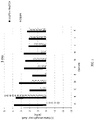
- This example illustrates the effect of the combination of THEED and sodium sulfate on the compressive strength of mortars produced from different cements described in Example 1 at Day 1 post-mortar preparation.
- Mortars were prepared following the EN 196-1 testing protocol, where 450 grams of cement are mixed with 225 grams of water and 1350 grams of a graded sand meeting EN 196-1 specifications. Additives were added to the water before adding water to the cement g. The mortar prepared this way was used to cast 40 x 40 x 160 mm prismatic specimens that were submitted to compression until rupture after 1 and 28 days of curing. The rupture load was converted to compressive strength (in MPa).
- Na 2 SO 4 was prepared in two steps. Na 2 SO 4 was first added to achieve final content of 0.4% by weight of the cementitious material in the mixing water. Then THEED was added to achieve the final content of 0.02% by weight of cementitious material
- This example illustrates the synergistic effect between sodium sulfate and THEED at Day 1 post mortar preparation.
- synergistic index ⁇ Strength Na 2 SO 4 + THEED ⁇ Strength blank ⁇ ⁇ Strength Na 2 SO 4 ⁇ Strength blank + ⁇ Strength THEED ⁇ Strength blank , where "Strength” is a compressive strength value of the mortar that includes the additive indicated in the subscript (“blank” stands for the "no additive” control).
- synergistic index is positive, there is synergy between the two additives (i.e. the effect of the combination is greater than the combined effects of each additive). If synergistic is equal to zero, there is an additive effect of the additives. If synergistic index is negative, there is an antagonistic effect of the combination of additives.
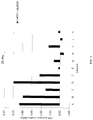
- This example illustrates the effect of the combination of THEED and sodium sulfate on the compressive strength of mortars produced from different cements described in Tables 1 and 2 at 28 days post-mortar preparation and demonstrates that the effect of the combination of sodium sulfate and THEED at 28 days post mortar preparation is synergistic.
- Sodium sulfate is known to have a detrimental effect on long-term (for example, 28 days) compressive strength of cement compositions.
- long-term compressive strength of cement compositions for example, 28 days
- the detrimental effect of sodium sulfate on the late compressive strength of cement compositions is avoided.
- Compressive strengths of cement compositions described in Example 2 were measured at 28 days post mortar production. For each tested sample, the value of the compressive strength of a control (no additive) was deducted from the value of the compressive strength of the sample and the results plotted as bars shown in FIG. 4 . The results indicate that while sodium sulfate alone significantly reduces the late compressive strength of cements, the combination of THEED and sodium sulfate not only overcomes this negative effect, but, in fact, improves the late compressive strength relative to the cement compositions that do not include the additives.
- This comparative example provides data comparing the effect on compressive strength of cement compositions prepared using cement A (see Tables 1 and 2 above) and different alkanolamine/alkali metal ion source combinations.
- This example illustrates various ratios of sodium sulfate and THEED dosage.
- Mortars were produced using cement A as described in Example 2.
- Sodium sulfate was added to achieve the indicated final content (0.18%. 0.15%, 0.10% and 0% of Na 2 O equivalent by weight of cementitious material).
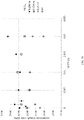
- THEED was added prior to mixing at varying dosages to achieve the final content as indicated in FIG. 10 , from 0% to 0.02% by weight of the cementitious material.
- Compressive strength of the mortar samples was measured at 1 day post mortar preparation. The results are presented in FIG. 10 .
- This example illustrates the use of THEED+Na 2 SO 4 combination as a grinding aid.
- the grinding efficiency was studied on a lab-scale ball mill. Clinker and balls were pre-heated overnight and placed in the hot ball mill at 116 °C. To compare the grinding efficiency, a reference cement "R" was prepared using DIEG, a traditional grinding aid. 0.69g of DIEG was added to 3325g of clinker and 133g of hemihydrate. These ingredients were ground for 2 hours in a laboratory ball mill at 116°C to produce cement for testing. The chemical composition of the cement R is presented in Table 3.
- Second cement (sample "S") was composed of 0.69g of THEED in a liquid form and 6.90g of Na 2 SO 4 as a powder were added to 3325g of clinker and 133g of hemihydrate to obtain a 0.02% of THEED and 0.4% of Na 2 SO 4 . These ingredients were ground for 2 hours in the same laboratory ball mill at 116°C to produce cement for testing.
- Example T In the case of the third sample (sample "T"), 0.69g of THEED was mixed with 6.90g of Na 2 SO 4 to obtain a solid mixture. The THEED+Na 2 SO 4 mixture was added to 3325g of clinker and 133g of hemihydrate. The ingredients were mixed for 2 hours in the same laboratory ball mill at 116°C to produce cement for testing.
- the fineness of the three cements obtained from grinding was measured by air permeability method (Blaine method (cm 2 /g)), by Alpine Sieve method (% amount of particle passing the sieve of 45um) and by laser diffraction (particle size distribution).
- air permeability method Blaine method (cm 2 /g)
- Alpine Sieve method % amount of particle passing the sieve of 45um
- laser diffraction particle size distribution
- Samples 1 and 2 were prepared using the cement R ground in the presence of diethylene glycol (DIEG) alone (at 0.02% by weight of the cementitious material) from Example 6
- Sample 3 was prepared using the cement S ground with THEED+sodium sulfate combination from Example 6, where THEED (liquid) and sodium sulfate (solid) were added separately.
- Sample 4 was prepared using the cement T ground with the mixture comprising both THEED and sodium sulfate used in Example 6.
- EN196 mortars, as described above and their compressive strength at Day 1 and Day 3 were measured.
- the Day 1 strength values confirm the enhancement of strength due to adding THEED+Na 2 SO 4 combination, as an admixture after grinding (sample 2) and as grinding aid (sample 3 and 4).
- the results also showed that the enhancement effect of the Day 1 strength when THEED+Na 2 SO 4 combination was unexpectedly 10% higher than when the combination was used as an additive after grinding.
Landscapes
- Chemical & Material Sciences (AREA)
- Engineering & Computer Science (AREA)
- Ceramic Engineering (AREA)
- Organic Chemistry (AREA)
- Structural Engineering (AREA)
- Materials Engineering (AREA)
- Chemical Kinetics & Catalysis (AREA)
- Polymers & Plastics (AREA)
- Health & Medical Sciences (AREA)
- Medicinal Chemistry (AREA)
- Inorganic Chemistry (AREA)
- Dispersion Chemistry (AREA)
- Curing Cements, Concrete, And Artificial Stone (AREA)
- Civil Engineering (AREA)
- Environmental & Geological Engineering (AREA)
- Combustion & Propulsion (AREA)
Claims (14)
- Procédé de formation d'une composition de ciment, comprenant :l'ajout à un matériau cimentaire hydraulique d'un premier agent renforçant la résistance et d'un deuxième agent renforçant la résistance,dans lequel :la teneur en alcali total (équivalent Na2O) dans le matériau cimentaire hydraulique est inférieure ou égale à 0,7 % en poids du matériau cimentaire ;le premier agent renforçant la résistance comprend un composé représenté par la formule structurale (I) :
 dans laquelle :chaque R1, R2, R3 et R4 est indépendamment un -(C1-C4)alkyle-OH, et R0 est un (C1-C4)alkylène ; etle premier agent renforçant la résistance est ajouté en une quantité de 0,0005 % à 0,20 % en poids du matériau cimentaire hydraulique ;le premier agent renforçant la résistance comprend la tétrahydroxyéthyléthylènediamine (THEED) ;le deuxième agent renforçant la résistance est le sulfate de sodium ; etle deuxième agent renforçant la résistance est ajouté en une quantité de 0,05 à 0,30 pour cent d'équivalent Na2O en poids du matériau cimentaire hydraulique ; etpréférablement dans lequel le deuxième agent renforçant la résistance est ajouté en une quantité de 0,15 à 0,30 pour cent d'équivalent Na2O en poids du matériau cimentaire hydraulique ; etpréférablement dans lequel le premier agent renforçant la résistance est ajouté en une quantité de 0,0005 % à 0,04 % en poids du matériau cimentaire hydraulique.
 - Procédé selon la revendication 1, dans lequel chacun de R1, R2, R3 et R4 est indépendamment un -(C2-C3)alkyle-OH, et R0 est un (C2-C3)alkylène.
- Procédé selon la revendication 1 ou 2, comprenant en outre l'ajout au matériau cimentaire hydraulique d'au moins un agent anti-mousse, et préférablement comprenant en outre l'ajout au matériau cimentaire hydraulique d'un agent modificateur de viscosité pour stabiliser l'agent anti-mousse.
- Procédé selon la revendication 3, comprenant en outre l'ajout au matériau cimentaire hydraulique d'un ou plusieurs agents anti-mousse choisis parmi :un triisobutylphosphate ;un alcool gras éthoxylé propoxylé représenté par la formule structurale suivante :
CH3(CH2)xCH2-O(CH2CH2O)1(CH2CH(CH3)O)mH,
un alkylphénol éthoxylé propoxylé représenté par la formule structurale suivante :
R100, -R20-O(CH2CH2O)1(CH2CH(CH3)O)mH,
dans lesquelles :x représente un entier de 2 à 18 ; 1 et m, pour chaque occurrence indépendamment, est un entier de 3 à 15 ; R10 est un alkyle en C4-C12 ; et R20 est un groupe phényle ; ouune polyalkylène polyamine polyalcoxylée représentée par la formule structurale suivante ou sel de celle-ci, dans laquelle :
chacun de R100, R200, R300, R400, R500, R600 et R700 représente indépendamment un hydrogène, un groupe alkyle en C1-C4, -CH2-OH ou -(AO)y-R8, dans laquelle au moins un parmi R100, R200 , R300, R400, R500 , R600 et R700 est -(AO)y-R8, et dans laquelle AO représente l'oxyde de propylène (« PO ») ou un mélange de PO et d'oxyde d'éthylène (« EO »), dans lequel le rapport molaire de PO à EO est d'au moins 100 : 0 à 100 : 90 ; y est un entier de 4 à 100 ; R8 est un hydrogène ou un groupe alkyle en C1-C12 ; et n est 0 ou un entier de 1 à 100. - Procédé selon l'une quelconque des revendications précédentes, dans lequel le premier agent renforçant la résistance comprend en outre un ou plusieurs parmi triisopropanolamine (TIPA), triéthanolamine (TEA), diéthanolisopropanolamine (DEIPA) ou l'éthanol diisopropanolamine (EDIPA).
- Procédé selon l'une quelconque des revendications précédentes, comprenant en outre l'ajout au matériau cimentaire hydraulique d'au moins un composant additionnel choisi parmi un auxiliaire de broyage, un agent retardateur de prise, un agent accélérateur de prise ou un dispersant de ciment.
- Procédé selon l'une quelconque des revendications précédentes, dans lequel le matériau cimentaire hydraulique comprend du ciment Portland ou du clinker de ciment, et comprend en outre un ou plusieurs parmi des cendres volantes, du laitier granulé de haut fourneau, du calcaire, de la pouzzolane naturelle ou de l'argile calcinée.
- Procédé selon l'une quelconque des revendications précédentes, comprenant en outre le mélange du premier et du deuxième agent renforçant la résistance avant d'ajouter ledit premier ou deuxième agent renforçant la résistance au matériau cimentaire hydraulique.
- Procédé selon l'une quelconque des revendications précédentes, dans lequel le premier agent renforçant la résistance est un liquide et le deuxième agent renforçant la résistance est une poudre, ladite poudre étant éventuellement mélangée avec un ou plusieurs éléments parmi le gypse, les cendres volantes, le laitier de haut fourneau, le calcaire, la pouzzolane naturelle ou l'argile calcinée.
- Procédé selon la revendication 9, dans lequel le premier agent renforçant la résistance comprend en outre un ou plusieurs parmi :un auxiliaire de broyage, dans lequel le rapport pondéral de l'auxiliaire de broyage au composé de formule structurale (I) est de 60 : 1 à 1 : 20 ;un agent retardateur de prise, dans lequel le rapport pondéral de l'agent retardateur de prise au composé de formule structurelle (I) est de 60 : 1 à 1 : 20 ;un agent accélérateur de prise, dans lequel le rapport pondéral de l'agent accélérateur de prise au composé de formule structurelle (I) est de 200 : 1 à 1 : 20 ; ouun agent anti-mousse, dans lequel le rapport pondéral de l'agent anti-mousse au composé de formule structurelle (I) est de 1,6 : 1 à 1 : 50.
- Composition de ciment pouvant être obtenue par le procédé de l'une quelconque des revendications précédentes.
- Composition de mélange pour la fabrication de compositions cimentaires, comprenant :un premier agent renforçant la résistance et un deuxième agent renforçant la résistance, danslaquelle :
le premier agent renforçant la résistance comprend un composé représenté par la formule structurale (I) : dans laquelle :chaque R1, R2, R3 et R4, est indépendamment un -(C1-C4)alkyle-OH, et R0 est un (C1-C4)alkylène etle premier agent renforçant la résistance étant présent en une quantité de 0,1 à 80 % de solides en poids sec de la composition de mélange ;le premier agent renforçant la résistance comprend la tétrahydroxyéthyléthylènediamine (THEED ;le deuxième agent renforçant la résistance est le sulfate de sodium ;le deuxième agent renforçant la résistance étant présent en une quantité de 20 % à 99,9 % d'équivalent Na2O de solides en poids sec de la composition de mélange ; etle mélange comprenant en outre au moins un agent anti-mousse.
 - Mélange selon la revendication 12, dans lequel l'au moins un agent anti-mousse est choisi parmi :un triisobutylphosphate ;un alcool gras éthoxylé propoxylé représenté par la formule structurale suivante :
CH3(CH2)xCH2-O(CH2CH2O)1(CH2CH(CH3)O)mH,
un alkylphénol éthoxylé propoxylé représenté par la formule structurale suivante :
R100, -R20-O(CH2CH2O)!(CH2CH(CH3)O)mH,
dans lesquelles :x représente un entier de 2 à 18 ; 1 et m, pour chaque occurrence indépendamment, est un entier de 3 à 15 ; R10 est un alkyle en C4-C12 ; et R20 est un groupe phényle ; ouune polyalkylène polyamine polyalcoxylée représentée par la formule structurale suivante ou sel de celle-ci, dans laquelle :
chacun de R100, R200, R300, R400, R500, R600 et R700 représente indépendamment un hydrogène, un groupe alkyle en C1-C4, -CH2-OH ou -(AO)y-R8, dans laquelle au moins un parmi R100, R200 , R300, R400, R500 , R600 et R700 est -(AO)y-R8, et dans laquelle AO représente l'oxyde de propylène (« PO ») ou un mélange de PO et d'oxyde d'éthylène (« EO »), dans lequel le rapport molaire de PO à EO est d'au moins 100 : 0 à 100 : 90 ; y est un entier de 4 à 100 ; R8 est un hydrogène ou un groupe alkyle en C1-C12 ; et n est 0 ou un entier de 1 à 100. - Mélange selon la revendication 12 ou 13, dans lequel le premier agent renforçant la résistance comprend en outre un ou plusieurs parmi la triisopropanolamine (TIPA), la triéthanolamine (TEA), la diéthanolisopropanolamine (DEIPA) ou l'éthanol diisopropanolamine (EDIPA).
Applications Claiming Priority (2)
| Application Number | Priority Date | Filing Date | Title |
|---|---|---|---|
| US201762489798P | 2017-04-25 | 2017-04-25 | |
| PCT/US2018/029192 WO2018200563A1 (fr) | 2017-04-25 | 2018-04-24 | Agents d'amélioration de la résistance du ciment |
Publications (2)
| Publication Number | Publication Date |
|---|---|
| EP3615491A1 EP3615491A1 (fr) | 2020-03-04 |
| EP3615491B1 true EP3615491B1 (fr) | 2022-04-13 |
Family
ID=62235996
Family Applications (1)
| Application Number | Title | Priority Date | Filing Date |
|---|---|---|---|
| EP18726872.7A Active EP3615491B1 (fr) | 2017-04-25 | 2018-04-24 | Agents d'amélioration de la résistance du ciment |
Country Status (5)
| Country | Link |
|---|---|
| US (1) | US11230495B2 (fr) |
| EP (1) | EP3615491B1 (fr) |
| CN (1) | CN110770189B (fr) |
| CA (1) | CA3061330A1 (fr) |
| WO (1) | WO2018200563A1 (fr) |
Families Citing this family (5)
| Publication number | Priority date | Publication date | Assignee | Title |
|---|---|---|---|---|
| JP7171146B2 (ja) * | 2019-02-27 | 2022-11-15 | 株式会社デイ・シイ | セメント系水硬組成物 |
| CN111099846A (zh) * | 2019-12-11 | 2020-05-05 | 平湖南方水泥有限公司 | 一种水泥配方及其制备方法 |
| CN113149706B (zh) * | 2021-04-22 | 2022-05-27 | 福建豪科建设发展有限公司 | 一种高性能发泡混凝土及其在护岸挡墙中的应用 |
| US11795364B2 (en) | 2021-10-25 | 2023-10-24 | Halliburton Energy Services, Inc. | Low carbon footprint expansive composition and methods of making and using same |
| JP7768744B2 (ja) * | 2021-12-01 | 2025-11-12 | Ube三菱セメント株式会社 | 水硬性組成物、水硬性組成物の製造方法、及び水硬性組成物の圧縮強さ増進方法 |
Citations (1)
| Publication number | Priority date | Publication date | Assignee | Title |
|---|---|---|---|---|
| WO2004033386A1 (fr) * | 2002-10-09 | 2004-04-22 | W.R. Grace & Co.-Conn | Additifs pour ciment contenant une amine |
Family Cites Families (26)
| Publication number | Priority date | Publication date | Assignee | Title |
|---|---|---|---|---|
| US3872212A (en) * | 1973-05-31 | 1975-03-18 | Union Carbide Corp | Separation of potassium ions from sodium ions using alkanolamines |
| SE453998B (sv) | 1980-05-05 | 1988-03-21 | Armco Inc | Austenitiskt rostfritt stal |
| US4473405A (en) * | 1983-04-11 | 1984-09-25 | Martin Marietta Corporation | Admixture for hydraulic cement |
| NZ235347A (en) * | 1989-10-06 | 1991-09-25 | Grace W R & Co | Enhanced blended and portland cement compositions characterised by the addition of a higher trialkanolamine as a strength enhancing agent |
| US5084103A (en) * | 1989-10-06 | 1992-01-28 | W. R. Grace & Co.-Conn. | Strength enhancing additive for certain portland cements |
| US5211751A (en) | 1992-02-28 | 1993-05-18 | W.R. Grace & Co.-Conn. | Hydraulic cement set-accelerating admixtures incorporating amino acid derivatives |
| US5641352A (en) | 1995-10-25 | 1997-06-24 | W.R. Grace & Co.-Conn. | Nitrogenous strength enhancers for portland cement |
| CN1168685C (zh) * | 1997-10-01 | 2004-09-29 | 格雷斯公司 | 水硬性水泥组合物 |
| US6048393A (en) * | 1998-05-26 | 2000-04-11 | W.R. Grace & Co. -Conn. | Processing additives for hydraulic cements |
| CA2376214A1 (fr) | 1999-06-08 | 2000-12-14 | The Trustees Of Columbia University In The City Of New York | Appareillage de telephonie reseau et systeme destine a la telephonie internet/intranet |
| US20090249975A1 (en) * | 2008-04-08 | 2009-10-08 | Air Products And Chemicals, Inc. | Molecular De-Airentrainer Compositions And Methods Of Use Of Same |
| PT2321235T (pt) * | 2008-09-02 | 2019-06-25 | Construction Research & Technology Gmbh | Utilização de uma composição aceleradora de endurecimento que contém plastificante |
| CN101428985B (zh) * | 2008-11-05 | 2011-09-14 | 北京中大新材科技有限公司 | 一种复合助磨剂及其制备方法以及其应用 |
| WO2011081115A1 (fr) * | 2009-12-28 | 2011-07-07 | 花王株式会社 | Accélérateur de durcissement pour composition hydraulique |
| WO2011134025A1 (fr) | 2010-04-29 | 2011-11-03 | Boral Cement Limited | Ciment à faible teneur en co2 |
| JP5798395B2 (ja) | 2010-07-16 | 2015-10-21 | 花王株式会社 | 水硬性粉体の製造方法 |
| FR2970962B1 (fr) | 2011-01-28 | 2022-04-15 | Lafarge Sa | Composition hydraulique a faible teneur en clinker |
| EP2502891A1 (fr) * | 2011-03-23 | 2012-09-26 | Sika Technology AG | Composition activatrice pour matériaux liants hydrauliques ou pouzzolaniques latents |
| EP2527307A1 (fr) | 2011-05-26 | 2012-11-28 | Sika Technology AG | Dialkanolamine comme additif pour le broyage de matières solides |
| FR2986524B1 (fr) * | 2012-02-06 | 2018-03-02 | Chryso | Adjuvant accelerateur de prise a stabilite amelioree |
| WO2014092667A1 (fr) * | 2012-12-14 | 2014-06-19 | Özsüt Mustafa | Agglomérant de type pouzzolane-chaux vive |
| ES2777023T3 (es) * | 2012-12-19 | 2020-08-03 | Heidelbergcement Ag | Activador para cemento |
| PL2842922T3 (pl) * | 2013-09-03 | 2018-05-30 | Heidelbergcement Ag | Topniki/mineralizatory dla cementów opartych na siarczanoglinianie wapnia |
| EP3046885B1 (fr) | 2013-09-18 | 2020-09-16 | GCP Applied Technologies Inc. | Additif de mouture du ciment pour permettre l'utilisation d'un équipement en pvc |
| EP3109216B1 (fr) * | 2015-06-22 | 2020-09-16 | HeidelbergCement AG | Accélérateur de solidification et de durcissement pour liants hydrauliques |
| CN105084802A (zh) * | 2015-07-31 | 2015-11-25 | 武汉理工大学 | 一种高石灰石粉掺量水泥的复合增强型助磨剂及其制备方法 |
-
2018
- 2018-04-24 WO PCT/US2018/029192 patent/WO2018200563A1/fr not_active Ceased
- 2018-04-24 US US15/961,555 patent/US11230495B2/en active Active
- 2018-04-24 EP EP18726872.7A patent/EP3615491B1/fr active Active
- 2018-04-24 CA CA3061330A patent/CA3061330A1/fr active Pending
- 2018-04-24 CN CN201880042304.0A patent/CN110770189B/zh active Active
Patent Citations (1)
| Publication number | Priority date | Publication date | Assignee | Title |
|---|---|---|---|---|
| WO2004033386A1 (fr) * | 2002-10-09 | 2004-04-22 | W.R. Grace & Co.-Conn | Additifs pour ciment contenant une amine |
Also Published As
| Publication number | Publication date |
|---|---|
| EP3615491A1 (fr) | 2020-03-04 |
| WO2018200563A1 (fr) | 2018-11-01 |
| CA3061330A1 (fr) | 2018-11-01 |
| US11230495B2 (en) | 2022-01-25 |
| CN110770189A (zh) | 2020-02-07 |
| US20180312435A1 (en) | 2018-11-01 |
| CN110770189B (zh) | 2023-07-14 |
Similar Documents
| Publication | Publication Date | Title |
|---|---|---|
| US8460457B2 (en) | Robust air-detraining for cement milling | |
| EP1019334B1 (fr) | Utilisation des hydroxylamines pour ameliorer la resistance des compositions a base de ciment portland | |
| EP0415799B1 (fr) | Compositions améliorées de ciment mixte et de ciment portland | |
| US7160384B2 (en) | Amine-containing cement processing additives | |
| US5017234A (en) | Processing additives for blended cements | |
| US5084103A (en) | Strength enhancing additive for certain portland cements | |
| US11230495B2 (en) | Agents for enhancing cement strength | |
| US6048393A (en) | Processing additives for hydraulic cements | |
| DK2582643T3 (en) | Grinding Aids | |
| WO2023036229A1 (fr) | Adjuvant pour ciment | |
| EP4353699A1 (fr) | Adjuvant pour beton a faible teneur en carbone | |
| AU2022407362A1 (en) | Grinding aid | |
| US20240376005A1 (en) | Additive composition for strength enhancement of cementitious compositions | |
| AU2024269577A1 (en) | Additive composition for strength enhancement of cementitious compositions | |
| EP4433436A1 (fr) | Auxiliaire de broyage | |
| MXPA00003134A (en) | Strength enhanced portland cement compositions | |
| HK1020714B (en) | Hydraulic cement composition |
Legal Events
| Date | Code | Title | Description |
|---|---|---|---|
| STAA | Information on the status of an ep patent application or granted ep patent |
Free format text: STATUS: UNKNOWN |
|
| STAA | Information on the status of an ep patent application or granted ep patent |
Free format text: STATUS: THE INTERNATIONAL PUBLICATION HAS BEEN MADE |
|
| TPAC | Observations filed by third parties |
Free format text: ORIGINAL CODE: EPIDOSNTIPA |
|
| PUAI | Public reference made under article 153(3) epc to a published international application that has entered the european phase |
Free format text: ORIGINAL CODE: 0009012 |
|
| STAA | Information on the status of an ep patent application or granted ep patent |
Free format text: STATUS: REQUEST FOR EXAMINATION WAS MADE |
|
| 17P | Request for examination filed |
Effective date: 20191023 |
|
| AK | Designated contracting states |
Kind code of ref document: A1 Designated state(s): AL AT BE BG CH CY CZ DE DK EE ES FI FR GB GR HR HU IE IS IT LI LT LU LV MC MK MT NL NO PL PT RO RS SE SI SK SM TR |
|
| AX | Request for extension of the european patent |
Extension state: BA ME |
|
| DAV | Request for validation of the european patent (deleted) | ||
| DAX | Request for extension of the european patent (deleted) | ||
| STAA | Information on the status of an ep patent application or granted ep patent |
Free format text: STATUS: EXAMINATION IS IN PROGRESS |
|
| 17Q | First examination report despatched |
Effective date: 20201020 |
|
| GRAP | Despatch of communication of intention to grant a patent |
Free format text: ORIGINAL CODE: EPIDOSNIGR1 |
|
| STAA | Information on the status of an ep patent application or granted ep patent |
Free format text: STATUS: GRANT OF PATENT IS INTENDED |
|
| INTG | Intention to grant announced |
Effective date: 20211201 |
|
| GRAS | Grant fee paid |
Free format text: ORIGINAL CODE: EPIDOSNIGR3 |
|
| GRAA | (expected) grant |
Free format text: ORIGINAL CODE: 0009210 |
|
| STAA | Information on the status of an ep patent application or granted ep patent |
Free format text: STATUS: THE PATENT HAS BEEN GRANTED |
|
| AK | Designated contracting states |
Kind code of ref document: B1 Designated state(s): AL AT BE BG CH CY CZ DE DK EE ES FI FR GB GR HR HU IE IS IT LI LT LU LV MC MK MT NL NO PL PT RO RS SE SI SK SM TR |
|
| REG | Reference to a national code |
Ref country code: GB Ref legal event code: FG4D |
|
| REG | Reference to a national code |
Ref country code: CH Ref legal event code: EP |
|
| REG | Reference to a national code |
Ref country code: DE Ref legal event code: R096 Ref document number: 602018033759 Country of ref document: DE |
|
| REG | Reference to a national code |
Ref country code: IE Ref legal event code: FG4D |
|
| REG | Reference to a national code |
Ref country code: AT Ref legal event code: REF Ref document number: 1483306 Country of ref document: AT Kind code of ref document: T Effective date: 20220515 |
|
| REG | Reference to a national code |
Ref country code: LT Ref legal event code: MG9D |
|
| REG | Reference to a national code |
Ref country code: NL Ref legal event code: MP Effective date: 20220413 |
|
| REG | Reference to a national code |
Ref country code: AT Ref legal event code: MK05 Ref document number: 1483306 Country of ref document: AT Kind code of ref document: T Effective date: 20220413 |
|
| PG25 | Lapsed in a contracting state [announced via postgrant information from national office to epo] |
Ref country code: NL Free format text: LAPSE BECAUSE OF FAILURE TO SUBMIT A TRANSLATION OF THE DESCRIPTION OR TO PAY THE FEE WITHIN THE PRESCRIBED TIME-LIMIT Effective date: 20220413 |
|
| PG25 | Lapsed in a contracting state [announced via postgrant information from national office to epo] |
Ref country code: SE Free format text: LAPSE BECAUSE OF FAILURE TO SUBMIT A TRANSLATION OF THE DESCRIPTION OR TO PAY THE FEE WITHIN THE PRESCRIBED TIME-LIMIT Effective date: 20220413 Ref country code: PT Free format text: LAPSE BECAUSE OF FAILURE TO SUBMIT A TRANSLATION OF THE DESCRIPTION OR TO PAY THE FEE WITHIN THE PRESCRIBED TIME-LIMIT Effective date: 20220816 Ref country code: NO Free format text: LAPSE BECAUSE OF FAILURE TO SUBMIT A TRANSLATION OF THE DESCRIPTION OR TO PAY THE FEE WITHIN THE PRESCRIBED TIME-LIMIT Effective date: 20220713 Ref country code: LT Free format text: LAPSE BECAUSE OF FAILURE TO SUBMIT A TRANSLATION OF THE DESCRIPTION OR TO PAY THE FEE WITHIN THE PRESCRIBED TIME-LIMIT Effective date: 20220413 Ref country code: HR Free format text: LAPSE BECAUSE OF FAILURE TO SUBMIT A TRANSLATION OF THE DESCRIPTION OR TO PAY THE FEE WITHIN THE PRESCRIBED TIME-LIMIT Effective date: 20220413 Ref country code: GR Free format text: LAPSE BECAUSE OF FAILURE TO SUBMIT A TRANSLATION OF THE DESCRIPTION OR TO PAY THE FEE WITHIN THE PRESCRIBED TIME-LIMIT Effective date: 20220714 Ref country code: FI Free format text: LAPSE BECAUSE OF FAILURE TO SUBMIT A TRANSLATION OF THE DESCRIPTION OR TO PAY THE FEE WITHIN THE PRESCRIBED TIME-LIMIT Effective date: 20220413 Ref country code: ES Free format text: LAPSE BECAUSE OF FAILURE TO SUBMIT A TRANSLATION OF THE DESCRIPTION OR TO PAY THE FEE WITHIN THE PRESCRIBED TIME-LIMIT Effective date: 20220413 Ref country code: BG Free format text: LAPSE BECAUSE OF FAILURE TO SUBMIT A TRANSLATION OF THE DESCRIPTION OR TO PAY THE FEE WITHIN THE PRESCRIBED TIME-LIMIT Effective date: 20220713 Ref country code: AT Free format text: LAPSE BECAUSE OF FAILURE TO SUBMIT A TRANSLATION OF THE DESCRIPTION OR TO PAY THE FEE WITHIN THE PRESCRIBED TIME-LIMIT Effective date: 20220413 |
|
| PG25 | Lapsed in a contracting state [announced via postgrant information from national office to epo] |
Ref country code: RS Free format text: LAPSE BECAUSE OF FAILURE TO SUBMIT A TRANSLATION OF THE DESCRIPTION OR TO PAY THE FEE WITHIN THE PRESCRIBED TIME-LIMIT Effective date: 20220413 Ref country code: PL Free format text: LAPSE BECAUSE OF FAILURE TO SUBMIT A TRANSLATION OF THE DESCRIPTION OR TO PAY THE FEE WITHIN THE PRESCRIBED TIME-LIMIT Effective date: 20220413 Ref country code: LV Free format text: LAPSE BECAUSE OF FAILURE TO SUBMIT A TRANSLATION OF THE DESCRIPTION OR TO PAY THE FEE WITHIN THE PRESCRIBED TIME-LIMIT Effective date: 20220413 Ref country code: IS Free format text: LAPSE BECAUSE OF FAILURE TO SUBMIT A TRANSLATION OF THE DESCRIPTION OR TO PAY THE FEE WITHIN THE PRESCRIBED TIME-LIMIT Effective date: 20220813 |
|
| REG | Reference to a national code |
Ref country code: BE Ref legal event code: MM Effective date: 20220430 |
|
| REG | Reference to a national code |
Ref country code: DE Ref legal event code: R097 Ref document number: 602018033759 Country of ref document: DE |
|
| PG25 | Lapsed in a contracting state [announced via postgrant information from national office to epo] |
Ref country code: SM Free format text: LAPSE BECAUSE OF FAILURE TO SUBMIT A TRANSLATION OF THE DESCRIPTION OR TO PAY THE FEE WITHIN THE PRESCRIBED TIME-LIMIT Effective date: 20220413 Ref country code: SK Free format text: LAPSE BECAUSE OF FAILURE TO SUBMIT A TRANSLATION OF THE DESCRIPTION OR TO PAY THE FEE WITHIN THE PRESCRIBED TIME-LIMIT Effective date: 20220413 Ref country code: RO Free format text: LAPSE BECAUSE OF FAILURE TO SUBMIT A TRANSLATION OF THE DESCRIPTION OR TO PAY THE FEE WITHIN THE PRESCRIBED TIME-LIMIT Effective date: 20220413 Ref country code: MC Free format text: LAPSE BECAUSE OF FAILURE TO SUBMIT A TRANSLATION OF THE DESCRIPTION OR TO PAY THE FEE WITHIN THE PRESCRIBED TIME-LIMIT Effective date: 20220413 Ref country code: LU Free format text: LAPSE BECAUSE OF NON-PAYMENT OF DUE FEES Effective date: 20220424 Ref country code: EE Free format text: LAPSE BECAUSE OF FAILURE TO SUBMIT A TRANSLATION OF THE DESCRIPTION OR TO PAY THE FEE WITHIN THE PRESCRIBED TIME-LIMIT Effective date: 20220413 Ref country code: DK Free format text: LAPSE BECAUSE OF FAILURE TO SUBMIT A TRANSLATION OF THE DESCRIPTION OR TO PAY THE FEE WITHIN THE PRESCRIBED TIME-LIMIT Effective date: 20220413 Ref country code: CZ Free format text: LAPSE BECAUSE OF FAILURE TO SUBMIT A TRANSLATION OF THE DESCRIPTION OR TO PAY THE FEE WITHIN THE PRESCRIBED TIME-LIMIT Effective date: 20220413 |
|
| PLBE | No opposition filed within time limit |
Free format text: ORIGINAL CODE: 0009261 |
|
| STAA | Information on the status of an ep patent application or granted ep patent |
Free format text: STATUS: NO OPPOSITION FILED WITHIN TIME LIMIT |
|
| PG25 | Lapsed in a contracting state [announced via postgrant information from national office to epo] |
Ref country code: BE Free format text: LAPSE BECAUSE OF NON-PAYMENT OF DUE FEES Effective date: 20220430 |
|
| 26N | No opposition filed |
Effective date: 20230116 |
|
| PG25 | Lapsed in a contracting state [announced via postgrant information from national office to epo] |
Ref country code: AL Free format text: LAPSE BECAUSE OF FAILURE TO SUBMIT A TRANSLATION OF THE DESCRIPTION OR TO PAY THE FEE WITHIN THE PRESCRIBED TIME-LIMIT Effective date: 20220413 |
|
| PG25 | Lapsed in a contracting state [announced via postgrant information from national office to epo] |
Ref country code: IE Free format text: LAPSE BECAUSE OF NON-PAYMENT OF DUE FEES Effective date: 20220424 |
|
| PG25 | Lapsed in a contracting state [announced via postgrant information from national office to epo] |
Ref country code: SI Free format text: LAPSE BECAUSE OF FAILURE TO SUBMIT A TRANSLATION OF THE DESCRIPTION OR TO PAY THE FEE WITHIN THE PRESCRIBED TIME-LIMIT Effective date: 20220413 |
|
| P01 | Opt-out of the competence of the unified patent court (upc) registered |
Effective date: 20230530 |
|
| PG25 | Lapsed in a contracting state [announced via postgrant information from national office to epo] |
Ref country code: MK Free format text: LAPSE BECAUSE OF FAILURE TO SUBMIT A TRANSLATION OF THE DESCRIPTION OR TO PAY THE FEE WITHIN THE PRESCRIBED TIME-LIMIT Effective date: 20220413 Ref country code: CY Free format text: LAPSE BECAUSE OF FAILURE TO SUBMIT A TRANSLATION OF THE DESCRIPTION OR TO PAY THE FEE WITHIN THE PRESCRIBED TIME-LIMIT Effective date: 20220413 |
|
| PG25 | Lapsed in a contracting state [announced via postgrant information from national office to epo] |
Ref country code: HU Free format text: LAPSE BECAUSE OF FAILURE TO SUBMIT A TRANSLATION OF THE DESCRIPTION OR TO PAY THE FEE WITHIN THE PRESCRIBED TIME-LIMIT; INVALID AB INITIO Effective date: 20180424 |
|
| PG25 | Lapsed in a contracting state [announced via postgrant information from national office to epo] |
Ref country code: TR Free format text: LAPSE BECAUSE OF FAILURE TO SUBMIT A TRANSLATION OF THE DESCRIPTION OR TO PAY THE FEE WITHIN THE PRESCRIBED TIME-LIMIT Effective date: 20220413 |
|
| PG25 | Lapsed in a contracting state [announced via postgrant information from national office to epo] |
Ref country code: MT Free format text: LAPSE BECAUSE OF FAILURE TO SUBMIT A TRANSLATION OF THE DESCRIPTION OR TO PAY THE FEE WITHIN THE PRESCRIBED TIME-LIMIT Effective date: 20220413 |
|
| PG25 | Lapsed in a contracting state [announced via postgrant information from national office to epo] |
Ref country code: BG Free format text: LAPSE BECAUSE OF FAILURE TO SUBMIT A TRANSLATION OF THE DESCRIPTION OR TO PAY THE FEE WITHIN THE PRESCRIBED TIME-LIMIT Effective date: 20220413 |
|
| PG25 | Lapsed in a contracting state [announced via postgrant information from national office to epo] |
Ref country code: BG Free format text: LAPSE BECAUSE OF FAILURE TO SUBMIT A TRANSLATION OF THE DESCRIPTION OR TO PAY THE FEE WITHIN THE PRESCRIBED TIME-LIMIT Effective date: 20220413 |
|
| PGFP | Annual fee paid to national office [announced via postgrant information from national office to epo] |
Ref country code: DE Payment date: 20250319 Year of fee payment: 8 |
|
| PGFP | Annual fee paid to national office [announced via postgrant information from national office to epo] |
Ref country code: CH Payment date: 20250501 Year of fee payment: 8 |
|
| PGFP | Annual fee paid to national office [announced via postgrant information from national office to epo] |
Ref country code: GB Payment date: 20260319 Year of fee payment: 9 |
|
| PGFP | Annual fee paid to national office [announced via postgrant information from national office to epo] |
Ref country code: IT Payment date: 20260319 Year of fee payment: 9 |
|
| PGFP | Annual fee paid to national office [announced via postgrant information from national office to epo] |
Ref country code: FR Payment date: 20260319 Year of fee payment: 9 |
|
| REG | Reference to a national code |
Ref country code: CH Ref legal event code: U11 Free format text: ST27 STATUS EVENT CODE: U-0-0-U10-U11 (AS PROVIDED BY THE NATIONAL OFFICE) Effective date: 20260501 |