EP3616101B1 - Verfahren und system zur molekularen charakterisierung - Google Patents
Verfahren und system zur molekularen charakterisierung Download PDFInfo
- Publication number
- EP3616101B1 EP3616101B1 EP18726590.5A EP18726590A EP3616101B1 EP 3616101 B1 EP3616101 B1 EP 3616101B1 EP 18726590 A EP18726590 A EP 18726590A EP 3616101 B1 EP3616101 B1 EP 3616101B1
- Authority
- EP
- European Patent Office
- Prior art keywords
- data
- class
- molecular
- assay data
- distribution
- Prior art date
- Legal status (The legal status is an assumption and is not a legal conclusion. Google has not performed a legal analysis and makes no representation as to the accuracy of the status listed.)
- Active
Links
Images







Classifications
-
- G—PHYSICS
- G16—INFORMATION AND COMMUNICATION TECHNOLOGY [ICT] SPECIALLY ADAPTED FOR SPECIFIC APPLICATION FIELDS
- G16C—COMPUTATIONAL CHEMISTRY; CHEMOINFORMATICS; COMPUTATIONAL MATERIALS SCIENCE
- G16C20/00—Chemoinformatics, i.e. ICT specially adapted for the handling of physicochemical or structural data of chemical particles, elements, compounds or mixtures
- G16C20/30—Prediction of properties of chemical compounds, compositions or mixtures
-
- G—PHYSICS
- G16—INFORMATION AND COMMUNICATION TECHNOLOGY [ICT] SPECIALLY ADAPTED FOR SPECIFIC APPLICATION FIELDS
- G16C—COMPUTATIONAL CHEMISTRY; CHEMOINFORMATICS; COMPUTATIONAL MATERIALS SCIENCE
- G16C20/00—Chemoinformatics, i.e. ICT specially adapted for the handling of physicochemical or structural data of chemical particles, elements, compounds or mixtures
- G16C20/20—Identification of molecular entities, parts thereof or of chemical compositions
-
- G—PHYSICS
- G01—MEASURING; TESTING
- G01N—INVESTIGATING OR ANALYSING MATERIALS BY DETERMINING THEIR CHEMICAL OR PHYSICAL PROPERTIES
- G01N33/00—Investigating or analysing materials by specific methods not covered by groups G01N1/00 - G01N31/00
- G01N33/26—Oils; Viscous liquids; Paints; Inks
- G01N33/28—Oils, i.e. hydrocarbon liquids
- G01N33/2823—Raw oil, drilling fluid or polyphasic mixtures
-
- G—PHYSICS
- G16—INFORMATION AND COMMUNICATION TECHNOLOGY [ICT] SPECIALLY ADAPTED FOR SPECIFIC APPLICATION FIELDS
- G16C—COMPUTATIONAL CHEMISTRY; CHEMOINFORMATICS; COMPUTATIONAL MATERIALS SCIENCE
- G16C60/00—Computational materials science, i.e. ICT specially adapted for investigating the physical or chemical properties of materials or phenomena associated with their design, synthesis, processing, characterisation or utilisation
Definitions
- the previous methods use traditional assay data such as distillation curves (e.g., TBP curve), density curve, sulfur curve and PNA analysis to estimate a molecular distribution for a crude oil. While those methods are substantial and significant improvements relative to the state of the art at that time, multiple solutions for the molecular distribution can exist, all of which can match the available assay data equally well.
- the nature of the molecular distribution can have a strong impact on a number of variables of interest in process calculations, such as reaction kinetics and pathways, and physical properties, such as cetane number, RON and viscosity. Therefore, there is a need to find a molecular distribution solution that best matches the actual molecular distribution of the crude oil.
- the assay data that is received comprises molecular-level assay data comprising exact data
- the method further comprises, assigning, on the basis of the exact data, one model compound to a specific signal group.
- the assay data that is received comprises traditional assay data
- the method further comprises, assigning, on the basis of the traditional assay data, a plurality of model compounds to a signal group, the model compounds having the same class, same carbon number, same one-branch methylene number, same two-branch methylene number, same aromatic side ring number, and same naphthenic side ring number.
- the molecular characterization methods described herein use a set of compounds to represent the species in a sample containing crude oil or a petroleum fraction. Those compounds are categorized into compound classes (also referred to herein as "molecular classes"). Table 1 shows example compound classes, though additional classes can also be utilized. For each class, sample compounds are provided for illustrative purpose.
- Table 1 Example Compound Classes Index Compound Class Class Type Sample Compound Hydrocarbon molecules 1 Paraffin/P HC 2 Naphthene/N HC 3 Aromatic/A HC 4 Olefin/O HC Sulfur molecules 5 Mercaptan/M S1 6 Thiophene/sulfide/S1 S1 7 Thiophene/sulfide/S2 S2 8 Sulfoxide/S1OX S1Ox 9 Sulfur-oxygen/S1Ox S1Ox Neutral nitrogen molecules 10 Neutral nitrogen/N1 N1 11 Neutral nitrogen/N2 N2 12 Neutral nitrogen-sulfur/N1S1 N1S1 13 Neutral nitrogen-oxygen/N 1Ox N1Ox Basic nitrogen molecules 14 Basic nitrogen/N 1 N1 15 Basic nitrogen/N2 N2 16 Basic nitrogen-sulfur/N1S1 N1S1 17 Basic nitrogen-oxygen/N 1Ox N1Ox Oxygen molecules 18 Phenol/PH O1 19 Paraffinic acid/PA 02 20 Aromatic
- Compounds in a library such as the MC library are selected to represent the assay data during the characterization process. Not all compounds available in the library are required to describe the properties for a given assay.
- the compound selection process depends on the types and qualities of data available.
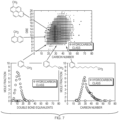
- the primary method used in compound selection uses distributions of conceptual segments, which represent the compound classes (See classes shown in Table 1) to determine the probability of the compounds in a given class to exist in the crude or petroleum fraction.
- the conceptual segments were chosen to represent all compound classes and structures considered and are summarized in Table 4. Examples of these conceptual segments include total carbon number, one-branched methylene, two-branched methylene, naphthenic side ring, and aromatic side ring.
- Table 4 Conceptual segment types and segment structures representing compound classes in Table 1.
- Traditional assay data includes, but is not limited to, distillation curve data, density curve data, sulfur curve data, basic nitrogen curve data, total nitrogen curve data, carbon-to-hydrogen ratio curve data, total acid number curve data, PIONA content curve data, viscosity curve data, nickel content curve data, and vanadium content curve data.
- the assay data can include advanced analytical measurements from gas chromatography and mass spectrometry methods, including GC-MS, GC-ToF, and FT-ICR-MS data.
- the methods of the present invention can process one or more of the data types simultaneously.
- a typical crude oil sample can be fractionated into different fractions.
- GC-MS, GC-ToF, FT-ICR MS, or traditional assay measurements can be performed on the same fraction.
- a signal group is created to facilitate modeling of the data signal, especially those that have ambiguity.
- a signal group is a modeling construct, which comprises one or more model compounds that have been selected from the model compound library that meet the criteria set based on the type and quality of the assay data being processed and the conceptual segment probability distribution function being used.
- a signal group comprises a compound selected from the model compound library, the compound having the same identity.
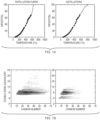
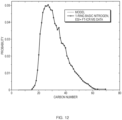
- the calculation option 'Uniform' selects an even probability distribution of the conceptual segment type as a function of segment number.
- FIG. 10A shows an example of a distribution resulting from the use of the 'Uniform' function.
- the uniform distribution function is used to process traditional assay data or to fill gaps in qualitative molecular level data.
- This equation is made orthogonal in the user interface, making it a function of Mode and standard deviation, ⁇ .
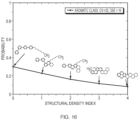
- An example of a gamma distribution function with mode and ⁇ parameters specified can be found in FIG 10B .
- the gamma distribution function is used to process traditional assay data or to fill gaps in qualitative molecular level data.
- the mode and standard deviation, ⁇ , parameters are referred to herein as the segment distribution parameters.
- the algorithm determines the probabilities by combining the Aspen distribution with the gamma distribution.
- GC-ToF and FT-ICR-MS data for petroleum fractions within an assay are weighted proportionally to their corresponding yield (by volume or weight).
- the experimental data are collected and used in regression procedure to identify the "molecular profile" for the crude or petroleum fraction.
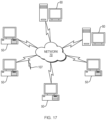
- FIG. 17 illustrates a computer network or similar digital processing environment in which the present invention may be implemented.
- the invention programs are a computer program propagated signal product 107 embodied on a propagated signal on a propagation medium (e.g., a radio wave, an infrared wave, a laser wave, a sound wave, or an electrical wave propagated over a global network such as the Internet, or other network(s)).
- a propagation medium e.g., a radio wave, an infrared wave, a laser wave, a sound wave, or an electrical wave propagated over a global network such as the Internet, or other network(s).
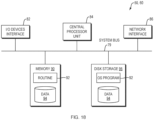
- Such carrier medium or signals provide at least a portion of the software instructions for the present invention routines/program 92.
- the propagated signal is an analog carrier wave or digital signal carried on the propagated medium.
- the propagated signal may be a digitized signal propagated over a global network (e.g., the Internet), a telecommunications network, or other network.
- the propagated signal is a signal that is transmitted over the propagation medium over a period of time, such as the instructions for a software application sent in packets over a network over a period of milliseconds, seconds, minutes, or longer.
- carrier medium or transient carrier encompasses the foregoing transient signals, propagated signals, propagated medium, storage medium and the like.
- the computer system 50, 60 or processor receives assay data including one or more types of molecular-level gas chromatography and mass spectrometry data, and traditional assay data of the given sample containing a crude oil or a petroleum fraction.
- the computer system 50, 60 or processor determines if the assay data comprises molecular-level quantitative data, such as GC-ToF data. If such data exists, the system proceeds to process the data at step 1433. If quantitative data is not available, the system proceeds to the next data type at 1424.
- molecular-level quantitative data such as GC-ToF data
- the computer system 50, 60, or processor 1400 provides compound library, e.g., MC Library.
- compound library consists of compounds covering compound classes representative of species that may be present in crude oil or petroleum fraction.
- the library also contains the physical and chemical property data for the compounds as described in the COMPOUNDS LIBRARY and PROPERTIES ESTIMATION sections.
- the compound library is loaded into memory for use at 1432, 1433, 1434 and 1435 and other subsequent steps that require this information.
- the computer system 50,60 or processor selects pure compounds from the compound library (1431) that matches compounds identified in the exact data. If the exact data is a lump data, a signal group is created to represent the lump.
- exact e.g., GC-MS
- the computer system 50, 60 or processor provides a collection of conceptual segment types, and segment number ranges (conceptual segment library) described in the COMPOUND SELECTION AND UI SEGMENT SELECTION section.
- the conceptual segment library is loaded into memory and used at 1443, 1444, and 1445.
- the computer system 50, 60 or processor further processes molecular-level quantitative data (e.g., GC-ToF data) by setting compound class weight, conceptual segment type, and segment distribution.
- molecular-level quantitative data e.g., GC-ToF data
- the computer system 50, 60 or processor further processes traditional assay data by setting the conceptual segment type, initial segment distribution, and initial values for class weight.
- the computer system 50, 60 or processor computes compounds and signal groups compositions from class weight and segment distribution values and/or parameters using the libraries at 1431 and information from 1440 and related steps.
- the computer system 50, 60 or processor reconciles results from these four data types into the compositions that represent the crude or petroleum fraction.
- compounds are also assigned to signal groups according to the heuristics described in the SIGNAL GROUP, and SIGNAL GROUP AND MOLECULE SELECTIONS USING PROBABILITY DISTRIBUTIONS sections.
- the computer system 50, 60 or processor checks to see if the errors at 1473 are within an acceptable pre-set tolerance. If yes, the system proceeds to 1480. If not, the system proceeds to 1456 to adjust class weight and segment distribution parameters and structural density index distribution parameters and iterate back to 1454 and 1455 and applicable subsequent steps to determine new signal group compositions and compound compositions within segment groups.
- the computer system 50, 60 or processor consolidates the formed characterization results and input for display to the end users in tabular and graphical formats.
- the computer system 50, 60 or processor can display the estimated chemical and physical properties for the selected compounds.
- the computer system 50, 60 or processor can display the residual root-mean-square errors obtained at 1473.
Landscapes
- Engineering & Computer Science (AREA)
- Chemical & Material Sciences (AREA)
- Life Sciences & Earth Sciences (AREA)
- Computing Systems (AREA)
- Theoretical Computer Science (AREA)
- Bioinformatics & Cheminformatics (AREA)
- Bioinformatics & Computational Biology (AREA)
- Crystallography & Structural Chemistry (AREA)
- Physics & Mathematics (AREA)
- Spectroscopy & Molecular Physics (AREA)
- Health & Medical Sciences (AREA)
- Oil, Petroleum & Natural Gas (AREA)
- General Health & Medical Sciences (AREA)
- Chemical Kinetics & Catalysis (AREA)
- Food Science & Technology (AREA)
- Medicinal Chemistry (AREA)
- Analytical Chemistry (AREA)
- Biochemistry (AREA)
- General Chemical & Material Sciences (AREA)
- General Physics & Mathematics (AREA)
- Immunology (AREA)
- Pathology (AREA)
- Other Investigation Or Analysis Of Materials By Electrical Means (AREA)
- Automatic Analysis And Handling Materials Therefor (AREA)
- Measuring Or Testing Involving Enzymes Or Micro-Organisms (AREA)
Claims (26)
- Computerimplementiertes Verfahren zur Charakterisierung der chemischen Zusammensetzung einer Probe, die Rohöl oder eine Petroleumfraktion enthält, wobei das Verfahren umfasst:
in einem Prozessor:(i) Erhalten von Assaydaten, die Assaydaten auf molekularer Ebene der Probe oder Assaydaten auf molekularer Ebene und traditionelle Assaydaten der Probe umfassen, wobei die traditionellen Assaydaten eines oder mehrere von Destillationskurvedaten, Dichtekurvedaten, Schwefelkurvedaten, Basischer-Stickstoff-Kurvedaten, Gesamtstickstoffkurvedaten, Kohlenstoff-zu-Wasserstoff-Verhältnis-Kurvedaten, Gesamtsäurezahl-Kurvedaten, PIONA(Paraffine, Isoparaffine, Olefine, Naphthene und Aromaten)-Gehalt-Kurvedaten, Viskositätskurvedaten, Nickelgehaltkurvedaten und Vanadiumgehaltkurvedaten umfassen;(ii) Erstellen von a) absoluten Verbindungszusammensetzungen auf der Grundlage der Assaydaten auf molekularer Ebene der Probe, b) ersten Verbindungsklassen und Klassengewicht(en), ersten konzeptionellen Segmenttyp(en) und einer ersten Segmentverteilung wenigstens zum Teil auf der Grundlage der Assaydaten auf molekularer Ebene, und c) zweiten Verbindungsklassen und Klassengewicht(en), zweiten konzeptionellen Segmenttyp(en) und einer zweiten Segmentverteilung wenigstens zum Teil auf der Grundlage der traditionellen Assaydaten der Probe, wenn traditionelle Assaydaten erhalten werden;(iii) Festlegen von a) absoluten Verbindungszusammensetzungen als die erstellten absoluten Verbindungszusammensetzungen, b) ersten Verbindungszusammensetzung(en) aus ersten Segmentverteilungswerten, die die erste Segmentverteilung darstellen, und ersten Klassengewicht(en), erstellt wenigstens zum Teil auf der Grundlage der Daten auf molekularer Ebene, und c) zweiten Verbindungszusammensetzung(en) aus zweiten Segmentverteilungsparametern, die die zweite Segmentverteilung darstellen, und zweiten Klassengewicht(en), erstellt auf der Grundlage der traditionellen Assaydaten der Probe, wenn traditionelle Assaydaten erhalten werden;(iv) Abgleichen von a) den absoluten Verbindungszusammensetzungen, b) den ersten Verbindungszusammensetzung(en) und/oder c) zweiten Verbindungszusammensetzung(en), um eine abgeglichene Verbindungszusammensetzung zu erhalten; und(v) Anpassen, wenn die Assaydaten auf molekularer Ebene qualitative Assaydaten auf molekularer Ebene enthalten, von ersten Klassengewicht(en), und/oder, wenn die erhaltenen Assaydaten traditionelle Assaydaten enthalten, von zweiten Klassengewicht(en) und zweiten Segmentverteilungsparametern, bis für die abgeglichene Verbindungszusammensetzung bestimmte physikalische und/oder chemische Eigenschaften konsistent mit entsprechenden erhaltenen Assaydaten sind, um eine verfeinerte Verbindungszusammensetzung als die Charakterisierung der chemischen Zusammensetzung der Probe zu erhalten. - Verfahren gemäß Anspruch 1, wobei die absoluten Verbindungszusammensetzungen absolute Signalgruppenzusammensetzungen sind, die ersten Verbindungszusammensetzung(en) erste Signalgruppenzusammensetzung(en) sind, die zweiten Verbindungszusammensetzung(en) zweite Signalgruppenzusammensetzung(en) sind und die Verbindungszusammensetzung(en) Signalgruppenzusammensetzung(en) sind.
- Verfahren gemäß Anspruch 1 oder Anspruch 2, wobei die molekularen Assaydaten wenigstens eines von Gaschromatographie-Massenspektrometrie(GC-MS)-Daten, Gaschromatographie-Flugzeitspektrometrie(GC-ToF)-Daten und Fouriertransformations-Ionenzyklotronresonanz-Massenspektrometrie(FT-ICR-MS)-Daten sind,wobei die FT-ICR-MS-Daten Atmosphärendruck-Photoionisations(APPI)-FT-ICR-MS-Daten, Negativ-Elektrosprayionisations(ESI-)-FT-ICR-MS-Daten oder Positiv-Elektrosprayionisations(ESI+)-FT-ICR-MS-Daten sind unddie GC-MS-Daten Flammenionisationsdetektor-Gaschromatographie(GC-FID)-Daten sind.
- Verfahren gemäß einem der vorstehenden Ansprüche, wobei die Daten auf molekularer Ebene GC-MS-Daten umfassen und das Verfahren ferner Auswählen von reinen Verbindungen aus einer Verbindungsbibliothek auf der Grundlage der GC-MS-Daten umfasst und/oder
die Daten auf molekularer Ebene exakte Daten umfassen und das Verfahren ferner (1) Auswählen von reinen Verbindungen aus einer Verbindungsbibliothek auf der Grundlage der exakten Daten, (2) Erstellen von absoluten Verbindungszusammensetzungen und (3) Berechnen von absoluten Verbindungszusammensetzungen umfasst. - Verfahren gemäß einem der vorstehenden Ansprüche, wobei die Verbindungsidentität und die absolute Verbindungszusammensetzung aus GC-MS-Daten bestimmt werden.
- Verfahren gemäß einem der vorstehenden Ansprüche, wobei die Daten auf molekularer Ebene GC-ToF-Daten umfassen und das Verfahren ferner Umwandeln von GC-ToF-Signalstärkedaten, von GC-ToF-Daten abgeleiteter Kohlenstoffzahl und/oder von GC-ToF-Daten abgeleitetem DBE in eine Aspen-Verteilung umfasst und/oderdie Daten auf molekularer Ebene FT-ICR-MS-Daten umfassen und das Verfahren ferner Umwandeln von FT-ICR-MS-Signalstärkedaten, FT-ICR-MS-abgeleiteter Formel, FT-ICR-MS-abgeleiteter Kohlenstoffzahl und/oder FT-ICR-MSabgeleitetem DBE in eine Aspen-Verteilung, eine Gamma-Verteilung und/oder eine gleichmäßige Segmentverteilung umfasst,wobei die Aspen-Verteilung eine Verteilung ist, die die Wahrscheinlichkeit eines Segmenttyps bei diskreten ganzzahligen Werten der Segmentzahl darstellt.
- Verfahren gemäß einem der vorstehenden Ansprüche, ferner umfassend Erstellen von ersten Verbindungsklassengewicht(en), ersten konzeptionellen Segmenttyp(en) und einer ersten Segmentverteilung auf der Grundlage von wenigstens einer von einer Aspen-Verteilung, bestimmt aus GC-ToF-Daten, einer FT-ICR-MS-Daten-abgeleiteten Aspen-Verteilung, Gamma-Verteilung und gleichmäßigen Segmentverteilung, wobei die Aspen-Verteilung eine Verteilung ist, die die Wahrscheinlichkeit eines Segmenttyps bei diskreten ganzzahligen Werten der Segmentzahl darstellt.
- Verfahren gemäß einem der vorstehenden Ansprüche, ferner umfassend Bestimmen einer Verbindungszusammensetzung auf GC-ToF-Grundlage aus GC-ToF-Daten-abgeleiteten Klassengewicht(en), GC-ToF-Daten-abgeleiteten Segmenttyp(en) und GC-ToF-Daten-abgeleiteten Segmentverteilungswerten und/oder
Bestimmen einer Verbindungszusammensetzung auf FT-ICR-MS-Grundlage aus FT-ICR-MS-Daten-abgeleiteten Klassengewicht(en), FT-ICR-MS-Daten-abgeleiteten Segmenttyp(en) und FT-ICR-MS-Daten-abgeleiteten Segmentverteilungswerten und/oder -parametern. - Verfahren gemäß einem der vorstehenden Ansprüche, wobei die erste(n) Verbindungszusammensetzung(en) eine Verbindungszusammensetzung, die aus GC-ToF-Daten bestimmt ist, d.h. eine Verbindungszusammensetzung auf GC-ToF-Grundlage, umfasst/umfassen, und/oder
die erste(n) Verbindungszusammensetzung(en) eine Verbindungszusammensetzung, die aus FT-ICT-MS-Daten bestimmt ist, d.h. eine Verbindungszusammensetzung auf FT-ICT-MS-Grundlage, umfasst/umfassen. - Verfahren gemäß Anspruch 7 oder 8, wobei die Verbindungszusammensetzung auf GC-ToF-Grundlage nicht auf der Grundlage eines Unterschieds einer physikalischen und/oder chemischen Eigenschaft der abgeglichenen Verbindungszusammensetzung im Vergleich zu entsprechenden erhaltenen Assaydaten angepasst ist und/oder
wobei die Verbindungszusammensetzung auf FT-ICT-MS-Grundlage auf der Grundlage eines Unterschieds einer physikalischen und/oder chemischen Eigenschaft der abgeglichenen Verbindungszusammensetzung im Vergleich zu entsprechenden erhaltenen Assaydaten angepasst ist. - Verfahren gemäß einem der vorstehenden Ansprüche, wobei die Daten auf molekularer Ebene umfassen:quantitative Assaydaten auf molekularer Ebene, wobei das Verfahren ferner (1) Umwandeln von aus den quantitativen Assaydaten auf molekularer Ebene abgeleiteten Signalstärkedaten, aus quantitativen Assaydaten auf molekularer Ebene abgeleiteter Kohlenstoffzahl und/oder aus quantitativen Assaydaten auf molekularer Ebene abgeleitetem DBE in eine Aspen-Verteilung; (2) Erstellen von ersten Verbindungsklassengewicht(en), ersten konzeptionellen Segmenttyp(en) und einer ersten Segmentverteilung auf der Grundlage einer aus den quantitativen Assaydaten auf molekularer Ebene bestimmten Aspen-Verteilung; und (3) Berechnen einer Verbindungszusammensetzung aus Klassengewichten, die aus quantitativen Assaydaten auf molekularer Ebene abgeleitet sind, Segmenttyp(en), die aus quantitativen Assaydaten auf molekularer Ebene abgeleitet sind, und Segmentverteilungswerten, die aus quantitativen Assaydaten auf molekularer Ebene abgeleitet sind, umfasst, und/oderqualitative Assaydaten auf molekularer Ebene, wobei das Verfahren ferner (1) Umwandeln von aus den qualitativen Assaydaten auf molekularer Ebene abgeleiteten Signalstärkedaten, aus qualitativen Assaydaten auf molekularer Ebene abgeleiteter Formel, aus qualitativen Assaydaten auf molekularer Ebene abgeleiteter Kohlenstoffzahl und/oder aus qualitativen Assaydaten auf molekularer Ebene abgeleitetem DBE in eine Aspen-Verteilung, eine Gamma-Verteilung und/oder eine gleichmäßige Segmentverteilung; (2) Erstellen von ersten Verbindungsklassengewicht(en), ersten konzeptionellen Segmenttyp(en) und einer ersten Segmentverteilung auf der Grundlage einer aus den qualitativen Assaydaten auf molekularer Ebene bestimmten Aspen-Verteilung, Gamma-Verteilung und/oder gleichmäßigen Segmentverteilung; und (3) Berechnen einer Verbindungszusammensetzung aus Klassengewichten, die aus qualitativen Assaydaten auf molekularer Ebene abgeleitet sind, Segmenttyp(en), die aus qualitativen Assaydaten auf molekularer Ebene abgeleitet sind, und Segmentverteilungswerten und/oder -parametern, die aus qualitativen Assaydaten auf molekularer Ebene abgeleitet sind, umfasst, wobei die Aspen-Verteilung eine Verteilung ist, die die Wahrscheinlichkeit eines Segmenttyps bei diskreten ganzzahligen Werten der Segmentzahl darstellt.
- Verfahren gemäß einem der vorstehenden Ansprüche, wobei die erste Verbindungszusammensetzung eine Verbindungszusammensetzung auf FT-ICR-MS-Grundlage ist und die zweite Verbindungszusammensetzung aus traditionellen Assaydaten bestimmt ist, wobei nur die Verbindungszusammensetzung auf FT-ICR-MS-Grundlage und die zweite Verbindungszusammensetzung angepasst werden, bis für die abgeglichene Verbindungszusammensetzung bestimmte physikalische und/oder chemische Eigenschaften konsistent mit entsprechenden erhaltenen Assaydaten sind.
- Verfahren gemäß einem der vorstehenden Ansprüche, wobei die erste und die zweite Verbindungsklasse unabhängig eine oder mehrere von einer Paraffinklasse, einer Naphthenklasse, einer Aromatenklasse, einer Olefinklasse, einer Mercaptanklasse, einer Thiophen- oder Sulfidklasse mit einem einzigen Schwefelatom, einer Thiophen- und Sulfidklasse mit zwei Schwefelatomen, einer Sulfoxidklasse, einer Schwefel-Sauerstoff-Klasse, einer Klasse mit neutralem Stickstoff mit einem einzigen Pyrrol, einer Klasse mit neutralem Stickstoff mit zwei Pyrrol-Stickstoffen, einer neutralen Stickstoff-Schwefel-Klasse, einer neutralen Stickstoff-Sauerstoff-Klasse, einer Klasse mit basischem Stickstoff mit einem einzigen Pyridin, einer Klasse mit basischem Stickstoff mit einem Pyridin und entweder einem weiteren Pyridin oder einem Pyrrol, einer basischen Stickstoff-Schwefel-Klasse, einer basischen Stickstoff-Sauerstoff-Klasse, einer Phenolklasse, einer Paraffinsäureklasse, einer Aromaten- und Naphthensäureklasse, einer Nickel-Porphyrin-Klasse und einer Vanadium-Porphyrin-Klasse umfassen.
- Verfahren gemäß Anspruch 13, wobei die konzeptionellen Segmenttypen für die Paraffinklasse Gesamtkohlenstoffzahl, Methylen mit einem Zweig und Methylen mit zwei Zweigen umfassen,die konzeptionellen Segmenttypen für die Naphthenklassen Gesamtkohlenstoffzahl, naphthenischen Seitenring und Molverhältnis von sechsgliedrigen Ringen zu fünfgliedrigen Ringen umfassen unddie konzeptionellen Segmenttypen für die Aromatenklasse Gesamtkohlenstoffzahl, aromatischen Seitenring und naphthenischen Seitenring umfassen.
- Verfahren gemäß einem der vorstehenden Ansprüche, wobei die Daten auf molekularer Ebene aus einem oder mehreren Schnitten der Probe oder der Probe in ihrer Gesamtheit erhalten sind.
- Verfahren gemäß einem der vorstehenden Ansprüche, ferner umfassend Ausgeben der Charakterisierung der chemischen Zusammensetzung der Probe, die Rohöl oder eine Petroleumfraktion enthält oder ist.
- Verfahren gemäß einem der vorstehenden Ansprüche, wobei wenigstens eines von den exakten Assaydaten, quantitativen Assaydaten auf molekularer Ebene, qualitativen Assaydaten auf molekularer Ebene und traditionellen Daten erhalten wird.
- Verfahren gemäß einem der vorstehenden Ansprüche, wobei das Verfahren ferner Abschätzen von physikalischen oder chemischen Eigenschaften für die Probe als Funktion der charakterisierten chemischen Zusammensetzung der Probe umfasst,wobei die abgeschätzten physikalischen Eigenschaften der Probe eines oder mehrere von normalem Siedepunkt, Flüssigkeitsdichte, Flüssigkeitsviskosität, Conradson-Kohlenstoffrückstand, Forschungs-Oktanzahl, Motor-Oktanzahl, Cetanzahl und Reid-Dampfdruck einschließen undwobei Abschätzen von chemischen Eigenschaften der Probe Berechnen von einschließlich Schwefelgehalt, Gehalt an basischem Stickstoff, Gesamtstickstoffgehalt, Kohlenstoffgehalt, Wasserstoffgehalt, Kohlenstoff-zu-Wasserstoff-Verhältnis, Nickelgehalt, Vanadiumgehalt, Sauerstoffgehalt, Paraffingehalt, Isoparaffingehalt, Olefingehalt, Naphthengehalt und Aromatengehalt aus der chemischen Formel, chemischen Struktur und chemischen Zusammensetzungen umfasst.
- Verfahren gemäß einem der vorstehenden Ansprüche, ferner umfassend Bereitstellen einer Bibliothek von Modellverbindungen und Zuordnen einer Signalgruppe für eine oder mehrere Modellverbindungen aus der Bibliothek von Modellverbindungen,
wobei die Modellverbindungen aus der Bibliothek von Modellverbindungen, die einer Signalgruppe entsprechen, die gleiche Klasse, die gleiche Kohlenstoffzahl und das gleiche Doppelbindungsäquivalent aufweisen. - Verfahren gemäß einem der Ansprüche 1 bis 18, ferner umfassend Zuordnen einer Signalgruppe für eine oder mehrere Modellverbindungen aus einer Bibliothek von Modellverbindungen, wobei die Modellverbindungen aus der Bibliothek von Modellverbindungen, die einer Signalgruppe entsprechen, die gleiche Klasse, die gleiche Kohlenstoffzahl und das gleiche Doppelbindungsäquivalent aufweisen.
- Verfahren gemäß einem der vorstehenden Ansprüche, wobei die Probe Verbindungen mit i) verschiedenen Kohlenstoffzahlen von zwischen 1 und 100 und ii) verschiedenen Doppelbindungsäquivalentzahlen von 0 bis 50 umfasst.
- Verfahren gemäß einem der vorstehenden Ansprüche, wobei die erhaltenen Assaydaten Assaydaten auf molekularer Ebene umfassen, umfassend:exakte Daten, und wobei das Verfahren ferner Zuordnen einer Modellverbindung zu einer spezifischen Signalgruppe auf der Grundlage der exakten Daten umfasst und/oderexakte zusammengelegte Daten, und wobei das Verfahren ferner Zuordnen einer Vielzahl von Modellverbindungen zu einer Signalgruppe auf der Grundlage der exakten zusammengelegten Daten umfasst, wobei die Modellverbindungen die gleiche Klasse und die gleiche Kohlenstoffzahl aufweisen.
- Verfahren gemäß einem der vorstehenden Ansprüche, wobei die erhaltenen Assaydaten umfassen:quantitative Assaydaten auf molekularer Ebene, und wobei das Verfahren ferner Zuordnen einer Vielzahl von Modellverbindungen zu einer Signalgruppe auf der Grundlage der quantitativen Assaydaten auf molekularer Ebene umfasst, wobei die Modellverbindungen die gleiche Klasse, die gleiche Kohlenstoffzahl und das gleiche Doppelbindungsäquivalent aufweisen, und/oderqualitative Assaydaten auf molekularer Ebene, und wobei das Verfahren ferner Zuordnen einer Vielzahl von Modellverbindungen zu einer Signalgruppe auf der Grundlage der qualitativen Assaydaten auf molekularer Ebene umfasst, wobei die Modellverbindungen die gleiche Klasse, die gleiche Kohlenstoffzahl und das gleiche Doppelbindungsäquivalent aufweisen, wenn die Aspen-Verteilung verwendet wird, um wenigstens seinen Teil der Daten darzustellen, und das Verfahren ferner Zuordnen einer Vielzahl von Modellverbindungen zu einer Signalgruppe auf der Grundlage der qualitativen Assaydaten auf molekularer Ebene umfasst, wobei die Modellverbindungen die gleiche Klasse, die gleiche Kohlenstoffzahl, die gleiche Zahl von Methylenen mit einem Zweig, die gleiche Zahl von Methylenen mit zwei Zweigen, die gleiche Zahl von aromatischen Seitenringen und die gleiche Zahl von naphthenischen Seitenringen aufweisen, wenn die Gamma-Verteilung oder die gleichmäßige Verteilung verwendet wird, um wenigstens seinen Teil der Daten darzustellen, und/odertraditionelle Assaydaten, und wobei das Verfahren ferner Zuordnen einer Vielzahl von Modellverbindungen zu einer Signalgruppe auf der Grundlage der traditionellen Assaydaten umfasst, wobei die Modellverbindungen die gleiche Klasse, die gleiche Kohlenstoffzahl, die gleiche Zahl von Methylenen mit einem Zweig, die gleiche Zahl von Methylenen mit zwei Zweigen, die gleiche Zahl von aromatischen Seitenringen und die gleiche Zahl von naphthenischen Seitenringen aufweisen.
- Verfahren gemäß einem der vorstehenden Ansprüche, wobei bei dem Zuordnen von einer oder mehreren Modellverbindungen zu einer Signalgruppe exakte Daten eine höhere Priorität als exakte zusammengelegte Daten haben, exakte zusammengelegte Daten eine höhere Priorität als quantitative Assaydaten auf molekularer Ebene haben, quantitative Daten auf molekularer Ebene eine höhere Priorität als qualitative Assaydaten auf molekularer Ebene haben und qualitative Assaydaten auf molekularer Ebene eine höhere Priorität als traditionelle Assaydaten haben; und wobei, wenn Assaydaten mit unterschiedlicher Priorität vorliegen, die jeweils Zuordnen einer Modellverbindung zu einer Signalgruppe erlauben würden, Assaydaten mit der höchsten Priorität verwendet werden, um die Modellverbindung der Signalgruppe zuzuordnen.
- Verfahren gemäß einem der vorstehenden Ansprüche, wobei die erhaltenen Assaydaten umfassen:Assaydaten auf molekularer Ebene, umfassend exakte zusammengelegte Daten, und wobei das Verfahren ferner Zuordnen einer Vielzahl von Modellverbindungen zu einer Signalgruppe, zu der Modellverbindungen nicht auf der Grundlage von exakten Daten zugeordnet worden sind, auf der Grundlage der exakten zusammengelegten Daten umfasst, wobei die Modellverbindungen, die der Signalgruppe zugeordnet werden, die gleiche Klasse und die gleiche Kohlenstoffzahl aufweisen, und/oderquantitative Assaydaten auf molekularer Ebene, und wobei das Verfahren ferner Zuordnen einer Vielzahl von Modellverbindungen zu einer Signalgruppe, zu der Modellverbindungen nicht auf der Grundlage von exakten Daten oder exakten zusammengelegten Daten zugeordnet worden sind, auf der Grundlage der quantitativen Assaydaten auf molekularer Ebene umfasst, wobei die Modellverbindungen, die der Signalgruppe zugeordnet werden, die gleiche Klasse, die gleiche Kohlenstoffzahl und das gleiche Doppelbindungsäquivalent aufweisen, und/oderqualitative Assaydaten auf molekularer Ebene, und wobei das Verfahren ferner Zuordnen einer Vielzahl von Modellverbindungen zu einer Signalgruppe, zu der Modellverbindungen nicht auf der Grundlage von exakten Daten, exakten zusammengelegten Daten oder quantitativen Assaydaten auf molekularer Ebene zugeordnet worden sind, auf der Grundlage der qualitativen Assaydaten auf molekularer Ebene umfasst, wobei die Modellverbindungen, die der Signalgruppe zugeordnet werden, die gleiche Klasse, die gleiche Kohlenstoffzahl und das gleiche Doppelbindungsäquivalent aufweisen, wenn die Aspen-Verteilung verwendet wird, um wenigstens seinen Teil der qualitativen Assaydaten auf molekularer Ebene darzustellen, und das Verfahren ferner Zuordnen einer Vielzahl von Modellverbindungen zu einer Signalgruppe, zu der Modellverbindungen nicht auf der Grundlage von exakten Daten, exakten zusammengelegten Daten, quantitativen Assaydaten auf molekularer Ebene oder wenigstens einem Teil der qualitativen Assaydaten auf molekularer Ebene, die die Aspen-Verteilung verwenden, zugeordnet worden sind, auf der Grundlage der qualitativen Assaydaten auf molekularer Ebene umfasst, wobei die Modellverbindungen die gleiche Klasse, die gleiche Kohlenstoffzahl, die gleiche Zahl von Methylenen mit einem Zweig, die gleiche Zahl von Methylenen mit zwei Zweigen, die gleiche Zahl von aromatischen Seitenringen und die gleiche Zahl von naphthenischen Seitenringen aufweisen, und/odertraditionelle Assaydaten, und wobei das Verfahren ferner Zuordnen einer Vielzahl von Modellverbindungen zu einer Signalgruppe, zu der Modellverbindungen nicht auf der Grundlage von exakten Daten, exakten zusammengelegten Daten, quantitativen Assaydaten auf molekularer Ebene oder qualitativen Assaydaten auf molekularer Ebene zugeordnet worden sind, auf der Grundlage der traditionellen Assaydaten umfasst, wobei die Modellverbindungen, die der Signalgruppe zugeordnet werden, die gleiche Klasse, die gleiche Kohlenstoffzahl, die gleiche Zahl von Methylenen mit einem Zweig, die gleiche Zahl von Methylenen mit zwei Zweigen, die gleiche Zahl von aromatischen Seitenringen und die gleiche Zahl von naphthenischen Seitenringen aufweisen.
- Verfahren gemäß einem der vorstehenden Ansprüche, ferner umfassend Berechnen von Verbindungszusammensetzungen innerhalb einer Signalgruppe unter Verwendung einer Wahrscheinlichkeitsverteilungsfunktion, die den Strukturdichteindex von Bestandteilverbindungen innerhalb von Signalgruppen, die zu einem Schnitt der Probe gehören, und/oder innerhalb aller Signalgruppen in der Probe beschreibt.
Applications Claiming Priority (2)
| Application Number | Priority Date | Filing Date | Title |
|---|---|---|---|
| US201762489087P | 2017-04-24 | 2017-04-24 | |
| PCT/US2018/029135 WO2018200521A2 (en) | 2017-04-24 | 2018-04-24 | Molecular characterization method and system |
Publications (2)
| Publication Number | Publication Date |
|---|---|
| EP3616101A2 EP3616101A2 (de) | 2020-03-04 |
| EP3616101B1 true EP3616101B1 (de) | 2023-09-27 |
Family
ID=62223221
Family Applications (1)
| Application Number | Title | Priority Date | Filing Date |
|---|---|---|---|
| EP18726590.5A Active EP3616101B1 (de) | 2017-04-24 | 2018-04-24 | Verfahren und system zur molekularen charakterisierung |
Country Status (4)
| Country | Link |
|---|---|
| US (1) | US11101020B2 (de) |
| EP (1) | EP3616101B1 (de) |
| JP (1) | JP6887562B2 (de) |
| WO (1) | WO2018200521A2 (de) |
Families Citing this family (13)
| Publication number | Priority date | Publication date | Assignee | Title |
|---|---|---|---|---|
| US10393723B2 (en) | 2012-01-13 | 2019-08-27 | Aspen Technology, Inc. | Method to represent metal content in crude oils, reactor feedstocks, and reactor products |
| WO2018200521A2 (en) | 2017-04-24 | 2018-11-01 | Aspen Technology, Inc. | Molecular characterization method and system |
| WO2019073274A1 (en) * | 2017-10-12 | 2019-04-18 | Arcelormittal | PROCESS FOR PROCESSING METAL SHEET AND METAL SHEET TREATED USING THE SAME |
| KR102073856B1 (ko) * | 2018-05-28 | 2020-02-05 | 부경대학교 산학협력단 | 공정 모사를 위한 바이오 원유의 동시 모델링 및 복잡성 감소방법 |
| CN111859280B (zh) * | 2019-04-25 | 2023-12-22 | 中国石油天然气股份有限公司 | 地层原油物性的评价方法及评价装置 |
| US11680938B2 (en) | 2019-06-20 | 2023-06-20 | Saudi Arabian Oil Company | System and method of characterizing crude oil and its derivatives by combining total sulfur determination and FT-ICR mass spectrometry |
| US11500654B2 (en) | 2019-12-04 | 2022-11-15 | International Business Machines Corporation | Selecting a set of fast computable functions to assess core properties of entities |
| US12505902B2 (en) | 2020-01-10 | 2025-12-23 | Aspentech Corporation | Hybrid attribute reaction model (ARM) in molecule-based EO reactor (MB EORXR) |
| JP7379256B2 (ja) * | 2020-03-30 | 2023-11-14 | 一般財団法人石油エネルギー技術センター | 石油重質留分の分析方法 |
| US11320413B1 (en) | 2021-02-24 | 2022-05-03 | Saudi Arabian Oil Company | Characterization of crude oil by time of flight mass spectrometry |
| CN112951345B (zh) * | 2021-03-10 | 2022-06-21 | 中国地质大学(武汉) | 基于杂原子化合物进行油-储源定量对比的方法 |
| US11610199B2 (en) | 2021-04-22 | 2023-03-21 | Fueltrust, Inc. | Multi-tenant node on a private network of distributed, auditable, and immutable databases |
| CN113848156A (zh) * | 2021-09-23 | 2021-12-28 | 滨州学院 | 一种褐煤分子结构模型的构建与优化方法 |
Family Cites Families (31)
| Publication number | Priority date | Publication date | Assignee | Title |
|---|---|---|---|---|
| JPS61206528A (ja) | 1985-03-11 | 1986-09-12 | Horikiri Bane Seisakusho:Kk | ばね板端部の曲げ加工方法及び装置 |
| US5223714A (en) | 1991-11-26 | 1993-06-29 | Ashland Oil, Inc. | Process for predicting properties of multi-component fluid blends |
| US5699269A (en) | 1995-06-23 | 1997-12-16 | Exxon Research And Engineering Company | Method for predicting chemical or physical properties of crude oils |
| US5600134A (en) | 1995-06-23 | 1997-02-04 | Exxon Research And Engineering Company | Method for preparing blend products |
| US5808180A (en) | 1996-09-12 | 1998-09-15 | Exxon Research And Engineering Company | Direct method for determination of true boiling point distillation profiles of crude oils by gas chromatography/mass spectrometry |
| US6662116B2 (en) | 2001-11-30 | 2003-12-09 | Exxonmobile Research And Engineering Company | Method for analyzing an unknown material as a blend of known materials calculated so as to match certain analytical data and predicting properties of the unknown based on the calculated blend |
| CA2480104C (en) | 2002-05-01 | 2011-01-04 | Exxonmobil Upstream Research Company | Chemical structural and compositional yields model for predicting hydrocarbon thermolysis products |
| AU2003212615A1 (en) | 2003-03-10 | 2004-09-30 | Dynochem Ip Limited | A physiocochemical process modelling system |
| BRPI0515276A (pt) | 2004-09-15 | 2008-07-15 | Bp Oil Int | processo para avaliação de uma matéria de refinaria |
| US8219373B2 (en) | 2005-08-19 | 2012-07-10 | Comsol Ab | System and method for graphically creating models for simulating systems of reacting species |
| US20070050154A1 (en) | 2005-09-01 | 2007-03-01 | Albahri Tareq A | Method and apparatus for measuring the properties of petroleum fuels by distillation |
| US7598487B2 (en) | 2005-11-22 | 2009-10-06 | Exxonmobil Research And Engineering Company | Micro-hydrocarbon analysis |
| US8682597B2 (en) | 2007-10-16 | 2014-03-25 | Exxonmobil Research And Engineering Company | Estimating detailed compositional information from limited analytical data |
| KR20120099204A (ko) | 2009-06-19 | 2012-09-07 | 더 리전트 오브 더 유니버시티 오브 캘리포니아 | 복잡한 혼합된 리간드 개방 골격체 물질 |
| US20150106028A1 (en) * | 2011-06-29 | 2015-04-16 | Omer Refa Koseoglu | Characterization of crude oil by fourier transform ion cyclotron resonance mass spectrometry |
| US20120153139A1 (en) | 2010-12-16 | 2012-06-21 | Exxonmobil Research And Engineering Company | Generation of model-of-composition of petroleum by high resolution mass spectrometry and associated analytics |
| US8975084B2 (en) | 2010-12-16 | 2015-03-10 | Exxonmobil Research And Engineering Company | Determination of cores or building blocks and reconstruction of parent molecules in heavy petroleums and other hydrocarbon resources |
| US9418828B2 (en) | 2010-12-16 | 2016-08-16 | Exxonmobil Research And Engineering Company | Characterization of petroleum saturates |
| JP6086612B2 (ja) | 2011-04-13 | 2017-03-01 | リアクション デザイン リミテッド ライアビリティ カンパニー | 化学反応機構を換算するための方法及び装置 |
| ITMI20111908A1 (it) | 2011-10-21 | 2013-04-22 | Eni Spa | Metodo per predire le proprieta' dei greggi mediante l'applicazione delle reti neurali |
| US10393723B2 (en) | 2012-01-13 | 2019-08-27 | Aspen Technology, Inc. | Method to represent metal content in crude oils, reactor feedstocks, and reactor products |
| US9934367B2 (en) * | 2012-01-13 | 2018-04-03 | Aspen Technology, Inc. | Method of characterizing chemical composition of crude oil for petroleum processing |
| US9625439B2 (en) * | 2012-05-30 | 2017-04-18 | Exxonmobil Research And Engineering Company | Method for reconciling a model of composition |
| US20140221711A1 (en) | 2012-11-29 | 2014-08-07 | Ceramatec, Inc. | System and Process for Converting Natural Gas Into Saturated, Cyclic Hydrocarbons |
| CN104903716A (zh) | 2012-12-17 | 2015-09-09 | 埃克森美孚研究工程公司 | 使用maldi和ft离子回旋共振质谱法表征石油饱和化合物 |
| ES2640378T3 (es) | 2014-11-17 | 2017-11-02 | Repsol, S.A. | Método para gestionar la producción de un yacimiento petroquímico y producto de programa para el mismo |
| WO2016178763A1 (en) | 2015-05-01 | 2016-11-10 | Aspen Technology, Inc. | Method to represent metal content in crude oils, reactor feedstocks, and reactor products |
| WO2018200521A2 (en) | 2017-04-24 | 2018-11-01 | Aspen Technology, Inc. | Molecular characterization method and system |
| WO2019143783A1 (en) | 2018-01-19 | 2019-07-25 | Aspen Technology, Inc. | Molecule-based equation oriented reactor simulation system and its model reduction |
| JP7376886B2 (ja) | 2019-03-29 | 2023-11-09 | 国立研究開発法人産業技術総合研究所 | 分子反応モデリング方法 |
| JP7463166B2 (ja) | 2019-03-29 | 2024-04-08 | 出光興産株式会社 | 多成分混合物の物性値の推算方法 |
-
2018
- 2018-04-24 WO PCT/US2018/029135 patent/WO2018200521A2/en not_active Ceased
- 2018-04-24 US US15/961,310 patent/US11101020B2/en active Active
- 2018-04-24 JP JP2020507517A patent/JP6887562B2/ja not_active Expired - Fee Related
- 2018-04-24 EP EP18726590.5A patent/EP3616101B1/de active Active
Also Published As
| Publication number | Publication date |
|---|---|
| US11101020B2 (en) | 2021-08-24 |
| EP3616101A2 (de) | 2020-03-04 |
| WO2018200521A2 (en) | 2018-11-01 |
| US20180307803A1 (en) | 2018-10-25 |
| JP6887562B2 (ja) | 2021-06-16 |
| JP2020520462A (ja) | 2020-07-09 |
| WO2018200521A3 (en) | 2019-01-03 |
Similar Documents
| Publication | Publication Date | Title |
|---|---|---|
| US11101020B2 (en) | Molecular characterization method and system | |
| EP2788754B1 (de) | Verfahren zur charakterisierung chemische zusammensetzung eines erdöls bei erdölraffinerieprozessen | |
| US7598487B2 (en) | Micro-hydrocarbon analysis | |
| Marshall et al. | Petroleomics: Chemistry of the underworld | |
| McKenna et al. | Heavy petroleum composition. 1. Exhaustive compositional analysis of Athabasca bitumen HVGO distillates by Fourier transform ion cyclotron resonance mass spectrometry: A definitive test of the Boduszynski model | |
| Rodgers et al. | Resolution, elemental composition, and simultaneous monitoring by Fourier transform ion cyclotron resonance mass spectrometry of organosulfur species before and after diesel fuel processing | |
| Sarpal et al. | PONA analyses of cracked gasoline by 1H NMR spectroscopy. Part II | |
| US20200340970A1 (en) | Characterization of crude oil by fourier transform ion cyclotron resonance mass spectrometry | |
| Lobodin et al. | Separation and characterization of reactive and non-reactive sulfur in petroleum and its fractions | |
| US9490109B2 (en) | Generation of model of composition of petroleum by high resolution mass spectrometry and associated analytics | |
| Feng et al. | Molecular composition modelling of petroleum fractions based on a hybrid structural unit and bond-electron matrix (SU-BEM) framework | |
| Zhang et al. | Molecular representation of petroleum vacuum resid | |
| Muller et al. | Innate sulfur compounds as an internal standard for determining vacuum gas oil compositions by APPI FT-ICR MS | |
| Zhang et al. | Molecular characterization of vacuum resid and its fractions by Fourier transform ion cyclotron resonance mass spectrometry with various ionization techniques | |
| Kovalchik et al. | Standard method design considerations for semi-quantification of total naphthenic acids in oil sands process affected water by mass spectrometry: A review | |
| Qian | Molecular characterization of heavy petroleum by mass spectrometry and related techniques | |
| Alzarieni et al. | Determination of the Chemical Compositions of Condensate-like Oils with Different API Gravities by Using the Distillation, Precipitation, Fractionation Mass Spectrometry (DPF MS) Method | |
| Flumignan et al. | Multivariate calibrations in gas chromatographic profiles for prediction of several physicochemical parameters of Brazilian commercial gasoline | |
| US10393723B2 (en) | Method to represent metal content in crude oils, reactor feedstocks, and reactor products | |
| Li et al. | Semiquantitative molecular characterization of crude oil | |
| EP3289495B1 (de) | Verfahren zur darstellung des metallgehalts in rohölen, reaktorrohstoffe und reaktorprodukte | |
| Zambrano et al. | Molecular-Level Analytical Platform for Quasi-quantitative Characterization of Bio-oils from a Commercial Biorefinery | |
| Mejia-Miranda et al. | Correlation for predicting corrosivity of crude oils using proton nuclear magnetic resonance and chemometric methods | |
| US20200400645A1 (en) | System and method of characterizing crude oil and its derivatives by combining total sulfur determination and ft-icr mass spectrometry | |
| WO2026011511A1 (zh) | 一种分子级在线汽油调和优化方法、系统及电子设备 |
Legal Events
| Date | Code | Title | Description |
|---|---|---|---|
| STAA | Information on the status of an ep patent application or granted ep patent |
Free format text: STATUS: UNKNOWN |
|
| STAA | Information on the status of an ep patent application or granted ep patent |
Free format text: STATUS: THE INTERNATIONAL PUBLICATION HAS BEEN MADE |
|
| PUAI | Public reference made under article 153(3) epc to a published international application that has entered the european phase |
Free format text: ORIGINAL CODE: 0009012 |
|
| STAA | Information on the status of an ep patent application or granted ep patent |
Free format text: STATUS: REQUEST FOR EXAMINATION WAS MADE |
|
| 17P | Request for examination filed |
Effective date: 20191104 |
|
| AK | Designated contracting states |
Kind code of ref document: A2 Designated state(s): AL AT BE BG CH CY CZ DE DK EE ES FI FR GB GR HR HU IE IS IT LI LT LU LV MC MK MT NL NO PL PT RO RS SE SI SK SM TR |
|
| AX | Request for extension of the european patent |
Extension state: BA ME |
|
| DAV | Request for validation of the european patent (deleted) | ||
| DAX | Request for extension of the european patent (deleted) | ||
| RAP3 | Party data changed (applicant data changed or rights of an application transferred) |
Owner name: ASPENTECH CORPORATION |
|
| REG | Reference to a national code |
Ref legal event code: R079 Ref country code: DE Ref legal event code: R079 Ref document number: 602018058260 Country of ref document: DE Free format text: PREVIOUS MAIN CLASS: G06F0019000000 Ipc: G16C0060000000 |
|
| GRAP | Despatch of communication of intention to grant a patent |
Free format text: ORIGINAL CODE: EPIDOSNIGR1 |
|
| STAA | Information on the status of an ep patent application or granted ep patent |
Free format text: STATUS: GRANT OF PATENT IS INTENDED |
|
| RIC1 | Information provided on ipc code assigned before grant |
Ipc: G01N 33/28 20060101ALI20230328BHEP Ipc: G16C 20/20 20190101ALI20230328BHEP Ipc: G16C 60/00 20190101AFI20230328BHEP |
|
| INTG | Intention to grant announced |
Effective date: 20230418 |
|
| P01 | Opt-out of the competence of the unified patent court (upc) registered |
Effective date: 20230528 |
|
| GRAS | Grant fee paid |
Free format text: ORIGINAL CODE: EPIDOSNIGR3 |
|
| GRAA | (expected) grant |
Free format text: ORIGINAL CODE: 0009210 |
|
| STAA | Information on the status of an ep patent application or granted ep patent |
Free format text: STATUS: THE PATENT HAS BEEN GRANTED |
|
| AK | Designated contracting states |
Kind code of ref document: B1 Designated state(s): AL AT BE BG CH CY CZ DE DK EE ES FI FR GB GR HR HU IE IS IT LI LT LU LV MC MK MT NL NO PL PT RO RS SE SI SK SM TR |
|
| REG | Reference to a national code |
Ref country code: GB Ref legal event code: FG4D |
|
| REG | Reference to a national code |
Ref country code: CH Ref legal event code: EP |
|
| REG | Reference to a national code |
Ref country code: DE Ref legal event code: R096 Ref document number: 602018058260 Country of ref document: DE |
|
| REG | Reference to a national code |
Ref country code: IE Ref legal event code: FG4D |
|
| REG | Reference to a national code |
Ref country code: LT Ref legal event code: MG9D |
|
| PG25 | Lapsed in a contracting state [announced via postgrant information from national office to epo] |
Ref country code: GR Free format text: LAPSE BECAUSE OF FAILURE TO SUBMIT A TRANSLATION OF THE DESCRIPTION OR TO PAY THE FEE WITHIN THE PRESCRIBED TIME-LIMIT Effective date: 20231228 |
|
| PG25 | Lapsed in a contracting state [announced via postgrant information from national office to epo] |
Ref country code: SE Free format text: LAPSE BECAUSE OF FAILURE TO SUBMIT A TRANSLATION OF THE DESCRIPTION OR TO PAY THE FEE WITHIN THE PRESCRIBED TIME-LIMIT Effective date: 20230927 Ref country code: RS Free format text: LAPSE BECAUSE OF FAILURE TO SUBMIT A TRANSLATION OF THE DESCRIPTION OR TO PAY THE FEE WITHIN THE PRESCRIBED TIME-LIMIT Effective date: 20230927 Ref country code: NO Free format text: LAPSE BECAUSE OF FAILURE TO SUBMIT A TRANSLATION OF THE DESCRIPTION OR TO PAY THE FEE WITHIN THE PRESCRIBED TIME-LIMIT Effective date: 20231227 Ref country code: LV Free format text: LAPSE BECAUSE OF FAILURE TO SUBMIT A TRANSLATION OF THE DESCRIPTION OR TO PAY THE FEE WITHIN THE PRESCRIBED TIME-LIMIT Effective date: 20230927 Ref country code: LT Free format text: LAPSE BECAUSE OF FAILURE TO SUBMIT A TRANSLATION OF THE DESCRIPTION OR TO PAY THE FEE WITHIN THE PRESCRIBED TIME-LIMIT Effective date: 20230927 Ref country code: HR Free format text: LAPSE BECAUSE OF FAILURE TO SUBMIT A TRANSLATION OF THE DESCRIPTION OR TO PAY THE FEE WITHIN THE PRESCRIBED TIME-LIMIT Effective date: 20230927 Ref country code: GR Free format text: LAPSE BECAUSE OF FAILURE TO SUBMIT A TRANSLATION OF THE DESCRIPTION OR TO PAY THE FEE WITHIN THE PRESCRIBED TIME-LIMIT Effective date: 20231228 Ref country code: FI Free format text: LAPSE BECAUSE OF FAILURE TO SUBMIT A TRANSLATION OF THE DESCRIPTION OR TO PAY THE FEE WITHIN THE PRESCRIBED TIME-LIMIT Effective date: 20230927 |
|
| REG | Reference to a national code |
Ref country code: NL Ref legal event code: MP Effective date: 20230927 |
|
| REG | Reference to a national code |
Ref country code: AT Ref legal event code: MK05 Ref document number: 1616244 Country of ref document: AT Kind code of ref document: T Effective date: 20230927 |
|
| PG25 | Lapsed in a contracting state [announced via postgrant information from national office to epo] |
Ref country code: NL Free format text: LAPSE BECAUSE OF FAILURE TO SUBMIT A TRANSLATION OF THE DESCRIPTION OR TO PAY THE FEE WITHIN THE PRESCRIBED TIME-LIMIT Effective date: 20230927 |
|
| PG25 | Lapsed in a contracting state [announced via postgrant information from national office to epo] |
Ref country code: IS Free format text: LAPSE BECAUSE OF FAILURE TO SUBMIT A TRANSLATION OF THE DESCRIPTION OR TO PAY THE FEE WITHIN THE PRESCRIBED TIME-LIMIT Effective date: 20240127 |
|
| PG25 | Lapsed in a contracting state [announced via postgrant information from national office to epo] |
Ref country code: AT Free format text: LAPSE BECAUSE OF FAILURE TO SUBMIT A TRANSLATION OF THE DESCRIPTION OR TO PAY THE FEE WITHIN THE PRESCRIBED TIME-LIMIT Effective date: 20230927 |
|
| PG25 | Lapsed in a contracting state [announced via postgrant information from national office to epo] |
Ref country code: ES Free format text: LAPSE BECAUSE OF FAILURE TO SUBMIT A TRANSLATION OF THE DESCRIPTION OR TO PAY THE FEE WITHIN THE PRESCRIBED TIME-LIMIT Effective date: 20230927 |
|
| PG25 | Lapsed in a contracting state [announced via postgrant information from national office to epo] |
Ref country code: SM Free format text: LAPSE BECAUSE OF FAILURE TO SUBMIT A TRANSLATION OF THE DESCRIPTION OR TO PAY THE FEE WITHIN THE PRESCRIBED TIME-LIMIT Effective date: 20230927 Ref country code: RO Free format text: LAPSE BECAUSE OF FAILURE TO SUBMIT A TRANSLATION OF THE DESCRIPTION OR TO PAY THE FEE WITHIN THE PRESCRIBED TIME-LIMIT Effective date: 20230927 Ref country code: IS Free format text: LAPSE BECAUSE OF FAILURE TO SUBMIT A TRANSLATION OF THE DESCRIPTION OR TO PAY THE FEE WITHIN THE PRESCRIBED TIME-LIMIT Effective date: 20240127 Ref country code: ES Free format text: LAPSE BECAUSE OF FAILURE TO SUBMIT A TRANSLATION OF THE DESCRIPTION OR TO PAY THE FEE WITHIN THE PRESCRIBED TIME-LIMIT Effective date: 20230927 Ref country code: EE Free format text: LAPSE BECAUSE OF FAILURE TO SUBMIT A TRANSLATION OF THE DESCRIPTION OR TO PAY THE FEE WITHIN THE PRESCRIBED TIME-LIMIT Effective date: 20230927 Ref country code: CZ Free format text: LAPSE BECAUSE OF FAILURE TO SUBMIT A TRANSLATION OF THE DESCRIPTION OR TO PAY THE FEE WITHIN THE PRESCRIBED TIME-LIMIT Effective date: 20230927 Ref country code: AT Free format text: LAPSE BECAUSE OF FAILURE TO SUBMIT A TRANSLATION OF THE DESCRIPTION OR TO PAY THE FEE WITHIN THE PRESCRIBED TIME-LIMIT Effective date: 20230927 Ref country code: PT Free format text: LAPSE BECAUSE OF FAILURE TO SUBMIT A TRANSLATION OF THE DESCRIPTION OR TO PAY THE FEE WITHIN THE PRESCRIBED TIME-LIMIT Effective date: 20240129 Ref country code: SK Free format text: LAPSE BECAUSE OF FAILURE TO SUBMIT A TRANSLATION OF THE DESCRIPTION OR TO PAY THE FEE WITHIN THE PRESCRIBED TIME-LIMIT Effective date: 20230927 |
|
| PG25 | Lapsed in a contracting state [announced via postgrant information from national office to epo] |
Ref country code: PL Free format text: LAPSE BECAUSE OF FAILURE TO SUBMIT A TRANSLATION OF THE DESCRIPTION OR TO PAY THE FEE WITHIN THE PRESCRIBED TIME-LIMIT Effective date: 20230927 Ref country code: IT Free format text: LAPSE BECAUSE OF FAILURE TO SUBMIT A TRANSLATION OF THE DESCRIPTION OR TO PAY THE FEE WITHIN THE PRESCRIBED TIME-LIMIT Effective date: 20230927 |
|
| REG | Reference to a national code |
Ref country code: DE Ref legal event code: R097 Ref document number: 602018058260 Country of ref document: DE |
|
| PG25 | Lapsed in a contracting state [announced via postgrant information from national office to epo] |
Ref country code: DK Free format text: LAPSE BECAUSE OF FAILURE TO SUBMIT A TRANSLATION OF THE DESCRIPTION OR TO PAY THE FEE WITHIN THE PRESCRIBED TIME-LIMIT Effective date: 20230927 |
|
| PG25 | Lapsed in a contracting state [announced via postgrant information from national office to epo] |
Ref country code: DK Free format text: LAPSE BECAUSE OF FAILURE TO SUBMIT A TRANSLATION OF THE DESCRIPTION OR TO PAY THE FEE WITHIN THE PRESCRIBED TIME-LIMIT Effective date: 20230927 |
|
| PLBE | No opposition filed within time limit |
Free format text: ORIGINAL CODE: 0009261 |
|
| STAA | Information on the status of an ep patent application or granted ep patent |
Free format text: STATUS: NO OPPOSITION FILED WITHIN TIME LIMIT |
|
| 26N | No opposition filed |
Effective date: 20240628 |
|
| PG25 | Lapsed in a contracting state [announced via postgrant information from national office to epo] |
Ref country code: SI Free format text: LAPSE BECAUSE OF FAILURE TO SUBMIT A TRANSLATION OF THE DESCRIPTION OR TO PAY THE FEE WITHIN THE PRESCRIBED TIME-LIMIT Effective date: 20230927 |
|
| PG25 | Lapsed in a contracting state [announced via postgrant information from national office to epo] |
Ref country code: SI Free format text: LAPSE BECAUSE OF FAILURE TO SUBMIT A TRANSLATION OF THE DESCRIPTION OR TO PAY THE FEE WITHIN THE PRESCRIBED TIME-LIMIT Effective date: 20230927 |
|
| PG25 | Lapsed in a contracting state [announced via postgrant information from national office to epo] |
Ref country code: BG Free format text: LAPSE BECAUSE OF FAILURE TO SUBMIT A TRANSLATION OF THE DESCRIPTION OR TO PAY THE FEE WITHIN THE PRESCRIBED TIME-LIMIT Effective date: 20230927 |
|
| PG25 | Lapsed in a contracting state [announced via postgrant information from national office to epo] |
Ref country code: MC Free format text: LAPSE BECAUSE OF FAILURE TO SUBMIT A TRANSLATION OF THE DESCRIPTION OR TO PAY THE FEE WITHIN THE PRESCRIBED TIME-LIMIT Effective date: 20230927 |
|
| PG25 | Lapsed in a contracting state [announced via postgrant information from national office to epo] |
Ref country code: MC Free format text: LAPSE BECAUSE OF FAILURE TO SUBMIT A TRANSLATION OF THE DESCRIPTION OR TO PAY THE FEE WITHIN THE PRESCRIBED TIME-LIMIT Effective date: 20230927 Ref country code: BG Free format text: LAPSE BECAUSE OF FAILURE TO SUBMIT A TRANSLATION OF THE DESCRIPTION OR TO PAY THE FEE WITHIN THE PRESCRIBED TIME-LIMIT Effective date: 20230927 |
|
| REG | Reference to a national code |
Ref country code: CH Ref legal event code: PL |
|
| PG25 | Lapsed in a contracting state [announced via postgrant information from national office to epo] |
Ref country code: LU Free format text: LAPSE BECAUSE OF NON-PAYMENT OF DUE FEES Effective date: 20240424 |
|
| REG | Reference to a national code |
Ref country code: BE Ref legal event code: MM Effective date: 20240430 |
|
| PG25 | Lapsed in a contracting state [announced via postgrant information from national office to epo] |
Ref country code: LU Free format text: LAPSE BECAUSE OF NON-PAYMENT OF DUE FEES Effective date: 20240424 |
|
| PG25 | Lapsed in a contracting state [announced via postgrant information from national office to epo] |
Ref country code: BE Free format text: LAPSE BECAUSE OF NON-PAYMENT OF DUE FEES Effective date: 20240430 |
|
| PG25 | Lapsed in a contracting state [announced via postgrant information from national office to epo] |
Ref country code: BE Free format text: LAPSE BECAUSE OF NON-PAYMENT OF DUE FEES Effective date: 20240430 Ref country code: CH Free format text: LAPSE BECAUSE OF NON-PAYMENT OF DUE FEES Effective date: 20240430 |
|
| PG25 | Lapsed in a contracting state [announced via postgrant information from national office to epo] |
Ref country code: IE Free format text: LAPSE BECAUSE OF NON-PAYMENT OF DUE FEES Effective date: 20240424 |
|
| PGFP | Annual fee paid to national office [announced via postgrant information from national office to epo] |
Ref country code: DE Payment date: 20250319 Year of fee payment: 8 |
|
| PG25 | Lapsed in a contracting state [announced via postgrant information from national office to epo] |
Ref country code: CY Free format text: LAPSE BECAUSE OF FAILURE TO SUBMIT A TRANSLATION OF THE DESCRIPTION OR TO PAY THE FEE WITHIN THE PRESCRIBED TIME-LIMIT; INVALID AB INITIO Effective date: 20180424 |
|
| PG25 | Lapsed in a contracting state [announced via postgrant information from national office to epo] |
Ref country code: HU Free format text: LAPSE BECAUSE OF FAILURE TO SUBMIT A TRANSLATION OF THE DESCRIPTION OR TO PAY THE FEE WITHIN THE PRESCRIBED TIME-LIMIT; INVALID AB INITIO Effective date: 20180424 |
|
| PGFP | Annual fee paid to national office [announced via postgrant information from national office to epo] |
Ref country code: GB Payment date: 20260319 Year of fee payment: 9 |
|
| PGFP | Annual fee paid to national office [announced via postgrant information from national office to epo] |
Ref country code: FR Payment date: 20260319 Year of fee payment: 9 |